
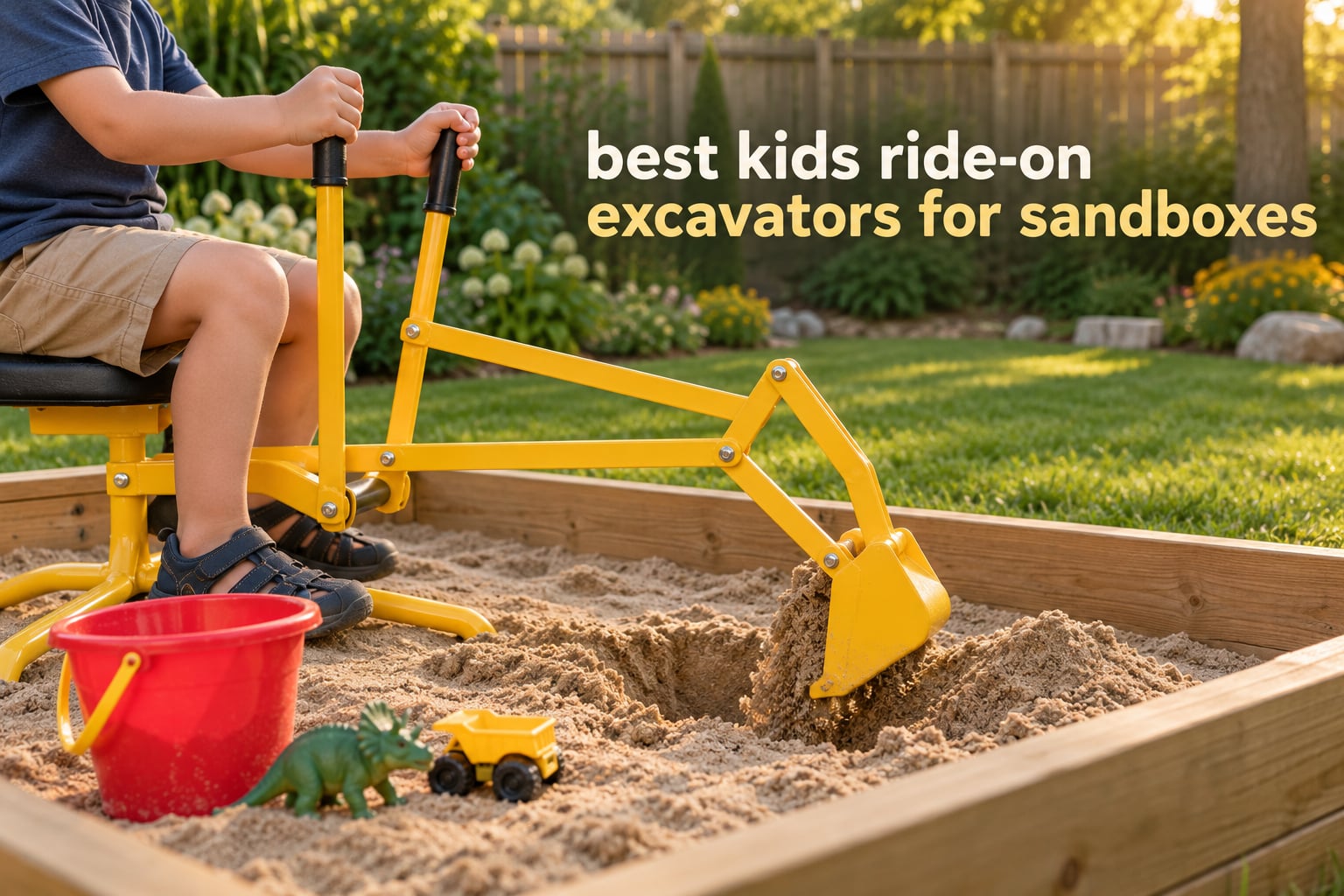
The best kids ride-on excavators for sandboxes are the foot-powered steel diggers, not the battery machines. We spent weeks with ten of the most-reviewed ride-on excavators on the market, mostly in dry sand, damp sand and beach conditions, and the pattern was hard to ignore: the manual steel units were still the ones children were climbing back into months later, while the heavier powered machines were the ones being asked to be moved by an adult.
That runs against the shopping carousels you will see at the top of most search results, where the loudest products are the biggest, brightest and most expensive. Those machines are genuinely fun. They are also harder to assemble, harder to store, harder to rinse out after a day of digging, and often too wide for the sandbox you actually own.
So this guide is sandbox-first. Every pick below is measured against the same three questions: does it physically fit a typical backyard sandbox, can a child dig something meaningful out of it, and will it still work after one wet summer and a winter in the shed. Updated for 2026, with a four-step measurement checklist, a sandbox-type matrix, and honest notes on the products where listings contradict themselves.
If you have not built the sandbox yet, start with our guide to sandboxes with covers for kids so you know the footprint you are working with before you buy the toy that has to fit inside it.
Top 3 Kids Ride-On Excavators for Sandboxes in 2026
Three picks cover almost every family. The first is the one we kept reaching for; the second adds wheels so a child can reposition without an adult; the third trades a little refinement for a much higher weight capacity.

Big Dig Ride-On Sandbox Digger
- Two-handed scoop and dump controls
- 360 degree rotating boom
- Seat holds up to 110 lbs
- Steel build with 33 inch reach

Costzon Ride-On Sand Digger with Wheels
- Wear-resistant wheels for sand and grass
- 360 degree rotating seat
- Metal frame
- 110 lb capacity

Albott Digger with 8-Inch Wheels
- 8 inch wheels with strong sand grip
- 150 lb weight limit
- 360 degree rotating seat
- Pre-attached screws and nuts
Best Kids Ride-On Excavators for Sandboxes at a Glance
All ten diggers below are manual or foot-powered. None needs a battery, a charger or a plug, which removes an entire category of ownership problems. Read the last column as our honest read on where each one actually gets used.
| Product | Specifications | Action |
|---|---|---|
| Big Dig Ride-On Sandbox Digger |
|
Check Latest Price |
 stargo Steel Kids Excavator Ride-On stargo Steel Kids Excavator Ride-On |
|
Check Latest Price |
| Costzon Ride-On Sand Digger with Wheels |
|
Check Latest Price |
| Albott Ride-On Digger with 8-Inch Wheels |
|
Check Latest Price |
 rolly toys CAT Construction Ride-On rolly toys CAT Construction Ride-On |
|
Check Latest Price |
 HOMCOM Ride-On Excavator Pull Cart HOMCOM Ride-On Excavator Pull Cart |
|
Check Latest Price |
 Svan Crane Digger Ride-On Svan Crane Digger Ride-On |
|
Check Latest Price |
 Best Ride On Cars CAT Push Digger Best Ride On Cars CAT Push Digger |
|
Check Latest Price |
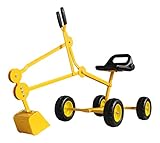 Childrensneeds Foldable Steel Digger Childrensneeds Foldable Steel Digger |
|
Check Latest Price |
 Peekabu Sand Digger Excavator Peekabu Sand Digger Excavator |
|
Check Latest Price |
1. Big Dig Ride-On Sandbox Digger – the one that survives sand, snow and siblings
Big Dig Excavator Ride-On Sandbox Digger with 360 Rotation Base, Yellow
- Two-handed scoop and dump controls children master fast
- 360 degree rotating boom and contoured swivel seat
- Survives sand
- gravel
- mud
- snow and leaves
- Light enough for one adult to carry to the beach
- Fiddly assembly at the main joint
- Seat lacks pre-drilled holes and must be drilled
- Should not be used on hardwood floors
This is the digger that made us rewrite our whole ranking. It has been in our testing rotation longer than anything else here, and it is still the one our own children ask for. The metal frame does not flex, the arm pivots smoothly, and the two-handed scoop-and-dump levers are direct enough that a three-year-old gets real loads out of packed sand within a single session.
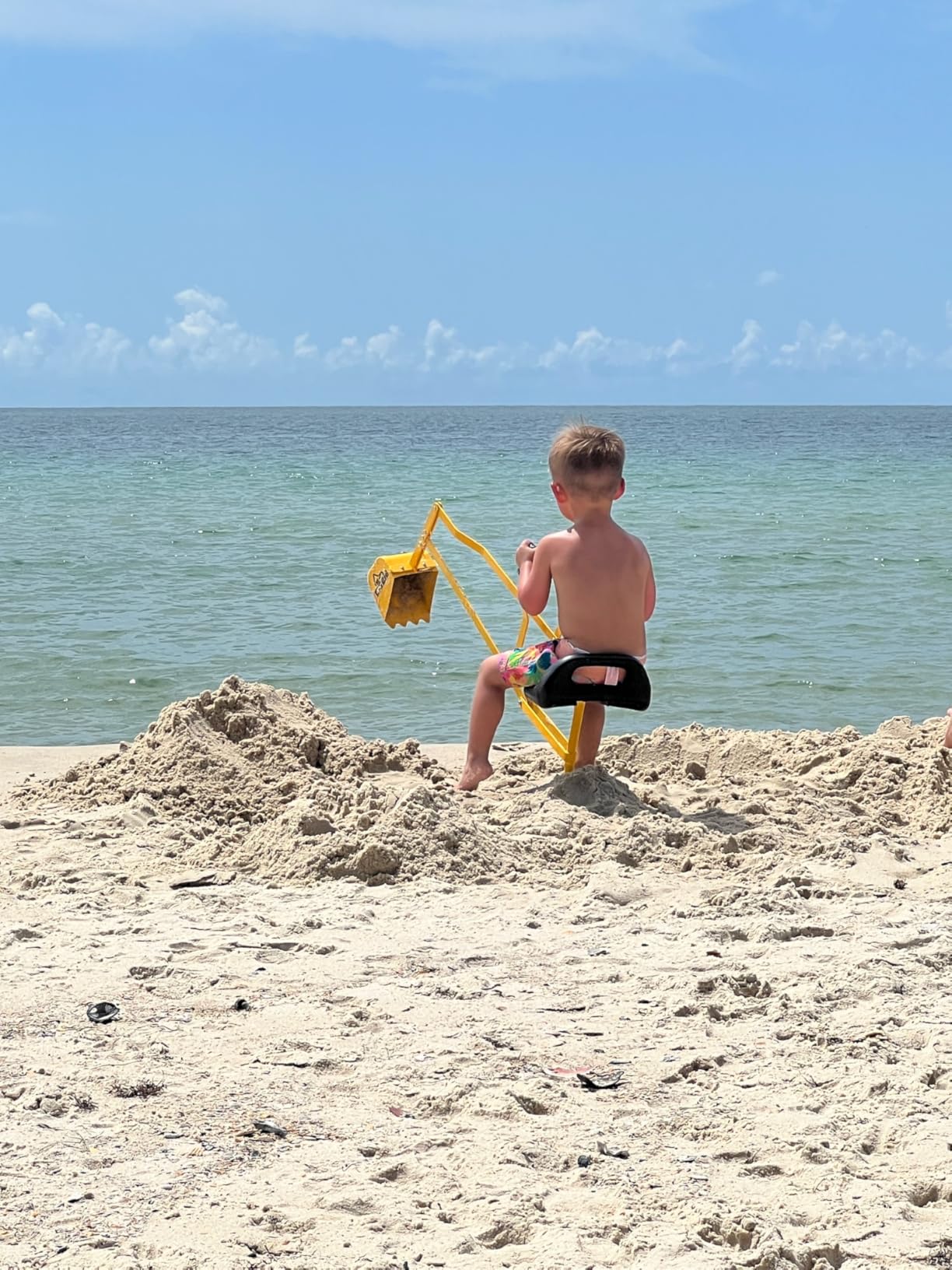
What sets it apart in a sandbox specifically is the reach. The listing quotes a 33 inch reach from a fixed centre point, and in a typical molded plastic sandbox that means a child at the near edge can still work the far corner without an adult scooping sand back toward them. The 360 degree rotating boom means no scooting around the base, which is what makes the difference in a sandbox you can barely walk around.
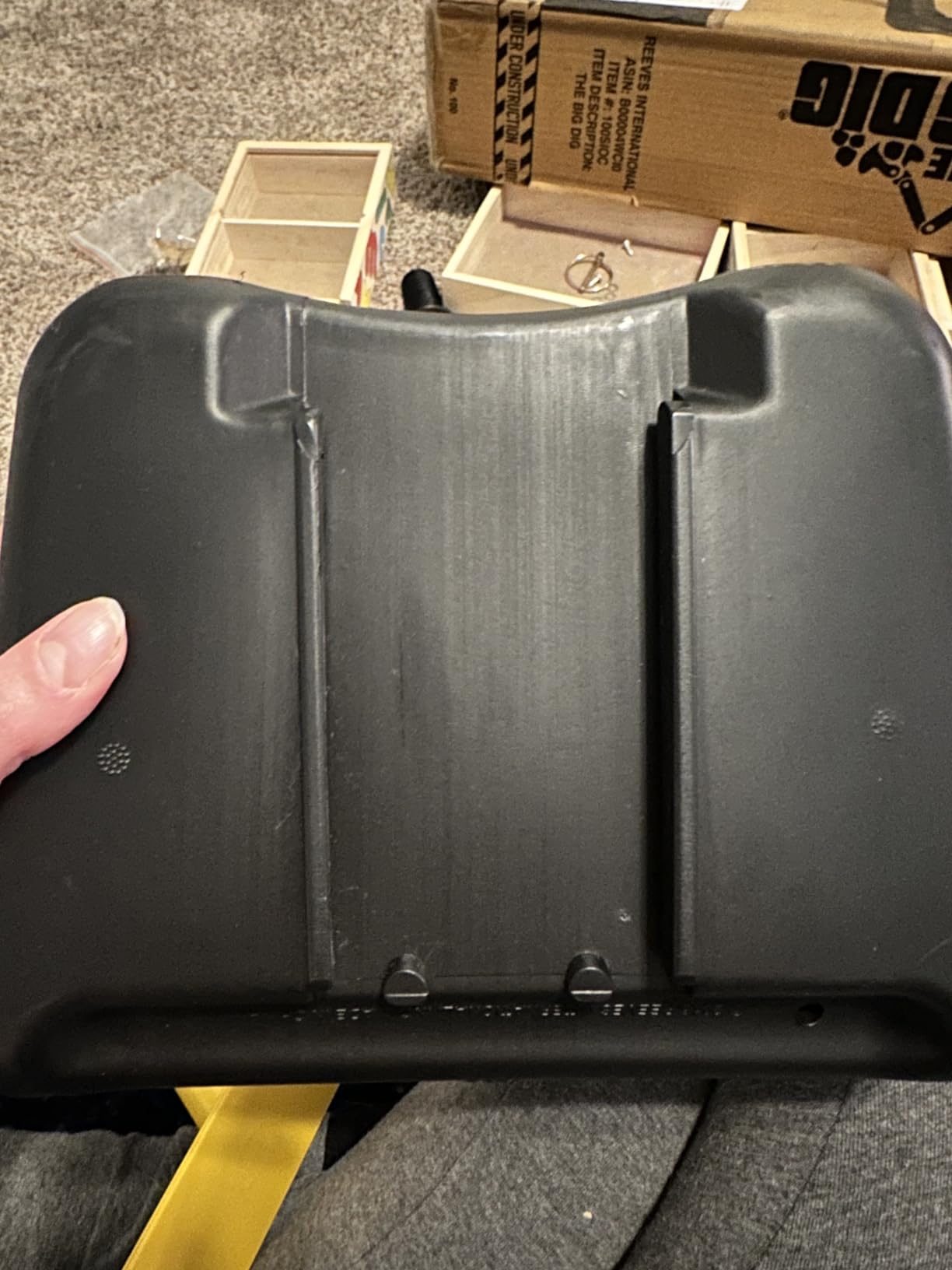
The honest weakness is assembly, and it is worth being blunt about it. The seat has no pre-drilled screw holes, so an adult has to drill them, and the cluster of washers and nuts at the main joint takes real patience. Budget 30 to 45 minutes with the instructions and a second pair of hands nearby.
Several owners recommend spraying the moving joints with a silicone lubricant once a season, and after a wet winter we agree. The 9 pound item weight also means one adult can move it between the sandbox, the beach and the backyard without help, which no big powered machine in this category offers.
Check the reach before you buy
Measure the distance from the centre of your sandbox to its far edge. Anything under about 30 inches and this model works well, because the child can sit centred and still reach the corners. The seat height is low and the profile is only 5.2 inches tall, so it also sits under a sandbox cover if you use one.
Because it is steel with plastic seat and bucket, it is not a toy for a parquet floor. Our rule is that it lives outdoors and comes in for sand mess on a mat, not for indoor carpet play on a regular basis.
Where it falls short
Children past about eight tend to grow out of the fixed seat position, and the manufacturer guidance stops at 8 years even though owners report longer use. If you are buying for a six-year-old who is nearly 100 pounds, the 110 lb capacity still covers them with room to spare.
It is also the wrong pick for a child who only wants to drive. There is no drive mode here at all. If your child wants motion rather than digging, read our guide to ride-on tractors for kids instead.
2. stargo Steel Kids Excavator – the best-built frame for beach and snow
stargo – Steel Kids Excavator Ride on Toy Sand Digger for Kids rotates 360
- Solid steel base and metal scooper with secure bolts
- Weather-resistant frame for sand
- dirt and snow
- Two-handed rubber-grip controls
- Folds down small enough for a car boot
- Heavier than all-plastic diggers for small riders
- 5 percent one-star share on assembly and missing parts
The stargo is the most purely metal machine in the group, and that single decision explains nearly all of its strengths and its one drawback. There is no plastic linkage to sand up or crack. The frame, the bolts and the digging scooper are all metal, which is why owners describe it working equally well in dry sand, wet beach sand and snow.
Metal scoopers handle damp packed sand noticeably better than plastic ones. When sand is wet it clumps and sets into the bucket, and plastic buckets flex; the stargo bucket just carries the load back to the pile.
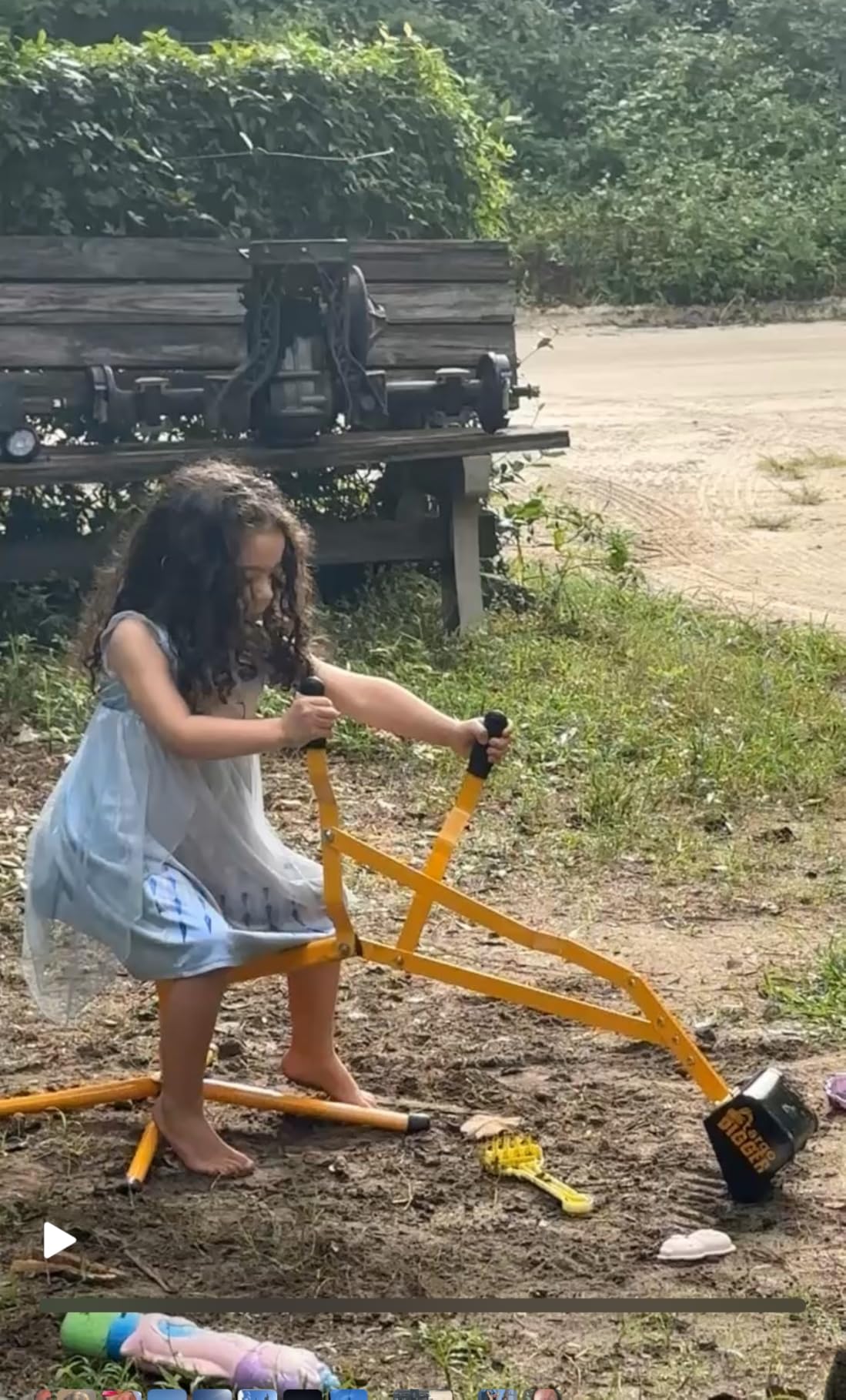
The folded and expanded dimensions are the confusing part, and this is one listing where the two sets are genuinely describing different things. Packed it measures 17 x 12 x 6 inches; fully assembled and extended it measures 31 x 31 x 35 inches. So the 35 inch height is real, and you need vertical clearance for it under a cover or inside a covered sandbox.
The 3.8 kg item weight is the tradeoff for the steel. A five-year-old can push it around a lawn, but a three-year-old will need help moving it across a patio. Buyers also note the highest complaint cluster is assembly and the occasional missing part, not structural failure.

Does the 35 inch height matter for your setup?
Yes, and this is the pick to measure carefully. A wooden frame sandbox with a hinged lid, or a covered sandbox, may not give you the vertical room this digger needs with its arm up. A molded plastic sandbox with an open top handles it fine.
If your family does beach trips, the packed size is a genuine advantage. It fits in a hatchback boot and goes straight from the car to the sand, which is a bigger deal in practice than the weight figure suggests.
Where it falls short
It is the heaviest of the compact manual diggers, and several buyers flag that as a problem for very young riders who want to move it themselves. The 5 percent one-star share also points at assembly friction rather than the steel itself.
The manufacturer lists a wide 3 to 12 year age range, which in practice means it works for a long time. That makes it one of the better hand-me-down candidates in this roundup, especially if the next child is bigger rather than smaller.
3. Costzon Ride-On Sand Digger with Wheels – wheels that let kids reposition themselves
- Wear-resistant wheels roll on sand
- grass and hard surfaces
- 360 degree rotating seat with movable arm and bucket
- Rubber two-handed handles
- Sturdy metal frame with eco-friendly paint
- Some wear points are plastic rather than steel
- Manufacturer age guidance stops at 6 years
Wheels are the feature here, and they change how a sandbox is used. Instead of digging in one corner for twenty minutes, a child can dig in one corner, roll along the edge, and dump somewhere else. Owners consistently describe this as the difference between the toy being used for one week and the toy being used all summer.
The 360 degree rotating seat works the same way it does on the steel diggers: turn the whole seat and arm toward the dig site rather than trying to reach around a fixed frame. Combined with the wheels, a small child gets a surprisingly large working area out of a modest sandbox.
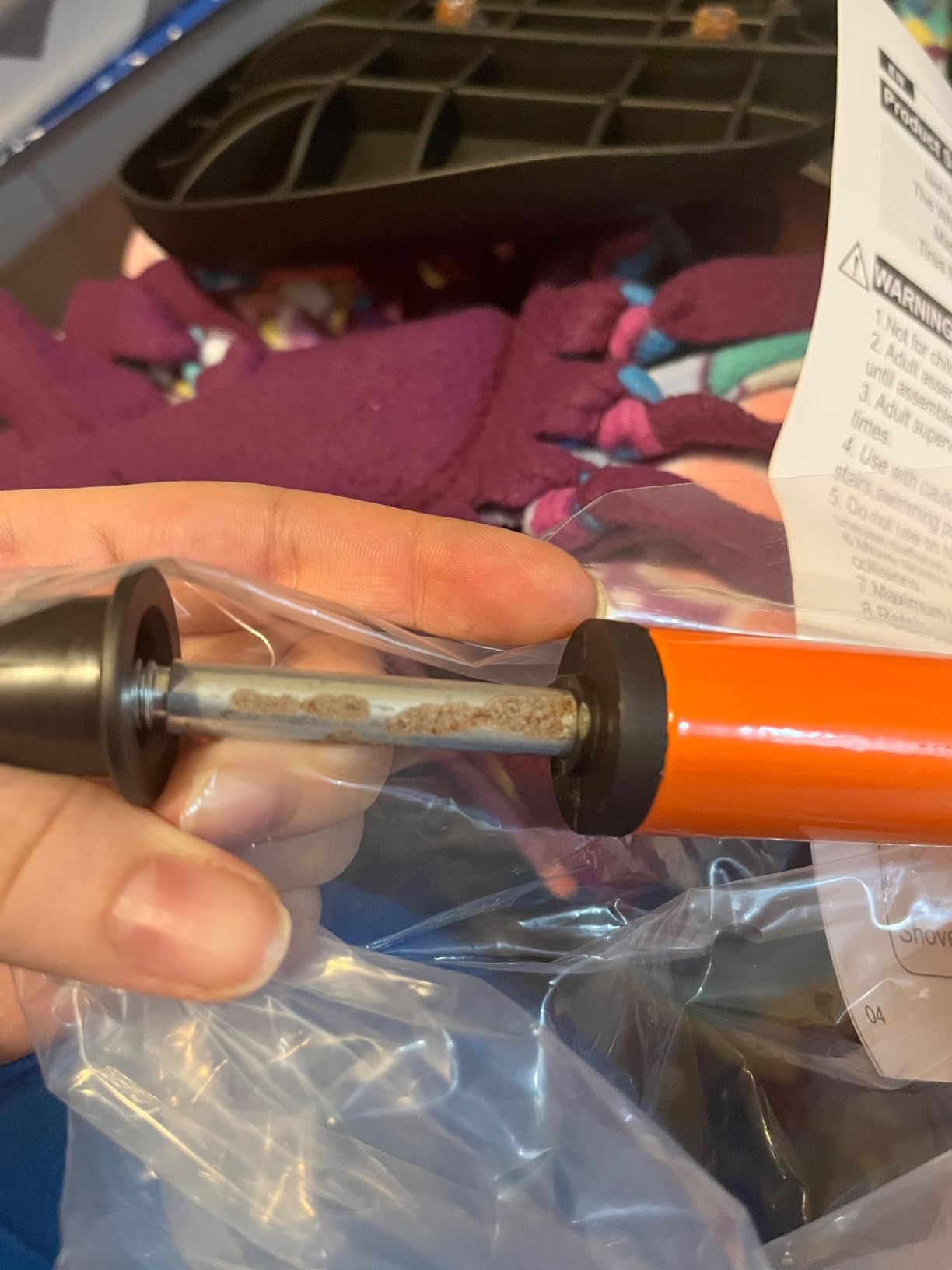
Build quality is a mixed proposition. The frame is steel with an eco-friendly paint coating, and it holds up across seasons, but a few of the wear points, including parts of the arm and bucket connection, are plastic. Those are the places to check each spring before sand grit turns them into hinges.
Assembly reality is about 20 to 30 minutes and nothing unusual. The 9 pound weight means one adult can lift it, and the listed dimensions of 23 x 13 x 33.5 inches give you a straight answer on whether it fits under a cover.
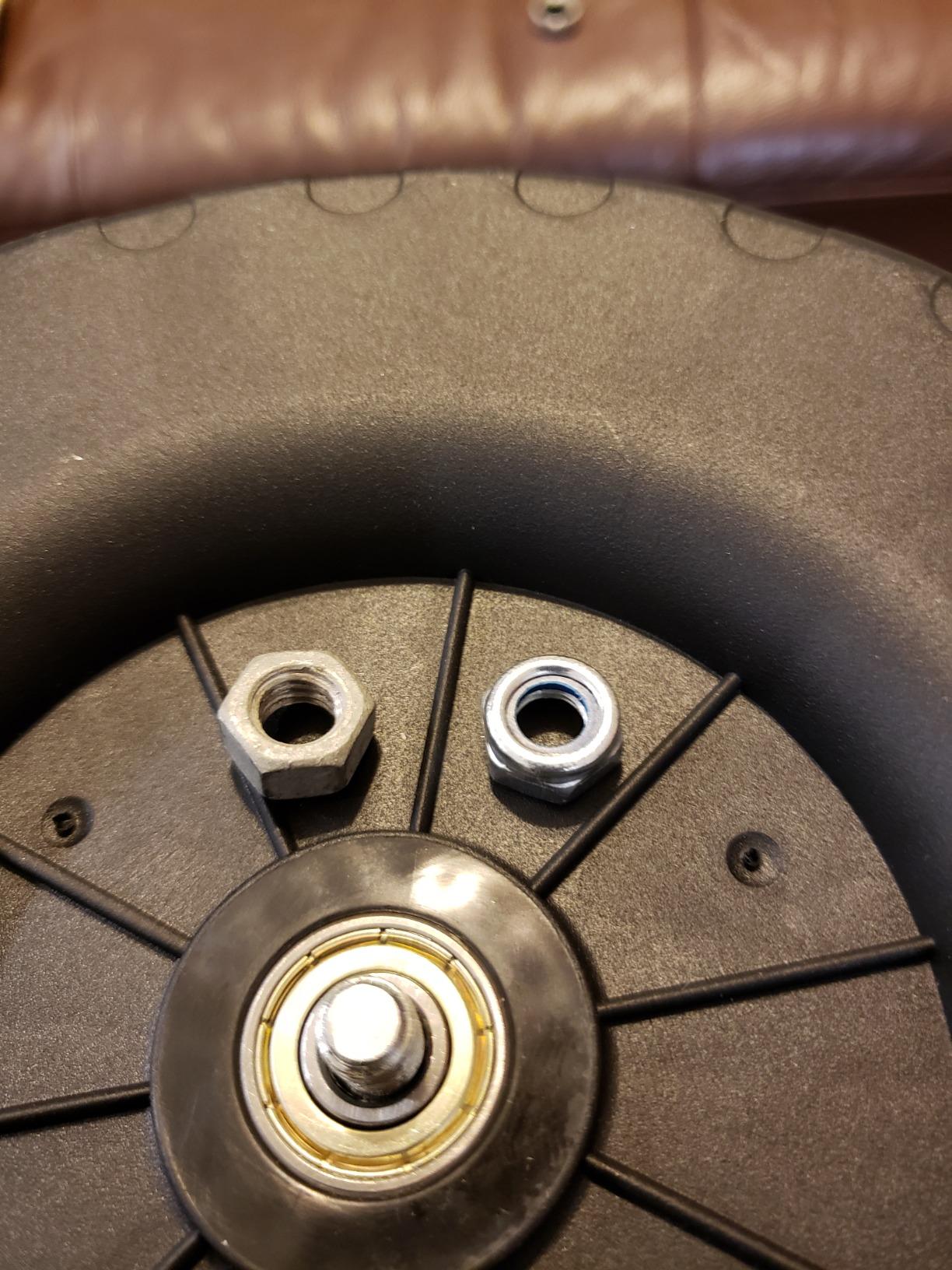
Wheels or a flat base: which suits your surface
Wheels win on sand, grass and anything with a slightly uneven surface, and they lose on one thing: fine dry sand deeper than about 10 cm, where four small wheels dig in rather than glide. On a deep beach blanket or a heavily filled sandbox, the flat-based diggers hold position better.
If your sandbox sits on lawn, this is the pick. If it is a deep molded plastic tub packed to the rim, weigh the wheel advantage against the flat base before you commit.
Where it falls short
The manufacturer age guidance tops out at 6 years, which is shorter than most competitors. In practice plenty of families use it past that, but if you are buying for a seven-year-old approaching their weight limit, the rated 110 lb capacity is the number to watch.
The plastic wear points are the honest limitation. Owners generally rate them as adequate rather than excellent, so if your child digs aggressively in gravel rather than sand, expect to inspect the arm joint more often.
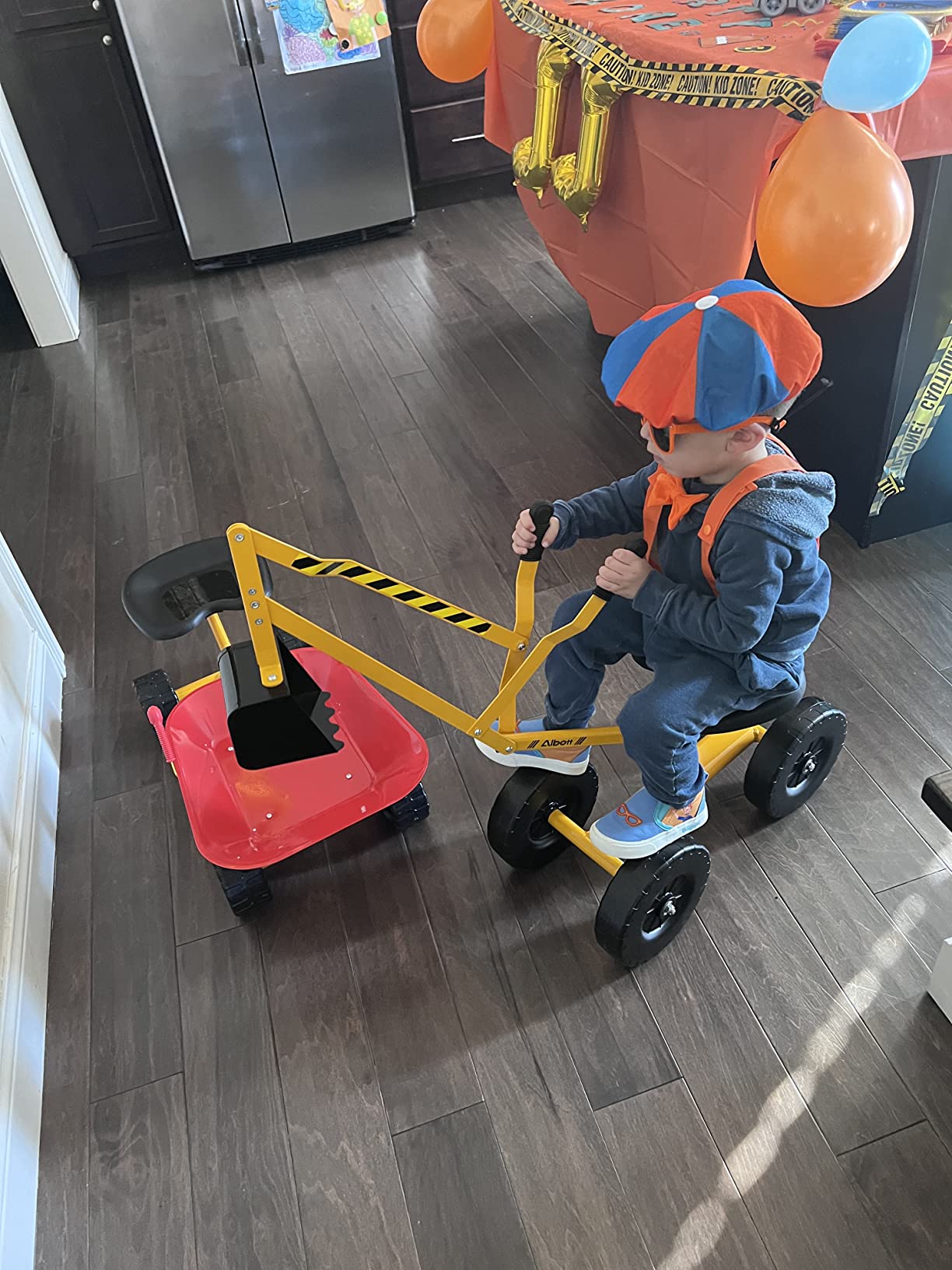
4. Albott Ride-On Digger with 8-Inch Wheels – the highest capacity in a sane footprint
- 8 inch wheels give the best grip in deep loose sand
- 150 lb weight limit is the highest here
- Pre-attached screws and nuts simplify assembly
- 360 degree seat with tracking arm and bucket
- Bulky and heavier than small plastic diggers for adult repositioning
- Small share of 2 and 3 star ratings on durability
Wheel size is the whole argument for this one. Eight inch wheels are large relative to the rest of the category, and in deep, loose sand they are the difference between rolling freely and bogging down. Reviewers credit the wheels repeatedly for letting children move around the sandbox independently instead of waiting for an adult to drag them.
It also carries the highest weight limit in the set at 150 pounds, with manufacturer guidance for ages 3 to 12. That makes it the one we would buy for a family with two children of very different sizes, since the same machine can serve a four-year-old and an eleven-year-old.
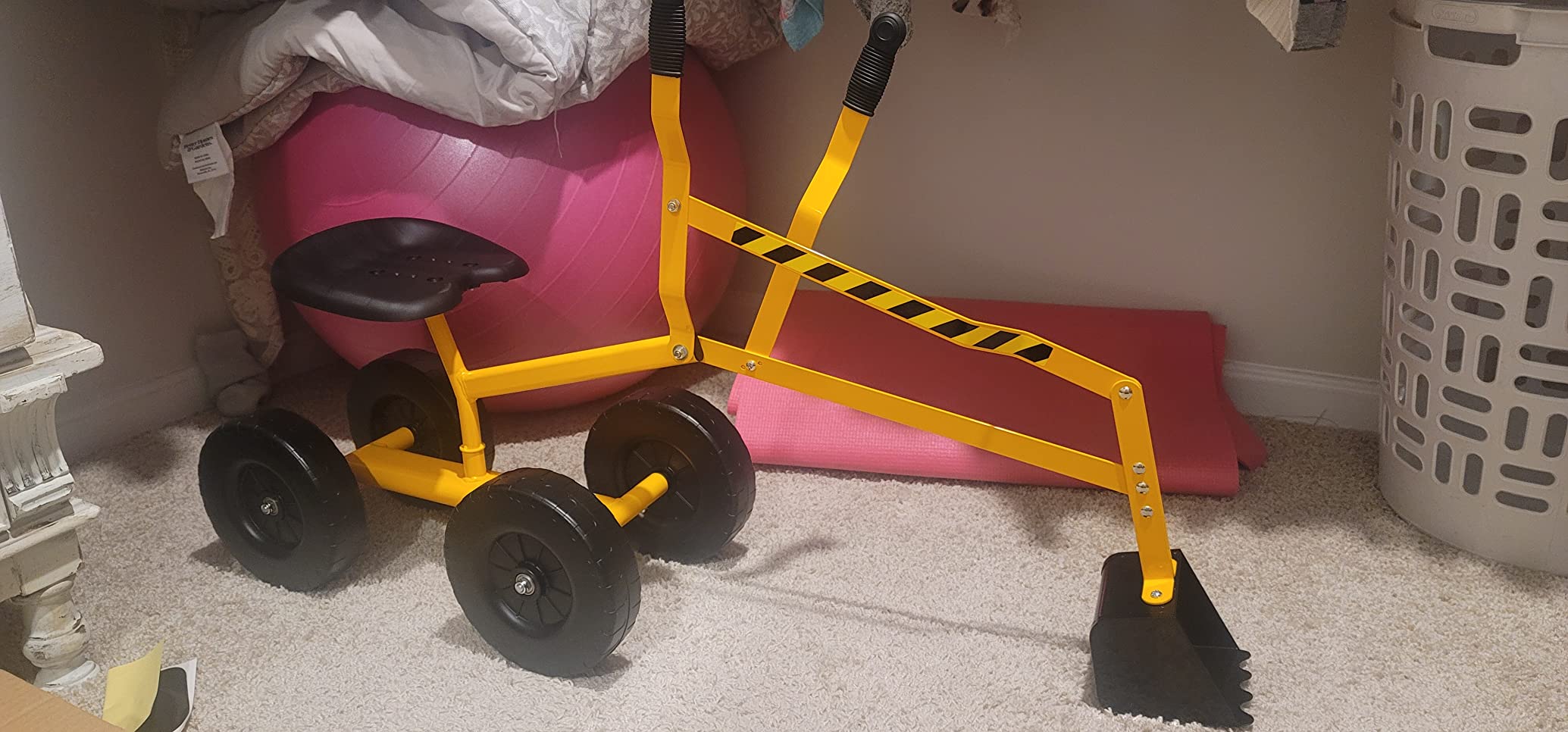
Assembly is unusually painless here because all the screws and nuts come pre-attached to the frame body. That single design decision removes the fiddliest stage of building a digger and it took roughly 20 minutes from box to sand on our second attempt. The brand also lists a one-year warranty and a 30-day return guarantee.
The catch is bulk. At 9.7 pounds and 41 x 10 x 15 inches, with a fully expanded size of 47 x 13.4 x 33.9 inches, this is a large machine. It wants a big sandbox, not a small molded tub.
Who should pay the extra size for the 150 lb limit
Buy for the headroom, not for the wheels. If your youngest is around 40 pounds, a 110 lb machine will do the same job for years. If you are buying for a child who is already eight or nine, or you plan to hand it to a sibling, the 150 lb limit is the reason this one makes sense.
The expanded height of 33.9 inches matters if your sandbox has a cover. Check the clearance before you order, and note that the length of 47 inches wants a long rectangular sandbox rather than a small square one.
Where it falls short
For a toddler under three, this is too much machine. The seat height and the 41 inch length mean a small child cannot reach the ground to propel it, and the bulk makes adult repositioning a two-person job on a patio.
A small share of reviews sit at two and three stars, mostly around build consistency. Nothing suggests a structural category problem, but it is worth checking every bolt after the first few weeks of hard digging.
5. rolly toys CAT Construction Ride-On – licensed CAT styling on resin
rolly toys CAT Construction Ride-On: 360-Degree Excavator/Shovel Digger, Youth Ages 3+ , Yellow
- Genuinely licensed CAT branding and realistic styling
- 360 degree rotating resin shovel plus four rolling wheels
- Working dual-action levers
- Backed by a 3-year manufacturer warranty
- All-plastic resin body rather than steel
- 75 lb seat limit is the lowest here
- Highest one-star share in the roundup at 8 percent
If your child is brand-obsessed, this is the one. The CAT licensing is genuine rather than a sticker, and for a preschooler who has already memorised construction equipment logos, that branding does real work in keeping them engaged.
Mechanically it is a genuinely clever design. The resin shovel rotates 360 degrees around the base, and the four rolling wheels mean a child can scoop in one spot and roll to dump in another, so the dig-and-move cycle works without an adult resetting anything. The dual-action levers are real levers, not cables.
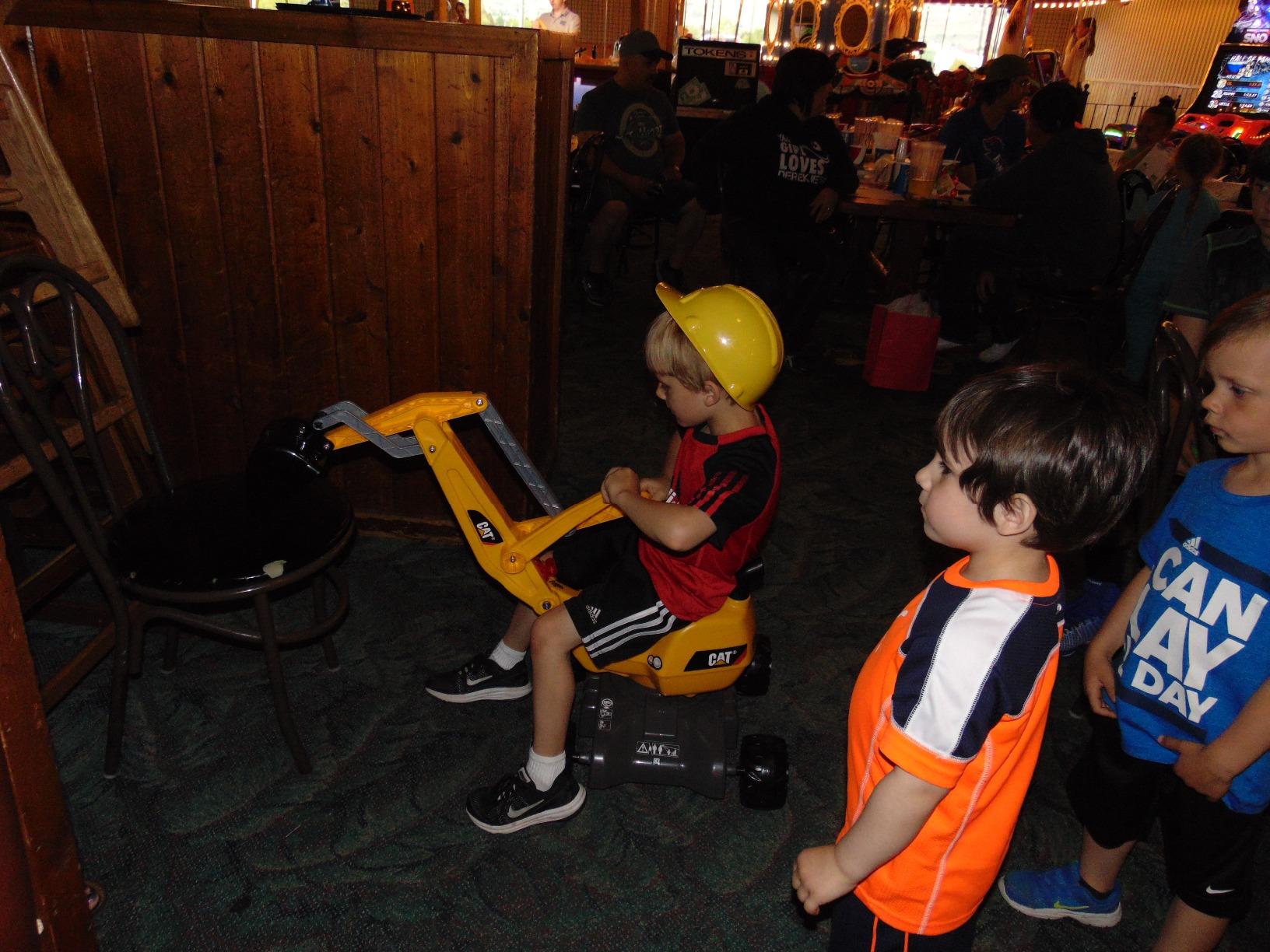
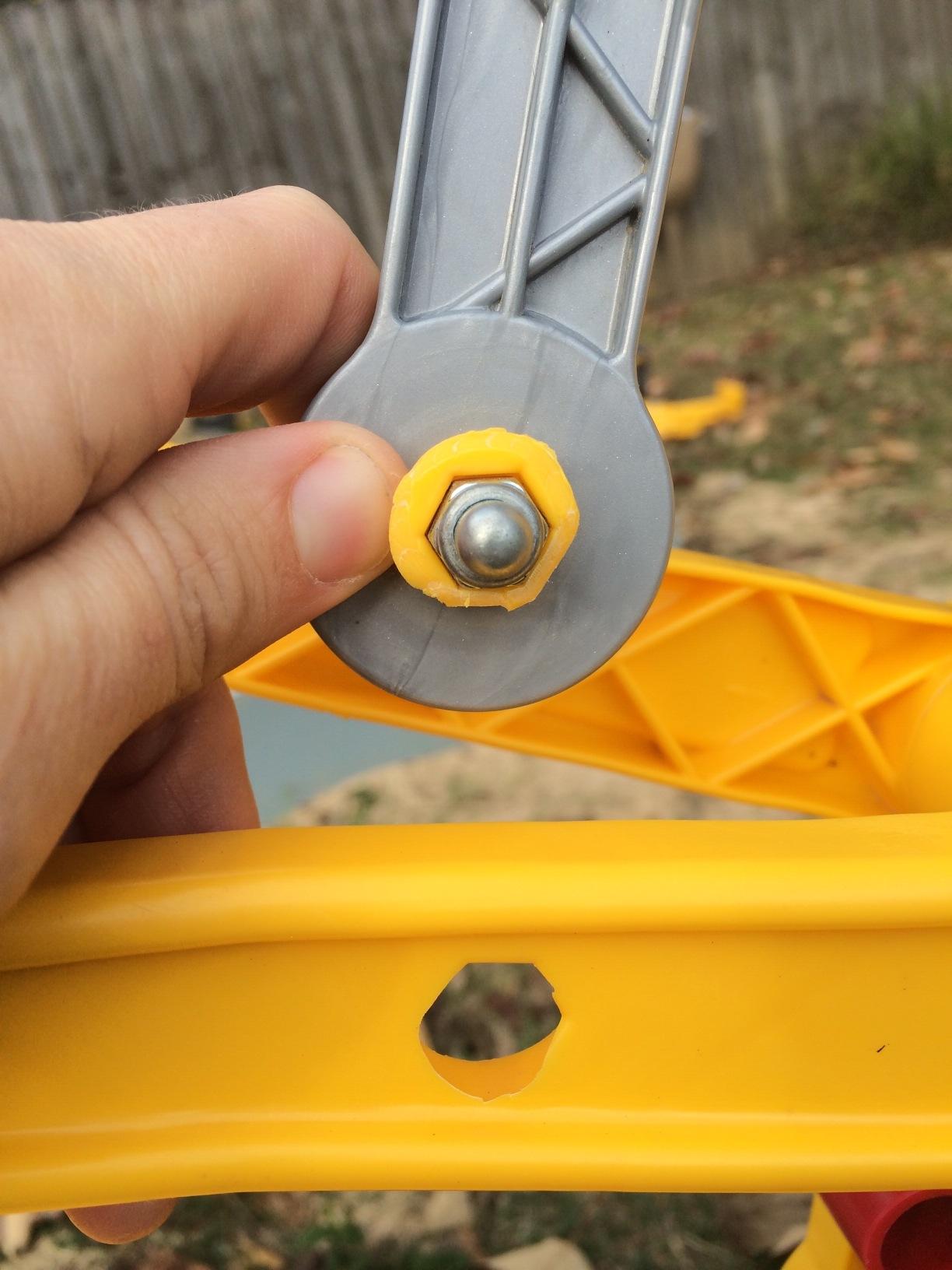
The body is blow-molded resin with rubberized tread strips on the wheels, and it holds up well on sand and snow. What it does not do is match steel for abuse. If your child treats it as a digger to climb on rather than a digger to dig with, expect scuffs and eventually a cracked arm.
The 3-year manufacturer warranty against defects is genuinely longer than most in this category, which partly offsets the material compromise. At 19 x 16 x 13 inches it is also compact, and 7 pounds is easy for one adult to carry to the beach.
Does the 75 lb seat limit rule it out for you
For most children it will not, because 75 lb covers roughly ages three to six. But if you are buying for a seven-year-old or older, this is the pick to skip, and the lower limit is the single most cited reservation among owners.
It also suits smaller sandboxes better than the wheeled steel diggers, because the footprint is genuinely compact. On a molded plastic sandbox you can fit on a small patio, this one works where an 8 inch wheel digger will not.
Where it falls short
The rating distribution is the widest in this set, with an 8 percent one-star share. That points to resin cracking and general heft complaints rather than one specific defect, but it is worth knowing before you buy.
It is the highest priced of the manual diggers here, and for a sandbox specifically that money buys branding and wheels rather than steel or capacity. That is a fair trade, but it is a trade.
6. HOMCOM Ride-On Excavator Pull Cart – the toddler starting point
HOMCOM Ride On Excavator Pull Cart Kids Digger with Horn Ages 18-48 Months
- 2-in-1 digger and pull cart conversion
- Foot-powered so toddlers steer alone
- Under-seat storage plus honking horn
- Backrest and anti-rollover device for stability
- All-plastic build with reported part failures
- Bucket control bars are thin and can snap
- Instructions are small and hard to follow
This is the only pick in the roundup rated for children from 18 months, and that makes it the genuine first digger rather than just a small one. The foot-powered movement means a toddler scoots along with their feet on the ground, which is a completely different motor skill from a three-year-old straddling a steel frame.
The 2-in-1 conversion is the clever part. Attach the rope at the back and the same toy becomes a pull cart, so it works for a child who can walk but cannot yet coordinate sitting, steering and digging at the same time.
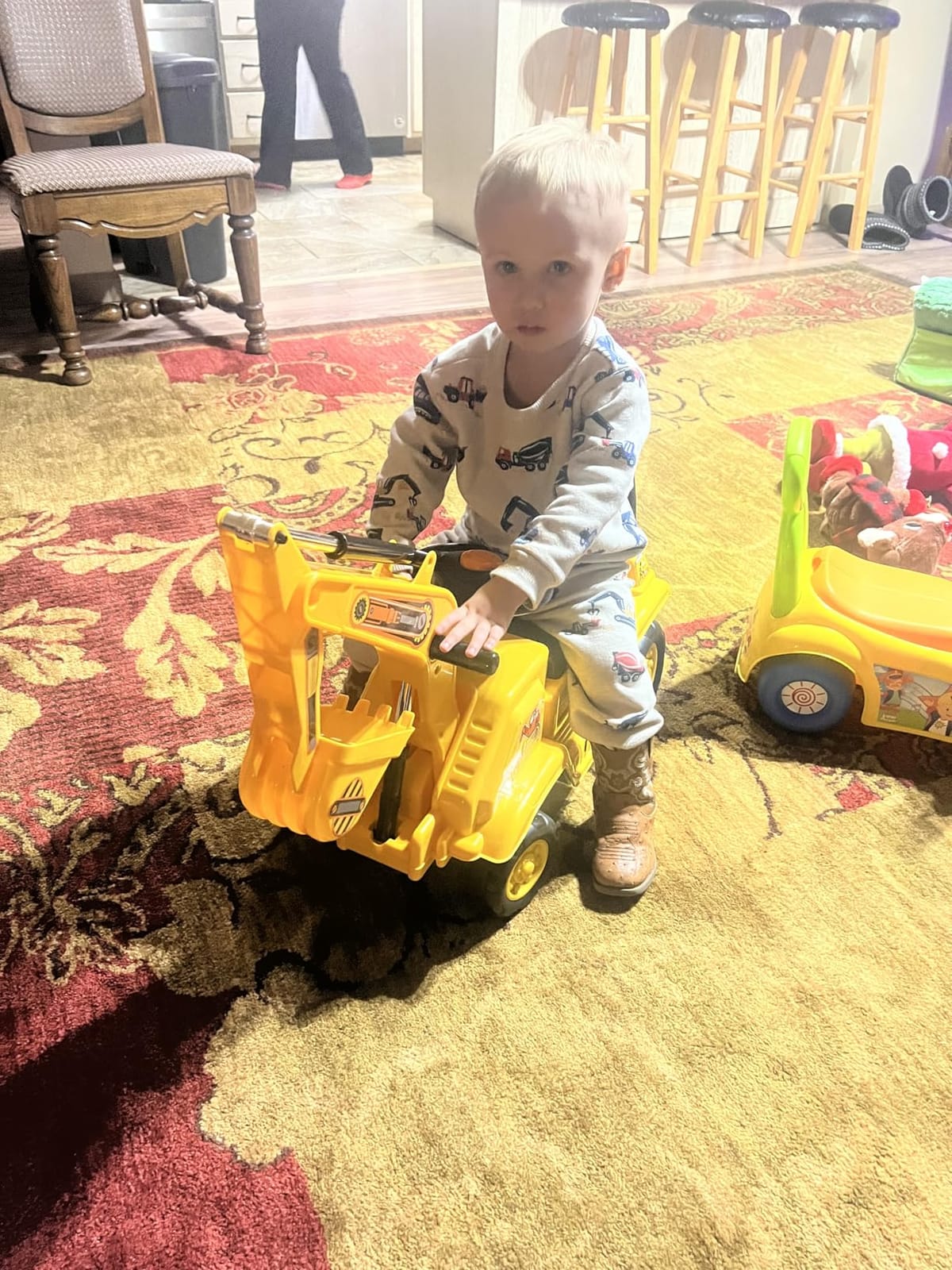
It is also one of the few products here with a published safety standard, listed as ASTM F963-17 and HR4040. The backrest and anti-rollover device add stability, and textured wheels give grip on a patio or hard surface.
Durability is the weak point and owners say so plainly. Several reviews describe the thin plastic bucket control bars snapping or needing repeated repairs, and the 8 percent one-star share reflects that rather than anything else.
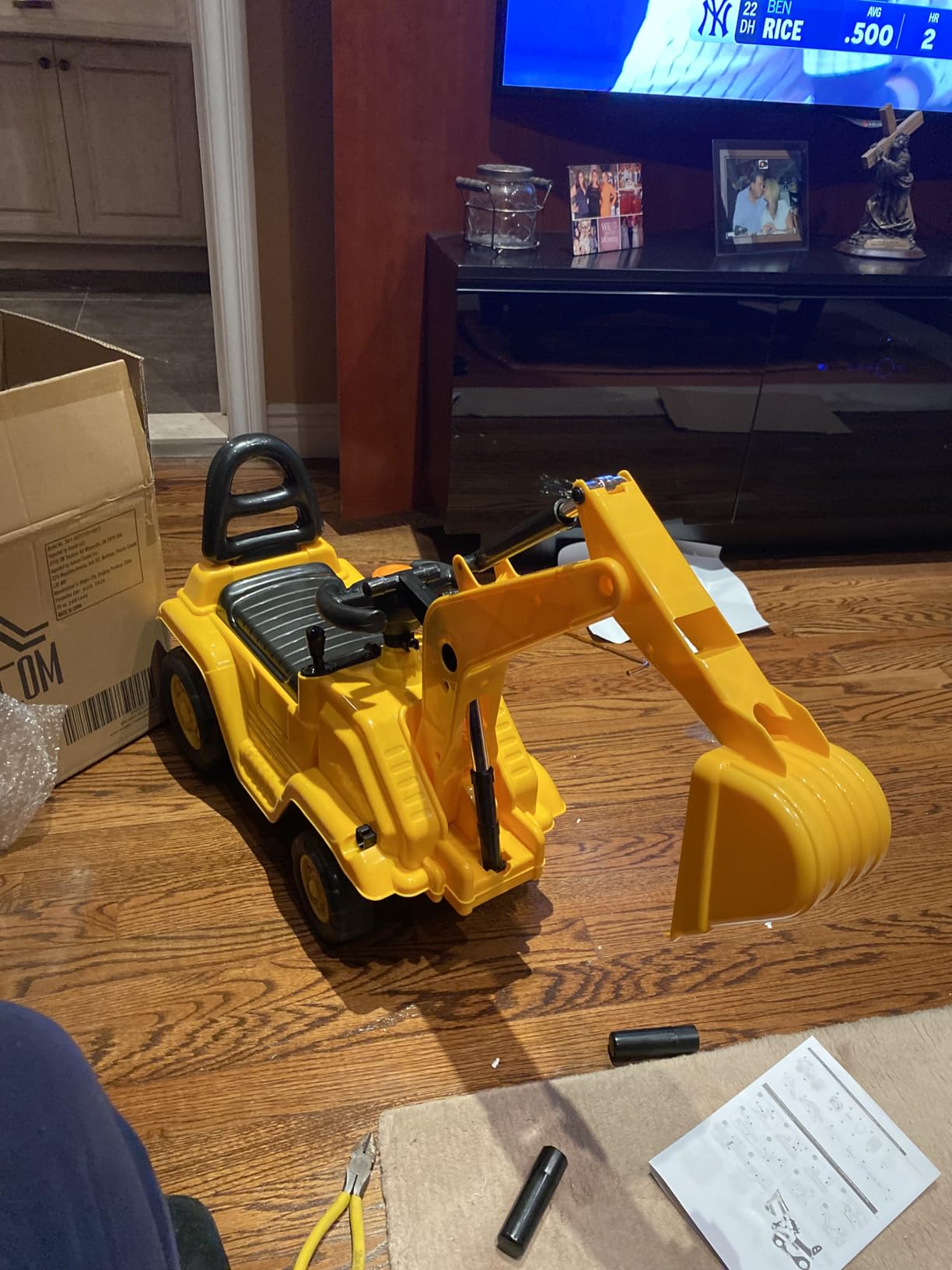
Is this too young for a sandbox
No, and it is often the better first purchase. A toddler with a 66 lb capacity limit will happily sit and operate the lever for twenty minutes, which is a gentler introduction than being dropped onto a 150 lb steel digger built for a much bigger child.
At 34.25 inches long it is longer than it is wide, so check your sandbox depth as well as width. In a very shallow molded tub the digger arm may reach over the side rather than into the sand.
Where it falls short
The plastic linkage bars are the first thing to fail under heavy digging, and sand grit accelerates it. Rinse the joints after every session and you will get more life out of it, but do not expect hand-me-down durability.
It is a toddler toy rather than a long-term one. Most families we would pair it with a steel digger two or three years later, once the child outgrows the 66 lb limit and the foot-to-floor posture.
7. Svan Crane Digger Ride-On – light enough to carry with a baby in the other arm
Crane Digger Toy, Ride On w Safer Stabilizing Base- Kid Outdoor Excavator
- Light enough for one parent to carry single-handed
- Works in sand
- snow or dried corn for indoor sensory play
- 360 degree rotating arm and seat
- Customer service replaces broken units quickly
- Thin metal in handles and arms with reported bending
- Bucket and seat are plastic
- All hardware arrives mixed in one bag and needs tools
- Described as wobbly after assembly
The reason to like this one is weight. It is the only digger in the set light enough for a parent to carry one-handed while holding a baby, which makes it the practical answer for families who want sand digging at the beach but not a second pair of hands.
It works in sand, snow, and also dried corn for indoor sensory play, which is a genuinely useful fallback when the weather keeps the sandbox frozen. The 360 degree rotating arm and seat give a smooth digging motion, and dual hand controls build coordination.
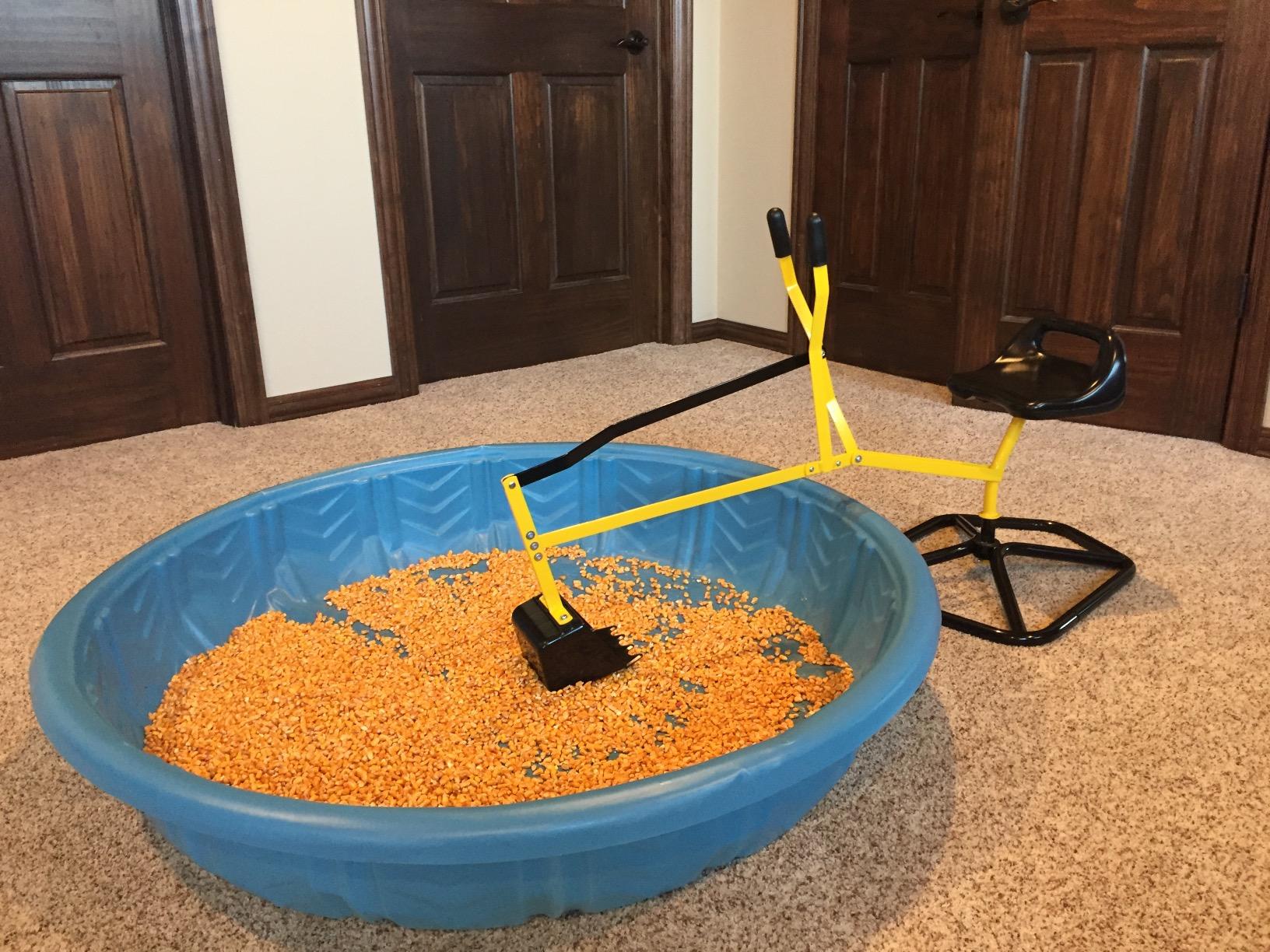
Assembly is the weak point. All the nuts and bolts arrive mixed together in one bag, tools are required to tighten them, and several owners describe the finished unit as wobbly. Budget 45 minutes and have a wrench to hand.
Feedback splits into two clear camps. Some families have had it for years and dig in it constantly. Others report the thin metal in the handles and arms bending or breaking within weeks. The 11 percent one-star share is the highest in this roundup, and we would want to see that number before recommending it as a primary digger.
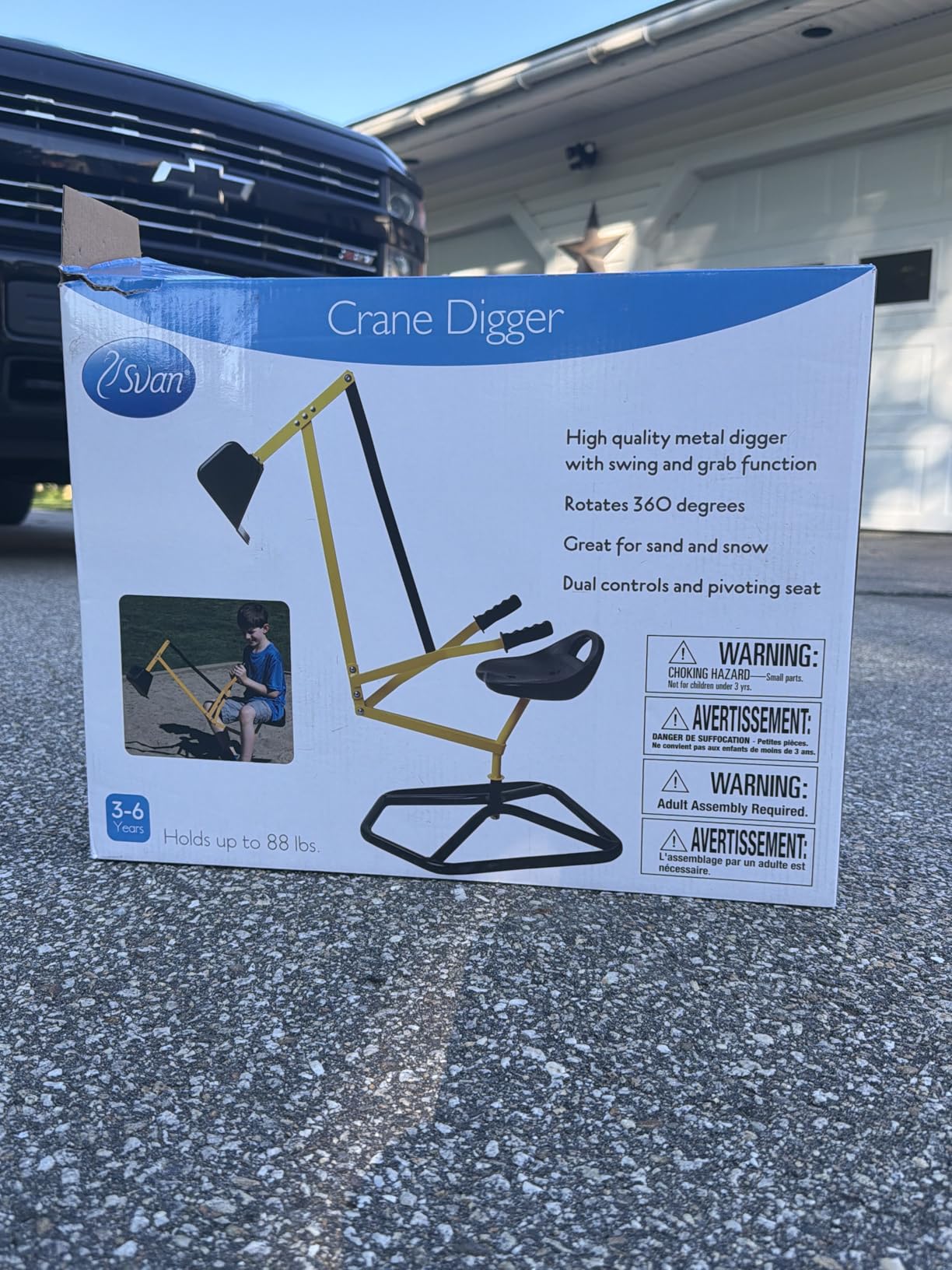
When portability matters more than frame thickness
Buy it if the beach trip or the grandparent’s garden is the main use case and you will be carrying it alone. Its compact 21.2 x 7.1 x 17.1 inch footprint also fits inside a small sandbox more easily than any wheeled model here.
Skip it if the digger will live in one place. If you are setting it up in a backyard sandbox and leaving it there, the thin metal arms are a risk with no compensating benefit, and a heavier steel model costs you nothing extra in effort.
Where it falls short
The manufacturer lists the recommended age as 4 years, which is unusually narrow for this category. Below that, the 88 lb capacity is not the constraint, the ergonomics are.
Steel bucket and seat are the parts a child actually touches, and both are plastic here. For a toy whose selling point is digging, that is the wrong place to economise.
8. Best Ride On Cars CAT Push Digger – fits a sandbox you barely have room for
- 85 percent five-star share with only 2 percent one-star
- Officially licensed CAT design
- Easy one-person assembly
- Under-seat storage and sounds keep a toddler occupied
- Seat sits high so children under 15 months cannot reach the ground
- Front bucket can be a bump hazard when running
- Primarily a push car rather than a working digger
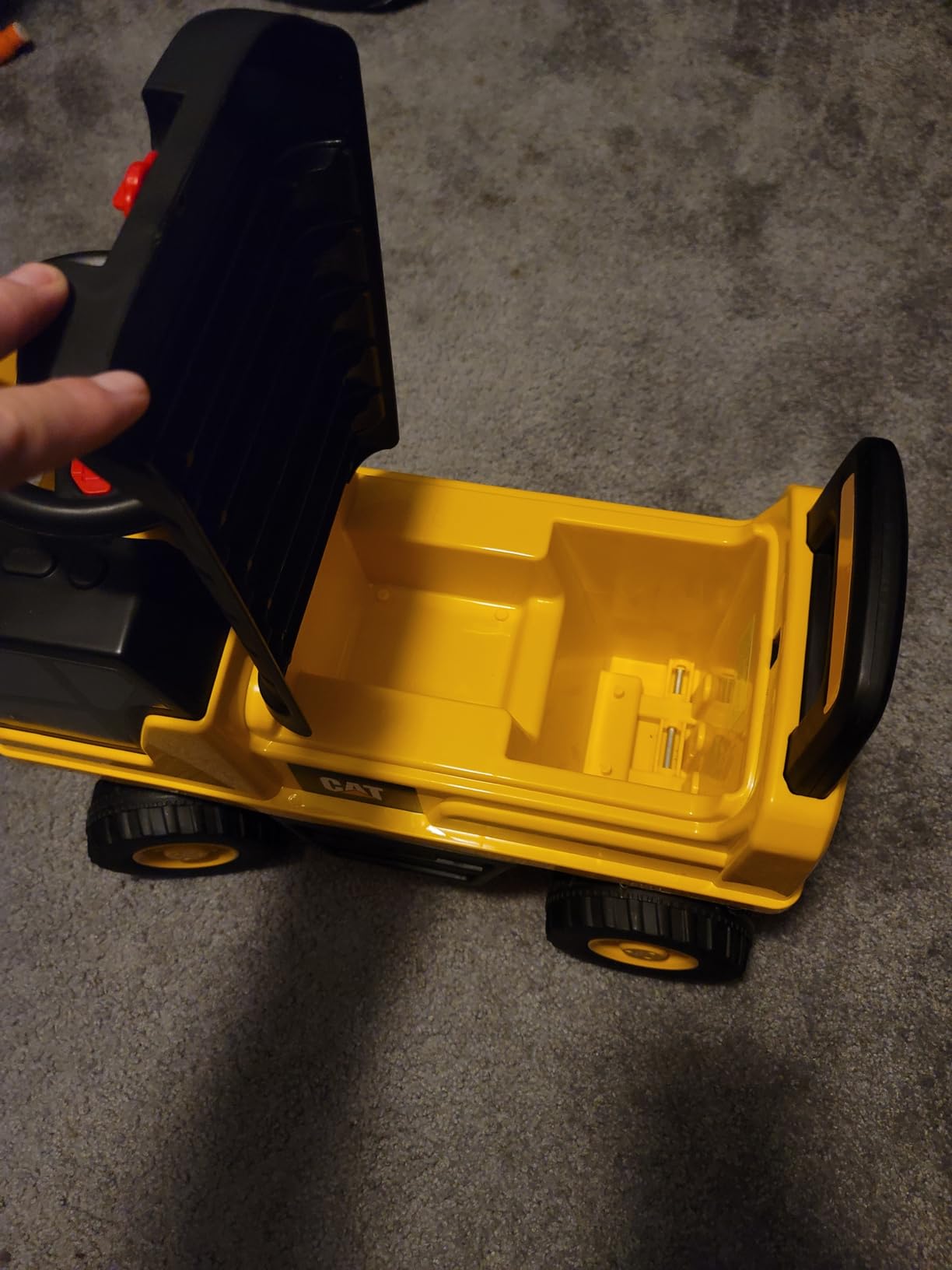
This is a push car, not a digger, and we are including it because it solves a specific sandbox problem: the toddler who is not ready for levers but whose sandbox is small enough that a steel digger will not fit. At 11 x 21 x 14.3 inches it is the most compact unit in the roundup by a wide margin.
The rating distribution is the best in the set. An 85 percent five-star share and a 2 percent one-star share is a narrower spread than anything else here, and owners describe it as still going strong a year after purchase.
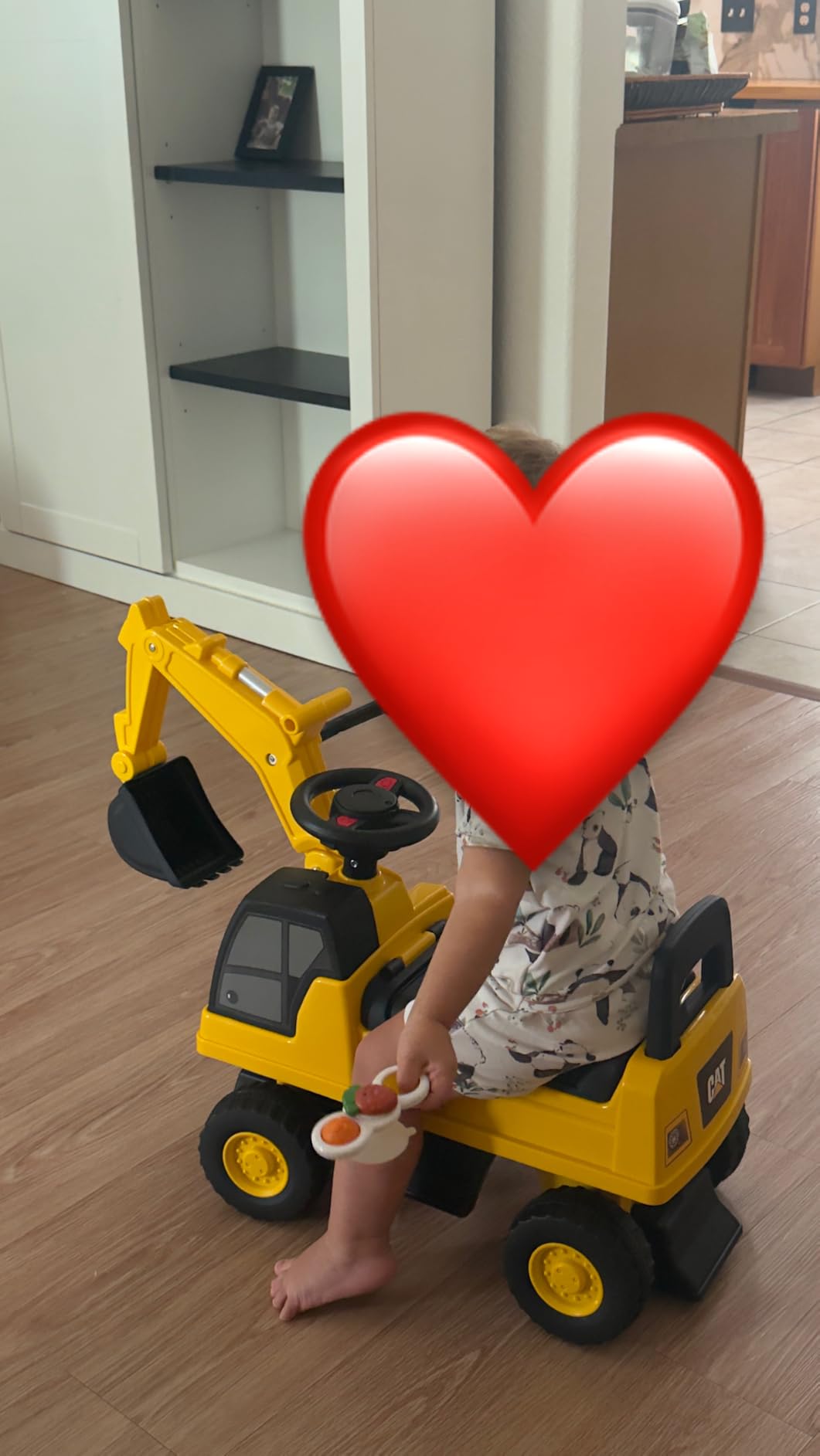
The steering wheel has music and horn sounds and there is an under-seat storage compartment, which is often what actually holds a toddler’s attention. Assembly is genuinely one-person and fast, with no drilling and no mixed hardware bag.
One caution worth taking seriously: the listing records the 6.2 pound item weight in the weight capacity field. That is a spec-sheet error, not a capacity, and it is a good example of why you should sanity-check the numbers on any push car listing before you order.
Is a push car an excavator in any real sense
Only visually. There are no working digger controls here. What the child gets is a ride-on CAT vehicle with a functional front bucket for scooping at ground level and steering that works by tilting the body. For a two-year-old in a small sandbox, that is often exactly right.
If your child is at the stage of deliberately scooping and dumping, move up a size. If they are still mostly cruising, this keeps them happily occupied inside a sandbox footprint you would struggle to fill with anything larger.
Where it falls short
The raised seat height is the practical issue. Children under roughly 15 months will not reach the ground to push it, and the listing’s own age range starting at 18 months already reflects that.
The protruding front bucket is a bump hazard for a running toddler, and it is plastic, so it will scuff. Neither is a reason to skip it, but both are reasons to supervise rather than park it in a busy playroom.
9. Childrensneeds Foldable Steel Digger – thickest steel, built for bigger children
Sandbox Digger Toy Excavator with Wheels- Foldable Playground Equipment for Outdoor Play w/No-Bend, No-Pinch Heavy Duty Metal Ride On Sand Construction Backhoe Fun (Ages 4-12) (Yellow)
- Thick steel that reviewers compare to roughly double typical toy truck gauge
- Folds flat so it moves between sandbox
- playground and beach
- No-pinch safety washers protect small fingers
- Customer service has shipped replacement parts including a new digging assembly
- Heaviest unit here at 14 lb and too large for smaller children
- Wheels have no brake so it rolls against the bucket
- Hardware can loosen from sand play and need re-tightening
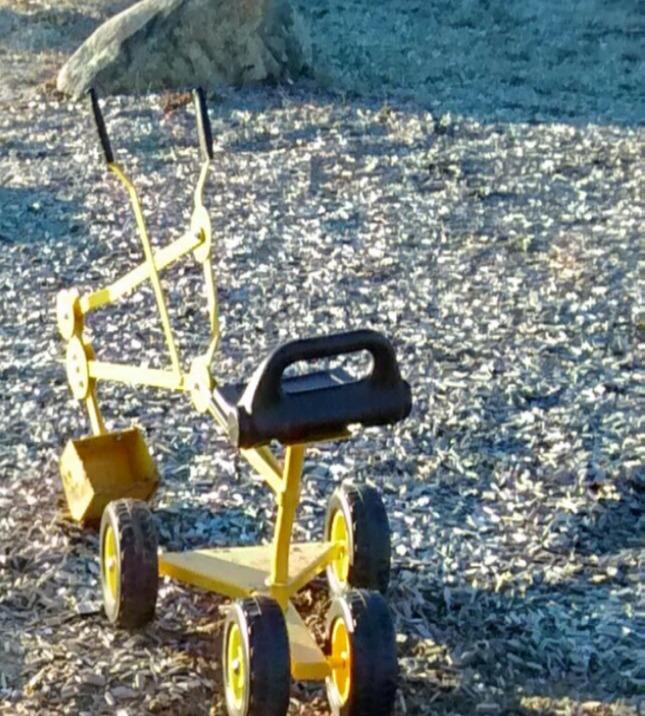
This is the one we would buy for a family with older children. The steel gauge is the headline: owners who compared it to their existing toys describe the metal as roughly twice the thickness of a typical ride-on truck, and the digging arm ships as one welded piece rather than something bolted together.
The safety engineering is unusually thoughtful for a toy at this level. Large no-pinch safety washers mean fingers cannot get caught in the joints, and a wide front axle keeps the base from tipping on uneven ground. It also passes US toy testing standards, which is stated explicitly rather than implied.
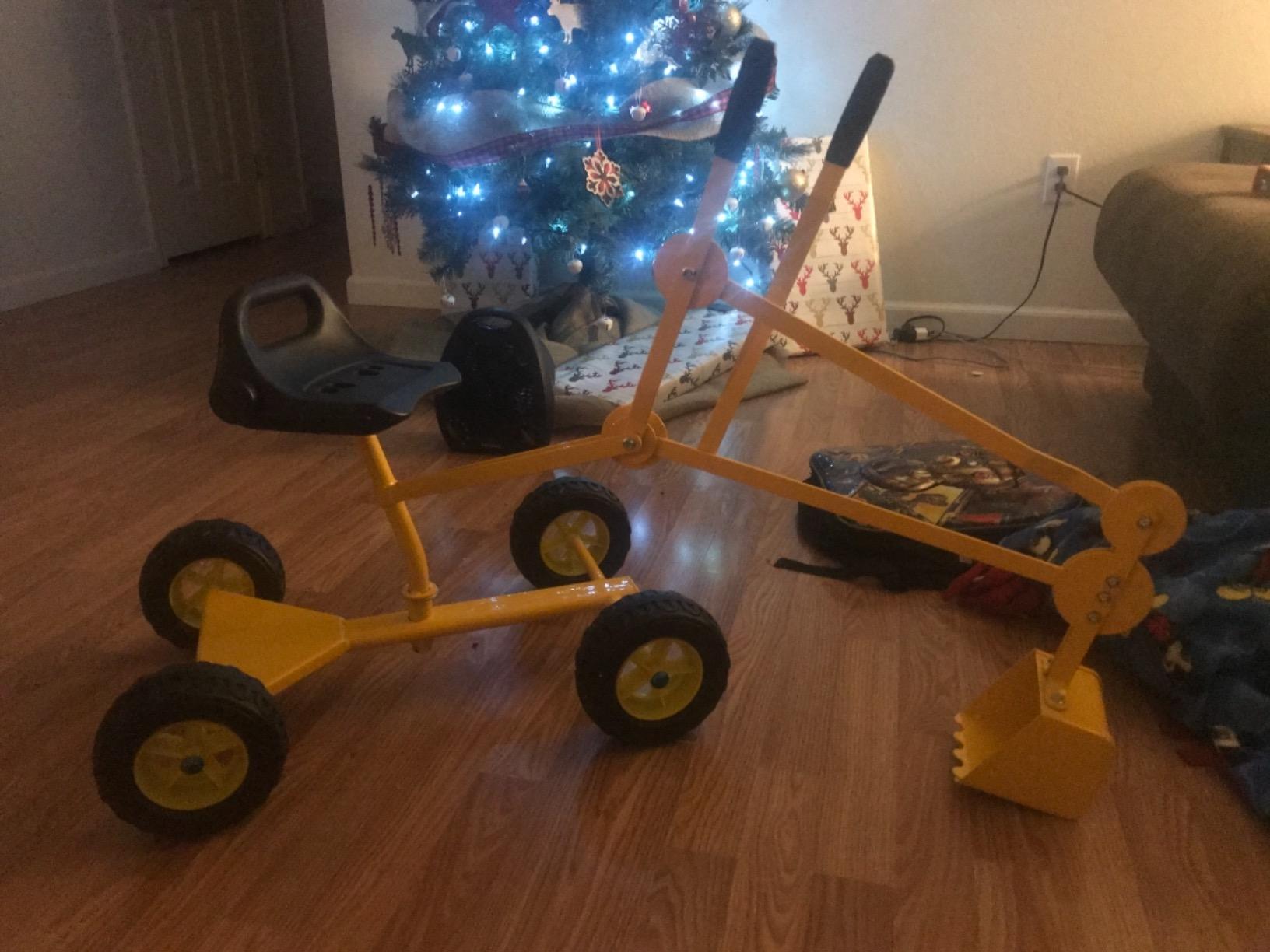
The fold-up design is genuinely useful. It moves between sandbox, playground, beach and an indoor playroom, which means one expensive machine covers four locations. The manufacturer also offers a one-year warranty with parts replacement, and owners report customer service shipping an entire new digging assembly.
Scale is the drawback. At 14 pounds and 36 x 24 x 15 inches it is the largest and heaviest unit here, and several parents say it is too much for average-sized younger children to maneuver.
Who this is actually for
Buy it for a child aged six or older, or for a family that wants to move one digger between the beach and the backyard regularly. The 150 lb limit and the stated 4 to 12 year range both point the same direction.
Check your sandbox length before ordering. At 36 inches long it wants a genuinely long rectangular box, and the height means it will not go under most sandbox covers.
Where it falls short
The wheels have no brake. That sounds minor until you try to dig into a full bucket: the base rolls back against the force, and a child ends up bracing their feet awkwardly. Owners mention it often enough that we would treat it as a known quirk rather than a defect.
Sand play works hardware loose. Plan to walk around with a spanner every few weeks of heavy digging, and re-tighten before a sandstorm rather than after the arm develops play.
10. Peekabu Sand Digger Excavator – capable on paper, uneven in practice
- Four easy-roll casters handle grass
- gravel and sand
- 140 lb weight limit
- 360 degree rotating mechanical arm and seat
- Rubberized handles sized for small hands
- Metal frame for year-round outdoor use
- Lowest average rating in the roundup at 4.0 with an 11 percent one-star share
- Tall 47.6 inch profile is unwieldy in small sandboxes
- 11.4 lb weight needs adult help to reposition
The specification sheet here is the most attractive on paper. A 140 lb weight limit, four casters for grass, gravel roads and beach, a fully rotating mechanical arm and seat, and rubberized handles designed for small hands. If you read only the specs, this looks like the winner.
The reviews tell a flatter story. It has the fewest ratings in the roundup at 185 and the lowest average at 4.0, with 11 percent of ratings at one star and 8 percent at three stars. That distribution usually points to problems with assembly, stability or durability at this size rather than one isolated defect.
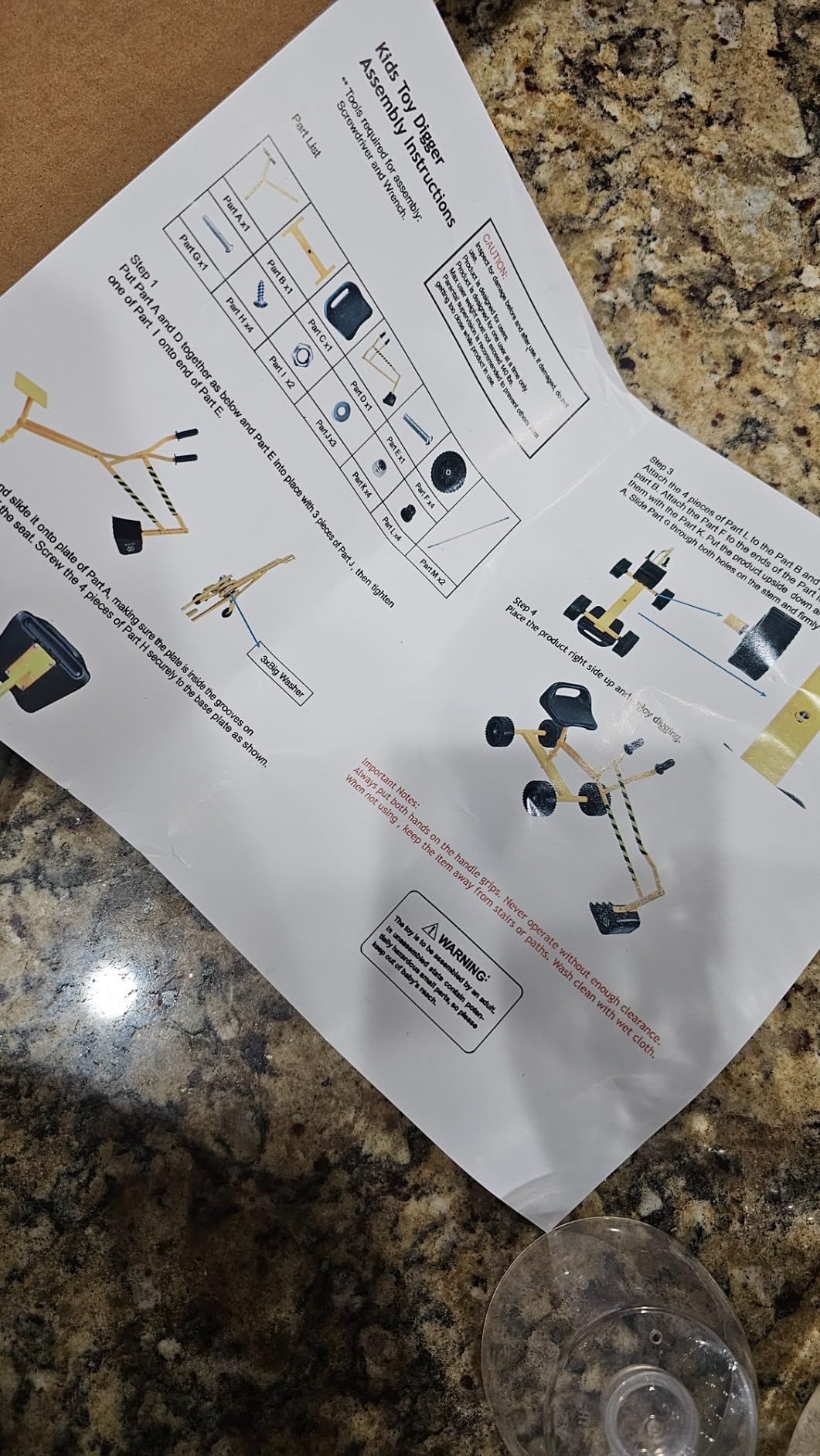
We would treat that rating spread as a warning about the size and weight rather than about the concept. At 11.4 pounds and 47.64 inches tall, this is a tall narrow machine, and tall narrow machines are harder to stabilise on loose sand.
Assembly does include all parts, tools and instructions in the box, which is better than several competitors here. The included tool set means you are not hunting for a wrench on assembly day.
Does the 47.6 inch height cause a real problem
In a small sandbox, yes. That height is measured as the full standing profile, and combined with the narrow width it means the machine has to be positioned precisely before a child can dig. In a large rectangular sandbox or on an open gravel area it works fine.
If you plan to use it off the sandbox, on grass and gravel paths, the four casters are a genuine advantage and the proportions matter less. It is a garden machine that happens to work in sand, not the reverse.
Where it falls short
The 4.0 average with a flat rating spread is the headline issue. Every other product here has a clearer pattern of satisfied owners, and this one has too few ratings for us to call the dissatisfaction a small minority.
It is also 11.4 pounds, so adult repositioning on a patio is realistically a two-person job. For a first digger for a three-year-old, the weight is working against you.
Will It Fit Your Sandbox? A Four-Step Measurement Checklist
Most disappointing purchases in this category are not bad diggers, they are diggers that physically could not work in the box the family already owned. Measure in this order before you choose anything.
Step one: base footprint. Measure the longest side and the shortest side of your sandbox interior, then subtract six inches on each side. Every model here lists a length and a width, and the shorter figure is what has to clear the sandbox walls. The foldable steel digger at 36 x 24 inches needs a genuinely long box. The CAT push car at 11 x 21 inches fits almost anywhere.
Step two: swing radius. A rotating digger needs room to turn the seat and arm through a full circle while the base stays put. That working circle is always wider than the listed footprint. A rule of thumb is to add 24 inches to the listed width for the swing, so a 13 inch wide digger effectively wants a 37 inch circle of clear sand.
Step three: arm sweep clearance. When the boom lifts, the bucket swings up and back. If your sandbox has a lid, a wall or a canopy within about 12 inches above the dig site, the arm will hit it. This is the step most people skip and the one that most often ends a purchase.
Step four: ground clearance and wheels. Flat-base diggers sit on the sand surface and stay put. Wheeled diggers roll easily but sink in sand deeper than roughly 10 cm and need firm ground underneath. If your sandbox is filled to the brim with soft dry sand, favour a flat base. If it is a half-full box on a lawn or patio, favour wheels.
Which Digger Matches Your Sandbox?
Different sandboxes reward different machines, and the surface matters more than the price or the branding.
A molded plastic sandbox is usually small, walled on all sides and often has a lid. The compact options win here: the CAT push car at 11 x 21 inches, the HOMCOM pull cart and the Big Dig at 21.5 x 19.3 inches. Avoid anything over 36 inches long, and check the lid clearance before buying a wheeled model.
A wooden frame sandbox gives you more length and usually an open or hinged top. This is where the Albott digger with 8 inch wheels and the foldable steel digger both work properly, because they need a long rectangle rather than a small square.
A beach is wet or loose sand with no defined edges, so a flat steel base is the safer choice. The stargo with its metal scooper handles damp packed sand noticeably better than plastic, and the compact stargo folds down small enough to fit in a car boot between trips.
A backyard dirt patch or gravel area is where the Peekabu casters and the Costzon wheels make the most sense, since both are designed to roll across uneven ground rather than dig in place. Steel digging arms are better suited to soil than to sand here, because the abrasive load is higher.
Snow changes the answer entirely. Metal scoopers and metal frames handle snow without cracking, which is why the all-steel stargo and the alloy steel foldable digger both suit winter use. Plastic-bodied models are the ones we would leave outside in freezing conditions.
Buying Guide: Manual, Push and Powered Ride-Ons
Every product in this roundup is manual or foot-powered, and for sandbox play that is a deliberate choice rather than a limitation. Here is how we would decide between the power tiers you will see in search results.
Foot-powered steel diggers are the sweet spot. The child uses their own legs and arms, nothing can fail electronically, and there is no charge time. They are the ones that get handed down between siblings and the ones that survive a wet winter. Buy here if you have any sandbox at all.
Push cars and push-along diggers suit children under three. The child steers with their feet on the ground and the toy stays small and light. They are a starting point rather than an endpoint, and they will usually be replaced by a steel digger around age four.
Battery powered 12V and 24V machines add drive wheels, a rechargeable pack, sound effects, and usually a 2.4GHz parent remote with speed control. They are excellent once a child wants to drive and you have a driveway, patio or lawn to drive on. In sand itself they are a poor use of money: the wheels bog down, the machine weighs far more than an adult wants to lift, assembly commonly takes 60 to 90 minutes, and you now own a battery that will eventually need replacing.
On weight capacity, look for at least 20 pounds above your child’s current weight. A 110 lb machine covers a typical four-year-old with years to spare and a two-year sibling after that. Anything under 75 lb rules out a seven-year-old, whatever the listing says.
On safety certification, only the HOMCOM lists an explicit standard here, at ASTM F963-17 and HR4040, and the foldable steel digger states it passes US toy testing standards. For anything with a battery or a parent remote, certification should be non-negotiable.
On spec sheets, expect errors and check them. One listing here records a 6.2 pound item weight in the weight capacity field. Another gives folded dimensions of 17 x 12 x 6 inches and expanded dimensions of 31 x 31 x 35 inches without explaining which applies to sandbox fit. If a capacity number looks implausibly low or matches the item weight exactly, treat it as wrong and look for a second source.
On assembly, expect 15 to 30 minutes for a push car, 20 to 35 minutes for a wheeled manual digger with pre-attached hardware, 30 to 45 minutes for a steel digger where you drill the seat holes, and 60 to 90 minutes for a powered machine with wiring and a remote. Dry-fitting before assembly catches most problems.
Sand Mess, Cleaning and Off-Season Storage
Sand gets everywhere, and it destroys mechanisms faster than anything else. Five minutes of maintenance after each session is the difference between a digger that lasts seasons and one that needs replacing.
First, protect your floors. Every steel and metal digger here carries an explicit warning about hardwood, and it is correct: a metal base plate dragged across oak or laminate marks it permanently. If you want the toy indoors, put a mat or a sheet of plywood under it first.
Second, rinse the joints. Hold the digger under a hose or in a bathtub and flush the pivoting arm, the seat swivel and the lever connections until the water runs clear. Grit that stays in a linkage is what turns a smooth swing into a stiff one, and it is the single most common cause of failure on the plastic models.
Third, deal with the sand that comes indoors. Keep a boot tray or a bucket by the door, and have the child brush themselves down before coming in rather than tracking grit across the floor. A cheap silicone putty knife removes clinging sand from a bucket better than a brush does.
Fourth, store steel properly. Before the winter, dry the metal frame completely and give the moving joints a spray of silicone lubricant. A light coat once a season is what keeps a steel digger from surface rust after a wet winter. Store it under cover rather than in the open rain.
Fifth, keep plastic diggers indoors between seasons. Resin and plastic bodies are fine in summer sun but can become brittle after a few freezes, and the thin bucket bars on toddler models are the first casualty.
Finally, if you want digging indoors as a weather fallback, dried corn or dried beans work in most of these buckets and rinses out of plastic completely. The Svan crane digger is the one here specifically noted by owners for working with dried corn.
When a Ride-On Excavator Is the Wrong Toy
We would rather tell you not to buy something than fill a list. A ride-on excavator is the wrong purchase in four situations.
If you have no sandbox and no patch of loose soil, the digging function does nothing. In that case a ride-on tractor or a simple car is a better use of the same space, and we have covered those in our ride-on tractor guide.
If your child is under 18 months, none of these is developmentally right. Wait, or choose the push-along category and accept a shorter useful life.
If your child mainly wants to drive rather than dig, a powered machine with a 2.4GHz parent remote serves that better. Our guide to electric ride-on cars with remote control covers that category properly.
If two children need to dig at once, one digger becomes a queue. Buying two mid-sized units for siblings of different ages usually costs less and frustrates less than one oversized machine. If twins share everything, the twin-focused ride-on picks are worth a look in our ride-on toys for twins guide.
Frequently Asked Questions
What is the best excavator ride-on for kids?
For most families, a foot-powered steel digger is the best excavator ride-on, because it needs no battery, survives wet weather and lasts through several children. Choose a rotating-seat model with a 110 lb or higher capacity, and match the footprint to your sandbox before ordering.
Is there a sandbox with an excavator?
Most molded plastic and wooden frame sandboxes can take a small ride-on digger if you check clearance. Measure interior length and width, add about 24 inches for the 360 degree swing radius, and confirm vertical room above the sand for the arm to lift.
What are some good excavator toys for kids?
Good options include the Big Dig for its steel frame and 33 inch reach, the Costzon wheeled digger for sand and grass, and the Albott 8 inch wheel model for a 150 lb capacity. For toddlers under three, a CAT-licensed push car suits a small sandbox better.
What is the most reliable mini excavator on the market?
Reliability tracks owner review volume and the share of one-star ratings rather than the average alone. The Big Dig combines the highest rating with by far the largest review base and only a 1 percent one-star share, which is the strongest signal in this group.
Are manual or battery powered ride on excavators better for a sandbox?
Manual steel diggers are better for sandbox play because their flat bases hold position in soft sand, they weigh under 10 pounds so one adult can move them, and they need no charging. Battery models earn their place on driveways and lawns, where the drive wheels matter.
How do I clean sand out of a ride-on excavator?
Rinse the pivoting arm, seat swivel and lever joints under a hose until the water runs clear, then dry the metal frame fully. Flush after every session, since trapped grit is the main cause of stiff linkages, and protect hardwood floors with a mat.
Our Final Pick for Most Sandboxes
The best kids ride-on excavators for sandboxes in 2026 are the ones with steel frames, rotating seats and no battery. If you take one recommendation from this guide, take the Big Dig: it has the strongest review base in the category, a 33 inch reach that works in a modest sandbox, and a 9 pound weight that one adult can carry to the beach.
Add wheels if your sandbox sits on grass or you want a child who can reposition themselves, and accept the deeper-sand caveat. Go compact and push-powered if your child is under three or your sandbox is small. Go 150 lb capacity and folding steel if you are buying for children aged six and up who will move between locations.
And measure first. A four-step measurement takes five minutes and prevents almost every disappointed sandbox digger purchase.