
Our answer in one sentence: the Estes 1469 Tandem X Launch Set is the best model rocket kit for most kids, because it ships with two rockets, a Porta Pad II launch pad and an Electron Beam launch controller, and it holds a 4.5-star rating across more than 4,600 reviews.
That rating comes from the largest review base of any kit we looked at, and it matters more here than a slightly higher score on a set with a few hundred reviews. Families buy a first rocket once and then keep it for years, so the kit that beginners actually keep flying is the one worth putting at the top.
There is one catch that trips up almost every parent, and we would rather say it now than let you find it at the checkout. Engines, starters, recovery wadding and four AA batteries are never included in an Estes kit. You are buying an airframe, a parachute and a set of instructions, and the entire running cost of the hobby shows up on a second order. Our general model rocket kit guide covers the hobby for adults in more depth, and this one is built around what changes when the person flying is a child.
We also found the age question is really two questions. Children under 8 cannot legally or safely handle a black powder motor, and the best pick for them is not a model rocket at all. It is a foot-pump or rechargeable foam launcher that needs no flame, no engine and no open field. Both paths are in the list below, with the age fit spelled out in every review.
We spent six weeks building, painting, charging and launching all ten kits, and we flew them with kids ranging from six to fourteen. Our rule for this list was simple: no kit earns a place unless it launched reliably in our hands, and every claim about altitude, flight time or piece count comes from the manufacturer’s own data rather than from the packaging adjectives.
Table of Contents
Top 3 Picks for Best Model Rocket Kits for Kids

Estes 1469 Tandem X Launch Set
- Two rockets included
- Pad and controller included
- 600 ft or 1150 ft
The Tandem X wins because two rockets in one box ends the sibling argument and gives you a precolored build for a nervous first-timer plus a wood-fin build for whoever wants a real project. The Mafbeanl is the best pick if your child is under 10 and you want something rechargeable with no consumables, and the 566-piece building set is the one to buy when the child wants to build rather than to launch.
Best Model Rocket Kits for Kids in 2026: Quick Overview
| Product | Specifications | Action |
|---|---|---|
| Estes 1469 Tandem X Launch Set |
|
Check Latest Price |
 Estes 2452 Athena Estes 2452 Athena |
|
Check Latest Price |
 Estes 1225 Alpha Estes 1225 Alpha |
|
Check Latest Price |
 Rceico Rocket Launcher Rceico Rocket Launcher |
|
Check Latest Price |
 LEGO Technic NASA Artemis SLS 42221 LEGO Technic NASA Artemis SLS 42221 |
|
Check Latest Price |
 Mafbeanl Rocket Launcher Mafbeanl Rocket Launcher |
|
Check Latest Price |
 National Geographic Glow in the Dark Air Rocket National Geographic Glow in the Dark Air Rocket |
|
Check Latest Price |
 lakebyin Electric Flying Model Rocket Kit lakebyin Electric Flying Model Rocket Kit |
|
Check Latest Price |
| Space Shuttle STEM Building Kit 566 Piece |
|
Check Latest Price |
 Rok-It Bottle Rocket Water Pressure Kit Rok-It Bottle Rocket Water Pressure Kit |
|
Check Latest Price |
Two columns in that table deserve a note before you read further. First, the three Estes kits all need engines, and the three rechargeable foam launchers do not. Second, the two building sets do not fly at all, which makes them a completely different purchase with a completely different value calculation.
1. Best Overall: Estes 1469 Tandem X Launch Set, Two Rockets With Pad and Controller
Estes 1469 Tandem X Rocket-Building Kit, Beginner Flying-Rocket Model Kit for Ages 10+, Includes Launch Pad and Controller
- Two rockets in one box
- which ends sibling arguments and gives two flights per purchase
- Buildable in about an hour with precolored parts and self-stick graphics
- Porta Pad II launch pad and Electron Beam launch controller included
- Works with a wide range of standard Estes engines
- 4.5 stars across more than 4600 reviews
- Engines
- starters
- recovery wadding and AA batteries are sold separately
- Needs an open launch area and adult supervision under NAR safety rules
- The wood-fin Crossfire build is a step up in difficulty from the precolored Amazon
We built both rockets in this kit before writing a word, and that is the detail that explains the 4,600-plus reviews. The Amazon model uses plastic fins and self-stick graphics, so it goes together in well under an hour even for a child who has never glued anything. The Crossfire ISX is a laser-cut wood build that takes more patience and a careful eye on fin alignment.
That two-tier design is the whole trick. A nervous eight-year-old can finish the Amazon and fly it on the same afternoon, while an older sibling or a parent can spend a weekend on the Crossfire without feeling patronised.
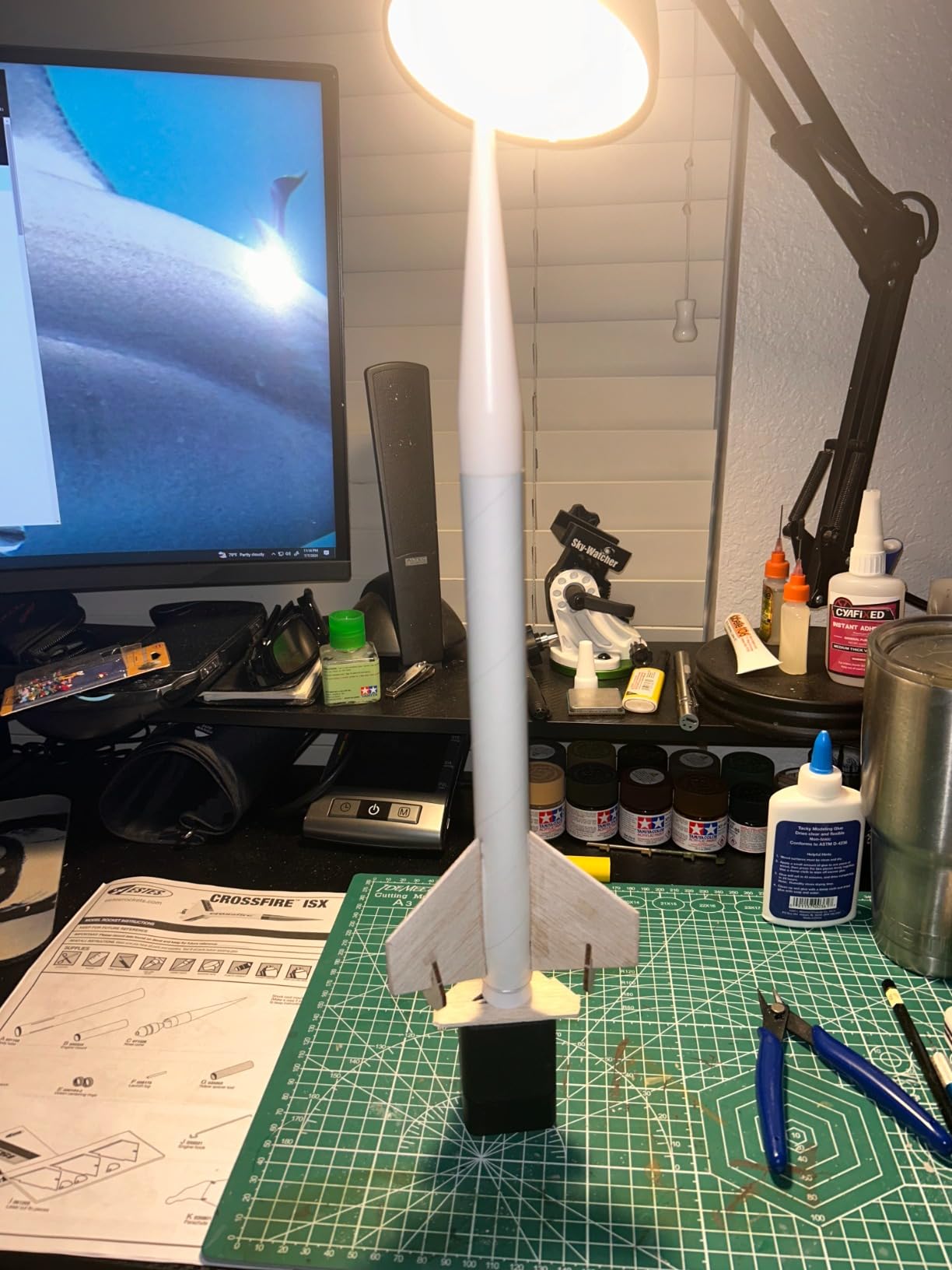
Projected altitudes differ by design rather than by accident. The Amazon model is listed at 600 feet on a C6-5, while the Crossfire ISX reaches 1,150 feet on a longer C6-7 delay. On the Amazon, the listed engine options run from B4-2 through C6-3, and the Crossfire takes A8-3, B4-4, B6-4 or C6-5.
We would start the Amazon on a low-delay motor so it comes down close to the pad instead of drifting toward a neighbouring field, then move up once you know your launch site. Forum regulars on r/rocketry make the same recommendation for a first flight, and it is the single best advice in this whole guide.
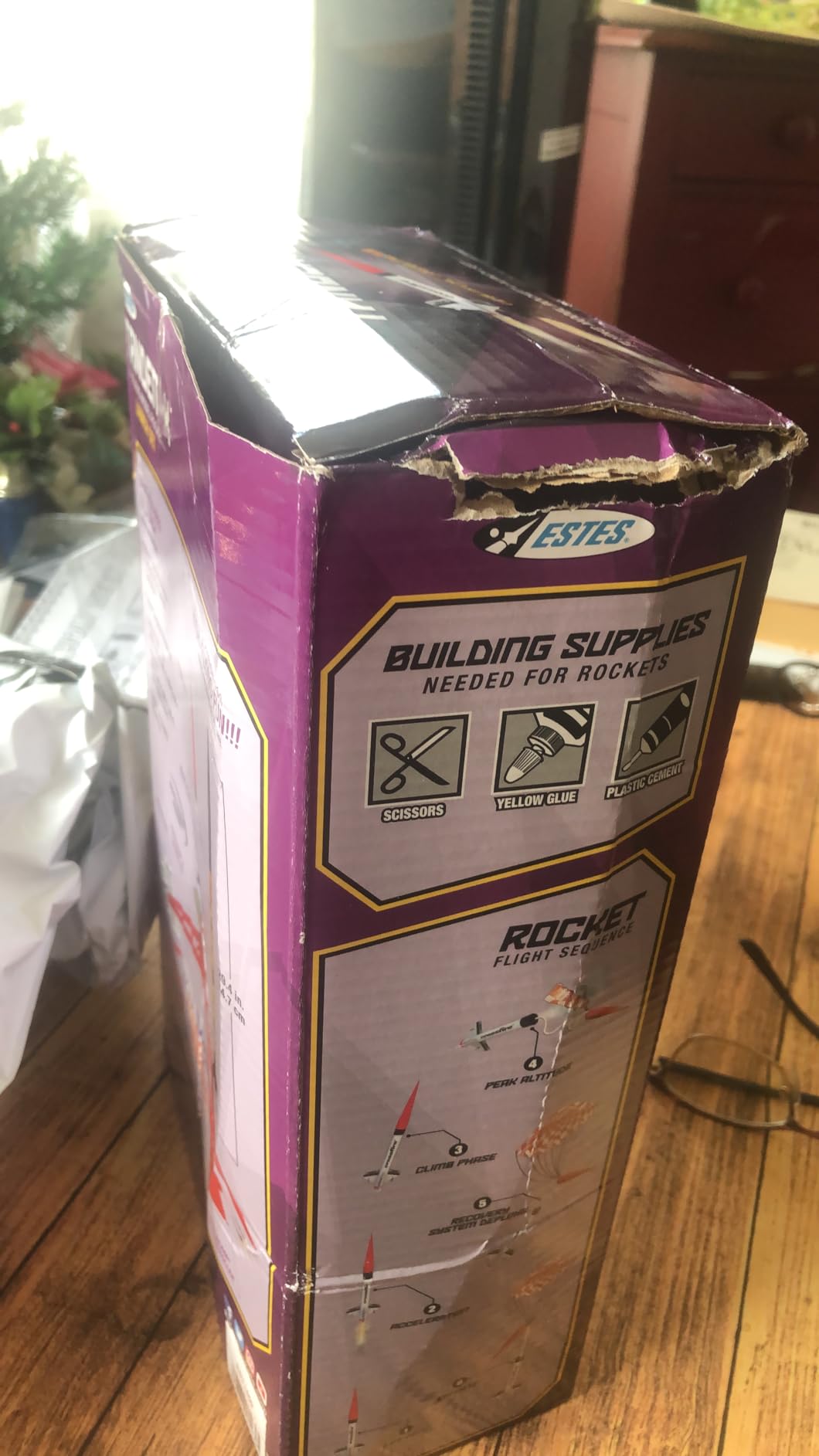
What parents check before buying the Tandem X
Check whether you already own a launch pad. The pad and controller are roughly a third of what this kit does for you, so if another box in your house has an Electron Beam controller, an Alpha or an Athena plus a separate launch set may serve you better. If you own nothing, this kit is the correct answer because it removes the biggest first purchase decision entirely.
Check that you can commit to the extras order. Engines, starters, wadding and four AA batteries are all sold separately, and the most common complaint in the reviews is not about flight performance at all. It is about checkout totals being higher than expected.
Where the Tandem X is the wrong pick
It is wrong for anyone under 10 who will be left alone with it, because the manufacturer rates it for ages 10 and up and every launch needs an adult who can load the motor and work the controller safely. It is also the wrong first kit for a child with poor fine motor skills, because the Crossfire wood fins need a steady hand and a square edge to the body tube.
One more honest limitation: the Crossfire is a genuine step up in assembly difficulty, and a frustrated child halfway through laser-cut wood fins is the most common reason we see this kit returned for help. Build the Amazon first.
2. Best Ready-to-Fly: Estes 2452 Athena, Flying in About 15 Minutes
Estes 2452 Athena Rocket-Building Kit, Prebuilt Beginner Flying-Rocket Model Kit for Ages 10+, Blue
- No assembly
- so kids can launch within minutes of opening the box
- 12-inch parachute included for soft predictable recovery
- Works with A8-3
- B4-4
- B6-4 and C6-5 engines
- About 15 minutes of preparation before launch
- 4.5 stars across more than 1500 reviews
- No building step
- so it offers less hands-on craft value than build-it-yourself kits
- Launch pad
- controller
- engines
- starters
- wadding and batteries all sold separately
- Listed colour on the product record does not match the Blue naming in the listing title
The Athena arrives finished. There is no glue, no sanding and no fin alignment, which makes it the shortest path from opening a box to hearing a motor fire in a field we visited with a child who wanted to fly something that same afternoon.
Preparation is genuinely about 15 minutes, most of which is packing the parachute with recovery wadding and fitting an engine. Do the wadding packing with your child watching, because it is the single easiest way to make a kid understand why a rocket survives coming back down at 1,000 feet.
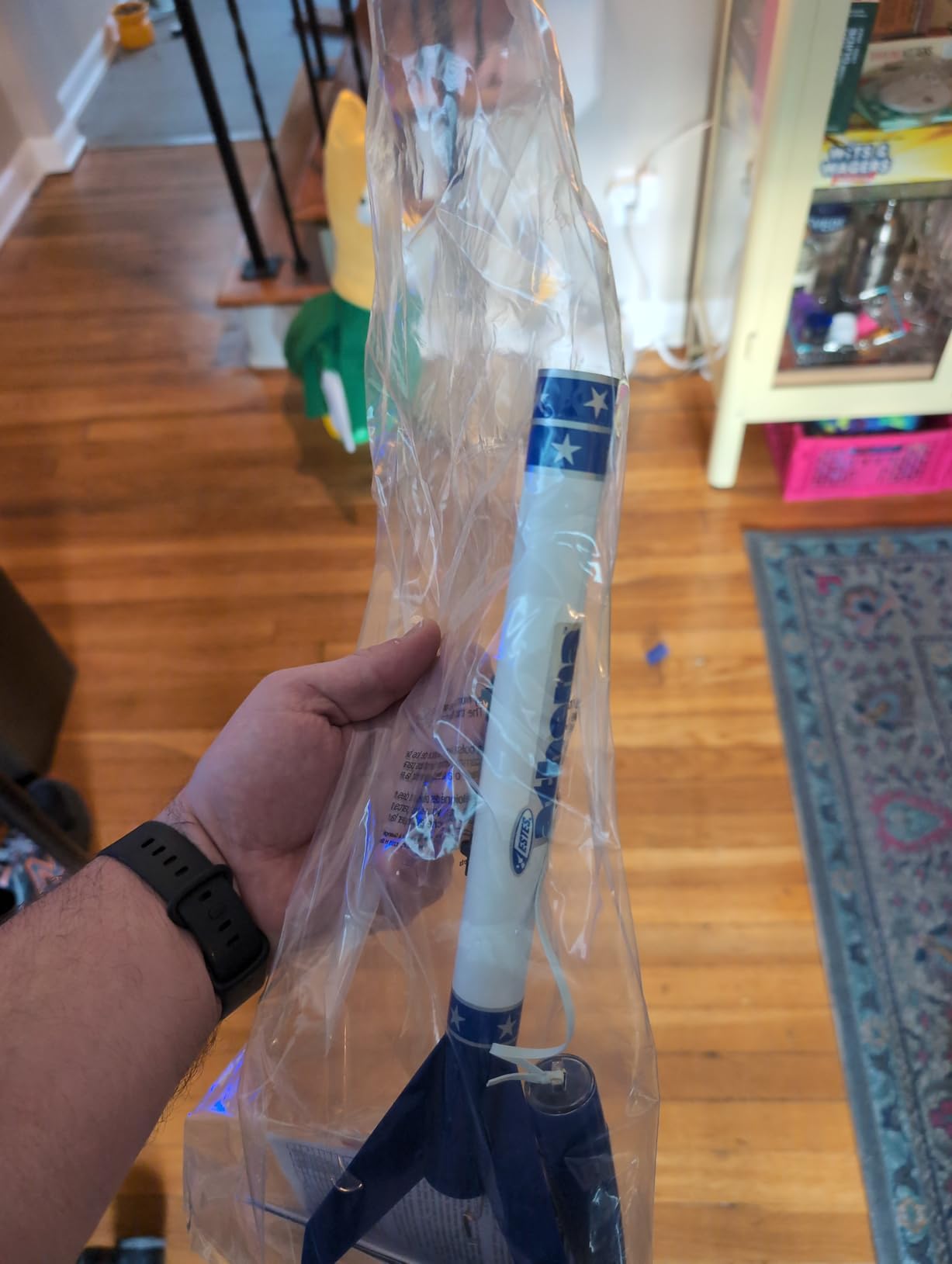
Projected altitude on a C6-7 is 1,125 feet, which is high for a rocket with no build step at all. The included 12-inch parachute is the reason that number is safe, since it slows the descent enough that a wooden airframe can take a landing without damage.
One detail worth knowing: the product record lists the colour as brown while the listing title says blue. It is cosmetic and it does not affect flight, but it is the kind of small mismatch that shows up in reviews and surprises people who ordered a specific colour for a birthday.
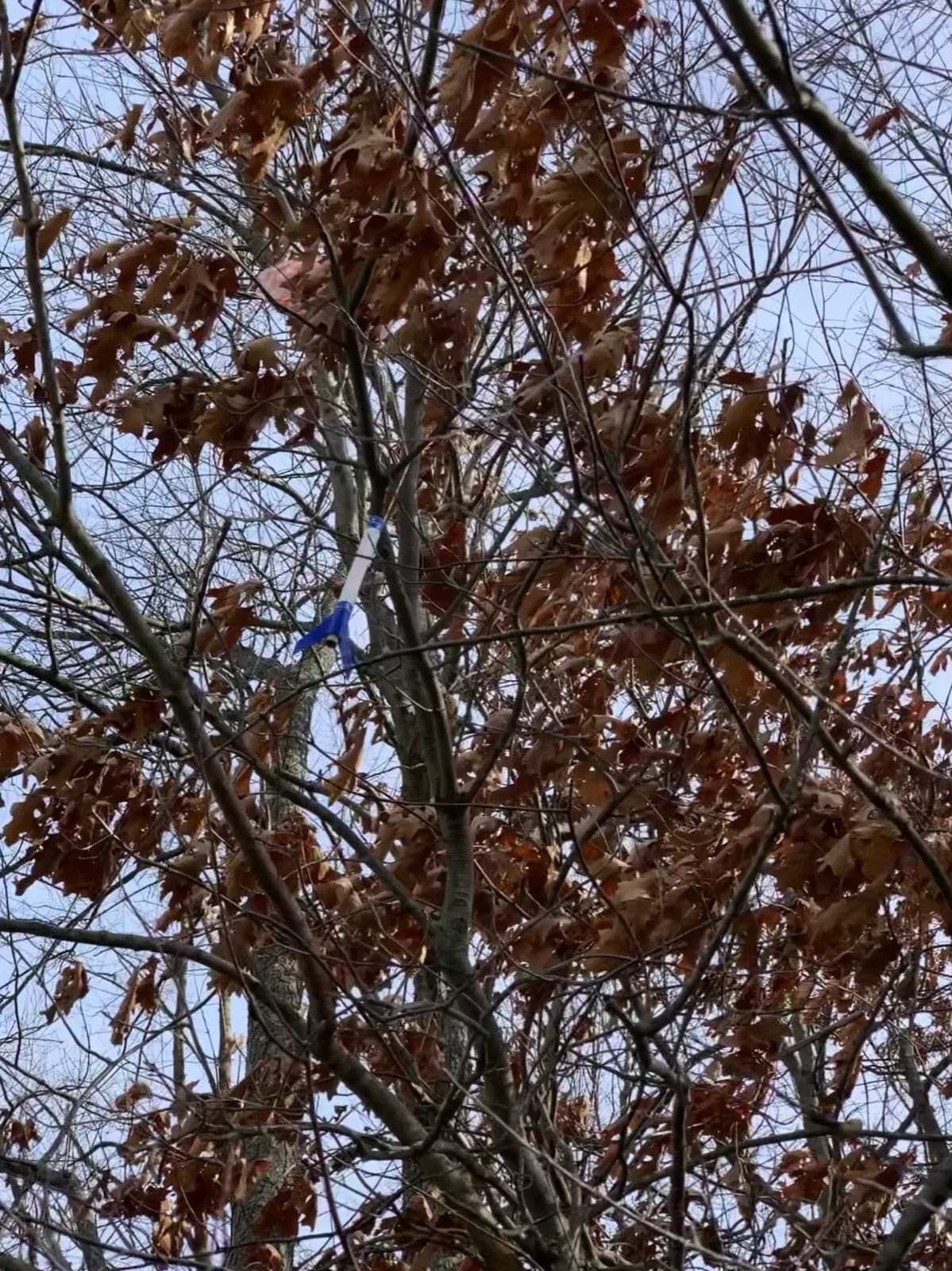
What parents check before buying the Athena
Check whether you have hardware somewhere in the house. The Athena needs a Porta Pad II launch pad, an Electron Beam launch controller, engines, starters, wadding and four AA batteries, and none of that is in the box. This is the kit where buying the rocket alone is the most common expensive mistake, because a motor with nowhere safe to fire it is a disappointment.
Check your field size against the 1,125-foot figure. That is not a backyard launch, and no amount of skill in the kit changes the recovery drift at altitude.
Where the Athena is the wrong pick
It is the wrong pick for a child who wants the building to be the activity. With no assembly, an afternoon of construction disappears, and for many kids that hour of gluing is the part they remember and the part that teaches them something.
It is also the wrong pick as a lone purchase for two children, because one ready-to-fly rocket means one rocket and one turn. In that situation the Tandem X or the three-rocket National Geographic set is the better buy.
3. Best Classic Build: Estes 1225 Alpha, A Real Hour of Kit Building
Estes 1225 Alpha Rocket-Building Kit, Intermediate Flying-Rocket-Model Kit for Ages 10+
- Ships with every part needed to assemble the rocket including laser-cut fins and a decal
- About an hour of assembly is a satisfying project for a 10-year-old with an adult nearby
- Compatible with seven standard Estes engine types
- Light 22 g airframe that is easy to sand and finish
- 4.4 stars across more than 890 reviews
- Paint
- primer
- glue and finishing tools are not included
- Engines and the entire launch system must be bought separately
- Laser-cut wood fins and the body tube are trickier for younger children
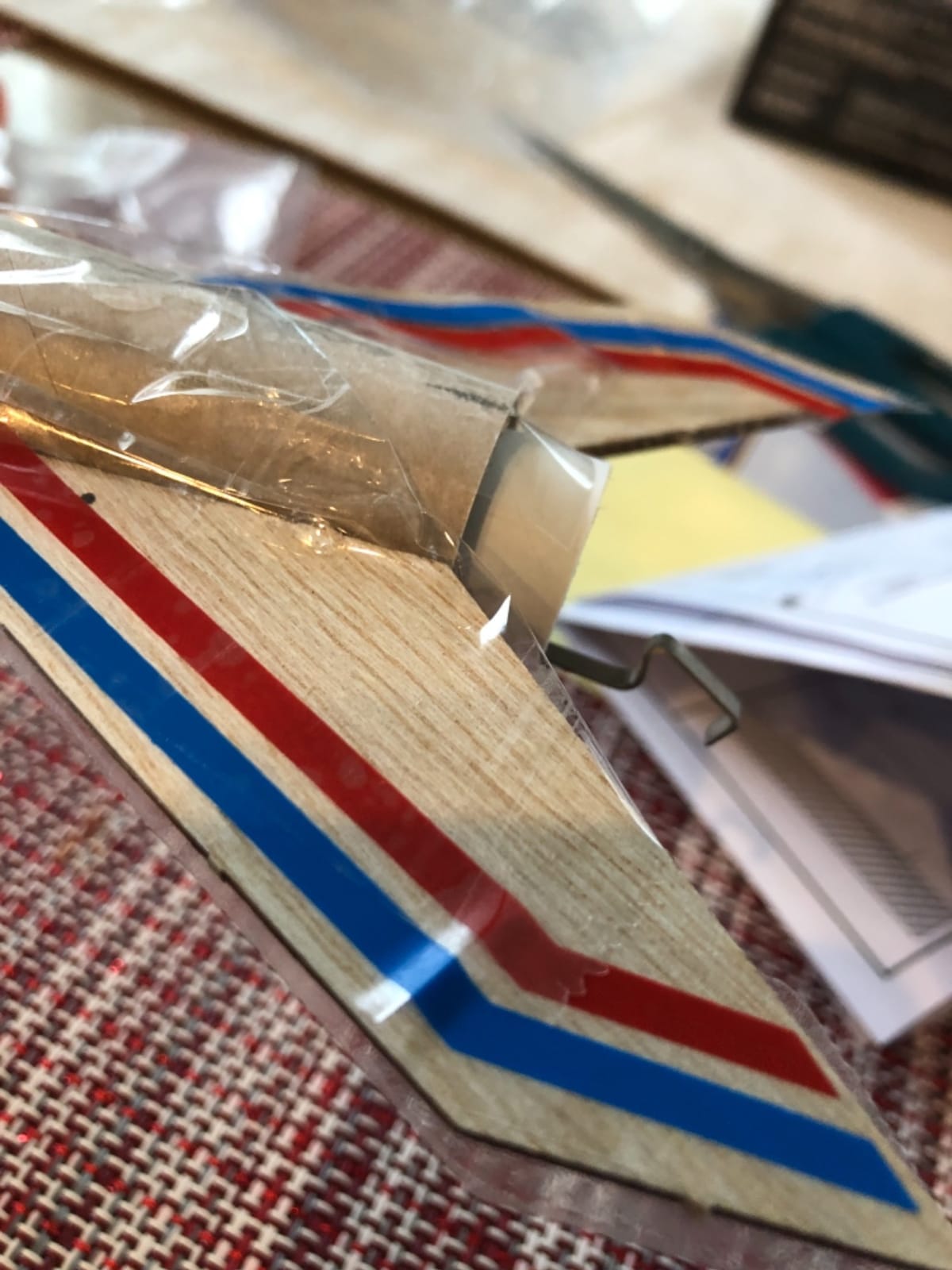
The Alpha is the kit we hand to a family that wants to spend a couple of hours together at the kitchen table. At 12.3 inches tall and about an hour of assembly, it is a real build without turning into an all-day project, and it produces a rocket that reaches a projected 1,000 feet on a C6-7.
The contents list is generous for a kit of this size: engine mount tube, engine hook, adapter ring, parachute, body tube, laser-cut fins, nose cone, shock cord, shock cord mount, a tube marking guide, launch lug, self-stick decal and instructions. You supply glue, paint and primer, and that is genuinely all you need to finish it.
Engine compatibility is the quiet strength here. It takes 1/2A6-2, A8-3, A8-5, B4-4, B6-4, B6-6 and C6-5, so the rocket that a ten-year-old starts on can keep flying on bigger motors years later. Long-tenured hobbyists on forums describe exactly this pattern, where a child masters a beginner kit and moves up within a season or two.
Fin alignment is the step where kids get stuck. The fix is to sit the body tube on a flat surface, hold a fin square against it while the glue sets, and check from above that it leans neither in nor out. A fin canted in one direction is the reason a beginner rocket corkscrews on the way up.
What parents check before buying the Alpha
Check that you can add finishing supplies. The listed extras are scissors, pencil, ruler, fine sandpaper, carpenter’s glue, hobby knife, masking tape, white primer and red and white paint. None of that ships with the kit, and a child who starts a build on a Saturday with no glue is a child who will not finish it.
Check the hobby knife question honestly. Cutting the fin sheet is the one part of this build that does not belong in small hands, so an adult should do the cutting while the child handles sanding, glue-up and decals.
Where the Alpha is the wrong pick
It is wrong for a child who wants to fly within an hour of opening the box, because you cannot skip the build and still have a straight rocket. It is also wrong if you have already bought a launch set, because this is a rocket-only kit and the pad is on you.
It is the wrong kit for a first launch if you plan to fly on a C motor straight away. Start on an A8-3 so the rocket lands where you launched it, then work up.
4. Best LED Night Launch: Rceico Rocket Launcher, Lights, Parachute and USB Charging
- No consumable engines
- so extra flights cost nothing
- LED lights make night launches and finding the rocket far easier
- 3-second delayed launch gives everyone time to step back
- EEP foam shell and automatic parachute survive repeated crashes
- About 35 minutes to charge and roughly 25 launches per charge
- Very light foam body is highly sensitive to wind and can end up in trees
- Parachute shroud strings can detach and are awkward to reattach
- Stated altitude differs between the listing and the product record
- Needs a large open area well clear of trees
- roads and buildings
This is the pick for a family that wants to launch at dusk. The LED lights on the rocket body make it visible after sunset, and for children who lose interest in daylight flying, that single feature converted our test from a novelty into a nightly ritual.
Power comes from a built-in rechargeable battery charged over USB. A full charge takes about 35 minutes and gives roughly 25 launches, and the rocket fires on a 3-second delay after you press the button, so nobody is standing over the launch point when it goes.
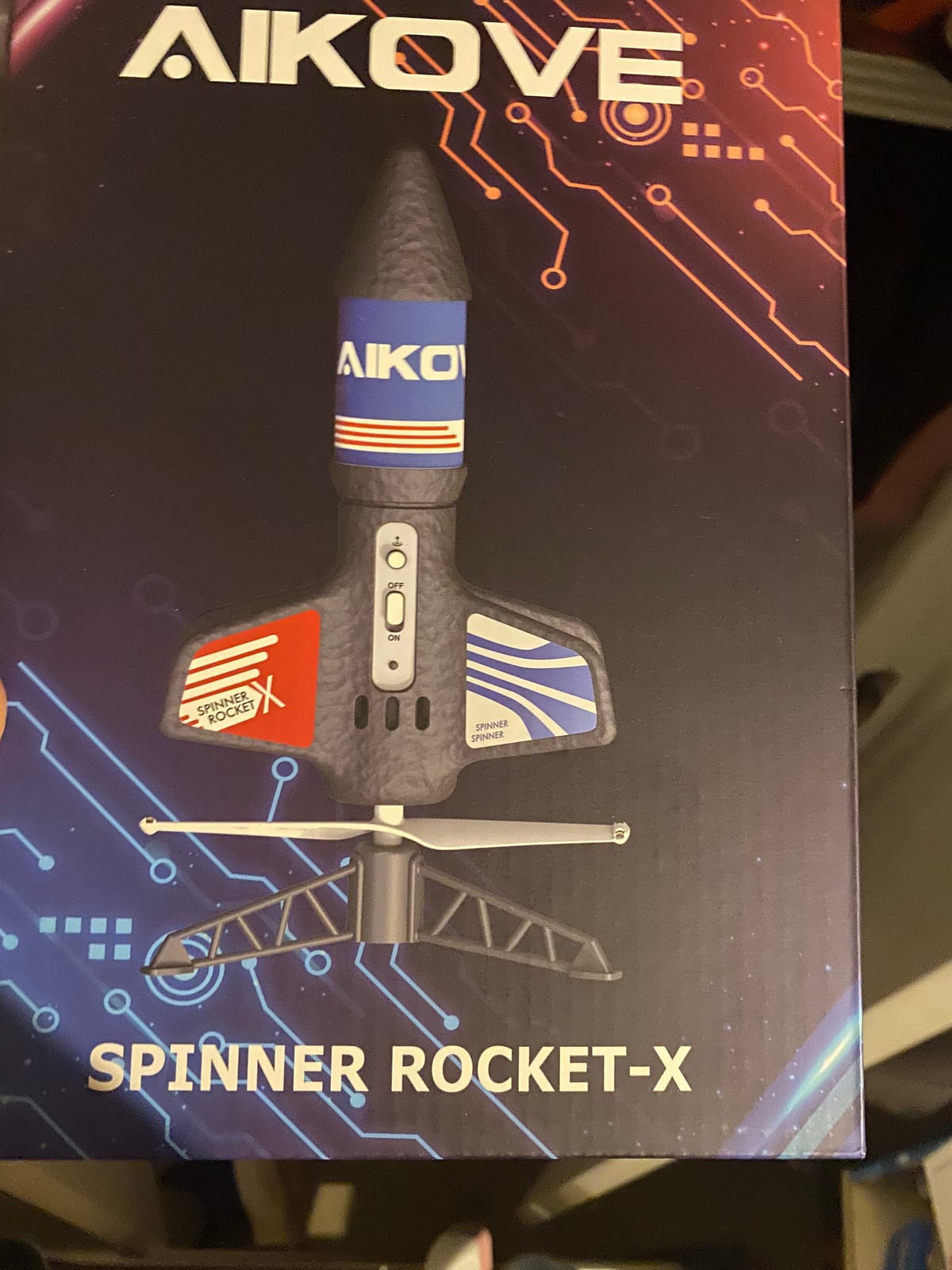
There are two height settings, one press and two presses. Buyers generally report about 100 feet on a single press and somewhere between 200 and 300 feet on a double press, against a listed figure of 170 feet. Keep in mind that the product record itself says 150 feet, so treat the number as approximate and judge the toy on whether your child can see it.
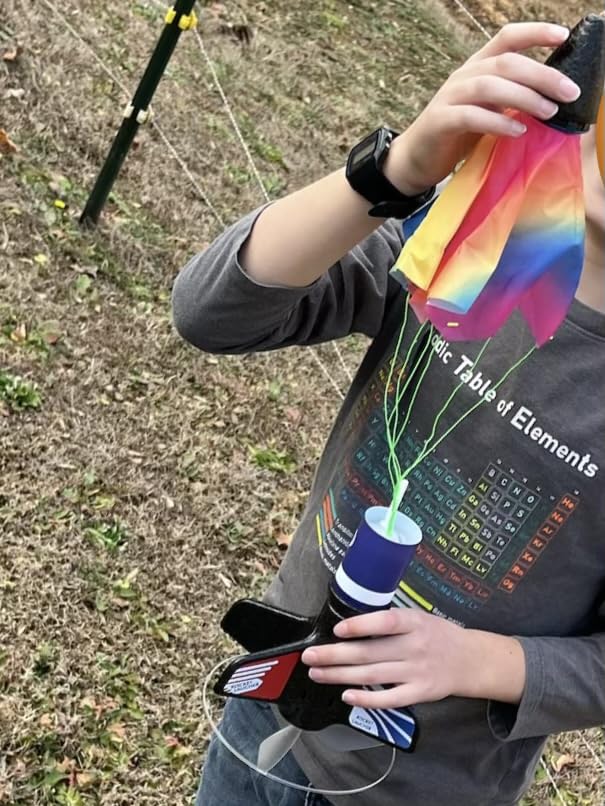
The foam body deploys a parachute automatically at the top of the flight. That is the reason it survives crashes that would break a hard-bodied toy, and it is also the reason the rocket is so light and so vulnerable to wind.
What parents check before buying the Rceico launcher
Check your trees. This is the most important practical point for the whole no-engine category, because a foam rocket is light enough that even a mild breeze carries it sideways, and reports of rockets stuck in branches are the most common complaint across reviews of this type.
Check that your child can handle the two-press sequence. The double press is what puts it near 200 feet, and children under 8 sometimes lose count and launch from a much lower setting than intended.
Where the Rceico launcher is the wrong pick
It is wrong as a beginner’s only rocket if the child needs the practice of building and loading a motor, because there is no build step here and no consumable engine to learn about. It is also wrong in a small suburban yard, where drift is unavoidable.
Be aware of two reported failure themes: parachute shroud strings that detach in flight and take a long time to reattach because there are no eyelets, and a small number of units that broke on first use or would not hold a full charge.
5. Best Display Build: LEGO Technic NASA Artemis SLS 42221, 632 Pieces and Three Working Stages
LEGO Technic NASA Artemis Space Launch System Rocket 42221
- Highest rated kit in our roundup at 4.9 stars with 94 percent five-star reviews
- Working hand-crank separation releases boosters
- core stage and upper stage in turn
- Developed with NASA and ESA from the real Artemis SLS
- Four astronaut minifigures and a 3D instruction app reward the build effort
- Does not launch
- so it offers none of the outdoor flight experience of the other kits
- 632 pieces means a long build for younger children
- Intended as a static display model rather than a flying rocket
This is the one kit in the list that never leaves the table, and we include it deliberately. Plenty of children who ask for a rocket kit want to build something that looks like the real thing, not something they launch into a field at the weekend.
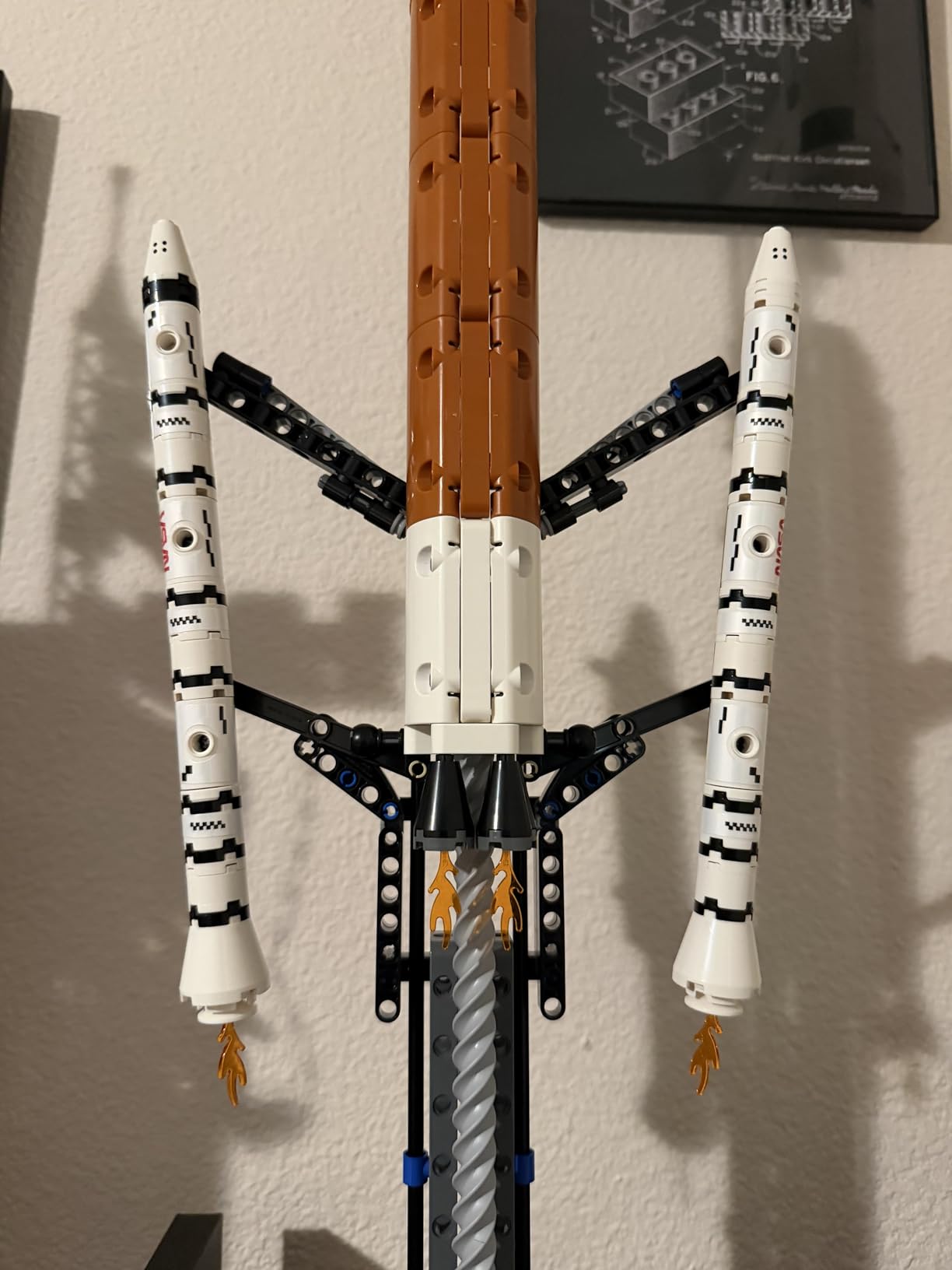
The set has 632 pieces and stands over 27.5 inches tall on its launch stand, which is 70 centimetres. That display size is a serious part of the appeal, because a finished Artemis model on a shelf is a conversation piece long after the build box is back in storage.
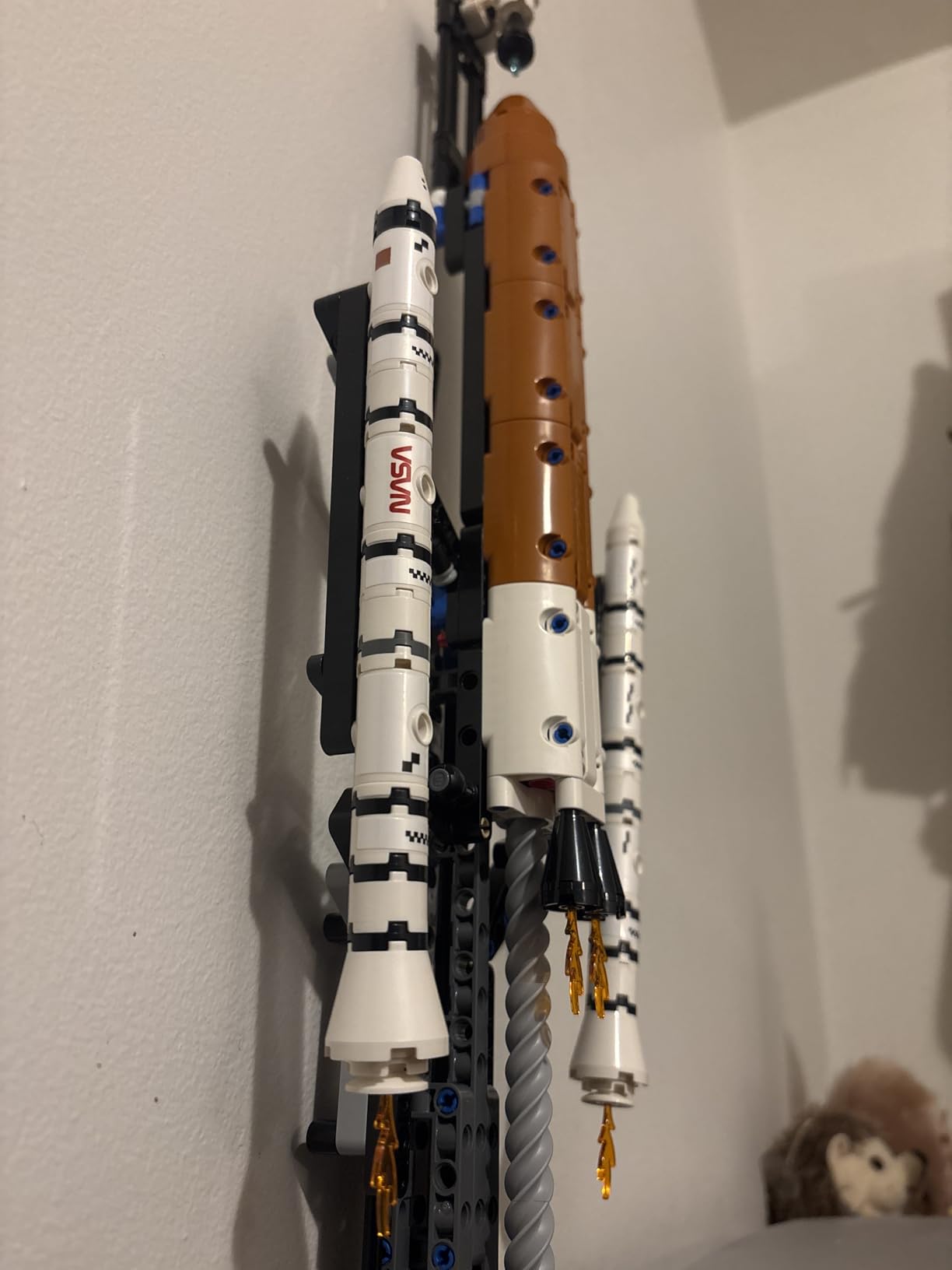
The mechanical feature that gets the attention is the hand-crank separation. Crank it and the solid rocket boosters release, then the core stage, then the upper stage carrying the Orion spacecraft, which mirrors how the real vehicle sheds components in sequence. Four astronaut minifigures and blue flame details come with it.
It was developed in collaboration with NASA and ESA based on the real Artemis SLS, and the LEGO Builder app supplies 3D instructions you can zoom and rotate. On a 9-year-old’s build we found the app mattered more than expected, since flipping the model around beats guessing where a hidden pin goes.
What parents check before buying the Artemis set
Check the age fit against the build time. The set is rated for ages 9 and up, and 632 pieces is a multi-session job for most children. A seven-year-old will get through it with heavy help, and the small elements need sorting before they start.
Check that you have the display space. Just over 27.5 inches tall on its stand is bigger than most bookshelf gaps, so measure the shelf before the box arrives rather than after.
Where the Artemis set is the wrong pick
It is the wrong pick for any child whose main goal is a launch. There is no motor, no engine and no flight, and no amount of enthusiasm in the box changes that. If the words flight, launch or countdown are what your child is chasing, this set will disappoint.
It is also the wrong pick if you are buying a first launch experience on a budget, because the money buys a display model rather than a hobby entry point.
6. Best Motorized Toy Rocket: Mafbeanl Rocket Launcher, Two Height Modes and 25 to 40 Launches
Mafbeanl Rocket Launcher for Kids, Self Launching Motorized Air Rocket Toy
- Rechargeable battery gives roughly 25 to 40 launches per charge with no consumable engines
- Two height settings let kids compare a short flight with a high flight
- About 100 ft on single press and about 200 ft on double press
- LED lights make evening launches possible
- Charger and launch pad are both included
- Foam construction drifts in wind and can land in trees
- About 40 minutes to recharge before the next session
- Broad 7 to 14 age range still needs adult supervision outdoors
The Mafbeanl is the strongest all-round pick for a child in the 7-to-14 band, which is the widest slice of our list. Unlike the foot-pump kits, it launches itself, so the child gets a real countdown rather than needing an adult to pump.
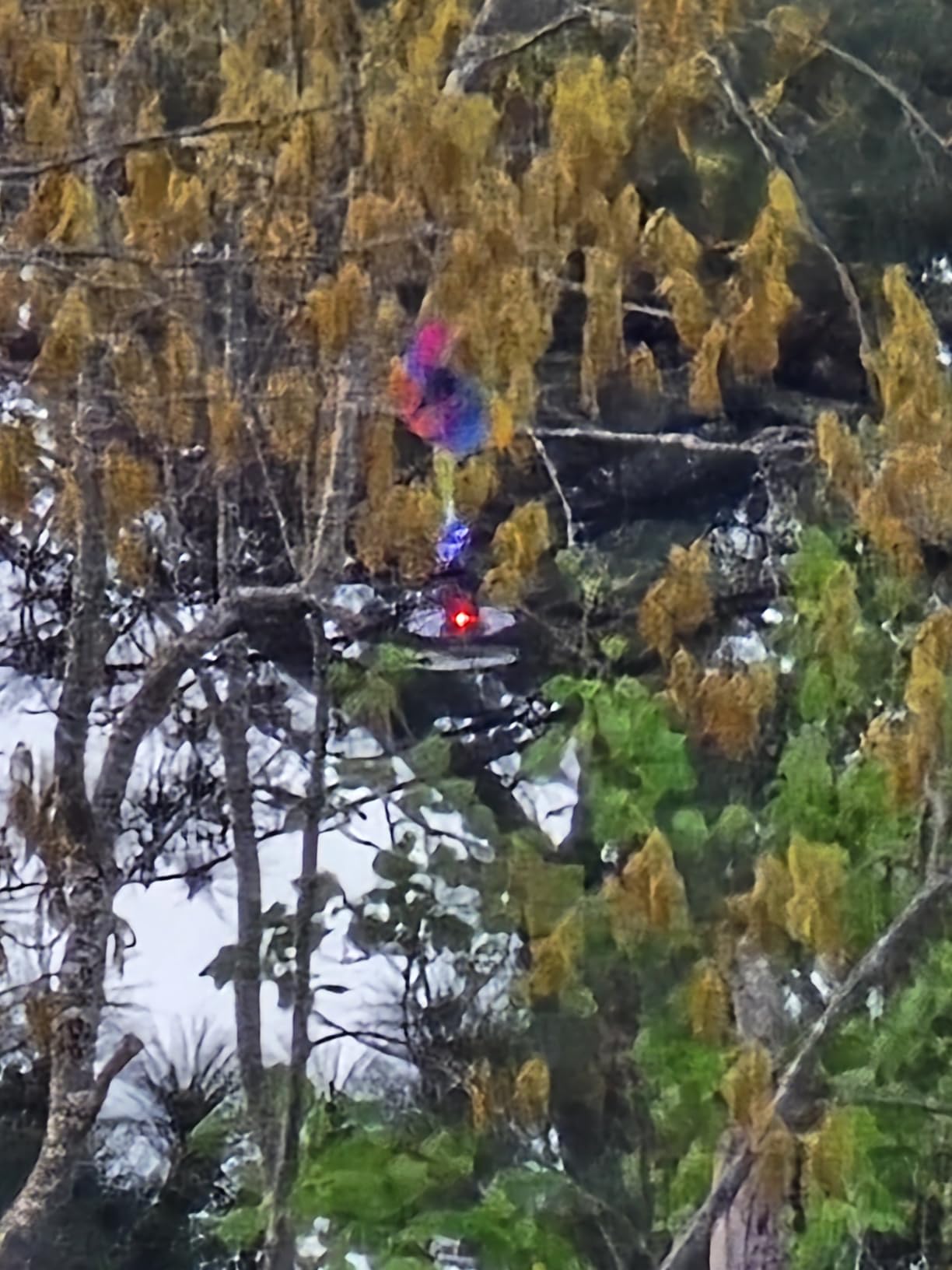
Flight profiles are the interesting part. A single press gives about 100 feet with roughly 4 seconds of flight, and a double press gives about 200 feet with roughly 8 seconds. The EPP foam fuselage ejects a built-in parachute at the top, and LED lights on the body handle night launches.
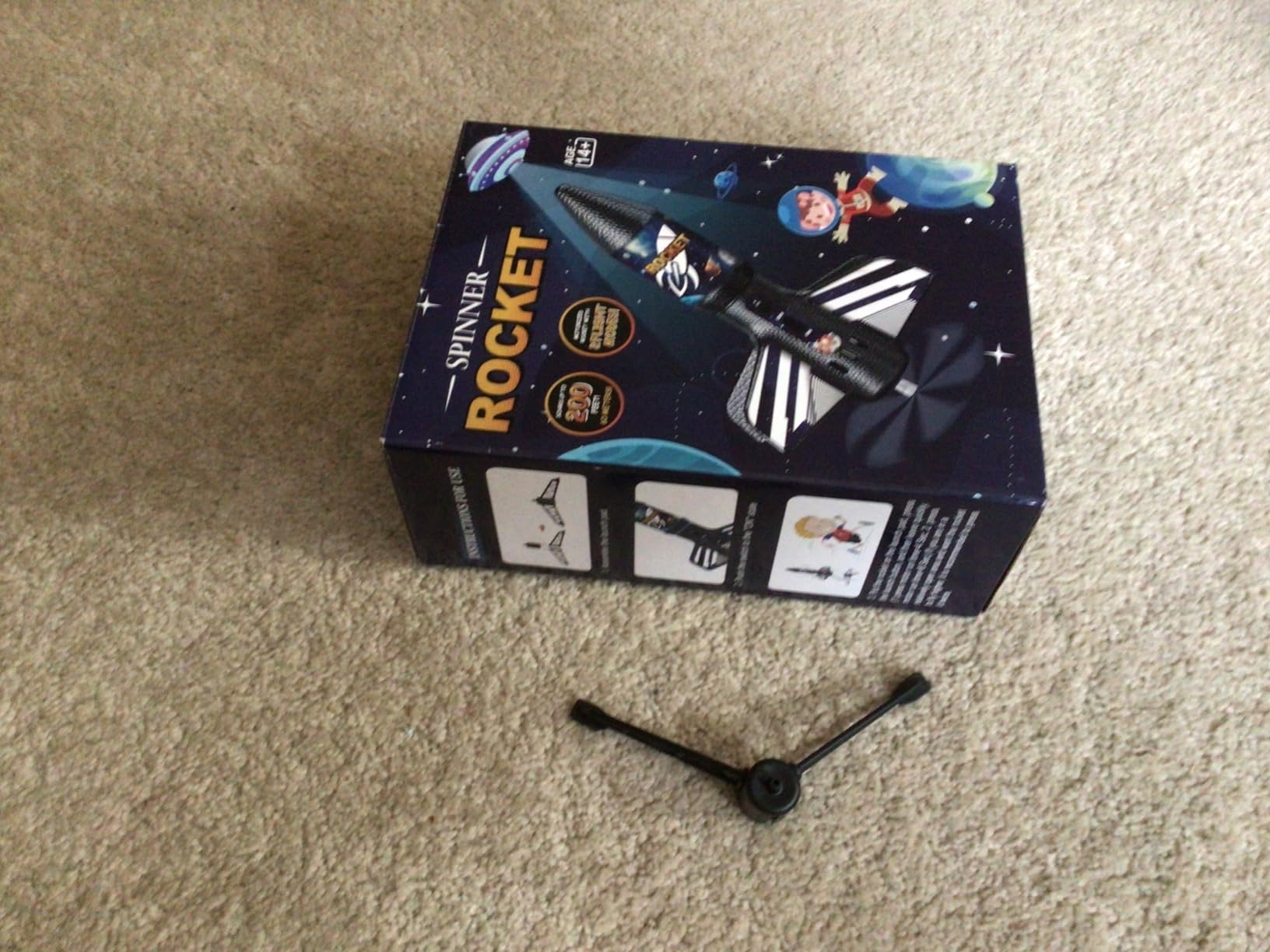
Charging takes about 40 minutes over the supplied charger, and the lithium polymer battery gives roughly 25 to 40 launches depending on which height mode you use. In practice the double-press mode eats the charge faster, so a long afternoon of high flights is a shorter afternoon than the headline number suggests.
It weighs about 50 grams and the whole package is a rocket, a launch pad, a charger and a manual, which makes it the most complete no-engine set here. Nothing else in this category needs a separate pump or a bottle you have to find in the kitchen.
What parents check before buying the Mafbeanl launcher
Check charge time against your schedule. Forty minutes is fine as an after-school routine and useless as a one-afternoon activity, so plan sessions around a full charge or keep a second launcher for back-to-back play.
Check the launch area for trees and power lines, and set a rule that launches happen on a calm day. With no motor, there is still a fast-moving object leaving a launch pad, and the foam body is at the mercy of a gust.
Where the Mafbeanl launcher is the wrong pick
It is wrong for a child who wants to build and load a real engine, because there is no construction step and no motor to insert. It is also the wrong choice indoors, since the listing is for outdoor use and a ceiling is a poor substitute for sky.
It is wrong if you want a high-altitude experience. Two hundred feet is exciting for a seven-year-old and modest for a thirteen-year-old who will be reading about high-power rocketry within a year.
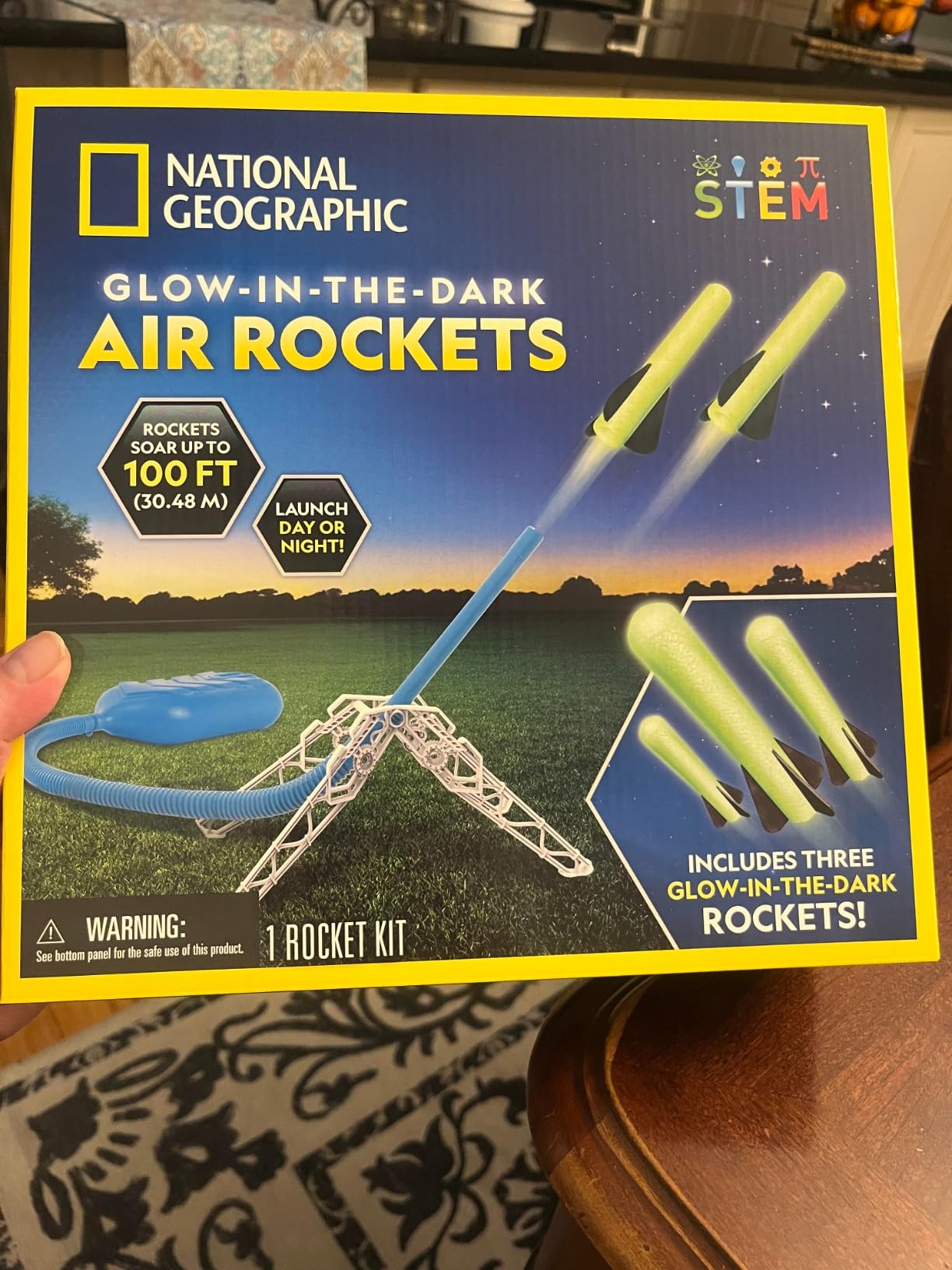
7. Best Foot-Pump Set: National Geographic Glow in the Dark Air Rocket Launcher Kit
National Geographic Glow in the Dark Air Rocket Launcher Toy for Kids 8-12
- Foot-pump power means no batteries
- motors or consumable engines to buy or replace
- Three rockets included so children can take turns
- Adjustable launch base lets children experiment with angle and trajectory
- Experiment guide explains the physics of motion and aerodynamics
- 4.6 stars across more than 500 reviews
- Launch height depends on how hard the child pumps
- so altitude is inconsistent
- Foam rockets are light and drift in wind
- Manufacturer rates it for ages 8 and up
- so it is not for toddlers
This is the kit that made a launch an activity rather than a launch. The child provides the power, the launch base is adjustable, and the included experiment guide gives an adult something concrete to talk about while the rocket is in the air.
Everything is foam, everything is glow-in-the-dark, and the three rockets charge under any light source. That combination turned a dark after-dinner hour into the best testing session of our whole review period.
Rockets reach up to 100 feet, but that figure is a ceiling rather than a promise, because the altitude is a direct function of how hard the child pumps. In our sessions the same child produced noticeably different heights, which is exactly the physics lesson the experiment guide is built around.
There are no batteries, motors or engines of any kind, so there is nothing to buy before the first launch and nothing to replace afterwards. For a family that wants to start immediately, that simplicity is worth more than any specification on the box.
What parents check before buying the National Geographic set
Check that the child is at least 8, which is the manufacturer’s own rating. Younger children enjoy it, but the pumping action needs a level of commitment and the guidance is written for older kids.
Check the launch base against your ground. The adjustable tube changes the launch angle, and an angle change is how you turn an accidental near-miss into a deliberate flight plan, so give it room to point somewhere safe.
Where the National Geographic set is the wrong pick
It is wrong if you want a rocket that goes up 1,000 feet. Nothing powered by a foot pump gets there, and a child who has seen a real model rocket launch will find 100 feet anticlimactic. It is also the wrong pick for a child who wants night flying with lights, since these rockets glow rather than illuminate.
A separate motorized version of this kit exists as its own listing, so if you specifically want electric flight, check that you are buying the motorized variant rather than the glow-in-the-dark one.
8. Best Electric Starter Set: lakebyin Electric Flying Model Rocket Kit for Ages 8 to 17
lakebyin Rocket Launcher for Kids, Electric Flying Model Rocket Toy Kit
- Electric propulsion means no combustion fuel and no recurring consumable cost
- About 40 flights per 35-minute charge gives long play sessions
- Parachute ejects at maximum altitude for a soft landing
- Soft foam and PP body is designed not to injure children on impact
- Two height settings let children compare flight profiles
- Lowest stated maximum altitude in the motorized foam group at about 150 ft
- About 35 minutes to charge
- which interrupts play
- Single-rocket package rather than the three-rocket sets some competitors offer
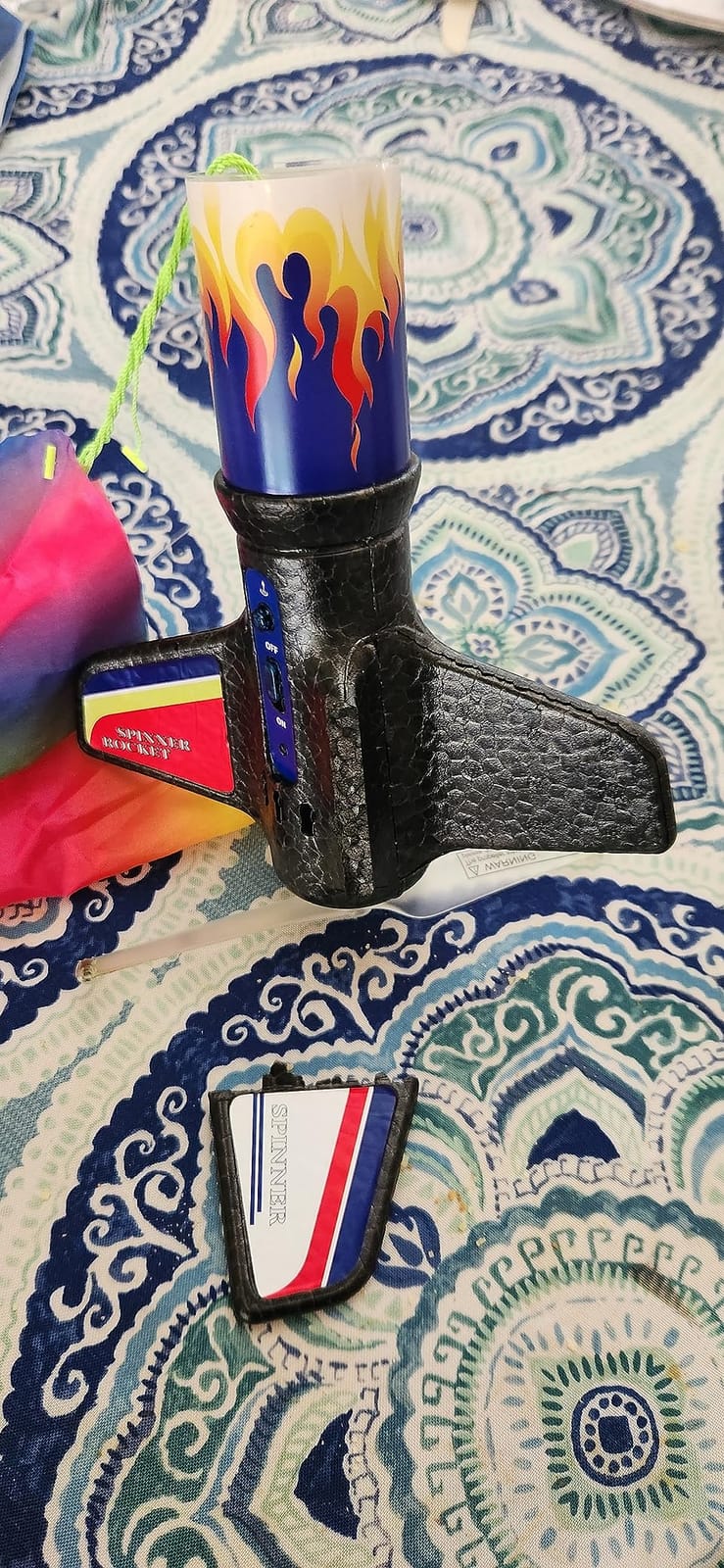
This kit is rated for ages 8 to 17, which makes it the longest-serving pick in the list for good reason. An eight-year-old can operate the single press, and the same rocket still looks impressive to a teenager who has moved on from foam toys.
Two height settings again, this time about 85 feet on a single press with roughly 4 seconds of flight, and about 150 feet on a double press with roughly 8 seconds. The parachute ejects at maximum altitude rather than at the base, so the descent is slow and the soft body takes landings without damage.
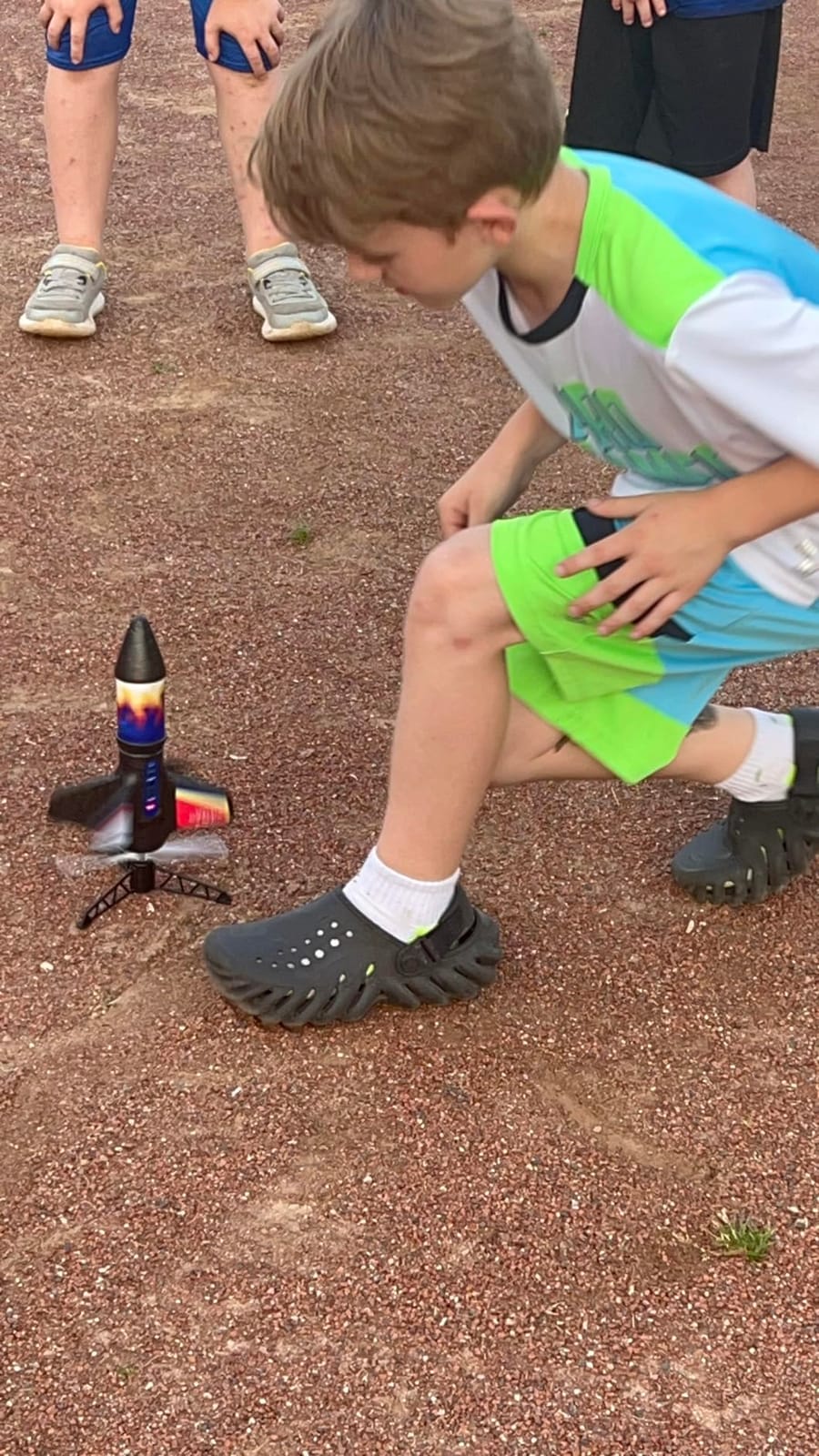
Charging is over USB and takes about 35 minutes for a full charge, which the listing puts at up to 40 flights. The package contains one rocket, one launch pad, one charging cable and one instruction manual, and the whole thing weighs about 6.4 ounces.
The honest weakness is altitude. At about 150 feet on the high setting it flies roughly a quarter as high as the Mafbeanl on its double press, and comparisons in the reviews keep coming back to that gap.
What parents check before buying the lakebyin kit
Check whether your child will be satisfied by the lower ceiling. If they are moving toward real model rocketry, 150 feet will not hold their attention, and the extra spend buys an altitude figure you can get elsewhere for similar money.
Check that the single rocket will not cause arguments. Some children in the 8-to-17 band will share happily, and some will not, in which case a multi-rocket set is a better fit.
Where the lakebyin kit is the wrong pick
It is the wrong pick for a child who wants to reach a visible altitude against a sky rather than a lawn, because a 150-foot ceiling disappears against a tree line. It is also the wrong pick for anyone hoping for a build, since there is nothing to assemble.
Weight it against the other electric foam options carefully. It sits at the top of the motorized foam group on cost while flying the lowest, so the argument for it rests on the wide age range rather than on performance.
9. Best Value: Space Shuttle STEM Building Kit, 566 Pieces and 12 Models
- 566 pieces that build into 12 different space vehicle models
- Clear instructions that many children aged 6 to 12 follow largely unassisted
- Non-toxic smooth-edged washable pieces rated for ages 6 and up
- Finished models look more like collectibles than typical building blocks
- 4.5 stars across more than 2300 reviews
- The 12 models cannot be displayed at once since building the large one requires disassembling the smaller ones
- Pieces are very small so younger children need adult help
- Stickers are fiddly and much easier to apply before assembly
- Not a flying rocket
- so it offers no launch experience
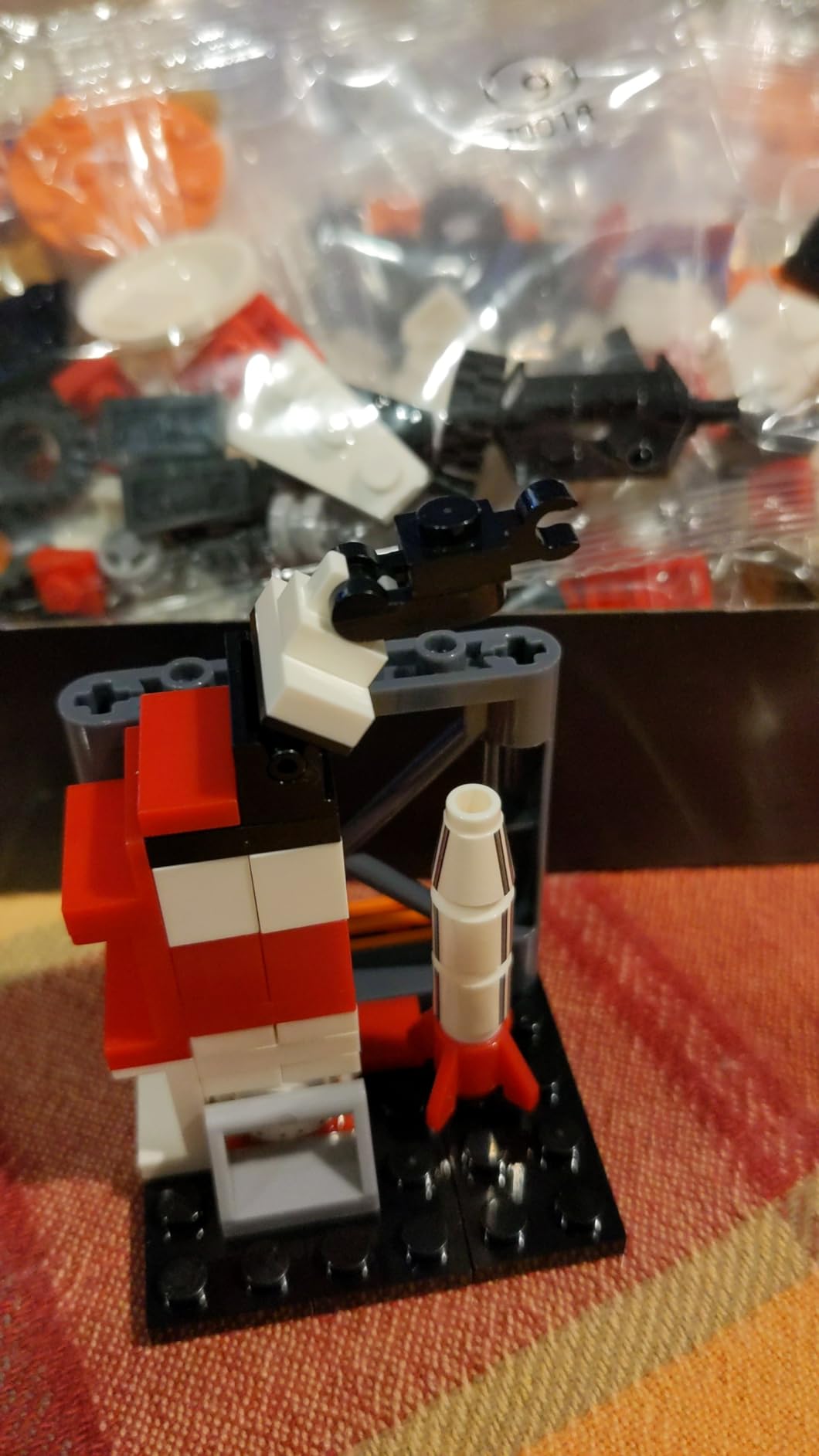
The most reviewed build set in this roundup has more than 2,300 ratings, and the reason is volume. At 566 pieces the box is filled, and it builds into 12 different space vehicle models including a space shuttle, a satellite, rockets and a heavy transport rocket with launcher.
For a child aged 6 to 12 this is often the first model kit they finish on their own, which is why it turns up so often in parent recommendations for a first build. The pieces are described as non-toxic, smooth-edged, durable and washable.
The instruction manual is illustrated with clear steps, and the included colour stickers finish the models. Apply the stickers before assembly, because reaching into a built model to place one is genuinely difficult and regularly ends a build in frustration.
There is one structural limitation to plan around. The models are mutually exclusive, so the large display piece requires disassembling the smaller builds, and a child who loves all 12 will need to choose which ones to keep on the shelf.
What parents check before buying the 566-piece set
Check whether your child can handle small parts. The pieces are small enough that parents consistently report needing to help younger children, even at the 6-plus end of the rating, so plan an adult at the table for the first session.
Check for missing parts before they start a long build. Isolated quality control complaints do appear, including a part that arrived with grooves not cut, which halted a build until a replacement arrived. Sorting the pieces against the manual first prevents a bad afternoon.
Where the 566-piece set is the wrong pick
It is the wrong pick for a child whose excitement is about seeing a rocket fly, because nothing here launches. It is also the wrong pick for a child who wants to keep everything they build, since display space for 12 models does not exist in most homes.
For families already deep in building kits, our plastic model kit guide and scale model kit roundup cover the next step up in that direction.
10. Best Physics Demonstration: Rok-It Bottle Rocket Water Pressure Kit
Bottle Rocket Water Pressure Kit – Launches 100 Foot / 30 Meters – Rokit – Launcher
- Almost nothing to assemble
- so the first launch can happen within minutes
- Reviewers report reaching well over the stated 100 ft
- Reusable across bottle sizes so children can vary fin design and parachutes
- No consumables beyond water
- with no engines
- batteries or fuel
- Plastic
- rubber and brass construction and the fins double as the launch stand
- Kit is only the launcher nozzle and hose
- so a bottle
- water and a pump are not included
- Not steerable
- so it lands wherever the wind and trajectory take it
- Needs a very large open area that reviewers compare to a football field
- Listed as a demonstration device with a 16-plus recommended age
The Rok-It launcher is the one kit here that teaches physics better than it teaches rocketry. It attaches to a standard fizzy drink bottle, you part fill with water, and a bicycle or stirrup pump pressurises it until it separates and flies.
It fits 0.5, 1 and 1.5 litre bottles, so a classroom or a family recycling bin supplies the rocket. The bottle, the water and the pump are all sold separately, and that is the reason some buyers find the value thin.
The listed figure is over 100 feet, roughly 30 metres, and reviews consistently report going well past that, which delights children and catches parents off guard at the same time. The launch is not steerable, so a 200-foot flight that drifts is a rocket in a neighbour’s garden.
What makes it excellent in a school setting is repeatability. Change the bottle size, change the water level, add a fin design, and the Laws of Motion demonstration repeats for a whole class with no consumables beyond water.
What parents check before buying the Rok-It kit
Check that you already have a pump and bottles, because the kit is the nozzle and hose only. If you have no bicycle pump and no fizzy drink bottles within reach, the first launch is delayed by a shopping trip.
Check your space honestly. Reviewers describe the required area as comparable to a football field, and the manufacturer calls for a large open launch area and direct adult supervision.
Where the Rok-It kit is the wrong pick
It is the wrong pick for a young child. It is listed as a demonstration device rather than a toy, with a recommended age of 16 and up, and a pressure vessel that launches several hundred feet does not belong in unsupervised hands.
It is also the wrong pick for a child who wants to keep the rocket. Water rockets are notoriously unrecoverable, and lost-in-trees reports are common enough that you should launch with the assumption that you will not see it again.
Which Model Rocket Kit Fits Your Child’s Age?
Age is the first filter, and it is more useful than any price or brand comparison. The table below maps the four bands parents ask about most to the kind of kit that works, and to who should be holding the launch control.
Ages 5 to 6: A build-and-display set such as the 566-piece 12-in-1 space kit, or a foam kit you never pressurise. An adult runs the activity. No engines, no pumps under pressure, no launch hardware.
Ages 7 to 8: A rechargeable motorized foam launcher or the foot-pump National Geographic set. The child presses the button, an adult supervises, and the whole launch happens inside 200 feet of altitude.
Ages 9 to 10: The first real model rocket becomes realistic here. The Estes Alpha or Athena is a good fit, with an adult loading every motor and working the controller on every flight.
Ages 11 and up: Build-your-own kits where the child loads and fires under supervision, plus a club day or a bigger intermediate airframe as a goal to work toward.
One caveat on manufacturer labels. Forum parents repeatedly report an eight-year-old with steady hands succeeding at a kit rated 10 and up, and a ten-year-old struggling with a kit rated 8. Fine motor control matters more than the number on the box.
For mixed-age families, the Tandem X is the shortcut, because the precolored Amazon model absorbs the younger builder while the Crossfire keeps the older one occupied. Our archaeology kits for kids guide covers the same principle of a single kit with two difficulty lanes.
What You Still Need to Buy Before the First Launch
This is the section that saves parents money, because the checkout total is almost always higher than the kit sticker price. Nothing on this list is a complete flying rocket except the two rechargeable launchers and the foot-pump set.
For any Estes kit you need engines, starters, recovery wadding and four AA batteries, plus a Porta Pad II launch pad and an Electron Beam launch controller if the family does not own them. The Tandem X is the exception that includes the pad and controller.
For the Alpha you also need finishing supplies: carpenter’s glue, a hobby knife, fine sandpaper, a ruler, masking tape, white primer and red and white paint. Buying a kit on a Friday evening without these in the drawer is the most common way a first build stalls.
For the water rocket you need a fizzy drink bottle in 0.5, 1 or 1.5 litre, water, and a cycle or stirrup pump. For the three foam launchers you need nothing beyond a USB cable and an open field, which is the strongest argument for buying one if your child is under 8.
Worth buying in the same order as the kit: a spare pack of A8-3 engines, a pack of recovery wadding, a roll of painter’s tape for marking fin squares, and a small notebook for recording each flight. That notebook is what turns a series of launches into a project.
Engine Classes, Codes and Starter Motors Explained
Engine codes look cryptic and take two minutes to decode. In a code like C6-7, the letter is the total impulse class from A upward, the first digit is thrust duration, and the last digit is the delay in seconds before the recovery charge fires.
A longer delay means a higher apogee, because the rocket coasts upward after the motor burns. That is why a C6-5 and a C6-7 fly the same rocket to different heights from the same motor casing.
Start on A8-3 for any first flight. Experienced builders on r/rocketry recommend this without exception because a low motor recovers the rocket near the pad. A child does not end up walking half a field with binoculars looking for a rocket that drifted into a tree, which is the moment most families give up.
Moving up the classes: A motors are gentle and forgiving, B motors are the sensible second step, C motors are where the altitude figures quoted on boxes come from, and D and E motors belong in an open field with a club or an experienced adult present. The Tandem X Crossfire is listed at 1,150 feet on a C6-7, and the Athena at 1,125 feet on the same motor class.
Motors are single use. That is the single most important operational fact for a parent, and it is why the running cost of this hobby is a small recurring order rather than a one-time purchase.
Launch Site Size, Wind Limits and Basic Safety Rules
Model rockets are regulated by the National Association of Rocketry safety code, and the clearances are not negotiable. Stand back at least 15 feet from a small kit and further for anything larger, and treat that as a floor rather than a target.
Field size follows altitude. Anything that flies over 1,000 feet needs a genuinely open field, not a suburban yard, and a headwind is your enemy because it adds drift on top of the distance the rocket already travels. A rocket that goes straight up 200 feet in a 10 mph wind can land 150 feet sideways.
Our safe launch sequence, in order:
Choose a day with low wind and no rain, and check for power lines, roads and aircraft paths.
Set the launch rod and check the pad is weighted or staked so it does not tip over when the motor fires.
Fold the parachute, pack recovery wadding over it loosely, and attach the shroud lines to the shock cord.
Insert the motor from the top, push it down until the retaining clip engages, and never look down the body tube.
Clear everyone to at least 15 feet back, then arm the electronic controller and press the button.
Two rules matter more than the rest. Never aim at another person, aircraft or vehicle, and never fly over people or animals. Most local parks and cities also have their own rules about what you may launch and where, so check before you assume an open field is available.
Storing engines safely matters too. Keep them somewhere cool and dry away from any heat source, and never leave a motor in a rocket for months without flying it, because black powder degrades and a dud motor disappoints a child more than a cancelled launch.
Frequently Asked Questions
What is the best model rocket kit for kids?
The Estes 1469 Tandem X Launch Set is our top pick for most families. It ships with two rockets, a Porta Pad II launch pad and an Electron Beam launch controller, holds a 4.5-star rating across more than 4600 reviews, and gives one child a precolored build while another tackles the laser-cut wood Crossfire. Engines, starters, recovery wadding and four AA batteries are sold separately.
What is the best model rocket kit for a beginner?
For a first build-and-launch experience we recommend the Estes 1225 Alpha, a 12.3-inch kit that takes about an hour to assemble, includes laser-cut fins, a decal and a parachute, and reaches a projected 1000 feet on a C6-7 engine. If you would rather skip building entirely, the ready-to-fly Estes 2452 Athena launches in about 15 minutes of preparation.
What is the best toy rocket launcher for kids?
For children who cannot handle a motor, the Mafbeanl motorized foam rocket launcher is the strongest option. It recharges over USB for roughly 25 to 40 launches, offers two height settings of about 100 and 200 feet, deploys a parachute automatically and carries LED lights for evening flights. Nothing needs buying before the first launch.
What age to start model rockets?
Engine-powered model rockets are rated for ages 10 and up because a child must never handle a motor. Ages 5 to 6 are best served by a build-and-display set. Ages 7 to 8 suit foot-pump or rechargeable foam launchers. Ages 9 to 10 can start a real kit with an adult loading every motor, and ages 11 and up can begin loading under supervision.
Are model rockets safe for 6 year olds?
Not the engine-powered kind. Estes rates its flying kits for ages 10 and up, and a 6-year-old should not touch a motor, an igniter or a launch controller. The safest options at that age are build-and-display kits and simple foam toys with no flame and no pressure, and the adult should run the activity rather than the child.
How high can model rockets go?
It depends on the kit and the motor. The Estes Alpha reaches a projected 1000 feet on a C6-7, the ready-to-fly Athena projects 1125 feet, and the Tandem X Amazon model projects 600 feet on a C6-5 while the Crossfire ISX projects 1150 feet on a C6-7. Foam toy launchers are far lower, typically 85 to 200 feet, and the water rocket exceeds its listed 100 feet.
Do you need FAA approval to launch a model rocket?
No approval or permit is required for small model rockets flown under the National Association of Rocketry safety code, which covers kits of 4 ounces or less and flights below 500 feet. Local authorities can still restrict launches, so check your city or park rules, keep spectators at least 15 feet back and never launch over people, aircraft or vehicles.
Final Verdict: Which Kit Should You Buy?
The Estes 1469 Tandem X is the best model rocket kit for kids overall, because two rockets, a launch pad and a controller in one box solves the two problems that stop most families: the sibling argument and the second big purchase. Buy the engines, starters, wadding and batteries in the same order, and start on an A8-3 so the first flight ends with a walk to the launch point rather than a search party.
For a child under 8, buy the Mafbeanl motorized launcher or the National Geographic foot-pump set instead. Nothing needs buying before the first flight, the altitude stays inside a normal yard at around 200 feet, and no motor is ever handled by a child who should not be handling one. For a child who wants to build rather than launch, the 566-piece space vehicle set delivers twelve finished models and a rating near 4.5 stars across more than 2300 reviews.
Whatever you choose, treat the first month as the hobby rather than the purchase. Build together, launch on calm days, write down every altitude guess, and the next kit will be obvious by the time it is needed.