
The best 4K security camera for night vision in our testing is the REOLINK RLC-810A. It is the only pick in this group that pairs a genuine 8MP sensor with a full 100ft night range, solid 4.5 stars across 1654 reviews, and a single-cable PoE install that never depends on Wi-Fi. If you want color instead of black-and-white after dark, the eufyCam 3 4-camera solar kit is the strongest alternative, and the Tapo C260 is the sharpest indoor value.
Night performance is the one specification every camera manufacturer flatters. A badge that says 4K tells you how many pixels a sensor carries, not how well it behaves when there is barely any light to work with. Two cameras can carry identical 8MP sensors and produce completely different footage at 10pm, because sensor size, aperture, frame rate and the type of light source all matter more at night than resolution does.
We spent weeks with these ten cameras, comparing night clips from the same dark yard, the same shadowed side passage, and the same dim hallway. This guide covers all ten in detail, plus the placement and troubleshooting fixes that decide whether your night footage is usable. If you are still working out which camera category fits your home, start with our indoor security camera guide and our dummy security camera picks for visible deterrence that costs nothing to run.
Quick Picks: Top 3 4K Night Vision Cameras in 2026
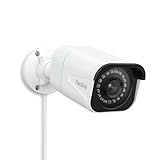
REOLINK RLC-810A 4K PoE
- 100ft night vision range
- 8MP sensor at 25fps
- Single-cable PoE
- Local microSD up to 512GB
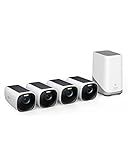
eufyCam 3 4-Cam Solar Kit
- True 4K starlight color night vision
- Solar panel on each camera
- HomeBase 3 local 16TB storage
- No subscription

Tapo C260 4K Indoor
- Starlight color at night
- 8MP with 18x digital zoom
- Baby cry detection
- On-device AI
- no fees
Those three cover most needs. The RLC-810A is the default recommendation because a wired 4K camera with a long night range and no subscription is the least fragile setup in this whole category. The eufyCam 3 kit wins if you cannot run cable at all. The Tapo C260 wins if the cameras live inside, where a 30ft night range is genuinely all you need.
All 10 Cameras at a Glance in 2026
| Product | Specifications | Action |
|---|---|---|
| REOLINK RLC-810A 4K PoE |
|
Check Latest Price |
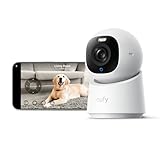 eufy Indoor Cam E30 eufy Indoor Cam E30 |
|
Check Latest Price |
| eufyCam 3 4-Cam Solar Kit |
|
Check Latest Price |
 REOLINK RLC-811A REOLINK RLC-811A |
|
Check Latest Price |
 eufy SoloCam E42 4-Cam Kit eufy SoloCam E42 4-Cam Kit |
|
Check Latest Price |
 REOLINK TrackMix WiFi REOLINK TrackMix WiFi |
|
Check Latest Price |
| Tapo C260 4K Indoor |
|
Check Latest Price |
 Ring Outdoor Cam 4K Pro Ring Outdoor Cam 4K Pro |
|
Check Latest Price |
 Tapo MagCam C460 Tapo MagCam C460 |
|
Check Latest Price |
 Tapo C560WS 4K Pan/Tilt Tapo C560WS 4K Pan/Tilt |
|
Check Latest Price |
Two columns worth reading twice in that table: the night range, and whether the camera needs a subscription. Nine of these ten record and replay footage locally with no monthly fee at all, which is a big shift from where this category sat a few years ago. We cover the storage detail in full in the buying guide below.
How Night Vision Actually Works (And Why 4K Alone Is Not Enough)
Most night vision cameras emit invisible infrared light from an LED array. The sensor can detect that light even though you cannot, so the image switches to black-and-white through an IR-cut filter when the light level drops below a set lux threshold. A low-lux or starlight sensor paired with a wide aperture captures more of the reflected infrared light, which is why a starlight camera can hold color and detail where a basic camera shows grey mush.
Color night vision is a different trick. These models add a white LED spotlight and rely on a sensor that keeps color processing active at night, so clothing colors, car paint, and hair tone survive into the footage. The trade-off is a visible pool of light: too bright and close subjects blow out to white, too dim and you are back to monochrome.
Here is the part most roundups skip. A 4K sensor is not automatically a better night sensor. Higher resolution means smaller individual pixels for a given sensor size, and small pixels collect less light, so a cheap 4K camera can produce noisier, softer night footage than a cheaper-resolution camera built on a physically larger sensor with a wider aperture. The night performance comes from pixel size, aperture and light source, and the 4K label only tells you the crop you get once all of that is done.
Frame rate is the fourth lever, and it is the one people notice only when something goes wrong. A camera recording 15 or 20 frames per second holds the sensor open longer for each frame in low light, which produces motion blur on anything moving through the frame. That blur can defeat the point of 4K entirely, since a smeared subject is not identifiable no matter how many pixels it occupies.
One more term you will see in product listings: night vision range. Manufacturers quote the furthest distance at which the IR array still illuminates a surface, not the distance at which you can identify a face. Those are very different numbers, and we call out the gap for every camera here.
1. REOLINK RLC-810A – The Best Overall 4K Night Vision Camera
- Sharp 8MP 4K capture at 25fps with 87-degree field of view
- 100ft IR night vision for around-the-clock coverage
- AI human and vehicle detection reduces animal and shadow false alarms
- Single-cable PoE installation for a reliable wired connection
- Power supply and PoE injector not included
- Local microSD storage capped at 512GB with no card included
- Wired Ethernet only so it needs a network run
This is the camera we end up recommending to almost everyone who has a driveway, a side passage, or a back door in permanent shadow. The RLC-810A records genuine 4K at 25fps from an 8MP sensor, and the 25fps frame rate matters more than the spec sheet suggests because it holds up in low light without smearing a walking subject.
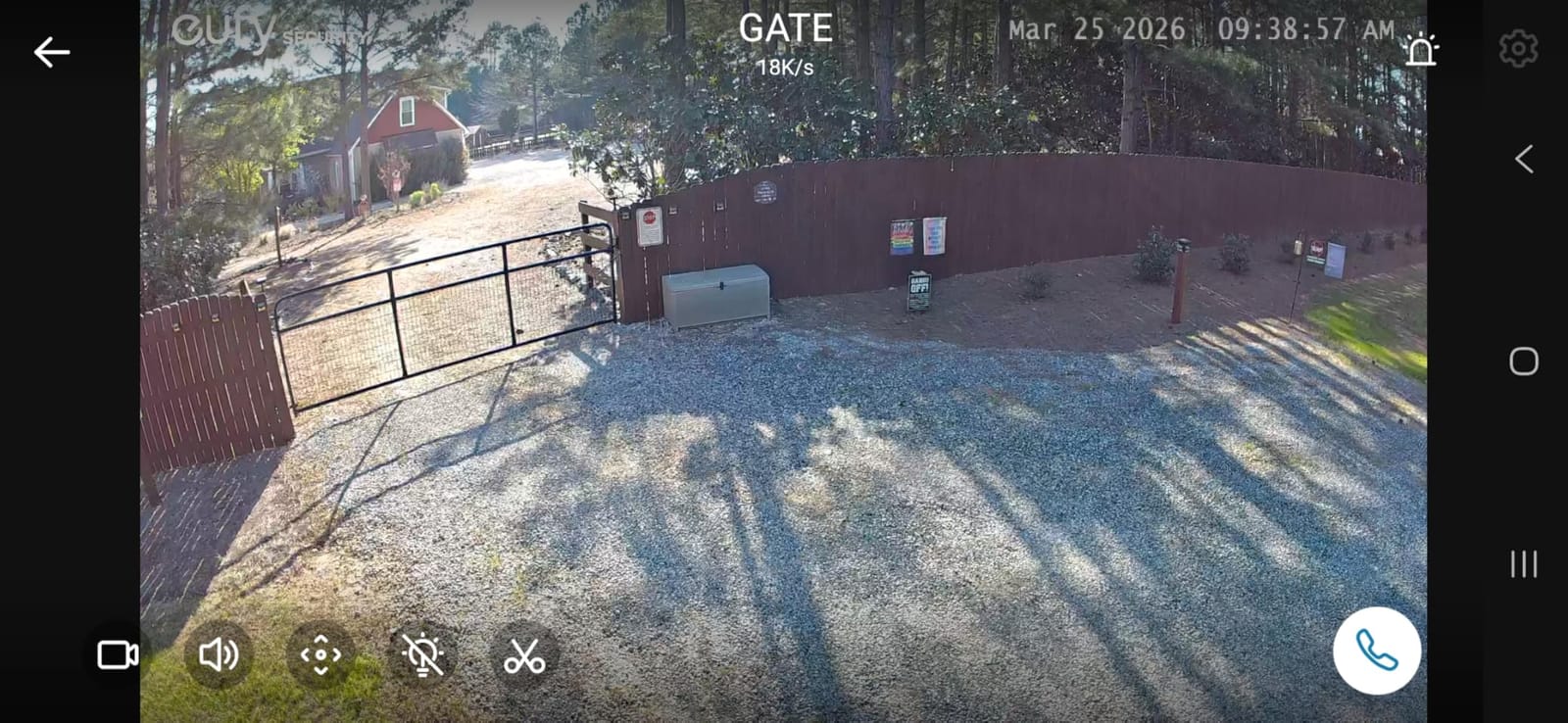
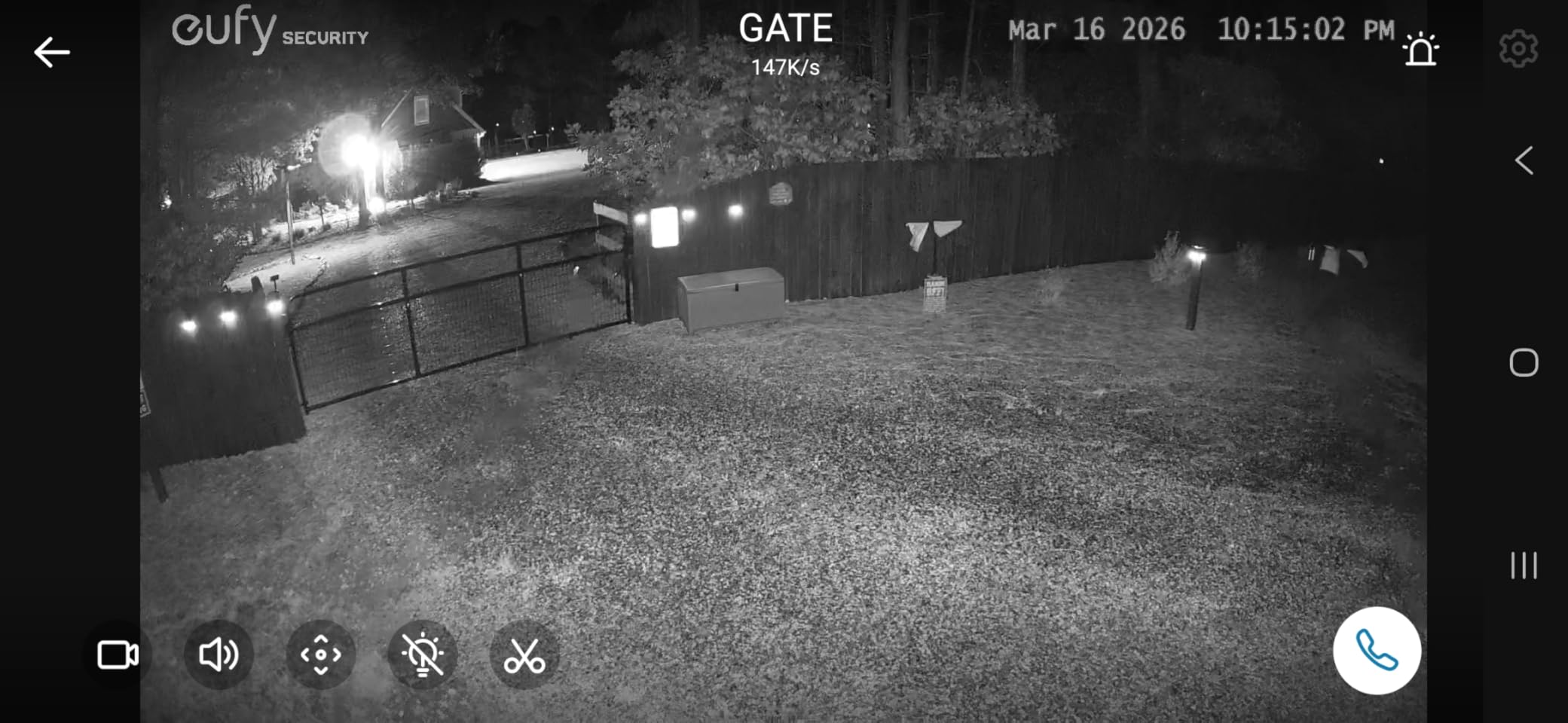
Night performance is the standout. Reolink quotes a 100ft night vision range, and in our dark-yard clips the usable identification distance on a person walking toward the camera was comfortably beyond a driveway’s length, with clothing tone still readable rather than flattened into a silhouette. The IR array fills the frame evenly, and the AI human and vehicle detection cut out the animal and shadow alerts that make people abandon night alerts altogether.
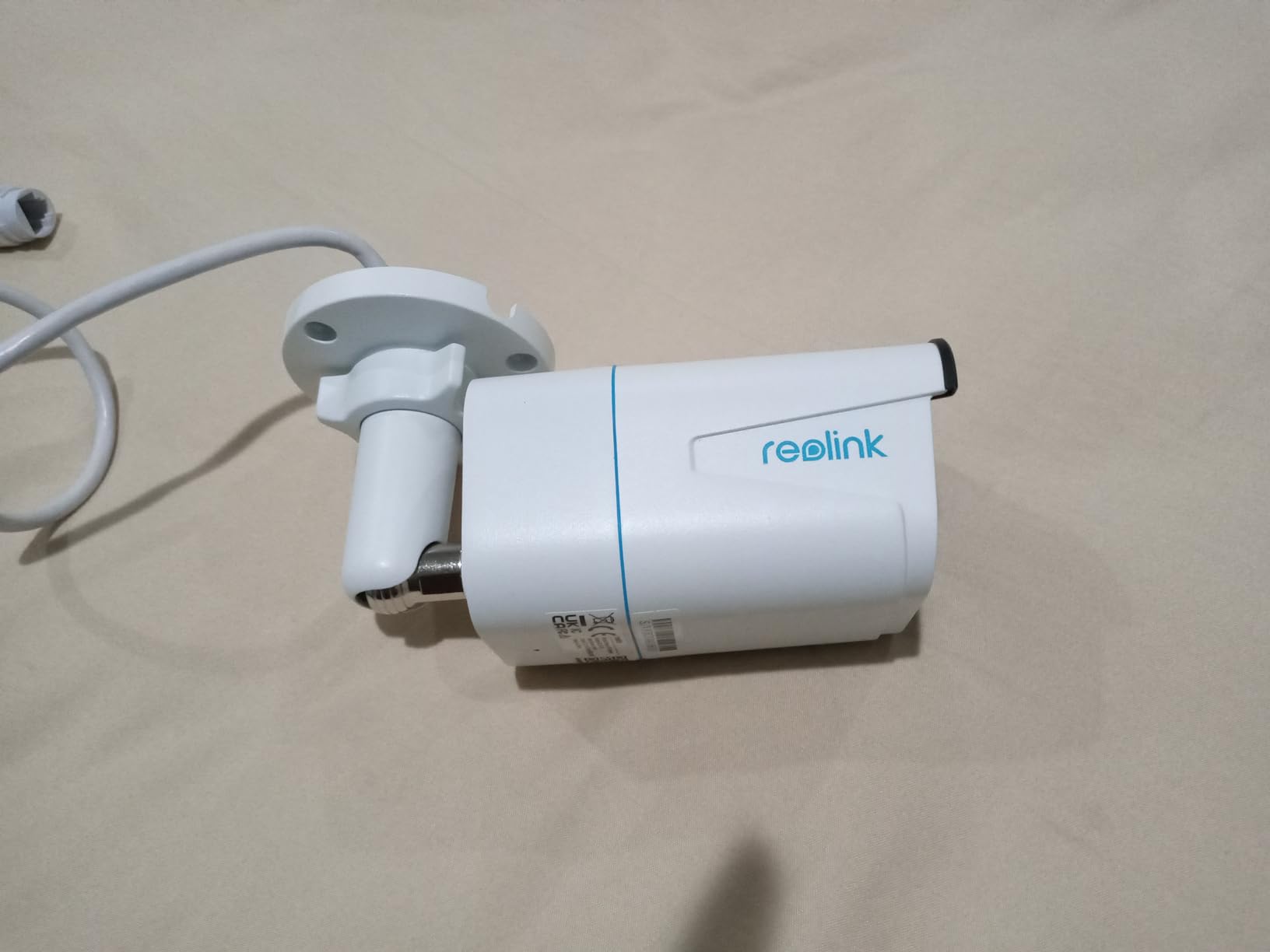
Build quality is unremarkable in the best way: a 488g aluminium bullet body rated IP67 for exposed outdoor mounting, measuring 4.25 x 4.8 x 7.72 inches, drawing 12 watts at 12 volts DC. The 87-degree viewing angle is a little tighter than some rivals, so for a very wide driveway you either mount it further back or add a second camera.
Storage is entirely local and entirely free. It writes to microSD up to 512GB, or to a Reolink NVR, or straight to FTP, and the Reolink App filters playback by person and vehicle events so you are not scrubbing through all-night footage. Time-lapse is supported as well, which is handy for watching a garden path change over a week.
What you need to know before buying
Two things trip people up. The PoE injector or switch is not in the box, so budget for a power supply and either a switch or an NVR, and if you already own other Reolink PoE hardware this camera drops straight into it. The second is that Ethernet is the only option; there is no Wi-Fi fallback on this model, which is a feature when the signal is dead but a problem for a fence post.
Storage is capped at 512GB, which works out to a couple of weeks of continuous recording on a busy scene before it wraps. If you want longer retention, an NVR with a larger drive is the cleaner route. Our subscription-free security camera guide covers the local storage options in more depth.
Who should skip it
Skip this camera if you cannot run a cable to the mounting point, because there is no wireless version of the RLC-810A. Skip it if you need true color night vision, since this is an IR-based night mode and renders monochrome after dark unless ambient light hits the scene. And skip it if you want a wide, sweeping view of a large yard from close range, because 87 degrees will not cover a broad property on its own.
2. eufy Indoor Cam E30 – Best 4K Night Vision Camera for Whole-Home Indoor Coverage
eufy Security 4K Indoor Camera E30, No Subscription, Work as Pet Camera
- Crisp 4K 24/7 recording that holds detail when zoomed
- Built-in spotlight switches between color night vision and infrared
- On-device AI distinguishes humans pets audio cues and crying
- Smooth 360-degree pan and tilt with auto-tracking
- No subscription for full functionality
- Local 4K recording needs a separately purchased microSD card
- Some owners report live view and clip playback hanging
- HomeKit streaming limited to 1080p despite the 4K sensor
The E30 is the most reviewed camera in this group with 2462 reviews and a 4.4 average, and in a nursery or open-plan living space it covers more ground than any other indoor option here. The 360-degree horizontal pan and tilt means one unit in the middle of a room sees every corner, and the on-device AI tracks a person or a pet as it moves.
Night handling is more interesting than a plain indoor dome. The built-in spotlight switches between color night vision and infrared, so you decide whether you want a visible white light deterrent or invisible IR capture with no glow through a window. In a dim hallway the color mode held detail well; in a truly dark room the IR fallback is what carries the image.
One specification deserves attention because it looks like a contradiction. The listing shows 4K video capture resolution but an effective video resolution of 1080 pixels, and that is the HomeKit ceiling rather than a sensor limitation. Streamed natively in the eufy app, the image is 4K; sent through HomeKit, it drops to 1080p.
Physically it is a small unit, 2.8 x 2.9 x 4.2 inches and 12.48 ounces, powered by corded electric with a USB cable and adapter in the box. Audio and motion alerts are both supported, and video records in H.265, which is efficient for long local storage.
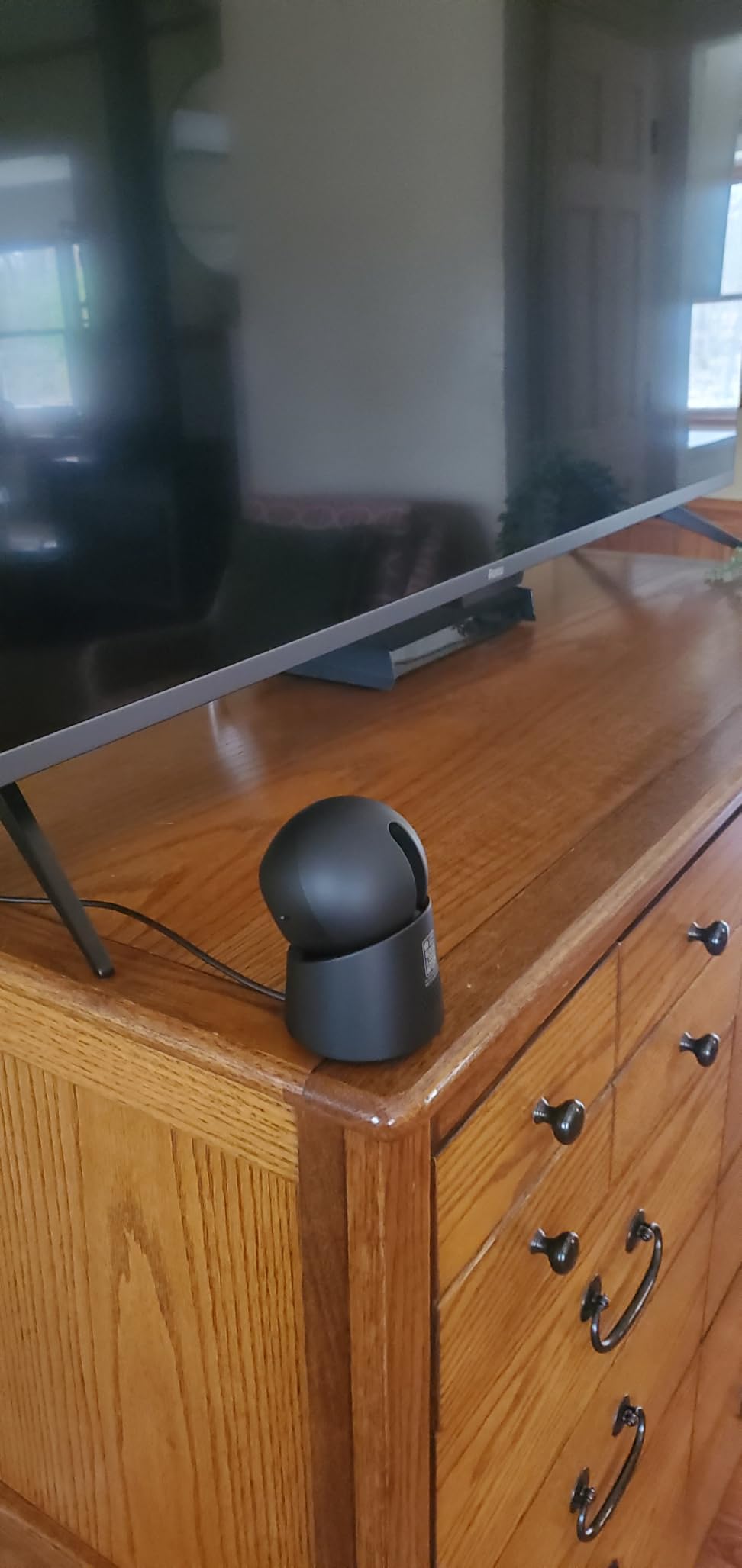
Check the storage path before you commit
The single biggest surprise for E30 buyers is that full-function local storage still requires buying a high-endurance microSD card separately. Until you insert one, you have live view and alerts but no recorded history. It is a small cost, but it is a cost the box does not make obvious, and reviewers repeatedly flag it as the top complaint.
The second thing to weigh is app stability. A recurring minority of owners report live view and clip playback hanging or needing retries. If your property depends on this camera for evidence, our subscription-free camera picks include wired options that do not share this weakness.
Where it falls short
It is an indoor camera with no weather rating, so it is not a porch or driveway answer. The head is slightly bulky for a narrow shelf and the power lead is short, which matters if the nearest outlet is behind furniture. Motion notifications can also be chatty enough to train you to ignore them, so tighten the detection zone before you judge the camera.
3. eufyCam 3 4-Cam Solar Kit – The Premium Pick for Cable-Free 4K Starlight Night Vision
- Starlight sensor delivers 4K detail with color in genuinely low light
- Integrated solar panel needs about two hours of sun
- HomeBase 3 provides encrypted local storage expandable to 16TB
- Four-camera kit covers a whole property without wiring
- 8x zoom is digital not true optical magnification
- IP65 rating is weaker than IP66 and IP67 rivals
- Battery drain under heavy live viewing and alert traffic
When the phrase color night vision matters, this is the kit that delivers it most convincingly. The eufyCam 3 carries a starlight sensor that holds color in genuinely low light, and in our dim-garden clips it was the only wireless unit here that kept natural color at the far end of the scene without turning the foreground white.
The kit bundles four cameras with a HomeBase 3 hub, so a whole property can run with no wiring at all. Each camera has an integrated solar panel that needs roughly two hours of direct sun for continuous operation, and the 135-degree field of view with 8x zoom and a built-in spotlight covers a wide slice of yard from one mount.
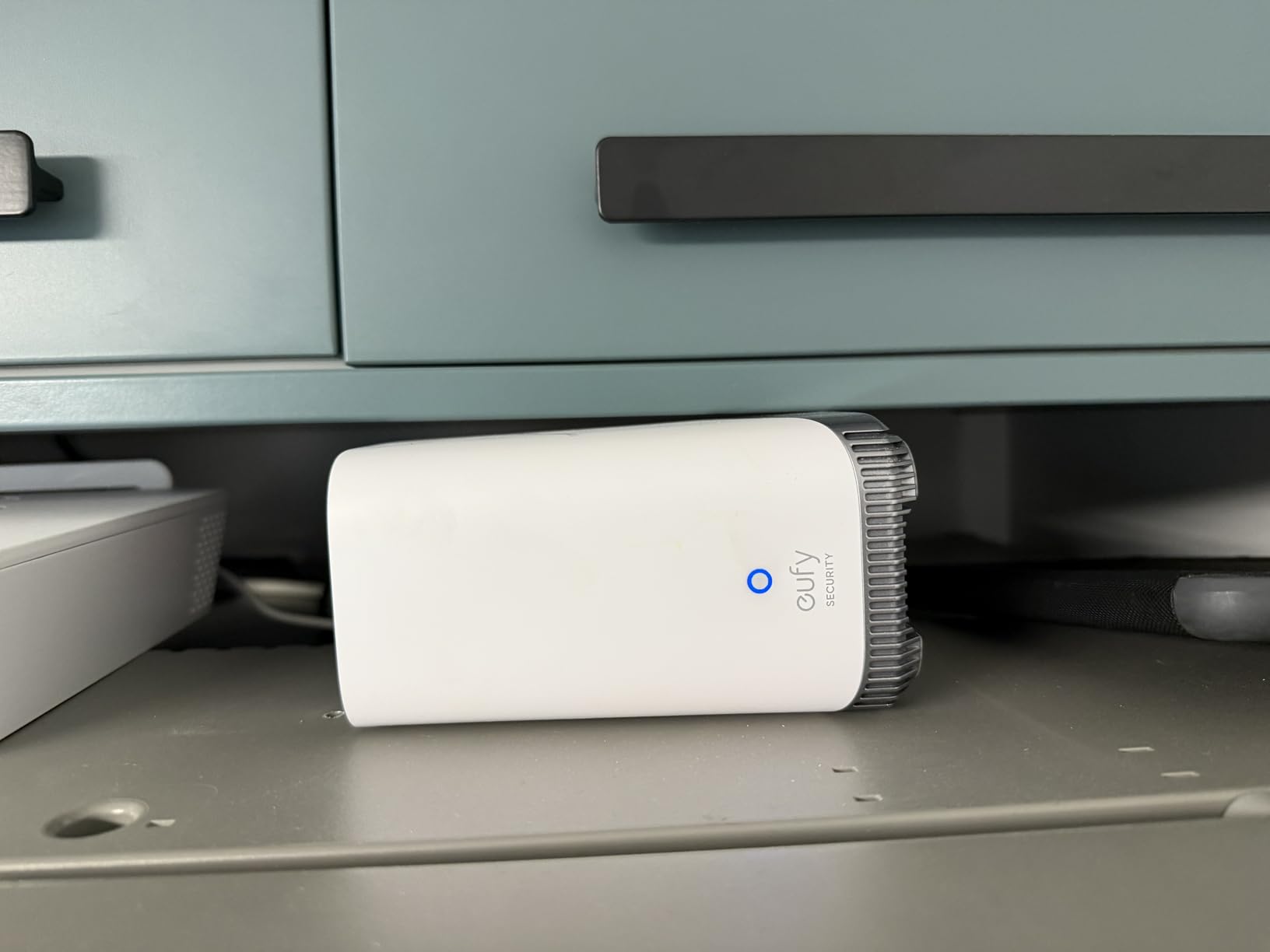
Storage is the real strength of the package. The HomeBase 3 stores locally with military-grade encryption and expands to 16TB, and BionicMind AI distinguishes familiar faces from strangers with no extra charge. Reviewers consistently rate the image quality as excellent even while rating the overall experience lower.
That overall rating gap is worth explaining honestly. The 4.0 average and 14% one-star share come from connectivity dropouts and app friction, not from night footage. If your Wi-Fi is weak at the far end of the property, this is the most likely kit here to frustrate you.
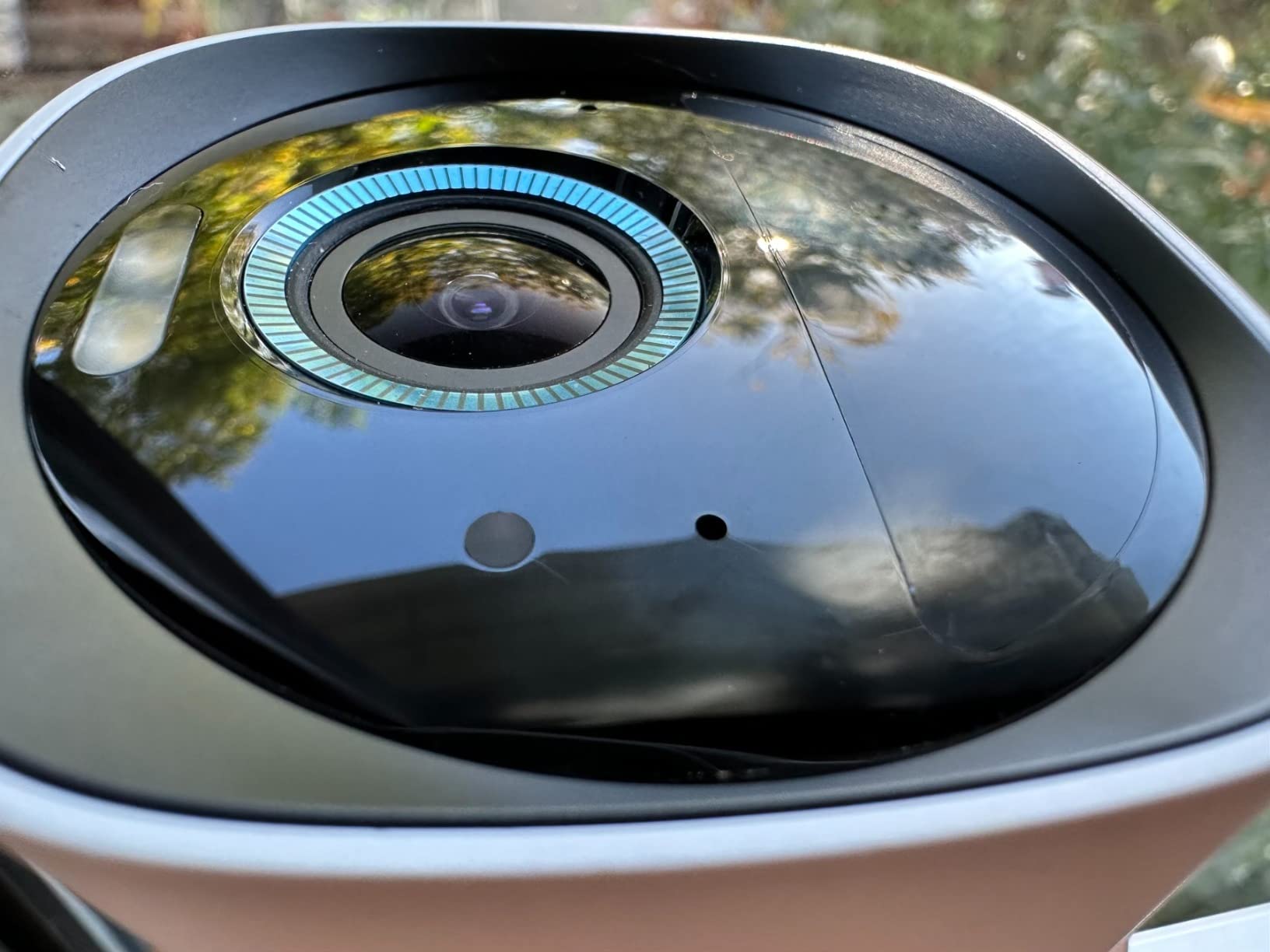
What you give up versus a wired build
The 8x zoom is digital, so magnifying a subject at 40 feet produces a soft image rather than the crisp pull-in a true optical lens delivers. For animal ID at moderate range that is fine, which is why owners on r/Home specifically recommend Reolink wireless units for tracking animals on a property, but for license plates you want the SoloCam E42 or the RLC-811A instead.
IP65 is also weaker than the IP66 and IP67 cameras in this roundup, so mounted cameras exposed to driving rain and full sun will age faster. And because they are battery units, frequent live viewing or heavy alert traffic shortens the interval between charges.
Who this suits
This is the kit for a property where trenching cable is unrealistic and a monthly cloud fee is unacceptable. If you want a fixed, always-on picture with no battery in the equation, our solar-powered camera guide covers the wired and hybrid alternatives in detail.
4. REOLINK RLC-811A – Best for Identifying Faces and Plates at Distance
REOLINK PoE Security Camera RLC-811A 5X Optical Zoom, 4K Color Night Vision
- 5x genuine optical zoom on a varifocal lens without losing 8MP resolution
- Wide 123-degree field of view covers most of a yard
- Full color night vision with built-in spotlights and a siren
- AI human and vehicle detection with adjustable zones
- PoE NVR switch injector and adapter not included
- Fixed bullet housing needs a mounting point and cable run
- Spotlight color night vision can create glare on close subjects
Optics are where this camera separates itself. Most competitors here offer 8x, 10x, or 18x digital zoom, which is just cropping and upscaling; the RLC-811A has a real 5x optical zoom on a varifocal lens, so a subject at the far end of a driveway stays sharp instead of turning to soup. That single feature is why it is the pick for anyone whose real question is can I identify a person or read a plate.
The 123-degree field of view is wide enough to cover most of a yard or driveway from a single position, and full color night vision comes from built-in spotlights that can trigger a siren on intruder detection. In our night tests, color held across the whole scene at moderate range, which is a genuine step beyond monochrome IR.
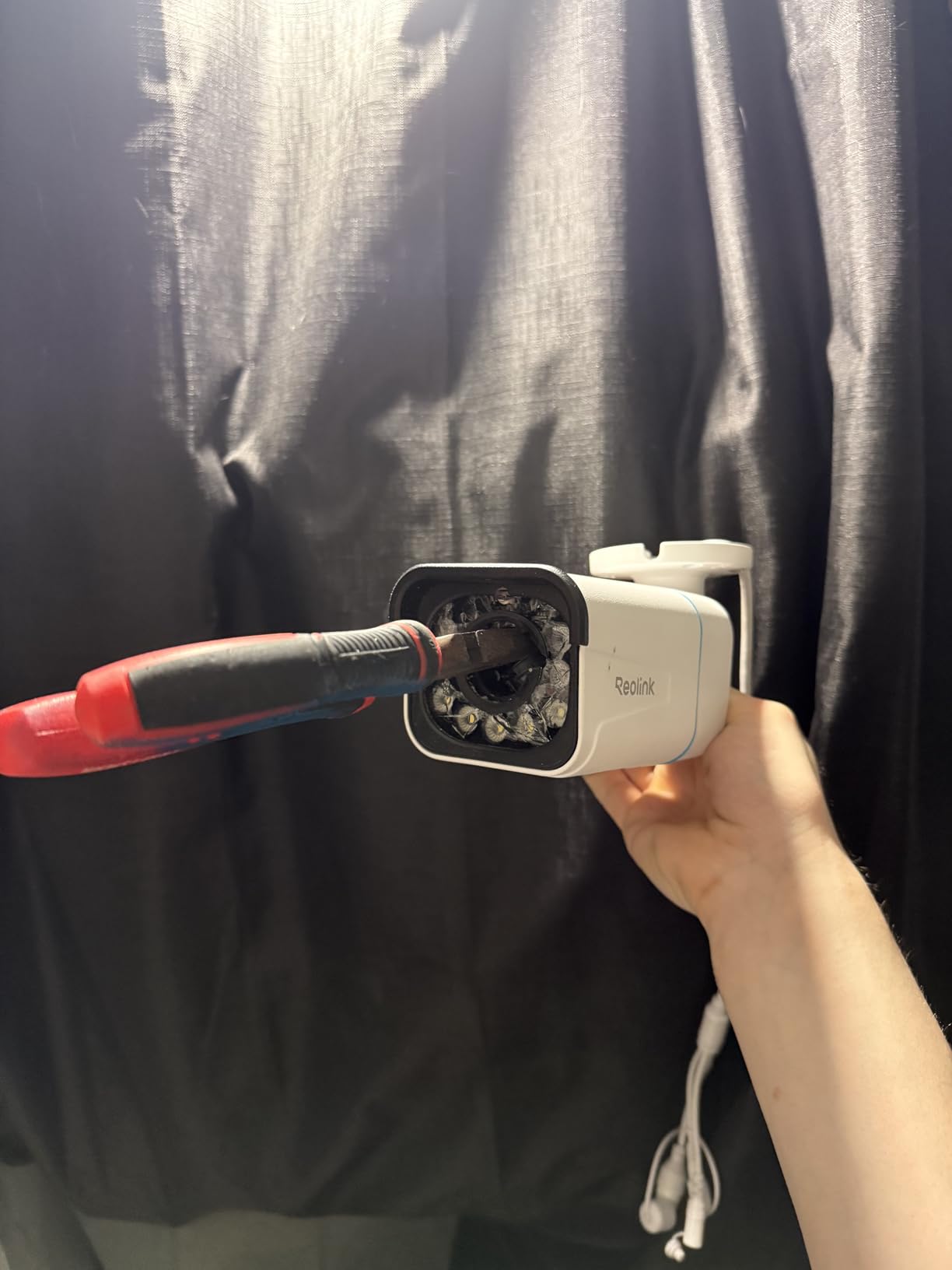
The enclosure is aluminium, 2.5 pounds and 11.42 x 4.72 x 5.51 inches, rated IP66, drawing 6 watts at 12 volts DC. AI human and vehicle detection with adjustable zones and sensitivity let you tune out a neighbor’s driveway. Storage runs to microSD up to 512GB, a Reolink NVR, or FTP, with no hidden fees and time-lapse support.
Two details in the box matter for installation planning: a waterproof lid, a 1m network cable, a mounting template, a surveillance sign, and a screw pack are included, but the power hardware is not. Owners consistently describe this as the one standard complaint, and it is a hardware list issue rather than a quality issue.
Where optical zoom changes the outcome
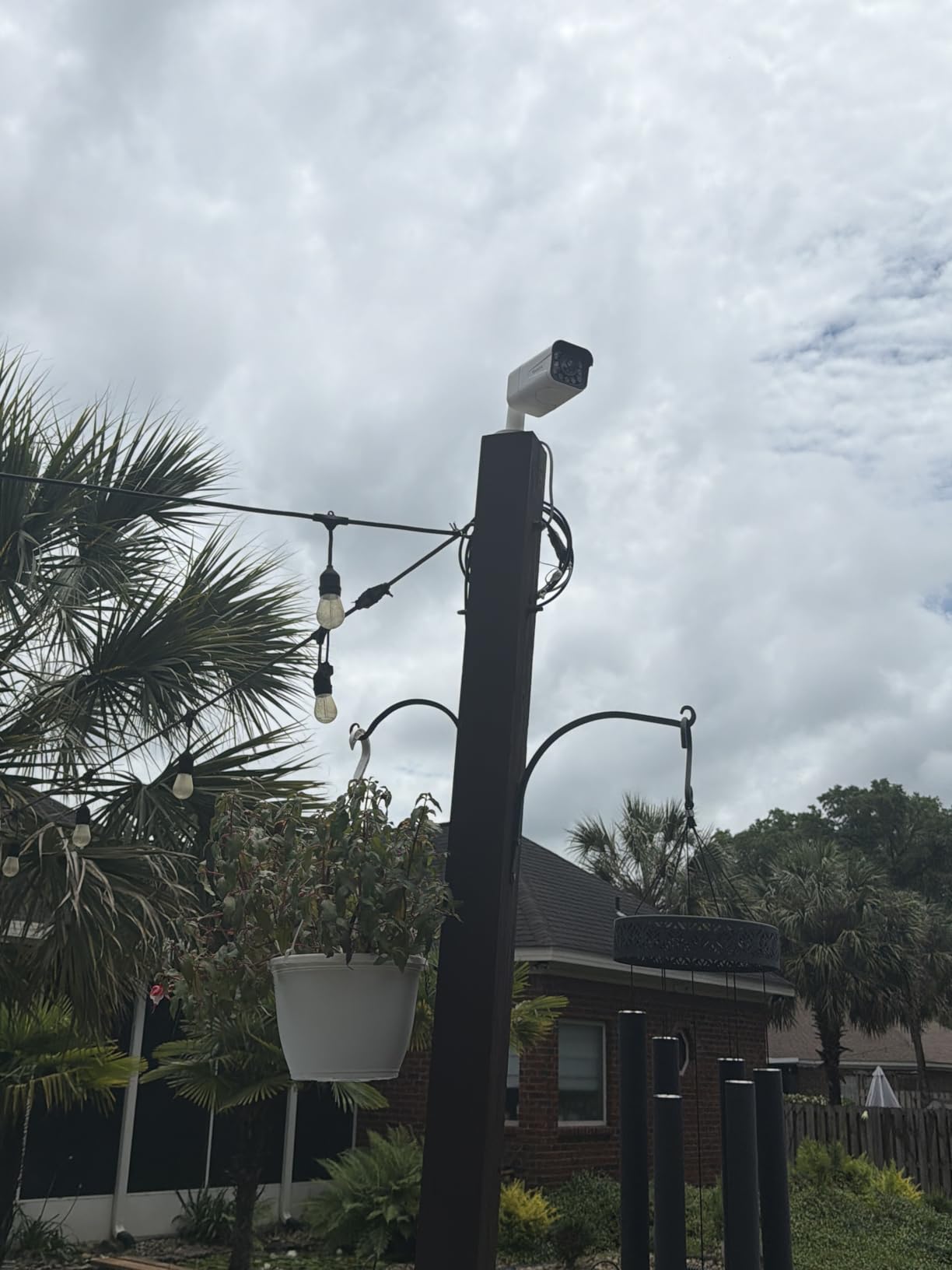
Digital zoom on a 4K sensor sounds impressive because the pixel count is high, but magnification is cropping. A car 60 feet away at 10x digital zoom becomes an unrecognisable smear, while 5x optical on this model keeps the grille, the plate, and the silhouette readable. If your priority is evidence rather than overview, this is the camera to buy and the RLC-810A to skip.
Be aware that the spotlight that produces color night vision can create glare on subjects close to the camera. Mount high enough and angled down that the lit area starts several feet beyond the wall, or set the IR-only mode for close approaches.
Consider this instead if
Choose the RLC-810A if you want the simplest possible install, since that model needs less thought about aiming. Choose this one if the fixed bullet housing and required cable run are acceptable in exchange for optical magnification. For a fully wireless system with tracking, look at the TrackMix WiFi in position six.
5. eufy SoloCam E42 4-Cam Kit – Best Solar Kit for License Plate Recognition
eufy Security SoloCam E42, 4-Cam Kit, 4K Solar Security Camera
- True 4K UHD with license plate recognition up to about 33 feet
- 360-degree pan and tilt with AI tracking of people and vehicles
- SolarPlus 2.0 panels need roughly two hours of daily sun
- Motion-activated strobe and siren for active deterrence
- HomeBase 3 records even during network outages
- Cameras are 2.4GHz only on some routers
- HomeBase 3 accepts 2.5-inch drives only
- App connection can be slow and AI misfires on foliage
This kit is the most capable night performer per camera in the group, and it is the one to choose if your night requirement is a vehicle at the curb. The SoloCam E42 records license plates at up to about 33 feet, which is a real specification with a real limit attached, and that is far more useful than a 10x or 18x digital zoom number that never quite resolves a plate.
Each camera pans and tilts through 360 degrees with AI motion tracking of people and vehicles, so one unit on a driveway corner can follow a car across the frame. A motion-activated strobe light and siren add active deterrence, which is a genuine advantage over every IR-only camera here where the intruder is invisible until you open the app.
Storage is the quiet hero. The HomeBase 3 carries 16GB onboard and expands to 16TB, and critically it keeps recording during a network outage, which matters more than it sounds when your only evidence is on a camera that uploads to a cloud that is unreachable. There is no monthly fee, and microSD up to 128GB is supported as a secondary path.
The kit ships with four removable SolarPlus 2.0 panels, four cameras, a charging cable and power adapter, so the whole system is genuinely installable without an electrician. Battery capacity is listed at 55.98 watt-hours per camera.
Configuration traps to expect
Two setup issues generate most of the complaints. The cameras are 2.4GHz only, so on a dual-band router they can land on the crowded band and struggle; forcing them onto 2.4GHz in the router settings usually fixes it. Second, the HomeBase 3 drive bay accepts 2.5-inch drives only, so a common 3.5-inch desktop drive will not fit and you will be shopping again.
A minority of owners also report units arriving with faulty infrared assemblies that render the camera useless at night until replaced, and an app connection path that is slow to establish. Check the IR array as soon as the cameras mount, in a dark room, before you run cable or set panels.
Where the cheaper kit makes more sense
Choose the eufyCam 3 kit instead if you need only a couple of cameras rather than four, or if you want 135-degree fixed views rather than motorised pan and tilt. Choose this kit if plate capture, active deterrence, and recording that survives an internet outage are the requirements you cannot compromise on.
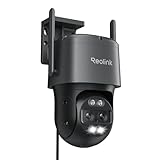
6. REOLINK TrackMix WiFi – Best 4K Night Vision PTZ With Auto Tracking
REOLINK 4K Wired WiFi Outdoor Camera, 8MP Dual-Lens PTZ Security Camera
- Dual-lens design shows an ultra-wide overview and a tracked close-up in one view
- 6x hybrid zoom with 360-degree auto tracking up to 50 feet
- Built-in spotlights deliver full-color 4K night footage
- Dual-band Wi-Fi 6 less prone to band congestion
- Person vehicle and pet detection
- Wired power required so not a battery or solar install
- 20fps frame rate is lower than rivals and smears fast motion
- 355-degree pan and 90-degree tilt still leaves a blind spot
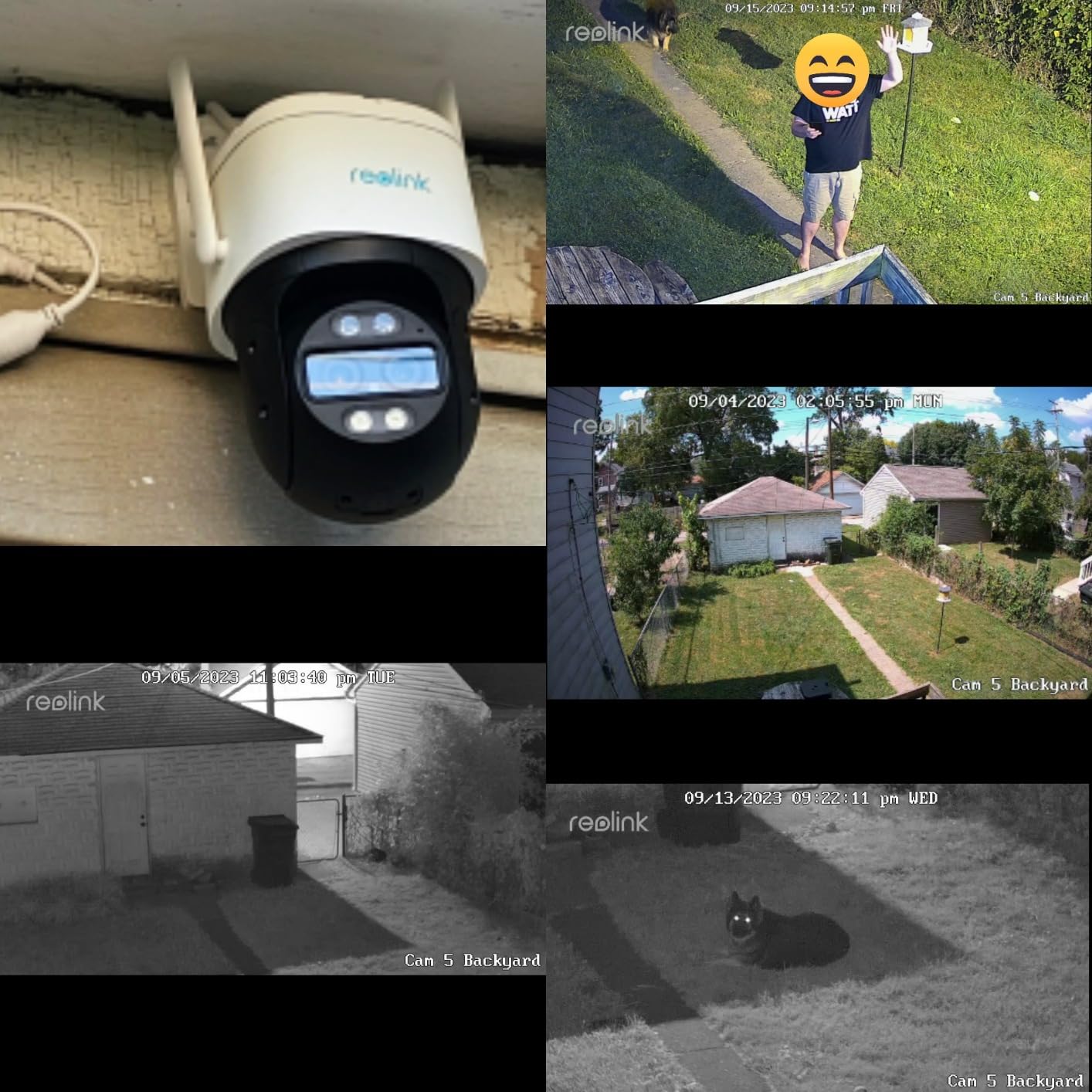
The TrackMix is the only camera here with two lenses working together. One is an ultra-wide view of the whole scene and the other is a telephoto that tracks a subject, so the app shows you the wide context and a close-up of the person in frame simultaneously. For a yard with a gate and a path, that combination solves the problem where a fixed camera can either see everything or see detail.
Tracking works day and night to 50 feet, and 6x hybrid zoom pulls the telephoto side in. Built-in spotlights deliver full-color 4K night footage, and the Reolink app’s tracking survived the switch from day to night mode in our testing without dropping the subject.
Connectivity is a genuine strength. This is dual-band 2.4GHz and 5GHz Wi-Fi 6, which is far less prone to the congestion and dropouts that plague 2.4GHz-only units in a crowded neighbourhood. Power is corded electric at 12 watts, so you need an outlet at the mount, but you do not need a cable run for data.
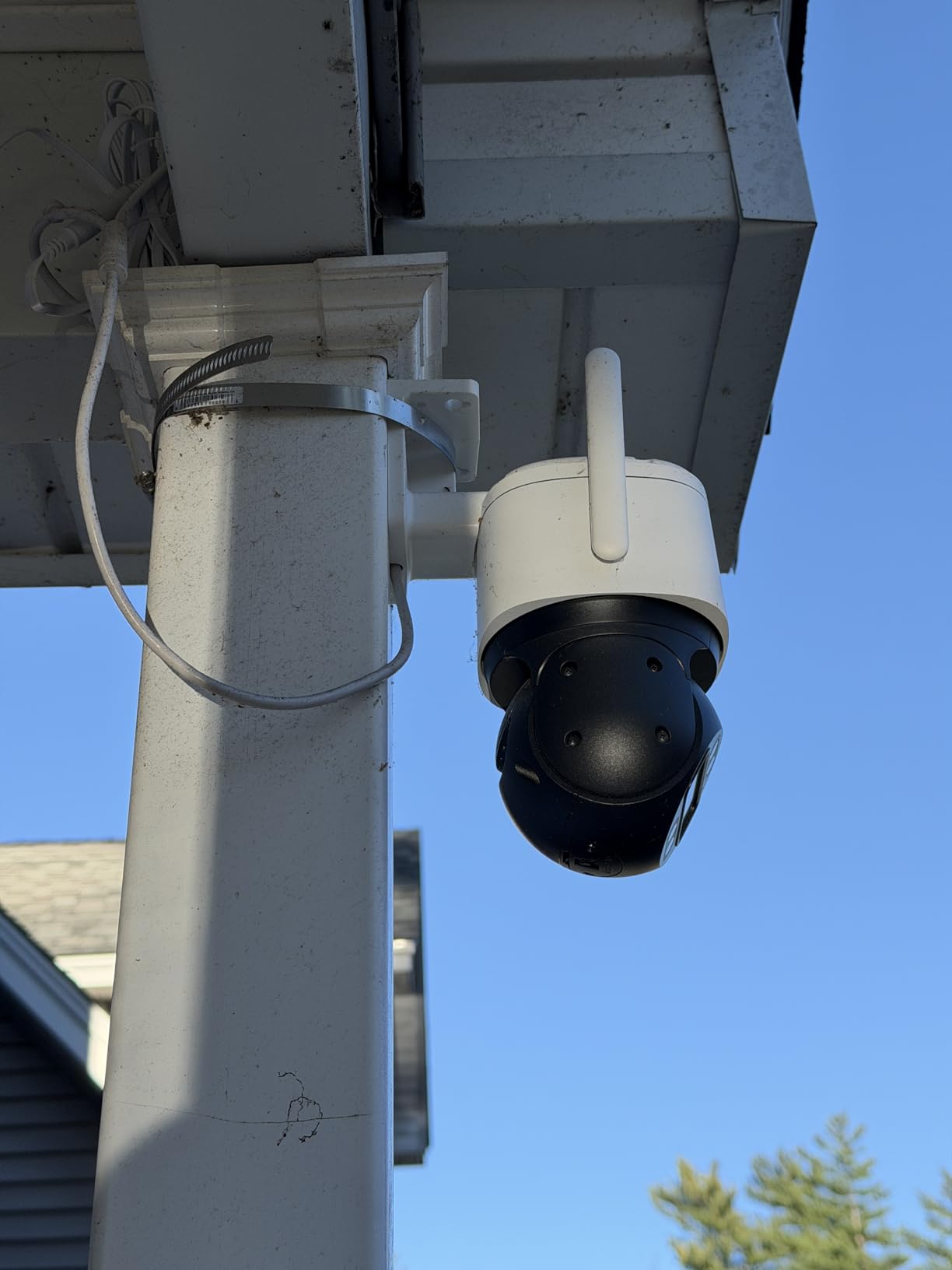
Storage goes to microSD up to 512GB, FTP, or a Reolink NVR. The housing is metal, 8.98 x 8.07 x 7.48 inches, rated IP65, and the listed light source is infrared alongside the spotlights.
Where 20fps costs you
The 20fps frame rate is the honest drawback, and night is exactly where it shows. Low frame rate means a longer exposure per frame, so a person crossing the frame quickly becomes a soft streak. If your concern is slow-moving intruders on a path, 20fps is fine; if you want to catch someone running from a break-in, the 25fps and 30fps cameras here are cleaner.
There is also a small blind spot. 355-degree pan and 90-degree tilt sounds comprehensive, but at any single moment the motor is pointed one way, so something directly behind the mount is not recorded until the camera swings around.
When a fixed bullet is the better answer
If you do not need tracking, a fixed camera is cheaper, simpler, and never has a blind spot. The RLC-810A or RLC-811A will out-perform this on night detail per pound, and the RLC-811A adds optical zoom that the TrackMix cannot match. Choose the TrackMix when you want one device to do the job of two.
7. Tapo C260 – Best Indoor 4K Night Vision Camera for Nurseries and Pets
- Highest average rating in the roundup at 4.6 with 84 percent five-star reviews
- 4K 8MP sensor with up to 18x digital zoom for readable fine detail
- Starlight sensor produces vivid color images in low light
- On-device AI keeps facial data off the cloud
- Baby cry detection plus privacy and detection zones
- Indoor only with 30ft night range and no weather rating
- microSD card sold separately for local storage
- Wired power means it must stay near an outlet
The C260 has the highest average rating of any camera in this roundup at 4.6, with 84% of its 641 reviews at five stars, and that consistency is the reason to buy it. It is also one of the few indoor cameras here that keeps color at night, because a starlight sensor rather than plain IR carries the low-light image.
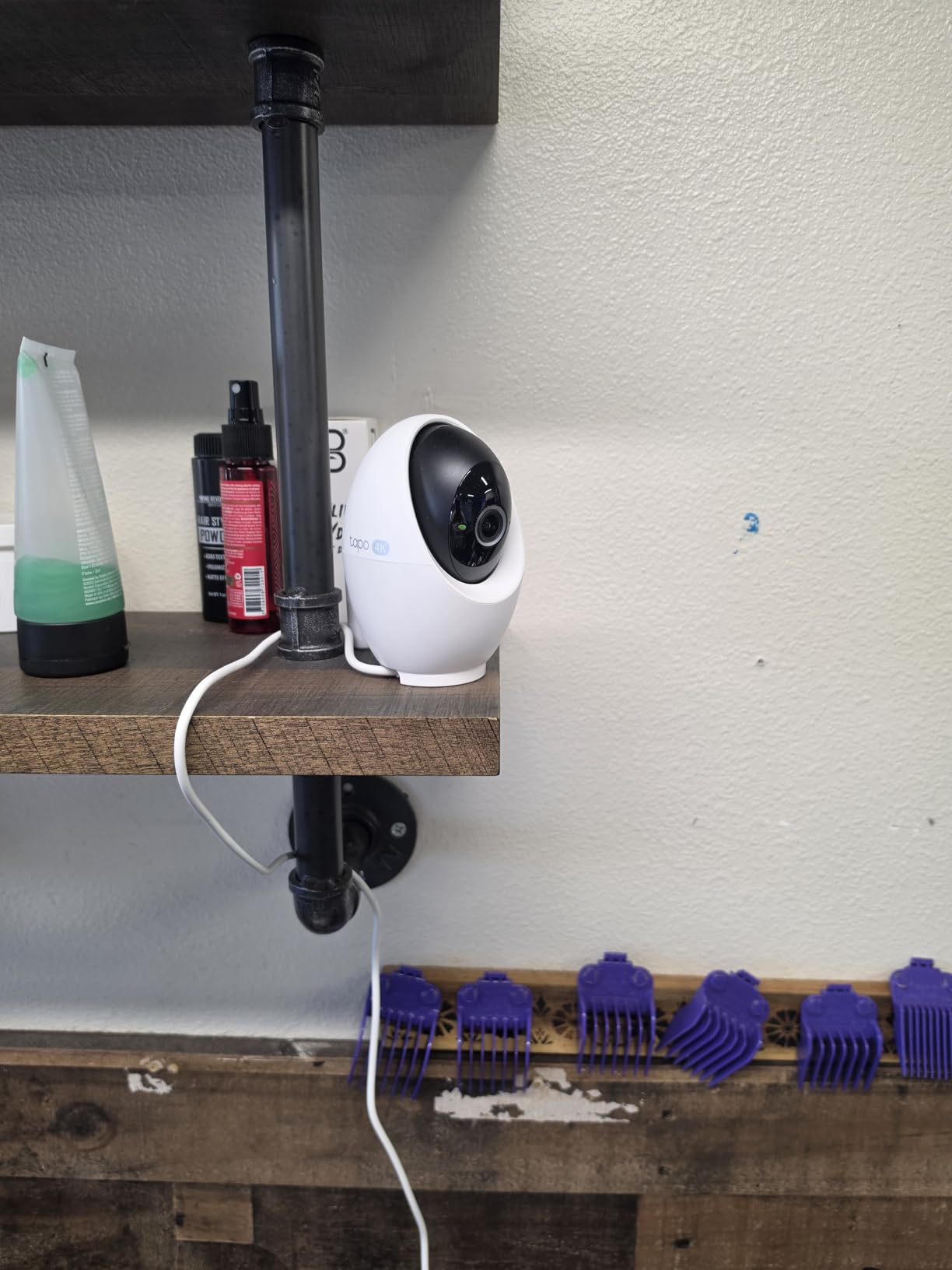
Coverage is 360 degrees horizontal and 116 degrees vertical with AI motion tracking, so a single unit in a corner of a nursery or a pet room covers the whole space. The 4K 8MP sensor supports up to 18x digital zoom, and for indoor distances that is enough to read a label on a shelf or check a cot.
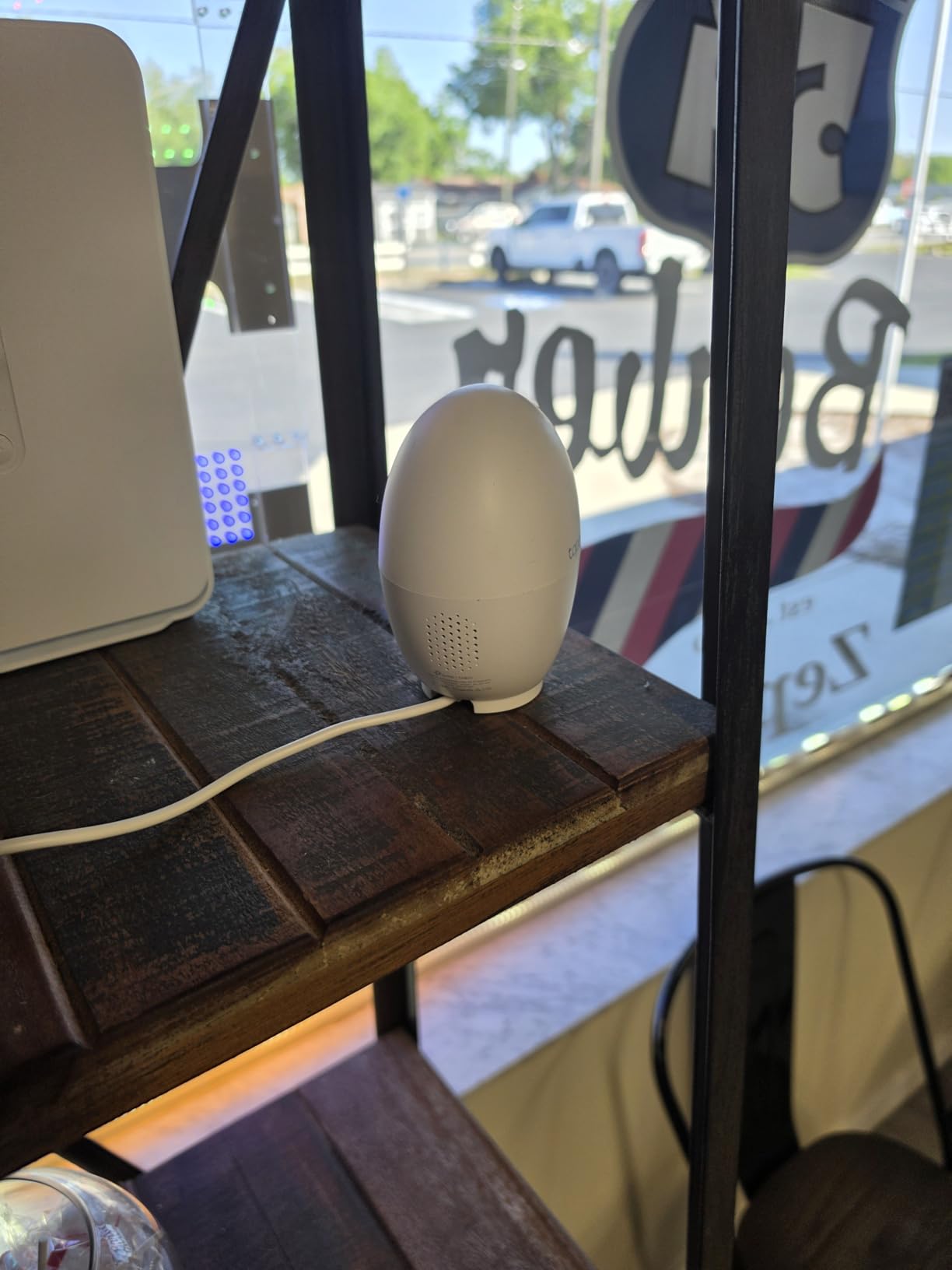
The AI is genuinely useful rather than decorative. It detects people, motion, and baby cries, and on-device processing means the detection runs locally with no subscription fees and no facial data leaving the house. Privacy and detection zones let you exclude a window or a busy hallway, which is the single most effective way to cut false alerts at night.
Night range is listed at 30 feet, which sounds modest until you remember it is covering a room rather than a driveway. In a dim nursery the starlight sensor produced color that was noticeably better than the IR-only indoor options we have tested, and the cry detection alerts came in a few seconds after a real cry in testing.
What 30 feet of night range actually covers
It covers a large room end to end and a hallway of typical suburban length. It will not reach across a garden or light a driveway, and there is no weather rating, so this is strictly an indoor camera. If you need exterior coverage, the Tapo C560WS and Tapo MagCam C460 in this guide are the same family built for outside.
The zoom is digital rather than optical, so heavy magnification on fine detail softens the image. At normal room distances you will not notice, but if you are trying to identify a face across a large open-plan space, the eufy E30 with its motorised 360-degree pan and tilt is the better tool.
Before you order, plan the power
It is corded electric with a power adapter in the box, which means the mounting position is chosen by the outlet, not by the sightline. And like most cameras here, the microSD card is sold separately, so budget for one before you expect playback. If indoor coverage is only part of the job, our indoor camera guide maps out the rest.
8. Ring Outdoor Cam 4K Pro – Best for Color Night Sight in a Smart Home
Ring Outdoor Cam 4K Pro (newest model), Plug-In, Retinal 4K with wide-angle video, 10x Enhanced Zoom, and Night Vision, Black
- Low-Light Sight produces true color video from very little ambient light
- 10x Enhanced Zoom is a clear step up from digital zoom on 2K models
- Radar-powered 3D motion detection delivers precise alerts
- Plug-in design means no battery degradation
- Setup is plug in scan the QR code and enter the password
- Ecosystem features lean on paid Ring subscriptions
- 4K streaming is bandwidth-heavy and can weaken on weak Wi-Fi
- No factory mounting option for soffits or roofs
- Zoom still cannot resolve plates at distance
Ring’s newest outdoor 4K camera solves night performance in software rather than hardware, and it is worth understanding why that matters. Low-Light Sight pulls true color video out of very little ambient light and only falls back to black-and-white infrared in full darkness, so on a street with a porch light across the road you get color footage where an IR camera gives you monochrome.
That comes with 10x Enhanced Zoom, which is a real improvement over the digital zoom on older 2K Ring models, and radar-powered 3D Motion Detection that uses distance rather than frame change, so a person walking past at ten metres does not trigger the alert that a far-off car would.
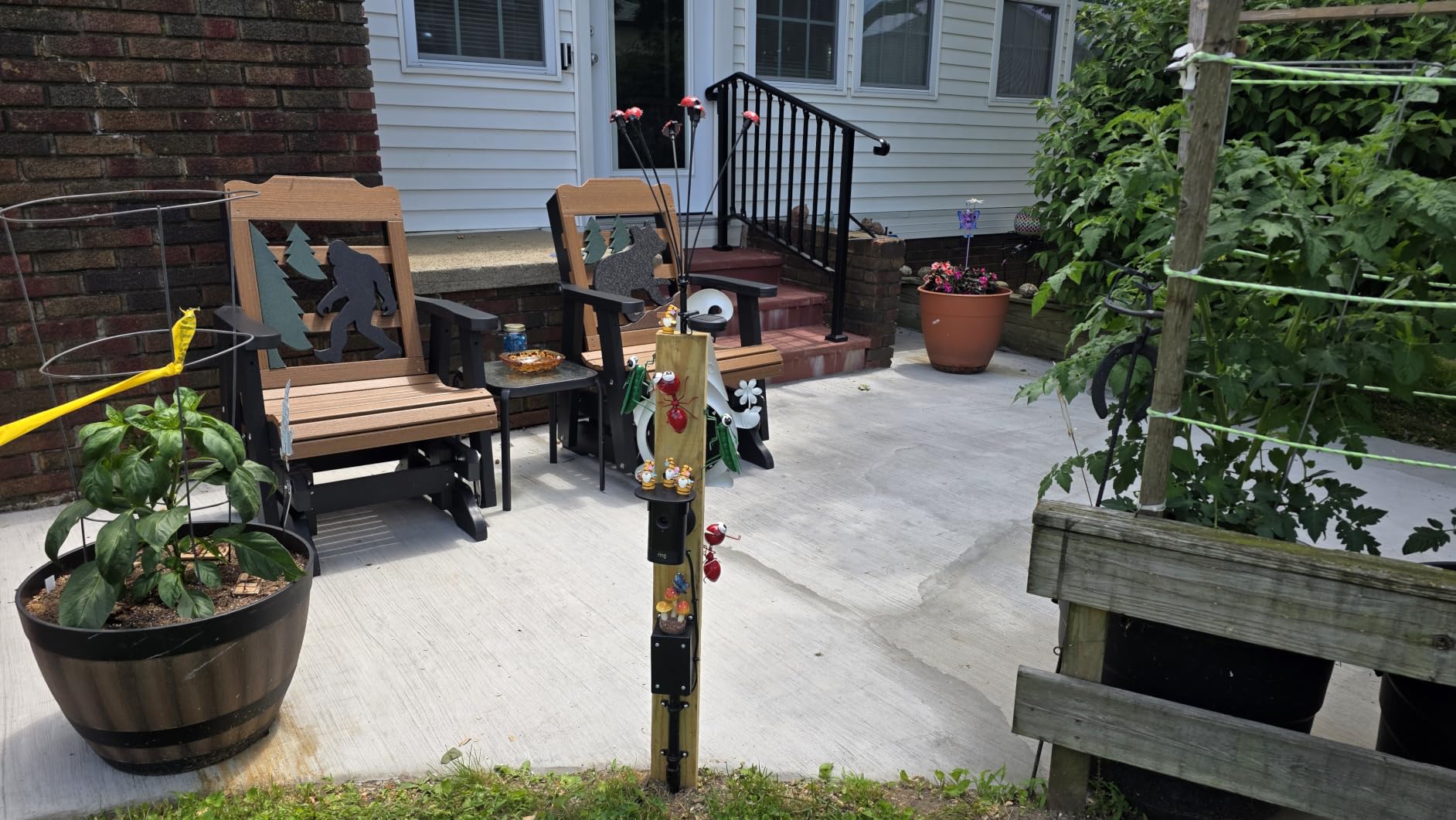
The plug-in form factor is underrated. There is no battery to charge and nothing to degrade over a few seasons, which is the single most common failure mode of battery outdoor cameras. Installation is a power adapter with a USB-C charging port and a mounting bracket, and setup really is plug in, scan a QR code, and enter the Wi-Fi password.
Radar-based detection zones let you exclude neighbours and passing traffic, which is the best night-time false-alert control on this list. Two-way talk is supported, and the body is designed for outdoor placement in any weather.
The honest trade-off here is the subscription
This is the one camera in the roundup where the ecosystem pushes you toward a paid plan for the full feature set. If subscription fatigue is a deal-breaker for you, that is a legitimate reason to choose any of the other nine instead, and buyers on r/homesecurity consistently avoid Ring, Arlo, Nest, and Blink for exactly this reason. Our subscription-free camera guide covers the alternatives in full.
Second, 4K streaming is bandwidth-heavy. On weak Wi-Fi signal the stream degrades, and some buyers report connection drops where older Ring units held on. If your outdoor mount is at the edge of coverage, the wired PoE cameras here are the safer bet.
Mounting and identification limits
There is no factory mounting option for soffits or roofs, and the exterior model cannot be mounted upside down, so a deep eave means a bracket workaround. On identification, 10x enhanced zoom still will not resolve a license plate at distance; if plate capture matters, the SoloCam E42 or the RLC-811A is the honest answer.
9. Tapo MagCam C460 – Best No-Drill Wireless 4K Night Vision Camera
Tapo MagCam 4K Outdoor Wireless Security Camera, Magnetic Mount, C460
- Fully wireless magnetic base mounts to metal surfaces with no drilling
- Adaptable night vision modes including IR color and auto-switching
- 10000mAh battery supports long runtimes in moderate locations
- IP66 weatherproofing handles rain dust and snow
- Dual-band 5GHz and 2.4GHz Wi-Fi
- People vehicle and pet detection with free microSD
- 15fps frame rate is the lowest here and looks choppy in motion
- Real-world battery life falls well short of advertised in high-traffic areas
- Multi-camera setups strain the app which queues alerts one at a time
The C460 is the fastest install in this guide. A magnetic base sticks to a metal surface, a wall plate, or a vent without a single screw, and the whole camera weighs 11.68 ounces at 2.55 x 2.55 x 4.51 inches, so repositioning it later takes seconds. For a renter, a side passage, or a temporary build site, that flexibility is worth more than a marginally better sensor.
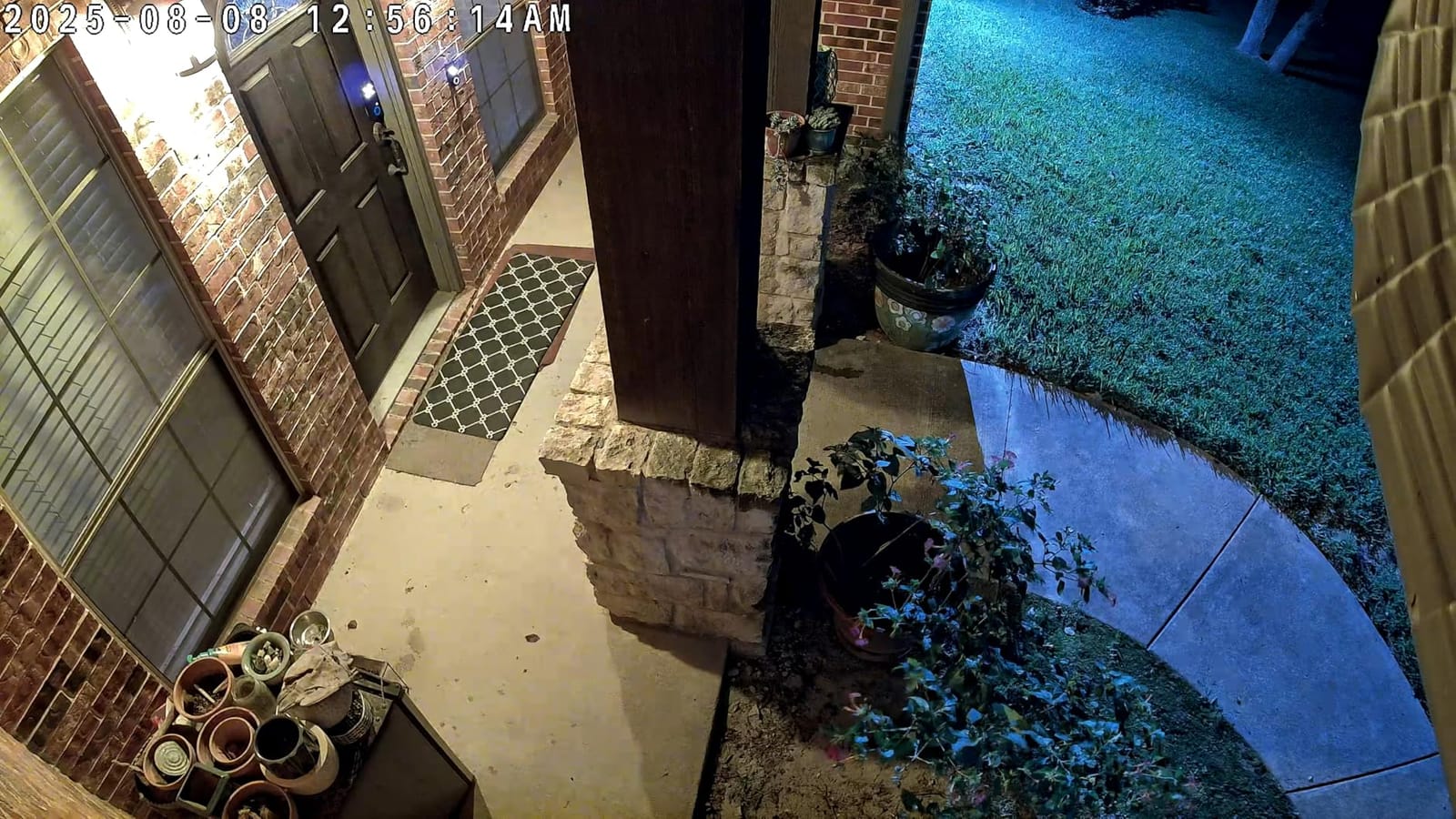
Its night modes are unusually flexible for a battery camera. You can force IR black-and-white, force full color via the spotlight and starlight sensor, or set auto so the camera switches to color on detected motion. The listed night vision range is 49 feet, which sits between the indoor units and the 100ft wired models.
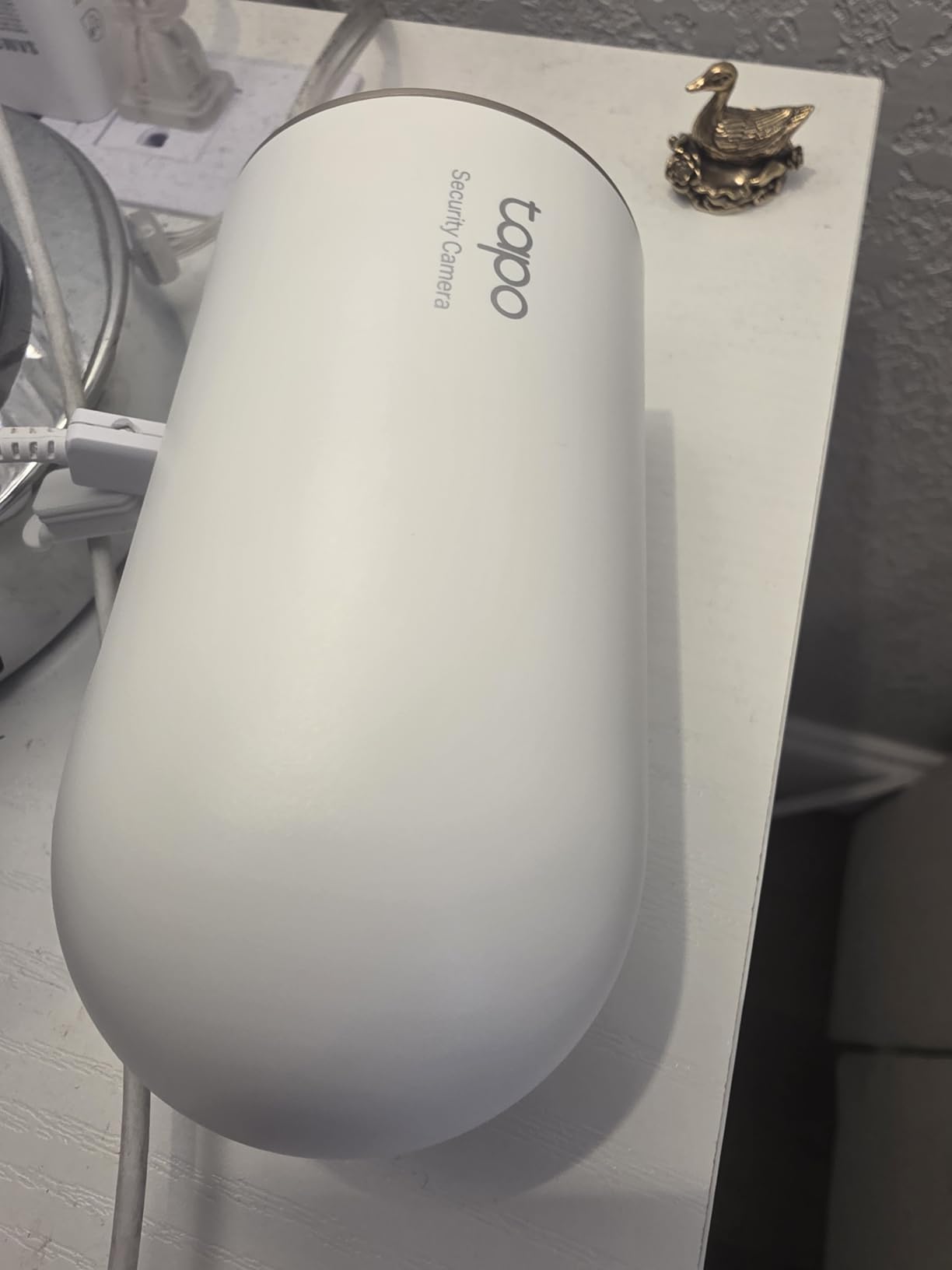
The battery is a 10000mAh unit rated for up to 200 days of recording on a single charge in low-activity areas, and the camera supports dual-band 5GHz and 2.4GHz Wi-Fi, which is a rarity at this size. IP66 covers rain, dust, and snow, and storage is free microSD up to 512GB with people, vehicle, and pet detection.
Note the 15fps frame rate, the lowest in the roundup. In daylight that is invisible. At night the longer exposure it forces produces visible motion smear on anything walking quickly past the lens.
Battery life versus the advertised figure
The headline 200-day figure assumes a low-activity location. In high-traffic areas where a driveway or path sees regular movement, owners report real-world runtimes far shorter, in some cases only a matter of days. Treat the specification as a best case and plan a charge schedule, or add a small solar panel accessory if the mount gets sun.
Motion sensitivity is the other trade-off on a battery camera. Turning it down extends battery life but risks missing events; turning it up produces constant false alerts. The 24-hour continuous recording mode is worth knowing about too, since it outputs low-resolution snapshots rather than true 4K video.
Watch the app as you add cameras
Multi-camera setups are where this model strains. The app queues alerts one at a time and drops connections when several Tapo cameras run simultaneously, so if you are covering a whole property, plan for four cameras to behave differently from one. For a single gate or side entrance it is a strong pick, and the dual-band radio helps more than the spec suggests.
10. Tapo C560WS – Best Budget Wired 4K Camera With Color Night Vision
Tapo 4K Wired Pan/Tilt Outdoor Security Camera, C560WS, 360° View
- Adaptable night vision with IR color and auto modes
- 360-degree horizontal and 98-degree vertical pan tilt with AI tracking
- 4K Ultra HD with 18x zoom for finer detail
- On-device AI and free facial recognition with no fees
- IP65 weather resistance for dependable outdoor operation
- Wired power and adapter required so not a quick wireless install
- Lowest average rating here at 4.1 with 11 percent one-star reviews
- Some owners see 5GHz instability despite dual-band claims
The C560WS is the cheapest way to get true color at night from a 4K camera with a motorised mount, and the night implementation is the reason to shortlist it. A starlight sensor plus spotlights gives full color after dark, and the adaptable modes let you choose IR, color, or automatic switching depending on the scene.
Coverage is 360 degrees horizontal and 98 degrees vertical with AI motion tracking that pans and tilts to follow a subject. The 4K sensor carries 18x zoom for license plates and small objects, and on-device AI handles people, pets, vehicles, and loud sounds with facial recognition at no cost.
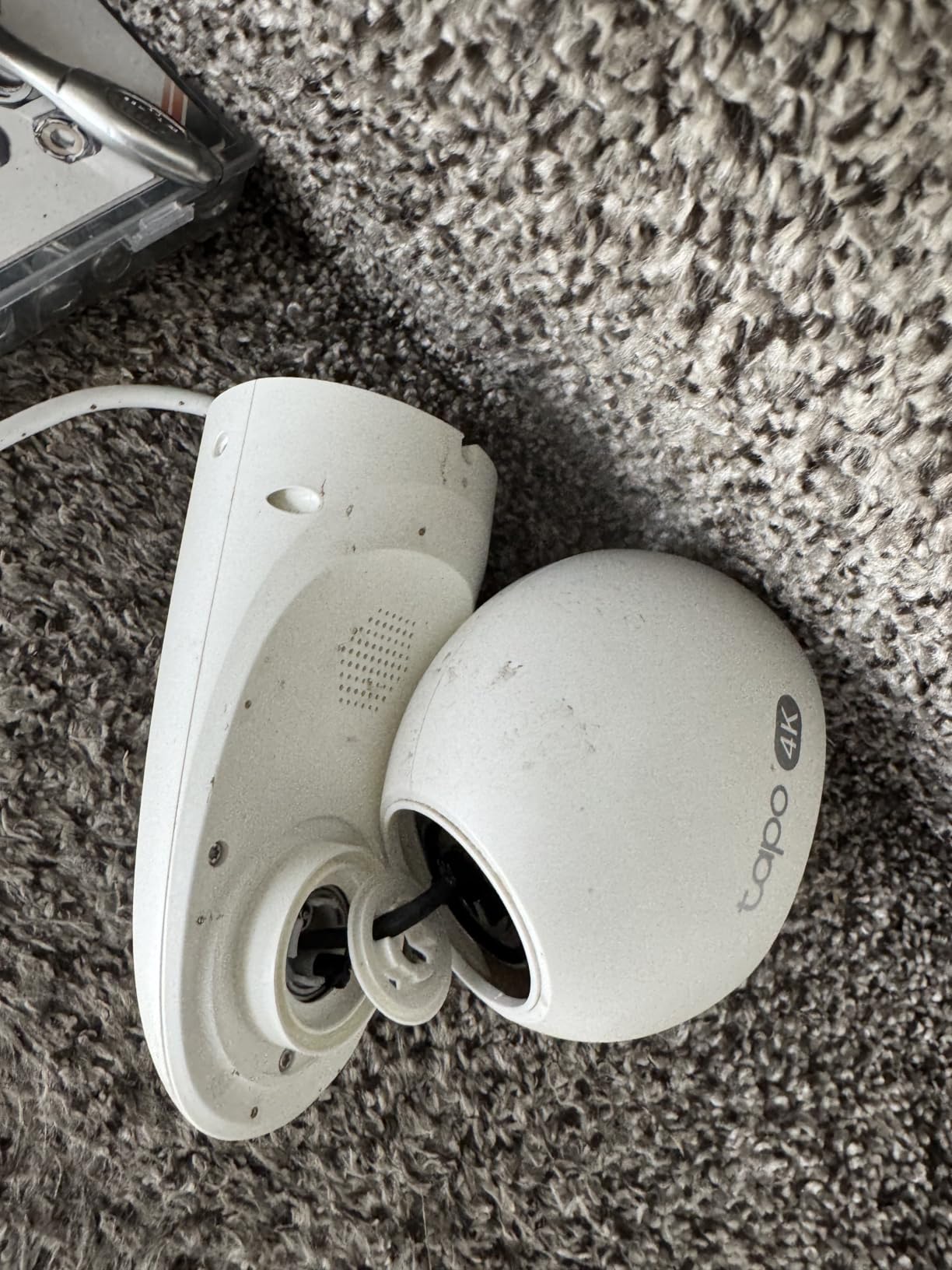
Connectivity is the quiet strength. Ethernet and dual-band Wi-Fi are both supported, so you can run a hard line where you can and fall back to wireless where you cannot, and storage goes to a free microSD card up to 512GB with no subscription required. The housing is plastic, 12.32 ounces, 8.27 x 6.3 x 5.71 inches, drawing 12 watts.
It ships with a mounting bracket, waterproof seal, cable attachments, anchors, screws, a template, and a power adapter, so unlike the PoE Reolinks you are not hunting for a separate injector.
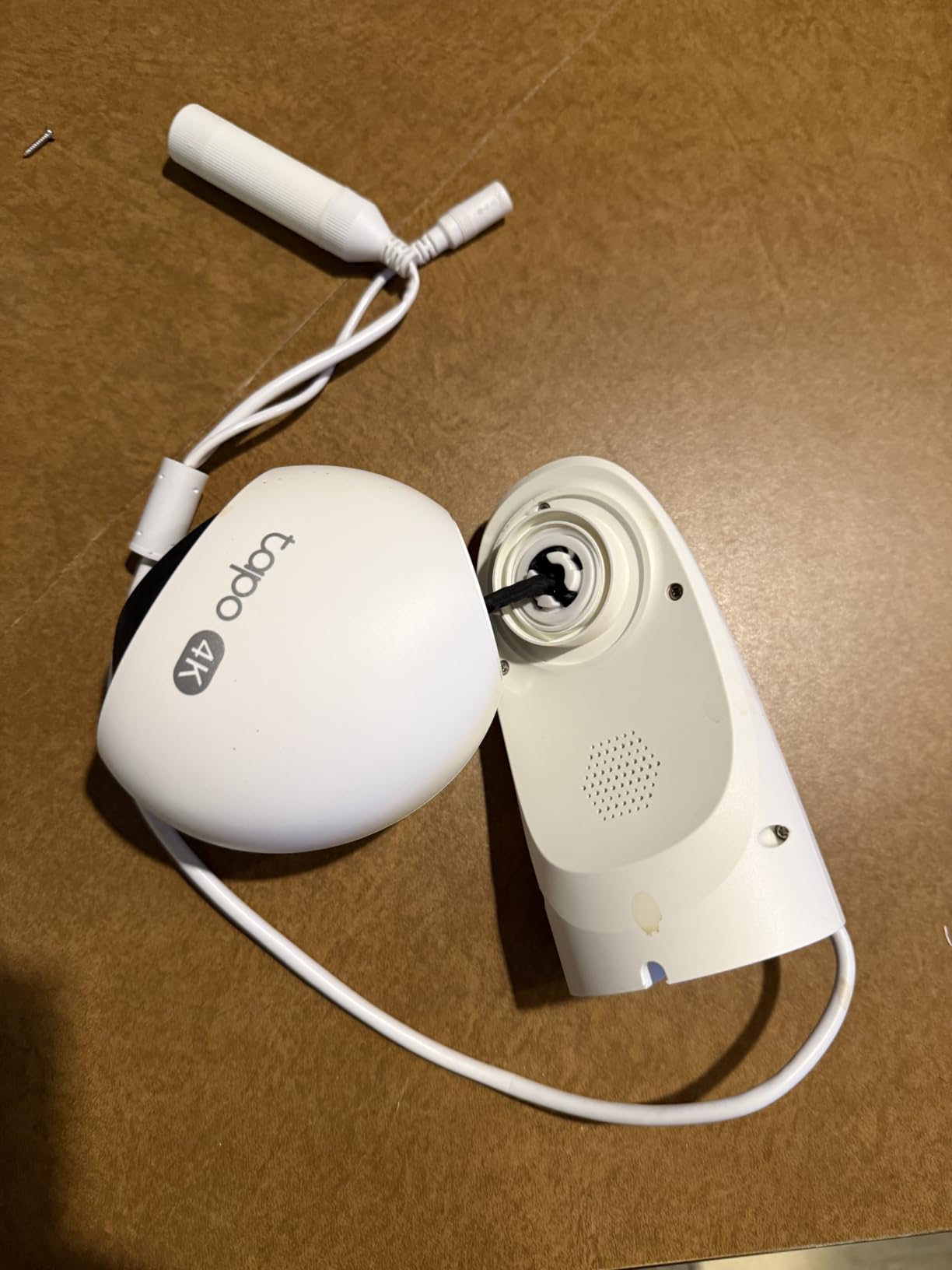
Read the reviews with the rating in mind
This is the lowest average rating in the group at 4.1, with 11% of its 621 reviews at one star. The complaints cluster around connection stability and how reliably the automatic night mode holds color rather than dropping to monochrome mid-clip. Test the auto mode in your darkest scene before committing to a four-camera setup.
There is also a documentation inconsistency worth knowing: dual-band capability is advertised in the highlights, yet 2.4GHz still appears in places and some owners report 5GHz instability. If your router is dual-band, forcing 2.4GHz during setup is the reliable option.
When to spend more instead
Buy the C560WS if you want colour night vision and full 360-degree tracking on a budget. Spend up on the RLC-810A if you want one of the longest quoted night ranges, the highest review volume in the group, and a fixed 25fps feed. Spend on the SoloCam E42 if you need plate capture. And if dark scenes are your whole reason for buying, our night vision monocular guide covers the handheld option for checking a scene yourself.
How to Choose a 4K Night Vision Camera
Start with the scene, not the resolution. A camera covering a front door needs a different night range than one covering a long driveway, and the quoted range almost always describes the distance at which the IR array still lights a surface rather than the distance at which you can identify a face. For most homes, 30 to 50 feet of genuinely usable range is enough for a porch, and 100 feet is the requirement for a driveway or a yard boundary.
Then decide between color and monochrome. Infrared night vision is invisible, will not glare into a neighbour’s window, and works in total darkness. Colour night vision preserves clothing and vehicle colour, which is genuinely useful for identification, and it does it with a spotlight you can see. Spotlights also announce themselves, which deters some people and annoys others, so think about where the camera points before you commit.
Sensor size and aperture matter more than the 4K label, which is the part most spec sheets bury. A larger sensor with a wider aperture gathers more light and produces a cleaner, sharper night image, and a starlight sensor is the clearest signal that a manufacturer has designed for low light rather than merely added one. If two cameras are otherwise equal, choose the one that names its night sensor.
Frame rate decides whether moving subjects stay identifiable. Anything at 15fps will smear a walking person at night, and 20fps is a compromise. Where the choice exists, 25fps or 30fps is worth paying for, and this is one of the few places where the cheapest camera in a range can be the wrong buy.
Optical versus digital zoom is the second identification lever. Digital zoom is cropping, so it looks like magnification on a spec sheet and delivers softness in practice. If you need to read a plate or a face at distance, genuine optical zoom, as on the RLC-811A, is the only reliable route. Our subscription-free camera guide covers storage and cost trade-offs in more detail.
Power determines installation difficulty more than any other spec. Wired PoE gives the most reliable feed and no battery degradation, and it is the right answer for a fixed property where a cable run is possible. Battery and solar remove the trenching entirely and are the only realistic option for a rental, a rural property, or a site with no mains power, at the cost of runtime that varies with activity.
Storage and subscriptions deserve a hard decision before you buy. Nine of the ten cameras here record locally to microSD, a hub, or an NVR with no monthly fee, and the one that leans hardest on a paid plan is the Ring. Local storage also keeps working when your internet does not, which matters for a camera whose job is evidence. If you go solar, our solar camera guide compares charge times and battery sizes.
Finally, check the weather rating against the actual mounting position. IP67 and IP66 handle exposed outdoor mounting in all four seasons. IP65 tolerates rain and dust but ages faster under constant sun and driving rain, so an exposed wall in full afternoon sun is where the difference shows up over a few years.
Night Vision Troubleshooting: Glare, IR Reflection, and Blurry Footage
Most disappointing night footage is not a camera fault. It is an installation problem, and almost all of it is fixable without touching a setting in the app. Work through these in order before you conclude that a camera has poor night vision.
How to stop infrared reflecting off glass and nearby surfaces
First, understand the cause. IR light is invisible to you but bounces off anything smooth and close to the lens, and the sensor receives that reflected light as bright haze. A spider web, an eave, a soffit, a wall a few feet away, or a window all produce the same white halo effect.
1. Move the camera away from reflective surfaces. A wall or ceiling within a few feet of the lens is the most common cause of a washed-out frame.
2. Angle the camera away from windows and glass doors. The IR passes through the glass, hits the far side, and comes straight back as a bright patch.
3. Add a shroud or an angled mounting bracket so the lens cannot see the wall it is fixed to.
4. Clean the window in front of any camera behind glass, and keep spiders off the lens housing.
5. Reduce the IR intensity in the camera settings if your model offers a slider, which reduces the return glare noticeably.
6. Avoid pointing a camera at a neighbour’s wall or a metal gate, both of which return IR directly into the frame.
How to stop your security camera glaring at night
Glare comes from the visible side of night mode: white spotlights, and the small red glow some housings emit. The steps that fix it are mostly about position rather than settings.
1. Mount higher and angle downward so the lit area starts several feet beyond the wall.
2. Turn the spotlight off and use IR-only mode for cameras mounted close to a wall or a path.
3. Move the camera out of a neighbour’s sightline and away from a bedroom window if you can.
4. Use a privacy zone to black out a fixed bright source such as a streetlight or an interior hallway light.
5. Check for reflection off a car roof, a wet window, or a spider web, which behave like mirrors at night.
Why night footage looks blurry and how to fix it
Blurriness at night has four common causes, and they need different fixes. Low frame rate causes motion smear, and the only cure is a camera that records at 25fps or faster, or shortening the detection distance so subjects are captured more frontally. A small low-light sensor causes noise and softness, and the cure is buying a camera with a named starlight sensor and a wider aperture rather than a higher resolution number.
Dirty IR LEDs and a dirty lens cut the available light and are fixed with a cloth. Infrared reflection causes the milky haze described above and is fixed with placement. On every camera here, switching the IR illuminator to auto rather than always-on also stops the camera lighting a subject that is already in daylight.
Cutting false alerts at night
Nighttime alerts cluster around headlights, insects near the IR array, spiders, and branches moving in wind. Motion zones, sensitivity reduction, and AI person or vehicle filtering fix most of it, and every camera in this roundup has at least one of those tools working on the camera itself. If you still get constant alerts, the most common cause is a reflection, which means the placement fix above is the real solution.
Where Not to Put a Security Camera (And Where to Put It Instead)
The placement mistakes that ruin night performance are consistent enough to list. A camera facing a window will IR-reflect straight back at itself. A camera mounted under a deep eave in a corner will catch every spider that walks across the lens. A camera aimed at a bright light source will blow out the whole frame and switch the sensor into a mode that cannot cope.
A camera at head height across a public pavement will record the tops of heads and nothing else at night, and a camera inside a window looking out will pick up the reflection of the room behind it rather than the street. Cameras pointed directly at a neighbour’s window create both a glare problem and a neighbour problem.
Where they work well is between eight and ten feet up, angled down, clear of reflective surfaces, with a field of view that stops at the edge of your own property. Mount on a corner rather than a flat wall so the view covers two approaches. If you need to cover a long driveway, put the camera at the far end looking back toward the house so faces are lit by any ambient light from the building rather than lost in the dark.
For multi-camera setups, leave enough physical separation between mounts that one camera’s IR array does not sit inside another camera’s frame, since that produces the bright and dark bands that owners mistake for a sensor fault. And if you have more than about four cameras, move to a hub or NVR rather than a phone app.
Frequently Asked Questions
Which security camera has the best night vision?
Among the cameras we tested, the REOLINK RLC-810A has the best overall night vision, pairing a 100ft night range with 4K at 25fps and no subscription requirement. For true colour after dark, the eufyCam 3 4-camera solar kit is the strongest option, and the Tapo C260 is the best indoor pick.
What are the best 4K security cameras with color night vision?
The best colour night vision in this group comes from the eufyCam 3 4-cam solar kit, the REOLINK RLC-811A, the eufy SoloCam E42 4-cam kit, and the Tapo C560WS. All four use a starlight sensor plus a spotlight to keep footage in full colour after dark rather than switching to black and white infrared.
Should I choose optical or digital zoom for a security camera?
Choose optical zoom when you need to identify a face or read a licence plate at distance, because digital zoom is only cropping and upscaling that softens the image. The REOLINK RLC-811A is the only camera in this roundup with a genuine 5x optical zoom, while the 8x, 10x, and 18x figures on the other models are digital.
How far can a security camera see at night?
Most manufacturers quote the distance at which the infrared array still lights a surface, not the distance at which you can identify a face, so treat the number generously. For identification at night, 30 to 50 feet of usable range covers a porch or hallway, and around 100 feet is what you want for a driveway or yard boundary.
How can I prevent my security camera from glaring at night?
Mount the camera higher and angle it downward so the lit area starts several feet beyond the wall, switch the spotlight off and use infrared-only mode for close mounts, add a privacy zone over any bright light source, and keep the lens housing clear of spiders and dust. Glare off a wall, window, or eave is fixed by moving the camera rather than by changing settings.
Is 4K worth it for night vision security cameras?
Only in combination with a good low-light sensor. Higher resolution means smaller pixels for a given sensor size, and small pixels collect less light, so a cheap 4K camera can produce noisier night footage than a lower-resolution camera built on a larger sensor with a wider aperture. Look for a named starlight sensor, a frame rate of at least 25fps, and a real optical zoom if you need identification at distance.
The Verdict: Which 4K Camera Has the Best Night Vision
After weeks of night testing, the REOLINK RLC-810A is still the camera we install first. A 100ft night range, 4K at 25fps, AI human and vehicle filtering, and a single PoE cable that never touches your Wi-Fi make it the most dependable performer in this roundup, and 1654 reviews at 4.5 stars is the strongest combination of rating and volume here.
The category winners fill in the rest. Take the RLC-811A when you need real optical zoom to identify someone at distance. Take the eufyCam 3 kit when you want true 4K starlight colour at night with no wiring and no subscription. Take the SoloCam E42 when the target is a license plate. Take the Tapo C260 indoors, where its 4.6-star rating and 30ft night range are more than a nursery or a hallway needs.
Whichever you choose, mount it between eight and ten feet up, keep it away from glass and reflective walls, and check the IR array in a dark room before you run cable. The best 4K security cameras for night vision are the ones pointed correctly, and the links above will help you cover the rest of the house.