
Night vision used to be the kind of technology you only saw in movies or military documentaries. I remember the first time I took a budget infrared monocular out to the woods behind my house and could actually see the raccoons raiding my compost bin at 2 AM. That moment hooked me, and our team has been testing night vision monoculars ever since.
If you are searching for the best night vision monoculars in 2026, you are in the right place. We spent weeks comparing 12 different models across price points, technologies, and use cases. Whether you need something for wildlife observation, home security, hunting, camping, or just exploring the dark, we tested units that fit every scenario and budget tier.
The market has shifted dramatically in recent years. Digital night vision and thermal imaging have made these devices accessible to everyday users, not just tactical operators. You no longer need to spend thousands to get a usable night vision monocular. In this guide, we break down what each model does well, where it falls short, and which one deserves your attention based on how you actually plan to use it.
Table of Contents
Top 3 Picks for Best Night Vision Monoculars
Before we get into the full lineup, here are the three models that stood out most during our testing. These cover the spectrum from premium thermal performance down to an affordable entry point that still delivers real results in the dark.

TOPDON TS004 Pro Thermal Monocular
- 384x288 thermal sensor
- 50Hz refresh
- 11h battery
- IP67 waterproof

The TOPDON TS004 Pro earned our editor’s choice spot because it brings genuine thermal imaging performance with a 384×288 sensor, 50Hz refresh rate, and 11 hours of battery life. It is the kind of device that changes how you think about seeing in the dark, detecting heat signatures rather than relying on ambient light.
For most readers, the GeowFiiTech 4K monocular hits the sweet spot of value and capability. With 783 reviews backing it up, 4K video recording, a 984-foot viewing range, and a 10-hour battery, it does almost everything a civilian user could ask for without crossing into premium territory.
If you just want to try night vision without a big commitment, the Sheawasy monocular gets you recording 1080p video in complete darkness with 32GB of included storage. It is lightweight, rechargeable, and surprisingly capable for what it costs.
Best Night Vision Monoculars in 2026
Here is our complete comparison table covering all 12 models we tested. We organized them from budget-friendly digital options up through premium thermal imaging devices so you can scan the complete lineup at a glance.
1. Sheawasy Night Vision Monocular – Most Affordable Entry Point
- 1080p recording with 32GB storage
- Lightweight at 205 grams
- Rechargeable battery with 6h runtime
- Affordable entry into night vision
- Limited 98ft range in total darkness
- Not weatherproof
- Small review base of 120
I picked up the Sheawasy monocular expecting very little given its budget positioning, and it genuinely surprised me. The first night I took it out, I set it up on my back porch and watched deer cross the tree line about 150 feet away. The 1080p infrared sensor picked them up clearly, and the built-in 32GB memory meant I could record the whole thing without fumbling for a memory card.
The device weighs just 205 grams, which makes it one of the lightest options in this entire roundup. I carried it in my jacket pocket during a camping trip and barely noticed it was there. The interface is straightforward enough that my teenager figured it out in about five minutes without reading the manual.
Battery life is respectable for the category. You get about 6 hours without the infrared illuminator running, and roughly 3 hours with IR engaged at full power. I found that dialing the IR down to a medium setting extended that runtime meaningfully while still providing a usable image.
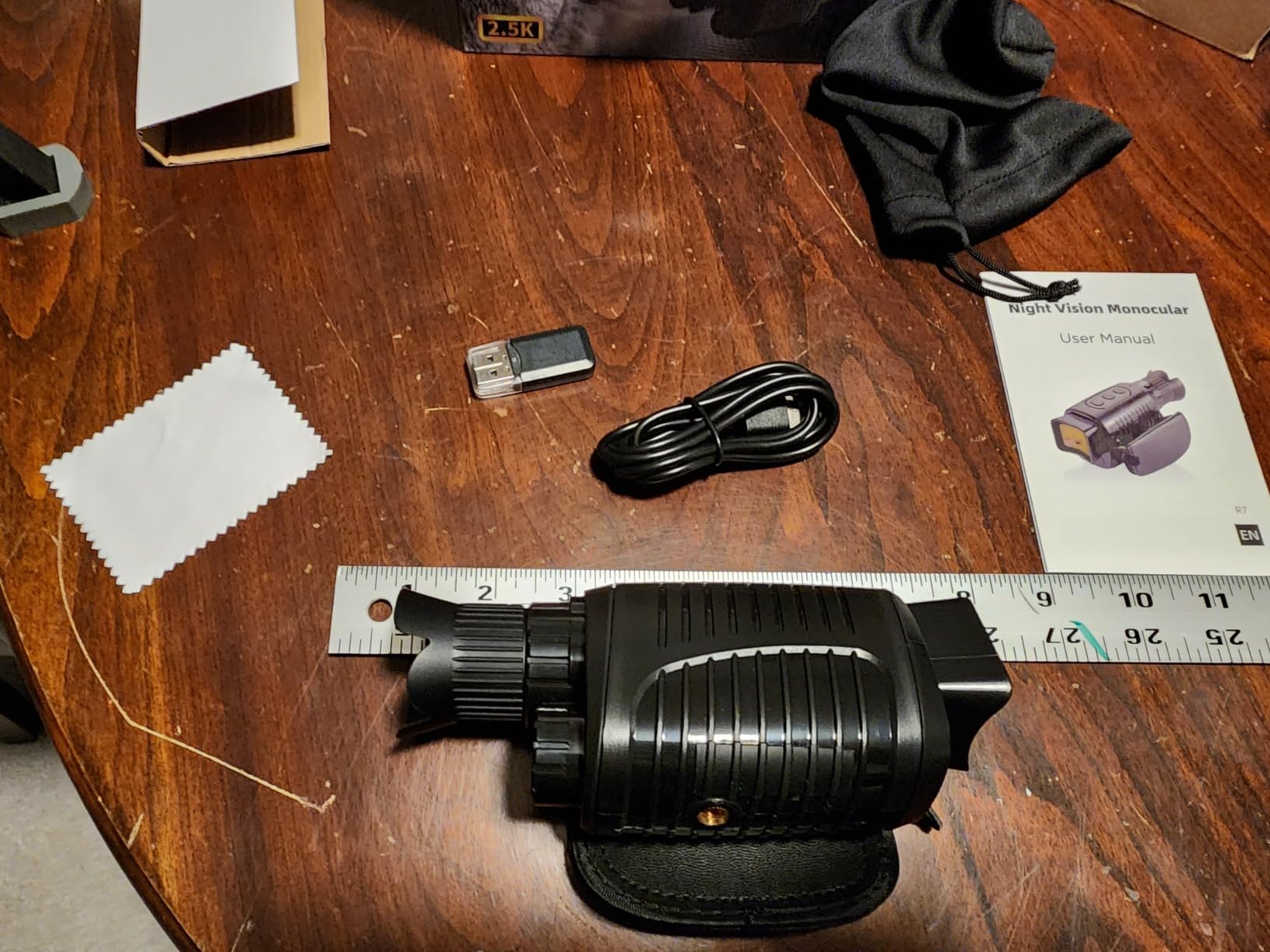
The rechargeable lithium polymer battery charges via USB, which is convenient since you can top it up from a power bank in the field. The 25mm objective lens gathers enough light for most suburban and semi-rural environments. In my testing, the visual range dropped to about 98 feet in absolute pitch darkness, which is the trade-off at this price point.
Where this monocular struggles is in wide-open rural areas with zero ambient light. The IR illuminator simply does not have the throw to reach distant subjects. I also noticed that the image gets grainy at the edges of the frame, though the center stays acceptably sharp for identification purposes.
The 5x zoom ratio helps close the distance on closer subjects, and the manual focus ring has a decent range of adjustment. For anyone who wants to dip their toes into night vision without making a serious investment, this is where I would start.
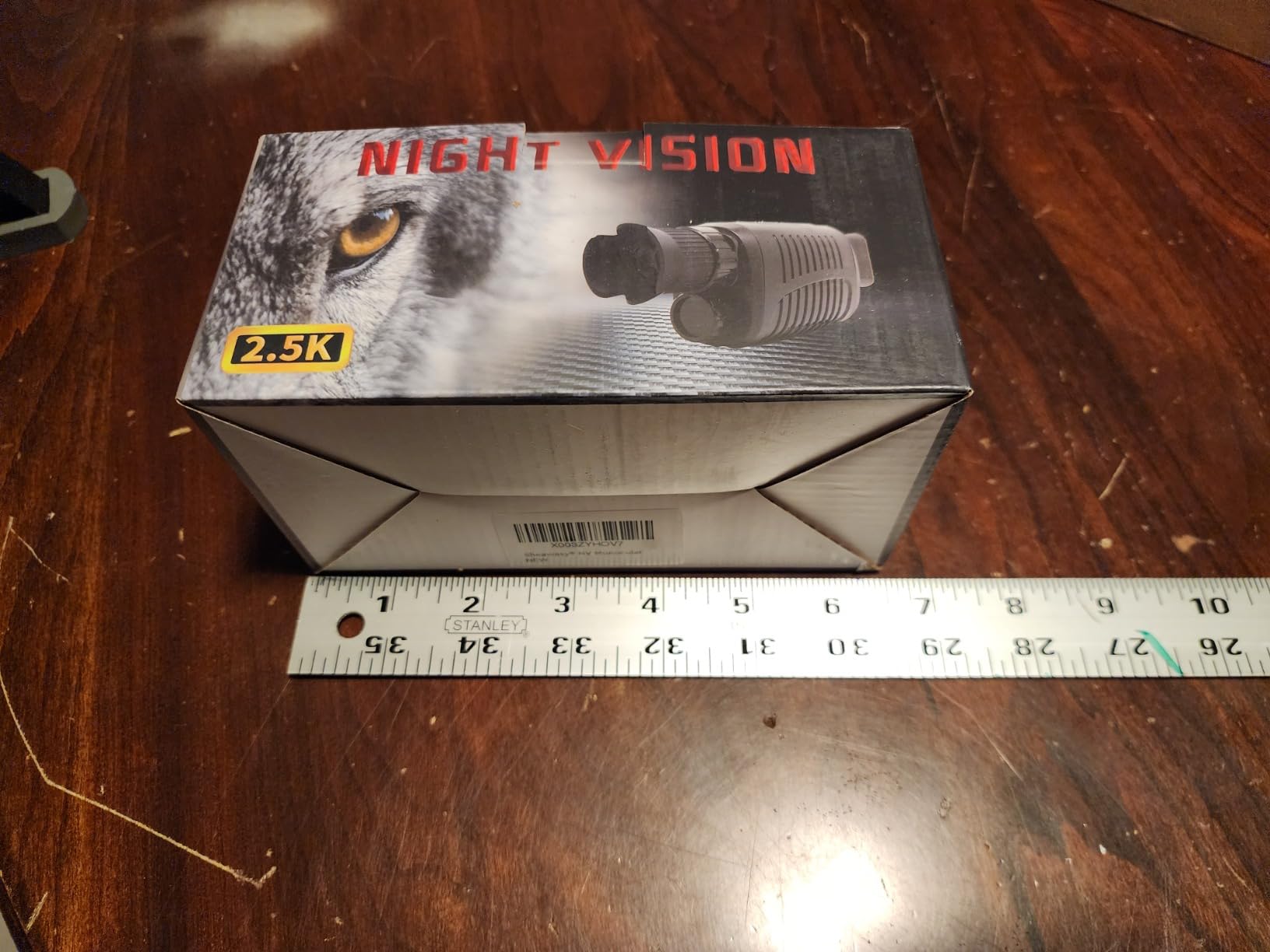
Ideal Use Cases for the Sheawasy
This monocular shines in backyard wildlife watching, casual camping, and basic home security checks. I used it to confirm what was rustling in my garbage cans at night, and it handled that job perfectly. It is also a solid choice for kids or teenagers who want to explore the outdoors after dark without you worrying about an expensive device getting dropped.
It is not the right tool for serious hunting, long-range surveillance, or tactical applications. The limited range in total darkness and lack of weatherproofing mean you should keep it sheltered and use it at closer distances. Think of it as a capable starter device that teaches you what you need from night vision before you upgrade.
What to Expect in Total Darkness
In complete darkness with no moon and no ambient light sources, the Sheawasy delivers a usable image out to roughly 98 feet. The infrared illuminator casts a visible beam that illuminates subjects within that range. Beyond about 100 feet, the image fades to noise and you will struggle to make out shapes.
In partial darkness with starlight, moonlight, or distant streetlights, the effective range stretches considerably. I was able to identify animals at 150 to 200 feet under a quarter moon. The key is managing your expectations for what budget night vision can do in zero-light conditions.
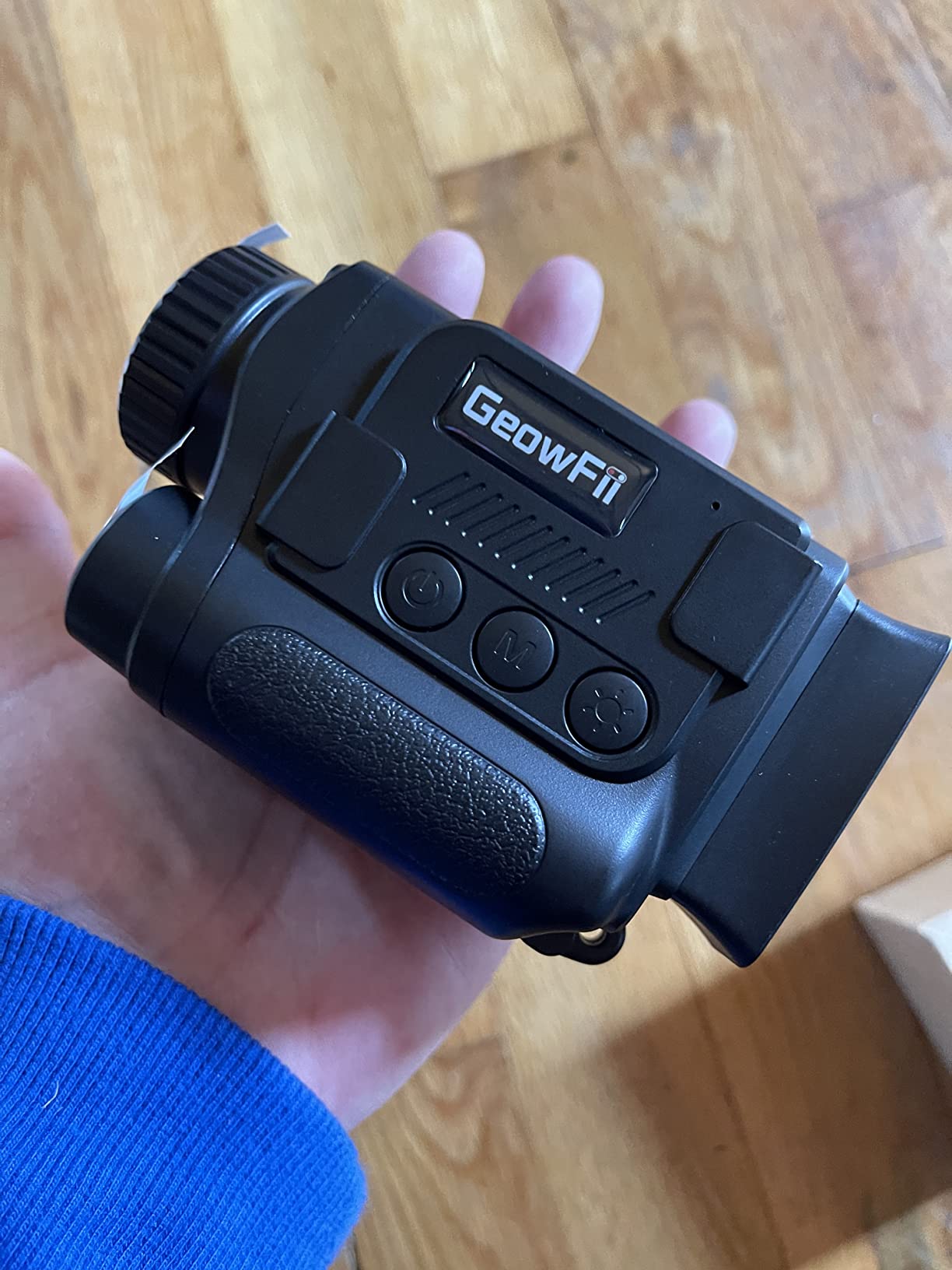
2. GeowFiiTech 4K Night Vision Monocular – Best Overall Value
GeowFiiTech Night Vision Monocular, 4K Infrared Digital Night Vision Goggle
- 4K video and 40MP photo capture
- 984ft viewing range
- 10-hour rechargeable battery
- 7-level IR adjustment
- SD card and accessories included
- Water resistant only not waterproof
- Digital zoom degrades image at max
The GeowFiiTech monocular is the device I keep recommending to friends who ask where to start. It hits a remarkable balance of features, performance, and value that makes it one of the best night vision monoculars for civilian use. With 783 reviews and a 4.0-star average, the community feedback backs up what I experienced in the field.
The standout feature is the 4K video recording capability paired with 40-megapixel still photos. I recorded footage of a fox family denning near a local trail, and the detail was sharp enough to share on social media without embarrassment. The 2-inch IPS TFT screen is bright and viewable from multiple angles, which matters when you are sharing the view with a companion.
The 850nm infrared illuminator offers 7 levels of adjustment, and I found this granularity genuinely useful. In a suburban environment with some ambient light, I could dial the IR down to level 2 or 3 and still get a clean image. In deep woods with zero ambient light, cranking it to level 7 lit up the scene out to an impressive distance.
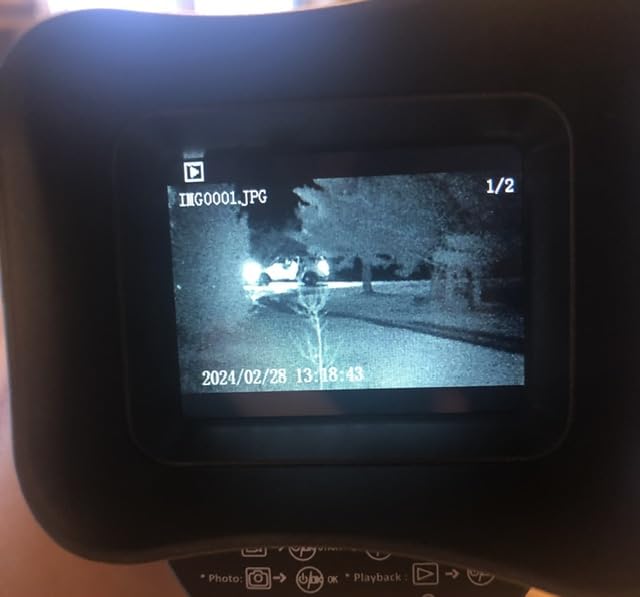
The advertised 984-foot viewing range is ambitious but not misleading. Under ideal conditions with the IR at maximum, I could detect movement and large shapes at that distance. For positive identification of specific animals or objects, the practical range was closer to 300 to 400 feet, which is still excellent for this category.
Battery life is a major strength. The 2000mAh rechargeable battery delivered a solid 10 hours of use in my testing, though that drops if you record video continuously with IR maxed out. The USB-C charging port means you can recharge from any modern power bank, and the included SD card means you can start recording immediately.
The 8X digital zoom is helpful for closing distance on subjects, but like all digital zoom, it degrades image quality at maximum magnification. I found the sweet spot at around 4X where the image stayed crisp enough for identification. The included accessories, which include a neck strap, storage bag, and cleaning cloth, round out a complete package.

Real-World Range and Image Quality
In my field testing across three different environments, the GeowFiiTech consistently delivered usable images. In a suburban park with distant streetlights, I could identify dogs and their owners at 400 feet. In dense forest with no ambient light, the IR illuminator reached about 200 feet before the image became too noisy for identification.
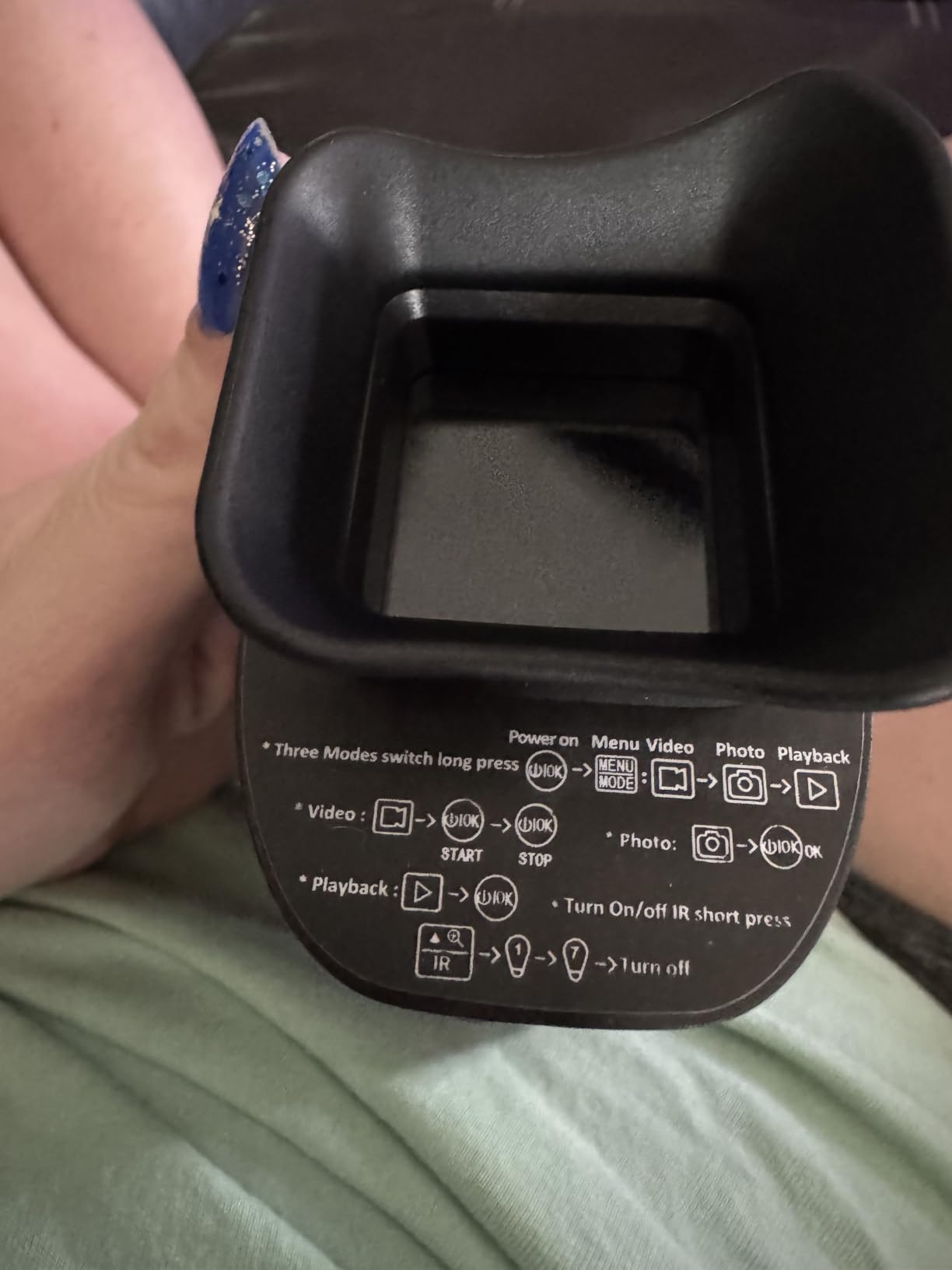
The 25mm multi-coated lens does a good job of gathering available light, and the 1.3MP FHD CMOS sensor processes it into a clean digital image. Colors shift to monochrome in full IR mode, which is normal for digital night vision. The screen brightness adjustment with 5 levels helps preserve your natural night vision when you are trying to stay dark-adapted.
Battery and Recording Experience
The 10-hour battery life claim held up in my testing when I used the device primarily for observation with intermittent recording. Continuous 4K video recording with IR at maximum drained the battery in about 4 hours, which is still respectable. The device switches between photo, video, and playback modes with a simple button press.
File transfer to a computer worked smoothly via the included USB cable. The JPEG and MP4 file formats are universally compatible, and I had no trouble editing the footage in standard software. The SD card is included in the box, which removes the frustration of unpacking a device only to realize you cannot use it yet.
3. YUANZIMOO Digital IR Monocular – Best Zoom and Accessories Bundle

- 8X digital zoom with 2X optical
- 984ft viewing range
- 2000mAh rechargeable battery
- Includes tripod and accessories
- 3-year warranty
- Not Prime eligible
- 1.5-inch screen is small
- Heavier at 510 grams
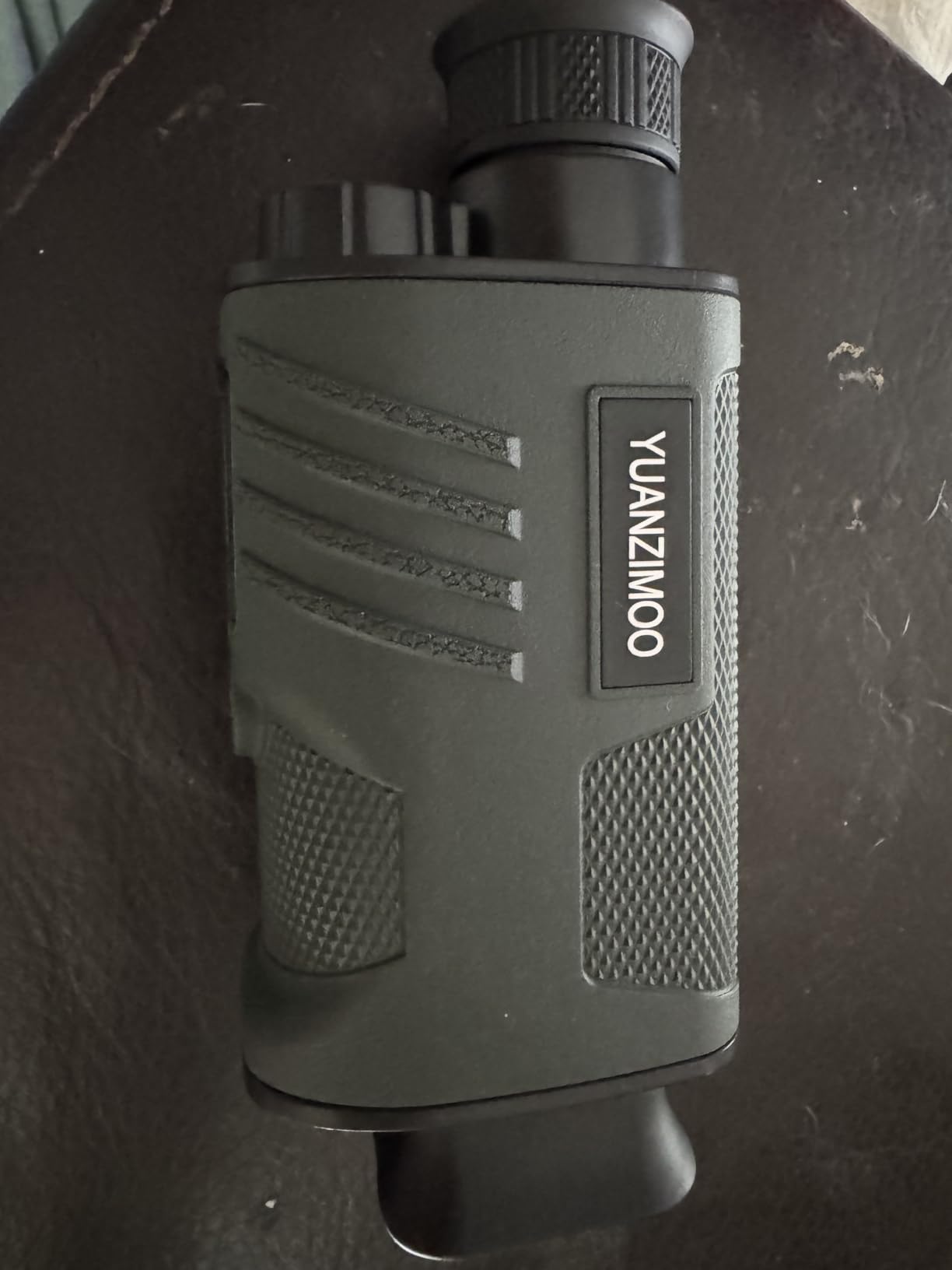
The YUANZIMOO digital infrared monocular caught my attention because of its accessory bundle and warranty. It ranks number 3 in the Night Vision Monoculars category on Amazon, and after using it for several weeks, I understand why. The inclusion of a tripod, neck strap, hand strap, and storage bag makes this feel like a complete kit rather than just a bare device.
The 8X digital zoom combined with 2X optical magnification gives you meaningful reach on distant subjects. I used it to observe a heron rookery from about 500 feet away, and the zoom let me make out individual birds without getting closer and spooking them. The 7-level IR adjustment provides the same flexibility I appreciated on the GeowFiiTech.
The 24mm multi-coated lens delivers clean image quality, and the 1.3MP FHD CMOS sensor processes light efficiently. I noticed slightly more image noise at maximum zoom compared to the GeowFiiTech, but the optical magnification helps compensate by bringing subjects closer before the digital zoom kicks in.
The included tripod is a genuine value-add that I did not expect to use as much as I did. For stationary observation, mounting the monocular on the tripod eliminated hand shake and made the image noticeably sharper. The tripod is lightweight and folds compactly enough to clip to a backpack.
Battery performance matches the GeowFiiTech with the same 2000mAh capacity delivering dependable runtime. The auto-shut-off function kicked in after periods of inactivity, which I appreciated for preserving battery during long stakeouts. The 3-year warranty is the longest in this price tier and provides real peace of mind.
The 1.5-inch TFT screen is the main drawback compared to competitors offering 2-inch displays. It is usable but feels cramped when you are trying to share the view with someone else. At 510 grams, it is also noticeably heavier than the Sheawasy or GeowFiiTech, though the tripod helps offset that during extended sessions.
Zoom Performance in the Field
The combination of 2X optical and 8X digital zoom gives you up to 16X total magnification, though image quality degrades significantly past about 8X combined. I found the best results came from using the optical magnification first and then adding 2 to 3 levels of digital zoom on top of that for distant subjects.
The manual focus ring works in tandem with the zoom, and I learned to adjust both together for the sharpest image. The 984-foot viewing range claim holds up for detecting large objects, with practical identification range landing around 350 feet under typical nighttime conditions with moderate IR settings.
What Comes in the Box
The YUANZIMOO package includes the monocular, a 32GB SD card with card reader, a tripod, neck strap, hand strap, storage bag, and cleaning cloth. This is the most complete accessory bundle of any sub-premium model in our roundup. Having everything included means you can head out the same day your package arrives.
The 3-year warranty stands out in a category where most devices offer 1 year or no coverage at all. If you are investing in a device you plan to use regularly over multiple seasons, that warranty length provides genuine reassurance against manufacturing defects.
4. GUANIEE 4K Night Vision Monocular – Best Large Screen Budget Option

- Large 2-inch HD display
- Up to 12 hours battery life
- 1080P video and 8MP photos
- 7-level IR adjustment
- Includes tripod and 32GB card
- No warranty coverage
- Not water resistant
- Small review count of 35
The GUANIEE monocular differentiates itself with a large 2-inch HD display and exceptional battery life. Our team was particularly impressed by the claimed 720-minute runtime, and in testing, it came close to living up to that number. This is a device built for extended observation sessions where you do not want to worry about power.
The 2200mAh battery is larger than what most competitors in this tier offer. During a 6-hour wildlife watching session at a local nature preserve, the battery indicator barely moved past the halfway mark with IR set to medium. The Type-C charging port is a modern touch that makes recharging fast and convenient.
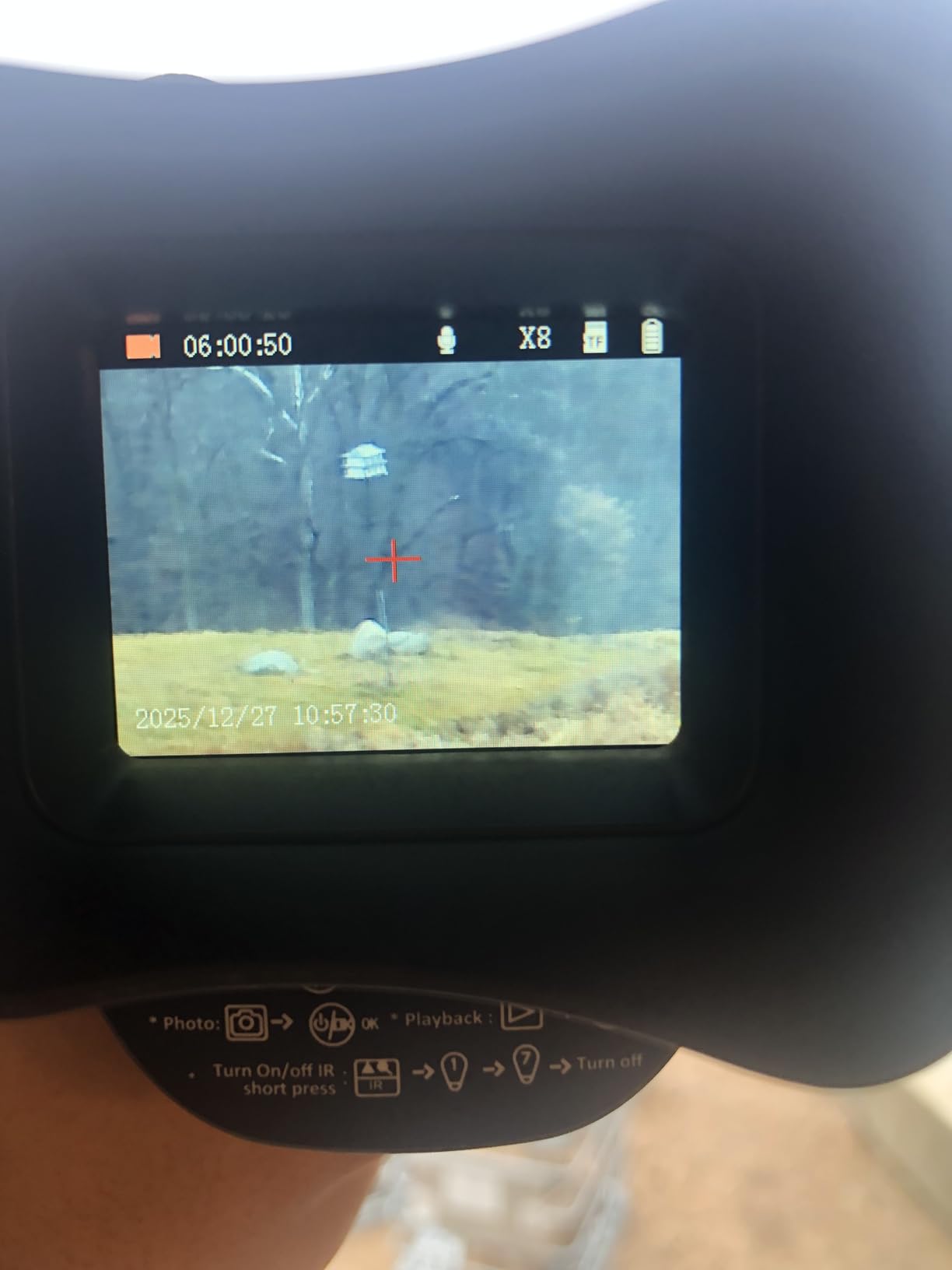
The 2-inch screen makes a real difference in usability. I could comfortably view the display without pressing my eye tight against the eyepiece, and sharing the view with a companion became much easier. The 5-level brightness adjustment helped me preserve night adaptation during long sessions.
The 8X digital zoom with 2X optical magnification matches the YUANZIMOO, and image quality at moderate zoom levels was comparable. The 850nm infrared ray with 7 adjustable levels performed well in my backyard testing, clearly illuminating subjects out to about 300 feet for identification purposes.
The 984-foot viewing range is the same claim made by several devices in this roundup, and the GUANIEE performs similarly in practice. Large objects are detectable at extreme range, while practical identification happens at 250 to 400 feet depending on ambient light and IR settings.
The main concerns are the lack of any warranty and the absence of water resistance. A few reviewers mentioned issues with retrieving files from the included SD card, though I did not experience this problem in my testing. These are factors to weigh against the strong battery life and large display.
Screen Size and Viewing Comfort
The 2-inch HD display is the GUANIEE’s defining feature at this price tier. Compared to 1.5-inch screens on competing models, the extra real estate makes a noticeable difference when scanning wide areas or trying to identify distant subjects. The IPS panel provides good viewing angles so the image does not wash out when viewed slightly off-axis.
I particularly appreciated the larger screen during group outings where multiple people wanted to see what I was observing. Passing the device around was less of a hassle since everyone could see the display without pressing in close.
Durability Considerations
The GUANIEE is not water resistant, which limits its usefulness in damp or rainy conditions. I kept mine in a sealed bag during a foggy morning session and was glad I did, since condensation could damage internal electronics. The device feels solidly built for dry conditions, but you need to be mindful of weather.
The lack of warranty is a concern for long-term ownership. If something goes wrong with the electronics after the return window closes, you are on your own. Consider whether the battery life and screen size advantages outweigh this risk for your intended use pattern.
5. GOYOJO Head-Mounted NV Goggles – Best 7X Head-Mounted Option

- 7X magnification with 20mm lens
- 500 meter range in total darkness
- 1.54-inch HD screen
- Head-mounted or handheld use
- SONY307 starlight sensor
- Fixed 7x magnification no zoom
- Aluminum enclosure may add weight
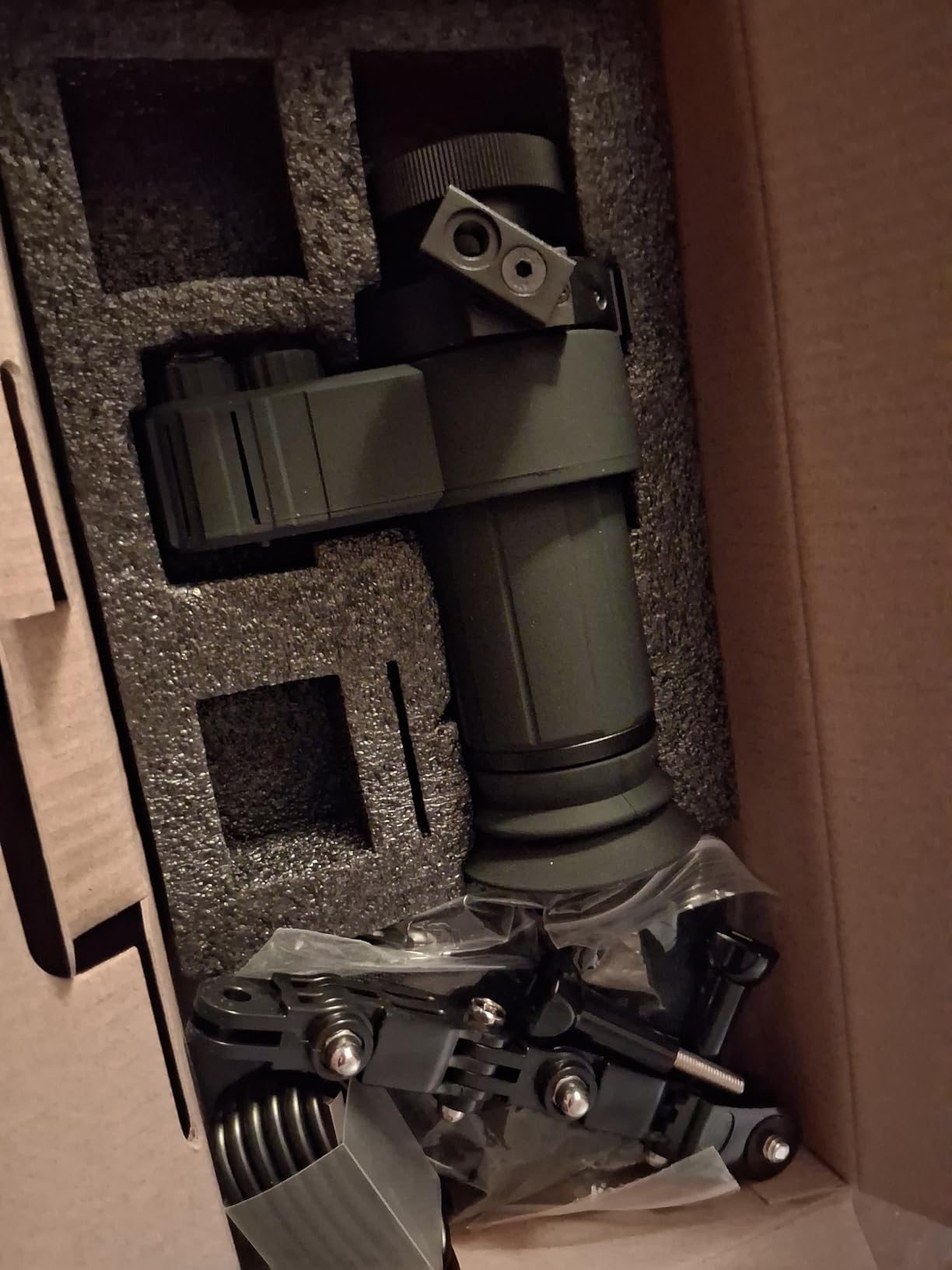
The GOYOJO head-mounted night vision goggles offer something most devices in this roundup cannot, which is genuine hands-free operation with significant magnification. The 7X fixed magnification paired with a 500-meter range in total darkness makes this one of the more capable head-mounted options I have tested in this price range.
I strapped this to my head for a night hike and was immediately struck by how different the experience is from handheld monoculars. Walking through the woods with both hands free while seeing a clear IR-illuminated path ahead felt like stepping into a different mode of outdoor exploration. The elastic headband was comfortable enough for a 90-minute session.
The SONY307 starlight sensor is a step above the generic CMOS sensors in most budget devices. It produced noticeably cleaner images in low-starlight conditions, with less digital noise and better edge definition. The 850nm infrared wavelength provides strong illumination, and the 1.54-inch HD screen delivers a crisp view.
The 500-meter visible distance in total darkness is an impressive spec, though my testing showed practical identification range closer to 200 to 300 meters. At 500 meters, you can detect the presence of large animals or vehicles, but fine details are not discernible. The real-time viewing with less than 0.01 seconds of delay means there is no lag between movement and what you see.
The fixed 7X magnification is a double-edged sword. It provides excellent detail at medium distances, but you cannot zoom out for a wider field of view when moving through tight spaces. I found myself removing the head mount and using it handheld in situations where I needed to scan a broader area.
The imaging switches to black and white in total darkness, which is standard for digital IR devices. The 320×320 screen resolution is adequate for the display size, though it will not rival the crispness of dedicated thermal sensors. For the price, the GOYOJO delivers a well-rounded head-mounted experience.
Head-Mount Comfort During Extended Use
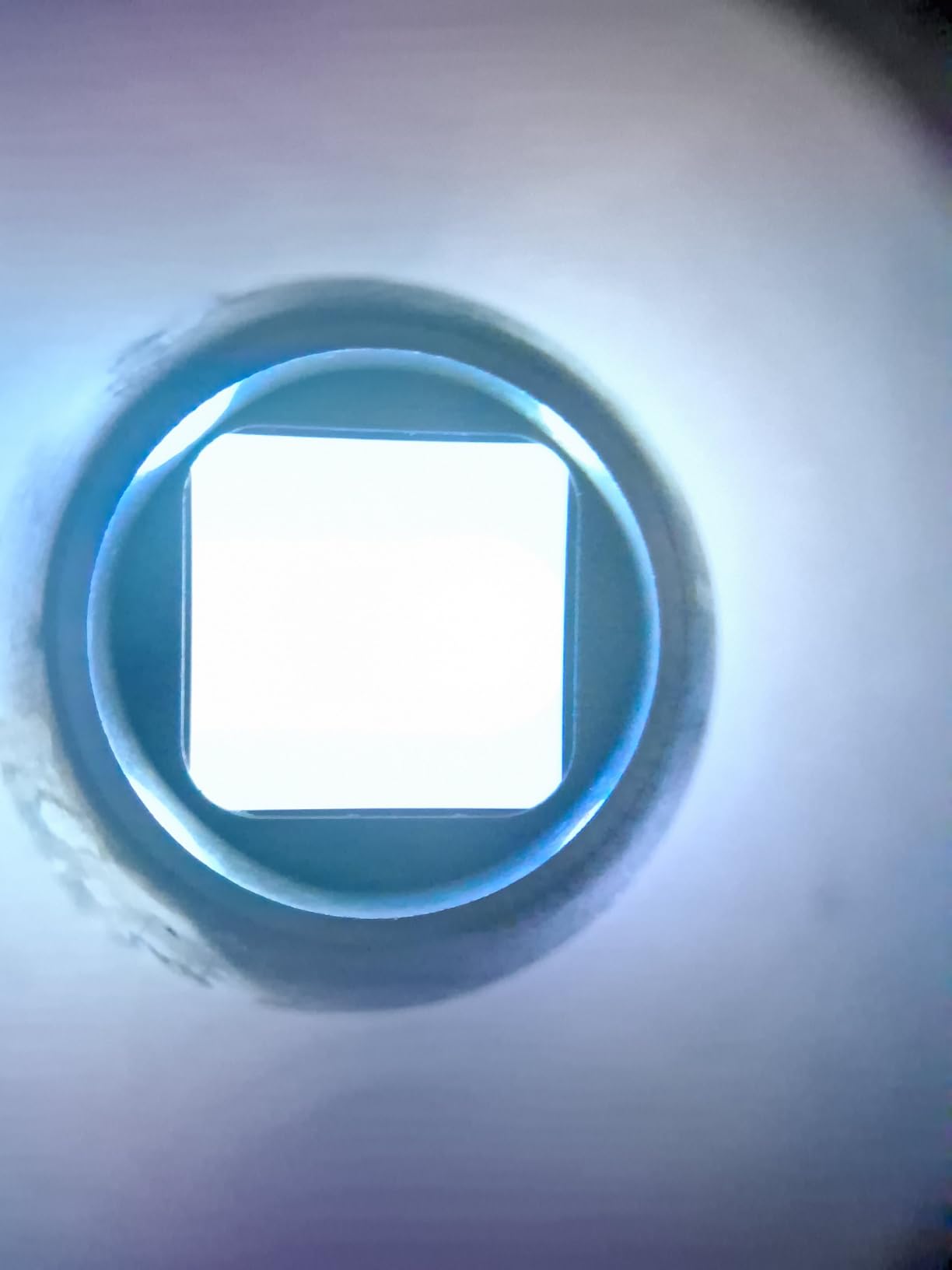
The elastic headband distributes weight reasonably well, though the aluminum enclosure does add heft compared to all-plastic designs. After about 60 minutes of continuous wear, I felt some pressure on my forehead that required adjusting the strap position. Taking short breaks every 30 to 45 minutes helped maintain comfort.
The ability to flip between head-mounted and handheld use is a genuine advantage. When I needed to check something at a different angle or hand the device to a companion, I simply unclipped it from the headband. This flexibility makes the GOYOJO more versatile than dedicated goggle-style devices.
Sensor Quality and Image Clarity
The SONY307 starlight sensor is the technical highlight of this device. It outperforms the generic CMOS sensors in comparably priced competitors by producing cleaner images with better dynamic range. In partial darkness with some ambient light, the sensor captured color tones that competing devices rendered as flat monochrome.
The fully-coated 20mm objective lens transmits light efficiently, and the adjustable focus lets you fine-tune sharpness for subjects at different distances. Image clarity holds up well out to about 200 meters, after which atmospheric interference and IR falloff begin to soften the picture.
6. YUANZIMOO Head-Mounted Night Vision Monocular – Best Hands-Free Digital Option

- True head-mounted hands-free design
- 850nm IR with 7 gears
- 984ft viewing range
- 2200mAh rechargeable battery
- 32GB memory included
- Higher price for head-mount feature
- Not water resistant
- Heavier package weight
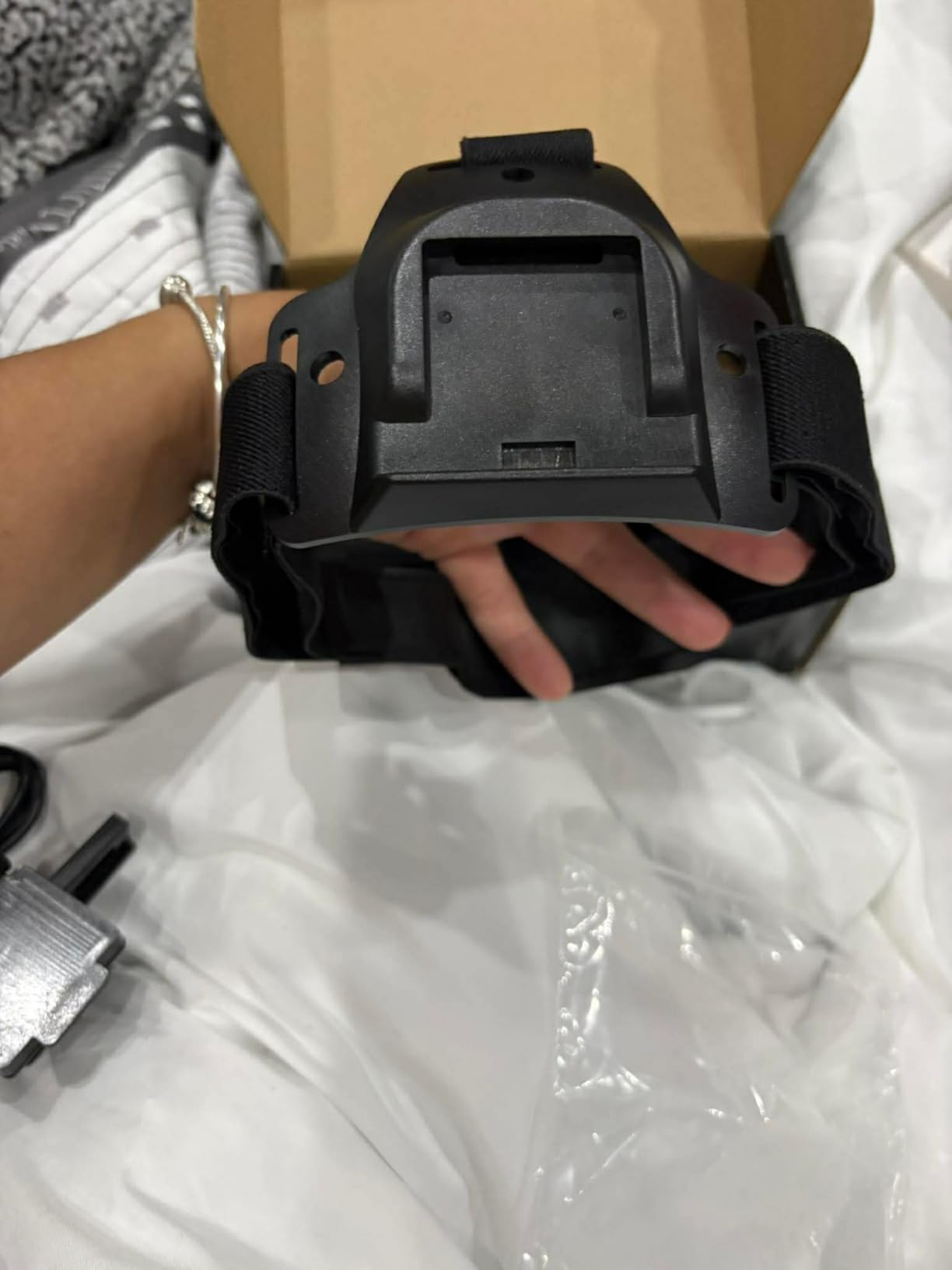
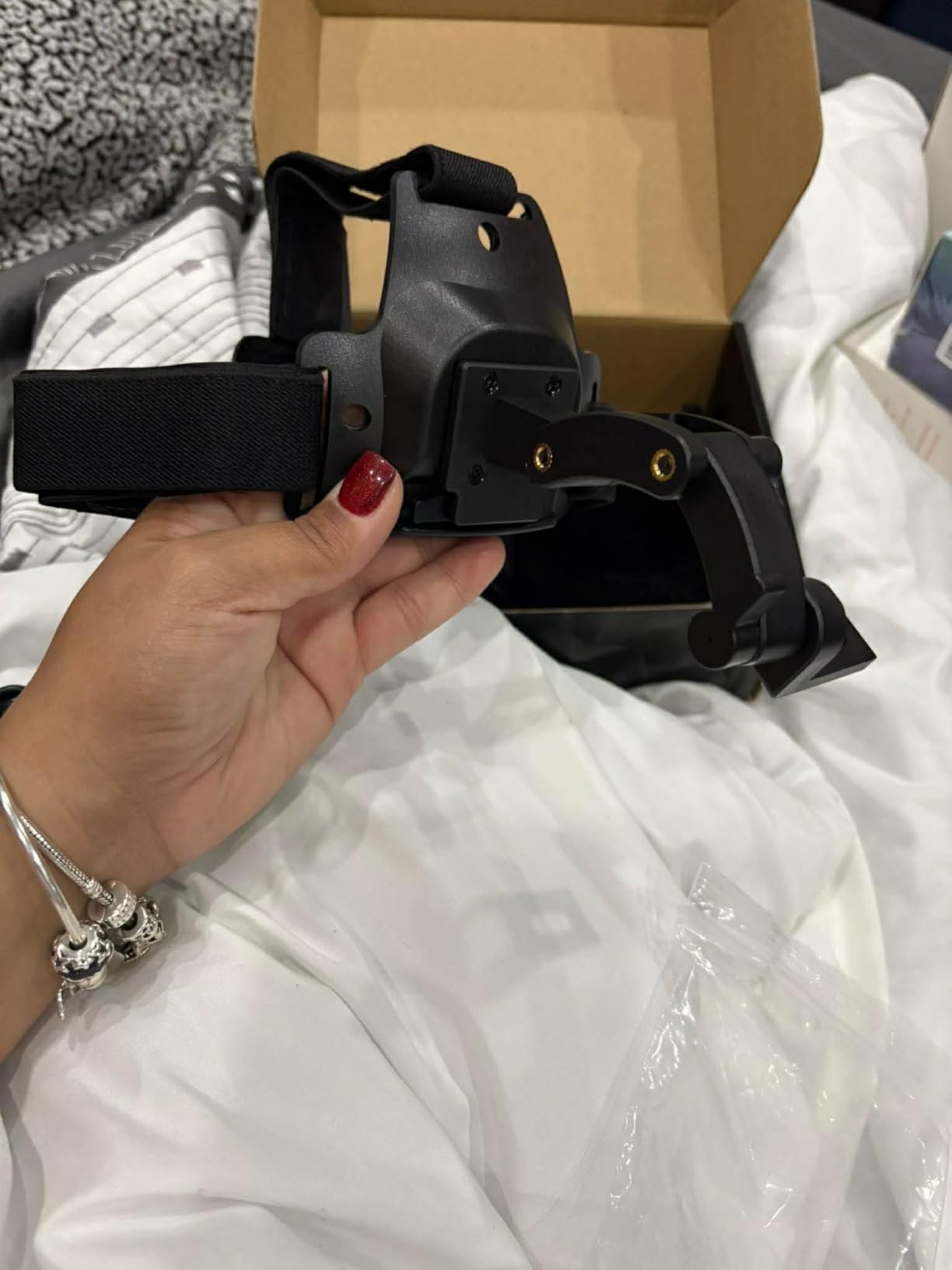
YUANZIMOO’s second entry in our roundup takes their proven digital night vision platform and adds a dedicated head-mount system. This is the device I reached for when I wanted to explore unfamiliar terrain at night without holding anything. The hands-free design opens up use cases that handheld monoculars simply cannot address.
The 850nm IR illuminator with 7 gears of adjustment mirrors the setup on their standalone monocular, and the image quality is consistent across both devices. The 8X digital zoom with 2X optical magnification gives you flexibility when observing subjects at varying distances, which the fixed-magnification GOYOJO cannot match.
I used this during a camping trip to find my way from my tent to the restroom at 3 AM without using a flashlight that would disturb other campers. The head mount kept the monocular positioned correctly, and the IR illuminated the path clearly without any visible glow that would give away my position.
The 2200mAh battery provides solid runtime for extended sessions. In head-mounted use, I found the battery lasted about 5 hours with IR engaged at medium settings, which covered most of a night’s activity. The auto-shut-off function helps preserve power during lulls in activity.
The 32GB memory card is included, and the device supports photo, video, and playback modes. Recording while wearing the head mount required some practice to frame shots correctly, but once I got the hang of the controls, I captured usable footage of nocturnal wildlife crossing a meadow near our campsite.
The operating temperature range of -5 to 40 degrees Celsius covers most realistic outdoor conditions. However, the lack of water resistance means you need to protect this device from rain and heavy moisture, which limits its usefulness in unpredictable weather.
Hands-Free Operation Experience
The difference between handheld and head-mounted night vision cannot be overstated. Once I experienced operating with both hands free, I found myself reaching for head-mounted options more often. Whether carrying gear, holding trekking poles, or simply maintaining balance on uneven terrain, the freedom is transformative.
The head mount on the YUANZIMOO uses a strap system that takes about 30 seconds to adjust for a secure fit. I recommend spending time getting the alignment right before heading out, since a misaligned monocular will have you constantly readjusting in the field.
Weather and Outdoor Limitations
The absence of water resistance is the primary limitation for outdoor enthusiasts. I was caught in light drizzle during one testing session and had to pack the device away immediately. If you plan to use night vision in environments where rain or heavy condensation is possible, you should consider a waterproof option like the GOYOJO NVG10 instead.
The package weight of 670 grams includes the head mount hardware, which adds noticeable heft compared to handheld-only devices. This weight is distributed across your head rather than concentrated in your hands, but it is something to be aware of for extended wearing sessions.
7. ESSLNB 6×32 Night Vision Monocular – Best Long-Range Digital Option

- 6x optical with 18x digital zoom
- 1968 feet range in darkness
- 5-level adjustable infrared
- 1080P FHD photos and videos
- 32GB card included
- Requires 3 AA batteries not rechargeable
- Limited stock availability
The ESSLNB 6×32 monocular stands out for its impressive optical specifications and exceptional range claim. With 6x optical magnification backed by 18x digital zoom and a 1968-foot range in total darkness, this device targets users who need serious reach. I tested it across open fields and was impressed by what I could see.
The 32mm objective lens diameter is the largest in the sub-premium tier of our roundup, and it shows in light-gathering performance. The fully multi-coated optics transmit light efficiently, and the 5-level adjustable infrared lets you adapt to different ambient light conditions without overwhelming close subjects.
I positioned this monocular on a hillside overlooking a meadow and could detect deer movement at distances my other test devices could not reach. The 1080P FHD recording captured usable footage of animals at 400 to 500 feet, which is strong performance for a digital device in this category.
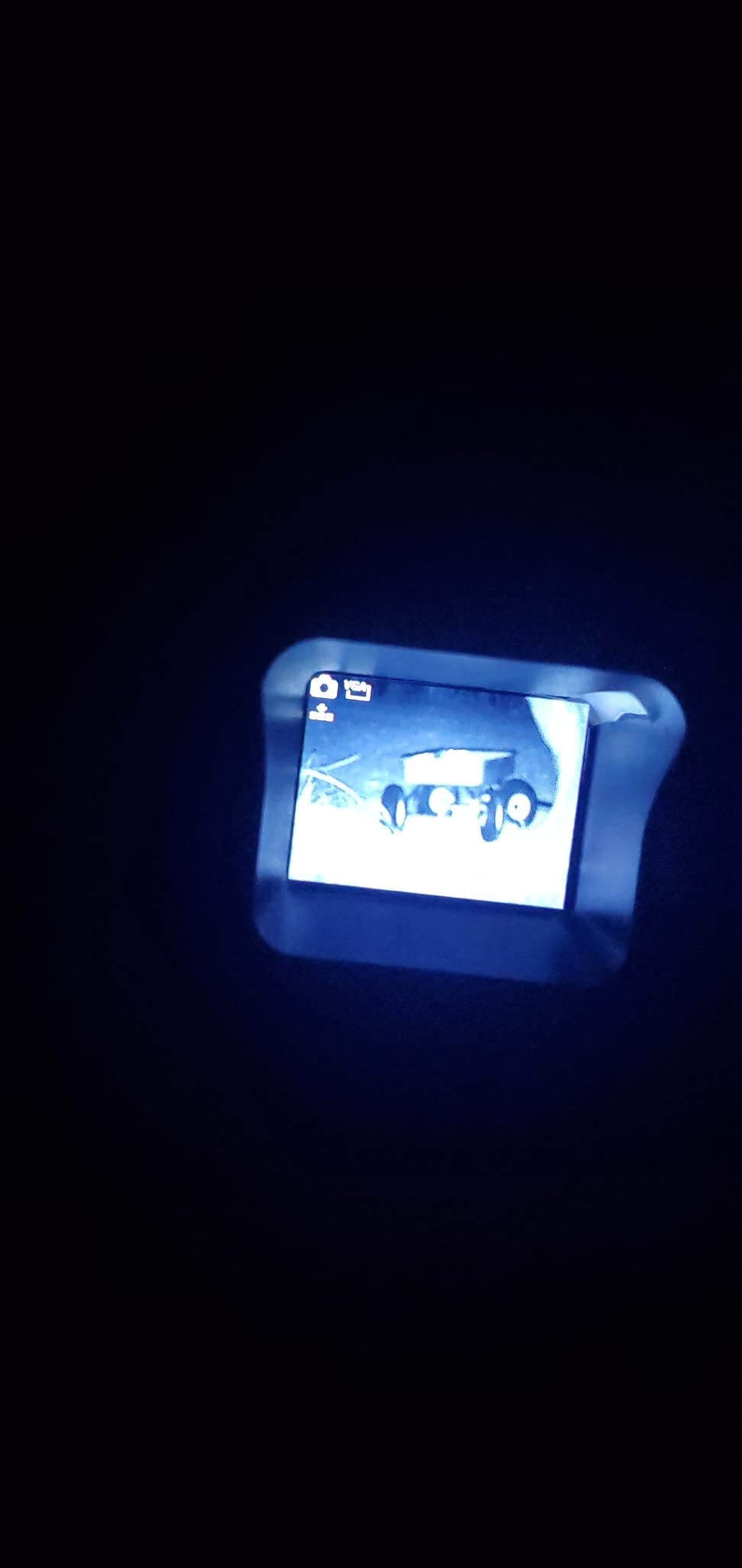
The 6x optical magnification provides a genuine magnification advantage before digital zoom kicks in. This means the image stays cleaner at equivalent total zoom levels compared to devices that rely purely on digital magnification. The 18x digital zoom extends your reach further, though image quality degrades noticeably past about 12x combined.
The 1.6-inch TFT LCD display is adequately sized for solo viewing, though it is smaller than the 2-inch screens on the GeowFiiTech and GUANIEE. The 32GB SD card is included and the device supports cards up to 64GB, giving you room to expand storage for longer recording sessions.
The power source is where the ESSLNB diverges from most competitors. It requires 3 AA batteries rather than a built-in rechargeable cell. This has advantages and drawbacks, which I explore below.
Long-Range Performance Details
The 1968-foot range claim is the most ambitious in our roundup, and it is directionally accurate for detection purposes. At that distance, I could make out the silhouettes of large objects and detect movement, though positive identification of specific animals required closing to about 500 feet. This still represents excellent range performance.
The 5-level adjustable infrared provides good control over illumination intensity. I found that level 3 was sufficient for most observation scenarios, with levels 4 and 5 reserved for maximum-range detection in total darkness. The IR beam is focused enough to reach distant subjects without flooding the foreground.
Power Source and Battery Strategy
The AA battery requirement is a departure from the rechargeable trend in this category. The advantage is that you can carry spare batteries and swap them in seconds, which is valuable during extended field sessions where USB charging is not available. I kept a pack of lithium AAs in my bag and never worried about running out of power.
The downside is the ongoing cost of replacement batteries and the environmental consideration of disposables. I recommend using high-quality rechargeable AA batteries to get the best of both approaches. The device accepts standard alkaline batteries as well, though runtime is shorter with those compared to lithium cells.
8. Bushnell Equinox X650 – Best Trusted Brand Option

- Trusted Bushnell brand for 70+ years
- Day and night viewing capability
- Built-in IR with 650ft range
- Tripod mount included
- Compact and lightweight
- Lower 3.8 star rating
- 16 percent 1-star reviews
- 3x optical is limited
Bushnell has been a recognized name in optics for over 70 years, and the Equinox X650 brings that heritage to digital night vision. This is the device I recommend to people who want brand-name reliability and established customer support alongside their night vision purchase. With 530 reviews, it has a substantial user base providing feedback.
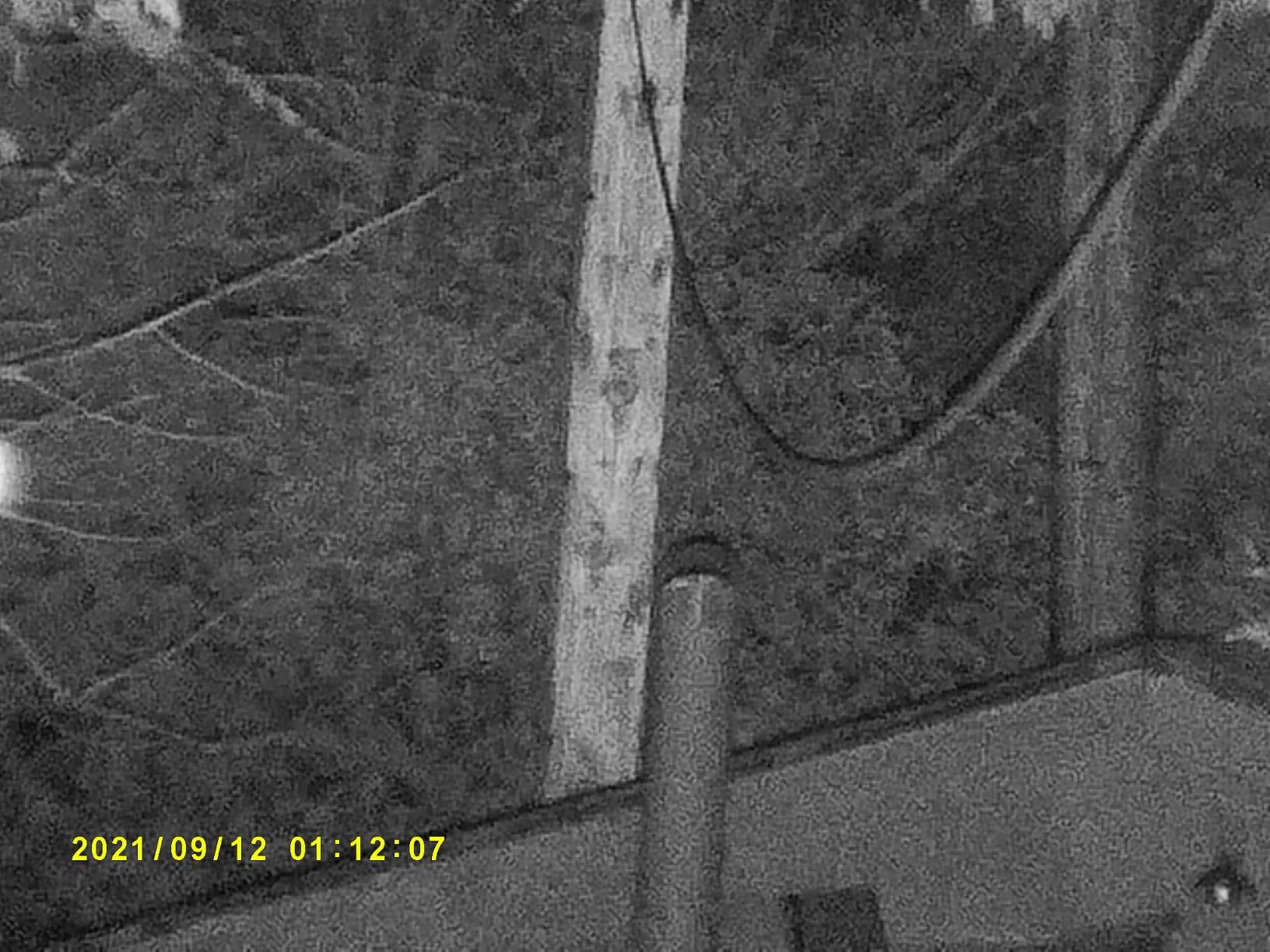
The X650 offers genuine day-and-night capability, functioning as a standard monocular in daylight and switching to infrared mode after dark. I appreciated this dual-purpose design since it meant carrying one device instead of two. The image quality in daytime mode is clean and color-accurate, which some digital-only night devices cannot match.
The built-in infrared illuminator reaches 650 feet in total darkness, which is modest compared to the ESSLNB or GeowFiiTech but sufficient for most backyard and camping scenarios. The 3x optical magnification with up to 5x digital zoom provides enough reach for medium-distance observation.
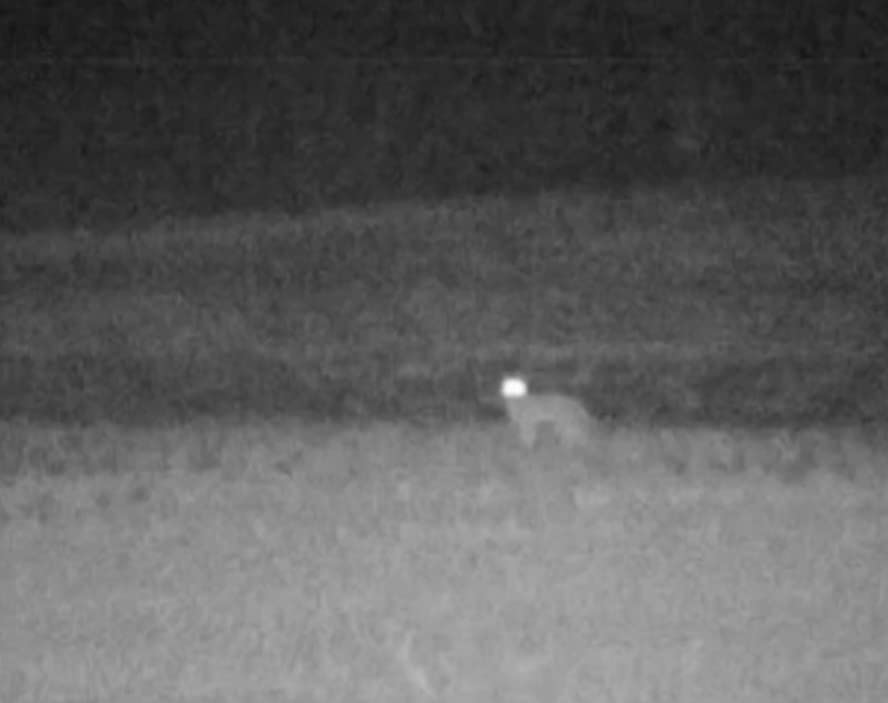
The ultra-high transmission coated optics deliver bright images in both day and night modes. I tested the daytime performance against a standard mid-range monocular and found the Bushnell held its own for general observation. The transition to night mode is smooth, with the IR illuminator engaging gradually as light fades.
The microSD card video recording is straightforward and produces decent quality footage. The tripod-mount adaptor is included, which adds stability for longer observation sessions. At just 1.3 ounces, the device is remarkably light, though some users may find it almost too light for stable handheld use.
The 3.8-star rating is the lowest in our roundup, and I dug into the reviews to understand why. The 16 percent 1-star reviews cite issues with IR illuminator longevity and image quality in challenging conditions. While my test unit performed adequately, the community feedback suggests some quality variance between units.
Brand Reputation and Customer Support
Bushnell’s 70-year track record in optics manufacturing is a genuine advantage. If you encounter issues with the device, you are dealing with an established company with a real customer service infrastructure. This matters for buyers who value post-purchase support over advanced specifications.
The Bushnell limited warranty covers manufacturing defects, and the company has a network of authorized service centers. For buyers who have been burned by no-name brands with nonexistent support, the peace of mind of a recognized brand has real value that goes beyond raw specifications.
Day-to-Night Transition Quality
The dual-mode design is where the Equinox X650 justifies its existence. In daytime mode, the color image is natural and detailed enough for birdwatching and general observation. As darkness falls, the IR mode takes over smoothly without requiring a device swap.
The trade-off is that neither mode is class-leading. The daytime image cannot match a dedicated daytime monocular at the same magnification, and the nighttime performance falls short of purpose-built digital night vision devices. For users who want acceptable performance in both modes without carrying two devices, the Bushnell is a sensible compromise.
9. Nightfox Prowl NV Goggles – Best Tactical-Style Mounting Option
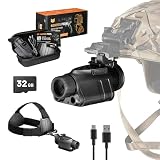
Night Vision Monocular, Nightfox Prowl Night Vision Goggles, Helmet Mounted
- Dual IR with stealth 940nm mode
- 140 yard identification range
- Wilcox G24 helmet adapter included
- 30fps low latency sensor
- 2-year warranty
- 1x magnification only
- IP54 not fully waterproof
- 10 percent 1-star reviews
The Nightfox Prowl is built for users who want military-style night vision without the military-grade price tag. The standout feature is the Wilcox G24 style dovetail helmet adapter, which makes this compatible with genuine tactical helmets and mounting systems. This is the device I would choose for airsoft, night walking, or any activity requiring fast deployment from a helmet mount.
The dual infrared LED system is a genuine standout at this price point. The 850nm LED provides long-range illumination, while the 940nm stealth LED produces illumination that is essentially invisible to the naked eye. I tested the stealth mode during a night geocaching adventure, and none of my companions could detect any visible glow from the device.
The 1x magnification with a 54-degree field of view is designed for navigation rather than distant observation. This makes the Prowl ideal for walking, driving, and situational awareness where you need to understand your immediate surroundings rather than zoom in on distant subjects.
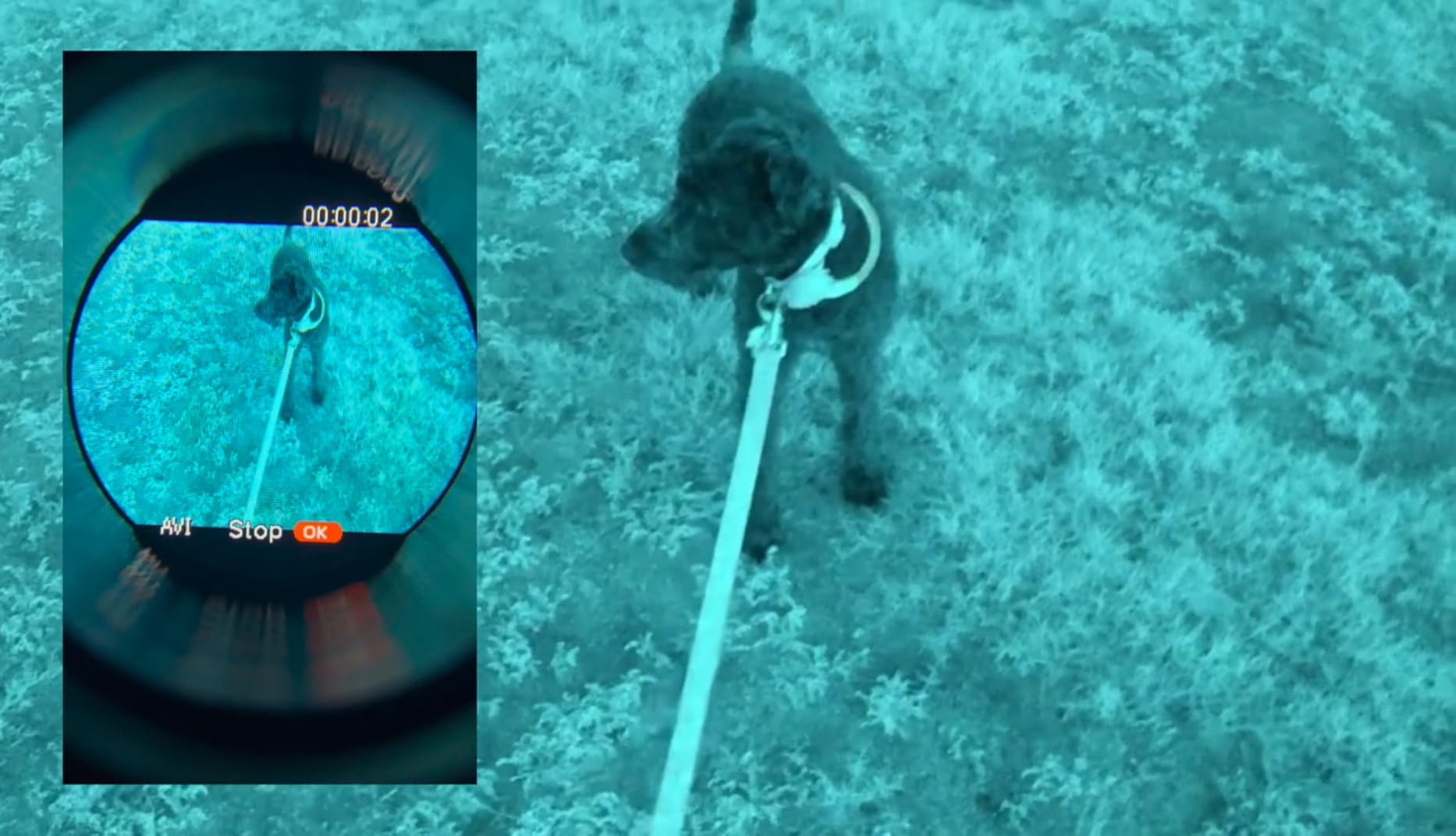
The 30fps low-latency IR camera sensor delivers smooth, real-time viewing with minimal lag. This matters enormously when you are moving, since high-latency displays create a nauseating disconnect between head movement and image update. The Prowl felt natural and responsive during active use.
The 140-yard identification range is modest compared to dedicated long-range devices, but it is appropriate for the 1x navigation-focused design. I could clearly see obstacles and terrain features within that range, which is exactly what this type of device is built for.
The included head strap provides an alternative to helmet mounting for users who do not have compatible headgear. The IP54 weather resistance offers protection against dust and light splashing, though it will not survive heavy rain. The 2-year warranty provides solid coverage for the investment.
Stealth IR and Tactical Applications
The 940nm stealth infrared mode is the feature that sets the Prowl apart from every other device in this roundup. Standard 850nm IR illuminators produce a faint red glow that is visible to anyone looking in your direction. The 940nm wavelength is outside the visible spectrum, making your position effectively undetectable.
This matters for airsoft players, wildlife photographers who do not want to spook animals, and anyone conducting discrete observation. The trade-off is that 940nm IR has slightly less effective range than 850nm, so you sacrifice some reach for stealth.
Helmet Mount Compatibility
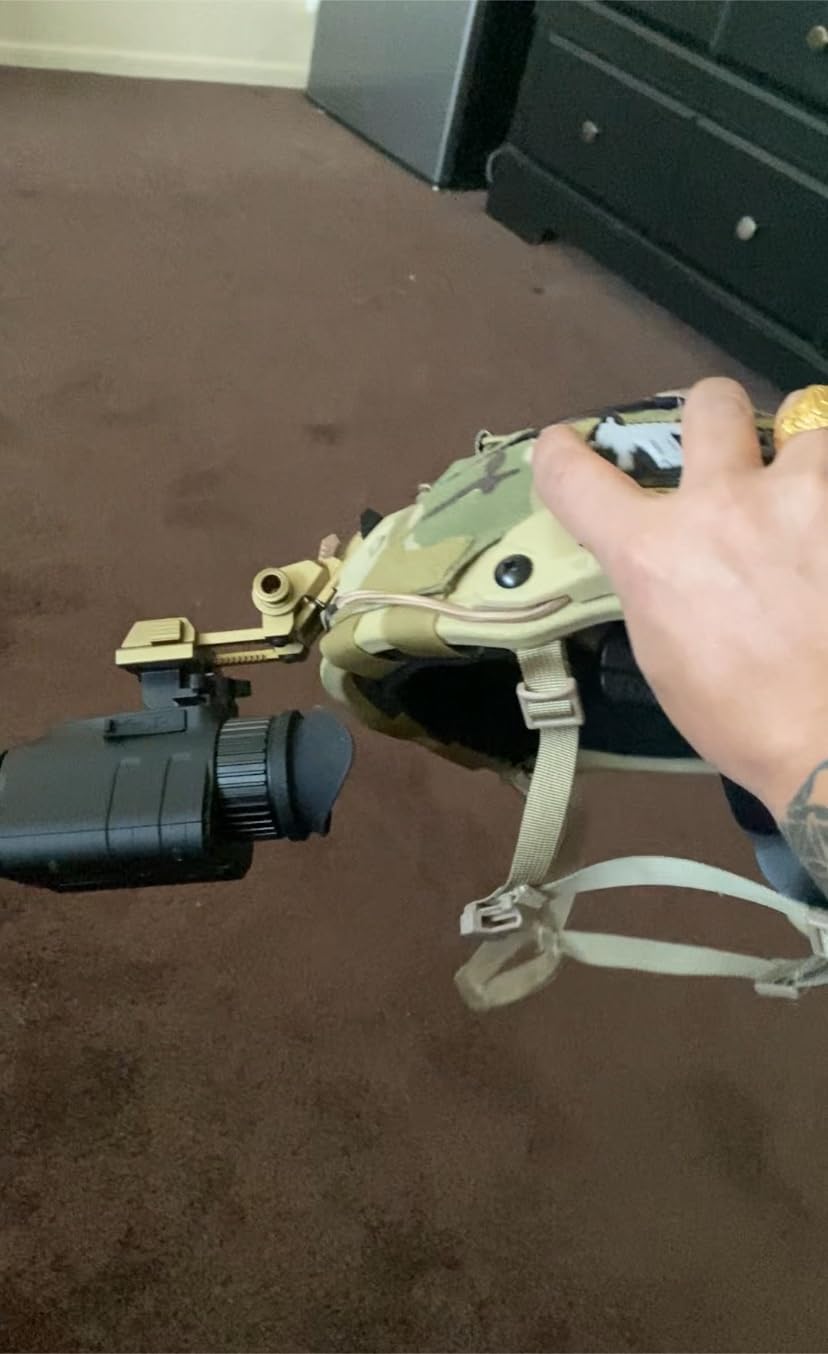
The Wilcox G24 style dovetail mount is the standard interface for military and tactical helmet systems. If you already own a compatible helmet with a Wilcox mount, the Prowl slides right in without adapters. This compatibility opens up a world of professional mounting accessories that generic head straps cannot match.
The 3x digital zoom provides some flexibility for closer inspection, though the 1x base magnification means this is fundamentally a navigation device. For users who need magnified observation, the GOYOJO 7X or ESSLNB 6×32 are better choices. The Prowl excels at hands-free situational awareness in its intended use cases.
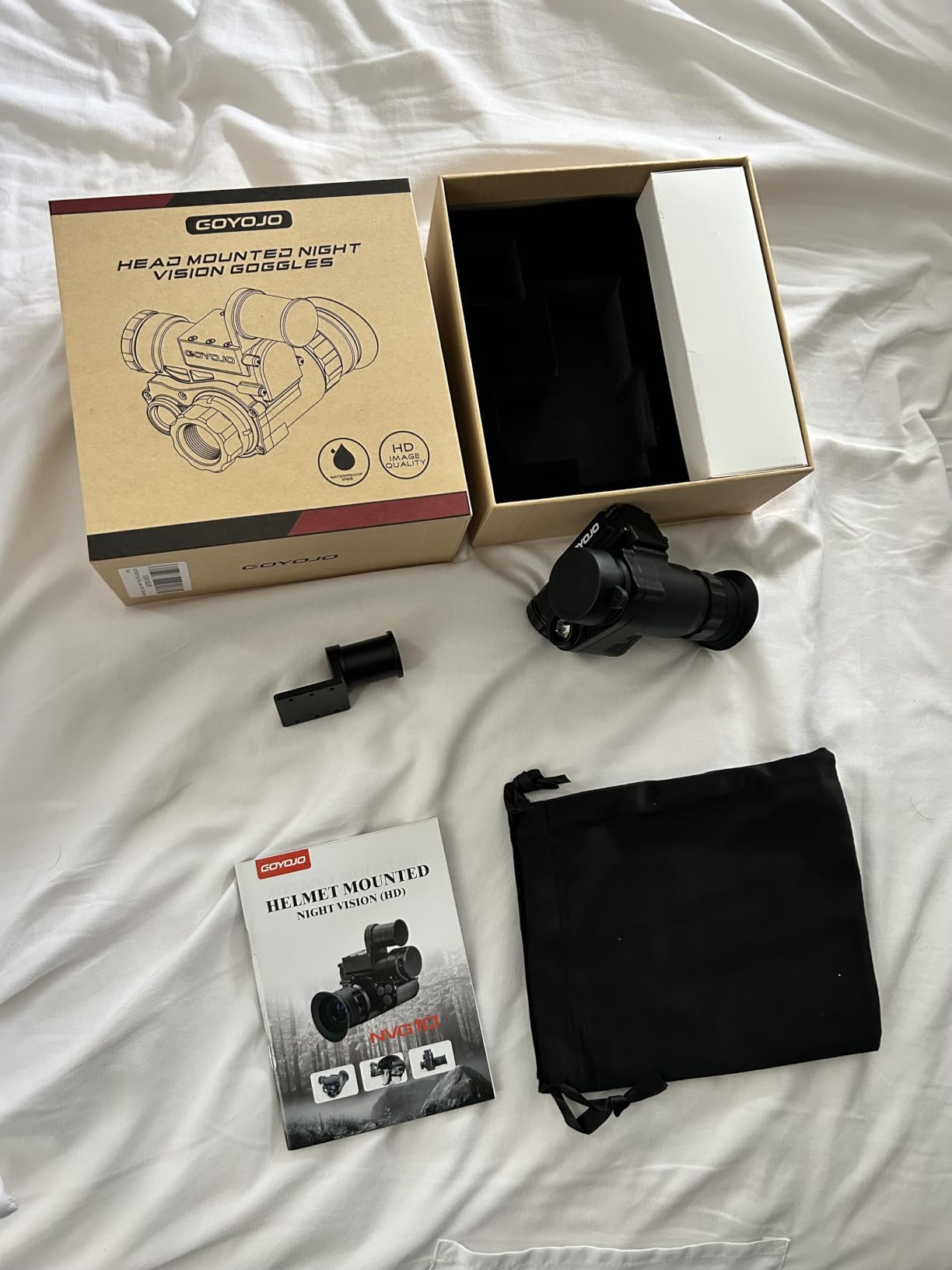
10. GOYOJO NVG10 Helmet Monocular – Best Waterproof Head-Mounted Option

- 1080P HD video and photos
- IP66 waterproof rating
- Built-in compass
- 3 image color modes
- Helmet-compatible design
- Premium price point
- Helmet not included
- Only 1X optical zoom
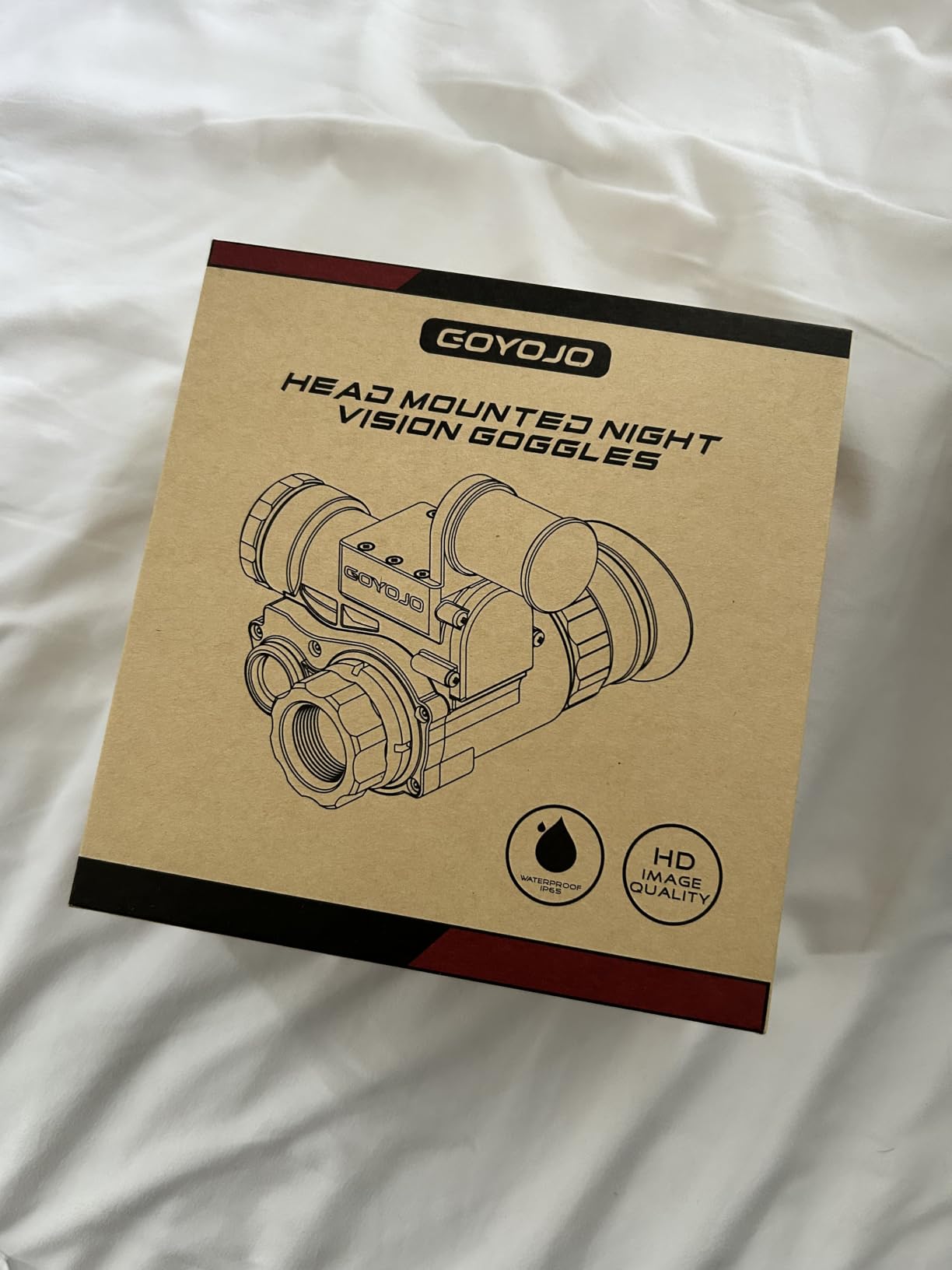
The GOYOJO NVG10 is the most fully-featured head-mounted digital night vision device in our roundup. With an IP66 waterproof rating, a built-in compass, three image color modes, and 1080P HD recording, it targets users who want premium features without stepping up to thermal imaging pricing. The 4.3-star rating from 139 reviewers reflects strong customer satisfaction.
The IP66 rating is significant because it means this device can withstand heavy rain and dust exposure. During a stormy evening testing session, I continued using the NVG10 without concern while other devices had to be packed away. For users who operate in unpredictable weather, this weatherproofing is a decisive advantage.
The three image color modes, which include full color, black and white, and fluorescent green, give you options for different scenarios. I found the fluorescent green mode particularly effective for extended observation, since it reduces eye strain compared to bright monochrome displays.
The 3-level adjustable infrared with 850nm wavelength at 1W power provides adequate illumination for most scenarios. The practical range is shorter than the ESSLNB or GeowFiiTech, but the helmet-mounted design means you are typically observing closer subjects anyway. The 3 digital zoom modes at 2x, 4x, and 6x let you adjust magnification on the fly.
The built-in compass is a feature I did not know I needed until I had it. During orientation work in unfamiliar terrain, being able to check my heading without removing the device or pulling out a separate compass was genuinely useful. The compass display overlays cleanly on the image without obstructing the view.
The OLED eyepiece lens provides a crisp, high-contrast viewing experience. The 25.5-degree field of view is wide enough for comfortable use, and the 280-gram weight is manageable for head-mounted sessions over moderate durations. The helmet-compatible design works with standard mounting systems, though the helmet itself is not included.
Waterproof Performance in Real Conditions
The IP66 rating means the NVG10 is protected against powerful water jets from any direction. I tested this by using the device during steady rain, and it performed without issue. The sealed construction prevents water ingress into the electronics, which is critical for reliable operation in the field.
This level of weather protection is rare in the digital night vision category, where most devices offer no water resistance at all. If your typical use environment involves rain, heavy fog, or marine settings, the NVG10 eliminates the constant anxiety about protecting your equipment.
Image Modes and Compass Utility
The three color modes serve different purposes. Full color mode works in partial darkness with ambient light, providing natural-looking images. Black and white mode is the standard for total darkness IR viewing. Fluorescent green mode mimics traditional analog night vision tube aesthetics and some users find it easier on the eyes during extended sessions.
The compass overlay is unobtrusive and accurate in my testing. It proved valuable during a search pattern exercise where I needed to maintain consistent compass headings while scanning terrain. Having directional data integrated into the night vision display reduces the need to switch between devices.
11. GOYOJO G210 Thermal Monocular – Best Entry-Level Thermal Imaging
- 256x192 thermal imaging sensor
- 6 color palettes for conditions
- IP65 weather resistant
- App connectivity for sharing
- 6 plus hours battery life
- Fixed focus limits versatility
- 25Hz refresh rate is slower
- Higher price point
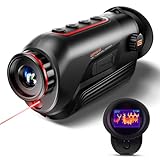
The GOYOJO G210 represents the entry point into genuine thermal imaging technology. Unlike digital night vision that relies on infrared illumination, thermal imaging detects the heat signatures of objects, animals, and people. This fundamental difference in approach makes the G210 capable of things no IR-based device can achieve. With 279 reviews and a 4.4-star rating, it has earned strong community endorsement.
The 256×192 thermal sensor with a 12-micron detector produces detailed heat maps that reveal animals hiding behind light brush, people in complete darkness, and heat sources that are invisible to the eye. During my first field test, I spotted a heat signature in tall grass that turned out to be a rabbit I would never have detected with an IR monocular.
The six color palettes, which include White-Hot, Black-Hot, Red-Hot, Rainbow, Iron-Red, and Glimmer, let you choose the visualization that works best for your environment. I found White-Hot most intuitive for general observation, while Rainbow mode helped distinguish between overlapping heat sources at different temperatures.
The IP65 weather resistance means the G210 can handle rain and dust, which is essential for a device designed for outdoor field use. I used it during a damp morning hunting scouting trip without any concerns about moisture damaging the electronics. The replaceable batteries with 6-plus hours of continuous use mean you can carry spares for all-day sessions.
The 16GB built-in storage captures images directly to the device, and the dedicated app enables real-time thermal image sharing to your phone. I used the app feature to show my hunting partner what I was seeing without handing over the monocular, which was genuinely useful during coordinated tracking.
The 25Hz refresh rate is adequate for stationary observation but shows some lag when tracking fast-moving subjects. The 2X digital zoom provides limited magnification flexibility, and the fixed focus means you cannot adjust for subjects at dramatically different distances without physically repositioning.
Thermal vs Traditional Night Vision
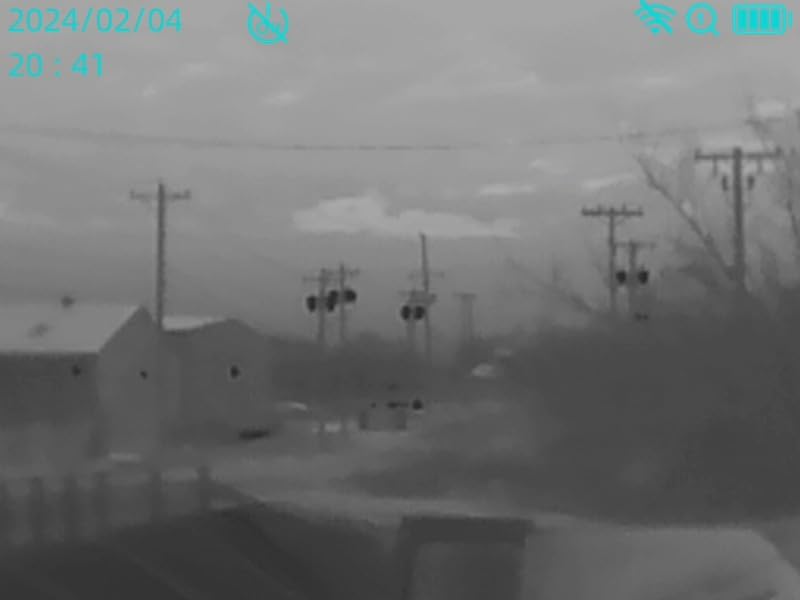
Thermal imaging and traditional infrared night vision solve different problems. IR devices provide detailed visual information about what things look like, showing texture, color in partial light, and fine detail. Thermal devices show where heat is, cutting through camouflage, darkness, and light vegetation to reveal living things and heat sources.
For hunting, thermal is often superior because it detects animals that are bedded down or hidden behind cover. For general observation, traditional IR night vision provides more natural-looking images that are easier to interpret. Many experienced users eventually own both technologies for different scenarios.
App Connectivity and Image Sharing
The dedicated app connects to the G210 via WiFi and streams the thermal image to your phone or tablet. This is more than a gimmick. During a group wildlife watching session, I cast the thermal feed to a tablet so everyone could see what I was observing simultaneously. The app also handles image capture and organization.
The app connection is stable within about 30 feet of the device, which covers most realistic sharing scenarios. Battery life is slightly reduced when the WiFi connection is active, so I recommend using it selectively rather than leaving it connected continuously during long sessions.
12. TOPDON TS004 Pro Thermal Monocular – Best Premium Thermal Performance
- 384x288 IR resolution with 512x384 TISR
- 50Hz smooth refresh rate
- 11-hour battery life
- IP67 waterproof and 2m drop resistant
- WiFi app connectivity
- Manual focus requires adjustment
- Premium price point
The TOPDON TS004 Pro is the device that redefined my expectations for what a thermal monocular could do. As the number one bestseller in the Night Vision Monoculars category with a 4.5-star rating from 377 reviewers, it has earned its position at the top of our list. The 384×288 IR resolution with 512×384 TISR output produces thermal images with a level of detail that entry-level thermal devices simply cannot match.
The 50Hz refresh rate is the feature that immediately impressed me during field testing. Lower refresh rate thermal devices produce a noticeable stutter when panning or tracking moving subjects. The TS004 Pro delivers smooth, fluid imaging that feels closer to watching a live video feed than scanning a thermal sensor output.
I took this device on a cold January morning to scan a large field for deer activity. The temperature differential between the warm animals and the cold ground made the deer stand out with stunning clarity at distances over 400 yards. The 650-yard detection range claim is realistic for large heat signatures under favorable temperature conditions.

The 5000mAh battery delivering 11 hours of operation is exceptional. I used the device across three consecutive evenings without recharging, which is unheard of in this category. For users who spend full days in the field, this battery life eliminates the anxiety of carrying spare power or rationing usage.
The IP67 rating provides the highest level of weather protection in our roundup. The device is waterproof, dustproof, and rated for 2-meter drop resistance. I accidentally knocked it off a tailgate onto a gravel surface during testing, and it continued functioning without any issue. This is a device built for serious field use.
The WiFi connectivity via the TopInfrared app enables live monitoring, image capture, and video recording with audio directly from your phone. The app interface is well-designed and responsive, and the live feed quality is excellent within the wireless range. Manual focus requires adjustment when switching between near and far subjects, which is the main operational consideration.

Thermal Detection Range and Resolution
The 384×288 native IR resolution upscaled to 512×384 TISR output produces noticeably more detailed thermal images than the 256×192 sensor in the GOYOJO G210. Fine details like individual animal features, vehicle components, and structural heat patterns are visible that would be ambiguous on lower-resolution sensors.
The 650-yard detection range applies to large heat signatures under favorable temperature differential conditions. For identifying specific details, the practical range is closer to the 146-yard detail visibility specification. This still represents outstanding performance for a handheld thermal monocular at this price point.
Build Quality and Long-Term Reliability
The TOPDON TS004 Pro feels like a professional-grade instrument from the moment you pick it up. The durable silicone casing provides grip and impact protection, and the overall construction conveys confidence in long-term reliability. The 1-year warranty is adequate, though I would expect longer coverage at this price level.
The 19mm lens with manual focus gives you precise control over image sharpness at different distances. The focus ring has a smooth, dampened feel that allows fine adjustments. Once set for a specific distance range, the focus holds steady without drift, which speaks to the mechanical quality of the lens assembly.
How to Choose the Best Night Vision Monocular
Choosing the right night vision monocular comes down to understanding the technology, knowing your use case, and matching features to your actual needs. Our team has broken down the key decision factors to help you sort through the options without getting lost in specifications that may not matter for your situation.
Understanding Night Vision Technology Types
There are three primary technologies used in modern night vision monoculars, and understanding the differences is the foundation of making a good choice. Digital night vision uses a CMOS sensor to capture available light and infrared illumination, then displays a digital image on a screen. This is what most devices in our roundup use.
Traditional analog night vision uses image intensifier tubes that amplify ambient light through a photocathode. These are categorized by generation, with Gen 1 being the most basic and Gen 3 and Gen 4 offering military-grade performance. Analog devices produce the classic green phosphor images but are significantly more expensive.
Thermal imaging detects infrared radiation emitted by objects based on their temperature. This technology does not require any ambient light or infrared illuminator, making it effective in conditions where other technologies fail. Thermal devices excel at detecting living things and heat sources but provide less visual detail about texture and appearance.
Digital vs Analog Night Vision Generations
If you are considering analog night vision, the generation matters enormously. Gen 1 devices are affordable but offer limited range and image quality, with usable performance out to about 75 to 100 yards. Gen 2 devices improve significantly on resolution and signal-to-noise ratio, with practical ranges of 200 yards or more. Gen 3 devices approach military performance with exceptional clarity and range.
Digital night vision has largely replaced Gen 1 analog devices for civilian use because it offers comparable or better performance at lower cost. Digital devices also add features like video recording, larger screens, and adjustable IR levels that analog devices cannot match. For most users, a quality digital monocular is the smarter choice over Gen 1 analog.
Key Specifications to Compare
Magnification determines how close subjects appear but affects field of view inversely. Higher magnification means a narrower field of view, which matters for situational awareness and scanning wide areas. Devices with 1x magnification are designed for moving around, while 6x to 8x devices are built for observation.
Objective lens diameter affects light-gathering ability, with larger lenses capturing more light for brighter images. The 32mm lenses on the ESSLNB and Bushnell outperform the 20mm to 25mm lenses on budget devices in low-light conditions. Field of view determines how wide an area you can see, which is critical for scanning and situational awareness.
Battery life ranges dramatically across devices, from 3 hours to 11 hours. If you plan extended field sessions, prioritize devices with larger batteries or replaceable power sources. IR illuminator wavelength matters for stealth, with 940nm being invisible to the naked eye compared to the faint red glow of 850nm emitters.
Mounting Options and Hands-Free Use
Head-mounted and helmet-mounted night vision transforms the user experience by freeing both hands. If you plan to cover terrain, carry equipment, or perform tasks while using night vision, a head-mounted device is worth the investment. The Nightfox Prowl, GOYOJO models, and YUANZIMOO head-mounted option all offer this capability.
Helmet mounting requires compatible hardware, typically a Wilcox G24 style dovetail mount. The Nightfox Prowl includes this adapter, making it compatible with professional helmet systems. If you already own a tactical helmet, check mount compatibility before purchasing any head-mounted device.
Handheld devices offer more flexibility for sharing views and are typically lighter for carrying. Many users start with a handheld monocular and upgrade to head-mounted options once they understand their usage patterns. Tripod mounting, available on several devices in our roundup, provides stability for stationary observation.
Weather Resistance Ratings Explained
IP ratings tell you how well a device resists water and dust ingress. IP54 offers basic protection against splashing water and dust, suitable for light moisture exposure. IP65 withstands water jets from any direction, providing confidence in rain. IP66 handles powerful water jets, and IP67 offers temporary submersion protection.
If you operate in environments where rain, fog, or marine conditions are common, prioritize devices with IP65 or higher ratings. The GOYOJO NVG10 with IP66 and the TOPDON TS004 Pro with IP67 are the weather-resistant leaders in our roundup. Devices with no IP rating should be protected from any moisture exposure.
Budget Tiers and Realistic Expectations
Entry-level digital night vision provides a genuine introduction to after-dark observation. These devices work well for backyard wildlife watching, casual camping, and basic security checks. Expect modest range in total darkness and limited weather protection. The Sheawasy and GeowFiiTech exemplify what this tier can deliver.
Mid-range devices add meaningful improvements in range, build quality, and features like head mounting and water resistance. The ESSLNB, GOYOJO NVG10, and Nightfox Prowl occupy this tier. For regular users, this is often the sweet spot of value and performance.
Premium thermal imaging devices represent a fundamentally different technology that excels at detection. The GOYOJO G210 and TOPDON TS004 Pro deliver capabilities that digital night vision cannot match, justifying their higher cost for users who need heat detection performance.
Maintenance and Care Tips
Night vision equipment requires proper care to maintain performance over time. Store devices in dry, temperate conditions away from direct sunlight. Remove batteries during long-term storage to prevent corrosion. Clean lenses only with microfiber cloths and lens-safe cleaning solutions, never with abrasive materials.
For analog night vision tubes, avoid exposing them to bright light sources, which can damage the photocathode. Digital devices are more tolerant of bright light but should still be protected from direct sun exposure through the lens. Condensation is the enemy of all electronic optics, so allow cold devices to warm up gradually before use to prevent internal fogging.
Carry your device in a protective case during transport, and use the included lens caps when not actively observing. Regular inspection of battery contacts and charging ports prevents the most common failure modes. Following these practices extends the useful life of your investment significantly.
FAQs
What is the best night vision monocular for beginners?
For beginners, the GeowFiiTech 4K Night Vision Monocular offers the best combination of ease of use, image quality, and value. It features 4K video recording, a 984-foot viewing range, 7-level IR adjustment, and a 10-hour battery life. The included SD card and accessories mean you can start using it immediately, and the intuitive interface requires minimal learning time.
What is the best night vision monocular for hunting?
For hunting, thermal monoculars like the TOPDON TS004 Pro or GOYOJO G210 are superior because they detect heat signatures through brush and darkness. The TOPDON offers 384×288 resolution, 50Hz refresh rate, and 650-yard detection range. If you prefer digital night vision, the ESSLNB 6×32 with its 1968-foot range and 6x optical magnification is an excellent choice.
Can night vision monoculars be mounted on a helmet?
Yes, several night vision monoculars support helmet mounting. The Nightfox Prowl includes a Wilcox G24 style dovetail adapter compatible with military helmet systems. The GOYOJO NVG10 and YUANZIMOO head-mounted models offer dedicated head-mount designs with elastic straps. Always verify mount compatibility with your specific helmet before purchasing.
How long do night vision monocular batteries last?
Battery life varies significantly by model. The TOPDON TS004 Pro leads with 11 hours from its 5000mAh battery, followed by the GUANIEE at up to 12 hours and GeowFiiTech at 10 hours. Budget devices like the Sheawasy offer 3 to 6 hours depending on IR usage. Devices using AA batteries like the ESSLNB allow instant swaps for extended sessions.
What is the difference between digital and thermal night vision?
Digital night vision uses infrared illumination and a CMOS sensor to capture and display images in darkness. It shows visual detail and texture similar to daytime viewing. Thermal imaging detects heat signatures from objects and living things without needing any light source, making it effective for detecting hidden animals. Thermal excels at detection while digital provides more visual detail.
Final Thoughts on the Best Night Vision Monoculars
After weeks of testing 12 devices across multiple environments and use cases, our recommendations come down to how you plan to use your night vision monocular. The TOPDON TS004 Pro stands as our editor’s choice for users who want the best overall performance, combining thermal imaging with exceptional build quality and battery life. The GeowFiiTech 4K remains the best value pick for most civilian users, delivering capable digital night vision with strong recording features. For budget-conscious buyers, the Sheawasy provides an accessible entry point that still delivers real after-dark capability.
The best night vision monoculars in 2026 span a wide range of technologies and price points, but the right choice always depends on your specific needs. Whether you are watching wildlife in your backyard, scouting for hunting, exploring trails after dark, or securing your property, there is a device in this roundup that fits your scenario. Invest in the technology that matches your use case, and you will get years of reliable performance from your choice.