
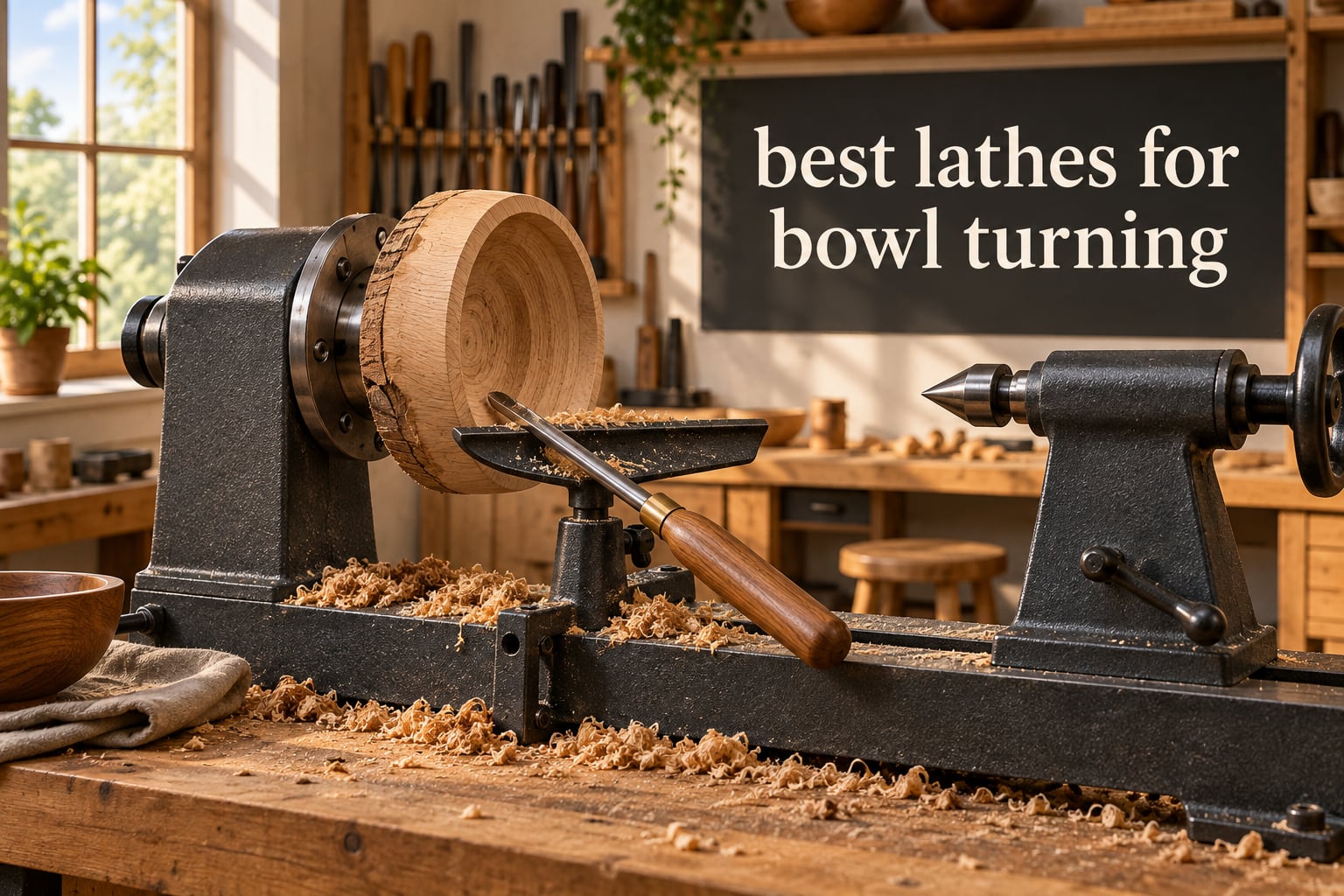
The best lathes for bowl turning share three traits: enough swing to clear your largest blank with room to spare, enough torque to drive a heavy out-of-balance chunk, and a slow enough minimum speed that you can start that chunk without it flying apart. Cast iron mass matters too, because a gouge pushing into wet wood will find every weakness in a stamped steel frame.
Here is the sizing rule most turners learn the hard way. Advertised swing is the maximum diameter the machine can turn, not the diameter of the finished bowl. Once you round a blank, cut it round, hollow it and sand it, you have given up a healthy margin of material. Buy a lathe whose swing is at least two inches larger than the largest bowl you want to make. A 12-inch swing handles bowls up to about 10 inches, and a 14-inch swing gets you to roughly 12.
We spent weeks putting twelve machines through their paces, focusing on the things that decide whether a lathe can bowl turn or merely spin. If you are still working out how a bowl gets made at all, start with our wood lathe buying guide, then come back here for the bowl-specific criteria. It is a different machine you are shopping for.
Updated for 2026 with current models, verified specifications and owner feedback across 12 machines, from a 17-pound desktop lathe to a 377-pound floor model.
Top 3 Picks for Bowl Turning in 2026

JET JWL-1221VS 12×21 Midi Lathe
- 12 in swing
- 1 HP
- three speed ranges from 60 RPM
- 121 lbs cast iron

JET JWL-1640EVS 16×40 Floor Lathe
- 16 in swing
- 1-1/2 HP
- 40-3
- 200 RPM infinitely variable
- reversible
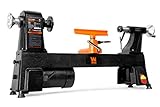
If you want one answer, take the JET JWL-1221VS. Among benchtop and midi machines, it pairs a genuinely bowl-sized 12-inch swing with a 60 RPM minimum, which is the combination you need to start a wet blank safely and then rough it out.
Best Lathes for Bowl Turning at a Glance in 2026
| Product | Specifications | Action |
|---|---|---|
| JET 12×21 Variable Speed Lathe 1 HP JWL-1221VS |
|
Check Latest Price |
 WEN 3421 8×12 Variable Speed Mini Lathe WEN 3421 8×12 Variable Speed Mini Lathe |
|
Check Latest Price |
| WEN LA3424 12×18 5-Speed Benchtop Lathe |
|
Check Latest Price |
 Delta 46-460 12-1/2 in Variable Speed MIDI Lathe Delta 46-460 12-1/2 in Variable Speed MIDI Lathe |
|
Check Latest Price |
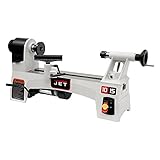 JET 10×15 Variable Speed Lathe JWL-1015VS JET 10×15 Variable Speed Lathe JWL-1015VS |
|
Check Latest Price |
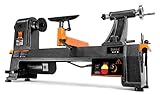 WEN 34035 14×20 Variable Speed Benchtop Lathe WEN 34035 14×20 Variable Speed Benchtop Lathe |
|
Check Latest Price |
| JET 16×40 EVS Floor Lathe 1-1/2 HP JWL-1640EVS |
|
Check Latest Price |
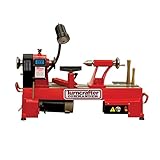 PSI Turncrafter KWL-1218VS 12 in Midi Lathe PSI Turncrafter KWL-1218VS 12 in Midi Lathe |
|
Check Latest Price |
 ARTYMASTER WM101A-Plus Mini Lathe ARTYMASTER WM101A-Plus Mini Lathe |
|
Check Latest Price |
 hightall MC1218 12×18 3/4HP 5-Speed Lathe hightall MC1218 12×18 3/4HP 5-Speed Lathe |
|
Check Latest Price |
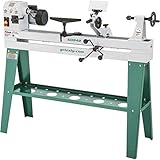 Grizzly G0842 14 x 37 in Wood Lathe Grizzly G0842 14 x 37 in Wood Lathe |
|
Check Latest Price |
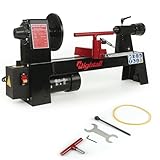 hightall MC813 8×12 Variable Speed Lathe hightall MC813 8×12 Variable Speed Lathe |
|
Check Latest Price |
Read the swing column first. Everything else on a bowl lathe is negotiable except the diameter you can actually turn.
1. JET JWL-1221VS 12×21 Variable Speed Midi Lathe – Best Overall for Bowls
JET 12″ x 21″ Variable-Speed Woodworking Lathe, 1 HP, 115V 1Ph (JWL-1221VS)
- Quiet and smooth with plenty of power
- 60 RPM minimum for gentle starts
- Three speed ranges cover roughing to finishing
- 121 lb cast iron base absorbs vibration
- MT2 and 1 in x 8 TPI accept standard chucks
- reverse rotation for sanding
- Digital readout can misreport RPM on unstable mains power
- Control panel feels cheaper than the castings
- Supplied tool rests need polishing before use
This is the machine I keep coming back to. The JWL-1221VS has a 12-inch swing, which lands you finished bowls around 10 inches across, and a three-range electronic speed layout that bottoms out at 60 RPM in the lowest band.
That 60 RPM figure is the whole reason it tops this list. A wet blank mounted on a faceplate is violently out of balance, and you need to bring it up to speed slowly while the gouge shaves it round.
The ratchet-style belt tension system means changing speed ranges takes seconds, and the 24 integrated indexing positions are useful once you start fluting the outside of a finished bowl.
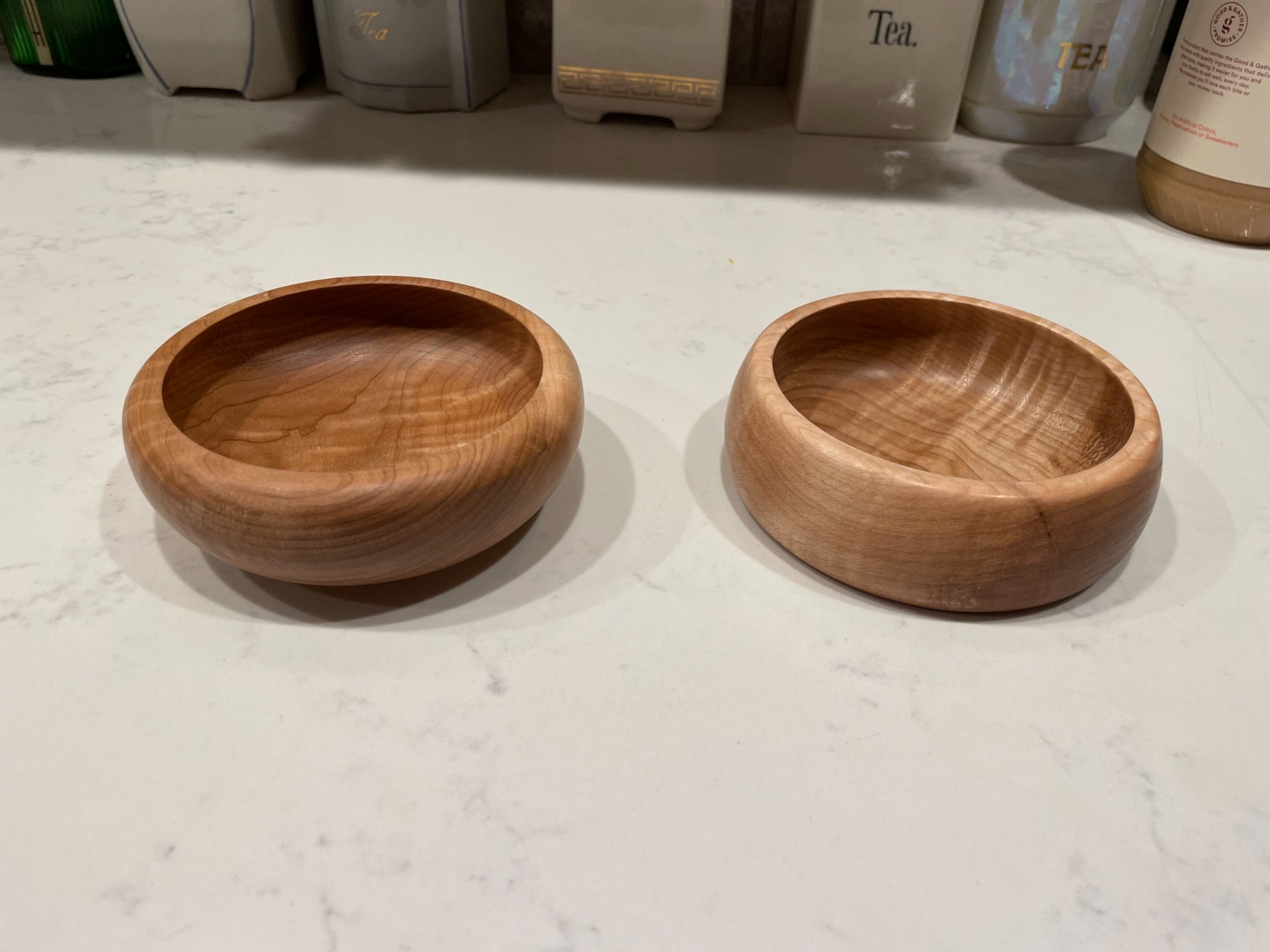
The build is heavier than most machines in this class, which is a good thing. You feel the mass absorb the load when the gouge bites, and the standard 5/8-inch tool rest and MT2 taper mean your accessories from any other midi lathe will bolt right on.
Reverse rotation is a quiet asset for sanding. Run the sander against the grain on a wobbling wall and it becomes manageable instead of frustrating.
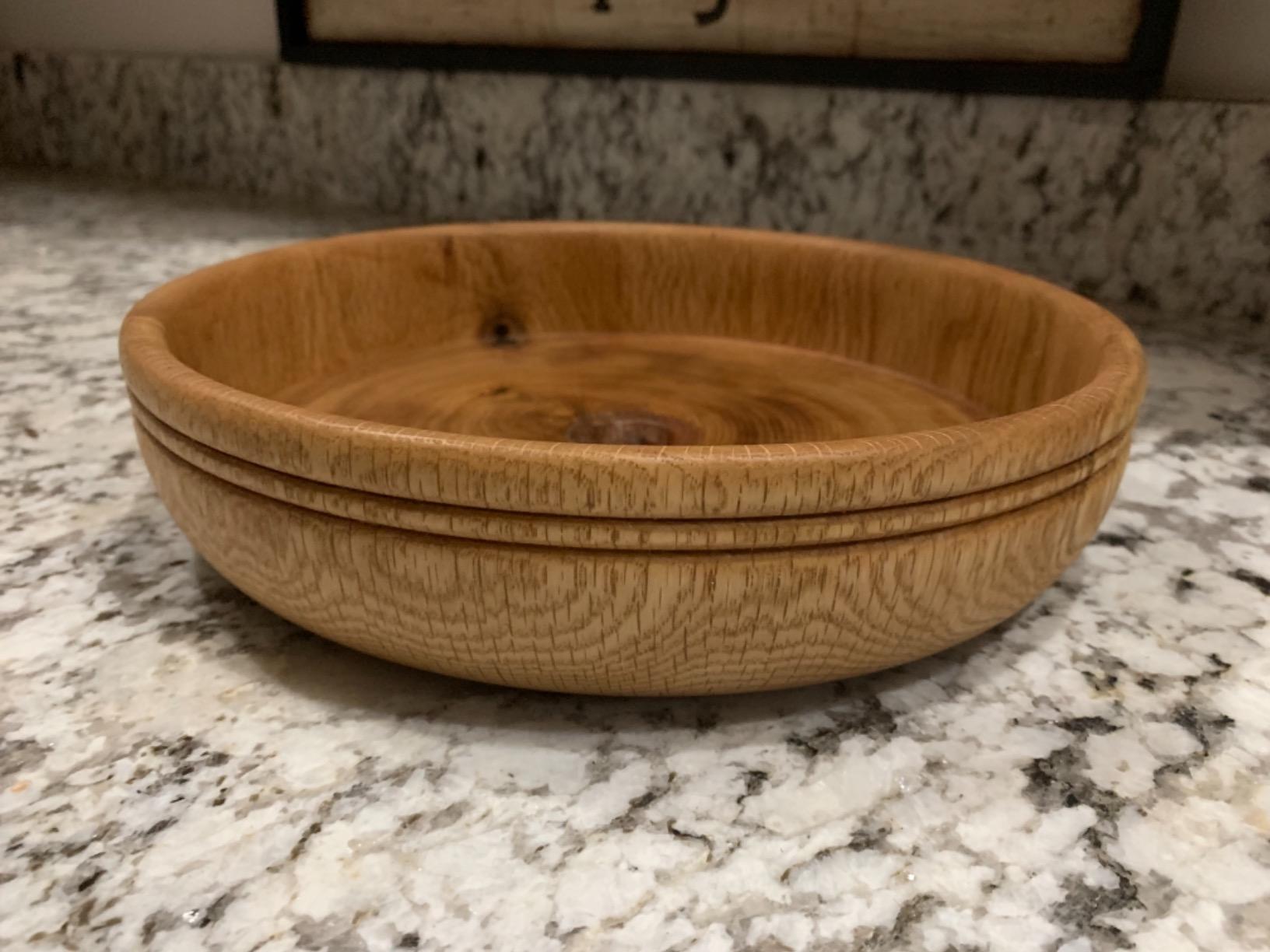
Check the low-speed end before you commit
Owners report the digital readout occasionally showing the wrong RPM when line voltage is low. The actual speed is right, the number is not, so do not trust the display as a precision instrument on an overloaded circuit.
Also plan on replacing the supplied tool rests. Owners regularly describe needing to file and polish them before they feel usable, which is normal and cheap to fix.
Who this lathe is not for
If your largest target bowl is 14 inches or wider, this machine is too small and you will end up selling it. Long spindles are a poor fit too, since 21 inches between centers suits spindles and small posts rather than table legs.
It is also not the machine for a small apartment. At 121 pounds you will want it on a proper bench, not a kitchen table.
2. WEN 3421 8×12 Variable Speed Mini Lathe – Best for Small Bowls
WEN 3421 3.2-Amp 8″ by 12″ Variable Speed Mini Benchtop Wood Lathe
- Largest owner base of any machine in the group
- 3.2-Amp motor beats most 8-inch lathes
- Faceplate and centers included
- 44.7 lbs moves between benches
- Soft start ramp is gentle on new users
- 8 in swing caps finished bowls near 6 inches
- MT1 taper limits chuck compatibility
- 12 in bed is short for spindle work
With more than 1,400 reviews, the WEN 3421 is the most proven machine here by a wide margin, and the number matters. When something has that much owner history, the failure modes are known instead of theoretical.
For bowls specifically, the honest limitation is size. An 8-inch swing means your finished bowl tops out near 6 inches across, which is a perfectly good salad bowl or salt cellar but not a centerpiece.
What you get for that tradeoff is a 3.2-Amp motor that owners repeatedly note is stronger than competing 8-inch machines, plus a soft start that makes roughing a slightly out-of-round blank far less dramatic.
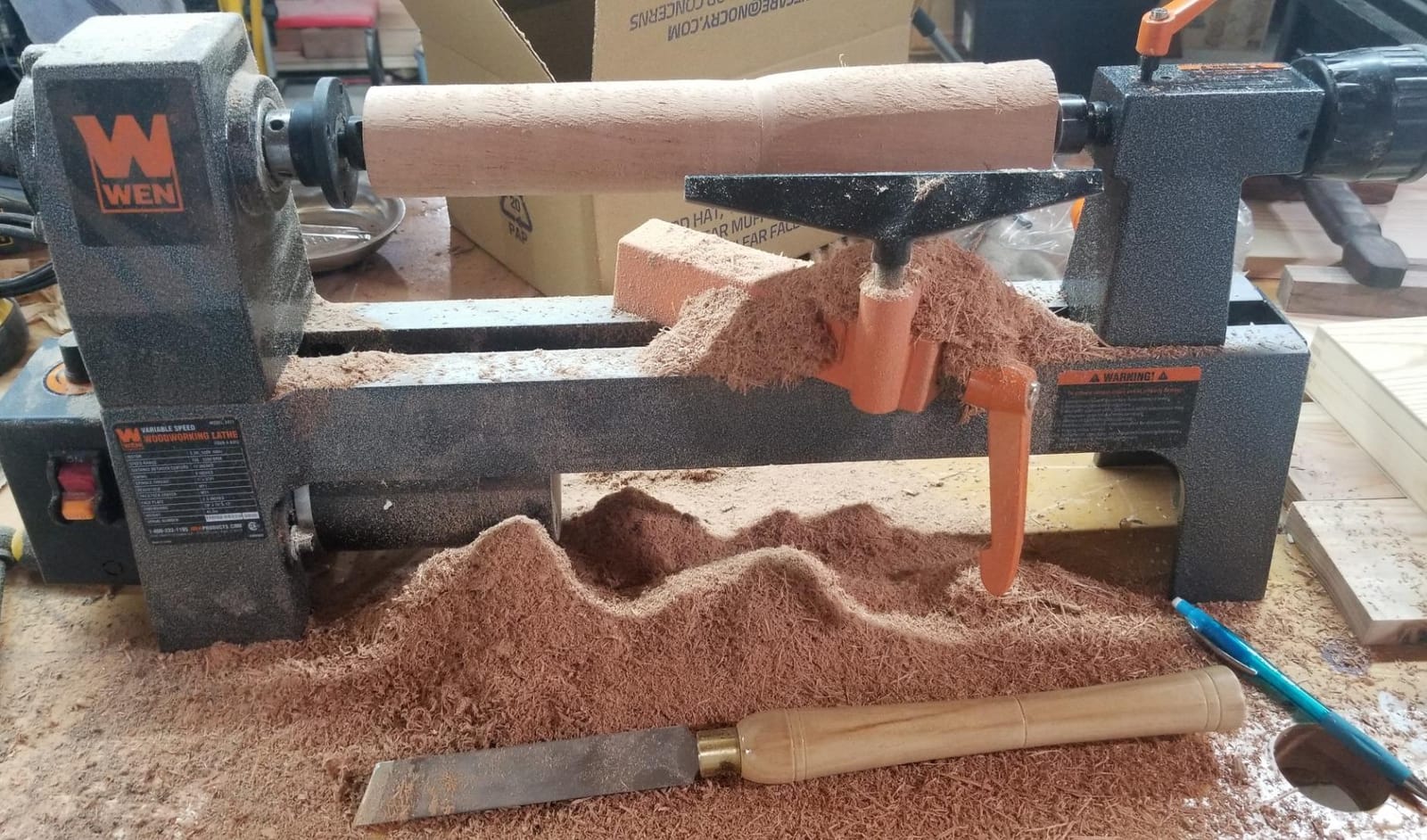
The 750-3,200 RPM electronic range is wide enough to sand a small bowl at speed after shaping it slowly. The included 2.3-inch faceplate, MT1 spur and tailstock tapers mean you can start turning the day the box opens.
At 44.7 pounds this is light enough to carry between benches or take outside on a good-weather day, without the two-person lift a floor model demands.
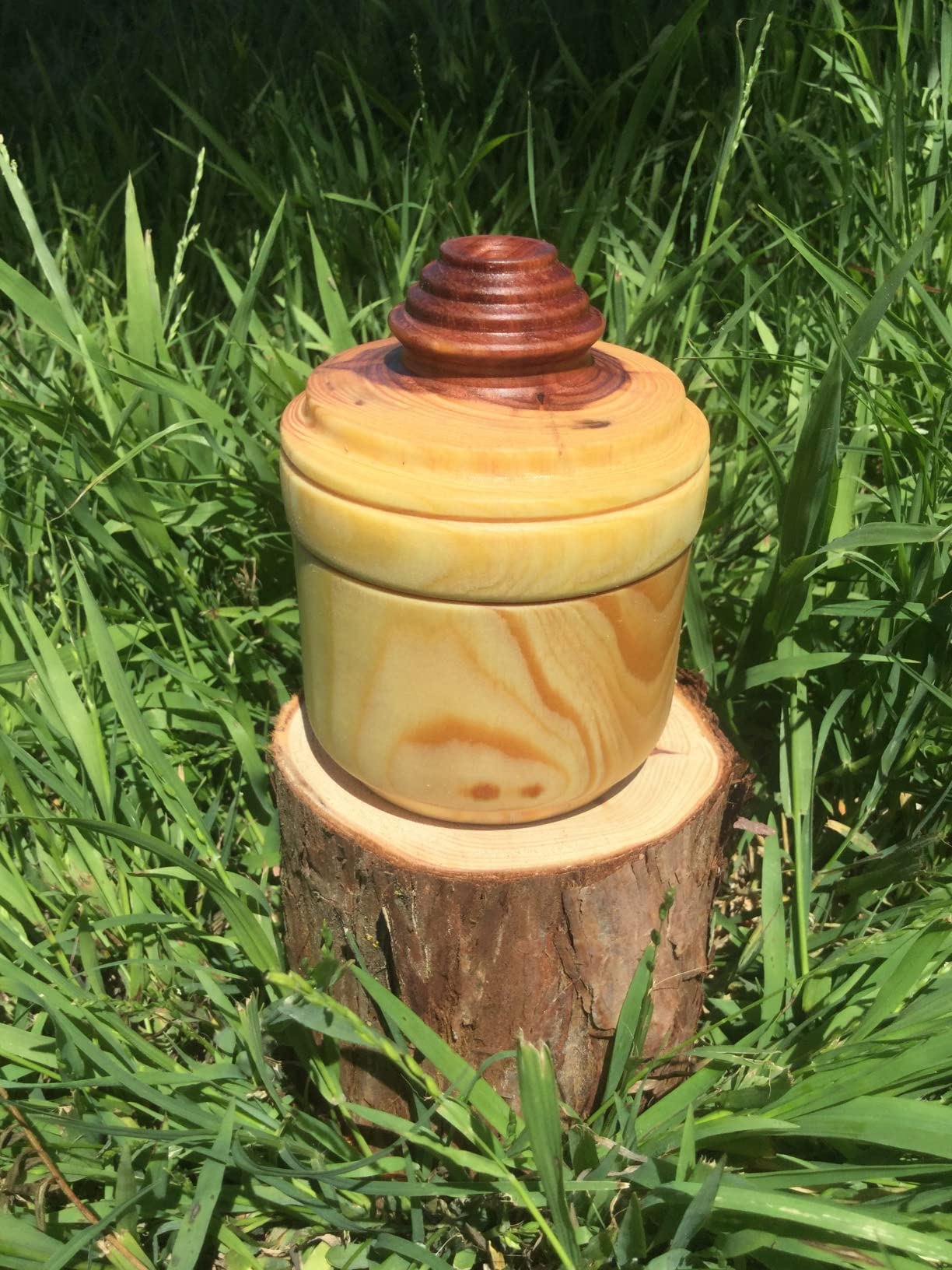
Decide between small bowls and small spindles
The 12-inch bed is short. If half your project list is pens, spindles and small furniture parts, the MT1 interface and short bed work fine. If bowls are the main event, a 12-inch swing midi lathe serves you better for not much more.
The MT1 taper is worth flagging because many chucks and accessories are MT2 only. Check that a chuck you already own fits before committing.
Who this lathe is not for
Anyone chasing a 12-inch platter or a deep salad bowl needs more swing than this offers. The same applies to green wood blanks, where the 3.2-Amp motor will bog down on a wet, heavy chunk.
It is genuinely a first-machine or small-projects choice, not a long-term bowl lathe.
3. WEN LA3424 12×18 5-Speed Benchtop Lathe – Best Value for 12-Inch Bowls
- 12 in swing is a real bowl size
- 4.5 average across 298 reviews
- MT2 tapers on head and tailstock
- 3-1/8 in faceplate included
- Onboard accessory storage
- Five fixed belt speeds instead of continuous control
- 18 in bed is short for long spindles
- Some earlier-generation units had headstock issues
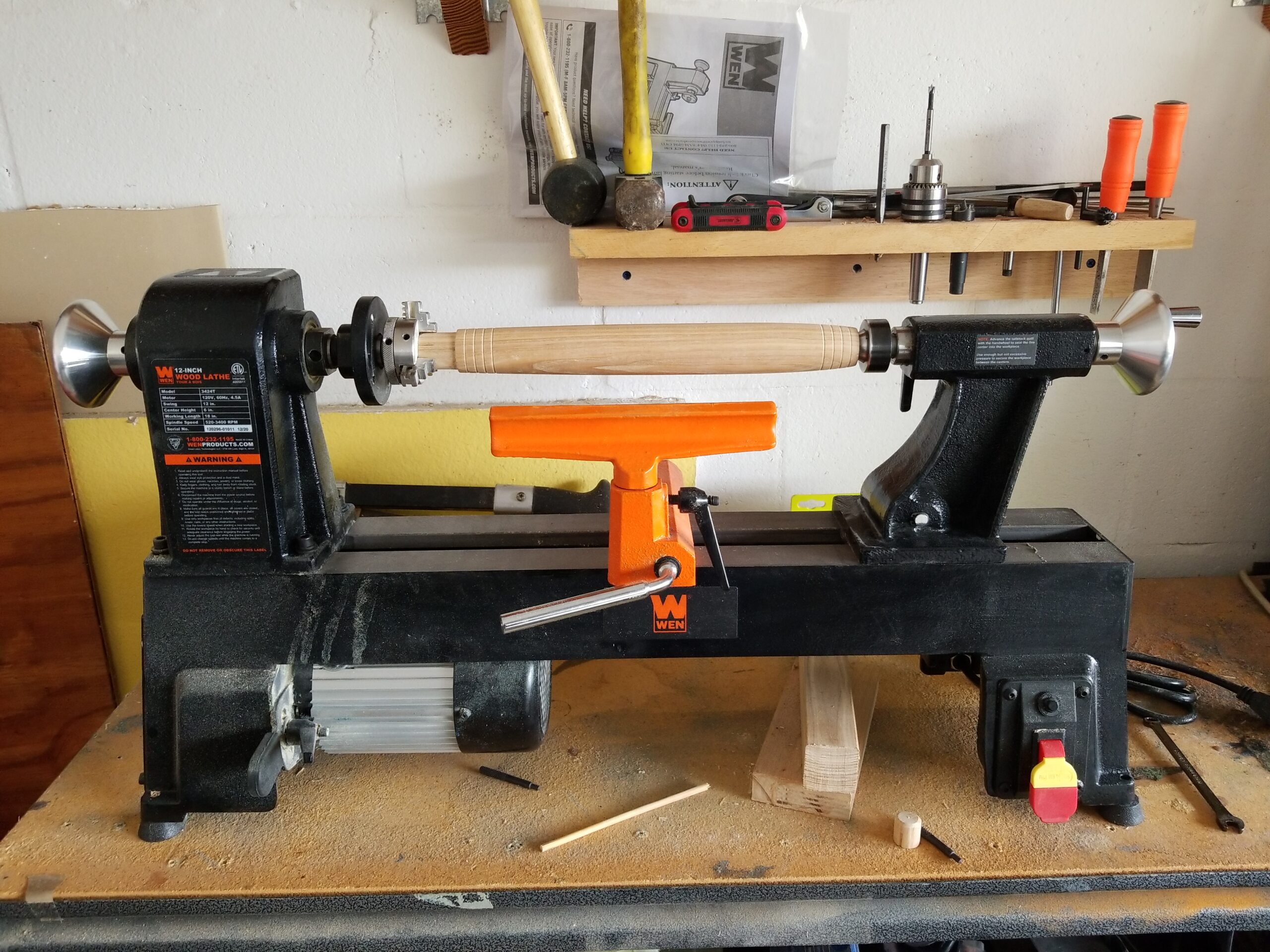
The LA3424 answers a simple question: what is the least complicated way to get a real 12-inch swing. The answer is this benchtop machine, which holds a 4.5 average across 298 owner reviews.
Owners point to the 4.5-Amp motor as the reason it copes with blanks that would stall a smaller machine, and to the MT2 tapers on both headstock and tailstock as a genuine step up from the 8-inch class.
The 3-1/8-inch faceplate that comes with the machine covers most of the small and medium bowl work you would do at this swing, so the accessory bill stays small.
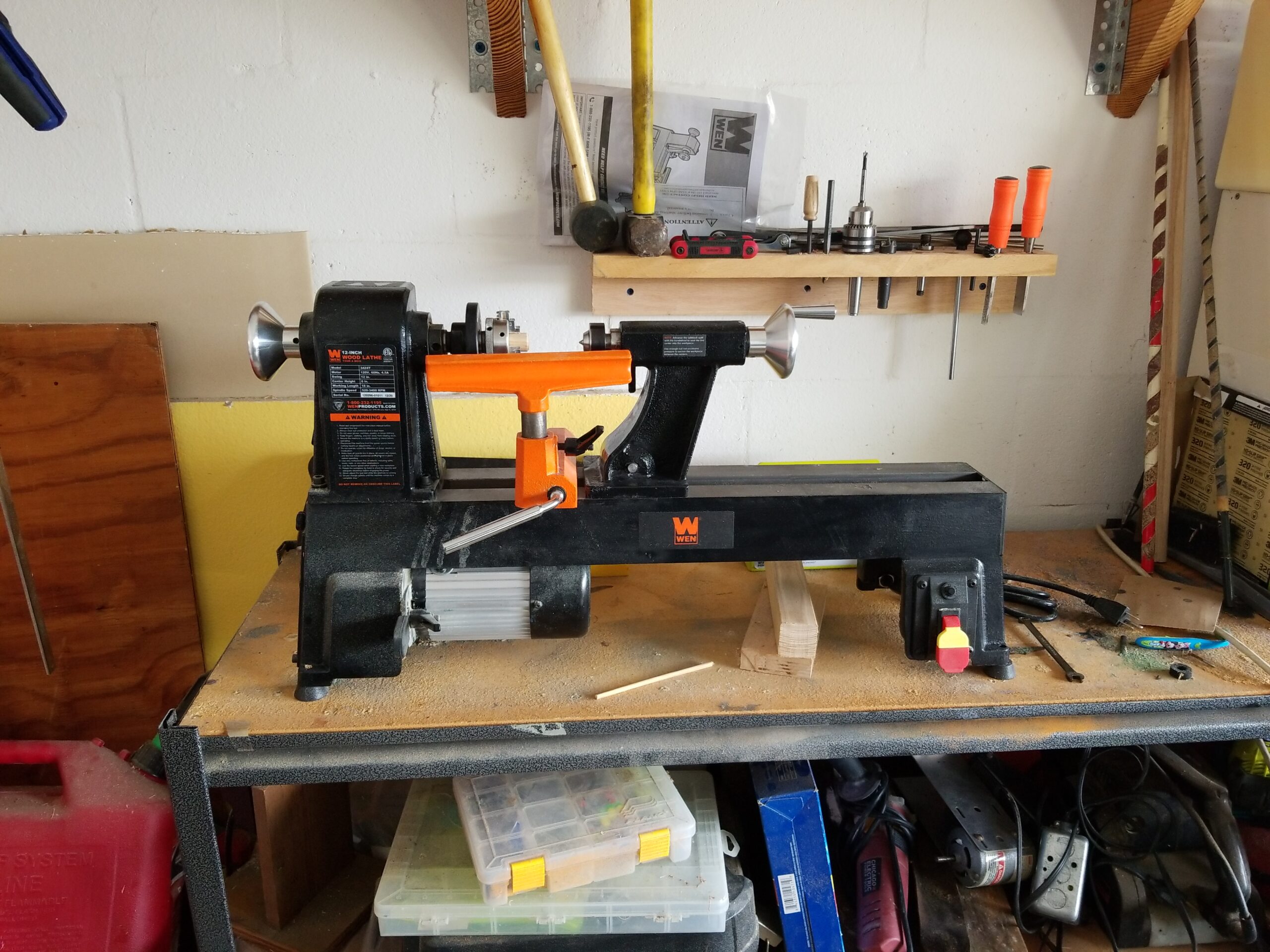
One detail that matters for bowls: the on-board accessory holder keeps chucks, spur centers and drive centers within reach, which cuts the fumbled-parts problem that slows down a first bowl project more than any other factor.
Users who step up from a smaller WEN model tend to describe the jump in capacity as the thing they notice most.
Check whether stepped speeds will annoy you
The five speeds are fixed belt positions at 520, 900, 1,400, 2,150 and 3,400 RPM. That is a meaningful difference from an electronic dial. When you are shaping a bowl wall, you will want to move continuously, and here you move in jumps.
Work out in advance whether you can live with picking a band and then living within it. Many turners do, especially while learning.
Who this lathe is not for
If you plan to turn wet, green blanks regularly, the fixed-speed layout is a real constraint. Variable speed is not a luxury when the torque demand changes every second.
Long spindles are also out of reach at 18 inches between centers unless you add a bed extension.
4. Delta 46-460 12-1/2 in Variable Speed MIDI Lathe – A Long-Running Midi Favorite
Delta Industrial 46-460 12-1/2-inch Variable-Speed MIDI Lathe, Gray
- 12-1/2 in swing reaches bowls near 10 inches
- 1 HP handles large unbalanced blanks
- Forward and reverse for sanding
- Quiet vibration-free run
- 97 lbs is movable
- Parts and service availability inconsistent
- Supplied tool rests feel thin
- Packaging can damage the top-mounted switch
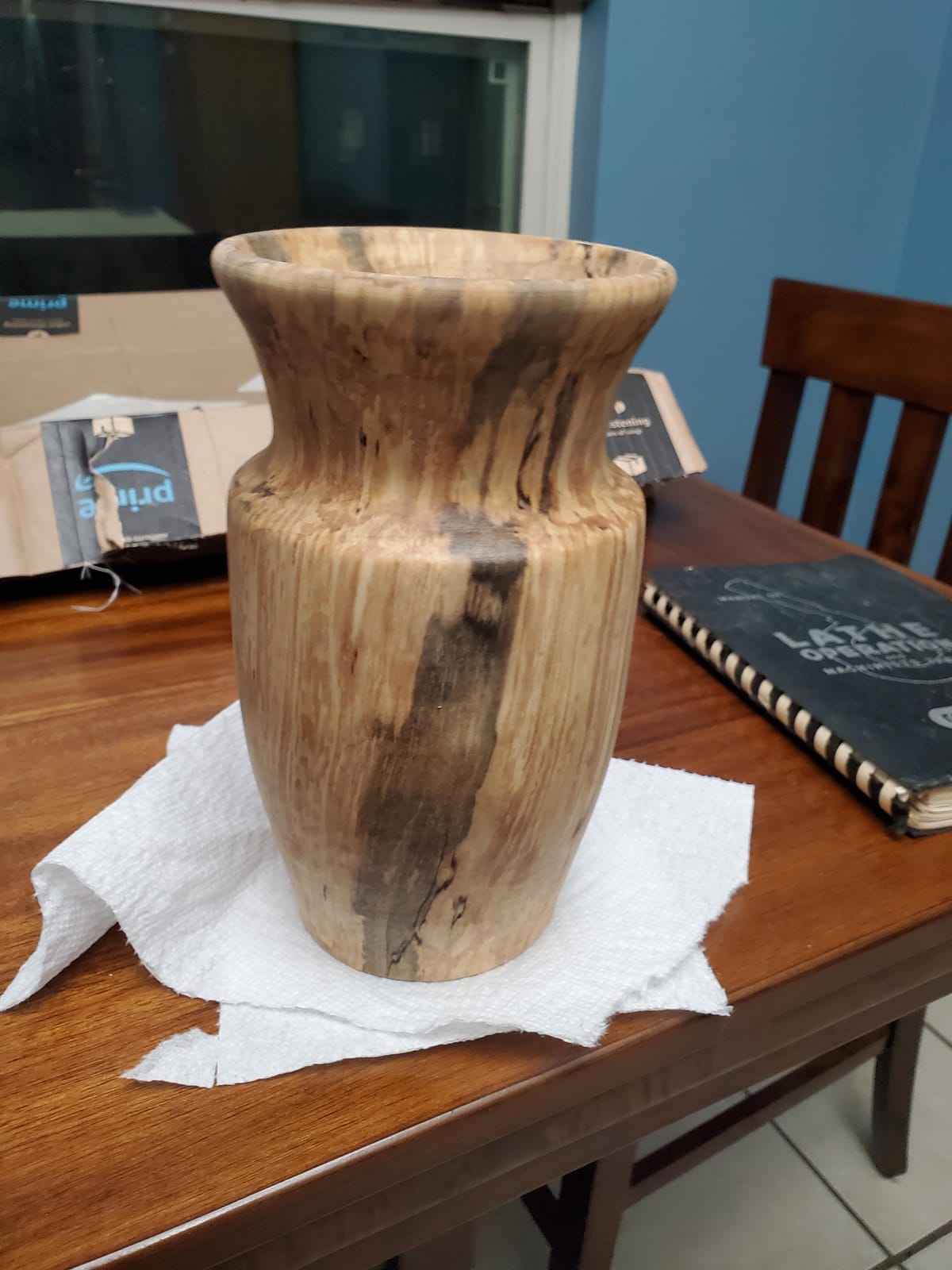
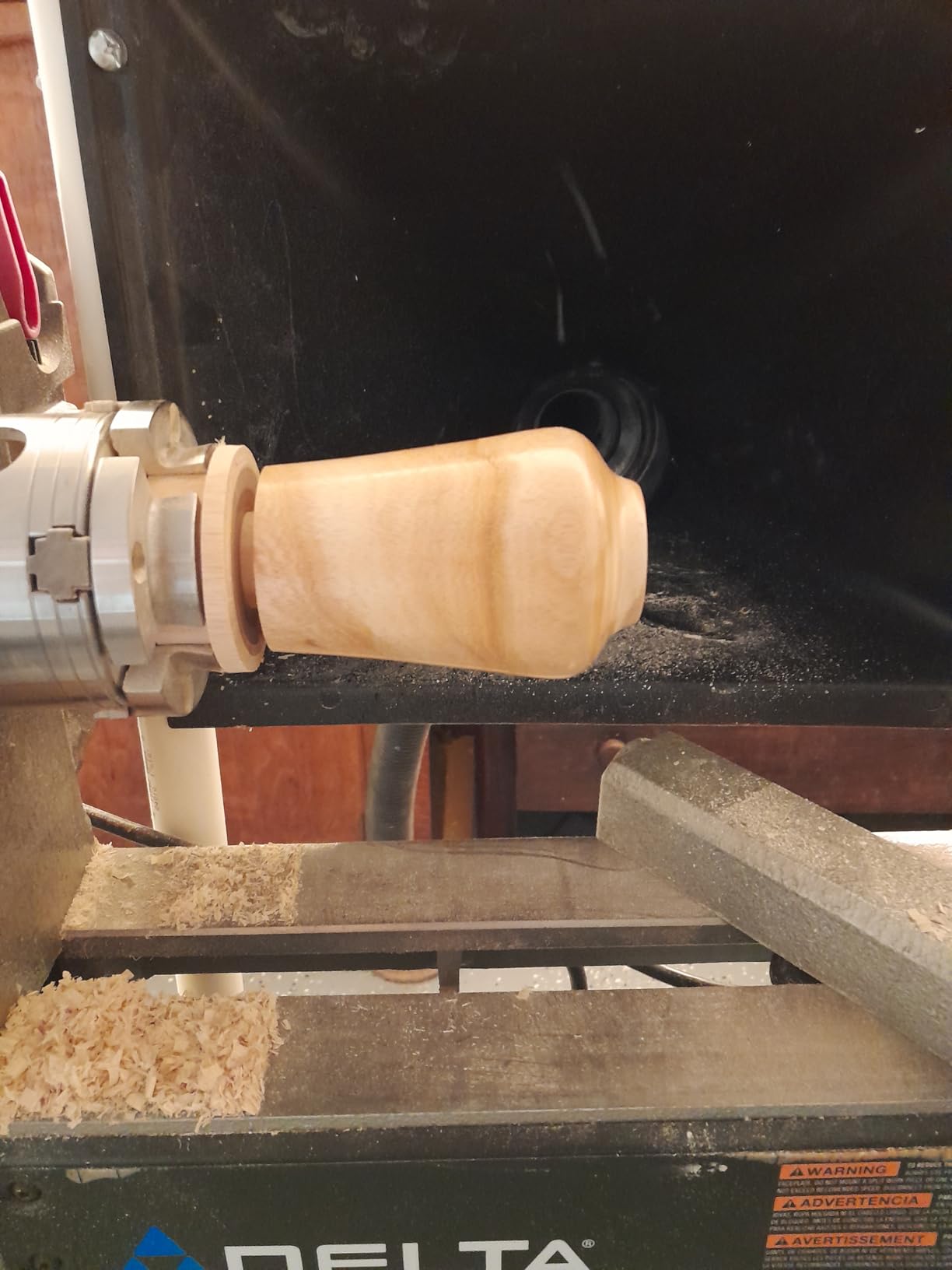
The Delta 46-460 has been a long-term favorite for a reason: 12-1/2 inches of swing over the bed turns finished bowls in the 10-inch range, with a 1 HP motor behind them.
Long-term owners rate it as the top midi lathe in its class, citing the swing, the full 1 HP of power and quiet, vibration-free running across the whole 250-4,000 RPM span.
Three electronic speed ranges mean you can rough a wet blank in the low band and sand a finished bowl in the high band without touching the belt.
At 97 pounds it is lighter than most machines in this size, which matters in a garage shop where you may be moving it to clear floor space. The optional bed extension takes between centers to 42 inches when you eventually want long spindles.
Forward and reverse is the feature owners mention most after power, because sanding a warped wall on reverse is dramatically easier.
Weigh the parts support question before buying
The most persistent complaint is not about performance. It is that several buyers describe difficulty getting replacement parts and warranty service, and one recurring issue is a hollow live center mandrel the included knockout bar cannot clear.
If you keep spare centers and a spare knockout bar on hand, that is manageable. If you want a brand that answers the phone, weigh that against the Delta’s specification sheet.
Who this lathe is not for
Bowls larger than roughly 10 inches are out of reach. So is anyone who needs a lot of spindle capacity, since 16-1/2 inches between centers is short even with the extension option.
Owners who want the included tool rests to feel substantial under load should plan to upgrade them.
5. JET JWL-1015VS 10×15 Variable Speed Lathe – Best for Quiet, Precise Work
JET 10″ x 15″ Variable Speed Wood Lathe, Cast Iron, 1/2 HP (JWL-1015VS)
- 4.7 average is the highest in the group
- Cast iron throughout so vibration is minimal
- Electronic dial gives precise speed trimming
- Stable without bolting down
- MT2 taper and faceplate included
- No reverse so sanding is manual
- 1/2 HP is modest for dense hardwood blanks
- 15-1/2 in between centers is short
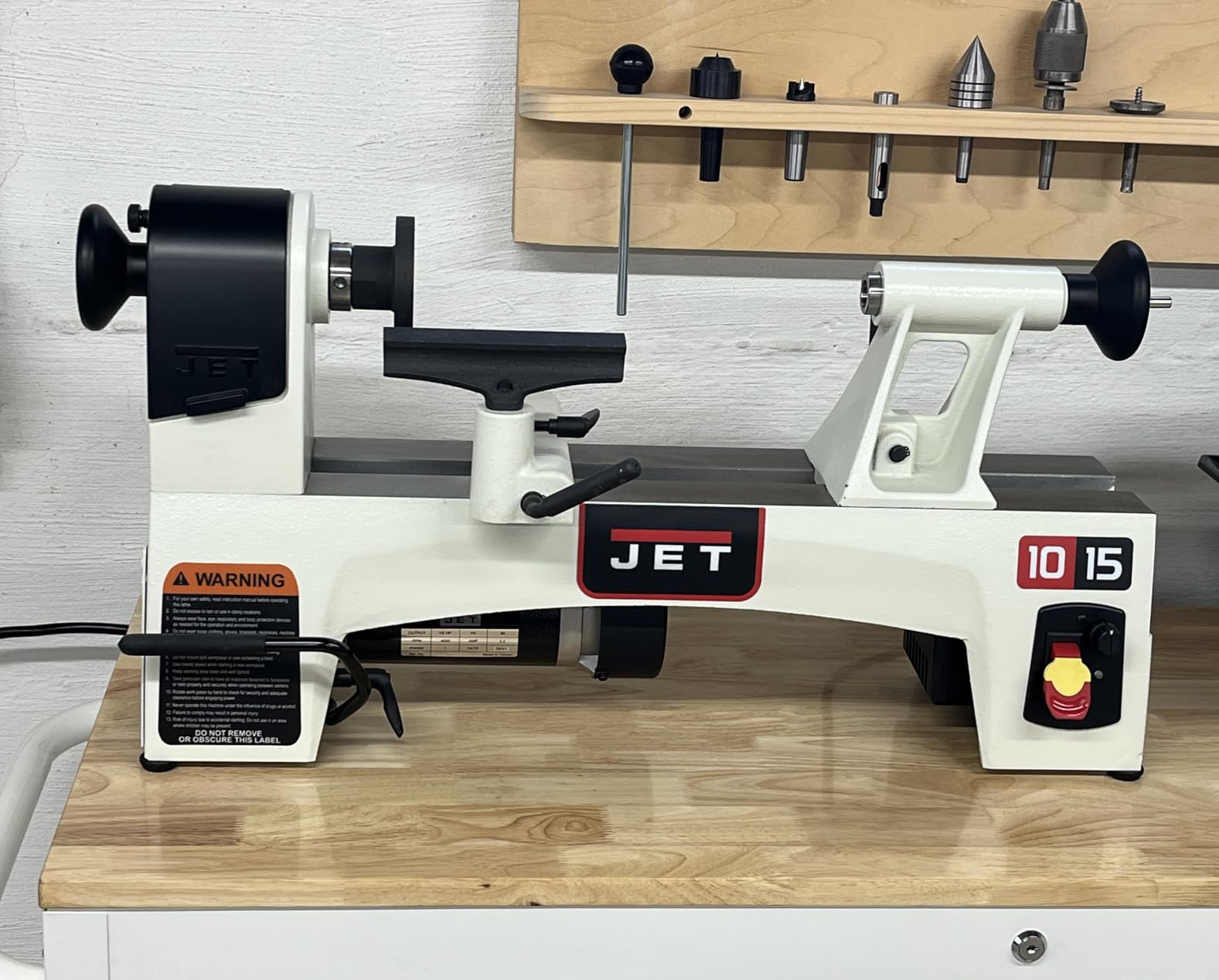
At 4.7 stars with 87 percent five-star ratings across 109 reviews, the JWL-1015VS is the best-regarded machine we tested, and owners single out the cast iron bed, headstock and tailstock for keeping vibration out of the cut.
For bowls this means finished work up to about 8 inches across, with a 10-inch swing. That covers a lot of everyday turning: bowls, cups, small hollow forms.
The electronic dial fine-tunes speed inside each of three belt ranges, so you can rough a blank and then finish the same piece without swapping machines, which is the exact argument owners make for this class over a step-only machine.
Owners also note it is stable on a bench without being bolted down, and that the manual actually explains turning techniques for newcomers, which sounds minor until you are alone in the shop at 9pm.
The included live center, spur center, 3-inch faceplate, 6-inch tool support and knockout rod mean no accessory purchase is needed before the first cut.
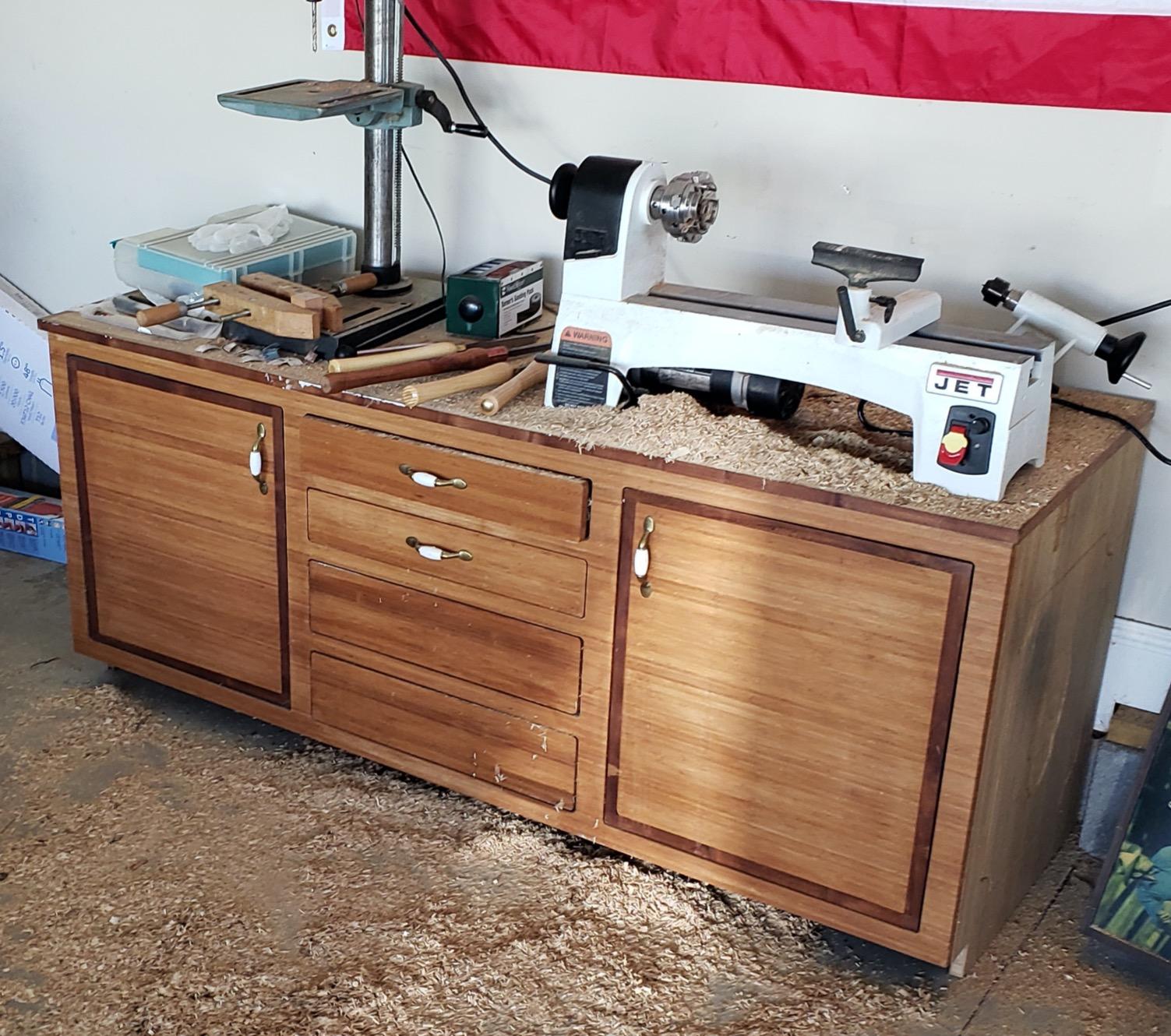
Check the sanding workflow before you buy
No reverse is the most commonly cited limitation, and for bowl work it is worth taking seriously. You will be sanding a lot of curved surfaces, and against-the-grain sanding on a warped wall is much harder by hand.
If you mostly sand with a scraper and a vacuum hold-down rather than a power sander, the lack of reverse costs you little.
Who this lathe is not for
A 1/2 HP motor is modest for large or dense hardwood blanks, particularly wet ones. If roughing out a 10-inch green blank is on your list, look at a 1 HP machine instead.
Spindles longer than 15-1/2 inches also need a bed extension.
6. WEN 34035 14×20 Variable Speed Benchtop Lathe – Widest Swing on a Benchtop
WEN 34035 6-Amp 14-Inch by 20-Inch Variable Speed Benchtop Wood Lathe
- 14 in swing suits bigger bowls
- 250-3550 RPM with an LCD readout
- 6-Amp motor handles small logs
- 4 in faceplate included
- Owners upgrading from smaller WEN models love it
- Knock-out tool is flimsy and can bend
- Tailstock hand wheel is small
- Rounded headstock tops limit magnetic lights
The 34035 is a large benchtop machine and the only benchtop-style model in this group with a 14-inch swing, putting finished bowls in the 12-inch range. That is a meaningful step up for anyone serving large salads.
Reviewers who came from smaller WEN lathes describe this as the one worth buying, citing the 14-inch swing, a quiet and solid motor, and rarely needing to move the drive belt.
The 250-3,550 RPM electronic range with an LCD indicator starts lower than most machines here, which helps when you are easing into a heavy blank.
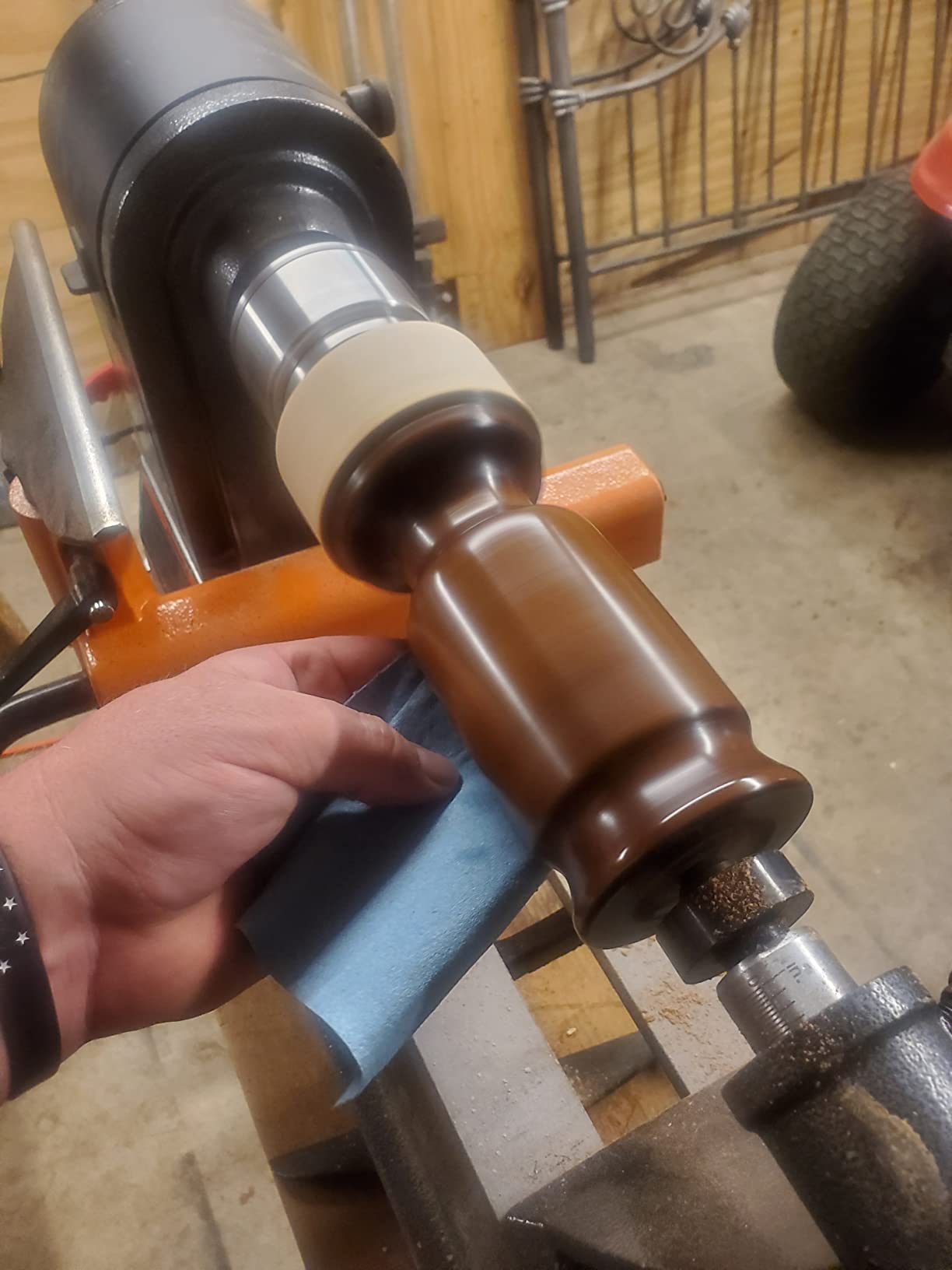
The included 4-inch faceplate matches the diameter of bowl you are likely to turn on a 14-inch swing better than the 3-inch plate a smaller midi lathe ships with.
Tool holders at both headstock and tailstock make the mid-project transitions between bowl work and spindle work less annoying, which owners mention as a real time saver.

Check the small hardware before your first chuck change
The knock-out bar that comes with the machine is described as flimsy and prone to bending when removing a chuck. Budget for a better one, and keep it near the machine rather than in a drawer.
Some owners also report a loose motor-to-control plug or a motor that bogged down early. These are a small minority of reports, but they are worth weighing given how few other options you have at this swing size on a benchtop.
Who this lathe is not for
The small tailstock hand wheel makes drill-bit work awkward, so this is a poor choice if your project list is heavy on pen work or boring operations.
Bowls beyond 12 inches still need a floor model with real horsepower behind them.
7. JET JWL-1640EVS 16×40 Floor Lathe – Best for Large Bowls
- 16 in swing handles large bowls and long spindles
- 1-1/2 HP is the most power here
- 40-3200 RPM infinitely variable
- Reversible rotation
- 36 indexing positions
- 377 lb floor-standing footprint is permanent
- Cost sits well above the rest of the group
- Needs a dedicated location and stable floor
This is the machine you buy when 12 inches is not enough. A 16-inch swing covers bowls in the 14-inch range, and at 1-1/2 HP it is the most powerful motor in the group by a wide margin.
Owners highlight the combination of swing, power, infinitely variable speed and reverse as the reason one machine handles both large bowls and long spindles. At 4.6 stars with 82 percent five-star ratings, that is not marketing, it is the review pattern.
The 40 RPM minimum is the lowest in this group, and with reverse available you can sand against the grain on a wall that is throwing you out.
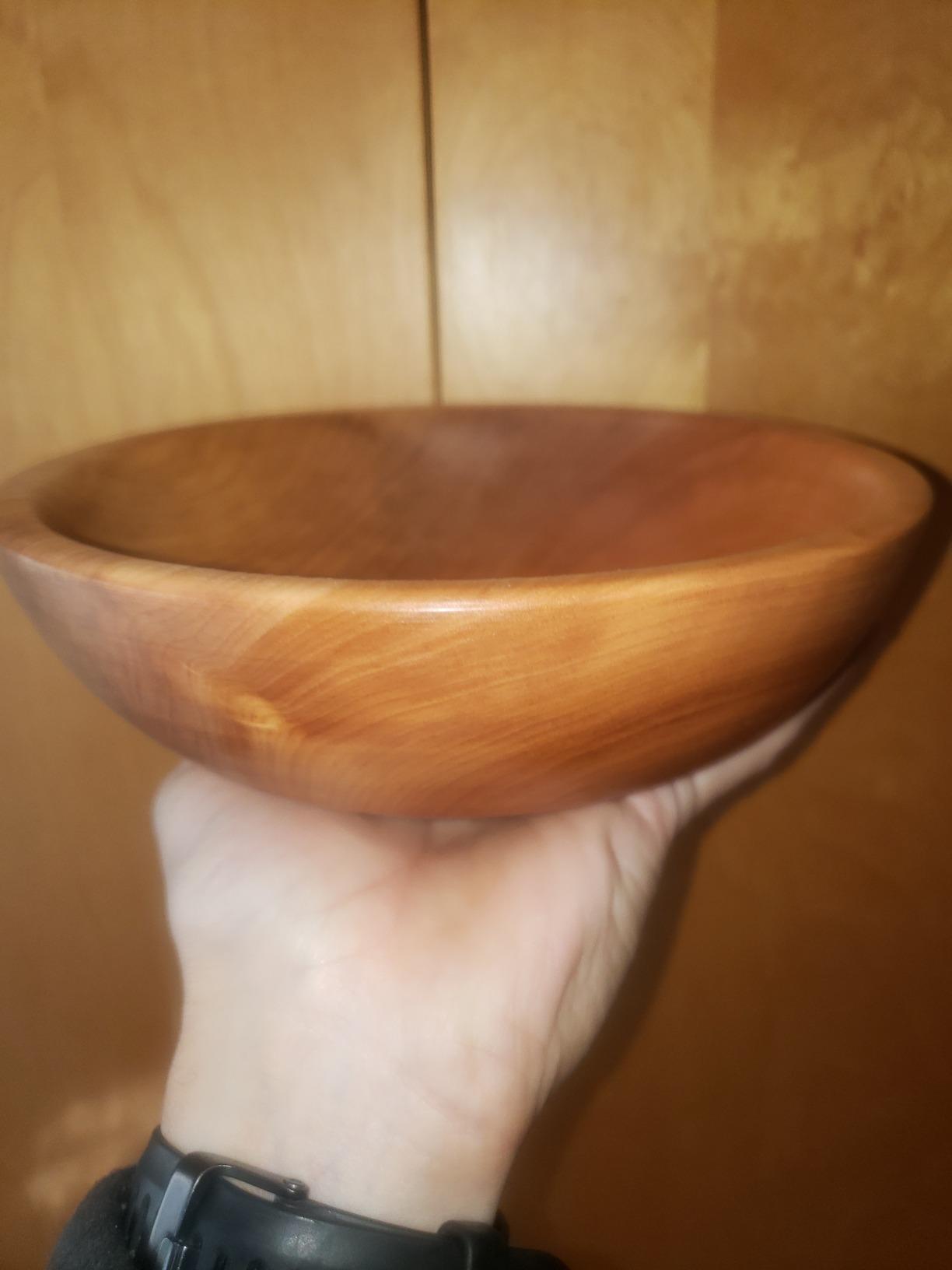
The extended spindle nose houses dual headstock spindle bearings, and the tailstock quill has an anti-rotation key. Both details exist to stop the assembly from shifting under the sideways load a big bowl blank puts on it.
The banjo uses a non-marring positive-locking wedge, so the tool post stays put when you push hard on a 14-inch wall.
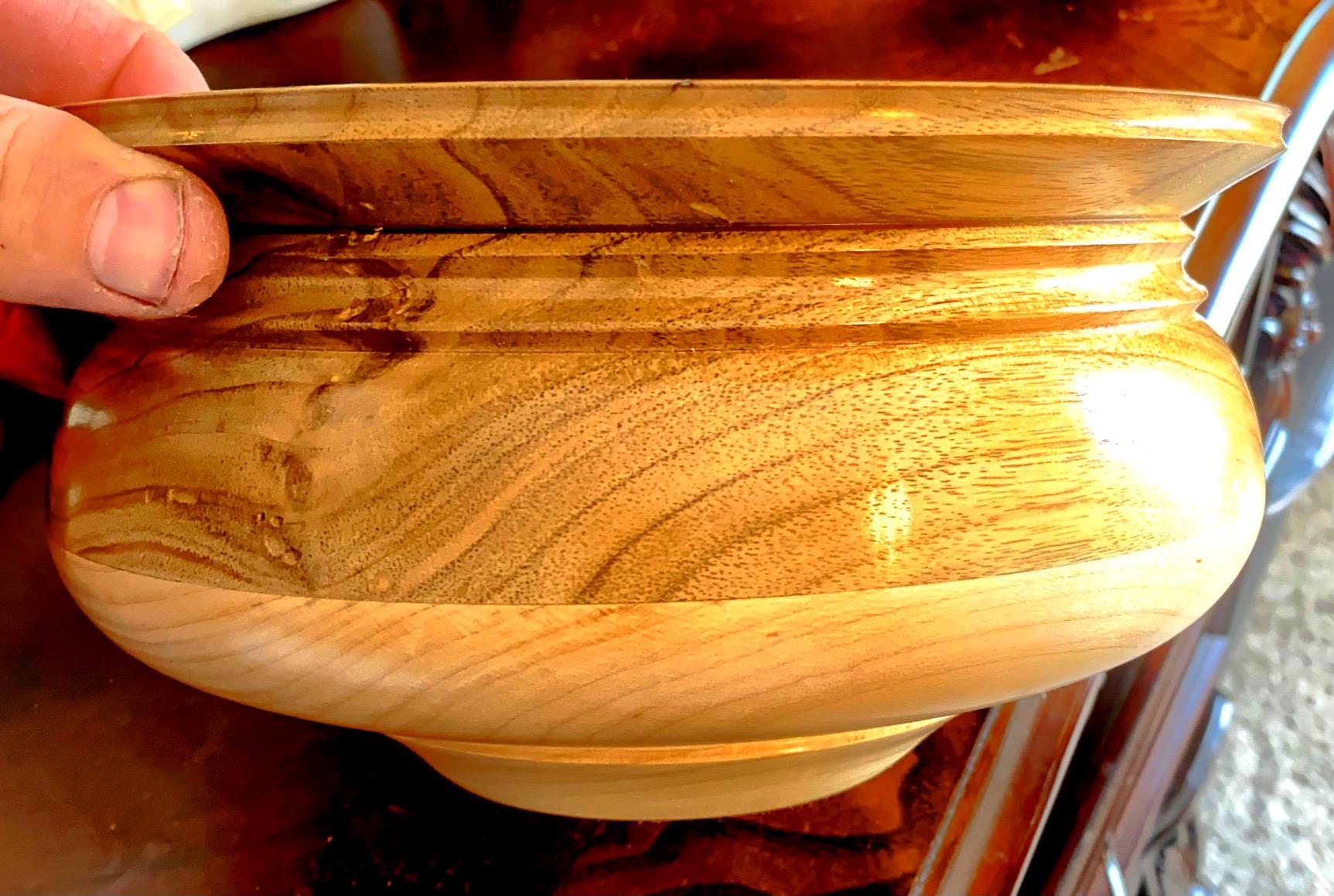
Check the floor and the power before you order
At 377 pounds, this is a machine you site once and leave. Plan the location around the bed length, not just the footprint, and make sure the floor is level enough to use the leveling feet.
It runs on 115V, which is friendlier than a 220V floor model, but a 1-1/2 HP draw on a shared circuit still deserves a dedicated outlet.
Who this lathe is not for
Apartment dwellers, renters and anyone in a one-car garage should skip this. The weight and footprint are the price of the capacity, and they are not small.
If you only plan to turn bowls up to 10 inches, a midi lathe gives you the same bowls on a bench you can move.
8. PSI Turncrafter KWL-1218VS 12 in Midi Lathe – Cast Iron with a Microprocessor Motor
PSI Woodworking KWL-1218VS Turncrafter 12″ Variable Speed Midi Lathe
- 1 HP induction motor with microprocessor control
- 12 in swing and 18 in between centers
- Cast iron base
- MT2 tapers accept standard accessories
- ETL listed
- 3-year warranty is shorter than the 5 years competitors offer
- Two belt positions need dial trimming
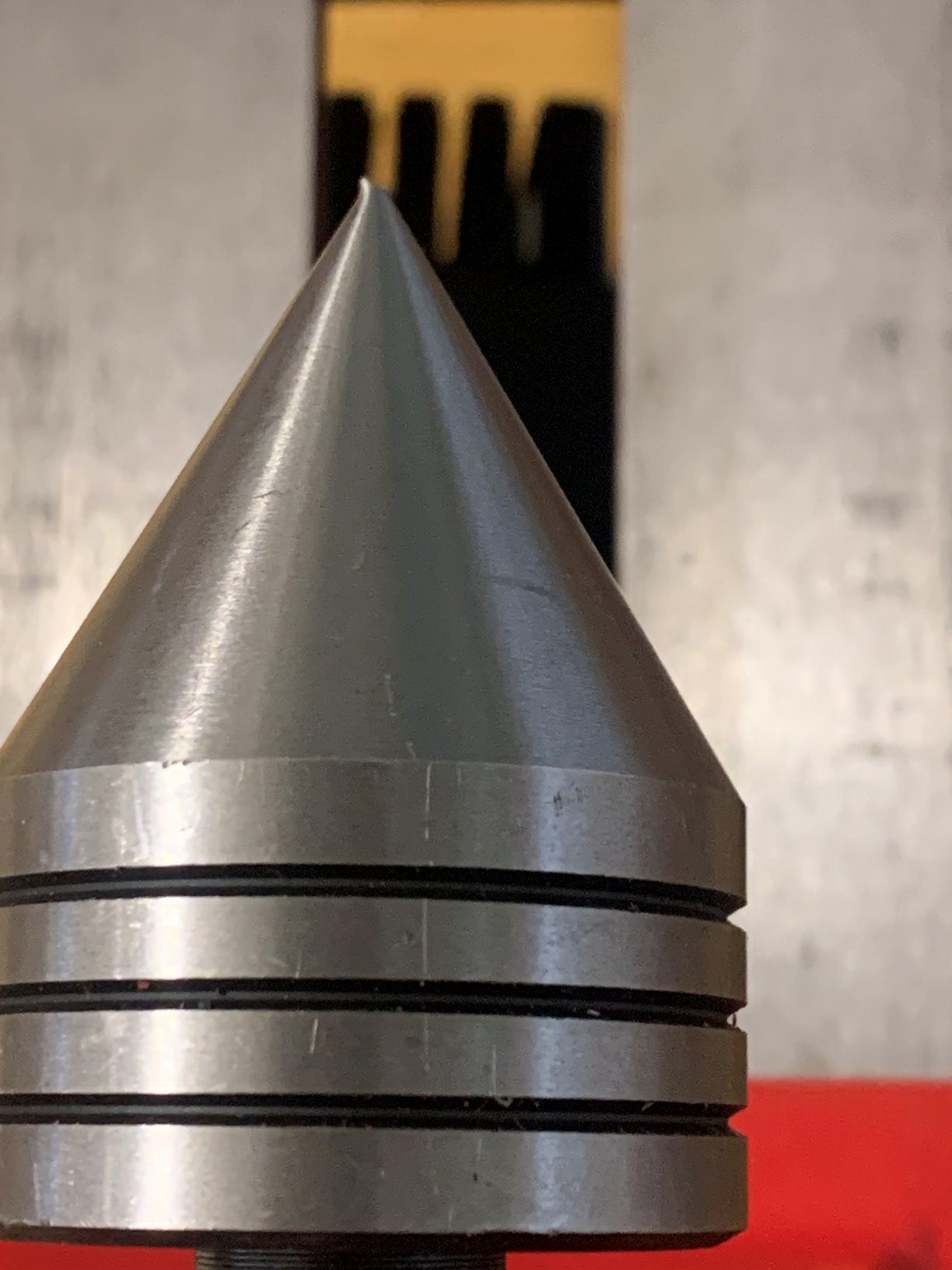
- 3/8 in bore limits the largest centers
The KWL-1218VS sits in the middle of this lineup and hits a useful combination: 12-inch swing, 18 inches between centers and a cast iron base, all from a 1 HP induction motor.
Owners cite the cast iron base as the difference in how the machine feels under a gouge, and the number 2 MT tapers plus 1 in x 8 TPI thread as the reason their existing bowl accessories fit.
At 4.5 stars with 77 percent five-star ratings, this is one of the better-regarded machines at the 12-inch swing size, and the ETL listing gives it a safety credential some imports lack.
Two belt positions cover 500-1,800 RPM and 1,950-3,800 RPM. The microprocessor control on the dial handles fine trimming inside each band, which is the difference between usable and frustrating on a wet blank.
Built-in handles make it easier to reposition than its 106-pound weight suggests, and the 24 indexing positions with spindle lock cover fluting and evenly spaced drilling.
Look at the bore diameter before buying accessories
A 3/8-inch spindle and tailstock bore limits the largest centers and drill chucks you can fit. It is a real constraint if you plan to work with large bowl spares, so check the accessory list first.
The three-year warranty is shorter than the five years JET and Delta offer. Over a five-decade tool life that matters less than it does over the first year, but it is a difference.
Who this lathe is not for
If you need more than two speed bands and want to trim continuously across the whole range, the two-belt layout forces you to work harder for the same result.
Anyone turning bowls wider than 10 inches should size up instead.
9. ARTYMASTER WM101A-Plus Mini Lathe – Best for Apartment and Small-Space Work
- Only 17 lbs so it stores on a shelf
- Under 65dB suits shared spaces
- Infinitely variable speed for fine finishing
- Accessory bundle is the biggest in the group
- UL certified power supply
- 3 in by 8 in capacity is the smallest bowl size here
- 96W DC motor is light on dense hardwoods
- Small steel frame flexes more than cast iron
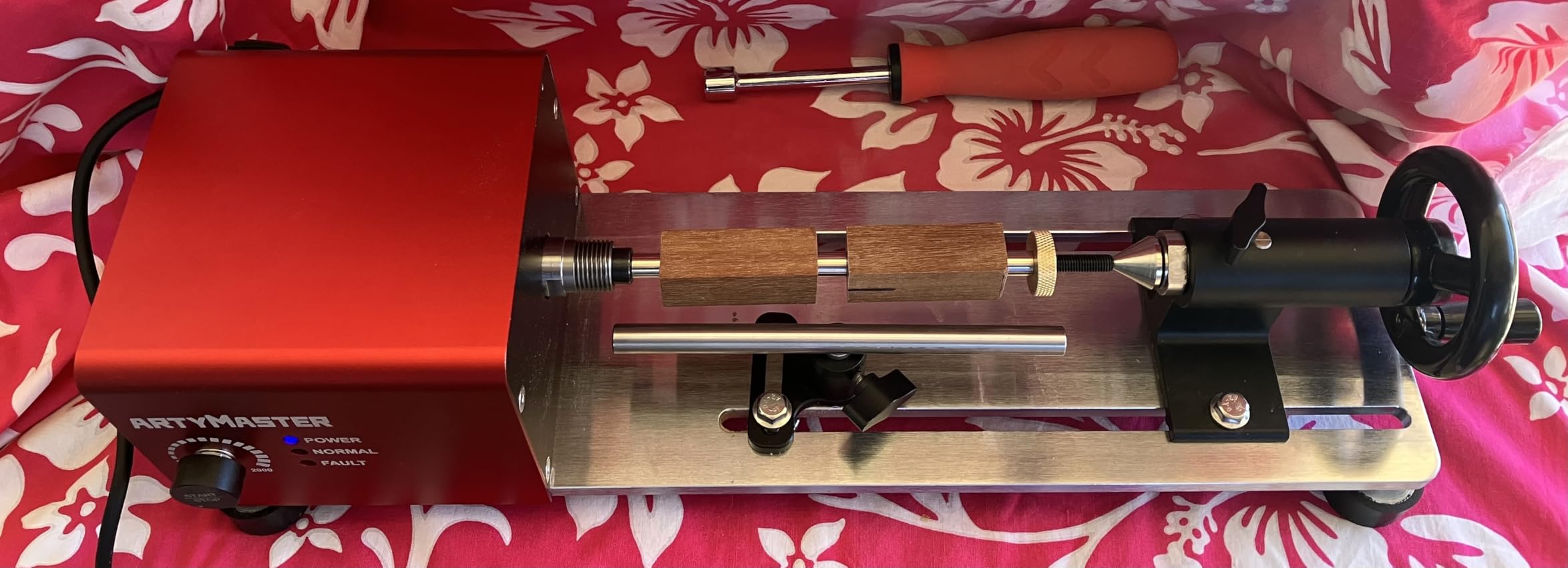
Let us be clear about what this machine is. The ARTYMASTER WM101A-Plus turns a 3-inch diameter by 8-inch envelope. That is a jewelry and pen lathe that will also make small bowls, not a bowl lathe.
What makes it worth including is the constraint it solves. At 17 pounds, under 65dB and with a body you can hold with both hands, it is the only machine here sized for a shared apartment rather than a dedicated shop.
Buyers treat it as a precision pen and jewelry machine, and reviewers single out the accessory kit as unusually complete, including a 2-inch chuck set, drive and live centers, a centering ruler and wrenches.
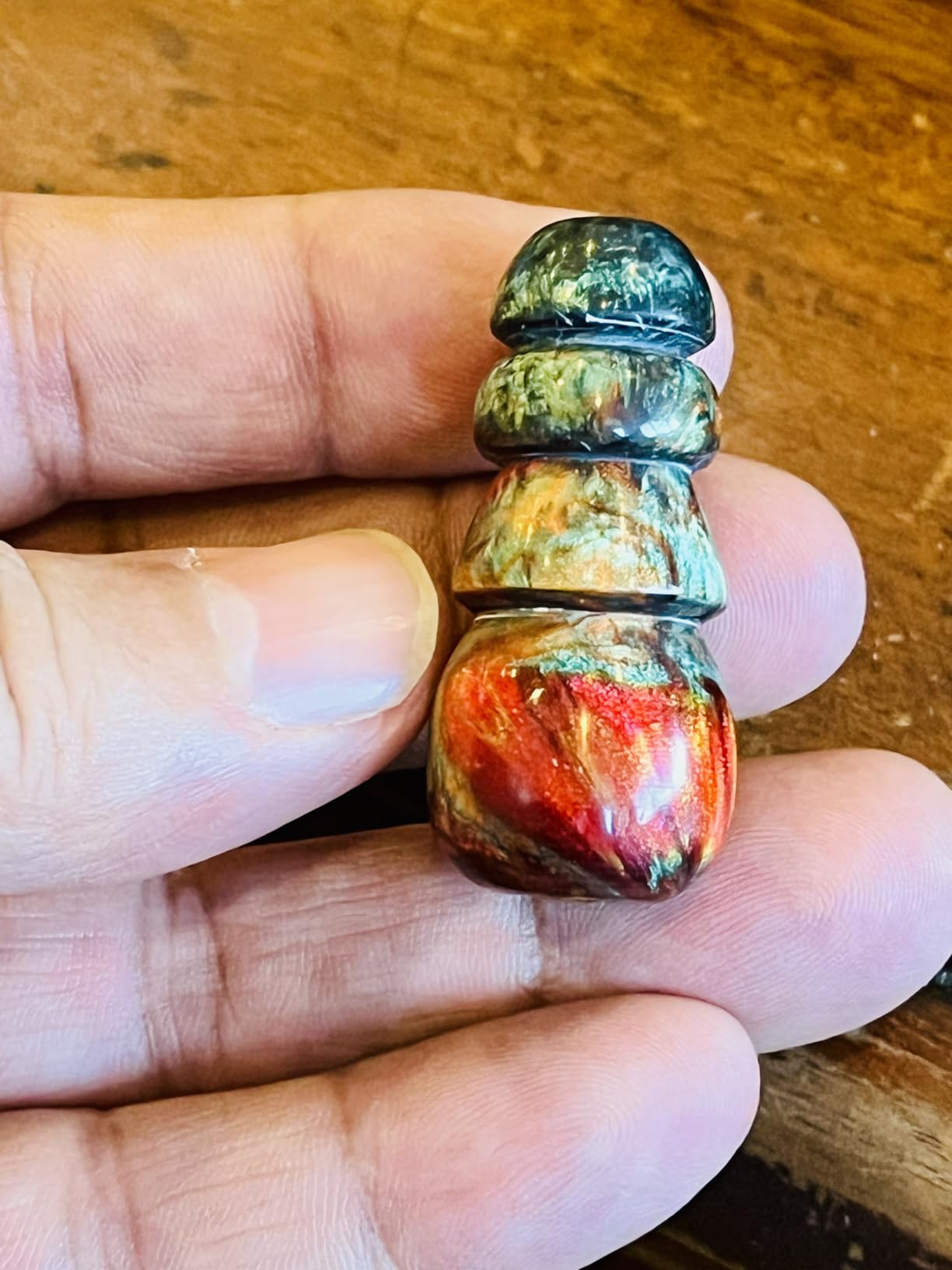
The 96W high-torque motor with a 0.4-inch spindle through-hole handles hard woods and even materials like POM and copper, according to the manufacturer, and the infinitely variable control lets you dial in genuinely fine finishing cuts.
The tool rest adjusts in position, height, angle and length, which is more adjustment than most of the full-size machines here offer on a small rest.
Decide whether small work counts as bowl work
If your bowls are 2 to 3 inches across, for thimble holders, dice cups or small ornaments, this machine is genuinely well suited. The infinitely variable speed is a real advantage at that scale.
If you want salad bowls, the frame is the limit. Owners note the small steel frame flexes more than a cast iron midi lathe, which shows up as chatter on a bigger cut.
Who this lathe is not for
Anyone turning dense hardwood at meaningful diameter. The 96W DC motor has limited torque and you will feel it.
It is also not a stepping stone to larger bowl work. It is a specialist small-work machine that happens to handle small bowls.
10. hightall MC1218 12×18 3/4HP 5-Speed Lathe – Best Budget Cast Iron Option
Wood Lathe Machine, 12 x 18 inch, 550W 3/4HP, 5 Speed Settings 680-2770 RPM,Benchtop Lathe with MT2 Drive/Live Center
- 3/4 HP motor resists overheating on long sessions
- Cast iron bed holds rigidity at speed
- MT2 spindle taper aids compatibility
- Geared speed changes need no tools
- 5-year core component warranty
- Only 29 reviews so far
- Non-standard M33x3.5 spindle thread limits chuck fit
- Mounting bolts are not included
- Fixed speeds rather than electronic control
The hightall MC1218 answers a narrower question than most of this list: can you get a cast iron 12-inch lathe without moving up a size? The answer is yes, and the 82.8-pound cast iron bed holds rigidity at higher speeds, which reviewers consistently notice.
Owner feedback is thin at 29 reviews, so treat the consensus here as promising rather than proven. Even so, the favorable pattern is consistent: 64 percent five-star ratings, with the cast iron bed and 3/4 HP motor doing the heavy lifting in the reviews.
The five speeds at 680, 1,000, 1,420, 2,000 and 2,770 RPM change through clearly geared positions with no tools and no belt fiddling.
Check the spindle thread before you plan your chuck setup
The M33x3.5 spindle thread is non-standard, and that is the single most important thing to verify. Plenty of common chucks and faceplates are built around 1 in x 8 TPI and will not fit without an adapter.
Also note that mounting bolts are not included, and reviewers recommend bolting this to a worktable rather than letting it free stand.
Who this lathe is not for
Anyone who wants smooth electronic speed changes. The stepped gears are simple and reliable, but you are picking a speed, not trimming one.
With 29 reviews, long-term durability is not yet documented, so buyers who plan heavy production work may prefer a model with a deeper owner history.
11. Grizzly Industrial G0842 14 x 37 in Wood Lathe – Long Bed With a Wide Swing
Grizzly Industrial G0842-14″ x 37″ Wood Lathe w/Copy Attachment
- 14 in swing gives room for wide bowls
- 37 in bed is unusually long at this weight
- 3/4 HP handles spindle work
- Copy attachment included
- Very solid once mounted to a solid bench
- Tailstock and tool rest need a wrench for every adjustment
- Supplied legs are flimsy and the overhang makes it top heavy
- Some owners had tool rest posts snap
The G0842 is an odd shape for bowl turning and that is exactly why it appears here. Fourteen inches of swing over the bed with 37 inches between centers gives you both a wide bowl and a long spindle on one machine.
At 3/4 HP and 110V, it is more of a spindle machine with bowl capability than the reverse. Reviewers who mount it to a sturdy bench report it becomes extremely solid, and the included copy attachment is genuinely useful for repeating identical spindles.
The swing over the tool rest base is 9 inches, which tells you something important: the 14-inch figure only applies with the headstock moved out of the way or with a suitable rest configuration.
The 21 reviews are sharply split, and that is why the average sits at 4.3 with a 16 percent one-star share. The unhappy group concentrates on wrench-based adjustments with noticeable play, and on the rear-hung motor making the machine top heavy.
Several of those owners also describe manufacturer support as unresponsive, which is worth factoring in before you commit.
Check how the bowl actually gets supported
With a 9-inch swing over the tool rest base, turning a wide bowl on this machine means planning your tool rest position carefully. Measure your setup rather than trusting the 14-inch headline figure.
Wrench adjustments on both the tailstock and the tool rest are a workflow cost you will feel on every project, not just at setup.
Who this lathe is not for
It is not the lathe for a beginner who wants to change tool rest position constantly. The wrench requirement is the dealbreaker for a lot of new turners.
Bowl turners focused on wide, heavy blanks should also note that 3/4 HP is modest for the job.
12. hightall MC813 8×12 Variable Speed Lathe – Best First Cast Iron Lathe
Wood Lathe Machine, 8x 12 inch Benchtop Wood Lathe,1/3 HP Infinitely Variable Speed 750-3200 RPM,for Woodworking, Woodturning
- Cast iron construction at a budget level
- Infinitely variable rather than stepped speeds
- 360 degree rotatable forged tool rest
- Spare belt and second tool rest included
- 45.4 lbs is portable
- 8 in swing suits only small bowls and cups
- 1/3 HP is the weakest motor here
- Only 29 reviews
- 245W is thin for dense hardwoods
The MC813 is an inexpensive route to a cast iron lathe with continuous speed control, and at 45.4 pounds it is small enough to live on a small bench or in a corner of an apartment.
Owners point to the infinitely variable 750-3,200 RPM control, the 360-degree rotatable forged tool rest and the cast iron frame as the reasons it feels solid for its size, and they note the included spare belt and second tool rest cut downtime.
Be realistic about scope. A 1/3 HP, 245W motor with an 8-inch swing is for bowls and cups you can hold in one hand, not for a table.
Check whether the envelope matches your project list
An 8-inch swing means finished vessels around 6 inches across. That covers cups, small bowls and handles, and it is a reasonable first target while you learn tool handling.
The variable speed is the real differentiator at this level, since many cheaper machines give you only stepped belts.
Who this lathe is not for
It is not for dense hardwoods at any real diameter. A 245W motor will stall and hold a burn mark rather than cutting cleanly.
And with 29 reviews shared across this model and its larger sibling, long-term reliability is not well documented. If you want a machine you will grow into, step up a size.
Bowl-Turning Speeds: A Practical RPM Guide
Speeds matter more for bowls than for any other turning, because the work changes character four times on the way from a wet log to a sanded wall. Roughing out is a heavy cut on an out-of-balance piece. Shaping is controlled. Sanding is light and fast.
Use these ranges as starting points and adjust for the wood in front of you.
- Roughing out: 500-800 RPM. Bring the blank up to speed and take heavy gouge passes while it is still out of balance.
- Shaping the outside: 800-1,500 RPM. Cut the profile to final diameter and watch for a clean cut rather than tear-out.
- Wall shaping and hollowing: 1,500-2,500 RPM. Thin the walls with a hollowing tool once the outside is stable.
- Sanding: 2,500-4,000 RPM. Light abrasive passes, most effective with reverse rotation where the lathe has it.
The low end of your range matters more than the top end. A lathe that will hold roughly 100 RPM lets you sand a warped wall or work a very thin wet blank at a speed where your hands control the cut. A lathe that bottoms out at 500 RPM does not give you that option.
Once your bowls are shaped, you will want to compare the results against serving ware standards. Our serving bowl set guide and glass mixing bowl guide cover the sizes people actually want on the table.
Chucking and Workholding for Round Bowl Blanks
Most bowl turners start with a faceplate, and for good reason. A faceplate screws to the end grain of your blank and lets you mount a rough, slightly out-of-round piece without cracking it, which is the number one stumbling block beginners hit.
A vacuum chuck is the cleanest and safest way to hold a round blank. It grips with even pressure around the whole circumference, so there is no single point of stress to split the wood. A rubber-faced vac chuck is the reference option, and the multi-jaw Oneway Easy-Core is the premium choice many experienced turners settle on.
One rule holds across all of them. Never force a round blank into a three-jaw chuck without a carrier. The jaws grip a thin edge and the blank will split the first time you rough it out.
Getting blanks without buying them
Most turners chain-saw their own blanks from rough lumber or a log, because the alternative is buying ready-made turning blanks by the piece. Saw slightly oversize, leave the corners on for safe handling, and let the blank rest before mounting so it can move.
Woodturning community advice consistently points to sourcing blanks from a local tree trimmer or mill rather than a retail supplier.
How to Choose a Lathe for Bowl Turning
Buy for swing, not bowl diameter
Get the sizing math right and most of the decision makes itself. Advertised swing is the diameter the machine can turn with the headstock in the normal position, and finished bowls always come out smaller. Add the tailstock to the equation and swing over the tool rest base can be much less, as the Grizzly shows with its 9-inch figure against a 14-inch headline.
- Largest finished bowl up to 6 inches: buy 8 in swing.
- Largest finished bowl up to 10 inches: buy 12 in swing.
- Largest finished bowl up to 12 inches: buy 14 in swing.
- Largest finished bowl up to 14 inches: buy 16 in swing.
Pay attention to the sliding headstock
A sliding headstock runs on rails along the bed so you can move the headstock to one end and stand upright in front of the work instead of reaching across the machine. Experienced turners on woodworking forums consistently describe it as the feature that changes how a full day of bowl turning feels.
A swivel or pivoting headstock serves a different purpose. Swivel it 90 degrees and you can turn outboard, which doubles the usable diameter for very large bowls. Neither feature appears in this group, which is worth knowing before you start shopping for one.
Understand what the speed control actually is
There are three kinds, and marketing blurs them. Three electronic ranges with a fine-tuning dial give the most control. A single dial across one broad band is close behind. Five fixed belt speeds are stepped, and you pick a band and work within it.
For bowls, the reason to care is wet wood. A green blank demands a different speed every few seconds as the diameter changes, and stepped control makes that a constant interruption.
Weight and mounting
Cast iron is the standard for a reason. It damps vibration rather than transmitting it, and mass keeps a gouge from walking off the work. Machines in this group run from 17 pounds of steel frame to 377 pounds of floor-standing cast iron, and the correlation between mass and cut quality in a deep bowl gouge cut is not subtle.
Both of the larger machines in this group ask you to mount them properly. The hightall MC1218 is designed to be fixed to a worktable, and Grizzly owners report the lathe becomes extremely solid once it is mounted to a heavy bench.
Power supply: 120V against 220V
Almost every lathe in this group runs on 115V or 120V, which is the single biggest reason they suit a home shop. Larger 1.5 to 2 HP floor models often come without a power cord and need an electrician to install a 220V circuit, which adds a real line item and a wall to your schedule.
If you already have 220V in the shop, that opens up heavy 2 HP floor lathes with sliding headstocks. If you do not, the midi lathes here are the sensible path.
Buying used
Forums recommend the used market repeatedly, and the logic holds. A well-maintained machine with a known history is a better buy than a new one you cannot service. Before you commit, inspect these things in person.
First, watch the spindle. With a faceplate mounted, any visible wobble is spindle runout, and that is usually the most expensive fault to fix. Second, check the tailstock quill for straight travel and a clean Acme thread. Third, look at the castings for cracks, especially around the headstock and bed joint. Fourth, confirm the spindle lock, indexing pins, knockout bar, centers and tool rests are all present.
Finally, run it. A local turning club is often the best place to try machines before buying, and members will tell you which models hold up.
Accessories you actually need
Start with a half-inch or five-eighth-inch bowl gouge. Most turners buy an HSS gouge first and upgrade later, and a sharpening system matters more than a premium gouge. Add a spindle gouge, a faceplate sized to your swing, a live center, and a banjo or tool rest extension for reaching across a wide bowl.
For the shop itself, bolt the lathe down, wear a face shield rather than just goggles, and put a dust extractor or shop vac near the source. Fine sanding dust is the mess that makes people give up, not the shavings.
Frequently Asked Questions
What are the best lathe speeds for turning bowls?
Rough a fresh round blank at roughly 500-800 RPM while it is still out of balance, raise to about 800-1,500 RPM for shaping the outside, 1,500-2,500 RPM for wall shaping and hollowing, and 2,500-4,000 RPM for sanding. The low end of your range matters more than the top end, which is why a lathe that holds about 100 RPM is valuable.
What type of wood lathe chuck is best for bowl turning?
Most bowl turners start with a faceplate, which screws to the end grain and holds a rough blank without splitting it. A vacuum chuck is the cleanest and safest way to hold a round blank because it grips evenly around the whole circumference, and the Oneway Easy-Core is the premium multi-jaw reference option. Never force a blank into a three-jaw chuck without a carrier.
How big a lathe do I need for 12 inch bowls?
Buy at least a 14-inch swing. Turning removes material, so a 12-inch bowl needs more than 12 inches of swing to complete. An 8-inch swing handles finished bowls near 6 inches, a 12-inch swing reaches about 10 inches, a 14-inch swing reaches about 12 inches, and a 16-inch swing covers up to roughly 14 inches.
Do I need 220V for a bowl lathe?
Usually not. Nearly every midi and benchtop lathe for bowls runs on 115V or 120V, including the 1 to 1-1/2 HP machines in this roundup. 220V generally appears on heavier 2 HP floor models, which often come without a cord and require an electrician to install a dedicated circuit.
Should I buy a new or used wood lathe?
A well-maintained used lathe is often the better buy because the failure modes are known rather than theoretical. Inspect the spindle for runout with a faceplate mounted, check the tailstock quill travel and thread, look for cracks in the castings, and confirm the spindle lock, indexing pins, knockout bar, centers and tool rests are present. Running the machine at a local turning club before buying is the best test.
Is the Harbor Freight lathe any good?
It is a reasonable first lathe for small projects, and the budget starting point most new turners mention first. Its swing and torque fall short for serious bowl turning, where a heavy out-of-balance blank at 500 RPM needs a bigger motor and more mass than it offers. Treat it as a learning machine rather than a bowl lathe.
The Verdict: Which Lathe Should You Buy
The JET JWL-1221VS is our pick for the best lathes for bowl turning. A 12-inch swing, a 60 RPM minimum, three electronic speed ranges and 121 pounds of cast iron cover the whole arc of bowl work, and 665 owner reviews make it the best-documented choice at that size.
Step up to the JET JWL-1640EVS if your bowls need to reach 14 inches or if you also turn long spindles. Step down to the WEN 3421 if a 6-inch bowl is the goal and your shop is small.
Pick the machine that matches your largest blank, not your ambition, and check the current details before you order.