
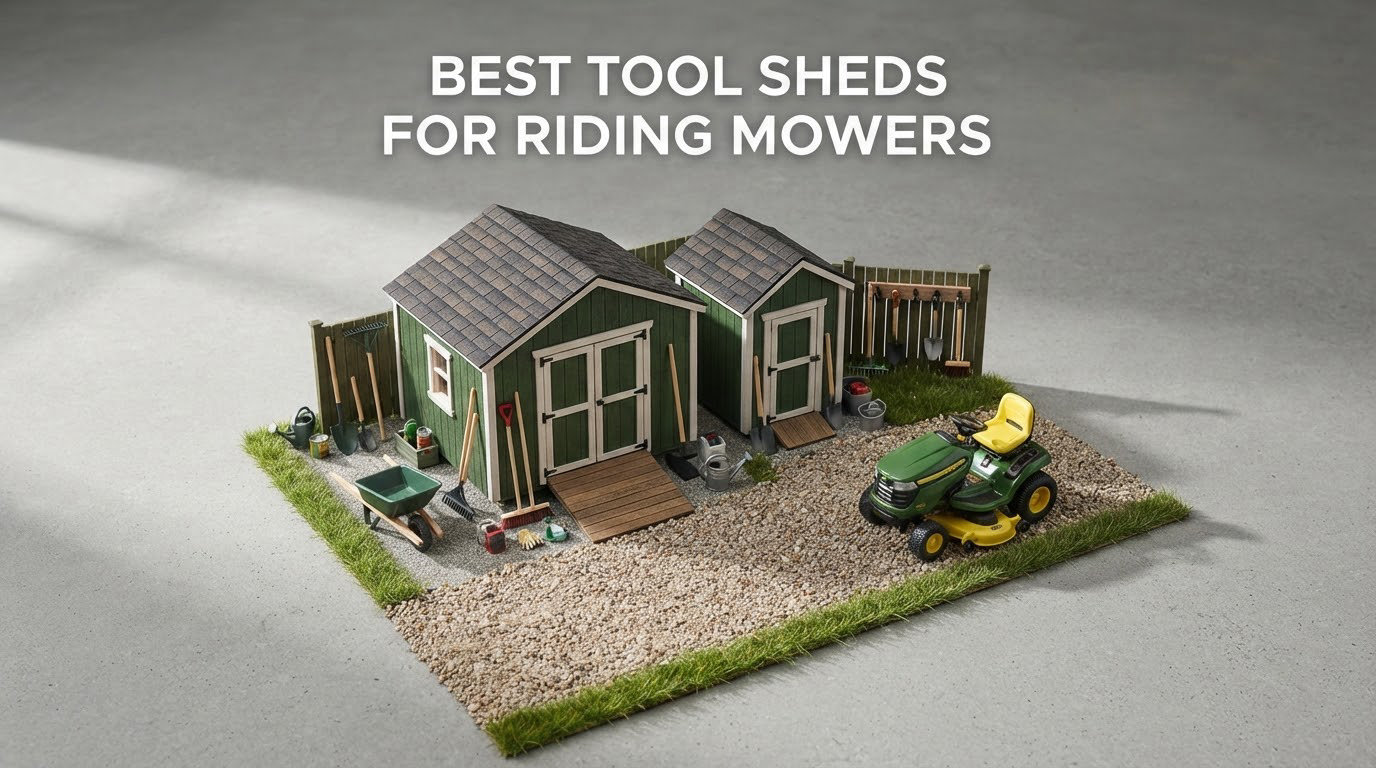
A riding mower shed is a structure built around one rule: the opening has to be wider than the machine. The best tool sheds for riding mowers start at 10 x 12 ft, and anything narrower than a 5 ft double door will make you regret the delivery day. We spent six weeks sorting through specs, owner complaints and fitment reports on ten popular sheds, and the same three problems kept surfacing.
First, door width. A 42-inch deck mower with a bagger attached measures about 58 inches nose to tail once you add the bagger arms, which means a 60-inch double door leaves you roughly an inch of margin on each side. Second, wall height. The metal sheds in this group top out around 76 inches, and at that height you cannot lift a bagger off inside or get a deck up for blade work. Third, the floor. Most of the metal kits ship with no base at all, so the advertised square footage is a wall measurement and not a usable floor measurement until you build a pad.
This guide covers all ten sheds in the running, then the sizing math, the door clearance arithmetic, the material question and the foundation work. If you are still choosing a mower, our guide to the best riding lawn mowers is worth reading first, since deck width drives everything else. If you have already picked a mower and only need somewhere to put it, start with the sizing section below.
Table of Contents
Top 3 Picks for the Best Tool Sheds for Riding Mowers
These three cover the realistic range: a walk-in resin shed that includes its floor, a well-rated steel shed that balances price and size, and a low-cost entry for a tight budget. Every other pick is further down the list.

Suncast 8×10 Resin Shed
- 547 cu ft walk-in space
- 75.6 sq ft floor
- Floor base included
- Lockable double doors


All 10 Tool Sheds for Riding Mowers at a Glance
Every shed below is listed with its real floor area, because that number, not the name on the box, decides whether your mower fits. Note which ones include a base and which leave that job to you.
| Product | Specifications | Action |
|---|---|---|
| Suncast 8×10 Resin Shed |
|
Check Latest Price |
 Breez 10 x 12 Steel Shed Breez 10 x 12 Steel Shed |
|
Check Latest Price |
 AECOJOY 12 x 14 Metal Shed AECOJOY 12 x 14 Metal Shed |
|
Check Latest Price |
| Aoxun 10×12 Steel Shed |
|
Check Latest Price |
 Devoko 10×12 Metal Shed Devoko 10×12 Metal Shed |
|
Check Latest Price |
 Patiowell 8×10 Shed Patiowell 8×10 Shed |
|
Check Latest Price |
 Patiowell 12×20 Shed Patiowell 12×20 Shed |
|
Check Latest Price |
| Polar Aurora 8 x 12 Shed |
|
Check Latest Price |
 UDPATIO 8 x 10 Resin Shed UDPATIO 8 x 10 Resin Shed |
|
Check Latest Price |
 Lifetime 8 x 15 Shed Lifetime 8 x 15 Shed |
|
Check Latest Price |
What Size Shed Do You Need for a Riding Mower?
At minimum, plan on 10 x 12 ft for a single riding mower, and 10 x 16 ft if you want the mower plus a snow blower plus walking room. Here is the size ladder with what actually fits inside each footprint.
- 8 x 10 ft (about 74 sq ft): fits a single mower with a bagger parked, but leaves no walkway. You will be squeezing past the deck to reach the far wall.
- 10 x 12 ft (120 sq ft): the sweet spot. Fits a mower with a bagger, leaves room to walk around it, and absorbs a push mower or a wheelbarrow along one wall.
- 10 x 16 ft (160 sq ft): adds room for a snow blower, a lawn sweeper and shelving above the equipment line.
- 12 x 20 ft (240 sq ft): workshop territory. This is where a lawn trailer fits alongside the mower.
The arithmetic behind that ladder is simpler than most guides make it sound. Take a typical mower at 72 inches long, add 18 inches for the bagger, then add 24 inches of walkway so you can walk past it without scraping the deck. That gives 114 inches, or 9.5 ft, of depth needed. Round up to 10 ft and you land on 10 x 12. This is the same idea as the clearance rule that gets quoted in shed sizing guides, except here it comes from the actual machine rather than a rule of thumb.
Two more measurements decide the size. Measure the width across your mower at its widest point, usually the rear fenders or the bagger, and add 12 inches so you can get around it. And measure the height of the tallest thing you plan to lift inside, which for most owners is a bagger held at chest height. Owners on MyTractorForum consistently note that metal sheds sit just over 6 ft while wood builds approach 8 ft, and that difference decides whether you can service a machine indoors or only park it.
Door Clearance and Ramp Math: Will Your Mower and Bagger Actually Fit?
Your mower must clear the door opening by at least 2 inches on each side after the bagger is attached, and most 8 x 10 kits fail that test. Measure the full length of your machine with the bagger on, then compare it against the door width listed in the product specs, not the shed width.
Here is how the numbers in this group compare on the door front. The AECOJOY 12 x 14 lists a 163-inch door width, which clears anything. The Suncast resin shed uses wide double doors and is described by owners as taking a riding mower straight in. The Polar Aurora lists a 55.51-inch door width, which is a single-door unit and tight for a bagger-equipped machine. The Patiowell 12 x 20 lists a side door at only 26.2 inches, useful as a walk-in entrance but not a mower door.
Door type matters as much as width. Double hinged doors give you the widest opening but need swing clearance in front of the shed, and owners of the AECOJOY note that door jamb geometry can bind until you realign the frame. Sliding doors need no swing room at all, which is a real advantage in a tight side yard, but the sliding track eats into the opening. Single hinged doors, used on the Devoko and UDPATIO, are the narrowest option and the hardest to line a mower up with.
For the ramp, keep the slope at 3:12 or gentler, which means a 6 ft ramp for an 18-inch rise. Steeper than 5:12 and you risk bottoming out the mower’s front frame pan on the way in. A plywood or plank ramp with cleats works fine, and a load rating of at least 500 pounds covers a lawn tractor with a bagger full of grass.
Wood vs Metal vs Vinyl: What Holds Up With a Riding Mower Inside?
Vinyl and resin last longest with the least work, metal is the best value for most owners, and wood wins only on headroom and customizability. The material choice changes how you maintain the shed more than it changes how long it stands.
Wood, the traditional choice, is the only option that gives you real interior wall height and the ability to hang shelves, hooks and a workbench wherever you want. Homeowners on Reddit’s r/shedditors favor wood specifically for that flexibility. It needs painting or staining on a schedule, and it needs a floor that will not wick moisture from the ground.
Metal, which covers six of the ten sheds here, is the value pick. Galvanized panels handle rain and UV exposure and go up quickly with pre-drilled parts. The weak point is gauge: several owners of the Breez and Patiowell units describe panels that dent on contact and screw points that become leak paths. Metal also runs shorter, around 76 inches tall on most of these models, versus 122 inches for the Suncast resin unit.
Vinyl and resin sheds need no painting, no rust treatment and no sealing. The Suncast uses a steel-reinforced polypropylene shell rated at 547 cu ft with six skylights and vents, and the UDPATIO uses 12mm polypropylene. Their limitation is rigidity. Resin panels flex, wall-hung shelving needs care, and a swinging door or a lawn trailer can crack a panel that metal would merely dent.
One pattern shows up in the ratings across this whole group. Smaller and simpler sheds score in the 4.0 to 4.3 range, while the largest kits cluster lower because more people attempt them and more things go wrong during assembly and delivery. Higher star counts on a small shed often reflect bike storage rather than tractor storage, so read the reviews of buyers who mention a mower specifically.
1. Suncast 8×10 Resin Shed – The Best Tool Shed for Riding Mowers Overall
- Floor base included so no separate pad structure
- 547 cu ft of walk-in volume for the price tier
- Resin shell never rusts or rots and needs no painting
- Pre-cut labeled parts simplify assembly
- Resin panels flex and dent more easily than metal
- Heaviest kit in the group at 384 pounds
- Bulky footprint needs a flat prepared site
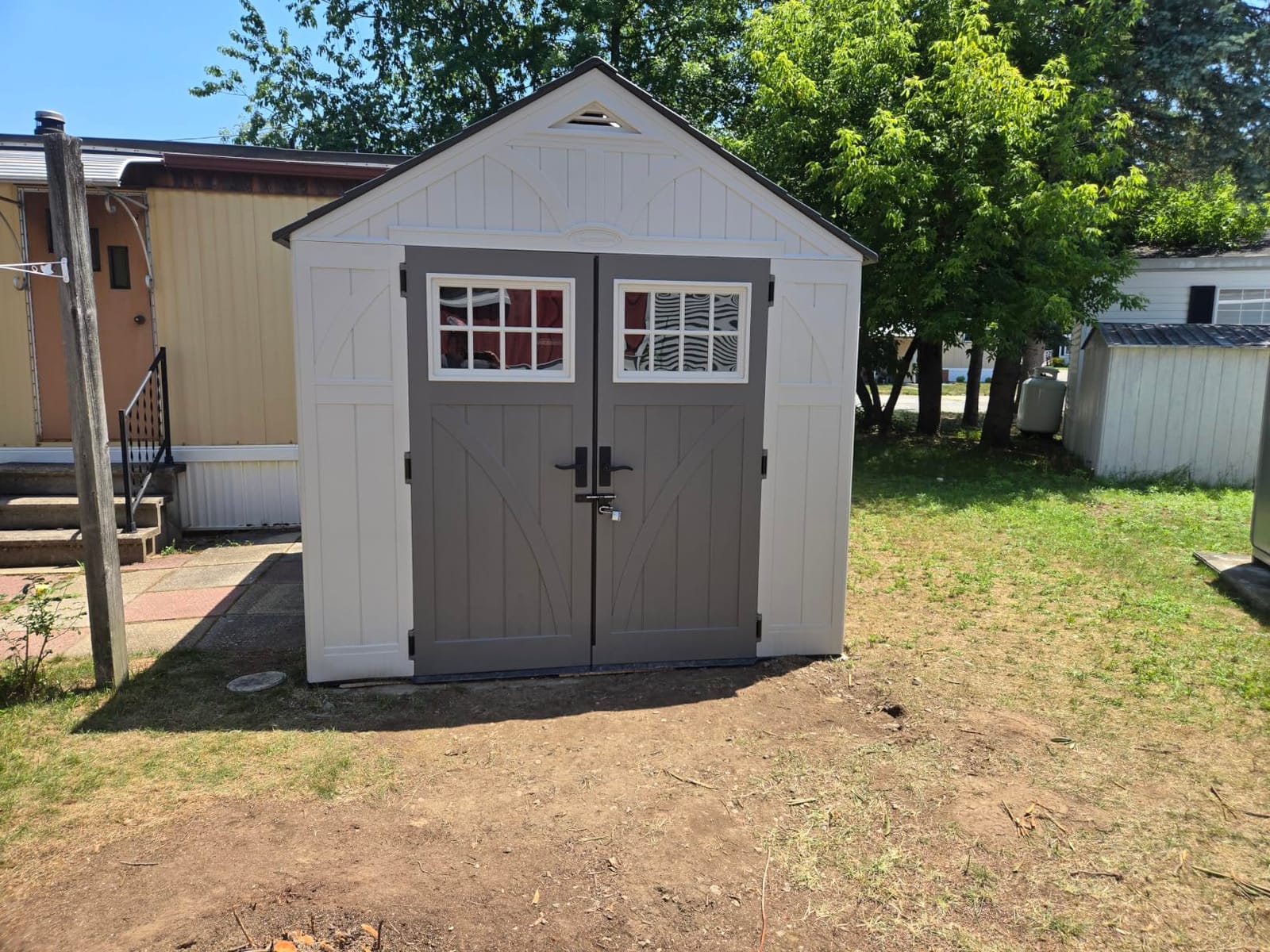
This is the one shed in the group that arrives with a floor, and that single fact changes the whole project. Every metal kit in this roundup asks you to build a base before a single wall goes up. The Suncast comes with its base, so you are working on a level pad instead of assembling a floor frame and skin on the same weekend.
The volume is the real story. Seventy-five square feet of floor expands to 547 cu ft once you account for the 122-inch peak height, and that headroom is what makes this a walk-in rather than a crawl-in. Owners describe walking a riding mower straight in through the double doors, then standing upright to work on it. That is a different experience from crouching under a 76-inch metal roof panel.
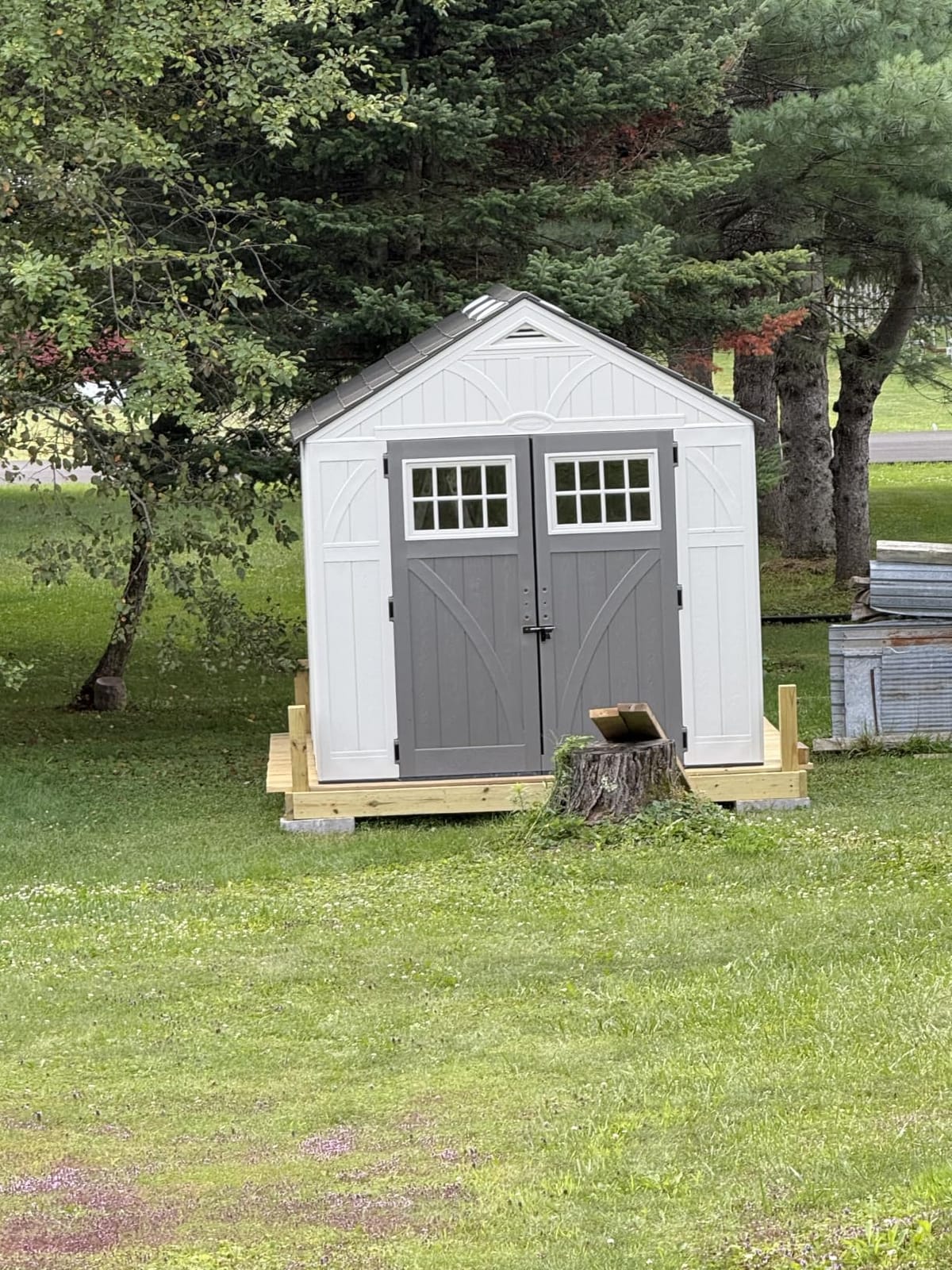
The construction is a steel-reinforced resin shell, and the six skylights plus door windows and vents are more than decoration. They give you daylight to find a leaking fitting and airflow to move the heat off an engine that just finished a mowing run. Engine heat plus trapped humidity is the combination that puts surface rust on mower decks, and ventilation is the cheapest fix available.
Assembly is the part people brace for. It is a 384-pound kit, so treat it as a two-person job with the panels sorted before you start. Reviews put the resin build on the easier end of this group because the parts arrive pre-cut and individually labeled, which cuts the measuring and trimming that makes metal kits drag.
Who this shed works for
It works for owners who want to service a mower indoors rather than just park it, because the height makes a jack, a jack stand and a bench all usable. It also works well for anyone who does not want to paint, stain or rust-proof a structure every few years, and for households where the shed is visible from the house, since the resin finish holds its color.
The wide double doors are the deciding feature for a lawn tractor with a bagger, since you do not have to angle the machine to thread a single opening. With the floor already in the kit, this is also the fastest path from delivery to a working storage space.
Who should skip it
Skip it if your site is tight and you need a narrow footprint, because the 103 by 100.5 inch exterior needs clearance on the door side for the double doors to swing. It is also the wrong choice if you plan to hang heavy shelving or a workbench from the walls, since resin panels flex under concentrated load and will not hold weight the way a wood wall or a steel-stud wall does.
If impact damage is a recurring thing in your yard, whether from a lawn trailer or a kid on a bike, a metal shed will take a hit and stay usable. Resin will crack. That trade is worth taking for most people, but not for a property with a tight side yard and heavy equipment traffic.
2. Breez 10 x 12 Steel Shed – The Best Budget Metal Shed for a Riding Mower
- Full 120 sq ft footprint swallows a riding mower
- Galvanized panels resisted 20-25 mph sustained winds
- Numbered labeled parts
- Value against resin equivalents
- Very thin sheet metal that dents on contact
- Roof screw points can become leak paths
- Realistically a multi-day two-person build
This is the classic 10 x 12 answer, and for a lot of households it is enough. One owner reported the galvanized panels holding up through 20 to 25 mph sustained winds, which is a more useful data point than any wind label on the box. The lockable double hinged doors make it straightforward to line a mower up and drive it in.
Size is the reason this one keeps selling. A hundred and twenty square feet of floor leaves a mower parked with room to walk around the front of it, which is the difference between a shed you can work in and one you crawl into. The double doors also mean you do not have to reverse out blind.
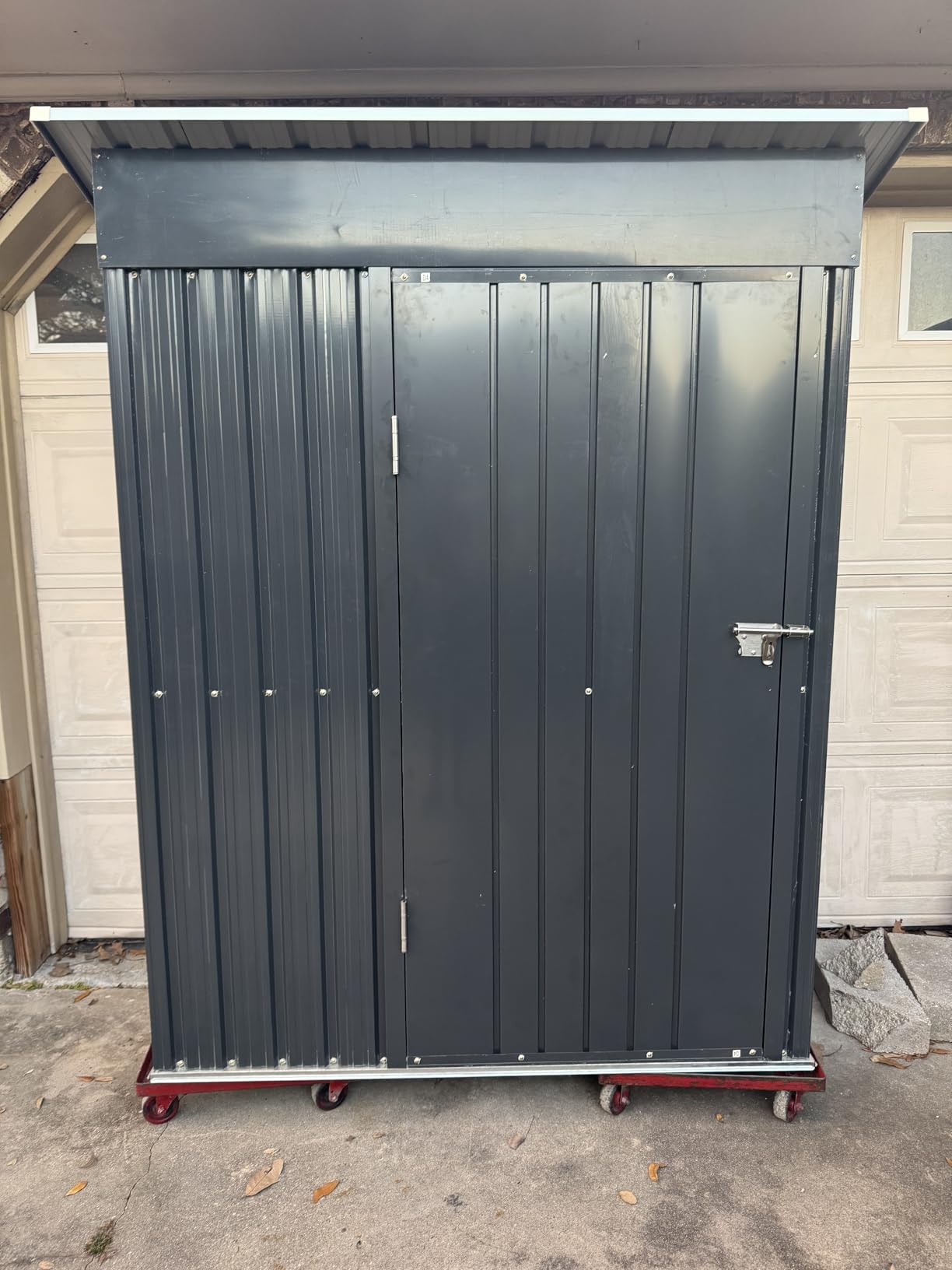
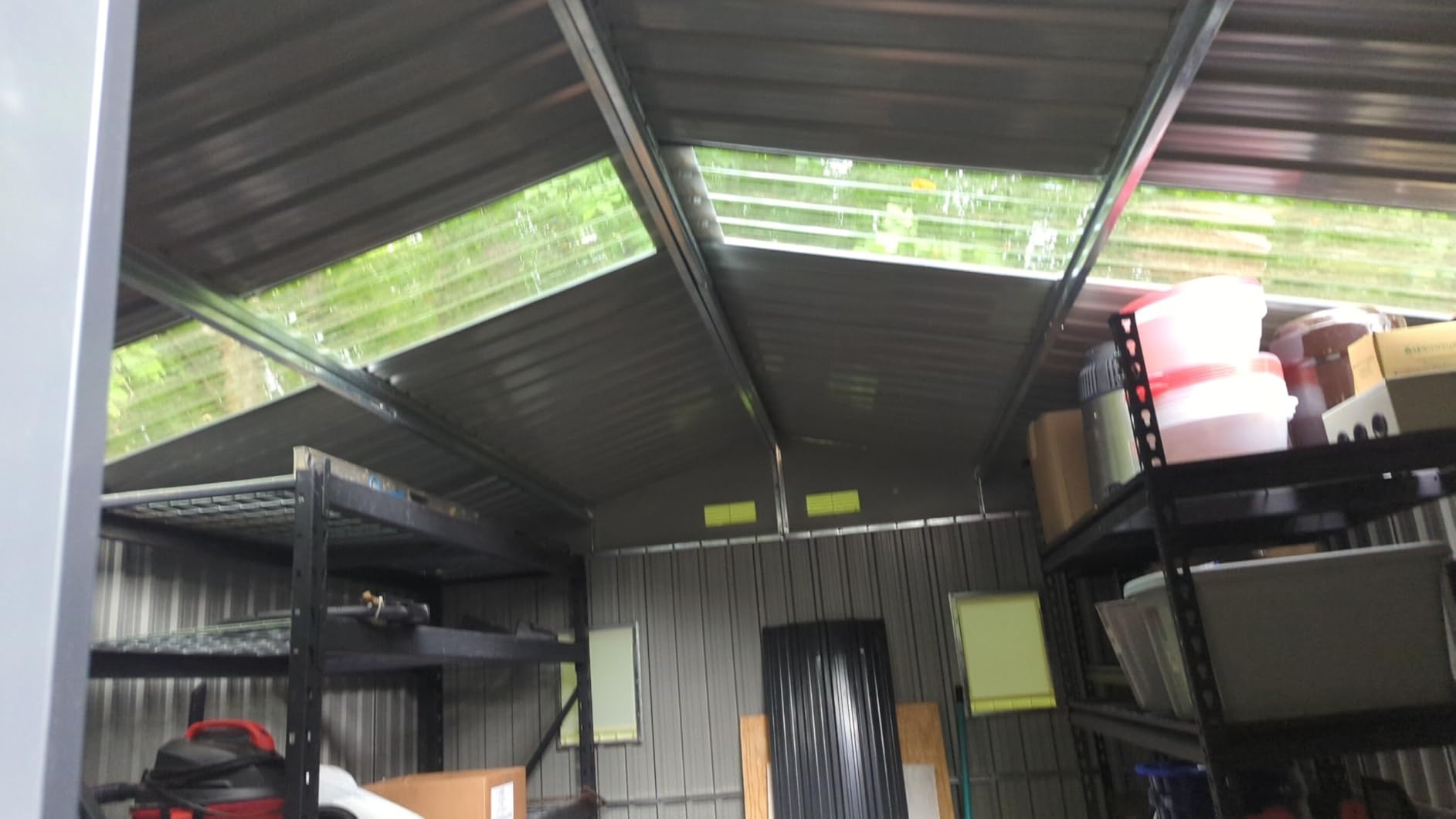
The honest part is the metal gauge. Reviews describe sheet thin enough to dent on contact, and panels that should never be leaned against. That matters for a riding mower shed specifically, because a mower is a heavy object you back into a wall about once a month, and every backing event becomes a dent.
The other recurring issue is the roof and ceiling screw points. Owners report resealing those seams as the first thing to do after the first rainy season. It is a small job, a tube of roofing sealant and an hour, and it converts a leak complaint into a non-event. Assembly is genuinely labor-intensive at this size, so plan a full weekend with two people.
Who this shed works for
It works for owners who want a real 10 x 12 footprint without moving up to a resin premium, and for anyone who can accept a thin-gauge shell in exchange for a low entry point. It is also a good match for a yard where you will keep the mower covered but do not plan on doing seasonal repairs inside.
Buyers who build it report that the numbered, labeled parts and the illustrated instructions make the sequence logical, and a printed manual plus a video guide are included. That matters more than it sounds, because the most common complaint in this category is confusion rather than hardware failure.
Who should skip it
Skip it if you need to lift a bagger off the mower inside the shed, since the 10 x 12 metal footprint gives you roughly 6 ft of wall height and not enough room to raise a loaded bagger over your head. Skip it if you want to hang shelving on the walls, because these panels will not carry a loaded shelf without adding blocking.
It is also the wrong pick for a humid climate where condensation is a persistent problem. Unventilated thin metal sweats from the inside out, and combined with engine heat from a recently-run mower, that moisture collects on the deck and the underside of the machine. If your region is damp, add a vent kit and a floor coating before the first storage season.
3. AECOJOY 12 x 14 Metal Shed – Best Wide-Door Shed for Snow and Wind
- 163-inch doors clear any mower or attachment
- 168 sq ft floor leaves real workspace
- 70 mph wind and 20 in snow rating
- Customer service praised for quick refunds and parts
- Published dimensions run larger than the assembled footprint
- Door jambs and braces need owner alignment
- Instructions are mostly illustrations
The 163-inch door width is the headline number here, and it is the widest opening in the group by a wide margin. Nothing on a tractor, a bagger or a snow blower is going to be the thing that stops you getting this machine inside. The 168 sq ft of floor then gives you 76-inch doors to work with plus a 12 x 14 footprint that holds a mower and leaves bench space.
For anyone who clears snow, the rating matters more than the price. This shed is rated for 70 mph winds and 20 inches of snow, which is a genuinely different engineering target from the small portable units in this roundup. A snow-heavy roof load on a thin-gauge shed is exactly how a frame twists, so a published load number is worth paying attention to.
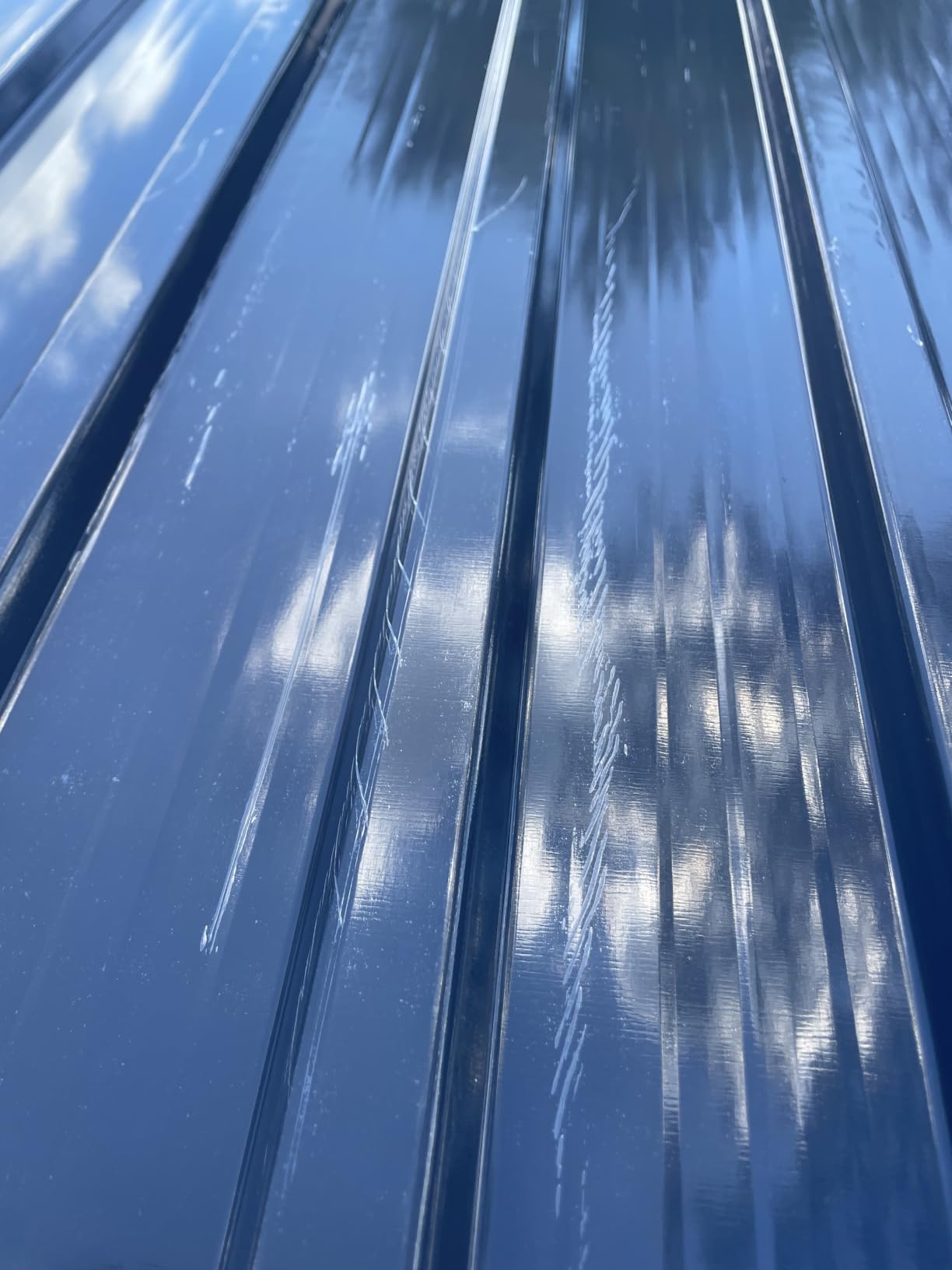
Several owners report the sloped roof keeping water out through heavy storms, which is the outcome you want from a galvanized build. The panels arrive pre-drilled and labeled, and the consistent owner advice is that a perfectly level, square base makes the assembly predictable. If the base is out by an inch, the wall panels will fight you.
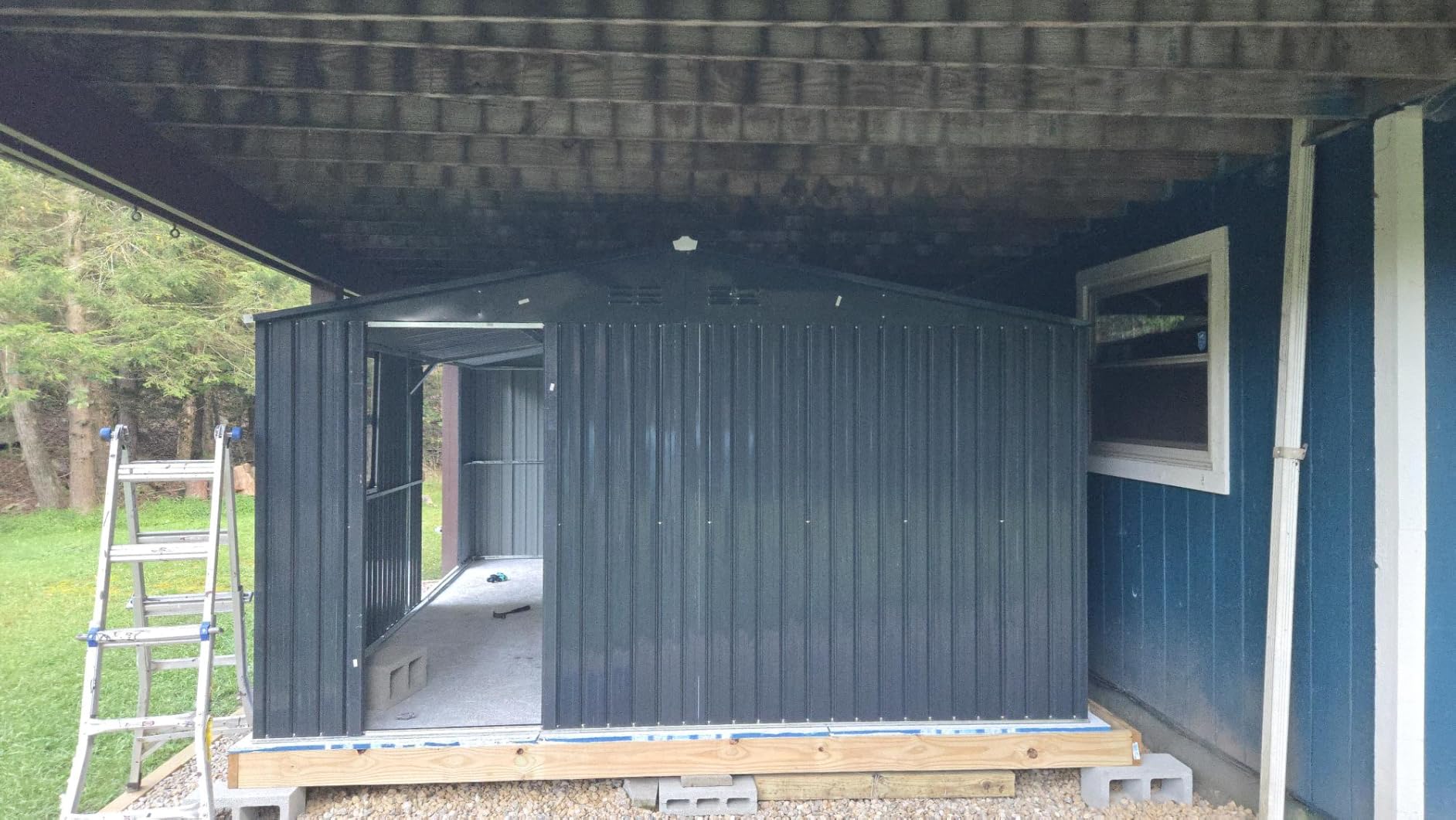
Two practical warnings. The published dimensions run slightly larger than the actual assembled footprint, so do not pour your pad to the advertised numbers without checking first, or you will end up with a base wider than the building. And the door jamb and brace geometry causes binding and misalignment that owners have to correct themselves, so budget an hour of adjustment rather than assuming a clean fit.
Who this shed works for
It works for owners in northern climates where snow load and wind are the deciding factors, and for anyone whose equipment fleet has outgrown a 10 x 12. At 168 sq ft you can park a mower and a snow blower side by side with a walkway between them, which is a combination the smaller metal units cannot offer.
It is also a strong pick for a workshop-adjacent use. The extra floor beyond the mower footprint is where a repair stand, a parts shelf or a second machine goes, and the door width means you can roll a wheelbarrow or a dolly straight through without a fight.
Who should skip it
Skip it if wall height for lifting attachments is your priority, since the 76-inch door and 77.6-inch overall height still cap you at metal-shed levels. The wide opening is about getting in, not about getting a bagger up over your head once inside.
Skip it if you are not comfortable with an assembly process where the instructions are largely illustrations with little text. If you dislike rearranging panels until the holes line up, this will test your patience more than the other metal kits here. It is also worth checking the thin-gauge warning on hanging loads, since the walls are not designed to carry a heavy shelf without added framing.
4. Aoxun 10×12 Steel Shed – Best Value Shed for Riding Mowers
- Oversized double doors sized for riding mowers
- Top-three seller in the Storage Sheds category
- Sloped roof with built-in vents limits moisture
- Clear labeled instructions
- Good value for the size
- Thin panels arrive dented and knock out of shape
- Some screw holes need drilling to align
- A few kits arrive with missing or mislabeled parts
This is the pick we send people to when they want a 10 x 12 metal shed with a 4.0 average across more than a thousand ratings. The demand data backs that up: it sits in the top three of the Storage Sheds category, which means a lot of people bought it and came back to say something.
What separates it is the door. The owners describe oversized tall double doors sized specifically for riding mowers and bulky gear, and that is the single most important spec on this list. At 120 sq ft of floor, you have the space a mower needs, and the opening means you do not have to perform a precision entry every time.
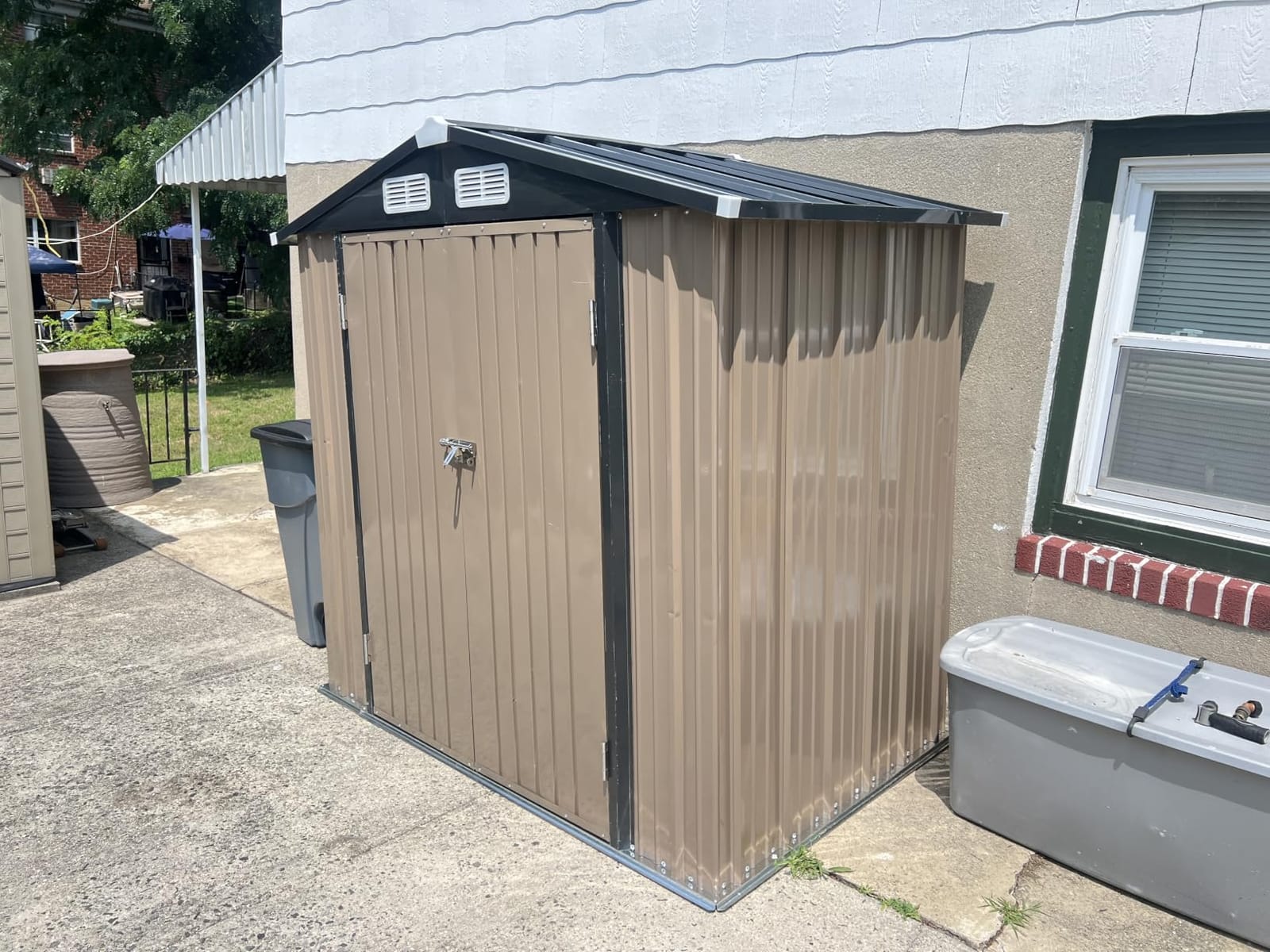
The sloped roof has built-in ventilation openings, and in practice that combination does more for a mower than the price difference between sheds. A roof that drains and a wall that breathes keeps humidity off the deck and off the battery, which are the two things that end a tractor’s off-season life early.
There are reserved mounting positions for internal storage racks, so if you plan to run a shelving unit down the back wall, the frame is pre-planned for it. Owners also consistently call the instructions clear and well labeled, and first-time builders report success, which puts it ahead of several competitors on the same size.
Who this shed works for
It works for the owner who has done the sizing math, landed on 10 x 12, and wants wide doors and a vented roof without moving to resin pricing. It suits households that plan to add a shelving unit later, since the rack mounting points are already there, and it works well in a yard where the shed needs to look tidy rather than utilitarian.
It is also a reasonable pick for a family that stores more than one machine intermittently, since 120 sq ft takes a riding mower plus a push mower along one wall if the second one is slim. The sloped roof and lockable doors cover the basics of security and weather without extra purchases.
Who should skip it
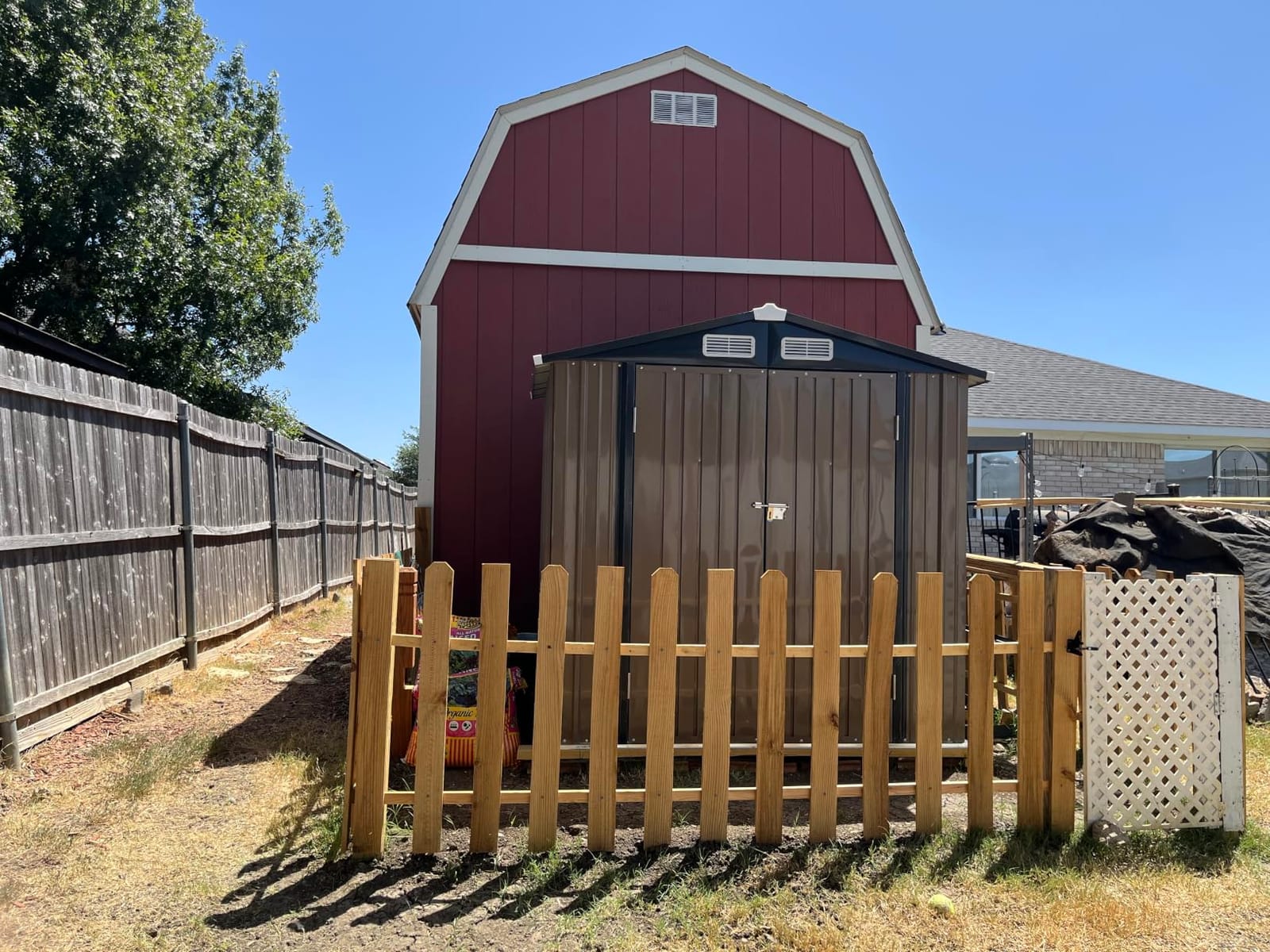
Skip it if your site is exposed. Owners are clear that this shed must be anchored firmly to a base, and a strong breeze can carry an unanchored metal shed. If you are not building a gravel pad or setting anchors, that is a dealbreaker regardless of how good the shed is.
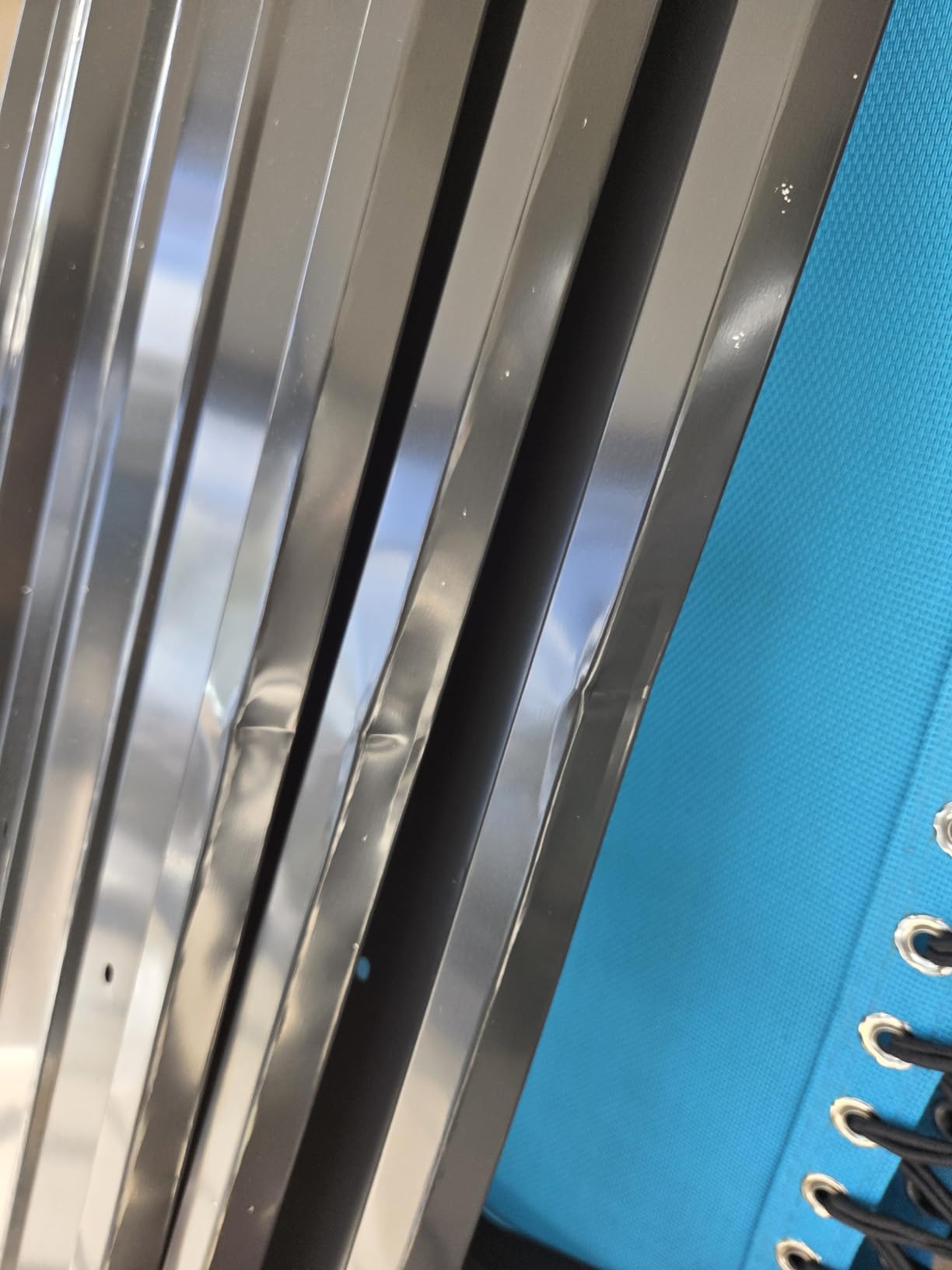
Skip it if dented panels on arrival would bother you, because the reports of light-gauge metal arriving dented and a few kits shipping with missing or mislabeled hardware are consistent. Inspect the panels before you begin, photograph any damage, and request replacement parts early, because a distorted panel never gets easier to force into place.
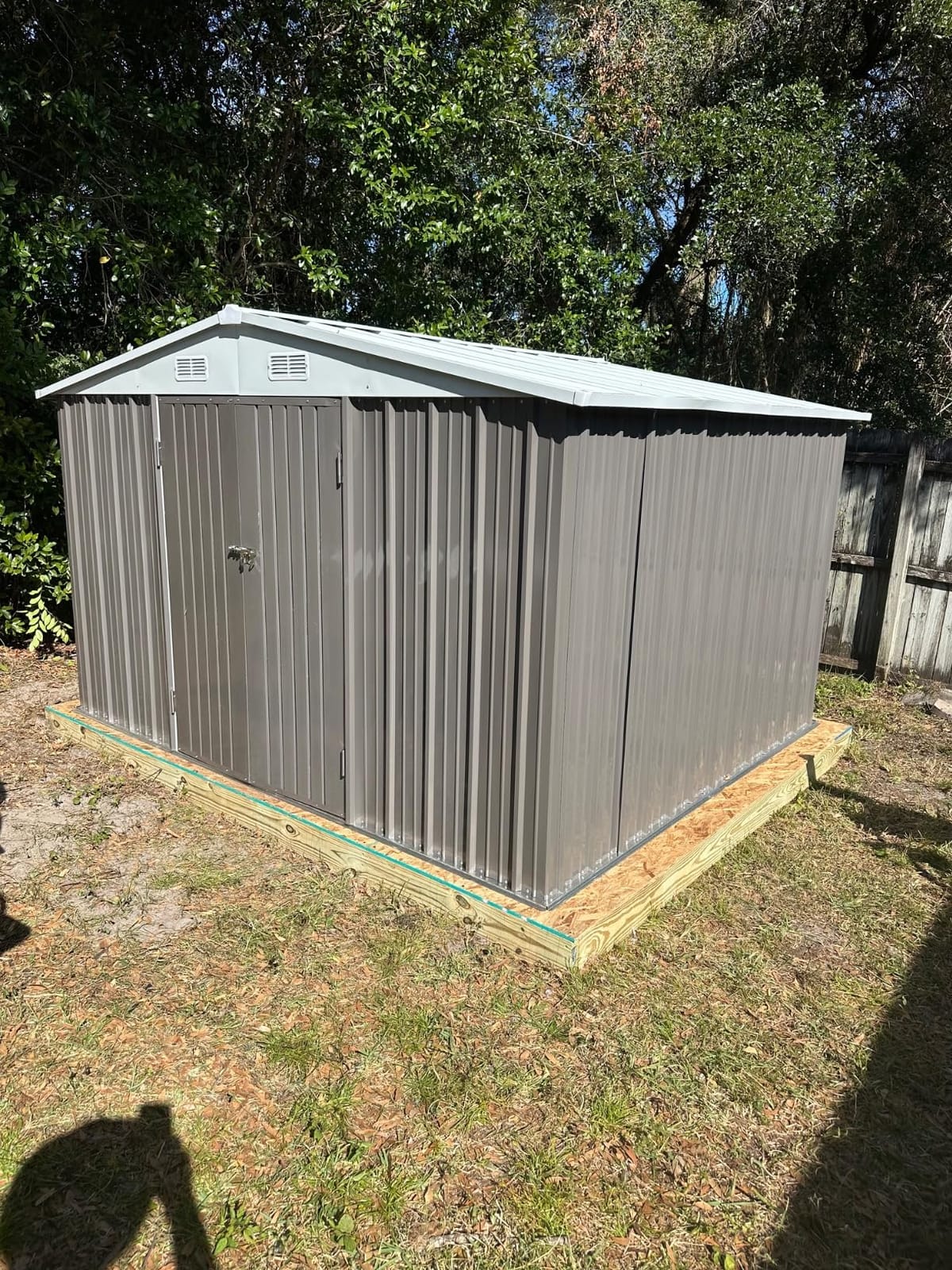
5. Devoko 10×12 Metal Shed – Best for Heavy Floor Loads
- 750 lb stated capacity covers a tractor and extras
- 120 sq ft marketed for lawn mowers
- Gloves and all hardware included
- Clean modern appearance
- Floor and base are not included
- Single hinged door is narrow for a mower
- Light-gauge metal has little rigidity
The 750-pound weight capacity is the reason this one is on the list, and it is a real differentiator. A lawn tractor with a full bagger is heavy, and if you also want a steel workbench, a tool chest or stacked bagged mulch in the corner, a stated capacity number gives you something to plan against instead of guessing.
At 120 sq ft the floor area matches the metal sheds in the 10 x 12 class, and it is marketed directly for lawn mowers and bulky outdoor gear. The steel frame is described as water-resistant, rust-resistant and UV-resistant, which is the standard three-point claim for a galvanized build in this category.
The sloped roof is a genuine feature rather than a styling note. It improves usable storage by moving water off the roof instead of letting it sit, and it reduces the pooling that eventually finds a screw hole. Owners also mention that the assembly instructions are clear and that gloves and all hardware come in the box, which is rarer than it should be.
Now the part that decides it. The floor and base are not included, so you are building that separately no matter what. The single hinged door is also narrower than a double-door design, and maneuvering a riding mower through it is an exercise in lining up straight. Owners describe the metal as light but functional, and assembly taking a full day.
Who this shed works for
It works for owners who need load capacity more than they need a wide door, and for anyone planning to build out a small workshop with a bench and heavy shelving. If your storage plan includes weight rather than just volume, the 750-pound figure is the clearest commitment any of these sheds makes.
It also suits people who want a modern look in a visible part of the yard, since the styling is cleaner than most steel kits. Gloves and hardware in the box means one fewer trip to the hardware store mid-build, and the single door keeps the footprint narrow, which helps along a fence line.
Who should skip it
Skip it if the mower entry is your main concern, because a single hinged door is the hardest configuration to drive a lawn tractor through. Skip it if you want a turnkey install, since the missing base means you are building and leveling a platform first, and that is often the more labor-intensive half of the job.
Skip it if you plan to hang a heavy shelf from the walls on your own. Light-gauge metal with little structural rigidity is not a good host for wall-mounted storage, and you would be adding blocking to the frame first, which puts you back in the carpentry business.
6. Patiowell 8×10 Shed – Best Compact Shed for Small Yards
- Compact 8 x 10 footprint fits tight side yards
- 880 lb stated capacity
- Sliding door needs no swing clearance
- UV-protected steel
- Thin sheet metal dents easily
- Not airtight and leaks develop over time
- Assembly realistically 12-15 hours
When the constraint is the yard and not the budget, footprint is everything. At 118.1 by 89.7 inches, this is the smallest shed here that still parks a riding mower, and 73.62 sq ft of floor is enough for a machine and a bagger if you accept reaching past the deck to the far side.
The 880-pound capacity is the highest stated figure in the group, and the sliding door is a genuinely smart choice for a small space. A sliding door needs no swing clearance, so you can push the shed right up against a fence and still open it. That single feature solves a problem that stops a lot of side-yard installations before they start.
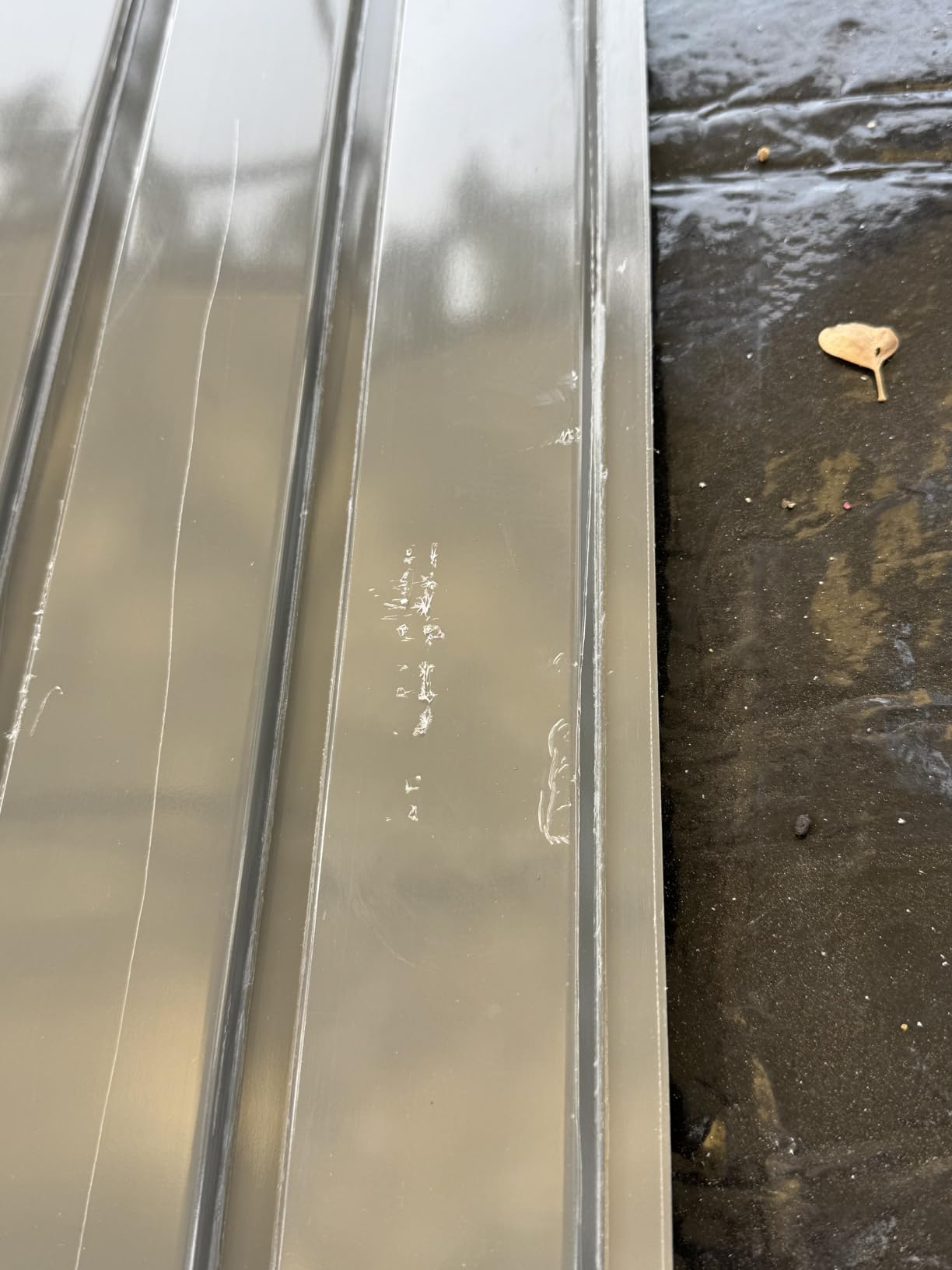
The steel is UV-protected and described as resistant to rust and corrosion, and the reinforced frame adds stability compared with the flattest kits. Owners also point to the clear instructions plus manufacturer assembly videos as a real help, since the videos make alignment far easier than the printed diagrams alone.
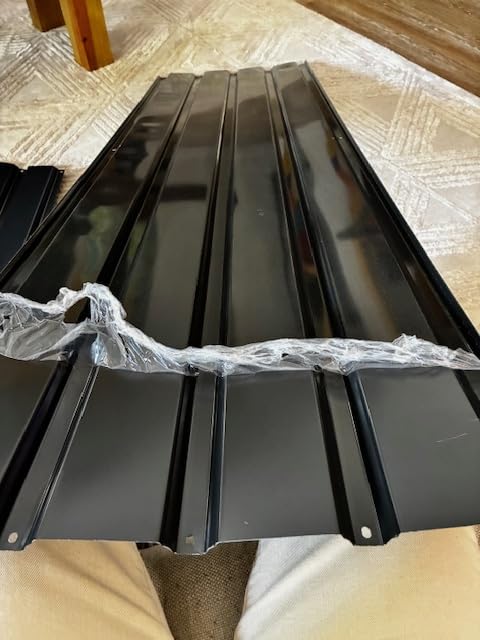
The 3.7 average is the lowest here alongside the Patiowell 12 x 20, and the reason shows in the detail. The rating spread is the widest in the set, with a solid majority of five-star feedback and a meaningful one-star group. The unhappy group reports short washers and screws, misaligned holes, bent panels on arrival, leaks developing over time, and an assembly that stretches to 12 to 15 hours rather than the advertised time.
Who this shed works for
It works for owners with a small lot, a tight side yard or a setback constraint who still want the mower under a roof. The sliding door removes the swing clearance problem entirely, and the compact footprint can often sit where a 10 x 12 would violate a local setback line.
It is also a sensible pick for a second machine that is used seasonally rather than year-round. If the mower lives outside and comes out for spring, a compact shed is a better use of the space than stretching for square footage you do not need. Buyers who build it on a proper level platform tend to be satisfied and call it good value.
Who should skip it
Skip it if you plan to move the bagger or lift the deck inside, because an 8 x 10 footprint with roughly 76-inch walls leaves you crouching. Skip it if you want to be able to walk around the mower, because at 73.62 sq ft there is no walkway on the far side.
Skip it in a wet climate. It is not airtight, and owners report roof and base leaks developing over time, which on a metal shed with no included floor means standing water under the mower. Also plan for the extra time: 12 to 15 hours is a realistic figure, the kit comes in two packages that may turn up on different days, and the base is not included.
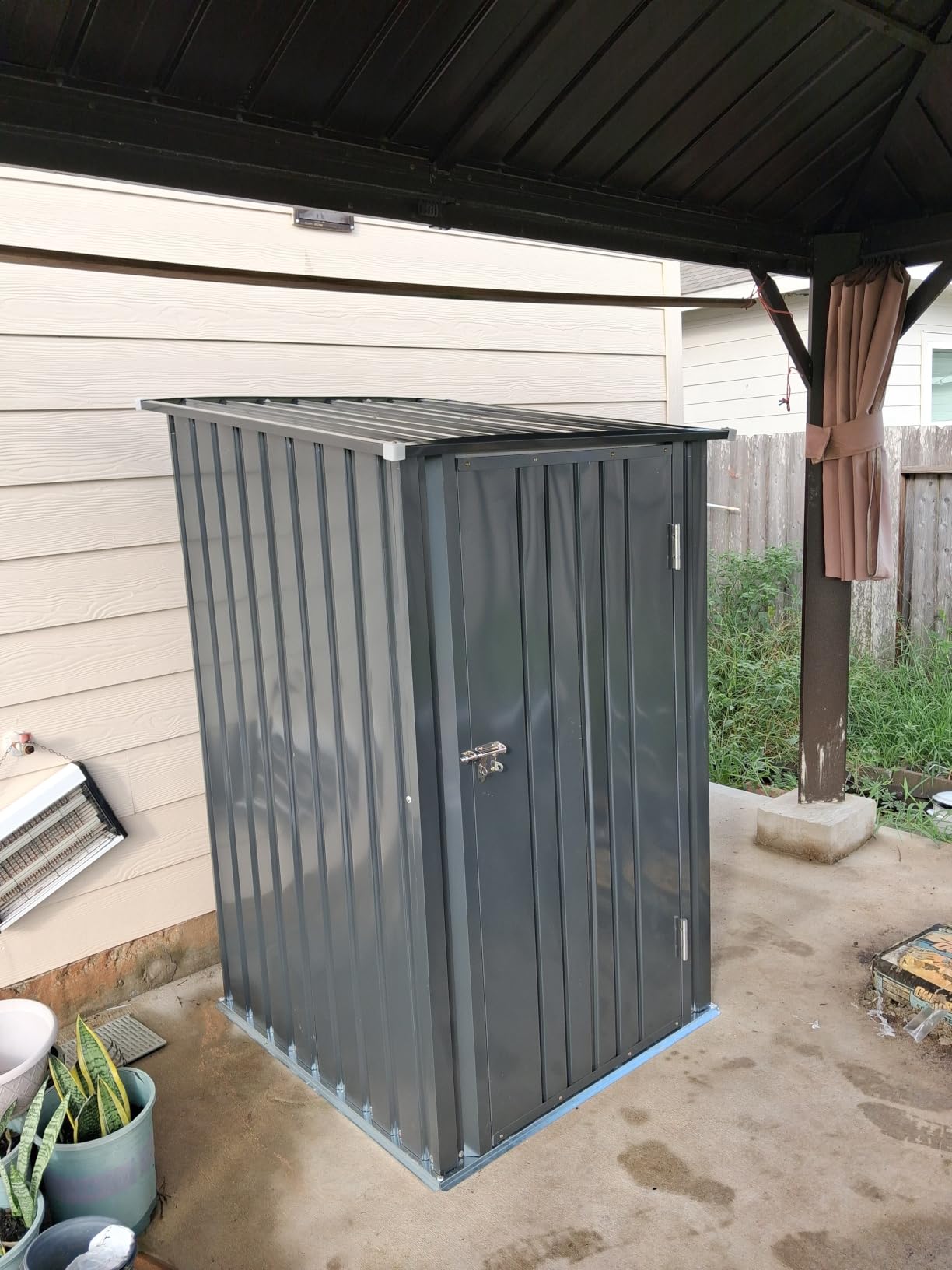
7. Patiowell 12×20 Shed – Best for Storing Your Whole Equipment Fleet
Patiowell 12×20 FT Outdoor Storage Shed, Large Metal Garden Shed, Black
- 240 sq ft holds a mower
- blower
- trailer and sweeper
- Dual access with a front and side door
- 4 vents and 2 windows reduce humidity
- Corner protectors add safety
- Side door listed at only 26.2 inches wide
- Low listed load capacity of 220 pounds
- Base not included and no tools shipped
At 240 sq ft, this is the only shed here that handles the full equipment fleet rather than the mower alone. Owners on Yesterday’s Tractors describe shelving above equipment for totes and boxes, with the floor reserved for the mower, trailer and sweeper, and that is exactly the layout this footprint supports.
Dual access is the feature that separates it. A front door plus a side door means a vehicle can drive in from one side while you walk in from the other, and for a shed that doubles as a carport, that changes how usable the space is day to day. Four air vents and two sidewall windows handle the humidity problem that makes metal storage buildings notorious.
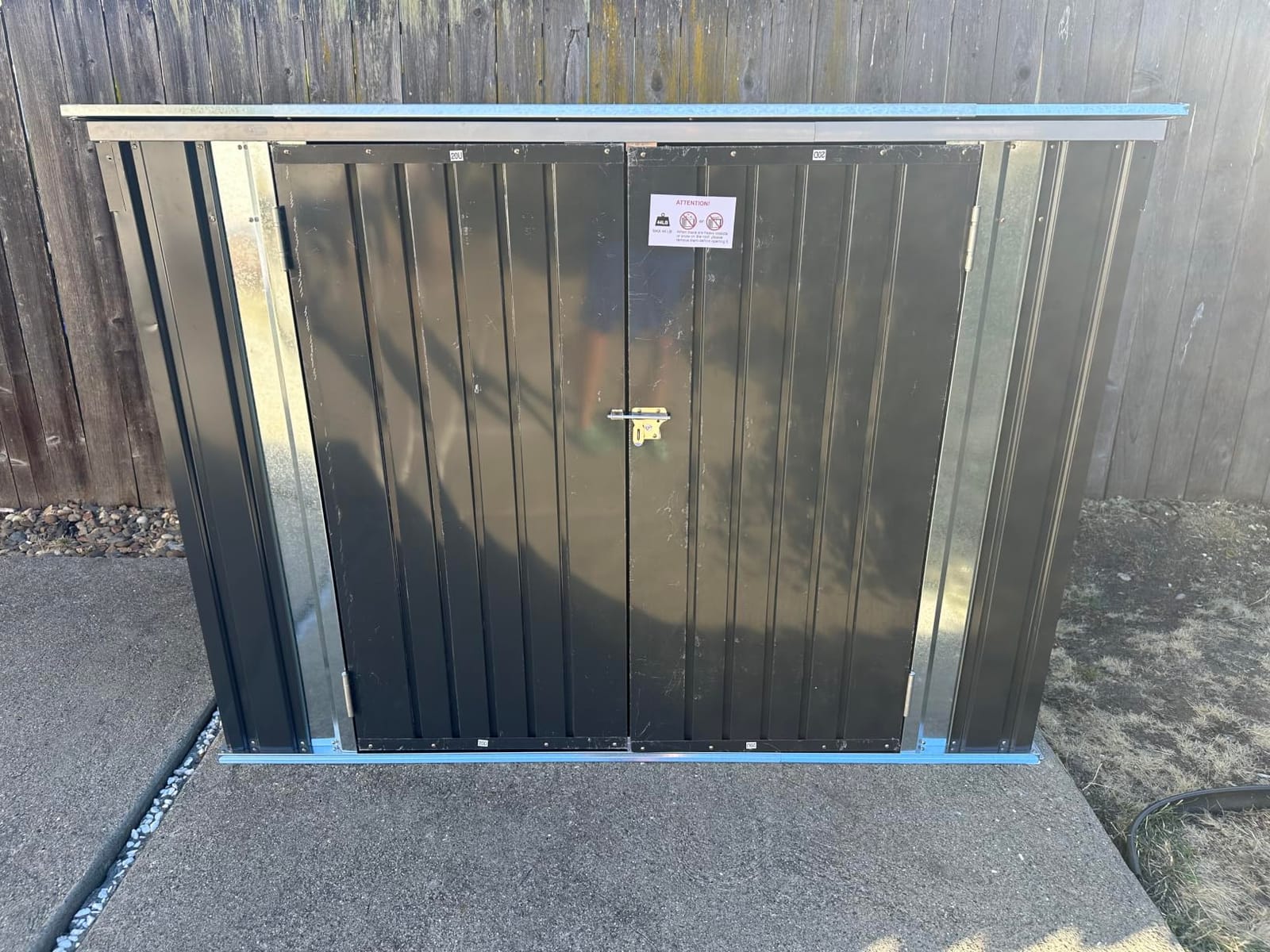
The reinforced triangular steel structure is what holds up in all weather, and the lockable door plus corner protectors add both security and a rounded edge for a property with kids running around it. Owners also report customer service quickly shipping a missing part, which is worth knowing when you are assembling something this large.
Two numbers deserve a hard look. The listed side door width is 26.2 inches, which is narrow for the 240 sq ft claim and not a mower entrance. And the listed maximum load capacity of 220 pounds is the lowest figure in the group, which is a genuine mismatch with a structure marketed to hold a car or a lawn trailer. If weight matters to you, this is the wrong building.
Who this shed works for
It works for acreage owners and anyone whose equipment list has outgrown a single machine. A riding mower, a snow blower, a push mower, a lawn sweeper and a lawn trailer all fit in 240 sq ft, which is the configuration DIY builders keep arriving at on GreenTractorTalk and the Yesterday’s Tractors forums.
It also works for people who want one building to do two jobs. A front and side door layout means it can serve as equipment storage on one side and vehicle or motorcycle parking on the other, which is more efficient than buying two structures. The vents and windows make it workable as long-term storage rather than a box you open twice a year.
Who should skip it
Skip it if you need heavy load capacity, because 220 pounds is not enough to safely host a full-size tractor with a loaded bagger plus shelving, and the mismatch between the listed capacity and the advertised size should give you pause. Skip it if you want to drive a mower in through the side, since 26.2 inches is a walk-through opening, not a mower door.
Skip it if you are working with limited manpower or time. The Patiowell line shares the same thin, dent-prone sheet metal, misaligned holes and eventual leak complaints reported across the brand, and the base is not included. Anchoring against wind is left to the owner, which in an open site is not optional.
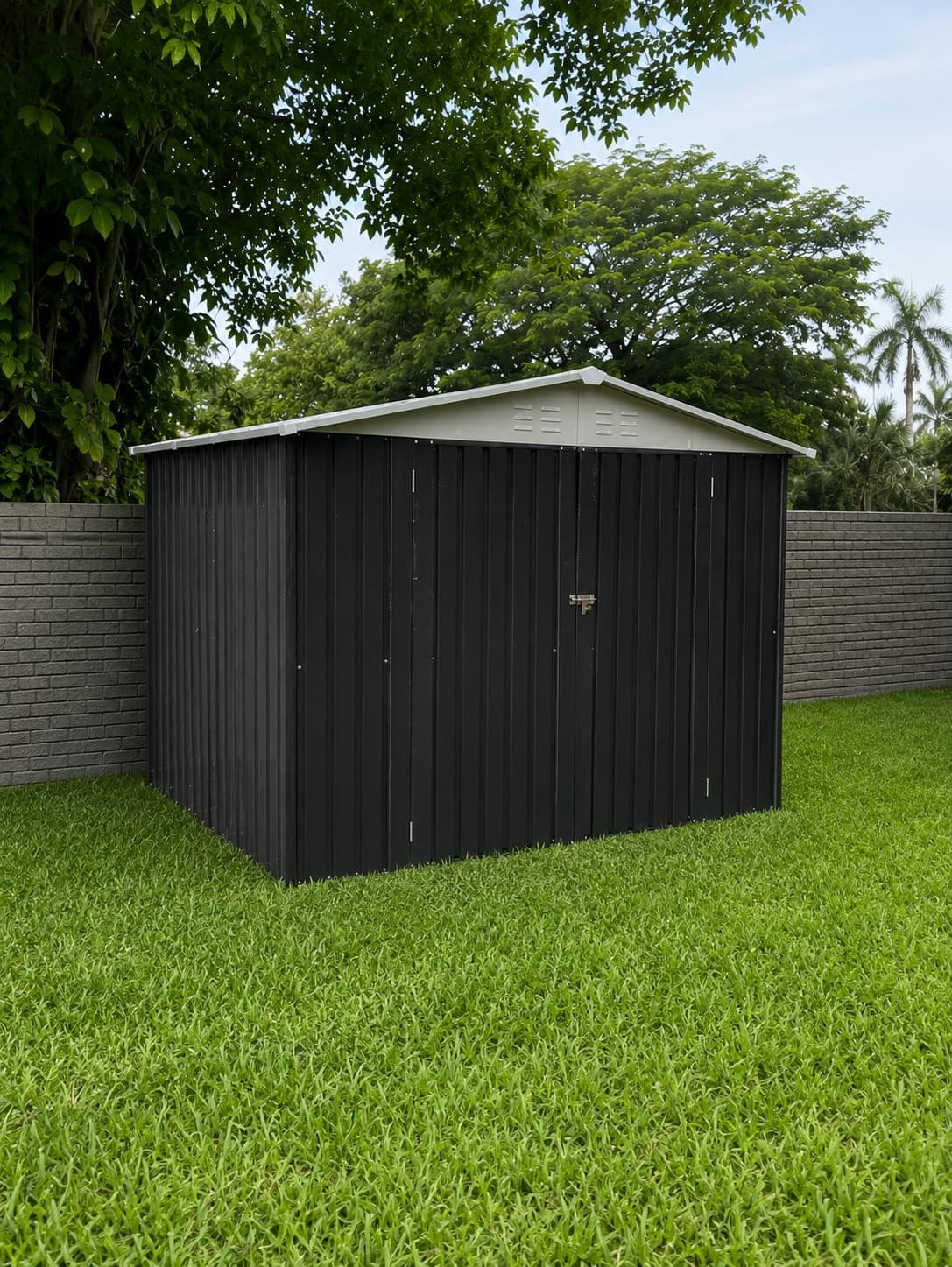
8. Polar Aurora 8 x 12 Shed – Best Low-Cost Entry for One Mower
- 96 sq ft at the lowest entry point in the group
- Reinforced frame engineered for steadier assembly
- Waterproof UV-resistant metal
- Corner protectors and lockable doors
- No floor or base included
- Budget sheet metal dents in shipping and assembly
- Shown shelves not realistic for this gauge
At 96 sq ft this is a better fit for a riding mower than the smaller sheds in the group, and the frame is the reason. The structure is engineered and tested for a steadier, more stable assembly than typical entry-level metal, and buyers specifically say the reinforced frame makes the build more forgiving than the cheapest kits.
Lockable doors, a sloped water-shedding roof, corner protectors and ventilation openings cover the checklist most budget sheds skip. Metal construction is waterproof and UV-resistant, and the ventilation helps keep stored tools dry, which is the difference between a shed that works and one that becomes a damp box.
The 55.51-inch door width is the number to think carefully about. That is a lockable double door by configuration, but the listed width is narrower than the wide openings on the resin sheds and the AECOJOY. For a mower with a bagger attached, you have margin to line up but not a lot of it, so measure your machine before you commit.
There is no floor or base included, so a level platform comes first on your list. Buyers treat this as a good-value entry-level metal shed, and the complaints are the standard category ones: dented panels, tedious hardware, needing a base, and possible roof leaks. The wall shelves you see in product photography are not realistic at this metal gauge, so plan on freestanding storage.
Who this shed works for
It works for a first shed, a rental property, or anyone who wants a mower under cover without committing to a larger footprint. The reinforced frame means a first-time builder has a better chance of finishing in a weekend, which matters more than any feature list when you have never assembled a steel shed.
It also suits an owner who stores one machine and hand tools, nothing heavy. At 96 sq ft you have room for the tractor plus a wall of rakes and a wheelbarrow, and the lockable doors mean the equipment is secure while you are away.
Who should skip it
Skip it if your mower plus bagger measures close to 55 inches, because the door width is not generous and you will be aligning carefully every time. Skip it if you plan to hang shelves from the walls, since the shown shelving is not realistic for this gauge of metal and you would be cantilevering weight off a thin panel.
Also skip it if you want a turnkey install. There is no base, so the pad is your first project, and the budget-tier sheet metal is prone to denting during shipping and assembly. Inspect every panel on arrival and photograph damage before you build, because a bent panel is a much bigger headache after the roof is on.
9. UDPATIO 8 x 10 Resin Shed – Best Maintenance-Free Resin Option
UDPATIO Outdoor Resin Storage Shed 8 x 10 FT, Plastic Storage Shed with Floor Large Outdoors Garden Tool Storage Shed Outside Clearance Shed with Lockable Door for Bike, Backyard, Patio, Dark Drey
- Floor included in the kit
- 12mm resin resists rot rust and water
- Walk-in 80 sq ft for mower and bikes
- Every part labeled with its own number
- Single hinged door is narrow for mower access
- Resin panels are less rigid for wall shelving
- Heavier cost than metal with more square footage
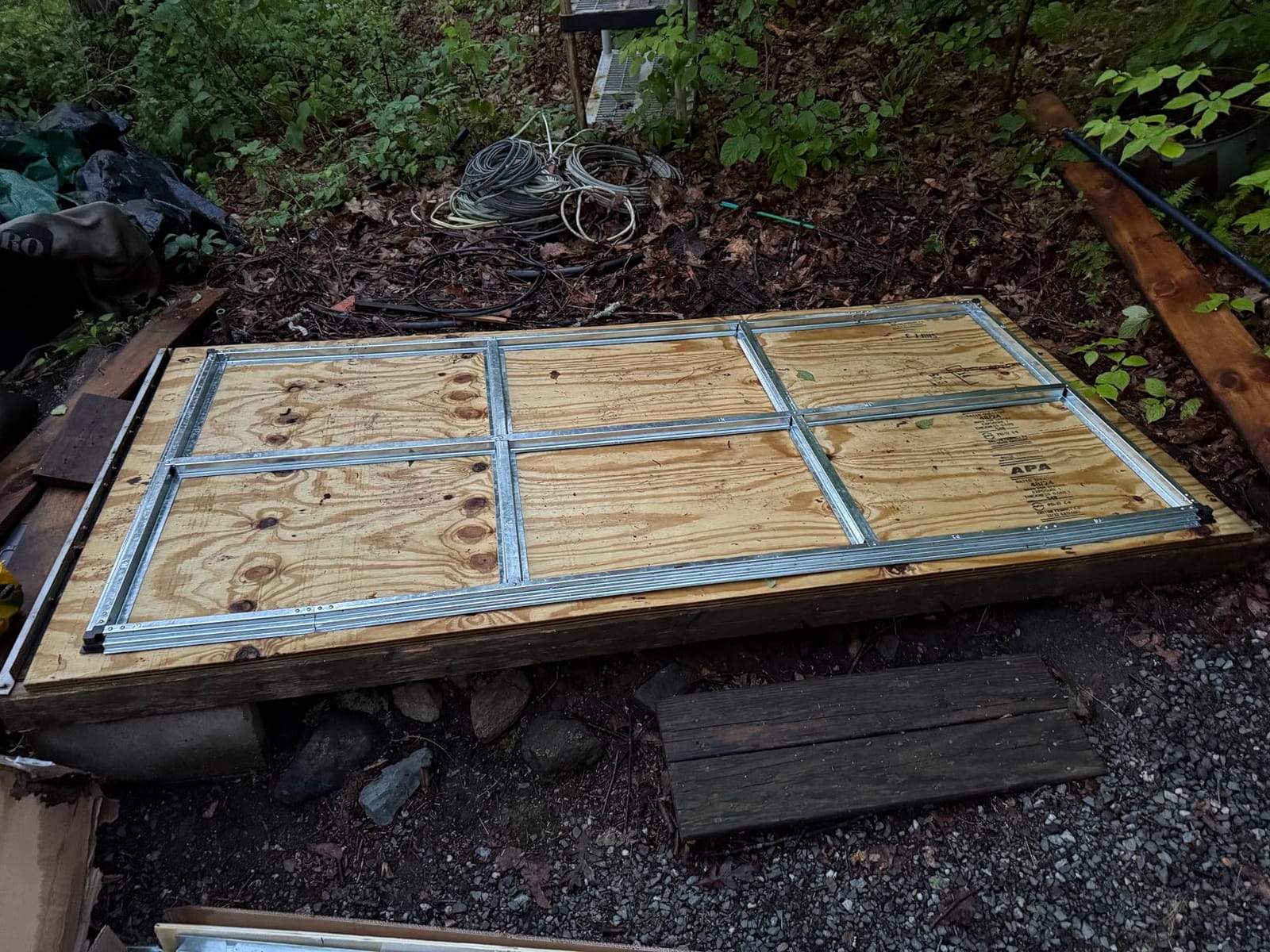
Resin is the material you buy when you never want to paint, stain or rust-proof a shed again, and this unit does that with a 4.0 average across 913 ratings. The 12mm polypropylene is recyclable, corrosion-resistant, waterproof and rust-proof, so the maintenance answer is genuinely zero rather than nearly zero.
The floor being included is the same advantage that puts the Suncast at the top of this list. Most metal kits in this class arrive with no base, and a resin shed that ships with its floor lets you start on a level pad rather than on a framing project. At 80 sq ft of floor area, it is marketed for riding lawn mowers and bicycles.
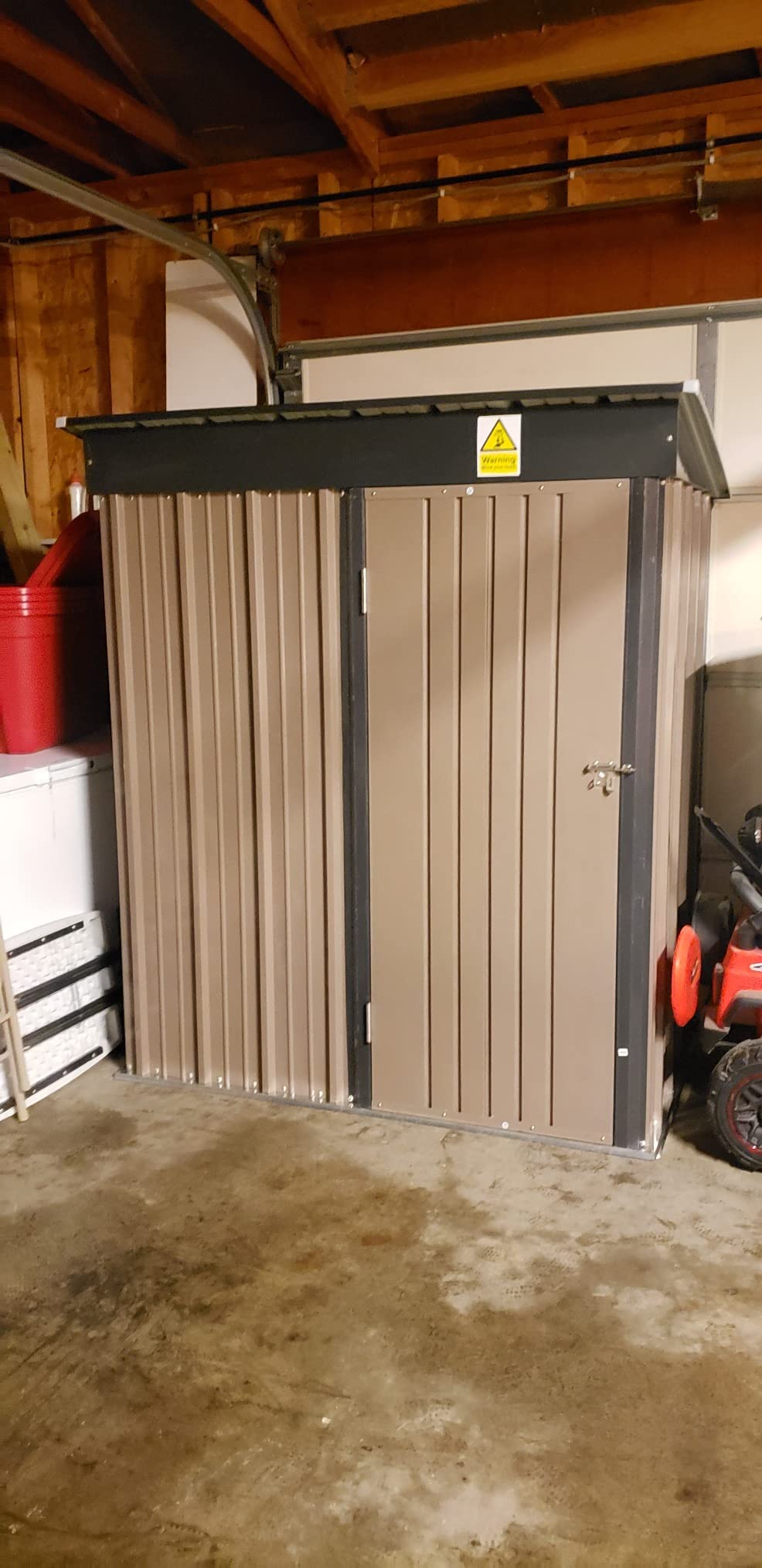
Assembly is the pleasant surprise. Every part is labeled with its own number and the instructions are simple, which is why this builds more easily than its price would suggest. Buyers report satisfaction with the clean appearance and with never needing to apply rust protection or repaint, and the lockable door secures the equipment inside.
The single hinged door is the limiting factor, and it is the same limitation resin sheds share. It is narrower than a double-door design for mower access, so you are aligning a tractor through one opening rather than centering it between two. The panels are also lighter and less rigid than steel, so wall-hung shelving needs care to stay level.
Who this shed works for
It works for owners in humid or coastal climates where painted wood fails and steel rusts, since resin shrugs off both. It suits anyone who wants a shed they will never have to strip, sand and repaint, and the dark grey finish stays presentable in a visible part of the yard.
It is also a good second-purpose building. Buyers use resin sheds for bikes, tools, a pet shelter or trash storage when the mower is elsewhere, and the included floor means it can go on gravel or a paver base without a framing step. The 80 sq ft footprint suits a modest side yard.
Who should skip it
Skip it if the tractor is your main daily need, because a single hinged door is a harder mower entry than the double-door resin alternative in this group, and you will feel that difference every week. Skip it if you plan a wall of shelving, since resin panels flex and will not hold a loaded shelf without added framing.
It is also worth weighing the price against square footage, because resin costs more per foot than the metal kits here. If your goal is the most floor area for the least money, a 120 sq ft metal shed gives you a bigger room. If your goal is the least maintenance and the best appearance, this wins.
10. Lifetime 8 x 15 Shed – Best for Headroom, Shelving and Warranty
Lifetime 6446 Outdoor Storage Shed, 8 x 15 Foot, Desert Sand
- Strongest rating distribution in the group
- 96-inch French doors and tall interior
- Built-in shelves
- peg strips and skylights included
- 10 year limited manufacturer warranty
- Highest price in the group by a wide margin
- 601 pounds makes assembly a multi-trip job
- Wide 15 ft footprint may need a permit
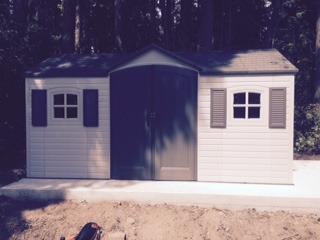
This is the only shed in the roundup where the wall height problem simply does not exist. It stands 7 ft 10.8 in tall with an interior that runs from 70 to 94 inches, which means you can stand upright, lift a bagger off the machine and get a jack under the frame. For anyone who services a tractor rather than parking it, that is the deciding fact.
The doors are 96 inches wide and 94.8 inches tall, so a mower with a bagger is not a clearance exercise at all. Five heavy-duty steel trusses and a steep pitched roof give real structural strength and quick drainage, and the dual-wall UV-protected polyethylene with steel wall supports means no painting or staining, ever.
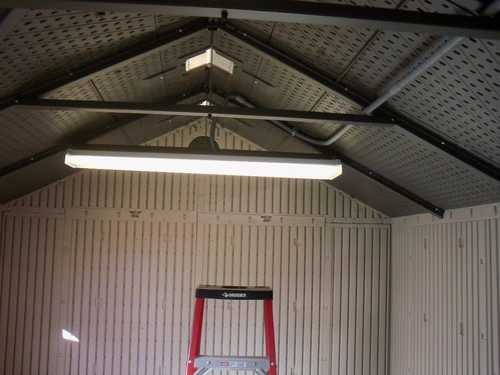
The built-in storage is unusually complete. You get two 90 by 9 inch shelves, four corner shelves, two peg strips, six small skylights, two shatterproof polycarbonate windows, two screened vents and decorative shutters. Owners reward the included shelving and ventilation hardware specifically, and the screened vents are a real asset when a gas can and a recently-run engine share the space.
It is also the only pick backed by a stated 10-year limited manufacturer warranty, and it has the strongest rating distribution in the group, with 68 percent five-star feedback. The friction is weight and money. At 601 pounds it is a two-person or multi-trip assembly, it is the highest price here by a wide margin, and a 15-foot footprint on a large level pad can push you into local building permit territory.
Who this shed works for
It works for owners who treat the shed as a workshop rather than a cover, because the headroom lets you use a floor jack, a jack stand and a workbench at the same time. It suits families with acreage who want shelving already built in instead of framing wall studs and hanging brackets, and the peg strips give you a place for hand tools without drilling.
It is also the pick for anyone buying for the long term and reading warranty length as a decision driver, which is exactly how buyers think about this purchase on Houzz. The 10-year coverage and the polyethylene shell mean nothing needs repainting over that span.
Who should skip it
Skip it if budget is the first constraint, because this is the most expensive unit here and the extra spend is buying height and warranty rather than extra floor area. At 120 sq ft of interior, a 10 x 12 metal shed gives you the same floor with less money and shorter walls.
Skip it if you have a small lot, a setback line or a narrow driveway approach. A 15-foot-wide footprint needs a large level pad, may require a local building permit, and at 601 pounds the kit may arrive in more than one box on different days, which turns a single drop-off into a storage problem before the build even starts.
Build vs Buy: Kit or Lumber for a Riding Mower Shed?
Buying a kit is almost always cheaper in materials, and building your own is almost always cheaper in labor, because labor is the real swing factor in a DIY shed. Decide which one you are short on before you start.
A kit buys you pre-punched panels, a cut list and hardware in one delivery, and in most of this roundup that is genuinely less material than framing a 10 x 12 yourself. What it does not buy is a floor. Of the ten sheds here, only the Suncast and the UDPATIO include a base, so on the other eight you are building a foundation regardless of which path you take, and that foundation is often the larger half of the project.
Building by hand gives you things no kit matches. Wall height is the big one. You can frame to 8 ft on the wall while every metal shed here stops near 76 inches, and that difference determines whether you can lift a bagger or a deck inside. You also choose your own door width, your own ramp, and shelves and hooks wherever you want them, which is the reason owners on r/shedditors keep coming back to wood.
It also puts you in charge of the roof pitch. A gambrel-style roof, the shape DIY builders on The Garage Journal use, gives you usable height without pushing the walls to 8 ft, and it matches the shape people on GreenTractorTalk build when they want a 16 by 20 structure for a whole equipment fleet. None of the kits here offer that option.
The honest recommendation: buy a kit if your weekends are short, your tools are limited, or you want the build finished in a single session. Build it yourself if you need headroom, custom storage, a ramp that matches your mower, or a footprint that does not come in standard sizes. For our full storage roundup across materials and sizes, see our picks for the best storage sheds and the best metal storage sheds.
How to Choose: Foundation, Permits, Ventilation and Safety
Most disappointed shed owners in this category are not unhappy with the shed. They are unhappy that the floor was never part of it, so build the base first and everything after goes faster.
A gravel pad is the standard foundation for these kits and works up to about 10 x 12. Frame the perimeter with 2x4s, level it, and fill with compacted gravel. Keep the pad slightly larger than the shed footprint so water runs off instead of pooling at the base rail, and confirm level within an inch across the whole span, because out-of-level panels do not meet and the wall screws fight you. A concrete slab is the better call for a 12 x 14 or larger, a snowy climate, or any shed you plan to use as a workshop with a jack.
Anchor the building regardless of size. Owners repeatedly report that an unanchored metal shed can be carried off by a strong breeze, and a mower inside adds the momentum to make that dangerous. Manufacturers usually ship anchor points, and the fix is a set of ground anchors driven through the base rail into the pad.
Permits catch people more often than codes suggest. Thresholds vary widely, with some jurisdictions requiring approval at 100 sq ft and others at 200 sq ft, and setback rules from the property line can rule out a wider footprint even when the area is fine. The 15-foot-wide Lifetime unit is the one in this group most likely to trigger a question, and a local call to the building department before you order is a five-minute conversation that can save a whole kit.
Ventilation and fuel storage deserve their own paragraph. A recently-run engine puts heat and moisture into a closed shed, and that combination is what puts surface rust on mower decks. A shed with vents, skylights or windows, such as the Suncast, Aoxun or Patiowell 12 x 20, does better than a sealed metal box. Store gasoline cans in an approved container on the floor, away from any ignition source, and never run an engine inside a shed, even with the door wide open.
Finally, check whether floors are included before you buy. Forum buyers treat a missing floor as a dealbreaker and a complete kit as a strong plus, and that reaction is about right, because the base is a project on its own. Our resin shed guide covers the floor-included options in more detail if resin is the direction you are leaning.
When a Three-Sided Carport Makes More Sense Than a Shed
A three-sided structure or an open carport is the right call when you want rain protection without losing drive-in access, and it is the solution owners on TractorByNet describe as the common DIY compromise.
The upside is access. With three sides, you can drive a tractor in from any direction rather than threading a door, and you can pull it out in the morning without opening, closing and re-latching anything. There is no ramp geometry to fight, no door to bind, and no wide opening requirement at all, which is why a carport solves the clearance problem that trips people up on enclosed kits.
The downside is weather. You keep rain and sun off the machine, which is most of the benefit, but you do not keep snow, wind-driven rain or cold out, and you get no security for the equipment or the fuel inside. Owners on GreenTractorTalk build open carports for exactly this reason, keeping rain off while keeping the tractor accessible every day.
So choose a carport if your machine is used daily and you mostly want a dry parking spot. Choose an enclosed shed if the tractor spends months at a time in storage, if you plan to service it indoors, or if fuel cans will be stored there. If you are still narrowing the field, our resin and backyard shed guides cover the other ends of this decision.
Frequently Asked Questions
How big does a shed need to be for a riding lawn mower?
At minimum, a 10 x 12 ft shed. Take your mower length, add about 18 inches for the bagger and 24 inches of walkway to walk around it, which gives roughly 9.5 ft of depth. Round up to 10 ft of depth and you land on 10 x 12. An 8 x 10 works for a single mower if you do not need to walk around it, and 10 x 16 or 12 x 20 is the right size once a snow blower, push mower or lawn trailer joins the fleet.
Will a 10×12 shed fit a riding mower with a bagger?
A 10 x 12 has 120 sq ft of floor area, which fits a riding mower with a bagger plus a walkway. The real question is the door. Measure your mower nose to tail with the bagger attached and compare it to the listed door width, aiming for at least 2 inches of clearance per side. Wide double doors on resin and 12 x 14 metal models clear easily; a single hinged door or a sliding door gives you much less margin.
Is it cheaper to buy a shed or build your own?
A prefab kit costs less in materials, because the panels arrive pre-punched with a cut list and hardware included. A DIY build costs less in labor, and it is the only way to get custom wall height, door width, roof pitch and built-in shelving. Decide based on what you are short on. If your weekends are limited, buy a kit. If you need 8 ft walls or a ramp that fits your mower, build it.
Is vinyl or metal shed better for a riding mower?
Vinyl and resin need no painting, staining or rust treatment and hold their appearance, but the panels flex and a narrow single door is common. Metal is cheaper per square foot, comes in wider doors, and is rated for wind and snow, but thin-gauge panels dent and screw points can leak. Most riding mower owners are best served by a 10 x 12 steel shed with double doors, or a resin shed if the included floor and height matter more than cost.
Can I store a lawn mower and gasoline cans in the same shed?
Yes, with care. Park the mower first and let a hot engine cool before closing up, since engine heat plus trapped humidity is what puts surface rust on a deck. Store gasoline in approved containers on the floor, away from the mower and any ignition source, and never run an engine inside a shed. A shed with vents, skylights or windows handles fumes and moisture far better than a sealed metal box.
Conclusion
The best tool sheds for riding mowers in 2026 come down to one question: do you want to park a mower or work on one. For parking, the Aoxun 10×12 gives you 120 sq ft, wide double doors and a vented roof at a reasonable entry point, and it is the pick most households should start from. For working, the Suncast resin shed is the only unit in this group with a floor included, walk-in headroom and wide double doors, which is why it takes our top spot.
Measure your machine before you order. Add 18 inches for the bagger, add 24 inches of walkway, and check the listed door width rather than the shed width, because that is the number that decides whether delivery day ends well. Then build the base first, anchor the shed, and keep a hot engine out of a closed space until it cools. If you want our broader read on materials and sizes, our guides to the best resin storage sheds and the best backyard she sheds cover the next steps.