

The AprilAire 500 is the best whole house humidifier for cold climates, because its dual indoor and outdoor sensors hold a target reading through a long heating season while 12 gallons per day of evaporative output handles tight, cold houses. It covers up to 3,600 square feet, carries a 4.6 rating across 1,812 ratings, and mounts on the furnace plenum where your air already is.
Everything else in this roundup was judged on the same basis: what happens to a unit when the outdoor temperature drops and indoor relative humidity falls under 30 percent. That is the situation a northern homeowner faces for months, and it is not the situation most humidifier roundups are written for. Most of them rank by square footage or by how dry your summer is, and both of those numbers are close to meaningless in February.
We worked through nine whole-house humidifiers, five ducted furnace-mount models and four freestanding consoles, reading the published specifications against each other and against what owners report after a full winter. The list below covers the ducted picks first because that is the correct answer for most cold-climate homes, then the consoles for anyone with no ductwork to work with.
Table of Contents
Why Cold Climates Change the Humidifier Answer
Cold air holds less water, and heating that air indoors strips out what little is left. A house sitting at 68 degrees with outdoor readings in the teens routinely measures 20 to 25 percent relative humidity, well below the 30 to 50 percent band recommended for comfort and for protecting wood floors, wooden furniture and instruments.
That single fact reshapes the buying decision. An evaporative unit is rated on a warm plenum, and its real output falls as the air it is processing gets colder. A unit that publishes 18 gallons per day is delivering something closer to a fraction of that on the coldest week of the year, which is exactly why a lot of owners report a whole-house humidifier that seems to do nothing in the worst of the winter.
Second, cold-climate homes over-humidify more easily than most people expect. If the unit runs whenever the furnace runs with no outdoor-temperature compensation, the mild shoulder-season days produce condensation in the ductwork and on windows. Owners on heating forums describe exactly this pattern, and it is why the automatic models with dual sensors are the ones we rate most highly here.
Third, cold adds failure modes that never appear in a mild climate: a drain line that freezes in an unheated crawlspace or garage, mineral scale in a steam boiler, and a humidistat overshooting on a 55 degree March afternoon. We come back to all three later.
Top 3 Picks for Cold-Climate Homes
Best Whole House Humidifiers for Cold Climates in 2026
| Product | Specifications | Action |
|---|---|---|
 AprilAire 500 Whole-House Humidifier AprilAire 500 Whole-House Humidifier |
|
Check Latest Price |
 AprilAire 700 Fan-Powered Humidifier AprilAire 700 Fan-Powered Humidifier |
|
Check Latest Price |
 AprilAire 600M Manual Humidifier AprilAire 600M Manual Humidifier |
|
Check Latest Price |
 AIRCARE Space Saver 831000 Console AIRCARE Space Saver 831000 Console |
|
Check Latest Price |
 Levoit Superior 6000S Smart Console Levoit Superior 6000S Smart Console |
|
Check Latest Price |
 AIRCARE EP9 800 Pedestal Console AIRCARE EP9 800 Pedestal Console |
|
Check Latest Price |
 GeneralAire 1042LH Bypass Humidifier GeneralAire 1042LH Bypass Humidifier |
|
Check Latest Price |
 Honeywell HM750A1000 Electrode Steam Humidifier Honeywell HM750A1000 Electrode Steam Humidifier |
|
Check Latest Price |
 AIRCARE Valiant EA1407 Console AIRCARE Valiant EA1407 Console |
|
Check Latest Price |
1. AprilAire 500 – The Best Overall Cold-Climate Humidifier
- Dual sensors track outdoor temperature and indoor humidity automatically
- 12 gal/day covers tightly built homes up to 3600 sq ft
- Digital display shows humidity plus water panel and service indicators
- No moving parts so it runs in silence
- Installation involves sheet metal cutting and low-voltage wiring
- Instructions are mostly a wiring schematic rather than step-by-step guidance
- Extra parts like thermostat wire and drain tubing are not included
The AprilAire 500 is the model we would put in most cold-climate homes first. It puts 12 gallons per day through a water panel mounted on the furnace plenum, and the automatic control uses both an indoor humidity sensor and an outdoor temperature sensor to decide how much to pass through. That second sensor is the part that matters in a cold climate, and it is the part most competing units at this tier leave out.
Owners consistently report the automatic mode holding their target without attention, with several converting a house that was reading in the low twenties within days of startup. Reviewers also note that the digital display stays accurate within a few percent and that the automatic mode noticeably reduces window condensation, which is the visible symptom most people are actually trying to fix.
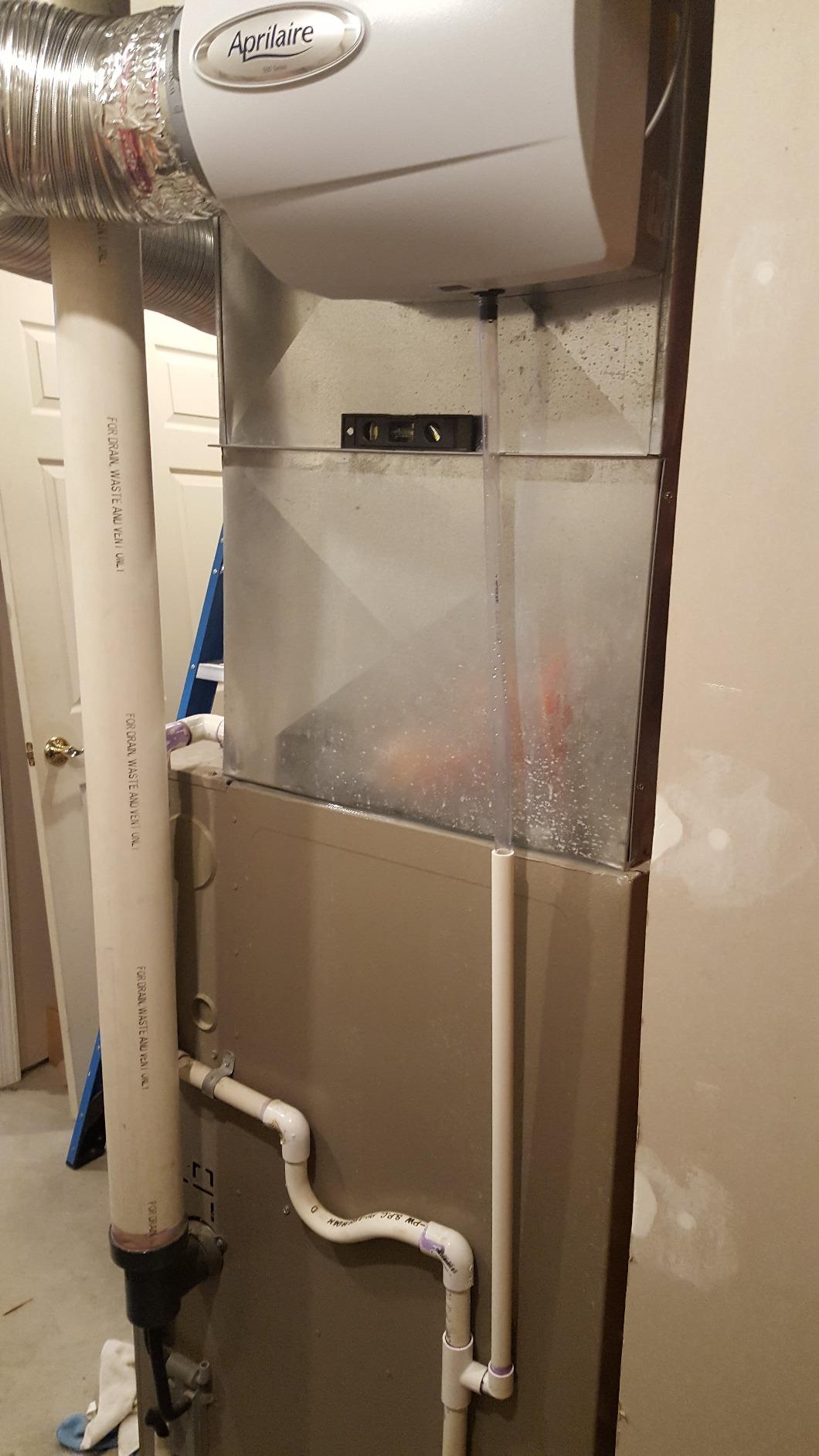
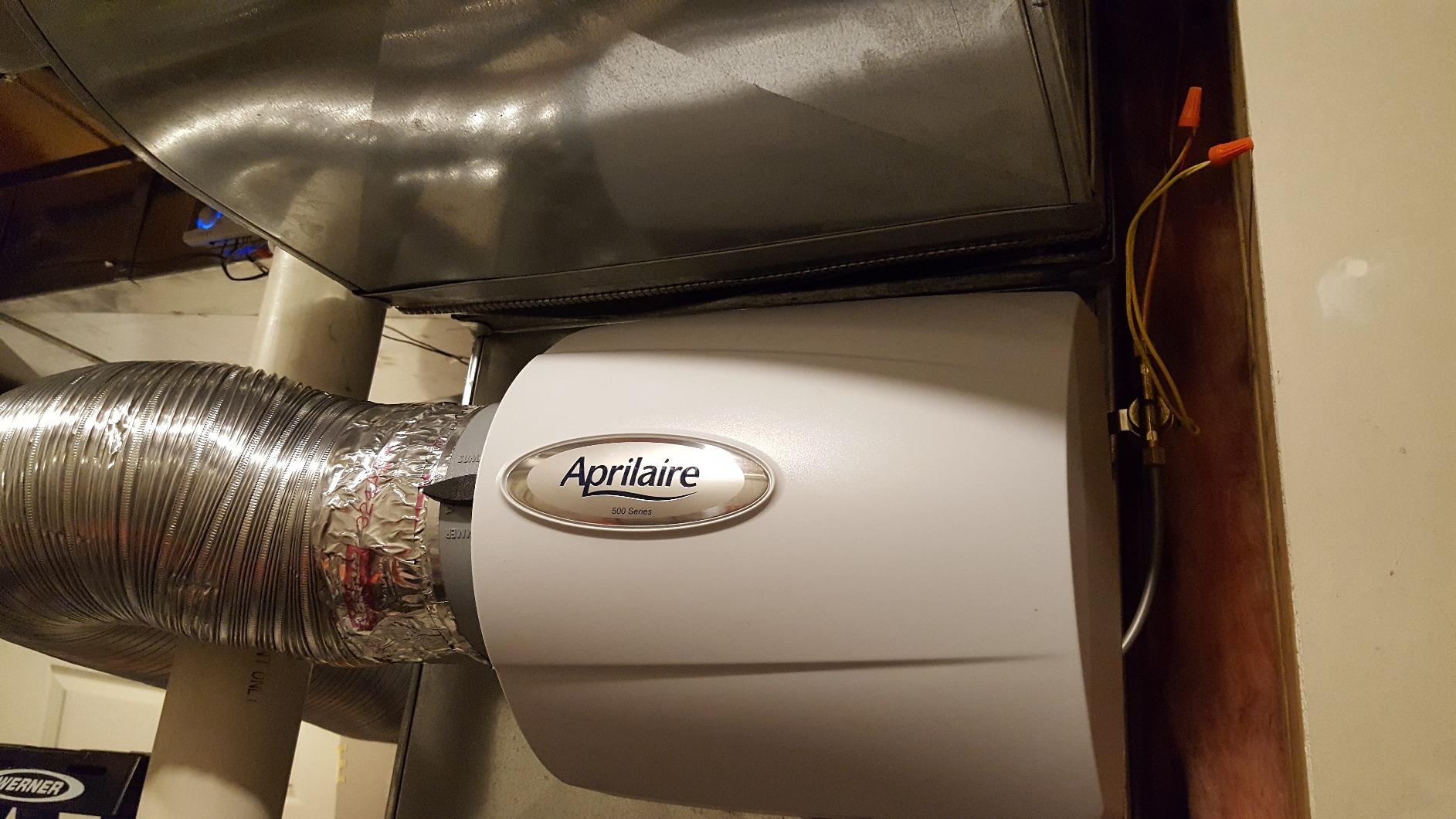
Physically it is a modest box: 10.25 inches deep by 15.63 wide by 13 high, and 7.8 pounds, so it fits most plenums without sheet metal gymnastics. Electrical draw is 15 watts on 24 volts of alternating current, and the manufacturer is Research Products Corporation, made in the USA with a 5 year manufacturer warranty. There is no fan motor to fail, which matters when you are relying on a blower that is already running for heat.
The honest drawback is installation, not performance. This is a multi-hour project involving sheet metal cutting, plumbing and low-voltage wiring, and the paper that ships in the box is largely a wiring schematic rather than a sequence of steps. Reviewers also flag that thermostat wire, copper line, drain tubing and foil tape are all extra. If you have never wired a humidistat, budget for a technician.
Best For: Cold Single-Story Homes with a Forced-Air Furnace
This is the right pick when you have a warm-air furnace, a 30 to 50 percent target, and a house that sits under 3,600 square feet. The dual-sensor control is the deciding factor, because it is what keeps the unit from over-running in a shoulder season when the furnace cycles on for a mild day.
It is also the safest recommendation for a first-time owner. The 4.6 rating across 1,812 ratings is the deepest owner history of any ducted model here, and the recurring owner report is the same one: installed once, then essentially ignored for years.
Who Should Pass: Homes Without a Warm-Air Furnace or Any Willingness to Cut Sheet Metal
If your heat is hot-water baseboard, radiant, mini-split or electric panel heat, there is no plenum to mount to and this unit cannot help you. The same applies to a tight build where nobody is going to cut into the supply plenum. Look at the console section further down instead.
Do not expect to run this year-round without seasonal control. Owners who leave it on through the summer can end up with condensation and microbial growth inside the ductwork, which is the fastest way to turn a good unit into a complaint about mold.
2. AprilAire 700 – Best Fan-Powered Evaporative for Large Cold Homes
- Highest evaporative output in this lineup at 18 gallons per day
- Built-in fan pulls heated air through the unit for even distribution
- Dual-sensor automatic control responds to outdoor temperature
- Largest coverage area of the evaporative options here
- Largest and heaviest cabinet so it needs more plenum space
- Installation needs ductwork modification and furnace wiring expertise
- Not designed for DIY warranty coverage
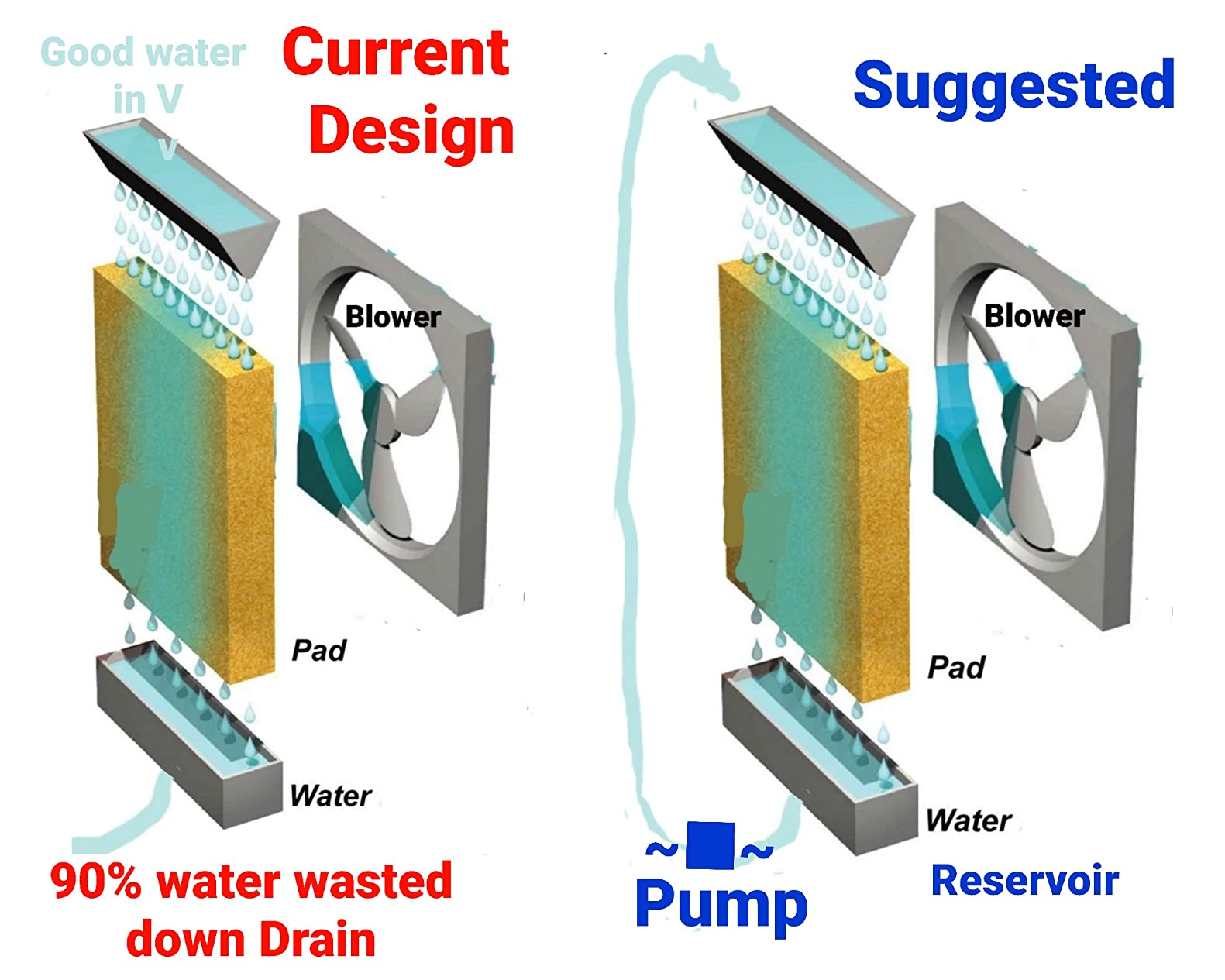
The AprilAire 700 is the answer for a big, cold, tightly built house where a 12 gallon per day unit is stretched thin. At 18 gallons per day it is the highest-output evaporative model we reviewed, and the built-in fan is the feature that separates it from a bypass unit. Instead of waiting for the furnace blower to push air through the pad, this one pulls its own.
That difference matters in a cold climate for a practical reason. On a weekend when the heat is off but the humidity has dropped, a fan-powered unit can still move moisture, and it distributes more evenly across a wide supply system than a bypass model relying on incidental plenum pressure.
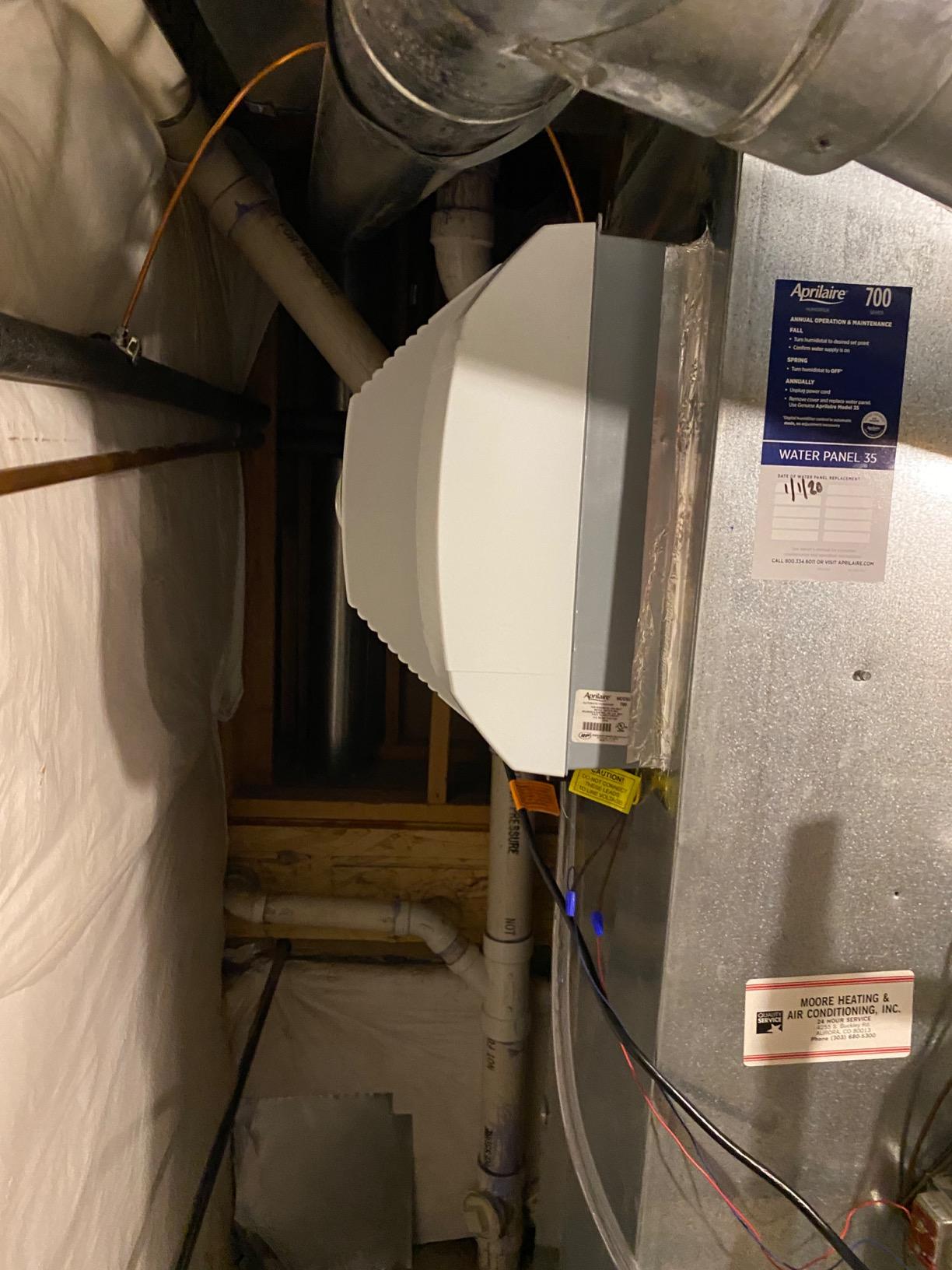
Published coverage is up to 5,300 square feet, with a 4.6 rating from 1,137 ratings and roughly 77 percent five-star. The cabinet measures 11.35 inches deep by 15.91 wide by 18 high and weighs 15.5 pounds, which is the physical trade-off for the extra capacity. Reviewers commonly pair it with a HydroCore install kit when replacing an older installation.
There is no special interface here and no app. The value argument is capacity and the built-in fan, full stop, and buyers who are paying for capacity rather than features should be satisfied. The 5 year manufacturer warranty is the same as the rest of the AprilAire furnace-mount line.
Best For: Large Tight Homes Over 3,000 Square Feet With a Wide Supply System
Choose this when square footage is the binding constraint, or when a bypass model left you short. The 18 gallon per day figure is the largest published evaporative capacity in this group, and for a house that needs a lot of moisture in January, capacity is the thing that solves the problem.
It is also the more sensible choice for an open plan home where a single thermostat sits far from the bedrooms. The built-in fan helps push conditioned air through every branch rather than only through the trunk.
Who Should Pass: Tight Plenum Cavities and Owner-Installer Shoppers
The 18 inch tall cabinet is the tallest here, and it needs more clear space inside the plenum than a 500 or 600M. If your furnace cabinet is a small horizontal unit, measure before you commit. Plenum modifications are not always possible in a tight installation.
Reviewers also flag that the manufacturer does not extend warranty coverage to self-installed units. If you are hiring a contractor anyway this is a non-issue, but if the plan is a weekend with a sheet metal nibbler, that is a real cost you are carrying.
3. AprilAire 600M – Best for Owners Who Want Manual Control
AprilAire 600M Whole-House Humidifier, Manual High Output Furnace Humidifier, Large Capacity Whole-House Humidifier for Homes up to 5,000 Sq. Ft., White
- Highest average rating of the ducted group at 4.7 out of 5
- 17 gallons per day from a compact 8.7 pound cabinet
- Mechanical humidistat is simple and reliable with no electronics to fail
- Runs quietly with no moving parts
- No outdoor temperature compensation so seasonal adjustment is manual
- Installation still needs plenum modification
- water line
- drain and humidistat wiring
- Replacement water panels are an ongoing seasonal cost
The AprilAire 600M is the highest-rated ducted unit we reviewed, at 4.7 across 976 ratings with about 81 percent five-star. The reason is not a feature list. It is a mechanical humidistat with no electronics, no sensors to fail and nothing that behaves strangely after a power event in a house where the power flickers all winter.
Capacity is not the trade-off people expect. At 17 gallons per day and coverage published up to 5,000 square feet, this is nearly the output of the fan-powered 700 in a cabinet that is smaller and 6.8 pounds lighter, at 8.7 pounds and 15.75 inches tall.
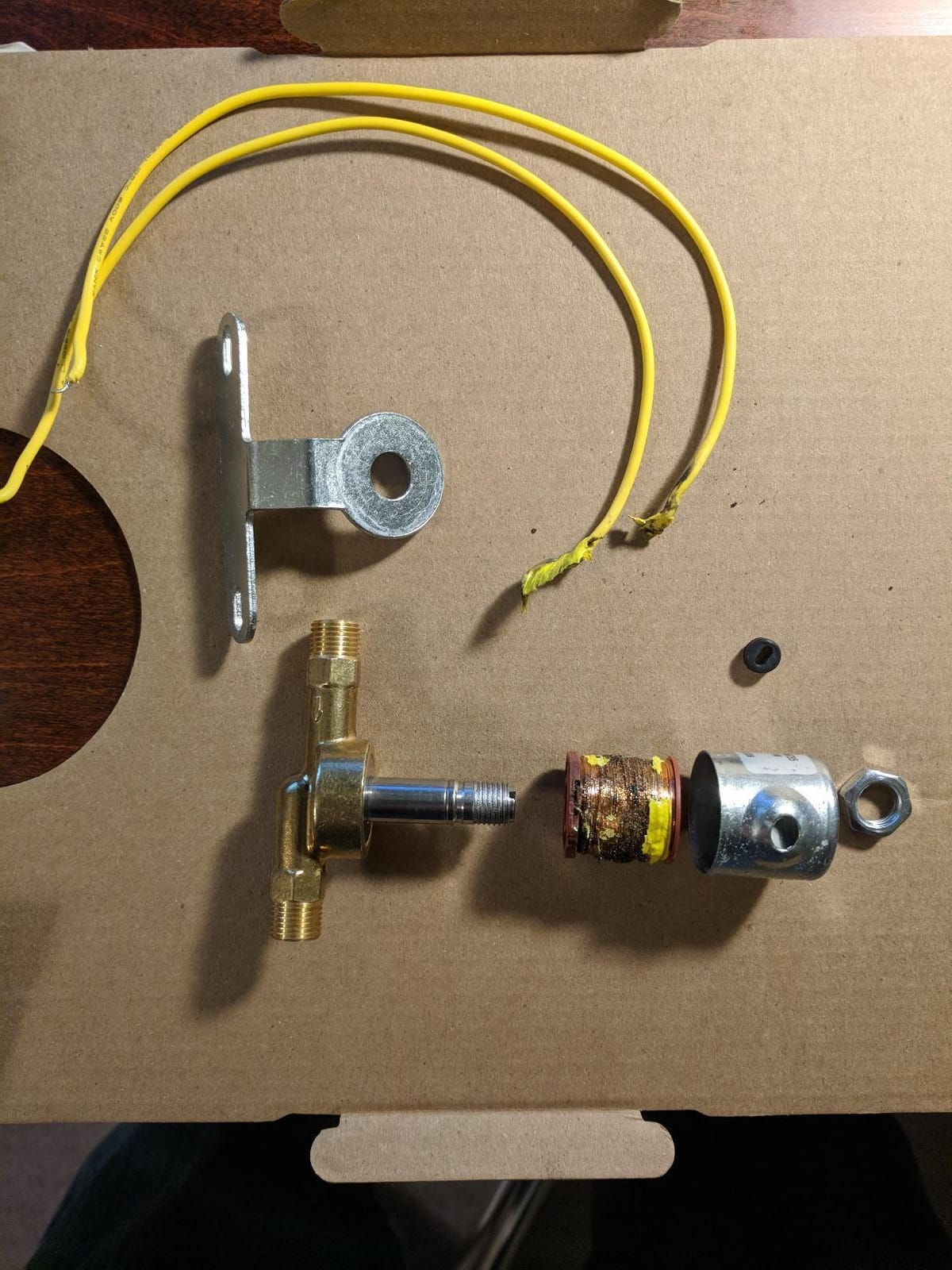
Owners treat the simplicity as a feature rather than a compromise, which is a fair read for a cold-climate installation that has to run unattended for months. The unit is made by Research Products Corporation, carries a 5 year manufacturer warranty, and the standard kit includes the humidistat, water panel, transformer, sensor and valve.
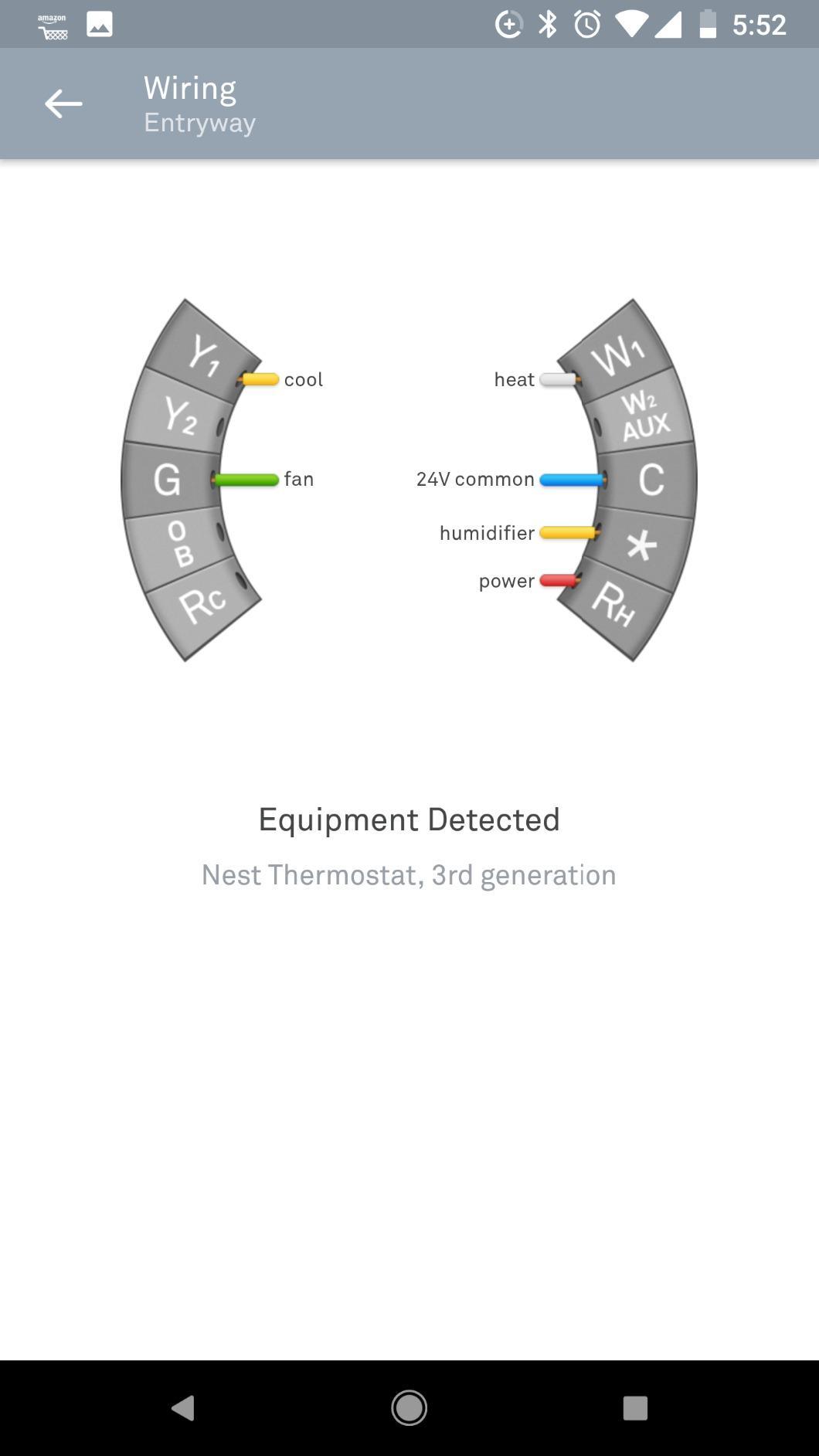
The cost of going manual is written into the design. Without an outdoor temperature sensor, the unit does not know that the house is more humid on a mild day because the outdoor air is carrying more moisture, so the seasonal adjustment lands on you. A cheap temperature-scheduled timer, which owners on heating forums recommend for exactly this kind of unit, closes most of that gap.
Best For: Owners Who Want a Set-and-Forget Box With No Electronics to Fail
Pick the 600M if you would rather adjust a dial twice a season than troubleshoot a control board in February. The absence of electronics matters more in a northern climate than anywhere else, because a failed sensor in a cold snap means dry air until a technician can get out.
For most cold-climate homes under 5,000 square feet, the capacity-to-size ratio here is genuinely strong, and the rating reflects owners who installed it and never had to think about it again.
Who Should Pass: Anyone Who Will Not Manage the Seasonal Adjustment
If you are not going to turn the setpoint down in spring or up in January, this is the wrong unit. A mechanical humidistat set to a fixed number and never adjusted through a shoulder season is a condensation problem in the ductwork, and no rating compensates for that.
Also factor in the recurring water panel. It is a genuine seasonal line item rather than a one-time purchase, and the same applies to every ducted evaporative unit in this list.
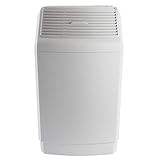
4. AIRCARE 831000 Space Saver – Best Value Console for Renters
- Largest evaporative reservoir among the portable options at 6 gallons
- Digital controls with an auto humidistat hold a setpoint unattended
- Automatic shut off at target level or empty
- Casters let you move it between rooms
- Most reviewed model in this group
- 1000 watt draw is high for a residential humidifier
- Wick filters need frequent replacement and scale in hard water
- Coverage is limited to 2700 sq ft so big homes need more than one
- Float system can stick if it is not cleaned
The AIRCARE 831000 is the console we would point a cold-climate homeowner at when the ductwork is off the table. It is the most heavily reviewed product in this entire roundup, with 6,528 ratings averaging 4.2 and 63 percent five-star, which means a lot of people have already learned its strengths and its limits from hard experience.
The 6 gallon tank is the reason for its popularity in winter. A smaller console means refilling every two or three days through the heating season; this one runs long enough between fills that people actually keep it filled. Published coverage is 2,700 square feet, and it uses a 1043 Super Wick with Trapmax filter technology.
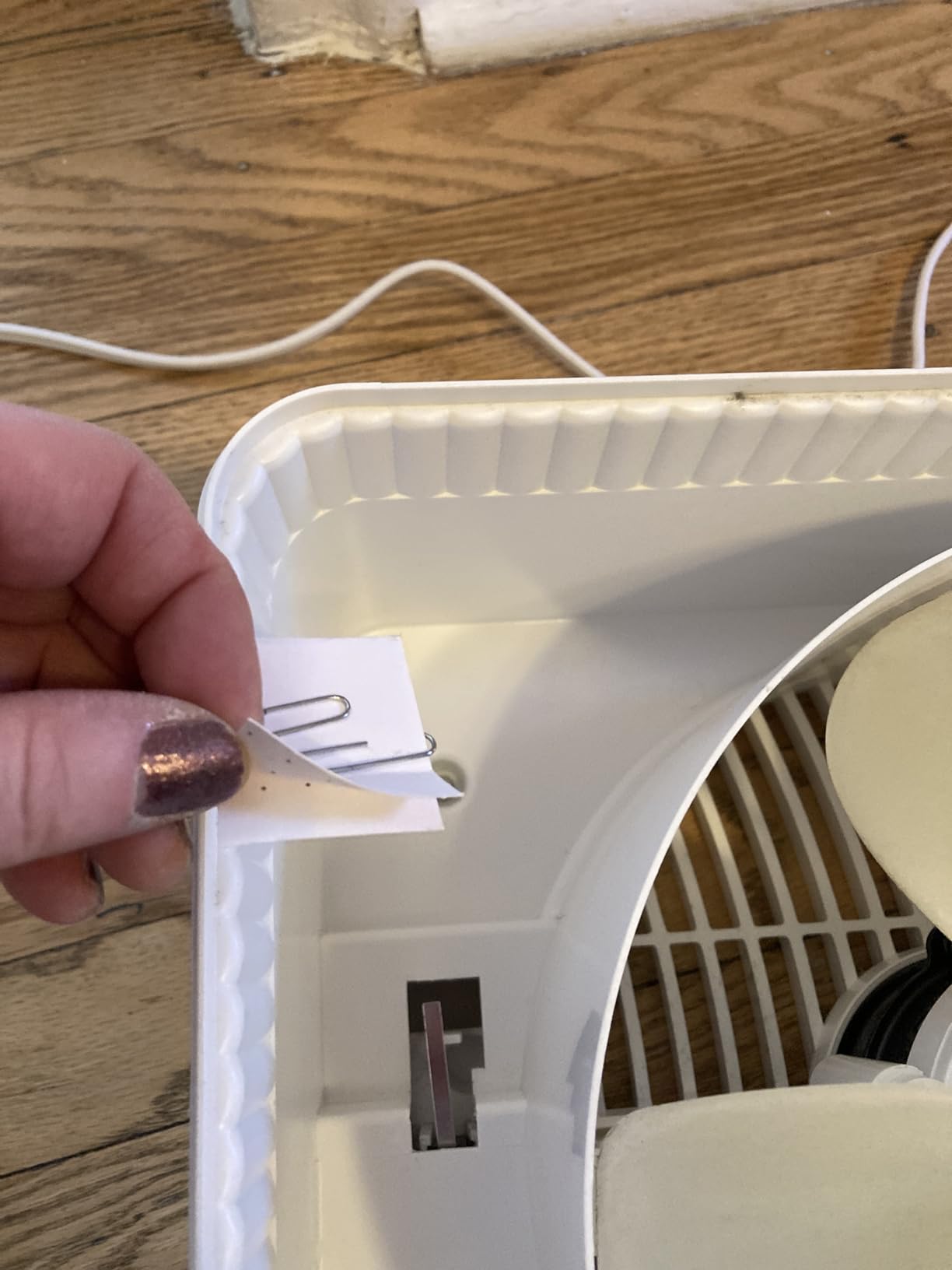
Controls are digital with an auto humidistat and automatic shut off, so you set a target rather than guessing. The cabinet is 12.5 inches deep by 17.5 wide by 22.5 high at 14 pounds, and the four included casters make it manageable when you want the moisture in a different room. Warranty is 2 years limited.
The recurring complaints are consistent and worth planning around. The 1000 watt draw is the highest here by a wide margin, wick life shortens badly in hard water, and the base needs cleaning between fills. In a house where you are already watching the power bill through January, that draw is not trivial.
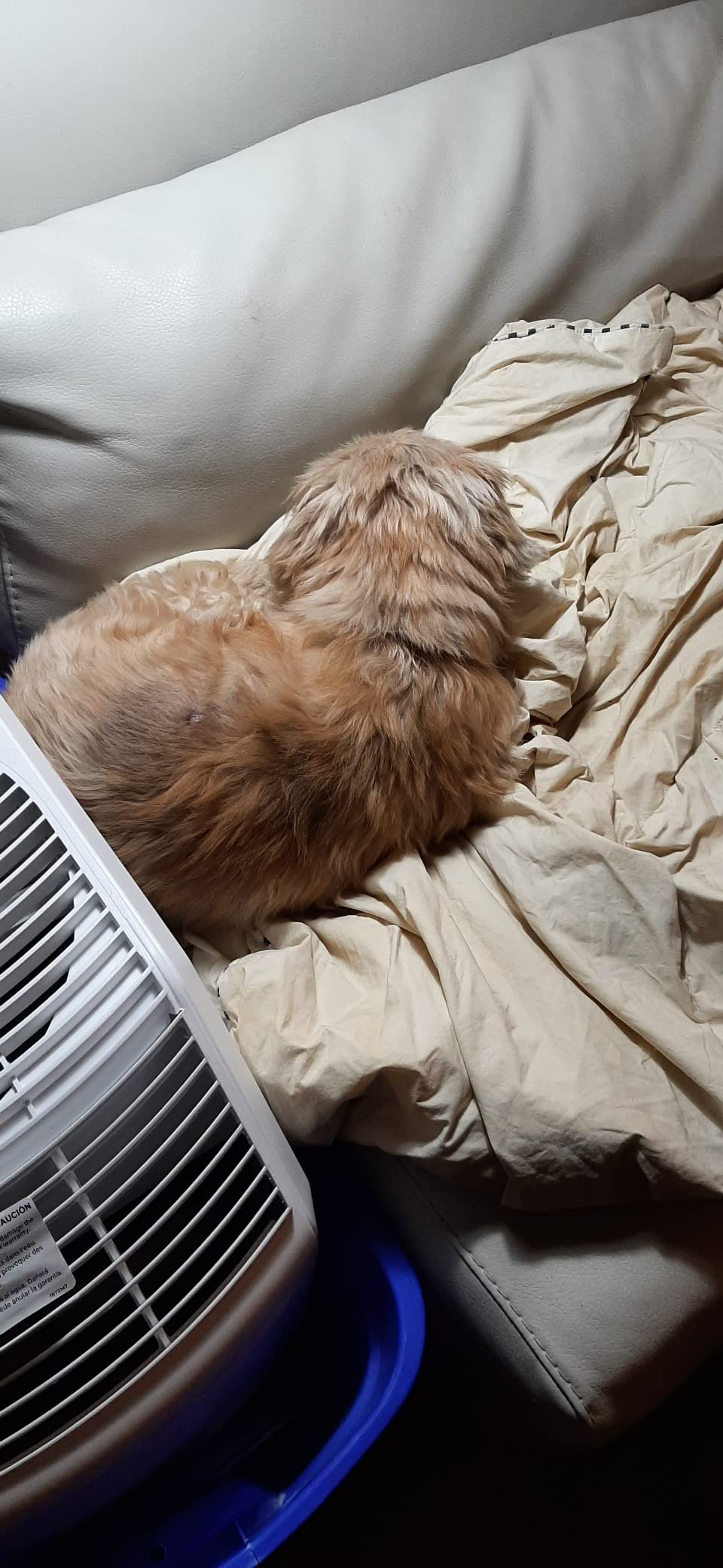
Best For: Renters, Condos and Any Home With No Ductwork
This is the console to beat in a cold climate on evidence, because the owner review base is large enough that the failure points are well documented rather than discovered after your purchase. Placement is the whole game: put it in a central open space on the main floor and let the air move.
If your home runs past 2,700 square feet, or you have a closed-off second floor, budget for two of them on separate floors rather than one oversized console. Forum owners report the same result repeatedly: one central unit trying to cover a whole multi-level house leaves the far bedrooms dry.
Who Should Pass: Owners With Hard Water or a Tight Power Budget
Hard water shortens wick life and leaves mineral scale on the cabinet base, and the float system can stick if it is not cleaned regularly. If your water is heavily mineral-treated, the wick-based consoles in this group all cost you more in consumables over a season.
At 1000 watts, running this to hold a target in a large cold house is a real load compared with the 30 watt Levoit or the 100 watt Valiant. It works, but it is not the efficient answer.
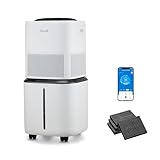
5. Levoit Superior 6000S – Best Smart Console for App Control
Levoit Evaporative Humidifiers for Home Whole House, 23L Superior 6000S
- 6 gallon tank runs up to 72 hours on low
- 1500 mL per hour evaporation lifts a dry room quickly
- Tap water safe wick with no white dust
- VeSync app and voice assistant support
- Detachable pump makes deep cleaning easier
- Not ducted so it depends on air moving within one space
- Wick filters still need replacing every 3 to 6 months
- Newer listing with a much smaller review base than the established brands
The Levoit Superior 6000S is the only console here with app control, and in a cold climate that is more than a convenience. A humidity sensor you can read from your phone while you are still in bed is genuinely useful when the question is whether the unit is holding setpoint overnight, which is the question that matters when the house drops into the low twenties overnight.
Output is published at 1,500 mL per hour, roughly 9 gallons per day under full load, with coverage claimed up to 3,000 square feet. The 23 liter tank runs up to 72 hours on the low setting, which in practical terms means you fill it about twice a week through a heating season rather than every other day.
Two things stand out physically. The wick is tap-water compatible, so unlike the mineral-heavy units here it does not produce white dust on nearby surfaces, which matters when you are placing it in a living room rather than a utility closet. And the detachable pump lifts out for deep cleaning, addressing the bacterial film complaint that owners raise about console units more than any other maintenance issue.
Power draw is 30 watts, the lowest of any powered unit in this roundup, and the cabinet is 12.72 inches square by 26.7 tall at 13.2 pounds. A plus or minus 5 percent humidity sensor feeds two automatic modes alongside the app.
Best For: App-Control Households and Homes With Hard Tap Water
Choose this if you want remote monitoring and if your water is hard enough to make wick-based consoles expensive to run. It is also the quietest efficient option here, and owners who placed it in a bedroom or living space report that the optimized airflow is unobtrusive.
For a mid-size home on one floor, the 72 hour runtime and the 30 watt draw make it the least fussy console to keep alive through a long season, provided the air can move between rooms.
Who Should Pass: Multi-Level Homes and Anyone Who Wants Proven Longevity
This is a single-space evaporative unit. The 3,000 square feet figure assumes air movement; in a split level with closed doors, the far bedrooms stay dry regardless of what the app reports in the living room.
The review base is also the thinnest of the consoles here, at 272 ratings. A minority of reviews question how well one freestanding unit conditions a large home in deep winter, and there is no long ownership history to reassure you. The 3 to 6 month wick replacement interval is also the ongoing cost to plan around.
6. AIRCARE EP9 800 – Best Pedestal Console for Smaller Homes
AIRCARE Digital Whole-House Pedestal-Style Evaporative Humidifier (Nutmeg)
- 3.5 gallon reservoir runs up to 70 hours between refills
- Freestanding pedestal needs no furnace or duct modification
- Digital controls with auto shut off and low water indicator
- Covers roughly 2400 sq ft from one central position
- 25 pound cabinet is heavy to move for cleaning
- Single-room airflow must reach the rest of the home
- Wick media needs periodic replacement and hard water shortens its life
- Only rated for 2400 sq ft
The AIRCARE EP9 800 is the compact answer for a smaller cold-climate home, a basement, or a single-floor space under about 2,400 square feet. It is one of the most-reviewed evaporative console humidifiers available, with 5,445 ratings at 4.3 and about 65 percent five-star.
The 3.5 gallon tank and 70 hour runtime do most of the work in winter. A 70 hour tank on the low setting means you are refilling roughly twice a week rather than daily, and the low water indicator plus auto shut off mean an empty tank does not become a problem while you are at work.
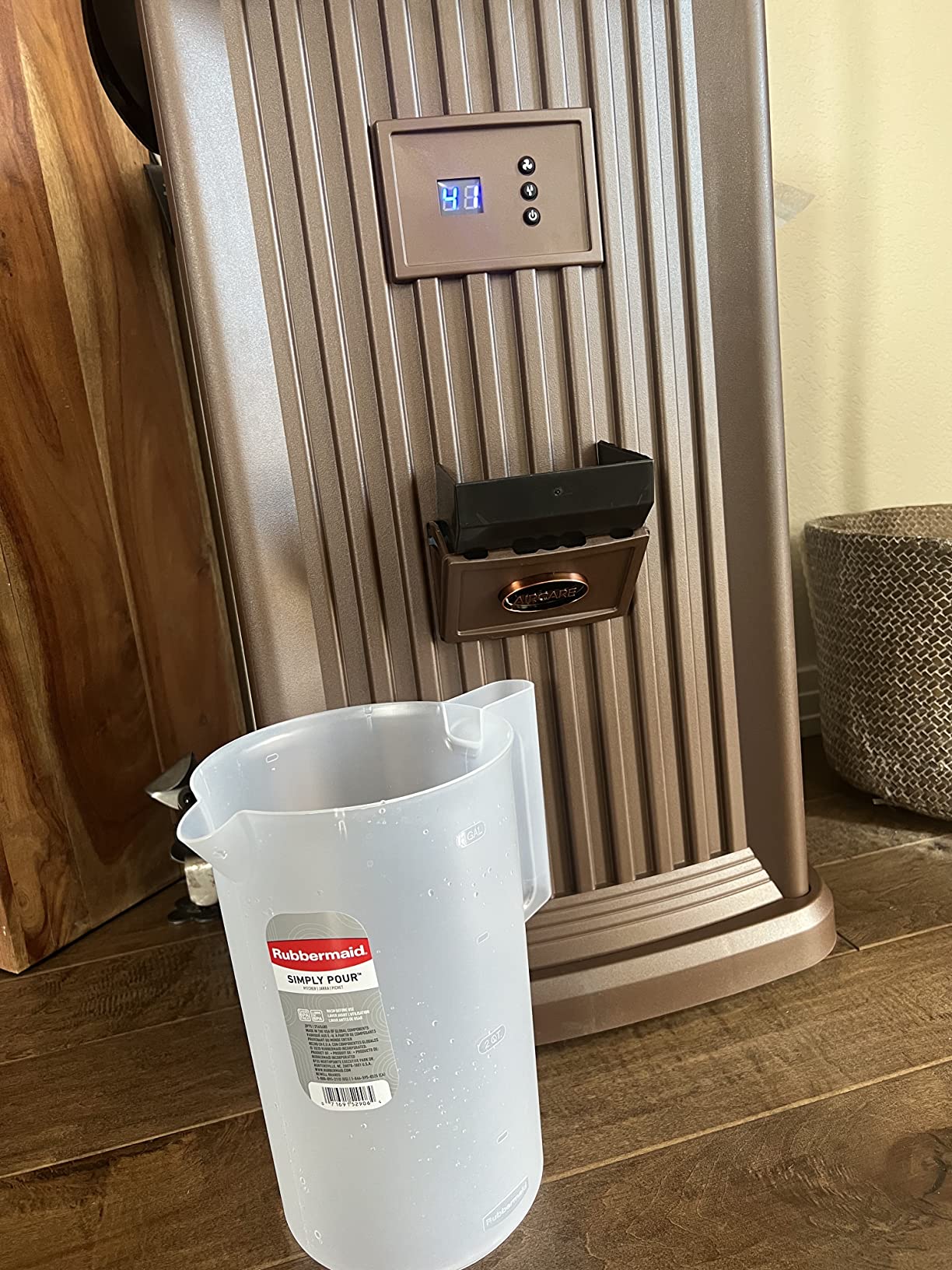
Digital controls on the pedestal panel keep the target automatic, and a 1043 Super Wick filter is included in the box. The cabinet is 18 inches square by 27.25 tall and weighs 25 pounds, which is the one real annoyance here: it is the heaviest console in the group to move when you want to shift it or clean under it.
Reviewers consistently name wick replacement intervals and mineral buildup as the main ongoing maintenance, exactly as they do for the other wick-based consoles. The fundamental limit is the same too: airflow from one room has to reach the rest of the house for you to call this whole-home humidification.
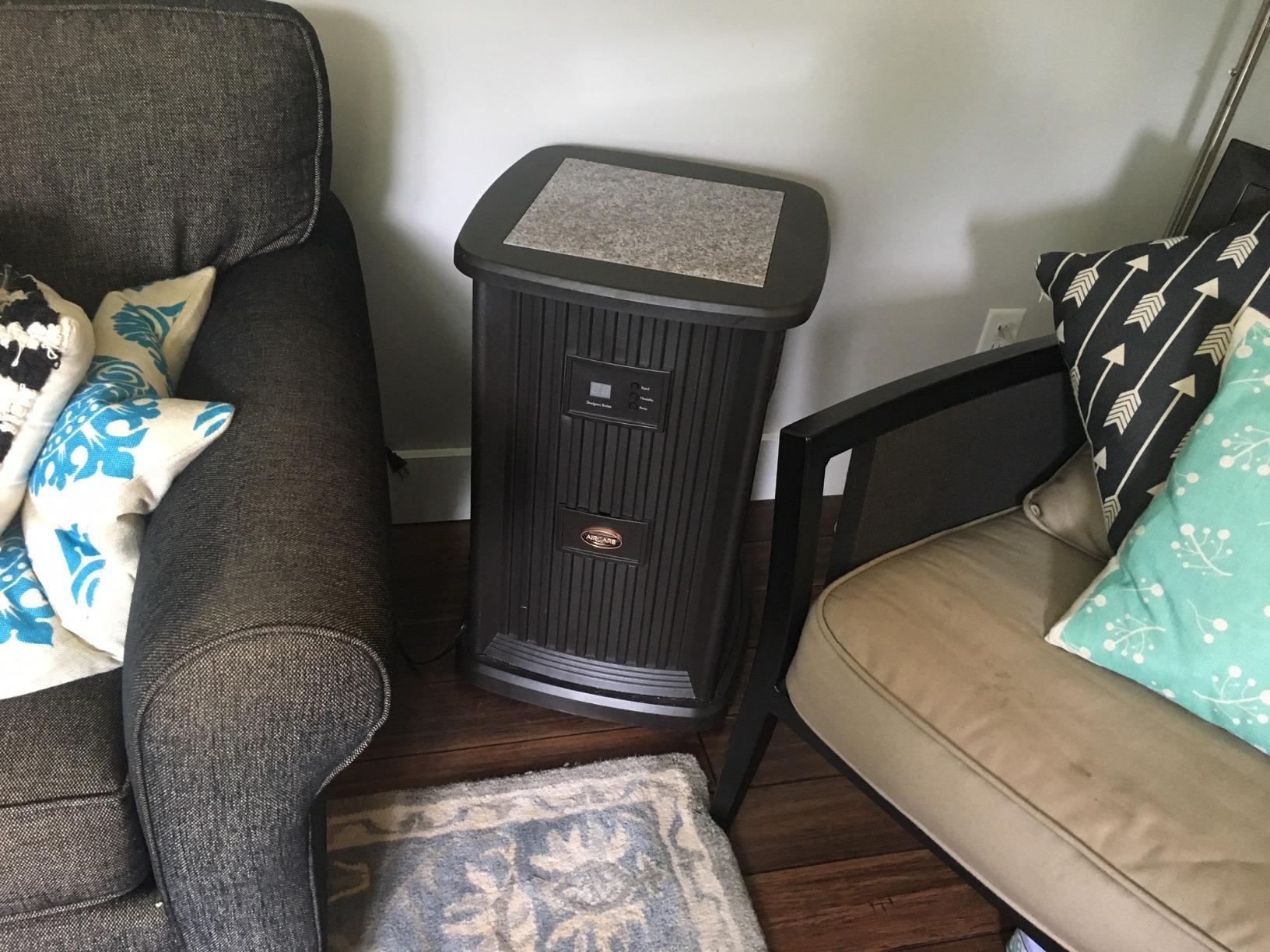
Best For: Homes Under 2,400 Square Feet on a Single Floor
This is the model to buy when a ducted unit is not viable and the house is small enough that one central console can carry it. The auto shut off and low water indicator reduce the day-to-day attention needed, which matters in a season when you are busy and the house is still losing moisture every hour.
It is also a reasonable second console for a specific room. Owners running a pair, one downstairs and one in a stubborn bedroom, report that this is where a central-only strategy falls short.
Who Should Pass: Multi-Level Homes and Small-Power Setups
At 2,400 square feet, the coverage claim leaves no headroom, and this is a closed-loop wick unit with no duct distribution. Multi-level homes need a unit per floor rather than one taller cabinet.
The 25 pound weight is a genuine ergonomics problem in a bedroom or on carpet. If you want to move it to catch a specific room, pick a model on casters instead.
7. GeneralAire 1042LH – Best Bypass Pick for Tight Plenum Space
GeneralAire 1042LH Legacy Humidifier, 24V, Furnace Mount Bypass Type
- 17 gallons per day at a 120 degree plenum temperature
- Reversible right or left hand 6 inch duct connection fits either plenum side
- Compact 9 inch deep body fits tight furnace plenums
- Includes a 120V to 24V transformer and a duct-mount humidistat
- Manual control only with no outdoor temperature compensation
- Requires genuine GeneralAire 990-13 replacement pads one to two times a season
- Furnace-mount installation requires sheet metal and plumbing work
The GeneralAire 1042LH solves a specific problem that the bigger AprilAire models can create: not enough room in the plenum. At 9 inches deep and 12 pounds, it is the shallowest furnace-mount unit here, and the reversible right or left hand 6 inch duct connection lets it sit on whichever side the cabinet allows.
Published output is 17 gallons per day at a 120 degree plenum temperature, which is a well-specified figure rather than a square footage claim. Coverage is listed up to 2,800 square feet. In the box you get the humidifier, a 120V to 24V transformer and an mhx3c manual-control duct-mount humidistat.
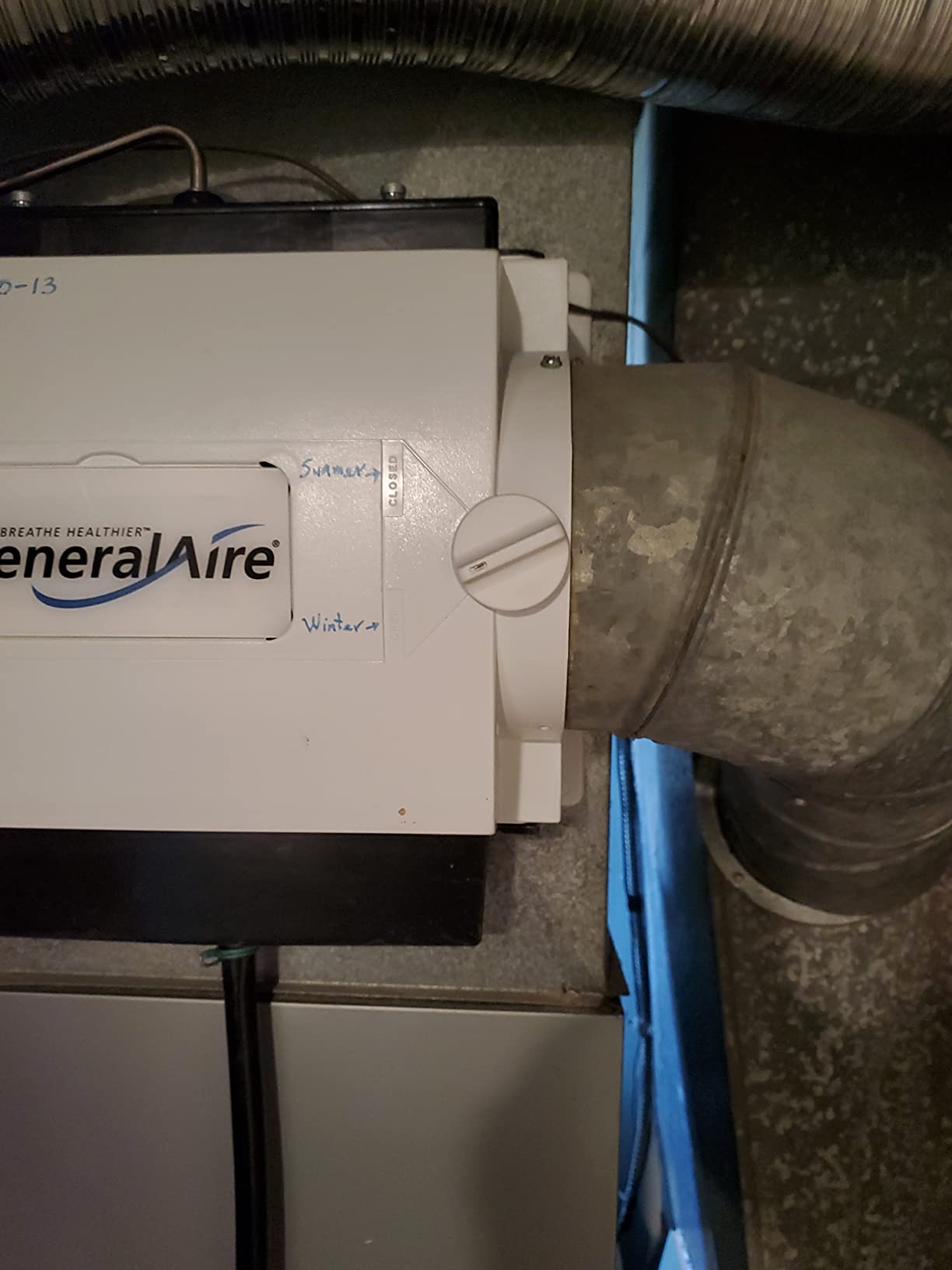
Owners like the straightforward mechanical control and the honest output figure, and the 4.6 rating across 130 ratings with 76 percent five-star is a favorable signal even on a smaller base. It appeals most to people who already run GeneralAire equipment and want the classic bypass format they know how to service.
Two things to weigh. It is manual control, so it has the same seasonal-adjustment issue as the AprilAire 600M and none of the compensation a dual-sensor model offers. And it uses genuine GeneralAire 990-13 replacement pads, which owners say you need one to two times per season, so keep a spare on hand before the first cold week.
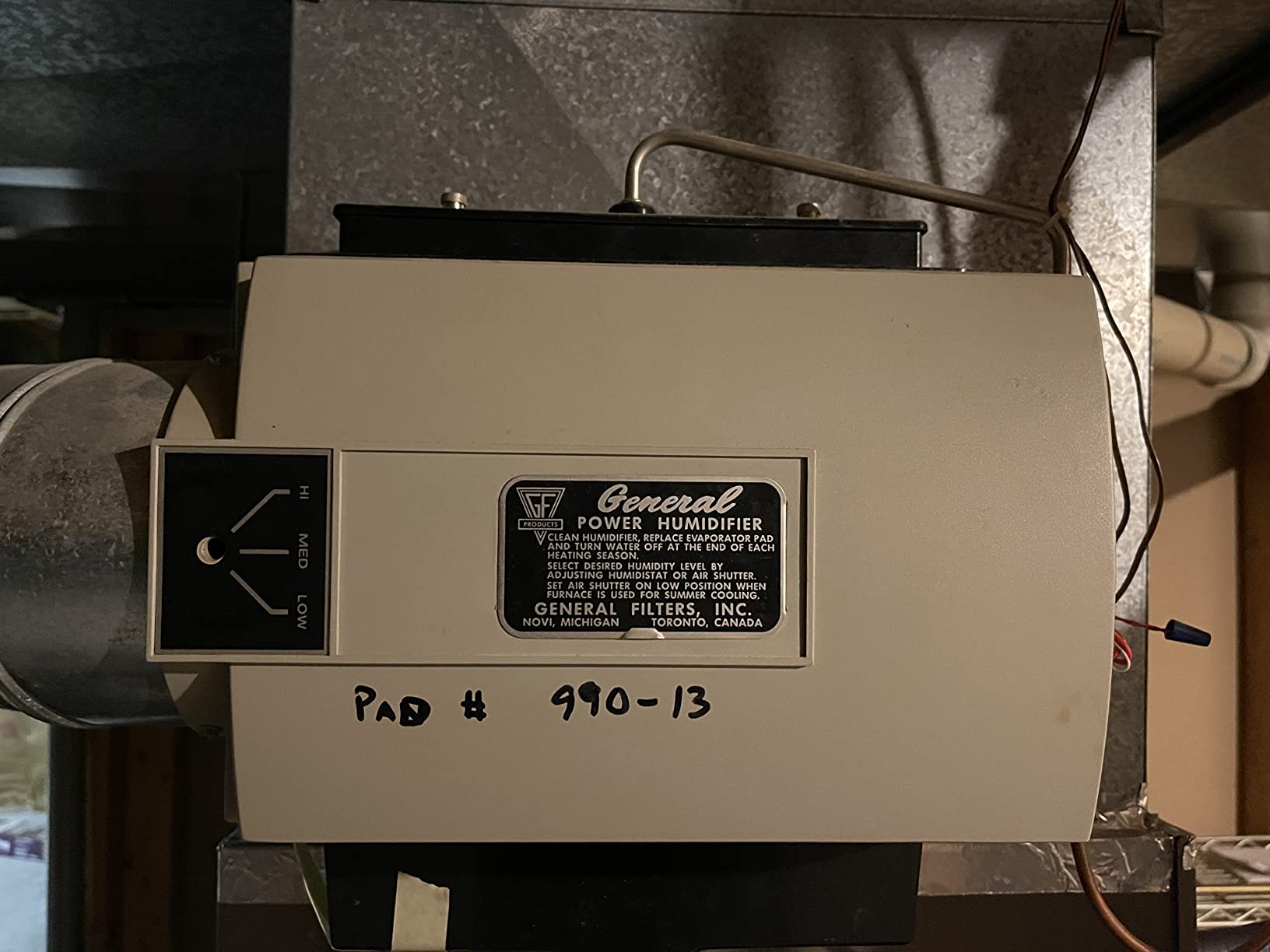
Best For: Tight Horizontal Furnace Cabinets and Owners With GeneralAire Equipment
Choose this when plenum depth is the constraint that is stopping you from a larger unit. The 9 1/2 inch by 13 5/8 inch plenum opening and 9 inch deep body fit horizontal installations that a 700 simply will not accept.
It is also the sensible choice if you are already familiar with the brand and want parts you can source without cross-referencing. The bypass format is the classic, well-documented install.
Who Should Pass: Anyone With a Heat Pump Only System, and Homes With Crawlspace Concerns
Heating contractors warn that bypass units on downflow furnaces can cause airflow imbalance and pull unwanted air from a crawlspace. If you have a downflow furnace, ask your installer about this before committing, because the interaction is a real installation concern and not a sales pitch.
Also, a bypass unit has no fan of its own. If your blower is intermittent or your heat is intermittent, the unit runs when the furnace runs, and there is no capacity when the house is cold and the heat is off.
8. Honeywell HM750A1000 – Best Steam Pick for Extreme Cold
- Steam output reaches target humidity far faster than any evaporative unit
- Boils the water so there is no standing water and no mineral dust in the ducts
- Includes a digital humidistat with illuminated display and outdoor sensor
- Smallest footprint in its class
- Field-switchable from 120V to 240V to roughly double output
- Highest purchase figure in the group by a wide margin
- Must be hardwired on a dedicated circuit with no 120V plug option
- Disposable steam canister adds significant recurring cost
- Warranty does not apply to homeowner installations
The Honeywell HM750A1000 is the only steam unit in this roundup, and in a genuinely severe winter it is the only one of these nine that solves the problem from first principles. It boils water into steam and injects it into the supply air, so its output does not depend on the temperature of the plenum. An evaporative unit gets weaker as the air gets colder; a steam unit does not.
It is also field-switchable between 120V and 240V, roughly 11 gallons of steam per day or roughly 22 gallons per day from the same cabinet. For a house that is genuinely dry all winter, that 240V configuration puts it far ahead of anything else on this list.
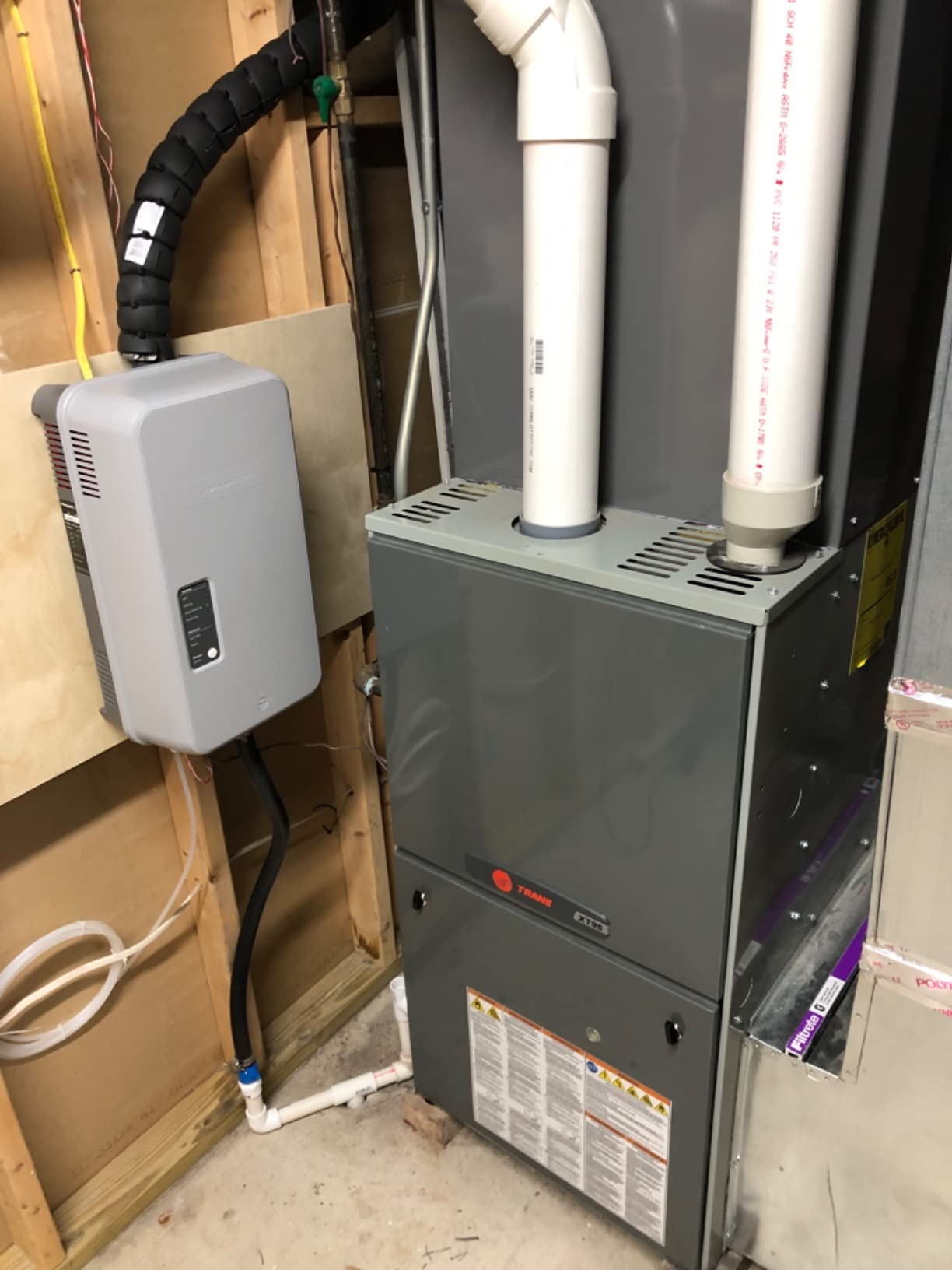
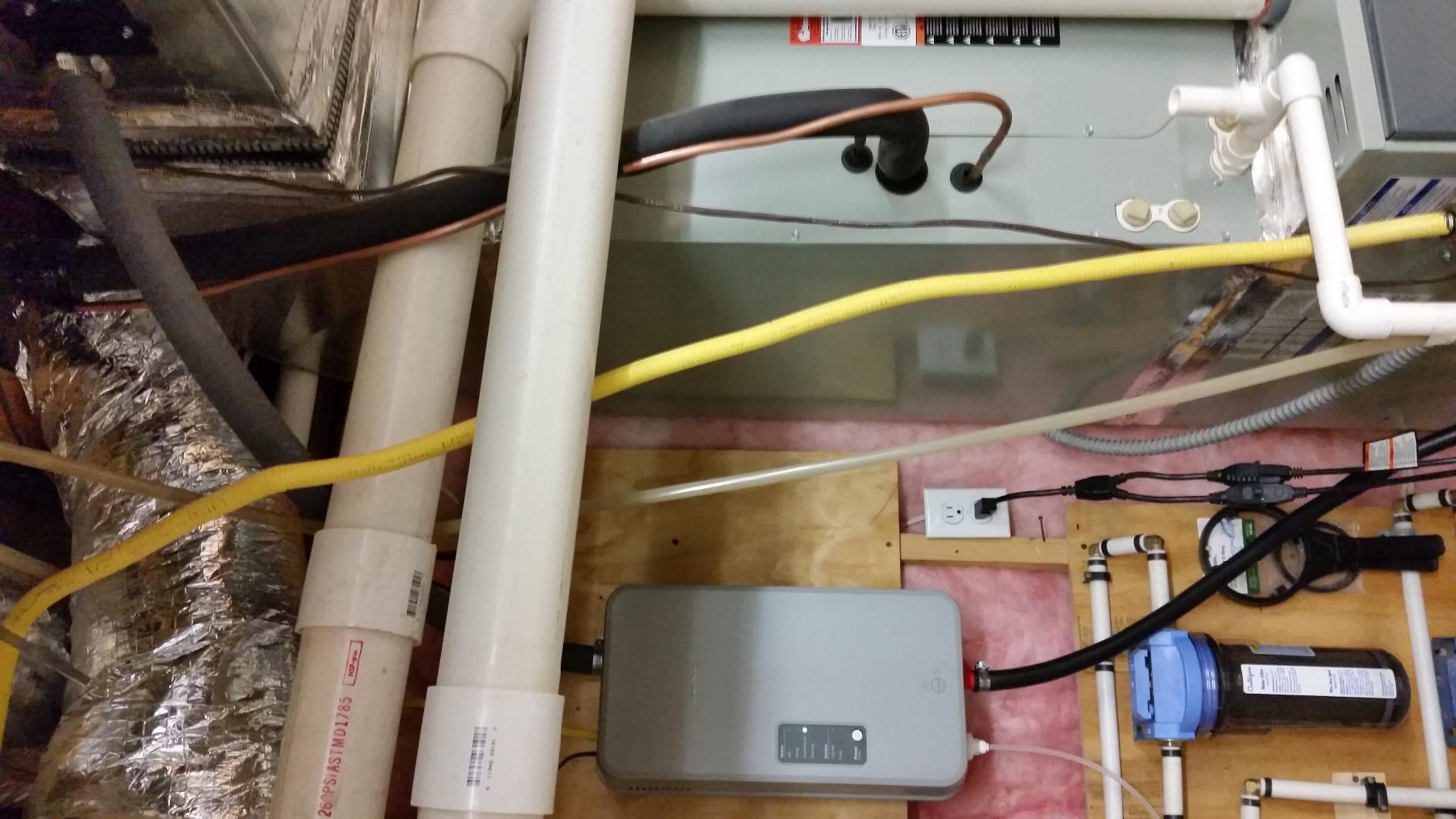
There is a pre-mineralized cylinder for faster startup and a digital humidistat with an outdoor temperature sensor in the box. The cabinet measures 21 inches deep by 8 wide by 10 high at 13 pounds, which the manufacturer positions as the smallest footprint in its class, and it can be duct-mounted or wall-mounted.
Boiling the water also removes the two complaints that attach to every evaporative unit: no standing water means no bacterial film, and no mineral dust in the ductwork. Owners who have installed it correctly report reaching setpoint within a day.
Best For: Homes That Stay Below 30 Percent Humidity All Winter
If your indoor readings sit in the teens or low twenties for months and an evaporative unit has not fixed it, this is the category the rest of the industry cannot match. Forum owners in cold regions report that steam distributes evenly across multiple floors in older homes, which ducted evaporative units struggle to do.
The 240V configuration is the one to specify if you install it. Owners describe reaching a setpoint in a day that would have taken an evaporative unit most of a week, at the cost of a hardwired dedicated circuit.
Who Should Pass: Renters, Budget Shoppers and Anyone Who Will Not Call a Contractor
This is a hardwired appliance on a dedicated circuit with no 120V plug option, and it is by far the highest purchase figure in this group. If you rent, or the electrical panel cannot spare a circuit, it is not an option at all.
Recurring cost is the other issue. The disposable steam canister and related parts are a real ongoing line item, reviews concentrate on canister cost, and the warranty does not apply when a homeowner installs the unit. Mounting space next to the furnace can also require moving gas vent piping, which is contractor territory.
9. AIRCARE Valiant EA1407 – Best Console That Blends Into Furnished Rooms
AIRCARE Valiant Digital Whole-House Console-Style Evaporative Humidifier (Honey Oak)
- Wood console cabinet blends into living space instead of looking like an appliance
- Dual side-fill tanks keep the wick wetted for more even output
- Digital humidistat holds the setpoint automatically
- Two smaller fans are noticeably quieter than a single large fan
- 55 hour rated runtime with casters included
- High fan setting is very loud while medium is much quieter
- Thin plastic cabinet and parts with occasional units arriving damaged
- Dual tank needs the right bottle emptied fully before the other drains
- Wicks degrade in about 4 weeks in hard water
The AIRCARE Valiant is the console for someone who refuses to put a plastic appliance in the middle of a living room. The wood-grain cabinet is the difference in a furnished space, and owners comment on it as often as they comment on the moisture output. At 4.1 across 1,575 ratings, it is the most polarized of the portable evaporative units here.
Operationally it is a 5 gallon console rated for 55 hours of runtime, with a digital humidistat and a readout that can show actual humidity, desired humidity or fan speed. Published coverage is up to 4,000 square feet, and casters are included for moving it between rooms.
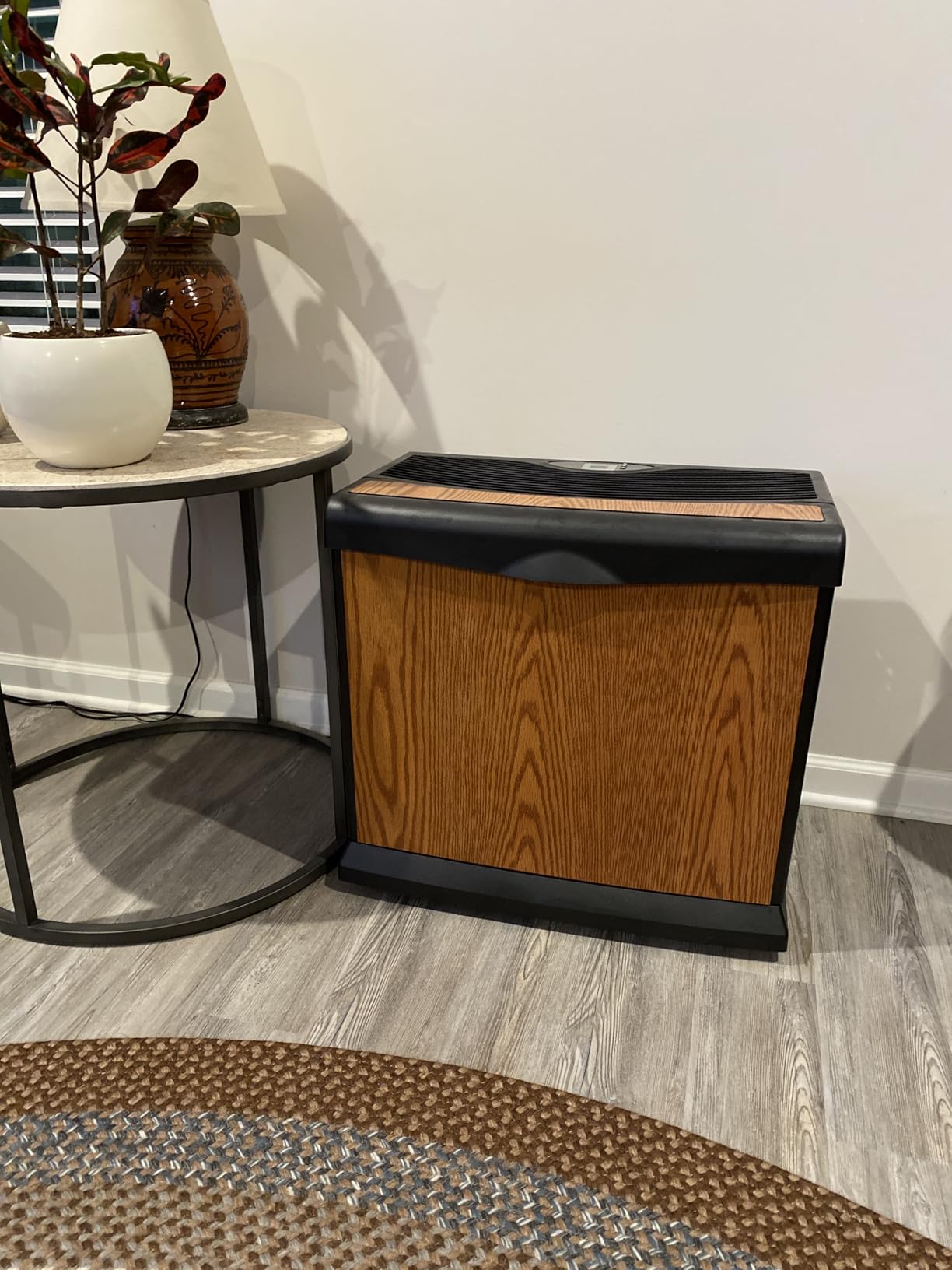
The dual side-fill tanks are the practical feature to understand before buying. Each tank trickles into the cabinet so the wick stays wetted, which supports more even output, but the sequence is finicky: the correct bottle has to empty fully before the second tank will drain. Reviewers call this out often enough that you should expect a learning period.
The two-fan layout is a genuine quietness win at the medium setting, which matters if the unit lives in a living space rather than a basement. Cabinet dimensions are 13.8 inches deep by 21.8 wide by 23.5 high at 21.5 pounds, with a 2 year limited warranty.
Best For: Living Rooms and Main Floors Where Appearance and Noise Both Count
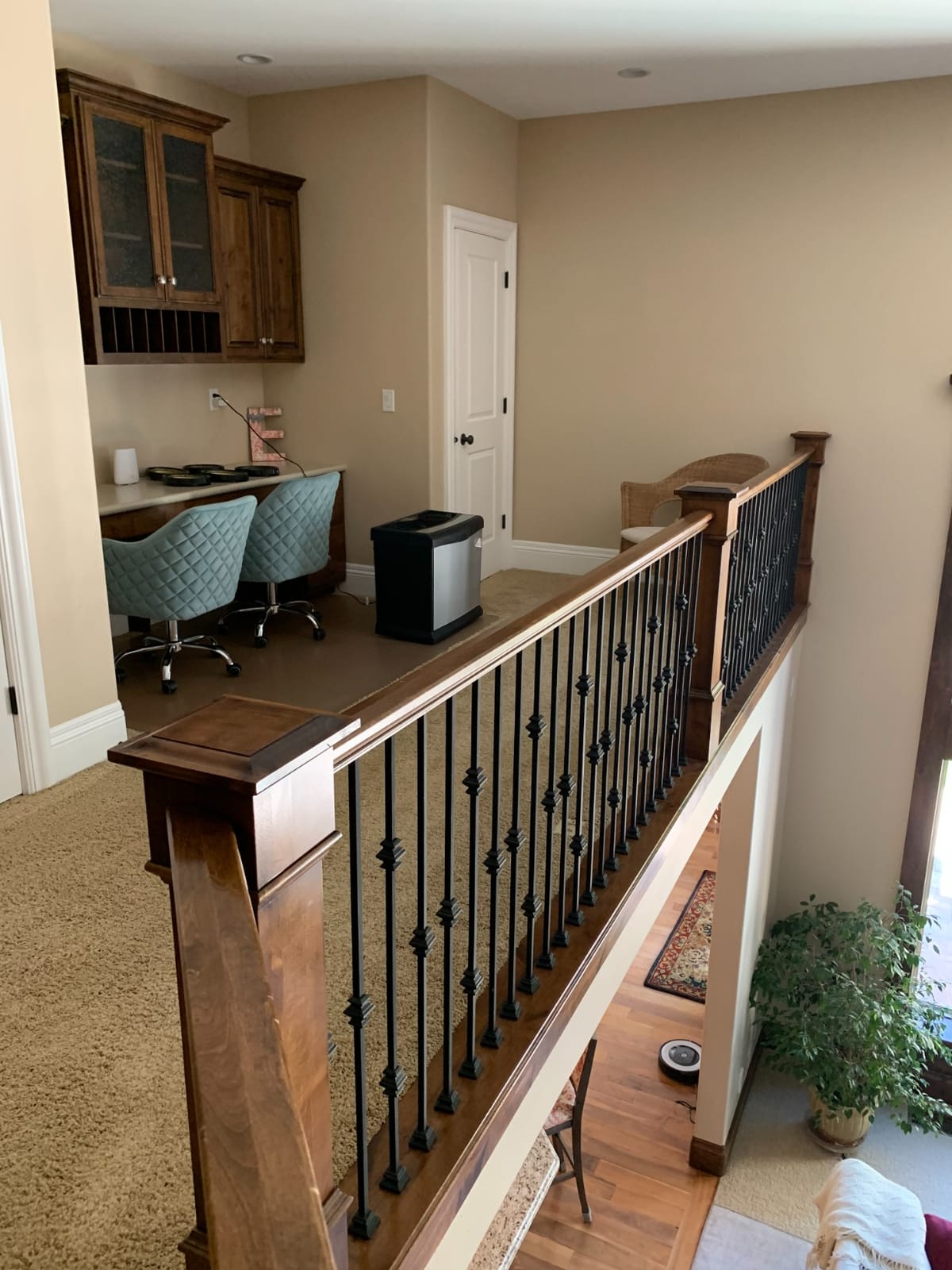
The wood cabinet and the two-fan quietness make this the one console we would not hide. In an open plan main floor, the higher capacity and the 4,000 square foot claim give it more headroom than the 2,400 and 2,700 square foot consoles, provided the air is moving.
Owners report that it is effective for whole-home use when placed centrally, and the digital humidistat means you set the target once. Running it on medium rather than high solves most of the noise complaints.
Who Should Pass: Hard Water Areas and Buyers Who Hate Appliances in Sight Lines
Wicks degrade in roughly four weeks in hard water, which makes this an expensive console to run through a northern season. The 12 percent one-star share is higher than any other portable unit here, and it traces back to the thin plastic cabinet, damaged-arrival experiences and difficult customer support after a tank or fan failure.
And it is still an appliance with a plastic interior, in a wood-look shell. If the styling is the deciding factor, look at where it will sit before you commit.
Bypass vs. Fan-Powered: Which One Handles Winter Better
A fan-powered humidifier is the stronger cold-climate choice, because its built-in blower moves air through the wetted pad regardless of plenum pressure. A bypass unit depends entirely on the furnace blower pushing air through it, which means it runs when the heat runs and not otherwise.
That dependence is not a minor detail. Forum owners describe the experience precisely: the whole-house humidifier does not really operate unless the furnace is running. On a cold day when the thermostat is satisfied, the house dries out with no moisture delivery at all.
The cost side favors bypass. It has no motor, draws almost nothing, and is quiet by default because it has nothing to be loud about. Fan-powered units add moving parts, more plenum space, more sound and a higher price, and the AprilAire 700 is 15.5 pounds where the GeneralAire 1042LH is 12.
The verdict for winter: pay for the fan if the house is large, tight, or runs cold; take the bypass if the house is modest and you want the simplest possible machine.
Evaporative vs. Steam: The Cold Climate Verdict
Steam wins on output in extreme cold, and evaporative wins on everything else. This is the single most important comparison in a cold climate, and it comes down to one physical fact: an evaporative unit’s output is a function of the temperature and humidity of the air passing over the wick, so a furnace plenum at 55 degrees produces far less moisture than one at 120.
Steam has no such dependency. It boils water and injects vapor, which means a Honeywell HM750A1000 on 240V can deliver roughly 22 gallons per day in the same week an 18 gallon per day evaporative unit is effectively delivering a fraction of its rating. That is why steam is the long-heating-season answer and why homeowners in cold regions report more even humidity across multiple floors with it.
The trade-offs run the other way. Warm steam units need a hardwired dedicated circuit, cost more, need a contractor, and have a disposable canister as a recurring expense. Evaporative units mount on the plenum, cost far less, and leave no mineral dust in the ductwork because the minerals stay in the pad.
A practical compromise that many cold-climate owners land on: a steam unit where the house is driest, evaporative coverage elsewhere, or a well-sized evaporative unit plus a console in the bedroom that never gets warm air through the register.
How to Size a Whole House Humidifier for a Heating Season
Size by output, not by square footage. Published coverage numbers in this category are inflated relative to the tank capacity and rated output behind them, and forum buyers consistently report trusting gallons per day over square footage. A 12 gallon per day unit is a legitimate choice for a tight 2,000 square foot house and a poor choice for a drafty 3,500 square foot one.
Start with a real measurement rather than a label. Put a hygrometer in the driest bedroom in January and read it, rather than trusting the thermostat humidity display which usually sits near the return air. If the reading is consistently under 30 percent, you have a whole-house problem rather than a room problem.
Next, match the unit to the plenum. The 9 inch deep GeneralAire fits horizontal cabinets the 18 inch tall AprilAire 700 will not. Measure the cabinet before you order, and confirm the water line, drain route and a nearby power source.
Finally, plan the control. In a cold climate, a humidistat with an outdoor temperature sensor is worth more than any extra gallons per day, because it is what prevents the shoulder-season overshoot that produces duct condensation and mold.
Cold-Climate Failure Modes to Check Before You Buy
Freezing drain lines are the first one. A humidifier drain running through a crawlspace, garage or exterior wall can freeze in a cold snap, and the water that backs up causes damage that has nothing to do with humidity. Ask your installer where the drain actually runs before the unit goes in.
Duct condensation is the second. A unit that runs whenever the furnace runs with no temperature compensation will condense inside the ductwork in a 55 degree April week. The symptom is a sweating or dripping return duct and musty smell, and both are much cheaper to prevent with dual sensors and a temperature-scheduled timer than to repair.
Humidistat overshoot on mild days is the same problem from the other side, and forum consensus is that a temperature-scheduled timer is worth adding to any manually controlled ducted unit.
Heat pump interaction is the question owners keep asking and rarely get a clear editorial answer on. The short version: ducted evaporative units need forced air moving through supply ducts, which many heat pump systems have and mini-splits do not. Verify your system has a supply plenum and a blower that runs on the heat setting before you buy a furnace-mount unit.
Buying Guide: What Matters in a Cold Climate
Water line and drain. Every ducted unit here needs a supervised water line, an air gap and a drain. It is the least glamorous item on the list and the one most worth getting right, because it is what prevents a water heater flood.
Humidistat with an outdoor temperature sensor. This is the control feature we weight most heavily. The AprilAire 500 and 700 have it; the 600M, the GeneralAire 1042LH and the Honeywell steam unit’s included control do it differently, and manual models need a temperature-scheduled timer to compensate.
Maintenance interval and consumable cost. Ducted evaporative units need an annual water panel. Consoles need wick replacements on a 3 to 6 month cycle, or roughly 4 weeks in hard water. The steam unit needs a disposable canister. That ongoing line is the number to ask about, because it decides which unit is cheaper across a decade.
Eligibility. Ducted units require a forced-air heating system with a plenum. Hot-water baseboard, radiators, mini-splits and electric panel heat rule them out entirely, which leaves steam or consoles.
Distribution. If you have more than one floor, one ducted unit handles the whole supply system. Consoles do not, and owners of multi-level homes report that a single central console leaves the far bedrooms dry. Budget one console per floor, and consider whole house fans or a ventilation review if air is not moving between levels. If the air quality question is the driver rather than comfort, our whole house air purifier guide covers the seasonal recirculation trade-off.
Water hardness. If your supply is heavily mineral-treated, a tap-water-safe wick like the one in the Levoit Superior 6000S costs less over ten years than a conventional wick replaced every four weeks.
Seasonal air circulation. Before you commit to a console-only plan, it is worth understanding how your home moves air. Our whole house ventilation guide covers the balanced and ERV-based options that help humidified air reach the upper floors.
Frequently Asked Questions
Are whole-house humidifiers recommended?
Yes, in cold climates, provided your indoor readings repeatedly fall below 30 percent relative humidity in winter. The EPA and most HVAC guidance treat 30 to 50 percent as the comfort and health range, and cold outdoor air plus indoor heating routinely drives a northern home well below that. A ducted unit is the better answer because it reaches every room through the supply ducts, but it requires a forced-air heating system. If you have baseboard heat or mini-splits, a steam unit or a console per floor is the realistic path.
Which type of humidifier is best for winter?
For most cold-climate homes, an automatic evaporative furnace humidifier with an outdoor temperature sensor is the best balance of output, cost and control. If your indoor humidity stays in the teens even with a good evaporative unit, switch to steam, because evaporative output falls as plenum temperature drops while steam output does not. Ducted evaporative works best when the house is tight and the furnace runs often; steam is the answer for severe cold and long heating seasons.
Are steam or evaporative humidifiers better?
Steam delivers far more moisture and is independent of outdoor temperature, so it is the better performer in extreme cold. Evaporative units are cheaper to buy and install, mount on the plenum, leave no mineral dust in the ductwork and need no dedicated circuit. A steam unit must be hardwired, costs far more, needs a contractor and carries a recurring disposable canister expense. Choose steam when evaporative capacity has already proved insufficient; choose evaporative for everything else.
What is the average cost to install a whole-house humidifier?
The unit is usually the smaller half of the job. The larger half is duct modification, a supervised water line with an air gap, a drain run, humidistat wiring and low-voltage work, and those costs vary widely by region, by how tight the plenum is and by how far the drain has to travel. Get three quotes that itemize the sheet metal, the plumbing and the electrical separately, and ask whether they include a startup and control calibration. If the quote does not mention a temperature-scheduled timer for a manual unit, ask for one.
Is 70 humidity too high in a house in winter?
Yes. Sixty percent relative humidity is generally treated as the practical ceiling in a cold-climate home, and 70 percent invites condensation on windows and inside ductwork, which in turn supports mold and microbial growth. Run a hygrometer in the driest room rather than near the thermostat, since the thermostat usually reads the humidified supply air rather than the room you are actually in. Overshoot usually means the unit is running whenever the furnace runs with no outdoor temperature compensation.
What is the best rated whole house humidifier?
Among the ducted evaporative models we reviewed, the AprilAire 600M has the highest average rating at 4.7 across 976 ratings, and the AprilAire 700 and 500 both sit at 4.6 across more than 1,100 ratings each. Among consoles, the AIRCARE Space Saver 831000 has the largest review base at 6,528 ratings averaging 4.2. Rating alone is a weak guide, though: what matters in a cold climate is output and whether the control has an outdoor temperature sensor.
Can a whole house humidifier work with a heat pump?
It can, but verify your system first. A ducted evaporative unit needs forced air moving through supply ducts on the heat setting, and most ducted heat pump systems have that while most mini-split systems do not. If your system has a supply plenum, an AprilAire 500 or 700 with an outdoor temperature sensor works, though the sensor needs to be mounted away from any heat source. If your heat is ductless, your realistic options are a steam unit or a console per floor.
Final Verdict: The Best Whole House Humidifiers for Cold Climates
For most cold-climate homes with a warm-air furnace, the AprilAire 500 is the answer: 12 gallons per day, dual indoor and outdoor sensors, a five year warranty and the deepest owner record of any ducted model we reviewed. It handles the shoulder-season overshoot that causes duct condensation, and it does it without a technician ever coming back.
Step up to the AprilAire 700 when the house is large and tight enough that 12 gallons per day will not keep up, and accept the extra plenum space and the built-in fan as the price. Choose the AprilAire 600M instead if you want no electronics at all and will make the seasonal adjustment yourself.
If your heat is not ducted, the AIRCARE Space Saver 831000 is the console with the deepest evidence behind it, and the Levoit Superior 6000S is the efficient, app-controlled option if hard water is a factor. Reserve the Honeywell HM750A1000 for the house where nothing else has raised the reading above 30 percent, because nothing else will.
Whichever you choose in 2026, install it with a humidistat that sees the outdoor temperature, run the drain where it will not freeze, and check the reading in your driest bedroom rather than the thermostat display. Those three things decide more than the model number does.