
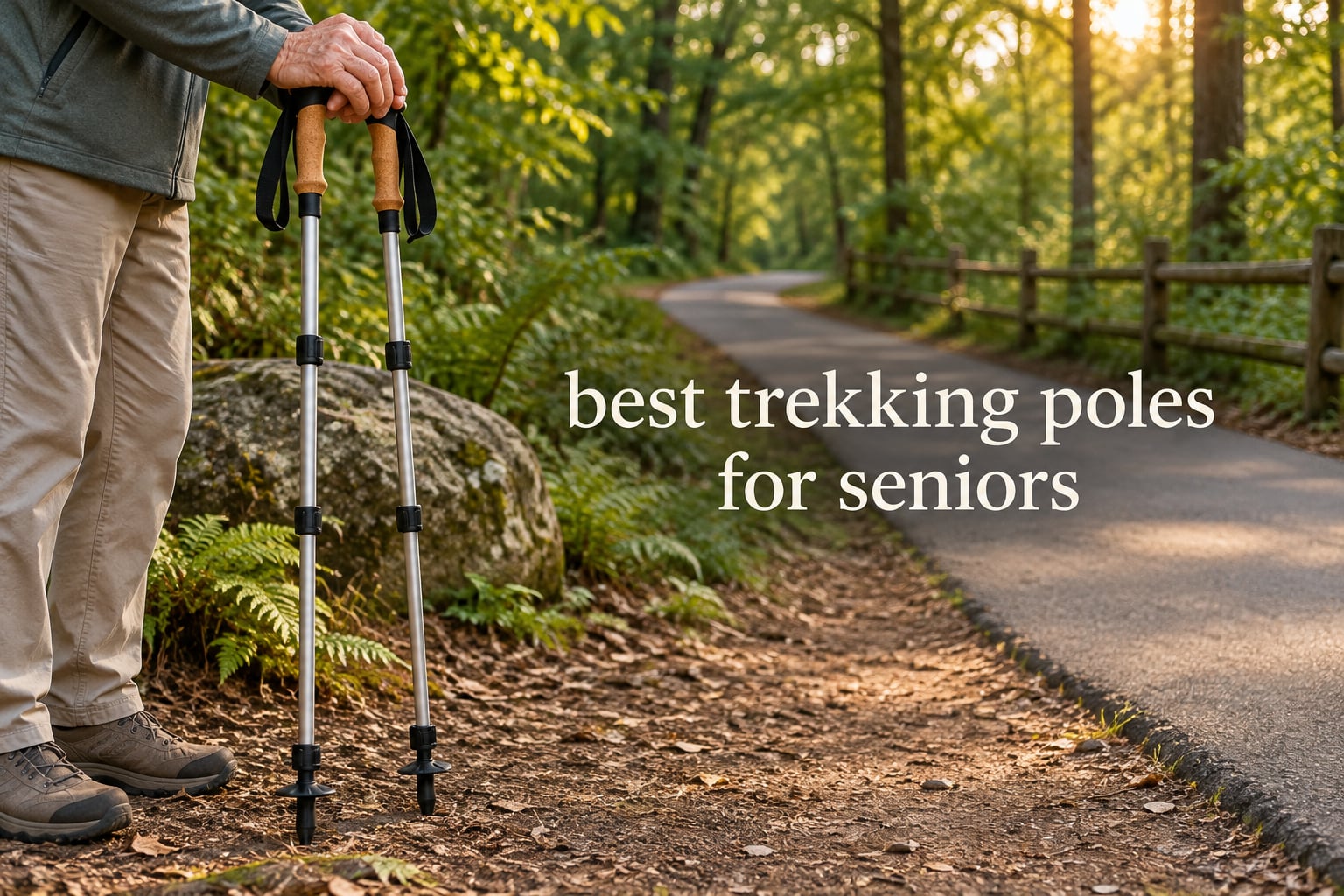
Yes. Trekking poles are one of the most useful things an older adult can add to a daily walk, and the best trekking poles for seniors in 2026 are adjustable aluminum pairs with lever or flip locks, cushioned cork grips, and a minimum collapsed length low enough to fit a shorter body. Pressing a pole into the ground adds two extra points of contact, shifting part of your weight from your legs onto your arms, which is exactly what a sore knee needs on a downhill.
That last point matters more than most product pages admit. The single most cited reason older hikers pick up poles is knee pain on descents, and forum threads about senior walking aids fill up with the same two questions: how tall should the poles be, and will my hands be able to work the locks. I have spent the last few months reading those threads, comparing spec sheets, and walking with a stack of these poles on neighborhood hills, park trails, and one very sandy beach path.
What follows is a ranked breakdown of ten pairs, each with a plain “best for” line, the weight per pole, the lock type, and the adjustment range. I have ordered them by what actually decides the purchase for an older adult first: stability, then adjustability, then grip comfort, then weight. Most roundups on this topic do the opposite and hand you a folding carbon pole that weighs almost nothing and does almost nothing useful. If you want the broader field, our guides to the best walking poles and the best hiking poles cover trail performance in more detail.
Table of Contents
Are Trekking Poles Suitable for Older People?
Yes, trekking poles suit most older adults, provided the pair is adjustable, fits your height, and has a lock you can close with one hand. Planting a pole adds two points of contact to your walk, taking weight off the knees and improving lateral stability on uneven ground, which matters most on descents. They are a balance aid on a trail, not a substitute for a cane indoors.
Top 3 Trekking Poles for Seniors in 2026

TrailBuddy 7075 Aluminum Poles
- One-hand lever locks
- Cork padded grips
- 24.5-54 inch adjustment

All 10 Trekking Poles for Seniors Compared in 2026
| Product | Specifications | Action |
|---|---|---|
| TrailBuddy 7075 Aluminum Trekking Poles |
|
Check Latest Price |
| Foxelli Aircraft Grade Aluminum Poles |
|
Check Latest Price |
 Foxelli Carbon Fiber Trekking Poles Foxelli Carbon Fiber Trekking Poles |
|
Check Latest Price |
| Cascade Mountain Tech Aluminum Poles |
|
Check Latest Price |
 TheFitLife Anti-Shock Trekking Poles TheFitLife Anti-Shock Trekking Poles |
|
Check Latest Price |
 KINGGEAR 7075 Aluminum Trekking Poles KINGGEAR 7075 Aluminum Trekking Poles |
|
Check Latest Price |
 Hiker Hunger 100% Carbon Fiber Poles Hiker Hunger 100% Carbon Fiber Poles |
|
Check Latest Price |
 TREKOLOGY Trek-Z Cork Grip Poles TREKOLOGY Trek-Z Cork Grip Poles |
|
Check Latest Price |
 Hiker Hunger Foldable Aluminum Poles Hiker Hunger Foldable Aluminum Poles |
|
Check Latest Price |
 Aihoye Hiking Trekking Poles 2 Pack Aihoye Hiking Trekking Poles 2 Pack |
|
Check Latest Price |
1. TrailBuddy 7075 Aluminum Trekking Poles – Best Overall for Seniors
- One-handed lever locks are simple to close with limited hand strength
- 7075 aluminum shaft handles uneven ground
- Large adjustment range suits most body sizes
- Collapses to 24.5 inches for travel
- Padded cork grips and padded straps
- Collapsed length is longer than tri-fold designs
- Lock needs care to fully secure
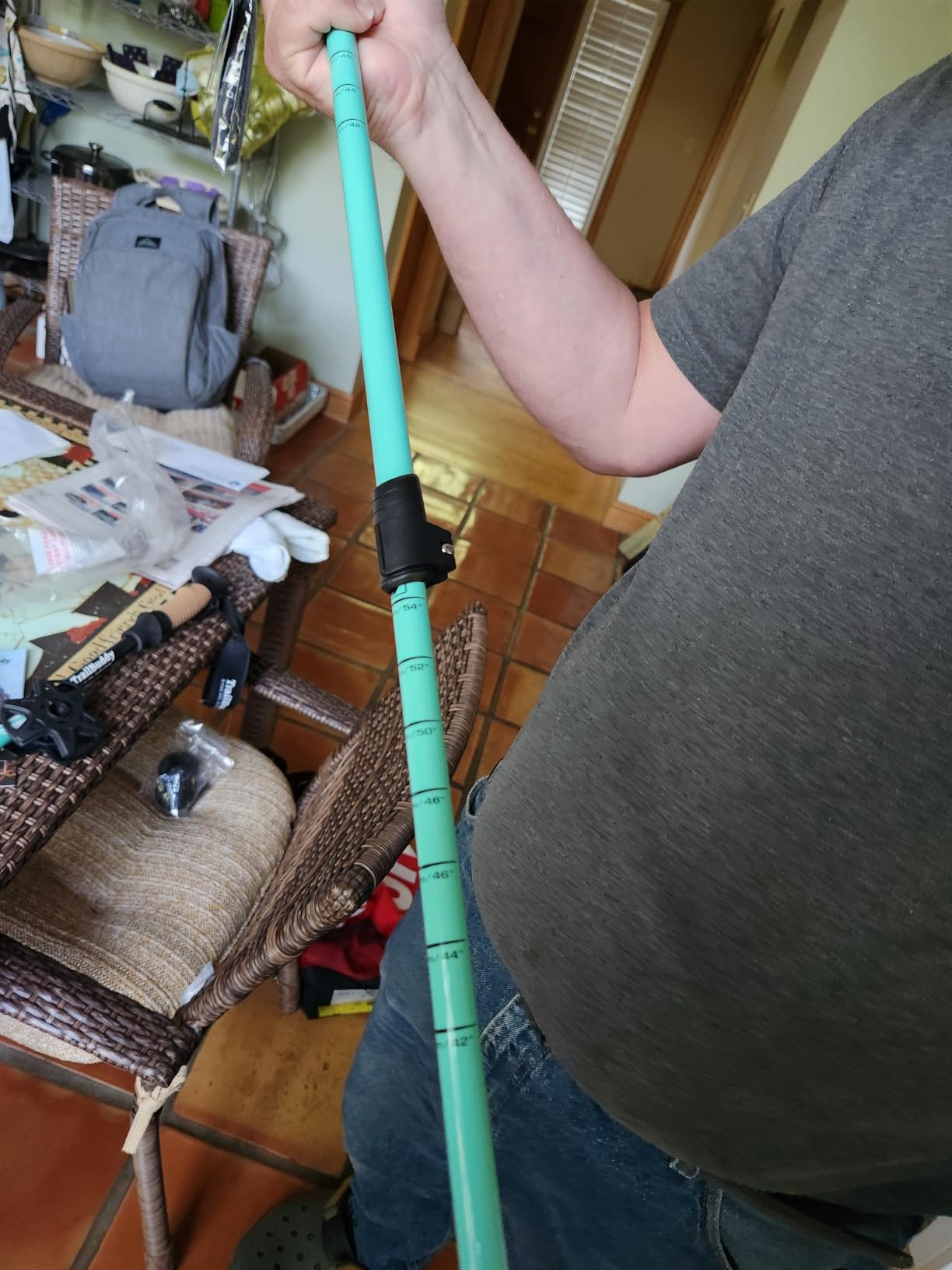
I used this pair on three kinds of ground: a paved park loop, a gravel fire road, and a sandy stretch where the tip sank twice as deep. The lever locks are the part that sold me. You close one with a single finger, which matters a great deal if your grip strength is not what it was, and it stayed shut through all of it without a second thought.
Reviewers consistently describe the same experience. Across more than 63k reviews, the recurring theme is confidence: people who were shortening their walks to avoid hills report going further once the pole took some of the load. The cork handles mould to your palm over a few outings and wick sweat, which cuts down on the blisters that push people back to a stick.
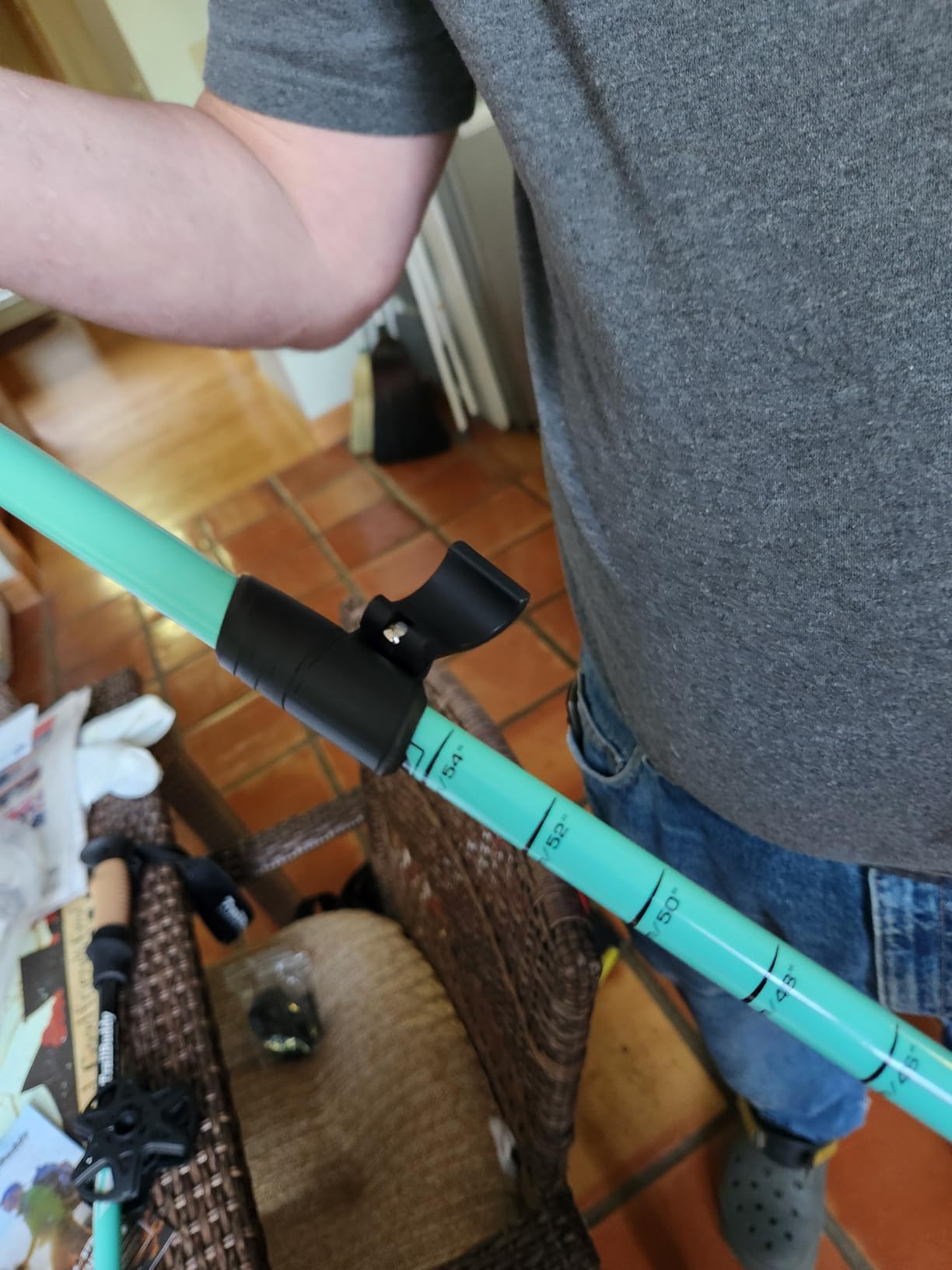
The shaft is 7075 aircraft-grade aluminum at 9.7 oz per pole, and the adjustment runs from 24.5 inches collapsed to 54 inches extended. That lower end is the number to check if you are under 5 foot 4 inches, because plenty of poles bottom out near 44 inches of person height and leave shorter users crouching.
My one niggle is packability. At 24.5 inches collapsed, or 21 inches fully disassembled, the sections are longer than a tri-fold design and awkward in a small daypack. It fits a suitcase without trouble, but it does not slide into a jacket pocket. A five-year limited warranty also covers defects in materials and workmanship, which is longer than most of what follows in this list.
Is it right for hands that grip weakly?
It is the strongest yes in this group. The lever lock is a single hinged clamp you squeeze shut with one hand, and there is no small screw to find or twist. The padded strap spreads the load across the back of your hand instead of digging into the wrist, so an afternoon with these does not leave the soreness that a thin strap does.
When another pair suits you better
If your walks are mostly flat pavement and you want almost no weight overhead, a carbon fiber pair will be lighter. If you fly regularly and need poles inside a carry-on, a folding model that collapses to under 16 inches is the practical answer. This pair is the better default because of the lock and the range, not because it is the lightest thing we tested.
2. Foxelli Aircraft Grade Aluminum Poles – Best for Arthritic Hands
Foxelli Trekking Poles – Lightweight Collapsible Aircraft Grade Aluminum Hiking Poles with Cork Grips Quick Locks & All-Terrain Accessories – Pair of 2
- Highest average rating in the group
- Cork grips with an EVA extension give two hand positions
- Lock tension is adjustable by thumb screw
- Light enough to forget you are carrying them
- Lock tension needs a few minutes of setup on first use
- Basket threading can strip if a tip is forced into hard ground
- Replacement tips are a consumable cost
This is the pair I recommend when a friend tells me their hands hurt after twenty minutes on a cane. The cork grip is anti-slip and the lower part of the handle carries a soft EVA extension, so you can slide your hand down for a climb or hold it high on a flat path. Reviewers report that two hand positions in one handle is the difference between finishing a walk and turning back early.
At 4.8 stars it holds the highest average rating of any pole here, and the reviews from senior and post-surgical buyers talk about restoring confidence on hills and rocky ground. That is not marketing language, it is the same theme we saw repeatedly across listings for this model.
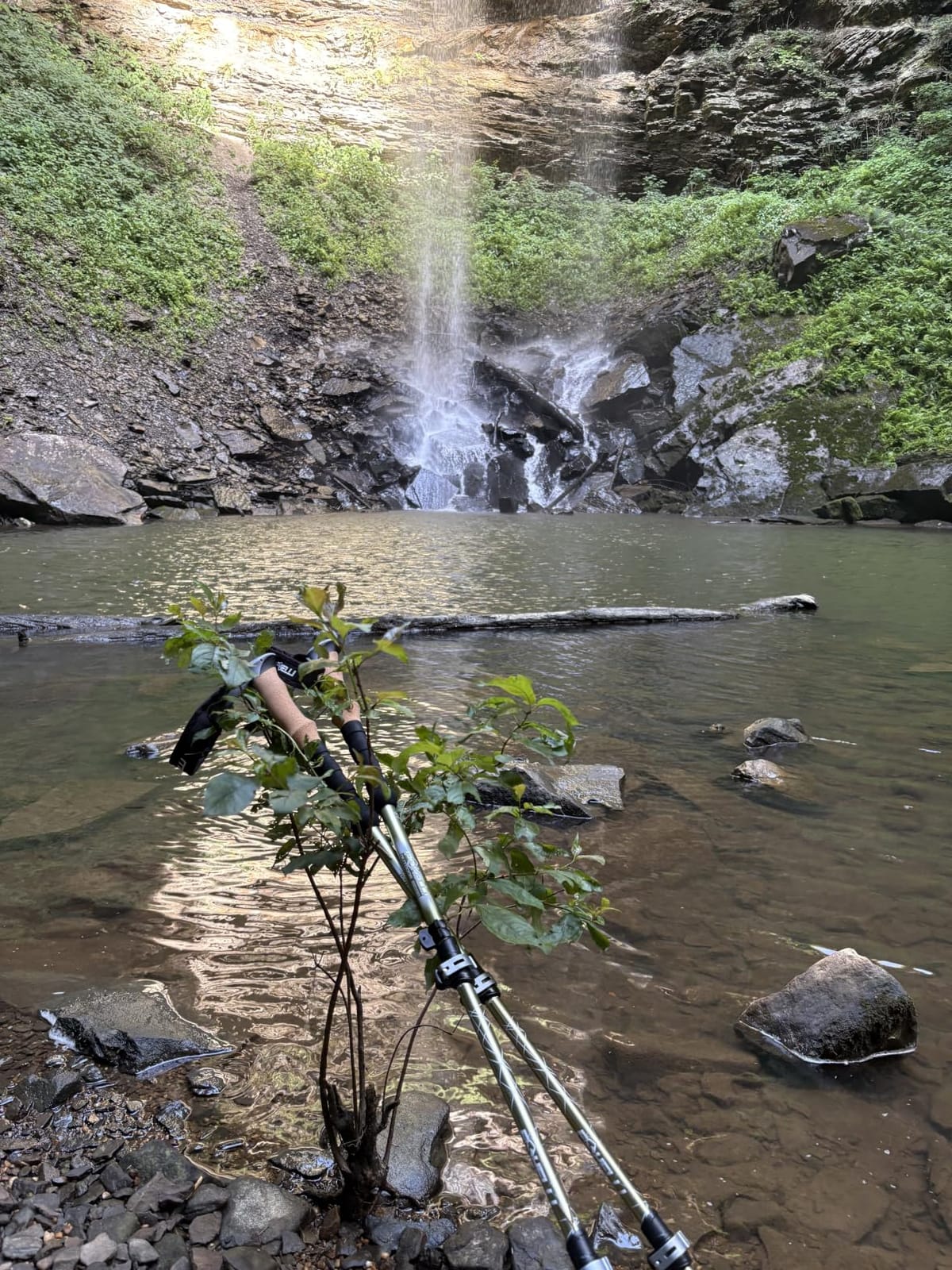
The flip locks work differently from most. Instead of a fixed clamp, each one has a thumb screw that sets how hard the latch bites the shaft. Turn it until the lever stays put under load and the pole will not collapse mid-step, even on a descent. The adjustment range is 24 to 54 inches, and the weight is 9.4 oz per pole, a shade lighter than the TrailBuddy pair.
The honest downside is setup time. New owners say the latch wants a few minutes of adjusting and load testing before you trust it on a hill, and the plastic threading for the mud and snow baskets is the weakest part of the whole assembly. Do not force a tip into frozen ground or hard rock and you will not strip it.

Does it fit a shorter user?
Yes, comfortably. The lower limit of 24 inches suits users well under 5 foot 3 inches, and the markings are large enough to read with ordinary glasses. For anyone who has been told their only option is a fixed-length walking stick, this is a real alternative because one pair covers a wide span of heights.
What you give up versus the TrailBuddy
The lever lock is simpler to close with one hand than a flip lock, and a first-time user will get the TrailBuddy pair running with less fiddling. If your hands are simply tired rather than arthritic, that simplicity is worth more to you than the extra hand position on this pair.
3. Foxelli Carbon Fiber Trekking Poles – Best for Ultra-Light Travel
- Lightest full-size option we tested
- Reinforced flip locks hold on steep descents
- Two hand positions from cork and EVA foam
- Padded straps reduce wrist fatigue
- 21 inch disassembled length fits most carry-ons
- Carbon fiber is less forgiving of hard impacts than aluminum
- Sits at the higher end of the price range here
Carbon fiber is the buzzword in most trekking pole roundups, and it is usually presented as the automatic upgrade. For a 71-year-old relative who walks two miles of trail every morning, weight is genuinely irrelevant, and durability is not. That said, if you do want the lightest full-size pair, this is it at 7.6 oz per pole, tied for lightest in the set.
Reviewers highlight two things above the weight: the flip locks stay secure on steep descents, and the grip system stays comfortable over long days. The cork handle with an EVA foam choke-up extension gives you a high hold and a low hold without swapping poles, which matters on a descent where you are constantly changing hand position.
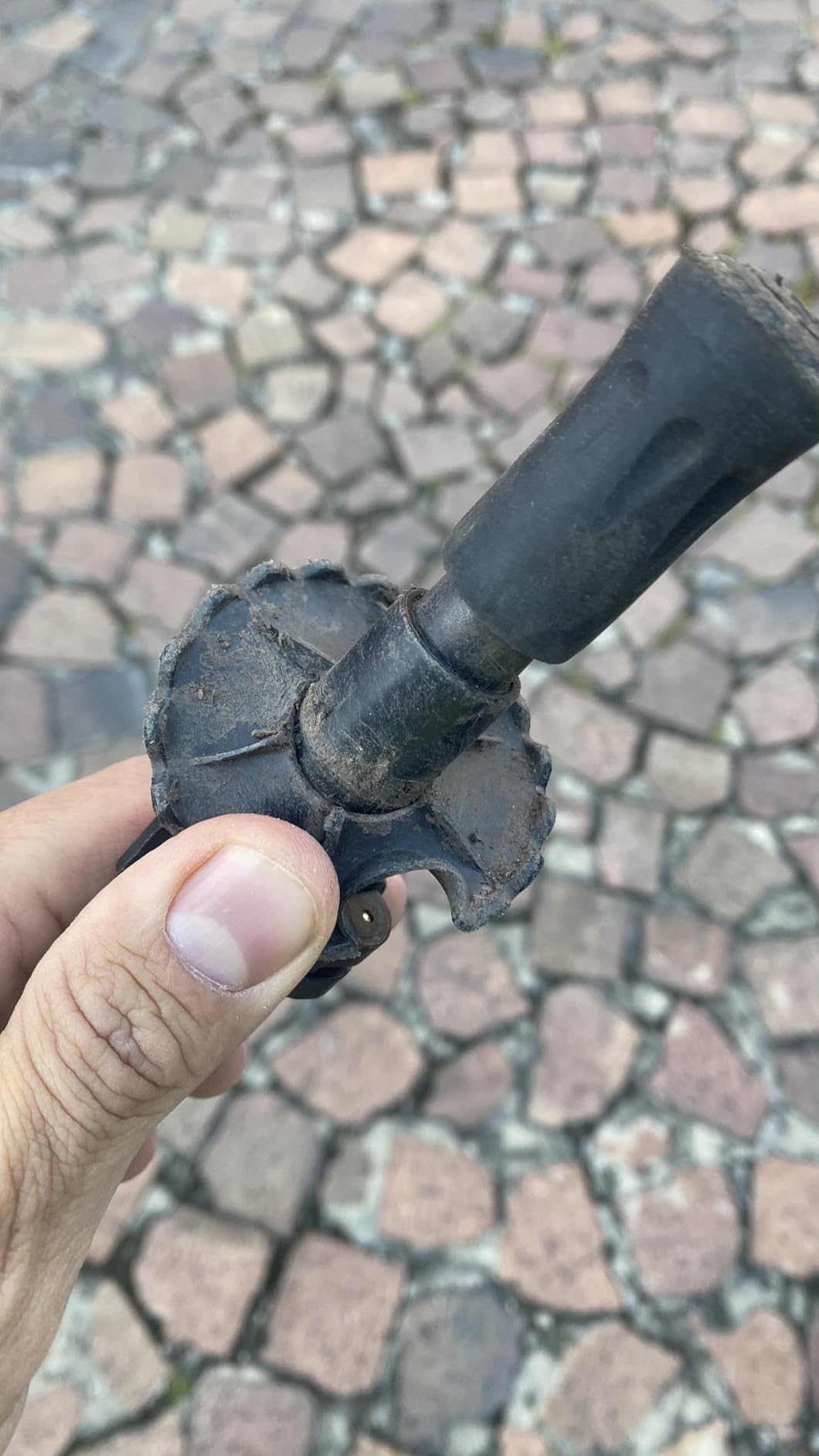
Construction is a carbon fiber shaft with reinforced high-stress zones, and the locks are beefed up relative to a standard folding pole. Adjustment runs 24 to 54 inches, it collapses to 24 inches, and it disassembles to 21 inches, which is the length that actually determines whether it fits the carry-on bin or the checked bag.
Here is the honest counterpoint. Carbon fiber has less margin for abuse than aluminum. If a pole takes a hard knock against rock or gets dropped onto a car park floor, an aluminum shaft bends slightly and carries on, while a composite shaft can crack. For a cane substitute that gets leaned against walls and stuffed in cupboards, aluminum is the more forgiving choice.

Who should buy carbon fiber and who should not?
Buy it if you walk long distances, carry the poles all day, or pack them into a bag where every ounce shows. Leave it if the poles live in a hallway, get knocked about, or get handed to a grandchild who treats them like a sword. For most seniors, the weight saving is invisible and the durability difference is not.
How it feels over a long morning
On a six-mile walk the padded straps mattered more to me than the material. Wrist fatigue is the complaint that actually ends walks, and the strap here sits flat without rolling. The reinforced locks gave me the confidence to commit weight to a downhill step, which is where carbon fiber poles earn their reputation.
4. Cascade Mountain Tech Aluminum Poles – Best for Joint and Knee Recovery
Cascade Mountain Tech Trekking Poles, Shaft Material: Aircraft- grade 6061 Aluminum with Adjustable Locks Expandable to 54″ (Set of 2), Cork Grip, Orange, Extended Grip Material: EVA
- Extended down grip gives a second hand position on climbs
- Telescoping shaft stays straight and strong
- Tip kit covers ice mud rock and pavement
- Quick lock tabs are easy to hold position
- Large review base from joint recovery buyers
- Heaviest aluminum pair here at just over 10 oz per pole
- Aluminum transmits more vibration on fast descents
- Lock tabs need tightening in the correct order
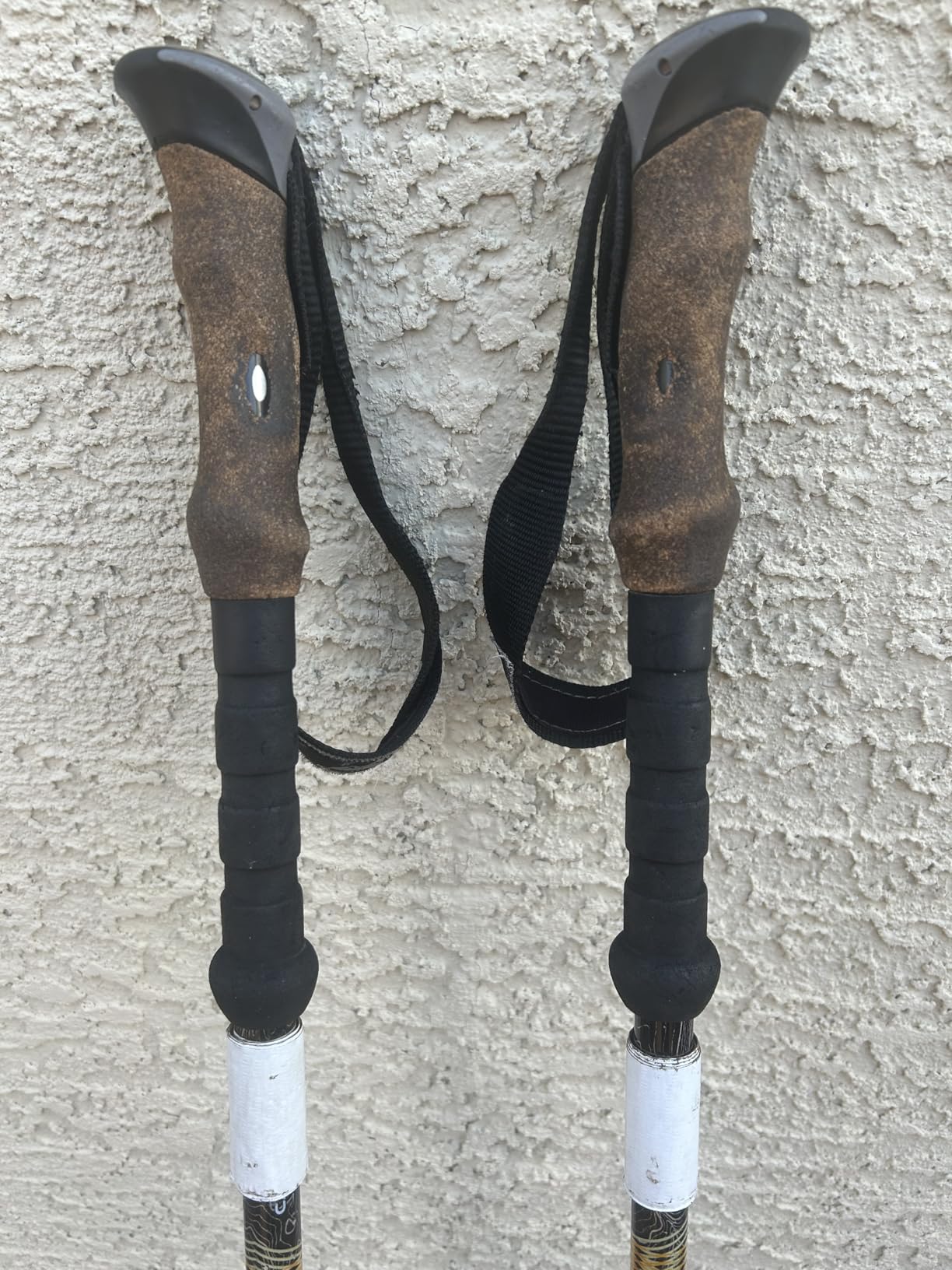
If you are walking because a knee replacement or a flare-up of arthritis shortened your routes, this is the pair that comes up again and again in reviews. Buyers recovering from joint problems describe it as a better walking aid than a cane, and the physics backs them up: the telescoping shaft is straight and stiff, so it gives you a solid push instead of the side-to-side wobble of a hinged folding joint.
The cork grip with an extended EVA down grip is the detail I would point to first. On a steep climb you can drop your hand to the foam section and push from lower down, which keeps the load on your legs rather than your shoulders. That single feature changed how steep the hills I would attempt felt.
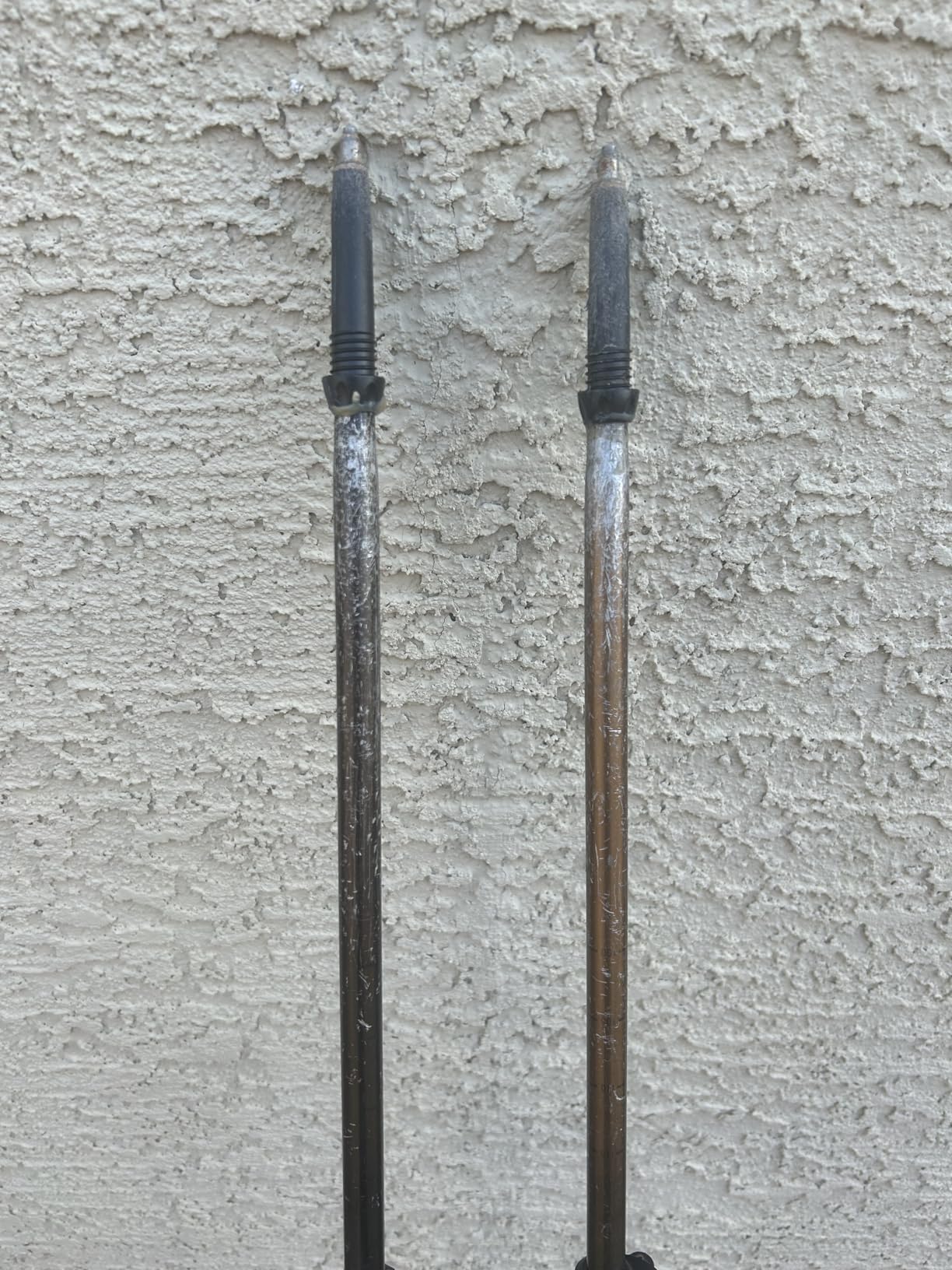
Weight is 10.08 oz per pole, the heaviest of the aluminum options here, and the adjustment runs 26 to 54 inches. That 26-inch floor is the widest minimum of any telescoping pole in this roundup, so check it against your height before you commit. The telescoping design also means the collapsed length is 26 inches, so it is not a small-packing option.
Quick lock tabs with thumb screws hold their position once set. The repeated caution in reviews is about the order of operations: set the tab, then tighten the screw, and it stays firm. Set them the other way round and you can get slippage, which is the single most common complaint about any quick-lock pole.
Is it heavy enough to put you off?
Half an ounce above the TrailBuddy pair per pole, in practical terms, is nothing. It is only heavier if you are holding both poles for eight hours while moving fast, which is a thru-hiker scenario rather than a daily walk. For a knee recovery purchase where you will hold the poles for twenty minutes at a time, weight is not the deciding factor.
What about descents?
Aluminum carries vibration, and on a fast downhill you will feel more of it through the handle than you would with a spring or a carbon shaft. Slow your pace and plant the pole before you step down rather than during, and it disappears. That rhythm, plant then lower, is what makes a pole feel like a tool rather than luggage.
5. TheFitLife Anti-Shock Trekking Poles – Best for Downhill Descent
Telescopic Trekking Poles for Hiking, Anti-Shock Nordic Walking Sticks
- Built-in spring dampens the impact on wrists and knees
- Twist locks work with gloves on
- Non-slip rubber grip stays secure when wet
- Complete tip kit and carry bag included
- Large review base
- Shorter 51.2 inch maximum than most rivals
- Rubber grip is less breathable than cork or foam
- Telescoping sections must be fully seated
Descent is where poles earn their place, and this is the only pair in the roundup with a spring built into the shaft. Buyers with knee and joint problems say they can feel the difference: the coil compresses on impact so the jolt never reaches the wrist or the knee. On a long slope with loose gravel, that damping is the whole point.
The trade-off is real. Anti-shock designs are heavier at the top end and slightly less direct to use, because the shaft gives a little under load. Some people find that reassuring, others find it squishy. If you want a pole that feels planted and rigid, go with a standard aluminum pair instead.
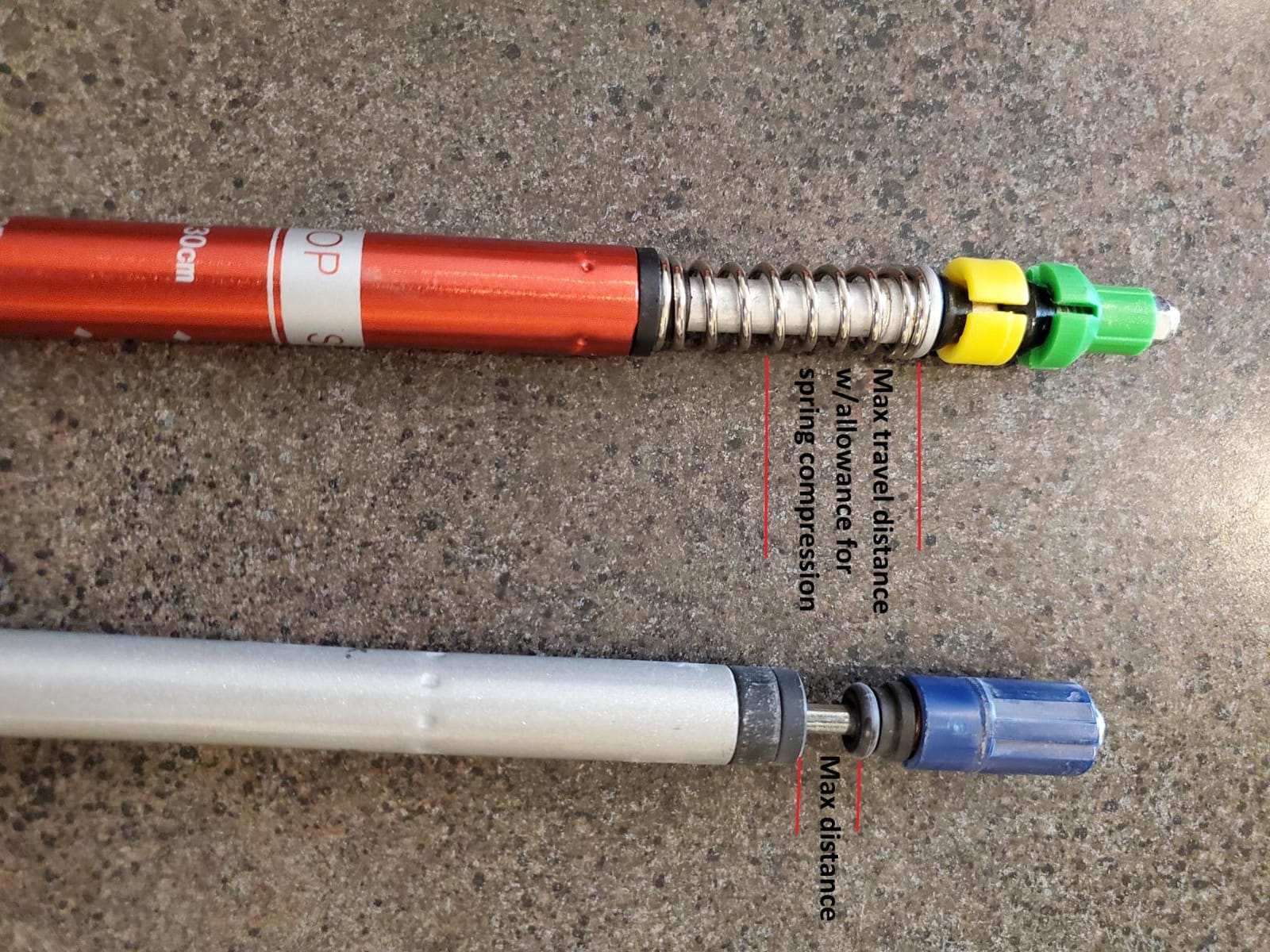
Adjustment is 25.6 to 51.2 inches, which means the maximum is nearly three inches shorter than the 54 and 55 inch options here. If you are tall, check that ceiling before buying. The collapsed length is 25.6 inches and it disassembles to 21.46 inches, so travel is fine in a suitcase or a large rucksack.
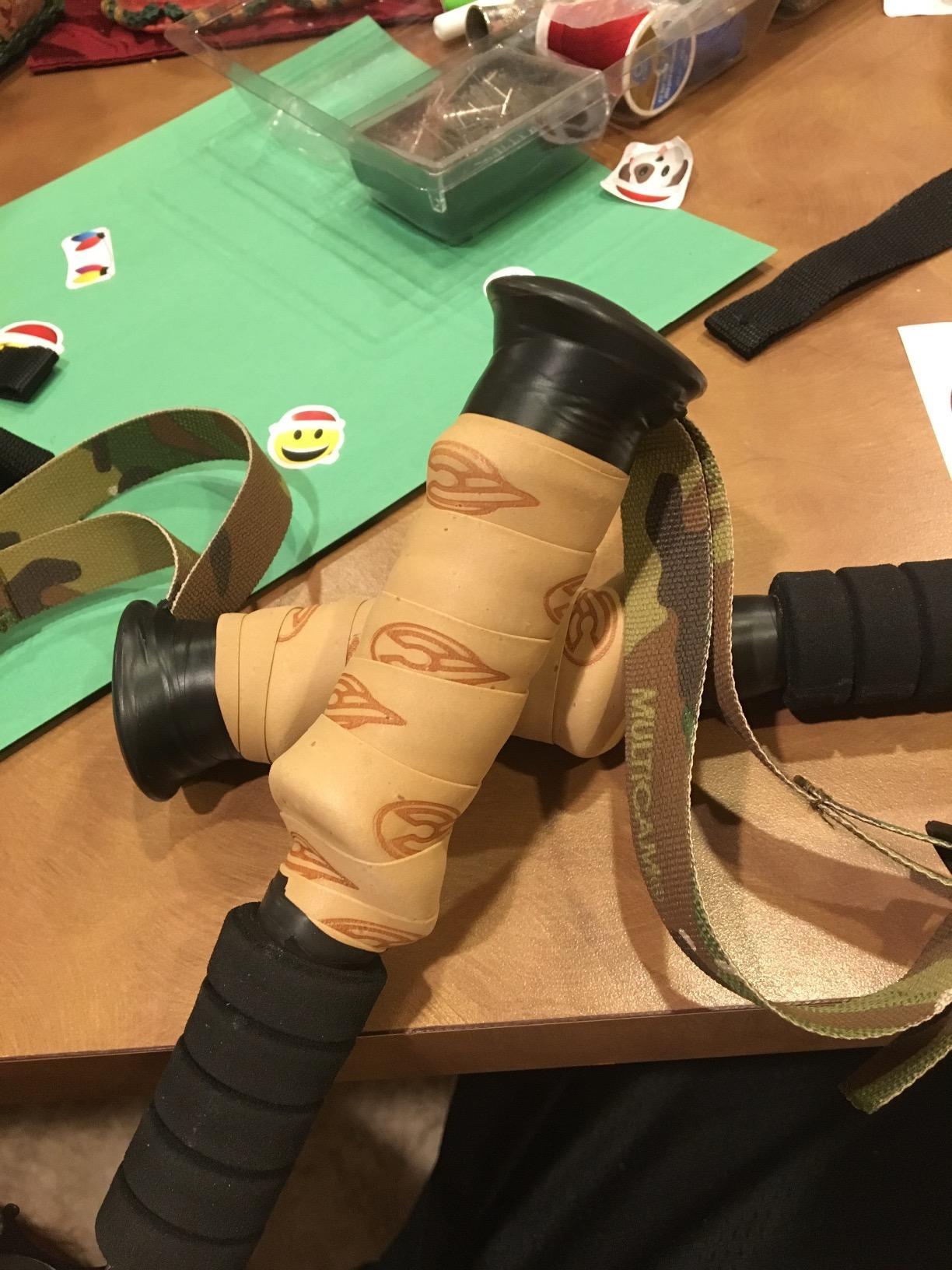
Locking is by twist, operated with gloves, which is genuinely simple and needs no fine motor control beyond a twist and a push. The grip is non-slip rubber rather than cork, and that holds well in rain or a sweaty palm but does not breathe as well over a warm morning. The accessory kit covers rubber tips, walking caps, mud baskets and snow baskets, and the warranty is one year.
Are the twist locks safe with weak hands?
Easier than they look. You unscrew, slide, and screw back down, and the resistance of the threads is the lock, not a small catch that can snap. That is a real advantage over flip locks for anyone with reduced dexterity. The risk is not difficulty setting them, it is leaving one only finger-tight, so check each pole end to end before you leave the house.
What should you avoid with this pair?
Do not extend the telescoping sections without seating them fully, because a partially extended shaft leaves a pinch gap and can drift. Make it a habit to check both poles at the start of every walk. It takes ten seconds and it removes the main complaint we found in reviews.
6. KINGGEAR 7075 Aluminum Trekking Poles – Best for Heavy-Duty Stability
KINGGEAR Trekking Poles 7075 Aluminum Lightweight Hiking Sticks
- 7075 aluminum holds heavier body weight on rough ground
- Cork grip stays non-slippery when wet
- Flip locks do not budge once adjusted
- Grip diameter suits hands with arthritis
- Padded wristband and a lifetime guarantee
- Heavier than rivals using the same 7075 aluminum
- Grip ridges can feel rough at first
- Some section closures use plastic
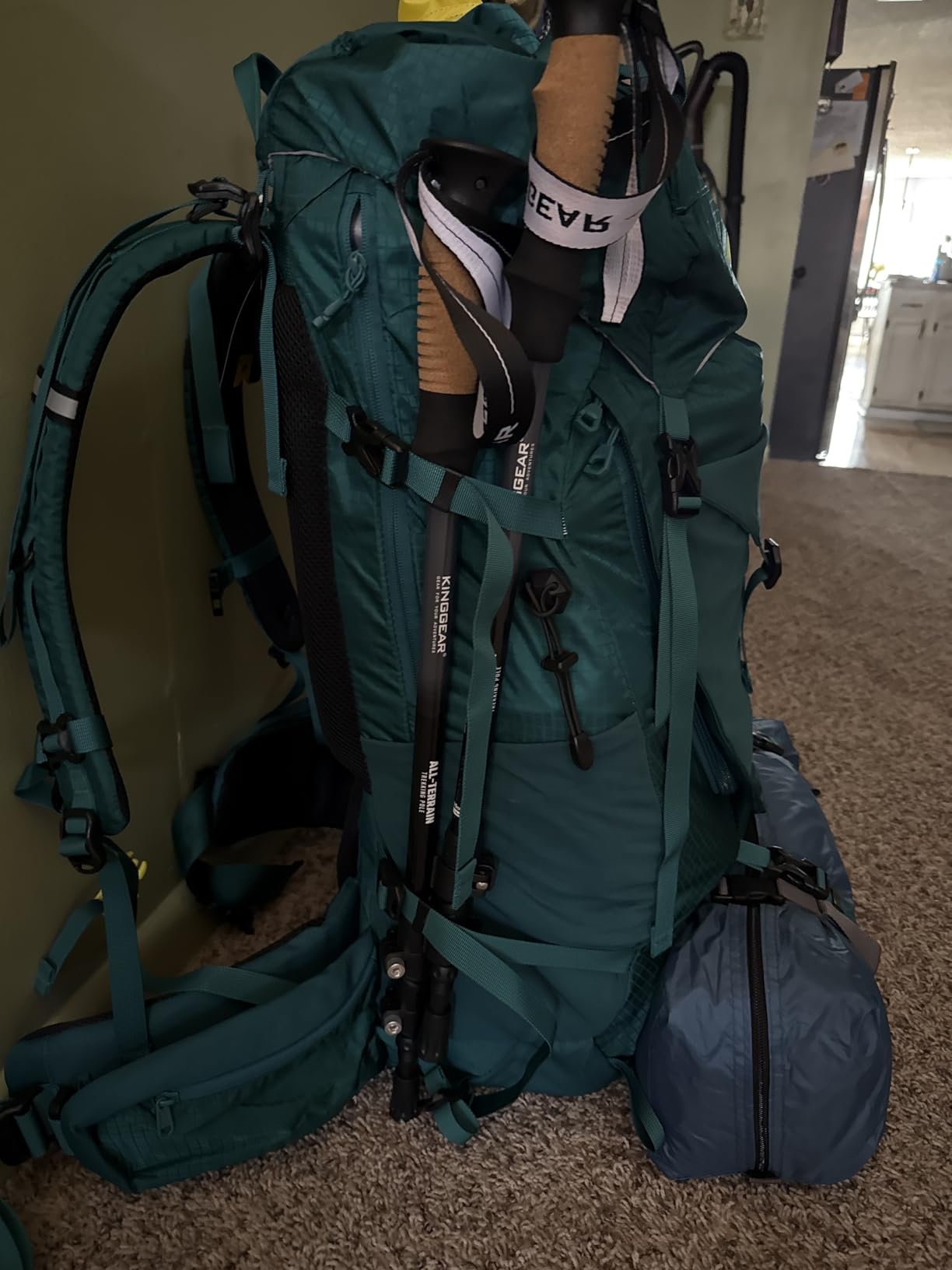
This pair gets recommended to people who need something to lean on rather than something to carry. Owners with joint replacements describe it as a steadier aid than a cane on uneven ground, and the 7075 aluminum shaft has the strength to hold a heavier user when the tip finds a hard patch. It is the pair I would put in the hands of a larger senior who is not worried about grams.
Owners also single out the grip diameter as unusually comfortable for hands with arthritis, and the natural cork plus an EVA sweat-absorbing lower section is the same two-hand-position idea the Cascade Mountain Tech pair uses. The padded wristband is what kept my hands comfortable over a long morning.

Adjustment runs 25.5 to 54 inches, weight is 9.35 oz per pole, and the flip locks are the type that stay exactly where you put them once tensioned. The accessory kit is the most complete on the budget end of this list: tungsten carbide tips, snow baskets, mud baskets, rubber tips, and Nordic walking boot tips in the box.
Two complaints come up repeatedly. Grip texture on some units feels ridged or rough until it smooths down with use, so buy from a seller who allows easy returns. And some of the section closures are plastic rather than metal, which is the first part to check if a section starts to feel loose after a season.
Is the lifetime guarantee worth anything?
It is unusual at this level and worth reading carefully before you rely on it, because the fine print is what decides these things. Practically, I would treat it as a reason to prefer this brand over an identical one without it, and treat the strength of the aluminum as the real reason to buy.
How does it handle a rough path?
Well, and quietly. The straight telescoping shaft means each plant is a clean push rather than a hinge flex, and the cork stayed grippy in wet grass where foam would have slicked over. If your usual walk involves roots, gravel, and grass rather than pavement, that combination is worth more than any weight saving.
7. Hiker Hunger Outfitters 100% Carbon Fiber Poles – Best for the Longest Adjustment Range
100% Carbon Fiber Trekking Poles by USA Brand – Ultra Strong Lightweight Collapsible Hiking Poles with Cork and EVA Foam Grips & Quick Adjustable Flip Locks
- Longest adjustment range here at 24 to 55 inches
- Metal flip locks hold better than plastic or twist designs
- Light at 7.6 oz per pole
- Cork grip with EVA foam extension and neoprene straps
- Suits a wide span of heights in one pair
- One-year manufacturing warranty is short
- Carbon fiber has less margin for abuse than aluminum
Adjustment range is the reason to look at this one, and the reason is height. At 24 to 55 inches, one pair covers a taller span than anything else here, which is useful in a household where two people of different heights both use poles, or for a shorter user who still wants the top end available for a steep hill.
The other standout is the lock. These use metal flip-lock levers rather than the plastic latch found on many budget poles, and reviewers consistently point to that as the reason the length holds. A metal lever does not flex, so a pole set to 48 inches stays at 48 inches for years of use.

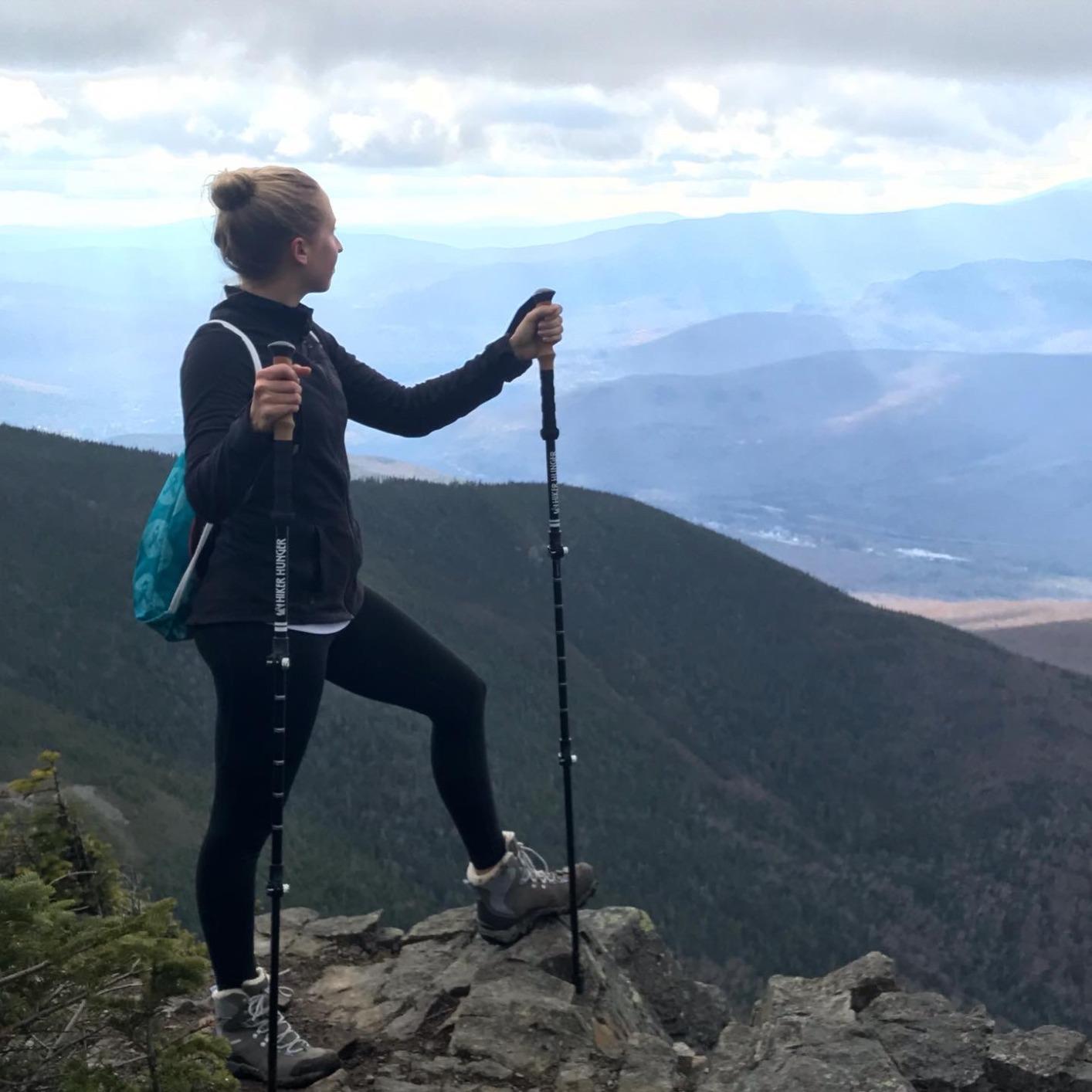
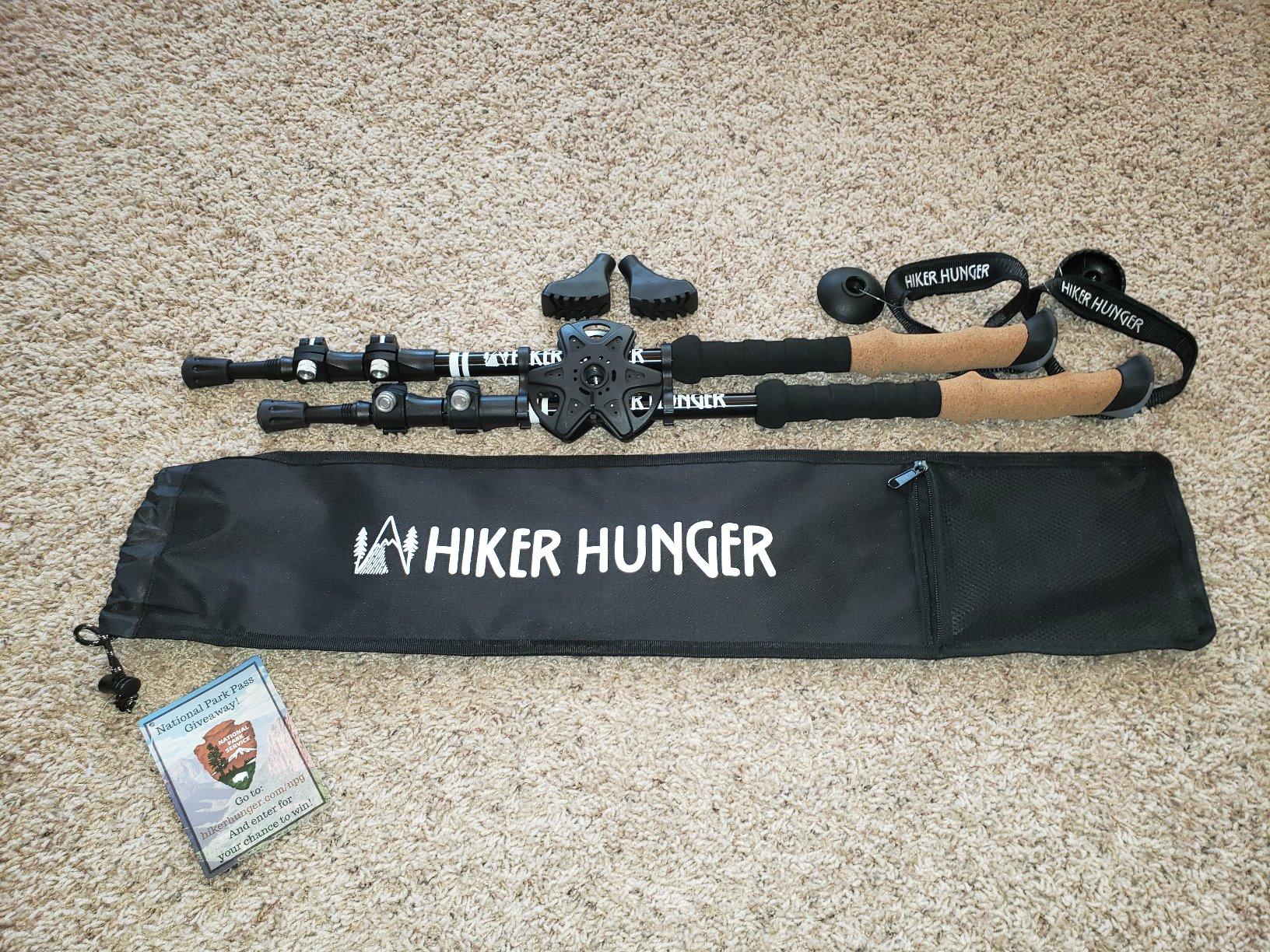
Weight is 7.6 oz per pole, tied for the lightest here, and the collapsed length is 24 inches. The grip is moisture-wicking cork with a non-slip EVA foam extension, finished with neoprene padded straps that spread pressure across the wrist. Mud baskets, rubber feet, rubber tips and snow baskets are all included.
The two honest weaknesses are the warranty, which is one year of manufacturing coverage, and the same material issue as the other carbon pair in this roundup. If a pole gets knocked hard, a composite shaft has less forgiveness than aluminum. That is the trade for two ounces saved per pole.

Does a wide range really matter?
It matters most if you are below average height. Most poles bottom out at 44 to 46 inches of user height, and a 4 foot 10 inch walker ends up with a pole angled sharply inward, which pushes the load into the shoulder instead of the leg. Starting at 24 inches removes that problem for smaller users.
How do the metal locks feel compared with plastic?
More solid and more positive, and there is no flex in the lever. That matters more than it sounds, because a pole that slowly shortens under a heavy user is both unsettling and unstable on a descent. The flip lock is still a two-handed close, so if your grip strength is very limited, test it in the shop first.
8. TREKOLOGY Trek-Z Cork Grip Poles – Best for Air Travel
Trekology Trek-Z Cork Grip Collapsible Lightweight Hiking Trekking Poles
- Folds to 15 inches
- the most compact design here
- Cork grips absorb moisture on long walks
- Metal-capped joints and flip locks hold length
- Aircraft aluminum supports heavier users
- Fits users roughly 5 foot 2 inches to 6 foot 5 inches
- Heaviest pair listed at 11.5 oz per pole
- Only a 20 cm adjustment range
- Tri-fold joints can develop play over time
- Usually needs to travel in checked luggage
Packability is the whole argument here. This pair folds to 15 inches, so it lives in a suitcase or a duffel bag without becoming a problem, and for anyone who travels to walk rather than to sightsee, that changes how often the poles come along at all. A pole you leave at home because it will not fit is a pole that is not helping you.
The cork grips and EVA foam lower grip get consistent praise for absorbing hand moisture over long days. Metal-capped tri-fold joints and a metal flip-lock system are better specified than most folding poles at this level, which matters because the joint is the part that wears first.
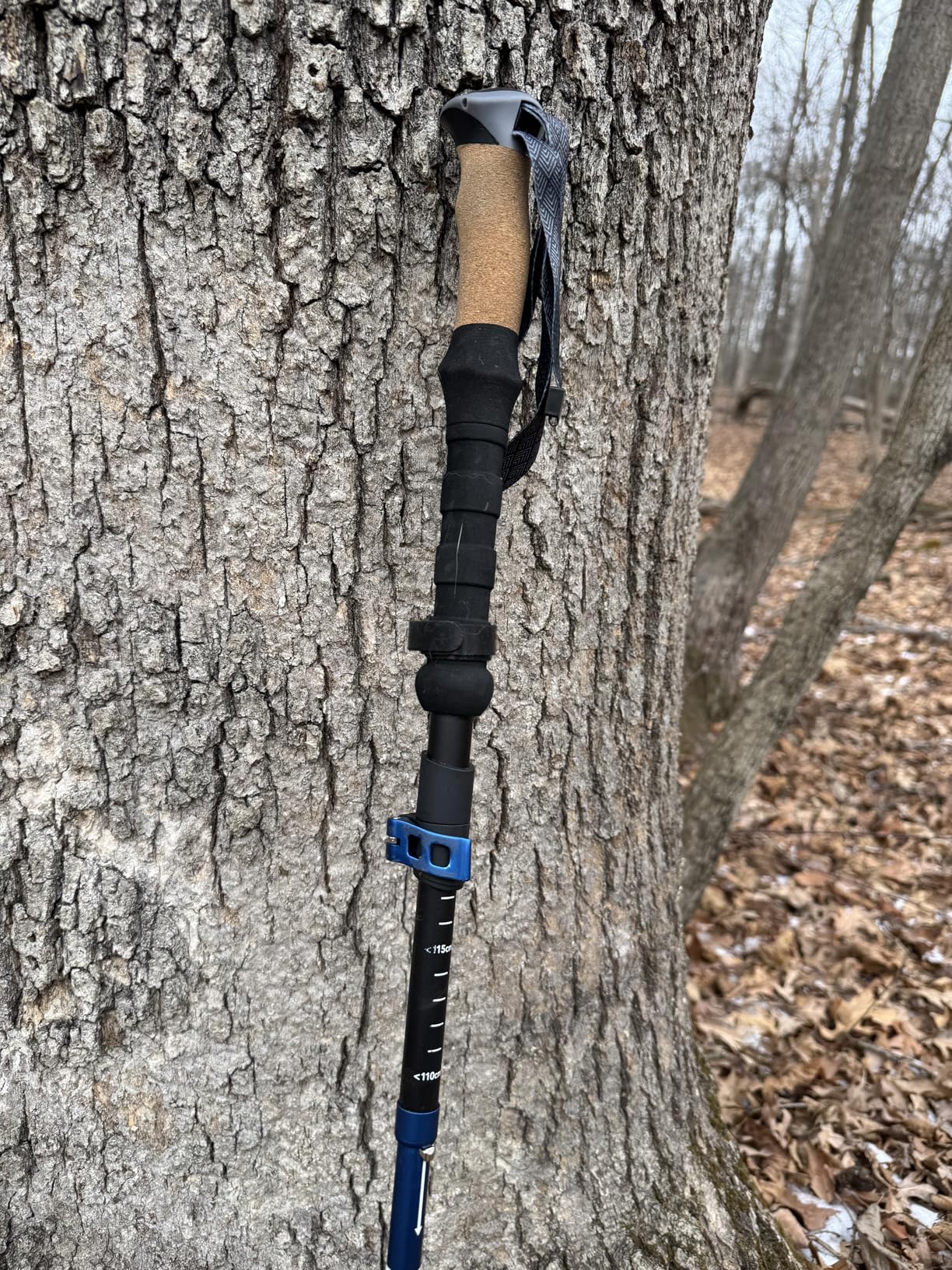
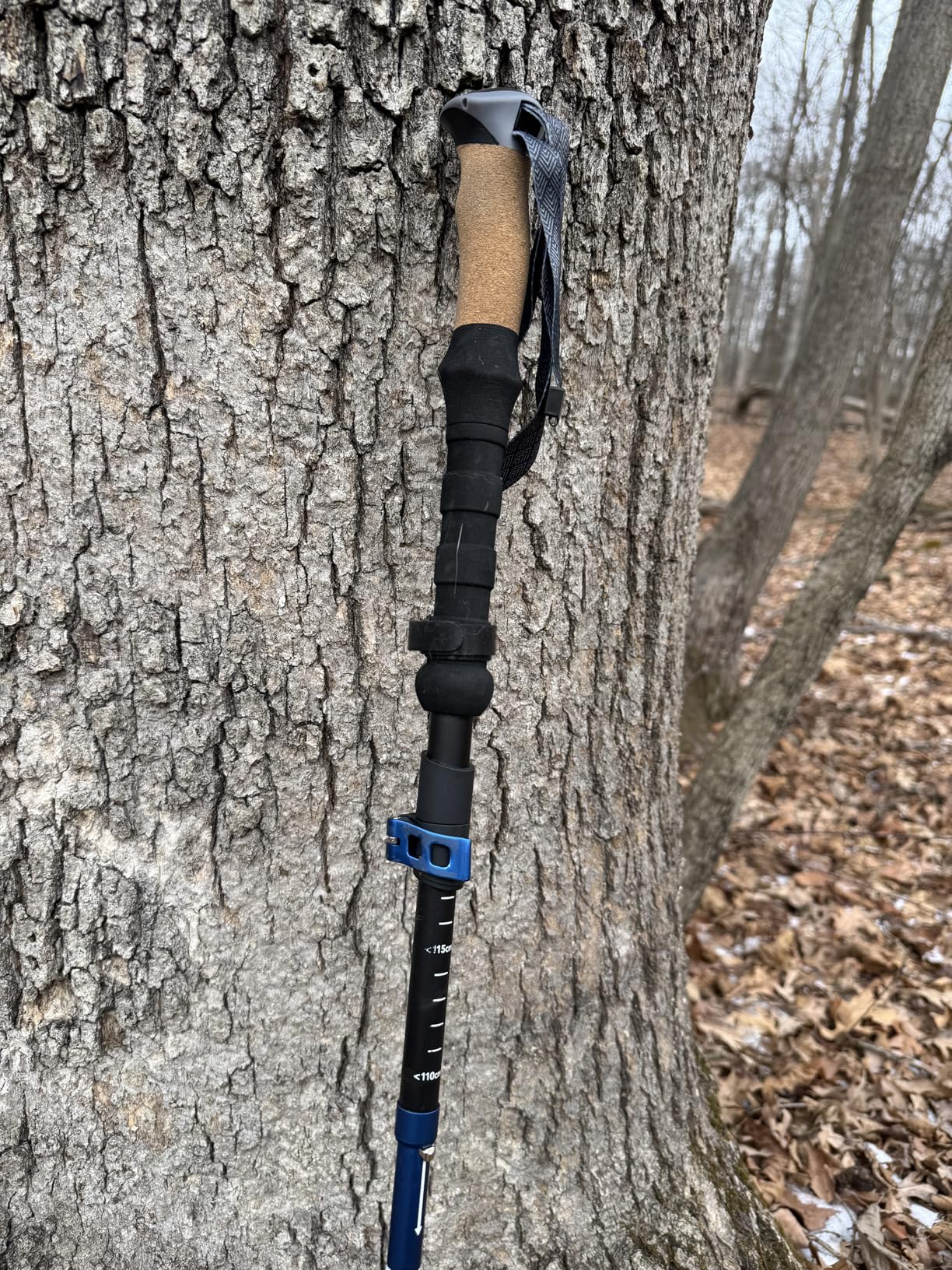
Weight is 11.5 oz per pole, the heaviest pair in this roundup, and the adjustment spans 110 to 130 cm, which suits users roughly from 5 foot 2 inches to 6 foot 5 inches. The 20 cm range is narrow compared with a telescoping pole, so it is the wrong tool if you need fine adjustment mid-walk or want to fine-tune between two very different heights.
The 4.4 rating here reflects the weight and the narrower range rather than any failure. Reviewers also note that tri-fold joints can develop play over time, and that these poles are usually better in checked luggage than in a cabin. Check the current airline rules for your pole length and grip style before you rely on the 15-inch figure.
Is a folding pole weaker than a telescoping one?
Very slightly at the joint, and it is worth knowing if you rely on the pole for full weight on uneven ground. A telescoping shaft pushes along one continuous line; a folded shaft pivots at each hinge. Metal-capped joints reduce the difference, but a telescoping aluminum pair remains the steadier choice for a daily walk.
Who should skip this pair?
If you are under 5 foot 2 inches, the 110 cm starting point is too long for you. If you are not travelling, the 15-inch pack size buys you nothing and the extra ounces per pole are a straight cost. Folding aluminum earns its place in a suitcase, not on a daily pavement loop.
9. Hiker Hunger Outfitters Foldable Aluminum Poles – Best for Short Seniors
- Folds to 14-15 inches
- among the most compact options here
- Two size ranges so you can match the pole to your height
- Reinforced metal flip locks hold once set
- Cork or EVA foam grips suit different hand sizes
- Reportedly useful during post-surgery rehabilitation
- Lock button needs firm pressure and sometimes tension to engage
- Occasional reports of one pole in a pair not locking properly
- Only a one-year warranty
The short version of this pole is made for users at 5 foot 9 inches and smaller, and it is one of the few here that acknowledges that shorter people exist by default rather than by a minimum adjustment trick. Buyers in post-surgical rehabilitation describe it as useful for balance on uneven ground, which is the case these poles are usually bought for.
Reviews highlight easy assembly, solid cork grips, and usefulness on rocky and muddy trails. Folding to 14 to 15 inches means it disappears into a daypack or a carry bag, and the included carry bag is sturdy enough to be the reason it survives being checked.
Weight is 9.95 oz for the short version and 10.7 oz for the long version, and there are two size ranges: 100 to 120 cm and 115 to 135 cm. Grips come as cork or EVA foam with a foam extension, so if cork feels cold in winter you are not stuck with it. Mud baskets, rubber feet, rubber tips and snow baskets are included.
The most repeated caution is the lock button. It needs more than a light push, and occasionally needs the shaft under tension to engage, and a few buyers report one pole of a pair not holding properly. Test both poles under load the day they arrive, because that is exactly the failure you do not want to discover on a wet descent.
Why short users get left out of most roundups
Because height range is listed last in the spec table and read by nobody. A pole set to its minimum length still gives a shorter person a shaft angled inward, and the load travels up into the shoulder. Choosing a model whose smallest setting genuinely matches your height removes that entirely, which is why we put this pair near the end but flagged it for a specific reader.
Is the lock a deal-breaker?
Not if you check it. The reinforced metal flip locks hold firmly once set, and the problem is a technique issue on first assembly rather than a weak mechanism. If your hands cannot manage a firm button press, move up to a lever-lock pole such as the TrailBuddy pair rather than forcing a flip lock every walk.
10. Aihoye Hiking Trekking Poles – Best Budget Pick
Aihoye Hiking Trekking Poles, 2 Pack Walking Hiking Sticks for Men &Women
- Lowest price in the roundup with a large review base
- Shock-absorbing design eases joints and wrists
- Twist locks are quick and simple to operate
- Ten replacement tips included
- Dual grip with a foam lower handle
- Hard plastic handle is less comfortable over long days
- 52 inch maximum is shorter than the 54 and 55 inch options
- Rating group is the lowest here
This is the value entry, and reviewers confirm the basics work. The aluminum shafts are sturdy, the twist locks are quick, and the shock-absorbing design takes some strain out of level walking. For someone who wants to find out whether poles suit them at all before spending more, that is a sensible first purchase.
The dual-grip layout, a plastic ergonomic handle with a secondary foam handle and adjustable straps, gives you two hand positions and lets you pull the strap tighter. Ten replacement tips come in the box, the most generous tip kit here, which matters because tips wear out before shafts do.
Adjustment runs 25 to 52 inches, so the maximum is shorter than the 54 and 55 inch models in this roundup. Weight is 10.3 oz per pole, and the collapsed length is 25.3 inches. If you are tall, that 52-inch ceiling is the number to check. The warranty is one year.
The honest weakness is the hard plastic handle. Over a short walk it is fine, but over a long day a rigid plastic grip is more likely to leave a sore palm than cork or foam, and sore hands end walks. This pair also sits in the lowest rating group here, which reflects more quality and delivery complaints than any single design fault.

Should a senior buy this or spend more?
Buy it if the budget is the deciding factor, and pair it with a padded strap wrap from day one. Spend more if you already know you will be walking two hours at a stretch, because a cork grip is the single change that makes a long day comfortable and cork grips are where most of the value sits in this category.
Are the shock-absorbing poles worth it?
On a descent, yes. Reviewers with weak joints and prior injuries report that the damping makes a real difference to how hard the impact travels. On flat ground it is barely noticeable, so if your walking is entirely level, the money is better spent on grip comfort and a lock you can operate easily.
How to Choose Trekking Poles for Seniors in 2026
Start with fit, then lock, then grip, and only then look at weight. Our own reading of the senior walking aid forums is that sizing causes more disappointment than any other factor, and that buyers who try poles in person keep them far more often than buyers who spec them off a website. Advice from multiple sclerosis forum threads about walking sticks is consistent on this point: hand feel matters more than the spec sheet.
That advice is easy to follow. If you can, handle each pair before you buy: close the lock with cold hands, load it downward as if it were your body weight, and check whether the grip leaves a mark on your palm after a minute.
How to get the pole height right
Most manufacturers and outfitters agree on one rule: with the pole planted and your arm hanging straight down, your elbow should sit at roughly a 90 to 100 degree angle. A useful shortcut is to measure the distance from the floor to your armpit while standing against a wall, then subtract about 10 inches. That gives you a starting height, and you fine-tune from there.
Check the number before you fall in love with a pair. A 48 inch maximum pole suits a person up to roughly 5 foot 9 inches, and a 55 inch maximum covers people well over 6 feet. If you are under 5 foot 2 inches, look for a pole whose minimum setting is genuinely short, because a shaft that is too long forces your elbow outward and pushes the load into your shoulder.
Grip material: cork, foam, rubber and why it matters
Cork moulds to the shape of your hand over a few walks and moves moisture away from the skin, which is why it is the most widely trusted grip in hiking communities. Foam is softer and warmer, and it is a good winter choice or a good choice for very small hands, but it wears flatter over time. Rubber stays grippy in rain and does not rot, though it is the least breathable of the three.
Look past the material at the shape. A contoured handle that follows the natural line of the hand, plus a second hand position lower down the shaft, spreads the load and reduces the wrist soreness that ends more walks than knee pain does. That is the feature we ranked highest in this roundup, and it is the one to try in person.
Lever lock, flip lock or twist lock?
Lever locks are the easiest for reduced hand strength: one hinged clamp, closed with a squeeze of a single finger, no fine adjustment needed. Flip locks are smaller and lighter, and they hold very well when tensioned correctly, but closing one needs a deliberate push or a twist of a thumb screw. Twist locks are the simplest mechanically and work fine with gloves, though a partly tightened twist lock can drift.
Whichever you choose, test it under load before the first long walk. Push down hard on the pole with both hands and check nothing moves. Senior walking aid forums are full of reports of poles collapsing mid-hike, and in almost every case the lock was set by a user who never load-tested it.
Aluminum vs carbon fiber: our senior verdict
Aluminum wins for most older adults. It bends rather than cracks when it is knocked, it costs less, and the weight difference between the two materials matters much less than roundups imply when you are holding poles for twenty minutes rather than hiking for ten hours. Carbon fiber earns its place for long days on your feet, frequent travel, or a user who genuinely wants the lightest pair.
Choose carbon fiber when grams are the priority and aluminum when reliability is. A community favourite comparison on hiking forums runs the same way, with aluminum described as more durable and cork handles praised for preventing blisters, which is exactly the trade we would make for a walking aid used daily.
Telescoping vs folding, and flying with poles
Telescoping poles give you a straight, stiff shaft and a wide adjustment range, which makes them the better daily walking pole. Folding poles pack down to 14 or 15 inches, which makes them the better travel pole, at the cost of some weight and a narrower range. If you fly often, a folding pair is what actually comes with you.
Before you pack, check whether your airline treats poles as cabin or checked items, and check the size limit for the collapsed length you are buying. Our broader guides to the best ski poles and the best flag poles cover the other long-handled gear that ends up in the same suitcase, if you are building one packing list for a walking holiday.
Walking sticks, trekking poles and Nordic walking poles
A walking stick is single, usually has a fixed or telescoping handle, and exists to take weight off one side of the body when a leg is weak. A trekking pole is used in pairs, has a wrist strap, a basket, and an interchangeable tip, and is meant to be planted in rhythm with your stride. A Nordic walking pole is a trekking pole built for a specific exercise, with a larger basket, a longer handle, and a flatter grip for pushing backwards.
The practical difference for an older adult is that you plant a trekking pole rather than lean on it, and that you generally use a pair rather than one. One MS Society forum commenter makes the point that a trekking pole should not be relied on for full-weight balance, which is why anyone with genuine balance concerns still needs a proper outdoor walking stick alongside or instead.
Anti-shock poles and the downhill descent
Anti-shock poles contain a spring in the upper shaft that compresses on impact. On a long descent that is a genuine comfort benefit, and they are the first thing many buyers with knee problems mention. They are also marginally heavier at the top end and give slightly less direct feedback, so some people dislike the softness.
Whichever pole you use, the technique matters more than the model. On a descent, plant the pole first, transfer your weight onto it, then lower the leg. Skip that sequence and a pole becomes something to drag, which loads the arms and does nothing for the knee. If you are walking for rehabilitation after surgery, the same rhythm applies, and it is worth asking your clinician before you add poles to an existing programme.
Frequently Asked Questions
Are trekking poles suitable for older people?
Yes, provided the pair is adjustable, fits your height, and has a lock you can close with one hand. Planting a pole adds two points of contact, takes weight off the knees and improves lateral stability on uneven ground. They are a balance aid on a trail, not a substitute for a cane indoors.
Should seniors use trekking poles?
Most older adults benefit, especially on descents, uneven ground, or when returning to walking after joint surgery. A pole shifts part of your weight from the legs to the arms and adds two points of contact for balance. If you have significant balance concerns, pair the poles with a proper outdoor walking stick rather than relying on them alone.
How tall should walking poles be for seniors?
Stand against a wall and measure from the floor to your armpit, then subtract about 10 inches. Plant the pole and adjust until your elbow sits at roughly a 90 to 100 degree angle. If you are under 5 foot 2 inches, check the minimum adjustment length before buying, since many poles bottom out too high.
What is the difference between walking poles and trekking poles?
A walking stick is single, has a simple handle, and exists to take weight off one side when a leg is weak. Trekking poles are used in pairs with wrist straps, baskets and interchangeable tips, and are planted in rhythm with your stride. Nordic walking poles are trekking poles designed for that exercise, with a larger basket and longer handle.
What is the best hiking pole for seniors?
The best hiking pole for seniors is an adjustable aluminum pair with one-hand lever locks, a cork grip with a second hand position, and a minimum length that suits your height. In our testing the TrailBuddy 7075 aluminum pair was the most complete option, with the Foxelli aluminum pair close behind for users with arthritic hands.
Do trekking poles help with knee pain?
Yes, most noticeably on descents and uneven ground, because planting a pole transfers load from the legs to the arms and reduces compression on the knee joint. Anti-shock models add a spring that dampens the impact before it reaches the wrist and knee. Expect the most benefit on slopes and least benefit on flat pavement.
Our Verdict on the Best Trekking Poles for Seniors in 2026
The TrailBuddy 7075 aluminum pair wins this roundup because it gets the three things that matter for an older adult right: a lever lock you can close with one finger, an adjustment range that starts low enough for a shorter body, and padded cork grips that stay comfortable over a long morning. For arthritic hands, the Foxelli aluminum pair with its tensioned flip locks and two-position cork grip is the alternative worth testing. Handle both in person before you commit, and if walking is part of your recovery plan, ask your clinician first.