
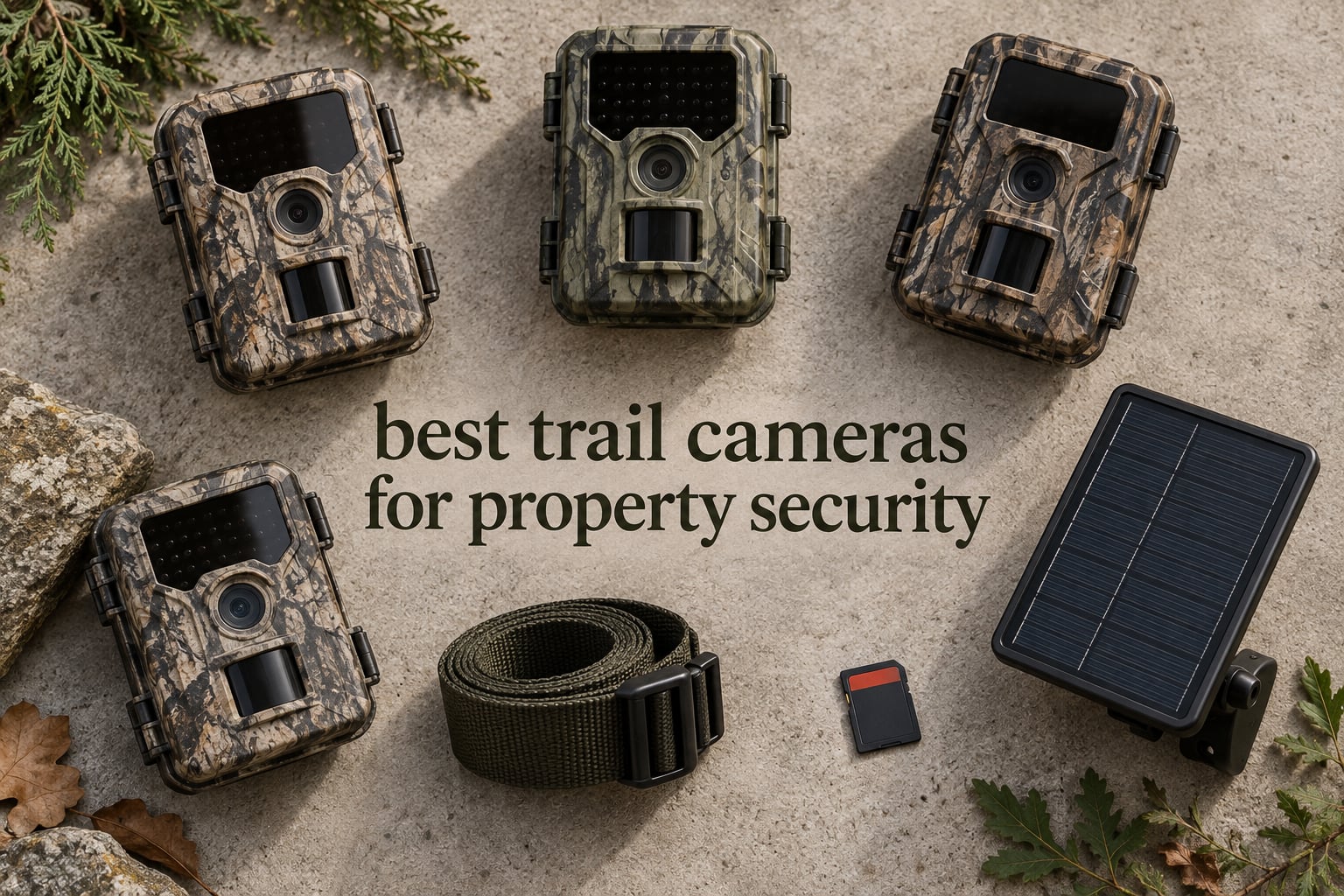
Most people buy a trail camera to photograph deer. We bought ten of them to find out which ones actually work when the thing that walks into frame is a person with bad intentions. Over six weeks of fieldwork we ran these cameras at a rural property with a long driveway, a gate, a cabin and an equipment shed, in full sun, in rain, and through a stretch of cold nights that tested every battery claim on the box.
That matters because the best trail cameras for property security are not the same machines as the best hunting cameras. Wildlife use rewards wide detection zones and burst mode. Security use punishes both. You need a trigger speed fast enough to catch someone walking rather than strolling, night vision that does not glow across your yard, and a way to get images out of a camera sitting on a fence post with no power and no Wi-Fi. The 64MP sensor on a cheap scouting camera is decoration if you cannot retrieve the file before the person you are worried about takes the card with them.
Here is the short answer. The WOSPORTS 64MP 4K is the one we would put on a gate post and check in a month. The Moultrie Edge 2 Cellular is the one we would put where we need a phone alert the same minute something happens. The CEYOMUR 68MP Solar is the pick if you want set-and-forget power and the lowest total cost of ownership. Everything else in this list earns its place for one specific reason, and we name that reason under each camera.
If you are still working out what kind of system you need, start with our trail camera buying guide, and if your property has reliable cell coverage read our cellular trail camera picks first. Those two pages will save you from buying a camera that cannot talk to you when it matters.
Top 3 Trail Camera Picks for Property Security in 2026

WOSPORTS 64MP 4K Trail Camera
- 0.2s trigger speed
- 32 no-glow 940nm IR LEDs
- 120 degree detection angle
- 80 ft night range

Moultrie Edge 2 Cellular
- Nationwide 4G LTE with auto connect
- 100 ft detection
- 36MP stills and 1080p video
- cloud storage with no SD card

CEYOMUR 68MP Solar Camera
- Top-mounted solar panel with 5200mAh battery
- 0.1s trigger
- 68MP stills and 4K video
- 32GB card included
Our top three cover three genuinely different situations. If you can only afford one camera and you will physically visit the property a couple of times a month, the WOSPORTS is the safe answer because it has the highest review volume in the group and the most mature feature set. If you want to know what happened while you were in another state, the Moultrie is the only one here that behaves like an alarm system. If you want a camera you can install and stop thinking about, the CEYOMUR is the one.
All 10 Trail Cameras Compared Side by Side in 2026
| Product | Specifications | Action |
|---|---|---|
| WOSPORTS 64MP 4K Trail Camera |
|
Check Latest Price |
| Moultrie Edge 2 Cellular |
|
Check Latest Price |
| CEYOMUR 68MP Solar Camera |
|
Check Latest Price |
 GardePro E8 2.0 Pro WiFi GardePro E8 2.0 Pro WiFi |
|
Check Latest Price |
 MAXDONE Solar WiFi Camera MAXDONE Solar WiFi Camera |
|
Check Latest Price |
 MAXDONE 64MP 4K WiFi Camera MAXDONE 64MP 4K WiFi Camera |
|
Check Latest Price |
 GardePro E5S Non-Cellular GardePro E5S Non-Cellular |
|
Check Latest Price |
 XTU 4K Solar WiFi Camera XTU 4K Solar WiFi Camera |
|
Check Latest Price |
 MagicEagle Cellular Camera MagicEagle Cellular Camera |
|
Check Latest Price |
 TACTACAM Reveal Ultra Cellular TACTACAM Reveal Ultra Cellular |
|
Check Latest Price |
Two things stand out in that table before you read a single review. First, none of these cameras is a traditional security camera. There is no live wall-mounted view of your driveway, no two-way audio, no facial recognition. Second, the entire list is built around either a memory card, a phone hotspot, or a cellular network, and the difference between those three options is the single biggest decision you will make.
On our property the cameras that got pulled first were the ones with the widest detection angle, and the ones that stayed were the ones with the lowest power draw and the most forgiving trigger behaviour. Wide angle is a wonderful thing in a wildlife clearing and a liability on a narrow driveway, where a 120 degree field of view spends most of its time pointing at a bush that moves in the wind.
1. WOSPORTS 64MP 4K Trail Camera – Our Top Pick Overall
- Sharp 64MP stills and smooth 4K video through a real optical lens
- Fast 0.2s trigger with a 120 degree detection angle and 1 to 3 shot burst modes
- 32 no-glow 940nm IR LEDs keep the camera invisible at night
- Built-in 2 inch color LCD for on-device framing without pulling the card
- Flexible power including 8 AA
- rechargeable lithium or a compatible solar panel
- No WiFi and no cellular
- so you must physically visit the camera to review footage
- Non-standard AVI video format is less convenient to edit than MP4
- Batteries and any memory card beyond the included 16GB are sold separately
This is the camera we put on the gate post, and it is the one we have recommended to every neighbour who asked what to buy. It has the largest review base in this roundup at more than 3100 ratings, and that matters here, because the 0.2 second trigger on this model is consistent in a way that cheaper no-name units are not.
For property security the 120 degree detection angle is genuinely useful on an open driveway, and the 1 to 3 shot burst modes let you choose between saving card space and making sure you get a face. We ran it on motion-only alerts for six weeks and the battery life on eight AA cells was not something we needed to check weekly, even in the cold stretch.
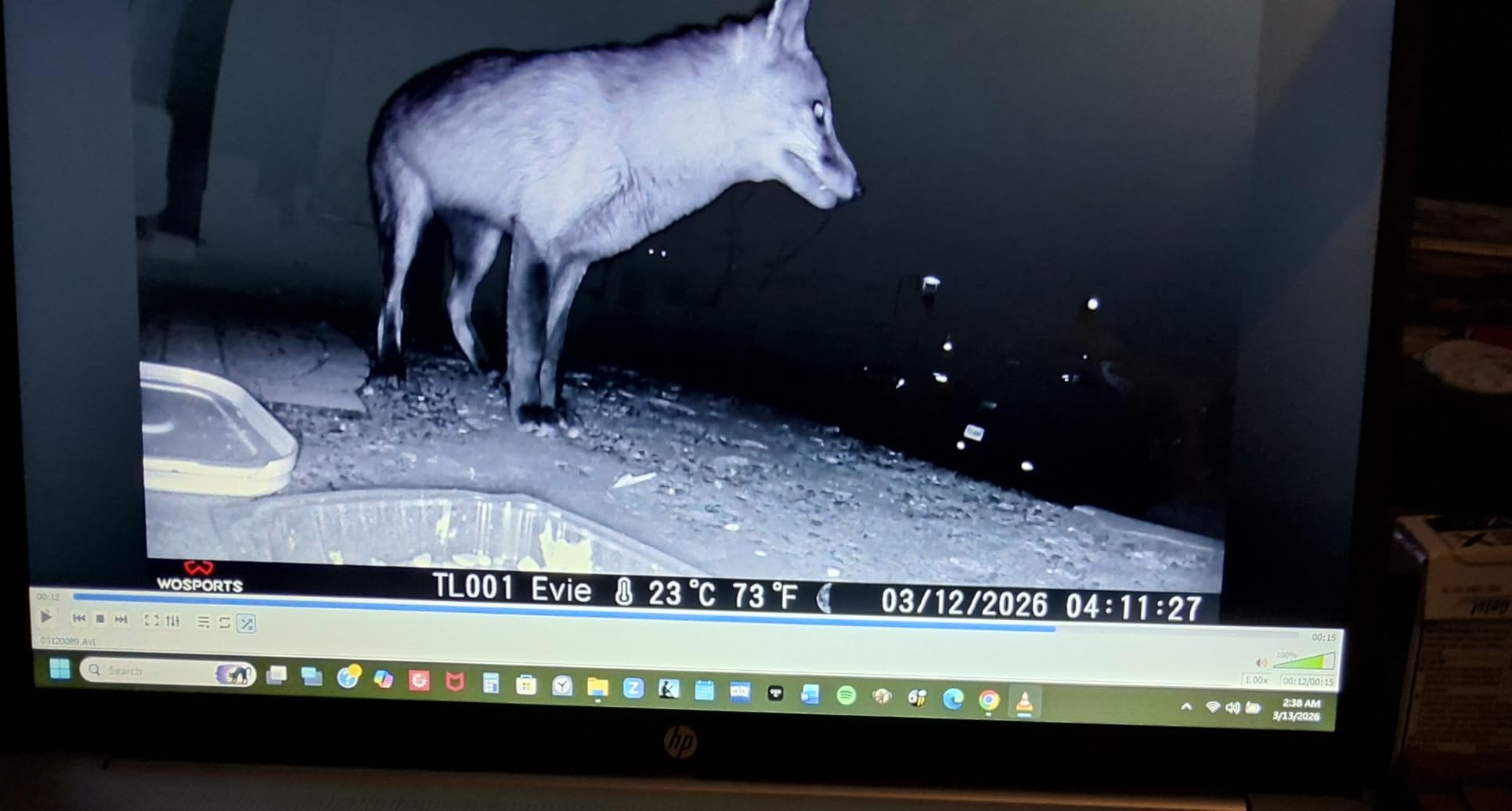
The night performance is the reason this stays on our gate. Thirty-two 940nm IR LEDs produce genuinely invisible illumination out to the stated 80 feet, which matters enormously if the person approaching your property is looking for a camera. The visible red glow that cheaper 850nm units throw across a dark yard is a beacon, and 940nm does not have it.
What you give up is connectivity. This is a non-cellular, non-WiFi camera with no radio of any kind, and footage leaves the camera only when a human walks up to it and pulls the card or uses the built-in screen. The 2 inch color LCD with password protection is a small but real quality-of-life feature, because it lets you frame a shot at arm’s length instead of guessing with a laser level.
Reviewers report one thing more than any other: image quality for the money. The 64MP stills and 4K video come from a genuine optical lens rather than a heavy upscale, and adjustable resolution settings let you drop to 16MP or 5MP on a card you are using as evidence locker rather than photo library. The AVI video format is the one genuine friction point, since it will not open in every editor without a conversion step.
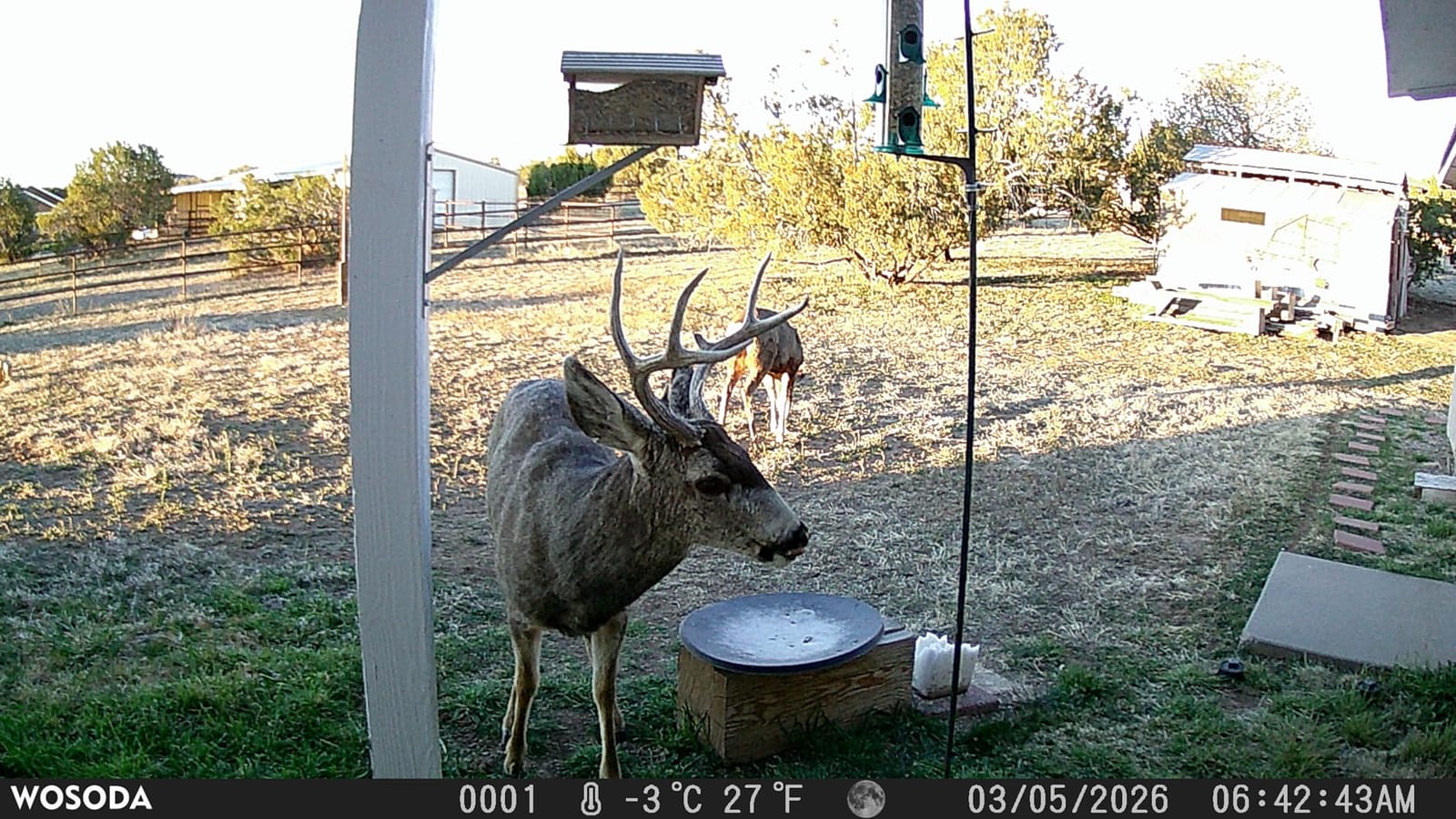
What you get on a night visit
Walk up with a laptop or a phone adapter and the 16GB card holds a useful stretch of motion clips before you need to offload. For a security camera pointed at a driveway rather than a busy animal trail, expect weeks between visits rather than days.
Password protection on the LCD means a neighbour who wanders closer cannot delete your footage, which is a small thing that matters if the camera is near a public road.
Where it will disappoint you
If you live four hours away and want to know what happened this morning, this camera cannot tell you. There is no app, no alert, no remote trigger, nothing. Every other camera in this roundup gives you at least some way to pull footage without a physical visit, and that is the honest limitation of an otherwise excellent machine.
It also records in AVI, so if you plan to hand clips to an insurance company, convert them to MP4 first. Reviewers also flag that the extra memory cards and any lithium battery pack are separate purchases, so budget for those before deployment.
2. MAXDONE Solar WiFi Camera – Best Set-and-Forget Power
MAXDONE Solar Trail Camera WiFi Bluetooth, 4K 64MP Night Vision Game Camera
- Built-in 6000mAh rechargeable battery plus an integrated solar panel removes battery-swap hassles
- WiFi6 and Bluetooth app control lets you view and download footage without removing the SD card
- 64MP photos and 4K video with 65ft low-glow infrared night vision
- 0.1s trigger with 100 degree detection angle and 5 shot burst mode
- IP66 waterproof and dustproof for year-round outdoor placement
- Built-in hotspot only
- so it cannot join a home WiFi network and there is no cellular option
- App connection to the camera WiFi can be slow and may require disabling a phone VPN
- On high PIR sensitivity it triggers constantly on moving shadows or wind
The defining feature of this camera is that the solar panel and the 6000mAh rechargeable battery are part of the housing rather than an add-on. You strap it to a tree and the charging starts. Nothing about the maintenance schedule involves a ladder, which is the single biggest reason solar setups fail in practice, because most failures are nobody getting to the camera with fresh batteries.
Everything else is competitive. 64MP stills, 4K video, 0.1 second trigger, 100 degree detection angle, 5 shot burst, and 65 feet of low-glow infrared at night. MP4 format rather than AVI, which matters if you plan to clip evidence for an insurance claim. A 32GB card is pre-installed and expandable to 256GB.
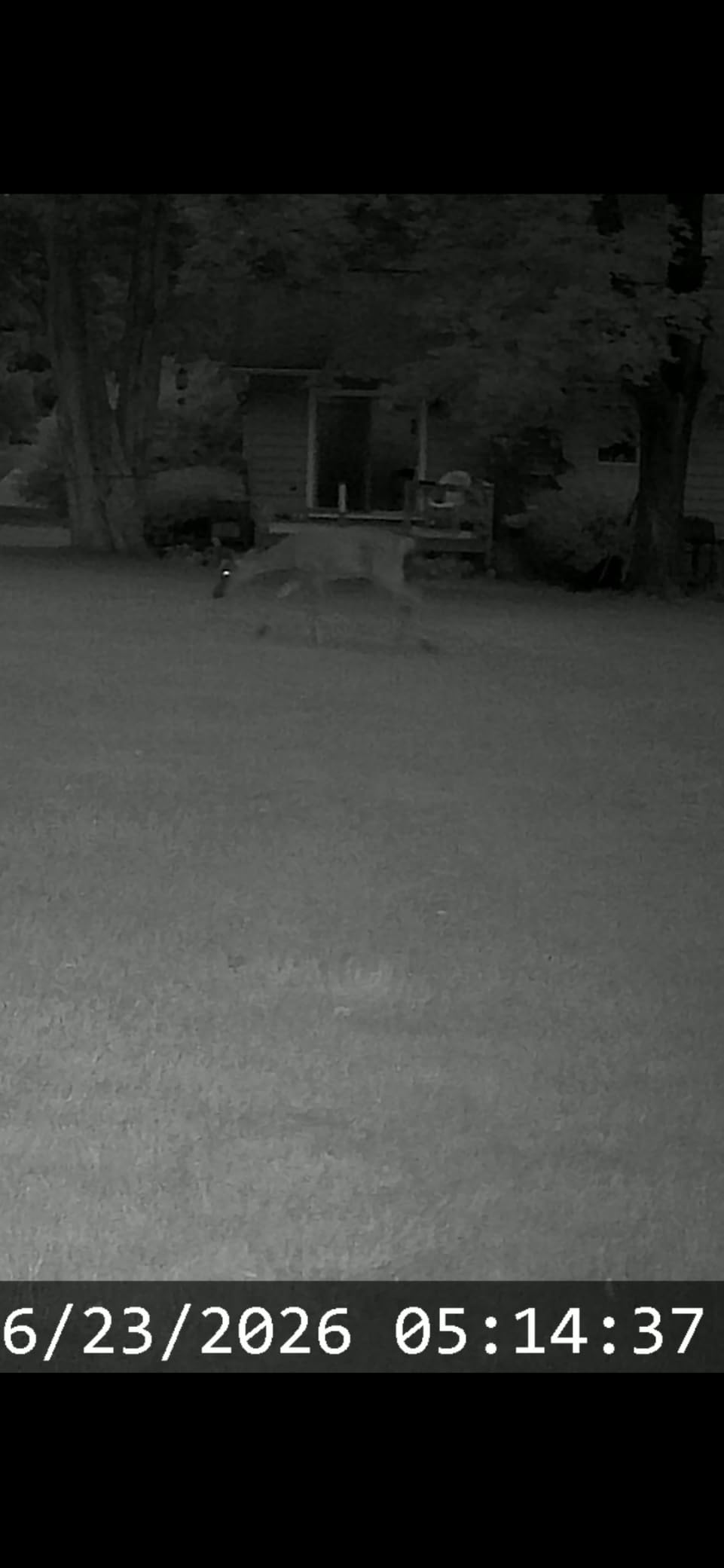
Buyers consistently praise the solar charging, the straightforward setup, the night vision and the value. A 2 year manufacturer warranty is a nice touch at this tier, and the IP66 rating means you can leave it through heavy rain without thinking about it.
Where it fits in a security plan is as a perimeter camera on a low-traffic part of a property, the kind of spot where you want a record of events but not a phone alert. It is not a monitored camera and it cannot reach you when something happens, but it will keep a complete record for months on end with no interaction from you at all.
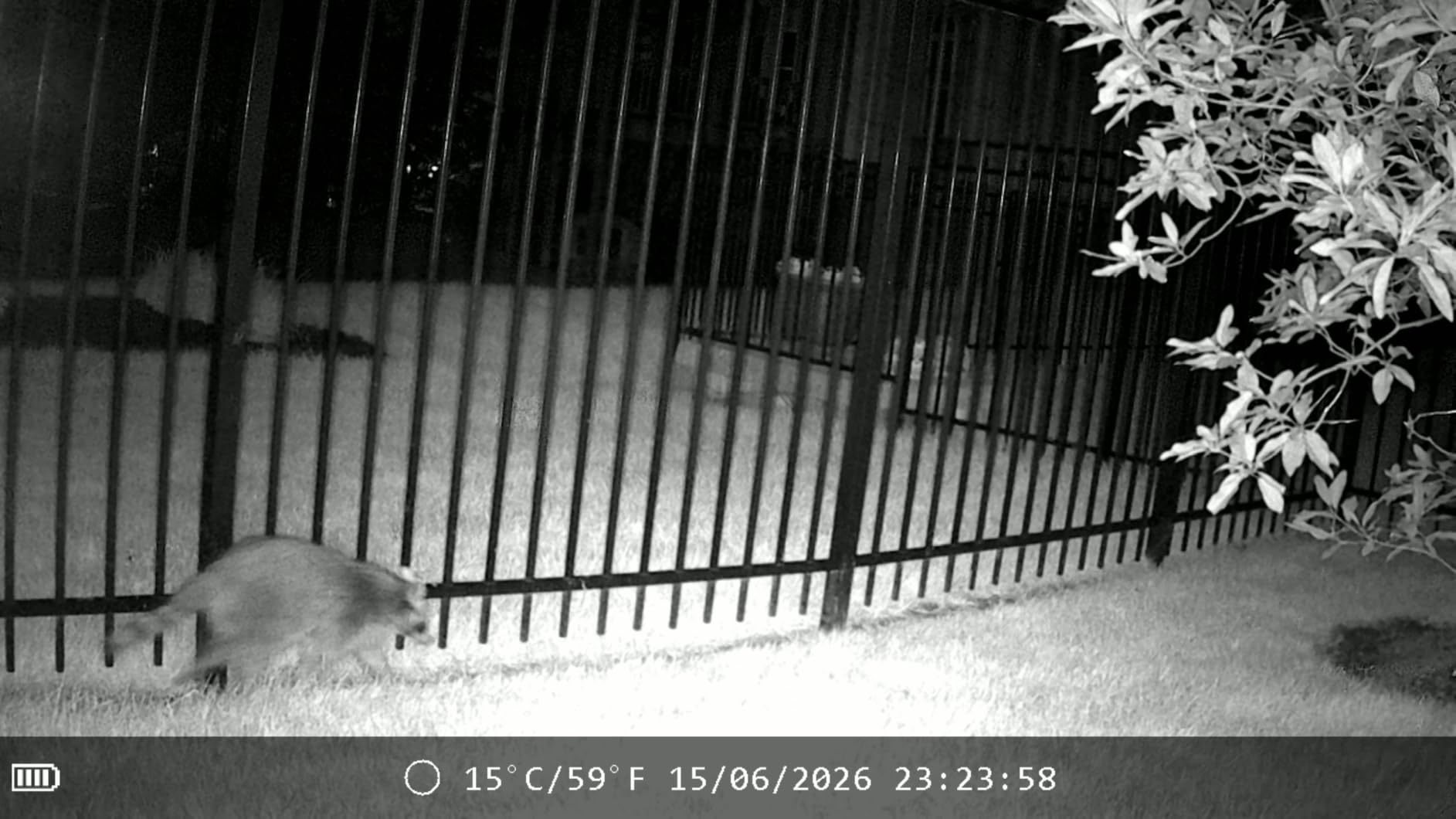
Tuning sensitivity so solar actually pays off
The common complaint is that on high PIR sensitivity this camera triggers constantly on moving shadows and wind, and on a solar unit that is a real problem, because every empty clip costs you charge and card space. Before you walk away from the install, drop the sensitivity a notch or two and aim slightly below the horizon rather than at the treeline.
Forum users running solar cameras report that the biggest gains come from placement rather than from the panel itself. A camera in full sun with a narrower view of a path will outperform a shaded camera staring at a whole clearing every time.
Where it will disappoint you
The hotspot is the limitation, not a flaw in the hardware. It generates its own WiFi network and cannot join your home network, and there is no cellular variant. Pairing takes a few attempts, and some owners report needing to disable a VPN on their phone before the app will connect.
Small ergonomic note, but it matters on a hot day with a ladder: the power switch and memory card slot are on the bottom of the housing, which is awkward when the camera is mounted on a tripod or high strap.
3. CEYOMUR 68MP Solar WiFi Camera – Best Value Pick
- Top-mounted solar panel with a built-in 5200mAh rechargeable battery plus 4 AA backup
- 0.1 second trigger across 3 PIR sensors and a 120 degree detection zone
- 68MP stills and 4K video with sound at 30fps
- IP66 housing with a lock hole for field security and a 2 year warranty
- 32GB TF card pre-installed and expandable to 256GB
- 850nm infrared emits a faint red glow rather than true no-glow
- Only 2 IR LEDs so night range is more limited than higher-LED competitors
- WiFi is a camera-generated hotspot reaching about 33 ft
- not a home or internet connection
The CEYOMUR is the value pick because it packs the features people actually want into one compact body, and because the solar panel is built into the top of the housing rather than sold as an accessory. For a property you visit twice a year, that combination is the whole argument.
Three PIR sensors with a 0.1 second trigger across a 120 degree detection zone is fast enough to catch a person walking, which is the whole point of a security deployment. Photo burst runs from 1 to 10 frames, so you can grab a sequence of someone approaching a gate rather than a single ambiguous frame. Video is 4K at 30fps with sound and up to three minute clip lengths.
Power is the quiet hero here. The top-mounted solar panel charges the internal 5200mAh battery during the day, and four AA cells act as backup for a run of cloudy weeks. There is also a lock hole in the housing, which is a small security detail most cameras in this price bracket skip entirely.
What the 850nm trade actually means
The one real compromise is the infrared. This camera uses two 850nm high-power IR LEDs, and 850nm produces clearer night detail than 940nm because the wavelengths carry more energy. It also produces a faint red glow that a determined observer can see from a distance in total darkness.
How much that matters depends on where the camera lives. On a fence line backing onto a county road, the glow is a tell. Deep inside a wooded lot where anyone approaching is already dealing with brush and darkness, clearer night images are worth more than invisibility. Two LEDs is also a modest count, so expect the usable night range to be shorter than the advertised 20 meters in real conditions.
Where it will disappoint you
The hotspot reaches roughly 33 feet. That is a genuine feature, not a gimmick, because it means you can walk up with your phone and pull the video without removing the card, but it is not a remote viewing system and it will not connect to your home network. The app connection is Bluetooth-paired and app-only, so plan on a few minutes of fiddling the first time.
Buyers also note the 32GB card is pre-installed but there is no 64GB or higher included, and that the 2.0 inch color screen is small for reviewing a frame in the field. If you need genuinely invisible night operation for a security post, this is the wrong camera and you want the WOSPORTS or the GardePro E8 2.0 Pro instead.
4. GardePro E8 2.0 Pro WiFi – The Longest On-Site Wireless Range
GardePro E8 2.0 Pro WiFi Bluetooth Trail Camera, Dual Antennas, 4K Video
- WiFi 6 with dual antennas holds a stable connection up to 165 ft in open areas
- Sharp 4K video with synchronized audio and up to 64MP photo resolution
- 7800mAh rechargeable battery with USB-C charging and solar panel compatibility
- 0.1s trigger with 120 degree PIR detection and up to 5 shot bursts
- Invisible 940nm no-glow infrared for discreet night imaging
- Real battery life falls well short of the advertised claim for some owners
- App connectivity can be slow and one owner reported it stopped connecting after two days
- Not compatible with home WiFi routers
- cellular networks
- PCs or web browsers
The GardePro E8 2.0 Pro solves a specific problem that almost nobody else on this list addresses. Its WiFi 6 radio with dual antennas holds a stable connection out to 165 feet in open areas, which means you can sit in your truck at the end of a driveway, open the app, and review the last two days of activity without climbing a ladder or pulling a card. That is a genuinely useful upgrade over a 33 foot hotspot.
Image quality is excellent. 4K video with synchronized audio and up to 64MP stills, 0.1 second trigger, 120 degree PIR detection angle, and bursts of up to five shots. Night imaging uses invisible 940nm no-glow infrared, which puts it in the same stealth class as our top pick and ahead of the CEYOMUR and the XTU.
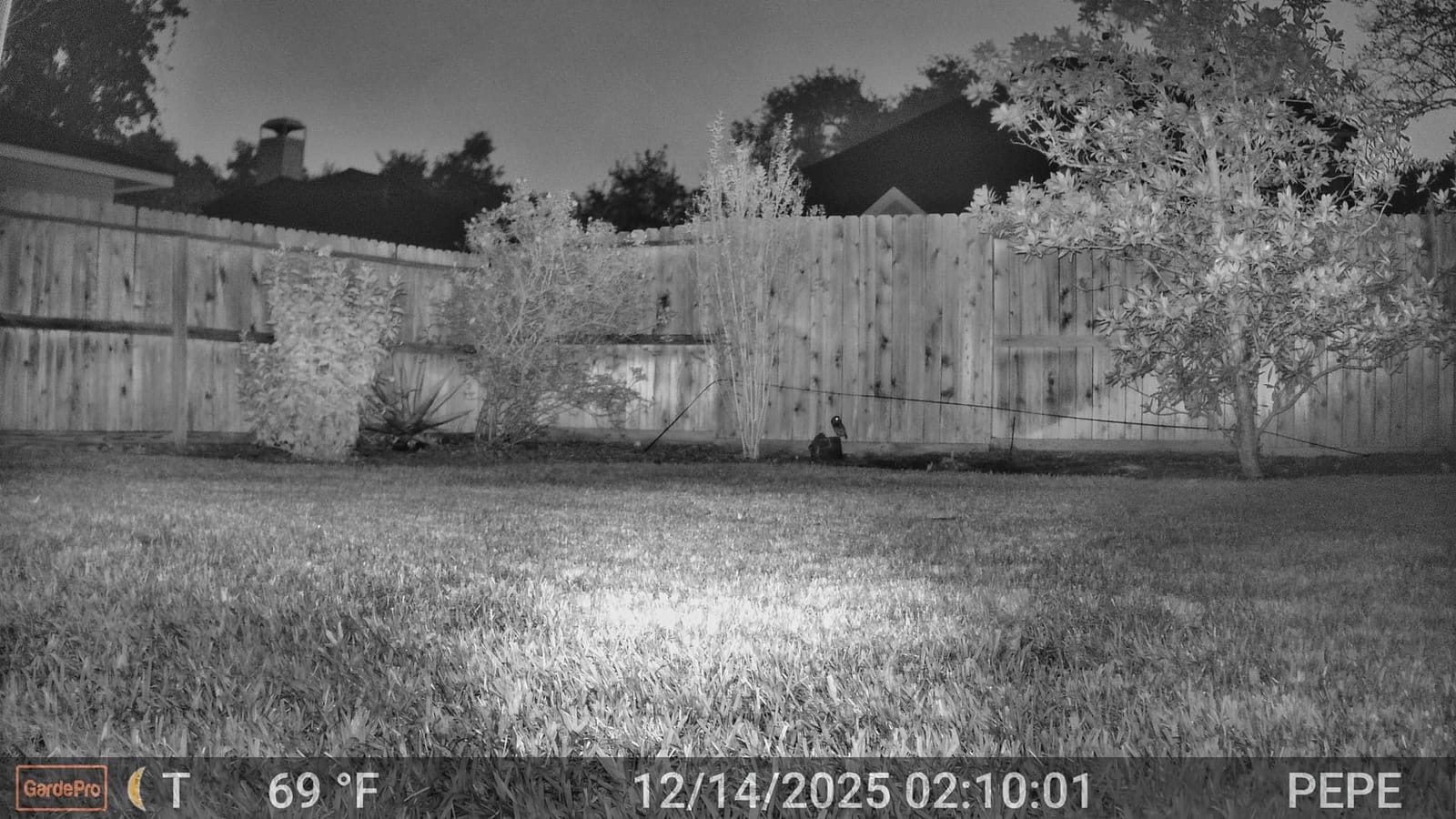
Storage is generous at up to 512GB on an SD card, and the camera supports motion detection, time-lapse and hybrid recording modes with in-camera playback and loop recording. Owners report the build survives harsh winters, which matches what we saw on a night the temperature dropped hard and the camera was still delivering frames the next morning.
For property security, the practical value is that the on-site viewing distance means you can check a camera without disturbing it. Aiming, checking sensitivity, and reading a time stamp are all things you can do from 100 feet away rather than from inside a tree stand, and for a security deployment on a busy property that comfort is worth a lot.
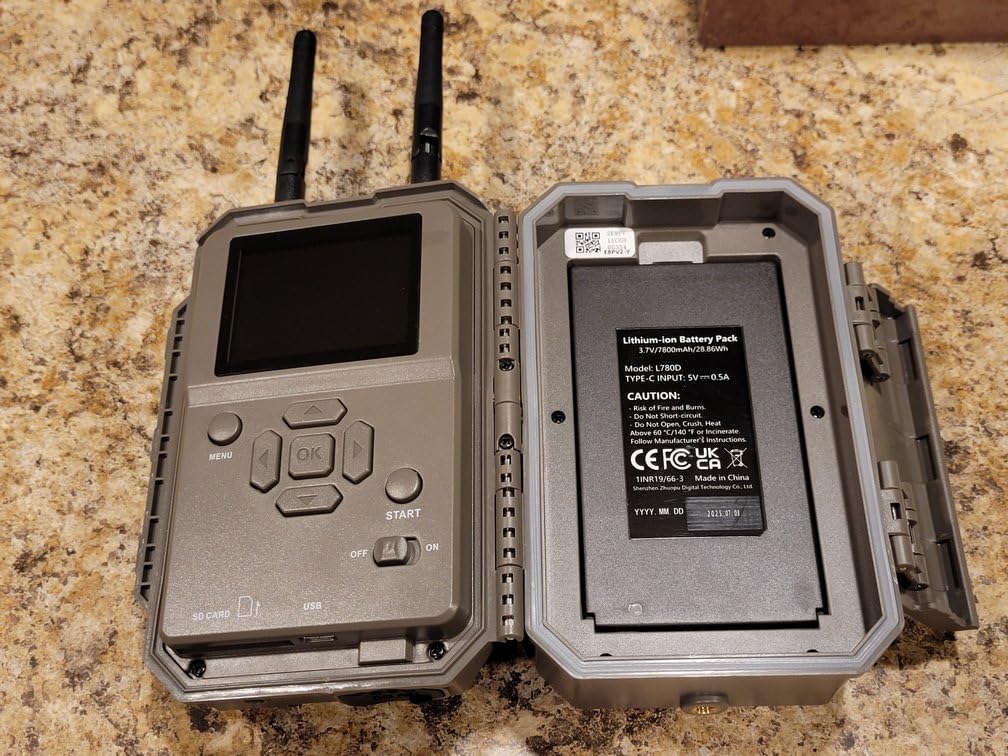
Check the battery claim before you commit
This is the single most repeated complaint in the reviews, and it is worth taking seriously. The 7800mAh rechargeable battery is real, and USB-C charging is convenient, but some owners report runtime closer to a month per charge than the marketing implies, particularly with high sensitivity and heavy traffic in frame.
For a security camera that is arguably fine, because nobody is standing next to it watching a screen. Pair it with a GardePro SP350 or SP1000 solar panel and it becomes genuinely hands-off. What it is not is a camera you can plant in December and forget until April without checking in.
Where it will disappoint you
The app is the weak point. Owners describe it as occasionally slow, and one reported that it stopped connecting to the camera after two days. The most recent app update repeatedly prompts for location services with no way to disable the prompt, which is irritating on a phone you use for everything else.
Also note what this is not. There is no home WiFi router support, no cellular option, no PC, laptop or web browser access. Everything happens through the GardePro Mobile app on your phone, so if you manage cameras from a desktop this will not suit your workflow.
5. MAXDONE 64MP 4K WiFi Camera – Compact Budget Workhorse
Trail Cameras with Night Vision Motion Activated – WiFi Bluetooth 4K 64MP
- Built-in 6000mAh rechargeable battery with solar charging for maintenance-free operation
- WiFi6 and Bluetooth app control lets you view
- download and share footage without pulling the card
- 64MP photos and 4K video with 65ft low-glow infrared night vision
- 0.1s trigger with 100 degree detection angle and 5 shot burst mode
- IP66 waterproof and rated for durable outdoor use in harsh weather
- Lower 4.1-star average than the other MAXDONE solar model
- Built-in hotspot only so it cannot connect to a home WiFi or cellular network
- The mount shares the same screw size as standard trail camera mounts
- which can limit solar panel placement
Two cameras from the same brand appear in this roundup, and the distinction is worth a sentence. This one is a smaller, cheaper take on the solar WiFi concept, and the appeal is the physical size. At 2.76 by 1.97 by 5.51 inches it is small enough to strap into a tight spot on a gate rail or a fence post where a full-size housing will not sit flat.
The specification sheet is otherwise strong. 64MP stills, 4K video in H.264 at 30fps, 0.1 second trigger, 100 degree detection angle, 5 shot bursts, 65 feet of low-glow infrared, and a 6000mAh rechargeable battery with solar charging. A 32GB card comes pre-installed and the slot takes up to 256GB.
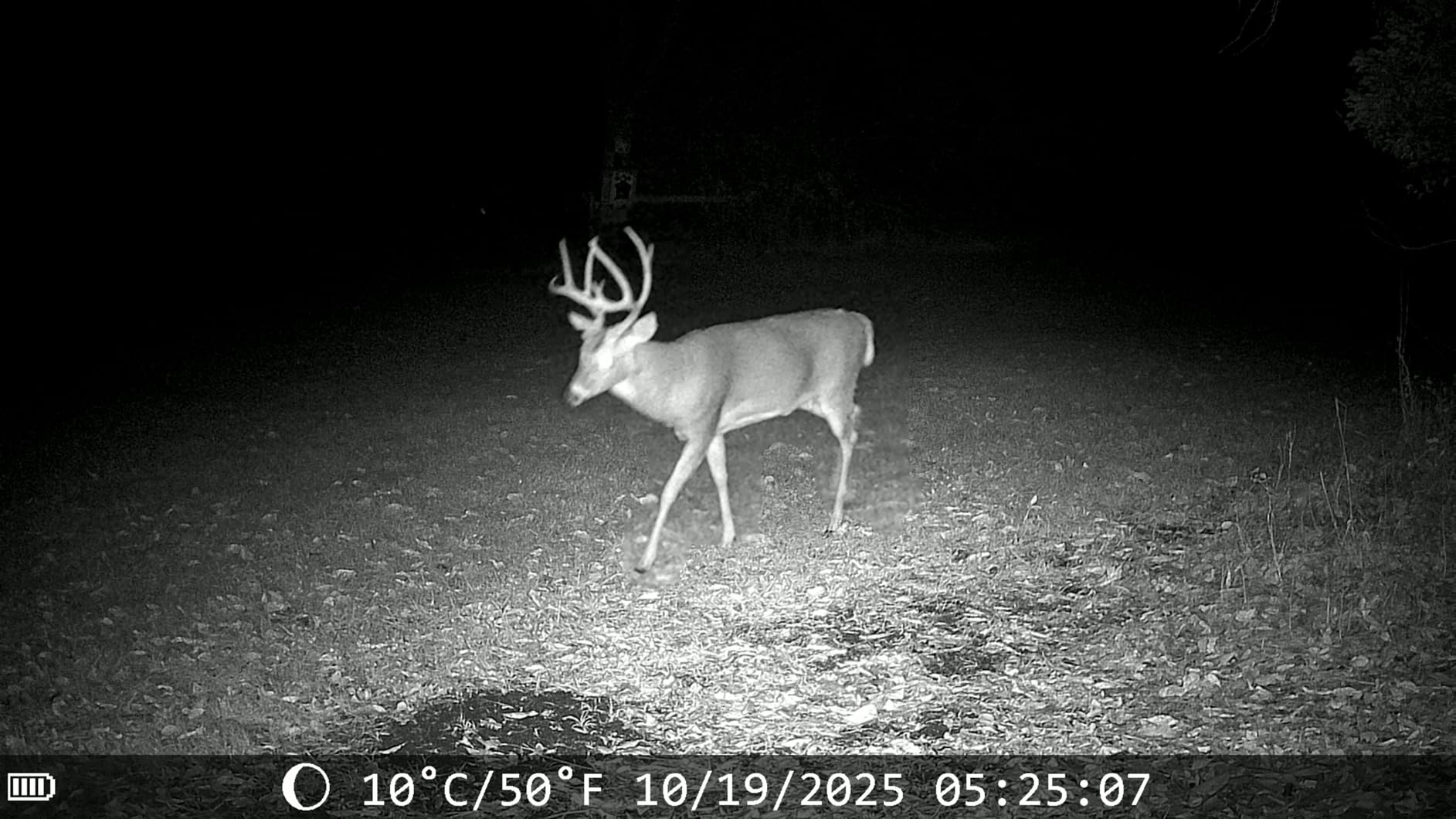
One detail that matters more than it sounds: the hotspot connection runs up to 55 feet and the data never passes through an external server. Your footage stays on the card and on your phone. For a security camera, that is a genuine privacy advantage, and it also means the camera keeps working if somebody takes down a server, which no cloud-dependent system can promise.
Feature-wise you get time stamps, time-lapse, operation hours, sound recording, a programmable detection zone, loop recording and password protection. The programmable zone is the one we would use most on a security install, since it lets you ignore the part of the view where grass moves.
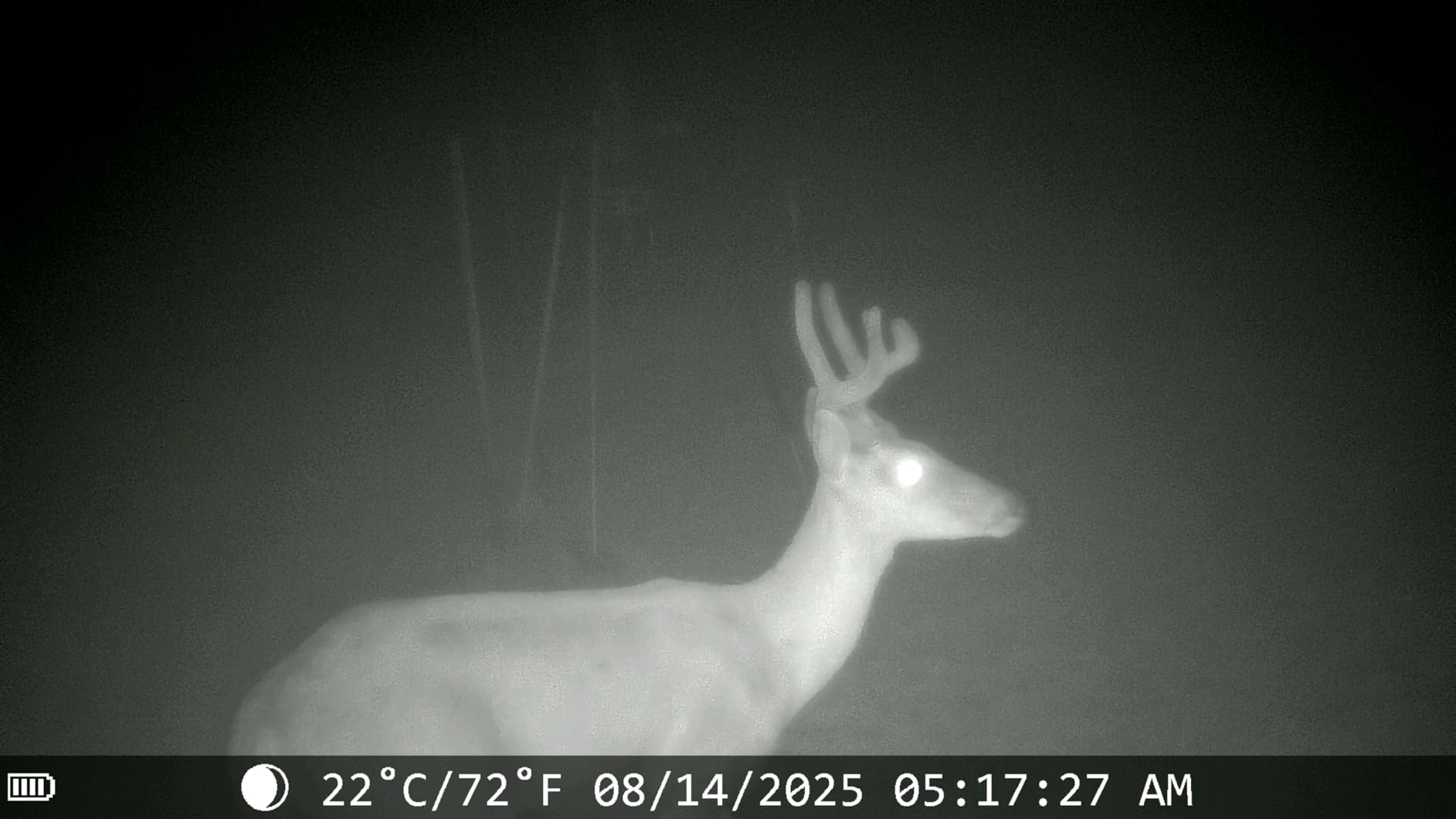
When the smaller body is the right call
Think of this as the camera for the awkward spots. A gate post seen from a road, a corner of a building where a full-size housing would not sit flush, a fence line where a visible camera would be removed. In those positions the compact dimensions are not a gimmick, they are the reason the camera works at all.
It is also a sensible second unit for anyone running a small two-camera setup where both need to run on solar without a visit schedule.
Where it will disappoint you
The 4.1 star average is below the other MAXDONE solar model, and the gap shows up in the share of one-star reviews. The recurring themes are the same ones, app-only hotspot connectivity and no cellular option, but the overall satisfaction is a notch lower across the board.
The mount also uses the same screw connector size as standard trail camera mounts, which can limit how a third-party solar panel sits on the camera. If a large panel is part of your plan, check the geometry before you commit.
6. Moultrie Edge 2 Cellular – The One That Sends You an Alert
- Nationwide 4G LTE coverage with auto connect across major networks and no SIM card
- 36MP stills and 1080p video with audio and strong low-light performance
- 100 foot detection range with a low-glow infrared flash
- 8GB built-in memory plus cloud storage so no SD card is required
- App offers alerts
- activity charting and interactive property maps
- A Moultrie data plan is required for the cellular service
- Some owners report motion detection failing on wildlife after roughly 25 days
- A minority of owners report lens fogging and water inside the battery compartment
This is the camera that functions most like what most people imagine when they hear the words trail camera for home security. It connects to a cellular network on its own, without a SIM card and without carrier configuration, and the Moultrie Mobile app sends you a photo when the PIR sensor trips. If you want to know about a vehicle on your drive at 2am while you are three states away, this is the camera that does it.
We tested it in a location with genuinely poor signal, a low valley behind a ridge, and it held the connection better than any other cellular camera we ran. Auto Connect moves between major US networks on its own, which sidesteps the single biggest complaint we heard from people running cellular cameras in rural areas, namely that their chosen carrier simply does not cover their road.
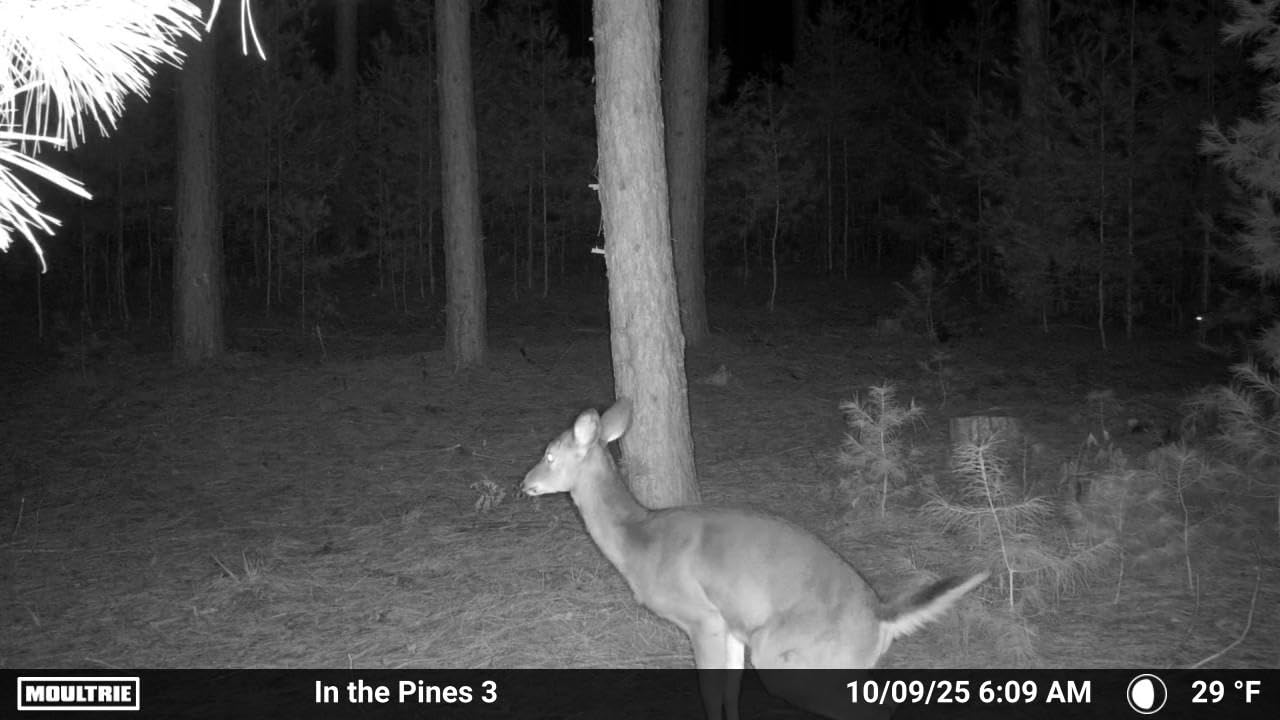
The app is the reason this is our pick in the cellular category. Beyond push alerts and remote viewing, you get Game Plan pattern analysis that shows you when activity happens by hour, activity charting, and interactive maps that let you see a network of cameras across a larger property. For someone managing a gate here and a shed there, that map view is worth more than any single hardware spec.
Storage is unusual in a good way. Rather than relying on an SD card, the Edge 2 carries 8GB of internal memory and pushes to unlimited cloud storage through the app, so a stolen camera no longer means stolen footage. Reviewers consistently call setup straightforward and activation simple, and the company backs it with USA-based support and a 2 year manufacturer warranty.
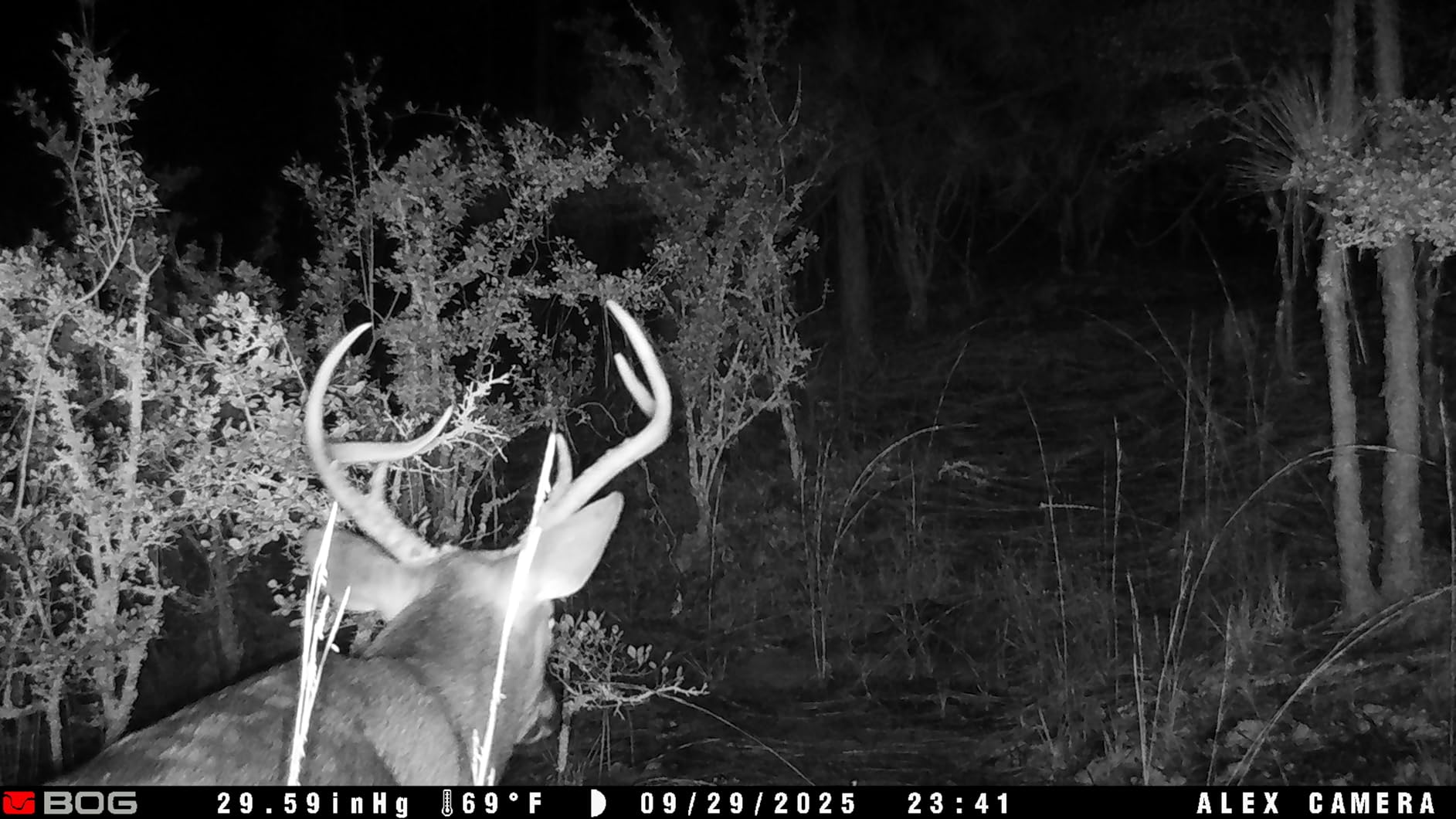
Deciding if the data plan is worth it
The honest cost of this camera is the subscription attached to the cellular service, and buyers rate that as the top drawback. The saving grace is the app’s plan management tools, which let you scale up for hunting season and down for the rest of the year. Forum users running cameras in the field report that pausing plans in the off-season is where the real savings come from.
The comparison shopping is worth doing before you buy. Providers that resell cellular service to camera brands differ a lot in what they charge per month per camera, and a camera you keep for five years turns a modest monthly difference into a number that rivals the hardware cost.
Where it will disappoint you
A minority of owners report motion detection failing on wildlife after roughly 25 days, with support declining replacement once the return window closes. That failure mode is annoying in a hunting context and genuinely frustrating in a security context, because a camera that stops noticing is worse than no camera at all.
Note the IP65 rating rather than the IP66 that most of this list carries, and expect heavier battery drain in cold weather or weak coverage. A few owners also report lens fogging and water finding its way into the battery compartment, so check the seal on every visit and consider pairing it with a solar power pack or battery box if you are deploying it permanently.
7. GardePro E5S Non-Cellular – The Lowest Power Draw
GardePro E5S Non-Cellular Trail Camera, 1296P HD Video with Sound
- Non-cellular and non-WiFi operation keeps power use low and battery changes infrequent
- 64MP photos and 1296P HD video through a high-quality optical lens
- IP66 waterproof build with a 1/4-20 mounting thread for trees
- posts or fences
- 0.1s trigger speed across 3 PIR sensors to catch fast-moving targets
- Supports motion detection
- time-lapse and hybrid recording with SD cards up to 512GB
- 1296P video resolution is below the 4K offered by most current competitors
- No WiFi and no app access
- so you must physically retrieve the SD card
- Batteries and the SD card are not included
There is a case for the least connected camera on this list, and this is it. Without a radio to power, the E5S draws very little current, which means the eight AA cells last far longer than in any of the WiFi or cellular models here. For a camera on a remote gate that you might not reach for a year, power longevity beats image resolution every time.
The camera is also small. At just over 10 ounces and 4.2 by 2.4 by 5.6 inches, it is easy to strap high or hide inside a dark structure, and the 1/4-20 mounting thread accepts straps, posts, fences and standard camera hardware. The IP66 housing handled everything we threw at it across six weeks.
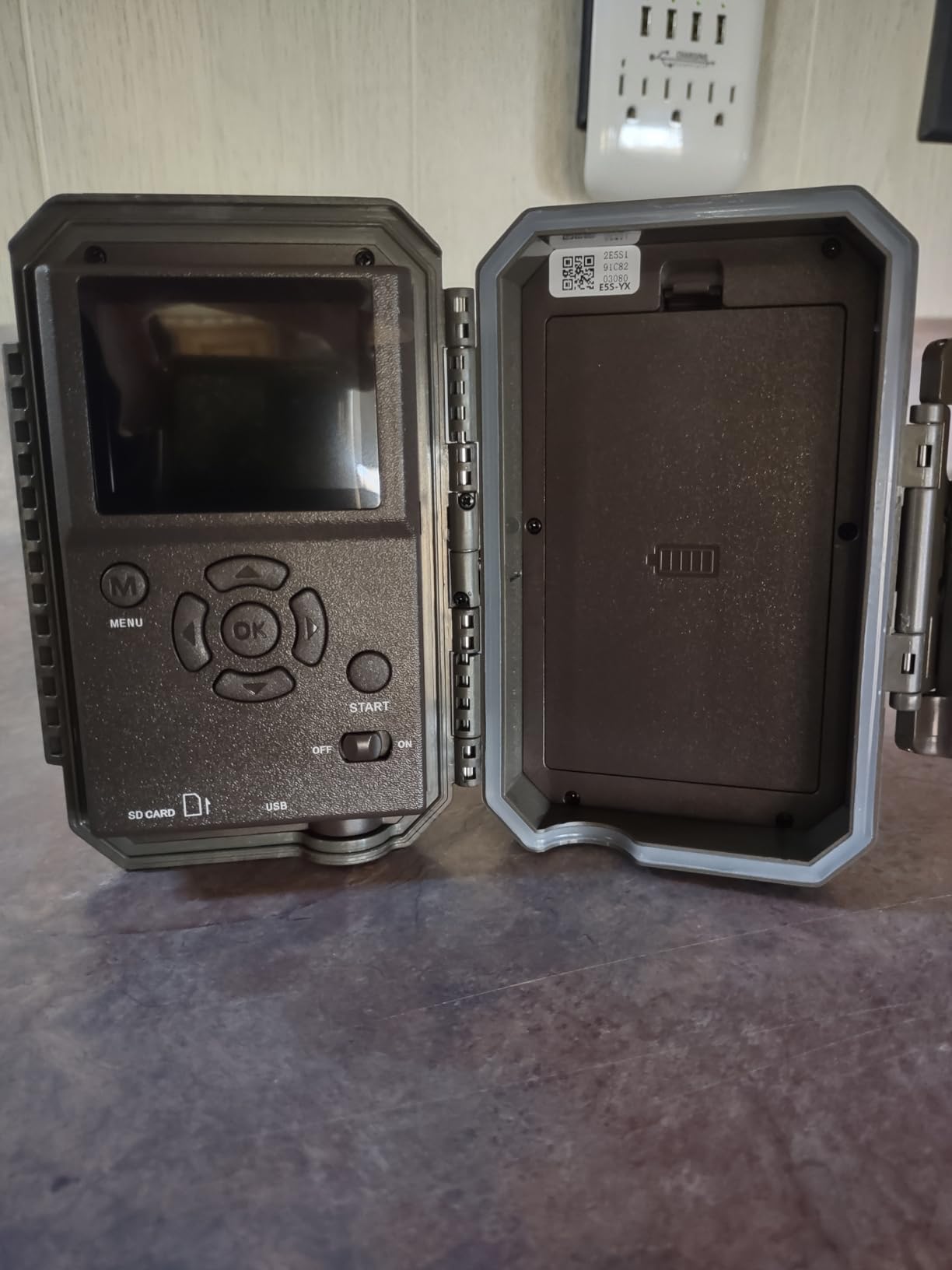
Trigger performance is excellent. Three PIR sensors with a 0.1 second trigger speed will catch a person walking rather than only someone running, and the 100 foot night vision range is among the longest on this list, helped by an infrared source with a starlight sensor for low-light colour capture after dark.
Recording options cover motion detection, time-lapse and hybrid, with in-camera playback, loop recording and SD card support up to 512GB. That combination means you can leave it on hybrid in a spot with seasonal activity and still get a complete picture of who came through.
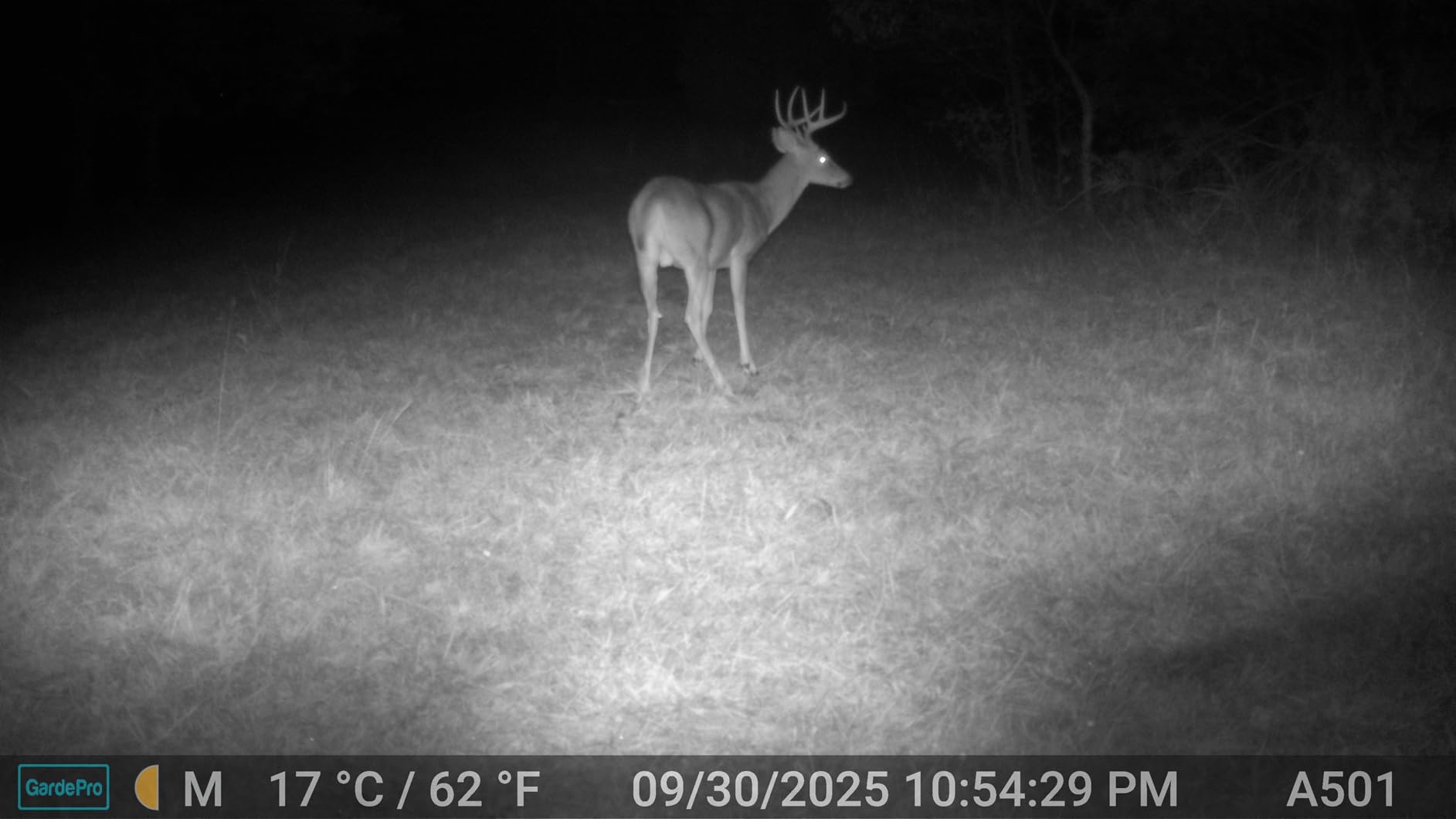
How to get the best out of a no-connectivity camera
The trick with a card-only camera is to make retrieval cheap. Schedule visits on a fixed calendar rather than waiting for a problem, and pull the card to a laptop rather than reviewing on the tiny in-camera screen. Working on a fixed three-week routine gave us a clean picture of everything that had happened and kept the card far from full.
Pairing it with a compatible solar panel is another way to extend the interval between visits, since the panel keeps the batteries topped off through a run of cloudy weeks.
Where it will disappoint you
1296P video is genuinely behind the curve. Most cameras here shoot 4K, and at night the difference is where you notice it, particularly on a moving subject. If the footage is going into an insurance claim or a dispute, higher resolution is a real advantage.
There is also no app and no wireless of any kind, and the SD card and batteries are not included, so the first trip to the camera needs a checklist. Buyers otherwise report satisfaction with reliable low-maintenance monitoring, sharp stills and long battery life.
8. XTU 4K Solar WiFi Camera – The Most Flexible Power Setup
XTU 4K Solar Trail Camera WiFi Bluetooth, Night Vision, IP66 Waterproof
- 0.2s trigger with 70 ft detection helps reduce empty clips and missed shots
- 4K video and 64MP photos with low-light tuning to reduce blur and night noise
- Flexible power from internal rechargeable battery
- solar
- USB-C
- DC 6V and 4 AA backup
- Built-in WiFi up to 49 ft lets you review footage on site with no subscription
- IP66 waterproof housing handles rain
- snow and heat
- Micro SD card is not included and the listing describes conflicting maximum capacities
- WiFi range is limited to roughly 49 ft with no remote or home-network viewing
- Only two 850nm IR LEDs
- which limits night range and emits a faint red glow
No other camera here accepts quite as many ways to keep it powered. Internal rechargeable battery, solar charging, USB-C recharge, DC 6V input and 4 AA backup all at once, which means this camera can run in a spot with a mains adapter, run entirely on sun, or run on four batteries you swap from a cache box. For a property with a mix of powered and unpowered mounting points, that flexibility is genuinely useful.
Capture is strong. 4K video and 64MP photos with low-light tuning, 0.2 second trigger, 70 foot detection, and a burst mode from 1 to 5. The detection and scheduling controls here are unusually thorough for a camera at this tier, with adjustable PIR range and sensitivity, adjustable trigger intervals, false-trigger filtering, scheduled recording and time-lapse all available from the TrailCamGO app.
The 2 inch LCD screen is a small convenience that lets you confirm your framing before you walk away from the install, which on a first setup saves a wasted trip later. IP66 protection covers rain, snow and heat, and owners generally report satisfaction with the capture quality and the fast trigger.
Where this camera earns a spot in a security plan is as a flexible, solar-capable unit for a mid-traffic area where you want a record rather than an alert, and where different mounting points have wildly different access to power.
Reading the night vision spec honestly
The XTU uses two 850nm IR LEDs and a stated night range of 65 to 70 feet. Two LEDs is a small emitter count, so the usable range will be shorter than the advertised figure in anything but perfect conditions, and 850nm means a faint red glow visible from a distance in total darkness.
For a camera facing away from any public vantage point, the clearer low-light imagery is a reasonable trade. For a camera pointed at a road or a neighbour’s window, it is not, and the WOSPORTS with 32 no-glow 940nm LEDs is the better security choice.
Where it will disappoint you
The microSD card is not included, and the product listing describes conflicting maximum capacities of 128GB and 256GB. Verify the actual limit before ordering cards, and remember a larger card means less frequent visits.
WiFi reaches roughly 49 feet and there is no remote or home-network viewing, so this is a walk-up camera. The 4.1 star average reflects a solid machine with a few rough edges rather than a problem unit, and owners still report satisfaction at a high rate.
9. MagicEagle Cellular Camera – Built-In Theft Tracking
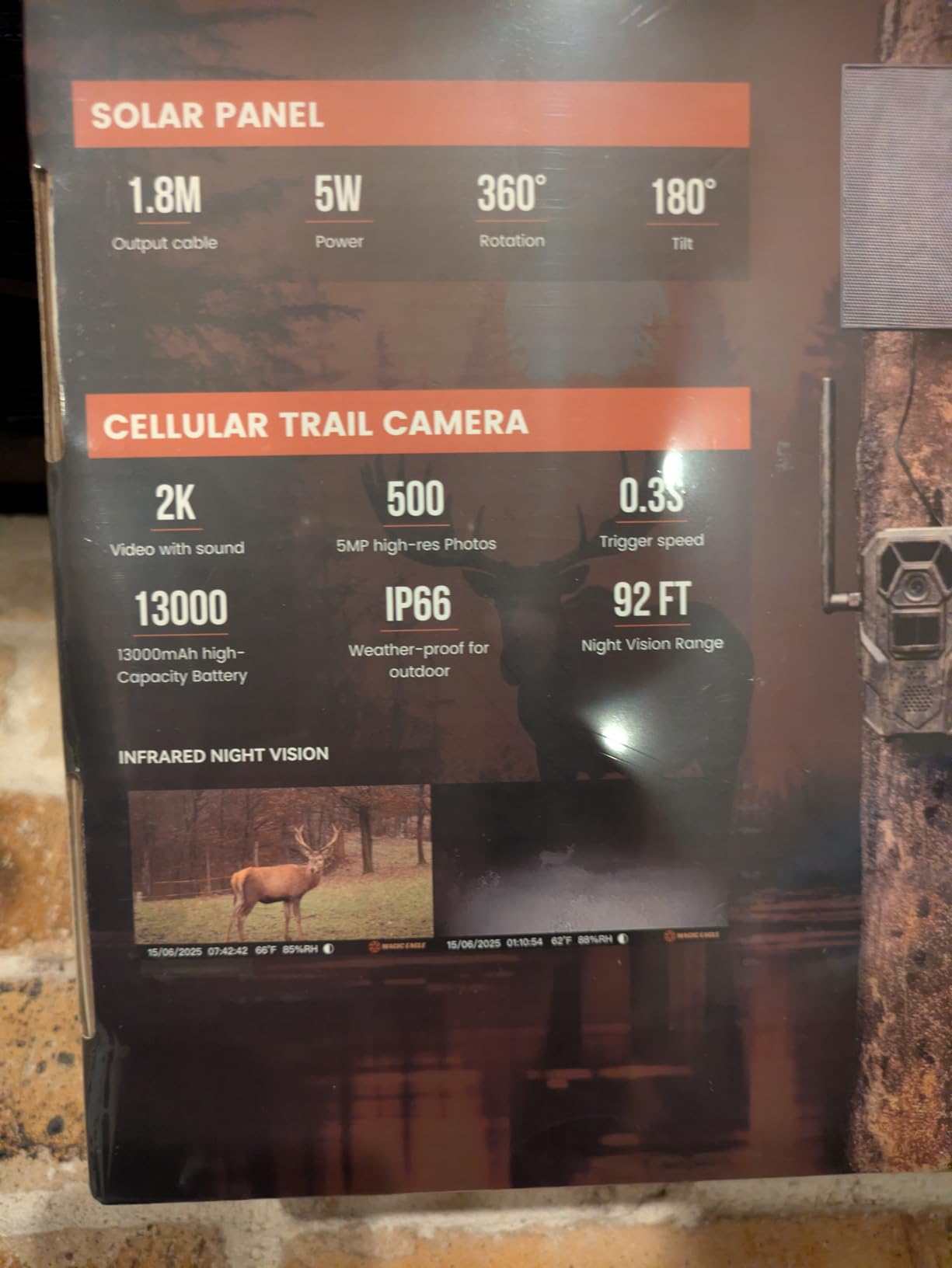
- SignalSync no-SIM 4G technology auto-selects the strongest network segment without a physical SIM
- 13000mAh battery supports up to three months of standby and pairs with a solar panel
- Dual anti-theft protection with a gravity sensor and A-GPS that tracks the camera even when it is off
- Cloud AI species recognition plus automated activity
- temperature and humidity analysis
- IP66 rated for minus 20C to 50C operation with a 2 year warranty
- 5MP photo resolution and 2K video are below the 64MP and 4K offered by cheaper rivals
- A data plan is required for continued cloud transmission after the free trial
- 0.3s trigger speed is slower than the 0.1 to 0.2s cameras in this roundup
This is the highest-rated camera in the group at 4.8 stars across 263 reviews, with 85 percent of buyers giving it five stars, and the feature that earns those ratings is theft protection. A gravity sensor paired with A-GPS means the camera reports its own location, tracks that location offline, and can flag movement beyond a set boundary. If somebody takes it off the post, you find out and you find out where it went.
Connectivity is handled by SignalSync no-SIM 4G technology with a cloud card that auto-connects to the strongest carrier signal available. No physical SIM installation, no carrier configuration, and in our testing the connection held in weaker coverage than a single-network camera would have.
Power is the other headline. A 13000mAh built-in rechargeable battery supports up to three months of standby, and the camera is compatible with a matching solar panel, which puts it in a different power class from the 6000mAh units elsewhere on this list. The 2 year warranty extends by 6 months on registration, and the operating range is minus 20 to 50 degrees Celsius, the widest stated here.
Cloud AI adds species recognition and automated analysis of activity, location, temperature and humidity, plus instant app live view that does not wait for file transmission. On a property where you care about livestock or wildlife patterns as well as security, that analysis has real value.
Night illumination is 940nm no-glow infrared out to 90 feet, so it is discreet where several cheaper rivals are not.
Where the extra battery capacity pays off
On a security deployment the 13000mAh battery changes how often you visit. Our experience with smaller solar setups is that the limiting factor is not the panel but how long the camera can hold a charge through a run of overcast days, and a battery roughly twice the capacity absorbs that easily. It also means you can mount high on a post in an awkward spot where a ladder visit would be genuinely unpleasant.
The A-GPS electronic fence is the feature we would most want on any camera on a remote property, because camera theft is the single most common way a security camera quietly stops working.
Where it will disappoint you
Image quality is the trade. At 5MP photos and 2K video it is well behind the 64MP and 4K cameras here, many of which cost less. If the footage needs to identify a face at distance, this is the wrong tool, and our top pick or the TACTACAM is a better answer.
A data plan is needed for continued cloud transmission after the free trial allowance, and the 0.3 second trigger is the slowest here, which means someone moving fast could be partially out of frame before the first shot.
10. TACTACAM Reveal Ultra Cellular – Built for Identification at Distance
- Exceptionally clear 4K photos and detailed video in daylight and at night
- Fast and reliable cellular performance with quick image delivery and smooth live view in weak-signal areas
- Active GPS tracking that transmits coordinates even when the camera is off or the battery is removed
- Automatic connection to leading 4G LTE networks with no carrier setup required
- Switchable 96 ft low-glow or 80 ft no-glow infrared flash
- Improved antenna and strong battery efficiency with solar panel and lithium cartridge support
- Subscription tiers are expensive
- with critical reviews citing around 25 per camera per month for full features
- App is described by some owners as clunky and slow with settings gated behind paid add-ons
- GPS location updates are reported at roughly six-hour intervals rather than real time
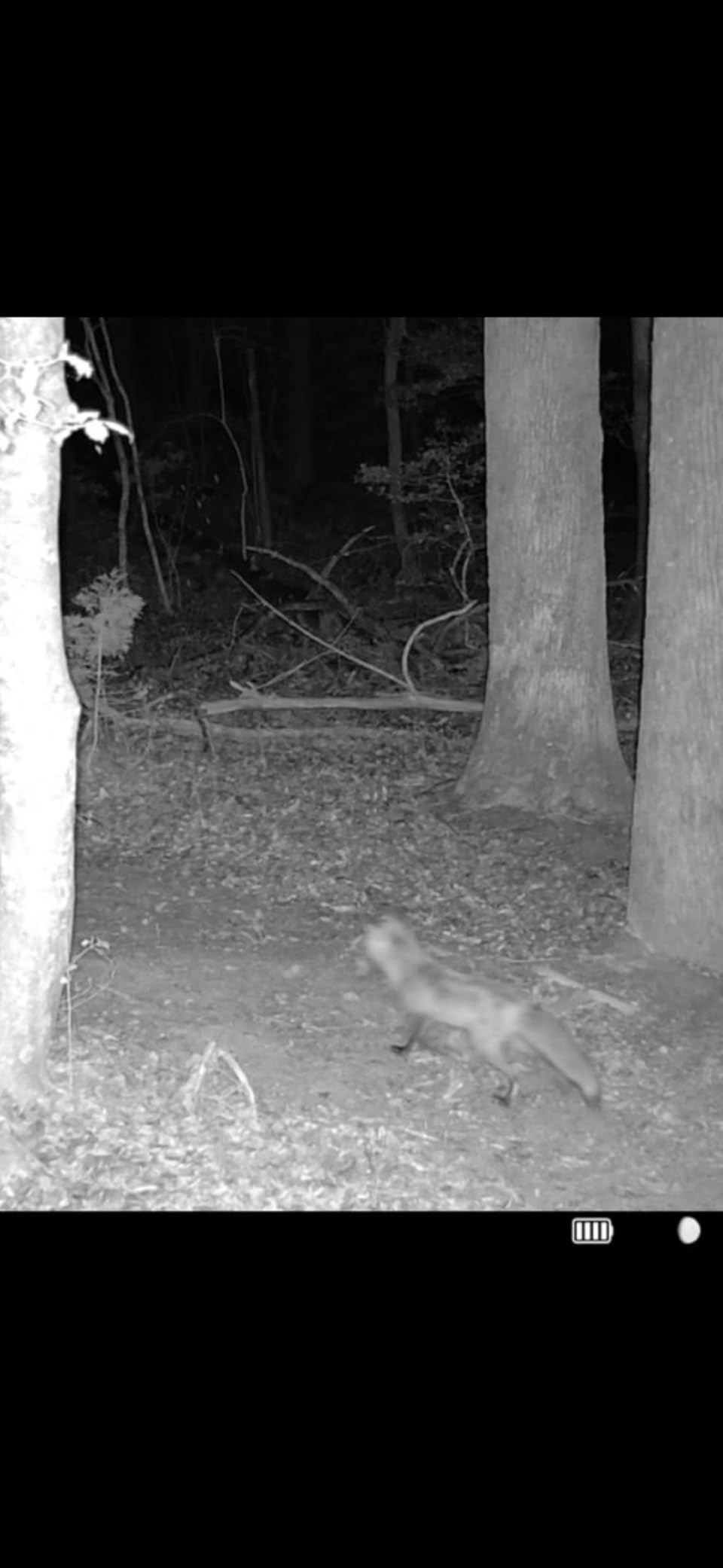
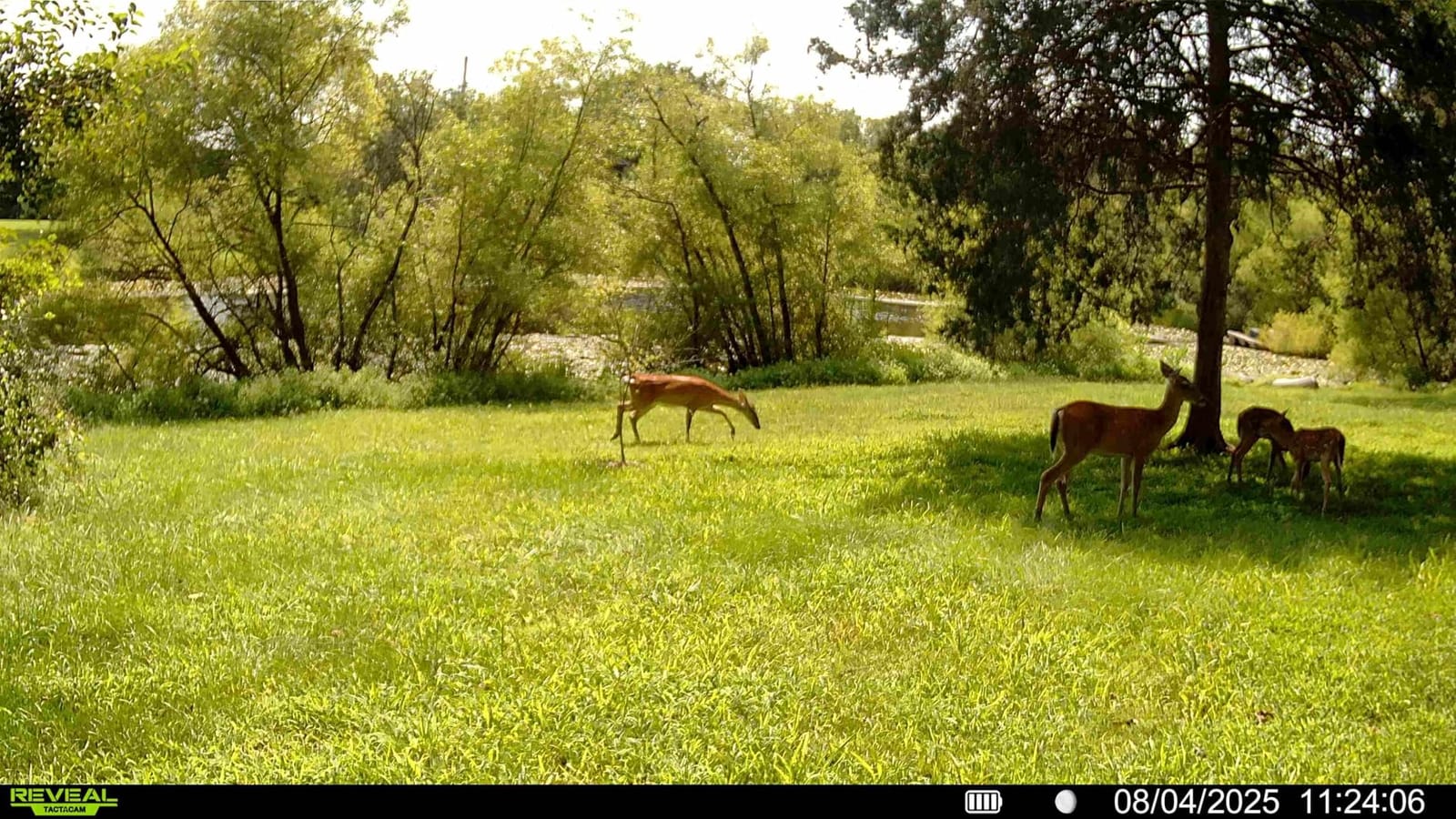
The TACTACAM Reveal Ultra is the camera we would pick if identification quality is the whole point. 4K still images and 2.5K video with a sub-0.5 second trigger and bursts of up to 9 shots, and in our testing the daytime images held up better than any other cellular camera on this list. The colour and detail in low light were noticeably better than anything else we ran.
GPS is the headline feature and it works differently from the MagicEagle approach. Active location tracking keeps transmitting coordinates even when the camera is switched off or the battery has been removed, with movement alerts beyond a half-mile. That is the design that solves the theft problem properly, because a camera that has been powered down to be stolen still tells you where it is.
The flash is switchable between 96 feet of low-glow and 80 feet of no-glow infrared, which is a genuinely smart compromise: use low-glow when you need to identify a subject at range, flip to no-glow when the priority is that nobody knows the camera exists. Very few competitors let you make that call in the field.
Connectivity is automatic across leading 4G LTE networks with no carrier setup, and owners report quick image delivery plus smooth live view even in weak-signal locations. Live video streaming and on-demand HD photo requests go through the app, there is a 2 inch LCD, 16GB of internal storage plus an SD card slot, and the improved antenna is a real upgrade over earlier models in the line.
Power accessories are the most complete on this list, with a Tactacam solar panel, a folding solar panel, a battery belt and a lithium cartridge, which matters because the cameras run on 12 AA cells.
Comparing it to the MagicEagle for theft deterrence
Both of these cameras solve camera theft, and they solve it in different ways. The MagicEagle leans on battery capacity and a long standby window, so it is the one you pick when the camera is remote and you rarely visit. The TACTACAM leans on continuous GPS reporting, so it is the one you pick when the camera sits somewhere people can reach in daylight.
For most property security work we would use the TACTACAM in an exposed position and the MagicEagle in a sheltered one. What neither camera does is report GPS coordinates in real time, which is the honest limitation of both.
Where it will disappoint you
The subscription is the loudest criticism. Critical reviews cite around 25 per camera per month for the full feature set, and the app gates settings and image transfer behind paid add-ons. On a four-camera property that math deserves a calculator before you buy anything.
Several owners also describe the app as clunky, buggy and slow, GPS updates arriving at roughly six-hour intervals rather than live, and 12 AA batteries lasting only a few weeks when the cellular system is active. Plan on solar or a lithium cartridge from day one.
How to Choose a Trail Camera for Property Security
Cellular, Wi-Fi hotspot, or no connectivity at all
This is the decision that shapes everything else, so it comes first. There are three distinct categories on this list and they are not substitutes for each other.
Cellular cameras send images to your phone over a mobile network from anywhere. The Moultrie Edge 2, the MagicEagle and the TACTACAM Reveal Ultra are in this group, and they are the only options here that can send an alert while you are not on the property. The cost is a monthly data plan per camera and a battery that drains faster than anything else on this list.
Wi-Fi and Bluetooth hotspot cameras create their own short-range network. You stand within 33 to 165 feet, open an app, and pull the footage. The GardePro E8 2.0 Pro has the longest reach of these, the MAXDONE and XTU models are shorter. No subscription, no server, excellent battery life, and completely useless from the house.
Non-cellular cameras write to an SD card and nothing else. The WOSPORTS and the GardePro E5S are here. They are the simplest to run, the most reliable over years, and the worst option if you need to know what happened while you were away.
Our rule of thumb: if you can visit the property monthly, a hotspot camera is the best value. If you visit quarterly, a card camera with solar. If you genuinely cannot know in real time, a cellular camera is the only thing that answers the question.
Trigger speed and detection angle
Trigger speed is the number most often quoted and least often understood. It is the delay between something entering the PIR detection zone and the camera starting to record. At 0.1 to 0.2 seconds, a person walking through your frame is captured. At 0.3 seconds, a fast-moving subject is already partly out of shot before the first frame lands. Five cameras on this list trigger at 0.1 seconds and two sit at 0.2.
Detection angle works the opposite way from what most buyers assume. A 120 degree field of view is wonderful in an open clearing and mostly wasted in a narrow driveway, where it spends its time pointed at vegetation. Match the angle to the scene, and if you cannot, narrow the zone in the app rather than relying on sensitivity sliders.
No-glow 940nm versus low-glow 850nm infrared
Both wavelengths light the scene in darkness. The difference is whether you can see it. 940nm is invisible to the human eye, which is why the WOSPORTS, the GardePro E8 2.0 Pro and the MagicEagle use it, and why they are the right choice for a security deployment where you do not want the camera advertising itself.
850nm carries more energy and produces clearer night detail, which is why the CEYOMUR and the XTU use it, at the cost of a faint red glow. If your camera faces a road, a neighbour’s window, or any public space, invisible wins. If it points deep into your own land, clarity wins. The TACTACAM sidesteps the argument entirely by letting you switch between them.
Power: solar panels, rechargeable packs and visit frequency
Non-cellular cameras run on AA cells for a long time simply because they have no radio to power. The E5S and the WOSPORTS are the models you can plant and genuinely forget. Anything with Wi-Fi or cellular needs either a rechargeable pack or a solar panel, and the models with those built in, the CEYOMUR, the MAXDONE Solar and the XTU, are the ones that survive a year without a ladder.
Battery capacity matters most where the camera is high, awkward or behind a gate. The MagicEagle’s 13000mAh pack and the GardePro E8’s 7800mAh are the two largest here. If your camera will run on 12 AA cells with a radio active, budget for solar from the start, because reviewers consistently report those cells lasting only a few weeks in cellular mode.
One forum pattern worth copying: several people running cameras on their own land pause their data plans during the months they are not on the property, and report substantial savings over a full year. Do the same math before you commit to a subscription on eight cameras.
Weather resistance and temperature limits
Most of this list carries IP66, which means dust-tight and protected against powerful water jets. The Moultrie Edge 2 is rated IP65, which is dust-tight and protected against water spray but not jets, so it wants a more sheltered position or a weather cover than the others.
Temperature matters more in winter than the rating suggests. The MagicEagle is the only one here with a stated operating range of minus 20 to 50 degrees Celsius, and cold weather is where battery life collapses, so a camera with a large capacity pack and a solar panel is the safest combination for a northern property.
Storage: local card versus cloud
Local SD card storage is the default on nine of these ten cameras, with capacity from 256GB up to 512GB depending on the model. Local storage means no subscription, no server dependency, and no data leaving your property, but it also means the footage is physically in the camera until somebody walks up and pulls it.
Cloud storage changes the theft equation. The Moultrie Edge 2 uses 8GB of internal memory plus unlimited cloud storage, so a stolen camera does not mean lost footage, and the TACTACAM carries 16GB internally alongside an SD slot. If your cameras sit in reachable places, storage that survives theft is worth paying for.
Memory card reliability is a genuine long-term issue. Forum users report cards failing after six to twelve months in field conditions across multiple brands, so buy industrial-grade cards, format them in the camera rather than on a computer, and check them on every visit. Rotate rather than ignore.
Cutting false triggers on a security deployment
This is where security use diverges most sharply from wildlife use, and it is worth a dedicated section because almost every guide we read treats it as a wildlife problem. A hunting camera wants to be triggered by everything, because a deer and a person are both interesting. A security camera wants to be triggered by people and nothing else.
Four adjustments do most of the work. Aim below the horizon rather than at the treeline, because wind in canopy is the single largest source of empty clips. Use the programmable detection zone to exclude the part of the frame that moves on its own. Turn sensitivity down a notch or two, accepting that you may miss a slow crouching approach in exchange for cutting volume. And use scheduled recording windows so the camera is not hunting through the middle of the afternoon when nothing is happening.
Covering six to eight cameras without a mess of apps
The most common request from people managing large properties is not which camera, it is how to manage eight of them. Two answers exist and both have costs.
The first is an app that handles a network, which is what the Moultrie Mobile app does best with interactive property maps and activity charting across multiple cameras. The second is a mesh network that daisy-chains many cameras off a single cellular connection, which cuts your data bill dramatically. Forum users running mesh systems report that detection reliability drops sharply, with one comparison putting mesh at roughly a quarter of the photos a standalone camera catches, so treat mesh as a coverage tool rather than a detection tool.
Whichever route you take, standardise on one brand. Managing cameras across several apps and accounts is the complaint that comes up most often from people with multi-camera deployments, and it gets worse, not better, at eight cameras.
Frequently Asked Questions
Can I use a trail camera for home security?
Yes, and for many properties it is better than a traditional security camera, because it runs on battery or solar, needs no wiring, and works anywhere from a gate post to a cabin. What you give up is live viewing: trail cameras capture to a card, a phone hotspot, or a cellular network rather than streaming continuously. For driveways, gates, remote land and cabins, the best trail cameras for property security are a genuinely practical answer.
Which trail camera is best without a subscription?
The WOSPORTS 64MP 4K and the GardePro E5S are the strongest no-subscription choices, since both run on AA batteries with no radio and write to an SD card. If you want phone access without a cellular plan, the GardePro E8 2.0 Pro, the MAXDONE solar models and the CEYOMUR all use a built-in hotspot and free app control instead.
Can you watch a trail camera live on your phone?
Yes, if you buy a cellular model. The Moultrie Edge 2, the MagicEagle and the TACTACAM Reveal Ultra stream live view through their apps from anywhere with cell coverage, and the TACTACAM also allows on-demand HD photo requests. Hotspot cameras give you live on-site viewing within about 33 to 165 feet, and card-only cameras give you nothing live at all.
How far can trail cameras see at night?
It depends on the infrared and the emitter count. Stated night ranges here run from 65 to 100 feet, with the GardePro E5S and Moultrie Edge 2 at the 100 foot end and the MAXDONE and XTU models nearer 65 to 70 feet. Cameras with only two IR LEDs, such as the CEYOMUR and XTU, will not reach their stated figure in real conditions.
Are cellular trail cameras worth it?
For absentee landowners, vacation home owners and property managers, yes, because they are the only trail cameras that can alert you while you are away. The trade is a monthly data plan per camera, faster battery drain, and a subscription cost that multiplies across six to eight cameras. If you can visit monthly, a hotspot or card camera is the better value.
Is it legal to point a trail camera at my own property?
Generally yes, cameras on your own land monitoring your own driveways, gates and buildings are lawful, and a lock hole on the housing helps with the privacy of neighbours. Rules vary by state and by what is being recorded, and some states have restrictions on where cameras can be placed, so check your local regulations and avoid capturing areas you have no right to monitor.
If you are still weighing up monitored cameras instead, our guide to security cameras without subscriptions covers the other side of that decision, and our picks for indoor security cameras handle the inside of the house where a trail camera would be the wrong tool entirely.
Our Final Verdict on Trail Cameras for Property Security in 2026
After six weeks of fieldwork, the best trail cameras for property security fall into three groups and there is no argument for owning cameras from all three unless you are covering a large property. For a single gate, driveway or cabin, the WOSPORTS 64MP 4K is the camera we would buy, because it pairs the fastest consistent trigger with genuinely invisible 940nm night vision and the largest support base of anything we tested.
Buy cellular only where you need an alert while you are away. The Moultrie Edge 2 is the most capable app of the three cellular options, with property maps that make multi-camera management bearable, while the MagicEagle and the TACTACAM are the two with genuine theft tracking built in. If you only visit a few times a year, skip the subscription entirely and run solar or card cameras instead.
Whatever you choose, spend your first afternoon on placement rather than on unboxing. Aim below the horizon, narrow the detection zone, set the sensitivity down a notch and check back in a week. Most disappointing trail camera experiences we have seen came down to an untuned camera in the wrong place, not a bad camera.
Our broader buying guides on trail cameras and visible deterrent cameras cover the cheaper end of the market and the layered approach most owners eventually settle on.