
Planets look like featureless dots to the naked eye, and almost every general-purpose telescope on the market is built for the faint, wide galaxies that sit in the other direction. That mismatch is why so many first-time buyers end up disappointed at Jupiter. The best telescopes for viewing planets are long-focal-length instruments with an aperture of 4 inches or more, and the Maksutov-Cassegrain, Schmidt-Cassegrain, and Dobsonian reflector are the three designs that consistently deliver.
Why those three? Planets are bright but tiny, so a telescope has to do two things at once: collect enough light to keep the image bright at high magnification, and hold that magnification steady while the atmosphere boils. Long focal lengths help with the second job, larger apertures help with the first. A short, wide, small-aperture instrument does neither well, no matter what the box says about magnification.
I have spent years putting scopes through their paces on Jupiter, Saturn, Mars and the Moon, and I have read every owner review I could find on the ten models below. The order in this guide reflects what actually reaches the eyepiece on a good night, not marketing language. Several of these scopes advertise magnification figures their optics cannot deliver, and I have flagged every one of them. If you are also shopping for a first telescope generally, our beginner telescope guide covers the wider basics.
Two things matter more than everything else in this hobby: aperture, because it sets how much detail exists to be seen, and seeing conditions, because no telescope shows detail the atmosphere does not allow. A 6-inch scope on a calm night will beat an 8-inch scope on a turbulent one, every time. Keep that in mind as you read, because the most common mistake in planetary observing is judging a telescope on a bad night in bad air.
Top 3 Picks for Planetary Viewing in 2026
These three cover the most common situations. One is the easy first-night option, one is the serious aperture, and one is the tracker for people who want planets to stay put.
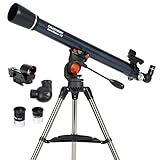
Celestron AstroMaster 70AZ
- 70mm fully coated achromat
- 900mm f/13 focal length
- Manual alt-az mount with panhandle

Celestron NexStar 8SE
- 8 inch Schmidt-Cassegrain
- 2032mm focal length
- GoTo mount with SkyAlign
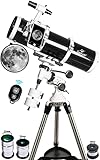
All 10 Telescopes at a Glance
This table lists every scope in the roundup with the specs that actually drive planetary performance. Aperture decides how much detail exists, and focal length decides how easily you can reach it.
| Product | Specifications | Action |
|---|---|---|
| Celestron AstroMaster 70AZ Refractor |
|
Check Latest Price |
| Celestron NexStar 8SE Schmidt-Cassegrain |
|
Check Latest Price |
 Sky-Watcher Classic 200 8-inch Dobsonian Sky-Watcher Classic 200 8-inch Dobsonian |
|
Check Latest Price |
| Gskyer 130EQ Reflector |
|
Check Latest Price |
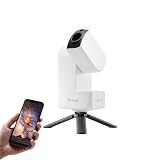 ZWO Seestar S30 Pro Smart Telescope ZWO Seestar S30 Pro Smart Telescope |
|
Check Latest Price |
 DWARFLAB Dwarf Mini Smart Telescope DWARFLAB Dwarf Mini Smart Telescope |
|
Check Latest Price |
 MEEZAA 150EQ Newtonian Reflector MEEZAA 150EQ Newtonian Reflector |
|
Check Latest Price |
 HSL 203EQ Reflector with EQ4 Mount HSL 203EQ Reflector with EQ4 Mount |
|
Check Latest Price |
 Hawkko 90mm Multi-Coated Refractor Hawkko 90mm Multi-Coated Refractor |
|
Check Latest Price |
 HETEKAN 90mm Refractor HETEKAN 90mm Refractor |
|
Check Latest Price |
1. Celestron AstroMaster 70AZ Refractor: The Easiest First Night With Saturn’s Rings
Celestron AstroMaster 70AZ Refractor Telescope for Moon & Planet Viewing
- Assembles in minutes with no tools
- Point-and-look manual altazimuth mount
- Coated optics give crisp Moon and planet views
- Owners see Saturn's rings and Jupiter's bands and moons
- Light enough to carry in one hand
- Tripod play and drift make tracking harder
- Stock 10mm eyepiece gives blurry high-power views
- f/13 focal ratio means little usable magnification above roughly 140x
This is the scope I hand to people who want Saturn’s rings on the same evening they open the box. Assembly genuinely takes minutes, there is no polar alignment, no collimation and no menu to learn. You point, you look, you adjust the slow-motion knob. That simplicity is the entire reason it tops my list for beginners.
The optics are a 70mm fully coated achromatic refractor with a 900mm focal length, giving a focal ratio of f/13. Owners consistently report a crisp, bright Moon with visible craters, Jupiter showing its four Galilean moons as clean points of light, and Saturn’s rings distinguishable. At 900mm of focal length, the included 10mm eyepiece gives you 90x, which is enough to make the rings obvious.
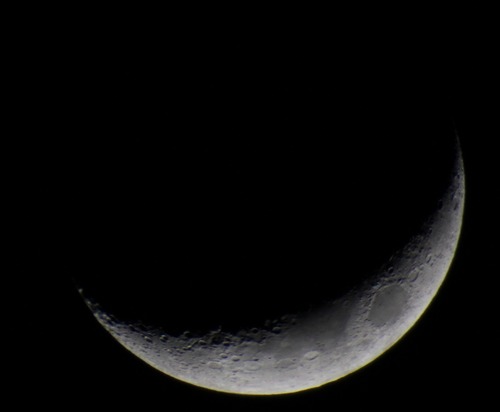
The honest weakness is the tripod. Backlash in the altitude axis means a planet drifts during a long look, and reviewers describe the mount becoming jerky above about 100x. The 10mm eyepiece that ships in the box also has tight eye relief, so high-power views soften. Reviewers who replace the eyepieces with a better 6mm or 10mm Plossl report noticeably sharper planetary detail, and that single upgrade fixes most of the complaints.
Make no mistake about the ceiling here. An f/13 refractor has a practical magnification limit somewhere around 140x, and a 70mm aperture is small enough that faint deep-sky objects stay as dim smudges. This is a Moon and bright-planet instrument, which is exactly what the name promises.
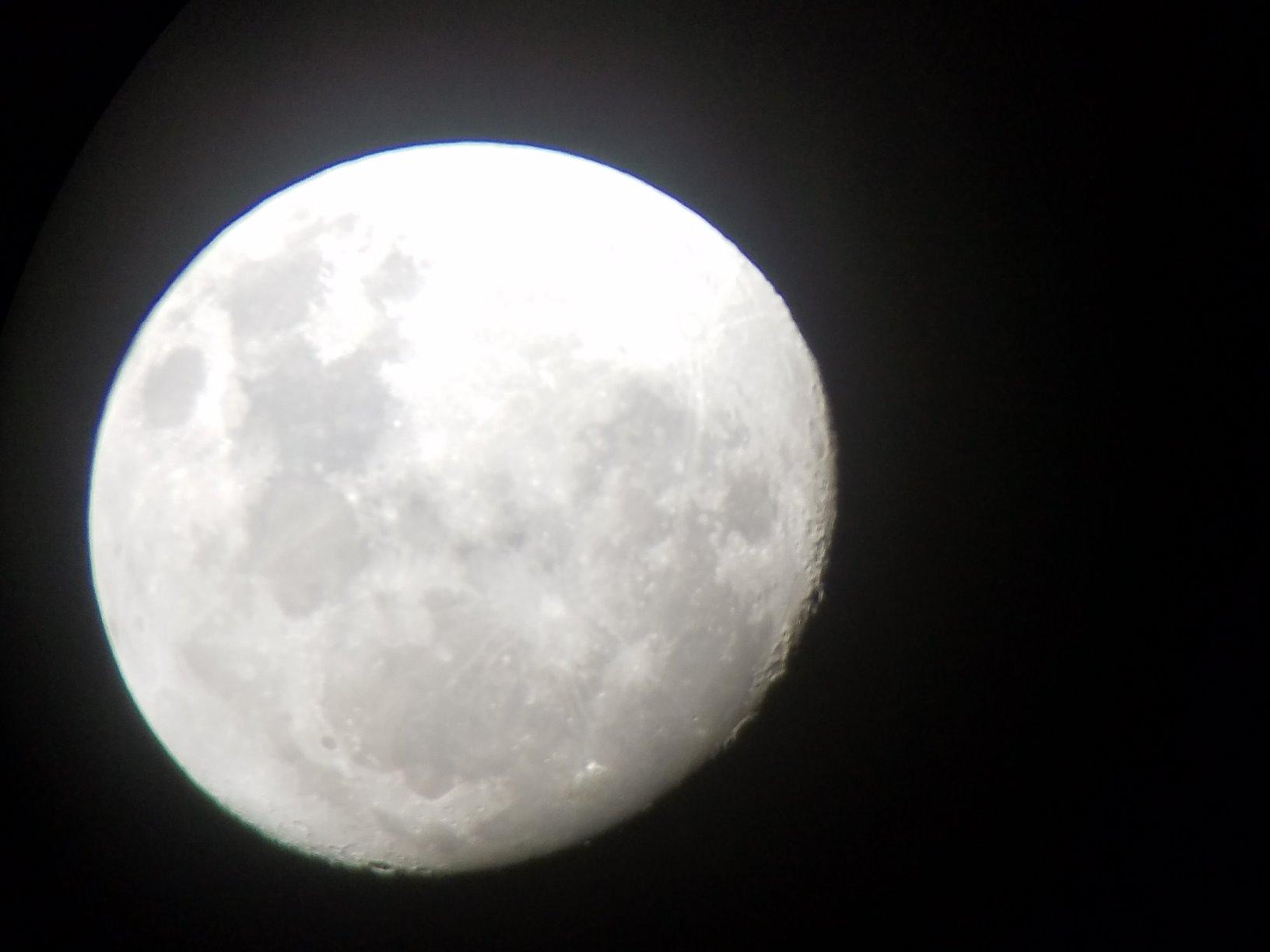
Who this telescope suits
It suits families, children with an adult, and anyone who wants a working telescope the same day it arrives. If the tripod legs feel unstable, a patio table or a sturdy surface at roughly waist height solves the wobble instantly. If your interest runs to galaxies and nebulae, our astrophotography telescope guide covers better options for that.
Who should skip it
Skip it if you want to split Jupiter’s belts and see the Great Red Spot, or if you expect faint deep-sky objects. Also skip it if you plan to grow into the hobby quickly, since the aperture ceiling is fixed. Anyone with unsteady hands or tremors will find the light 10.8-pound weight and the friction on the altitude knob genuinely frustrating.
2. Celestron NexStar 8SE: The Most Planetary Detail You Can Buy in One Box
- 8 inch aperture reveals fine lunar and Jupiter detail
- GoTo mount points itself with a 40000 object database
- SkyAlign works without knowing star names
- Single fork arm stays compact for its aperture
- Expands into Celestron wireless and imaging accessories
- Highest one-star review share in the list at 9%
- Electronics and alignment drive nearly all complaints
- No power source is included in the box
- 25mm eyepiece is modest for this optical capability
When the question is how much planetary detail exists, aperture answers it. An 8-inch mirror gathers more than five times the light of the 4-inch class, and the Dawes limit of 0.57 arc seconds gives this scope the theoretical ability to resolve features the smaller instruments never reach. On a steady night, that shows.
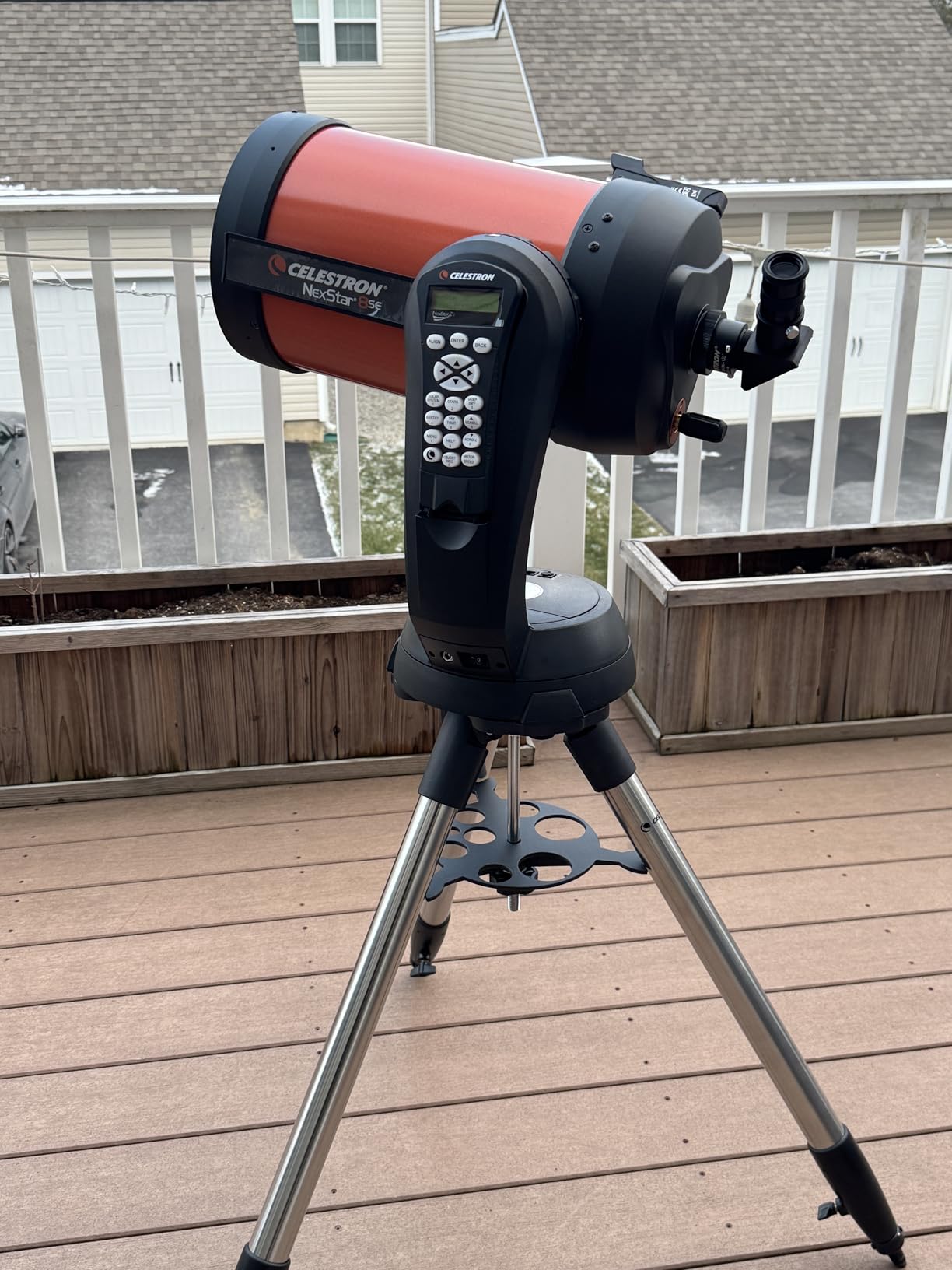
The 2032mm focal length packs into a 43.2cm tube, so you get a long, narrow optical path in a body you can actually carry to the field. The single fork arm mount is one of the reasons this design became the standard for portable large-aperture observing. Owners credit the GoTo experience heavily, and 70% of reviews are five stars.
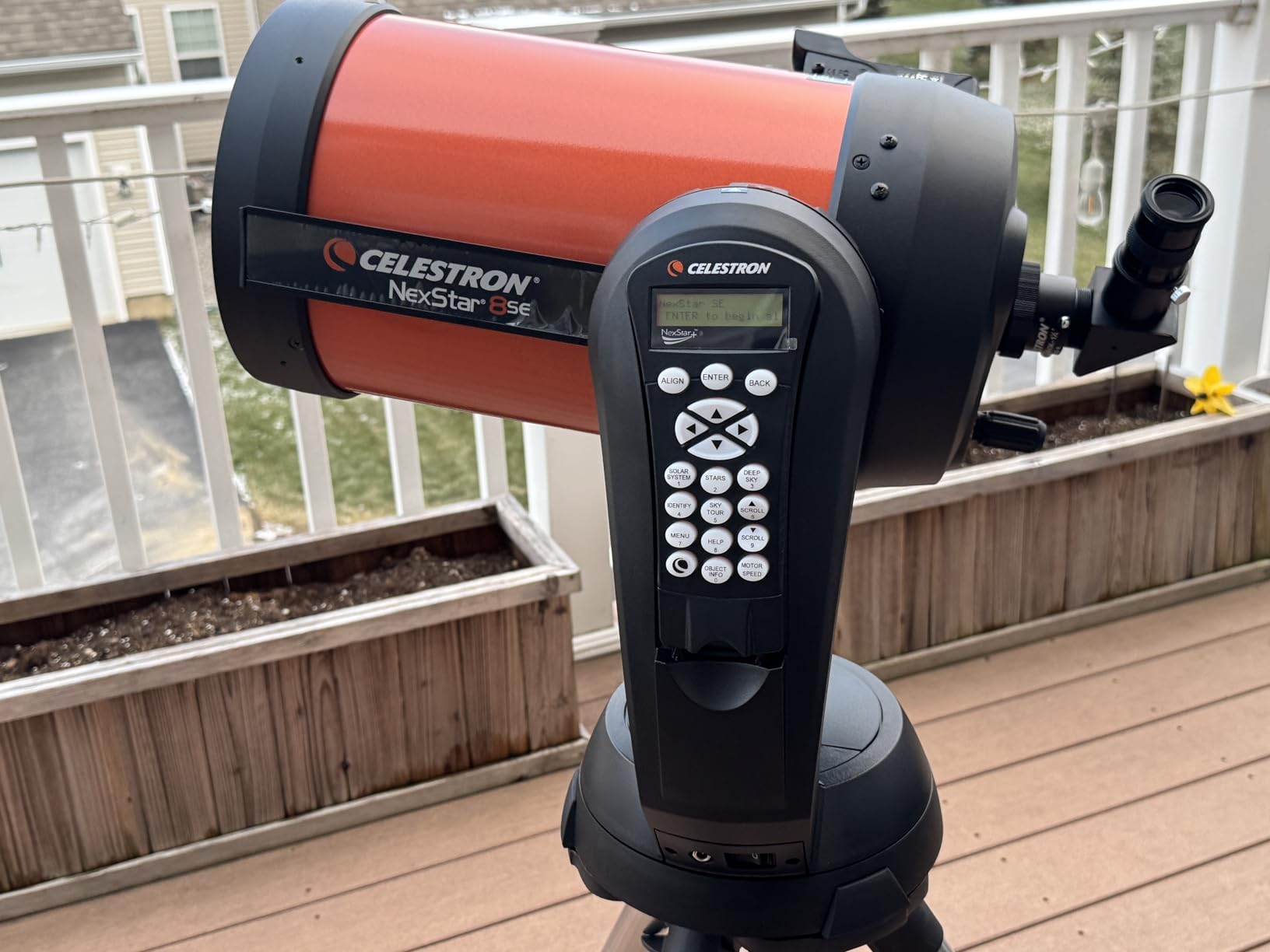
The complaints cluster around electronics rather than optics. Alignment difficulties, mounting glitches and the absence of any power supply account for most of the one-star reviews, which is the heaviest one-star share of any scope in this roundup. The mount runs on 8 AA batteries, a 12V adapter or a PowerTank, and none of those are in the box. Budget for a power source before the first evening.
Central obstruction is the real optical trade-off with any Schmidt-Cassegrain. The secondary mirror sits in the light path and diffracts light into faint rings around bright targets, which softens high-contrast planetary detail compared with a same-aperture refractor. Reviewers who pair it with upgraded eyepieces report that sharpening the image is worth the effort.
Who this telescope suits
It suits the person who wants to see the Cassini Division in Saturn’s rings, the Great Red Spot in Jupiter, and detail on Mars during a good opposition, and who wants the target-finding handled automatically. It also suits anyone with a patio or driveway who can leave a heavier setup assembled rather than carrying it in one piece.
Who should skip it
Skip it if your budget is fixed and large, since manual alt-azimuth designs offer more aperture per unit spent. Skip it if electronics and alignment procedures frustrate you, and skip it if you need to move the whole telescope often. Budget separately for a power source and a better eyepiece before judging it.
3. Sky-Watcher Classic 200 8-inch Dobsonian: The Brightest Planet Views Per Dollar
Sky-Watcher Classic 200 Dobsonian 8-inch Telescope – Solid-Tube – Simple, Traditional Design – Easy to Use, Perfect for Beginners, White (S11610)
- 8 inch aperture at f/6 gives bright high-contrast views
- Tension control handles allow smooth movement
- 94 percent reflective multi-coated borosilicate mirrors
- Comes with 2-inch focuser and two eyepieces
- No electronics to learn or motors to service
- Lowest average rating here at 3.9 with 19 percent one-star reviews
- 45 pound weight makes it awkward to carry in one piece
- Tube and base transport separately
- Manual pointing with no GoTo acquisition
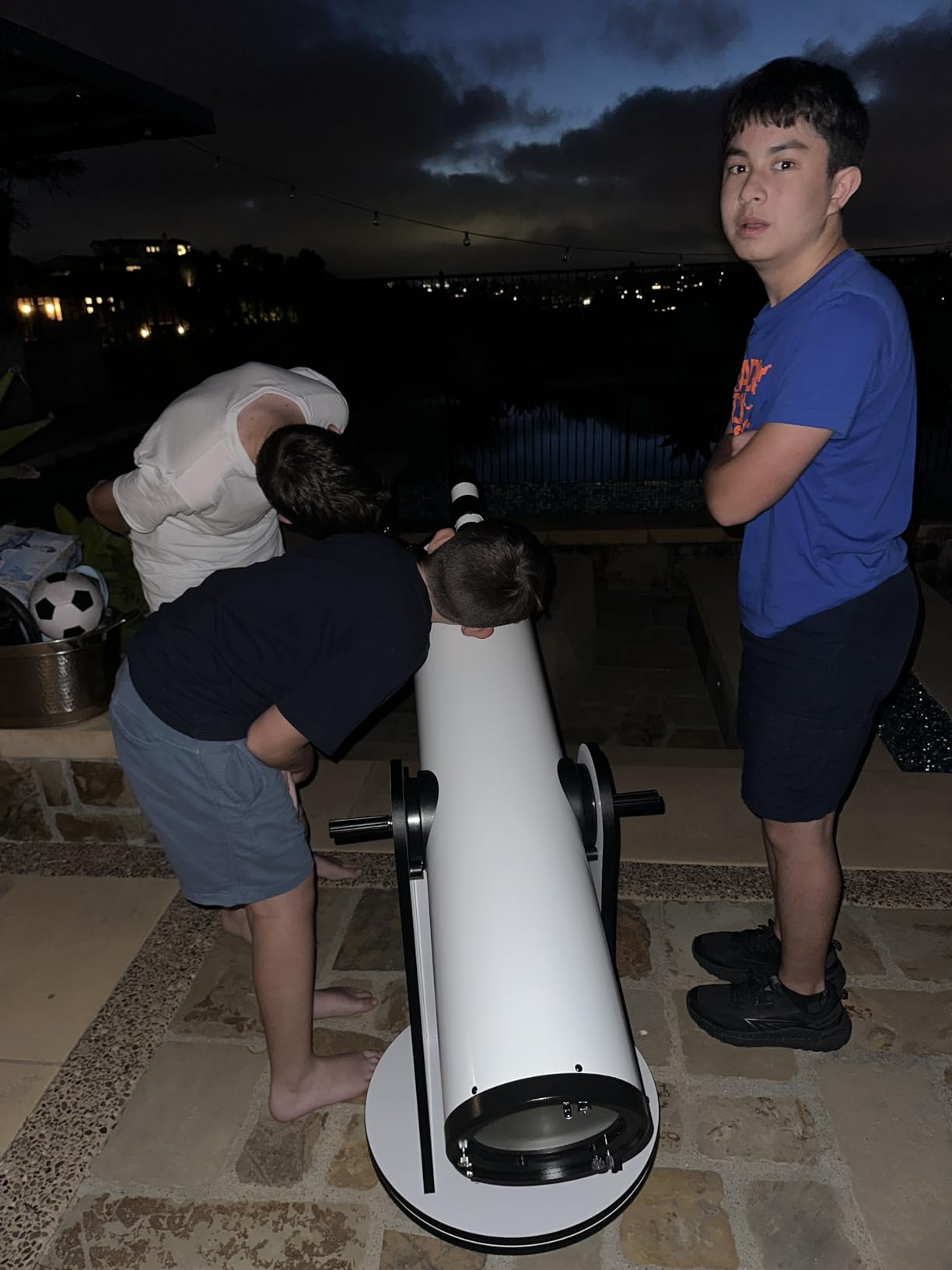
The community consensus has been stable for years on this one. A large Dobsonian delivers the brightest, sharpest planet views per unit of money, and no computer is required to get them. The Classic 200 is an 8-inch parabolic primary on a Teflon-bearing altazimuth base, and it is the reason community lists keep putting 6-to-8-inch Dobs at the top of value rankings.
At 1200mm of focal length, the 2-inch Crayford-style focuser gives 120x with the included 25mm eyepiece and 400x with the 10mm. On a calm night, 200x to 300x is a realistic working range. The tension control handles let you move the tube precisely without perfect balance, and the Teflon azimuth bearings are genuinely frictionless.
What drags the rating down is logistics, not optics. Nineteen percent of reviews are one star, and they cluster on the 45-pound assembled weight, the two-piece transport, and occasional mirror quality or damage on arrival. Buyers who keep it assembled rate it far higher than those who carry it to a field. Owning one means owning a table, a stand or a dedicated corner.
Collimate it before the first serious session, and recheck every few months. A Newtonian arriving out of alignment will show soft planetary detail no matter how good the mirror is, and that is the single most common reason a new Dob owner thinks the scope underperforms. The 94% reflectivity multi-coatings on both mirrors help more on faint galaxies than on bright planets.
Who this telescope suits
It suits anyone who wants maximum planetary detail and prefers pointing by hand to pressing buttons. It also suits deep-sky observers who want a second instrument later, since the 2-inch focuser and bright image serve both. If you want more of the same approach, our Dobsonian telescope guide goes deeper on this design.
Who should skip it
Skip it if you plan to move it between observing sites, carry it on a plane, or store it in a cupboard. Skip it if you have no place to set 45 pounds of telescope. Manual pointing also means learning to star-hop, which is a real barrier for some people and a genuine pleasure for others.
4. Gskyer 130EQ Reflector: Real Tracking on a German Equatorial Mount
- German equatorial mount provides genuine manual tracking
- 130mm aperture gives crisp lunar and planetary detail
- Three eyepieces plus 3X Barlow cover a wide range
- Toothless focusing base speeds up focusing
- Bluetooth phone remote for basic snapshots
- Newtonians need periodic collimation
- 30 pound weight is awkward to relocate
- Polar alignment is required before tracking works
- Included eyepieces are entry level
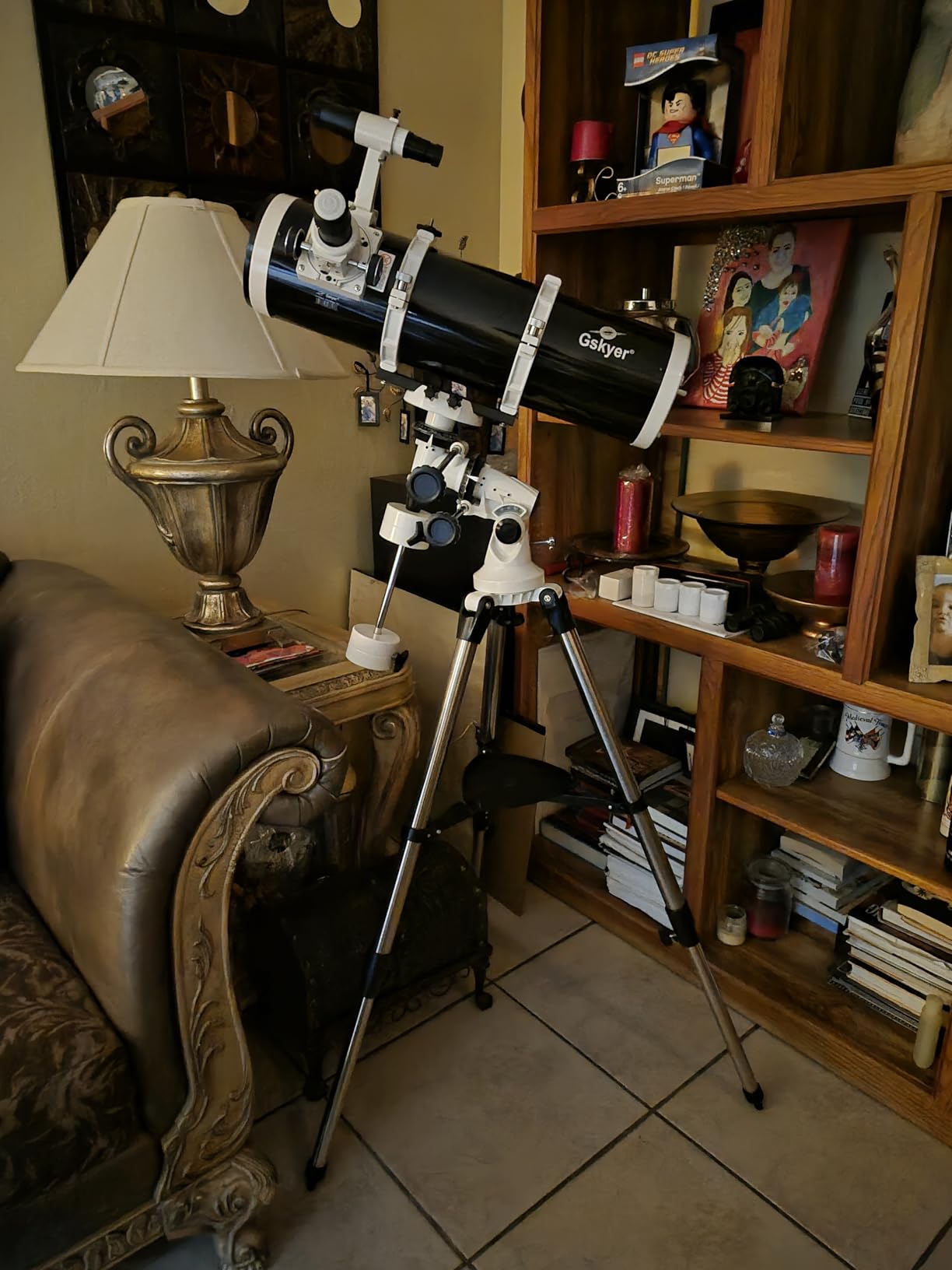
Most entry-level telescopes throw away tracking entirely. This one does not, and that is the reason it earns a place on this list. The German equatorial EQ-130 mount with its slow-motion controls lets you follow Jupiter across the sky by hand, which is exactly what you need at the magnifications where the cloud bands resolve.
The optics are a 130mm all-glass reflector with high-transmission coatings at 650mm, giving f/5. That is a fast, wide design built for deep-sky targets, and it means your first views of galaxies and nebulae will be good. The tradeoff is that at f/5 the field is wide, so a Barlow or a longer eyepiece is what gets you to planetary magnification.
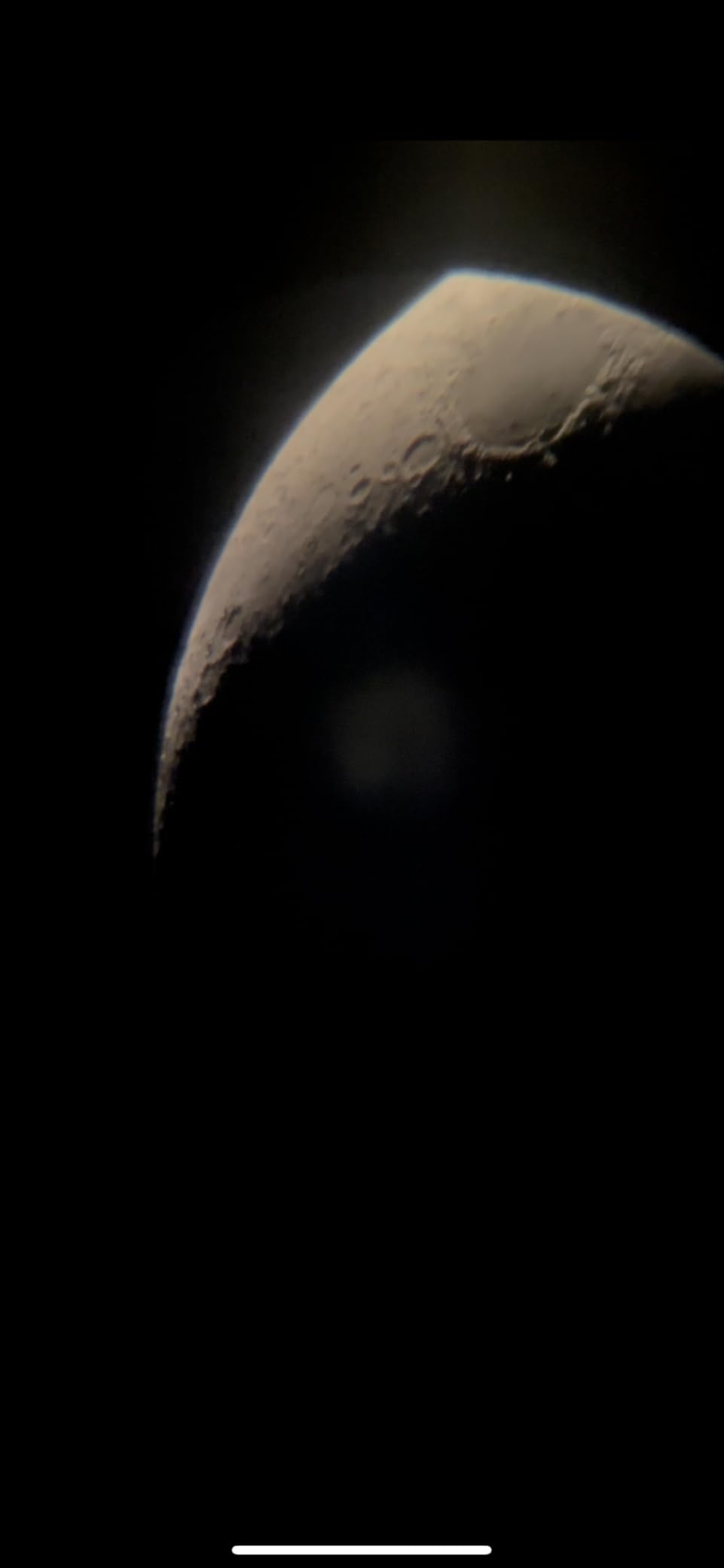
Buyers consistently report crisp lunar craters plus visible planetary detail, and 69% of reviews are five stars. The most common theme is value: a genuine equatorial mount and a real aperture at a mid-range price. Owners who have owned reflectors before are happiest, because they already expect the collimation routine.
Newcomers find polar alignment the steepest part. The scope must be aligned on the celestial pole before the slow-motion controls track properly, and if that step is skipped the motion will feel wrong. It is a ten-minute job with a phone compass, but it is a real barrier on the first evening. The 30.1-pound total weight means you set it down once and leave it.
Who this telescope suits
It suits people who want both planets and galaxies from one instrument, and who will spend ten minutes on alignment to get manual tracking in return. It also suits anyone upgrading from a small refractor who has decided the tripod was the real problem. The included 3X Barlow takes the 10mm eyepiece to 195x, a solid planetary figure.
Who should skip it
Skip it if you want plug-and-play pointing with no setup procedure at all. Skip it if you will not collimate it, because a Newtonian out of alignment will disappoint you on Saturn. Skip it if you need to move it frequently, since 30 pounds plus a counterweight is a two-part lift.
5. ZWO Seestar S30 Pro: Astrophotography First, Planets Second
ZWO Seestar S30 Pro Smart Telescope, App-Controlled Astrophotography
- Power on and the app finds and tracks targets
- Usable astrophotography images on the first night
- ED optics and light pollution filters handle bright skies
- Weighs 3.64 pounds so it travels easily
- Appreciated by experienced imagers for the optic
- 160mm focal length limits planetary detail
- Documentation is thin
- App account registration issues reported
- Deep-sky imaging needs the unit fully stationary
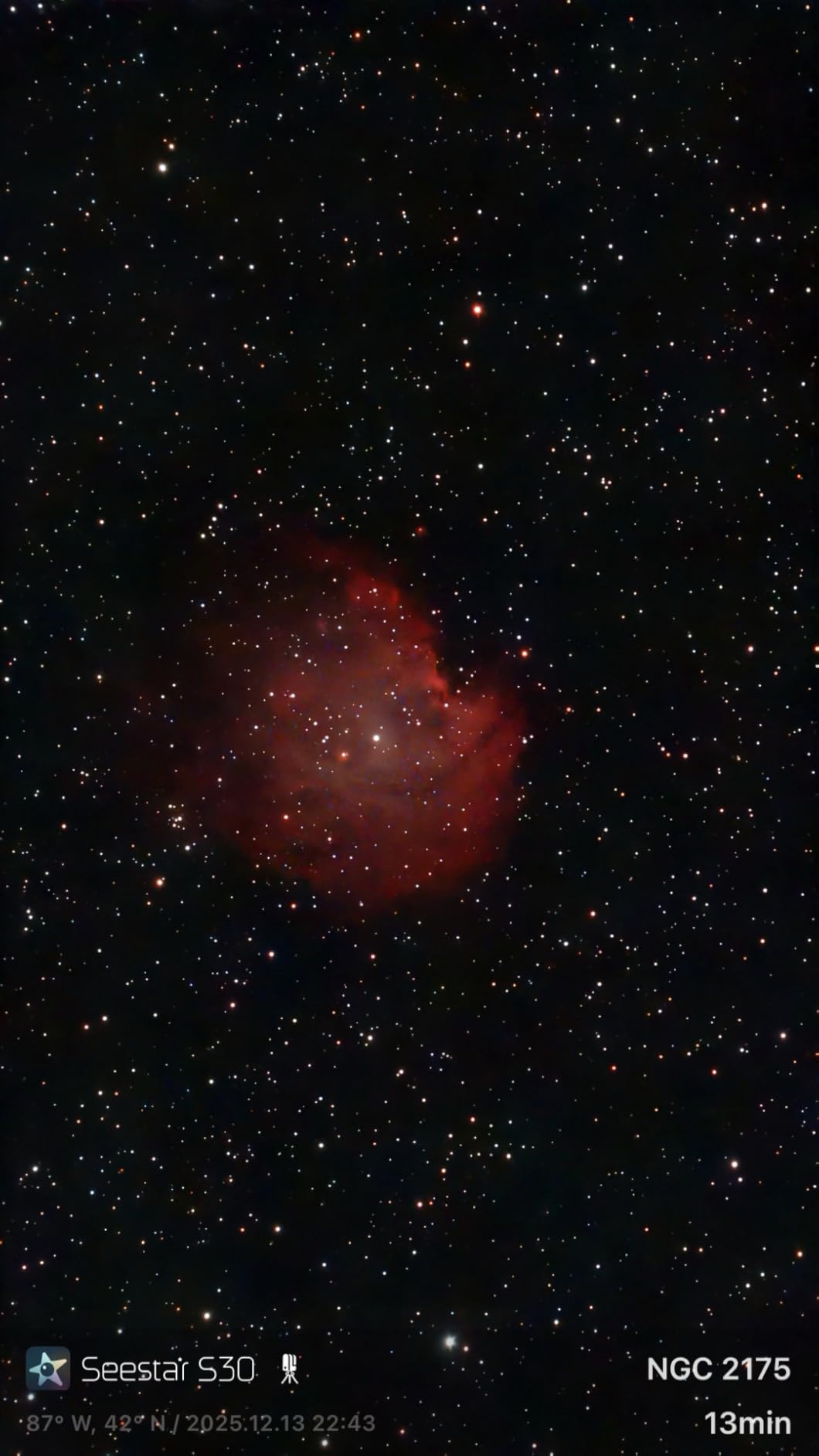
The Seestar S30 Pro does something no traditional telescope in this list does: it hands you a finished image. Power it on, connect the app, and it finds the target, tracks it and stacks frames. Reviewers with decades of imaging experience call it one of the better values in the category, and 73% of reviews are five stars.
For planets, be clear-eyed. A 30mm apochromatic ED optic at 160mm of focal length is built for wide fields, not planetary detail. One reviewer raises the recurring caveat that a 160mm focal length makes it weak for planetary work compared with a dedicated planetary scope. At that focal length Saturn is a small disc that enlarges only so far before it goes soft.
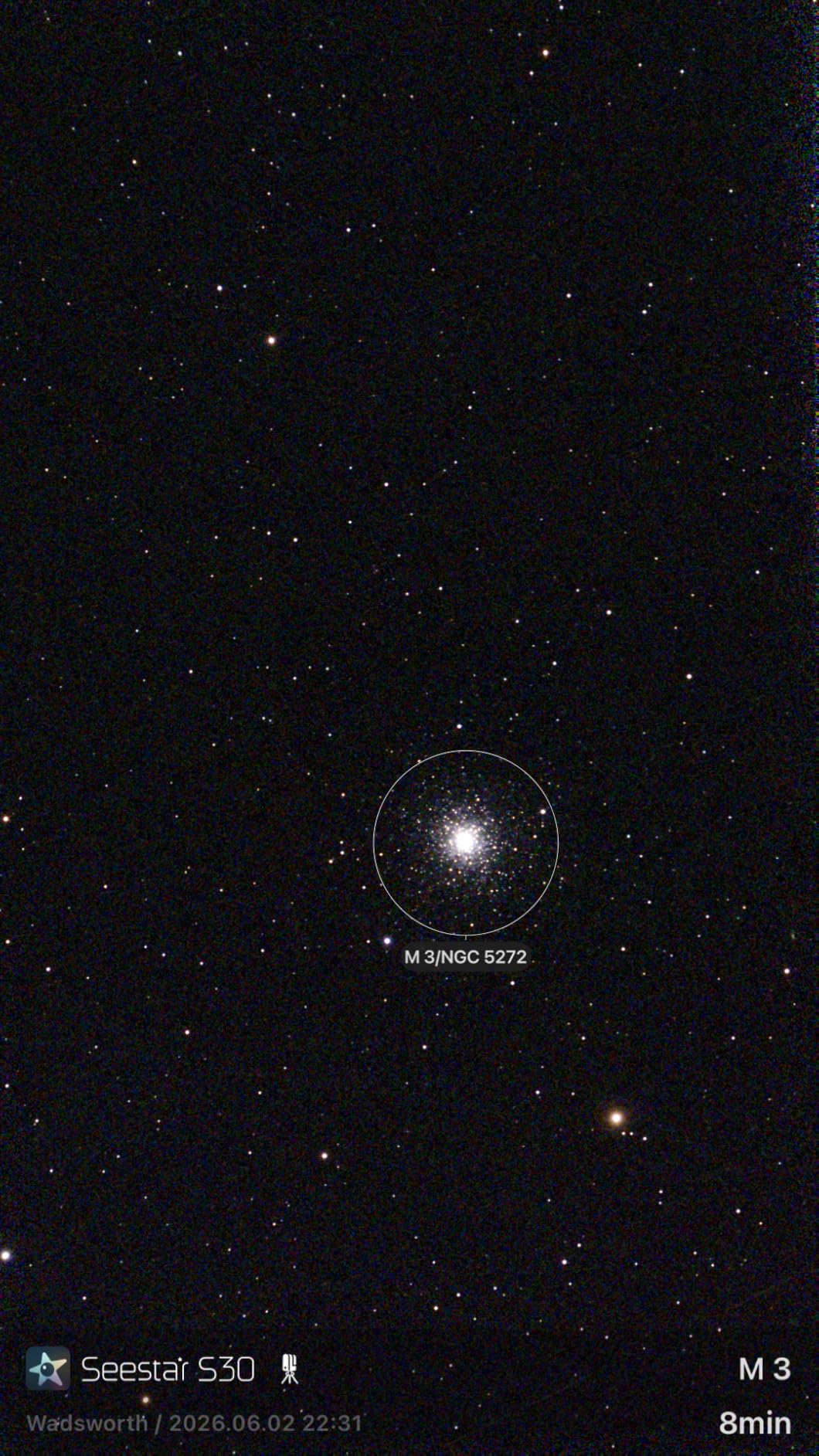
The built-in light pollution filters are genuinely useful. They let the scope work from suburban and urban skies, which is where most people actually observe. The dual-camera 4K imaging, AI noise reduction and one-tap mosaic stacking are the features that justify the price if your goal is pictures rather than eyepiece views.
Two gripes recur. The documentation is thin enough that some owners bought a separate book to learn operation, and app account registration failures are reported often enough that a few buyers consider the unit unusable until resolved. Deep-sky imaging also requires the telescope to stay completely stationary for the whole session.
Who this telescope suits
It suits people who want shareable astrophotography on a first night with no star charts, no polar alignment and no eyepiece. It also suits urban observers who need the built-in filters to see anything at all. The 3.64-pound weight and the battery power make it the easiest instrument here to take to a dark-sky site on short notice.
Who should skip it
Skip it if seeing Saturn’s rings in the eyepiece is the goal, because the focal length works against that. Skip it if you dislike app-based workflows or cannot rely on Wi-Fi during an observing session. Anyone who wants visual planetary observing should spend the same money on aperture and a long tube instead.
6. DWARFLAB Dwarf Mini: Backpack Portability, Not Planetary Detail
DWARFLAB Dwarf Mini Smart Telescope – 1.85lb Portable Astronomy Telescope
- Plate solving finds targets from a picnic table
- EQ mode guided step by step in the app
- 1.85 pound weight fits in a backpack
- Stacking handled in-app or in the cloud
- Light pollution filter works in suburban skies
- Reviewers state it is not suitable for planet viewing
- Sensor resolution is too low for large prints
- 150mm focal length leaves small objects tiny
- Initial focus and Wi-Fi setup can be fiddly
- Some owners report dust inside the lens
This is the smallest instrument in the roundup at 1.85 pounds, and it has the highest five-star share here at 74%. The DWARFLAB Dwarf Mini is genuinely pocketable, and reviewers who own conventional equatorial rigs describe it as a step forward in ease of use. Set it on a picnic table, connect the app, and plate solving works out where it is pointing before slewing to your target.
Then read the planetary verdict carefully. Multiple reviewers state outright that this scope is not for planet viewing, and that planets appear as small round discs with no detail, with Jupiter’s moons visible only as dots. That is not a defect to be fixed; it is a direct consequence of a 30mm aperture and 150mm focal length. The instrument is built around a 1/2.8 inch Sony IMX662 sensor, not an eyepiece.
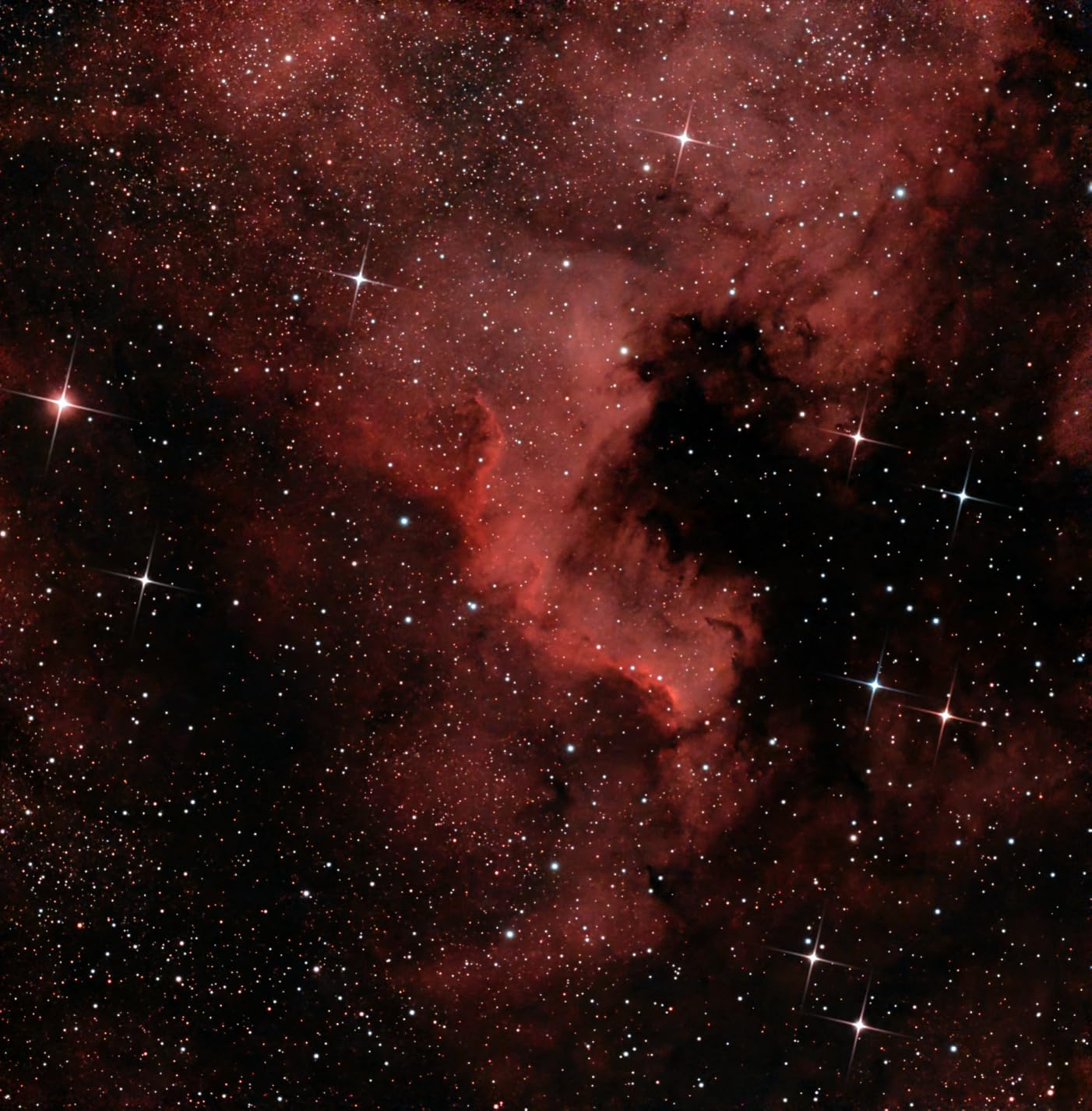
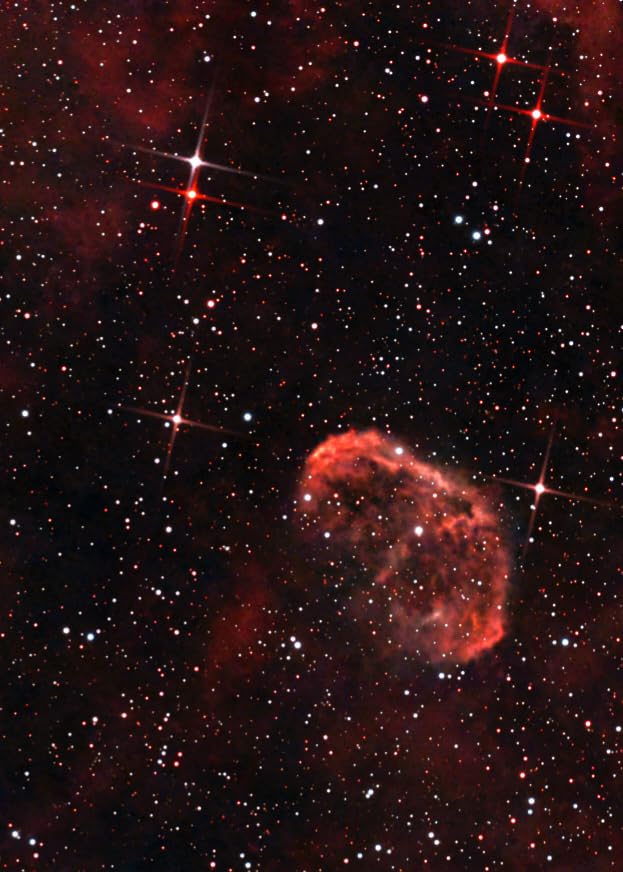
What it does well is imaging. The app walks you through EQ-mode polar alignment, supports exposures up to 90 seconds, and stacks sub frames in-app or in the cloud with no external software. Reviewers report publishable deep-sky results from bright suburban skies thanks to the built-in light pollution filter, and a 2.45 degree field that suits wide scenes.
The smaller sensor also caps output. Owners note the images suit social media sharing rather than large prints, and some report dust particles inside the lens that cannot be cleaned. First-session focus and Wi-Fi connection can be fiddly, so allow a few minutes before judging it.
Who this telescope suits
It suits travelers, people observing from genuinely dark locations, and anyone who wants a night-sky activity that fits in a daypack. It suits astrophotography beginners who would otherwise be put off by alignment procedures. If you want wide Milky Way scenes from a campsite, this is a strong fit.
Who should skip it
Skip it if planets are the reason you are buying, because reviewers are direct about the limits. Skip it if you want visual observing through an eyepiece at high power, because there is no long optical path to support it. Skip it if you intend to make large prints from the output.
7. MEEZAA 150EQ Newtonian: The Most Complete Box for the Money
- 150mm aperture at f/4.3 gives very bright planet views
- Equatorial mount with slow-motion knobs tracks smoothly
- One of the most complete accessory bundles in the list
- Owners confirm Jupiter's bands and Great Red Spot
- Arrives pre-lubed and usable without collimation
- A verified review reports a 130mm mirror rather than the advertised 150mm
- Assembly is more complex than most here
- Heavy enough to need two people to move
- Kellner eyepieces are entry level
- Phone holder is hard to align
Judged on what arrives in the box, the MEEZAA 150EQ has almost nothing missing. You get the tube, a German equatorial mount with precision dials and slow-motion controls, a stainless steel tripod, 25mm and 10mm eyepieces, a 2X Barlow, a red dot finder, a moon filter, a phone adapter, a carry bag and an accessory tray. That is a fuller kit than anything else at this level.
The 150mm aperture at 650mm produces very bright views of Jupiter, Saturn and the Moon, and owners confirm Jupiter’s bands and even the Great Red Spot through the stock eyepieces. The zoom range runs 26x to 130x with the two eyepieces and the Barlow, which is a sensible planetary spread for a beginner.
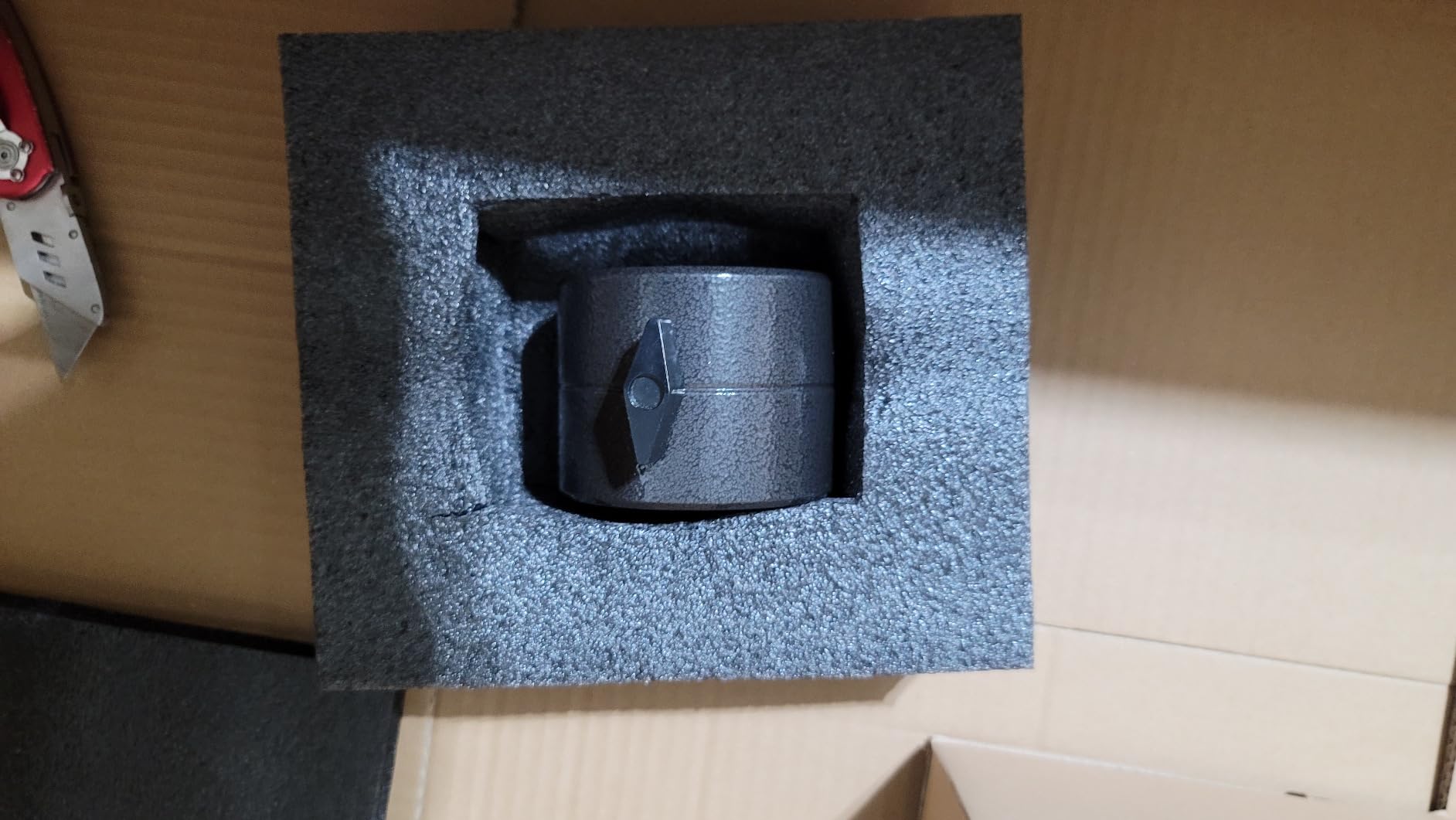
There is one specification dispute you should know about. A verified 2-star review states that the primary mirror measures 130mm rather than the advertised 150mm. Treat the aperture figure as unconfirmed until you measure it yourself, and note that a smaller mirror means less light and less resolution than the number suggests.
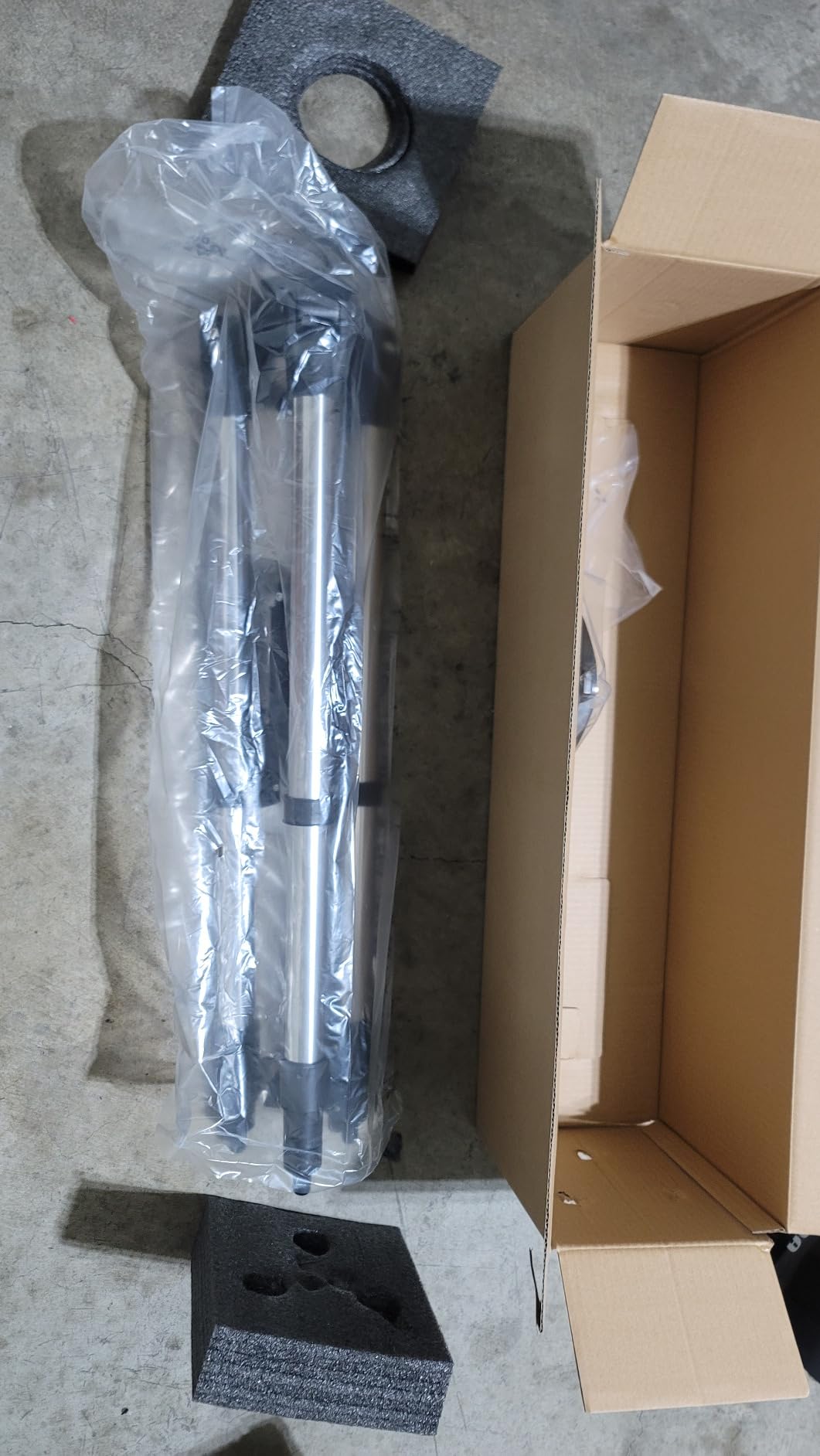
Assembly is bulkier than the specification sheet implies, and reviewers describe the unit as heavy enough to require two people to move. Reviewers also report that swapping eyepieces can knock a target out of focus on this mount, which is a real annoyance at planetary magnification. The Kellner eyepieces are entry level, and the phone holder resists alignment.
Who this telescope suits
It suits a beginner who wants a complete kit with nothing extra to buy on day one, and who can handle an assembly session. The equatorial slow-motion controls make it one of the easier ways to actually follow a planet, and the moon filter makes long lunar sessions more comfortable.
Who should skip it
Skip it if you need the instrument moved often, or if a complex first assembly would put you off. Skip it if you are sensitive about unverified specifications. Buyers planning to upgrade eyepieces should also know that on this mount lens changes can shift focus enough to require re-centring each time.
8. HSL 203EQ Reflector: The Largest Traditional Aperture Here, With Mount Caveats
- 203mm mirror is the largest traditional aperture in the list
- EQ4 mount is stiffer than EQ2 and EQ3 designs
- Owners report clear Moon and star views
- Five color filters and a 3X Barlow expand the options
- Phone holder and wireless remote included
- A verified review reports a tripod far shorter than advertised
- Several reviews call the tripod flimsy and wobbly
- One verified review reports arrival with damage and black spots
- Mount controls are hard for beginners to learn
- Lowest review count in the list at 130
On paper this is the biggest traditional aperture in the guide, at 203mm with an 800mm focal length. The EQ4 equatorial mount is a genuine step up in rigidity from the lighter EQ2 and EQ3 designs, and the specification explicitly calls out its thicker structure and greater load margin for less vibration. Owners do report clear views of the Moon and stars.
The 3X Barlow gives three useful configurations: 90x, 112.5x and 345x. The five-piece colour filter set is unusual at this level and has a real planetary use. Filters do not add detail, but they do increase contrast when a feature is near the limit of visibility, and the amber and orange filters help on Mars and Jupiter’s belts. The highest magnification is well past what the atmosphere will support on most nights.
Now the part that decides the recommendation. The review body is weighted toward mechanical complaints. A verified one-star review reports a tripod far shorter than the advertised 48 inches, forcing the user to lie on the ground to observe. Several others call the tripod flimsy, wobbly and stiff to move in a way that knocks targets off target, and one verified review reports arrival with a damaged, spotted primary.
At planetary magnification, a mount that moves stiffly is worse than a smaller aperture on a steady one. A telescope that lurches when you touch the focuser will never hold a planet still long enough to see the detail you paid for. That is why this scope ranks below the 8-inch Dobsonian despite the larger mirror.
Who this telescope suits
It suits someone with a firm, tall observing platform of their own, who understands that a shaky tripod caps what any aperture can deliver. It also suits people who enjoy colour filters as a tool rather than a novelty, and who have a checking-out habit for arriving hardware. The 3X Barlow and the filters make it a flexible platform once it is stable.
Who should skip it
Skip it if you need the tripod to be right the first time and cannot verify the height on arrival. Skip it if stiff mount motion would frustrate you, which reviews suggest it often does. It also carries the smallest review base here at 130 reviews, so the 4.2 rating is the least well established figure in the roundup.
9. Hawkko 90mm Multi-Coated Refractor: Lunar Detail and Honest Magnification
- FMC coating gives brighter sharper views than expected
- Owners report Jupiter's bands and one saw Saturn's rings
- Stainless steel tripod adjusts from 28 to 46 inches
- Complete kit including Barlow and carry bag
- Assembles in about 15 minutes
- Budget refractor that shakes on uneven ground
- Phone adapter takes fiddling to line up
- One verified 1-star review reports a missing tripod leg
- f/10 means real magnification stops well below 270x
- Clarity could be better per some owners
This is a Lunar-first scope that also handles planets well. Multiple reviewers confirm craters and shadows in sharp focus on the Moon, Jupiter’s cloud bands visible, and in one case Saturn’s rings. The 90mm aperture with full multi-layer coating passes about 73% of light transmittance, which is why views look brighter than the specification would suggest.
At 900mm and f/10, this is a long, narrow refractor, which is the right shape for planets. The included 25mm, 10mm and 3X Barlow give 36x, 90x and 270x. Owners are honest that the 270x figure is not usable, and that practical magnification tops out well below it. Treat 36x to roughly 150x as the working range.
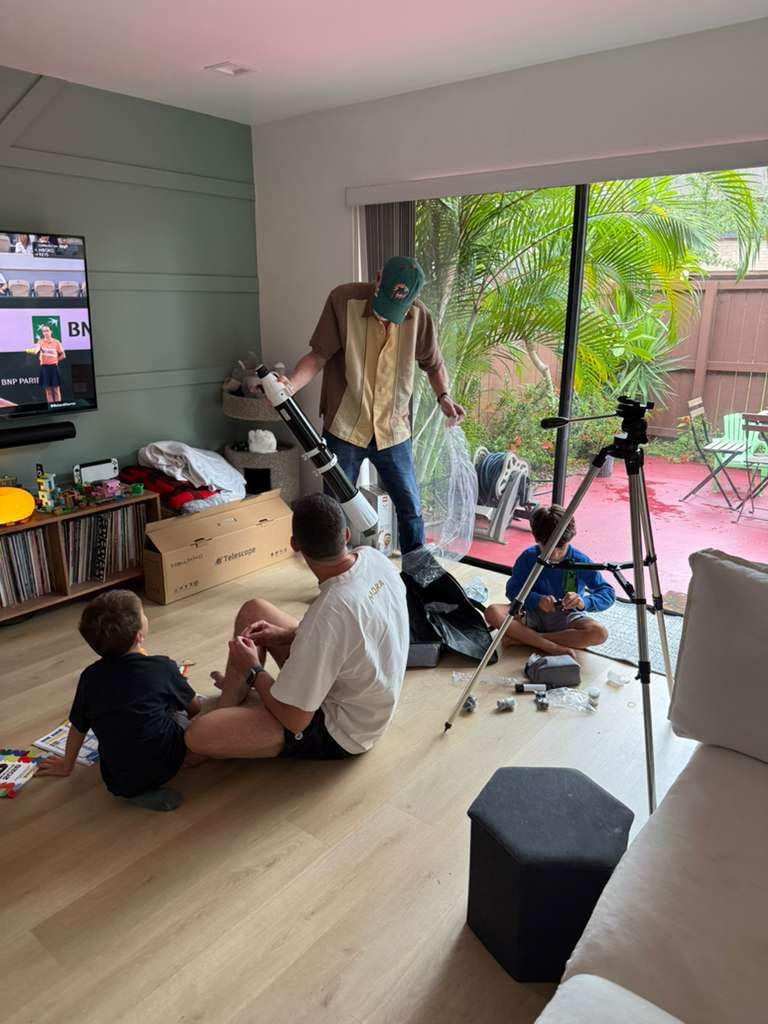
The recurring critique is stability rather than optics. Owners report shaking on uneven ground and a phone adapter that resists alignment, and an 8% one-star rate, the second highest in this set, includes a verified report of an incomplete shipment with a tripod leg missing. Check the box contents before you leave the delivery.
As a refractor, it needs no collimation, which is a genuine advantage over the Newtonians here. The 1.39 degree field of view is tight enough for planetary work and narrow enough that finding targets without a good finder can be slow. The straight-through finder included is basic, so spend time centring it in daylight first.
Who this telescope suits
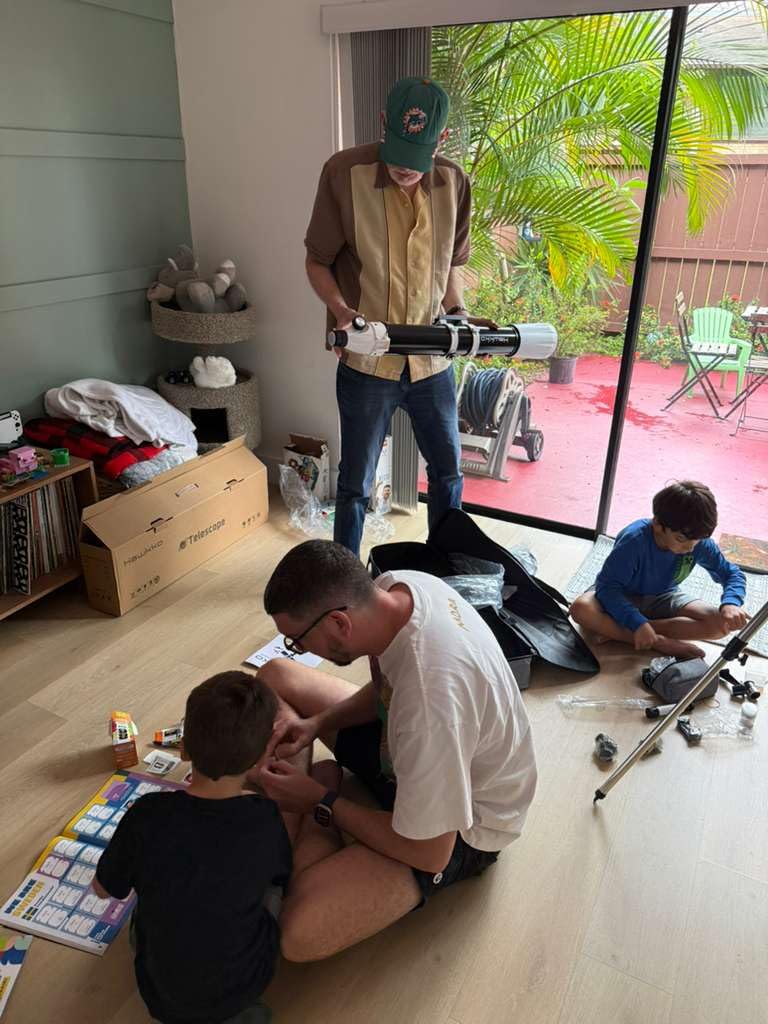
It suits someone whose first target is the Moon and who wants sharp craters with no collimation routine. It suits anyone who wants a grab-and-go tube for car journeys, since it assembles in about 15 minutes and packs into the included carry bag. Budget refractors like this also make a sensible first instrument to learn the sky with.
Who should skip it
Skip it if you observe on grass, gravel or any uneven surface, because a budget refractor on a light tripod will shake. Skip it if you need to see fine planetary structure at high power, since the f/10 focal ratio and small aperture cap the ceiling well below the advertised magnification. Skip it if you plan to image without steadying the tripod.
10. HETEKAN 90mm Refractor: Best Value for Seeing Saturn’s Rings and Jupiter’s Moons
HETEKAN Telescope for Adults High Powered, 90mm Aperture 900mm Refractor
- Owners see Jupiter's bands and Great Red Spot
- Reports of Saturn's rings and the phases of Venus
- 90mm at f/10 suits planets well
- Three eyepieces plus a 3x Barlow give a broad range
- Phone adapter makes sharing views easy
- Tripod is short so overhead viewing means sitting on the floor
- Mount and adjustment knobs reported not to stay tight
- 450x claim is not usable past roughly 180x
- 3x Barlow described as cheap plastic
- Focusing has a learning curve
The HETEKAN 90mm is the one here that reviewers most consistently describe by the targets they can actually see. Several independently report Jupiter’s bands and the Great Red Spot, Saturn’s rings, the phases of Venus, and lunar craters with real detail. For a long f/10 refractor at the budget end, that is a genuinely good planetary result.
The optical specification is 90mm fully multi-coated glass at 900mm focal length with a 1.8 degree field. The three included eyepieces plus the 3x Barlow span 36x to a claimed 450x. Owners are refreshingly blunt about that headline figure, saying anything past about 180x is simply blurry. Budget around 60x to 150x for sharp planetary views.
The most repeated limitation is ergonomic rather than optical. The tripod adjusts from 29 to 46 inches, and multiple reviewers say it is too short to view anything near the zenith, forcing them to sit on the floor or put the scope on a table. A verified one-star review also reports that the mount is not stable and the adjustment knobs do not stay tight.
That focus-holding complaint is the one to take seriously for planets, because loose knobs mean a target drifts every time you refocus. Check the knobs and tighten the altitude assembly before the first evening. As a refractor it needs no collimation, which keeps maintenance to almost nothing for the whole ownership period.
Who this telescope suits
It suits a beginner who wants to see Saturn’s rings, Venus’s phases and Jupiter’s moons without spending much or learning any setup procedure. It suits anyone who wants a second, simple, grab-and-go instrument alongside a larger scope. The phone adapter and mount make it easy to capture and share what you see.
Who should skip it
Skip it if you plan to observe anything high overhead, because the tripod height is the limiting factor rather than the optics. Skip it if you are buying on magnification figures, since the 450x claim does not survive owner testing. Skip it if you need a rock-steady platform, and expect to buy a better 6mm eyepiece soon after.
What Actually Makes a Telescope Good for Planets
Aperture is the first thing to understand, and it is the one number that cannot be fudged. Aperture is the diameter of the main lens or mirror, and it governs both light gathering and the theoretical resolution limit. Every doubling of aperture roughly quadruples the light collected, which is why a 6-inch scope gathers over four times what a 3-inch refractor does. That is the difference between seeing Jupiter’s belts and seeing Jupiter as a disc.
Focal length is the second number, and it is the one manufacturers bury. Focal length is how far light travels inside the tube, and magnification is focal length divided by eyepiece focal length. A 900mm refractor with a 10mm eyepiece gives 90x. A 2032mm Schmidt-Cassegrain with the same eyepiece gives 203x. Longer focal lengths put planets in a larger image, which is what makes high magnification look like detail rather than a smear.
Focal ratio is focal length divided by aperture, and it describes the shape of the tube. Short and wide designs around f/4 to f/5 are wide-field instruments. Long and narrow designs from f/8 to f/13 are planetary instruments. You will see the community preference for long focal length designs for planets repeated constantly on forums, and the reason is direct: a longer tube needs a steadier mount at the same magnification, and it spreads the same light over a larger, cleaner image.
Mount quality is the fourth factor and the most neglected. At 200x a planet drifts out of the field in seconds on a cheap alt-azimuth tripod with backlash in the altitude axis, and vibration from a bumped focuser shivers the image. A stable equatorial mount with slow-motion controls, or a fork mount with well-fitted tension control, will show more real detail than a larger aperture on a shaky base.
Optical design determines what happens to the light. Catadioptric designs like the Maksutov-Cassegrain and Schmidt-Cassegrain pack a long focal length into a short tube but add central obstruction, which produces faint diffraction rings around bright targets. Apochromatic and low-dispersion refractors give the cleanest contrast but cost more per inch of aperture. A chromed budget refractor shows colour fringing around high-contrast planetary detail, which is the most common complaint about inexpensive long tubes.
Eyepiece quality is where scopes are quietly limited. A 0.965-inch plastic eyepiece with a narrow eye relief will blur the view before the telescope’s own limits are reached, and most reviewers in this roundup upgraded eyepieces and reported noticeably sharper planetary detail as a direct result. A single quality 6mm or 10mm Plossl changes the view more than any other purchase after the telescope itself.
Finally, seeing conditions cap everything. Atmospheric turbulence boils the image, and on a bad night a small scope on a steady mount can outperform a large one. High magnification amplifies turbulence directly, which is why experienced observers often drop back to 150x on a shaky night and get a better view for it. Planets are visible through light pollution far more easily than galaxies are, so a city observer is not shut out of this hobby.
Telescope Types for Planets Compared
Four designs appear in this roundup, and each has a distinct personality at the eyepiece. Refractors need no maintenance and give the cleanest contrast. Newtonians and Dobsonians give the most light per unit spent and need occasional collimation. Catadioptric designs give long focal length in a short tube with a small amount of obstruction.
Refractors, represented here by the Celestron AstroMaster 70AZ, the Hawkko 90mm and the HETEKAN 90mm, are the low-maintenance option. Because the light passes through a lens rather than bouncing off a mirror, there is nothing to align. The weaknesses are chromatic fringing on cheap doublets and a ceiling on useful magnification set by aperture.
Newtonian reflectors, like the Gskyer 130EQ, the MEEZAA 150EQ and the HSL 203EQ, put a large mirror behind a modest price. They are collimated reflective designs, so the mirrors need aligning periodically, and the fast focal ratios typical of cheap Newtonians are wide-field designs. Add a Barlow to reach planetary magnification, and put the equatorially mounted versions on a stable base before high power.
Dobsonian reflectors, like the Sky-Watcher Classic 200, are Newtonians on a simplified alt-azimuth base. The design strips out the fine adjustments and the equatorial geometry and puts the savings into the mirror, which is why community consensus keeps placing 6-inch and 8-inch Dobs at the top of brightness-per-dollar lists for planets. You give up portability and GoTo pointing, and you get the biggest, brightest, most stable image available at that level.
Schmidt-Cassegrains, like the Celestron NexStar 8SE, are the compact large-aperture option. A corrector plate in front and a secondary mirror in back fold a very long focal length into a short tube. That makes an 8-inch model genuinely portable, at the cost of central obstruction that softens high-contrast planetary detail relative to a same-size refractor. Most are sold with GoTo mounts, which removes star-hopping entirely.
Maksutov-Cassegrains sit between the SCT and the refractor for planetary work. The small central obstruction and long focal length make them a community favourite for planets and a common recommendation alongside 6-inch and 8-inch Dobsonians. None of the four designs is best at everything, which is why this list deliberately mixes them rather than ranking one optical type above the others.
What You Will See at Each Aperture
This is the section competitor guides skip, and it is the one that answers the question buyers actually have: what does the money buy me. The expectations below describe what experienced observers report under steady skies, not marketing claims. Your results track the seeing on the night far more closely than they track the specification.
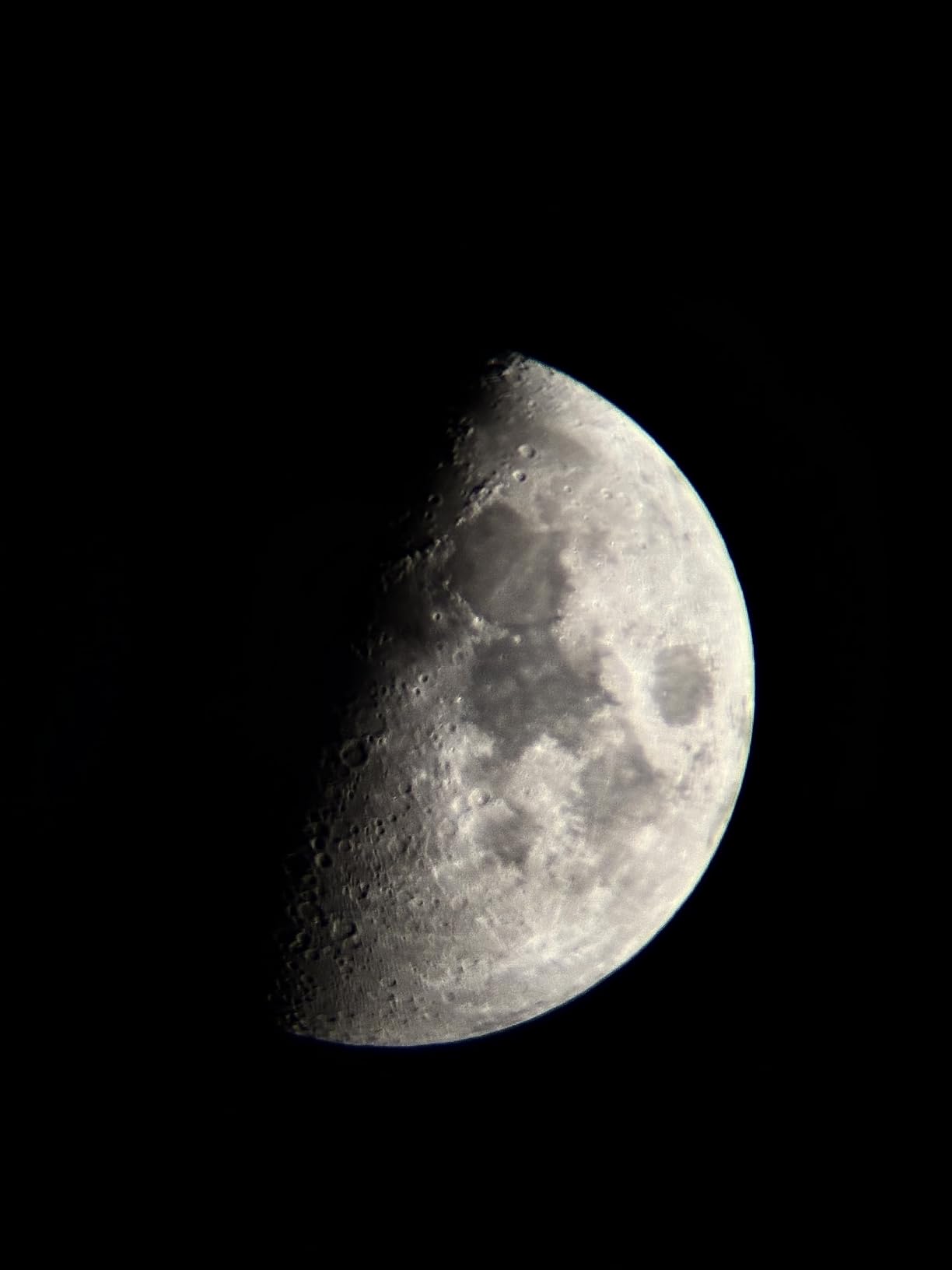
At 70 to 90mm you get a genuinely rewarding first-planet experience. Saturn shows as a small yellow ball with obvious rings, and the Cassini Division between the rings begins to appear at the upper end of that range. Jupiter shows the Galilean moons as sharp points that shift position over an evening, the main belts as bands, and Venus shows its phases as it changes shape over weeks. Mars will usually look like a small orange disc, with polar caps sometimes visible during a close approach. The Moon is where this aperture range genuinely shines: craters, shadows and the terminator line all resolve sharply.
At 130 to 150mm the differences start to become obvious. Jupiter’s Great Red Spot becomes a distinct feature rather than a smudge, and you can begin to see festoons and small spots. Saturn’s Cassini Division is a clean dark line, and the ring shadow on the planet becomes visible. Mars shows larger surface markings, though you still need a close opposition for a satisfying view. Lunar craters gain a layer of smaller detail along the terminator.
At 200mm and above you enter the range where planetary observing becomes genuinely rewarding rather than introductory. Jupiter shows a roiling structure with multiple belts and zones resolved, and the Great Red Spot shows internal shape. Saturn’s rings show radial structure and finer division hints. Mars can show dark albedo features and, in the right conditions, the beginnings of surface detail. Uranus and Neptune, invisible in most amateur instruments at lower aperture, become discs rather than stars, and their larger moons occasionally resolve.
Aperture is not the whole story, and this is where honest advice matters. The atmosphere limits what any telescope can show, and the standard guideline is about 50x magnification per inch of aperture as a ceiling rather than a target. A 6-inch scope sitting at 300x on a calm night can outperform an 8-inch scope at 400x on a turbulent one. Under 4 inches of aperture, 200x is already beyond what most nights will reward.
Seeing conditions also vary through the night. Nights with fast-moving air often settle after midnight, and the hours either side of a jet stream overhead are the worst for high power. If you are choosing a night, choose one with steady, cool air and no wind in the forecast rather than a clear but turbulent one.
Magnification and Eyepiece Math for Planets
The formula is simple: magnification equals the telescope’s focal length divided by the eyepiece’s focal length. A 900mm refractor with a 10mm eyepiece gives 90x. The same telescope with a 6mm eyepiece gives 150x. A 2032mm Schmidt-Cassegrain with a 25mm eyepiece gives 81x, and with a 10mm gives 203x.
The rule of thumb that keeps people out of trouble is roughly 50x magnification per inch of aperture. A 4-inch telescope tops out around 200x, a 6-inch around 300x, and an 8-inch around 400x. These are ceilings, not targets. Buying a telescope because of its advertised maximum magnification is the single most common mistake, and several products in this list advertise figures their optics cannot support in practice.
Worked examples from this roundup. The Celestron AstroMaster 70AZ at 900mm gives 90x with its 10mm, and the f/13 focal ratio means there is little usable image above roughly 140x. The Celestron NexStar 8SE at 2032mm gives 81x with the included 25mm and reaches 203x with a 10mm, which is a solid planetary working point. The Sky-Watcher Classic 200 at 1200mm gives 120x with the included 25mm and 400x with the 10mm, with 200x to 300x the realistic range on a calm night.
Exit pupil is the check most buyers never do. Divide aperture in millimetres by magnification to get the exit pupil, then confirm it sits between about 0.5mm and 7mm. The Sky-Watcher Classic 200 at 200x gives 2.6mm, which is comfortable. A 70mm refractor at 140x gives 0.5mm, right at the edge of what the eye can use, which is another way of saying that scope is at its limit there.
Buy at least one quality 6mm or 10mm Plossl and skip nearly everything else on the accessory list first. Reviewers across this roundup repeatedly report that eyepiece upgrades delivered sharper planetary detail, and that is where the money goes furthest after the telescope itself. A red dot finder matters far more for finding planets than for any other target, since planets are the only objects bright enough to be spotted directly through a finder.
Smart Telescopes for Planets: An Honest Assessment
Two smart telescopes are in this roundup, and both deserve a straight answer rather than a marketing one. The category is built around sensors and stacking, which is exactly what deep-sky and wide-field targets need, and exactly what planetary visual observing does not need.
The ZWO Seestar S30 Pro pairs a 30mm apochromatic optic with a 160mm focal length. Reviewers love it for astrophotography under light-polluted skies, and its built-in filters genuinely help in a bright city. For planets, the short focal length is the constraint. One reviewer is explicit that 160mm makes it weak for planetary detail against dedicated planetary scopes, and that is a design fact rather than a defect.
The DWARFLAB Dwarf Mini is more explicit still. Multiple reviewers state that it is not suitable for planetary viewing, with planets appearing as small round discs without detail and Jupiter’s moons visible only as dots. At 1.85 pounds and 150mm of focal length around a 1/2.8 inch sensor, that is the correct expectation.
So which smart telescope is best for observing planets? If you want to see planets, neither. If you want to photograph wide scenes and star fields from a dark location, both are strong choices, and the Dwarf Mini wins on portability while the Seestar wins on optic quality and sensor size. Buy a smart telescope for images, and buy aperture and focal length for planetary views.
One area where smart scopes do help planetary observers indirectly is documentation and target setting. The plate-solving and guided polar alignment in both units remove the two steps that cause beginners to give up. If you later add a traditional telescope, you will already know how to find and centre targets.
Buying a Used Telescope for Planetary Viewing
The used market is enormous in this hobby and almost no competing guide covers it, so here is the honest version. Used telescopes are where the largest apertures per unit spent actually exist, because the expensive part of a big Dobsonian is the mirror and the base, both of which last for decades.
Reflectors and Dobsonians hold value best. A mirror does not degrade the way electronics do, and collimating a used Newtonian takes minutes with a collimation tool or a phone. Check the mirror for pinholes and cleaning marks, check the focuser for stiff grease, and check the tube for dents. Expect to spend a small amount on fresh eyepieces before the view is sharp.
Refractors are the safest used purchase, because there is nothing to collimate and nothing to wear out beyond the focuser draw tube and the coating. Avoid refractors with damaged or missing coatings, since coatings are expensive to replace and the view suffers badly without them. Check that the lens is clear and free of fungus, which appears as a haze in the reflection.
Be careful with computerized mounts. Electronics age faster than optics, and proprietary hand controllers become hard to service years later. A used computerized scope with a working drive is worth a lot, and one with dead motors or a failing display is worth very little, because spare parts rarely exist. A manual Dobsonian with a good 8-inch mirror will always be easier to keep working.
Buy in person wherever you can, and check three things before you commit: that the optics are clean and undamaged, that the mount moves smoothly without slack, and that every original part is present. A local astronomy club is usually the best source, and members will often let you test a scope before buying. That one evening saves years of frustration.
Frequently Asked Questions
What type of telescope is best for seeing planets?
A Maksutov-Cassegrain, Schmidt-Cassegrain, or Dobsonian reflector with an aperture of at least 4 inches performs best for planetary viewing. These designs deliver long focal lengths, which magnify small targets cleanly, alongside large apertures, which gather the light needed to keep the image bright at high power. Long-focal-length refractors also work well and need no collimation, while short-focal-length scopes and small smart telescopes are the weakest choices for planets.
How powerful of a telescope do you need to see the planets?
An aperture of 4 inches is enough to see Saturn’s rings, Jupiter’s Galilean moons, the phases of Venus, and strong lunar detail. At 5 to 6 inches you begin to resolve Jupiter’s Great Red Spot as a distinct feature and see the Cassini Division in Saturn’s rings as a clean line. At 8 inches and above, multiple belts on Jupiter and finer ring structure become visible. Remember that atmospheric seeing often limits the view more than the aperture does.
How expensive of a telescope do you need to see planets?
A fully coated 70mm to 90mm long-focal-length refractor on a simple alt-azimuth mount is the cheapest way to see Saturn’s rings and Jupiter’s moons, and it needs no setup procedure at all. Above that, a 130mm to 150mm reflector on a German equatorial mount adds real tracking and brighter views. Large-aperture Dobsonians and computerized Schmidt-Cassegrains sit at the top of the range and deliver the most detail. Spend on aperture and focal length before spending on accessories.
Which smart telescope is best for observing planets?
Neither of the leading smart telescopes is designed for planetary viewing. Both the ZWO Seestar S30 Pro and the DWARFLAB Dwarf Mini use short focal lengths around 150 to 160mm, and multiple reviewers of each report that planets appear as small discs with no detail. These instruments excel at wide-field astrophotography through a phone app, not at visual planetary observing. Choose a traditional telescope with a longer focal length for planets.
What type of telescope is best for capturing planets?
Planetary imaging rewards long focal lengths and fast frame rates, because planets brighten and blur in seconds. A 150mm to 200mm reflector on a sturdy equatorial mount, or a long-focal-length refractor, captures the most detail per frame. A slow-waving high-frame-rate camera and a good video capture method matter more than a large sensor. Smart telescopes are better suited to wide-field scenes than to resolving detail on a planetary disc.
What telescope magnification is needed to see planets?
Around 50x per inch of aperture is the practical ceiling, which means roughly 140x on a 3-inch scope, 300x on a 6-inch, and 400x on an 8-inch. Saturn’s rings become obvious around 30x to 50x, Jupiter’s bands appear near 60x, and the Great Red Spot needs 150x or more. Magnification beyond the atmospheric limit adds no detail and only produces a blurrier, dimmer image.
The Best Telescopes for Viewing Planets in 2026
The Celestron AstroMaster 70AZ is our pick for the best telescopes for viewing planets in 2026 because it does the one thing beginners care about most: it shows Saturn’s rings within minutes of opening the box, with no polar alignment, no collimation and no menus. It is also the most heavily reviewed instrument here, with thousands of owners reporting the same result.
Move up when you are ready for more. The Celestron NexStar 8SE gives you the most detail in a single box, with GoTo pointing that removes star-hopping entirely. The Sky-Watcher Classic 200 Dobsonian gives you the brightest, sharpest views per unit spent, if you can keep 45 pounds in one place. The Gskyer 130EQ is the pick if you want a planet to stay put while you watch it.
And keep one rule in mind through all of it. Aperture and a steady mount decide what you can see, and the atmosphere decides how much of that you actually get on any given night. Check the forecast for steady air rather than simply clear skies, and you will be delighted far more often than a new owner who picked a bad night for a first look.