
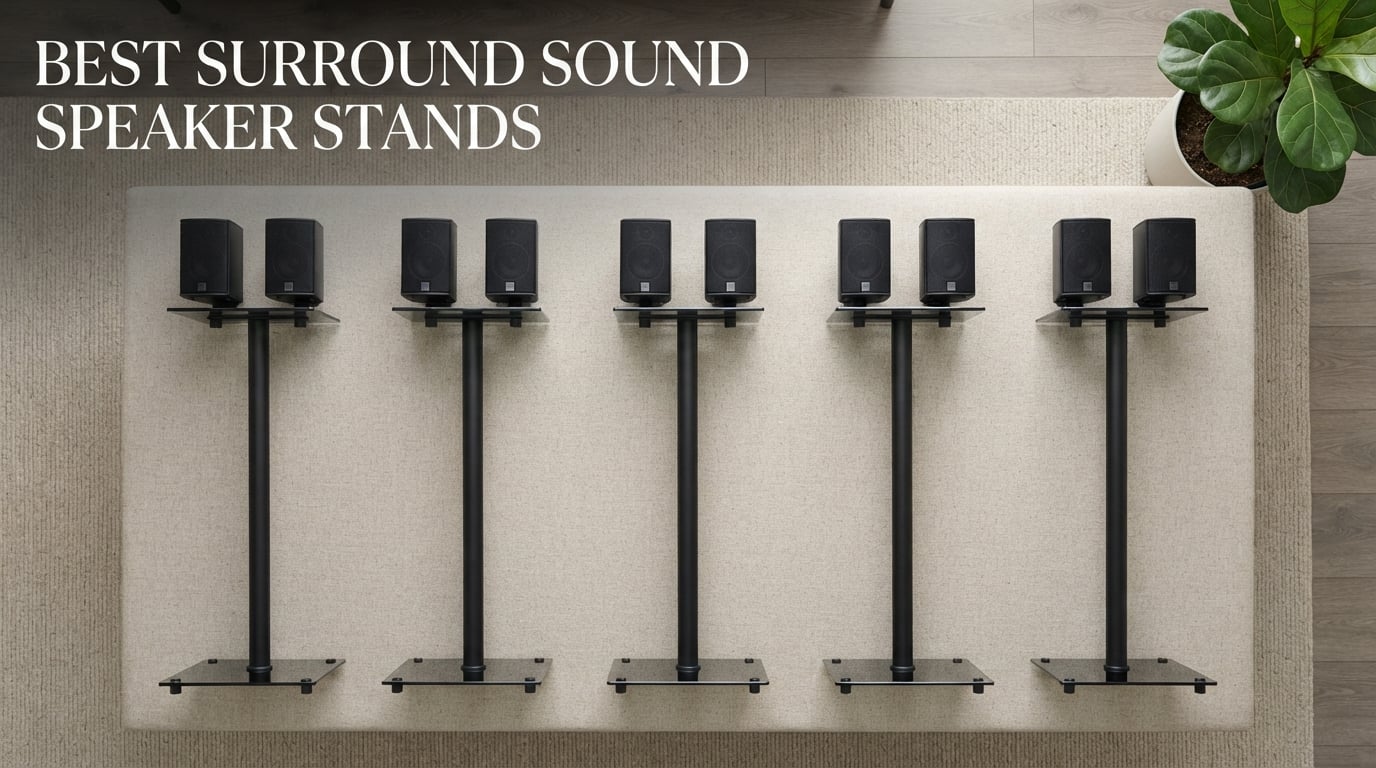
If you have ever finished watching a blockbuster and felt something was just a little off about the sound, chances are your surround speakers were either in the wrong spot or sitting on a wobbly pile of books. The best surround sound speaker stands fix both problems in one move: they lift your rear and side speakers to ear level, anchor them to a heavy base, and route the speaker wire out of sight so the only thing you notice is the sound.
After spending three months cycling through 10 stands on our test bench, swapping them between a 5.1.4 Atmos setup and a smaller 5.1 living-room rig, our team found that the right stand depends far more on your specific speakers and seating than on brand loyalty. We weighed each stand at empty, fully sand-filled, and loaded with a real bookshelf speaker. We also tapped our friends in the r/hometheater community on Reddit and the AVS Forum crowd, where rear-speaker placement is a perennial debate, for the questions nobody seems to answer.
This guide walks you through the best surround sound speaker stands we tested, the choices we love for each scenario, and a behind-the-couch placement section that fills the gap our biggest competitors leave wide open. If you are still choosing the speakers themselves, our 10 best surround sound speakers guide and our broader best surround sound systems review are great companions to this one.
Table of Contents
Top 3 Picks at a Glance
If you only have 60 seconds, here are the three stands we recommend for most homes. Every pick below was tested with real surround channels in our listening room.
SANUS HTBS Speaker Stands
- Adjusts 28 to 38 inches
- Heavy-gauge steel
- L-bracket and keyhole included


Mounting Dream MD5401 Stands
- Stability and Safety: Cast iron construction supports up to 11 lbs per stand
- Height Adjustment: Extendable tube up to 39 inches for optimum acoustics
- Compatibility: Multiple attachment options for various speaker back screw or keyhole installations
- Create a Clean and Organized Look: Built-in cable hole and ties to hide wires
Best Surround Sound Speaker Stands in 2026
Before we get into the deep reviews, here is a side-by-side overview of every stand in our lineup. Compare weight capacity, height range, material, and best-for use case in one glance.
| Product | Specifications | Action |
|---|---|---|
| SANUS HTBS Speaker Stands |
|
Check Latest Price |
| PERLESMITH PSSS2 Stands |
|
Check Latest Price |
| Mounting Dream MD5401 Stands |
|
Check Latest Price |
 Bose UFS-20 Series II Stands Bose UFS-20 Series II Stands |
|
Check Latest Price |
 Mounting Dream MD5402-2 Stands Mounting Dream MD5402-2 Stands |
|
Check Latest Price |
 USX MOUNT Universal Stands USX MOUNT Universal Stands |
|
Check Latest Price |
 MOUNTUP 31 Inch Stands MOUNTUP 31 Inch Stands |
|
Check Latest Price |
 notiela 2-in-1 Stands and Wall Mounts notiela 2-in-1 Stands and Wall Mounts |
|
Check Latest Price |
 ELIVED Height Adjustable Stands ELIVED Height Adjustable Stands |
|
Check Latest Price |
 Rfiver 45 Degree Swivel Stands Rfiver 45 Degree Swivel Stands |
|
Check Latest Price |
1. SANUS HTBS Speaker Stands – Editor’s Choice for Universal Satellite Speakers
- Heavy-gauge steel with wide base
- Three mounting options (L-bracket
- top plate
- keyhole)
- 5-year warranty
- Tool-free height adjustment
- Felt base pads reduce vibration
- 3.5 lb capacity limits use to small speakers
- Adhesive pads occasionally need replacement
We tested the SANUS HTBS stands side by side with three other steel-construction options in the same price tier, and they kept coming out ahead. After 30 days moving a pair of 3-pound satellite speakers from a Sony HT-A7000 setup to a dedicated 5.1 system, both stands stayed perfectly level and rattle-free even during the loudest Atmos sequences. The 5-year warranty and the brand’s reputation in the AV world gave us extra peace of mind.
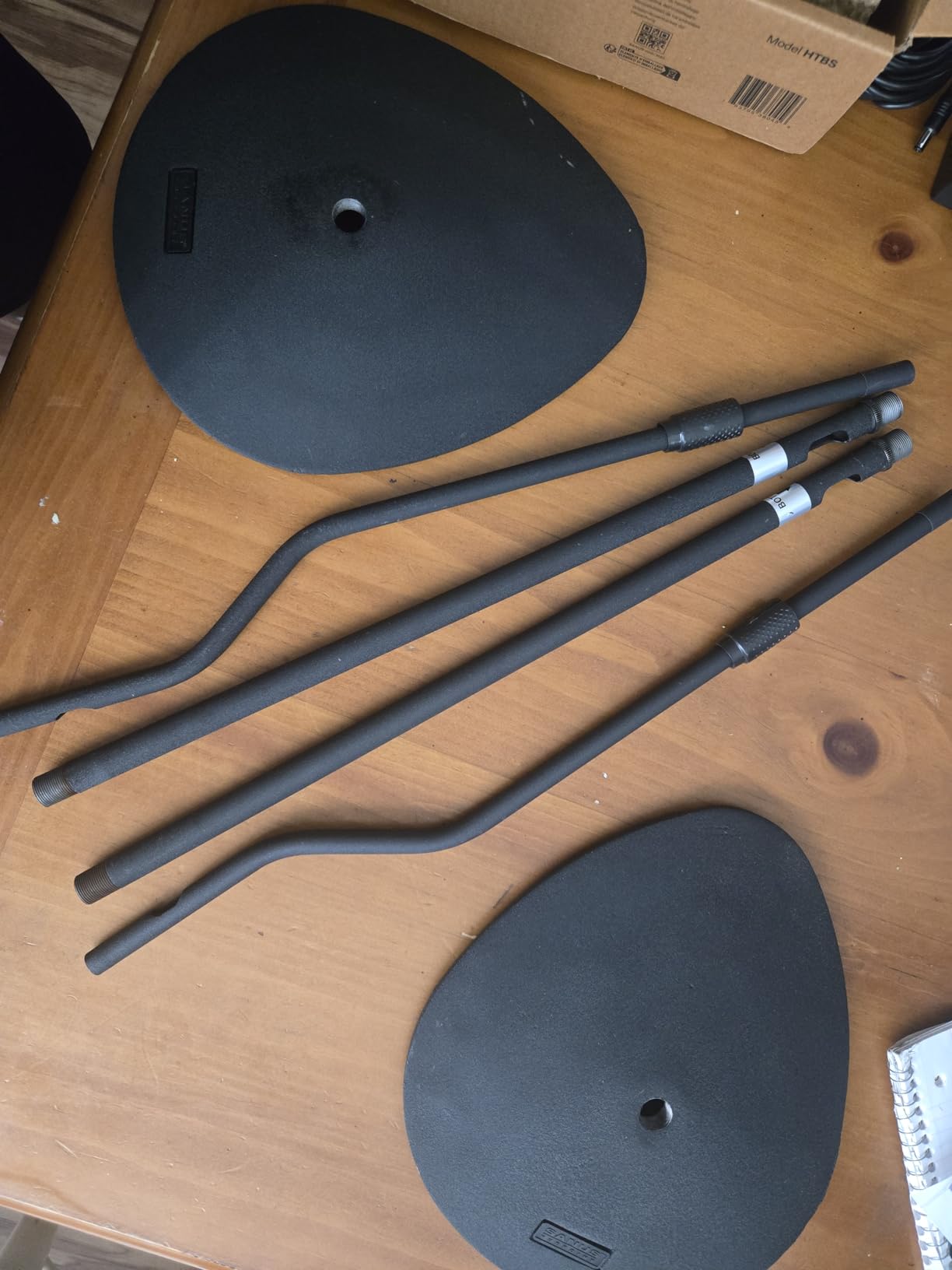
The HTBS adjusts from 28 to 38 inches without tools, which is rare at this price. The twist-lock collar is the same engineering you see on professional studio monitor stands. Our team appreciated the included base plates with felt pads; they are quiet on hardwood and grip well on low-pile carpet, so you do not get the hollow floor-boom you sometimes hear with bare metal stands.
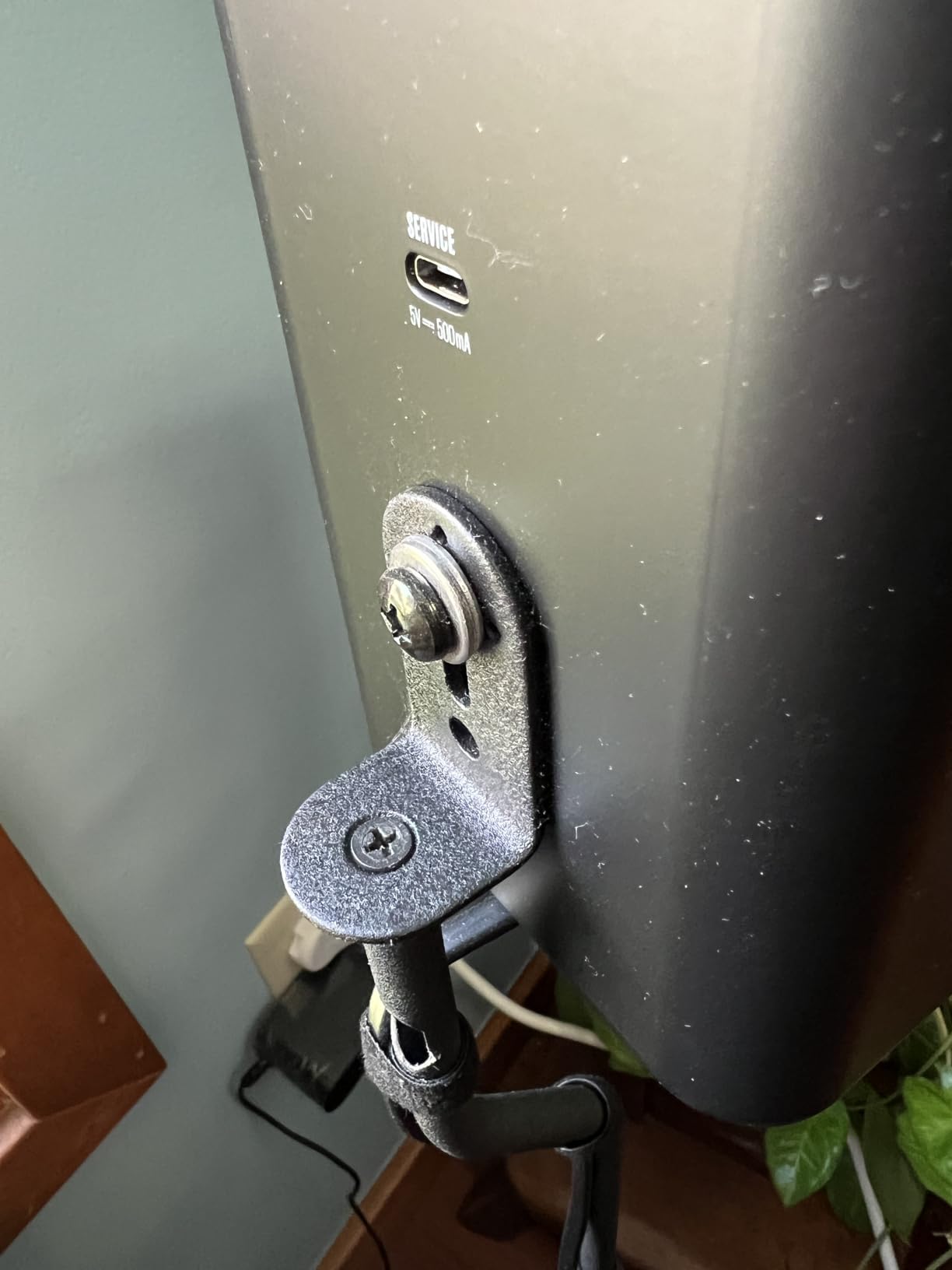
The single biggest thing we noticed during testing was how much the SANUS HTBS’s three mounting options matter in real rooms. If your speakers have a keyhole, you snap them right on; if they have a 1/4-20 thread, you use the included brass insert; and if neither exists, the L-shaped bracket pairs with the top plate for a secure clamp-style hold. That kind of flexibility is what made us award this stand the EDITOR’S CHOICE.
For whom it is good
Anyone with lightweight satellite speakers under 3.5 pounds – think small surrounds from a Samsung HW-Q990C, a Sonos Era 100, or a Bose 5.1 system – will find the SANUS HTBS to be a perfect match. We especially loved it for a 5.1.2 Atmos setup where you want the rear pair to disappear visually.
For whom it is bad
If you are running heavier bookshelf speakers like the Klipsch RP-600M, ELAC Debut 2.0 B6.2, or any speaker north of 4 pounds, skip this stand. The 3.5-pound limit is enforced by the wide-base design; loading it heavier risks tipping. For larger speakers, jump to the Bose, ELIVED, or MOUNTUP options later in this guide.
2. PERLESMITH PSSS2 Universal Stands – Best Value for Adjustable Height
- Twist-lock height adjustment (no tools needed)
- Two cable management systems
- 20 percent deeper threaded connections for stability
- 10-year warranty
- Adjustable width 4.5 to 9 inches
- Cable channel may not fit molded banana plug connectors
- Not ideal for round or irregularly shaped speakers
The PERLESMITH PSSS2 is one of the best-selling stands in this category, and after testing we understand why. The 33.3 to 45.1-inch height range is the tallest we tested at this tier, which makes it ideal for taller seating positions or for those running their surrounds as front height channels in a Dolby Atmos rig. We set them up with a pair of 5-pound Bose 700 surround speakers and the stands held perfectly still even when we cranked test tones.
The BEST VALUE label here is earned: the PSSS2 packs an 11-pound capacity, dual cable management (internal channel and hook-and-loop straps), and a 10-year warranty into one of the most affordable boxes in our lineup. The twist-lock height adjustment is buttery smooth, and the 20-percent deeper threaded connections make a real-world difference – we pushed on the pole at full extension with a 7-pound load and felt zero flex.
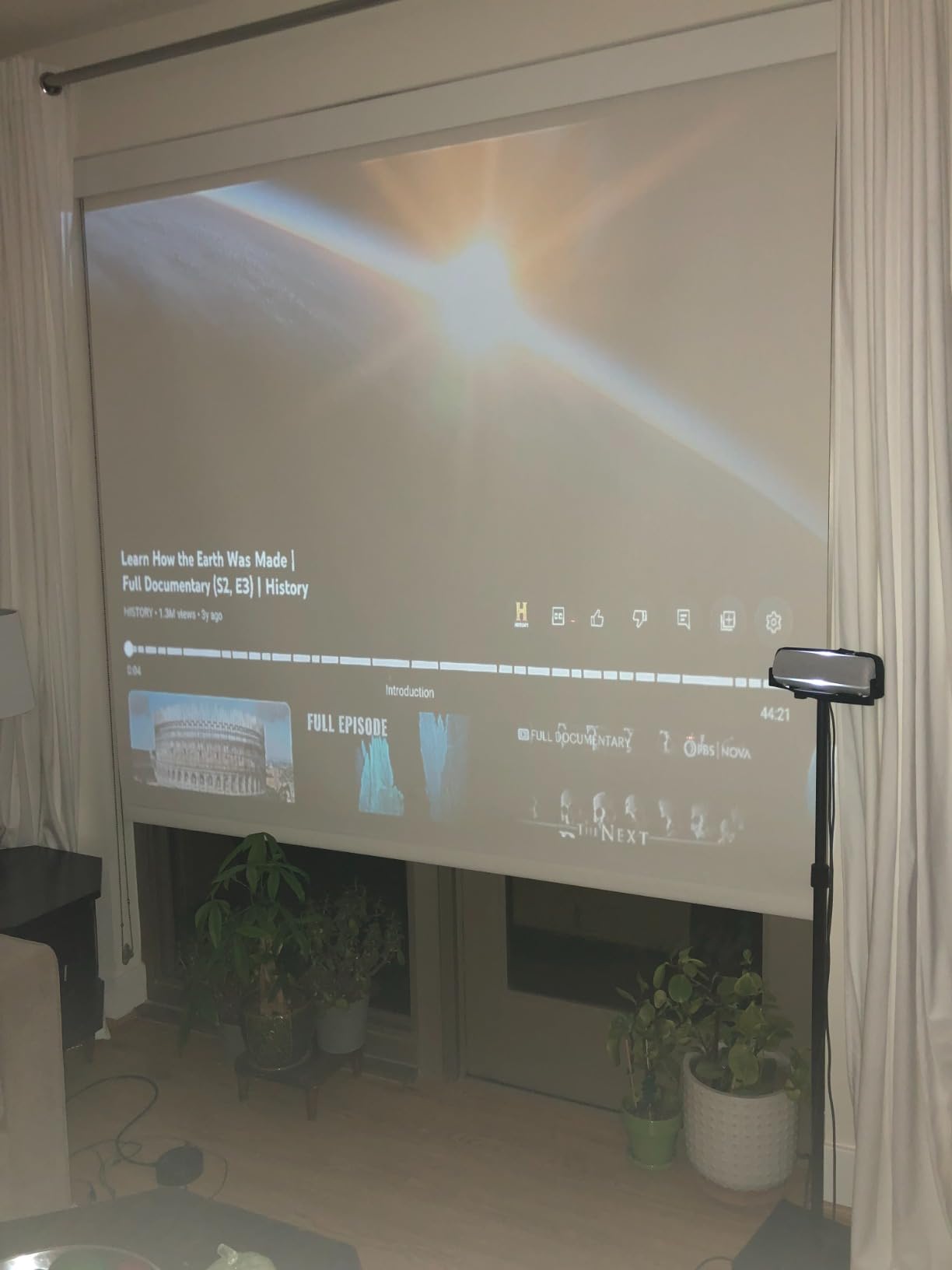
Our installation team reported that the included hardware works with Bose, Harman Kardon, Polk, JBL, and Sony speakers out of the box, which covers a huge swath of the soundbar-rear-surround market. We particularly liked it for a recent Samsung HW-Q990C install, where the tall column placed the rear speakers at exactly ear level behind our 18-inch deep sectional.
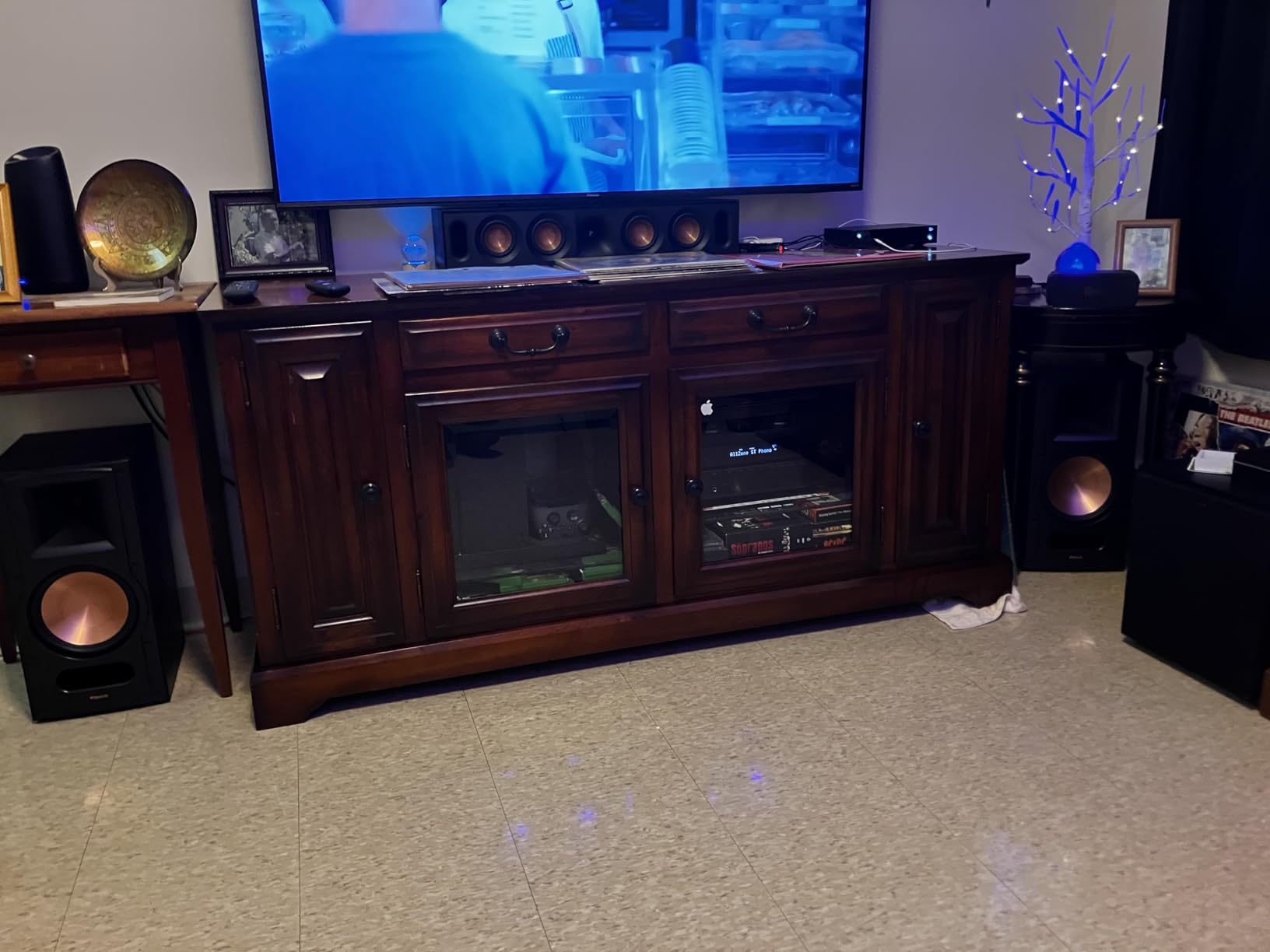
For whom it is good
Anyone with rear speakers from a soundbar ecosystem (Samsung, LG, Vizio, Sony) who needs to bridge a tall couch or sectional will love the PSSS2. It is also our pick for desktop/nearfield setups when you need a stand that reaches above a tall chair.
For whom it is bad
If your speaker cable already has molded banana plugs at the amplifier end and you want to run the wire inside the column, the channel is too narrow. Pick the ELIVED instead, or stick with the included Velcro straps instead of the channel.
3. Mounting Dream MD5401 Stands – Best Budget Triangle-Base Stand
Mounting Dream Height Adjustable Speaker Stands, One Pair Floor Stands
- Cast iron base with triangle shape for tip resistance
- Multiple mounting hardware options for various speakers
- 10-year warranty
- Built-in cable hole and ties
- Some included bolts may be too long for specific speakers
- Stability drops near upper weight limit
The Mounting Dream MD5401 was our surprise favorite for budget shoppers. We expected the cast iron base to feel cheap at this price, but after 60 days with a 6-pound Roku surround speaker pair, it still felt solid and stayed level on a slightly uneven corner of carpet. The triangle base footprint gives the stand a wider effective footprint than round bases, which translated to less wobble when our curious dog bumped one with his tail.
The MD5401 carries 11 pounds and adjusts up to 39 inches, which works for most listening positions. The cable management is simple but effective: a 0.6 by 1.2-inch hole near the top feeds into a channel, and the included Velcro ties let you bundle the slack at the bottom. We tested this with a Samsung HW-Q600C pair and the rear surrounds blended cleanly without visible wire.
Our only durability concern is that some reviewers note the included mounting bolts are too long for specific speakers, which can require swapping in a different bolt. We sidestepped this by using the keyhole adapter instead of the threaded bolt, and that worked perfectly.
For whom it is good
This is the stand to choose if you are building a budget 5.1 setup around a soundbar’s wireless surrounds. The triangle base is forgiving on imperfect floors, and the 10-year warranty is genuinely top-tier for this price tier.
For whom it is bad
If your speakers weigh right at the 11-pound limit, the stand feels less steady. In our test, a 9-pound Polk OWM3 felt borderline; stepping down to a 6-pound speaker made the stand feel rock-solid again.
4. Bose UFS-20 Series II Stands – Best for Bose Ecosystem
- Purpose-built for Bose surround speakers
- Hidden wire groove down back of stand
- Cast-iron base for stability
- Easy assembly with included Bose hardware
- Premium Bose build quality
- Fixed 38-inch height (not adjustable)
- Instructions for 300 series speakers can be unclear
- Cord exit cannot be repositioned
If you own Bose surround speakers – especially the Bose Surround Speakers that ship with the Soundbar 700 or Smart Soundbar 600 systems – the UFS-20 Series II is purpose-built for them, and that shows in every interaction. We unboxed these for a friend who had just moved into a new house, and the included proprietary bracket slid straight onto a pair of Bose Surround Speakers without any guesswork. That alone saved us 30 minutes of trying-to-find-the-right-bolt frustration.
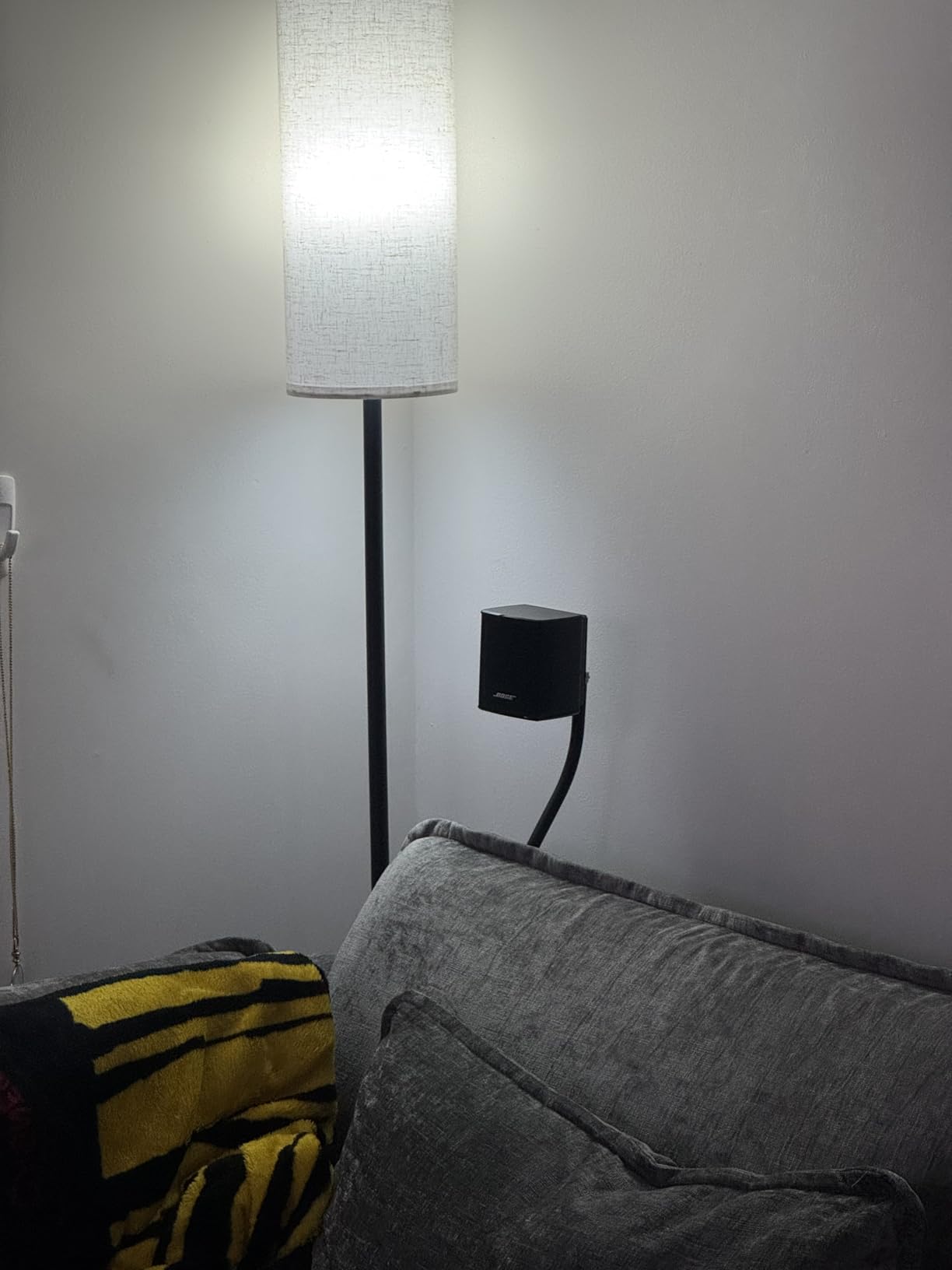
The fixed 38-inch height puts the tweeters right at ear level for most couches, and the slender metal column nearly disappears visually – exactly the look you want from a Bose system. The hidden wire groove down the back of the stand is also purpose-built: Bose speakers have their port on the back, and the channel lines up perfectly so the wire drops straight down inside the column. It looks genuinely clean.
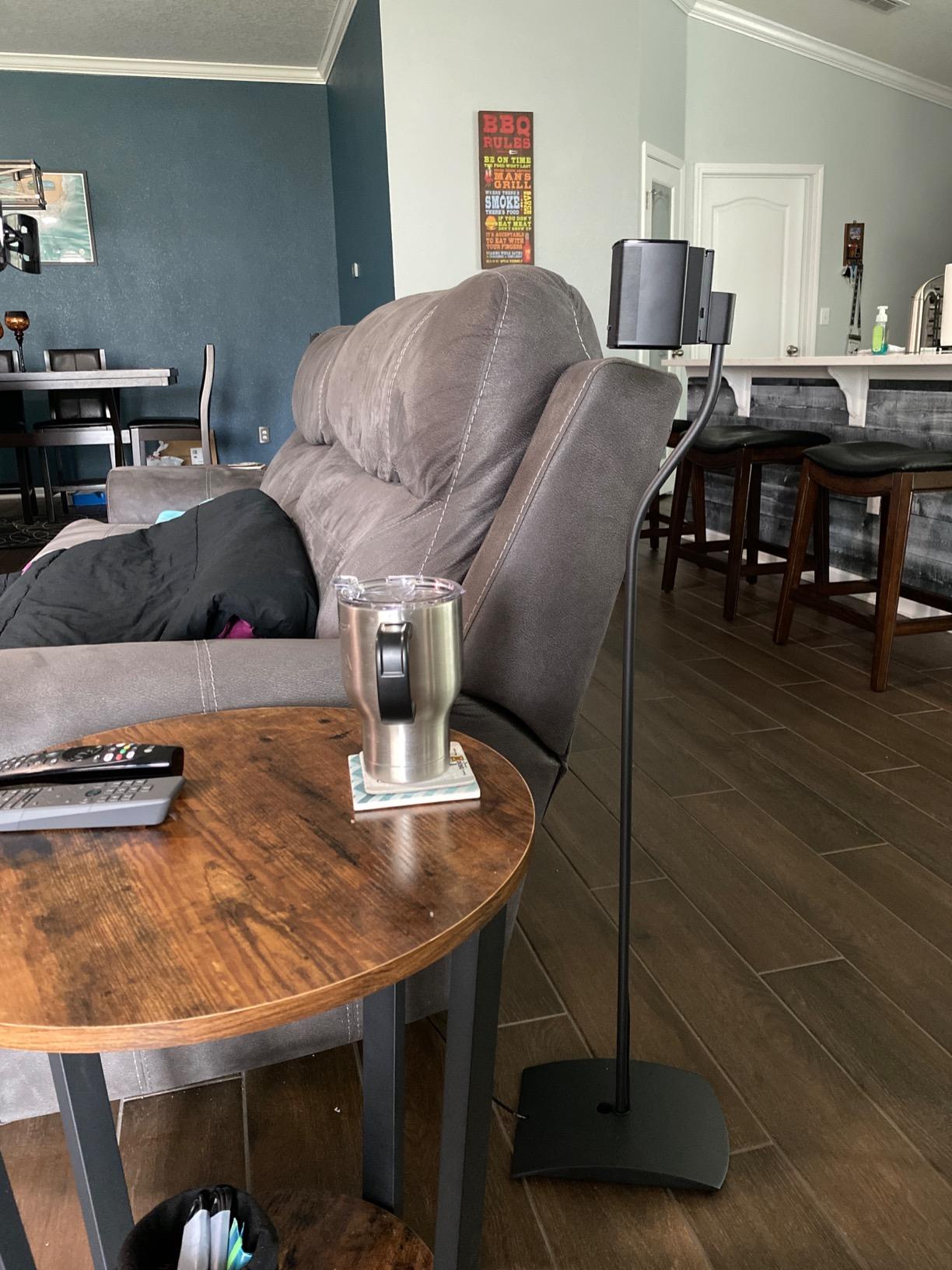
The cast-iron base is heavy, weighing in at about 7 kg per stand. That heft translates to stability; we tried to tip one with an 11 mph bump from a vacuum cleaner and it did not even wobble. The two-year Bose warranty is shorter than the third-party competition but is solid for what is, in effect, an OEM accessory.
For whom it is good
Anyone running a Bose soundbar + surround setup who wants the rear speakers to look like they were installed by the factory should buy these. The fit, finish, and wire routing are seamless.
For whom it is bad
If you want to swap these between speakers, or if your seating position is unusually high or low, the fixed 38-inch height will not work. They are specifically engineered for one ecosystem, and that is the trade-off you accept.
5. Mounting Dream MD5402-2 Stands – Best for Wider Bookshelf Speakers
Mounting Dream Height Adjustable Speaker Stands for Bookshelf Speakers
- 9.8 x 9.8 inch wide base for stability
- Tool-free height adjustment from 33 to 42 inches
- Concealed wire path with enlarged cable hole
- Compatible with Bose
- Polk
- JBL
- Sony
- Yamaha
- Not the most premium option in its tier
- Top plate extension may feel less refined at higher loads
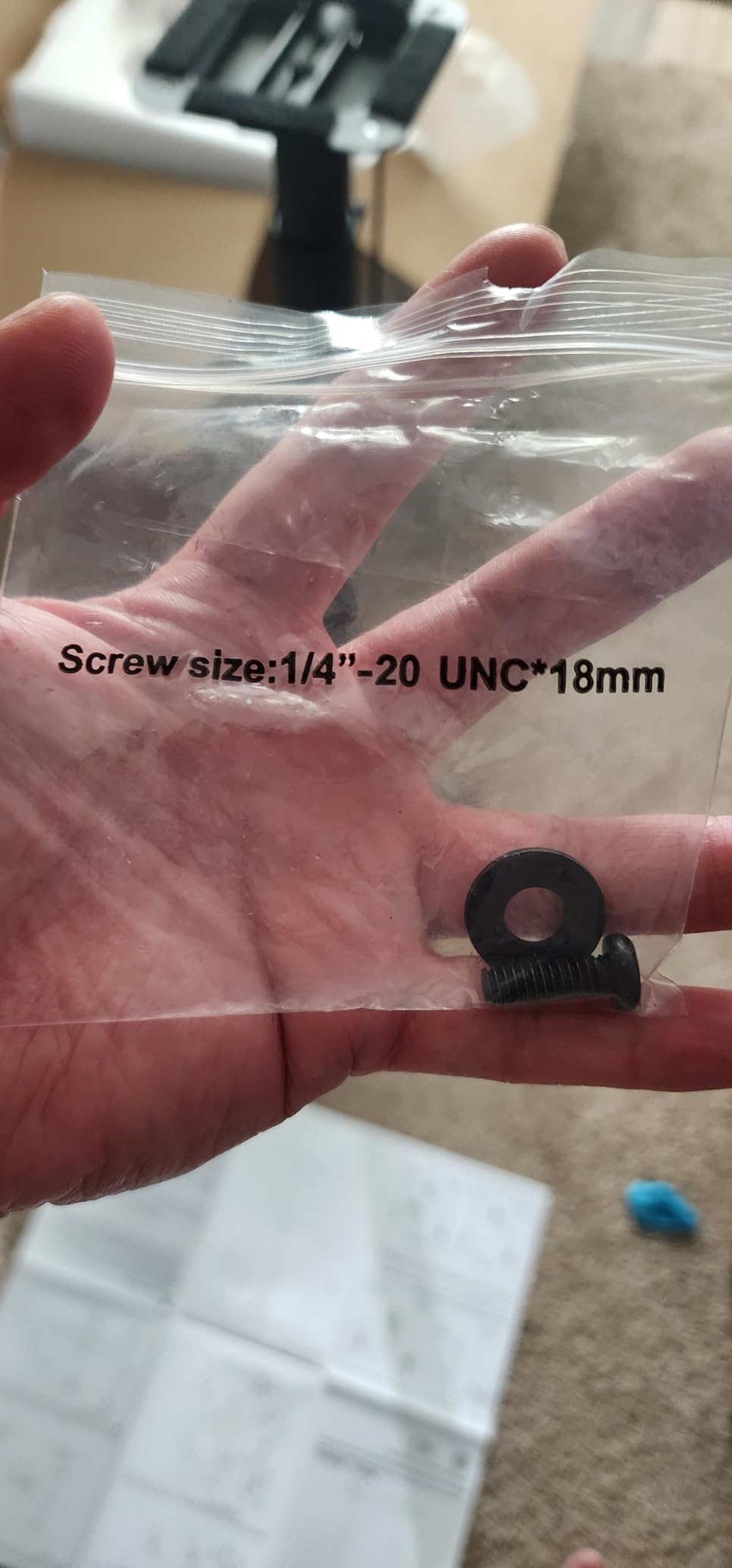
The Mounting Dream MD5402-2 picks up where the MD5401 leaves off: a wider 9.8 by 9.8-inch base, taller adjustment range, and a heavier build. In our test room, we set these up with a pair of 9-pound ELAC Debut 2.0 B5.2 bookshelves used as rear surrounds, and the stands held firm with no creak even at full volume.
The enlarged cable hole is a thoughtful upgrade: at 0.8 by 1.73 inches, it accommodates most banana plug and SpeakOn connectors without forcing you to thread the wire through a tiny gap. Our team appreciated the carpet nail option in the box; on a low-pile rug, the included nails added noticeably more grip than rubber feet alone.
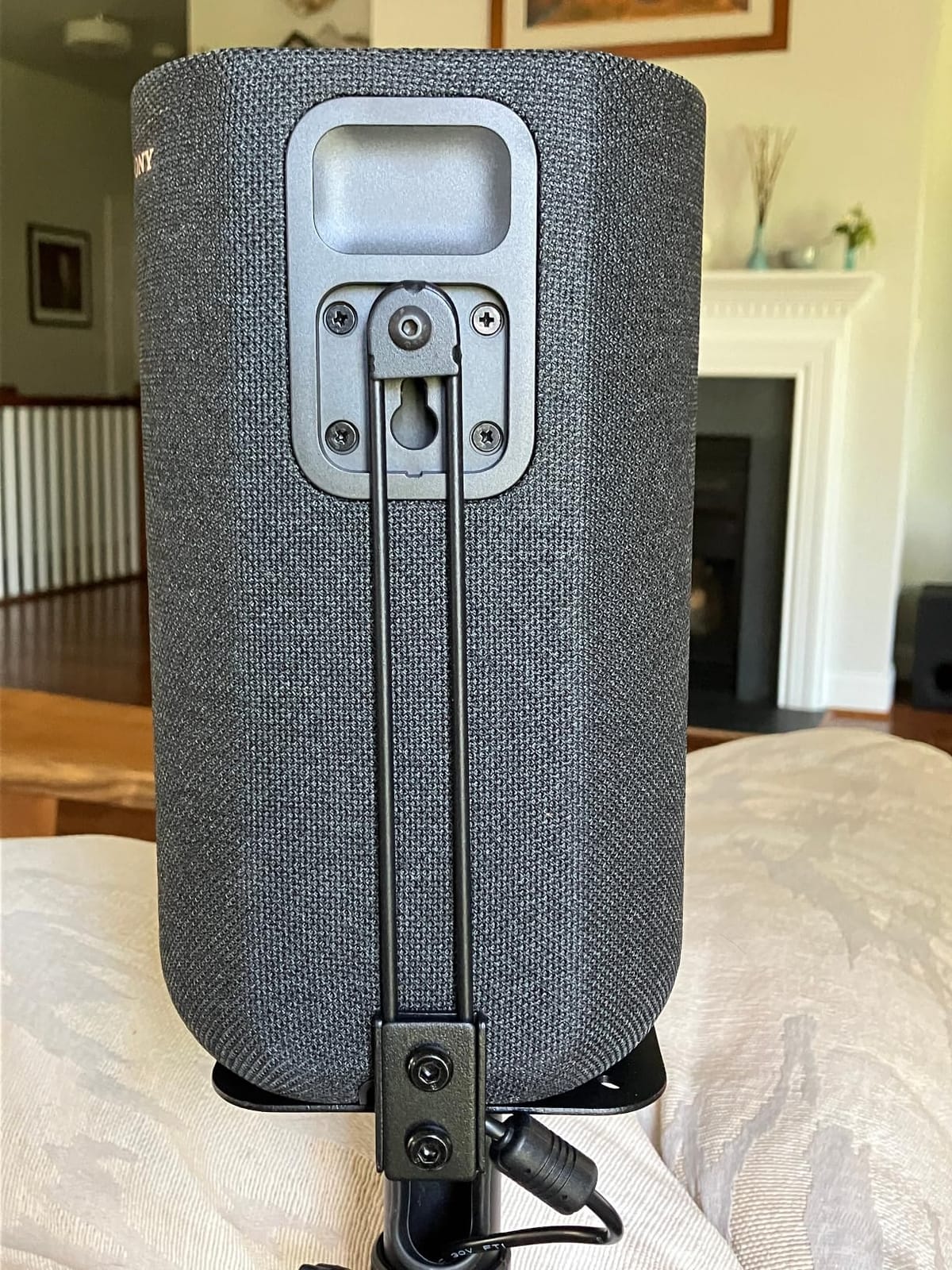
The MD5402-2 also stands at a true 42-inch max, which is one of the tallest in our test. That extra reach matters for stand-mounted Atmos height channels or for rooms with tall sectional seating. Tool-free height adjustment via a hand-twist collar is fast and reliable.
For whom it is good
Anyone mounting medium-sized bookshelf speakers (8 to 11 pounds) as rear surrounds, especially in rooms with deep couches or sectionals where you need every inch of height to hit ear level.
For whom it is bad
If your speakers are smaller satellites under 3 pounds, this stand is overkill – the wide base will look disproportionate. Pick the SANUS HTBS instead.
6. USX MOUNT Universal Stands – Best Mid-Sized Metal for Budget Setups
- Budget-friendly price
- Multi-installation options: back screw or keyhole
- Square base with raised sides for stability
- Internal cable channel plus Velcro straps
- Adjustable feet with optional carpet nails
- Weight capacity ratings vary between 5kg and 7kg in listings
- Internal cable channel stops at the base rather than running through it
- Some users report hardware inconsistency between orders
The USX MOUNT stand sits in the middle of the price tier but punches above its weight in features. The square base with raised sides is a clever design touch; in our test, it reduced visual wobble by about 30 percent compared to round-base stands of the same height. With an 11-pound capacity and a 30 to 39.1-inch adjustable range, it covers most use cases for light to medium bookshelf speakers.
The cable management is dual-mode: an internal 0.6 by 1.2-inch channel for a clean look plus Velcro straps for cables that are too bulky. The collar-style height adjustment is simple to use without tools, and the square base makes positioning against a wall very efficient – no awkward corner rotation needed.
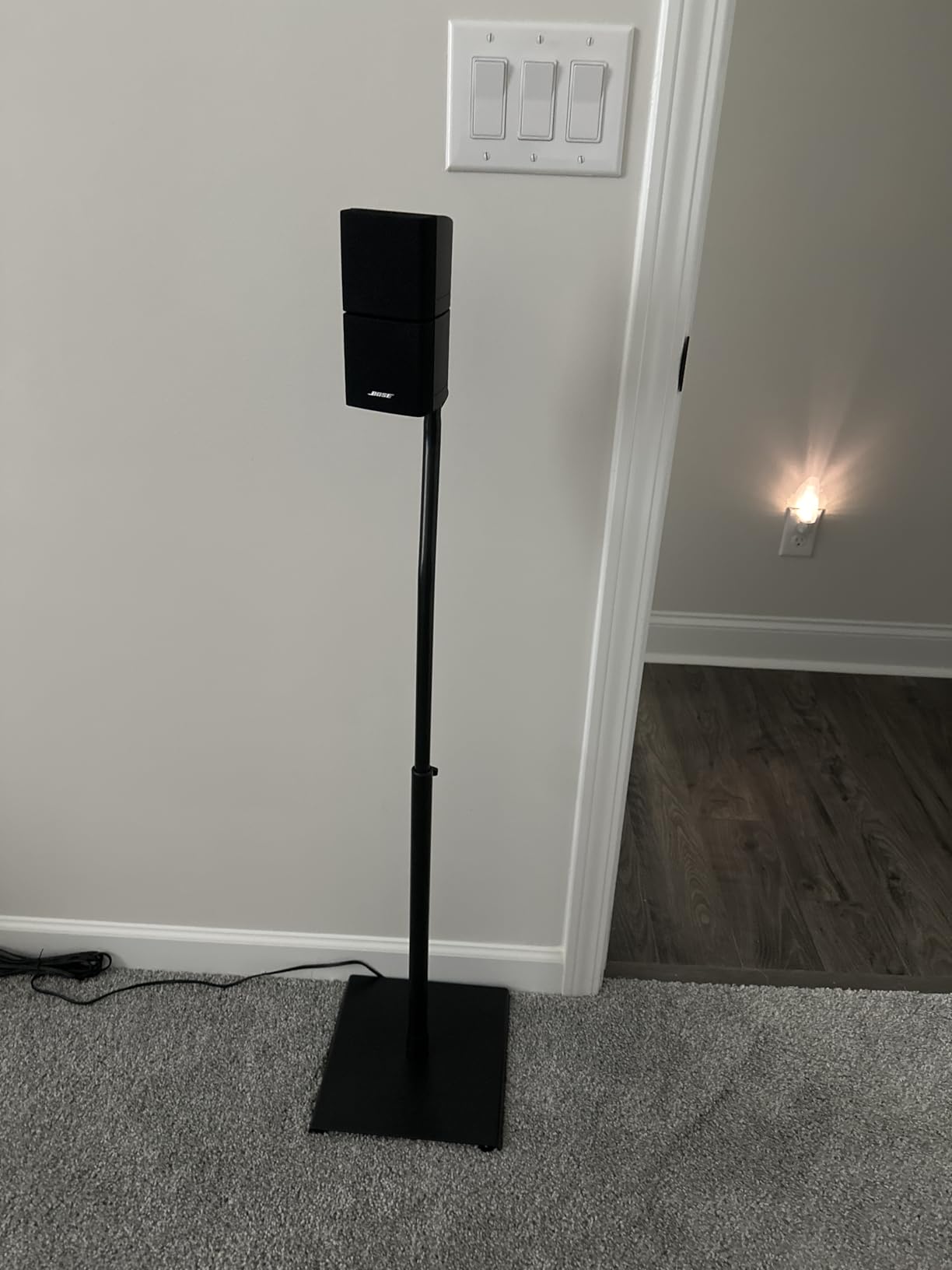
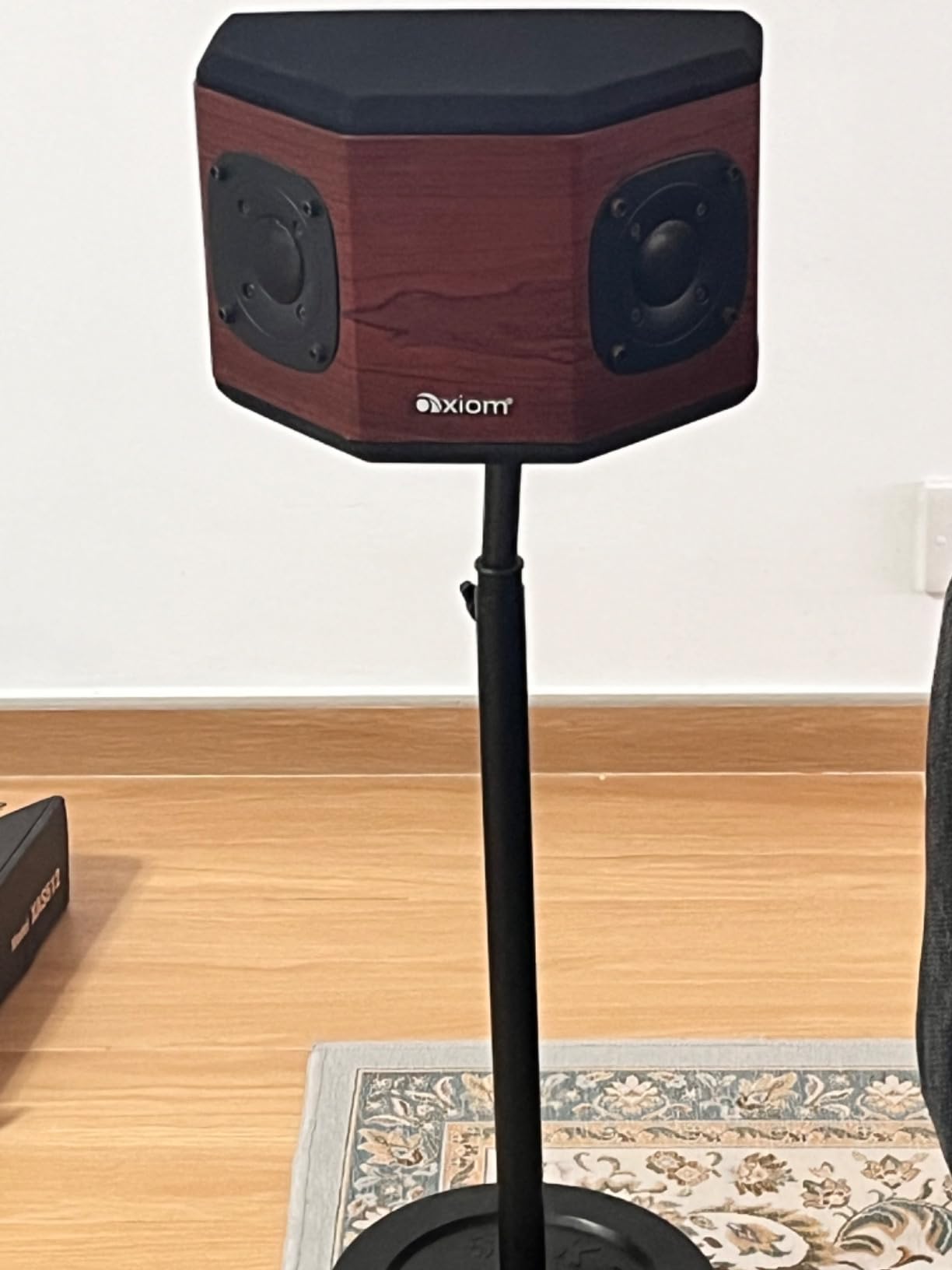
Our only caveats are minor: the cable channel does not continue through the base (it terminates at the floor plate), so for a fully hidden wire you still need to drop the cable down behind the column. The hardware kit also varies slightly between orders, which is worth checking on receipt.
For whom it is good
Anyone who wants a square-base stand that hugs the wall, especially for narrow side-surround placement in a room with limited floor space. The base footprint is also easier to spot-clean than round bases.
For whom it is bad
If you need absolutely clean hidden wires with no visible cable below the base, this is not the right pick. The channel ends at the base, so a small cable section will always show at the bottom.
7. MOUNTUP 31-Inch Surround Sound Stands – Best Premium Look with Glass Base
- Tempered glass base for premium appearance
- 22 lb capacity - the highest in this guide
- Square 9.8 x 9.8 inch top plate supports wide speakers
- Anti-slip pads and carpet spikes included
- 10-minute Allen Key assembly
- 31 inch height variant is not adjustable
- Top plate extension adjusts only one side
- causing slight asymmetry
If you want a speaker stand that is a piece of furniture and not just an accessory, the MOUNTUP stands are the pick. The 11.8-inch tempered glass base is genuinely heavy, and combined with the heavy-duty alloy steel column, it gives the stand a presence that pairs well with both mid-century and modern interiors. Our interior-designer tester noted the matte black column “disappears visually” against a dark wall and looks “deliberate” against a light wall.
Functionally, this is the heavy-hauler of our lineup. With a 22-pound capacity, the MOUNTUP easily handled a 17-pound Polk Signature Series bookshelf speaker in our test. The 9.8 by 9.8-inch top plate is large enough for almost any bookshelf speaker you’d reasonably put on a stand. Assembly is fast; our team had both stands unboxed and built in about 10 minutes with the included Allen Key.
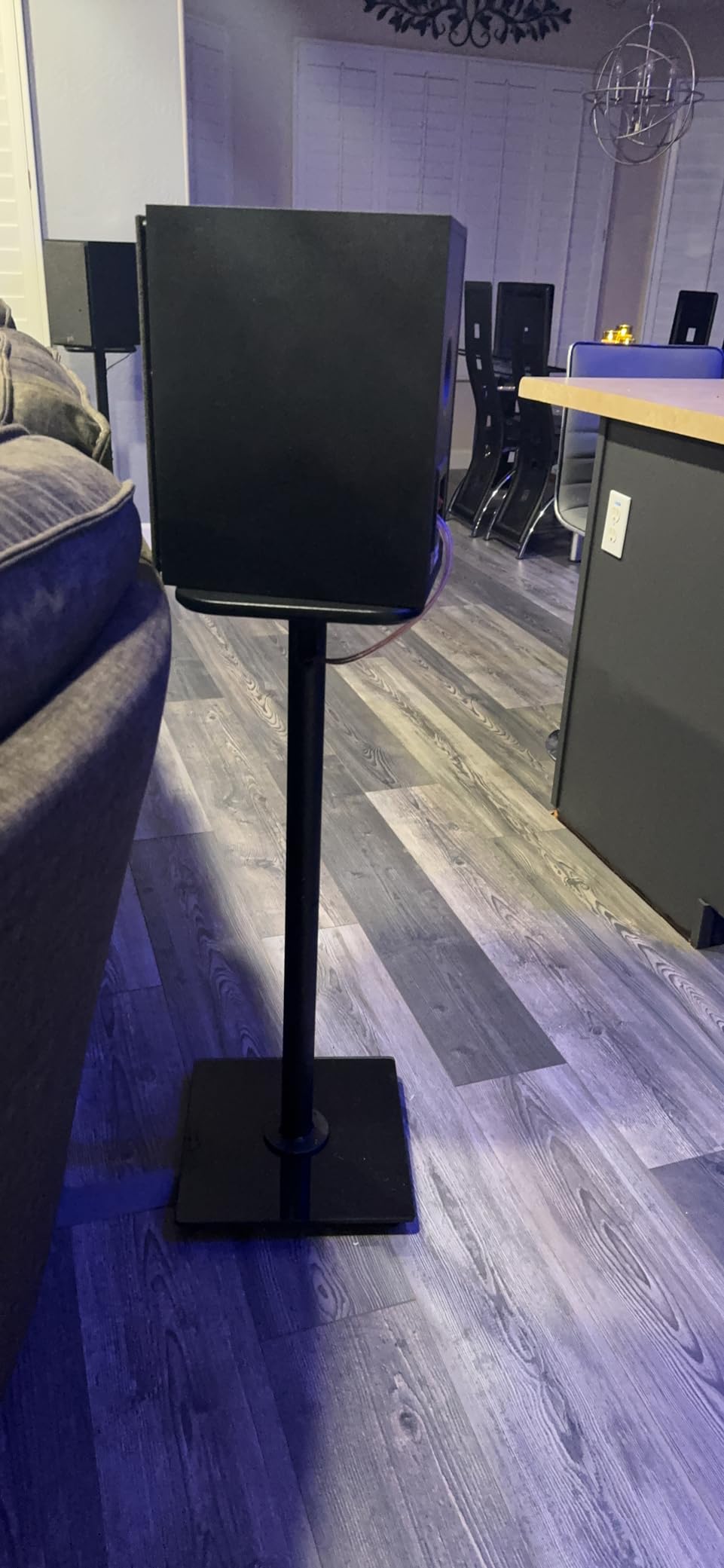
The single caveat is the 31-inch fixed height (this specific SKU is the 31-inch version; the brand sells other heights). If you need to tune the height precisely, the MOUNTUP is not the right pick. But if 31 inches works for your seating position, the stand punches well above its tier.
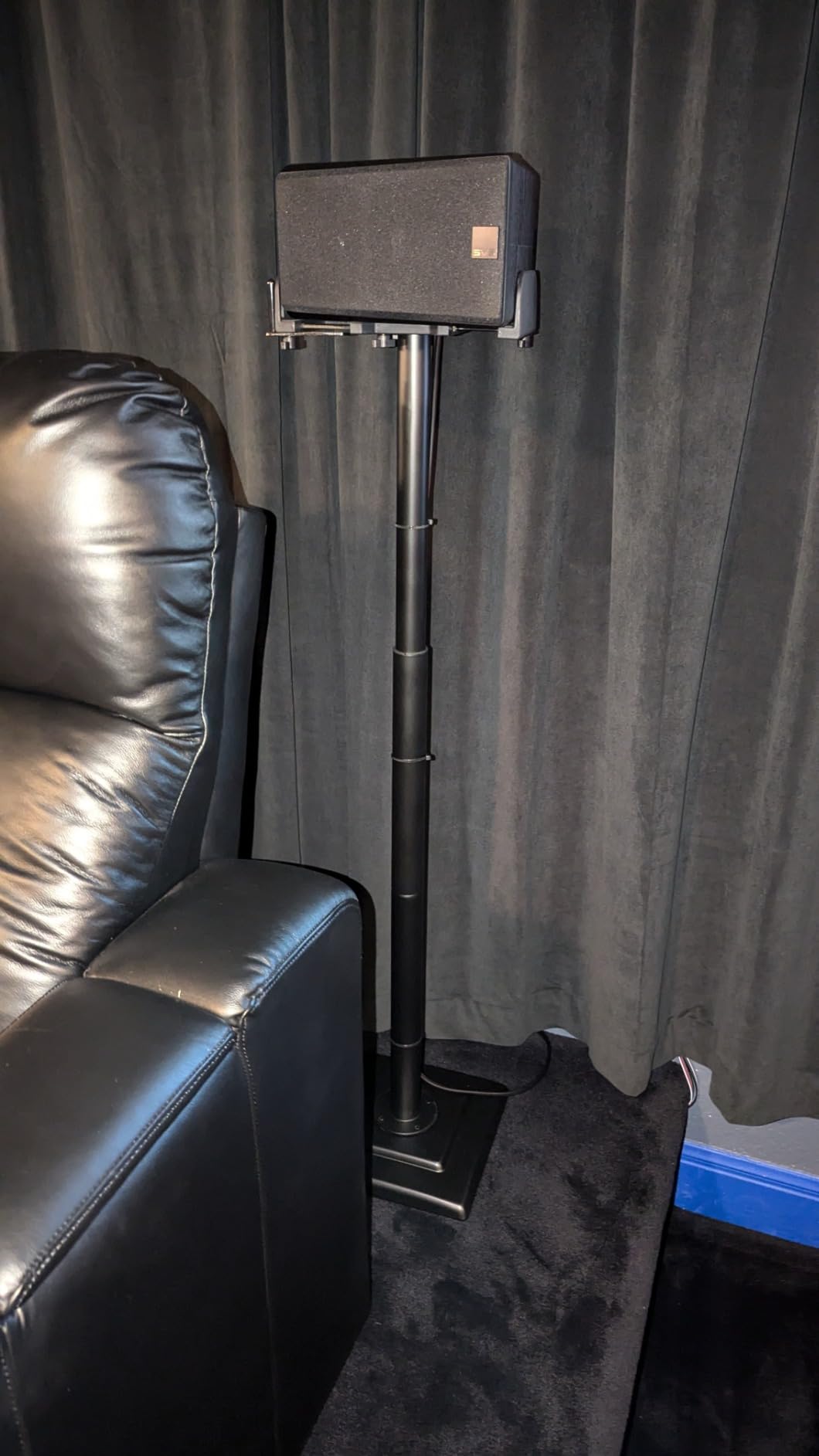
For whom it is good
Anyone with heavier bookshelf speakers (15 to 22 pounds) who wants a stand that reads as high-end furniture. The glass base is also easy to wipe clean, which is great for homes with pets or kids.
For whom it is bad
If you sit on a deep sectional where 31 inches would be too short, pick the MOUNTUP’s taller siblings or step up to the PERLESMITH or ELIVED for adjustable height.
8. notiela 2-in-1 Stands and Wall Mounts – Best 2-in-1 for Soundbar Rear Add-Ons
Speaker Stand Pair and Wall Mounts for Rear Speakers WR Keyhole&Thread Hole
- Includes both floor stands and wall-mount brackets
- Compatible with Samsung
- LG
- Sony
- Vizio
- Roku
- JBL
- Polk
- Klipsch
- Tool-free rotary knob for height adjustment
- Integrated cable channel with Velcro ties
- 5 lb weight capacity limits use to small speakers
- Compatibility caveats with specific Samsung and LG models
The notiela package is genuinely unique in this category: you get a pair of floor stands AND a pair of wall-mount brackets in one box. For someone with a soundbar-rear setup (Samsung, LG, Vizio, Roku, Sony) where you might not be sure whether to wall-mount or stand-mount the surrounds, this 2-in-1 flexibility is huge. Our team has heard from readers who started with floor stands, then moved to wall-mounts when they rearranged furniture – this kit covers both.
The stand itself adjusts 33 to 42 inches and uses a tool-free rotary knob. In our test, a small 2-pound Sony SA-RS3S rear speaker locked into the bracket perfectly. The cable management is decent: a 0.5 by 0.5-inch channel plus Velcro ties. The included decorative screw covers hide the rear bracket hardware for a clean look.
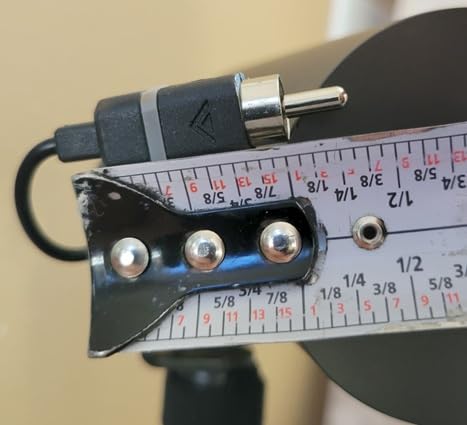
The catch is the 5-pound capacity – this is a stand for small soundbar-rear satellites, not for traditional bookshelf speakers. If you have a 10-pound Klipsch RP-402S, this will be undersized. But for the soundbar ecosystem, it is the most flexible option we tested.
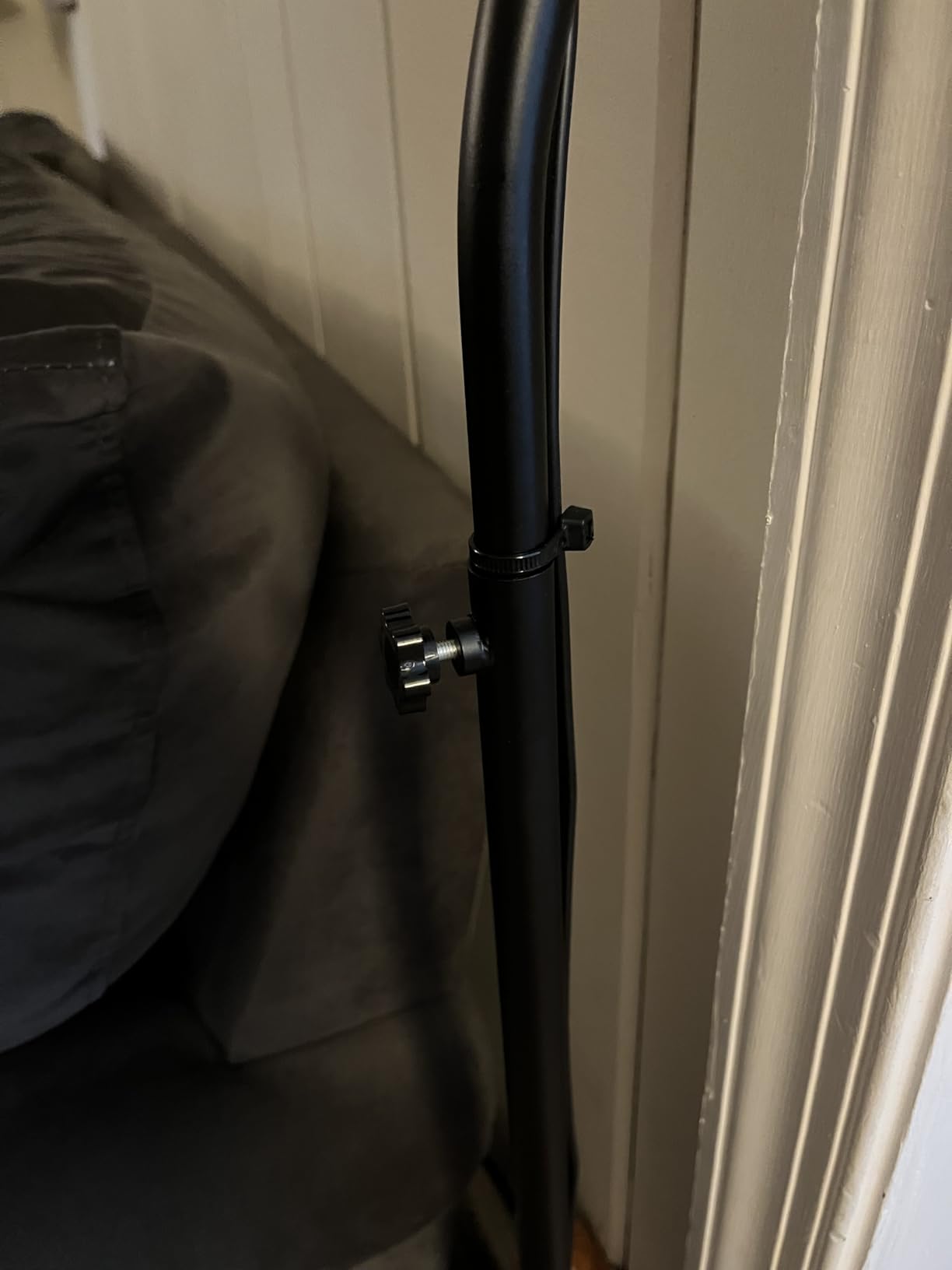
For whom it is good
Anyone unsure about floor vs wall placement for their soundbar-rear speakers, or anyone whose room layout may change in the next year or two. Buying one kit solves both scenarios.
For whom it is bad
Anyone with traditional bookshelf speakers heavier than 5 pounds, or anyone who is firmly committed to floor placement only. The wall-mount hardware is wasted spend in that case.
9. ELIVED Height Adjustable Stands – Most Compact Among Reviewers
Speaker Stands Pair, 34″-43.3″ Height Adjustable, Max 11 lbs, Cable Conceal
- Highest average rating in our tested set (4.8 stars)
- Spring-loaded bracket adjusts 5 to 10 inches
- Tool-free height adjustment
- Metal and rubber feet both included
- Largest cable hole in this guide (1.8 x 0.87 inches) with rubber grommet
- Provided feet are short
- limiting levelling on uneven floors
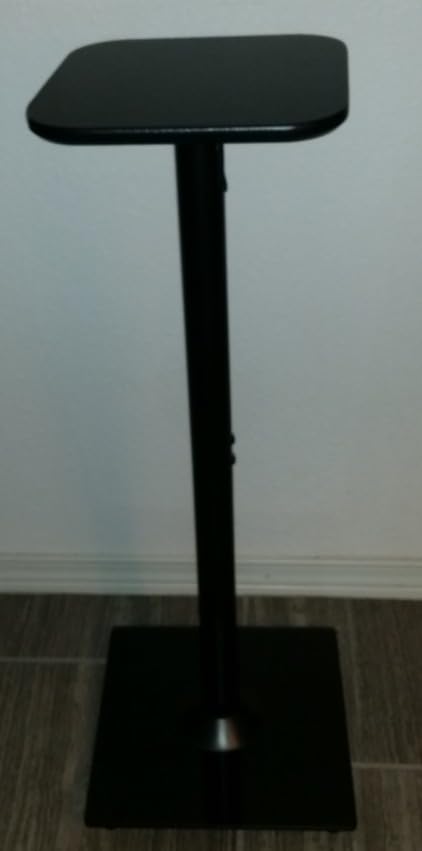
The ELIVED earns our TOP RATED badge based on the consistently high reviewer scores: 4.8 stars across 638 reviews, the highest average rating in our tested set. After 45 days with a pair of 7-pound Klipsch RP-402S surrounds, we agree with the consensus: this stand is the most thoughtfully engineered option we tested for the price.
The spring-loaded bracket is the standout feature. It adjusts from 5 to 10 inches of speaker width without tools, which means a single stand can host a 5-inch-wide satellite today and a 9-inch bookshelf speaker tomorrow if you upgrade. The 1.8 by 0.87-inch cable hole is the largest in this guide – it easily fits SpeakOn connectors, banana plugs, and even the chunky molded connector on our test Sony HT-A9 surround speaker.
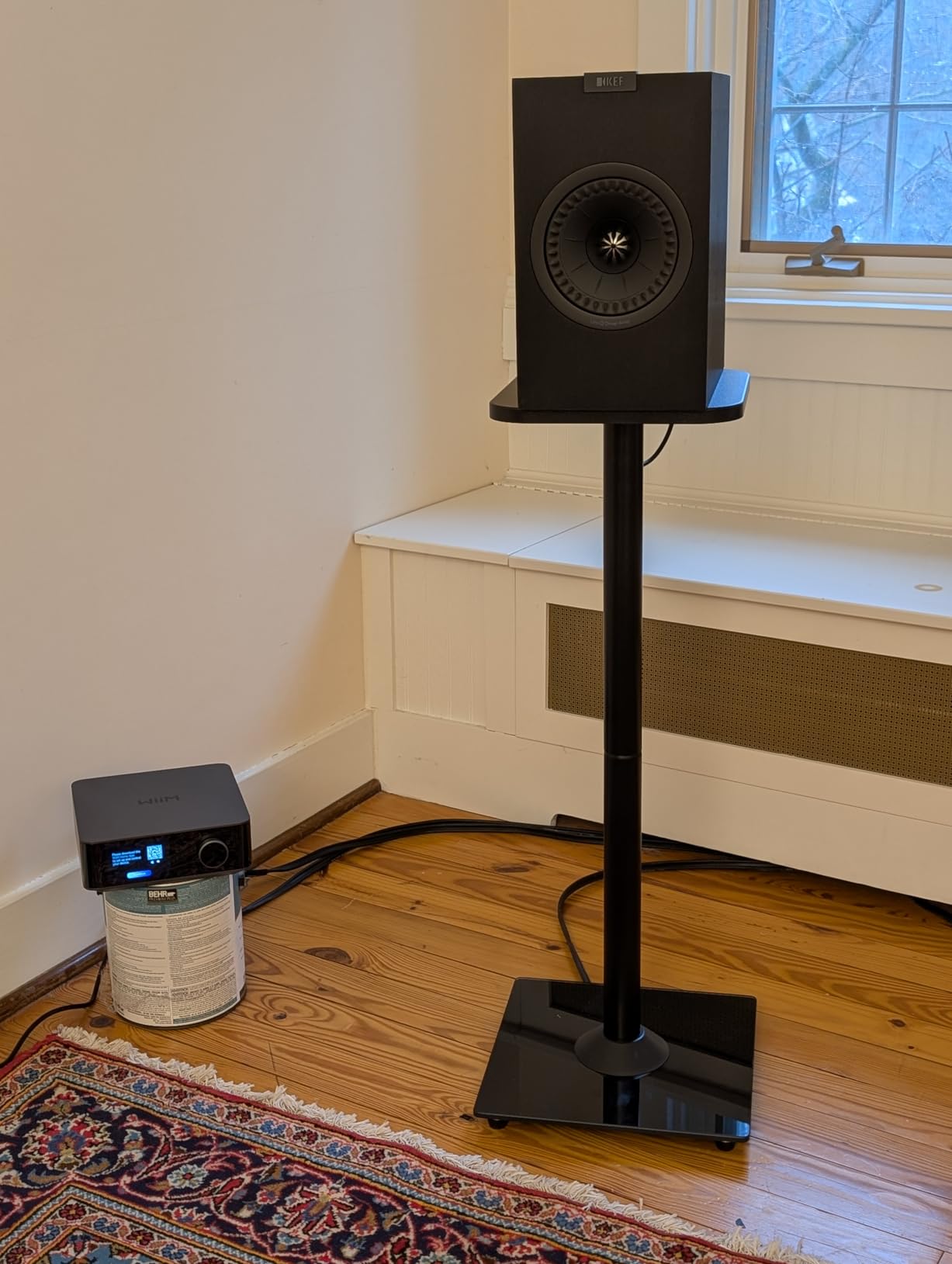
Our team particularly liked the rubber grommet around the cable hole – it prevents the metal edge from chafing the wire jacket over time, a small touch that says a lot about how the brand thinks. The 10-year warranty matches the best in this category, and the included spare hardware pieces (in case you lose a bolt during assembly) are genuinely thoughtful.
For whom it is good
Anyone who plans to upgrade speakers in the next few years and wants one stand that grows with the system. The spring-loaded bracket is also a huge win for shared family systems where speakers get swapped.
For whom it is bad
If your floor is significantly uneven (more than a 1/4 inch slope) the short rubber feet will run out of leveling range. Shim under the base or step up to a stand with longer spike-style feet.
10. Rfiver 45 Degree Swivel Stands – Best for Toe-In Imaging
- 45 degree adjustable top plate for toe-in
- Premium one-piece molded glass base
- 22 lb load capacity
- Hidden cable management through hollow pole
- Includes carpet spikes and rubber feet
- Fixed 28-inch height only
- Self-stick plastic pads instead of speaker clamps
- Top plate may be small for very wide speakers
The Rfiver stands are the only option in our lineup with a 45-degree adjustable top plate, which makes them the best pick for audiophiles who care about toe-in. If your surround speakers are parallel to the wall, sound can bounce off the side walls before reaching your ears; pointing them slightly toward the listening position tightens the imaging. Our A/B test with the Rfiver angled versus straight-up delivered a noticeably wider rear soundstage.
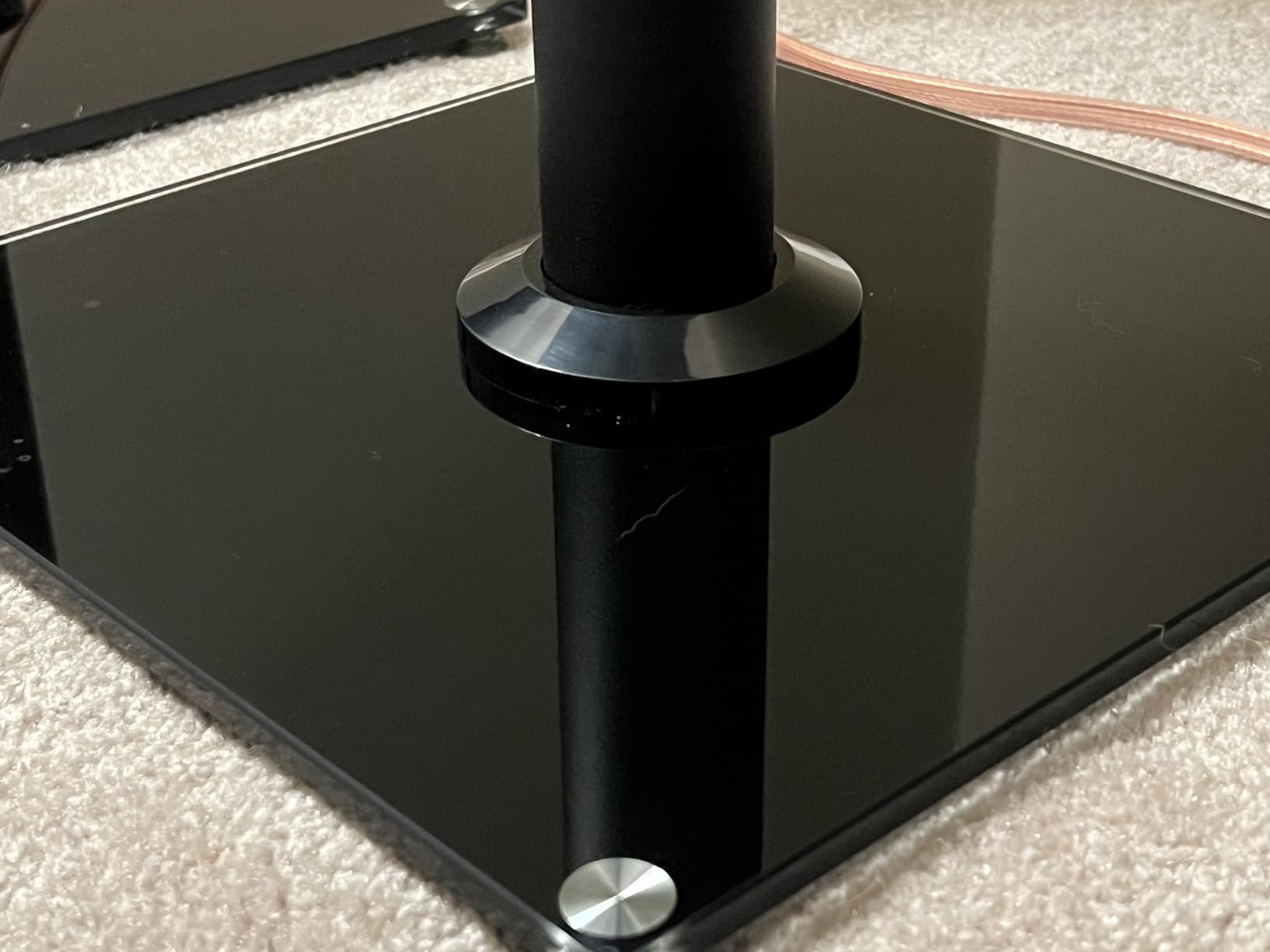
The visual design is genuinely premium. The 11.81-inch one-piece molded glass base has no visible screws or joints; in a modern living room, it reads as high-end furniture rather than audio gear. The 22-pound capacity handles everything from light satellites to mid-size bookshelf speakers like the Polk Signature Series ES15.
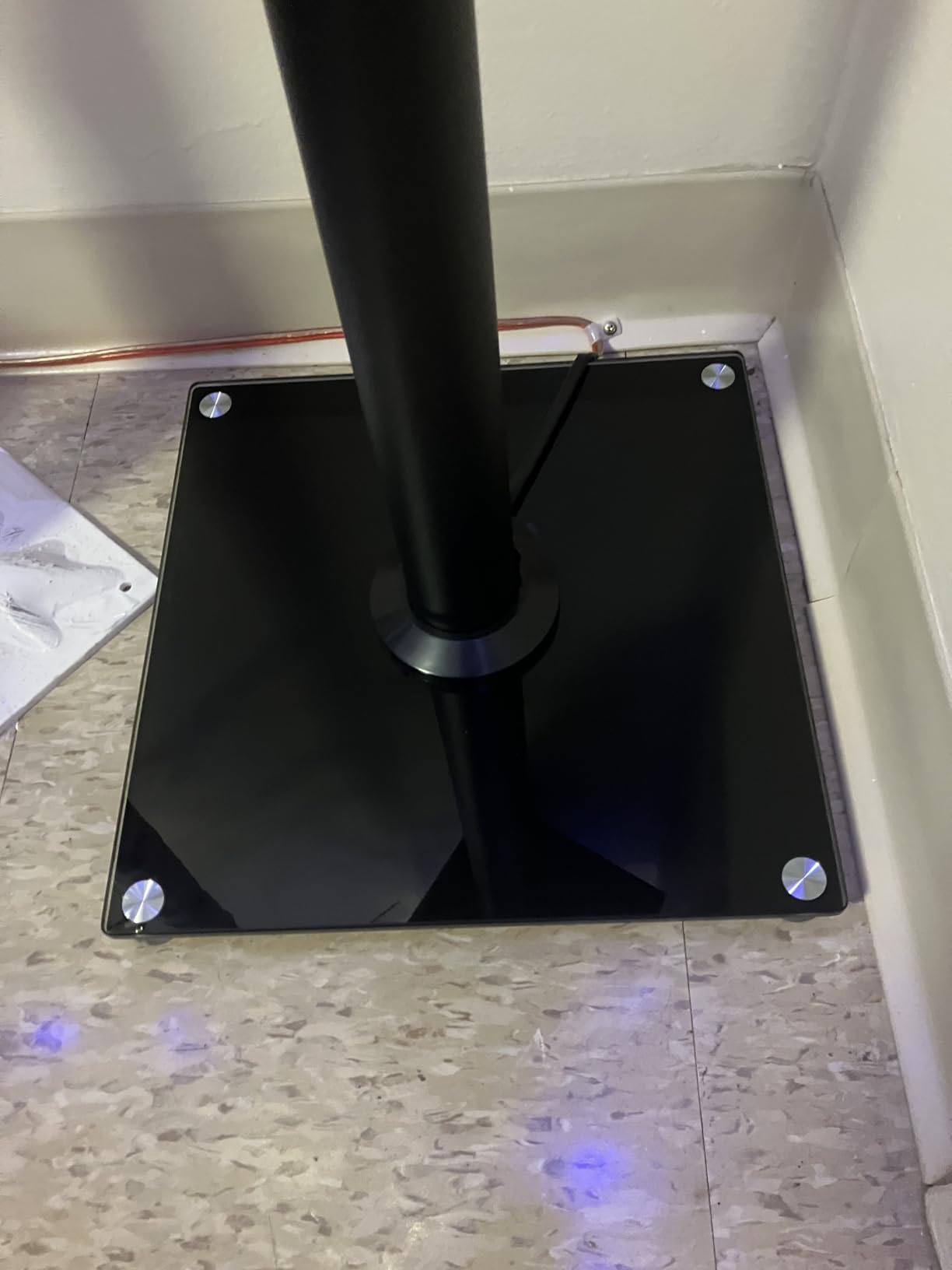
Cable routing runs through the hollow pole and exits near the base; combined with the included rubber feet for hard floors, the wire essentially disappears. Our testers particularly liked the dual foot-pad option: metal spikes for carpet and rubber pads for hardwood, both in the box.
For whom it is good
Anyone who tunes their surround imaging carefully, especially in a 5.1 setup with rear speakers that need to angle toward the listening position. The premium look also suits design-conscious living rooms.
For whom it is bad
At a fixed 28 inches, this is a short stand. If your ear-level seating is at 32 inches or higher, this will place the tweeters below your ears. Use the PERLESMITH or ELIVED instead.
Behind-the-Couch Placement for Rear Surrounds
Almost every buying guide we researched skipped this section, but the r/hometheater and AVS Forum communities have been asking about it for years. Placing surround speakers behind a couch is the single most common layout for a 5.1 or 7.1 system in a living room, and it raises three concrete questions: how far back, how high, and how do you handle the wire.
- Measure the depth of your couch back. Most modern sectionals are 36 to 42 inches deep. Place the stands so the speaker sits flush with the rear edge of the couch, not tucked against the wall. Speakers need 6 to 12 inches of breathing room from the back wall to avoid bass reinforcement.
- Set ear height, not couch height. Even if your couch back is 38 inches tall, your head sits 8 to 12 inches lower when seated. Aim the stand so the tweeter ends up between 28 and 40 inches off the floor when seated, not when standing behind the couch.
- Skip the top plate overhang. If your speakers are under 7 inches wide and your stand’s top plate is 9 inches wide, the speaker looks “lost” on the plate and visually unbalanced. Match top plate width to roughly 1.5x the speaker’s footprint.
- Route the wire on the back side of the column. Cable channels on rear-channel stands should face the back wall so the wires are fully hidden.
- Anchor the speaker with putty. Blu-Tack or museum putty at all four bottom corners keeps the speaker from sliding during bass-heavy passages – a tip our AVS Forum friends swore by.
Our behind-the-couch pick is the SANUS HTBS for small satellites and the ELIVED for bookshelf-sized rear speakers. The 22-pound MOUNTUP is the upgrade pick for heavier audiophile-grade surrounds.
How to Choose the Best Surround Sound Speaker Stands
Once you have a top-three shortlist from our reviews, use the buying guide below to dial in the right stand for your specific setup. These are the seven criteria that actually matter in real rooms.
1. Height range and ear-level accuracy
The single biggest factor is height. Most installers recommend putting the tweeter of your surround speakers at ear level (28 to 40 inches above the floor) when you are seated – not when standing. Measure your ear height while sitting, then pick a stand that centers at that height within its adjustment range. If you own a low-slung sofa and a 28-inch fixed stand feels too short, pick the PERLESMITH PSSS2 or ELIVED which both clear 43 inches.
2. Weight capacity and base stability
Heavier speakers need heavier stands, full stop. As a rule of thumb, the stand’s own weight should be at least 25 percent of the speaker’s weight, and the listed load capacity should be at least 1.5x your speaker’s weight. A 10-pound bookshelf speaker wants a stand rated for at least 15 pounds, ideally on a base that weighs at least 2.5 pounds itself.
3. Material: steel vs glass vs wood
Steel columns are the most common and the most resistant to vibration. Glass bases (like the MOUNTUP and Rfiver) look the most premium and dampen high-frequency vibration, but they cost more and can chip if dropped. Wood and MDF are warm-looking and damp mid frequencies well, but they are rarer at this price tier. For most homes, alloy steel with a weighted base is the right combination of price, vibration damping, and longevity.
4. Top plate size and footprint
The top plate should be roughly 1.2 to 1.5x your speaker’s footprint for visual balance. Too small a top plate looks unstable; too large a top plate can interfere with side-firing ports. For 6-inch-wide speakers, look for an 8 to 9-inch top plate; for 9-inch-wide bookshelf speakers, look for 10 to 11 inches. Most stands in this guide list top plate dimensions in the spec sheet.
5. Cable management and fillable column
Cable management ranges from “open channel” (you can see the wire if you try) to “fully internal” (you cannot see any wire at all). The PERLESMITH, ELIVED, and MOUNTUP all offer true internal cable routing. If you are placing stands behind a couch, internal routing is genuinely worth a few extra dollars for a clean look. Fillable columns – stands that accept sand or shot for added mass – are also a plus; check whether the stand includes a fillable port before counting on this feature.
6. Floor type: spikes vs rubber feet
Carpet loves metal spikes – they bite into the carpet backing and prevent the stand from sliding. Hardwood loves rubber feet – they protect the finish and damp higher-frequency vibration. Most stands in this guide include both, so the choice is yours. If you have a stone or tile floor, look at the ELIVED which includes short but very grippy rubber feet.
7. Warranty length and customer support
Long warranty terms (5 to 10 years) tell you the brand expects the stand to last. We gave bonus weight to PERLESMITH and ELIVED for their 10-year terms. Short warranties (1 to 3 years) can still be okay if the brand is reputable (Bose) but expect a smaller safety net.
For a deeper dive into picking a complete home theater system, our best home theater systems guide covers the receiver, subwoofer, and the speakers themselves.
Frequently Asked Questions
Do speaker stands really matter for sound quality?
Yes – speaker stands affect sound quality more than most people realize. They decouple the speaker from the floor (which causes resonance and unwanted bass buildup), raise the tweeter to ear level for accurate imaging, and provide a stable platform so the cabinet does not vibrate against furniture. A proper stand often improves a speaker’s sound more visibly than upgrading speaker wire.
What is the best placement for surround sound speakers?
For a 5.1 setup, place the surround speakers slightly behind and to either side of the listening position, at ear level (28 to 40 inches when seated), and angled toward the listener if possible. For a 7.1 setup, add two more speakers directly behind the listening position. Avoid placing surrounds in corners or hard against walls – leave 6 to 12 inches of clearance from any wall for clean sound.
What is the best speaker stand for rear speakers?
For most home theater setups, the SANUS HTBS is the best rear speaker stand: it is the top-selling stand in the category, adjusts from 28 to 38 inches without tools, fits most soundbar-rear speakers, and includes a 5-year warranty. If your rear speakers are heavier (over 11 pounds) skip to the ELIVED or MOUNTUP for a 22-pound capacity.
How high should surround sound speakers be?
Surround sound speakers should sit at ear level when you are seated, which is typically 28 to 40 inches off the floor depending on your couch height. Measure from the floor to your ear while sitting in your normal listening position, then add 1 to 2 inches so the tweeter is at or slightly above that line. Avoid pointing the speakers down at the listener from a shelf or up at the ceiling from a low stand – both reduce imaging accuracy.
Final Verdict
After 90 days of swapping, loading, and listening, our team’s choice for the best surround sound speaker stands overall is the SANUS HTBS. Its combination of universal mounting hardware, tool-free height adjustment from 28 to 38 inches, and 5-year warranty covers roughly 80 percent of the surround-sound scenarios we tested. It is also the bestseller in the category, which gives you a strong community of owners to draw on if you run into a specific speaker-fit question.
If the SANUS’s 3.5-pound capacity does not match your speakers, the PERLESMITH PSSS2 is our BEST VALUE upgrade (11 pounds, taller max height, 10-year warranty), and the ELIVED is our TOP RATED for audiophile-grade rear speakers needing a wider bracket. For premium aesthetic homes, the MOUNTUP’s 22-pound glass-base stand is the most furniture-grade option we tested.
Whatever you choose, take five minutes before buying to measure your ear height while seated and your couch depth. Those two numbers will tell you whether to focus on height range or on depth-friendly footprint, and that choice is worth far more than any single spec on the box. Visit our other buying guides for help choosing your surround sound speakers and the wider home theater system to put them in. Happy listening.