

A STEM subscription box is a recurring monthly shipment of hands-on science, technology, engineering and math projects, age-banded so the instructions match a child’s reading level, and designed to trade screen time for building play. That definition covers a lot of ground, and the brands that fill it best are the ones parents ask about most: KiwiCo, CrunchLabs and MEL Science.
But there is a second category that solves the same problem without the subscription. A one-time STEM kit gives your child the same hands-on building session, you own it outright the moment it arrives, and there is no renewal window, no auto-renewal date to remember and no cancellation email to send. If you have been researching the best STEM subscription box alternatives for kids, this is the category that removes the friction parents complain about most often.
We looked at twelve kits built along that line, covering solar robots, chemistry sets, snap-together electronics, coding robots and hydraulic engineering. The short version: Snap Circuits Jr. SC-100 is the strongest all-round pick, National Geographic Amazing Chemistry is the pick for real lab equipment, and UNGLINGA covers the most weeks of weekly science. Each write-up below covers the best age, what actually arrives in the box, and the limitation worth knowing before you buy.
If you want the wider category rather than just kits, our guide to the best educational STEM kits covers one-time purchases across every age band, and our best STEM building sets for 8 year olds goes deeper on the elementary-school end of the market.
Top 3 Picks: Best STEM Subscription Box Alternatives for Kids in 2026

Snap Circuits Jr. SC-100
- 100+ projects from 30+ snap modules
- No soldering or tools required
- Modular and combinable with other kits

National Geographic Amazing Chemistry
- 100+ experiments including crystal growing
- Real lab tools and safety gear included
- 85 bonus household experiments

National Geographic Science Magic
- 20 supplied experiments plus 85+ bonus
- No batteries required
- Clear colorful instructions
Quick Comparison: Every STEM Kit in This Roundup (2026)
Every kit below is a one-time purchase rather than a recurring charge. All ratings and review counts are the current Amazon figures, and the age ranges are the manufacturers’ own recommendations rather than our estimates.
| Product | Specifications | Action |
|---|---|---|
| Snap Circuits Jr. SC-100 STEM Electronics Kit |
|
Check Latest Price |
| National Geographic Amazing Chemistry Set |
|
Check Latest Price |
| National Geographic Science Magic Kit |
|
Check Latest Price |
 Sillbird 12-in-1 Solar Robot Building Kit Sillbird 12-in-1 Solar Robot Building Kit |
|
Check Latest Price |
 Smartivity 2in1 Hydraulic Aeroplane and Dart Launcher Smartivity 2in1 Hydraulic Aeroplane and Dart Launcher |
|
Check Latest Price |
 TEACH TECH Hydrobot Arm Hydraulic Building Toy TEACH TECH Hydrobot Arm Hydraulic Building Toy |
|
Check Latest Price |
 UNGLINGA 70 Lab Experiments Science Kit UNGLINGA 70 Lab Experiments Science Kit |
|
Check Latest Price |
 Makeblock mBot STEM Coding Robot Makeblock mBot STEM Coding Robot |
|
Check Latest Price |
 BeAndge Robotics STEM Kits 6-in-1 BeAndge Robotics STEM Kits 6-in-1 |
|
Check Latest Price |
 Engino Physics Laws STEM Engineering Kit Engino Physics Laws STEM Engineering Kit |
|
Check Latest Price |
 Tinkering Labs Electric Motors Catalyst Tinkering Labs Electric Motors Catalyst |
|
Check Latest Price |
 Butterfly EduFields 10-in-1 Robotics Kit Butterfly EduFields 10-in-1 Robotics Kit |
|
Check Latest Price |
1. Snap Circuits Jr. SC-100 – 100+ Snap-Together Projects, No Tools
SNAP CIRCUITS Jr. SC-100 STEM Electronics Kit, 100+ Projects, Ages 8+
- 4.8 average across more than 29k reviews
- No soldering or tools required
- Color-coded numbered parts make wiring intuitive
- Modular design combines with other Snap Circuits kits
- Ages 8 and up with a full-color manual
- Alkaline batteries required and not included
- Projects are circuits rather than moving robots
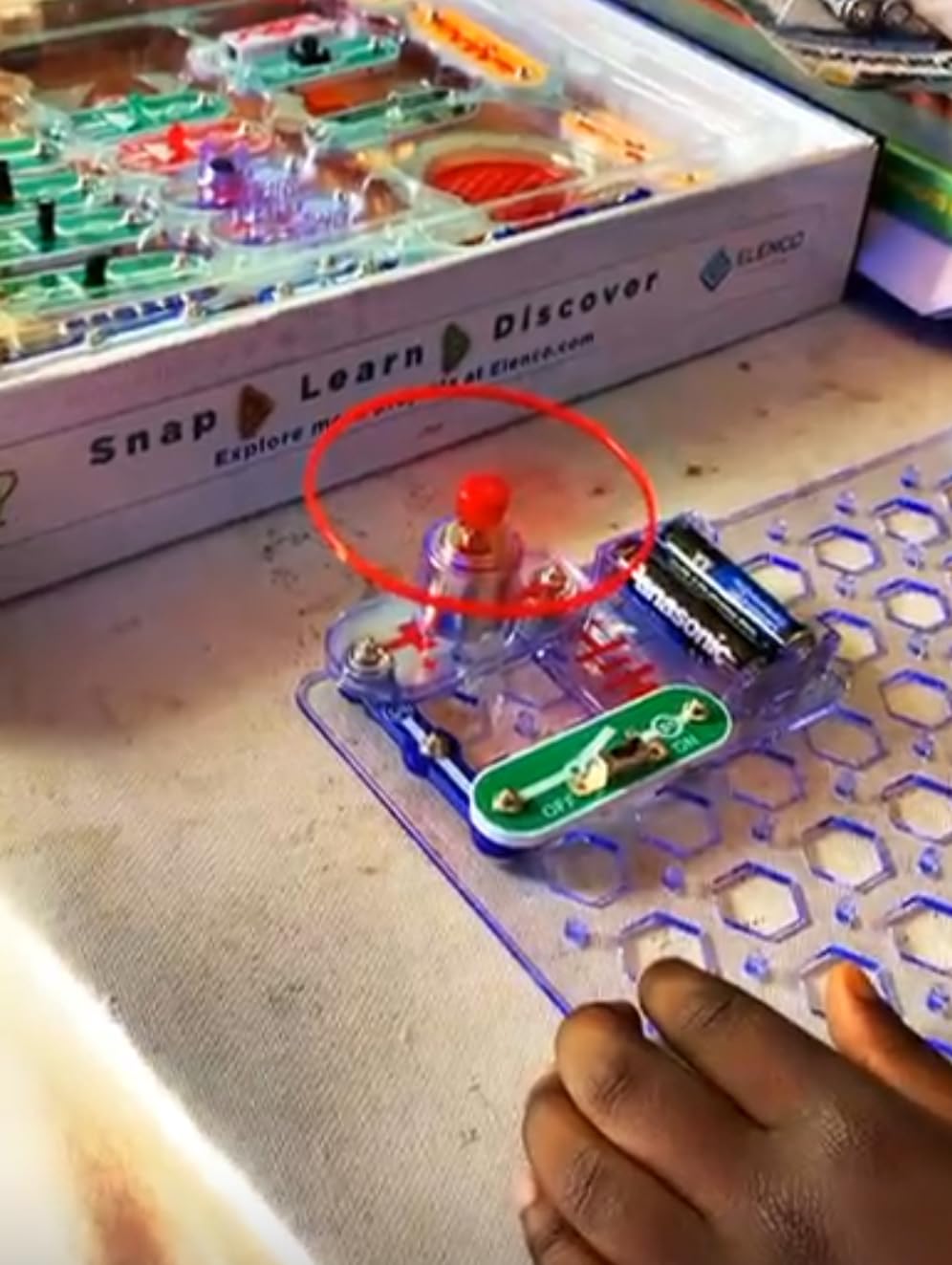
Snap Circuits is the closest thing this category has to a standard recommendation, and it earns the top spot here on evidence rather than brand familiarity. It carries a 4.8 average from 29316 reviews, the strongest combination of rating and review volume in the group, with 86 percent of those reviews at five stars.
What you get is 30-plus snap-together modules and a snap board, which together produce more than 100 different circuit projects. Parts press onto a plastic grid, so there is no soldering iron, no screwdriver and no wiring with loose wire. The box measures 12 by 9.5 by 1.75 inches and weighs 640 grams, which is light enough for a small child to carry to the table unaided.
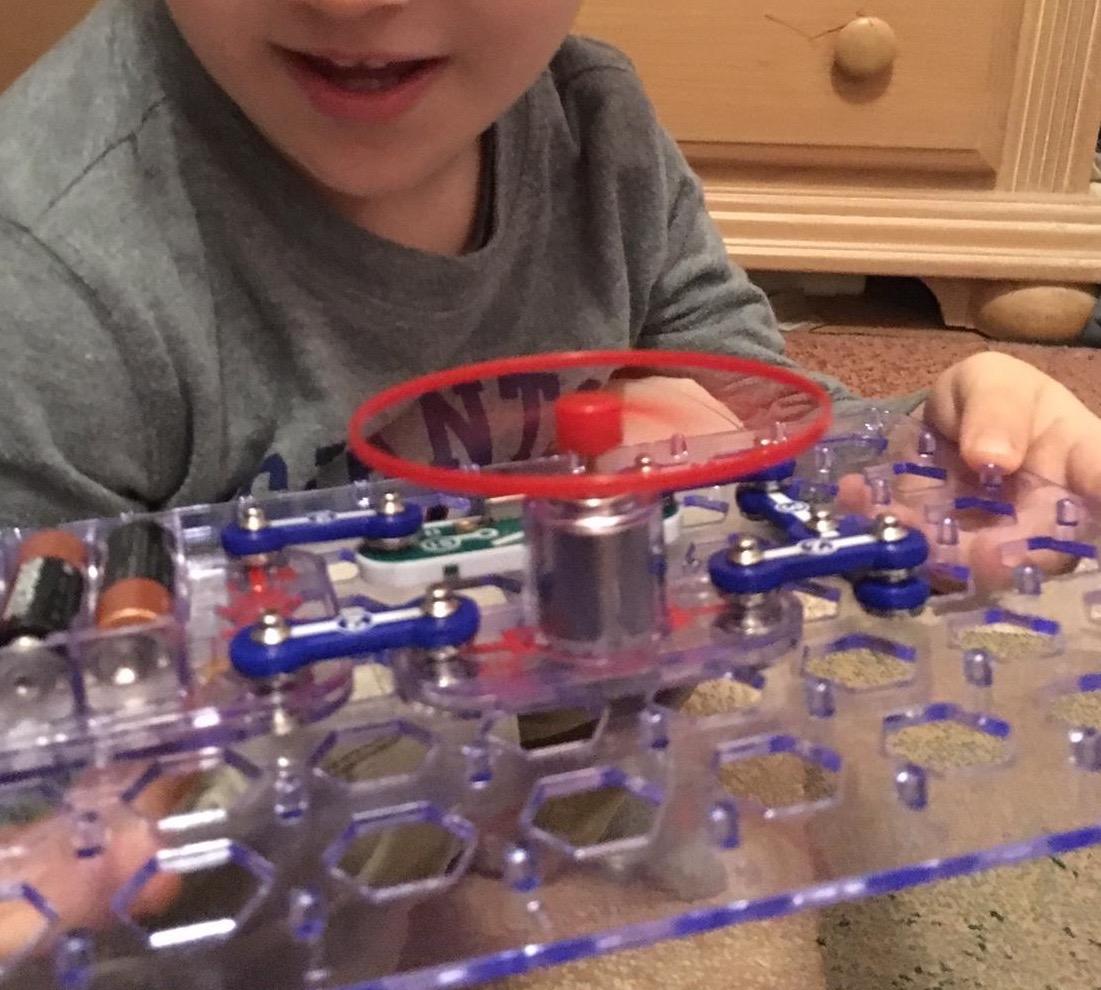
The projects genuinely escalate. Early pages are single circuits with a battery, an LED and a switch. Later ones add sound, motion and more complex logic, and the color-coded, numbered parts mean a child can trace a mistake without an adult translating the diagram for them. The manual is full color, which matters more than it sounds when the reader is eight.
The honest limitation is scope. These are circuits, not moving machines, so a child who wants a robot to drive across the floor will finish the manual and lose interest. The other limitation is batteries: alkaline cells are required for most projects and are not in the box.
Who this kit works for
It suits a child aged eight or older who can read basic numbered steps and wants to understand electricity rather than assemble a pre-molded model. It is also one of the easiest kits here to share between two children of different ages, because the same parts support very different levels of complexity.
Because the system is modular, it stacks well with other kits in the same range rather than ending after the manual does. Families who start here often stay in the Snap Circuits ecosystem for years, and it doubles as a birthday or holiday STEM gift with no subscription attached.
Where it falls short
A child under eight will stall on the diagrams, and a child who wants a finished toy to play with afterwards will find a circuit board sitting on the table. Parents shopping for a party favor or a single afternoon of fun should look at a build-toy kit instead.
It is also the least creative in the sense that the projects are prescribed. There is no open-ended building here, which is a genuine strength for teaching but a limitation for a child who invents their own designs.
2. National Geographic Amazing Chemistry Set – Real Lab Tools, Ages 8 and Up
- 4.7 average from 3616 reviews
- Real test tubes beakers and pipettes included
- Goggles and gloves supplied in the box
- 85 further experiments using household items
- Box is bulky to store once opened
- Some reviewers find the first few reactions repetitive
This is the chemistry answer to anyone who wants a subscription-box experience without a subscription. It carries a 4.7 average from 3616 reviews, with 83 percent at five stars, and the National Geographic branding makes it an easy gift for grandparents who want something recognisable.
The headline is more than 100 experiments, of which 15 include every material needed, and a bonus guide adds 85 further experiments built from common household items. Real laboratory equipment is the differentiator here: test tubes, beakers and pipettes, plus safety goggles and gloves that are actually in the box rather than mentioned on the side of the packaging.

Crystal growing is the activity families mention most, and the glowing worm and bouncy ball projects follow closely behind. The set is built around chemical reactions rather than craft, which matters for parents who have bought kits that turned out to be paint and glue with a STEM sticker on the lid.
Two limitations are worth planning around. The box measures 8.78 by 3.19 by 11.93 inches and weighs 1.8 pounds, and reviewers consistently note that it is awkward to store once opened, so you need a shelf rather than a drawer. Some families also find the first few reaction sets repetitive before the more interesting projects arrive.

Who this kit works for
It is built for ages eight and up and works well as a homeschool science spine, because a full term of experiments gives you a planned sequence without a curriculum subscription. Children who chase reactions, color change and anything that fizzes will stay with it.
Because the bonus experiments run on household items, a parent can extend the set long after the supplied reagents run down. That makes the effective experiment count far higher than the box suggests, and it keeps the cost per project low even over a full school year.
Where it falls short
It requires adult supervision, and the experiments are genuinely messy, so it does not suit a family that expects a tidy table. A child who wants to build something that moves or stands up will find glassware less satisfying than a model.
Storage is the quiet problem. Once the lab tools are spread across a playroom, putting them back into a box that will not close neatly is a small daily friction that reviewers mention often enough to plan for.
3. National Geographic Science Magic Kit – Experiments That Can Be Repeated
- 4.7 average from 8857 reviews
- Most experiments can be repeated or adapted
- Bonus booklet runs on common household items
- Clear colorful instructions young children follow
- Chemical packets are single-use and cannot be resealed
- Adult supervision needed for the chemical activities
Where the chemistry set is about real laboratory procedure, this one is about repeatable fun, and it holds a 4.7 average from 8857 reviews. The manufacturer is Blue Marble, a Toy Association Toy of the Year winner, which is why the presentation feels closer to a retail shelf toy than a lab supply.
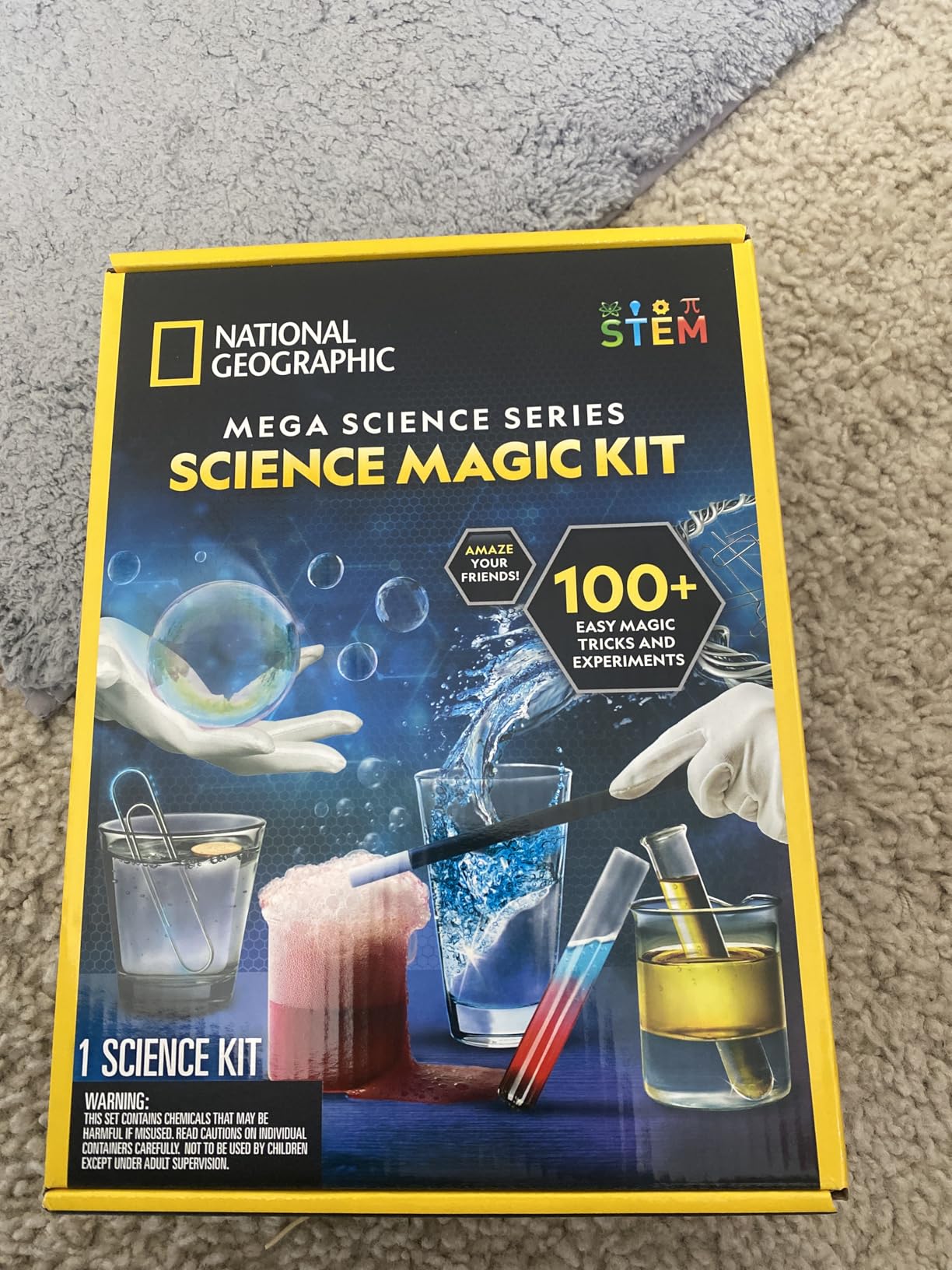
You get 20 magic experiments with all materials supplied, covering slime, invisible ink and fizzy reaction activities, plus a bonus booklet of more than 85 additional experiments that run on common household items. No batteries are required at any point, so there is nothing to charge and nothing to lose.

The instruction book is the real strength. It is colorful and clearly illustrated, and parents report that children work through it with limited help, which is rare in a kit with this much small-part activity. Parents also note that the kit holds a child’s attention for a full day or more, which is a strong claim for a single box.
The limitation is the consumables. Chemical packets are single-use and several are labelled discard after opening, so a half-finished experiment wastes the material with no resealable alternative. The kit also needs adult supervision around the chemical components, so it is not a solo activity for an eight-year-old.
Who this kit works for
It suits families who want a birthday or holiday STEM gift that opens well and needs no setup, because everything arrives in one box with a book that reads like a treasure hunt. The materials are listed as metal and paper, and the whole set weighs 1.5 pounds, so it is easy to hand to grandparents.
It is also the better pick when a child has already worked through a chemistry set and wants variety rather than depth. The slime and invisible ink activities reward repetition, so a child who runs the same experiment twice gets a different result the second time.
Where it falls short
It is not a substitute for real lab equipment. If your child wants to grow crystals or run a proper reaction series, the chemistry set above is the better buy and the science is more genuine.
The single-use packets also mean the box is consumed faster than its experiment count suggests. Families who buy it expecting 105 usable activities will get 20 complete ones and then lean on the household-material booklet for the rest.
4. Sillbird 12-in-1 Solar Robot Kit – 12 Models From One Box
Sillbird 12-in-1 Solar Robot Building Kit STEM Gift for Boys Ages 8-13
- More than 15000 reviews from a long-running seller
- 12 buildable models from one kit
- Works outdoors in sun or under strong indoor light
- Step-by-step instructions for independent building
- Lowest rating here at 4.3 with a 6 percent one-star share
- 190 small parts are fiddly and easy to lose
- Some models need adult help despite the 8 plus marketing
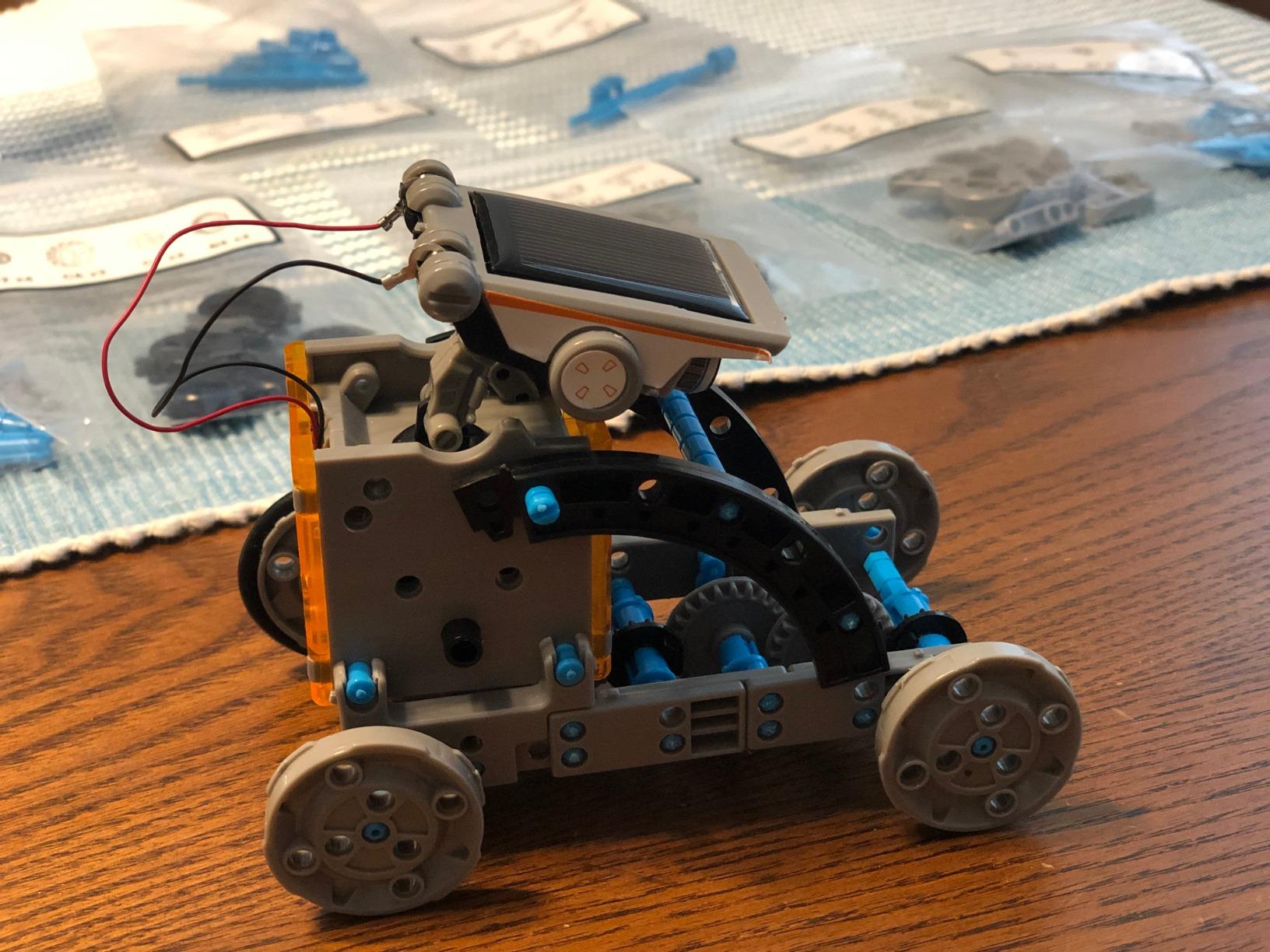
This is the volume play: 190 parts produce 12 different buildable models, and at 15909 reviews it is the second most widely reviewed item in this roundup, behind the Snap Circuits kit. The kit is ABS plastic and runs on solar power, with no batteries and no motor power supply to charge.
The solar panel is the upgraded larger version, and that matters in practice because a weak panel is the most common reason these builds crawl. In direct sun outdoors the models move properly, and under a strong artificial light indoors they still work, which is what makes this usable in winter.
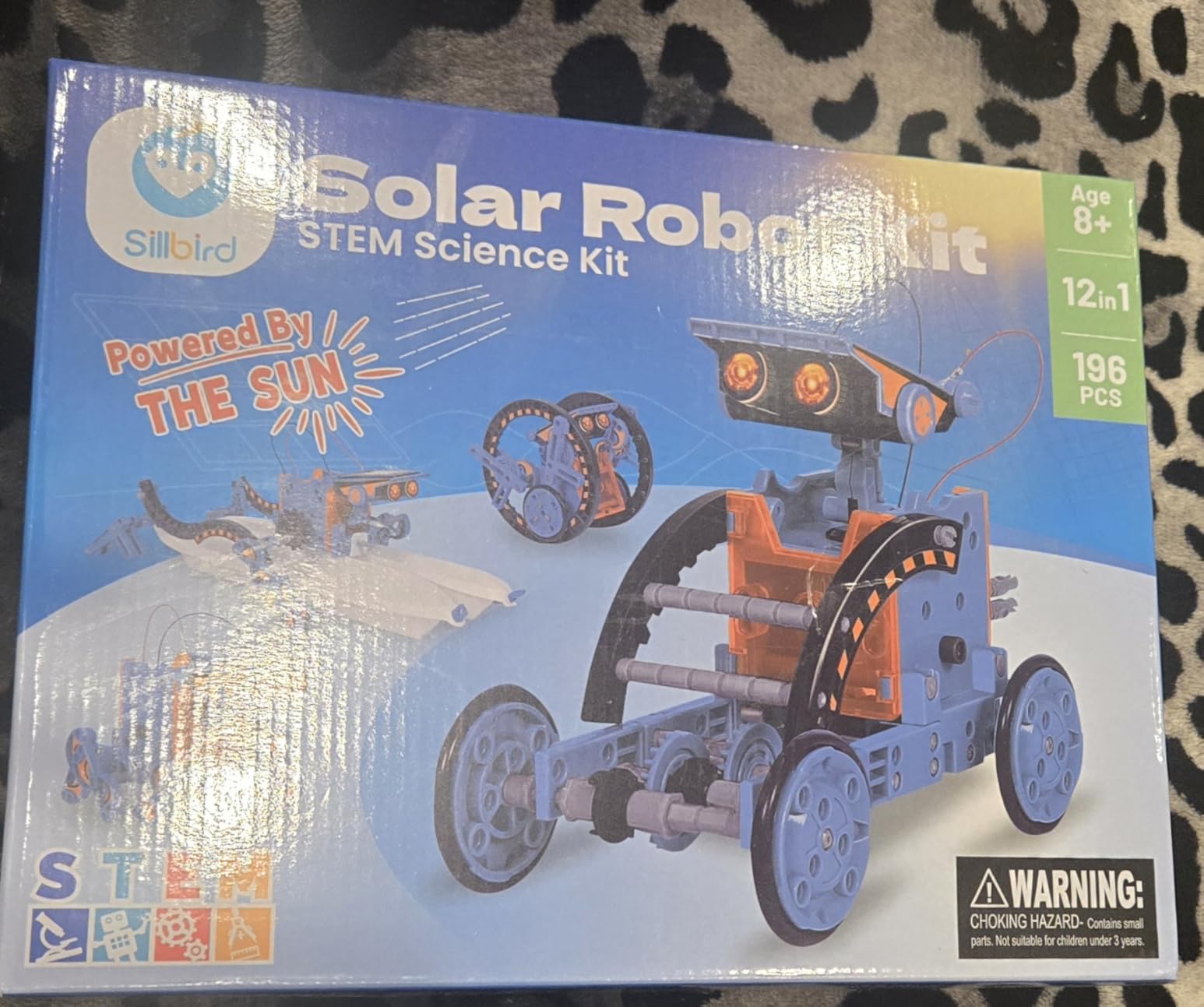
The model count is the real advantage. A child can build something on Saturday, run it, take it apart and build the next one, so the box functions more like a small construction set than a single project. The stated age range is 8-13, though the manufacturer recommendation is 10 years and up.
Three limitations come up repeatedly in reviews. This is the lowest-rated kit here at 4.3, with a 6 percent one-star share, and 190 small parts are fiddly to handle and easy to lose across a playroom. Some models also need an adult hand despite the 8-year marketing, which is a gap worth checking against your child’s actual age.
Who this kit works for
It is the right buy for a child aged ten or older who wants volume and variety rather than one impressive finished project. Because each build is disassembled and rebuilt, it also suits a child who likes robots but gets bored the moment a model stops working.
Families looking for a STEM kit that works outdoors will like the solar approach, and the box dimensions of 10.24 by 7.87 by 2.56 inches make it easy to pack for a trip. It works as a single-purchase birthday gift for a child who would rather build than read.
Where it falls short
It is not a beginner kit. With 190 small components, set-up time and part loss are the two biggest sources of frustration, and you need a small container to keep the pieces together between builds.
It is also the weakest-rated product in this group, and the 6 percent one-star share is high enough to take seriously. Expect a rougher assembly experience than the snap-together systems above, particularly on the larger models.
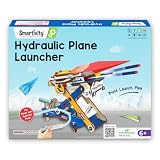
5. Smartivity 2-in-1 Hydraulic Aeroplane and Dart Launcher – Ages 6-14
Smartivity 2in1 Hydraulic Aeroplane & Dart Launcher STEM Kit Ages 6-14
- Two builds from one box: aeroplane launcher and dart launcher
- Engineered wood rather than brittle plastic
- Manufacturer supplies free replacement parts for life
- Kid tested for more than 1000 hours
- Launch power feels weak next to plastic kits
- Ages 6 plus claim is optimistic without help reading the manual
This is the widest practical age range in the roundup, recommended from 6 to 14, and the widest spread of readiness of anything here. The 4.6 average from 5763 reviews comes with only 2 percent one-star reviews, which tells you the misses are about expectations rather than quality.
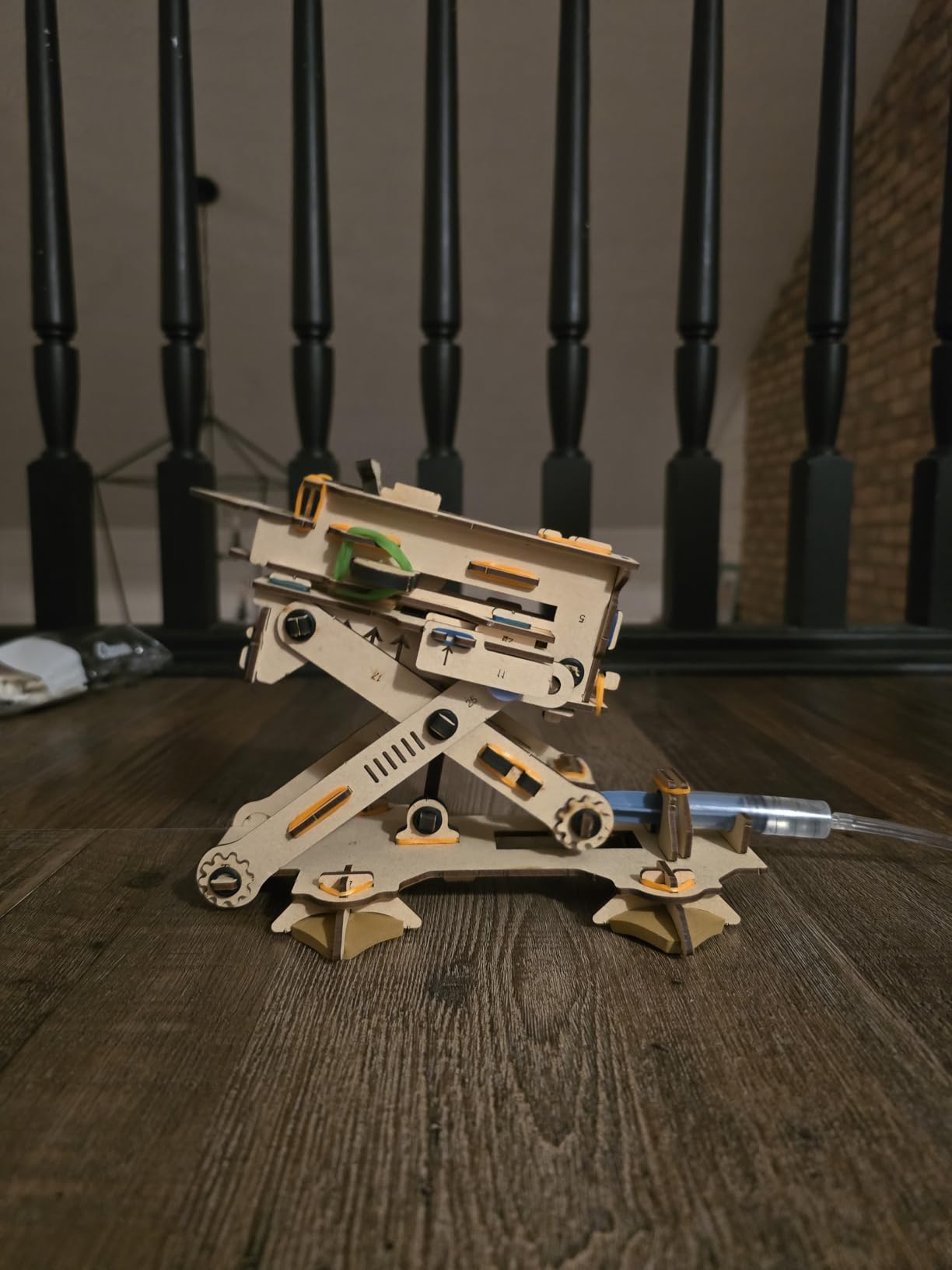
The build is genuinely two-in-one. Children assemble 58 parts from an instructional manual to make a paper aeroplane launcher and a dart launcher, both driven by hydraulics rather than springs or batteries. The whole thing weighs 172 grams and measures 11.81 by 9.84 by 7.48 inches, so it is light enough for a six-year-old to carry.
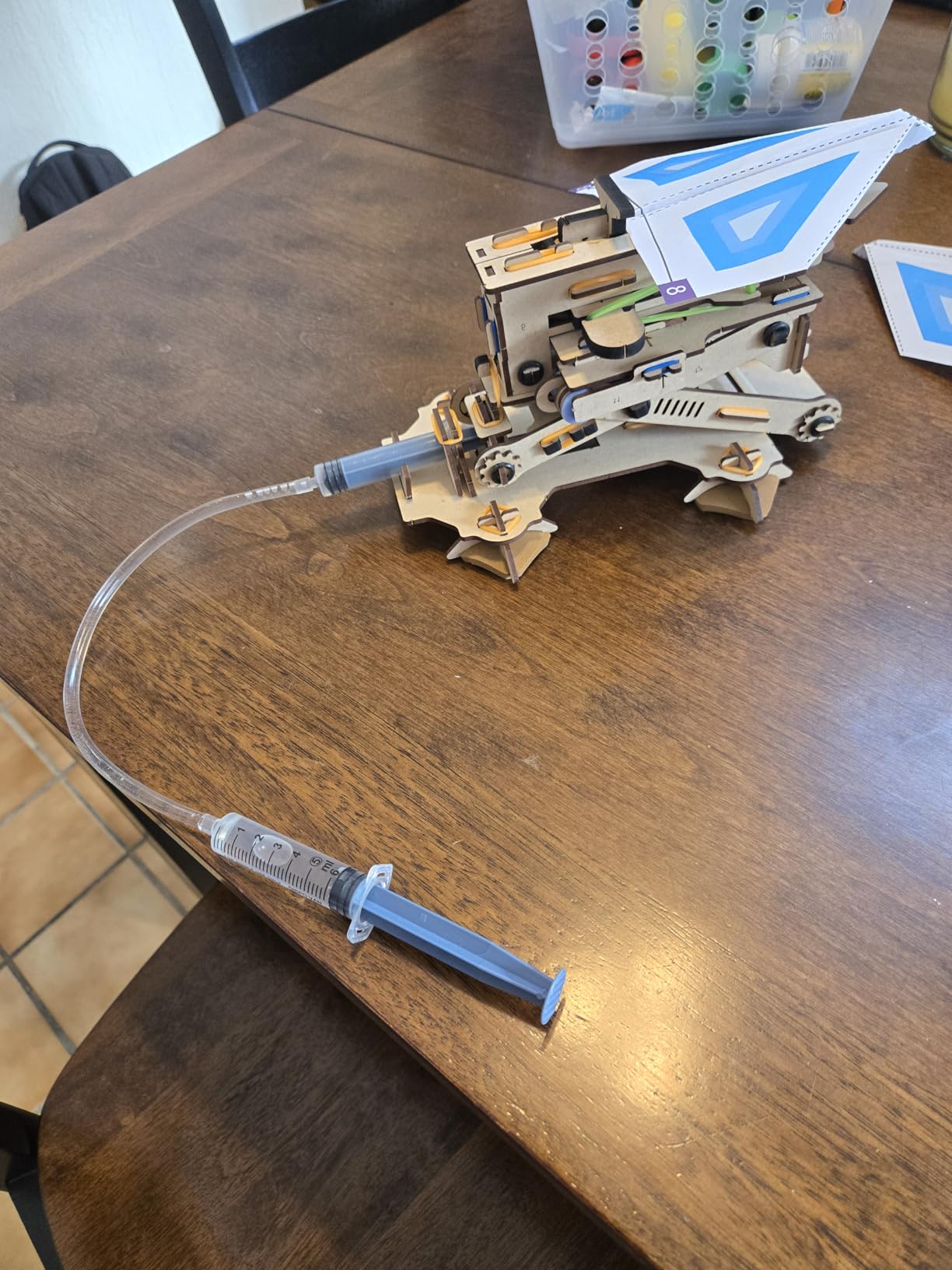
Two details set it apart. The construction is MDF engineered wood rather than brittle plastic, so the finished model survives being thrown on a desk, and the manufacturer offers a free lifetime supply of replacement parts, which quietly removes the biggest risk with a wooden kit. The brand reports family use across more than 33 countries and kid testing of more than 1000 hours.
The limitation is power. Hydraulic launch pressure and range feel modest next to plastic spring kits, and children who expect a rocket rather than a glider are disappointed. The second limitation is reading: the manual is not written for a six-year-old, so the youngest builders in the range need an adult alongside them.
Who this kit works for
It is the best fit in this roundup for a household with a six-year-old and a twelve-year-old, because the same box produces a model both can engage with at different levels. It is also a strong birthday gift that does not look like a toy kit in the moment it is opened.
Because the parts are wood and the supplier replaces them for life, it suits parents who expect hard use and want a build that lasts on a shelf rather than in a bin. It also travels well for a screen-free holiday activity.
Where it falls short
The 6-plus label is optimistic. A child who cannot yet read a manual independently will need an adult for most of the build, and a 13 or 14-year-old may find the final result too simple for their age.
It is a single project rather than a system. Once the two launchers are built and played with, there is no obvious second box of ideas inside, so the value drops sharply after the first weekend.
6. TEACH TECH Hydrobot Arm – Battery-Free Engineering for Ages 12 and Up
- Rotates through 6 axes up to 270 degrees
- Runs on water pressure with no batteries at all
- Interchangeable gripper and suction components
- One year warranty against manufacturer defects
- A real build that takes several hours to assemble
- Age 12 plus rating reflects genuine difficulty for younger children
The Hydrobot is the most serious engineering project in the roundup, and the age floor reflects that. It carries a 4.5 average from 4995 reviews, and the reviews split cleanly between families who budgeted a weekend and families who did not.
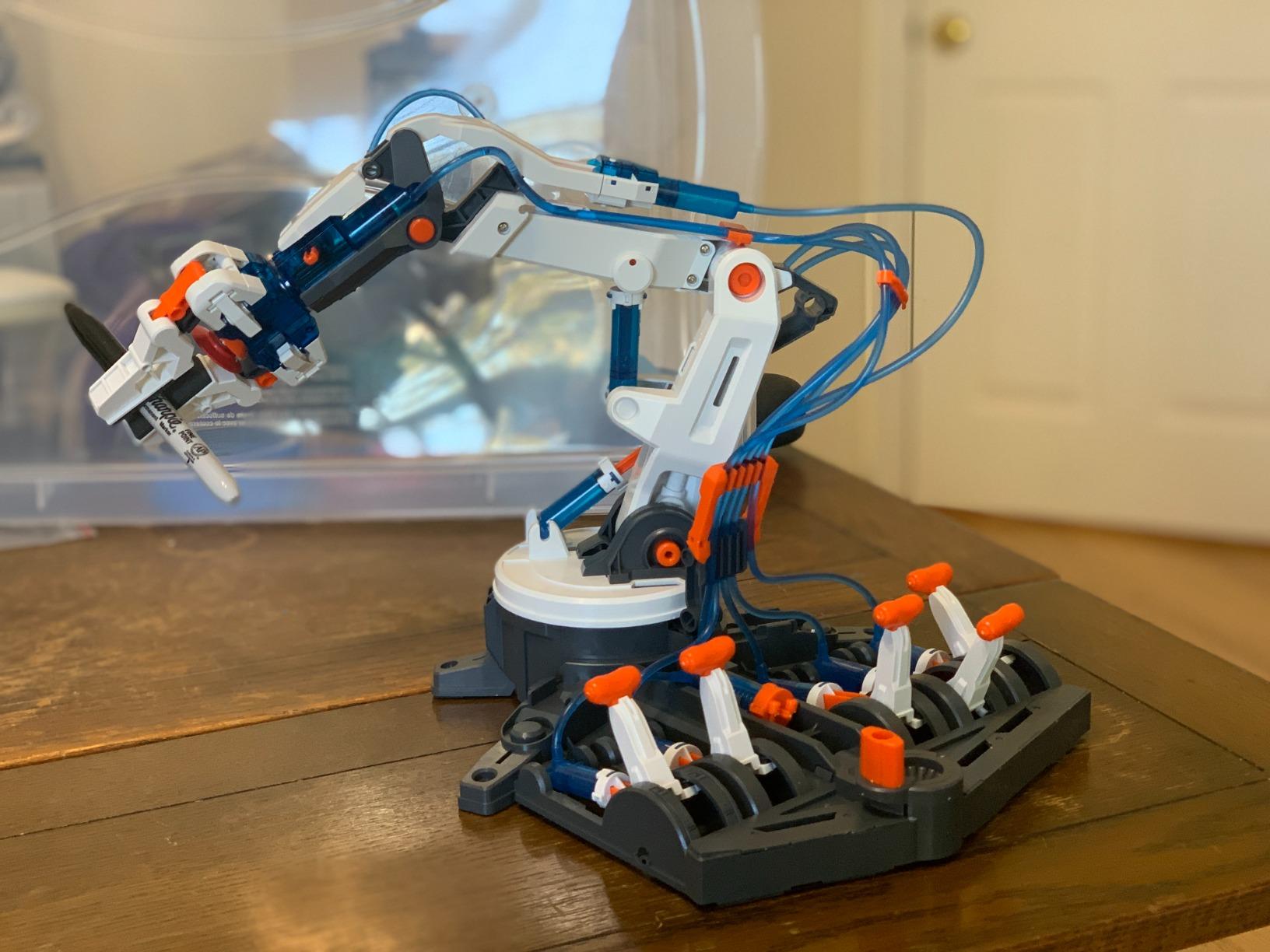
Children build a working hydraulic robotic arm with six axes of movement rotating up to 270 degrees. The gripper opens and closes and can be swapped for suction components, so the same arm can handle a light object or pick up a flat one. It needs no batteries at all; the whole mechanism runs on water pressure.

The build is substantial. At 15.6 by 11.4 by 4.1 inches and 2.8 pounds, it is the largest and heaviest item in this roundup, and the manufacturer states a 12-year-and-up recommendation alongside a one year warranty against defects. The listed educational objectives are coding, problem solving, programming and STEM, which reflects the design intent more than the play value.
Two limitations dominate. It is a real build project rather than a snap-together toy, and it takes several hours across more than one session. And the 12-plus rating is honest rather than a marketing floor, which means a ten-year-old will hit the wall partway through.
Who this kit works for
It is the pick for a tween or teenager who is already bored of kits with twenty-minute builds, and for a parent who wants a project that ends in something mechanically impressive. The battery-free hydraulic design is genuinely unusual and it holds a child’s interest precisely because the arm does something real.
It also suits a family with only one child in the age range, since the investment is in the machine rather than in a themed activity that repeats. As a holiday STEM gift for a teenager it is among the strongest options here.
Where it falls short
The time commitment is the deal-breaker for younger children and for anyone with a short attention window at weekends. Plan an afternoon, or several, rather than a single session.
It is also narrow. There is one project, it is plastic, and there are no sensors, programming or electronics in the build, so a child whose interest is coding will not get that from this kit even though coding appears among the stated objectives.
7. UNGLINGA 70 Lab Experiments – A Full Term of Weekly Science
UNGLINGA 70 Lab Experiments Science Kits for Kids Chemistry Set Toys
- 70 distinct experiments for the box
- Illustrated manual explains the chemistry behind each reaction
- Safety glasses and emergency numbers in the booklet
- Most supplies included with water and kitchen items for the rest
- Instructions sometimes unclear or incomplete
- Experiments are messy and need an easy to clean space
If your measure of value is how many distinct activities sit in the box, this is hard to beat: 70 experiments from a 4.6 average across 2862 reviews. At roughly one experiment per week, it covers most of a school term.
Unlike kits that ship 20 finished activities, this one aims for breadth. The range includes crystal projects, an erupting volcano and fruit circuits, and the illustrated manual does explain the chemistry behind each reaction rather than just listing steps. Safety glasses are included, and the booklet carries emergency reference numbers.

Most supplies are in the box, with water and simple kitchen items covering the rest, so the experiment count is not misleading. The set is plastic and measures 11 by 8.66 by 3.54 inches, which is a manageable size for a shelf or a large drawer.
The weakness is instruction quality, and it is consistent enough to plan for. Reviews report that directions are sometimes unclear or incomplete, that components are not labeled, and that some ingredient steps are omitted entirely. In practice this means closer adult supervision than the packaging implies.

Who this kit works for
It suits a family that wants a term of science covered without subscribing, and a homeschool parent who plans a weekly experiment as a routine. The count makes it easy to pace the year rather than burn through everything in a fortnight.
It is also a practical choice when you want the science to be broad rather than deep, because a child moving from crystals to circuits to reactions gets a wider picture than one repeating a single reaction type for a month.
Where it falls short
Plan a cleaning routine. The experiments are messy by nature, and reviewers consistently warn about doing them somewhere that wipes down easily, which rules it out for small apartments and carpeted playrooms.
Because the instructions are uneven, this is not the kit to hand to an eight-year-old alone. An adult reading ahead removes most of the frustration and unlocks the value, which is exactly the family-play dynamic most parents report across this whole category.
8. Makeblock mBot – Coding and Robotics Starting at Scratch
Makeblock mBot STEM Coding Toys Robotics for Kids Ages 8-12
- Builds in roughly 15 minutes with clear instructions
- Remote control plus line-follow and obstacle-avoidance modes
- Open platform with 100+ modules and 500+ parts
- LEGO compatible for extending builds
- Robot and remote batteries are not included
- Expansion packs and spare parts make this an ongoing purchase
- App pairing adds a learning curve for younger children
The mBot is the only true coding platform in this roundup, and it is the one most families end up extending into a multi-year system. It holds a 4.6 average from 2874 reviews, and the reviews accept the higher cost in exchange for what comes after the first build.
It assembles in roughly 15 minutes, which makes it a very different rhythm from the Hydrobot arm or the Engino sets. Out of the box it runs as a remote-control car, and the same hardware switches to line-following and obstacle-avoidance modes without any modification.
The progression is the selling point. Children start with block-based coding in Scratch, move up through Arduino, and get three free Makeblock apps plus the mBlock software to run alongside. The hardware is open source and expands to more than 100 electronic modules and 500-plus parts, and it accepts LEGO pieces, so a child can attach standard bricks to a working robot.
Three limitations are clear. The robot and remote batteries are not included, and the lithium-ion pack plus alkaline cells adds a running cost that people forget at purchase. Expansion packs add substantially more again, and app setup and pairing add a genuine learning curve for younger children.
Who this kit works for
It suits a child aged eight or older who already shows interest in screens beyond games, and a parent willing to sit with them for the first two sessions while the software pairing happens. A child who is curious about how things are made will stay with this for years rather than weeks.
It is the strongest choice here for a homeschool technology unit, and it is the only kit in the roundup that keeps paying out after the manual runs out, because the module ecosystem means the next project is a purchase rather than a limit.
Where it falls short
It is the wrong kit for a child who wants immediate physical play with no screen, since the mBot spends most of its life on a floor waiting to be programmed. The instruction sequence assumes some adult involvement in the first hour.
Cost is the other honest drawback. Add batteries, then an expansion pack, and this becomes a meaningful ongoing spend, which is worth weighing carefully against a subscription you can stop at any time.
9. BeAndge 6-in-1 Robotics Kit – Six Builds in One Box
BeAndge Robotics STEM Kits for Kids Science Robot Building Crafts Age 8-12
- Six distinct builds in one box
- Detailed manuals plus a mini screwdriver
- Odorless safety-oriented materials
- Lifetime warranty against manufacturer defects
- AA batteries and bubble solution not included
- Basic electronics without sensors
- Some builds need adult wiring help for younger children
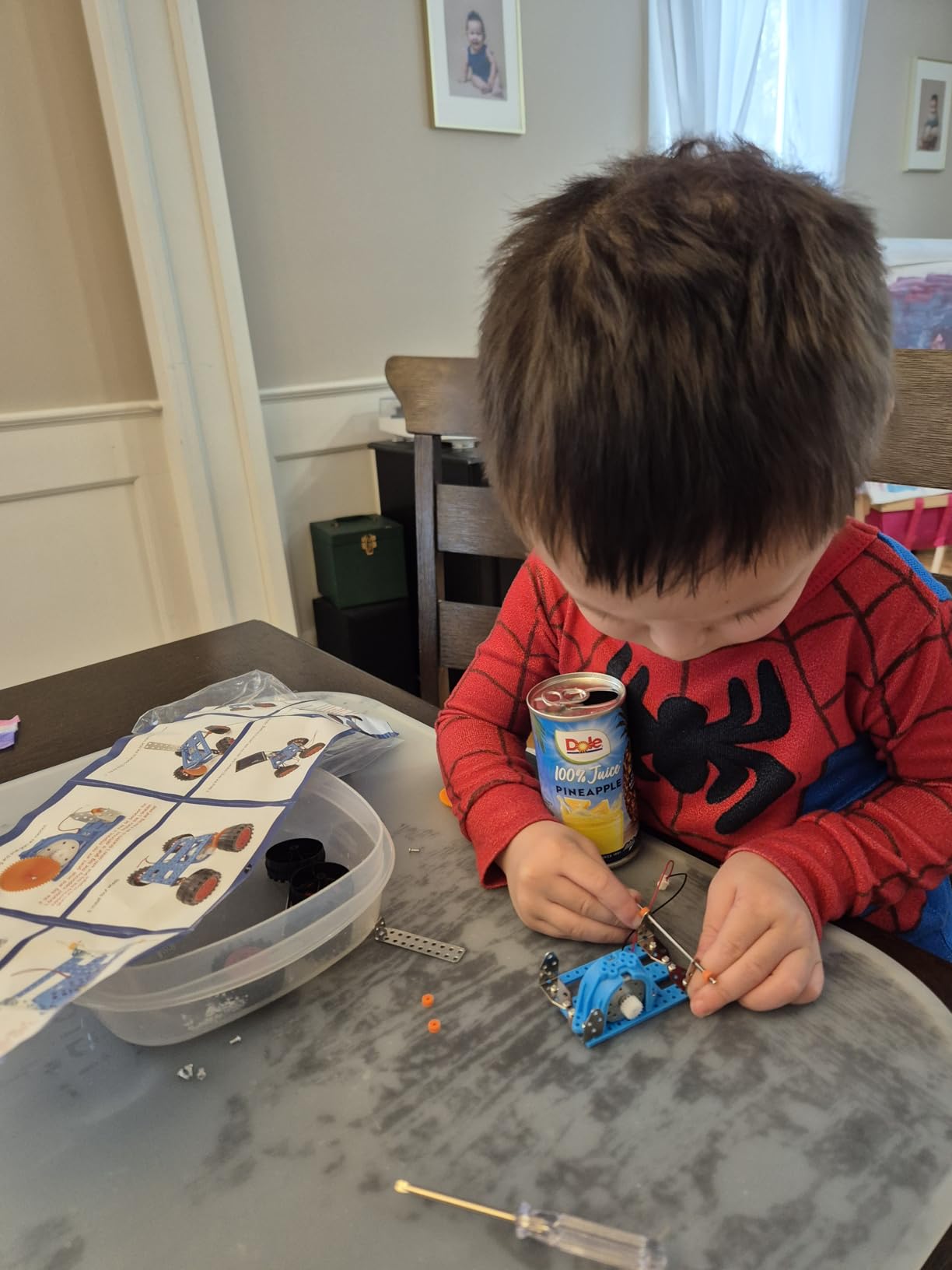
The BeAndge box is the least expensive way into electronics builds, and the 4.5 average from 1231 reviews reflects a product that does what it says without overreaching. It contains six electronic STEM builds: a reptile robot, a balance car, a bubble machine, a fiber lamp and a buzzer wire game.
Two details matter more than the count. A mini screwdriver is included, so nothing has to be bought separately to open the motors, and the manuals are detailed enough that a child can work from them with an adult nearby rather than guessing at connections.
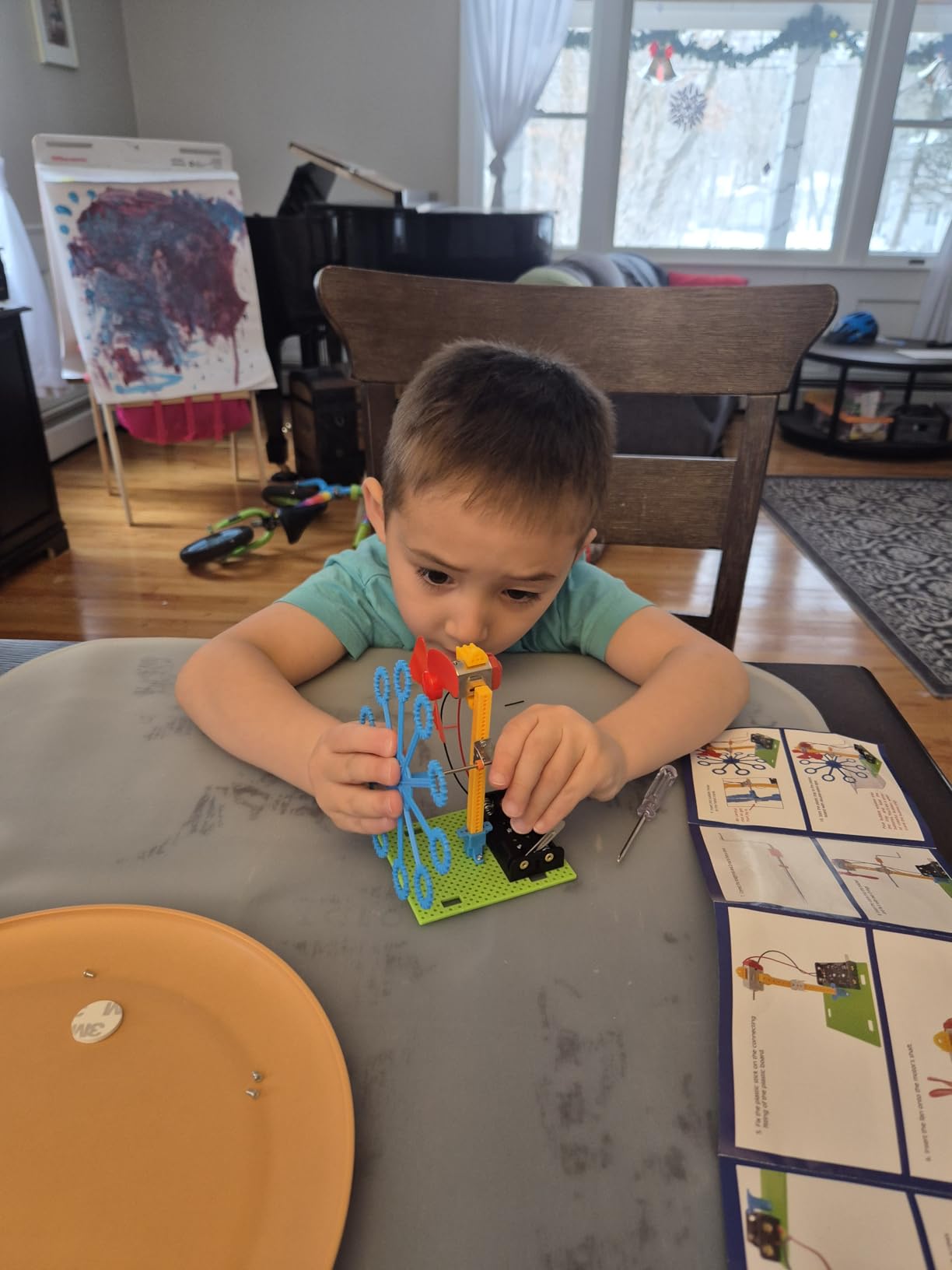
Packaging is a quiet strength. The set packs neatly into a gift box, which matters if you are buying it for a birthday, and the materials are described as odorless and safety-oriented. The manufacturer lists a lifetime warranty against defects, and the stated recommendation is 8-14 years.
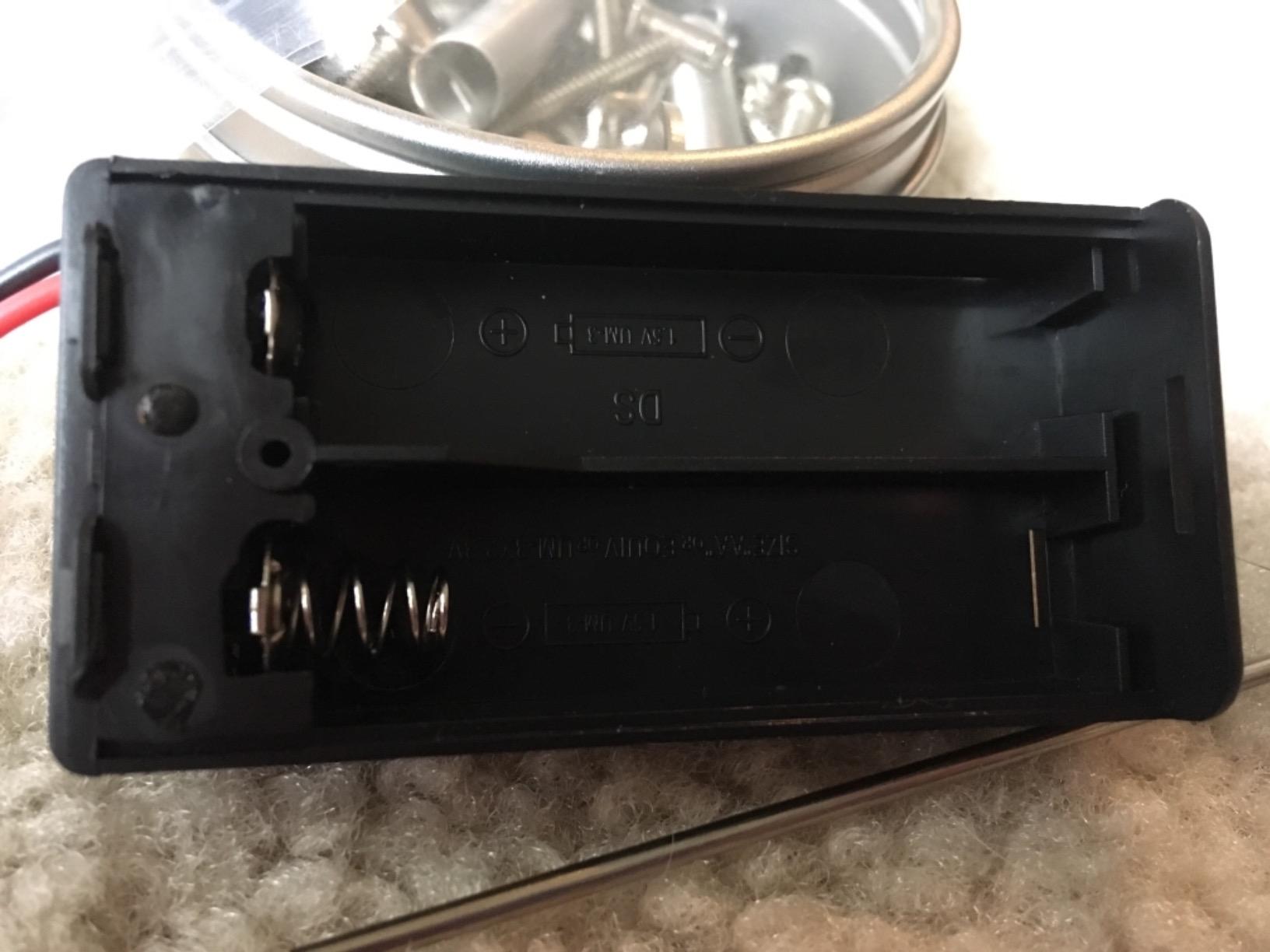
The limitations are the honest ones. AA batteries and bubble solution are not included, and the bubble machine specifically needs that solution to function. The electronics are basic, with no sensors or microcontroller to program, and some builds need adult wiring help from younger children.
Who this kit works for
It works for a child aged eight or older who wants several finished objects rather than one large project, and for a parent who wants to try electronics builds before spending properly on a platform. Six separate outcomes make it a reliable birthday gift that keeps producing presents after the wrapping is gone.
It is also a good fit for a child with an attention span that suits short sessions, since each build can be completed in one sitting and the box resets between them. Sibling sharing works well here because the builds are different enough that two children rarely want the same one.
Where it falls short
It is not a robotics kit in the meaningful sense. There is no sensor board, no coding and no autonomy, so a child who is already moving past simple wiring will outgrow it in a few weeks.
Consumables are the other catch. The bubble machine build is dead without solution you have to source separately, and the alkaline batteries needed across the other five builds are not supplied either, so budget for a pack of cells before the first session.
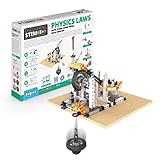
10. Engino Physics Laws – Six Working Models With Theory and a Quiz
- Six working models including a rocket launcher and crash test rig
- 12 pages of theory plus a 4 page quiz
- Interactive 3D app builds the models on screen
- Two year limited warranty
- Instructions are unclear and sometimes incomplete
- Small parts easy to lose and some pieces snapped during assembly
- Manuals and app content are English only
The Engino set is the most classroom-oriented kit in the roundup, and the 4.5 average from 969 reviews reflects that tutors and teachers rate the content well above the toy brands. Children build six working models, including a rocket launcher and a crash test rig.
What separates it from the others is the paper around the plastic. You get 12 pages of theory and facts, a four-page quiz to test what was learned, and an interactive 3D app that lets a child build the same models in virtual space. That combination is closer to a unit than a play set.

The physics content is genuinely good. Inertia, friction, circular motion and energy conservation each get a working model rather than a diagram, and the quiz gives an adult an easy way to check whether anything landed. The manuals and app content are English only, so a multilingual household may want a second resource alongside it.
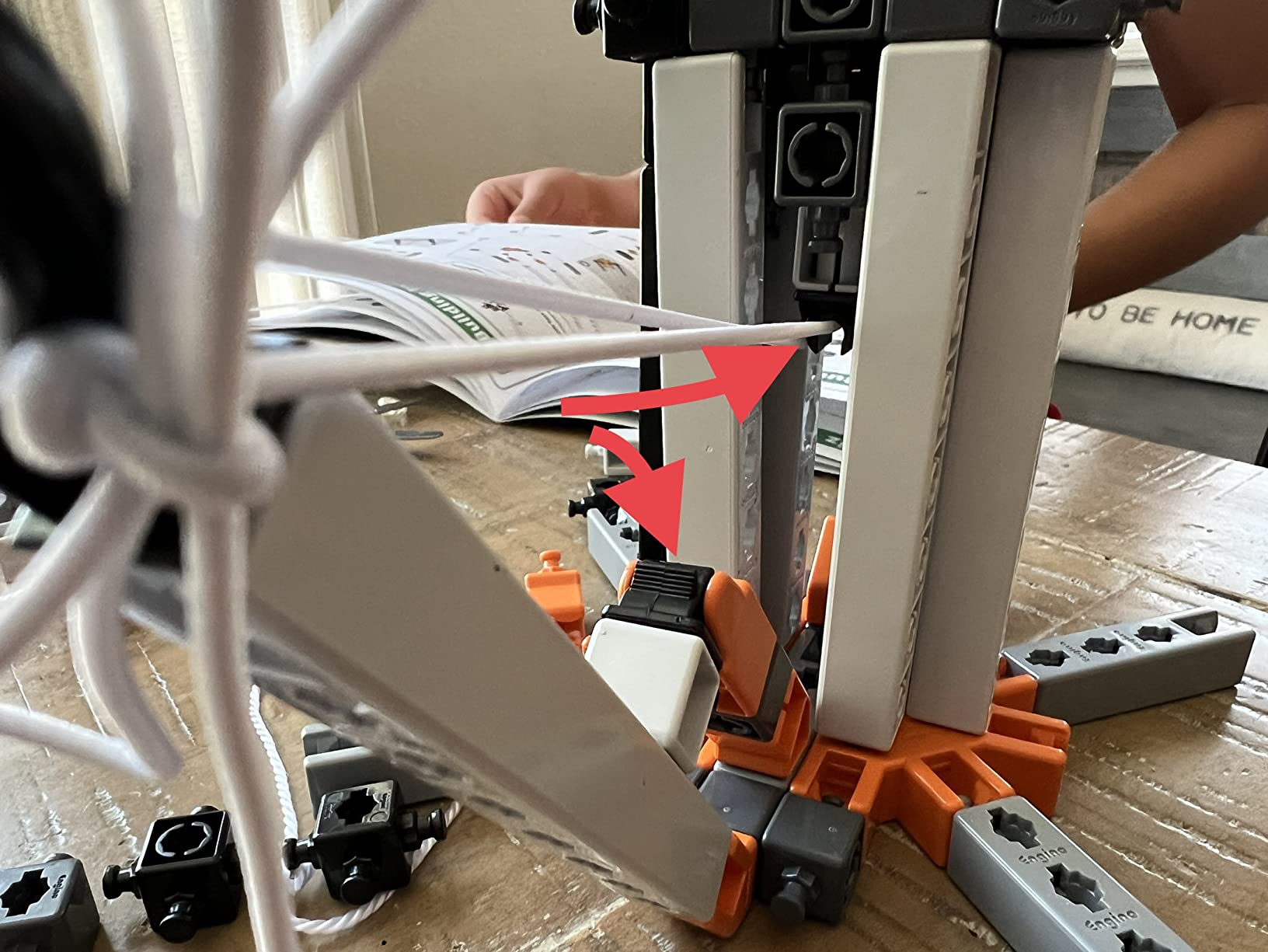
Three limitations dominate reviews. The instructions are described as unclear and sometimes incomplete, so children have to improvise. Small parts are easy to lose and a few pieces are reported as snapping during assembly. And the Velcro pads that hold the models together wear out quickly and can catch fingers.
Who this kit works for
It suits a child aged nine or older who is ready for concepts as well as construction, and a parent who wants to extend a kit with questions. The quiz makes it useful for a tutoring session or a homeschool unit on forces and motion.
It is also the pick if you want the educational claim to be checkable. Between the theory section, the quiz and the 3D app, a parent can confirm a child understood the principle rather than only assembled plastic.
Where it falls short
Expect to sit with it. Unclear instructions mean adult time is part of the cost, and a child who cannot improvise will stall rather than push through. That is the trade for the theory content, not a flaw in it.
It is also the least forgiving physically. Reported part breakage and worn Velcro mean it needs careful handling and a storage box, and at 969 reviews the long-term reliability record is thinner than the top-rated kits here.
11. Tinkering Labs Electric Motors Catalyst – Open-Ended Building, 50+ Parts
- 50+ laser-cut wood and motor parts for open invention
- Guides designed by US teachers for classroom use
- Non-toxic durable reusable parts
- LEGO compatible for extended builds
- Open-ended format offers less guidance than scripted kits
- Costs more per box than the plastic kits here
- Wood and paper parts wear faster than plastic
The Electric Motors Catalyst is the antidote to the scripted-project kit. It carries a 4.5 average from 755 reviews, a smaller base than the leaders here, and parents who buy it tend to buy it for one specific reason: the child invents rather than follows.
You get more than 50 parts including motors, hardware connectors, rubber bands and tools, in metal and wood. There is no fixed project list to complete. The guides were designed by US teachers for real classroom use, and the materials are non-toxic and made to be reused across many builds rather than consumed by one.
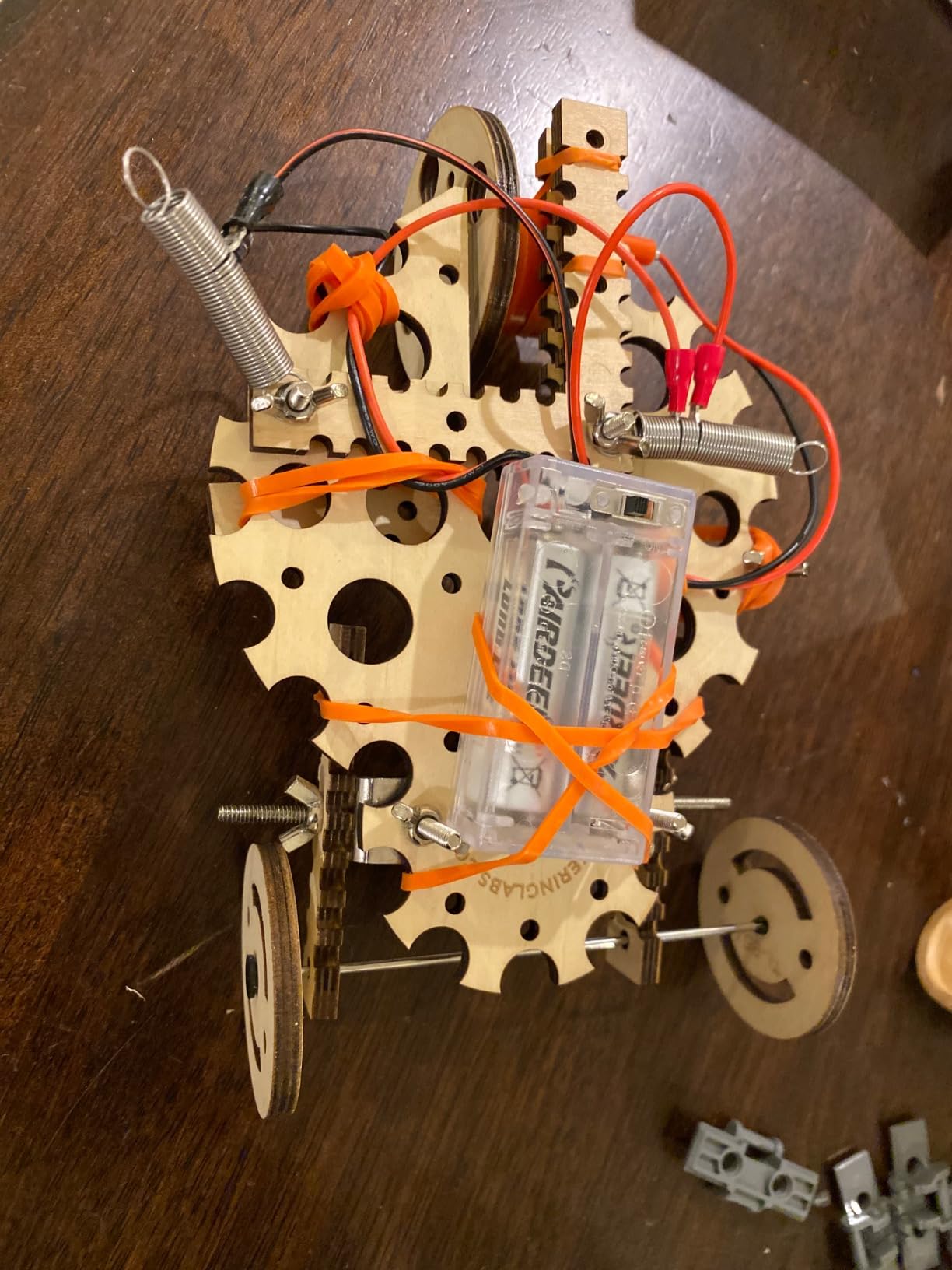
That reusability is the quiet advantage. Because the parts are not tied to a single model, the same box can produce a vehicle one weekend and a mechanism the next, and it is LEGO compatible, so standard bricks extend any build. The set measures 10.59 by 6.69 by 4.09 inches and carries the model number TL002.
Three trade-offs come up in reviews. Open-ended means less guidance, so a child who needs a starting point will stall without an adult to suggest something. It also costs more per box than the plastic kits here, with no app content to justify that. And wood and paper components wear faster than plastic when a build is dismantled repeatedly.
Who this kit works for
It suits a child aged 8-12 who is already comfortable with tools and gets bored by a manual, and a parent who prefers the child to make their own decisions. In a homeschool setting it works well as an open engineering station rather than a scripted lesson.
It is also the best-value choice over years rather than weeks, because the parts do not expire. A family that keeps it in rotation gets more from it per purchase than any single-project kit on this list, and it works well for siblings at different ages using the same box.
Where it falls short
It is genuinely hard to start. Without a prescribed build, a child who arrives expecting instructions often puts the box down, and that first session decides whether it becomes a favourite or a shelf ornament.
The wear issue is real over time. Wood and paper parts chip and crease when a model is taken apart repeatedly, so a family that values durability above open-ended play is better served by a snap-together plastic system.
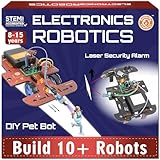
12. Butterfly EduFields 10-in-1 Robotics Kit – Ten Models With a Sensor Board
Butterfly EduFields 10in1 STEM Electronics Robotics Kit for Kids Ages 8-12
- Ten models at roughly 15 minutes of build time each
- Sensor board supports line-following and obstacle avoidance
- All components supplied in the box
- Well-illustrated step-by-step manual
- Sensor board failures reported on some units
- Wheel axle shafts may need about 1mm of trimming
- Small components feel cheap and customer service was slow to respond
The Butterfly EduFields kit is the least proven of the twelve, at a 4.4 average from 367 reviews. What it offers is breadth: ten robot models from more than 100 components, each taking roughly 15 minutes to assemble from an illustrated manual.
It is also one of only a few kits here that moves a beginner from circuits toward robotics rather than staying with either. A sensor board supports line-following and obstacle-avoidance modes, and every component is supplied in the box, so there is no ordering extra parts mid-project.
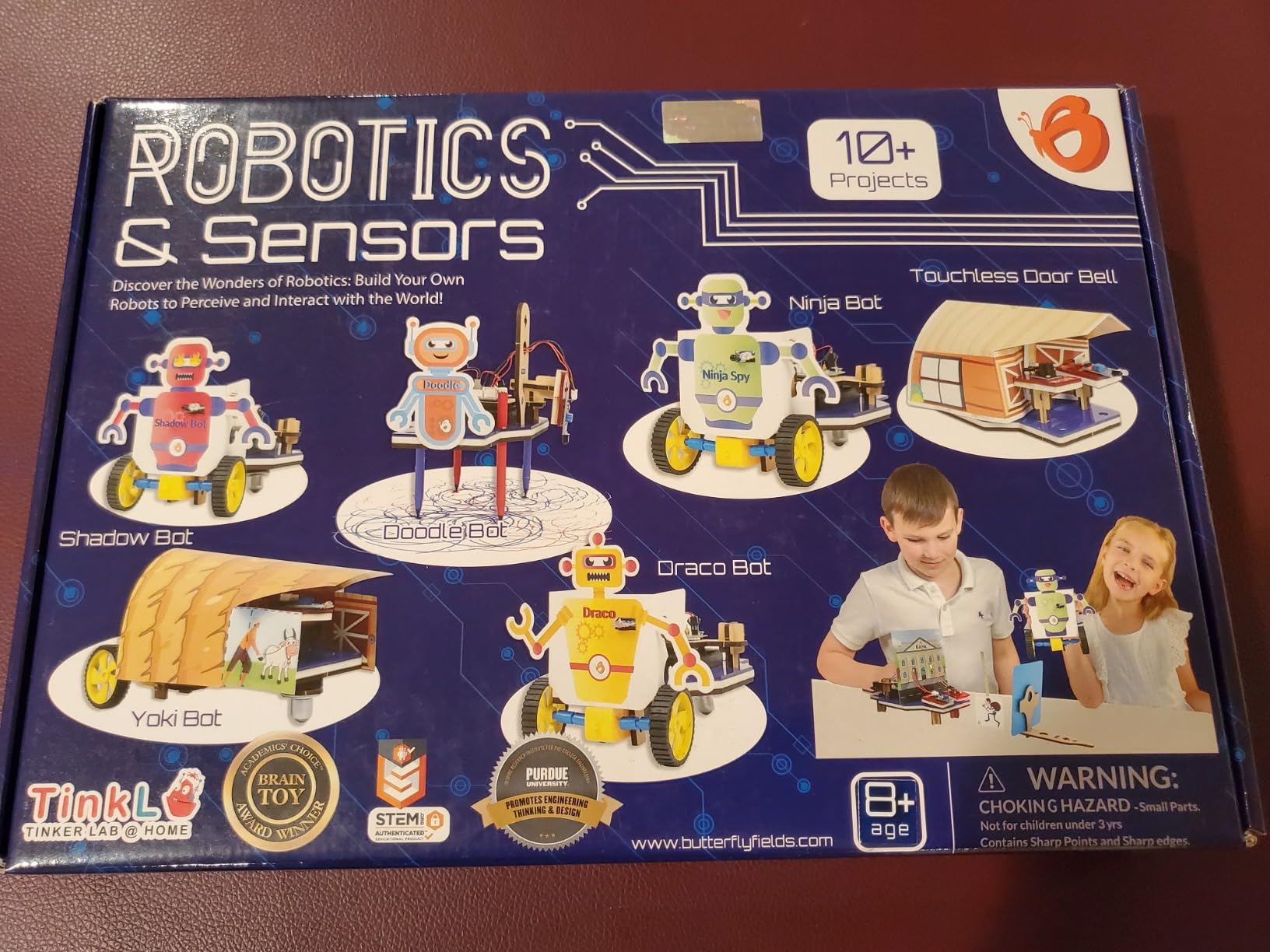
The build format is the appeal. Fifteen minutes per model means a child can finish one in a single sitting and immediately start the next, which suits short attention windows and avoids the multi-hour commitment that puts parents off the bigger engineering kits. The construction is wood, and the box measures 7.87 by 3.94 by 0.79 inches and weighs 400 grams.
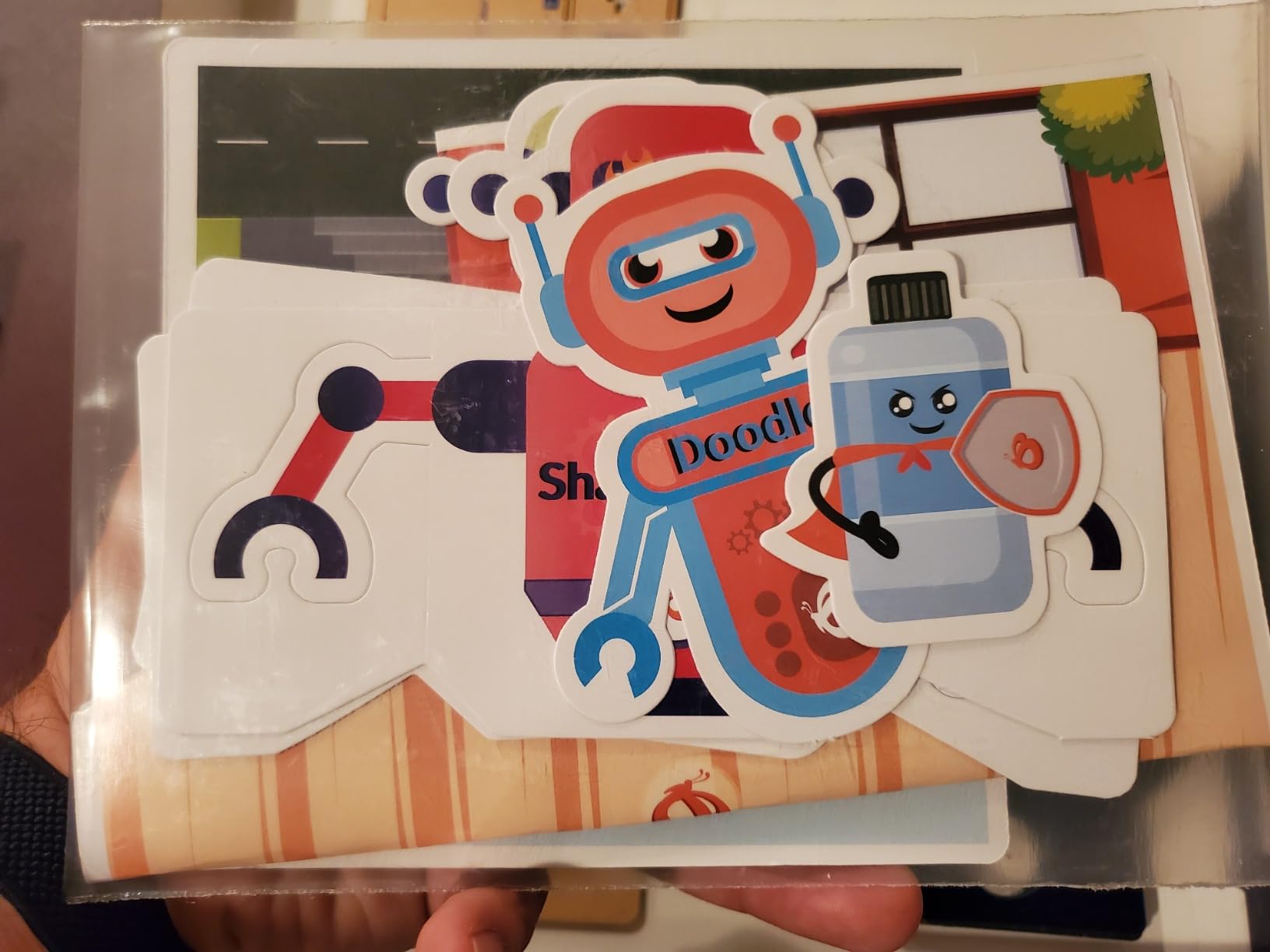
The drawbacks are more serious than on the other kits. Reviews report sensor board failures where one or more output pins do not work, and the wheel axle shafts may need trimming by about 1mm to fit the oversized wheels. Small components feel cheap and some arrive broken, and customer service was unresponsive to defect reports, which is the part worth weighing hardest.
Who this kit works for
It suits a child who wants to build robots but is not ready for programming, and it works well as a stepping stone between a snap-together circuit kit and a coding platform like the mBot. The manufacturer lists 8-17 years, which is unusually broad, while our practical read is 8-12.
It is also the better choice for a family with several children at different stages, because the ten separate models let siblings work independently on different builds rather than sharing one project.
Where it falls short
The sensor board is the weak point, and it is the part that makes the kit distinct. Check it as soon as it arrives, because a fault discovered mid-project is much more frustrating than one found at the start.
It also has the thinnest review base here at 367 reviews, and its 4.4 average is the second lowest in the group. That combination makes it the pick to buy from a seller with a straightforward return process rather than as a gift you cannot easily exchange.
How to Choose a STEM Kit When You Are Skipping the Subscription
Match the age band to the reading level first, not the marketing. A box labelled for eight-year-olds with picture-heavy instructions is fine for a non-reader if an adult reads along, and a box labelled for ten-year-olds can stall an eight-year-old completely. The manufacturer recommendations in this roundup are honest, and the Sillbird kit is the clearest example: marketed from 8-13 with a manufacturer recommendation of 10 and up.
For toddlers aged 2-4, none of these kits is designed for solo use, and that is a gap in the one-time market as much as the subscription market. Look for a wooden construction set or a simple magnetic tile system instead, and treat chemistry and electronics sets as adult-supervised activities from age 5. For 5-8, the Smartivity launcher and the snap-together systems are among the most likely to hold attention. For 9-12 the choice is wide, from Engino’s theory-led models to the mBot. Above 12, the Hydrobot arm and the mBot are the two with enough depth to hold a teenager.
Then read the fine print on any subscription you are comparing against. The complaints parents raise most often are not about the projects themselves. They are about auto-renewal windows that require action several days before the renewal date, cancellation that is email-only with no self-serve button, charges that continue after a cancellation request, and refunds that are hard to obtain. None of the twelve kits in this roundup has a renewal window, which is the single strongest argument for a one-time purchase.
Calculate cost per project rather than cost per box. The UNGLINGA set works out at roughly a fraction of a currency unit per experiment across 70 activities, the Snap Circuits kit spreads across more than 100 projects, and the Sillbird kit covers 12 models from one purchase. Against that, a kit with a single finished build, such as the Hydrobot arm or the Smartivity launcher, has a much higher cost per activity no matter how good the build is. If you want the number to stay low, the highest-count kits win. If you want one impressive object, the single-project kits are the right shape.
Plan for household logistics. One parent in the discussions we read described a nine-year-old and a six-year-old fighting over the same box, and that is the most common failure of any single-child-age subscription. One-time kits solve it more easily because a two-year and a ten-year-old can share the snap-together grid or the six-build electronics box without overlapping projects, and two kids aged 8-12 can work through the ten-model robotics kit on different builds.
Storage matters more than people expect. The chemistry set is described as bulky and awkward once opened, the Sillbird kit has 190 small parts that need a container, and the Engino set stores flat and cheaply by comparison. Decide where the kit lives before it arrives, or you will find chemistry supplies on the kitchen table every evening for a month.
For gifting, a one-time kit avoids the single most common complaint about gifted subscriptions: a gift that quietly renews on the recipient’s card. If you are buying a subscription for someone else as a present, choose a fixed term rather than a rolling one, and check whether a gift subscription carries a self-serve cancel button. Buying the first box outright is simpler, and it lets the family decide whether a second one is worth having.
Finally, get more from the box you already bought. Run the household-material experiments in the two National Geographic guides and in the UNGLINGA booklet, which is where the real experiment count lives. Keep the parts: the Snap Circuits modules and the Tinkering Labs hardware both combine with other sets or with standard LEGO bricks, and the Sillbird models disassemble back into a part pool. Siblings can each work a different model from the same robotics box, and a finished build is worth storing rather than binning.
If you want the broader category rather than these twelve, our roundup of the best educational STEM kits covers one-time purchases by age, and our picks for 8 year olds goes deeper on the elementary range where most families start.
Frequently Asked Questions
What is the best STEM subscription box for kids?
Among recurring boxes, parents most often recommend KiwiCo for age-staged crates and CrunchLabs for builds that stay playable afterwards. Among one-time kits, which behave the same way without a renewal, the Snap Circuits Jr. SC-100 is the strongest all-round choice, with a 4.8 average across more than 29,000 reviews and over 100 projects that require no tools.
Is CrunchLabs better than KiwiCo?
It depends on what you want from it. CrunchLabs tends to excite children more because each build becomes a toy they can keep playing with, while KiwiCo is often chosen for age-staged crates that match a child’s reading level, including preschool lines. If a box arrives damaged, is late, or the instructions do not match your child’s age, both lose value quickly, which is the argument for testing a single kit before committing to a term.
Is MEL Science worth the money?
Parents who buy it for a child who is genuinely experiment-driven usually rate it well, particularly for chemistry depth and the lab notebook. The value drops if the experiments need constant adult supervision or if the child loses interest partway through a term. Check the renewal terms carefully before starting, since the monthly cost compounds over a year and the cancellation window is the part most families report as frustrating.
Are STEM kits worth the money?
They are worth it when an adult takes part and when the finished project stays playable. The same testing framed the boxes as worth a subscription only with parent participation, since solo child use is where most kits lose their value. For value specifically, work out cost per project: a 70-experiment chemistry set spreads its price far thinner than a single hydraulic robot arm build.
What are the best monthly subscription boxes for kids?
The recurring options most recommended for science and engineering are KiwiCo, CrunchLabs and MEL Science, with Green Kid Crafts and Little Passports covering craft and geography instead. Subscription boxes are still popular, and the main reason families switch is friction rather than content: auto-renewal windows, email-only cancellation, delayed deliveries and age ranges that no longer match the child.
Can you buy a single STEM box instead of a subscription?
Yes, and that is the main advantage of the kits in this roundup. Every product reviewed here is a one-time purchase, so there is no renewal date, no minimum term and no cancellation step. It also makes them easier to gift, since a gifted subscription can quietly start charging the recipient’s card while a single box simply ends.
Final Verdict: The Best STEM Subscription Box Alternatives for Kids in 2026
The best STEM subscription box alternatives for kids in 2026 are not really subscriptions at all. Every kit reviewed here is bought once, works with the age band it is labelled for, and leaves you with no renewal date to remember. That is the whole argument, and it is why these are the picks we would make first.
Our Editor’s Choice is the Snap Circuits Jr. SC-100, with a 4.8 average from 29316 reviews and more than 100 projects that need no tools and combine with other kits. For deeper science, the National Geographic Amazing Chemistry Set takes the top spot on lab equipment and a 4.7 rating. For covering a whole term week by week, the UNGLINGA 70-experiment set is the one to pace the year with.
Start with the age band, then check whether an adult will take part. If your child cannot read the instructions yet, the snap-together and hydraulic systems will absorb that gap better than a chemistry set will. If they can, the mBot is the only route here into coding, and the Engino set is the one with real theory behind the models. Whatever you pick, buy the single box first and decide about a second one after it has been opened.