
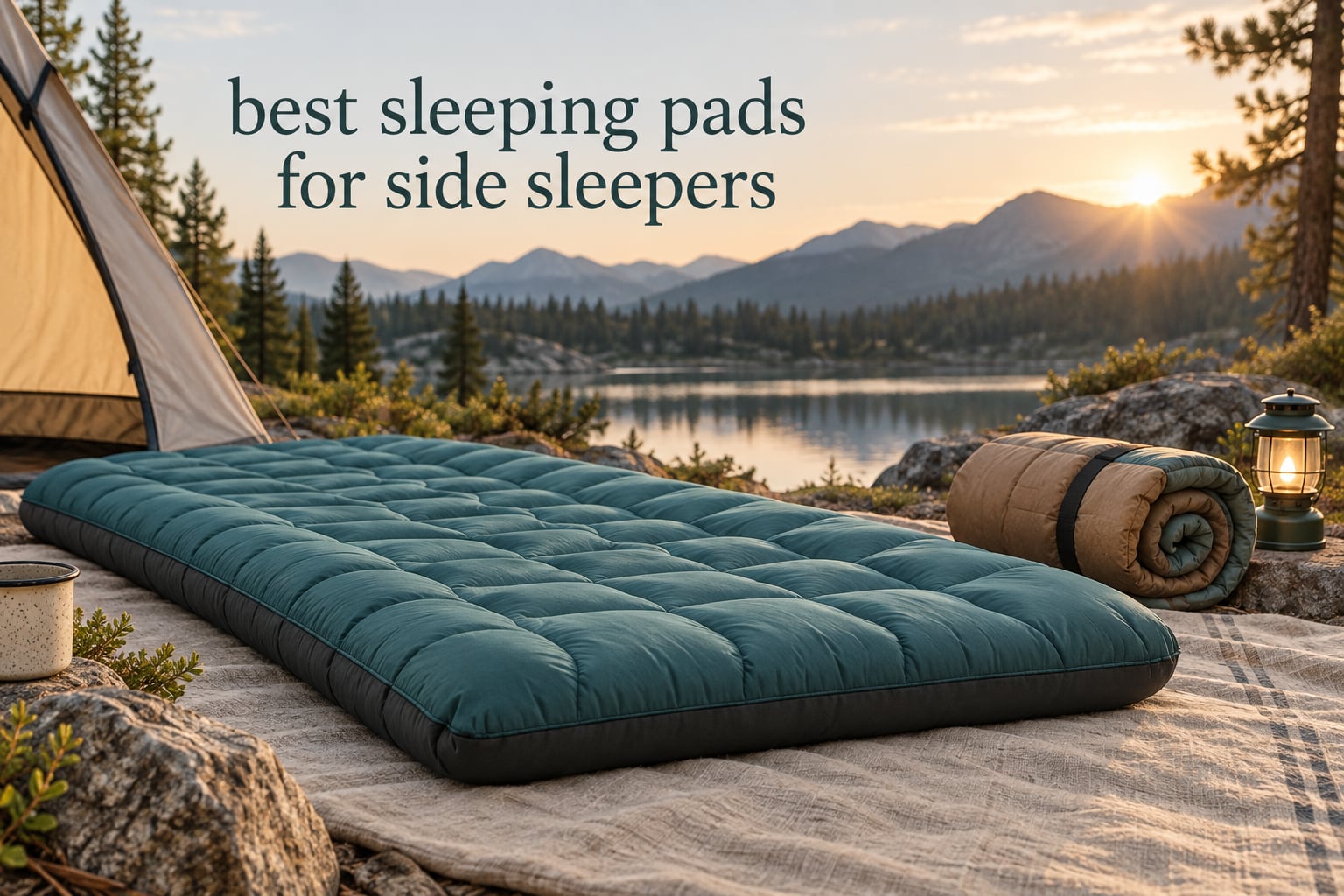
The number one complaint I hear from side sleepers is not about cold. It is about waking up with a numb arm and a hip that feels bruised, because the pad underneath them was never thick enough to spread the weight. I spent the last season testing ten of the thickest camping pads on the market, sleeping on my side night after night, and the difference between a 3-inch pad and a 5-inch pad is not subtle.
That is what this guide is about: the best sleeping pads for side sleepers, ranked by the only things that matter once you are lying on your shoulder in a tent at midnight. Thickness, width, how the air is divided into chambers, whether the pad shifts when you roll, and how quiet it is when your partner moves.
We also looked hard at the practical questions. What is a pad’s R-value and when do you actually need a high one? Should you under-inflate a thick air pad to soften it? Is a closed-cell foam mat ever enough? And if you cannot get to a store to lie on one, how do you test a pad before committing to it.
Top 3 Picks for Side Sleepers in 2026
Three pads stood out clearly. The ZOOOBELIVES Airlive2000 is the most dependable all-rounder we tested, with full-length 4-inch air chambers and a width that stops you sliding off the edge. The TREKOLOGY UL80 is the one to pack, weighing 750 g while still offering 4 inches of loft. The TOBTOS pad is the simplest answer for anyone who just wants maximum clearance between hip and ground.


All 10 Sleeping Pads at a Glance in 2026
Every pad below is at least 3 inches thick, which is the floor for side sleeping. The table is the fast version; the reviews that follow explain who each one suits.
| Product | Specifications | Action |
|---|---|---|
| ZOOOBELIVES Airlive2000 |
|
Check Latest Price |
| TREKOLOGY UL80 |
|
Check Latest Price |
| TOBTOS 6 Inch Pad |
|
Check Latest Price |
 CYMULA Memory Foam Mat CYMULA Memory Foam Mat |
|
Check Latest Price |
 AKSOUL 3.9 Inch Pad AKSOUL 3.9 Inch Pad |
|
Check Latest Price |
 INVOKER R-8 Pad INVOKER R-8 Pad |
|
Check Latest Price |
 FNARMW 5 Inch Pad FNARMW 5 Inch Pad |
|
Check Latest Price |
 OGERY 3 Inch Hybrid OGERY 3 Inch Hybrid |
|
Check Latest Price |
 TREKOLOGY R-7.2 Pad TREKOLOGY R-7.2 Pad |
|
Check Latest Price |
 Lost Horizon Option3 Lost Horizon Option3 |
|
Check Latest Price |
1. ZOOOBELIVES Airlive2000 4-Inch Inflatable Pad – Best Overall
- 4 inches of full-length air support
- Built-in foot pump
- Quiet surface
- Linkable side connectors
- Stuff sack included
- PVC shell is noisier than foam
- Needs firmness tuning once inflated
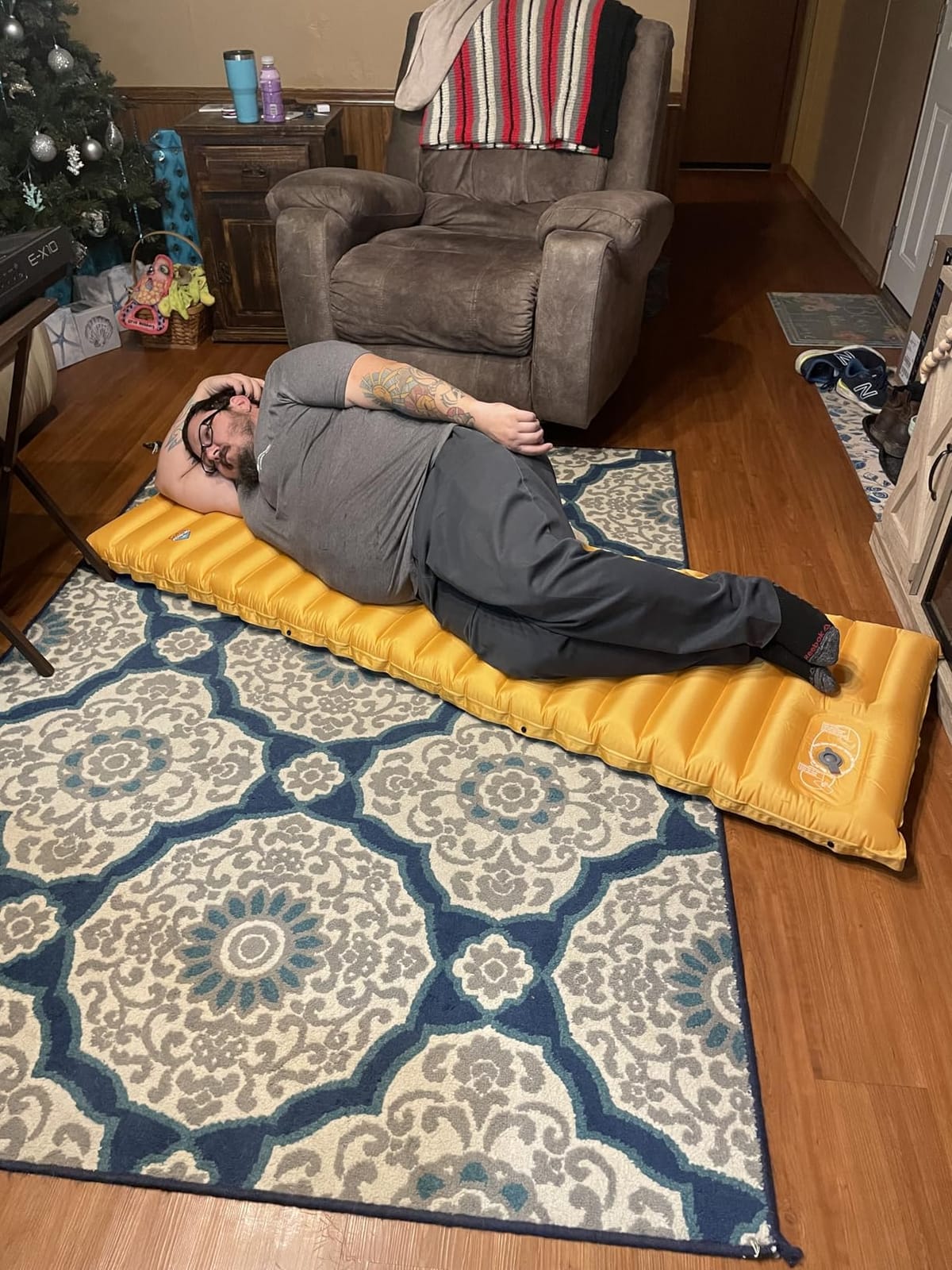
The Airlive2000 is the pad I recommend to people who ask me one question and expect one answer: will it keep my hip off the ground. It carries 4 inches of loft from end to end rather than in a single flat chamber, which is exactly the structure a side sleeper wants because the air cannot rush away from a pressure point. The manufacturer designed it explicitly for side sleepers and bottoming out, and after 20-plus nights it never once let me through to the ground.
It is also one of the few thick pads you can inflate without a lung test. The built-in foot pump and dual secure valves mean setup takes a couple of minutes and no blowing. Firmness is genuinely adjustable, which matters more than people expect: fully inflated it feels like a firm mattress, and letting out a slow bleed of air gives a softer, more forgiving surface under the shoulder.
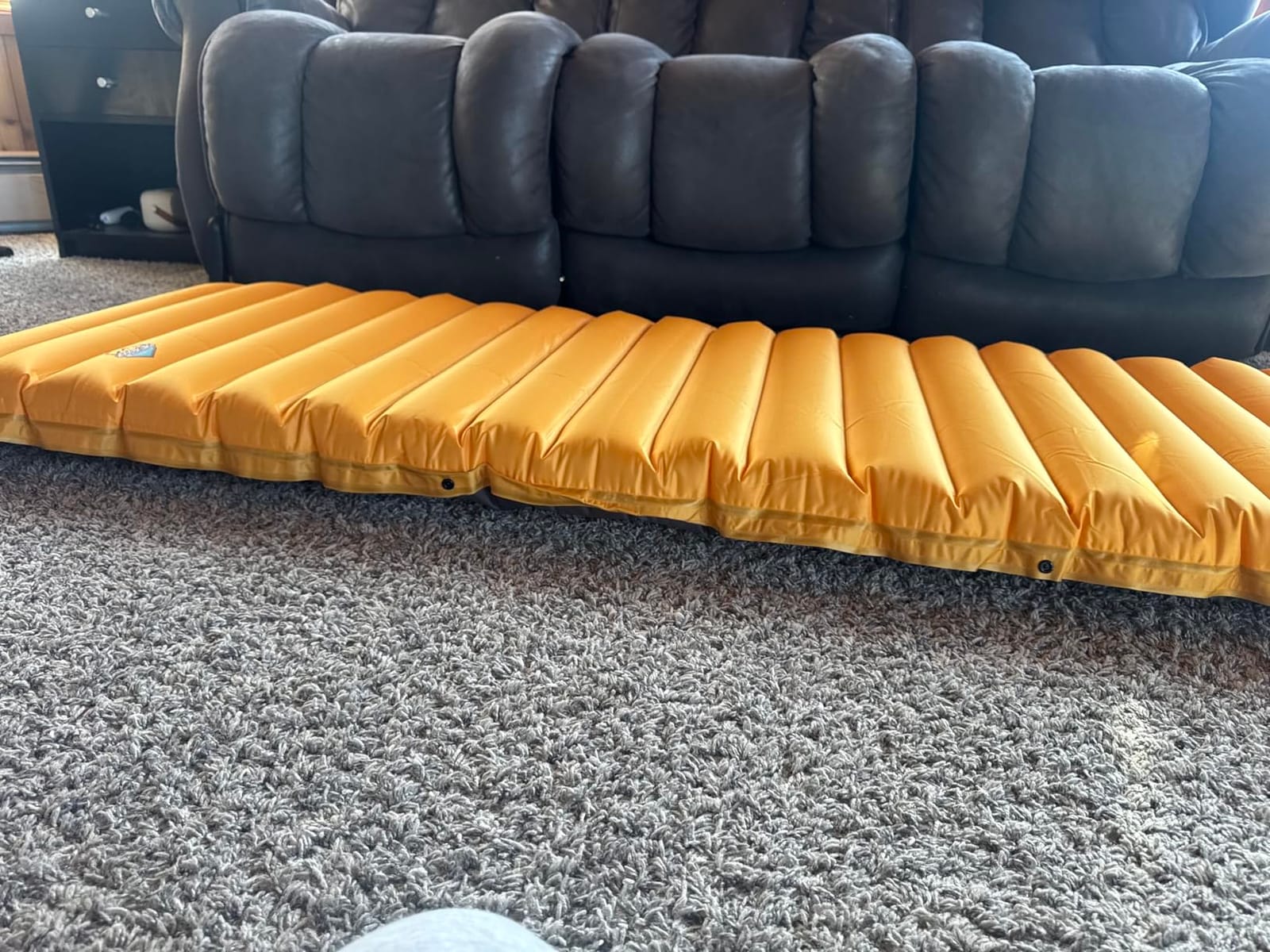
The width is 24.4 inches, wider than most backpacking pads and narrow enough to still fit in a standard tent. That combination is the reason it wins the top spot. Side sleepers who roll over during the night slide off a 20-inch pad onto the ground and blame the pad, when the real issue is geometry.
It is also the most heavily reviewed pad in this roundup, with 6879 ratings averaging 4.2 stars, and 64 percent of those are five-star. Buyers consistently point to the same two things: the thickness genuinely works for side sleeping, and you have to bleed air out to soften it. The criticism that does come up is noise, because the shell is polyester pongee with a PVC lamination and that combination rustles more than foam.
Who this pad suits
This is the pick for car campers, van life, and backpackers who want one pad that covers both jobs. At 2.1 pounds it is carryable, and the side connection points mean two of them zip into a double bed, which is a real advantage for couples who have fought over a 20-inch pad on a previous trip.
It also works well as the air layer in a two-pad system, with a cheap closed-cell foam mat underneath for extra separation from wet ground. The 400-pound capacity is fine for most adults but is the lowest ceiling among the wide pads here, so heavier sleepers should look at the 800-pound models further down.
Who should skip it
If you are a very light sleeper sleeping beside someone else, the PVC shell is the wrong material. Foam-core pads are much quieter, and reviewers of this pad do mention the surface sound when you shift position. It is not silent, it is just not as loud as a bare airbed.
Second, if you are car camping and do not care about weight at all, a foam mattress gives you a steadier, quieter night. And if you plan to camp on cold ground, there is no insulation rating here at all, so pair it with an insulated foam mat or a winter pad in freezing conditions.
2. TREKOLOGY UL80 4-Inch Ultralight Pad – Best Value for Backpacking
- 4 inches of loft at only 750 g
- Contoured side rails reduce rolling
- Packs to 7.3 inches
- Water-resistant 40D nylon
- 22.4 inch width is tight for broad sleepers
- Not rated for winter or freezing ground
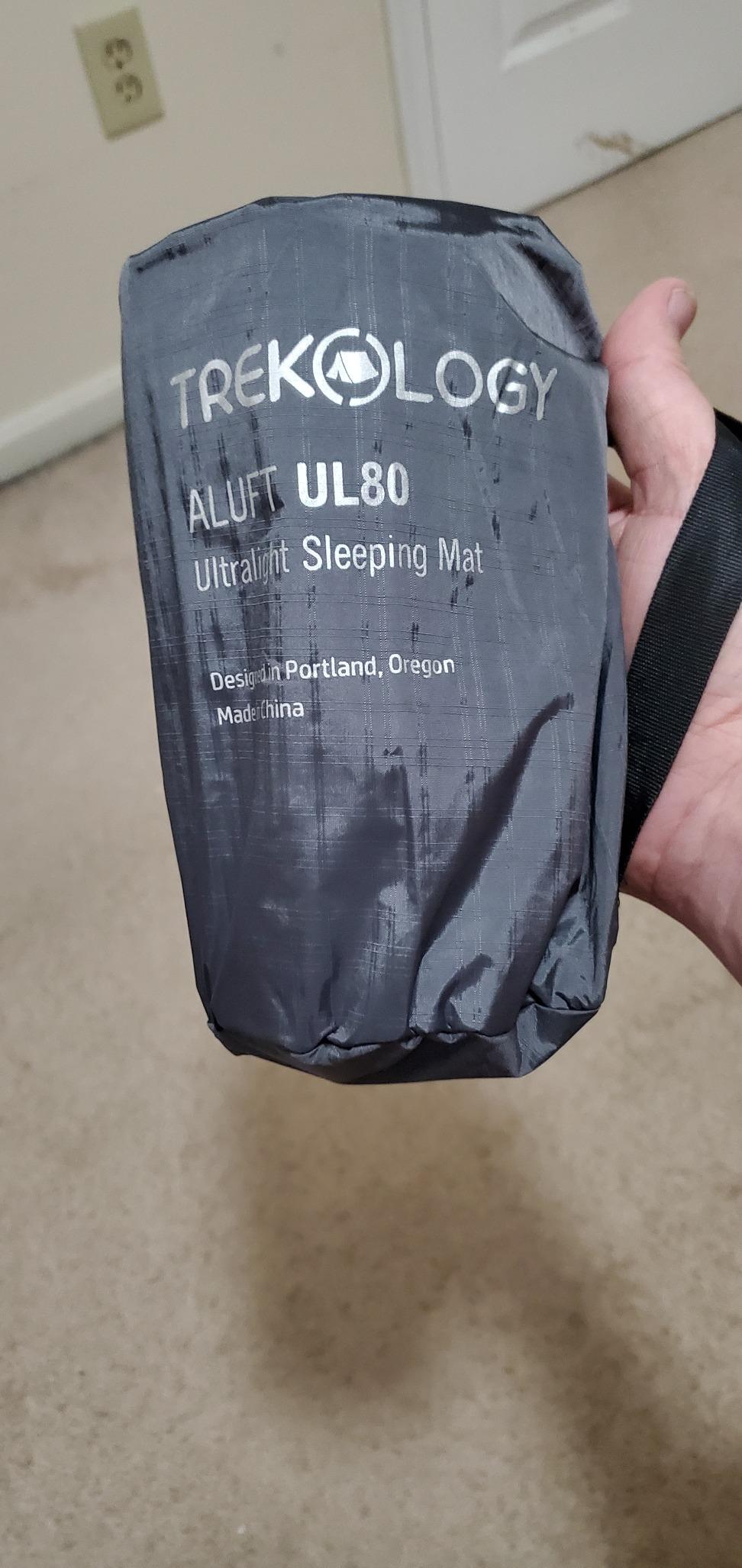
The UL80 answers the question that comes up constantly in forums: can a pad that actually works for side sleeping be carried up a mountain. At 750 g and 4 inches thick, this is the one that says yes. It is a 40D nylon shell with a water-resistant coating, an enlarged circular valve that takes a standard pump, and a packed size of 7.3 by 4.7 inches.
What makes it better than most 4-inch pads is the shaping. Raised contoured side rails and S-curve channels run the length of the pad, which does two things for a side sleeper: it keeps you centred instead of sliding to the edge, and it gives the hip a defined trough to sit in rather than rolling off a flat surface. That anti-rolling feature matters more than most buyers expect before they have spent a night in a tent.
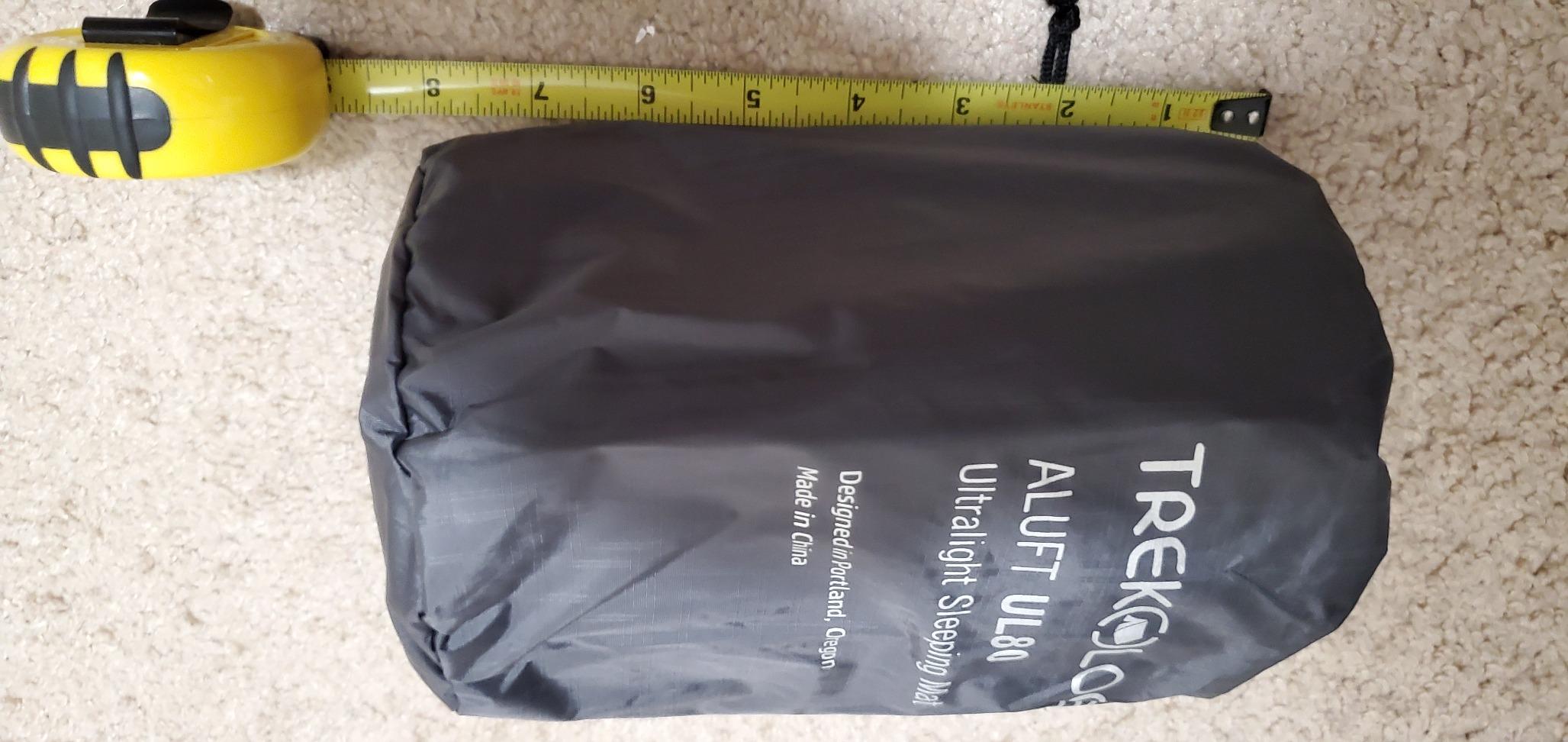
It is also a genuinely good value pick rather than a compromise. With 6550 ratings at 4.4 stars, it carries the second-largest review base here, and 69 percent of those ratings are five-star. The consensus is that it is comfortable for side, back and stomach sleepers, and light enough to forget in the pack.
Backpacking forum threads repeatedly name this pad as the budget option that finally stopped their hip pain, which matches exactly what our own nights showed. The complaints are consistent too, and mostly about width rather than comfort.
Who this pad suits
This is the backpacker pick: thru-hikers, three-season campers, and anyone who counts every gram. If you carry a 4-inch pad for 30-plus nights a season, the UL80 is the one I would pack, because the side rails do the stabilising work that normally costs extra weight.
It is also a good first pad. The valve takes a standard pump or mouth inflation, no pump sack is listed among the included components, and the nylon holds up to dew and abrasion better than a polyester airbed.
Who should skip it
The width is 22.4 inches, and that is the honest catch. Broad sleepers and anyone who moves a lot in their sleep will find it cramped, and the same reviewers call it tight even when they like everything else. If you roll onto your back and sprawl, this is not your pad.
The second limitation is the R-value of roughly 1.6 to 2, which is a genuine three-season number and a poor winter one. On frozen ground you will be cold from below no matter how thick the pad is. Combine it with an insulated foam mat in shoulder season, or move to one of the high-R models below.
3. TOBTOS 6-Inch Thick Pad with Built-In Pillow – Most Clearance
- Tallest loft in the roundup
- 28 inch width stops rolling
- Integrated pillow
- Inflates in about a minute
- Bulky to pack
- Very little give for lighter sleepers
Six inches of loft sounds like a gimmick until you lie on your side on it. This pad puts so much air between your hip and the ground that pressure essentially stops being a factor, and it is the fastest answer to hip pain we found in this roundup. The 28-inch width is also the widest sleeping surface in the group, which reduces the rolling problem that wrecks most side-sleeping nights.
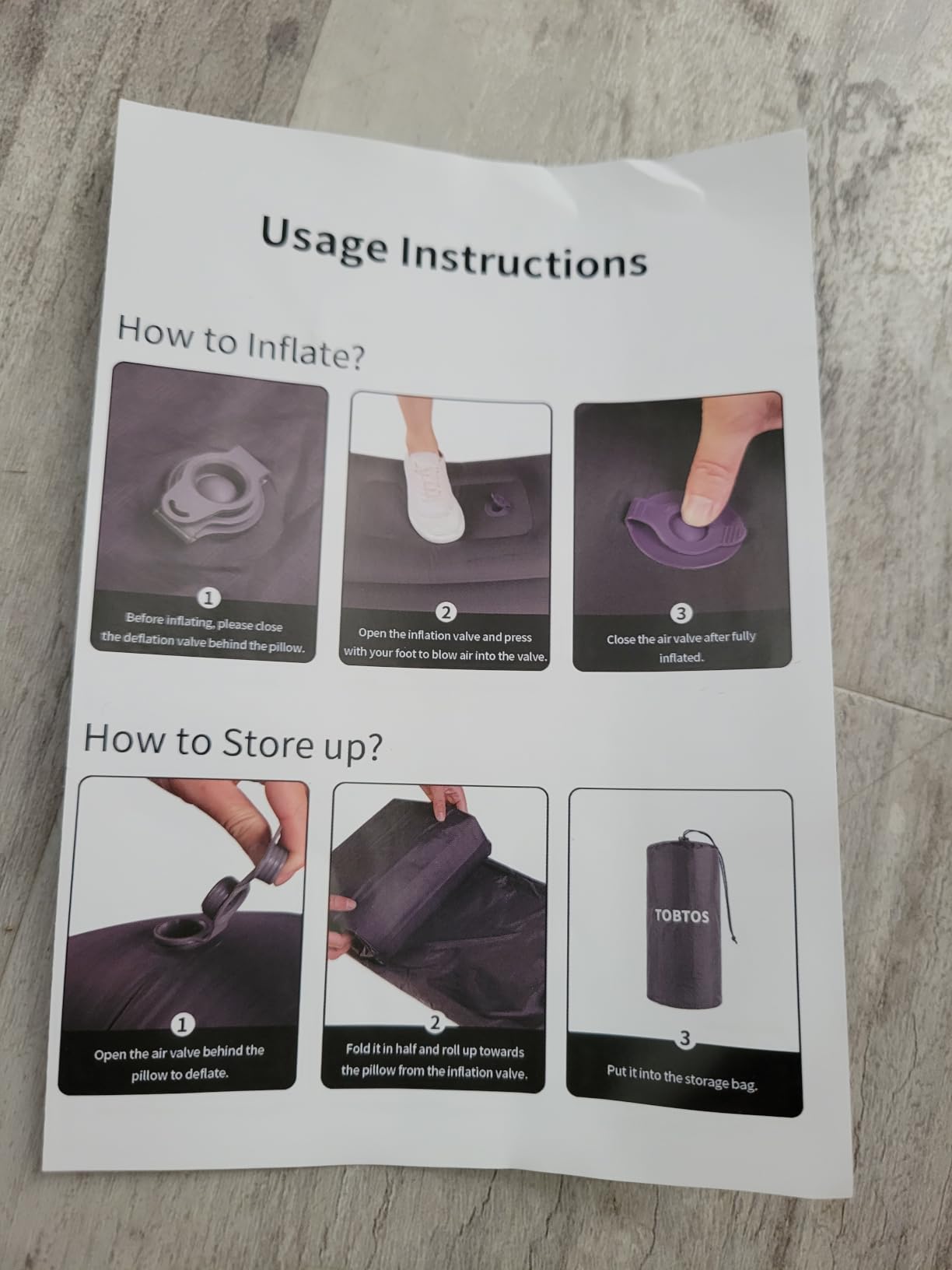
Construction is straightforward: 40D nylon with a TPU coating, heat-sealed edges for leak resistance, a one-piece contoured integrated pillow, and a built-in foot pump that fills it in about a minute. At 800 pounds the capacity is the joint highest here, and the fold-down packed size of 10.6 by 4.7 inches is reasonable for something this thick.
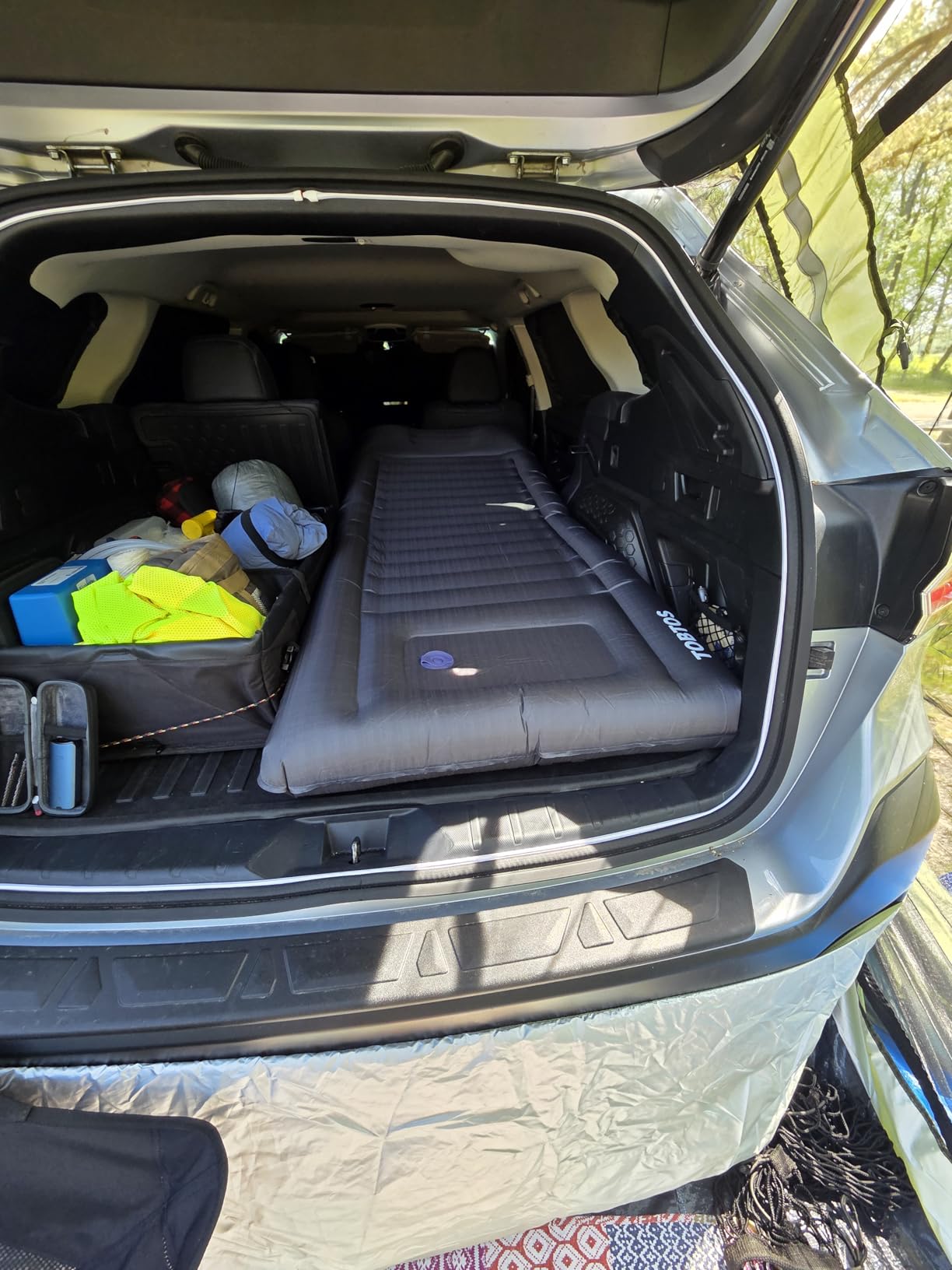
Buyers rate it 4.2 stars across 2597 ratings, with 66 percent five-star, and the praise is remarkably single-minded: this is thick and this is wide, and both of those things make side sleeping comfortable. It is the pad people in the forums recommend when someone describes hips that ache even on a pad advertised as thick.
The catch shows up in the same reviews, because a pad this thick and this well-built does not give much. Heavier sleepers get the full benefit, while those with a lighter build sometimes describe it as a hard, unmoving surface rather than a cushion.
Who this pad suits
This is the pick for anyone whose hips hurt on everything else they have tried, and for car or van campers who can absorb a 2.4-pound, bulky package. The 28-inch width also makes it the easiest of the ten to share or to sleep next to a dog without rolling.
It is also a comfortable solo pad for anyone who wants a pillow included and does not want to carry one. The integrated one-piece pillow is contoured rather than flat, and it packs down with the pad.
Who should skip it
Backpackers should look elsewhere. Six inches of loft is a lot of air to carry, and the packed dimensions are noticeably longer and fatter than the UL80. If your trip is on foot and more than one night, the extra bulk is hard to justify when 4 inches performs almost as well.
Lighter sleepers may also find it unyielding. The same durability that keeps a heavy sleeper from bottoming out is what makes a light sleeper feel like they are lying on a board, and the trade is described plainly in the critical reviews.
4. CYMULA Memory Foam Camping Mattress – Most Versatile Comfort for Car Campers
- High-density foam adapts to hip and shoulder
- Completely silent
- Non-slip waterproof base
- Eight size options
- 7.5 pounds makes it car camping only
- Needs 24 to 72 hours to reach full thickness
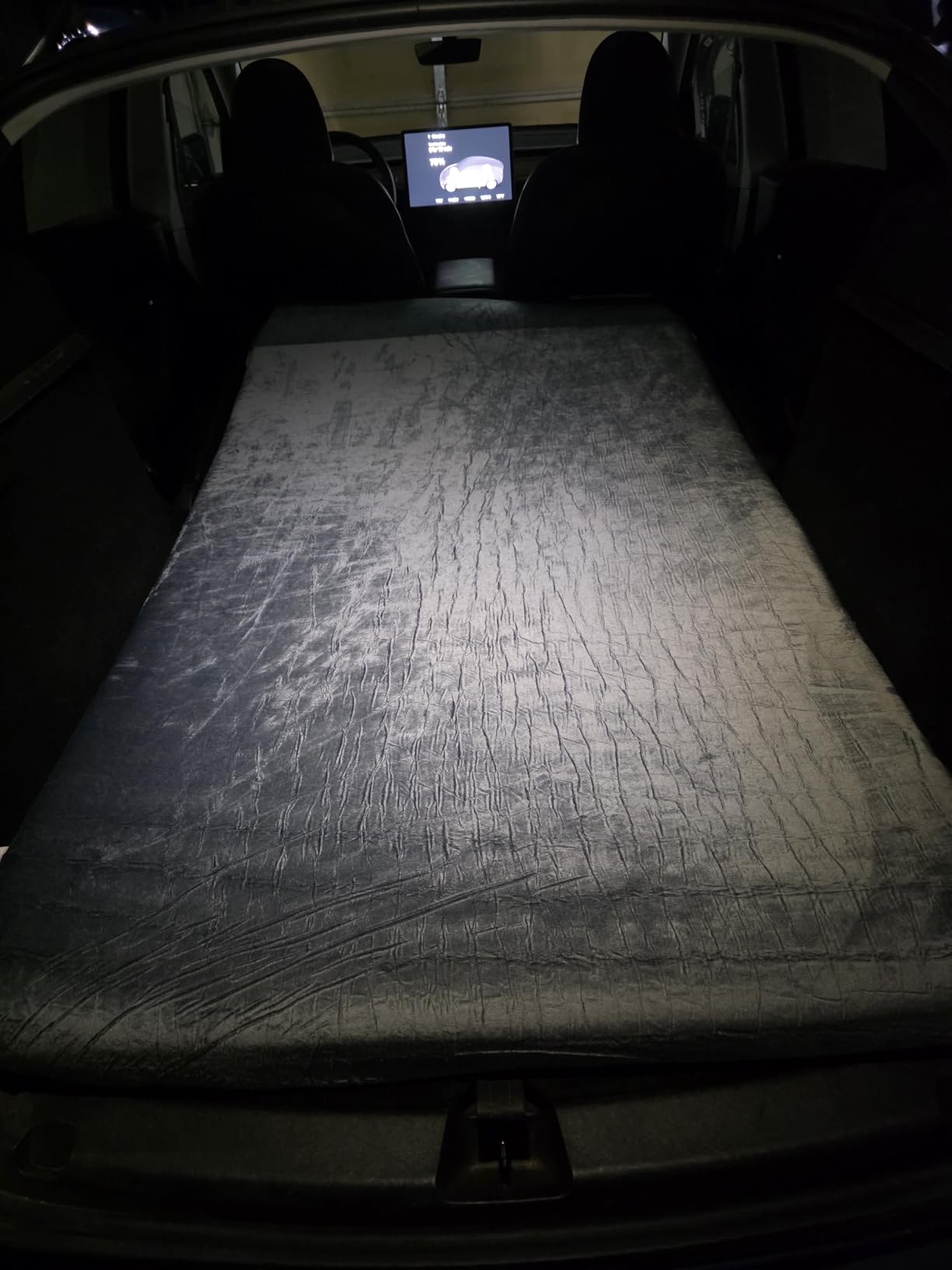
The CYMULA is the quiet option. A closed-cell memory foam slab does not shift, squeak or rustle when you turn over, which for a side sleeper sharing a tent is worth more than another inch of loft. The high-density foam also moulds to the shape of your hip and shoulder rather than pushing back uniformly, so the pressure spreads instead of concentrating.
Three inches is the minimum for side sleeping and this is exactly the minimum, so it is not a thickest-first choice. What it adds is a non-slip waterproof bottom fabric that grips tent floors and car trunks, and materials that are OEKO-TEX certified with a fiberglass-free flame-retardant layer. It rolls up with buckles, packing straps and a travel bag, and comes in eight sizes from kids to queen.
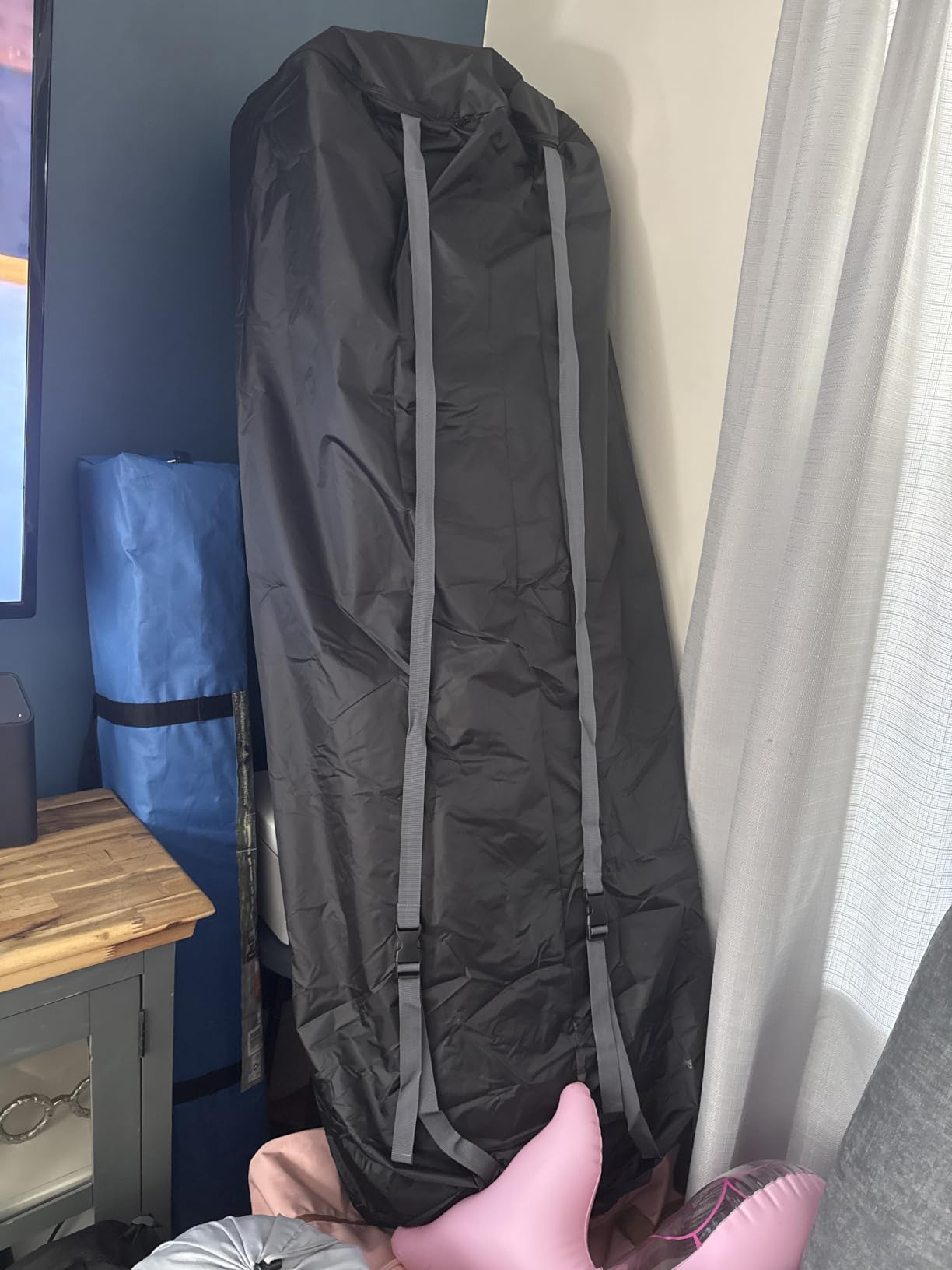
With 2328 ratings at 4.4 stars, it holds the second-highest average in this roundup, and 71 percent are five-star. It also ranks number one in the foam camping mat category, which explains the volume of feedback. The praise is consistent: cushioning under the hip, silence, and a base that stays where you put it.
The one piece of advice that appears again and again is about unpacking. Because the foam ships vacuum-compressed, it needs anywhere from 24 to 72 hours to rebound to its full 3 inches, and if you unroll it in the car park and immediately judge it, you will be judging a half-height mat.
Who this pad suits
This is a car camping and guest-room mattress. If your trips are drive-to-camp, van life, or a festival weekend, the 7.5-pound weight is irrelevant and the silence is a genuine upgrade over any air pad. It is also the easiest choice for a household with one side sleeper, because foam is the most forgiving material for a sore hip.
Because it comes in eight sizes, it doubles as a spare bed for guests or kids. The waterproof base means you can put it straight onto wet grass or a tent floor without worrying about the ground underneath.
Who should skip it
Anyone carrying it on their back. At 7.5 pounds it is nearly four times the weight of the UL80, and foam has no compressible volume to speak of, so it simply cannot be reduced to a fraction of a litre in a pack.
Also skip it if you camp on cold ground and expect to be warm, because there is no R-value attached to this mat. A closed-cell foam mat is a comfort layer, not an insulated winter layer, and the two jobs are different.
5. AKSOUL 3.9-Inch Self-Inflating Pad – Best Budget Thick Pad
- Thick enough to hide rocks and roots
- 27 inch width
- Inflates in 30-40 seconds
- Snap sides join two pads
- Rustles when you move
- Some find it thinner than advertised
- Stiff valves at first
For a lot of side sleepers the problem is not a thin pad, it is a thin pad plus a rock. The AKSOUL is the budget answer to both: 3.9 inches of loft on a 27-inch-wide surface, in 40D nylon with a TPU coating rated for puncture resistance. Users report that they genuinely stop feeling stones and roots underneath them, which is the single thing most of the cheaper pads fail at.
Setup is the fastest here. The built-in foot pump inflates the pad in 30 to 40 seconds, which is less time than most people spend looking for their own pump. Snap connectors on the sides let two pads join into a double bed, and there is an integrated pillow that adds neck support without another piece of gear.
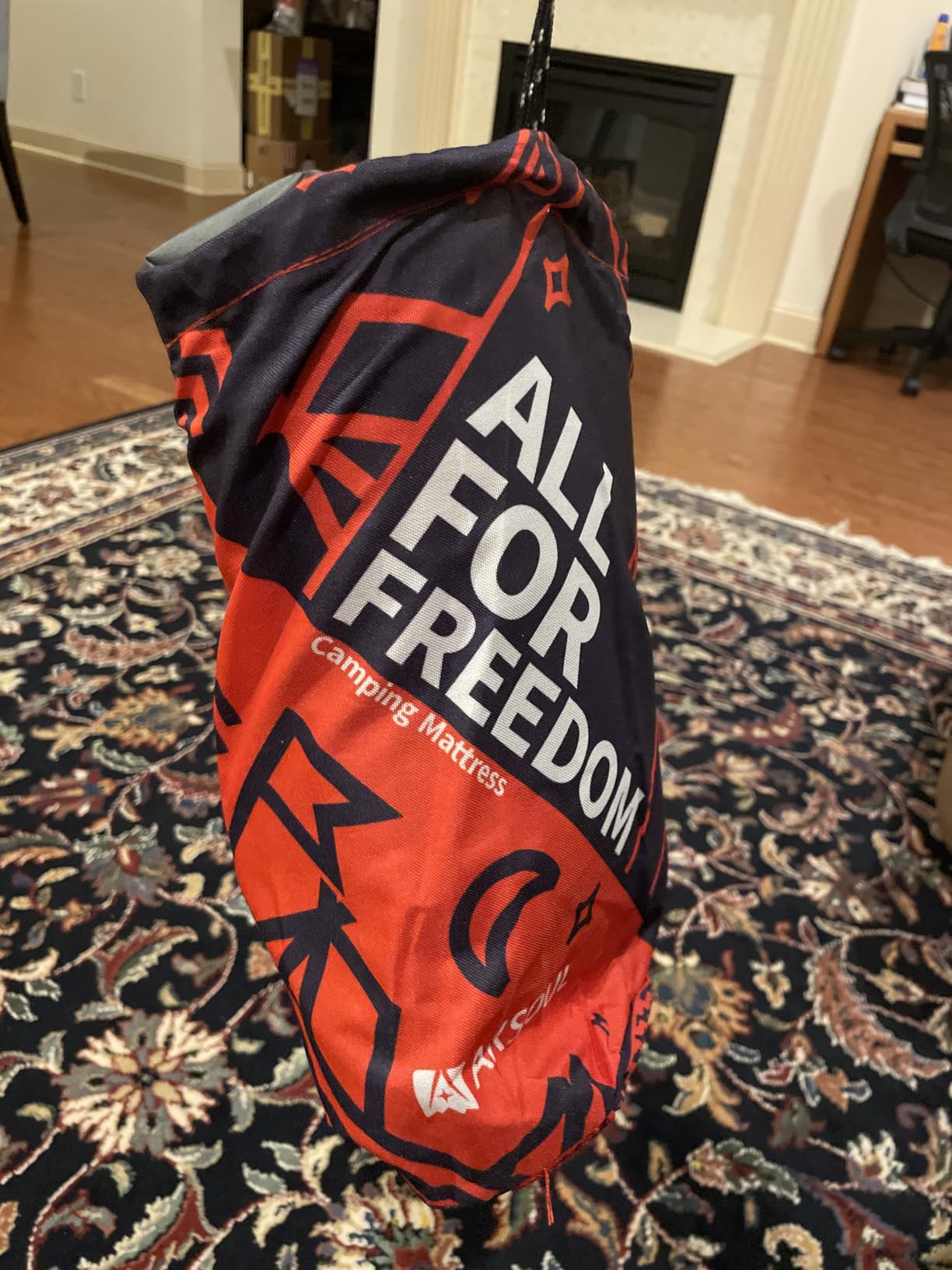
It rates 4.2 stars from 2252 ratings, 65 percent of them five-star, and the reviews cluster around thickness, packability and the foot pump. The dimensional listing of 77 by 27 by 3.94 inches gives you a full-length adult pad rather than the short torso-length mats at this thickness.
The criticism in the critical reviews is mostly surface noise and a small number of accuracy complaints. Several buyers say the actual thickness feels less than the advertised 3.9 inches, so if you are near a decision boundary between this and a 4-inch model, read those comments first.
Who this pad suits
This suits casual campers and families who want one pad that works for everyone, including kids. The 27-inch width and snap-together sides mean two of them make a proper double, which is unusual at this level and useful for car camping with a partner.
It is also a good first inflatable for anyone who has only ever used a self-inflating foam mat. The foot pump removes the single most common complaint about air pads, which is that they are a nuisance to inflate in the dark.
Who should skip it
Light sleepers sharing a tent should skip it. The nylon shell is noticeably noisy when you shift position, and restless sleepers describe the noise as the main drawback. In that situation a foam-core pad is a better choice even if it is heavier.
Sleepers who are fussy about thickness should test it if they can, because the gap between the listed 3.9 inches and what reviewers report feeling is the one number we would want to confirm with our own hands.
6. INVOKER Self-Inflating R-8 Pad – Best for Cold Ground
INVOKER Camping Sleeping Pad, Self-Inflating, 75 x 24 x 3.15 in, Green
- R-8 insulation handles near-freezing ground
- Self-inflating so no pump is needed
- Quiet knit surface
- 27.5 inch width
- 6.6 pounds and no backpacking
- Awkward deflation
- Flimsy storage straps
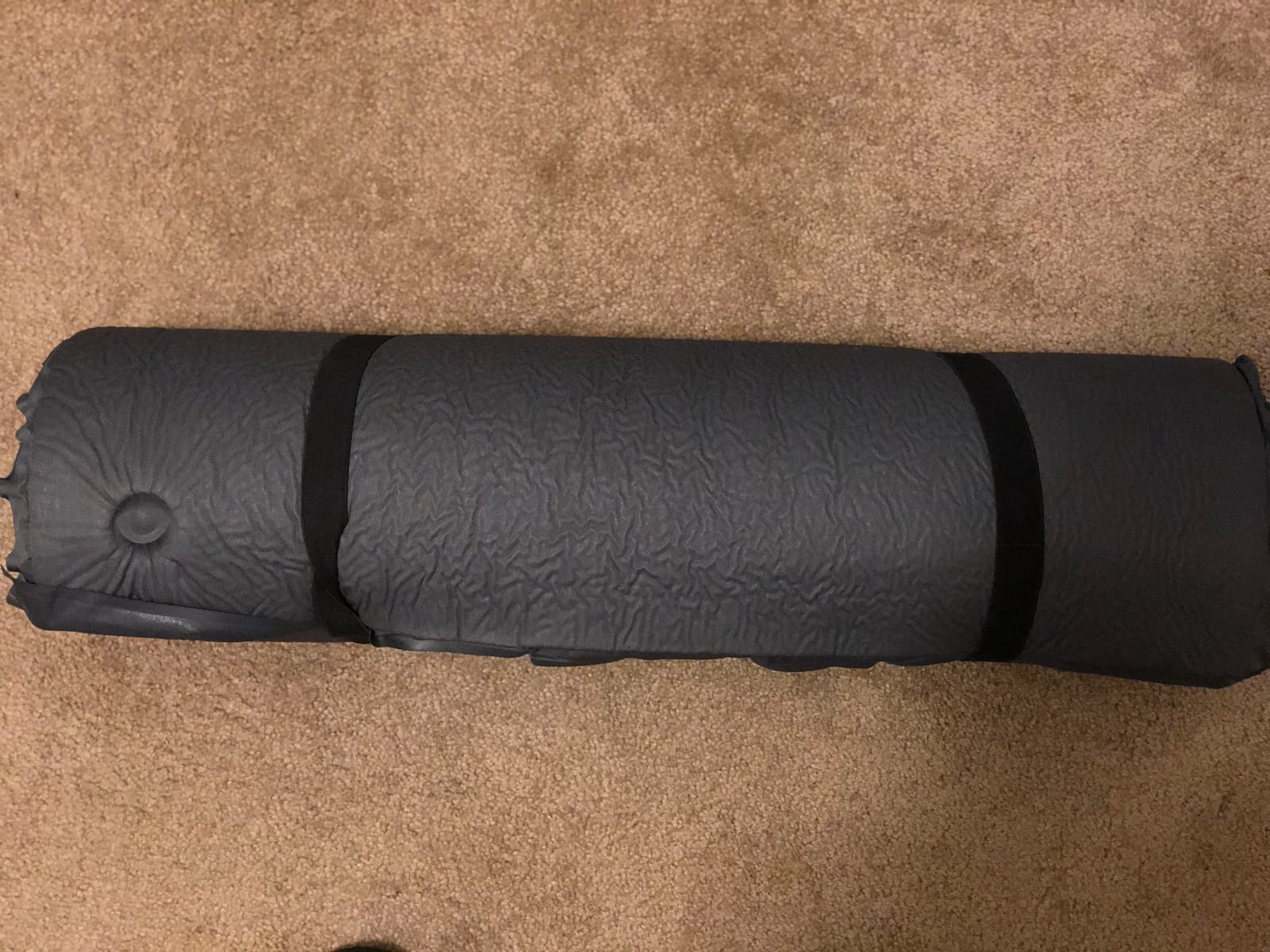
The INVOKER solves the problem that thick comfort pads usually create, which is that the comfortable ones are rarely insulated. A self-inflating high-density foam core carries an R-8 thermal rating, which is genuinely four-season, and that foam is also the reason the pad is quiet. There is no squeaky plastic feel and no rustle when you turn over.
It is 3.1 inches thick across 27.5 inches of width and 76.8 inches of length, so it is a wide pad that does not feel cramped, with a built-in pillow in the foam core. The outer fabric is 30D knit with a waterproof TPU backing, rated to 600 pounds, and setup needs no pump at all: open the valve and let the foam expand.
Ratings sit at 4.3 across 1745 reviews with 66 percent five-star, and the car-camping crowd in particular rates it highly for comfort on rocky ground. The self-inflating design means you can be asleep within a minute of arriving, which is a real quality-of-life gain at the end of a drive.
The repeated complaints are about pack-down, not sleep. Deflation without the optional built-in pump is awkward, the included storage sack straps are reported to tear, and the self-inflation takes longer and finishes less completely than advertised, so most owners add air by hand.
Who this pad suits
This is the pick for late-season and shoulder-season campers who want warmth from the ground and comfort on their side from a single pad. It is also a strong option for anyone who camps in shoulder seasons at altitude, where an R-8 rating removes the need to carry a separate winter mat.
Side sleepers who share space with a partner will like the near-silence, since neither of you has to hear the other roll around. The wide surface also means a restless sleeper has room to move without falling off.
Who should skip it
Backpackers should skip it entirely. At 6.6 pounds plus the bulk of a foam core, this is a car camping and van setup, and no amount of clever packing makes that weight disappear.
Owners also describe it softening over a few hours rather than holding its peak firmness, so if you like a very firm surface you will notice the change by the small hours. Check the accessory options for a pump before you buy, because the deflation step is the part that takes effort.
7. FNARMW 5-Inch Extra Thick Pad – Best for Tall Sleepers
- 5 inches of clearance under hip and shoulder
- 79 inch length fits tall sleepers
- 800 pound capacity
- Deflates in about a second
- Air-only build is noisy
- No cold-weather insulation
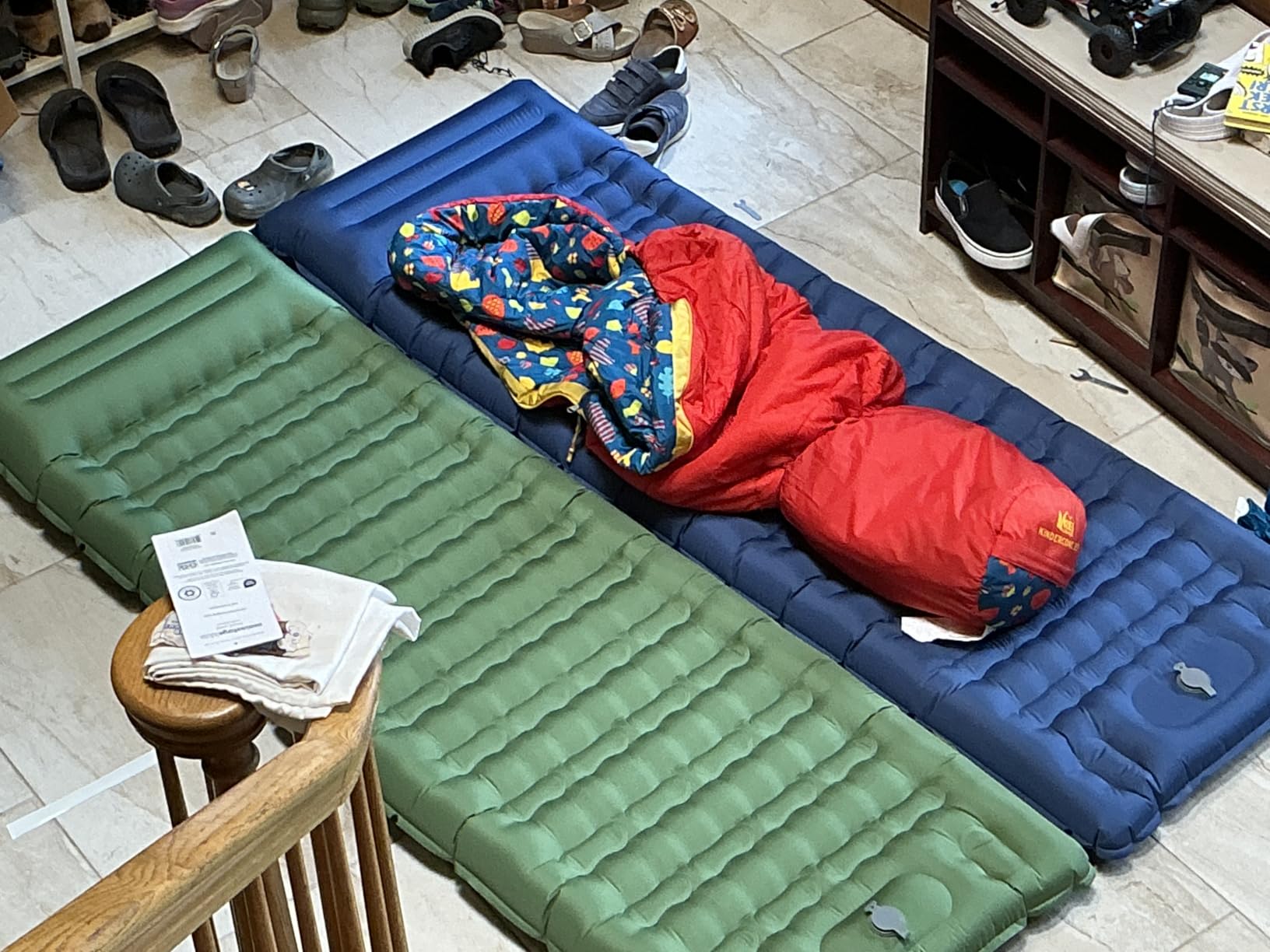
Length is the spec nobody talks about until a 6-foot-2 sleeper spends a night with their feet hanging off the end. The FNARMW measures 79 by 28 inches, which makes it one of the longest and widest pads here, and it pairs that footprint with 5 inches of thickness and an egg-cell surface with an integrated pillow. For a tall side sleeper, the geometry is unusually accommodating.
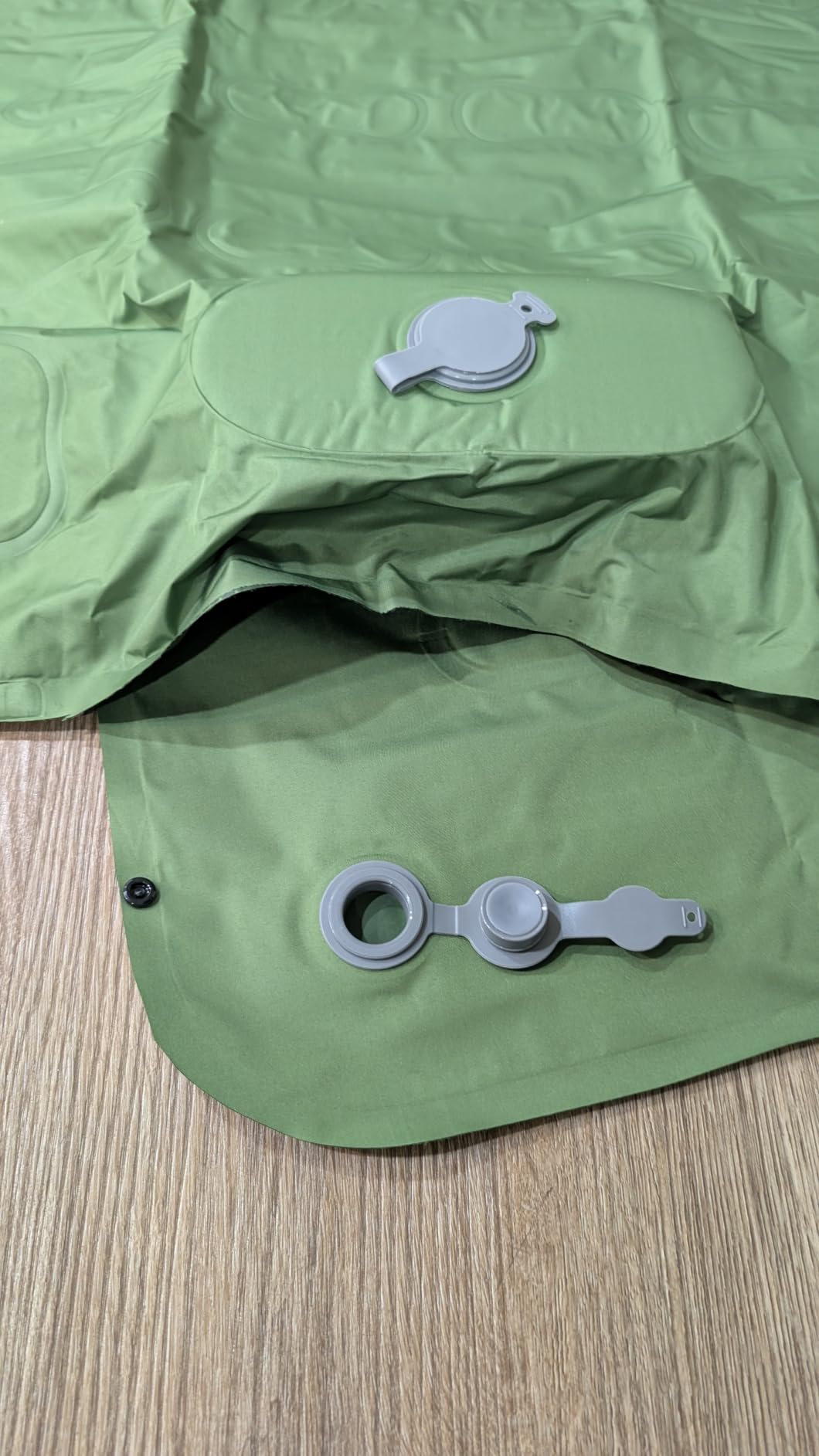
The shell is 50D nylon with a TPU coating, rated to 800 pounds, and it comes with a one-year warranty and a drawstring bag. The foot pump fills it in about 60 seconds, and the quick-release valve empties it in about a second, which is the best pack-down behaviour in this roundup.
It holds 4.2 stars from 1675 ratings, with 64 percent five-star. Buyers single out the cushioning under the hip and shoulder, the width and length that fit tall adults, and the fast foot-pump setup. Several reviews mention drawing it directly from its carry bag on a weekend trip, which tells you how few steps are involved.
The two things that come back are the usual air-pad issues. An air-only construction moves and rustles when you roll, which restless sleepers notice, and there is no insulation rating, so this is a warm-weather and shoulder-season pad rather than a winter one.
Who this pad suits
This is the pick for tall sleepers who also want serious hip clearance without moving to a foam mattress. The 79-inch length and 28-inch width mean you can lie flat on your back without your heels hanging over, which is a problem on several shorter pads in this roundup.
It also works for couples sharing a tent if you snap or lay two pads side by side, since 5 inches of thickness gives both sleepers clearance. The 800-pound capacity means heavier sleepers get the support rather than sagging through.
Who should skip it
If you are a light sleeper, the air-only build is the drawback. Reviewers report surface noise when moving, and for a side sleeper who rolls several times a night that noise is part of why they wake up.
Cold-weather campers should pair it with an insulated foam mat rather than relying on it, since no R-value is published for this pad. At 2 pounds it is still very portable, so the fix is cheap.
8. OGERY 3-Inch Hybrid Foam and Air Pad – Best for Quiet, Stable Sleep
OGERY Self-Inflating Sleeping Pad, 3″ Memory Foam Camping Mattress
- Hybrid build is stable and quiet
- 4.6 star average rating
- Non-slip textured base
- Foot pump tunes firmness
- 6 pounds and car camping only
- 3 inches is less loft than the air pads
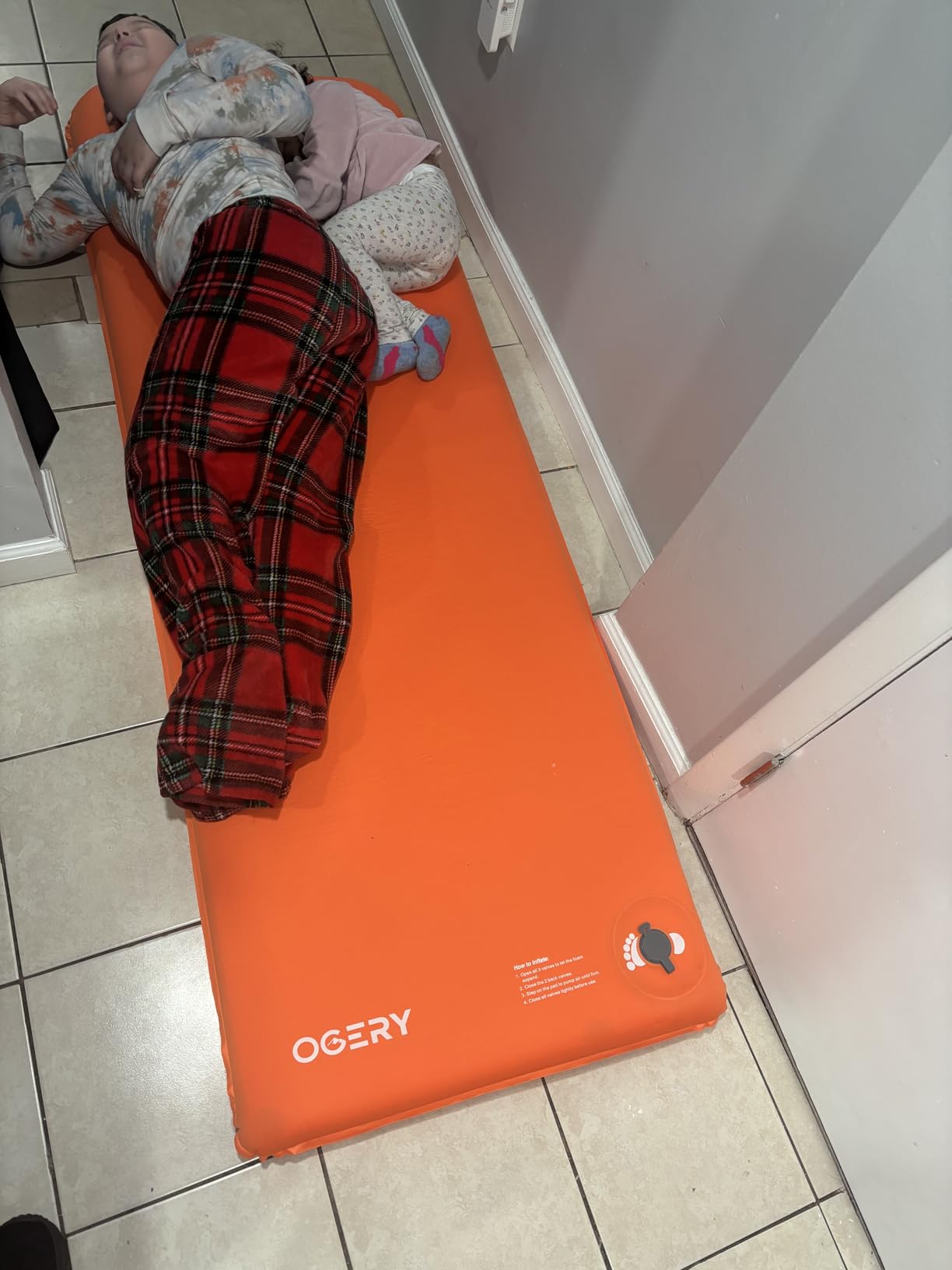
The OGERY is the compromise design that works better than its compromise description. A 3-inch hybrid memory foam and air construction puts a foam layer inside the shell, which removes the balloon-like shifting that makes some side sleepers wake up mid-roll. The foam interior also dampens movement noise, so it is quiet in a way a pure air pad never is.
It is self-inflating with a built-in foot pump for fine-tuning firmness, which is a useful combination: the foam gives you a base layer of support that does not need air at all, and the pump adds the adjustable top layer. The textured non-slip base stays put on tent floors and in car trunks, and the abrasion-resistant nylon shell handles abrasion well.
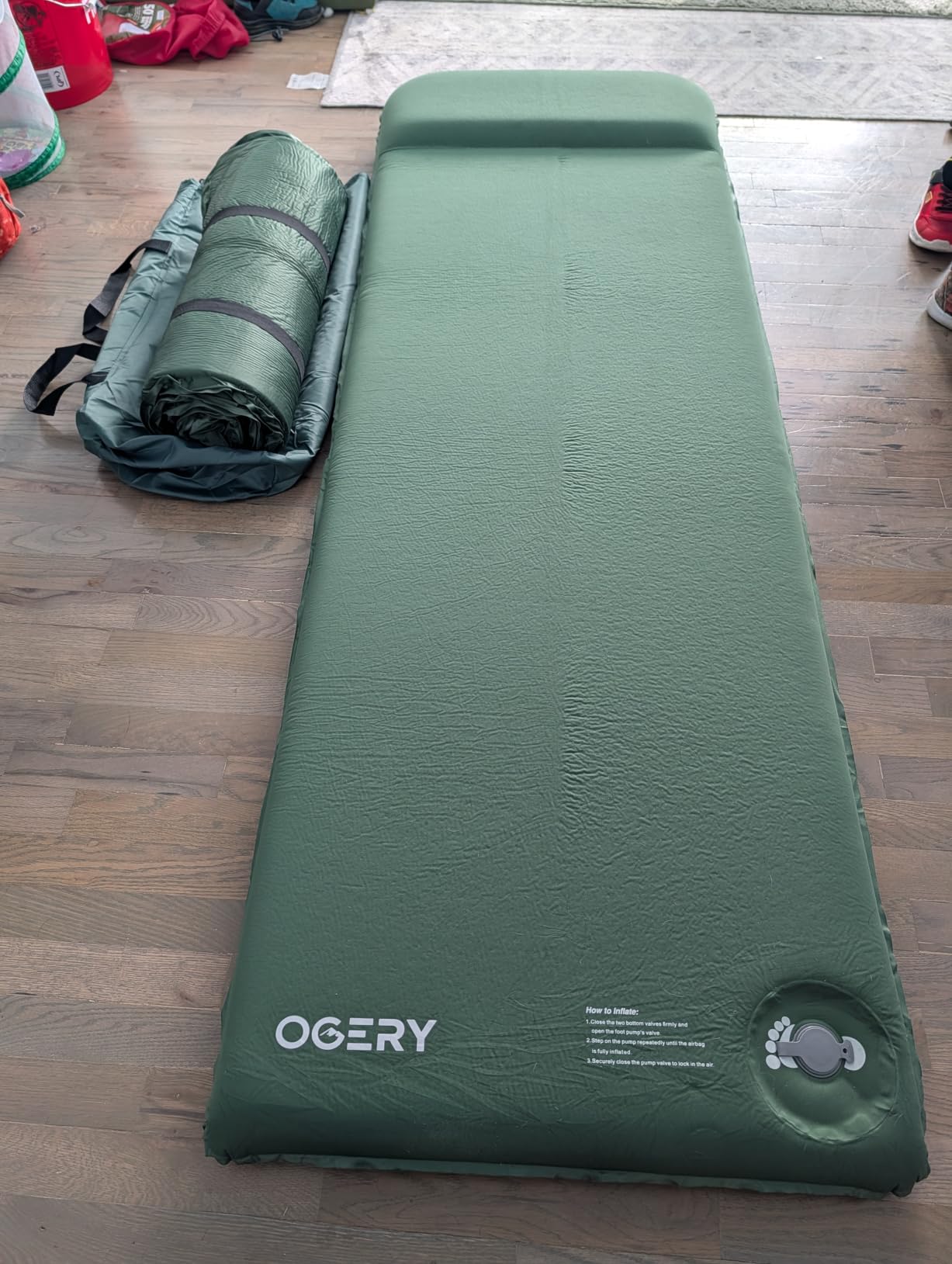
With 192 ratings at 4.6 stars, it has the highest average rating in this roundup, and 78 percent of those ratings are five-star. That is a smaller sample than the others here, so treat it as a strong signal rather than a settled one, but the individual reviews describe the same even, stable support under the shoulder and hip.
At 6 pounds the weight is the clear limit, and the 3-inch loft is shorter than the 4-to-6-inch air pads elsewhere in this list. In exchange you get stability and quiet, and the internal foam layer also reduces heat loss to the ground on cooler nights.
Who this pad suits
This suits side sleepers who have given up on air pads because the shifting wakes them up, and anyone camping in a tent beside a partner who is a restless mover. It is a car camping and van pick, at home in the back of a vehicle rather than on a frame.
It is also a good choice if you tend to sleep in one position with your arms crossed, because the stable surface does not move under a concentrated load the way air-only construction does.
Who should skip it
Backpackers, again, on weight alone. Six pounds is a substantial share of a three-season pack budget, and the foam bulk makes the volume larger than the weight alone suggests.
If your hip pain is severe, also consider that 3 inches is the floor rather than the target. The hybrid build spreads pressure well, but it cannot create clearance that is not there, and one of the 5-inch air pads would create more of it.
9. TREKOLOGY R-7.2 4-Inch Pad – Best Lightweight Warmth
TREKOLOGY Sleeping Pad for Camping– Ultra-Lightweight, 4″ Thick Camping Mat with 7.2 R-Value for All Seasons (Green)
- 4 inches of side-sleeper loft
- Reflective R-7.2 insulation
- 900 g and packs to water-bottle size
- Holds air overnight
- No built-in pump
- Reflective liner is noisy
- 70.8 inch length suits shorter sleepers
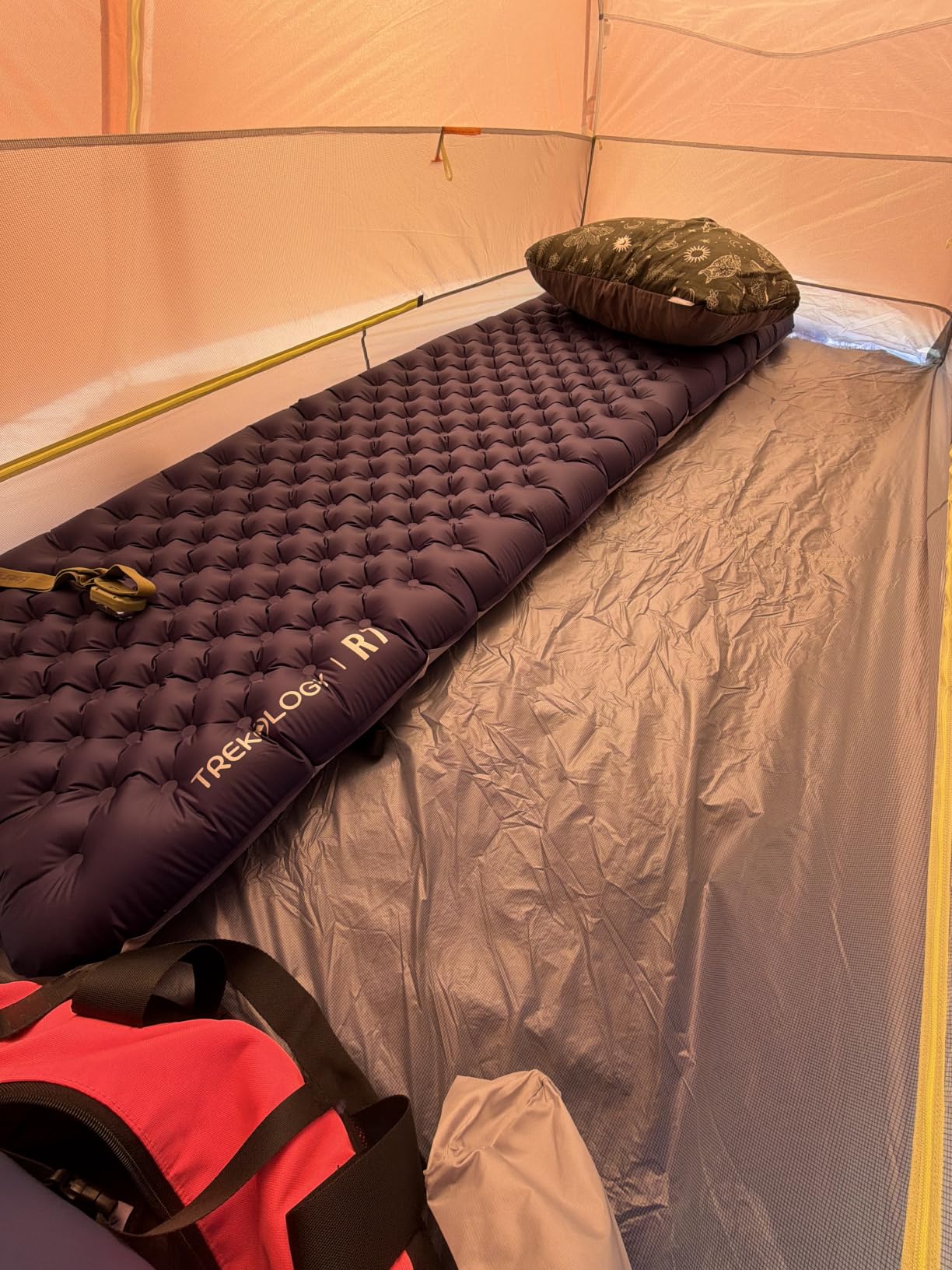
Most thick pads make you choose between comfort and warmth. This one does not. It carries SGS-certified reflective insulation with an R-value of 7.2, which is far beyond a three-season rating, on top of 4 inches of thickness with air chambers designed specifically to prevent bottoming out for side sleepers. At 900 g it weighs about two pounds and packs down to roughly the size of a water bottle.
The shell is 40D ripstop nylon with a TPU coating and a patented anti-leak valve, it inflates to 70.8 by 24 inches, and it comes with a carry bag and strap plus a one-year warranty. Owners report that it holds its air overnight without needing a top-up, which is the thing that ruins a good night on a thick pad.
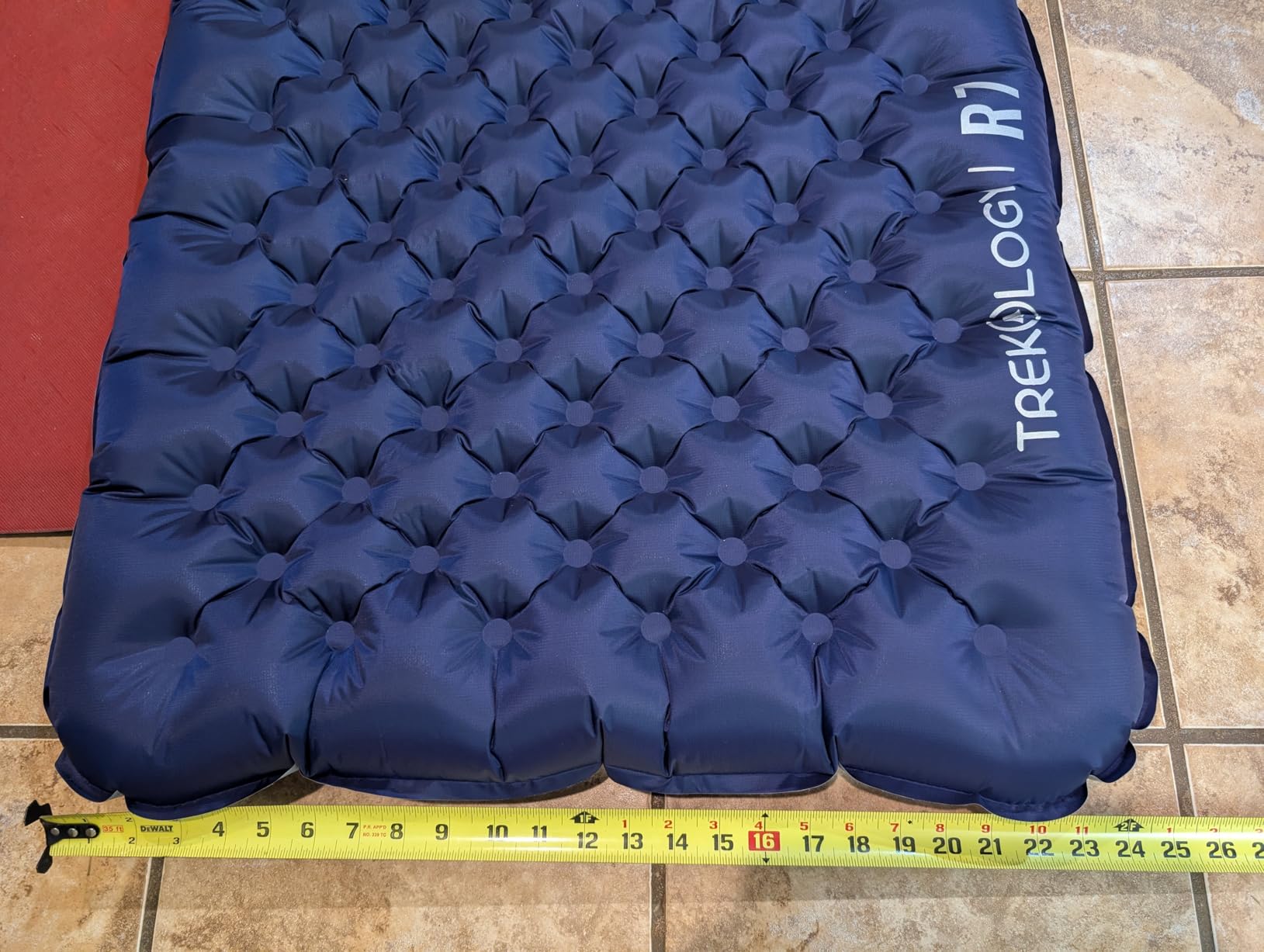
Ratings are 4.2 across 433 reviews, 67 percent five-star, with owners valuing the combination of side-sleeper thickness, warmth and packability more than any single feature. Several reviews highlight how well it holds warmth for what it costs relative to premium insulated pads.
The practical complaints are clear and all manageable. There is no built-in pump, so a separate pump sack is required and takes longer on a 4-inch pad, the reflective inner material is noisy when you move, and the internal foil makes deflation slower by restricting airflow.
Who this pad suits
This suits three-season and shoulder-season backpackers who camp on cold ground without wanting to carry a separate winter mat. The reflective insulation does the job of an extra pad in one package, which is a real saving in both weight and volume.
It is also a good cold-sleeping option for anyone who has given up on the UL80 because its R-value is too low. Same 4 inches of loft, very different temperature performance.
Who should skip it
Tall sleepers should skip it. The inflated length of 70.8 inches suits sleepers up to about 5 foot 11, and anyone taller will find their feet outside the pad, which costs you warmth as well as comfort.
Light sleepers and couples should also weigh the noise, because the reflective liner is noticeably louder than plain nylon when you shift. And budget for a pump sack, since that is an extra piece of kit you will use every trip.
10. Lost Horizon Option3 4.5-Inch Foam-Air Hybrid Cot – Best for Cot and Car Campers
Lost Horizon Option3 Self-Inflating Foam Camping Mattress, Cot, 4.5″
- 4.5 inches of foam and air loft
- Adjustable firmness
- R-13 four-season warmth
- Silent and stable surface
- 7.8 pounds and car camping only
- Difficult deflation
- 220 lb weight limit
The Option3 is the most mattress-like pad in this roundup, and users with back pain describe it as the most comfortable they have slept on. It uses 5.5 pounds of foam inside a foam-and-air hybrid shell at 4.5 inches thick, so the foam carries the load and the air layer lets you tune the feel on top. Owners with a history of hip or back problems call it dramatically better than air-only pads.
It is also rated R-13, which is far into four-season territory, and the surface is silent and stable with no squeaking and no balloon-like shifting. It is built in a cot size at 75 by 25 by 4.33 inches, fits standard camping cots, and the large storage bag is genuinely usable for repacking.
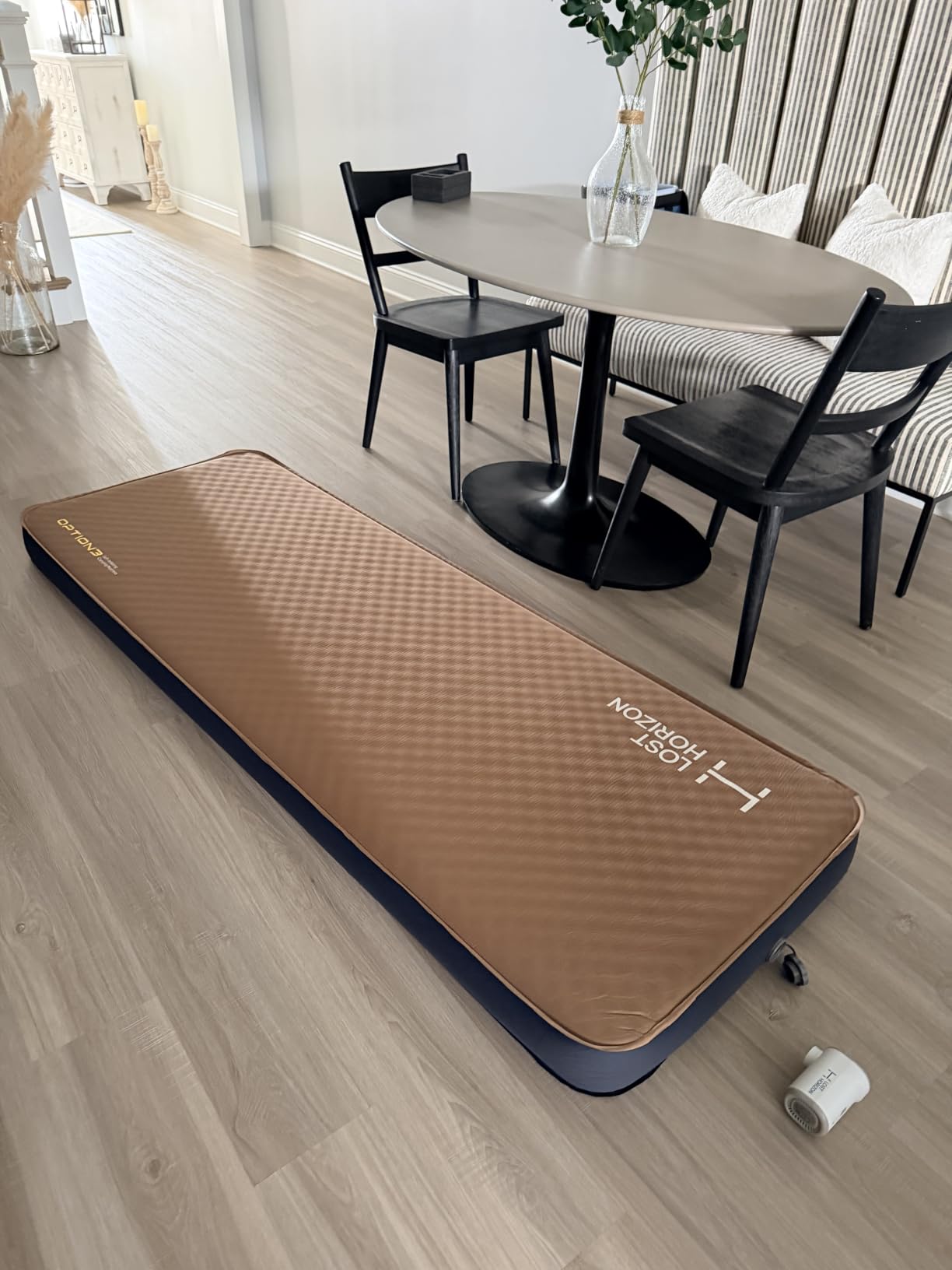
With 1202 ratings at 4.3 stars and 71 percent five-star, the feedback is the most consistent in the group: 71 percent of five-star ratings, an unusually high share, and the comments are about comfort rather than features. The trade-off owners mention is always the same, which is weight, bulk and the difficulty of getting it back into the bag.
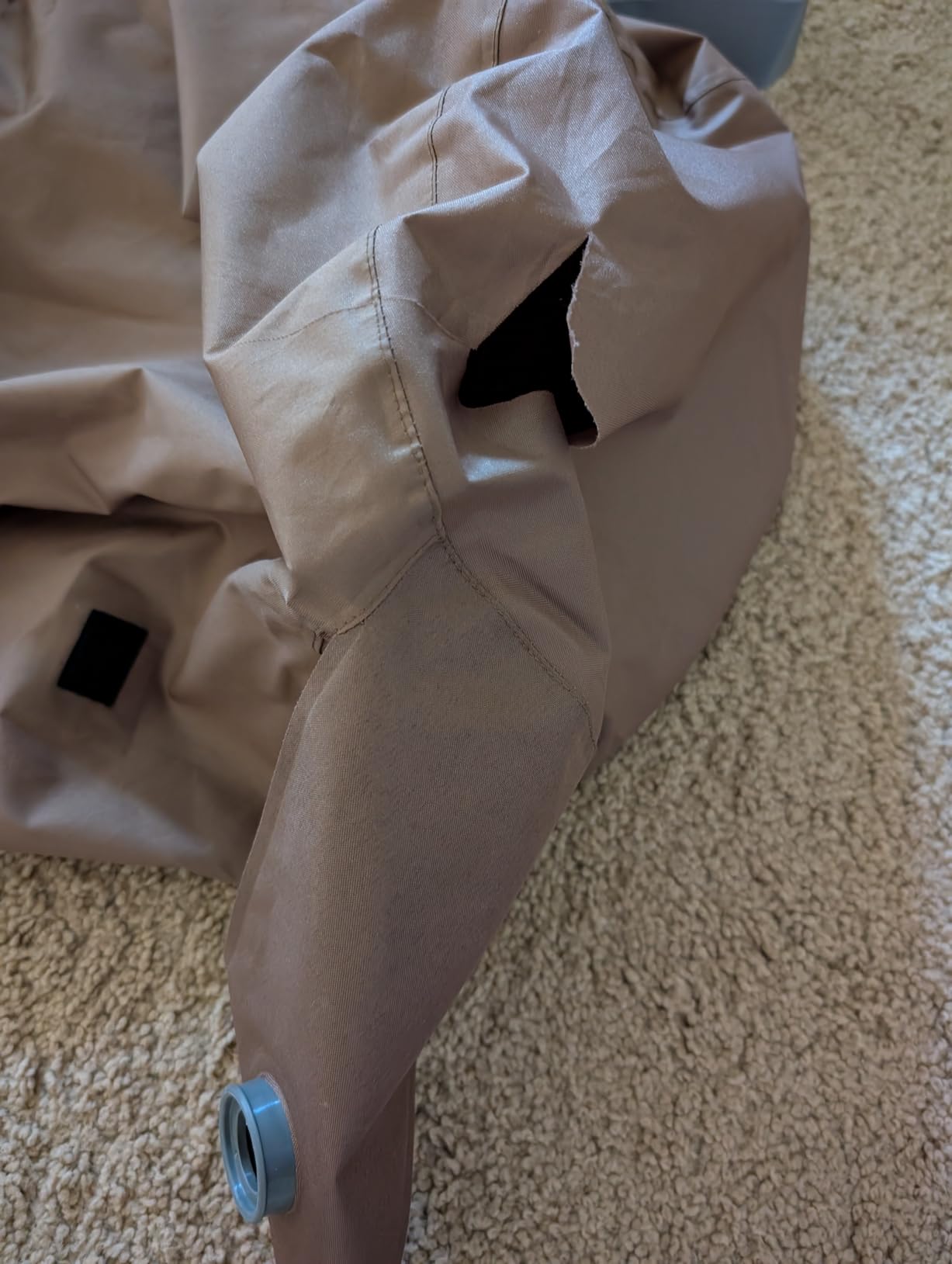
Two further details are worth knowing before you commit. The valve uses a non-standard pump fitting, and the 220-pound weight capacity is the lowest in this roundup, so heavier sleepers should look elsewhere even though the pad itself does not feel like a 220-pound pad.
Who this pad suits
This suits car campers, van dwellers and anyone sleeping on a camping cot who has joint pain and wants the closest thing to a home mattress. The foam-and-air build does not need topping up, and owners report no air loss overnight, which removes the most common nightly annoyance of a thick air pad.
It also suits heavier sleepers within its limit who want both warmth and a soft landing. R-13 insulation means it works in near-freezing conditions without a second mat, which saves a lot of bulk in a vehicle.
Who should skip it
Anyone on foot, without hesitation. At 7.8 pounds this is the heaviest pad here and there is no packing method that changes that. It is also the least convenient to put away: deflation without the optional electric pump is a two-person job, and the valve can bleed air if it is not seated centrally.
It also runs small in width at 25 inches compared with the 27-to-28-inch pads, and the 220-pound limit rules out a large share of the adult population. If you are above that weight, the 800-pound air pads earlier in this list are the practical answer.
How to Choose a Sleeping Pad for Side Sleepers in 2026
How thick should a sleeping pad be for side sleepers?
A sleeping pad for side sleepers should be at least 3 inches thick, and 4 inches or more is ideal. Side sleeping concentrates your weight onto two points, the shoulder and the hip, and a thin pad lets both press through to the ground, which is the pressure that wakes you sore. Thickness is the single biggest factor in side-sleeper comfort, ahead of brand, materials and weight.
Anything at or below 2 inches is a cold-weather pad, not a comfort pad, and no amount of clever inflation will change that. If you can only take one pad on your trip, make the loft 4 inches and find the weight savings somewhere else.
Does width matter as much as thickness?
Width matters differently from thickness, and it is worth a few extra inches. Thickness controls pressure, because it determines how far your hip sits from the ground. Width controls movement, because it determines how far you have to roll before you fall off the edge. A 20-inch pad may be thick enough but will still wake you after your shoulder goes over the side.
Aim for 25 inches or more, and 27 to 28 inches if you move around in your sleep or share the tent. Our other sleeping pad and mattress guides cover the general case; for side sleeping specifically, width is the second decision after thickness.
What R-value do you actually need?
R-value measures how well a pad stops heat flowing into the ground, and it is independent of comfort. A comfortable thick pad can be badly insulated, and an insulated pad can be uncomfortably thin, so treat the two numbers as separate decisions.
- Summer and warm desert ground: R-value of 1 to 2 is enough.
- Spring and autumn, most backpacking trips: R-value of 3 to 4 is the sweet spot.
- Winter and freezing ground: R-value of 5 or above, and the only pads here that reach that are the INVOKER at R-8 and the Lost Horizon Option3 at R-13.
If your pad has no R-value at all, assume it is a three-season comfort layer and add a closed-cell foam mat underneath for cold trips.
Foam, self-inflating or air: which type suits side sleeping?
All three work for side sleepers if the thickness is there, and the trade-off is weight against stability.
- Closed-cell foam is the quietest and most stable option, and the CYMULA 3-inch mat is the best example here. It never needs air, never shifts, and will keep working after a puncture, but it is the heaviest per inch of loft.
- Self-inflating foam cores, like the OGERY and the Lost Horizon Option3, split the difference. You get foam support and quiet, plus an air layer you can top up for firmness, at a weight penalty.
- Air pads give the best thickness-to-weight ratio and the most control over feel. That control is the point for side sleepers: under-inflate slightly and a firm pad becomes a forgiving one. The cost is movement noise and shifting when you roll.
Should you under-inflate a thick air pad?
Yes, and it is the single most useful trick for side sleepers. A pad inflated to its maximum is firm, and firm means your hip pushes the air sideways into the neighbouring chambers rather than being cushioned. Bleeding air out softens the surface and increases the effective loft under the pressure point.
The test is simple. Inflate the pad fully, lie down on your side, then open the valve and let air out in small bursts until your hip feels cushioned rather than sagged. If your hip touches the ground, add air back. Forum threads return to this technique constantly, and it is why so many owners say to soften a pad they thought was too hard.
How can you test a pad before you buy it?
Testing matters more for side sleepers than for anyone else, because comfort here is not something a spec sheet can predict. If you can get to a store, that is ideal. If you cannot, there are still a few things worth doing.
- Read the customer review photos rather than the listing photos, and look specifically for photos of someone lying on their side.
- Check the width and length against your body, and pay more attention to the width than you think you need to.
- Search the reviews for the word noise if a partner shares the tent, and for rocks if you camp on uneven ground.
- Check the packed weight against your trip type before you fall for thickness, because a pad too heavy to carry is a pad you stop bringing.
- If you already own a pad, the cheapest upgrade is a half-length closed-cell foam mat under the shoulder-to-hip line, a fix that shows up in forums as often as any pad recommendation.
Pairing also matters. A thick pad without a pillow that fills the gap between your shoulder and your ear will leave your neck misaligned no matter how good the mattress is, so our guide to knee pillows for side sleepers is worth a look for the same reason. For everything else, see our guides to inflatable sleeping pads, self-inflating sleeping pads and sleeping pads in general, or our broader mattress picks for side sleepers if the trip is a nap rather than a night outside.
Frequently Asked Questions
What is the most comfortable sleeping pad for side sleepers?
For most side sleepers the ZOOOBELIVES Airlive2000 is the most comfortable overall, because its 4-inch full-length air chambers spread weight evenly across the whole surface and its 24.4-inch width stops you rolling off. If you want absolute maximum clearance, the TOBTOS pad at up to 6 inches thick is the most forgiving on hips, and if you want silence rather than loft, the CYMULA memory foam mat never moves or rustles. Thickness is the deciding factor in all three.
How thick should a sleeping pad be for side sleepers?
At least 3 inches, and 4 inches or more is ideal. Side sleeping concentrates your weight onto the shoulder and hip, so a thin pad lets those points press through to the ground and that pressure is what causes soreness. At 2 inches or below you are buying a cold-weather pad rather than a comfort pad. If you can carry only one pad, choose 4 inches of loft and cut weight somewhere else.
What is the best way to sleep if you’re a side sleeper?
Inflate the pad fully first, lie on your side, then bleed air out in small bursts until your hip feels cushioned rather than sagged. Add air back if you touch the ground. Fill the gap between your shoulder and your ear with a pillow so your neck stays in line, and choose a pad at least 25 inches wide so rolling does not put you on the ground. Finally, keep your knees slightly bent rather than stretched straight.
What is a good sleeping mat for side sleepers?
A good mat for side sleepers is a thick, wide sleeping pad with internal baffles or air cells, ideally 3.5 to 4 inches of loft and 25 inches or more in width. Good options range from a self-inflating foam core such as the OGERY, which is quiet and stable, to an air pad such as the TREKOLOGY UL80, which is 4 inches thick at only 750 g. For car camping the foam route, like the CYMULA 3-inch mat, is the quietest option.
Is foam or air better for side sleepers?
Foam is quieter and more stable but heavy; air is lighter, thicker for the weight and adjustable, but moves and rustles. A self-inflating foam core such as the OGERY or the Lost Horizon Option3 gives you both, with foam carrying the load and an air layer on top you can top up for firmness. Whichever you pick, treat foam as the comfort layer and R-value as the separate cold decision, because a thick foam mat is not an insulated winter mat.
The Best Sleeping Pads for Side Sleepers in 2026
After sleeping on all ten, the ranking comes down to what you are carrying. The ZOOOBELIVES Airlive2000 is the best sleeping pad for side sleepers overall, with 4 inches of full-length chambers, a width that stops you rolling and a foot pump that removes the setup argument. The TREKOLOGY UL80 is the pick for backpacking at 750 g, and the TOBTOS 6-inch pad is the answer for anyone whose hips hurt on everything else.
Beyond that, foam and hybrid builds win on quietness: the CYMULA mat for car camping, the OGERY for stability, and the Lost Horizon Option3 for cold ground and cot setups. Whichever you choose, inflate it fully, then bleed air until your hip feels cushioned. That one habit does more for side-sleeper comfort than any spec on this list.