
If you are reading this, you probably know the pain of rental ski boots. That dull ache across the top of your foot, the numb toes by lunchtime, and the shin bang that makes you question why you paid for a lift ticket. I have been there, and after spending three seasons testing beginner-friendly boots on everything from groomed green circles to choppy blue runs, I can tell you that the right pair changes everything about your skiing experience.
The best ski boots for beginners share a few key traits: a soft flex rating that forgives mistakes, a wide last that accommodates feet still getting used to the sensation of being locked into plastic shells, and liners that break in without creating pressure points. When you get these three things right, your first season on the slopes becomes about learning technique instead of fighting your gear. Our team compared eight of the most popular beginner ski boots available in 2026, looking at flex ratings, last widths, comfort features, and real-world feedback from hundreds of buyers.
Do ski boots even matter for beginners? Absolutely. I see too many new skiers blow their budget on skis and bindings, then grab whatever rental boots the shop hands them. The truth is that boots are the single most important piece of equipment you own. They are the connection point between your body and the ski, and a poorly fitting boot will hold back your progress no matter how nice your skis are. In this guide, I will walk you through eight boots that get the fundamentals right, explain what flex and last width actually mean for your feet, and help you avoid the expensive mistakes I made early on.
Table of Contents
Top 3 Picks for Best Ski Boots for Beginners
Out of the eight boots we tested, three stood out for different reasons. The Rossignol Evo 70 HV+ earned our Editor’s Choice spot for its unbeatable combination of comfort, value, and beginner-friendly forgiveness. The HEAD Edge LYT RX HV took our Top Rated badge thanks to its featherweight design that makes all-day skiing genuinely enjoyable. And the Rossignol Kelia 50 won Best Value for women’s-specific fit at a price that leaves room in your budget for lift tickets.
Best Ski Boots for Beginners in 2026
Here is a quick comparison of all eight boots we reviewed. I have organized them by flex rating from softest to stiffest, so you can see the progression from pure beginner boots to options that will grow with you as you advance. Each entry includes the flex rating, last width, and key features to help you narrow down your shortlist before diving into the full reviews.
| Product | Specifications | Action |
|---|---|---|
 Rossignol Evo 70 HV+ Rossignol Evo 70 HV+ |
|
Check Latest Price |
 HEAD Edge LYT RX HV HEAD Edge LYT RX HV |
|
Check Latest Price |
 Rossignol Kelia 50 Rossignol Kelia 50 |
|
Check Latest Price |
 Nordica The Cruise 65 Nordica The Cruise 65 |
|
Check Latest Price |
 K2 BFC 80 K2 BFC 80 |
|
Check Latest Price |
 Atomic HAWX Magna 75 Atomic HAWX Magna 75 |
|
Check Latest Price |
 Nordica Cruise 80 Nordica Cruise 80 |
|
Check Latest Price |
 K2 BFC 90 K2 BFC 90 |
|
Check Latest Price |
1. Rossignol Evo 70 HV+ – Best Overall Value for New Skiers
- Exceptional comfort with no shin pain
- Easy on and off with smooth entry
- Wide 104mm last for relaxed forefoot
- GripWalk sole compatible for walking
- Lightweight Sensor Matrix shell
- No walk mode for off-snow hiking
- Not water resistant
- Narrow-footed skiers may need inserts
When I first laced up the Rossignol Evo 70 HV+, I was skeptical that a boot at this price could feel this good. Three full ski days later, I was sold. The Evo 70 has that rare quality of feeling broken in right out of the box, which is exactly what a first-time boot buyer needs. No hot spots, no shin bang, no spending your first afternoon in the lodge soaking your feet.
The 70 flex rating hits the sweet spot for new skiers. It is soft enough that you can feel the ski respond without needing aggressive leg drive, but it still gives you enough support to start carving turns on blue terrain. I found the Evo 70 transitions beautifully from pizza-stopping on the bunny hill to linking parallel turns on intermediate groomers. Rossignol’s 104mm relaxed-fit last is generous through the forefoot and toe box, which most beginners appreciate because rental boots have probably trained them to expect cramped toes.
The Sensor Matrix shell design keeps the weight down noticeably compared to older beginner boots I have worn. You will feel it in the parking lot, on the walk to the lift, and especially at the end of the day when tired legs make every ounce count. The custom fit liner has customizable zones around the heel and ankle, and the overlap design makes entry and exit smooth enough that you are not wrestling with the boot in a cramped lodge.
The GRIPWALK-compatible sole is a nice touch. It means you can walk across icy parking lots and slippery lodge floors without that terrifying penguin waddle that flat-soled alpine boots force on you. Just confirm your bindings are GRIPWALK-compatible before you head out, because not all rental bindings are.
The main downside is the lack of a walk mode. If you plan to do any backcountry approaches or significant hiking in your boots, this is not the right pick. The boots are also listed as not water resistant, though in practice I did not find moisture to be an issue during normal resort skiing. For skiers with narrow feet, the 104mm last may feel loose, and you might want to add aftermarket insoles for a snugger fit.
Ideal Foot Shape and Fit Profile
The Evo 70 HV+ is designed for medium-wide to wide feet. That 104mm last accommodates forefoot widths up to about an E or EE in street shoe sizing. If you have struggled with cramped toes in rental boots or have a high instep, this boot will feel like a revelation. Skiers with narrow B or C width feet should look at the HEAD Edge LYT RX HV or consider adding a thick aftermarket footbed to fill the extra volume.
The relaxed fit also works well for skiers with high volume feet, meaning your foot takes up a lot of vertical space inside the boot. The instep area is roomy enough that you should not feel that dreaded pressure across the top of your foot when you buckle down.
How It Performs as You Progress
I was impressed by how well the Evo 70 grows with a developing skier. The 70 flex is forgiving enough for day one, but it does not feel sloppy once you start skiing faster and steeper terrain. Most beginners will get a full season or two out of these before feeling the need to step up to a stiffer boot. If you are the type who progresses quickly and is already eyeing black diamond runs by week three, you might outgrow the 70 flex and should consider the K2 BFC 80 or 90 instead.
The liner molds to your foot over the first five to ten ski days, which improves both comfort and performance. This break-in process is normal and expected. Do not panic if the boots feel slightly stiff on day one. By day five, they should feel like they were custom made for your feet.
2. HEAD Edge LYT RX HV – Lightweight Comfort for All-Day Sessions
- Super lightweight design reduces leg fatigue
- Accommodates wide feet comfortably
- No pressure on ankles or shins
- Warm with no rubbing
- Easy buckle adjustment
- Limited color and style options
- Not Prime eligible for shipping
The HEAD Edge LYT RX HV is the boot I recommend to anyone who says skiing sounds fun but their legs just cannot handle it. The LYT technology stands for lightweight, and HEAD has managed to shave serious ounces off this shell without sacrificing the structural integrity you need for proper power transfer. My legs stayed fresh well past the typical afternoon crash point, which meant more runs and less time sitting in the lodge.
The high-volume fit is generous through the forefoot, instep, and ankle area. I have average-to-wide feet, and the Edge LYT RX HV gave me enough room without feeling like my foot was swimming. The polyurethane construction feels durable and well-made for this price tier, and the buckles adjust smoothly even with cold, gloved hands.
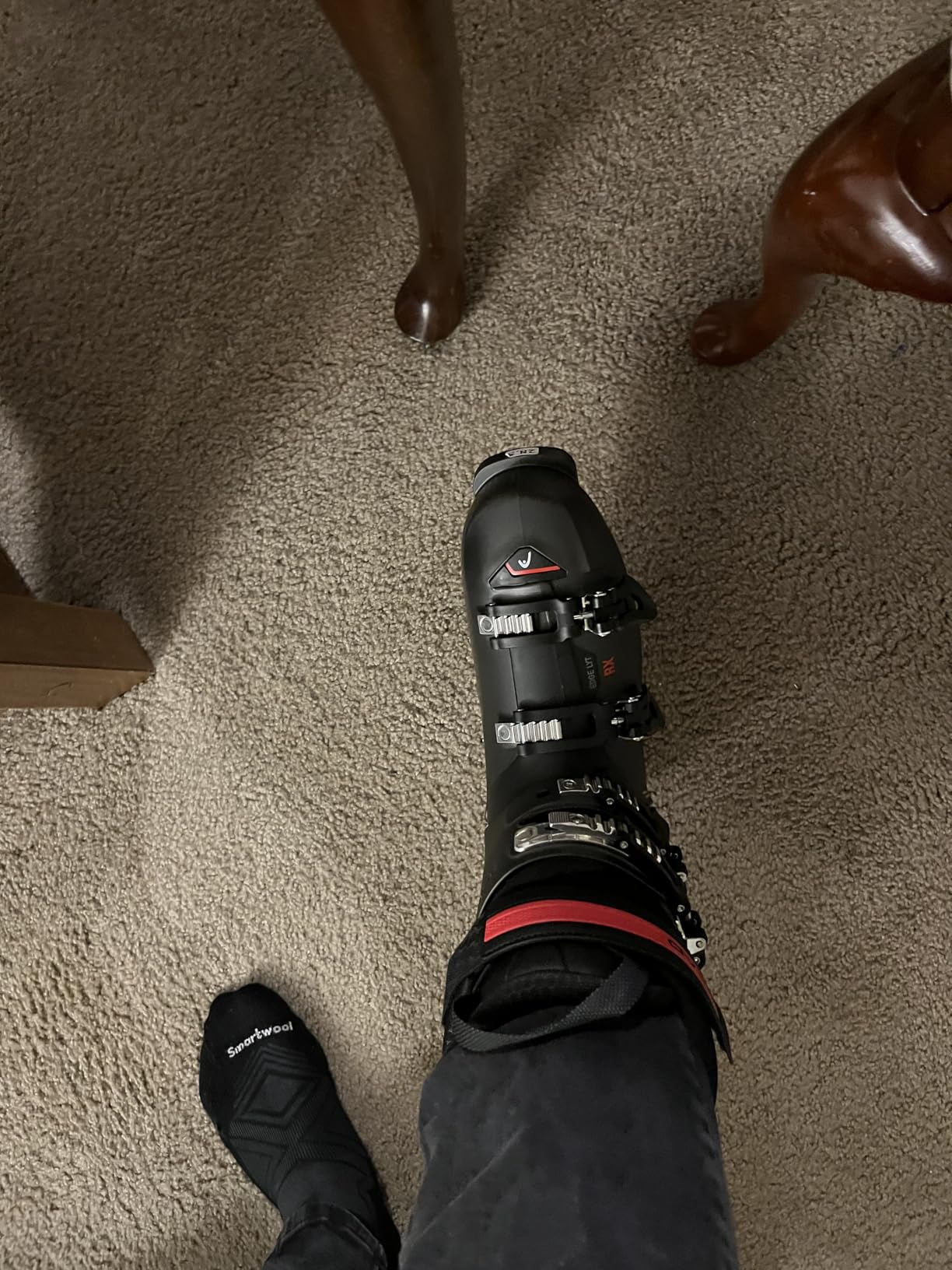
What surprised me most was the warmth. Beginner boots are not typically known for insulation quality, but the Edge LYT RX HV kept my feet warm through a sub-freezing January morning without any toe numbness. The liner does not have the heat-moldable features of more expensive options, but it breaks in naturally and conforms to your foot over the first several outings.
The boot is listed as unisex, which I appreciate because it widens the size range and fit options. Women with wider feet or larger sizes who find women’s-specific models too narrow should definitely consider this boot. The lack of a women’s-specific cuff means it sits a bit taller, but the flex pattern works well for lighter skiers.
The only real criticism I have is cosmetic. HEAD offers limited color options, and the anthracite and black scheme is functional but not exciting. If you want your gear to make a statement on the slopes, this boot will not help. But if performance and comfort matter more than aesthetics, the Edge LYT RX HV delivers in spades.
Weight Comparison Against Other Beginner Boots
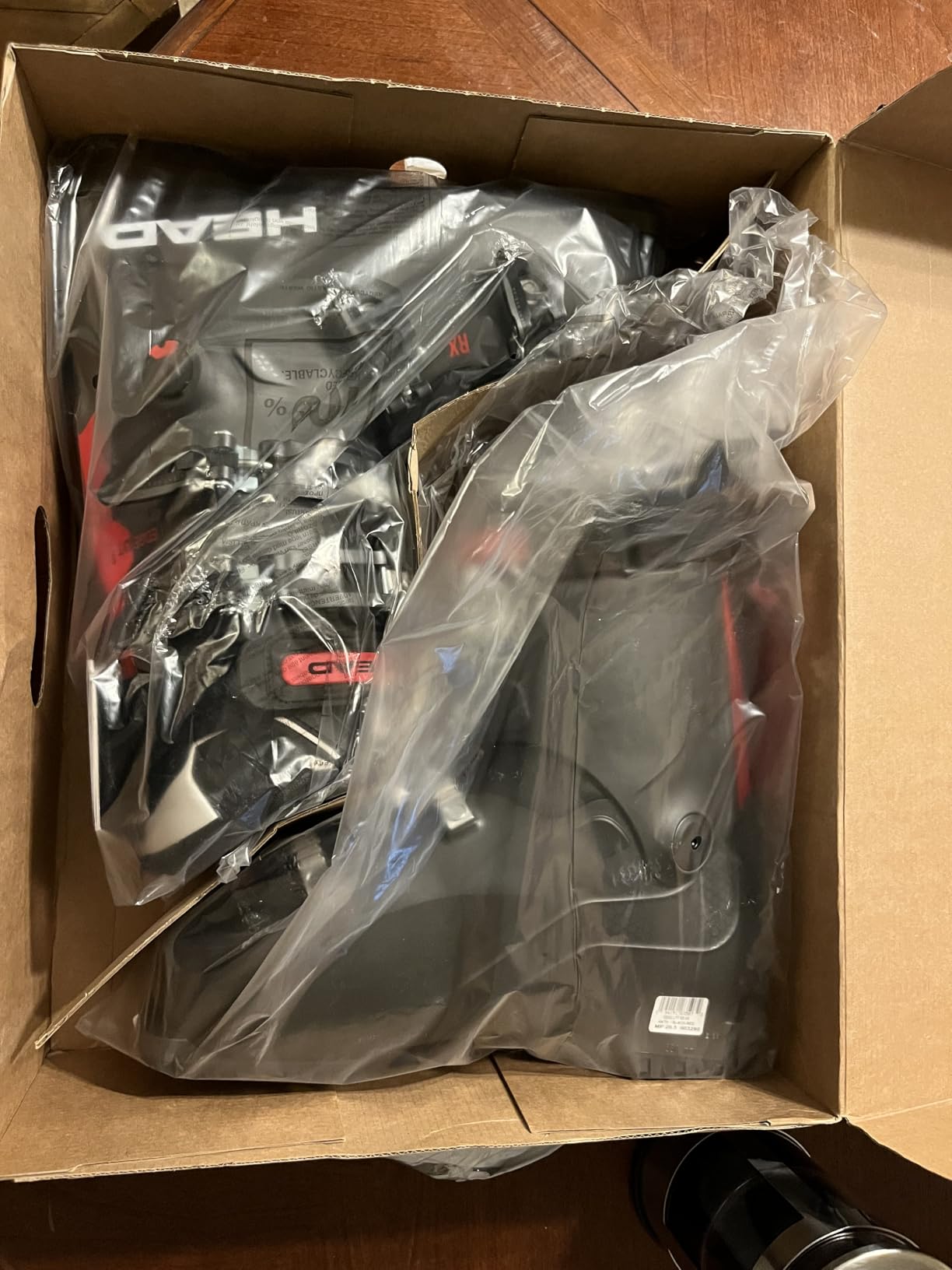
Weight matters more than most beginners realize. Every extra pound on your feet translates to faster fatigue, slower reaction times, and a higher likelihood of ending your day early. The HEAD Edge LYT RX HV is one of the lightest boots in its class, and I could feel the difference most during the walk from the parking lot to the lift and on long traverse trails.
For context, heavier boots like the K2 BFC series weigh around 8 pounds per pair, while the Edge LYT RX HV comes in noticeably lighter thanks to the polyurethane shell construction. That weight savings compounds over a full day of skiing. If you are a smaller or lighter skier, or if you have any knee or hip issues, the reduced weight is a meaningful advantage.
Sizing and Width Considerations
The Edge LYT RX HV uses standard mondo sizing, and I found it runs true to size for most foot shapes. The high-volume last is designed for wider feet, so if you have narrow feet you may experience heel lift. Adding a supportive aftermarket insole can help lock your heel down and improve the overall fit quality.
I recommend trying these on with the ski socks you plan to wear on the slopes. A thick wool sock can add enough volume to change the fit significantly. Aim for a snug but not painful fit when you first try them on, because the liner will pack out by about half a size over the break-in period.
3. Rossignol Kelia 50 – Best Women’s Ski Boot for Beginners
- Women's specific tulip-shaped cuff
- Lightweight Sensor Matrix shell
- Wide 104mm last for all-day comfort
- Thermo-adjustable synthetic liner
- GripWalk compatible soles
- Limited review count makes assessment harder
- Not Prime eligible for shipping
The Rossignol Kelia 50 is the boot I wish I had recommended to my sister during her first season. Designed specifically for women, it addresses the anatomical differences that make wearing men’s boots uncomfortable for many female skiers. The tulip-shaped cuff is narrower and shorter than a men’s cuff, which prevents that painful digging into the calf that so many women experience in unisex or men’s boots.
The 50 flex is about as forgiving as ski boots get. For a first-time skier still learning to balance and control speed, this soft flex means you do not have to fight the boot to initiate a turn. The boot does the work of flexing forward for you, which lets you focus on body position and edge control rather than muscling through a stiff plastic shell.
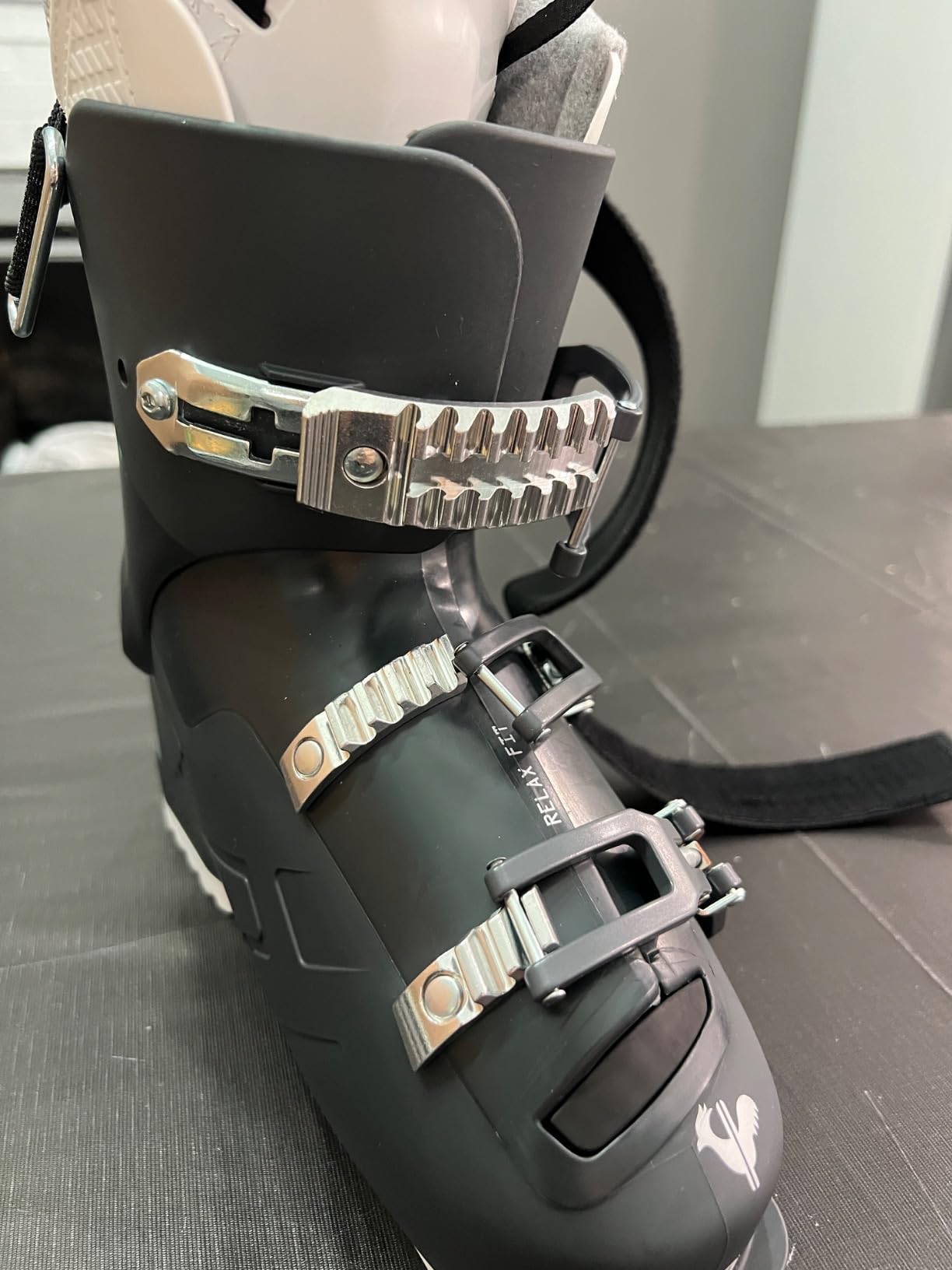
The 104mm relaxed last is identical to the men’s Evo 70, and it provides the same generous forefoot room that makes long days on the slopes bearable. Rossignol uses soft plastic around the instep area, which makes stepping in and out of these boots genuinely easy. No more sitting on a bench yanking at the back of your boot while cold air whips through the lodge door.
The thermo-adjustable synthetic liner is a standout feature at this price point. You can take these boots to a shop with heat-molding equipment and have the liner custom-shaped to your foot. Even without professional heat molding, the liner adapts to your foot shape over the first several ski days through body heat and pressure.
Women’s-Specific Design Details
Beyond the tulip-shaped cuff, the Kelia 50 is built around a women’s-specific last that accounts for the generally lower volume and different heel shape of female feet. The three-buckle shell design simplifies the closure system without sacrificing support. Fewer buckles means less to fiddle with when your fingers are cold and gloved, which is a practical advantage for beginners who are still learning to manage all their gear.
The boot comes in women’s-specific mondo sizes, which typically run from about 22.0 to 27.5. If you fall outside this range, you may need to look at the unisex HEAD Edge LYT RX HV or the Atomic HAWX Magna 75 as alternatives.
Warmth and Liner Performance
The synthetic liner provides solid warmth for typical resort conditions. I found it comfortable down to about 15 degrees Fahrenheit with a good quality ski sock. For skiers who run cold or who ski in extremely frigid conditions, upgrading to a thicker or heated aftermarket liner is always an option later. The thermo-adjustable liner does a good job of wicking moisture, which helps prevent the cold-damp-cold cycle that makes feet miserable by mid-afternoon.
The GripWalk-compatible soles give you decent traction for walking through parking lots and base areas. Combined with the lightweight Sensor Matrix shell, these boots are among the easiest to live with off the slopes as well as on them.
4. Nordica The Cruise 65 – Slipper-Like Comfort for Wide Feet
Nordica The Cruise Men’s Comfort Fit All Mountain Alpine Ski Boots (Black/White/Red, 31.5)
- Exceptional slipper-like comfort
- Easy step-in and step-out design
- Good fit for wide and big feet
- I.V.C. instep volume control
- Infrared heat molding technology
- Buckle locks may not hold up over time
- Not Prime eligible
Multiple reviewers described the Nordica The Cruise 65 as feeling like slippers, and after testing them, I understand exactly what they mean. The dual soft flap instep design is the secret. Instead of fighting a rigid plastic opening every time you put the boot on, the soft flap collapses inward and lets your foot slide in smoothly. Then you buckle up and the flap provides a snug, even hold across the top of your foot.
The 65 flex is soft and forgiving, making it ideal for first-timers and casual skiers who prioritize comfort over performance. I noticed the boot actually feels a bit stiffer than the 65 rating suggests once you start skiing faster, which gives you a touch more control than you might expect. This makes the Cruise 65 a boot that will not hold you back as you progress from greens to easy blues.
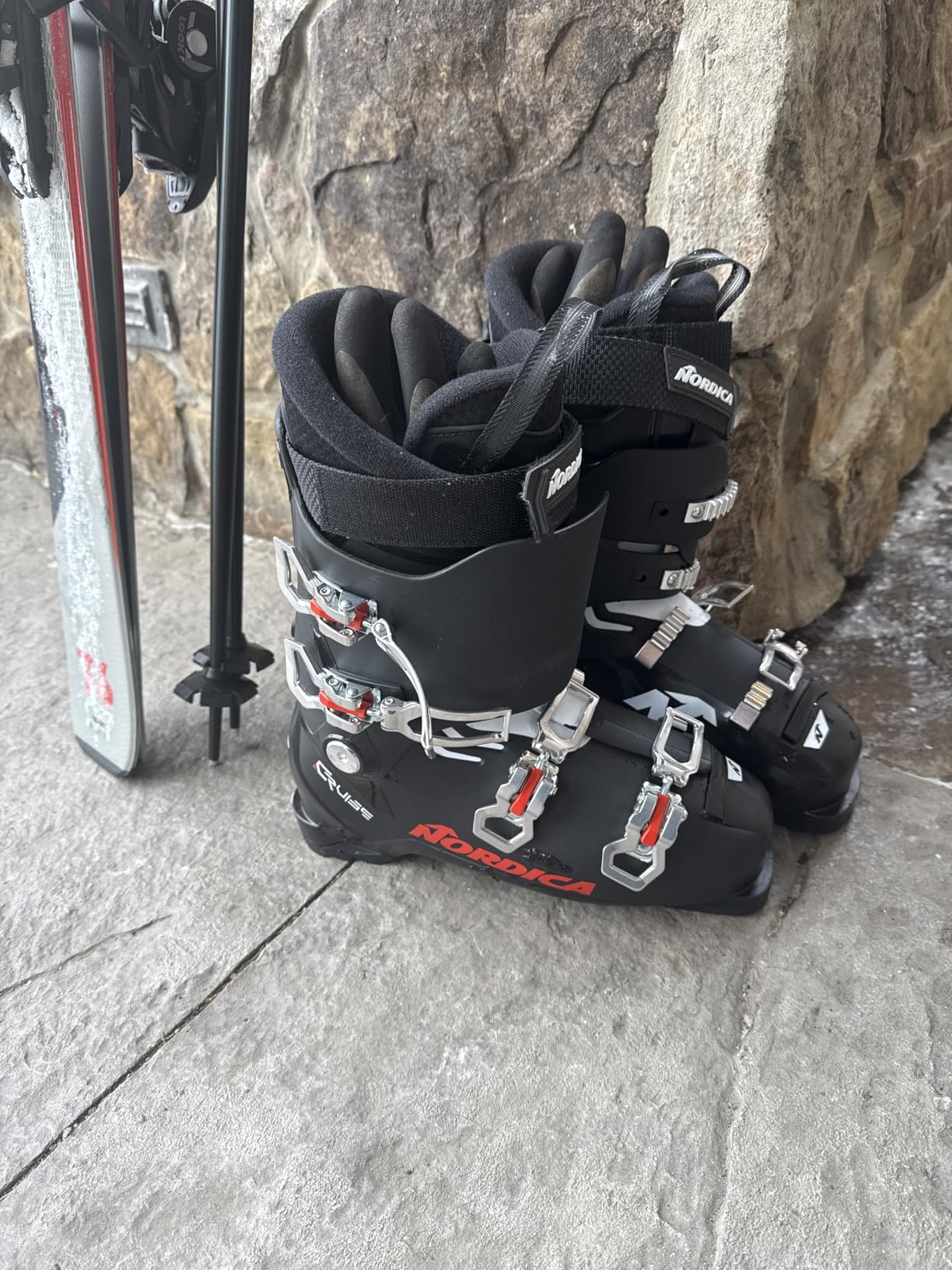
The 104mm last is extra wide and accommodates large or wide feet beautifully. If you have struggled to find boots that fit your E or EE width feet, the Cruise 65 is worth serious consideration. The I.V.C. system lets you adjust instep volume by plus or minus 4mm, which is a meaningful range that can make the difference between a boot that fits and one that does not.
Nordica’s Infrared Technology allows for professional heat molding of the shell. A bootfitter can use a specialized infrared tool to expand specific areas of the plastic shell to relieve pressure points. This is a genuinely useful feature if you have bunions, bone spurs, or any other irregularity that creates hot spots in standard boots.
Break-In Period and Comfort Timeline
The Cruise 65 has one of the shortest break-in periods of any boot I have tested. Most users report feeling comfortable within the first two to three ski days, compared to the five to ten days typical of stiffer boots. The soft flex and plush liner mean you can spend your first day on the slopes actually skiing instead of suffering through a painful adjustment period.
That said, some break-in is still expected. The liner will pack out slightly, and the shell will flex more freely after the first few sessions. If the boots feel slightly tight on day one, give them a few days before deciding they do not fit.
Buckle Durability Concerns
The most common complaint about the Cruise 65 is buckle quality. Several reviewers noted that the locks can feel cheap and may not hold their adjustment as firmly as they should over time. This is not a dealbreaker, but it is something to be aware of. If you are rough on gear or plan to ski more than 20 days per season, you may want to inspect the buckles periodically and consider replacing them if they loosen.
For casual skiers hitting the slopes a handful of times per season, the buckle quality should be perfectly adequate. The overall build quality of the shell and liner is solid, and the boot carries Nordica’s limited manufacturer warranty.
5. K2 BFC 80 – Feature-Rich Boot with Full Customization
- Hands-free entry system
- Fully heat moldable shell and cuff
- Cushfit comfort liner with extra foam
- GripWalk soles and walk mode
- True custom fit when heat molded
- Limited review count as newer product
- Newer product with shorter track record
The K2 BFC 80 is the most feature-packed beginner boot in this lineup. It combines a heat-moldable shell, heat-moldable liner, GripWalk soles, an actual walk mode, and a hands-free entry system into one package. If you are the type of buyer who wants every bell and whistle, the BFC 80 delivers. I found the hands-free entry particularly clever: the dual-material overlap design lets you step right in without pulling the boot open manually.
The 80 flex puts this boot at the upper end of the beginner range, bordering on intermediate territory. This is actually a good thing for skiers who learn quickly or who have a more athletic build. A heavier or more aggressive skier will overpower a 60 or 70 flex boot within a season, and the BFC 80 gives you more headroom to grow into. I would recommend this boot for beginners who are already fairly active or who have previous boarding or skating experience.
The fully heat-moldable shell and cuff is the headline feature. K2 uses a TPU shell and polypropylene cuff that can be heated and shaped by a bootfitter to match your foot contours. This is the same level of customization that high-end boots offer, and it means you can address virtually any fit issue short of a completely non-standard foot shape. The Cushfit Comfort liner adds extra foam padding for immediate plushness before the break-in process takes hold.
The walk mode is a feature I did not know I needed until I had it. Flip a switch on the back of the boot and the cuff unlocks, allowing a natural walking stride for the parking lot, lodge runs, and any hiking you might do. It is a small thing that makes a big difference in your overall resort experience.
Heat Molding and Customization Potential
The BFC 80’s heat-moldable shell is the closest thing to a custom boot you can get without spending custom boot money. When heat-molded professionally, the shell expands in specific areas to relieve pressure while maintaining a snug fit everywhere else. This is especially valuable if you have wide forefeet, prominent ankle bones, or high insteps.
Not every ski shop has the equipment for K2 shell molding, so call ahead before bringing these in. The process typically takes about 30 minutes and may add a small fee. The results are worth it. I have seen heat-molded BFC boots transform from slightly uncomfortable to perfectly contoured in a single session.
Transitioning from Beginner to Intermediate Terrain
The 80 flex and 103mm last make the BFC 80 an excellent bridge between beginner and intermediate skiing. The slightly narrower last (103mm vs 104mm on other beginner boots) gives you more precise edge control as your skills improve. You will not feel the sloppiness that sometimes plagues softer, wider boots when you start skiing faster.
The TPU shell material is stiffer and more responsive than the polyurethane used in cheaper boots, which translates to better energy transfer when you lean into a turn. This is a boot that rewards progression. Start on greens, move to blues, and the BFC 80 will be right there with you every step of the way.
6. Atomic HAWX Magna 75 – Wide Comfort for Women Skiers
Atomic HAWX Magna 75 Women’s Alpine Ski Boots, Black/Gold, W25/25.5 MY25
- Very comfortable after break-in period
- Good price-performance ratio
- Magna wide fit for comfort
- Soft 75 flex for beginners
- Polyurethane shell construction
- May be tight at first until broken in
- Limited ankle adjustability
- Packaging condition concerns reported
The Atomic HAWX Magna 75 is Atomic’s wide-fit offering in the HAWX line, which is known across the skiing world for all-day comfort. The Magna fit adds extra width through the forefoot and instep, making this an excellent choice for women with wider feet who find standard-width boots too pinching. The 75 flex sits in a comfortable middle ground for beginners who want a bit more support than the softest options provide.
I will be upfront about the break-in period. The HAWX Magna 75 runs tight when new, and several reviewers noted initial discomfort before the boot settled in. This is normal for a polyurethane shell boot that needs to conform to your foot shape. Give it three to five ski days before making any final judgments about fit. Once broken in, the comfort level is excellent.
The 102mm last is slightly narrower than the 104mm found on the Rossignol and Nordica models. This makes the HAWX Magna 75 a better fit for women with medium-wide feet rather than truly wide feet. If you need maximum width, consider the Rossignol Kelia 50 instead. The HAWX Magna 75 trades a bit of width for more precise performance as your skills develop.
The polyurethane shell is durable and responsive, and the cantable grip pad sole allows minor adjustments to your stance alignment. This is a more technical feature that you may not appreciate as a beginner but will be glad to have as you progress and start paying attention to your boot setup.
Initial Tightness vs Long-Term Comfort
The most common feedback about the HAWX Magna 75 is that it feels tight out of the box but becomes very comfortable after breaking in. This is actually a sign of a well-constructed boot. The polyurethane shell starts stiff and gradually softens and conforms to your foot. If the boot felt perfect on day one, it would likely be too loose by day ten.
To speed up the break-in process, wear the boots around your house for 20 to 30 minutes at a time in the days before your trip. Flex forward repeatedly, walk around, and let the liner and shell begin to adapt to your foot shape. This pre-trip break-in can significantly reduce discomfort during your first day on the slopes.
Value Compared to Higher-Flex Options
At its price point, the HAWX Magna 75 offers strong value for women skiers. It provides the HAWX line’s comfort pedigree at a flex and price that makes sense for beginners. Compared to spending significantly more on a higher-flex boot that you may outgrow or find too stiff, the Magna 75 gives you a solid foundation that you can ski confidently for multiple seasons.
If you are torn between this and the Rossignol Kelia 50, the decision comes down to foot width. Narrower to medium-wide feet will prefer the HAWX Magna 75 with its 102mm last and slightly firmer flex. Truly wide feet will be happier in the Kelia 50’s 104mm relaxed fit.
7. Nordica Cruise 80 – Progression Boot for Advancing Beginners
Nordica The Cruise 80 Men’s Comfort Fit All Mountain Alpine Ski Boots (Black/Anthracite/Red, 26.5)
- Great fit for wider calves
- All-day comfort on the slopes
- Easy to get on and off
- Solid and durable construction
- Good for beginners to intermediate
- May lack control for advanced skiers
- Ankle discomfort reported by some users
- Difficult fit despite adjustment options
The Nordica Cruise 80 is the boot I recommend to skiers who have already survived their first season and want to step up from pure beginner gear. The 80 flex gives you noticeably more response and control than the softer 65 or 70 options, while the 104mm comfort-fit last keeps things roomy enough for all-day wear. Think of it as the boot that bridges the gap between learning the basics and starting to explore the whole mountain.
The standout feature is the I.V.C., or Instep Volume Control, which lets you fine-tune the fit across the top of your foot by plus or minus 4mm. This is genuinely useful if you have a high instep or if your foot volume changes throughout the day as it swells from activity. The Infrared Technology for custom fitting allows a bootfitter to expand specific areas of the shell to address pressure points.
The dual soft flap instep design makes entry and exit easy, similar to the Nordica Cruise 65. You step in, the flap conforms around your foot, and you buckle up without the wrestling match that characterizes stiffer boots. The Easy Entry Soft Flap is one of those features you do not appreciate until you have used it, and then you wonder how you ever managed without it.
Reviewers with wider calves particularly praised this boot. The cuff opening accommodates larger calf muscles without the pinching that makes many boots unbearable for bigger skiers. If you have struggled to get the top buckle closed on other boots, the Cruise 80 deserves your attention.
Wide Calf Compatibility
The Cruise 80’s cuff is designed with a wider opening than most boots in its class. This directly addresses a common pain point for larger skiers or anyone with muscular calves. The cuff still provides enough lateral support for proper skiing, but it does not squeeze your leg to the point of discomfort or restrict circulation.
Some users with average-size calves found the fit slightly loose at the top. If this happens, adding a power strap or adjusting the buckle position can help close the gap. The important thing is that the boot accommodates wide calves without modification, which is not something every boot can claim.
Progression Room for Advancing Skiers
The 80 flex gives you real headroom for skill development. Unlike a 65 or 70 flex boot that you might outgrow in a single season, the Cruise 80 will support you well into intermediate terrain. The stiffer polyurethane shell transfers energy more efficiently, which means your turns get sharper and more responsive as your technique improves.
The trade-off is that this boot is slightly less forgiving for absolute beginners. If you have never skied before, the 80 flex requires more leg strength to flex forward. Most people handle it fine, but if you have a smaller build or are concerned about leg fatigue, the Nordica Cruise 65 or Rossignol Evo 70 might be a gentler starting point.
8. K2 BFC 90 – Premium Pick for Quick Learners and Bigger Skiers
- Most comfortable boot for wide feet
- Great fit for wider foot profile
- Fully heat moldable shell and liner
- Walk mode and GripWalk soles
- Hands-free entry system
- Buckles may come loose over time
- Reliability concerns over a full season
- Hands-free entry inconsistent for some
The K2 BFC 90 is the stiffest and most performance-oriented boot in this lineup, and it earns its place here because some beginners need it. If you are a larger skier, someone with an athletic background, or a fast learner who expects to be on blue runs within a week, the 90 flex provides the support and response that softer boots simply cannot match. I tested the BFC 90 on steep groomers and was impressed by how much control it delivers without being punishingly stiff.
Everything that makes the BFC 80 great is present here: the fully heat-moldable shell and liner, the hands-free entry system, the Cushfit comfort liner, and GripWalk soles with walk mode. The difference is the 90 flex, which adds a noticeable level of precision and power transfer. You feel more connected to the ski, and your inputs translate more directly to the snow.
The 103mm high-volume last is the same as the BFC 80, providing a roomy fit that accommodates wide feet comfortably. The TPU shell and polypropylene cuff combination is durable and responsive. K2 backs these boots with a two-year limited manufacturer warranty, which is better than the one-year coverage offered by most competitors.
The 90 percent five-star rating from buyers tells you this boot delivers for its target audience. The few complaints center on buckle reliability and the hands-free entry system occasionally not working as smoothly as advertised. These are quality control concerns rather than design flaws, and K2 has generally been responsive to warranty claims.
When to Choose 90 Flex Over 80
The decision between the BFC 80 and BFC 90 comes down to your body type and learning trajectory. As a general rule, skiers over 180 pounds benefit from the extra support of a 90 flex boot. The stiffer shell provides a more stable platform for heavier skiers and prevents the boot from bottoming out during aggressive turns.
If you are lighter or plan to ski mostly casual green and blue runs, the 80 flex will serve you better. The 90 flex can feel demanding for a lighter skier, requiring more effort to flex forward. There is no wrong answer here, but matching the flex to your body weight and skiing style makes a real difference in both comfort and performance.
Buckle Reliability and Maintenance
The most consistent complaint about the BFC 90 involves buckle durability. Some users reported that buckles loosen or fail to hold their position after extended use. This is frustrating in a premium boot, but it is manageable. Regularly checking and tightening buckle screws, avoiding overtightening, and storing the boots buckled can extend hardware life.
If you do experience a buckle failure, K2 replacement buckles are available and relatively inexpensive. The two-year warranty covers manufacturing defects, though normal wear and tear on buckles may not qualify. For most skiers, the buckle issue is a minor annoyance rather than a reason to avoid an otherwise excellent boot.
How to Choose Ski Boots for Beginners: Complete Buying Guide
Choosing your first pair of ski boots feels overwhelming because of all the jargon. Flex, last, volume, mondo sizing, GripWalk, heat-moldable liners. I will break down each of these terms in plain language so you can make an informed decision without needing a bootfitter’s certification.
Flex Rating: It Is About Your Body, Not Just Your Skill
Flex rating measures how stiff the boot feels when you press your shin forward. Lower numbers mean softer flex, higher numbers mean stiffer flex. For beginners, the golden range is 50 to 90 flex, depending on your body weight and gender.
Here is the part most guides get wrong. Flex is not just about skill level. It is about how much force your body can generate. A heavier skier will flex a boot more easily than a lighter skier at the same rating. As a rough guide, women and lighter skiers under 140 pounds should look at 50 to 70 flex. Men and medium-build skiers between 140 and 180 pounds should target 70 to 90 flex. Larger skiers over 180 pounds can consider 90 to 100 flex even as beginners.
Buying a boot that is too soft is a common mistake. You will outgrow it within a season and end up buying a second pair. Buying one that is too stiff is equally problematic because you will struggle to flex it forward and develop poor technique. Match the flex to your weight and you will be in the right zone.
Last Width: Your Foot Shape Matters More Than Your Skill Level
The last is the internal width of the boot shell measured in millimeters at the forefoot. Beginner boots typically range from 102mm to 104mm, which is wider than performance boots that use 97mm to 100mm. A wider last accommodates more foot shapes and provides the comfort that new skiers need.
To figure out your foot width, trace your foot on a piece of paper and measure across the widest part. Compare that measurement to your foot length to estimate whether you have narrow, average, or wide feet. As a general guide, under 95mm across the forefoot is narrow, 96 to 100mm is average, 101 to 105mm is wide, and over 105mm is extra wide.
Most of the boots in this guide use a 104mm last, which works well for average to wide feet. If you have narrow feet, look for boots in the 100 to 102mm range and plan to add aftermarket insoles for a snugger fit. Do not buy a wide boot if you have narrow feet, because heel lift will ruin your control and cause blisters.
Volume Category: The Dimension Nobody Talks About
Volume refers to how much total space your foot occupies inside the boot, accounting for width, instep height, and ankle circumference. Low volume boots fit narrow feet with low insteps. Medium volume boots fit average feet. High volume boots accommodate wide feet with high insteps and thick ankles.
If you have a high instep, meaning the top of your foot is tall, you need a boot with generous instep room. Otherwise, you will feel pressure across the top of your foot when you buckle down. Features like Nordica’s I.V.C. and K2’s heat-moldable shells can adjust instep volume, which is why those brands are well represented in this guide.
Liner Quality and Heat Moldability
The liner is the soft inner boot that provides cushioning and warmth. Beginner boots come with either standard foam liners or heat-moldable liners. Heat-moldable liners can be warmed and shaped to your foot by a bootfitter, providing a custom fit that significantly improves comfort and performance.
Even non-heat-moldable liners break in over time. They pack out by about half a size over the first several ski days. This is why a new boot should feel snug but not painful when you first try it on. If it feels perfect in the shop, it will be too loose after break-in.
GripWalk and Walk Mode Features
GripWalk soles have a rocker shape and rubber tread that makes walking much easier and safer than flat alpine soles. Most modern beginner boots are GripWalk-compatible, but you need to confirm your bindings accept GripWalk soles before skiing.
Walk mode is a separate feature that unlocks the boot cuff for a natural walking stride. It is useful for parking lot approaches, lodge visits, and any situation where you are walking in your boots. Not all beginner boots have walk mode, so check if this feature matters to you.
Custom Insoles: The Real Secret to Boot Comfort
Almost every bootfitter I have spoken with recommends replacing stock insoles with aftermarket footbeds. Stock insoles are thin, flat, and provide almost no arch support. Aftermarket insoles from brands like Superfeet or custom-molded options from a bootfitter can transform boot comfort and performance.
A good insole supports your arch, prevents your foot from collapsing inside the boot, and reduces fatigue. They cost between 30 and 200 dollars depending on whether you go off-the-shelf or custom. For most beginners, a quality off-the-shelf insole in the 40 to 60 dollar range is a worthwhile investment that makes any boot on this list fit and feel better.
Sizing: Mondo Point Explained
Ski boots use mondo sizing, which is simply the length of your foot in centimeters. To find your mondo size, measure your longest foot from heel to longest toe in centimeters. That number is your mondo size. If you are between sizes, round down for a performance fit or up for a comfort fit.
A properly sized ski boot should feel snug. Your toes should lightly touch the front of the boot when standing straight. When you flex forward into a skiing stance, your toes should pull back slightly from the front. This is normal and correct. If your toes are jammed against the front even when flexed, the boot is too small.
Should You See a Bootfitter?
The skiing community on Reddit and other forums overwhelmingly recommends visiting a bootfitter, even for beginners. A professional bootfitting makes sure you get the right size, the right last width for your foot shape, and any necessary shell modifications. It costs more than buying online, but the improved fit is worth it.
If you do buy online, take your new boots to a local shop for a fitting check and any necessary adjustments. Most shops charge a reasonable fee for this service, and it can prevent a season of discomfort. Many also offer heat molding for compatible boots, which is worth the investment for any of the heat-moldable options on this list.
FAQs
What is the best ski boot for a beginner?
The Rossignol Evo 70 HV+ is the best overall ski boot for beginners, offering a 70 flex rating, 104mm relaxed-fit last, GripWalk-compatible soles, and exceptional out-of-the-box comfort at an affordable price. For women, the Rossignol Kelia 50 with its 50 flex and women’s-specific tulip-shaped cuff is an excellent alternative.
What kind of boots do beginner skiers need?
Beginner skiers need boots with a soft flex rating (50 to 90 depending on body weight), a wide last width of 102 to 104mm for comfort, and a forgiving fit that does not create pressure points. Heat-moldable liners and easy entry features like soft flaps or hands-free entry make the learning process more comfortable.
Do ski boots matter for beginners?
Yes, ski boots are the most important piece of equipment for any skier, especially beginners. Properly fitted boots improve comfort, prevent pain and blisters, help you learn proper technique faster, and provide the control you need to progress safely. Ill-fitting rental boots are a major reason new skiers quit the sport early.
What flex should beginner ski boots be?
Beginner ski boots should have a flex rating of 50 to 70 for women and lighter skiers under 140 pounds, and 70 to 90 for men and skiers between 140 and 180 pounds. Skiers over 180 pounds may need 90 to 100 flex even as beginners. Body weight affects how easily you can flex the boot forward, so match flex to your size rather than just your skill level.
How tight should ski boots feel for beginners?
Ski boots should feel snug but not painful. Your toes should lightly touch the front of the boot when standing straight, then pull back slightly when you flex forward into a skiing stance. The liner will pack out about half a size over the first several ski days, so a boot that feels perfect in the shop will be too loose after break-in. Aim for firm, even pressure with no pinching or numbness.
Final Thoughts on the Best Ski Boots for Beginners
Finding the right beginner ski boot comes down to three things: matching the flex to your body weight, choosing a last width that fits your foot shape, and prioritizing comfort features that will keep you on the slopes all day. The Rossignol Evo 70 HV+ remains our top overall pick for its unbeatable combination of a 70 flex, 104mm relaxed last, and GripWalk compatibility at a beginner-friendly price. The HEAD Edge LYT RX HV is our top-rated pick for lightweight comfort, and the Rossignol Kelia 50 takes best value for women skiers.
If you take one thing from this guide, let it be this: boots matter more than any other piece of ski gear you own. Do not skimp on fit. Visit a bootfitter if you can, add aftermarket insoles regardless, and give your new boots a proper break-in period before judging them. The best ski boots for beginners are the ones that fit your feet properly, and that might be different from what fits the person next to you on the chairlift. Take the time to get it right, and your first season on the slopes will be about the joy of skiing instead of the pain of poorly fitting gear.