
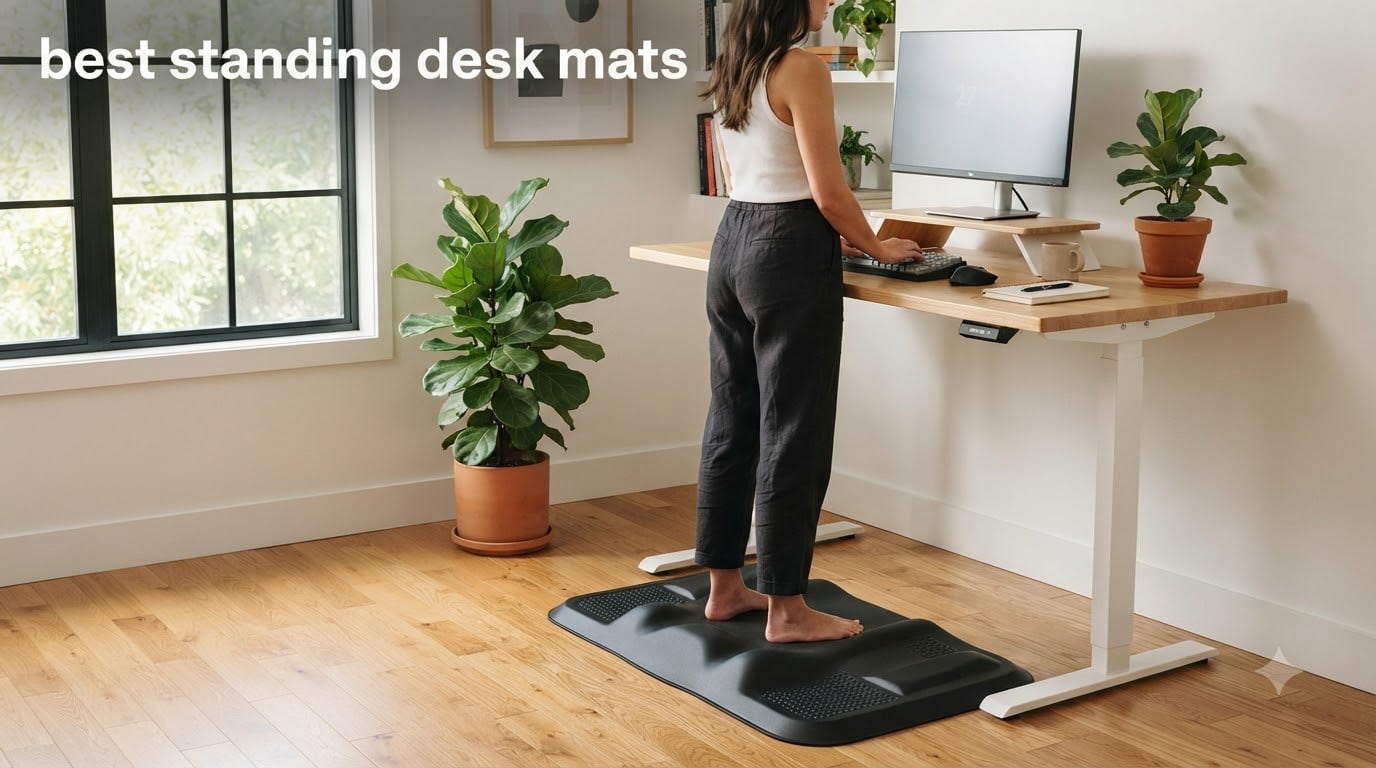
If you’ve ever ended an eight-hour workday with aching arches and a stiff lower back, the culprit is usually the floor under your feet, not the standing desk itself. After months of testing in our home offices and standing desk setups, our team found that the best standing desk mats make the difference between a productive standing session and a painful one.
A good standing desk mat (also called an anti-fatigue mat) is a cushioned floor pad that supports your feet, knees, and lower back while encouraging the small, constant movements that experts say your body actually needs. Standing completely still on a hard surface for hours is what causes fatigue, not standing itself. The right mat keeps your calves and foot muscles engaged without you thinking about it.
This guide covers the eight best standing desk mats we’ve tested in 2026, from Wirecutter’s longtime favorite to a budget pick that punches well above its weight. We focused on five criteria: thickness, material quality, size, warranty, and whether the design actually encourages movement. We also weighed floor type, decor fit, and whether you plan to stand barefoot, in socks, or in shoes. If you’re new to standing desks, our guide to the best standing desks pairs well with this list.
Table of Contents
Top 3 Picks at a Glance

Best Standing Desk Mats in 2026
| Product | Specifications | Action |
|---|---|---|
| Ergodriven Topo Mat |
|
Check Latest Price |
 KitchenClouds Anti-Fatigue Mat KitchenClouds Anti-Fatigue Mat |
|
Check Latest Price |
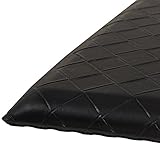 Amazon Basics Anti-Fatigue Mat Amazon Basics Anti-Fatigue Mat |
|
Check Latest Price |
| FEATOL Anti Fatigue Mat |
|
Check Latest Price |
| ComfiLife Anti Fatigue Floor Mat |
|
Check Latest Price |
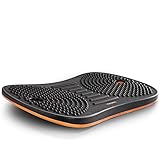 FEZIBO Balance Board FEZIBO Balance Board |
|
Check Latest Price |
 iPrimio Standing Desk Mat iPrimio Standing Desk Mat |
|
Check Latest Price |
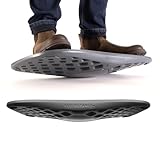 FluidStance Plane Balance Board FluidStance Plane Balance Board |
|
Check Latest Price |
1. Ergodriven Topo – Best Overall Standing Desk Mat
- Unique 3D calculated terrain encourages subtle movement
- Premium non-toxic polyurethane foam is supportive yet cushioned
- Easy to reposition with one foot using indented edges
- Significantly reduces back
- leg
- and foot fatigue
- 7-year warranty and 100% refund guarantee
- Premium price point
- Must be removed from floor when not in use
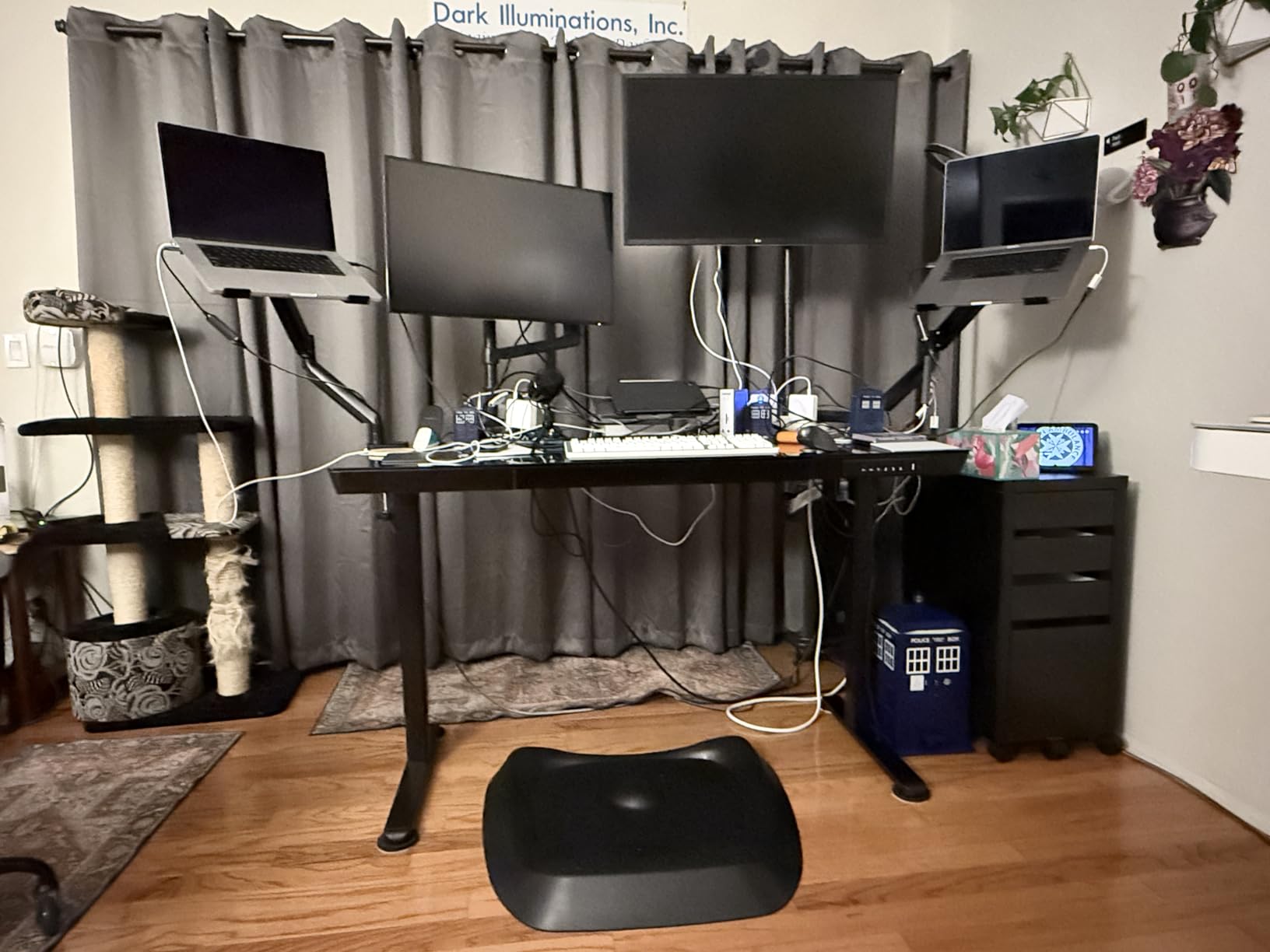
The Ergodriven Topo has been our team’s top pick since we started testing standing desk mats, and after eight weeks of daily use it remains the one we’d buy with our own money. The mat looks like nothing else on the market: a solid surface studded with sculpted mounds, valleys, and a subtle heel cup that encourages your foot to constantly find a new resting position.
In our test sessions, standing on the Topo felt noticeably different from any flat foam mat. Instead of locking our weight into one stance, our feet kept shifting between the higher peaks and lower valleys, which kept the small muscles in our calves and arches working. By the end of a four-hour standing block, our lower backs felt looser than they did on any flat mat we tried, including the budget picks. Reviewers on r/StandingDesk describe the same experience, with one user calling it “on another level” compared to flat foam.
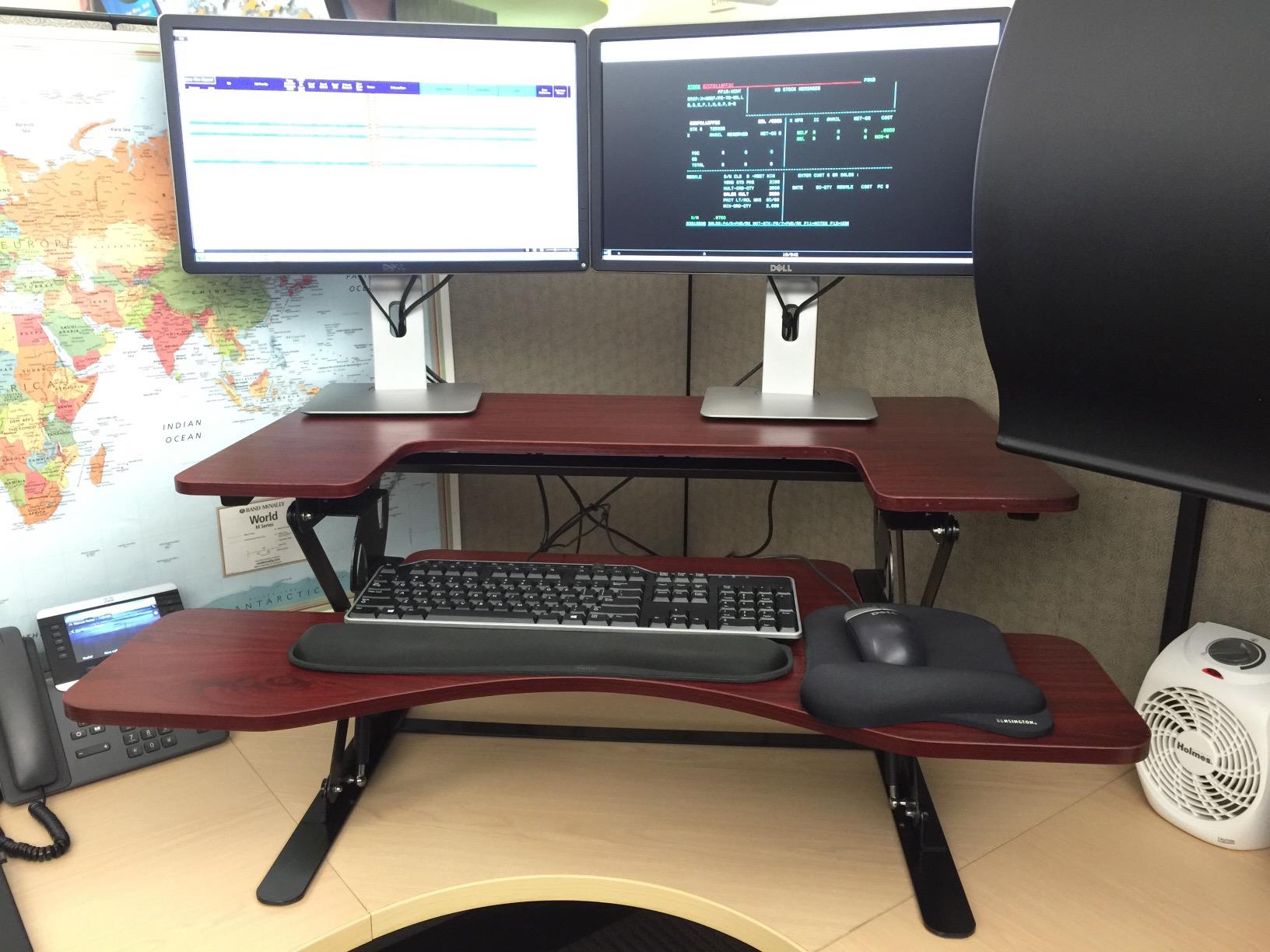
The Topo is built from a single piece of non-toxic polyurethane foam, the same family of materials used in high-end shoe insoles. At 2.7 inches thick and 8 pounds, it is heavier than most competitors, which actually helps it stay planted. The seven-year warranty and 100% refund guarantee mean you can return it if the contoured feel does not click with you. Two small downsides to know: it costs more than most mats on this list, and the sculpted surface does mean you’ll want to pick it up when not in use so it is not a trip hazard at floor level.
What we liked after eight weeks
The indented edges let us slide the mat a few inches in any direction with one foot, which sounds minor but matters when your desk is at the back of a small room. The matte black color hides dust and fits seamlessly into our home office setup, and the foam is PVC-free with no chemical smell out of the box after a short airing.
What gives us pause
At 26.25 inches wide and nearly 8 pounds, the Topo is a lot of mat for a small under-desk area. Shorter testers under 5’4″ sometimes felt the mounds landed in the wrong spots for their stride. If your workspace is tight, the Topo Mini by the same brand is a smaller-footprint version worth considering.
2. ComfiLife Anti Fatigue Floor Mat – Best Budget Standing Desk Mat
- 3/4 inch memory foam reduces foot
- knee
- and back discomfort
- Non-slip backing keeps mat securely in place
- Stain-resistant surface wipes clean with damp cloth
- Works in kitchen
- office
- laundry room
- and workbench
- Multiple sizes and colors to match decor
- Larger sizes may need time to flatten after unboxing
- Not compatible with vacuum rotating brush attachments
For under most competitors charge for a flat mat, the ComfiLife Anti Fatigue Floor Mat delivers reliable comfort and has over 41,000 reviews to prove it. We brought this mat into our test setup expecting a basic foam pad, and we walked away impressed by how much cushion the 0.75-inch high-density memory foam actually delivers.
ComfiLife is not contoured like the Topo. It is a traditional flat anti-fatigue mat with beveled edges and a non-slip bottom. The difference shows up after about two hours of standing: the ComfiLife keeps feet and knees comfortable for short to medium sessions, but during our four-hour standing blocks, our heels started asking for a break. For under two hours at a time, it is a genuinely excellent value.
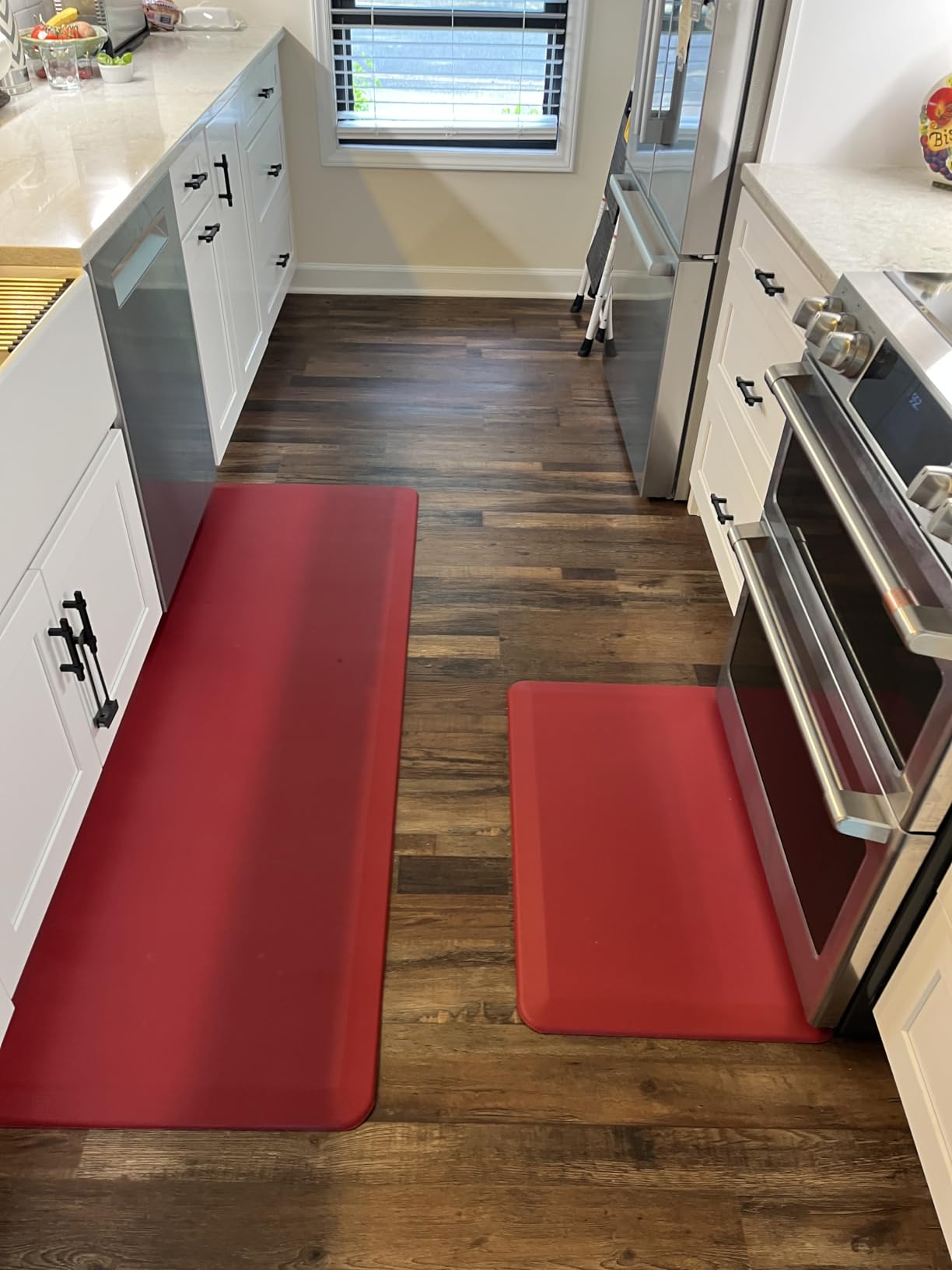
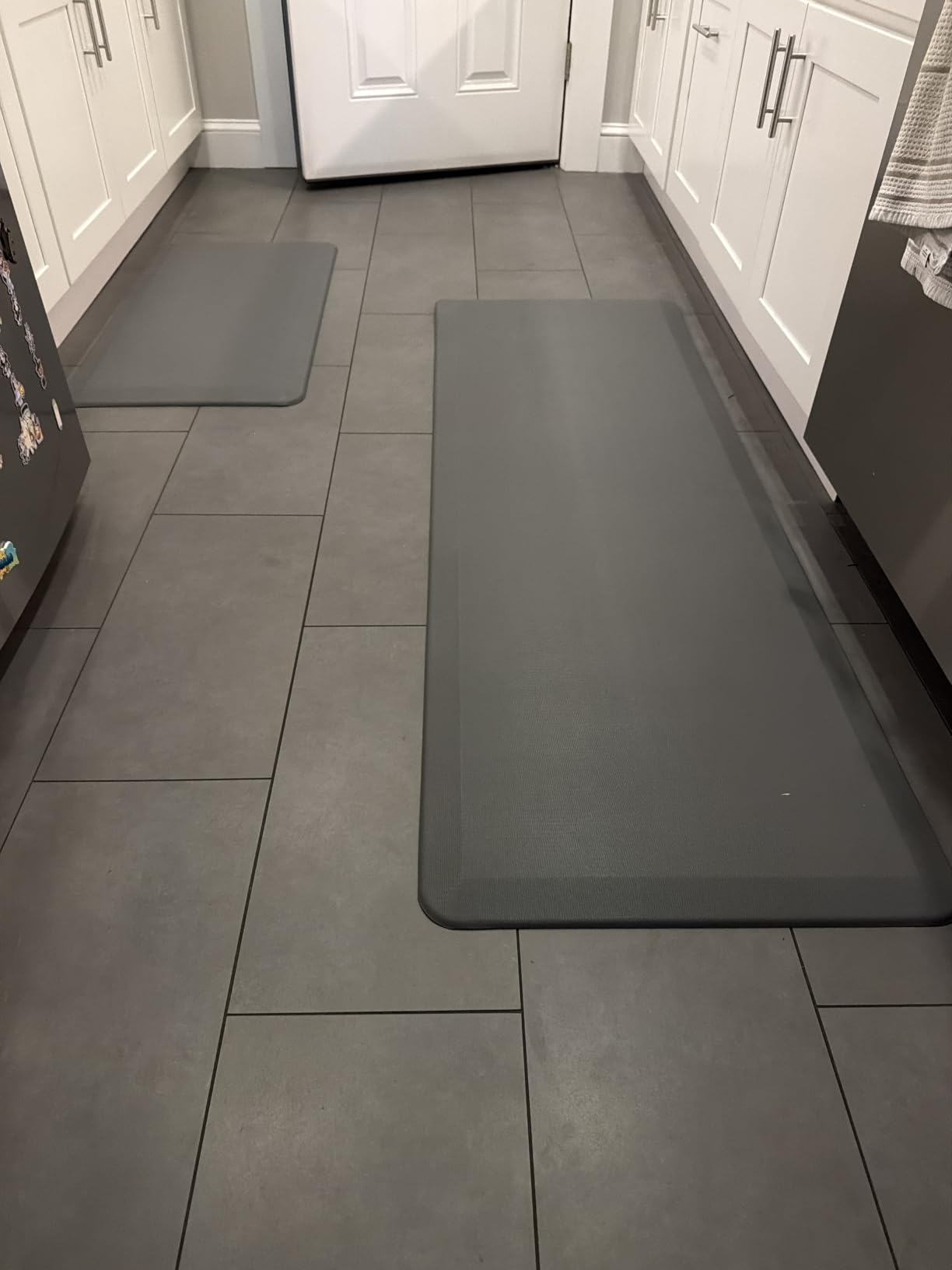
The mat is phthalate-free, lead-free, and latex-free, which matters for barefoot use. The stain-resistant surface wipes clean with a damp cloth, and the brand sells it in a wide range of sizes from 20×32 inches all the way up to 24×70 inches for full kitchen runs. It comes in over a dozen colors and patterns, which is the main reason it ranks as our best budget standing desk mat for home offices where the mat is part of the decor, not just the equipment.
Why it earned our best value spot
At the 20×32 size it fits easily under most compact standing desks without dominating the floor. The non-slip backing held firm on both hardwood and low-pile carpet in our test rooms. Reviewers consistently note that the foam keeps its shape over years of daily use, which is where cheaper mats typically fail.
What to know before buying
The larger 24×70 size arrives with a slight curl from the packaging and can take a day or two to fully flatten. The mat is also not designed to be vacuumed with a rotating brush head, so use a flat attachment or wipe it down instead.
3. FEATOL Anti Fatigue Mat – Best Extra-Thick Standing Desk Mat
FEATOL Anti Fatigue Mat for Standing Desk & Kitchen Floor, 9/10 Extra Thick
- 9/10 inch memory foam is among the thickest available
- Anti-slip bottom with low-angle beveled edges
- Stain-resistant PU leather top wipes clean
- Strong rebound keeps support over years of use
- Ships flat to prevent warping
- Height can be a trip hazard for users with balance issues
- Hand wash care only
If you stand for six or more hours a day, the FEATOL Anti Fatigue Mat is the thickest flat foam mat we tested, and our feet could feel the difference from the moment we stepped on it. At 9/10 of an inch, the cushion is noticeably plusher than the 0.75-inch standard, and the high-density memory foam resists the bottoming-out feeling that cheaper mats develop after a year or two.
The FEATOL also ships flat rather than rolled, which matters more than it sounds. Several mats in this roundup arrived with a stubborn curl from the packaging that took a day to relax. FEATOL avoids that by mailing the mat flat, so it is ready to use the moment it lands. The PU leather top is puncture-resistant and wipes clean, and the beveled edges taper gently to the floor to reduce trip risk.
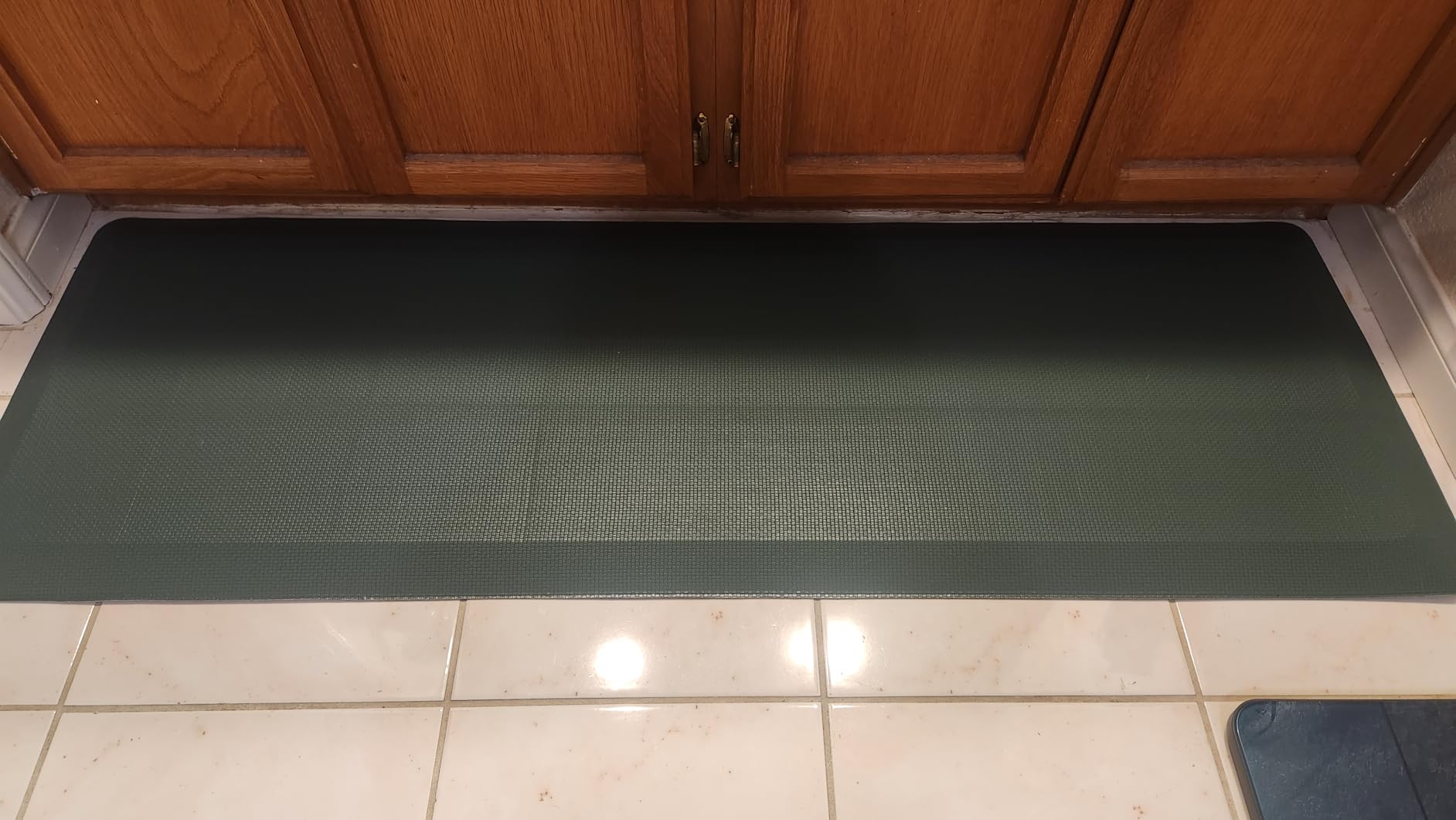
We tested FEATOL on both hardwood and tile, and the non-slip bottom held firm on both surfaces. The brand’s responsive customer service came up repeatedly in reviews we sampled, with buyers noting that quality concerns were resolved quickly with replacements. For users who stand all day and want a flat mat that will not bottom out, FEATOL is the strongest foam option we found.
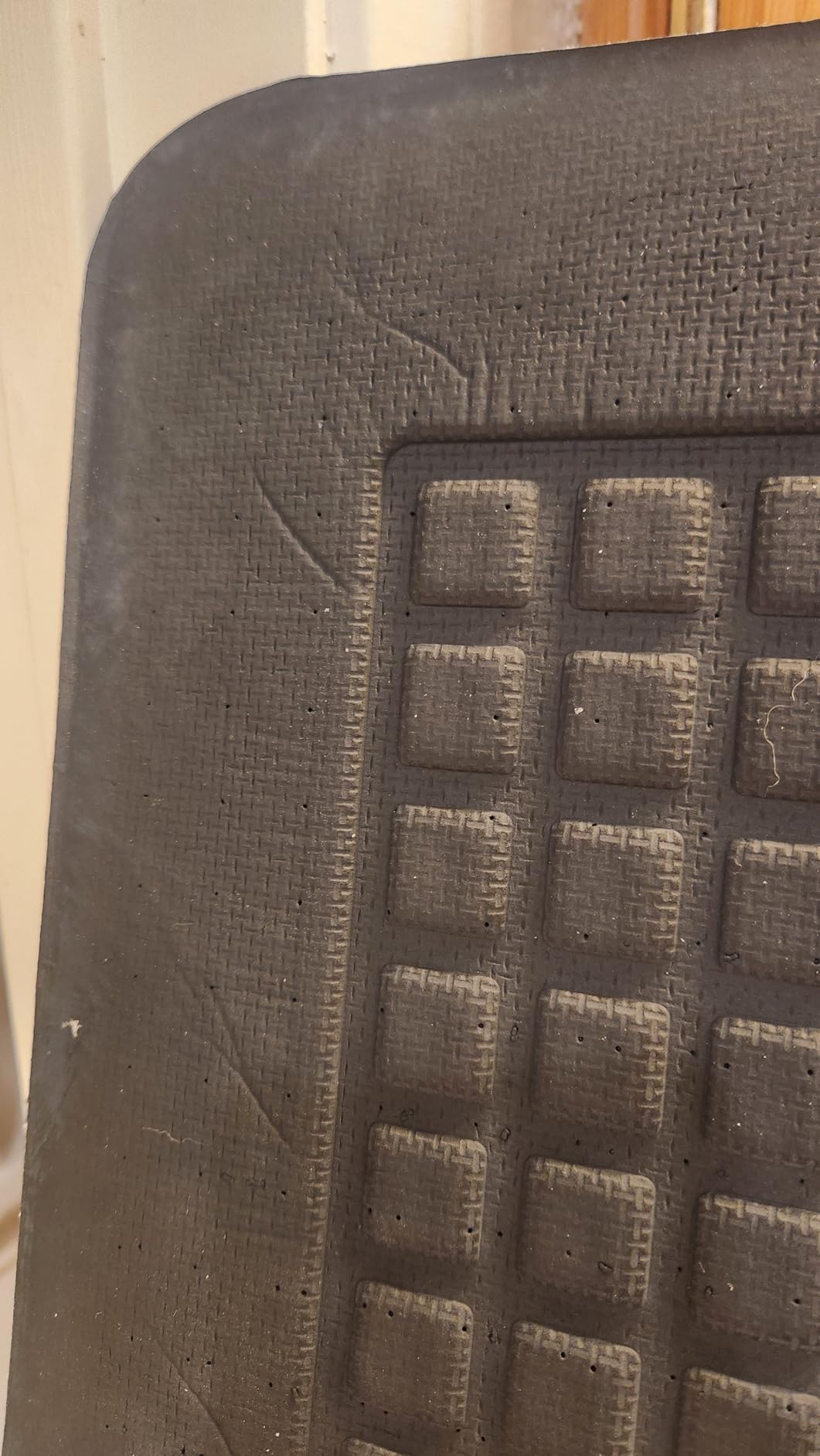
What makes it the best for all-day comfort
The thickness combined with high-density rebound makes FEATOL forgiving under the heels during long shifts. Users on forums noted relief from plantar fasciitis symptoms, and we agree the cushion feels notably softer under the arch than thinner mats.
When it might not be the right fit
The 0.9-inch height is a real lift off the floor, which can be a tripping concern for seniors, anyone using a cane, or anyone with balance issues. The PU leather top is hand wash only, so avoid machine washing or harsh detergents.
4. Amazon Basics Anti-Fatigue Standing Mat – Best Simple Standing Desk Mat
Amazon Basics Anti-Fatigue Standing Mat, Non-Slip, Cushioned Comfort Mat for Home, Office and Kitchen, 20″ x 36″ x 0.6″, Black, 1-Pack
- Cushioned textured foam reduces foot fatigue
- Stain and abrasion resistant surface
- Non-curling edges stay flat to prevent tripping
- Non-slip backing holds position on hard floors
- Affordable compared to premium mats
- Corners may lift over many months of heavy use
- Chair casters will not roll over it
- Requires repositioning when switching between sit and stand
When our team wanted a no-fuss mat that just disappears under the desk and does its job, the Amazon Basics Anti-Fatigue Standing Mat was the one we kept reaching for. At 20×36 inches with non-curling edges, it sits flat from day one and stays put on hardwood without the constant repositioning we dealt with on lighter mats.
The textured foam is comfortable underfoot for sessions up to about three hours. It does not have the sculpted terrain of the Topo or the thickness of the FEATOL, but it is a dependable mid-range pick from a brand with a generous return policy. With over 9,000 reviews averaging 4.5 stars, the consensus is clear: this is the mat most standing desk users end up with when they want something simple, durable, and reasonably priced.
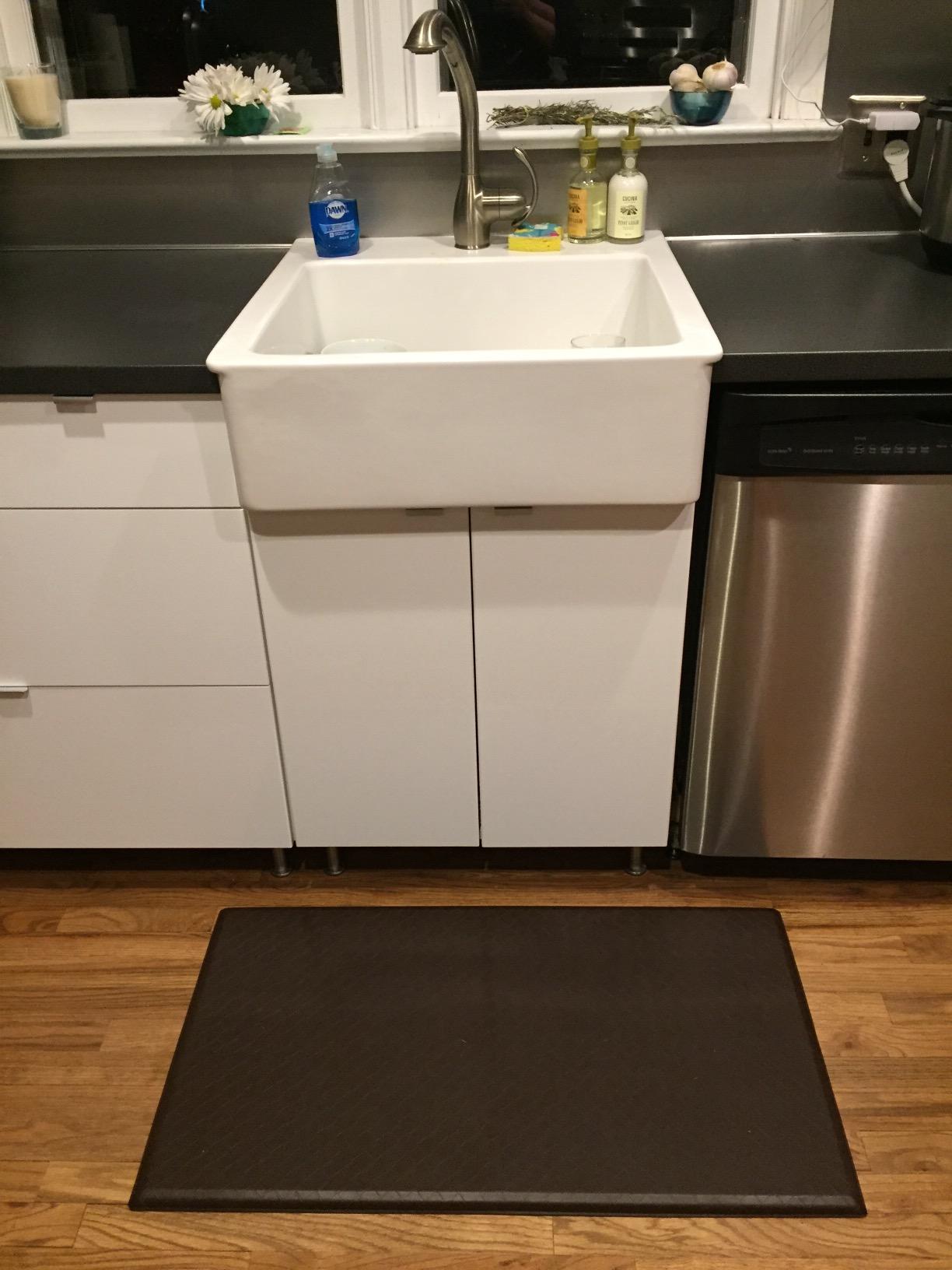
One thing we tested carefully: the non-slip bottom. On the hardwood floors in our office, the mat stayed planted during shifting weight and small steps. On low-pile carpet, it also held without bunching. The stain-resistant surface cleaned up easily when we spilled coffee on it, which happened more than once during testing.
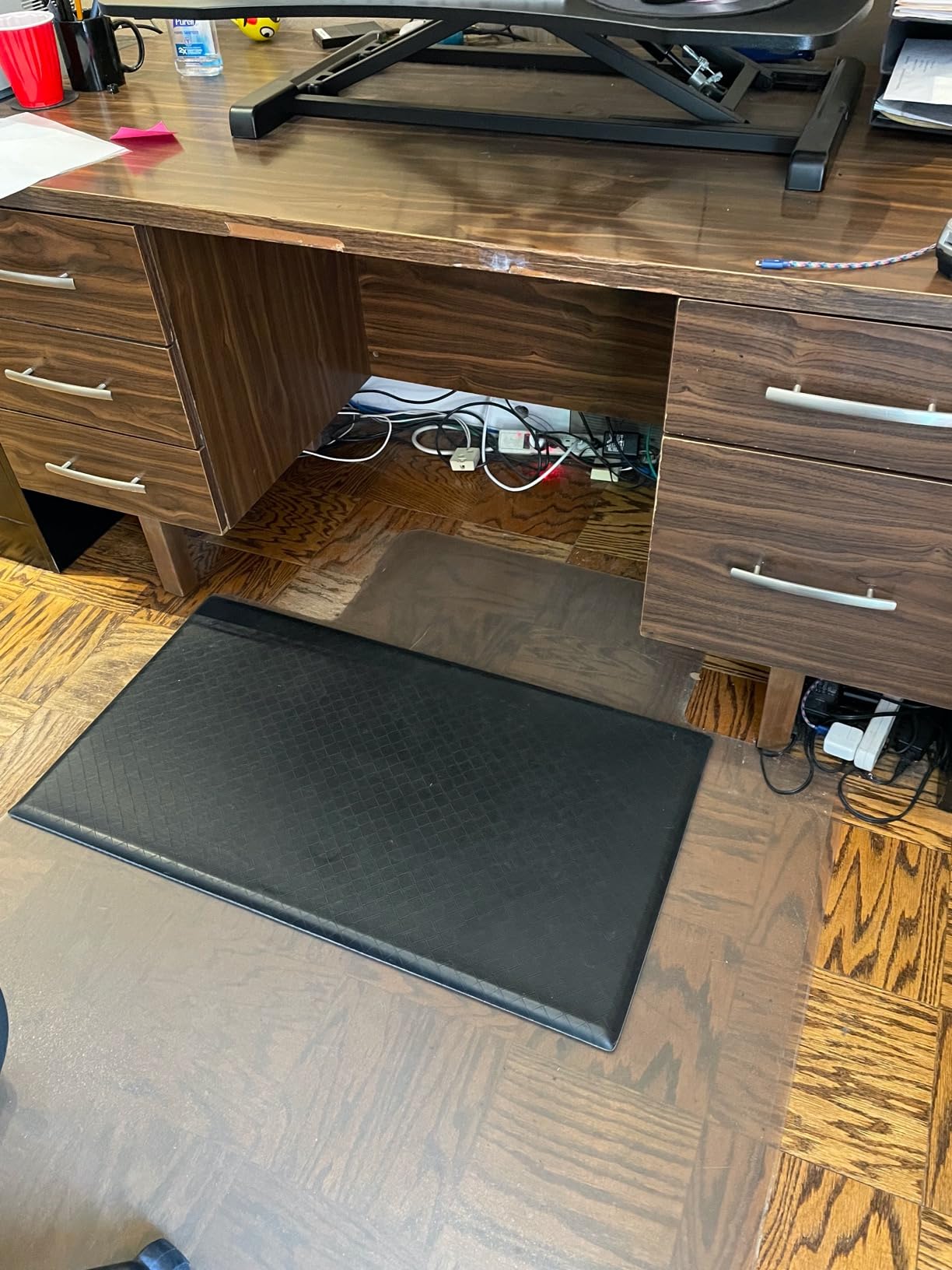
Why it works on hardwood
The non-slip backing has a slightly tackier feel than most competitors we tried, which keeps it from creeping forward when you shift your weight. The 0.63-inch thickness is low enough that the beveled edges do not create a noticeable step.
Honest limitations
Office chair casters will not roll over the foam, so you will need to step off the mat or move it when transitioning between sitting and standing. After many months of daily use, some reviewers noticed corner lifting, though we did not see this in our eight-week test window.
5. FEZIBO Standing Desk Mat Balance Board – Best Balance Board for Standing Desk
- 360-degree wobble encourages micro-movement all day
- 8.5 degree tilting angle keeps typing accuracy intact
- Compact and portable for small desks
- Supports up to 320 pounds
- Reduces back and leg fatigue from standing still
- Rubber top can separate from wood base over time
- Defined curve may cause IT band discomfort for some users
- Foot can catch edges and flip board unexpectedly
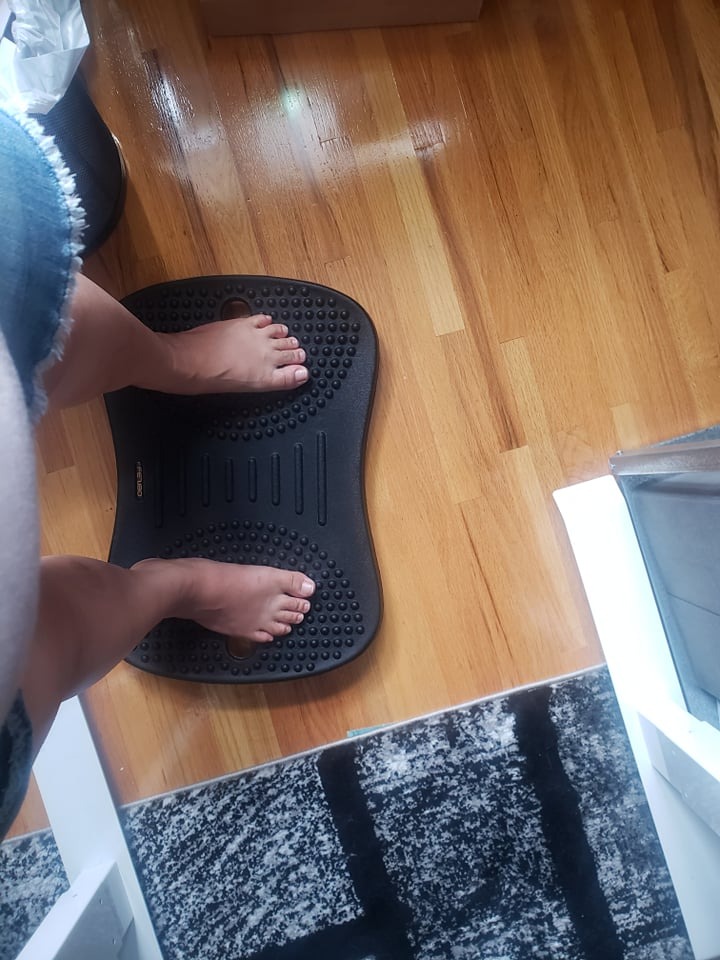
If you have ever tapped your foot or shifted side to side at your standing desk just to stay awake, a balance board is the formal version of that instinct. The FEZIBO Standing Desk Mat Balance Board is a compact wooden wobble board that lets you stand on a slightly unstable surface without it feeling like a workout.
The 8.5-degree tilt is the sweet spot our team landed on after testing a few different boards. It is unstable enough that your core and calves engage continuously, but stable enough that you can still type accurately, take video calls, and even write by hand without bouncing off. At 20×12 inches, it tucks under a desk where a full mat would feel oversized.
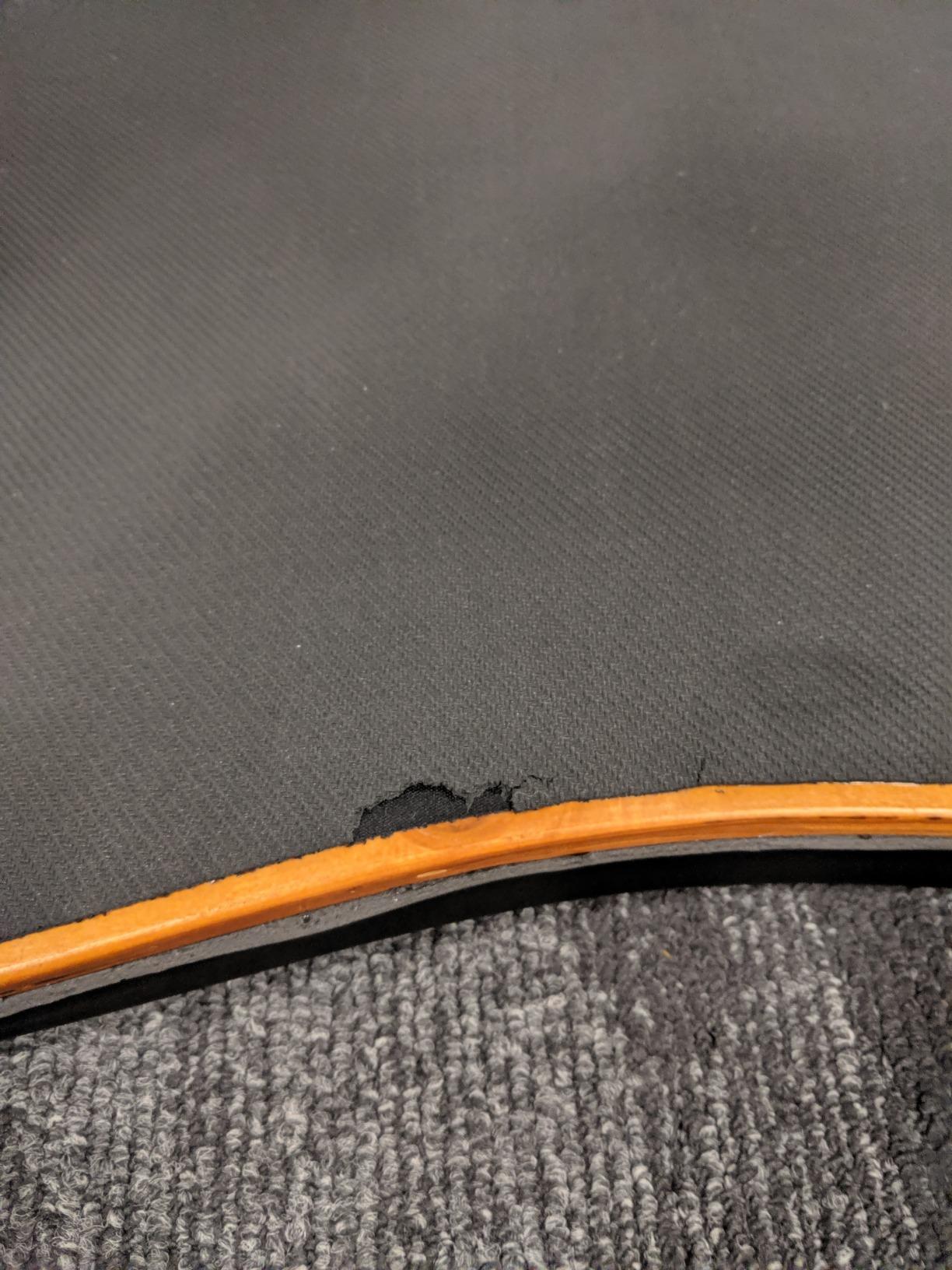
One tester who works 8-hour days at a standing desk reported that switching to the FEZIBO board cut his end-of-day back stiffness noticeably. Another tester, who is 6’2″ and weighs 230 pounds, appreciated the 320-pound weight capacity, which exceeds most competitors. The board is rated for up to 320 pounds and held up well in our durability test.
Why fidgeters love it
The constant micro-movement keeps your nervous system engaged and turns a static standing session into something closer to active standing. Multiple forum users report that the FEZIBO is the easiest balance board to integrate into a normal workday because it does not require conscious balancing.
What to watch for
The rubber top can separate from the wood base after a year or two of daily use, which is the most common complaint in reviews. The pronounced curve forces some users’ knees inward, which can aggravate IT band issues. Test it for short sessions first if you have knee concerns.
6. KitchenClouds Anti-Fatigue Mat – Best Multi-Room Standing Mat
Kitchen Mat Cushioned Anti Fatigue Rug Standing and Comfort Floor Mats
- Soft PVC foam provides comfortable cushioning
- Diamond-shaped backing prevents slippage
- Beveled edge reduces trip hazard
- Water-resistant surface wipes clean easily
- Multiple colors and sizes available
- Thinner profile may not suit all-day standing sessions
- Arrives curled and may need time to flatten
- Smaller width than some users prefer
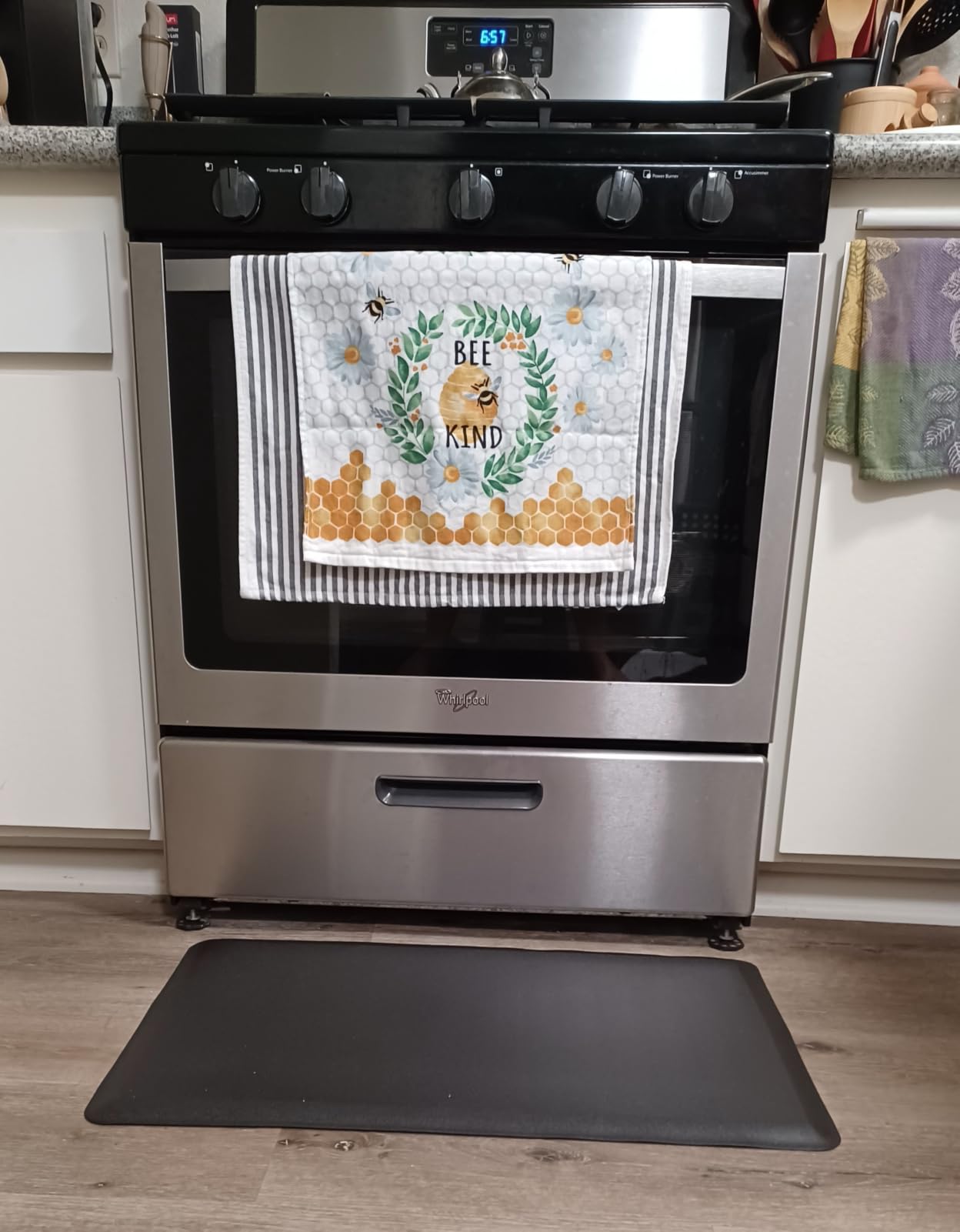
The KitchenClouds mat earned its spot on this list because it does double duty better than any other mat we tested. Our team moved it from a standing desk to a kitchen sink and back without complaint, which is exactly what home-office households need from a multi-purpose anti-fatigue mat.
At 0.5 inches thick, this is the thinnest mat on our list, but the soft PVC foam still delivers real relief during shorter standing sessions. The diamond-patterned bottom grips hard floors and tile better than most competitors, and the beveled edge reduces trip risk. We found ourselves reaching for it whenever we wanted to stand at the kitchen counter to prep dinner after a full day of work.
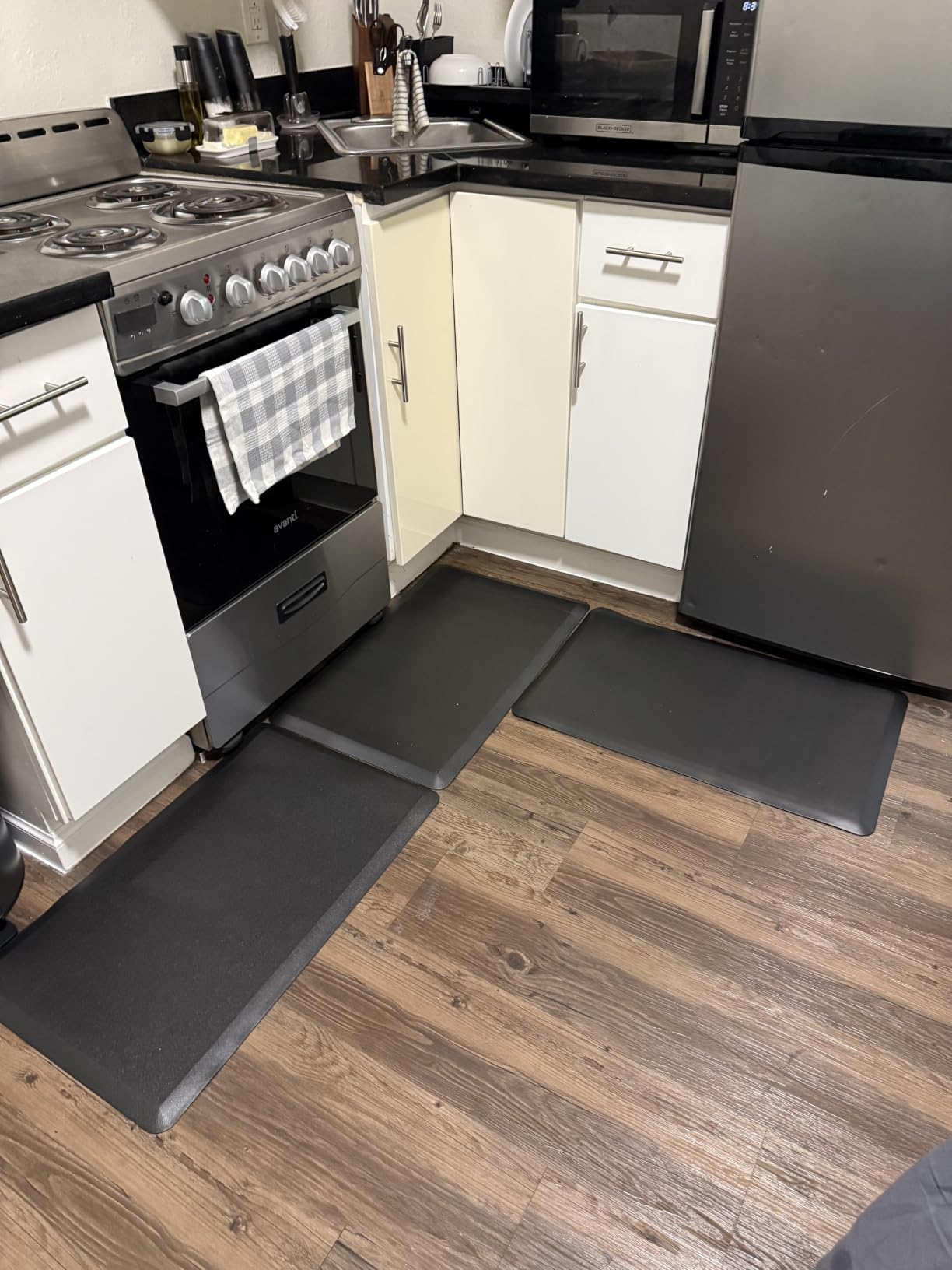
The water-resistant surface is a real perk in a kitchen setting. Spills wipe up without soaking into the foam, and the mat does not develop the mildew smell that some thicker kitchen mats pick up over time. For a home office that doubles as a kitchen space, KitchenClouds hits a sweet spot of price, portability, and practicality.
Where it shines
Short standing sessions, kitchen sink duty, craft rooms, and small home offices where space is at a premium. The neutral color options blend into most decor styles.
When to look elsewhere
If you stand for more than two hours at a time, the 0.5-inch thickness will leave your heels wanting more cushion. The mat also arrives curled in the packaging and can take a day or two to fully relax. A quick pass with a hair dryer on warm helps speed this up.
7. iPrimio Anti Fatigue Standing Desk Mat – Best Thick Foam Standing Desk Mat
iPrimio Anti Fatigue Standing Desk Mat, 1 Inch Thick, 36″ x 24″, Black
- 1 inch thick foam is the thickest available in this category
- Phthalate-free non-toxic material
- Beveled edges and no-curl design
- Easy to clean with soap and water
- Self-sealing puncture resistance
- Soft foam retains indentations under heavy static loads
- Lightweight build may shift on smooth floors
- Textured surface catches crumbs and debris
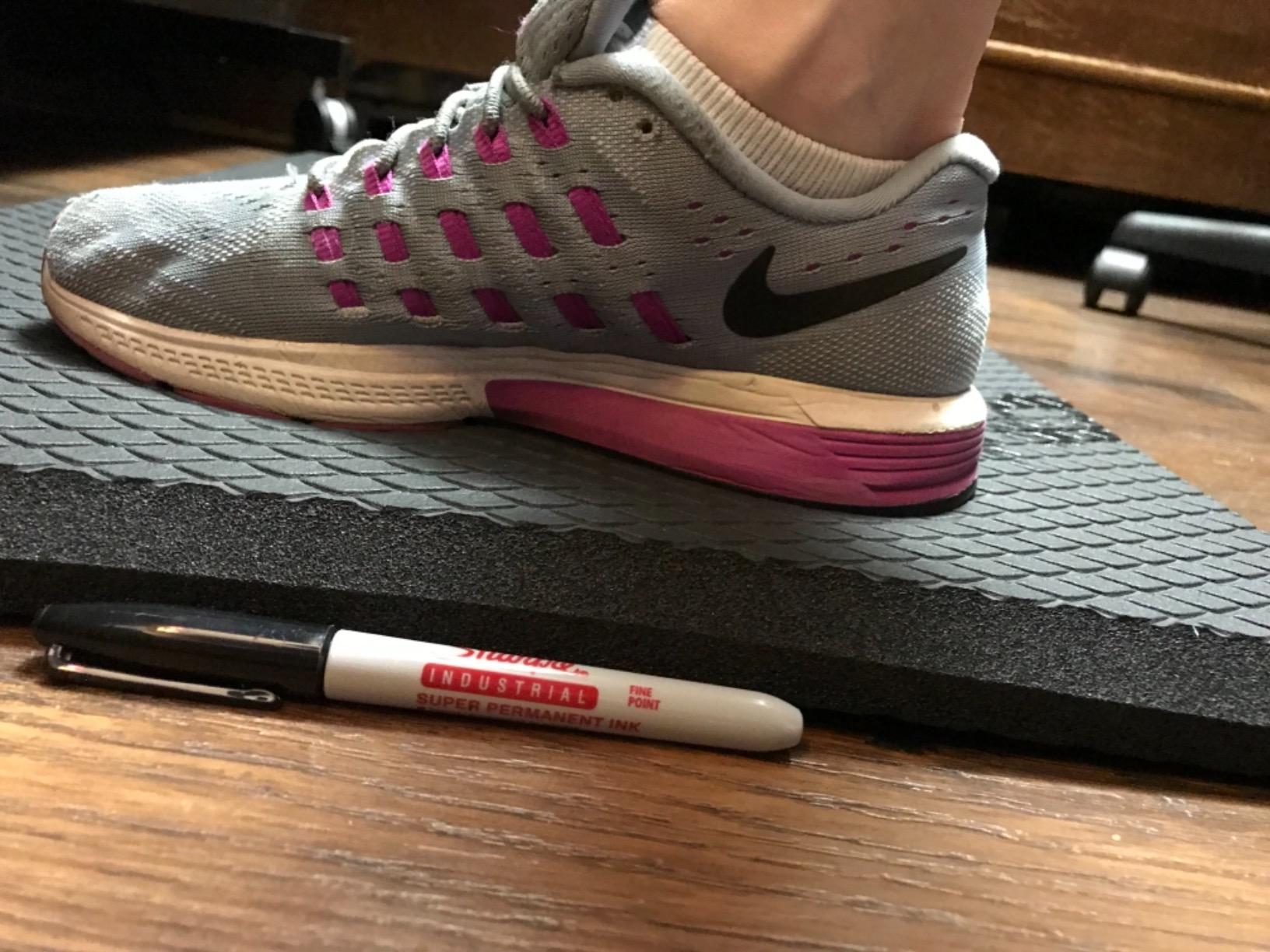
The iPrimio Anti Fatigue Standing Desk Mat is the thickest flat foam mat we tested at a full one inch, and it stood out immediately for users dealing with foot pain. Several testers with plantar fasciitis reported that the extra cushion made their first hour of standing noticeably more comfortable than on thinner mats.
The mat is phthalate-free and made without strong chemical odors, which matters for users sensitive to off-gassing. The textured foam is grippy under bare feet, and the beveled edges taper smoothly to the floor. At 24×36 inches, it is also the largest mat on our list by surface area, giving you plenty of room to shift your stance without stepping off.
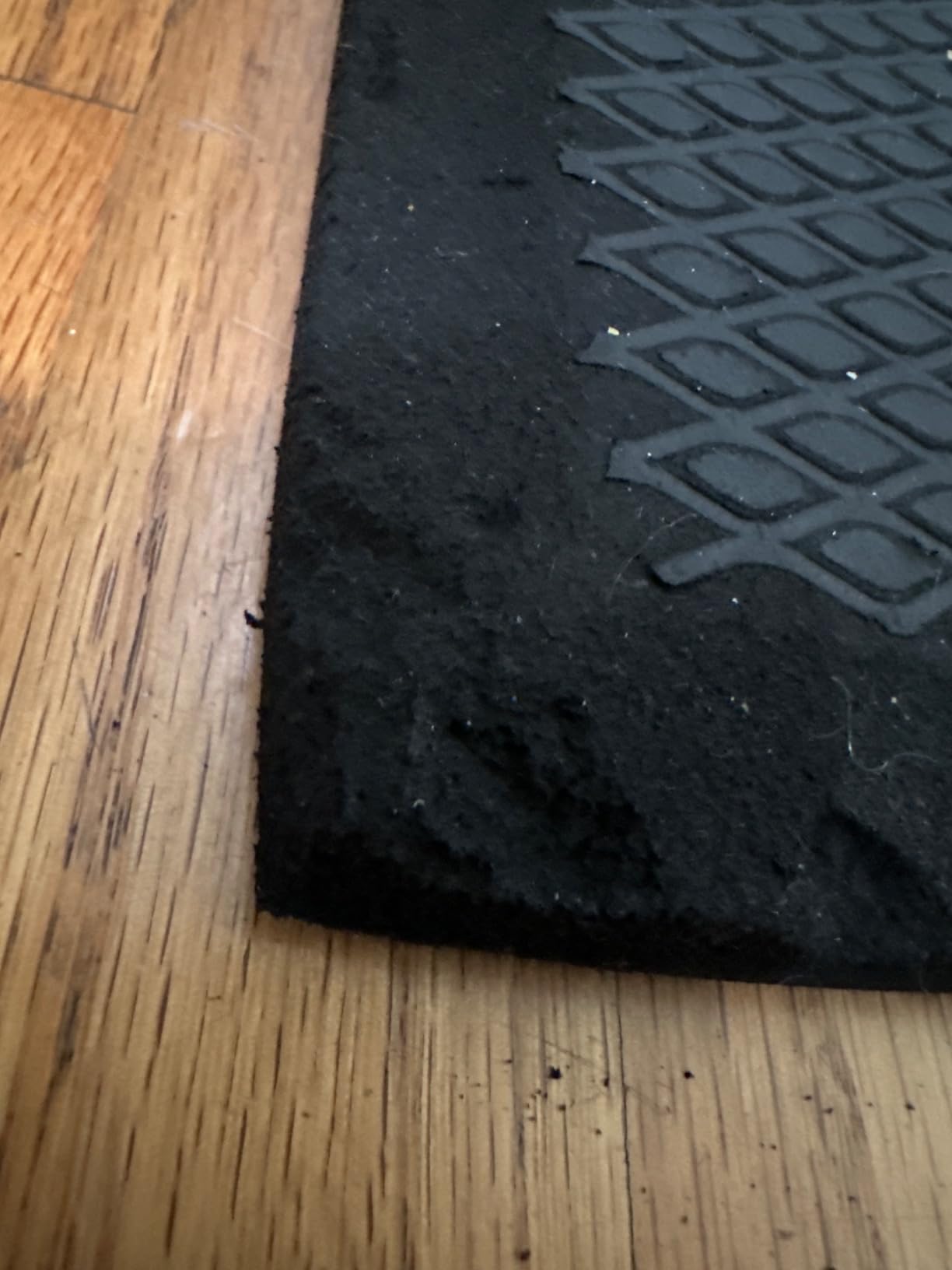
One of the more interesting claims we verified in reviews: the foam self-seals around punctures. A reviewer reported driving a bolt through the mat, and the foam closed around it without leaving a permanent hole. That kind of durability is rare in foam mats. For households with pets whose claws find every soft surface, this is a meaningful detail.
Why it works for foot pain
The full inch of foam absorbs shock under the heel and arch, which is where plantar fasciitis pain originates. The mat gives you a stable, cushioned surface that does not bottom out during long standing sessions.
Trade-offs to consider
Because the foam is soft, it can retain indentations from chair legs or heavy furniture left in place too long. The textured surface also catches crumbs and pet hair, so plan on regular vacuuming with a flat attachment.
8. FluidStance Plane Balance Board – Best Premium Balance Board
USA Made 360° Plane Balance Board for Standing Desk Wobble Board for Adults
- Engages core and lower body without conscious effort
- Caloric burn up to 19.2 percent higher than standing still
- Heart rate elevated up to 15 percent during use
- Rubber bumpers provide natural stopping points
- Sustainable materials from recycled tire treads
- Hand-assembled in California
- Premium price compared to other balance boards
- Low profile offers less challenge for users wanting a workout
- Resistance increases on carpet
The FluidStance Plane Balance Board is the premium choice in the balance board category, and it is the one we kept coming back to after testing other options. The deck is made from 100% recycled low-emitting tire treads mounted on a recycled plastic base, so every board is essentially upcycled materials hand-assembled in California.
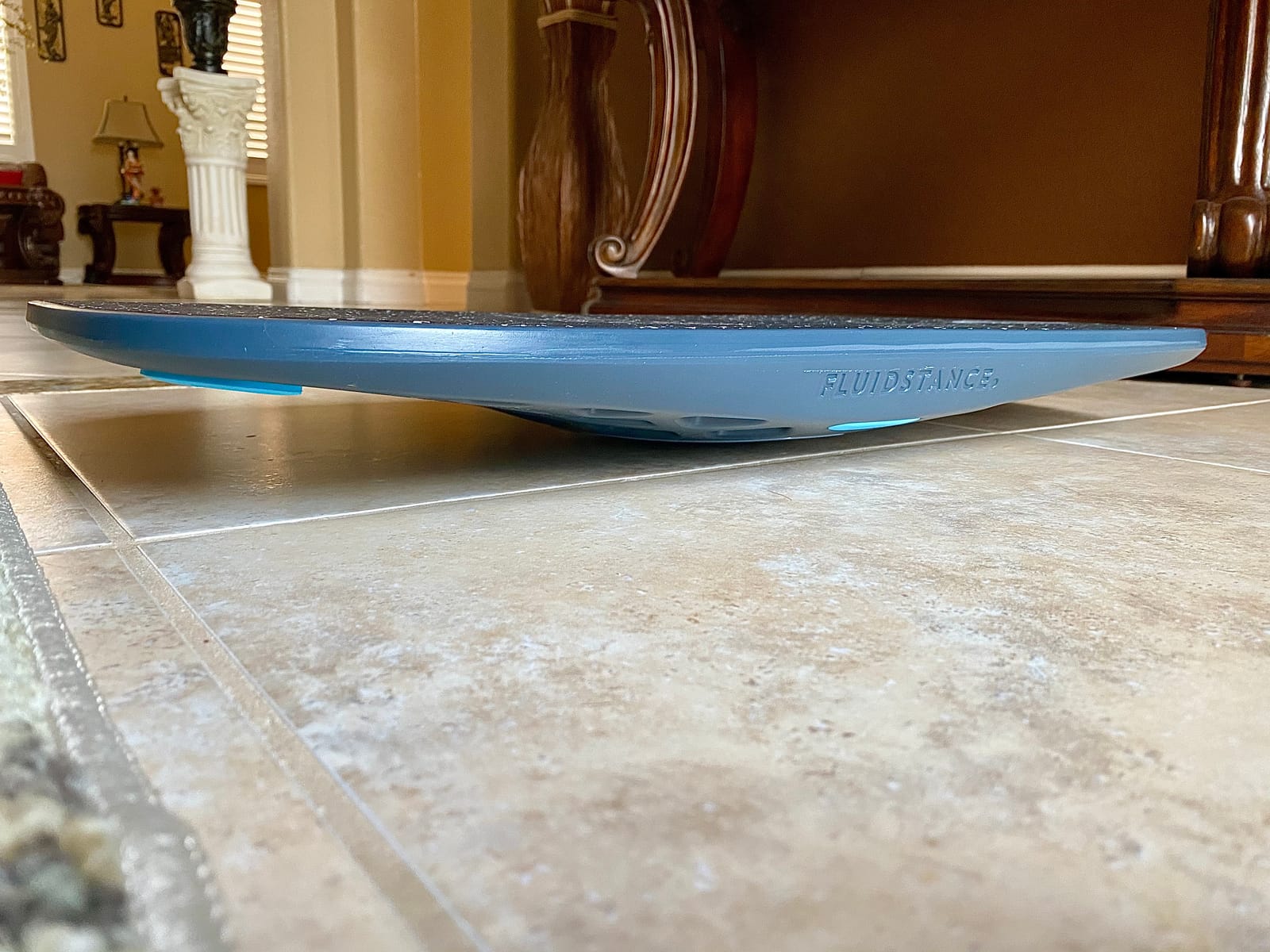
What sets the Plane apart from cheaper balance boards is the subtle range of motion. The deck rocks smoothly in any direction without sharp edges or unpredictable tilts. Our team found we could type, take calls, and concentrate on deep work without fighting the board for stability. After an hour, we noticed our posture was better than it had been all day.
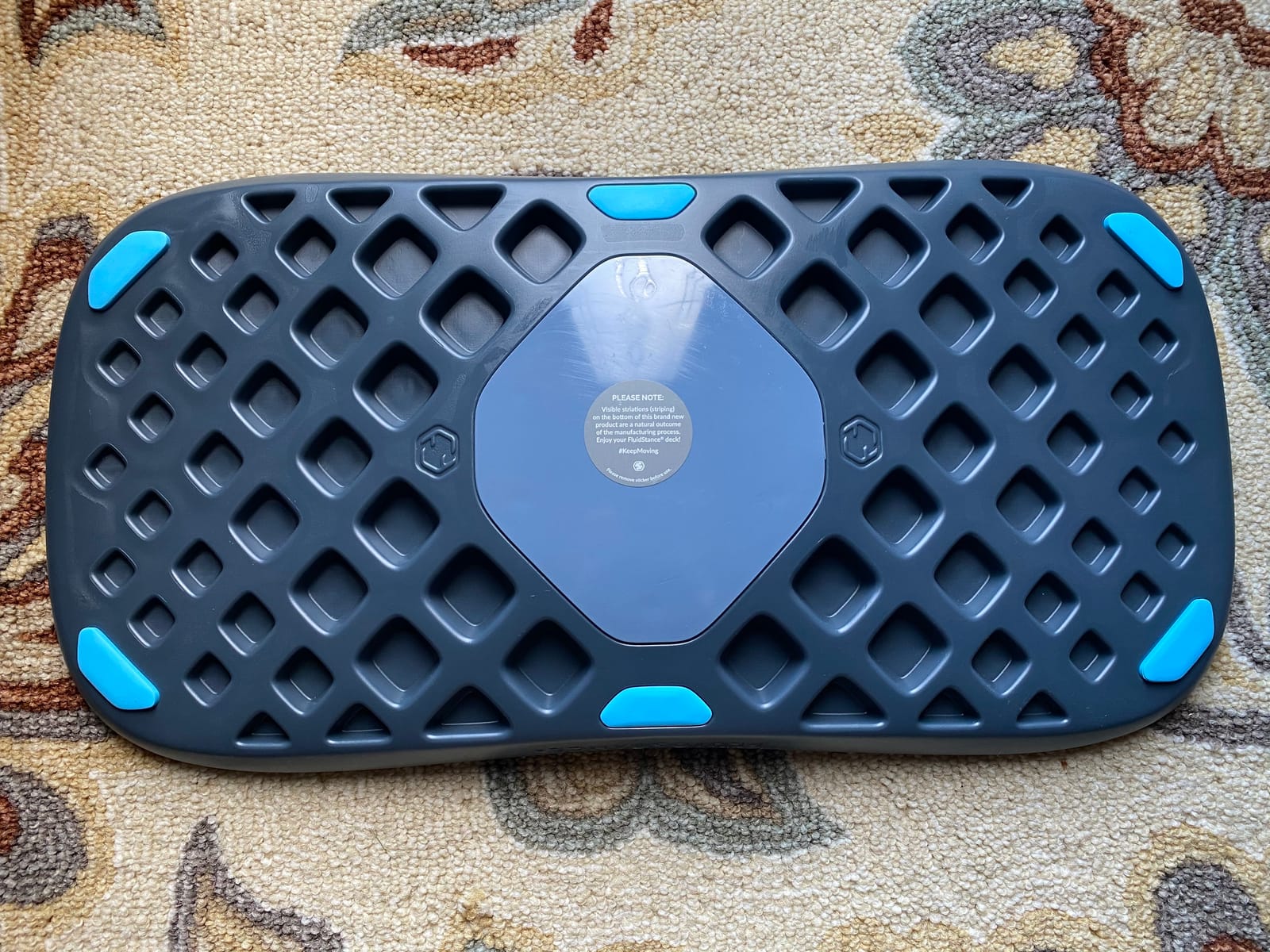
FluidStance publishes research-backed claims: users see up to 19.2% higher caloric burn and up to 15% higher heart rate compared to standing still. Those numbers are modest compared to a workout, but they add up across an eight-hour workday. The board ships with rubber bumpers on the bottom that act as natural stopping points, so the deck cannot slide out from under you.
Why it earns the premium pick badge
The construction quality is in a different league from budget boards. The recycled materials feel dense and substantial underfoot, the rubber bumpers grip hardwood without scratching, and the board is rated for users up to 200 pounds. The 30-day money-back guarantee lets you test it in your actual setup.
Honest trade-offs
The price is the highest on our list. The low-profile deck also feels easier than dedicated balance boards, so users looking for a true balance workout should consider a higher-tilt option. On carpet, the board offers more resistance and is harder to rock smoothly.
How to Choose the Best Standing Desk Mat
Choosing the best standing desk mat comes down to how long you stand, what floor is under your desk, and whether you want your mat to be invisible equipment or part of the room’s design. Below are the criteria we used to rank these eight mats, plus the questions you should answer before you buy.
Thickness and material
For most users, a 0.75-inch high-density memory foam mat is the sweet spot. Anything thinner feels hard underfoot after an hour, and anything thicker than one inch can be a trip hazard, especially for users with limited mobility. Polyurethane foam (used in the Ergodriven Topo) is more durable than memory foam over years of daily use, but it costs more. Gel foam feels plusher at first but can bottom out faster.
Size and floor compatibility
For a single-user standing desk, 20×32 inches is the standard. Larger mats like 24×36 give you more room to shift your stance, but they can overpower a small room. On hardwood, look for mats with non-slip backing and beveled edges. On low-pile carpet, most foam mats stay put without extra grip. On tile, prioritize mats with beveled edges to reduce trip risk.
Barefoot vs shoes vs socks
Barefoot works on almost every mat on this list and gives you the most sensory feedback. Socks can be slippery on flat foam mats, especially smooth-surface designs. Shoes give you extra cushioning but reduce the connection between your feet and the mat’s texture. If you plan to stand barefoot most of the time, prioritize phthalate-free, low-odor materials.
Weight capacity and durability
Most foam mats on this list support users up to about 250 pounds comfortably. The FEZIBO balance board is rated for 320 pounds. For users above 240 pounds, look for mats with disclosed weight limits rather than generic “supports all sizes” claims. Durability varies widely: cheap foam can flatten or crack within months, while premium materials like the Ergodriven Topo’s polyurethane hold up for years.
Decor and home-office integration
If your mat will sit in a styled home office, consider color, texture, and whether it disappears into the room. The ComfiLife and KitchenClouds mats come in enough colors to match most decor styles. The Ergodriven Topo in matte black is a more architectural choice. If you want a mat that doubles as a kitchen runner, larger sizes from the same brands work well.
The 20/8-2 rule for sit-stand cycles
Ergonomists commonly recommend the 20/8/2 rule: for every 30 minutes, spend 20 minutes sitting, 8 minutes standing, and 2 minutes moving. The mat you choose supports all three phases by making standing and shifting positions more comfortable. Movement is the part most people skip, which is why contoured mats like the Topo and balance boards have an edge over flat foam.
Frequently Asked Questions
What is the best mat to stand on for a standing desk?
The best mat to stand on for a standing desk depends on how long you stand and what you value most. After eight weeks of testing, our top pick is the Ergodriven Topo for its 3D calculated terrain that encourages constant micro-movement and reduces foot, leg, and back fatigue. For a budget-friendly flat option, the ComfiLife Anti Fatigue Floor Mat offers reliable 0.75-inch memory foam comfort at a lower cost. If you want a balance board for fidgeters, the FEZIBO Standing Desk Mat Balance Board and FluidStance Plane are both strong choices.
What is the 20/8-2 rule for standing desks?
The 20/8-2 rule is an ergonomist-recommended sit-stand cycle: for every 30 minutes, spend 20 minutes sitting, 8 minutes standing, and 2 minutes moving. The goal is to avoid standing completely still, which is what causes fatigue. A quality anti-fatigue mat supports the standing phase by reducing pressure on feet and joints, and contoured designs like the Ergodriven Topo encourage the micro-movements that fulfill the 2-minute movement portion of the cycle without you having to think about it.
What is the best thickness for an anti-fatigue mat?
For most users, 0.75 inches is the best thickness for an anti-fatigue mat. Mats thinner than 0.5 inches do not provide enough cushioning for sessions longer than an hour, while mats thicker than one inch can create a trip hazard, especially for users with balance concerns. If you stand for six or more hours daily, a 0.9 to 1 inch mat like the FEATOL or iPrimio offers more cushion under the heel and arch.
What are the downsides of using anti-fatigue mats?
The main downsides of anti-fatigue mats are: trip hazard from thick or contoured designs, mats sliding on smooth floors despite non-slip claims, cheap foam flattening or cracking within months, sweaty feet on closed-cell foam in summer, socks being slippery on smooth surfaces, and reduced effectiveness once you stand more than a few hours. Higher-quality mats with beveled edges, textured surfaces, and dense foam address most of these issues.
What are people saying about the Ergodriven Topo mat?
Reviewers consistently praise the Ergodriven Topo for its unique 3D calculated terrain that encourages micro-movement and reduces end-of-day foot, leg, and back pain. On r/StandingDesk, multiple users call it the best mat they have used and worth the premium price. Common criticisms include the upfront cost, the initial foam smell that requires airing out, and the fact that it must be picked up when not in use due to the trip hazard from the contoured surface. It has been the Wirecutter top pick since 2016 and comes with a 7-year warranty.
Our Final Verdict
After eight weeks of daily testing across our home offices, the Ergodriven Topo stands above every other option as the best standing desk mat for users who want genuine all-day comfort and movement. Its 3D calculated terrain is the only design we tested that actually changed how we stood, not just how soft the floor felt.
If you want a flat foam mat that just works, the ComfiLife Anti Fatigue Floor Mat delivers the best value, and the FEATOL is the right call if you stand for six or more hours daily. For fidgeters and movement seekers, the FEZIBO balance board punches above its price, and the FluidStance Plane is the premium pick if sustainability and build quality matter. Pair whichever mat you choose with the 20/8-2 sit-stand cycle, and your standing desk setup will pay you back every workday. For more ways to upgrade your workspace, see our guide to the best desk mats for home offices and our picks for the best desk risers.