
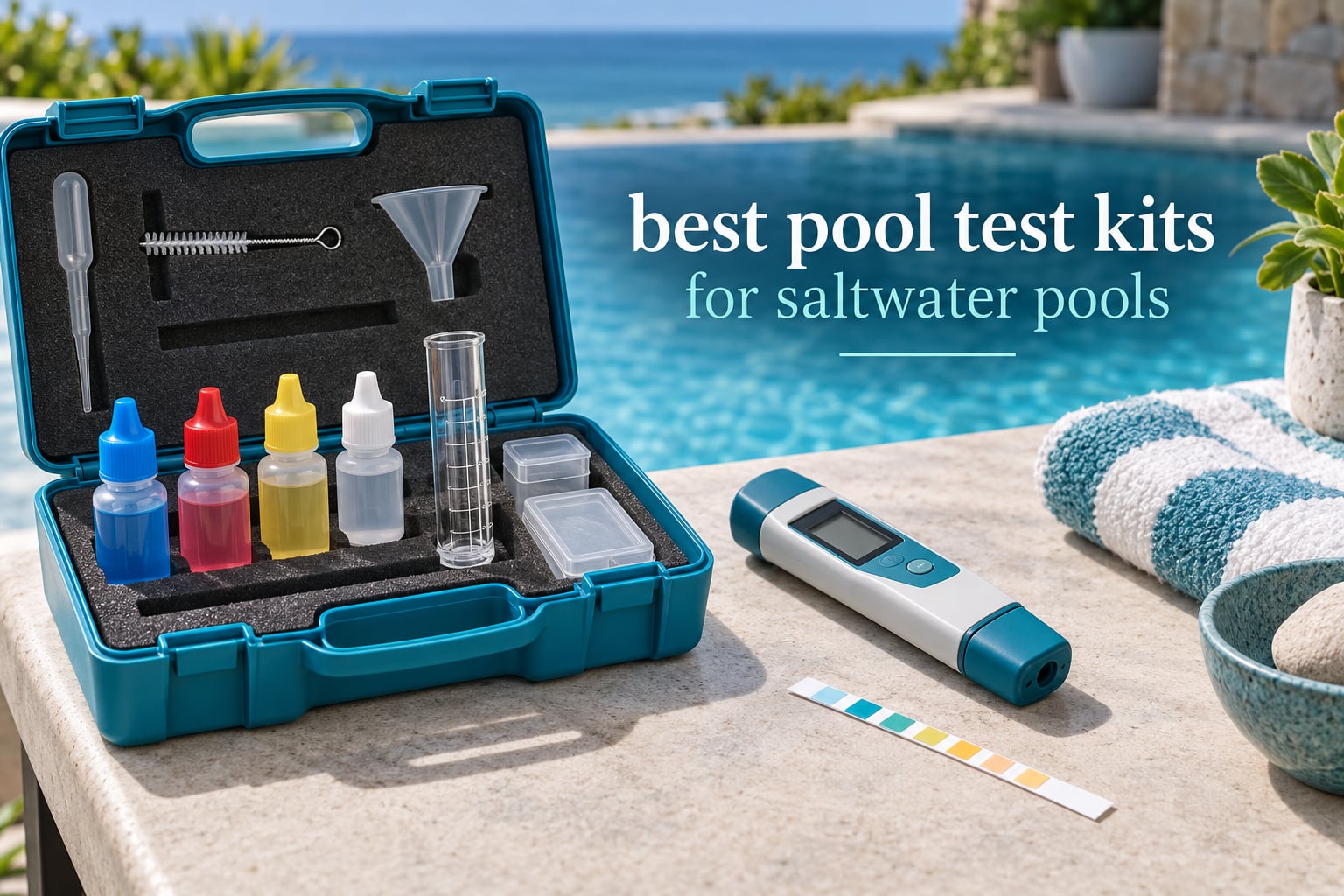
A saltwater pool needs the same core panel as a chlorine pool — free and combined chlorine, pH, total alkalinity, calcium hardness and cyanuric acid — plus one dedicated test for sodium chloride. The reading on your salt chlorine generator panel is not a substitute, because that display drifts with water temperature and the condition of the cell. If you want the short version: measure salt yourself, and aim for the 3200 ppm range most manufacturers specify.
That is the whole argument for spending a little attention on your testing setup. A saltwater pool is chemically forgiving in some ways and unforgiving in others. The generator handles your chlorine day to day, but only if the water sits inside its target salt band, and only if the pH, alkalinity and calcium numbers underneath it stay in balance. Bad numbers do not announce themselves. They show up as a generator that runs flat, a cell that scales up early, water that will not hold chlorine, or a green tint that returns two days after shocking.
We spent six weeks working through the best pool test kits for saltwater pools currently on the market, comparing the full product data, reader reviews and forum consensus for the ten kits below. The list covers every method family that matters: FAS-DPD liquid panels, single-parameter salt titration, dedicated salt strips, eight-in-one strips, and digital salinity meters. We also included the classic liquid kit that most salt pool owners end up buying alongside a salt test, because that pairing is where most confusion starts.
If your pool is above ground, our guide to the best above ground pools covers the shell itself, and the same testing logic applies once it is full.
Top 3 Picks for the Best Pool Test Kits for Saltwater Pools in 2026
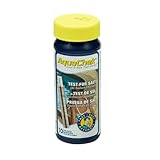
AquaChek Salt Titration Strips
- Salt titrator strips 400 to 7000 ppm
- No drop counting
- Reads in about 3 to 4 minutes
- Highest reviewed salt strip option
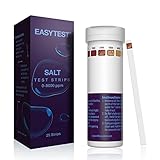
EASYTEST Salt Strips
- Salt range 0 to 8000 ppm
- 25 strips per bottle
- 1 second dip and 5 second read
- Lowest cost per reading
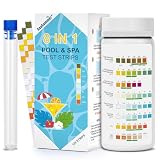
SaySummer 8-in-1 Strips
- Salt plus 7 parameters in one dip
- 125 strips per bottle
- 2 second dip and 30 second read
- Cheapest full panel available
All 10 Saltwater Pool Test Kits Side by Side in 2026
| Product | Specifications | Action |
|---|---|---|
| AquaChek Salt Test Strip Titrators |
|
Check Latest Price |
| EASYTEST Saltwater Pool Test Strips |
|
Check Latest Price |
| SaySummer 8-in-1 Salt Pool Strips |
|
Check Latest Price |
 Taylor K-2006C Service Complete Taylor K-2006C Service Complete |
|
Check Latest Price |
 Taylor K-2006-SALT Taylor K-2006-SALT |
|
Check Latest Price |
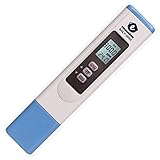 eSeasonGear SALT-3050 eSeasonGear SALT-3050 |
|
Check Latest Price |
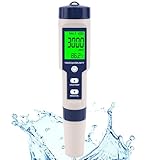 Hofun 5-in-1 Digital Meter Hofun 5-in-1 Digital Meter |
|
Check Latest Price |
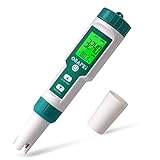 ORAPXI 5-in-1 Pool Tester ORAPXI 5-in-1 Pool Tester |
|
Check Latest Price |
 Taylor K-1766 Sodium Chloride Kit Taylor K-1766 Sodium Chloride Kit |
|
Check Latest Price |
 Joyzakzak 8-in-1 Pool Test Strips Joyzakzak 8-in-1 Pool Test Strips |
|
Check Latest Price |
1. AquaChek Salt Test Strip Titrators: The Salt-Only Strip That Holds Up
- Numeric salt result with no drop counting
- Tracks Taylor drop tests closely in most owner cross-checks
- Fast enough for twice-weekly checks
- Free app for logging readings
- Printed chart differs from the brand website chart
- Reading must be taken at the right moment
- Only 10 strips per tube
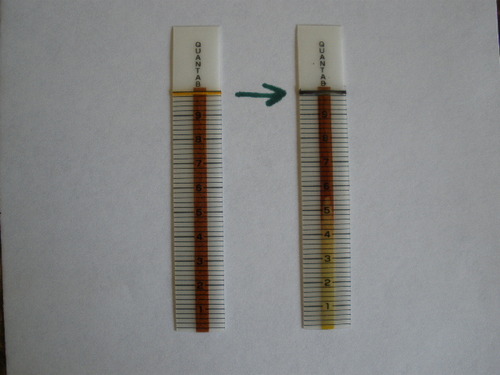
Our pick for the single most useful salt tool in this whole roundup. The AquaChek titrator strips measure sodium chloride across a 400 to 7000 ppm range using a white pad that develops a shade you read against a chart, and the result is a number rather than a vague “medium” color block. That distinction matters more than it sounds, because the whole job of a salt test is to tell you whether to add salt, add water, or leave it alone.
We looked hard at the cross-check data here, and it is the strongest of any strip in the roundup: owners report readings that agree with Taylor drop tests and handheld meters in the large majority of cases. No swirling, no drop counting, no color comparator block to line up in bad light. You dip, hold, wait roughly three to four minutes and read.
The catch is documentation, not chemistry. The chart printed in the tube does not match the chart on the brand website, and a number of readers lose confidence the first time the two disagree. Read the tube chart consistently rather than switching back and forth. A smaller group of owners still finds the strips too coarse for adjusting salt, which is a fair criticism if your generator is fussy about cell output.
Ten strips per tube is a thin tube. If you test salt twice a week, you are going through them quickly, so plan your purchases around a season rather than a month. Reagents are not a factor here, which is the quiet advantage of a strip when you are also running a liquid panel.
When this strip makes sense
If you already own a liquid kit for the balance panel and only lack salt coverage, this fills the gap for almost nothing per test. It is also the right tool for the two-minute check you do after a storm, before a cell cleaning, or any time you want to know whether the generator’s “low salt” warning is real.
When it falls short
It will not settle a disagreement. When a strip says 2800 ppm and your generator still will not make chlorine, you need a drop test, not a second strip. Readers on color-blindness forums note that a single white pad is far easier to match than a seven-pad strip, though the endpoint still depends on judging a faint shade difference.
2. EASYTEST Saltwater Pool Test Strips: The Cheapest Reading You Can Take
- Very low cost per reading
- Chlorine and pH close to liquid results
- No batteries or app needed
- Long record of use across pool types
- CYA pad has been reported reading zero at true levels
- pH pad tends to read about 0.5 low
- Store indoors in hot climates or colors shift
With more than 26000 reviews behind it, this is the strip most saltwater pool owners actually keep in the equipment locker. The EASYTEST saltwater strips cover a 0 to 8000 ppm salt range on a color chart, and the bottle even marks 3200 ppm as the ideal level so you have a reference point without doing arithmetic.
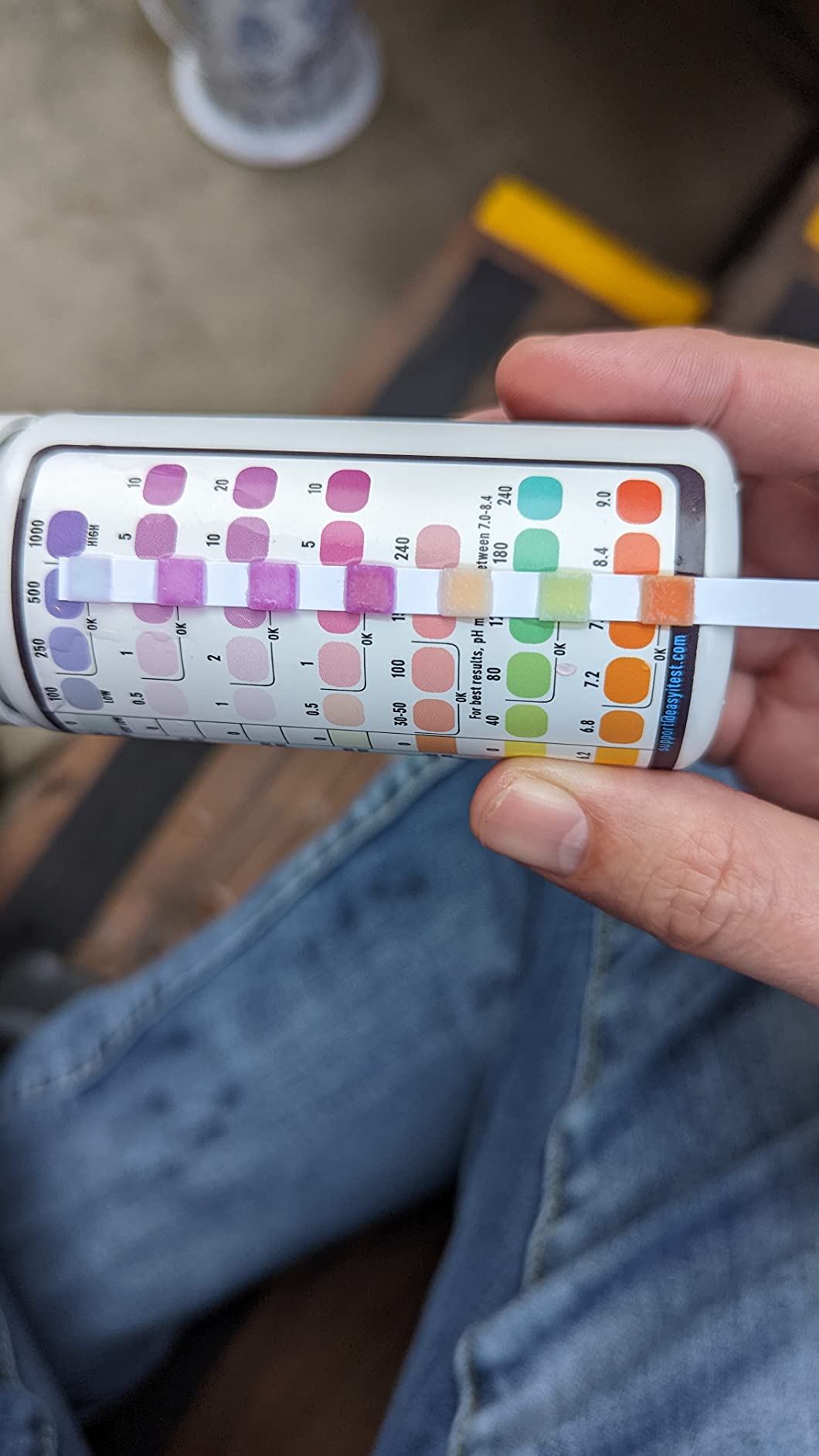
Technique is simple: dip for one second, hold the strip horizontally for five seconds, then read immediately. No shaking, no timer beyond your own count. Reviewers broadly accept the chlorine and pH pads for trend tracking, which is the honest job for a strip of this price.
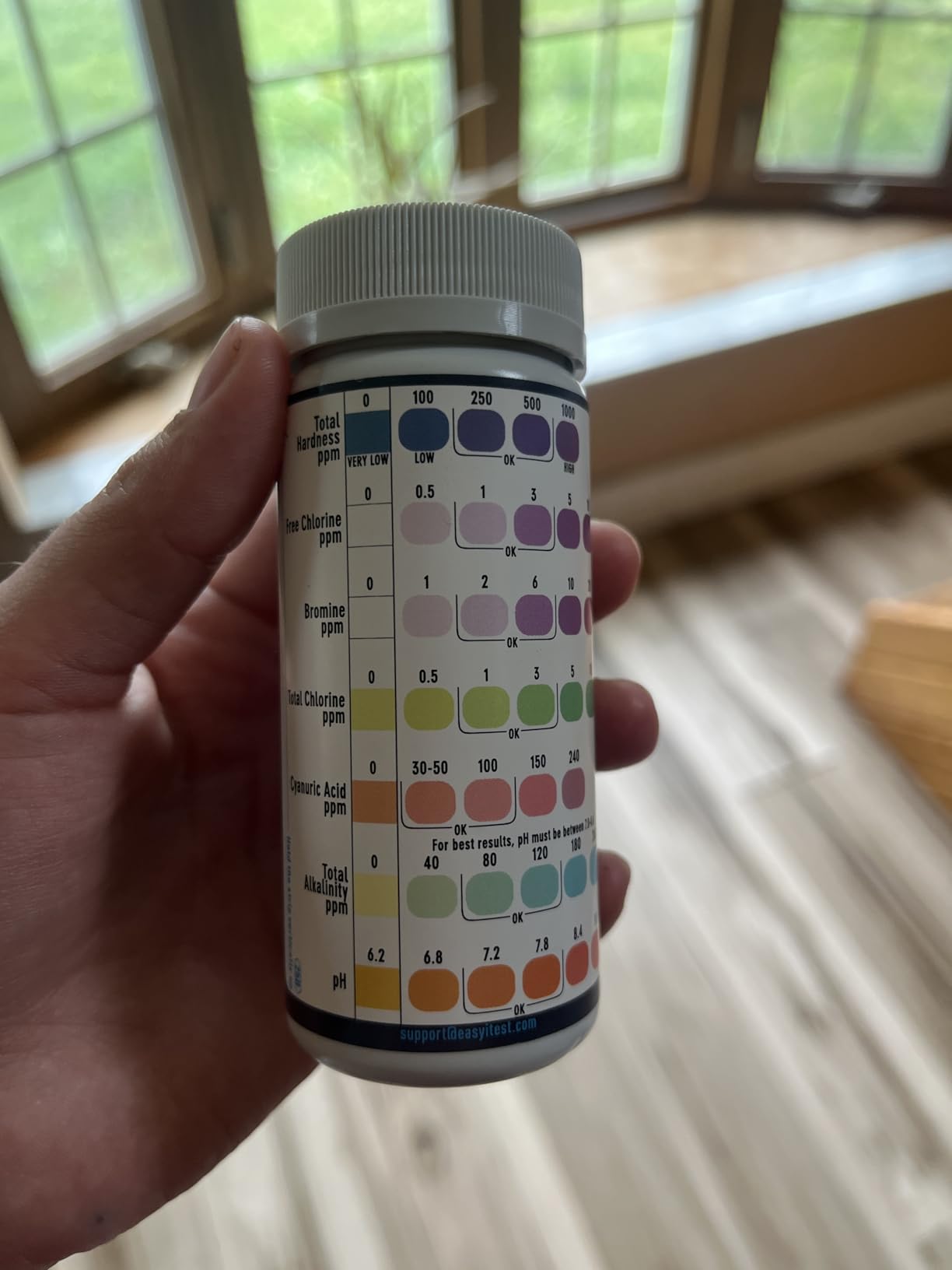
Two technical complaints come up repeatedly and are worth knowing before you buy. The cyanuric acid pad has been reported reading zero when the true level sat at 40 to 50 ppm, and the pH pad tends to come in about half a point below a Taylor result. Neither ruins daily monitoring, but both matter on the day you are deciding how much stabilizer to add.
Storage is the other real-world issue. In hot climates, owners report colors shifting badly if the bottle sits in a shed or a hot truck bed. Keep it indoors, sealed, and use the strips reasonably soon after opening for the best read.
Who should buy this
Owners who test three or four mornings a week and want to know the direction the water is moving, not the exact number. It pairs well with a liquid kit: the strip tells you something changed, the drop test tells you what to do about it. Owners of hot tubs and spas, where sanitizer moves fast, get the most value from the speed.
Who should skip it
Anyone tuning a salt cell or chasing a specific chemistry target. A half-point pH offset and an unreliable CYA pad are fine for trend watching and wrong for dosing decisions. At that point the money is better spent on one of the titration kits further down this list.
3. SaySummer 8-in-1 Salt Pool Strips: Salt and the Full Panel in One Dip
- Only strip that pairs salt with seven other parameters
- 125 strips per bottle
- Chlorine pH and alkalinity track liquid kits
- Box chart colors more accurate than bottle label
- Salt pad is the weak point and can under-read
- Bottle label colors are noticeably off
- Not accurate enough to adjust salinity alone
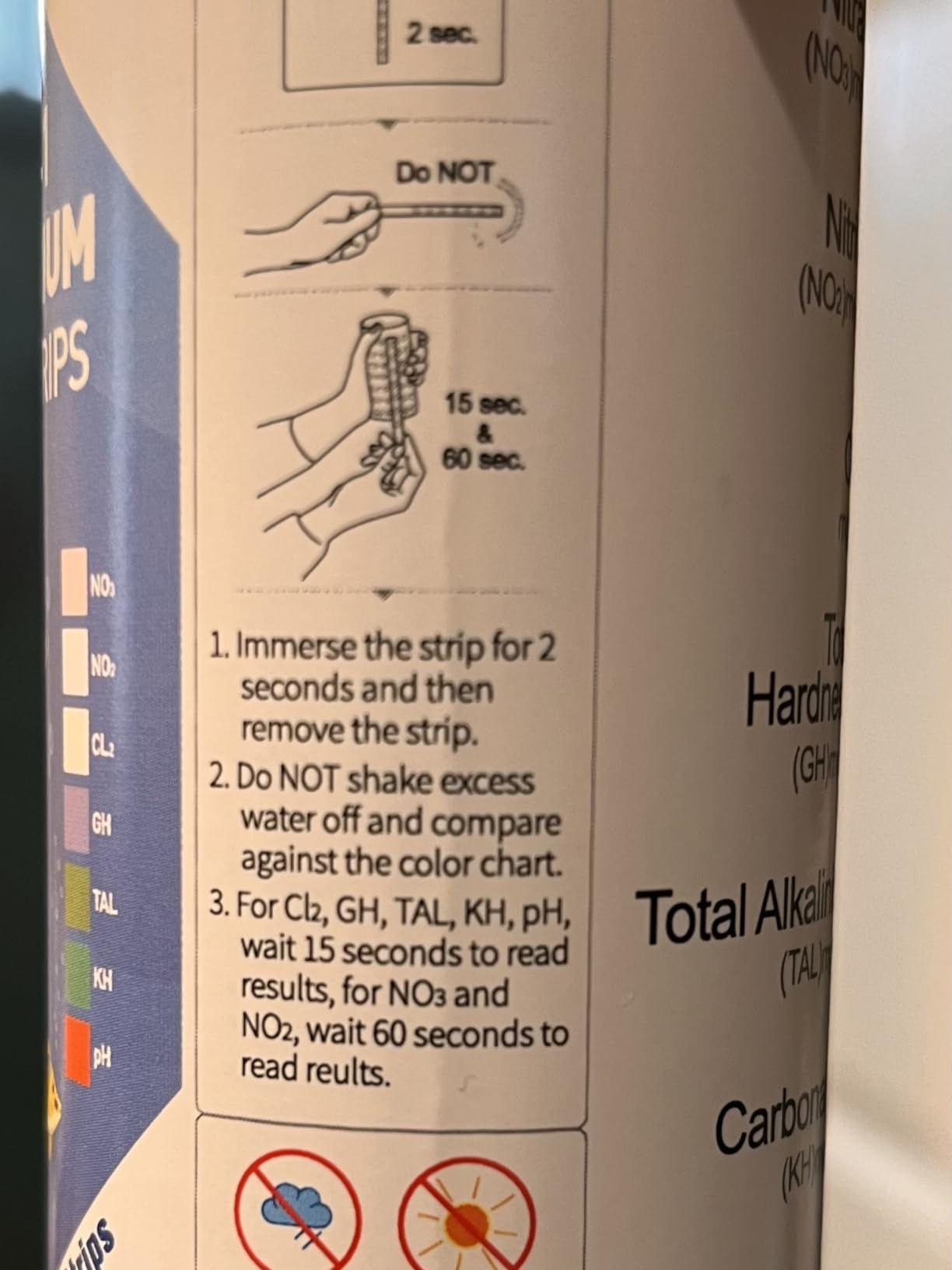
This is the strip to buy if you want one bottle that covers everything and you are willing to treat the salt pad as a screening tool. A single dip returns total hardness, free chlorine, bromine, total chlorine, cyanuric acid, total alkalinity, pH and salt, and the salt pad spans 0 to 6000 ppm with the 2700 to 3400 ppm band marked on the chart.
With 125 strips in the bottle, this is the most economical full panel we reviewed. Owners running inground pools, above ground pools and spas report that the standard chemistry pads line up well with professional testing, which is genuinely useful for weekly monitoring.
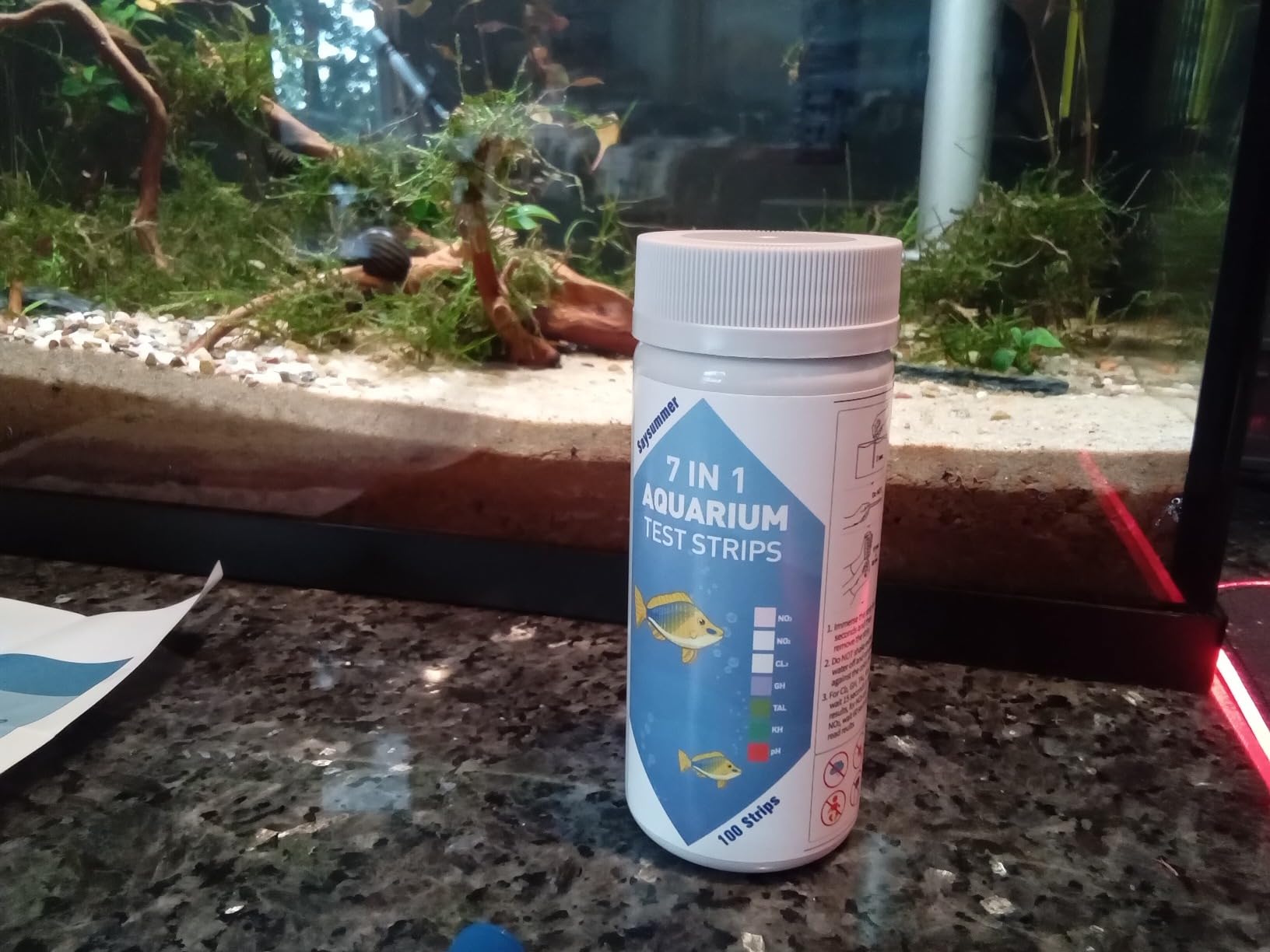
The salt pad is where the product disappoints. Several owners report it holding a dark brown shade regardless of actual salinity, and one tester found it reading about 2400 ppm in a pool above 6000 ppm, which led to a partial drain. If you take one thing from this review, take this: never use these strips to decide how much salt to add or how much water to drain.
Read against the outer box chart rather than the bottle label. Multiple owners note the label colors are printed noticeably off from the box, and matching the wrong chart is the most common reason people think the whole strip is inaccurate.
Best use case
Weekly trend checks on a pool where the balance panel is stable and you mainly need to know whether anything has drifted. It also works for hot tubs and spas, where eight parameters in thirty seconds saves a lot of standing around.
Where it should not be trusted
Salt cell calibration and generator troubleshooting. The pad has a wide enough failure band that a bad reading can send you chasing a problem you do not have, and the partial-drain story above is exactly the kind of expensive mistake an owner cannot un-do.
4. Taylor K-2006C Service Complete: The Balance Panel, Done Properly
- Titration accuracy far beyond strips or pool store tests
- 2 oz bottles last for years of testing
- Booklet is repeatedly praised as the best pool reference
- Calculator removes guesswork from dosing
- No sodium chloride test so it needs a companion kit
- Interference from chlorine or metals can confuse colors
- Kit does not warn you about interference issues
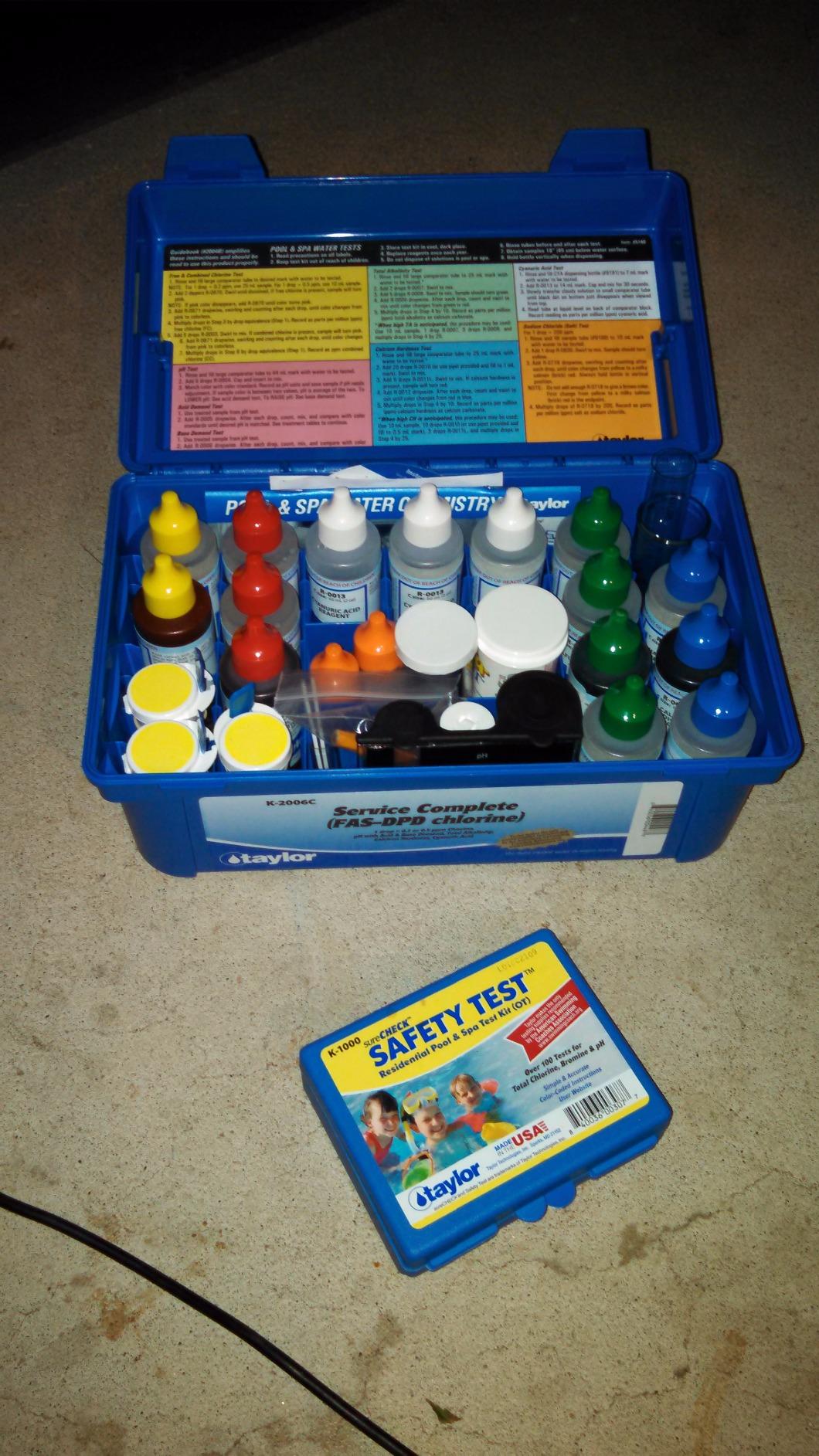
Most salt pool owners who graduate from strips end up here. The K-2006C is a titration kit covering free and total chlorine, bromine, pH, acid and base demand, calcium hardness, total alkalinity and stabilizer. You count drops until the color changes, which is why its numbers hold up where a color comparator does not.
The reason we point people toward the Service Complete version rather than the smaller kit is bottle size. The 2 oz bottles give roughly two and a half times the number of tests in the standard kit, and for anyone testing weekly through a full season that difference removes the most common complaint we saw, which is running out of the expensive FAS-DPD reagent mid-summer.
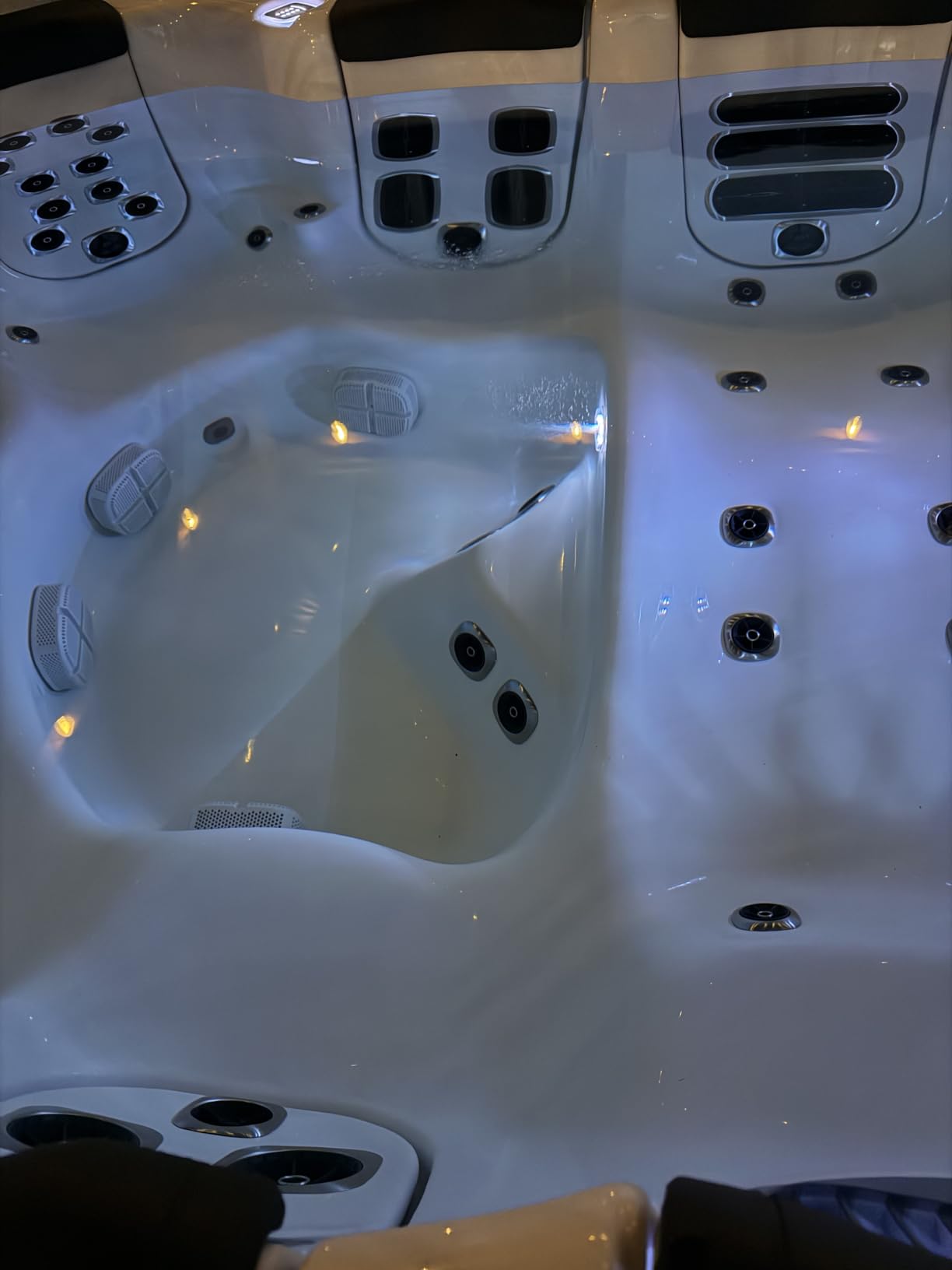
The chemistry booklet and balancing calculator get more praise than any accessory we have seen in this category. Owners describe it as the most informative pool document they have read, and several say the dosing tables cut their chemical use once their readings were trustworthy.
Two limitations are real. There is no sodium chloride test in this kit, so a saltwater pool needs a companion salt method. And reagent interference from chlorine, sanitizer or metals in the water can disrupt color development; the booklet addresses it, but the kit itself does not warn you, which surprises people mid-test.
Who this suits
Owners who want dosing numbers they can defend, plus anyone whose pool store results keep disagreeing with their own. Trouble Free Pool regulars name the K-2006C as one of two kits they trust outright, and that sentiment matches what we saw in the review data.
Who can skip it
If you test once a month, the 2 oz bottles will sit past their useful life and the price is hard to justify. Beginners who have never run a titration drop can start with a strip and move up once they want precision.
5. Taylor K-2006-SALT: The One-Case Answer for a Salt Pool
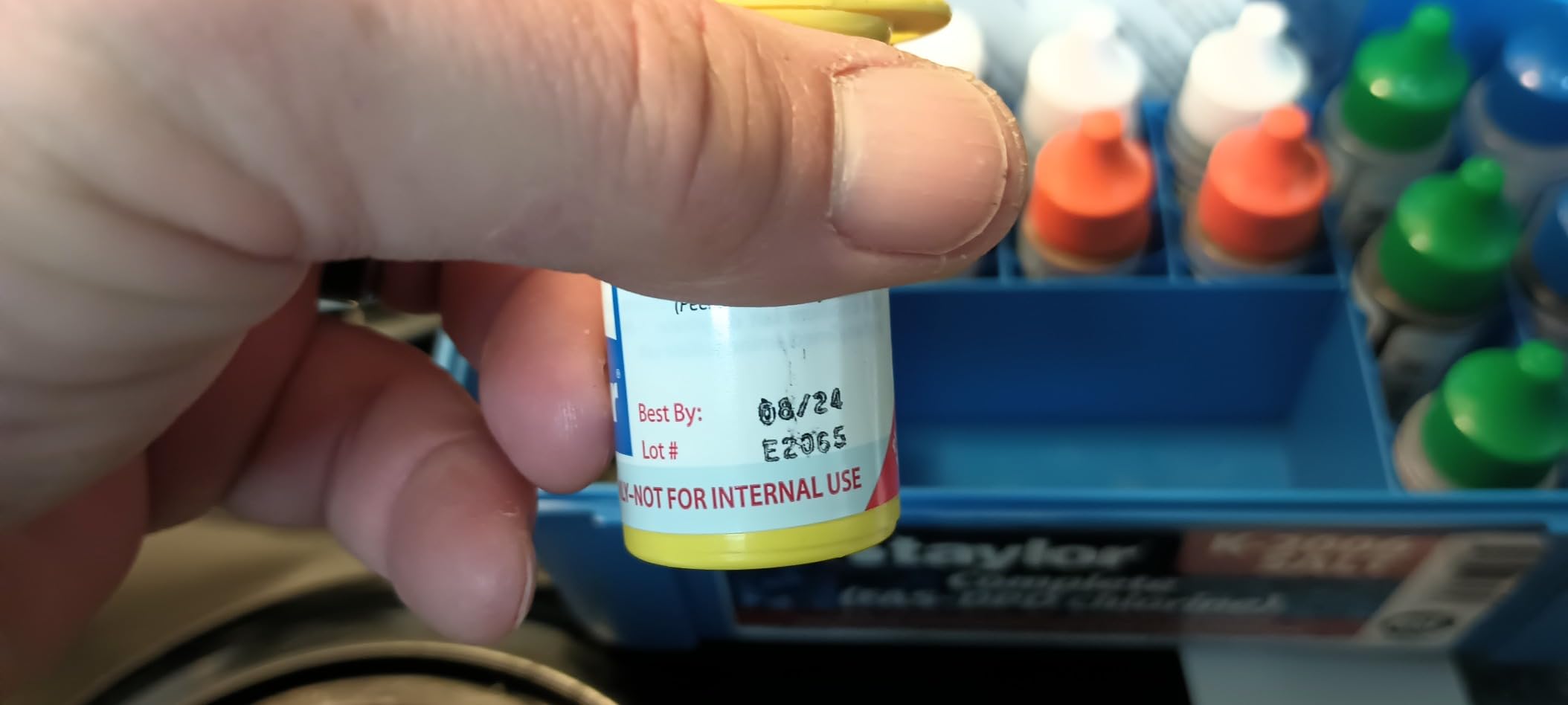
Taylor Technologies K-2006-SALT FAS-DPD, 9-in-1 Saltwater Pool Test Kit
- Only liquid kit here with a sodium chloride test
- Nine parameters in one storage case
- Plain language instructions with pictograms
- Owners report it cut weekly pool store trips
- 0.75 oz bottles run out quickly for frequent testers
- Learning curve across nine separate procedures
- Some readings need a calculation step
If you want one box that covers a saltwater pool completely, this is the kit. It measures free and combined chlorine, pH, acid and base demand, total alkalinity, calcium hardness, cyanuric acid and chloride, using FAS-DPD high range titration and a comparator block for sample mixing. Nothing else in the liquid category combines the core panel with a sodium chloride test.
Owners of salt pools describe it as the most accurate home kit they have used, and several say it replaced a weekly habit of taking water samples to the pool store. The instructions use plain language with pictograms, which matters more than it should for a nine-parameter kit.
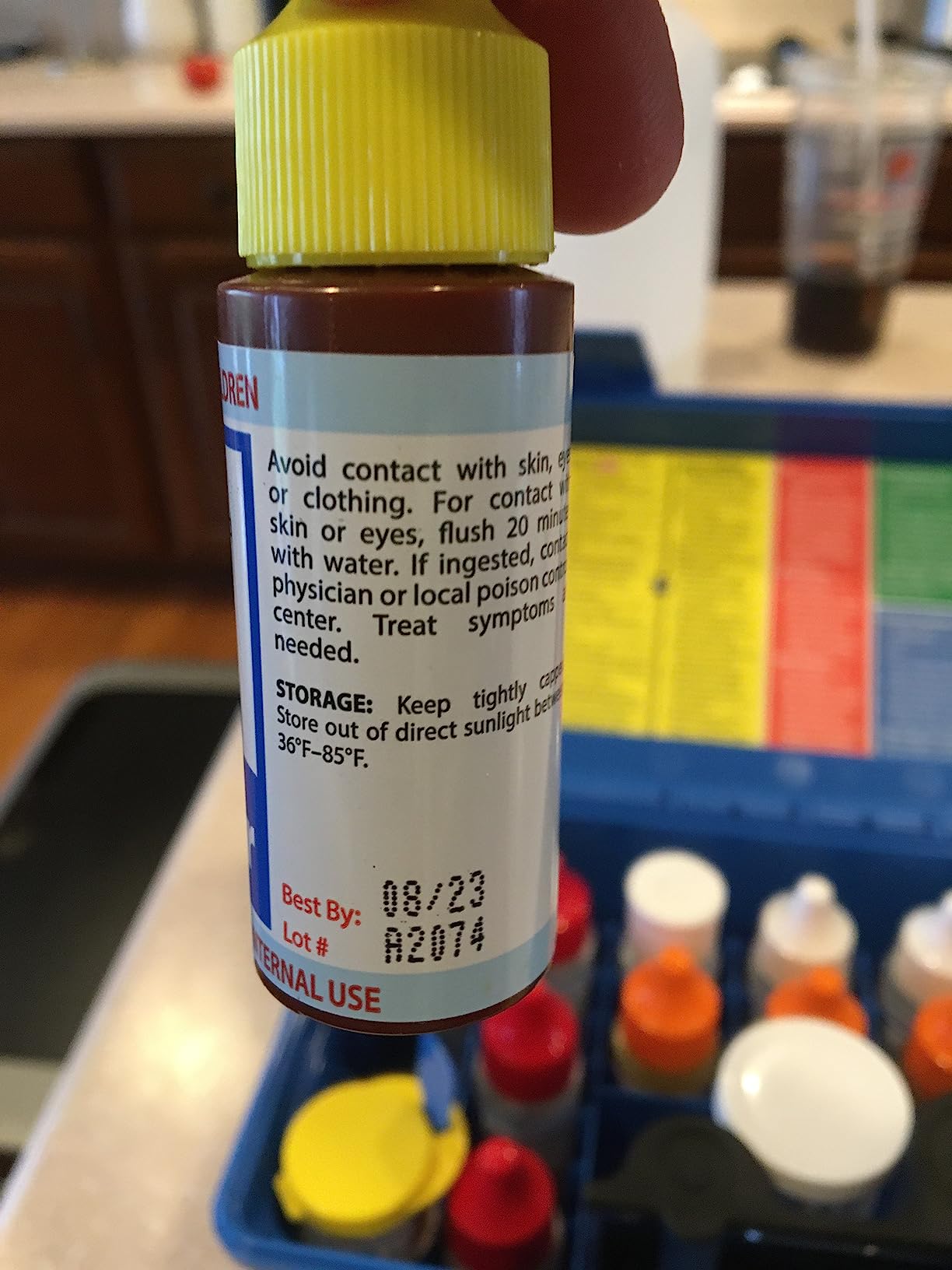
Where it disappoints is bottle size and workload. Fifteen reagents in 0.75 oz bottles sounds generous until you count tests; frequent testers run out of the FAS-DPD and the salt reagents well before the season ends. There is a genuine learning curve, because each parameter uses different steps and reagent combinations, and several readings require a calculation before you can use them.
Reagent shelf life is the other quiet issue. Store the case somewhere cool and dry, and check dates if the kit has been sitting in a garage or a storage unit through the winter.
Best for one-kit households
A single owner or couple running one pool who want the whole panel plus salt in one case and do not mind spending time on technique. It is also a good second kit for a household that already owns a small liquid set and has outgrown it.
Best paired with something else
Pair it with a dedicated salt titration kit if your generator is temperamental. The K-2006-SALT salt procedure is convenient, but when the cell is the problem you want a measurement that exists for no other purpose.
6. Taylor K-1766 Sodium Chloride Kit: The Reference Salt Measurement
Taylor Technologies K-1766, Pool and Spa Drop Test Kit for Sodium Chloride
- Widely treated as the reference salt measurement
- No batteries or sensors that drift
- Results track expected salt additions closely
- Cheapest liquid salt-only option
- Reagent drops clump and need heavy swirling
- Salmon endpoint takes practice to match
- Bottle sizes are uneven between the two reagents
This is the kit the other salt methods get checked against. The K-1766 measures sodium chloride by titration drop count: silver nitrate solution and a chromate indicator, counting drops in a glass tube until the sample hits a salmon color that you read against a cross-reference test paper. No batteries, no apps, no sensors to drift.
Because it does one thing, it does that thing well. Readings track closely with expected salt additions and with handheld meters, and at 4.4 stars across more than a thousand reviews it holds a steadier record than most salt products here. It is also the cheapest way to get a liquid salt test.
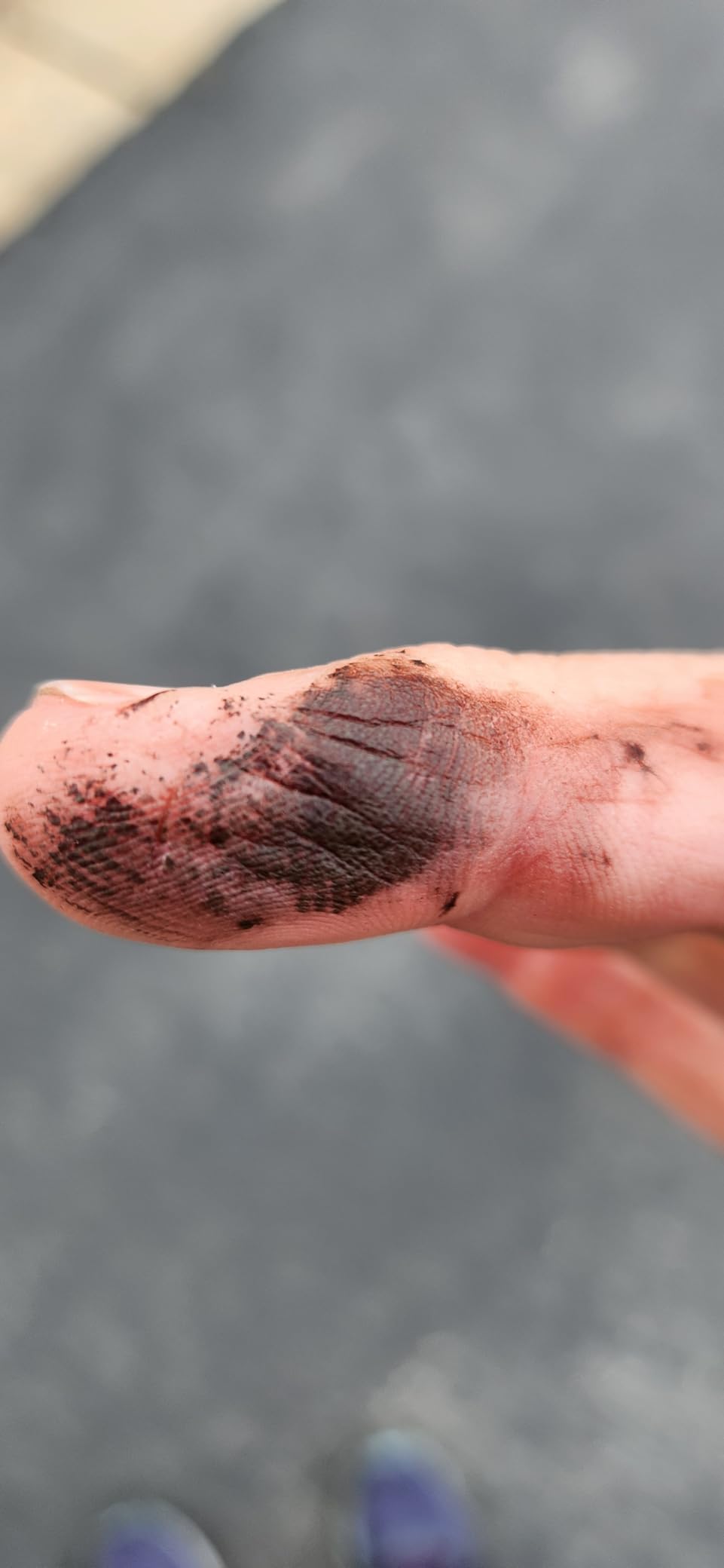
The technique is fussy in ways that take practice. Drops tend to clump on the way out, so the sample needs serious swirling after each addition, and matching the salmon endpoint is genuinely subjective until you have done it a few times. Bottle sizes are also uneven, with the second reagent running out long before the first.
A minority of owners report results that disagree with a previous kit by around 1500 ppm, which is a large gap. If that happens, the usual causes are an incomplete swirl and a missed endpoint rather than a bad kit, but it is worth running one test twice before you act on a dramatic number.
Use it when the number has to be right
Cell calibration, a generator that keeps reporting low salt, and any decision that costs real money. This is the measurement to take when you are about to add a hundred pounds of salt or drain part of the pool, because there is no cheaper way to be confident in the number.
Skip it for weekly checks
It is a single-parameter test. You still need a full balance panel, and for a quick between-tests glance a strip is faster. Treat this as the instrument you consult, not the one you wave at the water every morning.
7. eSeasonGear SALT-3050: A Digital Number in Seconds
eSeasonGear SALT-3050 Waterproof IP65 Meter, Digital Salinity PPM Temperature Tester for Salt Water Pool and Koi Fish Pond
- Instant reading with no reagents or color matching
- Compact and waterproof for poolside checks
- Calibrated for chlorinator pool salinity
- Cross-checks land within roughly 200 ppm of a drop test
- Probe readings can drift in warm water
- Single purpose with no pH function
- Not for marine aquariums or food salt
The appeal of a digital meter is obvious once you have counted drops: you dip a probe in and the screen shows a number. The SALT-3050 comes precalibrated at 3000 ppm of sodium chloride at 25 degrees Celsius, covers 0 to 9999 ppm, shows temperature, and carries an IP65 waterproof housing in a package about the size of a marker pen.
Cross-check data is encouraging. Owners comparing it to a Taylor drop test generally land within roughly 200 ppm, which is fine for a sanity check and adequate for routine cell monitoring. It runs on three LR44 batteries, and replacement is inexpensive.
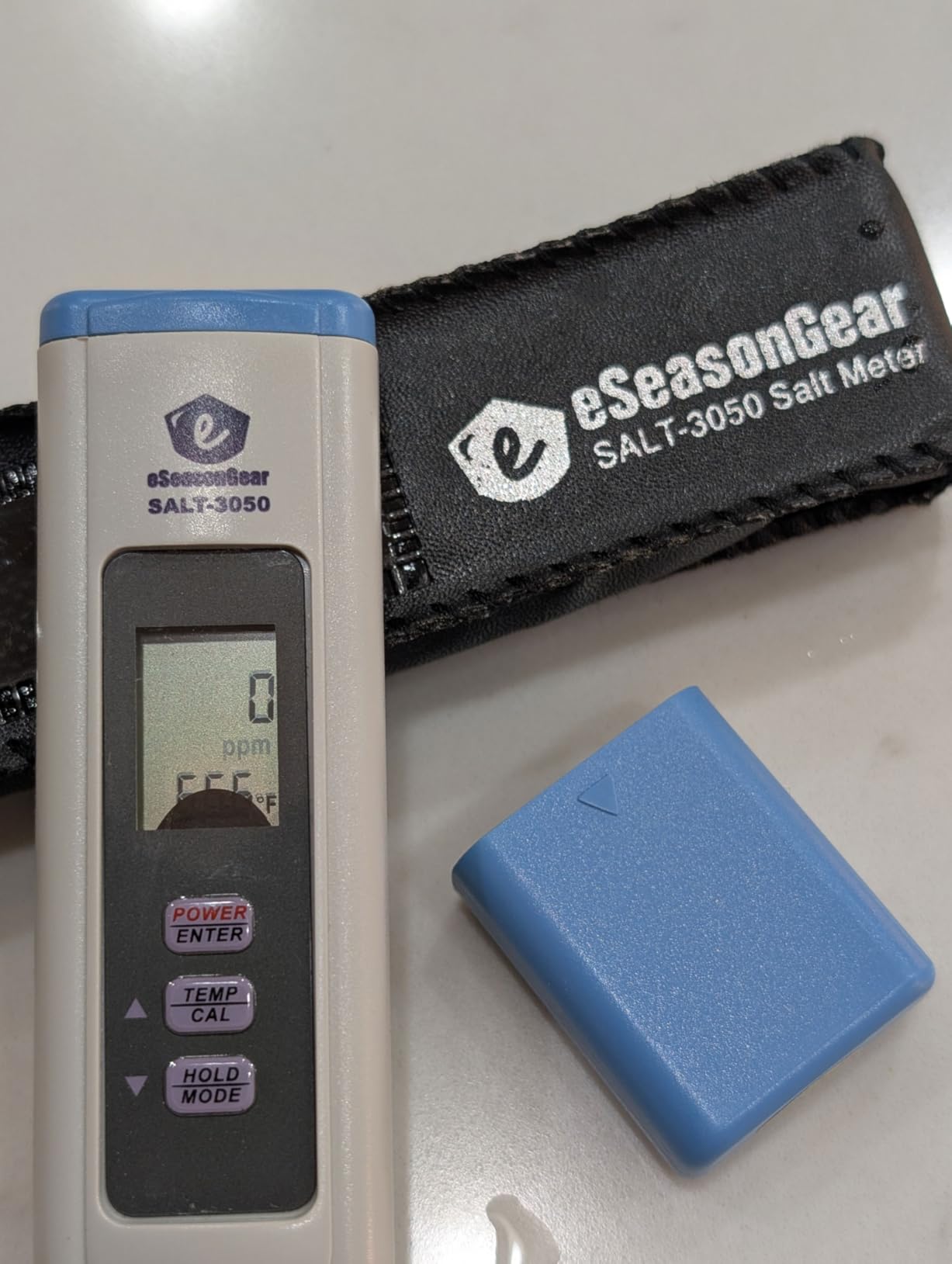
Two limitations are worth planning around. Battery-powered probe readings drift over time in warm water, so a meter that read correctly in May can read high in August, and the most common care advice is to re-check it against a drop test once or twice a season. It also does exactly one thing: there is no pH function, so it does not reduce your need for a liquid panel at all.
This model is designed specifically for saltwater pool and koi pond salt levels, and the manufacturer says it is not intended for marine aquariums or food salt. Our guide to saltwater aquarium kits covers a different salinity range where that distinction matters.
Good for fast checks
Standing at the pool edge, wanting to know whether last weekend’s rain diluted the salt, without going to find the test tube. It also makes a good second opinion: measure with the meter, confirm with drops when the two disagree by a lot.
Not a replacement for drops
A drift-prone probe is exactly what you do not want to make a cell decision from. If the meter says 2500 and your generator is unhappy, confirm with a titration kit before adding anything.
8. Hofun 5-in-1 Digital Meter: Salt Plus Four More Readouts
- Covers salt pH TDS EC and temperature in one device
- Automatic unit switching between ppm ppt and percent
- One button mode control is simple
- Titanium alloy probe measures quickly
- pH needs frequent calibration with buffer powder
- Multiparameter probes need regular cleaning
- About 10 percent of reviews are one star
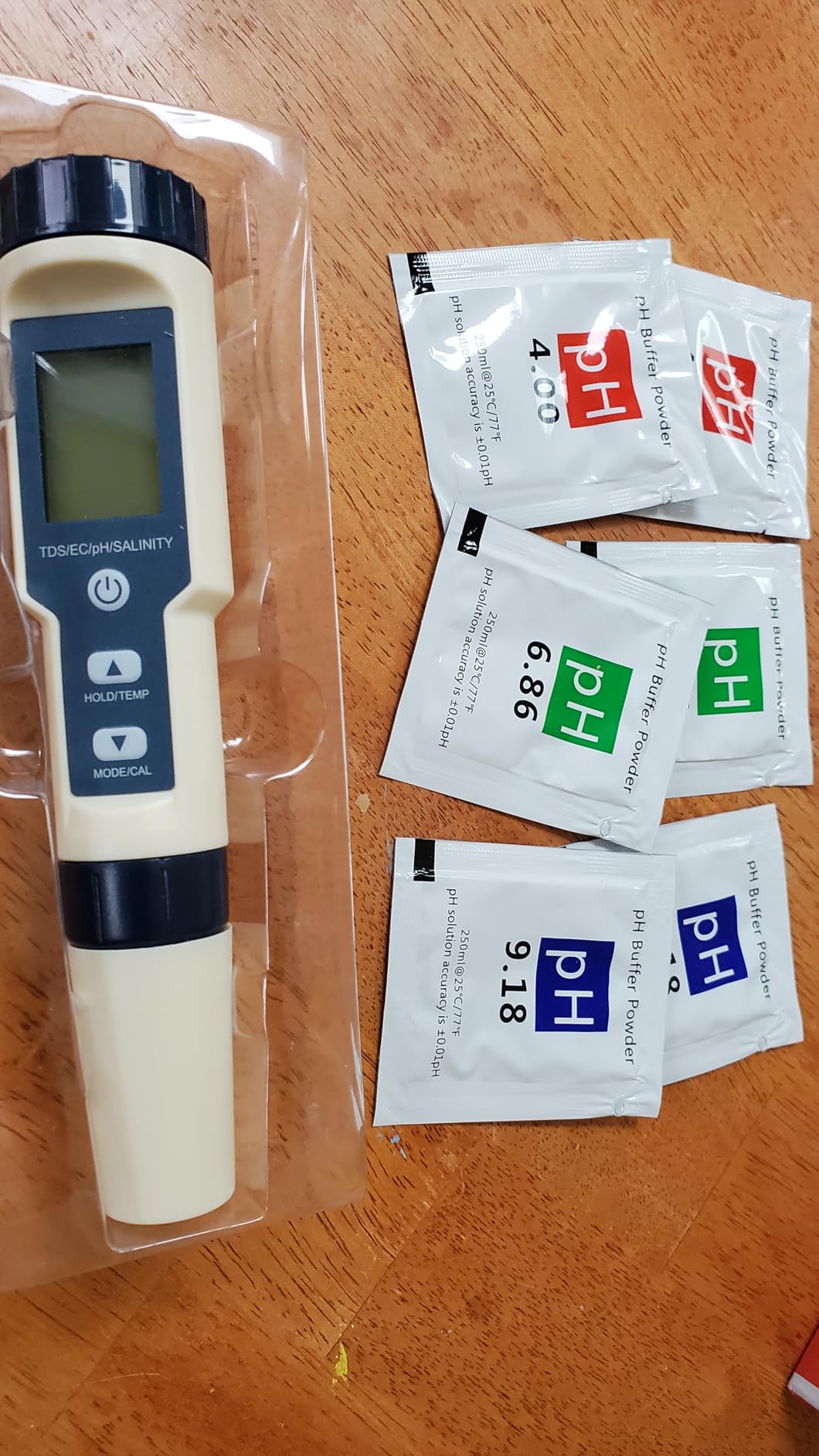
The Hofun covers five measurements in one handheld body: salinity, TDS, EC, pH and temperature, with a titanium alloy probe for speed. It switches display modes between ppm, ppt and percent automatically above 9999 ppm, which removes the conversion arithmetic that trips people up with single-purpose meters.
Salt readings are generally treated as the reliable half. The unit also covers the parameters owners check most often outside a full liquid panel, and it works for drinking water, reverse osmosis systems, pools, spas and hydroponics, so the same device does duty elsewhere on the property.
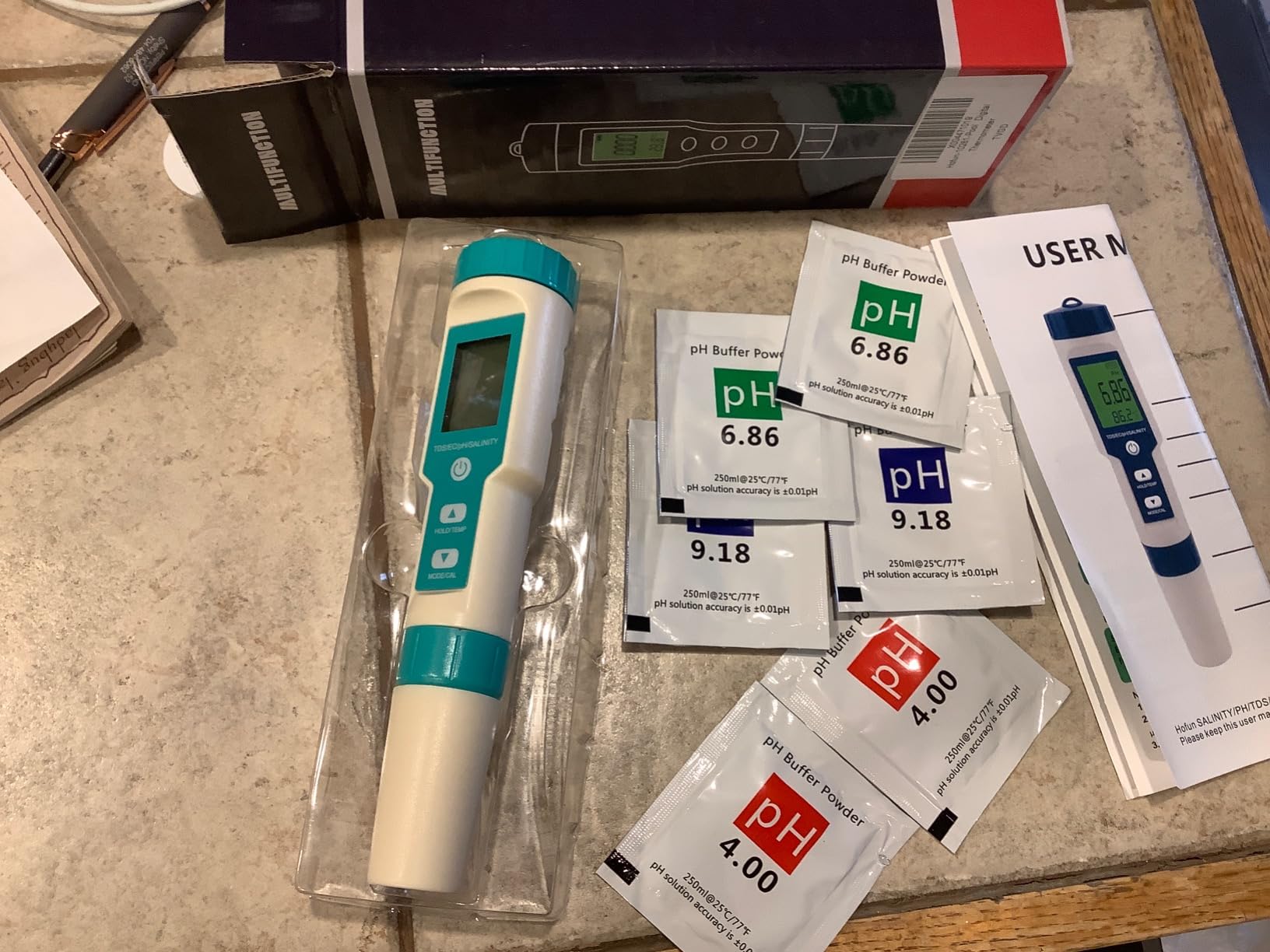
The pH side is the weak point. Calibration with the supplied buffer powder is a recurring chore rather than a once-a-year job, and multiparameter probes need periodic cleaning to stay honest. About 10 percent of reviews are one star, which is a meaningful share of unreliable units in a category where the good ones are quite good.
Keep the probe wet between uses, rinse it with pool water rather than tap water after testing, and store it out of direct sun. Owners who treat it as a five-function tool tend to be happier than those who expect it to replace a titration kit.
Who it fits
Owners who want a poolside answer to “is my pH drifting and is my salt still right” without opening a case of reagents. It is also useful during opening and closing, when you are running several checks in one afternoon.
Who it does not fit
Anyone who needs dosing-grade accuracy on the balance panel, or color-blind readers who prefer a titration kit where the endpoint is a clear change rather than a digital screen they can zoom in on. The calibration burden is real, and skipping it makes the pH number decorative.
9. ORAPXI 5-in-1 Pool Tester: Solid Salt, Fussy pH
ORAPXI Pool Salt Tester pH and Salt Meter for Saltwater Pool pH Tester
- Salt readings consistent within about 100 ppm in cross-checks
- Instant readout with no reagents
- Five functions in one device
- Straightforward out of the box
- pH requires frequent recalibration
- Some units will not calibrate at the 6.8 buffer
- Probe accuracy drops if it dries out
- Confusing labeling about which model ships
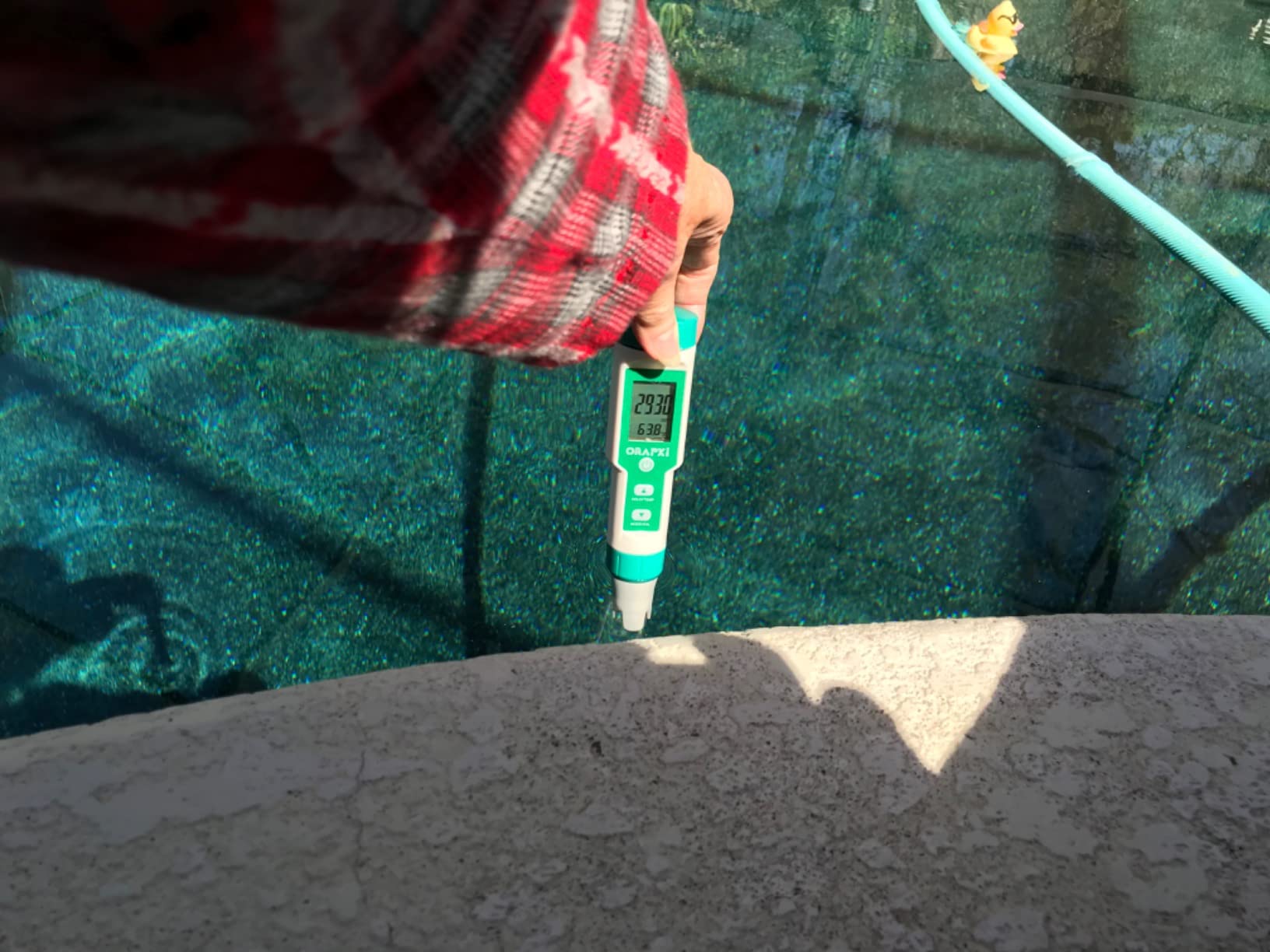
Functionally this is the same idea as the Hofun, and the same split applies: salt is the strong half, pH is the recurring chore. The ORAPXI measures salinity across 0 to 9990 ppm, reads pH from 0.00 to 14.00, and shows TDS, EC and temperature, with a dip-and-read display and no reagents at any point.
Cross-check data backs up the salt claim. Owners comparing the display to a chemical test report differences under 100 ppm, which is tighter than most meters in this category manage. The package includes calibration powder and a cleaning brush, so you have what you need to keep it honest.
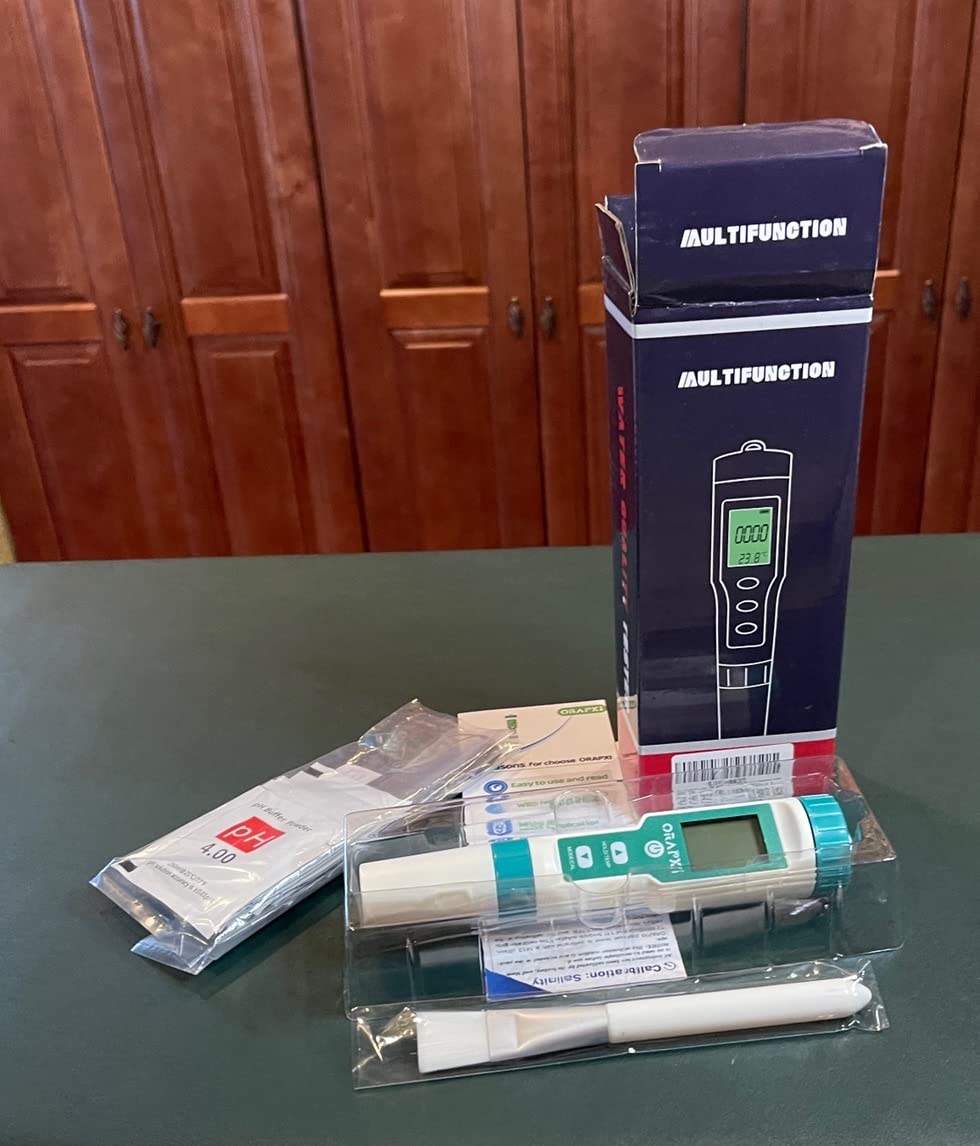
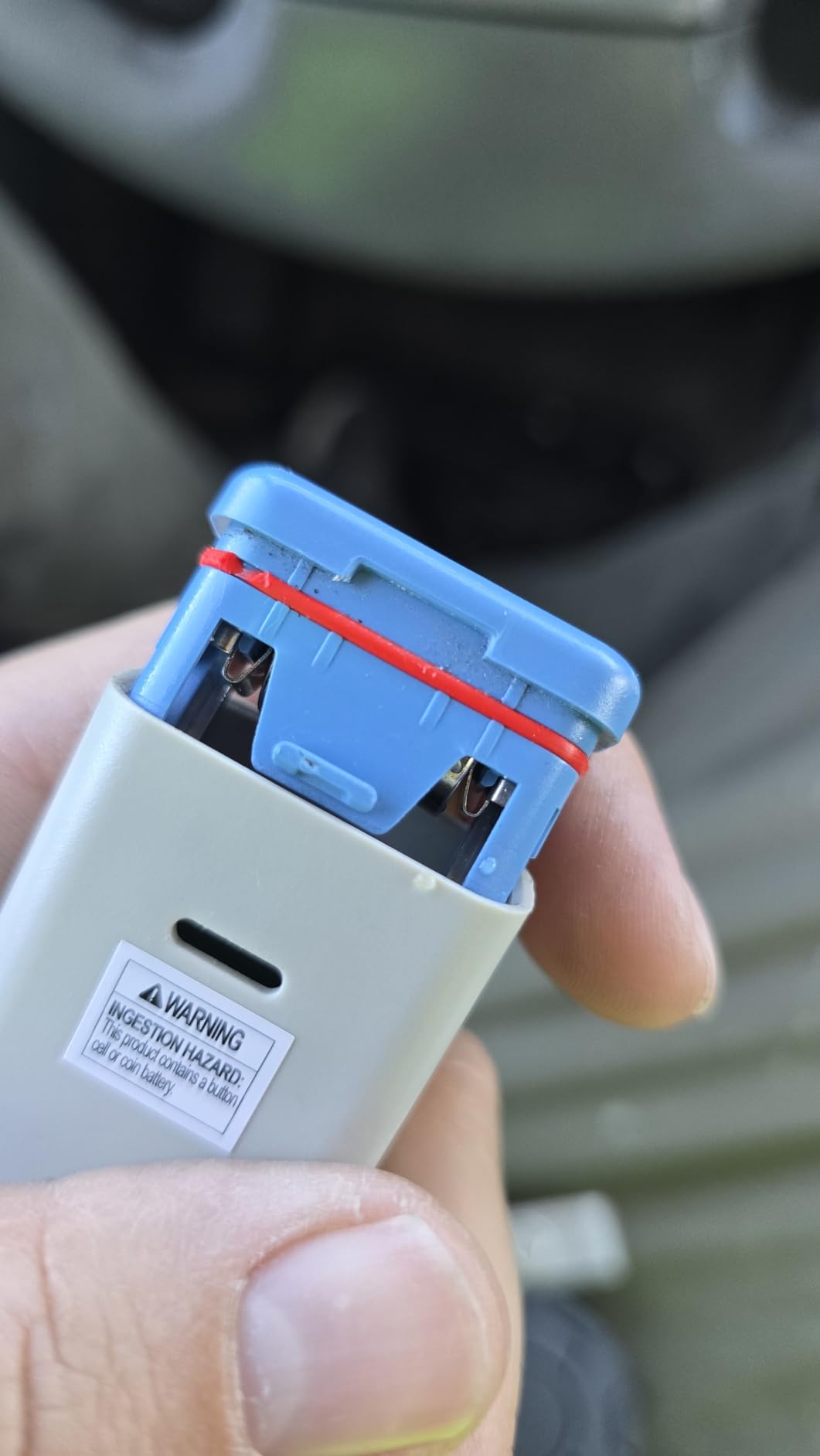
On the pH side, roughly 11 percent of reviews are one star and a meaningful group of those owners could not get the unit to calibrate at all, including one who read 9.18 against a 6.8 buffer and set the device aside. If a probe that dries out between uses, accuracy degrades, so keep it in water or moist when it is stored.
A few owners also report values that disagree with strips, their generator and a pool shop, and the packaging does not always make the model number obvious. Check that the box says what you think it says before you rely on it.
Where it earns its place
Spa and hot tub owners, where sanitizer and pH move quickly and a strip dip is not fast enough for daily checks. The instant readout is a genuine convenience when the water is hot and you want a number in seconds.
Where to be careful
Any long-term decision about salt level. A reading that has drifted, or a probe that has not calibrated, will still display a confident number, and that false confidence is the main risk with any digital meter. Confirm anything important with drops.
10. Joyzakzak 8-in-1 Pool Test Strips: The Most Readable Strip Colors
- Highest average rating among the strips at 4.6 stars
- 150 strips gives a long season of testing
- Colors develop fast with no bleeding between pads
- Lines up with a Taylor kit for daily monitoring
- Salt color block is hard to read with confidence
- Results must be taken within about a minute
- Not precise enough to fine-tune chemistry alone
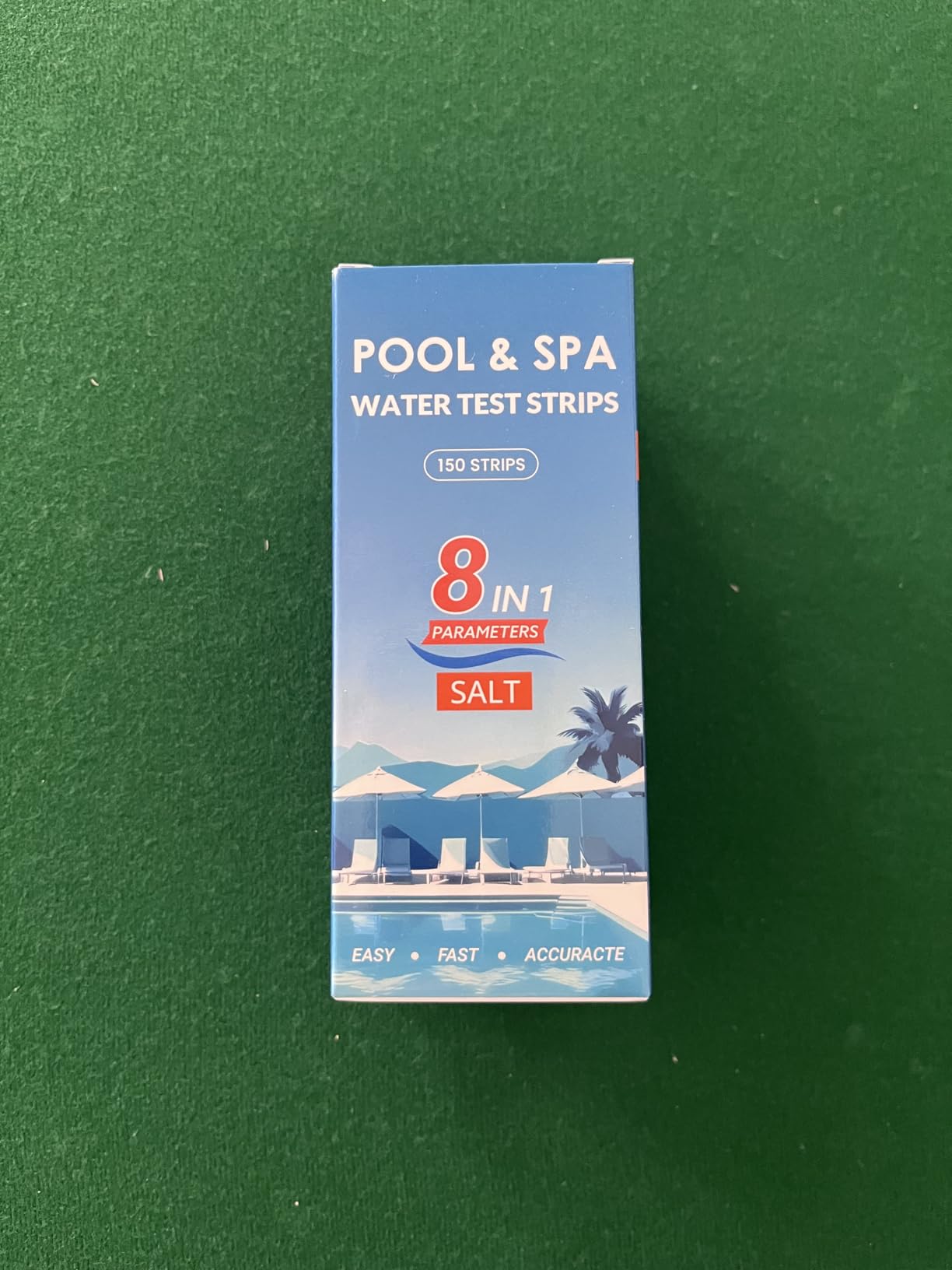
If readability is your problem, this is the strip to look at. The Joyzakzak uses Nordic fiber filter paper, which stops colors bleeding between pads, and owners consistently single that out as the difference between a strip you can read at dusk and one you squint at. The 4.6 average rating is the highest of any strip in this roundup.
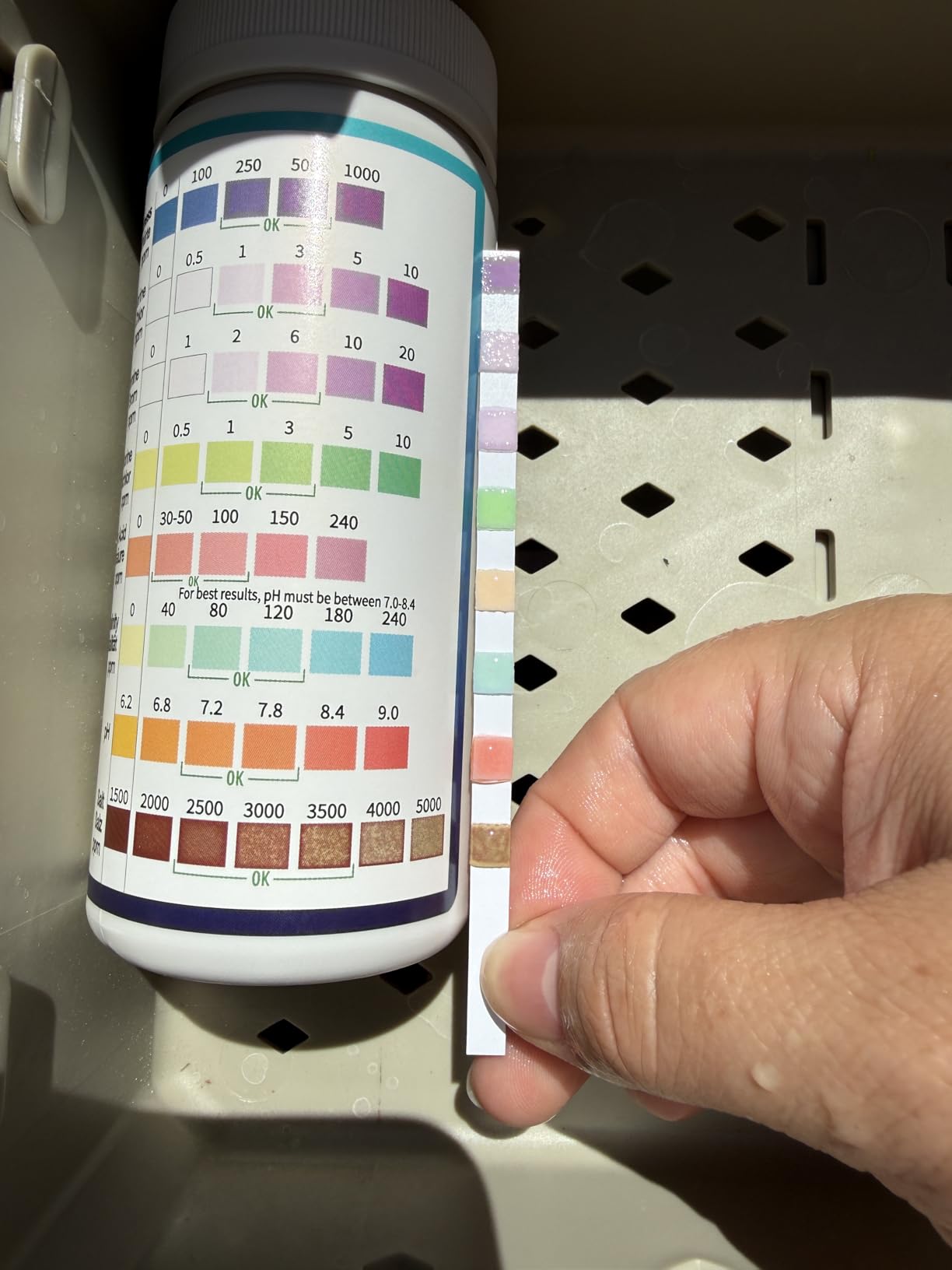
One dip covers salt, pH, free chlorine, total chlorine, bromine, total alkalinity, hardness and cyanuric acid, across a 1500 to 5000 ppm salt range with the 2500 to 3500 ppm band marked on the chart. At 150 strips per bottle, it covers a full season of frequent testing without a second purchase.
The salt pad remains the weak point, and owners respond to it in a predictable way: several say they bought this strip for daily monitoring and separately bought a dedicated salt test later. That is a sensible pairing rather than a complaint about the product. Salt range also starts at 1500 ppm, so it cannot read a fresh fill or very low salinity.
Timing matters. Read within about a minute of the 15 second hold, because the color washes out if you wait. Reviewers say day-to-day readings line up with a Taylor kit closely enough for routine monitoring, and the CYA and hardness pads get singled out as useful.
Where it works well
Any household that wants a single bottle for the whole panel and reads strips in low light or has some difficulty distinguishing shades. Owners with red-eye sensitivity report that non-bleeding pads are noticeably easier to match than standard multi-pad strips.
Where it needs support
Fine-tuning chemistry. Nothing with a color chart gives you the resolution to chase a target to within 50 ppm, and the salt pad in particular will not settle a cell question. Use it to watch, then use drops or a meter to act.
What to Test in a Saltwater Pool and How Often in 2026
Now that you have seen the products, the method matters more than the brand. Saltwater pool testing is the same balance chemistry as a chlorine pool with one extra number attached, and the sequence below is the order most pool professionals work in.
FAS-DPD or DPD: why the chlorine chemistry matters in a salt pool
DPD and FAS-DPD both measure free chlorine by turning it into a colored compound you match against a chart or count drops. The failure mode of plain DPD is bleach-out: at high sanitizer levels the color shifts past the top of the scale and the reading comes back falsely low. In a salt pool that is exactly the moment you need a correct number, because high chlorine is when a chlorine reading stops agreeing with total chlorine and you have combined chlorine to deal with.
FAS-DPD solves it by titrating. You add drops, swirl and count until the color disappears, so the scale extends instead of running out. That is why the Taylor K-2006C and K-2006-SALT kits are built around FAS-DPD high range titration, and why owners who fought high-chlorine misreadings on r/swimmingpools moved to titration kits rather than buying a bigger strip. The same principle applies to salt: a drop count gives you a number you can defend, a color block gives you a range.
Strip, drops or meter: which method fits which job
Strips answer “is something changing”. Drops answer “what exactly do I do about it”. Digital meters answer “what is it right now, quickly”. The forum consensus is consistent on this split, and it is the single most useful thing to internalize. Test strips are widely described as a trend tool rather than a dosing tool, and the cheap ones are excellent at it.
Digital meters sit in between, and their weakness is drift. A conductivity-based salt probe precalibrated at 3000 ppm will start reading high after a summer in warm water, which is why owners cross-check against a drop test once or twice a season. Titration has no such failure mode, which is why it remains the reference for cell decisions.
How to take a sample that does not lie
Even a perfect kit gives a wrong answer on a bad sample. Take water from elbow depth, away from return jets and skimmer, because a return jet mixes return water and a skimmer sample picks up debris. Rinse the sample cell with pool water before filling it, hold the FAS-DPD bottle straight down so drops do not spatter the side of the tube, and compare colors in neutral daylight rather than under a colored pool light at night.
Add reagents in the order the instructions give, swirl to a fixed count, and write the numbers down. The owners who stop having chemistry problems are usually the ones who started logging results, because a salt reading of 2900 looks alarming until you see it drift to 3100 over six weeks without any action.
Color-blind testing and the 3200 ppm target
Color matching is the most common complaint on every forum we looked at, and it gets worse in evening light. Three workarounds help. Single-pad salt strips like the AquaChek titrators are far easier to read than seven-pad strips because there is only one shade to match. Titration kits sidestep the problem entirely, since the endpoint is a change rather than a subtle gradient. And devices with a screen, like the digital meters here, remove the comparison step completely, at the cost of the calibration chores described earlier.
On the salt target itself, the number most manufacturers quote is 3200 ppm, and the operating band that gets discussed is roughly 2700 to 3400 ppm. Below that band a generator produces less chlorine than its dial suggests. Well above it, you are left with salty water that irritates eyes and corrodes fittings faster for no benefit. The cell manufacturer is the authority on the exact figure, and it is worth finding that number in your generator’s manual before you dose anything.
Reagent life, storage and the two-kit stack
Reagents are the quiet running cost of liquid testing. Heat and moisture are what damage them, so store the case indoors, upright, somewhere cool and dry, and check dates before a season starts. Owners report bottles that ran out early, and the 0.75 oz bottles in the K-2006-SALT run out first for frequent testers, which is the practical argument for the larger bottles in the Service Complete kit.
The community answer to the cost question is the two-kit stack, and it is genuinely good advice. A liquid panel for dosing decisions, a cheap strip for the morning glance, and a dedicated salt method for the generator. Readers on Trouble Free Pool describe the same pairing repeatedly: a full panel kit plus a separate salt test covers everything without redundancy. If you are choosing one kit and one accessory, the K-2006C with a K-1766 gives you the widest coverage, and if you want a single box instead, the K-2006-SALT already contains the salt procedure.
Frequently Asked Questions
Do you need a special test kit for a salt water pool?
Yes, but only partly. A saltwater pool still needs the standard balance panel – free and combined chlorine, pH, total alkalinity, calcium hardness and cyanuric acid – exactly as a chlorine pool does. The one addition is a dedicated sodium chloride test, because the generator only produces the right amount of chlorine when the water sits in its target salt band. Your generator’s own display is not a substitute; it can drift with water temperature and cell condition, so confirm it periodically with a real salt test.
What is the best way to test a saltwater pool?
Use two layers. A liquid titration panel gives you dosing-grade numbers for chlorine, pH, alkalinity, calcium and CYA, because FAS-DPD titration counts drops and stays accurate at high sanitizer where color matching bleaches out. Add a dedicated salt method – a drop-count kit such as the Taylor K-1766, a salt titrator strip, or a digital salinity meter – and confirm the salt reading against drops at least twice a season. Strips alone work fine for spotting trends between drops.
Do pool test strips work in salt water pools?
They work, with limits. Strips reliably show you direction of change for chlorine and pH, and dedicated salt strips can confirm that salinity is roughly where it should be. The problem is resolution. Individual strips have been reported reading half a point low on pH, and some eight-pad strips have been reported reading zero on cyanuric acid when the true level was 40 to 50 ppm. So use strips to decide whether to run a real test, not to decide how much chemical to add.
Which Taylor test kit is best for a saltwater pool?
For most owners, the K-2006C Service Complete is the better buy, paired with a separate sodium chloride test such as the K-1766. It uses titration for seven core parameters and ships with 2 oz reagent bottles that last for years. If you insist on one box, the K-2006-SALT covers nine parameters including sodium chloride in a single case, though its 0.75 oz bottles run out faster for people testing weekly.
What is the difference between the Taylor K-2005 and K-2006 water testing kits?
The K-2005 uses DPD color matching, where you match a color to a comparator block. The K-2006 uses FAS-DPD titration, where you add drops and count until the color changes, which extends the range and stays accurate at high chlorine levels. The SALT versions add a sodium chloride test to the same panel. Pick K-2005 style DPD for low-cost basic panels, and K-2006 or K-2006C style titration for a saltwater pool you want accurate numbers from.
Are pool test strips accurate enough?
For trend watching, yes. For dosing decisions, no. On the balance panel most owners find strip chlorine and pH close enough to a liquid kit to notice a change week to week, but the resolution is not there for fine-tuning a target. The gap widens on salt, where individual strips vary widely and some 8-in-1 salt pads have been reported stuck on one shade regardless of actual salinity. Use strips daily if you like, then confirm anything you plan to act on with a drop test or a calibrated meter.
The Best Pool Test Kits for Saltwater Pools in 2026
After working through all ten, the AquaChek Salt Test Strip Titrators are our top pick for the best pool test kits for saltwater pools, because they deliver a numeric salt result without drop counting and they hold up well against Taylor drop tests in owner cross-checks. For a full balance panel, the Taylor K-2006C Service Complete is the foundation, and no single kit covers a saltwater pool better in one case than the Taylor K-2006-SALT.
The pattern that showed up again and again in the reviews is that no one method wins everything. Strips are cheap and fast for trends, drops are the reference when a cell decision is involved, and digital meters give you a number in seconds with a drift risk worth managing. Buy the combination that matches how often you actually test, keep reagents somewhere cool, and log what you read. The generator will handle the rest.
If your pool has a dog in it this summer, our picks for the best dog swimming pools cover the shell side of that setup.