
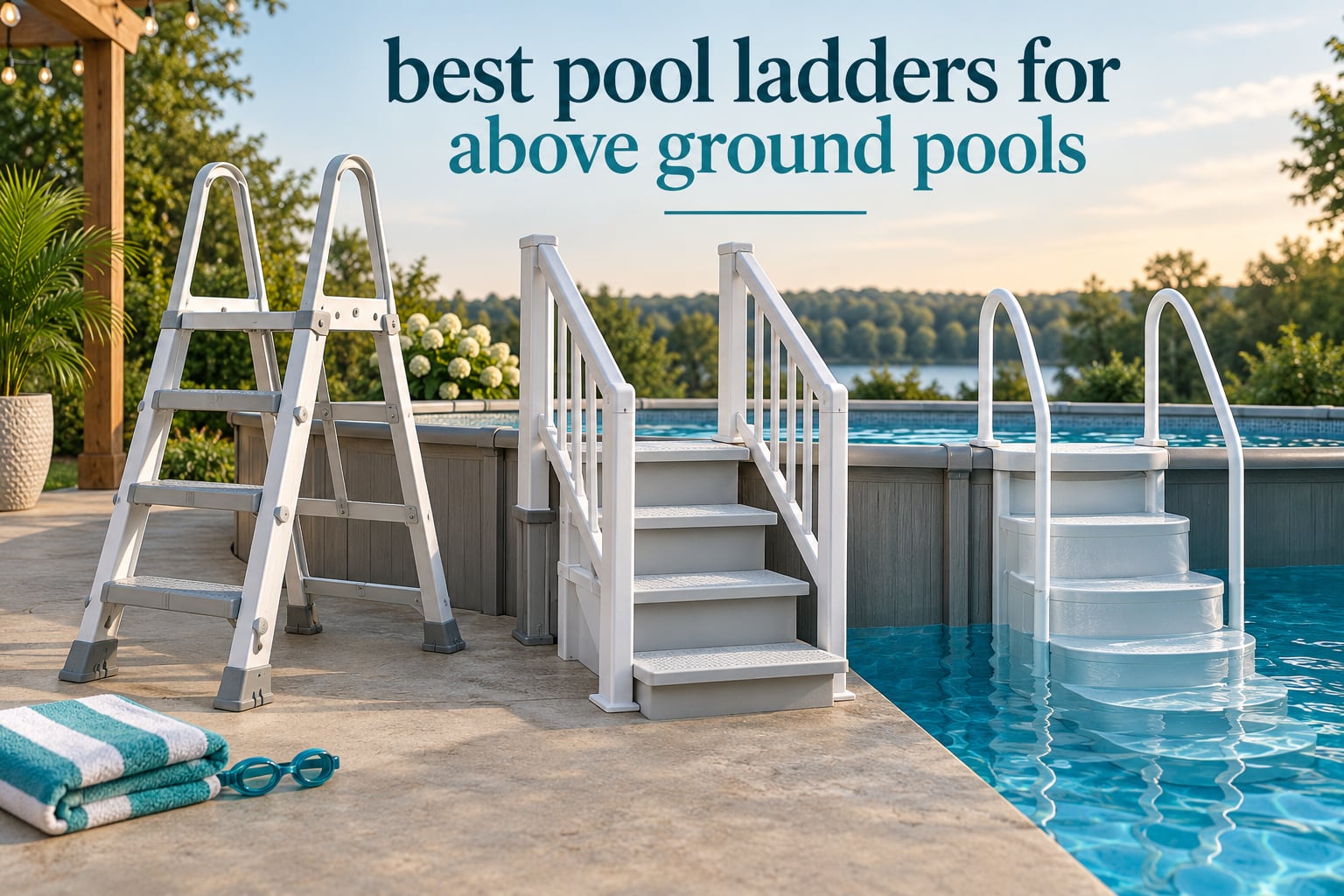
Most above-ground pools ship without a ladder, and the one they sell you at the register usually costs more than a better aftermarket unit. We spent 2026 season putting twelve of the best pool ladders for above ground pools through real backyards, wet feet, and awkward pool walls to find out which ones still feel solid a year later.
An above-ground pool ladder is a safety-critical entry and exit system for a pool that sits above grade. The three genuine archetypes are a free-standing A-frame with steps on both sides, a deck-mounted drop-in ladder that hooks over the coping, and an in-pool step unit built for a decked or semi-in-ground setup. Basic frames start in the budget range and heavy-duty gated safety systems push well past three hundred dollars, so the ladder you actually need depends almost entirely on your wall height and whether you have a deck.
Before you buy anything, measure your pool wall from the ground to the top rail. Wall height and deck height are two different numbers and confusing them is the single most common mistake we see, and a mismatch means the ladder sits crooked or never reaches the coping. If you are still choosing a pool, our guide to the best above ground pools covers wall heights in detail.
Table of Contents
Top 3 Picks for Above Ground Pool Ladders

Confer 7200 Roll Guard A-Frame
- Fits 48-56 inch walls
- 300 lb capacity
- Lockable roll-guard safety barrier

Confer Step-1X In-Pool Stair
- 400 lb capacity
- 27 inch wide flat treads
- Fits decks up to 60 inches

Intex Deluxe Removable-Step Ladder
- Coated steel frame
- Removable outer steps
- 52 inch pool wall fit
Every Pool Ladder in This Guide at a Glance
The table below lists all twelve ladders with the pool configuration each one suits and the single spec that decides most purchases. Wall height ranges are taken from the manufacturer listings, not estimated.
| Product | Specifications | Action |
|---|---|---|
| Confer 7200 Roll Guard A-Frame Safety Ladder |
|
Check Latest Price |
| Intex Deluxe Pool Ladder with Removable Steps |
|
Check Latest Price |
| Confer Step-1X Above Ground Entry System |
|
Check Latest Price |
 Bestway Flowclear 52 in. Pool Ladder Bestway Flowclear 52 in. Pool Ladder |
|
Check Latest Price |
 Confer 6000X Heavy Duty In-Pool Ladder Confer 6000X Heavy Duty In-Pool Ladder |
|
Check Latest Price |
 Confer Curve CCX-AG Drop-In Step Base Confer Curve CCX-AG Drop-In Step Base |
|
Check Latest Price |
 Intex 28067E Steel Frame Platform Ladder Intex 28067E Steel Frame Platform Ladder |
|
Check Latest Price |
 XtremepowerUS 4-Step Entry Ladder XtremepowerUS 4-Step Entry Ladder |
|
Check Latest Price |
 Blue Wave Premium Stainless Steel In-Pool Ladder Blue Wave Premium Stainless Steel In-Pool Ladder |
|
Check Latest Price |
 VEVOR 4-Step Double Handrail Pool Stair VEVOR 4-Step Double Handrail Pool Stair |
|
Check Latest Price |
 VINGLI 4-Step Above Ground Pool Stair VINGLI 4-Step Above Ground Pool Stair |
|
Check Latest Price |
 Bestway 52 inch Metal Frame Pool Ladder Bestway 52 inch Metal Frame Pool Ladder |
|
Check Latest Price |
Which Type of Pool Ladder Do You Need?
The right answer comes down to one question: do you have a deck around your pool?
No deck? You need a free-standing A-frame. The ladder straddles the pool wall, its angled feet rest on the ground or on the pool’s top rail, and the inner steps drop into the water. Nothing needs drilling. It is the only realistic option for a pool sitting on grass, and it is what most people picture when they search for pool ladders for above ground pools.
Deck present? You want a deck-mounted drop-in or an in-pool step unit. These hook over the coping and are fixed either to the deck or to the pool frame with weighted sand containers. They are much safer with young children because the entry point is at deck level rather than in open grass, and they take up far less space than a bulky A-frame.
Decked above ground, or semi-in-ground? If your pool is sunk partway into the ground and ringed with wood or composite decking, you do not need a ladder at all. You need in-pool stairs. Many buyers overpay for a full A-frame in this situation and then have nowhere to put it.
A note on soft-sided setups: most metal-frame A-frames bolt or strap to the pool top rail, which simply does not exist on an inflatable or vinyl-sided pop-up pool. A handful of units, including the Bestway model in this guide, are built to work without that attachment. If you have a soft-sided pool, check the compatibility line before anything else.
Finally, distinguish wall height from deck height. Wall height is measured from the ground to the top rail of the pool. Deck height is measured from the ground to the surface you step off from. Deck-mounted ladders are sold against the second number, which is usually the larger one.
1. Confer Plastics 7200 Roll Guard A-Frame Safety Ladder
- Lockable roll-guard barrier plus inner side rails block entry behind the ladder
- Large 5 by 18 inch steps and an extra-large platform
- Fits pool top rails up to 14 inches wide
- Minimal hardware and quick assembly
- Converts to an in-pool ladder with the CK7200 kit
- Must be attached to the pool frame so it will not work on soft-sided or inflatable pools
- Fills with water rather than sand which makes it 56 pounds to move
- No stair treads to stand on inside the pool
This is the ladder we kept coming back to during 2026. It carries the highest review count of anything in the guide at just over five thousand ratings, and once you climb it you understand why: the barrier genuinely stops a child walking into the pool behind the ladder. The lock is included, which is rare in this category.
Everything about the build is deliberately heavy-duty. Steps measure 5 inches deep by 18 inches wide on what the manufacturer calls Comfortread treads, and the platform up top is large enough to stand on while you deal with wet towels or a toddler. Load capacity is 300 pounds, which covers the vast majority of household swimmers.
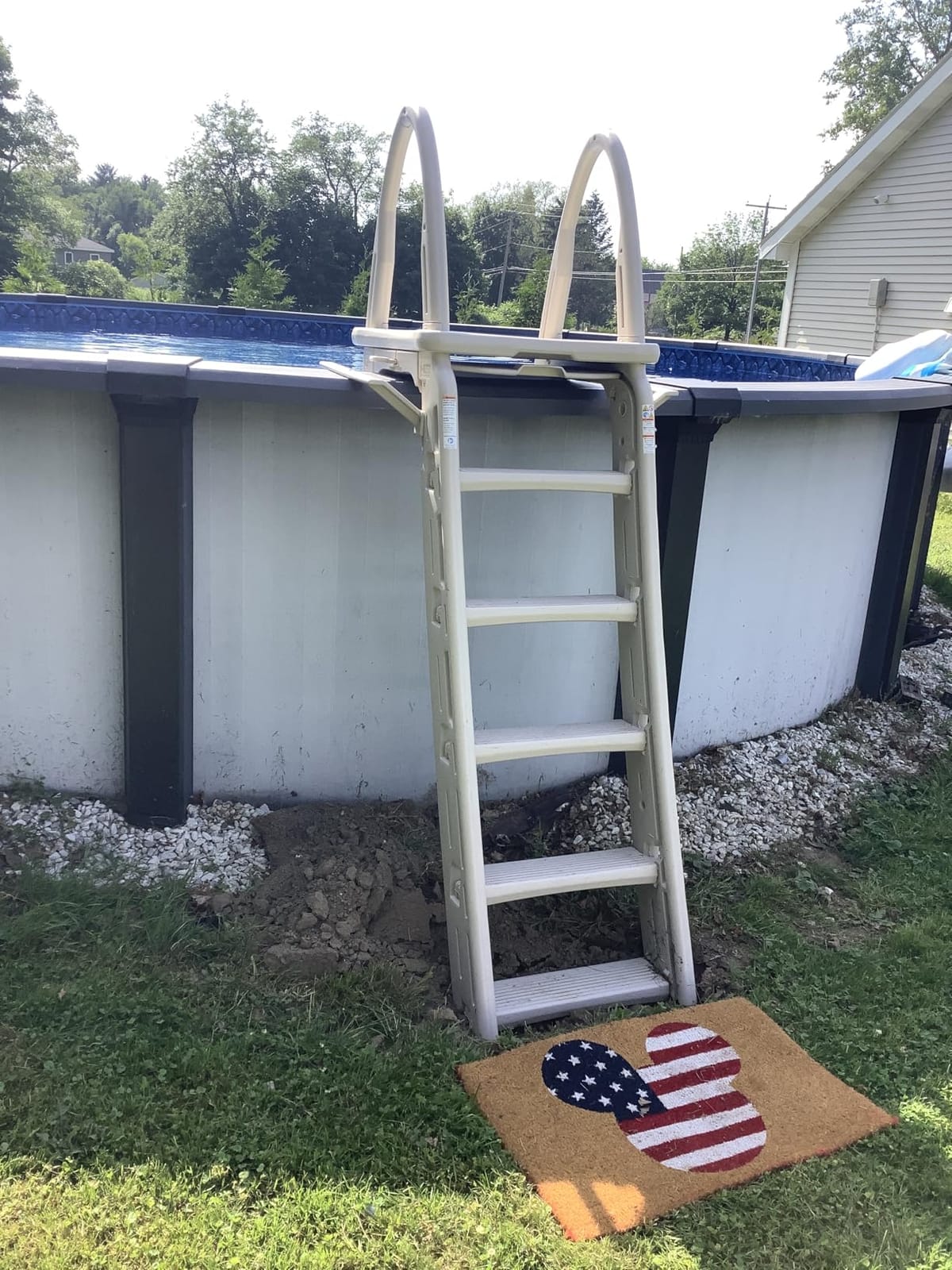
Fitment is where you have to pay attention. It handles pool walls from 48 to 56 inches tall and top rails up to 14 inches wide, which covers most steel-frame pools but leaves a genuine gap if you own a low 42-inch wall. It also attaches to the pool frame itself, so plan your cordless drill and a helper before the first swim of the season.
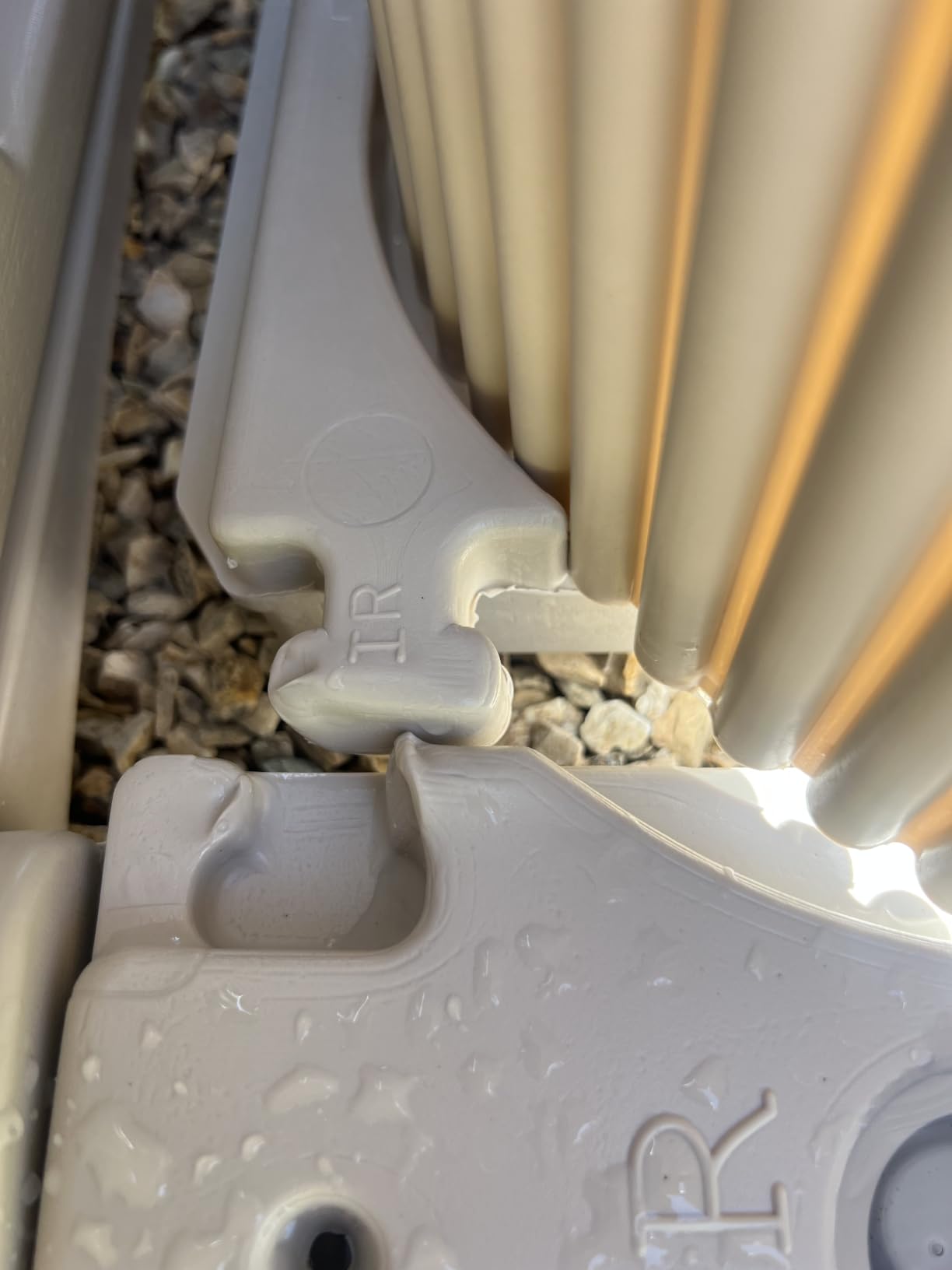
Two things to weigh. It fills with water instead of sand, and at 56 pounds it is not a one-person lift out of the water at the end of the night. And because it clamps to the frame, it is the wrong ladder entirely for a soft-sided pool. For a framed pool with young kids, we think the barrier buys back far more than the weight costs.
Is the roll-guard barrier worth the extra weight?
If toddlers or older grandchildren use the pool, yes, without hesitation. Most drowning happens when a child walks away from an open ladder entry point, and this is one of the few ladders in the guide that physically blocks that route rather than relying on you to remember to lock something.
If your swimmers are all adults, the barrier is dead weight you carry twice a day. In that case the Bestway Flowclear is a fraction of the fuss, though it offers no barrier at all.
Will this ladder fit my pool wall?
Measure before you order. The 48 to 56 inch range covers the most common steel-frame walls, but a 42 inch pool is outside it entirely and no amount of adjustment will fix that. Our pool setup guide walks through where to find the measurement.
2. Intex Deluxe Pool Ladder with Removable Steps
- Coated steel frame holds heavier adults better than the stock plastic ladder
- Removable outer steps block pool access without lifting the whole unit
- Metal construction resists the flex and algae growth of plastic ladders
- About 25 pounds so one person can lift it out
- Fits Intex and other metal-frame pools without permanent attachment
- Inner section lifts slightly until your weight is spread across both sides
- No barrier behind the in-pool portion to block children
- Some buyers received the 48 inch version instead of the 52 inch one
This is the ladder most people end up buying as an upgrade over the flimsy plastic one that came with the pool. The coated steel frame is the whole point: it does not flex when a 250 pound adult steps off it, and it does not grow algae in the treads the way molded plastic does.
The removable outer steps are the feature owners mention most. You can pull the outside steps free and set them aside at night, and the pool entry is blocked without anyone hauling the entire ladder out of the water. For a family with a hardscape pool surround that is a genuinely useful safety habit.
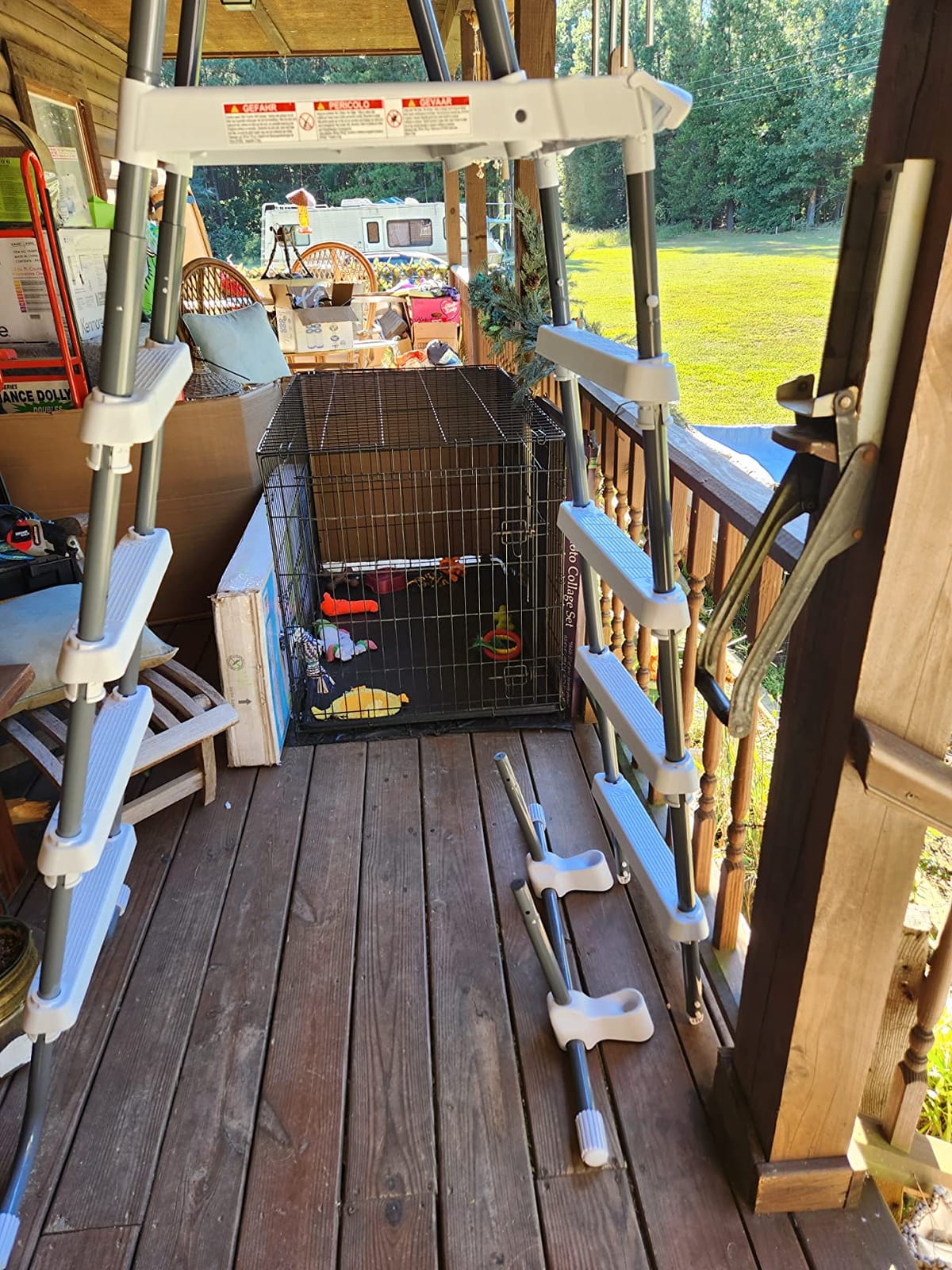
Fitment is the part to check twice. It is built for a 52 inch wall height, and there are recurring reports of buyers receiving the 48 inch version on an order described as 48 to 52 inch fit. Confirm the variant before the box is opened, because a return is a hassle with a wet ladder.
Two limitations to plan around. The inner section rocks slightly upward until your weight is distributed across both sides, so step on rather than pull up on the way out. And there is nothing behind the in-pool portion to stop a child walking into the pool beside the ladder, so this is a buy for pools where the swimmers are old enough to manage the two-step climb.
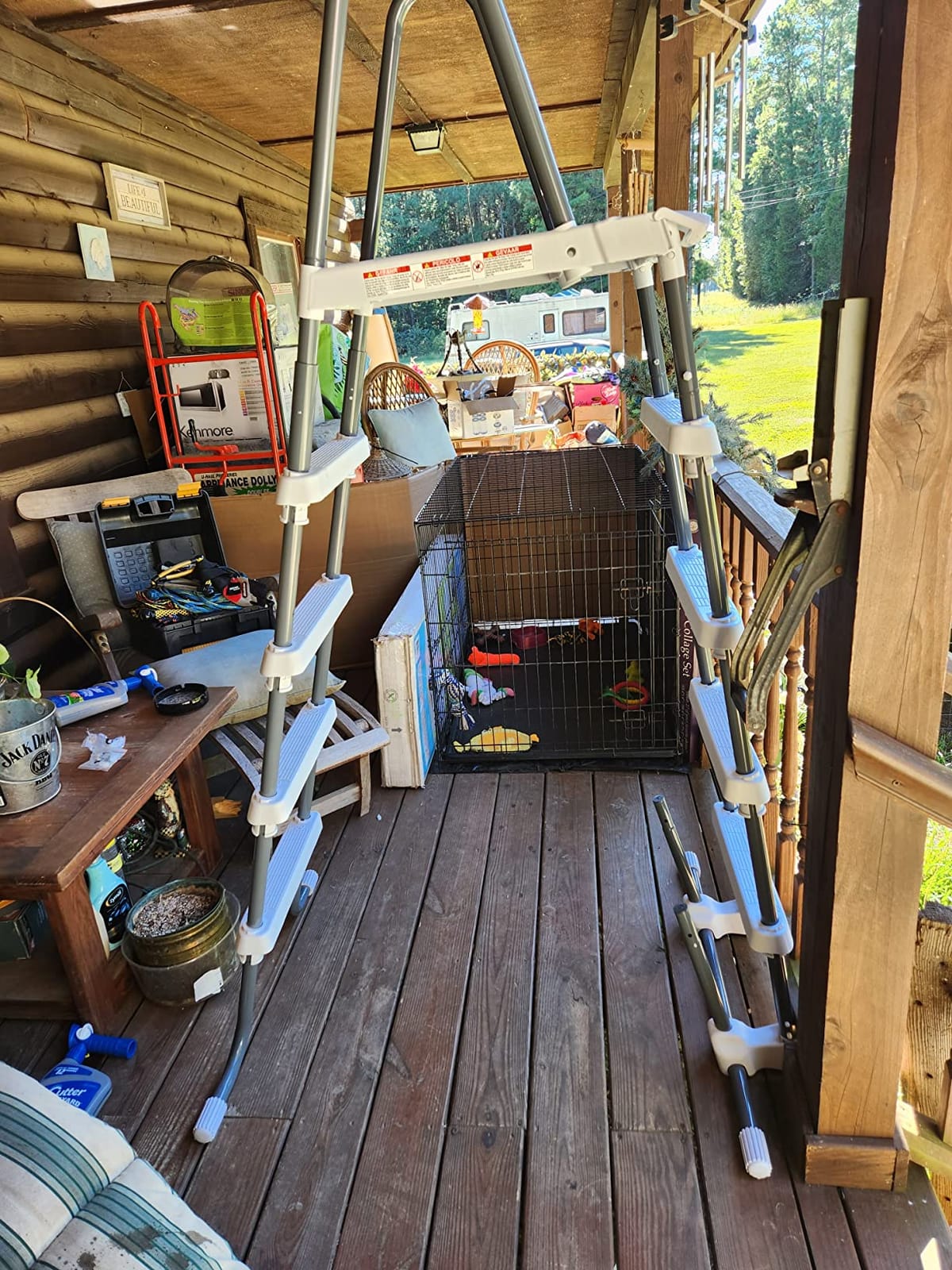
How do the removable steps work in practice?
You unclip the outside steps and carry them to the house. The ladder stays hooked to the pool wall, which means you are not dealing with a wet steel frame at nine at night. It is the simplest drowning prevention device in this guide and it costs nothing extra.
The trade-off is that the ladder still stands in the water, so debris can settle behind the in-pool steps. Keep a skimmer or vacuum nearby and you will not notice.
Is this better than the plastic ladder that came with the pool?
Yes, in every way that matters for safety. The stock ladder flexes, the steps crack in sun, and algae colonises the plastic within a season. The coated steel version holds its shape and stays clean, and at roughly 25 pounds it is still a one-person lift for off-season storage.
3. Confer Plastics Step-1X Above Ground Entry System
- Wide 27 inch flat treads make entry far easier than narrow rungs for knees backs and older swimmers
- Sturdy enough for 400 pounds and safe to sit on
- Dual handrails and highly visible grey treads
- Narrow profile leaves room to run the pool vacuum around it
- Snap-together assembly with mounting brackets included
- Buoyancy lifts the stairs a couple of inches until you add weight
- Does not include under-stairs sand ballast containers
- May need a short deck platform on a full-height deck
This is the highest rated ladder in the group, and the reason is not subtle: it has real 27 inch wide flat treads instead of narrow ladder rungs. Anyone with sore knees, a stiff back, or a bad shoulder can walk down this one in a way they simply cannot manage on a conventional A-frame. It is the single biggest accessibility upgrade in the guide.
Load capacity is 400 pounds, which makes it one of the sturdier options here, and the two-tone warm grey and grey finish looks deliberate next to almost any pool surround. Assembly is snap-together with mounting brackets in the box, and the instructions are clear enough that you will not need to call anyone.
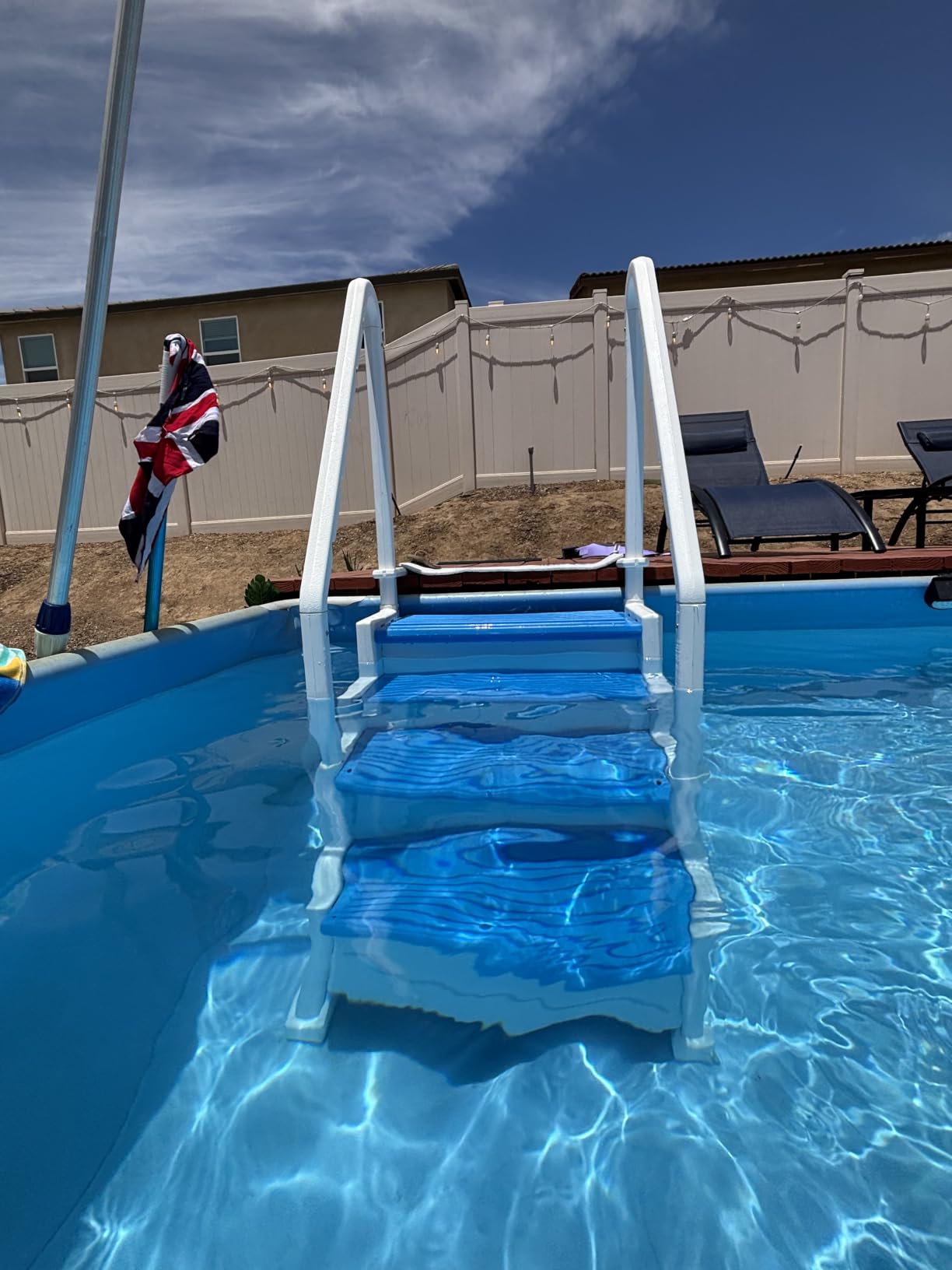
Fitment is generous: decks up to 60 inches high, with the assembly measuring 32 inches deep by 31 inches wide and standing 47 inches to the top step. You will likely need a short deck platform step and a few extra deck screws if your deck is at full pool height, which is exactly what owners report.
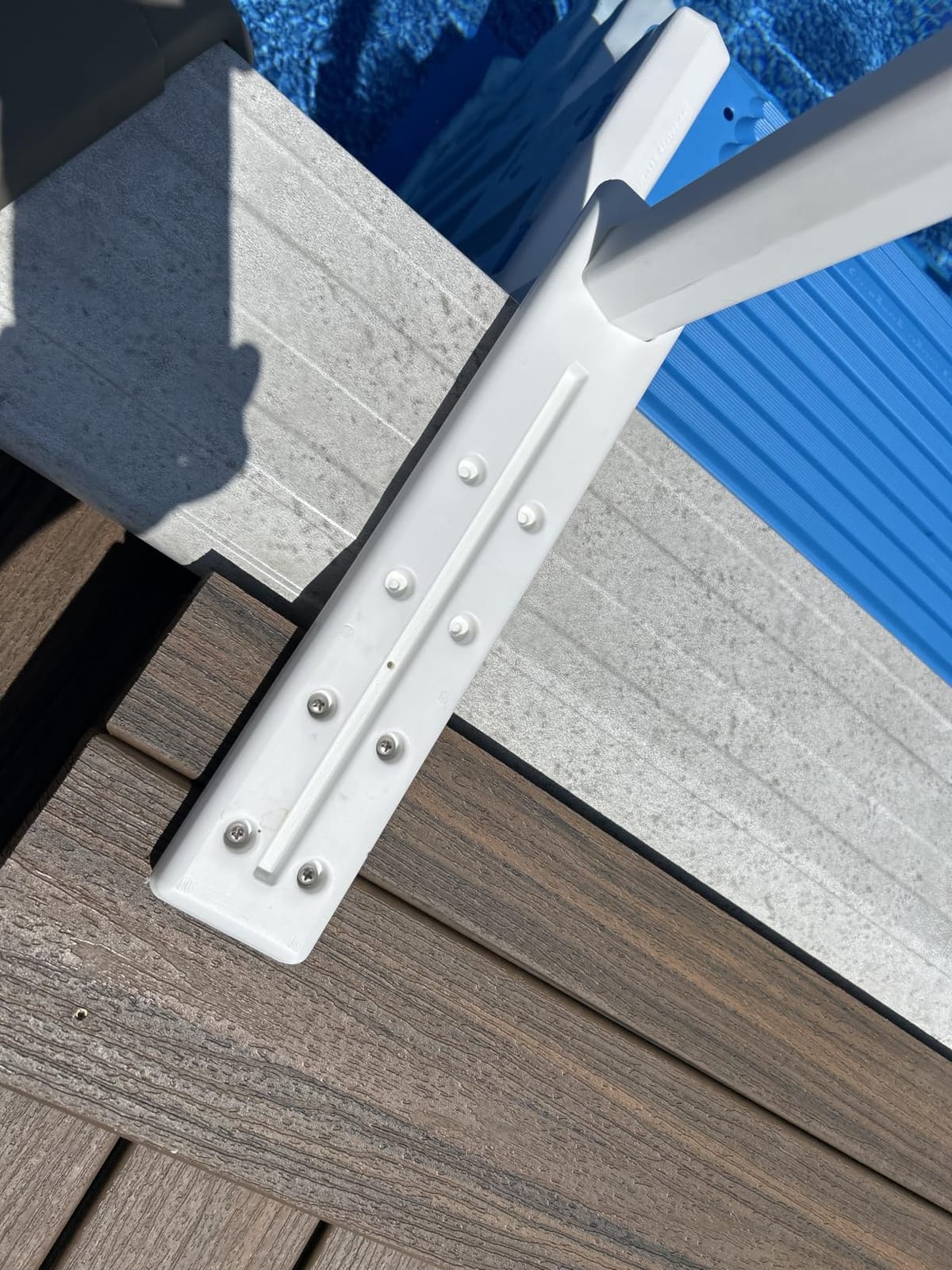
The one thing you must handle is weight. Plastic stairs float, and this unit rises a couple of inches without ballast. Sand is not included and the under-stairs ballast containers are not part of the package, so budget for cement-filled PVC pipe or sandbags as described later in this guide. Sand also sifts into the water if you fill it directly.
Who benefits most from wide flat treads?
Older swimmers and anyone recovering from hip or knee surgery. Rungs force you to place one foot precisely while lowering yourself; flat treads let you sit down, scoot, and stand up when you are ready. The 27 inch width also means both feet land together instead of one in front of the other.
It is worth the extra step count too. Four steps get you out of deeper water with less of an uphill push than three, and the shallowest step sits right at the waterline.
What do I use to stop it floating?
Cut a length of PVC pipe, fill it with a dry mix or sand, cap both ends, and slide it into the base cavity. Owners report that this solves it permanently and costs a fraction of the factory ballast kits. Sandbags work too, though they shift when swimmers push off.
4. Bestway Flowclear 52 in. Pool Ladder
- Corrosion-resistant frame suited to regular outdoor pool use
- Simple low-cost replacement for a standard 52 inch pool
- Supports up to 300 pounds
- Quick and uneventful assembly
- No lockable barrier behind the ladder entry
- Lightweight feel with flex reported on entry and exit
- This variant is 52 inch only so 48 inch pools need the other version
The Flowclear does one job and does it adequately. It is a straightforward metal-framed ladder for a standard 52 inch above-ground pool, with a 300 pound rating and a corrosion-resistant frame that survives a normal season outdoors without complaint.
It weighs about 25 pounds and assembles without drama. If you are replacing a broken factory ladder and want the familiar Bestway fit without spending an afternoon on assembly instructions, this is the safe choice. Bestway also sells a 48 inch variant under a separate listing, so match your wall carefully.
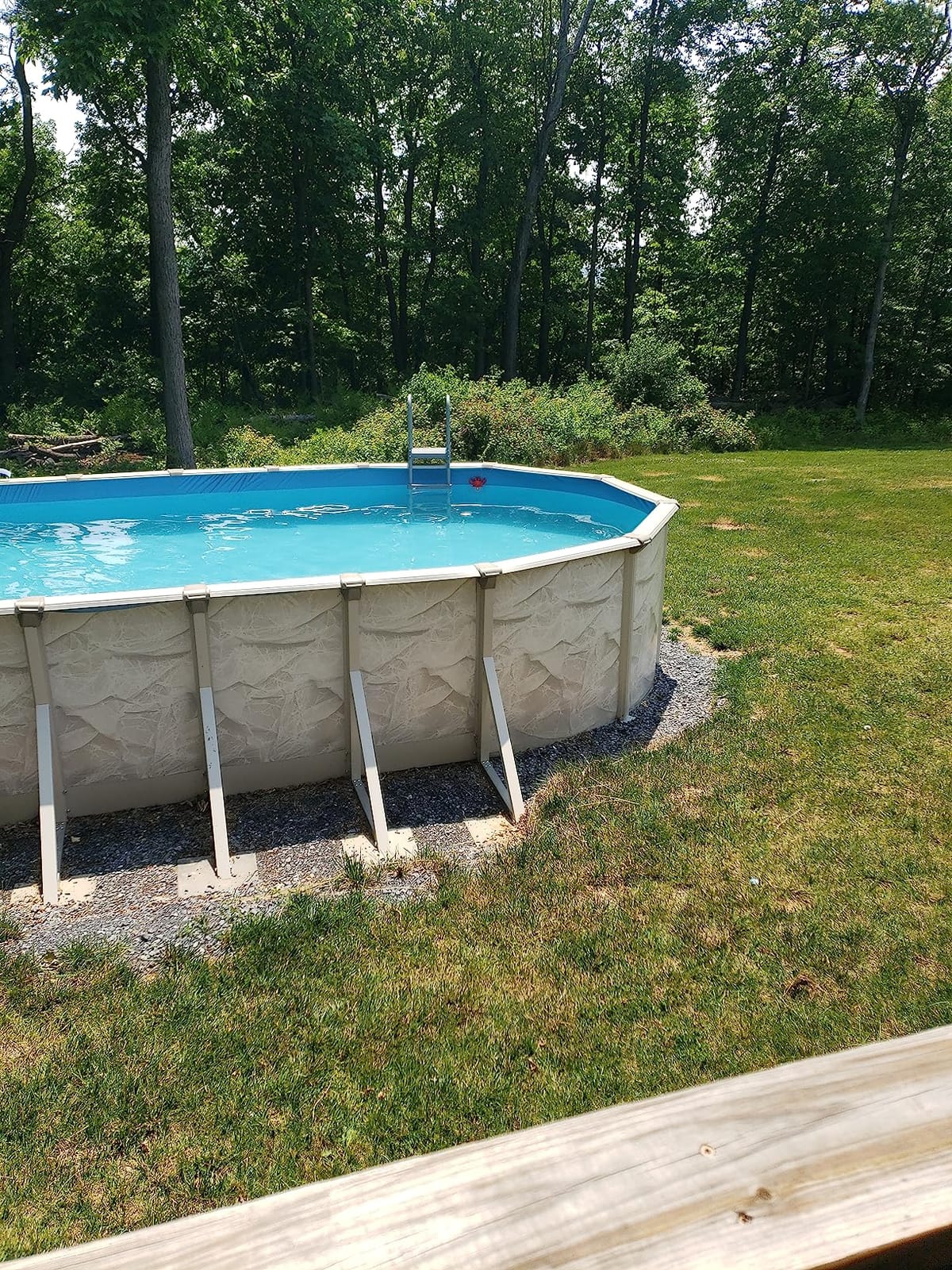
What you give up is everything that makes a ladder feel premium. There is no lockable barrier, no top platform, and no removable step kit. Several owners describe noticeable flex when stepping on or off, which is the same complaint that sends people away from entry-level plastic frames in the first place.
For a household with no young children and no one over 300 pounds, flex is an irritation rather than a hazard. If either of those apply, step up to the Intex Deluxe or the Confer 7200 and the money buys you a genuinely safer entry point.
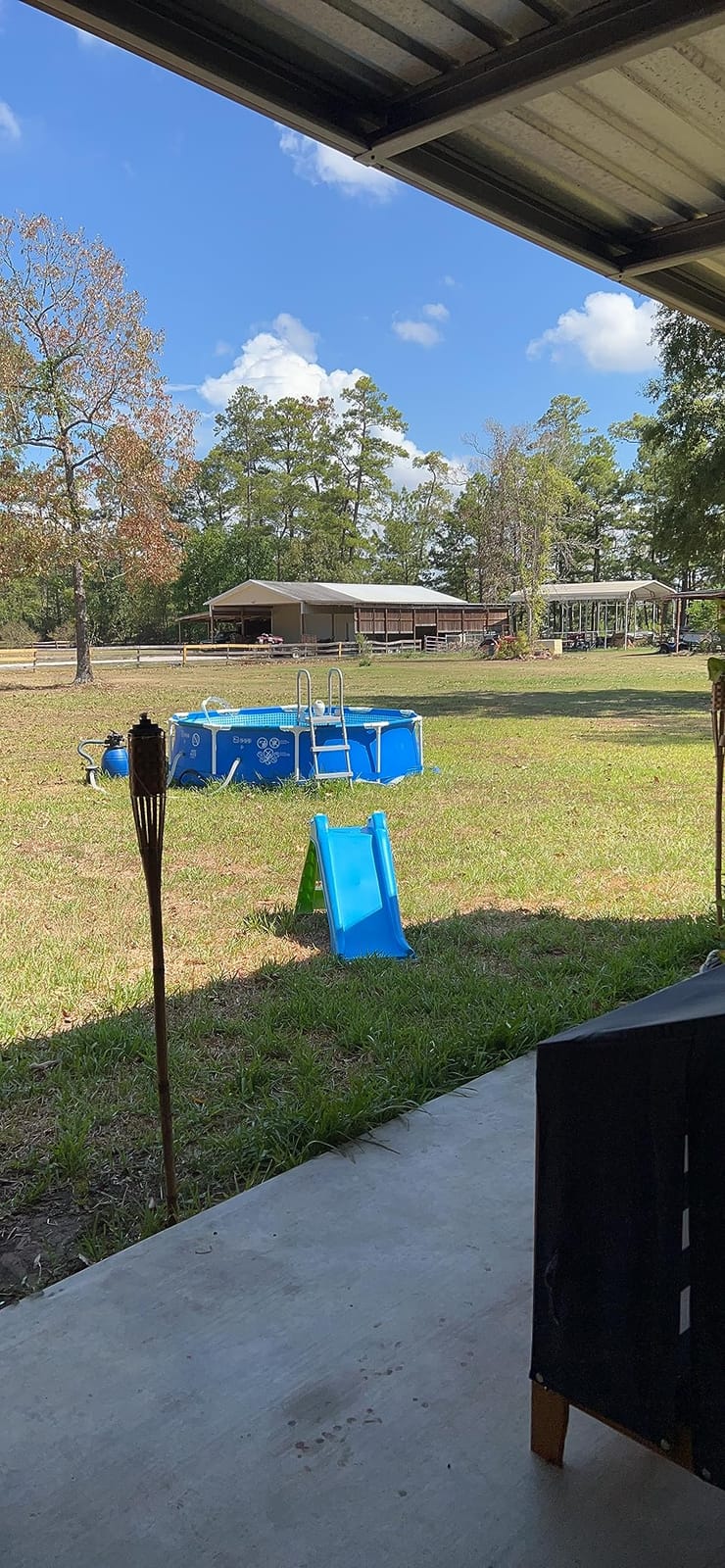
Do I need a ladder that matches my pool brand?
No. Above-ground pools are built to a wall-height standard, not a proprietary ladder fitting, and any ladder that matches your wall height and top rail width will work. Bestway is the default brand only because it is the most common above-ground pool on the market.
The one exception is soft-sided pools with no top rail at all, where an attachment-style ladder has nothing to grip. Everything else is a fit problem, not a brand problem.
Is 300 pounds enough capacity?
For most households, yes. It covers children, most adults, and the occasional heavy swimmer coming in carefully. If anyone in your family is regularly over 300 pounds, move up to a 400 pound rated in-pool stair rather than pushing a lighter A-frame.
5. Confer Plastics 6000X Heavy Duty In-Pool Ladder
Confer Plastics 6000X Heavy Duty Above Ground in-Pool Swimming Ladder for Decks Adjustable from 42IN to 56IN HIGH
- Stays steady once bolted to a deck with no rocking or floating
- Adjustable across 42 to 56 inch deck heights
- Open design lets water and the pool vacuum flow through so debris does not collect
- Flat high-visibility treads and an anti-entrapment barrier
- Backed by a five year manufacturer warranty
- Must be attached to a deck so it is not a free-standing unit
- Assembly takes time and is much easier with two people
- Some press-fit barrier pieces did not lock and needed extra screws
Once this is bolted to a deck it stops being a pool accessory and starts being architecture. That stability is the reason it earns this spot: there is no rocking, no drifting, and no lifting it out at the end of the night, which is the behaviour that drives most ladder complaints.
Adjustability across deck heights from 42 to 56 inches is generous, so it works with almost any above-ground pool deck. The open slat design lets water circulate through, which matters because a closed box behind a ladder traps debris, blocks the pool vacuum, and creates a dead spot where chemicals settle unevenly.
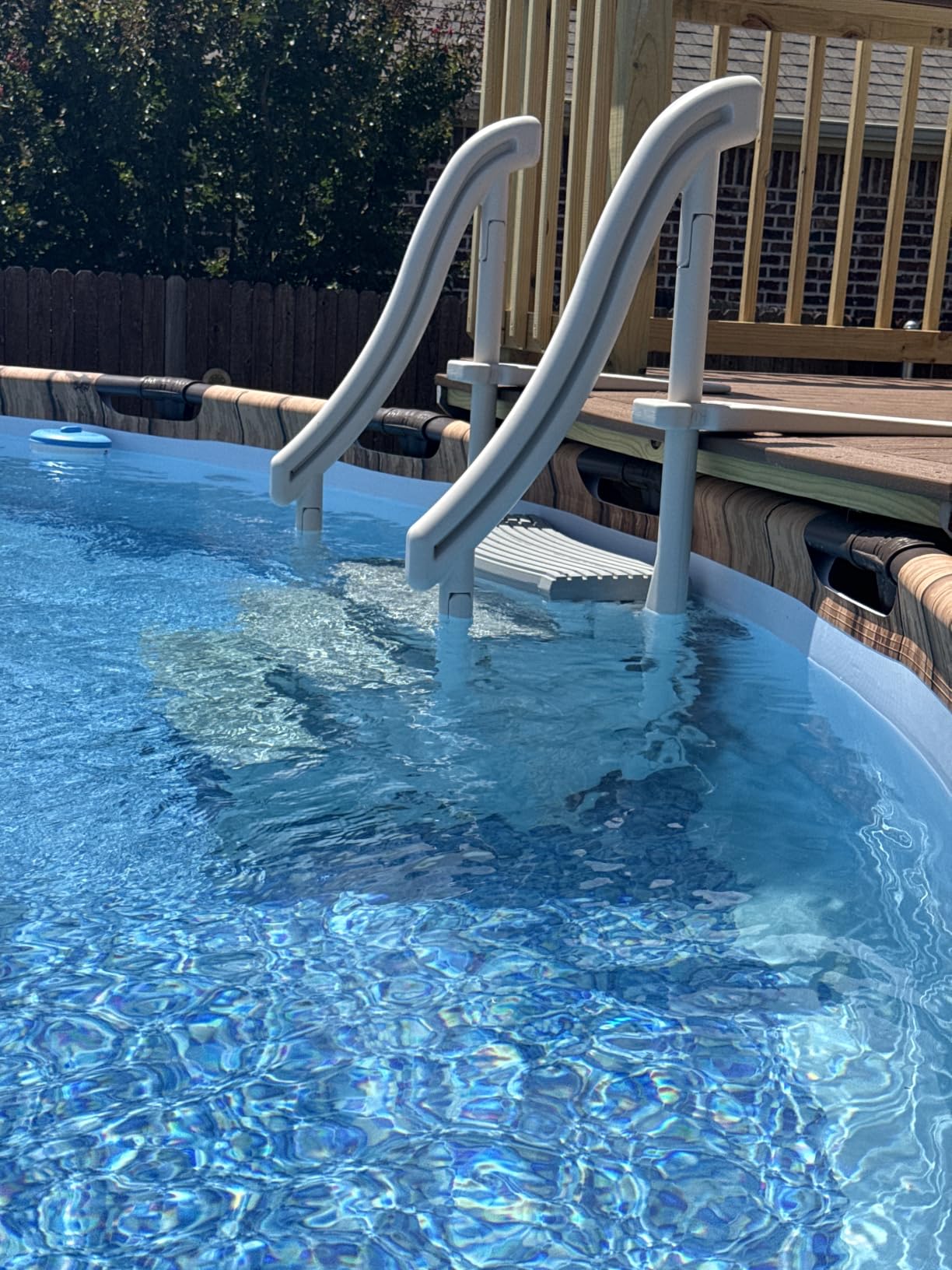
Assembly is the honest drawback. It takes time, the parts are numerous, and two people make it an afternoon rather than a struggle. Follow one practical tip: pre-fill it with water on the deck before you lower it in, or it will float back up while you are trying to align it. Ten pounds of sand is required for pools taller than 48 inches and is not included.
A few owners found the barrier pieces and the bottom rung did not lock positively into their sockets and added their own screws. That is a solvable five-minute fix but worth knowing before you start. An optional extension kit extends the ladder to roughly 68 inches for higher decks.
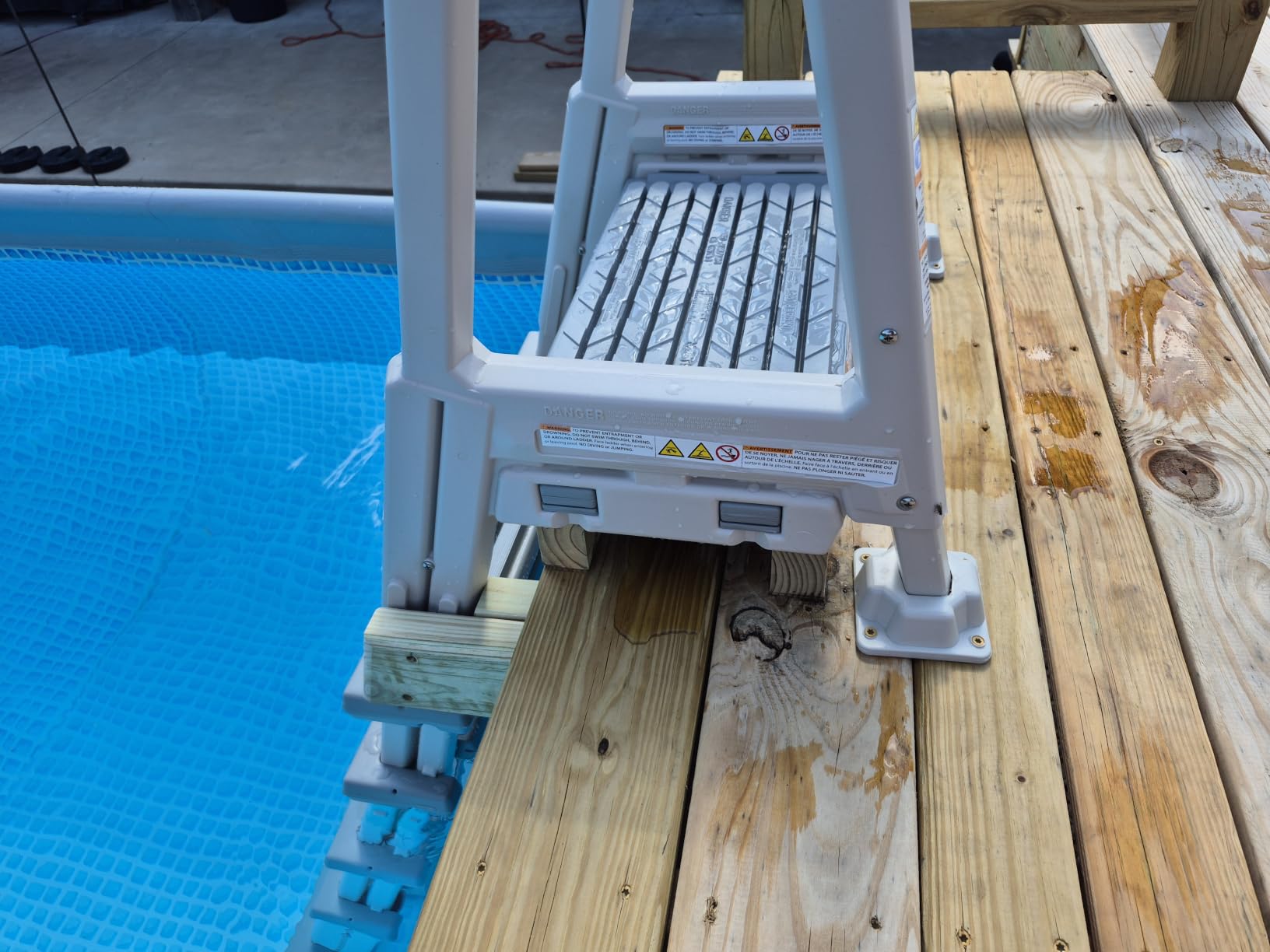
Why does the open design matter so much?
Because a ladder that blocks flow creates problems you would not think of. Water circulates through the steps rather than stagnating behind them, your pool vacuum can pass by without getting hung up, and debris settles where your skimmer can reach it instead of in a sealed corner.
On an above-ground pool where the pump does all the heavy lifting, anything that reduces circulation costs you water clarity. This is one of the smarter design decisions in the category.
Is it stable without drilling into the deck?
No. This ladder is designed to be attached, and on sand alone it shifts. Deck mounting brackets and hardware are included in the box, so the drilling is expected work. If your surround is paver or stone rather than wood, use masonry fasteners appropriate to the surface.
6. Confer Plastics Curve CCX-AG Drop-In Step Base Unit
Confer Plastics Curve CCX-AG Drop in Above Ground Pool Step with Grey Treads – Base Step
- Curved layout with four large steps and two handrails feels easy to walk in and out of
- Rated for 400 pounds and built for flat-bottom above-ground pools
- Treads can curve inward or outward depending on your layout
- Adjustable base pads compensate for a slightly dished pool floor
- Two-tone finish looks deliberate beside most pool surrounds
- Requires 20 pounds of sand in the sidewalls which is not included
- Can float slightly if it is not adequately ballasted
- Sold as the base step so the curved add-on sections are extra
This ties for the highest rating in the group and it earns it on feel rather than specifications. The curved stair path with four wide steps and two handrails is the closest thing here to a real staircase, and swimmers describe it as the easiest ladder in the guide to walk down and back up.
It is rated to 400 pounds and built for flat-bottom above-ground pools. The genuinely clever part is the modular layout: start with this base step, then add curved sections later to build a full curved system as your needs grow. The treads can also curve inward or outward depending on the shape of your pool corner.
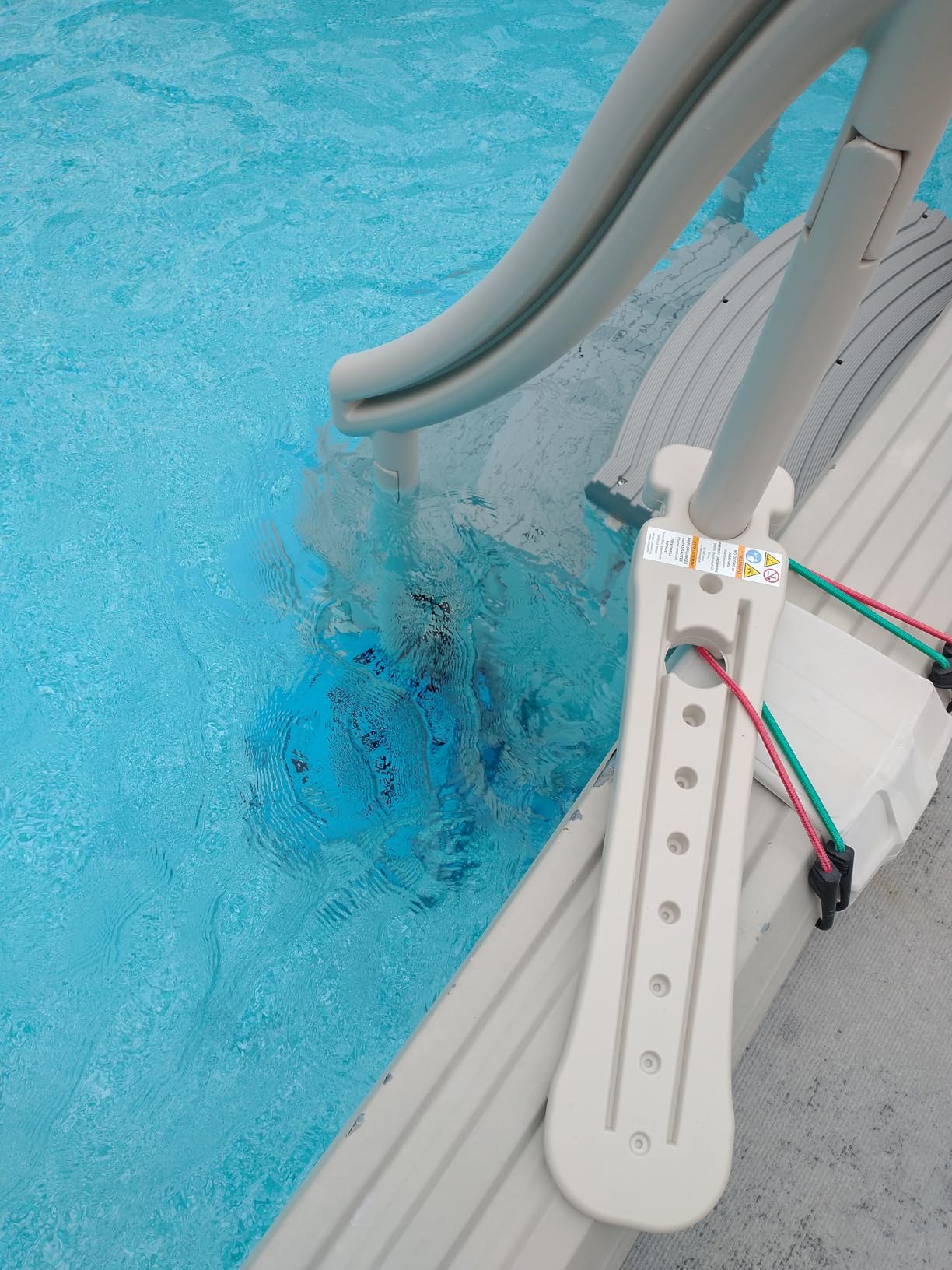
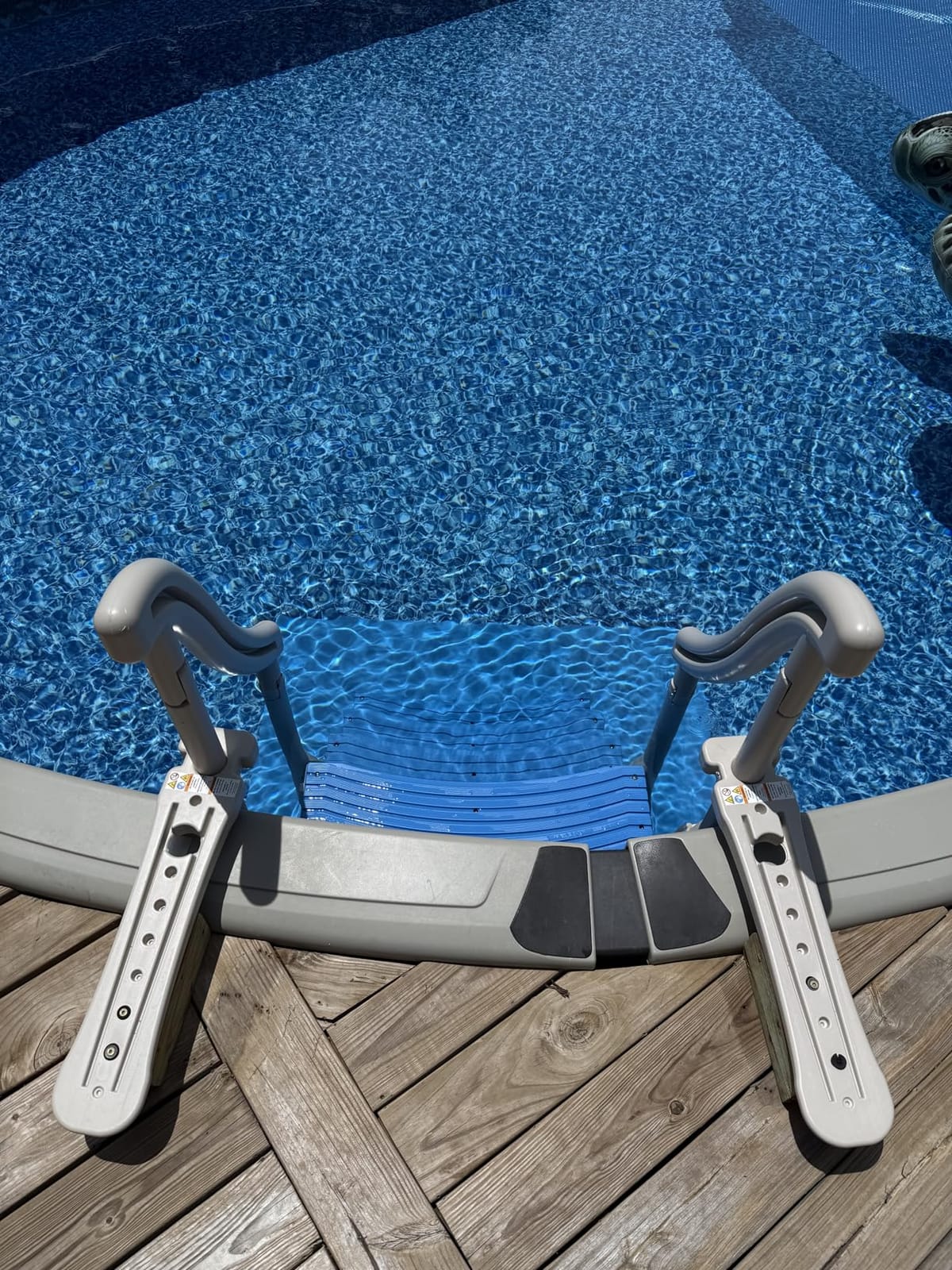
Adjustable base pads take up the slack where a pool floor dishes toward the centre, which is common on large steel-frame pools. That alone prevents the rocking you get with a drop-in step that sits on a flat pad in a curved bottom. The overall step measures 32 inches deep by 38 inches wide and stands 47 inches to the top tread.
The main installation note is consistent across owners: it needs 20 pounds of sand in the sidewalls and the sand is not included. Without it the unit floats slightly and shifts when swimmers push off. Plan for that weight before you assemble it, and you will have a stair that feels rock solid for years.
Is a curved stair actually better than straight steps?
For most swimmers, yes. A straight ladder makes you turn your body sideways as you descend; a curved path lets you keep facing forward the whole way, which loads your legs rather than your lower back. The wide treads also let you stand up instead of sitting down mid-descent.
If you are building a pool entry area rather than replacing a broken ladder, this is the one to design around. Start with the base step and add sections later.
What does it take to keep it down?
Twenty pounds of sand in the sidewalls, poured after assembly and before you put it in the water. Because it is a drop-in rather than a deck-mounted unit, it relies on ballast rather than bolts, which means adding a second bag later is normal if the pool floor is not perfectly level.
7. Intex 28067E Steel Frame Platform Ladder
Intex 28067E Steel Frame 52″ Pool Entry Step Ladder with Secure Non-Slip Steps for Above Ground Outdoor Swimming Pools, Silver
- Top platform makes getting out onto a deck easier for kids and adults
- Quick assembly with all parts included
- Coated steel frame is durable and corrosion resistant for normal use
- A platform style option that most budget ladders skip
- Stands at the top of its category among pool accessories listings
- Noticeably wobbly and flexy when climbing
- Weight capacity feels lower than the stated 300 pounds in practice
- Hardware can corrode in a saltwater pool
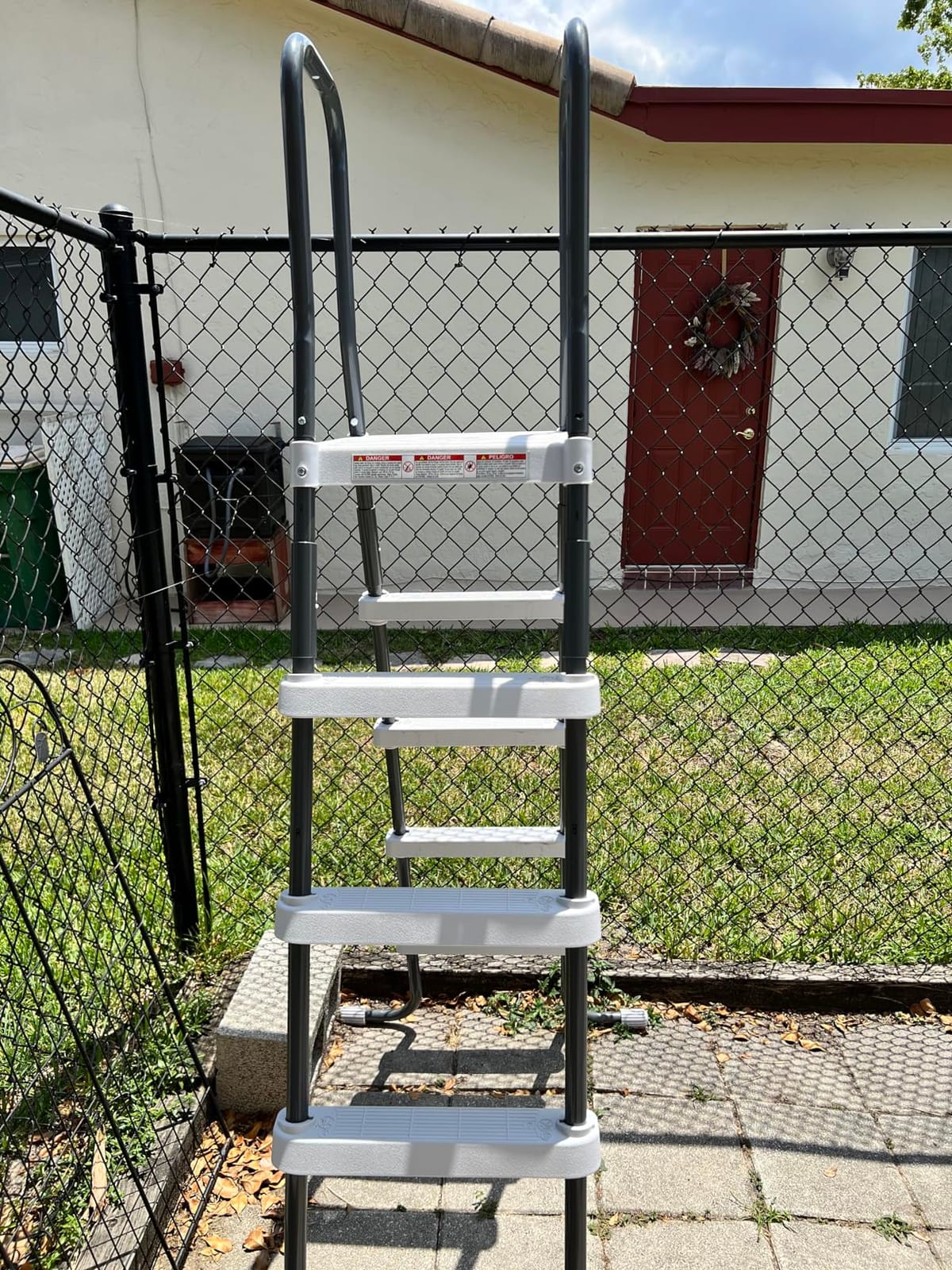
Most budget ladders give you steps and handrails and nothing else. This one adds a top platform, and for a pool where children climb out first or where you want a place to stand while wringing out a towel, that platform is worth more than it costs. It also ranks at the very top of its category in pool accessory sales, which tells you how many people have made the same trade.
The coated steel frame is durable and corrosion resistant for ordinary pool use, and assembly is quick with every part in the box. Rated capacity is 300 pounds, and the high-impact slip-resistant steps are moulded so the edges will not chip the way thin plastic does.
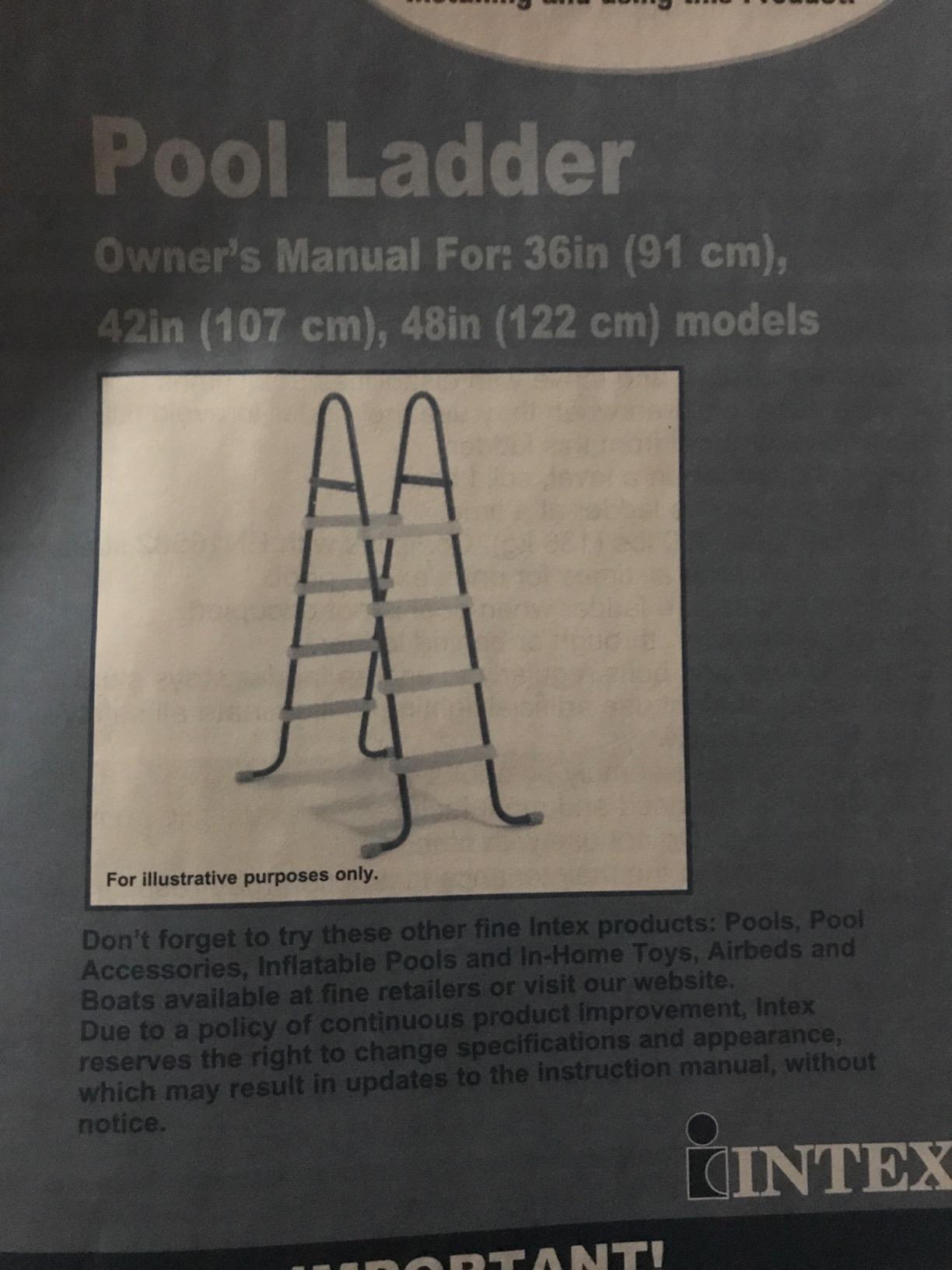
Flex is the recurring theme in owner feedback. Climbing it produces a visible wobble, and plenty of people report that the practical capacity feels lower than the stated figure when the ladder is in motion. If you are strapping it into a pool corner, that solves a surprising amount of the movement.
Two practical cautions. The hardware can corrode in a saltwater pool, so keep it out of chlorinated-salt water or choose the stainless option later in this guide. And this platform version is built for 52 inch walls, so a 48 inch pool owner needs a different listing.
Is the top platform genuinely useful?
Yes, and mostly for children. A child climbing out of a 52 inch wall reaches the platform level without needing to be lifted the last stretch. It also gives an adult a stable standing spot at the top of the ladder rather than balancing on the top step.
The trade is a heavier, larger frame that takes up more room beside the pool than a plain A-frame. On a tight patio that matters more than the platform does.
How do I steady a wobbly ladder?
Strap the top rail to the pool corner or to a fixed part of the deck with a pool-rated strap. It takes two minutes and removes most of the side-to-side movement. Do not rely on weighting alone for a wobbly frame, because weight on the bottom steps does nothing to stop flex at the top.
8. XtremepowerUS Above Ground Pool Ladder and 4-Step System
- Wide curved textured steps give a comfortable climb for children adults and seniors
- Rated to 400 pounds with dual handrails for security
- Hollow side panels reduce buoyancy and let water circulate
- Built-in fillable pipes and integrated sandbag hooks give three anchoring options
- Snap-lock assembly with minimal hardware
- Sand is required for installation and is not included
- Must be anchored to the pool or deck to stay in position
- Heaviest build in the group at close to 50 pounds
This is the one to look at if anyone in your household is a larger adult. A 400 pound rating with genuinely wide curved steps and dual handrails means a big person descends under their own power instead of being helped down by two other swimmers, which is both safer and far more dignified.
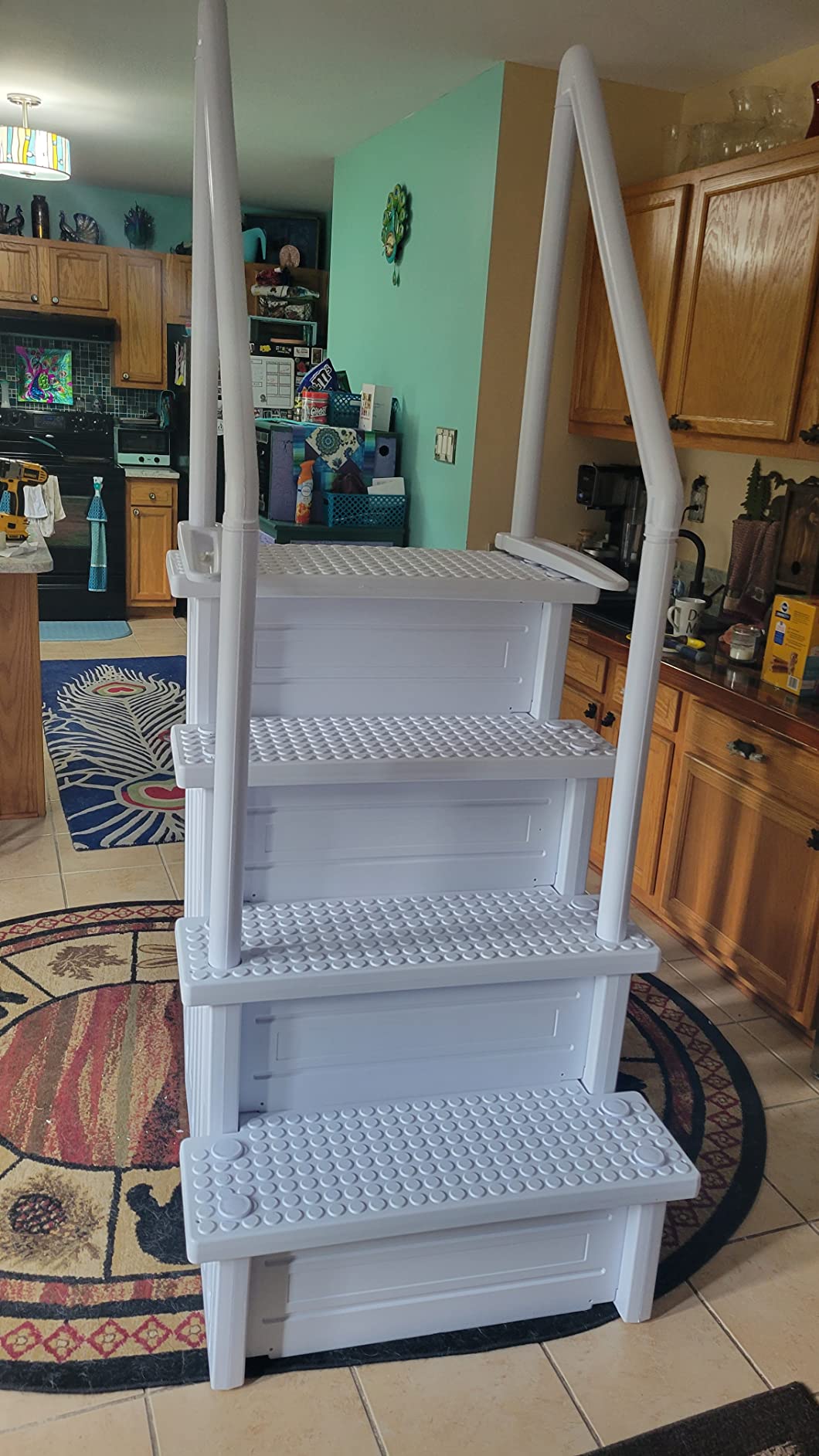
The anti-float design is the most thoughtful part. Hollow side panels reduce buoyancy while still letting water circulate to the far side of the pool, built-in fillable pipes let you add weight inside the frame, and integrated sandbag hooks give you a third option without improvising.
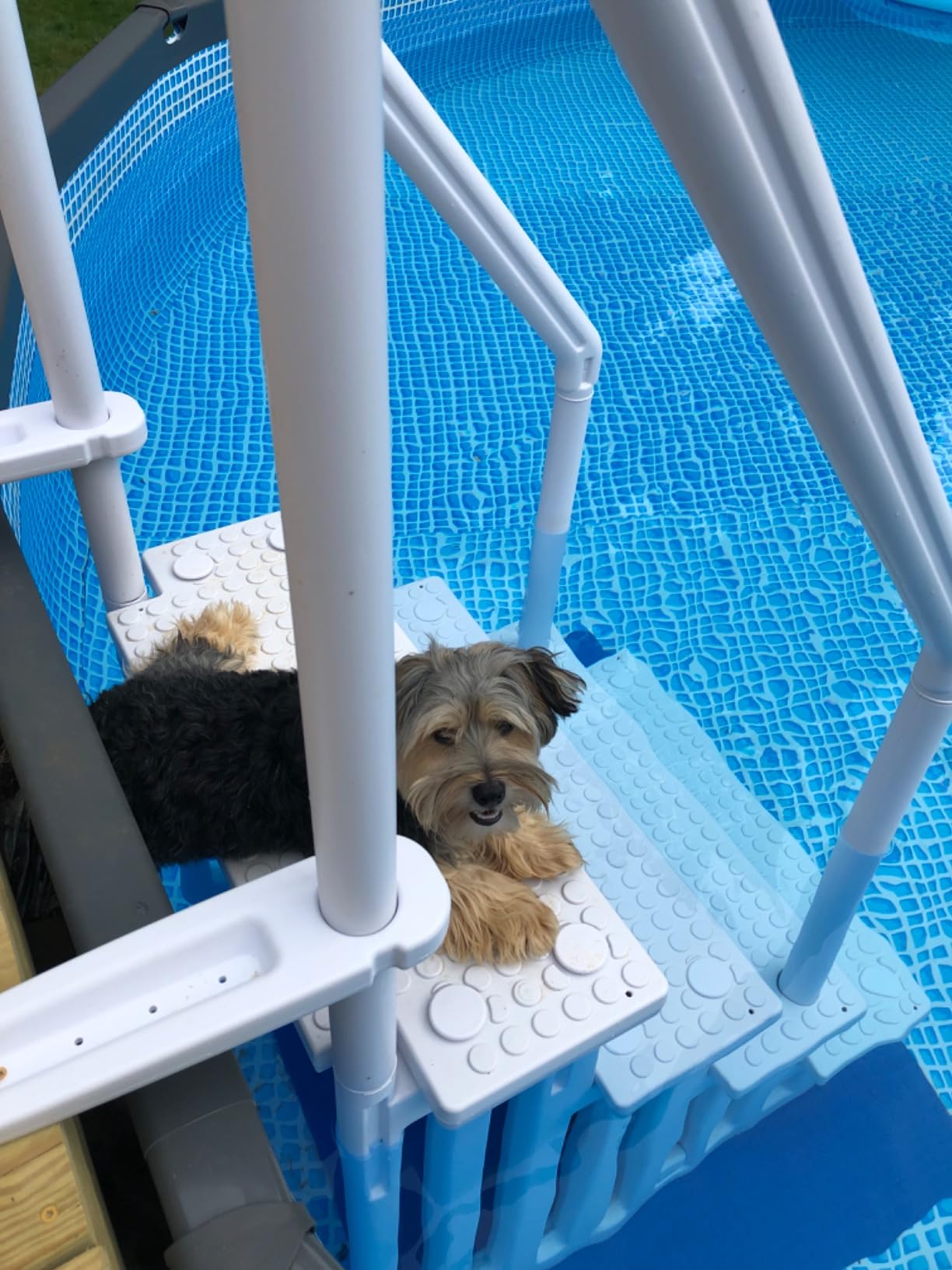
Fitment is unusually wide. It adjusts across pool walls from 46.5 to 58.5 inches, so it covers a range where most competitors offer one or two fixed sizes. It can also run standalone as a single entry point or pair with another ladder to create a two-sided entry, which is the safer arrangement if children are around.
The catch is that sand is required and not included, so you need to buy it separately. At close to 50 pounds it is the heaviest build here, which means two people for installation and a plan for moving it in the off-season.
Is 400 pounds enough for heavy swimmers?
It covers all but the most exceptional cases comfortably. Combined with wide curved steps rather than narrow rungs, the higher rating translates into a ladder that stays rigid under a heavy load instead of bowing, which is what actually makes people feel unsafe.
Pairing two of these for a two-sided entry costs more but removes the single-entry bottleneck entirely on a busy afternoon.
Which anchoring method should I use?
Fill the built-in pipes with a dry mix or sand for a permanent fix, and add sandbags on the hooks for a seasonal setup you can remove easily. Fillable pipes hold more weight in a smaller footprint, which matters on a small deck where sandbags would take up usable space.
9. Blue Wave Premium Stainless Steel In-Pool Ladder
Blue Wave Premium Stainless Steel in-Pool Ladder for Above Ground Pools
- Solid stainless steel holds up season after season where plastic ladders algae out and flex
- Installs on a deck in about 30 minutes with flanges included
- Does not sway or float once mounted
- Pivoting resin bottom tread handles sloped floors and protects the vinyl liner
- Textured treads give confident wet footing
- Strong after-sales support replaced a defective unit
- Capacity is 225 lb which is lower than most ladders here
- Not recommended for saltwater pools
- Engraved step pattern can be slippery when wet
- Deck-mounted only and must be cut to fit taller decks
This is the material choice. Stainless steel rails and treads do not algae out, do not flex, and do not chalk the way moulded plastic does, and owners who have had one for several seasons describe it as the last ladder they expect to replace. It is also the only ladder here built primarily of stainless steel.
The pivoting resin bottom tread is the detail worth paying attention to. It swivels to follow a sloped or cove pool floor and it is 24 inches wide and 3.75 inches deep against a 24 inch overall width, which means it spreads load across the liner instead of pinching a groove into it over time.
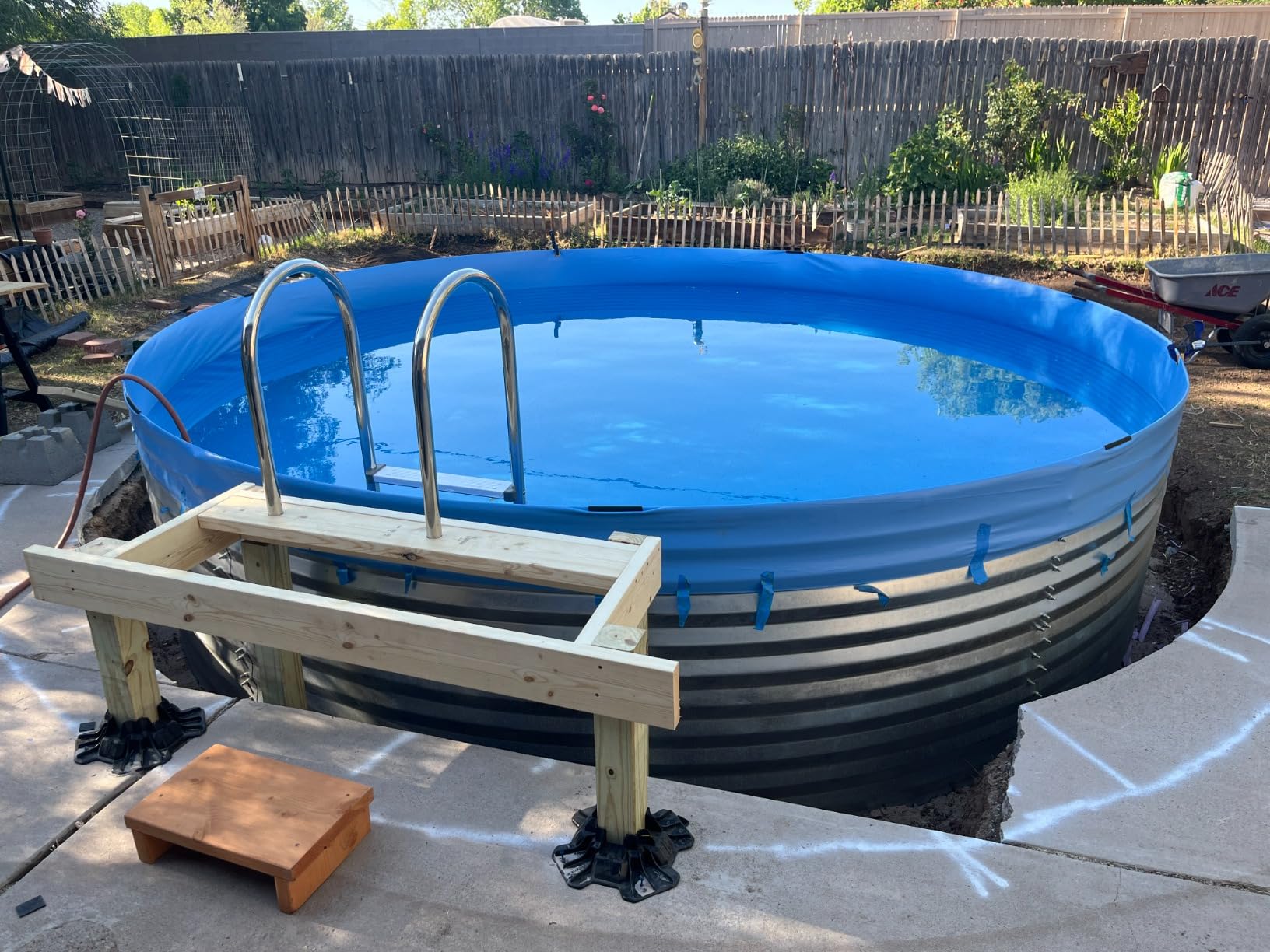
Here is the trade-off, and it is significant. Capacity is 225 pounds, one person at a time, which is the lowest rating in this guide. Steps are 18 inches wide by 3 inches deep, narrower than some buyers expect for larger feet, and the ladder must be deck-mounted, with cutting required for taller decks.
Two cautions for coastal homes: this unit is not recommended for saltwater pools, where the hardware will corrode. And the engraved pattern on the stainless treads can be slick when wet, so a strip of anti-slip tape on each step is a sensible ten-minute addition.
Is stainless steel worth it over coated steel?
For a freshwater pool, coated steel is usually adequate. Stainless earns its premium when you plan to keep the same ladder for many seasons, when algae growth is a constant battle, or when you simply do not want to think about material degradation again.
It is also the right call in humid coastal air outside of a saltwater pool, where ordinary coated hardware shows surface corrosion sooner.
Will it work in a saltwater pool?
No. The manufacturer does not recommend it for saltwater, and that guidance comes from people who watch these ladders fail. If your pool is salt-generated or you live in a marine climate, choose a resin or polyethylene unit instead and accept the slightly softer feel.
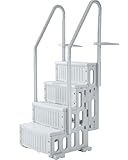
10. VEVOR 4-Step Double Handrail Pool Stair
- Four steps with double handrails on both sides and an inclined design for easy entry and exit
- 400 lb capacity with thickened non-slip textured step boards
- Hollow side panels let water flow through to reduce buoyancy
- Retaining plates have pre-drilled holes so drilling is minimal
- Polyethylene material resists outdoor sun and weathering
- Must be anchored to a solid surface and concrete or tile needs separate expansion bolts
- Pipes must be filled with water or sand for stability
- First step height must be set to 12.6 inches or the fit will be wrong
- Large and heavy at nearly 50 pounds
- Highest share of one-star ratings in the group at 12 percent
The feature that sets this one apart is the handrails. Both sides get a full inclined handrail rather than a single rail or a short stub, and combined with the 400 pound rating that changes how the stair feels under load. You can push off with one hand and still have the other on a rail.
The inclined four-step layout is easier on knees than a near-vertical ladder, the thickened step boards have a non-slip textured surface, and the polyethylene material holds up under outdoor sun and weathering better than you might expect from plastic.
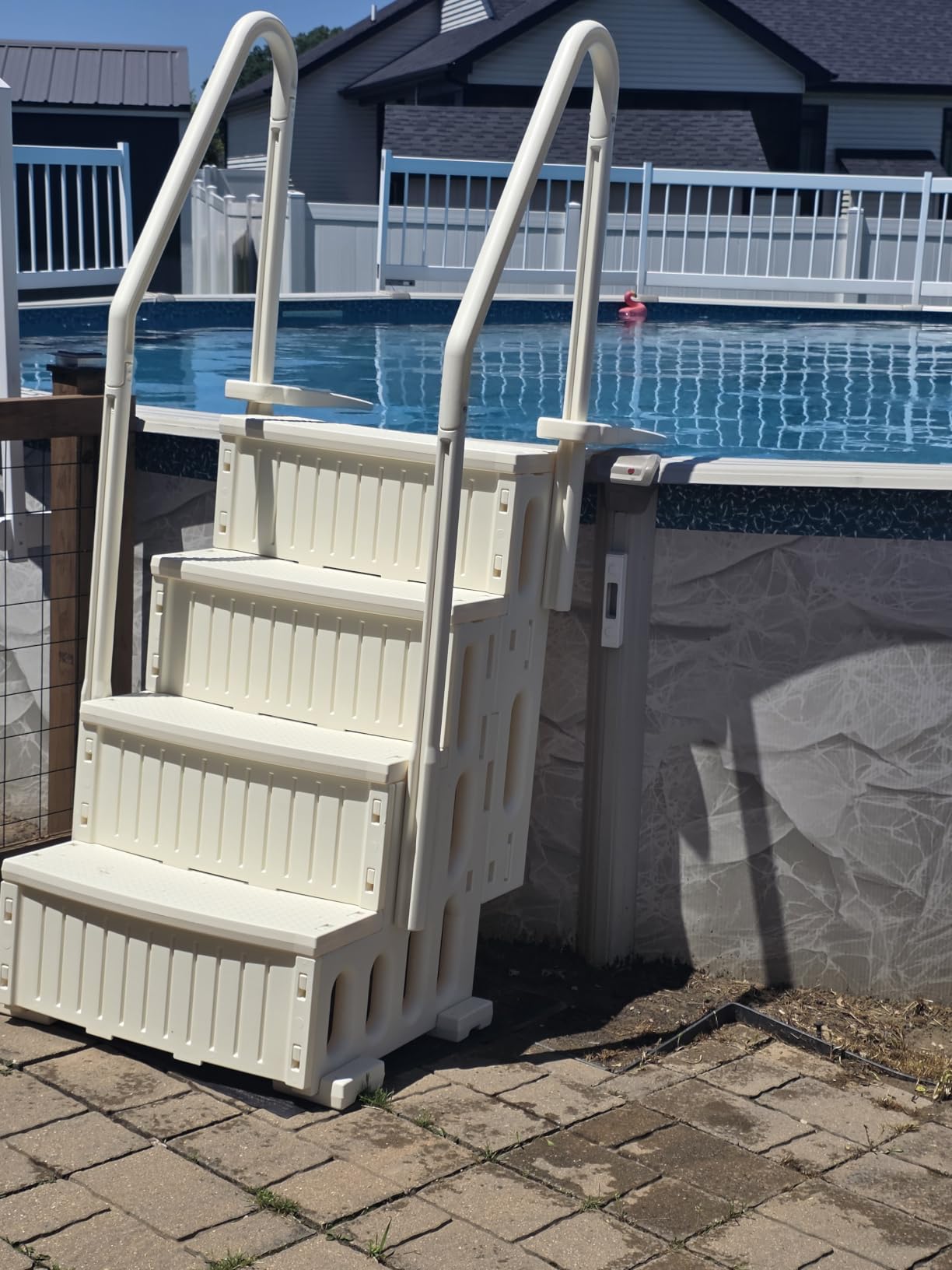
Install it carefully because one measurement governs everything. The first downward step must sit 12.6 inches from the deck surface, and if that is wrong the whole unit either overhangs the coping or cannot reach. Retaining plates come pre-drilled so this is one of the easier installations, but measure twice.
Anchoring is not optional. It needs to be fixed to a solid surface, and concrete or tile installs require separately purchased expansion bolts. The pipes also have to be filled with water or sand for stability, which is a two-person job on a wet deck at close to 50 pounds. It carries the highest share of one-star ratings in the group at 12 percent, mostly from fit and anchoring issues.
Do dual handrails really matter?
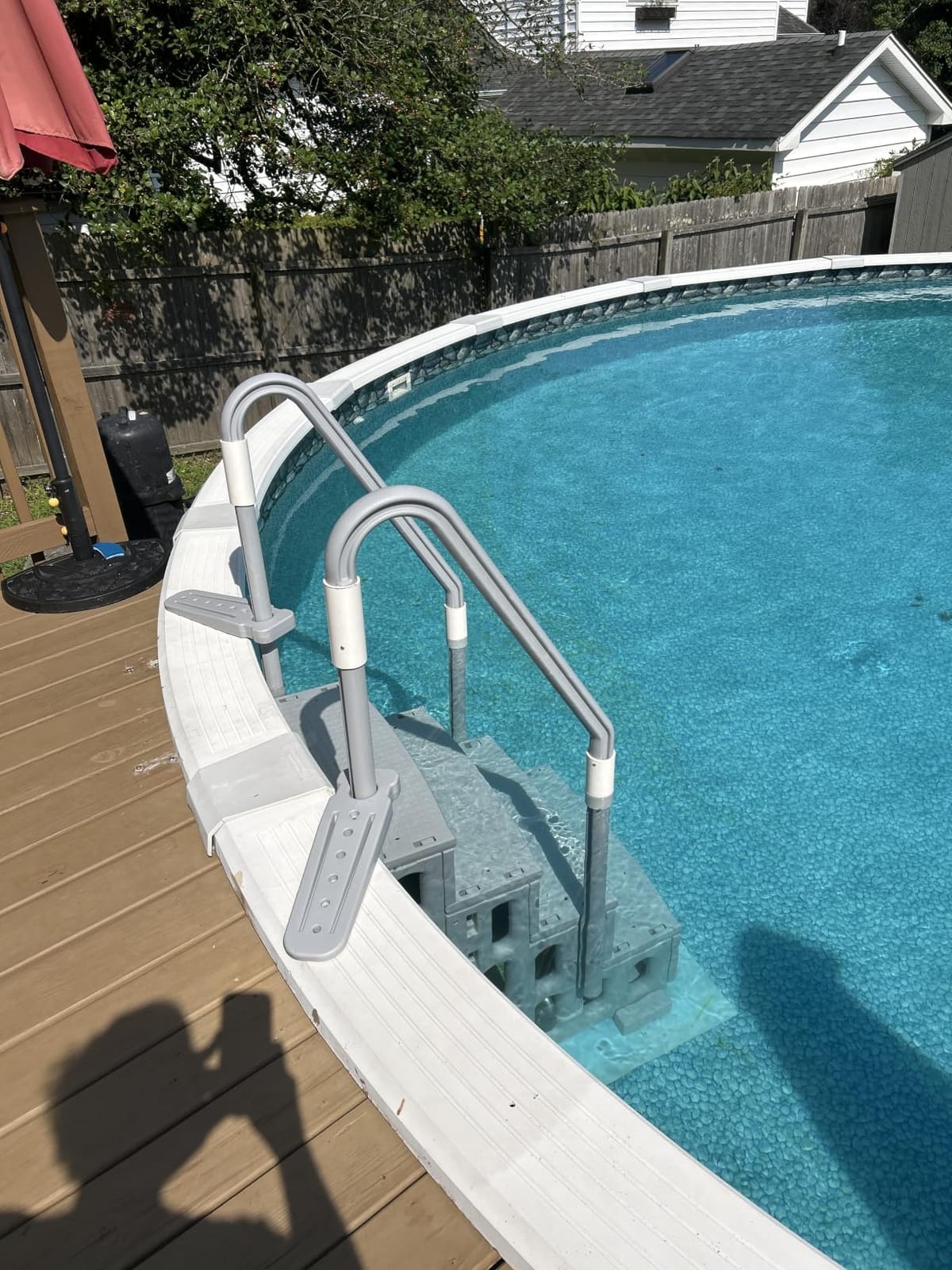
For most adults, one rail is enough. For a 400 pound swimmer pushing off on one step while water is pushing back, the second rail is what lets them control the descent instead of dropping into the pool. It is also the difference between confidence and hesitation for anyone with balance issues.
If you are installing this on concrete or tile, buy the expansion bolts at the same time as the ladder. Nothing else in the box will do that job.
How do I get the first step height right?
Measure from your finished deck surface, not from the pool coping. The first downward step should be 12.6 inches down. If your deck surface is uneven, shim the low side rather than forcing the unit, because the side panels will sit unevenly and rock.
11. VINGLI 4-Step Above Ground Pool Ladder
VINGLI Pool Ladder for Above Ground Pools 4-Step, Safety Stair – Full Beige
- A genuine stair alternative that made pool access far easier for aging and larger swimmers
- White steps plus anti-slip strips improve underwater visibility
- Holds to 400 pounds and feels sturdy once anchored to the deck
- Assembles in about 30 minutes with clear instructions
- Owners report that zip-tied water jugs solved the floating issue completely
- Handrails are wobbly and can feel fragile under load
- Needs weighting and anchoring to avoid floating or shifting
- Filling with sand is tedious because the fill holes are small
- Steps have an 11 inch rise which is steep for small children
- Some snap-fit joints did not hold under weight
This is the comfort upgrade we recommend to households with an ageing parent or grandparent who swims. Four steps with an 11 inch rise replace a vertical rung climb with something you can walk down, and the white treads stay visible underwater, which removes the hesitation swimmers report when they cannot find the bottom step.
Capacity is 400 pounds and the rust-resistant plastic holds its shape in weather. Assembly takes about half an hour with clear instructions, and the anti-skid pads on each step do help on wet feet even when the surface is wet.
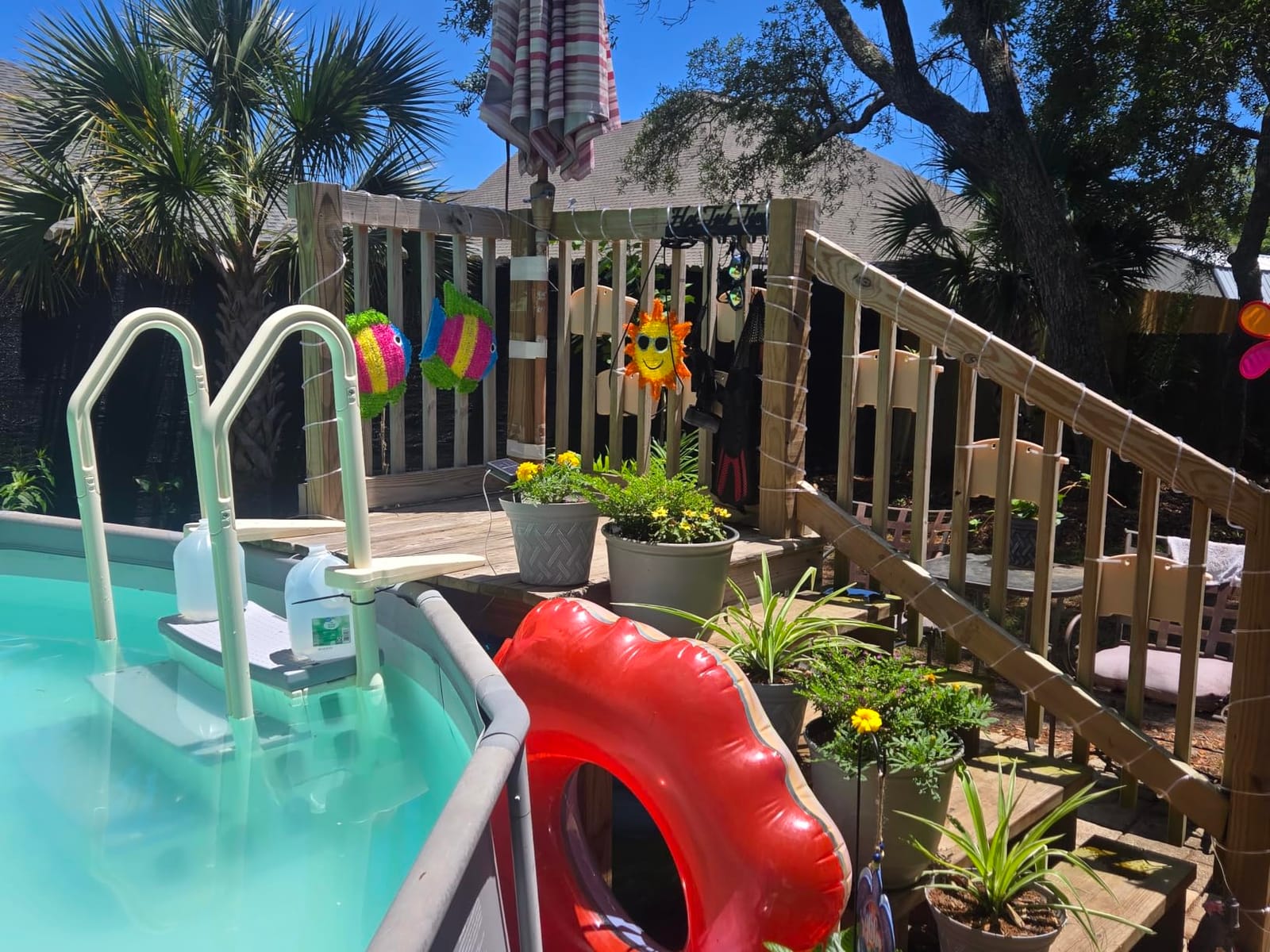
The rails are the weak point. Owners consistently describe them as wobbly and, at times, fragile under load, so treat them as handholds for balance rather than as something to push off. The 11 inch rise is also genuinely steep for small children and for anyone with limited hip mobility, which somewhat limits how universally friendly this stair is.
On floating: it needs weighting before it goes in, and the fill holes are small enough that you will want a funnel and patience. Some owners report that drilling extra water holes and zip-tying water jugs or sandbags to the frame solved the problem more effectively than sand alone. Several also found snap-fit joints that did not hold under weight.
Is 400 pounds the right capacity for older swimmers?
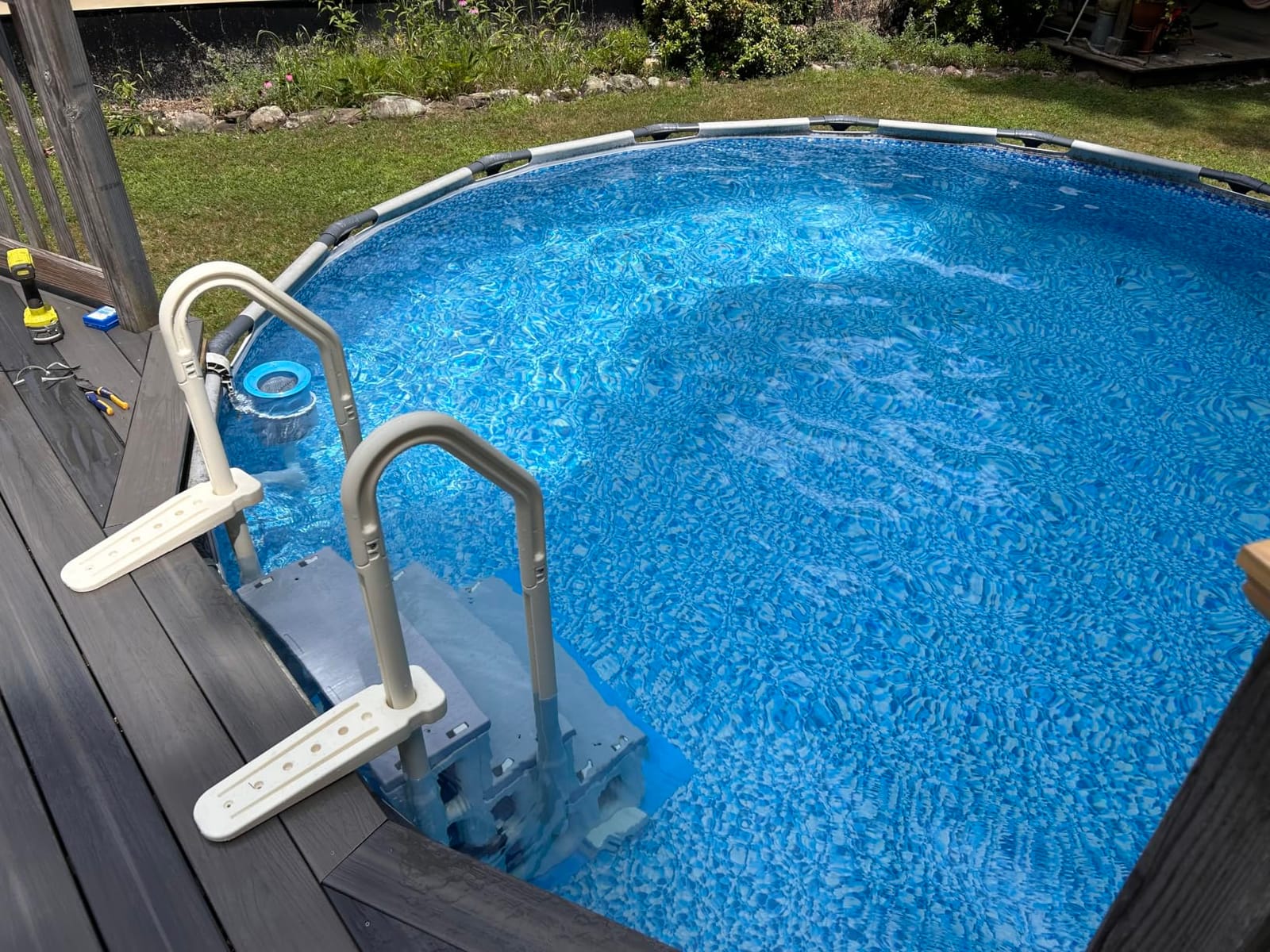
It gives you headroom, which matters more here than in a heavy young family. An older swimmer often climbs more slowly and puts more weight on the rail while they negotiate the steps, so a higher rating plus real stairs is a better pairing than a light-duty rung ladder with a 300 pound label.
Balance the rail wobble against that. If the swimmer has poor grip strength, a ladder with wider dual rails may suit them better than this one.
How do I stop it floating?
Weigh it before it enters the water, not after. Sand through the fill holes is the manufacturer’s method and it works, though the holes are small. Water jugs zip-tied to the base rails are faster and are reversible at the end of the season.
12. Bestway 52 inch Metal Frame Pool Ladder
Bestway 52″ Above Ground Pool Ladder with Heavy-Duty Metal Frame & Steps
- Double-sided steps give a secure transition in and out of the pool
- Heavy-duty plastic steps provide traction on wet feet
- Corrosion-resistant metal frame holds up across seasons
- Compatible with above ground pools including inflatable models
- Quick assembly with an instruction manual included
- A-frame design is bulkier than a simple in-pool ladder
- Listed dimensions include the deck platform so it needs clearance beside the pool
- No child barrier or lockable gate
- Basic fixed design with no adjustment
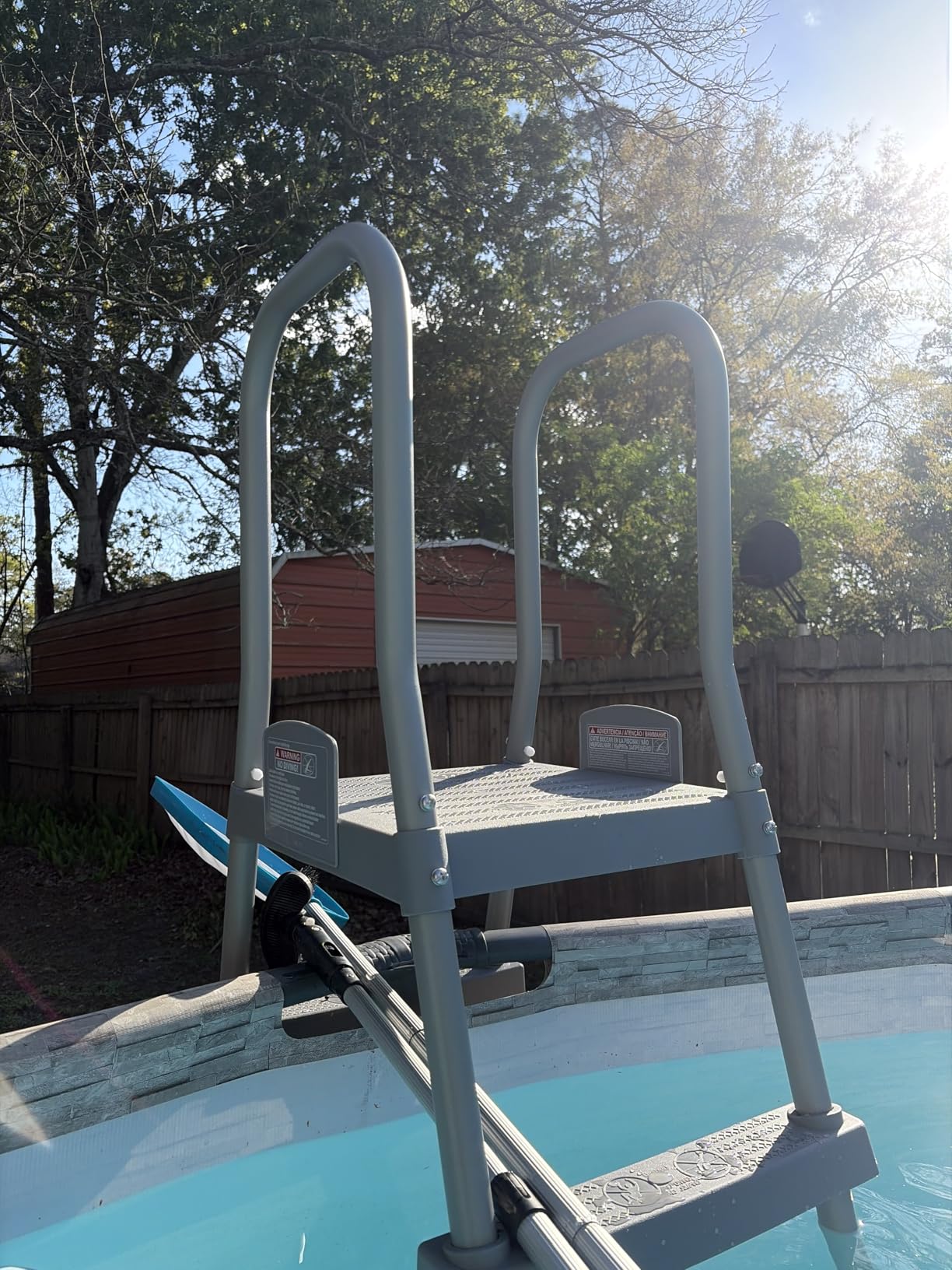
This one is here because it solves a problem most of the others cannot. It is compatible with inflatable and soft-sided above ground pools, which rules out every ladder in this guide that clamps to a metal top rail. If your pool has no rail to grip, this is one of very few options that will actually work.
The double-sided A-frame steps give you a secure transition in both directions, and the heavy-duty plastic steps have enough texture for wet feet. Capacity is 300 pounds and the corrosion-resistant metal frame holds up across seasons of normal use.
The trade is footprint. Measured at 46 by 30 by 75 inches including the deck platform, it needs real clearance beside the pool, and it is bulkier than a plain in-pool ladder. On a tight patio or a narrow side yard, plan the placement before you unpack it.
It is also a basic fixed design with no adjustment and no child barrier. For a family with toddlers you would still need to block access another way, such as a removable step kit or a gate at the pool perimeter. Assembly is quick with the included manual.
Can any ladder work with an inflatable pool?
Very few. An inflatable or soft-sided pool has no rigid top rail, so every ladder that bolts or straps to a rail has nothing to attach to. This model is designed to stand on its own legs beside the pool wall, which is the only reliable approach for that pool type.
Expect to weight the base, because nothing is fixed in place. Sandbags under the feet are the usual answer.
Is it worth upgrading to a metal stair instead?
If you can move to a pool with a hard wall or a deck, yes. Wide flat steps are far easier for knees and for children than an A-frame, and a barrier option becomes available to you. This ladder is the right answer to a specific pool type rather than the best ladder on its own terms.
How to Choose a Pool Ladder for an Above Ground Pool
Work through these seven points in order. The first two eliminate most wrong purchases before you spend any time on the rest.
1. Measure your pool wall height. Measure from the ground to the top rail, not to the coping lip. Most steel-frame pools sit at 48 or 52 inches, and 42 and 54 inch walls exist too. Match the ladder range to your number, not the other way around.
2. Confirm whether you have a deck. No deck means a free-standing A-frame. A deck means a drop-in or in-pool unit. A semi-in-ground pool surrounded by decking means in-pool stairs and nothing else. Getting this wrong is how people end up with a bulky A-frame they cannot store.
3. Check load capacity against your heaviest swimmer. Most ladders here are rated 300 pounds and two reach 400. If anyone in the family is a regular 300 pound swimmer, go to 400 and prefer wide flat steps over rungs, because a higher number on a narrow rung ladder does not feel stable.
4. Choose a material for your water and your climate. Coated steel is fine for ordinary freshwater. Stainless steel lasts longest but is not recommended for saltwater. Resin and polyethylene will not corrode at all and are the safer choice in coastal or salt-generated settings.
5. Look at tread dimensions. Good treads are at least 5 inches deep front to back and 14 to 15 inches wide. Steps narrower than that force you to place one foot precisely while lowering yourself, which is exactly the situation that causes slips on wet feet.
6. Check how it anchors. A-frame models attach to the top rail, drop-in models rely on sand ballast, and deck-mounted models bolt down. Each needs a different fix, and the one that matches your pool setup is a non-negotiable requirement, not a preference.
7. Count the handrails and the steps. Four steps in the water beats three for easier exits, because the shallowest step sits nearer the waterline. Dual handrails matter for anyone pushing off with weight or anyone with balance concerns. One rail is enough only for confident adult swimmers.
Common problems and how to avoid them
A rocking ladder almost always means it was never weighted or anchored properly. Float a couple of inches and the whole problem disappears once sand is in the base containers.
Mismatched wall height is the other big one, and it is entirely avoidable with a tape measure and five minutes. A ladder that is too short never reaches the coping and a ladder that is too tall leaves a gap you can fall through.
Flex in the frame is a design and price issue rather than a fault. Lighter plastic A-frames wobble under load, and no amount of weighting will correct that. If a rigid feel matters, choose steel or a stair unit.
Pool Ladder Safety: Weighting, Anchoring and Gates
Every above-ground pool ladder needs weight in it. Water pushes up on plastic and resin almost as much as buoyancy on a boat, and an unweighted unit will drift within a week.
There are three reliable methods. Sand in ballast containers is the manufacturer-standard approach and never needs cleaning out; sandbags are the fastest seasonal option and you can move them in October; and filling built-in pipes with a dry mix or sand gives the most permanent fix in the smallest footprint.
If you would rather not deal with sand at all, cut a length of four inch PVC pipe, fill it with sand or a dry concrete mix, cap both ends, and zip-tie it into the base cavity. It costs almost nothing, holds far more weight than a bag, and does not cloud the pool water. Owners report this one trick solves floating on almost every drop-in stair made from resin.
For child safety, the hierarchy is simple: a gate beats a barrier beats a habit. A lockable gate such as the roll-guard on our top pick physically blocks the route. A barrier on the inner rails does nearly as well. Removable outer steps, like the Intex Deluxe, block access but depend on you doing it every night.
Watch the load limit on every ladder here. The Blue Wave stainless unit is rated at 225 pounds and one person at a time, and no ladder should be used by two people at once regardless of rating. Do not let children use the ladder without an adult within arm’s reach.
Take the ladder out before freezing weather if you can. Water trapped in the base containers and in the step cavities expands when it freezes and will crack resin permanently. Rinse, dry, and store it somewhere sheltered, and if a pool is staying up through winter, remove at least the top platform and any gate.
Frequently Asked Questions
What is the best ladder for an above ground pool?
The best ladder depends on your pool configuration. For a pool with no deck, a free-standing A-frame with steps on both sides is the only practical choice, and one with a lockable safety barrier is worth the extra weight if children use the pool. For a pool surrounded by a deck, a deck-mounted drop-in or in-pool stair is safer and far more compact. Wide flat treads matter more to most buyers than any other feature.
What is the best pool ladder for an above ground pool?
Pick by configuration rather than brand. No deck means an A-frame; a deck means a drop-in or in-pool unit; a semi-in-ground pool ringed with decking means in-pool stairs only. Then match the wall height, which runs 42, 48, 52 or 54 inches on most steel-frame pools, and check load capacity against your heaviest swimmer. You do not need the ladder made by your pool manufacturer.
What are the common problems with pool ladders?
The most common issues are rocking and floating from insufficient weight, a mismatch between the ladder and the actual pool wall height, flex in lighter plastic frames, and treads too narrow to place both feet on. Sandbags or sand ballast solve floating. Measuring your wall height before buying prevents the mismatch. Choosing wide flat steps over narrow rungs solves most slip and knee problems.
What can I use instead of a pool ladder?
If your pool is semi-in-ground and surrounded by a wood or composite deck, you can skip the ladder entirely and use in-pool stairs built into the deck edge, since the deck becomes the entry platform. A retrofit stainless steel handhold mounted to the pool wall works for flat-bottom pools with a ladder already in place. For soft-sided pools, a wide step platform inside the pool is the usual alternative.
What’s the difference between a type 2 and type 3 ladder?
The difference is how many sides have steps. A type 2 ladder has steps or rungs on both the outside and the inside, so you climb one way up and step down the other, and it is the cheapest common design. A type 3 ladder has a full set of steps on both sides with a platform at the top, which is easier for children and for anyone carrying a float. Type 3 units cost more and take up more space.
The Best Pool Ladders for Above Ground Pools in 2026
Start with your configuration. If your pool has no deck, the Confer 7200 Roll Guard is our pick, because the lockable barrier is the only feature in this guide that stops a child walking past the ladder. For a decked setup, the Confer Step-1X wins on wide 27 inch treads and a 400 pound rating that makes it easy for older swimmers.
If you want the simplest good option and do not need a barrier, the Intex Deluxe with removable steps does the most for the money, and its coated steel frame will not flex under a heavy adult. For a soft-sided or inflatable pool, the Bestway 52 inch metal frame is one of the very few options that works at all.
Whichever you choose, measure the wall first, weight it properly, and take it out before a hard freeze. Our guides to the best telescoping ladders and best extension ladders cover general household access, while boat ladders use similar stainless construction if you are weighing material choices.