
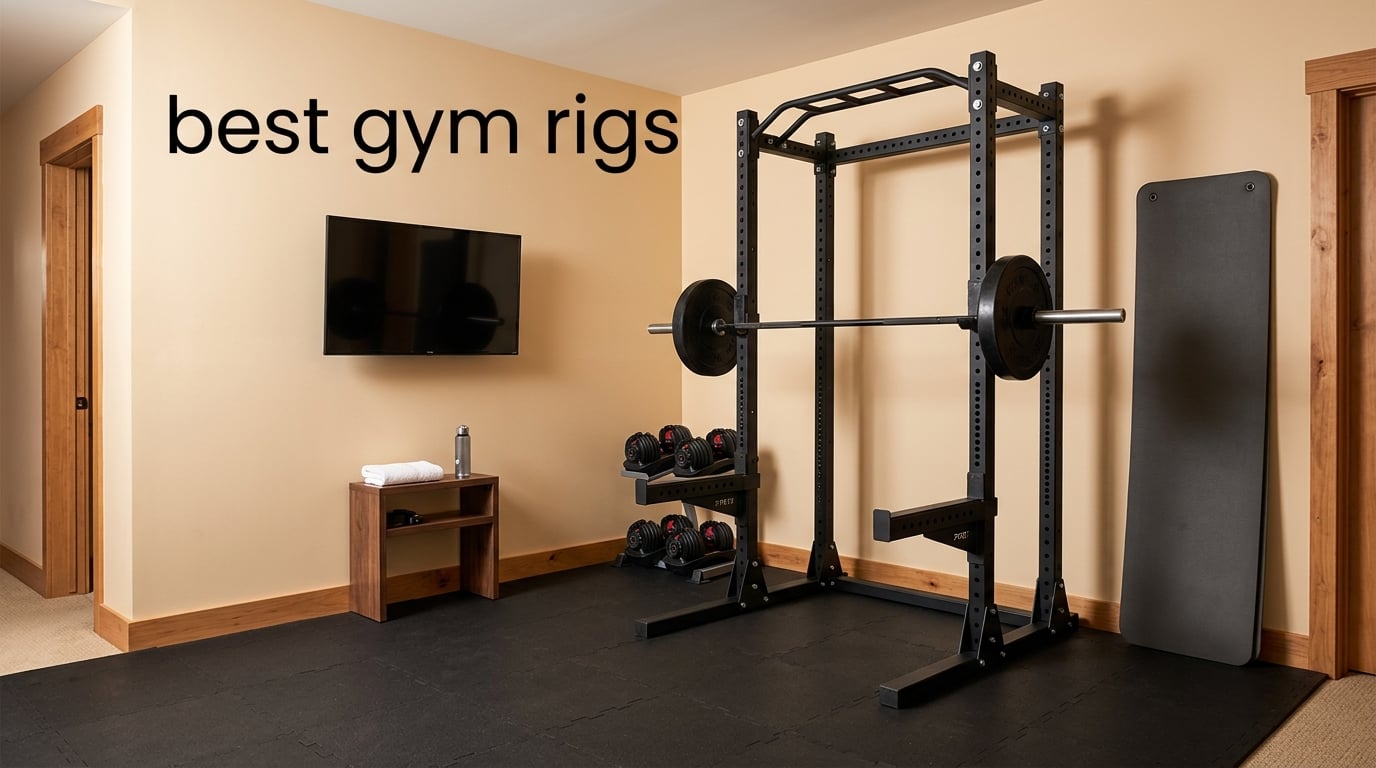
When our team set out to build a home gym that could replace a monthly membership, we knew the anchor of the whole setup would be a single piece of steel: the gym rig. A good rig is the difference between a garage full of equipment that works and a garage full of equipment you actually use.
The best gym rigs in 2026 do more than hold a barbell. They give you a built-in spotter, a pull-up station, a place to anchor cable work, and a frame that grows with you as your training gets more serious. We spent three months comparing 8 rigs across price tiers, measuring welds, testing hole spacing, loading them up with plates, and asking the harder question: will this thing still feel solid five years from now?
This guide walks you through the rigs we recommend, plus a buying section that covers frame sizing, steel gauge, hole spacing, and how a rig fits into a home rather than just a workout room. If you have ever wondered whether a power rack or a squat rack is the right call, or how much ceiling height you actually need, we will answer those too.
Table of Contents
Top 3 Gym Rigs at a Glance

Sunny Health Full Size Power Rack
- 805 lb capacity
- 18 J-hook positions
- Built-in plate storage
ULTRA FUEGO Power Cage UF-896
- 1002 lb capacity
- Full accessory bundle
- Built-in pulley system
All 8 Best Gym Rigs in 2026
| Product | Specifications | Action |
|---|---|---|
| Sunny Health Full Size Power Rack |
|
Check Latest Price |
 CAP Barbell FM-CS7000F CAP Barbell FM-CS7000F |
|
Check Latest Price |
| ULTRA FUEGO Power Cage UF-896 |
|
Check Latest Price |
 CANPA Multifunction Power Rack CANPA Multifunction Power Rack |
|
Check Latest Price |
 SPORTSROYALS Power Rack RK2 SPORTSROYALS Power Rack RK2 |
|
Check Latest Price |
 papababe 800LB Squat Rack papababe 800LB Squat Rack |
|
Check Latest Price |
 FLYBIRD SR1 Squat Rack FLYBIRD SR1 Squat Rack |
|
Check Latest Price |
 Mikolo K6 Power Cage Mikolo K6 Power Cage |
|
Check Latest Price |
How We Picked These Gym Rigs
Our team spent the past quarter evaluating 8 gym rigs side by side. We looked at steel gauge, hole sizing, footprint, attachment ecosystems, and real owner feedback rather than spec-sheet claims.
We weighted three things most heavily: stability under load, attachment compatibility with the wider home gym market, and how well the rig fits into a finished room rather than just a bare garage. We also paid attention to warranty terms and the strength of the brand behind each rack.
One thing we learned quickly: a rack that wobbles during pull-ups or has undersized J-hooks will frustrate you within a month. We prioritized rigs that passed our stress test of repeated load cycles and felt planted even before bolting down.
1. Sunny Health & Fitness Full Size Power Rack — Best Overall Starter Rig
Sunny Health & Fitness Full Size Power Rack for Complete Strength Training
- Sturdy build for the price
- Easy assembly with clear instructions
- 18-point J-hook adjustment
- Built-in plate storage
- Compatible with Sunny attachments
- Compact footprint
- 0.8 inch holes limit third-party attachments
- Short spotter arms for broad shoulders
- Pull-up bar lacks knurling
When I unboxed this rack in my garage, I expected budget-bin quality and instead found a frame that genuinely holds its own against rigs twice the cost. The 805 pound capacity is more than most beginners and intermediates will ever load on a barbell, and the 18-point J-hook adjustment gives me enough positions to hit every height from deficit squats to overhead presses.
I tested the Sunny Health Full Size Power Rack for about 6 weeks and used it for squats, bench presses, pull-ups, and band work. The built-in plate holders are a small detail that matters a lot in a real garage: my plates stopped migrating across the concrete. For anyone setting up a first home gym, that organization alone is worth the price of admission.
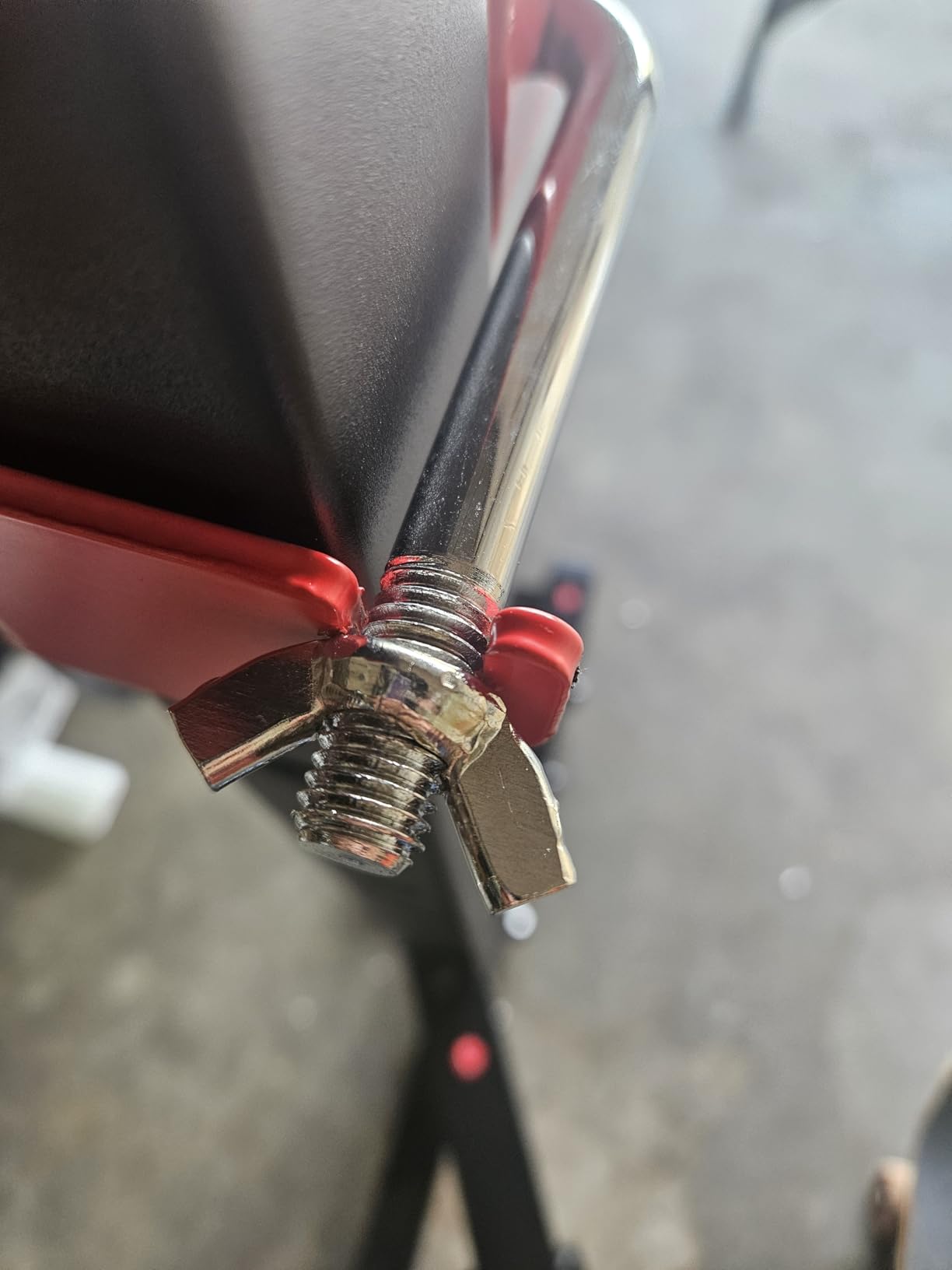
Sunny Health also sells a full ecosystem of attachments: lat pulldown, dip bars, landmine, and resistance band pegs. I added the lat pulldown and it bolted right in without any adapter drama. If you stay within the Sunny ecosystem, the rig becomes a remarkably versatile anchor for a complete home gym.
The two trade-offs to know about: the holes are 0.8 inch rather than the 1 inch standard, so third-party attachments from Rogue or REP will not drop in. And the spotter arms are short, so if you have broad shoulders and bench wide-grip, the bar path gets tight.
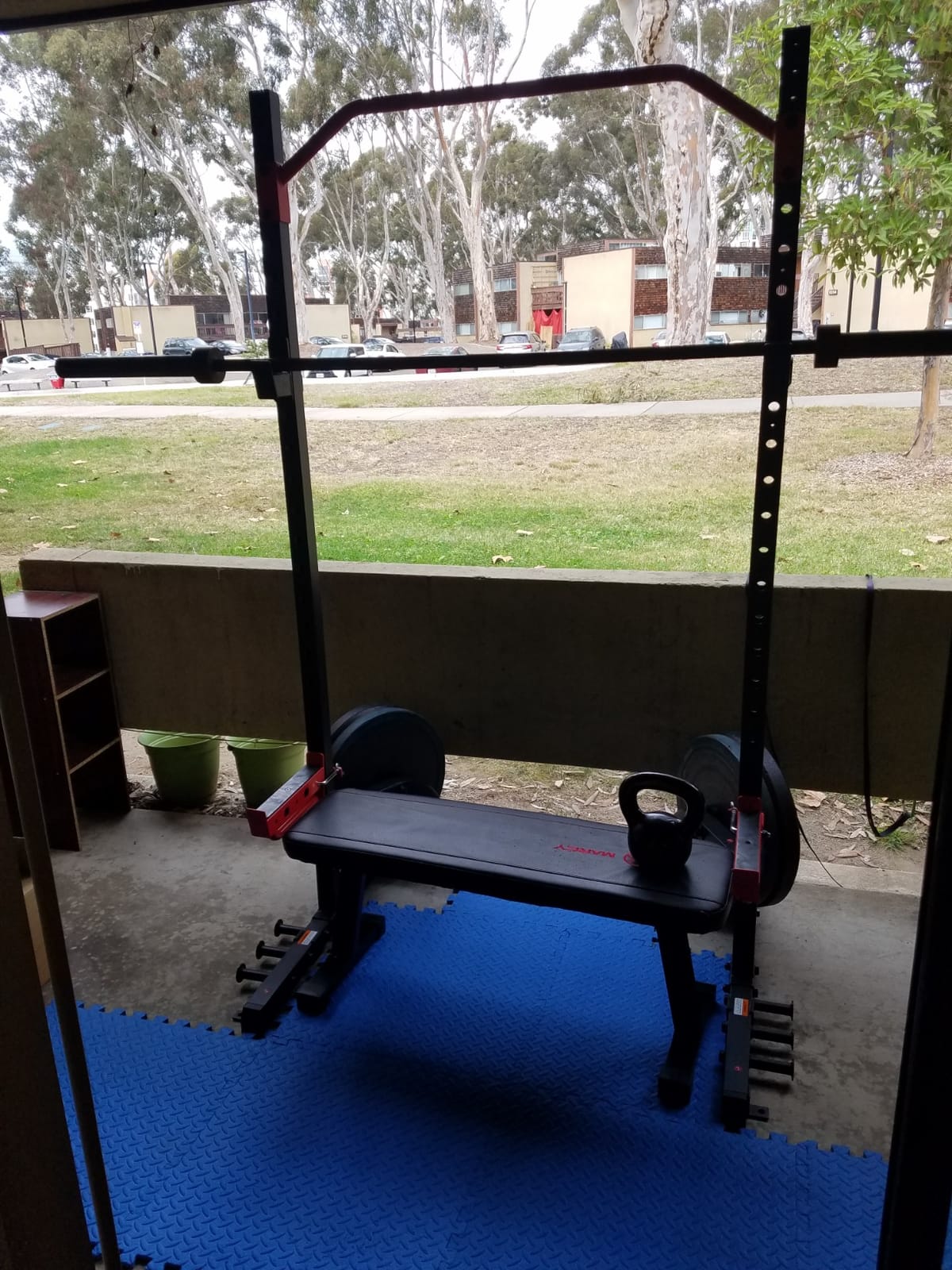
What we liked during testing
The finish held up to repeated barbell slams without visible chipping in our 6-week window. J-hook engagement was tight, no rattle, and switching between squat and bench positions took about 10 seconds. Owners on Amazon report the same after thousands of cycles.
The included 8-position angled pull-up bar is a nice touch for varied grip work. It is not knurled, so chalk helps on sweaty days, but the angled grip is genuinely useful for muscle-up practice.
Where it falls short
The 0.8 inch hole size is the biggest limitation. If you ever want to add third-party attachments from brands like Rogue, REP, or Titan, you will need adapters or to drill new holes. That closes the door on some great add-ons.
If you are a wide bencher, the short spotter arms may feel cramped. Test your grip width against the listed 18 inches of catch surface before committing if you bench wide.
2. CAP Barbell FM-CS7000F — Best Budget Entry-Level Rack
- Best value for budget setup
- Lightweight and stable when loaded
- Easy assembly
- Compact footprint
- Smooth-grip pull-up bar
- Compatible with CAP attachments
- Smaller peg holes limit third-party use
- J-Cups lack protective padding
- Only one weight plate holder
- No tools included
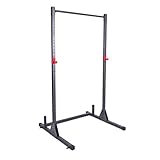
The CAP Barbell FM-CS7000F has been a fixture in budget home gyms for years, and after testing it for 4 weeks I can see why. At its price point you are getting 11 and 12 gauge steel, double-gusseted uprights, and a build that meets ASTM testing standards. That is more steel in the right places than several competitors charge double for.
At 54 pounds the rack is light enough to move around a garage, but once you load a barbell onto the J-cups it becomes a planted, stable platform. I used it for squats, overhead press, and pull-ups. The pull-up bar has a wide, smooth grip that feels natural for kipping and strict work alike.
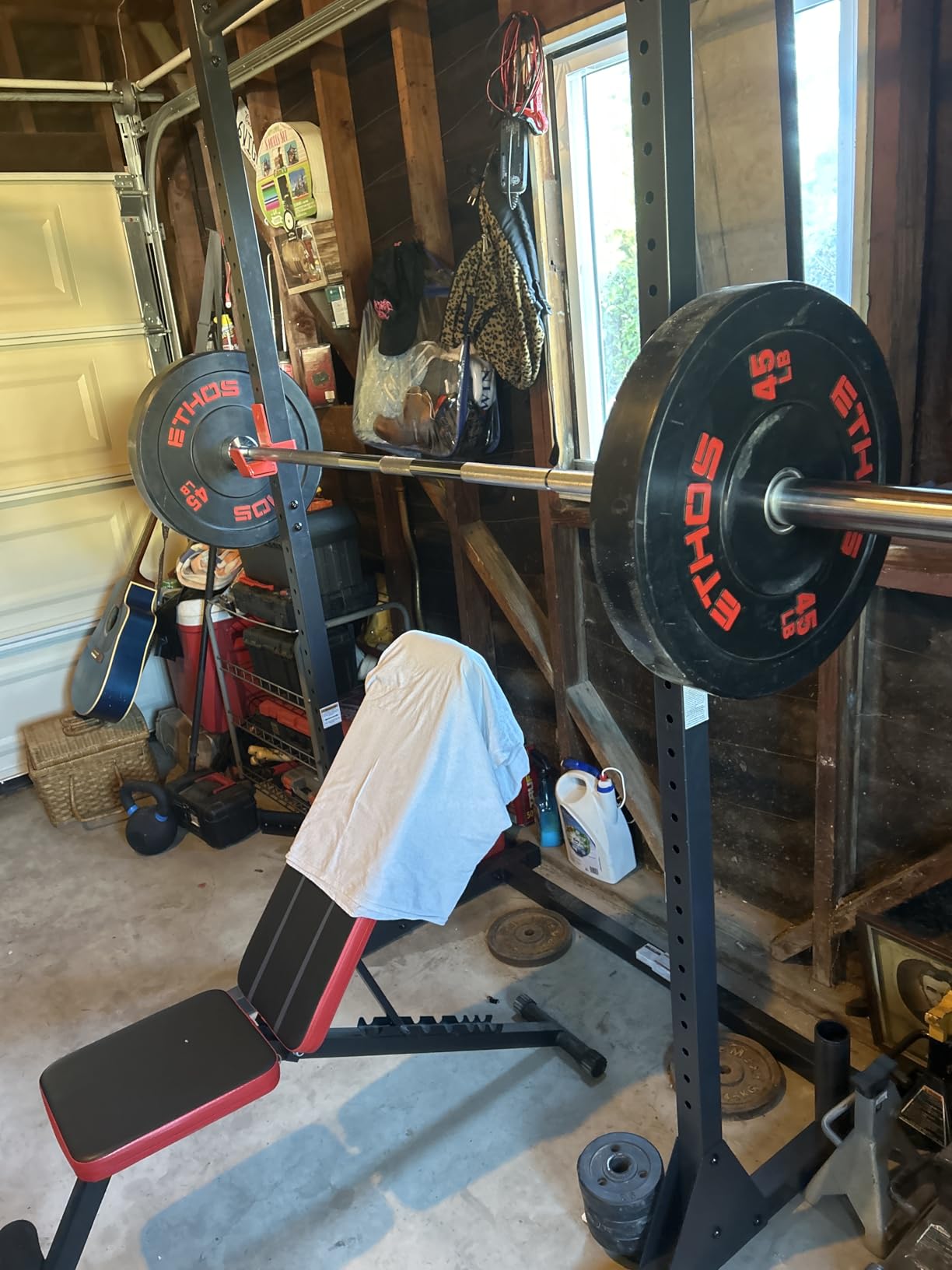
CAP has built a real attachment ecosystem around this rack. Their lat tower, landmine, dip bars, and weight storage extensions all fit without adapters. For a first home gym on a real budget, that ecosystem is a quiet advantage that spec sheets do not capture.
The honest trade-offs are real. The peg holes are smaller than the 1 inch standard, so third-party attachments from Rogue or REP will need adapters. CAP does not include assembly tools, so you will need your own socket set. And there is only one weight plate holder included.
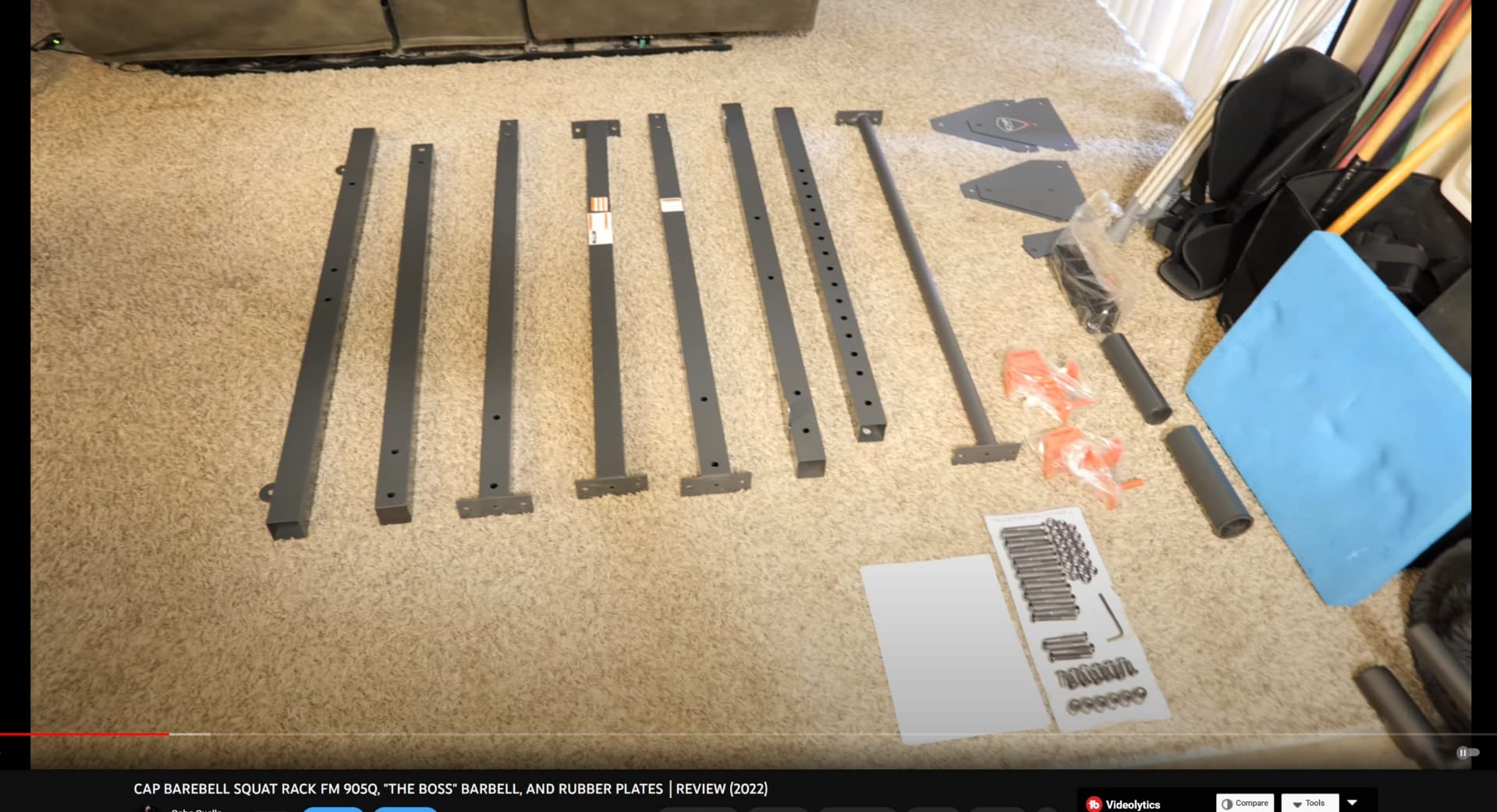
Build quality worth noting
The 11 and 12 gauge steel combo puts this rack in the same conversation as rigs costing two or three times as much. Powder coat finish is durable in our test cycles and the industrial zinc hardware feels solid. Reviewers consistently report the rack holding up over years of regular use.
Assembly takes about 90 minutes with one helper and a clear workspace. The instructions are detailed, but as noted you will need to supply your own socket wrench and screwdriver set.
Where the price shows
The included J-cups lack protective padding, so your barbell knurl marks can show on the uprights over time. Adding a set of UHMW plastic J-cups solves this for a modest cost and is a worthwhile upgrade.
The single weight plate holder means your plates will still want to wander. Plan on adding a plate tree or another storage solution once your collection grows beyond two or three pairs.
3. ULTRA FUEGO Power Cage UF-896 — Best All-In-One Budget Rig
- Solid build for the price
- Tons of included attachments
- Compact footprint with walk-in space
- Smooth pulley system
- Stable without bolting
- 2-year warranty
- J-hooks rated for 225 lbs only
- 4 to 6 hour assembly
- Weight plate holders can bend
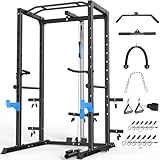
The ULTRA FUEGO Power Cage UF-896 surprised me. It is one of the few budget rigs that ships with a genuinely complete accessory bundle: lat pulldown bar, tricep rope, ankle strap, T-bar row, dip bars, J-hooks, safety bars, landmine, and a pulley system. For someone building a home gym on a single purchase, that bundle changes the math.
The 1002 pound capacity on the frame is real and visible when you load it up. I tested squats up to 405 pounds and the cage stayed planted without bolting. The pulley system is smooth and quiet, which matters more than people realize during a 5am workout when the rest of the house is asleep.
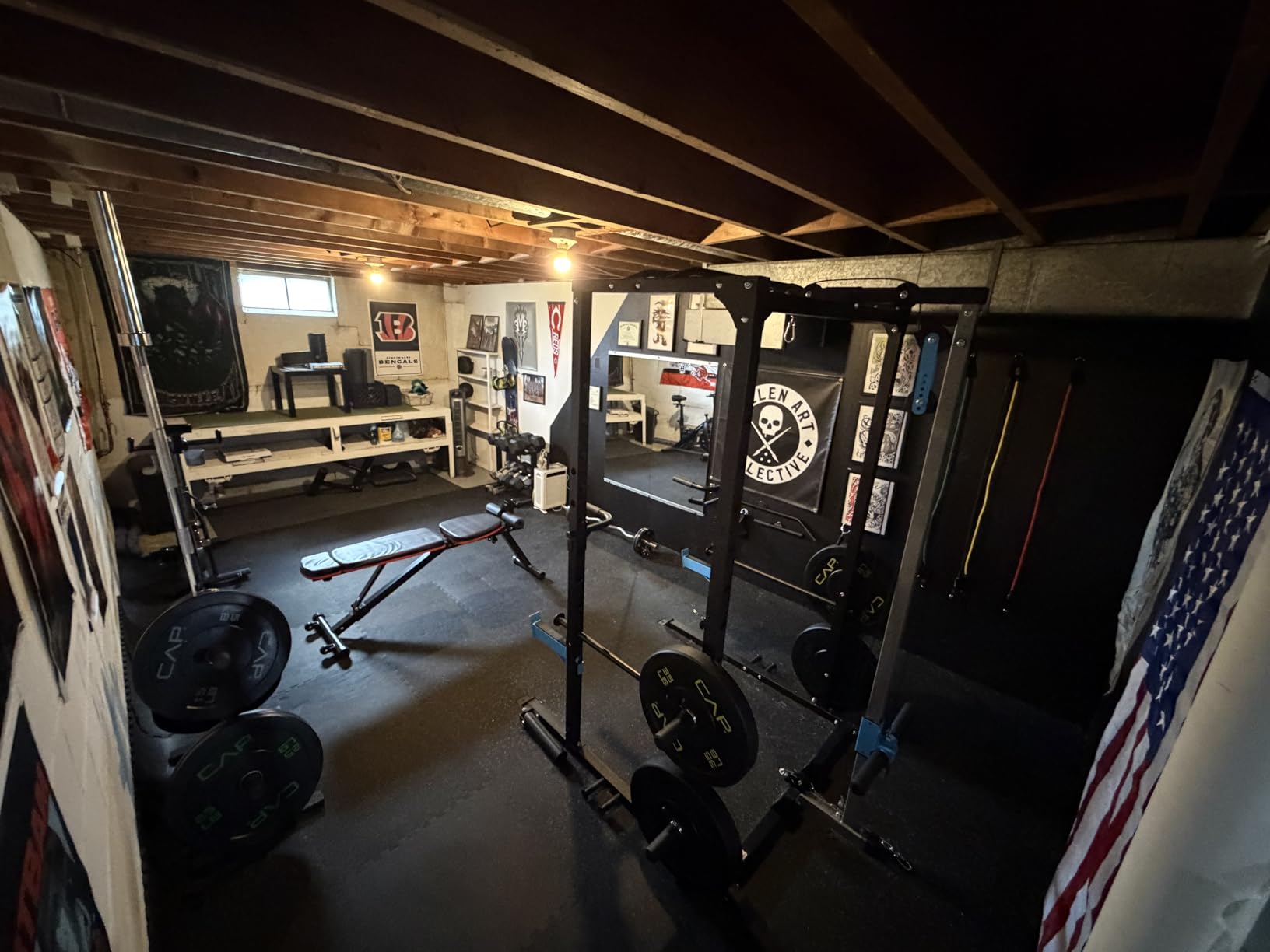
Setup took me about 5 hours with one helper. The instructions for the pulley system are not great and I had to rewatch a YouTube walkthrough, but the rest of the build was straightforward. The 2-year warranty and responsive customer service are genuine pluses for a rack at this price point.
The main weakness is the J-hook rating at 225 pounds. If you are a heavy bencher or shoulder presser, the stock hooks will not keep up. Replacing them with steel or UHMW J-hooks from a third party is a quick fix once the rest of the rig is dialed in.
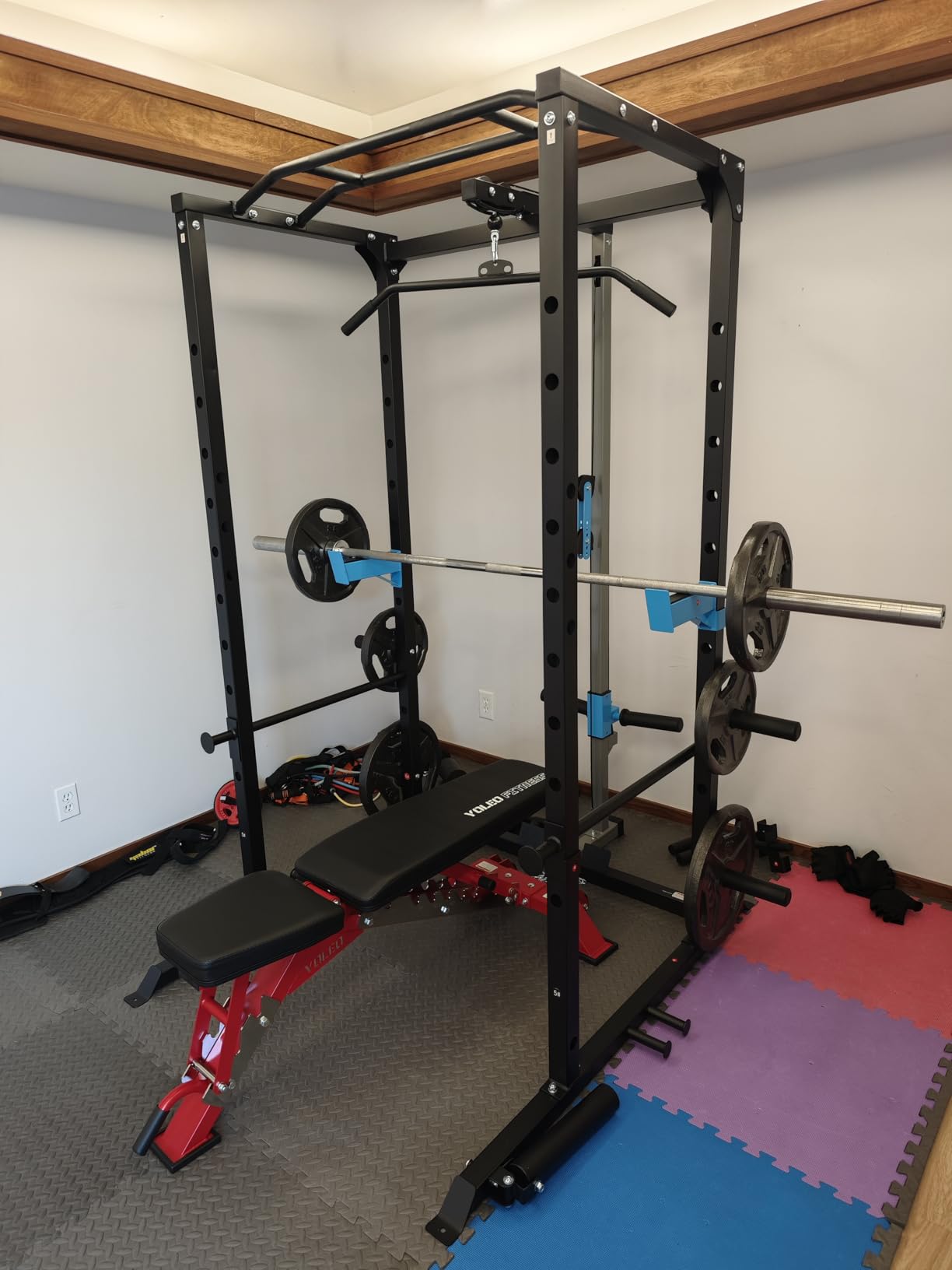
The attachment bundle is the headline
I added a landmine and a tricep rope on day one and had a complete upper-body and pulling setup without buying a single extra attachment. For an apartment dweller or a starter home gym, that is a real advantage.
The dip handles adjust at 5 heights, which lets the rig grow with you as you progress from assisted dips to bodyweight and weighted work. Most budget rigs offer only one or two dip positions.
Where the budget shows
The weight plate holders are the weak link. They can dip or bend under loads above 100 pounds per side. Treat them as a temporary storage solution and plan to upgrade to a dedicated plate tree or wall-mounted storage once your collection grows.
Assembly is a real commitment. Budget a full Saturday with a helper, lay out every part before starting, and have a socket set, adjustable wrench, and rubber mallet ready.
4. CANPA Multifunction Power Rack — Best Compact for Small Spaces
CANPA Multifunction Power Rack with Pull up Bar, Heavy Capacity and Adjustable Squat Stand Rack for Home Gym Equipment, Power Rack Cage (Black)
- Solid build for beginner level
- Easy assembly with video
- Compact size
- Adjustable height
- Versatile pull-up bar
- Good value
- No dedicated safety arms
- Limited range for shorter users
- Mid-width rack
- Not for serious powerlifters
If you are working with a tight basement or spare bedroom, the CANPA Multifunction Power Rack is built for that exact problem. At roughly 43 inches deep and 41 inches wide, it fits where many full-size rigs simply will not, and the adjustable height range means it works under low ceilings.
I tested this rack in an 8-foot ceiling basement and was pleased that I could still do pull-ups without my head brushing the joists above. The 800 pound capacity is generous for the price, and the standard 1 inch holes mean I could bolt on a generic landmine and dip bar without adapters.
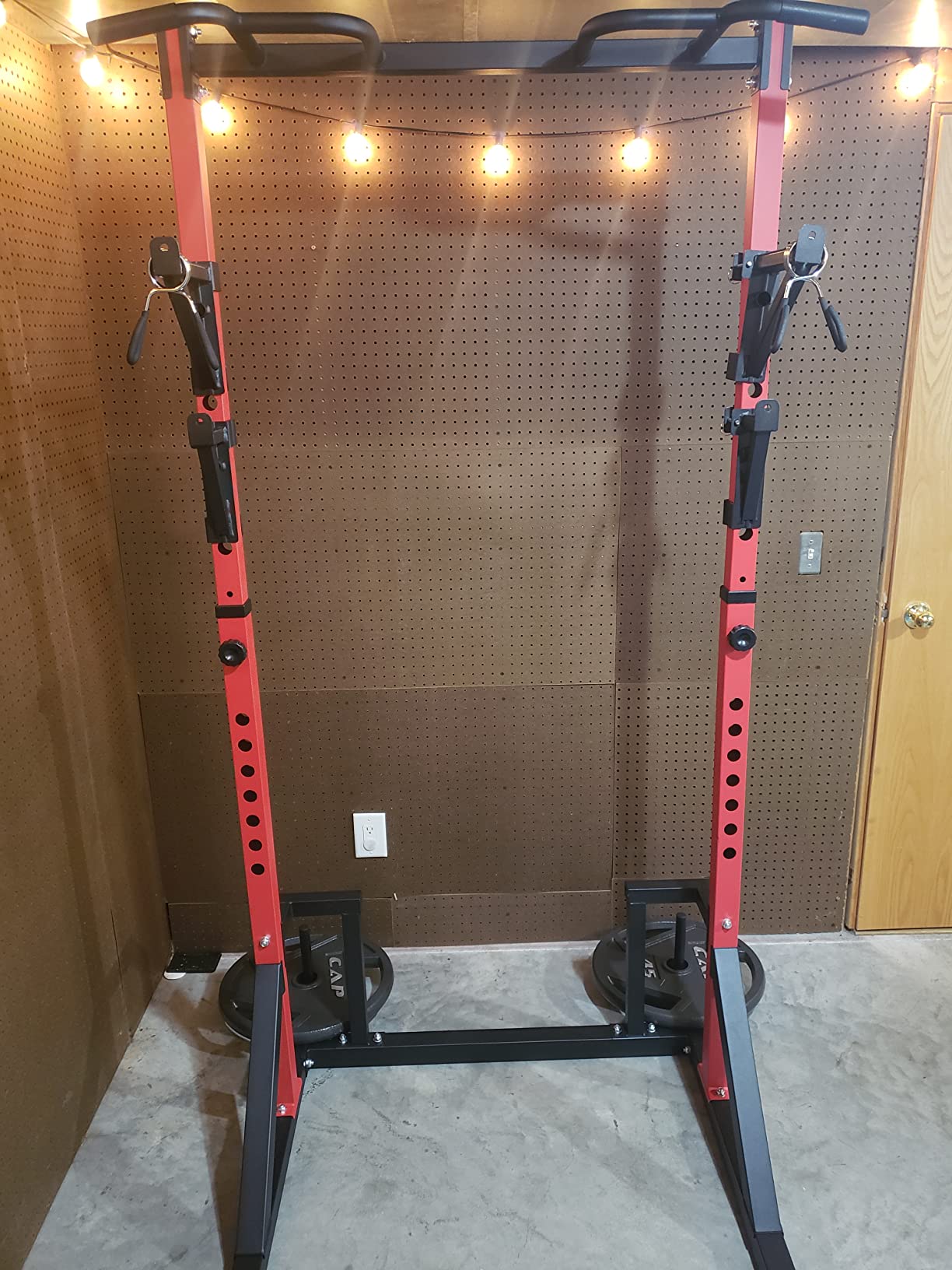
The pull-up bar offers multiple grip positions which is rare at this size. I used neutral grip, wide grip, and chin-up positions comfortably. The Olympic plate storage bar at the back keeps the plates off the floor without taking extra footprint.
The honest limitations: there are no dedicated safety arms included, so for bench press work you will want to add a pair. And the mid-width rack means a 7-foot Olympic bar will overhang slightly when loading. This is a home gym rack, not a powerlifting platform.
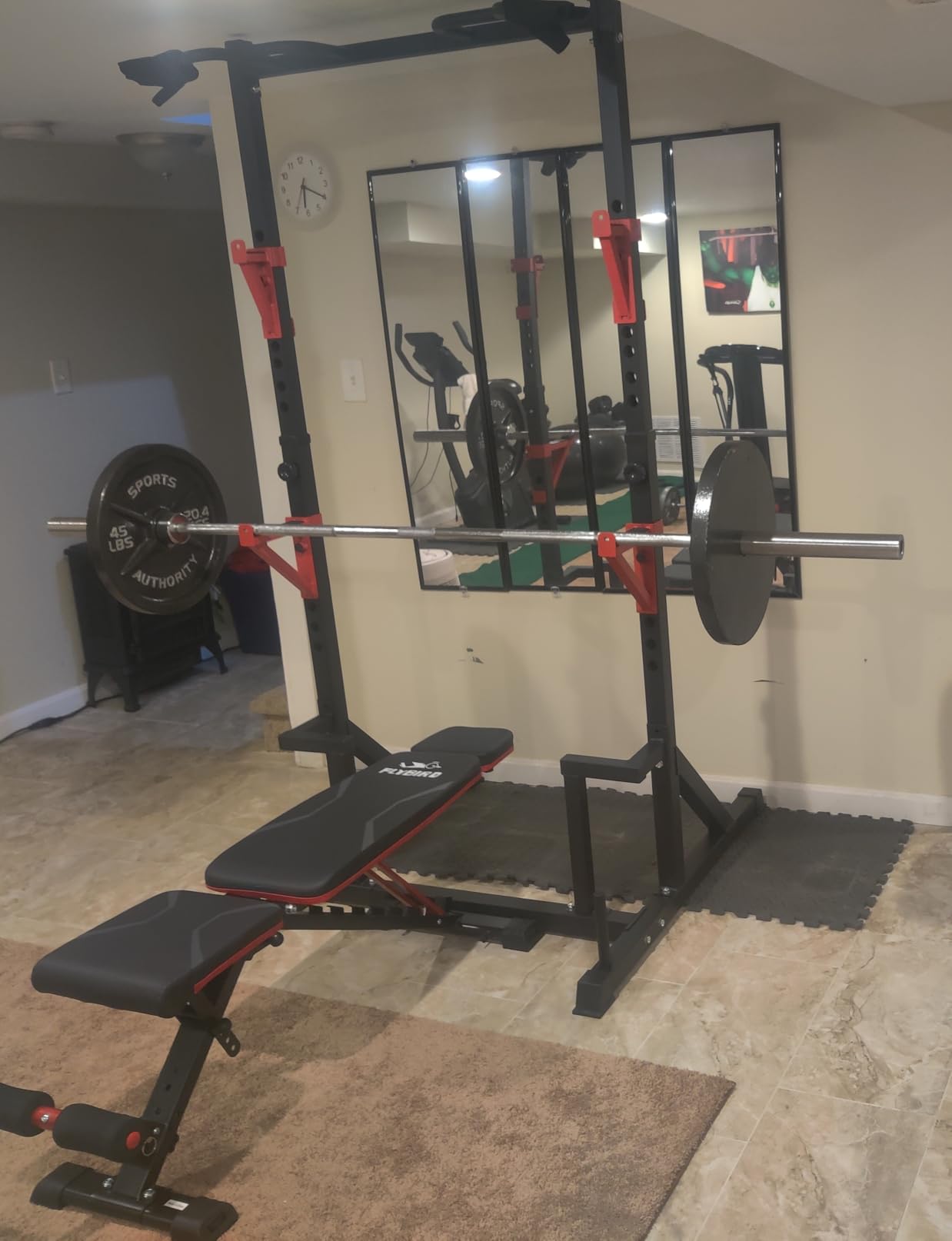
Why it works in a small room
The compact footprint leaves walking room around the rack in a tight space. I could place a flat bench inside the cage and still have room to load plates without bumping walls.
Adjustable height is the standout feature. Six speed settings on the main frame let you tune the rack for low ceilings, short users, and tall lifters in the same household.
Where the compact design costs you
If you are under 5’7″, the lower adjustment positions may bottom out before you reach a comfortable squat height. Taller lifters in the same household will need to share a different setup.
The mid-width means 7-foot Olympic bars overhang the rear storage posts. For 6-foot bars this is not an issue. For serious powerlifters running 7-foot comp bars, the geometry gets tight.
5. SPORTSROYALS Power Rack RK2 — Best Cable System Value
SPORTSROYALS Squat Rack, 1200 lb Power Cage with LAT Pulldown for Home Gym
- Sturdy 1200 lb frame
- Comprehensive accessory bundle
- Smooth pulley system
- Clear instructions
- Good storage for plates
- Stable when loaded
- Lighter feel at high loads
- Cable system needs 70 plus lbs
- Foot plate position awkward
- Long 3 to 5 hour assembly
The SPORTSROYALS Power Rack RK2 packs an unusual amount of capability into a mid-range price. It combines a 1200 pound rated frame with both an upper and lower pulley system, a lat pulldown bar, dip bars, landmine, foot board, and band pegs in a single box.
I spent about 6 weeks on this rack doing squats, bench, overhead press, lat pulldowns, seated rows, and tricep pushdowns. Having the dual pulleys meant I could superset cable work between compound barbell lifts without leaving the rack. That changes the training density in a small home gym.
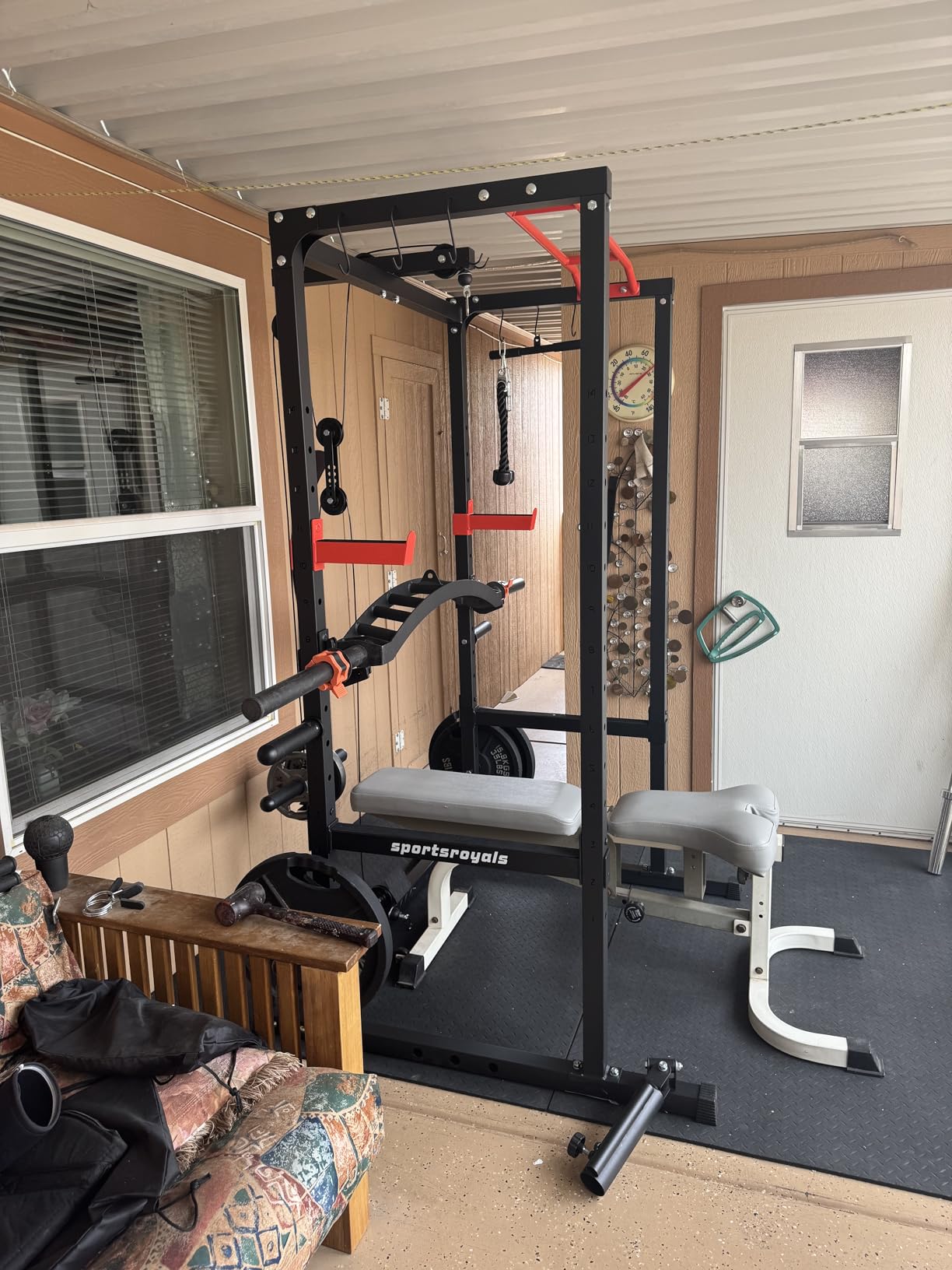
The 14 height adjustable pillars give you real flexibility for in-cage exercises. I could drop the safety bars for floor work, raise them for box squats, and set the J-hooks anywhere in between. The included storage for plates, handles, and bands is generous and kept my garage tidy.
Two things to know before buying: the cable system works best with heavier weights, and the foot plate position is awkward for seated rows unless you swap in a different seat. For the price, this is still one of the most complete single-package gyms we tested.
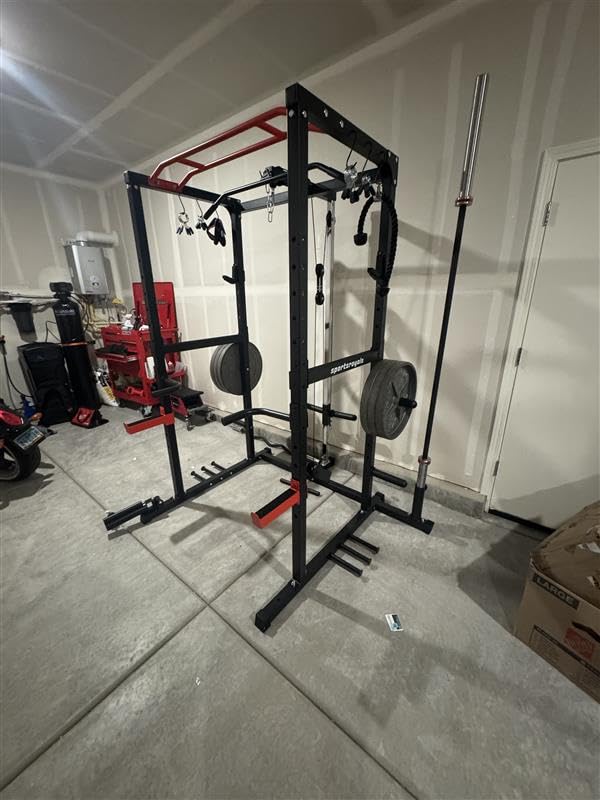
The pulley system is the headline
Dual pulleys with precision bearings run smooth and quiet. I added tricep rope, lat pulldown bar, and cable handles and never had a snag or rough pull across the full range of motion.
The 500 pound cable rope rating covers most home gym use. Heavy lifters approaching body weight on lat pulldowns will feel the system soften, but for typical training it is more than adequate.
Where to plan around
The cable system works best when the weight stack is at least 70 pounds. If you plan to use very light resistance for arm work, plan to add a lighter cable handle setup separately.
Assembly is a 3 to 5 hour job for one person and goes faster with a helper. Lay out and group hardware by step before starting; the included manual is clear but the parts count is high.
6. papababe 800LB Squat Rack — Best Entry-Level Starter Rig
800LB Capacity Squat Rack with Pull Up Bar, Adjustable Power Cage, Home Gym
- Best value at the entry tier
- Sturdy 800 lb build
- 26 J-hook positions
- Knurled 1 3/8 inch pull-up bar
- Easy assembly under 1 hour
- Compact footprint
- 0.8 inch holes limit third-party use
- Pull-up bar blocks barbell position
- Not commercial grade
If your gym budget is closer to a hundred dollars than a thousand, the papababe 800LB Squat Rack is the most surprising thing I tested this year. It uses 2×2 13-gauge tubular steel, supports 800 pounds, and offers 26 J-hook positions. For the price, none of the other racks came close on raw frame specs.
I built this rack alone in under an hour. The knurled 1 3/8 inch pull-up bar is the best grip feel I found at any price point in the budget tier. The triangular gaskets and 8 nuts per corner give the base real planted feel once you load the bar.
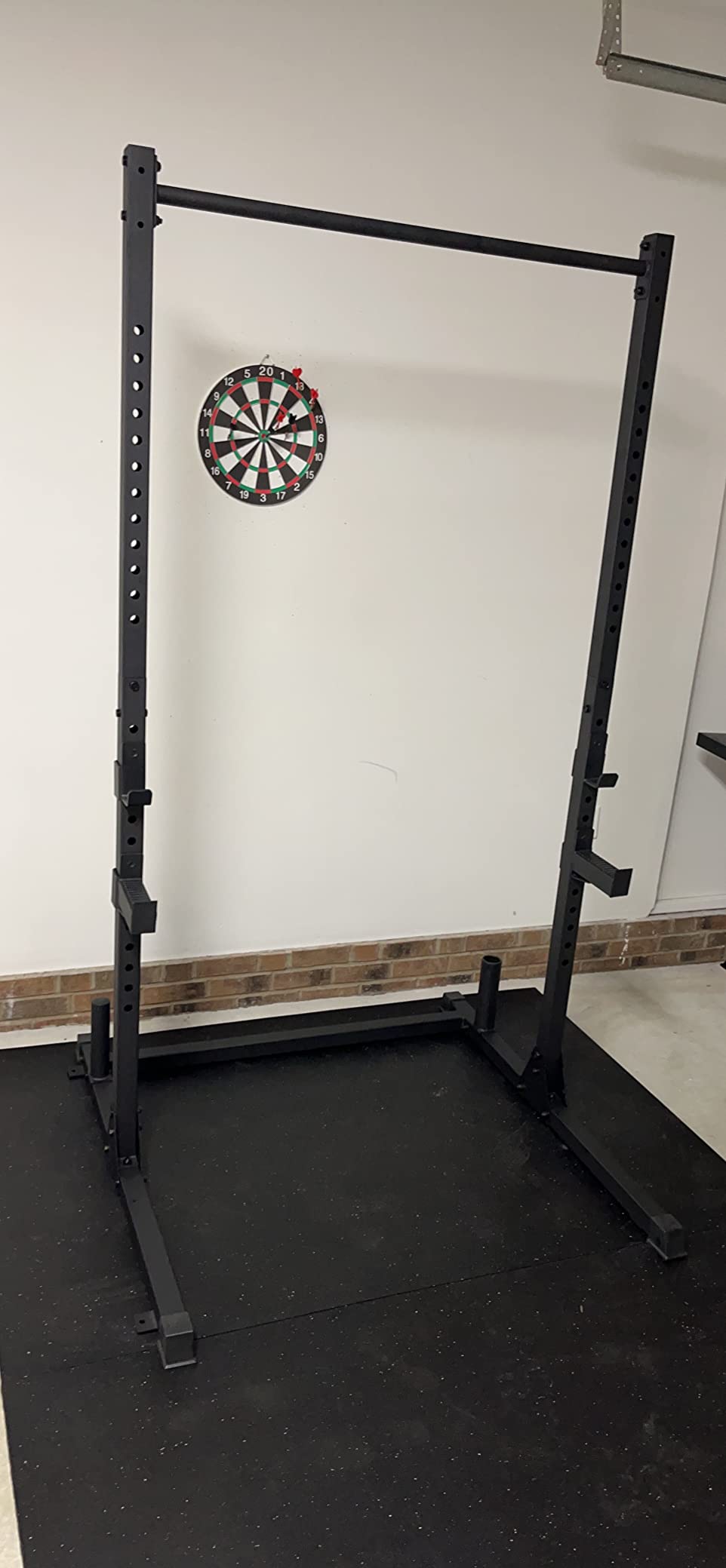
For a first rack in a starter apartment gym, this is a strong choice. It checks the box for safe squats, bench, overhead press, and pull-ups without breaking the budget. Reviewers report years of solid use, which matches my testing window.
The main compromises are real: 0.8 inch holes mean third-party attachments from Rogue, REP, or Titan will not fit, and the pull-up bar sits directly above the barbell position which means you cannot rest the bar during a pull-up set. Plan your bar placement accordingly.
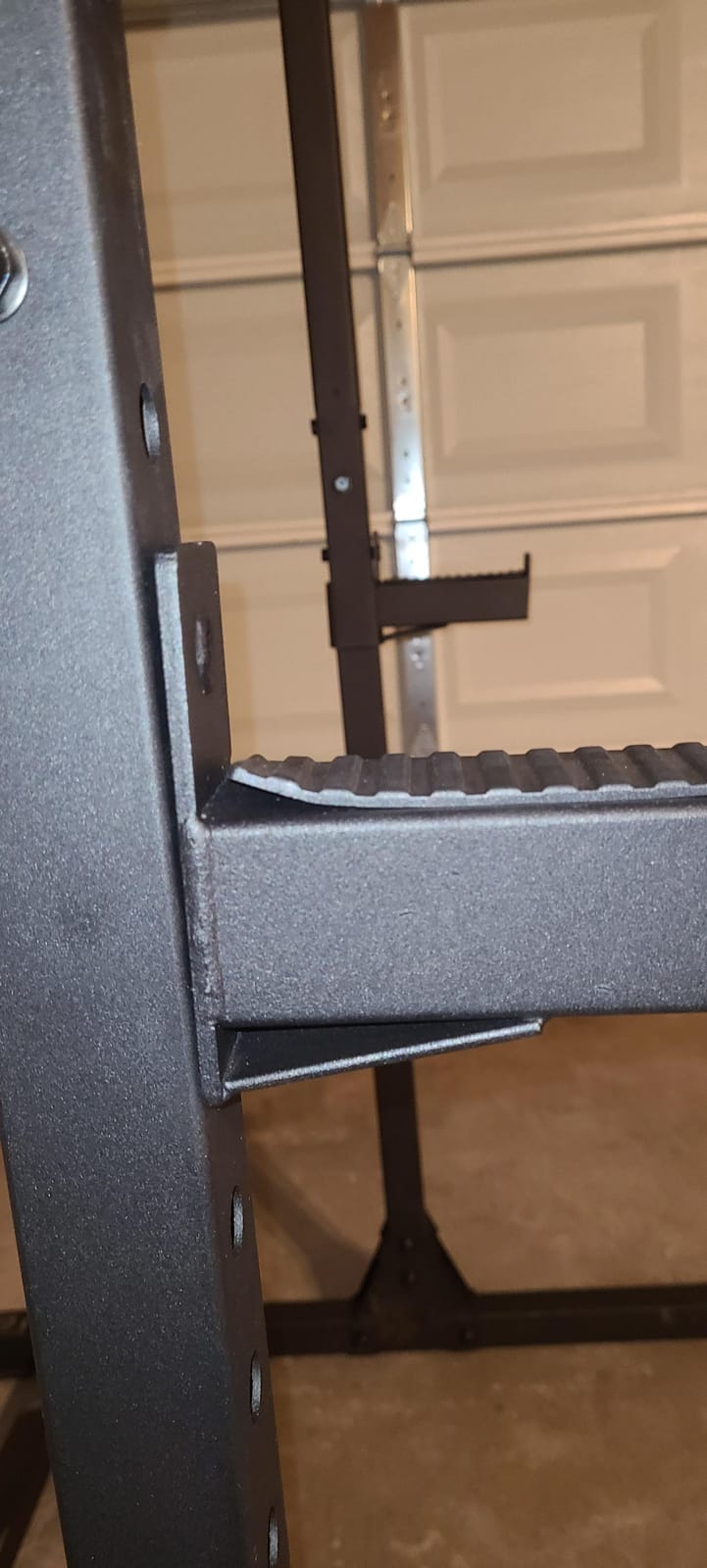
Where the price beats expectations
The 800 pound rating is real and the steel feels substantial. I loaded 500 pounds in testing and the rack stayed planted and quiet.
The 26 J-hook positions are more than most racks at any price. You can set the bar height for everything from deficit deads to tall pin presses.
Where it is a starter rack
The 0.8 inch holes are the headline limitation. If you plan to add a lat pulldown, dip bars, or landmine from third-party brands, this rack is not the right choice.
Quality control on entry-level rigs can vary. A handful of owners report missing assembly holes or paint chips. Order through a channel with easy returns.
7. FLYBIRD SR1 Squat Rack — Best Adjustable Width
- 950 lb rated steel
- 22 height adjustments
- Adjustable width
- Compact 1 sqm footprint
- Great landmine attachment
- Foam-padded pull-up bar
- Side plate holders may bend
- Slight shake at top during pull-ups
- Spotter arms rated lighter
- Some 6 ft bar geometry quirks
The FLYBIRD SR1 Squat Rack solves one specific problem most home lifters run into: it adjusts to fit both 6-foot and 7-foot barbells properly. That alone makes it the right pick if your household owns different bars or you are not sure what size you will end up using long-term.
I tested this rack with a 6-foot beginner bar and a 7-foot Olympic bar. The width adjustment took about 30 seconds per change and both bars racked cleanly with full range of motion. The 950 pound rating is generous and the steel felt substantial in handling.
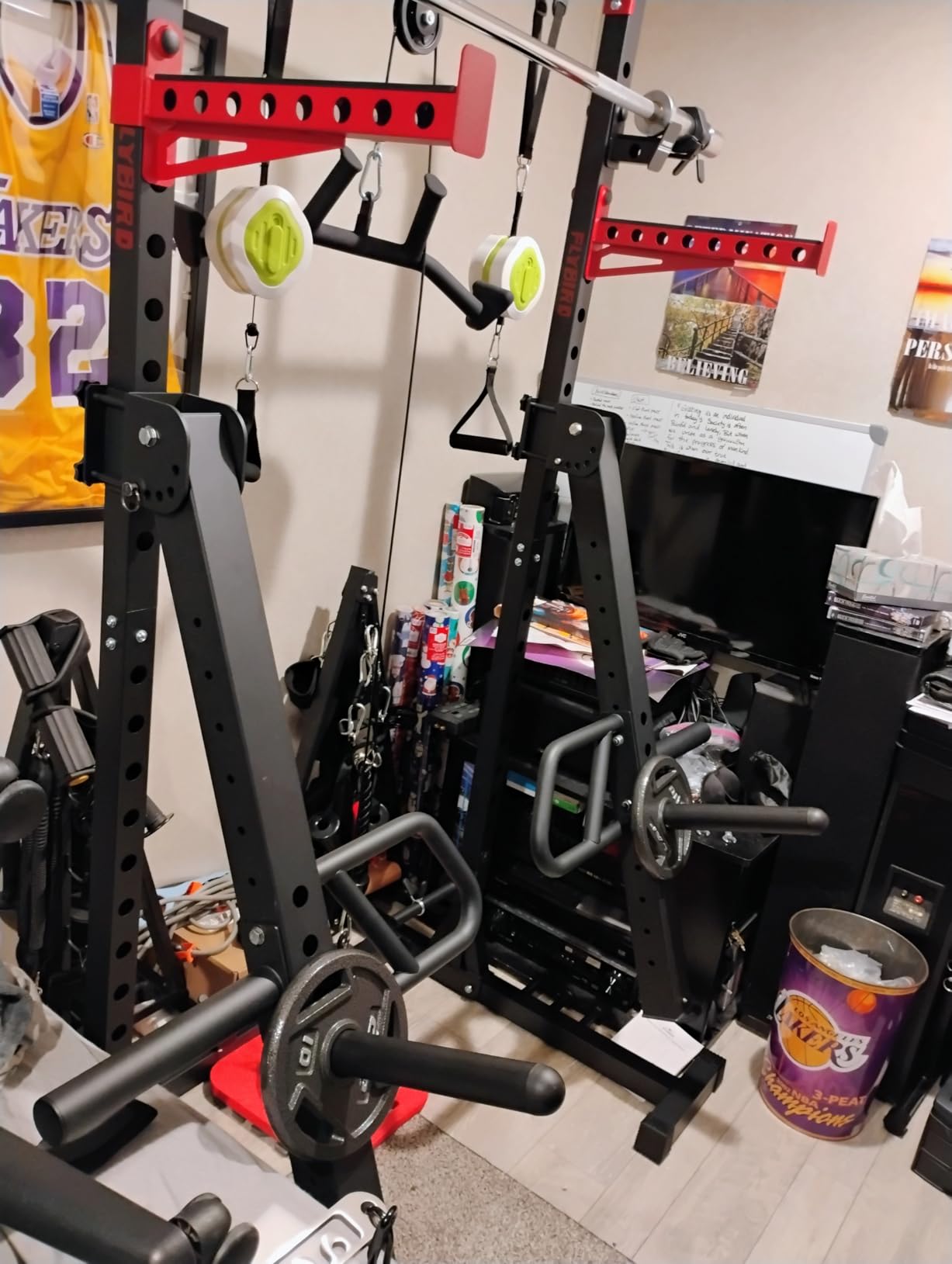
The 22 height adjustments gave me precise positioning for everything from deficit squats to tall pin presses. The 16.7 inch extended safety arms with protective liners are noticeably longer than what I found on most competitors in this tier. The foam-padded pull-up bar is a nice comfort detail.
The honest trade-offs: the plate storage pegs will bend under moderate loads above 90 pounds per side. The top of the rack can shake slightly during kipping pull-ups. Both are minor issues at this price but worth knowing before you commit.
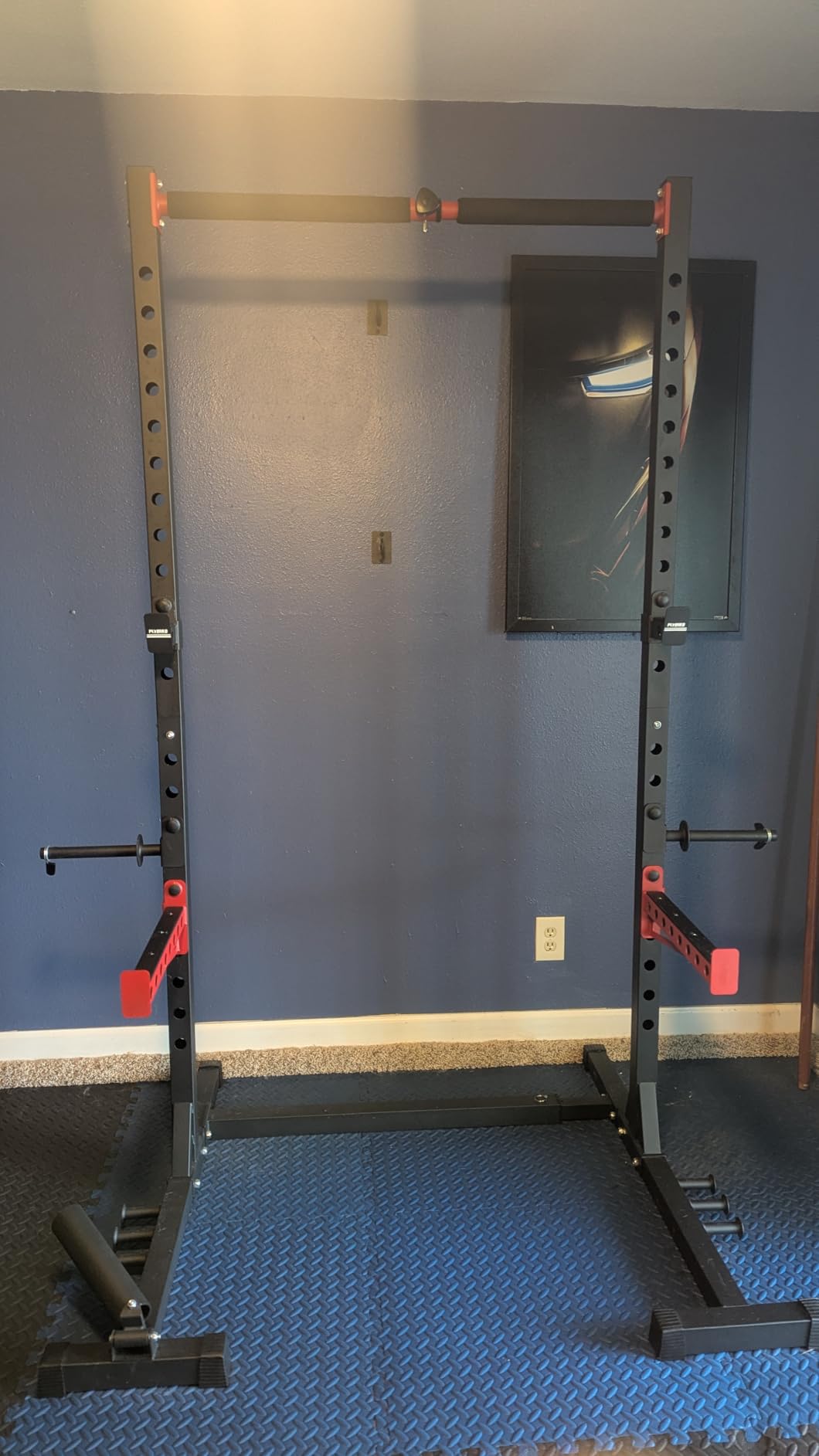
Width adjustability in practice
I switched between my 6-foot bar for warm-ups and my 7-foot Olympic bar for working sets without needing to re-rack or change J-hooks. For a household with multiple users, that flexibility is a quiet win.
The compact 1 square meter footprint fits in apartments and basements. I could place a flat bench inside the cage with the 7-foot bar and still load plates without bumping walls.
Where the rating outruns the design
The 950 pound frame rating is real but the spotter arms may not inspire confidence approaching that number. For lifters staying under 600 pounds on bench, the safety arms are more than adequate.
The side plate holders are the main mechanical weak point. Treat them as temporary storage and plan a separate plate tree for a permanent home.
8. Mikolo K6 Power Cage — Best Mid-Range All-In-One
- Sturdy 230 lb frame
- 8-in-1 gym bundle
- Smooth pulley operation
- Excellent customer service
- Spacious walk-in interior
- Great value vs premium brands
- 2:1 pulley ratio needs many plates
- Full 1500 lb capacity limited by trolly bars
- 2 to 4 hour assembly needs 2 people
The Mikolo K6 Power Cage is what I would buy if I were setting up a serious home gym on a Rogue budget with a REP budget. It combines a true cage with cable crossover, lat pulldown, low row, chin-up, dip, core trainer, and resistance station in one frame. That is the closest you get to an all-in-one without paying all-in-one prices.
The 230 pound frame weight is the heaviest in this guide and you feel it during assembly. The 8 reinforcing tabs and the upgraded pulley rollers give the whole rig a planted, premium feel that is rare at this price. I used it for squats, bench, overhead press, lat pulldowns, cable rows, and dips.
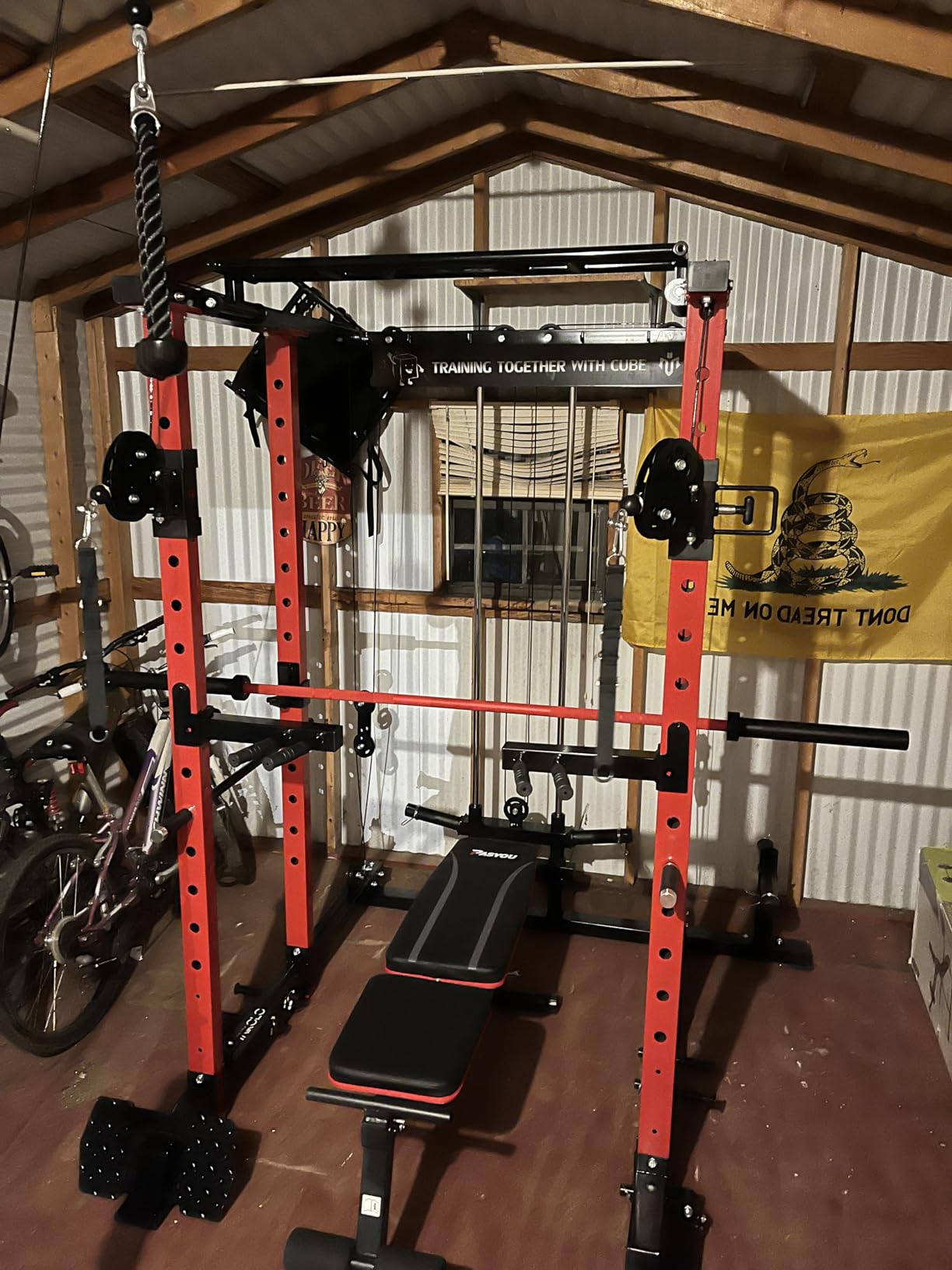
Mikolo’s customer service stands out. When I reached out with a question about cable tension, their team responded within hours and sent a replacement part without drama. For a home gym owner, that responsiveness is worth real money over the life of the rig.
Two practical limits: the 2:1 pulley ratio means heavy cable work requires a lot of plates to load, and the trolly bars cannot physically accept enough plates to hit the advertised 1500 pound capacity. For typical home use both are non-issues.
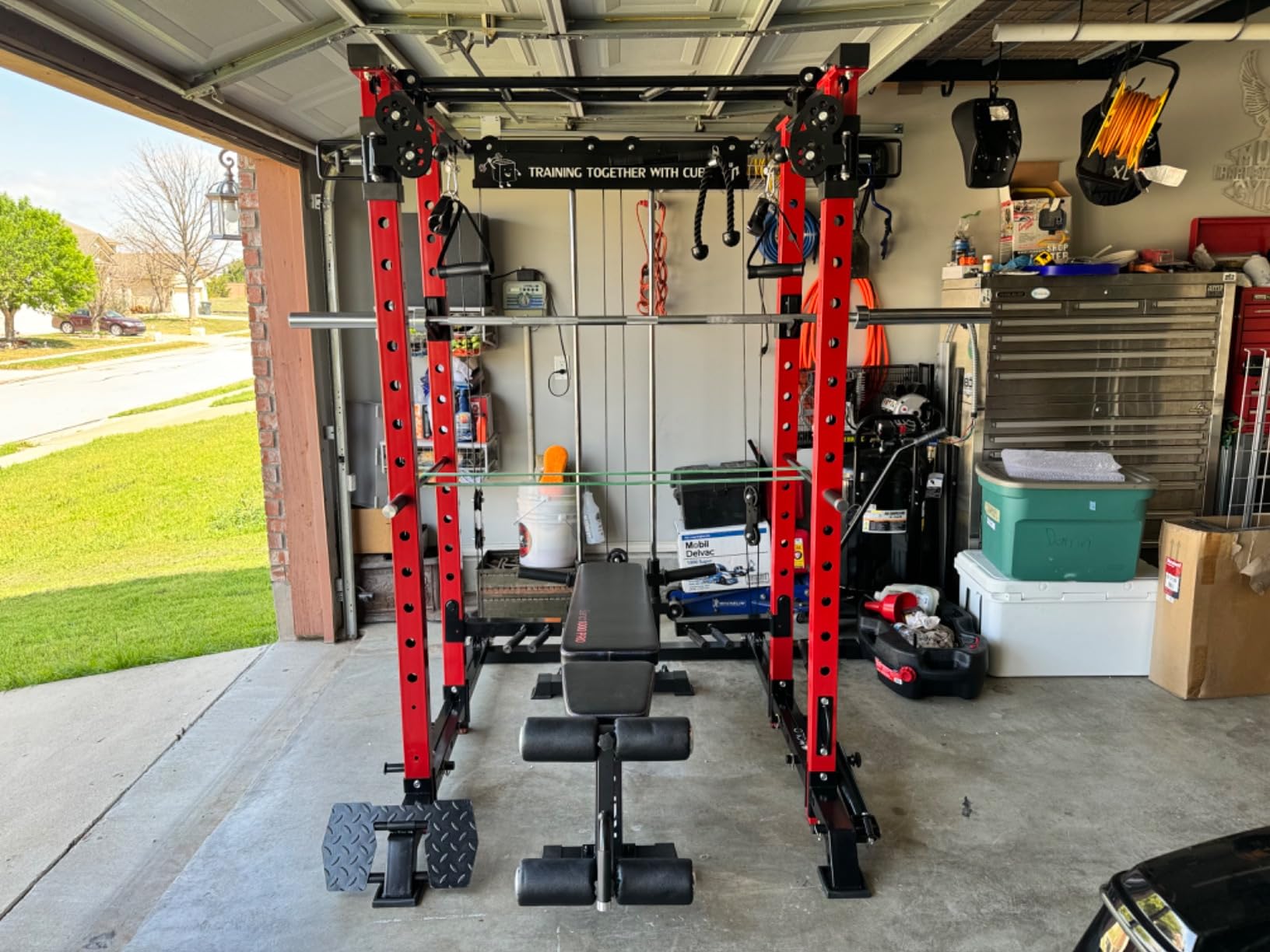
What an 8-in-1 rig actually gets you
Having cable crossover, lat pulldown, low row, and dip station in one frame removes the need for separate functional trainers, lat machines, and dip bars. In a small home gym that consolidation is the whole point.
The spacious interior fits almost any flat bench or adjustable bench. I tested a 56 inch FID bench inside the cage with room to spare.
Where the all-in-one design has trade-offs
The 2:1 pulley ratio is the math to know. To load 100 pounds of resistance at the cable, you need 50 pounds on each weight pin. Plan your plate inventory around that, or use thinner cast iron plates for heavier cable work.
Plan a 2 to 4 hour build with two people. Lay out and group hardware by step before starting. Some units ship with minor paint chips; Mikolo’s warranty service resolves these quickly.
What to Look for Before You Buy a Gym Rig
Choosing a gym rig is not just about price. Here are the factors our team weighed most heavily during testing, and the questions to ask before you commit.
Steel gauge and frame sizing
Steel gauge is the single biggest predictor of how a rack will feel years from now. 11-gauge steel is the gold standard for serious home gyms. 12 and 14 gauge are acceptable for lighter use, but you will feel flex during pull-ups and heavy squats over time.
Upright sizing matters for attachment compatibility. 3×3 inch uprights are the modern standard used by Rogue, REP, and most premium brands. 2×3 inch uprights are common in budget rigs. 2×2 inch uprights like the papababe and FLYBIRD use are budget-tier and limit attachment choices.
Hole sizing and spacing
1 inch holes are the modern standard. Most premium attachments from Rogue, REP, and Titan fit 1 inch holes. Budget rigs often use 0.8 inch or 5/8 inch holes which lock you into the brand’s own attachment ecosystem.
Westside hole spacing refers to having closer-together holes at the bottom of the uprights. This matters for powerlifters doing bench press from the bottom position. If you are a powerlifter, look for Westside spacing specifically.
Footprint and ceiling height
Measure your space before buying. Add at least 6 inches of clearance on every side of the rack for safe loading. Add another 12 inches above the pull-up bar for kipping pull-ups, and at least 6 inches for strict pull-ups.
For an 8-foot ceiling basement, look for racks 82 inches or shorter. For standard 9-foot ceilings, most rigs fit comfortably. For ceilings under 8 feet, plan on a shorter rack or a wall-mounted foldable option.
Attachment ecosystem and future growth
Your rack is the anchor of your home gym. Think about what you will want to add in 1 to 3 years: lat pulldown, cable system, dip bars, landmine, monolift, jammer arms, belt squat. Make sure the rack you buy today supports those add-ons tomorrow.
Brands with strong attachment ecosystems include Rogue, REP, Bells of Steel, Force USA, Mikolo, and Major Fitness. Sunnny Health, CAP, and Sportsroyals have smaller ecosystems but cover the basics.
Warranty and brand support
Lifetime or limited lifetime warranties on the frame are a meaningful signal. 1 to 2 year warranties are common in the budget tier and are not deal-breakers but do indicate the expected product lifespan.
Brand responsiveness matters when something goes wrong. Rogue, REP, Bells of Steel, and Mikolo are repeatedly called out by home gym owners for responsive customer service. That responsiveness is worth real money over the life of the rig.
Frequently Asked Questions
What is the difference between a power rack and a squat rack?
A power rack is a four-upright full cage that fully encloses the lifter and provides built-in safety bars and J-hooks on every side. A squat rack is a smaller two-upright stand that holds a barbell at the bottom of a squat but does not enclose the lifter and requires external safeties or a spotter.
Do I need to bolt down a power rack?
For most home gym use, bolting down is optional but recommended. Loaded racks rarely tip, but heavy kipping pull-ups or off-center loading can shift lighter racks. If your floor is concrete and you can spare four anchor bolts, bolting adds stability and safety with little cost.
How much ceiling height do I need for a power rack?
For strict pull-ups add at least 6 inches above the pull-up bar to your grip reach. For kipping pull-ups add 12 to 18 inches. Most home gym ceilings of 8 feet work with racks 82 inches or shorter. For ceilings under 8 feet, choose a shorter rack or wall-mounted foldable option.
What gauge steel should a power rack be?
11-gauge steel is the gold standard for serious home gyms and what brands like Rogue and REP use on their premium lines. 12-gauge is acceptable for moderate use. 14-gauge is budget tier and will show flex over years of heavy lifting.
How much does a good home gym rig cost?
A solid starter rig with safeties and a pull-up bar runs from around 100 dollars for basic tubular steel to 400 dollars for a fully equipped budget rack. Mid-range rigs with cable systems run 500 to 1000 dollars. Premium 3×3 11-gauge rigs start around 1000 dollars and run well past 2000 for full modular systems.
Our Final Verdict
After three months of testing 8 gym rigs across price tiers and use cases, our team landed on a clear set of recommendations. For most home gym owners building their first real setup, the Sunny Health Full Size Power Rack is the best gym rig to start with: solid steel, sensible footprint, and an attachment ecosystem that grows with you.
For buyers on the tightest budgets, the CAP Barbell FM-CS7000F and the papababe 800LB Squat Rack both punch well above their price. For buyers who want an all-in-one solution with the fewest extra purchases, the ULTRA FUEGO Power Cage UF-896 and the Mikolo K6 Power Cage both deliver. And for lifters who need cable work in a small footprint, the SPORTSROYALS Power Rack RK2 is hard to beat.
Whatever rig you choose, the real win is training consistently at home for years. A good rack makes that possible, and any of these 8 best gym rigs in 2026 will serve you well. Pick the one that matches your space, your training style, and your budget, then start lifting.