
If you are trying to bring down a mature tree, stop reading battery saw roundups. The best gas chainsaws for felling trees are the only serious option, because felling needs sustained torque, a bar long enough to pass through the trunk in one or two cuts, and a fuel tank that does not care how long the job takes. A corded electric saw has no practical cord long enough. A cordless saw bogs down in green hardwood and swaps packs mid-cut at exactly the wrong moment.
That is why every pick in our 2026 roundup runs on a two-stroke petrol engine, and why we sorted ten of them by the only criteria that matter when a tree is coming down: engine displacement, bar length, weight you can hold at shoulder height for the back cut, and whether there is a dealer a reasonable drive away when something breaks.
We leaned on the numbers owners report after real work rather than brochure language. Each saw here is listed with its bar length, engine size, weight, and warranty as published, alongside the complaints that show up repeatedly in owner reviews. Several of the strongest cutters on paper are the ones we would hesitate to recommend to a first-time owner, and we explain why below.
If you still need a general-purpose saw for yard work rather than felling, our broader gas chainsaw guide covers the lighter end of the market, and our overall chainsaw picks sort battery and gas side by side.
Top 3 Best Gas Chainsaws for Felling Trees in 2026

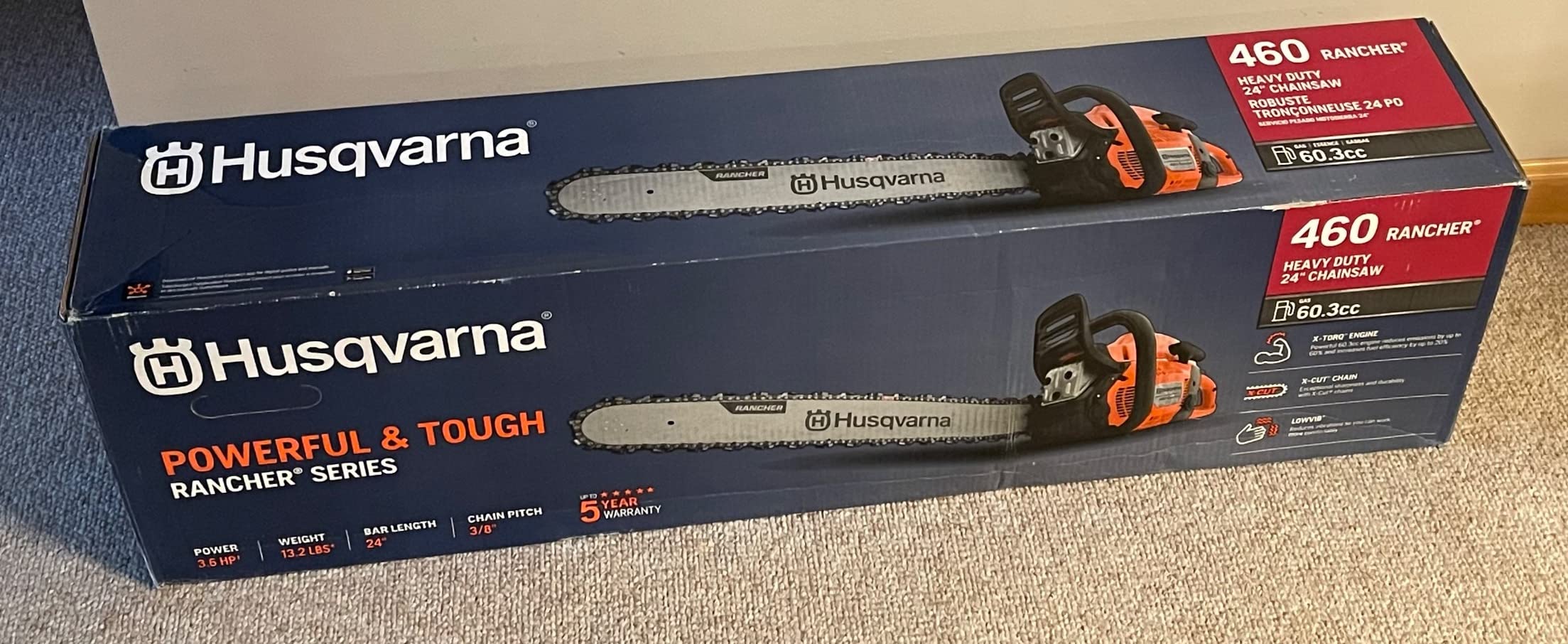
Husqvarna 460 Rancher 24 Inch
- 60.3cc 3.6-HP X-Torq engine
- 24 inch guide bar
- Inertia chain brake
- LowVib dampeners

Husqvarna 450 Rancher 20 Inch
- 50.2cc 3.2-HP X-Torq engine
- 20 inch guide bar
- 11.3 pounds
- 2 year warranty

PROYAMA 68cc 20 and 24 Inch
- 68cc 4.5-HP engine
- 20 and 24 inch bars
- Magnesium alloy brake
- One year warranty
The 460 takes the top spot because a 60.3cc engine and a 24 inch bar is the combination that lets one operator make a face notch and a back cut on a large hardwood without changing equipment. The 450 earns the value slot on weight and the 455 sits just behind it on power. PROYAMA makes the top three because two bars in one box is genuinely rare, not because its owner rating matches the Husqvarnas.
Best Gas Chainsaws for Felling Trees Compared in 2026
| Product | Specifications | Action |
|---|---|---|
| Husqvarna 460 Rancher 24 Inch |
|
Check Latest Price |
| PROYAMA 68cc 20 and 24 Inch |
|
Check Latest Price |
| Husqvarna 450 Rancher 20 Inch |
|
Check Latest Price |
 Husqvarna 455 Rancher 20 Inch Husqvarna 455 Rancher 20 Inch |
|
Check Latest Price |
 NEO-TEC 62cc 20 Inch NEO-TEC 62cc 20 Inch |
|
Check Latest Price |
 NEO-TEC NH872 24 Inch NEO-TEC NH872 24 Inch |
|
Check Latest Price |
 Echo CS-590 20 Inch Echo CS-590 20 Inch |
|
Check Latest Price |
 NEO-TEC 68cc 22 and 24 Inch NEO-TEC 68cc 22 and 24 Inch |
|
Check Latest Price |
 Echo CS-4510 18 Inch Echo CS-4510 18 Inch |
|
Check Latest Price |
 WTHW 58cc 20 and 18 Inch WTHW 58cc 20 and 18 Inch |
|
Check Latest Price |
1. Husqvarna 460 Rancher 24 Inch Gas Chainsaw
- Takes a 24 inch bar
- enough to pass through most yard and woodland hardwoods
- Easy Smart Start pulling even after a break-in
- LowVib dampeners cut hand fatigue on long sessions
- Air Injection keeps debris out of the filter
- At 13.2 pounds it is heavy for overhead bucking
- Some units need a chain tension adjustment after the first cuts
This is the saw we keep coming back to for a reason. The 60.3cc X-Torq two-stroke makes 3.6 horsepower, and the 24 inch bar is long enough that a trunk that needs one pass gets one pass. Recommended bar range runs 13 to 24 inches, so it is not a single-purpose saw, but the reason to own it is the long bar.
Owners describe starting as close to no-effort thanks to Smart Start, which is a decompression valve that drops crank pressure just long enough to make the first pull easy. The combined choke and stop control also cuts the chance of flooding the carburetor on a cold morning, which is the single most common complaint we saw about almost every other saw in this roundup.
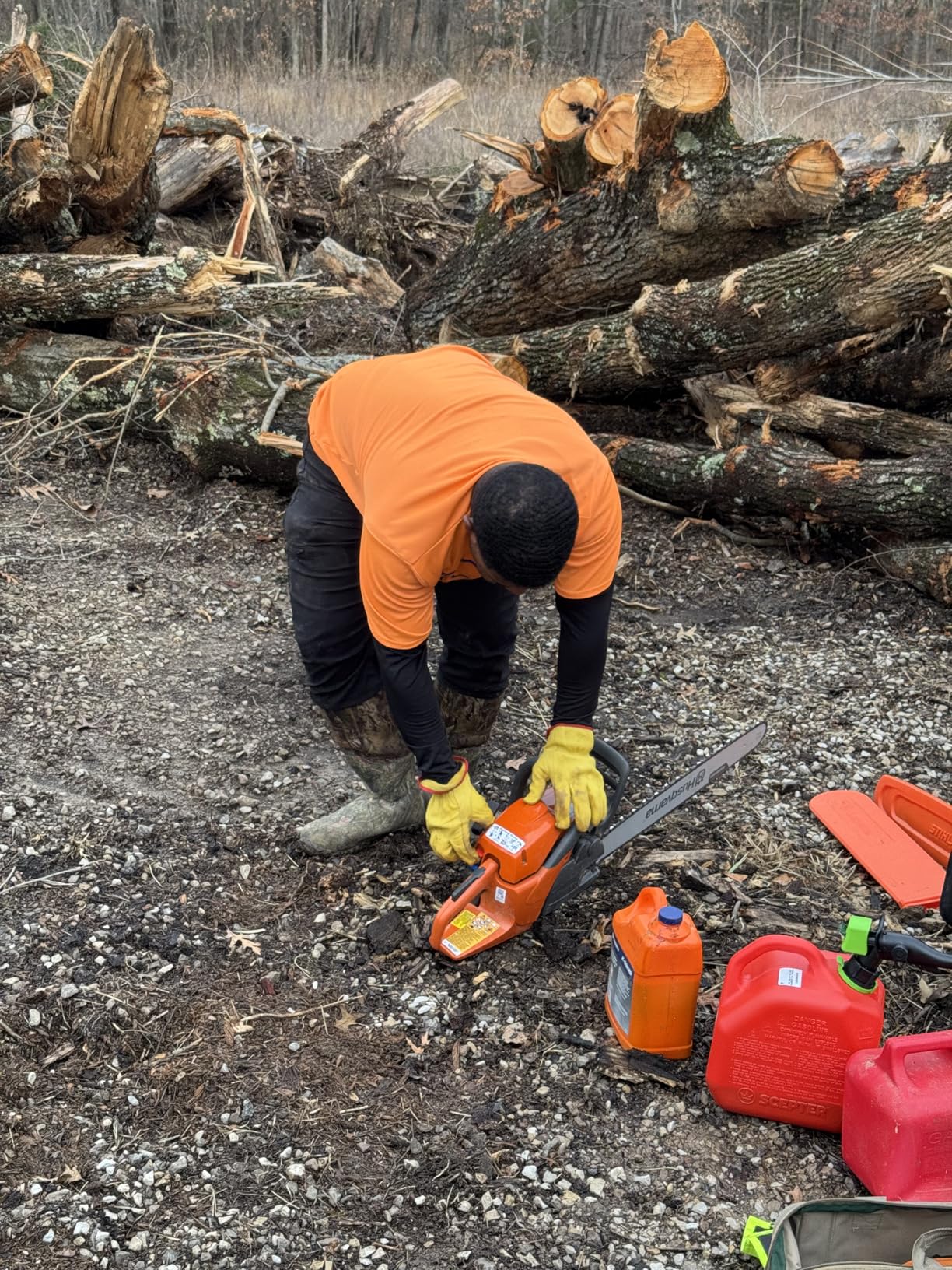
The 7 degree offset front handle is a real ergonomic detail rather than a styling note. On a back cut the saw sits against your shoulder or thigh, and that offset keeps your wrists from folding inward under load. It is a small thing that shows up after the twentieth tree of the day.
Two-cycle owners mix fuel and oil at 50:1 by volume, and the automatic adjustable chain oil pump feeds the bar and chain without any throttle input. If you are new to gas saws, that oiler is the reason your chain stays sharp instead of glazing over in a warm groove.
Who the 460 Rancher suits
It suits the landowner with an acre or two, a woodlot, or a job list that includes storm cleanup plus seasonal firewood. The 552-review history gives you a broad base of owner reports on long-term behaviour, and at 4.5 out of 5 the complaints that do show up cluster around first-week setup rather than accumulated wear.
It also suits anyone who wants one saw to grow into. Start bucking 16 inch rounds on it, and when a storm drops a 20 inch diameter trunk across the driveway, the same power head and a longer bar handle it.
Where the 460 Rancher falls short
At 13.2 pounds without fuel and bar, it is a two-hand load. If most of your work is overhead limbing or cutting rounds on the ground, the 20 inch Husqvarnas in this list are noticeably easier on the shoulders over a full day.
Some owners report needing a tension adjustment after the first few cuts, which is normal for a saw that arrives with a factory-set chain. A few report difficulty getting dealer support when something goes wrong early, so confirm your local Husqvarna service point before you rely on this saw for a deadline.
2. PROYAMA 68cc Gas Chainsaw With 20 and 24 Inch Bars
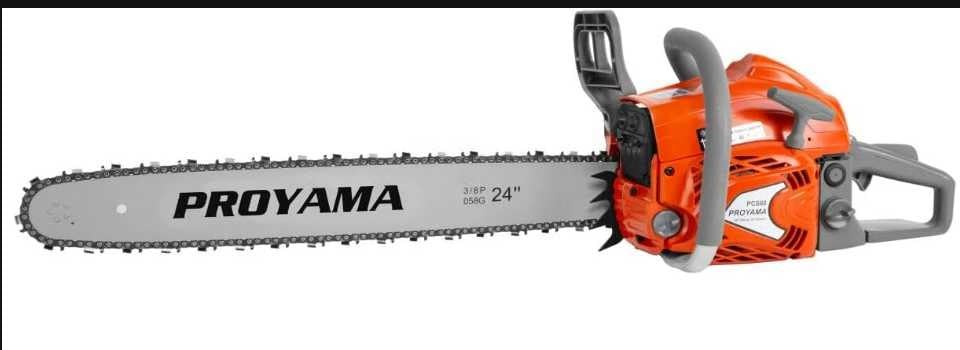
PROYAMA 68CC Gas Powered Chainsaw, 24 Inch 20 Inch Top Handle Chain Saw
- 68cc engine rated at 4.5 horsepower
- Both a 20 inch and 24 inch bar in the same box
- Magnesium alloy chain brake and case resist deformation
- Quick low-effort starting
- 3.9 average rating trails the professional-brand saws
- 18 percent one-star share points to early-life service needs
- Heavy feel with a large bar and a full tank
The headline feature here is simple and rare: two bars. A 20 inch and a 24 inch bar both come in the box, so you can felling-cut with the long bar and switch to the shorter one for bucking without buying anything else. The 68cc two-stroke is rated at 4.5 horsepower, which is more output on paper than any other saw in this roundup at a comparable weight class.
Magnesium alloy construction on the chain brake and case is a real build upgrade over the plastic-bodied budget saws, and magnesium holds its shape under the repeated impact loading that a felling saw endures. The built-in anti-vibration system is the other detail worth noting for anyone planning a long session.
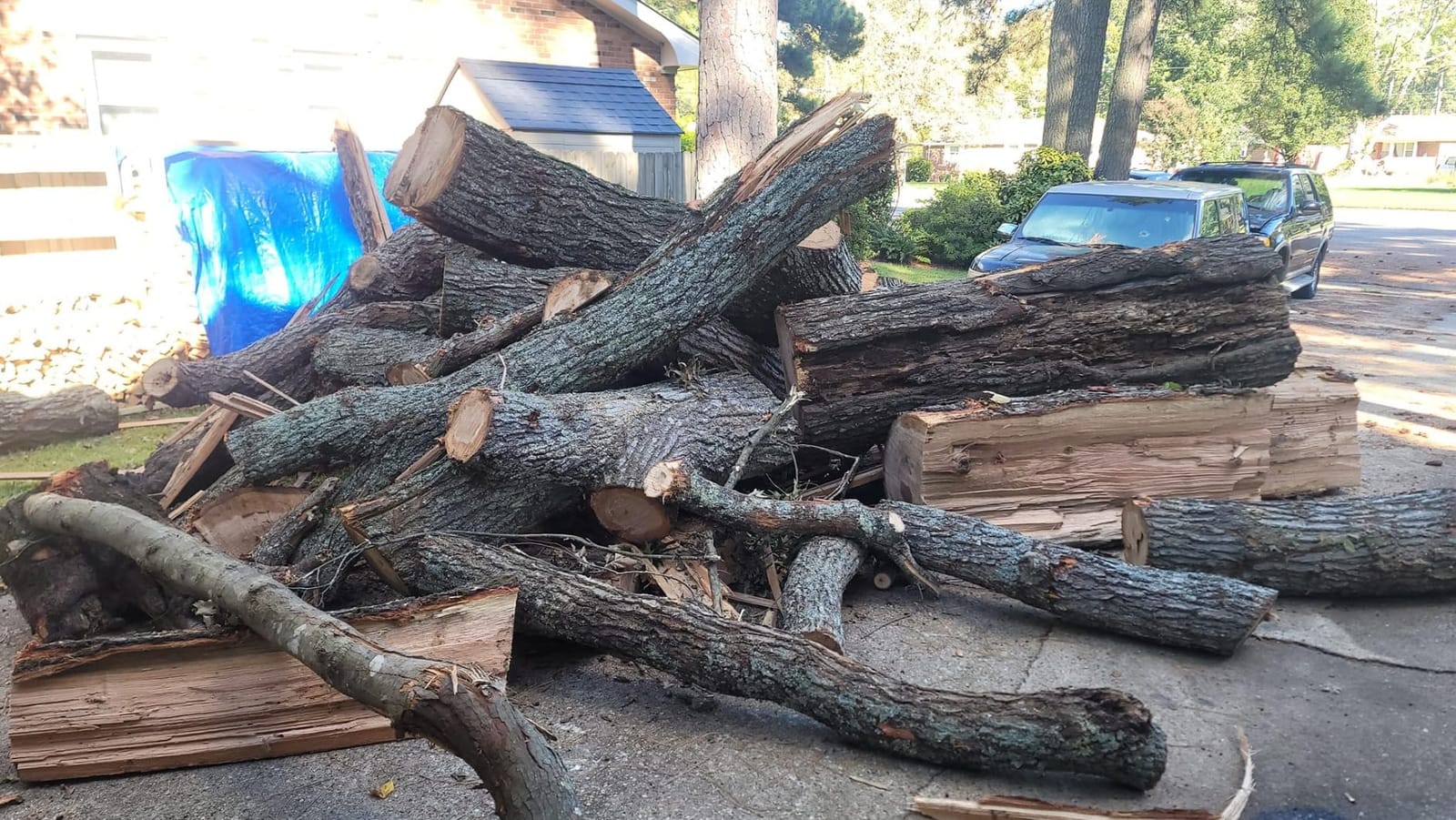
Start-up is the pleasant surprise. Owners generally report the optimized engine design firing quickly with less effort than expected from a saw this size, which is a genuine improvement over the pull-heavy experience several cheaper engines deliver.
Weight is 14.5 pounds, and that number climbs quickly once you add a 24 inch bar with chain plus a full fuel tank. On a shoulder-height back cut that is a lot of saw to control, and it is worth practicing on rounds before you trust it on a standing trunk.
Who the PROYAMA suits
It suits the buyer who wants maximum cutting capacity per machine and plans to do more than one felling job this year. If you fell a tree every few years, the two-bar package removes the temptation to buy a bigger saw than you need and means you always have a shorter bar available for awkward work.
It also suits anyone who wants a second saw that is not a duplicate. A 68cc saw paired with a smaller 14 inch saw covers everything from firewood to large hardwood in one corner of the shed.
Where the PROYAMA falls short
The 3.9 average across 680 reviews is the honest headline, and the 18 percent one-star share is larger than any Husqvarna in this list. Buyers of budget-class two-strokes commonly report needing service inside the first year, and the one-year warranty is half the length Husqvarna offers.
Parts availability is the other question. Owners of no-name marketplace saws consistently report difficulty sourcing replacement carburetors, ignition coils, and chain sprockets, which turns a small failure into a long wait. If you rely on this saw for paid work, weigh that against the power figure.
3. Husqvarna 450 Rancher 20 Inch Gas Chainsaw
- 11.3 pounds is the lightest bar-plus-engine package in this roundup
- Starts on the first or second pull
- Smooth idle and throttle response
- 553 reviews averaging 4.5 out of 5
- Factory chain and spark plug can arrive over-tightened
- Some units ship with slow bar oil delivery
- A 20 inch bar caps out at medium diameter trunks
The 450 is the version of the Rancher line that most people should actually own. It runs the same X-Torq two-stroke architecture as the bigger Ranchers but in a 50.2cc package making 3.2 horsepower, and it weighs 11.3 pounds. That is a meaningful difference when you are holding a saw above shoulder height for the top of a face notch.
A 20 inch bar will pass through most softwoods and many hardwoods of moderate diameter, which covers the overwhelming majority of yard trees. Husqvarna rates it for 13 to 20 inch bars, so it is a two-handed general-purpose saw that happens to be sized for felling.
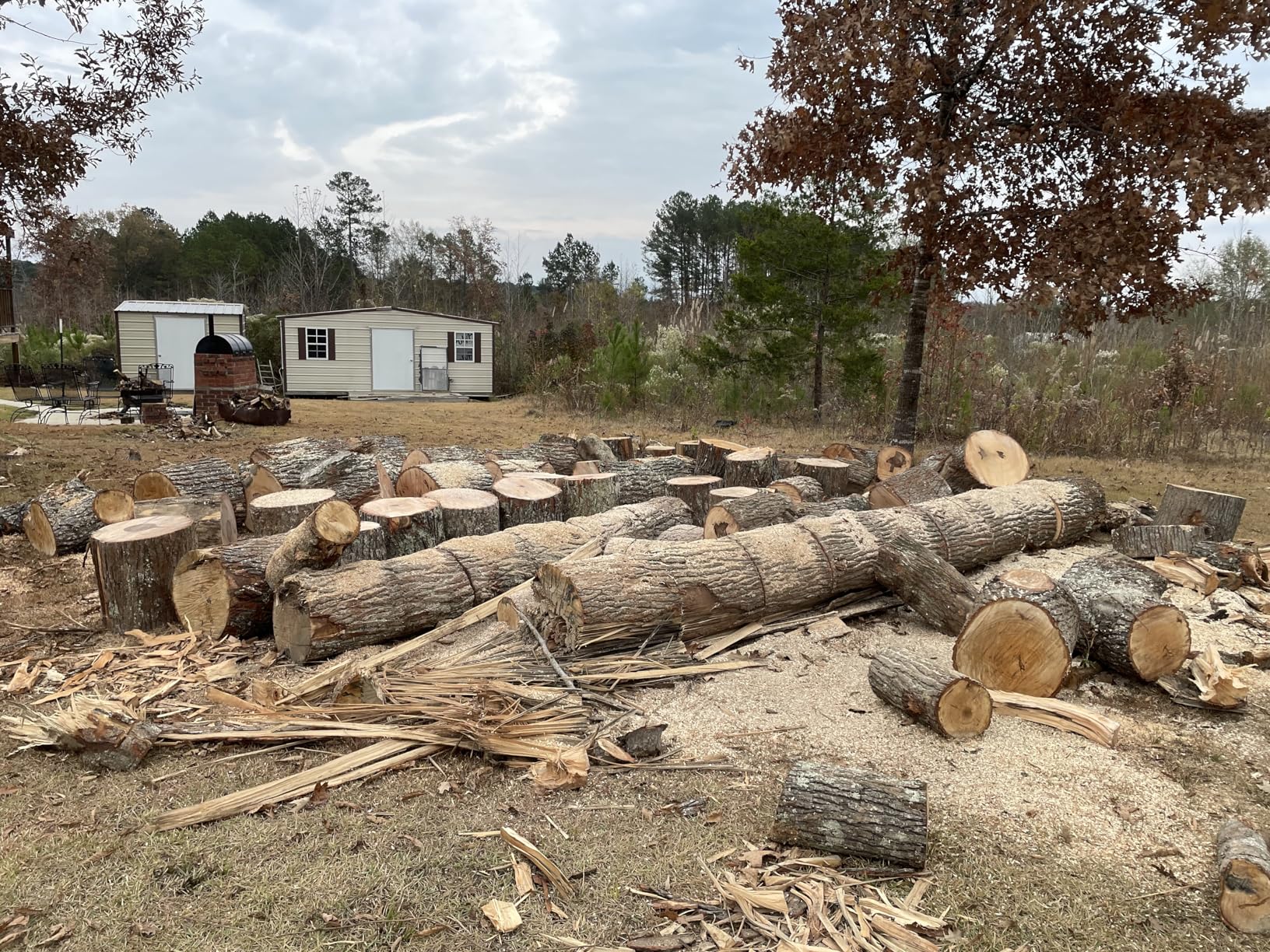
Owners report it starting on the first or second pull and running with a smooth idle and throttle response that budget rivals in the same power class do not match. That smoothness is not cosmetic. A saw that hunts at idle or hesitates off idle makes directional accuracy worse in a notch cut, and accuracy is what determines whether the hinge holds.
The Air Injection system throws larger dust and debris particles outward before they reach the filter, which extends filter life when you are cutting dirty storm wood or working near soil. LowVib dampeners handle the vibration that comes with a full-throttle 20 inch cut.
Who the 450 Rancher suits
It suits homeowners clearing two or three yard trees a year, plus anyone bucking firewood who wants a saw they can hold all day. At 11.3 pounds it is the pick we would hand to someone who has never held a gas saw before, because the weight is forgiving and the 20 inch bar is easy to control.
It also suits buyers who want a dealer-supported brand without stepping up to the 455 or 460. The 2 year warranty and a national dealer network are worth more over five years of ownership than a slightly larger engine.
Where the 450 Rancher falls short
The most common complaints are about factory setup, not durability. Owners report the chain and spark plug arriving over-tightened and needing adjustment during break-in, and some report slow bar oil delivery that resolves once the oiler is adjusted. Budget twenty minutes for that before the first cut.
Its ceiling is bar length. A 20 inch bar with a 50cc engine is correct for medium trees, but if your list includes storm-damaged hardwood approaching two feet across, step up to the 460 or the 24 inch saws in this roundup.
4. Husqvarna 455 Rancher 20 Inch 56cc Chainsaw
- Extra displacement over the 450 reduces effort to drive the chain
- Compression-release Smart Start fires reliably
- Bar and chain act as a useful counterweight for balance
- Recommended for 13 to 24 inch bars
- 13.2 pounds feels heavy over long sessions
- One owner reported an oil pump clogged with metal shavings
- Isolated early-life failures with dealer support described as difficult
The 455 sits between the 450 and the 460 and is the one we would buy if only one of the three were available. A 56cc X-Torque engine rated at 3.5 horsepower gives noticeably more torque than the 450, and that difference shows up as less pressure on your back arm when the chain is buried in green oak.
Smart Start with a decompression valve means the first pull is uneventful, which is the single most appreciated feature on any felling saw at 6 in the morning. Owners describe it starting reliably every time rather than occasionally.
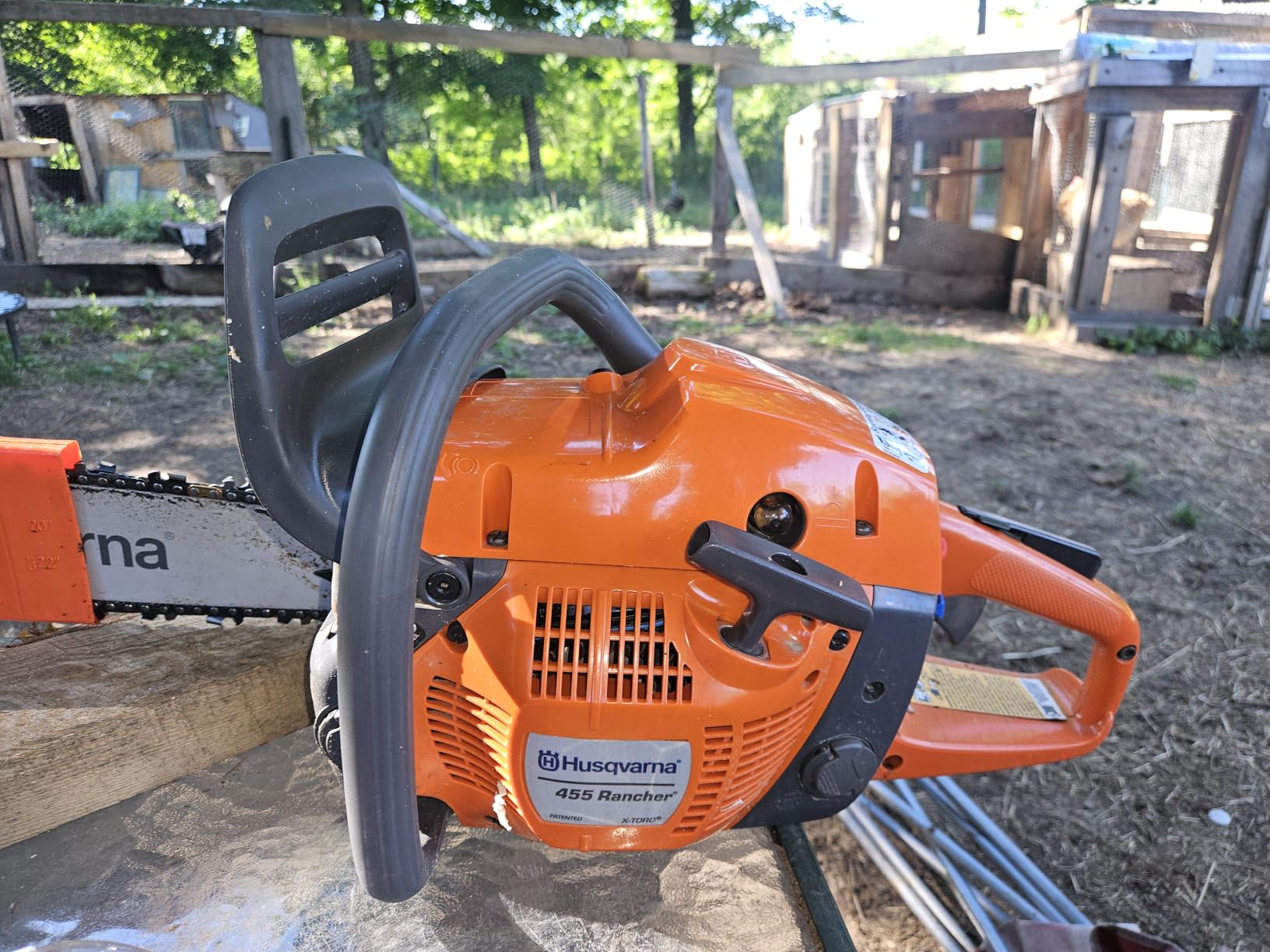
The 20 inch bar and chain assembly is not just cutting capacity, it is balance. Owners note that the front-mounted bar gives the saw a natural counterweight, so it sits more predictably when you are cutting horizontally into a trunk at shoulder height. That predictability is worth real money when the tree above you is leaning.
Husqvarna rates this engine for bars from 13 to 24 inches, so you can grow the bar later if you take on bigger work. Air Injection handles debris and the 7 degree offset front handle keeps wrist strain down on long sessions.
Who the 455 Rancher suits
It suits the landowner who already knows how to notch and back cut and wants more power margin than the 450 gives, without carrying the 460’s bulk. It is a regular favourite with contractors working 40 to 50 trees a year, because a 20 inch bar is more maneuverable on a ladder-less site than a 24 inch.
For an experienced operator, the 455 is also the most flexible of the three Ranchers. A 16 inch bar on this power head is a superb firewood saw, and the 20 inch stays in the case for felling days.
Where the 455 Rancher falls short
Weight is the recurring theme. Owners describe it as feeling like a 20 pound class saw during long sessions, and if felling is occasional work, that extra effort per cut adds up faster than the extra power saves.
There is also a tail of early-life complaints, including one owner reporting an oil pump clogged with metal shavings shortly after purchase and isolated reports of units failing after a couple of trees, with dealer support described as difficult. That is a small share of 393 reviews, but it is worth having your local dealer identified in advance.
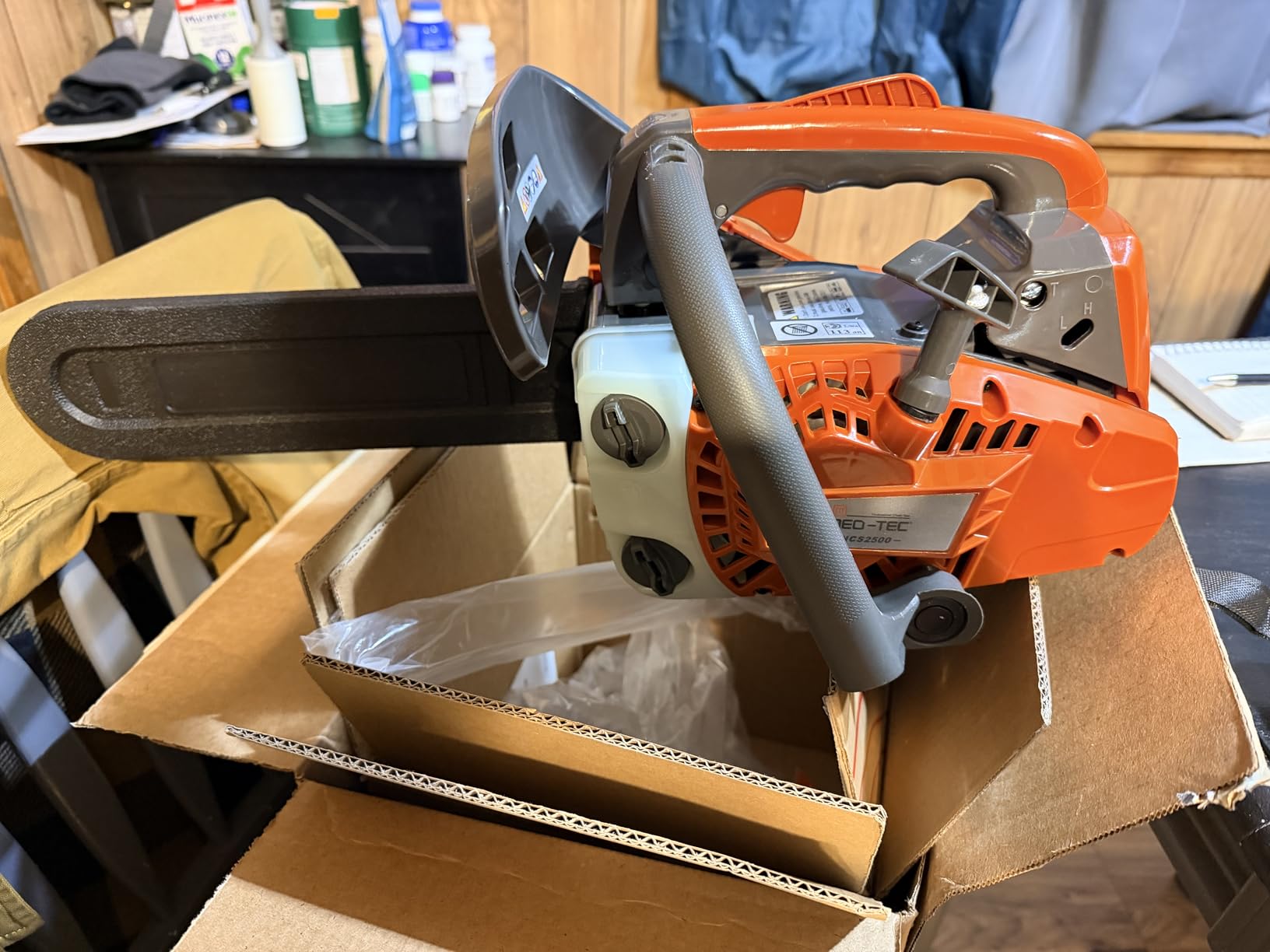
5. NEO-TEC 62cc 20 Inch Gas Chainsaw
- 931 reviews give the largest review base in this roundup
- Quick one to two pull ignition from the choke knob
- Wrap-around handle helps in tight quarters
- Chain brake and trigger lockout fitted as standard
- Listed 17.1 pounds is heavy for a 20 inch class saw
- 68 percent five-star share with an 11 percent one-star group
- No dealer network for warranty work
This saw has the largest owner review base we analyzed, 931 ratings averaging 4.2 out of 5, which makes it one of the better-documented budget machines in the category. A 62cc two-cycle making 3.5 horsepower is a legitimate felling-class engine, and it comes with a 20 inch bar and a 76DL chain in 0.325 inch pitch and 0.058 inch gauge.
The wrap-around handle is the detail that stands out on a saw this size. It gives you a second grip point when you need to control the bar in a pinch cut or when bucking a log that is sitting unevenly on the ground.
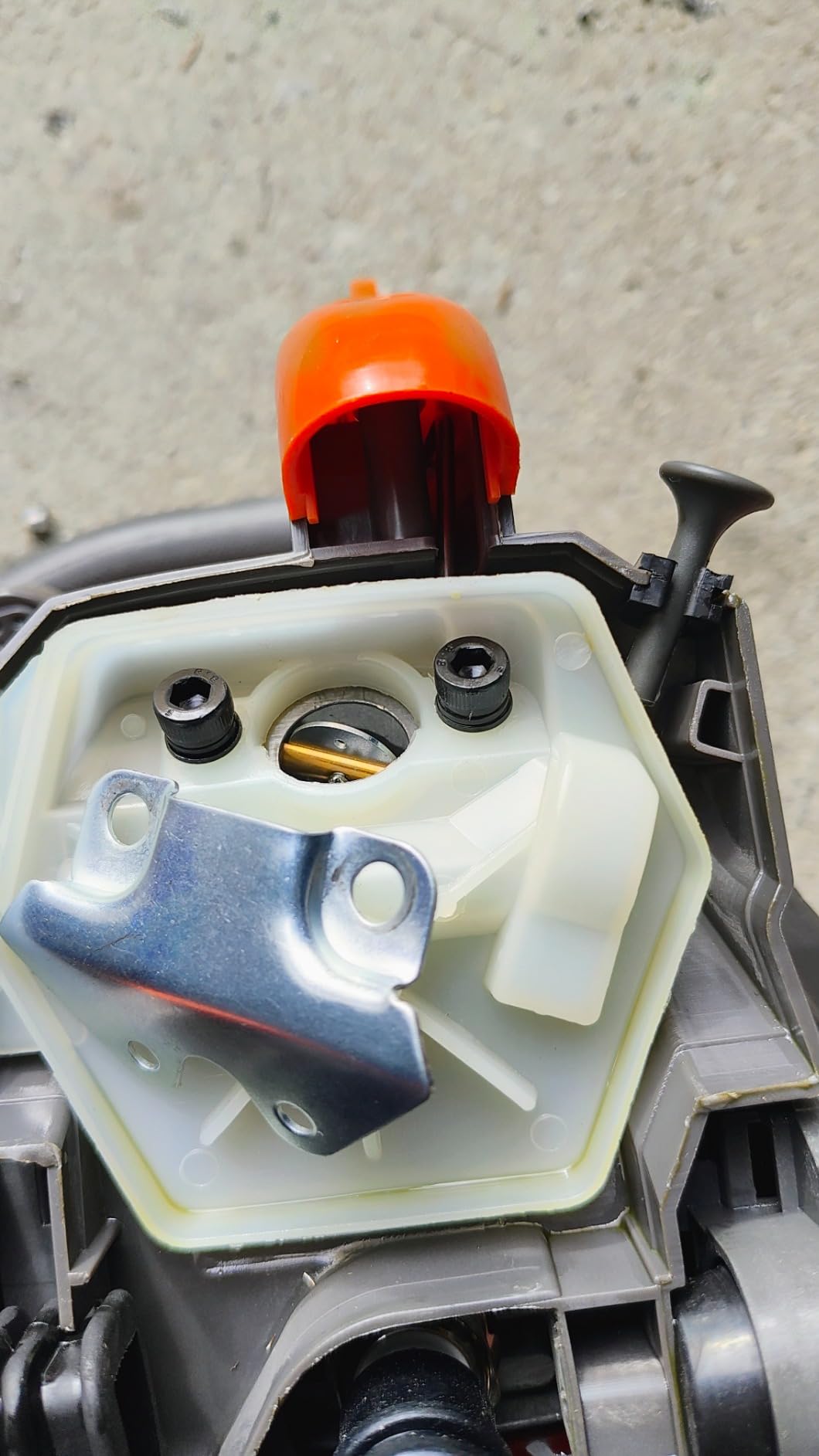
Starting is handled by a premium starter with a choke knob, and owners regularly report one to two pull ignition. A precision carburetor is claimed to cut fuel consumption, which matters if you are burning through a tank per session on split hardwood.
Safety fittings include an inertia-activated chain brake and a trigger lockout, which are the two features that keep a budget saw from feeling reckless. On a felling cut the chain brake is the difference between a caught bar and a serious injury.
Who the NEO-TEC 62cc suits
It suits a homeowner who fells a tree every few years and wants a capable saw without researching a dealer network first. The 20 inch bar and 62cc engine cover small yard trees, medium softwoods, and a full season of firewood bucking without any struggle.
It also suits buyers who want to see a large body of owner opinion before committing. Among budget saws, 931 reviews is unusual, and reading the one-star group tells you exactly what to expect rather than discovering it later.
Where the NEO-TEC 62cc falls short
Weight is the practical issue. The listed weight is 17.1 pounds, which is heavier than the professional 20 inch saws in this roundup, and the manufacturer separately claims 14 pounds fully equipped. If you are holding a trunk for a long cut, that discrepancy matters.
Durability reports are mixed, with 68 percent five-star share and an 11 percent one-star group pointing to occasional gripes. More importantly there is no dealer network, so a carburetor or ignition problem means online parts hunting and a longer repair. For occasional weekend work that is a fair trade. For daily work, buy the saw you can service locally.
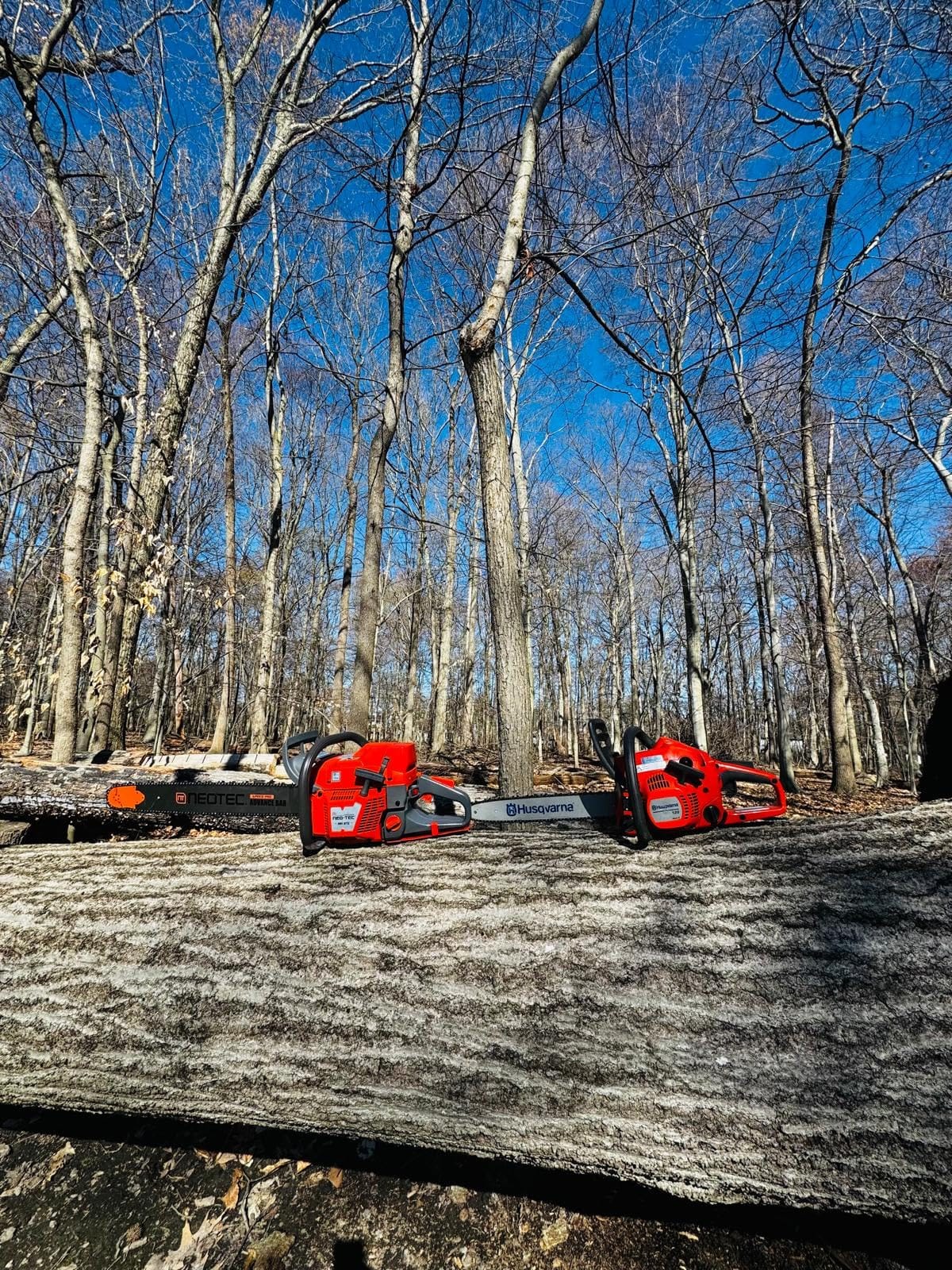
6. NEO-TEC NH872 24 Inch 71cc Gas Chainsaw
- 5.3 horsepower from a 71cc full-crank engine
- Critical parts compatible with Husqvarna 372XP
- Tool-free side chain tensioner
- Centrifugal air cleaning and adjustable oil pump
- 25 pound power head is heavy for single-operator work
- Some units need carburetor and oiler tuning after break-in
- Minority of ignition coil and cold-weather running complaints
- Not CARB certified
This is the largest engine in the roundup. A 71cc full-crank design producing 5.3 horsepower is a fundamentally different machine from the 50cc homeowner class, and the full crank is a logging-era architecture rather than a cost-cut variant. The 24 inch professional-grade bar uses a D009 mount and a low-kickback 3/8 inch chain.
The most important practical detail is parts compatibility. Critical components are compatible with the Husqvarna 372XP, which means the entire parts catalogue for one of the most widely serviced professional saws in the world fits this one. Owners consistently cite cheap, easy-to-source repair parts as the reason they keep running these saws for years.
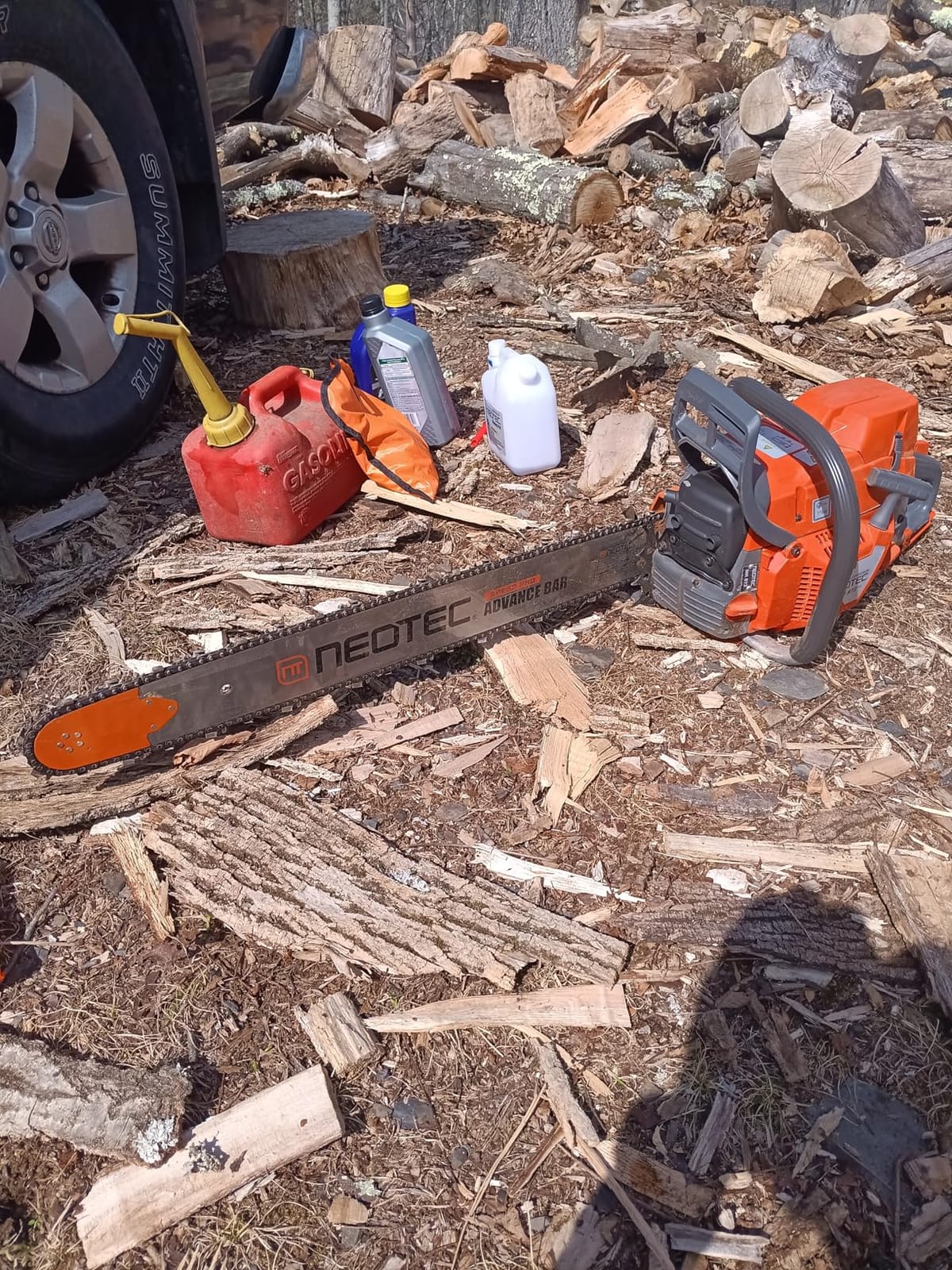
Construction details are professional: a heavy-duty magnesium crankcase, a professional anti-vibration system, a quick-release air filter, an adjustable oil pump, and a side-mounted tool-free chain tensioner so you can correct tension without a wrench and without taking gloves off in the cold.
An inertia-activated chain brake and throttle lock are standard, alongside centrifugal air cleaning that throws debris before it reaches the filter. Owners report easy first-pull starting once the engine is warm and anti-vibration that holds up through long logging days.
Who the NH872 suits
It suits someone felling genuinely large hardwood, with owners reporting using it on trunks over 24 inches in diameter. If your work is sustained all-day cutting rather than a few trees a season, the power margin converts directly into fewer stalled cuts and less fatigue.
It also suits a buyer who wants pro-class capability on a smaller budget than a genuine 372XP. Owners report substantial savings compared with buying the original, which is the entire point of the parts-compatible design.
Where the NH872 falls short
Twenty-five pounds is the number that decides this saw. That is a two-person or mechanized handling load, and a single operator carrying it to the back of a property will notice on every walk back. Inertia alone can make a 24 inch bar unpredictable.
Break-in tuning is required, with owners reporting carburetor and oiler adjustments needed on some units early on, and a minority reporting ignition coil and cold-weather running issues. It carries a 1 year commercial warranty, shorter than the Husqvarna alternatives, and it is not CARB certified, so it cannot be shipped to California addresses. Check that before you buy.
7. Echo CS-590 20 Inch 59.8cc Gas Chainsaw
- Cuts aggressively with no bogging under load
- Strong fuel economy on heavy cutting
- Handles large oak logs without straining
- Owners call it a solid alternative to the Husqvarna 460
- Recoil starter needs significant effort
- Prone to flooding if the choke is over-used
- Some owners report carburetor tuning for clean running
- Third-party seller can complicate warranty handling
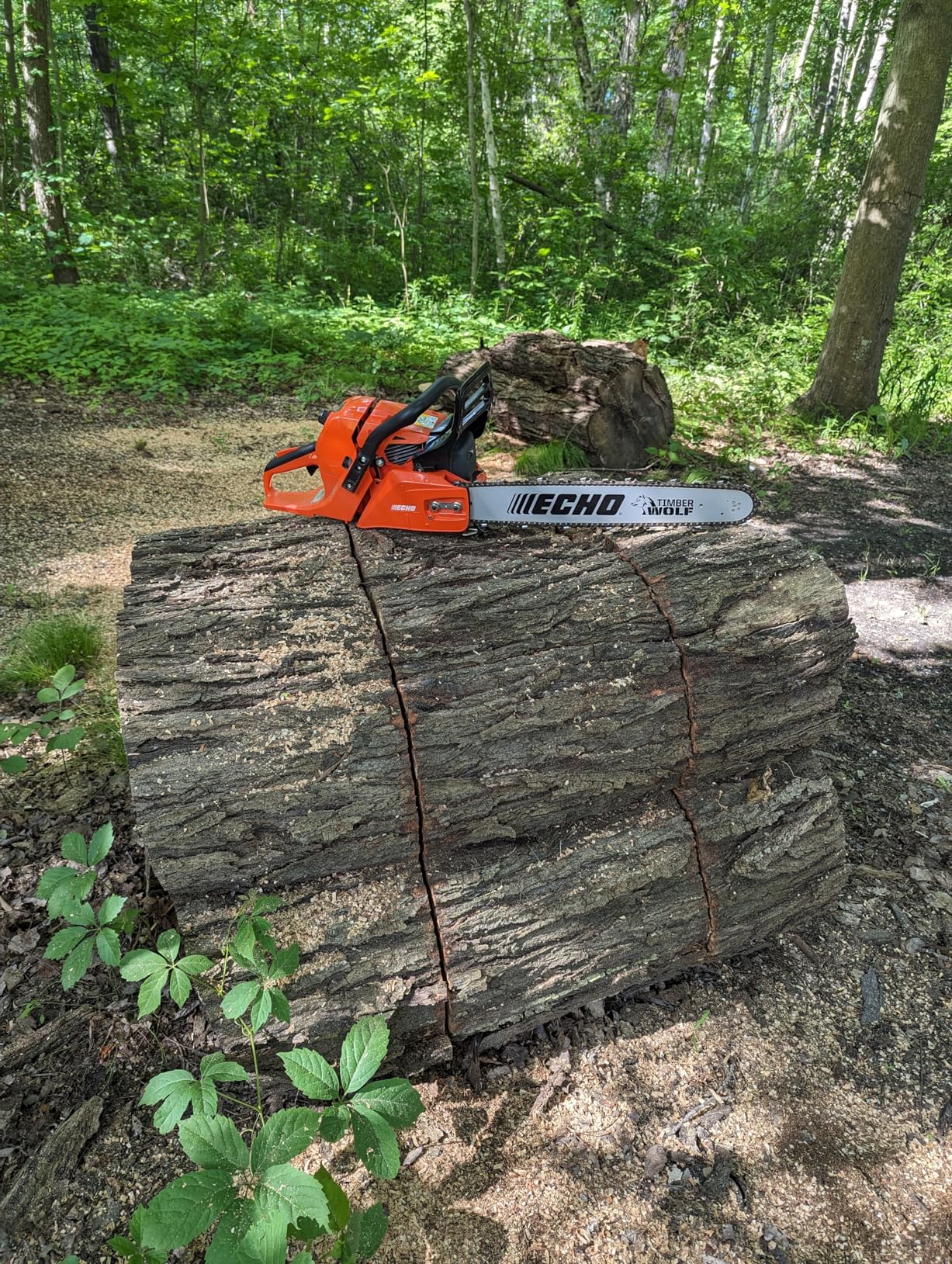
The Echo CS-590 is a 59.8cc saw with a 20 inch bar, and owner reviews describe it in remarkably consistent terms: it cuts very aggressively without bogging and it throws large chips. Those two things together are what a felling cut needs, because a saw that slows under load makes the back cut unpredictable.
Fuel economy shows up repeatedly in owner reports, with one reviewer describing getting through a full truckload of firewood on less than a tank. Owners also report handling large oak logs without straining, which is a meaningful comment on an engine at this displacement.
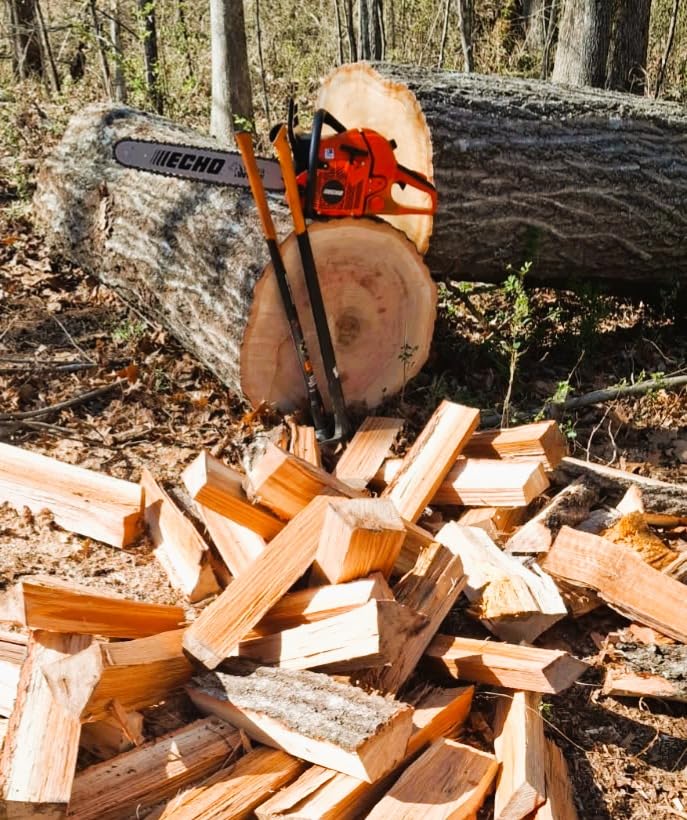
Several owners describe this saw as a solid, well-finished replacement for a Husqvarna 460 at a lower tier, which is roughly the pitch for anyone who wants a pro-feeling mid-size saw from a different brand. The weight figure published on this listing is unreliable, so check the number at your dealer rather than relying on it.
Echo saws are well known for producing straight cutting results and consistent factory quality, and the CS-590 is the middle of that range. The bar and chain are sized for firewood, storm cleanup, and light-to-moderate felling, which is exactly the description on the listing.
Who the Echo CS-590 suits
It suits firewood producers and anyone processing a serious volume of rounds, because the combination of aggressive cutting and low fuel consumption lowers the cost per cord. It also suits owners who prefer Echo to Husqvarna and want the same class of capability.
If you fall trees, an 18 inch bar, 45cc engine, and roughly 13.5 pounds is a very different machine. If you fell a handful of yard trees and then spend the rest of the year bucking, this is the right Echo.
Where the Echo CS-590 falls short
Starting is the main complaint. Owners report significant effort on the recoil starter, especially cold, and report flooding if the choke is held too long at startup. Both are technique issues you can manage, but they are the two things a new owner notices first.
Some buyers also report needing carburetor tuning to run cleanly, and this particular listing is sold by a third party, which can make warranty handling harder than buying from an authorized dealer. If you value a service relationship, buy Echo through a dealer.
8. NEO-TEC 68cc 22 and 24 Inch Gas Chainsaw
NEW 68CC Gas Powered Chainsaw 22 24 Inch Bars Chainsaws 2-Cycle Cordless Handheld Petrol Gasoline Chain Saw for Tree Felling Forestry Logging Backyard Storm Wood Cutting
- 4.6 average owner rating
- the highest in this roundup
- Includes both a 22 inch and 24 inch bar
- Owners report it starting within about three pulls
- Dual-tank system with separate fuel and oil capacity
- 24 pounds is heavy for the 22 inch class
- Only 55 reviews
- so limited long-term history
- Not CARB certified
- Assembly required with no printed instructions
This saw carries the highest average owner rating in the roundup at 4.6 out of 5, though the base is 55 reviews rather than the hundreds some rivals carry, so read that number with the sample size in mind. The engine is a 68cc two-stroke making 4.5 horsepower at up to 13000 RPM, and both a 22 inch and a 24 inch bar are included.
Owners report cutting clean and fast through softwood and palm with good fuel economy, and several describe using it to fell a very large oak after other saws had let them down. The manufacturer rates it for trees over 22 inches thick, which puts it in felling territory for a residential lot.
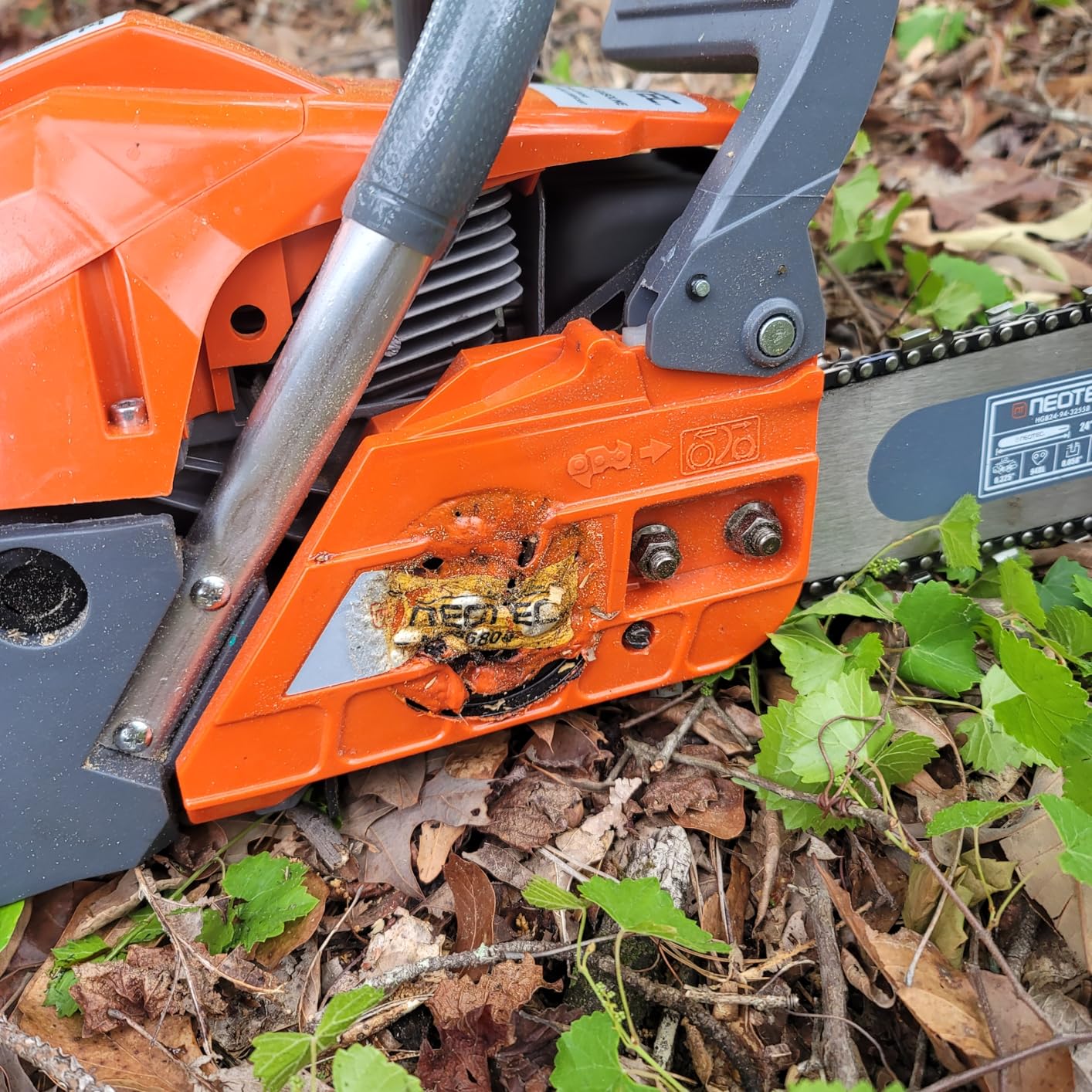
Start-up is engineered explicitly, with an extended pull rope and an optimized cold and hot start system that owners report getting the engine running within about three pulls. A tool-free side-mounted chain tensioner lets you correct tension on the spot with a scrench or by hand.
The dual-tank system holds 550ml of fuel and 260ml of oil, and the mixing ratio is marked on the tank at 25:1, or 1 litre to 40ml. That is a leaner mix than the 50:1 most two-strokes want, so follow the marking on your specific saw rather than a general rule.
Who the NEO-TEC 68cc suits
It suits a homeowner with a genuinely large tree on the property and a machine to fall back on. A 22 inch bar is longer than most yard saws, and the included second bar means you are never blocked by a bent or improperly sized bar.
The box is unusually well equipped for the segment, including a tool kit, engine oil, bar oil, a mixing container, and protective gloves, so a first-time owner does not need a separate parts run before the first cut.
Where the NEO-TEC 68cc falls short
The listed 24 pounds is heavy for a 22 inch class saw and noticeably heavier than professional saws of similar bar length. Expect real fatigue on a long felling day.
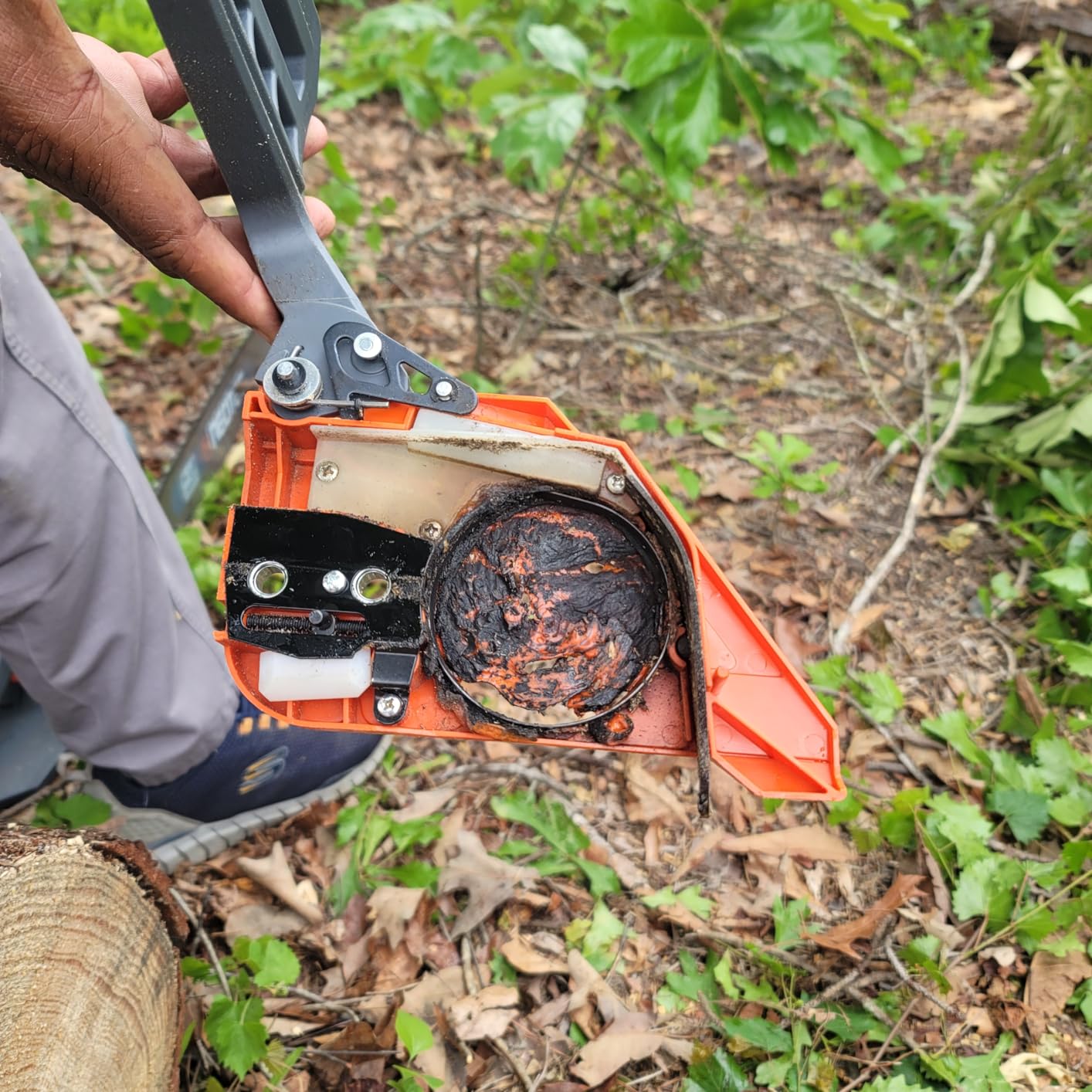
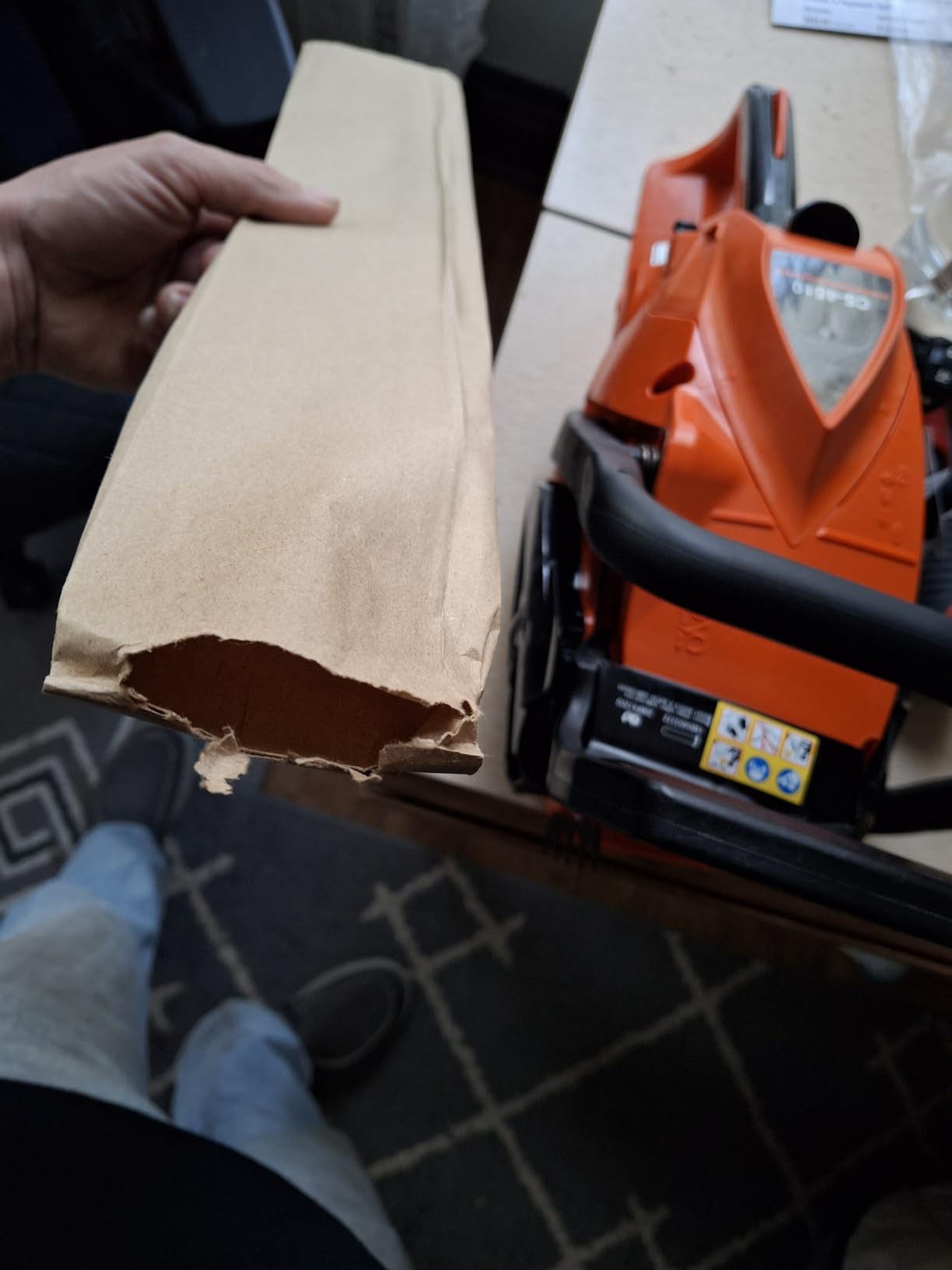
There are also practical limits. With 55 reviews there is no long-term reliability history yet, assembly is required with no printed instructions included, and the saw is not CARB certified so it cannot be shipped to California addresses. Buyers also report the seller checking in after purchase, which is a service plus, but not a substitute for a dealer network.
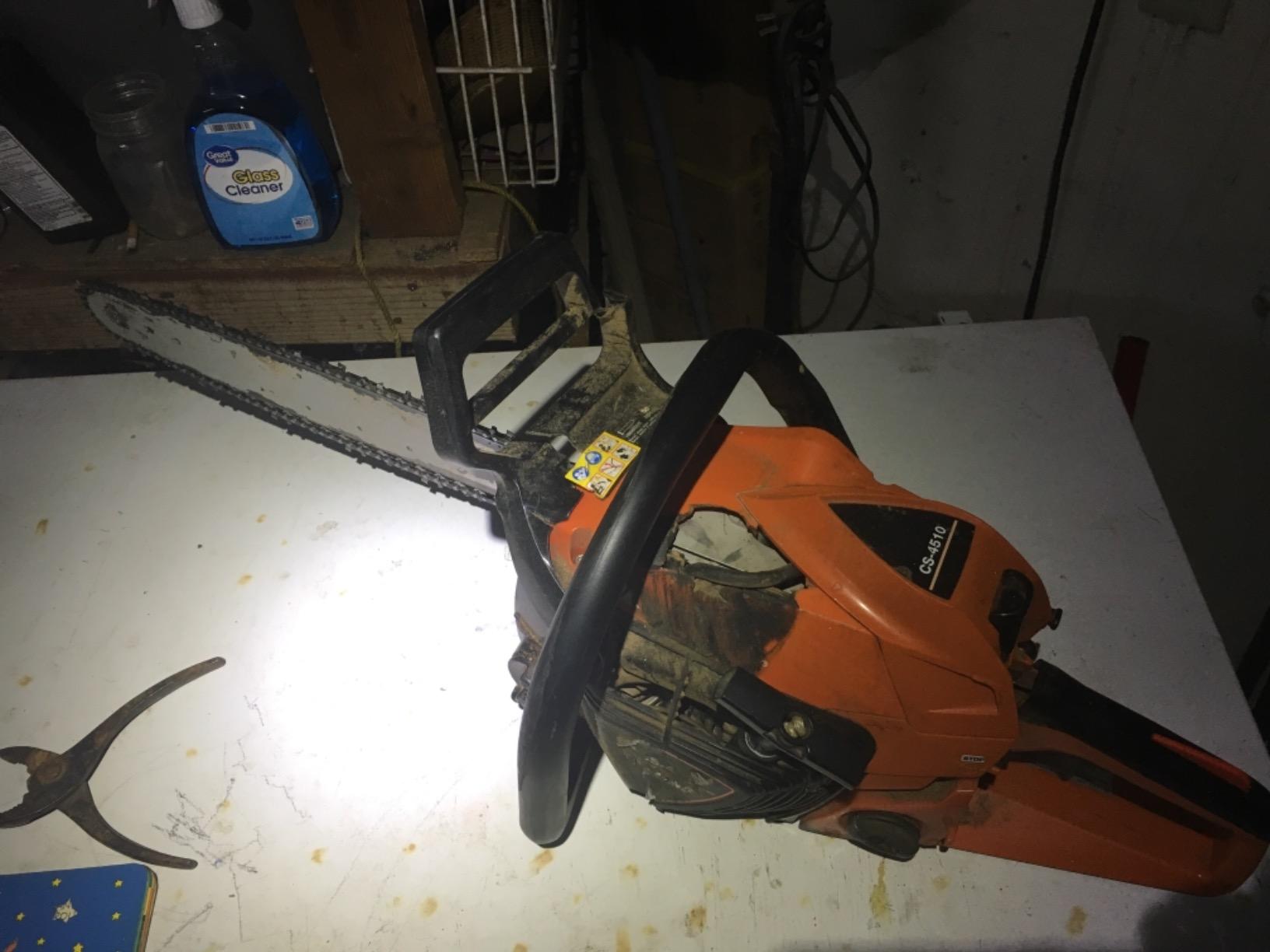
9. Echo CS-4510 18 Inch 45cc Gas Chainsaw
Echo 18 in. 45.0 cc Gas 2-Stroke Rear Handle Chainsaw CS-4510-18
- Rear-handle layout is stable for two-handed felling work
- 20BPX chain on an 18 inch bar suits cleanup and smaller trees
- Compact and lighter than full-size professional saws
- Good chain quality for the price class
- 18 inch bar is at the low end for felling larger trees
- Only 70 reviews
- limiting reliability history
- 69 percent five-star share with a 14 percent one-star group
The CS-4510 is a 45cc two-stroke with an 18 inch bar, and the rear-handle layout is the reason it earns its place on a felling list. A full saw is held in the hands rather than against the body, which gives fine control of bar angle during a face notch, and that control is what determines whether your notch cuts clean.
It comes supplied with a 20BPX chain on the 18 inch bar. Owners like the chain quality and the compact footprint, which is lighter than the full-size professional saws in this roundup at roughly 13.5 pounds.
This saw is built for clearing, pruning, and light felling, which is a fair description of an 18 inch bar working on trees up to about a foot through. Past that diameter the back cut needs two passes, and a two-pass back cut on a leaning tree is a materially different job.
Owners generally like the handling and chain quality, and the mixed rating spread reflects the limits of an 18 inch bar more than anything about build quality. That is the honest framing: the saw does what an 18 inch bar does, and judging it against a 24 inch saw is comparing different tools.
Who the Echo CS-4510 suits
It suits homeowners dealing with small yard trees, storm debris, and limb cleanup, and it suits anyone who already has a larger saw and wants a second lightweight machine for the work that does not need power. The rear handle makes it a good fit for users who find full-size saws hard to control.
If your felling list is limited to trees of modest diameter, an 18 inch bar is genuinely sufficient and you will be far more successful with it than with an overpowered saw you find intimidating.
Where the Echo CS-4510 falls short
The 18 inch bar is the ceiling. It will not pass through a mature hardwood in one cut, and forcing that is how people get into trouble, because a stop halfway through a back cut removes your control of the fall.
With only 70 reviews there is limited long-term reliability data, and the 69 percent five-star share alongside a 14 percent one-star group gives you less to judge with than the Husqvarnas in this list offer.
10. WTHW 58cc Gas Chainsaw With 20 and 18 Inch Quick-Switch Bars
- Two bars and two chains included for one machine
- Quick-switch bar change takes seconds
- 30 percent larger fuel tank for longer runtime
- Quick-start recoil fires in cold conditions
- 2 year manufacturer warranty
- Only 88 reviews
- a small sample for a newer listing
- 11 percent one-star share suggests occasional first-year issues
- 20 inch bar limits it to smaller and medium trees
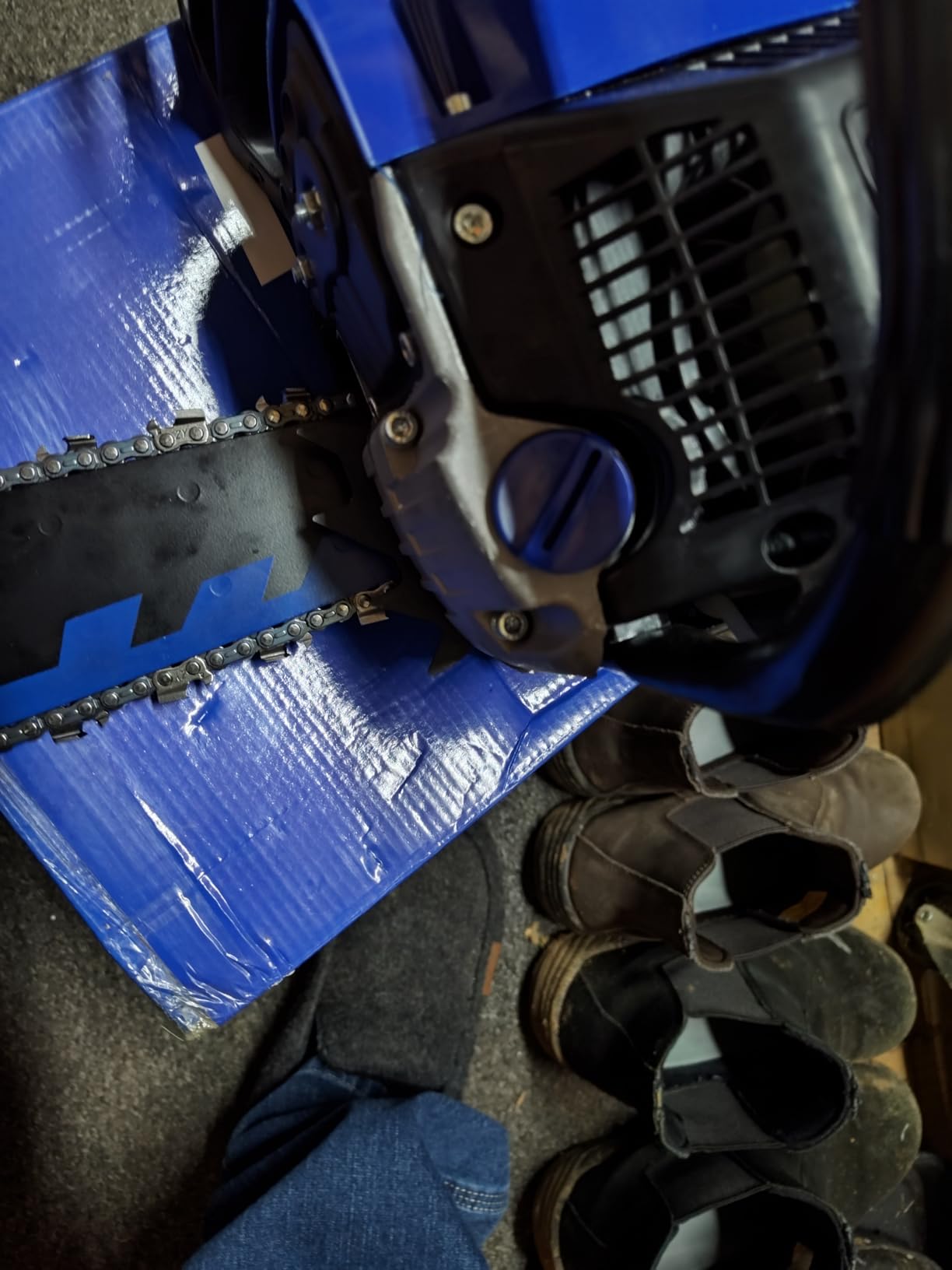
The WTHW 58cc is built around an idea none of the other dual-bar saws in this roundup execute as cleanly. A quick-switch system lets you swap a 20 inch felling bar for an 18 inch limbing bar in seconds, and two chains are included, a 76DL for the 20 inch bar and a 72DL for the 18 inch, both in 0.325 inch pitch and 0.058 inch gauge.
A 58cc two-stroke rated at 3.5 horsepower sits in the middle of this roundup’s power range, which is enough for small to medium trees and a solid firewood saw. The enlarged fuel tank is claimed to be 30 percent larger than standard, which shows up as fewer refuel stops on a full day of bucking.
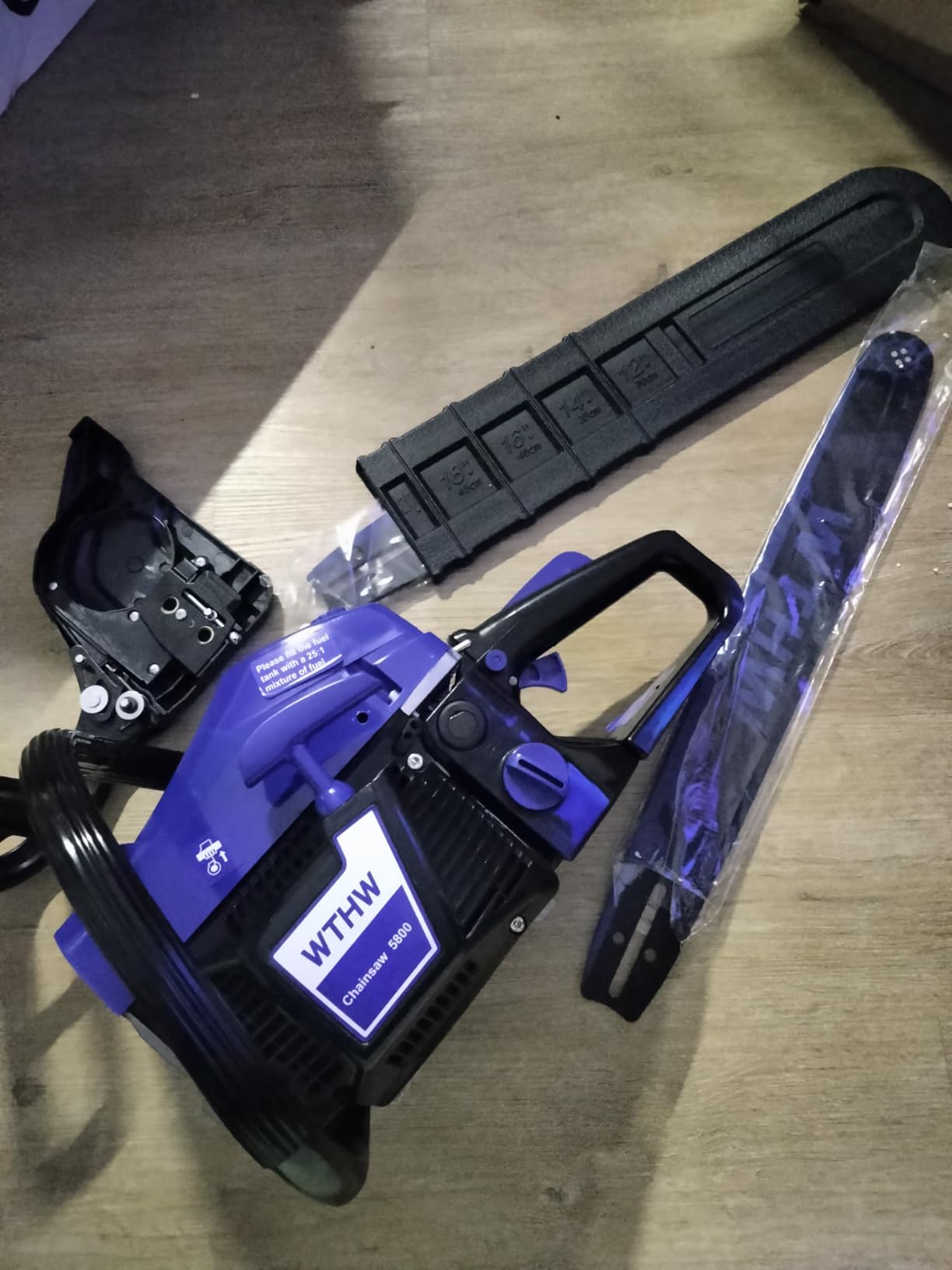
Cold starting is a deliberate target here. A quick-start recoil system is designed to fire within the first few pulls even in cold conditions, and on-site chain tensioning with the included scrench means you can fix a loose chain where the tree is rather than driving home first.
Safety and comfort hardware includes a fast-acting inertial chain brake with a low-kickback chain and a dual-spring anti-vibration system, plus a centrifugal air filter and an automatic oiler. For an entry-level saw, that feature list is more complete than expected.
Who the WTHW 58cc suits
It suits a first-time buyer who wants one machine to cover felling, bucking, and limbing without buying a second bar separately. If you plan to do all three, the quick-switch system is the reason to choose this over a single-bar budget saw.
It also suits anyone who wants a second saw for a relative, a child old enough to help, or a farm property where the machine lives outside and weather matters. The 2 year manufacturer warranty is longer than most competitors in this price class offer.
Where the WTHW 58cc falls short
With 88 reviews on a newer listing, there is not much long-term history to judge by, and an 11 percent one-star share points to some first-year problems on a minority of machines. Budget saws of this type commonly need an air filter, plug, and carburetor adjustment after the first hour of running.
Bar length is the practical limit. A 20 inch bar handles smaller and medium trees and a season of firewood, but a mature hardwood on the property is out of its range. If that is the job ahead of you, spend the difference on a 24 inch saw.
Sizing Guide: Match the Saw to the Tree
The rule that matters is simple: your guide bar should be roughly two inches longer than the diameter of the trunk you intend to cut, so a 20 inch bar on a 18 inch trunk leaves margin for the cut plus your wedge. The engine should have enough displacement to drive that bar without bogging at full throttle, which is why bar and engine size always travel together.
Here is the sizing logic we use, and it is the fastest way to answer what size gas chainsaw you need for felling trees:
14 inch bar, 30 to 40cc for limbs, brush, small yard trees up to about 8 inches through. Not a felling saw.
16 inch bar, 35 to 40cc for small trees up to about 10 inches and firewood bucking. Works for a thin, straight young tree with clean technique.
18 inch bar, 42 to 50cc for medium trees up to about 12 inches through. The Echo CS-4510 sits here and handles light felling well.
20 inch bar, 50 to 60cc for medium to large trees up to about 16 inches through. This is the felling sweet spot, and four of our picks live here including the 450, 455, CS-590, and the NEO-TEC 62cc.
22 to 24 inch bar, 60cc and up for large hardwood and storm-damaged timber past 18 inches. The 460, the PROYAMA, the NH872, and the NEO-TEC 68cc cover this range.
Overbuy on bar length and you will carry a heavier saw than you need for a small job. Underbuy and you will find yourself stopping a back cut halfway through a trunk, which is the moment to stop working and reassess.
If you are still working out the size question and want to understand the machine first, our complete gas chainsaw guide breaks down engine displacement and bar type in more detail, and electric chainsaw picks cover the battery options for lighter work.
Husqvarna vs Stihl vs Echo: The Brand Reality
Owners rarely agree on which of the three big brands is best, and the arguments get long on forums. The honest answer is that the differences in cutting power are small, and the differences that actually affect your experience are build quality, weight, and whether there is a dealer near you.
Husqvarna is consistently described by owners as a dealer-backed workhorse that holds up for landowners. The Rancher line is the most tested here, with hundreds of reviews on three models, and the Air Injection filtration and Smart Start features are the ones owners name unprompted. Husqvarna also has the deepest parts catalogue of any brand in this roundup, which is why the NEO-TEC NH872 is built parts-compatible with a Husqvarna 372XP.
Stihl does not appear in this roundup’s ten picks, but it dominates professional opinion. Long-time owners on forestry forums describe the 291-class saws as exceptionally well built and prefer that build quality over resale considerations. If a Stihl dealer is closer to your property than a Husqvarna dealer, that proximity should carry weight in your decision.
Echo is repeatedly praised on forums for offering near-professional build quality at a lower tier, backed by strong consumer warranties. Echo saws are known for cutting straight and for good factory chain quality. Our CS-590 and CS-4510 picks reflect that, and the CS-590 is the one most owners here compare directly to the Husqvarna 460.
So do loggers use Echo chainsaws? Some do, and Echo has a genuine professional foothold, but the larger professional market in North America runs heavily on Husqvarna and Stihl. What that means for a homeowner is that Echo is a defensible choice, not a risky one, especially with a 20 inch bar for firewood and moderate felling.
Do professionals prefer Husqvarna or Stihl? Both, for different reasons, and the deciding factor is usually the service relationship. Across every owner forum we looked at, the single most repeated long-term ownership factor was not power, weight, or price. It was how far you had to drive to reach a dealer who would service the saw.
That is also why two of our picks carry no dealer network at all. Buyers of no-name marketplace saws regularly report assembly problems, plastic-heavy builds, and difficulty obtaining parts, and that is a real long-term cost even when the purchase price looks attractive.
How to Fell a Tree in 8 Steps
Owning a felling saw and being comfortable felling are two different problems, and most of the fear in beginner discussions comes from never having seen the sequence. Read through all eight steps, then practise on a small tree before you touch one that matters.
- Survey the tree and the area. Look for dead limbs overhead, power lines, fences, structures, vehicles, and people. Identify where the tree will land if it falls forward and if it falls backward.
- Check the escape path. Pick two clear routes out of the fall zone before you cut, at roughly 45 degrees behind the planned direction of fall. Never plan to step sideways or backward.
- Put on the gear. Chainsaw chaps, a hard hat with a face shield, hearing protection, gloves with good grip, and steel-toe boots. No exceptions for a small tree.
- Prepare the tree. Remove lower branches and brush from the base so you have room to work, and cut the back cut as level as you can because a back cut on a slope can steer the fall toward the hinge.
- Cut the face notch. Cut downward at about a 70 degree angle into the trunk, about a quarter of the trunk diameter deep, then finish with a level cut across from the bottom of the notch to the trunk. The face notch tells the tree which way to fall.
- Make the back cut. Cut horizontally from the opposite side, stopping roughly one inch of trunk diameter short of the notch. Leave the hinge wood intact. This is the only thing standing between you and an uncontrolled drop.
- Drive a wedge if needed. If the saw has a chance of pinching in the cut, stop, insert a felling wedge, and re-open the cut before continuing. Never force a pinched bar with the saw.
- Finish the cut and retreat. Drive a second wedge if the tree begins to fall against the wedge, then back away along your escape path until the tree is down and stable. Only then approach to make the final cut and to limb.
Never cut the hinge. People lose control of a tree by severing the hinge wood, which is the last thing telling the trunk which way to go. If you cannot complete the back cut with the hinge intact, stop and get a professional on site.
Starting the saw follows the same logic. Set the chain brake, check that the throttle is in the fast position, close the choke on a cold engine, squeeze the primer bulb until it is firm, secure your right boot against the rear handle, and pull. Once it fires, ease the choke to the run position and let it idle before you touch the chain.
Chainsaw Safety Gear for Felling
Kickback is the mechanism that injures the most people, and it is the reason the inertia-activated chain brake appears on every saw we recommend. When the upper nose of the bar contacts wood, the bar pivots backward and drives the chain into your leg. The inertia brake stops the chain in under a second if it is triggered, which is why you grip the front handle with your thumb wrapped around it during the back cut.
Your gear list should include chainsaw chaps, a hard hat with a face shield, hearing protection, gloves with grip, and steel-toe boots. Chaps are the single item that most reduces the severity of a chainsaw injury, and they are the last thing to skip.
Beyond the saw, keep a first aid kit, water, and a charged phone within reach of the work area, and tell someone what you are doing and when you expect to finish. Chainsaw work is one of the more common solo rural injuries, and a delayed call is a serious part of the risk.
Our chainsaw buying guide covers the lighter saws for the pruning and cleanup work that comes before and after the felling itself.
Maintenance and Winter Storage
Stale fuel is the number one reason a gas chainsaw will not start after storage, and it is the most common complaint in every owner forum we looked at. Ethanol in modern gasoline attacks the rubber fuel lines and the carburetor seals, and a saw left with a full tank over winter will usually need a carburetor rebuild to start again.
Run the tank dry at the end of the season, or use stabilized ethanol-free fuel if you leave fuel in it. Either way, drain the fuel filter bowl, clean the air filter, and check that the spark plug is in good condition before the saw sits for months.
For two-stroke engines, mix fuel and oil at the ratio marked on your cap or tank. Most professional saws specify 50:1, while one of the picks here is marked at 25:1, so follow the marking on your specific machine rather than a general rule. Wrong mix ratios show up as a fouled plug, heavy smoke, and carbon in the combustion chamber.
Chain maintenance is simpler than most people make it. Check tension while the chain is warm, keep the chain sharp with a round file matched to the chain pitch, and clean the bar groove and sprocket a few times a season. A sharp chain cuts dramatically faster and puts far less load on the engine and the chain brake.
Bar and chain oil is not optional. Running a felling cut on a dry bar ruins the bar, the chain, and eventually the oiler, and it is one of the few maintenance items where skipping it causes real money.
When to Hire an Arborist
Some trees should not be felled by a homeowner, and knowing which ones is a safety skill rather than a failure. Hire a certified arborist when the tree leans significantly in a direction you cannot control, when it is close to a house, a fence line, or a buried utility, or when the trunk diameter exceeds what your bar will pass through in one cut.
Any sign of root rot, a large cavity, or a split at the base changes the calculation entirely, because those trees can fail unpredictably and in directions you did not plan for. Storm-damaged trees with tension wood are the classic case, where the trunk can spring sideways without warning.
A licensed arborist is also the right call for any tree involving a climb, a rope, or a lift. Felling from the ground with a 20 or 24 inch saw is a well-defined job. Felling from a ladder or a canopy is not, and the cost of an arborist is small next to a fall.
Frequently Asked Questions
What size gas chainsaw do I need for felling trees?
For most yard trees, a 20 inch bar with a 50 to 60cc engine is the right size. A 20 inch bar clears a trunk of roughly 16 inches through in one cut, which covers the majority of residential trees. Move to a 22 or 24 inch bar with a 60cc or larger engine for mature hardwood and storm damage, and stay at 18 inch or under for small trees and cleanup work.
Is gas or battery better for a chainsaw?
Gas is better for felling. Felling needs sustained high torque, a bar long enough to pass through the trunk, and runtime measured in hours rather than minutes. Battery saws handle pruning, bucking, and storm debris on smaller material, then bog down or run flat in green hardwood. If your work is felling trees rather than trimming branches, a gas saw is the right tool.
Which is better, Husqvarna, Stihl or Echo?
All three cut well, and the deciding factor is the dealer near you. Husqvarna is widely described as a consistent, dealer-backed workhorse with a deep parts catalogue. Stihl is favoured by many professionals for build quality. Echo is praised for near-professional construction at a lower tier. Pick the brand whose service department you can reach, because that is what determines how long the saw lasts.
How do I safely fell a tree with a chainsaw?
Check the tree and the area, clear the ground, and set two escape paths behind the planned fall direction. Wear chaps, a hard hat with face shield, hearing protection, and gloves. Cut a face notch about a quarter of the trunk diameter deep at 70 degrees, then a horizontal back cut stopping one trunk diameter short. Leave the hinge wood intact and back away before the tree drops.
Why will not my gas chainsaw start after storage?
Stale fuel is the usual cause. Ethanol in gasoline degrades and attacks carburetor seals, so a saw stored with a full tank often will not restart. Run the tank dry, clean the air filter, check the spark plug, and drain the fuel filter bowl. If it still will not start, the choke technique matters: full choke on a cold engine, then half-choke once it fires. Use stabilized fuel if you must store fuel.
Conclusion: The Best Gas Chainsaws for Felling Trees in 2026
The Husqvarna 460 Rancher with its 24 inch bar is the best gas chainsaw for felling trees overall, because a 60.3cc engine and a long bar is the combination that lets a single operator handle a mature tree without changing equipment. For most homeowners, the 450 Rancher at 11.3 pounds is the more realistic first felling saw, and the 455 is the right step up when you want more torque without more bulk.
Outside the big three brands, the NEO-TEC NH872 delivers 372XP-compatible parts and 5.3 horsepower at a fraction of a professional logging saw, and the PROYAMA 68cc includes both a 20 and 24 inch bar. Neither has a dealer network, which is the one thing we would want you to weigh before buying either for daily work.
Before you cut anything, read the felling steps above, put on the gear, and practice on a small tree. A 20 inch saw is a simple tool once the sequence is familiar, and unfamiliar is what causes most of the injuries.