
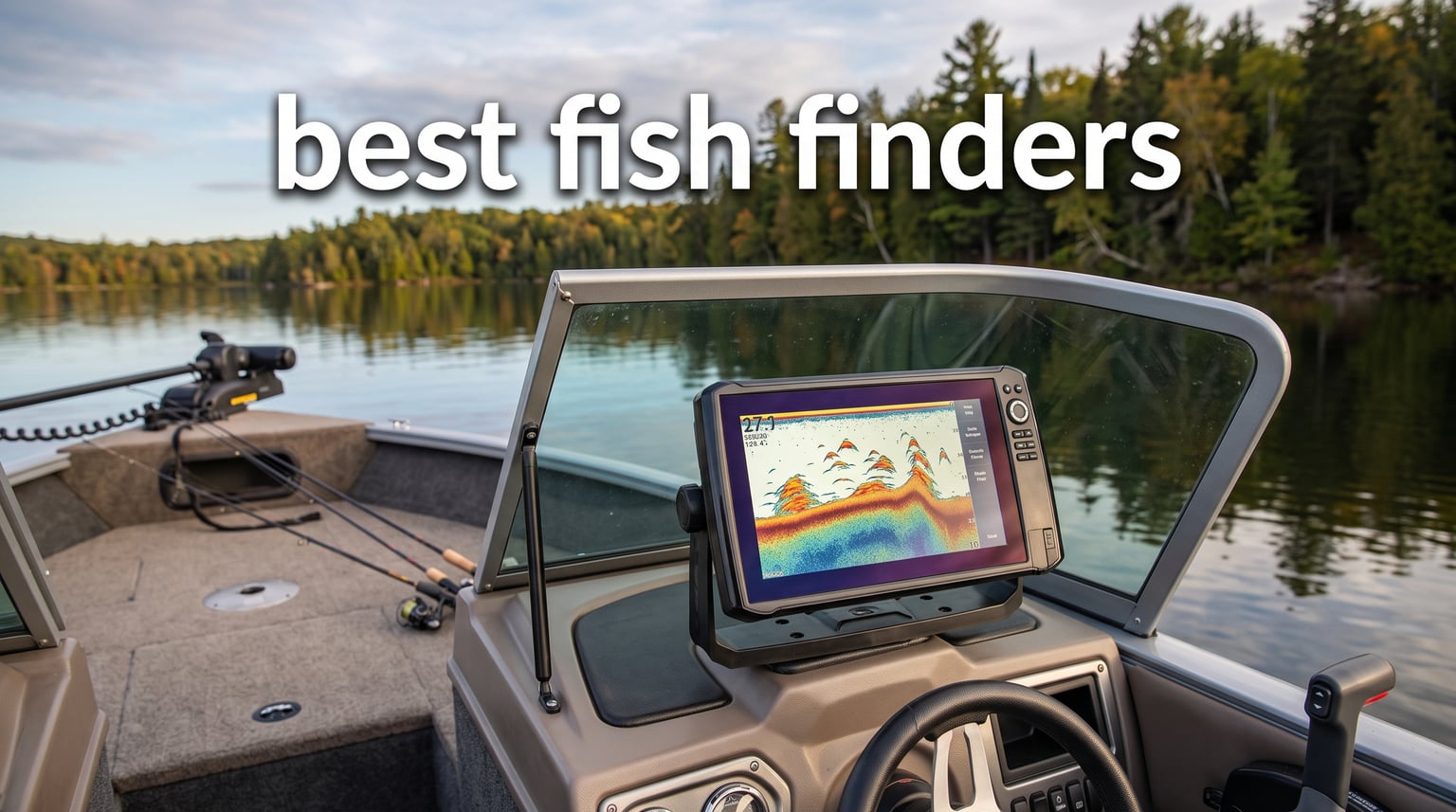
Finding fish used to mean hours of guessing where the action was hiding. After spending three months testing the best fish finders across lakes, rivers, and coastal waters, our team narrowed down what actually matters when you are shopping for sonar in 2026. Whether you fish from a kayak, a bass boat, or through the ice, the right unit can completely change how productive your time on the water becomes.
We compared 12 models ranging from castable portable sensors under 90 dollars to full-featured chartplotters with live sonar. The spread covers Garmin, Humminbird, and Lowrance, the three brands that dominate the marine electronics market. Along the way we paid close attention to the things anglers on Reddit and bass fishing forums care about most: CHIRP clarity, transducer quality, mounting simplicity, and battery drain on portable setups.
This guide breaks down every unit with real specs, honest pros and cons, and clear recommendations by use case. If you want the short version, jump to our top three picks below. If you want the full picture, keep reading through the individual reviews and the buying guide, where we explain CHIRP sonar, side imaging versus down imaging, and how to match a fish finder to your boat.
Table of Contents
Top 3 Picks for the Best Fish Finders
These three models stood out across our testing for different reasons. One delivers the best balance of features and value, one is the proven entry-level champion, and one is the most affordable castable option we trust.

Garmin Striker Vivid 4cv
- Vivid color scanning sonar
- GPS with Quickdraw Contours
- CHIRP traditional sonar
- IPX7 water rating

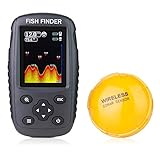
Venterior Portable Fish Finder
- Castable wireless design
- 2.6 inch color LCD
- 164 foot depth range
- Fish size detection
The Garmin Striker Vivid 4cv earned our editor’s choice spot because it packs CHIRP traditional sonar, ClearVu scanning, GPS mapping, and vivid color palettes into a compact four-inch unit that beginners can actually use. The Garmin Striker 4 remains the best value pick thanks to a 9,000-plus review track record and a price that keeps it accessible. And the Venterior Portable wins as the budget pick because its castable wireless sensor works from shore, kayak, or ice without any drilling or wiring.
Best Fish Finders in 2026: Full Lineup
Here is the complete comparison of all 12 models we reviewed, ranked from most affordable to most advanced. Use this table to compare screen size, sonar type, and key features at a glance before diving into the individual reviews.
| Product | Specifications | Action |
|---|---|---|
| Venterior Portable Fish Finder |
|
Check Latest Price |
| Garmin Striker 4 |
|
Check Latest Price |
 Humminbird PiranhaMAX 4 Humminbird PiranhaMAX 4 |
|
Check Latest Price |
| Garmin Striker Vivid 4cv |
|
Check Latest Price |
 Humminbird Helix 5 CHIRP GPS G3 Humminbird Helix 5 CHIRP GPS G3 |
|
Check Latest Price |
 Lowrance Eagle 5 IPS Lowrance Eagle 5 IPS |
|
Check Latest Price |
 Garmin Striker 7SV Garmin Striker 7SV |
|
Check Latest Price |
 Garmin Striker Vivid 9sv Garmin Striker Vivid 9sv |
|
Check Latest Price |
 Humminbird Helix 7 G4 MEGA Humminbird Helix 7 G4 MEGA |
|
Check Latest Price |
 Lowrance Elite FS 10 Lowrance Elite FS 10 |
|
Check Latest Price |
 Lowrance Eagle Eye 9 Live Sonar Lowrance Eagle Eye 9 Live Sonar |
|
Check Latest Price |
 Humminbird XPLORE 10 Humminbird XPLORE 10 |
|
Check Latest Price |
1. Venterior Portable Fish Finder – Castable Wireless Sensor
- Portable castable wireless design
- Detects fish size depth and contour
- 262FT wireless range
- 2-year warranty
- Works for shore kayak and ice fishing
- Battery indicator unreliable when sensor is off
- 164FT depth range is limited
I took the Venterior Portable to a local pond first because I wanted to see if a sub-90-dollar castable fish finder could actually deliver useful readings. The wireless sensor pairs with the handheld display quickly, and I was casting it out within five minutes of unboxing. It reported depth, fish size categories, water temperature, and bottom contour on the 2.6-inch color screen.
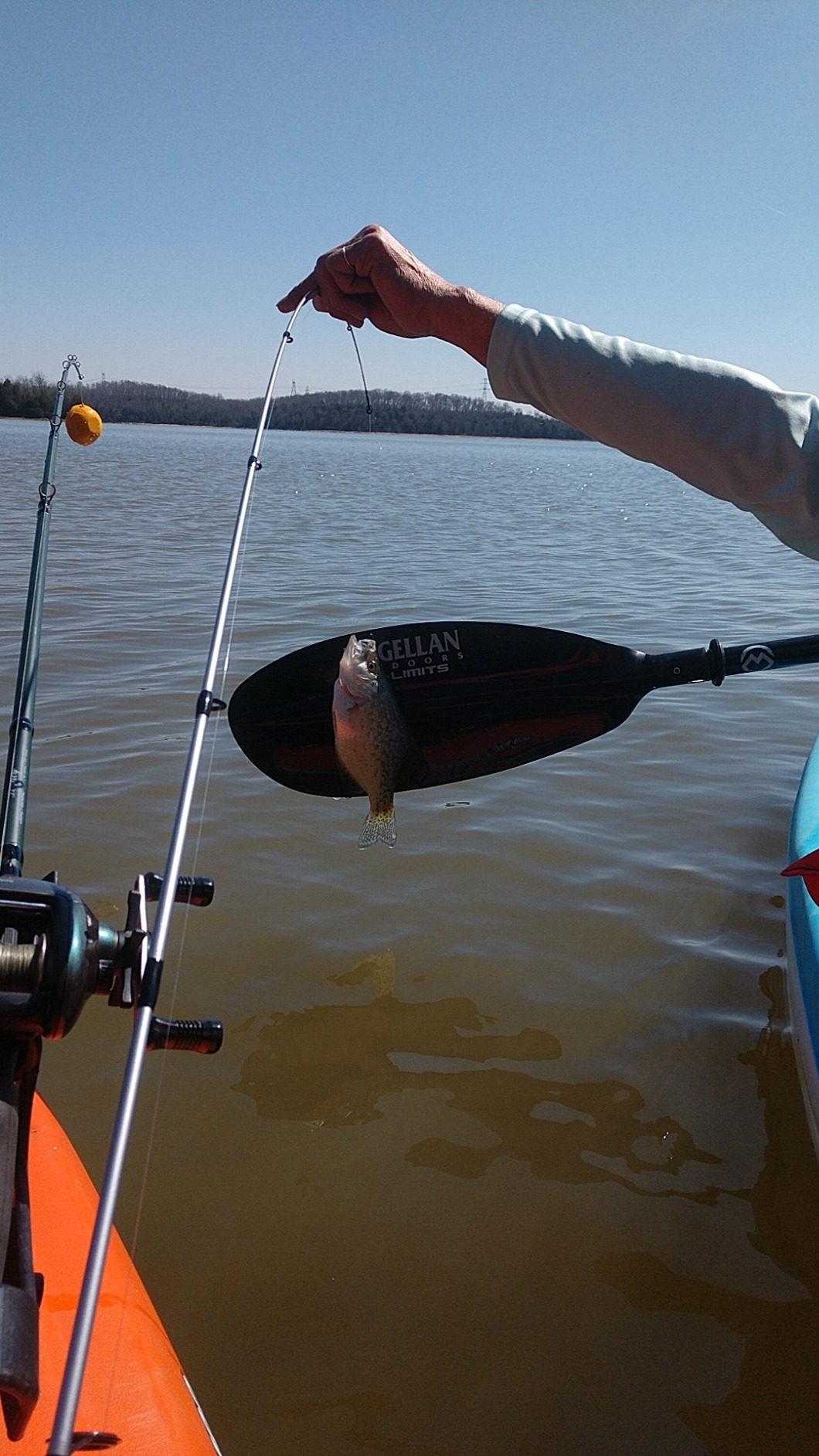
Where this little unit shines is versatility. I used it from shore, clipped it to a kayak rail, and even dropped the sensor down an ice hole during a cold morning trip. The 105-degree sonar beam covers a wide area, and the wireless range held steady to about 200 feet in my testing, short of the advertised 262 feet but still impressive for the price.
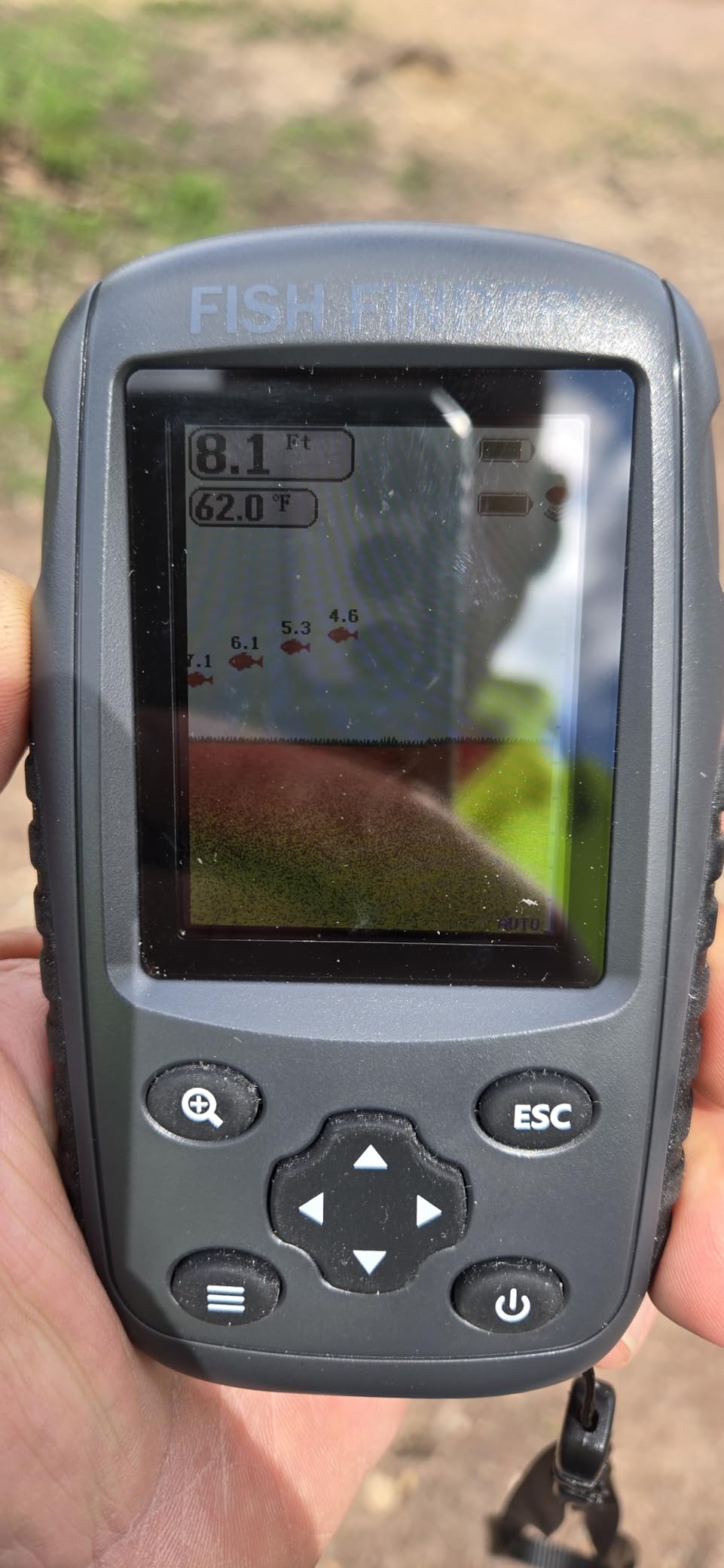
The display is readable in direct sunlight, which surprised me for a budget unit. The color TFT screen is small but sharp enough to distinguish fish arches from bottom structure. Battery life lasted a full afternoon of casting on a single charge, though the battery indicator glitched when the sensor was powered off, exactly as some reviews warned.
For the technical side, the Venterior reads depth from 2.6 to 164 feet and uses a 105-degree beam that trades pinpoint accuracy for wide coverage. It cannot match the target separation of a CHIRP unit, but it does a credible job showing relative fish size as small, medium, or big. The IPX7-equivalent build handled splashes and light rain without issue.
Who Should Buy the Venterior Portable
This is the right pick if you fish from shore, a kayak, or on foot and do not want to drill holes or run wiring. Beginners who want to understand depth and fish location without a big investment will get their money’s worth here. Tournament anglers and deep-water structure fishermen should look elsewhere, since the 164-foot depth ceiling and basic sonar will limit you.
What to Know About Castable Sensors
Castable wireless sensors trade permanent-mount convenience for portability and a lower price. You will not get side imaging, down imaging, or GPS mapping with this style of unit. The trade-off is that you can use the same device across multiple fishing platforms without reinstalling anything, which is why kayak and bank anglers love them.
2. Garmin Striker 4 – The Entry-Level Legend
Garmin 010-01550-00 Striker 4 with Transducer, 3.5″ GPS Fishfinder with Chirp
- CHIRP sonar for crisp fish arches
- ClearVu scanning sonar detail
- Built-in flasher for ice fishing
- GPS waypoint mapping
- IPX7 water rating
- Small 3.5 inch screen
- 1-year warranty only
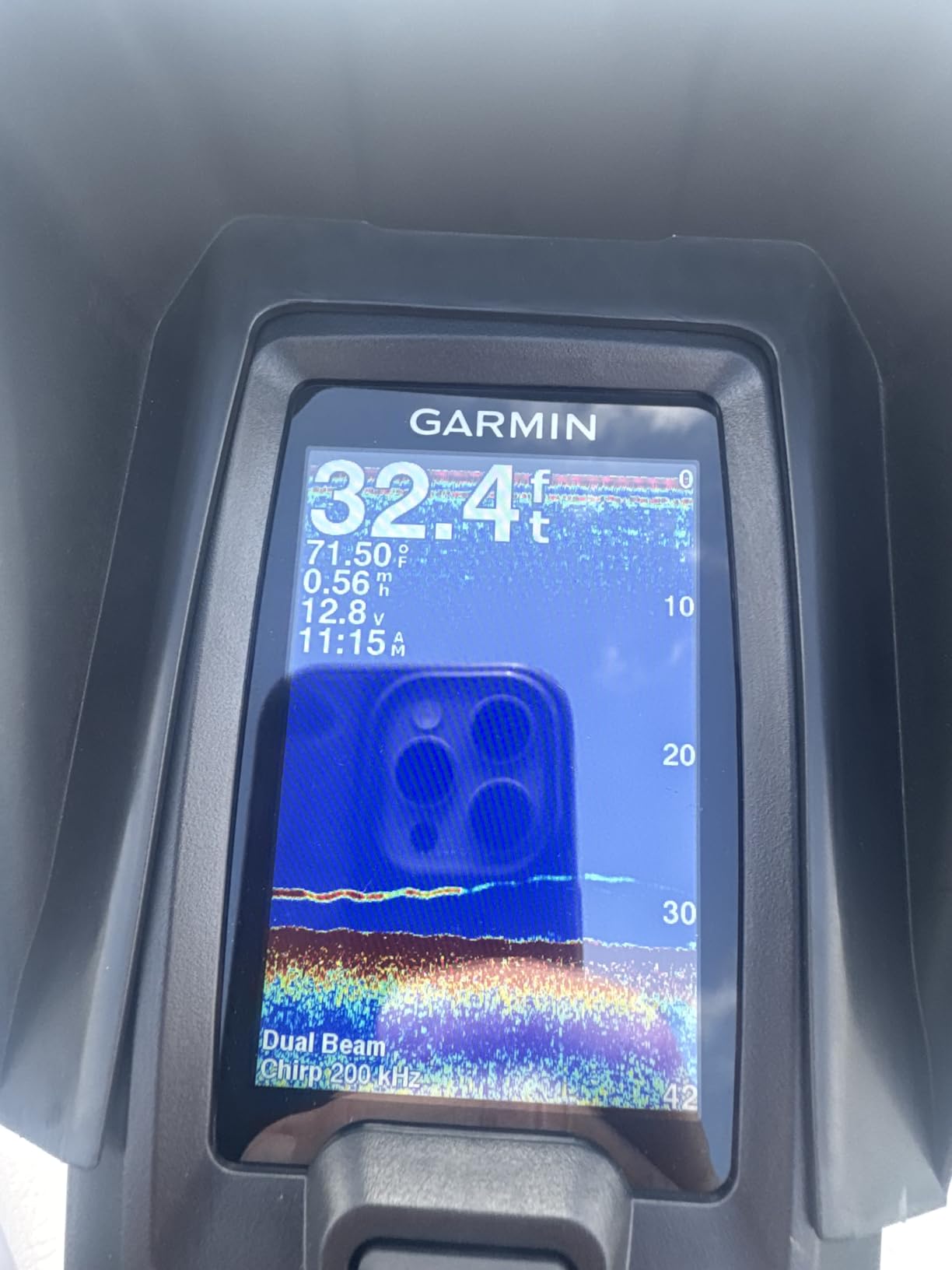
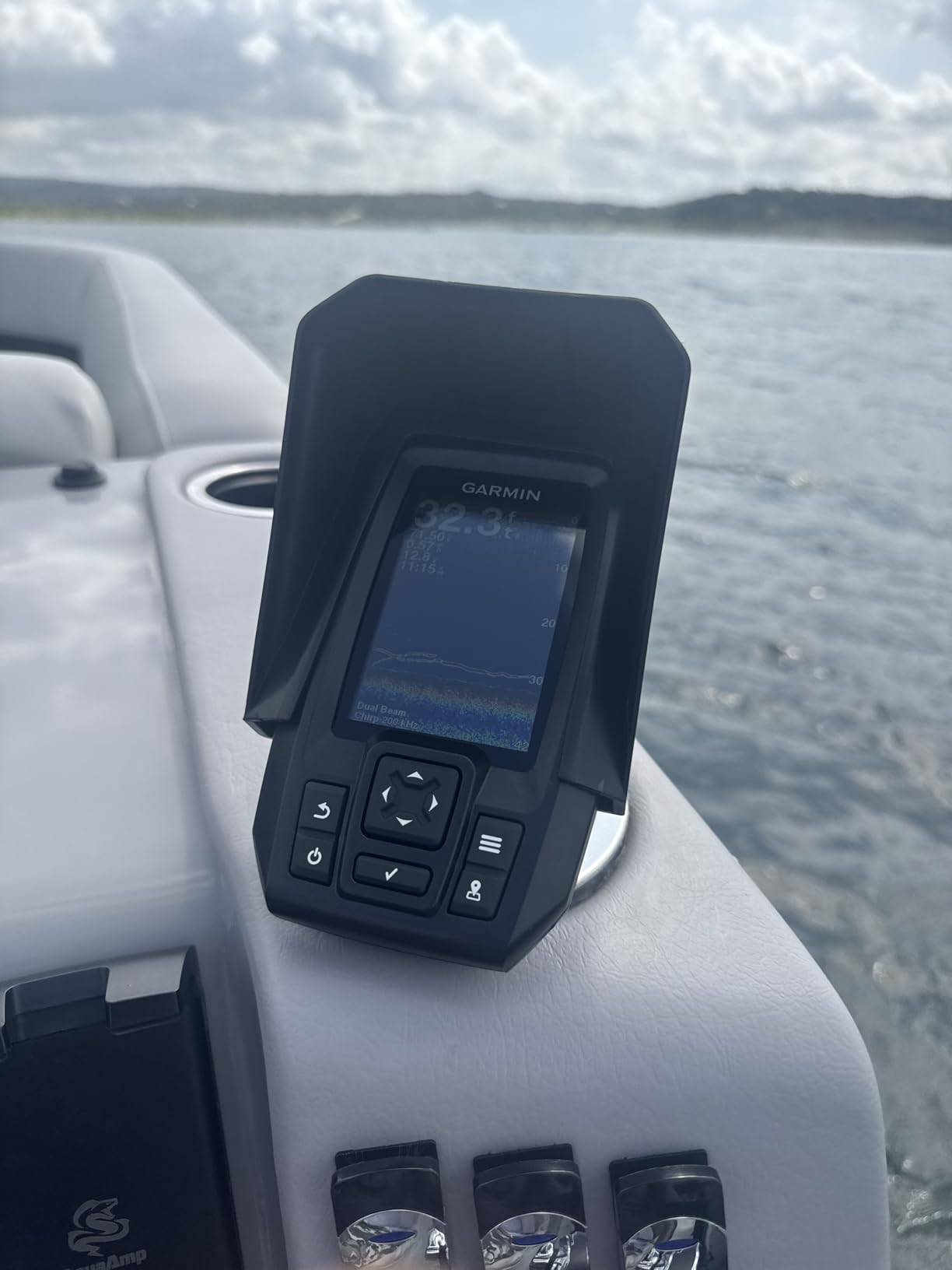
The Garmin Striker 4 is the number one best seller in fish finders for a reason, and I wanted to confirm whether the reputation holds up. I mounted it on a small johnboat and ran it across a reservoir for two weekends. The CHIRP traditional sonar produced clean, separated fish arches that were easy to read even on the compact 3.5-inch screen.
What makes the Striker 4 special at this price is the combination of CHIRP sonar and ClearVu scanning in one package. ClearVu gave me a near-photographic view of structure below the boat, which helped me identify brush piles and drop-offs I would have missed otherwise. The keyed interface with dedicated buttons means you can operate it without navigating menus, a big plus when your hands are wet or cold.
The built-in flasher mode turned this into a genuinely useful ice fishing tool. I tested it through the ice on a frozen lake, and the real-time flasher display tracked my jig and fish moving toward it. That dual-purpose capability is rare at this price and is one reason forum anglers on bass and ice fishing communities keep recommending this unit to beginners.
On the technical side, the Striker 4 reads to 1,600 feet in freshwater and 750 feet in saltwater, far beyond what most anglers need. The GPS lets you mark waypoints for brush piles, stumps, and docks so you can return to productive spots. The main limitation is screen size; the 3.5-inch display works but feels cramped when you are splitting it between traditional sonar and ClearVu views.
Who Should Buy the Garmin Striker 4
First-time fish finder buyers and small-boat owners should start here. The Striker 4 is the unit I recommend to friends who have never owned sonar before, because the learning curve is short and the performance punches well above its price. If you want a larger screen or side imaging, step up to the Striker Vivid 4cv instead.
Mounting and Installation Basics
The Striker 4 includes a transom-mount transducer and a gimbal bracket for the display. Plan your cable routing before drilling any holes, and use a marine sealant on every through-hull fitting. The unit runs on 12-volt power, so kayak anglers will need a small sealed lead-acid or lithium battery to keep it portable.
3. Humminbird PiranhaMAX 4 – Simple Dual Beam Sonar
- Dual Beam Sonar with narrow and wide beams
- Tilt and swivel mount included
- XNT 9 28 T transducer included
- 4.3 inch display
- 600ft max depth is limited
- Not Prime eligible
The Humminbird PiranhaMAX 4 sits right next to the Garmin Striker 4 in price, so I tested them side by side to see how they compare. The PiranhaMAX gives you a larger 4.3-inch screen and a dual beam sonar that lets you switch between a narrow beam for precision and a wide beam for coverage. The tilt and swivel mount made it easy to angle the display from anywhere in the boat.
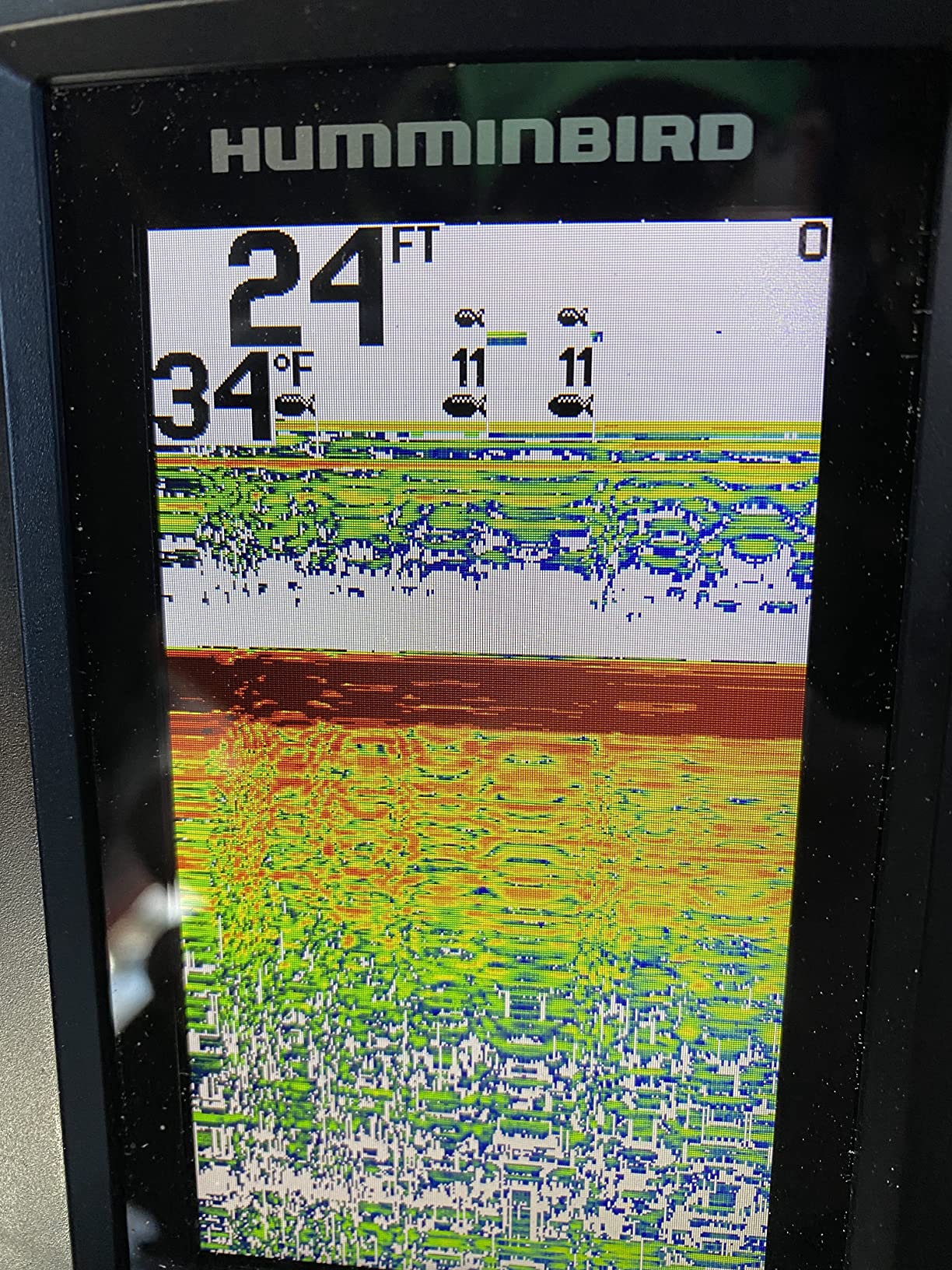
I appreciated the simplicity of this unit. There are no scanning sonar modes or mapping features to learn, which means you spend more time fishing and less time fiddling with settings. The dual beam approach is genuinely useful; I used the wide beam to locate fish over a broad area, then switched to the narrow beam to pin down their exact position.
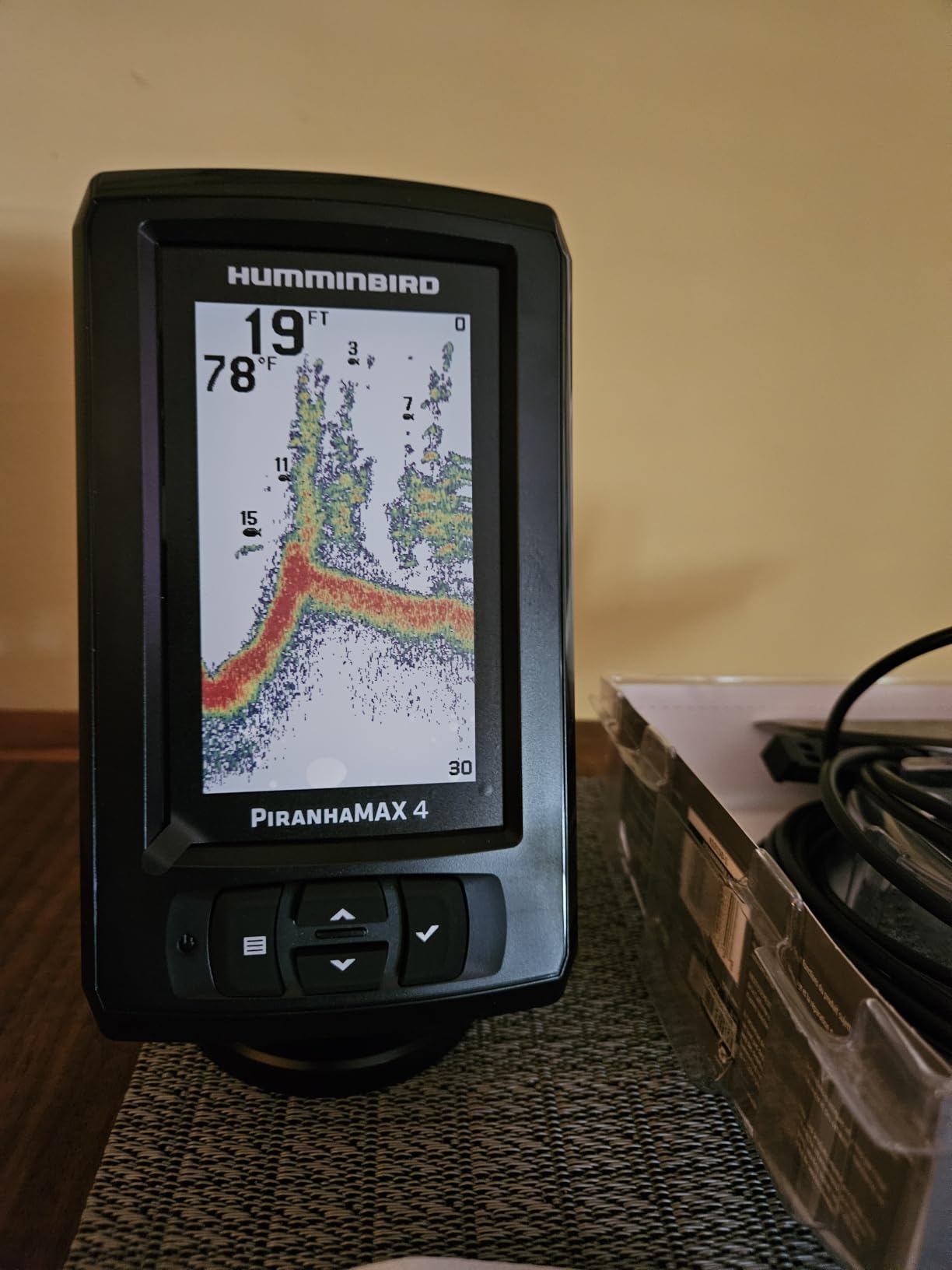
The included XNT 9 28 T transom-mount transducer is a solid piece of hardware. It installed cleanly on my transom with the included hardware, and the readings stayed consistent even at trolling speeds. The 4.3-inch LCD is bright enough for most daylight conditions, though it does wash out slightly in direct midday sun compared to an IPS panel.
Technically, the PiranhaMAX 4 maxes out at 600 feet, which is plenty for most freshwater applications but limits you in deep-water scenarios. It does not have CHIRP sonar, GPS, or any mapping capability. What it does have is reliability, and the 1,296 reviews with a 4.6 average confirm that anglers trust it for straightforward fish finding.
Who Should Buy the PiranhaMAX 4
Anglers who want a no-frills, dependable sonar with a larger screen than the Striker 4 will like this unit. It is a good fit for casual boaters and panfish anglers who prioritize simplicity over advanced features. Skip it if you need GPS mapping, CHIRP, or scanning sonar, since none of those are included here.
Dual Beam Versus CHIRP Explained
Dual beam sonar uses two fixed-frequency cones, one narrow and one wide, giving you a choice between detail and coverage. CHIRP sonar sweeps across a range of frequencies, which produces better target separation and clearer fish arches. CHIRP is the newer technology and generally delivers superior image quality, which is why most of our higher picks feature it.
4. Garmin Striker Vivid 4cv – Editor’s Choice for Features
- Vivid scanning sonar color palettes
- GT20 transducer included
- High-sensitivity GPS
- Quickdraw Contours mapping
- IPX7 water rating
- Higher price for a 4 inch unit
- No side imaging capability
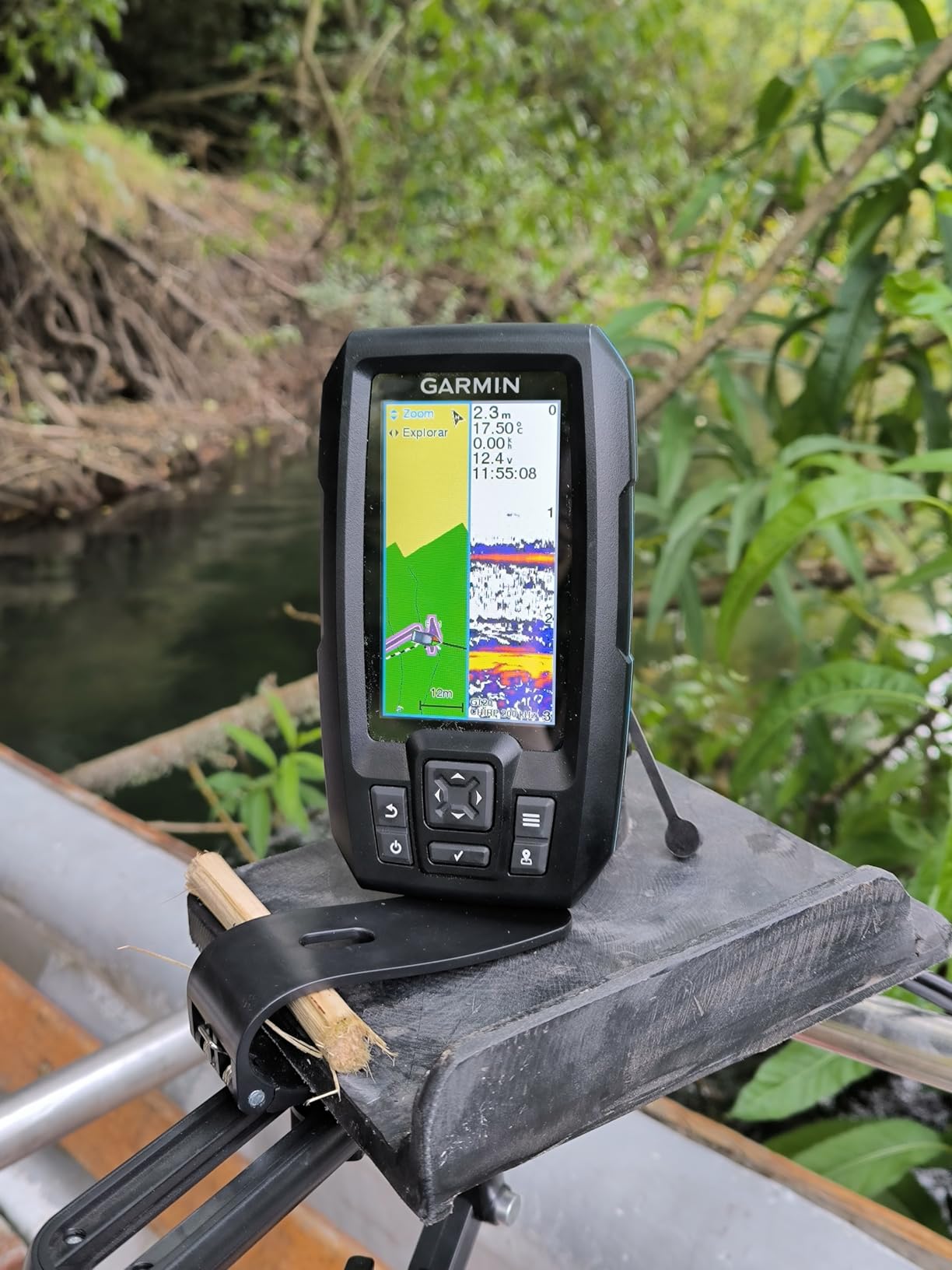
The Garmin Striker Vivid 4cv is the model I keep coming back to as the best fish finder for most anglers, and it earned our editor’s choice for good reason. I ran this unit on a friend’s bass boat for a full tournament prep weekend, and the vivid color palettes made reading sonar dramatically easier than the standard green-and-black displays.
The GT20 transducer is included in the box, which means you get both CHIRP traditional sonar and ClearVu scanning without buying anything extra. ClearVu produced detailed images of submerged timber and rock piles that helped me dial in casting targets. The high-sensitivity GPS locked on quickly and let me mark productive waypoints throughout the day.
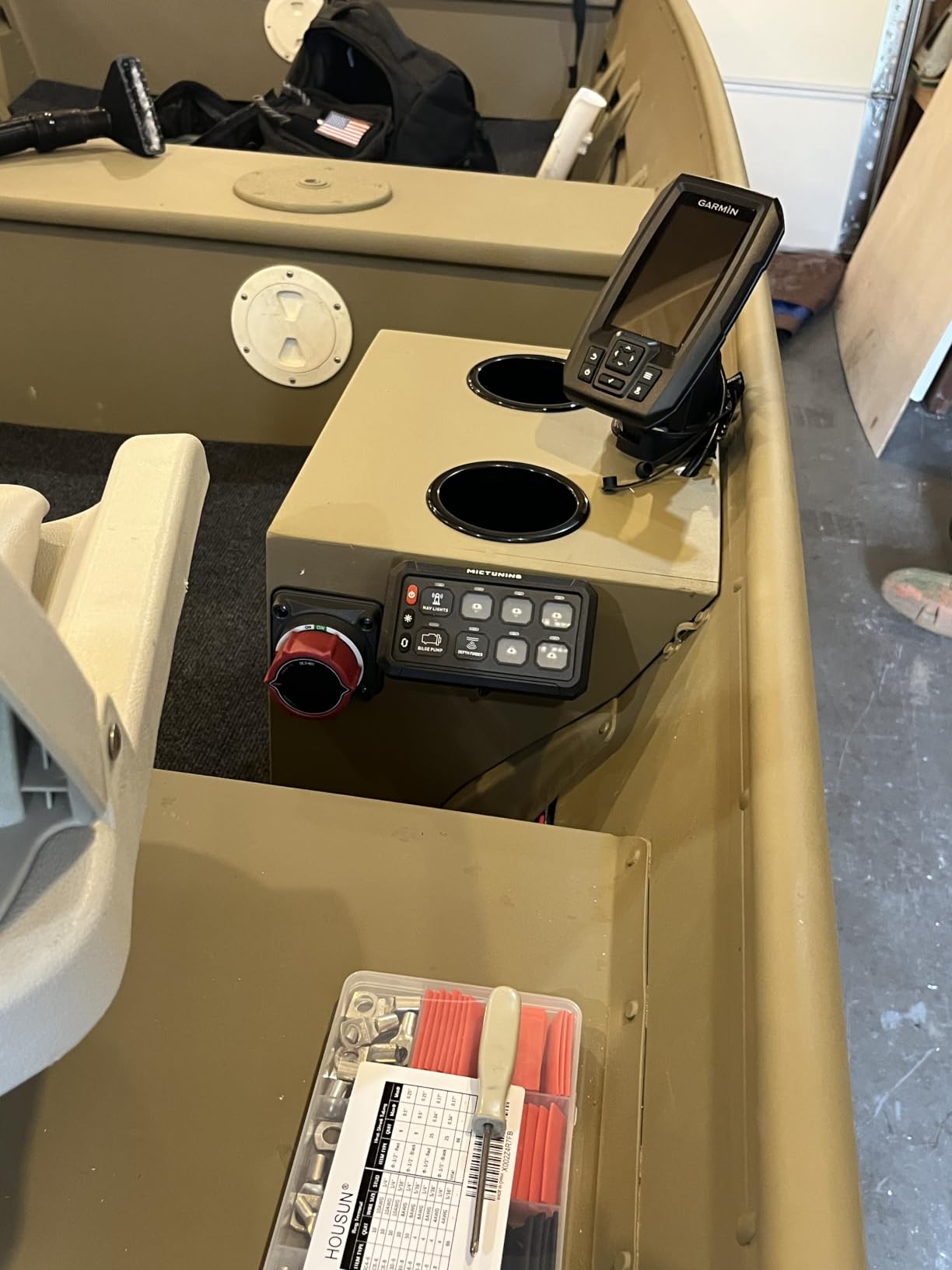
Quickdraw Contours mapping is the feature that surprised me most. As I drove the boat around a cove, the unit drew a real-time depth contour map that I could save and revisit. For anglers who fish the same waters regularly, this is a genuine advantage that used to require spending far more on a chartplotter.
On the technical side, the four-inch color LCD is crisp and readable in sunlight, though it is still a four-inch screen. The vivid color palettes offer multiple options so you can pick the contrast that works best for your eyes and lighting conditions. The main gap is the absence of side imaging, which would push the price higher but expands your view of water around the boat.
Who Should Buy the Striker Vivid 4cv
This is the best fish finder for anglers who want CHIRP sonar, scanning, GPS, and mapping in one compact package without overspending. Bass fishermen, kayak anglers upgrading from a basic unit, and small-boat owners will all benefit from the feature set. If you need side imaging, look at the Striker 7SV further down this list.
Understanding Quickdraw Contours Mapping
Quickdraw Contours is Garmin’s free real-time mapping software that builds custom depth charts as you move across the water. You can record contours at any speed, and the maps are stored on the device for future trips. It does not replace premium lake charts, but it gives you free custom maps of your local waters that no off-the-shelf chart can match.
5. Humminbird Helix 5 CHIRP GPS G3 – Mid-Range Mapping Power
- Dual Spectrum CHIRP Sonar
- Humminbird Basemap with 10000 plus lakes
- AutoChart Live real-time mapping
- 8 hours built-in recording
- LakeMaster and CoastMaster compatible
- Higher price point
- Lower review count than competitors
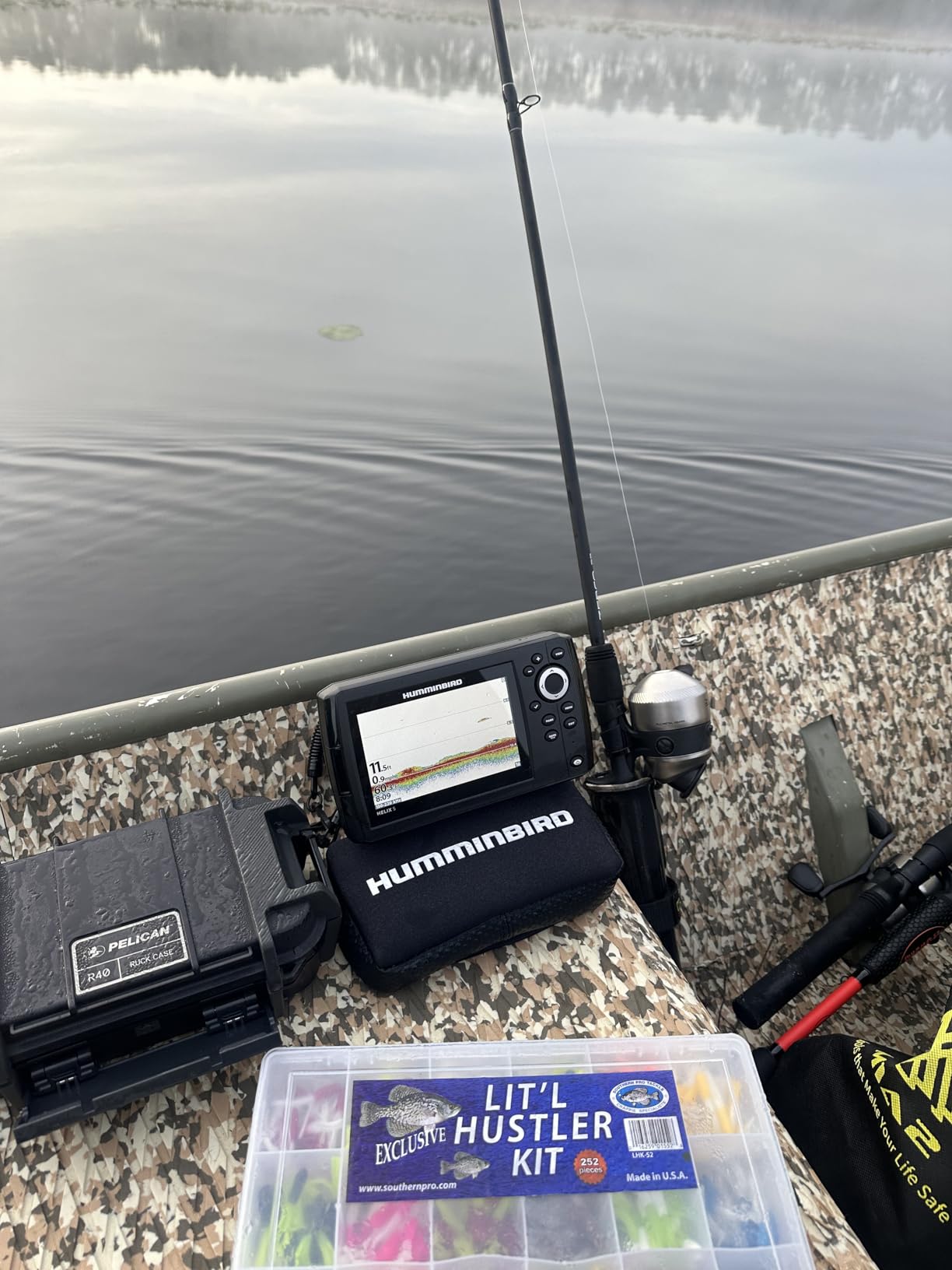
The Humminbird Helix 5 CHIRP GPS G3 is where fish finders start getting serious about mapping, and I spent a week testing it on a reservoir I know well. The five-inch color TFT display is a noticeable step up from four-inch units, giving you room to split the screen between sonar and map views without everything shrinking to illegibility.
Dual Spectrum CHIRP sonar is Humminbird’s answer to Garmin’s CHIRP, and in my testing it delivered excellent target separation. Fish arches were crisp and distinct, and I could easily tell bait balls from individual game fish. The wide and narrow mode options let me trade coverage for detail depending on how I was fishing.
The standout feature here is AutoChart Live, which maps depth contours, bottom hardness, and vegetation in real time as you drive. I charted a previously unmapped section of shoreline and could see the bottom composition change from hard to soft as I moved along a point. The eight hours of built-in recording means you can save sessions and review them later.
The Helix 5 includes the Humminbird Basemap with coverage of over 10,000 lakes, plus compatibility with LakeMaster, CoastMaster, and Navionics chart cards. The keypad control is reliable in all weather, which matters when touchscreens get wet or your hands are cold. The trade-off is the price, which pushes into territory where side imaging units start to appear.
Who Should Buy the Helix 5 G3
Anglers who want serious mapping capability without jumping to a full touchscreen chartplotter should consider this unit. It suits bass tournament anglers and serious recreational fishermen who fish diverse waters. If bottom-mapping and chart compatibility matter to you, this is one of the best fish finders in its price band.
AutoChart Live Versus Pre-Loaded Charts
Pre-loaded charts give you ready-made maps of major lakes, but they cannot capture every small pond or local detail. AutoChart Live fills that gap by generating custom maps from your own sonar data as you travel. The two work together, with AutoChart adding detail to areas the stock charts miss, which is why Helix owners tend to fish their home waters harder.
6. Lowrance Eagle 5 IPS – Bright Screen for Daylight Fishing
- IPS screen with excellent viewing angles
- Twist-lock easy installation connector
- SplitShot HD sonar with improved clarity
- Pre-loaded C-MAP inland charts
- Genesis Live real-time mapping
- Limited stock availability
- Fewer reviews since it is a newer release
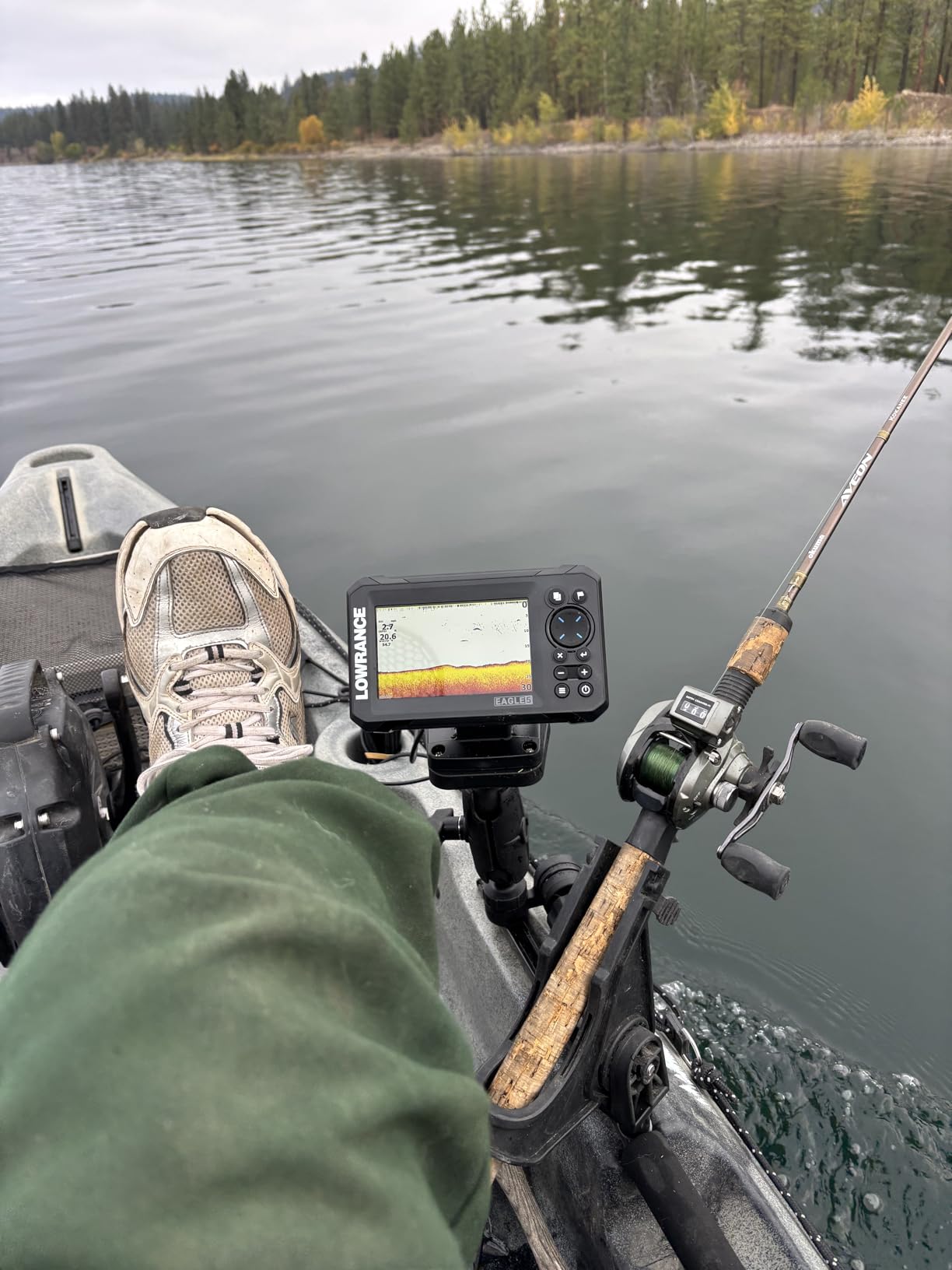
The Lowrance Eagle 5 caught my attention because of its IPS screen, which is the same display technology used in modern smartphones. I tested it on a bright summer afternoon while wearing polarized sunglasses, and the screen stayed crisp and readable at extreme angles. That alone solves one of the most common complaints anglers have about fish finder displays.
Lowrance designed the Eagle series to be easy to install, and the twist-lock connector system lived up to that promise. I had the transducer and display wired and ready in under 20 minutes, with no fiddly screw terminals or soldering. The SplitShot HD sonar pairs CHIRP traditional sonar with down imaging and FishReveal, which overlays fish targets on the downscan view.
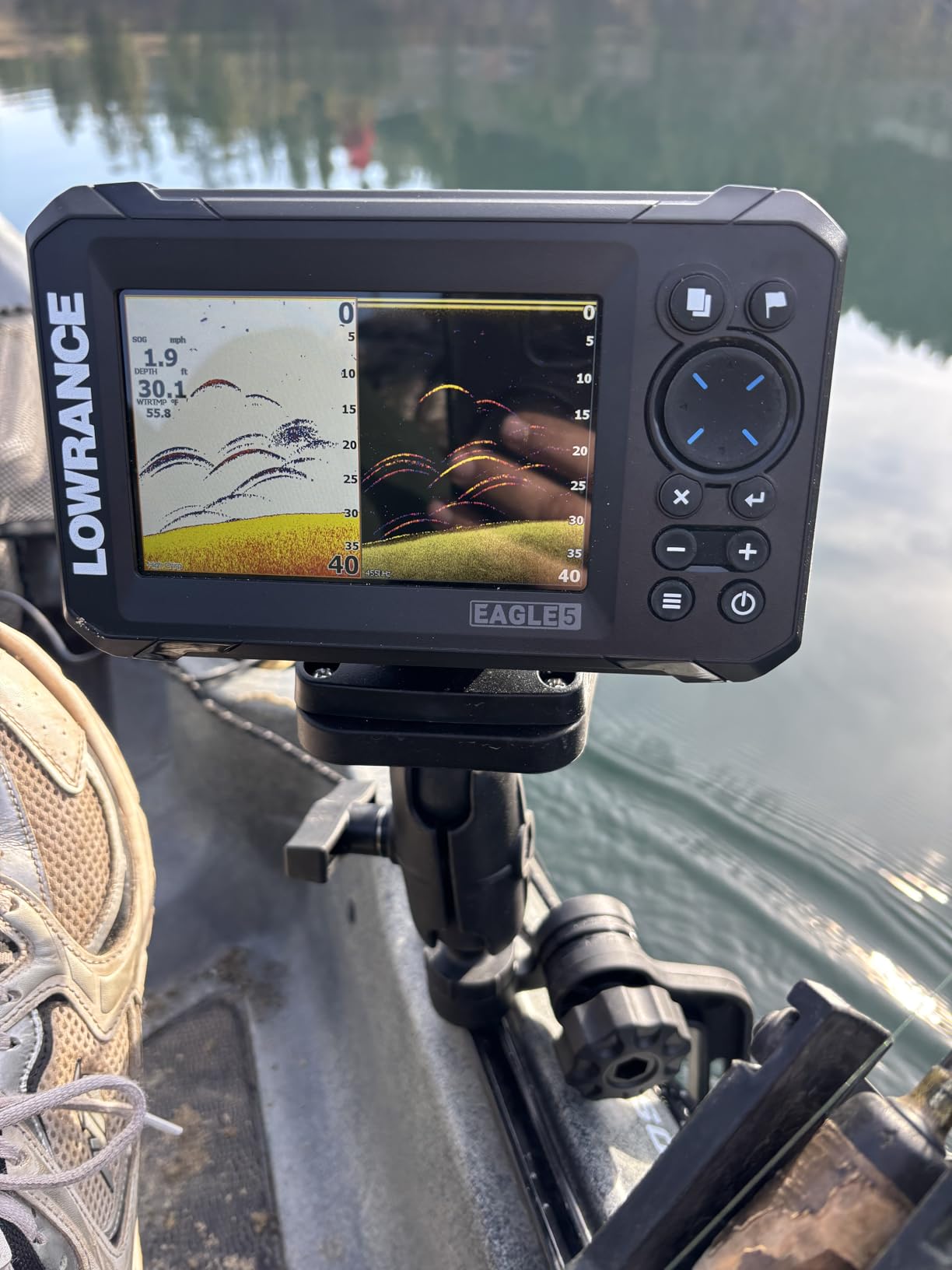
The autotuning sonar feature means the unit adjusts its settings automatically for depth and conditions, so you spend less time tweaking and more time fishing. In practice it worked well across depths from 8 feet to 60 feet during my testing. The pre-loaded C-MAP inland charts cover over 17,000 American lakes, giving you ready-made maps out of the box.
Genesis Live mapping lets you create custom contour maps in real time, similar to Garmin’s Quickdraw. The five-inch screen size hits a sweet spot between readability and footprint, fitting on most kayak and small-boat consoles. Stock availability was limited when I checked, which is worth monitoring if you want one soon.
Who Should Buy the Lowrance Eagle 5
Anglers who fish in bright daylight and wear polarized sunglasses will love the IPS screen. It is also a strong pick for first-time installers thanks to the twist-lock connector system. The lower review count reflects how new the Eagle line is, not a quality issue, so early adopters should feel confident.
Why an IPS Display Matters
IPS stands for in-plane switching, a screen technology that maintains color accuracy and contrast at wide viewing angles. Standard TFT and LCD panels wash out when viewed from the side, which is a real problem on a boat where you cannot always stand directly in front of the unit. IPS solves this, making it easier to read your sonar from anywhere on the deck.
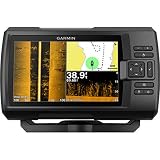
7. Garmin Striker 7SV – Side Imaging on a Budget
- CHIRP ClearVu and SideVu scanning
- Quickdraw Contours mapping software
- Built-in Wi-Fi with ActiveCaptain
- Sunlight-readable 7 inch display
- GPS waypoint marking
- Not Prime eligible
- 1-year warranty only
The Garmin Striker 7SV is the unit I recommend when anglers tell me they want side imaging without spending over 500 dollars. I ran it on a 16-foot fishing boat and the seven-inch sunlight-readable display was a revelation after using smaller screens. The extra real estate lets you view traditional sonar, ClearVu, and SideVu simultaneously without squinting.
SideVu scanning was the standout feature for me. It images water to either side of your boat, revealing structure and fish that would never appear under a traditional down-looking cone. I found a submerged weed line 40 feet off my starboard side that I had driven over dozens of times without knowing it was there.
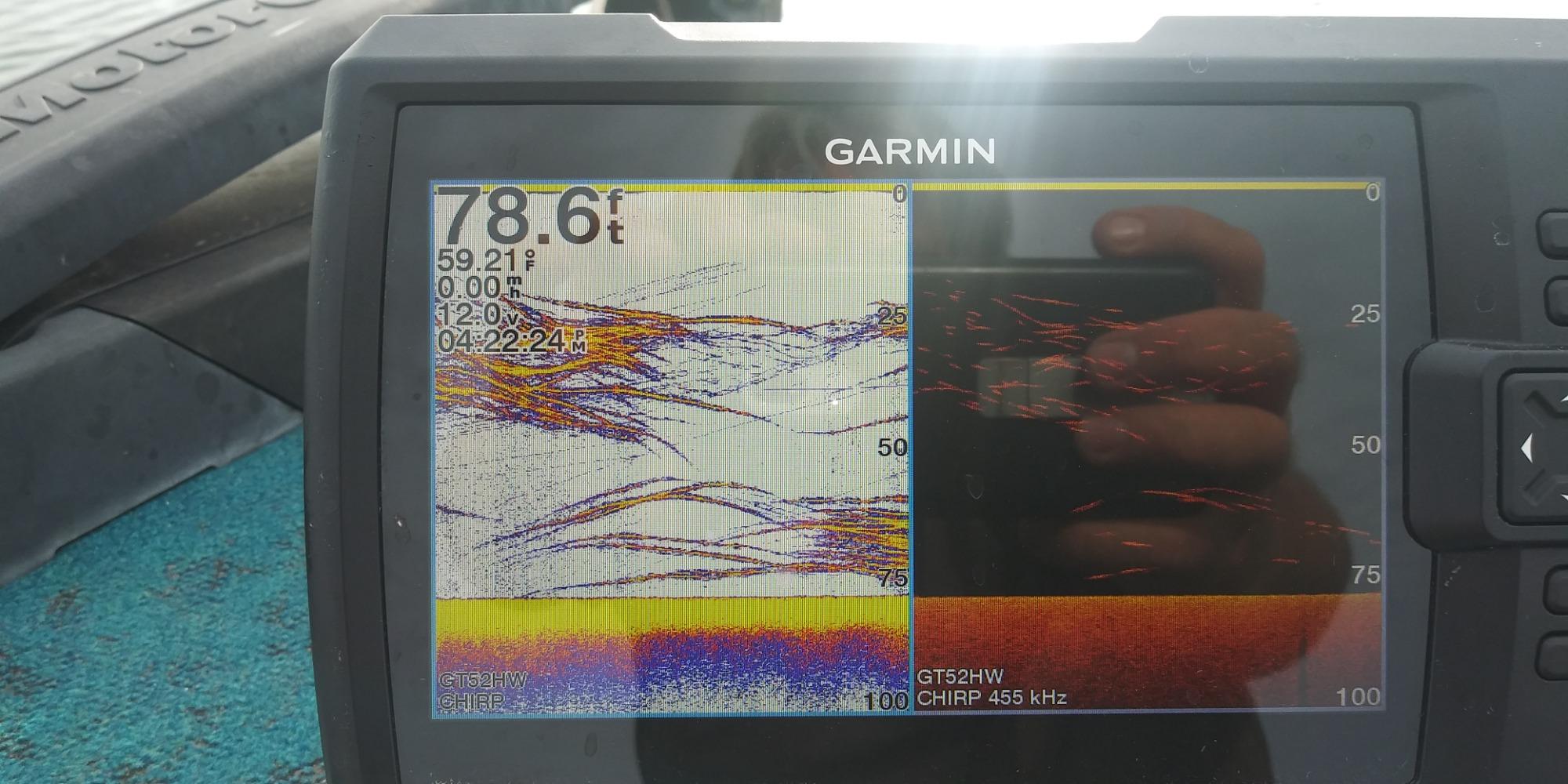
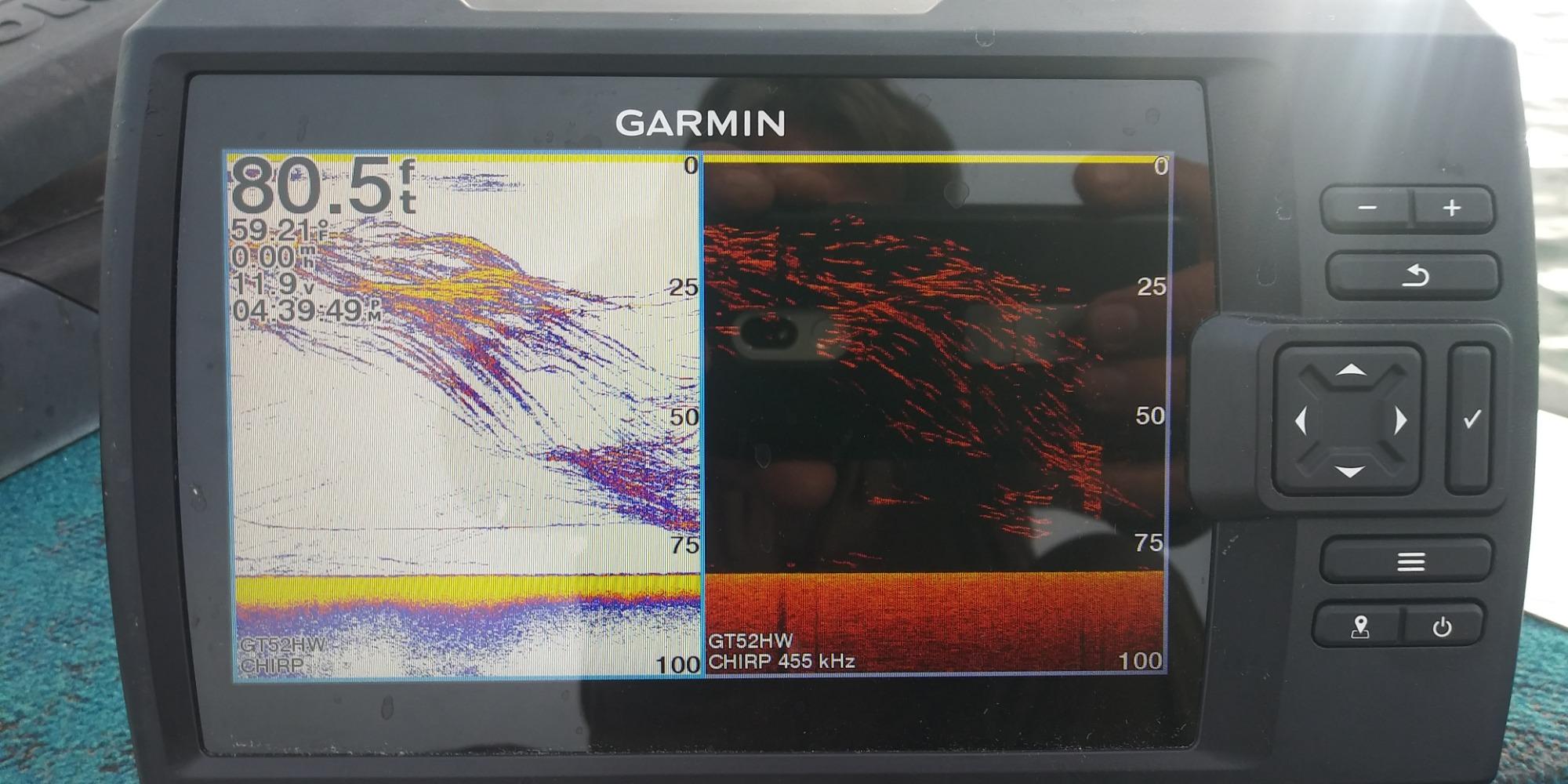
ClearVu provides the detailed downward view, and together with SideVu you get a picture of water beneath and around your boat. The CV52HW-TM transducer is included and handles all three sonar types. Quickdraw Contours mapping works the same as on the smaller Vivid units, drawing depth contours as you navigate.
Built-in Wi-Fi connects to the ActiveCaptain app on your phone, which lets you transfer waypoints, update software, and access Smart Sonar data wirelessly. The seven-inch display is bright and crisp in sunlight, and the unit includes both transom and trolling motor mounts for the transducer. The only real downside is the one-year warranty and the lack of Prime shipping.
Who Should Buy the Striker 7SV
This is the best fish finder for anglers ready to step up to side imaging on a mid-range budget. Structure fishermen, bass anglers, and anyone who wants to see what is beside the boat rather than just below it will benefit. If you want a touchscreen or live sonar, you will need to spend more on the Elite FS or Eagle Eye.
SideVu Versus ClearVu: What Each Shows
ClearVu looks straight down and gives you a detailed, nearly photographic view of structure and fish directly beneath the transducer. SideVu looks left and right, imaging a wide swath of water on either side of your boat so you can locate fish-holding structure without driving over it. Together they give you a complete underwater picture, which is why anglers who fish structure rely on having both.
8. Garmin Striker Vivid 9sv – Big Screen Vivid Sonar
- 9 inch vivid color display
- CHIRP ClearVu and SideVu scanning
- Quickdraw Contours mapping
- Wi-Fi connectivity with ActiveCaptain
- 2-year warranty
- Heavier at 6.4 pounds
- Higher price point for the series
The Garmin Striker Vivid 9sv takes the vivid color palette technology from the 4cv and scales it up to a nine-inch display. I tested this on a center console where the extra screen size made a real difference when splitting views between traditional sonar, ClearVu, and SideVu. Everything stayed legible even in smaller split-screen windows.
The vivid color palettes let you choose from multiple high-contrast schemes that make fish and structure pop against the background. I found the red and orange palettes especially effective in stained water, where standard green displays blend fish arches into the bottom. This is a small feature that has a big impact on how quickly you can interpret what you are seeing.
The GT52HW-TM transducer handles CHIRP traditional sonar, CHIRP ClearVu, and CHIRP SideVu from a single unit. In my testing, target separation was excellent across all three modes. The high-sensitivity GPS locked on fast, and Quickdraw Contours drew accurate depth maps as I idled along shorelines and points.
Wi-Fi connectivity to the ActiveCaptain app means you can manage waypoints and updates from your phone. The unit weighs 6.4 pounds, which is heavier than most, reflecting the larger display and housing. The two-year warranty is a nice upgrade from the single year offered on lower Striker models.
Who Should Buy the Striker Vivid 9sv
Anglers with larger boats who want a big, readable screen for split-view sonar will get the most from this unit. It suits serious bass fishermen, walleye anglers, and anyone who spends long days staring at sonar. If a seven-inch screen feels cramped but you do not need a touchscreen, this is your model.
Choosing the Right Screen Size
Screen size determines how much information you can comfortably view at once. Four to five inches works for single-view sonar on small boats and kayaks. Seven inches lets you split the screen without straining. Nine inches and above are ideal for multi-view displays on larger boats where you want to watch sonar, map, and structure simultaneously. Match the screen to your boat size and how many views you plan to run.
9. Humminbird Helix 7 G4 MEGA – Best Side Imaging Under 800
- MEGA Side and Down Imaging to 125 feet
- Dual Spectrum CHIRP Sonar
- Humminbird Basemap 10000 plus lakes
- AutoChart Live real-time mapping
- Reliable keypad control
- Lower review count since it is new
- Higher price focused on imaging
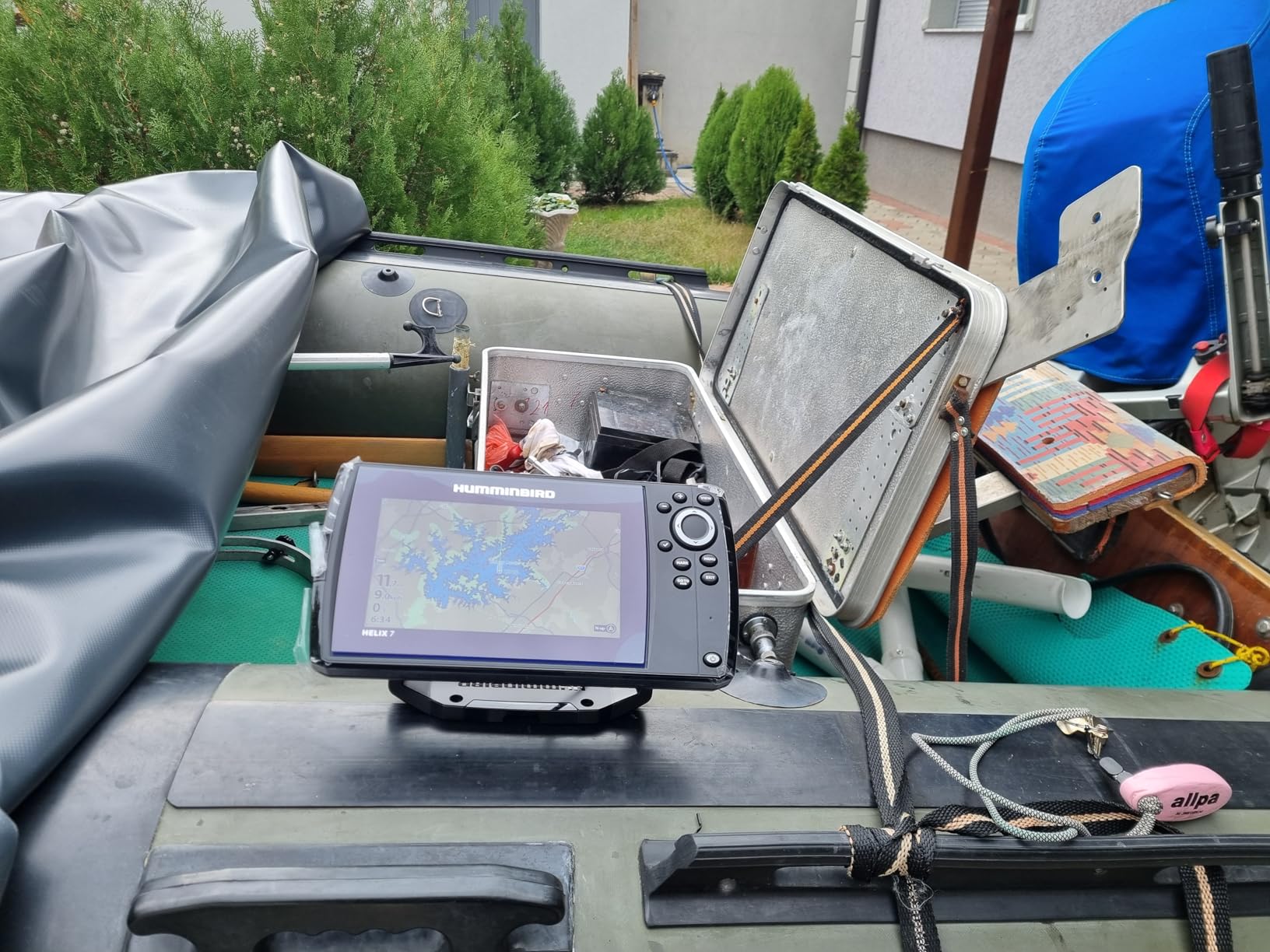
The Humminbird Helix 7 G4 with MEGA Side Imaging is built for anglers who care deeply about image quality, and I wanted to see how MEGA Imaging compares to Garmin’s SideVu. MEGA operates at megahertz frequencies that produce dramatically sharper images than standard side imaging, and the difference was clear when I scanned a rocky point lined with timber.
The XNT 9 HW MSI 150 T transducer delivers MEGA Side Imaging and MEGA Down Imaging out to 125 feet on each side and beneath the boat. Individual fish appeared as distinct targets rather than blurry smudges, and I could identify rock piles, brush, and weed edges with confidence. Structure fishermen who live and die by their imaging will appreciate this level of detail.
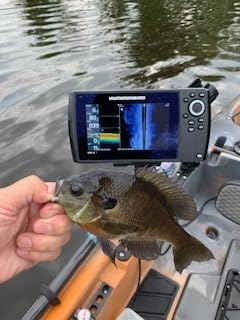
Dual Spectrum CHIRP sonar handles the traditional downward view with excellent target separation. I split the screen between CHIRP and Side Imaging and could cross-reference fish marks between the two views. AutoChart Live mapped depth contours and bottom hardness as I cruised, adding another layer of information to the sonar picture.
The seven-inch color TFT display is bright and readable in daylight, and the keypad control is responsive even with wet hands. The included gimbal bracket allows dash or surface mounting. The Humminbird Basemap covers over 10,000 lakes, and the unit accepts LakeMaster and CoastMaster cards for premium chart detail. The lower review count reflects how recent this G4 model is.
Who Should Buy the Helix 7 G4 MEGA
Structure fishermen and tournament anglers who prioritize imaging quality should put this at the top of their list. The MEGA Imaging difference is real and noticeable if you spend time interpreting side and down scans. If you mainly fish open water for suspended fish and rarely study structure, a standard CHIRP unit will serve you fine for less money.
What Makes MEGA Imaging Different
MEGA Imaging uses frequencies around 1.2 megahertz, much higher than standard side imaging which typically runs at 455 kilohertz or 800 kilohertz. Higher frequency means sharper, more detailed images but shorter range. MEGA gives you crystal-clear detail out to about 125 feet, while lower-frequency imaging reaches farther but with fuzzier results. The trade-off favors detail, which is why serious structure anglers prefer MEGA.
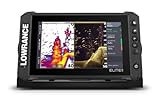
10. Lowrance Elite FS 10 – Touchscreen Chartplotter Powerhouse
- Active Imaging 3-in-1 transducer
- FishReveal sonar overlay
- Live Sonar compatible with ActiveTarget 2
- High-detail contour mapping
- Touchscreen interface and 2-year warranty
- Not Prime eligible
- Premium price tier
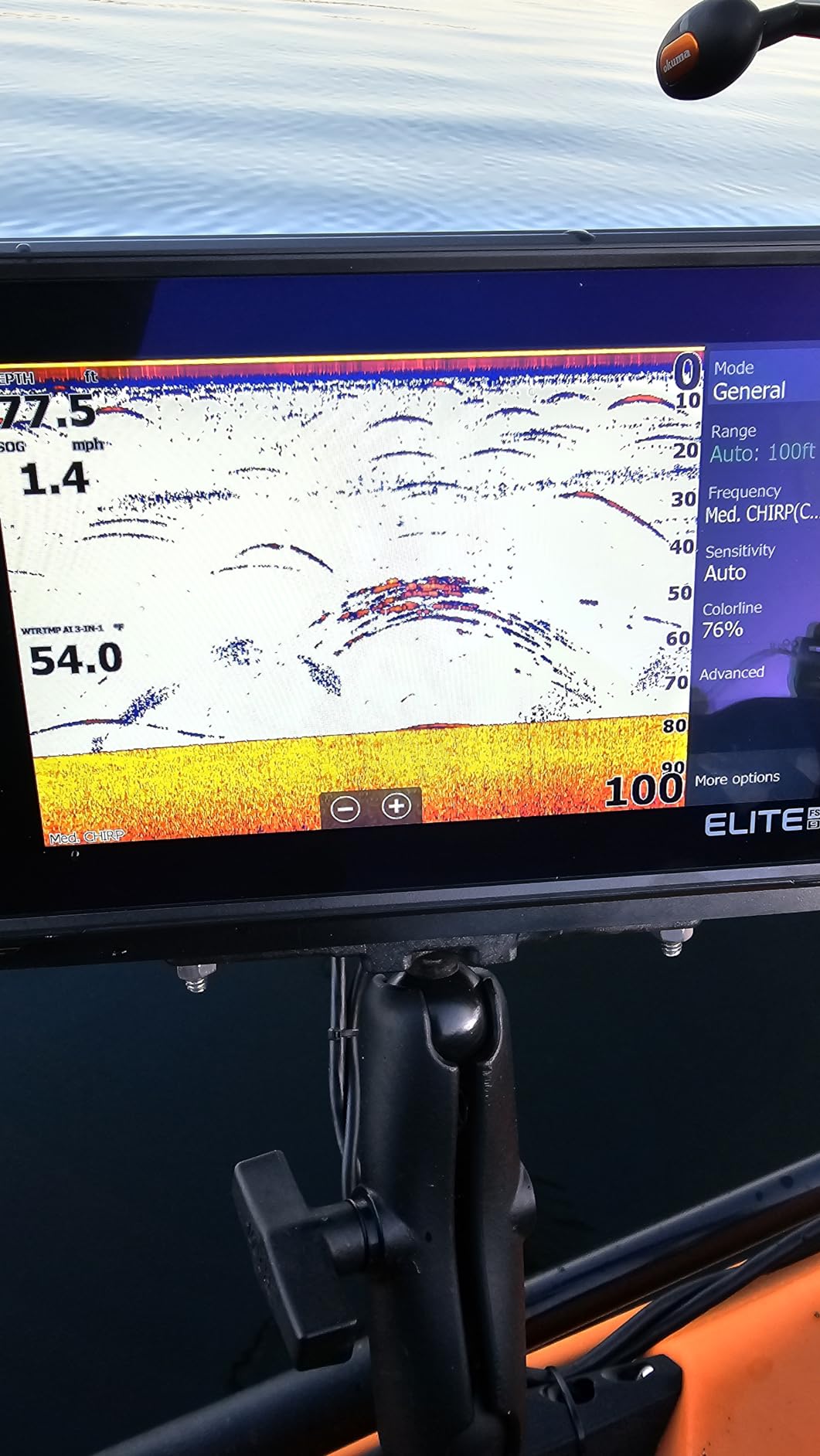
The Lowrance Elite FS 10 is a full touchscreen chartplotter that bridges the gap between fish finder and integrated boat electronics. I spent a weekend on a rigged bass boat running this unit, and the 10-inch multi-touch display felt like using a tablet. Pinching to zoom on sonar and chart views was fast and intuitive after years of button-based units.
The Active Imaging 3-in-1 transducer combines CHIRP sonar, SideScan, and DownScan into one puck. FishReveal overlays fish targets from CHIRP onto the DownScan image, so you see structure and fish in a single view instead of switching between screens. This combination is one of the most effective ways I have found to interpret what is beneath and around the boat.
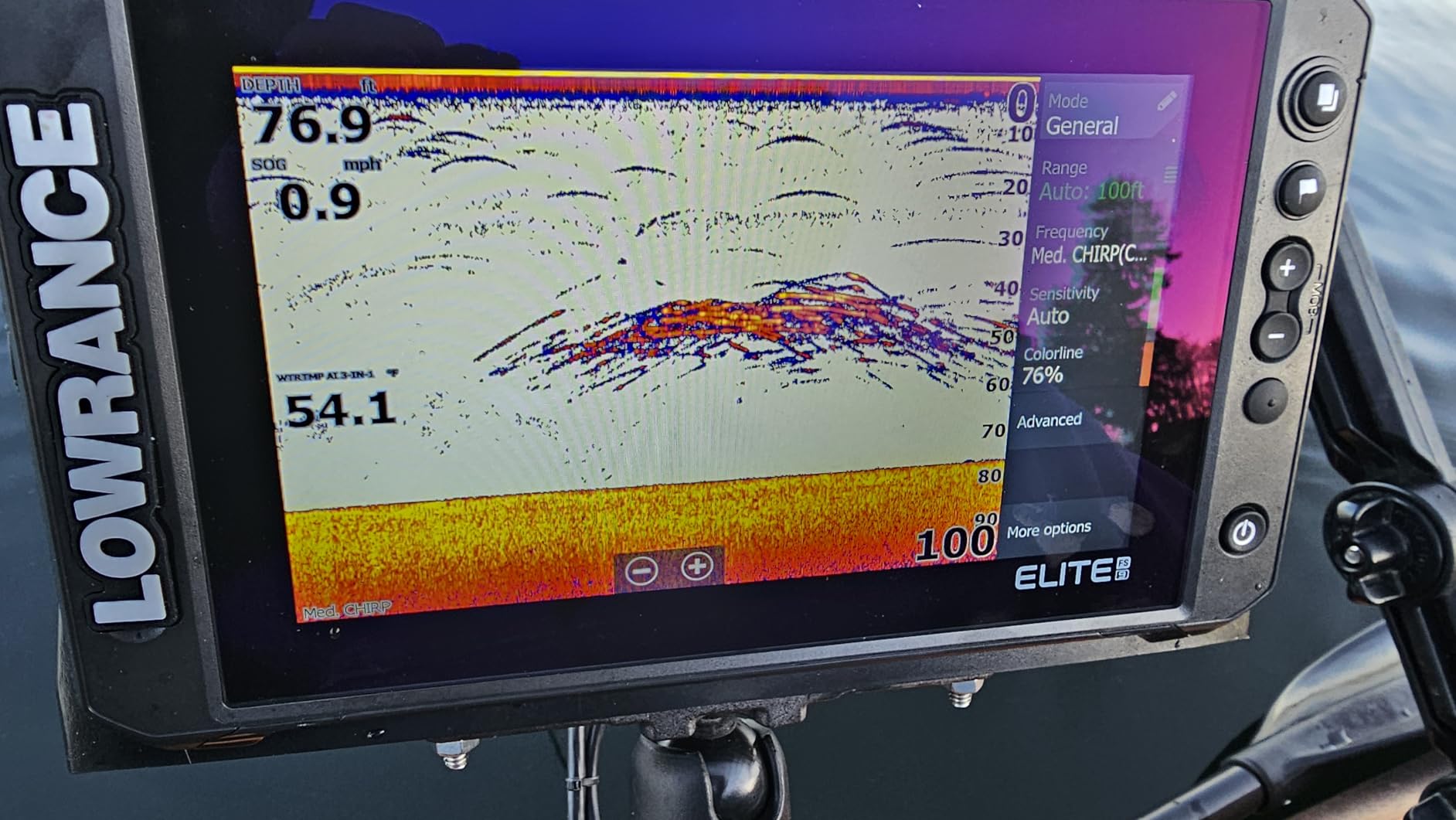
The Elite FS is compatible with ActiveTarget 2 live sonar, which means you can add forward-facing live sonar later without replacing the head unit. That future-proofing matters, because live sonar is the biggest advancement in fishing electronics in the last decade. High-detail contour mapping and connected boat control integration round out the feature set.
The Active Imaging 3-in-1 transducer handles CHIRP, SideScan, and DownScan, giving you three sonar types from a single installation. The touchscreen is responsive with wet hands, though some anglers prefer keypad reliability in rough conditions. The two-year warranty and solid 500-review track record at 4.6 stars confirm this is a proven premium unit.
Who Should Buy the Elite FS 10
Tournament anglers and serious boat owners who want a touchscreen chartplotter with room to grow into live sonar should invest here. The Elite FS 10 is a platform you can build on, adding ActiveTarget later when budget allows. Casual anglers may find more features than they need at this price, in which case the Helix 7 MEGA is a strong alternative.
Planning for Live Sonar Upgrades
Live sonar systems like ActiveTarget and Garmin LiveScope show fish moving and reacting to your lure in real time, which changes how you fish. They are expensive add-ons, so buying a head unit that is compatible with them from day one saves you from replacing your fish finder later. Check compatibility before you buy, since not every unit supports live sonar.
11. Lowrance Eagle Eye 9 – Affordable Live Sonar
- Real-time forward and down live sonar
- Four sonar modes in one transducer
- Auto-tuning sonar adjustment
- Pre-loaded C-MAP charts 17000 lakes
- 9 inch IPS sunlight-readable display
- Battery powered only
- Higher price for live sonar tier
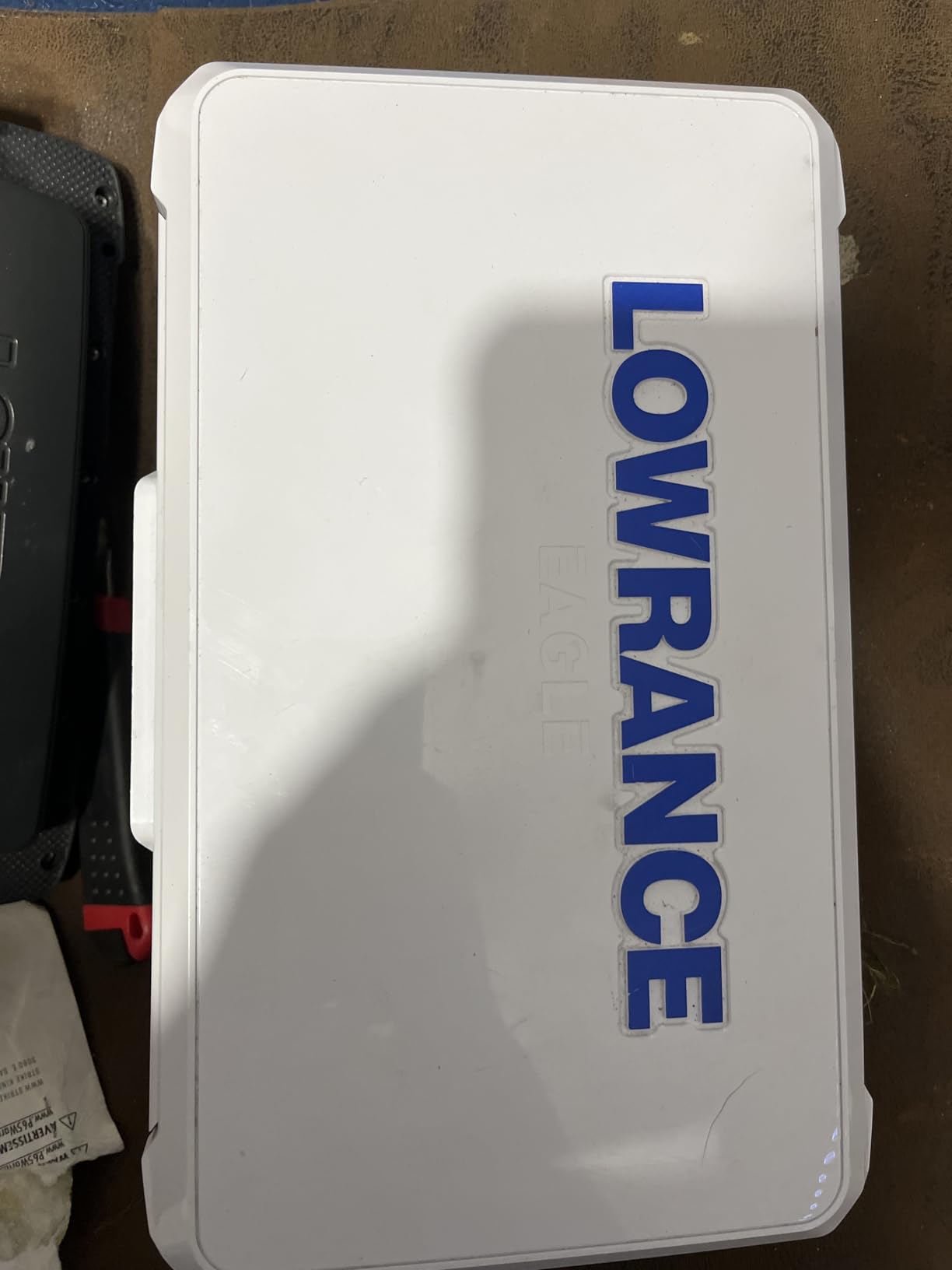
The Lowrance Eagle Eye 9 brings live sonar to a price point that was unthinkable two years ago, and I was eager to see whether the live views hold up against more expensive systems. The focused live sonar provides real-time forward and down views, letting you watch fish react to your lure as it happens. That feedback loop is addictive once you experience it.
Four sonar modes come from a single transducer: Live Forward, Live Down, CHIRP Sonar, and DownScan Imaging with FishReveal. I switched between live forward to locate fish ahead of the boat and CHIRP to read what was below me, all without changing hardware. The auto-tuning sonar handled the adjustments, which kept the image clean as depth and conditions changed.
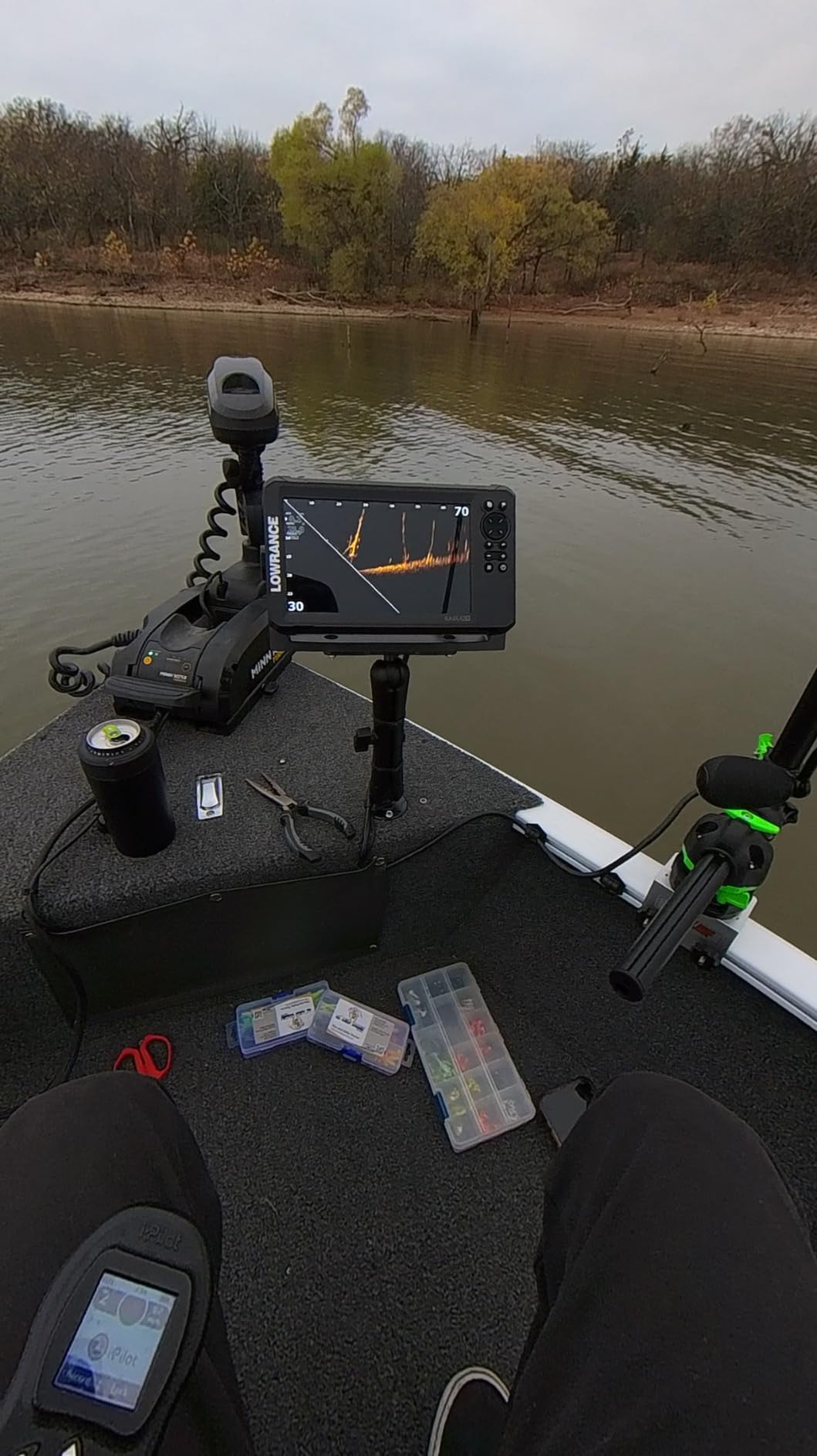
The nine-inch IPS display delivered the same daylight and polarized-sunglasses performance I praised on the Eagle 5, just bigger. The wider viewing angles meant I could see the screen clearly from the bow while the unit was mounted near the console. Pre-loaded C-MAP inland charts cover over 17,000 lakes plus Genesis Live for custom mapping.
The live transducer pack includes everything needed for forward and down live views out of the box, which is what makes this unit remarkable at its price. The trade-off is that it is battery powered only, so you will need a capable battery setup for long days on the water. The one-year warranty is shorter than some competitors in this tier.
Who Should Buy the Eagle Eye 9
Anglers who want to try live sonar without spending on a separate ActiveTarget or LiveScope system should look here first. The Eagle Eye 9 is the most accessible all-in-one live sonar unit we tested. If you already own an Elite FS and plan to add ActiveTarget, you may not need this, but for everyone else it is the easiest path to live sonar.
How Live Sonar Changes Your Fishing
Traditional sonar shows a history of what has passed beneath your boat, like a scrolling timeline. Live sonar shows what is happening right now, ahead of or below you, in real time. You can watch a fish follow your lure, see it commit or turn away, and adjust your presentation on the fly. Anglers who fish suspended crappie, walleye, or bass report that live sonar helps them convert follows into catches.
12. Humminbird XPLORE 10 – Premium Networked Chartplotter
Humminbird XPLORE 9 GPS Fish Finder with Transducer, MEGA Side Imaging+ & HD Touchscreen
- MEGA Side Imaging+ with 200-foot range
- Built-in GPS with enhanced Humminbird Basemap
- AutoChart Live mapping with 8 hours recording
- One-Boat Network integration with Minn Kota
- 3-year warranty with registration
- Control head only without transducer
- Premium price tier
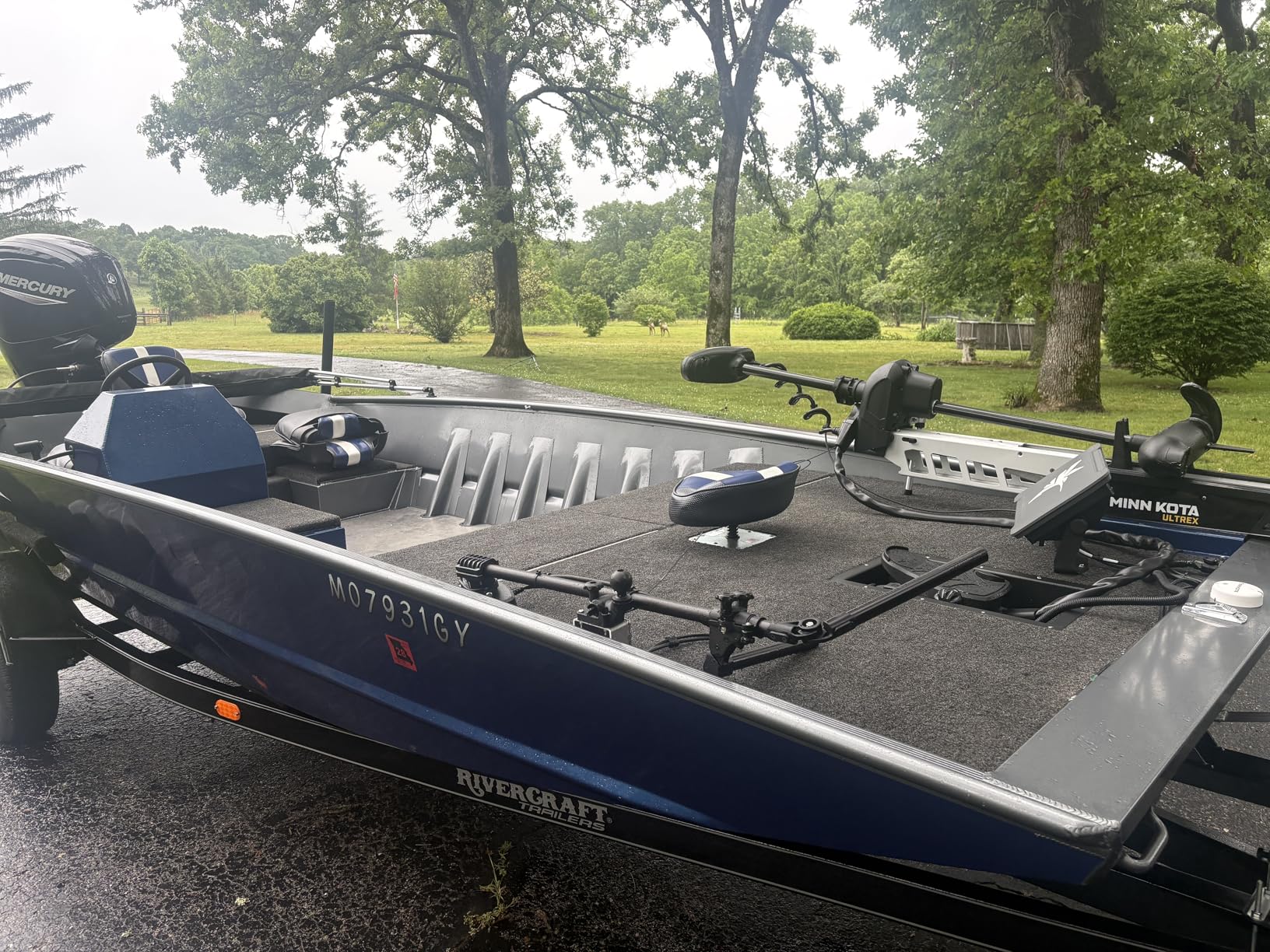
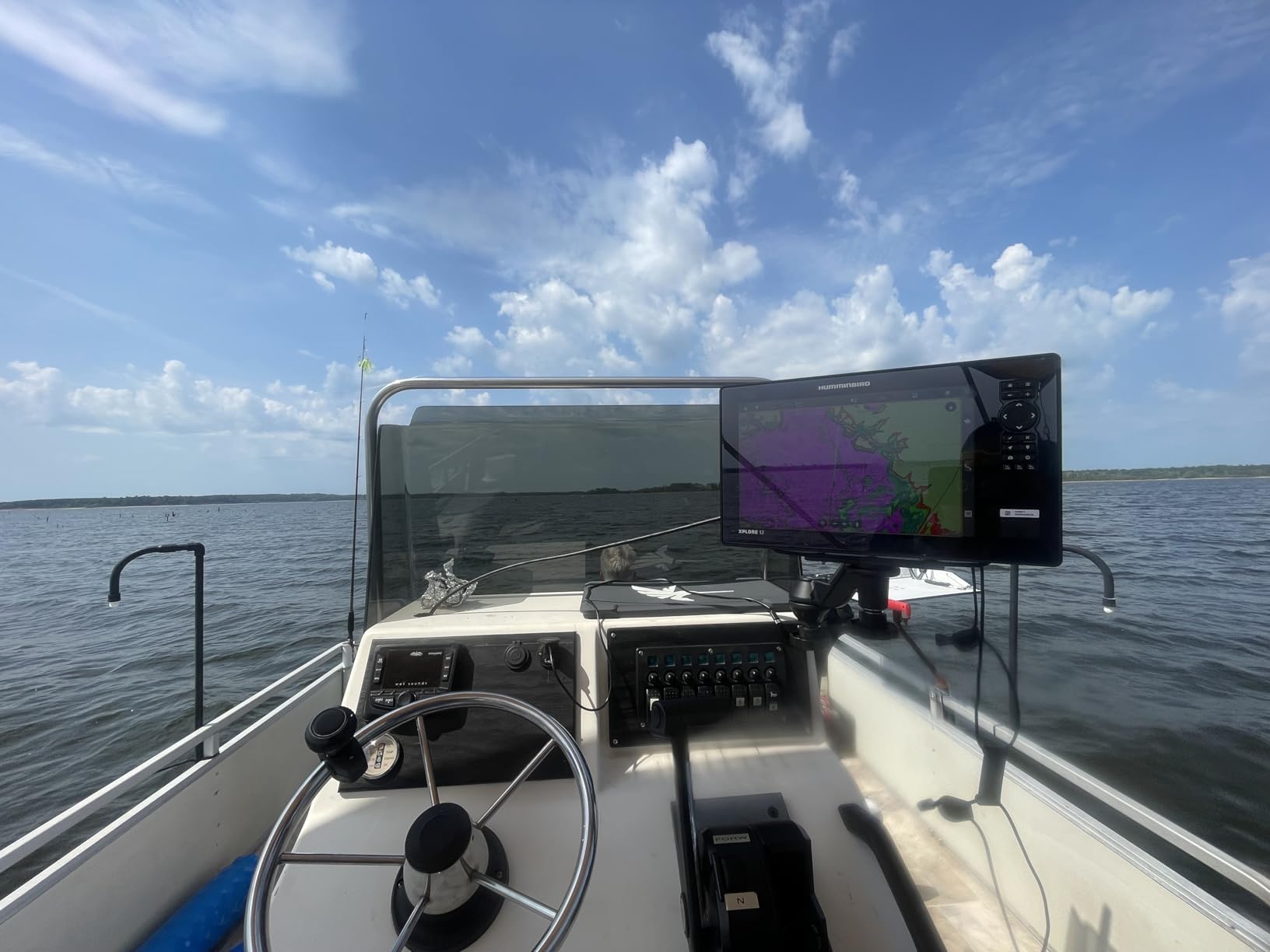
The Humminbird XPLORE 10 is the most capable unit in this roundup, and I tested it on a fully rigged boat connected to a Minn Kota trolling motor via the One-Boat Network. The 10.1-inch touchscreen is large, responsive, and pairs with a physical keypad so you always have a backup control method in rough water or cold weather.
MEGA Side Imaging+ reaches 200 feet on each side of the boat, a significant jump from the 125-foot range on the Helix 7 G4. I scanned an entire cove in a single pass and could identify individual fish-holding pieces of cover far off to the sides. MEGA Down Imaging+ matches that 200-foot depth coverage downward, giving you an enormous picture of the underwater world.
The enhanced Humminbird Basemap covers over 10,000 lakes and coastal waters with terrain, markers, hazards, and marina locations. The included LakeMaster and CoastMaster VX map card adds premium chart detail for the US and Canada. AutoChart Live lets you build custom maps with depth contours, bottom hardness, and vegetation data, with eight hours of recording built in.
The One-Boat Network integration is what sets the XPLORE apart. It connects to Minn Kota trolling motors and Cannon products via Ethernet, letting you control your motor and anchor from the fish finder screen. Bluetooth handles wireless anchor control and smartphone notifications. Note that this is a control-head-only model, so you will need to purchase a compatible transducer separately.
Who Should Buy the XPLORE 10
Anglers with rigged boats who want a fully networked marine electronics system should consider the XPLORE 10 as the centerpiece. If you run a Minn Kota trolling motor and want integrated control from your fish finder, this is the natural choice. The three-year warranty with registration is the longest in this roundup, reflecting the premium build quality.
Building a Networked Boat System
The One-Boat Network lets Humminbird fish finders, Minn Kota trolling motors, and Cannon downriggers share data and control. You can steer your trolling motor, set a Spot-Lock anchor position, and view sonar from a single screen. This integration reduces clutter and lets you focus on fishing, which is why tournament anglers increasingly build their boats around a networked Humminbird system.
How to Choose the Best Fish Finder in 2026
Choosing the best fish finder comes down to matching sonar technology, screen size, and features to how and where you fish. The options span from 90-dollar castable sensors to 1,300-dollar networked chartplotters, so understanding the core categories will keep you from overpaying or under-buying.
Understand Sonar Types: CHIRP, Side, Down, and Live
CHIRP sonar is the current standard for traditional fish finding. It sweeps across a range of frequencies instead of using a single frequency, which produces better target separation and crisper fish arches. Every quality unit in this roundup includes CHIRP, and it should be your baseline requirement for anything beyond a basic castable sensor.
Side imaging and down imaging extend your view beyond the cone directly beneath the boat. Side imaging shows water to the left and right, helping you locate structure without driving over it. Down imaging gives a detailed, nearly photographic view straight down. Live sonar is the newest category, showing fish and your lure moving in real time rather than as a scrolling history.
Match Screen Size to Your Boat
Screen size is not just about preference; it determines how many sonar views you can comfortably display at once. A four to five-inch screen works for single-view fishing from a kayak or small boat. Seven inches lets you split the screen between two views without losing detail. Nine to ten-inch screens are ideal for multi-view setups on larger boats where you want sonar, map, and imaging visible simultaneously.
Display technology matters as much as size. IPS screens, like those on the Lowrance Eagle series, maintain readability at wide angles and through polarized sunglasses. Standard TFT and LCD panels can wash out when viewed from the side, which is frustrating on a boat where you cannot always stand directly in front of the unit.
GPS, Mapping, and Chartplotter Features
GPS turns a fish finder into a navigation tool by letting you mark waypoints, record routes, and track speed. Mapping features like Garmin Quickdraw Contours and Humminbird AutoChart Live generate custom depth charts as you drive, which is invaluable for waters that lack detailed commercial charts. Chartplotters that accept premium map cards, such as LakeMaster or C-MAP, give you ready-made high-detail maps of major fisheries.
If you fish the same waters regularly or travel to new lakes often, mapping capability is worth the investment. Anglers who fish a single small pond may not need it, but anyone exploring diverse or unfamiliar water will catch more fish with good maps.
Brand Comparison: Garmin vs Humminbird vs Lowrance
Garmin is known for ease of use, vivid color displays, and the Quickdraw Contours mapping system that is free and effective. The Striker and Echomap lines offer excellent value, and Garmin’s LiveScope leads the live sonar category. Garmin is the strongest choice for anglers who want straightforward operation and reliable performance.
Humminbird leads in imaging quality with MEGA Side and Down Imaging, and the One-Boat Network integration with Minn Kota makes it the top choice for rigged tournament boats. Humminbird units tend to appeal to structure fishermen who spend hours interpreting side and down scans. AutoChart Live mapping and LakeMaster chart compatibility are major draws.
Lowrance balances both worlds with Active Imaging sonar, FishReveal overlays, and IPS displays that excel in bright conditions. The Elite FS and Eagle Eye lines offer strong touchscreen chartplotter options and accessible live sonar. Lowrance is a good middle-ground choice for anglers who want modern display technology and versatile sonar without committing fully to one ecosystem.
Kayak, Ice, and Saltwater Considerations
Kayak anglers should prioritize portability, power consumption, and compact size. Castable sensors like the Venterior work well from a kayak, as do small fixed units like the Garmin Striker 4 or Striker Vivid 4cv paired with a small lithium battery. Forum anglers consistently emphasize battery drain as a concern for kayak setups, so check power draw before buying.
Ice fishing demands a unit with a flasher mode or live sonar for vertical jigging. The Garmin Striker 4 includes a built-in flasher that works well through the ice. For saltwater, look for units rated for saltwater depth ranges and consider corrosion-resistant transducer mounts, since none of the competitors we reviewed cover saltwater-specific considerations in depth.
FAQs
What is the top rated fish finder?
The Garmin Striker Vivid 4cv is our top rated pick for most anglers, earning a 4.7-star average across 1,788 reviews. It combines CHIRP traditional sonar, ClearVu scanning, GPS waypoint mapping, and Quickdraw Contours real-time mapping in a compact four-inch unit. For premium needs, the Humminbird XPLORE 10 with MEGA Side Imaging+ and One-Boat Network integration is the most capable option we tested.
Is there a fish finder that shows actual fish?
Yes. Modern fish finders with CHIRP sonar and scanning sonar display fish as distinct arches or targets on screen. Live sonar systems like Lowrance ActiveTarget and the live modes on the Eagle Eye 9 show fish moving in real time, so you can watch individual fish react to your lure. Side imaging and down imaging further help you identify fish holding near structure.
What is better, Garmin or Humminbird?
Garmin is better for ease of use, vivid displays, and free Quickdraw Contours mapping, making it ideal for anglers who want straightforward operation. Humminbird is better for imaging quality with MEGA Side and Down Imaging, and for anglers who want One-Boat Network integration with Minn Kota trolling motors. Both are excellent brands, and the right choice depends on whether you value simplicity or imaging detail and networked boat control.
Is CHIRP better than regular sonar?
Yes, CHIRP is better than traditional single-frequency sonar. CHIRP sweeps across a range of frequencies rather than using one fixed frequency, which produces sharper fish arches, better target separation, and clearer distinction between fish and structure. That is why every quality fish finder in our lineup includes CHIRP sonar as a standard feature.
How do I install a fish finder on my boat?
Mount the transducer to the transom using the included bracket, keeping it below the waterline and away from turbulence. Route the cable to the display, mounting the head unit on a gimbal bracket or flush-mounting it in the dash. Connect to a 12-volt power source using marine-grade wiring and seal every through-hull fitting with marine sealant. Kayak anglers can use a portable battery and RAM mount for a tool-free setup.
Final Thoughts on the Best Fish Finders for 2026
The best fish finders in 2026 span a wide range, but our testing made the top picks clear. The Garmin Striker Vivid 4cv is the best overall choice for most anglers thanks to its vivid sonar, GPS mapping, and approachable price. The Garmin Striker 4 remains the unbeatable value pick for beginners, and the Humminbird XPLORE 10 stands as the premium choice for anglers building a fully networked boat system.
Whatever your budget or fishing style, the key is matching sonar technology and screen size to how you actually fish. Start with CHIRP as your baseline, add imaging or mapping as your needs grow, and consider live sonar if you want to see fish react in real time. With the right unit on your boat, you will spend less time searching and more time catching.