
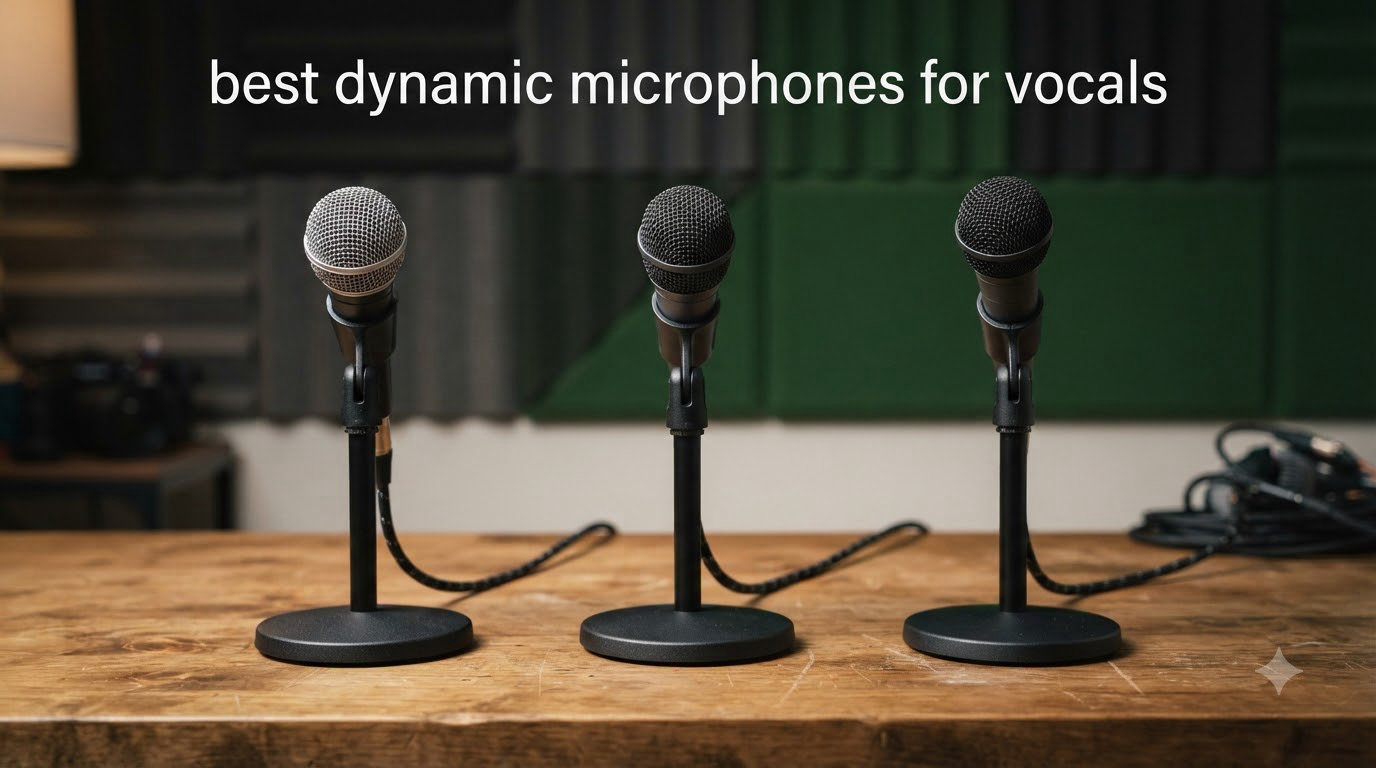
I bought my first dynamic microphone in my early twenties and watched it survive six years of touring, three accidental drops, and one very enthusiastic drummer. That same reliability is exactly why I keep recommending dynamic mics to anyone who wants a vocal sound they can trust.
After spending weeks testing seven different models in home studios, rehearsal rooms, and even a small radio booth, I have a strong sense of which truly belong on a list of the best dynamic microphones for vocals in 2026. These are the workhorses of live stages, radio booths, and bedroom podcast setups alike.
Dynamic microphones convert sound into an electrical signal through a coil attached to a diaphragm moving inside a magnetic field. That simple construction makes them tough, forgiving in untreated rooms, and able to handle loud singers without distorting. The seven models below cover every realistic budget and use case, from a tight-budget handheld to a broadcast-grade studio icon.
Before the reviews, here is a quick note on the signal chain. Dynamic mics need a real XLR input plus a preamp that delivers enough clean gain. Most entry-level audio interfaces will power an SM58 without issue, but moving-coil broadcast mics like the SM7B often want 60 dB of gain or more.
If your interface runs hot, you may need an inline booster like a Cloudlifter to get the most out of these pickups. All seven mics below are wired XLR, none need phantom power, and every one of them will work with a basic interface.
Table of Contents
Top 3 Picks for Best Dynamic Microphones for Vocals
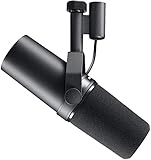
Shure SM7B Dynamic Studio Microphone
- Wide 50Hz-20kHz range
- Air suspension shock isolation
- Built-in pop filter
- Pro XLR output

Shure SM58-LC Dynamic Vocal Microphone
- Cardioid pattern
- 50Hz-15kHz response
- Built-in pop filter
- Road-ready metal

SE Electronics V7 Dynamic Microphone
- Supercardioid isolation
- Aluminum voice coil
- All-metal housing
- Patented shock mount
Best Dynamic Microphones for Vocals in 2026: Quick Comparison
| Product | Specifications | Action |
|---|---|---|
| Shure SM58-LC |
|
Check Latest Price |
| Shure SM7B |
|
Check Latest Price |
 Shure BETA 58A Shure BETA 58A |
|
Check Latest Price |
 Sennheiser e 935 Sennheiser e 935 |
|
Check Latest Price |
| SE Electronics V7 |
|
Check Latest Price |
 Sennheiser MD 421 Kompakt Sennheiser MD 421 Kompakt |
|
Check Latest Price |
 Electro-Voice RE20 Electro-Voice RE20 |
|
Check Latest Price |
1. Shure SM58-LC – The Industry Standard That Earns Its Reputation
- Legendary vocal clarity
- Trusted worldwide
- Cardioid pattern
- Pop protection
- Durable metal
- XLR cable not included
- Needs preamp for gain
I have owned three SM58s over the years, and I have never had one fail on me. The cardioid pickup pattern is forgiving enough that beginners can hand it to any singer and still get a usable vocal take.
With a frequency response tuned from 50 Hz to 15 kHz and a subtle midrange lift, the SM58 brings out the warmth in voices without sounding boxy. I tracked lead vocals on a folk EP with one and the engineer asked me what condenser I was using, which tells you everything about how clean this moving-coil mic can sound in a treated room.
The build is exactly what you would expect from a stage workhorse. The metal handle shrugs off drops, the pneumatic shock mount decouples the capsule from handling noise, and the integrated spherical grille doubles as a pop filter.
Out of the seven mics I tested, the SM58 is the one I would feel safest loaning to a friend who is rough on gear. Its 310-gram weight makes it light enough for long hand-held sets without wrist fatigue.
At an honest 4.8 stars across 14,478 reviews, the SM58 is one of the most reviewed vocal microphones on the planet. The 87 percent five-star rating shows just how rarely this mic disappoints. It is the default recommendation for live singers, karaoke hosts, and home recordists who want classic vocal tone without any fuss.
Who the Shure SM58-LC is for
The SM58 is the right pick for live performers, worship leaders, and karaoke hosts who need a mic that can take a beating. It is also the best dynamic microphone for vocals under $150 for new podcasters who want a pro sound without spending serious money.
Schools, churches, and touring bands will keep finding reasons to buy it, because it just works. I would also recommend the SM58 to anyone testing a dynamic mic for the first time.
The forgiving cardioid pattern means you do not need to be a singer or engineer to get a clean, present vocal. If you outgrow it later, the SM58 still serves as a utility mic for snares, guitar cabs, and backup vocals.
Who the Shure SM58-LC is not for
If you want the absolute flattest, most studio-flattering vocal chain, the SM58 will feel a bit colored compared to large-diaphragm dynamics. Recording whisper-quiet ASMR or soft acoustic material may also leave you wanting more sensitivity.
For those situations, we will look at the SM7B and RE20 later in this guide. Buyers who want every modern feature, including a built-in high-pass filter or presence boost switch, will need a step up.
2. Shure SM7B – The Studio Icon That Set the Standard for Modern Vocals
- Natural warm vocals
- Air suspension shock
- Built-in pop filter
- Pro XLR output
- All-metal construction
- Requires significant gain
- May need inline preamp
- Heavier than handheld
When I first unboxed the SM7B, I expected another studio mic. What I got was a microphone that has literally shaped modern vocal production. From Michael Jackson’s Thriller to nearly every top podcast in 2026, the SM7B is everywhere you look.
The wide 50 Hz to 20 kHz frequency response, combined with a precise cardioid pickup and air-suspension shock isolation, makes vocals sound natural, warm, and remarkably free from room noise. It is the studio vocal mic I reach for most often when I want a completely honest capture.
The all-metal construction is heavy at 2.7 pounds, and for good reason. Inside the housing, Shure has engineered an advanced electromagnetic shield that rejects hum from nearby computer monitors and power supplies.
The detachable windscreen in the box gives you two distinct sonic flavors. With the windscreen on, proximity effect is smoothed out for an open sound. With it off, you get the classic radio-announcer bass boost that podcasters and rap vocalists love.
At 4.8 stars across 12,149 reviews, the SM7B is no longer a hidden gem. Ninety-two percent of reviewers give it five stars, and the consensus is clear: it sounds incredible when paired with enough clean gain.
This is also the catch. The SM7B is a low-output dynamic mic, and most affordable audio interfaces will not give it the gain it needs. If you own a budget interface, a Cloudlifter or FetHead inline preamp is almost mandatory.
Who the Shure SM7B is for
The SM7B is the best dynamic microphone for vocals in a home studio where noise rejection matters. If you record in a bedroom, basement, or shared apartment, this mic will save you hours of editing out computer hum, traffic, and room rumble.
It is the go-to for podcasters, voice-over artists, and producers who want broadcast-grade vocal tone without buying a condenser and a sound booth. Rap and hip-hop vocalists will love the controllable proximity effect for that deep, in-your-face vocal tonality.
Singers who record quietly and need to capture every breath and harmonic detail will appreciate the wide frequency response. Anyone who appreciates a flat, honest microphone that translates across genres will find a long-term partner in the SM7B.
Who the Shure SM7B is not for
If you do not want to buy a separate inline preamp or upgrade your audio interface, the SM7B can feel underwhelming out of the box. I made the mistake of plugging it straight into a small interface on my first try and thought the mic was broken. It was not, the interface simply needed more gain.
The 2.7-pound weight also rules out casual handheld use. This is a boom-mount mic, not a stage mic. If you need a handheld for live performance, the SM58 or BETA 58A below will be a better fit.
3. Shure BETA 58A – The Stage-Ready Supercardioid for Loud Stages
- Stage-ready clarity
- Neodymium magnet
- High gain before feedback
- Hardened steel grille
- Includes stand adapter
- Supercardioid needs precise positioning
- XLR cable not included
The BETA 58A is the SM58’s louder, hotter, more feedback-resistant cousin. I tested it on a small club stage with a 600-watt PA and a notoriously loud drum kit, and I was blown away by how much gain I could push before feedback.
The supercardioid pattern rejects sound from the sides more aggressively than the SM58’s cardioid, which is exactly what you want on a crowded stage with wedge monitors. Pair that with a neodymium magnet for a 72 dB signal-to-noise ratio, and the BETA 58A delivers a clean, present vocal that sits beautifully in a live mix.
Frequency response is tailored starting at 50 Hz, with a controlled bass rolloff that reduces proximity effect. This is a real advantage for singers who cup the mic or get close during belted passages.
The hardened steel mesh grille holds up to drops, drumsticks, and general tour abuse, while the pneumatic shock mount keeps handling noise out of the signal. The included A25D stand adapter, Euro thread adapter, and storage bag make it easy to drop into an existing mic locker.
Across 3,628 reviews, the BETA 58A holds a 4.8-star average with 88 percent five-star ratings. Touring vocalists and front-of-house engineers consistently report that it outperforms the SM58 in high-volume environments.
Who the Shure BETA 58A is for
If you sing in a loud band, lead a worship team with a full band, or perform on stages with loud wedges, the BETA 58A will serve you better than a standard SM58. The supercardioid pattern gives you noticeably more gain before feedback, which means more vocal headroom in the mix.
Lead singers who need their voice to cut through a busy stage will love the tailored presence boost. It is also a smart pick for venues where multiple vocalists share mics.
The hardened steel grille and rugged construction hold up to nightly setup and teardown. For church tech teams, school theater programs, and touring tribute acts, the BETA 58A is a reliable long-term investment.
Who the Shure BETA 58A is not for
The supercardioid pattern requires more careful mic technique. Singers who turn their head a lot or move side to side will notice a significant drop in level. The BETA 58A is less forgiving than the SM58 for casual users who do not want to think about mic positioning.
For pure studio recording, the controlled bass rolloff can feel a bit lean on certain vocal styles. If you want a fuller low-end presence effect in the studio, the SM7B or RE20 will be more musical.
4. Sennheiser e 935 – German-Engineered Clarity with a 10-Year Warranty
- Excellent isolation
- Neodymium magnet
- German-made
- 10-year warranty
- Shock-mounted capsule
- Premium pricing compared to entry-level
- Requires XLR interface or mixer
Sennheiser’s e 935 is the mic I recommend when a singer wants a more detailed, modern vocal sound than the SM58 can deliver. I tracked a six-song rock demo with it and was struck by the openness in the upper midrange.
Every consonant stayed clear, even on a singer who swallows words. The cardioid pattern provides excellent isolation from other on-stage signals, which made it equally useful in rehearsal and on a small bar stage. The 72 dB signal-to-noise ratio is competitive with much more expensive dynamic mics.
Made in Germany, the e 935 is built around a neodymium ferrous magnet with boron that keeps the capsule stable through climate changes. That is not a marketing bullet I would have cared about until I left a mic in a hot car trunk one summer.
The all-metal housing shrugs off wear, and the shock-mounted capsule eliminates handling noise, even when the singer is moving across the stage. At 355 grams it has a slightly heavier, more substantial feel than the SM58 without being awkward to hold.
The 10-year warranty is the standout feature. Few mics at this price range come with anything close, and it tells you Sennheiser expects this microphone to last. With 969 reviews averaging 4.7 stars and 85 percent five-star ratings, the e 935 has built a loyal following among front-of-house engineers.
Who the Sennheiser e 935 is for
The e 935 is perfect for lead singers who want a clear, detailed vocal without sacrificing stage reliability. If you have ever felt the SM58 was a bit muddy in a dense mix, the e 935 will open up your sound.
Touring vocalists, worship leaders, and karaoke professionals will appreciate the combination of clarity, feel, and warranty. It is also a strong choice for small studios that record both live and in-the-box.
The same mic that handles a stage can track a great vocal in a home setup. For musicians who want one mic to do multiple jobs well, the e 935 is worth the premium over entry-level options.
Who the Sennheiser e 935 is not for
Tight-budget buyers may find the price too steep compared to the SM58. The e 935 is the better mic, but it is not three times better for three times the money. If you only need a mic for the occasional karaoke night, there are better value options.
The e 935 is also a handheld live mic, not a broadcast-style studio mic. If you want a flat, large-diaphragm dynamic for podcasting or voice-over work, the SM7B or RE20 will be a better fit.
5. SE Electronics V7 – The Modern SM58 Alternative That Actually Competes
- Crisp vocal clarity
- Supercardioid isolation
- All-metal housing
- Patented shockmount
- Includes extras
- Standard shipping only
- Limited stock
- Requires XLR connection
The V7 is the mic I did not expect to love as much as I did. Inside its all-metal housing and beveled spring steel grille sits a custom aluminum voice coil, which is unusual for a moving-coil dynamic at this price.
The result is a crisp, open vocal sound that cuts through a mix without sounding harsh. I ran it through a small PA at a backyard show and got compliments from the FOH engineer about how clear the vocals sat above the band.
The supercardioid pattern provides excellent isolation from stage wash, and the high gain before feedback is genuinely impressive. The patented shockmount system eliminates handling noise more effectively than most competitors.
The switchable internal windscreen is a thoughtful touch for singers who bring the mic close. Gold-plated XLR connectors ensure a loss-free signal, and the included swivel mic clip, thread adapter, carrying pouch, and spare internal windscreen make this a complete package.
Across 487 reviews, the V7 holds a 4.7-star average with 83 percent five-star ratings. Touring artists and weekend warriors pick it for its durability and clarity. The two-year warranty extends to three years with online registration, which is competitive with more expensive options.
Who the SE Electronics V7 is for
This is the best dynamic microphone for vocals on a tighter budget if you want SM58-level durability with a more modern sound. Singers who feel the SM58 is too dark or boxy will love the V7’s crisp top end.
The supercardioid pattern is great for loud stages and worship teams, while the all-metal construction handles a busy touring schedule. It is also a strong choice for content creators who want one mic for live performance and home recording.
The aluminum voice coil gives a slightly more detailed sound than older dynamic designs, which helps in podcast and demo work. If you want one mic that does a lot of jobs well, the V7 is hard to beat.
Who the SE Electronics V7 is not for
Buyers expecting Prime shipping may be disappointed, since the V7 is not always Prime eligible. If you need a mic in two days, the SM58 will arrive faster.
The low stock levels also mean you should not wait until the week before a show to order. The V7 is also a handheld supercardioid, so it shares the same positioning quirks as the BETA 58A.
6. Sennheiser MD 421 Kompakt – The Legendary MD 421 in a Smaller Body
Sennheiser Professional MD 421 Kompakt Multipurpose Dynamic Cardioid Microphone
- High SPL handling
- Compact design
- Steel basket
- Gold-plated XLR
- Wide frequency response
- Newer product with limited reviews
- Accessories like drum clamp sold separately
The MD 421 Kompakt is the smallest version of Sennheiser’s legendary MD 421, a mic that has been on more hit records than almost any other dynamic. I tested the Kompakt on vocals, drums, and guitar cabs, and it performed flawlessly on all three.
The wide 30 Hz to 17 kHz frequency response captures the full depth of a baritone voice without the boominess that plagues some dynamics. The innovative internal bass tube delivers accurate low-end, and the cardioid pattern keeps bleed to a minimum even in a busy tracking session.
At 0.82 pounds, the Kompakt is lighter than the original MD 421, which made it easier to mount on a small boom arm in my home studio. The stainless steel basket and gold-plated XLR connectors are built for serious use.
The inner chassis enclosure reduces dust and humidity exposure. Sennheiser’s German engineering shows in every detail, from the precise machining to the consistent quality control.
The mic handles incredibly high sound pressure levels without distortion, which is why drummers and brass players have used the MD 421 for decades. With only 20 reviews so far, the Kompakt is a newer release, and the 4.8-star average reflects how few customers have weighed in.
Who the Sennheiser MD 421 Kompakt is for
The MD 421 Kompakt is the best dynamic microphone for vocals when you want one mic that does everything well. If you record a mix of vocals, drums, guitar cabs, and acoustic instruments, the Kompakt will not leave you wanting.
Home studio producers who want a single do-it-all dynamic will be thrilled with how much range this mic offers. It is also a great fit for mobile recording rigs and location work.
The compact size and light weight make it travel-friendly, and the rugged construction handles the bumps of life on the road. Engineers who appreciate the original MD 421 but want a smaller, more versatile package will find a lot to love here.
Who the Sennheiser MD 421 Kompakt is not for
Because the Kompakt is a newer release, accessories like the drum clamp are sold separately, which adds to the total cost. If you already own the original MD 421, you may not need the Kompakt at all.
Singers who want a maximum presence boost in the upper midrange will find the Kompakt more neutral than the SM58. That is a strength for accuracy, but a downside for vocalists who want instant polish.
7. Electro-Voice RE20 – The Broadcast Legend with Variable-D Engineering
- Classic broadcast sound
- Variable-D tech
- True cardioid
- Internal pop filter
- Built like a tank
- 90-day warranty
- Stand clip may need tightening
- Slightly sibilant on some vocals
The RE20 is the mic that defined American radio. It has been on the desks of major broadcasters since 1968, and once you hear it, you understand why.
The Variable-D technology minimizes proximity effect, which means you can move around the mic without dramatic tonal shifts. I tested it on a friend who does voice-over work and he was shocked by how consistent the sound was at different distances.
The true cardioid pattern reduces off-axis coloration, and the humbucking coil cleans up electrical interference from nearby gear. At 16 ounces, the RE20 is heavier than the SM58 but lighter than the SM7B, and it sits beautifully on a quality boom arm.
The internal pop filter and internal element shock mount mean you do not need additional accessories to get a clean, broadcast-ready vocal. The bass roll-off switch on the rear gives you a touch of tone shaping without losing the mic’s natural character.
Across 440 reviews, the RE20 holds a 4.8-star average with 91 percent five-star ratings. Radio professionals, voice-over artists, and home recordists keep coming back to it for a reason. The 90-day warranty is the only meaningful weak spot, since competitors like Sennheiser offer 10 years.
Who the Electro-Voice RE20 is for
The RE20 is the best dynamic microphone for vocals in a broadcast, voice-over, or radio setting. If you record narration, audiobooks, podcasts, or commercial voice work, the RE20 delivers a smooth, authoritative tone that flatters almost every voice.
The Variable-D design is a real gift for performers who move around the mic, including podcasters who gesture, broadcasters who lean in, and voice-over artists who vary their distance.
It is also a great choice for studios where the same mic needs to handle multiple voices. The minimal proximity effect means you can hand it to different singers without re-engineering the gain staging.
Who the Electro-Voice RE20 is not for
Singer-songwriters who want more presence and air in their vocal tone may find the RE20 too smooth. The flat, natural voicing is not as colored or exciting as a SM58 or BETA 58A.
The 90-day warranty is shorter than every other mic on this list, which is worth flagging. Some users also report that the stand clip needs occasional tightening.
Buying Guide: How to Choose the Best Dynamic Microphone for Vocals
Choosing the best dynamic microphone for vocals depends on where you will use it, how loud the environment is, and what kind of preamp you already own. Here are the five factors I weigh every time I recommend a dynamic mic for vocals in 2026.
1. Pick the Right Polar Pattern for Your Space
Cardioid is the most common polar pattern for vocal mics, and it is the right choice for most home studios and live stages. Cardioid mics pick up sound mostly from the front and reject noise from the back, which is ideal for untreated rooms.
Supercardioid patterns, like the BETA 58A and V7, are tighter and more directional, which is great for loud stages but requires more careful mic technique. If you are a beginner or you record in a noisy room, start with a cardioid mic like the SM58, SM7B, or RE20.
2. Match the Mic to Your Preamp
Dynamic mics generally need more gain than condenser mics, and some need much more. The SM58 works fine with most entry-level audio interfaces, but the SM7B often wants 60 dB of clean gain.
If your interface cannot deliver that quietly, plan to add an inline preamp like a Cloudlifter CL-1 or a FetHead. This is the single most overlooked factor in choosing a dynamic mic.
3. Decide Between Handheld and Studio Mount
Handheld dynamics like the SM58, BETA 58A, e 935, and V7 are designed for live performance and on-the-go recording. Studio-mount dynamics like the SM7B, MD 421 Kompakt, and RE20 are designed to live on a boom arm or desk stand.
If you perform live, you need a handheld. If you only record in a fixed studio, a studio-mount mic will give you better sound for the same money. Pick the form factor first, then narrow your list.
4. Think About Proximity Effect and Bass Response
Proximity effect is the bass boost that happens when you get close to a directional mic. Many singers love it for the warmth and intimacy it adds, but it can also make vocals muddy if you get too close.
The RE20 uses Variable-D technology to minimize proximity effect, which is great for consistent sound. The SM7B gives you a detachable windscreen that lets you tune the proximity effect to taste. The BETA 58A has a built-in bass rolloff to control it.
5. Consider the 3-to-1 Rule for Microphones
The 3-to-1 rule is one of the most important recording principles for any dynamic mic. When you use multiple mics on the same source, like a vocal mic and a room mic, the distance between mics should be at least three times the distance from each mic to the source.
This reduces phase cancellation and keeps your vocal sounding full. If you ever notice a thin, hollow, or comb-filtered sound when monitoring, the first thing to check is whether you are violating the 3-to-1 rule.
Quick Care Tips for Dynamic Microphones
Dynamics are famously low-maintenance, but a few habits will keep yours sounding great for years. Always store your mic in a pouch or case when not in use, especially in humid environments.
Use a foam windscreen or pop filter to reduce moisture from breath reaching the diaphragm. Periodically unscrew the grille on your SM58 or BETA 58A and rinse it with warm water to remove built-up saliva and dust.
Avoid leaving mics in direct sunlight or hot cars, since extreme heat can warp the capsule over time. Treat the XLR connector with care, and your dynamic mic will outlive most of your other gear.
Common Mistakes to Avoid When Buying a Dynamic Mic
The first mistake is buying a mic without checking the preamp gain. Many beginners pick up an SM7B on a recommendation, then wonder why their recordings sound thin and noisy. The mic is not the problem. The interface is. Always confirm that your interface can deliver at least 60 dB of clean gain, or plan to add an inline preamp.
The second mistake is matching a handheld mic to a studio workflow, or vice versa. Stage dynamics like the BETA 58A and V7 are designed to reject stage wash and monitor feedback, not to be bolted to a boom arm. Studio-mount dynamics like the SM7B and RE20 are designed to sit still and capture vocal detail, not to be passed around on stage.
The third mistake is ignoring the room. A $400 dynamic mic in an untreated bedroom will only capture every echo and HVAC rumble. Save some of your budget for acoustic treatment, or at least hang moving blankets behind your recording position.
The fourth mistake is buying a cheap dynamic mic just because it has a familiar name. There are a lot of look-alike mics on Amazon that copy the silhouette of an SM58 but use poor capsules. Stick to reputable brands and verified reviews.
Genre-Specific Recommendations for Vocal Styles
Different vocal styles ask different things of a microphone. Rap and hip-hop vocals tend to benefit from a controllable proximity effect, which is why the SM7B and RE20 are favorites in the genre. Singers can lean in for that deep, in-your-face vocal tonality without overloading the mic.
Rock and pop vocals typically want more presence and air in the upper midrange. The BETA 58A and e 935 both have tailored presence boosts that help vocals cut through a busy mix without sounding harsh.
Jazz and soulful singers often prefer a warmer, smoother dynamic. The SM58 is a classic for this style, and the MD 421 Kompakt works beautifully for baritone and bass voices.
Podcasters and broadcasters usually want the flattest, most consistent tone they can get. The SM7B and RE20 are the two industry standards, and for good reason.
Setup Tips for Beginners Building Their First Signal Chain
If you are building your first vocal recording setup in 2026, start with the basics. You will need an XLR cable, an audio interface with at least one mic preamp, and a pair of closed-back headphones for monitoring. Most entry-level interfaces from Focusrite, PreSonus, Universal Audio, and MOTU will power an SM58 or e 935 without trouble.
Position your mic on a basic desktop stand or a small boom arm. Aim the mic at your mouth from about 6 to 8 inches away, slightly off-axis to reduce plosives. If your mic has a high-pass filter, engage it for vocals to clean up low-end rumble.
Use a pop filter for any close-mic’d vocal, even if your mic has a built-in pop screen. A simple pop filter on a gooseneck will save you hours of editing later.
Record into a digital audio workstation like Reaper, Logic Pro, GarageBand, or Pro Tools. Set your sample rate to 48 kHz and your bit depth to 24-bit for the best quality and headroom. From there, experiment with mic placement until you find the sound you love.
Frequently Asked Questions About Dynamic Microphones for Vocals
What is the best dynamic microphone for vocals?
The Shure SM7B is widely considered the best dynamic microphone for vocals overall, especially for studio recording, podcasting, and broadcasting. For live performance, the Shure SM58 and Shure BETA 58A remain the gold standard. The right choice depends on your environment, budget, and preamp setup.
Are dynamic microphones good for vocals?
Yes, dynamic microphones are excellent for vocals in home studios, live stages, and broadcast booths. They handle high sound pressure levels without distortion, reject background noise through directional polar patterns, and are durable enough to last decades. They sound different from condensers, but many top records and nearly every major podcast use dynamics as the primary vocal mic.
What is the 3 to 1 rule for microphones?
The 3 to 1 rule states that when using multiple microphones on the same source, the distance between the mics should be at least three times the distance from each mic to the source. For example, if a vocal mic is 6 inches from the singer’s mouth, any other mic should be at least 18 inches away from the vocal mic. This prevents phase cancellation and keeps your vocal sounding full and natural.
What microphone does Billie Eilish use to record vocals?
Billie Eilish and her brother-producer Finneas have famously used a wide range of microphones, including the Audio-Technica AT2020 and various Shure dynamics. For live touring, Billie has used the Sennheiser Digital 9000 wireless system paired with a custom dynamic capsule. The exact mic varies by era and project, but dynamic microphones are a core part of her rig for both studio and live work.
Do dynamic microphones need phantom power?
Most dynamic microphones do not need phantom power. Phantom power is mainly used for condenser microphones and active direct boxes. Dynamic mics convert sound through a moving coil and magnet, so they generate their own signal without external power. Leave phantom power off when using dynamic mics to avoid potential damage to older ribbon microphones if you ever mix mic types in your collection.
Final Thoughts on the Best Dynamic Microphones for Vocals
If you want one mic that can do a little of everything, the Shure SM58 is still the safest bet on the planet. For serious studio and podcast work, the Shure SM7B remains the new benchmark.
For live singers who want extra gain before feedback, the BETA 58A or V7 will treat you well. For broadcast and voice-over, the RE20 is the gold standard. Use this guide to pick the right dynamic microphone for vocals in 2026, and you will have a tool you can rely on for years.
No matter which of these seven mics you choose, a great dynamic vocal microphone is one of the smartest investments you can make in your sound. They are tough, they sound great, and they will outlive most of the other gear in your studio. Trust your ears, match the mic to your environment, and you will be recording great vocals in 2026 for a long time.