
Short answer: the best dust collection hose kit for a workshop is the one that matches the port on your machine, keeps the run of flexible hose as short as you can manage, and seals every joint. Most of the kits below are built around a shop vacuum and handheld tools, while a smaller group is made for feeding a real collector with rigid ductwork. Pick from those two families based on what actually moves your chips.
Search results for this topic mix two different products under one name. A true collector hose kit is a length of flex hose plus the fittings needed to reach a dust collector port. A handheld adapter bundle is a small-bore hose that runs from a shop vacuum to an orbital sander or a router. Both get called dust collection hose kits, and the wrong one for your shop will quietly cost you airflow.
We compared ten of the highest-reviewed kits available now, weighing diameter, length, how many adapters come in the box, and whether the clamps and cuffs you need are included or sold separately. The list covers collector hose, expandable shop vac hoses, and multi-brand handheld bundles, with a note on who each one suits.
A quick note on method: our ranking leans on measured details such as inside diameter, listed length, fitting counts, and the materials named by the manufacturer, plus long-term owner feedback on flexibility, kinking and fitment. We do not rely on open-air CFM figures, because those numbers rarely survive being routed through a real machine port.
Top 3 Dust Collection Hose Kits for Workshops in 2026

Fulton 4 In PVC Hose Kit
- 10 ft of 4 in clear PVC
- Four thumbscrew clamps
- Embedded steel coil
- Visible clog check

Cen-Tec 20 Ft Quick Click Kit
- 20 ft of 1-1/4 in hose
- Four port sizes
- Swivel air relief
- Wide brand coverage

Peachtree 10 Ft Five-Fitting Kit
- 10 ft hose
- Five threaded fittings
- Anti-kink design
- Cut to custom length
All 10 Kits at a Glance in 2026
The table below lists every kit we reviewed with the diameter, the run length, and what is actually in the box. It is the fastest way to see which products are collector hose and which are handheld adapter bundles.
| Product | Specifications | Action |
|---|---|---|
| Fulton 4 In PVC Hose with Thumbscrew Clamps |
|
Check Latest Price |
| Cen-Tec Systems 20 Ft Quick Click Hose and Adapter Set |
|
Check Latest Price |
| Peachtree 10 Ft Power Tool Hose Kit |
|
Check Latest Price |
 Rockler FlexiPort Expandable Hose Kit Rockler FlexiPort Expandable Hose Kit |
|
Check Latest Price |
 POWERTEC Shop Vac Hose Dust Collection Kit POWERTEC Shop Vac Hose Dust Collection Kit |
|
Check Latest Price |
 POWERTEC 4 Inch Flexible Hose and Fittings Kit POWERTEC 4 Inch Flexible Hose and Fittings Kit |
|
Check Latest Price |
 SMZTools 16 Ft Shop Vac Hose Kit SMZTools 16 Ft Shop Vac Hose Kit |
|
Check Latest Price |
 Rockler Dust Right 2.5 In Expandable Hose Kit Rockler Dust Right 2.5 In Expandable Hose Kit |
|
Check Latest Price |
 MITENSLE 16.4 Ft Power Tool Hose Kit MITENSLE 16.4 Ft Power Tool Hose Kit |
|
Check Latest Price |
 KLABB 10 Ft Dust Collection Hose Kit KLABB 10 Ft Dust Collection Hose Kit |
|
Check Latest Price |
Two things stand out immediately. Only two kits here are true 4 inch collector hose, and most of the rest sit in the 1-1/4 inch handheld range. That is not a quality judgment, it is a flow judgment, and it is the single most important thing to get right before you buy anything.
1. Fulton 4 In PVC Hose Kit With Thumbscrew Clamps – Our Top Pick
- Clear PVC makes clogs visible before they become a problem
- Soft enough to make 180 degree turns without kinking
- Embedded steel coil resists punctures
- Clamps tighten by hand with no tools
- Users cut it to custom lengths
- Hose shortens slightly under suction
- May need a clamp to stay secure on some fittings
This is the only kit in our group built around a real collector rather than a handheld vacuum, and that is why it took the top slot. It gives you 10 feet of 4 inch clear PVC hose with a single-piece steel coil embedded in the wall, plus four hand-tightenable thumbscrew clamps. The clamps matter more than most buyers expect.
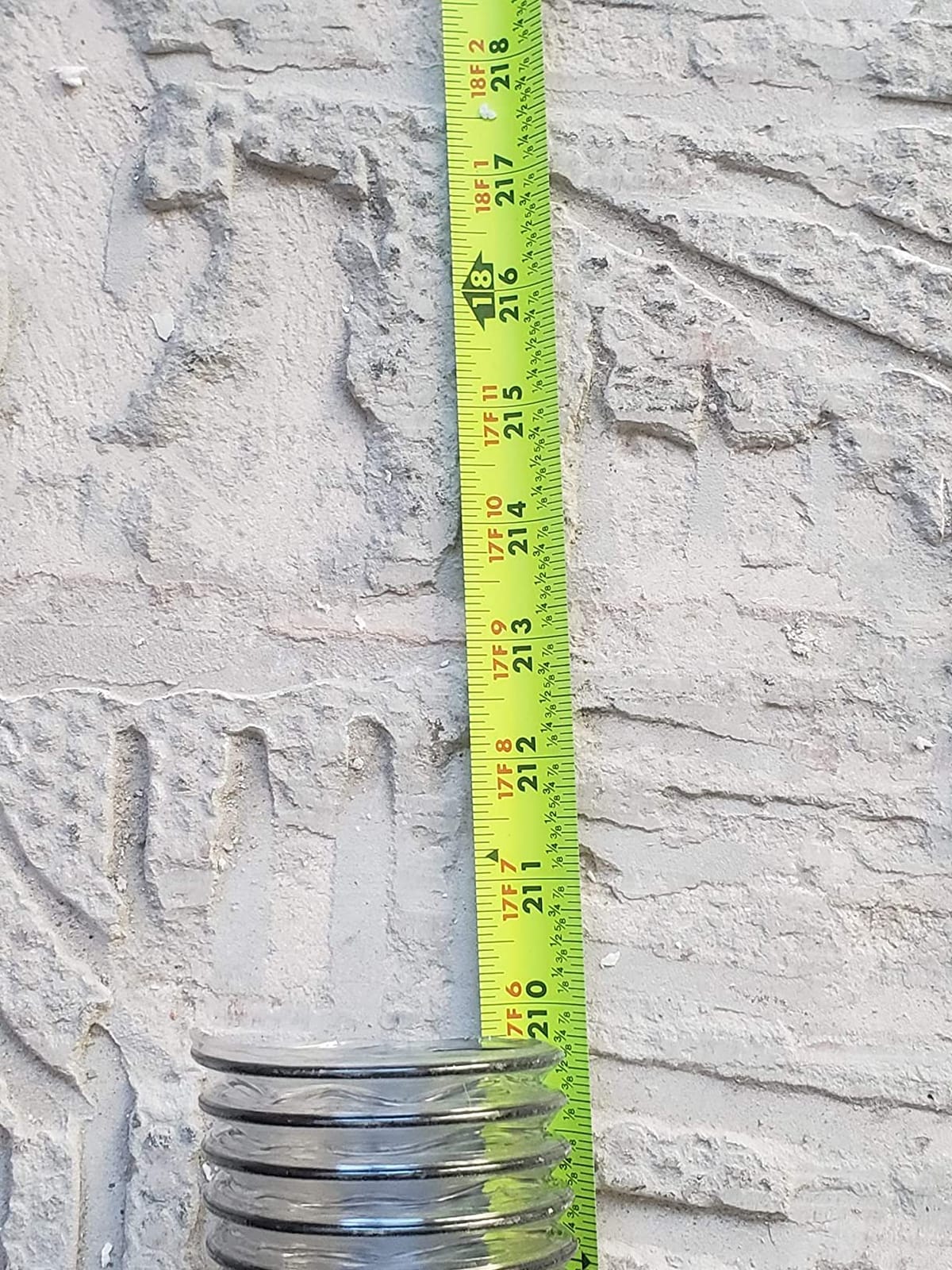
Clear PVC is the quiet hero here. You can look down the hose and see a chip bed building up near the elbow before it turns into a blockage, which is exactly the failure owners of opaque hose report. The steel coil construction is also noticeably stiffer than taped imported hose, and several buyers note they cut it down to a custom length without the wall opening up.
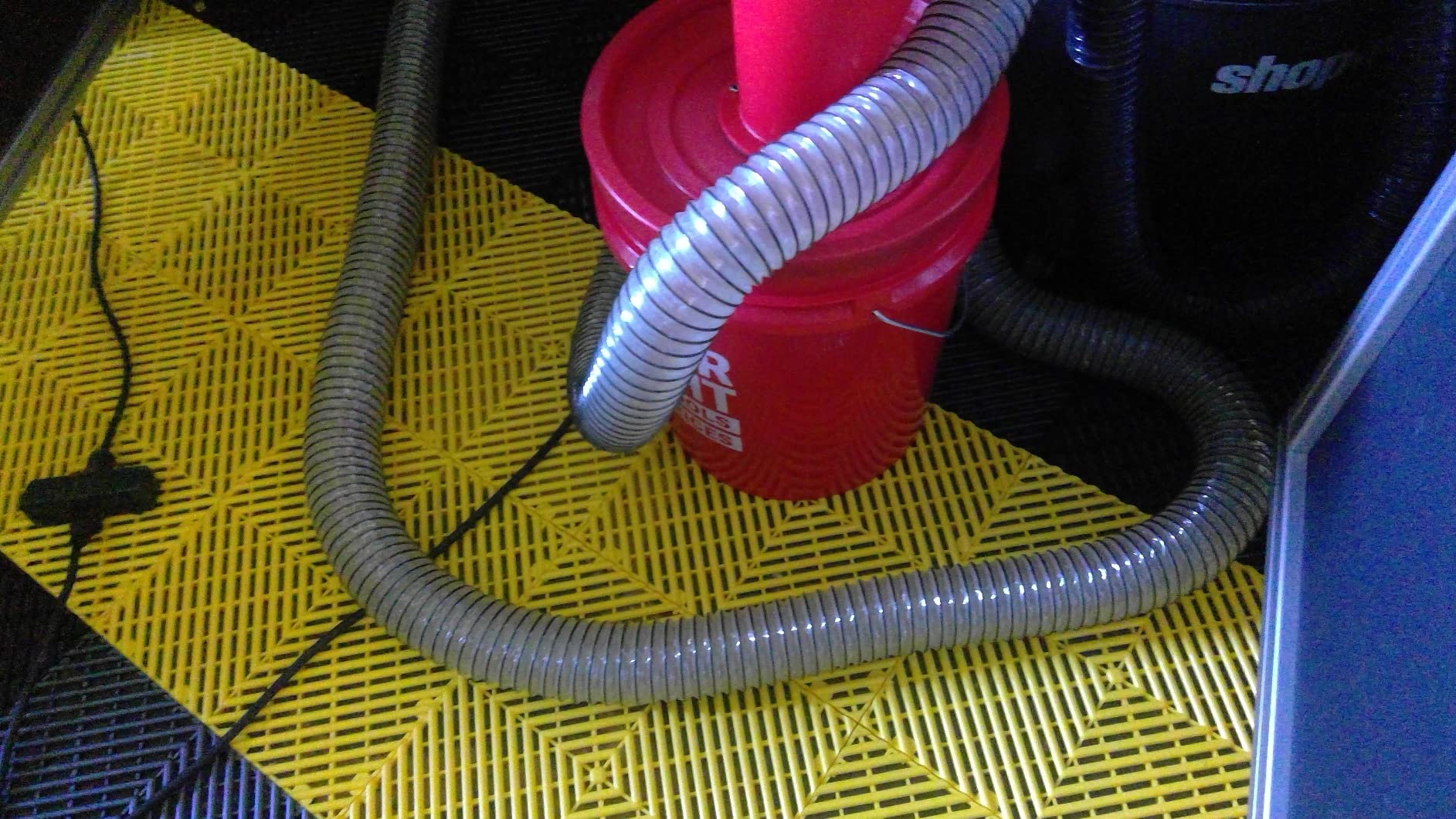
The flexibility surprised us more than the specification sheet suggests. Users describe making 180 degree turns around a machine without the hose folding flat, which matters because a flattened hose is a static pressure leak even when nothing is visibly disconnected.
What you get that competing kits leave out
Four clamps in the box. Most kits at this diameter ship with bare hose ends and expect you to source worm gear or thumbscrew clamps separately, and a loose slip fit at a collector inlet is the most commonly reported complaint across dust collection setups. Being able to hand-tighten the collars means you can seal a run without hunting for a screwdriver.
Where it falls short
Under suction the hose contracts a little, so plan for a bit of extra length and do not stretch it taut between the collector and the machine. A few owners also add their own clamp on fittings where the slip fit is not quite snug enough. It is also 4 inch diameter, which means it will not connect to a handheld sander without a reducer, and it assumes you already own a collector with a 4 inch inlet.
2. Cen-Tec Systems 20 Ft Quick Click Hose And Adapter Set – Longest Run
- Very flexible yet durable commercial grade hose
- Quick click system speeds tool changes
- 360 degree swivel prevents kinking
- Smooth interior resists debris buildup
- Adapters cover most major tool brands
- Adapter coverage falls short of what the listing implies
- Some buyers want brand-specific bundles
- Shop vac is not included
This is the kit to buy if your handheld tools are scattered around a large shop and you refuse to move the vacuum every time you change jobs. At 20 feet of 1-1/4 inch thermoplastic elastomer, it reaches further than anything else here, and the quick click bayonet fittings let you swap between an orbital sander and a router without wrestling rubber cuffs on.
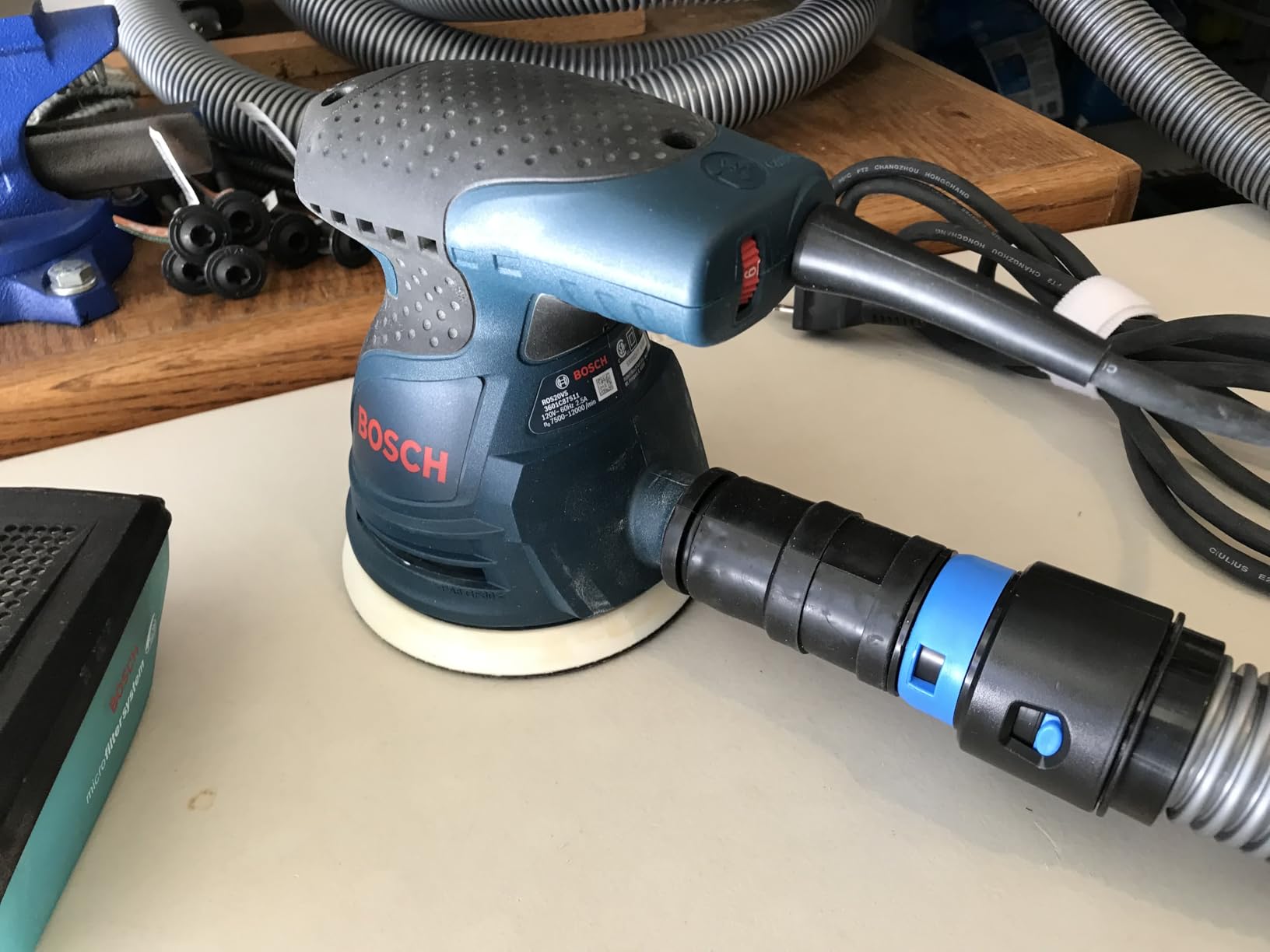
The swivel connection built into the bayonet fitting is the detail that keeps it out of the way. A hose that resists kinking means the tool is not yanking against a twisted line while you sand, and owners consistently credit the 360 degree swivel for that. The smooth interior also helps when fine drywall-like sanding dust is involved, since dust that would lodge in a ribbed bore slides along instead.
There is a suction control valve built into the bayonet fitting. That is a small feature with a real purpose on finishing work, where too much hold-down on a sander can leave swirl marks on the workpiece.
Check your tool ports before ordering
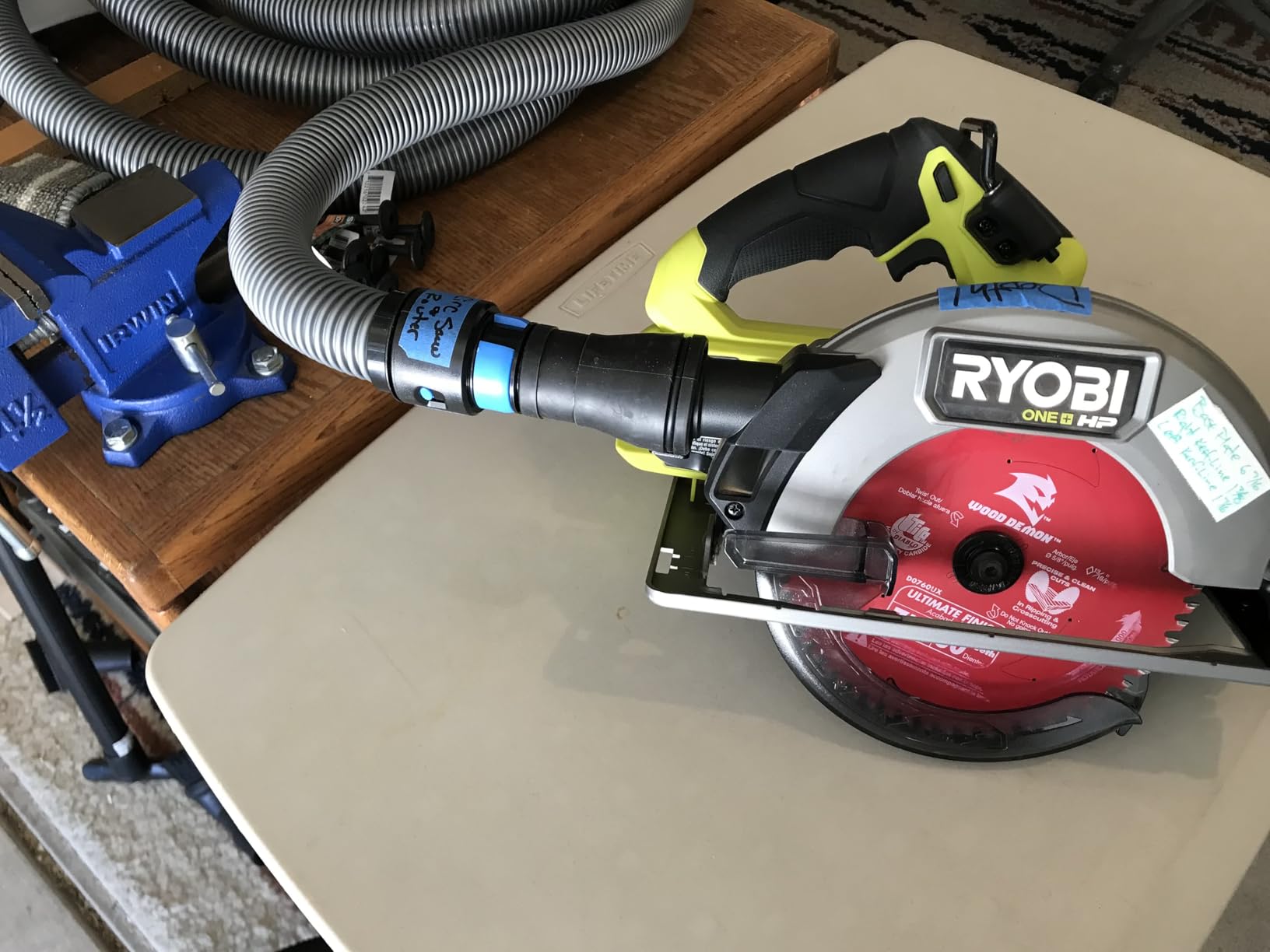
The listing claims compatibility across Skil, Bosch, Ryobi, Makita, DeWalt, Festool, Fein, Porter Cable, Hitachi, Milwaukee and more. In practice, owners report that only some of those adapters matched the tools they actually own. The set covers 3/4 inch, 1 inch, 1-1/4 inch and 1-1/2 inch internal and external connections, so measure a couple of your ports with a caliper before you commit.
Where it falls short
At 1-1/4 inch, this is a handheld extraction hose, not a collector line. Point it at a table saw and you will be disappointed. It also pulls shorter under suction like most stretchy elastomer hoses, and the tank end fits common wet and dry vac brands but the vacuum itself is not part of the package.
3. Peachtree 10 Ft Power Tool Dust Hose Kit With Five Fittings – Sanders And Routers
10 Foot Long Dust Collection Power Tool Hose Kit for Multiple Types/Brands
- Five fitting sizes cover sanders
- routers and biscuit joiners
- Light and easy to maneuver
- Fittings thread on securely
- Cuts down to a shorter custom run
- Small interior diameter limits volume on saws
- Stiff at full length for router work
- Adapter sizes miss some tools despite broad claims
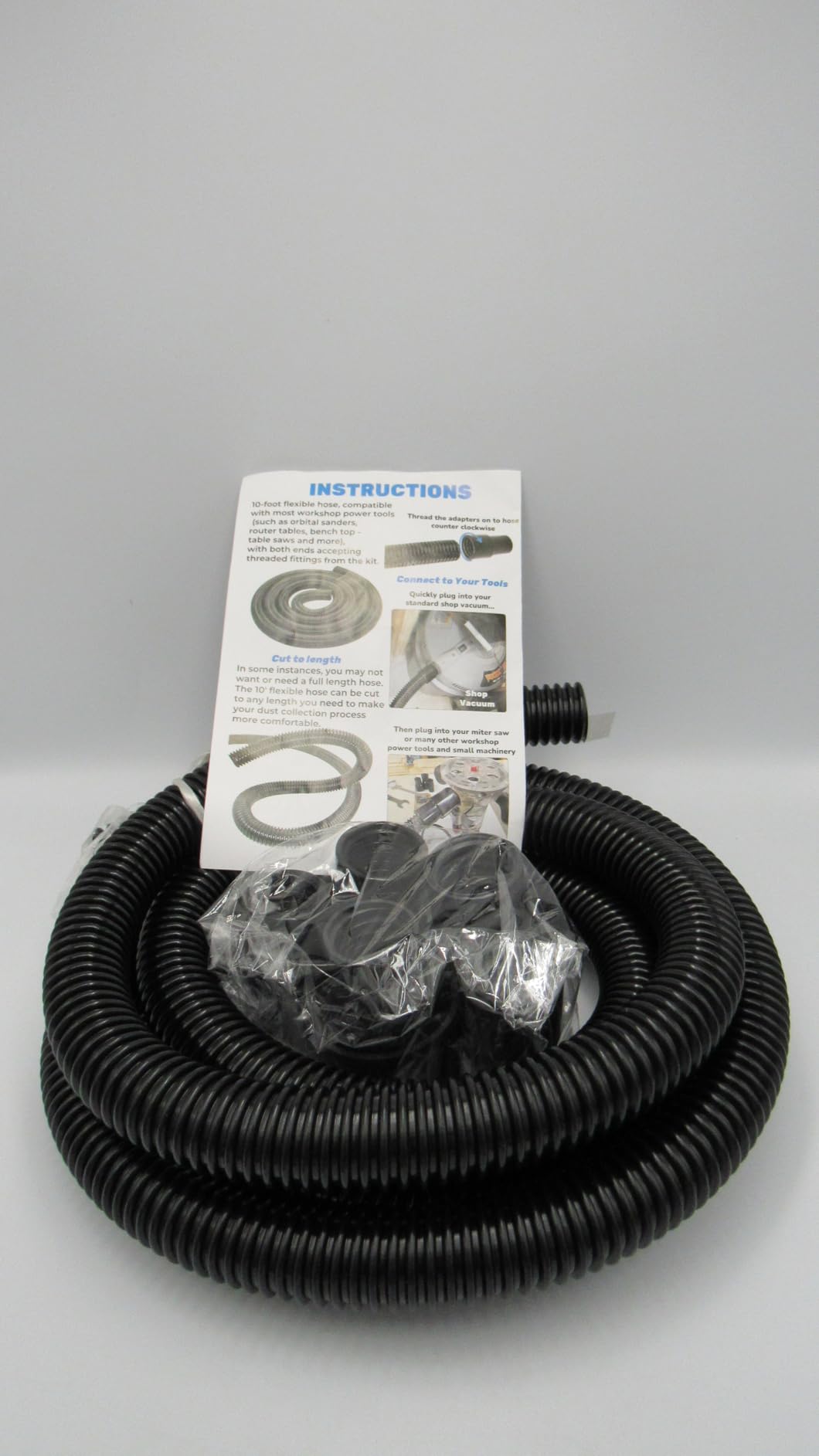
This kit does one job well: getting sanding dust and router chips off a small wet and dry vacuum without buying fittings one at a time. You get a 10 foot rubber hose and five threaded fittings, and the whole assembly weighs under two pounds, so it moves around a garage floor easily.
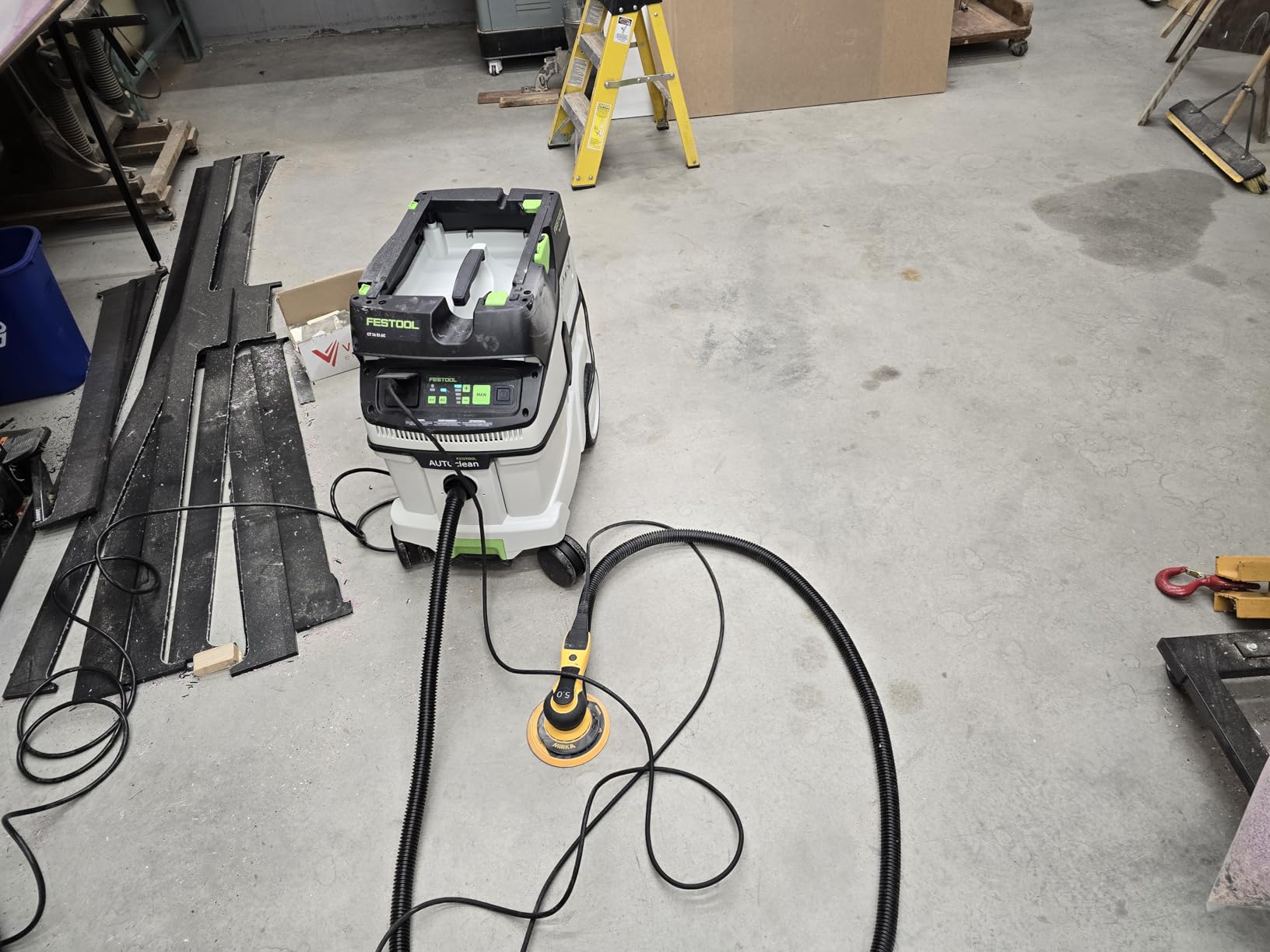
The construction is sturdier than the price suggests. The hose is rated to a maximum pressure of 5 bar and is described as puncture resistant, which matters more than it sounds when a router kicks a sharp workpiece edge upward into the line. The anti-kink design is what keeps airflow steady when the hose is draped around a bench.
Owners like that it can be cut down. If your shop is small, trimming the hose short reduces both the reach you gave up and the static pressure you now avoid, and this is the one kit in the roundup where shortening the run does not create a problem.
Best fit for orbital sanders
The five fitting sizes line up well with random orbital sanders, palm sanders, biscuit joiners and small routers, which is where a household wet and dry vacuum actually performs. If your dust is fine and the volume is modest, the small bore is not a limitation.
Where it falls short
The interior diameter is small enough that several owners rule it out for table saw work, and the hose stiffens up at its full 10 foot length, which makes it awkward around a router table. Fitment also varies despite the multi-brand claim, and shop vac port sizes differ between manufacturers, so confirm your vac inlet before ordering.
4. Rockler FlexiPort Expandable Hose Kit 3-12 Ft – Fastest Tool Swaps
Rockler Dust Right FlexiPort Expandable Power Tool Hose Kit 3-12 Ft
- Lightweight and extremely resistant to kinking
- Locking clasps and adjustable clamps hold firm
- Compacts to 3 ft for storage
- Click-Connect speeds tool changes
- Vent ring controls suction on finishing work
- Hose shrinks and pulls back under suction
- Some ports run small for common tool brands
- Older quick-connect ends are not sold separately
The expandable design solves a real problem: a fixed length is either too long when you store the hose or too short when you reach across the shop. This blue hose starts at 3 feet and stretches to 12, so you pull out only the length you need. It carries a 1-1/2 inch inside diameter and connects to a shop vacuum through a 2-1/4 inch swiveling port.
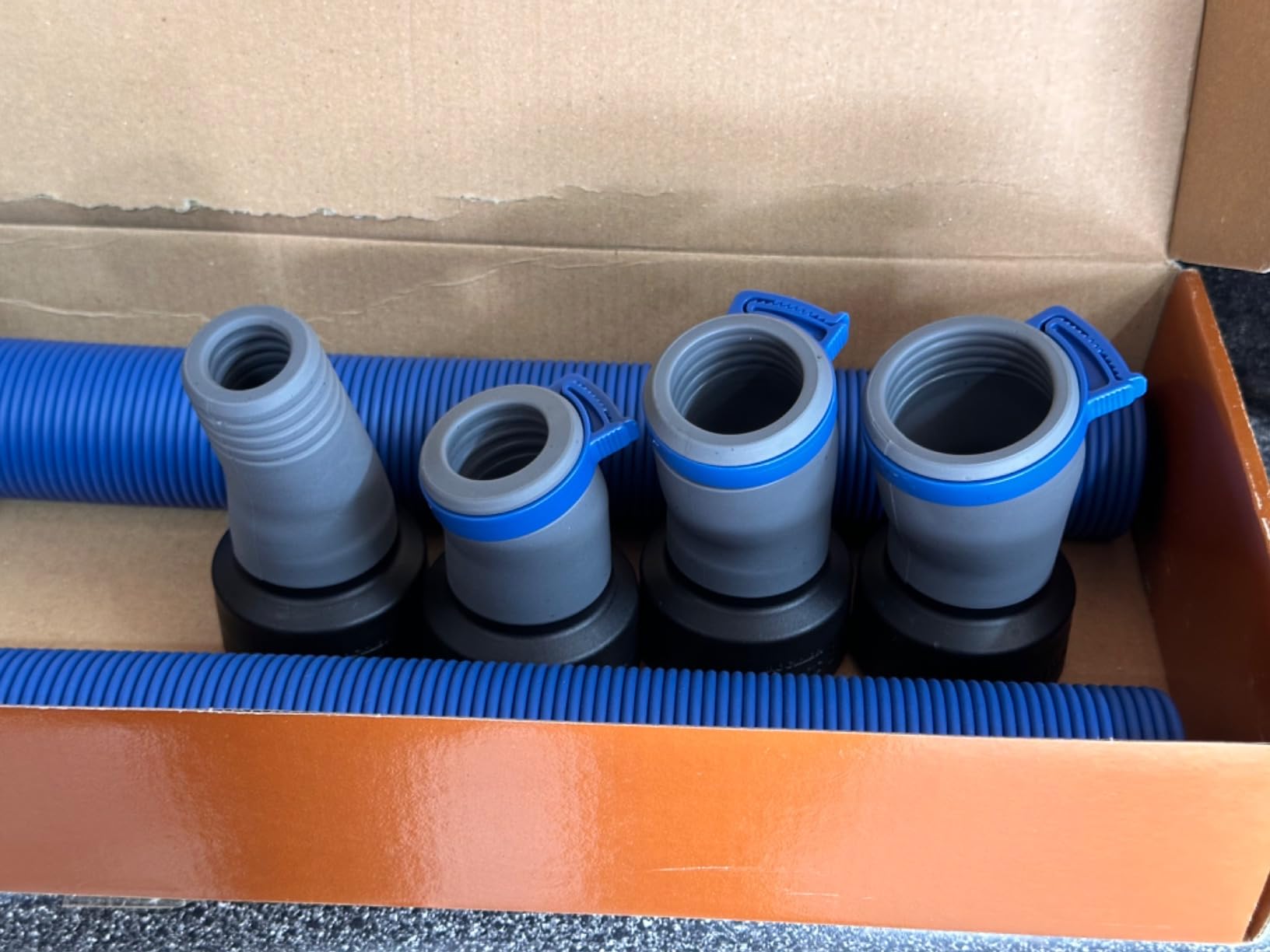
Four FlexiPorts come in the kit and three of them have adjustable clamps, which is the part that earns the premium over generic expandable hoses. Locking clasps keep a connection from working loose mid-sand, and the vent ring on one port lets you dial suction down when you would rather not burn a swirl mark into a panel.
Buyers ranging from hobby woodworkers to professionals single out the fittings as the strongest part. This is the kit to consider if you change tools constantly and value a clean disconnect over raw hose length.
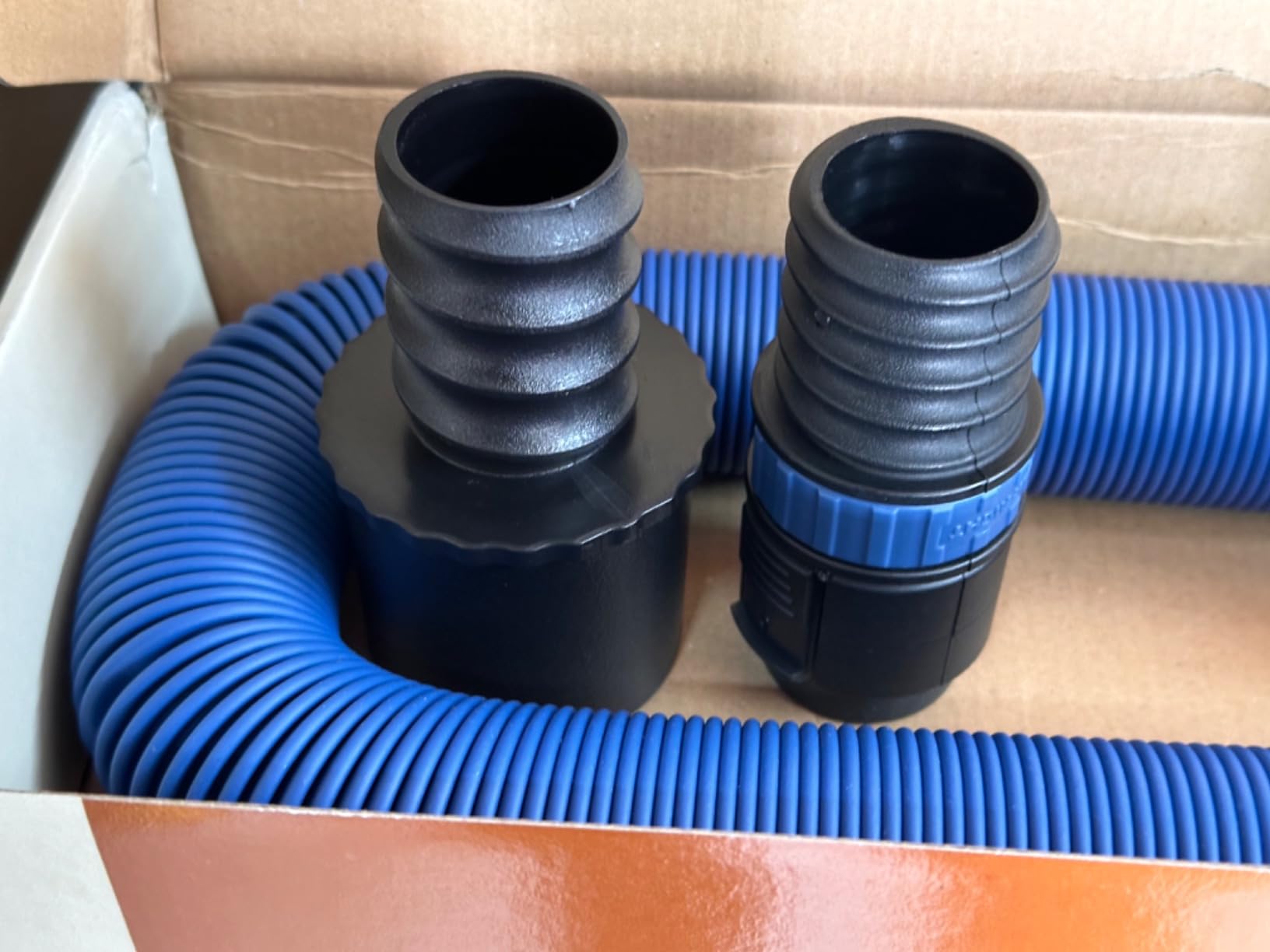
Where the Click-Connect system earns its keep
A bayonet or quick-connect fitting means you can go from a sander to a router in a couple of seconds without wrestling a hose over a rim. For sanding sessions with frequent grit changes, that convenience compounds across a morning of work in a way that a cheaper slip fit does not.
Where it falls short
Under suction the hose contracts and can draw the tool back toward the vacuum, which takes some getting used to. Some buyers also report that certain ports run small for popular tool brands. And if you already own an older Dust Right hose, the newer quick-connect ends are not sold on their own, so upgrading means buying a whole kit.
5. POWERTEC Shop Vac Hose Dust Collection Kit – Budget Shop Vac Setup
POWERTEC 2-1/2″ x 20 Ft. Shop Vac Hose Dust Collection Kit (70498)
- Lightweight EVA hose is easy to move
- Swivel fittings resist twisting
- Four tool port sizes included
- Complete bundle in one box
- Mixed feedback on whether the small bore restricts airflow
- Some tools still need an extra adapter
This kit bundles a 10 foot EVA hose, a 2-1/4 inch adapter for most standard wet and dry vacuum ports, and four tool port fittings in 3/4 inch, 1 inch, 1-1/4 inch and 1-1/2 inch. It is a sensible starter bundle when you want one box to open rather than five separate fittings to order.
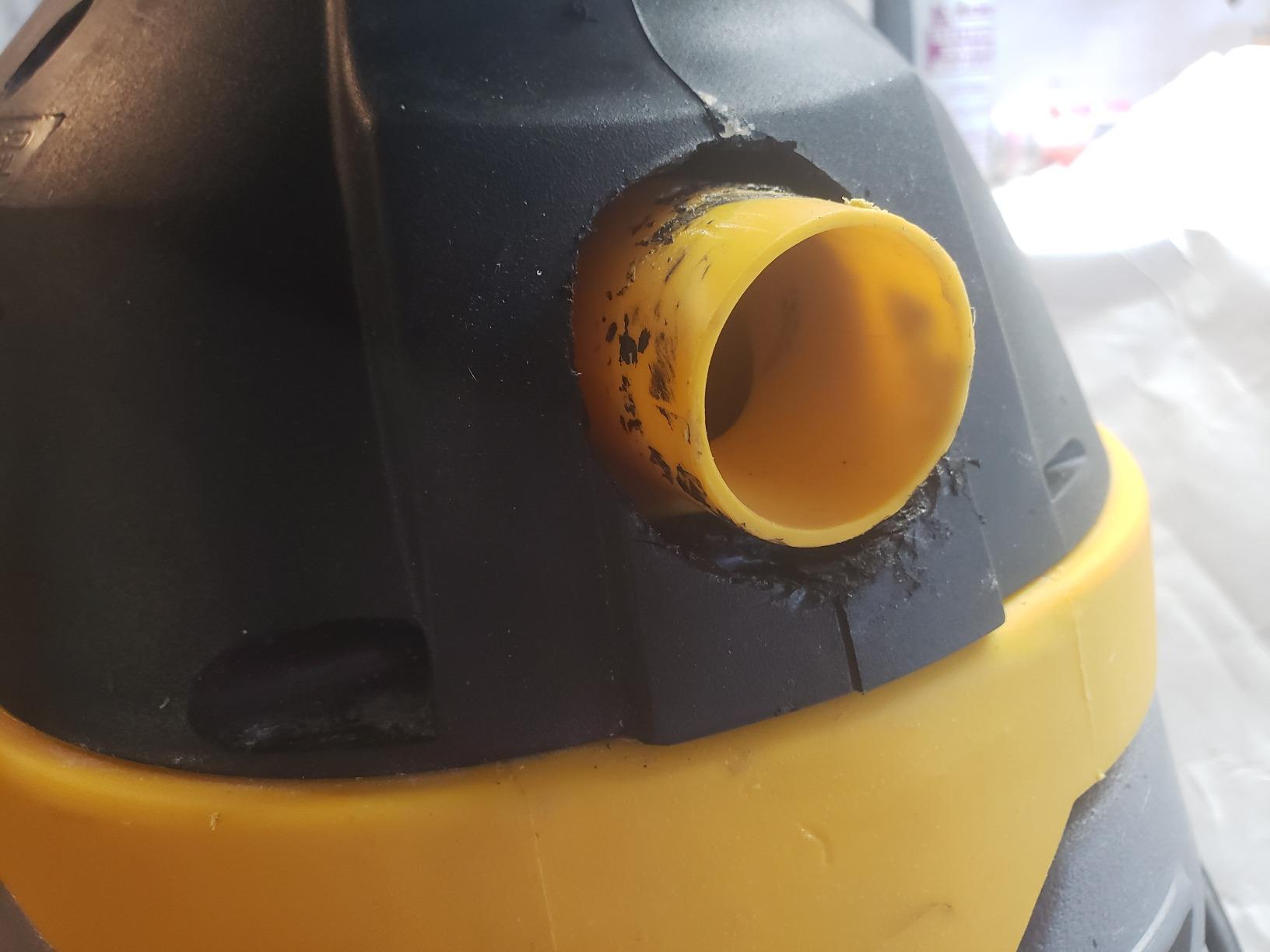
The two-piece swivel fittings at each end are the detail worth paying for. They resist the twisting and kinking that shows up when you drag a hose across a garage floor, and they keep the vacuum end from spinning while you work at the tool end. The hose itself is light enough to move without thinking about it.
Note that this listing covers the 10 foot hose with a 1 inch inside diameter and 1-1/4 inch outside diameter. A 2-1/2 inch by 20 foot version of the same kit exists for shops that need more bore, which matters if you plan to grow past sanders.
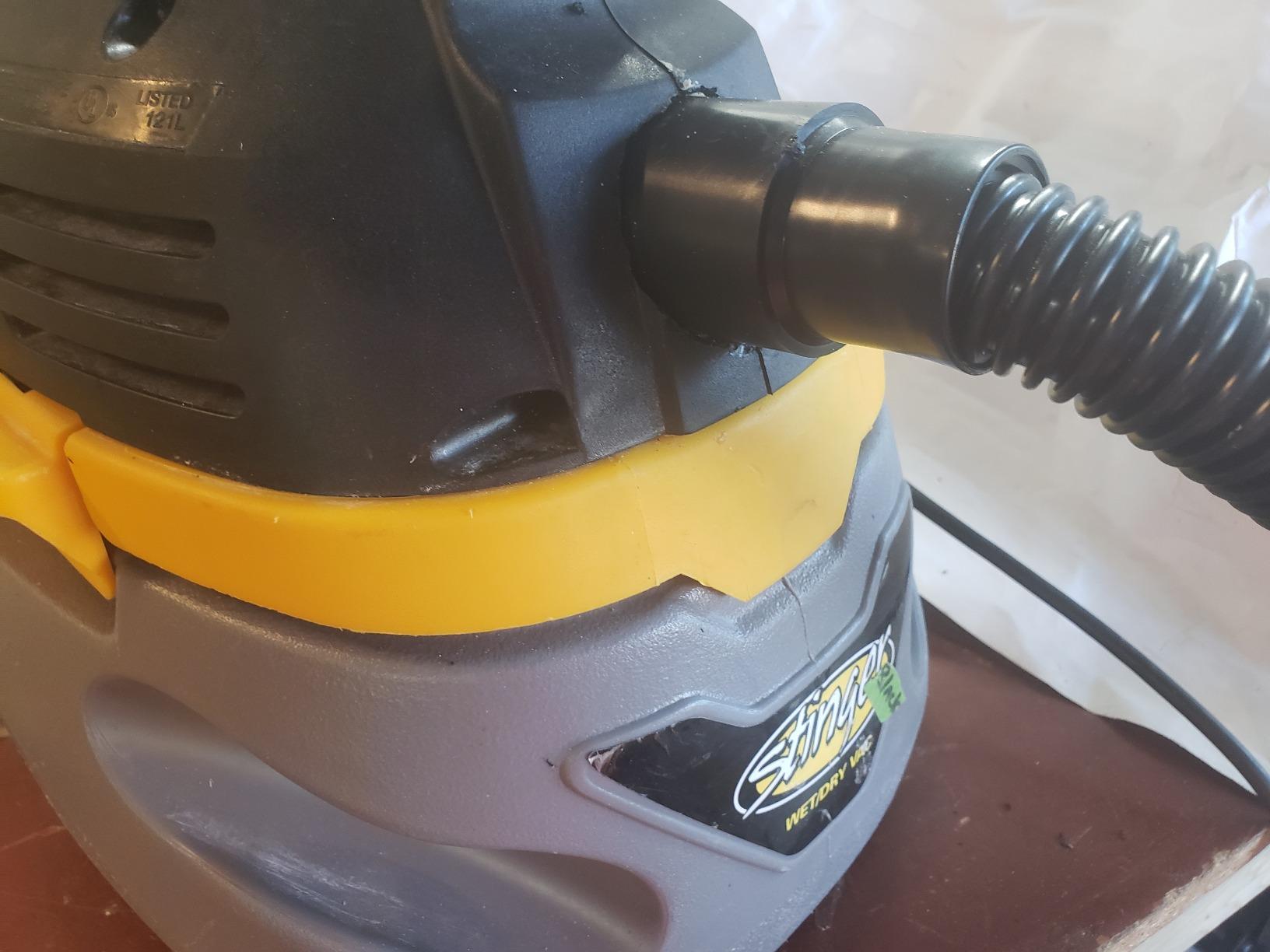
What the four tool fittings actually cover
They step down through the common small ports, so orbital sanders, palm sanders and light routers are all in range. The 2-1/4 inch end fits the inlet on most household wet and dry vacuums, which is the part most generic hoses get wrong.
Where it falls short
Owners are split on whether the small bore restricts airflow on their particular tool, so treat the 4.1 rating as a fair signal that it performs best on light debris. And despite the four fittings, a few buyers still needed an extra adapter for a specific tool port.
6. POWERTEC 4 Inch Flexible Hose And Fittings Kit – Short Connector Run
POWERTEC 70207 4 Inch Flexible Dust Collection Hose and Fittings Kit
- Holds its shape once positioned
- Collapses to 12 in for storage
- Screw ends also fit standard 4 in hose
- Two nozzle shapes cover many machine ports
- Good value against buying fittings separately
- ABS adapters feel softer than metal fittings
- Will not stay in position without support
- Diameter will not suit smaller tool ports
Most people looking for 4 inch dust collection hose want 50 feet of run. This is the opposite idea: a short connector that expands from 12 inches to about 36, built to bridge the gap between a collector inlet and a blast gate or port selector without introducing a long flex run that leaks static pressure.
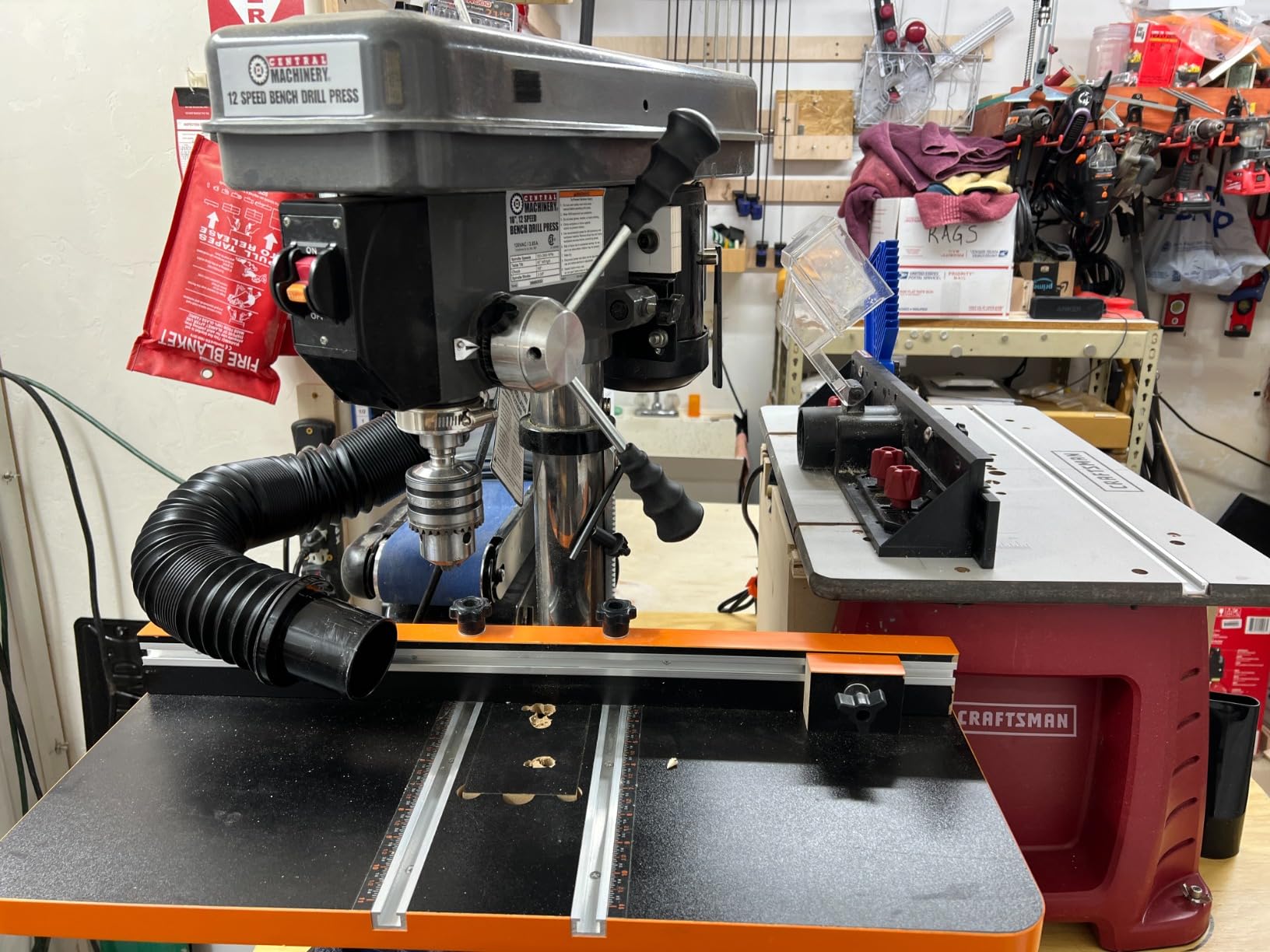
Because the hose holds a shape once you position it, it stays out of the walkway and does not need to be routed along a wall. Owners using it between a dust collector and a port selector report that it keeps airflow steady simply by not collapsing into a soft loop on the floor.
The kit includes an oval tapered nozzle and a rectangular nozzle alongside the screw end fittings, which covers a good range of machine dust ports without a separate purchase. The screw ends also fit standard 4 inch clear hose, so it doubles as a repair piece.
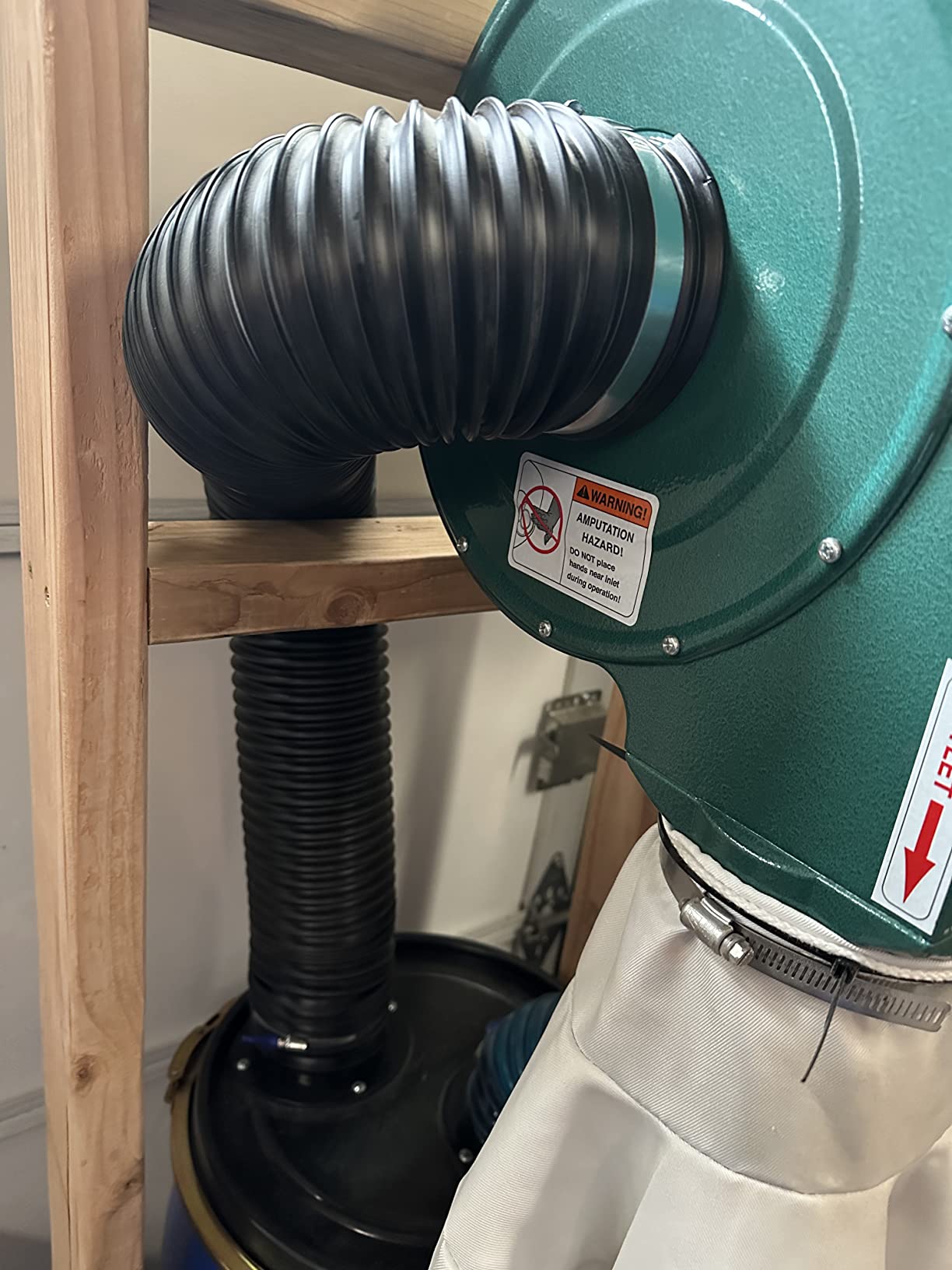
The right size for a bridging job
If your collector sits a few feet from your blast gate, this is the correct hose and using a 50 foot coil instead would be a mistake. Short, supported runs preserve airflow in a way long slack hose cannot, and this kit is built for exactly that geometry.
Where it falls short
The ABS adapters feel softer and less rigid than metal fittings on comparable kits, and the hose does not hold position on its own without some support. At 4 inch, it also will not reach a handheld sander or a small machine port without a reducer.
7. SMZTools 16 Ft Shop Vac Hose Kit – Long Reach For Small Garages
16FT Shop Vac Hose, Dust Collection Hose Kit for Home & Shop Vacuums System
- Quick connects make tool changes convenient
- Adapters fit a range of sanders and routers
- 16 ft reaches most of a garage without moving the vacuum
- Suction control ring is a useful addition
- Small diameter reduces pressure on high-volume debris
- Hose feels light duty for the price
- Some adapters did not match the user's tools or vac
If your garage shop has the vacuum in one corner and the workbench across the room, reach is the whole game. This kit pairs a 16 foot hose with four TPE adapters in 3/4 inch, 1 inch, 1-1/4 inch and 1-1/2 inch, plus a shop vac cuff, and the quick click ends mean you can move between attachments without a fight.
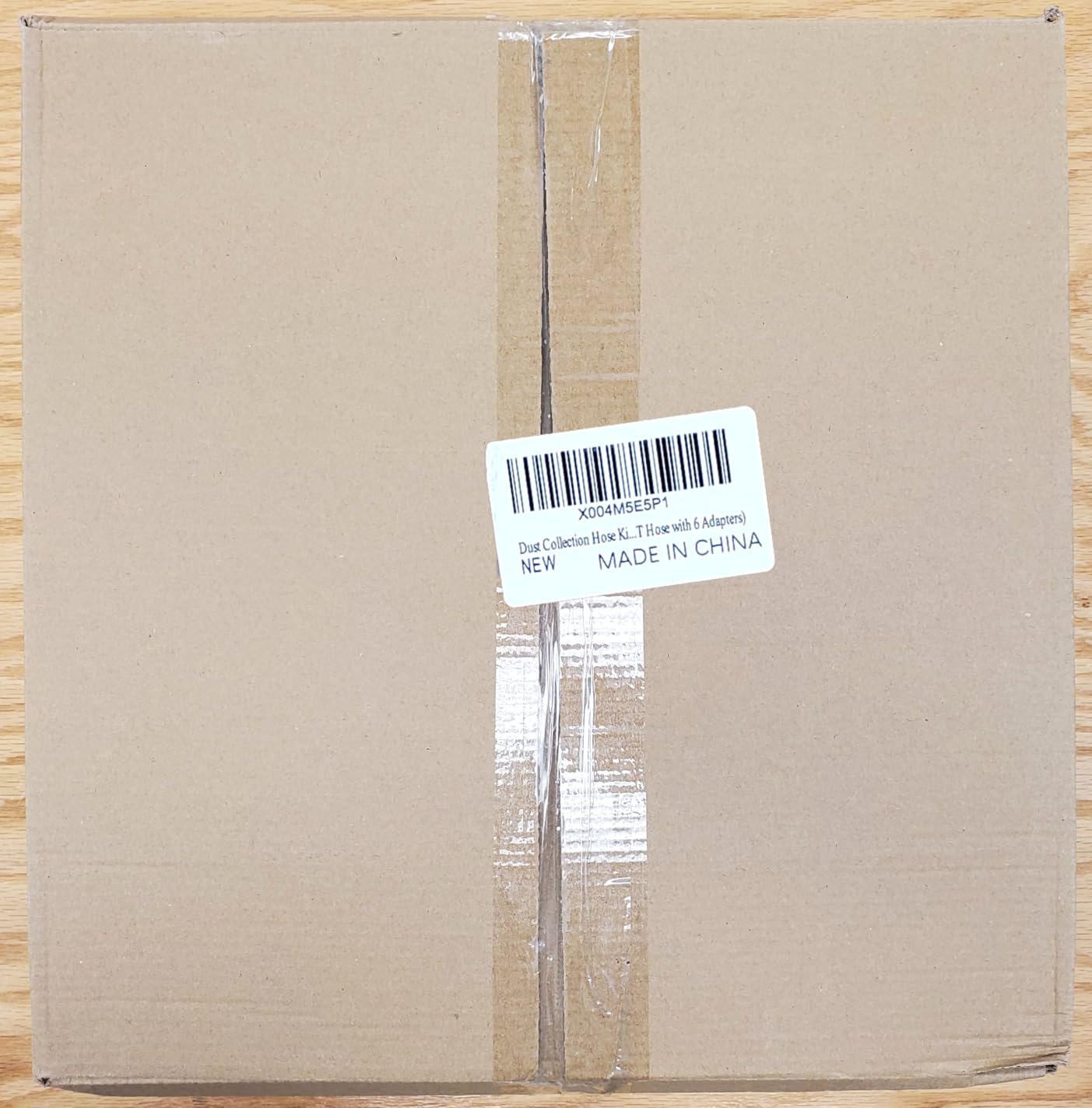
The smooth inner lining is worth noting because fine sanding dust is what clogs a small-bore hose first. Combined with a 360 degree swivel at the connection, the line stays open when you drag it around a bench leg rather than folding on itself.
The rotating air relief valve gives you the same suction control the Rockler kit offers on a finishing pass, which is helpful when you are working close to a finished surface and do not want the sander holding down too hard.
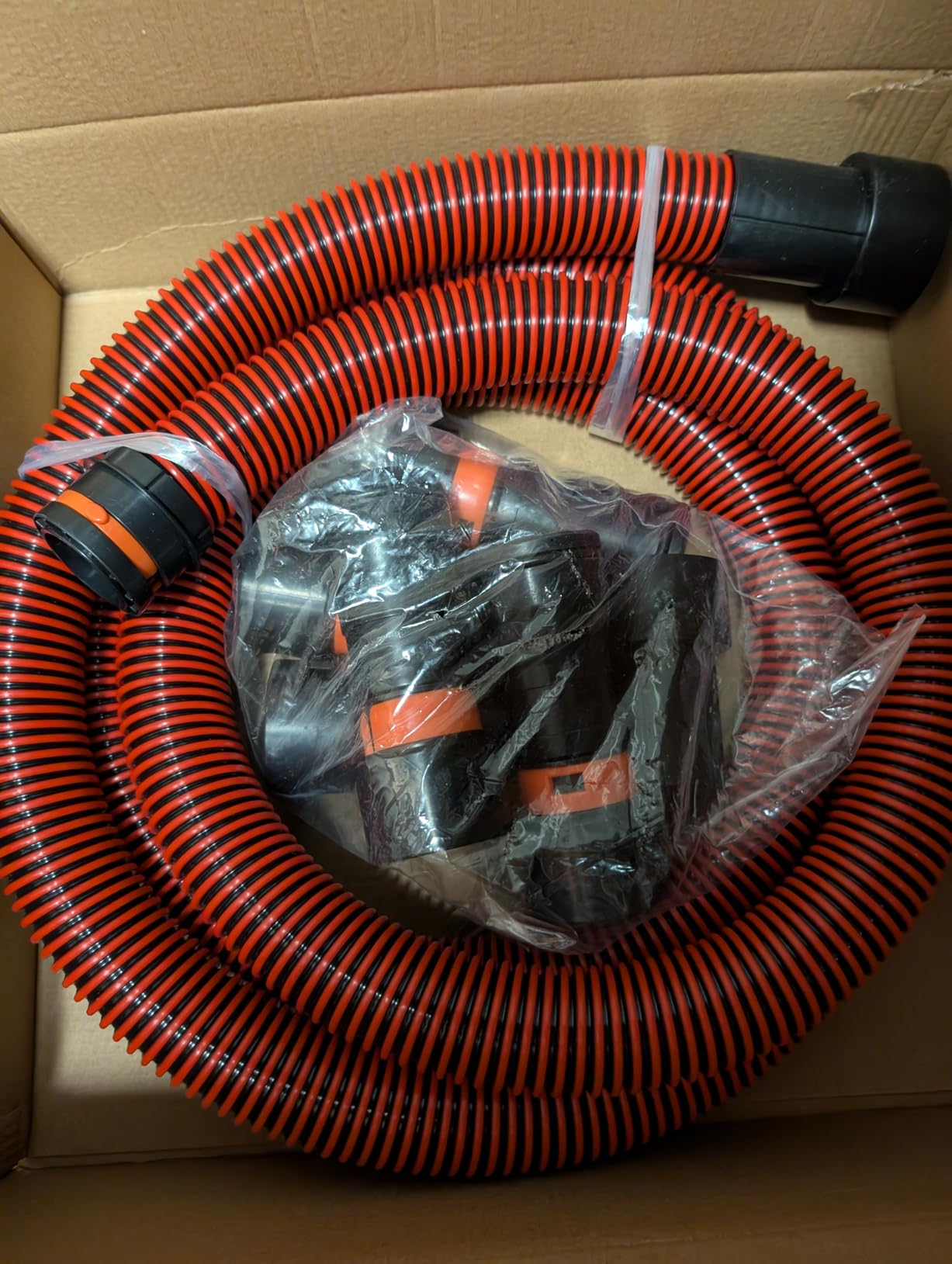
When 16 feet is genuinely useful
Reach pays off on sanding and routing where the tool moves constantly and the machine stays put. Set the vacuum in a corner, run the hose to the far wall, and you never interrupt a grit change to shuffle equipment. That is the workflow this hose is built for.
Where it falls short
At 1-1/4 inch it loses pressure on high-volume debris, so it is a poor match for a table saw or a jointer. Some owners also describe the quick lock fitting as flimsy compared with premium kits, and a few report adapters that did not fit their specific tools or vacuum despite the broad compatibility list.
8. Rockler Dust Right 2.5 In Expandable Hose Kit – Compact Storage
Rockler Dust Right 2.5″ Expandable Shop Vac Hose Kit Extends to 12 Feet
- Stretches from roughly 2 ft to 12 ft
- Retracts slack as you approach the vacuum
- Collapses to a compact stack for storage
- Swivel fittings make connections easy
- Hose shortens under suction and can pull the tool
- Higher price than generic 2-1/2 in hoses
This is the biggest bore you can realistically run off a household wet and dry vacuum while still expanding and collapsing. At 2-1/2 inches, it moves noticeably more air than the 1-1/4 inch kits in this roundup, which is why it appears on higher volume work than a sander hose normally would.
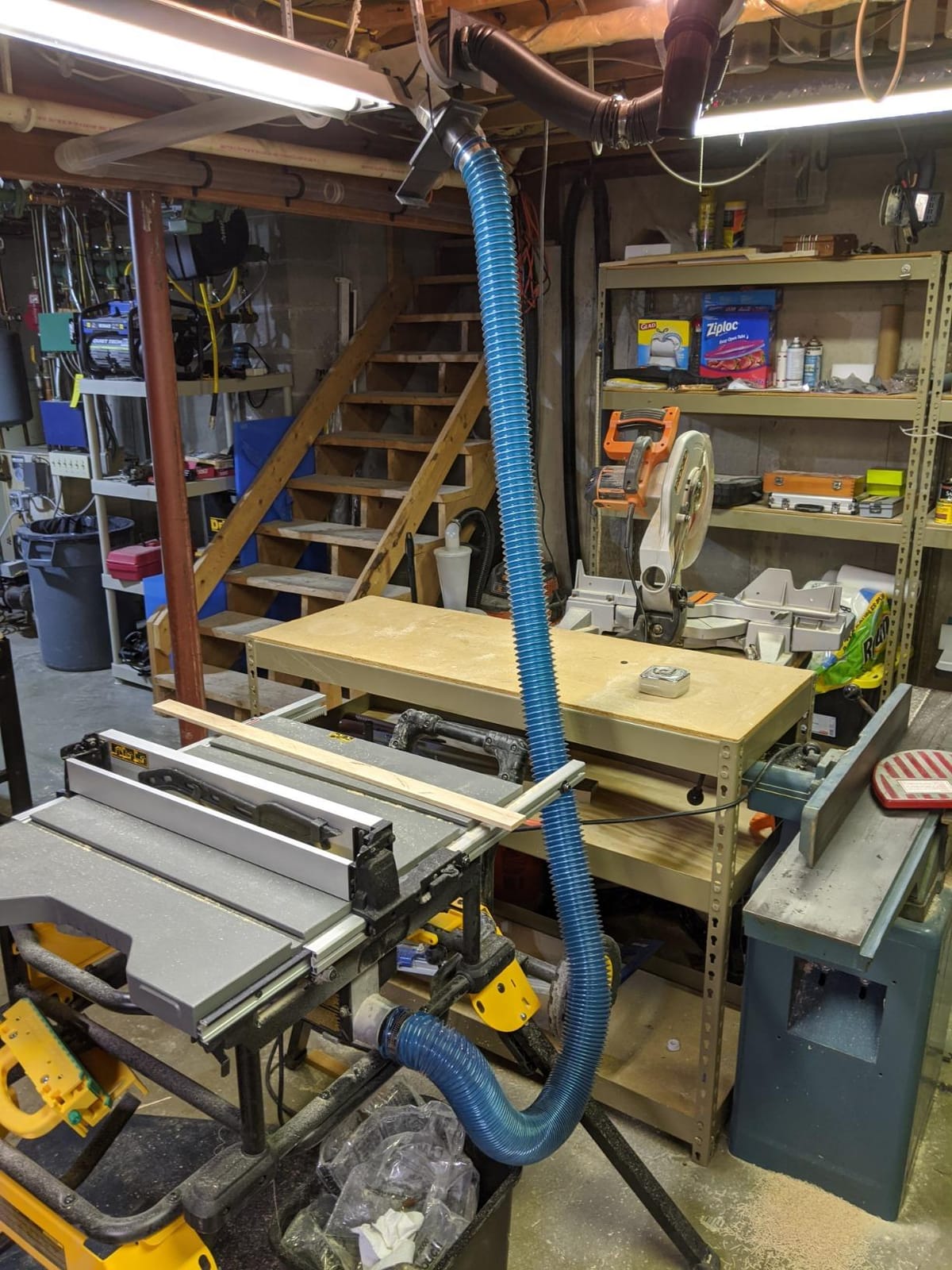
The retracting slack is the feature owners like most. As you walk back toward the vacuum, the extra length pulls in behind you, which cuts down on the tangle and trip hazard that plagues a long fixed hose stretched across a shop floor.
Two swivel fittings and two hose clamps are included, so you can seal both ends without a separate purchase. The translucent blue polymer is also lighter than earlier versions of the same idea, which matters when you are coiling it up at the end of a session.
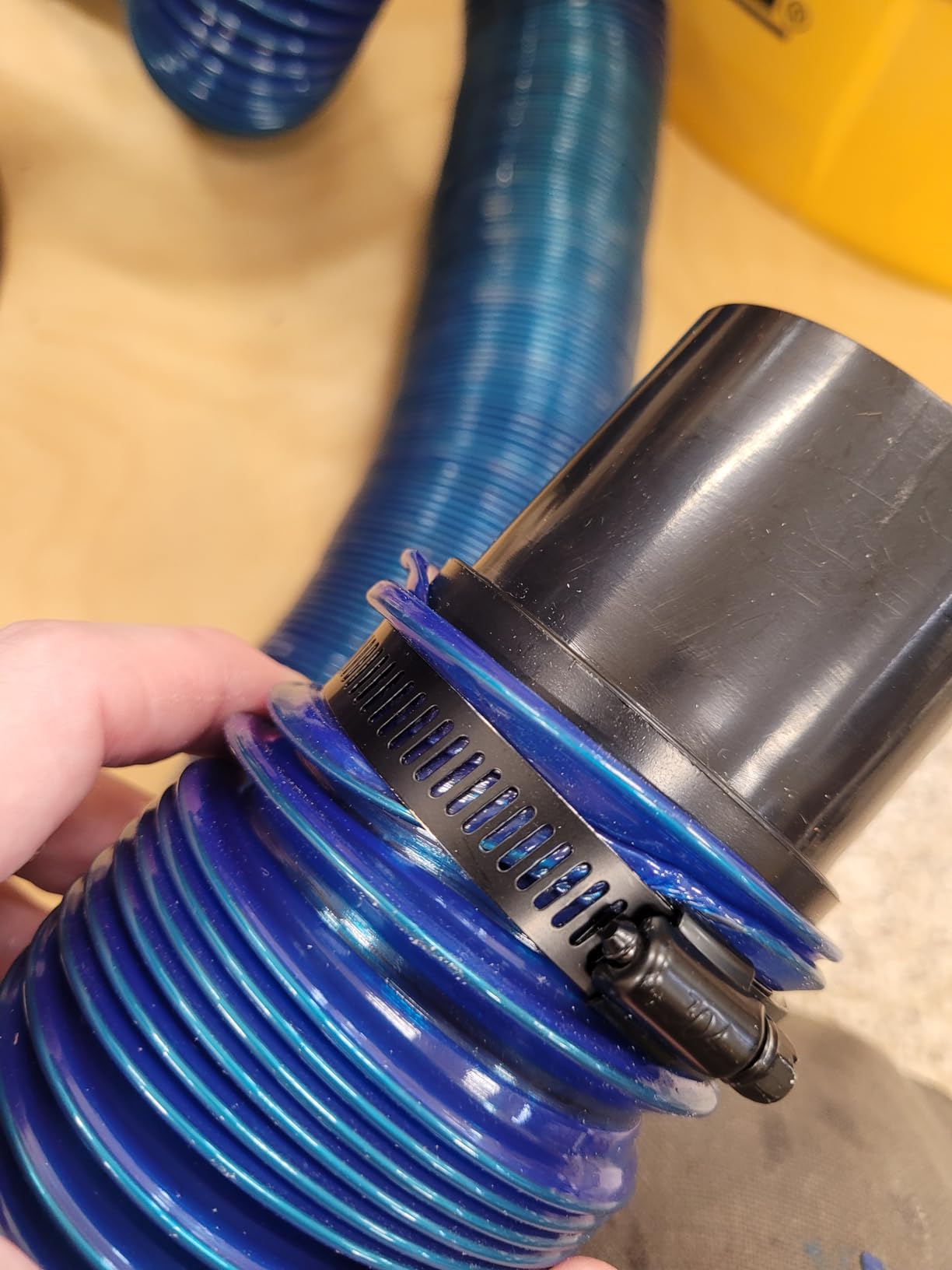
Where a 2.5 inch bore earns its keep
More bore means lower air velocity for the same volume, and lower velocity means the collector or vacuum does not have to fight as hard to move a heavy chip stream. If your light duty work includes a small saw or a track saw cut-off, the extra quarter inch is worth reaching for over a sander-sized hose.
Where it falls short
Under suction the hose contracts and can pull the tool slightly toward the vacuum, so you learn to hold a little slack. It also costs more than generic 2-1/2 inch hoses, and it is still a shop vac line, so it will not feed a collector expecting a 4 inch inlet.
9. MITENSLE 16.4 Ft Hose Kit – Budget Starter Bundle
16.4 Foot Long Dust Collection Power Tool Hose Kit with 5 Fittings Universal for Multiple Tools & Vacuums
- Long reach across most of a workspace
- Five fittings cover small and larger ports
- Light and easy to coil for storage
- Inexpensive complete bundle
- Small diameter limits airflow on heavy debris
- Fitment varies so ports should be measured first
For a first setup, or for a second vacuum in a shop where nobody wants to walk hose around, this bundle covers the essentials without much fuss. You get a 16.4 foot hose at 1-3/16 inch outside diameter and five connection pieces, all in a lightweight ABS build that one hand can manage.
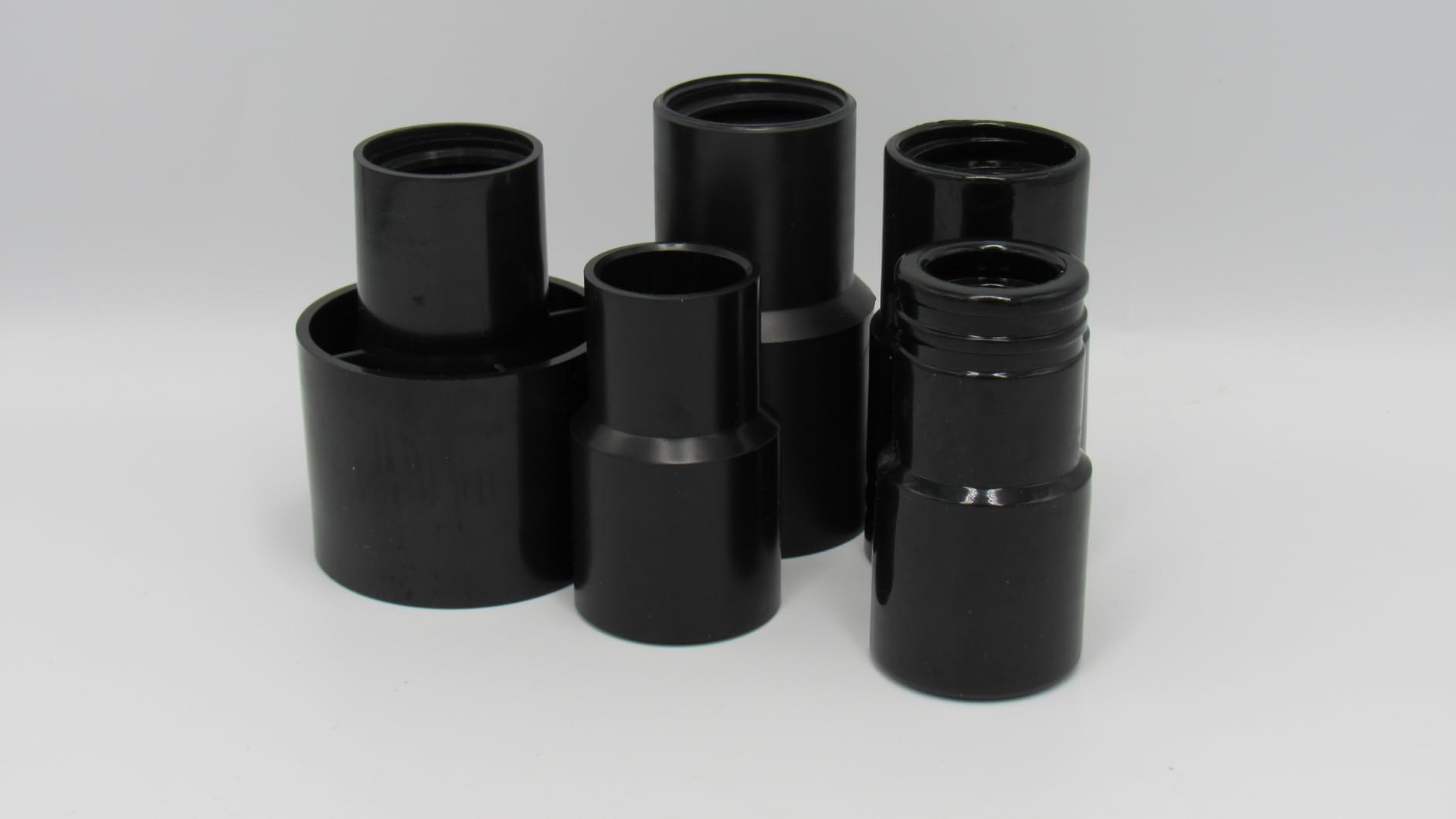
The fitting set is more specific than a generic universal claim suggests. There is a large thread-on fitting at 1-1/2 inch inside diameter, two tapered adaptors for smaller ports, and a rigid plug-in adaptor that steps from 2-1/4 inch up for a vacuum inlet. It also fits K4 and K5 pocket hole jigs, which is a detail that matters if you use jigs as your dust source.
The small fitting at 1 inch inside diameter is aimed squarely at orbital sanders, palm sanders and biscuit joiners. Tool-free connection makes it the least fussy kit here to attach and detach repeatedly.
A sensible first kit for a shop vac
At this length and weight, the practical benefit is not specification, it is convenience. A hose this light gets coiled and hung on a hook rather than shoved into a corner, and a hose you actually put away is one you will use instead of dragging the vacuum around.
Where it falls short
The 1-3/16 inch bore limits airflow on high-volume debris, which rules it out for saw work. Fitment varies enough that measuring your tool ports and vacuum inlet before ordering is worth the two minutes it takes.
10. KLABB 10 Ft Kit With Six Adapters – Widest Small-Hole Coverage
- Six adapters cover common shop vac and tool ports
- Reinforced coil resists crushing and abrasion
- Anti-kink design holds airflow steady
- Tool-free quick connect speeds up tool changes
- 1-1/4 in bore is modest for larger debris
- Fitment depends on matching your exact ports
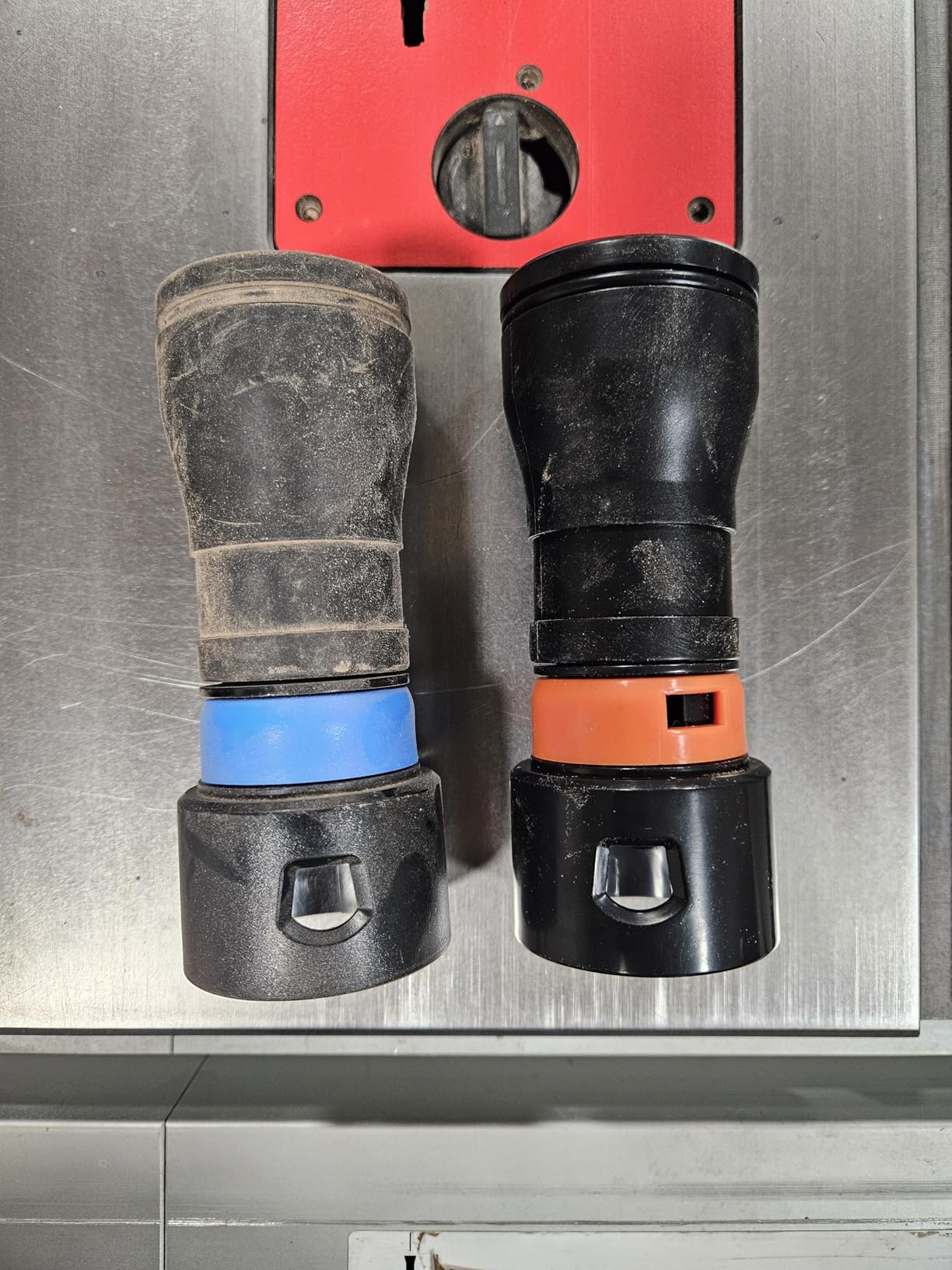
This kit stands out for one reason: six adapters. Most bundles in this roundup ship with four or five pieces, and the extra coverage matters in a shop with an unusual mix of tools. The hose is 10 feet of 1-1/4 inch with a reinforced coil structure and a tool-free quick connect.
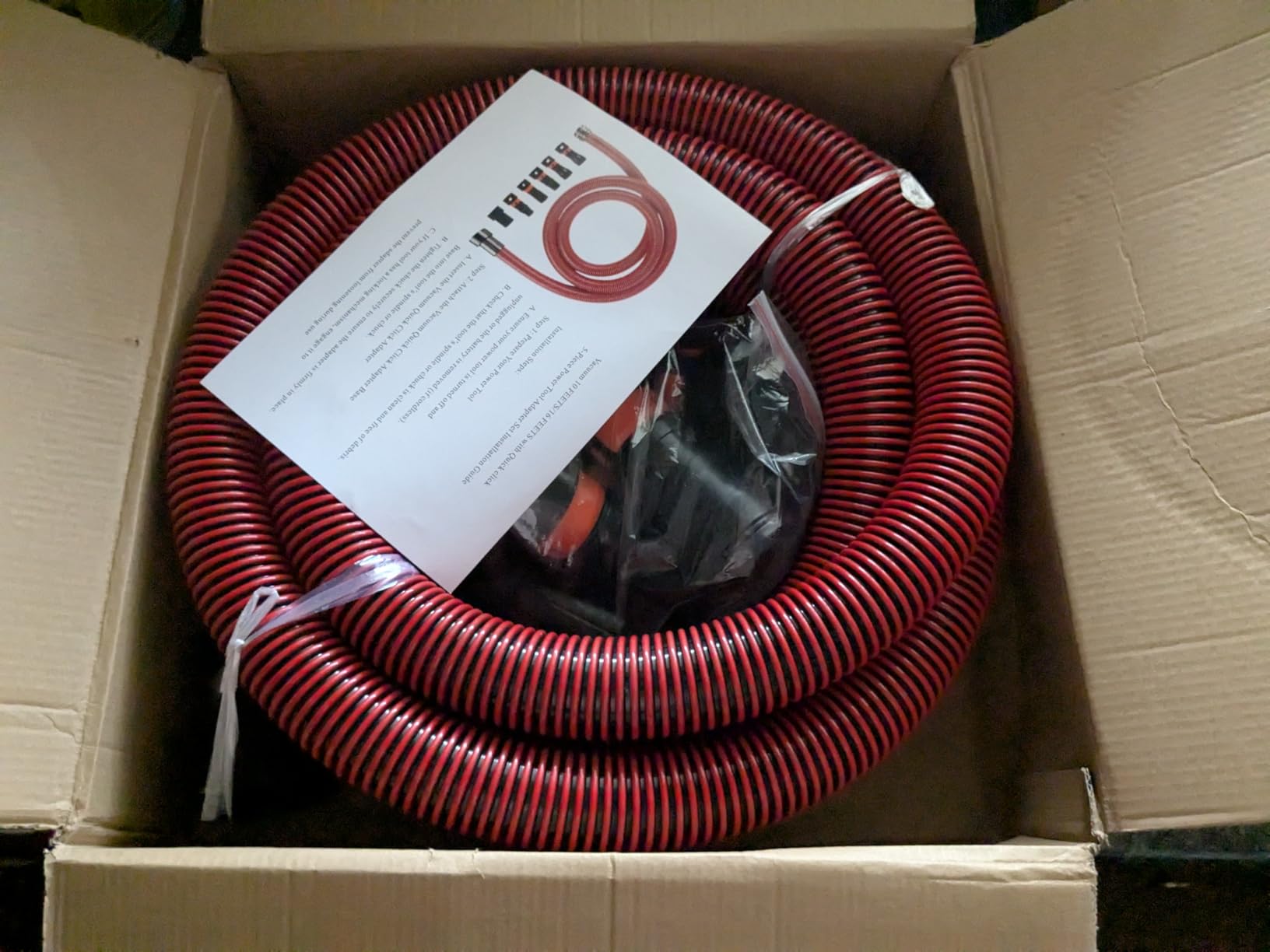
The reinforced coil is the more interesting half. Crush resistance is what stops a hose from flattening when it is walked on or pinched behind a machine, and a flattened hose is an invisible leak in a dust collection system. Owners mention the anti-kink design by name as the reason airflow held steady during use.
At 2.7 pounds it is on the heavier side for a small-bore kit, which usually reads as sturdier wall material rather than a problem. The quick connect means moving between sanders and a planer does not require tools.
When six adapters beat five
If your tools span an older sander, a newer router and a machine with an unusual port, the odds improve that one of the six pieces is the one you need. That is worth more than an extra two feet of length in a compact shop where everything sits close to the vacuum.
Where it falls short
The 1-1/4 inch bore is modest once you start moving real debris rather than sanding dust, and as always, fitment depends on matching your specific vacuum and tool port sizes. Confirm those dimensions before the box arrives.
How To Choose A Dust Collection Hose Kit For Your Workshop
The word to remember here is static pressure. Static pressure is the resistance your fan has to push against, and every foot of flexible hose, every tight bend and every leaky fitting adds to it. CFM, the volume of air moved, is the other half of the picture. A system can have plenty of CFM on paper and still deliver almost nothing at the tool port once the hose is connected.
That is why experienced woodworkers repeat the same advice in nearly every forum thread: use rigid duct for the main runs and keep flexible hose to the shortest possible hop between the machine and the duct. A common rule of thumb in the hobby community is that one foot of flex hose costs about as much in airflow as five feet of rigid duct. Build your kit purchases around that idea rather than around total hose length.
Match the diameter to the machine, not the vacuum
Hose diameter is the decision that causes the most disappointment, because the vacuum you own usually dictates what feels convenient rather than what the machine needs.
A 1-1/4 inch hose, which is what most of the handheld kits here use, handles orbital sanders, palm sanders, biscuit joiners and light routers well. Fine dust and modest volume are exactly what small wet and dry vacuums are built for, so the match works out.
A 2-1/2 inch hose sits in the middle and is the better choice when you want to push a small saw or track saw through a shop vacuum rather than a dust collector. Several owners of the expandable 2-1/2 inch kits use them for exactly that.
Four inch is collector territory. That is the diameter your dust collector inlet is built for, and pairing a 4 inch hose with a saw is the correct configuration for high volume wood chips. If your machine has a 4 inch port, downsizing the hose is the most common self-inflicted airflow loss we see.
Five and six inch runs appear on trunk lines and heavy commercial collectors, where volume is high enough that friction dominates. They are rarely the right answer in a home or garage workshop.
Smooth wall beats ribbed, and length costs more than it looks
Interior corrugation creates turbulence, and turbulence is pressure loss. A smooth interior wall moves air with less resistance, which is why collectors and hoses designed for fine dust tend toward smooth bore. Ribbed construction is not bad, it just costs you something, and on a long run that cost compounds.
Length compounds faster than most buyers expect. Dragging 20 feet of hose across a garage to reach a bench in the far corner puts a kink in it every time it rounds an obstacle. If you can put rigid duct along the wall and run a short hose off the machine, do that instead.
Count the fittings you will actually use
Kits advertise five to seven pieces, and owners repeatedly report that two or three of those ever leave the box. Before you buy a bundle, write down the port diameter on each machine you want to connect. Most one or two machine shops need two or three fittings, not seven, and the money is better spent on clamps.
Reducers are the fitting people forget. A reducer steps a hose diameter down to match a smaller tool port, and it is what lets one 4 inch collector line serve both a table saw and a sander. Without it you are either buying two hoses or accepting a leak.
Clamps and seals are the real airflow lever
Loose fittings that leak suction are the most commonly cited frustration in dust collection, and the fix is rarely a more expensive collector. Worm gear hose clamps tightened snugly at each end of a run, plus a blast gate at each machine opening, recover more performance than a fan upgrade would.
Check whether clamps are in the box. Of the ten kits here, only the Fulton 4 inch hose and the Rockler Dust Right 2.5 inch kit ship with clamps included. For the rest, budget for a pack of worm gear clamps, because a slip fit pushed on by hand will not hold suction on a long run.
Know what your kit does not include
No kit in this roundup includes a dust collector, a shop vacuum, blast gates, wall ports or a remote switch. Most do not include clamps either. A kit solves the hose and adapter problem and nothing else, so plan the rest of the system separately.
Right-sizing for small shops and garages
A single shop vacuum with a 16 foot hose handles a one-machine garage beautifully, and the long quick click kits here are built for that. A two-machine shop with a table saw and a miter saw is better served by a small collector with rigid duct runs, plus one short flexible hose per machine port.
Shops with a CNC machine, a jointer and a wide belt sander need heavier wall hose and more clamping discipline than a hobby setup, because those machines pull hard and continuously. If your shop is heading that direction, our portable workshop picks are worth a look for planning the space, and the same rigid duct advice applies with even more force.
If you are still deciding how much space to dedicate to a workshop, the backyard workshop guide covers layouts where dust routing needs to be planned in from the start.
Frequently Asked Questions
What is the best dust collector hose?
The best dust collector hose is a 4 inch diameter hose with a smooth interior wall and a length as short as your layout allows, because every extra foot of flex adds static pressure. For collector work on saws, 4 inch matches a standard dust collector inlet. For handheld extraction off a shop vacuum, a 1-1/4 inch or 2-1/2 inch hose is the right choice, with smooth bore preferred for fine sanding dust.
What is the best dust collector for a home workshop?
For most home workshops, a small single-stage collector with a 4 inch inlet paired with rigid PVC duct for the main runs is the practical choice. Keep flexible hose limited to the short hop between each machine port and the duct. A shop vacuum handles sanders and light routing well, but it moves less volume than a collector and struggles with saw chips. Match the collector inlet to your machine port rather than the other way around.
What is the best workshop dust extractor?
For sanding and handheld work, a shop vacuum or dust extractor with a 1-1/4 inch smooth-bore hose and quick-connect fittings is the most flexible option. For stationary machines such as a table saw, band saw or jointer, a dust collector with 4 inch rigid ducting performs better because it moves higher volumes of debris. Extractors are built for high static pressure at low volume, collectors for high volume at low static pressure.
What is the best pipe for woodshop dust collection?
Rigid PVC sewer pipe is the standard answer for woodshop main runs because it does not flex, so it adds almost no static pressure and cannot kink. Flexible hose is still needed for the final connection to each machine, since machines move and a rigid line cannot reach them. Seal every joint with worm gear hose clamps and a blast gate at each machine opening to keep suction from leaking at the connections.
How much does hose length affect dust collection airflow?
Length matters a great deal. A widely repeated rule of thumb is that one foot of flexible hose costs about as much in airflow as five feet of rigid duct, and the loss grows quickly once a hose kinks or collapses. That is why experienced woodworkers run rigid duct along the walls and keep only a short flexible segment at each machine port.
Final Verdict On The Best Dust Collection Hose Kits For Workshops
Our pick for the best dust collection hose kits for workshops is the Fulton 4 inch clear PVC hose with four thumbscrew clamps. It is the only kit here with true collector diameter, a visible wall for spotting clogs, and the clamps that most competitors leave out of the box. For sanders and routers on a shop vacuum, the Cen-Tec 20 foot quick click kit is the strongest all-round buy, and the Peachtree five fitting bundle is the tidy option when your tools are small.
One last reminder that we see repeated in every woodworking forum: buy the hose your machines need, keep the flexible run short, and spend on clamps and rigid duct before you spend on a longer hose. That approach recovers more airflow than any kit on this list.