
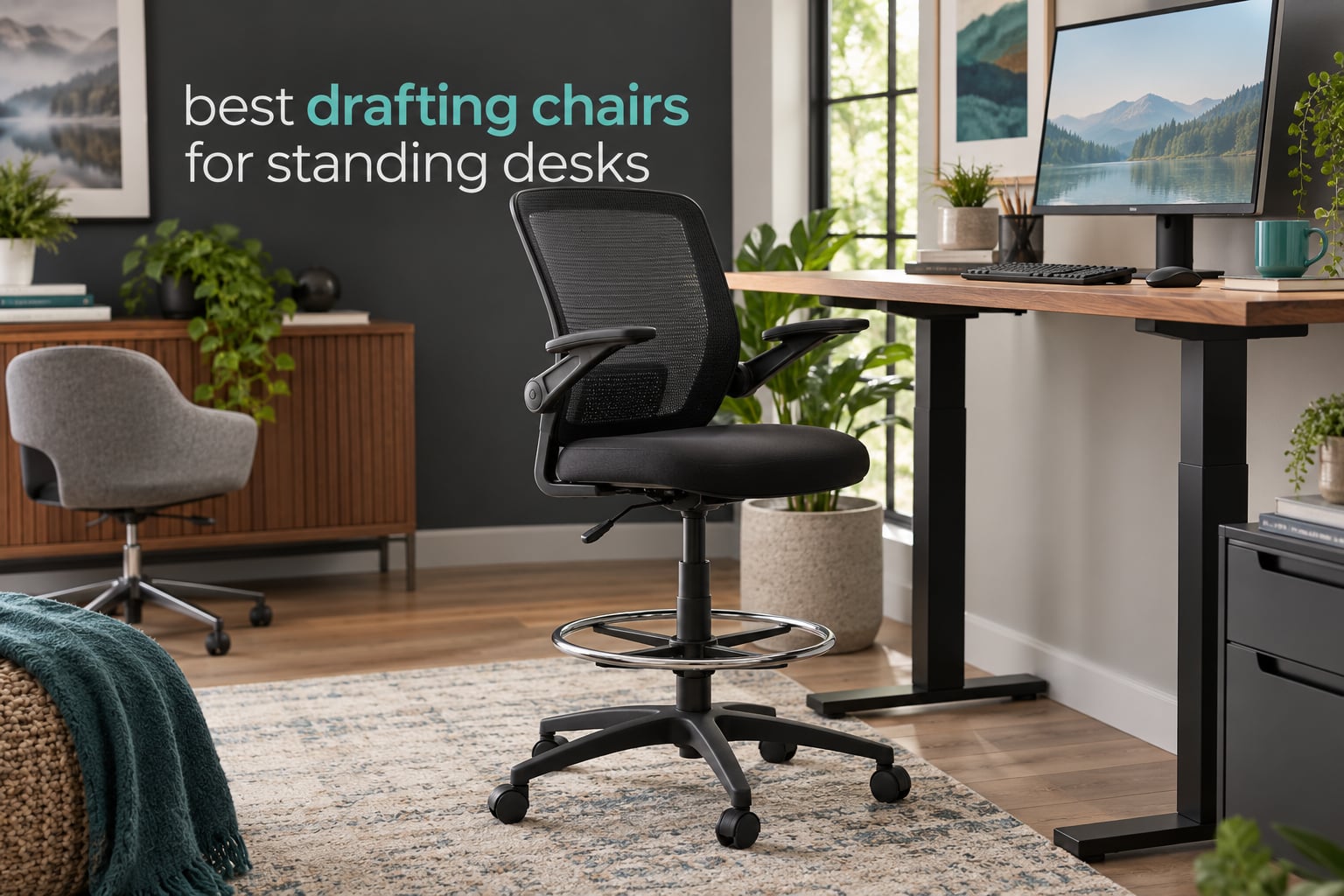
A drafting chair is an office chair built around an extended pneumatic cylinder that raises the seat 6 to 12 inches higher than a standard task chair, plus a height-adjustable foot ring so your feet have somewhere to land when the seat is above floor level. A normal task chair tops out at roughly 20 to 23 inches of seat height. If your work surface sits above your elbow height, that ceiling is the whole problem.
We spent weeks reading published specifications, owner reviews and long-running forum threads on this category rather than trusting the marketing copy on the listing pages. What came out of it is a short list of chairs that genuinely reach counter and standing height, and a longer list of things that look like drafting chairs but are not one. If you want the wider take on the chair category first, our general drafting chair guide covers the shapes and materials in more detail.
Here is the honest short version. A drafting chair solves a height problem, not a comfort problem. People who already own a good task chair and then add a drafting chair report that the drafting one is fine at a raised desk and worse everywhere else. The chairs below earn their place here because their published seat height range actually reaches the surfaces we work at, because the foot ring holds when you put weight on it, and because the manufacturer prints a weight capacity instead of leaving you to guess.
One more thing before we start. Most sit-stand desks do not need a drafting chair at all. If yours lowers to 28 inches or below and you split your day evenly, a standard task chair is the better buy, and our sit-stand desk guide covers that setup properly. The picks here are for fixed-height standing desks, counter-height work surfaces, art and drafting tables, and for people who spend most of the day raised.
Table of Contents
Top 3 Picks for Drafting Chairs at a Standing Desk


HYLONE High-Back Mesh Drafting Chair
- Extra-tall 52 inch build
- Adjustable footrest ring
- BIFMA-tested pneumatic lift
- 300 lb capacity

Office Star DC Series Mesh Drafting Chair
- 24-33.5 inch range
- 18.25 inch foot ring
- 15 year warranty
All 10 Drafting Chairs Compared in 2026
| Product | Specifications | Action |
|---|---|---|
| Primy Tall Drafting Chair with Flip-Up Arms |
|
Check Latest Price |
| HYLONE High-Back Mesh Standing Desk Stool |
|
Check Latest Price |
| Office Star DC Series Deluxe Mesh Drafting Chair |
|
Check Latest Price |
 BOLISS 400 lb High Back Drafting Chair BOLISS 400 lb High Back Drafting Chair |
|
Check Latest Price |
 Kensaker 300 lb Mesh Drafting Chair Kensaker 300 lb Mesh Drafting Chair |
|
Check Latest Price |
 HYLONE Armless Mesh Drafting Stool HYLONE Armless Mesh Drafting Stool |
|
Check Latest Price |
 amseatec Tall Leather Drafting Chair amseatec Tall Leather Drafting Chair |
|
Check Latest Price |
 Misolant Faux Leather Drafting Chair Misolant Faux Leather Drafting Chair |
|
Check Latest Price |
 Misolant Armless Faux Leather Drafting Chair Misolant Armless Faux Leather Drafting Chair |
|
Check Latest Price |
 CHAIRMAN Mid-Back Faux Leather Drafting Chair CHAIRMAN Mid-Back Faux Leather Drafting Chair |
|
Check Latest Price |
What Actually Makes a Chair a Drafting Chair
Two features do all the work. The first is the extended gas lift. A task chair cylinder moves the seat through maybe 16 to 19 inches and stops around 20 to 23 inches off the floor. A drafting chair cylinder starts higher and travels further, so the usable range often begins where a task chair ends.
The second is the foot ring, and it is not decoration. Sit at 30 inches with your legs hanging and your body weight presses on the underside of your thighs rather than your sit bones. That is where the numb-leg and lower-back complaints in forum threads come from. A ring gives your feet a platform so the load stays in the seat.
Now the category warning. Chairs advertised as footrest chairs, sometimes recliners with a fold-out leg rest, show up constantly in drafting chair searches and they solve something else entirely. They have no tall cylinder and no ring, so they cannot lift you to a counter. If the listing photo shows a padded recliner with a folding calf rest, that is not a drafting chair.
Ring quality matters more than most listings admit. A fixed ring welded at one height forces you to adapt your feet to it. A ring on a threaded post with a knob can be set roughly 8 to 10 inches below the seat, which is where your feet want to be. Chrome rings stay rigid; thin plastic rings flex when you push off them.
1. Primy Tall Drafting Chair – Best Overall for a Sit-Stand Desk
- Flip-up arms let you slide under the desk
- Breathable mesh with 3 inch foam cushion
- Adjustable lumbar support
- Large review base at 3485 ratings
- 250 lb limit is modest
- Foot ring knob can loosen under load
- Only one recline position
This is the chair we keep coming back to because it solves the actual problem without a single odd dimension. The flip-up armrests swing clear so you can pull all the way into the work surface, which matters more than it sounds when your desk has a crossbar. A 3-inch foam cushion over a mesh back is enough padding for a full shift without the sinking feeling that thinner molded seats produce.
The five-claw base spreads weight evenly and rolls quietly at 13 kg. That matters in a home office where you are moving the chair between the standing position and a normal desk twice a day.
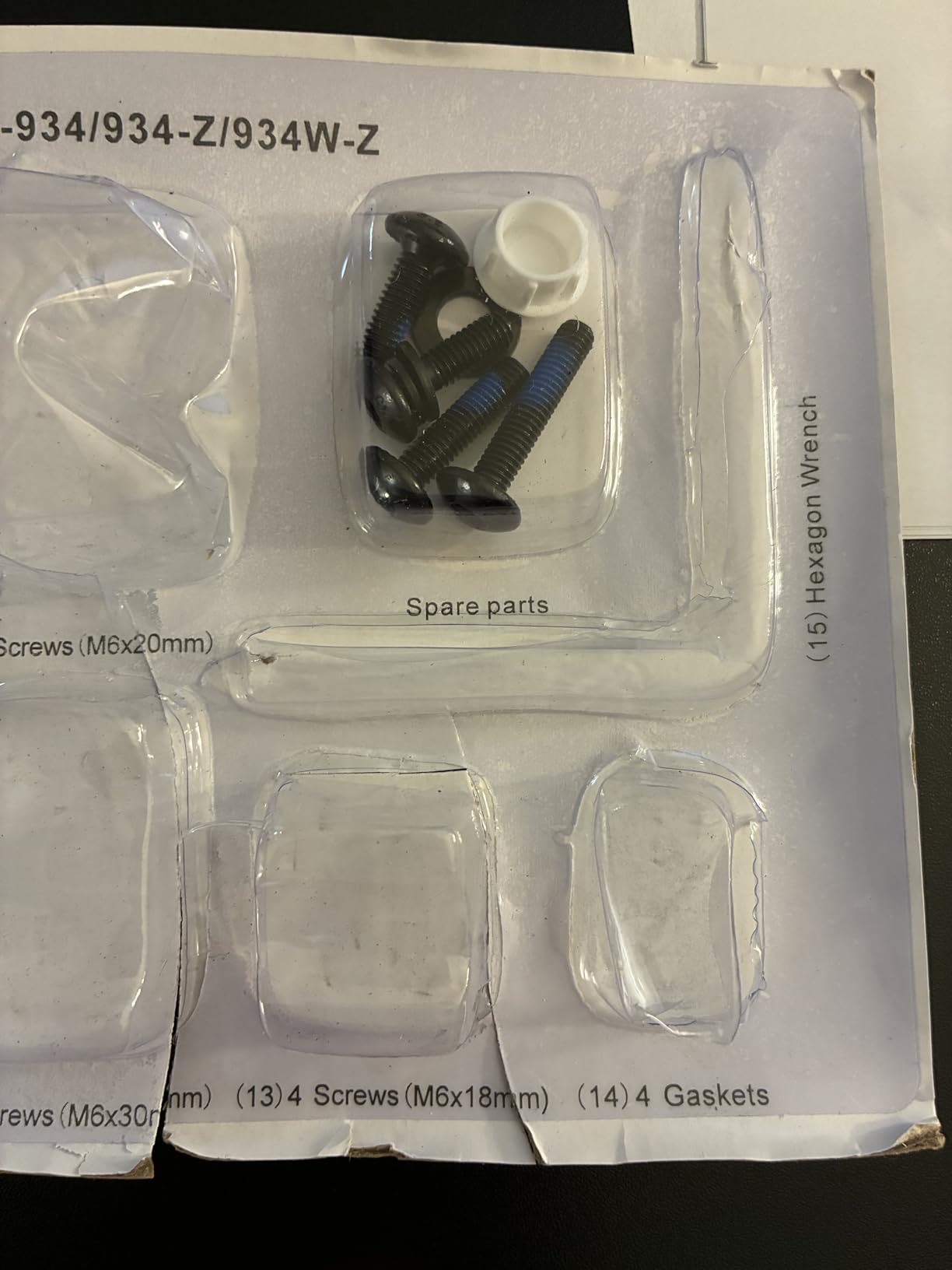
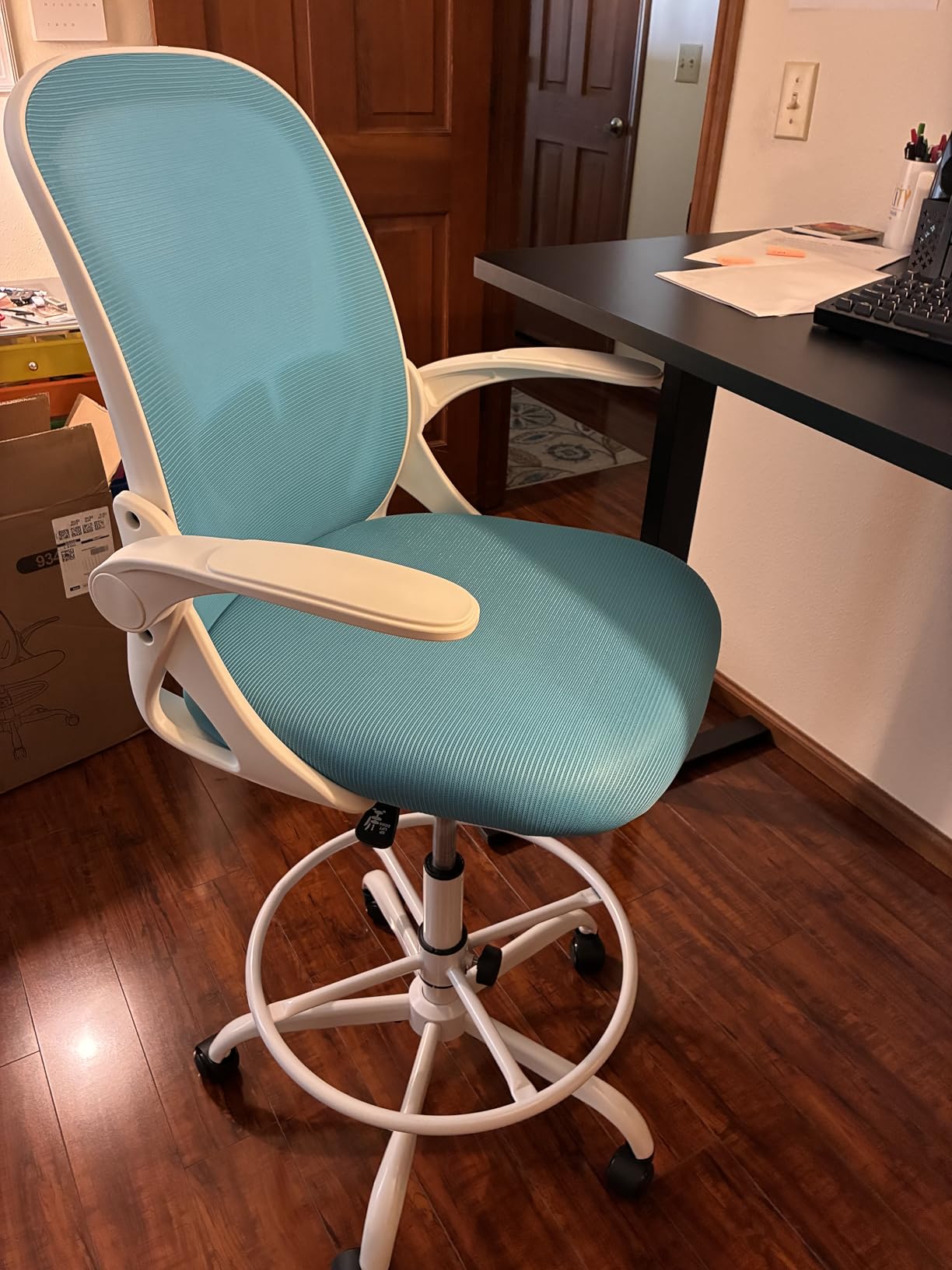
Reviewers are consistent about what works. Owners praise the tall seat height, the arms, and the mesh comfort across thousands of ratings. The recurring gripe is the foot ring, which sits on a knob rather than a lock and can drift downward when you push off it. A wrap of tape around the post or a second turn of the knob is the common fix.
Lumbar support is real but basic. It adjusts, which is more than the armless stools manage, but it is a sliding pad rather than a shaped panel. The single recline position also means no range for shifting posture, so if you like to lean back and open up, expect to do it by standing up instead.
Where the Primy fits your room
Black mesh with a nylon five-claw base is the look that disappears into a home office. It does not read as a workshop chair, which is a genuine advantage if the desk lives in a living space rather than a dedicated study.
It is the right call for someone between 5’4" and 6’2" who alternates between sitting and standing on a desk that tops out around 40 inches. It is the wrong call above 250 pounds, where a chair with a published 300 or 400 pound rating is the safer purchase.
Where the Primy falls short
The 250 pound capacity is the number to know. It is not a light-duty chair, but it is not a heavy-duty one either, and the base is narrower than the models built for larger users.
If your desk is a permanent 44 inches or higher, or if you work standing for more than about four hours at a stretch, the limited tilt range and the low capacity start to tell on you. In that case, look at the BOLISS or the Misolant with arms instead.
2. HYLONE High-Back Mesh Drafting Chair – Best Value for Maximum Reach
- 52 inch overall height gives serious reach
- High-back mesh with lumbar support
- Waterfall seat edge
- BIFMA-tested lift and tilt mechanism
- Foot ring creeps down over time
- Gas cylinder can lose pressure
- Stiff casters on plush carpet
Reach is the headline here. This chair is listed at 52 inches overall with a high back, and owners routinely report using it with a desk that other chairs cannot touch. If your work surface is a fixed 44 inches or higher, this is one of the few picks here that addresses it directly.
Customer service is a genuine strength and reviewers mention it repeatedly. HYLONE sends replacement parts free, including gas cylinders, which matters in a category where a sagging lift is the most common long-term failure and a whole new chair is the usual alternative.

Owners also like the flip-up padded arms, which bring you closer to the surface, and the waterfall seat edge that takes pressure off the back of your thighs. At 37 pounds it is a substantial chair that stays planted when you push off to get up, which is more than we can say for the lighter stools.
The negatives are consistent too. The foot ring knob does not hold and the ring creeps down over time. The gas cylinder can lose pressure and let the seat sink, and a few owners report the seated height measuring lower than the listing claims at full extension. Casters are stiff on thick carpet.

Who should buy the HYLONE
Pick this one for a fixed-height standing desk above 42 inches, or for a bar-height counter where you want a backrest rather than a bare perch. The high back also makes it a reasonable drafting chair for illustration work where you lean forward over the surface.
For a shared or hot-desk setup where two people of different heights take turns, the range here does a lot of work. One chair covers a short sitter at the bottom of the lift and a tall sitter at the top.
Who should look elsewhere
Someone on hard floors or low-pile carpet will find the casters a nuisance, and anyone who moves the chair daily will notice the 37 pound weight. If you need a chair that feels settled and quiet rather than tall, the Office Star below is the calmer option.
Watch the cylinder. If the seat starts to sink within a year, that is the part to have replaced, and this brand is one of the few here where service will actually do it.
3. Office Star DC Series Mesh Drafting Chair – Top Rated for Sit-Stand Switching
- 24 to 33.5 inch range works at both desk heights
- Long warranty on metal and mechanical parts
- Armless design pulls close to a counter
- Assembles in 8 to 20 minutes
- Foot ring can creep down
- No forearm support for long typing
- Moderate rather than plush cushion
This chair shares the highest rating in the group at 4.6 stars, across more than 2000 ratings, and the number is backed by a warranty that runs well past the rest of this list. Office Star covers non-moving metal parts for 15 years, components, cylinders, base and casters for 5, and upholstery for 3.
That matters more than the star rating. Forum readers in this category treat anything under three years as a red flag for daily use, and a chair that can be repaired rather than replaced changes the maths entirely if you plan to keep the desk for years.
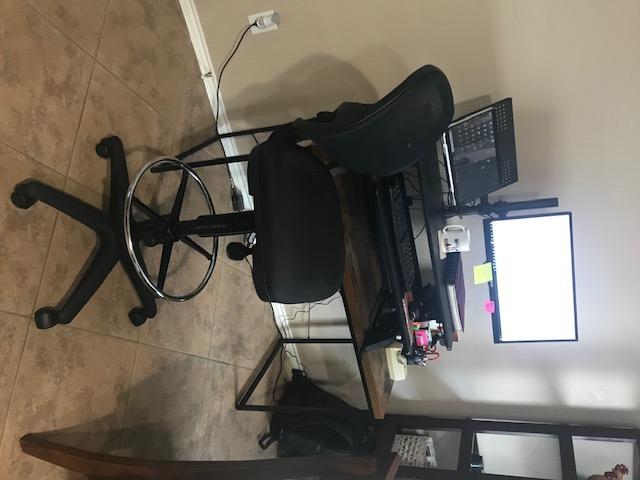
The practical appeal is the range. A 24 to 33.5 inch seat height span means the same chair works at a lowered sit-stand desk and at full standing height, which solves the minimum-height problem that makes most drafting chairs one-position tools. The armless design lets you pull right up to a counter or drafting table with nothing in the way.
Owners also like that it assembles quickly, often in under 20 minutes with the included tools, and that it is approved for commercial use. At 26 pounds it moves between positions without being a chore.
The foot ring again. It is an 18.25 inch ring on an adjustable post, and the dominant complaint across reviews is that it creeps downward under pressure and needs a firm extra turn or a stabilizer to stay put. That is a five-minute fix, not a reason to pass.
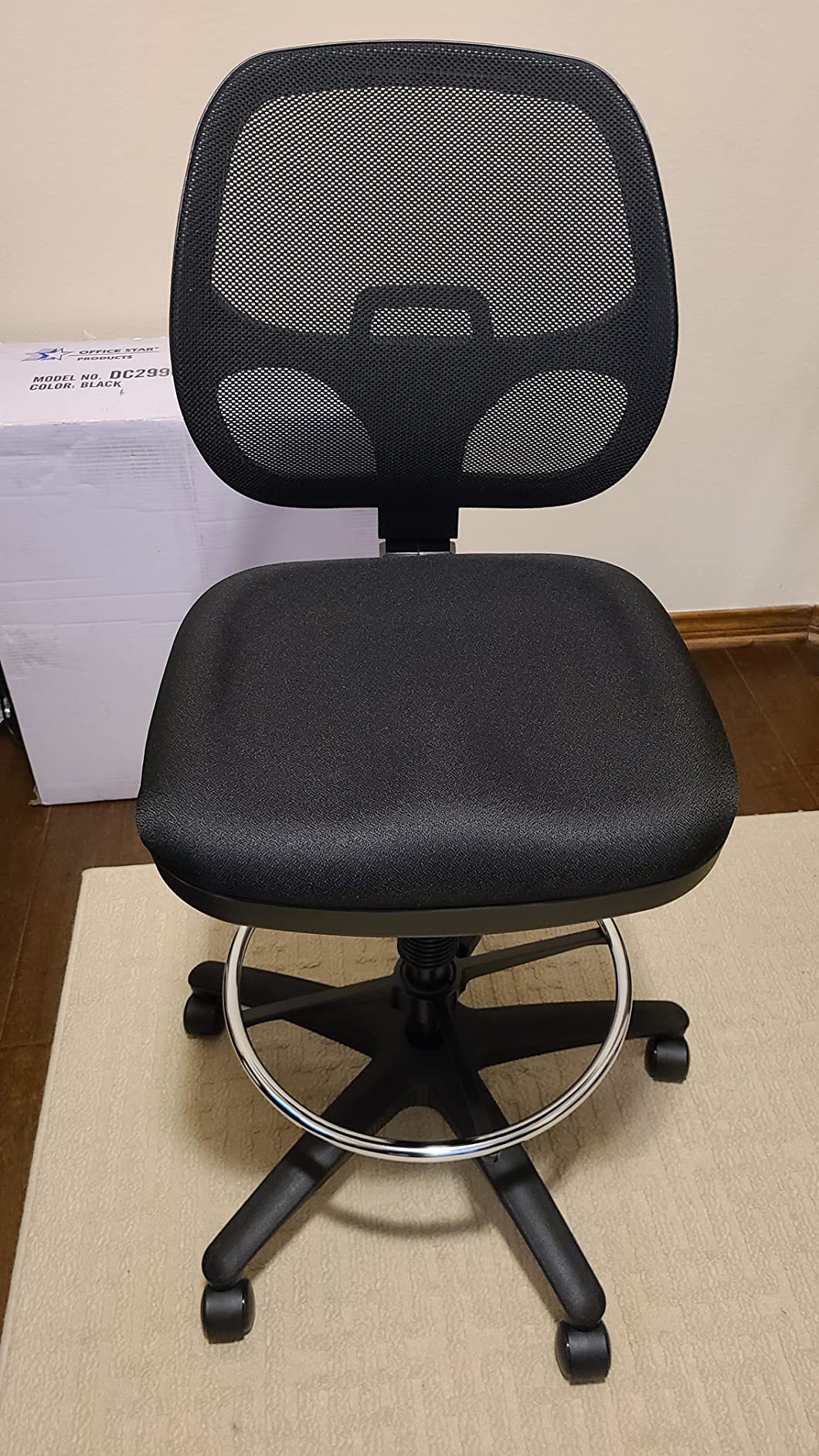
Where the armless shape earns its place
Armless is the right call at a counter, a drafting table or an art station where you pull in close and want your body near the surface. For eight hours of keyboard work with no armrests, most people find their shoulders take up the slack by the afternoon.
It is also the more discreet-looking chair of the three mid-range mesh options, with a black mesh back and nylon base that reads like a regular office chair until you notice the ring under the seat.
Where it will not suit you
Skip it if you type heavily and want forearm support, or if you are above 275 pounds. The nylon base is well made but it is rated accordingly, and that rating is the one number to respect.
The cushion is moderate rather than plush. Over a long standing shift that is fine because you are not bearing full weight through it, but at a lowered desk all day some people want more padding than 2.75 inches of foam provides.
4. BOLISS 400 lb High Back Drafting Chair – Best for Heavy Users
BOLISS Drafting Tall Office Chair 400lbs High Back Standing Desk Chair
- Highest published capacity in this group
- Adjustable headrest and free lumbar cushion
- 4 inch molded foam cushion
- Quiet dual-wheel casters
- Deep contoured seat can sit the user low
- Top of range is short for users over 6 feet
- Heaviest build at 46.2 pounds
Everything about this chair is sized up. The load rating is 400 pounds, the highest published number in this roundup, and the frame sits on a heavy-duty 5-star nylon base that does not shift when you push off it. For anyone above 275 pounds, the rest of this list is a compromise and this one is not.
The back is where the money went. A 4-level adjustable headrest supports your neck when you are up at counter height, and the lumbar cushion floats freely rather than sitting in a fixed track, so you can move it to the curve of your back instead of the average curve of a catalog photo.
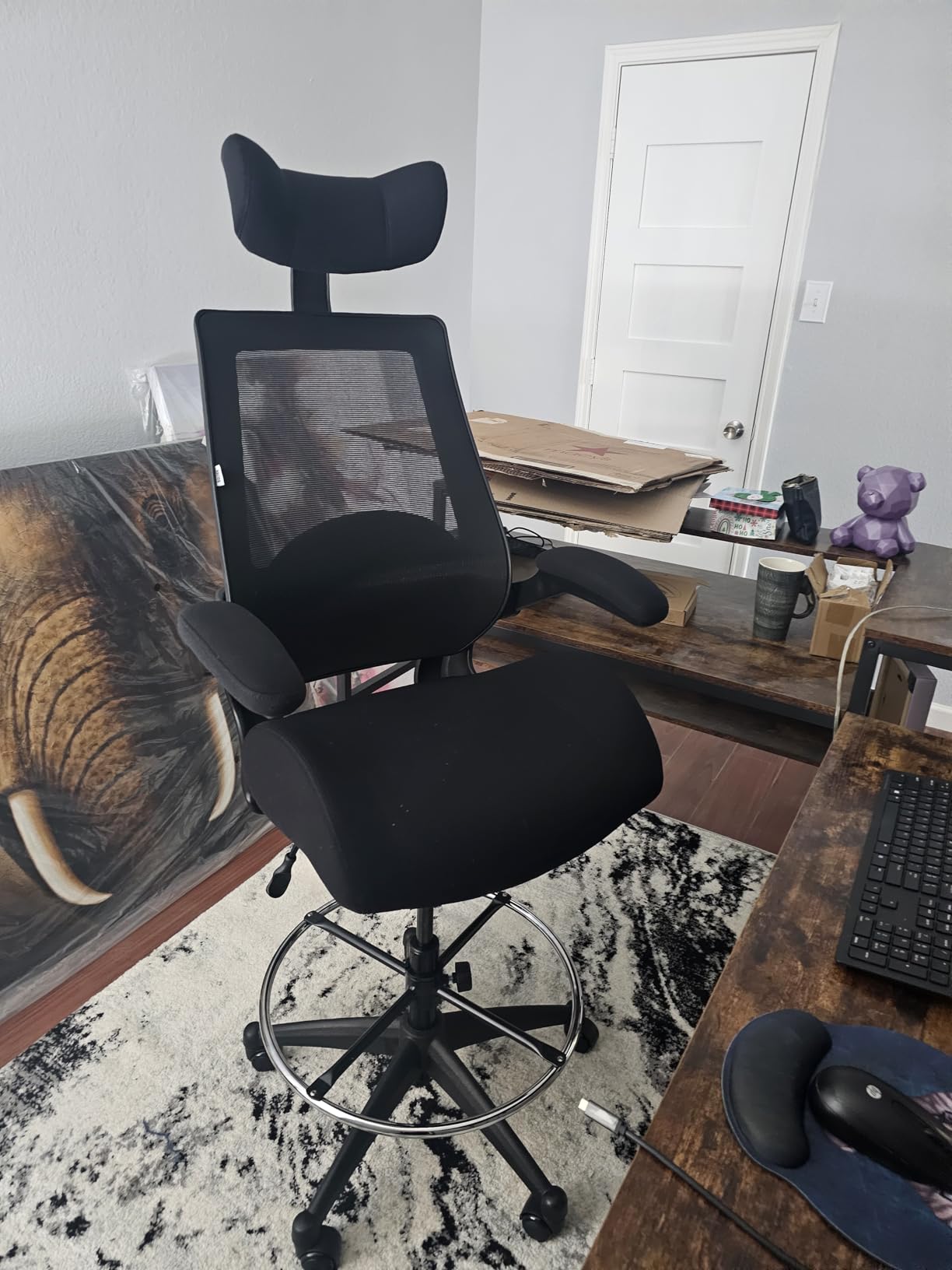
Tall users rate this as the chair that finally reaches a workable height with real neck support. The oversized chrome foot ring is rigid rather than springy, and the dual-wheel casters roll quietly, which matters on hardwood and laminate where cheaper chairs are brutal.
The trade-off is the seat. It is a 4-inch molded high-resilience foam cushion, generous by any measure, but it is deeply contoured and it can dip the sitter low enough to cause lower-back pain if you do not add a pad. Plenty of owners do exactly that.
The top of the range is around 32 inches. That is short for anyone over 6 feet who wants to perch at a 48 inch surface, and it is the reason the taller-reach chairs exist alongside it.
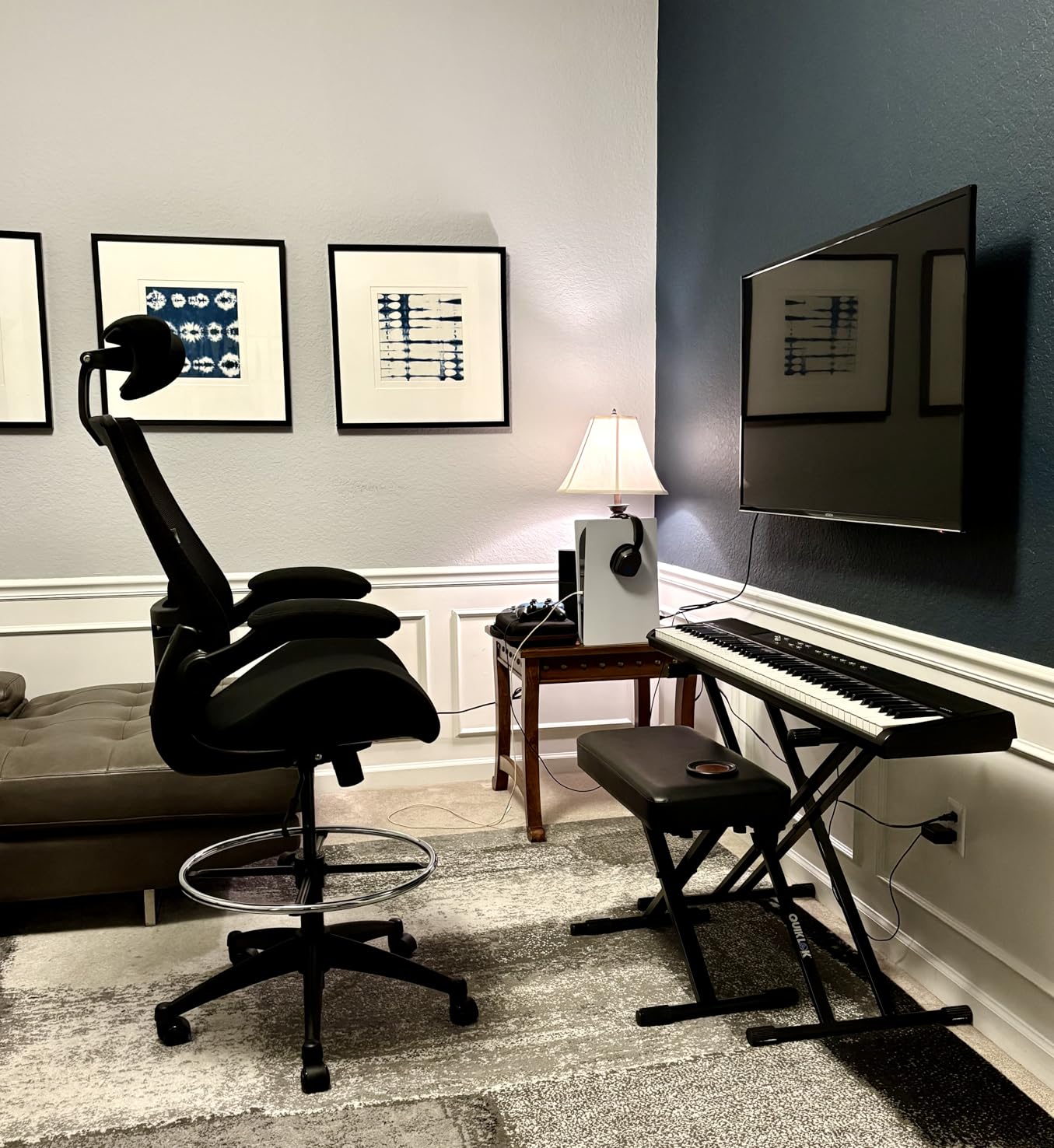
Who this chair is built for
Anyone above 250 pounds gets a straightforward answer here: this is the only pick in the group rated for 400 pounds, and the second highest is 350. Most of the list sits at 250 to 300.
It also suits fixed-height desks in the 44 inch range, where the chrome ring and adjustable headrest give you somewhere to put your feet and something to lean your head against when you are up there for hours.
Who should skip it
At 46.2 pounds this is the heaviest chair in this roundup, and moving it between positions twice a day is a real cost in a home office with one desk. If your setup changes constantly, that weight tells against it.
A 2-year warranty is thin beside the 15 years of metal coverage on the lighter Office Star below. Judge the build, not the paperwork, but do read both before you commit.
5. Kensaker 300 lb Mesh Drafting Chair – Best for Art Studios and Drafting Tables
- Foot ring knob holds its height
- 2-inch vertical lumbar adjustment
- Silent PU casters that protect hard floors
- Assembles in 15 to 20 minutes
- Foot ring edge is hard against bare feet
- Armrest angle is awkward
- Some reports of loosening hardware
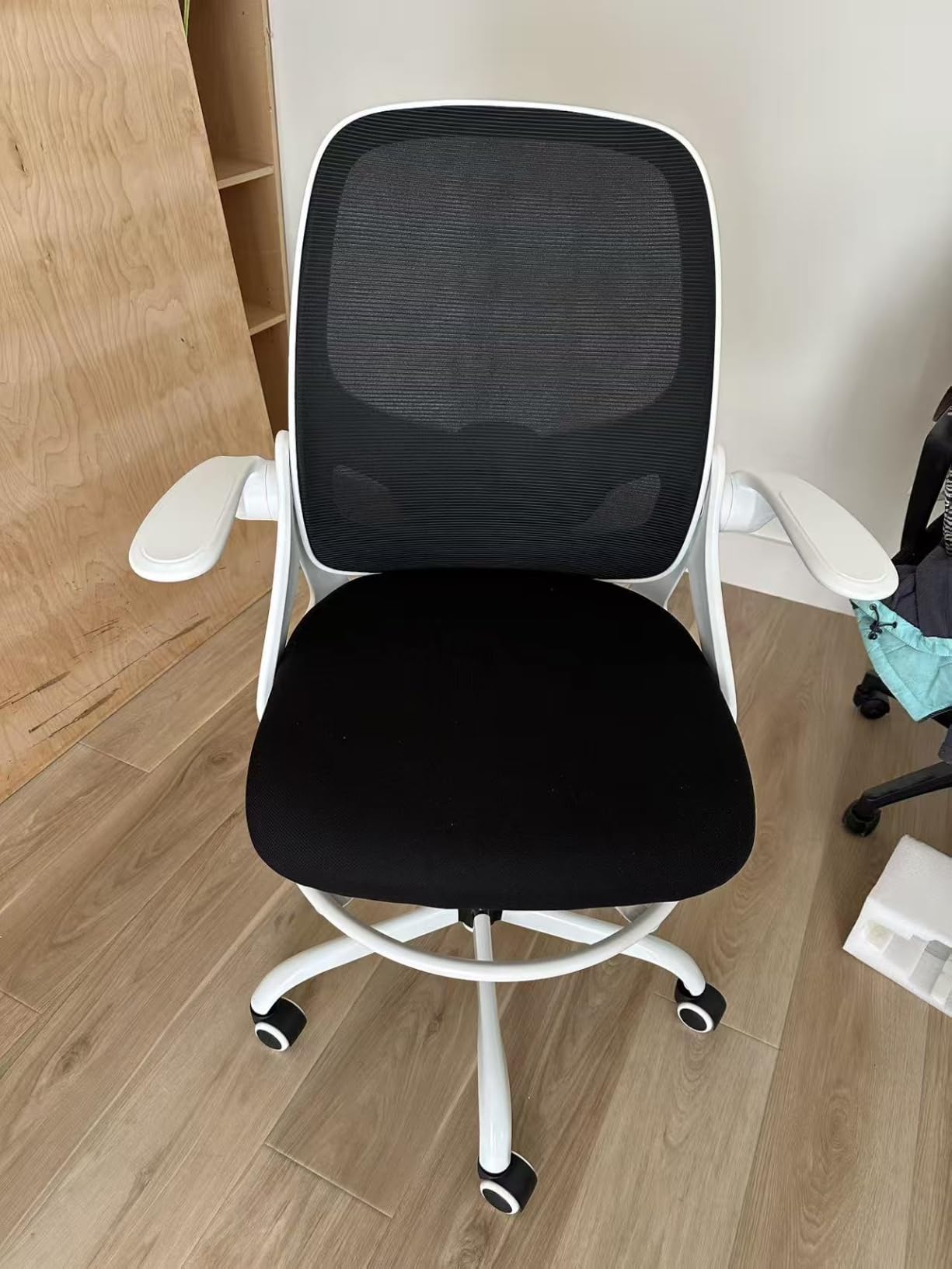
This is the one to look at if your drafting chair doubles as a drawing perch. It publishes a 9.45 inch foot ring adjustment range, which lets you set the ring for a seat height that suits you rather than guessing at a fixed position.
Reviewers also single out the foot ring as the thing that works as intended. The locking knob holds its height where other chairs here rely on a plain knob and creep downward.
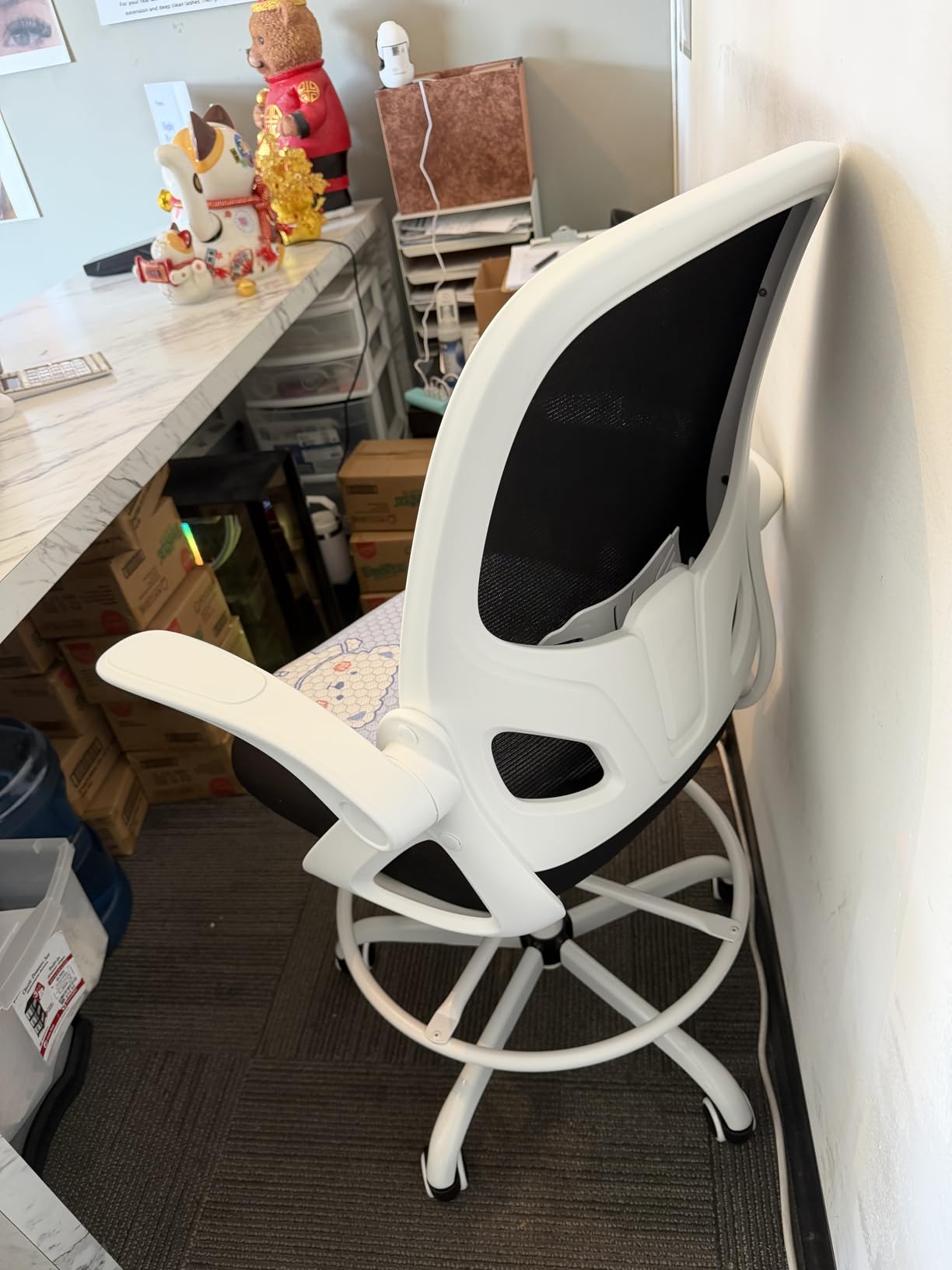
The Y-shaped dual-layer mesh back has 2 inches of vertical lumbar adjustment, which is the right kind of adjustment for leaning forward over a drawing surface, and the silent PU casters roll without scratching a studio floor. Assembly takes 15 to 20 minutes with clear instructions.
There is a real split in the reviews on the back. Some owners find the lumbar support exactly what they needed, others report back pain and hardware loosening over time. At 300 pounds rated on a five-claw base with a thickened seat plate, the wobble complaints are not about the base giving way.
Two practical annoyances. The foot ring has a hard edge that presses into bare feet or socks, so you will want to perch with shoes on. And the armrests are flip-up, but their angle is not to everyone’s taste for resting an arm while you work.
Best for drawing, sewing and craft work
The wide ring adjustment range is the reason this earns its place. Sewing, illustration and model work all put you at a specific seat height for hours, and being able to drop the ring 9 inches below the seat is the difference between feet supported and feet hanging.
It is also a modest 29.8 pounds with a footprint that fits under a smaller work table, which is useful in a spare room rather than a dedicated studio.
Where it falls down
The minimum seat height is higher than many people want. If you also use this chair at a normal lowered desk, check the range before you commit, because this is a raised-position chair first and foremost.
The firm cushion is another matter of taste. If you are used to a deep padded executive seat, a high-density foam top with 20 percent enhanced resilience reads as hard by comparison, though it does hold its shape over a long day.
6. HYLONE Armless Mesh Drafting Stool – Best for Counters and Drafting Tables
Armless Drafting Chair Tall Office Chair Adjustable Height High Back Ergonomic Desk Chair Drafting Stool Rolling Bar Stools Chairs with Footrest and Wheels
- Armless shape slides fully under a counter
- Wide base glides in any direction
- Breathable mesh with a firm sponge cushion
- Easy to assemble
- Back tension knob does very little
- Lowest seat height is still high
- Some bolts arrive too short for the mount
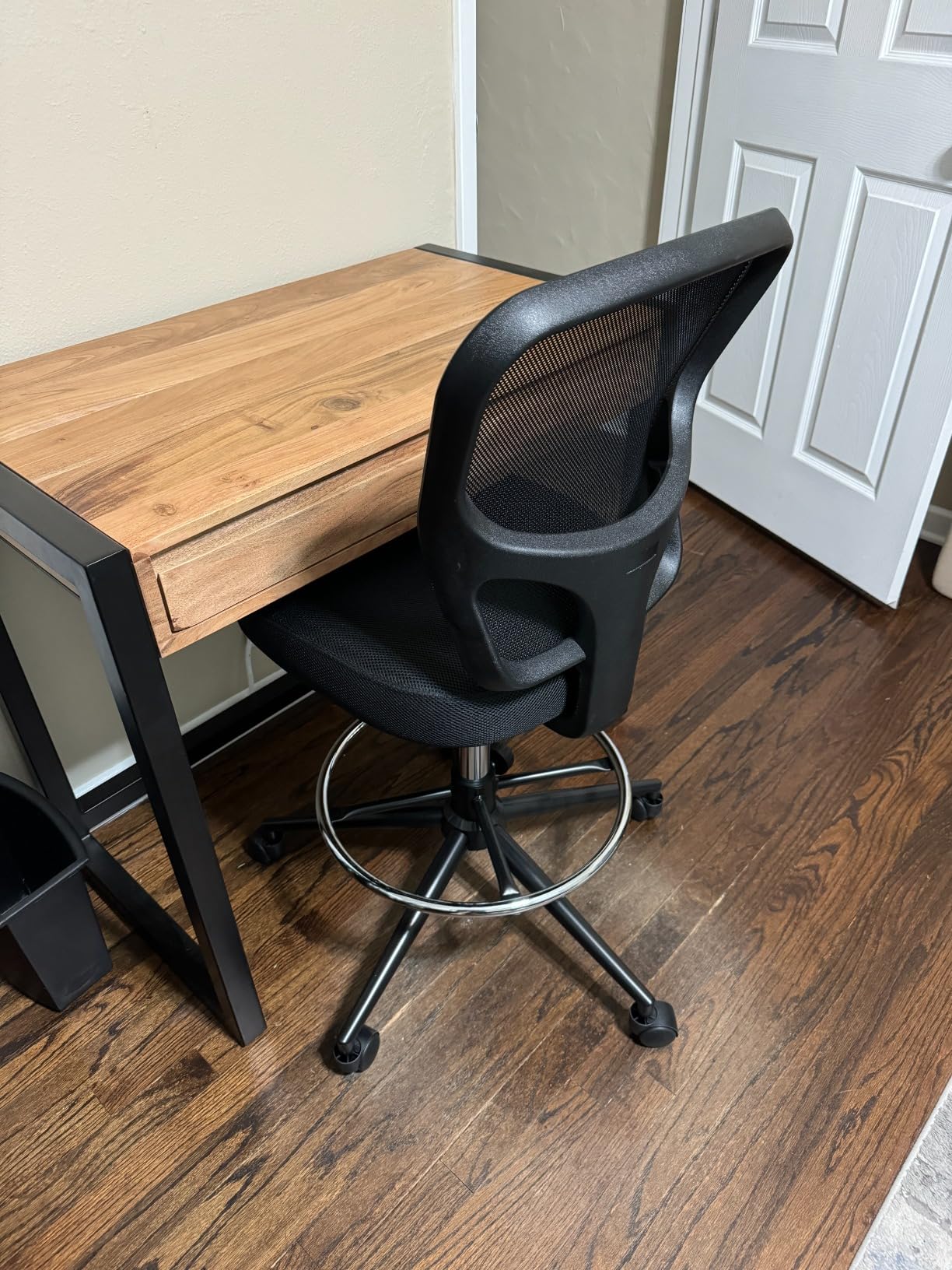
Strip the arms off a drafting chair and you get something closer to a tall task stool, which is exactly what a counter or drafting table wants. With nothing on the sides you can pull your whole body into the work surface instead of working around a frame.
Owners in art studios, classrooms and home offices rate it as comfortable and unfussy, and the two details they mention most are the armless space-saving shape and how easy it is to assemble, including for older buyers. At 25.6 pounds it moves easily between a counter and a desk.
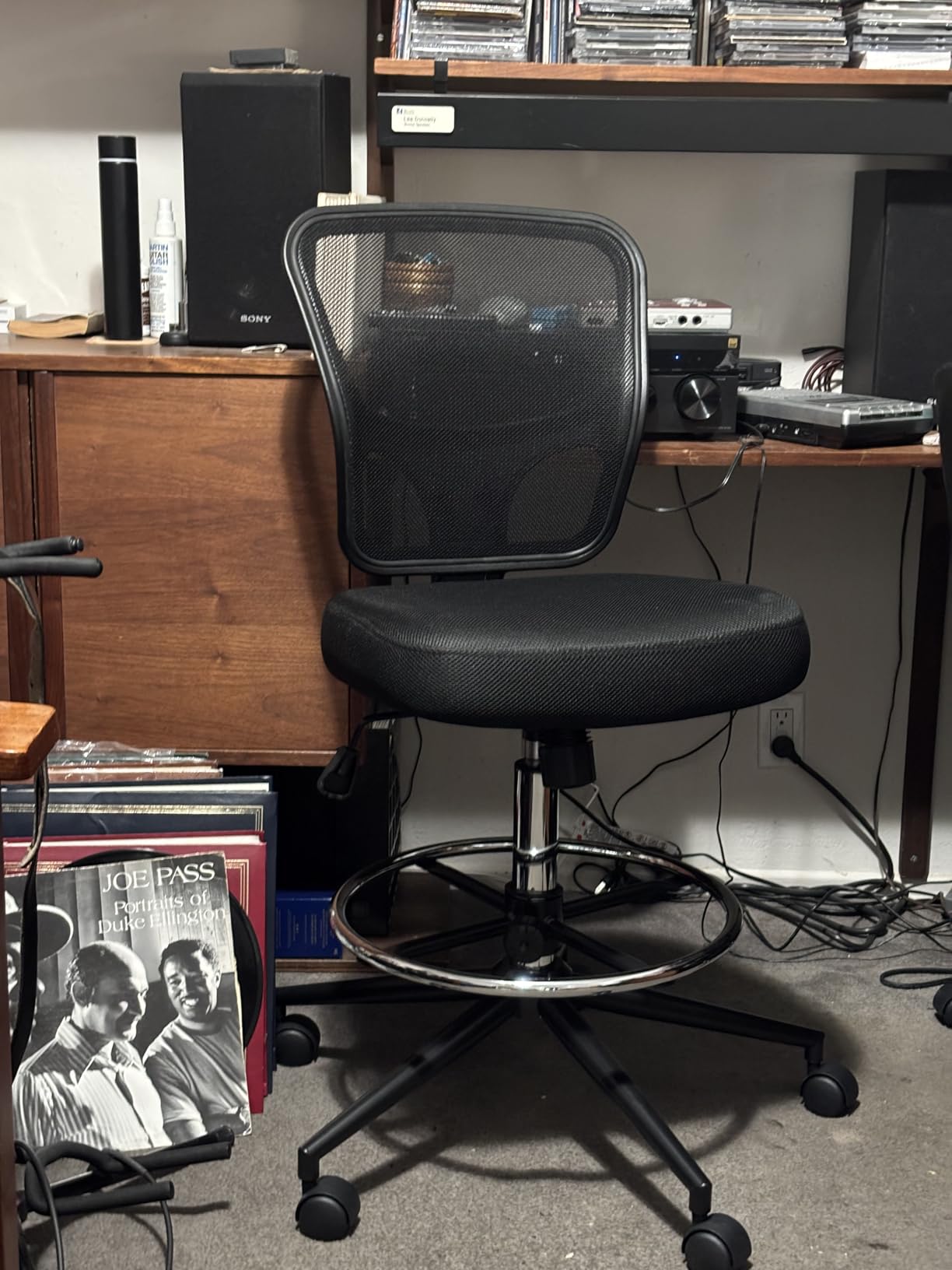
The base is wide and sturdy and the casters glide in any direction over hard or soft floors, which is unusual at this level. The seat board is FSC-certified wood rather than the plywood common elsewhere, and the BIFMA-tested gas lift has seat tension adjustment and a 360 degree swivel.
The top complaint is the back. The tension knob can do very little, so the mesh backrest sits loose and does not feel like the lumbar support it appears to be. If you need real back support at height, choose a chair with an adjustable lumbar instead.
Two other notes. The lowest seat height is still high for a standard desk, so treat this as a raised-position chair. And on hard floors a few owners report the wheels rolling backward as they sit down, which is a casters-for-your-floor-type problem rather than a defect.
When an armless stool is the right answer
Any fixed-height counter where you perch rather than sit. A drafting table with a low frame. A classroom or studio bench. In all of these the armrests are the first thing to hit the edge, and this chair simply does not have them.
It is also light enough at 25.6 pounds to move between a counter and a desk without planning around it, and the all-direction casters make repositioning simple.
When it is the wrong answer
Long sessions at a keyboard. Without arms and without real back tension, you are carrying the load in your lower back by the end of the day, and the loose backrest makes that worse rather than better.
The 12-month warranty is the shortest here along with the Misolant. For a chair in daily use that is worth weighing, and it is one of the reasons this sits mid-list despite the strong 4.4 rating.
7. amseatec Tall Leather Drafting Chair – Best for Easy-Clean Finishes
amseatec Tall Drafting Chair for Standing Desk,Executive Office Chair
- Leather wipes clean and resists spills
- Three-zone high back supports the full spine
- 300 lb on a carbon steel frame
- 15-minute tool-free assembly
- Warmer and less breathable than mesh in heat
- Solid back panel ventilates poorly
- Casters are specified for hard floors
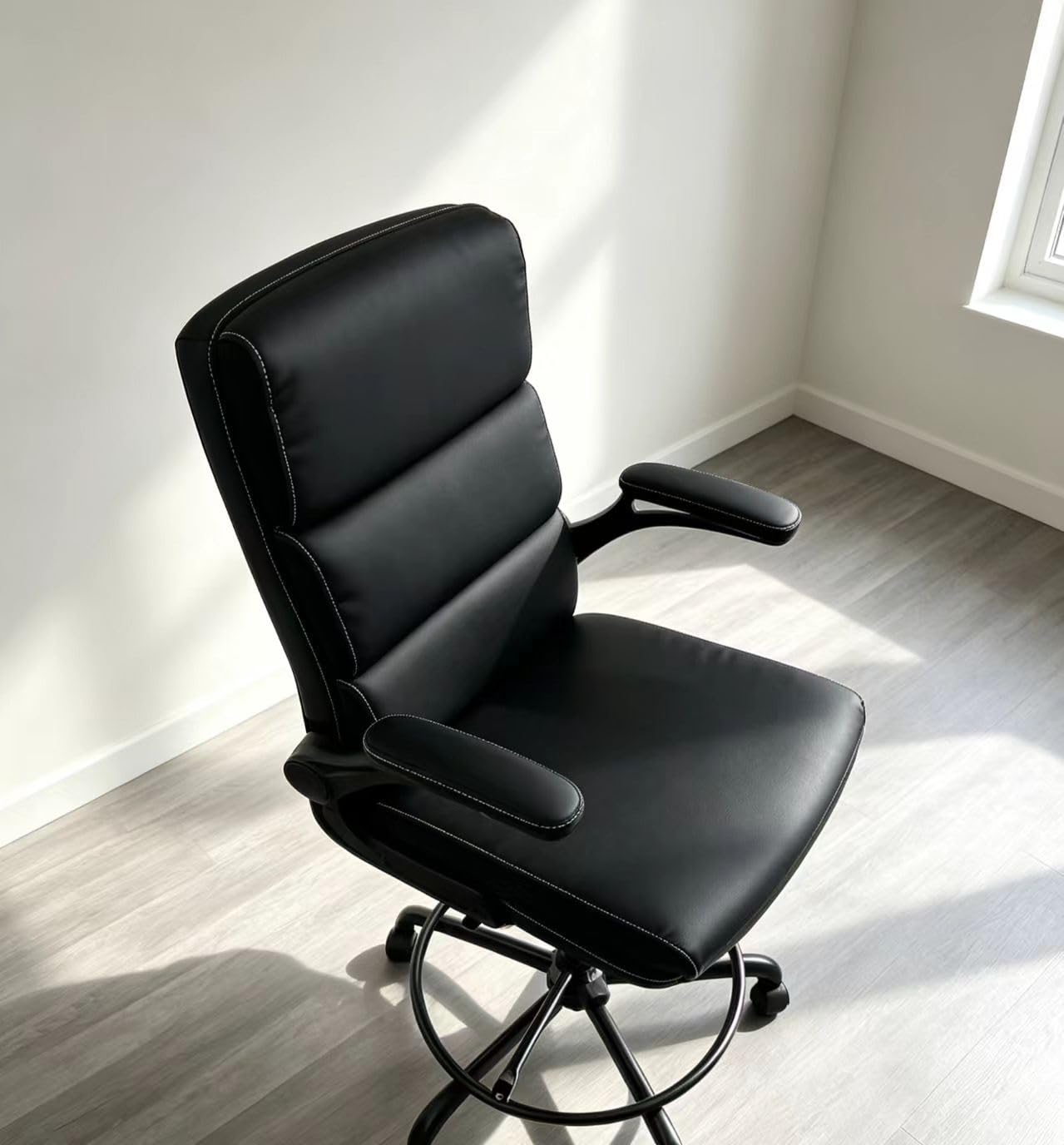
This is the chair to buy if you work with paint, clay, ink or food nearby. Premium bonded PU leather wipes clean where mesh traps debris in the weave, and this is also the only white frame in the group, which matters if your desk is in a bright room rather than a dark study.
Structurally it is serious for the money. A carbon steel frame, a BIFMA-certified Class-3 gas lift and a 300 pound rating, with a 23.23 inch high back split into three independent support zones from the lumbar up through the shoulder blades.
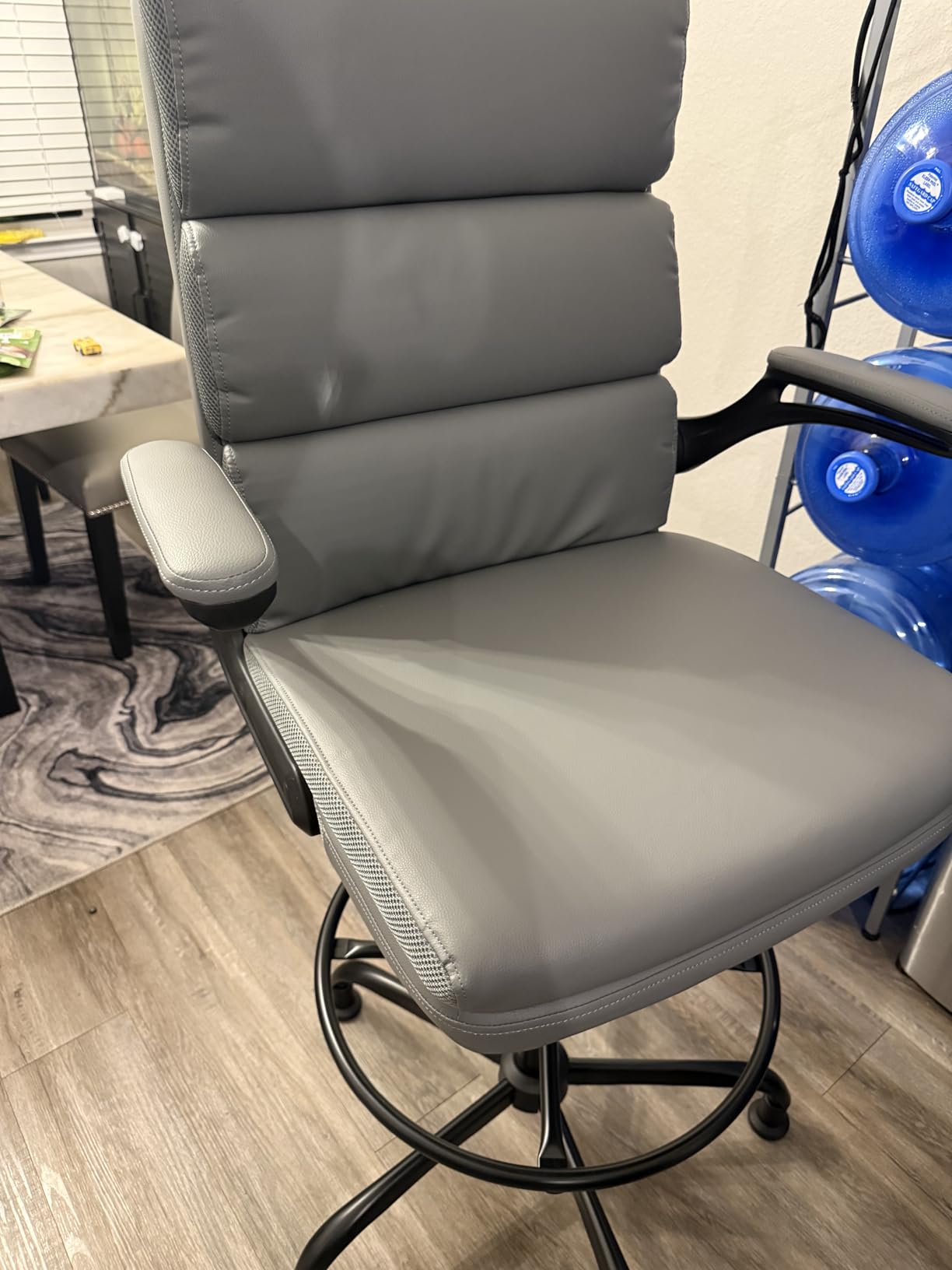
Owners describe a comfortable all-day tall seat that doubles as a perch. The 90-degree flip-up padded arms allow cross-legged sitting and slide-under storage, and the dual-layer cushion puts a soft top over a firm support base so it does not bottom out.
Assembly takes about 15 minutes with no tools and numbered parts, and the warranty is 5 years with round-the-clock customer service, which is longer than most of the chairs in this roundup.
The honest trade-off is heat. PU leather and a solid back panel are both warmer than mesh, and in a warm room a mesh chair will always be cooler. The casters are specified for hard floors too, so carpet use is noisy and draggy.
How it looks in a home office
White upholstery and a white frame is a genuine departure from the standard black mesh look, and in a light room it reads as furniture rather than equipment. If your desk sits near a window, this is the pick that will not look out of place in a photograph of the room.
It also hides dust and marks less obviously than white fabric would, and the leather will not fray at the seat edge the way a fabric chair does over a few years.
Where it is the wrong choice
If you are somewhere warm and working up there for hours, ventilation wins over cleanability. Mesh is the better call for a hot room or a garage studio, and you will notice the difference within a week of switching.
On carpet, budget for a set of hard-floor casters. That is a small addition and it transforms how the chair moves.
8. Misolant Faux Leather Drafting Chair – Best for Lower-Back Support
Misolant Tall Office Chair for Standing Desk, Drafting Chair with Footrest Ring, PU Leather Recline High Office Tall Desk Chair with Adjustable Lumbar Support
- S-shaped back with 2-inch lumbar adjustment
- Waterfall seat edge wraps the thighs
- 350 lb on a four-level gas rod
- Flip-up arms and adjustable foot ring
- Only a one-year warranty
- Leather seat is warmer than mesh
- Heavy build at 40.8 pounds
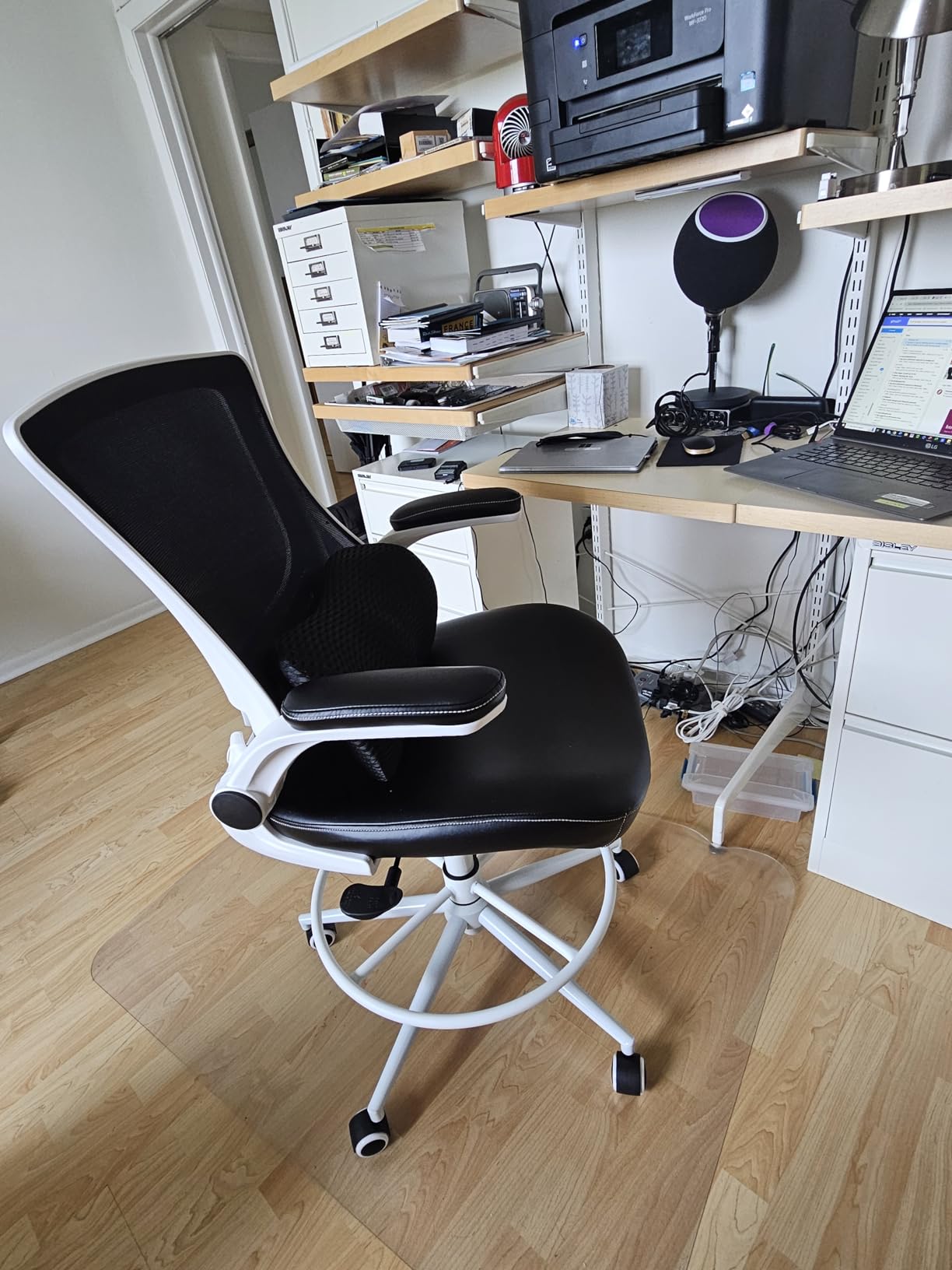
Of the chairs here with real back support, this is the one designed around the shape of a spine rather than a flat panel. The S-shaped back frame follows the lumbar curve, and the support pad slides 2 inches vertically so you can put the pressure point where your lower back actually is.
The waterfall seat cushion does the other half of the job. Instead of a flat front edge it rolls off, wrapping the thighs and taking pressure off the back of the legs, which is the specific thing that makes raised seating uncomfortable for a lot of people.
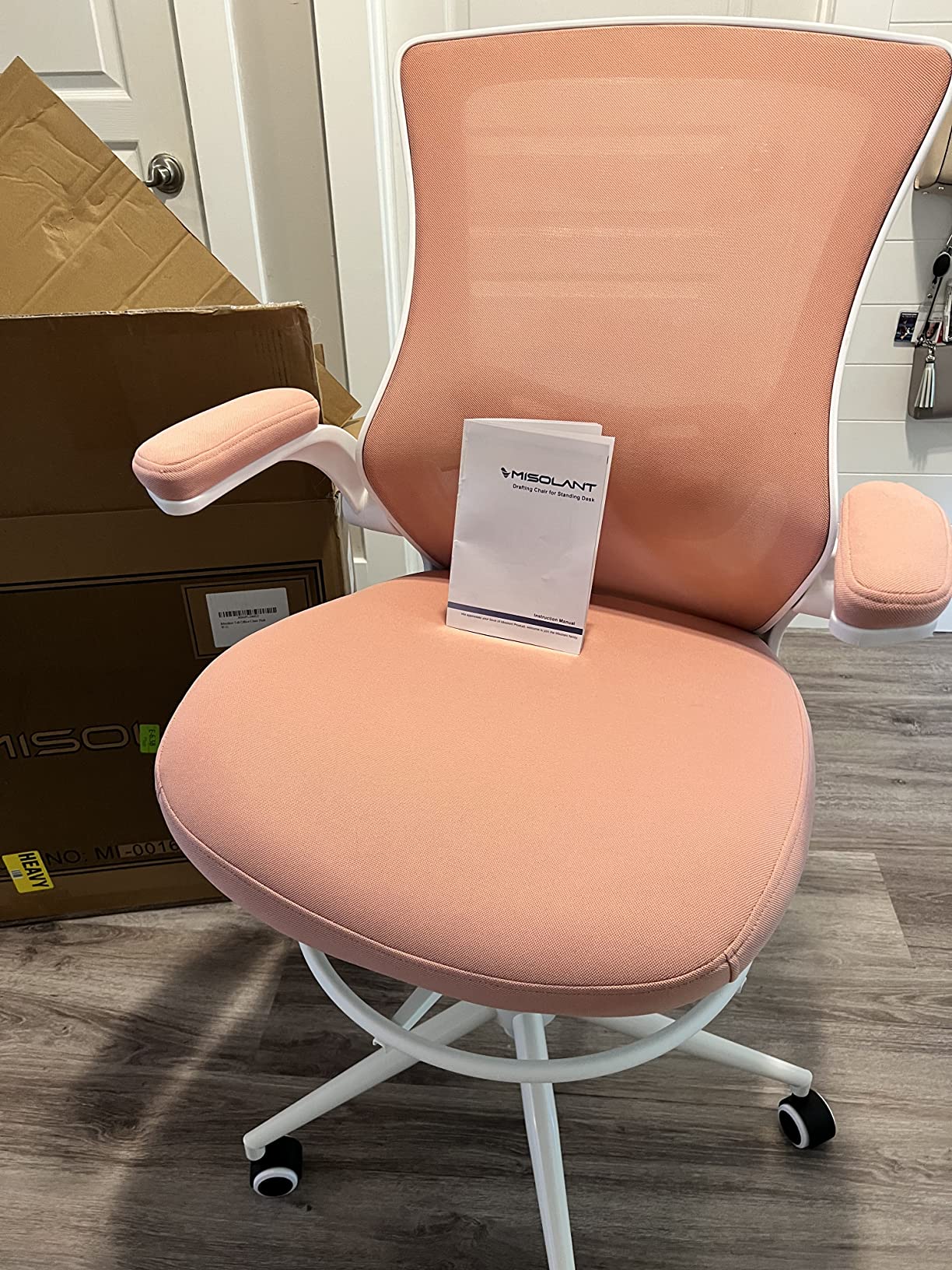
The gas rod is the real differentiator. It is a four-level SGS-certified unit tested to BIFMA standards and rated to 350 pounds, second only to the BOLISS in this list. That is a meaningful number if you are between 300 and 350 pounds and want a chair with adjustable back support rather than a heavy-duty model without it.
Reviewers highlight the height range, the lumbar adjustment and the cushion for long drafting or counter work. The leather-over-mesh build is the mix they mention as the trade-off: ventilated back, warmer seat.
It is 40.8 pounds, a heavy build for a chair in this category, and the warranty is one year, the shortest of the ten. Assembly takes about 20 minutes with a detailed manual.
Who notices the difference
People who already have lower-back trouble at a normal desk and find that a raised seat makes it worse. The combination of an S-frame, an adjustable lumbar pad and a waterfall edge is the most complete answer to that complaint in this group, and it is why we picked it despite the short warranty.
It is also a good match for counter work in a shop or kitchen, where a padded seat that will not slide off and a wipe-clean surface matter more than ventilation.
Who should choose a mesh chair instead
Anyone in a warm room, for the reason above. And anyone whose warranty matters more than their back, which is a real tension here: a 350 pound gas rod and a one-year warranty is an unusual pairing, and it is worth asking the seller about.
At 40.8 pounds, this is not a chair you will move between a standing and a seated position several times a day.
9. Misolant Armless Faux Leather Drafting Chair – Best for Small Spaces
- Compact armless footprint
- 4.6 rating across 366 reviews
- Light weight at 21.6 pounds
- Spacious square seat gives real hip support
- No lumbar adjustment
- Seat and back are narrower than the tall models
- Some units arrive with a crooked backrest
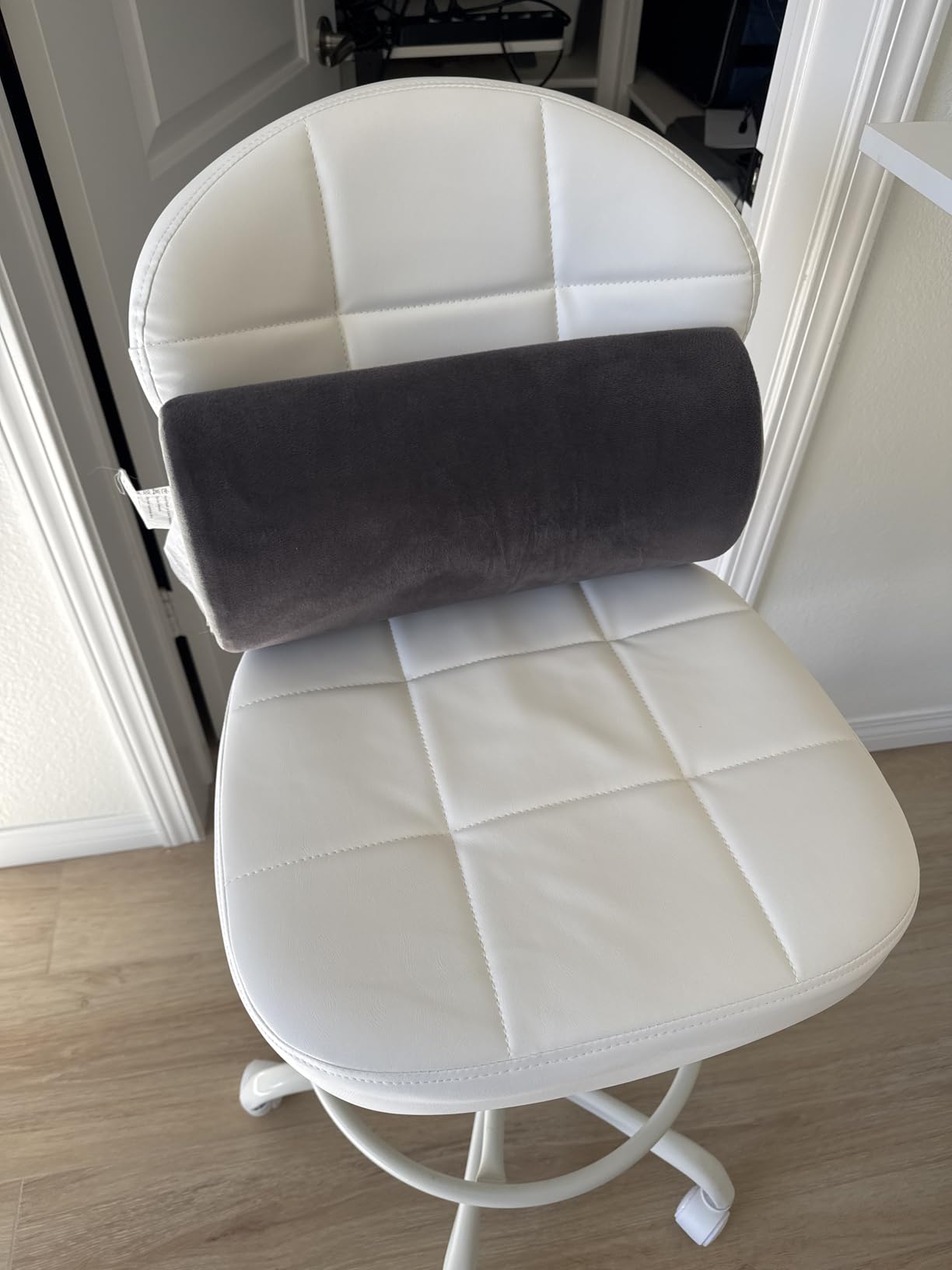
This is the chair for a bar-height counter, a lab bench or a small art table in an apartment where a full drafting chair will not fit. At 19.68 inches deep it is markedly narrower than the high-back models here, and with no arms you can slide it fully under the surface.
It carries a 4.6 rating across 366 ratings, a review base large enough for the score to mean something. The height range of 23.5 to 31.9 inches of cushion height covers bar, lab and near-standing surfaces without needing a stool on a stool.
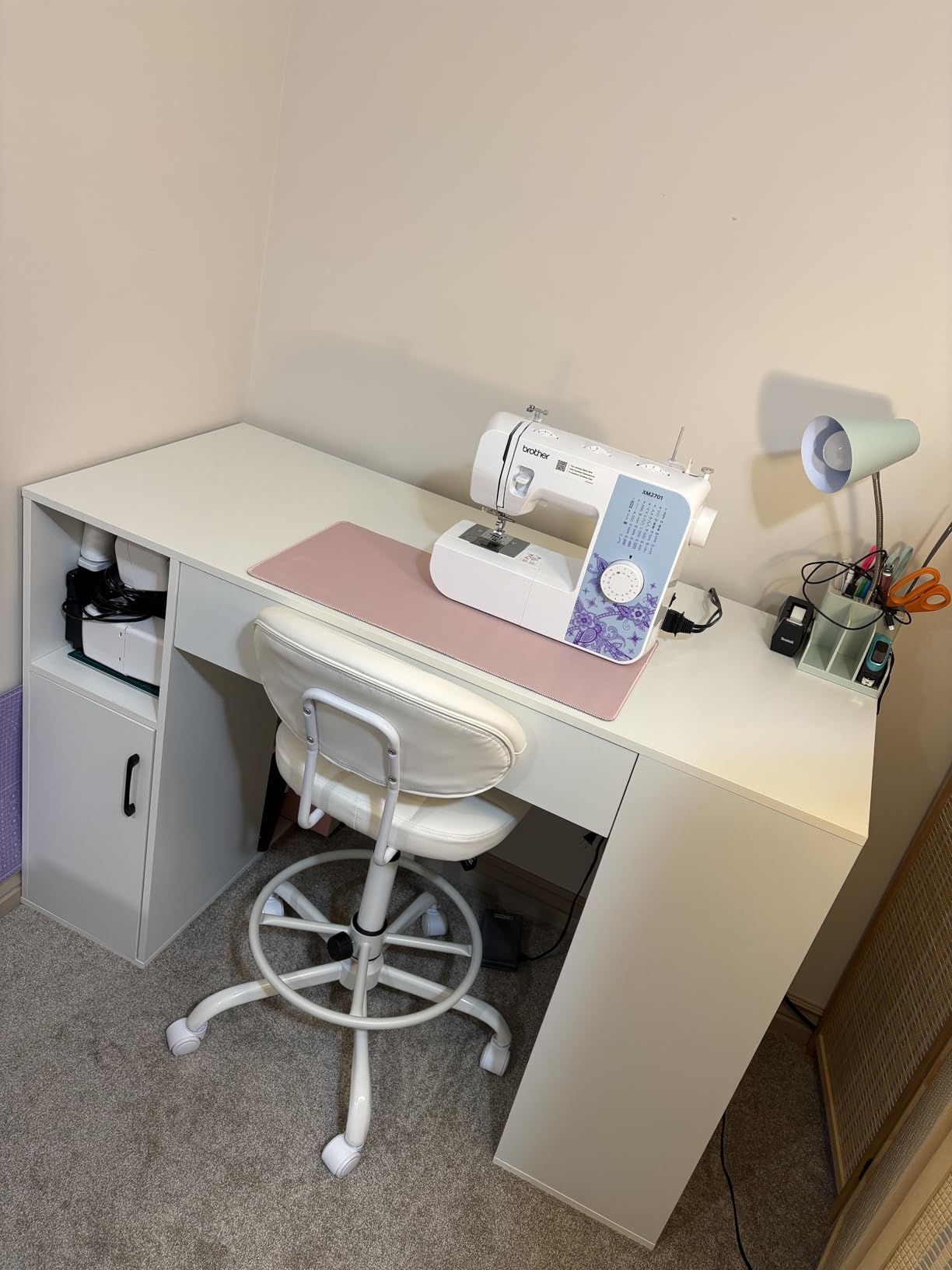
Where most round stools give you a round seat, this has a 16.5 inch square cushion with soft natural sponge padding, which spreads weight across the hips rather than concentrating it on a small circle. Owners notice the difference. The faux leather is soft against skin and wipes clean, and the wrap-around curve back gives you something to lean into that an open stool does not.
At 21.6 pounds it is easy to move around a small room, and assembly takes about 25 minutes with a BIFMA-tested build and an SGS-certified gas rod.
Two caveats. There is no lumbar adjustment at all, so the back support is fixed. And some buyers report the backrest arriving crooked with no real way to correct it, which is a packing and quality-control issue rather than a design flaw.
Best for counters, labs and studio corners
Any surface between 36 and 44 inches in a room where a 28 inch wide chair would make it unusable. Salon and lab benches, kitchen counters used as a work surface, and drafting tables in a spare bedroom all suit it.
The wrap-around back means you can perch sideways with a foot on the ring, which is how most people actually use a counter-height chair rather than sitting square to it.
Where it is not enough
Eight hours of full-time work. The narrower seat and back and the fixed back support mean this is a perch and a short-session chair rather than an all-day seat, and no amount of adjustment will change that.
If you need a chair that serves a lowered desk as well as a raised one, look at the Office Star above, whose range starts lower.
10. CHAIRMAN Mid-Back Faux Leather Drafting Chair – Best Maximum Seat Height
- Highest maximum seat height in this group
- Real tilt function is rare on drafting chairs
- Flip-up height-adjustable arms give forearm support
- Perforated leather back ventilates
- Only 170 reviews behind the 4.6 rating
- Mid-back gives less upper-back support
- Heavy build at 42.6 pounds
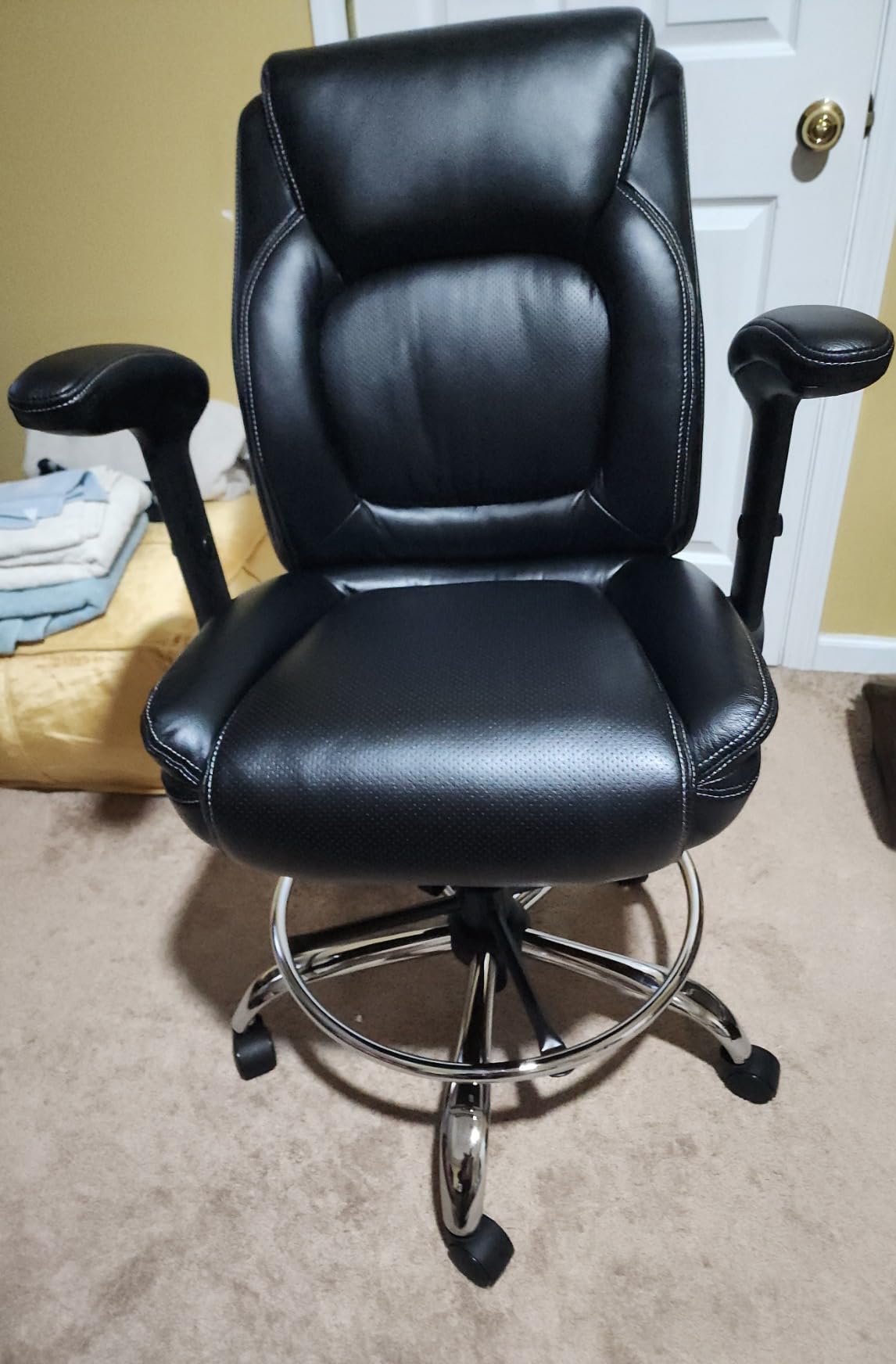
If your desk goes higher than 44 inches, this is the one. The pneumatic range runs from 24.5 to 34.1 inches, the highest published maximum in this roundup, and a 20 inch chrome foot ring is proportionally large to match the seat height.
It is also one of the few chairs here with a tilt function. Drafting chairs are almost always rigid, which leaves you stuck in one posture for hours. Being able to lean back and open up changes how long a raised shift actually feels.
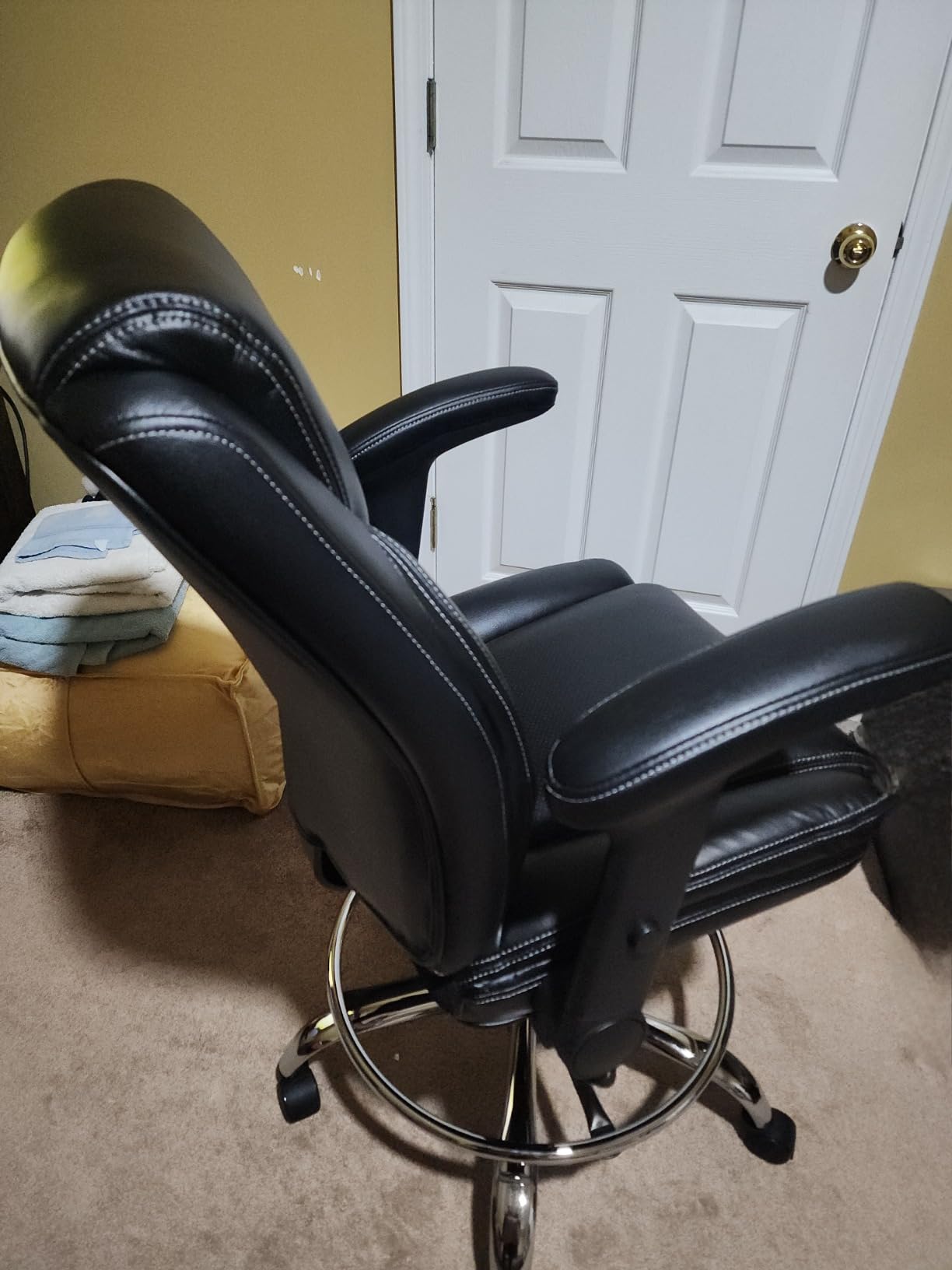
The armrests are flip-up and height-adjustable, which gives you genuine forearm support, the thing the armless stools in this list give up entirely. A 25.2 inch metal base with rolling casters keeps a chair this tall from tipping when you push off to stand, and BIFMA-standard components are used throughout.
Buyers with a smaller review base focus on the reach of the height range, the flip-up arms and the finish. The perforated artificial leather back gives you the look of leather with some ventilation, and the padded waterfall edge earns regular praise.
Against that, 170 ratings is a thin base for the highest score in the group, and readers in this category distrust a 4.6 from 170 over a 4.6 from 366. The mid-back also gives less upper-back support than the high-back models if you spend hours up there.
When a very tall chair is the only answer
Tall work surfaces, counter-height bars above 48 inches, and sit-stand desks that are raised most of the day. If your surface is at 46 inches or above, most of this list stops short and this one does not.
It is also worth noting for anyone working over a treadmill desk, where the surface is high and the space beneath is restricted. A tall chair with a large ring and no awkward arm geometry is what that setup needs.
Why it sits at the bottom of the list
It weighs 42.6 pounds, near the top of this group, with an engineered wood and plastic frame, and the 300 pound rating is a ceiling rather than a comfort. If you are above that, look at the BOLISS instead and accept the shorter top of range.
The 12-month warranty and the thin review base are the two things to weigh before you commit to the tallest reach available here.
How to Measure Your Standing Desk Before You Buy
Almost every complaint we found in the reviews and forum threads traces back to a buyer who did not check one number before ordering. Spend five minutes with a tape measure and you can skip most of them.
Measure the desk at its highest setting, not the lowest
Step one is the number that decides the whole purchase: the maximum height of your work surface, measured from the floor to the top of the desk at full extension. Not the range the listing claims, the height your desk actually reaches. Step two is to stand at that height and measure the distance from your floor-standing elbow down to the surface. That elbow height, minus 2 to 3 inches of clearance, is roughly where the top of your seat cushion should sit.
If your desk tops out below that number, you do not need a drafting chair. If it is close, a chair with a modest cylinder may be enough. If it is well above, you need the tall end of the range and a foot ring, because at that height your feet are nowhere near the floor.
For guidance on desks that reach the right height, our standing desk roundup compares maximum heights side by side.
The foot ring is not optional
Set the ring 8 to 10 inches below the seat cushion. That is the height your legs want when you are perched, and it is why numb legs and lower-back ache are the two complaints that show up again and again in this category. A ring you cannot adjust forces your feet into a fixed, usually wrong, position.
Check whether the ring moves on a threaded post with a knob or is welded in place, and check whether it is chrome or plastic. Chrome holds its shape. A thin plastic ring flexes every time you push off to stand, and that flex is what makes a chair feel unstable at height.
Minimum seat height matters as much as the maximum
Here is the issue most roundups skip. If your sit-stand desk lowers to a normal sitting height, a drafting chair with a minimum seat height of 28 inches is a stool you cannot use when the desk is down. You end up choosing one height or the other.
Look for published minimum and maximum, not just a maximum. The Office Star publishes a 24 to 33.5 inch span, which is the most usable range here for a desk that goes both ways. For shared desks where two people of different heights take turns, span matters more than peak, and a mid-range chair that covers both is the better tool.
If you are under 5’6", this is the single most important spec on the page. Some chairs here have a minimum that puts your knees above the seat edge.
Weight capacity above 250 pounds
Capacity swings further in this category than any other spec, from 250 pounds at the bottom of this list to 400 at the top, and several budget brands publish nothing at all. Readers in forum threads treat an unstated capacity as a low one, and they are right to.
Between 250 and 300 pounds, most of these chairs work. Between 300 and 350, you have real choice here. Above 350, the BOLISS is the only pick that will not ask you to compromise on base width or height range. Our standing desks for tall people guide covers the desk side of the same problem.
Mesh, leather and vinyl in a home office
Mesh breathes, which matters when you are up at a raised surface generating heat, and it does not hold smells. It shows dust in the weave and needs no cleaning beyond a vacuum.
Leather and PU leather wipe clean, which is why it wins in studios, kitchens and anywhere paint or clay is involved. It is warmer, less ventilated, and it will show creasing over a few years. Vinyl sits between the two and is the compromise most mid-range chairs here make.
Casters, base width and arm clearance
Match the casters to the floor. Carpet casters dig into hard floors and mark them; hard-floor casters drag and catch on carpet. Several chairs here are specified for hard floors, and swapping the casters is a cheap fix that changes how the chair feels far more than any other part.
Measure your desk frame before committing to arms. On a crossbar sit-stand frame, fixed armrests at raised height can hit the bar, and a keyboard tray narrows the space further. Flip-up arms solve this cleanly, and every full drafting chair in this roundup except the armless stools has them. On the base, a wider five-star base is steadier when you perch and push off, which is part of why the 400 pound chair is 46 pounds of chair.
Drafting chair, drafting stool or perching stool
Three different products get called drafting chairs. A full-back drafting chair has a cylinder and a ring and a backrest that supports you for hours. A drafting stool keeps the cylinder and the ring but drops the arms and often the back height, which is what you want at a counter. A perching or wobble stool has no back at all and is a different category entirely, aimed at active movement rather than sustained height.
If you want to sit properly at a raised surface, you want the first two. If your standing desk is raised for a few hours and lowered for the rest of the day, a good task chair and a standing mat may serve you better than any chair on this page.
Who Should Skip a Drafting Chair Entirely
If your sit-stand desk lowers below 30 inches and you split your day evenly, a drafting chair solves a problem you do not have. It will be higher than you want when you are sitting, and the foot ring will be in the way of your feet. Buy a good task chair instead.
Forum readers make the same point from the other direction: the drafting category is a height solution, not a comfort upgrade. People who own both report reaching for the task chair the moment the desk comes down, and using the drafting chair only at the top of its range.
There is one more group to skip it. If your desk sits at 40 inches or below and you plan to stand rather than perch for your whole shift, you want a tall task chair or an anti-fatigue mat, not a chair at all. A drafting chair with a ring is built for sitting up high, not for standing next to a surface.
Frequently Asked Questions
What is the difference between an office chair and a drafting chair?
A standard office chair has a task chair cylinder and tops out at roughly 20 to 23 inches of seat height. A drafting chair uses an extended pneumatic cylinder that adds 6 to 12 inches, raises the seat to about 28 to 34 inches, and adds a height-adjustable foot ring so your feet are supported when they cannot reach the floor. That is the whole difference: height, and the ring that makes the height usable.
Can a drafting chair be used as a normal desk chair?
Only if its published minimum seat height is low enough. Many drafting chairs bottom out around 24 to 28 inches, which leaves your knees above the seat edge at a standard 29 inch desk and a foot ring you cannot use. Before buying, check both the minimum and the maximum. A chair with a 24 inch minimum and a 33 inch top works at both heights; one that starts at 28 inches does not.
What kind of chair is best for using with a standing desk?
It depends on how the desk behaves. If it lowers to normal sitting height and you split your day, a standard ergonomic task chair is the better buy and a drafting chair will be wasted money. If the desk is fixed high, stays raised most of the day, or is a counter-height surface, you need a drafting chair or drafting stool with a published seat height range that reaches your surface and a foot ring that holds its position.
Do I really need a foot ring on a drafting chair?
Yes. Sitting above 26 inches with your feet dangling puts your body weight onto the underside of your thighs rather than your sit bones, and that is the direct cause of numb legs and lower-back ache in this category. Set the ring 8 to 10 inches below the seat cushion so your feet have a platform. A fixed ring is better than none, but an adjustable one is what makes the difference.
What is the 20-8-2 rule for standing desks?
It is a pattern for how you split a working day while using a sit-stand desk: 20 minutes standing, 8 minutes sitting, 2 minutes moving. The sitting and moving segments matter as much as the standing one, because the change of position is what keeps blood moving through the legs. A chair that makes both transitions easy helps you follow the pattern rather than abandoning it after an hour.
Is a drafting chair better than a desk chair for a sit-stand setup?
A drafting chair is better at the raised position and worse at the lowered one. That is the honest answer people in office chair forums give. It solves a height problem rather than adding comfort, so if your desk goes low enough to sit at comfortably, keep your task chair for that and add a drafting chair only if the surface is too high for it.
The Best Drafting Chair for Your Standing Desk
The Primy tall drafting chair is our pick for most people in 2026, because it does the ordinary version of this job well: flip-up arms, an adjustable foot ring, a light frame and a review base large enough that the 4.3 rating means something.
Buy the HYLONE high-back if your surface is above 42 inches and you need reach. Buy the Office Star if you alternate between sitting and standing all day and want a chair that works at both ends of its range, backed by the longest warranty in this roundup. Buy the BOLISS if you are above 300 pounds, and the CHAIRMAN if your desk goes higher than 44 inches.
Whichever you choose, measure the desk first and check the minimum seat height, not just the maximum. That single check prevents almost every bad purchase in this category. And if your desk lowers below 30 inches, skip the whole category and start with our standing desk guide instead.