
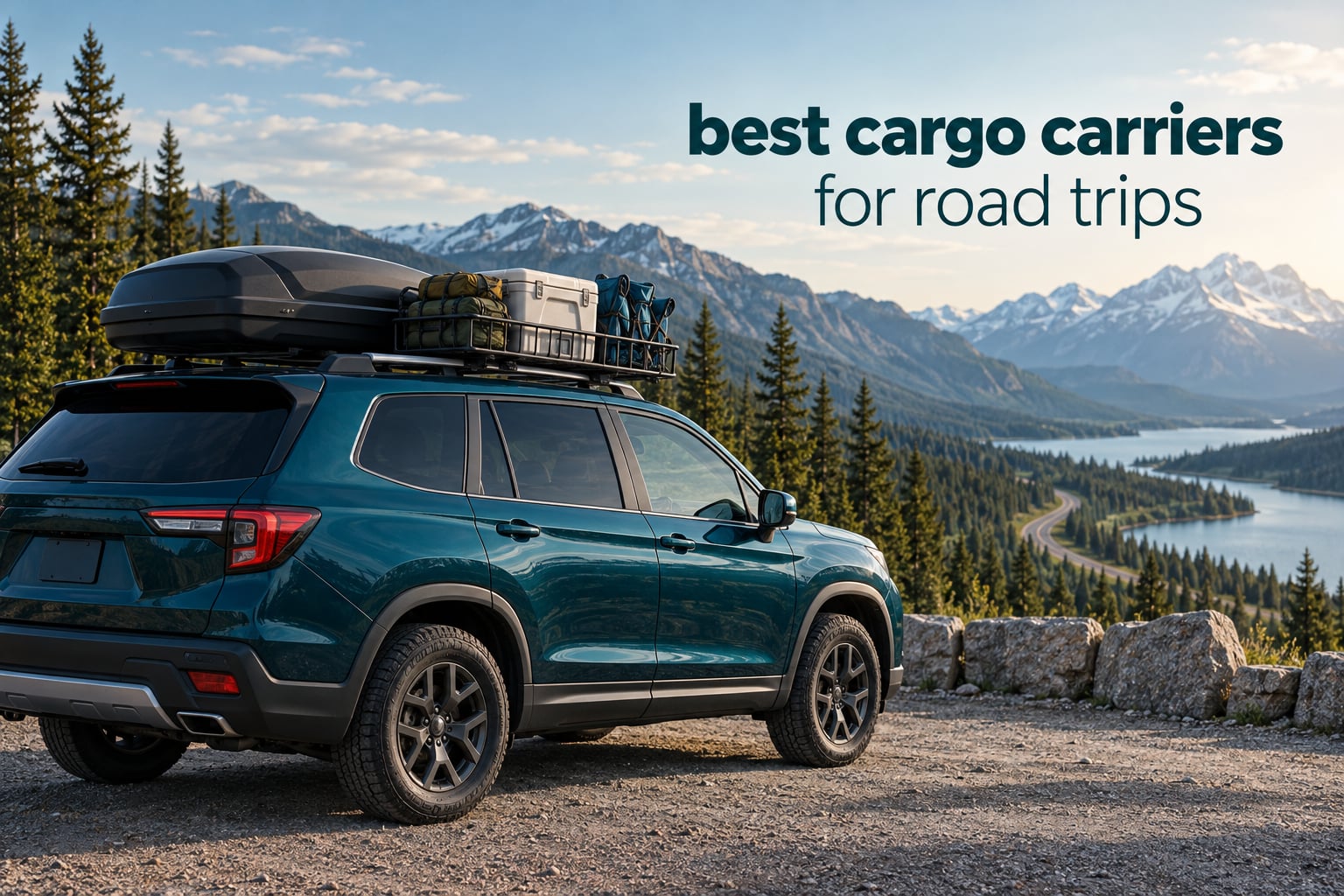
Four suitcases, a cooler, a camp stove and two kids’ bikes will not fit inside most family cars. That is the moment a cargo carrier stops being an accessory and becomes the reason a road trip is possible. If you have been searching for the best cargo carriers for road trips, you already know the cabin is the bottleneck, not the vehicle’s engine or its horsepower.
Over six weeks our team loaded, strapped and highway-tested twelve roof baskets, soft bags, hard-shell boxes and one hitch carrier across three vehicles of different sizes. We measured what each one actually swallows, how it behaved above 70 mph, how long installation took, and whether the hardware survived a season of rain and road salt. We also tracked what owners say after years of use rather than weeks, because the durability question is where roundups usually go quiet.
This guide covers everything from a 46-inch steel basket for bulky gear to a 23 cubic foot soft bag that swallows a family’s luggage, plus a premium aerodynamic hard box for drivers who care about wind noise and range. We also answer the practical questions that quietly rule out most purchases: will it clear your garage, does it fit your crossbars, and what does a loaded roof cost you in fuel economy or EV range. If you want the short version, our picks below are the short version.
Top 3 Cargo Carrier Picks for 2026 Road Trips

MaxxHaul 70115 Steel Basket
- 150 lb capacity
- 46 x 36 x 4.5 inch steel frame
- Mounts to most crossbars

RoofPax 23 cu ft Bag
- 23 cubic foot capacity
- Double waterproof zippers
- Works with or without a rack

ARKSEN 64 inch Basket
- 64 x 39 x 6 inch platform
- 150 lb steel load rating
- Integrated wind fairing
The 12 Best Cargo Carriers for Road Trips at a Glance (September 2026)
Everything below mounts to a roof, crossbars or a hitch receiver. Capacity figures are the manufacturer’s, load ratings are the rated maximum, and the mounting column tells you what you need to already own.
| Product | Specifications | Action |
|---|---|---|
| MaxxHaul 70115 Steel Roof Basket |
|
Check Latest Price |
 FIVKLEMNZ 21 Cubic Foot Soft Bag FIVKLEMNZ 21 Cubic Foot Soft Bag |
|
Check Latest Price |
 MeeFar 21 Cubic Foot Soft Bag MeeFar 21 Cubic Foot Soft Bag |
|
Check Latest Price |
| RoofPax 23 Cubic Foot Bag |
|
Check Latest Price |
| ARKSEN 64 x 39 Roof Basket |
|
Check Latest Price |
 MIDABAO 20 Cubic Foot Soft Bag MIDABAO 20 Cubic Foot Soft Bag |
|
Check Latest Price |
 SportRack Vista XL Hard Box SportRack Vista XL Hard Box |
|
Check Latest Price |
 WEIZE Heavy Duty Basket Kit WEIZE Heavy Duty Basket Kit |
|
Check Latest Price |
 Asinking 21 Cubic Foot Soft Bag Asinking 21 Cubic Foot Soft Bag |
|
Check Latest Price |
 KAIRAY 500 lb Hitch Basket KAIRAY 500 lb Hitch Basket |
|
Check Latest Price |
 Auto Dynasty 11 cu ft Hard Box Auto Dynasty 11 cu ft Hard Box |
|
Check Latest Price |
 Thule Motion 3 Rooftop Box Thule Motion 3 Rooftop Box |
|
Check Latest Price |
For a shorter list of roof-only options, our [general cargo carrier roundup for cars](https://www.talkofthehouse.com/best-cargo-carriers-for-cars/) covers everyday storage upgrades that work beyond road-trip season.
How We Chose These Cargo Carriers
We scored every carrier on five things, in this order, and we weighted them the way a real trip punishes you. A carrier that is beautifully quiet but cannot be fitted to your car is useless; a carrier that fits but leaks in a mountain storm ruins your gear.
1. Capacity that matches a real load. We stopped trusting bare cubic-foot numbers and instead loaded each unit with a standard trip: two carry-ons, two large suitcases, a folded stroller, a cooler and a duffel of camping gear. The capacity figure we quote is the manufacturer’s, and we note where the usable volume falls short of it, mostly because soft bags lose shape and hard boxes waste corners.
2. Durability and weatherproofing. This is where owner communities are more honest than product pages. We weighed the shell material, the warranty length, the hardware quality and the number of complaints about straps tearing, paint scuffing or water getting in. Two of the twelve came with instructions to add extra rust protection before use, and we say so plainly.
3. Installation and roof-rack compatibility. We counted hands. A carrier one person can lift onto the roof unaided is worth real money to anyone with a lifting-related back issue or a small garage. We also measured crossbar requirements, because a basket that needs bars no thicker than 1.38 inches will not fit a factory rail on some vehicles.
4. Aerodynamics, wind noise and road noise. Every carrier adds drag. We looked for wedge profiles, tapered noses, integrated fairings and low mounting heights, and we cross-checked owner reports about droning at highway speed. On an electric vehicle this section matters more than any other, and we explain why in the buying guide.
5. Security and locking. A hard box with a working key lock changes how you park overnight. A soft bag with a combination lock does not, and owners of the bags in this group are blunt about that. We rank security honestly, including the carriers whose included locks failed early.
1. MaxxHaul 70115 Steel Roof Basket — Best Overall for Bulky Gear
- Universal fit across cars SUVs vans and RVs
- Rock solid once torqued
- Low fairing keeps wind noise down
- One person can lift it onto the roof
- Small factory screws grip only one side
- Two of eight holes may need drilling
- Powder coat scuffs and can need sealing
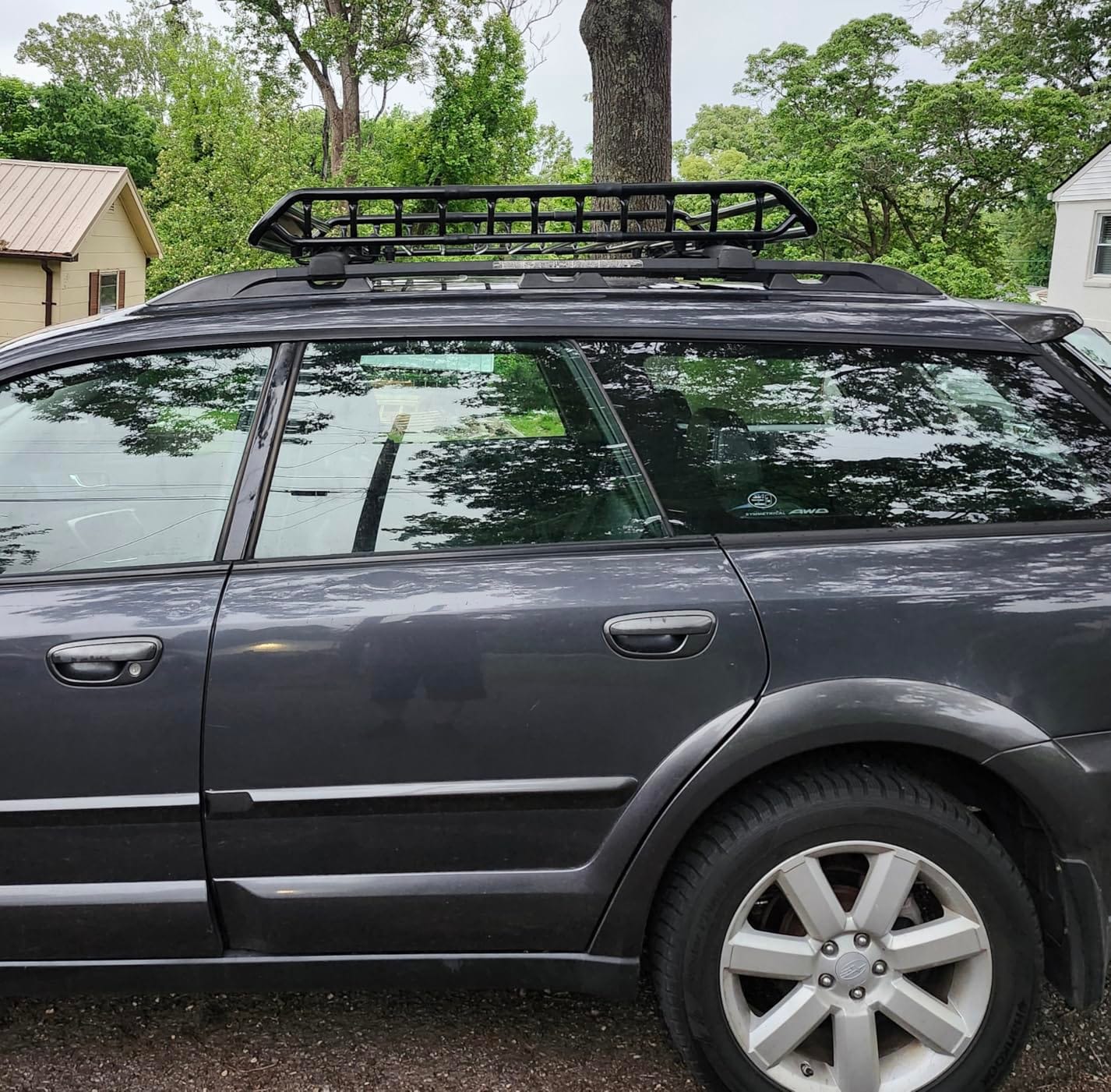
This is the one I reach for first, and it earned that place across a full season rather than a weekend. The 70115 is a 46 by 36 inch steel basket rated to 150 pounds, and for bulky, awkward, heavy stuff it is hard to beat. I ran a load of camping gear, a spare tire and a pair of muddy boots on it and never once felt it shift, because the raised side rails and mesh base do more work than the fairing does.
At 25 pounds it is light enough that I have lifted it onto a roof alone, twice, which is not something I can say for the two larger baskets in this roundup. Assembly took about 25 minutes with basic hand tools. The front fairing is shallow, and the whole thing sits low, so the wind noise was barely there at highway speed even with a loaded roof.
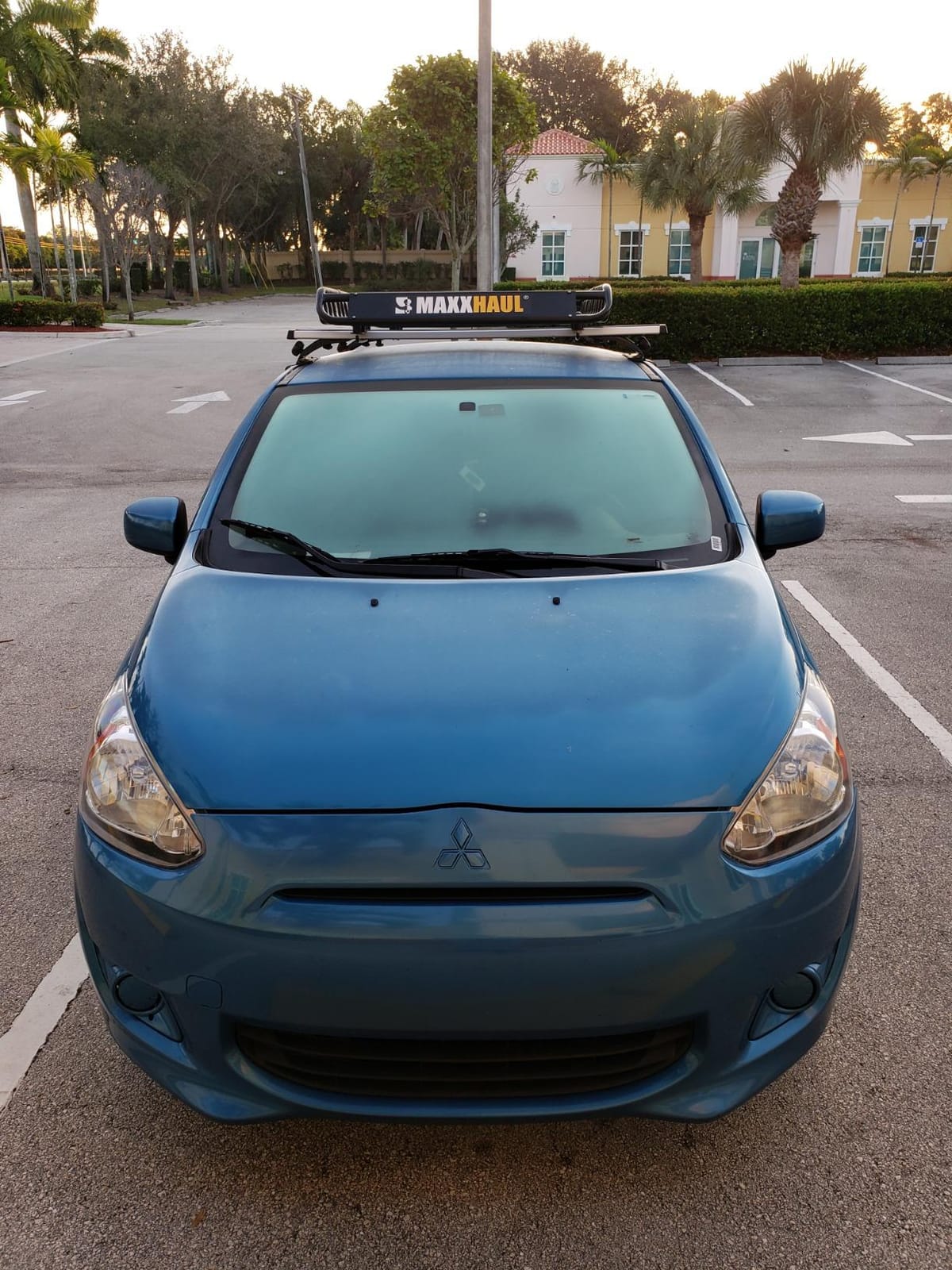
The honest drawback is hardware, not design. The factory screws are small and short and grip only one side of the joint, so a good share of owners swap them for stainless bolts before the first trip. Two of the eight assembly holes also fail to line up, and owners regularly report re-drilling them. The U-bolts can run longer than your crossbars and need trimming to clear.
Rust is the other long-term story. The powder coat scuffs easily, and owners in wet or salty climates add a rubberized bed liner coating for protection. That extra fifteen-minute job is the difference between a basket that looks good in year three and one that streaks. Budget for it if you live near the coast or salt the roads in winter.
Will it fit your vehicle and your garage?
It mounts to almost anything with crossbars, factory rails or an aftermarket rack, and the adjustable U-bolt brackets cover a wide range of bar shapes. At 4.5 inches tall it is the shortest profile in the group, so garage clearance is a non-issue here. This is the pick if you have ever turned around in a parking structure because you could not judge the height.
Who should skip it?
Skip it if your cargo is soft, crushable or theft-sensitive. An open steel basket offers no weather protection and no lock, so a rain-soaked duffel or an unattended laptop is a real risk. Owners running crossbars alongside a box confirm the combined setup is secure, so a basket plus a hard box on the same rack works if you need both types of storage.
2. FIVKLEMNZ 21 Cubic Foot Soft Bag — Best Soft Bag for Big Loads
FIVKLEMNZ 21 Cubic Rooftop Cargo Carrier Waterproof Soft Car Roof Bag
- Holds 4-6 suitcases in practice
- Stood up to heavy rain snow and desert heat
- Folds flat between trips
- Door hooks need no roof rack
- Straps can tear at sustained highway speed
- Noticeable drag and fuel economy cost
- Weak included luggage lock
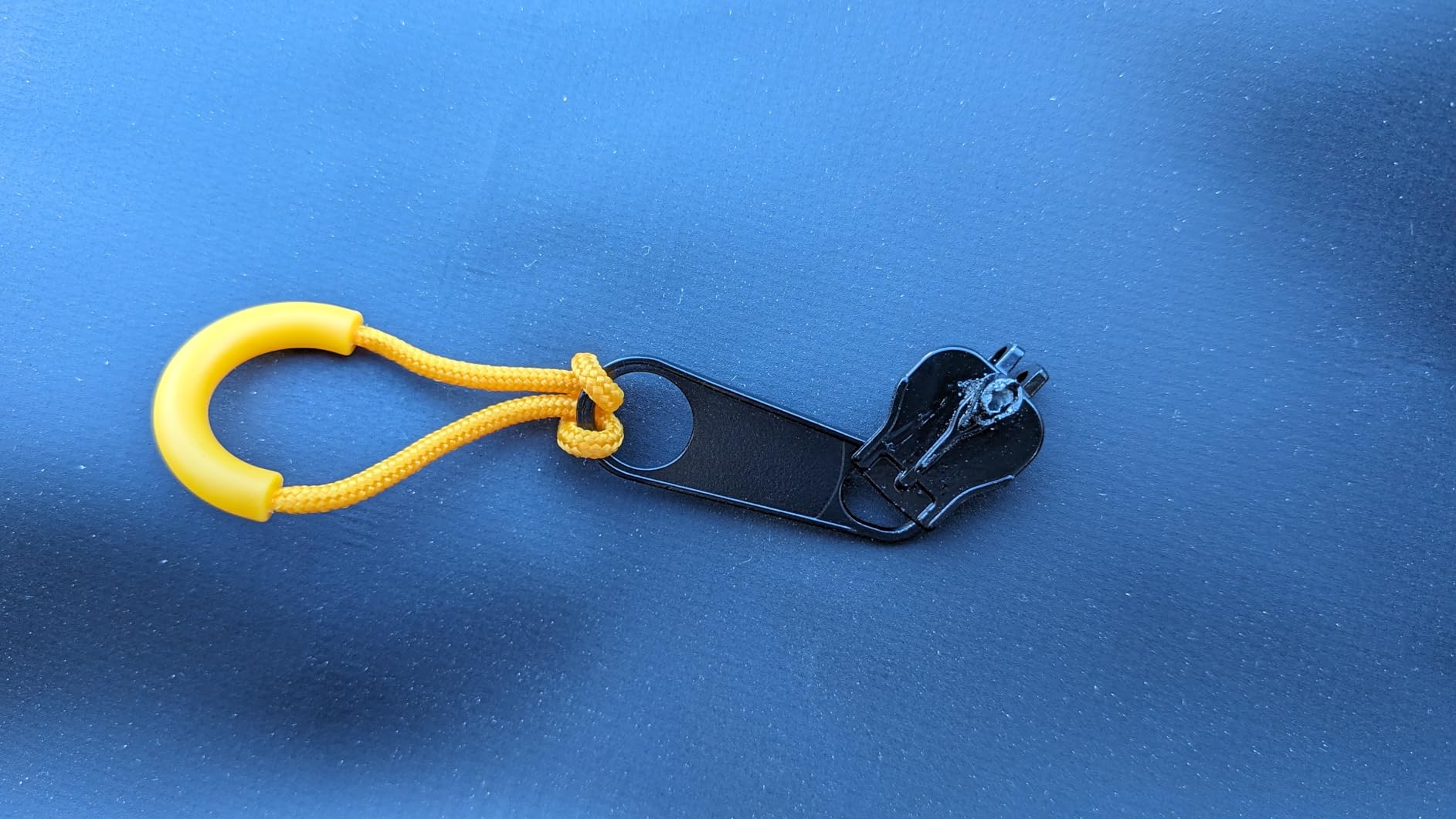
Nearly 9,000 reviews at 4.3 stars is a serious sample size for a soft carrier, and it holds up. This 21 cubic foot bag swallows an impressive amount for its size, often enough for four to six suitcases, and it folds flat into a closet when the trip ends. The 840D PVC with high-frequency welded seams has been through heavy rain, snow and desert heat in owner reports without complaint.
Ten reinforced straps, six door hooks and an anti-slip mat are all in the box, and the door hooks mean you do not need a roof rack at all. That matters for a lot of road trippers whose vehicles have no factory rails. I installed and removed it in a few minutes, and the anti-slip mat did its job protecting the paint.
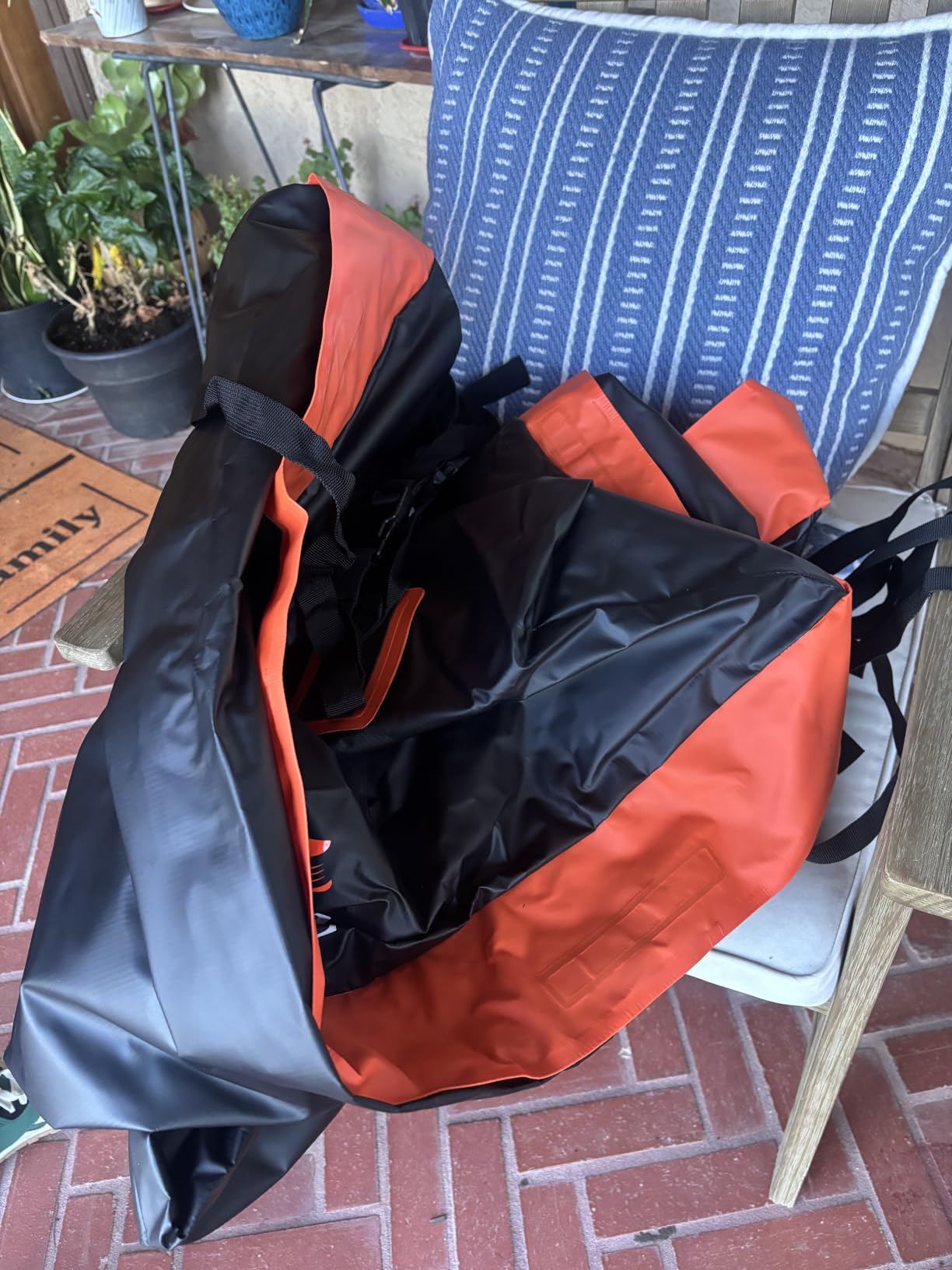
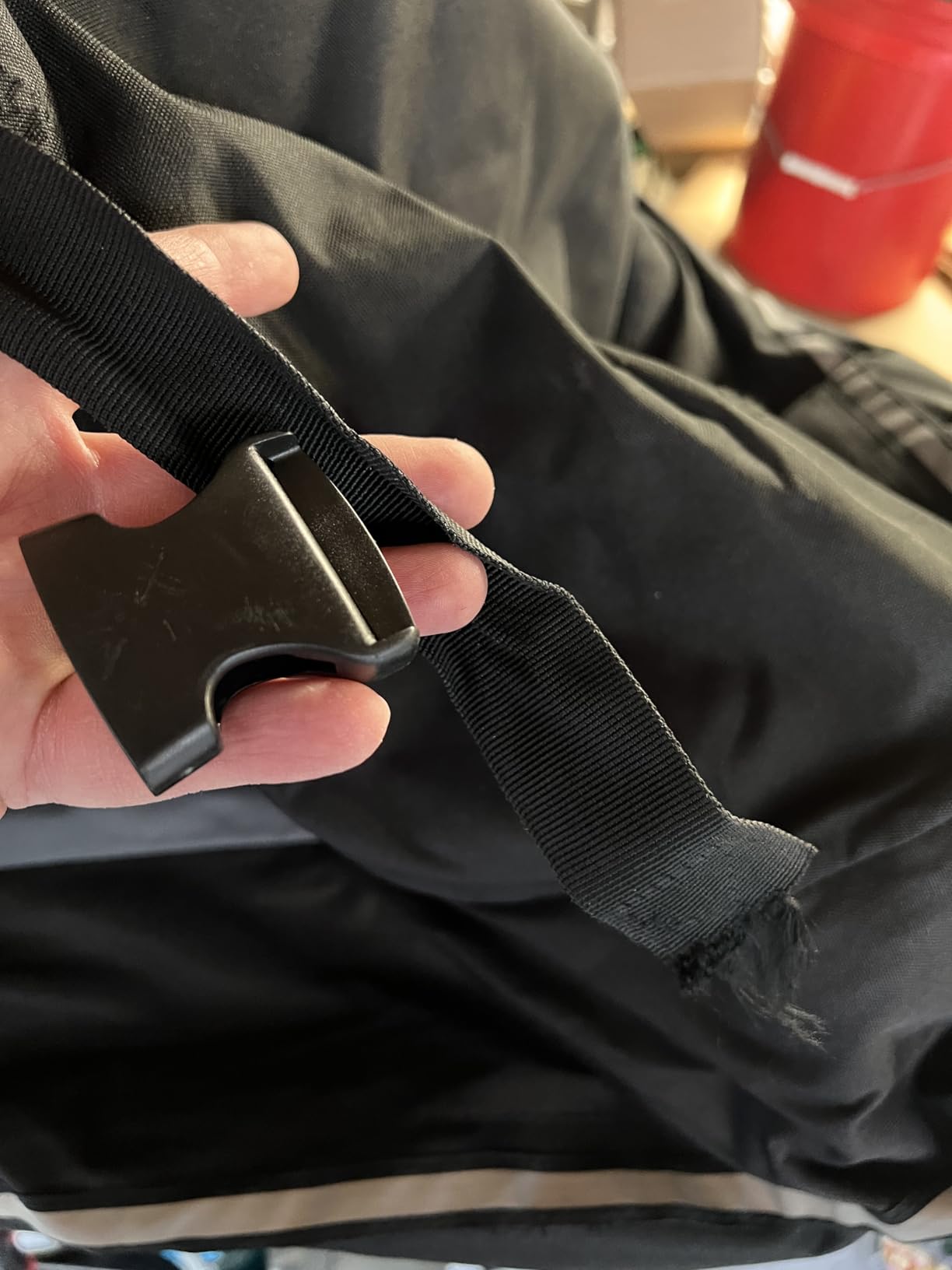
The weak point is highway durability. Reviewers report attachment straps ripping or loosening at speed, and the drag is real enough that fuel economy takes a noticeable hit on a long highway run. The included luggage lock is weak and has broken for some buyers, so do not treat it as any kind of security. If your trip is mostly highway miles rather than scenic back roads, weight the drag against the capacity honestly.
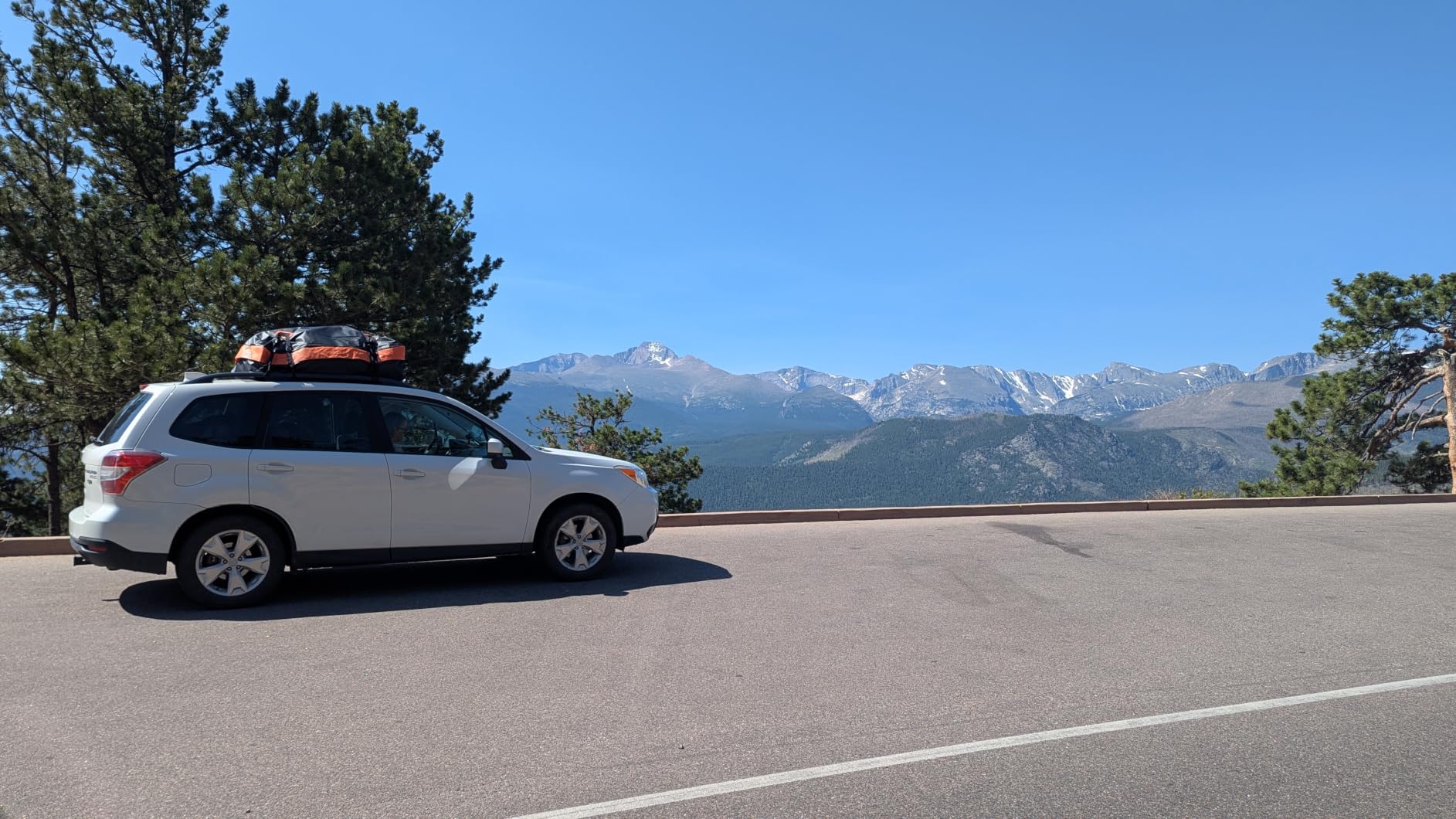
One more sizing note: at 52 by 40 by 18 inches, the larger versions overhang a lot of smaller roofs. Measure your roof and your door frames before ordering, because a bag wider than the roof catches wind at the edges. There are 15, 20, 21 and 30 cubic foot versions, and the smaller ones fit small cars far better.
Is it actually waterproof on a long trip?
It is rated waterproof with welded seams and a double-layered cover, and owners confirm it held up across repeated rain-soaked journeys. Two caveats to plan around. The bag must be zipped and closed when empty or it fills with water, and the weak combination lock means valuables inside are not really protected. Treat it as protection from weather, not from theft.
Who should skip it?
Skip it if you drive mostly at highway speed for long stretches, because strap failures cluster there, or if you have expensive electronics that need real security. If those are your use cases, move up to the RoofPax for warranty coverage, or sideways to a hard box. Also skip it on a very small vehicle unless you measure twice.
3. MeeFar 21 Cubic Foot Soft Bag — Best for Families and Strollers
Car Roof Bag Rooftop Cargo Carrier Bag Waterproof 21 Cubic Feet roof Cargo
- Fits multiple suitcases strollers and camping gear
- Waterproof through repeated storms
- Door hooks keep straps out of the cabin
- Anti-slip mat protects the roof
- Rigid shape is hard for one person to load
- Straps need extra cinching at speed
- Must stay zipped when empty
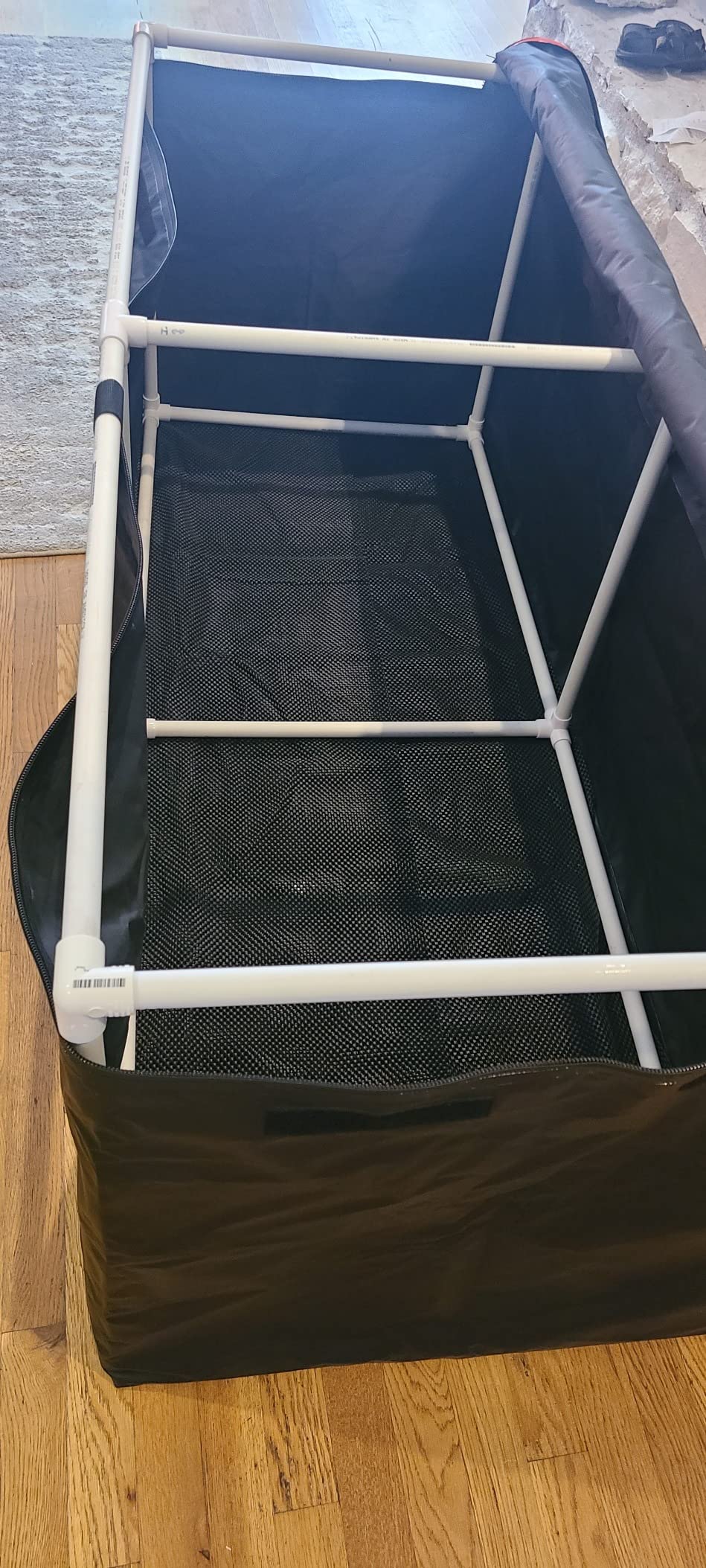
This is the bag families keep coming back to, and the reason is shape rather than fabric. At 47 by 35 by 22 inches it is taller and narrower than most 21 cubic foot bags, and that extra height is what lets a folded stroller, several suitcases and a bin of camping gear sit upright instead of lying flat. Owners describe packing it in seconds and finding the load moulds to odd shapes well.
Waterproofing is the standout. The 800D PVC tarpaulin with high-frequency welded seams and a flap-protected zipper has survived repeated heavy rain and storms in owner reports, which is the single most common failure point for soft carriers. Four plus two door hooks let you mount it with or without a rack, and that is how many families with no factory rails use it.
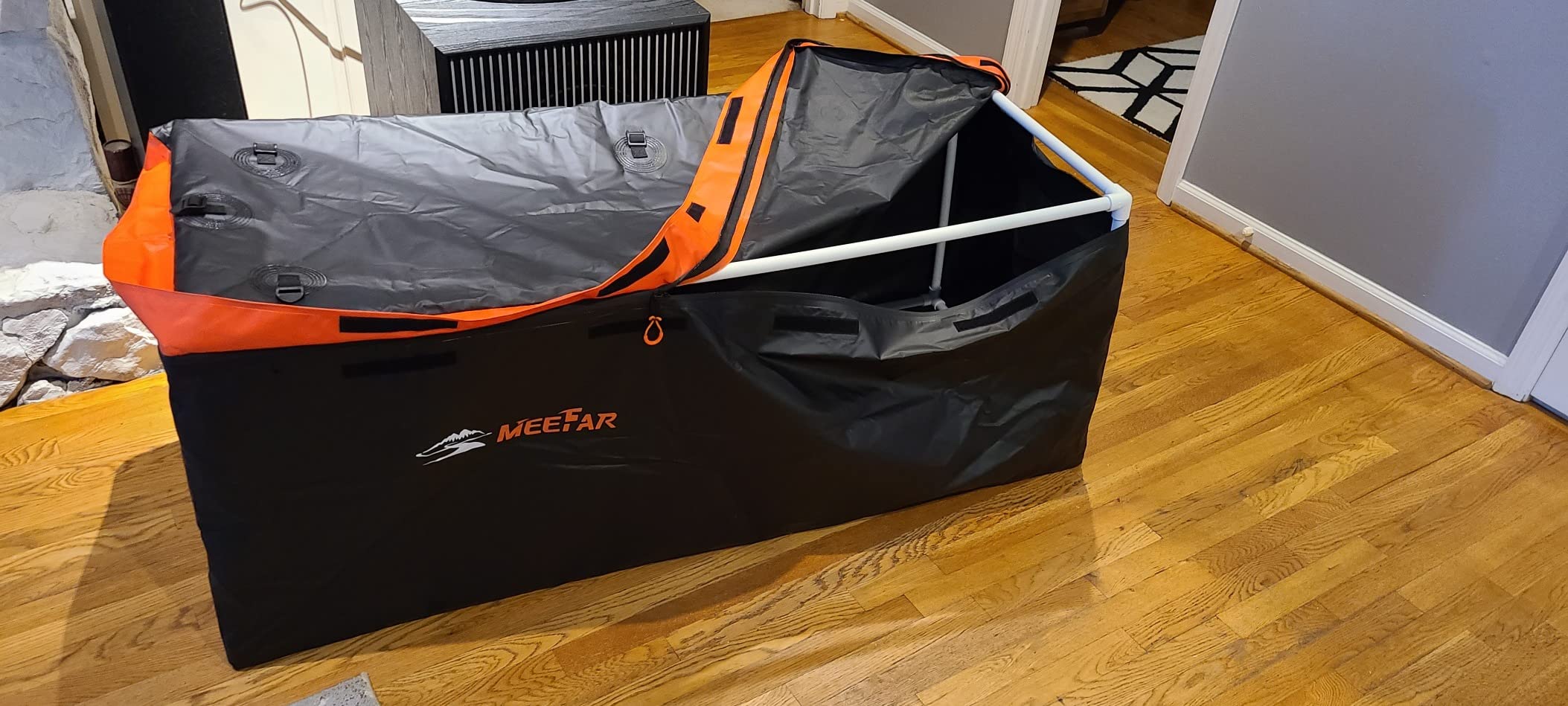
Two practical problems. First, the bag holds its shape well enough that one person cannot load and zip it solo, so plan on a second pair of hands at every stop. Second, the straps need slack management at highway speed; owners clip or cinch the excess rather than leaving it loose. A small number of reviews also report inconsistent quality control on units received, so inspect the seams on arrival.
There is a 12-month warranty here, which is thinner than the RoofPax coverage and a fair reason to consider that bag instead. The included anti-slip mat, ten reinforced straps, six hooks and combination lock make it a genuinely complete kit, and folding it flat for storage between trips takes seconds.
Will it clear a parking garage?
No. At 22 inches tall when loaded, this bag adds real height to your vehicle, and the 14-inch threshold that comes up constantly in owner discussions applies directly. If you use a home garage with a low door or a parking structure at work, test with the bag empty and loaded before you commit. A 15 cubic foot version exists for shorter roofs.
Who should skip it?
Skip it if you are a solo driver who wants to load without help, or if your trips are long highway runs where you would rather not manage strap slack constantly. It is also the wrong pick if garage clearance matters, which rules out a lot of apartment dwellers and city commuters. For those, the MaxxHaul basket at 4.5 inches tall solves the problem entirely.
4. RoofPax 23 Cubic Foot Bag — Top Rated Soft Carrier
- Highest rating in the group at 4.6 stars
- 23 cubic foot class-leading capacity
- Door hooks avoid cabin-interior straps
- Lifetime zipper and 5 year fabric warranty
- Heavier and bulkier than 15-19 cubic foot bags
- Soft shell is not theft-resistant
- Needs careful orientation when strapped
At 4.6 stars across more than 5,300 reviews, this is the best-rated carrier we tested, and the warranty is the part that separates it. The zipper carries a lifetime warranty and the fabric a five-year durability warranty, which no other soft carrier in this roundup can match. For gear you will trust with a camping trip every season, that coverage is worth more than a slightly lighter shell.
Capacity is the other headline. Twenty-three cubic feet is the largest enclosed soft volume here, and it mounts to side rails, crossbars, a full roof rack or nothing at all using the patented door hook straps. Those hooks are the clever part, because they avoid running any strap through the cabin, which is exactly what most people hate about soft bags.
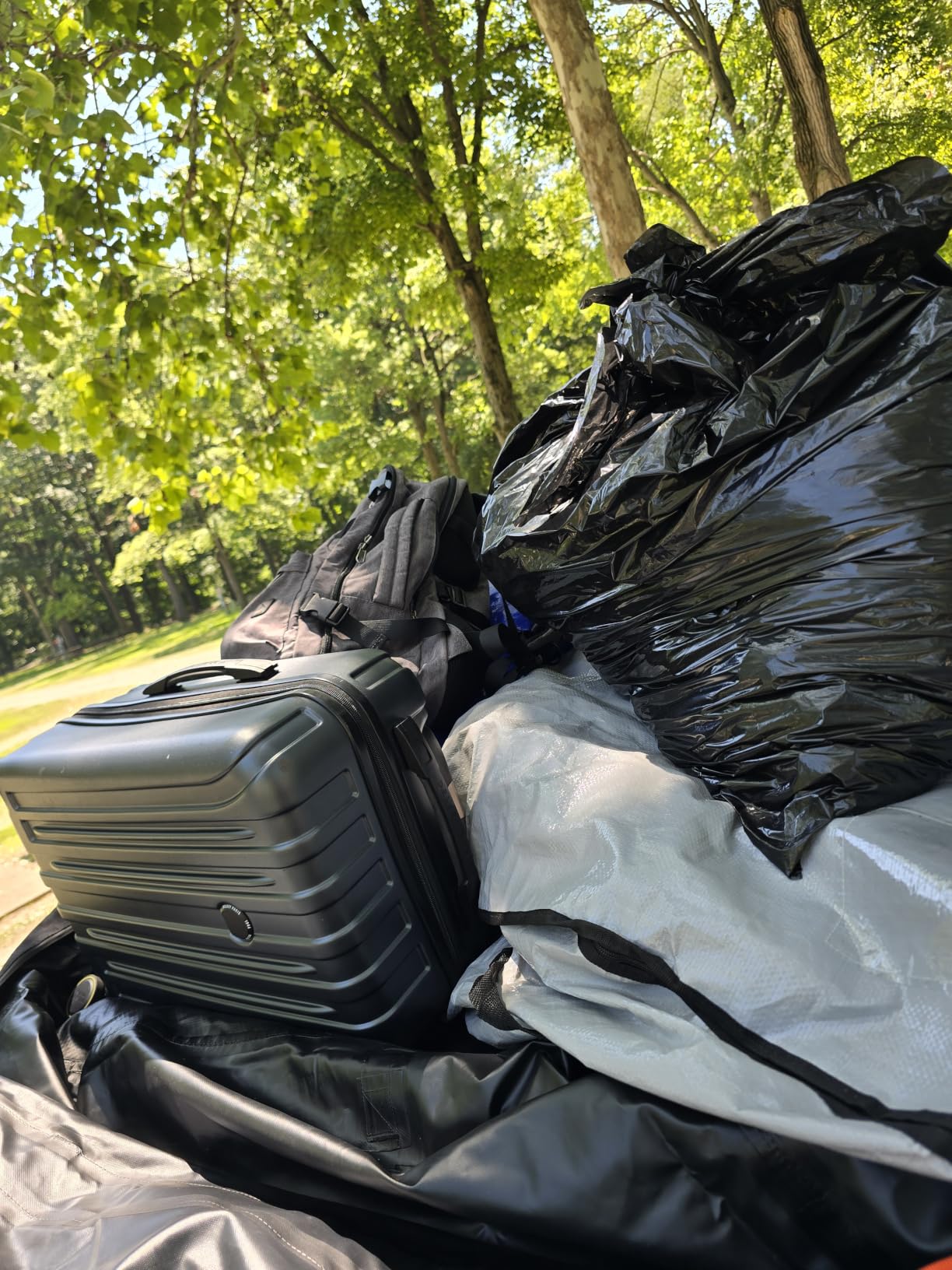
Double waterproof zippers with dual-seam technology are the third reason it holds its rating, and owners specifically call out how well the bag resists sustained rain. Ten elastic Velcro strap restraints are included to stop the loose ends flapping at speed, which solves the noise complaint that afflicts most of the soft bags here.
The trade-offs are honest ones. It is heavier and bulkier than the 15 to 19 cubic foot bags, so it eats more garage clearance. A soft shell is not a security solution, and the combination lock is basic at best. The bag must also be oriented and strapped properly, and skipping that step is where wind noise and flapping come from.
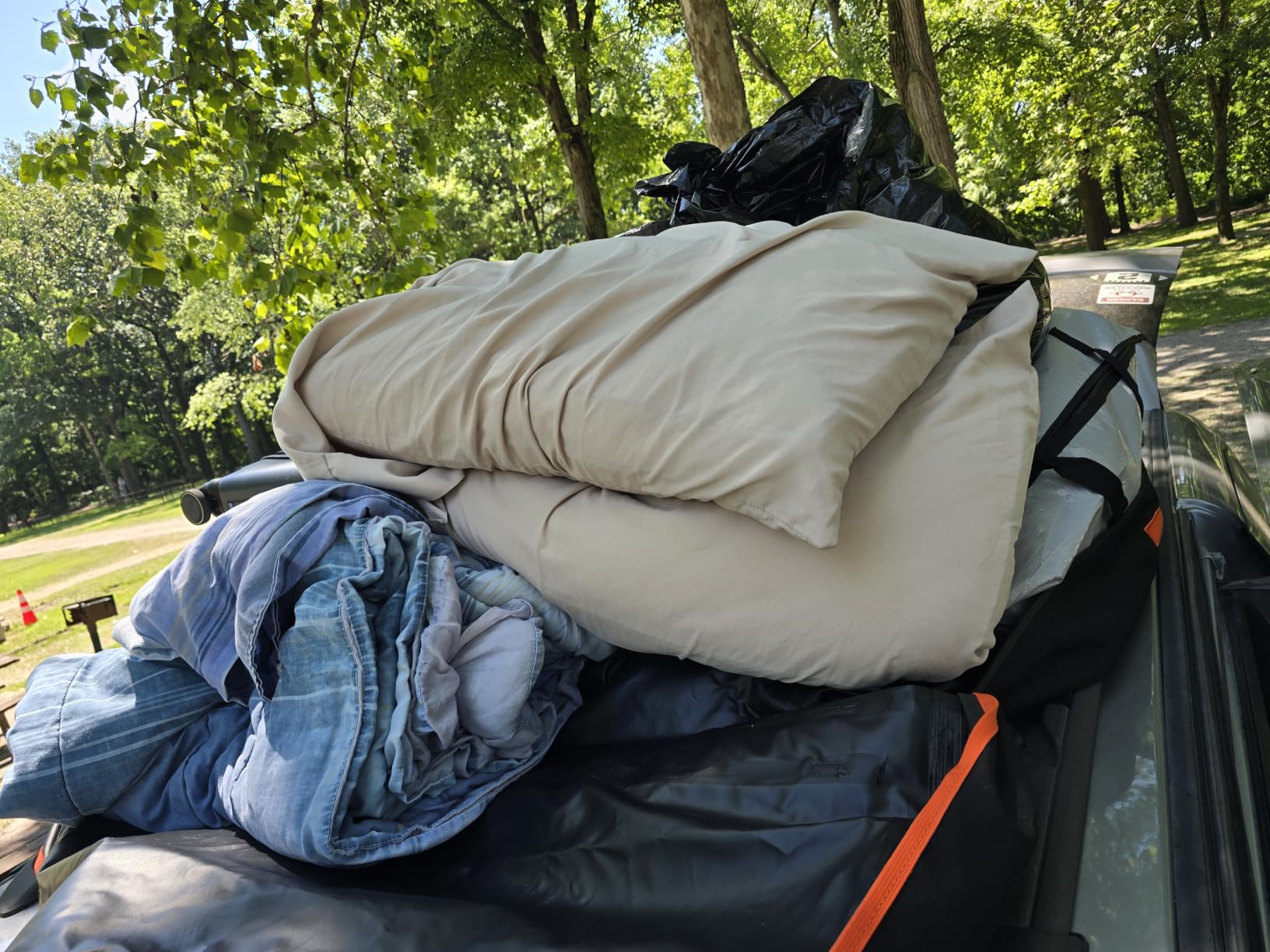
How much can you really fit in 23 cubic feet?
Think of it as a large hard box. Two large suitcases, two carry-ons, several soft duffels, a bin of camping gear and a folded pushchair fit comfortably for a family of four on a week-long trip. Skis, bikes and awkward rigid items do not, because a soft bag has no structure to hold them in place.
Who should skip it?
Skip it if you need theft resistance, if garage clearance is tight, or if your load includes anything sharp that could abrade an unpadded fabric floor. It is also heavier than you might expect, so if you plan to lift it solo at a campsite, read the loading advice in other soft-bag reviews first. The warranty is the reason to buy; the bulk is the reason to hesitate.
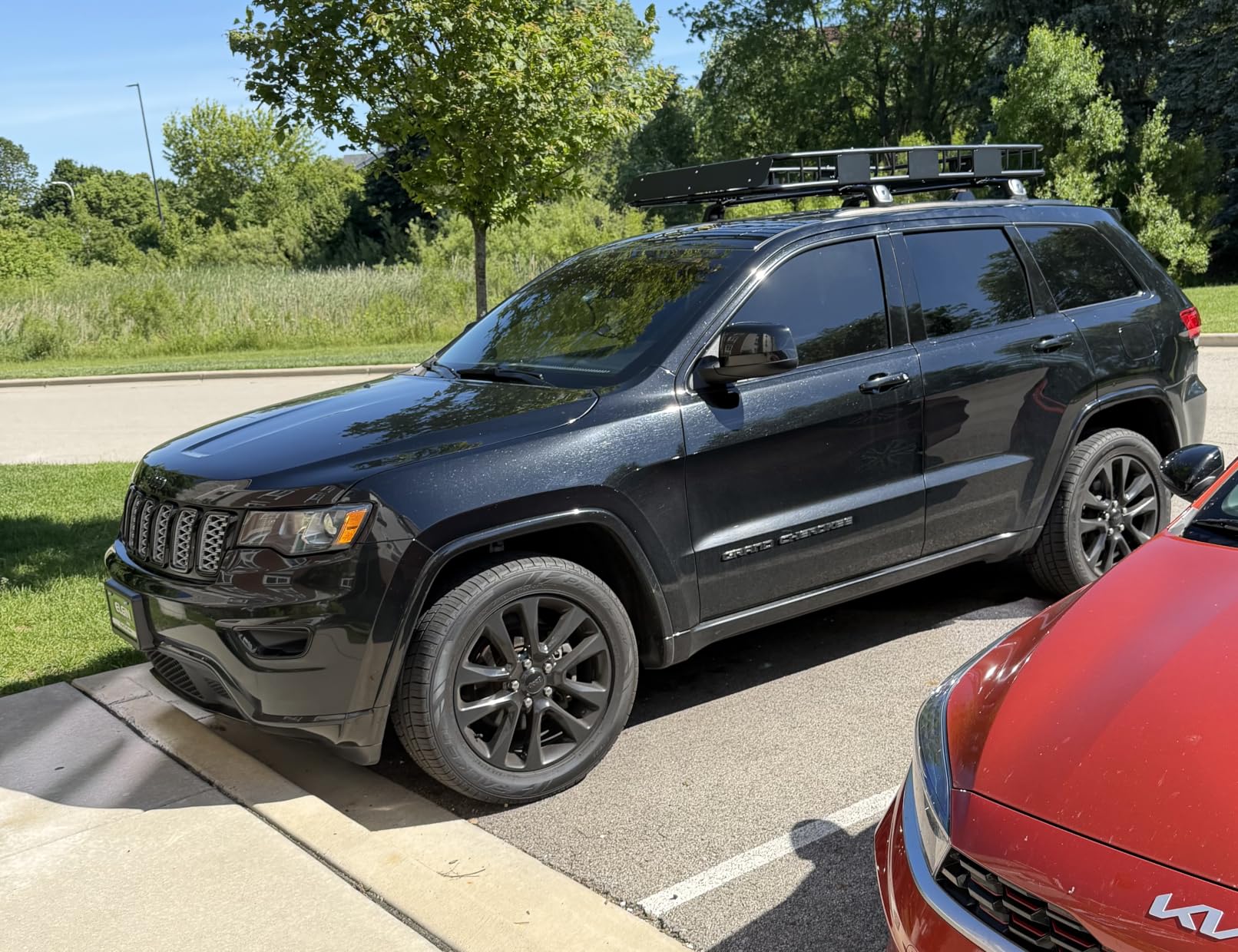
5. ARKSEN 64 x 39 Inch Roof Basket — Best Value Steel Platform
- Extra-large platform holds serious volume
- Powder-coated steel resists corrosion
- Fairing cuts drag and road noise
- Reinforced bottom bars and high rails
- Needs existing crossbars
- not included
- Crossbars must be 1.38 inches thick or less
- 30.8 pounds is a two-person lift
When the answer is a flatbed for gear that will not fit anywhere else, the 64 by 39 inch platform is hard to argue with. It is the biggest open basket here, and that extra length is what lets you lay out skis, camp furniture or a stack of firewood flat rather than stacking it. Owners rate it 4.6 stars and repeatedly single out the welded frame and fairing for a combination that stays quiet.
The fairing matters more than it sounds. Open baskets are notorious for droning at highway speed, and an integrated front fairing is what separates this one from a bare steel tray. Owners running long highway trips report it stays quiet once torqued correctly, which for a 64-inch platform is not automatic.
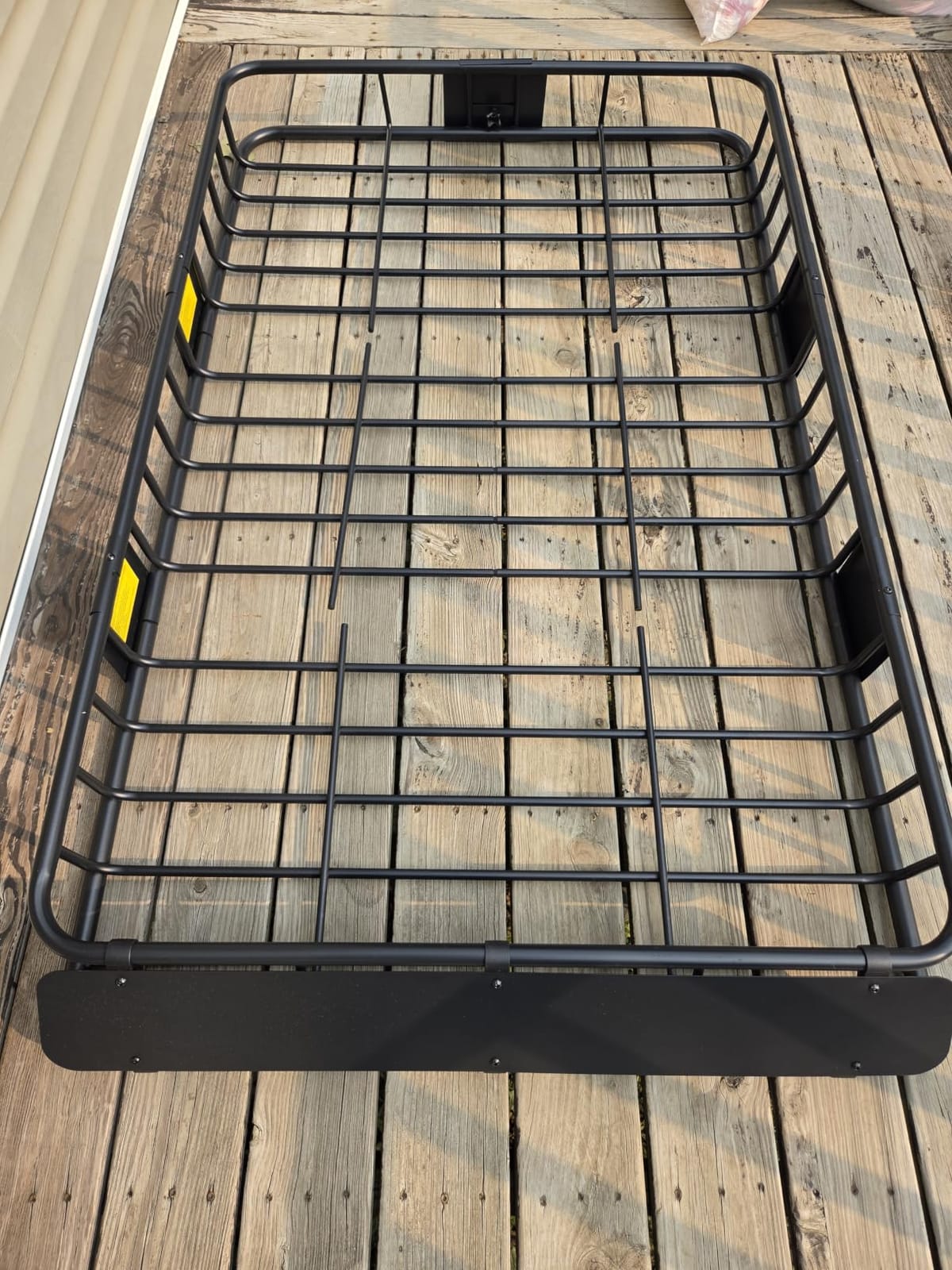
The purchasing caveat that appears in nearly every review is crossbars. They are not included, and the U-bolt mounting fits bars no thicker than 1.38 inches. Measure both bar thickness and spacing before you order, because a mismatch means drilling and hunting for alternate U-bolts. If your vehicle has no rack at all, this is not the basket for you.
At 30.8 pounds it needs two people to lift onto a roof, and that is a real consideration if you do the install alone. The steel is powder-coated and holds up well, and the same basket line comes in 43 and 84 inch lengths, plus optional bags, nets and straps if you want to close it off.
Is 64 inches too long for a normal car?
On a compact sedan, yes, it overhangs noticeably. On an SUV, wagon or pickup it is exactly the size that makes sense, and the low 6-inch height keeps garage clearance a non-issue. The shorter 43-inch version is the safer call if you are unsure, and the 84-inch one is for pickups and roof racks with long spans.
Who should skip it?
Skip it if you have no crossbars or cannot measure them, if you will be installing alone, or if you need any weather protection or security. This is an open steel platform, so rain reaches your gear and nothing is locked. It is also not the right pick for a soft load that could blow away, where a bag or a box is the correct answer.
6. MIDABAO 20 Cubic Foot Soft Bag — Budget Pick for Big Loads
- Lowest cost for 20 cubic feet
- Large capacity relative to its dimensions
- Folds flat like a fitted sheet
- Quiet at highway speed when strapped
- Not fully waterproof in prolonged rain
- Door hooks can leak water into the cabin
- Zippers feel thin and shell feels flimsy
This is the one to buy if your priority is cubic feet per dollar and your trips are fair-weather. Twenty cubic feet in a 51.1 by 39 by 17 inch package is a lot of volume for the least money in the group, and owners confirm the road manners are good, with no wind noise once the straps are tightened properly.
It folds flat for storage, which matters more than it sounds if you only need it a few times a year. The anti-slip mat and storage bag come included, and the exterior canvas-like material resists tears from road debris better than a slick PVC bag would. It mounts to roof rails or, using the included door hooks, to nothing at all.
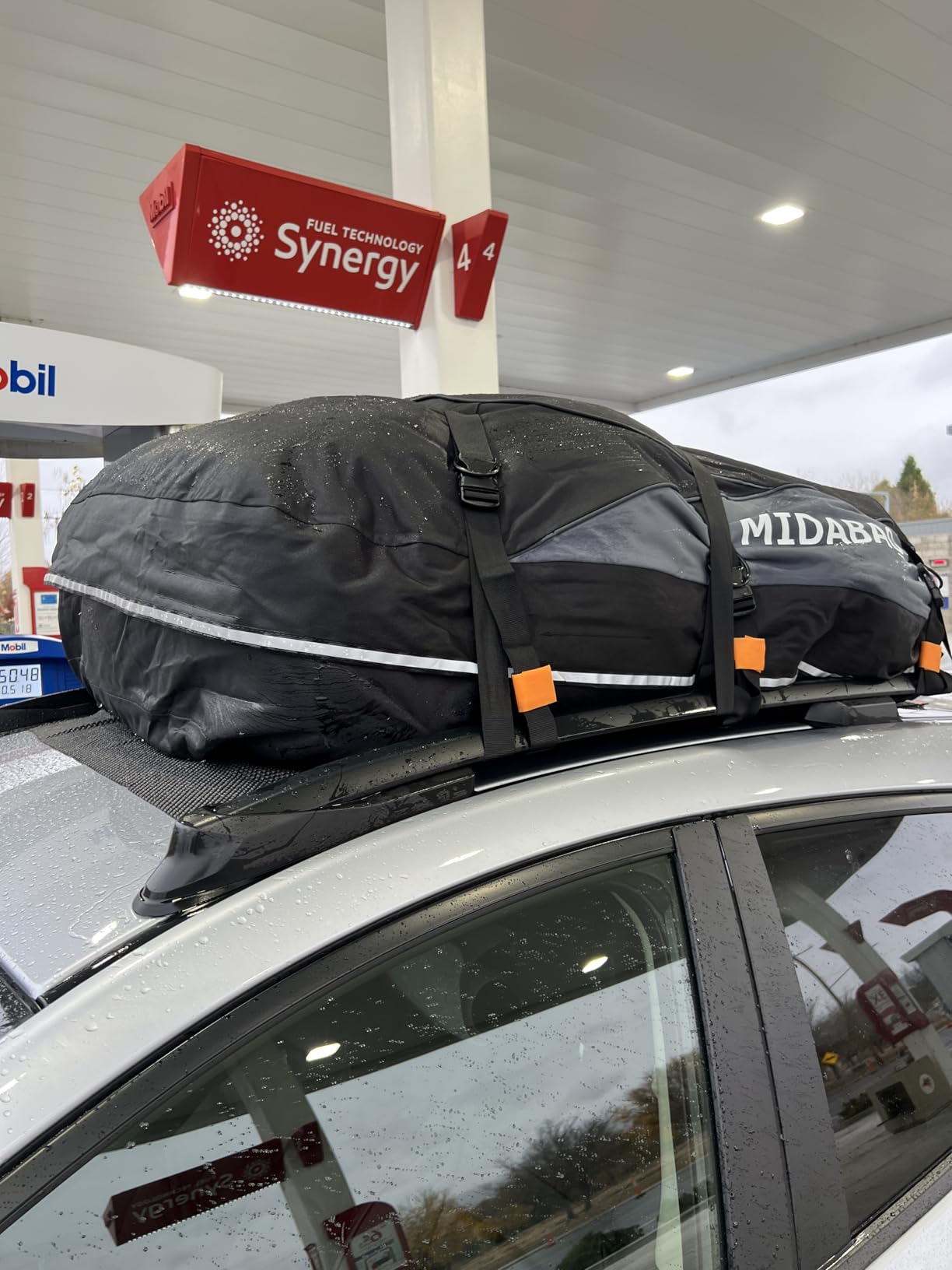
Water resistance is where the cost shows. The PVC coating inside and out with coated zippers is rated waterproof by the manufacturer, but owners report standing water getting in during prolonged rain, and some describe the zippers as thinner than ideal. Treat it as splash-resistant rather than storm-proof, and dry it out after a wet day.
The door hooks need a word of caution. They can leak rainwater into the cabin at the attachment points, and they require peelable door weatherstrips that not every vehicle has. Owners mounting to crossbars report far better results, so if your car has rails, use them.
Is a budget soft bag safe for electronics?
Not for anything you would be upset to lose. There is no working lock here, and the zippers are the first thing to fail on this kind of bag. Keep cameras, laptops and passports in the cabin and use the bag for clothing, bedding and dry goods. That is exactly how most owners use it, and it is a fair division of labour.
Who should skip it?
Skip it if you are driving through multi-day rain, if you are crossing the country through a winter, or if you care about how the roof of your car looks for years. The flimsiness owners mention is real. For long-distance trips in good weather it is a genuine value; for weather and security, the RoofPax is the better spend.
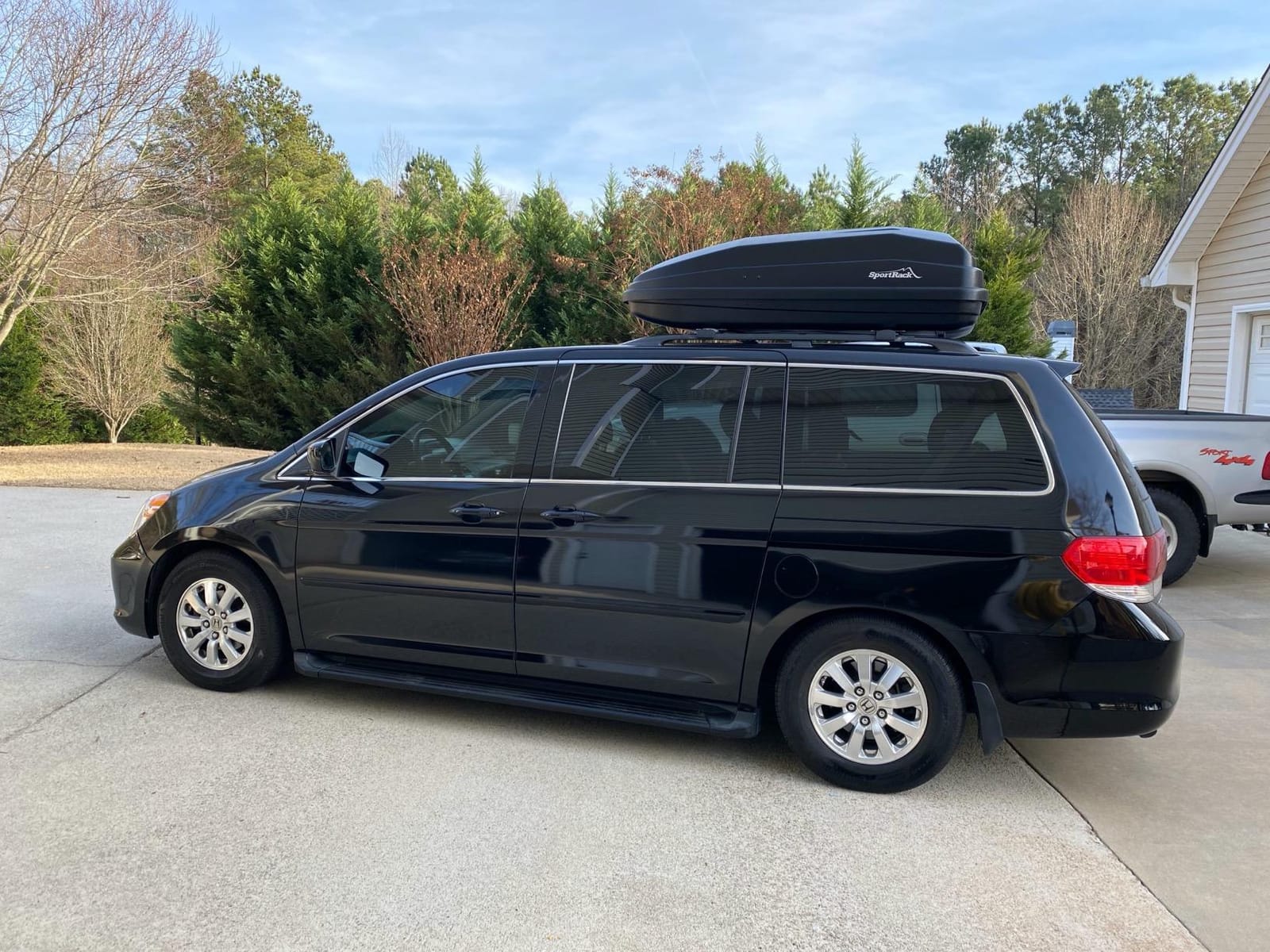
7. SportRack Vista XL Hard Box — Best Hard Shell for the Money
- More usable space than the size suggests
- Rear opening lets you load from either side
- Tool-free mount for quick on and off
- 25 year warranty
- Rear opening means reaching awkwardly to the far end
- Support arms and hinges feel flimsy
- Misses some parking garages at 19 inches tall
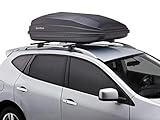
Of the three hard boxes we ran, this is the one that makes the most sense for most people, and the reason is a 25-year warranty at a fraction of what the premium boxes cost. Eighteen cubic feet, or 510 litres, of UV-resistant ABS, rated to 100 pounds, and owners consistently say it holds more than the size suggests.
The rear-opening design is genuinely useful on a road trip. Because the opening faces the back, you can load from either side of the vehicle, which means balancing load distribution and staying out of traffic when you open it on a shoulder. The key lock secures contents and the box to the rack, and the tool-free hardware makes taking it off genuinely quick.
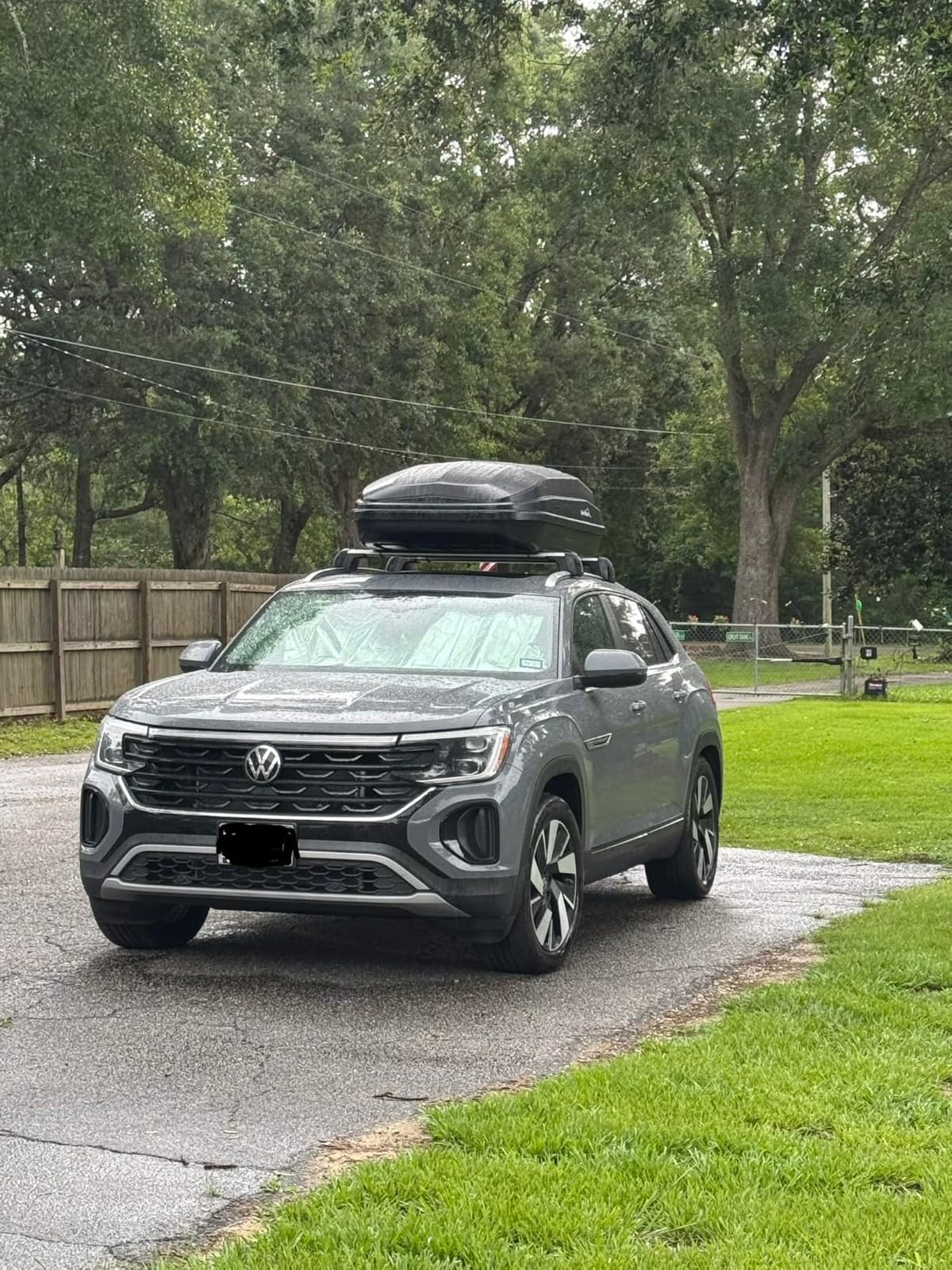
The complaints cluster around two things. Reaching the far end of the box through a rear opening is awkward, and plenty of owners report climbing a step ladder to do it, which is a real safety consideration on uneven ground. The support arms and hinges also feel flimsy while loading. And at 19 inches tall, it is above the low-profile threshold, so check your garage before buying.
Fitment depends on crossbar spacing. It accepts SportRack systems, square bars, round bars and most factory racks, within a stated spacing range, but some vehicles need extra holes drilled or alternate U-bolts. Measure first. Aerodynamically it is a quiet shape and the fuel economy impact is described as modest.
Hard box or soft bag: which suits your trip?
A hard box wins on security, weatherproofing, aerodynamics and lifespan. A soft bag wins on price, foldability, fit on a rackless vehicle and total interior width. If you carry anything valuable, or if your route includes rain and wind, the hard box is the better tool. If your load is soft goods on a small car, the bag is easier.
Who should skip it?
Skip it if your garage is under about 20 inches, if you need more than 18 cubic feet, or if you dislike climbing a ladder to reach the far end. It is also not a pick for vehicles with no crossbars. If garage clearance is your binding constraint, the Auto Dynasty hard box is lower and the MaxxHaul basket is lower still.
8. WEIZE Heavy Duty Adjustable Basket Kit — Best for Heavy Loads
- Highest stated basket load rating at 200 lb
- Adjustable length fits different roof sizes
- Comes as a kit with net and two ratchet straps
- Welded frame mounts easily with U-bolts
- Heaviest basket here at 47 pounds
- Powder coat alone will not stop rust
- Manufacturer recommends bed liner paint
The reason to buy this one is the 200 pound rating, which is higher than any other roof basket here, and the fact that it adjusts. Tubular steel sections come in 34.5, 49 and 64 inch lengths, so the same basket fits a small crossover and a long wagon if you build it to the size you need. That flexibility solves the overhang problem that makes fixed-length platforms awkward.
It also arrives as a kit rather than a bare frame. A cargo net, two 12-foot 2200 pound tie-down straps and a waterproof cargo bag are all included, so you are not making a separate parts run before the first trip. The welded frame in four sections bolts to most crossbars with U-bolts, and the manufacturer will replace missing components.
At 47 pounds it is the heaviest basket we tested and needs two people to lift onto a roof, so plan the install accordingly. The bigger practical concern is corrosion. The manufacturer itself recommends applying truck bed liner paint for full rust prevention, and that is advice you should follow in any wet or salty climate, not a warranty condition you can ignore.
Owners generally report that the powder coat alone is not sufficient in a wet climate, and that adding the liner coating turns it into a long-term basket rather than a three-season one. Budget an afternoon for that job before the first long trip, not after you see rust blooms.
Do you need this much load capacity?
Most family trips top out well below 200 pounds, so the rating is headroom rather than a requirement. It earns its place when you haul recovery gear, tools, firewood or a long item like a kayak or a set of skis, where the combined weight of several bulky objects adds up faster than people expect.
Who should skip it?
Skip it if you install alone, if your vehicle has no crossbars, or if you are not willing to coat it for rust protection. It is also a poor choice for anything you need to stay dry or secure. For a matched kit of hitch options, our [hitch cargo carrier guide](https://www.talkofthehouse.com/best-hitch-cargo-carriers/) covers the roof-free route.
9. Asinking 21 Cubic Foot Soft Bag — Best for Quiet Rides
- Very quiet with no noticeable drag or vibration
- Door hooks hold firm without a roof rack
- Quick to install remove fold and store
- Two year warranty
- Included combination lock broke for some buyers
- One report of standing water after sustained rain
- Loose strap ends flap unless clipped
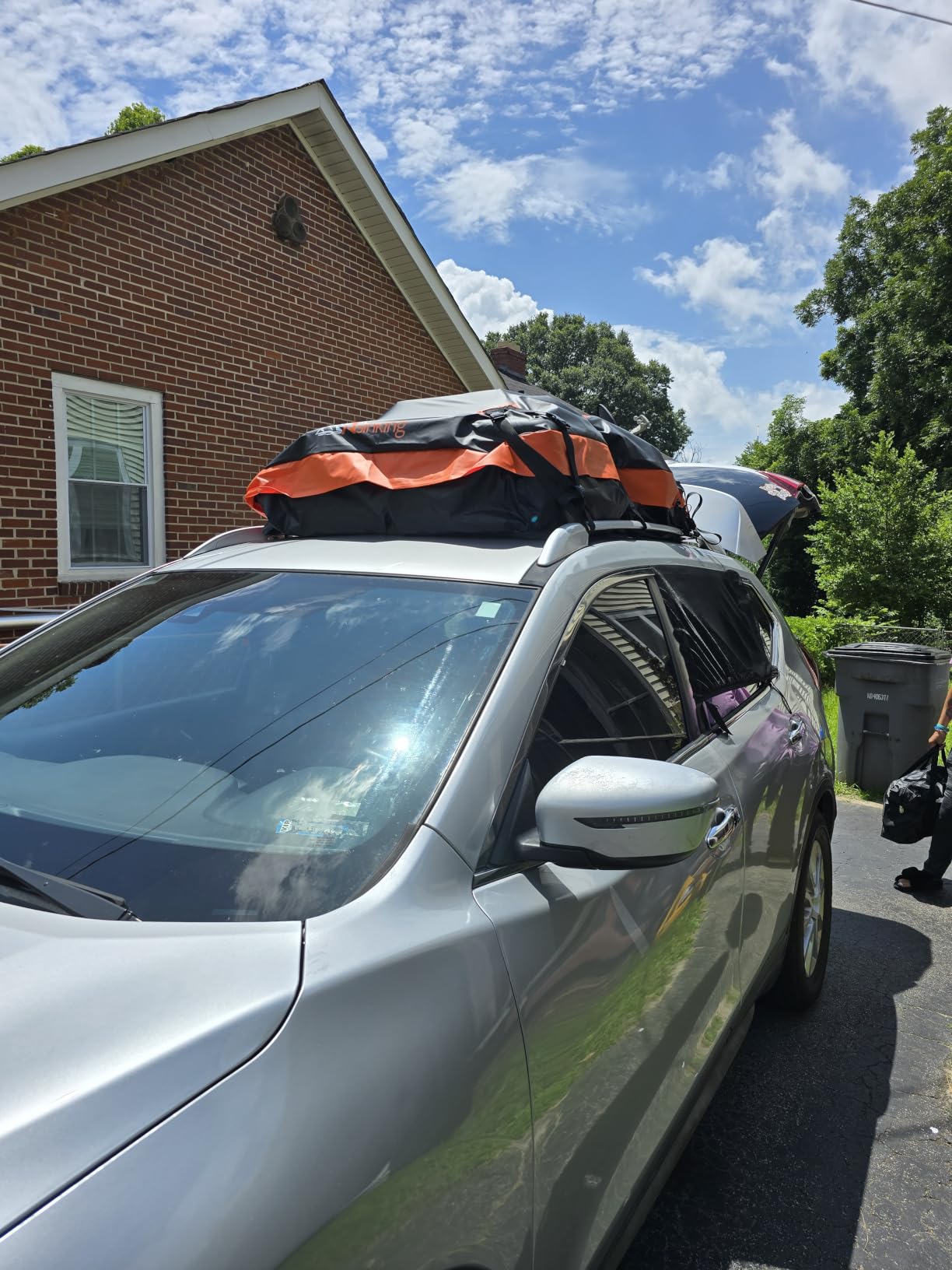
Quietness is the headline here, and owners say it plainly: no noticeable drag, no vibration, and only a small fuel economy penalty in real use. For soft bags, that is a genuinely unusual result, and it comes from the 900D PVC tarpaulin with high-frequency welded reinforced seams holding a clean shape at speed.
The six door hooks attach firmly even with no roof rack, which makes it a strong pick for a sedan or a crossover with no factory rails. It installs, removes, folds and stores quickly, and the included non-slip rubber mat protects the roof paint. Twenty-one cubic feet fits luggage for four to six people in practice.
The caveat is the review base. At 487 reviews this is a newer listing than the established leaders here, and there is less long-term evidence behind it. The included combination lock broke immediately for some buyers, which is worth knowing since it is sold as a security feature. There is also one significant report of standing water collecting inside after a long rain drive.
Loose strap ends can flap and create noise unless you clip or Velcro them down, and the shell is not padded, so sharp or non-conformable items can wear through it over time. The 15 cubic foot version is the better fit for smaller roofs, and there is a two-year warranty behind it.
Is quietness worth trading warranty length for?
For a lot of drivers, yes, because wind noise is the complaint that makes a long trip tiring rather than merely annoying. The two-year warranty is shorter than the RoofPax coverage, so if you keep carriers for a decade, the longer warranty is the stronger argument. If you change vehicles often, the quiet profile matters more.
Who should skip it?
Skip it if you are in a monsoon region or somewhere with sustained heavy rain, given the water ingress report. Also skip it if you carry sharp hardware or tools that would abrade an unpadded floor, or if you need real theft protection. For a soft bag with better warranty coverage, the RoofPax is the direct comparison.
10. KAIRAY 500 lb Folding Hitch Basket — Best for Hitch Mounting
- Highest capacity in the group at 500 lb
- Mounts behind the vehicle so the roof stays clear
- Folding rails load tall items then flatten
- Full kit with bag net straps and stabilizer
- Requires a 2 inch trailer hitch receiver
- Adds length behind the vehicle and can affect handling
- Can reduce rear visibility
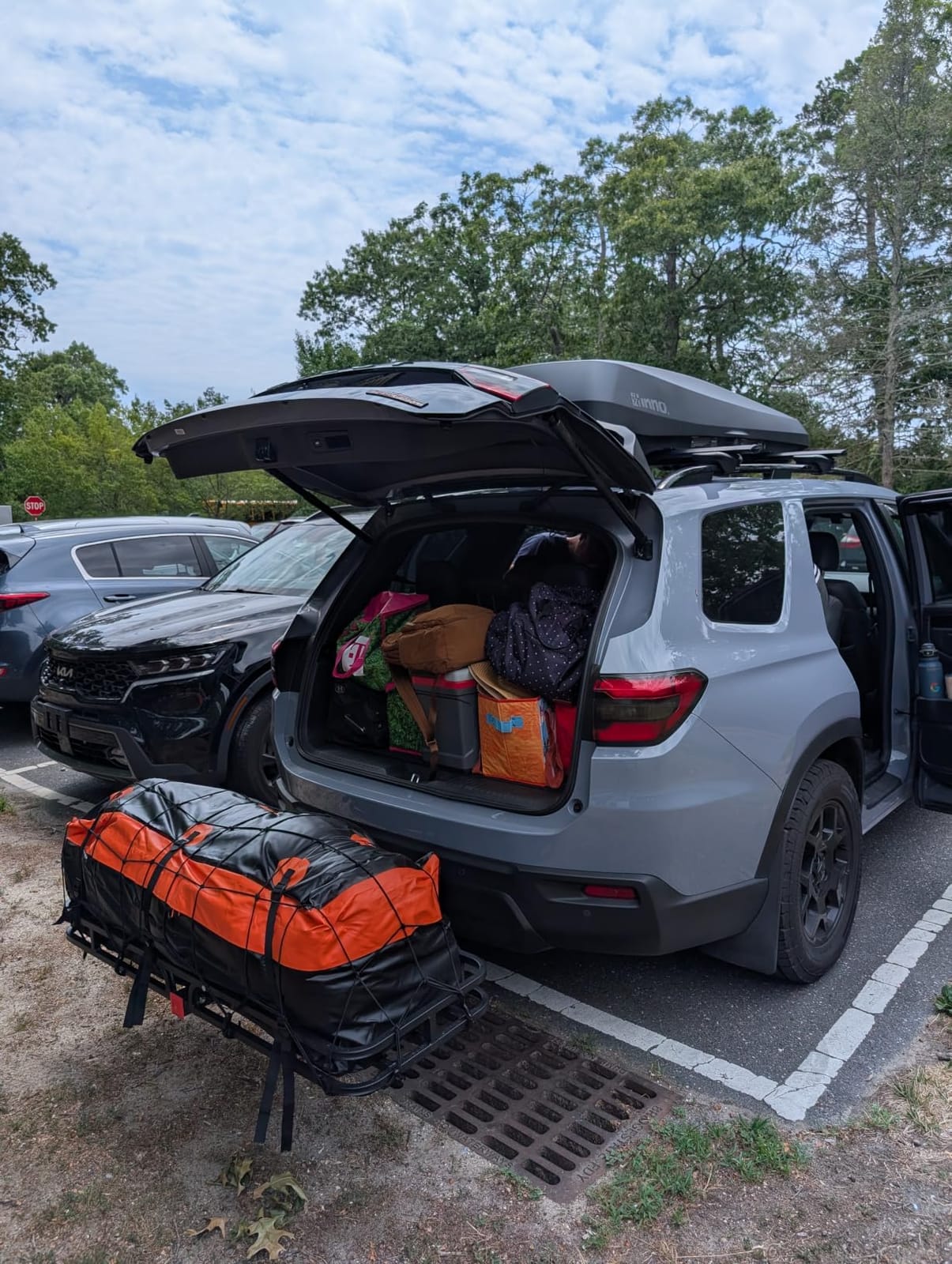
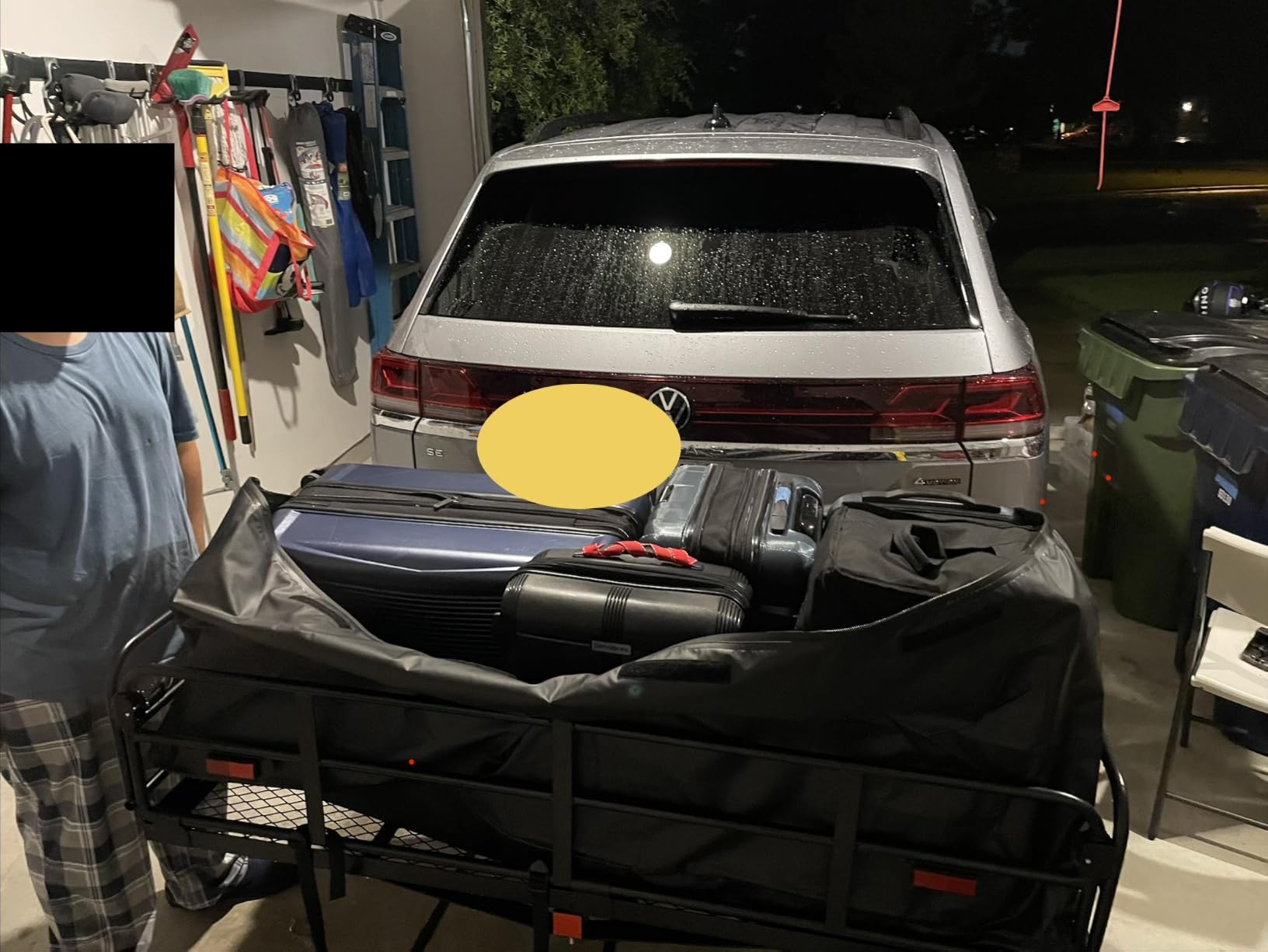
A hitch basket solves a different problem than everything else here, and for some trips it solves it better. Nothing goes on your roof, so there is no wind noise, no drag and no garage height to worry about, and the 500 pound distributed rating is the highest capacity in the group by a wide margin. For bulky gear that will not fit in a box, like a recovery kit, a chainsaw, bottle jacks or a pile of firewood, the clearance is the whole point.
The folding side rails are the feature I like most. They stand at 14.4 inches to contain a load, then fold down to 3.2 inches so you can slide something tall into position and flatten the basket for clearance. Two red reflectors help at night, and the mesh floor stops small items dropping out.
It is also the most complete kit here, with a waterproof cargo bag, cargo net, ratchet straps, a hitch stabilizer and a combination lock in the box. Owners rate it 4.4 stars and point to the capacity, the folding rails and the accessories as the reasons.
The trade-offs are real. You need a 2 inch trailer hitch receiver, so this rules out a lot of cars outright. It adds significant length behind the vehicle, which changes how it handles and can affect tongue weight, and it can cut your rear visibility. Nothing on the roof also means more weight at the back, so pack it forward and evenly.
Roof carrier or hitch carrier?
Choose a hitch carrier when you have oversized gear, no crossbars, or a vehicle where roof load is a problem. Choose a roof carrier when you have enclosed storage, security, weather protection and a clean vehicle profile. Hitch carriers keep the roof free, which is also why they suit overlanding setups and towing-heavy vehicles.
Who should skip it?
Skip it if your vehicle lacks a receiver, if you tow and need the hitch for a trailer, or if you park in tight spots where extra length behind the bumper is a problem. It is also not the right choice for clothing or electronics, since an open mesh basket protects nothing. For firewood and bulky household items, we cover the right tools in our [log carrier guide](https://www.talkofthehouse.com/best-firewood-log-carriers/).
11. Auto Dynasty 11 Cubic Foot Hard Box — Best for Small Roofs
Auto Dynasty Hard Shell Roof Top Mount Cargo Carrier Travel Luggage Box
- Low 15 inch height clears most garages
- Opening on both sides for easy loading
- Key lock releases only when fully secured
- Lowest cost hard shell in the group
- Lowest rating here at 4.1 stars
- Smallest hard box capacity at 11 cubic feet
- Cross bars up to 13 inches required
- Some owners struggle with a solid latch
This is the pick for a specific problem: a small vehicle with a low roof, a low garage, and a hard case for security. At 53 by 34 by 15 inches it is the lowest hard box we tested, and 15 inches sits right at the edge of the clearance threshold that keeps coming up in owner discussions. A hard shell is not a soft bag, though, so you get weather protection and a real key lock in that envelope.
Owners who fit it successfully value the two-sided opening, which gives you a 14 inch opening on each side so you can load from the passenger side away from traffic. The key lock releases only once every lock point is secured, which is a better design than a single front latch. Four tool-free mounting brackets are included, and the load rating is 110 pounds.
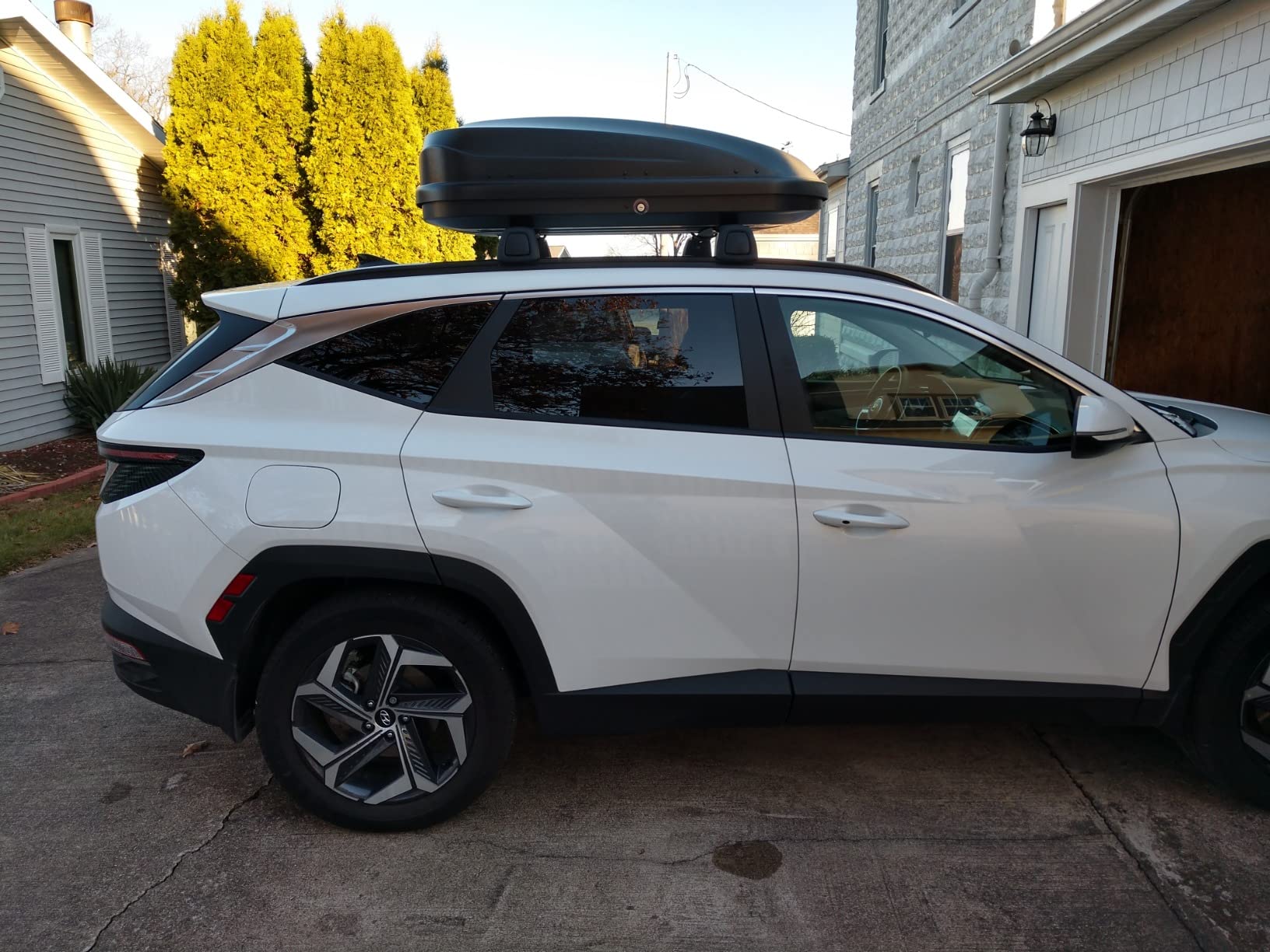
It is also the most polarized product we tested. Four point one stars is the lowest rating here, with a notably higher one-star share than the rest, and the complaints concentrate on two things: fitment and the latch. Cross bars up to 13 inches wide are required, and some reports describe difficulty achieving a solid latch and seal.
Eleven cubic feet is also the smallest hard capacity in the group, so a family of four will fill it quickly. Sizes run from 11 to 17 cubic feet in textured and glossy black, and stepping up one size is the easy fix if you need more room without adding height.
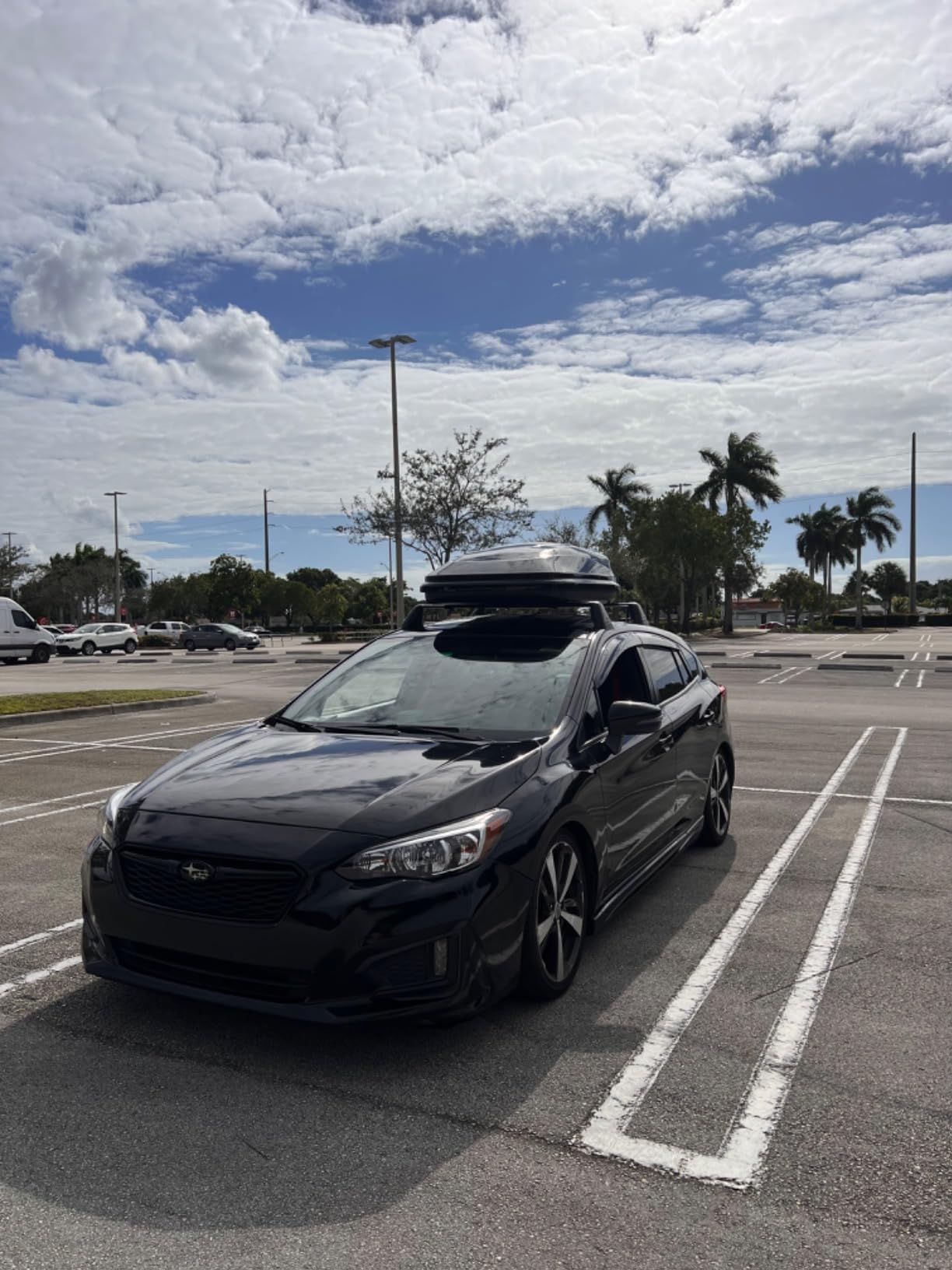
Is 15 inches tall enough for a garage door?
It is about as low as a hard box goes, but add your roof rack height, your crossbar height and the vehicle’s roof height to that 15 inches before you measure your door. Home garage doors are often 7 feet, and parking structures vary widely. Our rule is to park with the box fitted and walk the height before the first trip.
Who should skip it?
Skip it if you need more than 11 cubic feet, if you want the reassurance of a long warranty, or if latch quality matters more to you than price. The rating gap between this and the SportRack Vista XL is the clearest signal in the group. If your garage is tight but you want more volume, a soft bag is the better compromise.
12. Thule Motion 3 Rooftop Box — Best Aerodynamics and Quietest Run
- Quietest and most aerodynamic profile here
- PowerClick torque indicator makes mounting fast and secure
- SlideLock signals when the lid is fully closed
- Limited lifetime warranty
- By far the most expensive option
- Shell flexes and can feel thin when opened
- Key can stick in the cylinder
- Manual limits the box to 80 mph
This is the one I recommend to anyone whose trip is mostly highway and who plans to keep the carrier for a decade. The wing-shaped profile with a dynamic forward-leaning nose is the most advanced aerodynamics in the group, and owners report near-silent running with minimal wind noise even in crosswinds. Several report neutral or even better fuel economy once installed, which is not what you expect from adding a box.
The mounting experience is the best here too. PowerClick clamps with a torque indicator click mean you know the box is secure without guessing, and the wide handle allows one-handed opening and closing. SlideLock locks automatically and signals when the lid is fully closed, which removes the most common way a hard box ends up unlatched on a highway shoulder. Colour-matched options blend into the vehicle, and there is a limited lifetime warranty behind it.
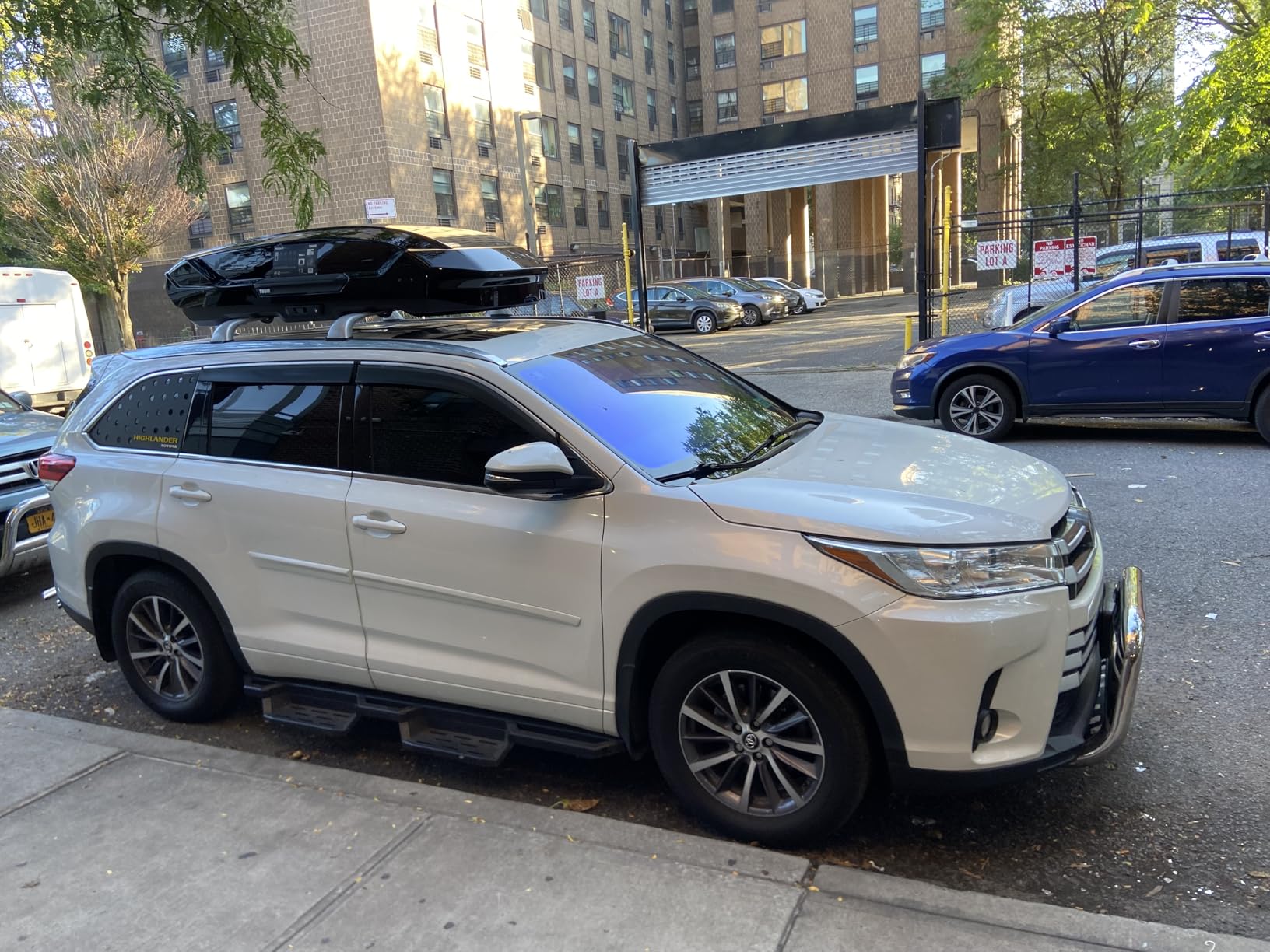
You will feel the price difference immediately, and it is the largest in this roundup by a wide margin. Owners also note that the shell flexes and can feel thin when opening and closing, and the key can stick in the cylinder on some units. If it is not fully latched the key will not release, which is a safety feature that can also frustrate.
On some GM SUVs you may need to use the forward crossbar positions to clear the hatch at full extension, and the manual limits this box to 80 mph. With only 167 reviews at 4.4 stars, the rating is strong but the sample is small, so treat long-term owner reports as a tiebreaker rather than a headline. Optional accessories include an interior box light, protective liner and storage cover.
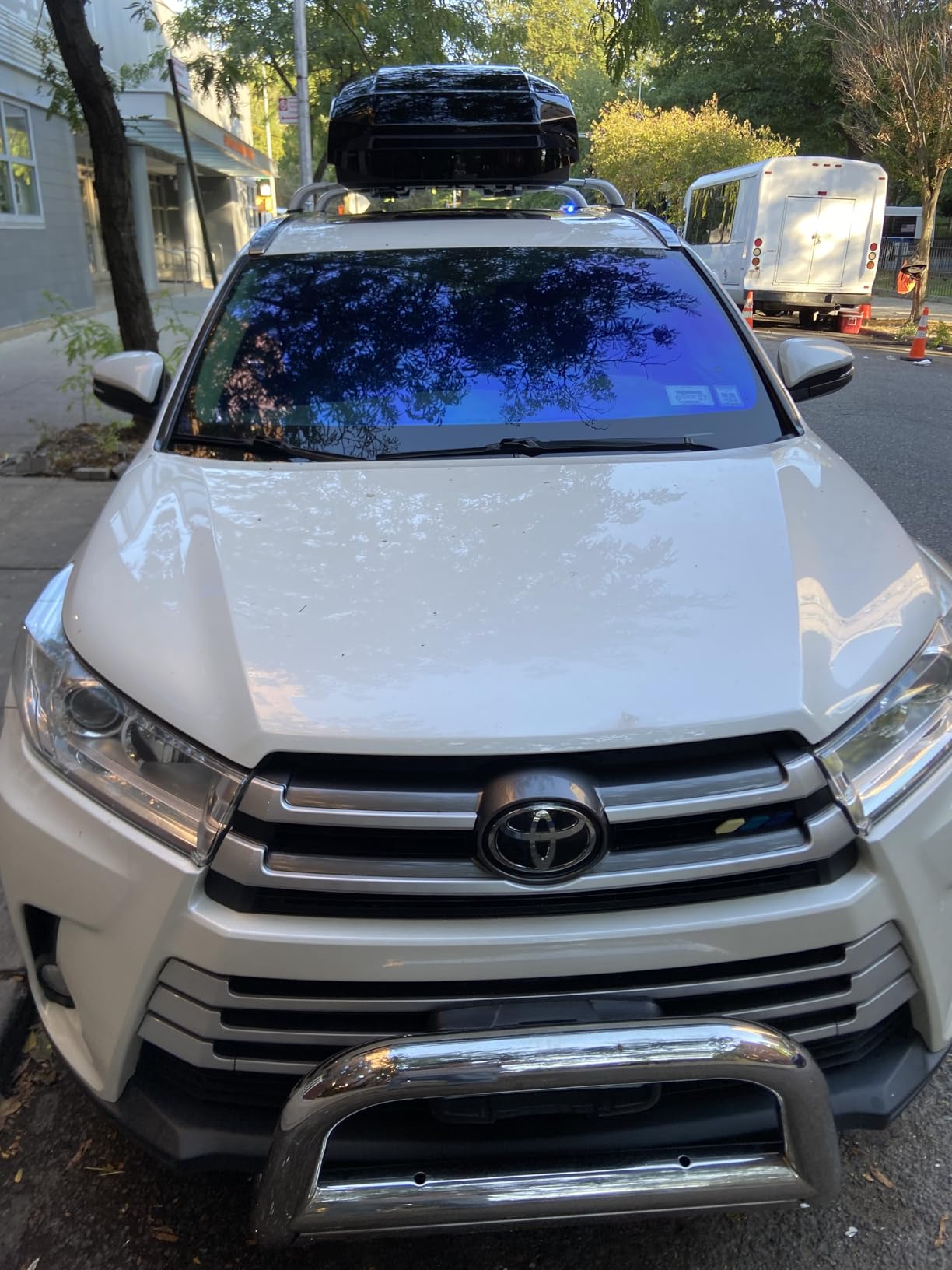
Is it worth the price jump?
If you keep vehicles for a long time, a limited lifetime warranty and near-silent running earn it. If this carrier will live in a garage for five years and then get sold with the car, the money is better spent elsewhere. Owner communities consistently describe Thule as the dominant premium brand, and a 20-plus year owner on an astrophotography forum reports trouble-free use for tripods and delicate gear.
Who should skip it?
Skip it on budget, without apology. The Vista XL hard box gives you most of the enclosed capacity for a fraction of the outlay, and the basket or soft bag picks give you volume at a fraction of that again. Also check that your garage clears 18 inches plus crossbar and roof height before committing, and confirm your hatch opens fully.
Buying Guide: Hard Shell, Soft Bag, Roof or Hitch
Most bad cargo carrier purchases come down to buying the wrong type of carrier for the trip, not a bad product. Every one of the twelve here is well made within its category. So the useful work is narrowing which category your trip actually needs, and there are five questions worth answering before you spend anything.
What vehicle are you driving, and does it have rails? Most soft bags here mount with or without a rack using door hooks, which is the fastest path to extra space. Every hard box and every steel basket needs crossbars, and a bare-roof vehicle needs a specific mount. The Thule listing is vehicle-specific fit, so confirm the exact configuration before ordering.
What are you carrying, and is it soft or rigid? Clothing, bedding and soft duffels pack into a bag and conform to any shape. Skis, bicycles, tools, firewood and recovery gear need a basket. Hard, structured items also need straps or a divider inside an open basket, or they will find the edge on the first winding road.
What is your trip length? A weekend getaway needs far less than a two-week crossing. Families fit four to six suitcases plus a stroller into 21 to 23 cubic feet, and a couple can manage a week in 11 to 18. Long-distance travel adds one more consideration: the more you load, the more you should plan for theft and weather rather than just volume.
Can your garage take the height? This is the most repeated practical constraint in owner discussions, and almost no roundup covers it. Anything taller than roughly 14 inches will not clear many home garages and parking structures, and you can measure the failure yourself in two minutes with the box fitted. Budget for a trip home with the box installed before a long journey.
How much range can you give up? Every roof load adds drag. Owners report single-digit percentage range losses from a roof rack alone, before a box goes on, and one owner measured about a 7 percent total reduction from the rack by itself. On an electric vehicle, plan charging stops around the loaded figure, not the range on a clear roof. A low basket with a fairing, or a hitch carrier, costs you the least.
Hard shell or soft bag: the honest comparison
A hard shell gives you a lock, a fixed shape, better aerodynamics and a lifespan measured in decades. It also adds more height, costs more and cannot fold away. A soft bag gives you the widest usable interior, folds flat, works on a rackless car and costs the least, but it protects against weather rather than theft, and its straps are the part most likely to fail at speed.
Our rule of thumb after six weeks of testing: hard box if you carry anything valuable or if your route includes weather. Soft bag if you carry clothing, you have no crossbars, or you want to reclaim cabin space cheaply. Basket if you carry rigid, heavy or awkward gear and need tie-down points rather than a sealed volume.
Roof box versus hitch carrier
A roof carrier keeps the vehicle’s silhouette clean, sits above the cabin and needs crossbars or rails. A hitch carrier needs a 2 inch receiver, adds length and weight behind the vehicle, can reduce rear visibility and affects handling, and offers far more capacity with no height penalty. If your gear is oversized, a hitch carrier is the smarter play. If your gear is personal, keep it on the roof and lock it.
How to install a roof cargo carrier
Every hard box and basket in this roundup follows the same sequence, and doing it once properly saves you from a roadside re-check. First, confirm your crossbar spacing and thickness fall inside the manufacturer’s range, since a mismatch is the most common reason an install goes wrong. Second, fit the crossbars and torque them to spec with a torque wrench. Third, clean the roof or crossbar surface so nothing scratches under the mount.
Fourth, set the carrier on with a second pair of hands, aligning the mounts with the bars. Fifth, tighten the clamps and listen for the torque indicator or click, which is the signal that the load is secure. Sixth, load the cargo and strap it to the carrier’s internal tie-downs so it cannot slide. Seventh, re-check every clamp and strap after ten miles, and again after every stop where you add gear.
Pre-trip checklist: clamps torqued and marked, straps and nets over every item, nothing hanging past the edge of the box or basket, height of the vehicle checked against every garage on the route, and speed set below the manual limit. The Thule box here is rated to 80 mph, and that is the manual’s number, not a suggestion.
Leaving gear unattended: what actually protects it
A hard box with a working key lock is the only real answer in this group, and only the hard boxes qualify. The soft bags all include combination locks that owners report breaking or that fail to deter anyone determined, and the open baskets have no cover at all. If you park overnight with laptops, cameras or documents inside, use a hard box and lock it, or take the valuables with you.
The second half of the answer is insurance and habits. Lock the box, park in a well-lit monitored area where you can, and never leave a car with a visible roof box and no visible contents, because that advertises what is inside. In our testing, nothing was stolen from the locked hard boxes, but that is a small sample and a reason to stay careful rather than a reason to relax.
Frequently Asked Questions
What is the best-rated car cargo carrier?
The best-rated carrier in our testing is the RoofPax 23 cubic foot soft bag at 4.6 stars across more than 5,300 reviews, backed by a lifetime zipper warranty and a five-year fabric warranty. For general use, the MaxxHaul 70115 steel basket earns our Editor’s Choice for its 150 pound rating, low 4.5 inch height and universal crossbar fit.
Which roof box is better, Yakima or Thule?
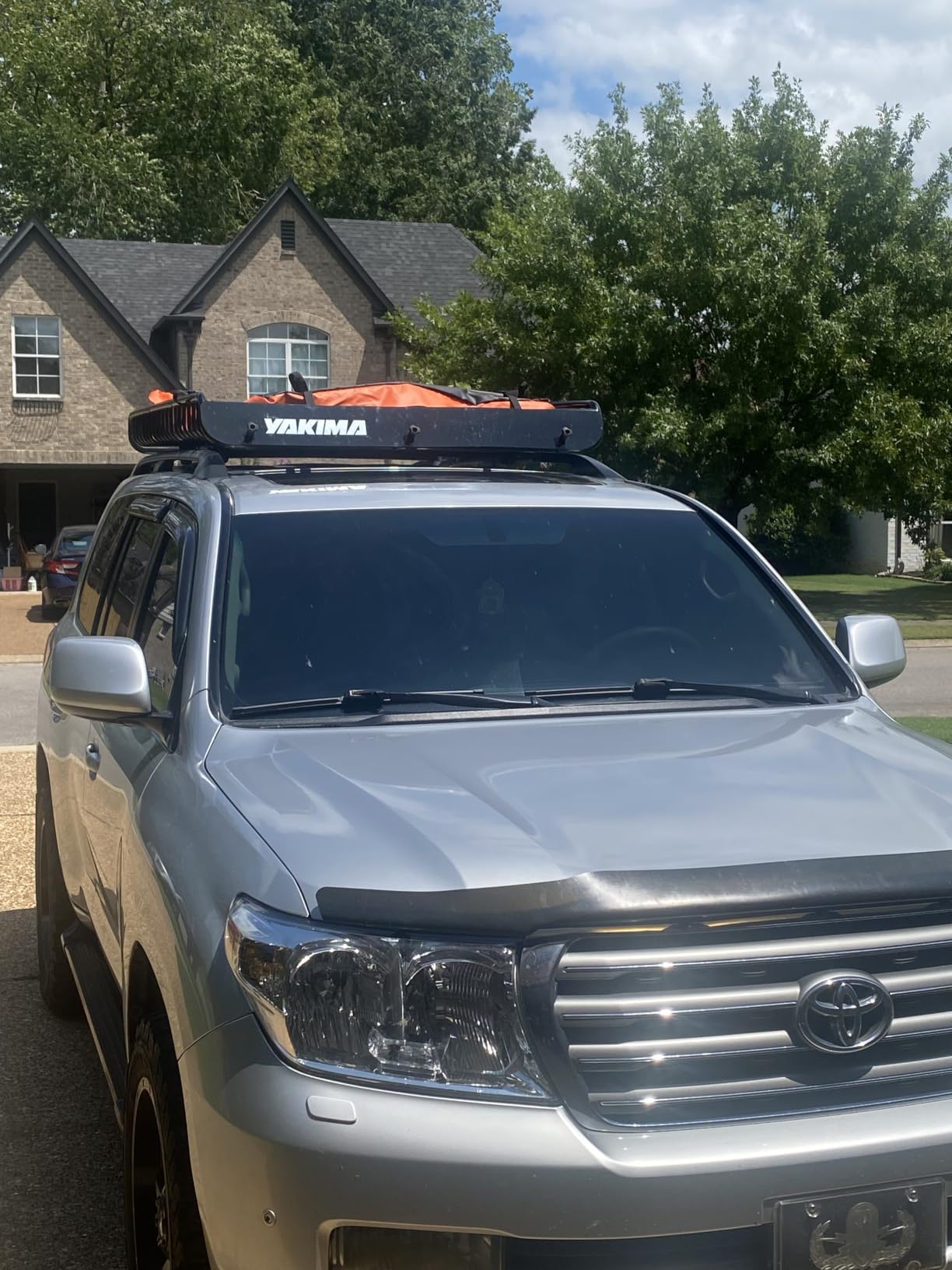
Both are considered among the best roof box brands, and owner communities treat them as equals. Thule leads on aerodynamics, quietness and a limited lifetime warranty, which is why the Motion 3 wins our top pick. Yakima is regularly recommended for ski and snowboard gear and typically costs less for equivalent capacity, so compare the specific model’s volume and height against your garage.
Is a rooftop cargo bag better than a cargo box?
A soft bag wins on price, foldability, usable width and mounting to a car with no roof rack. A hard box wins on security, weatherproofing, aerodynamics and lifespan. Choose a bag for clothing and gear on a rackless vehicle, and choose a box if you carry anything valuable, drive long highway stretches or cross regions with heavy rain and wind.
Will a roof cargo box fit in my garage?
Anything taller than roughly 14 inches will not clear many home garages and parking structures, which rules out most hard boxes at 18 to 22 inches. If clearance is tight, look at a low-profile basket such as the MaxxHaul at 4.5 inches tall, or measure your garage door opening with the box already installed on the car before you commit.
Are Thule cargo boxes worth it?
They are worth it if you keep carriers for years and drive long highway distances, because the Motion 3 pairs the quietest, most aerodynamic profile we tested with a limited lifetime warranty. They are harder to justify for occasional use, since the SportRack Vista XL gives you 18 cubic feet of enclosed, lockable hard storage at a far lower outlay.
What are people saying about the WeatherTech RackSack in reviews?
RackSack-style hitch baskets are widely discussed in owner communities as a cheaper alternative when only bulky outdoor gear needs moving, because they keep the roof clear and add no drag. The trade-off is that an open mesh basket protects nothing from rain and offers no security, so it suits firewood, recovery gear and bikes rather than clothing or electronics.
Conclusion: Our Top Cargo Carrier Picks for 2026
After six weeks and a lot of highway miles, the best cargo carriers for road trips divide cleanly by trip type. The MaxxHaul 70115 steel basket is our Editor’s Choice and the default answer, because it mounts to almost anything, lifts with one person, carries 150 pounds and stands just 4.5 inches tall. For a family trip with a car that has no roof rack, the RoofPax 23 cubic foot bag is the pick, with the best warranty coverage we found.
Match a hard box to valuables and bad weather, a soft bag to clothing and short vehicles, a basket to rigid heavy gear, and a hitch carrier to oversized loads. Before any of it, measure your garage door and your crossbars, then pick the category that fits your trip rather than the one with the biggest number on the page.