
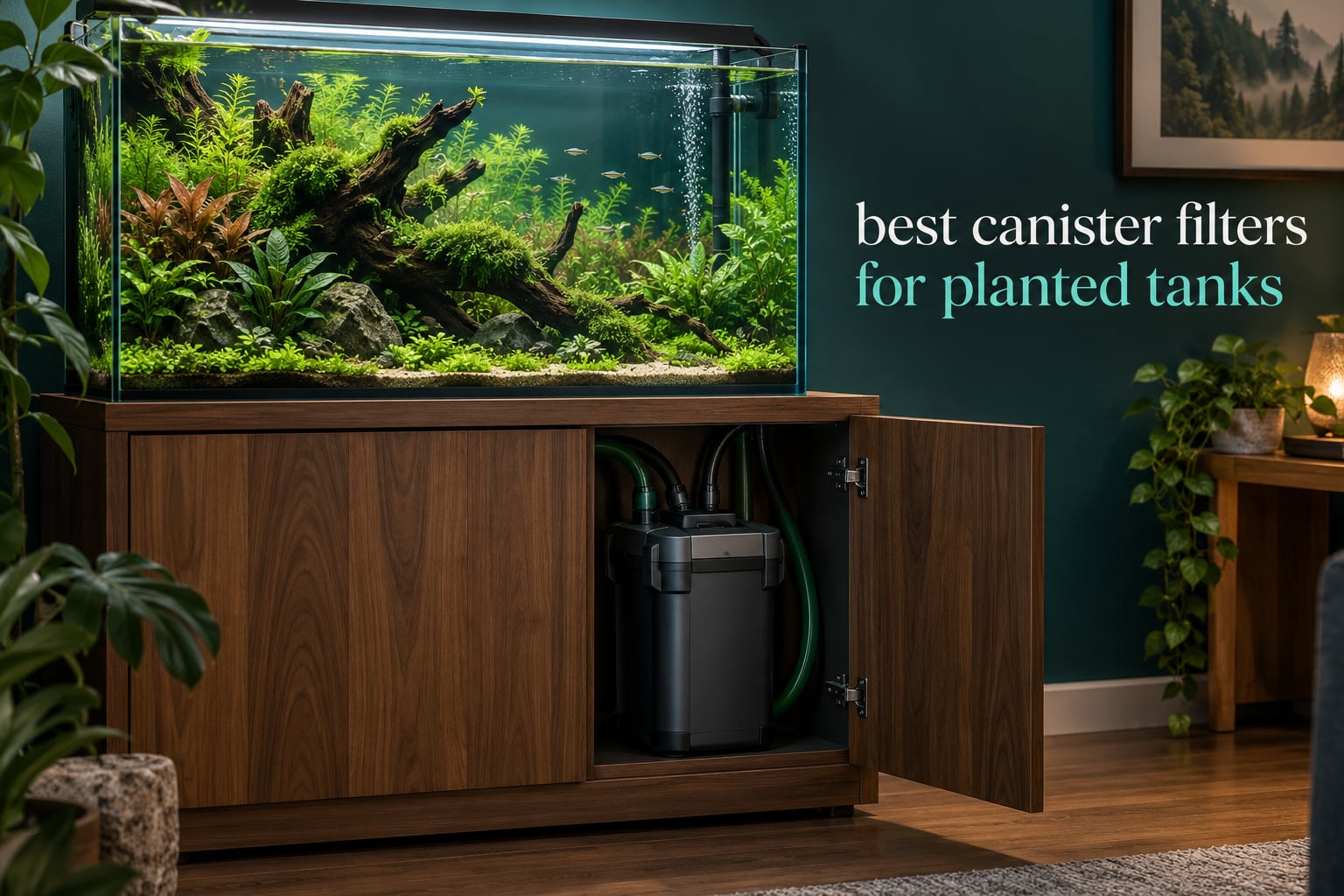
Planted tanks fail for one reason far more often than any other: the filter moves plenty of water but distributes it badly. Water rockets out of a single outlet, skims the surface, and takes your dissolved carbon dioxide with it, while dense stems on the far side of the hardscape sit in still water. That is the whole reason to look past the biggest gallons-per-hour number on the box.
We spent the last two months going through twelve canister filters for planted tanks, reading the long-term owner reviews rather than the first-week impressions, and matching each one to the job it actually does well. We looked at noise, media volume, whether flow can be throttled, how long a full service takes, and how the unit handles the head pressure of a real cabinet. Twelve picks, one winner, and honest verdicts on the ones that are not worth your money.
If you want the short version: the Penn-Plax Cascade 1000 is the best canister filter for planted tanks overall, the Fluval 407 is the smarter buy for most people, and the Fluval FX4 is the one to save up for if you are running a 100-gallon-plus aquascape. Our full method and every pick are below.
Top 3 Canister Filters for Planted Tanks in 2026
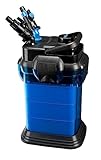
Penn-Plax Cascade 1000
- 265 GPH rated flow
- Three stackable handled media baskets
- 360-degree rotating valve taps

Fluval 407
- eTEC pump runs up to 25% quieter
- EZ-Lift one-finger media baskets
- Rated for tanks up to 100 gallons

Fluval FX4
- 700 GPH rated flow
- One gallon of media in stacked baskets
- Adjustable flow with Smart Pump
Canister Filters for Planted Tanks at a Glance
Every filter below is rated for freshwater use and sits in the canister format, but they are far from interchangeable. Read the media capacity and the flow control columns first; those two specs decide whether a unit suits a planted tank or just a fish tank.
| Product | Specifications | Action |
|---|---|---|
| Penn-Plax Cascade 1000 |
|
Check Latest Price |
| Fluval 407 |
|
Check Latest Price |
 Marineland Magniflow 400 Marineland Magniflow 400 |
|
Check Latest Price |
 Marineland Magnum 290 Marineland Magnum 290 |
|
Check Latest Price |
| Fluval FX4 |
|
Check Latest Price |
 Eheim Classic 2213 Eheim Classic 2213 |
|
Check Latest Price |
 SunSun Hw302 SunSun Hw302 |
|
Check Latest Price |
 SunSun Hw303B UV SunSun Hw303B UV |
|
Check Latest Price |
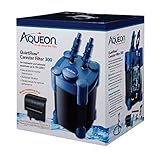 Aqueon QuietFlow Aqueon QuietFlow |
|
Check Latest Price |
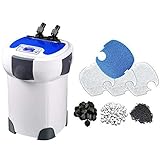 SunSun HW-3000 SunSun HW-3000 |
|
Check Latest Price |
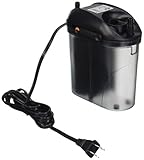 Zoo Med Nano 10 Zoo Med Nano 10 |
|
Check Latest Price |
 Fluval 307 Fluval 307 |
|
Check Latest Price |
How We Picked These Canister Filters for Planted Tanks
Planted tanks change what matters in a filter. A fish-only setup can get away with a modest pump and a box of floss. A scape with dense stems and injected CO2 needs even circulation, enough bio-media to hold a stable bacteria colony, and a return you can aim.
So we scored every unit on six things: real flow once the hose is full and the filter sits at the bottom of a cabinet, usable media volume in liters, whether output strength can be reduced, measured-and-reported noise, minutes required for a full disassembly and clean, and the durability that shows up in reviews from owners with years of service.
Two rules shaped the ranking. First, no pick gets a top badge on new-arrival enthusiasm alone; products with thousands of long-term reviews outrank products with a handful of perfect ones. Second, we treated plants as the primary livestock. A filter that strips your CO2 faster than your plants can replace it is a downgrade, not an upgrade.
Two of these units also appear in our broader coverage of canister aquarium filters for general freshwater setups, which is worth reading if your tank is not heavily planted.
1. Penn-Plax Cascade 1000 — Best Canister Filter for Planted Tanks Overall
- Three handled baskets let you rebuild the media stack for plant mass
- 360-degree valve taps make cabinet routing painless
- Push-button primer starts it in seconds
- Tip-proof base at 11.42 by 9.84 by 16.93 inches
- No flow dial
- so current strength is fixed once hoses are seated
- Basket dividers occupy fixed vertical space
- Included floss pads and carbon need replacing sooner on heavy plant beds
The Cascade 1000 is the filter we kept coming back to while assembling this list. Owners report it clearing cloudy water fast, and across more than ten thousand reviews the five-star share sits around 70 percent, which is a genuinely settled result rather than a launch-week spike.
What makes it work in a planted tank is the basket system. Three large stackable baskets with built-in handles let you run coarse floss on top, sponge in the middle, and a full basket of ceramic rings at the bottom, then lift each one out by hand without pulling the whole stack apart. On a 40-gallon tall with a dense stem planting, that is the difference between a two-minute rinse and a half-hour rebuild.
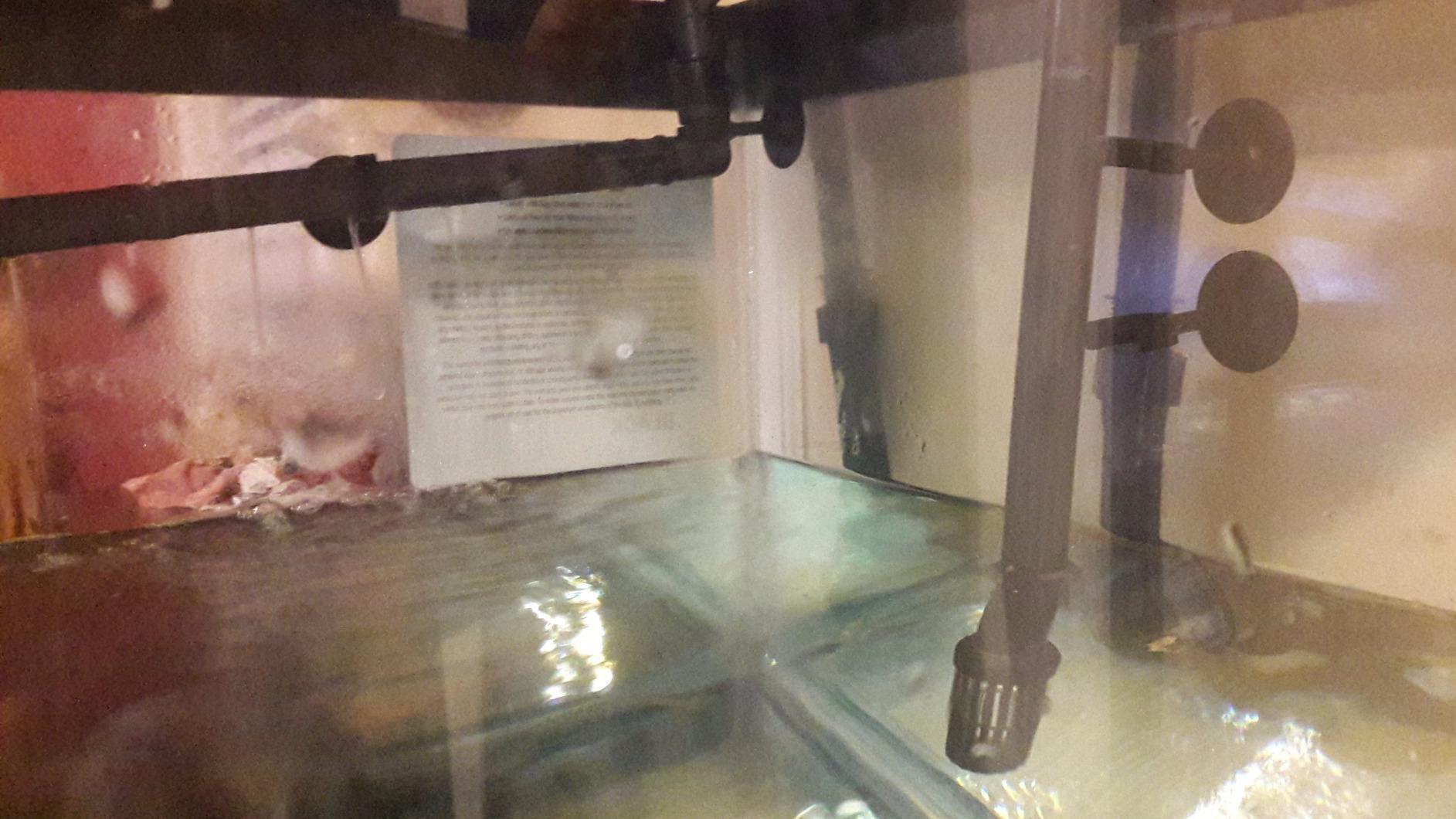
The dual 360-degree rotating valve taps are a small feature that matters more than it sounds. In a tight cabinet you can angle the intake and return in any direction instead of fighting rigid hose, and the included spray bar plus alignment clamps mean you can aim the return along the front glass or across the back without jury-rigging anything.
Be honest about the compromise. There is no flow regulator dial, so the current is whatever the pump delivers at that head height. If your scape has an open sandy foreground you will want to redirect the spray bar downward rather than chase a valve that does not exist. Many owners add a small in-line diffuser or throttle at the return instead.
What a Cascade 1000 handles well in a planted tank
Media volume is the reason this unit handles heavy plant beds. Three generous baskets let you hold a real bio-media load rather than the token amount that ships in the box, and the handles mean the bottom ceramic basket stays intact instead of collapsing into a bucket of rings every service.
The spray bar included with the kit spreads the return across the full width of the tank, which is exactly what you want on a scape with a rock or wood focal point. Paired with an intake placed behind the hardscape, you get circulation through the planting without blasting the open substrate.
Where the Cascade 1000 falls short
There is no way to reduce output strength without changing plumbing. For shrimp tanks, betta scapes, or a heavily hardscaped layout with wide open sand, that is a real limitation, and it is the single most common complaint in the reviews for this model.
The included poly fiber pads and carbon bag are consumables, and on a high-flow planted tank they clog faster than they would in a fish-only aquarium. Budget for replacing them every few months, and skip the carbon entirely unless you are chasing algae or medication residue, since carbon also strips nutrients you want feeding your plants.
2. Fluval 407 — Best Value Pick for a 40 to 100 Gallon Planted Tank
- eTEC pump is genuinely quiet enough for a bedroom
- Self-priming with quick-disconnect valves makes servicing fast
- Compact body fits under standard cabinets
- Strong steady flow clears green water quickly
- Some long-term owners report repeat motor head and impeller cover failures
- Bundled carbon pouches and pads are smaller than standard Fluval media
- Occasional low bubbling noise at certain flow settings
The 407 is the most-named canister in planted tank communities, and after reading enough of those threads it is easy to see why. It is not the most powerful option here, but it is close enough on flow and clearly better on noise, which is the pairing that decides most purchases.
The eTEC pump runs up to 25 percent quieter than earlier generations and draws about as much power as an LED bulb. On a planted tank in a living room that difference is the whole ballgame, because a filter you can hear across the room pushes you to turn it down, and a turned-down filter means dead flow spots behind the hardscape.
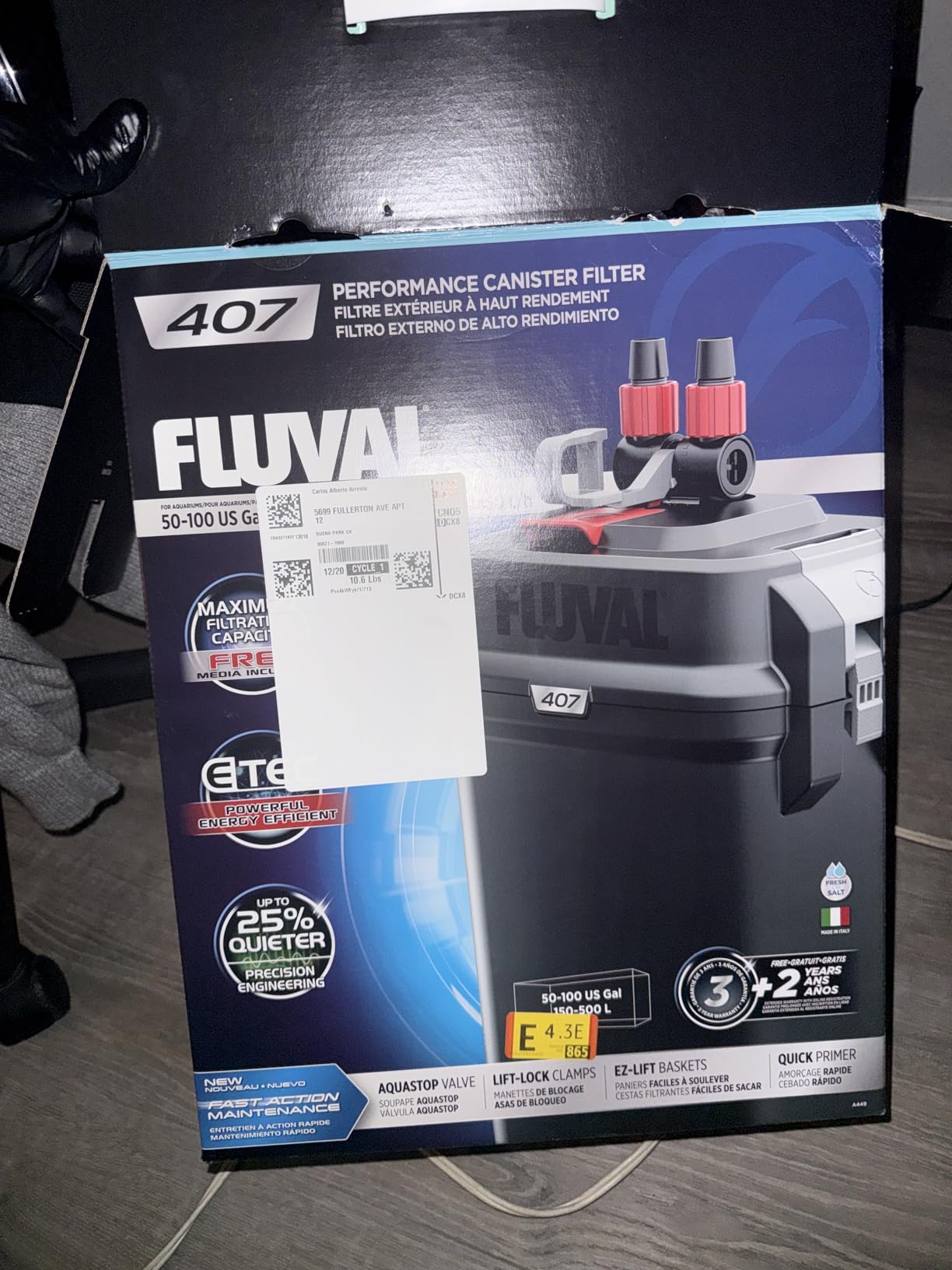
Service is where the 407 keeps its reputation. Self-priming and quick-disconnect valves mean you can split the plumbing, carry one basket at a time to the sink, and rinse it in old tank water without wrestling hoses under a cabinet. The EZ-Lift baskets come out with one finger through the center handle, which matters more when you are lifting a wet basket of ceramic rings.
Two honest notes. A minority of long-term owners report repeat failures on the motor head and impeller cover, so keep the model number handy if a warranty claim ever comes up. The bundled carbon and pads also run smaller than standard Fluval media, so most owners replace them before first use rather than after.
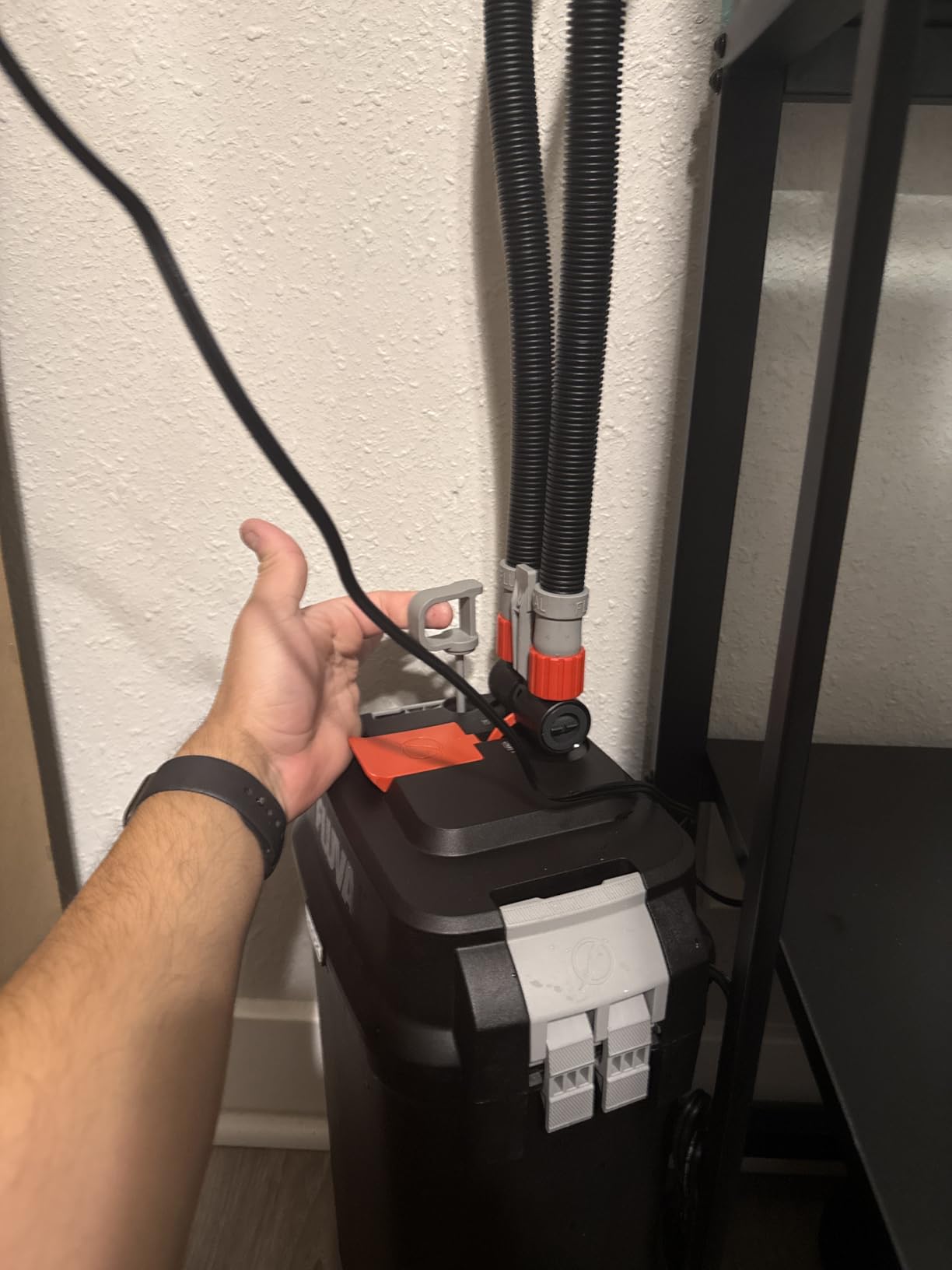
When the 407 is the right planted tank choice
Pick the 407 when your tank is between roughly 40 and 100 gallons, your scape has moderate hardscape, and quiet operation matters more than raw turnover. The self-priming system also makes it forgiving during the first weeks when you are resizing the media stack constantly as plants establish.
It handles a CO2-injected setup well provided you aim the return away from the surface. Owners commonly run a lily pipe or directed outlet rather than a full-width spray bar precisely to keep surface agitation down and hold the CO2 you are paying to inject.
When another filter suits you better
If your tank is over 100 gallons or you run a very dense carpet plus heavy stem planting, step up to a unit with more media volume, because the 407’s chambers fill faster than bigger trays and you will be cleaning on a tighter cycle.
If your tank sits under a deep cabinet, measure the 19.29 inch body height before you commit. It is tall and narrow, which is usually fine, but it is not forgiving in a shallow stand.
3. Marineland Magniflow 400 — Best for a Heavily Loaded Planted Tank
- Stack N Flo trays force water through mechanical
- chemical and biological media in order
- Generous included media package with foam
- carbon
- bio-balls and ceramic rings
- Quick prime button self-fills the chamber
- Very quiet for its rated flow once primed
- Some units leak around the lid gasket and replacement gaskets are not always included
- Supplied plastic hose clamps are weak
- Rigid tubing is awkward to route and the intake line is short for deep tanks
The Magniflow 400 is the pick for anyone whose problem is media, not flow. Its Stack N Flo trays force water to pass through each stage in order, which means coarse debris gets trapped before it reaches the bio-media instead of fouling it from the bottom up.
That staging matters more on a planted tank than on a fish-only one. A scape produces a constant supply of leaf litter and detritus from trimming stems, and unstaged media lets that material settle into the ceramic rings and cut your bacterial surface area in half. Forcing the water path is the difference between a filter that keeps its colony and one you rebuild every month.
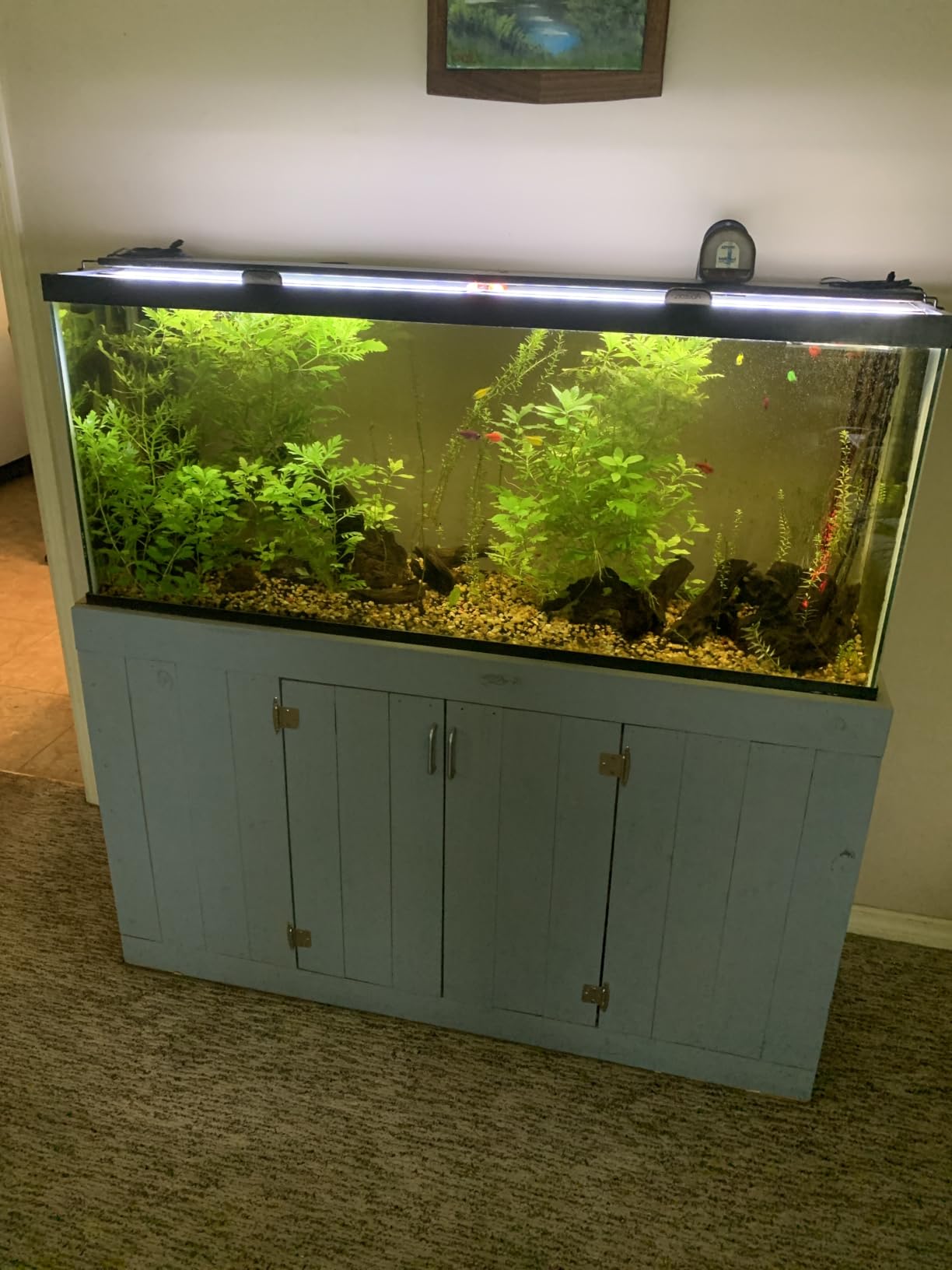
The included media package is unusually generous: foam, activated carbon bags, bio-filter balls, ceramic rings and polishing pads. You can run a genuine three-stage setup out of the box, and owners of planted tanks commonly report clearing cloudy water within about a day of a big replant.
The drawbacks are physical rather than electronic. At 19.27 pounds this is a heavy lift under a stand, the included plastic hose clamps are widely replaced with metal ones, and the intake strainer line runs short enough that deep tanks need an extension. Several owners also report lid gasket leaks on older units, so check the seal every time you close it.
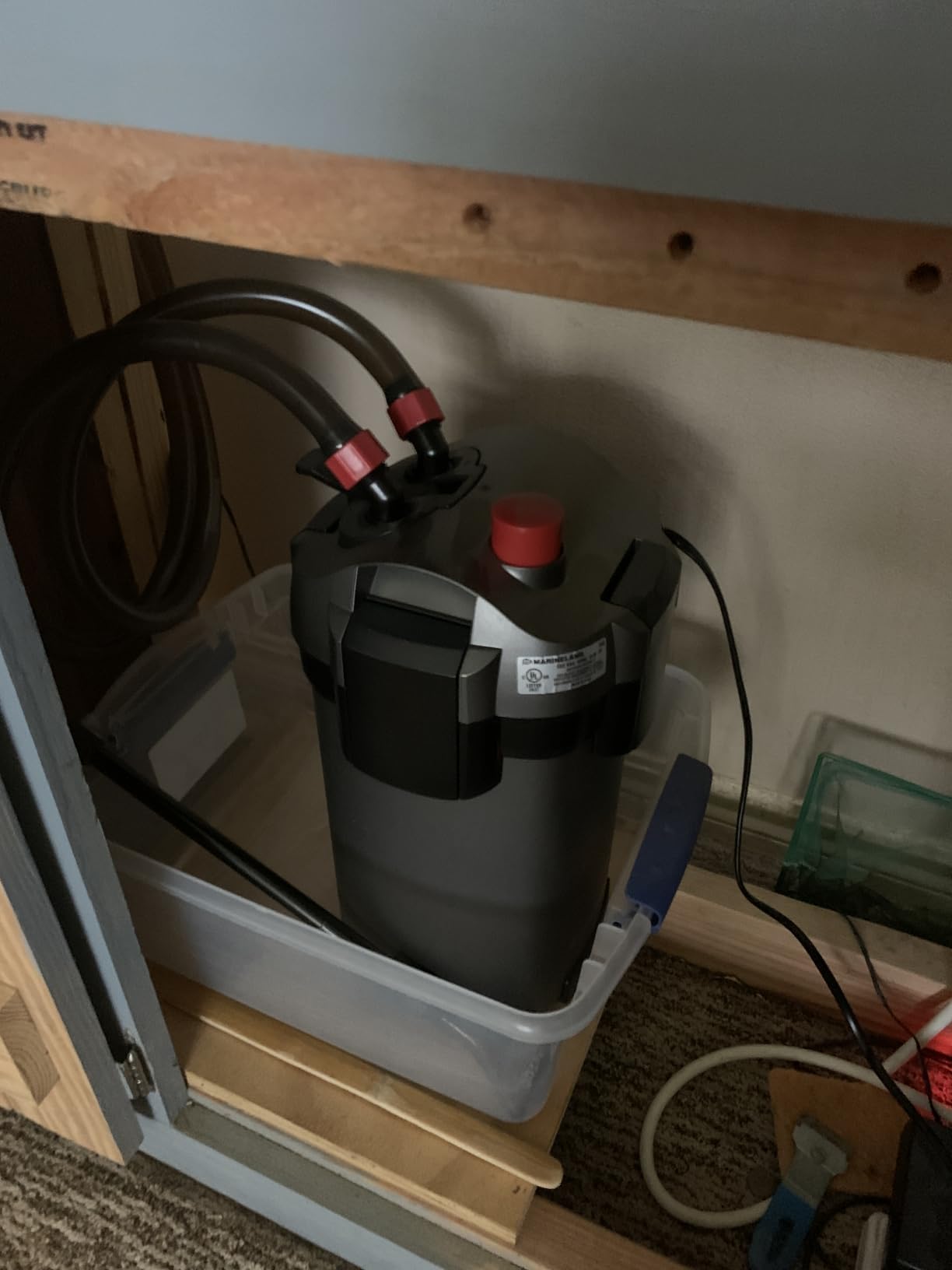
Why the media staging suits dense plantings
Each tray holds a full stage, so you can dedicate the bottom tray entirely to ceramic rings without sacrificing mechanical filtration. On a 60 to 75 gallon with heavy stem plants, that is the difference between one basket of bio-media and three.
The lid lifts off for media access, which makes a top-down rinse of the floss stage fast. Just make sure the watertight seal is seated properly before you crank the pump, because a gasket leak here shows up on your floor rather than in your sump.
When to look elsewhere
Skip this one if cabinet clearance is tight or if you move the filter often. The weight and the rigid outflow tubing make it a two-person job in some stands, and the short intake line is a real constraint on a 36-inch-tall tank.
It also sits in the middle of the pack on ratings, and the gasket complaints are real enough that you should buy from somewhere with straightforward returns.
4. Marineland Magnum 290 — Best When You Want the Pump Out of Sight but Inside the Tank
Marineland Magnum 290 GPH Polishing Canister Aquarium Filter
- Submerged internal pump starts with no external plumbing
- Two refillable chambers accept carbon or any custom loose media
- Compact and light enough to reposition with one hand
- Continuous three-stage filtration with a polishing cartridge included
- Only two small chambers limit total bio-media volume
- Not an external canister
- so there is no directed high-flow return for circulation
- The micron cartridge is a recurring consumable cost
This is the odd one out in the list, and that is exactly why it is here. The Magnum 290 is an internal canister: the motor sits submerged inside the housing rather than under your stand. For a nano or mid-size scape on a stand with no cabinet space, that is a genuinely useful answer.
Setup is the simplest of anything we looked at. There is no priming procedure, no hoses to route, and nothing to leak under a floor. It also weighs under three pounds, so cleaning it is a countertop job instead of a floor job, which matters if you are the kind of person who procrastinates on filter maintenance.
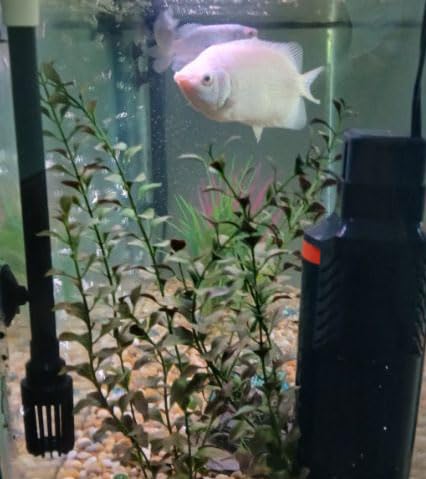
Both chambers are refillable and accept loose media of any type, so you are not locked into branded cartridges. Planted tank keepers using this unit typically run floss in one chamber and a mix of ceramic media and fine sponge in the other.
The catch is capacity. Two small chambers is simply less bio-media than a full set of stacked trays, and on a heavily planted tank you will be cleaning more often to keep the water clear. There is also no directed return for circulation, so you are relying on the outlet position alone to move water across the scape.
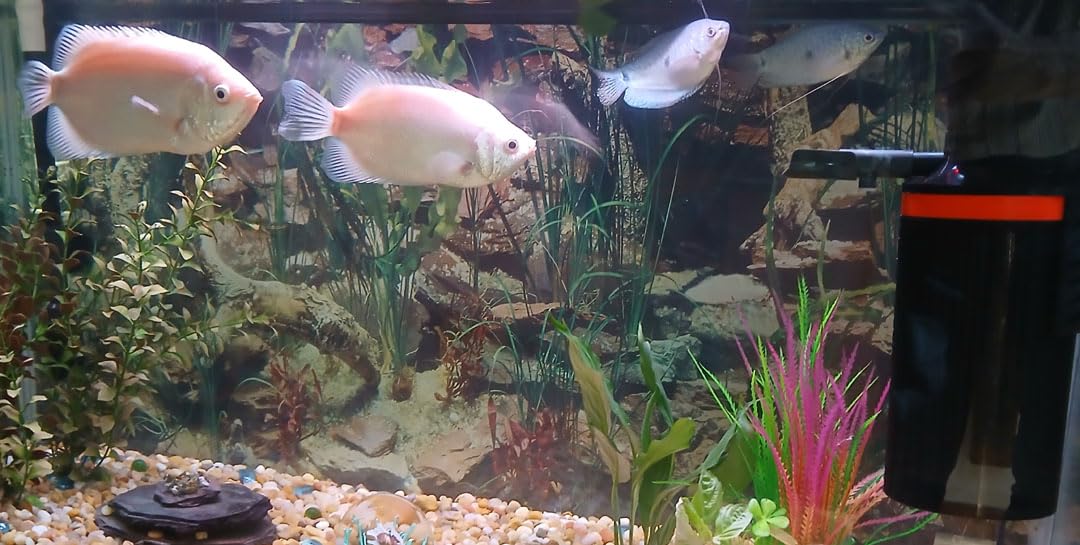
Where the Magnum 290 fits
It makes sense for tanks up to about 40 gallons where the scape is open and simple, on stands without a cabinet, and for anyone who wants a filter they will actually clean on schedule. Low friction maintenance is its real advantage.
The included micron polishing cartridge gives you crystal water without buying extra chemical media, though it is a recurring expense and one more thing to replace.
Where it falls short
If you are running dense stem groups or a CO2-injected scape that needs circulation pushed into the back corners, the lack of a strong directed outlet will frustrate you. Pair it with a small circulation pump if you go this route.
It is also not a full canister despite the name, so if you were specifically shopping for external units, this one does not fill that brief.
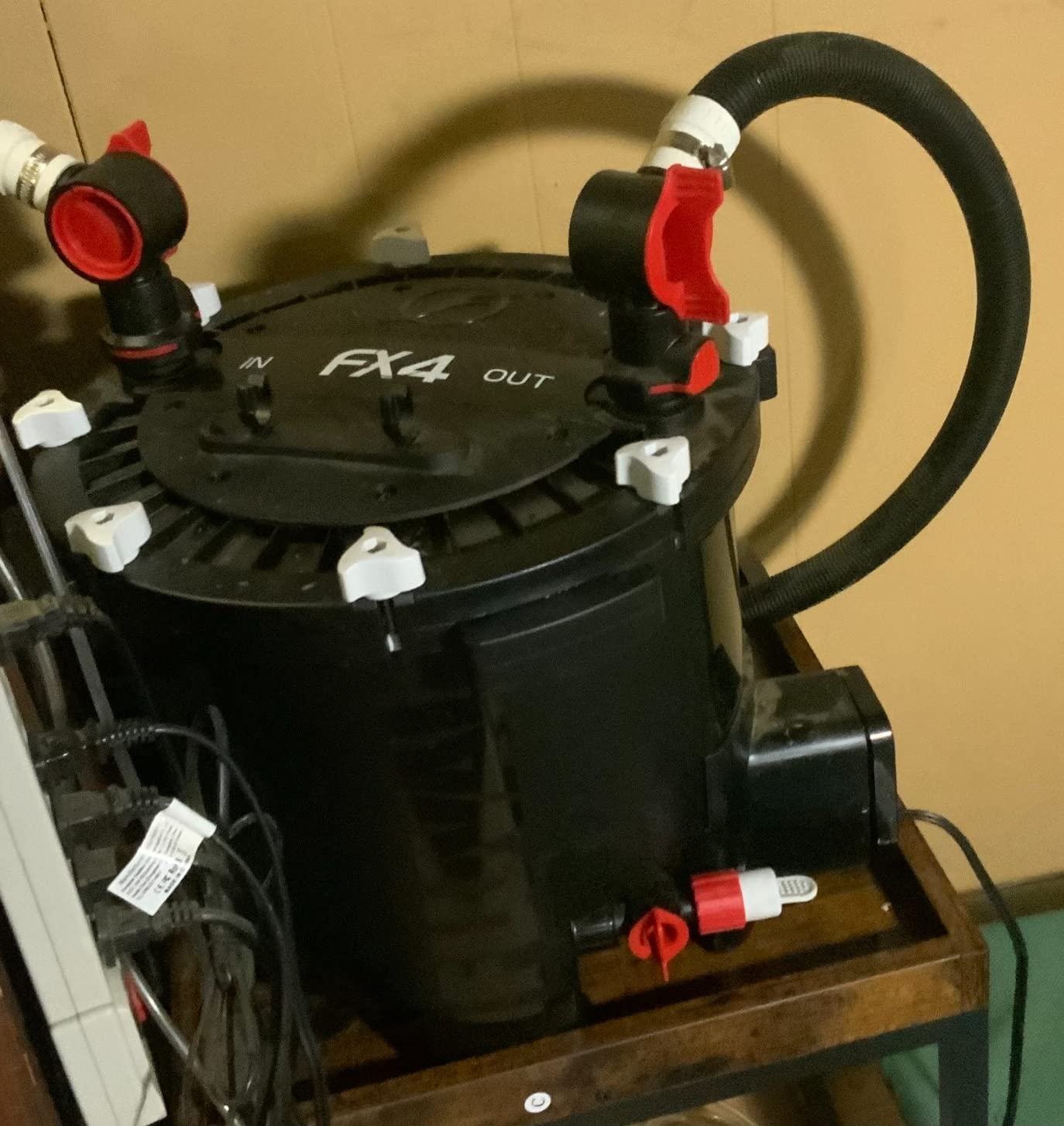
5. Fluval FX4 — Best for Large 100 to 150 Gallon Aquascapes
Fluval FX4 High Performance Aquarium Filter, up to 250 Gal.
- Roughly one full US gallon of media in stackable baskets that eliminate bypass
- Smart Pump auto-evacuates trapped air every 12 hours
- Multiple owners confirm very quiet running in living rooms
- Adjustable flow you can dial back for planted tanks
- Repairable parts extend service life
- Large and heavy at 14.17 pounds so cabinet space must be checked
- Setup guide omits the note about keeping the outflow above tank water level
- Internal hose clamps are stiff and awkward to open
- Media basket bottoms sit deep so baskets cannot be filled completely
The FX4 has the highest rating of any filter in this roundup and, for a large scape, the most usable flow. The 700 gallon per hour rated output is paired with media baskets designed to eliminate bypass, so the water genuinely passes through the media instead of short-circuiting around it.
That combination is why it shows up on serious aquascapes. You can run enough circulation for a 125 gallon planted display and still have room for a real bio-media load, and the Smart Pump microchip auto-evacuates trapped air every 12 hours so a unit buried in a cabinet does not quietly stop moving water.
Owners consistently describe it as very quiet even in a living room, and several use it as a chemical or polishing stage running alongside a biological filter, which is a smart pattern for a big tank where you want the bio colony left undisturbed.
Two practical warnings from reviews. First, the setup instructions never mention keeping the outflow above the tank water line, and if you do not, a power cut will siphon the tank. Second, the internal hose clamps are stiff, so budget extra time for the first disassembly.
Why the media volume wins on large scapes
Large planted tanks produce far more detritus than small ones, and they need proportionally more media to stay clear between services. Holding roughly one gallon of media means you can run a deep stack of coarse sponge, floss, and ceramic rings without running out of chamber space.
Flow is adjustable, which is the feature most large-tank planted setups need most. You can start high for a rescape day and dial back to a level that does not strip CO2 or blow sand across the substrate.
Where it is not the right buy
At 14.17 pounds and 15.6 inches square, this is a two-person lift and a measurement job. If your stand is shallow or your cabinet opening is tight, this is the filter most likely to not physically go where you planned.
It is also overkill for anything under about 75 gallons, where you would pay for capacity and weight you cannot use.
6. Eheim Classic 2213 — Best for Tankers Who Want One Filter for a Decade
EHEIM Classic Canister Filter 2213, Classic 250 – PetOverstock
- Classic canister design with a proven long service life
- Permo-elastic silicon seal fixed to the pump head makes closing safe after every clean
- Comes complete with Mech and Substrat Pro media
- valves
- spray bar
- inlet pipe and hose
- Loose media chambers accept any standard bio-media
- Dated design with less media capacity than modern stackable-basket canisters
- Proprietary Eheim cartridges cost more per replacement
- Reported as less quiet than newer premium canisters by some long-term owners
If you want the filter you will still own in ten years, this is the one people in the hobby talk about. Eheim Classic units show up in long-term ownership reports again and again, and the pump head design has barely changed in decades, which means parts and fixes stay available.
The detail we like most is the permo-elastic silicon sealing ring fixed to the pump head. Most canisters rely on a lid gasket that can be seated slightly wrong; this one keeps the seal on the head itself, so closing it after a clean is straightforward and repeatable even when your hands are wet.
It also arrives genuinely complete: Mech and Substrat Pro media, valves, spray bar, inlet pipe and hose. The loose media chambers accept any standard bio-media, so you are not locked into branded cartridges, which is a genuine cost saving over the life of the unit.
Be clear-eyed about the design era. At 4.1 stars and 1861 reviews, it is well liked inside its niche, but the chambers are smaller than modern multi-basket designs. That means shorter service intervals on a densely planted tank than a Fluval 407 or FX4.
Why the loose media design still works
You can build the stack in any order you want, which is useful in a planted tank where you might want to pull carbon out entirely during a growth phase and put it back when algae shows up. Nothing about the chamber layout stops you.
At under five pounds and just under fourteen inches tall, it is also one of the easiest units here to lift, clean, and put back, which is the factor that determines whether you actually do it on schedule.
When to spend up instead
If your scape is heavily planted or you want maximum media volume per service, a modern basket design is a better long-term fit. Eheim also makes larger Pro models with more chamber space if you need that capacity and want the same build approach.
Skip it if silence is your top priority; several long-term owners note it runs audibly compared with newer eTEC pumps.
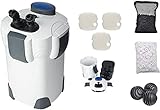
7. SunSun Hw302 — Most Versatile
- Low cost for a 265 GPH canister with three removable media baskets
- Generous bundle of carbon
- ceramic rings and bio-balls included
- Compact body fits under most stands
- Simple hose and clamp setup with no complex priming procedure
- Included white pads are thin and saturate quickly on high-flow tanks
- Basic build quality compared with Fluval or Eheim equivalents
- No flow control valve so output strength is fixed
The Hw302 is the budget entry that genuinely holds its own, and it is the unit most often recommended to beginners and for quarantine tanks. Three removable media baskets and a 265 gallon per hour rated flow cover a 75 gallon tank without anything being obviously too small.
The included media load is the quiet advantage. One pound of premium carbon, one pound of ceramic rings and a set of bio-balls means you have a working three-stage setup on day one rather than a bare canister and an extra parts order. At 4.2 stars across 1546 reviews it holds up better than its price bracket usually does.
Planted tank owners commonly run this as a dedicated biological or polishing stage rather than the only filter, pairing it with a circulation pump. That pattern works well because you can load one basket heavily with bio-media and leave the mechanical stages light.
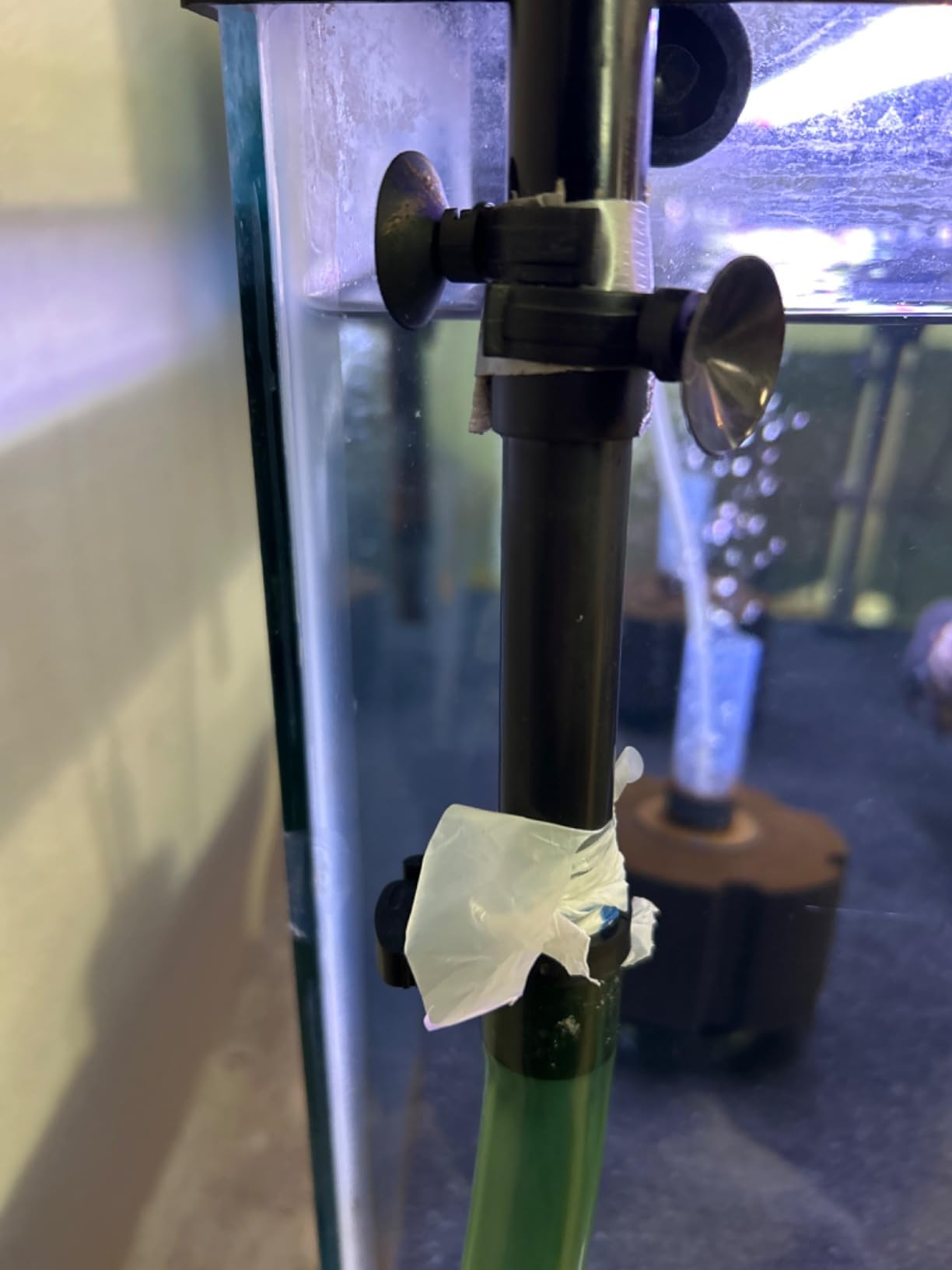
The limits are honest ones. The bundled white filter pads are thin and clog quickly on a high-flow planted tank, build quality is a clear step below Fluval or Eheim, and there is no flow valve at all, so you have no dial to turn if the current is too strong.
Where the Hw302 makes sense
It is the right call for a first planted tank, a quarantine or hospital setup, or a secondary biological stage on a larger scape where you want more ceramic media volume without buying a premium unit.
Setup is deliberately simple: hose, clamps, water. There is no priming button and no convoluted startup, which makes it forgiving when you are new to canister plumbing.
When to spend more
Buy a Fluval 407 or an Aqueon QuietFlow instead if the tank lives in a bedroom, if you care about long-term durability, or if you will be the one doing the maintenance. Long-term hobbyists do report faster wear on budget impellers.
Also avoid it if your livestock include shrimp or bettas that need gentle flow, since there is no way to reduce the output.
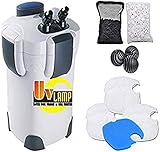
8. SunSun Hw303B UV — Best Budget Pick with a Built-in UV Sterilizer
SunSun Hw303B 370GPH Pro Canister Filter Kit with 9-watt UV Sterilizer
- 370 GPH handles tanks up to 100 gallons with strong circulation
- Integrated 9-watt UV sterilizer helps with green water and free-floating algae
- Three media baskets plus a coarse blue pad for staged media
- Includes carbon
- ceramic rings and bio-balls in the kit
- UV lamp and ballast add failure points and replacement cost
- Bulkier and heavier than comparable non-UV canisters
- Fixed flow rate with no adjustment dial on this model
Adding a UV sterilizer to a canister normally means buying a separate inline unit and finding the space for it. This model integrates one, which makes it the cheapest way to add algae control to a mid-size planted tank without another piece of plumbing.
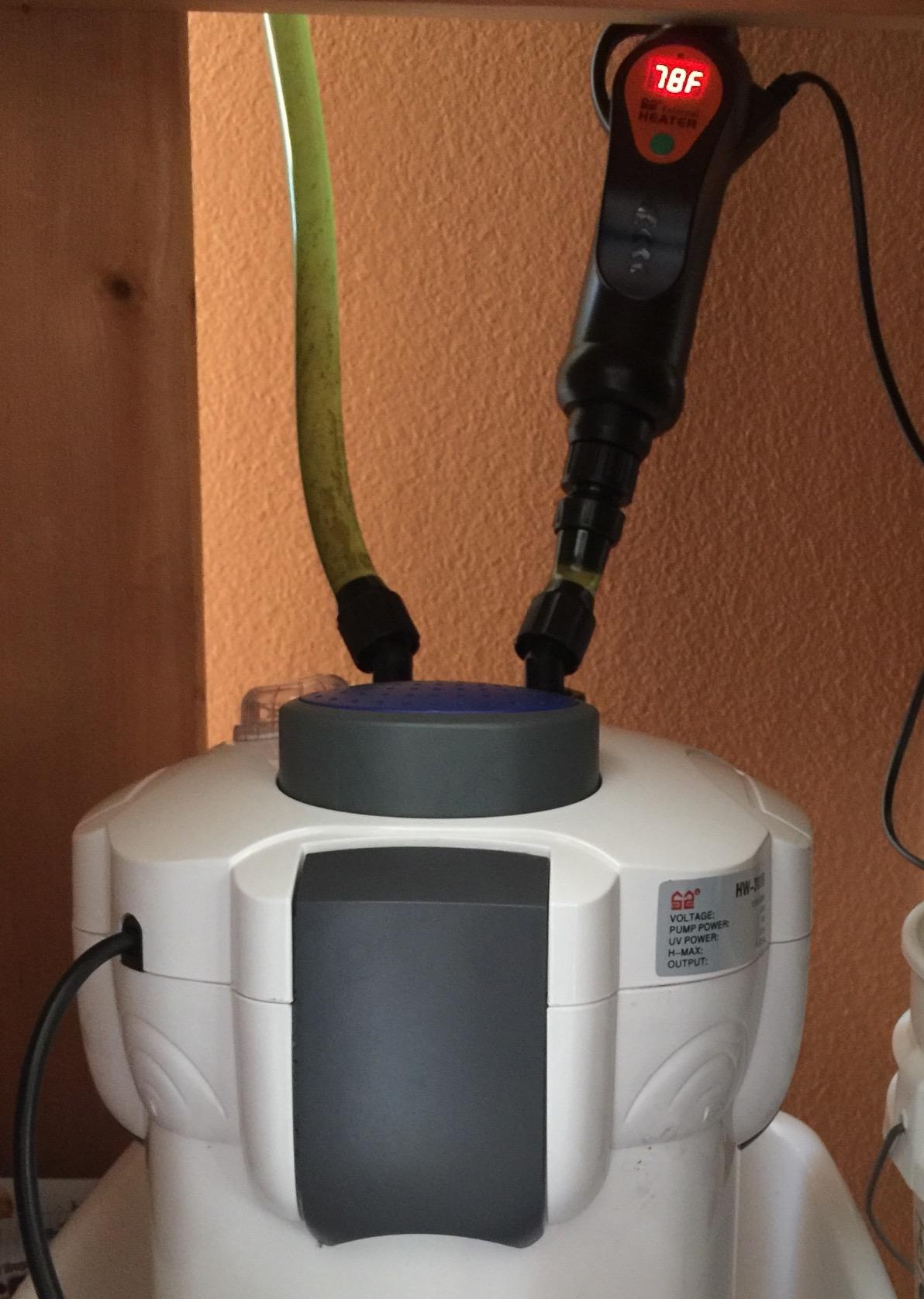
For planted tanks specifically, UV is most useful in a new setup or after a big replant, when you want to knock back suspended algae and free-floating organisms without touching your CO2 or nutrient balance. The 370 gallon per hour rated flow covers tanks up to 100 gallons and pushes plenty of water past the lamp.
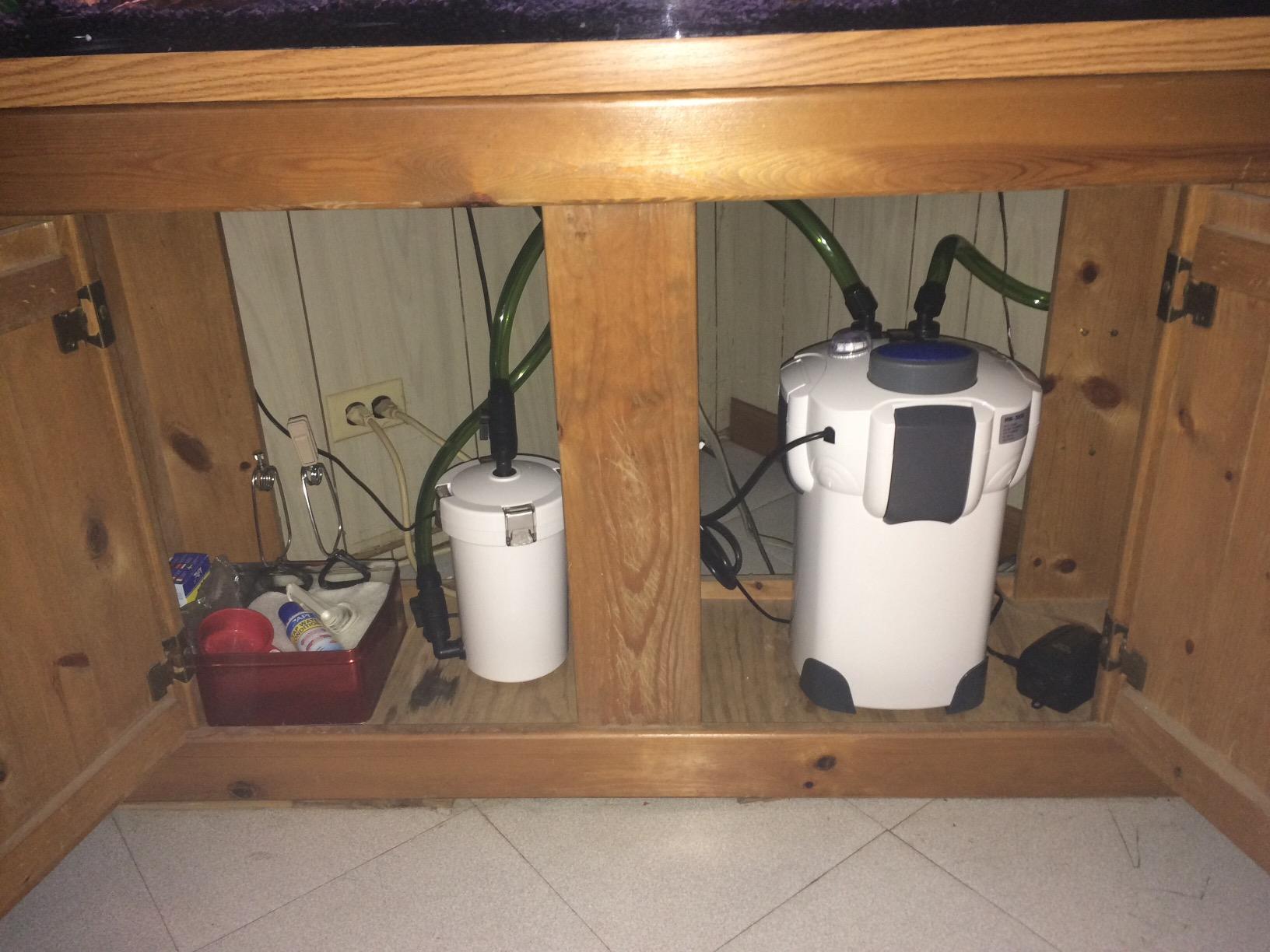
The media layout is better than the price suggests. Three baskets plus a coarse blue pad give you a genuine mechanical first stage, and the kit includes a pound of carbon, a pound of ceramic rings and bio-balls, so you can build a proper biological stack immediately.
At 4.3 stars across 1378 reviews it out-rates its non-UV sibling. The trade-offs are size at 16 pounds, a fixed flow rate with no dial, and the reality that a UV lamp and ballast are two more components that eventually need replacing.
When a UV stage earns its place
Turn it on for green water problems, for a hospital or quarantine tank, and for the first six weeks of a brand new planted tank when algae pressure spikes. That is where it pays for itself.
Leave it off during routine growth phases. Running UV constantly in a mature scape costs lamp life and removes some of the free-floating food your shrimp and small filter feeders rely on.
Where it falls short
It is heavier and bulkier than an equivalent non-UV canister, so check cabinet clearance. And like the rest of the budget tier here, there is no flow adjustment, which is a problem for a shrimp tank or a wide sand foreground.
Budget for lamp and ballast replacement as eventual costs rather than one-time purchases.
9. Aqueon QuietFlow — Best for a Planted Tank in a Quiet Room
Aqueon QuietFlow Canister Aquarium Filter, 55-100 Gallons (ECOM)
- Exceptionally quiet once air is purged and often quieter than the tank's air pump
- Very large media baskets
- Three return options including a spray bar
- water director and hang-on-back polishing unit
- Quick disconnect locking valves shut off with no dripping during service
- Long tubing lets the intake reach the substrate in deep tanks
- Some units fail to restart after cleaning and need warranty replacement
- No flow adjustment so output strength is fixed
- Spray bar extension is not widely available which can leave surface turbulence noise
- Replacement polishing cartridges are a recurring monthly cost
Planted tank owners repeatedly single out this unit for near-silent pumping, often comparing it favorably to the air pump running in the same tank. That is the useful benchmark, because the air pump is the noise you cannot get rid of, not the filter.
The media baskets are large, and some configurations give you three trays rather than two. On a 55 to 100 gallon planted tank that extra volume is what lets you carry enough ceramic media to keep a stable bacteria colony through a heavy replant without cleaning every few weeks.
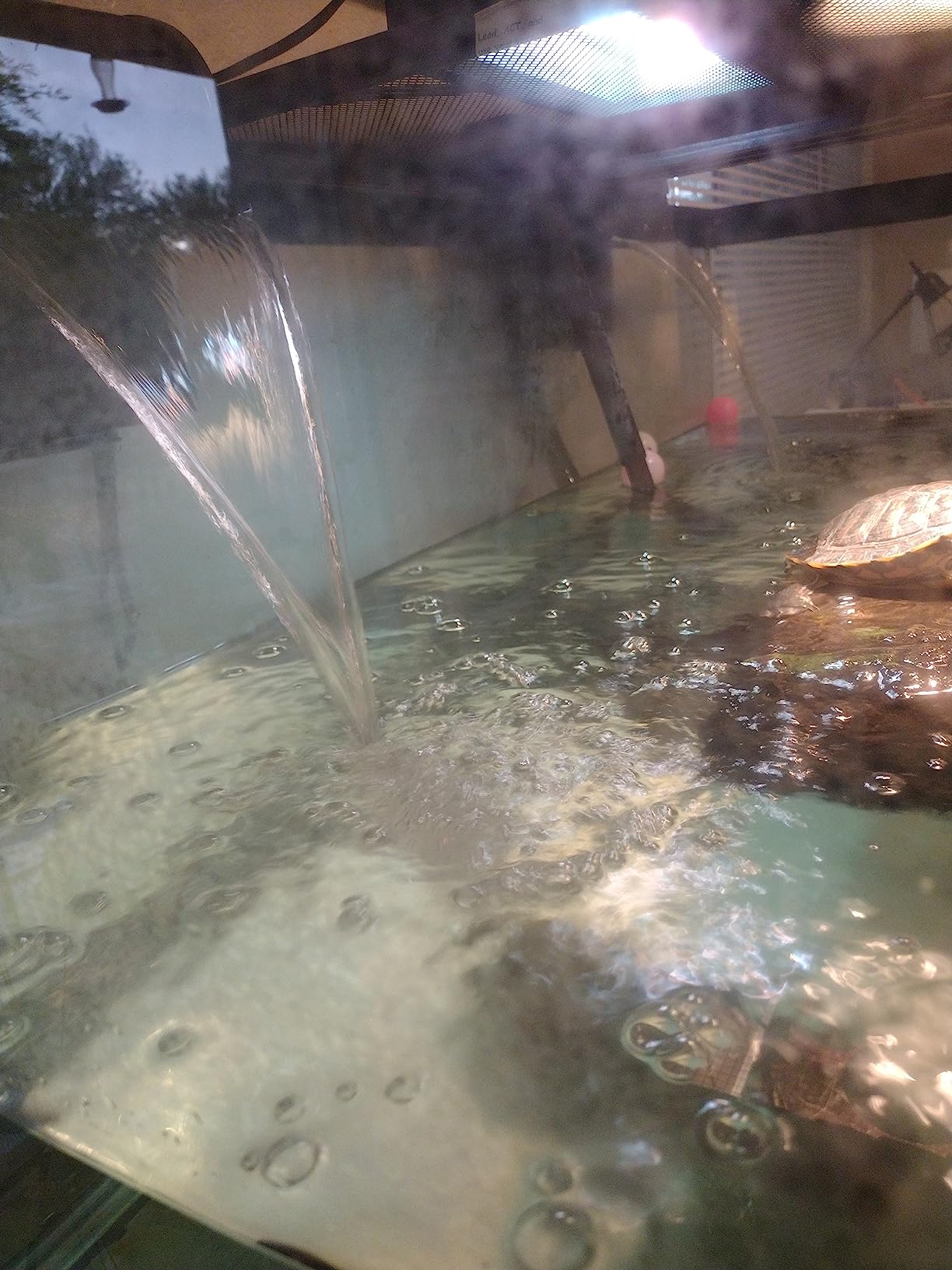
Three return options is a genuinely planted-tank feature. The spray bar gives you an even spread across the back, the directional water director lets you aim flow into a corner where a scape has a dead zone, and the hang-on-back polishing unit handles surface skimming duties on a display tank.
The quick disconnect locking valves shut off with no dripping during service, which is more than many competing units manage. The long tubing is also useful because it lets the intake sit down at the substrate in a deep tank instead of floating mid-water where it pulls debris back into the column.
Why the return options matter on a scape
A scape almost always has one corner where water does not move. The water director is how you fix that without adding a second pump, and for aquascape displays where fish are few and movement is the whole point, being able to aim the flow is worth more than raw gallons per hour.
The hang-on-back polishing unit also lets you add a little surface agitation when you want gas exchange, or none when you are trying to hold CO2 levels up.
Where it disappoints
There is no flow control, so you are managing current strength by choosing an outlet and aiming it. If you need a true dial, this is not the unit.
A small number of units fail to restart after cleaning and need warranty replacement, so buy somewhere with an easy return process and keep the model number. Also note the spray bar extension is not widely sold, so plan your surface agitation before you set it up.
10. SunSun HW-3000 — Best Canister With Digital Flow Control
SunSun HW-3000 UV 9W 5-Stage External Canister Filter w/Media, 793gph, White, HW-3000 PRO
- Digital LCD display adjusts pump speed and UV timer across six power settings
- Very high flow capacity adjustable from 396 to 793 GPH
- Large media capacity holds multiple sponge grades
- pads and heavy bio-media
- Double O-ring connectors for leak resistance
- Quiet at low to mid power settings for its size
- Tall body may not fit upright under a cabinet and can leak slightly at the main seal if laid down
- Priming after cleaning is difficult because the wide hoses hold air
- Noisy at the top power settings 4 to 6
- Bright non-dimming control panel light and no carrying handle
This is the only filter on the list with genuine electronic flow control, and for a planted tank that is not a gimmick. Being able to dial output down to a lower setting is exactly what a CO2-injected scape needs, because the same filter has to run hard on rescape day and soft the rest of the time.
The LCD panel gives you six power settings across a 396 to 793 gallon per hour range, plus a programmable UV timer. Owners who get it running report running heavily planted 75 gallon tanks on mid settings where the unit stays quiet, which is a sensible operating point.
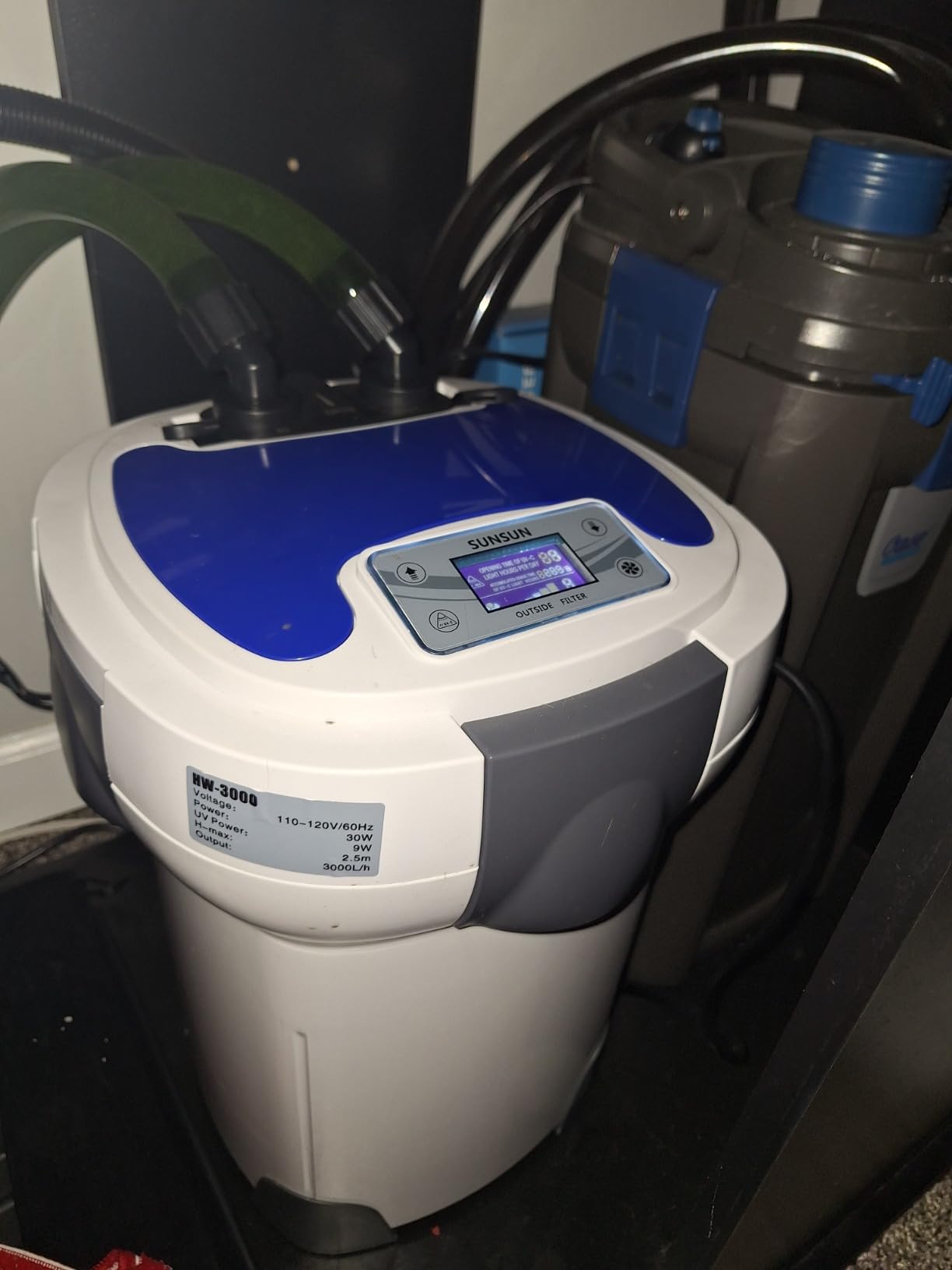
Media capacity is another strength. Multiple sponge grades, pads and heavy bio-media all fit, and the double O-ring connectors are a thoughtful leak-resistance detail for something with this much flow moving through it.
At 4.0 stars across 559 reviews it is the lowest-rated unit here, and the complaints explain why: priming after a clean is genuinely difficult because the wide hoses hold air, the body is 19.49 inches tall which will not fit under many cabinets upright, and settings 4 through 6 are noticeably noisy.
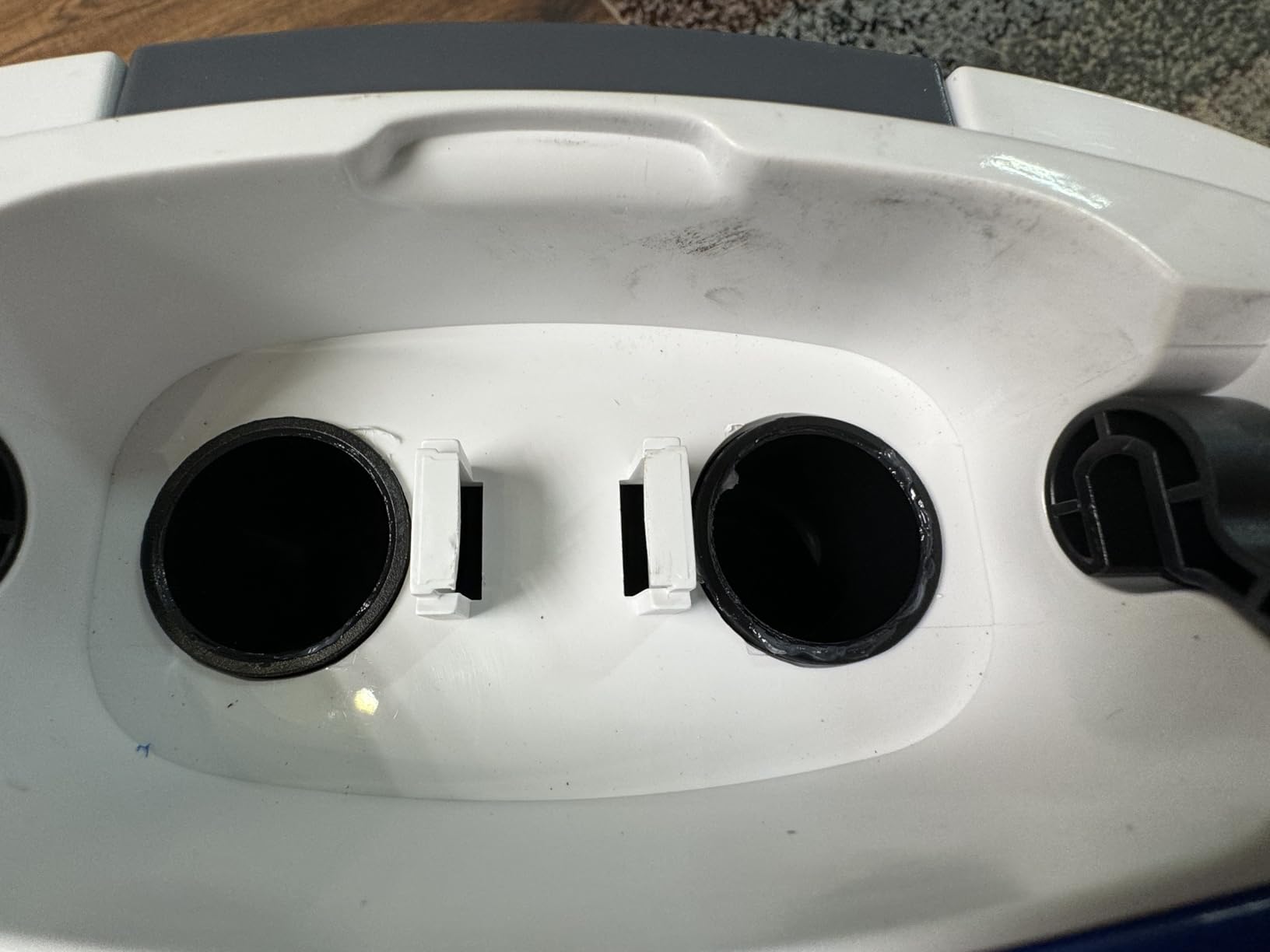
When digital flow control pays off
It pays off in a shrimp or betta scape, in a tank with an exposed sand foreground, and in any CO2-injected setup where you want to tune circulation rather than commit to a fixed output. Nobody else in this roundup gives you a dial.
The UV timer is useful for algae management on a schedule, and the high-flow ceiling makes it a credible stage for a heavily stocked 100 gallon.
Why it lost points in testing
Measure your cabinet before buying. If it will not stand upright, laying it on its side can leak slightly at the main seal, which defeats the point of the O-ring connectors.
Priming is the daily annoyance: wide hoses mean a slow, fussy restart after every service. The bright non-dimming panel is also unpleasant in a dark room, and at 22 pounds with no carrying handle, lifting it out is a two-handed job.
11. Zoo Med Nano 10 — Best Canister for a Nano Planted Tank
- Compact space-saving design suited to nano and small tanks
- Easy to prime
- customize and open for new users
- Spray bar provides strong aeration for the small water volume
- Runs quietly thanks to anti-vibration brushings
- Works in both freshwater and saltwater aquariums
- Flow rate suits only tanks up to 10 gallons
- Replacement media cartridges add ongoing cost
- Anti-vibration brushings can shed debris over time
Most canister roundups ignore nano tanks, and that leaves a real gap. If your planted aquarium is 10 gallons or under, a full-size canister is absurd and a sponge filter leaves you without a directed return. This is the size that actually fits.
At 2.01 pounds and just under twelve inches long, it stores easily and the spray bar gives you an outlet you can aim. Owners praise how easy it is to prime, customize and open, which matters at this scale because you will be adjusting media constantly while plants establish.
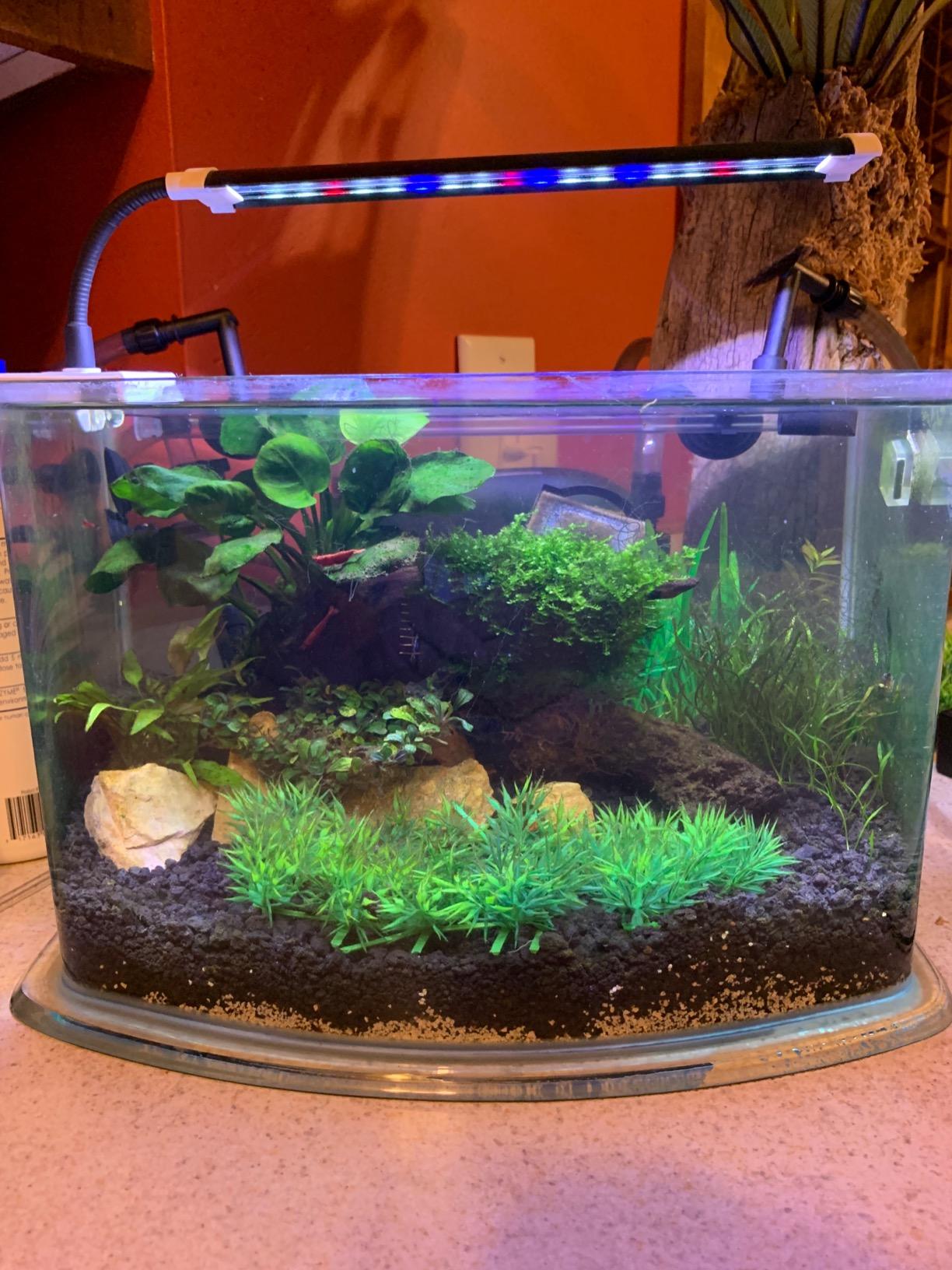
The anti-vibration brushings keep it quiet, which is appreciated when a nano tank often sits on a desk. The kit includes mechanical sponge, bio-ceramic media and carbon, so you have a working three-part stack out of the box.
The limit is simple and honest: this suits tanks up to 10 gallons. Push past that and you are asking a small pump to move a volume of water it was not designed for, and you will fight it with a separate circulation pump.
What makes it right for a nano scape
The spray bar spreads flow across the full width of a small tank, which in a 10 gallon planted layout is how you avoid a dead corner behind a piece of driftwood. In nano tanks the surface area to volume ratio is high, so even gentle surface movement moves a surprising amount of gas exchange.
It runs in both freshwater and saltwater, so it doubles as a reef nano filter if your hobby expands sideways.
When it is too small
Over about 10 gallons you should move up a size. A filtered canister that cannot keep up shows up as green water, slow clearing after a water change, and detritus sitting on the substrate.
Also factor in the recurring cartridge cost and the fact that the anti-vibration brushings can shed debris over time, which adds to what you have to rinse out.
12. Fluval 307 — Best for a 70 Gallon Planted Tank
Fluval 307 Perfomance Canister Filter for Aquariums up to 70 Gallons
- Very quiet operation thanks to the eTEC pump design
- Strong consistent flow suitable for tanks up to 70 gallons
- EZ-Lift media baskets make media changes fast and easy
- Well-regarded build quality for larger setups
- Bulky footprint for the rated tank size
- Higher energy consumption for its flow class
- Replacement media baskets and sponges must be bought separately
The 307 is the right answer for the very common 60 to 70 gallon planted tank, and it carries more reviews than anything else we looked at. At 4.4 stars across 10027 reviews with a strong five-star share, this is the least risky purchase in the roundup.
It runs the same eTEC pump as the 407, so you get the 25 percent quieter operation and the strong, constant pumping power that makes a planted scape feel alive. The EZ-Lift baskets come out with one finger through the center handle, which keeps media service to a few minutes.
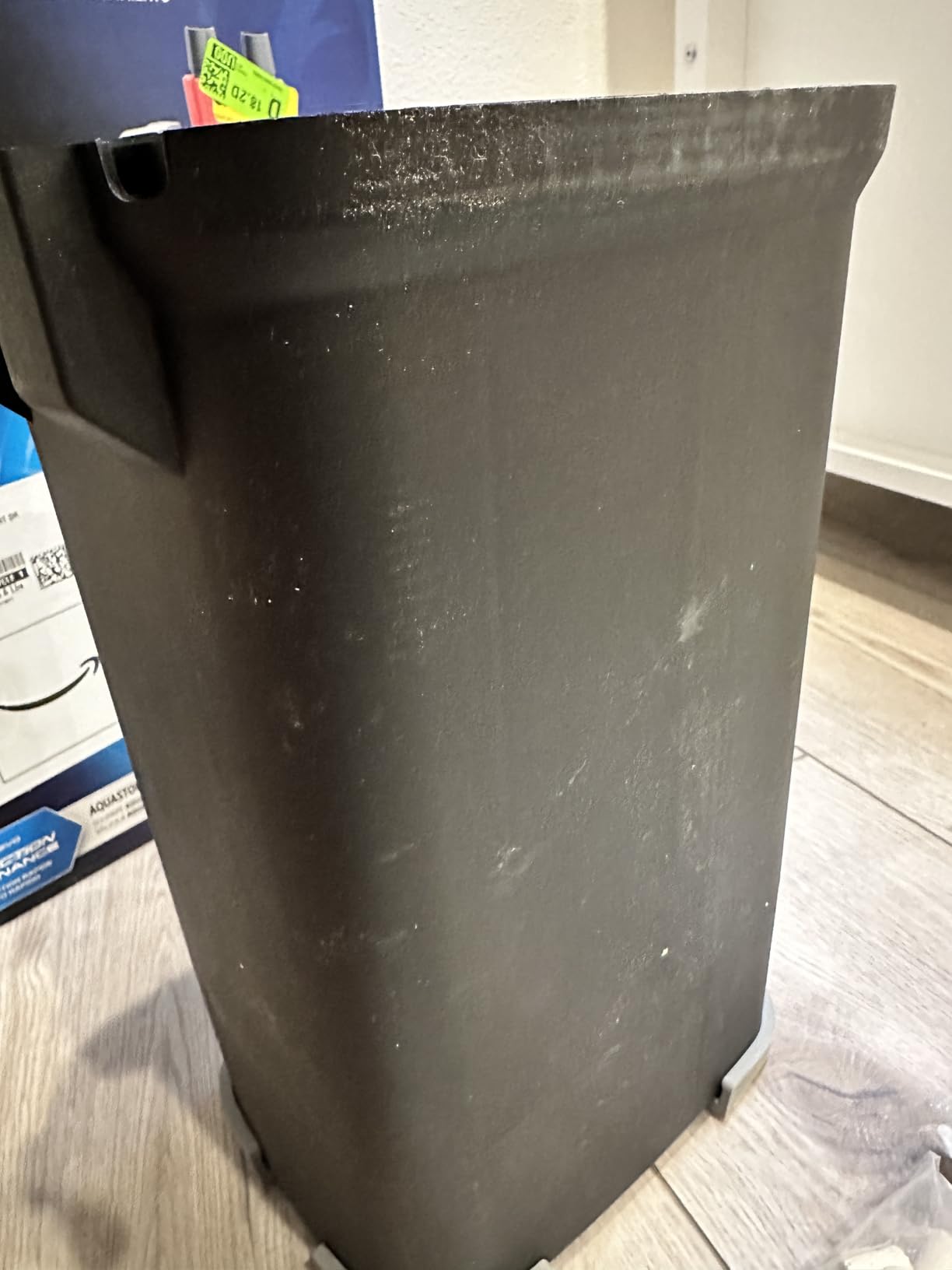
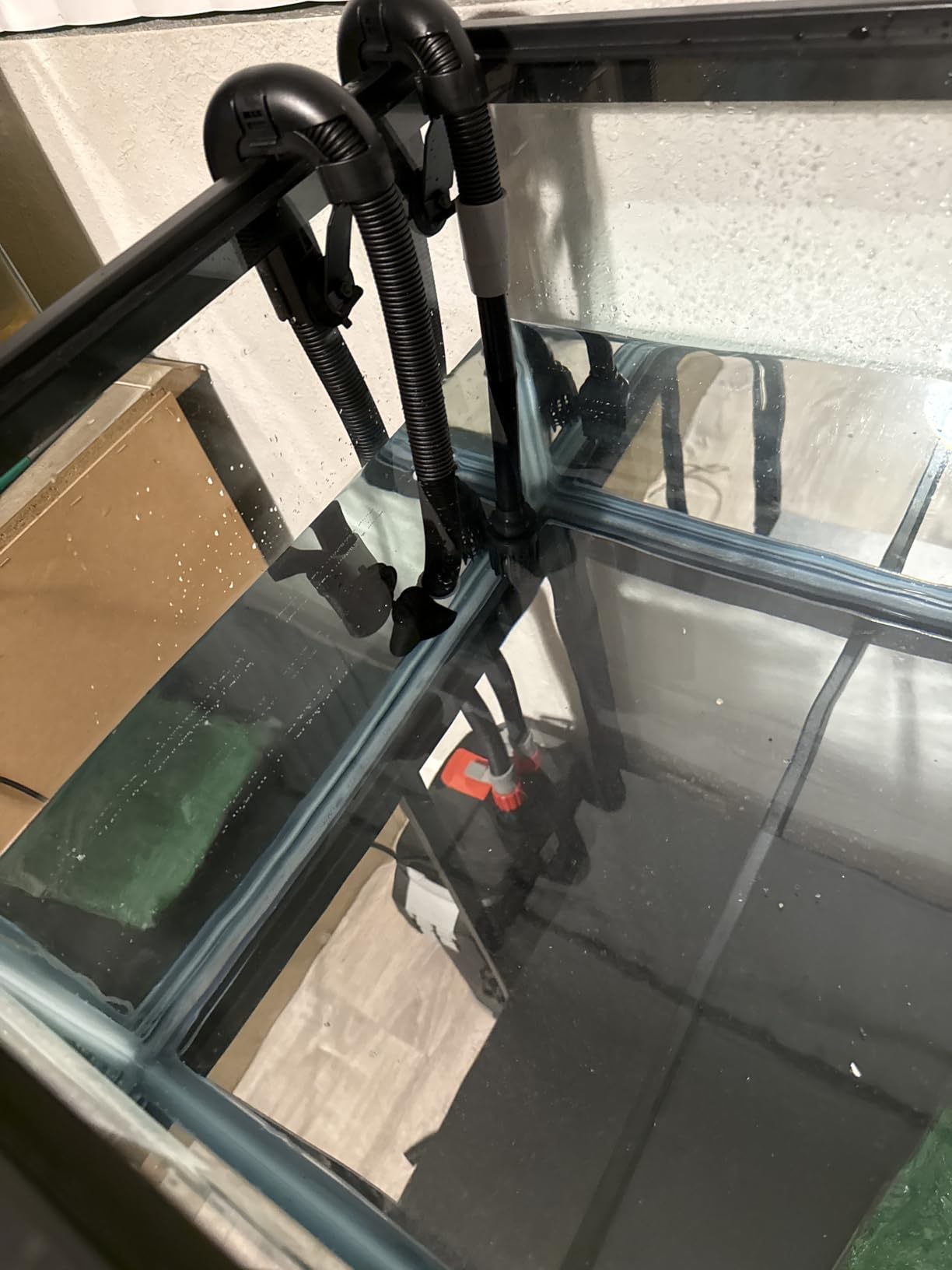
Reviewers highlight quiet running, reliable pumping power and the convenient baskets as the recurring positives. Owners also commonly run it on marine planted aquariums, where the steady flow is useful for keeping SPS and LPS frags clean.
The criticisms are fair but minor. The footprint is bulky for a 70 gallon tank, it uses more energy than its flow class strictly requires, and replacement baskets and sponges are sold separately, so you will need to budget for a media restock within a year.
Why it fits a 70 gallon planted display
A 70 gallon tank is where the eTEC pump’s output and the tank’s demand line up neatly. You have enough flow to move nutrients through dense stems without needing a second circulation pump, and you do not need the cubic feet of media volume a 100 gallon unit would demand.
At six pounds it is also one of the lighter units here, which makes the under-stand pull genuinely manageable during a service.
When to size up instead
If you are planning a heavily carpeted scape with lots of stems, or if your bioload grows over time with more fish, jump to the 407. You will not regret having the headroom.
If your cabinet is shallow, measure the 16.54 inch body height first, since the tall narrow shape is the main constraint here.
Canister vs HOB vs Sponge vs Sump for a Planted Tank
The honest answer is that you do not need a canister just because you grow plants. Plenty of successful planted tanks run on hang-on-back filters and sponge filters, and switching to a canister does not automatically make your plants grow better.
What a canister genuinely gives you is equipment you can hide, a directed outlet, and enough flow to move through a dense scape without a second pump. That matters for aquascape displays where visible equipment ruins the composition, and for larger tanks where a single HOB cannot distribute water around hardscape.
A sponge filter is quieter still and is the standard choice in breeding setups and shrimp tanks, but it produces a gentle, low-volume circulation that will not push nutrients through a heavy stem planting on its own. A sump is the answer when you already want in-tank equipment hidden and you have the space to build one, and it costs more and takes more effort than a canister.
A hang-on-back wins on price and simplicity. It loses on noise, on how much hard plumbing it needs in a densely planted tank, and on media capacity once you start running real bio-media volumes.
How to Size a Canister Filter for a Planted Tank
Start with turnover rate, which is simply how many times the filter pushes your tank volume through in an hour. For planted freshwater aquariums, somewhere around three to five times per hour is the working range, which is lower than the generic four to six times rule you will see for fish-only tanks.
That lower figure is not a compromise; it is what protects your CO2. More flow than your scape needs means more surface agitation than you need, and surface agitation is where you lose dissolved carbon dioxide. Work out your tank volume in gallons, multiply by three, and treat that as the real target rather than the box rating.
Now adjust for head height, which nobody prints on the box. A canister sitting on the floor of a stand at the bottom of a 36 inch tank pushes water up that far against gravity, and the figure on the label assumes zero head. Expect to lose a meaningful slice of rated flow to that climb, which is why experienced planted tank keepers deliberately oversize by one model.
Add bioload. Fish waste and uneaten food add solid load that no volume calculation predicts, so a tank with messy feeders or a group of large fish deserves the same size plus one step up.
Then check the four specs that actually matter. Media capacity in liters decides how long you can go between services. Whether the output can be reduced matters enormously if you plan to inject CO2. Outlet choice, spray bar or lily pipe, decides how well flow reaches behind hardscape. And hose material decides whether you can ever add an inline heater.
On that last point, be careful with corrugated or flexible tubing. It is a common inclusion on several models here and it is rigid enough to make fitting an inline heater or a CO2 reactor a genuine plumbing project. If you know you will run CO2 through the return, buy smooth rigid tubing and a proper union set.
Canister Filter Media Order for Planted Tanks
Media order is not fussy housekeeping; it decides whether your biological colony survives. The rule is simple and it is the one rule: water enters at the top and passes downward, so coarse material goes on top, and bio-media sits at the bottom where the water is cleanest.
Stage one, closest to the intake, is coarse mechanical media. Floss, a coarse sponge pad, or the pad your filter shipped with. This catches detritus, trimmed stem leaves and substrate debris before it travels further.
Stage two is finer mechanical media. A sponge with smaller pores polishes the water that already passed the coarse stage and protects everything below it from the fine particles that would clog bio-media pores.
Stage three, at the bottom and nearest the pump, is biological media. Ceramic rings, sintered glass, or bio-balls in a mesh bag. Nitrifying bacteria colonise the protected surface here and turn ammonia into nitrate, so this is the layer you rinse most gently and least often.
Chemical media, mainly activated carbon, goes between mechanical and biological or on its own if you prefer. Skip carbon entirely during normal growth phases in a planted tank, because it strips the trace nutrients your stems are feeding on, and add it back when you are clearing algae or medication residue.
Keep the stages physically separated. If fine floss sits directly against ceramic rings, detritus settles into the rings and the colony loses surface area. The Stack N Flo trays on the Marineland Magniflow and the divided baskets on the Cascade 1000 both exist to enforce that separation.
How to Cut Surface Turbulence and Stop CO2 Off-Gassing
Surface turbulence is where your CO2 escapes. Every ripple you create at the water line lets dissolved carbon dioxide pass into the air, and if your outflow rate exceeds what your plants can replace, growth stalls even though everything else looks correct.
First, aim the return downward and slightly at the back glass rather than across the surface. A lily pipe pointed into the tank wall gives you circulation with very little surface disturbance, which is why they are the default choice on CO2-injected scapes.
Second, lower the outlet. A spray bar sitting above the water line makes noise and churns the surface. Position it just at or below the surface, and if your model has a foam or pipe mod, use it to spread the flow rather than concentrate it.
Third, put the intake in the right place. Seating the intake behind the hardscape or in a corner pulls water through the plant mass instead of short-circuiting straight from the outflow back to the inlet, which means more of the tank actually gets circulation.
Fourth, if you need more circulation without more off-gassing, add a second small pump rather than turning up the canister. A dedicated circulation pump positioned along the front or back glass moves water where you want it while the canister handles the biological load at a gentler rate.
Canister Filter Maintenance and Safe Bio-Media Cleaning
Clean in old tank water, never tap water. This is the single most common mistake in the hobby and it kills bacterial colonies. Chlorine and chloramine in tap water strip the nitrifying bacteria off your ceramic media, and many people only discover it after a tank crash.
For a normal service, fill a bucket with water from the tank itself, then use that to rinse everything. Keep the biological media submerged in that bucket the whole time, because letting it dry out is nearly as damaging as chlorinated water.
Avoid squeezing or wringing bio-media. You are trying to preserve the biofilm, which is the living layer on the media surface, and squeezing it off removes the colony you spent weeks building. Swish gently in the bucket and let the water move through it.
On frequency, a light rinse of the mechanical stages every two to four weeks suits most planted tanks, with a full service every two to three months. Heavier plant beds, larger bioloads and more frequent water changes all shorten the interval.
We service ours in the kitchen sink with a bucket and a soft brush, and our picks for the best canister vacuums handle the substrate work between full services. Neither step is fast on a large unit, so if a ten-minute clean is the difference between you maintaining the filter or avoiding it, factor that into your purchase.
Frequently Asked Questions
What is the best canister filter for a planted tank?
The Penn-Plax Cascade 1000 is our top pick overall for planted tanks because its three handled media baskets let you carry a real bio-media load and rebuild the stack fast, while the rotating valve taps and included spray bar make cabinet routing and aimed return simple. The Fluval 407 is the better value buy for most people, and the Fluval FX4 wins on large aquascapes.
Which is better, Eheim or Fluval?
Fluval is better if you want quieter operation and faster media access, since the eTEC pump runs up to 25 percent quieter and the EZ-Lift baskets come out with one finger. Eheim is better if you want a filter you can keep for a decade, because the Classic design has changed very little and its parts stay available. Fluval carries more media volume; Eheim has less and is reported as slightly louder.
How many GPH should my planted aquarium filter be?
For planted freshwater aquariums, aim for a turnover rate of roughly three to five times per hour, which is lower than the fish-only rule of thumb. Multiply your tank volume in gallons by three to get a realistic target, then add on a model for head height and bioload, since a canister at the bottom of a tall stand loses flow climbing to the surface.
Can a canister filter strip CO2 from a planted tank?
Yes, and it is the most common planted-tank mistake. CO2 escapes across the water surface, so heavy surface turbulence from a strong outflow drives it off faster than your plants can replace it. Aim the return downward at the back glass, sit a spray bar at or below the water line, keep the intake behind the hardscape, and add a small circulation pump instead of turning the canister up.
What is the best filter for a 20-gallon planted tank?
A 20 gallon planted tank needs far less than most people buy, and the Zoo Med Nano 10 is sized for tanks up to 10 gallons, so it works with headroom for a 20 gallon. For this size, look for adjustable flow if you keep shrimp or bettas, and skip a canister entirely if a sponge filter will do, since a small tank gains nothing from extra plumbing.
Our Final Pick for Planted Tanks in 2026
After working through all twelve, the best canister filter for planted tanks depends on tank size and how much noise you can live with. Under 20 gallons, buy something small and simple or stay with a sponge filter. Between 20 and 40 gallons, the Penn-Plax Cascade 1000 handles the job with media capacity most competitors at that size cannot match.
For 40 to 100 gallons, the Fluval 407 is the choice we recommend to almost everyone, because the eTEC pump is quiet enough for a living room and the quick-disconnect servicing makes the monthly clean painless. The Fluval 307 covers the 60 to 70 gallon range with the same pump at a smaller footprint.
Above 100 gallons, step up to the Fluval FX4 for a gallon of media capacity and adjustable flow, or the Aqueon QuietFlow if your scape needs aimed return options more than raw turnover. On a budget, the SunSun Hw302 gives you a working three-stage setup, and the Hw303B UV adds algae control if you are fighting green water.
Whichever you choose, the part that decides whether your plants thrive is not the model name. It is where you put the intake, where you aim the return, and whether you keep the media wet in tank water. Get those three right and any of these filters will do its job.