
When you invest thousands in a boat, the trailer carrying it down the highway deserves just as much thought as the vessel sitting on top. I have spent months digging into the best boat trailers and the components that keep every trip to the ramp safe, legal, and stress-free.
A quality boat trailer setup is about far more than a steel frame rolling on two tires. It includes the tie-down straps that hold your hull steady at 65 mph, the LED lights that keep you street-legal after dark, the tires rated for the load, the jack that lets you hitch up solo, the guide-ons that make loading effortless, and the winch that pulls your boat snug. Skip any one of these, and you are gambling with an expensive investment.
Our team combed through boating forums like r/boating, r/boats, and r/Pontoons to learn what real owners love and loathe about their trailers. We compared specifications across dozens of products and weighed feedback from hundreds of boaters who have logged thousands of towing miles. The four factors we kept coming back to were corrosion resistance, weight capacity, installation simplicity, and long-term durability.
Those are the exact qualities that separate a trailer you will replace in three seasons from one that lasts twenty years. Boaters on forums consistently report that galvanized steel frames, stainless steel hardware, and submersible lighting are the features that make the difference. We kept that front and center while selecting every product in this guide.
Whether you need a complete kayak trailer for weekend adventures, a jet ski trailer for the lake house, or the tie-down straps and LED light kit that make your existing trailer road-ready, we have ranked the top options for 2026. Every product here earned its spot through real-world performance, not marketing claims.
Saltwater boaters face a particularly harsh challenge. Corrosion eats cheap trailers alive, which is why we paid special attention to galvanized construction, stainless hardware, and submersible designs throughout this guide. Let us walk through our top picks and find the right match for your boat and your budget.
Top 3 Picks for Boat Trailers in 2026
After testing and comparing every product in this guide, three stood out above the rest. The Rhino USA tie-down straps earned our Editor’s Choice for their universal fitment and lifetime warranty. The MAXXHAUL LED light kit took Best Value with over 18,000 reviews backing its submersible design. And the Malone EcoLight kayak trailer claimed Premium Pick status as a complete, ready-to-tow galvanized trailer built in the USA.
Here is how these three compare side by side.

Rhino USA Boat Trailer Straps
- 1200 lb tensile strength
- Adjustable to 48 inches
- Stainless steel hooks


Best Boat Trailers and Accessories in 2026
The table below gives you a quick side-by-side look at all eight products we cover in this guide. Use it to compare features at a glance, then scroll down for the full review of any product that catches your eye.
| Product | Specifications | Action |
|---|---|---|
| Malone EcoLight Kayak Trailer |
|
Check Latest Price |
 Ultra-Tow Jet Ski Trailer Kit Ultra-Tow Jet Ski Trailer Kit |
|
Check Latest Price |
| Rhino USA Boat Trailer Straps |
|
Check Latest Price |
| MAXXHAUL LED Trailer Light Kit |
|
Check Latest Price |
 eCustomrim 13 Inch Trailer Tires eCustomrim 13 Inch Trailer Tires |
|
Check Latest Price |
 VEVOR Swivel Trailer Jack VEVOR Swivel Trailer Jack |
|
Check Latest Price |
 JY Performance Trailer Guide-ons JY Performance Trailer Guide-ons |
|
Check Latest Price |
 AC-DK Heavy Duty Boat Winch AC-DK Heavy Duty Boat Winch |
|
Check Latest Price |
1. Malone MPG586XB EcoLight 1 Kayak Trailer – Galvanized Steel Frame Built in the USA
- Marine grade galvanized steel construction
- Supports up to 14 ft kayaks or canoes
- Fully submersible launch design
- Made in the USA
- 5-year limited warranty
- Assembly takes 3 to 4 hours
- Single kayak carrier only
I will start with the only complete, ready-to-tow trailer in this guide that is purpose-built for paddlers. The Malone EcoLight came highly recommended across kayak fishing forums, and after looking at the construction details, I understand why. Malone built this frame from 11-gauge pre-galvanized steel, which is the same heavy-duty approach that forum boaters say helps trailers survive two decades of ramp use.
The EcoLight supports a single kayak or canoe up to 14 feet long with a 400-pound load capacity. That is more than enough for a fishing kayak loaded with gear, a cooler, and electronics. Malone includes one bunk kayak carrier that cradles the hull securely during transport.
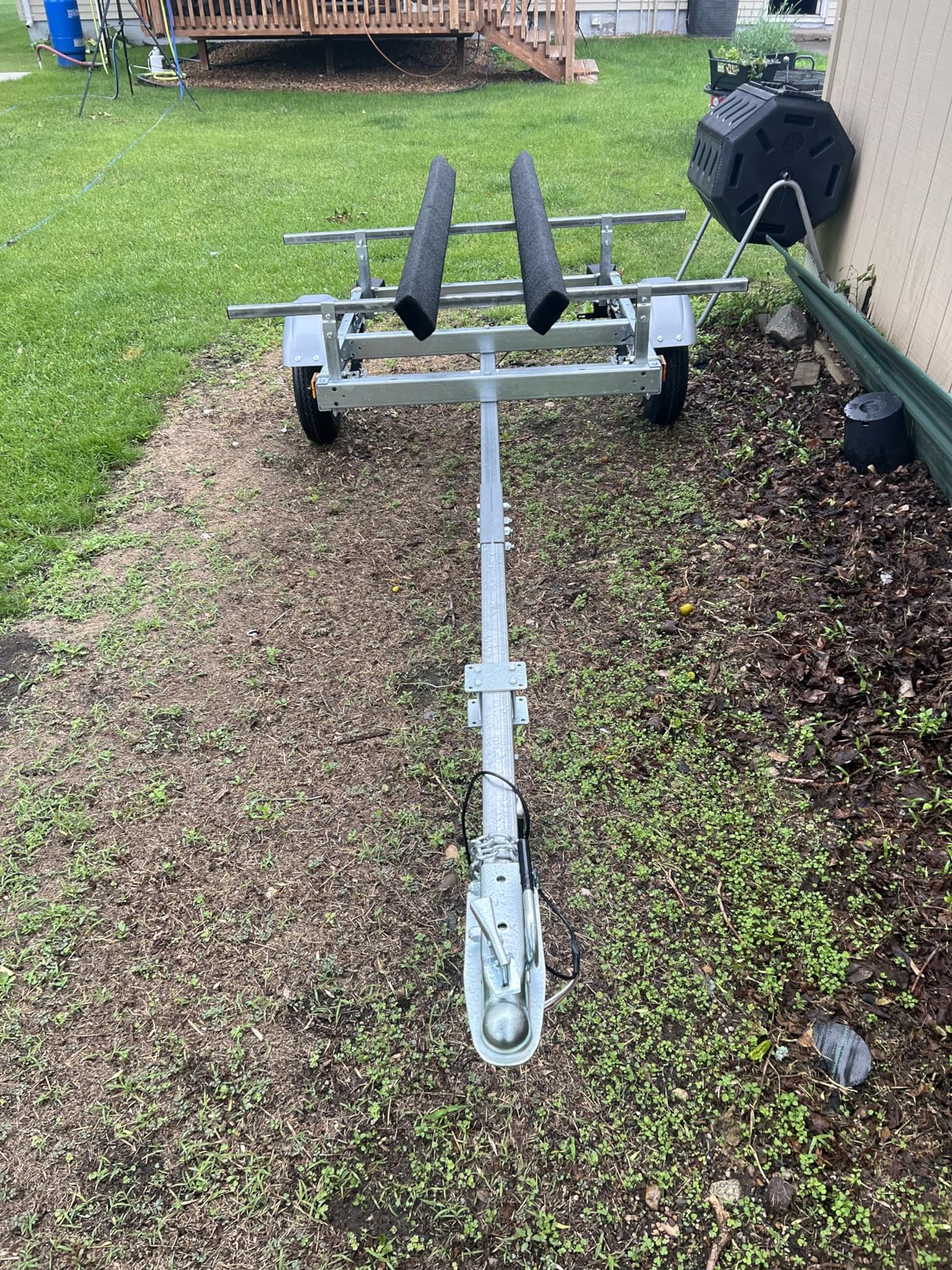
What impressed me most is the fully submersible design. Unlike painted steel trailers that rust after a few dunkings, the galvanized frame is built to go into the water repeatedly without corroding. The pre-assembled hubs mean you are not starting from scratch on the axle either.
The trade-off is assembly time. Malone estimates 3 to 4 hours with common hand tools, and several owners confirmed that estimate is accurate. This is not a bolt-and-go product. But once it is together, the 5-year limited warranty and USA-based customer service give real peace of mind.
Assembly Time and Tools Required
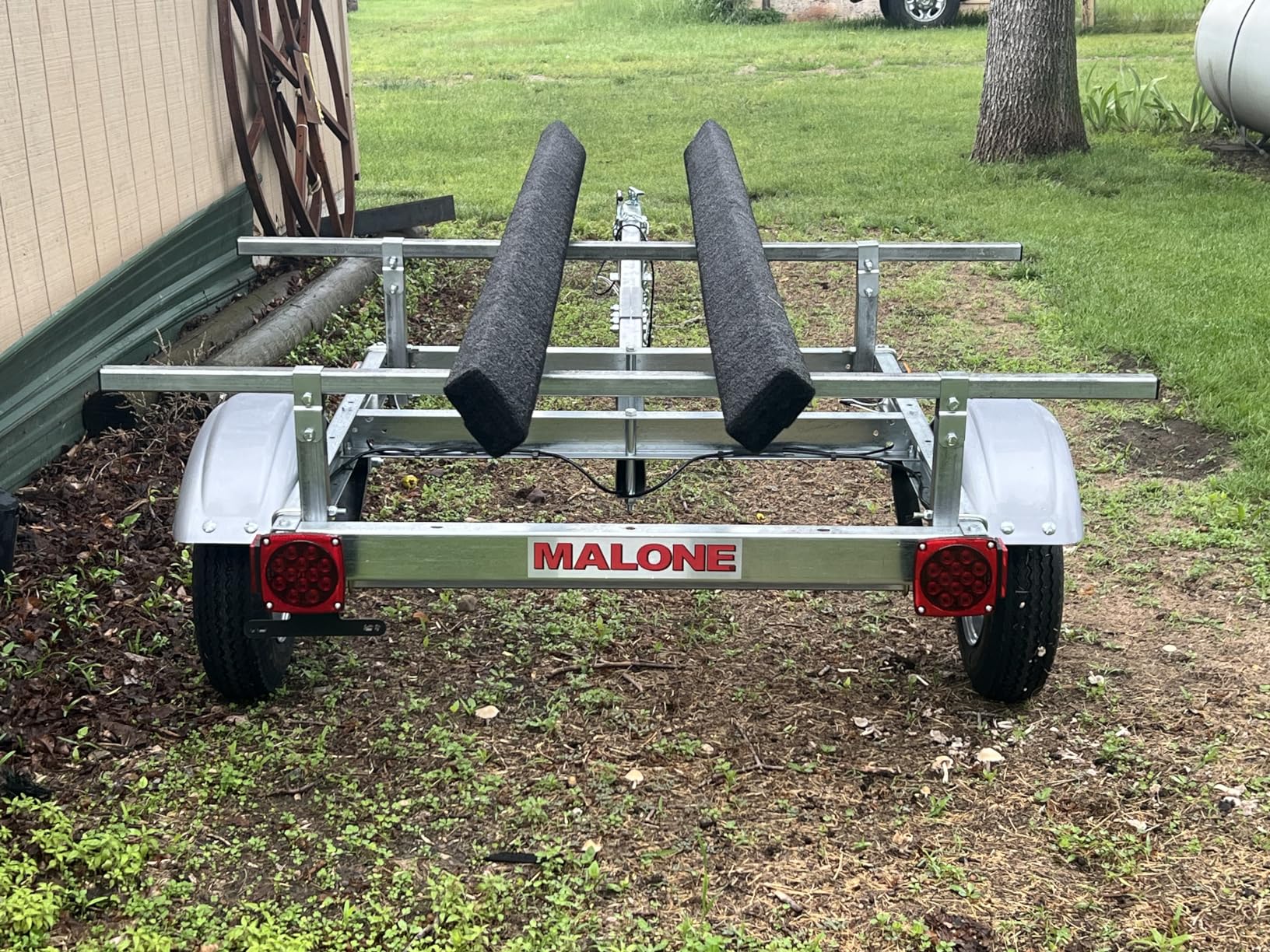
Plan for a full afternoon in your garage or driveway. Malone ships the EcoLight with pre-assembled hubs, which saves significant time, but you still need to attach the frame crossmembers, install the bunk carrier, mount the wheels, and wire the lights. Standard hand tools including wrenches, a socket set, and a screwdriver will get you through.
One tip from experienced assemblers: have a second person help hold the frame sections while you bolt them together. The galvanized steel is heavy, and aligning bolt holes solo is frustrating. The included instructions are clear, but a helper cuts your build time nearly in half.
Hitch Compatibility and Tow Vehicle Requirements
The EcoLight uses a standard hitch mount, so it works with virtually any car or truck that has a receiver hitch. Because the trailer weighs relatively little and carries a 400-pound maximum load, even smaller SUVs and crossovers can tow it without issue.
Check your vehicle’s towing capacity before hitting the road. Even though the combined weight is modest, you still need a properly rated ball and hitch receiver. Malone designed this as a universal fit, so you should not need any adapters.
2. Ultra-Tow Jet Ski Trailer Kit – Complete PWC Trailer with Adjustable Bunks
- Complete trailer kit with all hardware
- 610 lb capacity for most PWCs
- Adjustable bunk supports
- DOT-approved pre-wired LED lights
- Spacious steel deck
- Lower customer rating at 3.7 stars
- Limited review count
- Assembly required with many components
For personal watercraft owners who need a complete trailer without spending premium money, the Ultra-Tow Jet Ski Trailer Kit is worth a close look. This is a full trailer frame kit that arrives with everything you need to transport a jet ski or small PWC, including the frame, tires, fenders, coupler, hub, safety chain, and light set.
The steel deck measures 6.4 feet by 3.3 feet, which accommodates most standard jet skis and personal watercraft. With a 610-pound load capacity and an 800-pound gross vehicle weight rating, it handles the majority of PWCs on the market today.
I appreciate that the adjustable bunks let you customize the support to match your specific watercraft hull shape. That adjustability matters because improper bunk fit is one of the top causes of gelcoat damage that forum boaters complain about. The DOT-approved LED lights come pre-wired, saving you from splicing and soldering at the ramp.
The main concern is the 3.7-star average rating from just 12 reviews. That is a small sample, and some of the complaints center around assembly complexity rather than structural failures. With 225 pounds of steel frame to put together, patience is required. But for the price of a complete, street-legal PWC trailer, the value proposition is strong if you are willing to invest the build time.
Registration and Title Requirements
Like any road-going trailer, this one needs to be registered in most states before you tow it legally. The kit includes the necessary components to pass a basic safety inspection, but you should check your local DMV requirements for title and registration paperwork.
Some states require a VIN inspection for newly assembled trailers. The manufacturer can typically provide a certificate of origin that simplifies this process. Budget time for a DMV visit before your first trip to the lake.
Deck Size and Watercraft Fit
The 6.4-by-3.3-foot deck fits most stand-up and sit-down personal watercraft. Measure your PWC’s footprint before ordering to confirm the bunks can be positioned correctly under the hull. Adjustable bunks give you several inches of fore-aft and side-to-side movement.
If you own a larger three-person PWC, double-check the overall length against the deck. Some owners report needing to extend the bunk supports slightly for longer watercraft. The included hardware covers standard configurations, but custom setups may require additional brackets.
3. Rhino USA Boat Trailer Straps – Heavy Duty Transom Tie-Downs with Lifetime Warranty
- Unlimited lifetime replacement warranty
- Adjustable from 13.5 to 48 inches
- Corrosion-resistant stainless steel hooks
- Universal fitment for all marine trailers
- American owned family business
- Only 2 straps per pack
- Buckle fastener requires periodic checking
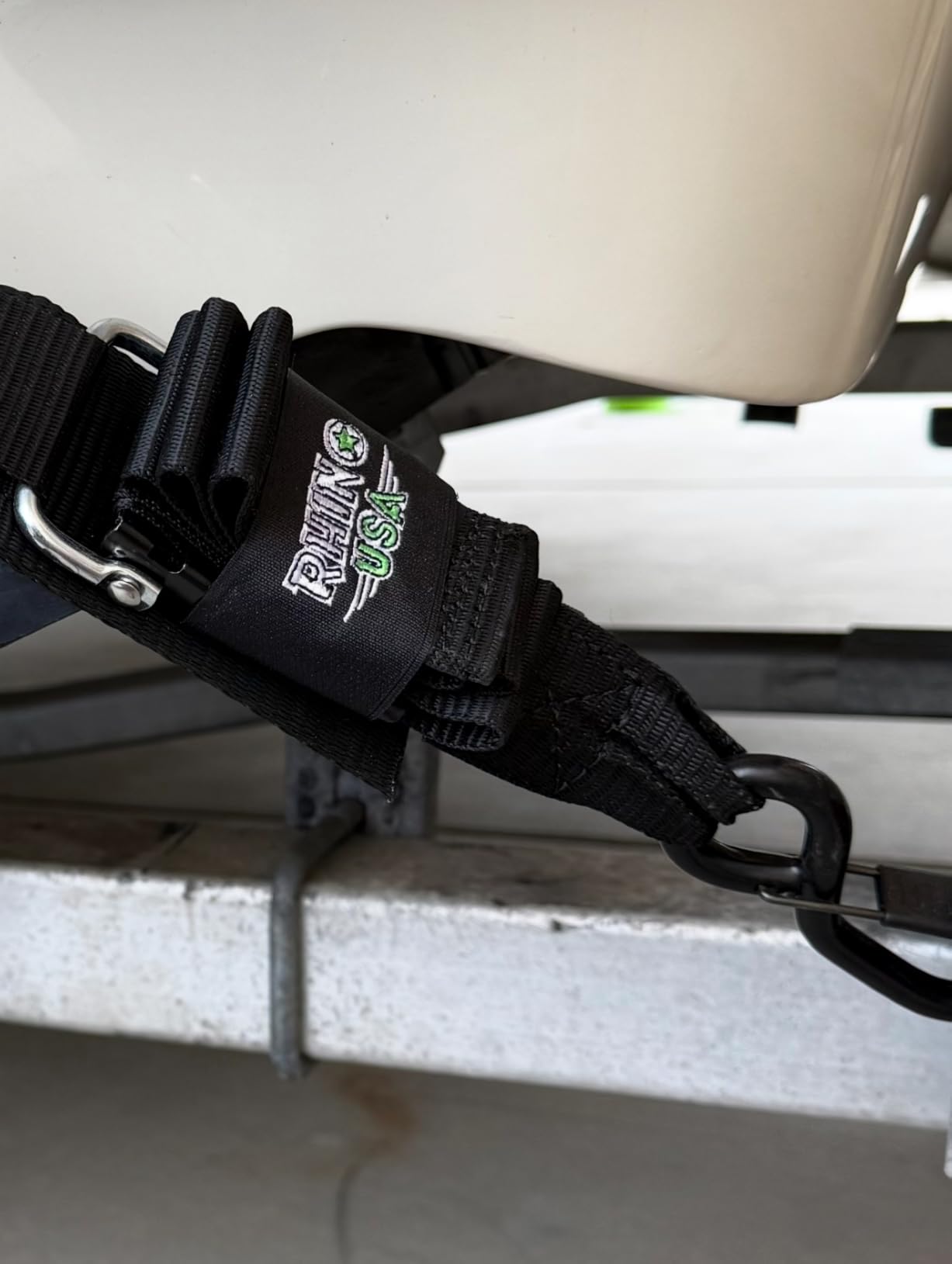
Every boat trailer needs transom tie-down straps, and the Rhino USA two-pack is the pair I would bolt onto my own rig. These straps earned the highest rating in this guide at 4.7 stars across more than 3,200 reviews, and the reasons become obvious as soon as you handle them.
The straps are constructed from heavy-duty polyester webbing that is 2 inches wide and adjustable from 13.5 inches all the way out to 48 inches. That range covers everything from a compact personal watercraft to a full-size pontoon boat. The full-bend S-hooks are stainless steel, which is exactly what you want for saltwater environments where cheap plated hooks rust solid in a single season.
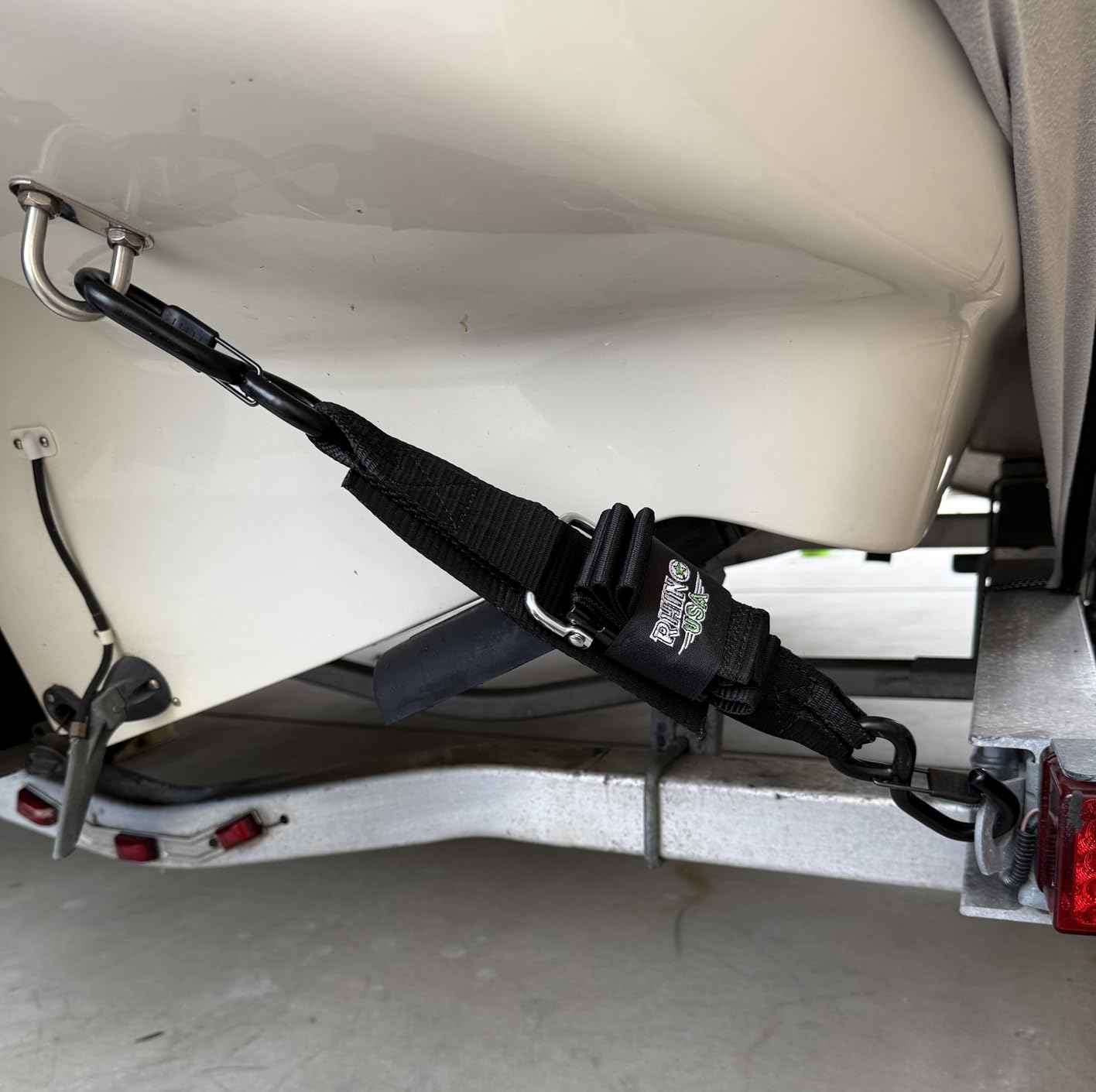
With a 1,200-pound tensile strength and a 400-pound working load per strap, these are built for real highway speeds, not just gentle around-town trips. Rhino USA rates them for securing boats, jet skis, and personal watercraft, and the universal fitment means they work with any trailer that has tie-down points.
The standout feature is the unlimited lifetime replacement warranty. If a strap frays, a buckle fails, or a hook corrodes, Rhino USA replaces it. That kind of guarantee is rare in the marine accessory world, and it is one reason these straps come up again and again in forum recommendations from boaters who have used them for years.
Adjustable Length Range Explained
The 13.5-to-48-inch range is wider than most competing straps offer. At the short end, 13.5 inches works for securing a jet ski or small PWC transom close to the trailer frame. Extended to 48 inches, the same strap reaches across a wide-beam fishing boat or pontoon.
This adjustability means one set of straps can move between different boats and trailers. If you upgrade your vessel next season, you will not need to buy new tie-downs. The buckle mechanism holds firmly once set, though you should always double-check tension after the first few miles of driving.
Hook Style and Anchor Point Compatibility
The full-bend S-hooks fit standard trailer eye-bolts, D-rings, and transom eyes. The full-bend design means the hook wraps completely around the anchor point, reducing the chance of it slipping off during a hard stop or rough road.
One thing to verify is that your trailer has compatible anchor points. Most factory and aftermarket trailers do, but if you are building a custom setup, make sure your tie-down points have enough clearance for the hook to seat fully. The stainless steel construction resists saltwater corrosion far better than zinc-plated alternatives.
4. MAXXHAUL 70205 Trailer Light Kit – Submersible LED Lighting for Every Ramp
- Over 18
- 000 customer reviews
- Submersible waterproof LED design
- 22 ft color-coded wiring harness
- DOT FMVSS 108 compliant
- UV-coated wiring for durability
- 90 day manufacturer warranty
- Plastic lens material
With more than 18,000 reviews, the MAXXHAUL 70205 is the most proven product in this entire guide. This LED trailer light kit solves one of the most common headaches in boating: lights that fail after repeated submersion at the launch ramp. The submersible design means you can back down the ramp without worrying about short circuits.
The kit is impressively complete. You get two 12V LED stop, tail, and turn signal lights, two amber clearance lights, a license plate bracket, and a 22-foot split Y-style wiring harness. Everything is color-coded, which takes the guesswork out of connecting the correct wires to your tow vehicle.
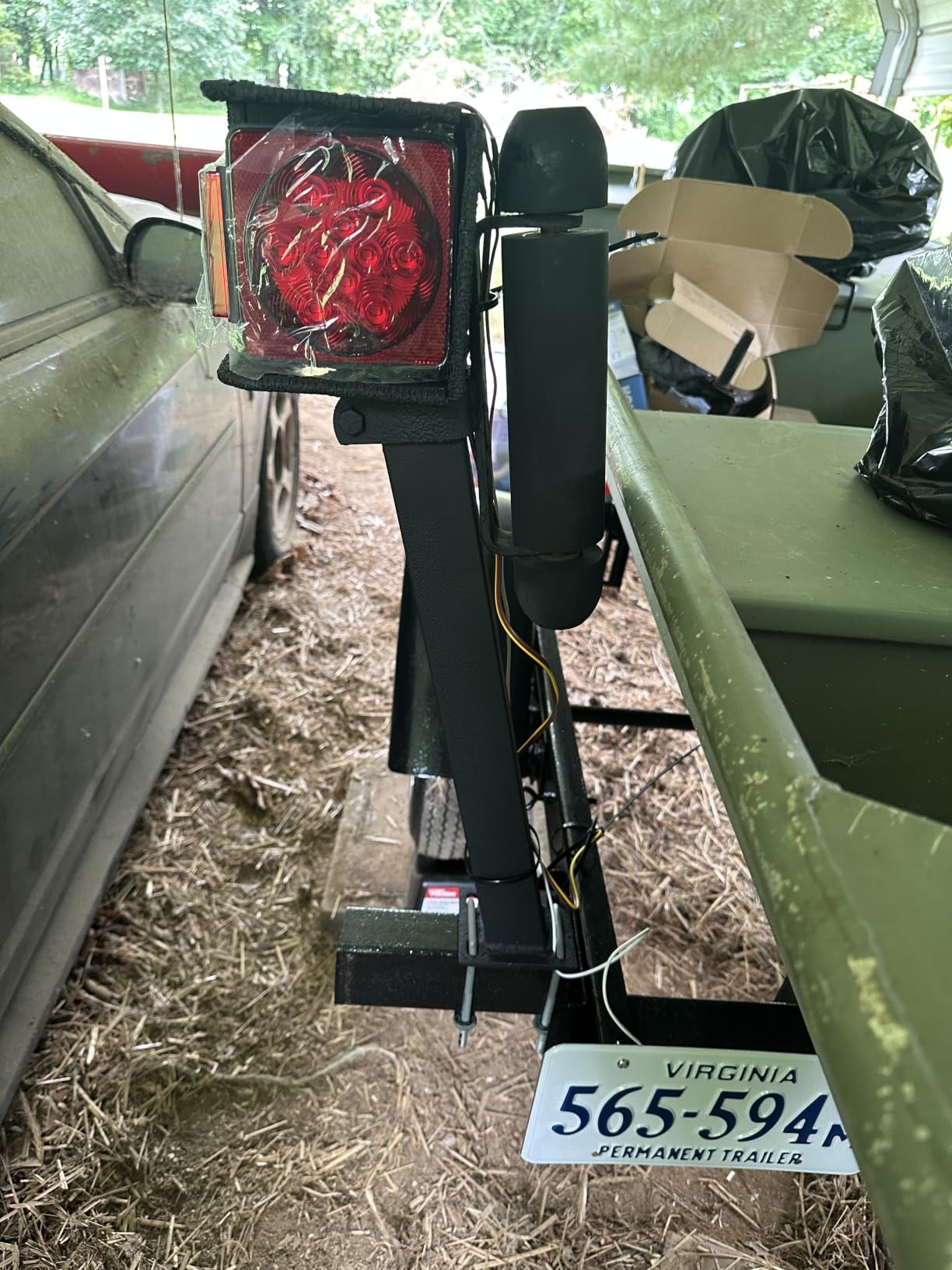
LED lights offer two major advantages over the old incandescent bulbs that came on factory trailers. First, they last dramatically longer, with no filaments to burn out or shake apart on rough roads. Second, they draw less current, which reduces the load on your vehicle’s wiring and helps prevent blown fuses.
The DOT FMVSS 108 compliance means this kit meets federal standards for trailer lighting. The UV-coated wiring harness adds a layer of protection against sun damage, which matters if your trailer sits outdoors between trips. My only gripe is the 90-day warranty, which feels short for a product designed for wet environments. The overwhelming review volume suggests most units perform well beyond that window.
Wiring Harness Length and Coverage
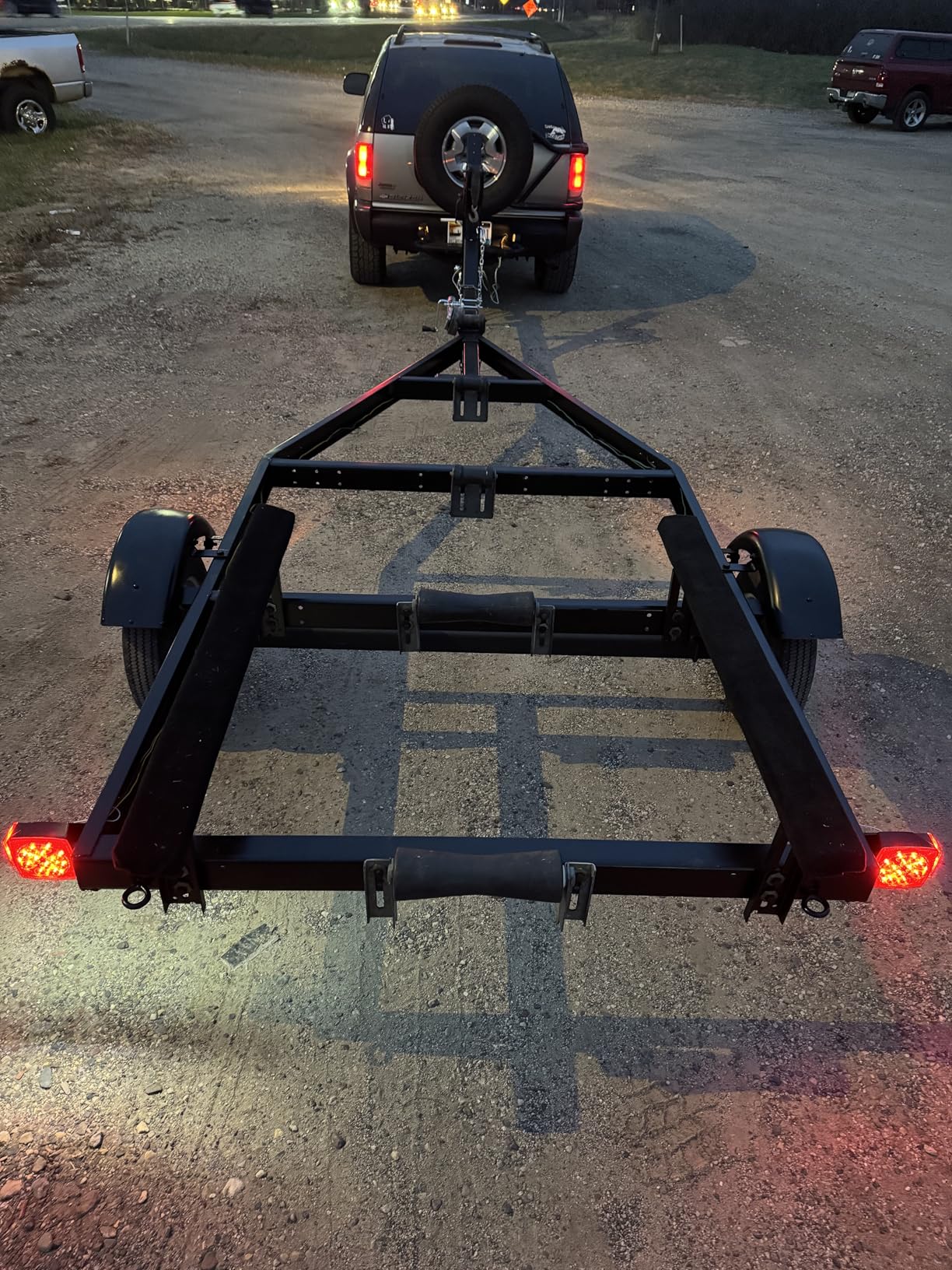
The 22-foot split Y-style harness reaches from your tow vehicle’s connector all the way to the back of most boat trailers. The Y-split design means one wire runs to the left light assembly and another to the right, which keeps the wiring neat and avoids the tangle of individual leads.
Color-coded wires match standard automotive conventions, so connecting brake, tail, turn, and ground circuits is straightforward even if you have never wired a trailer before. If your trailer is longer than 22 feet, you may need an extension or a slightly different routing path to reach the rear lights.
Submersion Performance at the Ramp
The submersible design is what sets this kit apart from generic trailer lights. The housings are sealed to prevent water intrusion when you back the trailer into the lake or river. This is critical for boat trailers, where the rear lights go underwater every single time you launch or retrieve.
Even with sealed housings, rinse the lights with fresh water after saltwater use. Salt residue can build up on lenses and reduce visibility over time. The LED elements themselves are solid-state with no fragile filaments, so vibration from highway driving will not cause premature failure.
5. eCustomrim 2-Pack Trailer Tire and Rim Assembly – DOT-Approved Bias Ply for Heavy Loads
- DOT-approved complete tire wheel and valve assembly
- 1360 lb max load per tire with Load Range C
- Reinforced square shoulder tread for traction
- Quiet stable ride with variable tread pitch
- 2 year warranty with roadside assistance
- Sold as 2-pack only
- Bias ply construction rather than radial
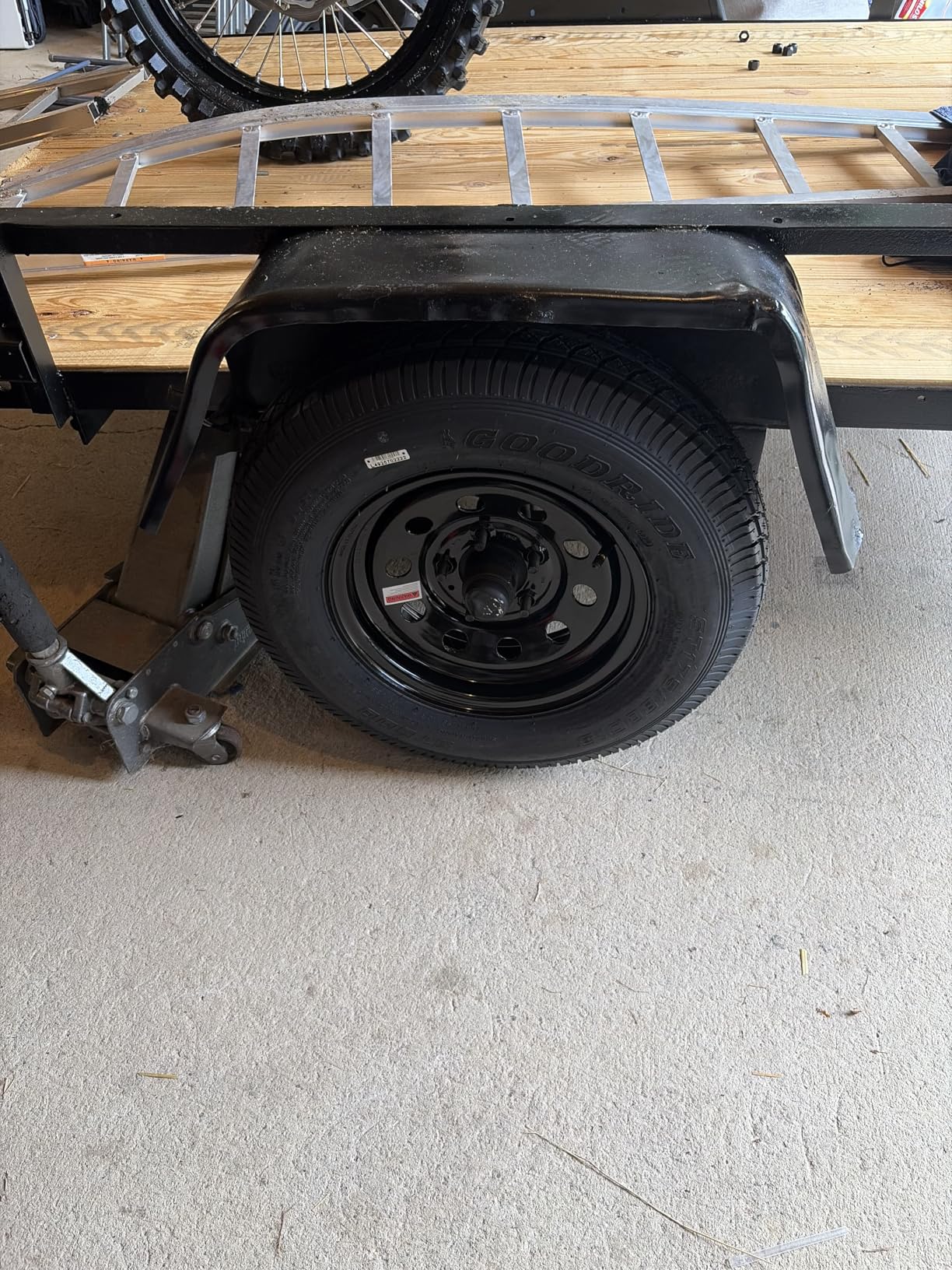
Tires are the single most overlooked safety component on any boat trailer. The eCustomrim ST175/80D13 assemblies arrive as complete, ready-to-mount units with the tire, wheel, and valve stem pre-assembled and DOT-approved. You bolt them on, air them up to 50 PSI, and go.
Each tire carries a Load Range C rating with 6-ply construction, supporting up to 1,360 pounds per tire. On a single-axle trailer, that gives you a combined capacity of 2,720 pounds before you even factor in tandem setups. The 13-inch rim uses a 5-lug on 4.5-inch bolt pattern, which is one of the most common patterns on small to mid-size boat trailers.
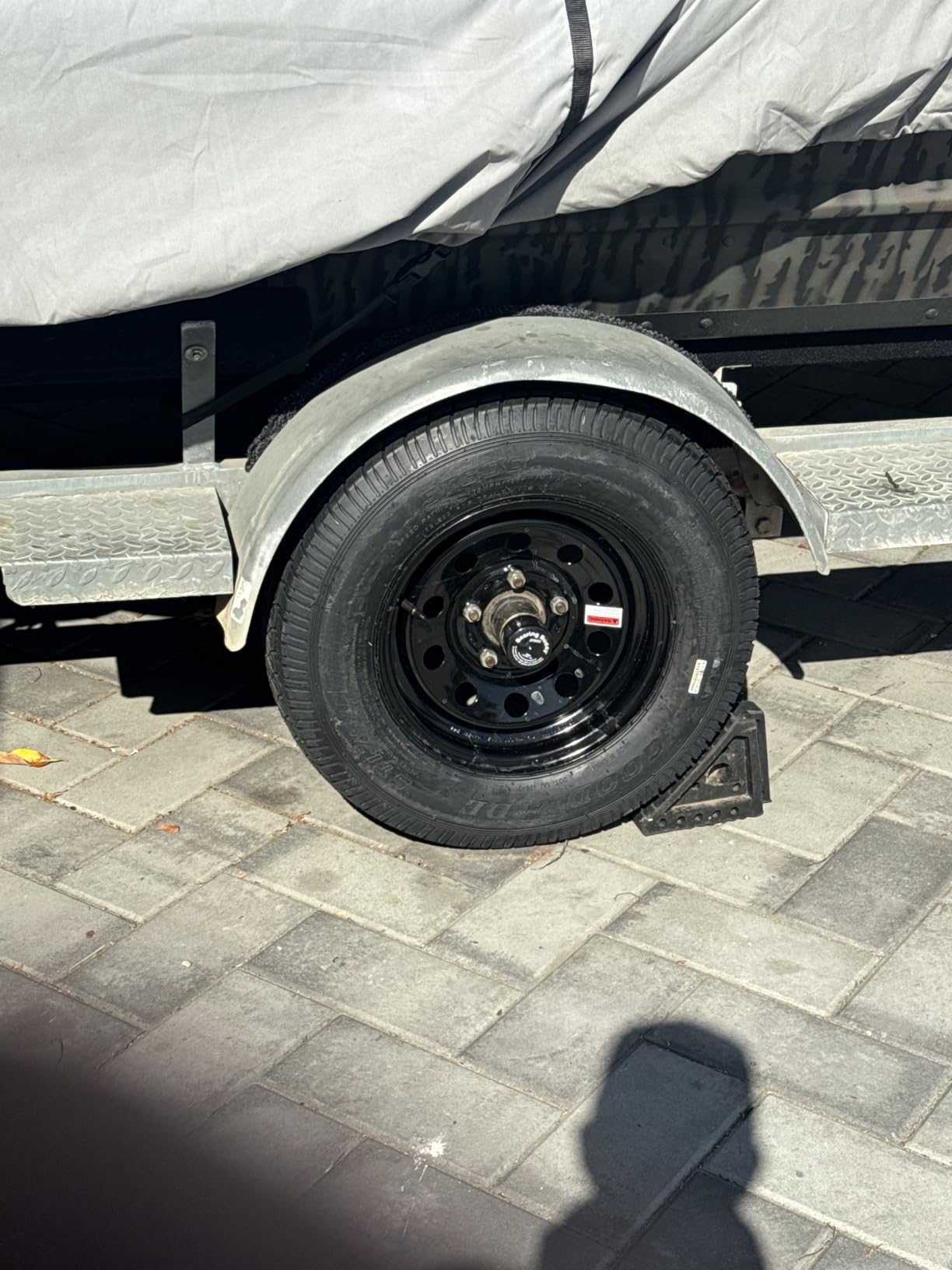
The reinforced square shoulder tread improves road contact and traction, which matters when you are hauling a heavy boat in rain or on slick boat ramp concrete. The variable tread pitch design reduces road noise, so you are not listening to a howling hum for three hours on the highway.
One owner who bought these for an ATV trailer reported completing three 500-mile trips and two 700-mile trips with zero issues and no pressure loss. That kind of durability is exactly what you want on a boat trailer that sits unused for months and then gets called into action for a long tow. The included 2-year warranty with roadside assistance adds an extra layer of protection.
Bolt Pattern and Rim Fitment Guide
The 5-lug on 4.5-inch bolt pattern is standard on many popular boat trailer brands including Load Rite, Venture, and ShoreLandr. Before ordering, count the lug nuts on your existing wheels and measure the bolt circle diameter to confirm compatibility.
To measure a 5-lug pattern, measure from the center of one lug to the far edge of the lug farthest from it. If that measurement is 4.5 inches, these rims will fit. The 3.19-inch center bore also needs to clear your hub. Most standard trailer hubs accommodate this size without issue.
Load Range C and Speed Rating Explained
Load Range C means these tires have 6-ply equivalent construction and are rated for a maximum load of 1,360 pounds each at 50 PSI. For most recreational boat trailers carrying fishing boats, pontoons, or small cruisers, this is more than adequate capacity.
Trailer tires carry a speed rating, typically 65 MPH for bias ply designs. Exceeding that speed generates excess heat that can lead to blowouts. If you regularly tow at highway speeds above 65 MPH, consider upgrading to a radial trailer tire instead. For typical recreational use, these bias ply assemblies deliver solid value and reliable performance.
6. VEVOR Swivel Trailer Jack – 1000 lb Capacity with 360-Degree Caster Wheel
- 1000 lb heavy duty lift capacity
- 360 degree swivel caster wheel for mobility
- Corrosion-resistant alloy steel construction
- 10 inch lift range fits most trailers
- Folds up and out of the way when not in use
- 13.5 lb unit requires solid mounting
- Bolt-on installation takes time
A good trailer jack transforms the experience of hitching and unhitching from a wrestling match into a one-person job. The VEVOR swivel jack handles up to 1,000 pounds of tongue weight with a smooth 10-inch lift range, and the 360-degree caster wheel lets you maneuver the trailer tongue in any direction.
The lifting range spans from 12.8 inches at the lowest position to 23 inches fully extended. That range accommodates both low-profile trailers and taller SUV and truck hitches without needing blocks or ramps. The ergonomic handle provides comfortable cranking leverage even under a heavy load.
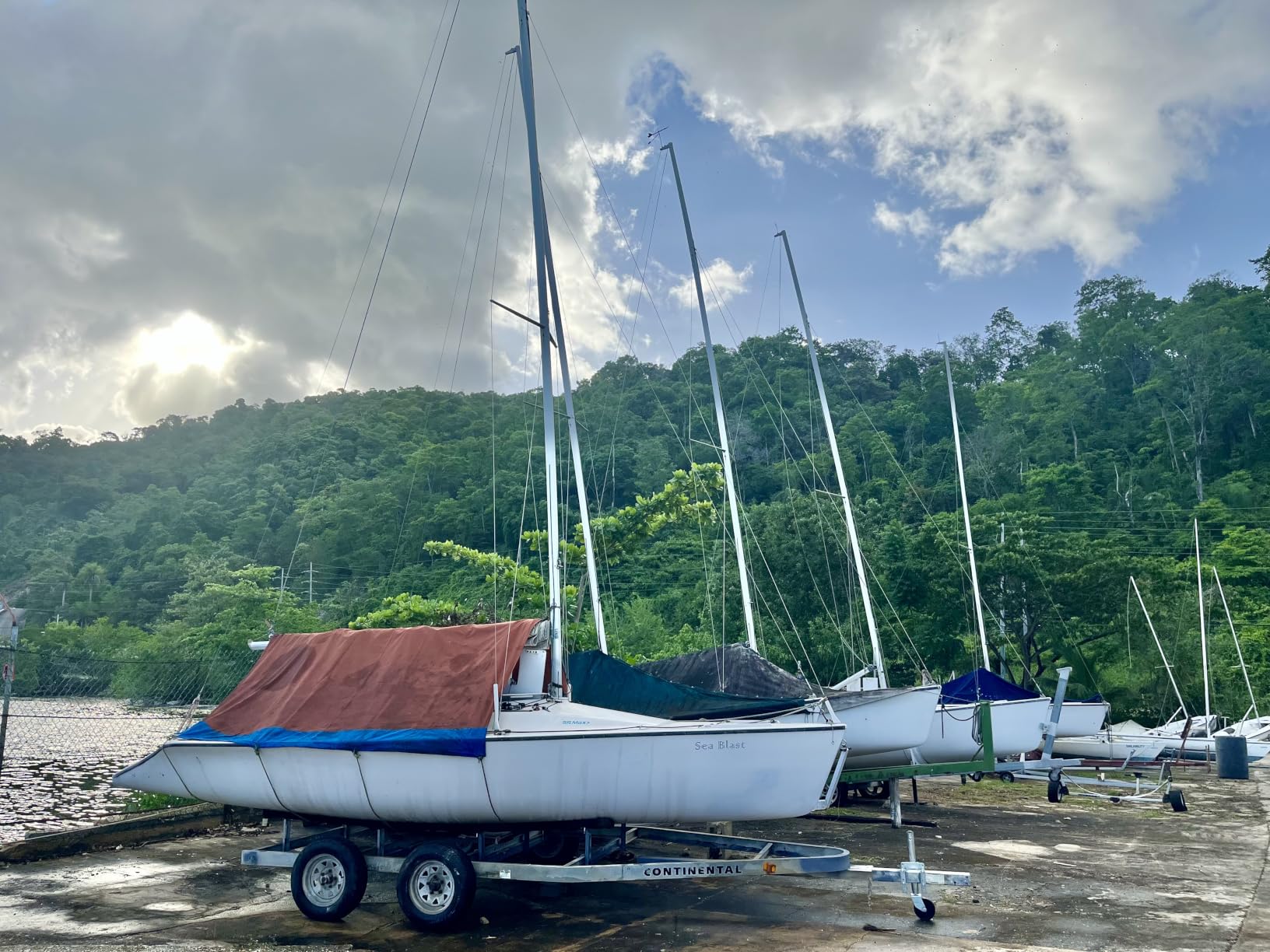
Built from corrosion-resistant alloy steel with a dual-tube inner and outer design, this jack is made for marine environments. The PP material caster wheel is non-slip and corrosion-resistant, so it will not degrade after contact with wet ramp surfaces. The swivel design lets you fold the jack up and out of the way once you are hitched, protecting it from road debris.
Installation is a bolt-on affair to the trailer tongue, and all necessary hardware comes in the box. The universal fit means it works on RVs, boat trailers, horse trailers, and utility trailers. With a 4.7-star rating across more than 500 reviews, the VEVOR jack has proven itself with real-world towing use.
Mounting Bracket Compatibility
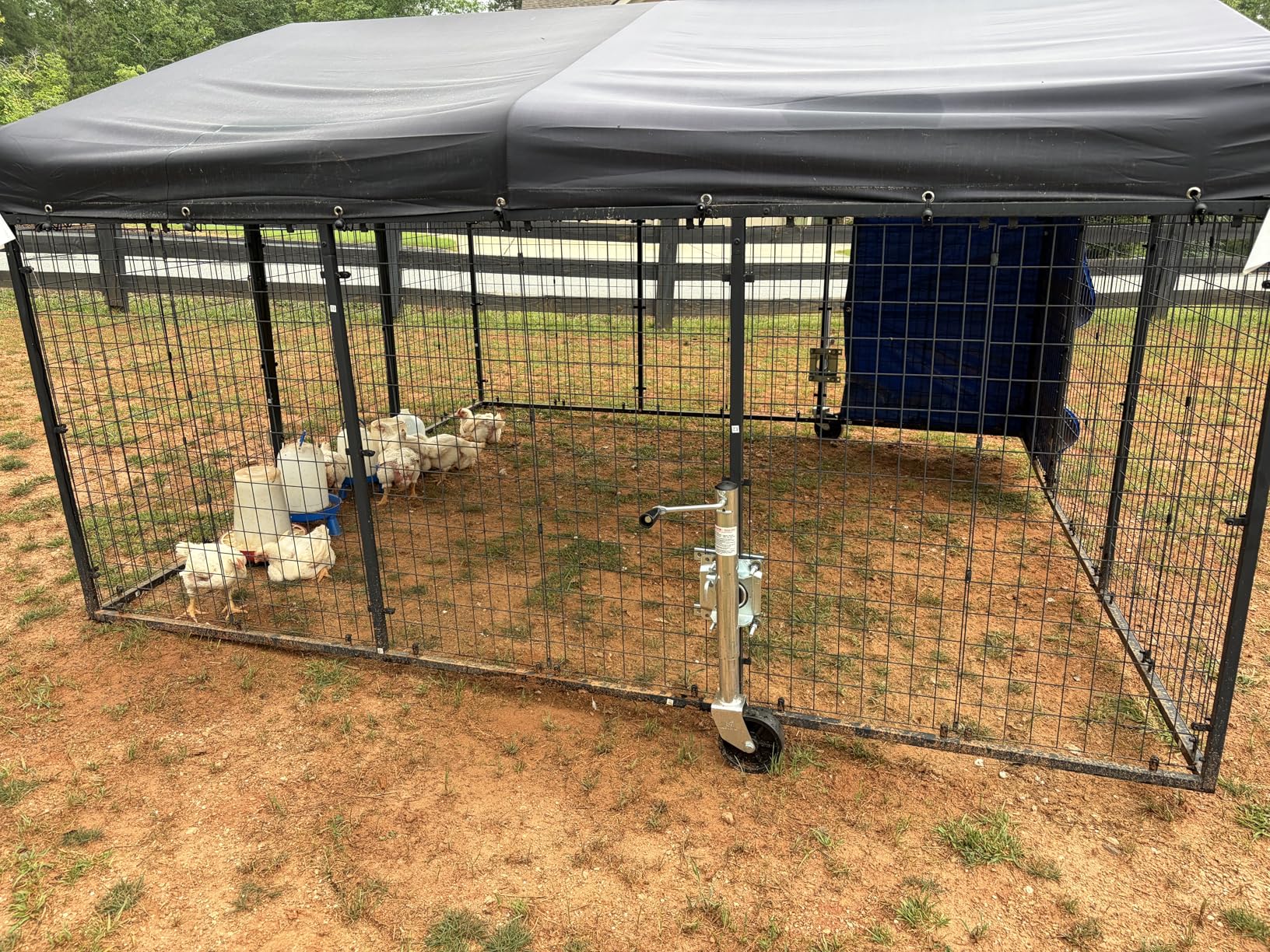
The VEVOR jack bolts directly to a flat surface on your trailer tongue. Most factory and aftermarket trailers have either a pre-drilled mounting plate or enough flat surface to drill and bolt the bracket. Measure the width of your tongue before ordering to ensure the bracket will span it properly.
If your trailer has a round tongue rather than a box frame, you may need a U-bolt adapter kit. The included hardware is designed for standard rectangular tongue frames. The swivel mechanism allows the jack to rotate up and parallel to the tongue when not in use, which is essential for ground clearance while driving.
Lift Range and Trailer Height Match
The 12.8-to-23-inch range covers the vast majority of tow vehicle hitch heights. Measure from the ground to the bottom of your coupler when the trailer is level to confirm the jack can reach. If your hitch sits unusually high on a lifted truck, verify the extended height of 23 inches will reach your ball.
The 10-inch lift travel gives you plenty of cranking room to raise and lower the coupler onto the hitch ball. The inner and outer tube design keeps the lift smooth and stable even when the tongue is loaded near the 1,000-pound capacity limit.
7. JY Performance Boat Trailer Guide-ons – Adjustable Galvanized Posts for Easy Loading
Boat Trailer Guide Poles, 40″/48″ Adjustable for Ski Boat, Sailboat Trailer
- Electro-galvanized steel resists rust and corrosion
- Adjustable height from 40 to 48 inches
- High-visibility black PVC guide pipes
- Easy installation with included hardware
- Versatile fit for multiple trailer types
- 1 year warranty only
- PVC pipes may wear over time with heavy use
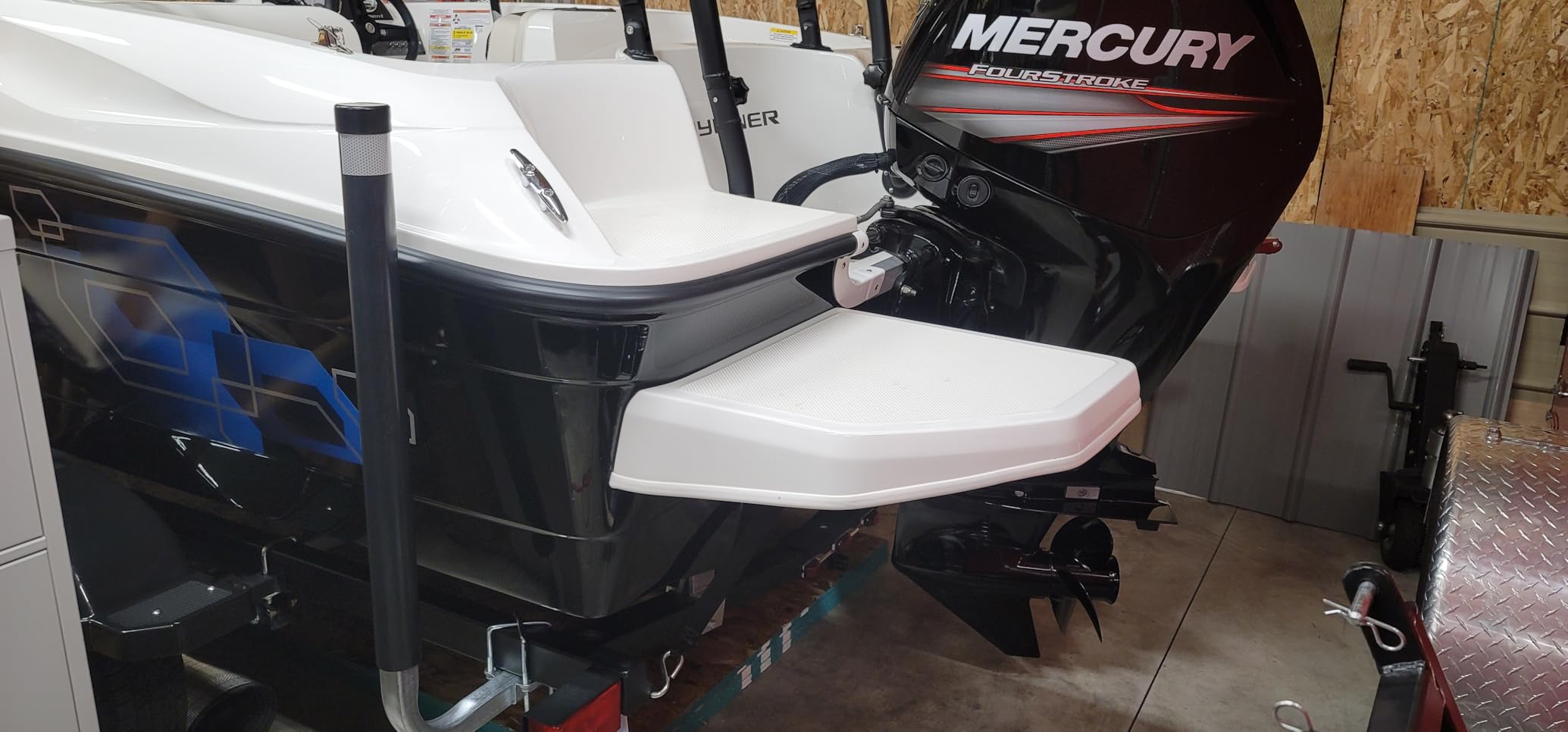
If you have ever struggled to load a boat straight onto a trailer in a crosswind or current, you know why guide-ons are worth every penny. The JY Performance guide-ons give you visible posts on both sides of the trailer that help you center the hull every time, protecting your gelcoat from side-rail contact.
These guide-ons are built from electro-galvanized steel, which provides superior rust and corrosion resistance compared to painted steel. That matters enormously for boat trailers that see regular water exposure. The black PVC pipes slide over the steel posts and provide a smooth, high-visibility surface that the boat hull can bump against without scratching.
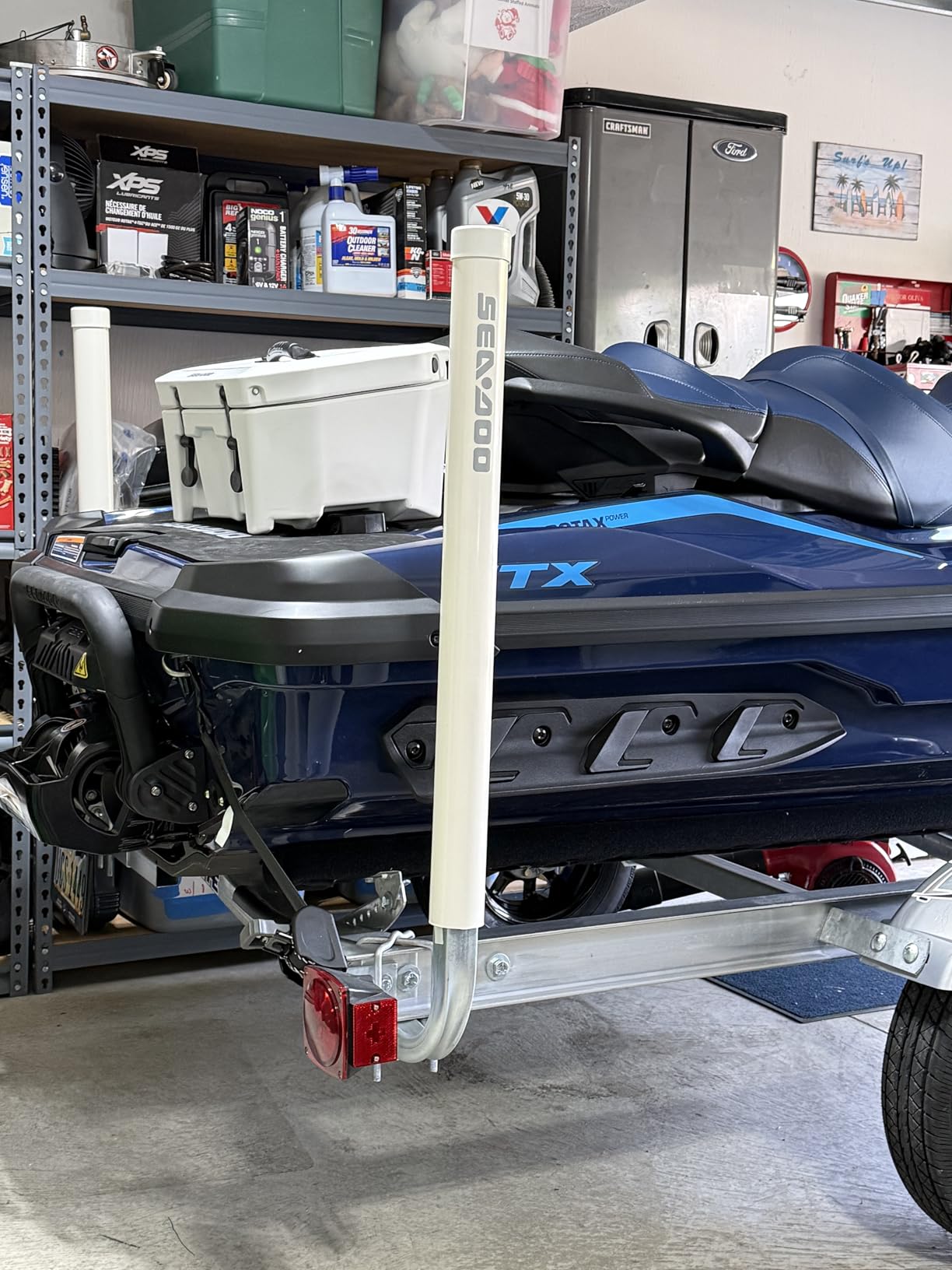
The adjustable height range of 40 to 48 inches lets you position the guides at the optimal level for your specific boat. Whether you are loading a low-profile ski boat or a taller fishing boat with a raised gunwale, you can dial in the height for maximum visibility from the driver’s seat.
Installation is straightforward thanks to the included mounting hardware and clamp brackets. The guide-ons work with ski boat trailers, fishing boat trailers, and sailboat trailers. At 4.5 stars across more than 800 reviews, they have earned their place as a trusted loading aid among the boating community.
Post Height Adjustment Range
The 40-to-48-inch range gives you 8 inches of vertical adjustment. For most recreational boats, you want the top of the PVC pipe to sit just above the waterline when the trailer is partially submerged. That way, you can see the guides from the helm and steer toward the center.
Taller boats with raised freeboard may benefit from the maximum 48-inch setting, while smaller fishing boats and personal watercraft typically work well around 40 inches. The adjustment is made by repositioning the post within the mounting bracket and tightening the hardware.
Frame Clamp Compatibility
The mounting brackets are designed to clamp onto standard trailer frame rails. Measure the width and height of your frame tube before ordering to confirm the clamps will fit. Most boat trailers use 3-inch or 4-inch frame tubing, which these brackets accommodate.
If your trailer has an unusually shaped frame, such as a channel or I-beam design, you may need adapter plates. The included hardware covers standard round and square tube frames. Check that the clamp position will not interfere with your trailer’s fenders, lights, or wiring when the guide-ons are installed.
8. AC-DK 1600 lb Heavy Duty Boat Trailer Winch – 4:1 Gear Ratio with 26-Foot Strap
- 1600 lb heavy duty capacity
- 26 foot strap reaches long trailers
- 4 to 1 gear ratio reduces cranking effort
- Galvanized steel resists corrosion
- Ergonomic anti-slip crank handle
- Manual crank only
- Single speed gear
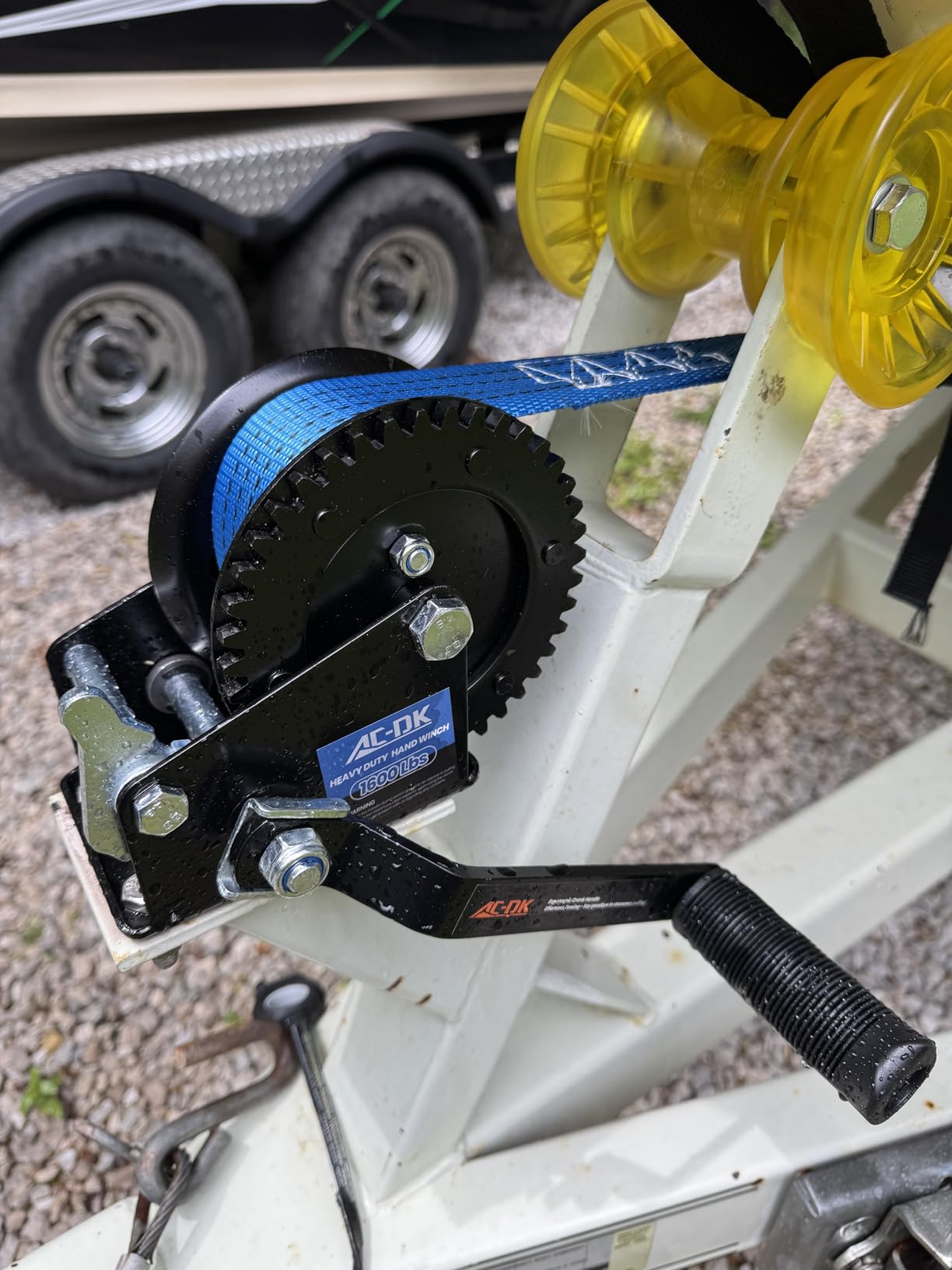
A reliable winch is what gets your boat onto the trailer when the ramp is steep or the current is working against you. The AC-DK hand crank winch pulls up to 1,600 pounds with a 4:1 gear ratio that dramatically reduces the effort required compared to a direct-drive winch. That gearing means every turn of the handle multiplies your pulling force four times.
The included 26-foot strap is made from vibrant blue polyester that resists stretching, UV damage, and mildew. At 2 inches wide, it provides a broad contact surface that distributes the load without cutting into your boat’s bow eye. The stainless steel hook includes a safety pawl that prevents the strap from slipping backward when you pause to reposition.
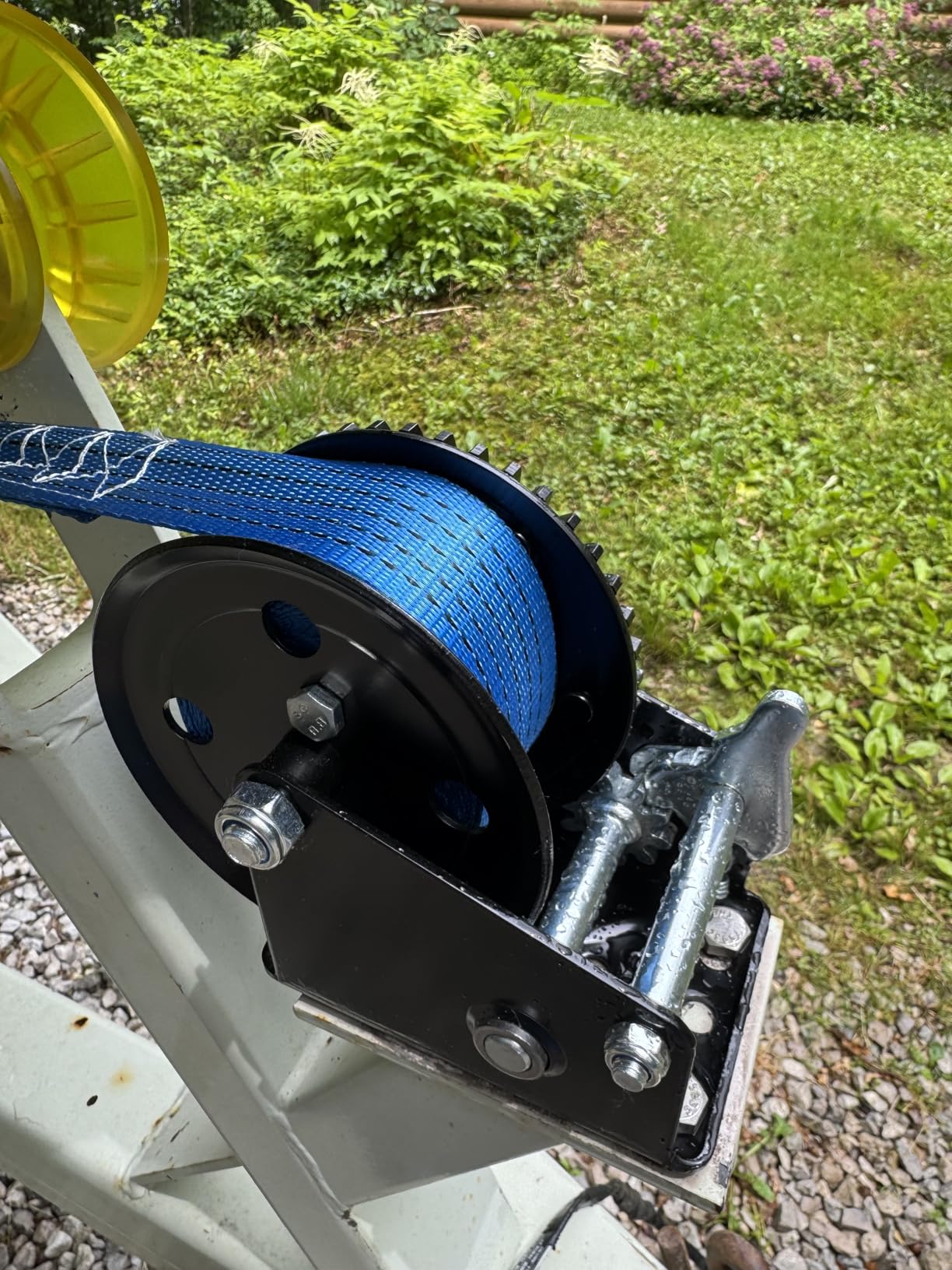
The 2-way ratchet mechanism lets you crank forward or backward depending on the angle you need. The galvanized steel finish provides corrosion resistance for saltwater environments where unprotected steel would pit and rust within a season. The 8.6-inch ergonomic handle has an anti-slip grip that reduces hand fatigue during long loading sessions.
At 4.5 stars across more than 600 reviews and ranked number one in boat trailer winches on Amazon, this unit has earned strong marks from real boaters. It works equally well on trailers, trucks, ATVs, jet skis, and sailboats. The manual operation means no wiring or battery connection, which is one fewer thing to fail at the ramp.
Gear Ratio and Cranking Effort
The 4:1 gear ratio means that for every full turn of the handle, the strap spool rotates one-quarter turn. This multiplies your pulling force, so a 1,600-pound boat feels more like 400 pounds of resistance at the handle. The trade-off is that you turn the handle more times to pull in the same length of strap.
For most recreational boats, this gearing strikes the right balance between pulling power and speed. If you regularly load a very heavy boat on a steep ramp, consider a winch with a higher ratio like 6:1 for even easier cranking. For typical fishing boats and runabouts, the 4:1 ratio is more than sufficient.
Strap Length and Boat Size Match
The 26-foot strap is generous and accommodates longer trailers and boats that need to be winched from a distance. For most standard boat trailers, you will only use 10 to 15 feet of the strap. The excess length is not a problem because it coils neatly on the spool.
Match your winch capacity to your boat’s weight with a safety margin. A common rule is to choose a winch rated for at least half your boat’s total weight, since the trailer bunks and rollers carry most of the load once the boat is moving. The 1,600-pound rating here handles boats up to roughly 3,200 pounds comfortably.
Boat Trailer Buying Guide: How to Choose the Right Setup
Choosing the right boat trailer comes down to understanding your boat, your tow vehicle, and the environment where you launch. The sections below walk through the decisions that matter most, drawn from both manufacturer specifications and the real-world experience of boaters on forums.
Frame Material: Aluminum vs Galvanized vs Painted Steel
The frame is the backbone of any trailer, and the material determines how long it lasts. Painted steel is the least expensive option but rusts quickly, especially in saltwater. Galvanized steel, like the Malone EcoLight uses, is dipped in zinc to resist corrosion and can last decades with basic care. Aluminum is the lightest option and will not rust, but it costs more and can crack under heavy impact.
For freshwater-only boaters, painted steel can work if you maintain it diligently. For saltwater or mixed-use boaters, galvanized steel is the minimum I would recommend. Aluminum is worth the premium if you tow frequently and want to reduce tongue weight on your vehicle.
Weight Capacity and GVWR Explained
Gross Vehicle Weight Rating, or GVWR, is the maximum total weight the trailer can carry including the boat, motor, fuel, gear, and the trailer itself. Always choose a trailer whose GVWR exceeds your fully loaded boat weight by at least 15 percent to provide a safety margin.
Tongue weight is the downward force the trailer exerts on your hitch ball. Ideally, tongue weight should be 5 to 7 percent of the total trailer weight for single-axle setups and 10 percent for tandem-axle trailers. Too little tongue weight causes sway, while too much overloads your vehicle’s rear suspension.
Single Axle vs Tandem Axle
Single-axle trailers are lighter, less expensive, and easier to maneuver by hand. They work well for boats under about 18 feet and 2,000 pounds. Tandem-axle trailers carry more weight, track straighter at highway speeds, and provide a backup if one tire blows out. They are the better choice for larger boats and long-distance towing.
Boaters on r/boating frequently mention that tandem axles make a noticeable difference in stability and peace of mind on long highway trips. The trade-off is more tires to replace, more bearings to maintain, and a higher purchase price.
Bunk vs Roller Style Trailers
Bunk trailers use long carpeted boards to support the hull along its length. They are simpler, less expensive, and gentler on gelcoat. They work best at ramps with a moderate slope where the boat can float on and off easily. Roller trailers use a series of rollers that allow the boat to roll on and off, which is helpful at shallow ramps or with heavier boats.
Forum boaters note that bunk trailers require less maintenance since there are no moving parts to corrode or seize. Roller trailers offer more flexibility at difficult ramps but need regular inspection of each roller. Your choice depends on your typical launch conditions.
Saltwater vs Freshwater Considerations
Saltwater destroys trailers faster than anything else. If you boat in saltwater, insist on galvanized or aluminum frames, stainless steel hardware, submersible LED lights, and disc brakes rather than drum brakes. Rinse the entire trailer with fresh water after every saltwater use, paying special attention to the brakes, hubs, and light housings.
One forum poster shared that their galvanized Load Rite trailer has survived 20-plus years of saltwater use with nothing more than fresh-water rinses and annual bearing repacks. That kind of longevity is achievable, but only with the right materials and consistent maintenance.
Trailer Sizing: The Plus-Two Rule
A common rule of thumb is that your trailer should be about 2 feet longer than your boat’s overall length. This provides enough support for the hull and leaves room for the motor and any overhang. For example, a 20-foot boat typically needs a 22-foot trailer.
Always measure your boat’s actual length including the swim platform and outboard motor, not just the listed LOA from the manufacturer. A boat that is listed as 19 feet can easily measure 22 feet once you account for the motor and platform.
The 60/40 Rule for Safe Towing
The 60/40 rule states that approximately 60 percent of the boat’s weight should rest on the trailer bunks ahead of the axle, and 40 percent behind. This distribution keeps tongue weight in the proper range and prevents the trailer from swaying at speed. If too much weight sits behind the axle, the trailer becomes unstable and dangerous.
Position your boat on the trailer so the bow rests snugly against the bow stop and the winch strap is under tension. Then verify that your tongue weight falls within the 5 to 7 percent range for single-axle or 10 percent for tandem-axle setups.
Maintenance Tips for Longevity
Repack wheel bearings annually or every 12,000 miles, whichever comes first. Bearing failure is the number one cause of trailer breakdowns on the highway. Inspect tires for dry rot and sidewall cracking before each season, and replace them every 5 to 6 years regardless of tread depth. Test your lights before every trip, and carry spare bulbs or a backup light kit.
During winter storage, block the trailer frame to take weight off the tires and prevent flat spots. Store indoors or under a cover to protect the frame, wiring, and bunks from UV damage. A well-maintained galvanized trailer can serve you for decades, making it one of the best investments in your boating setup.
FAQs
What is the best brand of boat trailer?
The best boat trailer brands include Load Rite for overall value and parts availability, Rolls Axle for premium aluminum builds that can last 20-plus years, Magic Tilt and Pacific Trailers for saltwater durability, and EZ Loader and Karavan for mass-market reliability. For kayak-specific trailers, Malone is widely recommended. The right brand depends on your boat type, budget, and whether you boat in fresh or saltwater.
What is the 60 40 rule for trailers?
The 60/40 rule means approximately 60 percent of your boat’s weight should rest on the trailer bunks ahead of the axle, with the remaining 40 percent behind it. This weight distribution keeps tongue weight in the safe range and prevents dangerous trailer sway at highway speeds. Proper bow-stop positioning and winch tension help maintain this balance.
What size trailer do I need for a 20 foot boat?
For a 20-foot boat, you typically need a trailer that is approximately 22 feet long. The general rule is to add about 2 feet to your boat’s overall length, which includes the motor and any swim platform. Always measure the actual length of your boat with all extensions before selecting a trailer size.
Are aluminum boat trailers better than steel?
Aluminum boat trailers are lighter and will never rust, making them excellent for saltwater use and frequent towing. However, they cost more than steel and can crack under heavy impact. Galvanized steel trailers are heavier but offer excellent corrosion resistance at a lower price point. Painted steel is the most affordable but rusts fastest. For most boaters, galvanized steel offers the best balance of durability and value.
How much does a boat trailer cost?
Boat trailer prices vary widely based on size, material, and features. Small kayak and jet ski trailers typically range from several hundred to around two thousand dollars. Mid-size single-axle trailers for fishing boats run higher, while large tandem-axle trailers for offshore boats can reach several thousand dollars. Galvanized and aluminum frames cost more upfront but last significantly longer than painted steel.
Final Thoughts on the Best Boat Trailers for 2026
Finding the best boat trailers and accessories comes down to matching the right product to your boat, your tow vehicle, and your typical launch conditions. The products in this guide cover the full spectrum, from complete ready-to-tow trailers to the individual components that keep your existing setup safe and road-legal.
For paddlers, the Malone EcoLight kayak trailer delivers galvanized durability and USA-built quality. For PWC owners, the Ultra-Tow jet ski trailer kit provides a complete, affordable solution. And for every boater, the Rhino USA tie-down straps, MAXXHAUL LED light kit, and eCustomrim tire assemblies are the backbone components that make any trailer dependable.
Invest in galvanized or aluminum construction if you boat in saltwater, maintain your bearings and tires religiously, and always double-check your tie-downs and lights before pulling out of the driveway. Do those three things, and your trailer will give you years of reliable service on the road to your favorite launch ramp.