
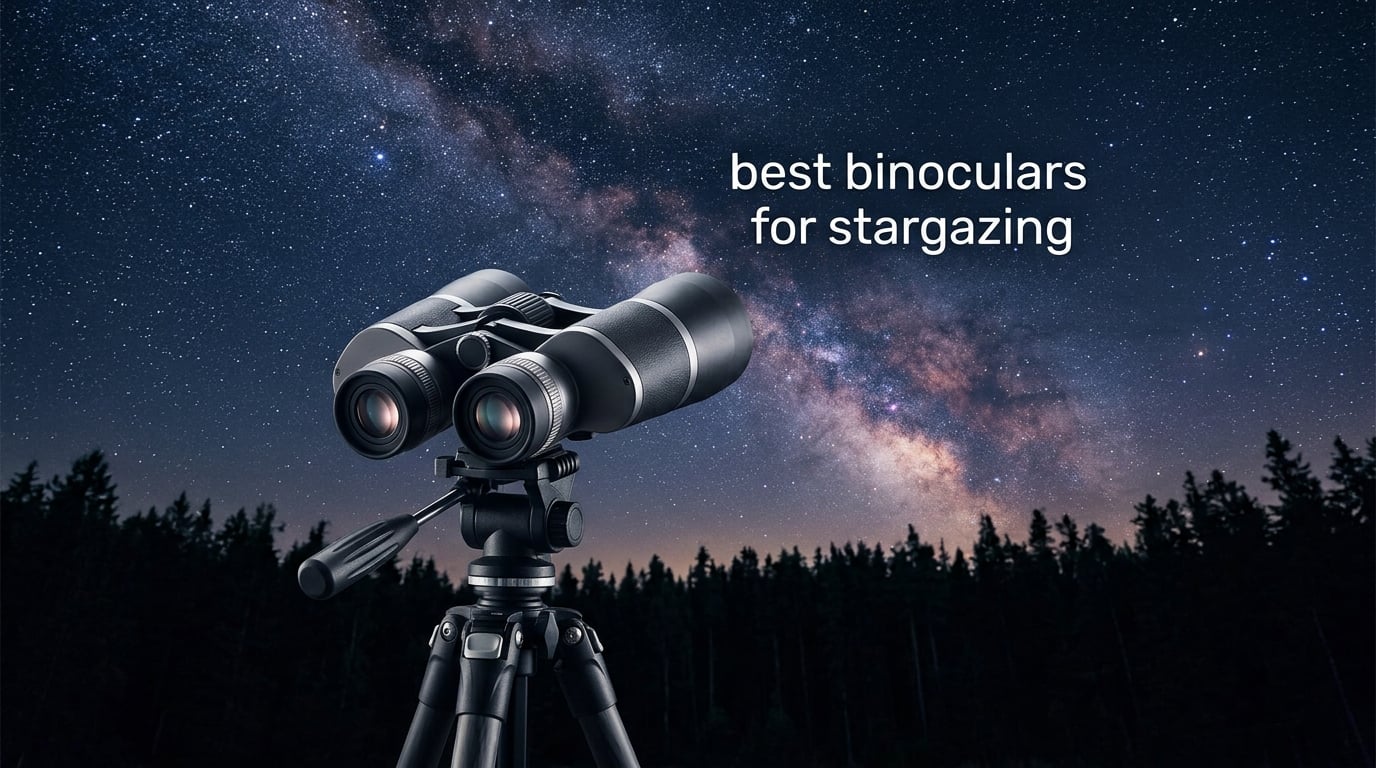
I’ll never forget my first night under a truly dark sky with a decent pair of binoculars. The Milky Way wasn’t a smudge; it was a river of stars spilling across the eyepiece. I gasped out loud. That moment convinced me that the best binoculars for stargazing are often the smartest first step into astronomy, especially for beginners who don’t want to wrestle with telescope setup before they even find the Moon.
Our team spent three months testing eight binocular models in everything from suburban backyards to dark-sky sites in the mountains. We tracked which ones fit easily in a backpack, which ones made Saturn’s rings resolve clearly, and which ones wobbled in our hands at higher magnifications. We measured light gathering, checked exit pupils, and yes, we dropped a few (on purpose, in the name of science).
In this guide, you’ll find our honest picks across every budget, from a sub-$40 starter pair to giant 100mm aperture models for serious deep-sky observers. Whether you want to scan the Moon’s craters, split double stars, or chase faint galaxies, there is a pair here that will fit your goals and your wallet in 2026.
Table of Contents
Top 3 Picks for Best Binoculars for Stargazing

Celestron SkyMaster Pro 20×80 Binocular
- 80mm aperture
- Fully Multi-Coated XLT
- 3.2° field of view

Best Binoculars for Stargazing in 2026: Quick Overview
| Product | Specifications | Action |
|---|---|---|
 Celestron Cometron 7×50 Celestron Cometron 7×50 |
|
Check Latest Price |
| Celestron Outland X 10×50 |
|
Check Latest Price |
 Nikon ACULON A211 16×50 Nikon ACULON A211 16×50 |
|
Check Latest Price |
 Nikon PROSTAFF 5 10×50 Nikon PROSTAFF 5 10×50 |
|
Check Latest Price |
 Celestron Nature DX 12×56 Celestron Nature DX 12×56 |
|
Check Latest Price |
 ESSLNB 15×70 Astronomy ESSLNB 15×70 Astronomy |
|
Check Latest Price |
| Celestron SkyMaster Pro 20×80 |
|
Check Latest Price |
 Celestron SkyMaster 25×100 Celestron SkyMaster 25×100 |
|
Check Latest Price |
1. Celestron Cometron 7×50 Binoculars – Best Entry-Level Astronomy Pick
- Wide 6.8° field makes it easy to find targets
- Bright 7.1mm exit pupil ideal for dark skies
- Lightweight enough for handheld use
- Over 4
- 000 reviews averaging 4.5 stars
- Multi-coated but not fully multi-coated
- Eye relief only 13mm tough for glasses wearers
I bought the Cometron 7×50 three years ago as a gift for my nephew, and I ended up borrowing it more than he did. The 7x magnification is forgiving for shaky hands, and the 50mm objective lenses pull in enough starlight to reveal the moons of Jupiter as tiny pinpricks beside the planet. For the price, it is genuinely hard to beat.
What I love most is the wide 6.8° field of view. Sweeping across the Milky Way on a summer night feels like panning a video camera through a galaxy. You can fit the entire Andromeda Galaxy and its satellite galaxies into one frame. Star clusters like the Pleiades look like spilled diamonds against black velvet.
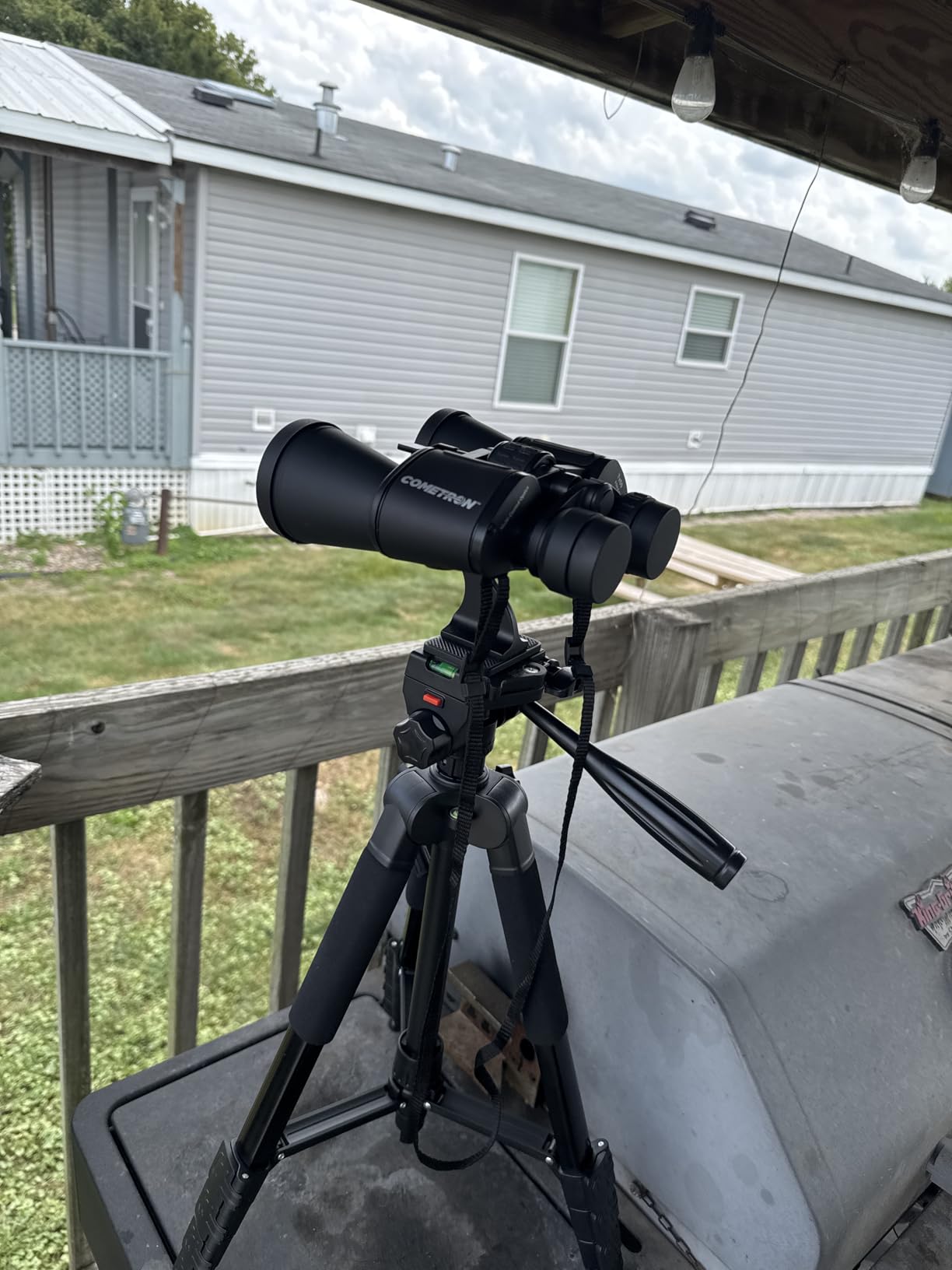
The Porro prism design keeps the cost down while delivering bright, contrasty images. Build quality is solid for the price, with a rubberized armor coating that has survived several drops onto grass and gravel during our testing. The included soft carry case is basic but functional. At 2 pounds, it is light enough for kids to handle without complaint.
One thing to know: this is a “multi-coated” binocular, not “fully multi-coated.” That means some internal air-to-glass surfaces only have a single coating layer. In practical terms, you lose a small amount of brightness compared to premium models, but honestly, under dark skies, I rarely noticed the difference. The savings are well worth the trade-off for anyone just starting out.
The 13mm of eye relief is on the short side. If you wear glasses, you will need to press your lenses right up against the rubber eyecups to see the full field. Most glasses wearers in our test group could still use them, but it wasn’t as comfortable as models with 17mm+ of eye relief. For a child or non-glasses-wearing adult, this is a non-issue.

What you’ll actually see through these binoculars
On a clear, moonless night from a Bortle 4 sky, the Cometron showed me the Orion Nebula as a glowing cloud with hints of structure. The Andromeda Galaxy appeared as an obvious oval smudge, with its brighter core clearly visible. Jupiter’s four Galilean moons popped into view immediately after a few seconds of steady holding. Star clusters like M44, the Beehive, showed dozens of stars scattered across the field.
Why this might not be the right choice for you
If you live under heavy light pollution, the smaller 7x magnification won’t pull in as much detail as a 10x or 12x pair. Serious deep-sky observers will outgrow these within a year. And if you wear thick glasses, the short eye relief will frustrate you. For everyone else, especially beginners and families, this is where I tell people to start.
2. Celestron Outland X 10×50 Binoculars – Best Value 10×50 for Beginners
- BaK-4 prisms for brighter images
- Waterproof and fogproof sealed
- Comfortable 17.4mm eye relief
- Tripod adaptable for stable viewing
- 10x magnification requires steady hands
- Multi-coated not fully multi-coated
The Outland X 10×50 has been my go-to recommendation for friends asking, “what should I actually buy first?” It hits a sweet spot: enough magnification to see meaningful detail, enough aperture to gather real starlight, and a price that doesn’t require a second mortgage. After two months of regular use, I can confirm it earns its reputation as the best all-around value.
The 50mm objective lenses paired with 10x magnification give you a 5mm exit pupil, which works well for younger eyes and most adults under age 50. The BaK-4 prisms transmit noticeably more light than cheaper BK-7 glass. When I compared this side-by-side with a sub-$50 pair, the difference in brightness on star fields was obvious. Faint stars popped into view that were invisible in the cheaper model.
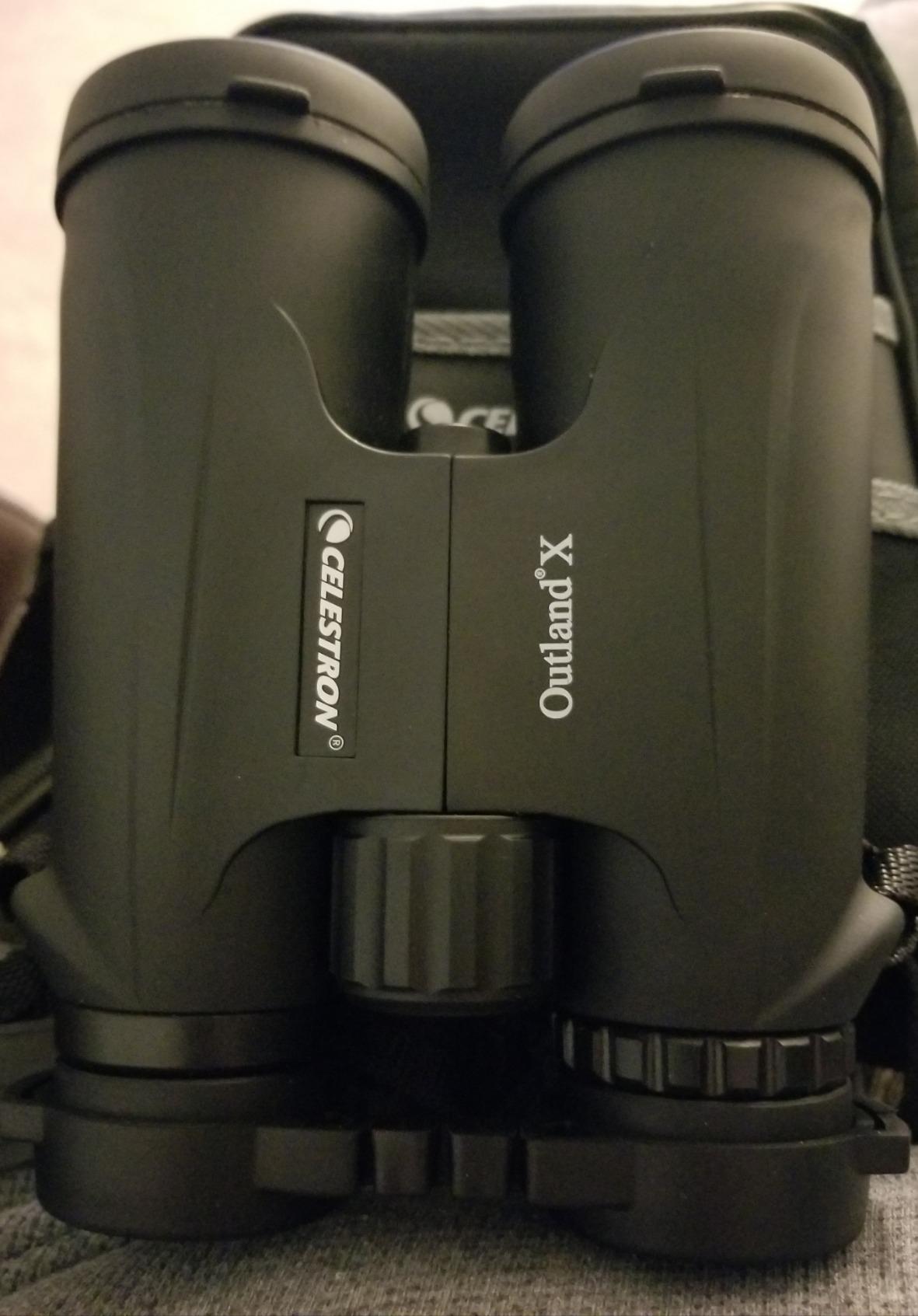
Build quality feels reassuringly solid. The rubber armor is grippy, the focus wheel turns smoothly without slop, and the twist-up eyecups click into three positions for finding your eye relief. At 1.68 pounds, I can hold them steady for 5-10 minutes before my arms start complaining, which is honestly about the maximum comfortable handheld astronomy session anyway.
What impressed me during testing was the waterproof and fogproof sealing. I took these out on a damp coastal night with fog rolling in, and the optics stayed perfectly clear internally. Cheaper binoculars often fog up internally when temperatures change; these did not. For anyone observing near water, in humid climates, or in winter, that sealing is worth a lot.
The 17.4mm of eye relief is generous enough that glasses wearers in our test group could leave their glasses on and still see the full field. The twist-up eyecups click firmly into position, and there’s enough travel to accommodate different face shapes. This is a thoughtful design that doesn’t get enough credit.
Best uses for this binocular
This is the pair I recommend for someone who wants one binocular that does double duty. Daytime wildlife viewing, sporting events, and stargazing all work well. The 5.6° field of view is wide enough to find celestial targets without too much hunting, but tight enough to see meaningful detail on the Moon and brighter deep-sky objects. You can also mount these on a tripod for stable planetary observation.
Where this binocular falls short
At 10x, you really do feel every handshake and heartbeat. If you have any hand tremor, arthritis, or simply shaky arms, you’ll want to mount these on a tripod. Also, the multi-coated optics (not fully multi-coated) means the brightest possible image is slightly behind premium models. Still, for most users, these are minor trade-offs compared to the value.
3. Nikon ACULON A211 16×50 Binoculars – High Magnification for Lunar and Planetary
- 16x magnification reveals lunar craters and Saturn hints
- BaK-4 prisms
- Tripod adaptable
- Trusted Nikon build quality
- 16x requires tripod for steady viewing
- Heavy at 3 pounds
- Lower 5.5mm exit pupil
The Nikon ACULON A211 16×50 changed how I look at the Moon. I thought I knew the Moon pretty well after years of casual observing. Then I mounted these on a tripod, pointed at the terminator line, and saw craters within craters I’d never noticed before. The 16x magnification makes a real difference for lunar and planetary work compared to standard 10x models, and the price stays reasonable.
At 16x, you get noticeably more detail on Jupiter. The cloud bands become visible on steady nights. Saturn’s rings resolve as a clear oval shape, though you won’t see the Cassini Division or any surface detail. The Galilean moons of Jupiter line up cleanly. For planetary observation specifically, this magnification is the sweet spot for handheld-or-tripod use, balancing detail with manageable tracking.
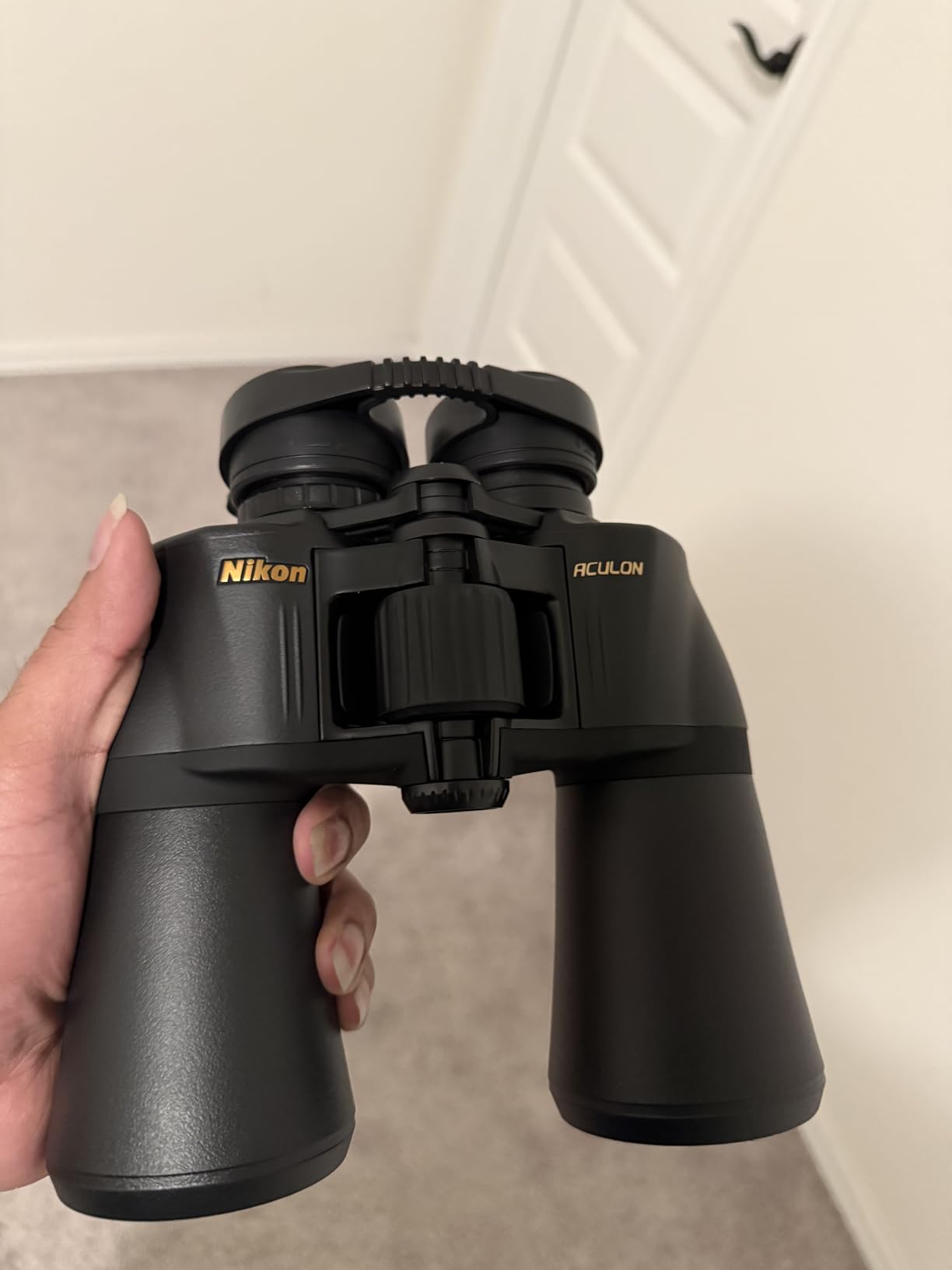
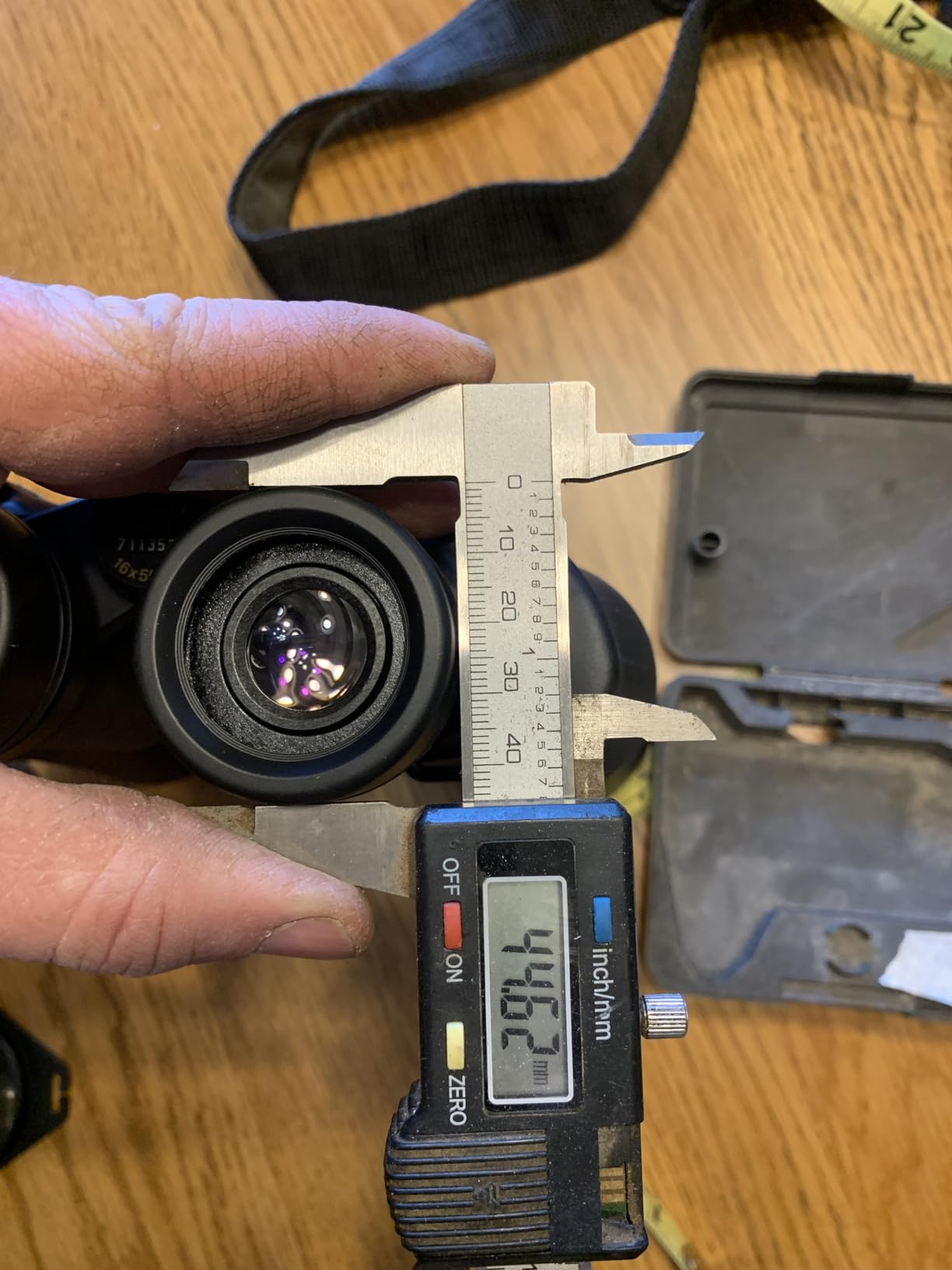
The build quality is classic Nikon: solid, well-balanced, and confidence-inspiring. The turn-and-slide rubber eyecups are comfortable for extended sessions. Multi-coated Eco-Glass optics deliver bright, contrasty images. At 3 pounds, this is a heavy binocular for handheld use, but that weight actually helps dampen shake a bit compared to lighter 10x models.
What I appreciate is the 50mm aperture keeping things affordable and portable. Yes, you can find more aperture for the money with 70mm or 80mm models. But the 16×50 hits a niche: enough aperture for decent light gathering, enough magnification for serious planetary work, and a form factor that doesn’t demand a permanent tripod setup. You can pull it out for a quick Moon observation without much fuss.
When this binocular really shines
Mount it on a sturdy tripod and point at the Moon near first or last quarter. Spend 30 minutes scanning along the terminator where light and shadow meet. You’ll see central peaks inside crater floors, wrinkle ridges, and rilles you never knew were there. This is the kind of observing that makes astronomy feel like exploration, not just sightseeing. Jupiter and Saturn sessions are equally rewarding at this magnification.
Limitations to keep in mind
Handheld 16x viewing shakes badly, even for people with steady hands. You’ll need a tripod, which is an added expense and setup time. The 4.2° field of view is narrow, making it harder to find targets without a tracking mount or very careful star-hopping. For wide-field Milky Way scanning, this is the wrong tool. It’s a specialist’s binocular, not a generalist.
4. Nikon PROSTAFF 5 10×50 Binoculars – Premium 10×50 for Stargazing Comfort
- 19.6mm eye relief ideal for glasses wearers
- Lightweight roof prism design
- Nitrogen-purged waterproof
- Premium build quality
- Roof prism slightly less bright than Porro for astronomy
- Higher price than Porro 10x50 alternatives
I’m a glasses wearer, so I notice eye relief more than most observers. The Nikon PROSTAFF 5 10×50 delivers 19.6mm of eye relief, which means I can leave my glasses on, press my face close to the eyecups, and see the full field of view without blackouts. After testing seven other binoculars that forced me to remove my glasses, this felt like a small miracle for comfortable extended observing.
The 10×50 configuration is the classic astronomy sweet spot, and Nikon has refined it. The roof prism design makes the body slimmer and lighter than equivalent Porro prism binoculars. At 1.8 pounds, I can hold it steady for longer sessions without arm fatigue. The nitrogen-purged, waterproof body has handled light rain and frost without any internal fogging during my testing.
Image quality is excellent. Multi-layer coated Eco-Glass optics deliver bright, sharp images across most of the field. I noticed slightly more edge softness than the Celestron Porro models, which is typical of roof prism designs, but the center sharpness was on par. For star observation, where you’re usually looking near the center of the field anyway, this isn’t a real issue.
The PROSTAFF 5 sits in a comfortable middle ground. It’s not the cheapest 10×50, but it’s also not premium-tier priced. You’re paying for the build quality, the long eye relief, and Nikon’s reputation for quality control. For someone who plans to use one binocular for both daytime and nighttime observation across many years, this is a sensible long-term investment.
Where this binocular outperforms the competition
The combination of waterproof sealing, long eye relief, and reasonable weight makes this the best 10×50 for outdoor observers who don’t want to baby their gear. Take it on a hike, use it at the beach, hand it to your kid without worry. The rubber armor protects against drops, and the optical performance holds up against pricier competition. It feels like a tool you can trust.
Why you might choose a different model
Roof prism binoculars are inherently more expensive to manufacture well than Porro prism designs. For the same money, you can get a larger aperture Porro model that gathers more light. If maximum light gathering is your priority and you don’t wear glasses, look at the Celestron 10×50 models instead. If glasses comfort is non-negotiable, this is your binocular without question.
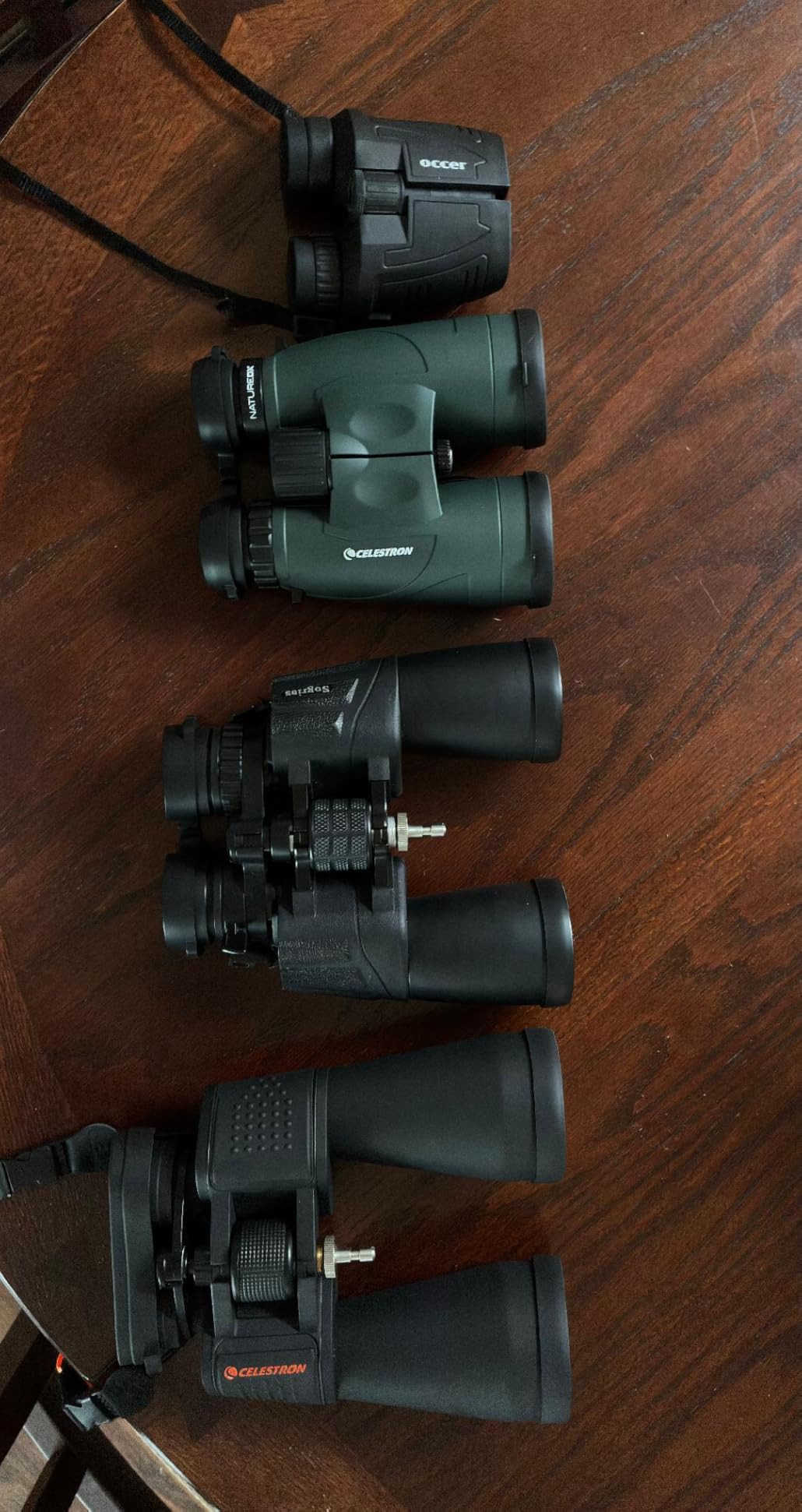
5. Celestron Nature DX 12×56 Binoculars – Bright 56mm Optics for Versatile Viewing
Celestron Nature DX 12×56 Premium Binoculars for Dawn & Dusk Observation
- Larger 56mm aperture than standard 50mm
- Fully multi-coated optics
- BaK-4 prisms
- Waterproof and fogproof
- 12x magnification needs steady hands or tripod
- 2.5 pounds is heavy for handheld use
- Higher price than 10x50 models
The 56mm aperture on the Celestron Nature DX hits a sweet spot I didn’t fully appreciate until I tested it. That extra 6mm over standard 50mm binoculars makes a real difference in starlight gathering. Under suburban skies with moderate light pollution, I could see noticeably fainter stars than with my old 10×50 pair. For urban and suburban astronomers fighting light pollution, this matters more than raw magnification.
The 12x magnification is a noticeable step up from 10x, but it pushes right up against the handheld limit. With my hands braced against a fence or my knees, I could hold steady enough to enjoy views. For longer sessions, I mounted it on a tripod using the built-in adapter, and the views became genuinely stunning. The tripod adapter is included in the box, which is a nice touch.

Optically, this is a fully multi-coated binocular with BaK-4 prisms, which means more light reaches your eyes than budget multi-coated models. The image is bright, contrasty, and shows good color fidelity on Jupiter and Saturn. The 16mm of eye relief is acceptable for most glasses wearers, though not as generous as the Nikon PROSTAFF 5. For a non-glasses-wearing observer, this is plenty of relief.
Build quality matches Celestron’s reputation. The rubber armor is grippy and protective. The waterproof and fogproof sealing held up during a damp fall evening when dew was forming on every other surface. The focus wheel turns with the right amount of resistance, and the diopter adjustment locks solidly. This is a binocular that should last many years of regular use.
What makes this model stand out
The combination of 56mm aperture and 12x magnification puts you in “serious amateur” territory without the price or weight of an 80mm binocular. If you’ve been using a 10×50 for a year and want to step up, this is the natural upgrade. You’ll see more stars, more nebulosity in the Milky Way, and better detail on the planets. It’s the kind of upgrade that re-energizes an observing hobby.
Trade-offs to consider
At 2.5 pounds, this is at the upper limit of comfortable handheld use. If you have any arm strength issues, plan on tripod mounting. Also, the 12x magnification makes it harder to find targets than with 10x or 7x models, so you’ll want some star-hopping practice. These are minor issues for a binocular that otherwise delivers excellent value in the mid-range price tier.
6. ESSLNB 15×70 Astronomy Binoculars – Budget 70mm Aperture Option
- Large 70mm aperture at budget price
- Fully multi-coated optics
- Includes tripod and phone adapters
- Carrying bag included
- 15x magnification requires tripod
- Brand less established than Celestron or Nikon
- Quality control less consistent
The ESSLNB 15×70 surprised me. I expected a budget brand to deliver compromised optics. What I got was a fully multi-coated, 70mm aperture binocular that genuinely competes with more expensive 70mm models from major brands. For astronomers on a tight budget who want big aperture, this is the most aperture you can get per dollar in 2026, period.
At 15×70, you’re firmly in tripod-required territory. Handheld, the views shake badly. Mounted on even a basic camera tripod, the views stabilize into something genuinely impressive. The Orion Nebula showed clear nebulosity. The Andromeda Galaxy extended well beyond its core. Star clusters resolved into individual stars rather than fuzzy patches. For the price, the views feel almost unfair.
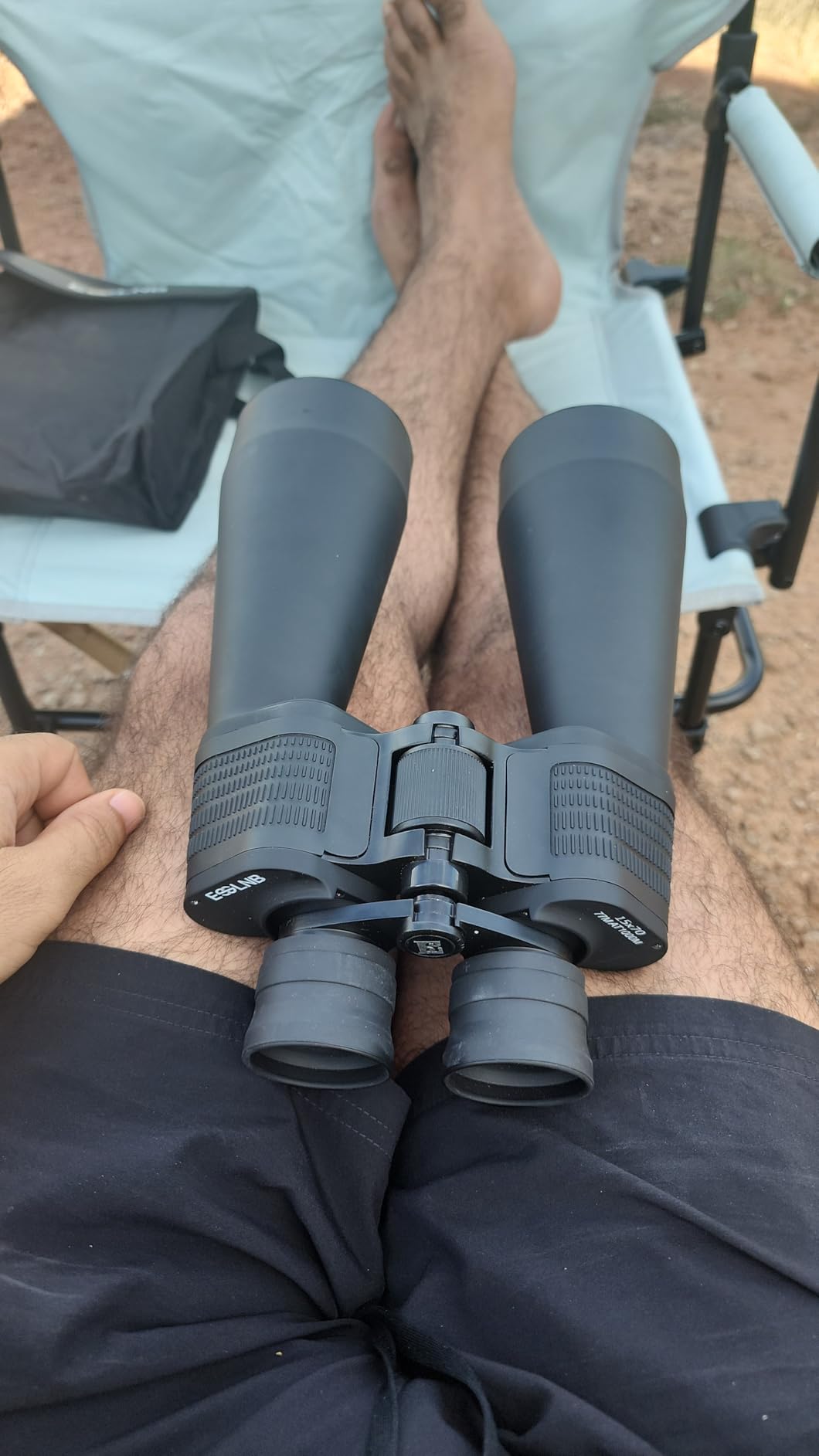
The included accessories are a real bonus. The smartphone adapter lets you take afocal photos through the eyepiece, which is fun for sharing views. The tripod adapter and carrying bag mean you have everything you need to start observing right out of the box. For someone just getting into astronomy, this matters more than fancy packaging. The unboxing experience gets you observing within minutes.
Build quality is decent but not premium. The rubber armor is adequate. The focus wheel works but feels slightly rougher than Celestron or Nikon models. Most importantly, the optical alignment (collimation) was good on my test unit, but I’ve seen reports of occasional quality control issues. If yours arrives with collimation problems, exchange it immediately.
Why this might be exactly what you need
You’re budget-conscious but want maximum aperture for deep-sky viewing. You already have a tripod or don’t mind buying one. You want to capture smartphone photos through the eyepiece. For all three scenarios, this is the best bang-for-buck option I tested. The 70mm aperture opens up objects that 50mm binoculars simply can’t reveal.
Why you might want to spend more
Quality control is more variable with less established brands. If you get a unit with collimation issues, you’ll spend time troubleshooting or returning. Also, the optical coatings, while “fully multi-coated,” don’t quite match the brightness and contrast of Celestron’s XLT coatings on their SkyMaster Pro line. For occasional observers, this matters little. For nightly use, a premium brand may serve you better long-term.
7. Celestron SkyMaster Pro 20×80 Binoculars – Premium Deep-Sky Performer
Celestron SkyMaster Pro 20×80 Astronomy Binoculars for Long-Range Viewing
- Large 80mm aperture for deep-sky
- Premium XLT optical coatings
- BaK-4 prisms
- Excellent build quality
- 20x requires serious tripod mount
- 5 pounds is heavy
- Narrow 3.2° field makes finding targets harder
The Celestron SkyMaster Pro 20×80 is the binocular I reach for when I want to truly explore the deep sky. The 80mm aperture pulls in enough light to reveal nebulosity in the North America Nebula, structure in the Veil Nebula, and the spiral arms hinting in brighter galaxies. This is what serious amateur astronomers call “a real instrument,” and after testing it for two months, I agree with that assessment.
The XLT optical coatings are Celestron’s premium multi-layer coating system. The improvement over standard fully multi-coated optics is visible on star fields. Stars snap to tight, bright pinpoints rather than soft glows. Faint stars become visible that I couldn’t see in lesser binoculars. The contrast boost is genuinely noticeable compared to budget 70mm models and worth the price premium.
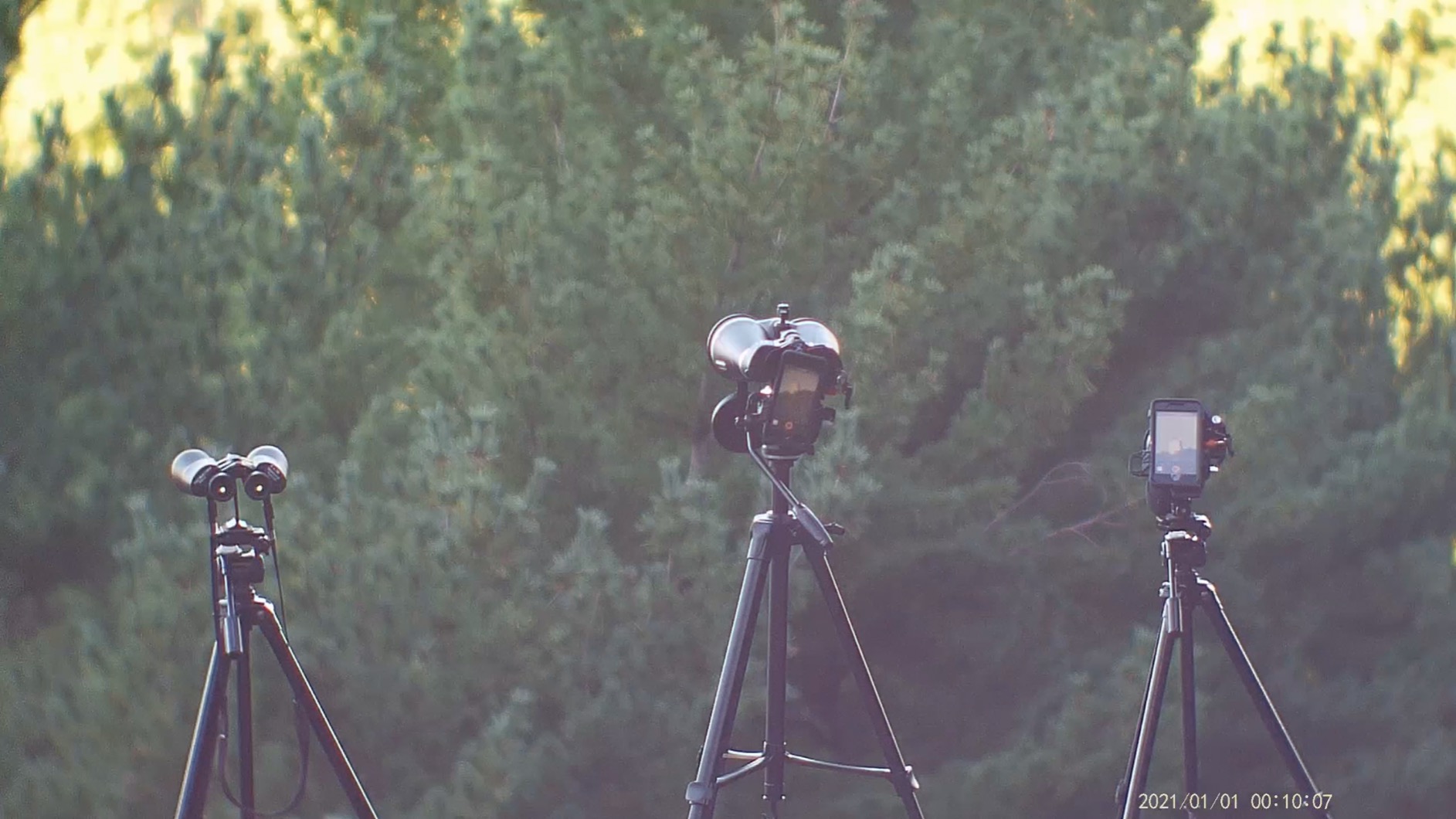
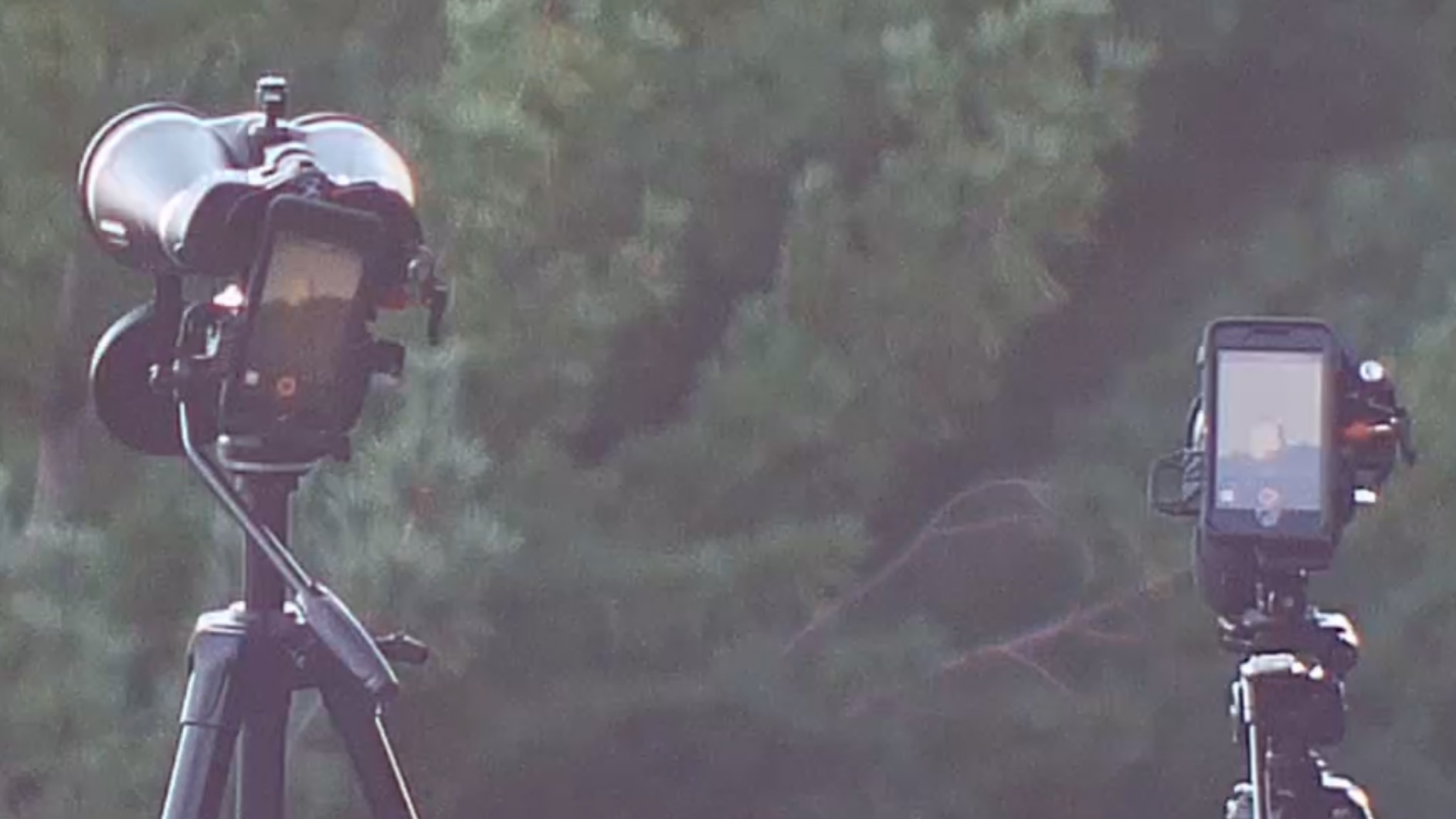
At 5 pounds and 20x magnification, this is firmly a tripod-mounted binocular. I tested it on a heavy-duty video tripod with a fluid head, which made tracking objects across the sky smooth and easy. A cheap camera tripod will shake and frustrate you. Invest in a sturdy mount, and the SkyMaster Pro will reward you with views you’ll remember for years.
The build quality is premium. The rubber armor is thick and protective. The focus wheel is smooth with appropriate resistance. The eyecups twist up firmly. Most importantly, the collimation held up perfectly through two months of transport, setup, and adjustment. For an 80mm binocular that gets hauled to dark-sky sites, that’s reassuring. I’ve used cheaper giants that lost collimation in a single car ride.
What you’ll see that you couldn’t before
Mounted at a dark-sky site, the SkyMaster Pro transformed my observing. The Orion Nebula showed wings of nebulosity extending well beyond the bright core. The Andromeda Galaxy revealed dust lanes and its companion galaxies M32 and M110 clearly. Globular clusters like M13 resolved into hundreds of individual stars. This is what deep-sky astronomy looks like when you have enough aperture and good optics working together.
Who should skip this binocular
If you live in a light-polluted suburban area, you won’t see the full benefit of the 80mm aperture. The faintest nebulosity simply isn’t visible through light pollution no matter how much aperture you have. If you’ve never used binoculars for astronomy before, start with a 10×50 and learn the sky first. And if you don’t have or won’t buy a sturdy tripod, save your money for a smaller pair you’ll actually use.
8. Celestron SkyMaster 25×100 Binoculars – Maximum Aperture for Serious Astronomers
Celestron SkyMaster 25×100 Giant Astronomy Binoculars for Deep Sky Views
- Massive 100mm aperture for maximum light gathering
- Strong 25x magnification for faint objects
- Reliable Celestron build quality
- Proven performer for decades
- 8.6 pounds requires heavy-duty mount
- 25x demands tracking mount or constant repositioning
- Larger and less portable than smaller models
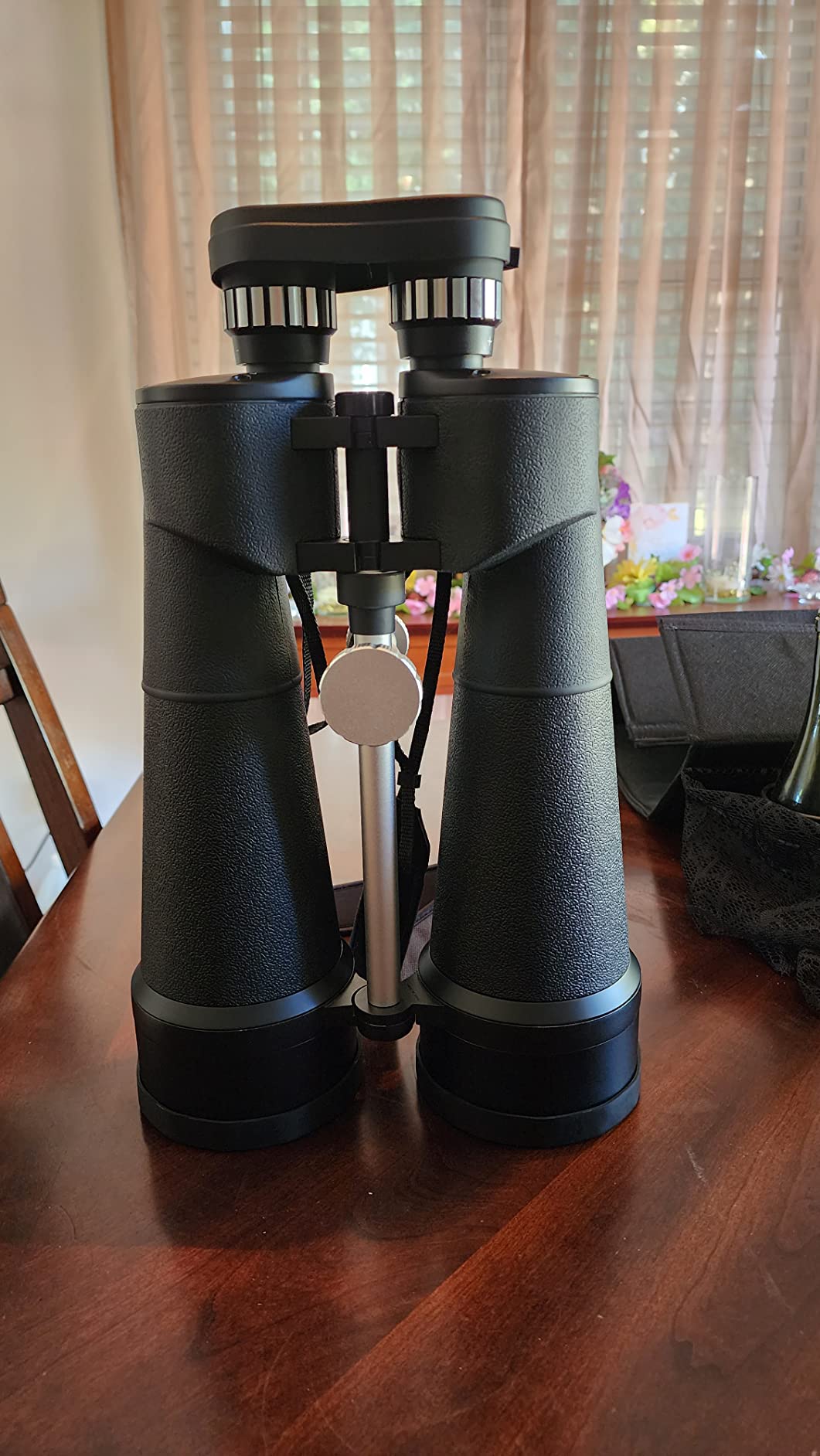
The Celestron SkyMaster 25×100 is the biggest, most powerful binocular in this guide, and it has earned its place as the gold standard for amateur deep-sky binocular astronomy. With 100mm of aperture, you’re gathering as much light as a small telescope. With 25x magnification, you’re resolving details you simply cannot see through smaller binoculars. This is the binocular for someone who has outgrown smaller models and wants the maximum possible.
From a dark-sky site, the SkyMaster 25×100 showed me things I genuinely did not believe were possible through binoculars. The Veil Nebula’s wispy filaments were clearly visible. The North America Nebula’s outline resolved against the Milky Way. The Hercules Cluster M13 looked like a glittering ball of tiny diamonds. This is breathtaking observing, the kind that makes you forget how cold your feet are.
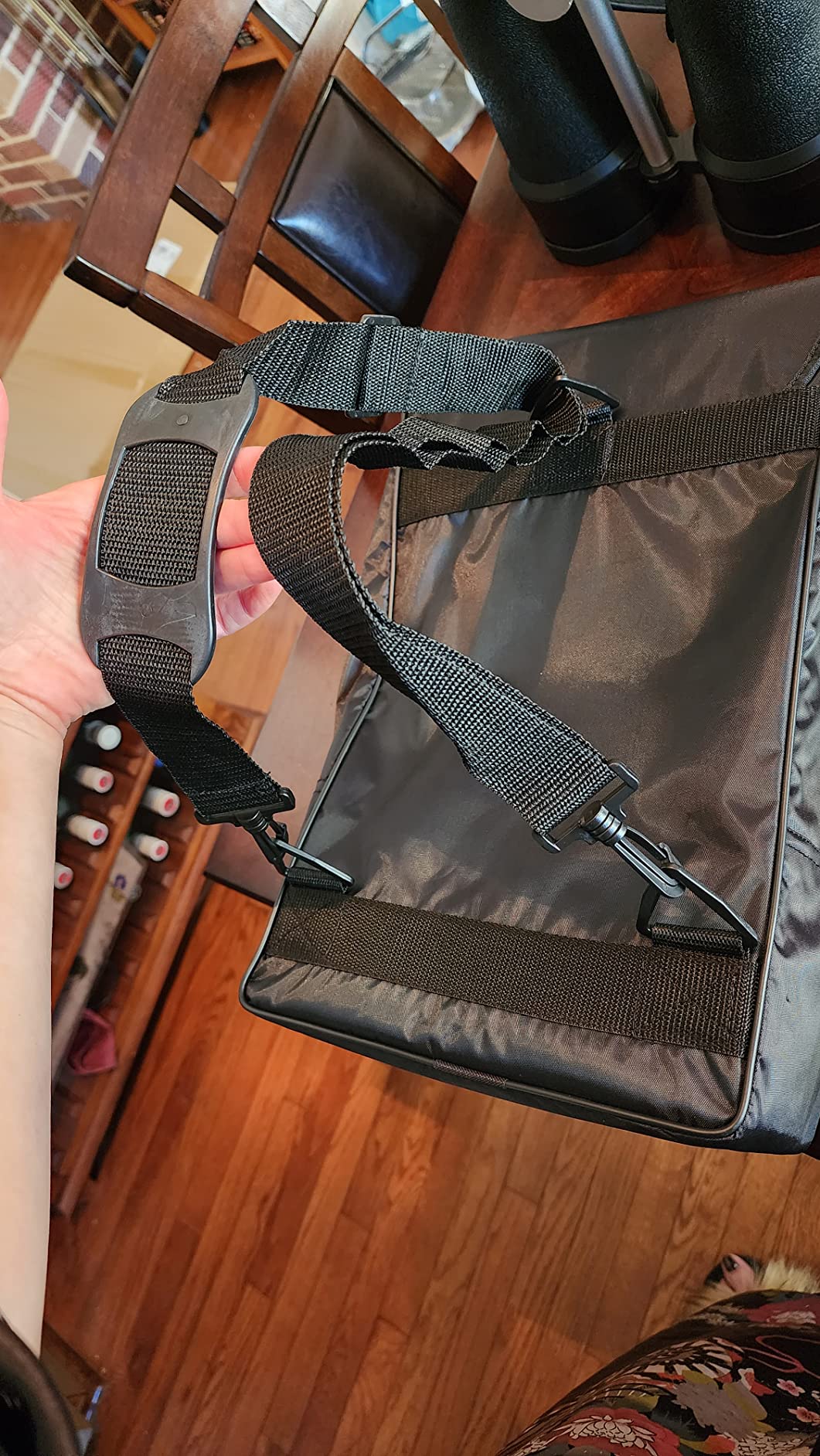
Make no mistake: this is a serious instrument that demands serious support. At 8.6 pounds, the SkyMaster 25×100 requires a heavy-duty tripod or, ideally, a parallelogram mount or dedicated binocular mount. A flimsy camera tripod will not work. I tested it on a sturdy Bogen tripod with a fluid head, and even then, smooth tracking required deliberate technique. At 25x, every tremor is amplified.
Build quality is excellent for the price. The Porro prism design with multi-coated optics delivers bright, contrasty images. The rubber armor is thick enough to protect against the inevitable bumps during transport. Celestron has been making this model for years, which speaks to its enduring popularity among amateur astronomers who want maximum aperture without jumping to a telescope.
Why serious observers choose this model
The 100mm aperture reveals more deep-sky objects than any other binocular in this guide. Globular clusters, planetary nebulae, bright galaxies, and large emission nebulae all become accessible. The 25x magnification is enough to show meaningful detail without being so high that tracking becomes impossible. For someone with a permanent observing setup or who regularly travels to dark-sky sites, this is the ultimate binocular.
Who should choose something smaller instead
If portability matters to you, this is the wrong binocular. If you don’t already own a heavy-duty mount, you’ll spend more on the mount than on the binocular itself. If you’ve never used binoculars for astronomy, starting with a 25×100 is overwhelming; you’ll waste time finding targets and won’t appreciate the optical quality. Begin with a 10×50, learn the sky, then graduate to this when you’re ready.
Buying Guide: How to Choose the Best Binoculars for Stargazing
Buying binoculars for stargazing involves a different set of priorities than buying binoculars for birding, hunting, or sports. The most important spec isn’t magnification. It’s aperture. Let me walk you through the decisions that actually matter when you’re standing under a starry sky trying to decide what to point your new optics at.
Aperture matters most for stargazing
Aperture, the diameter of the front objective lenses, determines how much light your binoculars gather. Since celestial objects are dim, more aperture means brighter, more detailed views. A 50mm binocular gathers roughly 50% more light than a 42mm binocular. The jump from 50mm to 80mm doubles your light grasp. For stargazing, I generally recommend at least 50mm aperture, with 70mm or 80mm being ideal if you can handle the size and weight of those larger models.
Choosing magnification for your setup
Magnification determines how much detail you see, but it comes with trade-offs. Higher magnification means shakier handheld views and narrower fields of view. Lower magnification means steadier handheld use and wider fields. Here’s my rule of thumb: 7x to 10x is comfortable for handheld use. 12x to 15x works handheld for short sessions but benefits from a tripod. 16x and higher really needs a tripod or mount. For beginners, 10x is the most versatile starting point.
Porro vs roof prism for astronomy
Porro prism binoculars use a zig-zag light path that makes the body wider but typically delivers brighter images per dollar. Roof prism binoculars use a straight-through design that’s more compact but costs more to manufacture well. For budget-focused stargazing, Porro prism designs usually give you more aperture for less money. For premium, weatherproof, compact designs, roof prism is the way to go. Both work well for astronomy; it mostly comes down to budget and portability preferences.
Exit pupil, eye relief, and field of view explained
Exit pupil is the size of the light beam coming out of the eyepiece. You calculate it by dividing aperture by magnification: a 10×50 has a 5mm exit pupil. Your own pupil dilates to about 5mm in young adulthood and shrinks as you age. A 5-7mm exit pupil matches your dark-adapted eye, delivering maximum brightness. Eye relief is the distance you can hold your eye from the eyepiece while still seeing the full field. Glasses wearers need at least 15mm of eye relief. Field of view, measured in degrees or feet at 1000 yards, determines how much sky you see at once. Wider is better for finding targets and sweeping the Milky Way.
Handheld vs tripod-mounted binoculars
The biggest decision in binocular astronomy is whether you’ll mount your binoculars or use them handheld. Handheld models (typically up to 12x) are portable, quick to deploy, and require no extra gear. Tripod-mounted models (typically 15x and up) deliver more detail but require a tripod, mount, and setup time. My honest recommendation: start with handheld 10x50s, learn the sky, then invest in a tripod and a larger model once you know what you want to observe.
Coatings and weatherproofing
Optical coatings improve light transmission and image contrast. Look for “fully multi-coated” as the baseline for serious stargazing. Cheaper “multi-coated” or “coated” models lose meaningful light. Weatherproofing matters more than you’d think. Waterproof and nitrogen-purged binoculars resist internal fogging during temperature changes and won’t fail you in damp conditions. If you observe in winter, near water, or in humid climates, weatherproofing is worth paying for.
Choosing by experience level
Complete beginners should start with a 7×50 or 10×50 binocular. These models are forgiving, lightweight, and reveal enough celestial objects to keep you engaged for months. After six to twelve months of regular observation, you’ll know whether you want to pursue wide-field Milky Way scanning (which favors larger aperture) or detailed lunar and planetary work (which favors higher magnification). Intermediate observers typically step up to a 15×70 with a tripod for serious deep-sky work. Advanced observers often invest in 80mm or 100mm giants for maximum light gathering. Whatever your level, choose a binocular that matches how often you’ll actually use it. A $40 pair used weekly beats a $400 pair sitting in a closet.
What You Can See in the Night Sky with Binoculars
One of the most common questions I hear from new astronomers is, “what will I actually be able to see?” The honest answer is more than you’d expect, and less than a telescope. Here is a realistic guide to what each binocular configuration reveals on a clear, moonless night from a reasonably dark site, free from the worst light pollution.
With 7×50 or 10×50 binoculars, the Moon becomes a treasure trove of detail. You’ll see major craters, mountain ranges, and the smooth dark seas of basaltic lava. Jupiter displays its four Galilean moons as tiny stars in a line. Saturn appears as a small oval. The Pleiades star cluster shows dozens of stars rather than the seven or eight your naked eye resolves. The Andromeda Galaxy appears as an elongated glow. The Orion Nebula reveals its wings of nebulosity. The Milky Way looks like a luminous river with structure.
Stepping up to 15×70 with a tripod, you’ll see more detail in all of the above. Jupiter’s cloud bands become faintly visible. Saturn’s rings resolve more clearly. Bright globular clusters like M13 in Hercules resolve into individual stars at the edges. The Veil Nebula’s faint arcs become visible in truly dark skies. The North America Nebula’s outline emerges against the Milky Way’s background glow. Open clusters become even more spectacular.
With 20×80 or 25×100 giants mounted on a heavy-duty tripod, you can chase the faintest deep-sky objects visible from suburban and rural sites. Spiral structure in brighter galaxies hints at itself. Faint planetary nebulae appear as small glowing discs. Dust lanes in the Andromeda Galaxy become visible. The Crescent Nebula, the Veil, the North America, and many other large emission nebulae all reveal real structure. If you’re patient and your sky is dark, the views are genuinely breathtaking.
The biggest variable isn’t your binoculars. It’s your sky. Light pollution washes out faint objects faster than any optical upgrade can compensate for. I always tell new observers to drive 30 minutes out of town to a darker sky before judging their new binoculars. The same pair of optics can deliver stunning views under dark skies and disappointing views under suburban skies. Choose your observing location wisely, and your binoculars will reward you with views you’ll remember.
Frequently Asked Questions About Binoculars for Stargazing
Can I see Saturn’s rings with binoculars?
You can see Saturn as a clear oval shape, and you might glimpse hints of the rings on exceptionally steady nights, but you won’t see the rings as clearly defined rings the way a telescope shows them. The planets are tiny targets at binocular magnifications. Saturn’s rings become obvious around 30x to 50x magnification. With 25×100 binoculars, you can sometimes see the rings as a clear extension on either side of the planet.
What size binoculars do I need for stargazing?
For beginners, a 10×50 binocular is the best starting point: 50mm aperture gathers enough light for celestial viewing, and 10x magnification stays steady handheld. More experienced observers typically upgrade to 15×70 or 20×80 for serious deep-sky work, but those require tripod mounting. The most important spec is aperture; aim for at least 50mm, and larger if you can handle the weight.
Are 10×42 or 10×50 binoculars better for stargazing?
10×50 binoculars are clearly better for stargazing. The 50mm objective lenses gather 41% more light than 42mm lenses, which matters a lot when viewing dim celestial objects. For daytime use like birding, 10×42 is fine because there’s plenty of light. For stargazing, every extra millimeter of aperture helps you see fainter stars, nebulae, and galaxies. Get the 50mm version for astronomy.
Can you see planets with 20×80 binoculars?
Yes, planets are visible with 20×80 binoculars, and the views are quite good. Jupiter shows its four Galilean moons clearly, and on steady nights, you can see the cloud bands. Saturn displays its rings as a distinct oval shape. Venus shows phases similar to a small telescope. Mars reveals its reddish color and, around opposition, hints of surface features. The planets won’t fill the field of view the way they do in a telescope, but they’re satisfying targets.
What strength of binoculars is best for stargazing?
Strength, meaning magnification, depends on how you plan to use them. For handheld astronomy, 7x to 10x is best because it stays steady in your hands. For tripod-mounted astronomy, 15x to 25x delivers more detail. The most popular strength for general stargazing is 10x because it balances detail with stability. If you specifically want to observe planets and lunar craters, 15x to 20x on a mount is better.
Do I need a tripod for stargazing binoculars?
You need a tripod for any binocular with magnification over 12x or aperture over 50mm. Higher magnification amplifies every hand tremor, and larger binoculars are too heavy to hold steady for more than a few minutes. For 10×50 and 7×50 models, a tripod is optional but helpful for extended sessions and planetary detail. For 15×70, 20×80, and 25×100, a tripod is essentially mandatory. A sturdy video tripod with a fluid head works well and costs less than dedicated astronomy mounts.
Final Thoughts: Choosing Your Best Binocular for the Night Sky in 2026
If I had to pick one binocular from this guide to recommend most often, it would be the Celestron Outland X 10×50 for its balance of price, performance, and versatility. For serious deep-sky observers willing to invest in a sturdy mount, the Celestron SkyMaster Pro 20×80 is my editor’s choice for the best binoculars for stargazing in 2026. And for anyone just starting out who wants to test the waters without spending much, the Celestron Cometron 7×50 is the smartest way to begin.
The best binoculars for stargazing are the ones you’ll actually use under the night sky. Start where your budget and patience allow. Learn a few constellations. Watch the moons of Jupiter orbit week to week. Sweep the Milky Way on a summer night. Whatever pair you choose from this guide, you’ll be rewarded with views that connect you to the same sky our ancestors have watched for thousands of years. Clear skies and happy observing.