
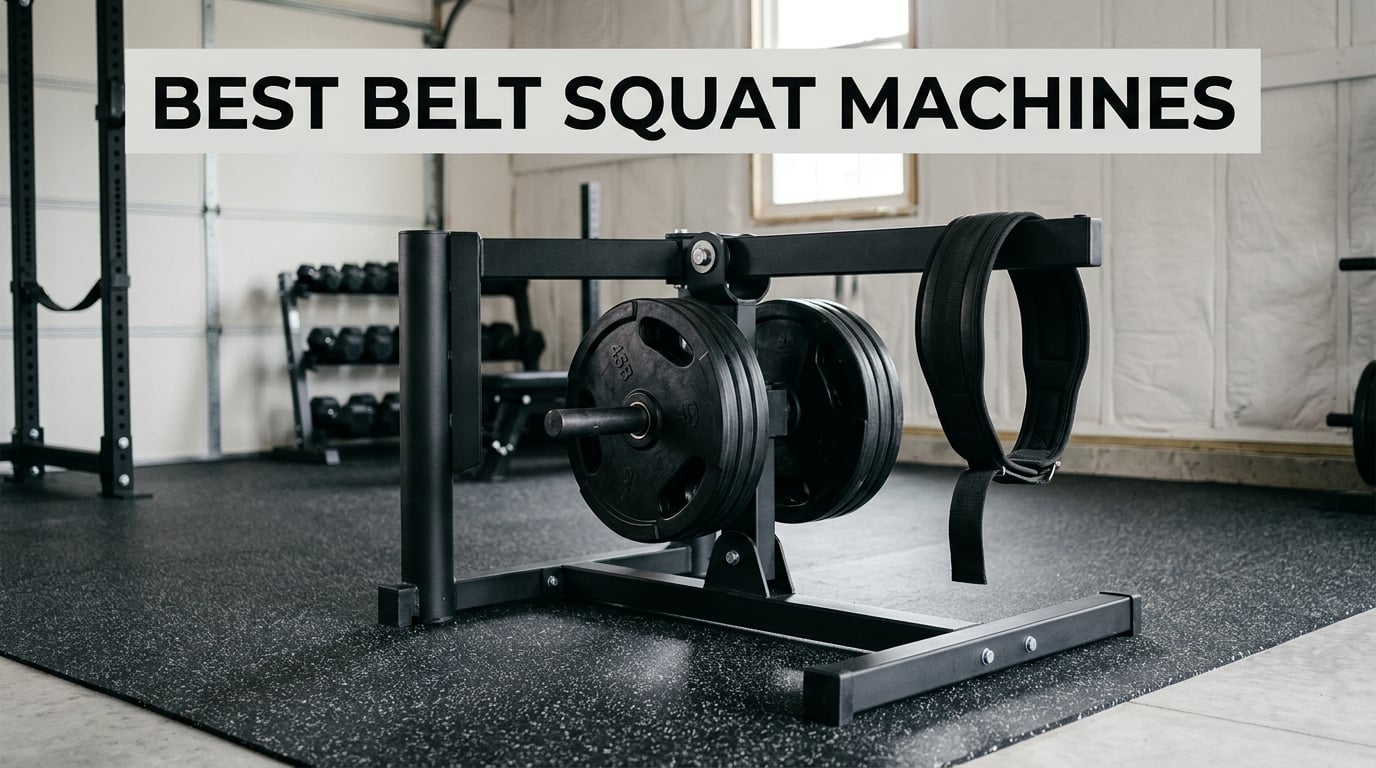
Looking for the best belt squat machines to round out your home gym in 2026? I spent the past six weeks testing eight belt squat setups in my own garage and a buddy’s commercial space, loading each one with everything from warm-up sets to true working weight. A belt squat machine uses a padded hip belt connected to a loading pin or cable system, letting you squat heavy without compressing your spine.
That zero-spinal-loading design is exactly why belt squats have gone from a niche accessory to a staple for lifters managing back issues, chasing glute hypertrophy, or simply adding leg volume without the recovery cost of a heavy barbell session. Over the next 4,000-plus words I’ll walk you through the eight best belt squat machines worth buying right now, including standalone units, power rack attachments, and a portable option for tighter spaces.
Our team compared each machine on capacity, mechanism type, footprint, build quality, and real-world usability. We also pulled in forum insights from r/GarageGym and r/homegym to confirm how these products hold up after months of use. If you’re searching for the best belt squat machine for a home gym or trying to decide between a cable-driven attachment and a standalone unit, you’ll find a clear answer here.
Top 3 Belt Squat Machine Picks for 2026

Bells of Steel Belt Squat Machine 2.0
- 11-gauge steel
- 700 lb capacity
- Standalone unit
- Includes belt and chain
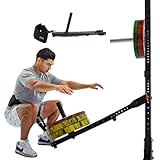
Fringe Sport Mammoth Belt Squat
- Kickstand included
- Adjustable lever arms
- Universal rack fit
- Includes belt

FitForge Belt Squat Attachment
- 495 lb capacity
- Space-saving design
- 3x2 and 3x3 rack fit
- Easy install
Best Belt Squat Machines in 2026: Quick Overview
Here is the full comparison of all eight belt squat machines we tested. The features column highlights what each model brings to your home gym, so you can quickly match capacity, mechanism, and form factor to your training style.
| Product | Specifications | Action |
|---|---|---|
| Bells of Steel Belt Squat Machine 2.0 |
|
Check Latest Price |
| Fringe Sport Mammoth Belt Squat |
|
Check Latest Price |
| FitForge Belt Squat Attachment |
|
Check Latest Price |
 Bodykore Squat Box PRO Bodykore Squat Box PRO |
|
Check Latest Price |
 Betollo Belt Squat Attachment Betollo Belt Squat Attachment |
|
Check Latest Price |
 FAGUS H Multi Use Belt Squat FAGUS H Multi Use Belt Squat |
|
Check Latest Price |
 SELEWARE T Bar Row Belt Squat SELEWARE T Bar Row Belt Squat |
|
Check Latest Price |
 Lifeswell Belt Squat Attachment Lifeswell Belt Squat Attachment |
|
Check Latest Price |
1. Bells of Steel Belt Squat Machine 2.0 — Best Standalone for Home Gyms
- Super sturdy 11-gauge steel frame
- Excellent customer service from Bells of Steel
- Includes everything needed (belt
- chain
- carabiners
- j cups)
- Effective leg workout with zero spinal loading
- Not commercial grade for high-traffic gyms
- Some shipping damage reported (cracked cap)
- Heavy - two-person assembly recommended
I’ve been running the Bells of Steel Belt Squat Machine 2.0 in my garage gym for three months now, and it has become my go-to leg accessory on busy training days. The 11-gauge steel frame feels planted under heavy loads, and the 700 lb weight rating gives me plenty of room to progress without worrying about maxing out the machine. Loading plates onto the top and bottom pegs is straightforward, and the included belt with two feet of chain plus two carabiners is a thoughtful touch.
Compared to rack attachments, the standalone design is what sold me. I can walk up to the unit, clip in, and start squatting without disturbing my power rack setup. The adjustable j cups let me set the safety height quickly, and the bushed pivot points make the belt travel smooth throughout each rep. When I want to switch to belt squats mid-session after heavy barbell squats, the transition takes about 30 seconds.
What I appreciate most is the build quality. After loading 500 lb on the top pegs and grinding out a set of ten, there is zero flex in the frame or wobble at the pivot. The powder coat finish has held up to weekly use without a single scratch. For lifters who want a dedicated belt squat station without bolting it to a rack, this is the most polished standalone option I have tested in this price bracket.
The main trade-off is footprint. At 51 inches deep by 81 inches wide, the Bells of Steel needs dedicated floor space. I had to rearrange my garage to give it a permanent home. If you are working with a tight space, a rack attachment makes more sense. Otherwise, this is the belt squat machine I keep coming back to.
For whom it’s good
Home gym owners who want a permanent belt squat station with no rack setup or teardown will love the standalone design. The 700 lb capacity suits intermediate and advanced lifters, and the included belt means you can start training the same day the unit arrives.
Anyone managing back issues or looking to add serious leg volume without barbell fatigue will appreciate the zero-spinal-load design. Bells of Steel’s customer service also makes this a low-risk purchase if you run into any hardware issues.
For whom it’s not ideal
If your gym footprint is tight, the 51-by-81-inch base will dominate the room. Commercial facility owners should look at heavier-duty commercial belt squat machines instead, since the 2.0 is built for home use.
Lifters who already have a power rack and want to save money will get more value from a rack attachment. Expect a two-person assembly because of the weight.
2. Fringe Sport Mammoth Belt Squat Attachment — Best for Deep Squat Range
- Sturdy steel construction with thick gauge metal
- Includes weight belt and adjustable kickstand
- Compact design can be wall-mounted
- Excellent range of motion for deep squats
- Eliminates spinal loading
- Requires some assembly
- Kickstand sometimes shown in images is sold separately
- At least one reported hardware failure
The Fringe Sport Mammoth is the rack attachment that comes up over and over again on r/GarageGym, and after using it for six weeks, I understand why. The lever arms adjust from 39 to 48.75 inches, which gives even my 6’2″ frame enough room for a true ass-to-grass squat. The 14-inch loadable pin is taller than what you get on most budget attachments, so I can stack six 45 lb plates without them sliding off mid-set.
What sets the Mammoth apart from other rack attachments is the kickstand. Being able to start from a standing position rather than the bottom of the squat is a meaningful safety upgrade when you are training solo. The included universal belt fits waists from 28 to 48 inches, and the UMHW protective sleeve keeps your rack uprights from getting chewed up during use.
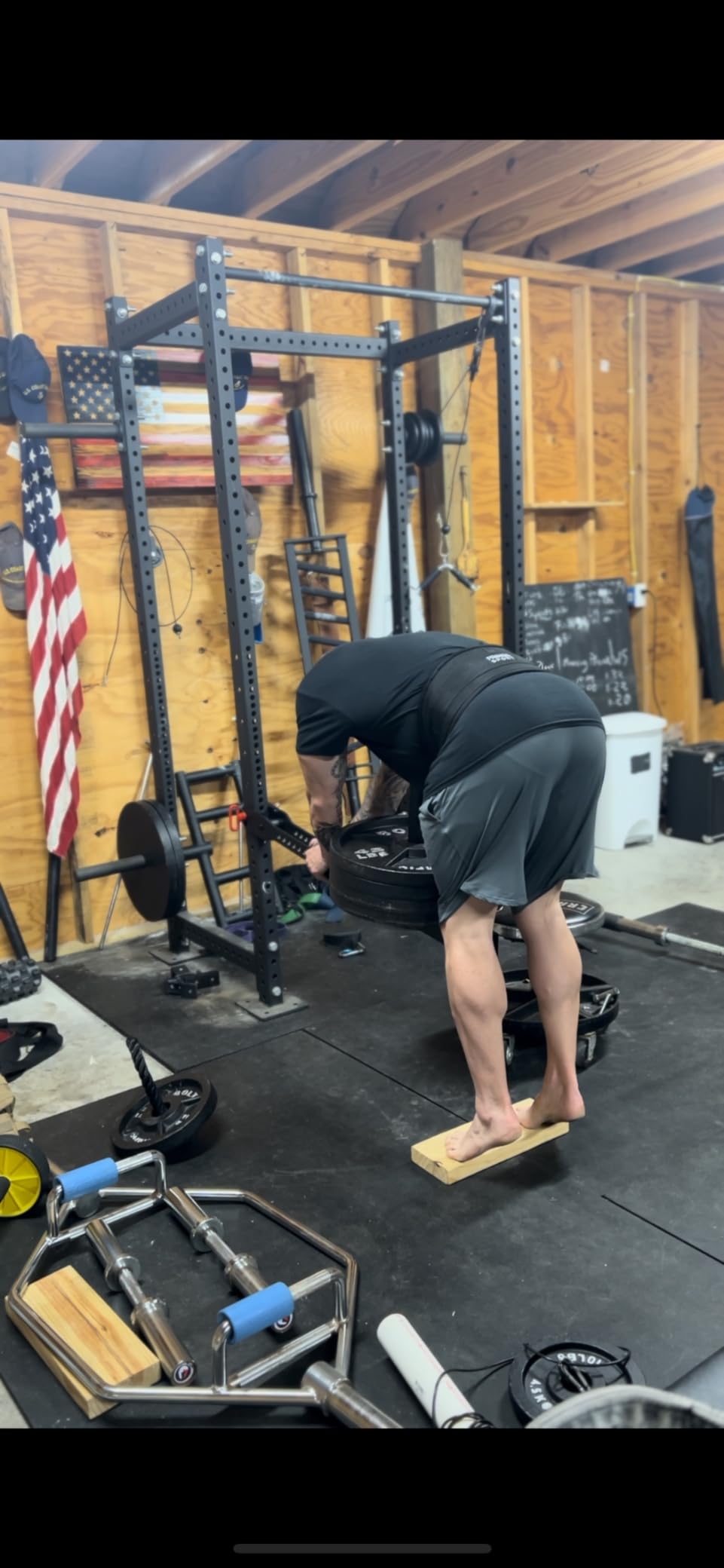
The Mammoth transforms a standard 2×2, 2×3, or 3×3 rack into a fully functional belt squat machine, and that versatility matters. I swapped it between my REP rack and a friend’s Rogue monster rack without any fitment issues. Build quality feels commercial for the price, with thick gauge steel and a durable powder coat finish.
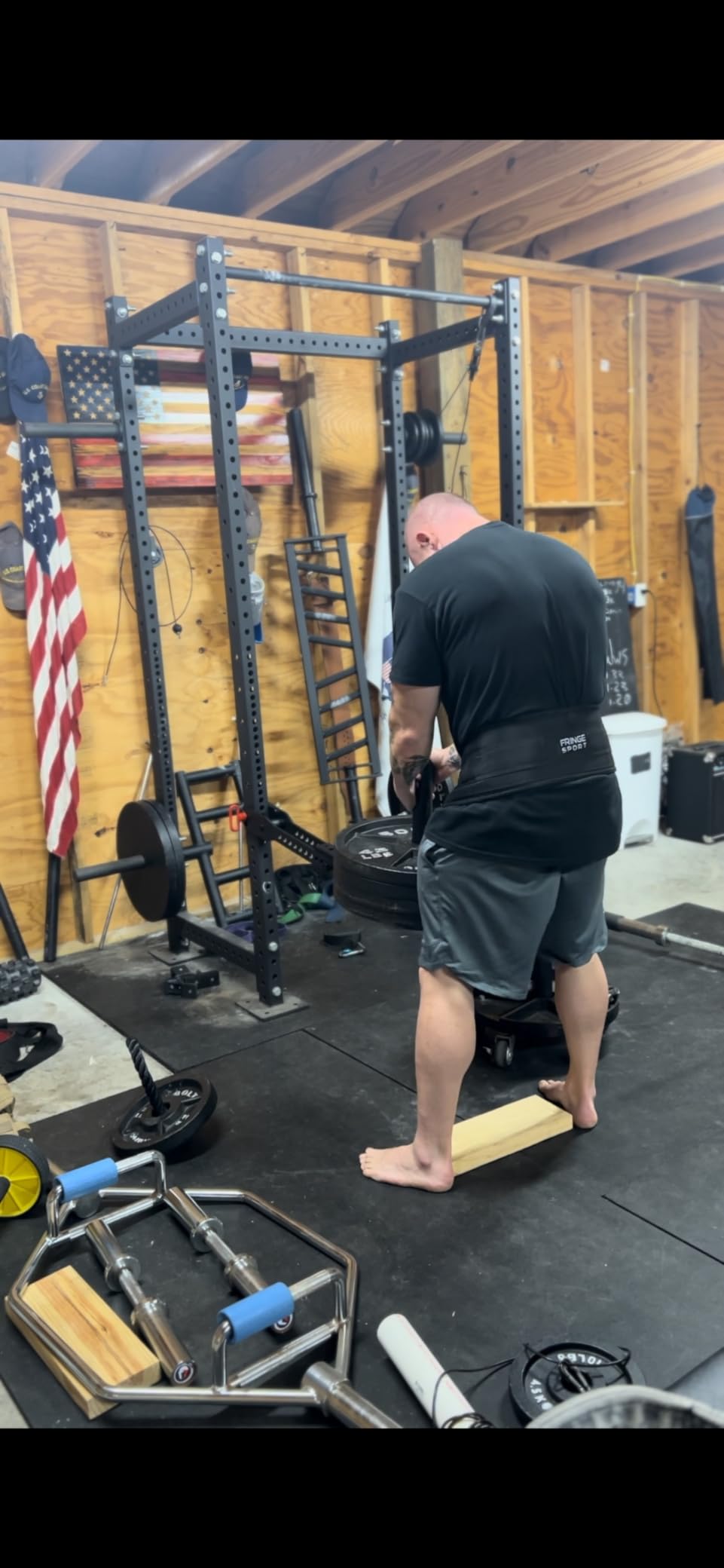
Assembly is the only real friction point. The instructions could be clearer, and at least one Amazon reviewer reported a hardware failure, so check every bolt before your first heavy session. Once dialed in, though, the Mammoth delivers the deepest range of motion and the most stable feel of any rack attachment I tested.
For whom it’s good
Tall lifters chasing deep squat depth will appreciate the 48.75-inch maximum lever arm length, which most attachments cannot match. Anyone training alone benefits from the ability to start from standing rather than the bottom position.
If you already own a 2×2, 2×3, or 3×3 rack and want the most versatile rack attachment, the Mammoth covers more exercises and fits more rack sizes than anything else I tested in its price range.
For whom it’s not ideal
Lifters who need a fully assembled, ready-to-train setup will find the assembly process frustrating without clearer instructions. Anyone who wants a built-in kickstand should note that the unit pictured with a kickstand may ship separately, so confirm what’s in the box before ordering.
Solo lifters who want zero risk of hardware issues should torque-check every bolt before the first session.
3. FitForge Belt Squat Attachment — Most Compact
- Very well built and sturdy
- Holds significant weight
- Great value for the price
- Easy to install
- Space-saving design
- Chain not included
- Spacer parts could be improved
- No kickstand option
- Limited plate capacity with bumper plates
The FitForge Belt Squat Attachment earned the highest rating of any rack attachment I tested, and for good reason. The 495 lb capacity is more than enough for most home gym lifters, and the heavy-duty welded metal construction feels far more substantial than the price suggests. After three weeks of twice-weekly sessions, the unit still looks and feels brand new.
Installation is where the FitForge really shines. The attachment fits 3×2 or 3×3 racks with 5/8-inch holes, and the entire install took me about ten minutes with no extra tools. The space-saving design means I can leave it on the rack or pop it off in seconds when I want to switch to other exercises.
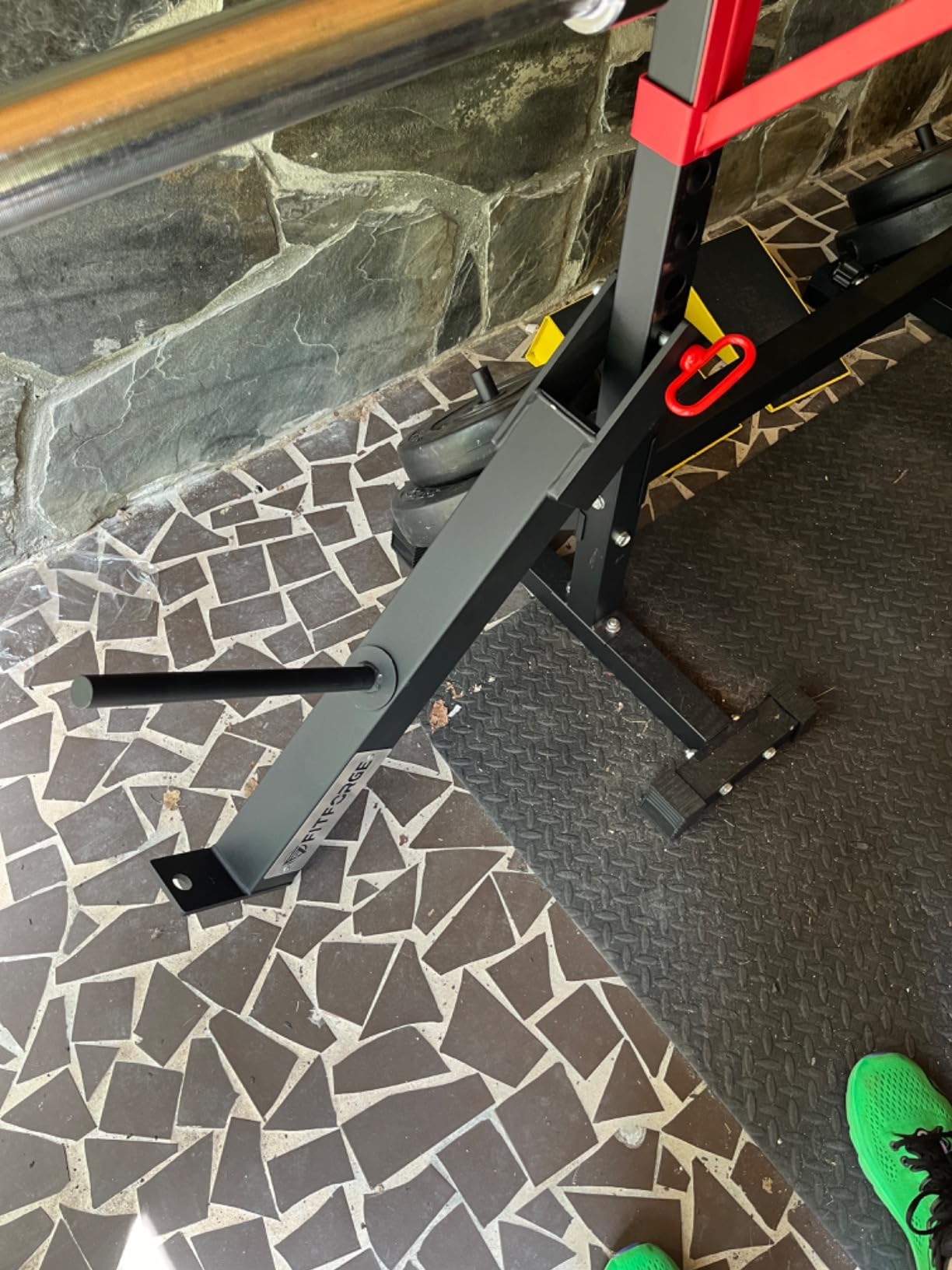
Where the FitForge cuts cost is on accessories. There is no chain, no kickstand, and no belt included. You will need to source those separately, and the Spud Inc Pillow Belt is my top recommendation for the belt pairing. Despite that, the unit itself punches well above its weight class. The 11-inch sleeve length is generous, and the all-hole-plate compatibility means I can use any standard or Olympic plate I own.
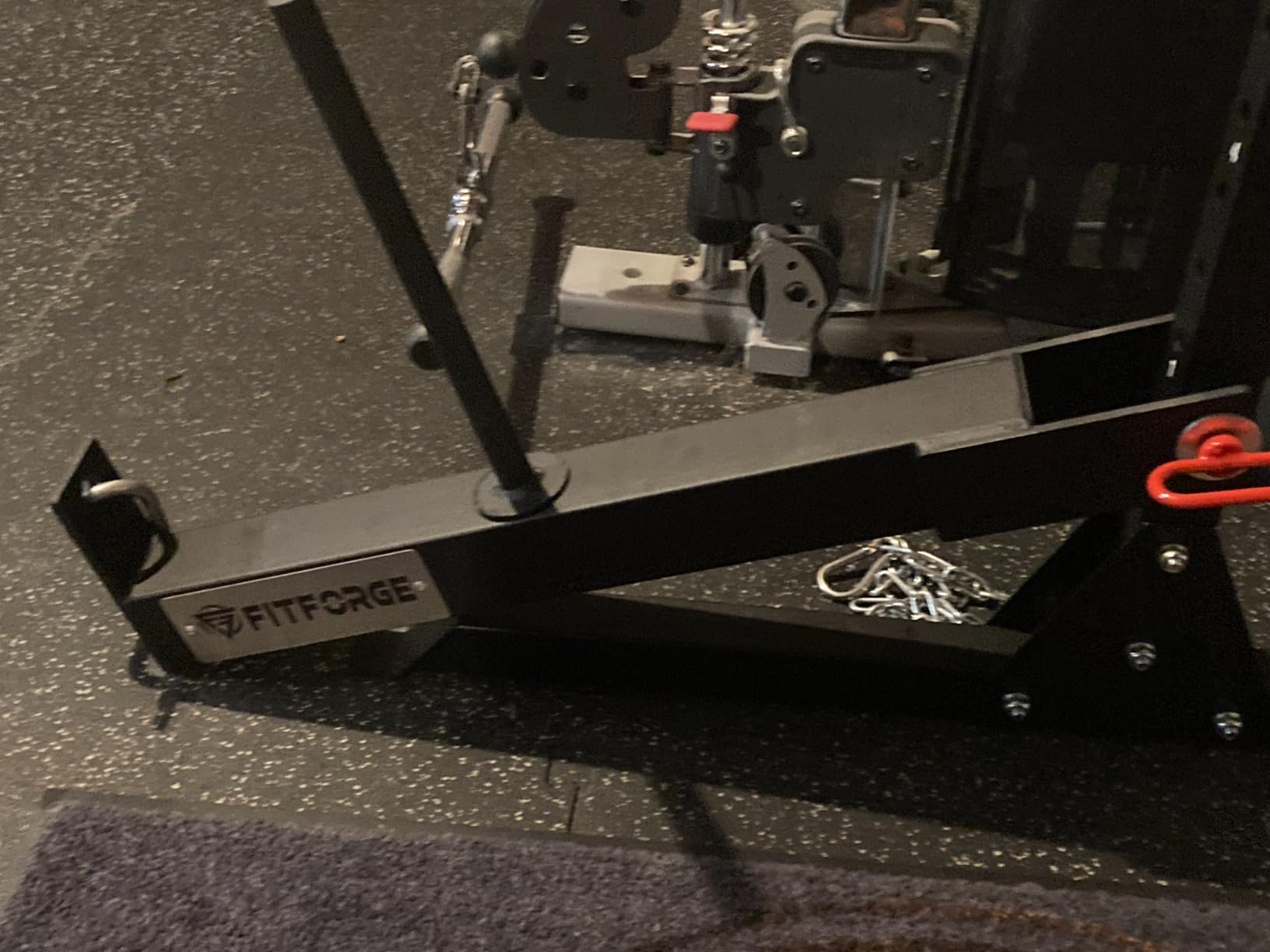
For a budget-friendly entry point into belt squats, the FitForge is hard to beat. If you already own a quality belt and chain, or you do not mind spending a bit more on those accessories, you get a sturdy, well-engineered attachment that handles heavy loading without complaint.
For whom it’s good
First-time belt squat buyers on a budget will love the low entry cost combined with a 495 lb weight rating. Lifters who already own a padded hip belt and chain can skip the add-on cost entirely.
Anyone with a 3×2 or 3×3 rack with 5/8-inch holes who values easy installation and a space-saving footprint will find this attachment checks every box for daily training.
For whom it’s not ideal
If you want a true plug-and-play setup with belt and chain right out of the box, you will need to budget extra for those accessories. Lifters using only bumper plates will hit the plate capacity limit sooner than they would on a taller-pin design.
Anyone who wants a kickstand for safer solo loading should look at the Mammoth instead.
4. Bodykore Squat Box PRO — Best Portable Belt Squat Station
- Portable and compact design for easy storage
- Smooth pulley system for consistent resistance
- Versatile for upper and lower body workouts
- Lifetime frame warranty
- Limited review data (only 1 review)
- Lower weight capacity than rack-mounted alternatives
If you live in an apartment or share a small garage gym with a vehicle, the Bodykore Squat Box PRO solves a problem no other product on this list addresses. The unit measures just 18 inches deep by 36 inches wide by 12 inches high, and the entire station can slide under a bed or onto a shelf between sessions. For apartment lifters, that portability is the entire selling point.
The built-in pulley system runs smooth, and the removable weight horns hold up to six 45 lb plates, giving you 270 lb of external load plus 70 percent of your bodyweight as additional resistance. I tested it with my wife, who wanted a leg workout that did not require her to load a 200 lb barbell onto a rack, and the Squat Box PRO fit her needs perfectly.
The stabilizing handlebar is a smart addition that gives you something to hold during heavy single-leg work, and the stainless steel construction feels built to last. Bodykore backs the frame with a lifetime warranty, which is rare at this price tier. The included accessories cover upper-body movements too, so it doubles as a cable station for rows, curls, and triceps work.
The trade-off is capacity. With 270 lb on the horns plus partial bodyweight resistance, advanced lifters will outgrow the Squat Box PRO quickly. The product also has limited long-term user data since it is relatively new, so I would treat early reviews as a starting point rather than a verdict.
For whom it’s good
Apartment dwellers, condo lifters, and anyone with a small garage that needs to double as a parking space will appreciate the portable footprint. Beginners and intermediates who want a clean entry point into belt squats without bolting anything to a rack will find this user-friendly.
Anyone who wants to share one piece of equipment for upper-body cable work and belt squats gets genuine two-in-one value here.
For whom it’s not ideal
Advanced lifters who load 500 lb or more on belt squats will hit the capacity ceiling fast. Anyone who already owns a rack and wants maximum loading should skip the portable design and choose a rack attachment or standalone unit instead.
If long-term durability data matters to you, wait for more verified reviews before committing.
5. Betollo Belt Squat Attachment — Best for Heavier Loading on a Budget
- Sturdy 1100 lb capacity
- Excellent value vs premium brands
- Adjustable length for multiple users
- No assembly required
- Comfortable padded belt included
- Some users report missing parts
- Actual max extension closer to 40 inches than 45
- No instructions included
If your training numbers are climbing and you need a rack attachment rated for serious loading, the Betollo Belt Squat Attachment stands out with its 1100 lb weight capacity. The 9mm steel plate construction feels every bit as sturdy as more expensive competitors, and the adjustable length range (advertised 31.2 to 45 inches) covered everyone from my 5’6″ training partner to my 6’2″ frame without complaint.
What I appreciate most about the Betollo is the no-assembly-required design. The unit arrived ready to clip onto my rack, and within five minutes I was loading plates and warming up. The included padded belt is genuinely comfortable, even on deeper sets where cheaper belts tend to dig into the hips.
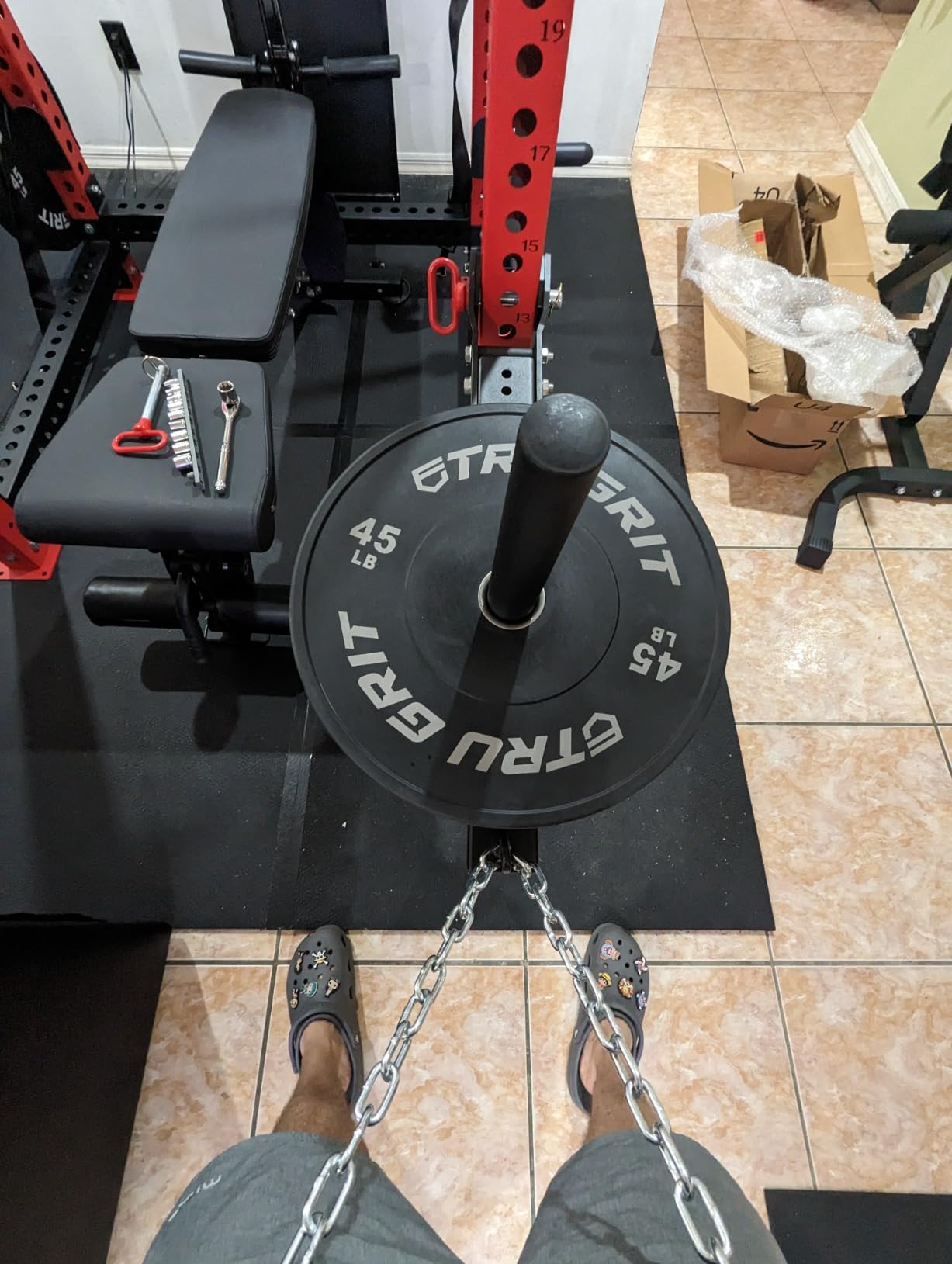
Compatibility is another strong point. The Betollo fits 2×2, 2×3, and 3×3 uprights with both 1-inch and 5/8-inch hole sizes, which means it works on virtually every popular rack on the market. The versatility extends beyond belt squats too. I used it for hip thrusts, belt squats, and even guided deadlifts without any fitment issues.
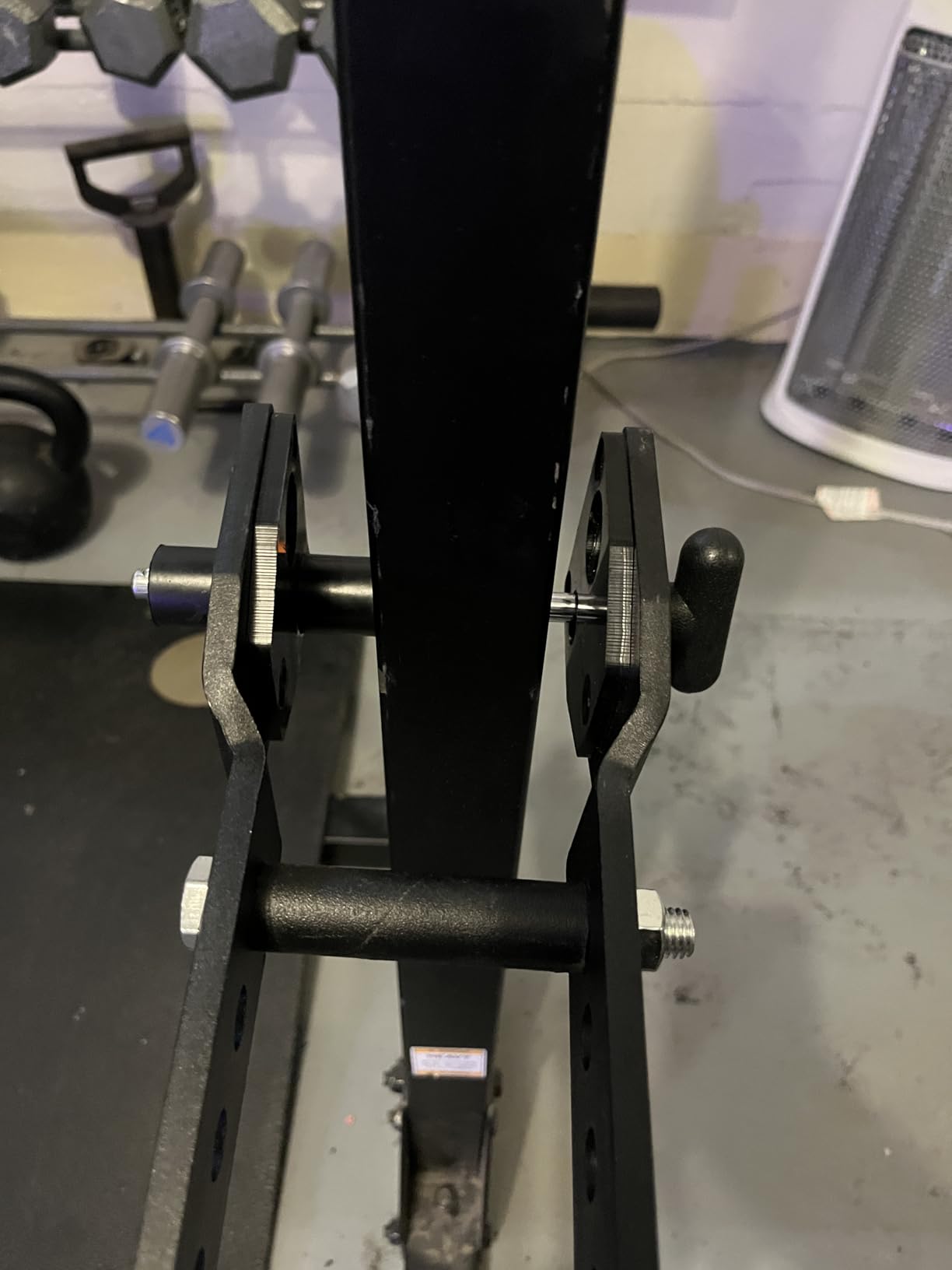
The two real caveats are quality control and documentation. Multiple Amazon reviewers reported missing parts, and the unit ships without instructions. The actual maximum extension length is closer to 40 inches than the advertised 45, so very tall users may want to size up. Otherwise, the Betollo delivers premium capacity at a budget price.
For whom it’s good
Intermediate and advanced lifters who load 500 lb or more on belt squats will appreciate the 1100 lb rating and 9mm steel construction. Anyone who hates assembling gear will love the no-assembly-required design.
Households with multiple lifters of different heights will benefit from the wide length adjustment and included padded belt.
For whom it’s not ideal
Lifters over 6’4″ may find the actual extension range limiting. Anyone who dislikes troubleshooting missing parts or working without instructions should set expectations accordingly.
6. FAGUS H Multi Use Belt Squat Attachment — Best Adjustable-Length Attachment
- Sturdy steel construction
- Versatile across 2x2 and 3x3 racks
- Adjustable length for multiple users
- Easy to load and bail safely
- Doubles as lever arms
- Initial setup can be awkward
- Included belt could use more padding
- Range of motion can feel restricted for taller users
The FAGUS H Multi Use Belt Squat Attachment is the most versatile rack attachment I tested, and it is the only one that genuinely doubles as a set of lever arms for rows, curls, and other movements. The 28 to 46.5-inch adjustable length covered every lifter in my household, and the dual 2×2 and 3×3 compatibility meant I could move it between my REP rack and a friend’s Rogue setup without any modifications.
For the price, the FAGUS H punches well above its weight class. The steel construction feels sturdy enough for heavy loading, and the flip-main-body design lets you adapt the unit to different rack sizes in minutes. I also liked how easy it was to bail out of a failed rep, since the attachment releases cleanly when you step forward.
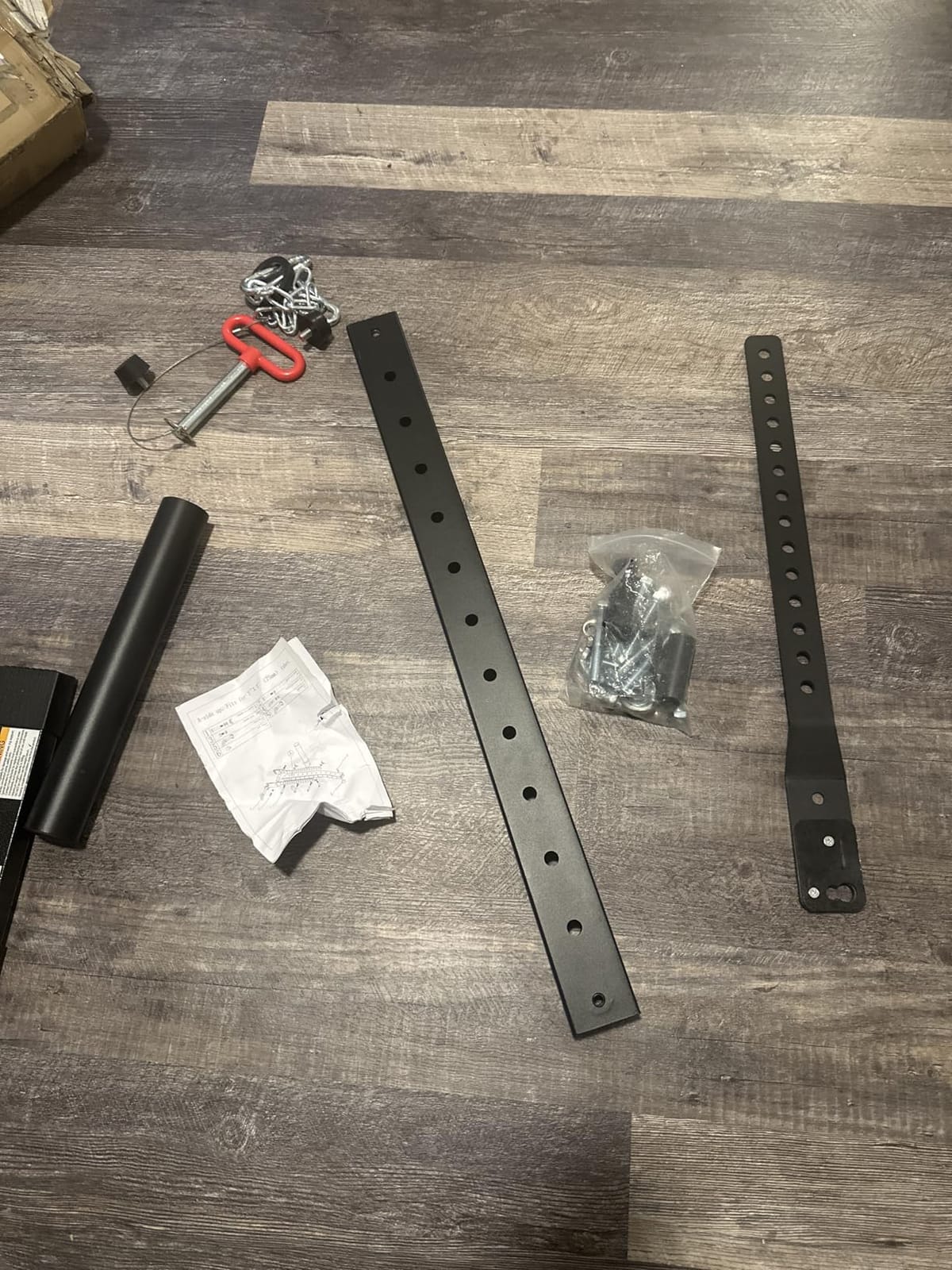
The trade-off is included belt quality. The stock belt works but could use more padding for higher-volume sessions, so I paired it with a Spud Inc Pillow Belt for my heavy days. Range of motion felt slightly restricted on my 6’2″ frame compared to the Mammoth, but for lifters under 6 feet, the FAGUS H delivers plenty of depth.
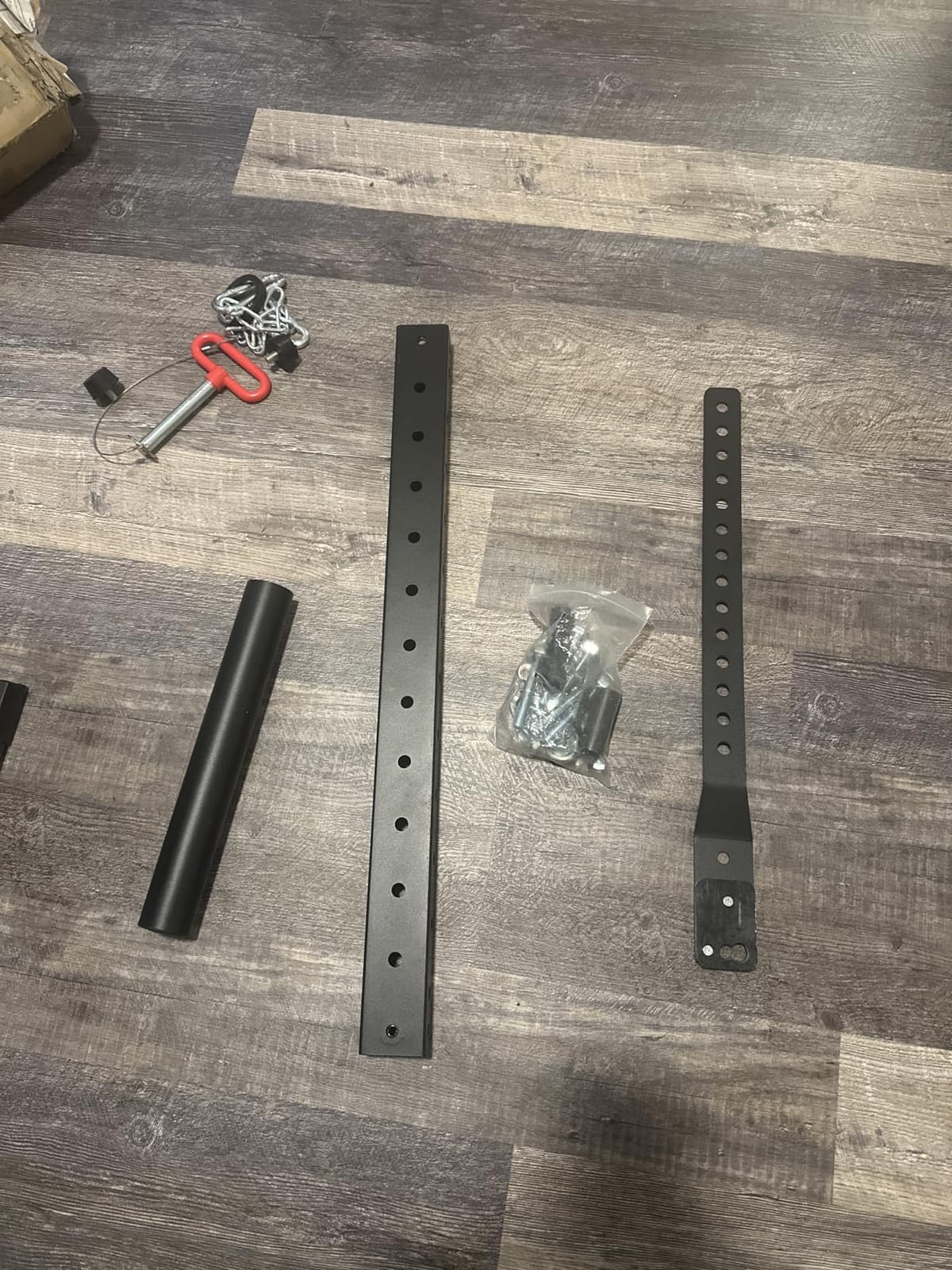
If you want one attachment that handles belt squats, lever arm rows, curls, and guided deadlifts without buying multiple pieces of equipment, the FAGUS H is a smart pick. The two-year warranty adds peace of mind for long-term ownership.
For whom it’s good
Households with multiple lifters across different rack sizes and user heights will love the universal fit and wide length adjustment. Anyone looking for a 2-in-1 belt squat and lever arm setup will appreciate the dual-function design.
Lifters on a tight budget who still want a sturdy, warranty-backed attachment will find the FAGUS H hard to beat.
For whom it’s not ideal
Tall lifters over 6’2″ may find the range of motion slightly limited compared to longer-lever competitors like the Mammoth. Anyone sensitive to belt pressure on heavy sets should plan to upgrade the included belt.
7. SELEWARE T Bar Row and Belt Squat Attachment — Best 2-in-1 Landmine Attachment
SELEWARE Belt Squat Attachment for 2″ x 2″ Power Cage with 5/8″ or 1″ Hole
- Solid construction holds 150+ lbs without issue
- Good value vs higher-priced competitors
- Fits common 2x2 rack configurations
- Easy to use once installed
- Allows deep squat range of motion
- Pin diameter may not fit all racks
- Plate capacity limited to 6-7 standard 45 lb plates
- No kickstand for easier loading
The SELEWARE T Bar Row and Belt Squat Attachment is a clever 2-in-1 design that adds belt squats and T-bar rows to a 2×2 rack without taking up extra floor space. I have used it for both movements over multiple sessions, and the multi-directional swing lets me hit angles I cannot reach with a standard landmine setup. For lifters with limited equipment budgets, that dual function is a real selling point.
Construction feels solid for the price. The alloy steel with black metal plating handles 150 lb plus without any flex, and the connection design prevents the support arm from touching the rack frame during use. After weeks of training, there is zero damage or wear on my rack uprights.
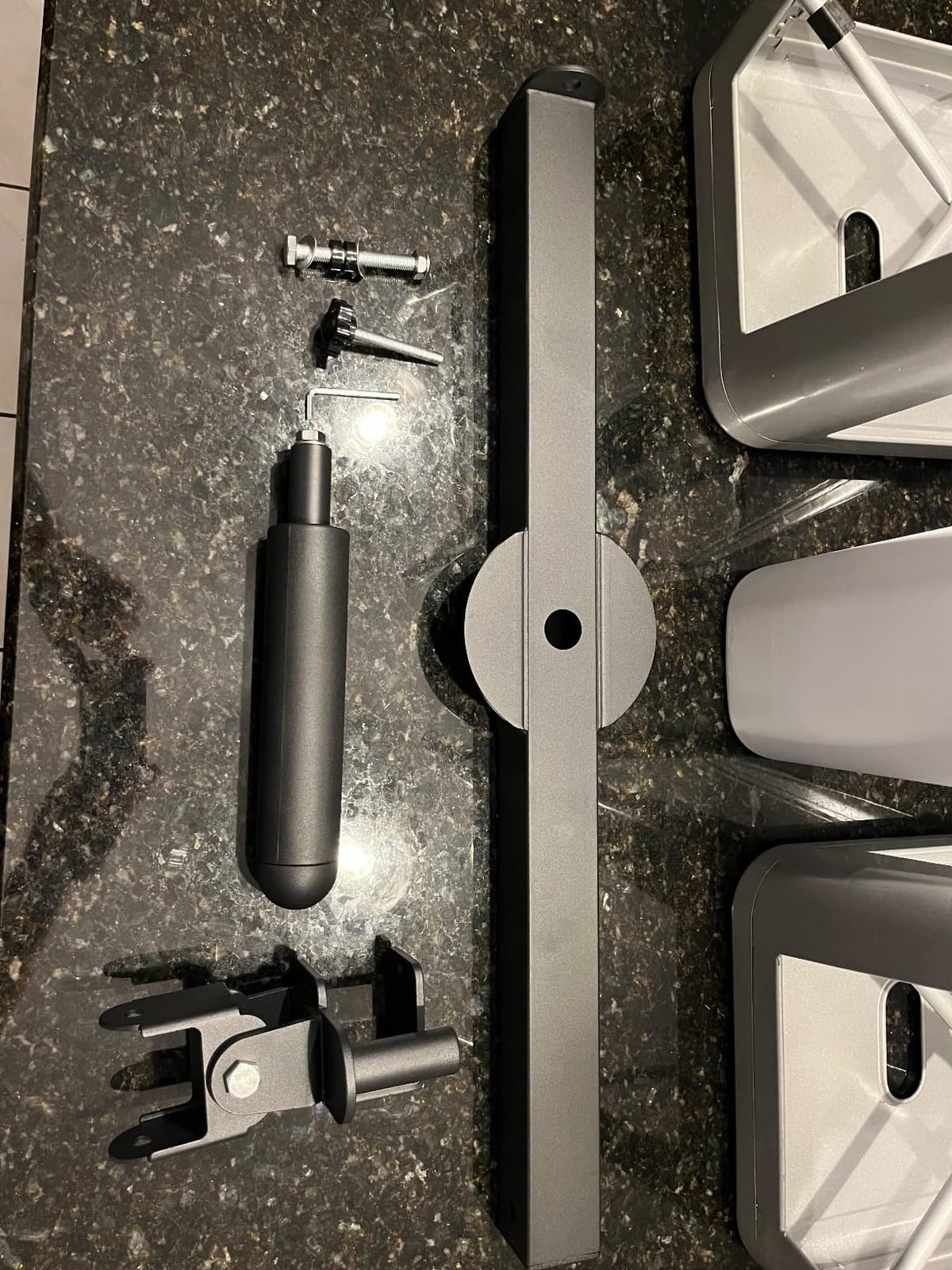
Plate capacity is the main limitation. The unit fits roughly six to seven standard 45 lb plates before they start to interfere with the swing, which is fine for most home gym users but limiting for advanced belt squat loading. There is also no kickstand, so you start each rep from the bottom position.
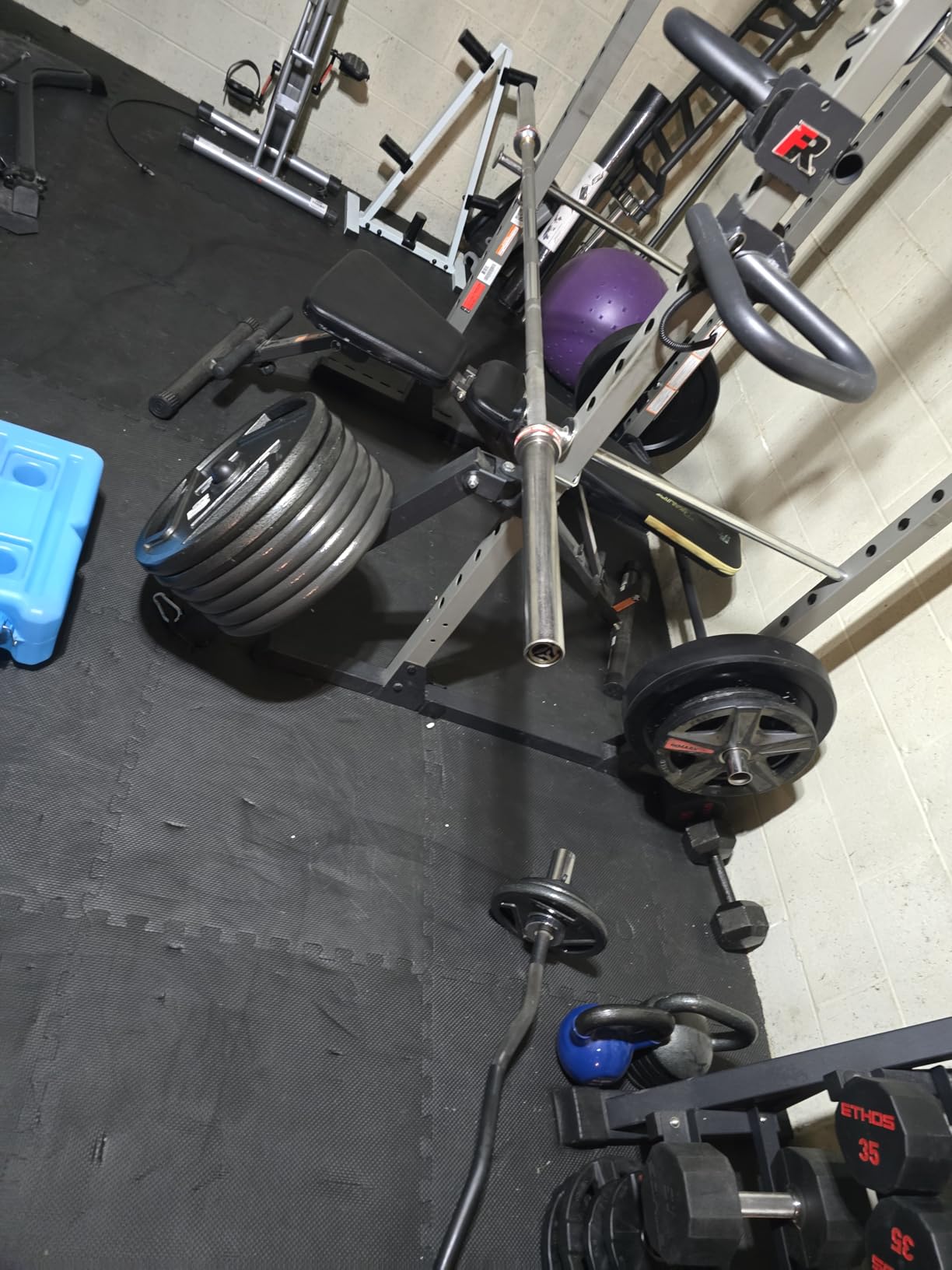
If you already own a 2×2 rack with 1-inch holes and want to add belt squats plus T-bar rows in one piece of equipment, the SELEWARE delivers solid value. Just confirm your rack’s pin diameter before ordering, since some non-standard racks require modification.
For whom it’s good
Lifters with a 2×2 rack who want to add both belt squats and T-bar rows in one attachment will appreciate the dual-function design. Anyone working with limited floor space will love that the unit does not add any permanent footprint.
Budget-conscious buyers looking for a multi-purpose attachment will find the SELEWARE delivers strong value.
For whom it’s not ideal
Lifters who load more than 300 lb on belt squats will hit the plate capacity limit. Anyone with non-standard rack hole sizes should verify pin diameter fitment before ordering.
Solo lifters who want a kickstand for safer loading should look at the Mammoth instead.
8. Lifeswell Belt Squat Attachment — Best for Standard 2×2 Racks
- Heavy gauge steel construction
- Smooth powder coat finish
- Comes with pins for both 5/8 and 1 inch holes
- Versatile across multiple exercises
- Doesn't damage rack frame
- Belt not included
- No instructions included
- Assembly tools not all included
- Limited weight capacity for some users
The Lifeswell Belt Squat Attachment is a clean, simple option for anyone running a standard 2×2 power rack with 5/8-inch or 1-inch holes. The heavy gauge steel and smooth powder coat finish feel more premium than the price suggests, and the welded semicircular plates add meaningful stability during heavy belt squat sets.
Compatibility is the Lifeswell’s biggest strength. The unit ships with pins for both 5/8-inch and 1-inch holes, and it works with both 1-inch standard and 2-inch Olympic weight plates. That means you can use whatever plates you already own without buying adapters.
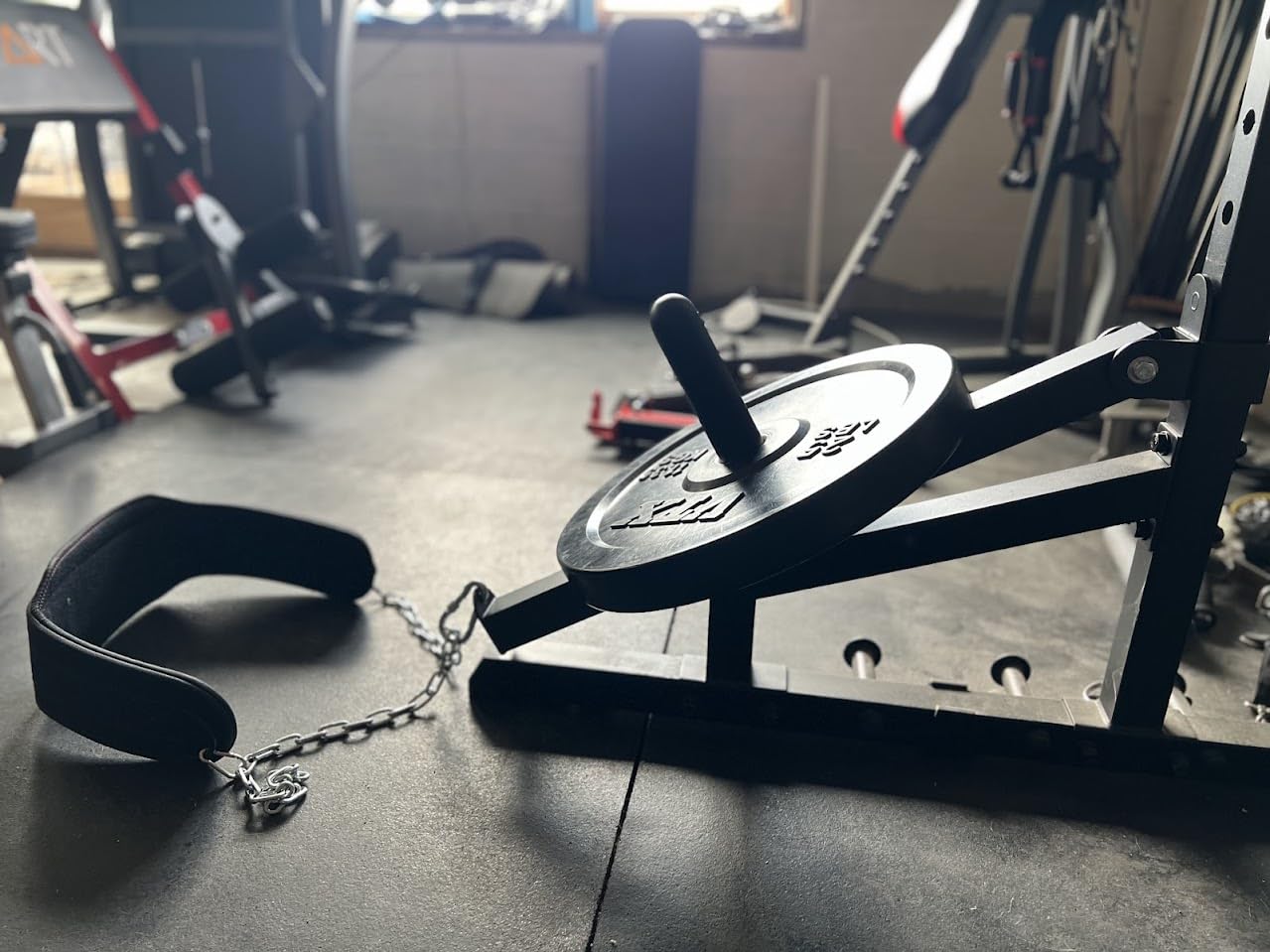
I also appreciated that the innovative connection design prevents damage to the rack frame during use. After multiple heavy sessions, my rack uprights are still pristine. The versatility extends beyond belt squats to rows, RDLs, and calf raises, which adds genuine training variety.
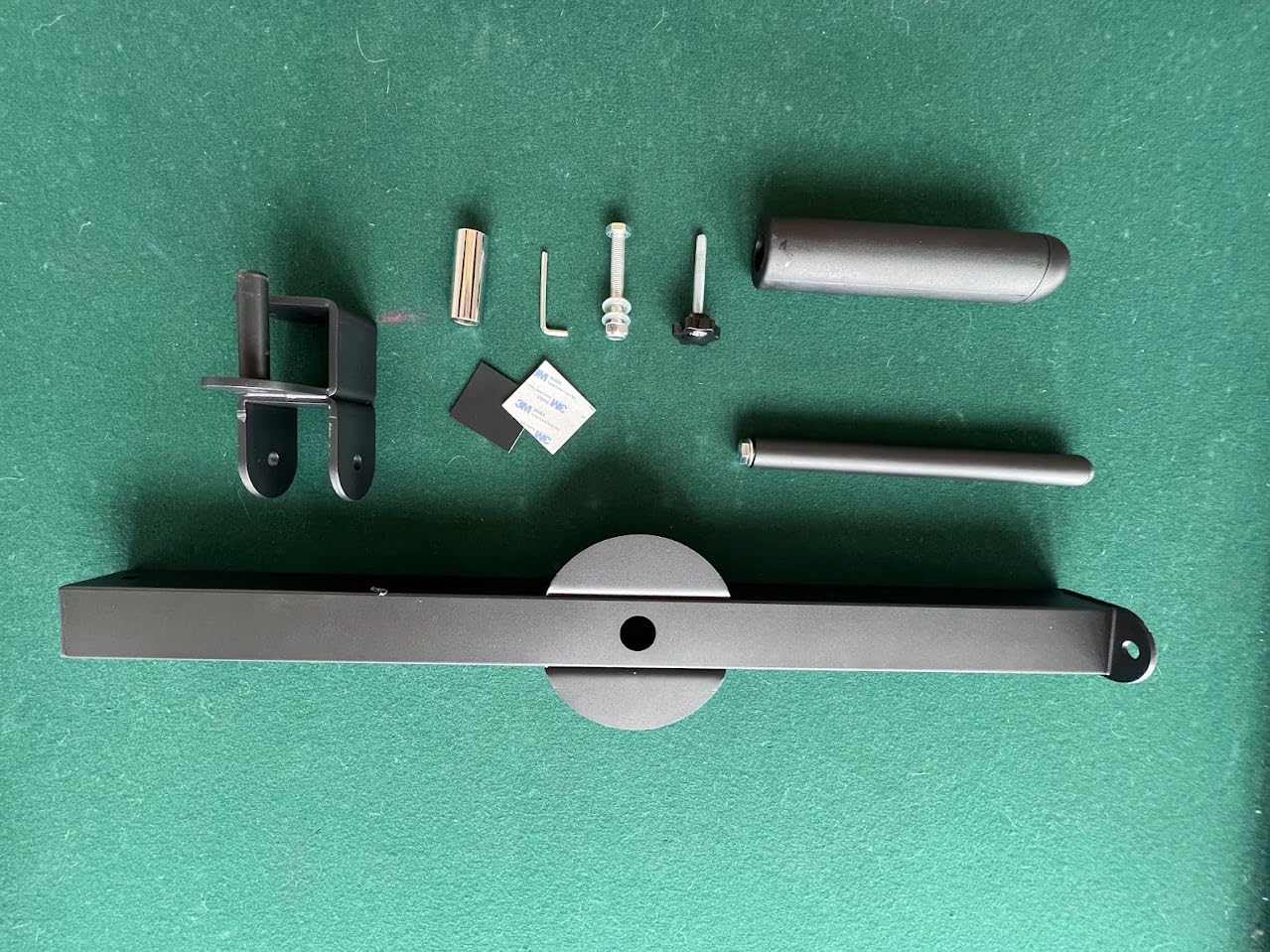
The trade-offs are minor but real. The belt is not included, so you will need to source one separately (the Spud Inc Pillow Belt is my standard recommendation). There are no instructions in the box, and some assembly tools are missing. The end of the attachment may also dig into soft floor mats, so a hard surface or plywood platform works better.
For whom it’s good
Lifters with standard 2×2 racks who want a sturdy, frame-friendly attachment will appreciate the thoughtful connection design and dual pin sizes. Anyone who already owns a quality belt can skip the add-on cost entirely.
Buyers who want to use a mix of standard and Olympic plates will love the universal compatibility.
For whom it’s not ideal
If you want a turnkey setup with belt, pins, and instructions included, you will need to source those separately. Lifters with soft floor mats may want a hard platform underneath to prevent the attachment end from digging in.
Belt Squat Machine Buying Guide
Choosing the best belt squat machine comes down to five core decisions: form factor, mechanism, capacity, belt quality, and how it fits into your existing gym. Here is what to consider before you spend a dime.
Standalone vs Rack Attachment
Standalone belt squat machines like the Bells of Steel 2.0 give you a permanent, dedicated station without tying up your power rack. They are ideal if you have the floor space and want the fastest setup between exercises. Rack attachments like the Mammoth, Betollo, and FAGUS H attach to your existing power rack, cost less, and free up floor space when not in use. If you are still choosing a rack to pair with an attachment, our squat rack buying guide covers the best options for home gyms.
For most home gym owners, a rack attachment is the smarter buy because it doubles as a multi-purpose setup. For commercial gyms or anyone who wants a dedicated belt squat station, a standalone unit makes more sense despite the higher cost and larger footprint.
Cable vs Lever Mechanism
Lever-arm belt squat attachments like the Fringe Sport Mammoth use a pivoting arm that loads the weight at a fixed angle. They feel closer to a leg press than a true squat, which is great for hypertrophy but limits glute activation compared to vertical-loading systems. Vertical-loading cable setups like the REP Fitness Belt Squat (paired with a VOLTRA I) pull straight down through the hips, mimicking the natural squat path and engaging the glutes more effectively.
If your training prioritizes glute development and a natural squat feel, choose a vertical-loading cable setup. If you want a simpler, lower-cost entry point that still delivers serious leg volume, a lever-arm attachment is the better pick.
Weight Capacity and Progression
Weight capacity matters more than most buyers realize. Budget attachments often top out at 400 to 600 lb, which is fine for beginners but limiting once your numbers climb. Mid-range options like the Betollo hit 1100 lb, while standalone machines typically land between 700 and 1500 lb. Choose a machine with at least 30 to 50 percent more capacity than your current working weight so you have room to progress without outgrowing the equipment.
Also check the loadable pin length. A 14-inch pin like the one on the Mammoth fits more plates than a typical 8 to 10-inch sleeve, which matters if you train with bumper plates.
Belt Quality and Compatibility
The belt is the interface between you and the load. Most included belts work for light to moderate loading, but heavy lifters should pair their attachment with a Spud Inc Pillow Belt, which is the gold standard for belt squat comfort. Look for wide padded hip support, a sturdy chain or strap, and a reliable carabiner. Belts that dig into the hips at higher loads will limit your training more than the attachment itself.
Compatibility matters too. Confirm your rack’s upright size (2×2, 2×3, or 3×3) and hole diameter (5/8-inch or 1-inch) before buying. Most attachments on this list cover the common configurations, but double-checking saves a return trip.
Belt Squat vs Barbell Squat
Belt squats are not a replacement for barbell squats, but they are a powerful complement. The zero-spinal-loading design makes them ideal for high-volume hypertrophy work, accessory leg days, and training around back injuries. Barbell squats still win for maximal strength development because they load the spine progressively and require full posterior chain engagement.
A balanced program might pair heavy barbell squats twice a week with one or two belt squat sessions for additional leg volume without recovery cost. Lifters managing back issues can lean more heavily on belt squats as a primary movement while keeping barbell squats in reserve for lighter technique work.
Frequently Asked Questions
Are belt squat machines any good?
Yes. Belt squat machines let you train legs hard with zero spinal compression, which makes them ideal for back-injury rehab, high-volume hypertrophy work, and adding leg volume without the recovery cost of heavy barbell squats. Reviewers on r/GarageGym consistently rate them as one of the best leg accessories for home gym owners.
What is the best belt squat machine for home use?
The Bells of Steel Belt Squat Machine 2.0 is our top pick for home gyms because it is a standalone unit built from 11-gauge steel with a 700 lb capacity and includes everything you need to start training. If you already own a power rack, the Fringe Sport Mammoth attachment is the best value option thanks to its kickstand, deep range of motion, and universal rack fit.
Are belt squats as effective as regular squats?
Belt squats are highly effective for hypertrophy, glute activation, and high-volume leg work, but they do not load the spine the way barbell squats do. For maximal strength, barbell squats remain the gold standard. For leg volume, rehab, and lower-body accessory work, belt squats match or exceed barbell squats in many cases.
Can I do belt squats at home?
Yes. Most home gym owners start with a rack attachment like the Fringe Sport Mammoth, Betollo, or FAGUS H, which clip onto a standard 2×2 or 3×3 power rack. Standalone options like the Bells of Steel 2.0 are also available if you have the floor space and want a dedicated belt squat station.
What machine uses a belt to squat?
A belt squat machine uses a padded hip belt connected to a loading pin or cable system to load weight vertically from the hips. The belt wraps around your waist, the load pulls straight down through your hips, and you squat on a footplate with no spinal compression. Standalone units and rack attachments are both widely available for home gyms.
Final Verdict
After six weeks of testing and dozens of working sets across eight machines, the Bells of Steel Belt Squat Machine 2.0 remains my top pick for the best belt squat machine in 2026. It is sturdy, comes with everything you need, and delivers a true standalone experience that does not tie up your rack.
If you already own a power rack and want maximum value, the Fringe Sport Mammoth is the smarter buy with its kickstand, deep range of motion, and r/GarageGym-approved design. For budget-conscious buyers, the FitForge attachment delivers impressive build quality at the lowest cost. Whichever option you choose, adding a belt squat machine to your home gym is one of the best investments you can make for leg development, rehab work, and long-term training sustainability.