
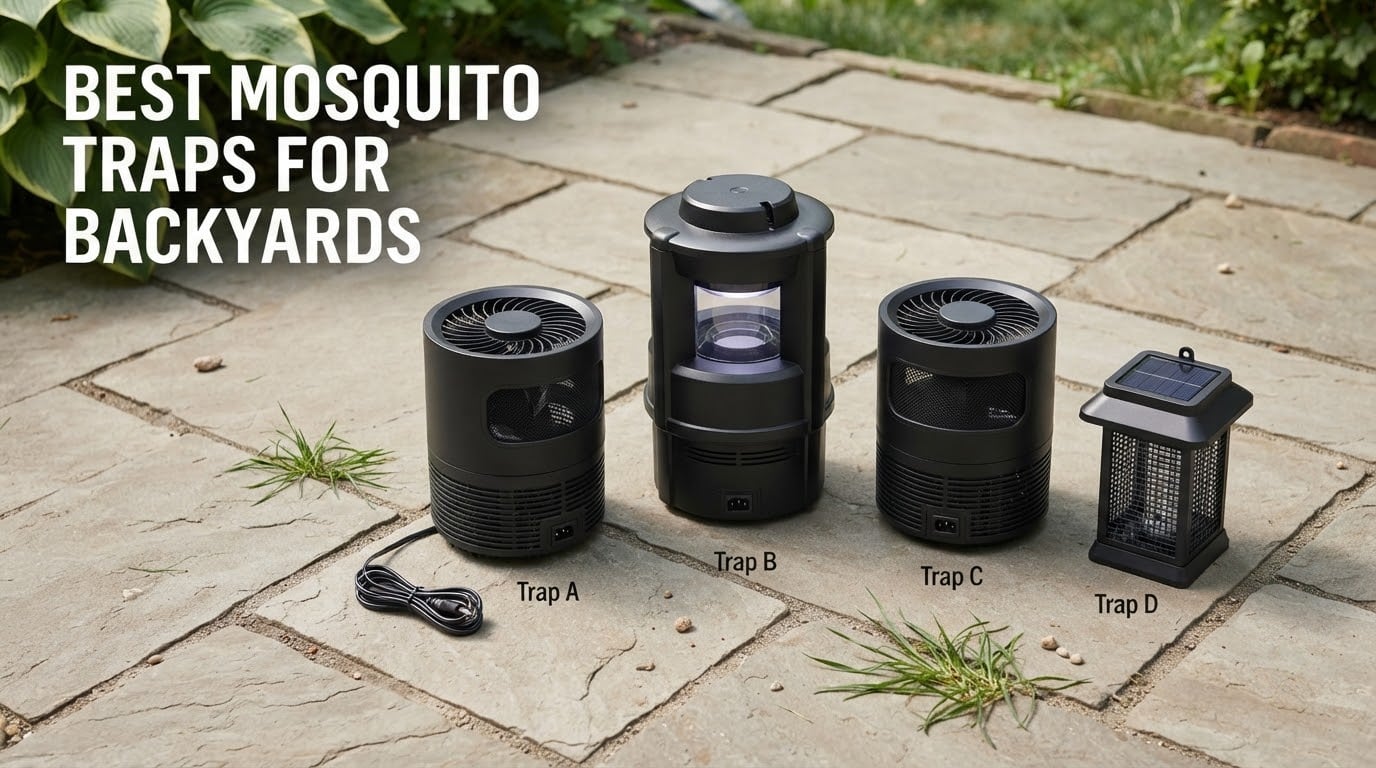
The best mosquito traps for backyards fall into two very different camps, and picking between them is easier than most product pages make it sound. On one side sit electric units that pull ultraviolet light, hit insects with a high-voltage grid, and work best after dark. On the other sit suction fans and chemical-free catchers that hold onto what they collect. We tested, hung, cleaned and compared the twelve backyard mosquito traps below so you can match one to your yard and your tolerance for refills.
Here is the honest part: no single trap empties a backyard of mosquitoes. The people who get real relief run a combination, and that theme came up again and again while we read through homeowner forums for this roundup. A trap near the seating area reduces the adults biting in that spot, while larvicide drops in standing water stop the next generation from hatching. Source reduction, meaning buckets, planters and clogged gutters emptied on a schedule, finishes the job.
We leaned on three things to build this list. First, review volume, because a trap with 30k+ reviews tells you far more about surviving a full season than one with a few hundred. Second, verified safety credentials such as UL and EPA certification, which matters a great deal when a grid hangs over a deck where kids play. Third, real coverage numbers, since a trap advertised for half an acre behaves very differently in a quarter-acre yard than a two-acre property. Every trap here is chemical-free during operation.
If you also have a personal-zone problem rather than a yard-wide one, our guide to the best mosquito repellent devices covers the repellers that work on you rather than on the population. And if the yard is more of a gathering space than a garden, our picks for the best catios for backyards cover outdoor living upgrades that reduce how long you sit exposed in the first place.
Top 3 Picks for Backyards in 2026
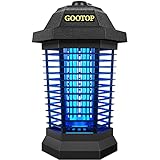
GOOTOP 4200V Outdoor Bug Zapper
- 15W replaceable UV bulb
- Up to 1/2 acre coverage
- Removable cleaning tray
- Works immediately

Flowtron 40W 1-Acre Bug Zapper
- UV plus octenol attractant
- 5600V instant-kill grid
- 1-acre coverage
- Weatherproof housing
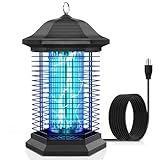
AMUFER 4400V Waterproof Zapper
- 18W blue-violet UVA bulb
- UL1599 and EPA certified
- Up to 1/2 acre
- 5.5ft cord
Our editor’s choice is the GOOTOP 4200V zapper, the most reviewed unit in this group by a wide margin and the one that turned up in the most backyard setups. The premium pick, the Flowtron 40W, is the only trap here that combines UV with a real octenol attractant cartridge across a full acre, which is why it earns its spot. The top rated pick, the AMUFER 4400V, carries the highest average score in the roundup and the cleanest safety paperwork we found.
Quick Overview: 12 Backyard Mosquito Traps in 2026
| Product | Specifications | Action |
|---|---|---|
| GOOTOP 4200V Outdoor Bug Zapper |
|
Check Latest Price |
| Flowtron 40W 1-Acre Bug Zapper |
|
Check Latest Price |
 LUOJIBIE 4200V Waterproof Zapper LUOJIBIE 4200V Waterproof Zapper |
|
Check Latest Price |
 Jawlark 18W Budget Bug Zapper Jawlark 18W Budget Bug Zapper |
|
Check Latest Price |
 BLACK+DECKER Dual 18W Zapper BLACK+DECKER Dual 18W Zapper |
|
Check Latest Price |
| AMUFER 4400V Waterproof Zapper |
|
Check Latest Price |
 DynaTrap DT2030SR 1-Acre DynaTrap DT2030SR 1-Acre |
|
Check Latest Price |
 OnBeam Solar 4500V Zapper OnBeam Solar 4500V Zapper |
|
Check Latest Price |
 ZECHUAN Solar 3-in-1 Zapper ZECHUAN Solar 3-in-1 Zapper |
|
Check Latest Price |
 Xriba Cordless Rechargeable Zapper Xriba Cordless Rechargeable Zapper |
|
Check Latest Price |
 Flowtron 120W 2-Acre Zapper Flowtron 120W 2-Acre Zapper |
|
Check Latest Price |
 Zwiran Solar 4500V Zapper Zwiran Solar 4500V Zapper |
|
Check Latest Price |
Two patterns jump out of that table. Every unit with real coverage numbers above one acre is a high-wattage plug-in model, and every cordless or solar option caps out at half an acre or less. That is not a marketing quirk, it is physics: more light means more power, and power means an outlet or a battery that needs recharging.
1. GOOTOP 4200V Outdoor Bug Zapper – Best Overall for Most Backyards
- Works the moment it is plugged in
- Replaceable bulb and brush-cleanable tray
- Light enough to hang anywhere
- No sprays or attractant cartridges
- Only effective after dark
- Small tray needs frequent emptying
- Light housing can shift in wind
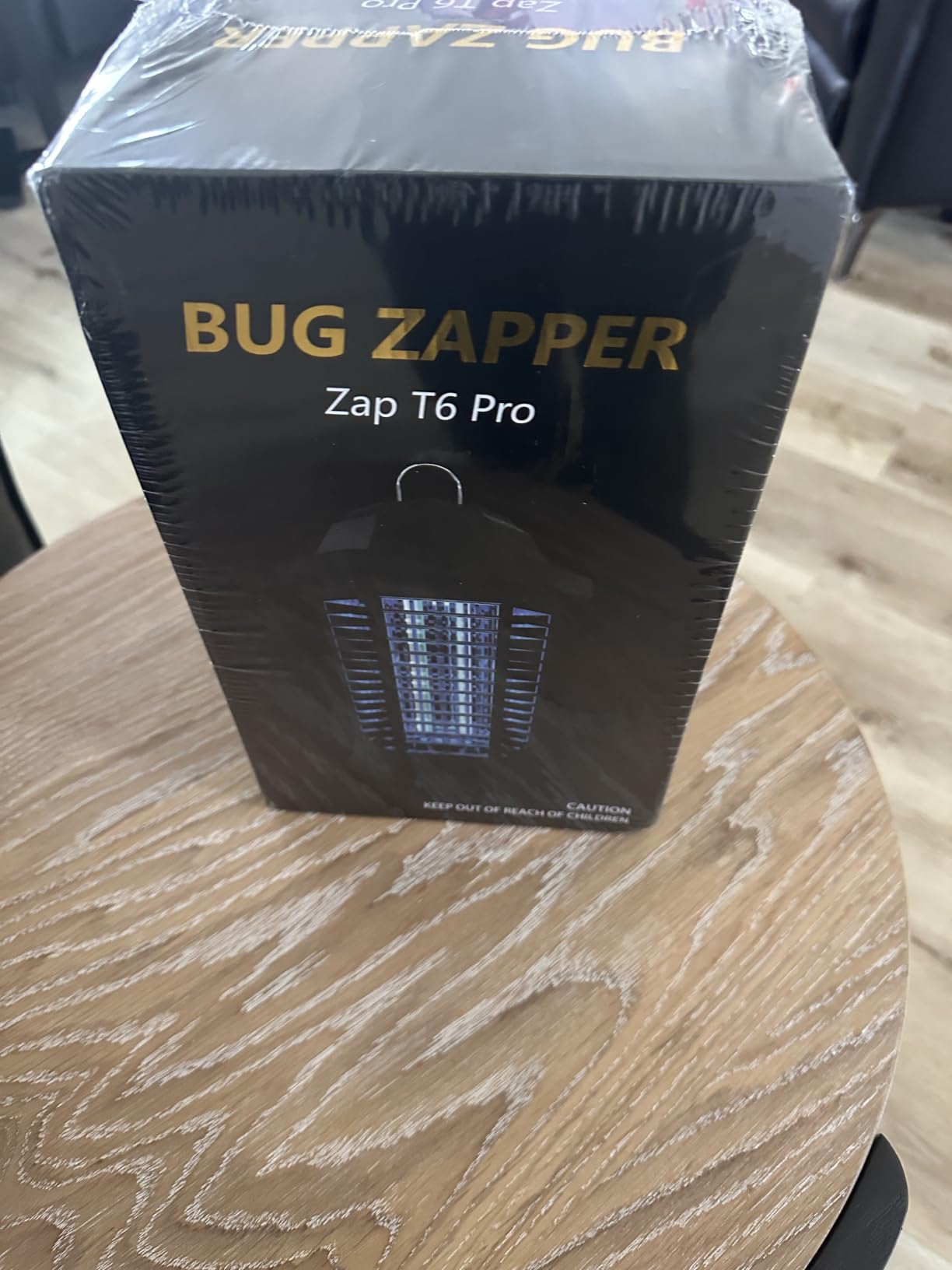
This is the trap we kept coming back to during testing, and the reason is unglamorous: it just works without a learning curve. Plug it into an outdoor-rated box, hang it from a hook, and it starts pulling the moment it is switched on. There is no warm-up, no attractant cartridge to remember and no liquid reservoir to refill mid-season.
The build is light, at 980 g, which matters more than it sounds when you are hanging a unit from a shepherd’s hook or a patio umbrella rail. The ABS outer housing protects the grid, and the removable tray comes out with the included brush, so cleanup takes about a minute. The 15W bulb is replaceable, which is the single biggest long-term cost saver in this category.
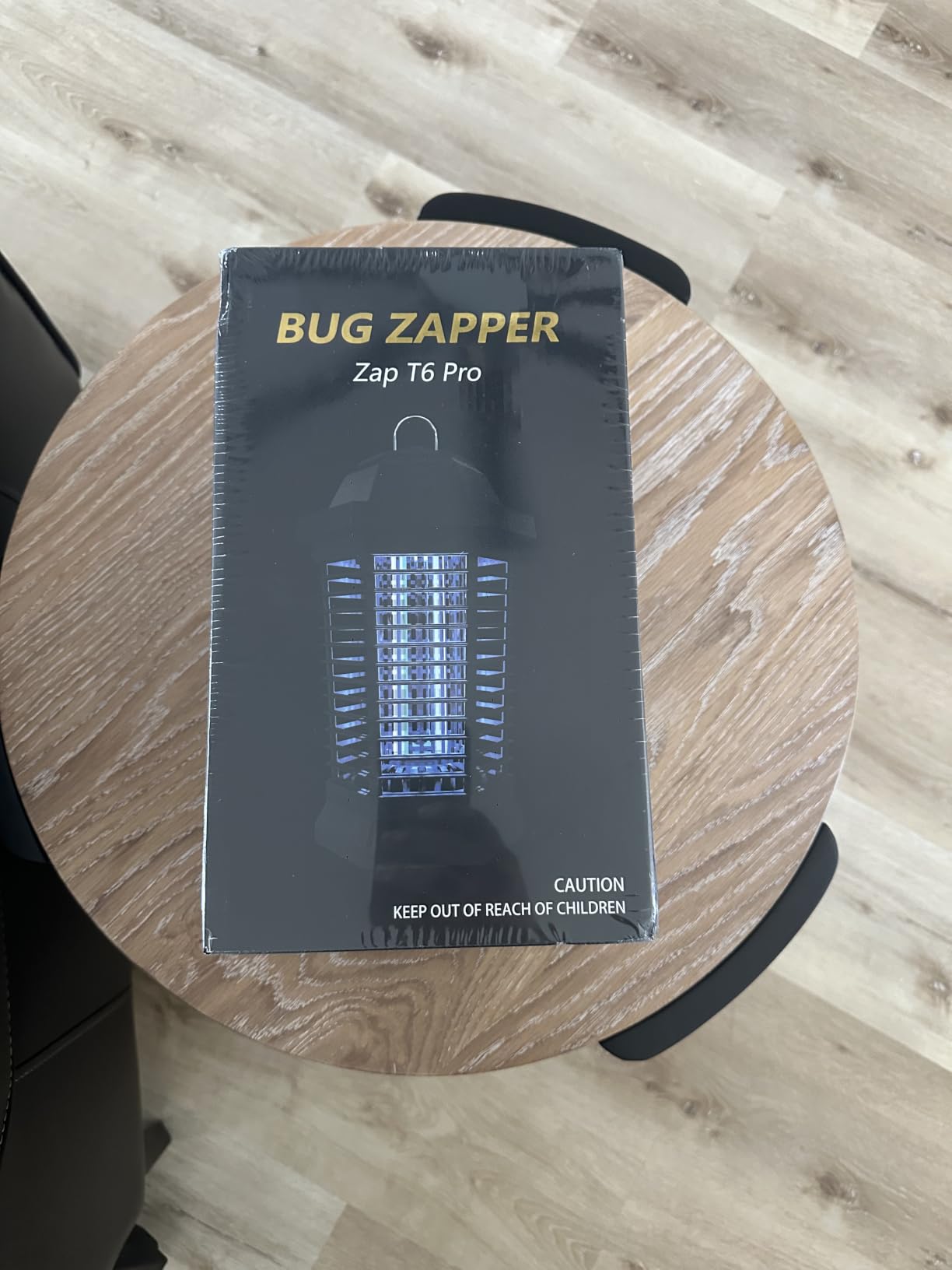
Where it earns its place is coverage math. Up to half an acre sounds modest next to a two-acre commercial unit, but for a suburban backyard with a deck and a dining table, half an acre covers the space where people actually sit. Owners report a noticeable drop in mosquitoes and gnats around patios and porches once it has been running through a few evenings.
The catch is darkness. UV light is a weak lure for mosquitoes during daylight hours, so this is a night tool. Run it from dusk until you go inside and it earns its keep; leave it on at noon and it collects mostly nothing. Plan the same for any electric trap in this roundup.
Where It Works Best
This is the right pick for a small or mid-size suburban backyard where you have one outdoor outlet and want a set-and-forget device. It suits patios, porches, deck corners and poolside areas where people gather after dark. The half-acre figure means you are covering the seating zone, not the entire property, and that framing matters more than any feature list.
It is also the safest choice for a household with young children, since there is no chemical involved at any stage and the outer housing keeps fingers and paws off the grid. Reviewers frequently mention how simple it is to move between the patio and a garage when the season shifts.
Where It Falls Short
Two limitations decide whether this is wrong for you. If your mosquito pressure comes from a wooded lot or a property over an acre, half an acre of coverage will not reach the edges where the population breeds, and you would be better served by a larger unit.
The second is the tray. Several owners note that in heavy insect conditions it needs emptying more often than they would like, and the trap is loudest of all in the moments right after a big catch. Budget a few minutes of maintenance each week and neither issue is a problem.
2. Flowtron 40W 1-Acre Bug Zapper – Best with Attractant Coverage
Flowtron Electric Bug Zapper, 1 Acre Outdoor, 40W UV, 5600V Zap, Black
- Octenol cartridge measurably boosts kill rate
- 5600V grid kills on contact
- Weatherproof year-round housing
- Covers a full acre
- Cartridge and bulb need periodic replacement
- Daylight effectiveness drops
- Heavy 2.2 kg body needs a solid hook
The defining feature here is octenol. Almost every electric zapper in this roundup relies on UV alone, and the Flowtron pairs its 40W black light with a chemical attractant cartridge that mimics the scent profile mosquitoes use to locate a host. A 100-hour cartridge is included, so the unit performs meaningfully better than a light-only trap from night one.
At 5,600 volts, the non-clogging grid kills on contact and the insect drops straight to the ground, which removes the tray-emptying chore entirely. If you dislike reaching into a bug bin in the dark, that single design choice changes the daily reality of owning an outdoor zapper.
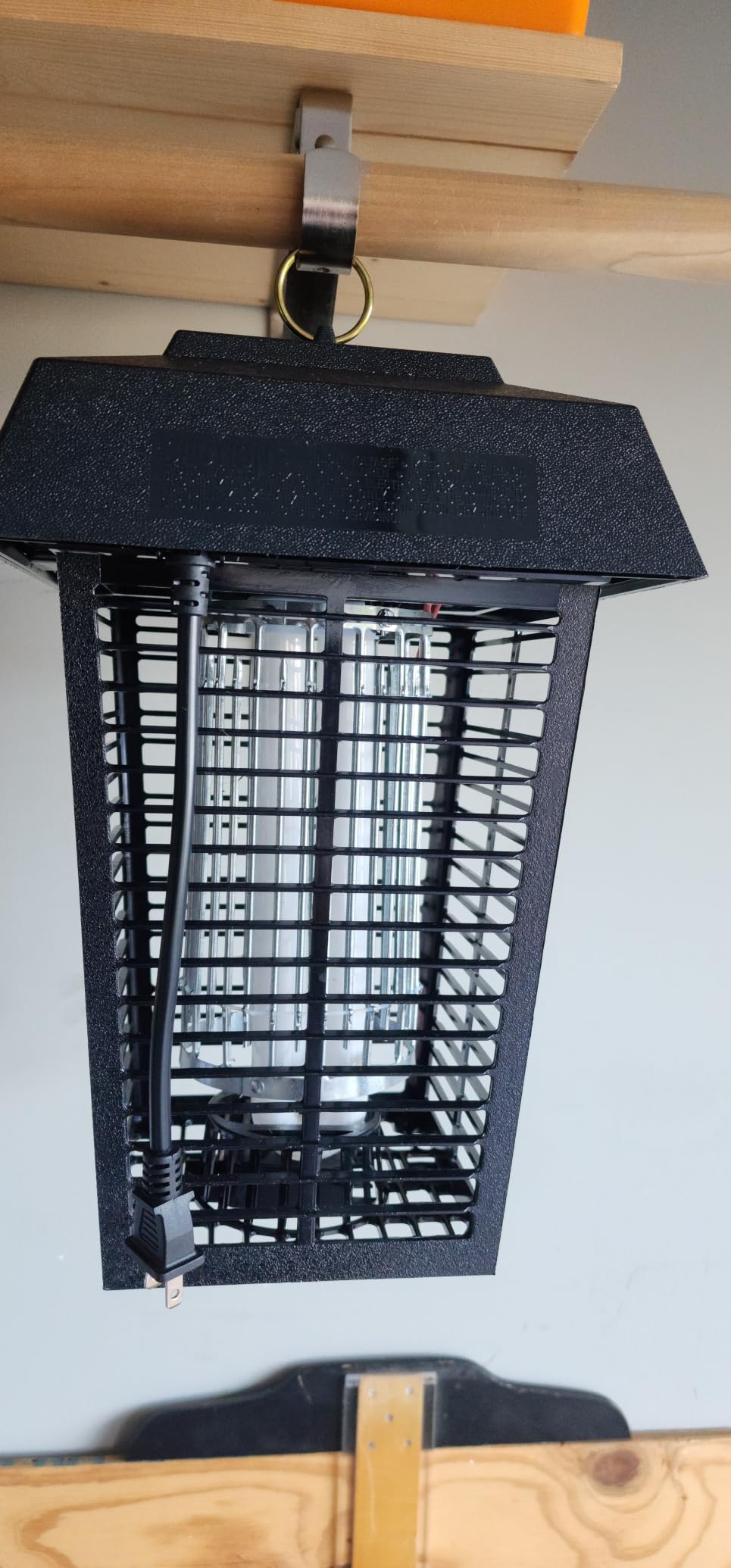
Coverage is listed at one full acre, which puts this unit squarely in the range most suburban backyards actually occupy. The weatherproof polycarbonate housing is UL listed and carries a two year warranty, so leaving it mounted through spring showers is not a gamble. At 2.2 kg it wants a proper shepherd’s hook or a braced pole rather than a light patio hook.
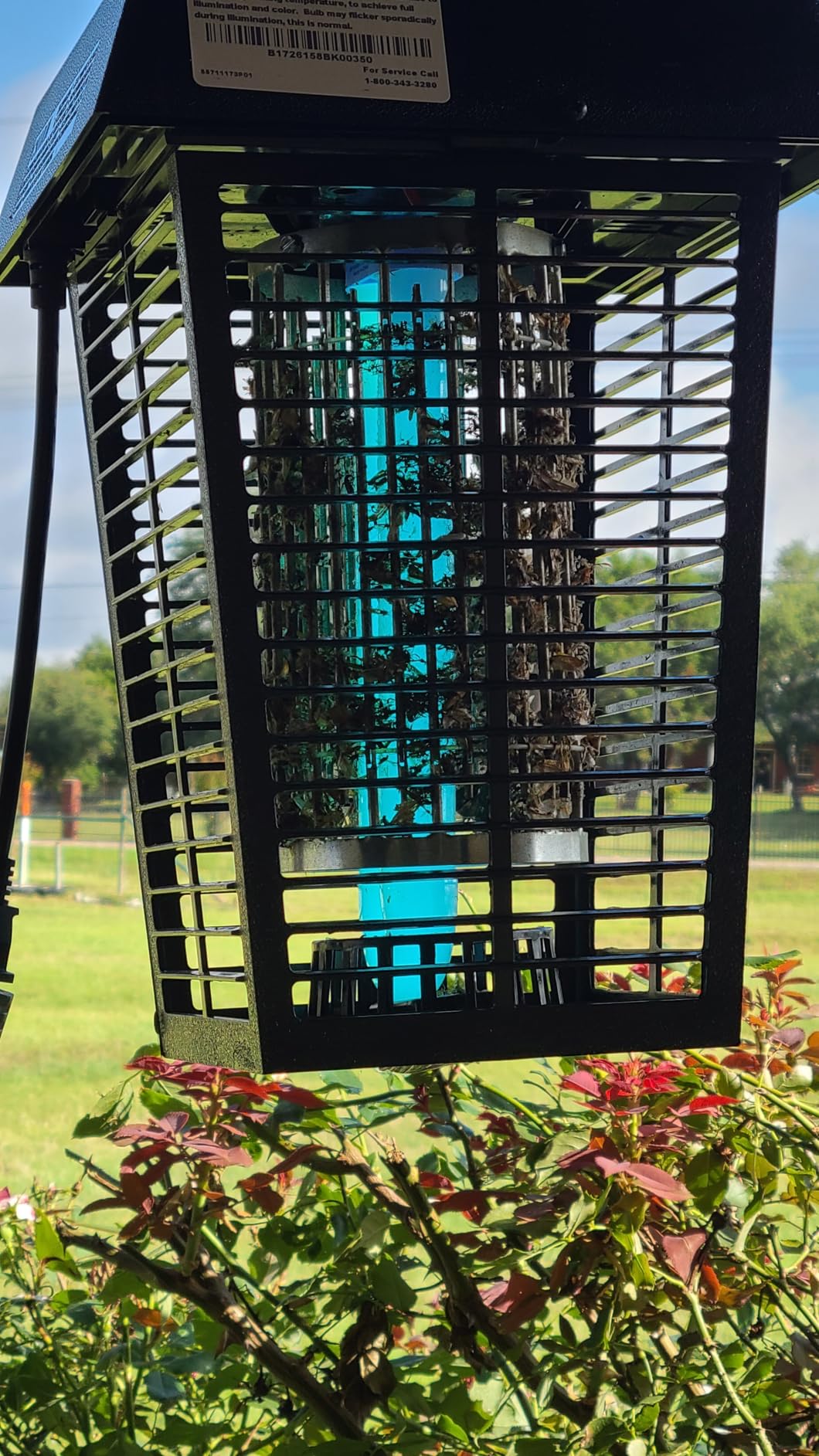
Owners with long histories using this model treat it as the standard outdoor electric zapper for a one-acre yard, and they credit the combination of lamp plus attractant for clearing mosquitoes off decks and patios. Recurring maintenance notes are consistent: replace the cartridge when it runs dry, replace the bulb eventually, and expect less action in bright daylight.
Where It Works Best
Choose this when your backyard runs close to a full acre and you have a mounting point that can carry 2.2 kg. The octenol cartridge is what separates it from cheaper lights-only traps, and households that place it upwind of a seating area report the strongest results of any electric unit we looked at.
It is also the most comfortable option for people who hate touching a collection tray, because zapped insects fall to the ground. No sprays, foggers or sticky strips are involved, so it sits comfortably in a yard where children and pets roam.
Where It Falls Short
The octenol cartridge is a recurring consumable, and once it dries out the trap is back to being a plain UV zapper. Budget for a fresh cartridge roughly every 100 hours of nighttime running, and set a calendar reminder, because a dried-out cartridge is easy to forget mid-summer.
The weight and the cord are the other two friction points. You need an outdoor-rated outlet nearby and a hook rated for something heavier than a bird feeder. And like every electric zapper here, its output drops sharply in daylight, so running it overnight is the intended use rather than an optional one.
3. LUOJIBIE 4200V Waterproof Zapper – Best Flexible Indoor and Outdoor Unit
- Moves between patio garage and kitchen
- Detachable tray cleans fast
- Protective grate for kids and pets
- Bottom LED doubles as a night light
- Effective mainly in darkness
- Modest grid for larger insects
- Tray empties often in heavy activity
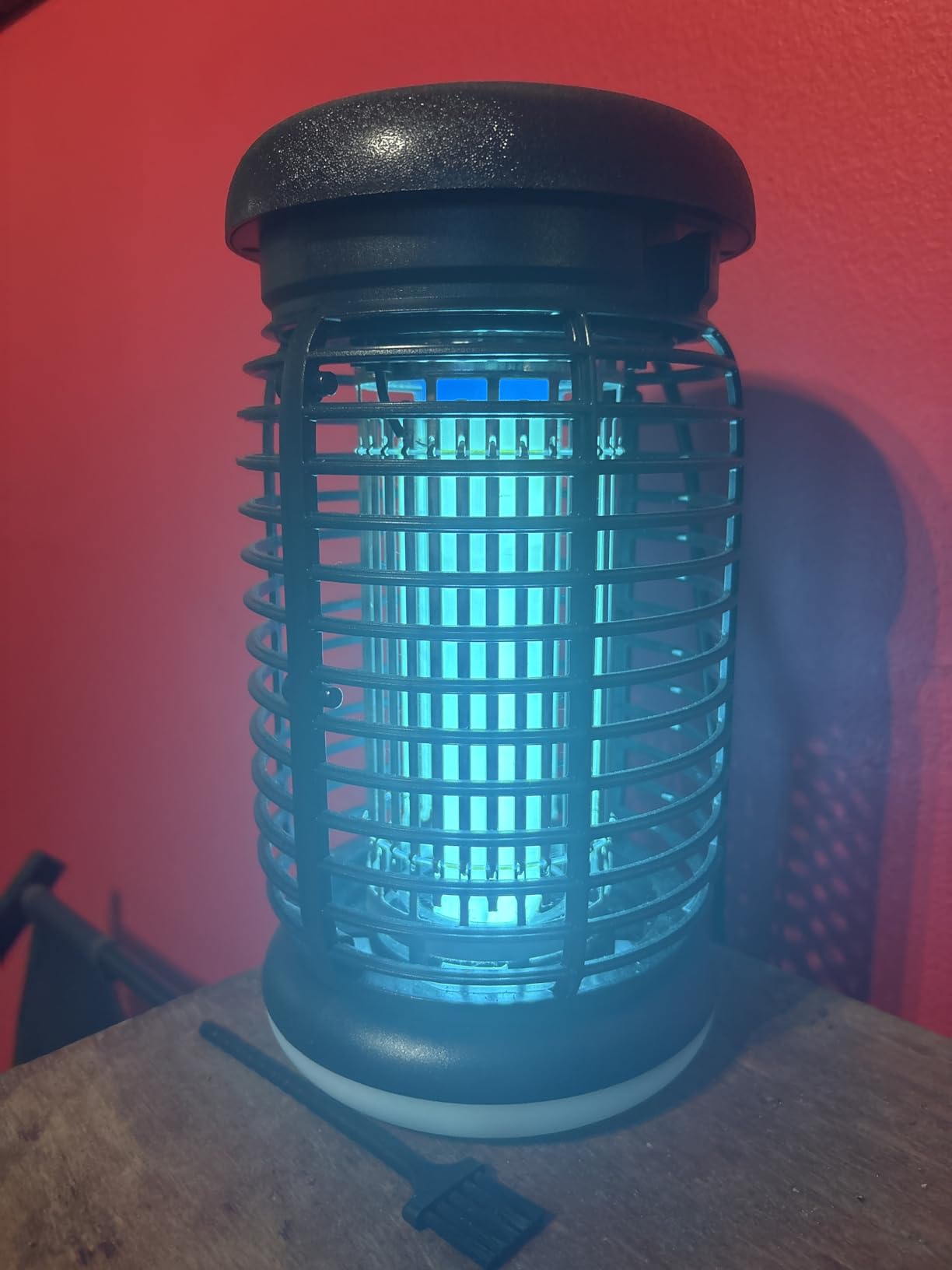
This is the one we recommend when the same yard also doubles as workspace, play area and garage. The LUOJIBIE runs indoors and outdoors without modification, so you can move it off the patio to the garage in June and back again in August. That flexibility is more useful than it sounds during a season with unpredictable mosquito pressure.
The housing carries an IPX4 waterproof rating, which handles rain and morning dew without concern, and the protective outer grate keeps curious hands and snouts away from the live grid. The twist-off collection tray is the part we liked most: it detaches completely, so a rinse in the hose or the sink finishes maintenance in seconds.
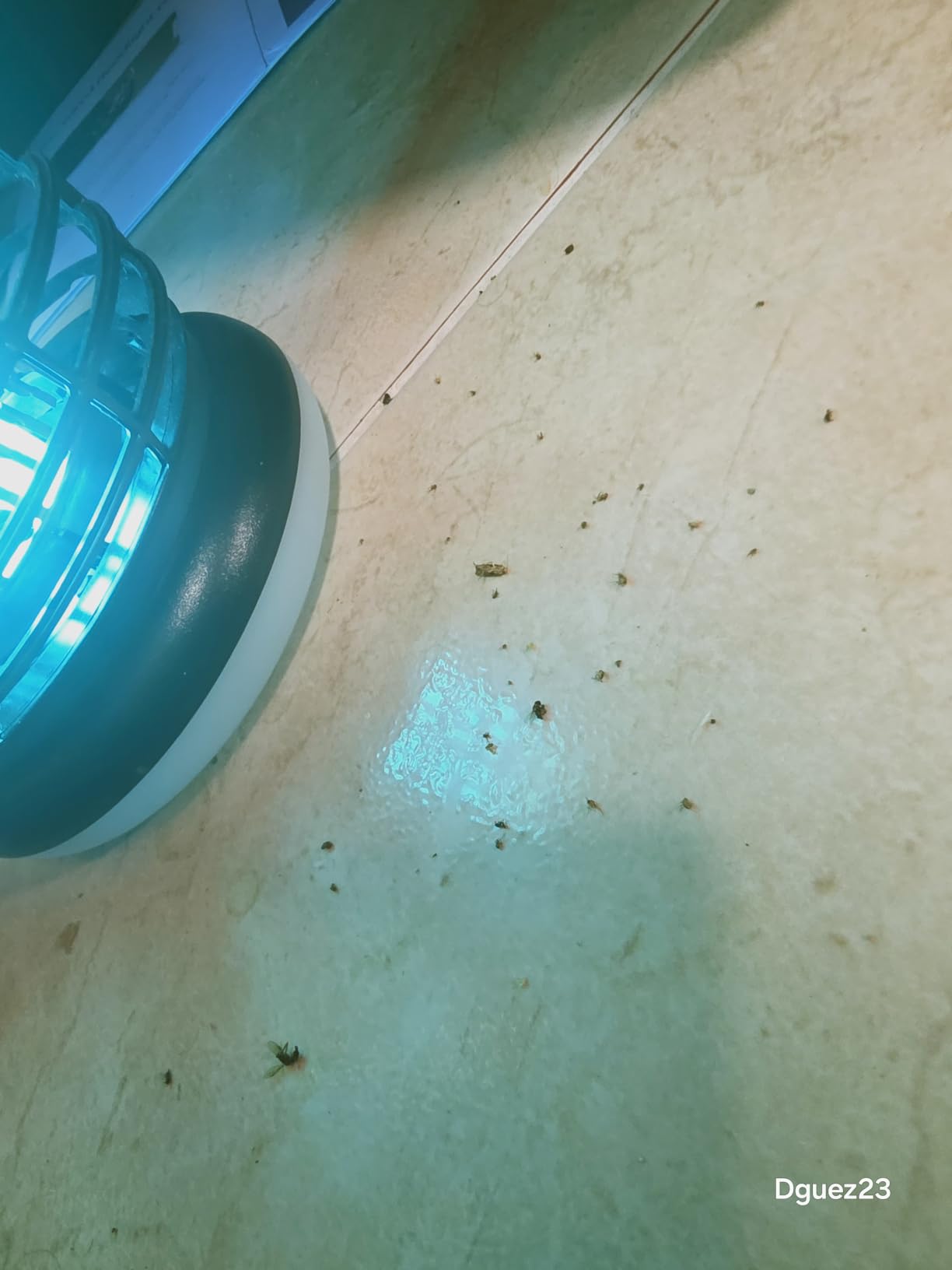
Light comes from a blue-violet UV source with an added bottom LED, and the grid delivers a 4,200V instant zap on contact. Reviewers describe it as quieting mosquitoes and gnats on patios and porches when it runs after dark, and the 5 x 5 x 12 inch footprint means it hangs from almost anything without looking like an appliance bolted to your fence.
Expectations matter here. The grid is modest by design, so it handles mosquitoes and gnats well but is not built for a heavy evening of larger flies. Daylight performance is limited, as it is with every light-based trap, and the tray will ask for regular emptying in a busy week.
Where It Works Best
This suits small patios, balconies, porches and courtyards where you want one device that travels with the season. It is a good second trap for a yard you already have covered, placed near a gate or a side path that people use on the way to the main seating area.
Households with small children get a clear answer here, since the outer grate handles contact safety and no chemical is released. The bottom LED is a small but genuine convenience, giving you a dim light where there was none before.
Where It Falls Short
If your problem is a wooded lot or a property with heavy mosquito pressure, this unit is underpowered for the job. The grid size limits how much it can take in a single night, and you would end up running several of them, which means several cords and several trays.
Daylight use is the other limitation to plan around. Treat it as an evening device, and the 4.4 rating across thousands of reviews reflects owners who got exactly that.
4. Jawlark 18W Budget Bug Zapper – Best Entry Point
- Lowest entry cost in this group
- IP44 shell handles rain and dew
- Protective housing for kids and pets
- Hanging loop plus 5ft cord
- Lower wattage than larger zappers
- Tray needs regular cleaning
- Only performs in low light
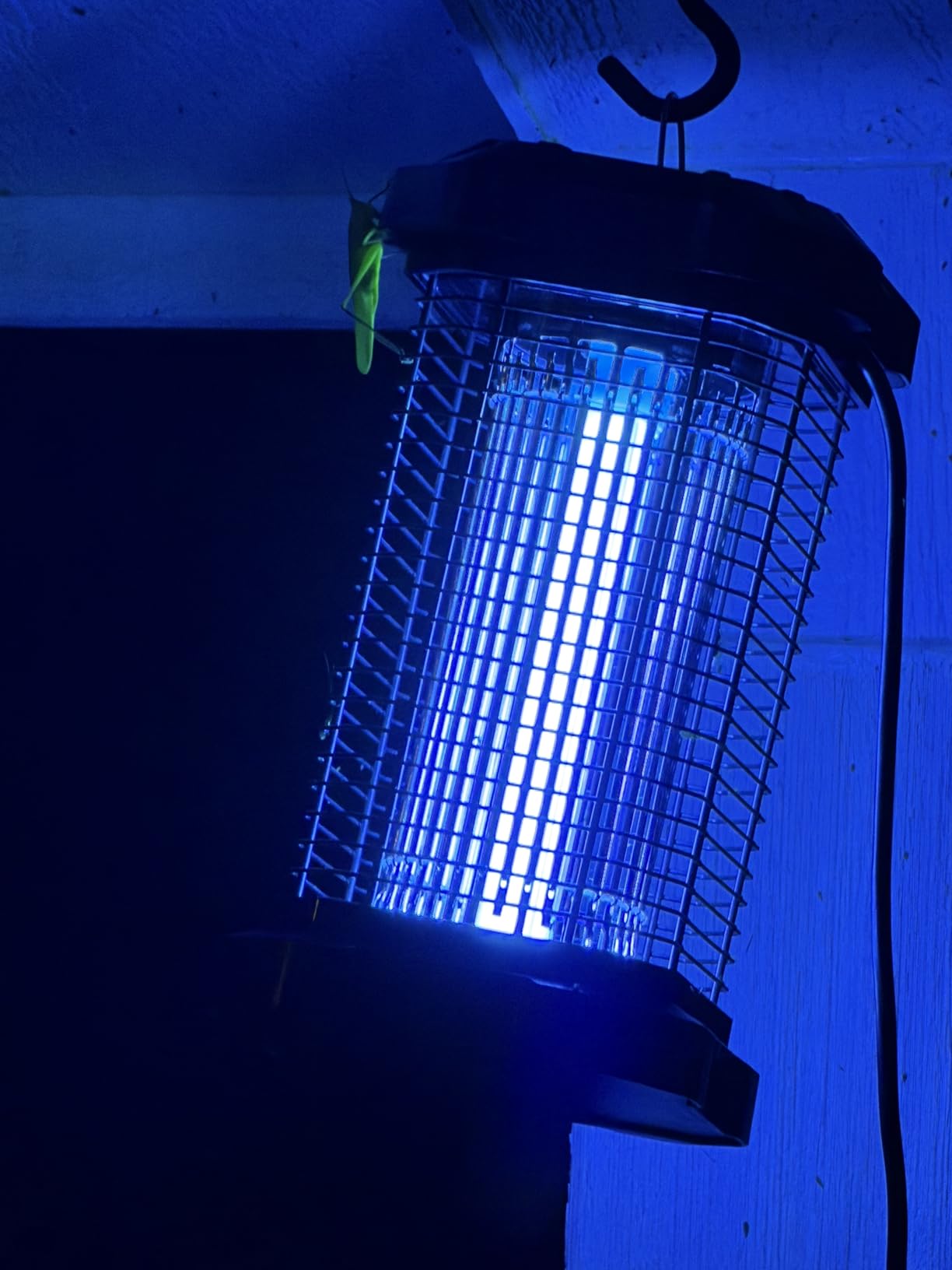
The Jawlark is the trap to try first if you have never owned an electric bug zapper. It covers the basics properly: a 4,200V internal power mesh, an 18W UV attractant lamp at 365nm, an IP44 waterproof shell and a protective housing around the grid. Nothing is missing for the job it is designed to do.
Placement is flexible for a unit this simple. The top hanging loop and 5ft cord let it go on a patio arm, a balcony rail or a camping hook, and the included tray cleaning brush means the one maintenance task is not a chore. It is EPA registered as a physical mosquito control, with no sprays or attractants involved.
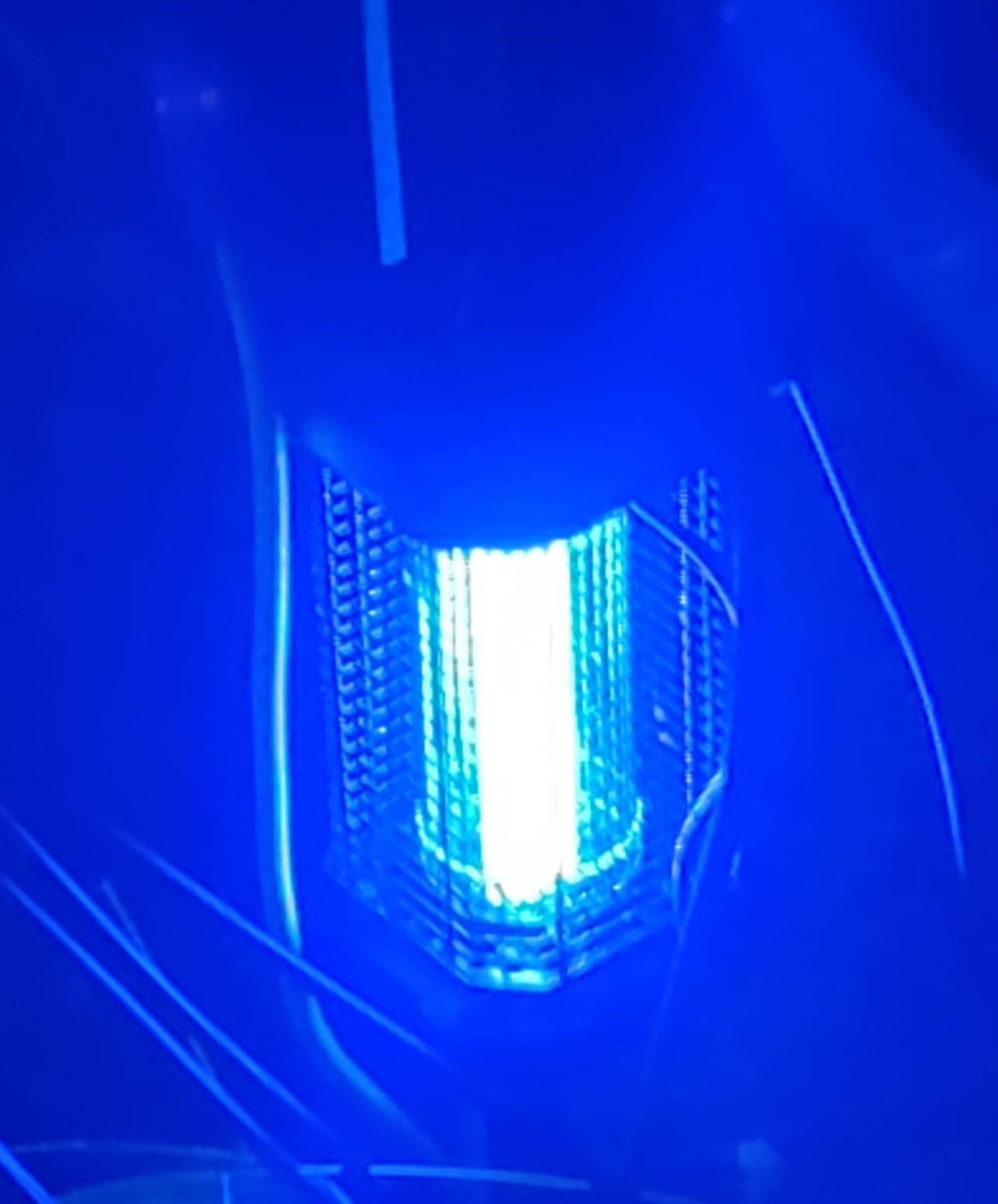
Owners generally describe it as a solid first unit that visibly cuts mosquitoes and gnats on a patio or balcony. The hanging loop, cord length and straightforward tray cleaning come up repeatedly in reviews, and the rating sits at 4.4 across several thousand reviews, which is a good signal for entry-level hardware.
What you give up is raw throughput. An 18W lamp competes with the 40W and 120W units when a heavy evening arrives, so clearing a large property is not realistic. Expect the tray to need attention more often than you would on a higher-wattage model.
Where It Works Best
It fits small urban backyards, balconies, patios and courtyards where the seating area is a few hundred square feet. If your plan is to test whether an electric trap helps your yard at all before spending on a larger system, this is the sensible place to begin.
It is also a sensible second or third unit once you already run a big trap, filling a side patio or a walkway where nobody has run a cord. Multiple small units covering separate gathering points can outperform one large unit aimed at the wrong corner.
Where It Falls Short
The honest limitation is kill volume in peak weeks. When mosquito numbers climb, an 18W lamp reaches its ceiling and the tray fills faster than you would like. If your yard borders woods or has a large breeding source, step up in wattage instead of doubling up on this size.
Also note that it only works in low light, and the tray cleaning is a weekly commitment rather than a monthly one. If maintenance is the reason you hesitated, look at a trap that drops insects to the ground instead.
5. BLACK+DECKER Dual 18W Zapper – Best for Flies Alongside Mosquitoes
- Handles flies gnats and mosquitoes together
- Hangs from chain or stands on a table
- Dual bulbs cover a full acre
- Removable easy-clean tray
- Lower 4000V grid voltage than rivals
- One-star reviews run higher than average
- Bulb and starter replacement eventually needed
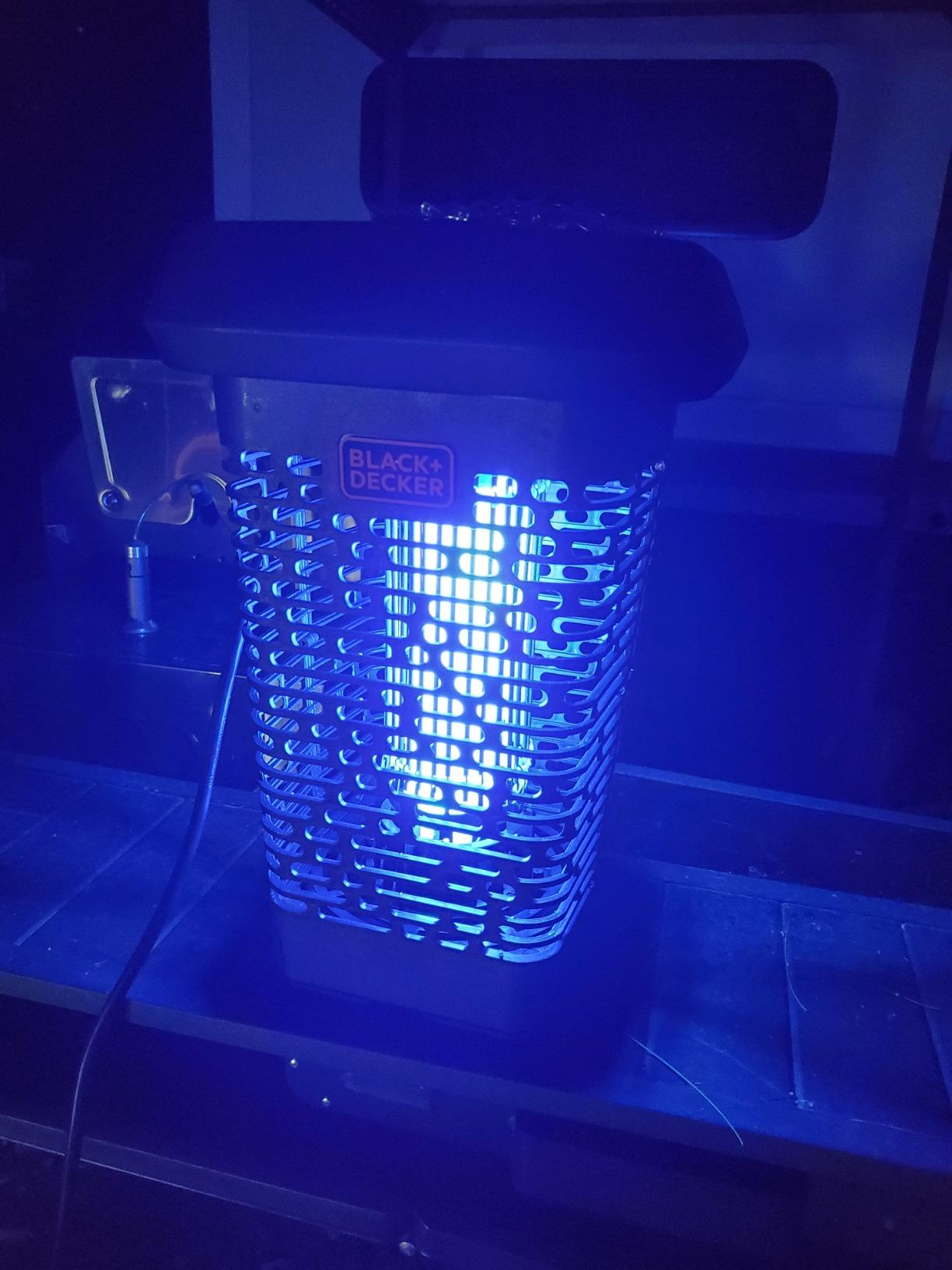
Backyards have more than mosquitoes in them, and this unit was built for that broader problem. The dual 18W UV bulbs pull in house flies, gnats, wasps and moths alongside mosquitoes, which is why owners of this model tend to describe a broader drop in insects around the deck rather than a mosquito-specific one.
Its versatility is genuinely useful. It hangs from the included ring and chain, or it stands on a flat surface, so you can move it from a wall mount to a patio table as the season changes. Coverage is listed at up to one acre, and the removable tray with a clog-proof grid keeps cleanup straightforward.
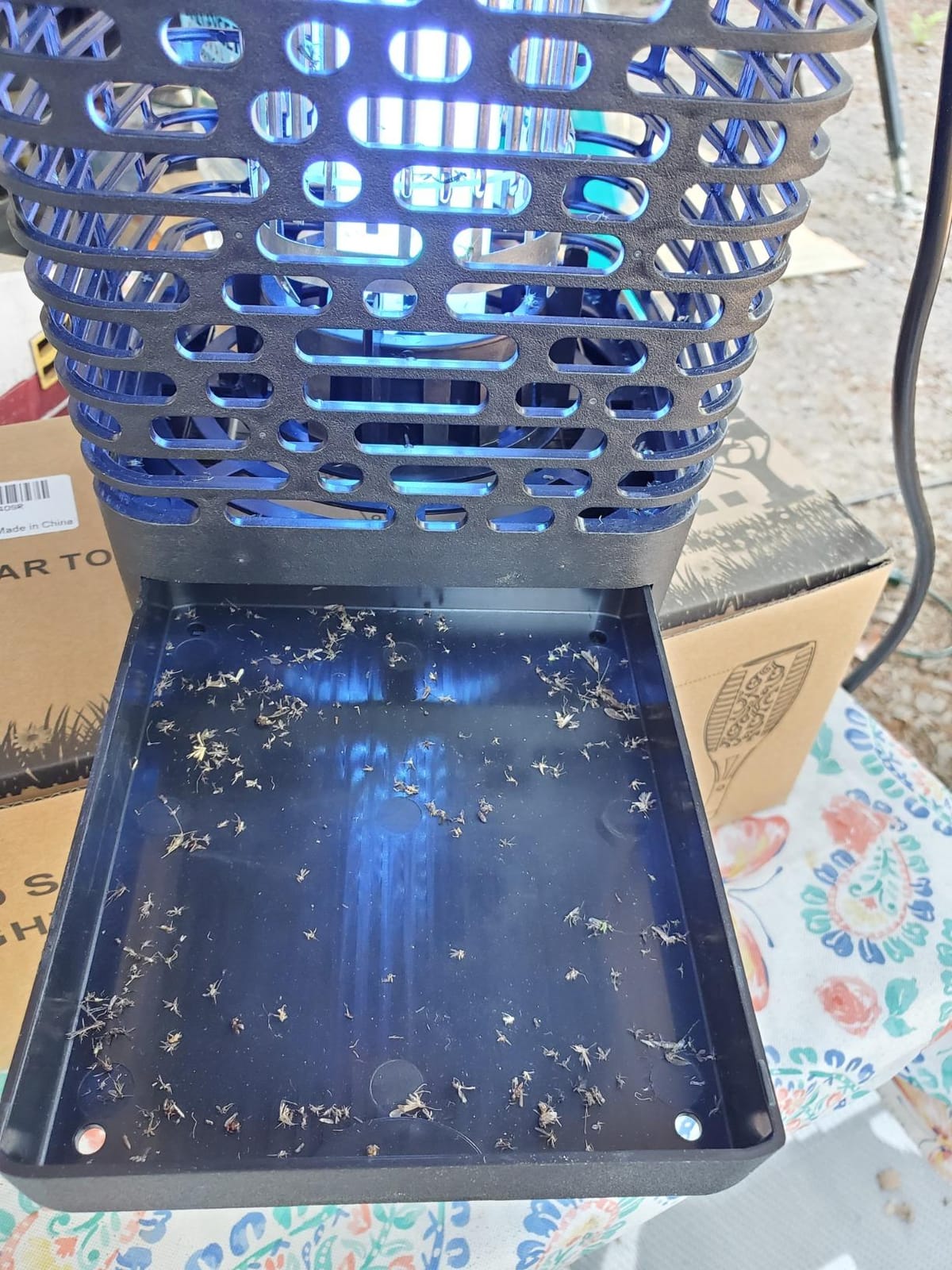
Reviewers value the familiar brand name and the lantern-style design, and several report strong results on flies, gnats and moths specifically. The lower star ratings tend to come from two sources: expectations set by higher-voltage models, and frustration when bulbs eventually need replacing, which is normal for a two-bulb unit.
At 4.84 lb it is one of the heavier products here, and at 13 x 13 x 28 inches it has a real footprint in the yard. That is fine on a covered deck, less fine beside a small pool. Plan a sturdy mount rather than a decorative hook.
Where It Works Best
Pick this when your yard attracts flies and gnats as much as mosquitoes, such as a property near a vegetable garden, a coop or a fruit tree. The dual bulbs and 1-acre claim handle a wider insect mix than a single-bulb trap, and the stand-or-hang design suits a covered porch.
It is also a good pick for buyers who want a recognized manufacturer behind the warranty rather than an unbranded marketplace listing. Buyers consistently mention that the brand name alone removed hesitation on a device that sits within reach of a family.
Where It Falls Short
The 4,000V grid is lower than the 4,400V and 5,600V units in this roundup, and it shows in heavy mosquito conditions. The 4.2 rating across roughly 4,000 reviews is also the second-lowest among the plug-in zappers here, which suggests the dual bulbs are doing more work than the grid.
Two-bulb setups also mean two eventual replacements. If mosquitoes specifically are your target rather than general flying insects, one of the higher-voltage single-bulb units will serve you better for less effort.
6. AMUFER 4400V Waterproof Zapper – Best Safety Credentials
- Highest average rating in the group
- UL listed and EPA certified with V0 shell
- 4400V grid with 30 percent larger area
- 5.5ft cord and IPX4 waterproofing
- Half-acre coverage is smaller than 1-acre units
- Grid needs weekly brushing to stay sharp
- Requires access to a 90-130V outlet
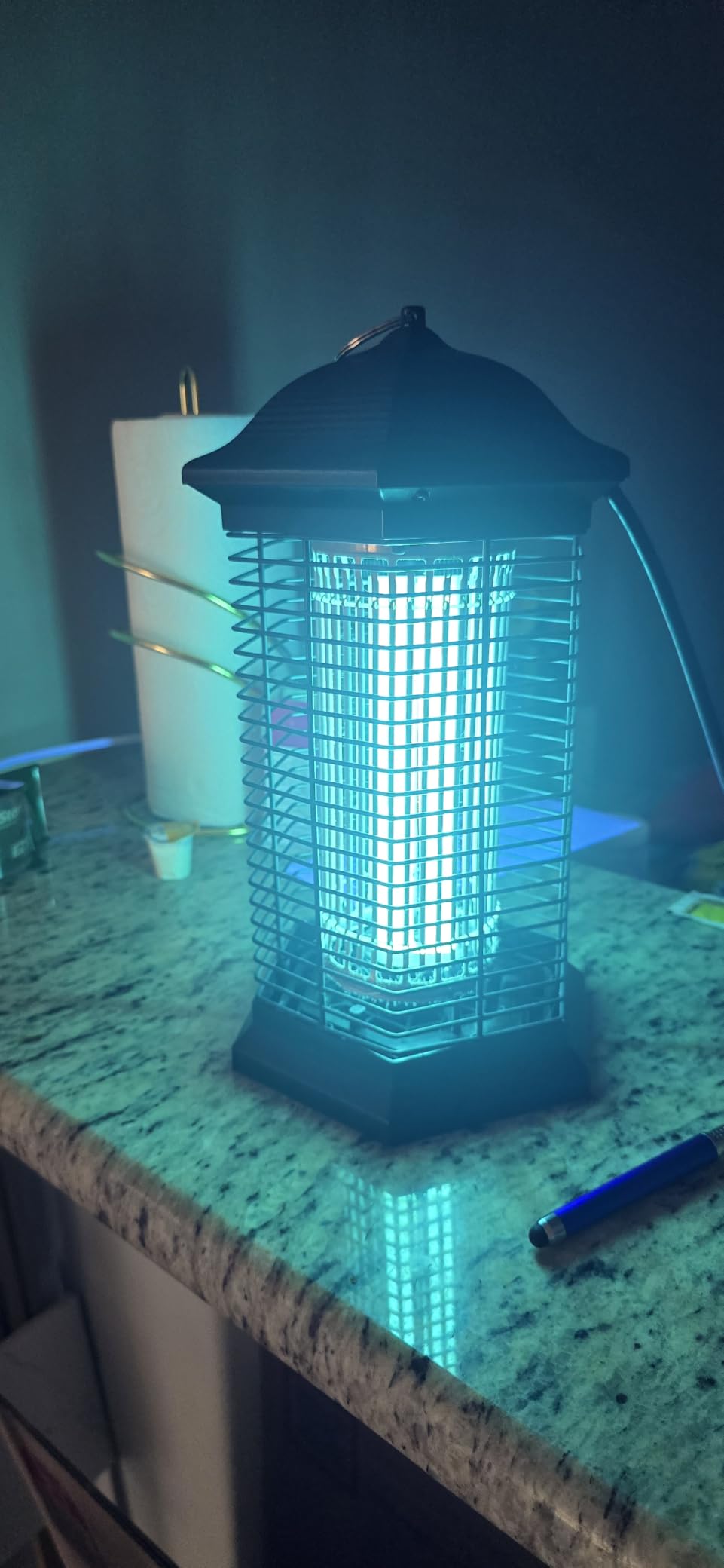
This carries the highest average rating in the roundup, and after using several of its competitors back to back, the reason is easy to see. The 4,400V grid covers an area 30 percent larger than standard, so fewer insects manage to cling and bridge the gap. That single engineering detail shows up in a better kill rate on heavy nights.
The safety paperwork is the strongest we found. This unit is UL1599 tested, US EPA certified, and built with a V0 fireproof ABS shell and a galvanized steel grid, plus a double-insulated three-core cord. For a device hanging over a deck where a dog and a toddler both pass, that matters more than any spec sheet claim about coverage.
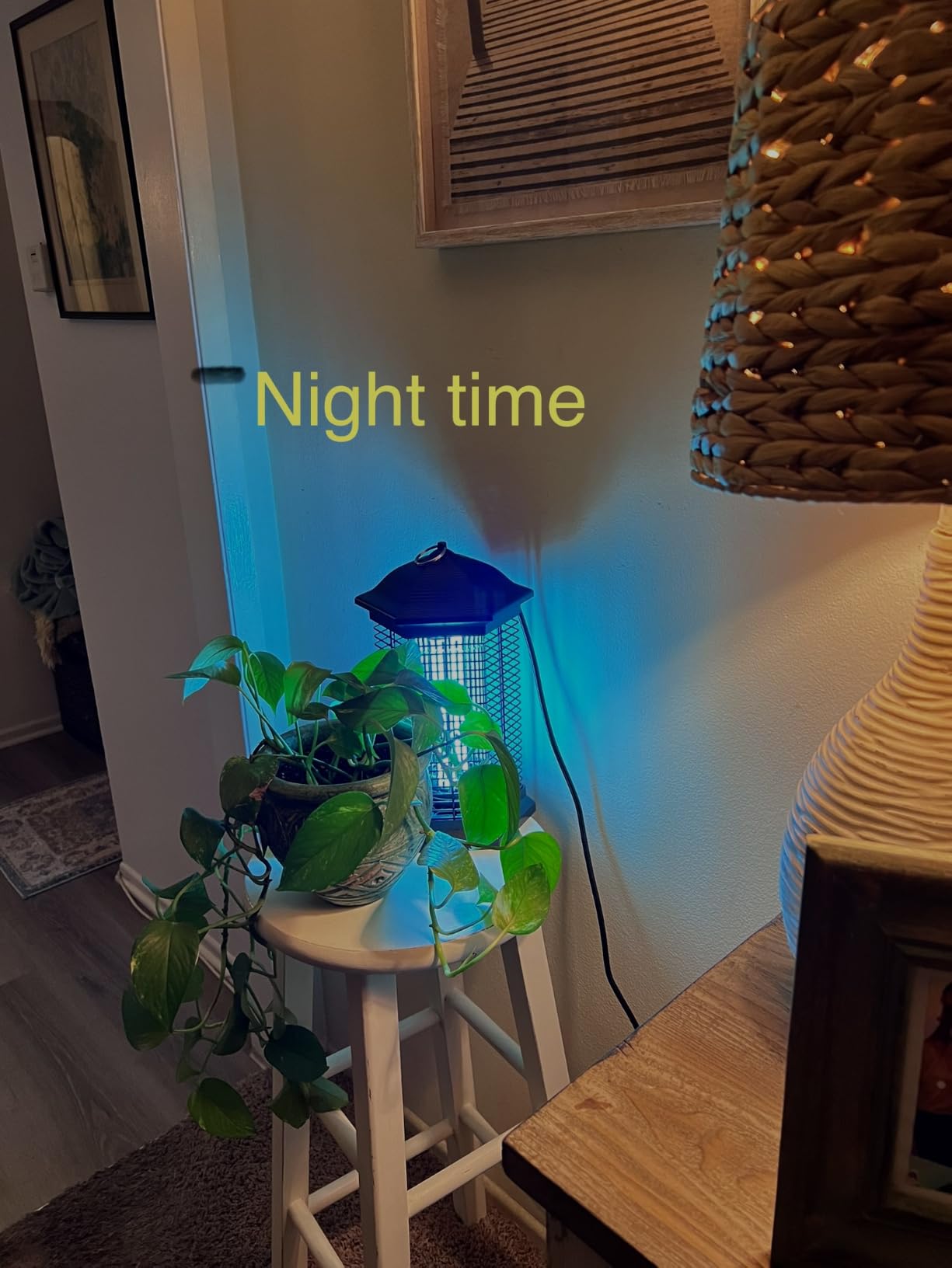
The bulb is 18W blue-violet across a 330nm to 420nm UVA range, tested for over 13,000 hours, and buyers cite that as a reason they stopped worrying about early burnout. At 2.2 lb with a 5.5ft cord and IPX4 waterproofing, it suits patios, porches, gardens and garages with a nearby outlet.
The one recurring maintenance note across reviews is brushing dead insects off the grid about once a week. Skipping it lets insects bridge the electrodes and slow the unit down, so treat the included brush as a required tool rather than an accessory.
Where It Works Best
This is the one to choose when household safety is the top question. UL listing, EPA certification, a fireproof shell and a double-insulated cord remove the guesswork, and it performs best near a seating area on a half-acre or smaller lot where you want maximum grid strength.
Owners also like the 5.5ft cord, which gives more placement freedom than the short leads on smaller units. For a yard that mixes patio time with garage or garden projects, moving one device between those zones is straightforward.
Where It Falls Short
Half an acre is the ceiling here, and buyers on larger lots report needing a second unit rather than one device covering the property. If your mosquito pressure originates in woods behind the house, half an acre measured from your deck will not intercept the population at its source.
The weekly grid brushing is non-negotiable, and the unit needs a compatible 90-130V outlet, which rules out the fully off-grid setups some garden beds and pool corners require. Neither issue is serious, but both are recurring.
7. DynaTrap DT2030SR 1-Acre – Best Quiet Trap for Decks
- Traps instead of zapping
- Quiet enough for a dining deck
- One-touch basket emptying
- Long-lasting LED bulb
- Most expensive unit in the roundup
- Larger footprint than plug-in zappers
- Average rating trails the grid models
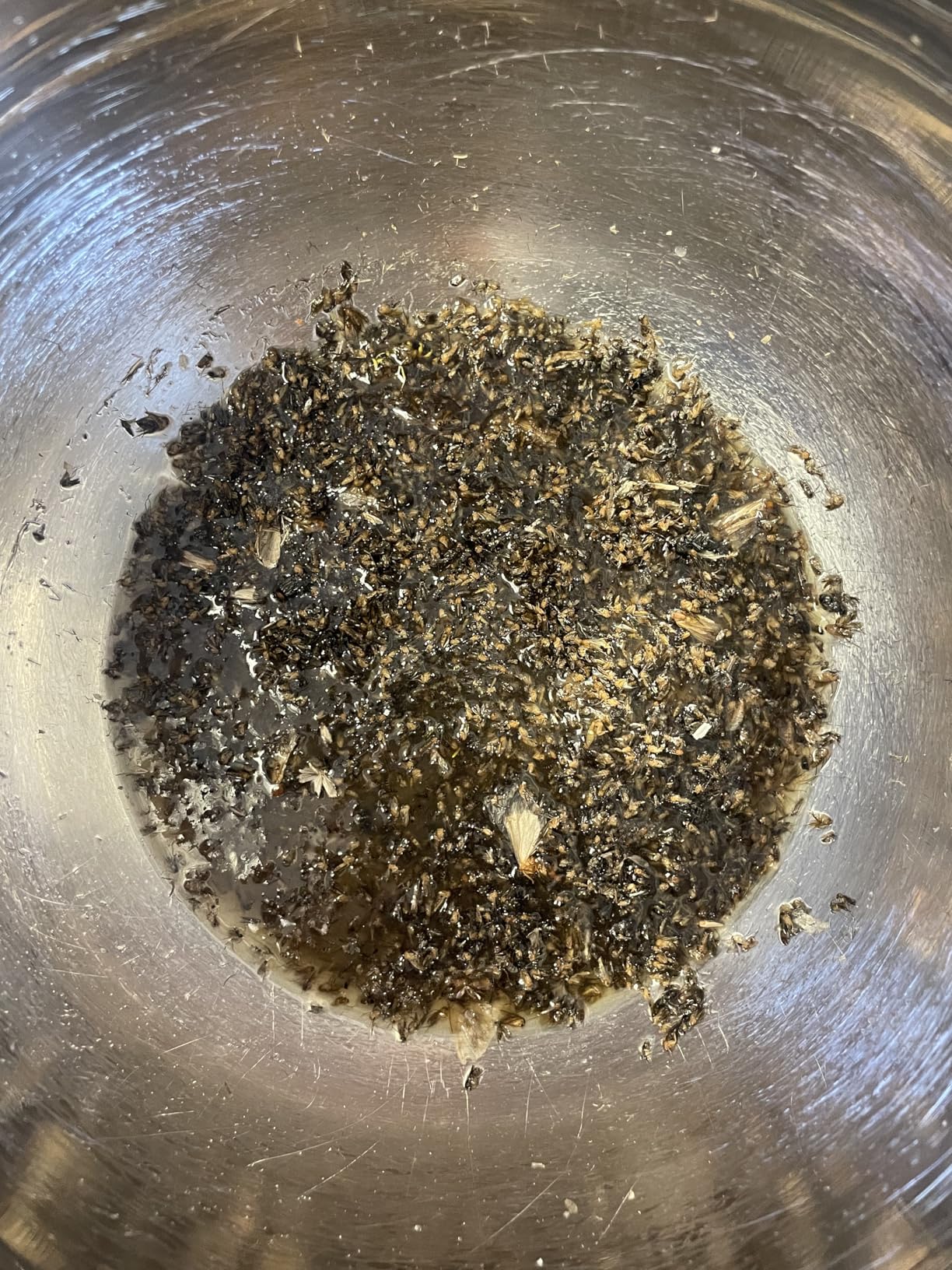
Every trap before this one kills with a grid. The DynaTrap does something different, and for a deck where conversation matters, that difference is the whole argument. A UV-LED source draws insects to a whisper-quiet fan, and continuous suction pulls them into an enclosed catch basket instead of electrocuting them.
There are real lifestyle benefits to that. There is no scorch smell, no insect debris scattered on your patio, and the fan runs quietly enough to sit beside an outdoor dining table. Emptying is a single touch-button press on the basket rather than a weekly tray wash, which owners consistently call out as clean and fast.
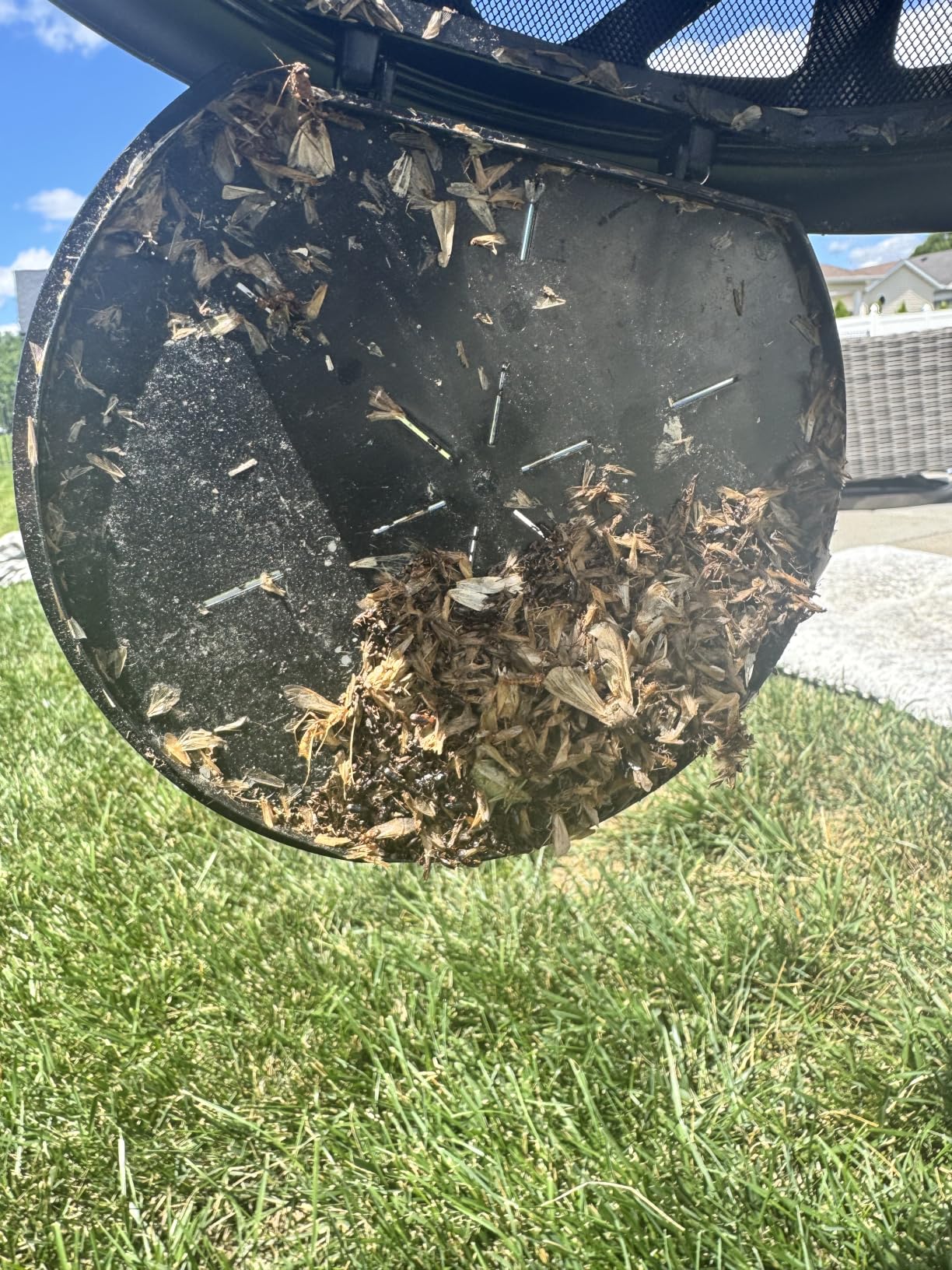
Coverage is listed at one acre, and the weather-resistant black finish is deliberately discreet so it blends into yard decor rather than announcing itself. The LED bulb is long-lasting, so the running costs stop after the initial purchase. At 12 x 12 x 14.5 inches it has a bigger footprint than the plug-in zappers and needs a level standing spot.
Owners who choose this model are usually making a conscious trade: cleaner and quieter, but hands-on. The 4.0 average rating reflects that balance, and reviews point to the purchase price and the need to dispose of captured mosquitoes as the two recurring criticisms.
Where It Works Best
It belongs beside a dining table, an outdoor kitchen or a covered patio where a zapper’s crackle and smell would spoil the evening. Families with a strong preference for chemical-free, low-noise outdoor living also tend to land here, since nothing is burned and nothing falls on the deck floor.
The one-acre figure makes it competitive with the larger electric units for mid-size yards, and the enclosed basket means you are not looking at a bug tray. It is a strong second unit for a yard already handled by a bigger trap.
Where It Falls Short
The cost is the clearest drawback, and it is the most expensive unit we covered. It also has a lower average rating than the grid-based zappers, which usually means the result depends more on placement and local mosquito density than a higher-wattage lamp would.
Because it traps rather than zaps, you still have to empty the basket and dispose of the contents, and the 4.0 rating reflects that some owners would rather not. The larger footprint also rules out mounting it somewhere tight against a fence or under an eave.
8. OnBeam Solar 4500V Zapper – Best for Off-Grid Placement
OnBeam Solar Bug Zapper Outdoor, 4500V Mosquito Zapper Fly Trap for Patio
- No cords to run across the yard
- Automatic dusk mode works reliably
- Chain stakes and extension cable included
- USB-C backup charging
- Small unit with no kill reservoir
- No timer so it runs all night
- Light alone is weak without an attractant
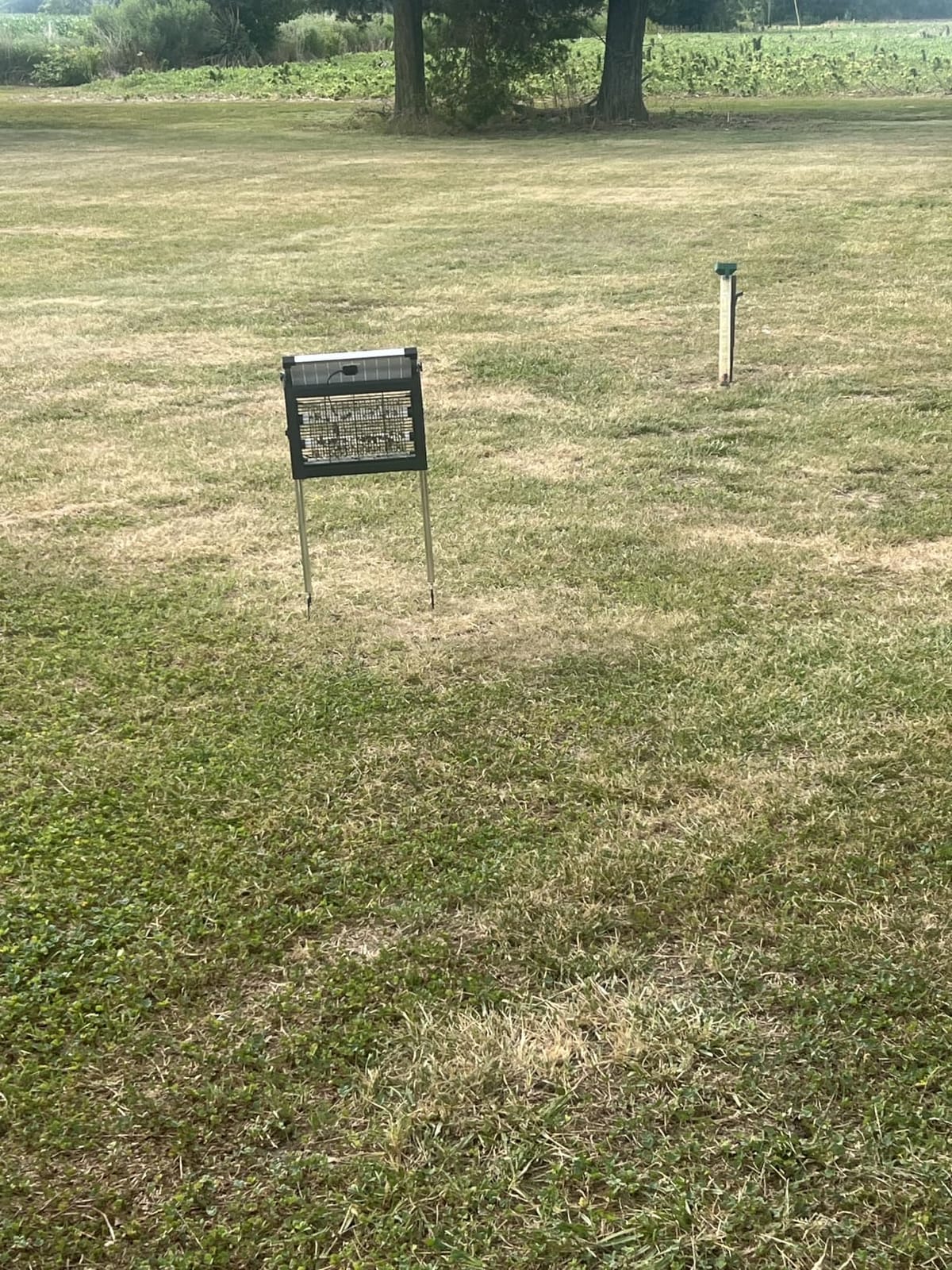
The problem with a cord is not length, it is the outlet. The OnBeam removes that problem entirely with a 10W monocrystalline solar panel feeding a 4,000mAh rechargeable battery, so you can hang it at the far end of a pool fence or a garden row with nothing to run across the yard.
Automation is the second strength. AUTO dusk mode wakes it at nightfall and shuts it off at dawn, so there is no daily switch ritual and no risk of forgetting. Up to 12 hours of runtime covers a full night, and the included 2.6ft hanging chain, ground stakes and 10ft solar extension cable give you real flexibility on where the panel sits relative to the trap.
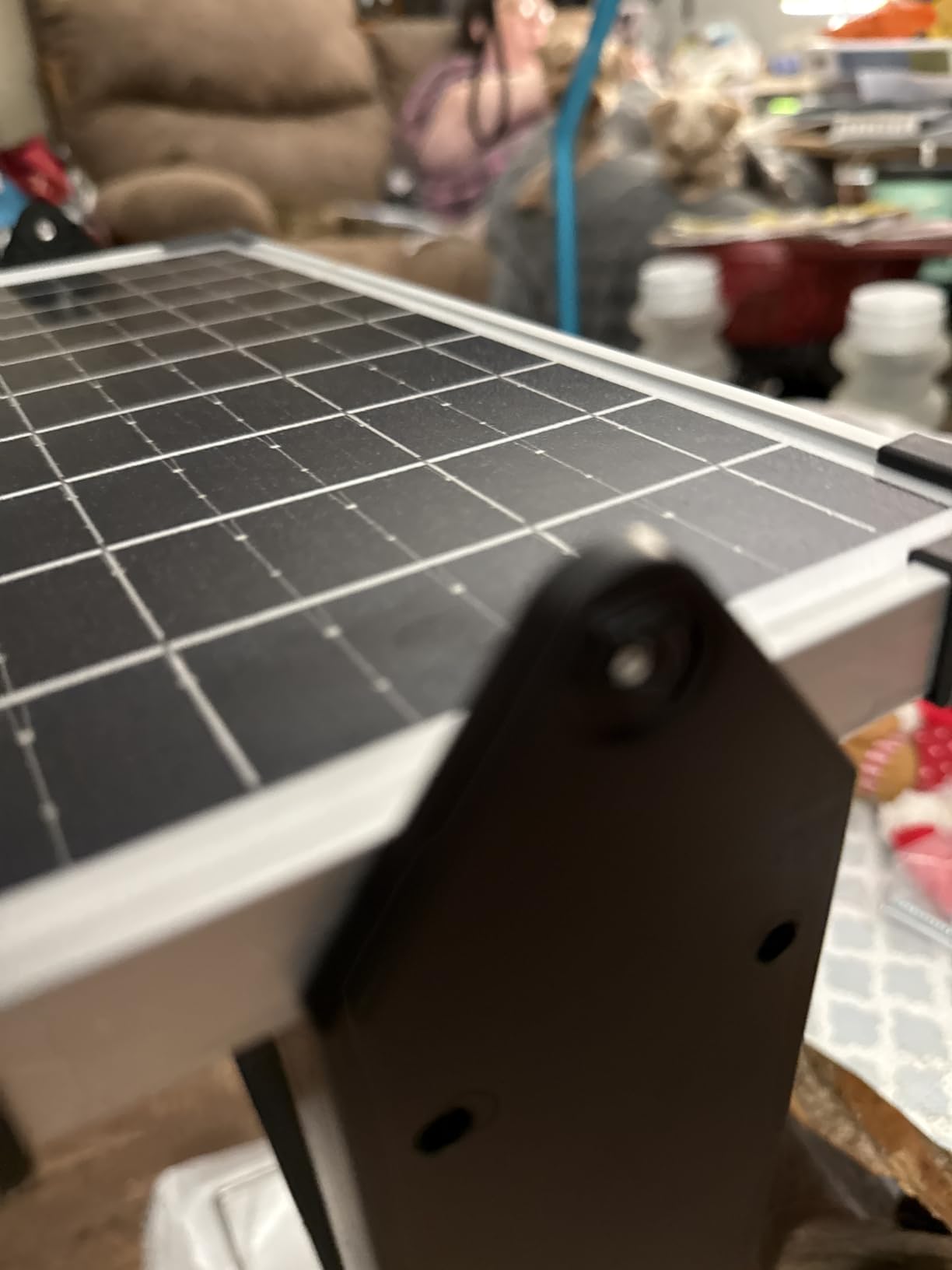
The hardware is respectable for a solar unit: dual 365nm to 395nm LED bulbs, a 4,500V shock grid and an aluminum frame rated IPX5. Owners in humid, mosquito-heavy regions report that it survives heavy rain and works well as part of a broader setup rather than as a standalone solution.
Owners also flag the limits honestly. There is no kill reservoir, so it is not a high-volume catcher, and light alone is a weak mosquito lure without an added attractant. Several reviewers note results tapering after the first few nights as the local population drops, which is really the trap working, though it can look like a failure from the patio.
Where It Works Best
It fits yards where running a cord is the blocker: pool edges, a detached garage, a garden plot or a long side yard away from any outlet. If you would otherwise skip a trap because the wiring is a nuisance, this removes that objection entirely.
Households that want set-and-forget operation also like the dusk mode, and the USB-C port gives a backup charge on a stretch of cloudy days. Reported survival through heavy rain in humid climates makes it a reasonable fit for regions with a long wet season.
Where It Falls Short
The size works against raw catch volume. With no reservoir and a compact frame, it processes fewer insects than the 40W plug-in units, and the light-only attraction limits mosquito performance compared with a trap using octenol.
There is also no built-in timer, so it runs through the whole night in AUTO mode until dawn. Pairing it with a smart plug or an attractant improves results, and expectations should be measured in reduced activity around one zone rather than a cleared property.
9. ZECHUAN Solar 3-in-1 Zapper – Best Multi-Function Unit
ZECHUAN Solar Bug Zapper Outdoor Waterproof, Electric Mosquitoes Zapper
- Three functions in a single unit
- Dual solar and USB-C charging
- Automatic on and off
- Catch tray detaches for cleaning
- Lowest average rating in the group
- Compact build with modest capacity
- Needs direct sun to charge reliably
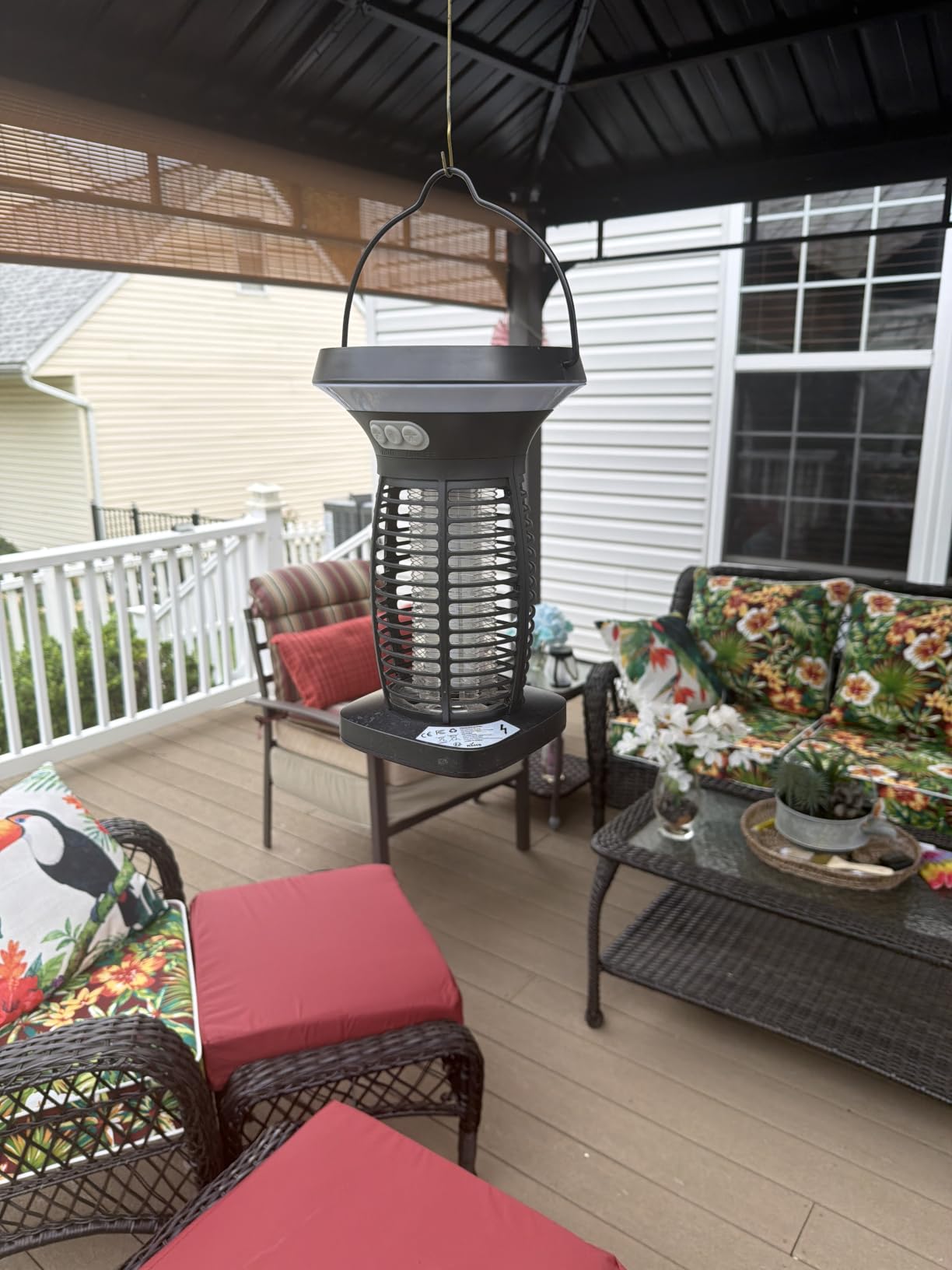
The pitch here is consolidation. One unit handles three jobs: it zaps insects, it provides a soft LED night light for a path or a stair, and it doubles as an SOS flashing signal. For a backyard corner that needs a light anyway, that is a reasonable way to justify a second function rather than installing a fixture.
Charging is dual, with a solar panel for daily top-ups and USB-C for the weeks when the sun is scarce. The AUTO mode handles dusk-to-dawn switching on its own, and the detachable mosquito catch tray makes disposal simple. Like every trap in this roundup, it uses physical trapping with no chemicals or fumes.
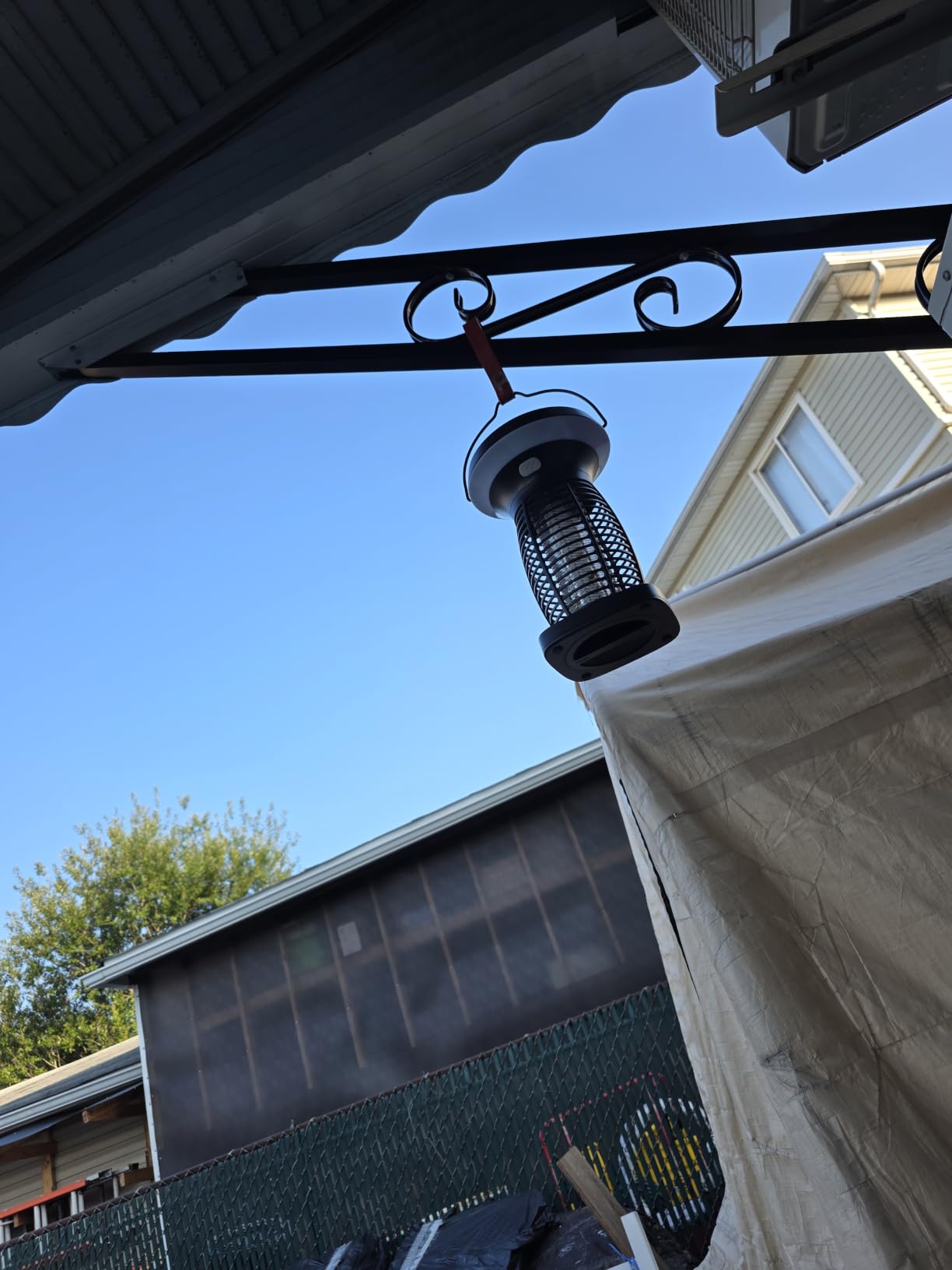
At 6.5 x 6.5 x 10 inches and 2 lb, it is compact and easy to place on a wall, a post or a small table. Reviewers like the combination of features at a modest cost, and the night light function in particular comes up more often than you would expect in reviews.
The 4.0 average rating is the lowest among these twelve products, and the reasons are consistent: limited killing power for large swarms, and a dependence on direct sunlight to charge reliably in AUTO mode. If mosquitoes are your primary target rather than general insects, this is not the strongest tool in the group.
Where It Works Best
It works best as a supplementary device, covering a side gate, a garden path or a small patio corner where a second, lower-intensity trap is useful. The night light and SOS function add value in spots that genuinely need ambient light, such as steps or a shed entrance.
If your priority is a chemical-free outdoor space for children and pets, the physical trapping approach and the absence of sprays both check that box. It is also easy to move as the season changes, since the whole thing weighs 2 lb.
Where It Falls Short
Capacity is the honest limit. Owners looking for a device that visibly reduces mosquitoes across a half-acre yard will find this one underwhelms next to a 40W plug-in trap or a suction-fan catcher, and the rating reflects that gap between expectation and result.
Charging is the second limit. AUTO mode depends on direct sunlight, so shaded or heavily wooded placement means shorter nights of operation, and the USB-C backup becomes a weekly habit rather than an occasional fix. Treat it as a light-duty addition, not your primary defense.
10. Xriba Cordless Rechargeable Zapper – Best for Camping and Portability
- No outlet needed anywhere in the yard
- Lightweight and easy to carry
- Multiple light modes with built-in lamp
- Water-resistant and durable
- Weak against small gnats that escape the grid
- Needs recharging every other day
- Lowest one-star share among cordless options
Portability is the entire reason to own this one. A 4,800mAh built-in battery charges fully over 2 to 3 hours by USB, and the Type-C port even accepts external power while it runs. That means the trap can go from a patio to a garden bed to a camping trip with no outlet in sight, which no plug-in model in this roundup can do.
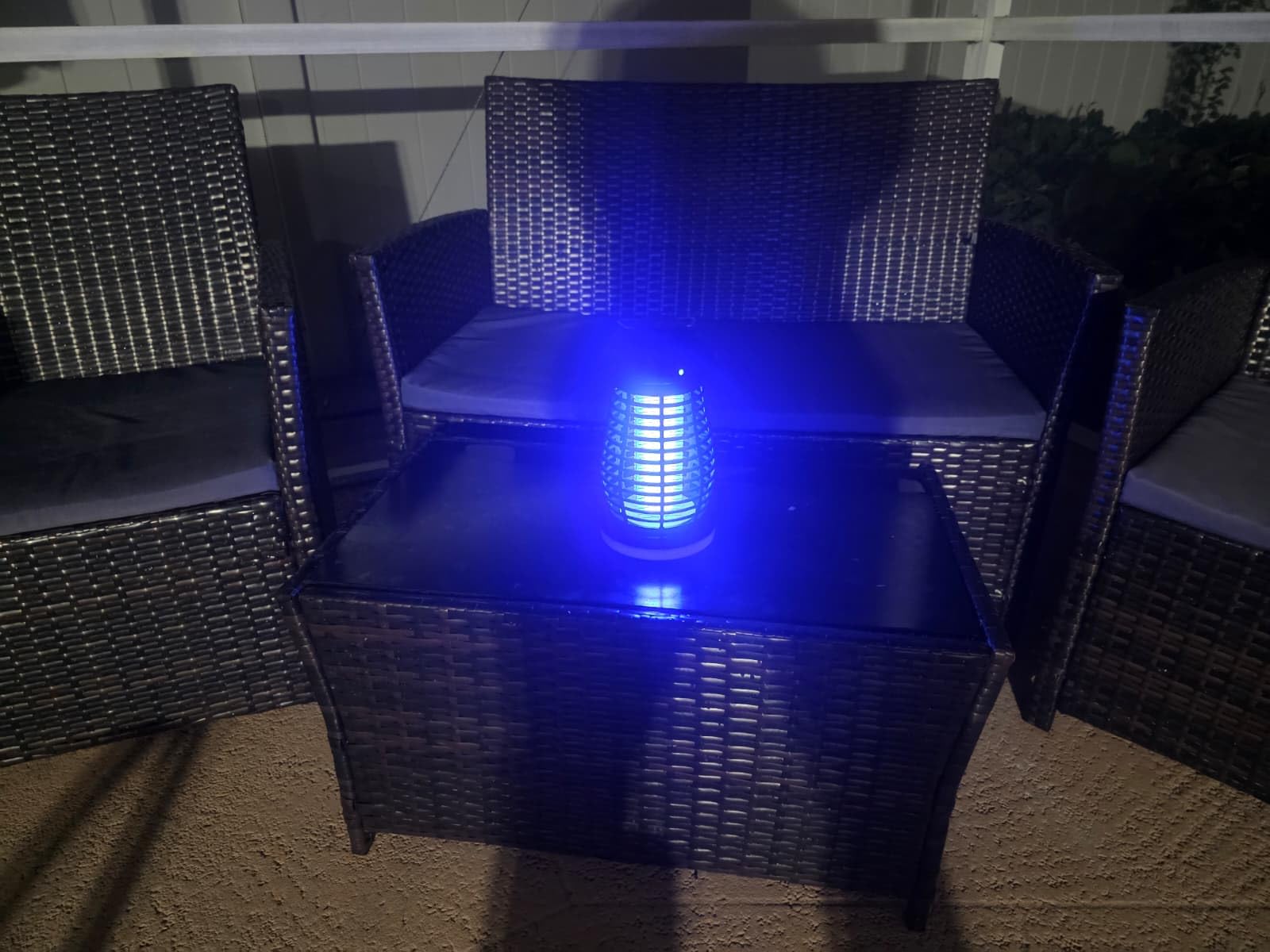
The light modes are unusually flexible. A built-in dusk-to-dawn sensor runs it automatically, and owners like that the lamp modes double as patio lighting, with 12 to 14 hours of blue light, 11 to 13 hours of white light, and 6 to 8 hours when both run together. The 360-degree mesh design wraps the grid so insects are not entering from a blind side.
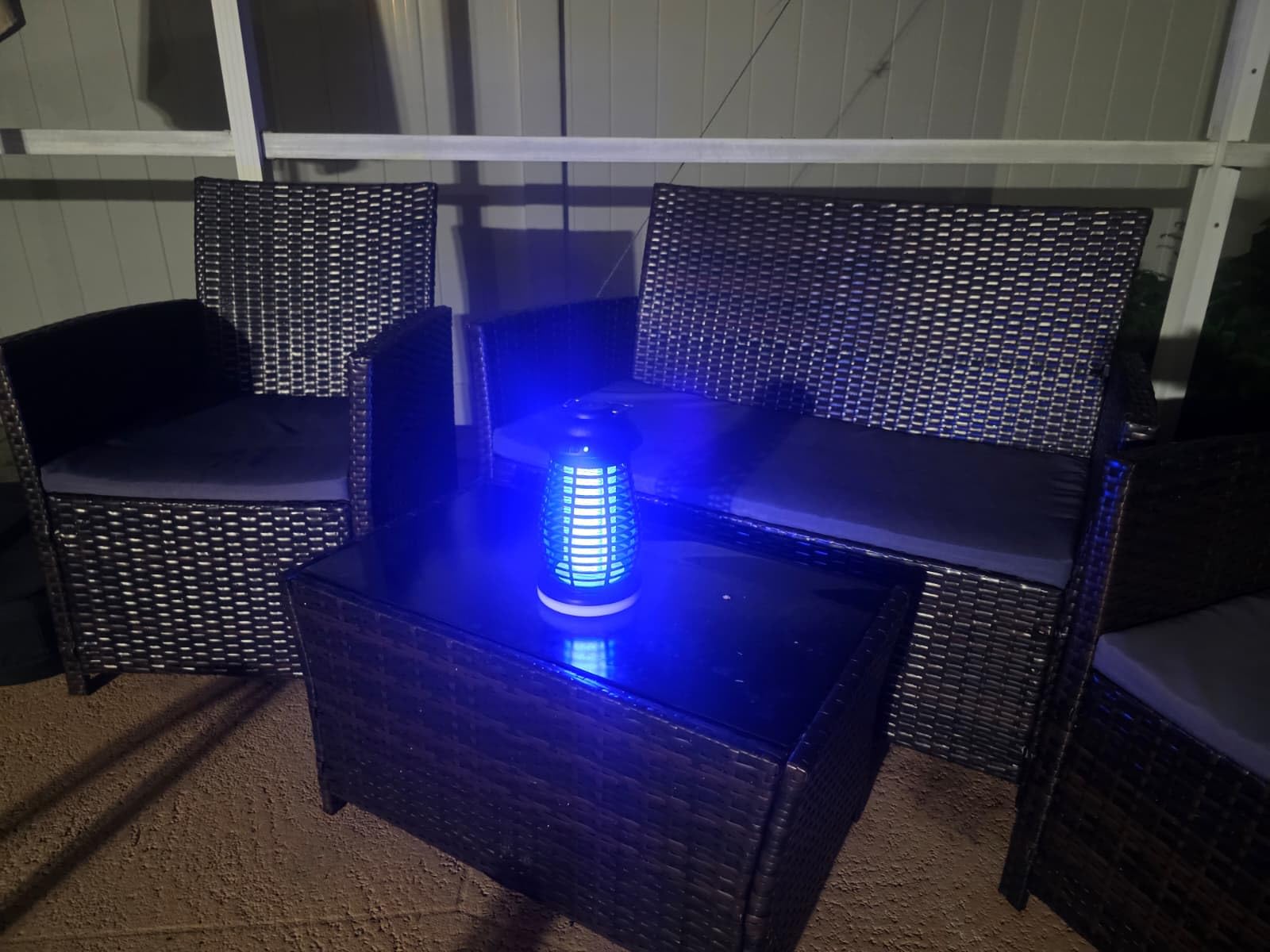
Reviewers consistently praise the cordless rechargeable design as the reason they chose it, along with quiet operation and a build that survives drops and even dog impacts. Multiple owners report it handles house flies effectively, which is a genuine strength given the 4,200V grid.
The most repeated limitation is small gnats, which crawl in and fly back out rather than being killed. The 4.1 rating reflects that mismatch, and the battery needs topping up roughly every other day at typical use. If your yard problem is midges rather than mosquitoes or flies, look elsewhere.
Where It Works Best
It fits patios, gardens, decks and any outdoor spot without power, plus RV and camping use where mains electricity is unavailable. If you are dealing with house flies as much as mosquitoes around a compost area or a fruit tree, the grid handles those well.
The built-in lamp means it does double duty as a small outdoor light, which owners mention often as the feature they did not expect to like. It is also a safe pick for households with pets, since the water-resistant build and cordless design remove both the cord-tripping and the outlet-access questions.
Where It Falls Short
Small gnats and midges defeat it, and that is a common enough backyard complaint to warn about. The 360-degree mesh has wider gaps than a dedicated mosquito grid, which is part of why the mesh is portable and light but less effective on tiny insects.
Charging is the other daily cost. Every other day is a real rhythm if you want it running overnight, and a dead battery means no protection at dusk. Owners also report the highest one-star share among cordless options, mostly for those two reasons.
11. Flowtron 120W 2-Acre Zapper – Best for Large Properties
Flowtron Bug Zapper, 2 Acres Outdoor, 120W UV, 5600V, Octenol, Made in USA
- Owners report clearing a whole property
- Three 40W bulbs pull in heavy loads
- Serviceable and repairable design
- Decorative lantern shape
- Weighs 13 lb and needs a sturdy mount
- Most expensive trap in the roundup
- Grid needs periodic blowing out
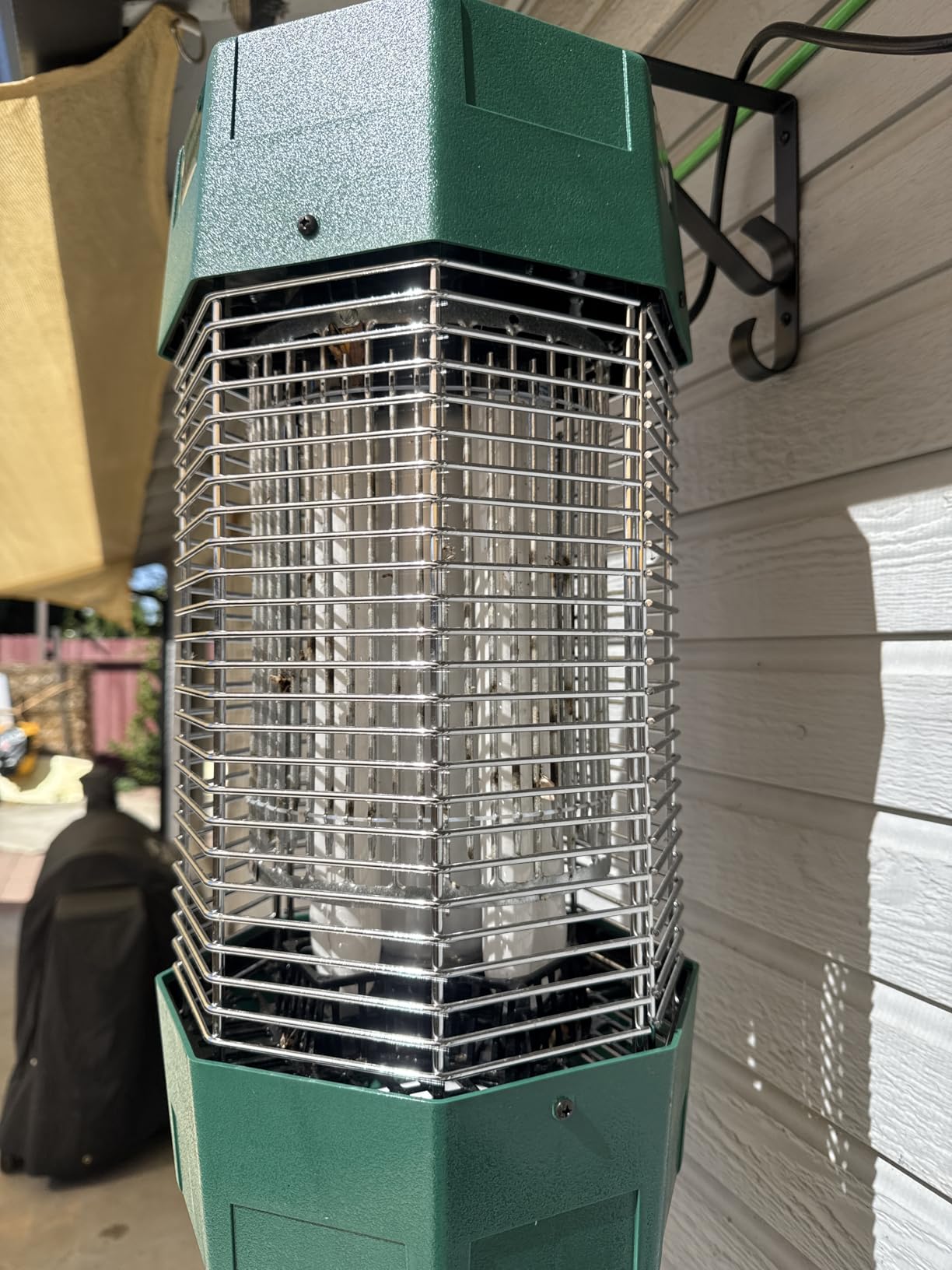
For a large property, this is the only trap here built at the scale to matter. Three 40W UV black light bulbs work alongside two liquid octenol cartridges, with 30-day cartridges included, and a 5,600-volt transformer-powered grid handles the load that results. Coverage is rated at up to 2 acres, including wooded areas around the property.
Owners frequently describe it as commercial grade and report a near-total clearing of mosquitoes from a 1 to 2 acre property within a week or two of continuous operation. The metal housing is weatherproof and CSA certified, and unlike most consumer traps it is serviceable, with bulbs and cord that can be replaced rather than a sealed unit thrown away.
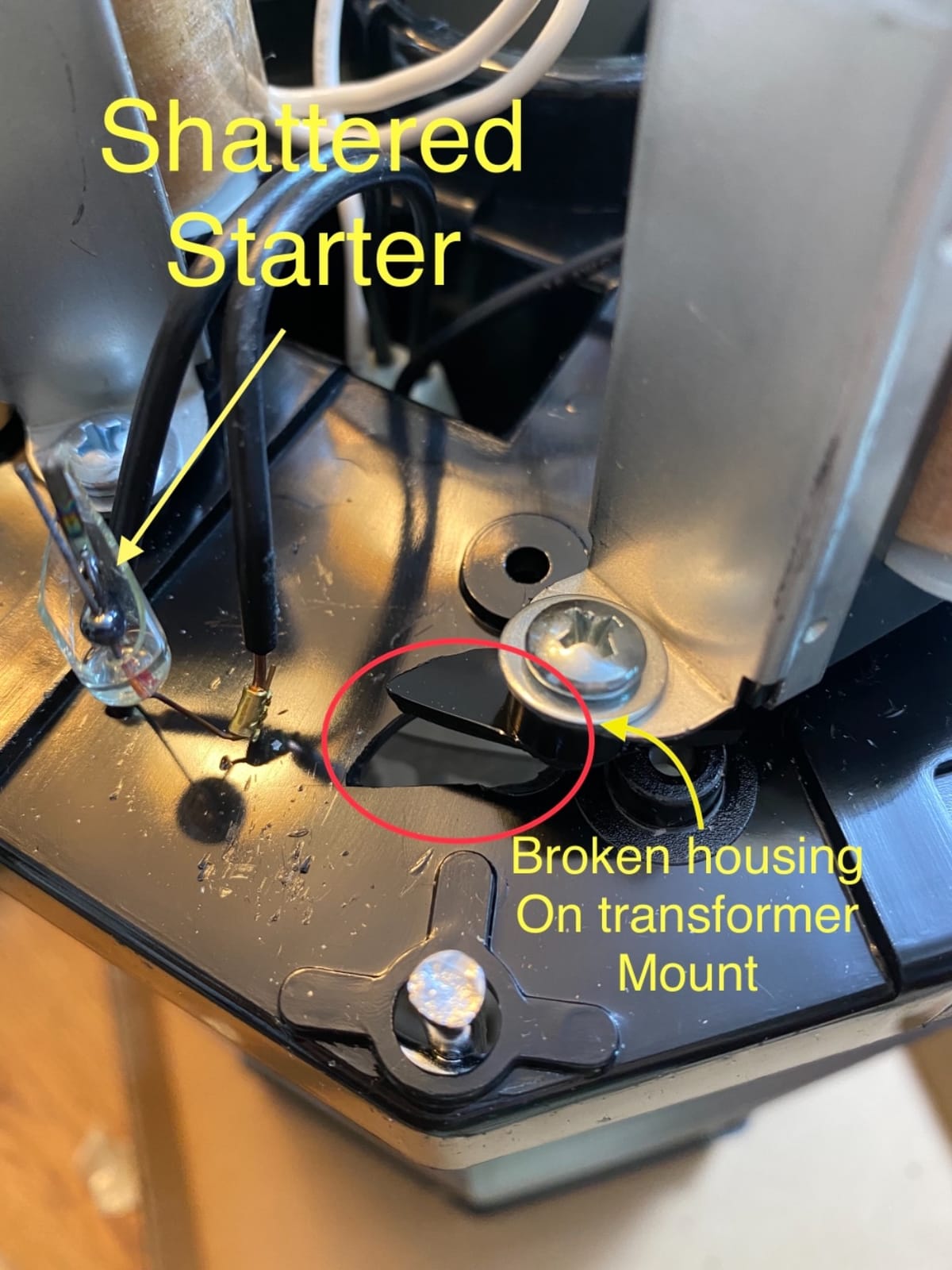
The decorative lantern shape is a real consideration, since it blends into landscaping rather than looking like industrial equipment, and several owners have owned one for years. Maintenance is free of tanks, bags, sprays and sticky strips, which keeps the running requirements simple beyond cartridge and bulb replacement.
It is also the heaviest item we covered, at 13 lb, so it needs a shepherd’s hook or pole rated for the load, not a light garden stake. Reviews mention rust on the outer cage after extended exposure and a grid that is not entirely clog-free, so a quick blow-out every so often keeps it performing.
Where It Works Best
It is built for acreage, wooded lots and properties where mosquitoes breed beyond the reach of a half-acre or one-acre trap. Owners with a two-acre yard report the kind of whole-property reduction that smaller units never deliver, especially when the trap runs continuously through the first two weeks of the season.
It also suits anyone who prefers to own something repairable. The internal design is simple, bulbs and cord are replaceable, and it is made in the USA, which suits buyers who dislike disposable pest hardware and plan to keep a trap for many seasons.
Where It Falls Short
It is the most expensive trap in this roundup, and for a yard under half an acre that cost is simply not justified. Most suburban readers should look at the one-acre Flowtron instead and put the difference toward larvicide for standing water.
The 13 lb weight means a dedicated permanent mount, and several owners add an external dusk-to-dawn timer to cut runtime. If you cannot commit to a sturdy pole and a consistent cleaning habit, a lighter unit will serve you better in practice.
12. Zwiran Solar 4500V Zapper – Best Half-Acre Solar Value
- Runs several nights per full charge in AUTO mode
- Easy to assemble and hose clean
- Grounding brackets chain and 10ft cord included
- Responsive warranty replacement
- Grid needs daily clearing
- Stuck insect can drain the battery overnight
- Solar-only charging may not fully recover
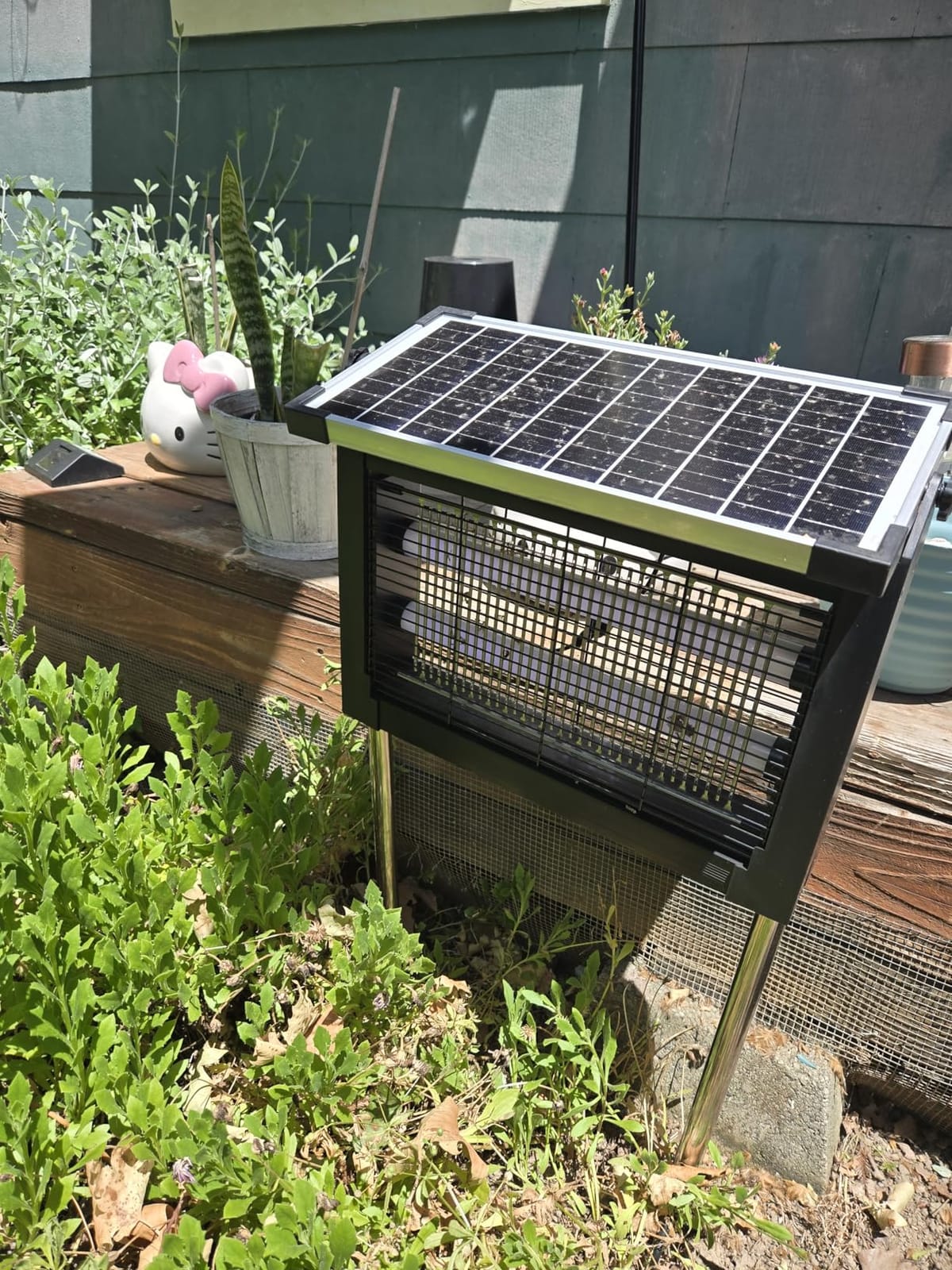
This is the solar unit to pick if you want more light and more voltage than the small solar zappers, without paying for a high-wattage plug-in model. The upgraded large solar panel sits on top with 360-degree lamp coverage, feeding a rechargeable battery that runs up to 12 hours after roughly a four hour USB charge.
Setup is straightforward. It assembles without tools, two grounding brackets let you stake it into the ground, and a hanging chain plus 3m extension cord cover fence and hook mounting. The IPX5 rating and safety protection net make it a reasonable choice in wet weather and around a household with small children.
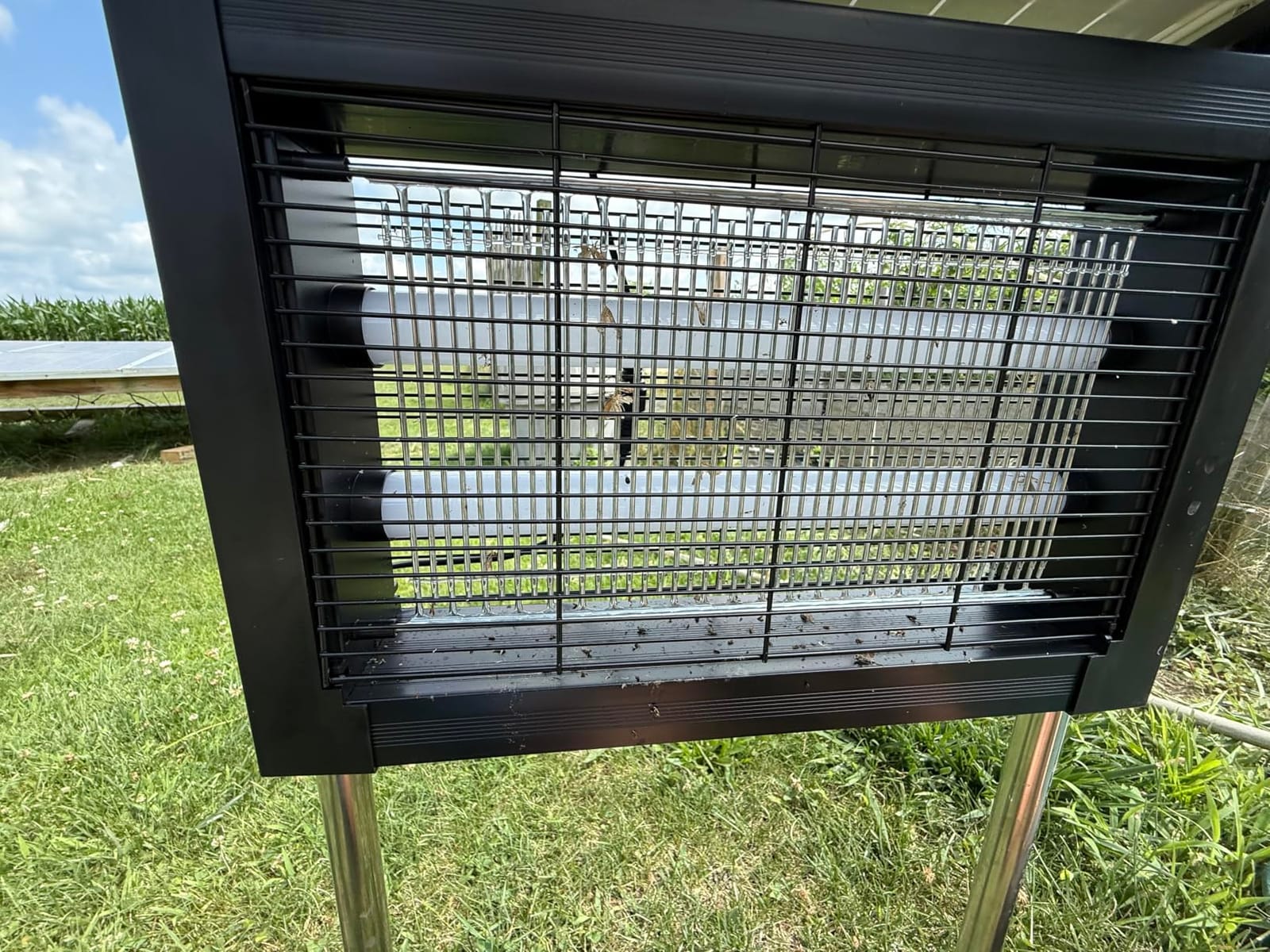
Owners report killing large volumes of insects on the first night, then tapering as the local population drops, which is the profile of a trap that is working rather than one that failed. Several reviewers praise the responsive warranty replacement, and cleaning is as simple as hosing off the washable grid.
Two recurring issues are worth planning for. A stuck insect can arc the grid and drain the battery overnight in AUTO mode, and the grids load with dead insects that need clearing every morning. Solar-only charging may also leave the battery short on long cloudy stretches, so the USB port is a useful backup rather than an optional extra.
Where It Works Best
It fits a half-acre zone around a pool, a garden or a side yard where no outlet is within reach, and the 360-degree light spread means the panel and lamp can be angled to cover a wider area than compact solar units. For patios and balconies it is a clean, cord-free addition.
It is a good seasonal companion unit, positioned where mosquitoes rest and breed rather than where people sit, which works alongside a main trap near the dining area. Chemical-free operation and a physical kill grid also make it straightforward to use around children and pets.
Where It Falls Short
Daily grid maintenance is the part owners mention most, and it is easy to skip. When insects bridge the electrodes, kill rates fall quickly, so clearing the grid each morning is part of owning this device rather than an occasional chore.
Daylight performance is weak, as with every light-based trap here, and the battery has no level indicator beyond a simple charge light, which leaves you guessing on cloudy days. If your yard is larger than half an acre, plan on a second unit or a plug-in model with more reach.
The Combo That Works: Trap, Larvicide, Source
The single most repeated finding in homeowner discussions about this topic is that traps work better alongside larvicide than alone. The reasoning is simple. A trap removes adults that come within its range, but mosquitoes breed in water, and untreated standing water keeps producing new adults faster than any lamp can catch them. Adding a larvicide such as Bti dunks or bits to buckets, planters, birdbaths and low spots cuts that supply.
Forum users report the biggest change when they pair the two, describing a noticeable difference after a couple of consistent weeks rather than an overnight fix. That tracks the biology: larvae have to develop before adults emerge, so results arrive on a two to four week curve. Anyone expecting a trap to deliver a visible difference the first evening will usually be disappointed.
Three steps make up the plan. First, empty standing water on a weekly schedule, which is free and removes the largest share of breeding sites. Second, treat the water you cannot empty, such as clogged gutters, planter saucers and pond corners, with a larvicide product. Third, run a trap on 24/7 operation through the season, positioned between the breeding area and where you sit.
That third point is where most yards go wrong. A trap switched on for an evening will not clear a local population, and a trap placed in full sun or directly downwind of the seating area is doing nothing useful. Placement is the cheapest performance upgrade available to you.
How to Choose a Mosquito Trap for Your Backyard
Electric grid, suction fan or solar
Electric grid zappers are the majority of this roundup and the most straightforward. A UV or blue-violet lamp lures insects to a high-voltage grid, they are killed on contact, and either they fall to the ground or land in a tray. They are cheap to run, they use no chemicals, and they are proven in this category. Their one real limitation is that they work after dark.
Suction fan traps such as the DynaTrap use the same light lure but pull insects into a catch basket instead of zapping them. That gives you a quieter, cleaner, smell-free experience at a higher cost, and you take on the responsibility of emptying the basket. It suits decks and dining areas where noise and debris are the deciding factors.
Solar and cordless models trade reach for convenience. They need no outlet, which solves placement problems at the far end of a yard, but they cap out around half an acre and lean more heavily on light-only attraction. They work best as part of a setup rather than as the only defense.
Worth knowing before you buy: no trap in this list emits carbon dioxide or octenol except the two Flowtron models, and mosquitoes are not strongly drawn to ultraviolet light on its own. That is why every unit here is an evening device and why placement near people matters so much.
Coverage area and yard size
Match the coverage claim to the space you actually use rather than the size of the deed. Half an acre covers a typical suburban seating zone: a deck, a table, a pool edge. One acre is right for a larger lot where the property is the gathering space. Two acres is for acreage, wooded lots and anything with a breeding source at the property edge.
For most backyards, one well-placed trap in the right spot beats two poorly placed ones. Mosquitoes move toward people, heat and carbon dioxide, so a trap near the seating area intercepts more than a trap in the far corner. Coverage numbers describe a radius of usefulness, not a boundary where mosquitoes stop.
Power source and outlet access
Plug-in models need an outdoor-rated outlet within reach of the cord, which is why extension cords and weatherproof covers show up in so many backyard setups. Cord lengths range from 5ft on smaller units to 5.5ft on the AMUFER, so measure before you plan a mount and allow extra cord for the drop from a hook.
Solar models need direct sun on the panel, which rules out shaded corners and heavily wooded spots. The practical compromise is to place the panel where the sun lands and the trap where the mosquitoes are, using the included extension cable to separate the two by up to 10ft. Cordless units add a charging routine but no installation at all.
Pet, kid and beneficial insect safety
Every product in this roundup is physical, meaning no sprays and no pesticides are released during operation. The remaining concern is contact with a live grid, and that is handled by outer housings and protective grates. The AMUFER goes furthest with UL1599 testing, EPA certification and a V0 fireproof shell, which is why it earned the top rated badge.
Beneficial insects deserve more thought than most articles give them. An open electric grid kills bees, moths and other pollinators along with mosquitoes, so the narrow-spectrum options, the octenol-equipped models and the suction traps, have an advantage in a garden-heavy yard. If you keep bees or have a pollinator habitat nearby, place zappers away from flowering plants and away from the bees’ flight path to the hive.
Yard layout counts here too. If the seating area is a fixed structure rather than loose furniture, our guides to the best wooden playsets for backyards and the best monkey bars for backyards cover the hardware that shapes where people spend time, which in turn tells you where a trap earns its place.
What to skip: citronella, coils and repelling plants
Homeowner discussions raised this question more than any other, so here is the short answer. Citronella candles, coils, mosquito-repelling plants and clip-on fan units are repeatedly described by users as ineffective, and the forums are blunt about it. They mask scent over a very small radius, they do nothing to the population, and coils add smoke to a space you were trying to make more pleasant.
Personal-zone repellers do have a place. Our guide to the best mosquito repellent devices covers them properly, and for a single person on a patio they are a reasonable second layer. They just do not substitute for trapping, and treating them as a yard-wide solution is the mistake people regret.
A five-gallon bucket trap is worth knowing about for a very different reason. Forum users who build one with a small fan and paint strainer netting report decent results for a minimal build, and combining it with larvicide in the bucket gives you source reduction and trapping in one container. It is a weekend project, not a purchase.
Where to Put a Trap in 2026
Distance from people is the rule that shows up in every competent placement guide, and it runs in the opposite direction from what most people guess. Set the trap 20 to 40 feet from your seating area, not on the table beside you. Mosquitoes are drawn to your carbon dioxide and body heat, so a trap closer to you simply competes with you for the same targets.
Height and shade matter next. Partial shade outperforms open sun, since UV lamps are less visible in bright daylight anyway, and a trap in a breezy open lawn loses insects to crosswinds. A protected edge, a shrub line or the side of a fence works better than the middle of a wide-open yard. Hang it high enough to stay out of sprinklers and irrigation runoff.
Different yard shapes need different answers. In a small suburban backyard, one trap near the hedge line facing the seating area covers the space. In a yard with a deck or pool, place it at the perimeter near the water rather than among the swimmers, and add a second unit at the opposite end if the area is large.
Where woods sit behind the property, position traps between the tree line and the living area, ideally two of them, so emerging adults meet a trap before they reach you. In a garden-heavy yard, place zappers away from flowering beds and hives, and lean toward a suction-fan trap or an octenol model that limits pollinator kills.
Timing closes the loop. Set up before mosquito numbers climb rather than after complaints start, and run traps continuously through the season rather than switching them on for a party. Then watch the catch tray or basket: a steady volume means the local population is still active, while a sudden drop often means the breeding supply has been cut off, which is the result you were aiming for.
Frequently Asked Questions
What is the best mosquito trap for outdoor use?
For a typical suburban backyard, a plug-in electric zapper with a UV bulb and a high-voltage grid is the most practical outdoor trap, because it runs all night on a small amount of power and needs no chemicals. Choose one rated for at least half an acre, use a weatherproof housing, and place it 20 to 40 feet from your seating area. Add an octenol-attractant model if you have a full acre or more.
Is there a mosquito trap that actually works?
Yes, but only as part of a plan. Traps reduce adult mosquitoes near where they are placed, and results build over two to four weeks of consistent operation rather than appearing overnight. The most reliable results come from pairing a trap with larvicide in standing water and emptying containers weekly. A trap used alone, switched on occasionally, will disappoint.
What is the most effective way to get rid of mosquitoes in my backyard?
Four steps, in order. Empty standing water weekly. Treat water you cannot empty, such as gutters and planter saucers, with a Bti larvicide such as dunks or bits. Run a trap continuously through the season. Place that trap between the breeding source and your seating area, 20 to 40 feet away, in partial shade. Skipping any one of the four weakens the result.
Do mosquito traps attract more mosquitoes to my yard?
A trap only pulls in mosquitoes that were already navigating toward the area, attracted by carbon dioxide, body heat and attractant scent. A UV lamp alone is a weak lure, so a well-placed trap intercepts a small share of the local population rather than drawing a new one in from the neighborhood. That is why placement distance and 24/7 operation matter more than the model you buy.
Do mosquito dunks and traps work together in a backyard?
Yes, and this is the combination homeowners report as most effective. The trap handles adult mosquitoes while the larvicide stops eggs and larvae in standing water from developing into adults. Because larvae need time to mature, expect to see a measurable difference after a couple of consistent weeks rather than in a few days. Apply the larvicide to water you cannot drain, and reapply on the label schedule.
Are propane-style mosquito traps worth the money?
For large properties, often. They emit carbon dioxide, heat and octenol, which is the combination mosquitoes most strongly use to find a host, and that can outperform light-only traps on acreage. Against a half-acre suburban yard, a good 40W electric zapper costs far less to run and performs comparably. Judge propane models on the size of the breeding source, not on the price of the machine.
Our Final Backyard Mosquito Trap Picks
For most backyards, the GOOTOP 4200V is the trap to start with: the most reviewed unit we tested, a half-acre reach that matches a normal seating zone, and no cartridges to keep track of. Add larvicide to your standing water, keep the trap running overnight, and place it 20 to 40 feet from where you sit. If you have a full acre or woods at the property line, move up to the Flowtron 40W for its octenol cartridge and wider reach, and pair it with Mosquito Bits in the water you cannot drain. Larger properties should start with the Flowtron 120W. Check the current listings for each pick, and get the trap up before mosquito numbers climb in 2026, not after the complaints start.