

Most desks are built for rooms that have floor to spare, and an apartment has almost none. The best writing desks for apartments are compact, shallow, and built so they can disappear when you are not using them, which usually means under 40 inches wide and 20 inches or less deep.
I have spent the last few months living with folding, wall-mounted, and slim-profile desks in a small one-bedroom, moving them between the bedroom corner, the entryway, and the dining nook. What I learned is that footprint matters less than people think, and visual weight matters far more. A thin top on an open leg frame keeps a room feeling open, while a solid block of dark wood in the same footprint makes the space feel half the size.
This roundup covers ten small-space desks measured against the constraints that actually decide an apartment purchase: how wide the desk is, how deep it is, how it behaves on carpet, whether you can drill into the wall, whether it holds storage, and whether it still looks like furniture at 8pm when you want the room back. I have listed every dimension in inches, flagged the honest drawbacks, and marked which options are worth it in a studio versus a one-bedroom.
If you are furnishing a whole apartment rather than one desk, our guides to sleeper sofas for small apartments and general writing desks cover the bigger picture, and secretary desks are the traditional pick when you want a writing surface that closes up.
Top 3 Apartment Writing Desks in 2026


Elephance Folding Desk
- Widest folding top at 39.4 inches
- Includes keyboard tray
- Rated to 250 pounds
All 10 Apartment Writing Desks Compared in 2026
| Product | Specifications | Action |
|---|---|---|
| GreenForest Folding Desk |
|
Check Latest Price |
 WOHOMO Folding Desk WOHOMO Folding Desk |
|
Check Latest Price |
| Elephance Folding Desk |
|
Check Latest Price |
 Pamray 23 Inch Desk Pamray 23 Inch Desk |
|
Check Latest Price |
 DLisiting 32 Inch Desk DLisiting 32 Inch Desk |
|
Check Latest Price |
 MM MELISEN Wall Table MM MELISEN Wall Table |
|
Check Latest Price |
 Tangkula Folding Wall Desk Tangkula Folding Wall Desk |
|
Check Latest Price |
 Huuger Folding Desk Huuger Folding Desk |
|
Check Latest Price |
 Tangkula Two-Tier Desk Tangkula Two-Tier Desk |
|
Check Latest Price |
 VASAGLE Folding Desk VASAGLE Folding Desk |
|
Check Latest Price |
1. GreenForest Folding Desk – the one that disappears when you are done
GreenForest Folding Desk No Assembly, Sturdy Computer Desk for Small Spaces
- No tools or screws needed
- Folds to 1.5 in to slide under a bed or behind a door
- Built-in shelf adds vertical storage
- X-shaped metal legs resist wobbling
- Desktop is compact for larger monitors
- Engineered wood rather than solid wood
This is the desk I keep coming back to. It arrives fully built, you unfold the X-shaped legs, and it is working. There is no assembly step to schedule on an evening when you have already moved three boxes.
The dimensions are honest: 27.3 inches wide, 22 inches deep, 31.9 inches high. At 31.9 inches it sits a little taller than a standard 28 to 30 inch writing desk, which is fine for writing and laptop use and a little high if you spend a full workday at it.
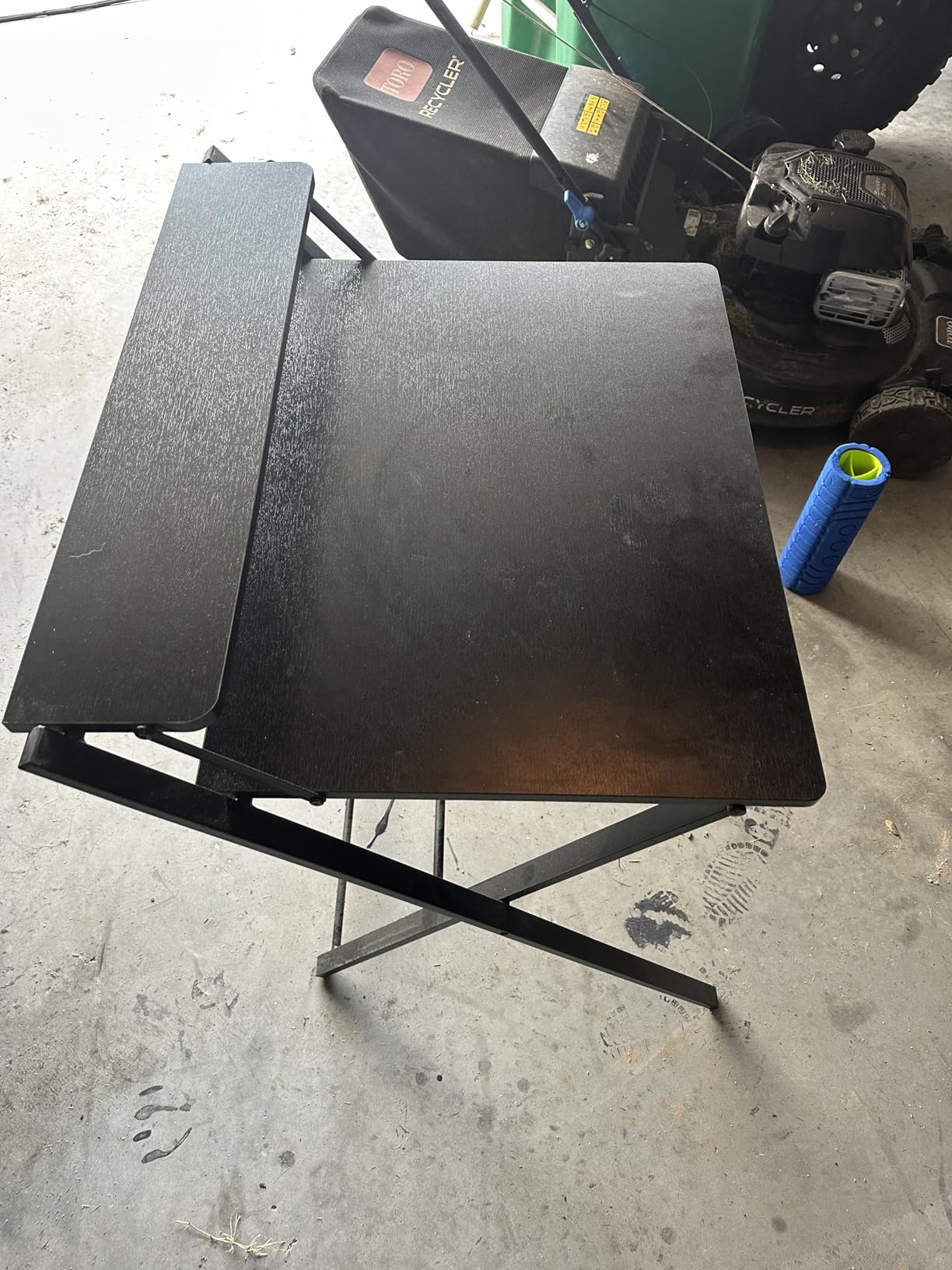
What sold me is the fold. At 1.5 inches thick it goes under a bed, behind a sofa, or flat against a wall in a closet, which means the floor it occupies returns to the room every evening. In my test the folding action stayed smooth after weeks of daily use, and the two built-in shelves swallowed a laptop charger, a notebook stack, and a small plant.
Reviewers consistently mention the same three things: it needs no tools, the metal frame does not wobble, and the walnut-toned top looks more expensive than engineered wood has any right to. At nearly 13,000 reviews with 94 percent of buyers at four stars or higher, this is the most proven design in the group.
Check the surface area before you commit
A 27.3 inch wide top holds a 13 inch laptop, a closed notebook, and a lamp with room to spare. It does not hold a laptop and a full-size external keyboard side by side with a mouse, and monitors above about 24 inches crowd the edges. Reviewers report the same ceiling.
If your work is writing, studying, or video calls, that is plenty. If you type on a mechanical keyboard with a separate mouse, look at the 31.5 inch or 39.4 inch options further down this list.
Best for renters and small bedrooms
Nothing to mount, nothing to patch, no landlord conversation. It also weighs 8.62 kg, so one person can carry it from the bedroom to the living room when six people are coming over.
The honest drawback is material. This is engineered wood with a 20 millimeter top, which means it will show pencil marks and ring stains over years of use. If you write heavily with fountain pens or care about a surface that ages well, a solid wood option will suit you better.
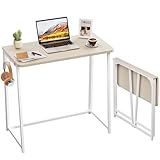
2. WOHOMO Folding Desk – the shallowest surface in the roundup
WOHOMO Folding Desk, 31.5″ Foldable Computer Table for Small Spaces, Oak
- Shallowest depth here at 15.75 in
- Folds to 2.76 in for behind-door storage
- Light at 14.9 lb so one person can move it
- Nylon buckle keeps folding legs steady
- 15.75 in depth is tight for laptop plus notebook
- Assembly required with a wrench
The 15.75 inch depth is the number that makes this one interesting in an apartment. A desk that shallow will sit against a wall in a hallway, beside a bed, or in the gap between a sofa and a bookcase where nothing else fits.
At 29.52 inches high it hits the standard desk height range, and the light oak melamine top reads as a piece of furniture rather than office equipment. It weighs 14.9 pounds, which I would call the upper limit for comfortably carrying one-handed between rooms.
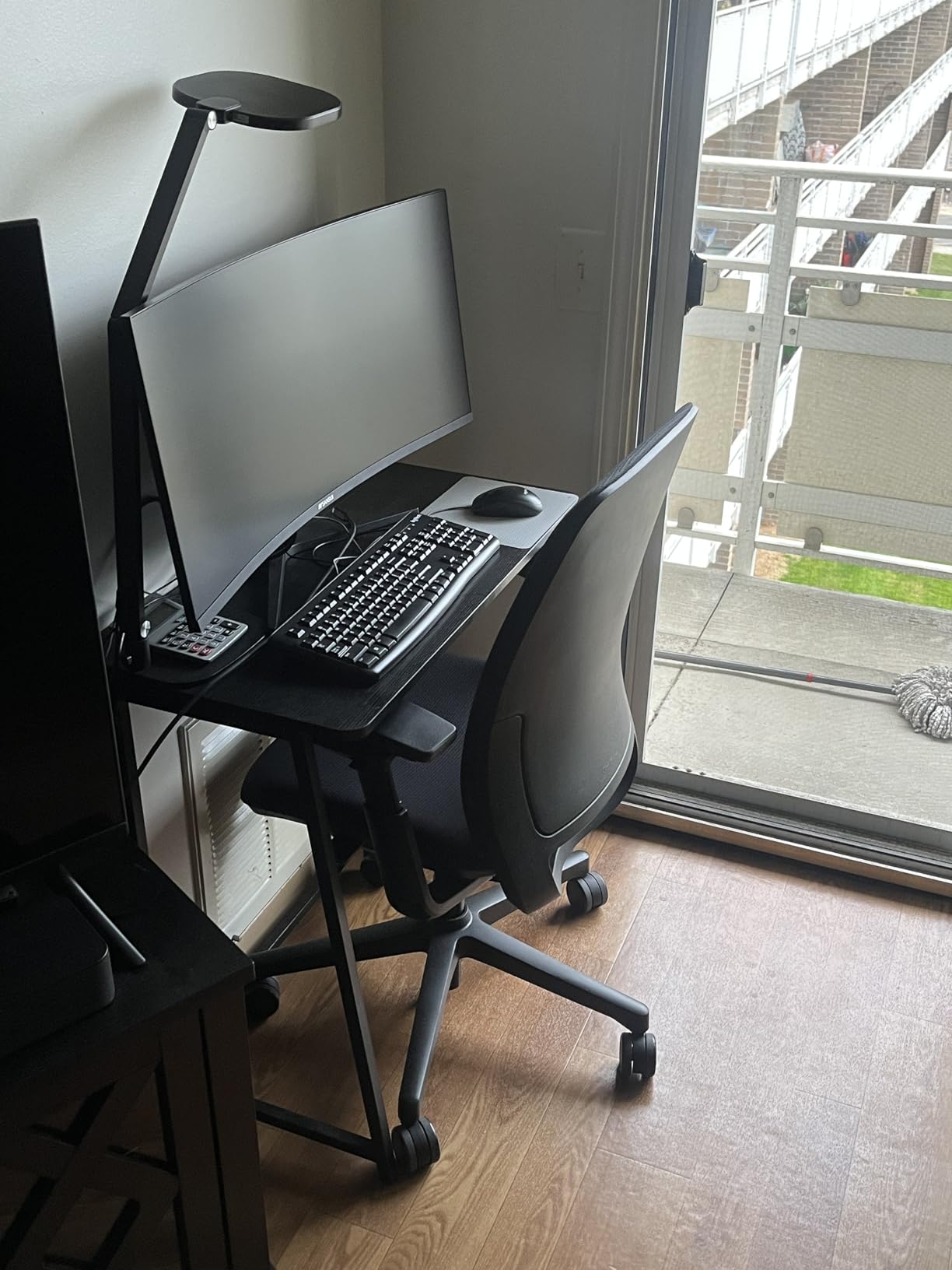
The catch is width versus depth. You get 31.5 inches of width and only 15.75 inches of depth, so your forearms rest near the front edge and there is not much room to spread out papers. Several owners describe it as a laptop station with space for a notebook rather than a full writing desk.
Reviewers like the nylon buckle that holds the folding legs steady without a locking lever, and the fact that it stores at 2.76 inches. The most common criticism is that it does need a wrench to assemble, unlike the no-tool pick above it.
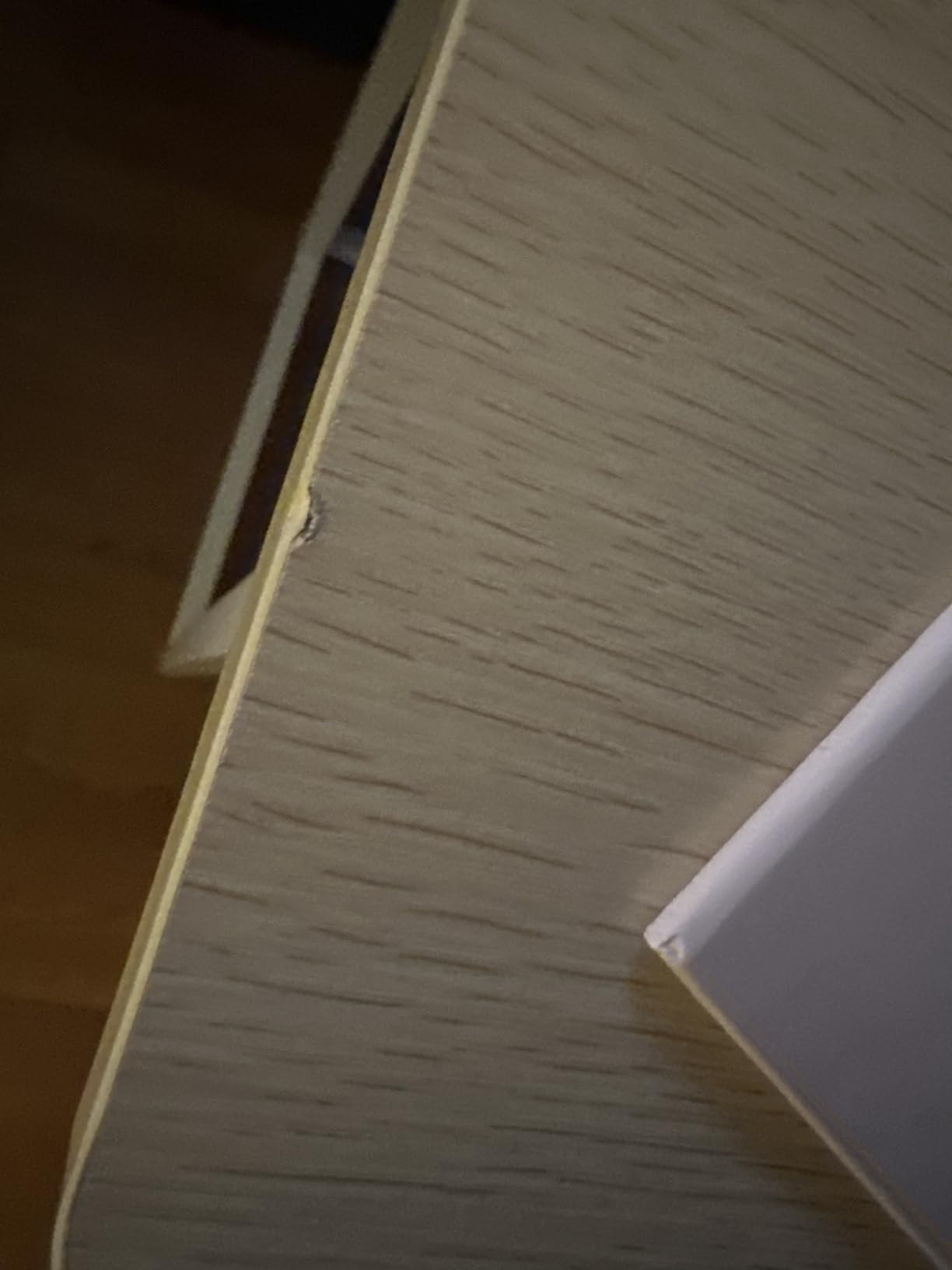
Check you will not need desk depth
If you write longhand, sketch, or spread out reference material, 15.75 inches is limiting. A notebook, a laptop, and a cup of tea will fit. A laptop, a stack of A4 paper, and a lamp will not.
If your work is typing, video calls, and reading, the shallow format is a genuine advantage because it returns depth to the room.
Best for narrow gaps and RV or dorm setups
This is the one to pick when the wall space you have is measured in depth rather than width. It also handles the move-in-move-out cycle well because it is light enough to pack into a car without disassembly.
One practical warning: on carpet, add a thin pad under each leg. The folding feet are narrow, and a soft floor lets the frame rock slightly when you write hard.
3. Elephance Folding Desk – the widest folding surface you can buy
- Highest rated at 4.8 stars
- Widest top among folding desks at 39.4 in
- Keyboard tray plus cabinet and open shelf
- Rated to hold 250 lb
- Heaviest folding desk here at 26.5 lb
- Larger folded footprint than slim folding models
If a folding desk can double as a real workstation, this is the one. At 39.4 inches wide and 19.7 inches deep it is nearly full desk size when open, and it folds down when you are finished.
It arrives fully assembled. You take it out of the box, fold the legs open, and start working. There is no hex key, no bracket, no second person required, which matters in an apartment where assembly space is a closet.
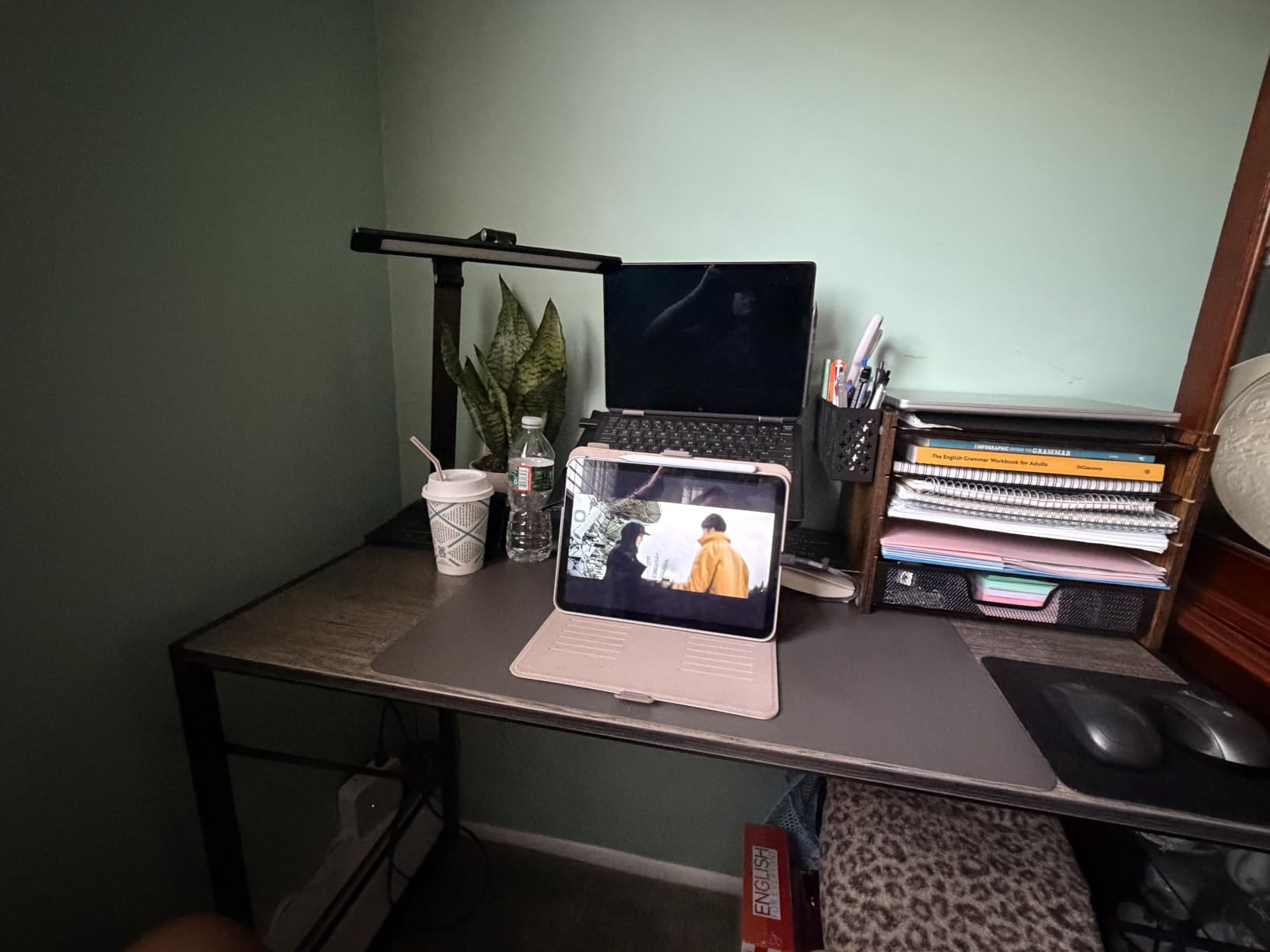
The extras are what separate it from the others. A pull-out keyboard tray keeps the desktop clear, and there is a cabinet plus an open shelf underneath, which is unusual on a folding frame. The P2 particle board top and I-shaped steel frame are rated to 250 pounds, so a laptop, a monitor arm, and a full stack of books are not a problem.
Reviewers rate it 4.8 stars across 3,552 reviews, the highest score in this group, with 95 percent at four stars or above. The one thing they flag repeatedly is weight. At 26.5 pounds this is a two-person carry every time.
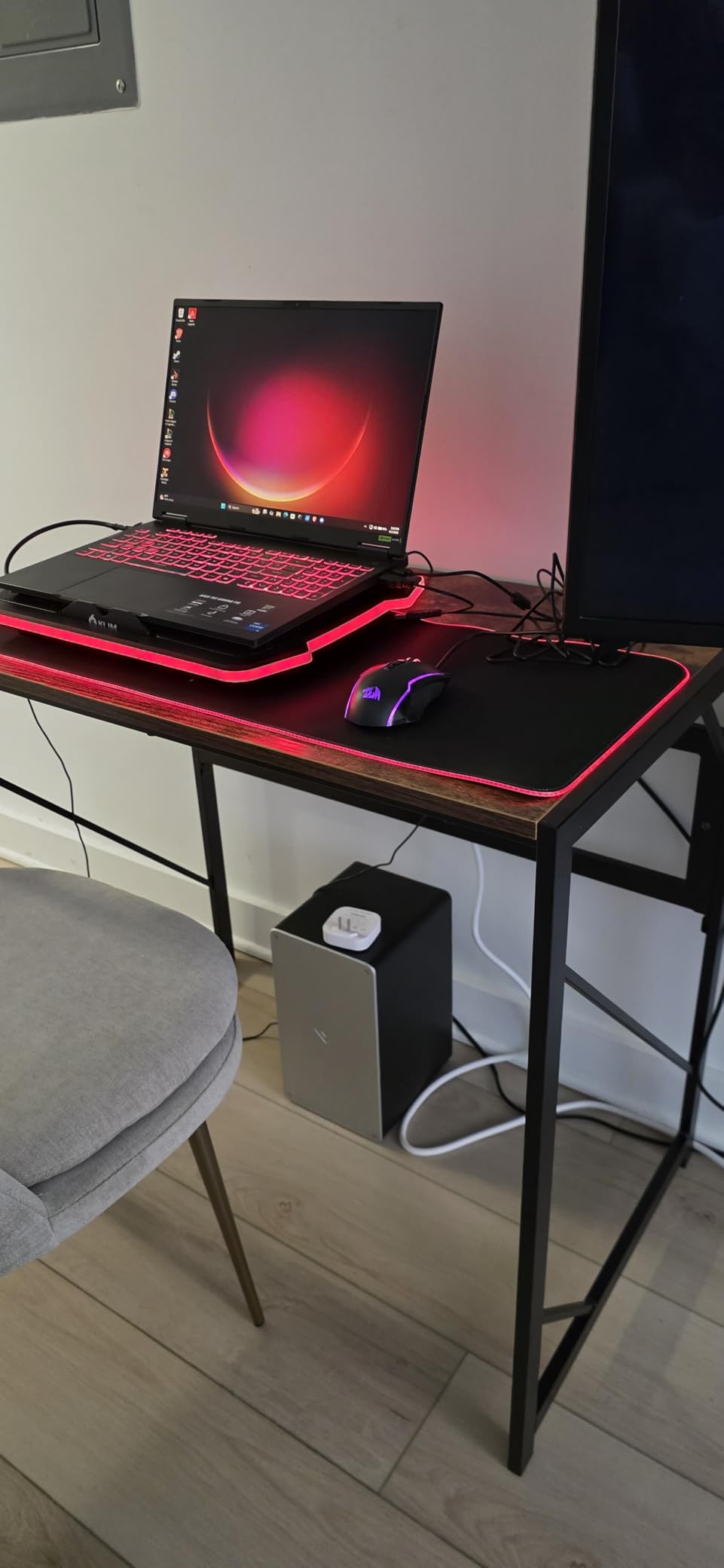
Check where you will unfold it
A 39.4 inch wide desk needs roughly 40 inches of clearance plus chair pull-out space of 30 to 36 inches. That is the full width of a small bedroom wall with the bed still in place, which is exactly why the folded profile matters.
Measure the folded footprint too, not just the open one. It is bigger than the slimmer folding models, so it will not slide under every bed or tuck behind every door.
Best for full-time remote work in a one-bedroom
This is the pick for someone whose desk is used eight hours a day and needs a keyboard tray and somewhere to put a charger. It earns its floor space because it gives you storage a bare folding top cannot.
Be honest about the lift. If you plan to move it between rooms daily, the 26.5 pounds will annoy you within a week, and a lighter 27 inch model will serve you better.
4. Pamray 23 Inch Desk – the lightest desk that still holds a laptop properly
Pamray 23 Inch Computer Desk for Small Spaces, Home Office Work Desk with Headphone Hook, Small Office Desk Study Writing Table
- Narrowest top in the roundup at 13.38 in
- Light at 8.4 lb so one person can reposition it
- Headphone hook on the side
- Assembles in about 5 minutes
- 13.38 in width is tight for a keyboard and mouse
- More low-star feedback than other picks
This is the correct answer to a very specific apartment problem: you have a wall you do not want to give up more than a foot and a half of.
At 13.38 inches wide and 23.62 inches deep the proportions are flipped from most desks. It is tall and narrow rather than wide and shallow, which means it fits beside a bed, in a dorm room corner, or on a narrow windowsill ledge without eating the floor.
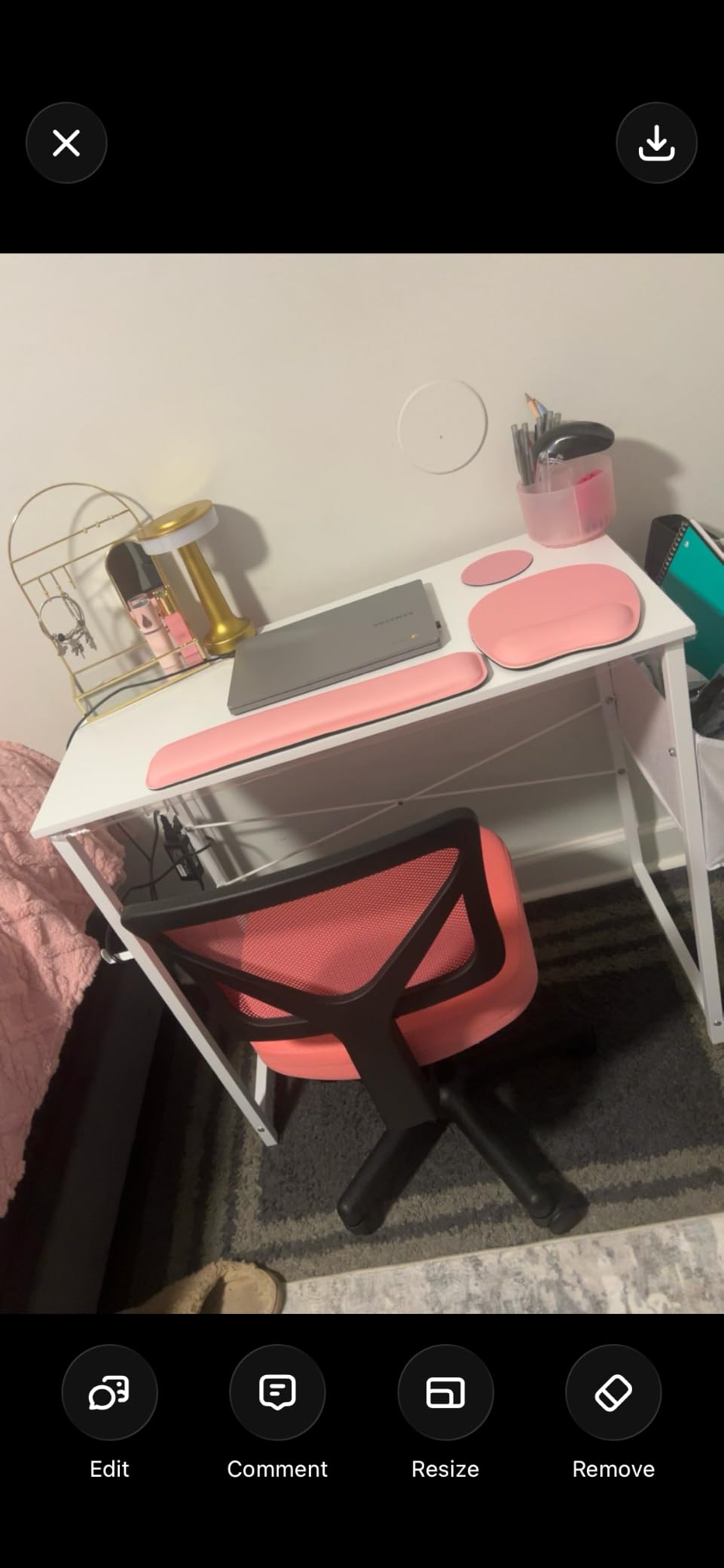
At 8.4 pounds it is the easiest desk here to move. I could pick it up one-handed and set it in a different room mid-task, which makes it the most flexible option for people who work in shifts in different parts of a studio.
The side headphone hook is a small touch that matters more than it sounds in a shared wall, because it gets headsets, keys, and a bag off the surface. An X-shaped back brace and leg pads keep the top from flexing when you type.
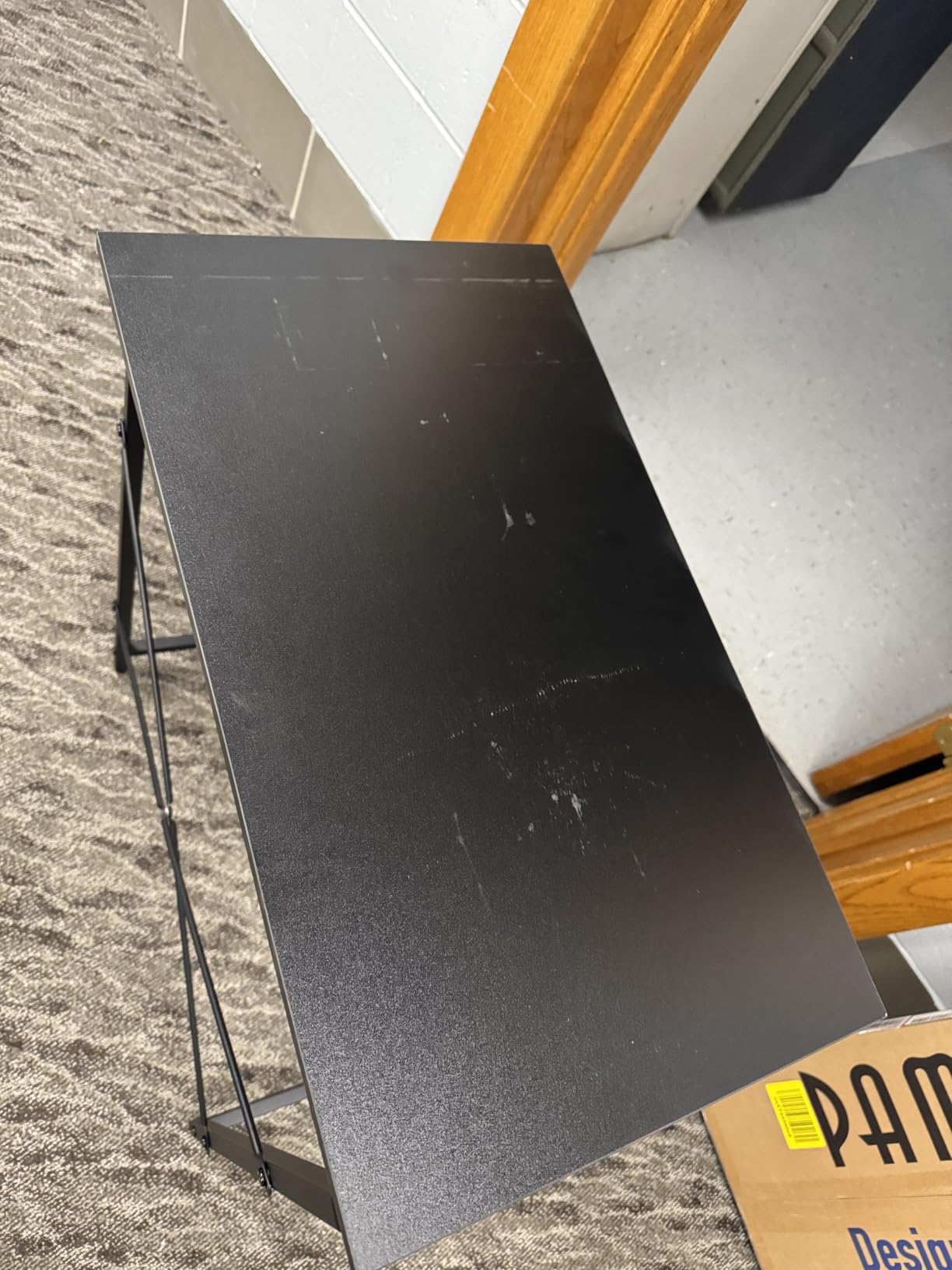
Check whether narrow is too narrow
A 13.38 inch top fits a laptop and little else. Keyboard and mouse side by side is the sticking point that reviewers mention most, and a monitor arm on a top this narrow needs checking before you buy.
If you write by hand, the 23.62 inch depth is generous for a small desk and gives you real paper space down the long axis.
Best for students and shift workers
This desk suits a kid doing homework in a bedroom corner, or an adult who uses a laptop away from a fixed spot. It is also the one to pack when you move apartments.
It comes in a range of finishes including white, marble, and vintage tones, which matters if the desk lives in a bedroom rather than an office. Plan five minutes for assembly and you are done.
5. DLisiting 32 Inch Desk – the one with actual storage in it
- Two fabric drawers plus two hooks for storage
- Adjustable leg pads and extra steel brackets hold the top level
- Anti-scratch and anti-noise pads protect floors
- Waterproof P2 particle board surface
- Assembly takes 20 to 30 minutes and suits two people
- Fabric drawers suit lightweight supplies only
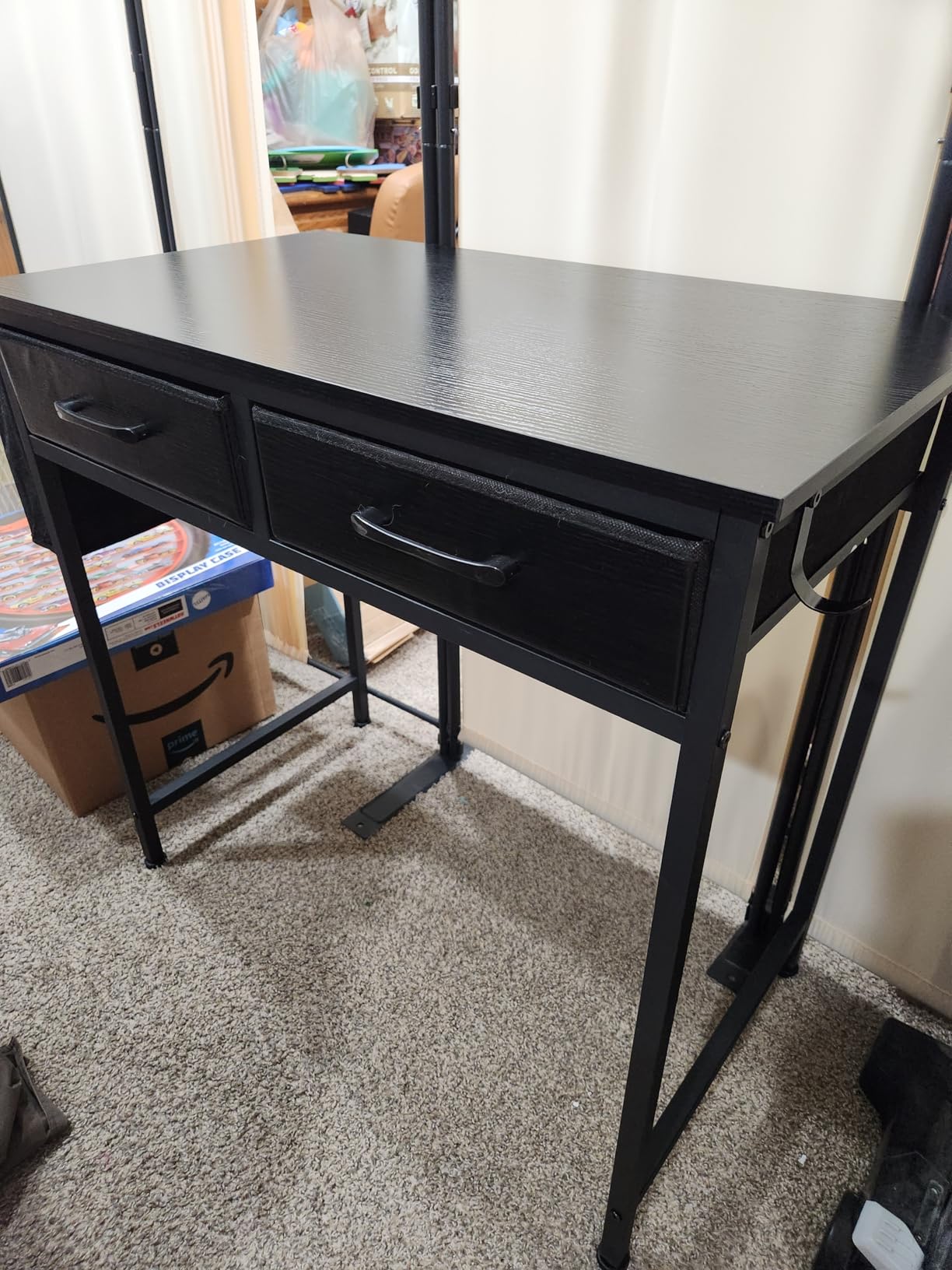
Drawers are the single most requested feature in apartment desk threads, and this is the pick in the roundup that actually has them. Two tier fabric drawers plus two iron hooks give you somewhere to put the clutter that would otherwise take over the only free surface in the room.
The footprint is 31.5 by 17.7 inches, a good apartment compromise: wide enough for a laptop and notebook side by side, shallow enough to leave a walking lane. It is listed for bedrooms, dorms, living rooms, and study rooms.
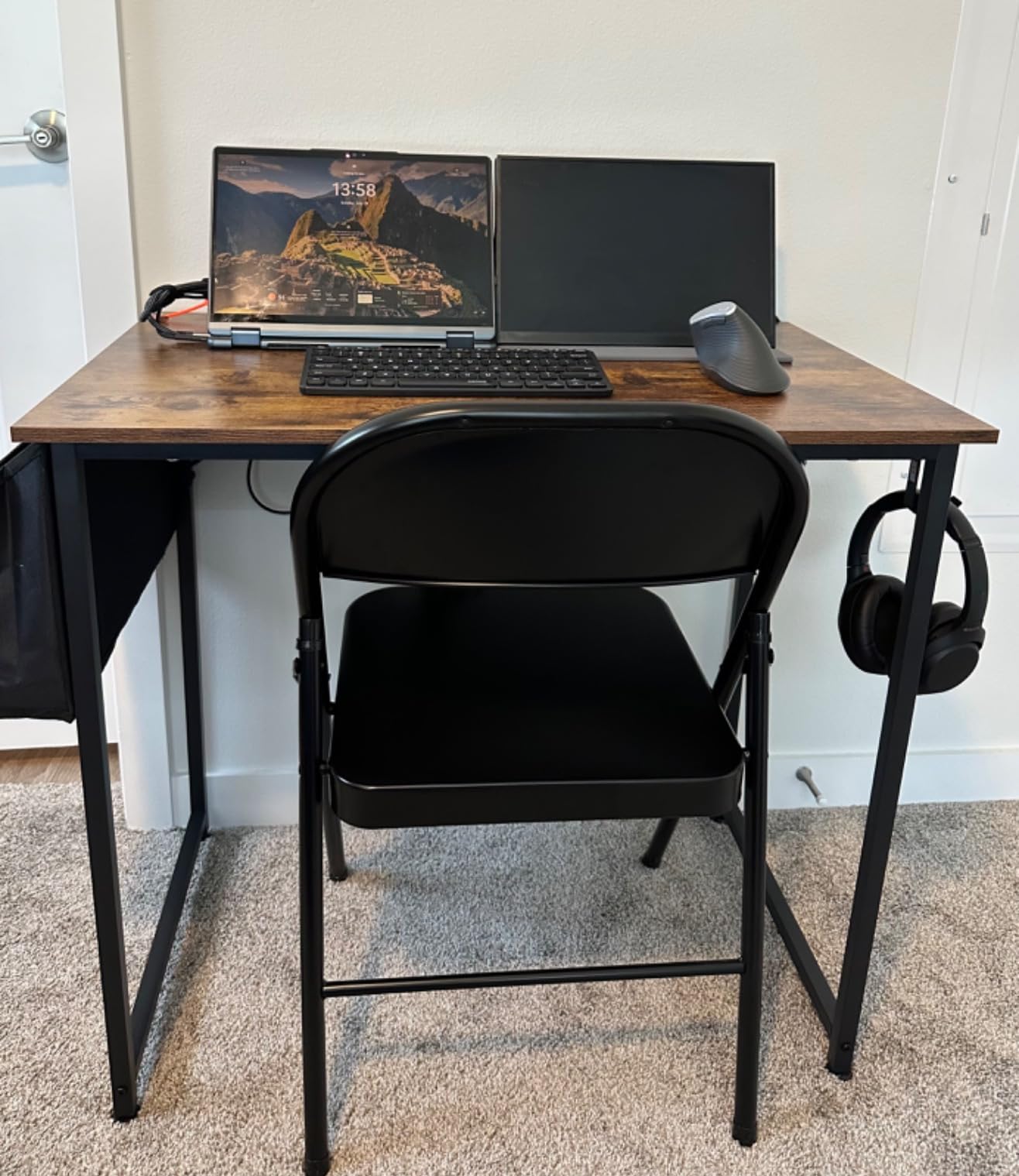
What I like for stability is the combination of extra fixed steel brackets and adjustable leg pads. In a room with uneven floors or carpet, level-adjustable feet are the difference between a desk you can write on and one that rocks when you press. Reviewers also mention anti-scratch and anti-noise pads that stop the frame marking the floor when you move it.
The surface is waterproof, scratch-resistant P2 particle board, which wipes clean and handles a coffee cup without a ring. It is rated as a compact gaming table too, so it takes a keyboard and mouse setup without complaint.
Check the assembly time honestly
This is the longest build in the roundup at roughly 20 to 30 minutes, and the manufacturer suggests two people. Budget an evening and assemble it before you need it, not on the morning of a deadline.
Also note the drawers are fabric, not wood. They are fine for pens, notebooks, chargers, and stationery, and they will not hold a hard drive stack or a bag of hardware.
Best for a bedroom that doubles as an office
People who want a desk that looks intentional in a bedroom choose this because the storage does the tidying. Papers go in the top drawer, small electronics go in the bottom, and the hooks hold headphones or a bag.
If your room cannot take a solid black frame against the wall, the finish is a consideration. In a light-toned bedroom it reads as furniture; in a bright eclectic room it reads as office equipment.
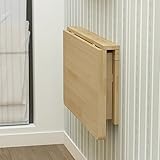
6. MM MELISEN Wall-Mounted Folding Table – the floor returns entirely
- Frees the whole floor when folded
- Solid wood with a natural finish
- Very light at 5.3 lb
- Highest load rating here at 300 lb
- Several sizes available
- Needs wall mounting so it is not movable
- 15.7 in width suits laptops more than monitors
- Lowest rating and widest spread of critical feedback here
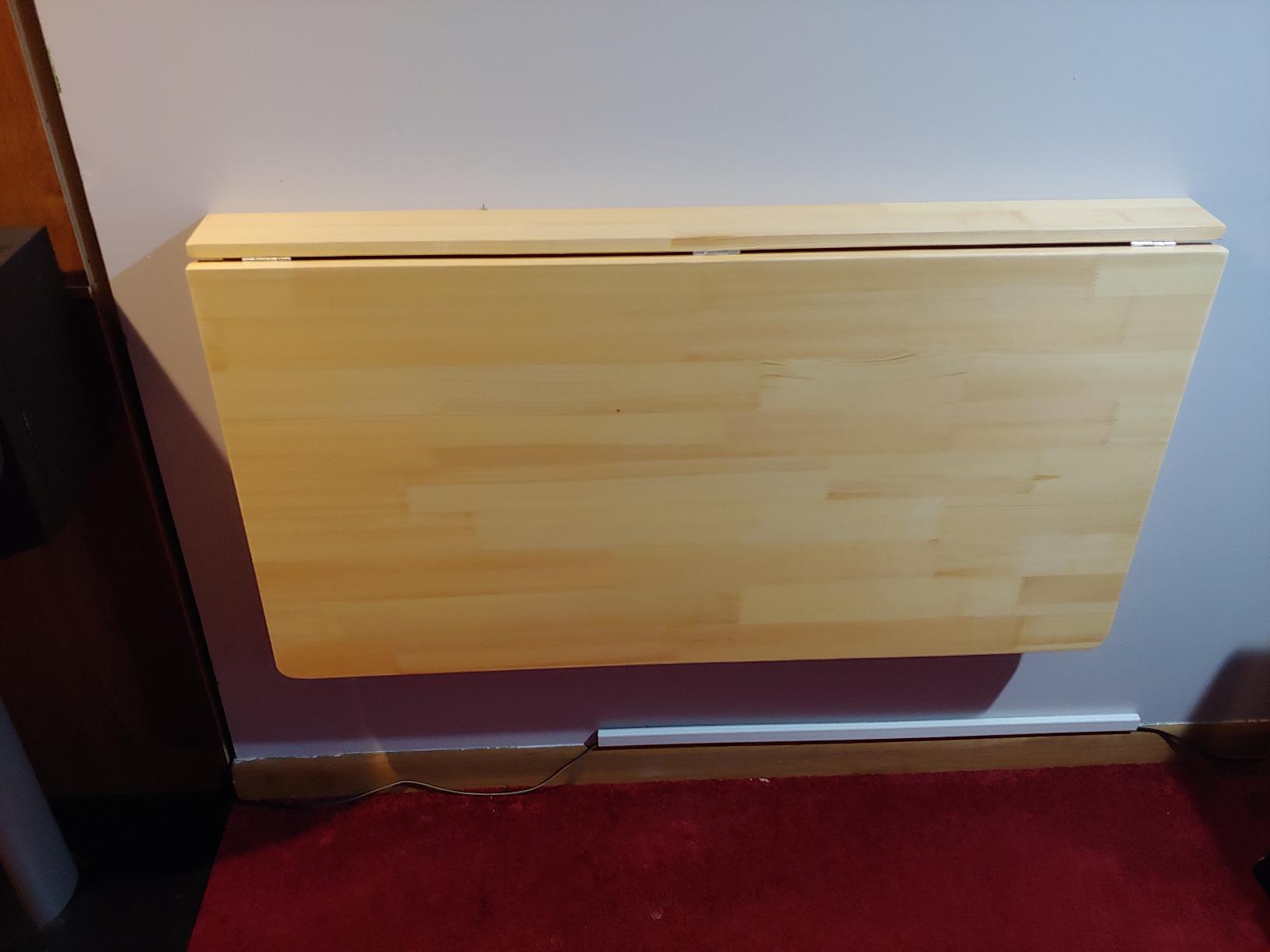
A wall-mounted table gives back 100 percent of the floor when folded, which no free-standing desk can match. This one is 23.6 inches deep by 15.7 inches wide and folds flat to 3.1 inches.
It is solid wood in a natural finish with a cherry wood frame and trestle base, rated to 300 pounds. That is the highest load rating in the roundup, and it means a laptop, a monitor, and a sewing machine or a record player will not trouble it.
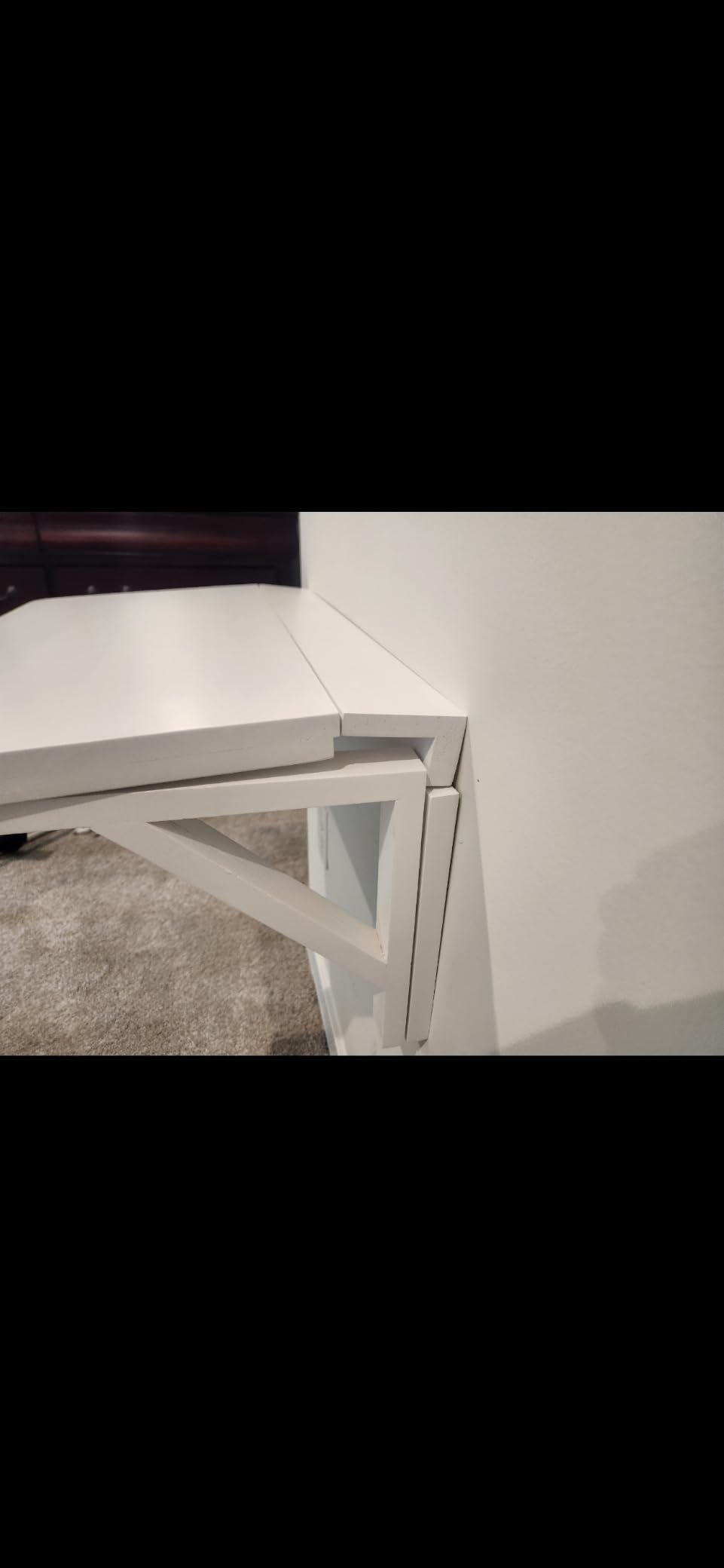
The natural wood looks good in a laundry room, a kitchen, or a kid’s room as much as it does in a home office. At 5.3 pounds it is trivial to install and just as trivial to relocate to a different wall if you move apartments.
This is also the one most often repurposed after work hours: mounted low in an entryway it becomes a mail sorting station, and mounted in a hallway it becomes a drop spot for keys. Sizes run from 24 by 16 inches up to 38 by 22 inches in the same line.
Check your wall before you buy
This needs a wall that can hold screws. Find a stud with a detector or knock test, ideally two, and mount into the wood rather than into drywall alone. Assembly instructions and hardware are included and a screwdriver is the only tool needed.
As a renter, this is the decision point. If your lease forbids drilling or you do not want to patch, a free-standing folding desk is the safer route. If drilling is allowed, nothing else in this list gives back this much floor space.
Best for spaces that change function
Pick this when the room has to be a hallway in the morning and an office in the evening, or when a corner does double duty as a laundry sorting surface and a homework station.
Its 4.2 rating from 1,001 reviews is the lowest here, and the feedback is more spread out. Owners who mount it correctly love it. Critics point at the small surface and at mounting difficulty, which is a fair summary of what to expect.
7. Tangkula Folding Wall Desk – more storage than any other pick
- Turns a blank wall into a full workstation
- Several wall-mounted shelves for books and supplies
- Premium metal hinges and a secure latch
- Works as an office
- mini bar
- or craft station
- Must be anchored into solid wall surfaces
- Heaviest desk here at 35.5 lb
- Lowest rating in the roundup with a high one-star share
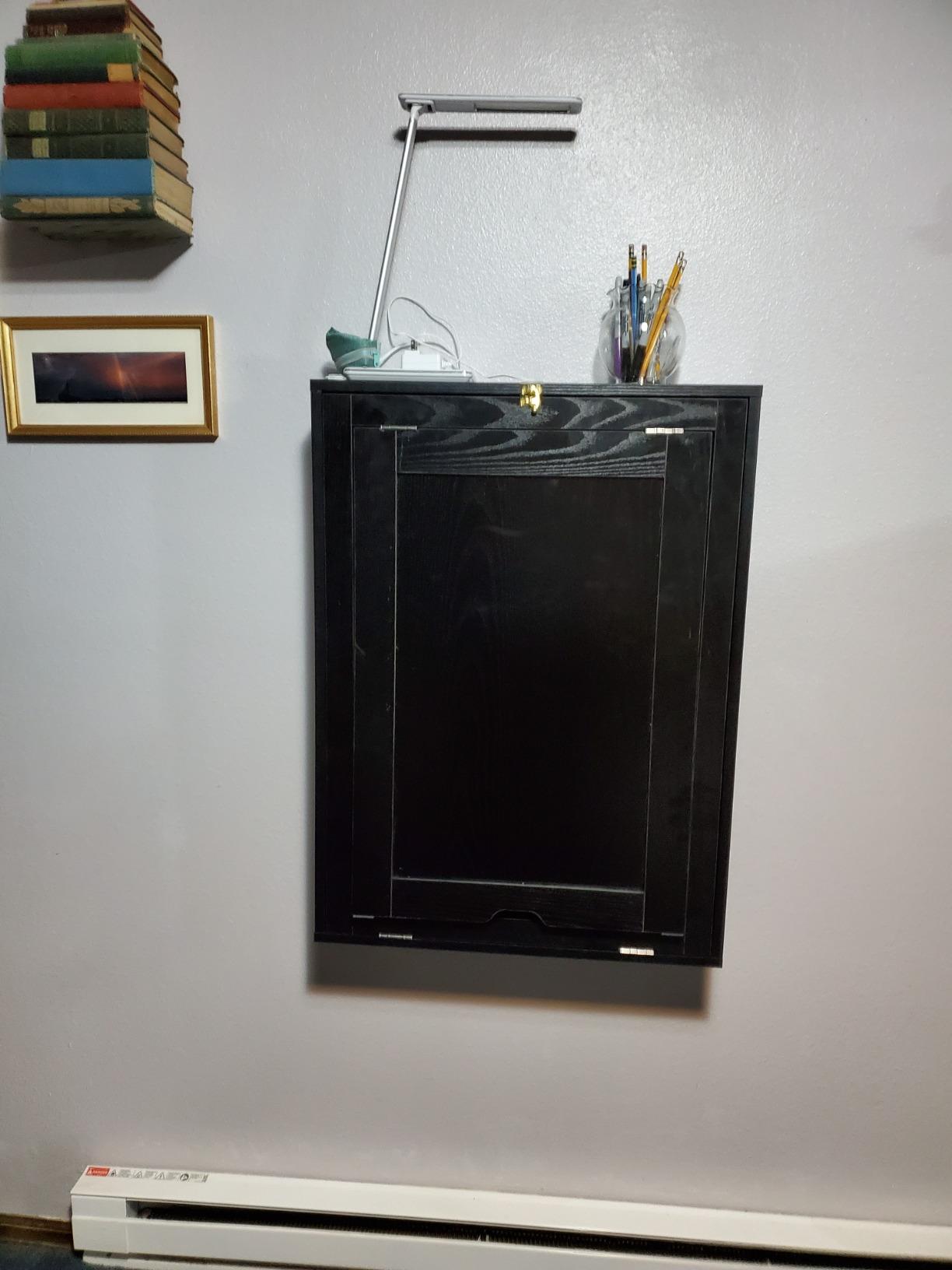
This is the pick when storage matters more than portability. The assembled unit measures 36 by 24 by 58 inches and folds to a 6.5 inch depth, so an entire wall converts between a workstation and a flat surface with shelving still in place.
Because the shelves stay mounted when the desk folds up, this solves a problem the pure fold-down tables cannot: where do your books and supplies go when the desk is closed? Here, they stay on the wall and out of the way.
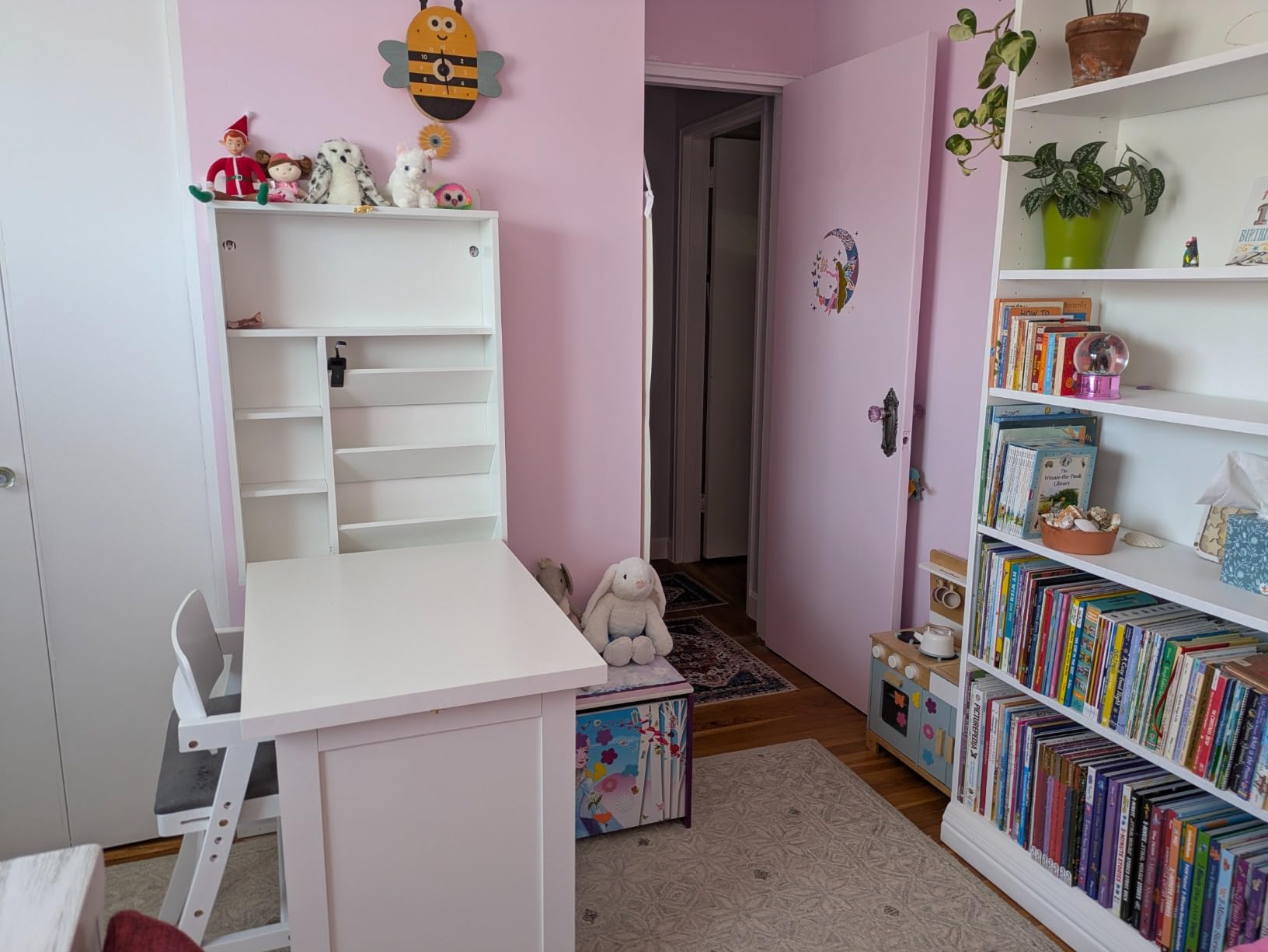
The hardware is the serious part: premium metal hinges and a latch that keeps the leaf up. At 35.5 pounds it is the heaviest desk in the roundup, and that weight is what makes it feel solid rather than flimsy once it is on the wall.
Owners who install it into properly anchored studs describe exactly the small-apartment dream: a desk that is simply gone at 7pm, in a room that is now a living room again. It is also sold as a mini bar or craft station, which is how several buyers use it.
Read the installation requirement twice
The manufacturer states that solid wall installation with heavy-duty anchors is required and that it should not go on drywall or plasterboard. This is not a renter-friendly product unless your lease explicitly allows drilling, and it is the main reason its rating sits at 4.1.
Because it is fixed at 36 by 24 inches, you cannot reposition it later without patching and re-anchoring. Measure the wall twice, including door swing and furniture that may sit in front of it.
Best for a dedicated study nook
Choose this if you have one wall that can be given over to work entirely. The shelf system makes it feel like a built-in, and the folded depth of 6.5 inches keeps the room usable.
The critical feedback is mostly about installation method and the ten percent of buyers who left one star. Read the manual, use the right anchors, and the difference between a smooth install and a frustrating one is entirely about the wall.
8. Huuger Folding Desk – the step up for anyone who types a lot
Huuger Folding Desk for Small Spaces, 31.5 Inch Foldable Computer Table
- 18.9 in desktop is deeper than most folding desks
- Curved edges are comfortable for forearms
- Folds to 2.76 in for behind-door storage
- FSC-certified board with 18mm steel legs
- One-person setup in under 20 minutes
- Needs a screwdriver for assembly
- Lower review volume than the leading picks
The depth is the story here. At 18.9 inches this gives you noticeably more usable surface than the 15.75 inch folding models without moving up to the 39.4 inch wide options, and it still folds to 2.76 inches.
At 29.7 inches it sits squarely in the standard height range, and the rustic brown finish suits a bedroom or a home office that is not styled as a corporate space.
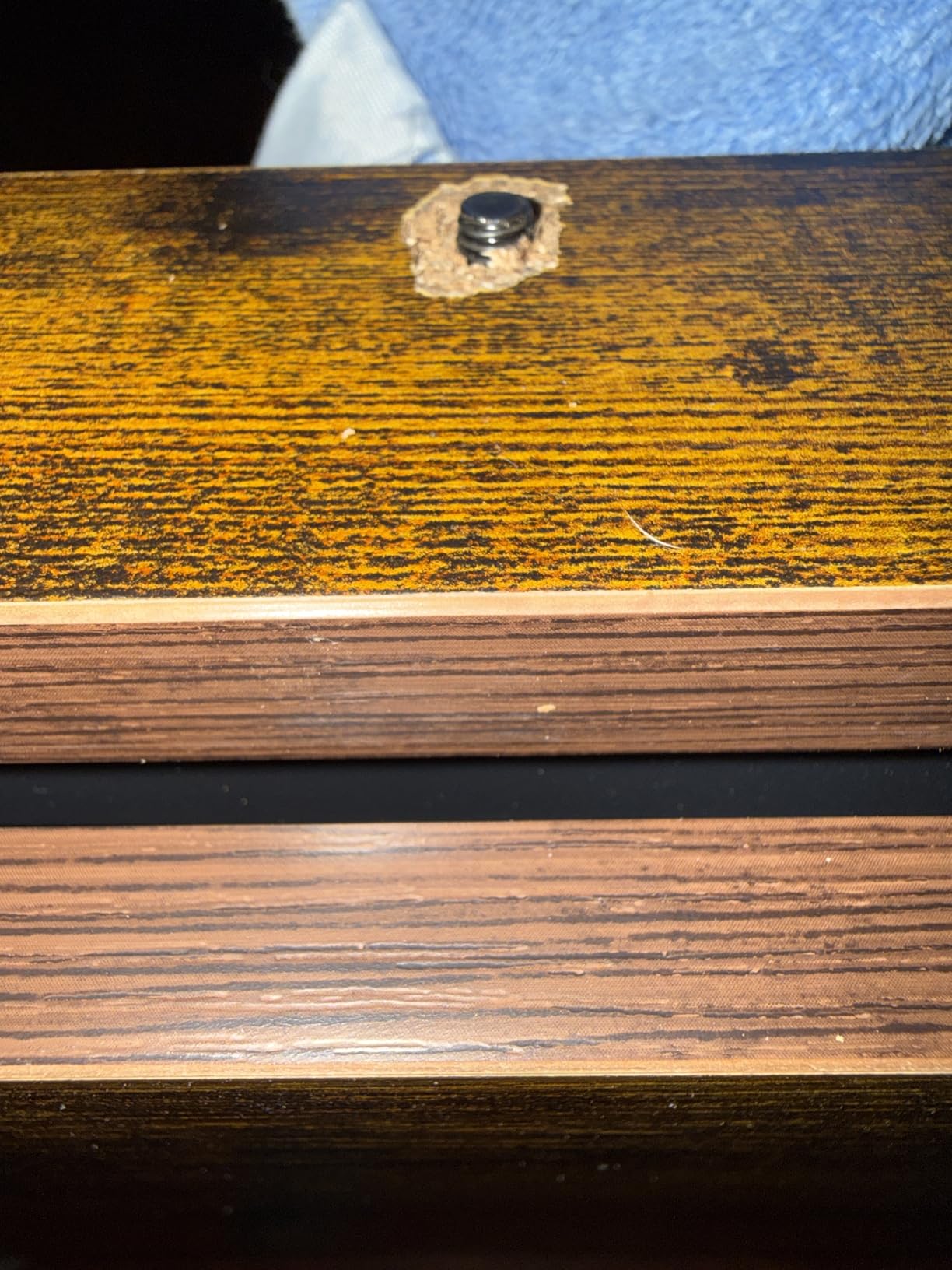
The frame is 18mm steel with X-frame support, which reviewers single out as sturdier than the folding desks they moved up from. The curved desktop edges are a small quality detail that matters if you lean on your forearms while writing for an hour.
It is also FSC-certified wood board, which is a reasonable thing to look for on a piece of furniture that will live in a bedroom. Reviewers describe the deeper top as the reason they chose it over cheaper folding models.
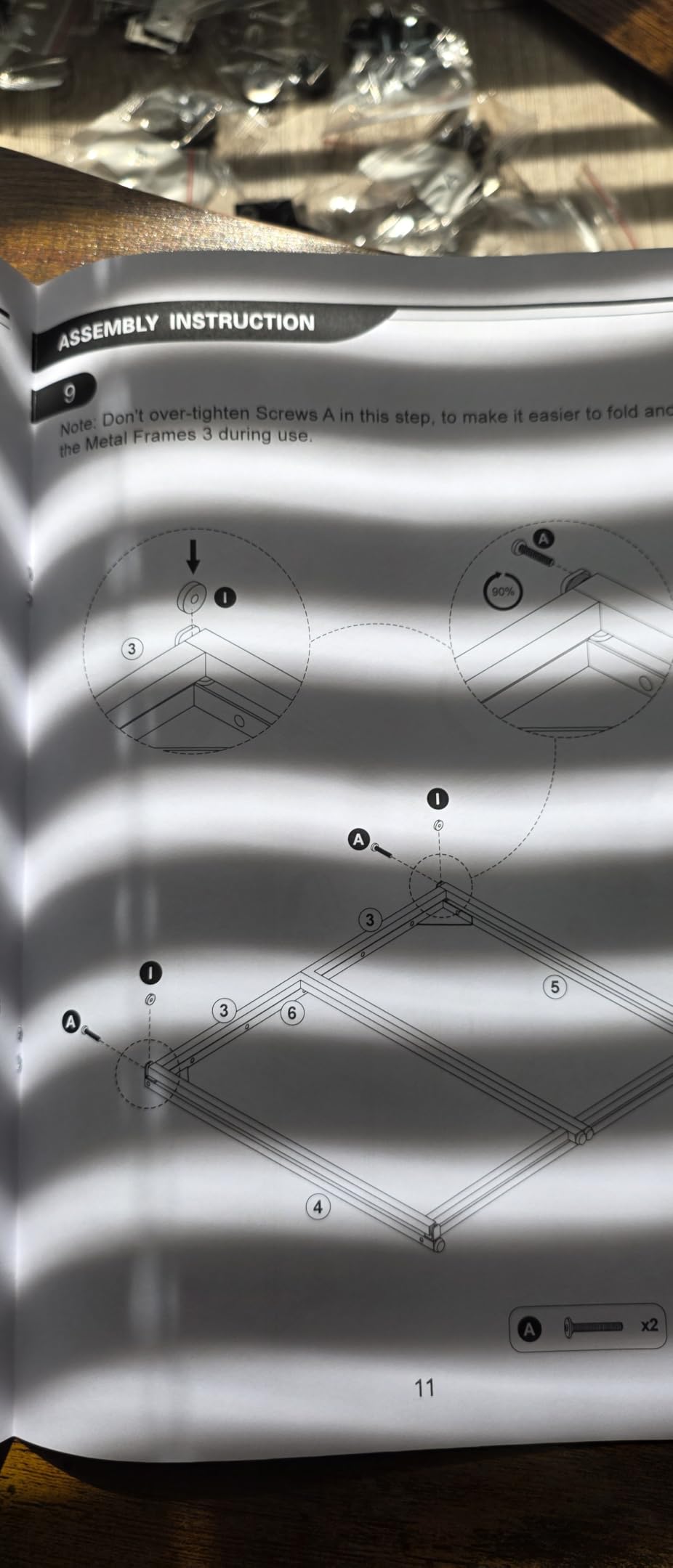
Check your wall length once more
Thirty-one and a half inches wide plus 30 to 36 inches of chair clearance means you need about five feet of usable wall. In a narrow bedroom that can be the wall behind the bed rather than a wall you can sit at.
It folds to 2.76 inches, which stores behind a door or under a bed frame with clearance. A screwdriver is needed, and one person can do it in under 20 minutes.
Best for a hybrid work and study room
Pick this if a laptop plus notebook plus a coffee cup has to fit at the same time, which is the everyday reality of studying from home. The extra depth stops your notebook living on your knee.
It is also a multi-use piece: reviewers use it as a dining table, a Zoom call stand, and an outdoor table. At 4.4 stars from 838 reviews it has the smallest following here, but the complaints are ordinary rather than structural.
9. Tangkula Two-Tier Desk – the one that also works as a vanity
Tangkula Small Computer Desk, Compact Home Office Desk with Sturdy Frame, 2 Tier Study Writing Table for Small Place Apartment Office, Desk for Bedroom, Kid’s Desk
- Monitor riser keeps the main surface clear
- Powder-coated iron frame rated to 110 lb
- 20 by 31 in footprint suits apartments
- Waterproof scratch-resistant top
- Works as a desk
- study table
- or vanity
- Riser shelf is under 6 in deep so larger monitors will not fit
- No cable pass-through hole
- Riser sits slightly high for a monitor
- Faux wood grain veneer looks inexpensive
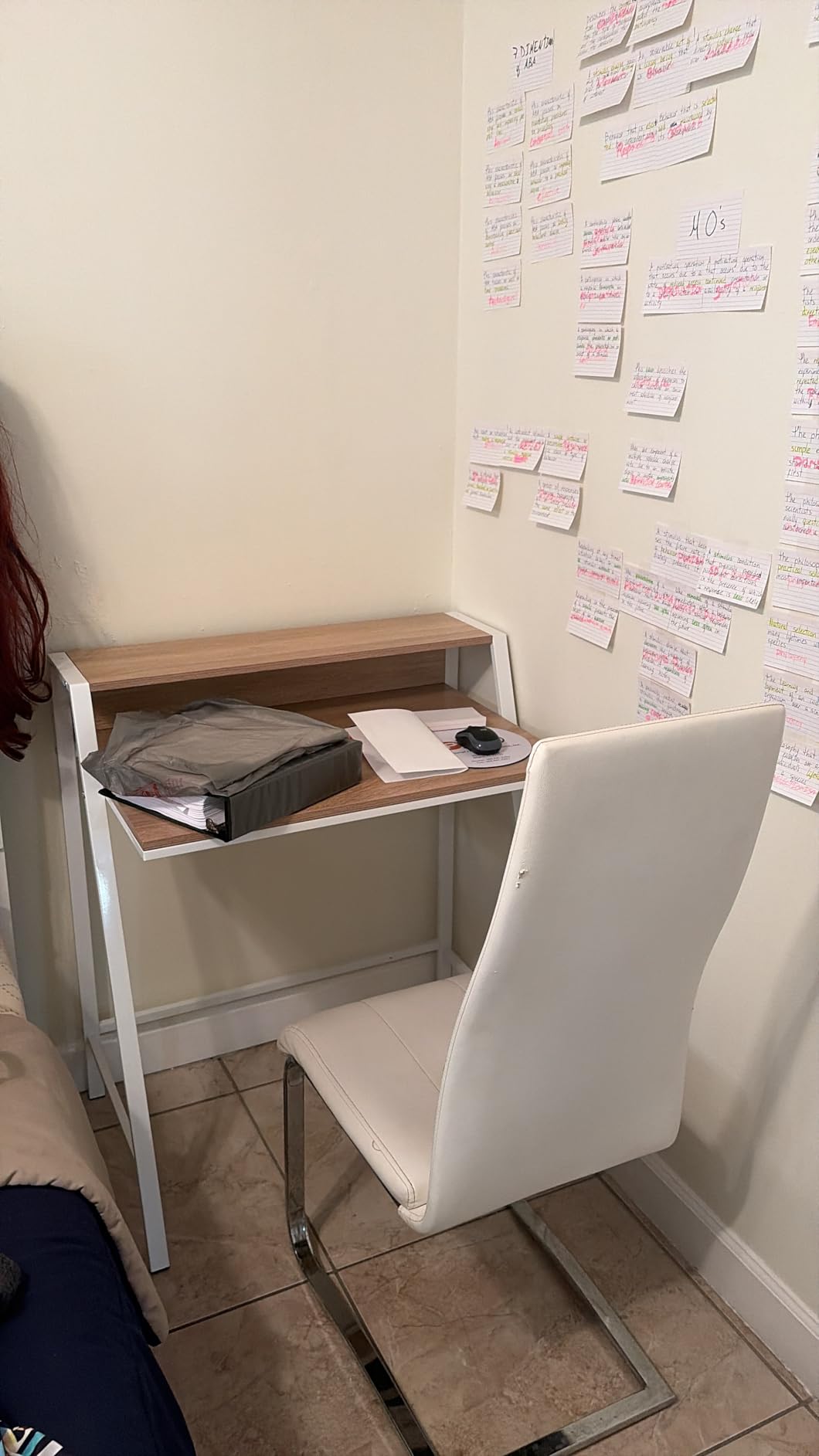
This is the desk that earns its footprint twice. The two-tier layout puts a monitor riser or shelf above the main surface, which lifts a screen to eye level and clears the desk underneath for writing.
At 20 inches wide and 31 inches deep it is narrower than most desks here, which suits a bedroom wall, and the listed use includes a makeup vanity console. In a studio where one piece has to serve work and getting ready, that dual purpose is the point.
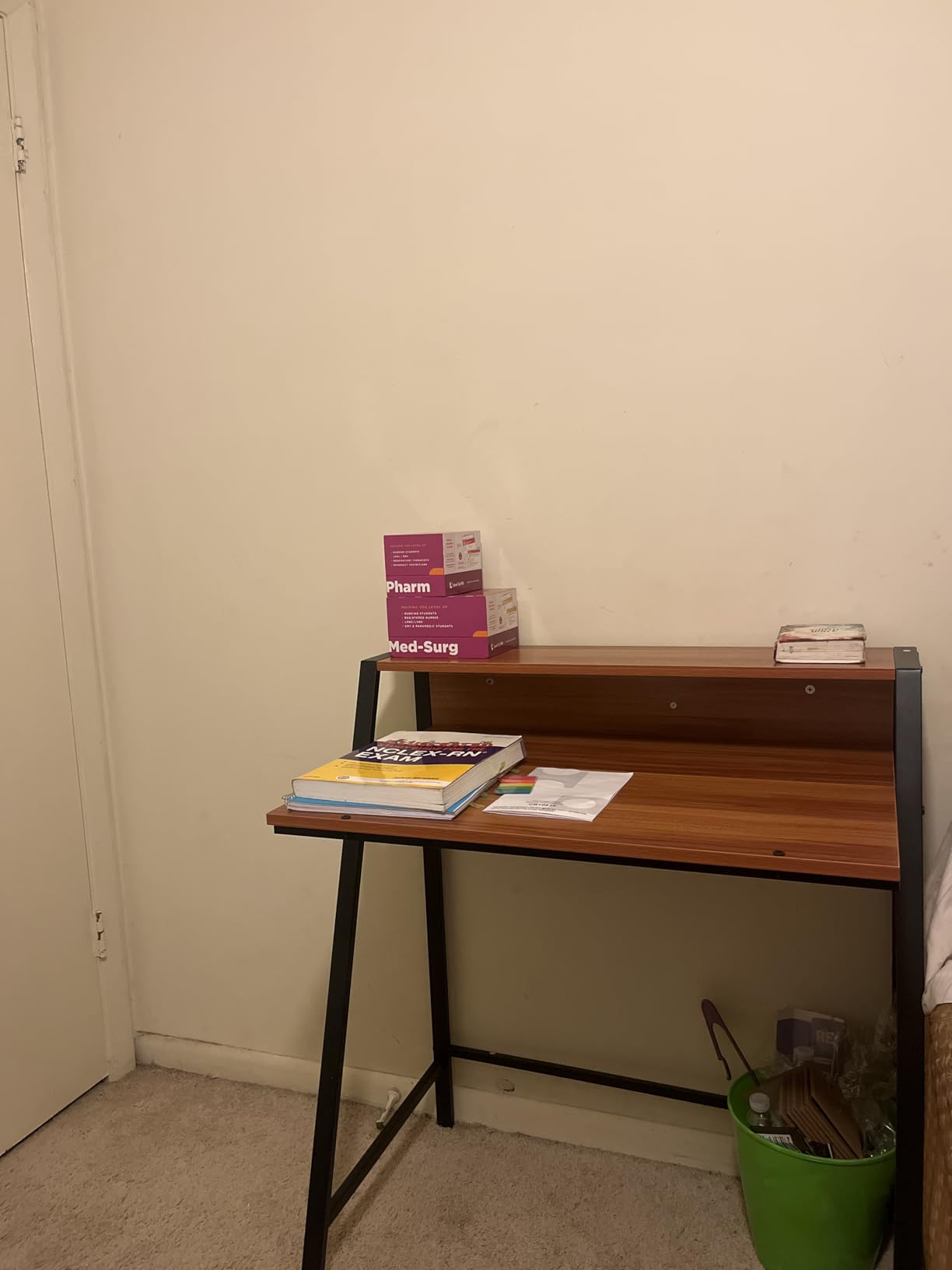
Stability is the quiet strength. Reviewers consistently describe it as sturdier and more stable than expected for a compact frame, and the powder-coated iron frame holds 110 pounds. Two open shelves and two enclosed shelves mean the riser is not the only storage.
The honest list of drawbacks is longer than for most picks. The upper riser is under 6 inches deep, so a monitor over about 24 inches will overhang. There is no cable pass-through, so cords route around the edges. And the riser sits slightly high, which pushes a monitor above eye level for shorter users.
Check your monitor size first
If you use a laptop, a tablet, or a monitor under about 24 inches, the riser works well. If you are buying a larger display, measure the riser shelf before you order and skip this one.
Also measure for cords. Without a pass-through hole, a monitor plus a lamp plus a laptop means three cables dropping behind the frame, so plan a cable route before the desk is in position.
Best for a bedroom or studio that needs two jobs
Choose this when the desk lives in a room you also use for other things. The riser keeps a screen and its stand off the writing surface, and the two-tier setup gives you somewhere to leave a closed laptop.
Its 4.6 rating from 414 verified reviews comes with the lowest one-star share in the roundup, so buyers are broadly happy. The faux wood grain veneer is the one finish complaint, and it matters most in a room where the desk is on camera.
10. VASAGLE Folding Desk – the thinnest profile for behind a door
- Thinnest fold among the folding group at 2.4 in
- One-piece desktop with reinforced folding hardware
- Adjustable feet level the desk on uneven floors
- Rounded edges and smooth surfaces
- Assembles in 5 to 10 minutes
- 50 kg load limit is the lowest here
- Screws can loosen after repeated folding
- Higher share of one-star feedback
This is the pick when storage space is the binding constraint. It folds to 2.4 inches, so it slides behind a door or under a sofa where a 2.76 inch model would not quite clear.
It is also the least expensive way into folding-desk ownership, and the 5 to 10 minute assembly is short enough to do on a Sunday morning. At 29.1 inches it sits at standard desk height.
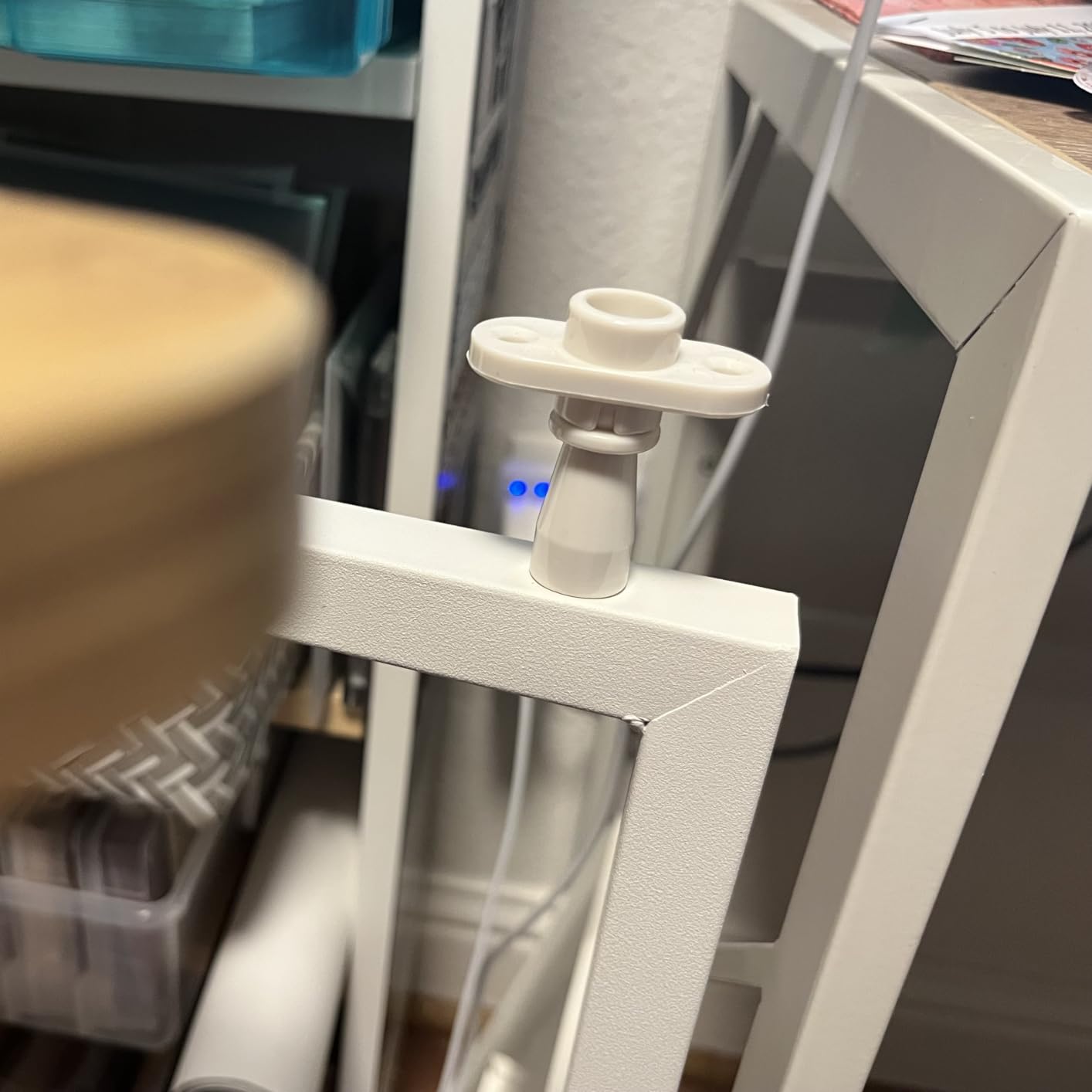
The one-piece desktop with thick particle board and reinforced folding hardware is a sensible design, and the rounded edges make it safer in a kid’s room or a tight walkway. Adjustable feet are the detail I would keep even on a cheaper desk, because they are what stop the frame rocking on carpet or an old wooden floor.
The load limit is 50 kg, which is the lowest in the roundup. That is fine for a laptop, notebooks, and a lamp. It is not fine for a monitor arm, a desktop PC, or a stack of hardbound books, and that limit is stated by the manufacturer.
Check the folding hardware over time
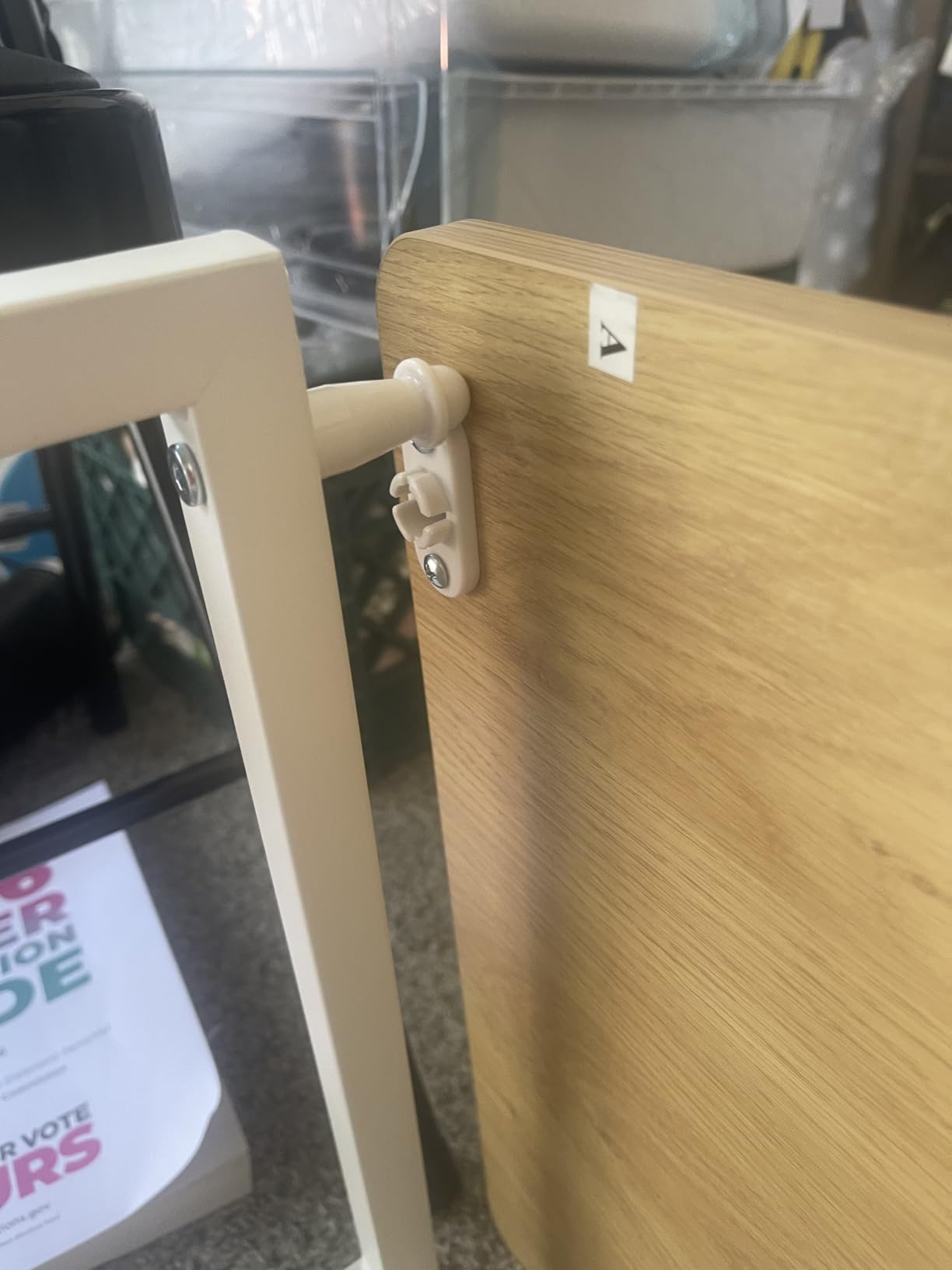
The most repeated criticism across reviews is that screws loosen after repeated folding and unfolding, and that the desk needs re-tightening. Check them every few months if you fold it daily.
This is also the pick with the highest share of one-star feedback here at ten percent, so read the low reviews before buying. Most of them point to the same two things: the load limit and loose hardware.
Best for renters who move often
Pick this if you want a desk that disappears completely and you are not planning to sit at it eight hours a day. It travels well, stores anywhere, and costs the least of the folding group.
If you do work long hours, choose one of the sturdier folding frames further up this list instead. The difference in stability shows up in how the desk feels during the second hour of typing.
How to Measure an Apartment Nook Before You Buy
Measure before you choose a model, not after. Every dimension on this page is listed in inches because that is the only unit that transfers between a tape measure and a listing without conversion errors.
- Width first. Tap out the width of the wall or surface you have in mind. For a free-standing desk in a small apartment, stay under 40 inches. That rule of thumb leaves room for a chair to pull out and for you to walk past.
- Allow 30 to 36 inches of chair clearance. Desk depth plus chair pull-out plus body space is what a person actually needs. Add 30 to 36 inches behind the desk edge before you call the space workable.
- Check depth against the wall. Most apartment desks need 15 to 24 inches of depth. If your wall is already deep with radiators, shelving, or a bed frame, a 15.75 inch model will fit where a 20 inch one will not.
- Measure the delivery path. Check your doorway width, any stairwell turns, and your elevator dimensions. A boxed desk over 40 inches wide will not fit through a 32 inch door frame in many older buildings.
- Look at the light and the floor. Note the nearest outlet and whether the floor is carpet. Carpet under narrow legs is the most common cause of the wobble complaints in this roundup.
Two numbers matter more than people expect: the doorway width for delivery and the chair clearance. Get those right and the rest of the decision is about storage and finish.
Where to Put a Writing Desk in an Apartment
The best spot is the one that gives you light and an uninterrupted surface without blocking a door or a window. In most apartments that means a blank wall or a corner, with the desk facing into the room rather than out of it.
Facing a window gives you daylight, which reduces eye strain and cuts glare if the window is beside you rather than in front of you. Facing away from a window puts a bright surface in your view all day. Facing a wall is calmest and most common, and it is where a cord route to the nearest outlet is easiest.
Beyond light, the practical shortlist by room runs like this:
- Bedroom corner. The most common apartment solution. Choose a slim desk under 32 inches wide with drawers, since open floor in a bedroom matters for the bed and the walking lane.
- Entryway or hallway. A wall-mounted fold-down table wins here because the surface disappears and you regain the entry lane entirely.
- Dining nook. If you have a table you are not using for anything else, a small desk beside it keeps the room from splitting into zones.
- Walk-in closet. A 15.7 inch wide wall table mounts low and gives a laptop surface without a floor footprint at all.
- Living room corner. Only worth it if the desk reads as furniture. A folding desk styled with a lamp and a bowl is far less noticeable than a permanent office frame.
Whichever room you choose, put the desk near an outlet. Every cord-hiding technique below starts from that outlet and works outward.
Renting? No-Drilling Installs and Wall Safety
If you rent, a free-standing desk is the default answer because it leaves no holes and no patch to explain at move-out. Eight of the ten desks in this roundup are free-standing or folding and install with no wall work at all.
Three checks come before any wall-mounted desk. First, read your lease for a no-painting and no-drilling clause, and check any HOA rules on your building. Second, find studs rather than guessing; standard stud spacing is 16 inches on centre, so stud finders pay for themselves immediately. Third, understand that drywall anchors rated for a light shelf are not rated for a desk with a person leaning on it.
On tip-over safety, the concern is real for wall-mounted desks with no legs. Mount into at least two studs, use the hardware supplied or rated for the load, and check the fixings every few months. Children pulling on a fold-down desk in a playroom is the scenario that shows up most often in homeowner discussions.
If you cannot drill, your options are narrower but still workable: adhesive-mounted shelves rated for the weight, tension-pole corner shelves, over-the-door racks, and the folding desks above, which need only floor space. The trade-off is load capacity, so keep laptops and light equipment on them rather than anything heavy.
Our guide to composters for apartments covers the same kind of landlord conversation from a different corner of the home, and treadmills for apartments goes deeper on renter-friendly installs and floor protection.
How to Hide Cords on a Free-Standing Desk
A desk in the middle of a room only looks messy if the cords are visible. Five steps fix it, and none require drilling.
- Start at the outlet. Route the power strip to the nearest wall outlet along the floor line, not diagonally across open floor where it becomes a trip hazard.
- Use adhesive clips along the wall. Clip the cable to the baseboard at 12 to 18 inch intervals so it runs flat against the wall rather than spanning air.
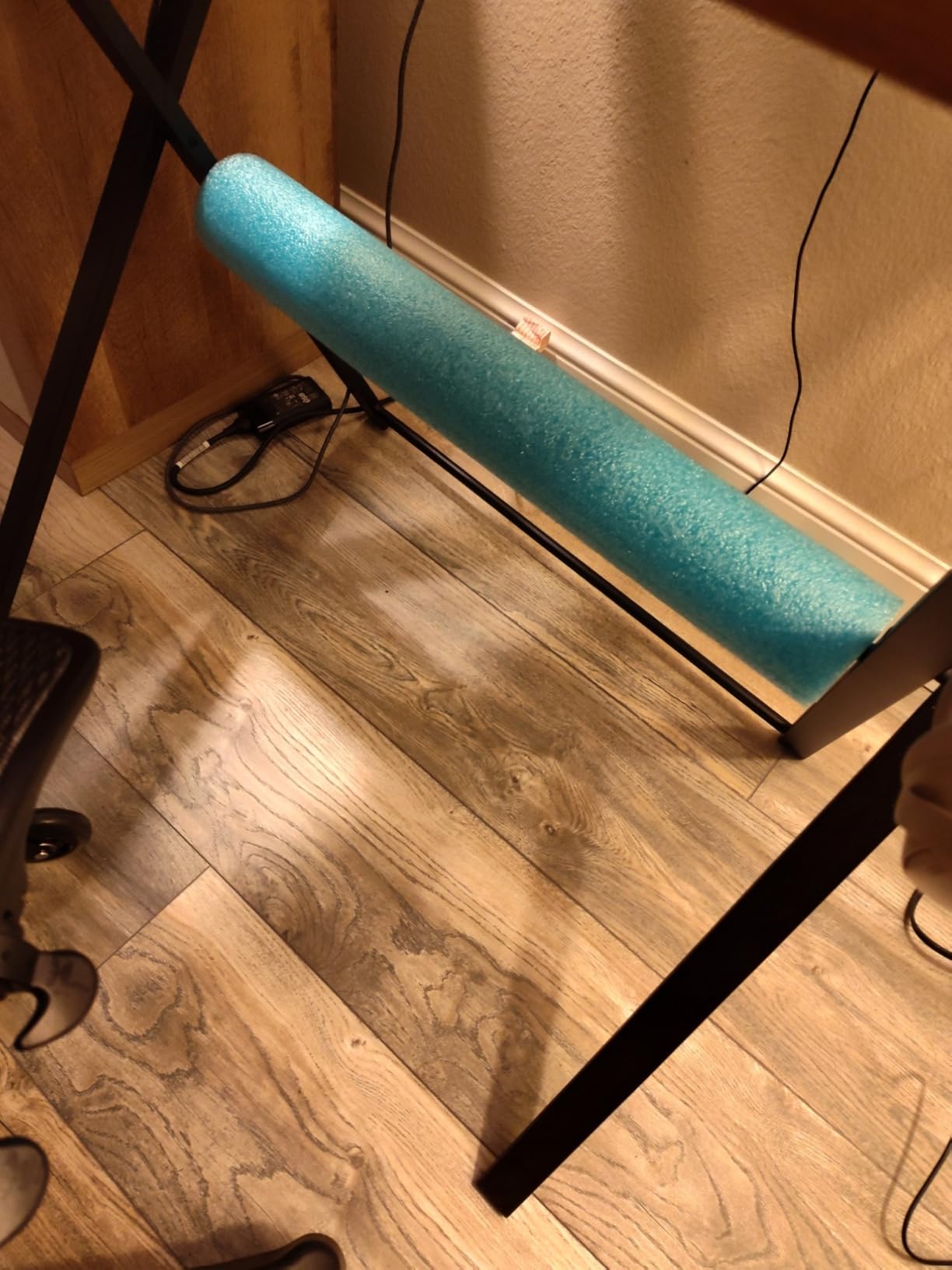
- Add an under-desk tray or sleeve. A tray holds the power strip and adapter bricks off the floor, and a sleeve on the desk leg keeps the drop tidy.
- Cover the last exposed run. A floor cord cover bridges the gap between the wall and the desk, which is the only stretch people trip over.
- Cut cable count where you can. A wireless keyboard and mouse, or a single USB-C dock instead of three adapters, removes more visible cable than any clip.
The desk itself helps. Picks with a cable tray, a back panel gap, or a hollow leg let cords run inside the frame rather than along the outside. The two-tier desk here routes around its edges because it has no pass-through hole, which is worth knowing before you buy.
Frequently Asked Questions
What’s the difference between a desk and a writing desk?
A writing desk is built for handwriting, reading, and correspondence, with a shallower depth, warmer wood finishes, and often drawers or a hutch. A computer desk is built for a monitor and keyboard, so it runs wider and deeper with cable routing and legroom. In an apartment the writing desk usually wins on footprint, and the computer desk wins on screen space.
What size desk fits in a small bedroom?
Stay under 40 inches wide and aim for 15 to 24 inches of depth, then allow 30 to 36 inches of chair clearance behind it. In a typical small bedroom that means a slim desk between 27 and 32 inches wide placed against a blank wall rather than under a window with a radiator.
Where is the best place to put a desk in an apartment?
Choose a blank wall or corner with an outlet nearby and no door swing in the way, with the desk side to a window rather than facing it. Bedrooms take a slim desk with drawers, hallways and entryways take a wall-mounted fold-down, and a living room corner only works if the desk reads as furniture.
Are fold-away desks good for small spaces?
Yes, because they return the floor space they occupy. The trade-off is surface depth, often 15.75 to 19.7 inches, which is enough for a laptop and notebook but tight for a full keyboard and mouse. They also need periodic screw checks after repeated folding.
What do you call a desk that folds down?
The common names are folding desk, fold-down desk, wall desk, drop-leaf desk, and Murphy desk. A wall desk is fixed to the wall and folds down, a folding desk is free-standing with folding legs, and a drop-leaf desk attaches a hinged leaf to a table.
Can you mount a desk on a wall in an apartment?
Only with landlord approval and into a stud or properly rated anchor, never drywall alone. Standard stud spacing is 16 inches on centre, so a mount spanning two studs is the safe pattern. If you cannot drill, a folding free-standing desk or a tension-mounted shelf avoids the question entirely.
How do you hide computer cords on a desk in the middle of a room?
Run the power strip to the nearest wall outlet along the baseboard, clip the cable to the wall every 12 to 18 inches, and put the strip in an under-desk tray so only one cable leaves the desk. A floor cord cover bridges the last gap, and a wireless keyboard removes the rest.
How high should a writing desk be?
Standard desk height is 28 to 30 inches, which suits most adults for writing and laptop use. Under 28 inches tends to cause shoulder rounding over a long session. Adjustable-feet models help on uneven floors, and a folding desk at 29 to 30 inches needs no riser.
The Verdict: Which Writing Desk Fits Your Apartment in 2026
The GreenForest folding desk is our pick for most apartments in 2026. It needs no assembly, folds to 1.5 inches, holds a shelf, and has the strongest review history of anything in this roundup at 4.7 stars across nearly 13,000 reviews.
Buy the Elephance folding desk instead if you work eight hours a day and need a keyboard tray and under-desk storage. Buy the DLisiting 32 inch desk if your problem is clutter, because two fabric drawers and hooks solve it better than any other pick here.
If you rent and cannot drill, stay with the free-standing folding models. If drilling is allowed, the MM MELISEN wall table gives back your entire floor, and the Tangkula wall desk adds shelving for anyone who needs somewhere to put books.
Whatever you choose, measure the wall, allow 30 to 36 inches of chair clearance behind it, and check the floor for carpet before the box arrives. Those three checks prevent almost every complaint we found in the reviews.