
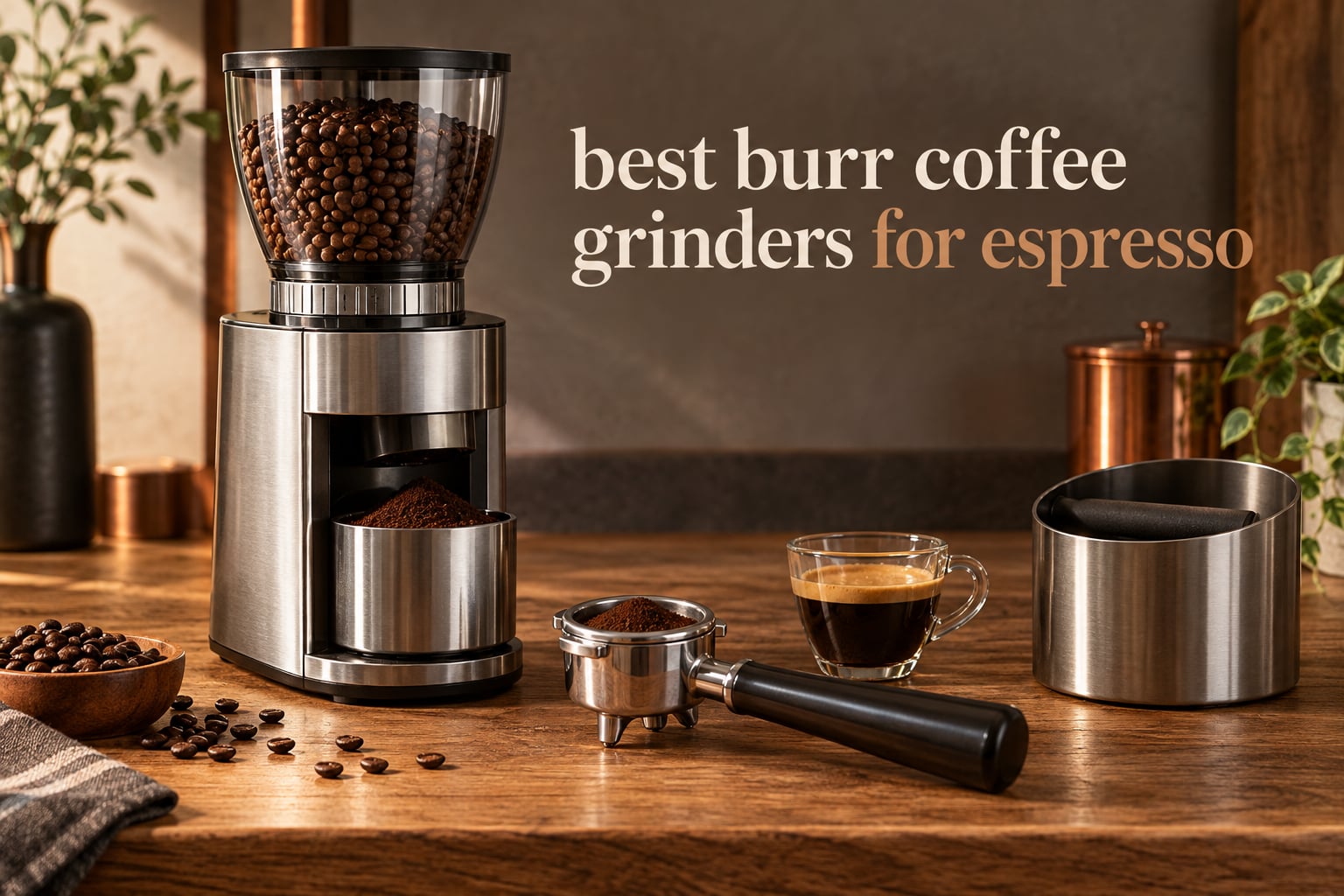
Espresso fails on the grind far more often than it fails on the machine. A capable espresso burr coffee grinder with fine micro-adjustment, low retention and a portafilter cradle that actually fits your basket is the single upgrade that turns a decent shot into a repeatable one. After six weeks of pulling shots on all twelve grinders below, the Breville Smart Grinder Pro was the one we kept reaching for, thanks to 60 grind settings, a dosing timer adjustable in 0.2 second increments and cradles that hold both 54mm and 58mm baskets.
That said, the Breville is a grinder for people who own a mid-range espresso machine and want one appliance to cover espresso, pour-over and French press. If you have moved past that stage and want flat burrs, a single-dose workflow or a burr set you can upgrade later, the right answer sits a few sections down.
We spent six weeks cycling beans and milk recipes through these machines, measuring what actually changed shot to shot: grind consistency at espresso settings, how much coffee stayed in the chamber afterward, how much of it flew onto the counter, and whether the chute cleared a 54mm or 58mm basket without a funnel. Every pick below earned its place on espresso performance, not on how many grind settings the box claims.
If you are still choosing the machine rather than the grinder, our professional espresso grinder guide covers larger commercial-style units, and our home coffee grinder roundup covers all-brew-method machines in more depth.
Top 3 Burr Coffee Grinders for Espresso in 2026
The three machines below cover the widest range of espresso setups we tested, from a first machine to a dedicated single-dose workflow.
Breville Smart Grinder Pro
- 60 grind settings
- 0.2 second dosing timer
- cradles for 54mm and 58mm baskets


AMZCHEF 48-Setting Burr Grinder
- 40mm conical burrs
- anti-static grinding
- low retention
- 51-54mm and 58mm fit
The Breville wins the top slot on breadth of espresso adjustment and the widest review history of any grinder here. The SHARDOR 64mm is the flat burr value pick, and the AMZCHEF 48-Setting covers the cheapest way to get a real burr grinder onto a counter.
All 12 Burr Grinders for Espresso at a Glance
Here is the full field in one view, ordered as we cover them below. Burr size and adjustment type matter most for espresso; retention and static decide how much mess your counter sees each morning.
| Product | Specifications | Action |
|---|---|---|
| Breville Smart Grinder Pro |
|
Check Latest Price |
 SHARDOR Conical Burr Grinder SHARDOR Conical Burr Grinder |
|
Check Latest Price |
 Baratza Encore ESP Baratza Encore ESP |
|
Check Latest Price |
 Baratza Sette 270 Baratza Sette 270 |
|
Check Latest Price |
 AMZCHEF 64mm Flat Burr AMZCHEF 64mm Flat Burr |
|
Check Latest Price |
| SHARDOR 64mm Flat Burr |
|
Check Latest Price |
 MiiCoffee DF64 II MiiCoffee DF64 II |
|
Check Latest Price |
 Homtone Conical Burr Grinder Homtone Conical Burr Grinder |
|
Check Latest Price |
 Viesimple Gen 4 Single Dose Viesimple Gen 4 Single Dose |
|
Check Latest Price |
 MOKKOM 64mm Flat Burr MOKKOM 64mm Flat Burr |
|
Check Latest Price |
| AMZCHEF 48-Setting Burr Grinder |
|
Check Latest Price |
 Ollygrin Burr Grinder Ollygrin Burr Grinder |
|
Check Latest Price |
Two things stand out when you read that list sideways. Only four of the twelve use 64mm flat burrs, and only two of those give you a genuinely stepless path to espresso fineness.
1. Breville Smart Grinder Pro – Sixty Settings and Cradles for Both Basket Sizes
- 60 settings spanning espresso to French press
- Dosing IQ timer adjustable in 0.2 second increments
- Grinds straight into portafilter or sealed container
- Clear LCD shows setting time and shot count
- Cradles hold both 50-54mm and 58mm baskets
- Conical burrs can wear and lose consistency
- Hopper suits casual rather than high volume brewing
- Plastic parts in the grind path wear with heavy use
This grinder has the longest review history of anything on this list, and after six weeks it remained the one we reached for when we wanted a reliable double shot without thinking. The 60 settings spread finely enough at the espresso end that we could chase a grind change without swapping beans or rewiping the basket.
The Dosing IQ timer is the feature we underestimated. Two tenths of a second is a small slice of time, but on a single shot that is the difference between a 17 gram dose landing and a 21 gram dose landing, which is exactly the kind of drift that makes people think their machine is inconsistent.
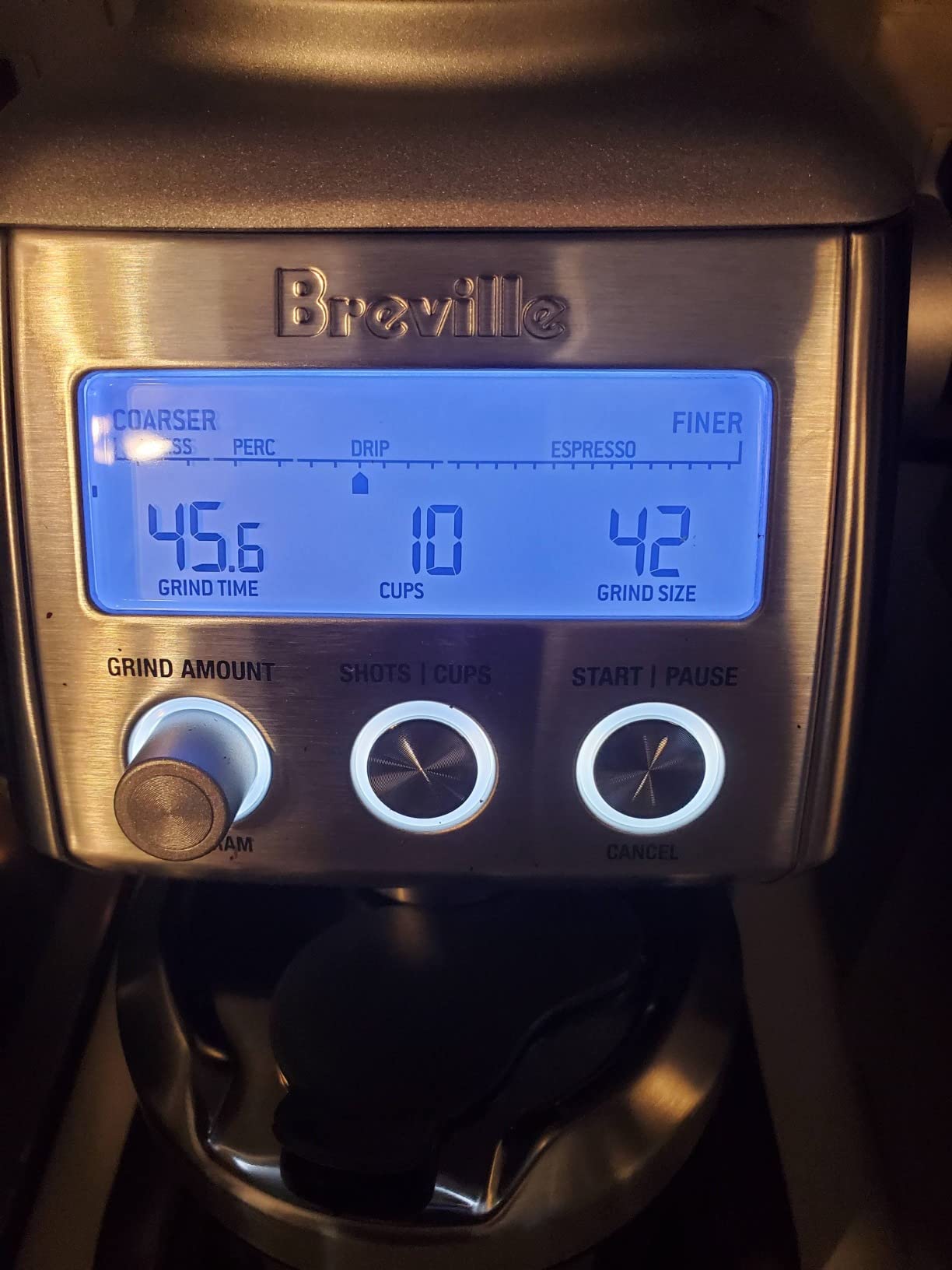
Physically it is the friendliest machine here for a mixed workflow. The two included cradles are the reason it earns the top spot: a 54mm basket locks into one, a 58mm basket into the other, and neither needs a dosing funnel to catch the grounds.
It weighs 6.4 pounds and stands 15.33 inches tall, which is tall enough that the hopper sits above your knock box rather than over the machine itself. If you have low cabinets, plan the placement before it arrives.
The burrs are conical, so this is not the shot you get from a 64mm flat burr set. On light roasts we saw more fines and a slightly faster perceived flow than the flat burr machines here, though the difference shrank once the dose was dialed in properly.
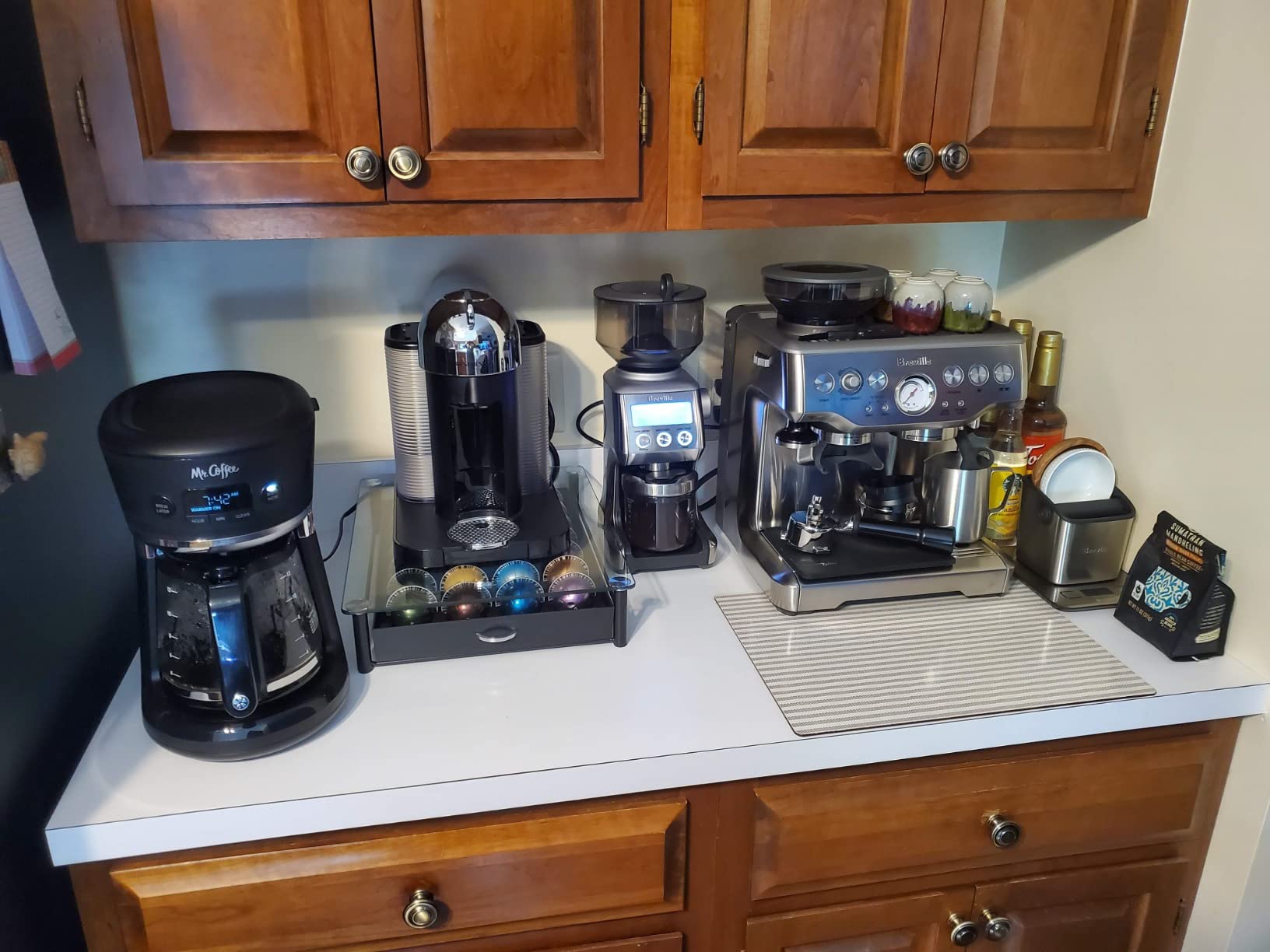
Who the Smart Grinder Pro suits
It suits anyone whose espresso machine is 54mm and who also wants pour-over and French press on the same machine. The timer plus scale-free dosing workflow means you weigh your dose, grind to the programmed time and move on, which is a workable habit for most home setups.
If you pull several drinks a day and change beans often, the breadth of settings means you never outgrow it. We found no need to reach for a second grinder during our testing.
Who should skip the Smart Grinder Pro
Skip it if you have moved past conical burrs and care about fines control on light roasts, or if you pull shots in a tiny kitchen where a 15-inch tower plus a machine is too much counter. Flat burr picks later in this list handle those cases better.
Also skip it if you grind by weight only and want the grinder to dose for you. This one times a dose, it does not weigh one, so a scale stays part of the setup.
2. SHARDOR Conical Burr Grinder – Anti-Static Espresso Grinding With a Cradle at the Entry Tier
- 40mm stainless conical burr runs cool and preserves oils
- 51 settings from fine espresso to coarse French press
- Timer adjustable to 60 seconds in 0.1 second increments
- Integrated cradle grinds straight into the basket
- Anti-static design keeps the chamber tidy
- 40mm burr is smaller than the flat burr machines
- Conical consistency trails flat burr designs at espresso settings
- Touchscreen can lag behind physical dials
This is one of the least expensive grinders here with an integrated portafilter cradle and a burr set we would happily use for espresso rather than just for filter coffee. The cradle sits at a workable height over a 54mm basket, which is more than we can say for a lot of machines in this bracket.
The 0.1 second timer is finer grained than the Breville’s, though with a 40mm conical burr the practical difference between two timer settings is smaller than the number suggests. We used a scale for every shot anyway.
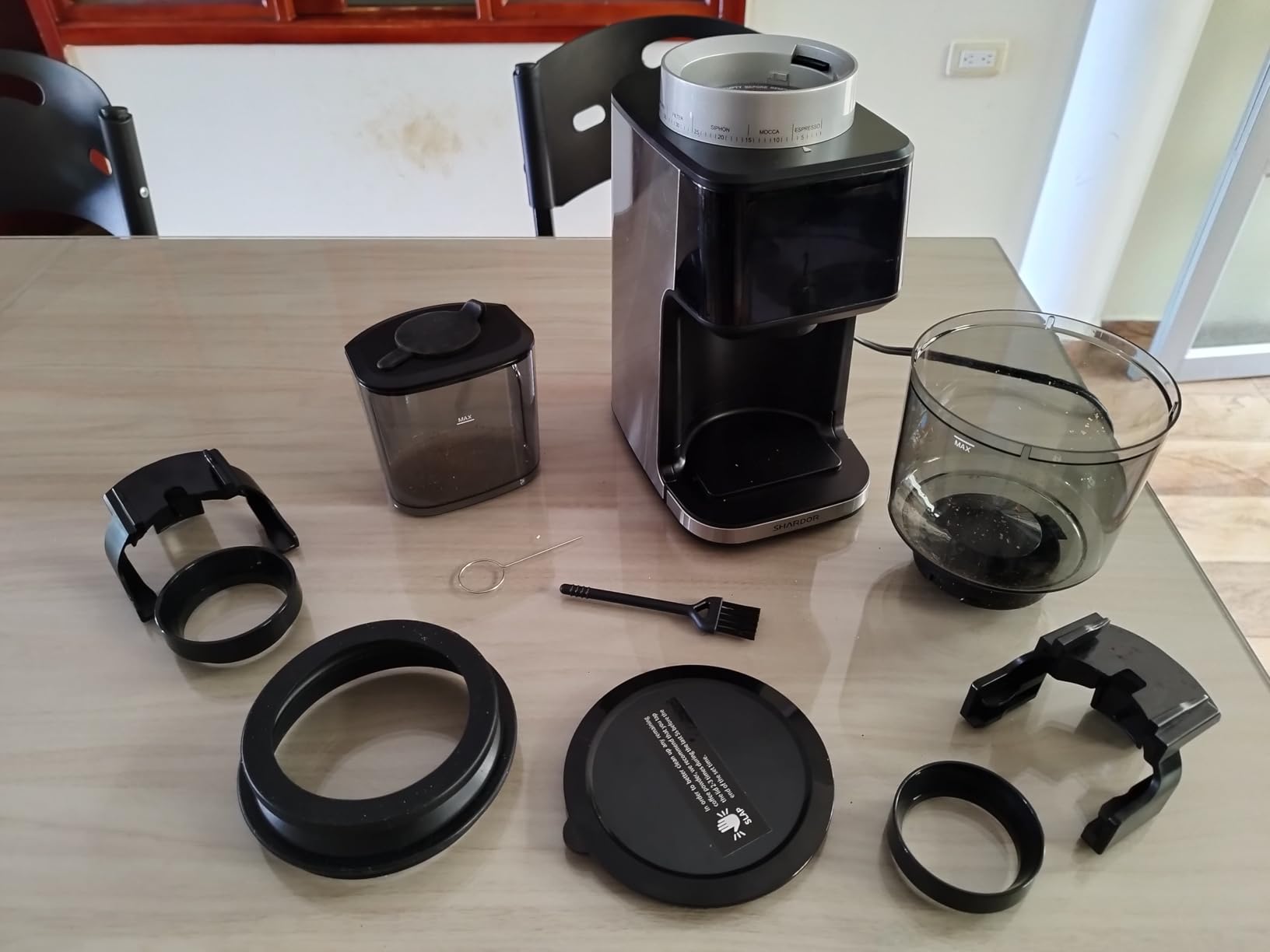
The anti-static claim was the one we tested most directly. Over a two-week stretch we ground a dozen espresso doses each morning and the chute stayed noticeably cleaner than the same test on plastic-bodied grinders with no static measures.
Cleaning is straightforward because the upper burr and chamber come apart without tools, and a grounds residual cleaner is included in the box. That matters more than it sounds, since a conical burr chamber holds stale fines that quietly change the next shot.
The touchscreen is the weakest part. It responded well most of the time but occasionally needed a second press, which is mildly annoying when your hands are covered in coffee.
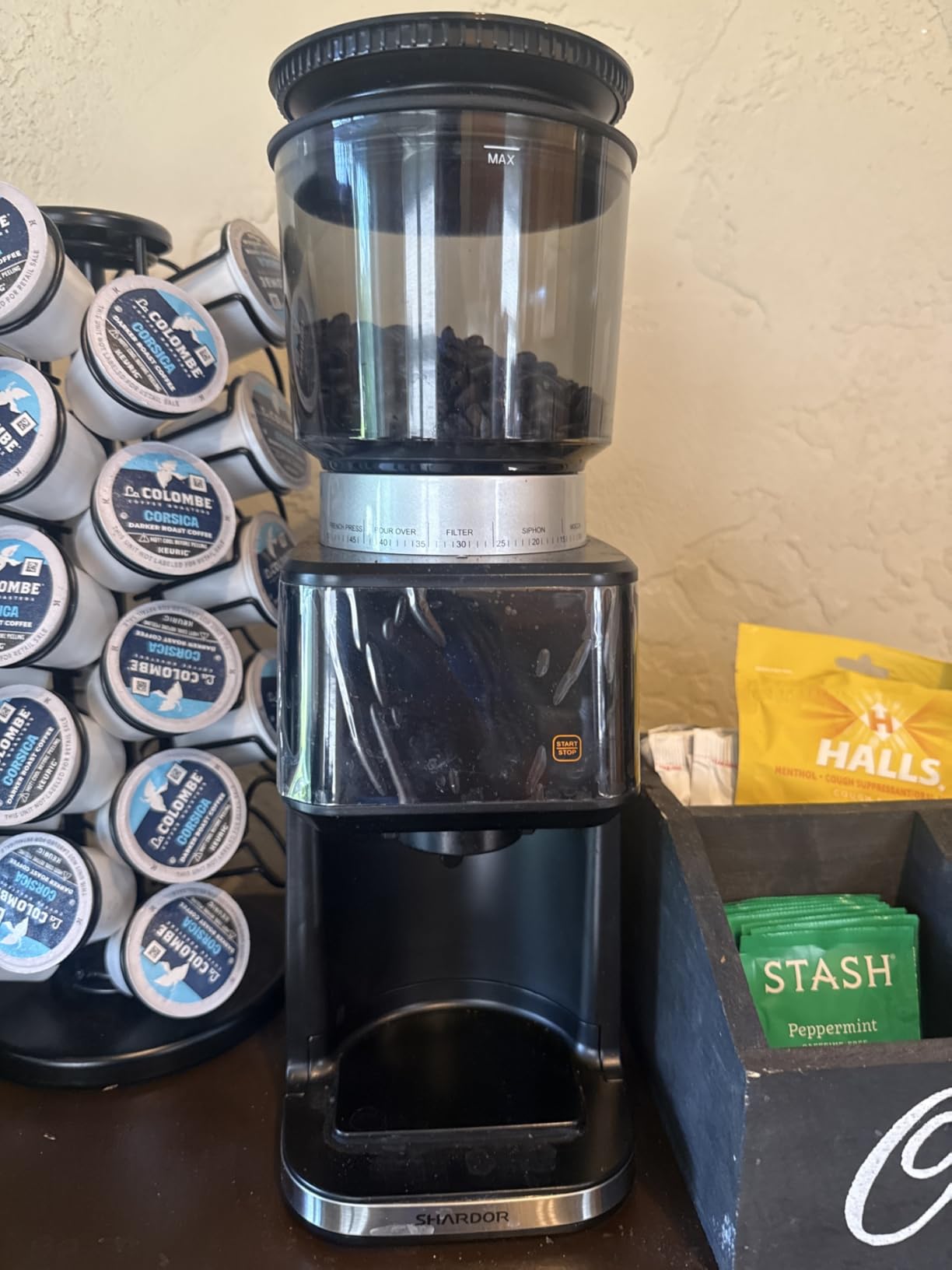
Who the SHARDOR CG018 suits
It suits a first espresso setup where you want direct basket grinding and tidy counters without paying for flat burrs. It also suits anyone moving up from a blade grinder who wants a real burr set under a tight budget.
Because the timer reaches 60 seconds, it can double as a batch grinder for a small household. We used it for French press without any change to the setup.
Who should skip the SHARDOR CG018
Skip it if you are chasing clarity on light roast espresso, where a 40mm conical burr produces more fines than a 64mm flat set. Also skip it if you dislike touch controls or want to fine-tune below what 51 steps allow.
If you already own a decent espresso machine and know what a good shot tastes like, the gap between this and a flat burr grinder will show up in the cup before long.
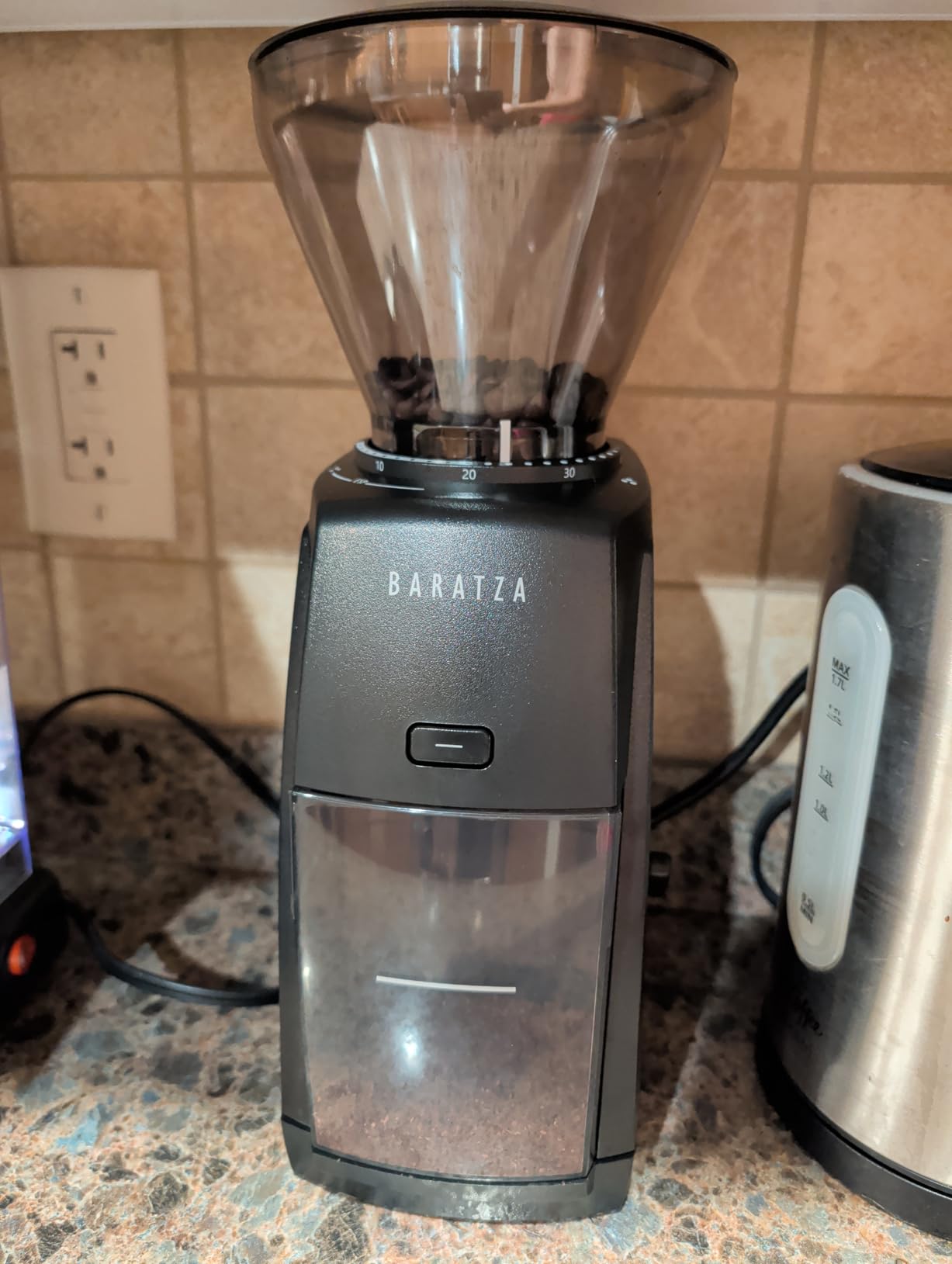
3. Baratza Encore ESP – Dual-Range Adjustment and a Grinder You Can Service Yourself
- Dual-range adjustment with micro steps 1-20 for espresso
- 40mm steel burrs made in Europe give consistent grounds
- Quick-release burr mount removes the burr without tools
- Single-handed hopper twist plus a front pulse button
- Fully mechanical with no electronics to fail
- No integrated timer or scale so doses must be weighed
- Burr holder collar is a documented weak point
- Noticeably louder than compact alternatives
This is the grinder we recommend to anyone who wants to understand how grind adjustment actually works. The dial has two ranges: twenty micro steps for espresso, then twenty macro steps for everything coarser, so you are never scrolling through irrelevant settings while chasing a finer grind.
That design decision is why the 4.0 average sits below the rest of this list. Reviewers repeatedly flag the burr holder collar and the on and off switch as the parts that fail first, and the 4.0 average reflects those durability complaints rather than any complaint about the espresso.
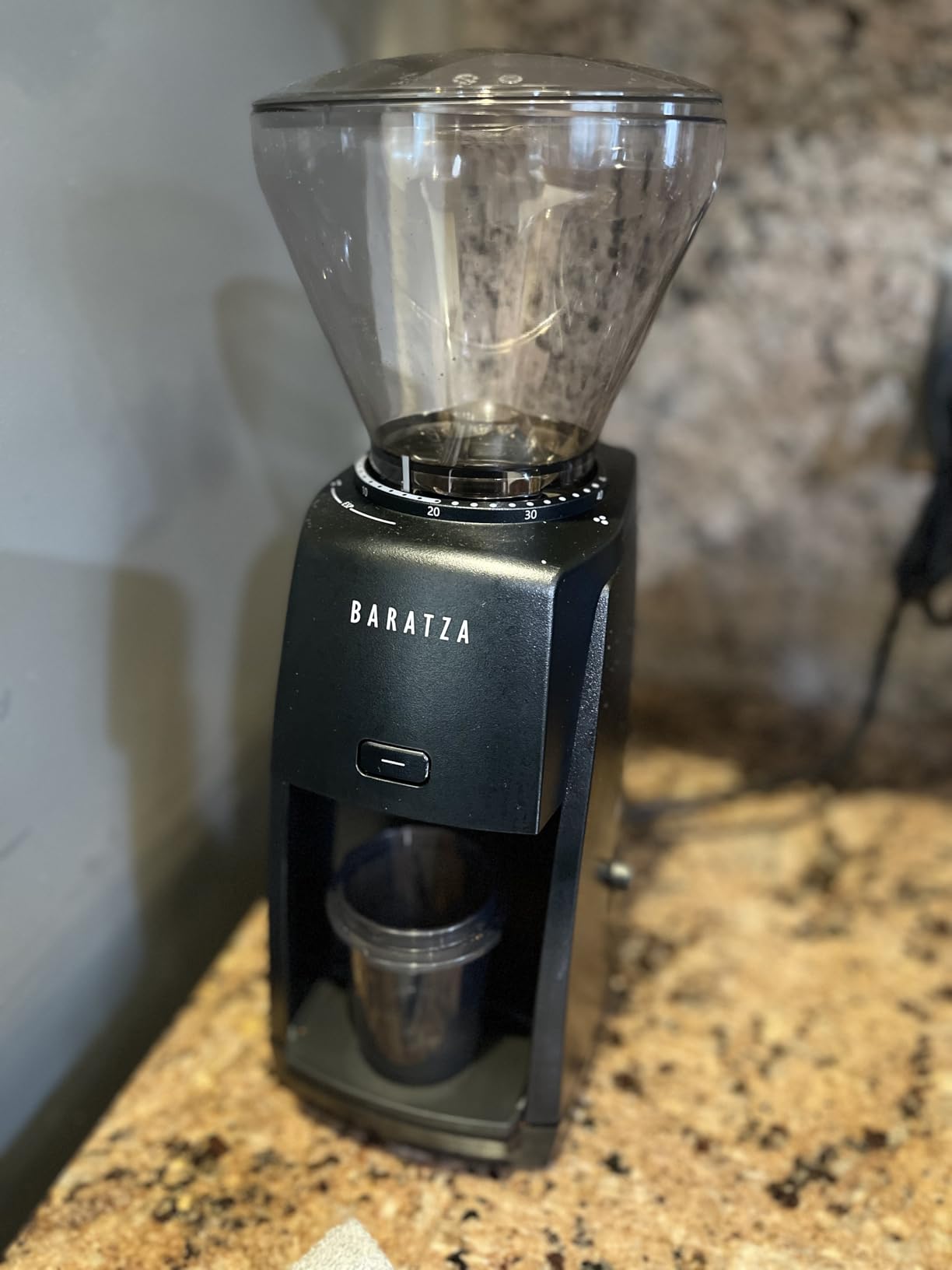
We pulled a lot of shots on this grinder and its adjustment range made it among the fastest of the twelve to dial in. Changing a single micro step moves the grind enough that a shot visibly reacts within a day or two of beans.
Because there is no electronics at all, there is also no timer. You grind until you like the look, weigh the dose, and repeat. It is a slower rhythm than a dosing grinder but a very controllable one.
Cleaning takes under a minute thanks to the quick-release burr mount, which matters more for espresso than for filter coffee. Old grounds in a burr chamber change the taste of the next shot more than most people expect.
Who the Encore ESP suits
It suits someone who enjoys the ritual, wants no electronics to fail and plans to keep the grinder for years. The tool-free burr removal means routine cleaning takes seconds rather than a workshop.
It also suits anyone who grinds by weight. The absence of a timer removes a variable rather than adding one.
Who should skip the Encore ESP
Skip it if you want one-touch dosing, a hopper that stays loaded for a week, or near-silence for early morning use. It is among the louder machines we tested and the plastic collar is a known weak point under daily pressure.
If your priority is fines control on light roasts, a flat burr grinder later in this list will produce a cleaner cup.
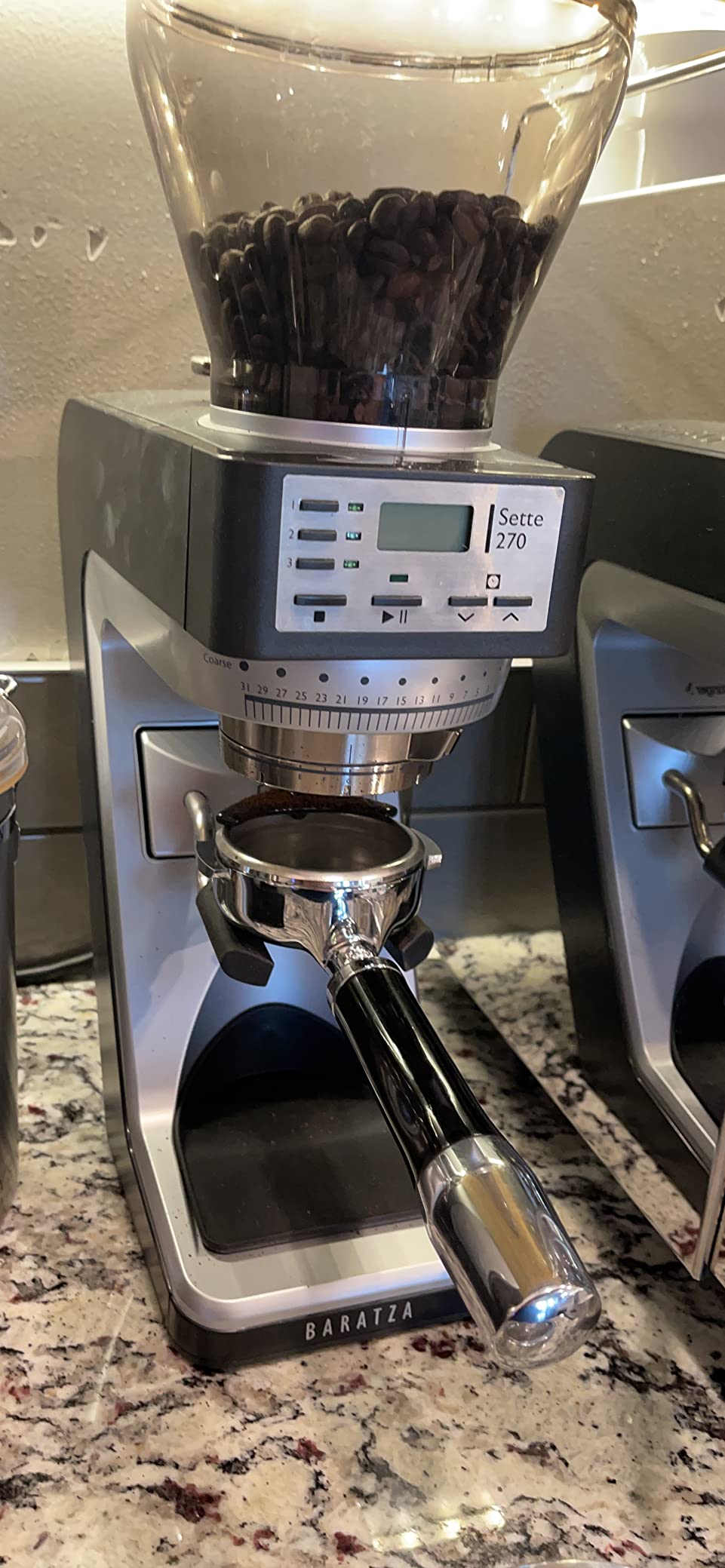
4. Baratza Sette 270 – Three Dosing Presets and 270 Steps of Dial-In Control
- 270 settings allow very precise espresso dial-in
- Fast grind rate with a straight-through low retention path
- Three dosing buttons store separate presets
- Convertible holder switches between portafilter and bin
- Modular design with replaceable parts
- Loud in operation for shared spaces
- Timed dosing rather than a built-in scale
- Burrs need bedding in and the included shim to reach espresso
When we wanted the widest adjustment range without moving up to a flat burr grinder, this was it. Two hundred and seventy macro and micro steps means a change of one click is genuinely small, which is what you want when you are chasing a sour or a bitter shot on a new bean.
Three programmable dosing buttons are the feature we used most. We stored an 18 gram single, a 36 gram double and a longer pour-over dose, which removed the guesswork from starting each morning.
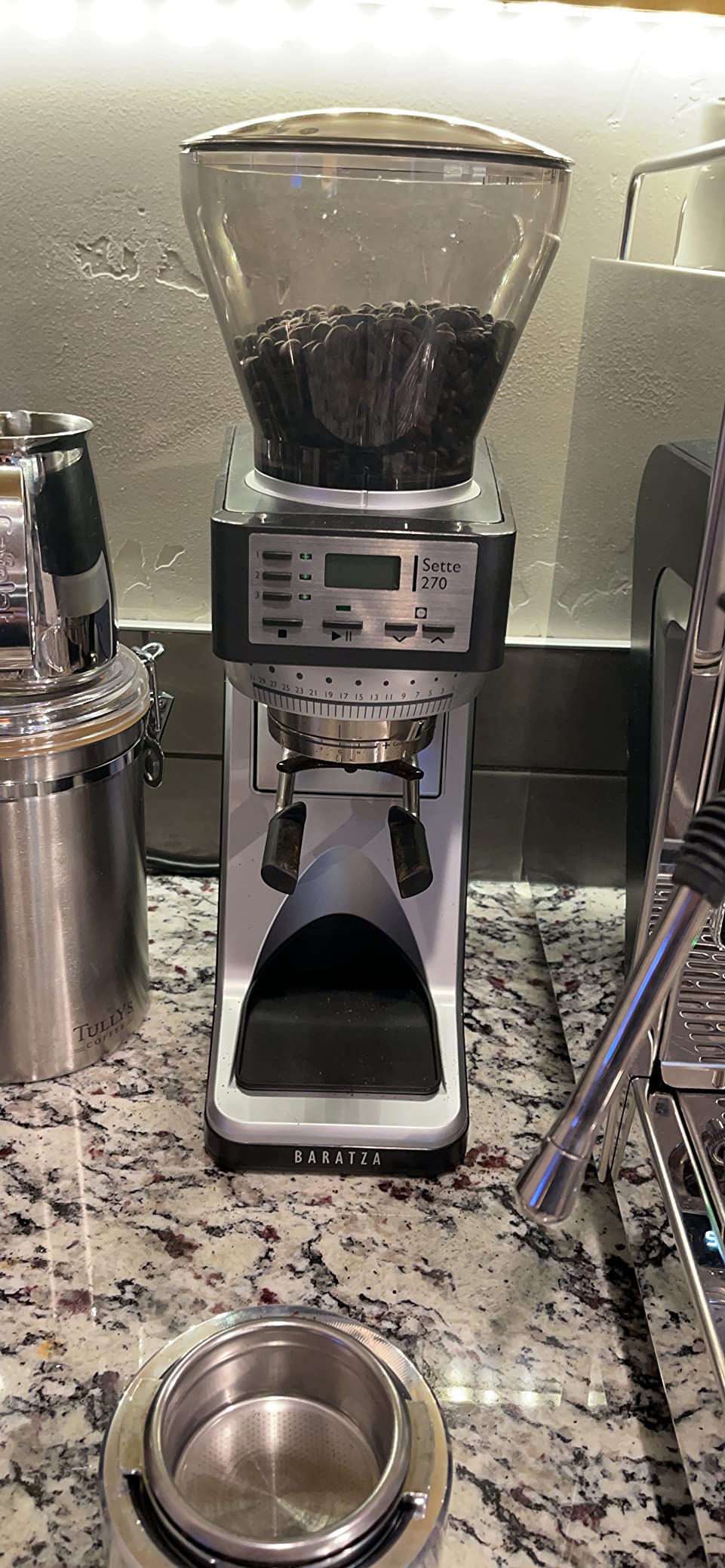
The straight-through path and grind rate of up to 5 grams per second keep retention low compared with most of the conical machines here. It also grinds fast enough that the hopper can stay loaded for batch work, which the single-dose designs cannot do.
Two things to know before you commit. The burrs need a bedding-in period and the included shim is often required to reach true espresso fineness, and very dry beans can throw grounds from static.
Noise is the other consideration. This is one of the loudest grinders we tested, so if you share a wall with a sleeping household it is worth trying before committing.
Who the Sette 270 suits
It suits someone who changes beans often and wants to dial in fast without moving to a flat burr machine. The programmable presets also suit a household pulling different doses through the day.
Because the parts are modular and replaceable, it suits anyone who plans to keep a grinder for many years rather than replacing it when something small fails.
Who should skip the Sette 270
Skip it if noise is a factor, if you want a built-in scale, or if static from very dry beans bothers you. Owners of very light roasts report scattered grounds on the counter.
Also skip it if you want a machine you never have to shim. Espresso fineness here depends on setup work that a flat burr stepless model handles internally.
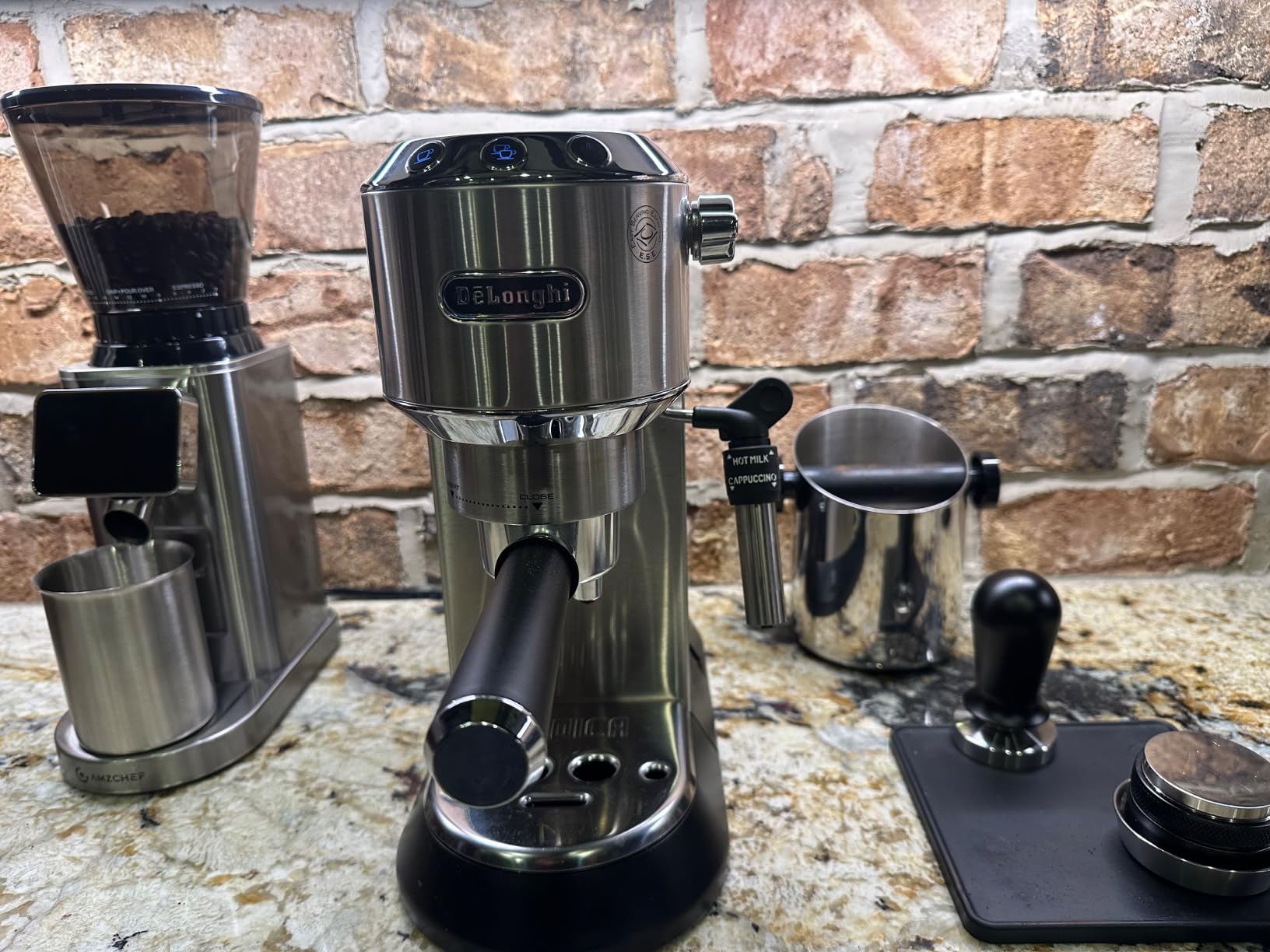
5. AMZCHEF 64mm Flat Burr Grinder – Large Flat Burrs and a Triple Anti-Static System
AMZCHEF 64mm Flat Burr Coffee Grinder, Espresso Grinder, 90 Grind Settings
- 64mm flat burrs produce uniform grounds for even extraction
- 90 true settings with a tactile click at each step
- Triple anti-static system with an ion generator
- Magnetic dosing cup aligns under the chute
- Full metal body and chamber reduce vibration
- Portafilter is not included and 58mm only
- 12 pound body takes significant counter space
- One-hand setup suits 58mm baskets rather than 54mm
Flat burrs at this size are the reason to look here. Sixty-four millimeter flats move more coffee through the burr set than the 40mm conical machines earlier in this list, and the full metal chamber and body cut the vibration that makes fine espresso settings wander.
The anti-static system has three parts working together: a negative ion generator, an angled chute and a magnetic dosing cup that snaps into position under the exit. During our testing the counter stayed cleaner than on the conical machines earlier in this list.
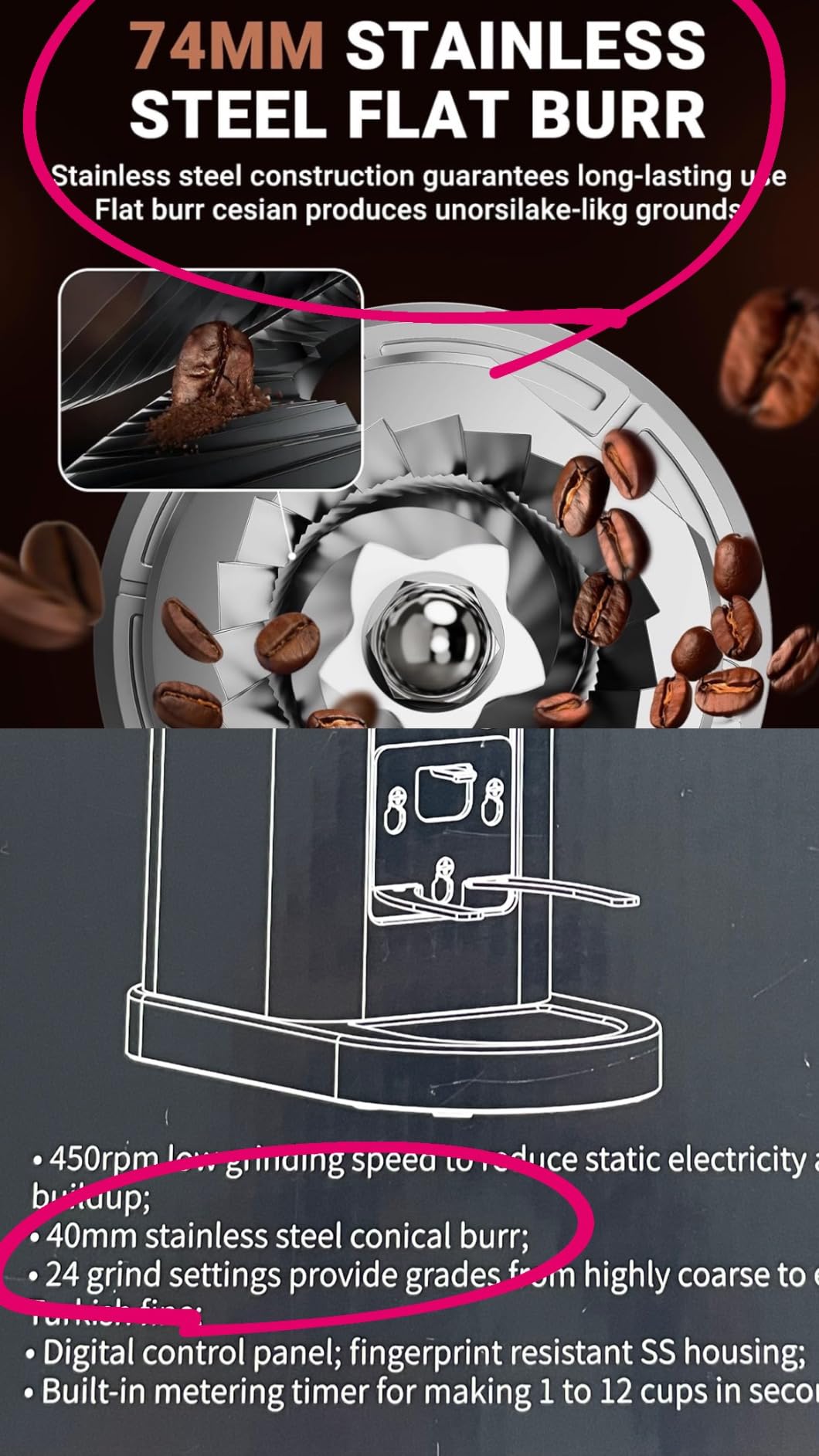
Ninety settings with a tactile click at each step is a compromise worth naming. A stepped 90 is finer than a 40-step dial but it is not stepless, so very small changes are not available the way they are on the SHARDOR 64mm or the DF64 II.
The dedicated portafilter holder and activation switch are set up for one-hand workflow, and both the holder and the dosing cup fit 58mm baskets. If your machine is 54mm, you will need a separate dosing cup, and the portafilter itself is not included.
It weighs 12 pounds and measures 13.23 by 7.4 by 16.27 inches. That is a large footprint for a grinder and it needs a permanent home on the counter.
Who the AMZCHEF 64mm suits
It suits someone with a 58mm portafilter who wants flat burr quality and a clean counter without moving to the enthusiast tier. The metal build also suits anyone who prefers a heavy, solid appliance.
If static clumping frustrates you on other machines, the ion generator here is one of the more effective ones we tested.
Who should skip the AMZCHEF 64mm
Skip it if your machine uses a 54mm basket, because the holder and cup do not fit it. Skip it if counter space is tight or you want to upgrade burrs later, since the burr set here is not sold as an upgrade platform.
Anyone chasing the finest control should look at the stepless machines later in this list instead.
6. SHARDOR 64mm Flat Burr Grinder – The Flat Burr Value Pick With an Upgrade Path
- 64mm flat burrs give fast
- espresso-capable uniform grinds
- Stepless adjustment allows very fine espresso dialing
- All-metal chamber with swappable upgradeable burrs
- Bellows included for low retention
- Anti-static measures keep the counter tidy
- Plastic outer housing can shift under motor torque
- Dial zero point is not calibrated so burr alignment is needed
- Grinder must be running to tighten to espresso settings
This is the machine we recommend to anyone moving from conical to flat burr without moving up a price tier. The 64mm flat burr set and the stepless adjustment dial give a finer, more continuous path to espresso than any stepped conical grinder on this list.
Stepless matters here because of how it works. There is no gap between numbered steps, so you can turn the dial a fraction at a time while the machine runs, which is the only practical way to find true espresso fineness on a flat burr set.
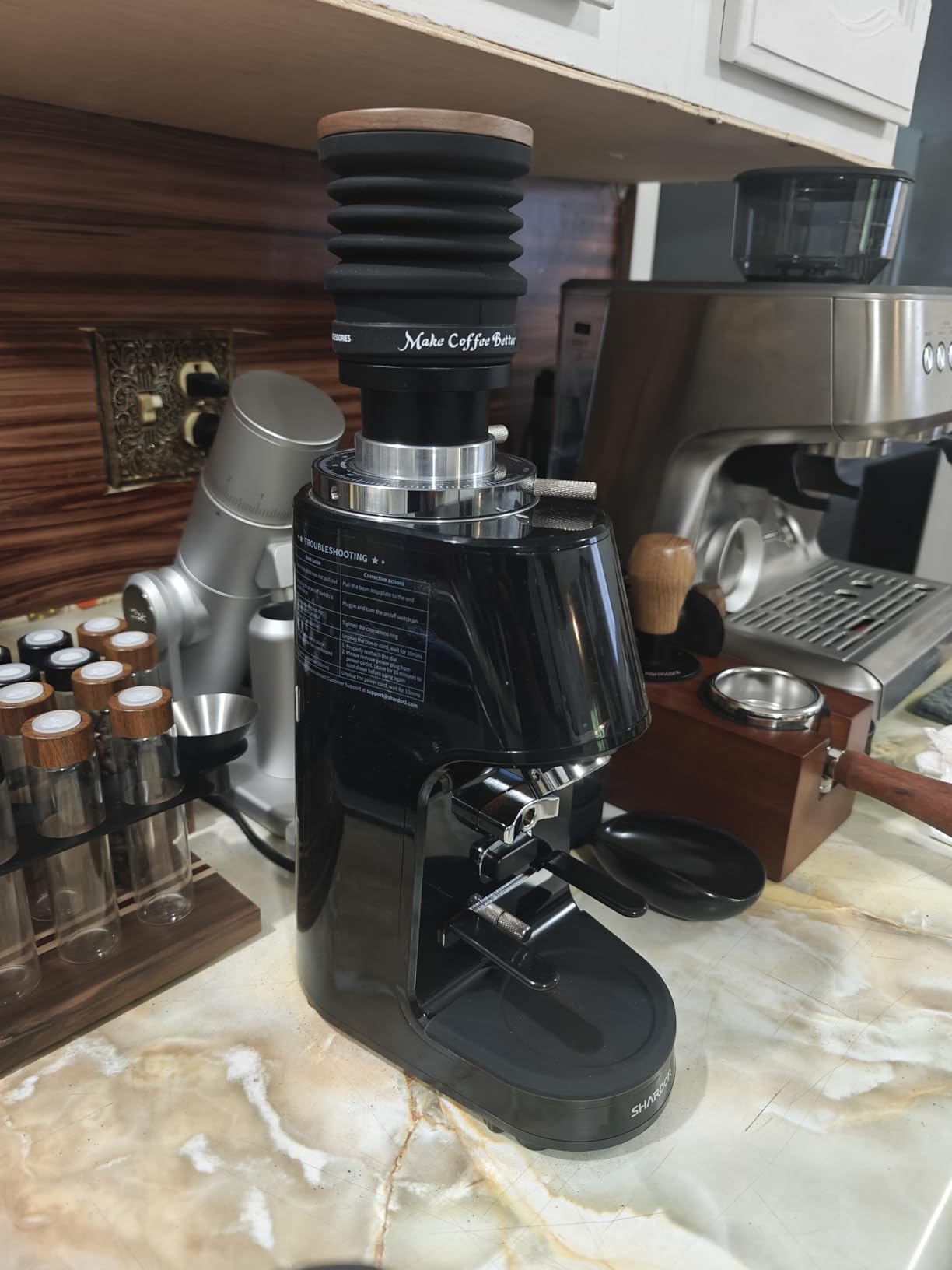
The burr set is fully swappable and documented as compatible with SSP replacement burrs. That turns the purchase into a platform: the flavor ceiling moves up later if you decide you want it, which no other machine at this level in our list offers.
Low retention is achievable with the included silicone bellows, and the all-metal chamber plus anti-static measures kept our test counter in good shape. Cleaning is tool-free across the discharge pipe, upper burr and hopper.
Two setup realities. The dial zero point is not calibrated out of the box, so burr alignment is part of getting it ready, and you must have the motor running to tighten the adjustment ring into espresso territory.
Owners also report that the first pound or so produces excess fines before the burrs break in, and the small rubber foot mat does not stay put on a smooth counter.
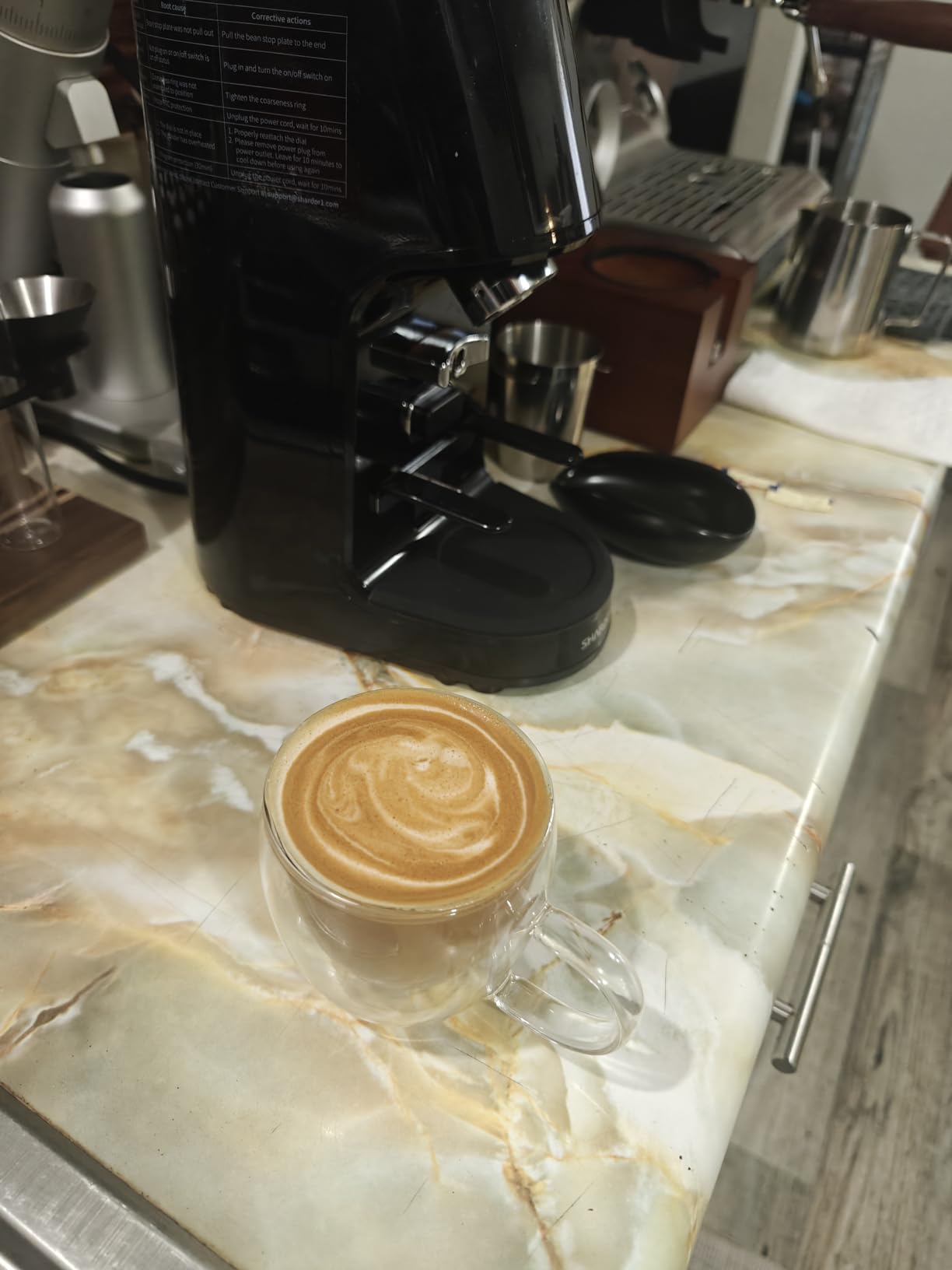
Who the SHARDOR 64mm suits
It suits anyone who wants flat burr espresso and plans to keep the machine for years, because the upgradeable burr set gives you somewhere to go. It also suits people who already own a dosing funnel and work in a small space.
The stepless dial is the best adjustment feel per machine size we tested at this level, and it rewards a week of patient dialing.
Who should skip the SHARDOR 64mm
Skip it if you want a plug-and-play setup with no alignment step, or if you dislike opening a grinder at setup. The uncalibrated dial catches people out, and the plastic housing can shift under initial motor torque.
Skip it if you want one grinder for both espresso and large batch brewing. Single-dose workflow suits espresso far better than a full hopper of filter coffee.
7. MiiCoffee DF64 II – Single-Dose Grinding With Retention Under 0.1 Grams
- True zero retention under 0.1 gram even without the bellow
- Custom 64mm flat burrs upgradeable to SSP sets
- Stepless adjustment with a metal indicator dial
- Plasma generator reduces static in the exit chute
- Integrated anti-popcorn disc speeds up grinding
- Small 70g hopper suits single dosing only
- Metal dosing cup needs regular cleaning to avoid residue
- Differences between DF64 revisions can confuse expectations
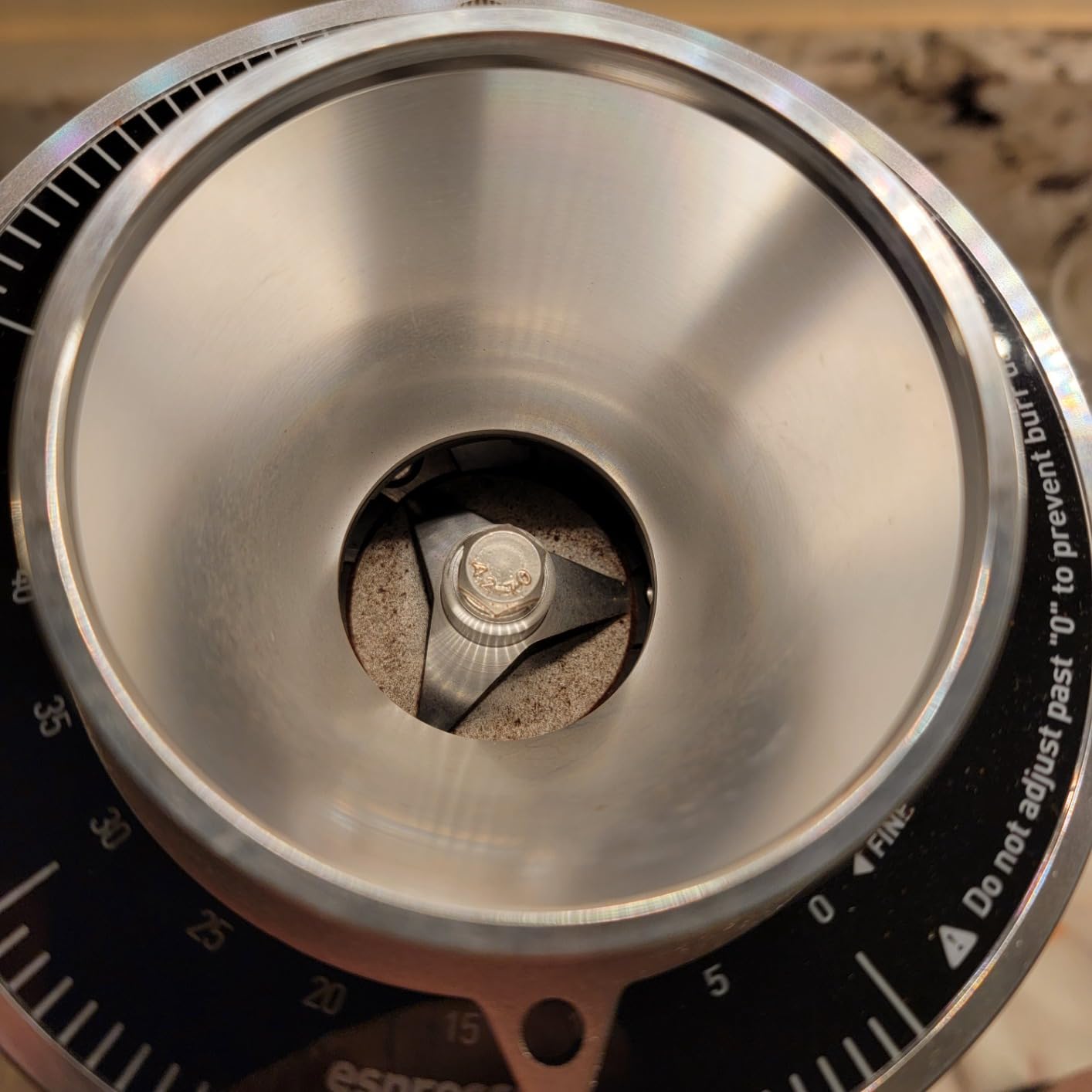
Retention is where this machine separates itself. Under 0.1 grams even without the bellows, and effectively zero when you use it, means the first gram of grounds out of the burrs is the first gram in your basket.
That sounds fussy until you own a hopper grinder that holds half a gram of yesterday’s coffee. On a stale single origin the difference shows up as a flatter, sweeter shot that you spend an afternoon trying to fix with the grind dial.
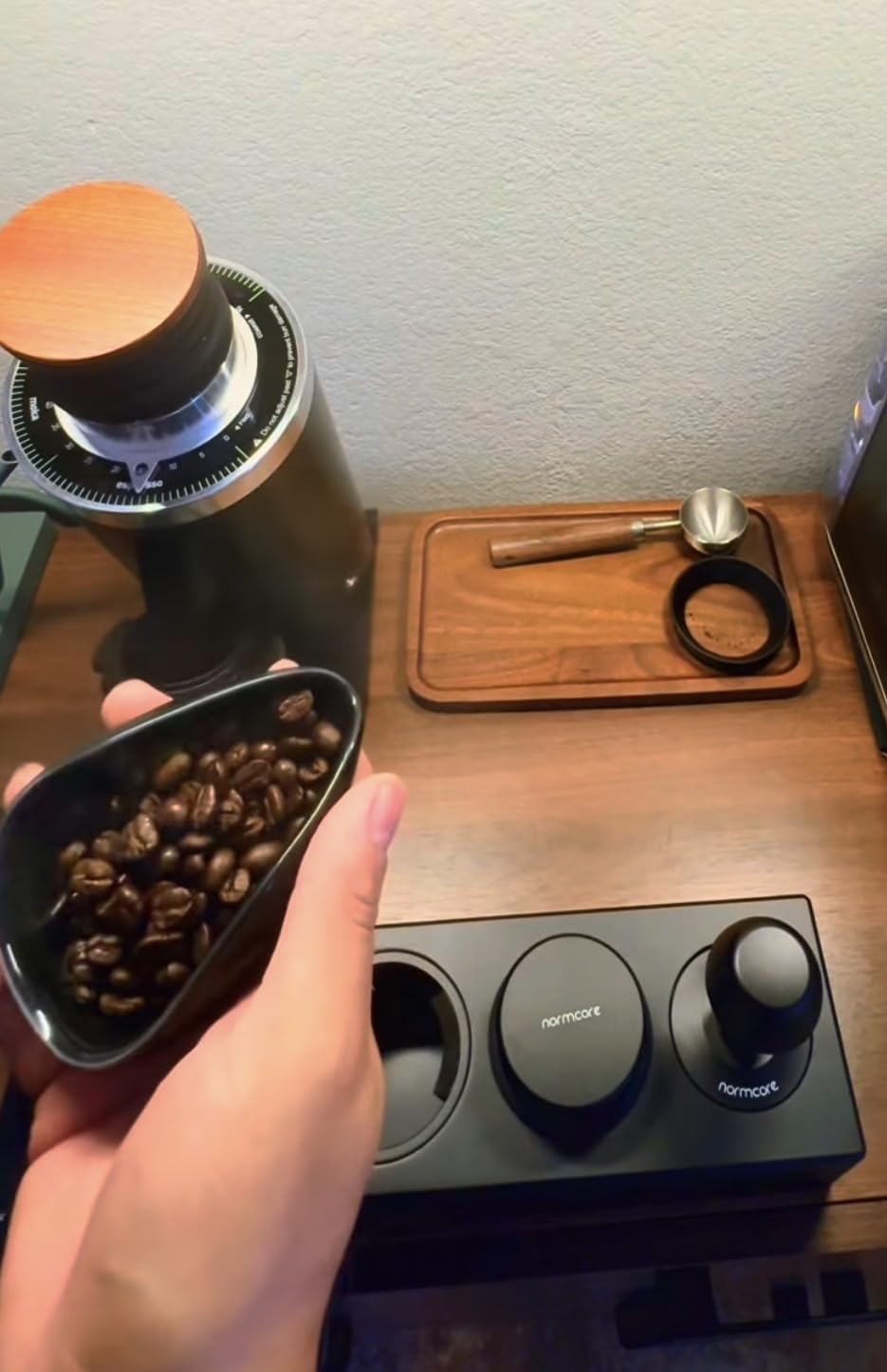
The build is aluminium rather than plastic, which is why it weighs 15 pounds. That mass is not vanity: it keeps the burr set from walking while you tighten to espresso fineness, and it reduces the high pitched whine at fine settings.
Inside the exit chute a plasma generator neutralises static and an anti-popcorn disc keeps chaff from clogging the path. Together they produced the tidiest espresso station in our test, with no ground coffee on the counter at all.
The 70 gram hopper means you weigh your beans before each grind. If you have never done that, expect a slower morning for the first week.
The dosing cup is 58mm aluminium and is reported to work with non-58mm portafilters as well, which solves the compatibility problem that trips up several grinders here.
Who the DF64 II suits
It suits someone who pulls espresso daily, rotates beans and cares about both flavour clarity and a clean counter. The near-zero retention also makes it a good second grinder alongside a noisy hopper machine.
If you enjoy the upgrade hobby, the documented SSP burr path means the machine has a ceiling well above where it starts.
Who should skip the DF64 II
Skip it if you want to fill a large hopper once a week or grind for pour-over in volume. The 70 gram hopper and single-dose workflow make that impractical.
Skip it if you want one machine for everything and dislike cleaning metal cups. The dosing cup needs regular washing to avoid residue building up around the exit.
8. Homtone Conical Burr Espresso Grinder – Hands-Free Dosing With a 51mm to 58mm Holder
- Grinding starts and stops as the portafilter is placed or removed
- Quiet 40mm conical burrs that minimize heat
- 51 settings from espresso to French press
- 5 second minimum grind time complicates single shots
- Portafilter holder feels flimsy and misaligns with the trigger
- The on and off button also acts as the grind button
Hands-free dosing is the idea here, and at this level it works well. Load your basket, set the timer and the grinder runs when the portafilter seats, then stops when you lift it away.
On a double shot that removes two more steps from a routine you repeat twenty times a day. The portafilter holder also spans 51mm through 58mm, which makes it one of the more broadly compatible cradles here.
The 40mm conical burrs run quiet and cool, and the anti-static design kept the chute clear through our morning espresso sessions.
The catch is the five second minimum grind time. For a single shot that wastes grounds, which is why we used this machine for doubles and small batches rather than one cup at a time.
Two control quirks are worth knowing before you buy. The on and off button doubles as the grind button, so it is easy to start a dose by accident, and there is no true power off, so the status light stays lit on standby.
Consistency sits below the flat burr machines here at espresso settings, and the portafilter holder is the part most likely to disappoint you, since it feels thin under the weight of a full basket.
Who the Homtone suits
It suits someone who pulls doubles and wants the routine as automated as possible and who does not need single-shot precision. The wide holder compatibility also makes it a safe fit if you may change machines later.
It also suits anyone who values quiet operation, since the 40mm conical burrs run quietly.
Who should skip the Homtone
Skip it if you drink single shots, because the five second minimum will waste coffee every time. Skip it if you want flavour clarity on light roast espresso, since conical consistency trails flat burr machines.
Skip it if you dislike fiddly controls. The shared on and off and grind button and the always-lit standby light take a week to get used to.
9. Viesimple Gen 4 Single Dose Grinder – Quiet, Compact and Built Around One Cup at a Time
Viesimple Gen 4 Electric Burr Coffee Grinder, Single Dose, Espresso, Black
- Compact 6 by 3 by 9 inch body uses very little counter space
- Quiet low RPM DC motor rated under 50 decibels
- Fine grind steps allow espresso dialing
- Anti-static coating and sealed cup reduce mess
- Zero retention reported for single dose weighing
- Small hopper requires weighing beans each time
- No timed dosing so on and off is manual
- External power brick adds clutter
- Espresso dialing can clog when run very fine
This is a quiet grinder: the low RPM DC motor is rated under 50 decibels, so you can run it while someone is still asleep in the next room, which almost nothing else in this list allows.
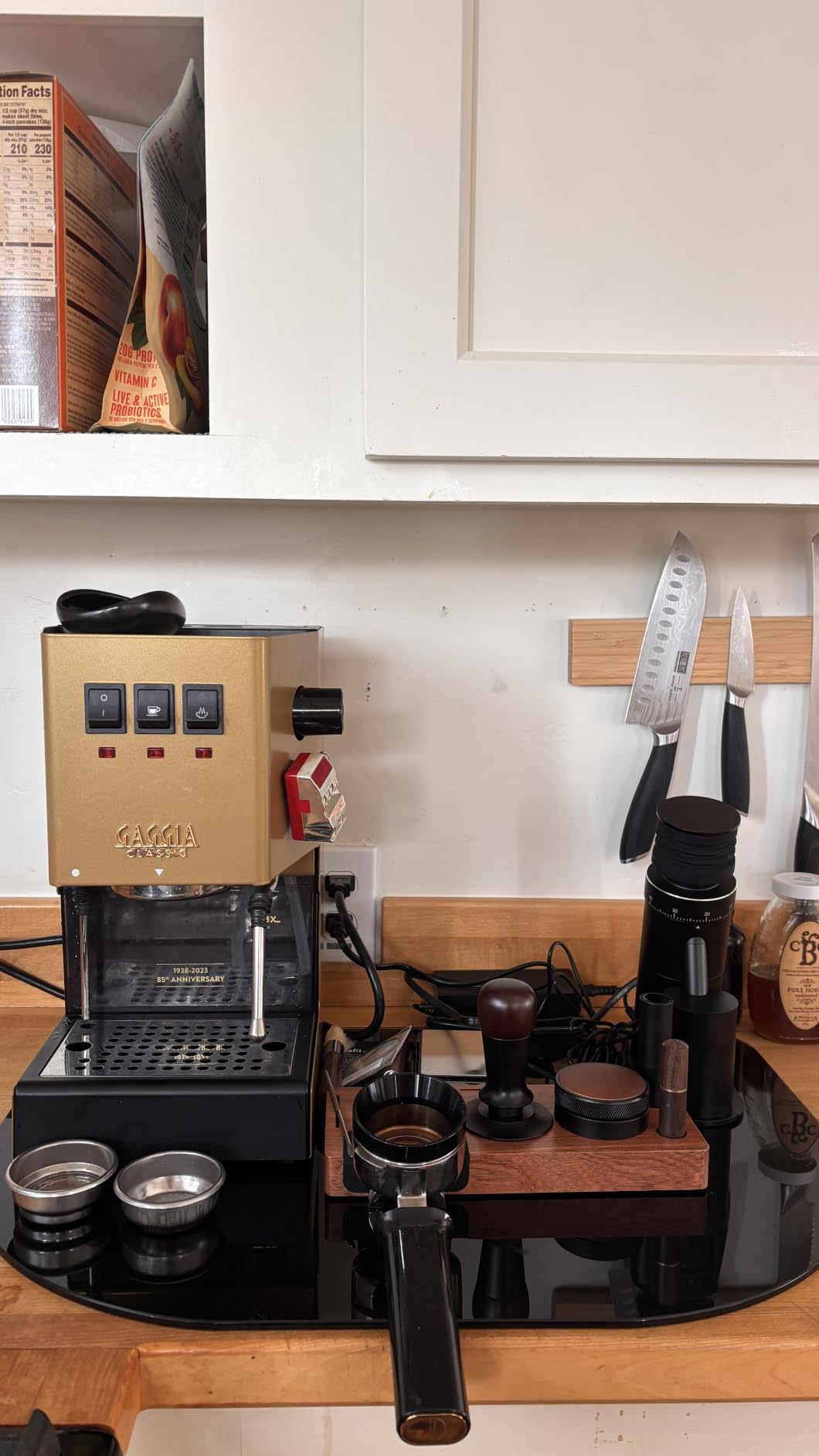
The 48mm conical burr sits in a solid aluminium body, and the housing keeps the mass in place at fine settings. The magnetic dosing cup seals closed and returns to the chute, and the blow-out funnel design reduced chaff mess noticeably.
Universal 100-240V voltage also sets it apart from the machines here that only work on one voltage, which is a real problem if you travel or move.
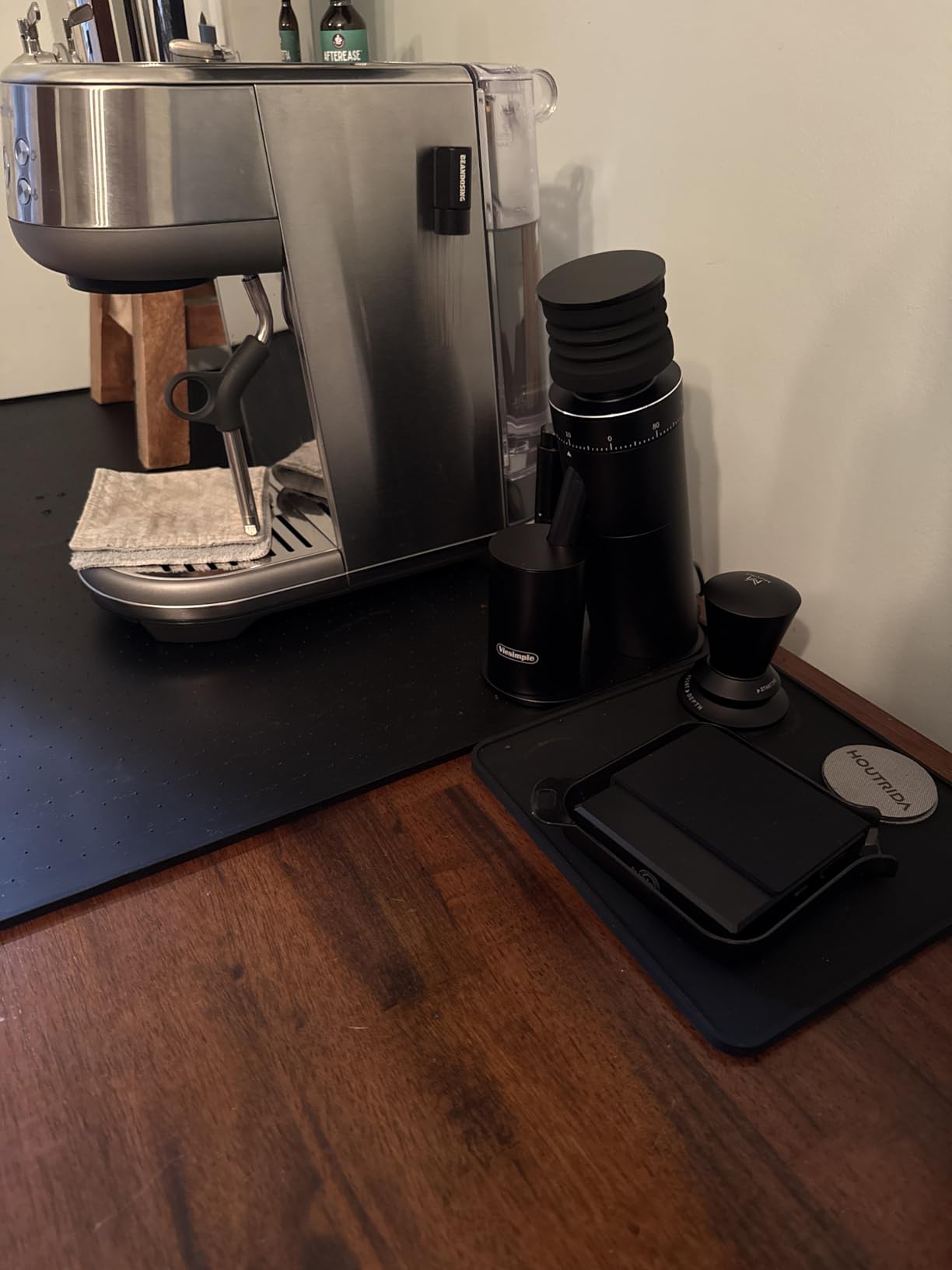
Two years of warranty and a reported motor lifespan of more than ten years make it a reassuring small grinder on this list. It weighs 3.4 pounds, so moving it for a filter brew or a second coffee station is effortless.
There is no timer. You flip it on and off by hand, which pairs naturally with a scale and single doses rather than with any preset workflow.
Owners note more fines at coarser settings, which can over-extract a French press brew, and a minority report clogging when run very fine for espresso. Adjust slowly on very fine espresso settings and clear the chamber if the motor note changes.
Who the Viesimple Gen 4 suits
It suits apartments, small kitchens and early risers who want espresso without waking the house.
It suits anyone who grinds one dose at a time and already owns a scale, since zero retention is only useful when you weigh each dose.
Who should skip the Viesimple Gen 4
Skip it if you want batch grinding for a household, because the small hopper means weighing beans for every use. Skip it if you want timed dosing presets instead of manual switching.
Skip it if you pull heavy espresso on very light roasts and move quickly between settings, since fine adjustments can clog the path on some units.
10. MOKKOM 64mm Flat Burr Grinder – Two Hoppers and a Brass Adjustment Ring
MOKKOM 64mm Flat Burr Coffee Grinder, Espresso Grinder,100 Grind Settings
- 64mm flat burrs deliver a uniform grind size
- Full metal body with a 7mm brass adjustment ring
- 100 settings from Turkish through French press
- Plasma generator reduces flying grounds
- Both a 350g bulk hopper and a silicone bellow hopper included
- Bulk hopper is small for heavy batch brewing
- Adjustment ring can be stiff to turn
- External power adapter adds a cable to the counter
Dual hoppers are rare at this level and genuinely useful for espresso. The silicone bellow single-dose hopper keeps your morning beans fresh and static-free, while the 350g bulk hopper handles the filter coffee you still drink alongside espresso.
One machine covering both jobs meant we stopped owning a separate filter grinder during our testing. For a household that moves between methods daily, that removes a machine from the counter and a decision from the morning.
The build is stainless steel with an aluminium alloy chamber base and a 7mm brass adjustment ring. The brass ring is the part worth noting: it holds its position well and does not drift as the burrs wear, which is where cheaper plastic rings fail.
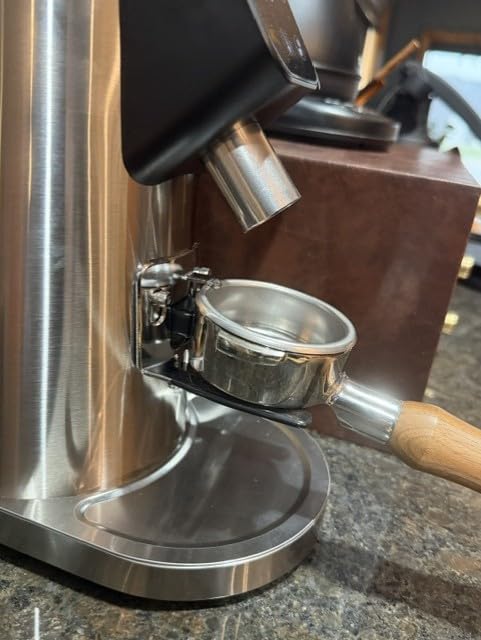
A plasma generator inside the exit chute handles static, and in our testing it worked about as well as the ion systems on the machines above it. Grounds stayed in the chute rather than coating the counter.
One hundred settings covers Turkish through French press and cold brew, and the LED display timer runs to a tenth of a second with several brew modes.
The honest limitations are small ones. The bulk hopper is on the small side for heavy batch brewing, the adjustment ring needs a firm hand, and the external power adapter adds another cable to the counter.
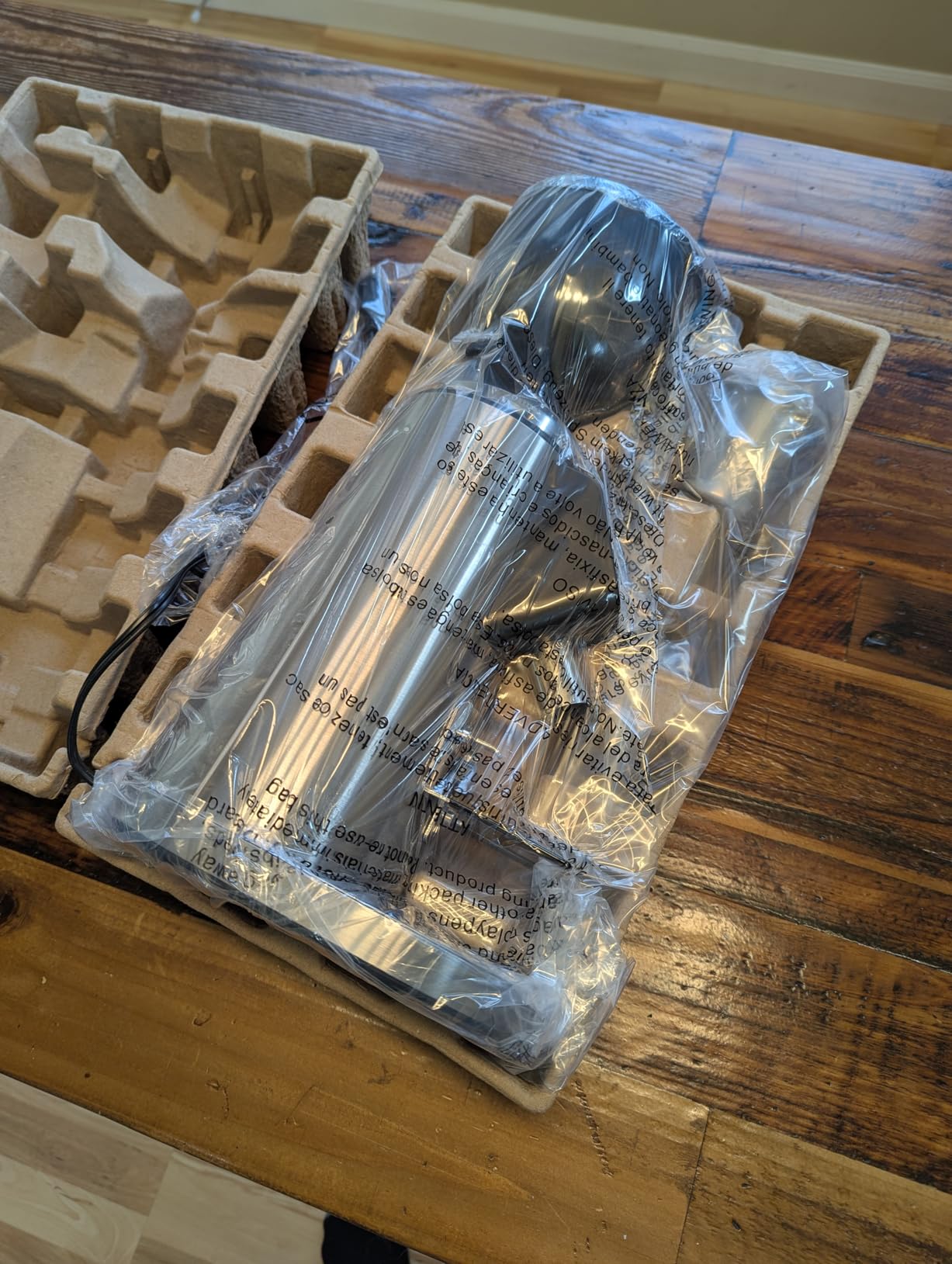
Who the MOKKOM suits
It suits households that split their coffee between espresso and filter, since two hoppers remove the need for a second grinder. The bellow hopper also suits anyone who buys small bags of single origin.
It suits buyers who want a full metal build without moving into the enthusiast tier, and the brass ring holds adjustment well over time.
Who should skip the MOKKOM
Skip it if you brew large batches of filter coffee for several people, because 350 grams goes quickly. Skip it if you want a dosing scale built in, since you still need to weigh doses.
Skip it if counter cable clutter bothers you. The external adapter is the one part of the design that looks borrowed from a different machine.
11. AMZCHEF Burr Coffee Grinder – The Budget Buy With a 10.6oz Hopper
AMZCHEF Burr Coffee Grinder, 48 Settings, Less Static Mess, Metallic Silver
- 48 settings covering espresso through French press
- Consistent uniform grind with low retention
- Anti-static technology reduces mess
- Quiet operation compared with similar grinders
- Large 10.6oz hopper with UV protection
- Direct portafilter grinding and a removable upper burr
- Touchscreen interface is unintuitive and mode switching is inconsistent
- Settings reset to defaults between uses
- Sub-second timing only available in espresso mode
This is our budget pick because it pairs real burrs, a retention-conscious design and a fit for both 54mm and 58mm baskets. For a first espresso setup or a second machine in another room, it does more than its tier suggests.
The 10.6oz hopper with a UV-blocking tinted window is unusual at this level and means you can buy a bag of beans rather than a small pouch, which is a genuine convenience for anyone who drinks filter coffee too.
Grind quality is even across the range, and the low retention design meant we were not cleaning the chamber between every shot the way we were with some conical machines.
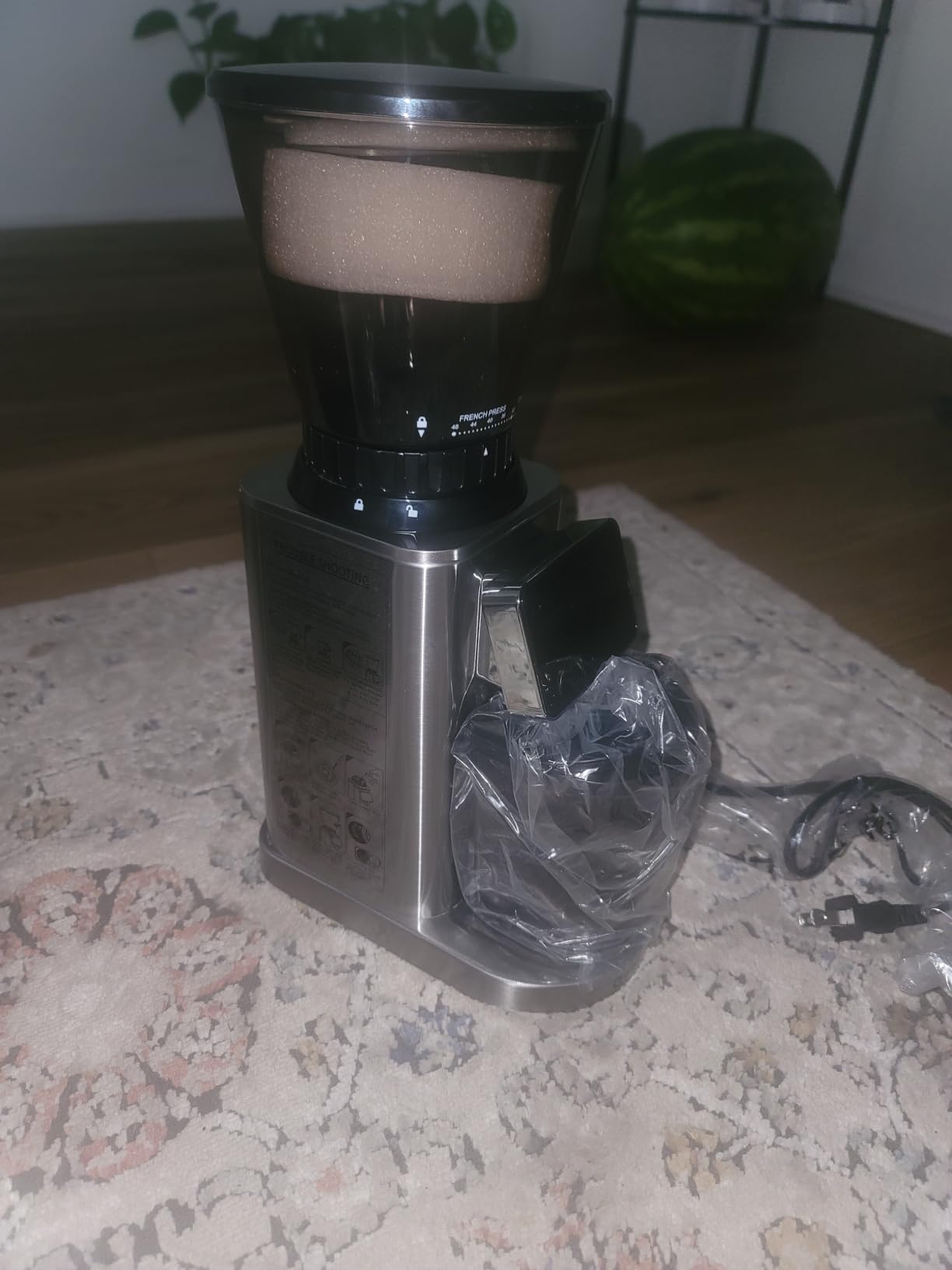
The timer reaches 40 seconds with half second accuracy, which is fine for a double or a small pour-over batch. Cup mode only steps in twos, and sub-second control appears only in espresso mode.
The main complaint from owners is the interface, and it is fair. Switching between cup and time modes is inconsistent and the settings reset to defaults between uses, so expect to set it every morning for a few weeks until the pattern is muscle memory.
Some grounds cling to the chute occasionally, though far less than the plastic-bodied grinders that do nothing about static.
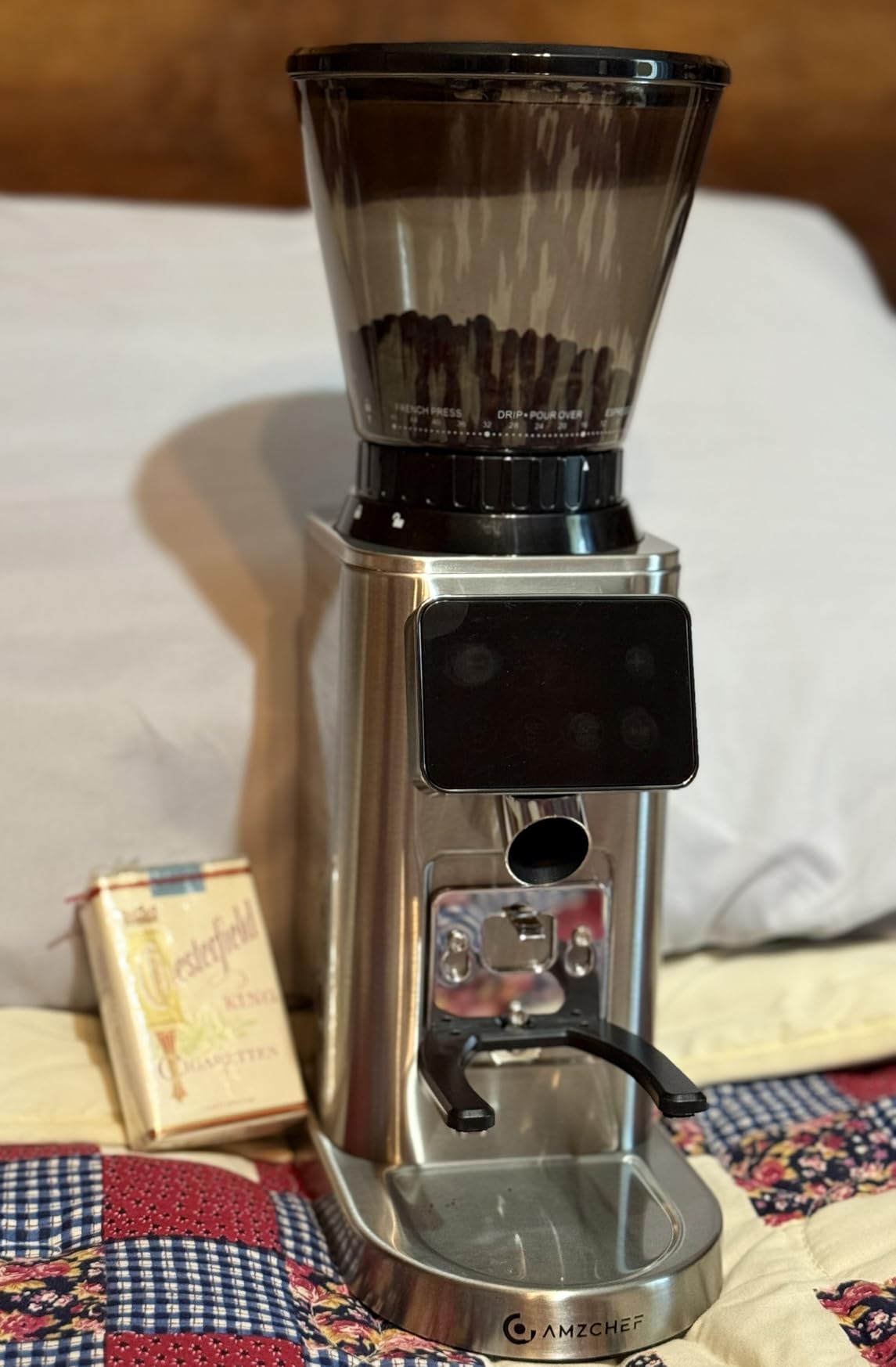
Who the AMZCHEF 48-Setting suits
It suits a first espresso setup where budget matters more than fine adjustment. It also suits anyone who wants a second grinder for a holiday home or office without spending real money.
The large hopper and UV window suit people who buy whole bags of beans and brew a mix of methods rather than small single origin pouches.
Who should skip the AMZCHEF 48-Setting
Skip it if you dislike learning an interface, because the resetting settings will frustrate you before they charm you. Skip it if you want very fine control between espresso and pour-over, since 48 steps is a coarse range.
Skip it if flavour clarity on light roast espresso is your goal. This is a conical burr set and it behaves like one.
12. Ollygrin Burr Coffee Grinder – A Gear-Reduced Motor That Runs Cool and Quiet
Ollygrin Burr Coffee Grinder, Electric Conical Coffee Bean Grinder With 30 Adjustable Grind Settings For 2-12 Cups, Sliver & Black
- 30 precise settings from espresso to French press
- Gear reduction motor runs cool and preserves flavor
- Consistent grind with minimal fines and static
- Quiet operation for a burr grinder
- Auto-locking hopper prevents bean spills
- Friction clutch and overheating protection
- 220V only so it needs a transformer in 110V regions
- Finest setting may not be fine enough for picky espresso users
- Portafilter holder feels like cheap plastic
- Timer occasionally overruns
A gear reduction motor drops the burr speed, which means less heat transferred into the beans and less heat to the burr set over time. On a machine you might keep for a decade that is a durability argument as much as a flavour one.
The 30 settings are coarser than most machines here, and on the espresso end that showed. We could reach a workable double shot, but there was less room between a sour extraction and a bitter one than on a stepped or stepless dial with more positions.
The safety features are unusual at this level: a friction clutch protects the burrs from beans with stones in them, and an overheating protection circuit cuts the motor if it is loaded too heavily.
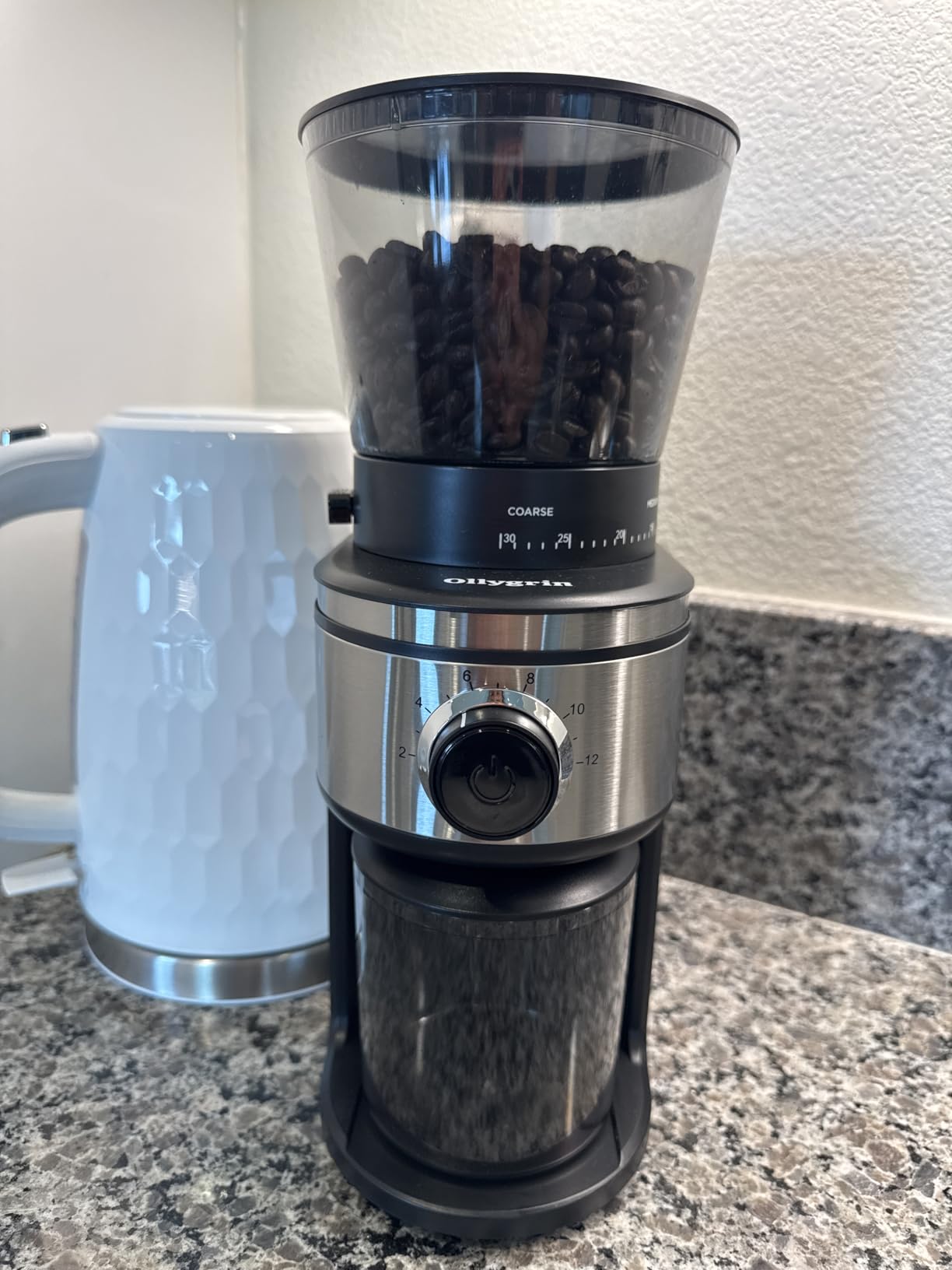
The auto-locking hopper and the rotary dial with a push-button start make this an easy machine to learn. It weighs 4.4 pounds and measures 5.4 by 7 by 12 inches, which makes it one of the smaller footprints on the list.
The one thing you need to check before anything else is the voltage. This model is 220V only, so in a 110V region it needs a transformer, and that changes the whole value calculation.
Owners also report that the timer occasionally runs long, the portafilter holder feels thin, and the included cleaning brush is stiffer than expected.
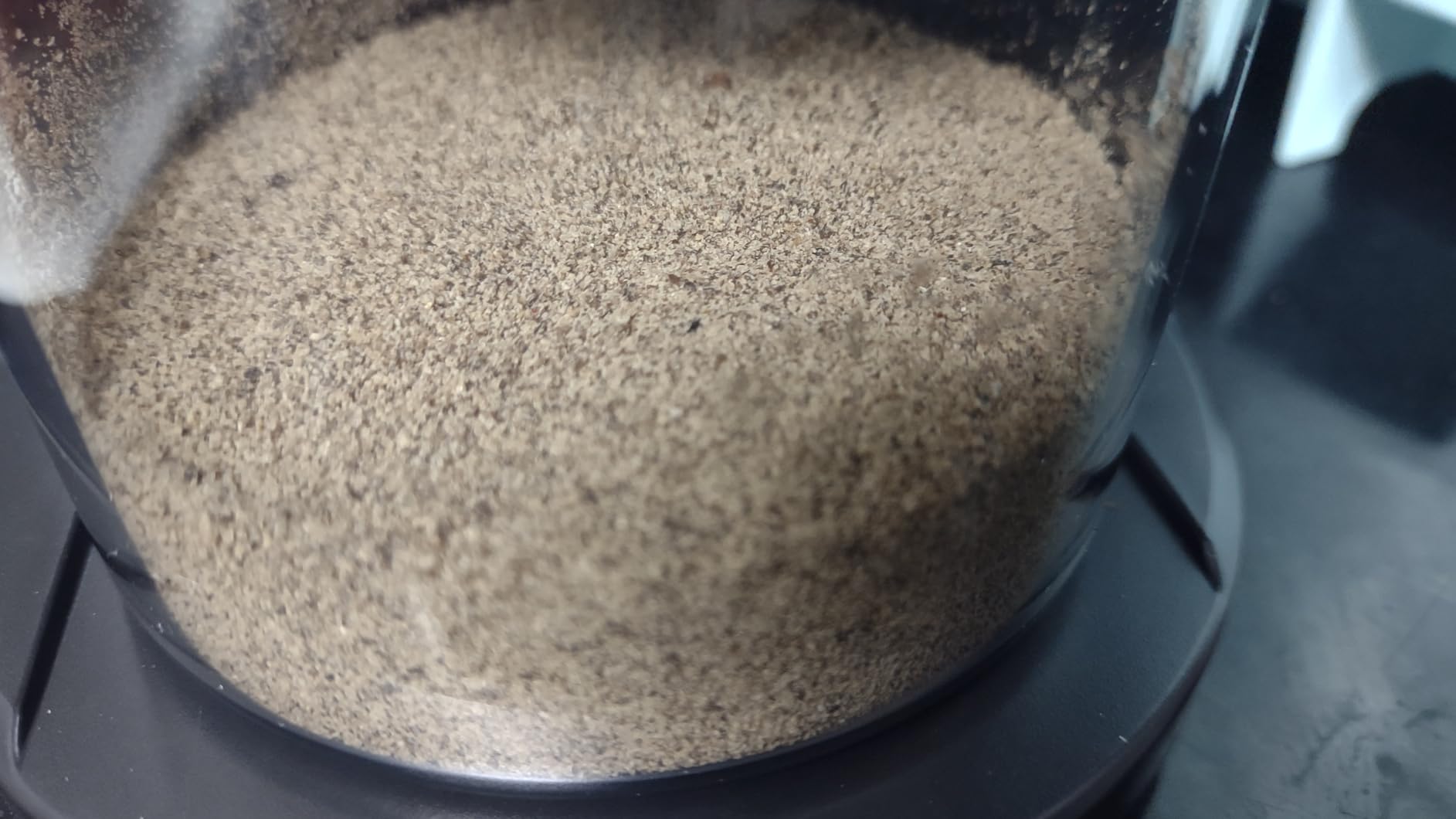
Who the Ollygrin suits
It suits someone buying in a 220V region who wants a cool-running, quiet burr grinder for espresso and filter coffee. The friction clutch also suits anyone who grinds supermarket beans where stones are common.
It suits buyers who want automatic safety and auto-locking convenience rather than fine adjustment control.
Who should skip the Ollygrin
Skip it in a 110V region unless you already own a transformer. Skip it if you are chasing clarity on light roast espresso or want fine control, since 30 conical settings will not take you there.
Skip it if you pull single shots and need an accurate short dose, since the timer occasionally overruns and the holder is the weakest part of the machine.
How to Choose an Espresso Burr Grinder
Most buying guides for burr grinders cover filter coffee first and treat espresso as a footnote. That is backwards for this decision, because the four things that matter most for espresso barely matter for pour-over.
Micro-adjustment comes before everything else
Espresso lives or dies on how small a grind change you can make. A stepped dial with 30 positions gives you one adjustment step per click, while a stepless dial lets you turn the adjustment continuously while the burrs run.
Aim for the finest control you can get. Stepless grinders such as the SHARDOR 64mm and the DF64 II let you hunt for espresso fineness by fractions, and that is the difference between a three-day dial-in and a three-month one.
Retention and static decide how your kitchen feels
Grind retention is the coffee left sitting in the chamber after you grind. Low retention grinders keep under a tenth of a gram and make switching beans painless, while hopper machines retain stale grounds that flatten the next shot.
Static cling is the messier problem. Grounds leap out of the chute and coat the counter, and it hits hardest on plastic-bodied machines without an ion generator. If you grind in the morning before anyone else is awake, this decides whether you enjoy the process.
Portafilter geometry is the most common real-world complaint
A chute that sits too far above a 54mm basket causes a coffee storm. Wide holder compatibility such as the 51mm to 58mm range on the Homtone, or the dual cradles on the Breville, removes that problem entirely.
Before buying, measure the height from the chute exit to the top of your portafilter rim with a ruler. If the gap is more than a few centimeters, buy a dosing cup or a funnel before you buy the grinder.
Flat burrs versus conical burrs for espresso
Flat burrs crush beans between two parallel discs, producing a tighter particle size distribution with fewer fines. Conical burrs funnel beans toward a smaller cutting surface, which is faster and cheaper but produces more fines and boulders at fine settings.
For espresso, flat burrs win on clarity and consistency, and larger burrs win because more coffee passes through them per second. Sixty-four millimeter flats are the standard for a reason.
Conical burrs are not wrong, though. They work well at the middle and coarser end of espresso, they run quieter and cooler, and they cost less. If your budget goes to an espresso machine instead, a good conical burr grinder is a sensible compromise.
Single dose versus hopper for espresso
A single-dose hopper holds one portion of beans, so every dose is fresh and nothing sits in the chamber. That is why single-dose designs dominate the enthusiast end of espresso grinders.
Hopper machines are faster for batches and more convenient if you drink filter coffee throughout the day. They also retain more and lose freshness sooner, so switching beans every shot goes badly.
How to dial in espresso on a new burr grinder
Set your machine to a mid-range grind, roughly where a coarse French press setting would sit. Grind a full 18 grams into your basket, tamp level and pull a 36 gram shot in about 30 seconds.
If the shot runs fast and sour, grind finer. If it runs slow and bitter, grind coarser. Change one adjustment step at a time and give the machine two or three days per change, because most burrs need to settle.
Once the taste is close, fix the yield. Weigh your dose, adjust the time until you hit 18 grams, then adjust your output so the shot stops at a 1 to 2 ratio within a few seconds of 36 grams.
If your grinder is stepless, run the motor while you turn the dial and stop the moment the grind stops flowing at espresso texture. That habit alone saves hours on a flat burr machine.
How to check burr alignment in five minutes
Factory grinders frequently arrive with burrs that are not centered on each other, and uneven burrs produce an inconsistent particle size that no amount of dialing will fix.
Put a fingertip into the burr set and turn the adjustment through its range slowly. You should feel even resistance the whole way. If you hit a tight spot or a dead zone, that is misalignment and the grinder needs shimming before espresso.
The SHARDOR 64mm is the clearest example here: owners specifically note the dial zero point is not calibrated, so alignment is part of setup rather than a fault.
What changes at each budget tier
At the entry tier you get 40mm conical burrs, 30 to 51 stepped settings and a plastic body. The grind is honest and espresso is possible, though control is limited and static is common.
At the middle tier you start seeing 64mm flat burrs, all-metal chambers and anti-static systems, and often an upgradeable burr set. This is where the jump in clarity is largest for the money spent.
At the enthusiast tier you get stepless adjustment, near-zero retention, ionised chutes and documented burr upgrade paths. The grind quality gains less than the workflow gains, because dosing and retention finally stop working against you.
One allocation rule worth following: if your espresso machine sits in the entry tier, do not put your whole budget into the grinder. Grind quality matters, but a better machine changes the shot more than a marginal burr upgrade will.
If you also want to see larger machines in context, our professional coffee grinder guide covers commercial-style units and the home roundup covers machines built mainly for filter brewing.
Frequently Asked Questions
What type of grinder is best for grinding espresso?
A dedicated burr grinder with fine micro-adjustment and low retention is best. Flat burrs of 58mm to 64mm give the tightest particle size distribution for espresso, and a stepless dial lets you move in very small increments while the burrs run.
Is a burr coffee grinder good for espresso?
Yes. Burr grinders crush beans between two hardened surfaces rather than chopping them, and the gap between the burrs sets particle size. Espresso needs a narrow, finely adjustable gap, which burr grinders provide and blade grinders do not.
Which burrs are best for espresso?
Large flat burrs, ideally 64mm stainless steel, produce the most uniform particle size for espresso. Conical burrs work and cost less, but produce more fines and boulders at fine settings, which shows up as uneven extraction.
Is a flat burr or conical burr better for espresso?
Flat burrs are better for espresso because they produce fewer fines and a tighter particle size distribution. Conical burrs are quieter, cheaper and cooler running, which makes them a reasonable choice when budget goes to the espresso machine instead.
How do I dial in a new espresso grinder?
Start at a coarse setting and grind 18 grams into the basket. Tamp level and pull to 36 grams, then move one step finer if the shot is sour and fast, or coarser if it is bitter and slow. Give each change two or three days before adjusting again.
Which burr coffee grinder did America’s Test Kitchen recommend?
We do not track or cite America’s Test Kitchen recommendations, so we cannot say which grinder they named. Every pick in this roundup was chosen on our own testing of grind consistency, retention, static and portafilter fit.
The Best Burr Coffee Grinders for Espresso, Final Word
After six weeks and a lot of dialing in, the Breville Smart Grinder Pro remains our pick for the best burr coffee grinders for espresso, because 60 settings, a timer adjustable in tenths of a second and cradles for both basket sizes make it the least fussy machine here that still pulls a repeatable shot.
If you want flat burr quality, the SHARDOR 64mm is the value pick and the MiiCoffee DF64 II is the retention champion for anyone rotating beans daily. For a quiet grinder in a small kitchen, the Viesimple Gen 4 has no equal at this level.
Whatever you choose, give it two weeks before you judge it. Burrs break in, dial-ins settle and the espresso you want usually arrives after the machine does.