
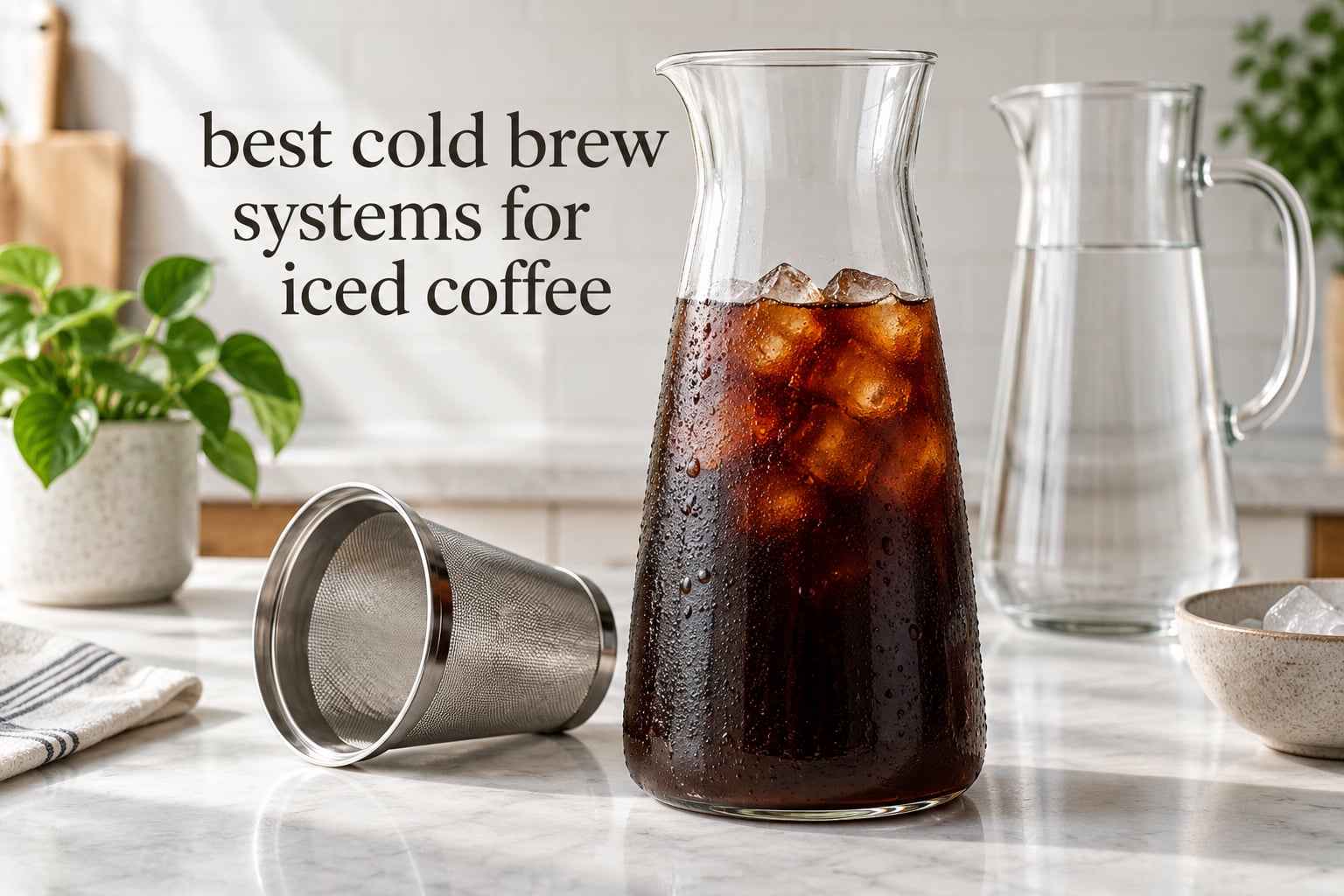
There is a specific kind of summer afternoon that exposes a bad cold brew maker: you pour a glass over ice at 2pm, take one sip, and realize you are drinking brownish water with a rumor of coffee in it. That is not a you problem. It is almost always the brewer. The best cold brew systems for iced coffee are the ones that give you coffee strong enough to stand up to ice and milk without turning thin.
Every system in this guide is manual and non-electric. No plugs, no buttons, no countertop footprint, and no waiting on a machine to finish a cycle. You add coarse grounds and cold water, wait 12 to 24 hours in the fridge, and pour. That single design choice shapes everything that follows, from how many cups a batch yields to how much refrigerator shelf the brewer will eat while it steeps.
We put eight of them side by side and judged them on the things that actually change your cup: concentrate strength, sediment control, batch yield, pour behaviour, cleanup, and honest fridge footprint measured from the published dimensions. If you want the routing before the reviews, jump to the concentrate section below, because choosing wrong there is the single most common reason a cheap pitcher disappoints.
Our Top 3 Cold Brew Picks for Iced Coffee in 2026

Takeya Deluxe 2 Quart Pitcher
- Fine mesh filter
- airtight lid
- shatterproof Tritan
- 2 quart capacity

County Line Kitchen 64 oz Maker
- 64 oz glass jar
- stainless mesh filter
- flip cap spout
- large batch

Takeya wins the overall slot because it is the only one in this group that gets filtration, sealing, and durability right at the same time, and it has the longest ownership history in the set at more than 67k reviews. County Line takes the batch and clarity crown on user ratings, and the Bodum is the honest answer for anyone who wants true concentrate without spending much.
All 8 Systems Side by Side in 2026
| Product | Specifications | Action |
|---|---|---|
| Takeya Deluxe 2 Quart Pitcher |
|
Check Latest Price |
| County Line Kitchen 64 oz Maker |
|
Check Latest Price |
 Primula Burke 1.6 qt Carafe Primula Burke 1.6 qt Carafe |
|
Check Latest Price |
 Ovalware RJ3 1.5L Pitcher Ovalware RJ3 1.5L Pitcher |
|
Check Latest Price |
 Hario Mizudashi 1000ml Hario Mizudashi 1000ml |
|
Check Latest Price |
| Bodum 51 oz Plunger Brewer |
|
Check Latest Price |
 Zulay 1 Gallon Pitcher Zulay 1 Gallon Pitcher |
|
Check Latest Price |
 COFFEE BEAR 1.3L Pitcher COFFEE BEAR 1.3L Pitcher |
|
Check Latest Price |
Two numbers matter more than everything else in that table: how much coffee the batch starts with, and how many ounces come out the other end. A 44 oz carafe and a 128 oz pitcher use almost the same grounds, which means the small one is not cheaper per cup, it is simply smaller per batch.
Concentrate or Ready-to-Drink: Decide This Before You Buy
Every cold brew system falls into one of two camps, and confusing them is why so many people rate an immersion pitcher as disappointing. A concentrate maker produces coffee roughly four times stronger than what you drink. You pour two ounces over ice, top with water and milk, and you decide the strength. A ready-to-drink maker produces coffee you drink as poured, and you dilute nothing.
Full immersion brewers like the Bodum and steeper mesh designs like the Takeya and County Line make concentrate. That is the trait that matters if you drink iced coffee with milk every day, because it gives you control over the final glass instead of locking you into a fixed strength.
Smaller infuser carafes tend toward ready-to-drink territory. The Primula Burke, the COFFEE BEAR, and the Hario Mizudashi all deliver a drinkable-strength result at a lower grounds-to-water ratio, which is exactly what a lot of iced coffee drinkers actually want. The Ovalware RJ3 and the Zulay pitcher sit in between and reward you for using more grounds than the box suggests.
Commercial bottled cold brew is the ready-to-drink end of the same spectrum, and its reputation for tasting unusually smooth comes from that direct dilution-free brewing style rather than from any secret technique. If your preference is a lighter, sweeter cup that tastes good straight over ice, a ready-to-drink carafe is not a compromise. It is the correct tool.
Our practical rule after working through all eight: if you take milk or cream, buy a concentrate maker. If you drink it black over ice and like it mild, a ready-to-drink carafe will make you happier than a stronger system you have to guess at diluting.
How We Tested and Picked These Systems
We brewed the same recipe in each one across repeated batches using a consistent coarse grind and a 12 to 24 hour refrigerated steep, then compared the poured results side by side. We tracked sediment at the bottom of the glass, bitterness in the finish, and how much the cup thinned out after the ice melted in it.
We also judged the less glamorous stuff that determines whether a brewer survives a year in your kitchen: how many pieces come out for washing, whether the lid stays sealed over three days, how the pour behaves when the vessel is full, and whether the published dimensions actually clear a refrigerator door shelf. Where a dimension was published by the manufacturer, we used it rather than guessing.
Finally, we read long-term ownership reports rather than first impressions, because a brewer that looks good on day one and leaks by month three is not a good recommendation for anyone.
1. Takeya Deluxe 2 Quart Pitcher for the Best All-Round Iced Coffee
- Fine mesh keeps particles out for a clean low-acid cup
- Airtight leakproof lid holds aroma over days
- Shatterproof Tritan body outlasts glass rivals
- Dishwasher safe and fully disassembles
- Long ownership history in reviews
- Tall body can miss some refrigerator shelves
- Filter can loosen from the lid when shaken hard
- Fine grounds take effort to clean out of the mesh
This is the pitcher we ended up reaching for most. The Tritan body is not glass, so it survives the two places glass carafes always lose: a knock against the sink and a drop in the sink. At 12.2 inches tall and just over 9 ounces empty, it is tall but genuinely light, which matters when you are pouring a full 2 quart over ice at the end of a long day.
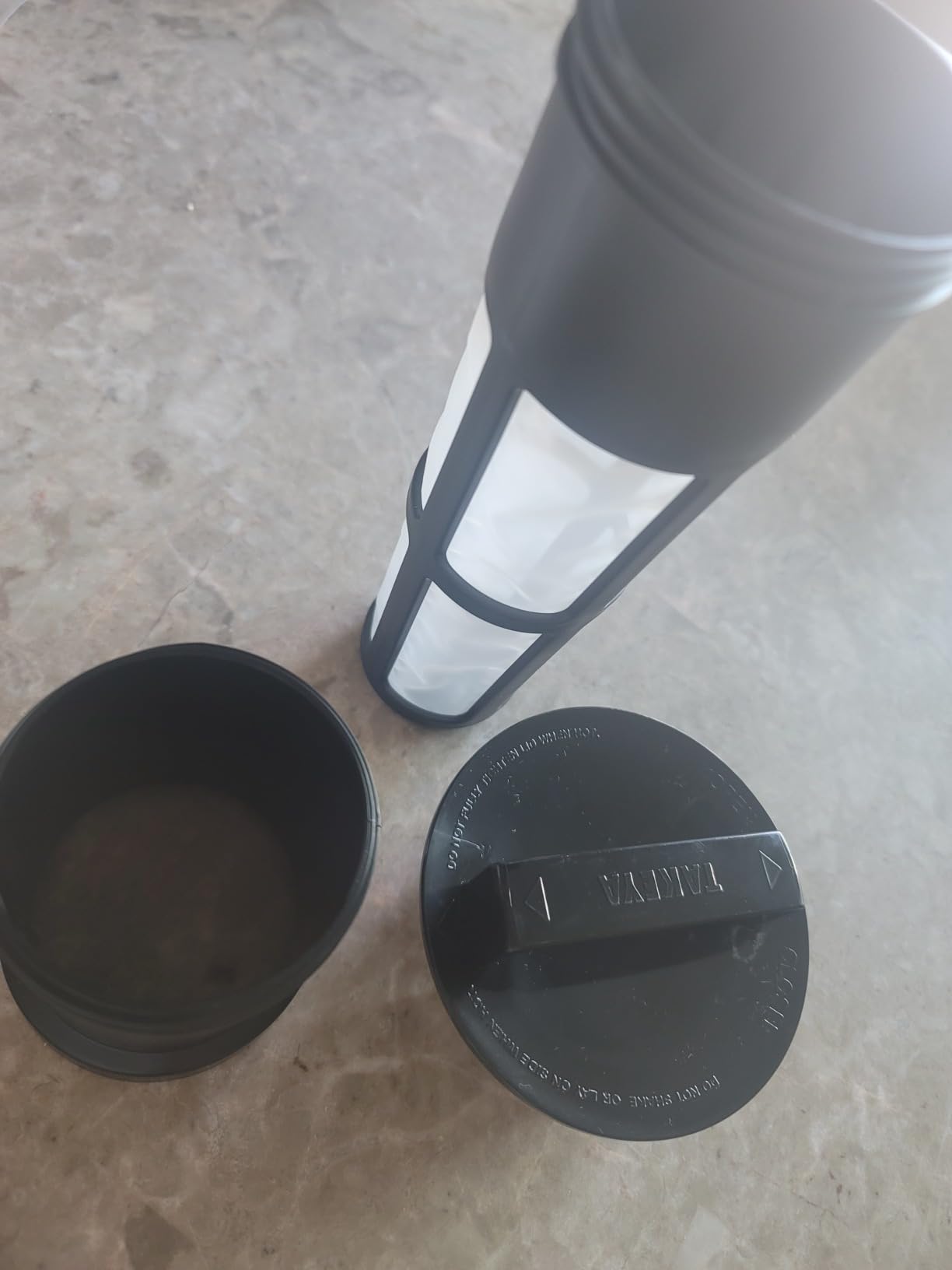
Filtration is where it earns the overall badge. The fine mesh is fine enough that our poured glasses were clear without a paper filter, and the grounds compacted into a puck that released cleanly. Across batches we had almost no silt in the bottom of the glass, which is the complaint we heard most often about cheaper mesh pitchers.
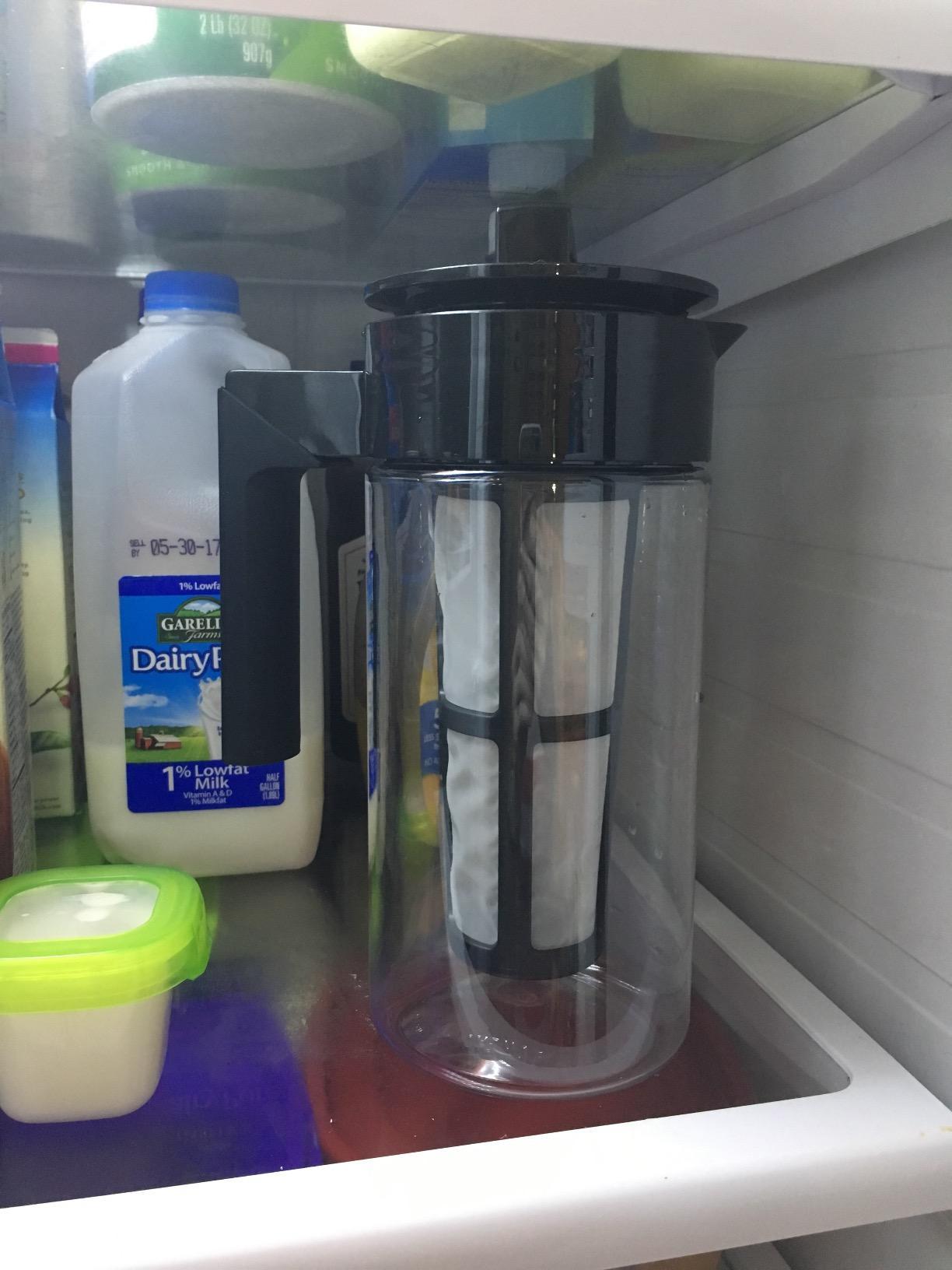
The airtight lid is the other half of the win. Pop it on and the concentrate holds its aroma for days, which means a Sunday batch is still good on Thursday. Long-term owners report multiple years of daily use, and with more than 67k reviews the pattern is consistent enough that I trust it as a durability story rather than a first-week impression.
The learning curve is real but small: shake gently in circles rather than up and down, or the filter can loosen from the lid. Make sure the grounds are fully saturated and submerged, because a dry patch floating on top is the other common cause of a weak batch. There is no printed water line, so you are eyeballing the fill line.
Why it works for daily iced coffee drinkers
The 2 quart size is the sweet spot for one to two people drinking iced coffee every day. It makes enough concentrate for several glasses, and because the output is strong rather than pre-diluted, one batch stretches across mixes, straight coffee, and cooking. It also passes the durability test that matters most for a daily tool.
Where it falls short
The height is the one genuine compromise. At 12.2 inches it clears most refrigerator doors, but in a shallow door shelf with a low riser you may need to move it to an interior shelf. Cleaning fine grounds out of the mesh takes a minute of real work rather than a quick rinse, which is the ongoing cost of having cup-clean coffee.
2. County Line Kitchen 64 oz Maker for Big Household Batches
- Highest user rating in the group at 4.8
- Thick mason jar glass is unusually durable
- Stainless mesh filter leaves almost no residue
- Every part is interchangeable and replaceable
- Airtight screw seal keeps big batches fresher
- Flip cap does not always latch so pours can spill
- Full jar is heavy and slick in the hand
- Sediment settles if you shake the jar before serving
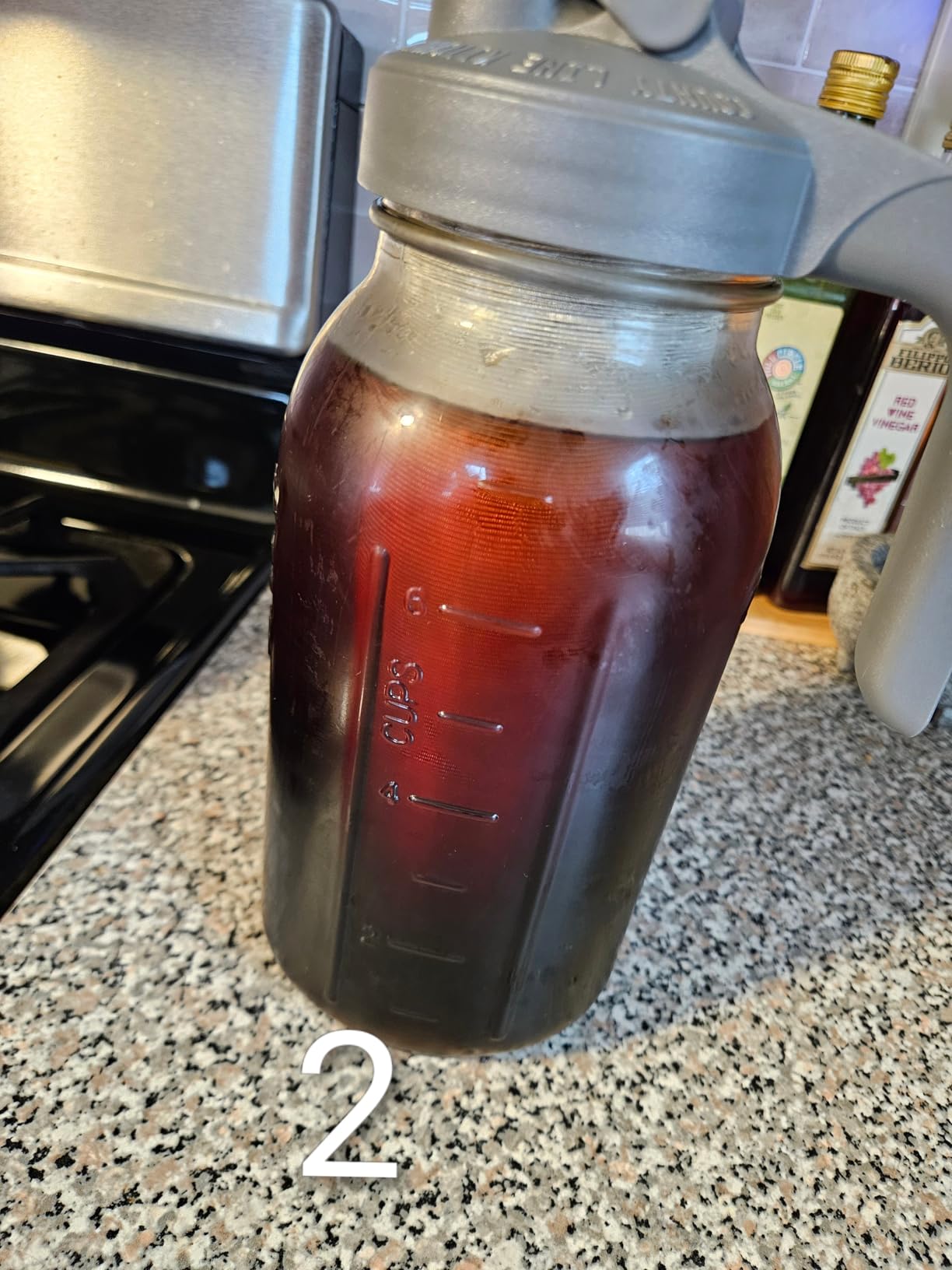
This is the batch machine. At 64 ounces it produces more coffee in one steep than most people drink in a day, which is exactly the point if you are feeding a household or you simply do not want to brew on Tuesday and Thursday. It carries the highest average user rating of the eight at 4.8 across more than 24k reviews.
The glass is unusually thick for a mason jar format carafe, and that thickness is the difference between a vessel that survives the fridge door and one that chips. The 304 stainless mesh filter is the other strength, since it is the part that most often leaves a permanent coffee stain or smell in cheaper pitchers. Everything here is dishwasher safe and each component can be replaced on its own.
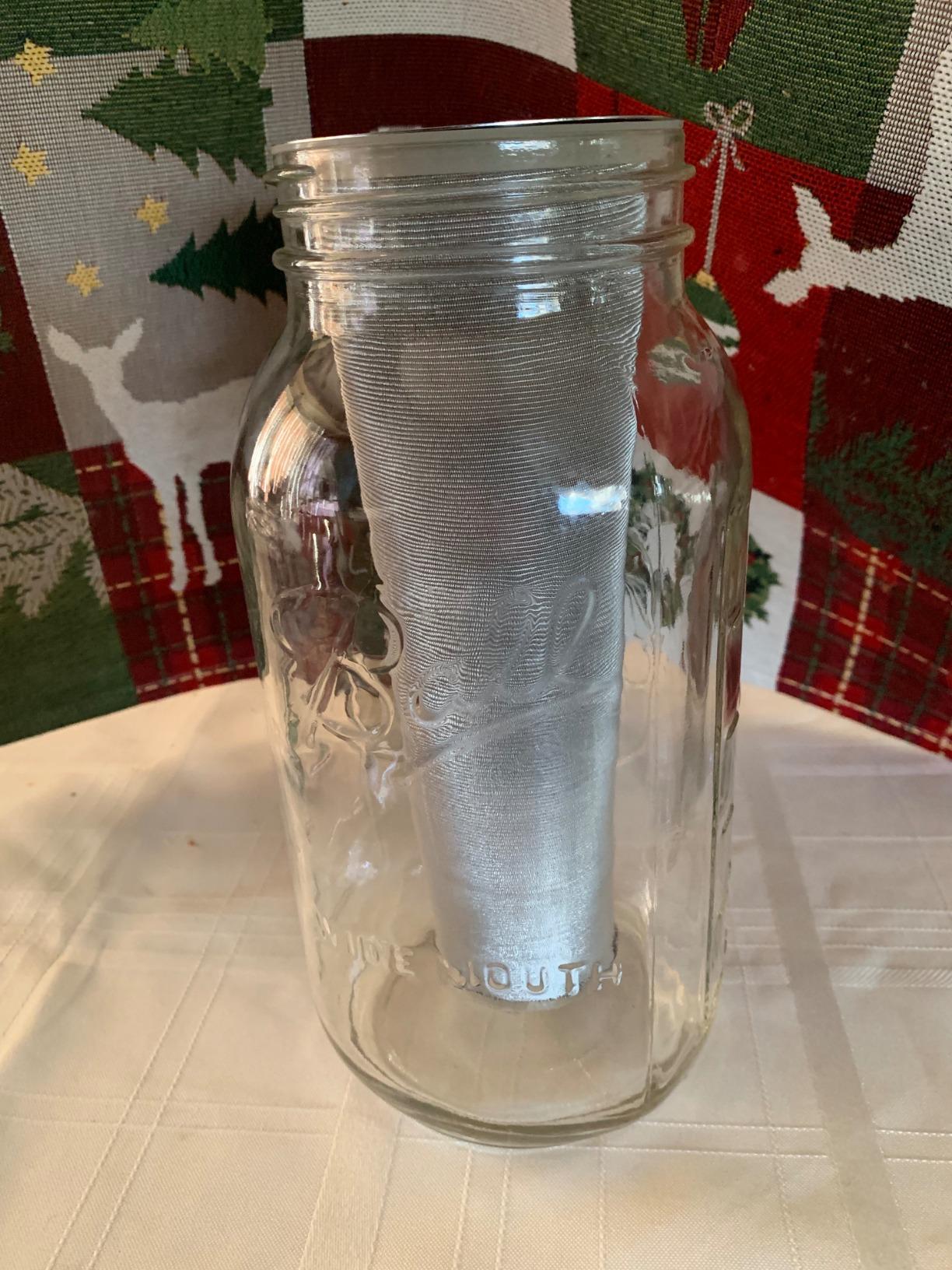
The flip-cap lid with a handle is a genuinely useful design for a 64 oz vessel because you are not trying to balance a full jar by the neck. It is also the source of most complaints, since the cap does not always snap fully shut and a jar that has been shaken can leak at the spout. Treat the seal as a pour-and-wipe part rather than a transport guarantee.
One habit solves two problems at once: leave the settled coffee sitting undisturbed before serving. That keeps the fine sediment compacted at the bottom of the jar so the spout stays clean, which is also the reason a two-jar straining routine is popular with owners who want maximum yield and zero grit.
Why it works for households and hosting
A 64 oz batch means one steep covers a full day of glasses, or a brunch table for a group, without a second round of steeping. The threaded airtight seal also keeps the concentrate fresher for longer than a snap lid, which matters when your batch size is big enough that you will be drinking it across several days.
Where it falls short
Weight is the honest drawback. Filled, this is a heavy, slippery object, and the handle sticks out far enough that you need leverage to lift it off a low shelf. It is also glass in a 64 oz format, so treat it as a fridge and counter item rather than something to carry across a yard.
3. Primula Burke 1.6 qt Carafe for Small Kitchens and Two People
- Comfort Grip handle spreads weight for easy pouring
- Mesh sleeve locks grounds away from the water
- Dishwasher safe and fully disassembles for washing
- Fits most refrigerator doors and shelves
- Entry rung with a six cup yield
- 1.6 quart size yields only about two large iced coffees
- No measuring guide or ratio reference included
- Fine grinds leave visible sediment
The reason this carafe keeps coming up in kitchen-specific conversations is the handle. The Comfort Grip sleeve spreads the weight of a full glass carafe across a wider band, which makes pouring noticeably steadier than pinching a bare glass neck. Owners who switched from bulkier brewers call that the single change they noticed first.
The borosilicate body sits inside a protective non-slip sleeve, and at 7.68 inches tall it is one of the shortest vessels here. That means it fits doors and shelves where a 12 inch pitcher simply will not go, which matters a lot in an apartment fridge. The mesh filter sleeve fully disassembles, so grounds dump out and the whole thing goes in the dishwasher.
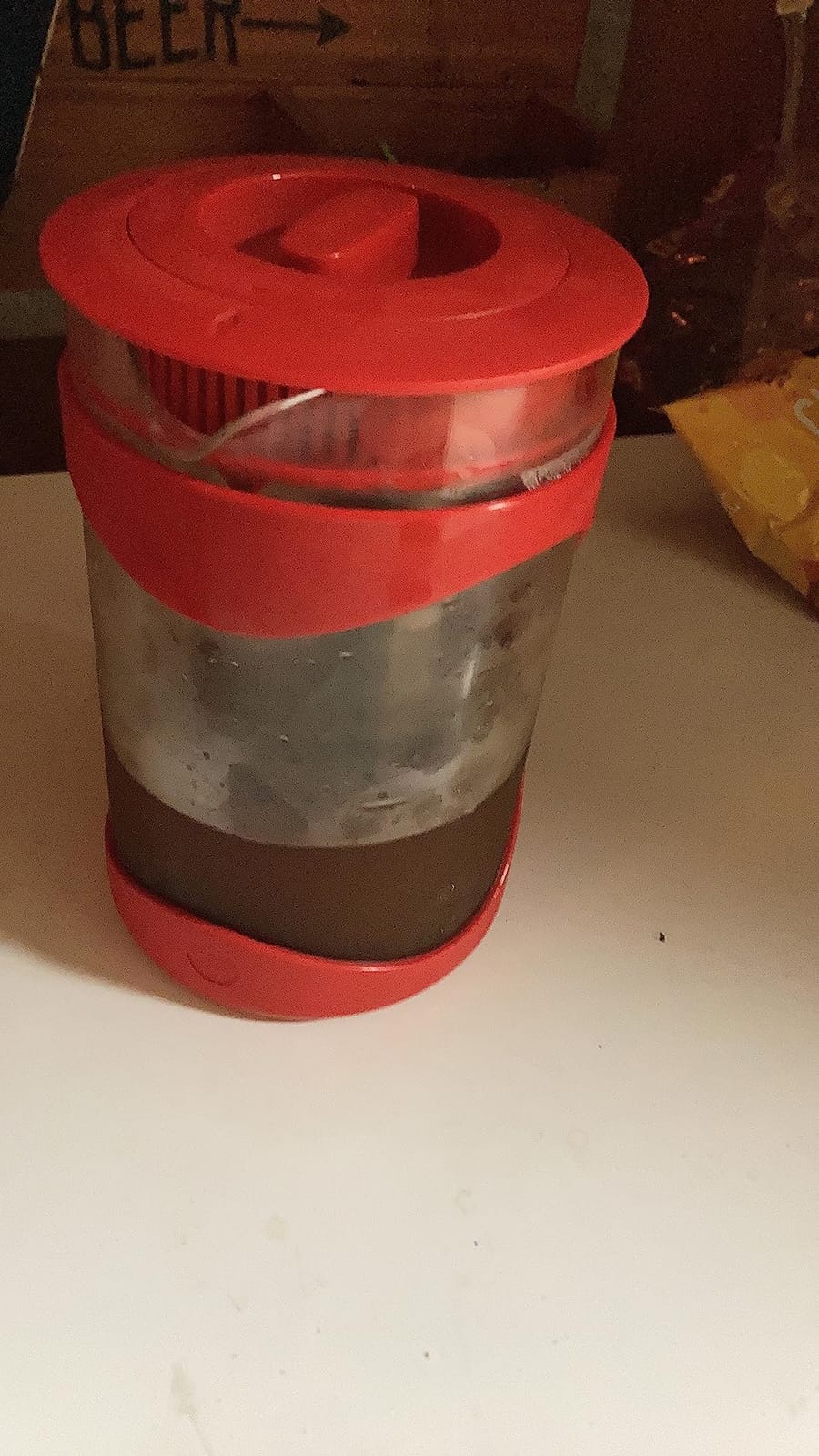
The tradeoff is capacity, and it is not small. A 1.6 quart batch is roughly two large iced coffees. Reviewers who drink several glasses a day report brewing two or three times a week as a result, so the time cost adds up even though the coffee cost per cup stays reasonable.
There is no measuring guide printed anywhere, and no ratio reference in the box. Expect to run your own ratio the first time. Fine grinds also slip past the mesh liner and leave a layer of sediment, which is why the manual recommends a coarse grind. A few owners report the mesh lining loosening after years of dishwasher cycles.
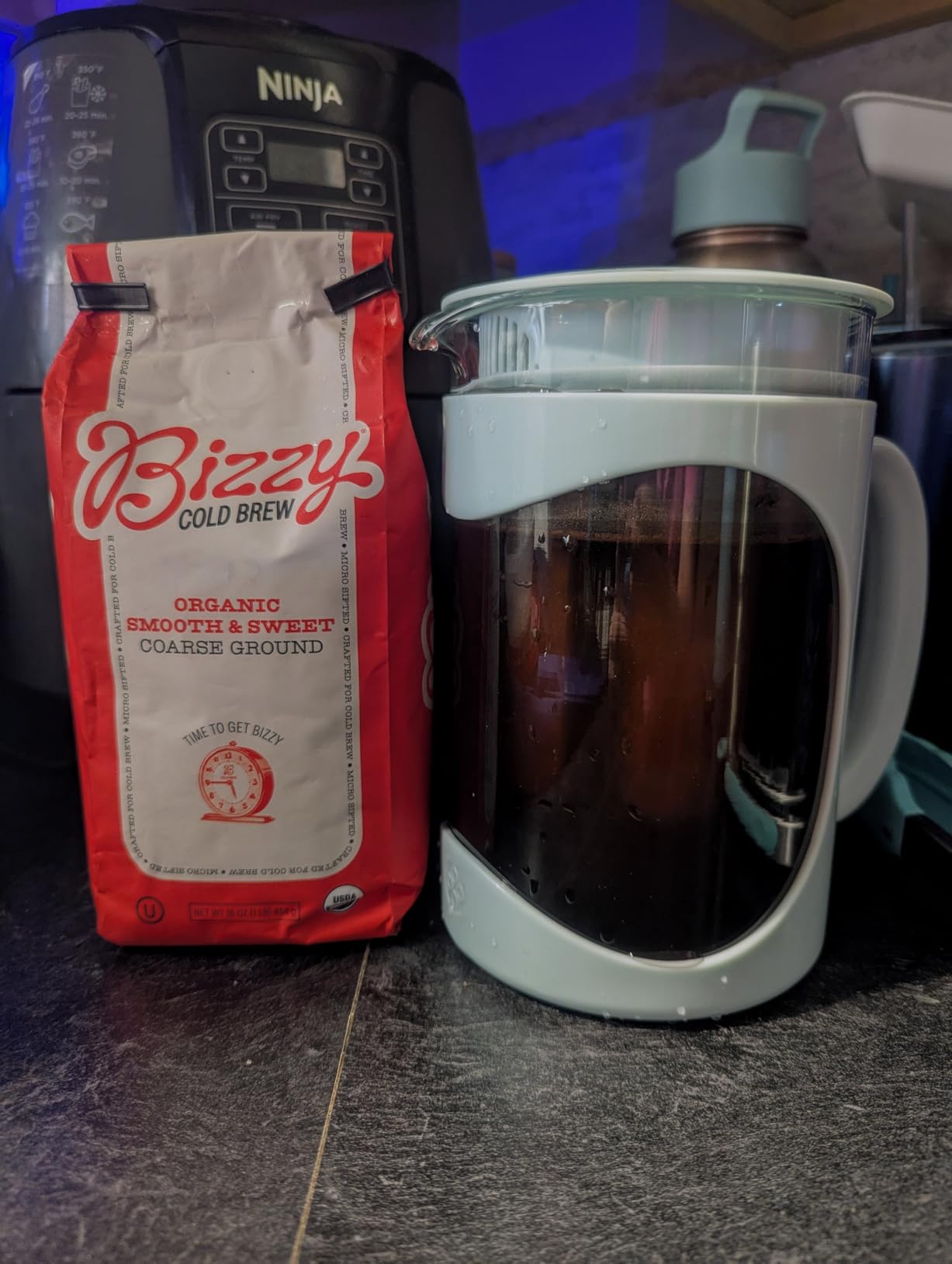
Why it works for small kitchens
This is the pick when fridge space is the binding constraint. A short borosilicate carafe with a protected base and a handled pour is the least fiddly way to get a clean six cup batch into and out of a small refrigerator, and cleanup is a dishwasher job rather than a project.
Where it falls short
If you drink iced coffee continuously from morning to evening, a six cup batch disappears quickly. Plan on two brews a week rather than one, and if you want a concentrate you can dilute over several days, look at a larger carafe instead.
4. Ovalware RJ3 1.5L Pitcher for Tea Drinkers and Long Storage
OVALWARE Airtight Cold Brew Coffee Maker with Tea Infuser & Spout 1.5L/51oz
- Airtight seal keeps concentrate fresh for weeks
- 51 oz body is sized to fit a fridge shelf
- Brews cold brew coffee iced tea and hot tea
- Extra thick borosilicate glass with steel lid cap
- Easy access handle for lifting a full pitcher
- Highest rung of the pitcher group for a non-electric brewer
- Glass body is breakable despite the rubber base
- Needs a coarse grind or fines pass the mesh
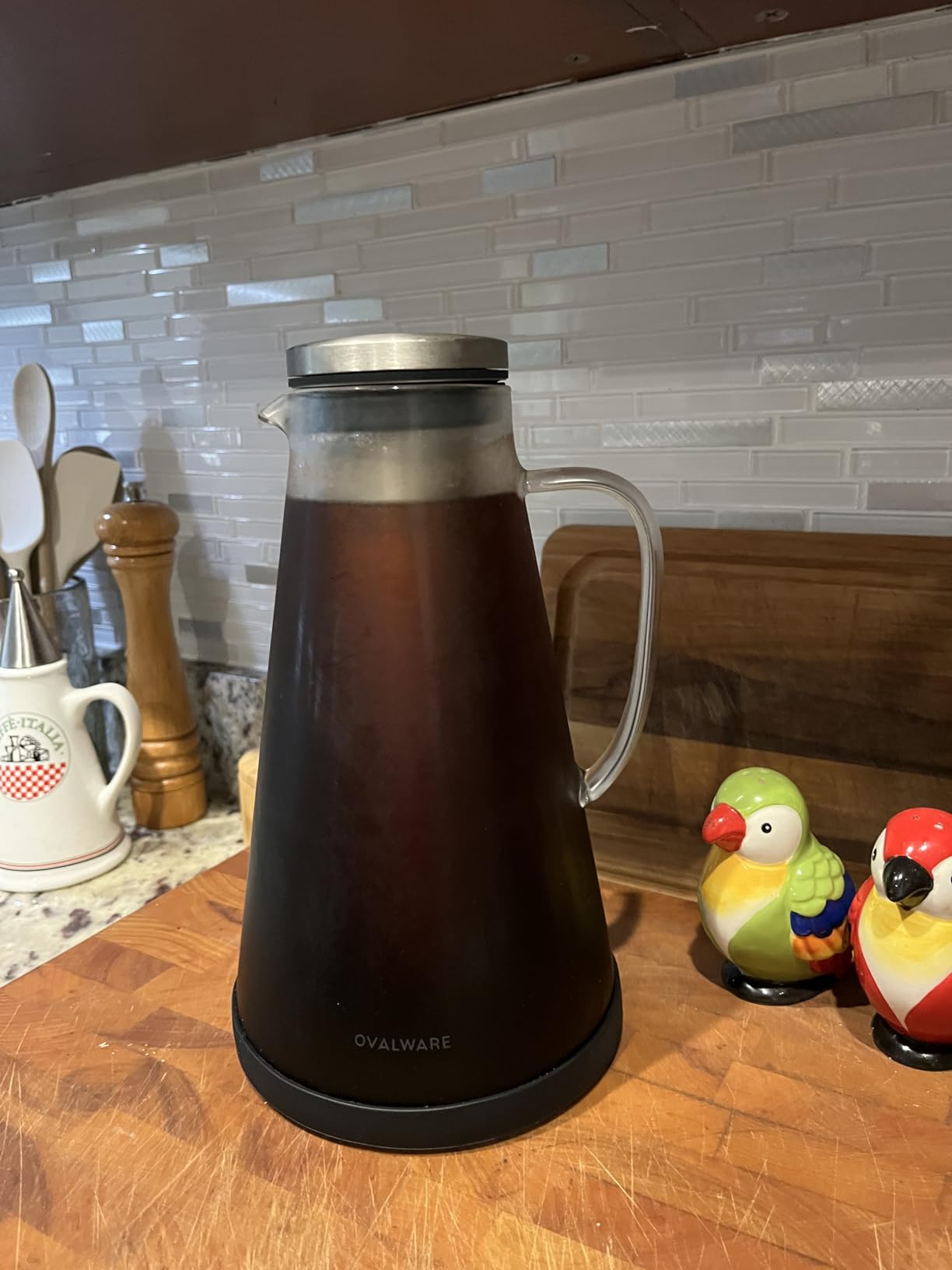
This is the one to buy if half your iced drinks are not coffee. The same 18/8 stainless filter and carafe that pull cold brew concentrate will handle iced tea and hot loose-leaf tea, which effectively doubles the return on one pitcher for a household that drinks both.
The airtight silicone seal is the headline feature and it earns the badge. Reviewers report concentrate staying fresh for up to two weeks sealed, which is longer than any other open-lid design in this group and genuinely useful if you brew rarely or want a batch to last through a work week.
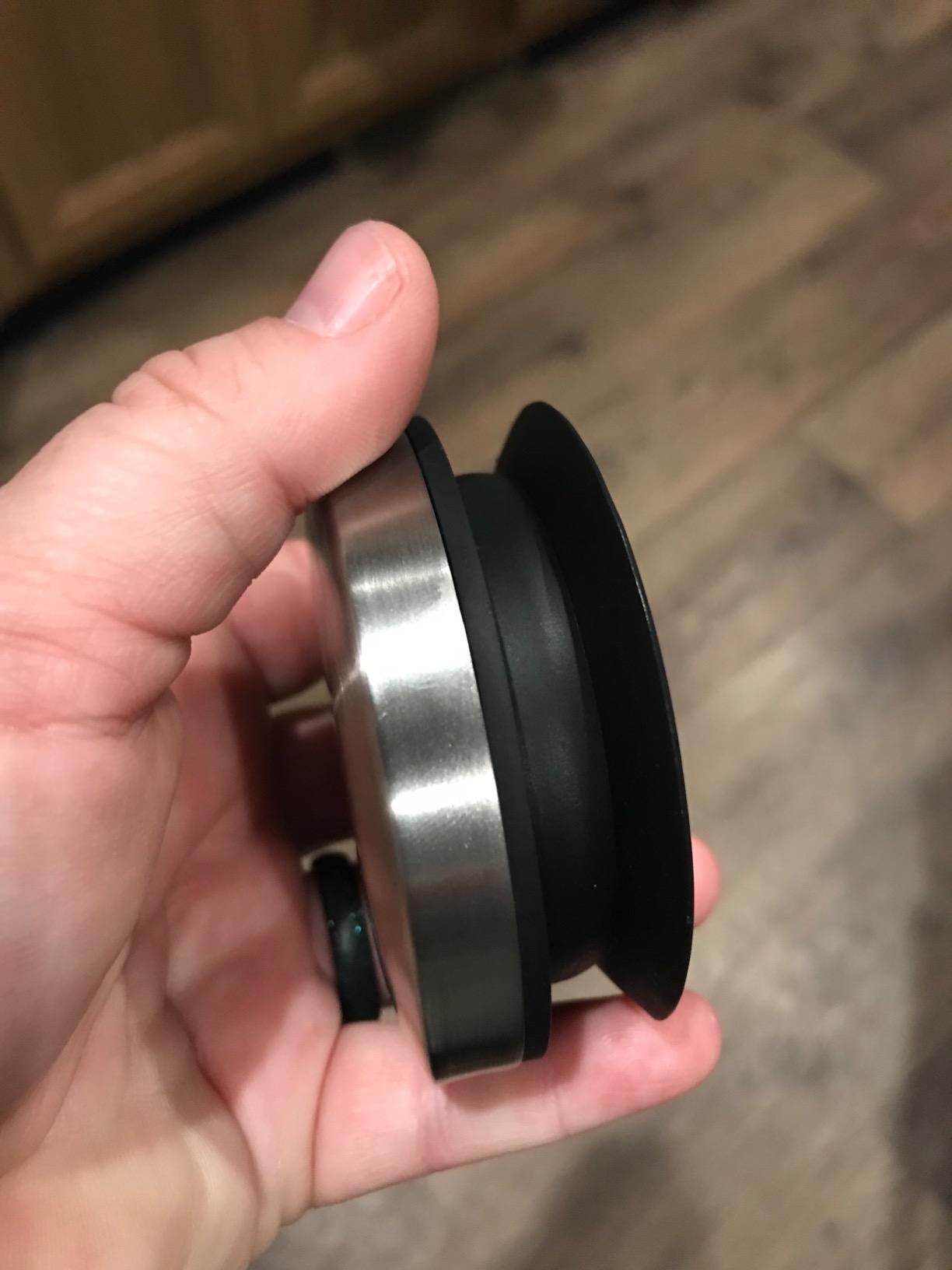
The construction is above the norm for a manual pitcher: extra thick lab-tested borosilicate, a medical grade stainless lid cap, and a rubber cushion base that keeps it from skating on a wet counter. At 9.45 inches tall it is shaped to sit on a fridge shelf rather than fight for door space.
Users on r/coldbrew report this specific 1.5L model working well in real kitchens over long periods, which matters more than a first impression. The recurring complaints are that it sits at the higher rung of the pitcher group for a non-electric brewer, and that a fine grind will push particles straight through the mesh.
Why it works for tea drinkers and long storage
If you want one vessel for coffee and tea, or you brew once and drink for a week, this is the pitcher’s clear advantage. The seal is the difference between a batch you finish in three days and one that is still good on day ten.
Where it falls short
It is still a glass carafe, so it needs a stable shelf. And it is the most expensive of the manual pitchers here, which is hard to justify if cold brew coffee is the only thing you will ever put in it. Ratio and grind size do need some experimentation before strength feels predictable.
5. Hario Mizudashi 1000ml for the Slimmest Fridge Shelf
- Underscrews in seconds so grounds dump out fast
- Slender profile fits a refrigerator door pocket
- Fine mesh gives a clean low-acid cup
- Printed measurements on the pot
- Long term owners report parts holding up for years
- Very tall carafe needs two hands when full
- Lid is not airtight so brew stales in about two days
- Instructions are in Japanese only
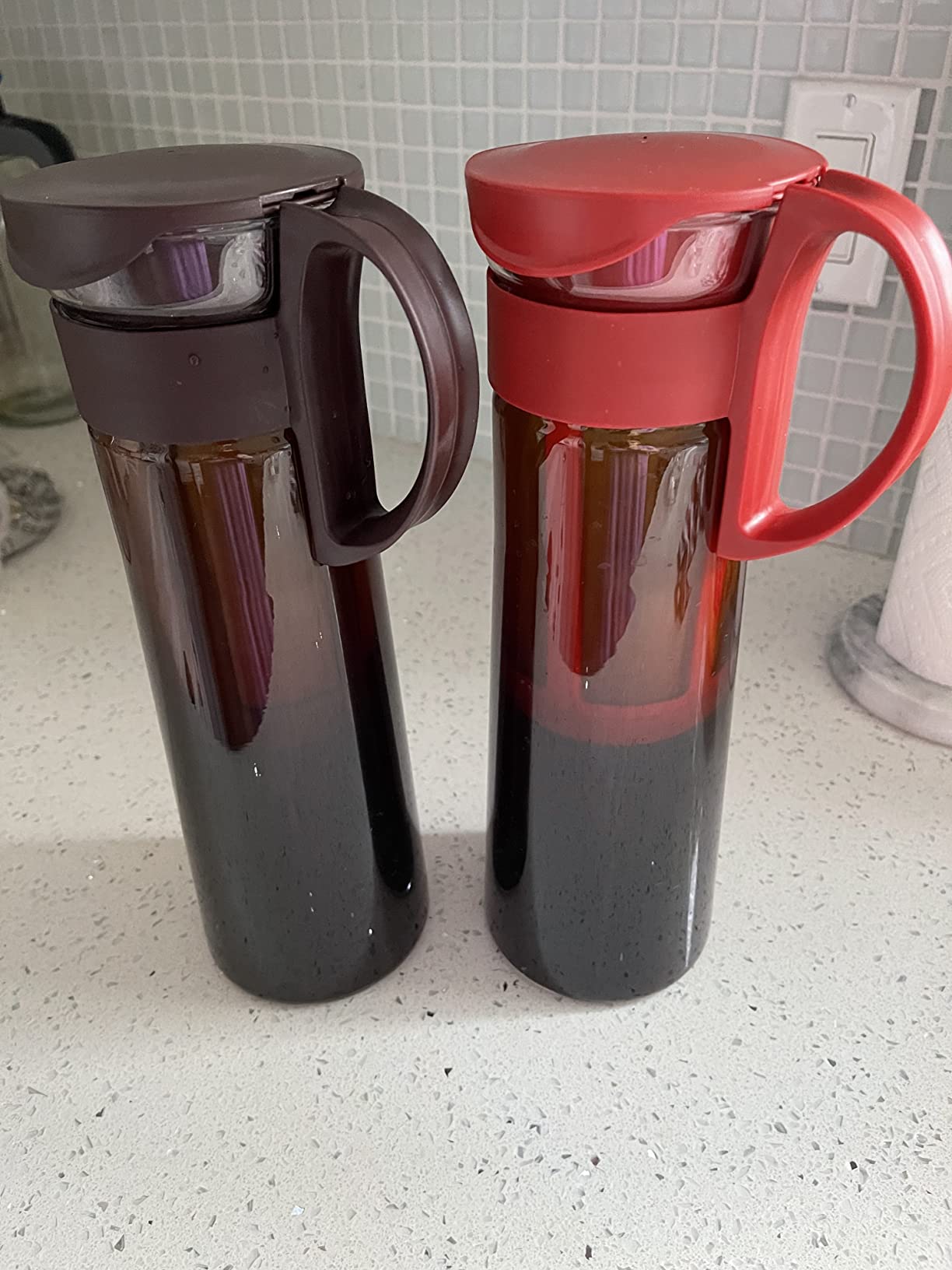
The Hario Mizudashi is the narrowest carafe here by a wide margin, at 5.43 inches wide and 11.57 inches tall, and its body profile is shaped to slide into a refrigerator door pocket where a wider pitcher will not sit level. If your door shelf is the problem, this is the direct answer to it.
The screw-off bottom is quietly the best filter design in the group. Instead of fishing a mesh sleeve out of a puddle of grounds, you invert the carafe and the filter unscrews so the spent puck falls straight into the sink. Long-term owners report the glass and plastic parts holding up for years, and the resulting cup is smoother and less bitter than a French press brew.
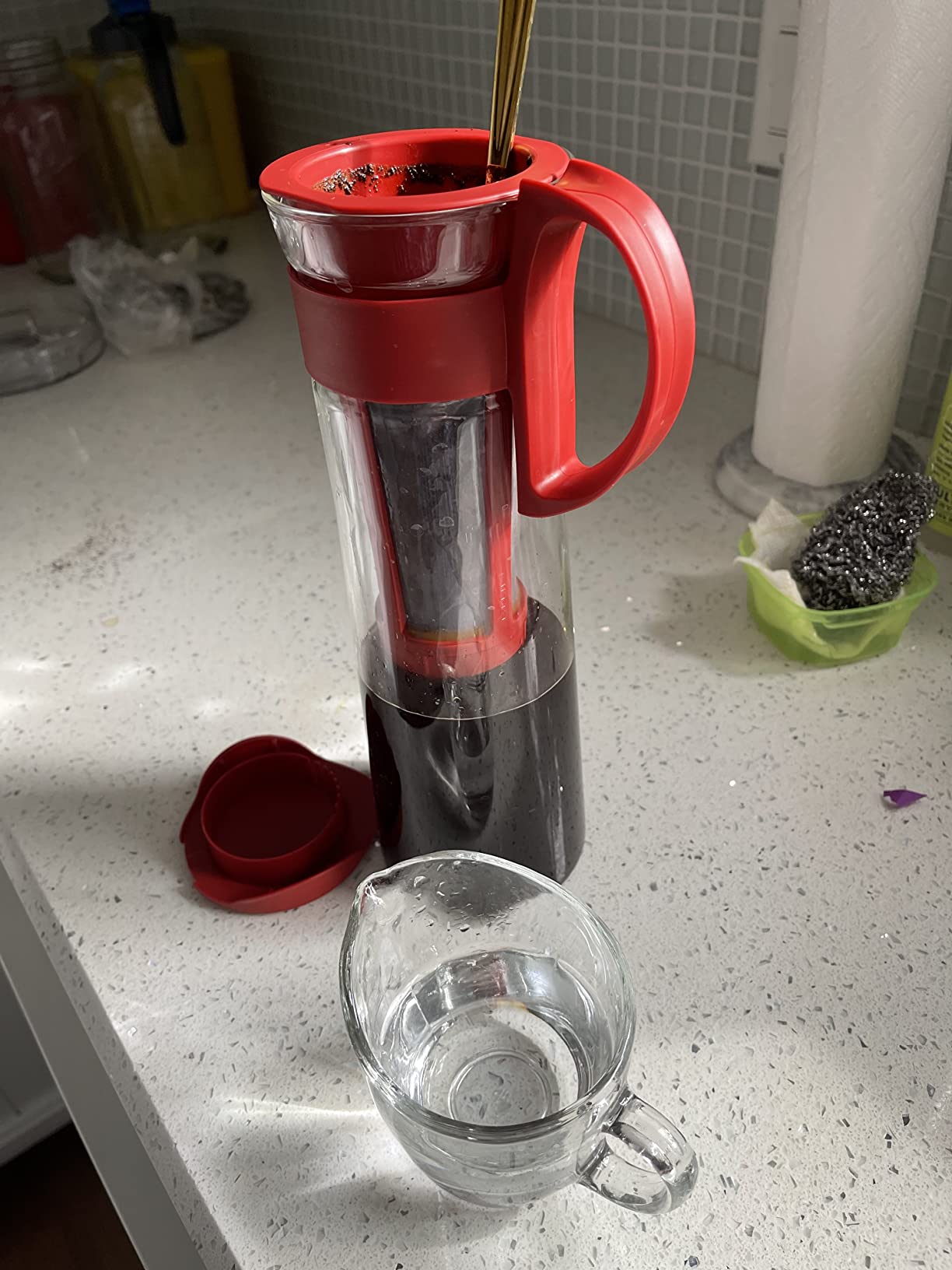
It is also a dual purpose pot, brewing cold brew coffee and cold brew tea from the same fine mesh basket. The heatproof Hario glass is made in Japan, and measurements are printed directly on the pot, which saves you guessing at the water line that several competitors here leave unmarked.
The two real problems are height and sealing. At 11.57 inches it is tall enough that a full carafe needs a two-handed pour, and the lid is not airtight, so concentrate starts losing freshness within about two days. The instruction insert is also Japanese only, which means you will be working from measurements on the glass rather than a printed recipe.
Why it works for tight refrigerator spaces
The slim body and the fast-dumping filter base are the practical wins. If you have a narrow door shelf, a single glass handle, or a kitchen where clearing a shelf before steeping is a nuisance, this carafe asks the least of your fridge of anything here.
Where it falls short
Two-handed pouring of a full carafe is the everyday annoyance. And because the lid does not seal, treat it as a two day brewer rather than a batch you can keep for a week. Drafts of a concentrate from this carafe will be noticeably flatter by day three.
6. Bodum 51 oz Plunger Brewer for Strong Concentrate on a Budget
- Plunger style gives full grounds to water contact for concentrate
- Pressing the grounds down raises yield using less coffee
- Locking lid and thumb lever reduce leaks while pouring
- Widest mouth in the group so rinsing is fastest
- Lowest rung in the group and dishwasher friendly
- Sediment can rise through the mesh during repeated pumping
- Plastic seal stiffens and makes pumping harder over time
- Bulky body needs wide refrigerator space
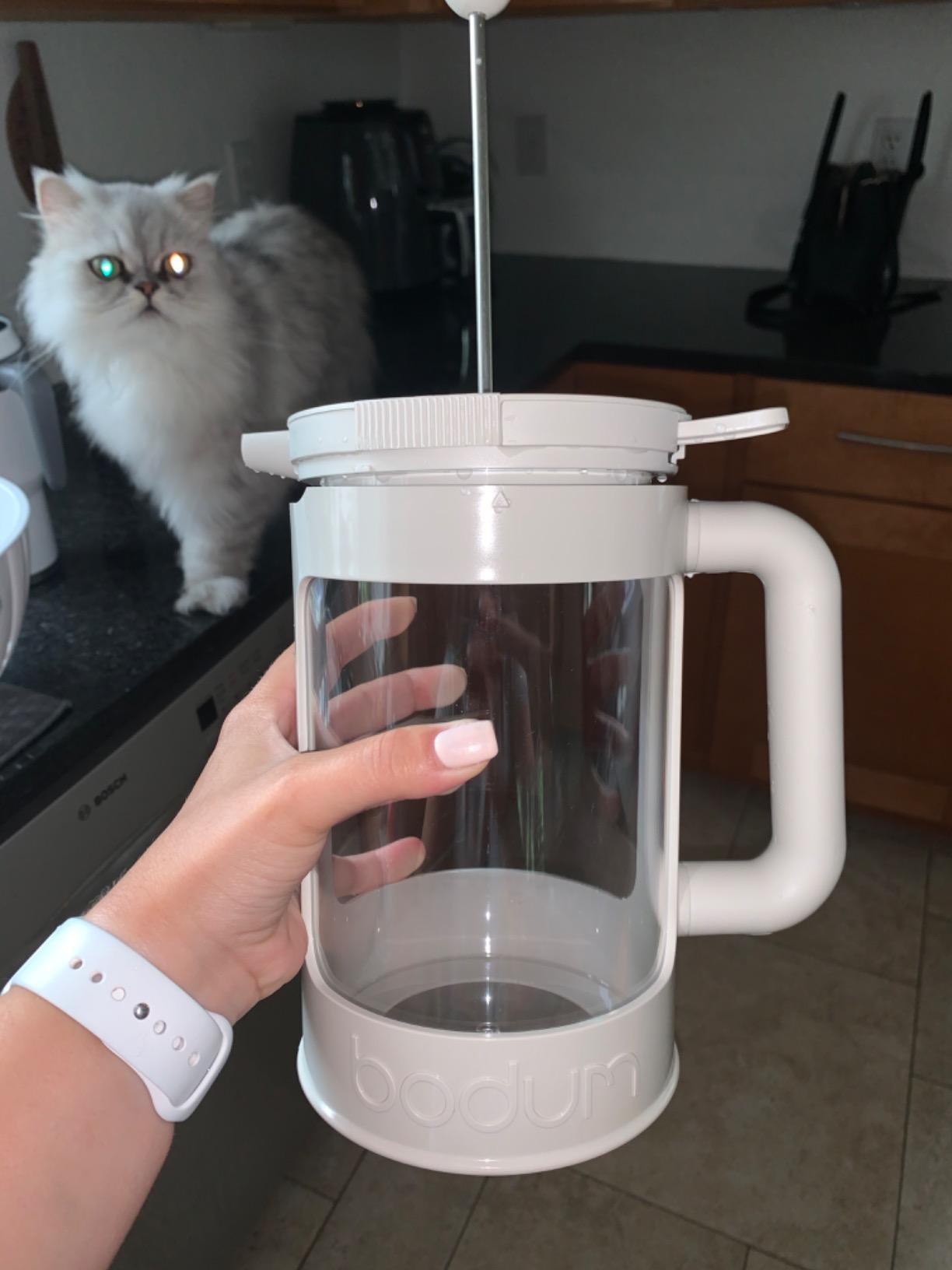
This is the only true press in the group, and that is the whole point. Every other system suspends grounds in a mesh sleeve or basket, so water flows past the coffee. The Bodum keeps grounds in full contact with the water and then presses the puck down, which pulls more flavor out of the same amount of coffee. That is why owners comparing it against infusion pitchers report noticeably stronger concentrate.
It is also the least expensive brewer here by a wide margin, which makes the concentrate-per-dollar argument hard to ignore. On top of that, the locking system and thumb lever genuinely reduce spills during a full pour, and the mouth is the widest in the group, so rinsing spent grounds takes seconds rather than a careful scrub.
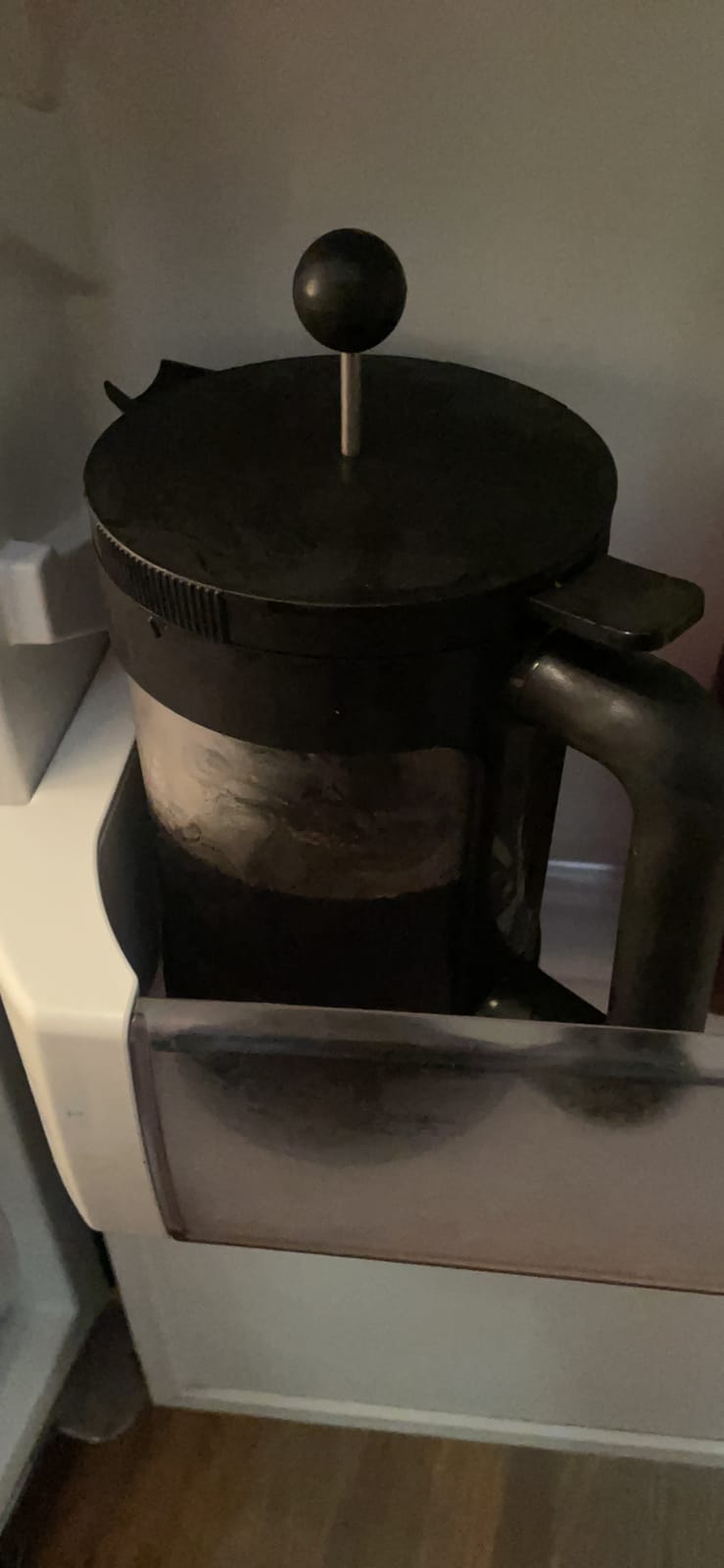
Two lids come with it, a silicone brewing lid for the steep and a plunger lid for pressing. No paper filters and no capsules, so the only ongoing consumable is coffee. Several owners run two units in rotation so one batch is always steeping while you drink the other, which is a practical trick worth copying.
The tradeoffs are sediment and upkeep. Repeated plunging can push fine particles up through the mesh, so the last of a batch can turn silty, and the plastic seal tends to stiffen over time, making the plunge harder than it should be. The body is also bulky and wants a wide section of shelf.
Why it works for concentrate drinkers
If your glass is always half milk, this is the strongest cup you can get from a manual brewer and it is the cheapest way to get it. Pressing instead of suspending also means you get more coffee from the same grounds, so the per cup coffee cost is one of the lowest in this group.
Where it falls short
Sediment creeping up through the mesh during heavy plunging is the main complaint, so a slow final press matters. The stiffening seal is an eventual replacement item, and the carafe is not built for boiling hot water, which rules it out for hot brew use.
7. Zulay 1 Gallon Pitcher for Serving a Crowd
Zulay 1 Gallon/128oz Cold Brew Maker – Thick Glass Cold Brew Pitcher with Stainless Steel Filter, Lid & Spout – Large Cold Brew Coffee Maker – Iced Coffee & Sun Tea Pitcher for Fridge – Silver
- Largest capacity here at 128 oz for a full week
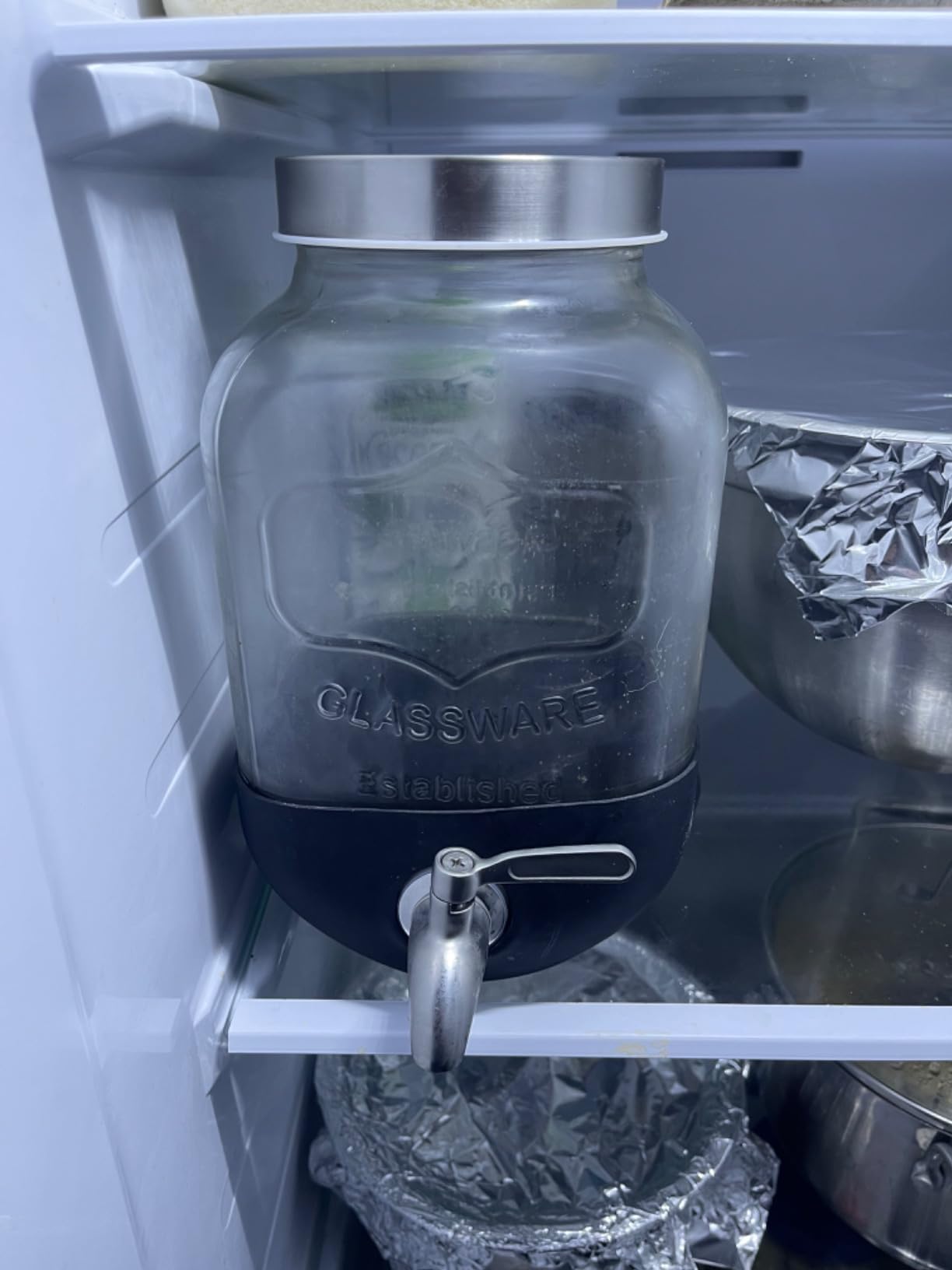
- Spigot serves straight from the fridge shelf
- Fine mesh and spigot screen keep grounds out of the glass
- Also brews sun tea iced tea and infused water
- Lifetime warranty and no rust on metal parts
- Glass can crack around the drilled spigot hole
- Lid must sit loose or the spigot barely flows
- Heavy and tall for a standard refrigerator shelf
Nothing else here comes close on volume. A gallon is a week of coffee for a heavy drinker, and it is the difference between one steep and none on a Wednesday. If you host, brew for an office, or simply drink more than two glasses a day, this is the pitcher that stops being a chore.
The spigot changes how it is used. Because you serve from the front of the carafe, the grounds stay at the back where the mesh filter holds them, so each glass comes out without drinking the sediment at the bottom. The internal screen in the spigot adds a second layer of filtration, and reviewers note the steel parts show no rust over time. It also doubles as a sun tea and lemonade dispenser.
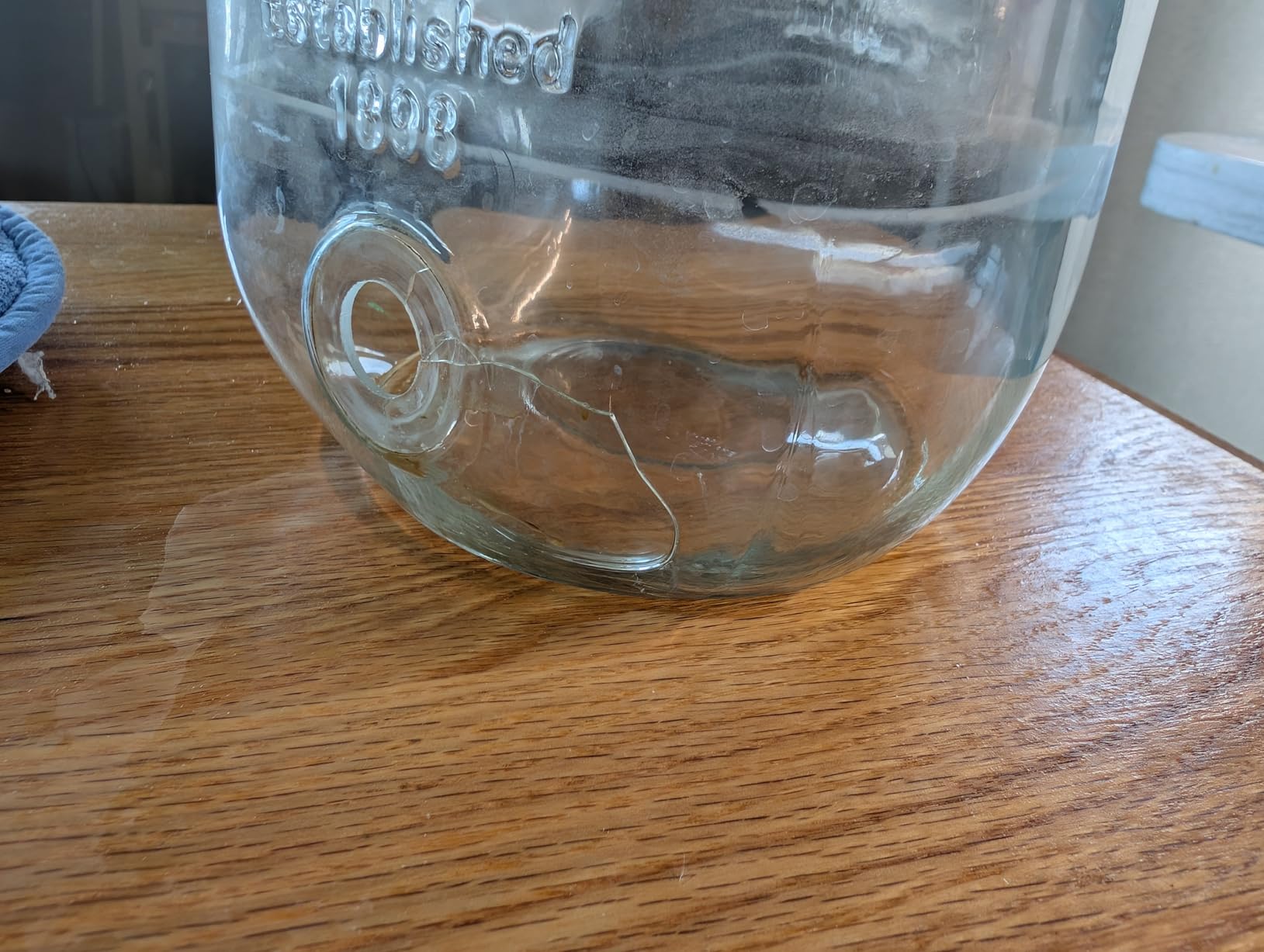
The honest caveat is the glass. Owners report cracking around the spigot drilling after a few months, and several note that this is a white label design with uniformly thin glass throughout. Advice from users is consistent: keep hot liquid out of cold glass and do not overtighten the lid, because both stress the same weak area.
Plan your fridge around it too. At nearly 17 inches wide and 7.87 inches tall this is the biggest footprint in the guide, and it needs an interior shelf rather than a door. If you want to compare drink dispenser setups for large gatherings, our guide to hot and cold water dispensers covers the same space and capacity problem from a different angle.
Why it works for parties and big households
Serving from the spigot means the pitcher can live on a shelf and still pour for a table, which is the closest thing to a self service station in this guide. Nothing else handles a brunch crowd or a two day event in one steep.
Where it falls short
Glass around a drilled hole is the weak point, and cracking there is the most serious failure mode reported. The tight lid also fights the spigot, since a fully sealed lid leaves the flow nearly stopped, so it is a vessel you set up once rather than one you move around.
8. COFFEE BEAR 1.3L Pitcher for a Compact Glass Carafe
COFFEE BEAR – Cold Brew Coffee Maker and Iced Tea Brewer, Large 1.3L (44oz) Borosilicate Glass Pitcher with Reusable Mesh Filter, Easy to Clean, Dishwasher Safe
- Slim 1.3 L body fits a refrigerator door for five cups
- Filter bottom pops off for fast grounds disposal
- Every component is dishwasher safe
- Borosilicate glass sits on a removable non slip base
- Filter also infuses loose leaf tea and fruit water
- Smallest capacity here at 44 oz
- Glass carafe can chip or crack
- Silicone base adds another part to wash and store
The pitch here is proportion. At 6.5 inches wide and 10.5 inches tall, this carafe is noticeably slimmer and shorter than the other glass options while still holding five cups, which makes it a good middle ground between a door-friendly small carafe and a full size pitcher.
The removable bottom is the reason cleanup is quick. The rust free mesh filter pops off so the spent grounds drop straight out, and the flavor sealing lid with a precision spout keeps pours cleaner than an open top pitcher. Everything goes in the dishwasher, including the silicone base, which detaches for storage.
The same mesh handles loose leaf tea and fruit infused water, which extends its usefulness if you are not brewing every day. The flavor profile lands in about 60 percent less acidic than hot coffee, close and sweet, which is the segment of iced coffee drinkers who want gentle rather than punchy.
Capacity is the limitation and it is the real one. Forty four ounces is the smallest batch here, so heavy drinkers refill more often, and this carafe carries the smallest review base of the eight at roughly 4.3k ratings, which means less long term evidence behind the design. The glass can also chip if it is knocked.
Why it works as a compact glass option
It is the middle answer when you want real borosilicate glass, a removable filter base, and dishwasher cleanup without giving up much shelf space. The flavor sealing lid is a small detail that shows up as less aroma loss than an open pitcher.
Where it falls short
Forty four ounces is a light batch, and the removable silicone base is one more piece to wash and find a home for. If you are the only coffee drinker in the house, this may actually be the correct size and the other constraint is entirely storage.
Do You Even Need a Dedicated Cold Brew System?
Honestly, sometimes no. A French press and a fine sieve will make cold brew, and the reason so many guides skip that is usually an affiliate link rather than a brewing truth. If you drink cold brew twice a summer, a jar with a mesh lid and a strainer does the job for a fraction of the outlay.
The dedicated systems earn their place through repeatability and cleanup. A pitcher with a screw-off filter base, a press with a plunger, or a carafe that disassembles completely means you are not pouring a pitcher of cloudy grounds water through cheesecloth every Sunday. If you are the person drinking iced coffee several times a day, that saved time becomes the whole value proposition.
That honest counterweight shows up constantly in owner discussions on r/coldbrew, where people point out that even inexpensive grocery beans and tap water produce a drinkable result. That is true. The brewer is not what makes good cold brew, grind coarseness, ratio, water, and freshness are, and a bad recipe in a good carafe still tastes flat.
On the other hand, rapid and vacuum pump devices get real skepticism in the same conversations, where users treat them as a different product category entirely rather than cold brew. We left them out of this guide for that reason. If that is the product you have been eyeing, start with one of these manual systems instead.
What to Look for When Buying a Cold Brew System
Output style first. Decide whether you want concentrate you dilute or a drink-as-poured cup, because it eliminates half the list before you start reading specs. Concentrate makers earn their cost when you drink with milk; ready-to-drink carafes win when you like a lighter glass over ice.
Filtration is the most discussed variable in every review we read. Fine mesh keeps sediment out but demands more cleaning, coarser mesh is easier to wash but lets more fines through. Removable filter bases and sleeves that fully disassemble are worth more than a slightly finer mesh you cannot get all the way clean.
Measure real fridge footprint, not capacity. The published dimensions here range from 5.43 inches wide by 11.57 inches tall for the Hario to nearly 17 inches wide for the Zulay gallon pitcher. Check your door shelf against the width, and check your interior shelf against the height. A 12.2 inch pitcher and a 7.68 inch carafe are different appliances in a small kitchen.
Batch size should match your week, not your ambition. Six cups is a weekend for one heavy drinker and a couple of days for a household of two. A gallon is a full week. Buying capacity you cannot finish means older concentrate sitting in the fridge, and that is where flavor complaints come from.
Count the parts before you buy. Every one of these needs grounds dumped, a filter rinsed, and a carafe washed. The best designs here unscrew or pop the filter off at the base so grounds fall into the sink. The worst are the ones that leave you lifting a mesh sleeve out of a puddle.
Check the seal if you will store concentrate for more than two days. Only a properly airtight lid, such as the one on the Ovalware RJ3, keeps a batch tasting fresh into a second week. Snap lids and flip caps are fine for a weekend and flat by midweek.
Care for the filter or lose it to mold. This is the maintenance warning that appears in owner discussions and in editorial testing alike. Rinse the mesh the same day you brew, let it dry completely rather than leaving it wet in a drawer, and if you will not use it for weeks, clean and freeze it dry. A reused filter that has sat damp for a month will flavor your next batch.
Consider serving gear separately. If you are brewing for a gathering rather than for yourself, a drink dispenser handles the crowd logistics better than any carafe. For the wider hosting side, our cold plunge tub picks cover the other half of a summer hosting setup, and iced coffee is genuinely part of that afternoon.
What One Batch of Cold Brew Actually Costs You
The brewer is a one-time cost, so the ongoing number that matters is coffee per batch. A typical batch on these systems uses somewhere between a third of a pound and a full pound of coarse grounds depending on capacity and how strong you brew. At a gallon, you are using enough coffee in one steep that the bean cost becomes the dominant expense rather than the equipment.
Do the breakeven in cups, not dollars. A 64 oz jar yields roughly eight 8 ounce servings of finished iced coffee, and those eight cups cost you one batch of beans. Two or three drinks a week from a good concentrate brewer will pay for the brewer within the first couple of months of beans, and a heavy daily drinker pays it back sooner.
That is also why pressing systems like the Bodum hold their value so well. Because the plunger extracts more from the same grounds, the per cup coffee cost drops even though the brewer itself sits at the lowest rung of the price ladder.
Frequently Asked Questions
What are the best cold brew brands?
The brands that recur across the most owner discussions and tested roundups are OXO, Toddy, KitchenAid, Ovalware, Hario, Primula, Bodum, Takeya and Filtron. Within the manual pitcher group reviewed here, Ovalware RJ3 and Takeya are the most consistently praised for filtration and sealing, and Hario for its slim door-friendly design.
What is the best at home cold brew?
For most households the best at home cold brew setup is a pitcher that seals airtight and filters fine enough to pour a clear glass. The Takeya Deluxe 2 quart pitcher is our overall pick because the fine mesh keeps sediment out, the lid holds aroma for days, and the shatterproof Tritan body survives years of daily use.
What is the best machine to make iced coffee at home?
If you drink cold brew with milk, choose a concentrate maker such as a French press style brewer or a pitcher that yields strong output you dilute yourself. If you prefer a lighter drink-as-poured cup over ice, an infuser carafe around 44 to 52 ounces suits you better. The choice matters far more than any brand.
Which is better, cold brew or iced coffee?
Cold brew is steeped in cold water for 12 to 24 hours, which produces a smoother, sweeter, lower acidity cup. Iced coffee is brewed hot and cooled or brewed directly over ice, which keeps more brightness and acidity and tastes closer to hot coffee. Cold brew suits milk drinkers, iced coffee suits black coffee drinkers.
Is cold brew worth making at home?
It depends on volume. A 64 oz batch yields roughly eight 8 ounce servings from one batch of beans, so a household drinking two or more cold brews a week pays back the brewer within a couple of months of coffee. If you drink cold brew twice a summer, a jar and a strainer will serve you fine instead.
What are the downsides of cold brew?
The main drawbacks are the 12 to 24 hour wait, the coffee consumed per batch, less flavor complexity than a hot brew, and the fridge shelf it occupies while it steeps. Cheap pitchers also add sediment and weak strength when the grind is too fine or the grounds are not fully submerged.
Can you make cold brew in a French press?
Yes. Fill a French press with coarse grounds and cold water, steep 12 to 24 hours in the fridge, then plunge slowly. Pressing rather than suspending gives stronger concentrate than a mesh pitcher because the grounds stay in full contact with the water, which is the same reason the Bodum brewer works so well.
Are expensive cold brew makers worth it?
Usually the price gap buys filtration quality, a seal, and materials rather than better coffee. The quality levers are grind coarseness, coffee to water ratio, water, and freshness. A well used lower priced press can produce a stronger cup than an expensive pitcher used carelessly, so match the brewer to your routine first.
The Best Cold Brew System for Your Iced Coffee Habit in 2026
The Takeya Deluxe 2 quart pitcher is the best cold brew system for iced coffee for most homes in 2026, because fine filtration, an airtight seal, and a shatterproof body solve the three problems that actually make people give up on cold brew. If you need a bigger batch, step up to the County Line Kitchen 64 oz maker, and if your priority is strong concentrate on a budget, the Bodum press is hard to argue with.
The routing is simple. Milk drinker, buy concentrate. Black coffee over ice, buy a ready-to-drink carafe. Small fridge, measure the door shelf first. Batch once a week, buy capacity you will finish. And whatever you choose, use a coarse grind and rinse the filter the day you brew.