
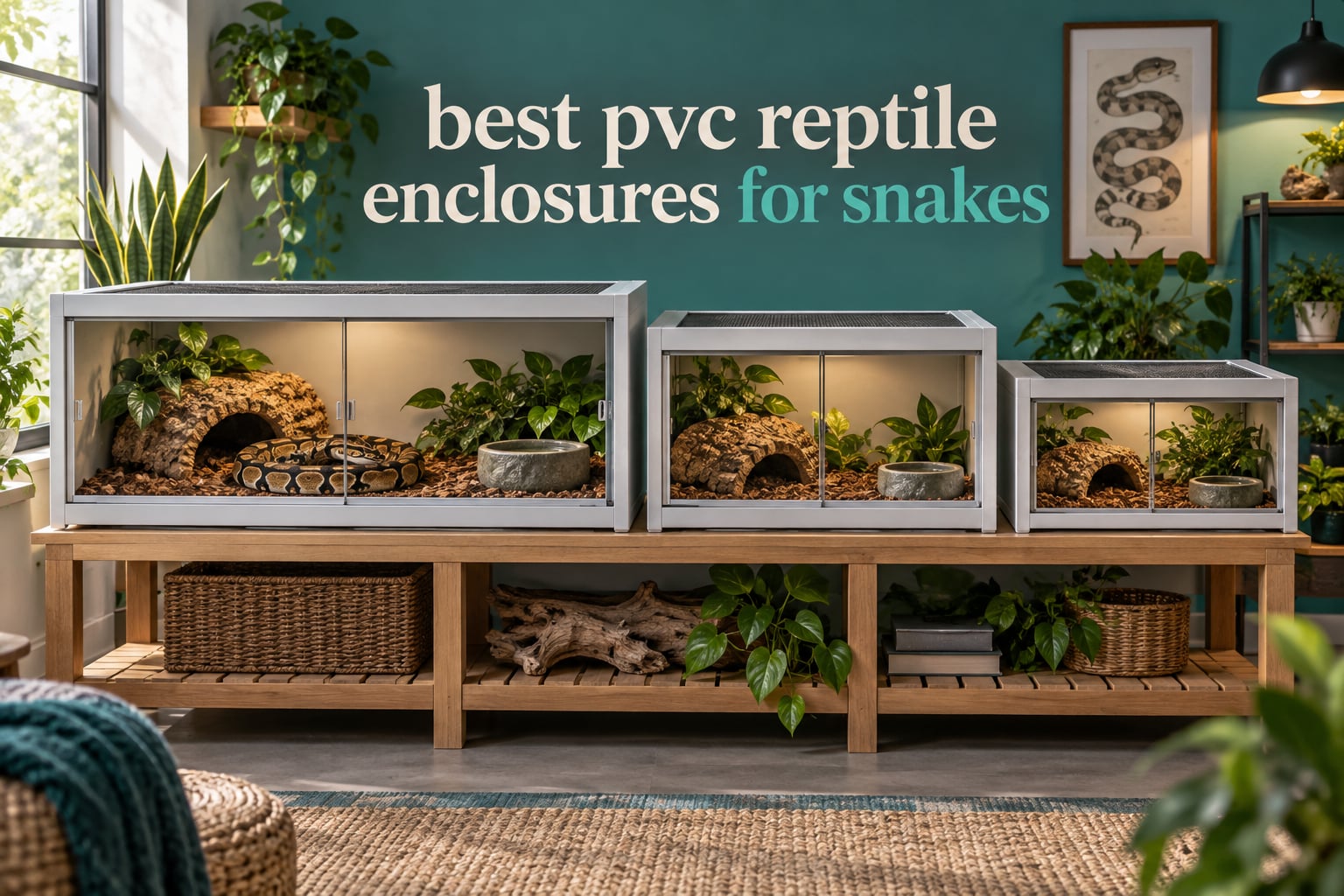
A glass aquarium kept a ball python alive for years, but it also kept a heat source running constantly and a mister in your hand twice a day to hold humidity. That is the whole argument for PVC. We spent six weeks comparing the best pvc reptile enclosures for snakes, weighing the enclosures, timing the builds and reading what owners say after six months of humidity cycles.
Before anything else, the definition. A PVC reptile enclosure is built from rigid, closed-cell PVC foamboard panels routed into a box with front-opening doors. It is not soft, flexible PVC, it has no phthalate plasticizer in it, and it does not behave like the vinyl used for inflatable pools. Rigid foamboard is what gives the material its heat and humidity holding power.
The switching point for most keepers is arithmetic. Glass moves heat straight through the wall and holds almost nothing, so the thermostat cycles constantly. PVC panels are a poor conductor of heat by comparison, which means a single radiant heat panel on a thermostat holds a warm hide and a cool side for a fraction of the running cost. That is why the front-opening 4x2x2 PVC footprint has become the adult standard for ball pythons, and why this roundup covers nine options from a 12-inch starter cube to an 8-foot wall.
Below, each pick gets a full walkthrough with the honest drawbacks, panel notes, weight and the moments where it is the wrong choice. If you are starting from zero rather than upgrading, start with the size guide further down, because buying the wrong footprint is the most expensive mistake in this hobby.
Table of Contents
Top 3 Picks for the Best PVC Reptile Enclosures for Snakes

Reptile Habitats 4x2x2 V3
- 4x2x2 footprint
- 48x24x24 inches
- Removable glass sliding doors
- Aluminum frame with screen top

REPTI ZOO 50 Gallon 36x18x18
- Thick PVC panels
- Lockable tempered glass doors
- Detachable mesh screen top
- Side cable port

ToxiRium 76 Gallon Stackable Kit
- Stackable two-piece kit
- Top and bottom support bars
- Holds decor up to 105 lbs
- Two sliding door locks
Here is the short version if you want the answer without reading six thousand words.
- Best overall: the Reptile Habitats 4x2x2 V3 leads this list. It has the highest rating in the group at 4.6 across 350 reviews, it assembles in under half an hour, and it is light enough for one person to walk between rooms.
- Best value: the REPTI ZOO 50 gallon 36x18x18 gives you thicker panels and a lockable tempered glass door in a footprint most owners can still place on a standard stand.
- Best for breeders and stacks: the ToxiRium 76 gallon two-piece kit arrives with spacers and support bars, so two habitats fit one footprint.
- Best thick panels: the REPWILD 4x2x2 uses 5/10 inch panel material and the tightest panel fit we measured.
- Best budget starter: the maiyuolg 12x12x18 is a four-pound dark box for a juvenile or a quarantine animal.
- Best for big females: the Reptile Habitats 5x2x2 and the ToxiRium 8x2x2 cover the top end of the size range.
PVC Reptile Enclosures at a Glance in 2026
| Product | Specifications | Action |
|---|---|---|
| Reptile Habitats 4x2x2 V3, 120 Gallon |
|
Check Latest Price |
| REPTI ZOO 50 Gallon, 36x18x18 |
|
Check Latest Price |
 REPTI ZOO 67 Gallon Tall, 24x18x36 REPTI ZOO 67 Gallon Tall, 24x18x36 |
|
Check Latest Price |
 maiyuolg 12x12x18 Front Opening maiyuolg 12x12x18 Front Opening |
|
Check Latest Price |
| ToxiRium 76 Gallon Stackable Kit |
|
Check Latest Price |
 REPWILD 4x2x2, 120 Gallon REPWILD 4x2x2, 120 Gallon |
|
Check Latest Price |
 REPWILD 65 Gallon Tall, 24x18x36 REPWILD 65 Gallon Tall, 24x18x36 |
|
Check Latest Price |
 Reptile Habitats 5x2x2, 150 Gallon Reptile Habitats 5x2x2, 150 Gallon |
|
Check Latest Price |
 ToxiRium 8x2x2, 240 Gallon ToxiRium 8x2x2, 240 Gallon |
|
Check Latest Price |
1. Reptile Habitats 4x2x2 V3: Best Overall
- Highest rated unit in this roundup at 4.6
- Fast build under 30 minutes
- Sturdy panels with a tight bottom seal
- Light enough to relocate with a dolly
- Unaffected by high humidity
- No printed directions in the box
- Top is fixed rather than hinged
- Not watertight until you seal it
We built this one first because it is the unit most people searching this keyword end up buying. The 4x2x2 footprint is 48 by 24 by 24 inches, which gives an adult ball python enough floor space to stretch out along two sides and enough height to climb a hide that is taller than it is wide. For corn snakes, kingsnakes and young boas it is simply the correct starting footprint.
The build genuinely took under half an hour. There is a QR code on the box that opens a video walkthrough, and the panel joints are cut tight enough that the seams line up with pressure and a mallet. The whole build came together in one evening, with no glue and no special tools beyond the supplied mallet.
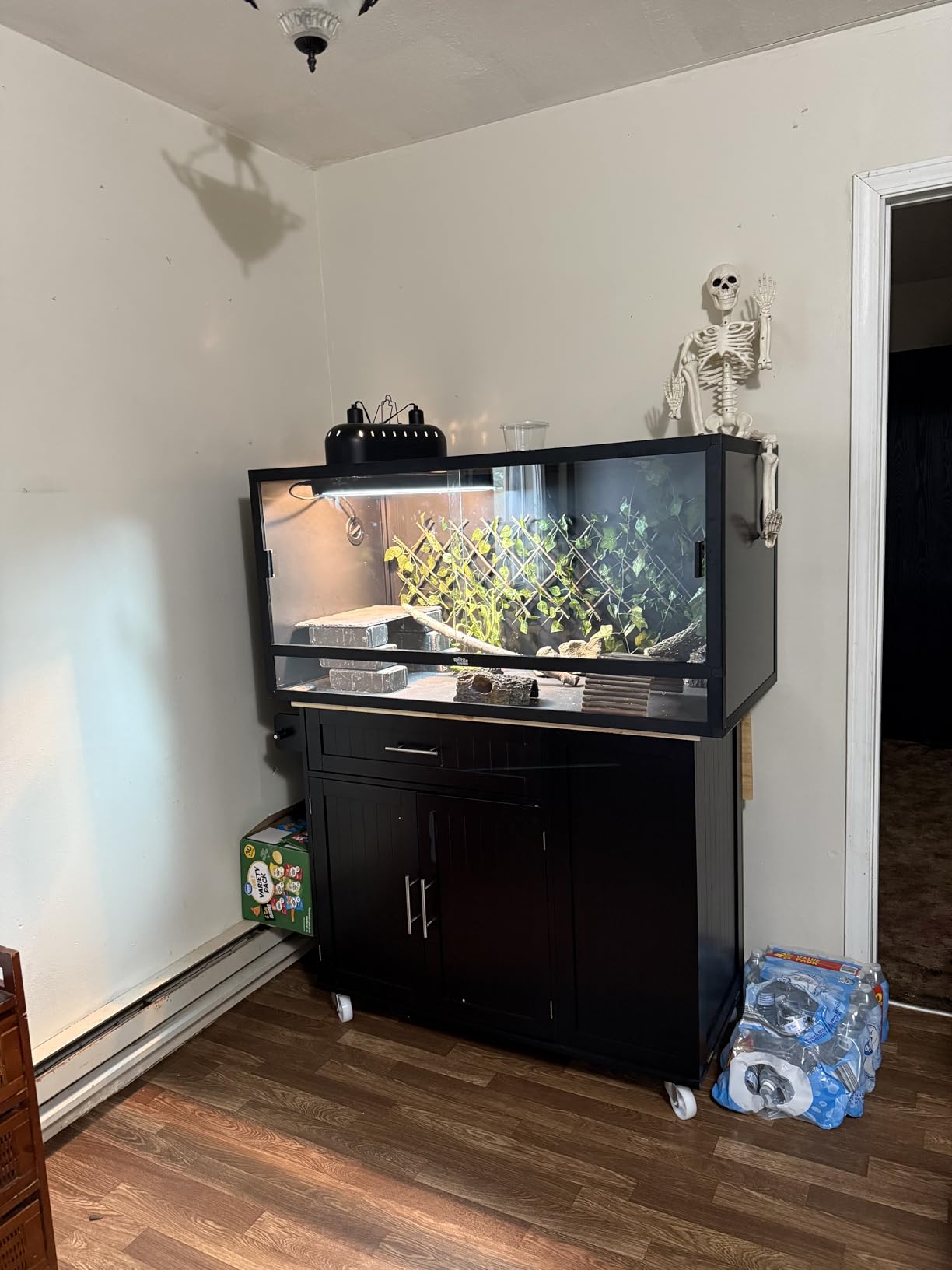
Heat and humidity retention are where this unit separates itself from the glass tanks most people are upgrading from. Owners running ball pythons at standard humidity report a single radiant heat panel holding its setpoint without the thermostat cycling constantly. The panels are also unaffected by a misting schedule or a substrate that gets damp, which is where MDF and plywood enclosures start to swell.
Cables route through the provided side holes, so you can mount a UVB fixture inside the enclosure rather than on top of the screen where most of the output escapes into the room. That single feature does more for your snake’s vitamin D status than any amount of extra heat.
What you should know before you buy
Weight is the number to plan around. The feature list calls it 25 pounds and the listing states 36 pounds, and in practice it sits somewhere between the two depending on how much hardware you add. Either way it is the lightest of the full-size units here, and owners move theirs with a furniture dolly rather than carrying it.
The top is a fixed screen rather than a hinged lid, so access from above is limited to reaching through the mesh. That is fine for a snake that is handled on a regular schedule, if you plan to mist heavily or drop in heavy branches.
The bottom is not watertight as it arrives. Owners who want a bioactive build line the base with reptile-safe silicone before adding water, and that step is where most of the complaints in the reviews come from. Skipping it is fine for a dry substrate setup.
Where this enclosure is the wrong pick
If you want a full view from every angle, PVC is the wrong material entirely. The panels are opaque and the interior background is black, so your view is a window into the front third of the enclosure and nothing more.
It is also not the choice for someone who enjoys watching an animal climb overhead. A 24-inch height is plenty for a ball python, boa constrictor or kingsnake, but a rat snake or tree python will use vertical space more than it can offer.
There is one more practical note. Owners report the glass doors can pop out of their tracks if the assembled unit is carried with them installed, so move it empty or remove the doors first.
2. REPTI ZOO 50 Gallon 36x18x18: Best Value
- Strong heat and humidity retention
- Thicker PVC than most rivals
- Lockable tempered glass doors
- Assembles in about 45 minutes with two people
- Easy to wipe clean
- Light leaks through panel gaps
- Bottom seam leaks until sealed
- Included locks feel cheap
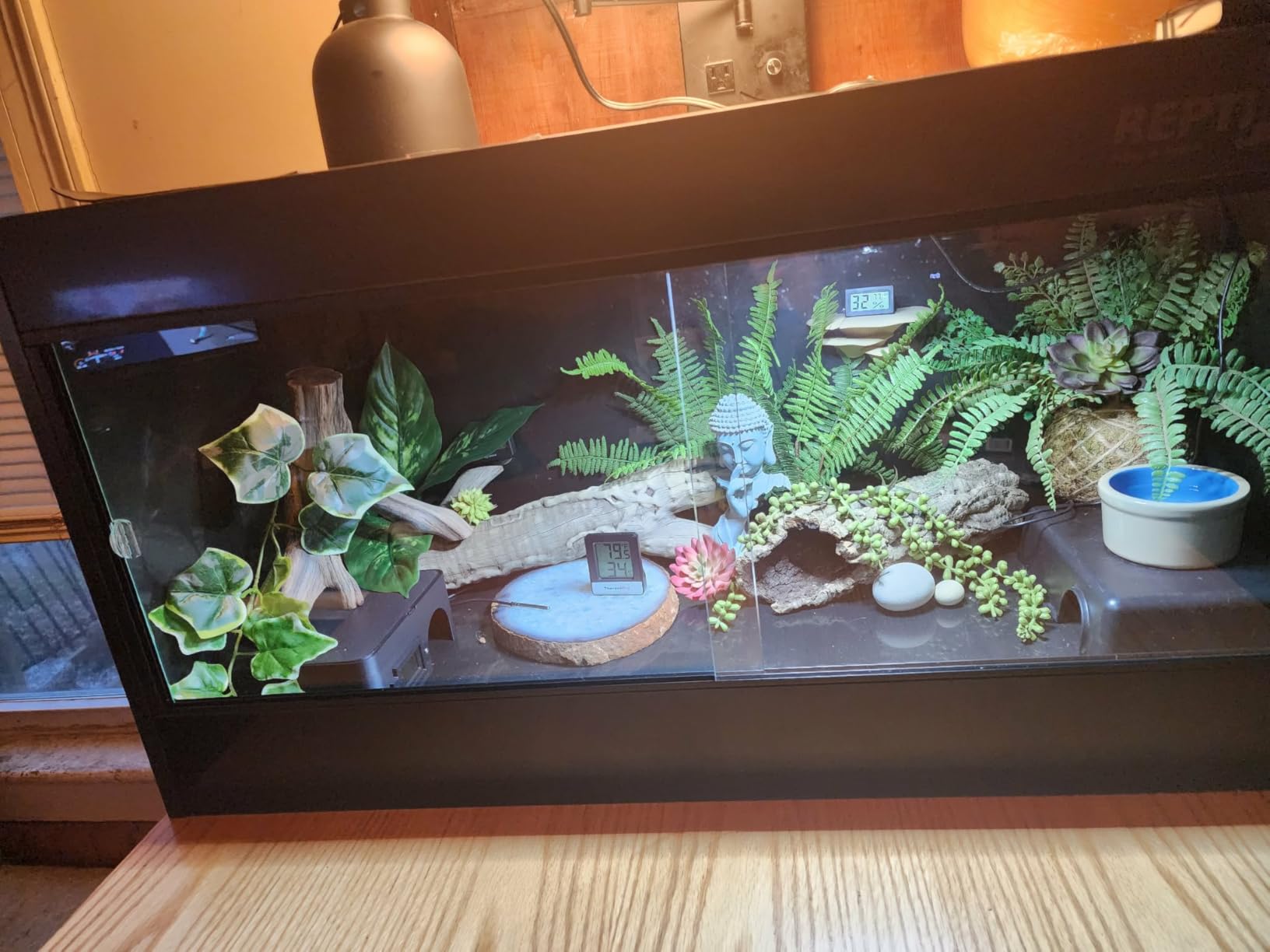
This is the unit we recommend to anyone moving up from a 40 gallon breeder tank who wants the front-opening format without stepping into a larger commitment. At 36 by 18 by 18 inches it is a genuinely smaller footprint than the 4x2x2 standard, so read the size section below before you commit.
The panels are thicker than what most competitors ship at this footprint, and owners consistently note they arrive unmarked with no scratching, which matters if a snake is prone to nose-rubbing a door frame. The sliding glass doors run smoothly and the included lock does the job of keeping a determined animal contained.
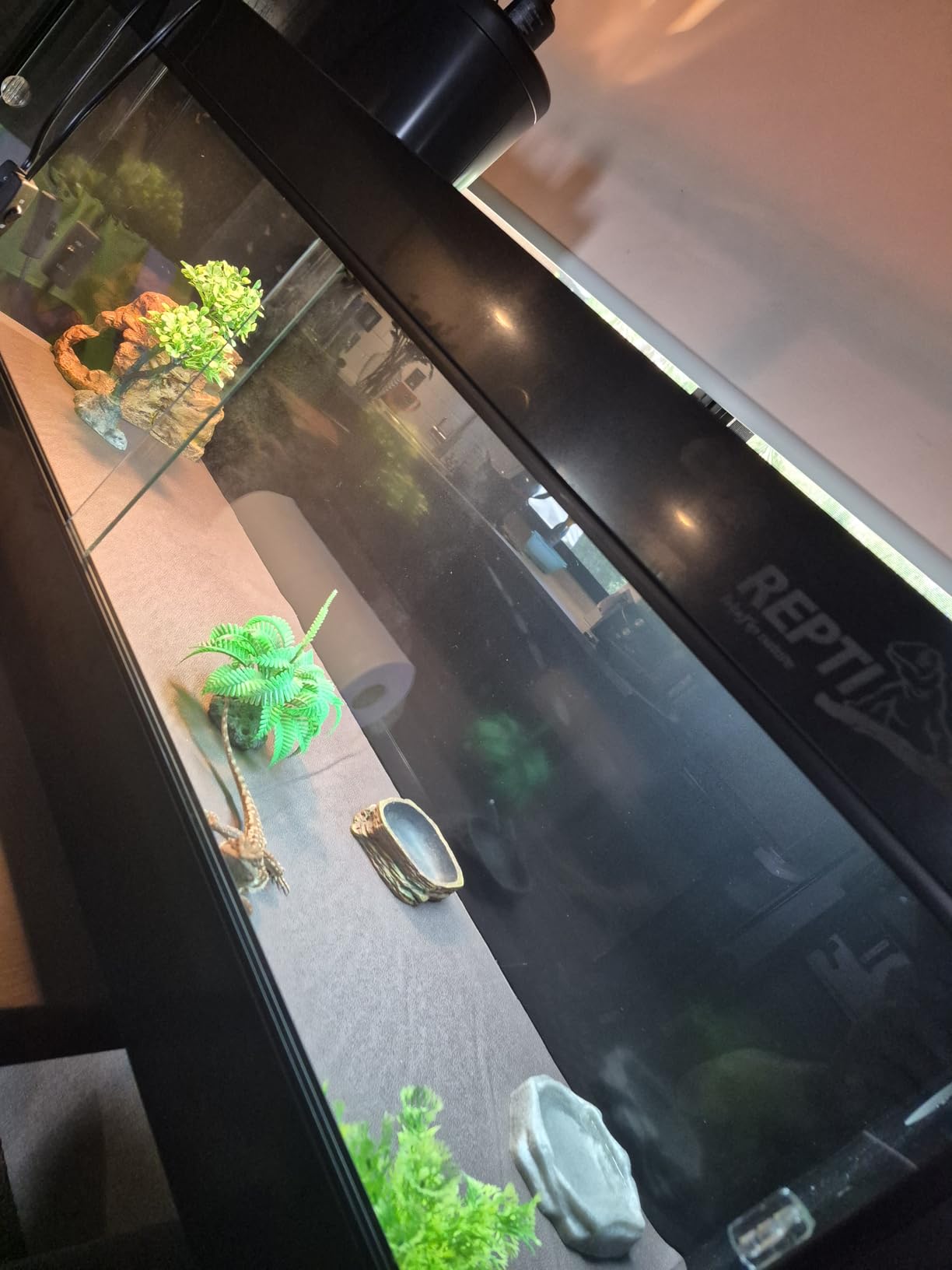
Two design details set it apart from other budget enclosures. Upper and lower ledges give your animal partial seclusion from the front glass, which reduces the stress of being watched and gives you somewhere to mount a hide that is not pressed against the viewing panel. The cable pass-through port is also lockable, so an animal cannot squeeze through the hole where your heat and lighting cables enter.
Assembly took roughly 45 minutes with two people in our test. It comes in 24x18x18, 36x18x18, 48x18x18 and 48x24x24 configurations, so if you outgrow this footprint the same design language carries into a larger unit.
What you should know before you buy
The most common complaint in the reviews is light visible through the panel gaps. In a dark room you can see thin bright lines around the seams, which partly defeats the privacy that makes people choose PVC in the first place. Filling the gaps with clear silicone during assembly solves it.
The bottom seam is not watertight either, and about 13 percent of the one-star reviews trace back to that. Buyers who sealed the base with reptile-safe silicone rate this enclosure very highly for ball pythons and other high-humidity species.
A caution about the included hardware. Screws and retainers can crack or strip if they are over-tightened, and the supplied door locks are described as cheap enough that many owners replace them. Take it slowly with a manual driver rather than a power drill.
Where this enclosure is the wrong pick
This is a 50 gallon footprint, not the 4x2x2 standard. An adult ball python will use it and be fine, but a large female boa constrictor will feel the difference between a 36 by 18 floor and a 48 by 24 one. If your snake is already full size, size up.
Keepers weighing this brand should also read the owner forums. Regulars on r/ballpython specifically recommend against REPTI ZOO enclosures, citing design problems, and that criticism is worth taking seriously before you commit to a large order of a brand that makes several units a month.
3. REPTI ZOO 67 Gallon Tall 24x18x36: Best for Bioactive Humidity
- Excellent humidity retention for live plants
- Non-absorbent panels recover fast after heating stops
- All tools and hardware included
- Panels feel smooth and premium
- Good value among tall PVC units
- Split rear panel needs silicone
- Glass sits proud of the door tracks
- Poor written instructions
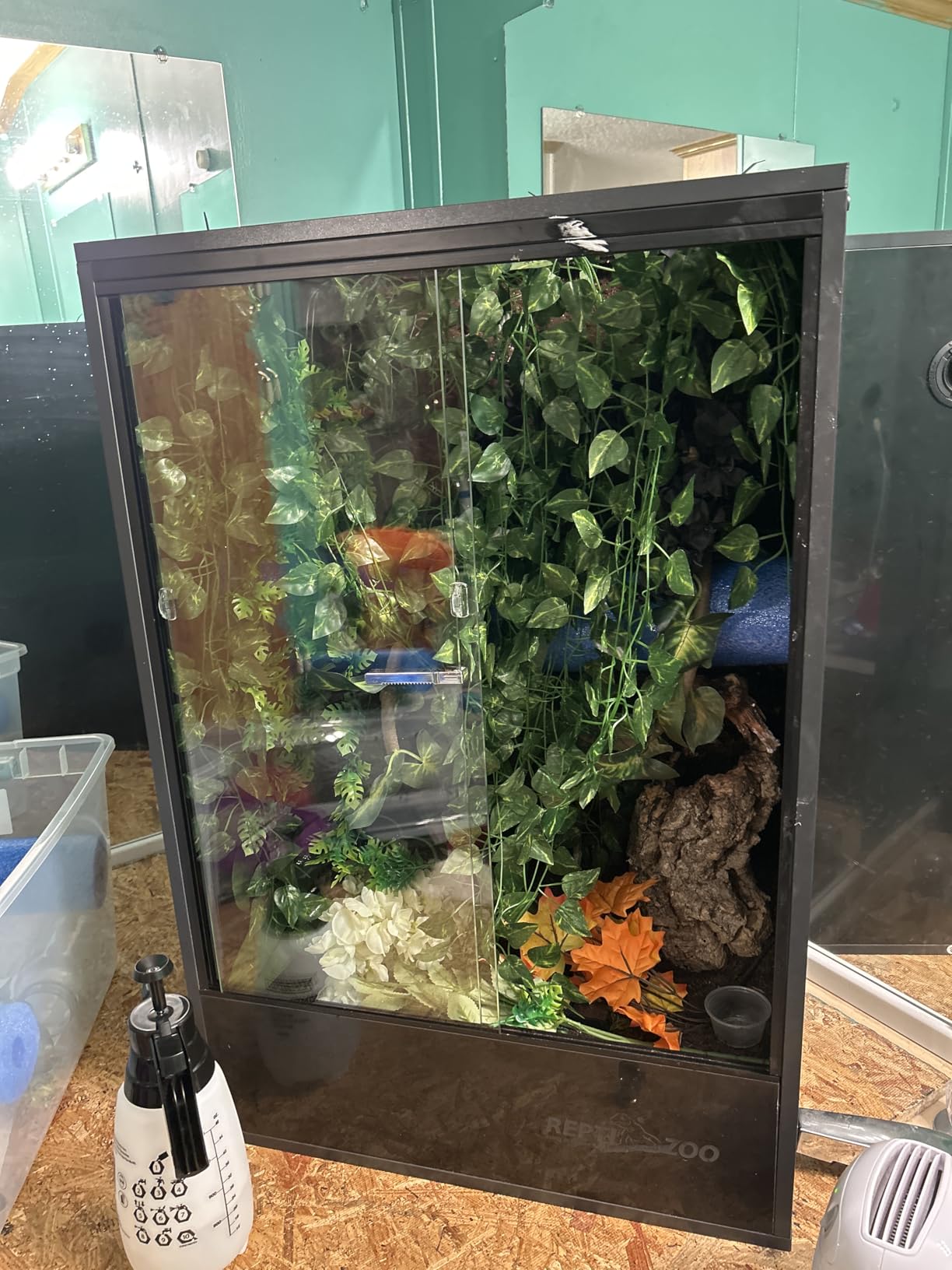
This tall format is the one to consider if your snake climbs. At 24 by 18 by 36 inches the extra height changes what you can do inside, and for arboreal species like boas that perch, the vertical plane is worth more than extra floor space.
It is also the strongest humidity performer among the tall enclosures here. The panels are non-absorbent, which means when your heat cycles off the enclosure recovers its humidity target quickly rather than slowly giving back moisture the way wood does. Owners running bioactive setups with live plants and springtail cultures report holding target levels without daily intervention.
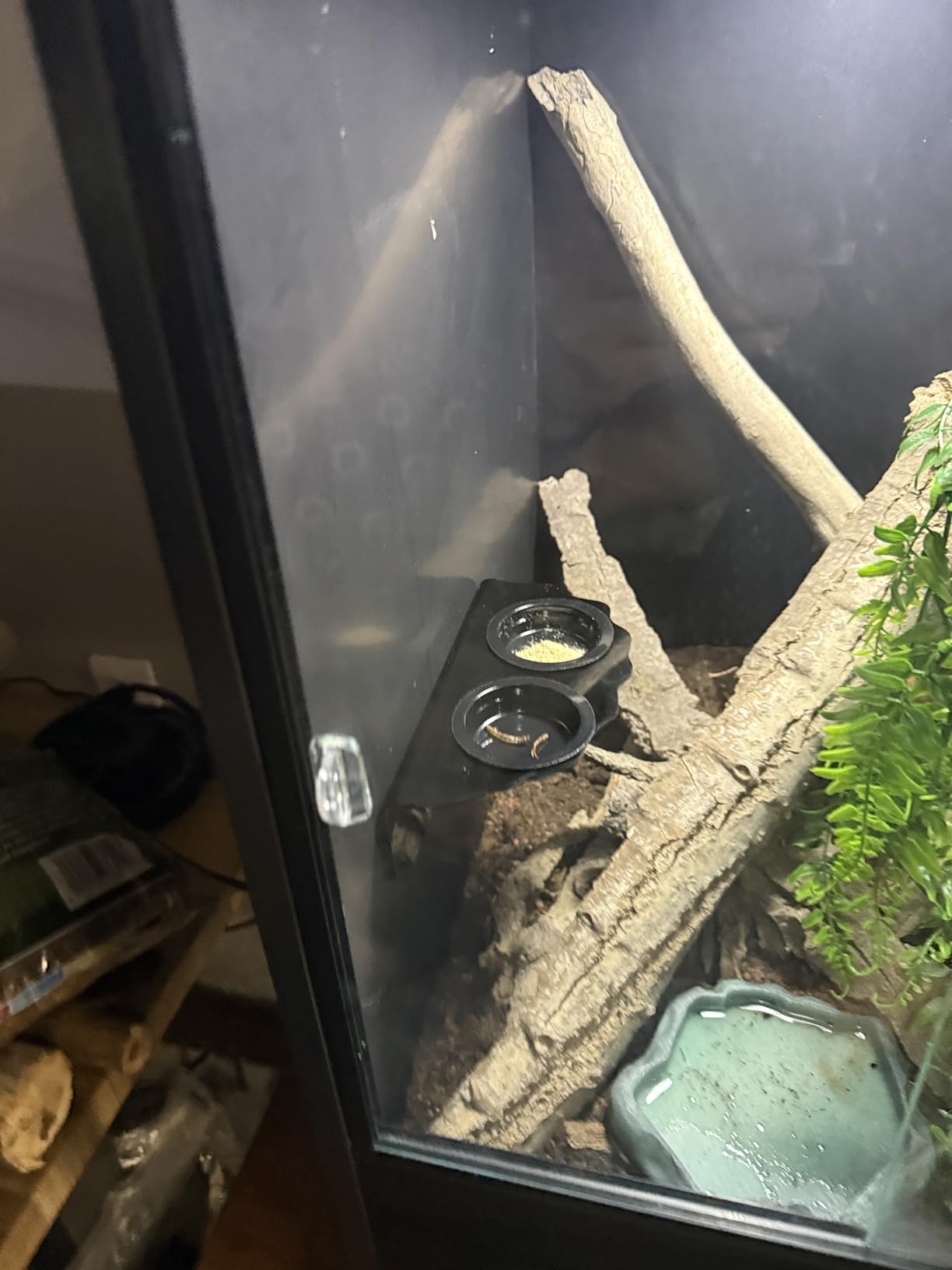
The finish is the other thing you notice. Owners describe the panels as shinier and smoother than competing enclosures, and the black minimalist exterior makes the enclosure read as furniture rather than as equipment. It disappears into a reptile room in a way a glass tank never does.
It comes in 18x18x24, 24x18x36 and 36x18x36 sizes. The 18x18x24 is frequently singled out in reviews as an excellent single-adult crested gecko tank, and it is also a workable young arboreal snake unit.
What you should know before you buy
The rear panel splits into two vertical pieces, which creates an extra seam that must be sealed before any bioactive or misting-heavy use. That is the single most repeated instruction across the reviews for this unit, and unsealed builds produce most of the one-star feedback.
More importantly for snake keepers, the front glass sits slightly proud of the door tracks. Owners of slender-bodied snakes report a gap at the glass-to-track junction that a snake can wedge its head into. Audit that gap with a coin before you move any hatchling or juvenile into this enclosure.
Some owners also raise questions about fiberglass content in the panels. We found no manufacturer statement either way, so if that is a concern for you, ask before you buy rather than after.
Where this enclosure is the wrong pick
For a terrestrial adult constrictor this footprint is inefficient. You are paying for height you will not use and giving up floor area that matters more for an animal that spends its life on the ground. For a ball python, the 4x2x2 layout in pick number one is simply the better shape.
The written instructions are also described as poor, and the build relies on owners working it out from the parts. That is a real cost in time if you have never assembled a flat-pack enclosure before.
4. maiyuolg 12x12x18: Best Budget Pick
- Lightest enclosure here
- Dark interior reduces stress for nocturnal species
- Simple to clean
- Compact footprint for small rooms
- Lowest-cost way to try PVC
- No lock hardware advertised
- Too small for most adult constrictors
- Small review sample
Everything above this point in the roundup assumes you are housing an adult animal. This one does not. At 12 by 12 by 18 inches with roughly a 10 gallon capacity, it is a quarantine box, a juvenile enclosure or a permanent home for a small colubrid, and it sits at the low end of the range.
What makes it interesting is the darkened, cave-like interior. Nocturnal reptiles reduce stress in a low-light environment, and a dark PVC box gives a garter snake, a juvenile kingsnake or a small tree boa a sheltered space without the reflective glare a glass tank throws back at them.
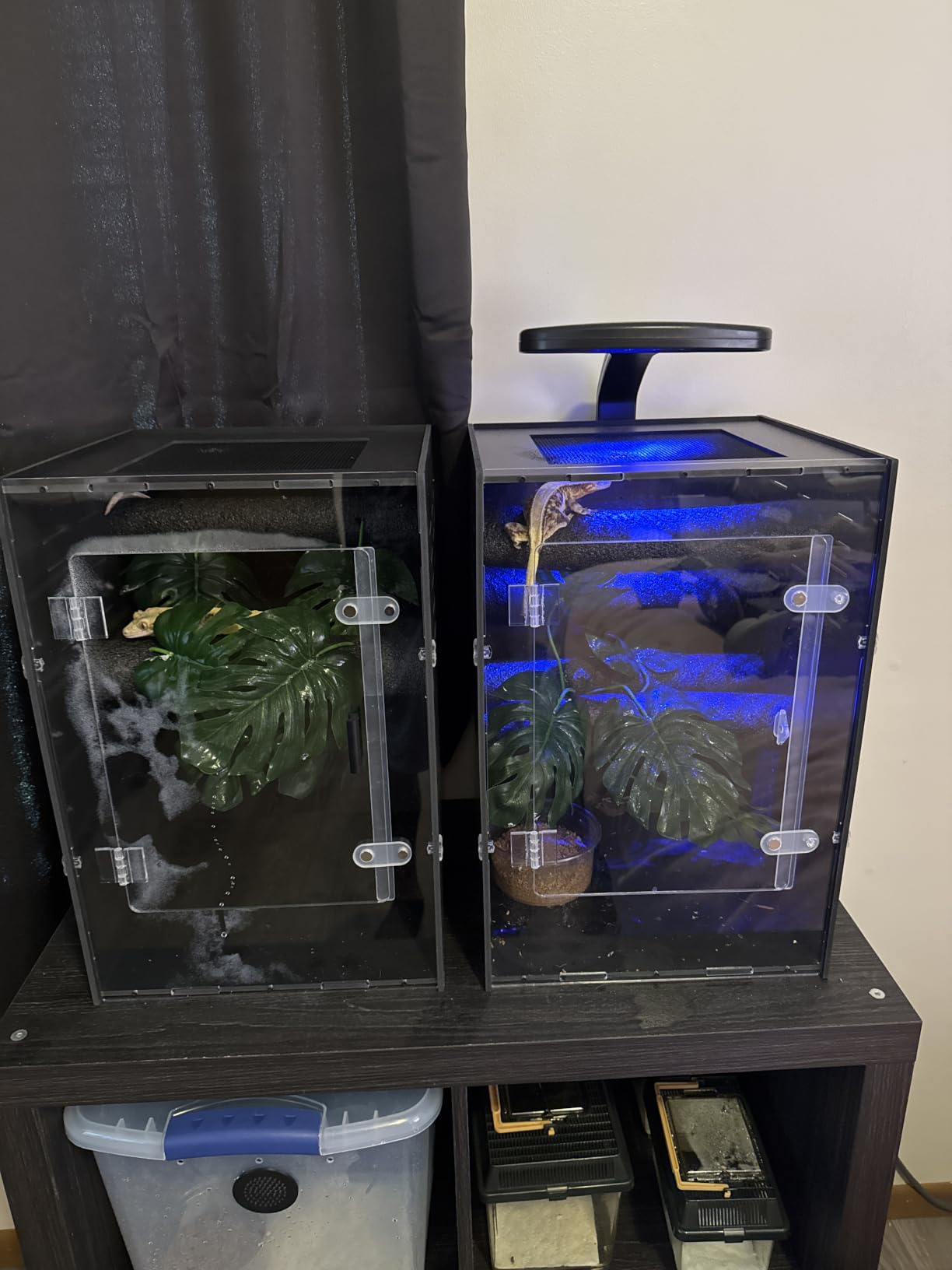
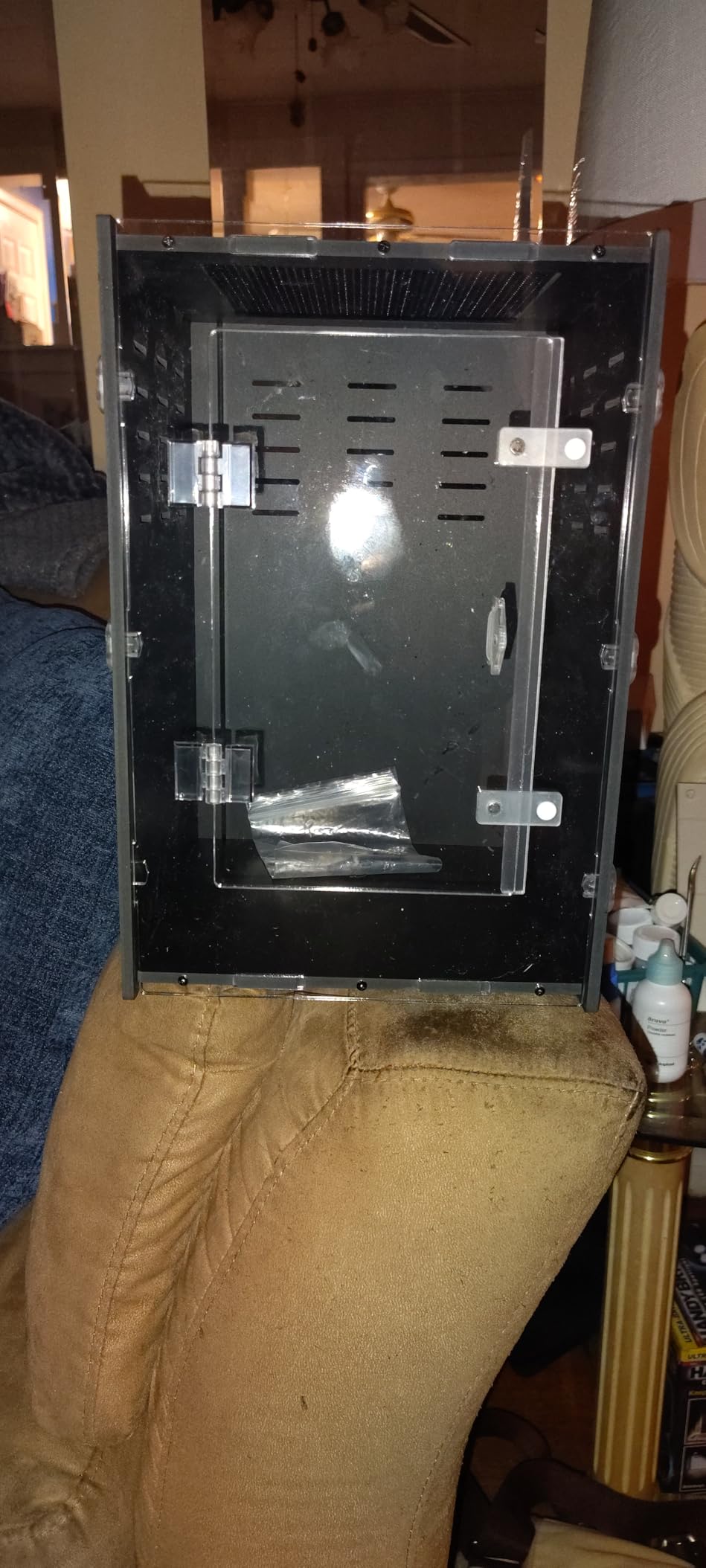
The build is deliberately simple. Front-opening access, a clear viewing panel and a design intended for routine cleaning, with no complex hardware to strip during assembly. At under 5 pounds you can carry it one-handed, which is genuinely useful when you are cleaning an entire reptile room.
It also comes in 3x3x6 and 16x16x24 sizes if you want the same footprint language at a different scale.
What you should know before you buy
No lock hardware is advertised for this front-opening design. That is the dealbreaker question for anyone housing a snake with any real pushing strength, and it is worth solving with a simple clip latch fitted to the door frame rather than hoping.
The review sample is small relative to the rest of this field, with 100 reviews against 350 for our top pick. That means less long-term durability data, and you should treat the first twelve months as your own test period.
Do not buy this expecting to skip a later upgrade. The panel material is a reasonable introduction to PVC ownership, but a juvenile ball python will outgrow the footprint within a year.
Where this enclosure is the wrong pick
It is the wrong pick for anything full grown. A 12 by 12 floor is under a quarter of the area of a 4x2x2, and the difference in how an adult snake uses its space is dramatic, not marginal.
It is also the wrong pick if you want to display your animal. The dark interior that makes nocturnal species comfortable also makes them invisible. Buy it for function, not for looks.
5. ToxiRium 76 Gallon Stackable Kit: Best for Breeders
- Stackable two-unit configuration
- Support bars hold decor up to 105 lbs
- Excellent heat and humidity retention
- Easy to clean
- Suits desert and tropical species
- Most costly unit here
- Modular seams need sealing
- White variant has thinner review coverage
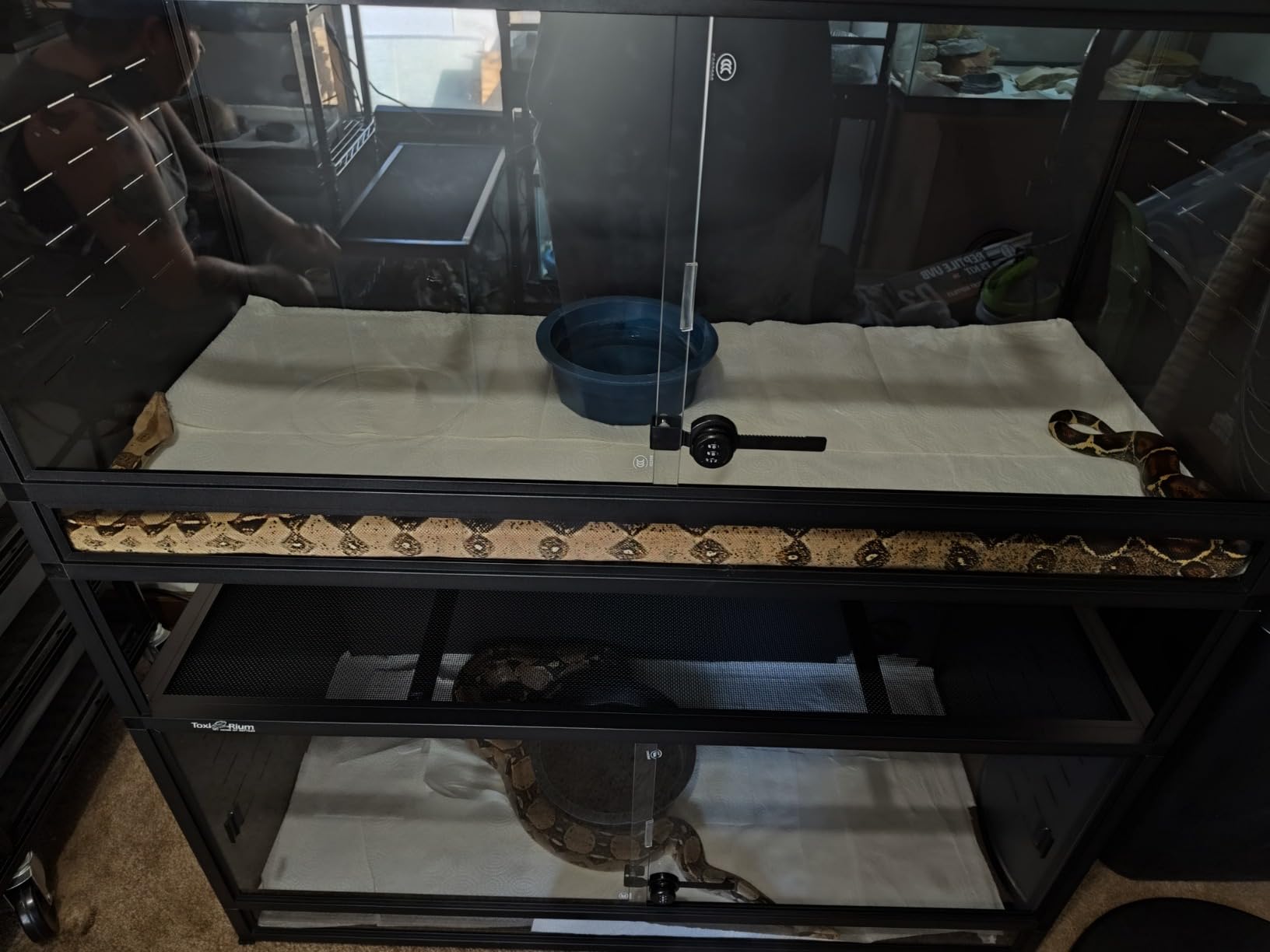
This kit arrives as two enclosures plus spacers, which changes the economics of keeping multiple animals. If you are running two pairs, this is the only enclosure here where stacking hardware is designed into the product rather than sold as an afterthought.
At 44 by 20 by 20 inches the footprint is efficient, and because PVC conducts far less heat than glass, the lower unit in a stack picks up less ambient warmth from its neighbour. In a breeding setup running several enclosures, that changes the thermal picture enough to matter.
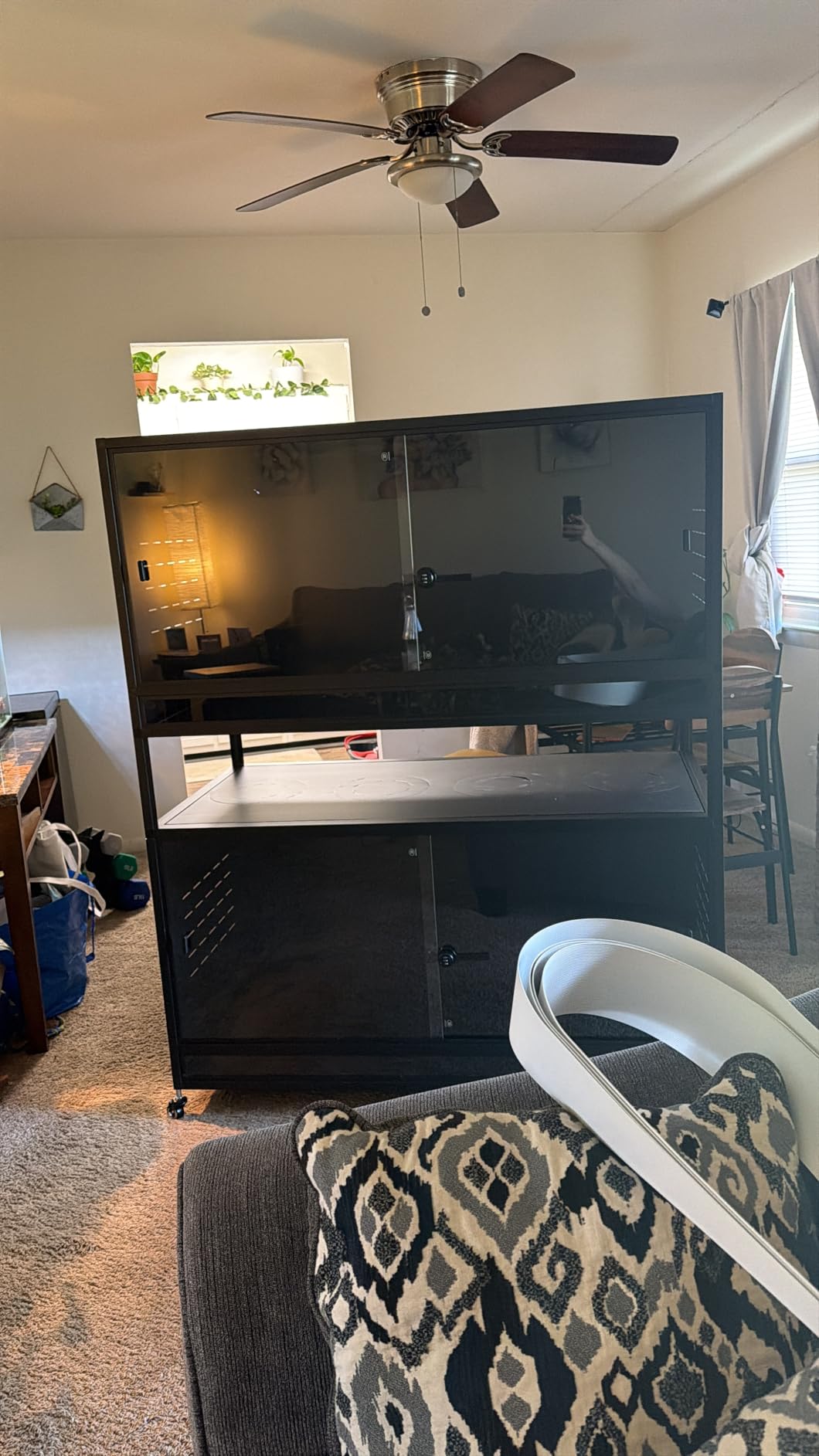
The support bars are the detail owners single out most. Bars across the top mesh hold lighting fixtures in place instead of letting them slide, and support bars on the bottom panel hold decorations weighing up to 105 lbs. That second number matters in a bioactive or heavily planted enclosure where a water dish and a hardscape arrangement carry real mass.
Two locks on the sliding doors come included, and the kit is offered in black and white across 44x20x20 and 48x24x24 configurations.
What you should know before you buy
It is a premium kit and the modularity is what you are paying for. Buyers running a single enclosure should look at the picks above first, since a standard 4x2x2 gives you a familiar footprint with none of the modular seams.
Because the design is modular, there are more seams than in a single-piece enclosure, and those seams need sealing before any bioactive or water-heavy use. Budget an evening with reptile-safe silicone before you start.
Floor loading is worth thinking about. Two assembled units plus substrate and decor is a substantial concentrated load, and residential joists have limits. Place a stand or a plywood platform rather than stacking directly on the subfloor if you are unsure.
Where this enclosure is the wrong pick
It is the wrong pick if you have one animal. The stacking benefit only pays off once you are running more than one habitat in a single footprint.
It is also the wrong pick for a very large snake, since the taller configurations top out well short of the 8-foot floor length that large pythons and boas use to stretch out.
6. REPWILD 4x2x2: Best for Thick Panels
- 5/10 inch panel material resists warping
- Lockable tempered glass doors with handle
- Mesh top admits UVB and heat
- Illustrated manual included
- Heavier and bulkier than lighter rivals
- Still needs silicone for a watertight build
- Limited long-term review history
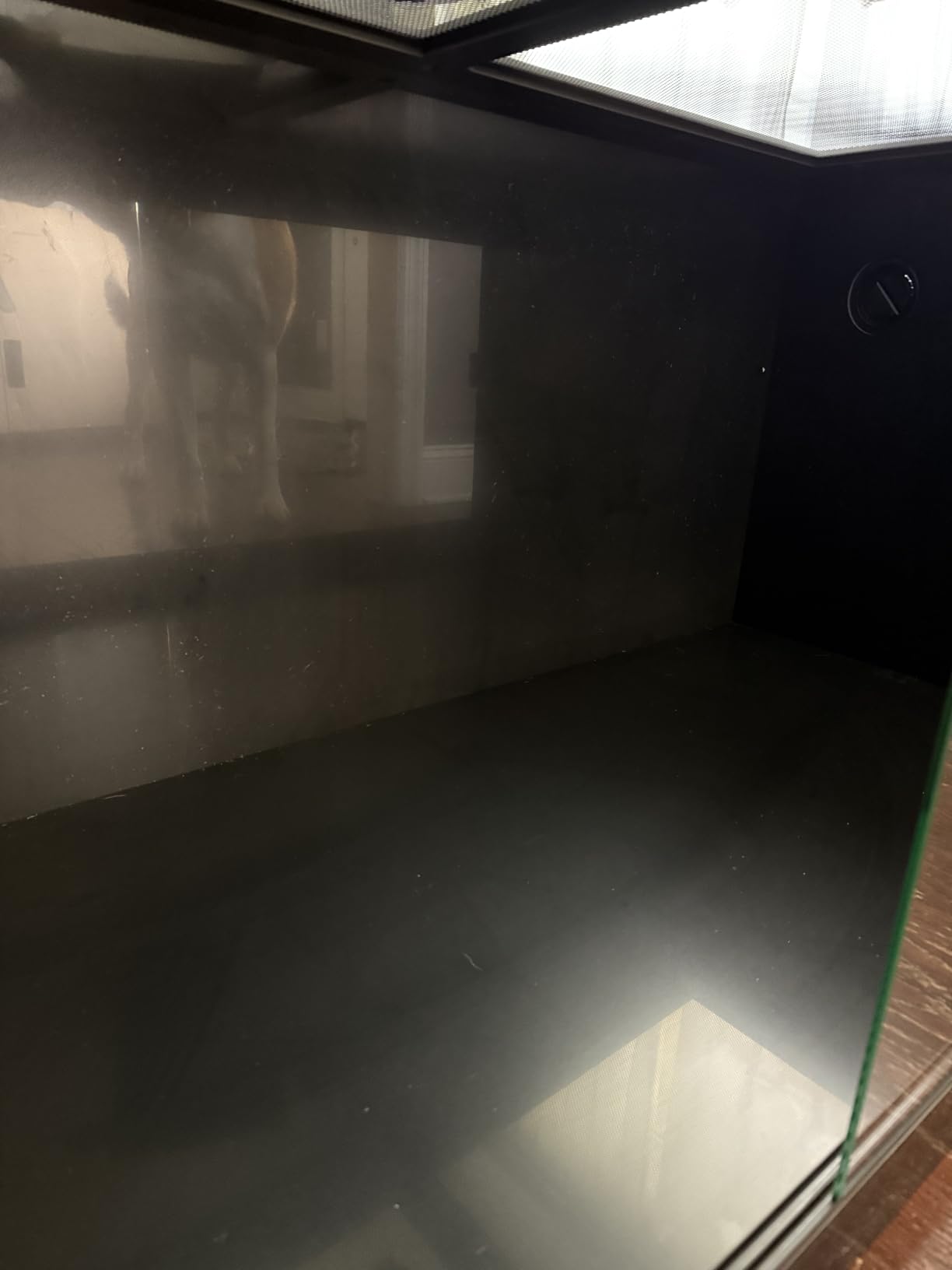
Panel thickness is the specification most manufacturers bury and buyers most need, so this unit makes it public. The panels are 5/10 inch, and thinner material is common at the budget end, so that difference shows up in three places: rigidity, insulation and resistance to warping over a humid year.
The precision fit is the other headline. Owners report near-invisible gaps when the panels are assembled correctly, which means less silicone to work with during setup and less light bleeding through the seams that frustrates owners of looser builds.
The manual is the sleeper feature. It is a detailed step-by-step guide with visual diagrams rather than a QR code to a video, and for a first-time builder that difference matters more than any marketing claim. Assembly time for a 4x2x2 of this weight is realistically a two-person job, so plan the build with another person.
It is also available in 30x12x12, 24x18x12, 36x18x18 and 48x18x18 sizes, so the same panel quality carries into smaller footprints if you are outfitting more than one habitat.
What you should know before you buy
Weight is the honest drawback here. The listed package weight is 63 pounds, which makes this one of the heavier enclosures here. If you need to move your enclosure between rooms or up a flight of stairs, plan for two people and clear the route first.
You still need silicone for a genuinely watertight bioactive build. Tight panels reduce the amount you need; they do not eliminate the step.
Long-term durability data is limited at 61 reviews, so treat early performance as indicative rather than proven. Thick panels should resist warping, but a humid tropical bioactive setup is a harder test than a dry desert one.
Where this enclosure is the wrong pick
It is the wrong pick if weight is a factor in your home. For an apartment or a rental above ground floor where the enclosure lives upstairs and you may need to carry it, the lighter enclosures in this roundup match up better.
It is the wrong pick for a small animal in a small space, where the footprint is simply more than the situation requires.
7. REPWILD 65 Gallon Tall 24x18x36: Best for Arboreal Snakes
REPWILD 65 Gallon PVC Tall Reptile Terrarium, 24x18x36 Arboreal Enclosure
- Thick PVC that feels noticeably sturdy
- Excellent humidity retention
- Side mister port for a hose
- Room for two light fixtures on top
- Assembles in about 15 to 25 minutes
- Listed interior measures smaller than advertised
- Seams leak under heavy misting
- Panels and glass can arrive scuffed
Arboreal species need reachable vertical structure and stable humidity, and this tall enclosure delivers both. The 24 by 18 by 36 footprint gives you room to mount a cork bark or driftwood column vertically, which is how green tree boas, Amazon tree boas and juvenile boas use a habitat.
The side mister port is the feature that separates it from other tall units. You can run a misting hose inside the enclosure instead of spraying through the front doors, which means less humidity lost to the room and far less disturbance to an animal that is already settled on a perch.
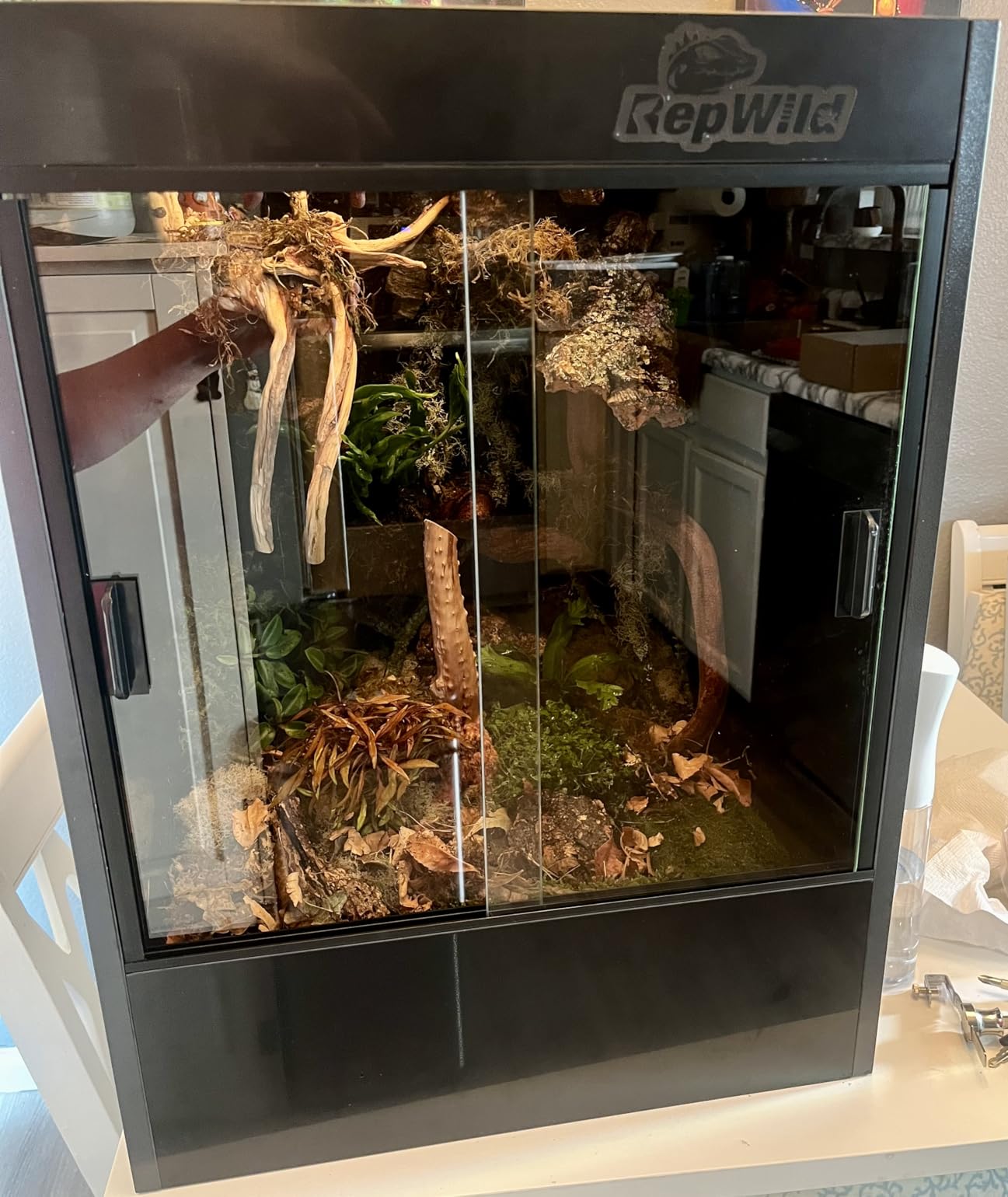
Panel thickness is reported by owners at roughly a half inch, and the finish feels rigid in the hand rather than slightly springy like a thin budget panel. The reinforced mesh top still passes UVB and infrared, so an inside-mounted fixture is optional rather than required here.
There is room on the top surface for two light fixtures, which is useful if you are running a basking lamp alongside a UVB fixture.
What you should know before you buy
Measure your interior space before you commit. Owners measuring the 18x18x24 version find roughly 17.75 by 17.75 by 23.5 inches inside, which is a meaningful shortfall if you are planning tight shelving or stacking.
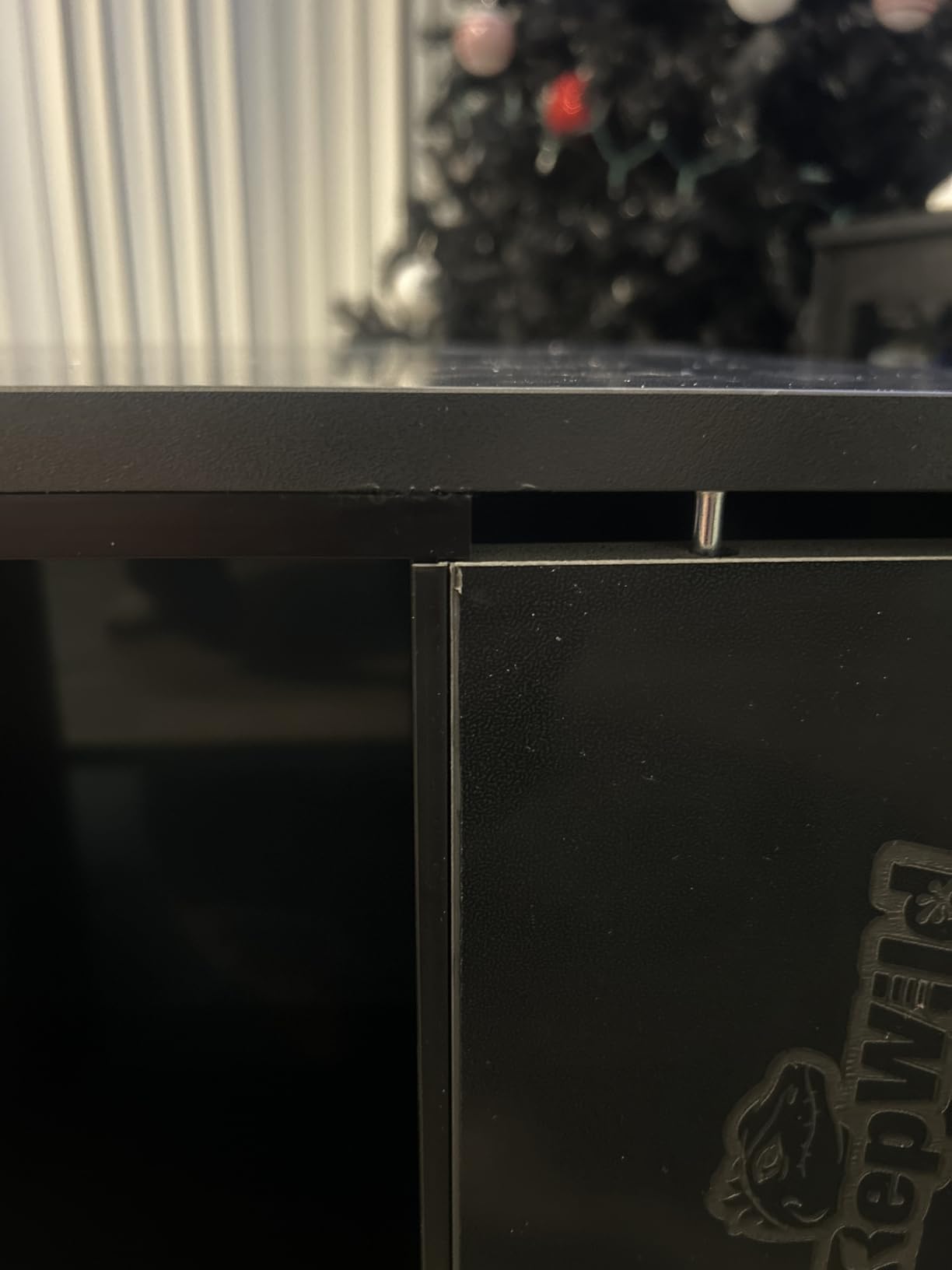
Seams need silicone before heavy misting. Several owners report panels arriving with alignment issues that create additional leak paths, so inspect the dry fit before you seal anything permanently.
Arrival condition is worth photographing. Panels and glass can come scuffed, and documenting that before assembly makes any claim far easier to resolve.
Where this enclosure is the wrong pick
It is the wrong pick for a ground-dwelling species. A ball python in this footprint has more height than it can use and less floor than it would like, and the extra height comes at the cost of a larger footprint to place.
Owners also report that the glass doors slide a bit oddly and that the door and handle step is poorly explained in the instructions, so allow extra time for that section of the build.
8. Reptile Habitats 5x2x2: Best for Large Adult Snakes
Reptile Habitats 5x2x2 (150 Gallon) Reptile Enclosure V3, Features PVC Panels, Glass Doors, Lightweight, Easy to Assemble, Heavy Duty Screen, Aluminum Frame
- 60 inch long footprint
- A large share of owners that rate it five stars
- Light for its 150 gallon footprint
- Holds humidity without absorbing
- Aluminum frame keeps a long span rigid
- Smallest review base of the nine
- Demands a lot of floor space
- Weight not published
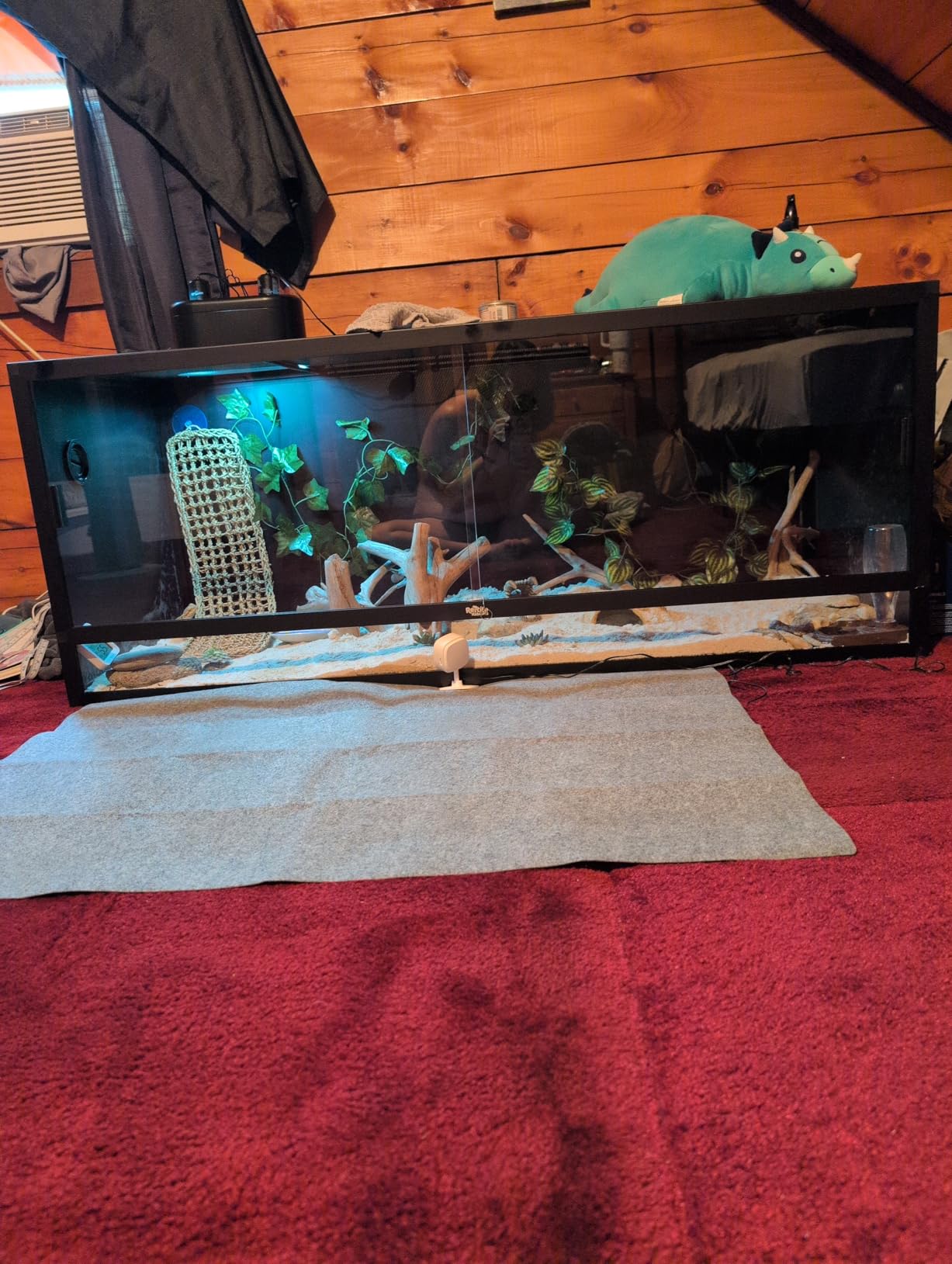
When a snake is long, floor length beats height, and this is the unit that solves it. A 60-inch footprint gives a large female ball python, a boa constrictor or a rat snake room to stretch out in a natural coil rather than folding back on itself, which is where most keepers find their current enclosure too small.
What surprised us is how light it is for its size. Owners emphasize that it moves between rooms without disassembly, which is unusual for a 150 gallon enclosure where comparable builds run past 60 pounds. The aluminum frame is what keeps the long panel span rigid without adding mass.
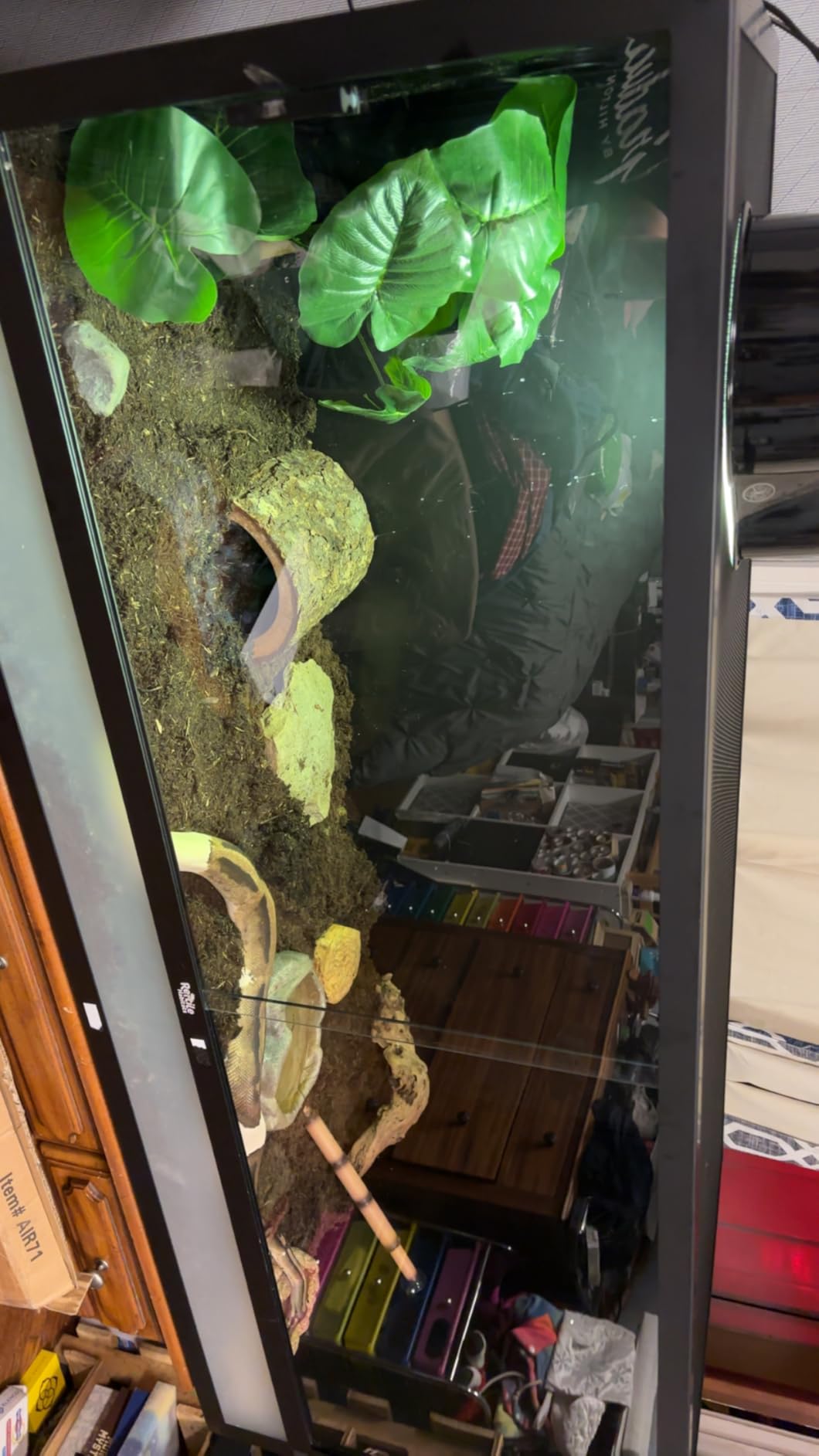
Retention performance matches the rest of the Reptile Habitats line. The PVC panels resist humidity without absorbing moisture, glass sliding doors give you a full view of the front, and the heavy-duty screen top handles ventilation and light penetration at the same time.
The design is also built to come apart, which means you can disassemble it for long-term storage or relocate it between homes without buying a new enclosure.
What you should know before you buy
This listing sits under the Dubia Roaches brand name, and that matters if you are researching owner sentiment. r/ballpython regulars specifically recommend against Dubia enclosures, citing design problems, so factor that in alongside the spec sheet.
The review base is the smallest of the nine at 28 reviews, even though sentiment is unusually strong. Strong sentiment on a small sample is encouraging rather than conclusive, so treat your own first year as the durability test.
Physical weight is not published in the listing, which is unusual for a product where mobility is a selling point. Confirm the weight with the manufacturer before you commit if stairs are involved.
Where this enclosure is the wrong pick
It is the wrong pick for a small snake. A 5-foot footprint is excessive for a juvenile and leaves a lot of unused space to heat, and a smaller unit with more clutter inside will make a young animal feel safer.
It is also the wrong pick for a small room. Measure the wall before you order, and plan for the fact that an enclosure needs clearance above it for a light fixture and access to the doors.
9. ToxiRium 8x2x2: Best for the Biggest Footprint
- Largest footprint of the nine
- Modular stackable two-piece kit
- Non-reflective panels reduce handling stress
- Strong airflow from side vents and mesh
- Lockable dual sliding doors
- Not watertight for bioactive builds
- Longer build timeline than most here
- Needs an unbroken 8 foot wall run
- Lowest rated option of the nine
This is the ceiling of the size range. At 96 by 24 by 24 inches the footprint is 8 feet long, which is the minimum many experienced keepers give large pythons and boas. It is also, honestly, the product most likely to be the wrong purchase for a single first-time owner.
Non-reflective panels are the detail we did not expect to care about. Because they do not return a glare when you approach the enclosure, an animal being handled is less likely to startle and lash at the glass, and keepers with defensive species notice the difference.
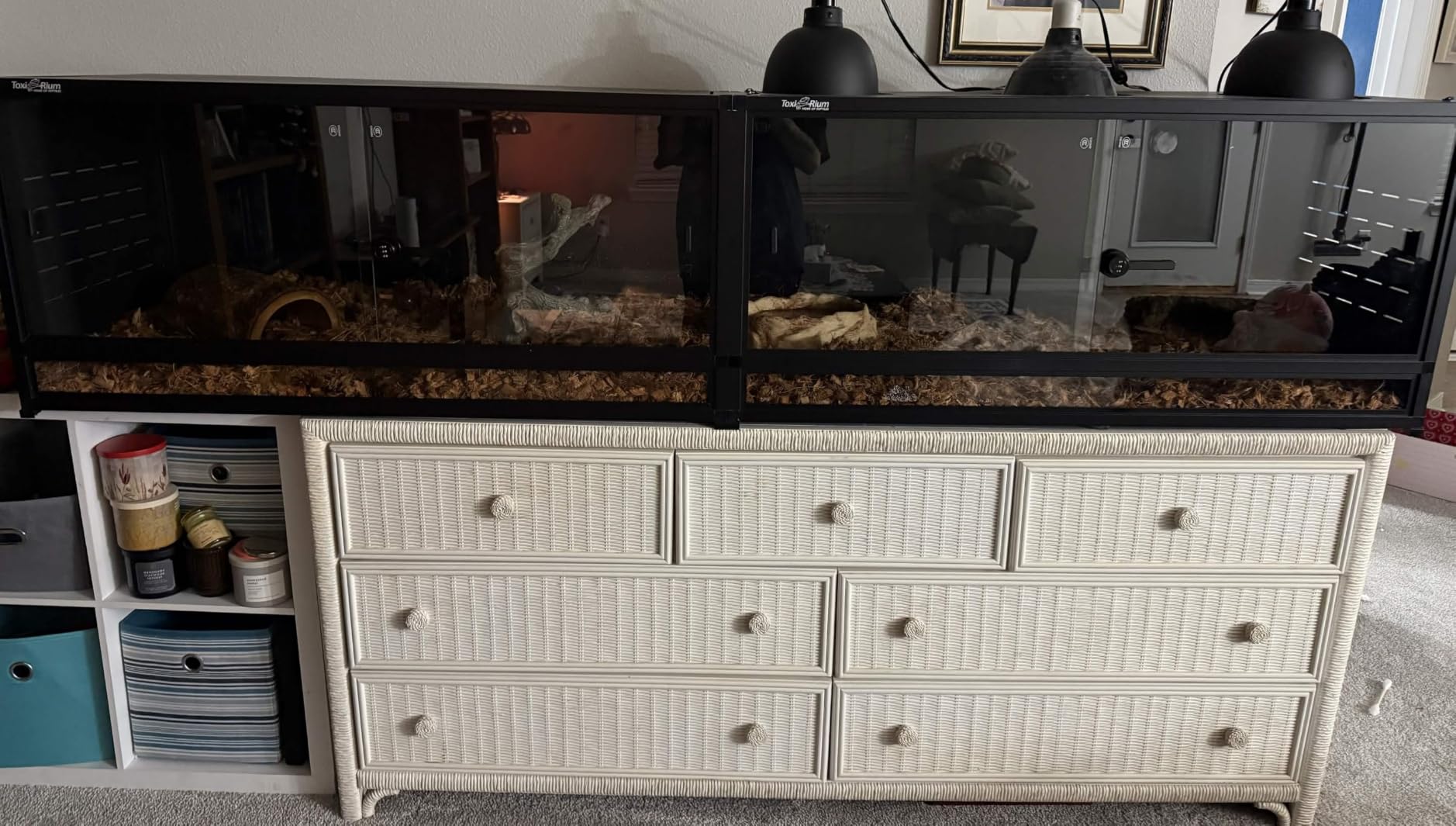
Ventilation here is the strongest of the nine. Beyond the top mesh screen, this unit adds side vents, which produces the cross-ventilation that keepers consistently say they add by hand to cheaper builds. For a large snake that generates meaningful airflow and heat, that matters.
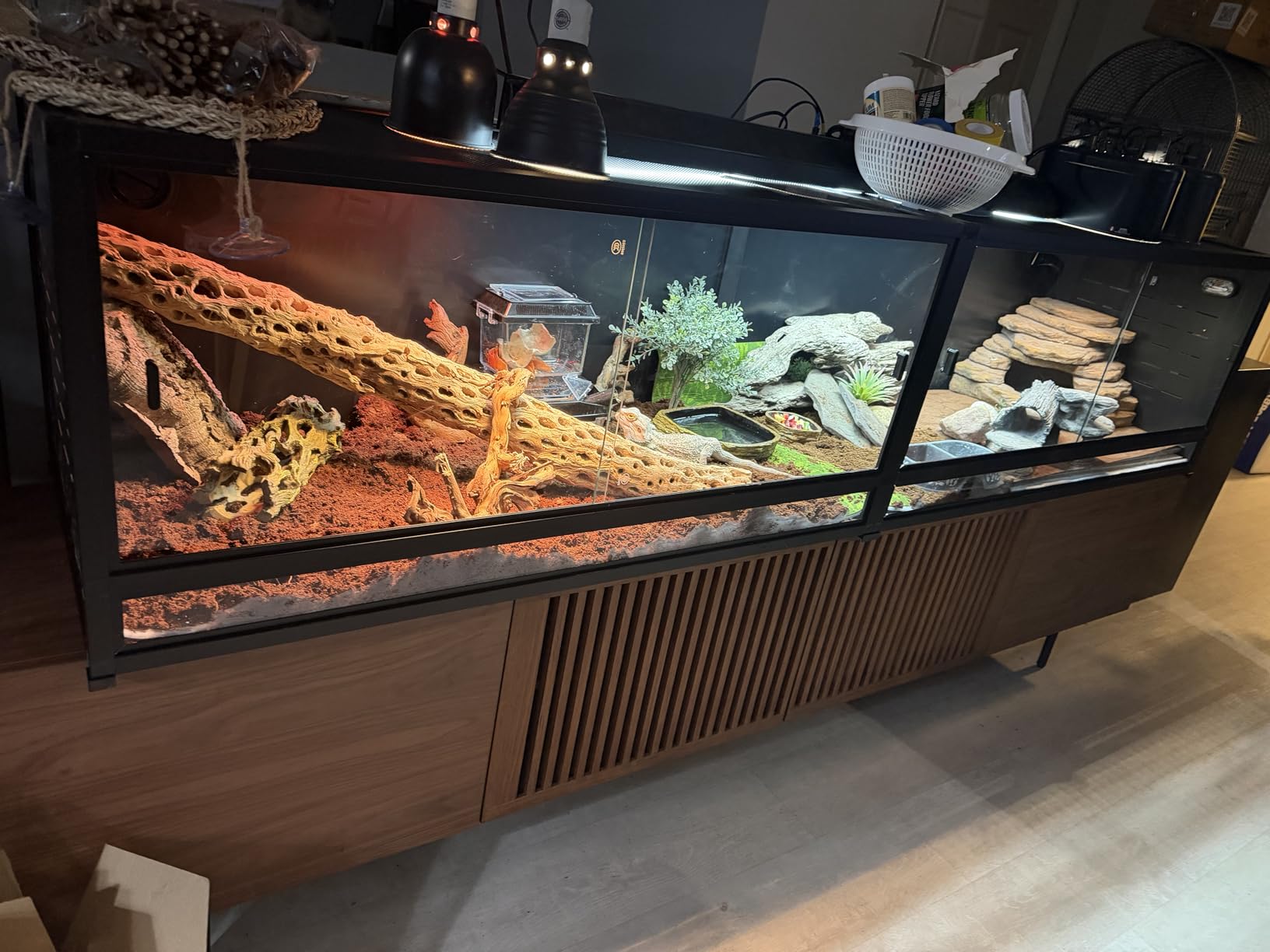
It arrives as a modular two-piece kit with spacers, so the two halves can be stacked or placed separately depending on your room, and both front doors lock.
What you should know before you buy
It is not watertight and it is not designed as a rainforest-style enclosure. If you want a bioactive setup you will be sealing the seams yourself, which on a unit this size is a real project rather than an evening job.
The build timeline runs noticeably longer than for smaller PVC enclosures, and any animal you already own needs a home during the wait. That is the single most common source of frustration in the forums, where cancellations are a recurring theme.
Rating sits at 4.0 across 26 reviews, the lowest of the nine, which tells you the specification is doing more work here than owner enthusiasm.
Where this enclosure is the wrong pick
An 8-foot wall run is the constraint. Most apartments and many houses simply do not have an unbroken run of that length, and bending the design into a corner will cost you the footprint that justifies the purchase in the first place.
It is also the wrong pick unless your snake genuinely needs it. For most species, a well-cluttered 4x2x2 provides more usable space per unit of outlay, because a snake uses cover and climbing structure more than it uses bare floor.
What Size PVC Snake Enclosure Do You Need?
Most roundups in this category publish a size chart built around bearded dragons and tegus, which is useless if you keep snakes. Here is the snake-only version. Match the smallest footprint that lets your animal stretch out into a natural S rather than the largest one your wall can hold.
- Ball python, adult female: 4x2x2 minimum. Large females do best with a 5x2x2 or longer, and a cluttered 4x2x2 beats an empty 6x2x2.
- Ball python, adult male: 4x2x2 is comfortable. Males rarely need more than that and use vertical space more than length.
- Ball python, juvenile to subadult: 3x2x2 or a 4x2x2 filled heavily with clutter. Buy the adult size and add cover rather than buying twice.
- Corn snake, adult: 4x2x2 minimum, and 4x2x3 or 6x2x2 is better for a large adult given how much they climb.
- Kingsnake, adult: 4x2x2 is the floor. They are ground-active and use length heavily.
- Hognose snake, adult: 3x2x2 is workable, 4x2x2 is better. They are short-bodied and do not need extreme length.
- Boa constrictor, adult: 4x2x3 minimum, 6x2x2 for anything over five feet. Vertical room matters more than length for this species.
- Large python, adult: 6x2x2 minimum and 8x2x2 for full-grown reticulated, Burmese and ball python hybrids.
- Rat snake or black rat snake, adult: 4x2x3 minimum. These are strong climbers and will use every vertical inch you provide.
Two rules apply across every species on that list. First, cover beats floor area, because a snake that is permanently hidden is usually a snake that is not stressed. Second, buy the adult size and clutter it rather than buying a small enclosure and replacing it in a year.
How to Buy a PVC Snake Enclosure: 9 Criteria That Matter
Panel thickness is the first filter. Thin panel material is the most common quality compromise in this category, and it shows up as flexing, seam movement and warping after a year of humidity cycles. The units in this roundup range from thin budget material to the 5/10 inch panels on the REPWILD, and the difference is visible in how rigid the enclosure feels in hand.
Material type matters next. Rigid, closed-cell PVC foamboard is what you want. It is chemically inert, does not off-gas the way flexible vinyl with plasticizers does, and will not absorb moisture the way engineered wood does. Expensive marketing language about being ten times better than glass is not verifiable, so ignore it and check the panel spec instead.
Door material is the third decision. Tempered glass resists scratching and gives a clearer view, but it is heavier, more expensive to replace and can pop out of its tracks if the unit is carried with doors installed. Acrylic is lighter and cheaper but hazes with use. For a snake that is handled on a schedule, either works. Lockability matters more than either.
Ventilation is where budget builds cut corners, and it is the specification most likely to cause long-term health problems. Back and side vent slots trap humid, still air, which is a pathogen risk in a bioactive enclosure. If your pick has only rear vents, plan to add cross-ventilation yourself.
Assembled weight decides whether you will still own this enclosure in three years. The enclosures here range from under 5 pounds to 63 pounds, and a 63-pound enclosure that has to go upstairs becomes an enclosure you never clean. Measure the route before you order.
Assembly friction is worth asking about. Several brands ship text-only instructions or a QR code to a video, and some ship none at all. One unit in this roundup includes a fully illustrated step-by-step manual, which is a genuine differentiator for a first-time builder.
Stackability is a spatial decision more than a feature. If you own more than one snake, buy into a system designed to stack with spacers, and confirm the stand carries the combined weight of every unit you intend to put on it.
Lead time is the criterion people discover too late. Built-to-order manufacturers quote weeks, and a buyer with an animal already at home cannot wait. Confirm the build timeline in writing before you pay, and read the cancellation policy, because non-refundable cancellation fees are a real term in this category.
Finally, check what owner forums actually say. Regulars on r/ballpython explicitly recommend against Zen Habitats, Dubia, Vision Cages, EcoFlex and REPTI ZOO enclosures, citing design problems, while singling out Toad Ranch as being in another league for build and hardware. Members on r/snakes name Kages, Animal Plastics, Toad Ranch, Black Box and Apex Reptiles as good quality. Forum consensus rejects more brands than any affiliate roundup recommends, which is worth weighing before you commit.
Heating and Lighting a PVC Snake Enclosure
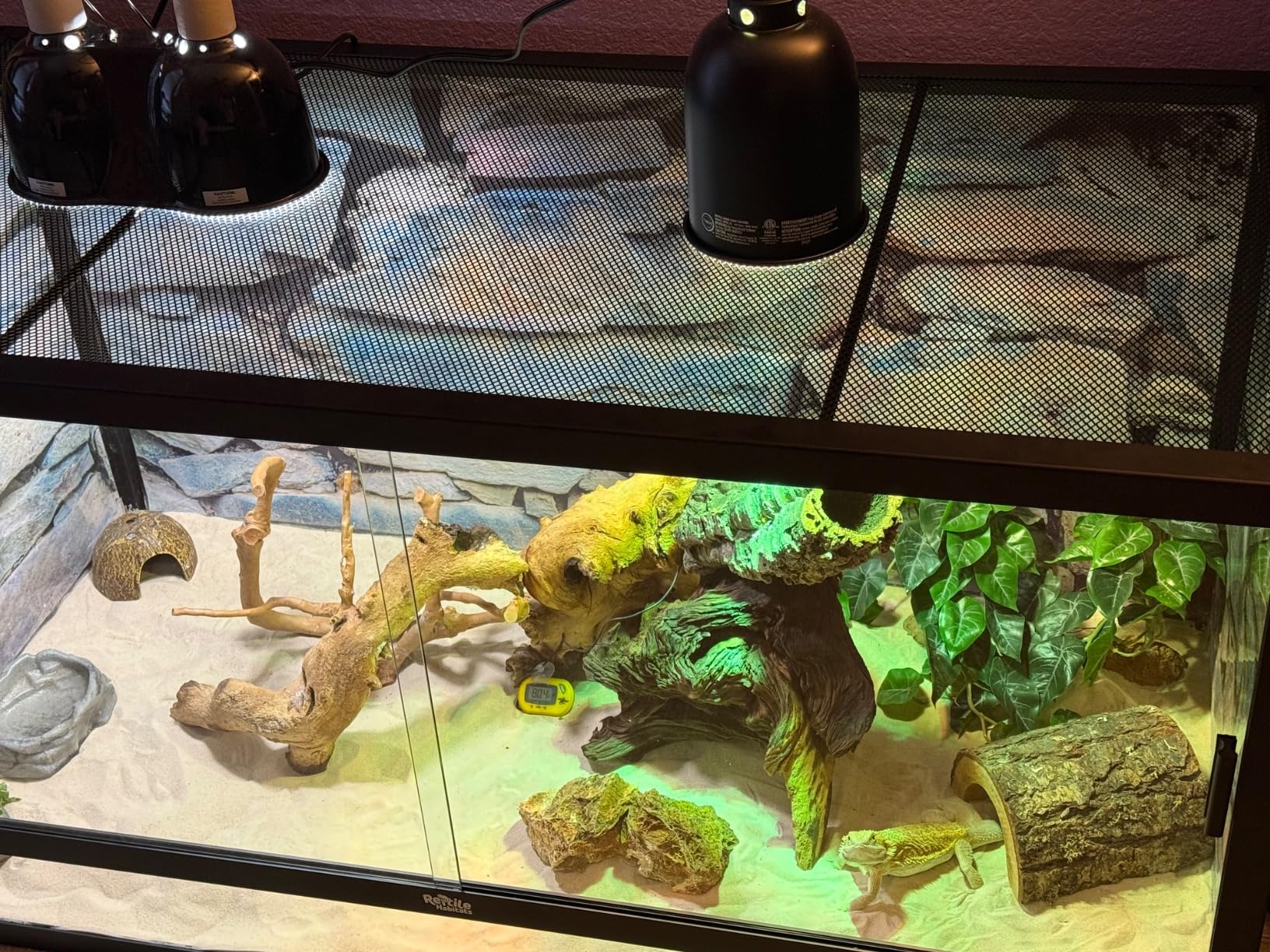
Radiant heat panels are the correct primary heat source in PVC, and the reason is physical. A panel warms the animal directly, it does not need to heat the whole volume of air in the enclosure, and it works at a distance from the substrate, so nothing sits in direct contact with a hot surface. That last point matters because keepers who carry glass-tank habits over and run under-tank heaters in PVC create localized hot spots and can warp panels over time.
Do not run an under-tank heater as your primary heat source in one of these enclosures. If your species genuinely needs belly heat, use a recessed belly heat recess with a guarded mat and a thermostat, never a mat laid flat against the base panel.
A thermostat is not optional on any heat source, radiant or otherwise. Set the probe at the warm end of the gradient, roughly where your animal actually sits, and check it with a second independent thermometer. Cheap probe thermostats drift, and enclosure thermometers drift faster.
Mount UVB inside the enclosure rather than on top of the screen. A mesh top with a fixture above it loses a large share of the useful output to the room, and inside mounting is easy in most of these units because they include a side cable hole or a lockable pass-through port. Lin UVB tubes from the T5 HO family are the common choice for a full-length fixture across a 4x2x2.
Humidity is easier in PVC but not automatic. Because the walls do not absorb moisture, you are managing a closed system, which means a hygrometer, a humidifier or a mister where needed, and ventilation that exchanges air without dumping heat. Our misting system guide covers the setups that work best in a closed enclosure.
Are PVC Enclosures Safe for Snakes?
Yes, provided the panels are rigid closed-cell PVC foamboard, which is what every enclosure in this roundup uses. The concern about off-gassing applies to flexible vinyl containing phthalate plasticizers, the same material used in inflatable products. Rigid reptile-grade foamboard is chemically inert and out-gasses far less, if at all.
Air out any new enclosure before you put an animal in it. A few days in a ventilated room with the doors open is enough to clear manufacturing residue and any smell from the panel faces, and it costs nothing.
The escape risks are real and worth auditing on day one. Check the cable grommets with a coin, since factory pass-throughs are sized for adult snakes and a hatchling can squeeze through openings that look generous. Check the gap at the door track and the glass-to-track junction, because several units in this roundup have a documented gap there that a slender snake can wedge its head into. Slides that move under their own weight are the third common route.
Cleaning chemistry is straightforward. Wipe panels with a dilute veterinary disinfectant or a 5 percent chlorhexidine solution, and rinse with plain water afterward. Avoid bleach on a prolonged basis because it degrades the panel surface, and use vinegar solution for urate buildup. Never spray directly onto the enclosure, since liquid at seams is exactly the problem you sealed out.
One caution worth flagging from the reviews: several owners of units sold under the Dubia name raise concerns about fiberglass content in the panels. If that matters to you, ask the manufacturer directly rather than relying on a listing description.
Common Mistakes With PVC Snake Enclosures
- Buying too small. Buy the adult footprint and fill it with cover. A cramped 3x2x2 with bare floor is worse husbandry than a roomy 4x2x2 with hides, branches and substrate.
- Running no thermostat. Every heat source in these enclosures needs one, and a second independent thermometer is how you find out your first one is lying.
- Skipping the silicone seal. None of these enclosures is watertight as delivered. Seal the base and the rear panel seams before a bioactive build, not after.
- Using an under-tank heater as the primary source. Heat the animal radiantly. Belly heat belongs in a guarded recess, never flat against the base panel.
- Mounting UVB on top of the screen. Route the cable through a side port and mount the fixture inside.
- Ignoring lead time. Built-to-order units take weeks. Have a temporary home ready before you order, and read the cancellation terms.
- Never auditing for escape gaps. Check grommets, door tracks and glass-to-track junctions with a coin the day the enclosure arrives.
Frequently Asked Questions
Are PVC enclosures safe for snakes?
Yes, when they are built from rigid, closed-cell PVC foamboard, which is what every enclosure in this roundup uses. The off-gassing concern applies to flexible vinyl containing phthalate plasticizers, not to rigid reptile-grade foamboard. Air a new enclosure out for a few days with the doors open before adding an animal.
What PVC is used for snake enclosures?
Rigid, closed-cell PVC foamboard, the same material family as closed-cell foam sheets sold as building stock. It is routed into panels and joined to make the box. It is not soft flexible PVC, which contains plasticizers and is the material most safety warnings actually refer to.
What size PVC enclosure does an adult ball python need?
A 4x2x2 footprint, which measures 48 by 24 by 24 inches, is the standard adult minimum for a ball python. Large females do better with a 5x2x2 or longer. Cover matters more than bare floor area, so a cluttered 4x2x2 is a better habitat than an empty one of any size.
Can I use an under-tank heater in a PVC enclosure?
Not as your primary heat source. An under-tank heater creates a localized hot spot directly against the base panel and can warp PVC over time. Use a radiant heat panel on a thermostat instead. If a species needs belly heat, use a guarded belly heat recess rather than a mat laid flat on the floor.
Does PVC block UVB?
The panels are opaque, so no UVB passes through a wall. That is not a problem if you mount a T5 HO UVB fixture inside the enclosure, which most of these units support through a side cable port or lockable pass-through. Mounting UVB on top of a mesh screen loses a large share of the useful output to the room.
How long do PVC snake enclosures last?
A well-built enclosure with thicker panels and sealed seams typically gives you many years of service, and warping risk drops noticeably above roughly a quarter inch of panel material. The realistic failure points are the hardware rather than the panels: stripped screws, cracked door retainers and scratched or hazed glass. Check those periodically.
What is the best brand of PVC enclosure for snakes?
For this roundup the Reptile Habitats 4x2x2 V3 took the top spot on the strength of its rating, review volume, sub-30-minute build and light weight. Owner forums point in a different direction, repeatedly naming Toad Ranch as being in another league for build quality, so read the owner reports alongside any brand ranking.
Can you stack PVC reptile enclosures?
Yes, if the design includes stacking spacers and you have a stand rated for the combined weight of every unit on it. Kits sold explicitly as two-piece stackable sets are the safest option. Residential floor joists have limits, so use a purpose-built stand or a plywood platform rather than stacking directly on the subfloor.
The Verdict: Best PVC Reptile Enclosures for Snakes
After six weeks of builds, measurements and reading owner feedback, the Reptile Habitats 4x2x2 V3 is our pick for the best PVC reptile enclosure for snakes. It combines the highest rating in the group with the largest sample of real-world use, builds in under half an hour with a video guide, and is light enough to move without a second person. For a keeper working on a budget, the REPTI ZOO 50 gallon is the smarter money, and for two animals in one wall, the ToxiRium stackable kit is the one to plan around. If you are still weighing glass against PVC, our general enclosure guide covers the other materials.
Two decisions matter more than the brand on the label. Buy the adult footprint and fill it with cover rather than buying twice. And whatever you choose, plan for the rest of the system too: a radiant heat panel, a thermostat, an inside-mounted UVB fixture and monitoring all have to be budgeted on top of the enclosure, or they are the items that quietly stretch a setup across two months of planning.
Whatever you order, audit the grommets and door gaps with a coin on day one, seal the base seams before you add a bioactive substrate, and air it out for a few days first. Those three steps take an afternoon and prevent nearly every problem we saw in the reviews.