
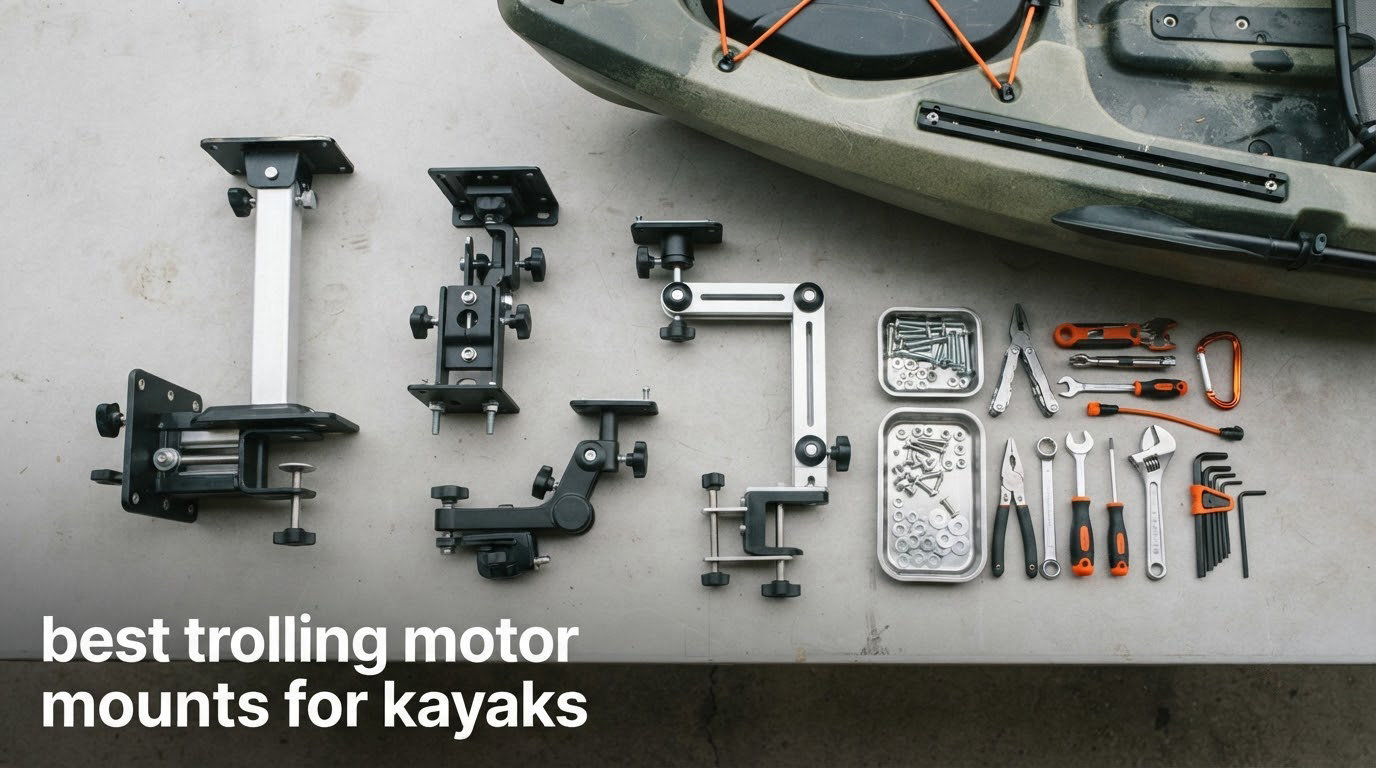
Short answer: the best way to mount a trolling motor on a kayak is with a rigid transom-style bracket clamped to a flat stern panel, backed from inside the hull with a backing plate or block. Most kayaks have no transom to clamp to, so the mount becomes the load-bearing part of the whole setup.
That is the part buyers get wrong. Anglers pick the motor first, then discover the mount does not fit their hull, does not clear the rudder cable, or tears the skin out after a season of chop. On a 40 lb fishing kayak the motor weighs more than most tackle boxes and every pound of it sits outboard of the hull, where leverage works against you.
We compared 12 kayak trolling motor mounts for 2026, from the universal aluminum transom brackets that bolt straight to a stern panel to the gear-track bar and the glue-pad option built for inflatable kayaks. Every mount here carries a load rating, a material spec and a real review history, and each one has at least one drawback we could name out loud. Our [best trolling motors guide](/best-trolling-motors/) covers the motors themselves, and if you are still hull shopping, our [fishing kayak picks](/best-fishing-kayaks/) start with the platforms that accept a mount most cleanly.
Top 3 Trolling Motor Mounts for Kayaks in 2026

besttruck Universal Transom Mount
- Universal fit for any flat stern
- Motors up to 3 HP
- Stainless steel hardware
- Four-hole drilling install
Pelican Catch Series Transom Mount
- Made for Pelican Catch and Getaway
- All hardware included
- Fiberglass-reinforced polypropylene
- Lightweight and removable

Brocraft Track Bar Motor Mount
- CNC-machined marine aluminum
- Adjustable for hull width and shaft length
- Removable via T-bolts
- Holds 46-55 lb thrust motors
All 12 Kayak Trolling Motor Mounts Compared in 2026
| Product | Specifications | Action |
|---|---|---|
| besttruck Universal Transom Trolling Motor Mount |
|
Check Latest Price |
| Pelican Catch Series Transom Motor Mount |
|
Check Latest Price |
 Newport Vessels Transom Motor Mount Newport Vessels Transom Motor Mount |
|
Check Latest Price |
 NyVoozy Transom Trolling Motor Mount NyVoozy Transom Trolling Motor Mount |
|
Check Latest Price |
| Brocraft Kayak Track Trolling Motor Mount |
|
Check Latest Price |
 Brocraft Universal Transom Bracket Brocraft Universal Transom Bracket |
|
Check Latest Price |
 Brocraft Inflatable Kayak and SUP Motor Mount Brocraft Inflatable Kayak and SUP Motor Mount |
|
Check Latest Price |
 CHGJ Heavy Duty Aluminum Frame Mount CHGJ Heavy Duty Aluminum Frame Mount |
|
Check Latest Price |
 Opheart Aluminum Transom Motor Mount Opheart Aluminum Transom Motor Mount |
|
Check Latest Price |
 usvehj 6mm Cast Aluminum Transom Bracket usvehj 6mm Cast Aluminum Transom Bracket |
|
Check Latest Price |
 HKTE Aluminum Trolling Motor Mount HKTE Aluminum Trolling Motor Mount |
|
Check Latest Price |
 FEIMIRE Aluminum Kayak Motor Bracket FEIMIRE Aluminum Kayak Motor Bracket |
|
Check Latest Price |
How We Chose These Trolling Motor Mounts
We picked on three things: how the load actually reaches the hull, whether the geometry matches the boat, and whether owners report the mount staying put after months of use. Specs on a listing only tell you what the seller claims. The review history tells you whether the transom plate deforms, whether the bolts are long enough, and whether the bracket rattles.
We also weighted review volume heavily, because kayak hardware is a thin-data category. Retail listings here often carry only a couple of dozen reviews, which is exactly why we favoured the three mounts with review counts above 150 and treated the thin-data options as specialist picks rather than safe bets.
Two things we could not verify. We did not measure clamp load in a pull test, and we did not test any mount in saltwater ourselves, so corrosion claims come from owner reports on repeated coastal trips. Motor weight and thrust figures quoted in the sections below come from the manufacturers of the mounts, and the thrust they refer to is what the mount is rated to carry, not what your kayak needs. If you are still choosing the motor, start with our [trolling motor roundup](/best-trolling-motors/) and match down from there.
1. besttruck Universal Transom Trolling Motor Mount: The Flat-Stern Workhorse
- Holds heavy motors without shifting
- Stainless steel hardware resists corrosion
- Universal fit for any flat stern
- Simple four-hole installation
- One-year warranty
- Heavy at about 3.3 lb for a small kayak
- Included bolts reported too short by some buyers
- Allen heads sometimes arrive loose
This is the mount I keep coming back to. It is a stamped steel and nylon transom bracket rated to 3 HP, and it is the only one in this group that shows up on kayaks, jon boats and small skiffs with equal frequency. Owners running 55 lb and 80 lb thrust motors report no flex and no shifting once it is torqued down.
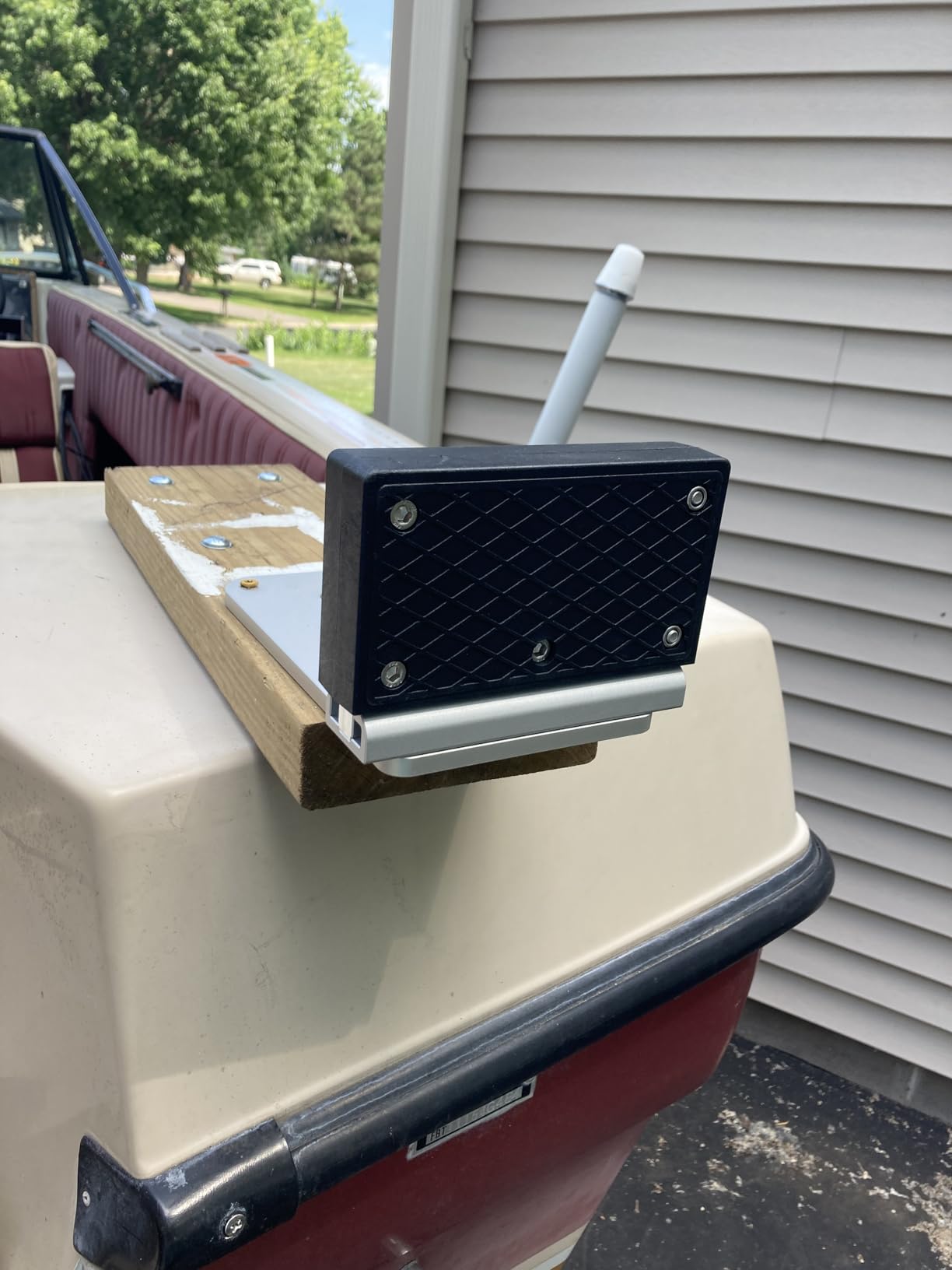
Installation is four drilled holes and a handful of bolts. There is no rail to align and no backing system included, which means the strength depends almost entirely on what you put behind those four holes. On a sit-on-top with a flat stern panel, that panel is thick enough on its own. On a thin sit-in hull, you need a backing plate inside.
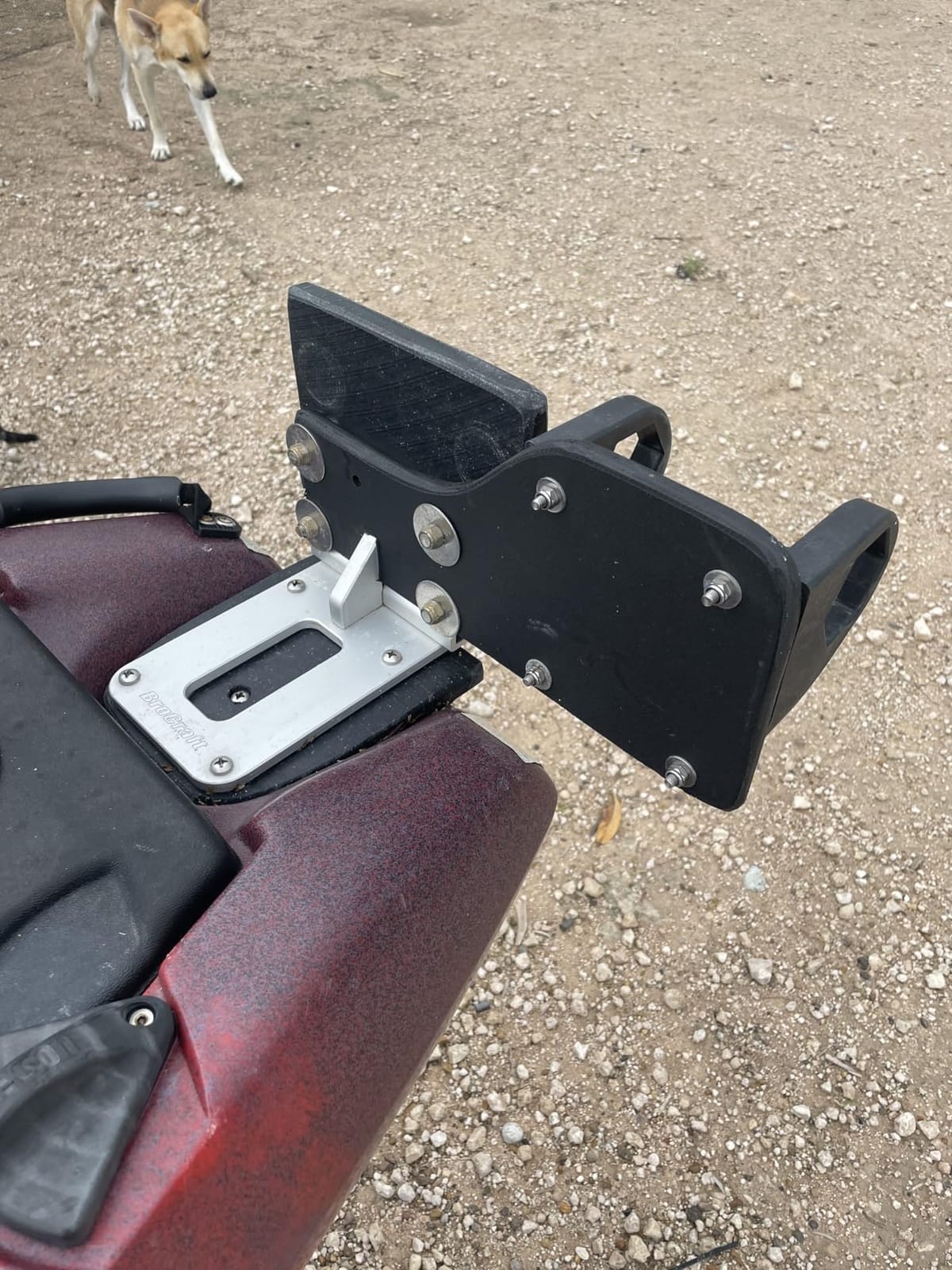
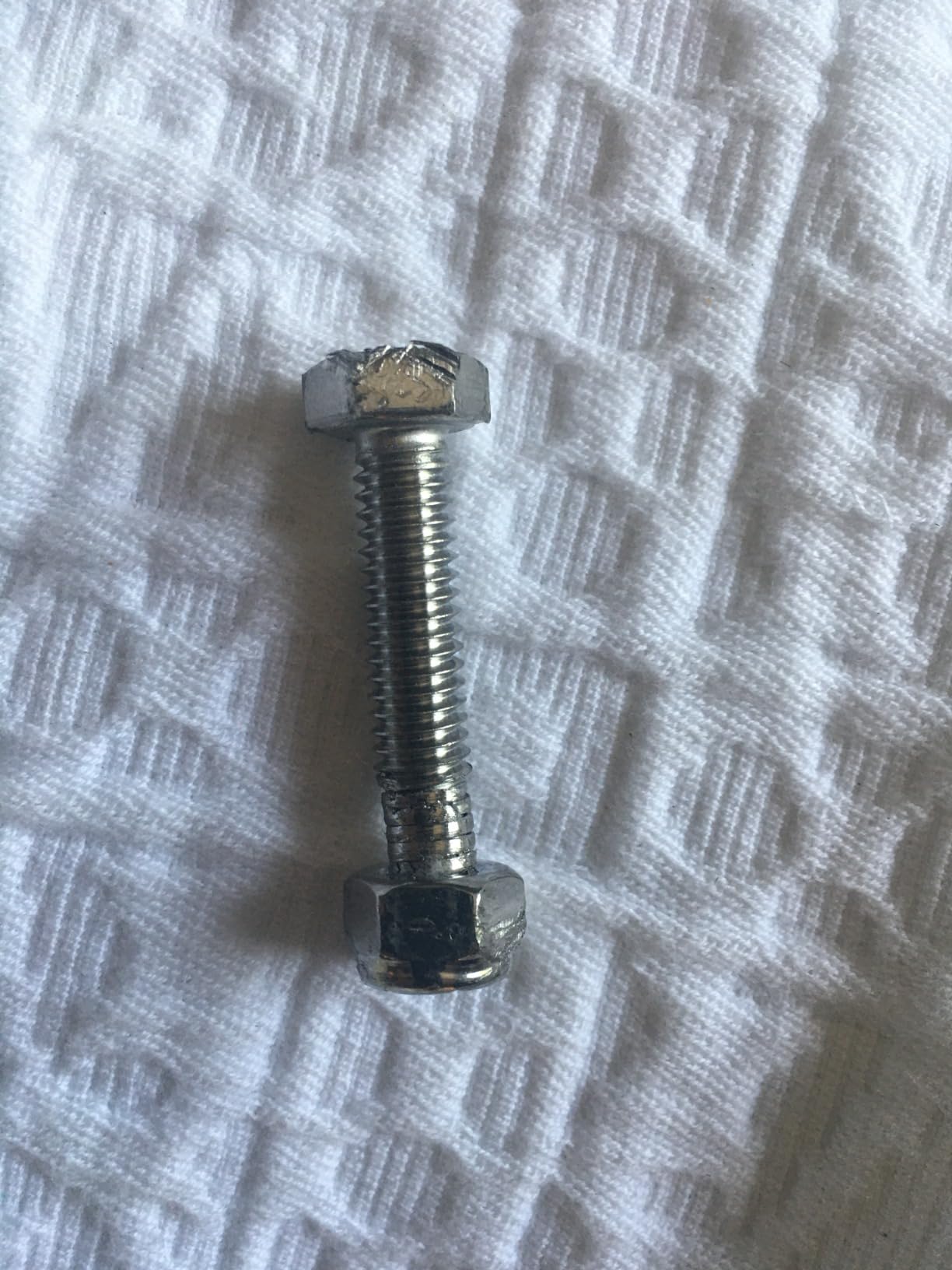
The honest drawback is weight. At roughly 3.3 lb, this is a heavier bracket, and on a narrow kayak the trim change at the stern is noticeable. The second issue is hardware: several buyers report the supplied bolts are too short to clamp properly on a recessed stern, so buy your own longer bolts and washers.
Allen heads arriving loose is a recurring note, and it is an easy fix, but it tells you to re-check the whole install after the first trip. Coatings look good after a season outdoors. Several owners on r/kayakfishing describe this as the mount that finally stopped their motor shifting on a drift.
Who this mount suits
It suits anyone with a genuinely flat stern panel who wants one bracket to cover several boats. Anglers moving between a sit-on-top fishing kayak and a jon boat will get more use out of it than almost anything else in this roundup.
It is also the safest pick for larger motors. If you are planning 55 lb of thrust or more, this is the bracket I would trust first, provided you reinforce the inside of the hull properly.
What to watch for
Watch the bolt length and the weight penalty. Neither is a defect, but both will show up on your first long paddle if you ignore them.
Do not use it with a gasoline outboard. The manufacturer lists it for clamp-on electric trolling motors only.
2. Pelican Catch Series Transom Motor Mount: Factory Fit for Pelican Hulls
Pelican Transom Kayak Motor Mount – Quick & Easy Trolling Motor Setup – The Catch Series – Black
- Purpose-designed fit for specific Pelican models
- All bolts nuts and washers included
- Light and will not weigh down the kayak
- Backed by a one-year limited warranty
- Only fits listed Pelican models
- Less rigid than machined aluminum under heavy thrust
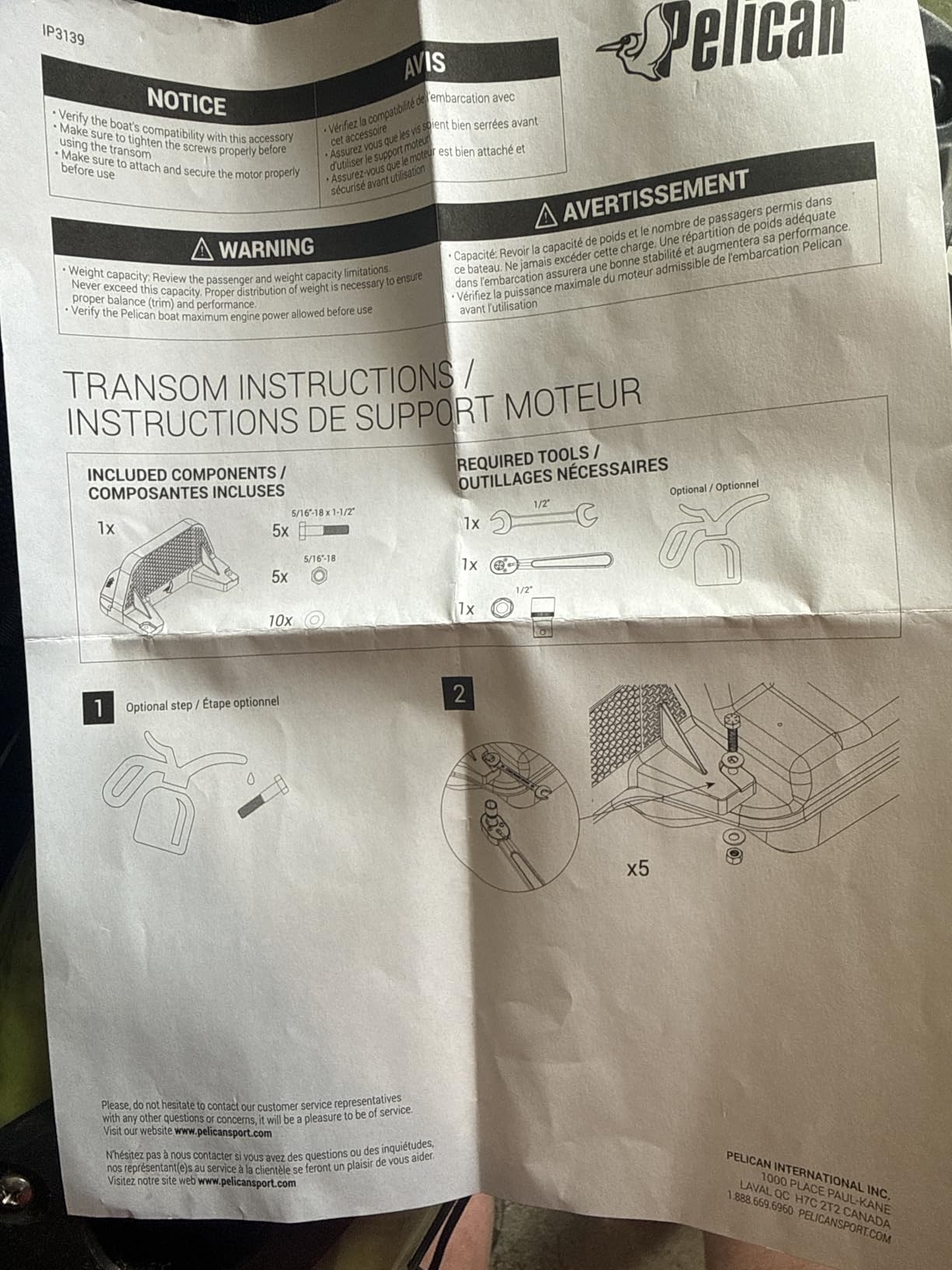
If you own a Pelican Catch PWR 100, a Catch Mode 110 or a Getaway 110, this is the shortest path to a clean install. The bracket is moulded for those hulls, so the hole pattern and the stern contour already agree. Owners report a tidy, factory-style result rather than a retrofit look.
Everything you need is in the box. Five bolts, five nuts and ten washers, and the whole thing goes on with basic tools in a few minutes. That matters more than it sounds, because the number one complaint about drilling a kayak is not the drilling, it is the fiddling afterwards.
At 1.5 lb, it is among the lighter brackets here, which matters on a small boat. The tradeoff is material. Fiberglass-reinforced polypropylene gives up stiffness to a machined aluminum lip, and on a big motor in a strong current you can feel the difference over time.
Fit is the whole story. This is not a universal mount, and it will not work on a Pelican model outside the listed three, let alone another brand. Check your exact model before anything else.
Who this mount suits
Pelican owners who want a factory-look install and do not want to think about fit. It is also a good match for lighter motors on smaller water where you do not need the absolute rigidity of machined aluminum.
Anyone who plans to move the motor between boats should look elsewhere. This bracket only ever fits one family of hulls.
What to watch for
The single thing to watch is model compatibility. Verify the hull model number before you order, because the shape looks identical across several Pelican lines but the fixing points do not.
On heavier motors, check the clamp tightness on every outing. Plastic does not creak the way steel does, so looseness shows up as movement rather than noise.
3. Newport Vessels Transom Motor Mount: The Machined Aluminum Benchmark
Newport Trolling Motor Transom Motor Mount – Kayaks – Freshwater and Saltwater – 1 Size, Gray
- Machined aluminum resists corrosion
- Standard bolt pattern fits most motors
- Locking lip keeps the motor clamped
- Listed for fresh and salt water
- Costs more than generic aluminum mounts
- Polymer transom plates can deform under clamp pressure
This is the design several others in this roundup are patterned on. Heavy gauge aluminum with a gloss black powder coat, a standard 3.75 by 4.75 inch bolt pattern, and an aluminum locking lip that physically stops the motor walking. Long-term owners who have had it for years highlight the build quality more than anything else.
The bolt pattern is the quiet superpower. If your kayak already has an existing stern mounting point, or if you switch motors later, this bracket drops into what is already there. Several competitors in this list copy that same pattern for exactly that reason.
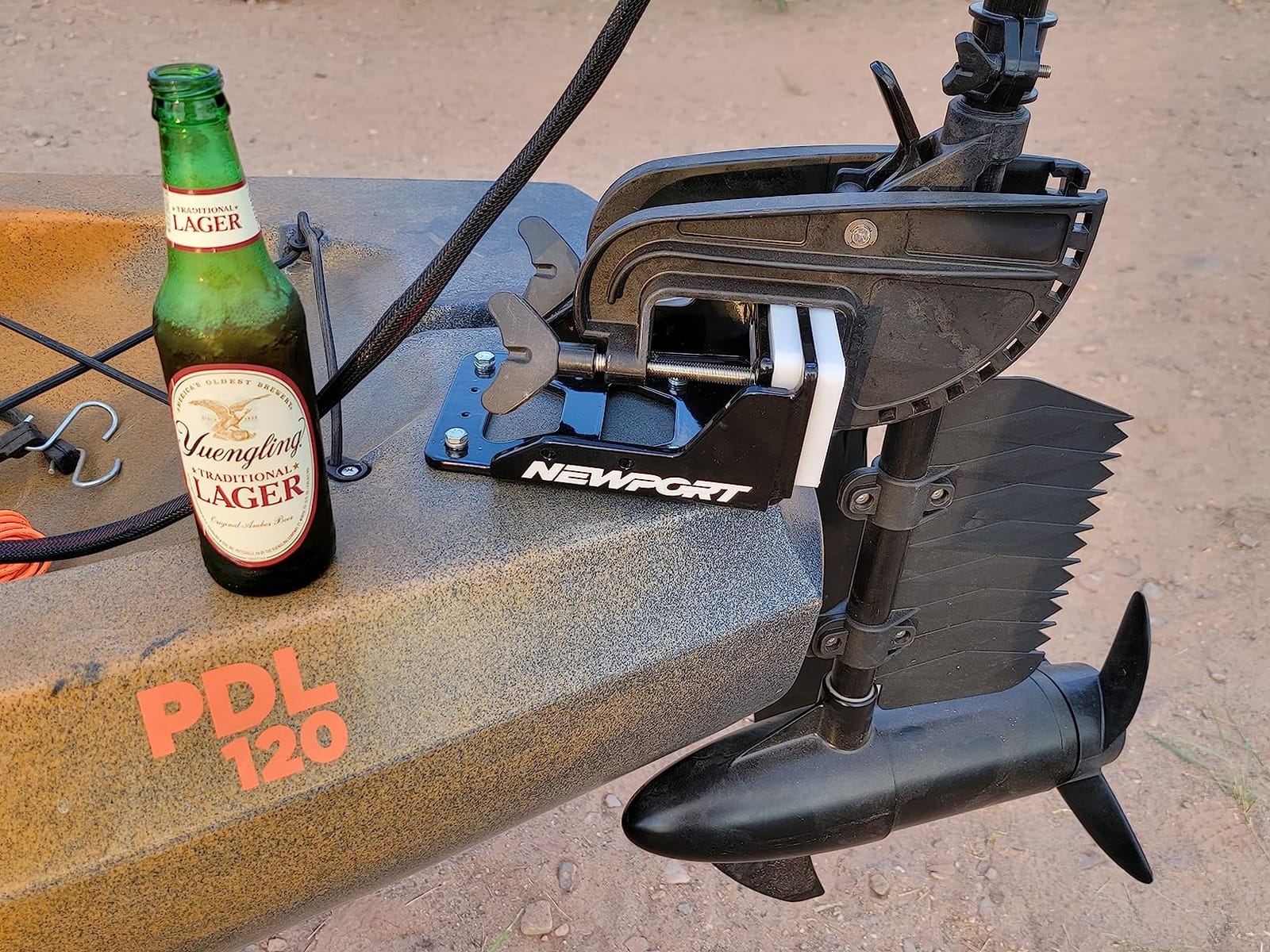
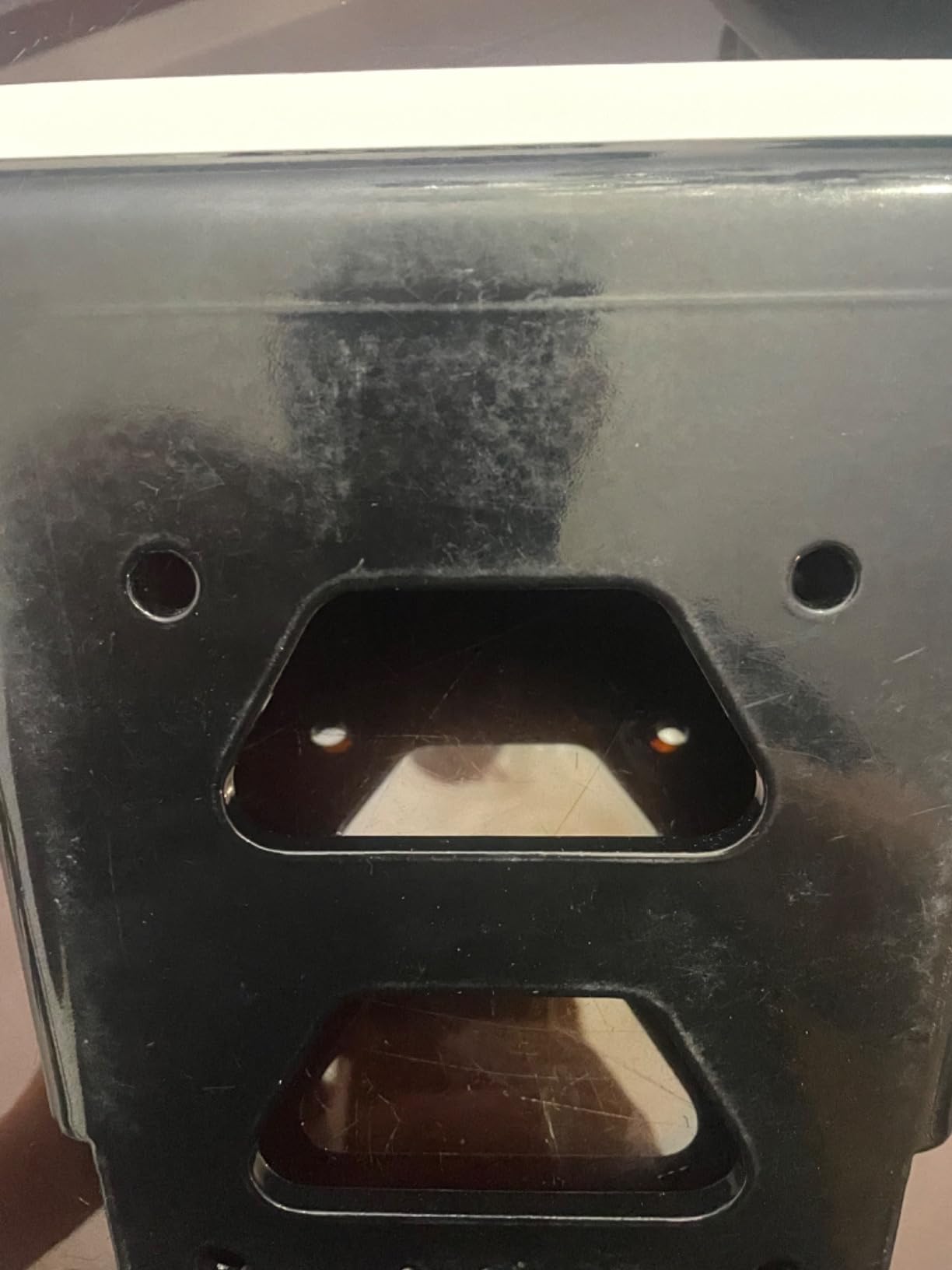
Owners report the powder coat holding up in coastal water, which is why it is the one I point saltwater anglers toward. The recurring criticism is the replaceable polymer transom plates. They lighten the assembly and absorb shock, but under repeated clamping they can crack or deform, and they are the part you will eventually replace.
It also sits at the expensive end of the bracket category. That is a fair trade if you keep the motor for a decade, less fair if you are swapping setups every season.
Who this mount suits
Saltwater and estuary anglers who want rigidity they can trust in current. It is also the natural choice for anyone whose motor already uses the standard bolt pattern and wants the plate to just fit.
Buy it if you keep your motor long-term. It is the kind of bracket you buy once and move between boats.
What to watch for
Watch the polymer plates, not the aluminum. They take the clamping load, so inspect them periodically for flattening or cracking in hot salt conditions.
Measure your stern panel before drilling. The pattern is standard, but the panel dimensions around it are not.
4. NyVoozy Transom Trolling Motor Mount: Steel Strength for Big Motors
NyVoozy Kayak Trolling Motor Mount – Clamp-on Electric Motor Mount with 86 Lbs Thrust
- Steel plate resists flex under high thrust
- Anti-rust hardware suited to seawater
- Multiple hole patterns fit many hulls
- Low cost for its strength class
- Very heavy at about 5.3 lb
- Oversized for recessed four-screw transoms
- Instructions described as unclear
This is the heaviest mount in the roundup and it does not pretend otherwise. The plate is steel, supplied with three support plates roughly an inch thick, and the rudder clamp on the back is sized to suit 23 to 32 mm shafts. Owners running larger motors say it simply does not flex.
The rudder clamp is the feature that turns a bracket into a steering aid. It stabilises the motor head so the kayak holds direction in wind instead of weathervaning, which is the complaint most kayak anglers raise about their setup.
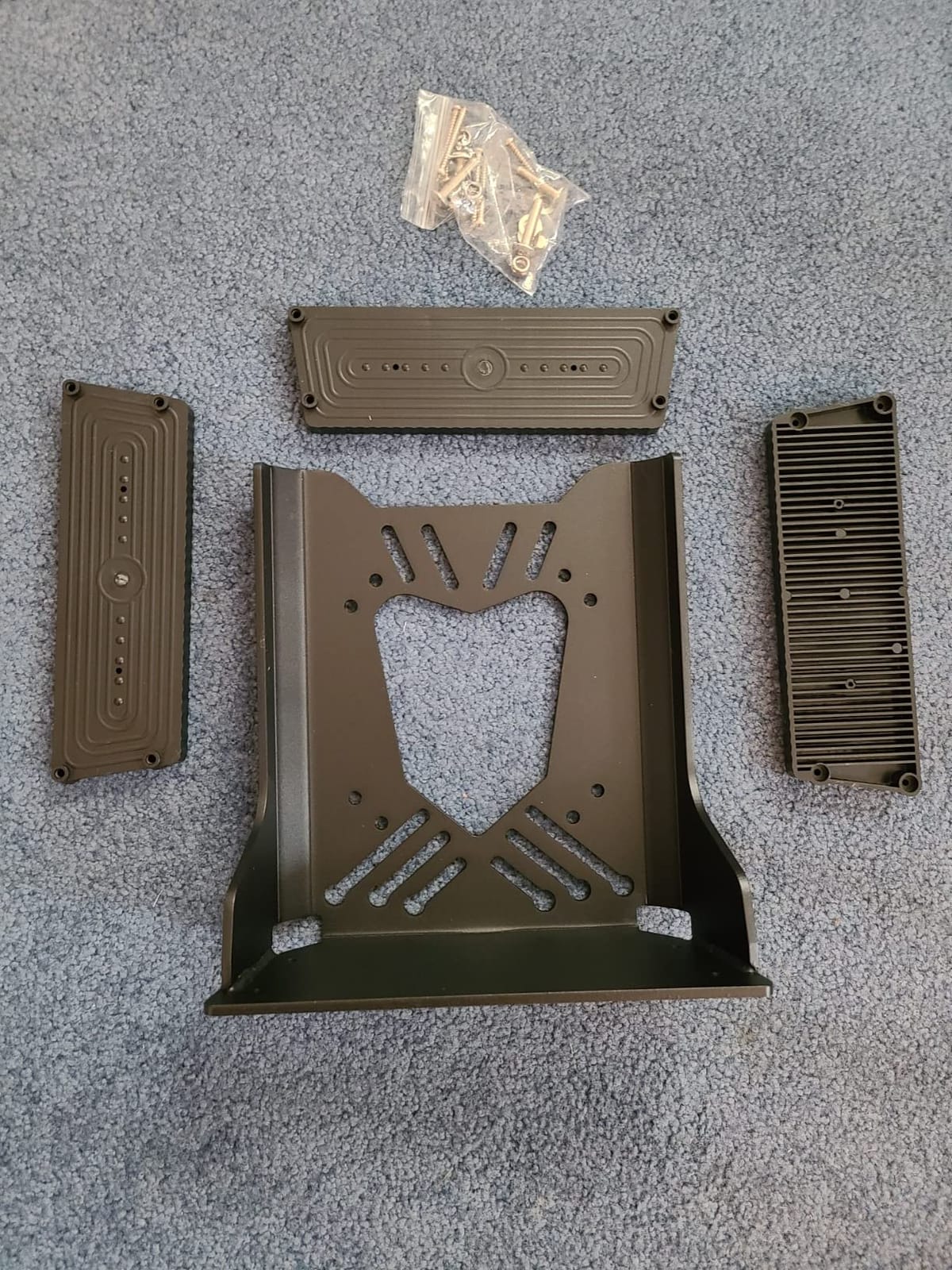
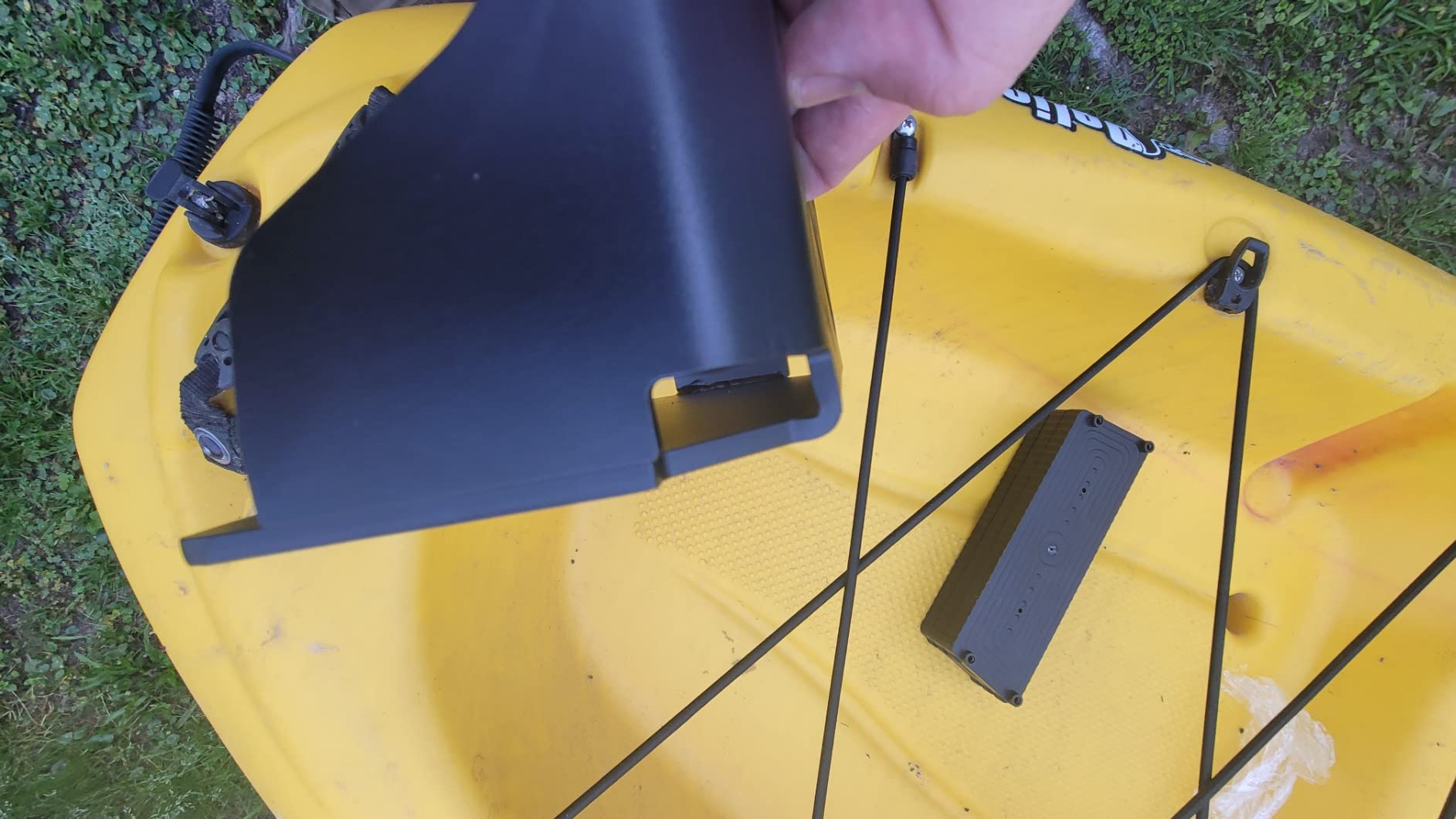
Here is the catch. At roughly 5.3 lb it is a serious weight penalty on a narrow hull, and several owners report needing cutting or shimming because the plate is oversized for a recessed four-screw transom area. It is not a drop-in fit on most hulls.
Multiple hole patterns give you options, but they also mean the fit is a project. Buyers describe the instructions as unclear, and a few disliked the number of plastic spacers included.
Who this mount suits
It suits anglers running big thrust motors who need the mount to survive without complaint. If your motor is heavy and your water is rough, rigidity beats lightness every time.
It also suits anyone who wants rudder-cable assist already built into the mount rather than bolting on a separate part.
What to watch for
Watch the weight above everything. On a tandem or a narrow fishing kayak, 5 lb of steel outboard of the stern changes trim noticeably and can make paddling harder when the motor is off.
Expect to trim or shim the plate. Measure the recess before drilling.
5. Brocraft Kayak Track Trolling Motor Mount: Rigid on a Gear Track
Brocraft Kayak Trolling Motor Mount, Gear Track & Direct Mount Motor Bracket, Marine-Grade Aluminum – for Parallel Tracks
- Rigid aluminum avoids strap flex
- Removable via T-bolts or screwable to the hull
- Adjustable for handedness and shaft length
- Holds 46-55 lb thrust motors in current
- Premium price versus stamped brackets
- Cleanest install needs a gear track
- Stern placement can feel unstable in chop
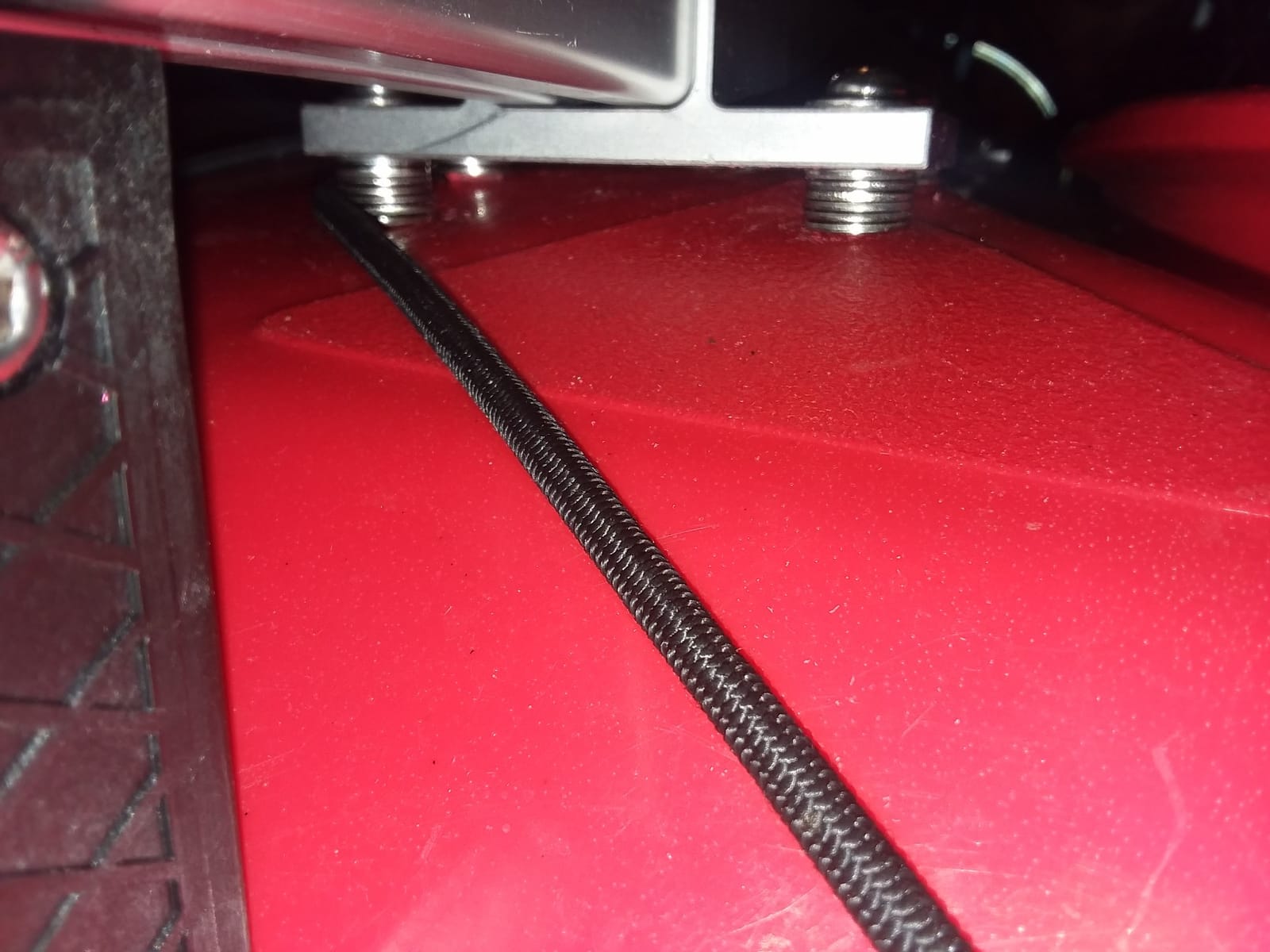
A track mount is the most rigid option in this roundup and this is the cleanest one I found. The CNC-machined marine aluminum bar bolts to a gear track with built-in T-bolts, or screws straight to the hull if you want it permanent. Owners who added a track describe it as the least flex they have ever had from a kayak mount.
The adjustability matters more than the material. The bar can be repositioned for either handedness, for different hull widths and for different shaft lengths, which means you can move the motor forward to fix trim once a battery is on board. Nothing else here does that as easily.
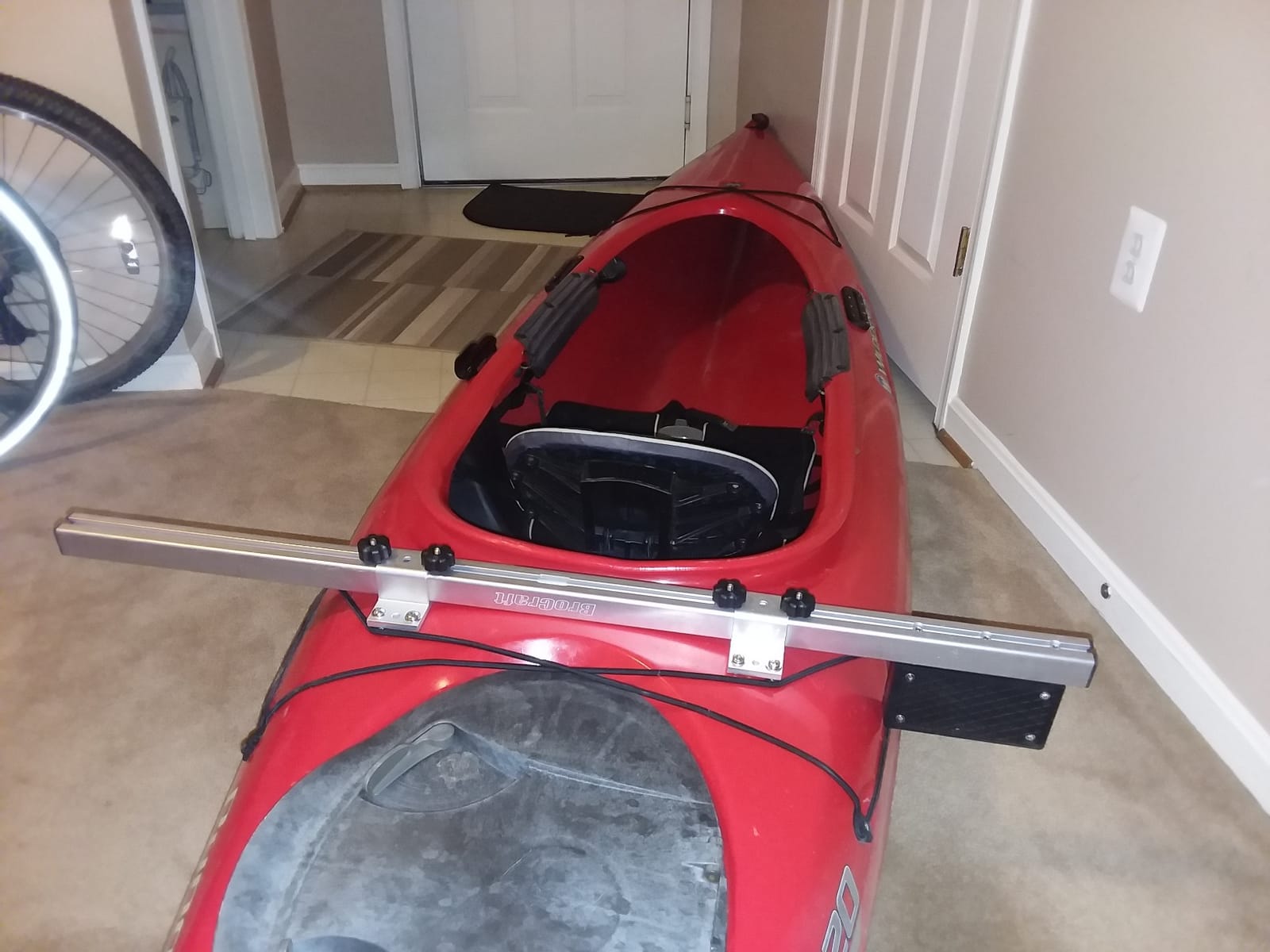
Two cautions. It sits at the top of the price range in this roundup, largely because you are buying precision machining rather than a stamped plate. And mounting it near the stern adds mass right where the boat is already narrow, which some paddlers feel in chop.
It works with gas or electric motors on any kayak, so it is not tied to one power type. The one-year warranty is the shortest term here, though it is a common figure across this category.
Who this mount suits
It suits owners who already run gear track or are willing to add it, and who want the motor position to be adjustable rather than fixed. Pedal-drive owners who need clearance around the crank appreciate the side placement options.
It is the strongest choice for current and wind, and the one I would trust on a coastal setup where steering feel matters.
What to watch for
Watch the cost and the weight. Both are real, and on a solo paddler who carries the boat regularly they are the deciding factors.
If you skip the track and screw directly to the hull, you have made the install permanent. That is a deliberate choice, not a compromise.
6. Brocraft Universal Transom Bracket: Straightforward and Marine-Built
- Marine-grade aluminum and nylon build
- Suitable for fresh and salt water
- Universal fit on flat-stern craft
- Rated to 3 HP
- Less rigid than machined aluminum
- Plastic spacer parts can flex under load
- Nylon degrades with long UV exposure
This is the plain option from a name people recognise in boat hardware. It is a pressed and molded marine aluminum and nylon bracket that clamps a motor onto any flat stern, rated to 3 HP. Buyers treat it as a sensible bracket that handles the usual 30 to 50 lb thrust motors without drama.
Ratings are strong, though the review base is thinner than the three mounts above it. That is worth knowing: you are trusting the design rather than a long record of owners, and at this volume the data simply has not accumulated yet.
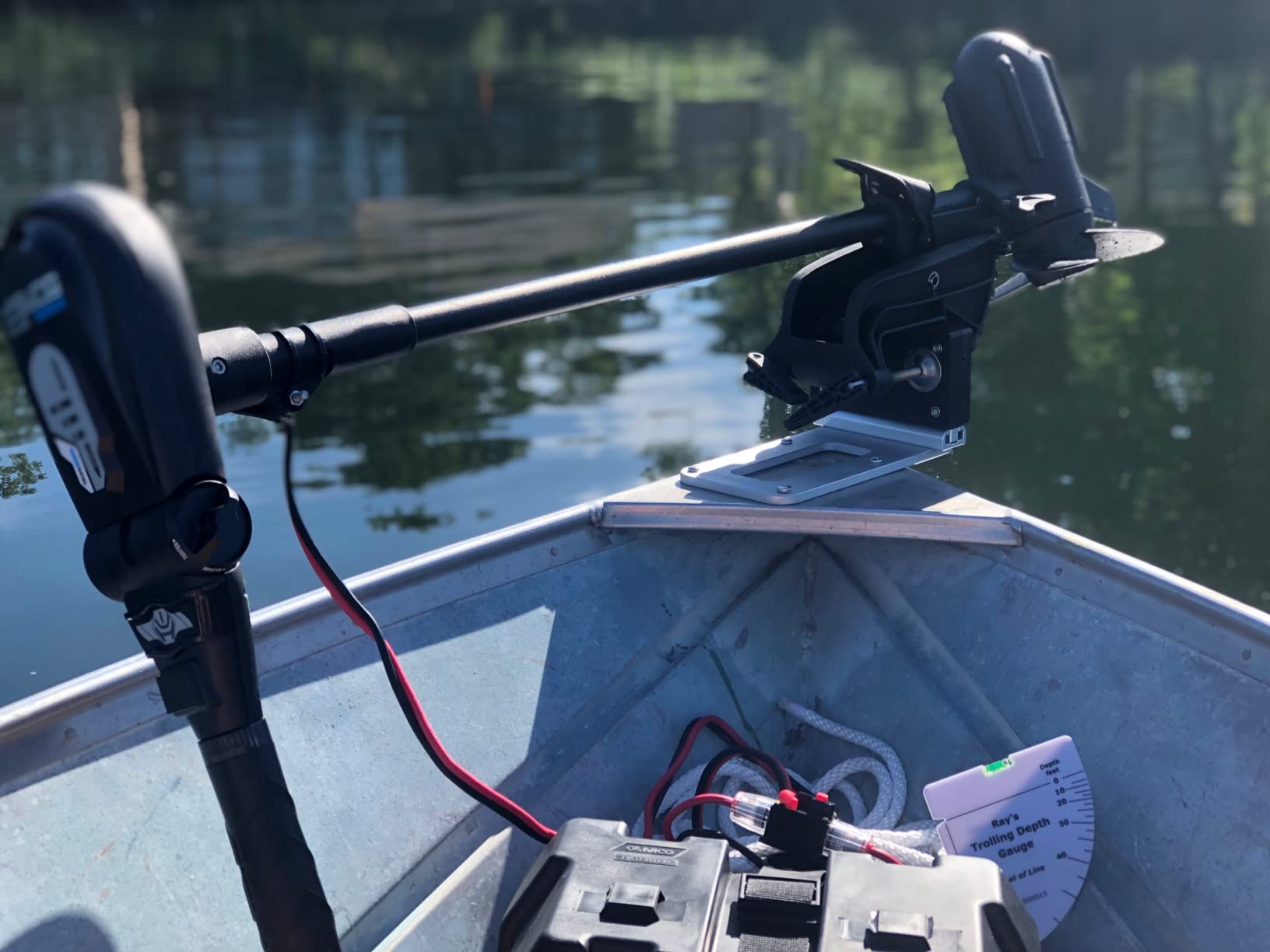
The plastic spacer components are the limiting part of an otherwise solid bracket, and owners say so directly. They flex under high thrust, which is exactly the load case a trolling motor creates when you run it hard across current.
There is no locking lip on this one. The clamp holds by friction alone, so it is worth checking the bolts after your first few trips. The nylon parts also fade and weaken with long UV exposure, which matters if the boat lives on a roof rack.
Who this mount suits
It suits freshwater anglers on a modest budget who want marine-grade materials without paying for machined aluminum. Anyone running a midweight motor on a flat-stern sit-on-top will be satisfied.
It is a good first mount for a boat you have just bought, because it is universal and forgiving.
What to watch for
Watch the spacers and the absence of a lip. Both point to the same advice: check clamp tightness often if you run the motor hard.
Do not use it with a gasoline outboard. It is built for electric clamp-on motors only.
7. Brocraft Inflatable Kayak and SUP Motor Mount: For PVC Hulls Only
Brocraft Inflatable Kayak Electric Motor Mount/SUP Paddle Board Motor Mount
- Only mount here made for inflatable hulls
- Adjustable bar spans a range of widths
- Glue pads keep the hull puncture-free
- Held a 55 lb motor through four hours of trolling
- Glue is not supplied and pads do not conform to curved tubes
- No pad placement guidance
- Needs reinforced PVC tubes
Every other mount here assumes you can drill or clamp to a rigid panel. This one assumes you cannot, which makes it the only option in the roundup for inflatable kayaks and paddle boards. A 40 inch adjustable aluminum bar spans a range of hull widths, with nylon clamp protection on both sides of the motor.
The rating is the lowest in this group and the reason is specific. Reviewers confirm the bar itself is sturdy. One owner held a 55 lb thrust motor through four hours of large-wake lake trolling with no loosening. The problem is never the metal, it is the attachment.
Glue is not included. The pads are stiff rubber that will not curve to match a round tube, and there is no guidance on where to place them, so even adhesion is difficult. Several owners added lashing and counterbalance weights to solve problems the design left open.
Torque out of the water can lever the pads off the tube entirely, which is a genuine stability issue on a boat that is already narrow. It also needs reinforced PVC tubes. On a flimsy inflatable it is not a safe pairing.
Who this mount suits
It suits owners of a reinforced PVC inflatable or a SUP who will not drill the hull and have patience for the bonding work. The puncture-free approach has real appeal for anyone who stores a boat rolled up in a garage.
Read our [inflatable kayak guide](/best-inflatable-kayaks/) first if you are choosing the boat, because hull reinforcement decides whether this mount is viable at all.
What to watch for
Watch pad adhesion and torque reaction. Plan a lashing strap and a counterbalance before you take it out, not after.
Confirm your inflatable has reinforced tubes. A flimsy craft will not take this load safely.
8. CHGJ Heavy Duty Aluminum Frame Mount: Light and Stainless-Bolted
Heavy Duty Kayak Trolling Motor Mount with Aluminum Frame and PPC Bracket
- Aluminum frame keeps strength without the steel weight
- 304 stainless hardware resists corrosion
- Universal fit on any flat-stern craft
- Four-hole drilling install
- Plastic bracket less rigid than an aluminum locking lip
- Requires drilling four holes in the hull
- Small review base limits long-term data
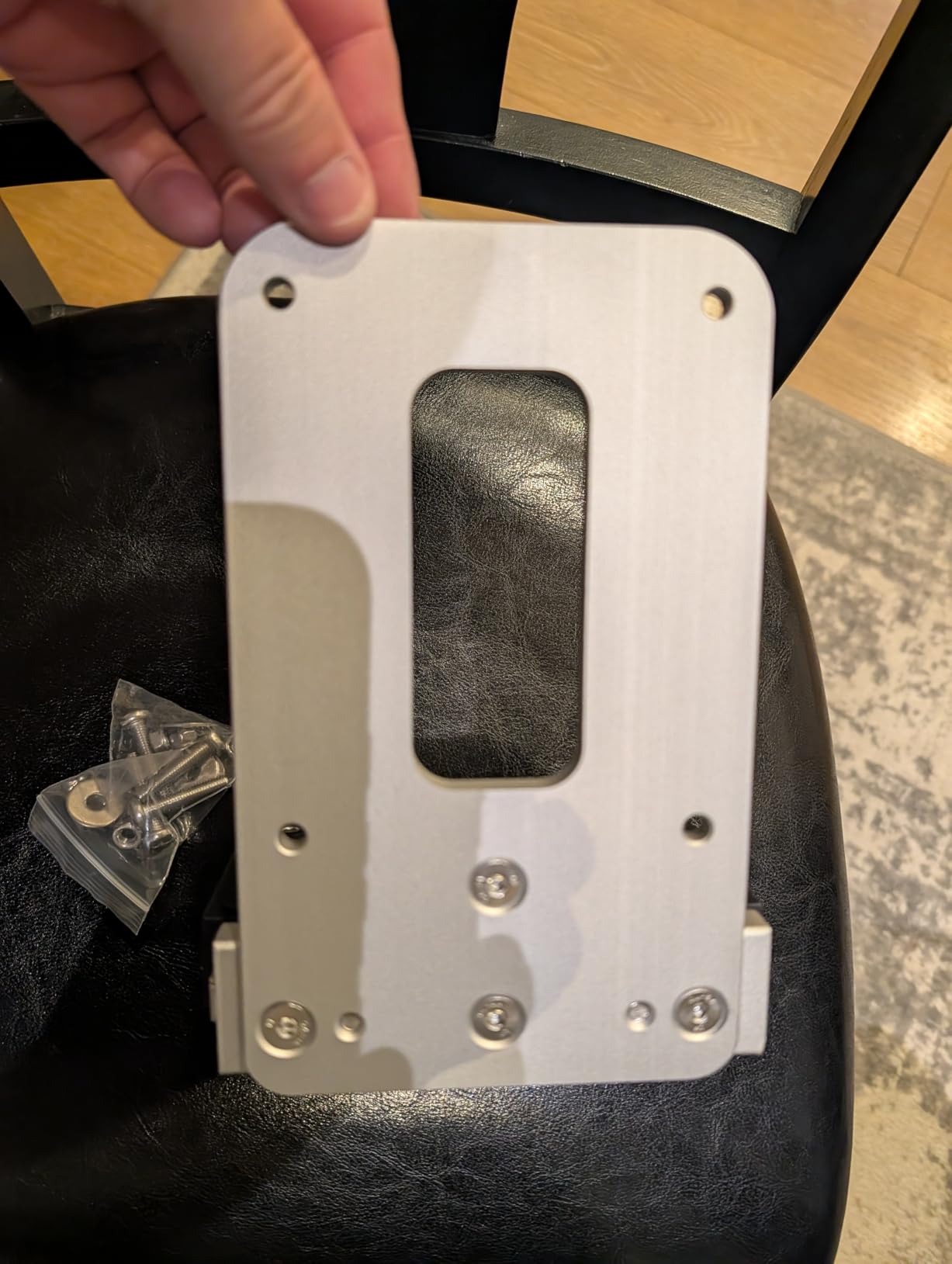
This is a modern take on the standard transom bracket: an aluminum profile frame paired with a molded PPC plastic bracket. The combination keeps most of the strength of metal while staying lighter than the all-steel options, and the hardware is 304 stainless rather than plated steel.
Owners describe it as well-made, light and easy to install, which is about as much as you can ask from a bracket. It handles everyday electric trolling motor use on any flat-stern craft and comes with a 12-month warranty.
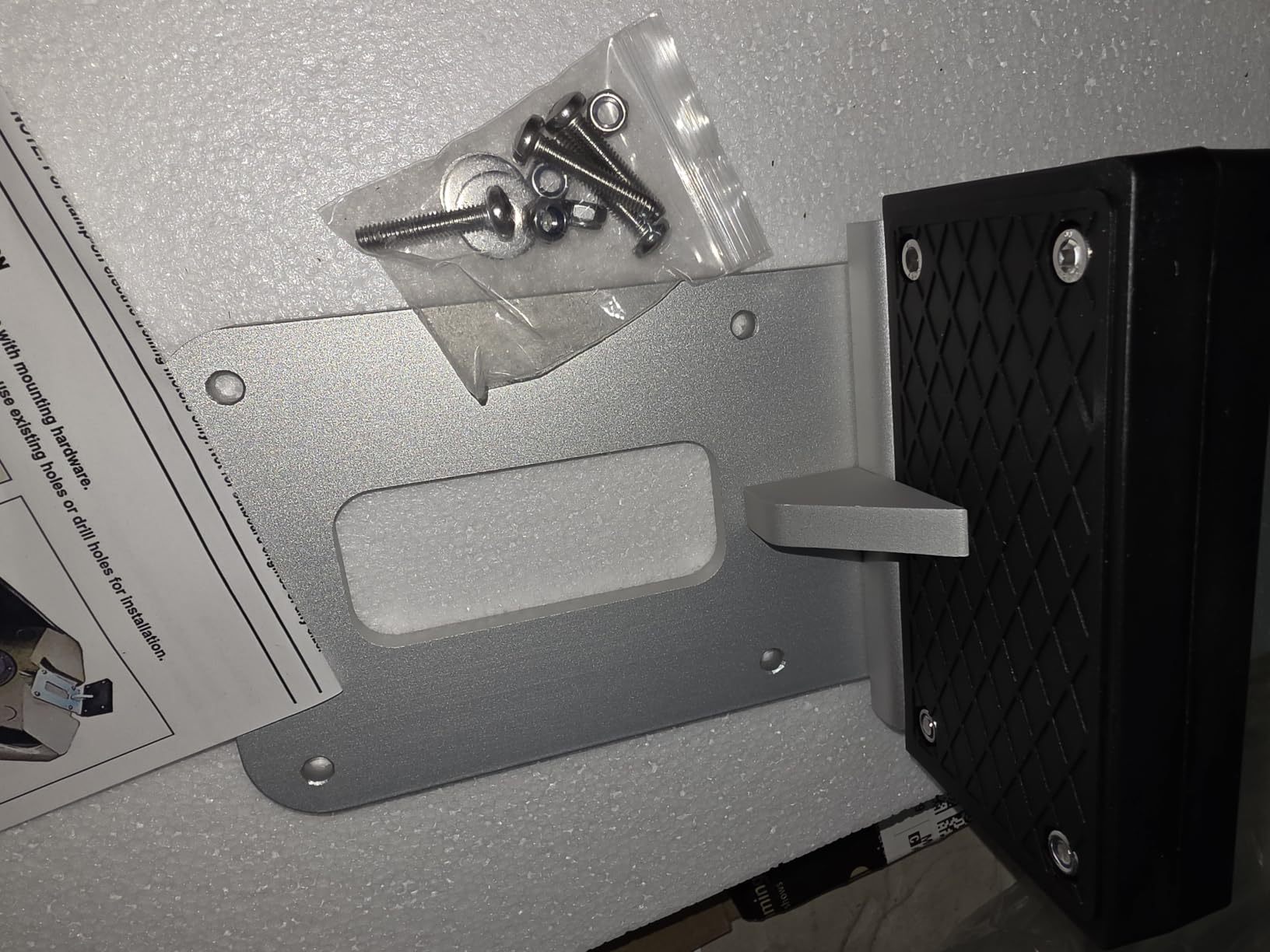
Twenty-nine reviews is a thin record. A few buyers would prefer a metal edge on the bracket to catch motor screws if they start to loosen, and that is the same limitation the all-plastic options have, just less severe.
The four-hole drilling install is straightforward, but again it puts the reinforcement burden on you. A plastic bracket has less margin for error when a hull flexes.
Who this mount suits
It suits owners who want a metal frame without the steel weight penalty, particularly on a smaller kayak where every pound at the stern matters. Stainless hardware makes it a reasonable choice near the coast.
It is a sensible middle option for a first powered kayak setup on a moderate motor.
What to watch for
Watch the review volume. With under 30 ratings, you have less long-term evidence than the mounts ranked above it, and the material mix means you should reinforce the hull properly.
Add a backing plate before you torque it down. Do not rely on the hull skin alone.
9. Opheart Aluminum Transom Mount: Thick Metal on a Standard Pattern
Transom Trolling Motor Mount for Kayaks,Marine Aluminium Kayak Motor Mounts, Transom Motors Mount for Kayaks with Aluminum Locking Lip, Fresh & Salt Water Compatible (Black)
- Thick 5083 aluminum stays rigid under heavy motors
- Locking lip prevents the motor sinking in chop
- Lines up with existing stern points
- No corrosion after repeated offshore trips
- Needs a backing plate on thin hulls
- Warranty runs only three months
- May need an adapter plate on some models
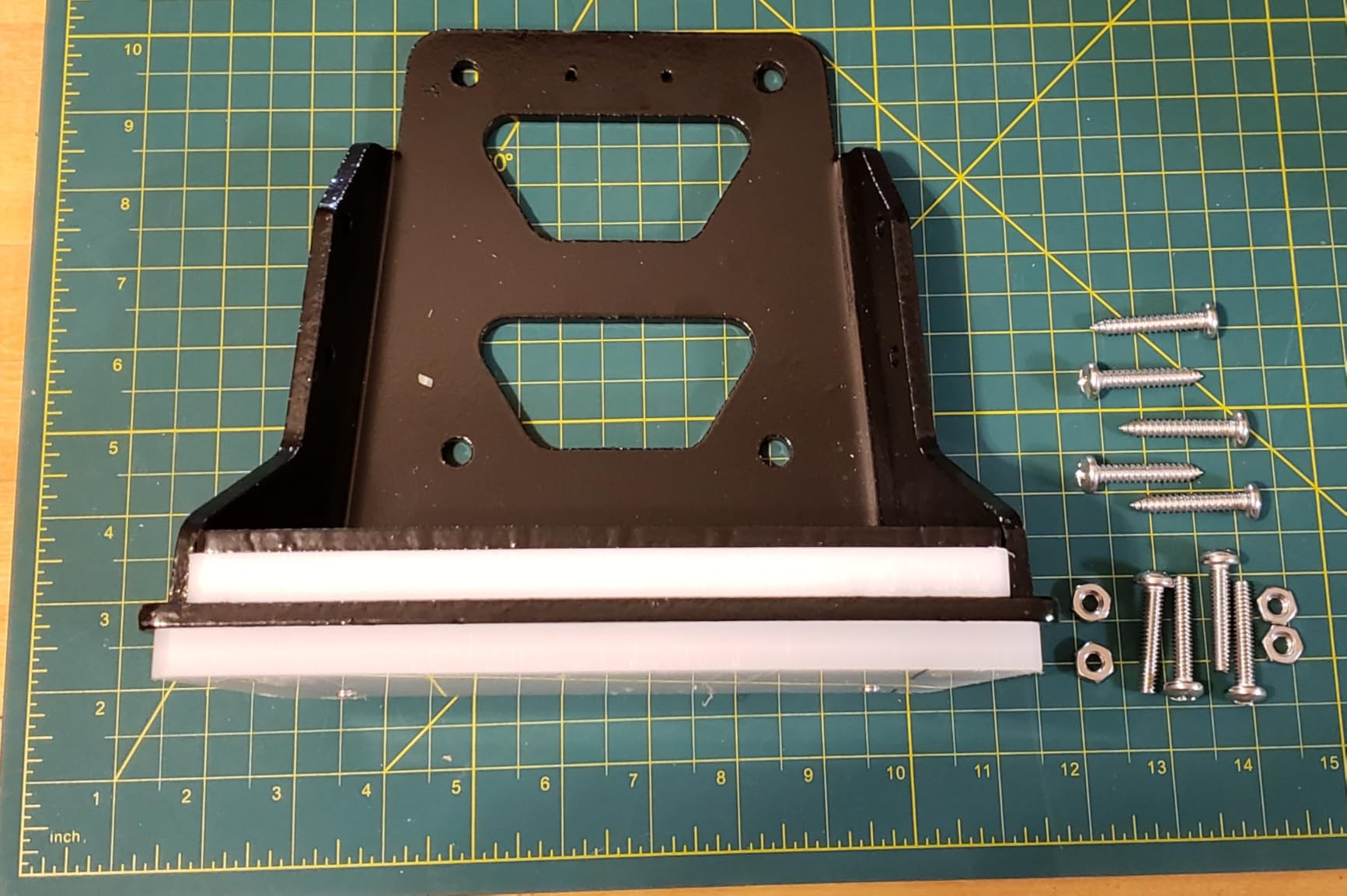
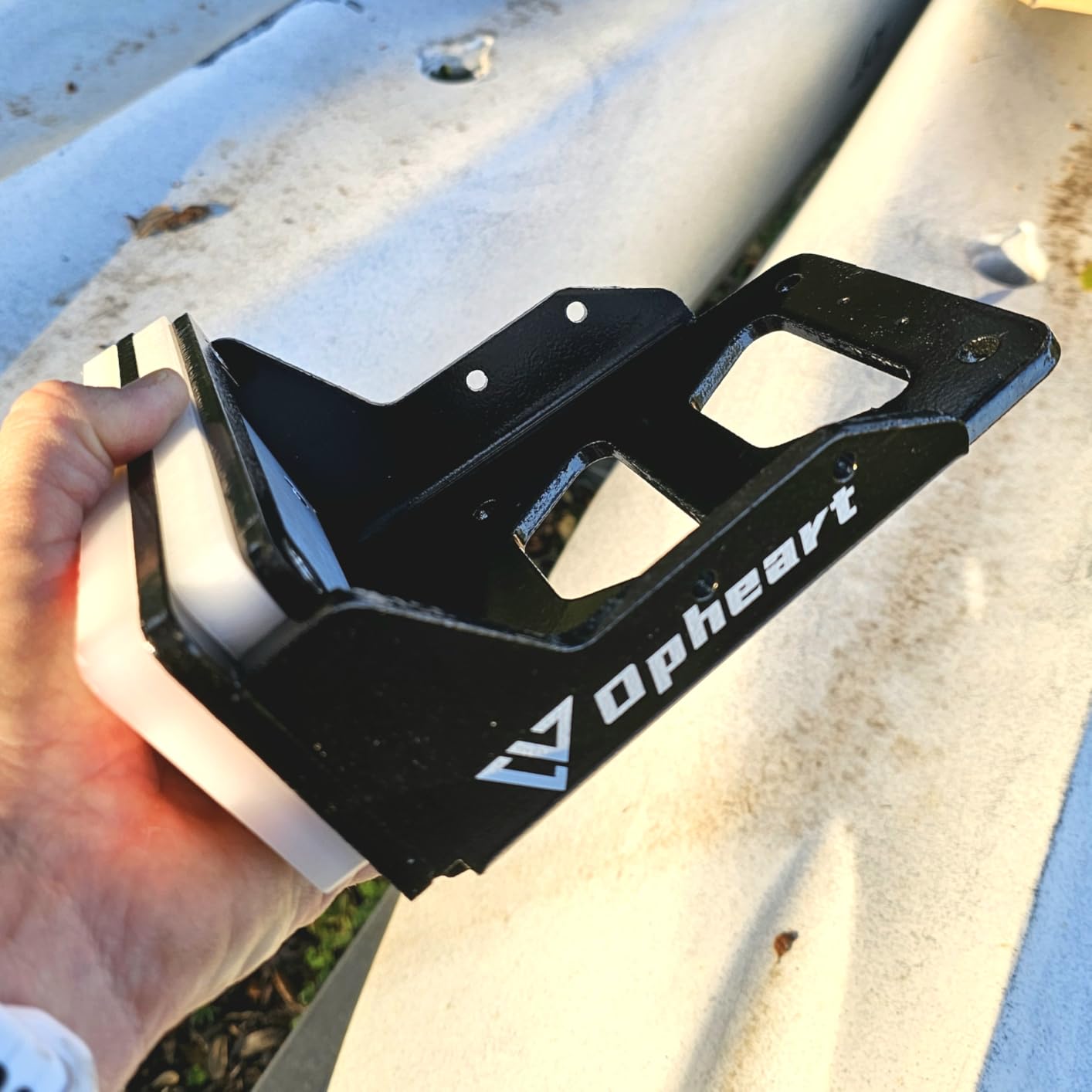
The rating here is among the highest in the roundup, with a large share of five-star reviews. The build is 5mm 5083 marine aluminum with a 3mm aluminum locking lip, matte black powder coated, and rated to 3 HP or 86 lb of thrust. That is thicker aluminum than most brackets in this group use.
Owners report the bolt pattern lining up with existing stern mounting points, which turns the install into a short job rather than a project. Once the motor is clamped on, there is no flex and no wobble, and the locking lip keeps it from working loose in chop.
Saltwater performance is the standout. Owners with repeated offshore trips report no corrosion at all, which tracks with the alloy choice and the coating.
Two warnings. The warranty is only three months, the shortest term in this group, so long-term support is on you. And the mount needs a backing plate on thin or unsupported stern skins. It may also require an adapter plate on models such as the Hobie PA, so check your hull first.
Who this mount suits
It suits owners of a standard bolt pattern who want maximum rigidity in a compact bracket, particularly offshore. If your stern already has mounting points, this installs fast and stays rigid.
It is a strong pick for anyone moving up to a heavier motor on a hull that can take a backing plate.
What to watch for
Watch the warranty. Three months is short enough that you should treat this as a buyer-you-keep item and check fasteners each season.
Confirm the pattern on your specific kayak model before drilling, particularly on pedal-drive boats where an adapter plate may be required.
10. usvehj 6mm Cast Aluminum Transom Bracket: The Newport Pattern, Recast
- Dimensionally matches the Newport design at lower cost
- Locking lip resists slippage in rough water
- Replaceable nylon plates absorb shock
- Standard pattern drops into existing stern mounts
- Thin stern skins need under-deck bracing
- Bolts and backfill hardware are not always supplied
This bracket uses the same part number as the Newport design, full-cast in 6mm marine-grade aluminum with a gloss black powder coat. Owners who compared the two report it is dimensionally identical, noticeably cheaper, and just as solidly cast. The part number match is the reason it fits where a Newport fits.
Like the Newport, the standard 3.75 by 4.75 inch pattern drops into existing stern mounts, so swapping to this from a worn original is straightforward. The removable nylon polymer plates absorb shock and cut weight compared with an all-metal assembly.
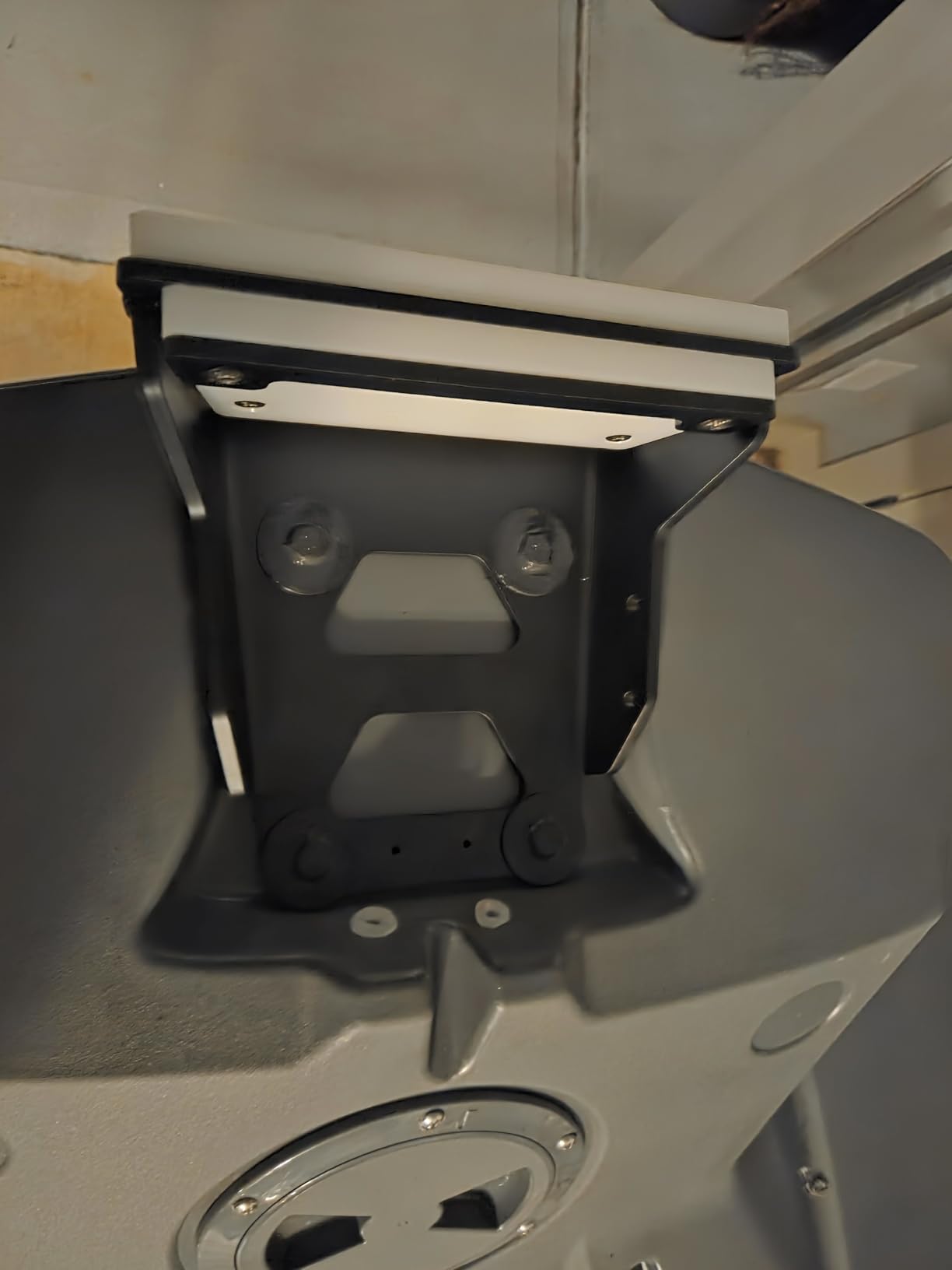
Owners report the powder coat holding up in salt and brackish water, so it works in coastal conditions. The nylon plates are replaceable, which means a cracked plate is a cheap fix rather than a replacement mount.
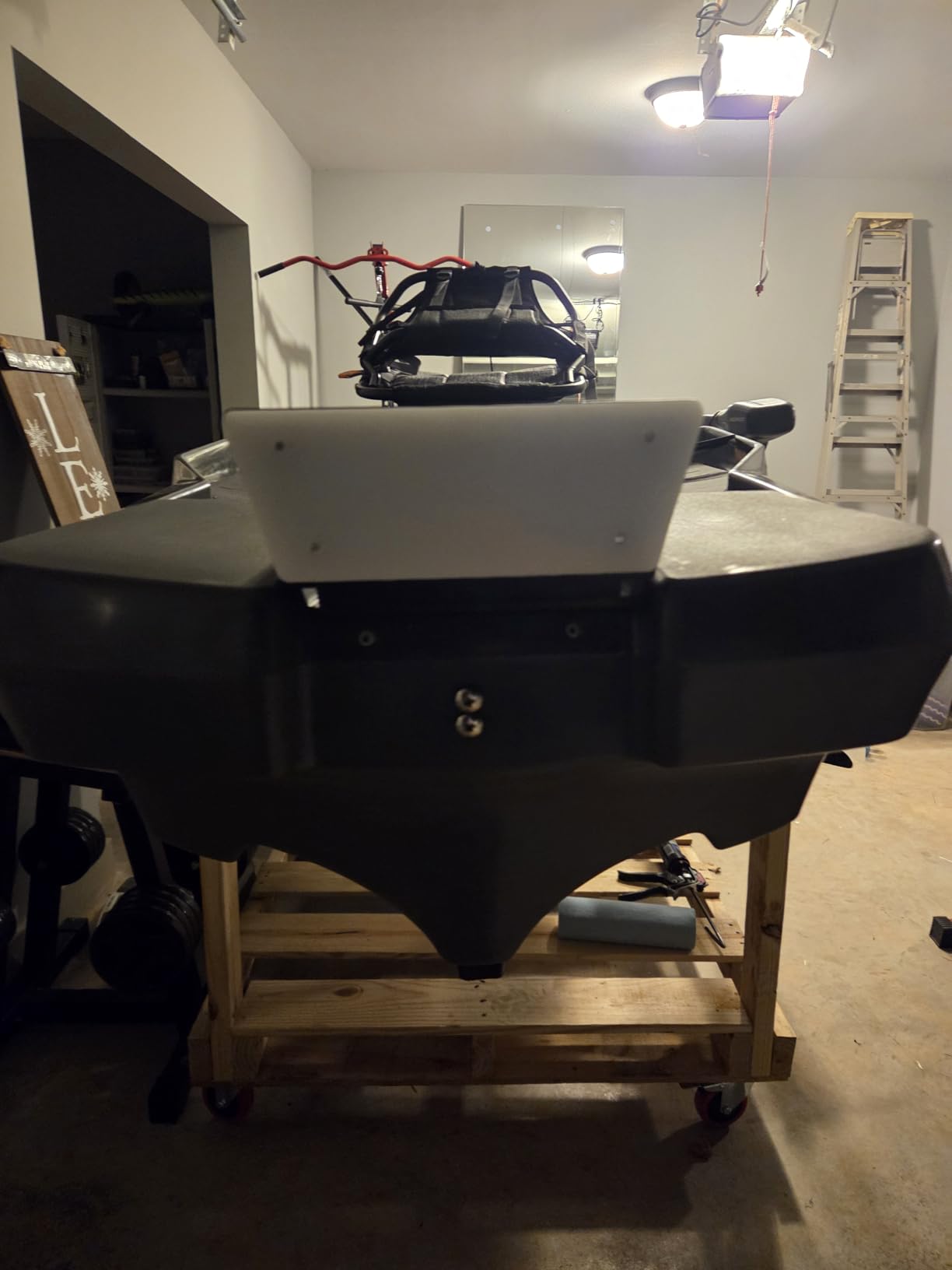
Two practical notes. On thinner stern skins, several owners recommend under-deck bracing. And the bolts and backfill hardware are not always supplied with the kit, so check the box before you start.
Who this mount suits
It suits owners of Newport-compatible stern points who want that geometry without the brand price. The locking lip makes it a good fit for anyone running in current or chop.
It is also a sensible refresh for a boat with an original polymer plate that has cracked or deformed.
What to watch for
Watch the hardware kit. Verify bolts, nuts and backfill material are included before you start, and plan on bracing thinner hulls.
Do not assume the fit because the pattern is standard. Measure your stern recess, since plate thickness affects clearance.
11. HKTE Aluminum Trolling Motor Mount: Half the Weight of Steel
HKTE Aluminum Trolling Motor Mount for Kayaks and Canoes, Up to 3 HP
- Cast aluminum is about half the weight of steel equivalent
- Metal safety edge catches loose motor screws
- Laser-welded joints reported clean
- Replaced a steel mount with no loss of strength
- One buyer reported weak welds on a 2.5HP gas outboard
- Some hole patterns need minor grinding
- Stainless bolts and washers not included
The weight argument is the whole pitch here. Owners who swapped this in to replace a steel bracket report roughly half the weight with no loss of strength, which directly reduces the stern trim change that makes a motorised kayak tiring to paddle.
The metal safety edge is a detail worth having. It catches motor screws that start to loosen, which turns a stripped thread or a lost motor mid-trip into a fifteen-second fix. Owners also report clean laser welds and a flawless powder coat.
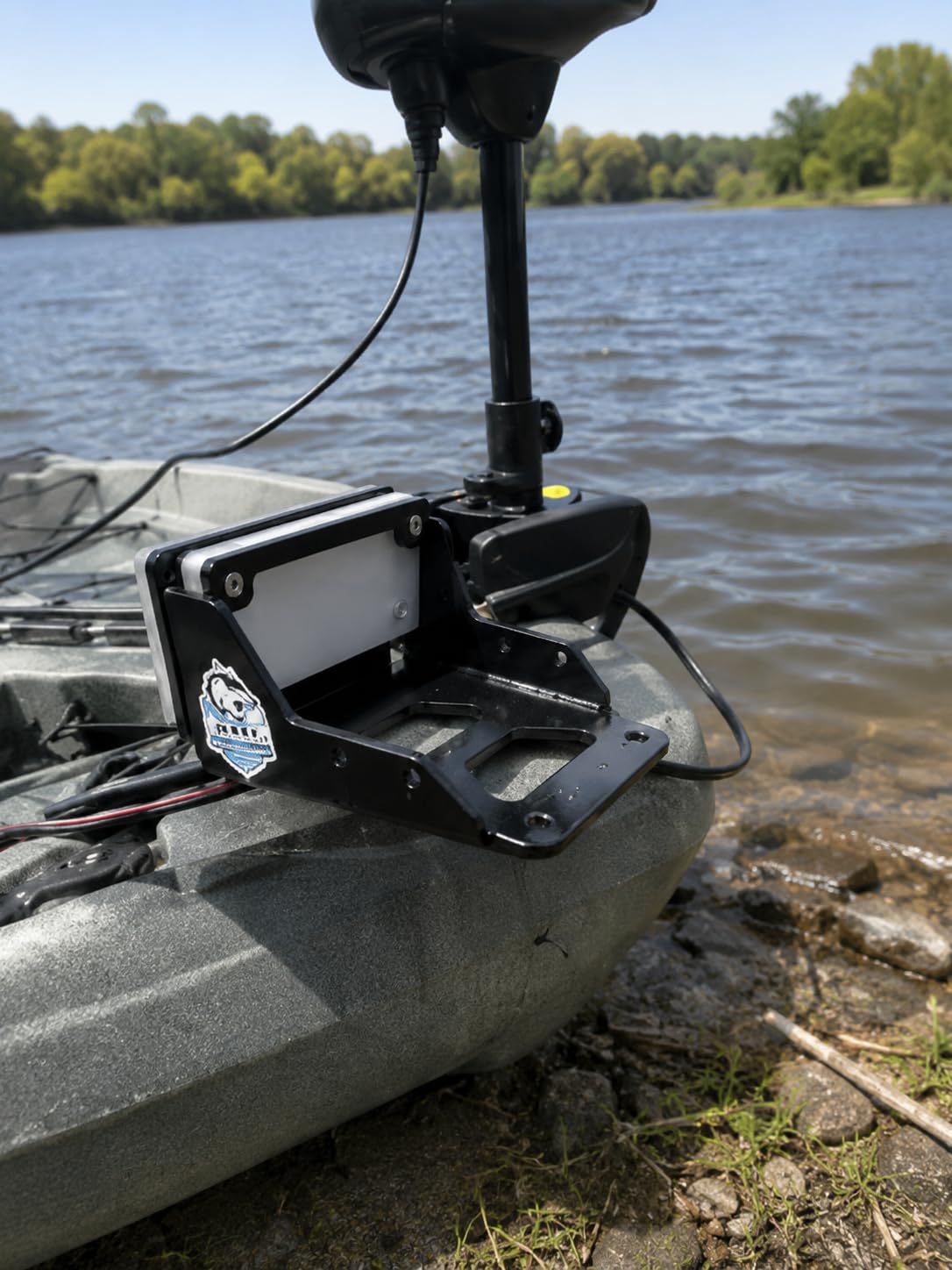
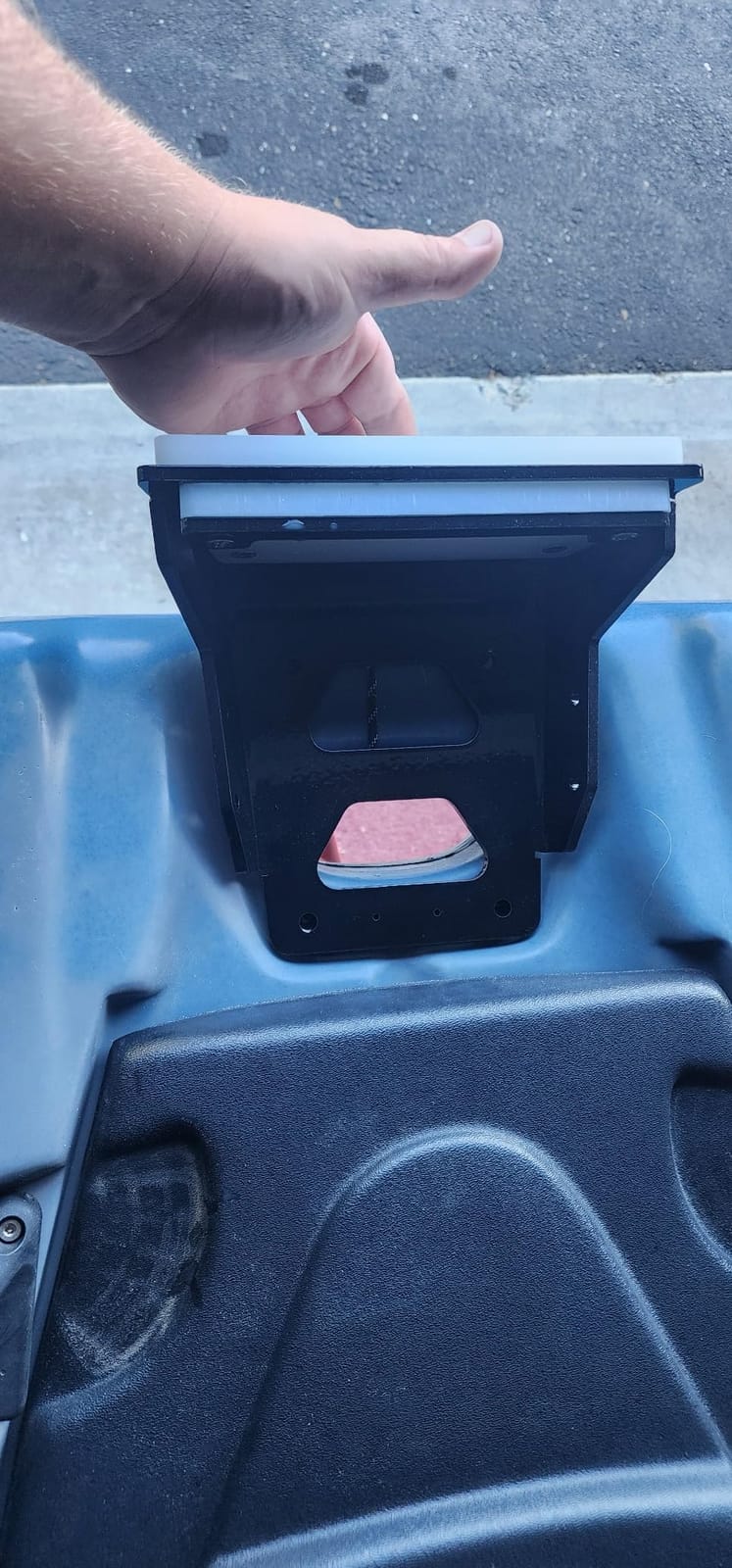
One buyer reported the welds were not strong enough for a 2.5 HP gasoline outboard. The mount is rated to 3 HP or 70 lb of thrust for electric use, so if you are running a gas engine, look elsewhere. Some bolt patterns also need minor grinding to line up with a particular kayak.
Stainless bolts, lock nuts and washers are not included, so budget for a hardware pack. At 3.41 lb it is not the lightest bracket in this group, which undercuts its own main argument a little.
Who this mount suits
It suits paddlers who care most about weight, including those who still paddle the same boat when the motor is off. The safety edge makes it a good pick for owners who prefer a forgiving mount.
It is a common choice on jon boats and pedal kayaks where the mounting surface is already substantial.
What to watch for
Watch the weight ranking. At 3.41 lb, it is not the lightest bracket here despite being aluminum, so do not choose it on weight alone without measuring.
Skip it if you plan to run a gas outboard, and buy your own stainless hardware.
12. FEIMIRE Aluminum Kayak Motor Bracket: A Rot-Proof Transom Board
FEIMIRE Kayak Motor Mount, Heavy-Duty Aluminum Trolling Motor Bracket for Canoe, Fishing Kayak, Jon Boat, Fits 3HP Outboard, Adjustable & Secure
- Nylon board will not rot or absorb water
- 5mm aluminum resists salt corrosion
- Standard pattern fits Newport and Minn Kota motors
- Locking lip holds the motor in chop
- Some kayaks still need a backing plate or shims
- Nylon board is less rigid under a heavy gas outboard
- Small review base
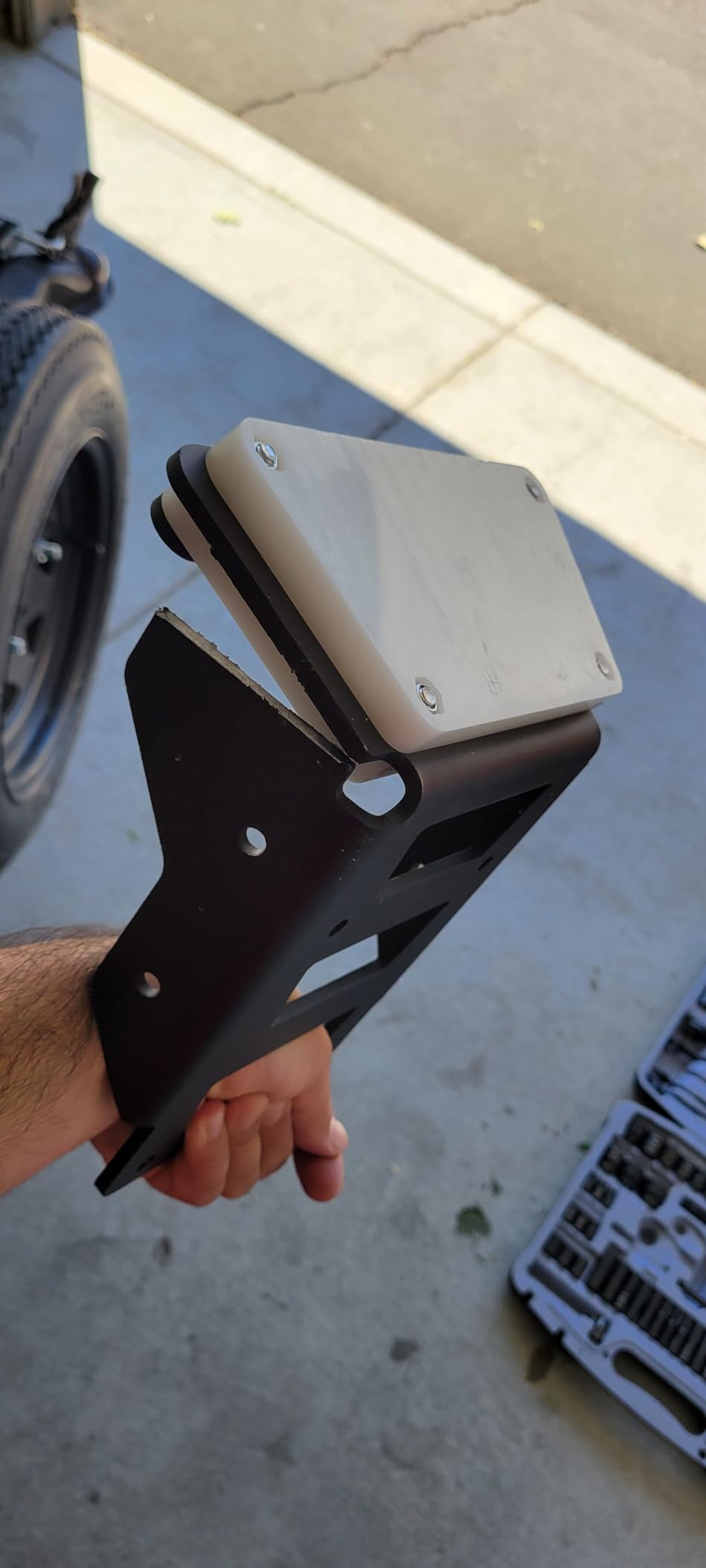
Most homemade transom solutions use a plywood block, and plywood in a wet hull eventually rots. This one uses a rot-proof high-strength nylon board instead, paired with 5mm marine-grade aluminum and a gloss black powder coat. Reviewers treat it as a clean upgrade over a wood block.
All stainless hardware is included, which is more than several competing kits manage, and the 3.75 by 4.75 inch pattern fits Newport, Minn Kota and similar motors. At 1.22 kg it is on the lighter side of the aluminum options.
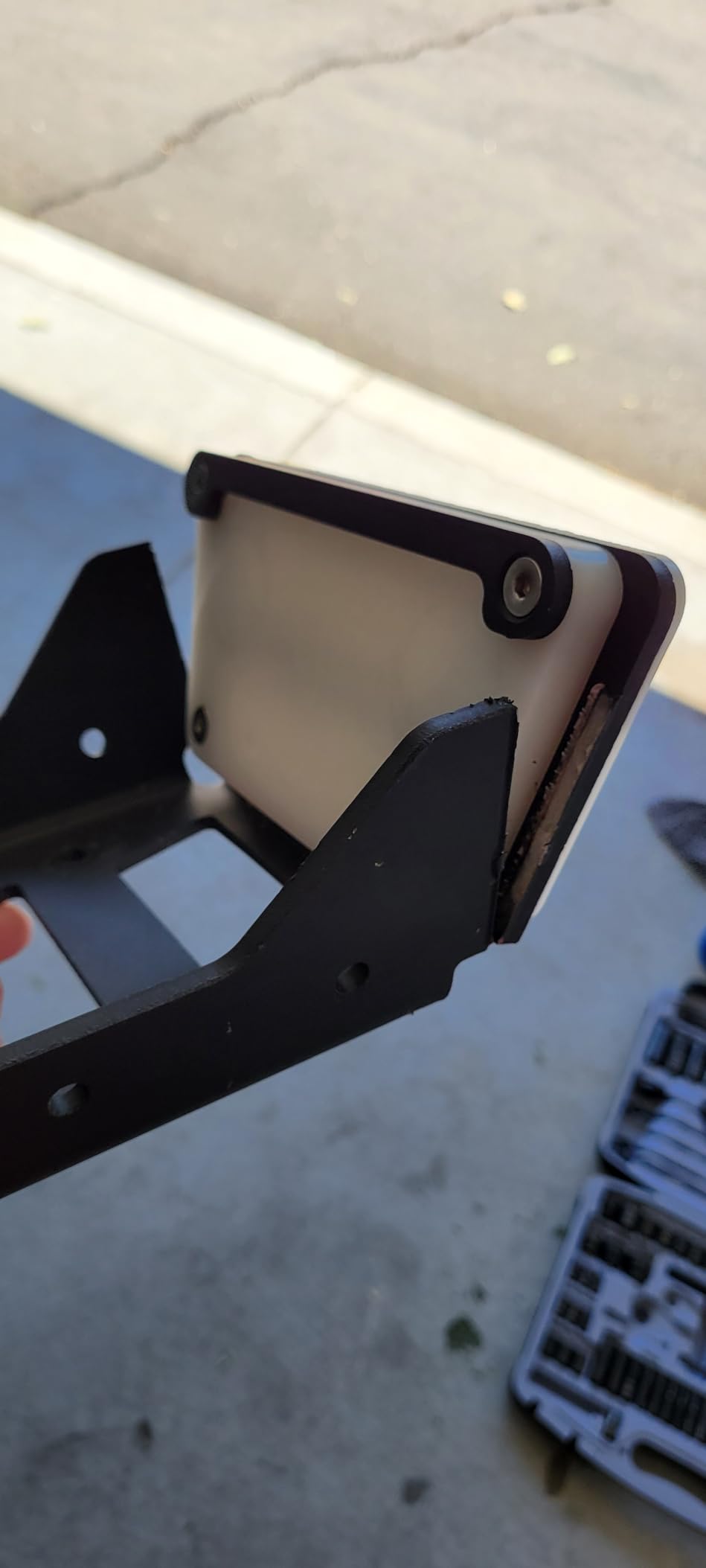
Fit is generally good on standard patterns, but owners with recessed sterns still report needing a spacer or backing plate. The nylon board is lighter than wood but less rigid under a heavy gas outboard, which is the trade you make for rot resistance.
Twenty-seven reviews is a small base. That does not make it a poor choice, but it does mean there is less long-term evidence than the top three in this roundup carry.
Who this mount suits
It suits owners building a transom block from scratch who want a rot-proof material and included stainless hardware in one purchase. It is rated for gas or electric motors up to 3 HP for light duty.
It is a good fit for anyone who would otherwise cut a plywood block and treat it every season.
What to watch for
Watch stern recess geometry. If your transom is recessed, plan a spacer or backing plate before the first cold soak.
Do not load it with a heavy gas outboard. The nylon board has less give than plywood and less strength than aluminum.
Transom, Bow or Side Mount: Where the Motor Should Sit
Mount it at the stern on a rigid transom-style plate for best control. A stern mount with a backed stern panel tracks best, keeps the motor out of your paddling path and leaves the bow light, which is the arrangement most experienced kayak anglers settle on.
A bow mount pulls from the front, which gives better steering authority in current because the motor acts against the widest part of the hull. It also adds weight forward, which on a small sit-on-top can make the boat feel twitchy and slow to turn. Bow mount plates are a distinct subcategory, and most of them bolt to a prepared deck rather than clamping to a rail.
A side mount is the easiest of the three to fit and the least useful in practice. It needs no drilling at all, which is why it appeals to nervous owners, but repeated reports describe the kayak crabbing and refusing to hold a line. Paddling.com threads on the topic are consistent on this: side mounting is physically easy and handles badly.
Two other styles appear in this roundup. A gear-track bar mount bolts to a rail and is the most rigid option here. A glue-pad mount sits on top of an inflatable hull and is the only approach that never touches the skin.
On pedal-drive and fin-drive kayaks, clearance is the deciding factor. The mount must clear the pedal crank and must not foul the steering linkage. Owners on those boats are usually looking for a side or track mount set forward of the crank rather than a stern plate. Our [pedal kayak picks](/best-pedal-kayaks/) cover the hulls where that geometry works.
If your motorised boat runs whitewater rapids rather than open water, the geometry question changes again, and the short list of mounting approaches is worth reading before you drill anything. Our [whitewater kayak guide](/best-whitewater-kayaks/) breaks down the hull shapes that tolerate a stern-mounted motor.
How to Choose a Trolling Motor Mount for Your Kayak
Start with the hull, not the mount catalogue. Sit-on-top fishing kayaks with a flat stern panel take a transom bracket. Sit-in hulls need a backing plate. Inflatables need a pad mount. Pedal-drive boats need side or track clearance. Everything else follows from that one answer.
Then decide your steering method, because the mount constrains it. Cable steering through a rudder line gives the best control and efficiency, and consensus across r/kayakfishing and forums.paddling.com is that a rear mount with cable steering is the strongest combination, at the cost of a more involved install. A tiller or telescoping handle is faster to set up but awkward from a seated position. Offset handle extensions exist for exactly that reason. A remote is the cleanest from the seat and the most expensive.
Check thrust and torque, not just weight. A mount rated to 3 HP or 70 to 86 lb of thrust covers every realistic kayak motor. The number that matters more is torque: a motor working out of the water can twist its mount loose, which is why a locking lip is worth paying for.
Plan the backing. This is the step owners skip and regret. A backing plate or backing block inside the hull spreads the load across a wider area than the bolt holes alone. Experienced paddlers stress that the mount must sit well above the waterline with the top of the hull well braced, because that is where the load is applied.
Match the bolt pattern before you commit. The standard 3.75 by 4.75 inch pattern appears in most of this roundup and drops into existing stern points. A non-standard pattern means shims, or trimming the plate, on day one.
Think about corrosion if you fish salt. Marine-grade aluminum with a powder coat, 304 stainless hardware and nylon components are the ingredients to look for. Owners with repeated offshore trips report that these hold up and that plated steel does not.
Finally, decide whether you want the mount back off the boat when you are done. Reversible mounts let you remove the motor, carry the kayak normally and keep the hull unmodified for resale. That matters more to owners of expensive boats than any spec on the listing.
How to Mount a Trolling Motor on a Kayak
Bolted with a backing plate is the strongest method and the right default. Drill the four holes through the stern panel, place a backing plate or a hardwood block inside the hull, run stainless bolts through, washers on both sides and torque them snug rather than hard. Over-tightening cracks thin hull skins.
Mark the hole pattern with masking tape before you drill, and start with a smaller bit. Sit-on-top decks are easy. The stern of a sit-in kayak is usually curved and thin, so support it from underneath with a block clamped over the top while you drill.
Adhesive and glue pads suit inflatable hulls where drilling is off the table. Clean and roughen the tube, use a marine two-part epoxy, and clamp the pads for the full cure time. Bond strength depends entirely on surface prep, and pads will not conform to a curved tube without help, so plan a lashing strap.
A strap-on or clamp-only mount avoids all permanent changes. It is the least rigid approach and the easiest to remove, and it is the right compromise if the kayak is expensive, often sold on, or shared with someone who does not want a motor.
Whichever method you choose, re-check every fastener after the first hour on the water. Adhesive mounts settle, bolts stretch under torque, and a bracket that felt solid on land often needs one adjustment once the hull is loaded and moving.
Frequently Asked Questions
What is the best way to mount a trolling motor on a kayak?
Use a rigid transom-style bracket clamped to a flat stern panel, backed from inside the hull with a backing plate or block. Most kayaks have no transom, so the mount carries the motor weight and torque. Inflatable hulls need glue pads, and pedal-drive kayaks need side or track clearance instead.
Where is the best place to mount a trolling motor on a kayak?
At the stern, on a reinforced flat panel, for the best tracking and control. A bow mount pulls against the widest part of the hull and steers better in current but adds forward weight that makes small boats twitchy. Side mounts are easiest to fit and worst at holding a line.
Which kayaks are best for mounting a trolling motor?
Sit-on-top fishing kayaks with a flat stern panel are the easiest fit for a transom bracket. Inflatable kayaks need a pad mount because you cannot drill them. Pedal-drive and fin-drive kayaks need a side or gear-track mount set forward, clear of the pedal crank and steering linkage.
How fast will a kayak go with a 55lb thrust trolling motor?
Kayak anglers report roughly 3 to 5 mph at trolling speed with a 55 lb thrust motor. That is a positioning speed, not a travel speed, and most anglers manage structure with short bursts of power rather than sustained running. A lighter hull needs less thrust than the label implies.
Can you legally put a trolling motor on a kayak?
Yes in most US waters, since a trolling motor adds no combustion engine. The practical limits are local registration rules for the water you fish and lighting requirements for unpowered craft, which a motor does not automatically satisfy. Check state and local guidance before a long coastal trip.
What is the best brand of motor mounts?
Brocraft covers the widest range, from universal transom brackets to gear-track and inflatable-specific mounts. Newport Vessels set the bolt-pattern standard most others copy. Pelican makes a purpose-fit model for its Catch and Getaway lines. No single brand wins on every hull type.
Final Verdict: The Best Kayak Trolling Motor Mount
The best trolling motor mount for a kayak in 2026 is the besttruck universal transom bracket for anyone with a flat stern panel. It has the deepest owner record in this group, it is rated to 3 HP, and owners running 55 and 80 lb thrust motors report no flex and no shifting. Buy your own longer bolts and add a backing plate inside the hull.
If your boat is not a flat-stern hull, match by geometry instead. Brocraft’s track bar mount is the most rigid option for gear-track owners, the Pelican bracket is the fastest clean install on its own hulls, and the Brocraft pad mount is the only real answer for an inflatable. The Opheart is the pick if you want the thickest aluminum and already have a backing solution.
Whatever you choose, reinforce the inside of the hull, re-check the fasteners after your first trip, and confirm the bolt pattern against your specific kayak model before you drill. Then pick the motor to match the mount, not the other way round.