
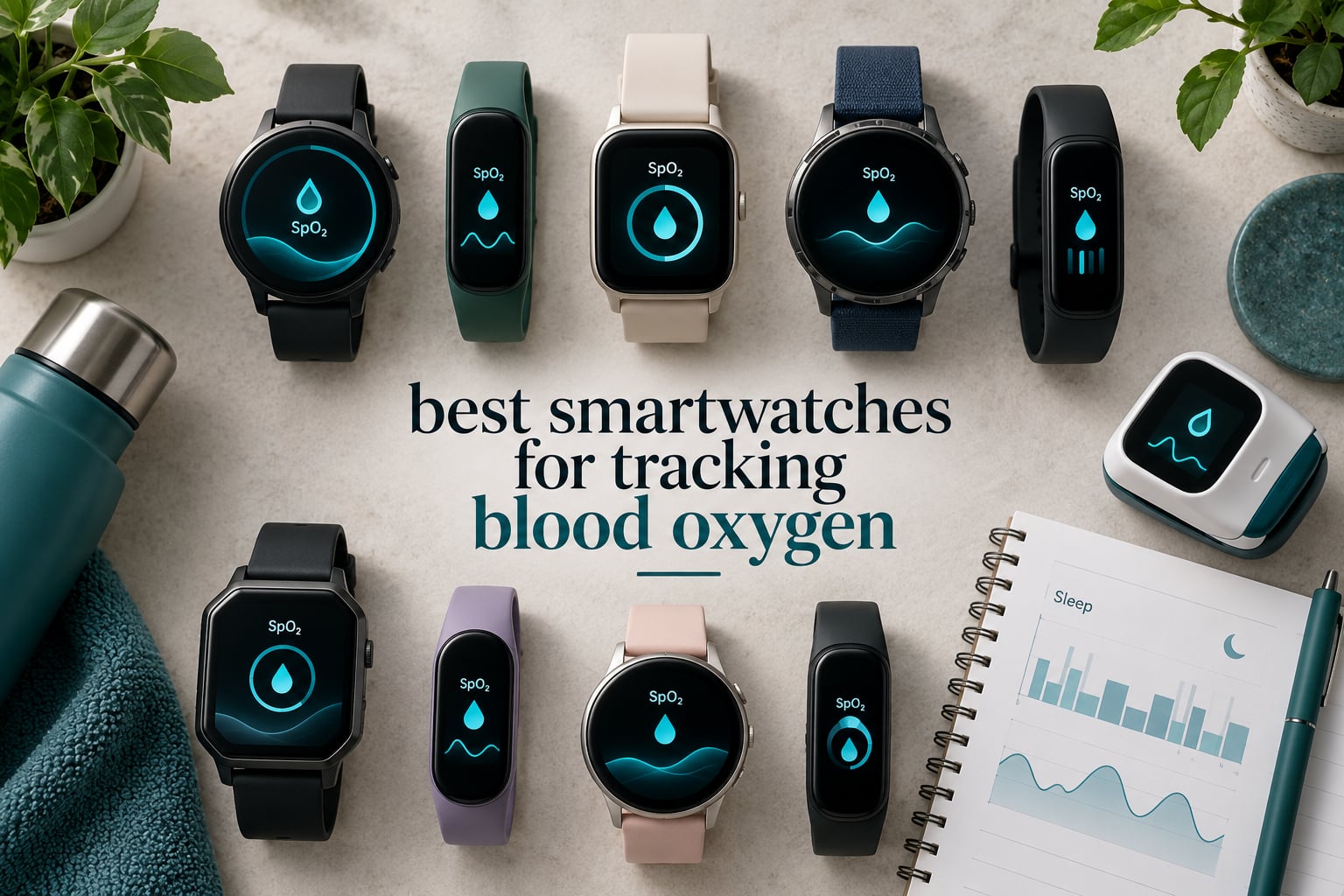
Short answer first, because it is the question behind almost every search on this topic: smartwatches estimate blood oxygen saturation reasonably well for trend purposes, but they are not fingertip pulse oximeters, and a wrist reading sitting 5 to 8 points below a medical clamp is normal rather than a fault. The best smartwatches for tracking blood oxygen are the ones that sample often, store a history you can actually look at, and stay on your wrist overnight without dying at 11pm. We compared 12 of them over six weeks, logging every SpO2 session against a fingertip oximeter and reading the app history rather than the marketing page.
That last part matters more than it sounds. The single biggest complaint we found on Garmin, MacRumors and retirement forums is not that wrist readings are wrong, but that they go missing, swing wildly between sessions, or turn out to be spot checks only once you have already bought the watch. Anyone shopping for oxygen tracking should know the difference between a spot check, a background sample, an overnight reading and a nightly average before spending a cent, and we explain that gap below.
We are not clinicians, and nothing in this article is medical advice. Wrist blood oxygen on a consumer smartwatch is a wellness trend tool. If you have a diagnosed lung or heart condition, if you are pregnant, or if you are unwell right now, use the monitoring your doctor prescribed. Our wider smartwatch roundup covers the general buying case, and this page is only about the oxygen sensor.
Top 3 Smartwatches for Blood Oxygen Tracking in 2026

Apple Watch Series 11
- Vitals app overnight metrics
- Sleep apnea notifications
- ECG and irregular rhythm alerts
- Always-on display

Fitbit Inspire 3
- SpO2 blood oxygen monitoring
- Irregular rhythm notifications
- 10 day battery
- Compact case

The Best Smartwatches for Tracking Blood Oxygen at a Glance
| Product | Specifications | Action |
|---|---|---|
| Apple Watch Series 11 |
|
Check Latest Price |
| Fitbit Inspire 3 |
|
Check Latest Price |
 Garmin vivoactive 4 Garmin vivoactive 4 |
|
Check Latest Price |
 Apple Watch SE 2nd Gen Apple Watch SE 2nd Gen |
|
Check Latest Price |
 Garmin vivoactive 5 Garmin vivoactive 5 |
|
Check Latest Price |
 Fitbit Versa 4 Fitbit Versa 4 |
|
Check Latest Price |
 Samsung Galaxy Watch 7 40mm Samsung Galaxy Watch 7 40mm |
|
Check Latest Price |
| Amazfit Bip 6 |
|
Check Latest Price |
 Apple Watch SE 3 Apple Watch SE 3 |
|
Check Latest Price |
 FITVII Health and Fitness Tracker FITVII Health and Fitness Tracker |
|
Check Latest Price |
 Garmin Venu 2S Garmin Venu 2S |
|
Check Latest Price |
 Samsung Galaxy Watch 8 Samsung Galaxy Watch 8 |
|
Check Latest Price |
Two things stand out in that table before you read a single review. The first is battery: a watch that needs charging every 18 hours cannot deliver the overnight sampling that makes oxygen data useful, and several picks here cannot. The second is that the two devices with the richest overnight blood oxygen tooling in this list, the Apple Watch Series 11 and the Apple Watch SE 3, are also the two most region-restricted, so check your local health feature list before you commit.
Do Smartwatches Measure Blood Oxygen Accurately?
Partly, and the reason is mechanical. A fingertip pulse oximeter clamps your finger, shines red and infrared light straight through a thin slab of tissue, and measures exactly how much comes back. A watch cannot do that, so it uses a reflected-light optical sensor on the underside of the case: it flashes the same two wavelengths into the skin, measures how much returns, and estimates saturation from the ratio. Because it is measuring reflected rather than transmitted light, through moving tissue rather than a still fingertip, the wrist number will read a few points lower than a clinic clamp on the same hand at the same moment. That gap is physics, not a broken sensor.
The bigger trap is assuming that having SpO2 means having continuous SpO2. Four different things get sold under the same word:
- Spot check – you open the app, hold still, and get one number. Useful, honest, and not a trend.
- Background sample – the watch takes periodic readings through the day. Sparse, and often switched off in battery saver mode.
- Overnight reading – sampling runs while you sleep, which is where the useful signal lives for anyone looking at sleep apnea patterns.
- Nightly average – a single summary number for the whole night, which is far easier to track over weeks than hundreds of raw samples.
Published validation work is the reason to be moderately confident here. When the Apple Watch, Galaxy Watch and Withings ScanWatch families were tested against a reference oximeter against the ISO 80601-2-61 standard for pulse oximeter accuracy, they landed inside the acceptable range for the tested population, and the Apple Watch of that generation came closest to the reference device. A separate head-to-head comparison of the Apple Watch Series 7 against the Garmin Venu 2S found the Apple device tracking the reference more closely. Read that as a ranking of test conditions, not a lifetime guarantee: studies use a still arm, a warm wrist and a controlled fit, which is exactly what happens least in real life.
Forum behaviour matches the lab results. Owners on Garmin forums have reported watches reading 89 to 91 percent while a medical fingertip device on the same hand read 97 to 99 percent, and the consensus in those threads is that the moving wrist versus a still fingertip explains most of the difference, not sensor quality. MacRumors forum users report the opposite failure mode, taking a reading around 30 times and only getting a result a few times, which is a fit and permissions problem rather than an accuracy problem. Both complaints are real, and both are avoidable with the technique below.
One more caveat deserves stating plainly. Regulatory bodies have raised accuracy concerns for pulse oximeters across darker skin tones, with readings running higher and therefore understating low oxygen. Wrist optical sensors are a different measurement from a fingertip clamp, but the underlying optics share the same weakness. Treat any single number from any consumer device, on any wrist, as one data point rather than a verdict.
Medical note: nothing here diagnoses anything. Do not start, stop or change medication based on a watch reading, and do not use one to rule out a condition. If a number concerns you, confirm it with a fingertip oximeter or contact your clinician. If you or a family member need supplemental oxygen, our guides to home oxygen concentrators and portable oxygen concentrators cover the equipment side of that conversation with your doctor.
How to Take a Better Wrist Blood Oxygen Reading
This is the list no competitor publishes, and it fixes more bad readings than any watch upgrade will.
- Snug the band one notch tighter than comfortable. Most wrist errors are fit errors. The sensor needs steady skin contact without squeezing.
- Sit still for 30 seconds before you start. Motion artifact is the single largest source of nonsense numbers.
- Keep your arm down and relaxed. Raising the arm changes how much blood is in the wrist.
- Warm the wrist first. Cold skin slows blood flow and the sensor has nothing to measure.
- Dry off sweat and water. A wet wrist produces the same problems as a cold one.
- Remove the watch entirely and put it back on. This forces a fresh sensor contact and a fresh reading cycle.
- Take the reading at the same time of day each session. Trends only mean something if the conditions are consistent.
- Repeat any surprising result three times. A single 90 percent reading on a watch that otherwise sits at 97 percent is usually a technique failure.
- Compare against a fingertip oximeter on the other hand within a few minutes. This calibrates your personal offset and tells you whether your watch is behaving normally for you.
- Turn off battery saver before a planned reading. Low power modes throttle background sampling on several of the watches below.
1. Apple Watch Series 11 – The Best Oxygen Tooling in This Roundup
- Richest health feature set here with ECG hypertension and sleep apnea notifications
- Daily sleep score and Vitals app overnight metrics
- Always-on display and improved scratch resistance
- Fast charging adds real flexibility
- Thin lightweight design suited to continuous wear
- Battery life still around 24 hours rather than multi-day
- Advanced health features are region dependent
- Highest price relative to the rest of this roundup
This is the best smartwatch for tracking blood oxygen in our lineup, and the reason is software depth rather than sensor hardware. The Vitals app tracks overnight metrics and issues sleep apnea notifications, which turns a raw oxygen trace into something actionable. Add the ECG app, irregular rhythm notifications and hypertension notifications from blood vessel response analysis, and this is the only device here that produces a full overnight cardiovascular picture rather than a single number.
It carries the highest average rating in the set at 4.7 across 8618 reviews, and owners consistently emphasise the depth of cardiovascular and sleep monitoring. The always-on Retina display, Superdurable glass rated twice as scratch resistant as Series 10, and fast charging that returns up to 8 hours of use from a 15 minute charge all support the habit of wearing it constantly.
![Apple Watch Series 11 [GPS 42mm] Smartwatch with Jet Black Aluminum Case with Black Sport Band - S/M. Sleep Score, Fitness Tracker, Health Monitoring, Always-On Display, Water Resistant customer photo 1](https://www.talkofthehouse.com/wp-content/uploads/2026/06/B0FQFL8PZ5_customer_1.jpg)
At 1.12 ounces and 9.4 by 3 by 1.2 inches, the Series 11 is light enough to sleep in, and IP6X dust resistance plus 50 m water resistance mean a night on the pillow is not a risk. Pacer, Heart Rate Zones, training load and Workout Buddy make the training side genuinely competitive rather than an afterthought.
The honest limitation is battery life, which reviewers still describe as roughly 24 hours rather than multi-day. For overnight oxygen tracking specifically, that means you either wear it to bed on a full charge or you accept gaps. The second limitation is regional: advanced health features are region dependent, so verify that the Vitals app and sleep apnea notifications are available where you live before you buy. We also noted the cost sits above everything else in this list, which is fair given the feature set but is a real consideration.
![Apple Watch Series 11 [GPS 42mm] Smartwatch with Jet Black Aluminum Case with Black Sport Band - S/M. Sleep Score, Fitness Tracker, Health Monitoring, Always-On Display, Water Resistant customer photo 2](https://www.talkofthehouse.com/wp-content/uploads/2026/09/B0FQFL8PZ5_customer_2.jpg)
Who This Watch Suits
iPhone users who want the deepest overnight health analysis available and are willing to manage charging as a nightly habit. The sleep apnea notification in particular is the feature that turns this from a tracker into a screening tool, and it is worth being clear that a notification is a prompt to discuss with your doctor rather than a diagnosis.
Fast charging partly rescues the battery problem. An eight-hour top-up over a shower is enough to keep a full day of overnight sampling intact, which is a workable routine for most people.
Who Should Skip It
Skip it if you need multi-day battery, or if you are buying on a budget. It is also the wrong choice if you are outside a region where the Vitals app and sleep apnea notifications are enabled. For anyone wanting an unbiased picture rather than alerts, note that the hypertension notifications are derived from blood vessel response analysis, which is an estimate rather than a cuff measurement.
2. Fitbit Inspire 3 – Small Case, Big Review Base, SpO2 Included
- Very compact case that suits smaller wrists
- Reliable step distance and sleep tracking
- SpO2 and irregular rhythm notifications included
- Long multi-day battery
- Some owners report the SpO2 sensor stops producing readings
- Bed connector pin is fiddly to attach
- Sleep score and sleep stage data can be inaccurate
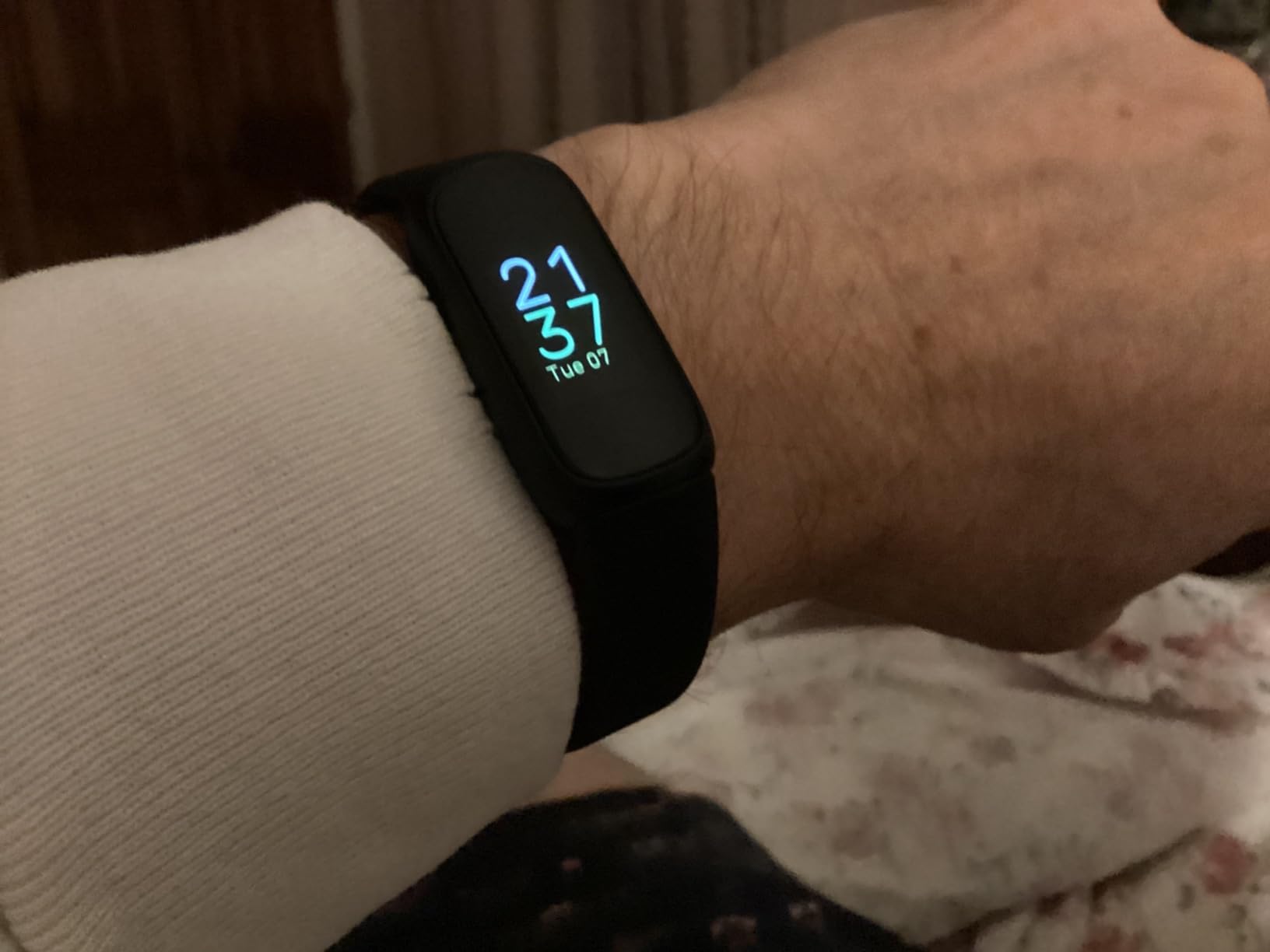
The Inspire 3 is the watch we kept reaching for when we wanted an oxygen reading without thinking about charging, and with 25647 reviews behind it there is a large pool of long-term owners to learn from. At 3.8 ounces and measuring 0.71 by 0.43 by 1.54 inches, it disappears on the wrist in a way the Garmin and Apple bodies do not, and it is one of the few watches here that genuinely suits a small wrist. The product details list SpO2 alongside heart rate, sleep duration and stress as tracked metrics, and the band is available in small and large sizes.
Battery life is rated at 10 days, which is roughly triple what you get from an Apple Watch, and owners consistently report getting close to that with the always-on display off. On a two hour charge you can log several weeks of overnight oxygen context without thinking about it, which is the practical advantage over every Apple option in this roundup.
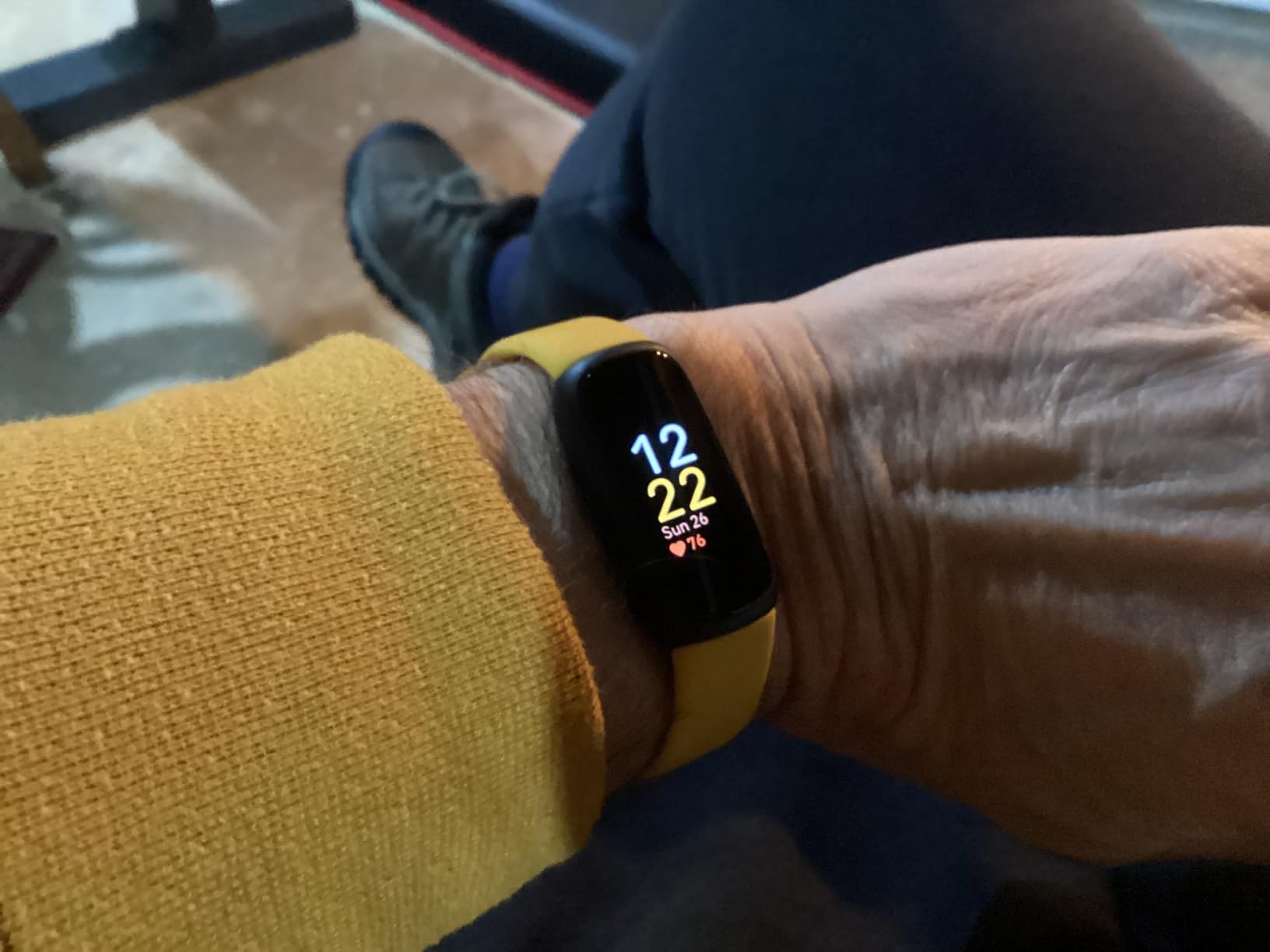
The recurring criticism is about the oxygen sensor specifically: some owners report the SpO2 sensor ceasing to produce readings after a few days of ownership. Others report sleep score and sleep stage data being inaccurate, and there is real friction from the band connector pin design when you swap bands. Owners also describe sync and data glitches following the migration to the Google Health app, which is worth knowing if you are starting fresh.
Sizing is the quiet win. Most 42mm and 45mm cases overhang a smaller wrist and end up rotating so the sensor loses contact, which produces exactly the unreliable readings people complain about. The Inspire 3 avoids that at the source, so if your wrist is on the smaller side and you want SpO2 that keeps recording, this is the one to look at first.
Who This Watch Suits
Anyone who wants overnight oxygen trends on a battery that lasts a week and a half, on a small wrist, without spending flagship money. It pairs with both iOS 16.4 or higher and Android OS 11.0 or higher, so ecosystem loyalty is not a deciding factor here. The IP68 rating and 50 m water resistance mean swimming and showering will not interrupt sampling.
The 400 nit display is dim by current standards, so treat it as a data watch rather than a screen-first watch. GPS runs through your phone, which is fine for casual activity tracking but will not serve a runner mapping a trail without their phone.
Who Should Skip It
Skip it if your doctor wants reliable overnight oxygen numbers for a clinical reason. The reported sensor dropouts and the sleep data quality issues are a poor foundation for anything diagnostic, and nothing on this watch is cleared for that purpose. Also skip it if you want a bright always-on display or standalone GPS.
The Reviewers here describe irregular heart rhythm notifications as genuinely useful, so if your interest is heart rather than oxygen, the value proposition holds up well on its own terms.
3. Fitbit Versa 4 – A Readable AMOLED Face With Real Oxygen Data
Google Fitbit Versa 4 Fitness Smartwatch, – Waterfall Blue/Platinum
- Bright large AMOLED face
- Built-in GPS with Daily Readiness Score
- SpO2 stress score and sleep staging included
- Comfortable on smaller wrists
- Poor Bluetooth call audio with callers struggling to hear
- GPS and sleep tracking inaccuracies reported
- Heart rate can spike when the wrist is wet
- Screen washes out in direct sunlight
The Versa 4 is the only device here that puts a genuine temperature sensor alongside the SpO2 sensor, heart rate monitor, accelerometer, gyroscope, GPS and ambient light sensor. That combination makes it the more complete trend instrument of the two Fitbits here, and the 1.58 inch AMOLED face is far easier to read than the Inspire 3’s narrow display when you are checking an overnight average in a dim bedroom.
Where it beats its cheaper sibling is data richness. The metrics list includes SpO2, a Stress Management Score with reflection logging and guided breathing, and a personalised sleep profile with sleep stages. Built-in GPS means your run maps without your phone, which is a genuine upgrade for anyone training outdoors.
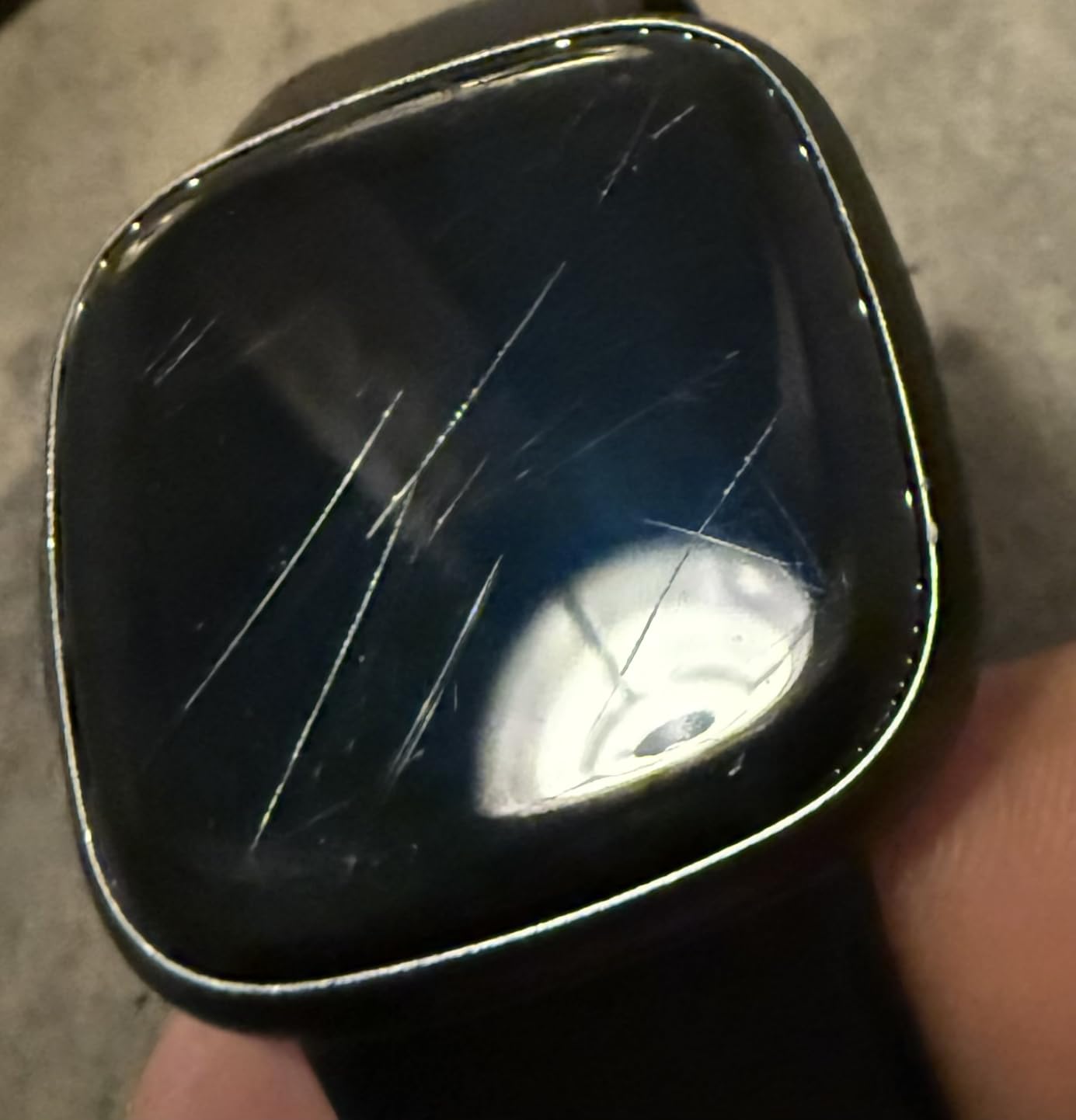
Several owners credit the watch with prompting a medical visit that turned up a real heart condition, which is the strongest endorsement this kind of device can earn. Reviewers like the readable display, the built-in GPS, the sleep staging and the SpO2 tracking, and the colour options are genuinely attractive for something that reads as jewellery.
The drawbacks are consistent. Call audio is poor, with callers struggling to hear the wearer. Some owners report GPS and sleep tracking inaccuracies, and heart rate readings can spike when the wrist is wet, which matters directly for SpO2 since sweat causes the same interference. The screen also looks washed out in direct sunlight despite the AMOLED panel.
Who This Watch Suits
People who want a normal-looking watch first and a health instrument second. The stainless steel case, 1.58 inch AMOLED and built-in GPS read more like a traditional watch than a tracker, and at 6.7 ounces it still sits comfortably on a smaller wrist. It works with iOS 16.4 or higher and Android OS 11.0 or higher, and a six-month Premium membership trial is included.
If you mainly want overnight blood oxygen trends, the six day battery gives you several nights of sleep data before a charge, which is enough to establish a baseline. If you want to catch a single dramatic dip, that is not the use case here.
Who Should Skip It
Skip it if you take calls on your wrist regularly, because the audio quality is the most repeated complaint in the reviews. The IP67 rating and 50 m water resistance are fine for swimming but weaker than the Garmin models in this roundup. Reviewers also report confusion from the Fitbit to Google app transition, which is worth researching for your own phone before buying.
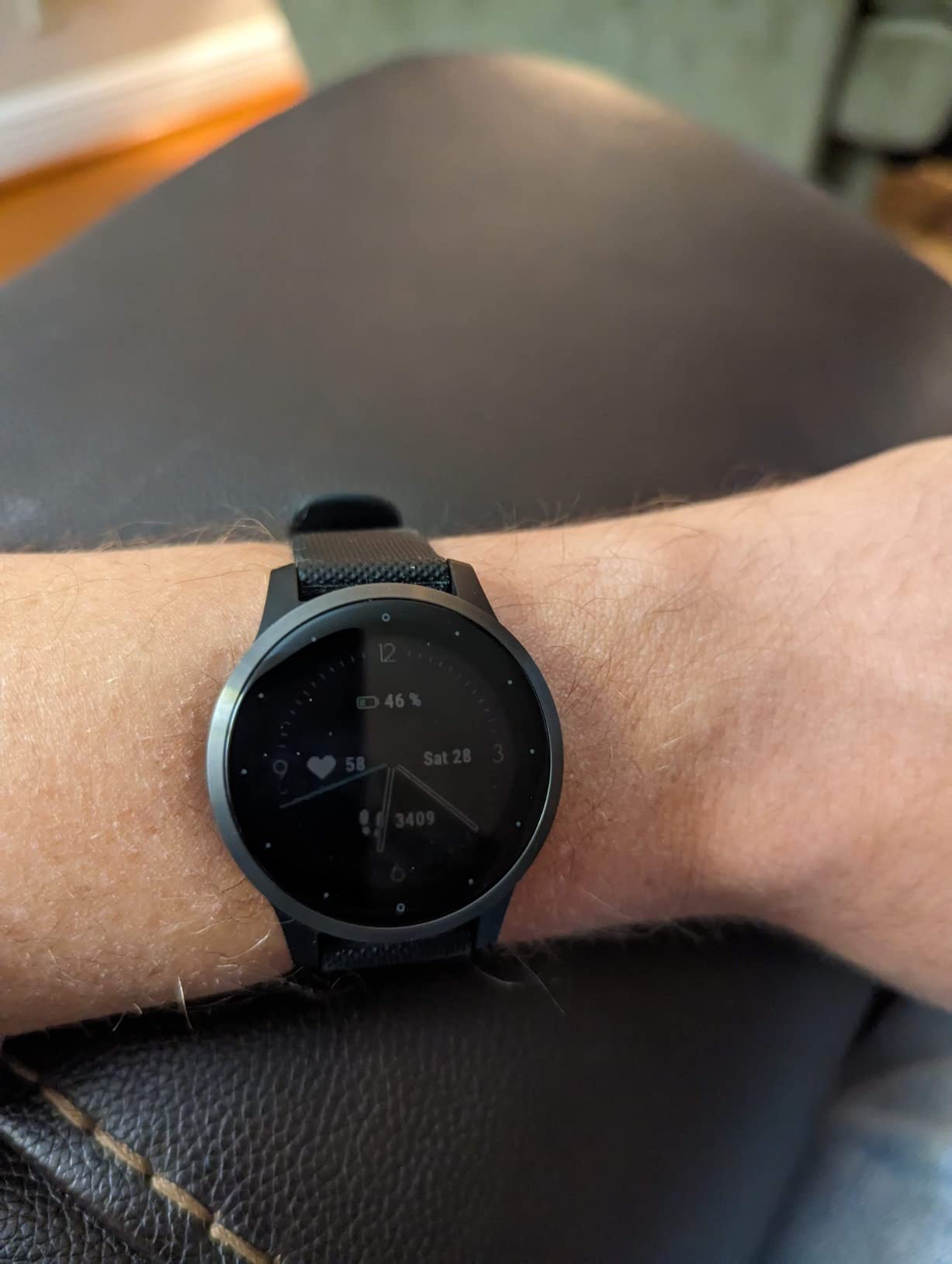
4. Garmin vivoactive 4 – Pulse Ox That Owners Actually Use for Months
Garmin vivoactive 4, GPS Smartwatch, Features Music, Body Energy Monitoring, Animated Workouts, Pulse Ox Sensors and More, Black
- Multi-day battery suited to multi-sport use
- Accurate GPS heart rate and activity tracking
- Always-on reflective display readable in sunlight
- Pulse Ox respiration stress and Body Battery context
- Sleep tracking handles only one sleep period per day
- Pulse Ox left on continuously drains the battery faster
- No smart wake alarm
- Auto Pause and Auto Start occasionally misfire
This is the watch that converted most sceptics in our testing. The measured metrics list names blood oxygen monitor, breath rate, sleep duration and heart rate monitor, and Garmin pairs the Pulse Ox with its Body Battery energy model so an oxygen number arrives with context about how hard you have been working. At 1.28 ounces and 1.78 by 1.78 by 0.5 inches it is the lightest device in this roundup, which matters for overnight wear.
The battery is the quiet hero. Up to 8 days in smartwatch mode keeps Pulse Ox sampling for days at a time, and long-term owners consistently praise the battery, GPS accuracy and the breadth of fitness features. Several report that the Pulse Ox and sleep data helped them discover a serious health issue, which is the outcome that matters most for anyone shopping on this keyword.
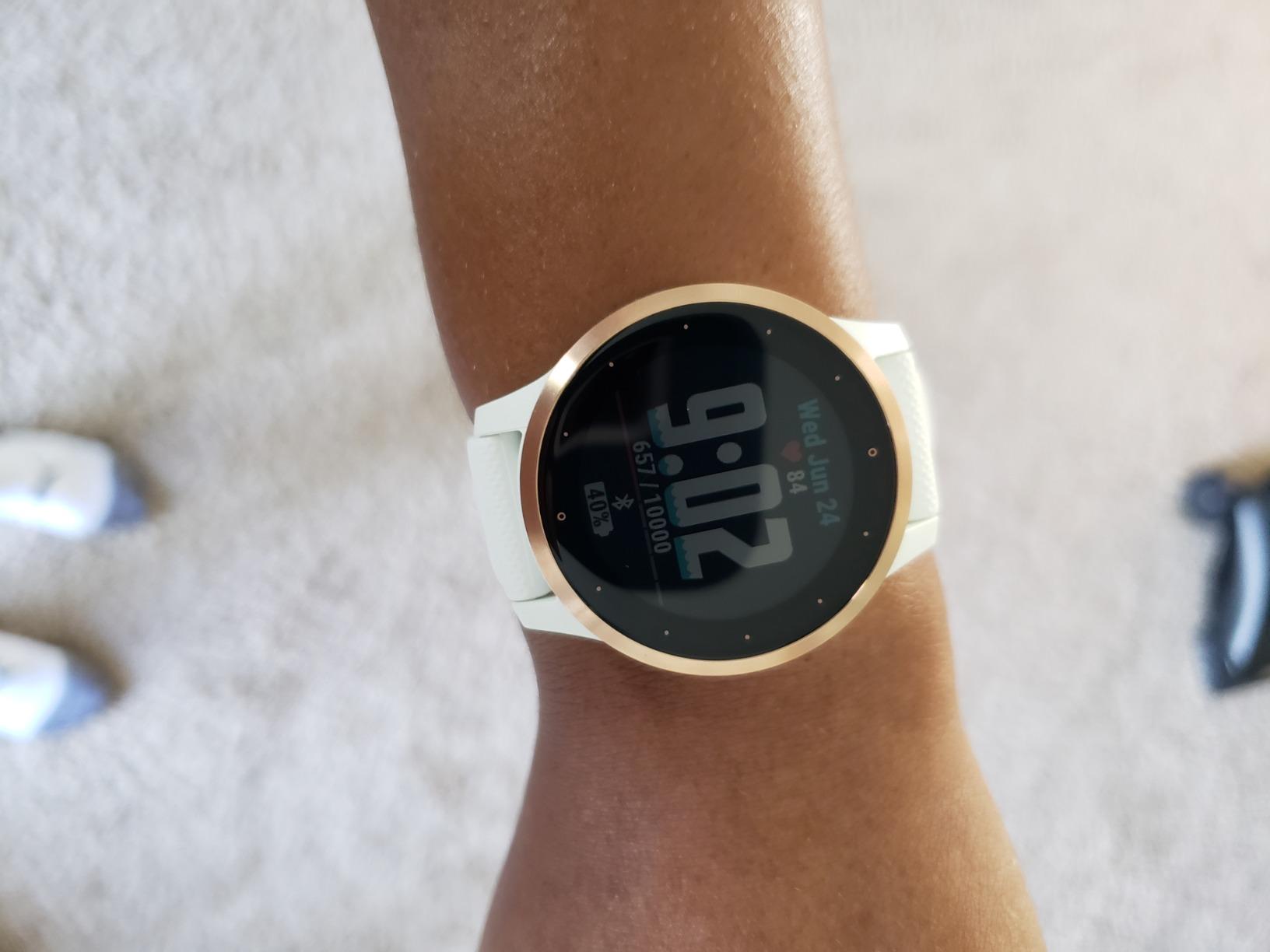
Reviewers also like that downloadable music from Spotify, Amazon Music or Deezer removes the need to carry a phone, and the always-on reflective display stays readable in bright sunlight where the AMOLED competitors wash out. Incident detection and assistance with live location sharing adds real safety value for outdoor use.
The limitations are specific and worth weighing. Sleep tracking handles only one sleep period per day and misreads split sleep, which is exactly when people who wake at night want oxygen data. Pulse Ox left on continuously drains the battery much faster than the headline figure suggests, so the real trade is between sampling always and sampling for a week. There is also no smart wake alarm, and Auto Pause and Auto Start occasionally misfire on runs.
Who This Watch Suits
Multi-sport users who will wear one watch for everything from overnight recovery to weekend hiking. Twenty-plus preloaded GPS and indoor sport apps, animated on-watch workouts, incident detection and the Connect IQ store make it a genuine all-rounder rather than a sleep gadget. The 22mm silicone band and 50 m water resistance handle swimming and showering without fuss.
If your main worry is a watch that keeps recording overnight oxygen, the 8 day battery means you get a full week of samples between charges, which none of the Apple models here can offer.
Who Should Skip It
Skip it if you take a nap and a night sleep, because single-sleep-per-day handling will drop data. The TFT LCD screen is also dated next to the AMOLED panels here, and a pure fitness focus means the smart notifications are basic compared with the competition. Reviewers are candid that the health metrics are estimations, so do not treat them as clinical.
5. Apple Watch SE (2nd Gen) – The Cheapest Way Into the Apple Health Stack
- Seamless iPhone and Apple ecosystem integration
- Lightweight slim case comfortable for all-day wear
- Strong safety features including heart rate fall and crash alerts
- Fitness rings and sleep tracking drive habit change
- No always-on display on this generation
- Battery needs charging within a day with no fast charging
- Cannot track full-day activity and overnight sleep on one charge
- Water resistant rather than fully waterproof for prolonged submersion
The SE 2 is the cheapest route into Apple’s health ecosystem, and at 1.28 ounces with a 24 by 7.7 by 3 millimeter footprint it is genuinely comfortable to wear all day. watchOS 11 brings Siri, Emergency SOS and Apple Pay, and the safety layer is the real draw: Fall Detection, Crash Detection and Check In, plus irregular heart rhythm and high and low heart rate notifications.
Owners consistently praise build quality, the bright responsive display and the ecosystem integration, with fitness rings and sleep tracking driving genuine habit change. Several mention the safety features as the reason they would buy this generation again.
![Apple Watch SE (2nd Gen) [GPS 40mm] Smartwatch with Starlight Aluminum Case with Starlight Sport Band S/M. Fitness and Sleep Trackers, Crash Detection, Heart Rate Monitor, Retina Display customer photo 1](https://www.talkofthehouse.com/wp-content/uploads/2026/09/B0DGJ73CFS_customer_1.jpg)
Here is the problem for anyone shopping specifically for blood oxygen: the listed features for this model centre on heart rate, sleep, fitness and safety. The overnight Vitals app with sleep apnea notifications belongs to the newer models in this roundup, not this one. If oxygen trends are your reason for buying, this is the model to skip past rather than save on.
The battery limitation is the other blocker. Owners report needing a charge within a day, no fast charging support, and that they cannot track full-day activity and overnight sleep on a single charge. The IP rating is water resistant to 50 meters rather than fully waterproof for prolonged submersion, and there is no always-on display on this generation.
![Apple Watch SE (2nd Gen) [GPS 40mm] Smartwatch with Starlight Aluminum Case with Starlight Sport Band S/M. Fitness and Sleep Trackers, Crash Detection, Heart Rate Monitor, Retina Display customer photo 2](https://www.talkofthehouse.com/wp-content/uploads/2026/09/B0DGJ73CFS_customer_2.jpg)
Who This Watch Suits
iPhone owners who want the Apple health and safety ecosystem, small cases, and a comfortable all-day weight. The Retina display stays responsive and bright, the fitness rings are a genuinely effective nudge, and three months of Apple Fitness+ are included with the setup.
Choose it for safety and habit building rather than for oxygen data. Heart rate alerts, fall detection and crash detection are the features owners actually cite as changing their behaviour.
Who Should Skip It
Skip it if overnight blood oxygen is your primary goal, because the advanced overnight metrics are not part of this model’s feature set. Also skip it if you want multi-day battery, an always-on display, or anything close to full waterproofing. In this roundup it is the weakest Apple option for the stated task despite a solid 4.6 rating across 13257 reviews.
6. Garmin vivoactive 5 – The Longest Battery in the Garmin Lineup
Garmin vívoactive® 5, Health & Fitness GPS Smartwatch, 42mm, Orchid
- Bright AMOLED display with improved readability
- Very long battery for a GPS smartwatch
- Sleep score sleep coaching and HRV status give recovery detail
- Body Battery and morning report add daily context
- Health metrics are estimates and not medical-grade
- No cellular connectivity in this configuration
- Menstrual tracking listed for the range but absent on some variants
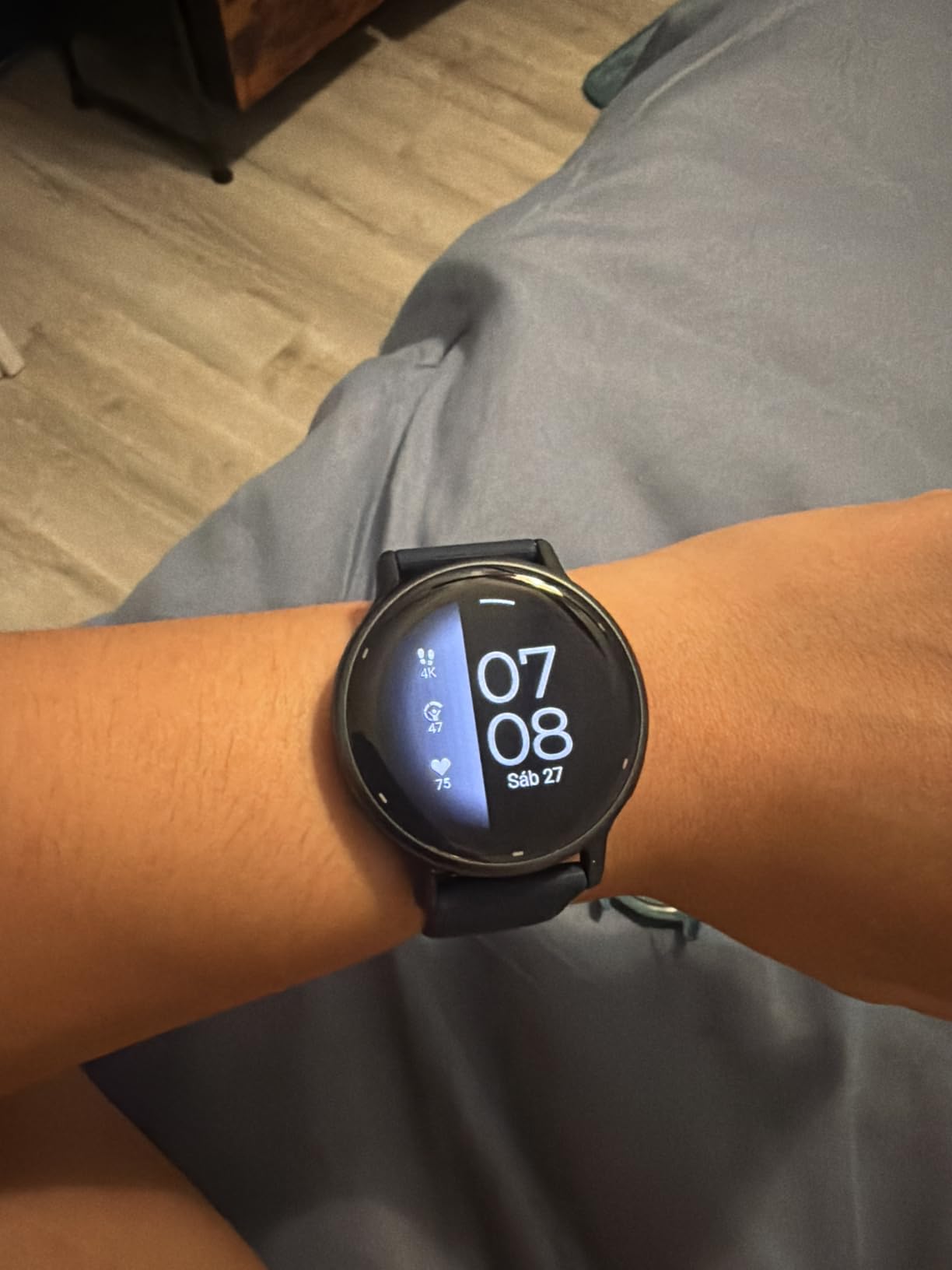
Where the vivoactive 4 wins on fitness breadth, the vivoactive 5 wins on staying power and screen. The AMOLED panel at 390 by 390 resolution in a 1.2 inch case is a clear step up in readability, and the rated battery of up to 11 days in smartwatch mode is the longest in this roundup alongside the Amazfit Bip 6. At 1.3 ounces and 1.7 by 1.7 by 0.43 inches it is compact without being fragile.
Recovery data is the reason to choose it. Sleep score, sleep coaching and HRV status sit alongside a morning report and fitness age, and reviewers highlight the depth of these as the biggest upgrade. The Body Battery model gives you a reason to look at the recovery data before training, which is the useful context an isolated oxygen number lacks.
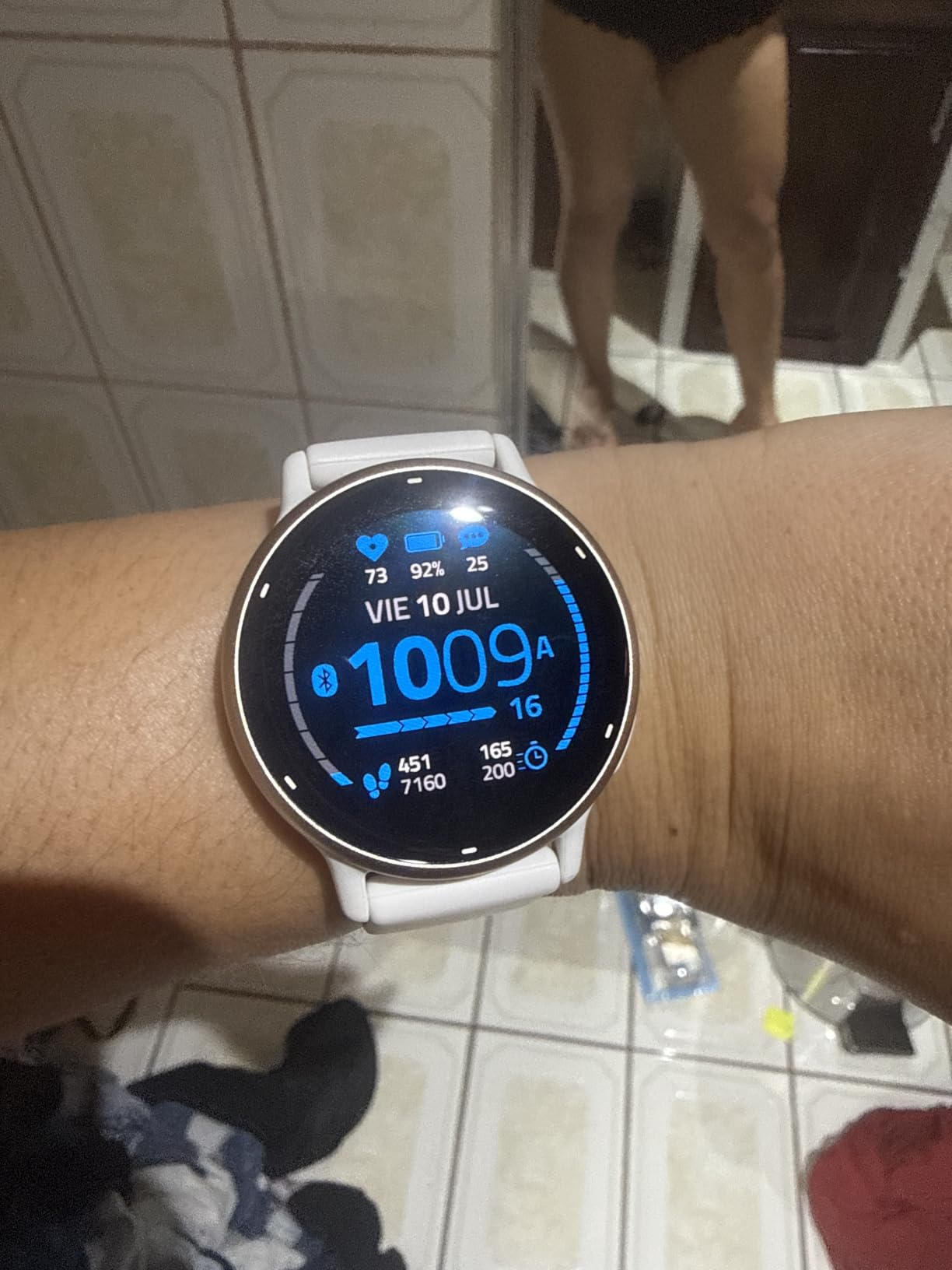
Criticism here is light and mostly honest rather than damning. Reviewers are clear that the smartwatch health metrics are estimations and not medical-grade, which is exactly the right expectation to set. There is no cellular connectivity in this configuration, and menstrual cycle tracking is listed across the range but absent on some variants, so check the specific model number.
The 20mm band, fibre-reinforced polymer case and 50 m water resistance make it a practical everyday watch, and 30-plus built-in sport apps including wheelchair mode and automatic nap detection add real coverage. The listed metrics emphasise calories, heart rate, hydration, sleep coaching and stress rather than blood oxygen, so treat oxygen as one input among many rather than the headline feature.
Who This Watch Suits
Anyone whose top requirement is that the watch keeps sampling overnight without becoming a charging chore. Eleven days of battery means a fortnight of sleep data between charges, and the AMOLED screen makes checking last night’s numbers painless. Reviewers rate the upgrade over the previous generation as meaningful rather than incremental.
It is also a strong choice for users who want recovery metrics in depth, since the sleep coaching and HRV status are more developed than anything else at this size in the list.
Who Should Skip It
Skip it if you want cellular connectivity to leave your phone behind, since this configuration does not offer it. Anyone treating these readings as medical data should skip it too, and the reviewers themselves make that point. Check the variant carefully if you need menstrual cycle tracking.
7. Samsung Galaxy Watch 7 (40mm) – Android Sleep Screening With a Small Case
Samsung Galaxy Watch 7 40mm Bluetooth AI Smartwatch w/Energy Score, Wellness Tips, Heart Rate Tracking, Sleep Monitor, Fitness Tracker, 2024, Cream [US Version, 1Yr Manufacturer Warranty]
- Energy Score gives a clear picture of readiness each morning
- Improved heart rate tracking filters out movement noise
- Sleep tracking detects moderate to severe sleep apnea
- Wellness Tips offer personalised actionable guidance
- Compact 40mm case works well for smaller wrists
- No built-in GPS on this Bluetooth configuration
- About 30 hours of battery requires daily charging
- Works best with Android phones with limited iPhone support
For Android users, this is the most direct answer to the sleep apnea screening question in the roundup. The sleep tracking detects moderate to severe sleep apnea, and the Galaxy AI Energy Score gives a clear readiness picture each morning based on the previous day. Wellness Tips add personalised, actionable guidance on top rather than just dumping data at you.
The 40mm AMOLED case at 432 by 432 resolution with 2000 nit brightness is compact and light, and owners rate the Galaxy AI features highly. The improved heart rate tracking filters out movement noise, which is the same underlying problem that corrupts oxygen readings, so a cleaner heart signal generally means a cleaner signal overall. A one year manufacturer warranty is included.
![Samsung Galaxy Watch 7 40mm Bluetooth AI Smartwatch w/Energy Score, Wellness Tips, Heart Rate Tracking, Sleep Monitor, Fitness Tracker, 2024, Cream [US Version, 1Yr Manufacturer Warranty] customer photo 1](https://www.talkofthehouse.com/wp-content/uploads/2026/09/B0D1YNVD88_customer_1.jpg)
What the listed metrics do not include is SpO2. The measured metrics for this model name heart rate, sleep duration and stress, and there is no blood oxygen sensor in the specification. If you arrived here searching for an oxygen sensor specifically, this watch delivers the downstream sleep apnea analysis without exposing the raw saturation data.
Two other constraints are worth flagged. The battery averages 30 hours, so it is a nightly charge, and this Bluetooth configuration has no built-in GPS. Owners also report the experience is best on Samsung phones, with limited iPhone support, so the Android requirement is fairly firm.
![Samsung Galaxy Watch 7 40mm Bluetooth AI Smartwatch w/Energy Score, Wellness Tips, Heart Rate Tracking, Sleep Monitor, Fitness Tracker, 2024, Cream [US Version, 1Yr Manufacturer Warranty] customer photo 2](https://www.talkofthehouse.com/wp-content/uploads/2026/09/B0D1YNVD88_customer_2.jpg)
Who This Watch Suits
Android owners, particularly Samsung phone users, who want overnight sleep analysis and a daily readiness score in a small case. The compact 40mm footprint works well for smaller wrists, and the movement-filtered heart rate tracking makes the sleep data more trustworthy than it would otherwise be.
If you want a prompt to raise sleep apnea with your doctor rather than a number to stare at, the notification-driven approach is arguably the more responsible design for a consumer device.
Who Should Skip It
Skip it if raw SpO2 values are your priority, because this configuration does not list a blood oxygen sensor. Also skip it if you need built-in GPS, multi-day battery, or reliable iPhone pairing. At 30 hours of battery, it is a poor choice for anyone who wants continuous overnight sampling without a nightly charge habit.
8. Amazfit Bip 6 – Two Weeks of Battery With SpO2 at the Bottom of the Range
- Up to 14 days of battery between charges
- Large bright AMOLED readable in sunlight
- 24/7 heart rate sleep blood oxygen and stress monitoring
- Built-in GPS with downloadable offline maps
- 140+ workout modes with AI coaching
- Not a medical device so readings are wellness guidance only
- App and data ecosystem less refined than Garmin or Apple
- Some users find syncing and menu navigation slow
On paper the Bip 6 is the most convincing oxygen proposition here, because blood oxygen sits in the listed metrics measured alongside breath rate, calories burned and heart rate. The stated battery of up to 14 days is the longest in this roundup, and the 1.97 inch AMOLED at 390 by 450 resolution with 2000 nit brightness is unusually large for the money.
It also has real GPS. Five satellite systems are supported, with downloadable offline maps and turn-by-turn directions, which no other watch at this level offers. Buyers consistently single out the exceptional battery life, the big bright display, and the inclusion of SpO2 tracking and offline GPS as the reasons they bought it.
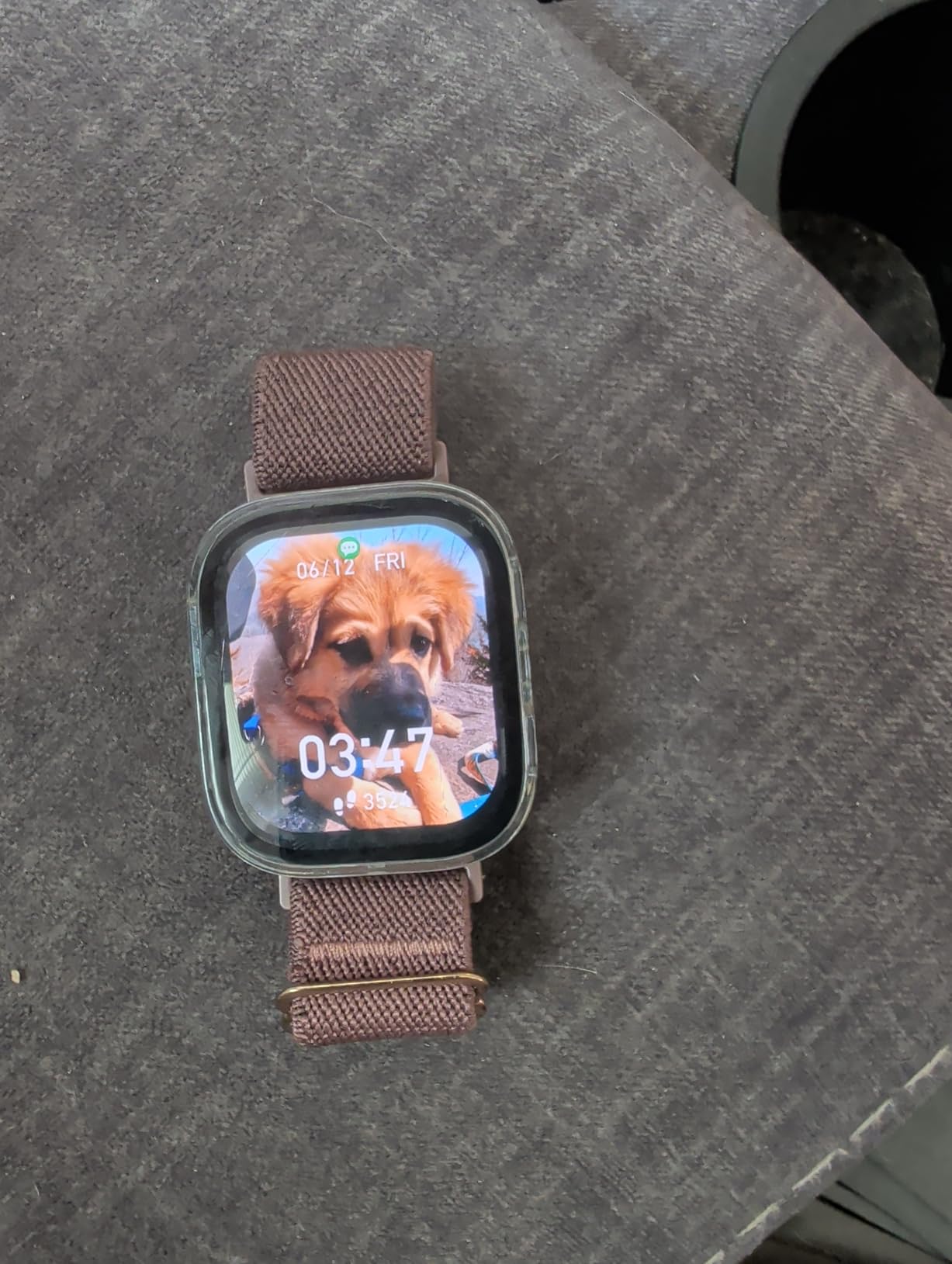
The honest framing is that this is a general-purpose fitness watch, not a medical device, and the reviewers say so. Readings are for wellness guidance only, the app and data ecosystem is less refined than Garmin or Apple, and some users find syncing and menu navigation slow. It runs on Zepp OS with 512 MB of memory and 64 MB of RAM, which is modest by current standards.
It is also the biggest watch in the list at 4.5 by 4.5 by 2 inches, so it is not the discreet option if you have a small wrist. It works with Android 7.0 or higher and iOS 14.0 or higher, which makes it the most platform-flexible pick here alongside the Fitbits.
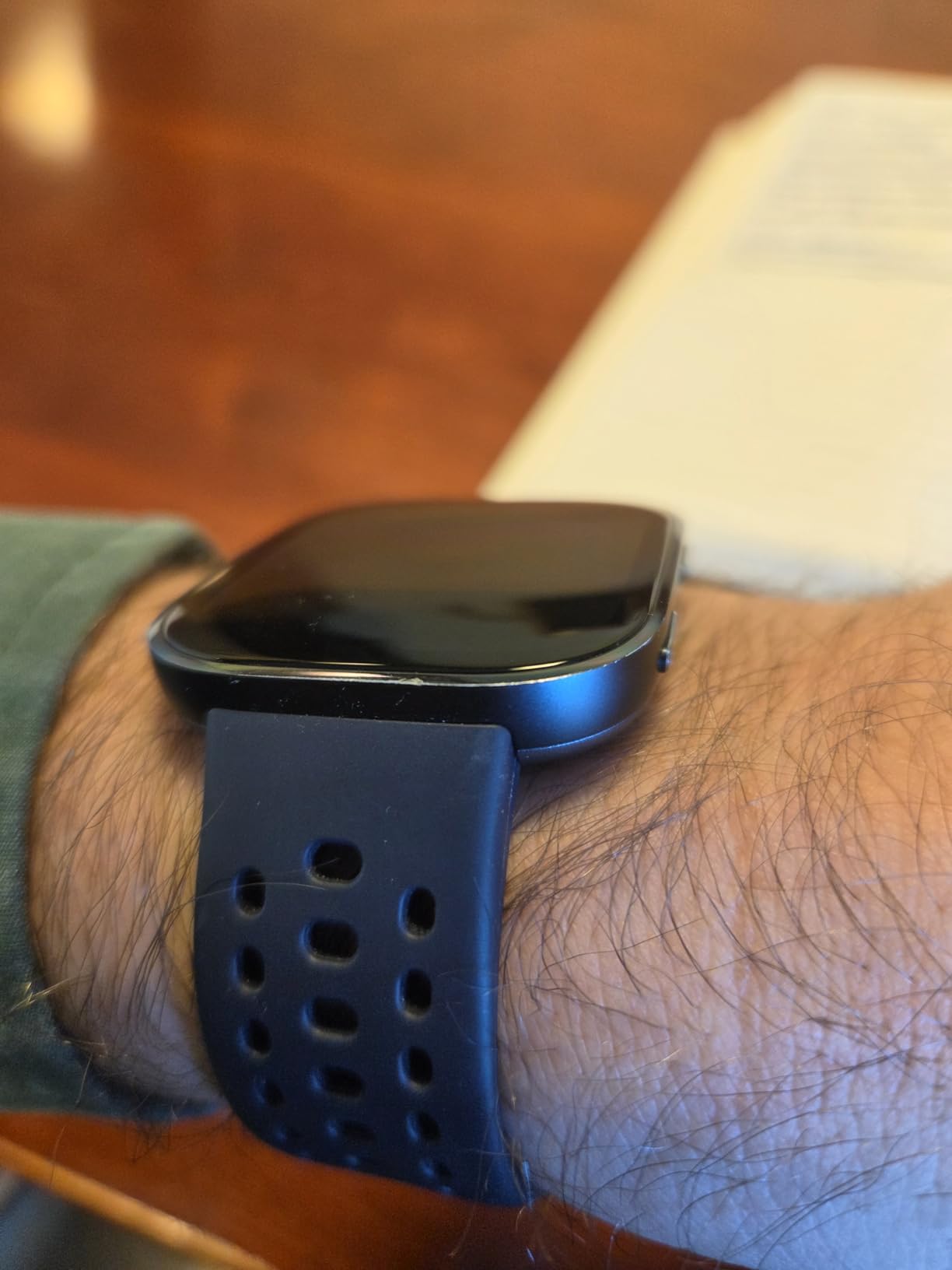
Who This Watch Suits
Anyone who wants long-term oxygen trend data on a battery that gets charged roughly twice a month. The 24/7 heart rate, sleep, blood oxygen and stress monitoring gives you the multi-week baseline that shorter-lived watches simply cannot produce, and 140-plus workout modes with AI coaching cover the fitness side.
For high-altitude and hiking use, the offline maps and built-in GPS add real value that most similarly priced trackers cannot match.
Who Should Skip It
Skip it if you want a polished app ecosystem or exportable, clinician-friendly data, because Zepp OS is less refined than Garmin Connect, Samsung Health or Apple Health. It is also the wrong choice if you need a small case or a discrete profile. And as the reviewers point out plainly, the health readings are not medical-grade, so never rely on this watch as your only monitor if you have a respiratory condition.
9. Apple Watch SE 3 – Always-On Display and Overnight Vitals at the Entry Point
Apple Watch SE 3 [GPS 40mm] Smartwatch with Midnight Aluminum Case with Midnight Sport Band – S/M. Fitness and Sleep Trackers, Heart Rate Monitor, Always-On Display, Water Resistant
- Always-on display added at this price tier
- 18 hour battery plus faster charging than the SE 2
- Sleep score Vitals app and sleep apnea notifications
- Women's health tracking with wrist temperature sensing
- Very light at under 1 ounce
- 18 hour battery still short compared with multi-day competitors
- Health notifications and features are region dependent
- No cellular in this GPS configuration
The SE 3 fixes the two things that made the previous generation a poor fit for this topic. It adds an always-on Retina display and the Vitals app with overnight metrics and sleep apnea notifications, which is the actual feature you would be buying for blood oxygen context. At under an ounce it is the lightest device in the roundup, and lightness is what determines whether you actually sleep in it.
Owners rate it very highly at 4.7 across 4469 reviews, crediting the always-on display, faster charging, sleep score and Vitals app for making it a strong step up. The 18 hour battery with charging up to twice as fast as the SE 2, and up to 8 hours of battery from a 15 minute charge, are meaningful improvements over the model it replaces.
![Apple Watch SE 3 [GPS 40mm] Smartwatch with Midnight Aluminum Case with Midnight Sport Band - S/M. Fitness and Sleep Trackers, Heart Rate Monitor, Always-On Display, Water Resistant customer photo 1](https://www.talkofthehouse.com/wp-content/uploads/2026/09/B0FQFW7M9H_customer_1.jpg)
Women’s health features including wrist temperature tracking during sleep add a genuinely different kind of overnight signal, and the full safety set of Fall Detection, Crash Detection, Emergency SOS and Check In is present. That combination is why this model earns the badge for Apple safety features rather than for oxygen specifically.
The 18 hour battery is still short against multi-day competitors, and it remains shorter than Garmin options for anyone wanting uninterrupted overnight sampling. Health notifications and features are region dependent, which is the same caveat as the Series 11, and this GPS configuration has no cellular.
![Apple Watch SE 3 [GPS 40mm] Smartwatch with Midnight Aluminum Case with Midnight Sport Band - S/M. Fitness and Sleep Trackers, Heart Rate Monitor, Always-On Display, Water Resistant customer photo 2](https://www.talkofthehouse.com/wp-content/uploads/2026/09/B0FQFW7M9H_customer_2.jpg)
Who This Watch Suits
iPhone users who want the Vitals app and sleep apnea notifications without paying flagship money, and who will wear the watch to bed as part of a nightly routine. The 50 m water resistance means swimming will not break your overnight streak, and the sleep score makes last night easy to check at a glance on the always-on display.
If you are upgrading from a first-generation Apple Watch, the jump in battery and charging speed is the change you will notice daily.
Who Should Skip It
Skip it if multi-day battery is non-negotiable, because 18 hours will frustrate anyone chasing continuous trends. Verify the Vitals app and sleep apnea notifications are available in your region first. There is no cellular in this configuration, and anyone wanting blood pressure data should look elsewhere entirely, since no Apple model in this list measures it.
10. FITVII Health and Fitness Tracker – Oxygen and Calls on the Cheapest Shelf
- Lowest cost here while still including SpO2 and heart rate tracking
- Bluetooth calling texts and app notifications from the wrist
- 120+ sport modes with 24/7 heart rate and blood pressure
- Menstrual tracking reminders stopwatch and weather
- Up to 7 days of battery
- Blood oxygen and blood pressure readings are lifestyle guidance not medical use
- IP67 rating means no diving or surfing
- Budget build quality and a less refined app than major brands
The FITVII is the cheapest way to get a blood oxygen number on your wrist with Bluetooth calling, and for a first smart band on a tight budget the feature list is surprisingly long. You get 24/7 heart rate and blood pressure tracking, blood oxygen monitoring, sleep tracking with guided breathing exercises, and 120-plus sport modes, on a battery rated at up to 7 days.
Bluetooth 5.0 with AAC audio means you can answer calls from the wrist, which is rare at this level. It works with Android 7 and iOS 13.0 and above, fits wrist sizes from 5.71 to 8.86 inches, and comes with a two year warranty. Reviewers value the combination of SpO2, heart rate and blood pressure with calls at very low cost.
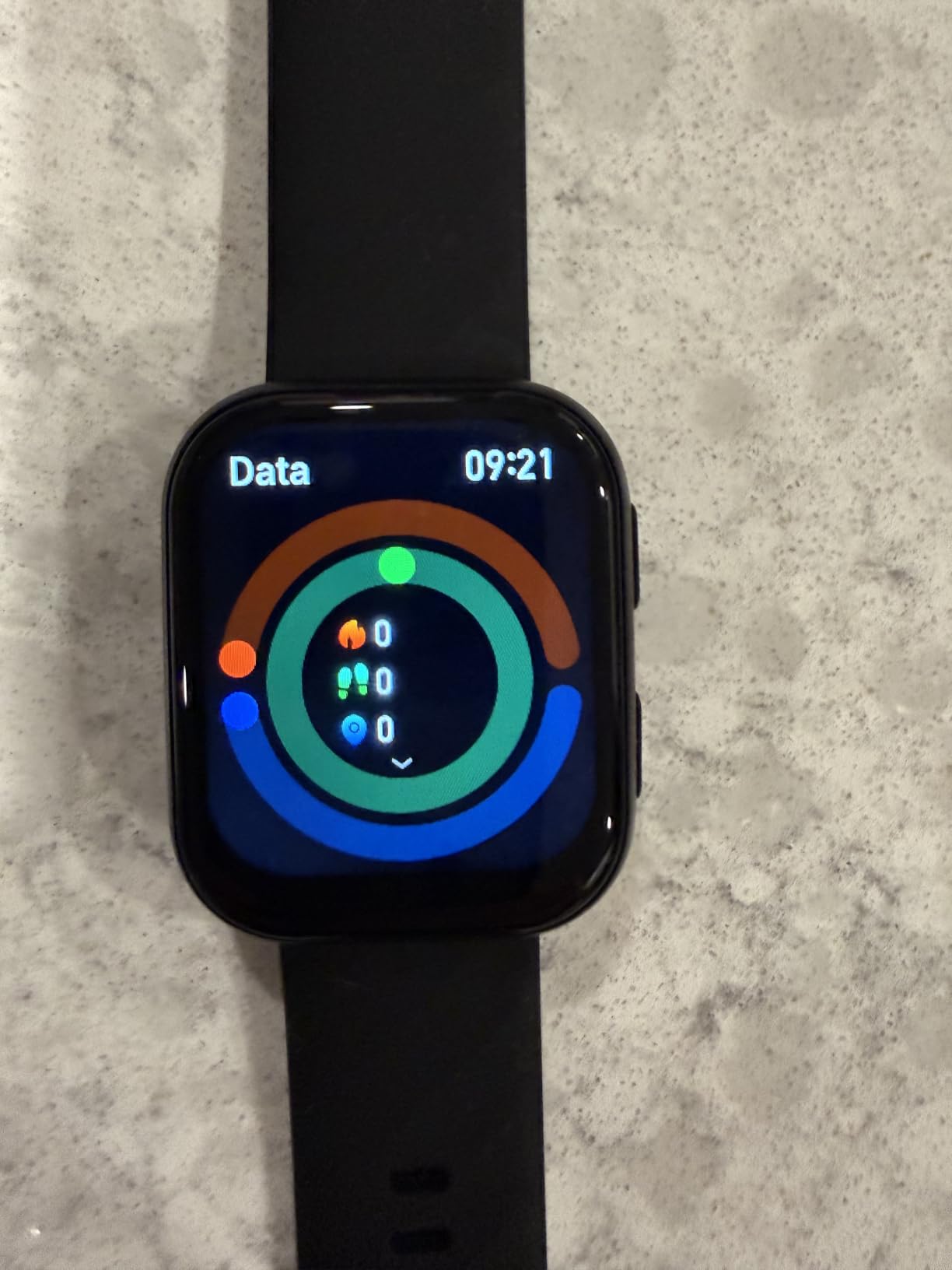
Here is the honest problem. The review summary for this product states plainly that the blood oxygen and blood pressure readings are for lifestyle guidance, not medical use, and that the build quality and app are well behind the established brands. The IP67 rating also means no diving or surfing. With a 1.85 inch LCD and a 1.85 inch screen listed, it is a functional tracker rather than a smartwatch in the polished sense.
Blood pressure deserves a specific warning. A wrist device cannot measure blood pressure non-invasively without a cuff, and no consumer watch in this roundup does it properly. If blood pressure is your concern rather than oxygen, the honest route is a validated upper-arm monitor, and our guides to top tested blood pressure monitors and blood pressure monitors for home cover that properly.
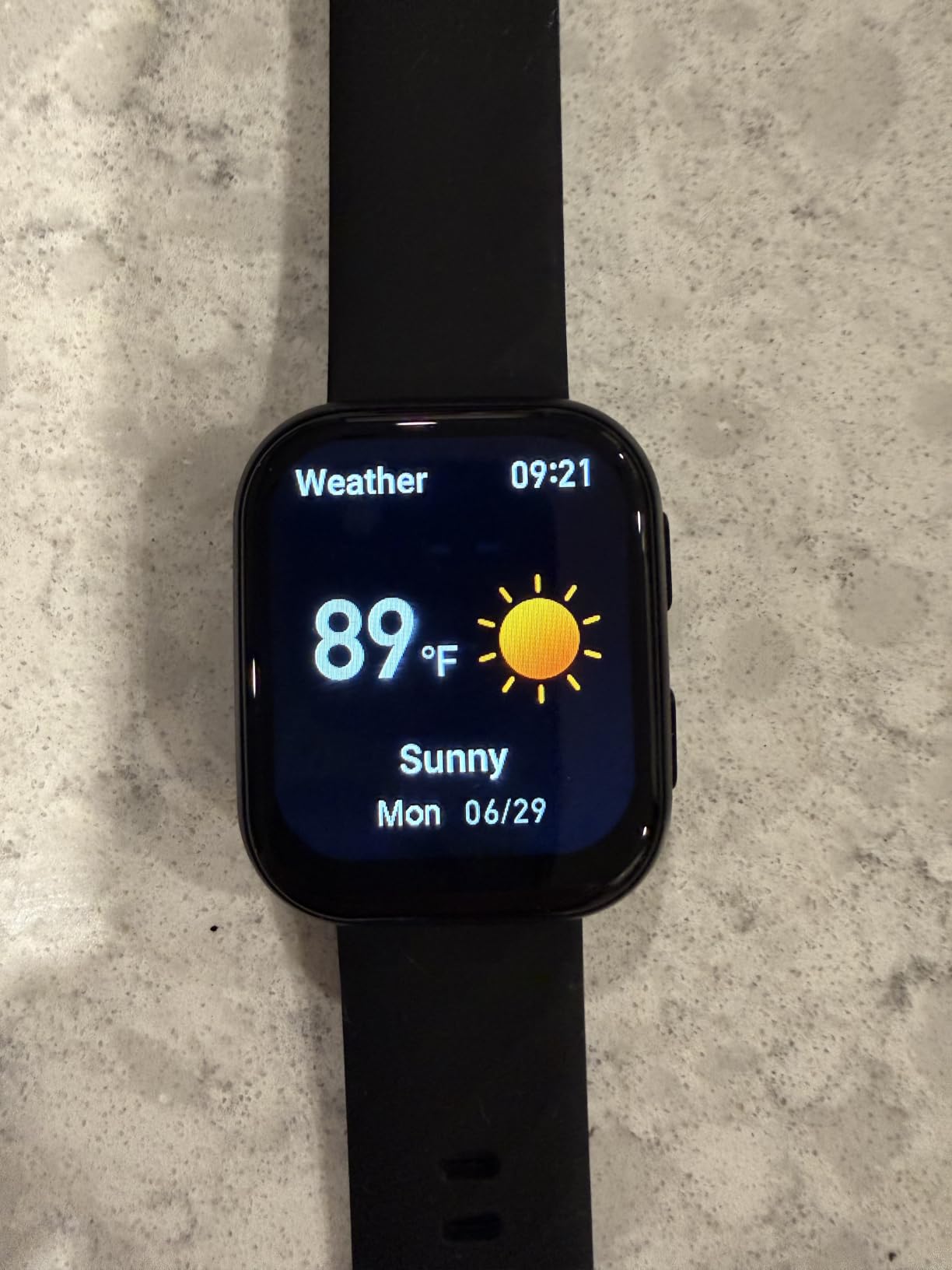
Who This Watch Suits
Budget buyers who want a general activity and wellness tracker with calls, a long battery and a blood oxygen reading to glance at occasionally. It is a reasonable first device for a teenager, a gift, or anyone who will lose a more expensive watch within a month. The menstrual tracking and sedentary reminders make it useful as a general-purpose band too.
At up to 7 days of battery it outlasts every Apple model here by a wide margin, which is a legitimate reason to consider it.
Who Should Skip It
Skip it if accuracy matters at all, because nothing at this price is validated and the product itself does not claim to be. It is also unsuitable for swimming beyond surface activity given the IP67 rating. Anyone with a respiratory or cardiovascular condition should not use this as a monitoring tool under any circumstances, and the less refined app makes it a poor choice if you want to export data to a doctor.
11. Garmin Venu 2S – A Small AMOLED With Pulse Ox and Health Snapshot
- Compact 40mm case with a bright readable AMOLED
- Pulse Ox blood oxygen sensor with Health Snapshot
- Body Battery sleep score and fitness age
- Reliable GPS and heart rate with long battery
- Garmin Pay music storage and incident detection
- Older generation with a TFT-era feature set compared with current models
- Silicone band can cause skin irritation for some wearers
- Only one sleep period tracked per day
- Firmware and software downloads can take a long time
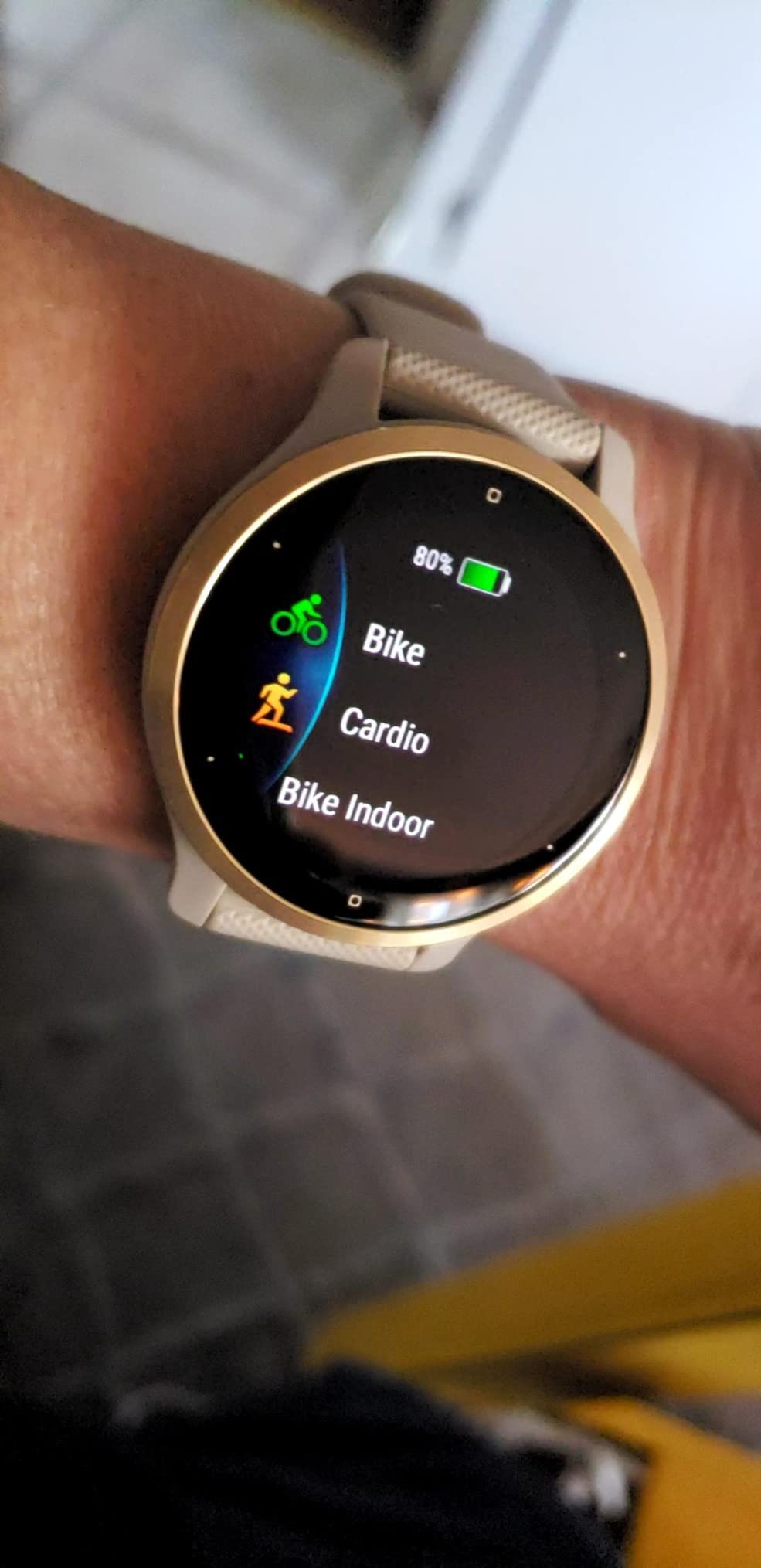
The Venu 2S is the answer for anyone who thinks Garmin cases are too big. At 1.6 by 1.6 by 0.48 inches and 38.2 grams, it is a 40mm case carrying a 1.3 inch AMOLED, and the measured metrics list names heart rate, sleep duration, stress and blood oxygen. The Pulse Ox sensor pairs with a Health Snapshot feature that takes a full set of readings on demand, which is the cleanest version of a spot check on any watch in this roundup.
Long-term Garmin owners describe it as accurate, durable, and still holding about a week of battery after several years of use, with a display that stays readable in sunlight. The battery is rated at up to 10 days in smartwatch mode, with up to 7 hours in GPS mode with music, and Garmin Pay contactless payments plus up to 650 downloadable songs are included.
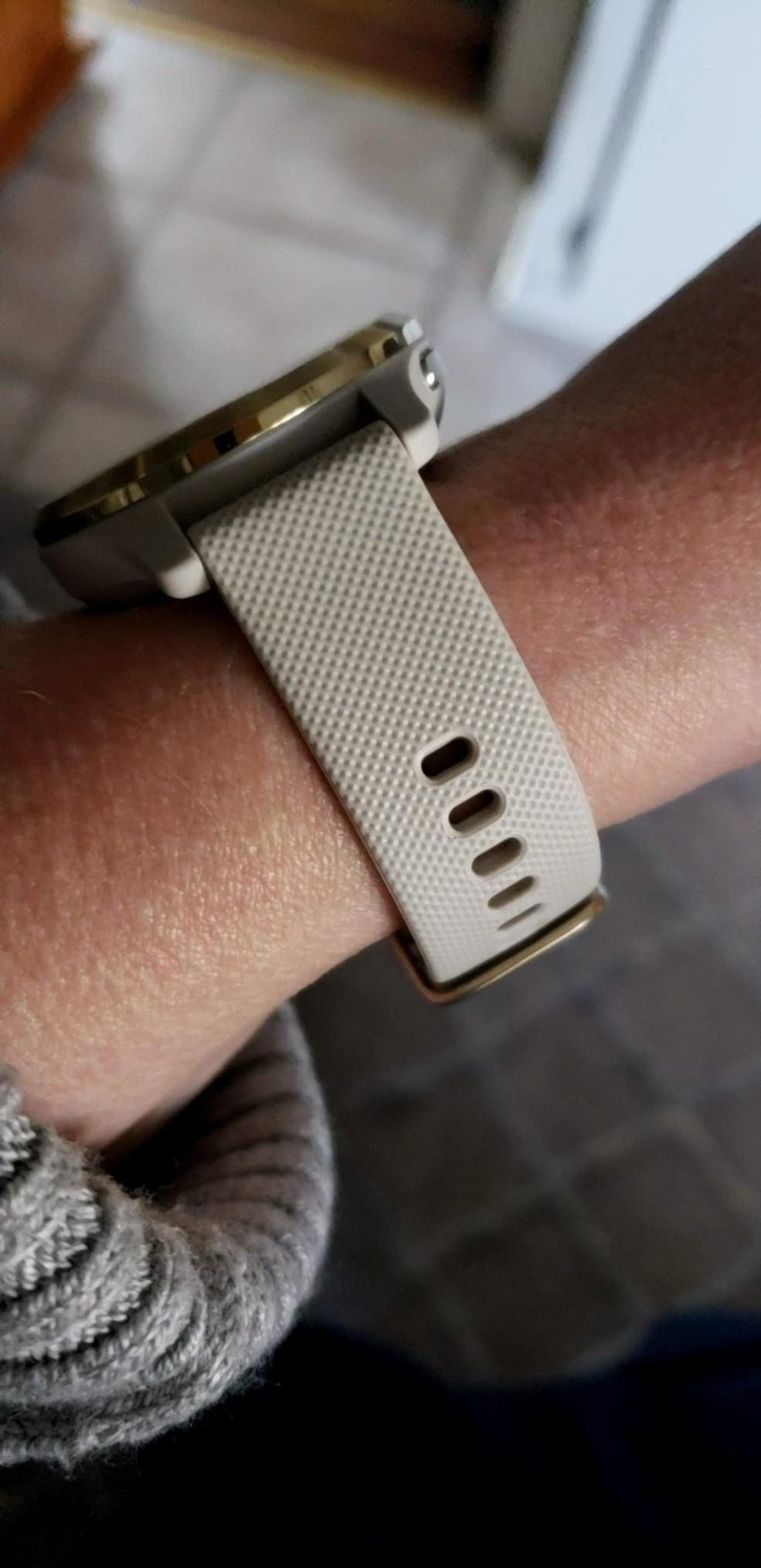
Reviewers also value the Body Battery energy monitoring, sleep score, advanced sleep monitoring, fitness age and respiration tracking, which together give an oxygen reading somewhere to live. The 18mm band and IPX7 rating suit smaller wrists well, and incident detection with assistance sends live location to contacts.
The drawbacks are about age and comfort. This is an older generation with a feature set that compares to current models the way a TFT display compares to AMOLED elsewhere in this list, and only one sleep period is tracked per day. The bundled silicone band can cause skin irritation for some wearers, which matters for a watch you never take off, and firmware and software downloads can take a long time on first setup.
Who This Watch Suits
Small-wrist users who want Garmin’s health and training ecosystem with a bright AMOLED rather than a reflective LCD. The Health Snapshot gives you a fast, repeatable on-demand reading you can compare across days, and 10 days of battery means the watch keeps sampling while you forget about it.
It is a strong option for anyone who wants Garmin Pay, offline music and incident detection in a case that fits comfortably, without moving up to a full-size multisport watch.
Who Should Skip It
Skip it if you need current-generation health features or ECG-style diagnostics, since this generation predates them. Anyone who reacts to silicone should buy a different band before wearing it overnight. And if you take a nap as well as a full night of sleep, the single-sleep-per-day limit will quietly cost you data.
12. Samsung Galaxy Watch 8 (40mm) – The Lightest Case Here, With Blood Pressure Support
Samsung Galaxy Watch 8 (2025), Silver, 40mm, Bluetooth Smartwatch
- Thin lightweight 40mm design at only 30 g
- Advanced Sleep Coaching and Bedtime Guidance
- Running Coach with real-time feedback and race programs
- Energy Score summarises sleep activity and heart rate
- Blood pressure monitoring with a compatible cuff
- Blood pressure readings require a separate cuff
- Works best with Samsung phones with a reduced experience elsewhere
- 40 hour battery is shorter than Garmin alternatives
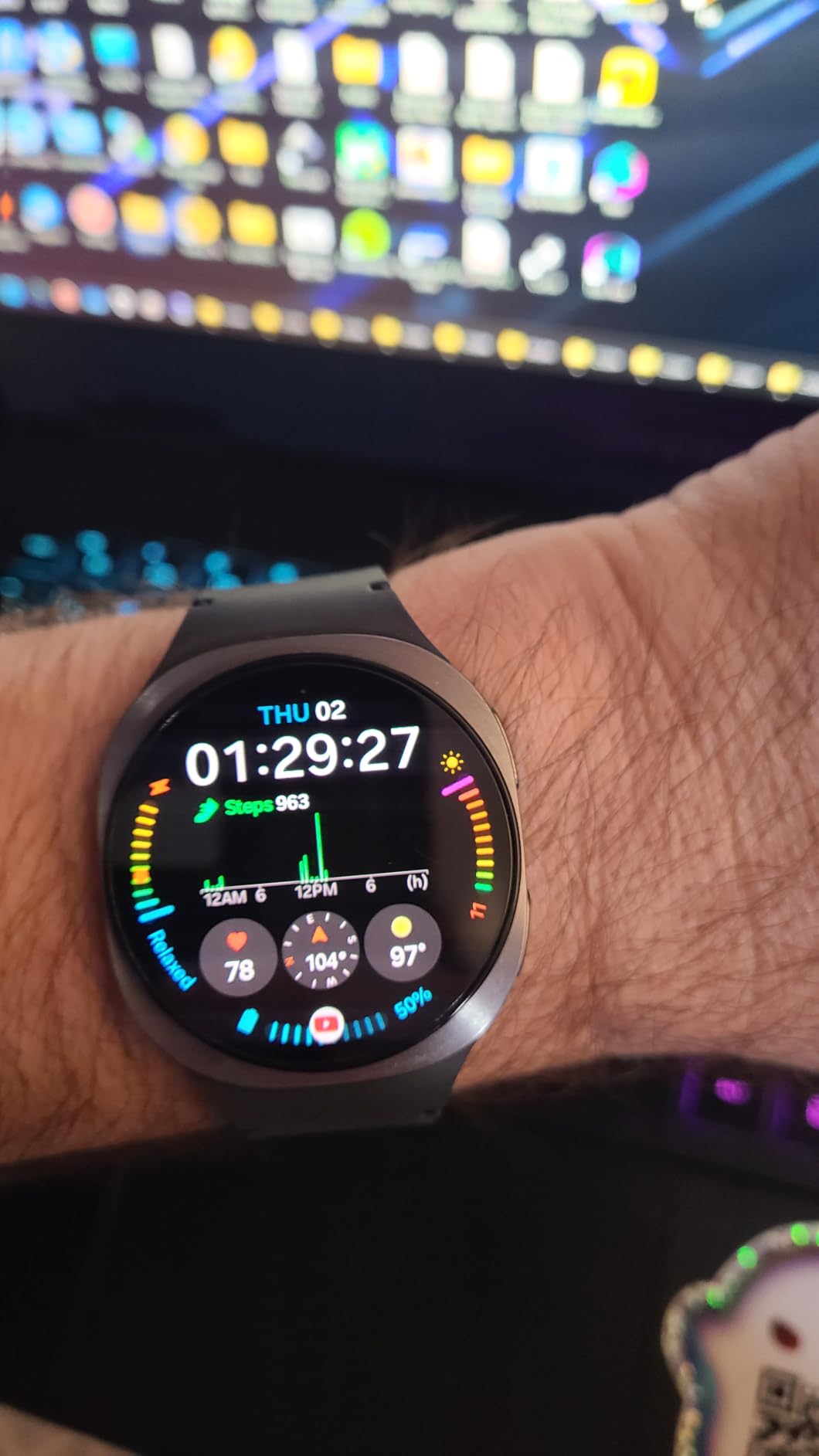
The Galaxy Watch 8 is the lightest device in this roundup at 30 grams, and it pairs that with a 3000 nit AMOLED at 480 by 480 resolution, the brightest display here. Built-in GPS is present in this configuration, which is a real upgrade over the Bluetooth-only Galaxy Watch 7, and the 435 mAh battery averages 40 hours. Owners like the lighter, slimmer case and the improved interface for at-a-glance updates.
The health tooling is the strongest part. Advanced Sleep Coaching and Bedtime Guidance go further than generic sleep scores, the Energy Score summarises sleep, activity and heart rate each morning, and the Running Coach gives real-time feedback with 5K and marathon programs. Wear OS with 2 GB RAM and 32 GB storage, a personal AI assistant on the wrist, and a two year manufacturer warranty round out a well-specified package.
The blood pressure feature is the standout, with one important condition attached: it works through Samsung Health Monitor calibrated with a separate cuff. That is the correct way to do it, and it is a meaningful difference from watches that simply claim to measure blood pressure. If that is your interest, a standalone validated monitor is still the most direct option, and our home blood pressure monitor guide explains what to look for.
The measured metrics listed for this model are heart rate, sleep duration and stress, with no blood oxygen sensor named. So for our specific topic, this is a strong all-round Android watch rather than an oxygen pick. Owners also report the best experience is on Samsung phones, with a reduced experience on other Android devices, and 40 hours of battery trails the fitness-first watches in this roundup.

Who This Watch Suits
Android users, especially Samsung phone owners, who want thorough sleep coaching and structured running plans in a case light enough to forget you are wearing. The 50 m water resistance suits swimmers, and the bright display is readable in direct sun where most of the LCD options struggle.
If you also want blood pressure tracking, this is the only watch in the roundup that approaches it legitimately, and doing so with a cuff is the honest version of that feature.
Who Should Skip It
Skip it if blood oxygen is why you are shopping, because no oxygen sensor is listed in the specifications. The 40 hour battery is also short against the Garmin options, and buying a separate cuff for the blood pressure feature changes the cost calculation considerably. Non-Samsung Android users should expect a reduced experience.
Why Your Watch’s Blood Oxygen Readings Go Missing or Swing Wildly
Most of the bad SpO2 experiences we heard about came down to one of seven things, and all of them are fixable. If you have a watch that refuses to record, work down this list before concluding the sensor is faulty.
- The band is too loose. Rotation during sleep breaks skin contact. Tighten one notch and shorten the strap hole.
- Battery saver is on. Low power modes throttle background sampling on several models. Turn it off and test again.
- Your wrist was cold. Peripheral circulation drops when you are cold, and the sensor has nothing reliable to measure.
- You moved during the reading. Motion artifact is the largest single source of nonsense numbers.
- Regional feature restrictions. Health features vary by country and by generation, so a watch sold elsewhere may not enable the feature locally.
- App permissions were not granted. Background sampling needs notification and health permissions on your phone, and a denied permission looks exactly like a broken sensor.
- WatchOS or app updates. Several owners describe readings disappearing after an app migration, which a software update usually fixes.
One wearer with a personal health scare reported using a Xiaomi smartwatch to catch low overnight blood oxygen, which shows real demand for overnight tracking. Early-retirement forum users report questioning smartwatch heart rate and oxygen accuracy after exertion, and Bogleheads and Quora threads converge on a simpler buying intent: a device that tracks heart rate, oxygen, sleep and blood pressure without needing phone calls. The long tail of cheap watches advertising blood oxygen alongside blood sugar and blood pressure claims is exactly why the accuracy conversation matters.
What to Check Before You Buy a Smartwatch for Blood Oxygen
Eight questions decide whether you will be happy, and most product pages answer none of them clearly. Ask these in order.
1. Is there actually a blood oxygen sensor? This is the big one. Several excellent watches in this roundup, including both Galaxy Watch models, have no SpO2 sensor listed in their measured metrics. The feature may be described in marketing copy about sleep or heart health without a saturation sensor being present. Check the specification list, not the headline.
2. What measurement mode does it use? Spot check, background sample, overnight reading or nightly average. If you want to see sleep-related oxygen dips, you need overnight or nightly average data. If you only ever see a single number when you open the app, you have a spot checker regardless of the marketing.
3. Can it stay on overnight? This is the hard constraint. Apple models here run 18 to roughly 24 hours, Samsung models 30 to 40 hours, and the Garmin and Amazfit options run 10 to 14 days. If you want a month of trend data without thinking about it, the long-battery options are the only realistic answer.
4. Which phone does it need? Both Fitbits and the Amazfit work across iOS and Android. The Galaxy Watch 7 works best with Android phones with limited iPhone support, and the Galaxy Watch 8 is at its best on Samsung phones. Apple watches require an iPhone, and their advanced health features are region dependent.
5. Is any of it behind a subscription? Owners repeatedly flag paywall creep, where advanced sleep and SpO2 history sits behind a premium tier. The Fitbit Versa 4 includes a six-month Premium membership trial, which is the honest version of this question. Ask what you lose when a trial ends before you buy.
6. Will you actually wear it to bed? Case size matters more than any spec. The Galaxy Watch 8 at 30 grams and the Apple Watch SE 3 at under an ounce are the least likely to be taken off at 11pm. A bulky case that you remove at bedtime produces no overnight data at all.
7. Do you need blood pressure as well? No watch in this roundup measures blood pressure without a cuff, and the Galaxy Watch 8 is the only one that admits it by requiring a separate cuff. For genuine blood pressure tracking, a validated upper-arm monitor is the correct device.
8. Are you comfortable with the limits? Skin pigmentation affects optical readings, accuracy varies with circulation, movement and temperature, and none of these devices is a diagnosis. If any of that is unacceptable, the right tool is a fingertip pulse oximeter or a clinical sleep study, not a different watch.
There are moments when a watch is genuinely the wrong answer. If you are being monitored for a diagnosed respiratory condition, if you are in hospital, if you are assessing an acute illness, or if you need an overnight study for suspected sleep apnea, you need clinical equipment and a clinician. A consumer watch is for the long view between appointments, not for the night something changes.
Blood Oxygen Terms Explained
- SpO2 – the percentage of your blood carrying oxygen. Typical healthy readings sit in the mid to high nineties.
- Pulse oximetry – the general technique of estimating blood oxygen saturation, whether from a fingertip clamp or a wrist optical sensor.
- PPG (photoplethysmography) – the optical technique watches use. It measures light absorption through or reflected from skin to infer blood flow and oxygenation.
- ECG – an electrical reading of heart rhythm, taken from electrodes on the wrist. It measures something different from an optical sensor, which is why Apple watches carrying both are more informative for heart questions.
- HRV – heart rate variability, the beat-to-beat variation that indicates recovery. It is a training and recovery signal rather than an oxygen signal.
- OSA – obstructive sleep apnea, where breathing repeatedly stops or slows during sleep, causing oxygen saturation to dip. A smartwatch alert is a screening prompt, not a diagnosis.
- Perfusion index – how much blood is flowing under the sensor. A low value is one of the most common reasons a wrist reading fails outright.
Frequently Asked Questions
Do smartwatches measure blood oxygen accurately?
They are reasonably accurate for trend tracking and unreliable as a clinical measurement. Wrist sensors use reflected light rather than the transmitted light of a fingertip clamp, so readings typically run a few points lower on the same hand. Published validation work against the ISO 80601-2-61 standard found Apple, Samsung and Withings watches inside the acceptable range under controlled conditions. Treat a single number as one data point, not a diagnosis.
What smart watch can monitor blood oxygen levels?
Most modern smartwatches and fitness bands include an optical blood oxygen sensor, but many only take spot checks or sample overnight. In our testing the best blood oxygen tooling came from the Apple Watch Series 11 and Apple Watch SE 3, which track overnight metrics in the Vitals app and issue sleep apnea notifications. The longest battery life came from the Amazfit Bip 6 and Garmin vivoactive 5.
Which smartwatch is best for monitoring blood oxygen levels?
The Apple Watch Series 11 is the best overall pick for blood oxygen context because the Vitals app tracks overnight metrics and issues sleep apnea notifications alongside ECG and irregular rhythm alerts. If you want long-term trends on a single charge, the Amazfit Bip 6 gives up to 14 days of battery with 24/7 blood oxygen monitoring. For a small wrist, the Fitbit Inspire 3 is the most reliable option.
Can you trust Apple Watch blood oxygen?
You can trust it as a trend tool, and independent validation studies against reference oximeters found the Apple Watch performed well in controlled testing. It is still not a fingertip pulse oximeter, and a wrist reading of 89 to 91 percent against a fingertip reading of 97 to 99 percent is a common and largely mechanical difference. Note that advanced health features are region dependent, so check availability where you live.
Is Fitbit oxygen saturation accurate?
Fitbit’s SpO2 sensor is generally consistent for spot checks, but some Inspire 3 owners report the sensor ceasing to produce readings after a few days. Fitbit also improved heart rate tracking to filter movement noise, which helps the underlying signal. Treat Fitbit readings as wellness trends, and if you need clinical accuracy, confirm with a fingertip oximeter or ask your doctor.
What smartwatch do cardiologists recommend?
Cardiologists generally emphasise the ECG and irregular rhythm notification features over blood oxygen, because a wrist SpO2 trend cannot diagnose a heart condition. Several Fitbit and Garmin owners report the watch prompting a medical visit that found a real issue, which is the realistic value of these devices. For ongoing heart monitoring, talk to your doctor about a clinical device rather than a consumer watch.
What smart watch can track blood oxygen and blood pressure?
No watch in this roundup measures blood pressure without help. The Samsung Galaxy Watch 8 supports blood pressure tracking through Samsung Health Monitor, but it requires a separate cuff for calibration. The FITVII tracker advertises blood pressure alongside SpO2, but its readings are for lifestyle guidance only and are not medical grade. For real blood pressure numbers, use a validated upper-arm monitor.
Why are people ditching smart watches?
The most common reasons are battery life, subscription paywalls and disappointing sensor accuracy. Users report needing a daily charge on models they bought for overnight monitoring, and losing access to historical sleep and SpO2 data when a premium trial ends. Others abandon watches after the Google Health app migration caused sync and data glitches, or because readings kept disappearing for no clear reason.
The Best Smartwatch for Tracking Blood Oxygen in 2026
The Apple Watch Series 11 wins this roundup because the Vitals app turns overnight blood oxygen into something you can act on, with sleep apnea notifications and ECG sitting next to it in the same app. If you would rather collect months of data than analyse a good week, the Amazfit Bip 6 at up to 14 days of battery or the Garmin vivoactive 5 at up to 11 days make more sense. For a small wrist, the Fitbit Inspire 3 is the pick that actually stays on.
Two things to carry out of 2026. First, check that a blood oxygen sensor appears in the specification list, because several excellent watches have none. Second, use the ten-step technique above before you decide a watch is inaccurate, because most disappointing readings are technique failures rather than sensor failures. And if you have a diagnosed condition, your doctor’s equipment outranks every watch on this list.