
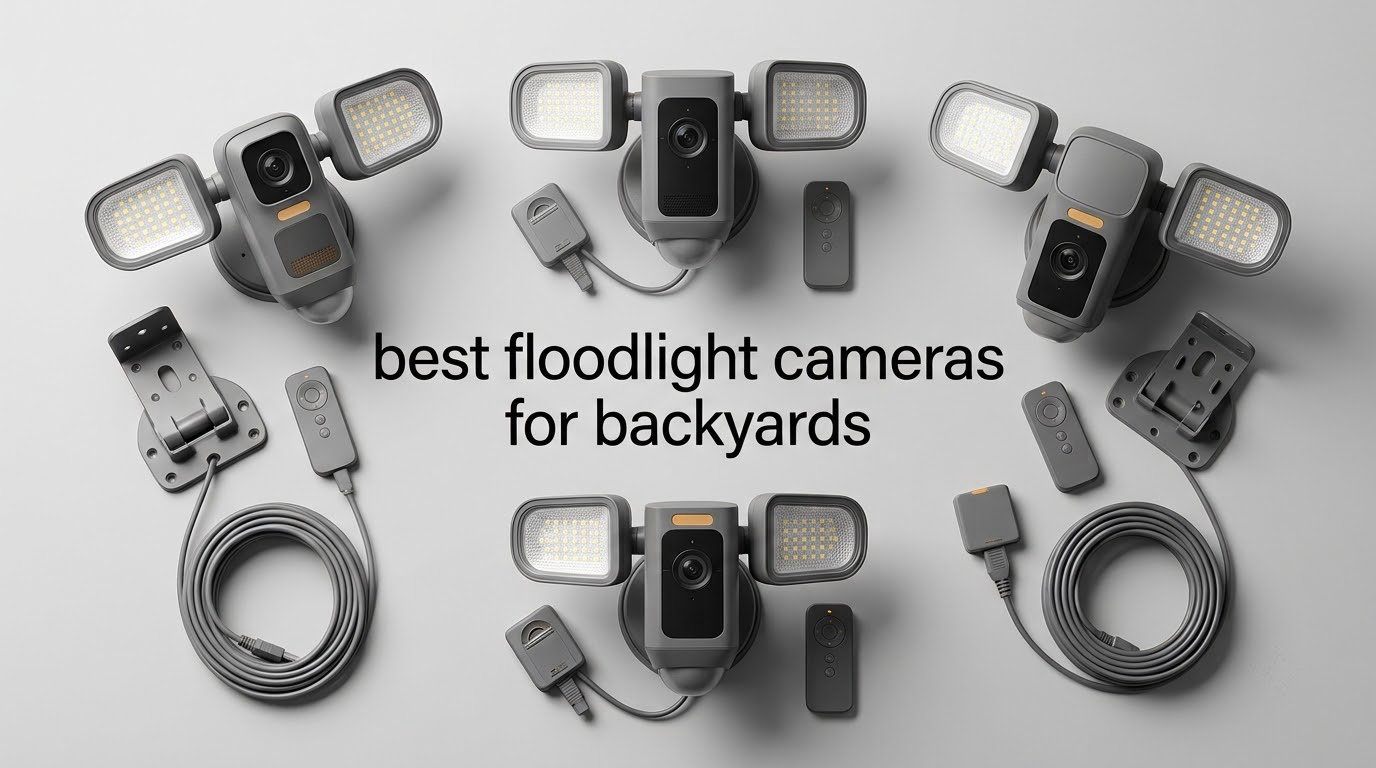
Most floodlight camera roundups are written for front porches and driveways. Backyards are a different job entirely: darker, wider, usually without an existing fixture, hemmed in by neighboring houses that can see your light spill, and full of raccoons that set off alerts at two in the morning. If you are searching for the best floodlight cameras for backyards, the deciding factors are light brightness, how far the camera can throw detail, whether the video stays on your own storage, and how much you can tune the motion zones once a passing car starts setting off your phone.
We spent weeks going through owner reviews, spec sheets, and long-running community threads on all ten models below, and the picture that came back was clearer than we expected. What separates a good backyard camera from a disappointing one is rarely the megapixel count. It is whether the light actually reaches the far corner of the yard, whether the motion sensor can be told to ignore the street, and whether you can review a recording six months later without paying for it.
A few quick notes before we get into the picks. These are hardwired and wireless models mixed together on purpose, because a backyard with an existing patio light and a backyard on an empty lot need completely different hardware. We also flag long-term owner reliability issues that never show up in a spec sheet, since a camera that drops off your Wi-Fi every few weeks is worse than no camera at all. If your yard is more about enjoying it than securing it, our catio guide and sun shade picks cover the other half of backyard life.
Top 3 Backyard Floodlight Cameras in 2026
These three cover the most common backyard situations: an existing light you can wire into, a brighter lower-cost wired option, and the sharpest 2K image in a proven, well-supported app.

Ring Floodlight Cam Wired Plus
- 2000-lumen motion-activated lights
- 1080p HD video
- Hardwired with 105dB siren

Blink Wired Floodlight Camera
- 2600-lumen LED floodlights
- Dual-zone motion detection
- 1080p with color night view

Ring Floodlight Cam Wired Pro
- Retinal 2K with HDR
- 2000 lumens
- 3D Motion Detection and 110dB siren
All Ten Backyard Floodlight Cameras Side by Side in 2026
Every model below is in this table, with the features that actually matter when you are comparing them for a yard rather than a porch. Ratings and review counts are the verified figures from the product pages.
| Product | Specifications | Action |
|---|---|---|
| Ring Floodlight Cam Wired Plus |
|
Check Latest Price |
| Blink Wired Floodlight Camera |
|
Check Latest Price |
| Ring Floodlight Cam Wired Pro |
|
Check Latest Price |
 Arlo Wireless Floodlight Security Camera Pro 3 Arlo Wireless Floodlight Security Camera Pro 3 |
|
Check Latest Price |
 Wyze Floodlight Camera v2 Wyze Floodlight Camera v2 |
|
Check Latest Price |
 Blink Outdoor 4 Floodlight Camera Blink Outdoor 4 Floodlight Camera |
|
Check Latest Price |
 eufy Security Floodlight Camera E340 eufy Security Floodlight Camera E340 |
|
Check Latest Price |
 eufy Security Floodlight Camera E30 eufy Security Floodlight Camera E30 |
|
Check Latest Price |
 Ring Floodlight Cam 4K Pro Ring Floodlight Cam 4K Pro |
|
Check Latest Price |
 Tapo 2K Outdoor Pan Tilt Wireless Floodlight C615F KIT Tapo 2K Outdoor Pan Tilt Wireless Floodlight C615F KIT |
|
Check Latest Price |
1. Ring Floodlight Cam Wired Plus for Overall Backyard Coverage
- Very easy DIY install with included hardware
- Bright 2000-lumen lights for a full yard
- Reliable motion detection with few false alerts
- Clear 1080p day and night
- Two-way talk and app-activated siren
- Fixed camera head with no pan or tilt
- 1080p is dated next to 2K and 4K models
- Video history and AI features need a paid plan
The Ring Floodlight Cam Wired Plus is the one we keep coming back to because the sheer volume of owner feedback behind it is unmatched, and that feedback stays positive. At 44k+ reviews and a 4.7 rating, this is a fixture that a very large number of people have installed on an exterior wall, wired to a junction box, and still running years later.
The light is the headline. 2000 lumens from two motion-activated LEDs is enough to throw real usable light across a patio and into the middle of a yard, not just a puddle of brightness at the base of the wall. Owners replacing old halogen floods are routinely startled by the difference, which matches the expectation we found repeatedly in owner threads about replacing 500W halogen fixtures.
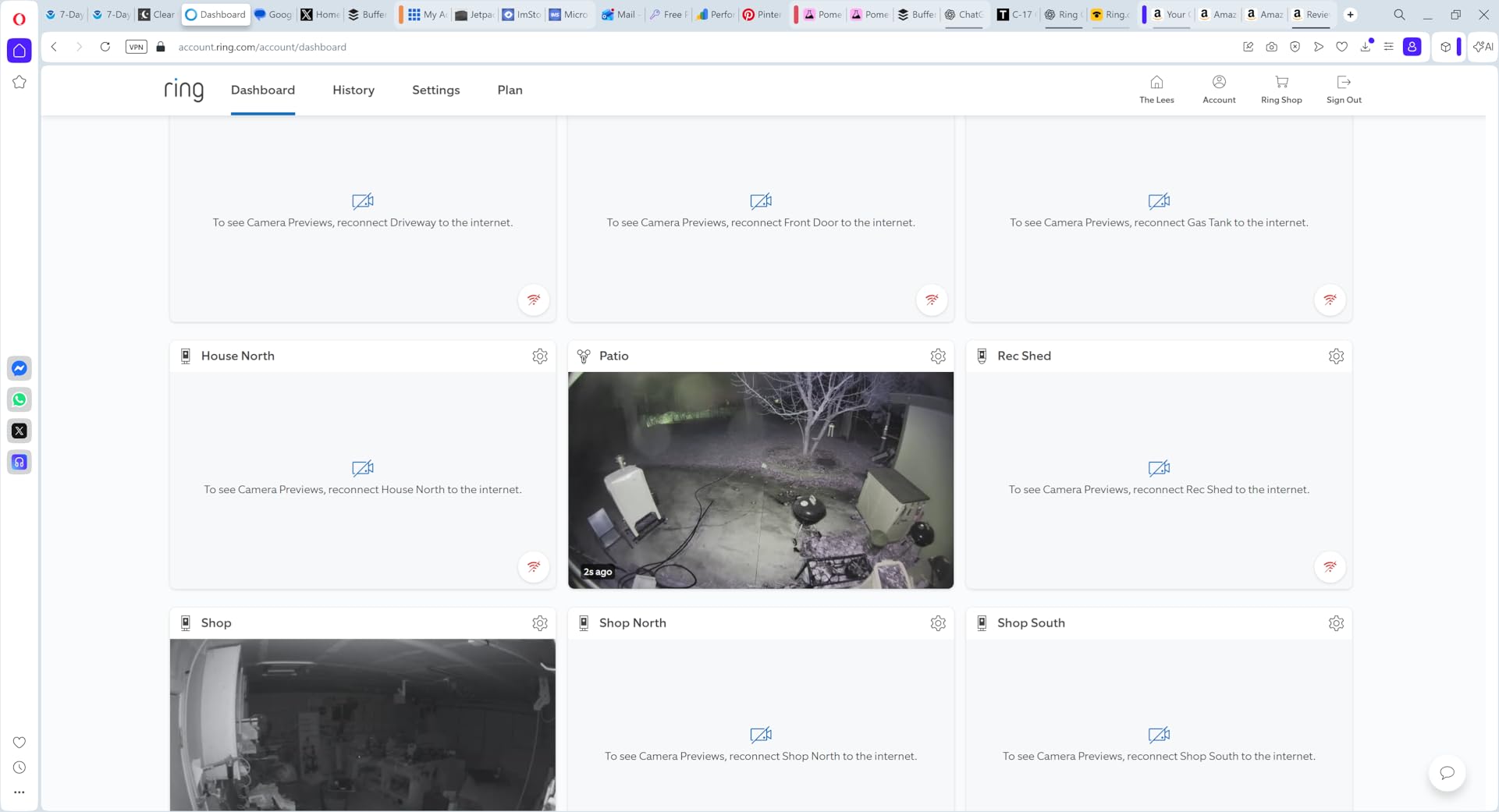
Install is genuinely a weekend project. The mounting hardware and a multi-tool are included, and because most backyards already have an exterior light or a patio outlet nearby, there is often no need to run new wire. The camera itself is fixed, pointing wherever you aim it, which is the model’s one structural limitation.
Two-way talk and the app-activated siren add real deterrence value. The siren is rated at 85dB and 105dB, which is audible enough at the fence line to matter, though a good chunk of that value is psychological rather than decibel-driven.
Video is 1080p HD. That is enough to identify a person at the patio door and it holds up well with the 2000-lumen light on, but owners comparing against newer 2K and 4K hardware will notice the softness at the far corners of a large yard. Detail beyond about 15 to 20 feet is where you start to see the difference.
Is the fixed camera head a problem for a wide yard?
For a typical fenced backyard with a patio and a shed, no. Aim it at the highest-traffic zone and it will carry you. For a deep lot or a yard where you also want the driveway in frame, the fixed head means you are looking at two fixtures rather than one.
The customisable motion zones in the Ring app let you draw the detection region to the yard and exclude the fence line where the street runs past, which is the most useful setting on this camera for a yard that backs onto a street.
What is the catch with the Ring ecosystem?
Recorded video history and the AI alert features sit behind a paid Ring Protect plan. Live view, the floodlight, the siren, and two-way talk all work without it, but if you want to replay an event from earlier in the week, the subscription is what makes that possible.
Because Ring is one of the most widely installed front-porch security brands, the wider ecosystem is a genuine advantage. If you already own Ring doorbells or indoor cams, adding this keeps everything in one app, which owner communities consistently rank as a top reason to stay with a single brand.
2. Blink Wired Floodlight Camera for More Light at a Lower Cost
- Bright 2600-lumen output for a large yard
- Connects to existing outdoor wiring
- Dual-zone motion detection cuts notifications
- Two-way audio plus built-in siren
- No wiring upgrade if a light circuit exists
- 1080p limits detail at distance
- Clip storage and person detection need a subscription
- Motion detection is basic next to AI competitors
The Blink Wired Floodlight Camera is the value pick here, and the reason is simple arithmetic. At 2600 lumens it out-lights the Ring Wired Plus by a clear margin, which in a backyard full of mature trees and a dark fence line is the specification that does the most work.
Everything else is competent rather than remarkable. Video is 1080p HD live view with color night view, two-way audio is crisp, and the built-in siren handles the deterrence job. The motion detection uses two customisable zones, which is enough to split the yard from the street if you set it up carefully.
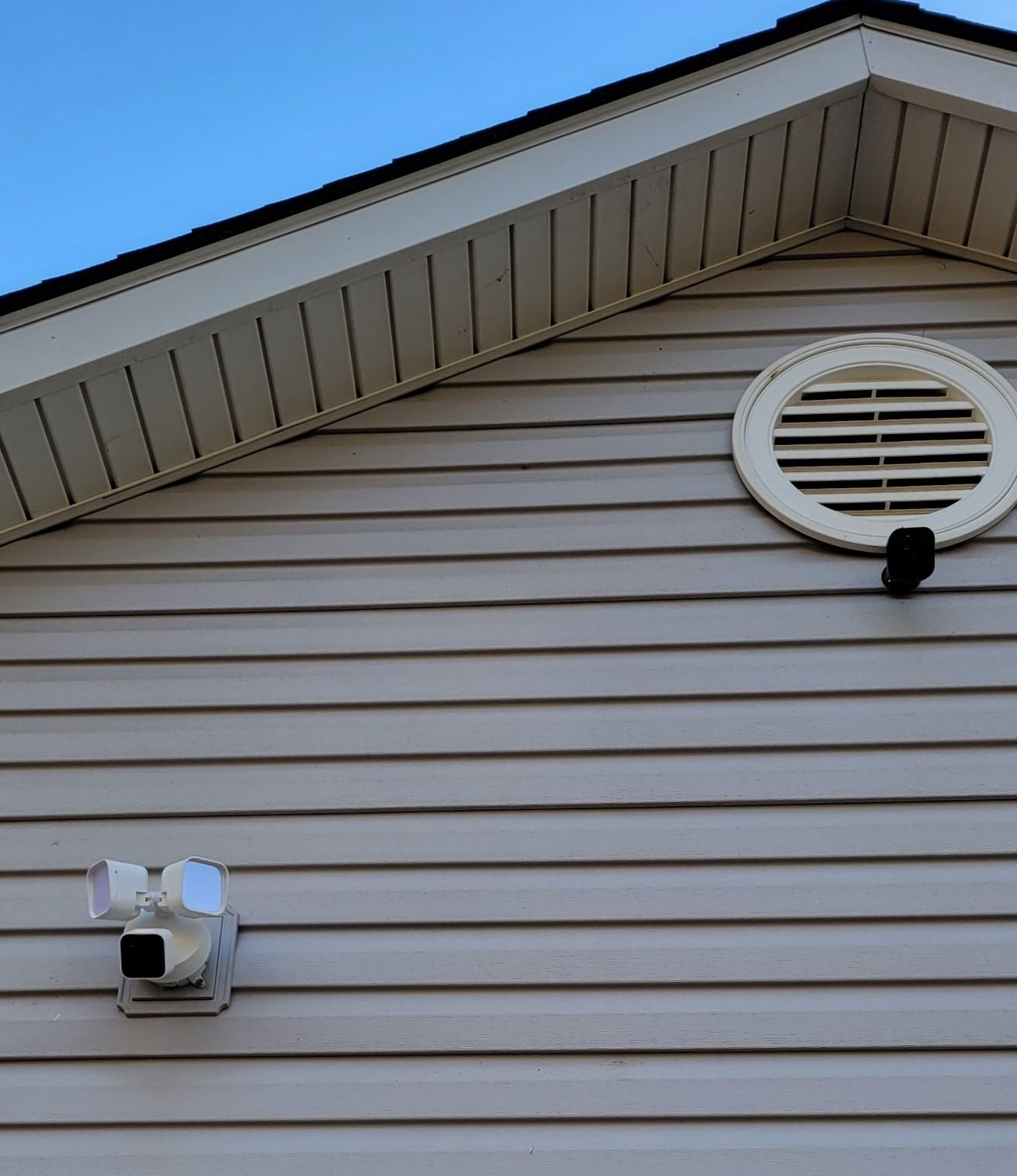
Installation mirrors the Ring. Because it connects to existing outdoor wiring, most homeowners with a light circuit on the back wall are swapping a fixture rather than running cable, and the process takes well under an hour with the power off at the breaker.
The dual-zone setup is where you spend your time. Owners who report the best results say they draw one zone tightly around the patio and furniture and a second covering the gate or fence line, rather than trying to cover the whole property with one rectangle.
A 30-day trial of the Blink subscription plan comes with the camera, after which clip storage and computer-vision person detection require a paid plan. If you would rather not pay anything, local storage runs through a Sync Module 2 or Sync Module XR, which is a separate purchase and is worth factoring into your total cost.
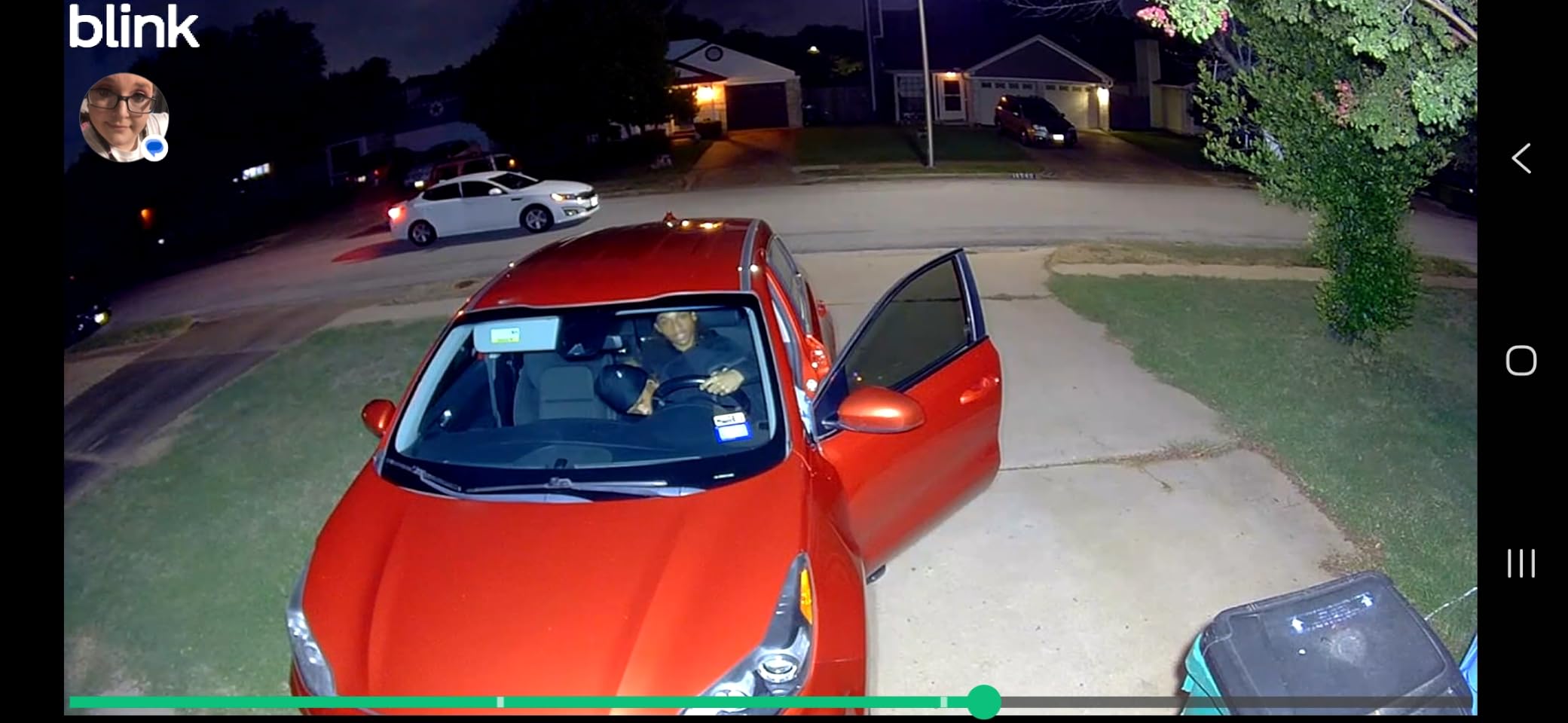
How does 2600 lumens hold up at the far corner of a yard?
Better than any of the 2000-lumen units for a large property, though it is not a floodlight that will light an acre. For a fenced suburban backyard with a patio, a shed, and a gate, 2600 lumens is comfortable. The light is also spread across two heads, so aim matters more than output on a narrow side yard.
It is worth noting that brightness alone does not fix an aiming problem. If the light spills onto a neighbor’s fence or your own upstairs bedroom, the fix is zone and aim, not more lumens.
Is Blink worth it if you already own Ring hardware?
If you are starting fresh or already run Blink cameras, yes. Blink offers one of the brighter stock fixtures and a simple two-zone system that most people get comfortable with in an afternoon. If you already have a large Ring setup, mixing ecosystems usually means two apps, and owner communities treat that as the biggest reason to consolidate rather than mix.
Person detection is described as more basic than the AI detection on Ring, Arlo, and eufy models. In practice that means more notifications when a raccoon crosses the patio at night unless you tune sensitivity carefully.
3. Ring Floodlight Cam Wired Pro for Sharper 2K Footage
Ring Floodlight Cam Wired Pro, Home or business security, Retinal 2K Video, Color Night Vision and Two-Way Talk with Audio+, White
- Noticeably clearer than the 1080p Plus model
- HDR balances bright and dark areas together
- 3D Motion Detection gives precise alerts
- 2000 lumens cover a large outdoor area
- Color Night Vision and Audio+ are well regarded
- Floodlight color runs warmer and yellower
- Still a fixed head with no pan or tilt
- Video history and AI features need Ring Protect
- Detail softens beyond roughly 15 to 20 feet
The Ring Floodlight Cam Wired Pro is the step up from the Plus model, and the deciding feature is HDR. In a backyard, HDR matters more than most spec sheets suggest, because backyards have extreme contrast: a dark fence line under a bright sky, a lamp post, a lit pool, and deep shadow under a deck all in the same frame.
Reviewers upgrading from the Plus model point to HDR almost without exception as the improvement that justified the change. Color Night Vision keeps the footage in full color under the floodlight rather than dropping to monochrome, which is what makes a 2000-lumen fixture feel like it is doing security work instead of just decoration.
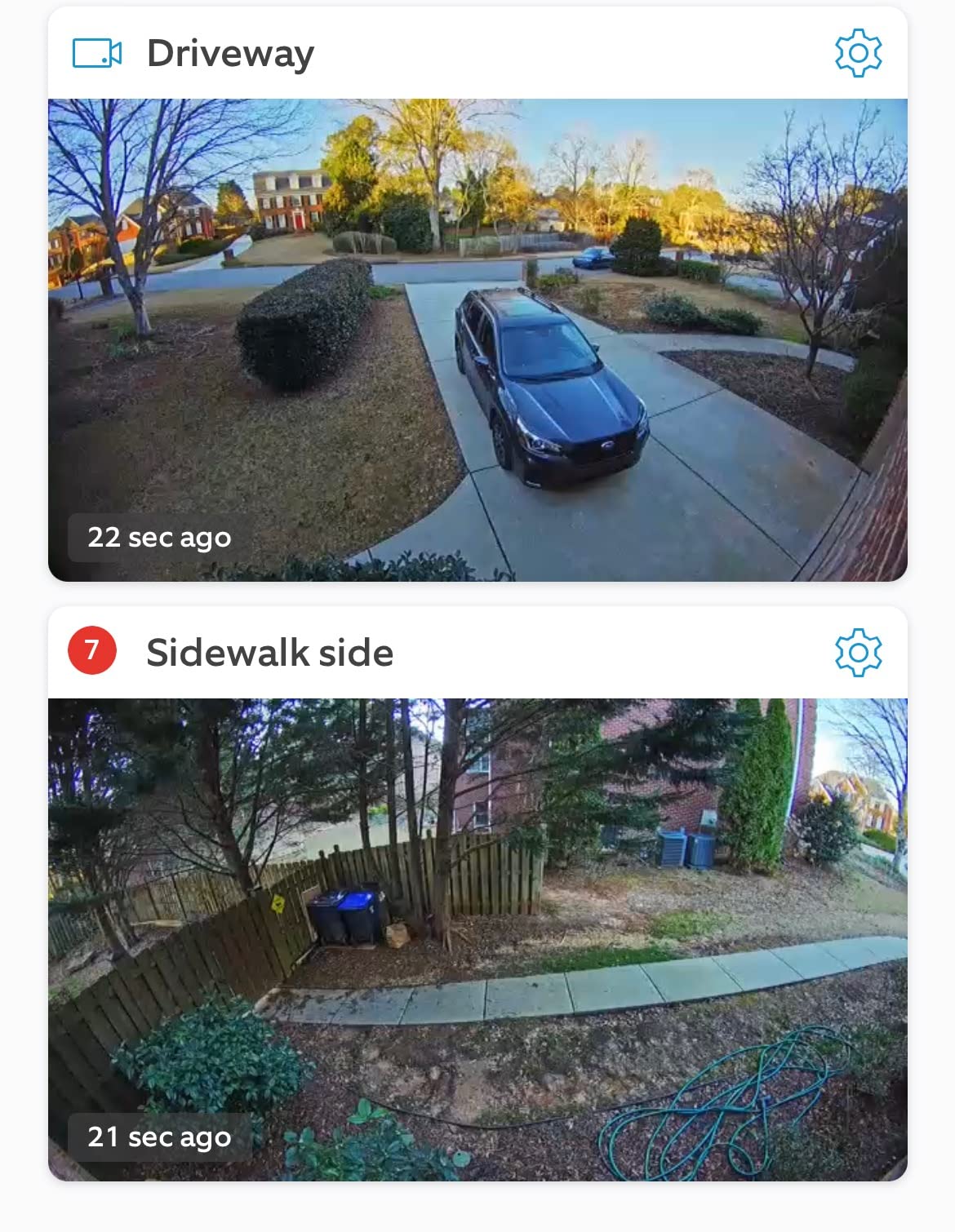
The 3D Motion Detection is the other meaningful upgrade. It uses distance and angle rather than pure frame-to-frame difference, which cuts down the notifications you get from wind-blown leaves and passing headlights compared with the older sensor. In a backyard that is a meaningful upgrade because the usual noise sources are trees, not people.
Two-Way Talk with Audio+ improves the audio side, and the built-in siren is rated at 110dB, the loudest in the Ring floodlight line. That is a genuinely useful number for deterrence, subject to any local noise rules.
The 2000-lumen light is unchanged from the Plus model, and that is where the recurring criticism sits. Owners describe the color temperature as warmer and yellower than they would like, which reads as pleasant at the patio but slightly dated on camera footage.
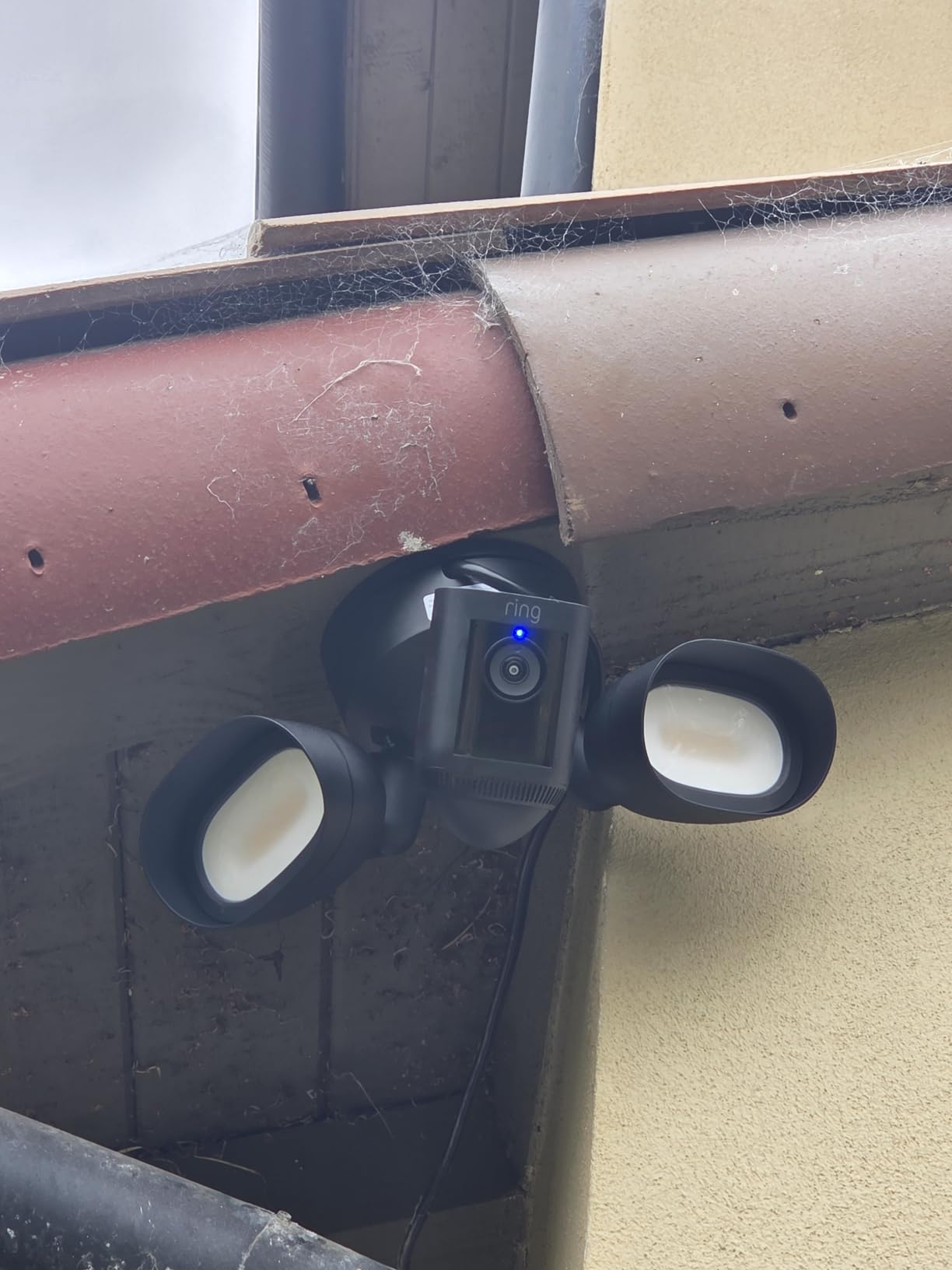
Is 2K enough detail for identifying someone at the fence line?
For the last 15 to 20 feet of a yard, yes, and noticeably better than 1080p. Past that, several buyers say the footage is soft enough that they would consider a 4K body instead. If your backyard is deep and the gate is at the far end of the property, resolution matters more than resolution plus a subscription.
Pairing it with a second, lower-resolution camera for the far corner is the common compromise, and it is cheaper than stretching one 2K sensor across a whole property.
What do you give up compared with the Plus model?
Nothing meaningful in software, since both sit in the same app and the same subscription tier. The Pro adds HDR, Color Night Vision, 3D Motion Detection, the louder 110dB siren, and Audio+.
As with the Plus, the camera head is fixed. If you want mechanical movement to cover a wide yard from one mount, the eufy options later in this guide do that and the Ring units do not.
4. Arlo Wireless Floodlight Security Camera Pro 3 for Wire-Free Backyard Install
- No wiring needed for a true wireless install
- Wide 160 degree field of view
- Color night vision gives clear night footage
- Up to 3000 lumens covers a large yard
- 12x digital zoom with auto tracking
- Works with Alexa Apple Home and Google
- Battery design means taking it down to recharge
- Reports of connection dropouts after about a year
- Subscription needed for history and AI detection
- Proprietary charging cable rather than a hardwire
- Some find the light dimmer than expected
The Arlo Pro 3 Wireless Floodlight is the choice for a backyard with no power at all, and it also has one of the widest fixed viewing angles in this group at 160 degrees. One mount near a back corner can see a surprising amount of yard, which reduces the number of cameras a large property needs.
Image quality is a genuine strength. It captures 1440p HDR video, records color night vision with a stated night vision range of 25 feet, and offers 12x digital zoom with auto zoom and tracking. Owners who moved up from lower-resolution brands tend to describe the picture quality as the reason they accepted a subscription.
Light output goes up to 3000 lumens, the highest ceiling in this group, with dimmable settings lower down. Brightness is the most-cited positive alongside the viewing angle, and Arlo support is rated as responsive by multiple reviewers, which matters when a camera is mounted ten feet up.
Power comes from a rechargeable 13000 mAh lithium-ion battery, so the install is genuinely wireless and the fixture mounts to a wall without any new cable. The waterproof rating is IP65, the enclosure is plastic, and the body measures 8.6 x 7.5 x 3.07 inches.
The catch is that recharging means taking the camera down. Arlo uses a proprietary charging cable, and owners frequently add a solar panel or a longer cable so the camera can stay mounted. Several reviewers also report units going offline or failing to hold a connection after roughly a year of service, so the wireless convenience has a real long-term cost.
How bright is 3000 lumens really, in backyard terms?
It is roughly the output of a 200-watt incandescent bulb, and it is more than most backyards need at full blast. The useful move is to run it dimmed at maybe 40 to 60 percent, which cuts the neighbor-facing spill and still gives you color night footage of anyone crossing the yard.
Runners-up in this guide also note the light is dimmer than the headline number suggests at the top of the fence, because the beam spreads. Aiming the fixture downward at about a 45-degree angle keeps the light on the ground where you need it.
Is a wireless floodlight camera good enough for continuous recording?
Not by default. A battery floodlight records on motion events, and the subscription plan is what unlocks 60-day history, AI detection, and emergency response on the Arlo system. If you want 24/7 continuous capture, a hardwired model is the better answer.
Arlo is the rare brand in this list that works with Alexa, Apple Home, and Google Assistant in the same unit, plus SmartThings and IFTTT, which makes it the easiest pick for a mixed-ecosystem household.
5. Wyze Floodlight Camera v2 for Local Storage Without a Subscription
WYZE Floodlight Camera v2, 2K HD Outdoor Security Camera with 2800 Lumens
- Easy install and pairing without a ladder QR scan
- 2800-lumen dimmable lights
- Sharp 2K video with color night vision
- microSD recording removes the subscription
- True dusk-to-dawn sensor plus ambient mode
- Fixed head with limited tilt range
- 2.4GHz Wi-Fi only
- Free tier is snapshots only
- Some owners report random offline behavior
If the thing that turns you off about floodlight cameras is a monthly fee that shows up forever, the Wyze Floodlight Camera v2 is the pick. It records 24/7 to a microSD card with up to 30 days of storage, no plan required, and it still throws 2800 lumens of dimmable light across the yard.
The light is genuinely adjustable, and paired with a real dusk-to-dawn sensor and an ambient light mode, you can set the fixture to a low glow after sunset and reserve full brightness for actual motion. That is an effective way to limit spill into a neighbor’s yard or your own upstairs bedroom.
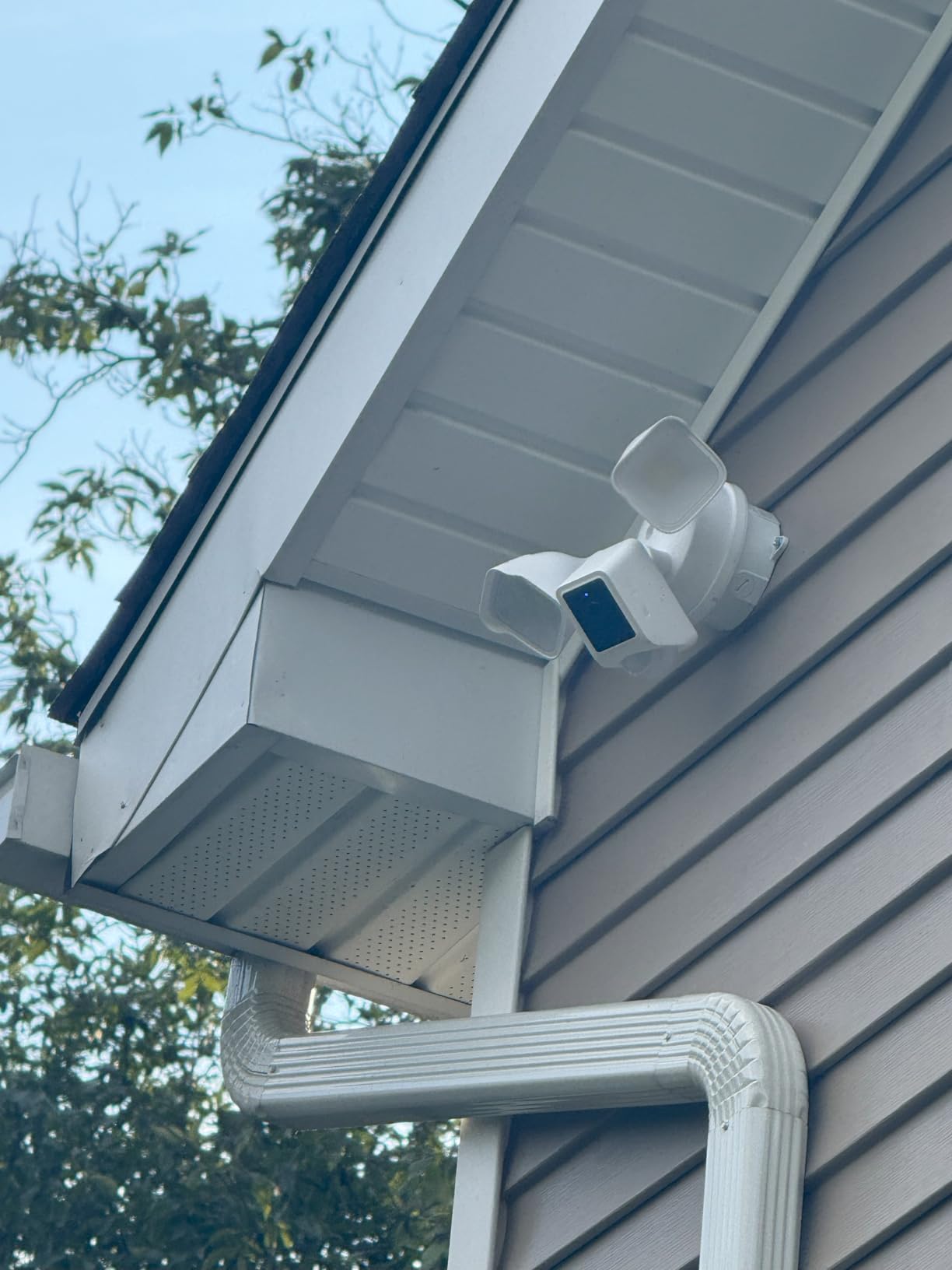
Video is 2K with color night vision across a 160-degree field of view, and the motion detection uses a 270-degree PIR sweep with customisable zones. Two-way talk and a 105dB siren round out the feature set, and the IP65 rating handles year-round exposure.
Pairing is one of the nicer touches in this group. It is a screw-in corded 110V fixture that joins 2.4GHz Wi-Fi, and it can be set up without climbing a ladder to scan a QR code, which matters when you are standing on a step stool at the back of the house.
Two things to know before you buy. It is 2.4GHz only, so on a dual-band network you may need to separate the SSIDs. And the free tier gives you snapshots rather than full event video, so the microSD card is what makes this subscription-free in practice.
Does microSD recording actually replace a cloud subscription?
For most homeowners, yes. Continuous 24/7 recording to a card up to 30 days means you can scroll back through any moment without paying, and nobody is watching your yard footage except you. The trade-off is that playback in the app is not always perfectly smooth according to owners, and you lose some cloud-only AI features.
If you want the same model with more storage, the Tapo option later in this guide takes microSD cards up to 512GB.
Is 2.4GHz-only Wi-Fi a problem in a backyard?
It can be. The signal at the back of a house is the weakest point on most networks, and 2.4GHz is the band that travels further through walls, so the limitation is not as serious as it sounds. It does mean the camera will not join a network that only broadcasts on 5GHz.
Several owners report the unit randomly going offline and needing a reset, so if your router is far from the back wall, plan on a mesh node before you blame the camera.
6. Blink Outdoor 4 Floodlight Camera for a No-Wiring Starter Setup
Blink Outdoor 4 Floodlight Camera — Wireless smart security camera, 700 lumens, two-year battery life, enhanced motion detection, Sync Module Core included — 1 camera system
- No wiring at all for sheds and side yards
- Sync Module Core included in the box
- Up to two years of battery on supplied lithium cells
- Dual-zone motion detection and two-way audio
- Local microSD backup available
- 700 lumens is the dimmest here
- Infrared only so night footage is black and white
- 1080p limits detail at distance
- Cloud storage and person detection need a plan
- Sync Module needed for many features
The Blink Outdoor 4 Floodlight is the starter kit option. The box includes the camera, a Sync Module Core, two AA Energizer lithium batteries, a mounting kit, a power adapter, and a USB cable, so you can get a backyard camera running without buying a single extra accessory.
That matters most when you are covering a spot with no power at all, a shed wall, a side yard gate, or the far corner of a lot where running a circuit would mean calling an electrician. The claimed battery life is up to two years on the supplied lithium cells, which is the kind of number that makes people comfortable leaving a camera out through a whole season.
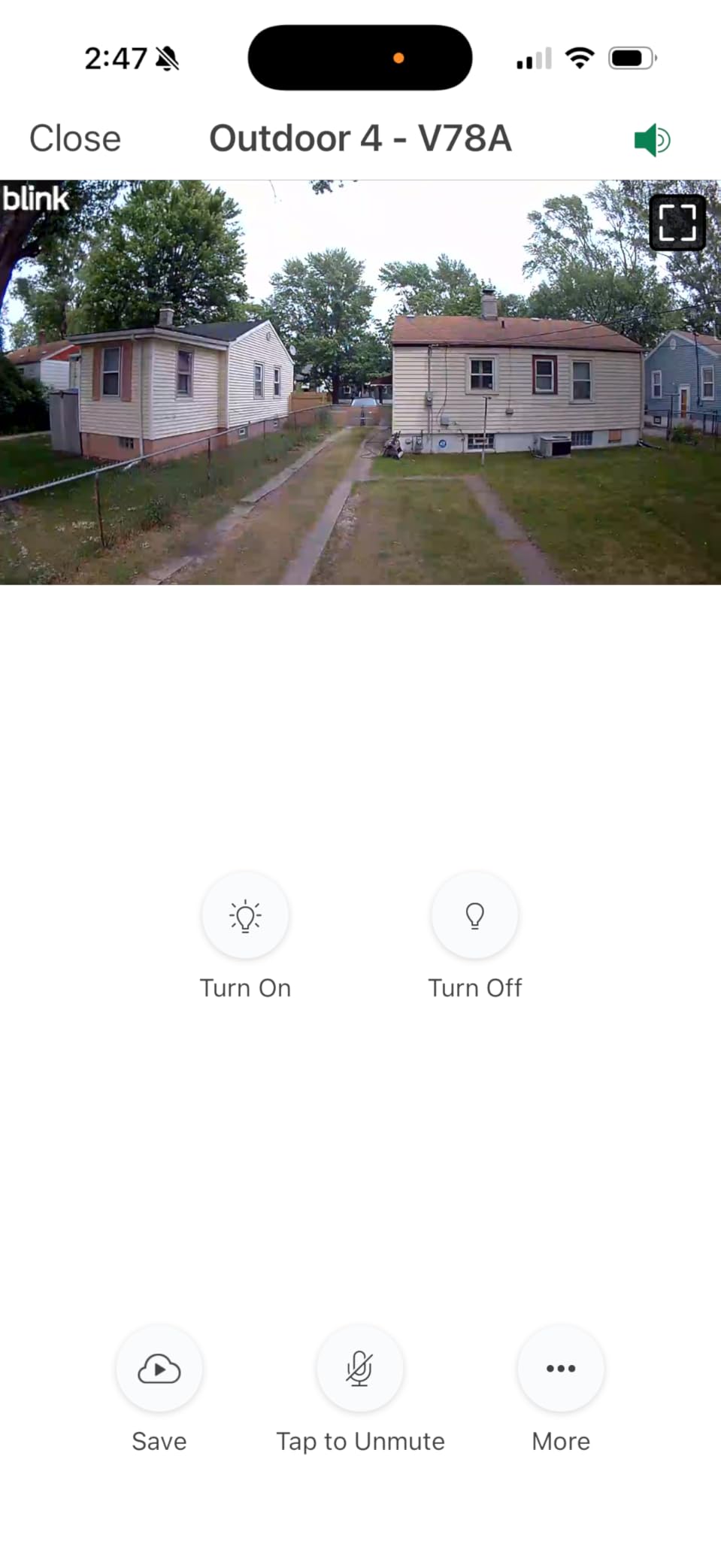
Now the honest part. At 700 lumens, this is the dimmest fixture in the roundup, and owners consistently point that out. It lights a path, a gate, or a small patch of patio. It does not light a large backyard, and if you were replacing 500W halogen floods, this is not the swap you are making.
Night footage is infrared, so it is black and white rather than color. That is a fair trade for long battery life, but it does mean you lose the color night vision that makes 2K models so useful for identifying clothing and vehicles.
Local storage runs through a Sync Module XR with a microSD card up to 256GB, sold separately, while cloud storage and person detection require a Blink subscription after the trial. Owners point to the hub requirement as the main thing to budget around.
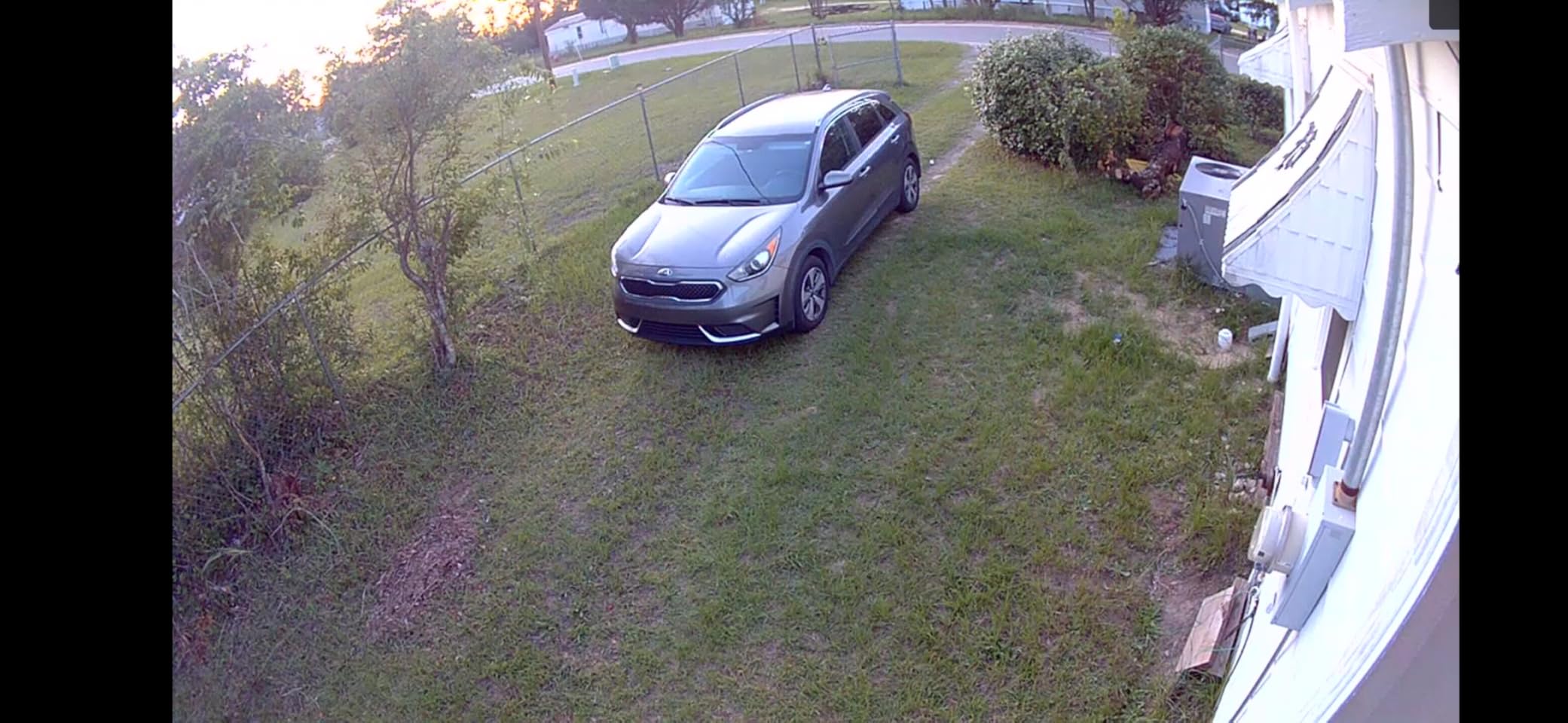
Where does a 700-lumen light actually make sense?
Short paths, a side gate, a shed entrance, a dog run, and anywhere the goal is motion alerts and a visible deterrent rather than full yard illumination. A camera like this pairs well with a brighter wired unit on the house.
If you are hoping to light a patio for dinner, this is not the fixture. Every other wired model in this list delivers at least 2000 lumens.
Is the included Sync Module Core enough?
It is enough to run the camera and use the app, and it is the reason this kit works as a first step. For local recording you would move up to a Sync Module XR with a microSD card, and for person detection and cloud storage you would add a subscription plan.
Because the module is included, this is one of the few floodlight options here that works as a complete, self-contained system on day one.
7. eufy Security Floodlight Camera E340 for Pan, Tilt and Dual Lens Detail
eufy Security Floodlight Camera E340, Dual-Lens, 360° Coverage, 8X Zoom
- Dual lenses pick up distant detail
- 8x hybrid zoom reaches to 50 ft
- 360 degree pan-tilt with AI auto-tracking
- Quiet motor during tracking
- 24/7 local recording with no subscription
- Dual-band Wi-Fi 6
- Higher cost than most floodlight cameras
- Wide lens narrower than some Ring models
- App event review less polished than Ring
- Bracket may need an adapter for a standard box
- Some report inconsistent motion triggering
The eufy E340 is the most flexible camera in this group and it solves the two problems a fixed head cannot: coverage and detail. It carries two sensors, a 3K ultra-wide lens and a 2K telephoto, with 8x hybrid zoom that reaches roughly 50 feet into the yard.
That telephoto lens is the reason to choose it. A fixed 1080p head pointed at a back fence is looking at a person as a silhouette, while a 2K telephoto can pull a face or a jacket logo out of the frame. The hybrid zoom tops out at 2K when AI tracking or dual views are active, which is a reasonable compromise.
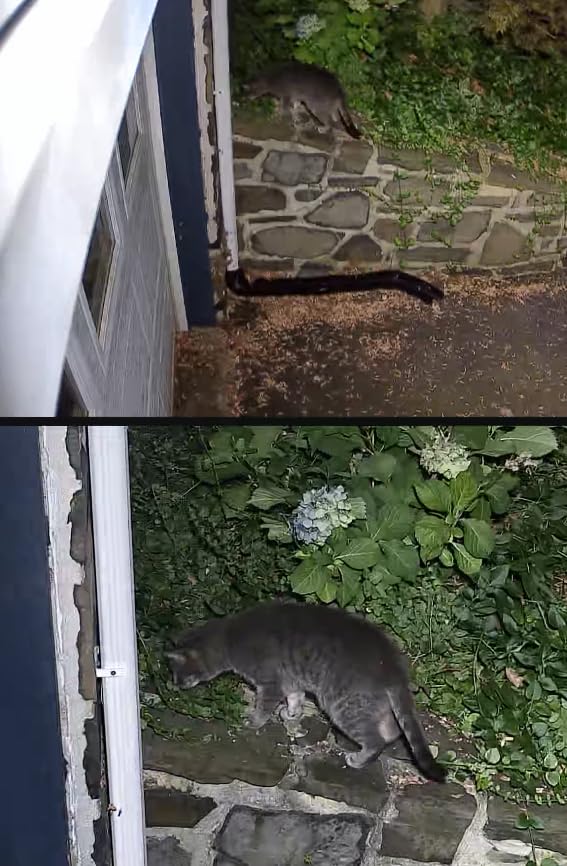
Coverage is handled by a 360-degree pan and tilt head with a viewing angle of 355 degrees and AI auto-tracking of people and vehicles. The motor is quiet, so a tracked person does not hear the camera rotating. Scheduled auto-patrol lets the camera sweep the yard on a timer, which fills in the gaps a single fixed aim leaves behind.
Storage is the other headline. It records 24/7 continuously to a microSD card up to 128GB or to a eufy HomeBase S380, with no subscription fee. Owners consistently cite that as a top reason to buy the brand, and it is why many people choose eufy despite the reliability complaints.
Connectivity is dual-band 2.4GHz and 5GHz Wi-Fi 6, which no other unit in this roundup matches. The light is 2000 lumens with adjustable brightness and ambient mode, plus a 95dB alarm. The body is corded electric, IP65, and 1380 grams.
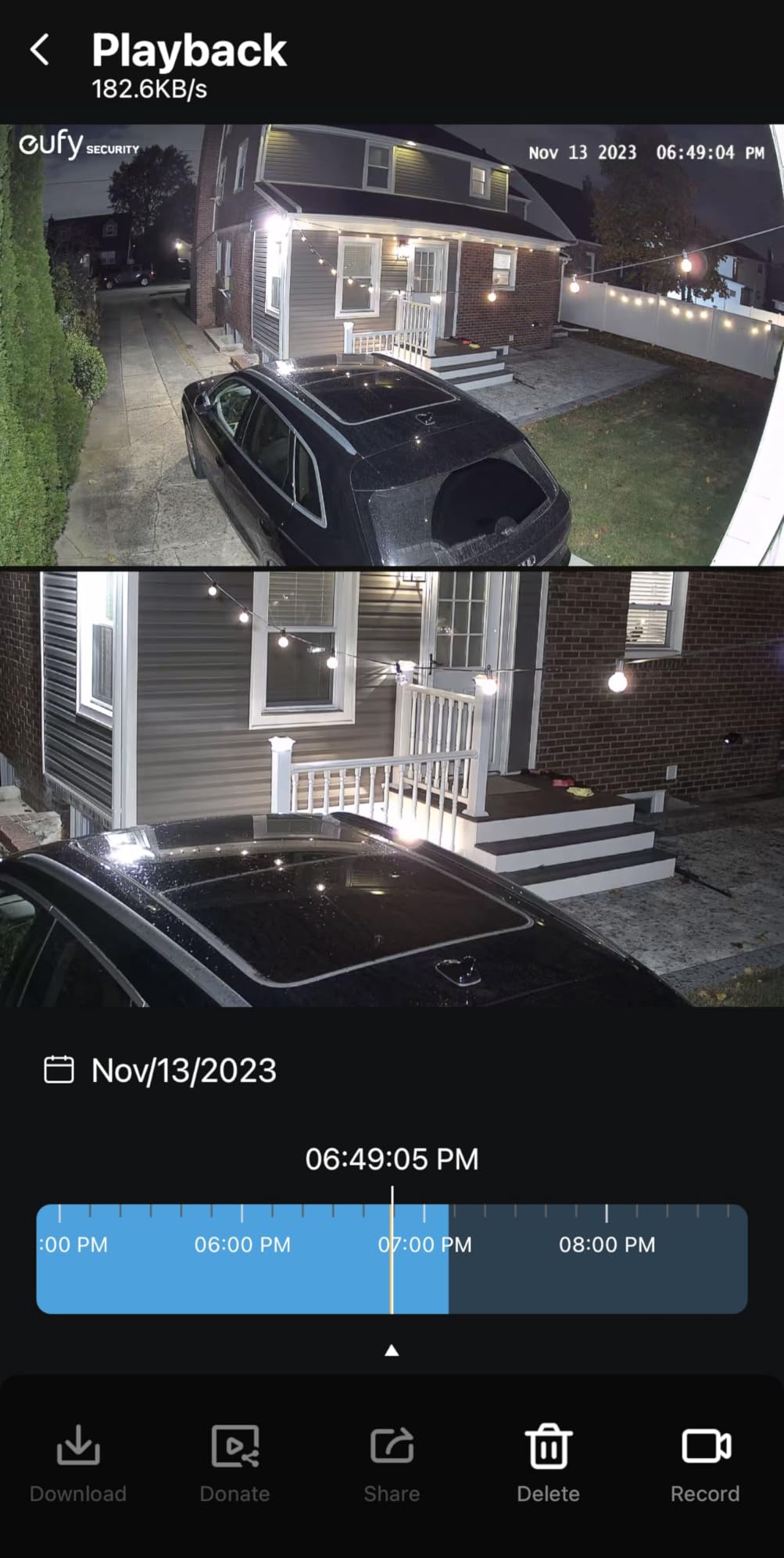
Is the E340 worth the higher cost for a backyard?
It depends on your property. On a large lot, or anywhere you would otherwise need two cameras, one E340 that pans, tilts, and zooms can replace a fixed pair. On a small fenced yard where a 2000-lumen fixed camera would do, the extra spend is harder to justify.
Reviewers also note the wide lens is narrower than some Ring models, so check the field of view against your actual coverage before committing.
What about eufy’s long-term reliability reputation?
It is worth being straight about this. The eufy communities carry a loud thread of frustration, with users reporting random Wi-Fi disconnects, units dropping out of the app, some floodlight models reporting moisture ingress, and a minority seeing motion triggering and recording length behave inconsistently. At the same time, plenty of owners report units running flawlessly for years with 24/7 recording.
The pattern in the reviews is high variance rather than a uniform verdict. If you are risk-averse, the two-year-ish consistency of the Ring wired models is a real argument, and if you want to avoid a subscription, the local storage here is the trade.
One practical note: the mounting bracket may not fit a standard junction box without an adapter, so check the hardware before you are standing on a ladder.
8. eufy Security Floodlight Camera E30 for One Mount, Whole Yard Coverage
eufy Security Floodlight Camera E30, 2K, AI Detection & Tracking, Outdoor
- One unit can monitor a whole backyard
- AI detection tracks people and vehicles smoothly
- 2K sensor plus 2000 lumens gives color night footage
- Hardwired power for reliable 24/7 recording
- Power amplifier improves Wi-Fi range
- No subscription for local storage
- 2.4GHz-only Wi-Fi
- 20 fps frame rate blurs fast motion
- Resolution drops when AI tracking is on
- Requires an existing junction box and hardwiring
The eufy E30 is the simpler sibling of the E340 and, for many backyards, the simpler buy. It keeps the part that matters most in a yard, a 360-degree pan and tilt head with scheduled auto patrol, and drops the dual-lens complexity. One mount on a back corner can then cover the patio, the gate, and the fence line.
AI detection pans and tilts the camera to track humans and vehicles automatically, so a person walking the length of the yard stays in frame rather than walking out of a fixed cone. That is the difference between a clip and an identification.
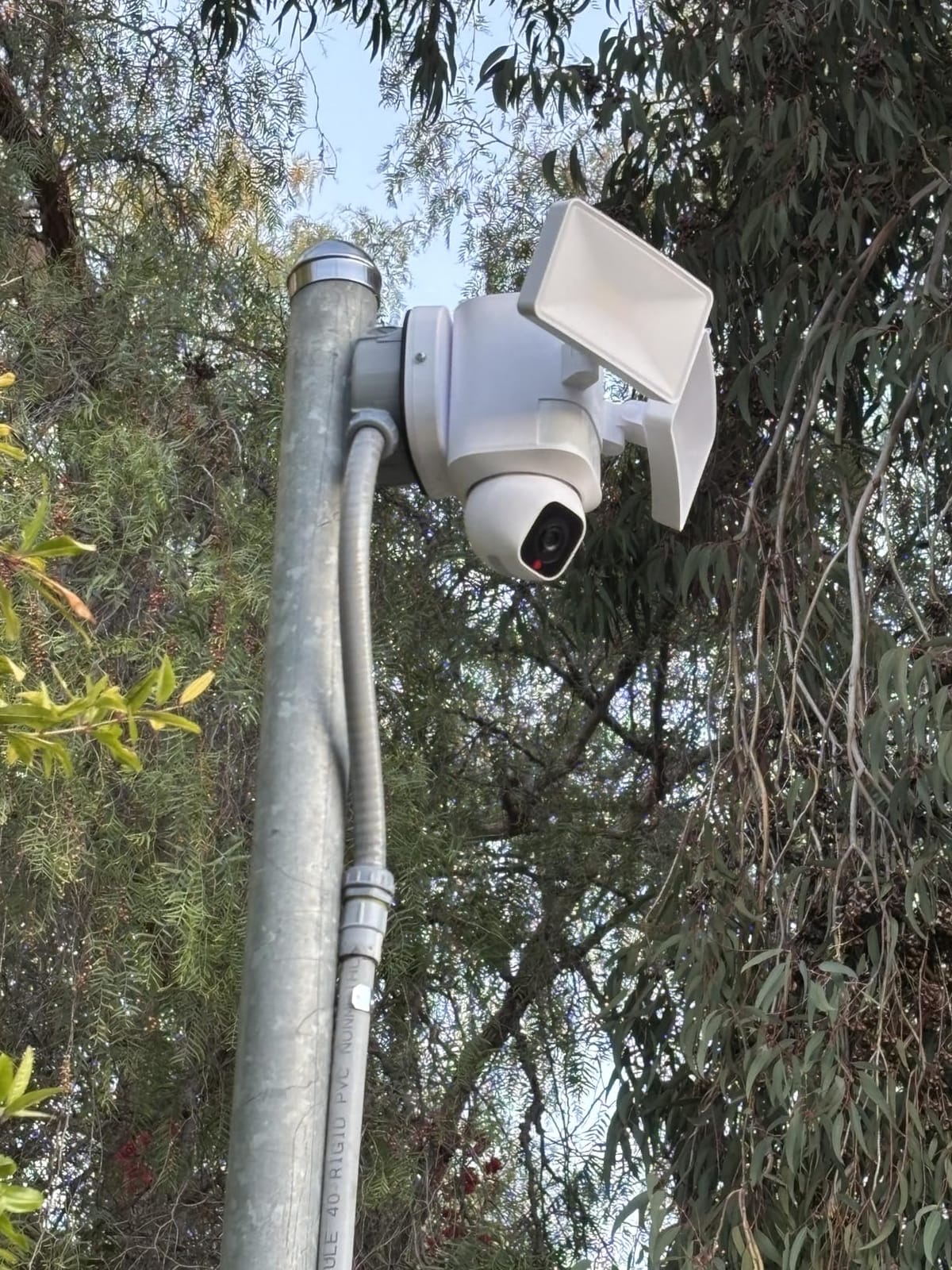
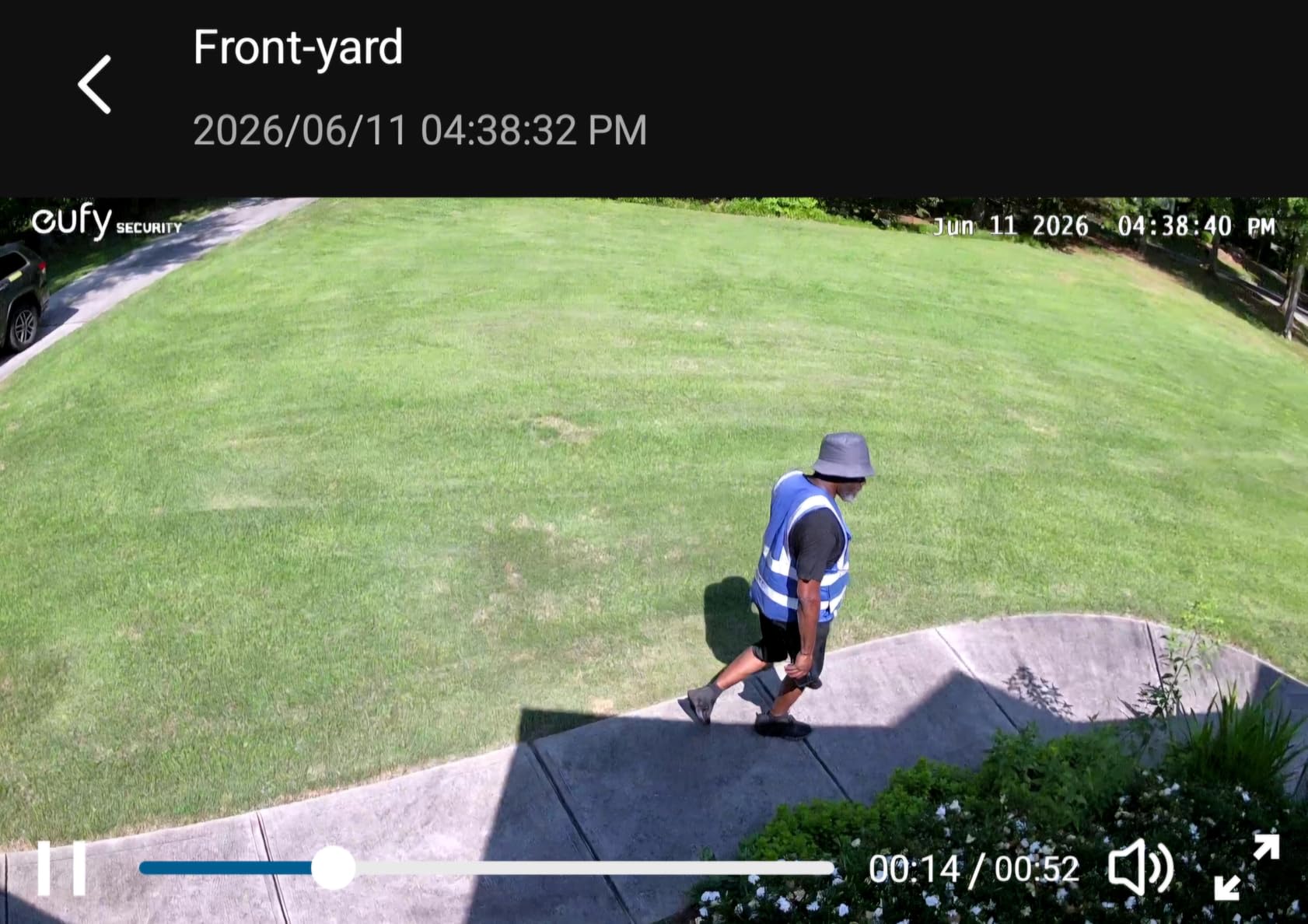
The light is 2000 lumens on motion activation, and combined with the 2K sensor it produces full-color low-light footage rather than the grey wash you get from infrared-only units. Night Color is the standard here, which is what makes the footage usable for identifying what was actually in your yard.
It is hardwired, so power is not a question and you get 24/7 uninterrupted recording regardless of weather. A power amplifier is built in, which owners say improves Wi-Fi signal strength and wall penetration by up to 50 percent, a genuinely useful specification when the router is on the other side of the house.
Local storage carries no monthly fee, and the IP65 rating handles a full year of outdoor exposure. The trade-offs are modest: it is 2.4GHz-only, the frame rate is 20 fps so fast motion can blur, and maximum resolution drops when AI tracking is enabled.
Is 20 fps a problem for a backyard?
It is fine for most situations and worth understanding in one specific case. A person walking at normal pace records cleanly, and the 2K sensor and 2000-lumen light do the heavy lifting for identification. A fast-moving subject such as someone on a bike or a dog sprinting across the yard can blur.
The resolution drop with AI tracking enabled is a more noticeable trade, because tracking is the reason many people want a pan-and-tilt camera. Turn it on for the areas that matter and leave it off where you only need motion alerts.
How does this compare with the eufy E340?
Choose the E30 when one moving camera covering the whole yard is your goal and you want a straightforward 2K image. Choose the E340 when you need to read detail at 50 feet, when you want the telephoto lens, or when you want the widest connectivity options including 5GHz.
Both need an existing junction box and hardwiring, so neither is the answer for a backyard with no power. For that, the Tapo solar kit is the option that needs nothing at all.
9. Ring Floodlight Cam 4K Pro for Maximum Detail Across a Large Yard
Ring Floodlight Cam 4K Pro (newest model), Wired, Retinal 4K with wide-angle video, 10x Enhanced Zoom, and 2000 Lumen Floodlights, White
- Sharpest Ring image quality with 10x zoom
- Adjustable brightness from 200 to 2000 lumens
- Low-Light Sight gives usable color in near-dark
- Improved bracket with wiring strap and ground wire
- Faster app load and snappier connection
- Clean integration with the Ring ecosystem
- Highest cost in the group
- Floodlight color runs more yellow
- Bulkier body with reduced mechanical range
- Modest night vision gain for a 4K class camera
- Some report muted colors and pixelation
The Ring Floodlight Cam 4K Pro is the top of the Ring floodlight line and has the highest resolution sensor in this roundup. Retinal 4K with a wide-angle field of view and 10x enhanced zoom means you can pick out detail far down a deep yard, which is exactly the situation a backyard camera is bought for.
The light is adjustable from 200 lumens up to 2000, giving you finer control than any other fixture here and the most direct way to keep light off a neighbor’s windows. Low-Light Sight is meant to produce color video in near-dark conditions, so you can keep the fixture dimmed and still get identifiable footage.
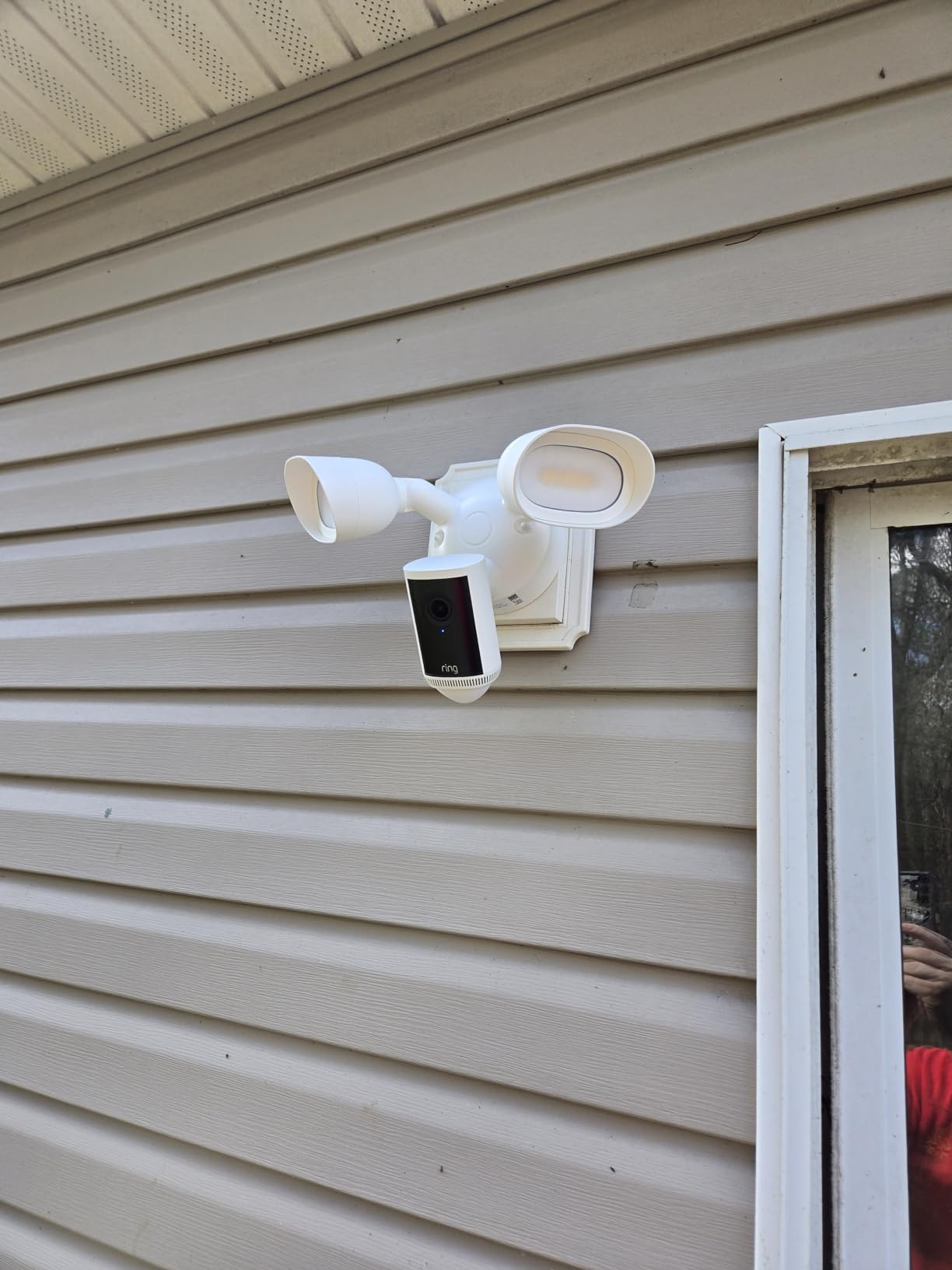
Motion detection uses 3D Motion Detection based on radar, which is more precise than frame-difference detection and does less to confuse passing cars with people. Two-Way Talk with Audio+ and an 85dB siren round out the feature set, and it works with Alexa and the wider Ring ecosystem.
Installation details improved too. The mounting bracket includes a wiring strap and a ground wire, and owners report faster app load times and a snappier connection than earlier floodlight models.
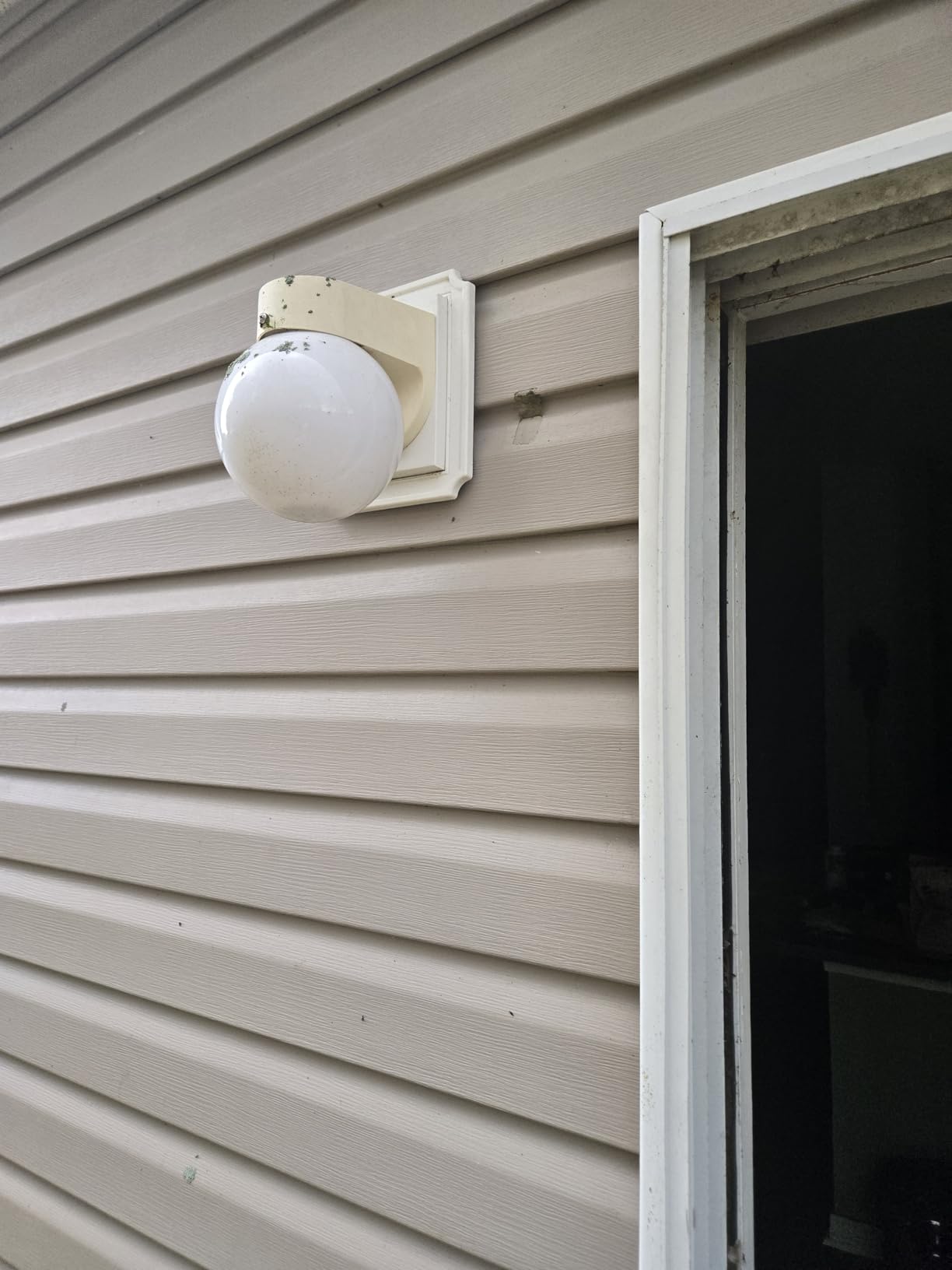
Owner reaction is split in an instructive way. New buyers rate it highly for sharpness, zoom, and lighting control. Owners upgrading from an earlier Ring Floodlight Pro judge the jump to 4K as marginal for the money, and several note yellower light color, a bulkier body, less mechanical range of motion, and modest night vision improvement for a 4K-class camera.
Is 4K worth it, or is 2K enough?
If the thing you need is identification at the far fence line or the end of a long driveway, 4K with 10x zoom is meaningfully better. If your coverage area is a small fenced yard, 2K from the Wired Pro is the more sensible stopping point, and the savings go into a second camera instead.
Some users report softer, more muted colors and occasional pixelation, so treat resolution as one input rather than the whole picture.
What do you give up by going to 4K?
Nothing in detection quality, and you gain the adjustable light range from 200 to 2000 lumens. What you accept is the higher cost of this model, a physically larger camera, and less mechanical range of motion than the previous generation.
Video history and AI features still require a Ring Protect plan, so this is not the no-subscription route. The adjustable brightness is what keeps it neighbor-friendly, and it pairs nicely with the 110dB Wired Pro if you want both.
10. Tapo 2K Outdoor Pan Tilt Wireless Floodlight C615F KIT for Solar Power
Tapo 2K Outdoor Pan/Tilt Wireless Floodlight Security Camera, C615F KIT
- Solar power means no wiring and no wiring prep
- Solar panel runs a full day from 45 minutes of sun
- Pan and tilt plus 360 degree AI tracking
- Subscription-free AI detection for people pets and vehicles
- Local microSD up to 512GB
- Compact and light at 1.4 pounds
- 800 lumens lights a path
- not a yard
- Solar charging stops working below 32F
- 2.4GHz Wi-Fi only
- Continuous capture needs a card or the H500 hub
- Smaller review base than the established models
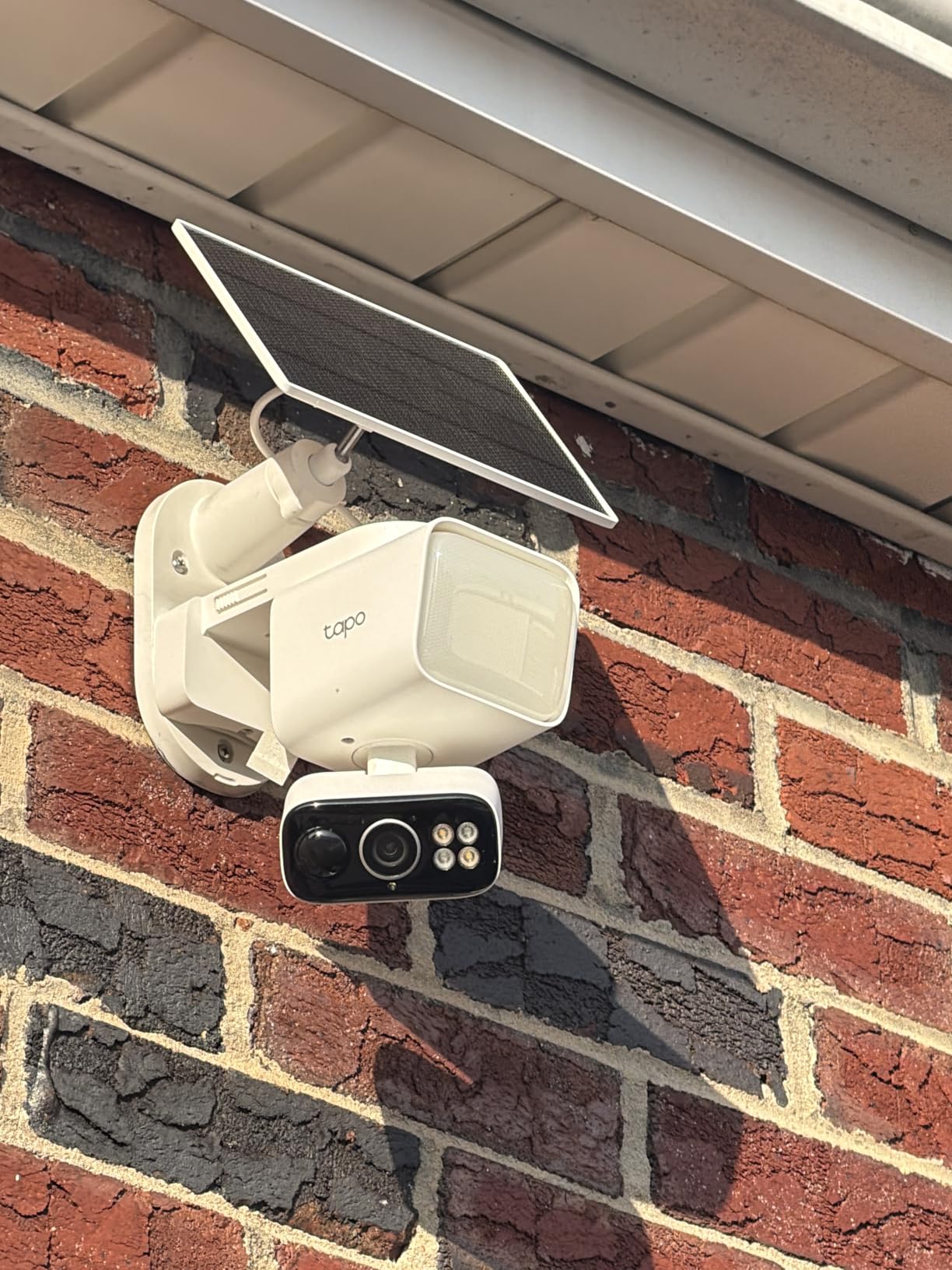
The Tapo C615F KIT is the only solar and battery option in this roundup, and that is the whole reason it is here. If your backyard has no junction box, no outlet, and no willingness to call an electrician, this is the fixture that works with a drill, a screw, and a sunny aspect.
The included solar panel produces a full day of power from about 45 minutes of direct sun, and the 10400 mAh battery carries through up to 140 days of cloudy stretches. That claim has one hard condition: charging requires temperatures above 32F, so in a genuinely cold climate the panel effectively stops helping for a good part of the winter.
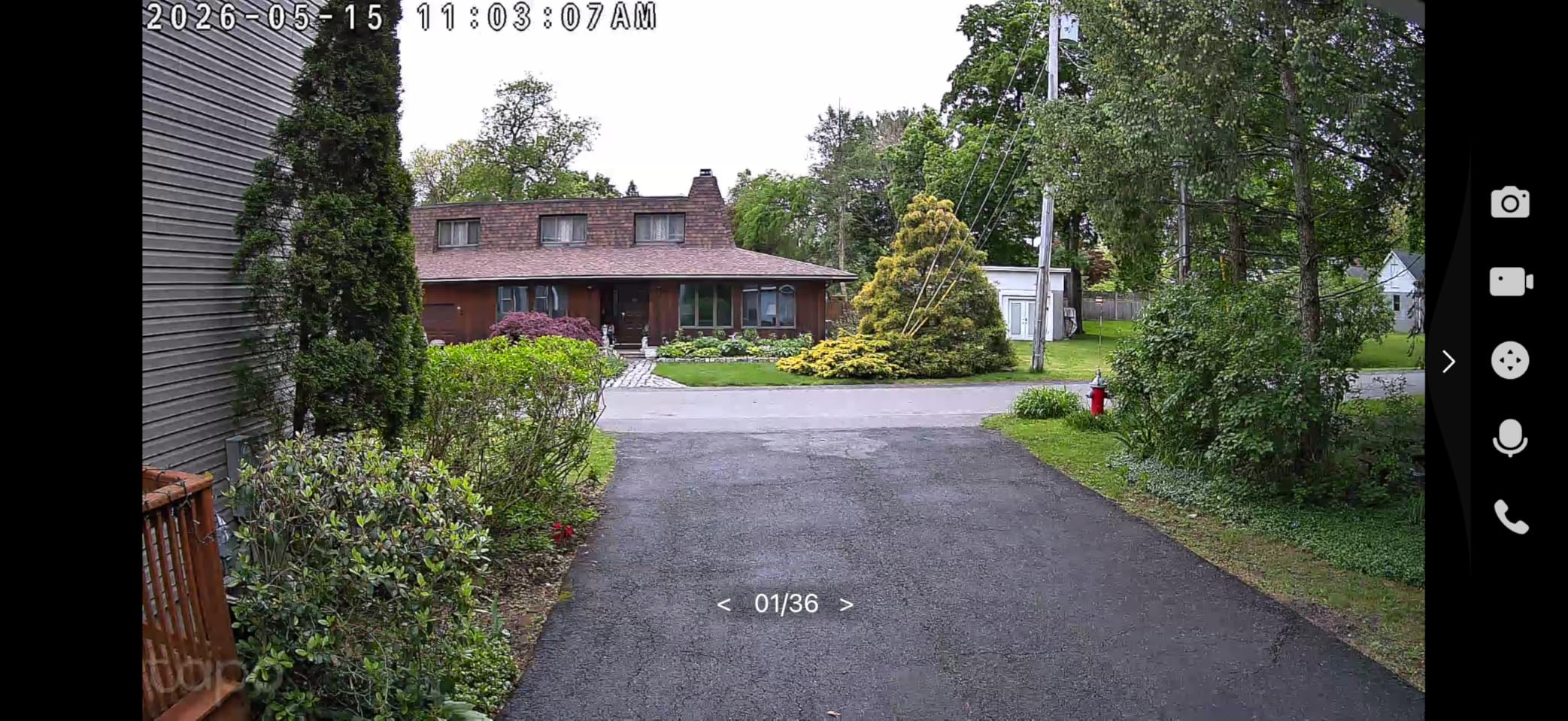
Coverage is good for a light of this size. Pan and tilt give 360 degrees horizontally and 130 degrees vertically, and 360-degree AI tracking follows people, pets, and vehicles. The detection is subscription-free, which is unusual for a brand in this category and matches what owners most often praise about the eufy and Tapo ecosystems.
Video is 2K on a 3MP sensor with color night vision to 32.8 feet, and 24/7 continuous capture at customizable 1 to 60 second intervals goes to a microSD card up to 512GB or to a Tapo H500 hub with a 2.5-inch drive, sold separately. The body is IP65, 2.4GHz only, and weighs 1.4 pounds.
The light is 800 lumens and dimmable. That is a path light, a gate light, a shed light, or a deck light, not a yard-lighting fixture. Owners are candid about this, and it is the reason the model sits at the budget end.
Is solar really maintenance-free?
For most of the year, yes, which is the appeal over a battery floodlight you have to take down and recharge. The panel charges normally whenever temperatures stay above 32F.
Below 32F, charging stops, which means winter performance depends on what the battery already holds and how much sun the panel gets. Owners in cold climates treat it as a spring-to-fall solution unless they aim the panel at a clear southern exposure.
What does a Tapo setup cost you in accessories?
Continuous capture needs either a microSD card or the separately sold H500 hub, and 24/7 recording to a card is what makes the no-subscription claim real. Smart person detection is included without a plan, unlike Blink and Ring.
The smaller review base is the other thing to weigh. At 548 reviews this has the smallest review base of the ten, so there is less long-term data on weather sealing and connection stability than the Ring and Blink models have accumulated.
How to Choose a Backyard Floodlight Camera in 2026
Most of the wrong purchases in this category come from picking on megapixels and then discovering the light, the zones, or the subscription did not work for the yard. These are the questions that actually decide it.
How bright does a backyard floodlight camera need to be?
For most fenced suburban backyards, 2000 lumens is the sweet spot, and for scale, 3000 lumens is roughly equivalent to a 200-watt incandescent bulb. The Arlo Pro 3 goes up to 3000 lumens and the Blink Wired and Wyze Floodlight v2 sit at 2600 and 2800, which matters for a deep or open property.
Below 1000 lumens, as with the Blink Outdoor 4 and the Tapo C615F, you are lighting a path or a gate rather than a yard. Brightness is also the number most worth dimming, which is why adjustable output from 200 lumens upward, as on the Ring 4K Pro, is a genuine advantage rather than a gimmick.
Wired, battery, or solar: which power source fits your yard?
Wired gives you continuous power, 24/7 recording, and no battery anxiety. It needs an existing junction box, and if your backyard has an exterior light already, the swap is easy. If it does not, you are looking at new wire or an electrician.
Battery removes the wiring entirely and installs in minutes, at the cost of recharging and of event-based rather than continuous recording. Solar adds a panel and, in cold climates below 32F, a seasonal limit on recharging.
The honest summary from owner threads: if you have power, wire it. Reach for battery or solar only when running cable is genuinely impractical.
Do I need a subscription, and what does local storage really give me?
Local storage means you can review your own footage without paying anyone. The Wyze Floodlight v2 records 24/7 to a microSD card up to 30 days, the eufy E340 stores to 128GB or a HomeBase S380, the eufy E30 does the same, and the Tapo C615F goes to 512GB or a hub.
Cloud plans on Ring, Blink, and Arlo unlock video history, AI detection, and features like event summaries. Owners overwhelmingly name local storage and no fees as the single most-cited reason to choose a brand, and the main argument against a subscription is that recorded video can be gated behind a plan you did not sign up for.
Watch for hidden hardware costs too. Blink local storage needs a Sync Module, and the Blink Outdoor 4 kit includes one while the wired model does not.
How do I stop false alerts from cars at the street?
Draw the motion zone to exclude the street and draw the light to follow the camera. The Ring Plus and Pro, the Blink wired model with its dual zones, the Wyze with its customisable zones and 270-degree PIR, and the eufy models with patrol schedules all support some version of this.
Start tight and expand. Set one zone around the patio furniture and a second around the gate, keep sensitivity low, and raise it only where you are still missing real movement. The most common owner complaint in every brand community is a motion sensor that is far too sensitive, and the fix is always zoning rather than tolerance.
For wildlife, raccoons, opossums, deer, and stray cats are the specific night-time offenders in backyards. If your camera supports pet or animal detection, turn it on, and expect some alerts regardless.
Will the light bother my neighbors or light up my bedroom?
It can, and this is a real problem in close-set neighborhoods. Four techniques keep it civil: dim the output, aim the fixture down and away from the house, set the floodlight to ambient or a schedule so it only goes bright on real motion, and mask the zone that covers the neighbor’s side.
Most of the products here support customisable brightness. The Ring 4K Pro goes as low as 200 lumens, the Wyze Floodlight v2 and the Tapo C615F are dimmable, and the eufy models offer ambient lighting modes alongside their 2000-lumen output.
Resolution, night vision, and field of view: what actually matters?
For identification, resolution and night vision matter more than daytime pixel counts. 1080p is fine for a small yard, 2K is the sensible default for most, and 4K with 10x zoom is for long sightlines. Color night vision, which all the 2K and 4K models here have, is what makes footage usable once the light is on.
Field of view is the other half. A 160-degree fixed head like the Arlo and Wyze models covers a wide area without moving, while a mechanical pan-and-tilt head like the eufy E340, eufy E30, and Tapo C615F can cover an even wider area and track subjects. What you cannot do is change a fixed head’s direction after it is on the wall, so aim carefully at install time.
Where should a backyard camera be mounted?
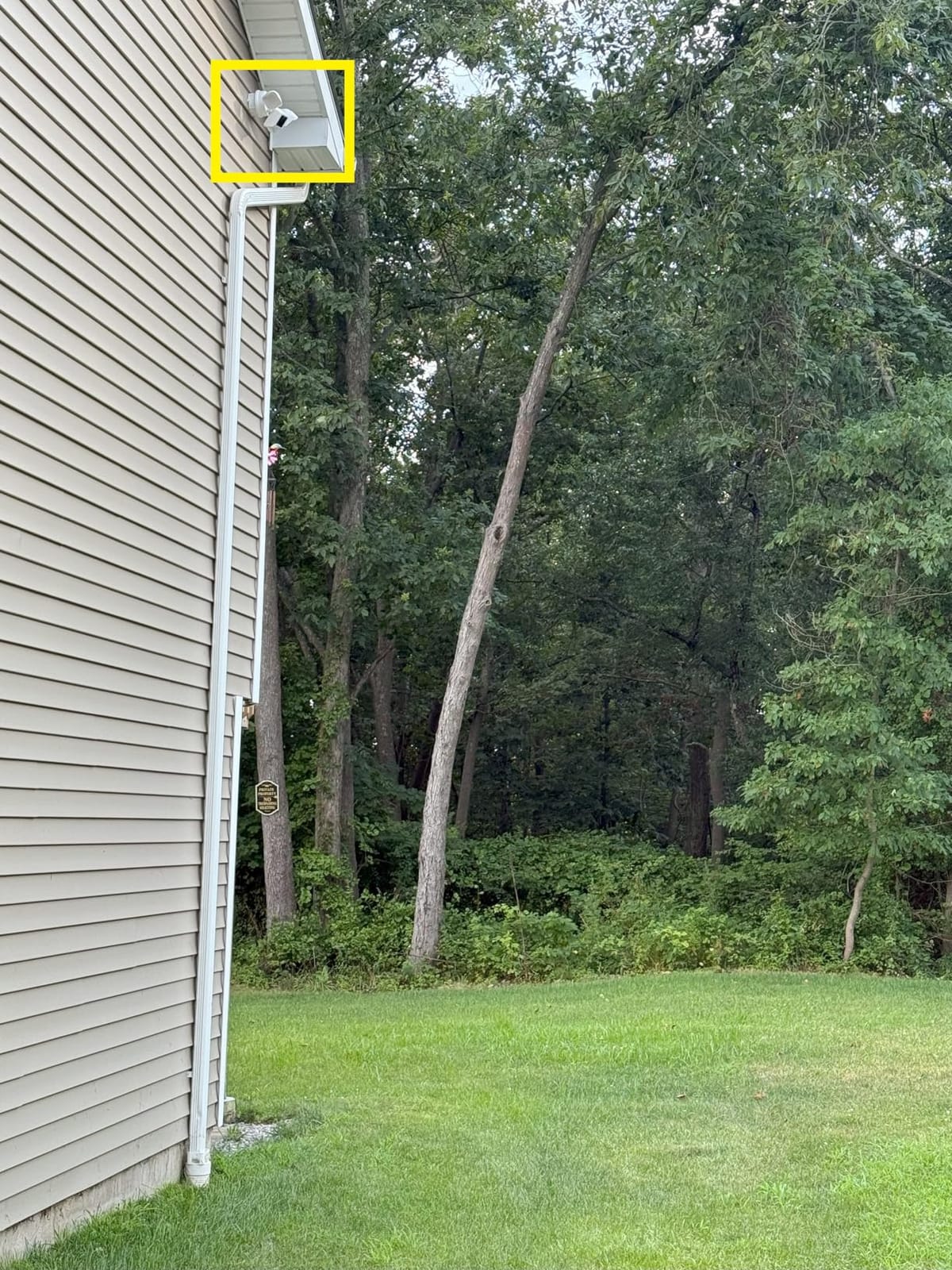
Between 10 and 12 feet up, high enough that someone cannot reach it, and angled downward so the light lands on the ground rather than the neighbor’s fence. Mounting it on a corner of the house or a back wall facing away from the house gives the widest coverage with the least spill back into your own windows.
The camera and the floodlight housings are usually mounted on a small ball joint, so you can set the aim after the box is wired. Do that adjustment at night, in the dark, because that is when the spill is obvious.
If you are replacing an existing patio floodlight, the install is straightforward: turn off the breaker, remove the old fixture, wire the camera to the same junction box, and mount the new bracket. If there is no box and no outlet, that is when a battery or solar model earns its place.
Which smart home ecosystem should I match?
Match the camera to what you already run, because the app is what you will live in. Ring and Blink work with Alexa. Wyze and Tapo work with Alexa and Google Assistant. The Arlo Pro 3 works with Alexa, Apple Home, and Google Assistant, plus SmartThings and IFTTT. The eufy models list Alexa and Google Assistant, and the E340 adds dual-band Wi-Fi 6 for reliability at distance.
Owners consistently rank having one app for every camera as a top reason to consolidate rather than mix brands, and it is the strongest argument for Ring if you already own Ring doorbells.
Frequently Asked Questions
What is the best floodlight camera for a backyard?
The Ring Floodlight Cam Wired Plus is our top pick for most backyards because its 2000-lumen motion-activated light, hardwired power, and customisable motion zones cover a typical fenced yard well and it has the biggest body of owner feedback of any model here. For a large or open property, the eufy Floodlight Camera E340 covers more ground from one mount and stores video locally with no subscription.
Which floodlight camera works without a monthly subscription?
Four models here record to local storage with no required plan: the Wyze Floodlight Camera v2 records 24/7 to a microSD card up to 30 days, the eufy E340 and eufy E30 store to a microSD card up to 128GB or a eufy HomeBase S380, and the Tapo C615F KIT records continuously to a microSD card up to 512GB or a Tapo H500 hub. Ring, Blink, and Arlo gate recorded video history and AI detection behind a paid plan.
Are solar floodlight cameras better than wired ones?
Not for light output. The Tapo C615F solar kit produces 800 lumens, enough for a path, gate, or deck, while the wired models here run from 2000 to 3000 lumens for full yard coverage. Solar wins on installation, since no wiring is needed, and it is the right choice for a backyard with no junction box. Note that solar charging requires temperatures above 32F, so cold winters limit recharging.
Is Ring, Blink, or Eufy better for outdoor cameras?
Ring is the best documented here, with hardwired power and broad support, but it puts video history and AI features behind a paid plan and has a fixed camera head. Blink is brighter for the money and easier to install, with a subscription needed for clip storage and person detection unless you add a Sync Module. Eufy is the choice for local storage with no recurring fee, pan and tilt coverage, and dual-band Wi-Fi, but owner communities report more connection and moisture complaints.
How do I stop my floodlight camera triggering on every passing car?
Draw a motion zone that excludes the street and the fence line where cars pass, then set a second zone tightly around the patio furniture and the gate. Keep motion sensitivity low and raise it only where you are missing real movement. Every model here supports some form of customisable zones, including dual-zone detection on the Blink wired camera and 270-degree PIR with customisable zones on the Wyze Floodlight Camera v2. Expect some raccoon, opossum, or deer alerts regardless.
Can I dim a floodlight camera so it does not bother my neighbors?
Yes, and you should. Aim the fixture down and away from nearby houses, mask the zone covering your neighbor’s side, set the light to an ambient or scheduled mode, and dim the output. The Ring Floodlight Cam 4K Pro adjusts from 200 to 2000 lumens, while the Wyze Floodlight Camera v2 and Tapo C615F are dimmable and most other models here offer adjustable brightness settings.
Do I need an electrician to install a hardwired floodlight camera?
Usually not, if your backyard already has an exterior floodlight, a patio outlet, or a junction box you can reach. Turn off the breaker, remove the old fixture, wire the camera to the same box, and mount the new bracket, which is a straightforward afternoon job. If there is no power at the back of the house and running new cable means trenching or working in an attic, that is when an electrician or a battery model makes more sense.
Is one floodlight camera enough for a large backyard?
For a typical fenced yard with a patio and a shed, one is enough if you place it on a back wall or corner aimed at the highest-traffic area. For a deep lot, a driveway, or a property with a pool and a side yard, you either need two fixed cameras or a single pan-and-tilt model such as the eufy E340 or eufy E30, whose 360-degree head and tracking can cover a wide area from one mount.
Which Floodlight Camera Is Right for Your Backyard
There is no single best floodlight camera for backyards, but there is a clear match for each situation. If you have an existing exterior light to work with and want the best-proven, best-supported option, the Ring Floodlight Cam Wired Plus is the pick, with 2000 lumens, hardwired power, and customisable motion zones that keep the street out of your alerts.
If brightness per dollar matters most, the Blink Wired Floodlight Camera puts 2600 lumens on the wall and settles for 1080p. If you want the sharpest image at a reasonable step up, the Ring Floodlight Cam Wired Pro adds HDR, Color Night Vision, and 3D Motion Detection. For a backyard with no power at all, the Arlo Pro 3 gives you 160 degrees of view and up to 3000 lumens, and the Tapo C615F is the one that needs no wiring and no electrician.
For anyone who does not want a monthly fee, the Wyze Floodlight Camera v2 and the two eufy models record locally with no subscription, and the eufy E340 adds a dual lens, 8x zoom, and a 360-degree pan-and-tilt head that one mount can cover a large yard. Spend an evening in the app drawing your motion zones before the first night, aim the light downward, and your backyard finally works as well as the rest of your security setup in 2026.
While you are out there, our guides to privacy screens for backyards and archery targets for backyards cover the ways people actually use that space once the cameras are mounted.