
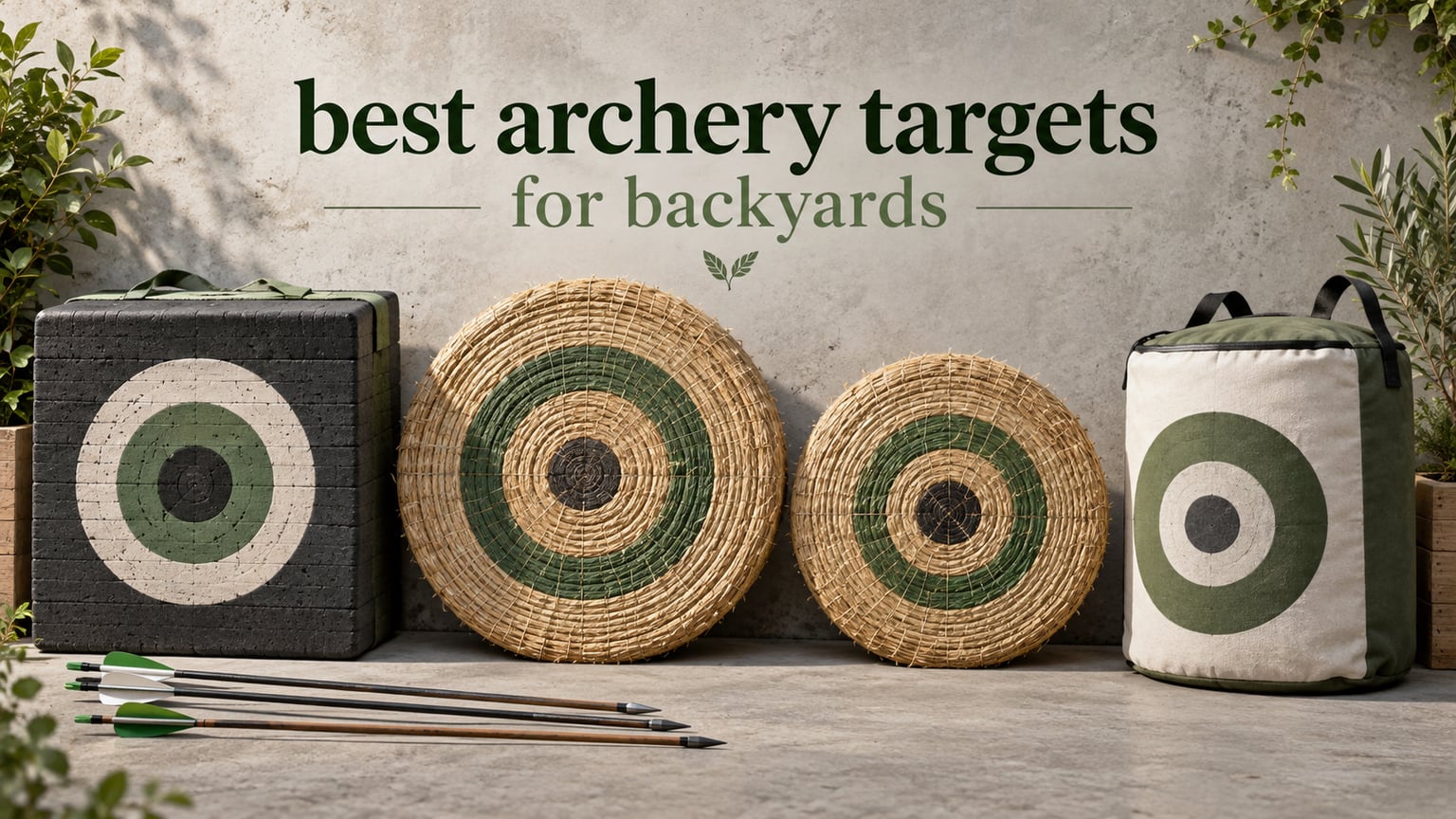
A backyard archery range is one of the most satisfying things you can build in a weekend, and the target you choose decides whether it lasts three months or three years. After six weeks of shooting, swapping and swapping again across a spread of foam blocks, straw mats, bag targets and a pair of 3D animals, we narrowed the field to the twelve that are actually worth your setup time.
This guide covers the best archery targets for backyards, from a six-pound foam cube a kid can carry to a self-healing 18-sided block rated for 500 FPS. We also spend serious time on the part almost every roundup skips: the backstop behind the target, the yard depth you need, and whether the target you liked can survive being outdoors in 2026.
Every pick below lists a stated FPS rating, a weight, and a real review count, because those three numbers tell you more about fit than any marketing adjective. Where a target is not built for broadheads or crossbows, we say so plainly.
Table of Contents
Can I Put an Archery Target in My Backyard?
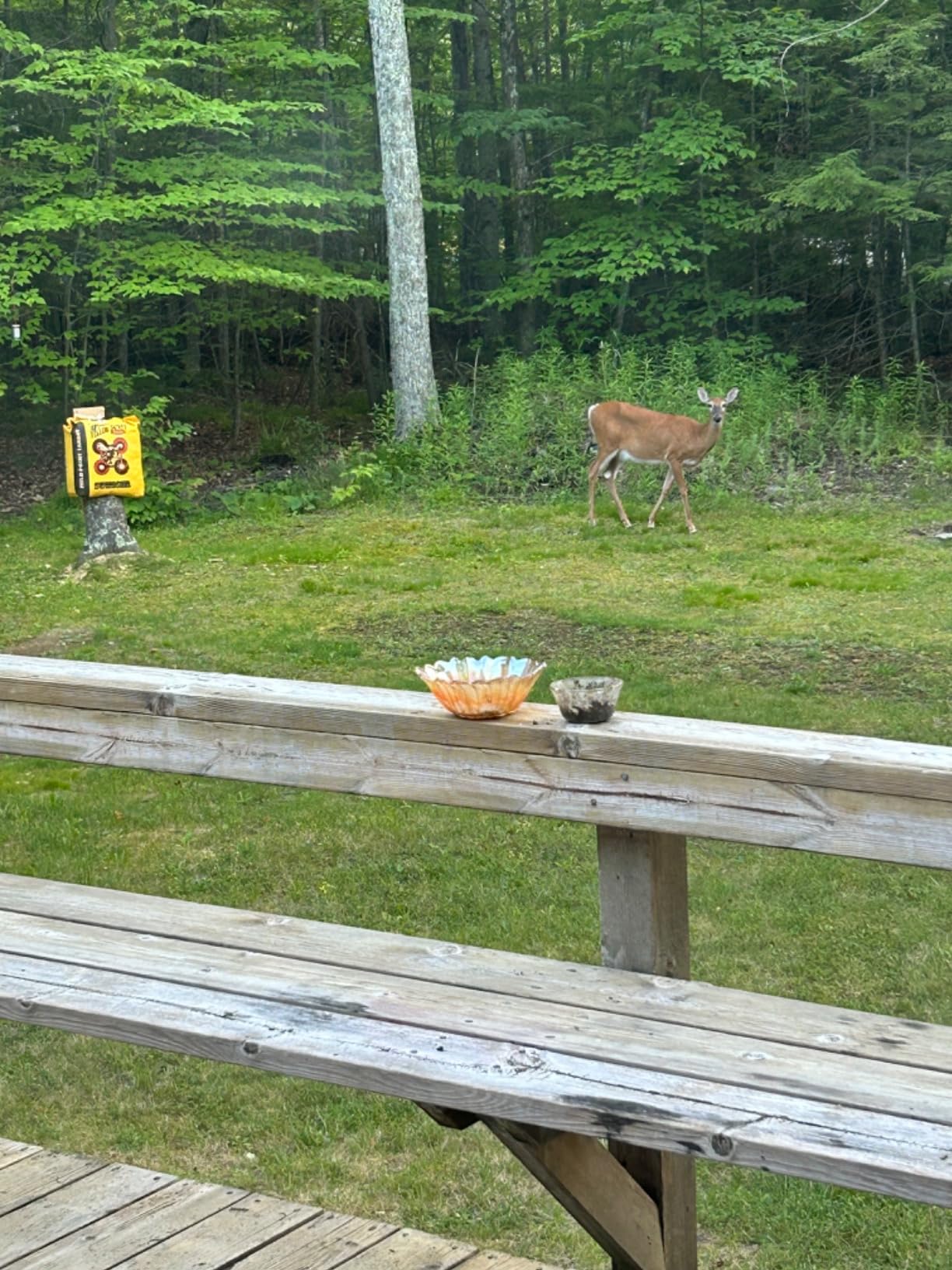
Yes, you can put an archery target in your backyard, as long as you own the airspace behind it. Shoot from a clear firing line toward a target with nothing but a proper backstop behind it, never toward a house, fence, neighbour’s yard, road or playground.
The target is only half the equation. A backstop catches your misses, and that backstop is what keeps arrows from ending up in a neighbour’s hedge. Plan for roughly 30 yards of clear depth behind the target, not in front of it.
If you have young children or pets in the yard, wait until everyone is indoors and behind you before you nock an arrow. You are the last line of safety, not the target.
Top 3 Archery Target Picks for Backyards

Black Hole 4-Sided Foam Target
- Four shooting sides
- stops field points and broadheads
- carry strap
- 8 oz

Hurricane 2-Sided Bag Target
- Tri-core stopping to 425 FPS
- off-center deer scoring zones
- 20 inch
- strap handle
The 12 Best Archery Targets for Backyards in 2026
Here is the full lineup at a glance. Every target lists its type, its best use in a residential yard, and its stated velocity rating so you can match it to your bow before you spend a Saturday assembling a stand.
| Product | Specifications | Action |
|---|---|---|
| Black Hole 4-Sided Foam Target |
|
Check Latest Price |
| Hurricane 2-Sided Bag Target |
|
Check Latest Price |
 Morrell Double Duty Cube Morrell Double Duty Cube |
|
Check Latest Price |
 Morrell Yellow Jacket Stinger Morrell Yellow Jacket Stinger |
|
Check Latest Price |
 Morrell Yellow Jacket Supreme 3 Morrell Yellow Jacket Supreme 3 |
|
Check Latest Price |
 KAINOKAI Hand-Made Straw Target KAINOKAI Hand-Made Straw Target |
|
Check Latest Price |
 BLOCK Classic Foam Target BLOCK Classic Foam Target |
|
Check Latest Price |
 Rinehart 18-1 Target Rinehart 18-1 Target |
|
Check Latest Price |
 Delta McKenzie Speedbag 20 Delta McKenzie Speedbag 20 |
|
Check Latest Price |
 Riverbottom Challenger 3D Buck Riverbottom Challenger 3D Buck |
|
Check Latest Price |
 Shooter Turkey 3D Target Shooter Turkey 3D Target |
|
Check Latest Price |
 Kalkal 6-Side Foam Block Kalkal 6-Side Foam Block |
|
Check Latest Price |
1. Black Hole 4-Sided Foam Target – Best Overall for Backyards
- Stops field points and broadheads
- Four shooting sides spread the wear
- 8 oz weight makes it trivial to reposition
- Carry strap included
- Small shooting face limits arrow grouping practice
- Open layers can separate after heavy extended use
This is the target I keep coming back to, and it is the only one in the list I would hand to a beginner without a caveat. It weighs eight ounces, so moving it twenty feet down the lawn takes seconds rather than a wrestling match with a thirty-pound cube.
The design is the reason. Instead of compressing an arrow to a stop with force, the open-face layered foam grips the shaft with friction, which means the arrow is held rather than crushed. Reviewers consistently report the same thing about this model: arrows go in clean and come out clean.
It handles both field points and broadheads, which is unusual for a foam block at this weight. That makes it the one target on this list that covers bowhunting practice and backyard precision work without a second purchase.
Four shooting sides is a genuinely useful feature in a residential yard. When one face gets chewed up from broadhead practice, you rotate to a fresh one instead of hunting for a new block.
What to check before you commit
Size matters more than most buyers expect. The standard 18 by 16 by 11 inch block stops arrows up to 300 FPS, and the larger 22 by 20 by 11 inch version handles the same rating with a bigger face. The crossbow version stops bolts up to 375 FPS.
Check your bow’s rating before buying a foam block. This target is built for compound and recurve field points and broadheads, not for the fastest crossbow bolts on the market.
Where it falls short
The face is small by modern standards, so it is not the place to drill tight groups at 40 yards. Grouping practice wants a large, flat, forgiving face, which is what the bag targets further down this list are for.
One recurring complaint in reviews is that the layers can start to separate after a long stretch of heavy use, particularly if you keep shooting the outer edges. Treat the edges as a no-shoot zone and it will last far longer.
2. Hurricane 2-Sided Bag Target – Budget Pick
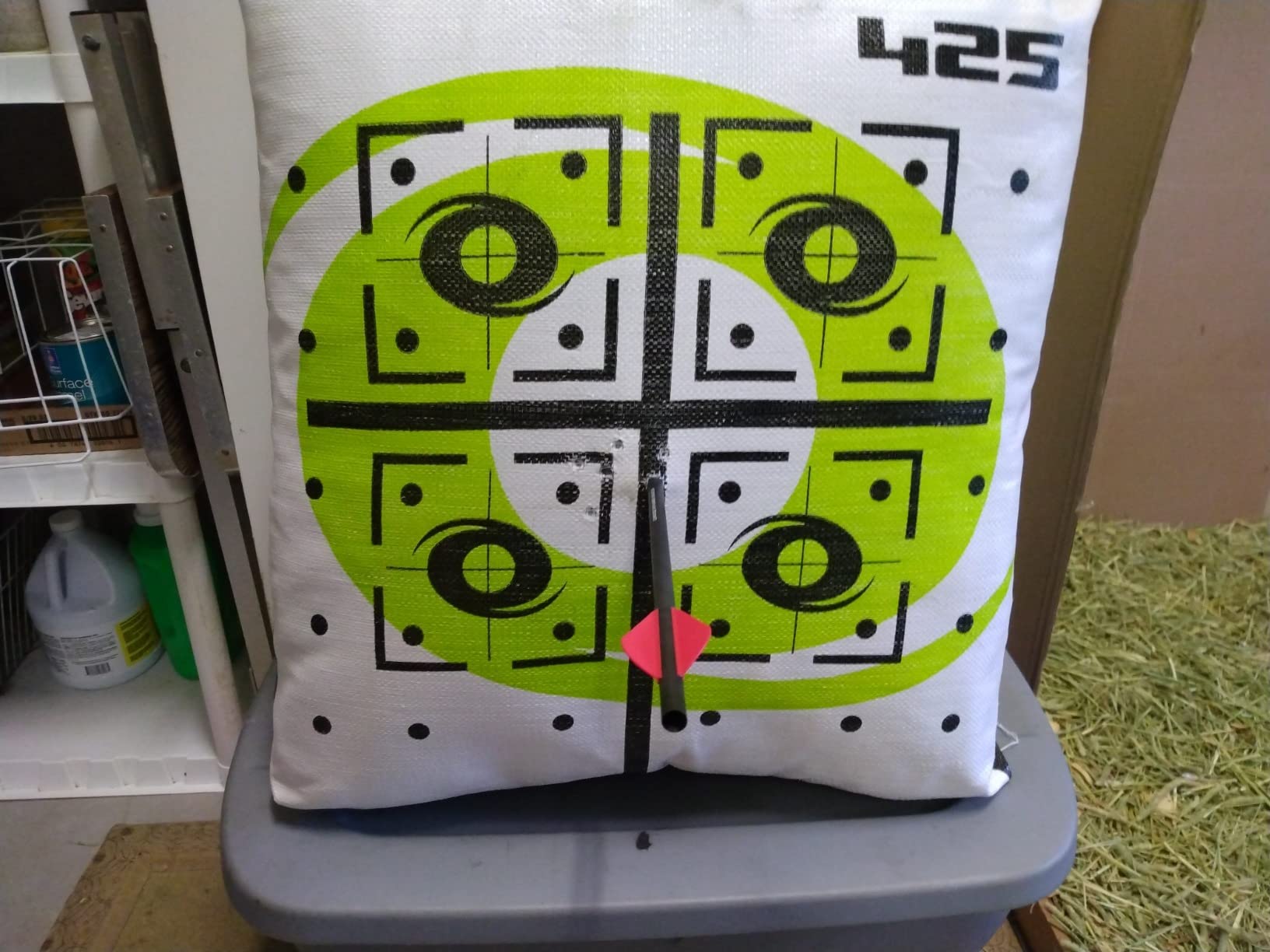
- Stops crossbow bolts to 425 FPS
- High-contrast aiming points read well at distance
- Off-center deer scoring zones spread impact and add life
- Two-sided design doubles the usable face
- Listed weight understates the real heft
- Outer cloth can wear out after years
- Can tip over on a high hit
This is the bag target I recommend when a crossbow is part of the picture and you do not want to move up to the heavier cubes. The tri-core construction is rated to stop standard diameter arrows at 425 FPS, which covers a lot of crossbow power without moving up to the heavier cubes.
Arrow removal is the thing that wins me over. Straw-filled bags let arrows slide out with a light pull, and during long practice sessions that difference is the difference between shooting for an hour and shooting for twenty minutes.
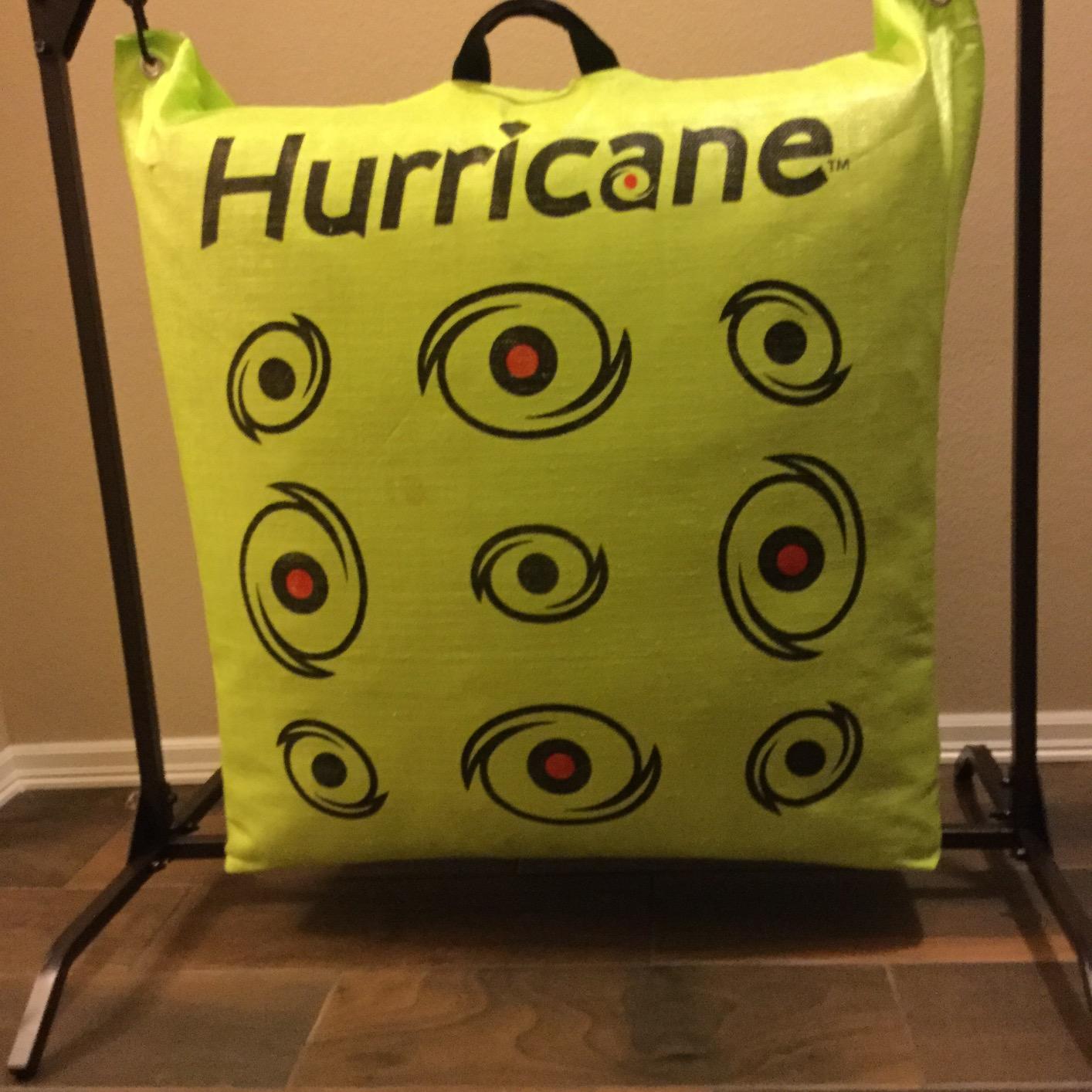
The off-center deer scoring zones on the reverse side are a smart touch that most shooters do not think to use. Put a tight group on the front bullseye, flip it, and your next shot has to be a different line. It keeps practice honest and doubles the usable face.
High-visibility aiming points matter more than they sound. A dim yellow-on-white bag at 30 yards in evening light is genuinely hard to read, and this design solves that with strong contrast graphics.
Plan your support before you buy
A bag needs something behind it. Plan on a target stand, a welded rebar frame, or a sturdy tree trunk behind the target so the bag does not collapse and roll when you hit the outer ring.
Check the actual weight before you plan to move it around. The listed figure is far lighter than the real thing, and reviewers consistently describe it as one of the heavier bags in this class. Plan your spot, then shoot from it.
Where it falls short
It is not built for broadheads. A fixed-blade head will chew the outer cloth, and the same reviewers who praise the stopping power warn against using this one for hunting practice.
Lightweight bows are also a poor match. Arrows from a low draw weight recurve can bounce off rather than penetrate, which is frustrating if the rest of the family wants to shoot alongside you.
3. Morrell Double Duty Cube Target – Top Rated
- Highest rated target in this lineup
- Six faces multiply target life
- Replaceable cover extends core life
- Easy arrow and bolt removal
- Heavy at roughly 36 to 37 lb
- Field points only
- Weather exposure degrades the outer cloth
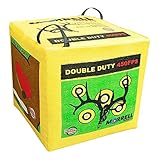
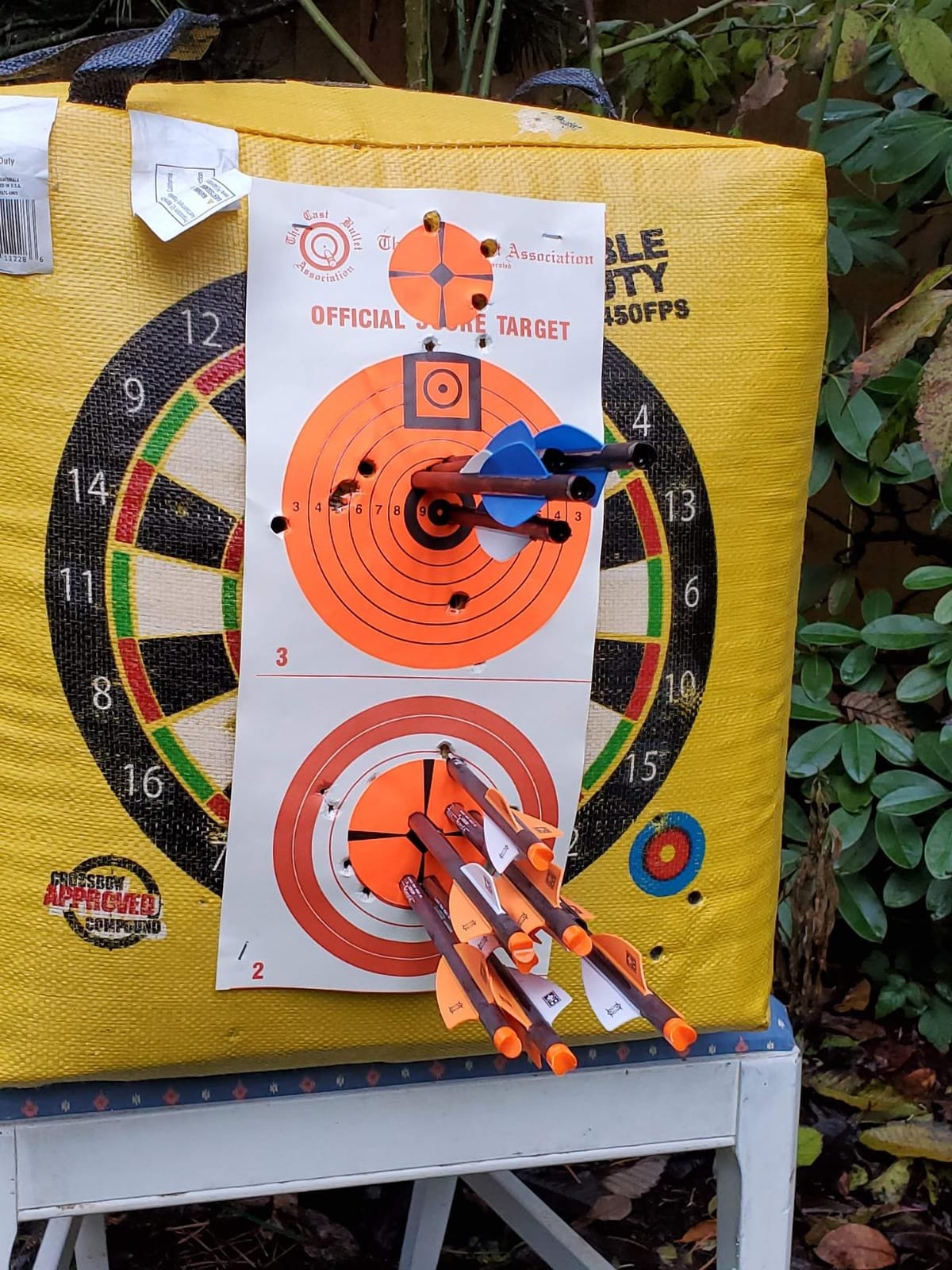
The cube shape is the whole idea. A 19 inch cube gives you six usable faces, so a block that would last one season on a flat bag can keep shooting for years as you rotate from side to side.
At 450 FPS it handles fast crossbow bolts cleanly, and it is the target on this list that holds the highest average rating. Just under three thousand reviews sit behind that number, so it is not a thin sample.

The printed faces are more than decoration. You get traditional bullseyes, a nine-ball layout, a dartboard and deer scoring zones on the different sides, which turns a practice session into a small game without any extra equipment.
The replaceable cover is the sleeper feature for anyone who shoots a lot. When the outer cloth finally gives out, you buy a cover rather than a whole new target, and your cost per shoot drops sharply.
What to check before you commit
Weight is the deciding factor. This is a genuinely heavy target, and reviewers note it may not fit in a car trunk. If you plan to bring it to a club or a field, budget for a wagon.
It is a field point target. Broadheads are not the intended use, and a mechanical head will find the cover stitching and pull threads.
Where it falls short
Reviews flag two recurring issues. The outer cloth degrades if you leave it in sun and rain indefinitely, and the bottom is secured with staples rather than stitching, which can catch on carpet indoors.
Like every bag, it needs rear support. On grass a cube can rotate slightly on a hard hit, so set it on level ground or against a frame.
4. Morrell Yellow Jacket Stinger – Best for Weather-Resistant Practice
Morrell Yellow Jacket Stinger, Field Point Outdoor Backyard Archery Target
- Portable at 18.3 lb with an E-Z tote handle
- Two sides and 10 bullseyes
- Weather-resistant surface
- Easy arrow removal
- Field points only
- Not rated for high-speed crossbow bolts
- Outer layer wears with heavy use
At 18.3 pounds this is the bag I can carry from the garage to the lawn without thinking about it, and that portability is the feature I value most in a residential yard. Most backyard sessions start because the target was easy to move, not because the weather was perfect.
Thirty-eight layers of stopping power is more than enough for a compound bow at typical backyard velocities, and the weather-resistant surface means a light shower is not a crisis. Ten bullseyes across two sides give you enough variety for form work.
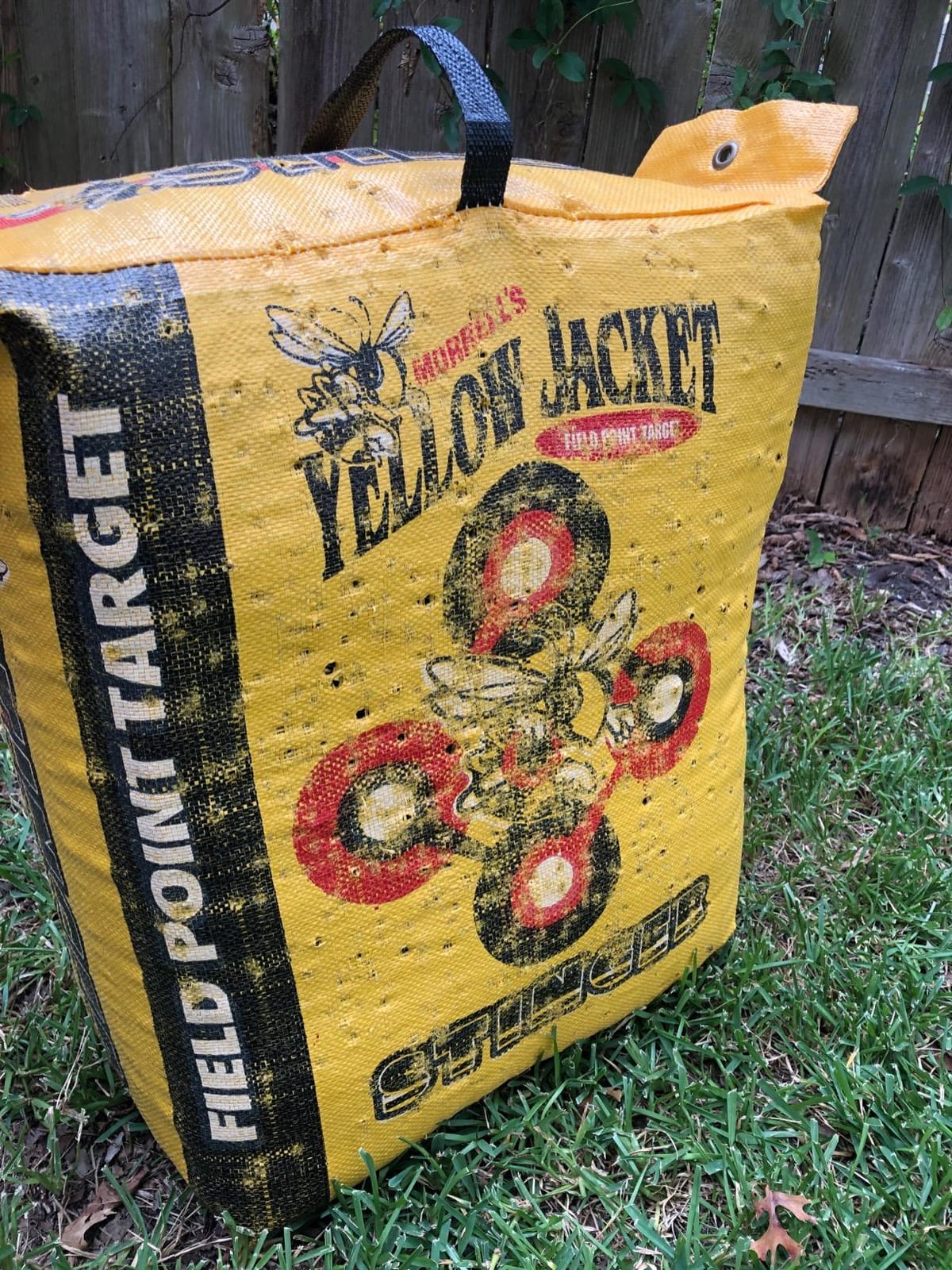
The IFS arrow removal design is what keeps this one pleasant to shoot. You can pull arrows with two fingers, which matters when your kids are also shooting and nobody wants to wrestle arrows out of a bag.
It is also one of the most family-friendly picks here. Safe for all ages is printed on the spec sheet, and at this weight an adult can reposition it without a dolly.
What to check before you commit
Match it to a compound bow, not a crossbow. The layer count is substantial but it is not a high-velocity rated target, and reviews are clear that faster crossbow bolts are outside its comfort zone.
Field points only, like most bags in its class. If you want to rehearse broadhead shots, look at a foam block further down the list.
Where it falls short
The 12 inch depth is narrower than the cubes and the wide bag targets, so the usable face area is smaller. It is a good form-work target rather than a long-distance group target.
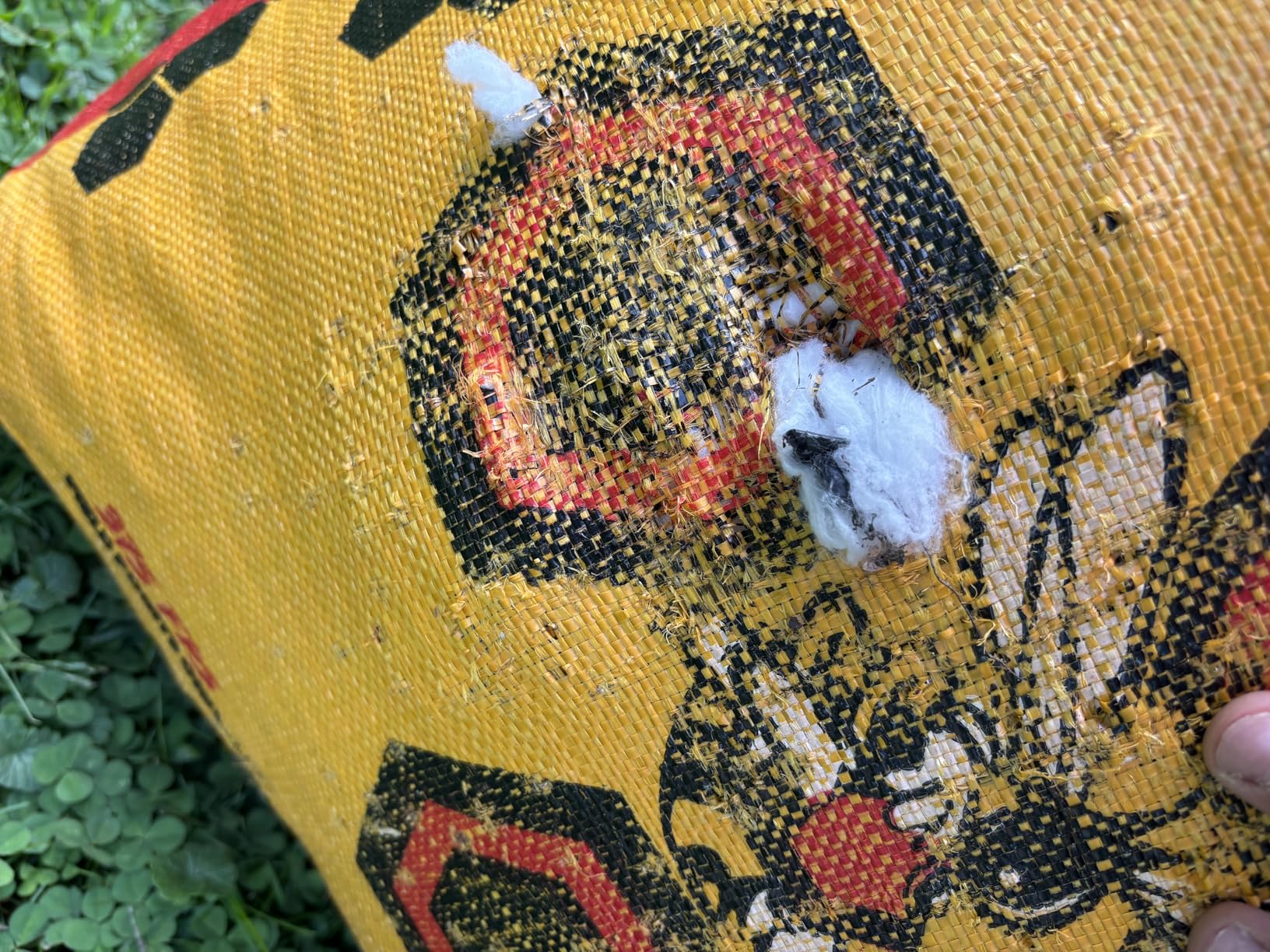
Reviews also note the outer layer wears with extended heavy volume. If you shoot hundreds of arrows a week, expect to buy a cover or a replacement sooner than you would with a 54-layer build.
5. Morrell Yellow Jacket Supreme 3 – Best for Year-Round Outdoors
Morrell Yellow Jacket Supreme 3 Dual-Sided Archery Target, 23 x 12
- Highest layer count in the lineup
- Weatherproof for year-round outdoor use
- Dual-sided with 10 bullseyes
- Two-year limited warranty
- Heavier at 28 lb than the Stinger
- Field points only
- Handles reported as feeling flimsy
If your target is going to live outside through rain and sun, this is the bag I would pick. The weatherproof design and 54 layers of stopping power are built for a permanent backyard spot rather than a garage corner.
Fifty-four layers is the deepest build on this list, and the difference shows up in the third and fourth month of regular shooting when a 38-layer bag starts to feel soft. The MLDD construction is what keeps the back of the bag firm.
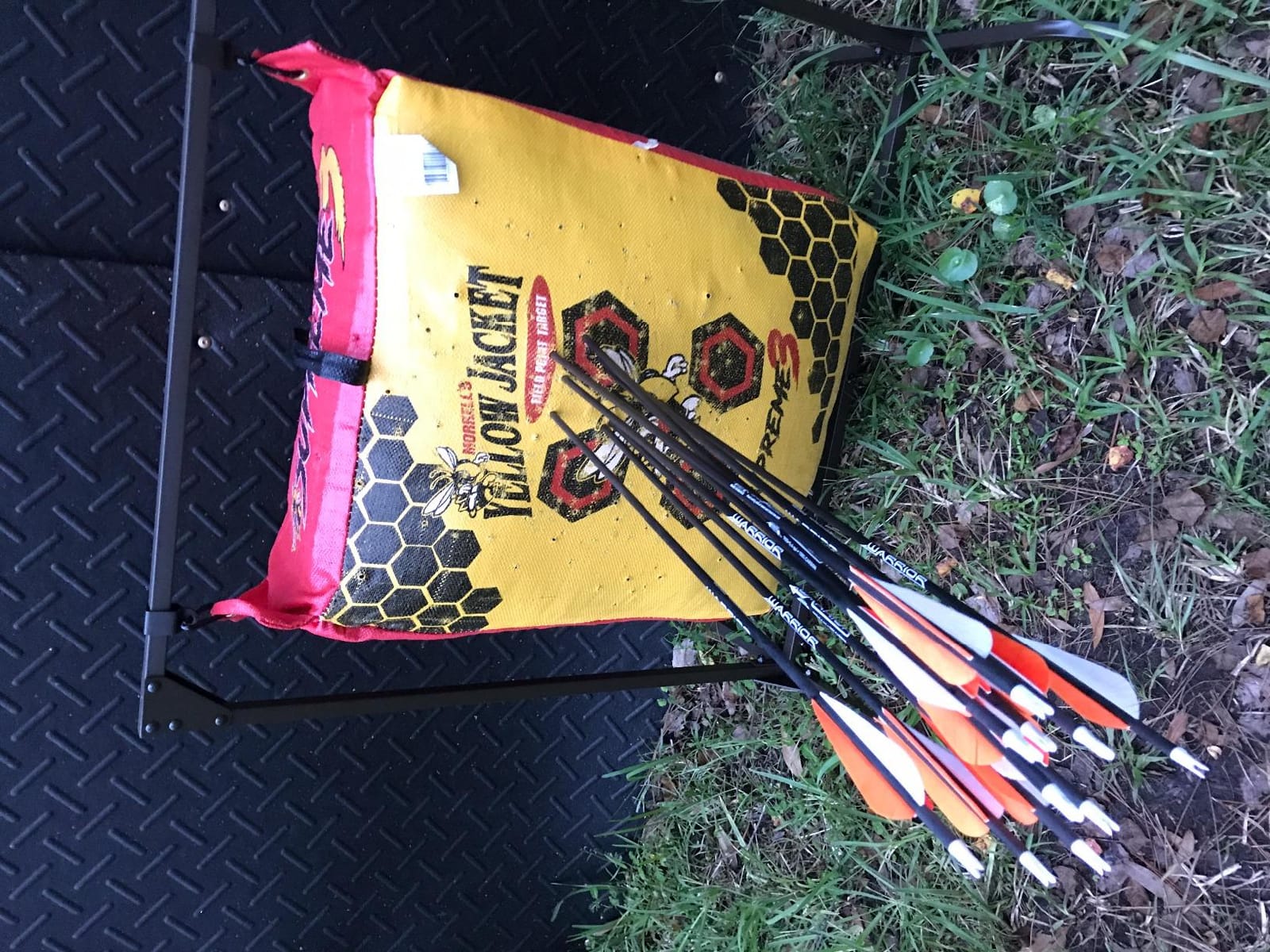
The two-year limited warranty is a real differentiator in this category. Warranties are uncommon on archery targets, and reviewers treat one as a signal the brand stands behind the build.
Dual-sided with 10 bullseyes means you can run form drills on one side and distance groups on the other, which keeps a single bag useful through a whole practice block.
What to check before you commit
Check your clearance. At 23 inches tall and 28 pounds, this is a permanent fixture rather than a carry-around target, so pick the spot before you buy.
Again, this is a field point target for compound bows. It will not handle high-speed crossbow bolts the way a 425 or 450 FPS bag will.
Where it falls short
The E-Z tote handle is the most repeated complaint. Reviewers describe it as feeling flimsy, so lift the bag from underneath rather than trusting the strap with a full swing.
Being weatherproof is not the same as being indestructible. Even a weatherproof bag will fade and stiffen in direct sun over multiple seasons, so rotate it and cover it in winter if you can.
6. KAINOKAI Hand-Made Straw Target – Best for Traditional Bows
KAINOKAI Traditional Hand-Made Straw Archery Target,Arrow Target for Recurve Bow Longbow or Compound Bow(20in / 3 Layers)
- Gentle on arrow shafts and fletching
- Very light and easy to hang
- Hanging lanyard included
- Layer options suit different draw weights
- Broadheads will shorten its life
- Sheds forage debris
- Sizing varies because it is handmade
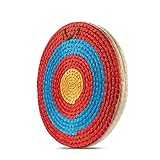
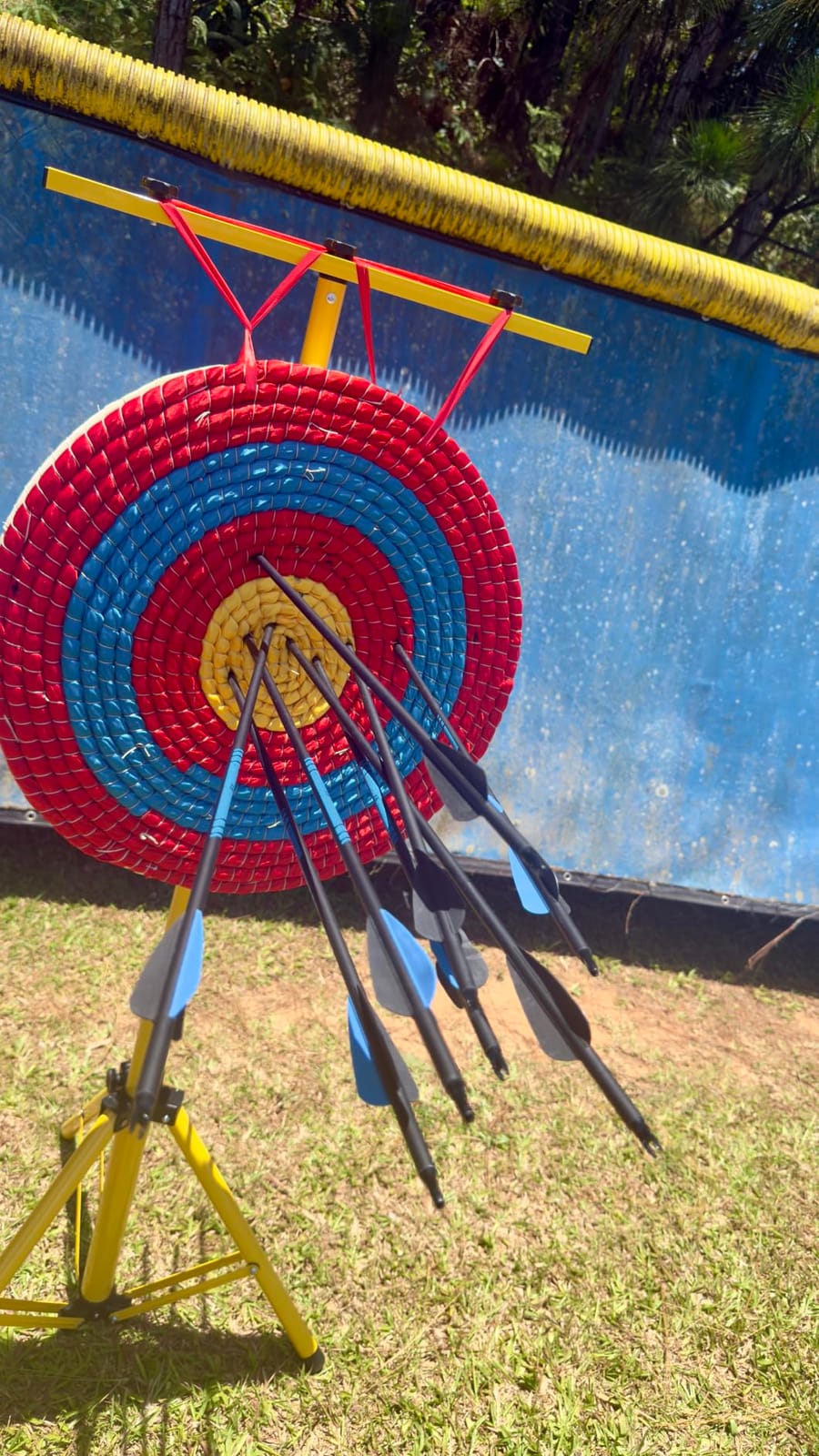
This is the one to buy if you shoot a longbow or a heavy wooden recurve. Straw is kind to arrows in a way foam and synthetic fill are not, and the arrows come out looking like arrows rather than scuffed sticks.
Pick your layer count to match your bow. The 3-layer build is the lightest, the 5-layer sits in the middle, and the 7-layer is the one that will handle a heavier traditional bow at 22 by 22 by 5.5 inches.
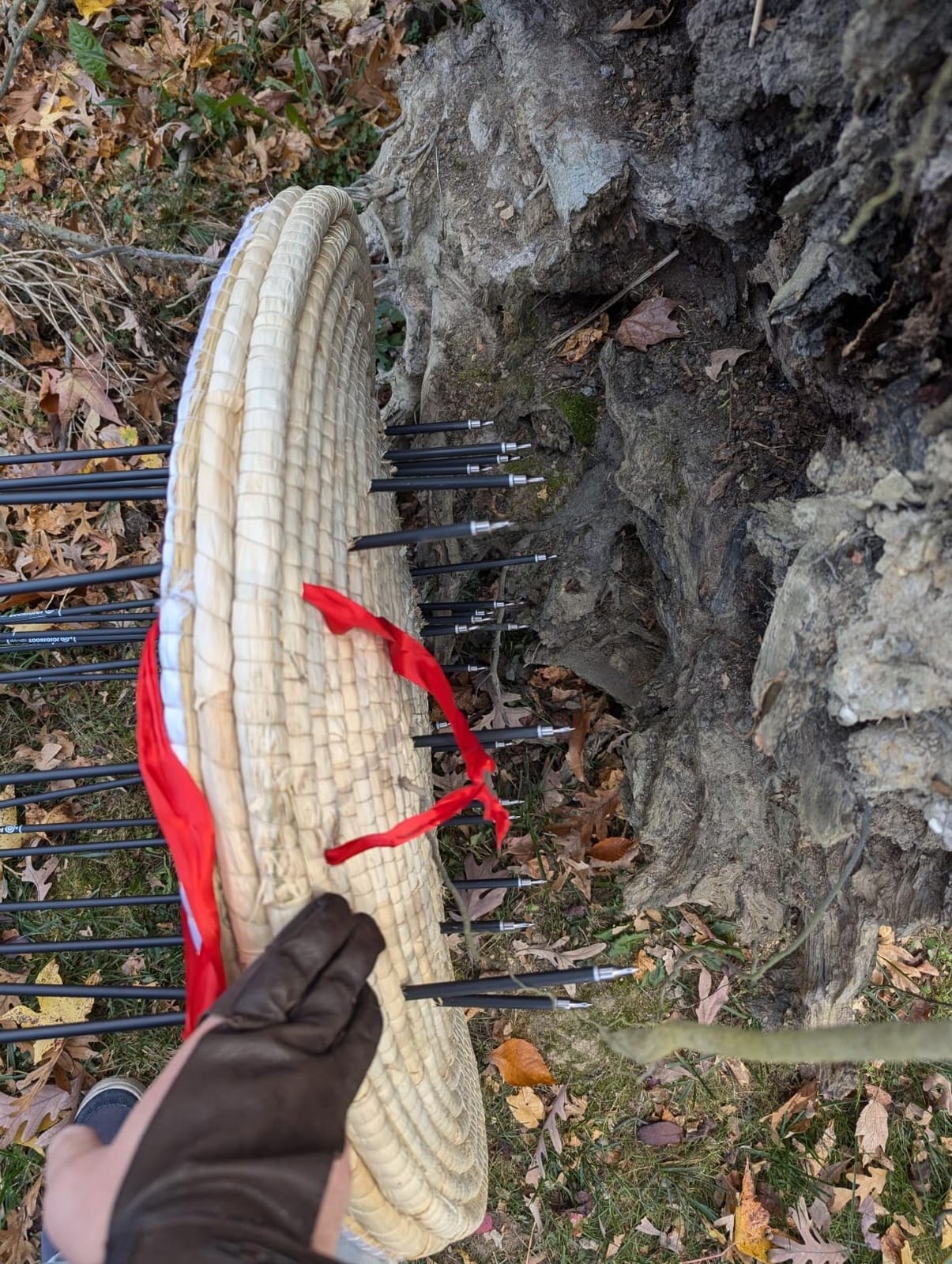
The hanging lanyard is more useful than it sounds. You can sling it from a branch or a rope, or lean it on a shelf indoors, which means one target serves both the yard and the garage.
It also doubles as decor. Several reviewers bought it for the look and then kept shooting it, which is a rare combination in this category.
What to check before you commit
Never use broadheads on it. The spec sheet says so directly, and reviewers repeat the warning: bladed heads will chew a straw face and cut its service life short.
If you shoot crossbows, look elsewhere. Straw is a traditional-bow material and it will not stop high-velocity bolts.
Where it falls short
Handmade means handmade. Size variations are normal and expected, and a few reviewers noted debris shedding from the forage core during the first sessions. That is normal use, not a defect.
Durability is the trade-off for gentleness. A straw target will not deliver the shot count of a 54-layer synthetic bag, so traditional archers shooting daily should think of it as a practice aid rather than a marathon target.
7. BLOCK Classic Foam Target – Best for Broadheads
- Stops both field points and broadheads
- Heat-release friction makes arrows easy to pull
- Long service life
- Blank back side for instinctive practice
- Bullseye wears quickly under broadheads
- Cool arrows before pulling
- Edge hits can cut the layer bands
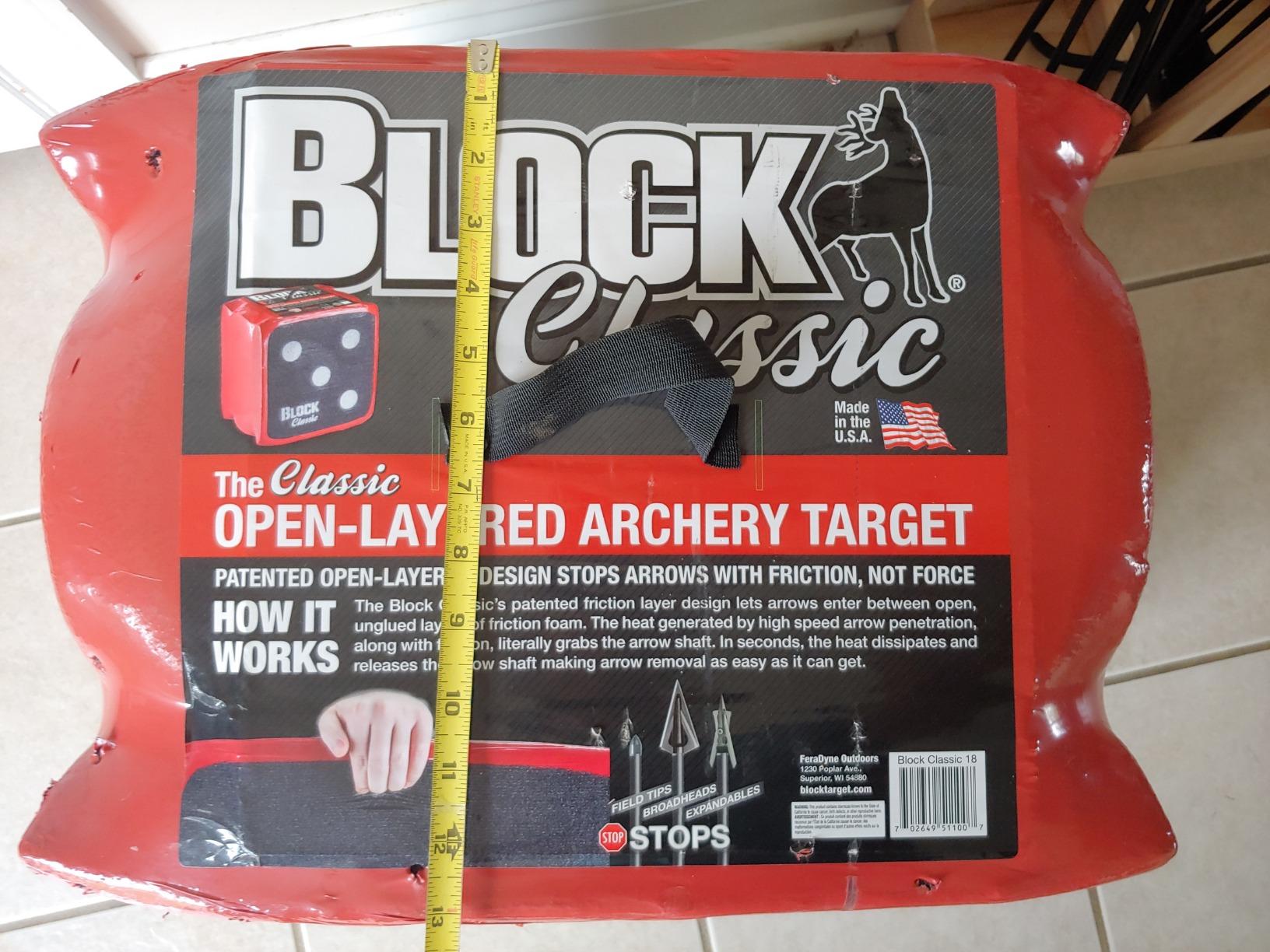
The BLOCK Classic is the reference layered foam design that most of the modern friction-based blocks are measured against. It stops both field points and broadheads, which makes it the pick I recommend for anyone rehearsing hunting shots at home.
How the stopping works is worth understanding. The open layers generate heat on impact, which is what grips the shaft, and the same heat dissipates so the arrow releases with a straight pull. In practice that means easy removal, provided you let the arrow cool first.
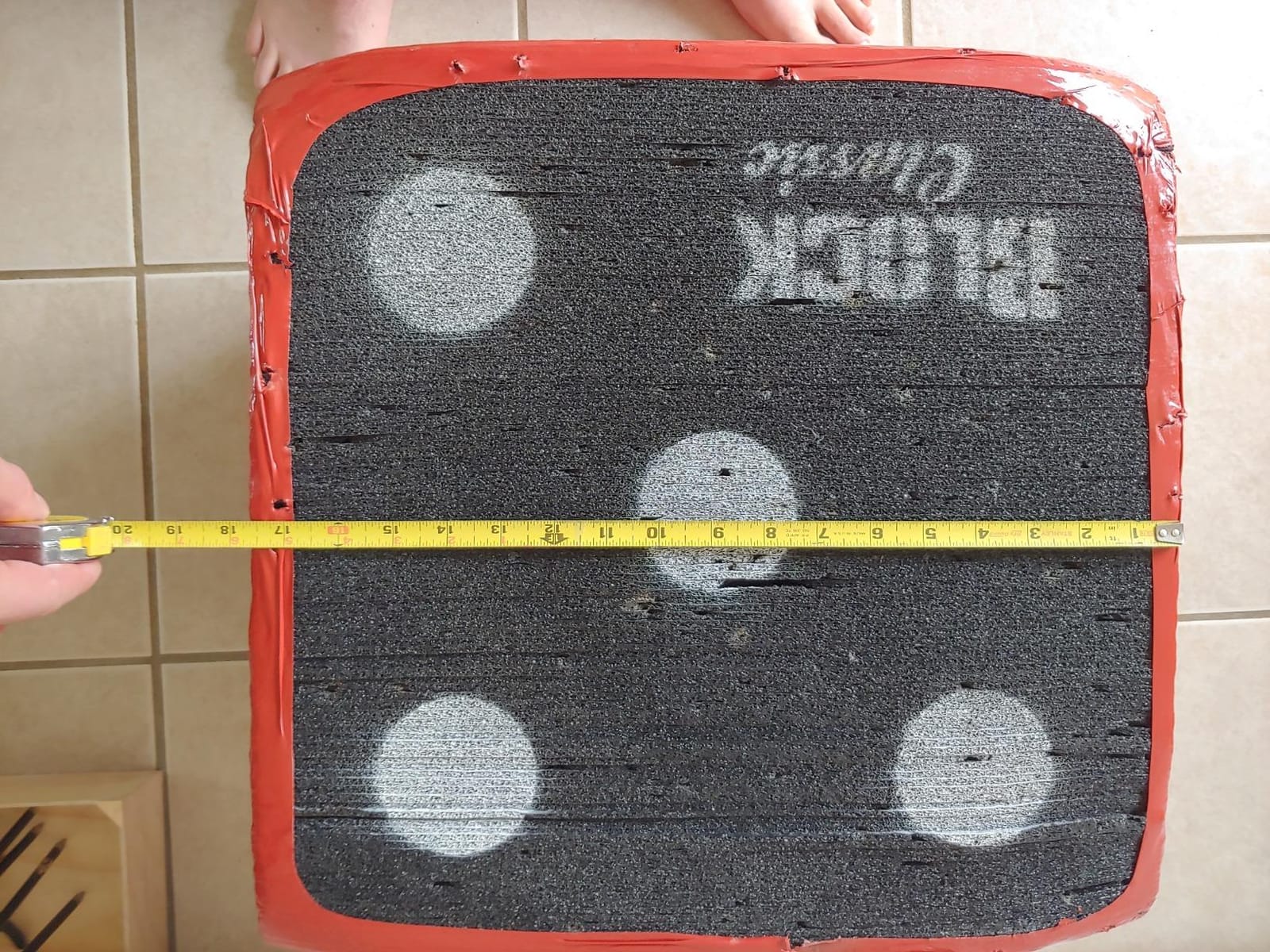
The high-contrast black and white layout is genuinely easier to acquire at 30 yards than a busy printed bag face. On a dull overcast evening, when your yard is darker than your house, that contrast is the difference between seeing the target and searching for it.
Reviewers report thousands of shots on these blocks over years of use. One of the nicest side benefits is the blank reverse face, which is a free instinctive shooting surface.
What to check before you commit
Pick the size for your bow. The 18 inch model suits compound and recurve shooters, and the 22 inch version gives you a bigger face and more room for grouping practice at distance.
Watch your edge shots. Arrows that clip the outer band can cut the strips that hold the layers together, and that is the fastest way to shorten a foam target’s life.
Where it falls short
Broadheads chew the printed bullseye quickly. That is physics rather than a defect, but plan to rotate faces or accept a ragged centre if your practice is mostly hunting-oriented.
Crossbow bolts can bury deep at close range, sometimes all the way to the fletching, and the friction grip means a hot arrow pulls harder. Give it a minute to cool and the pull is easy.
8. Rinehart 18-1 Target – Best for 18 Shooting Faces
Rinehart 18-1 Archery Target, 18-Sided, Broadhead & Field Point Compatible
- Broadhead capable foam target
- Rated to 500 FPS for crossbows
- Self-healing foam holds its shape
- Eighteen faces spread wear across years
- Small cube face
- Premium price band
- Foam shows wear with heavy broadhead use
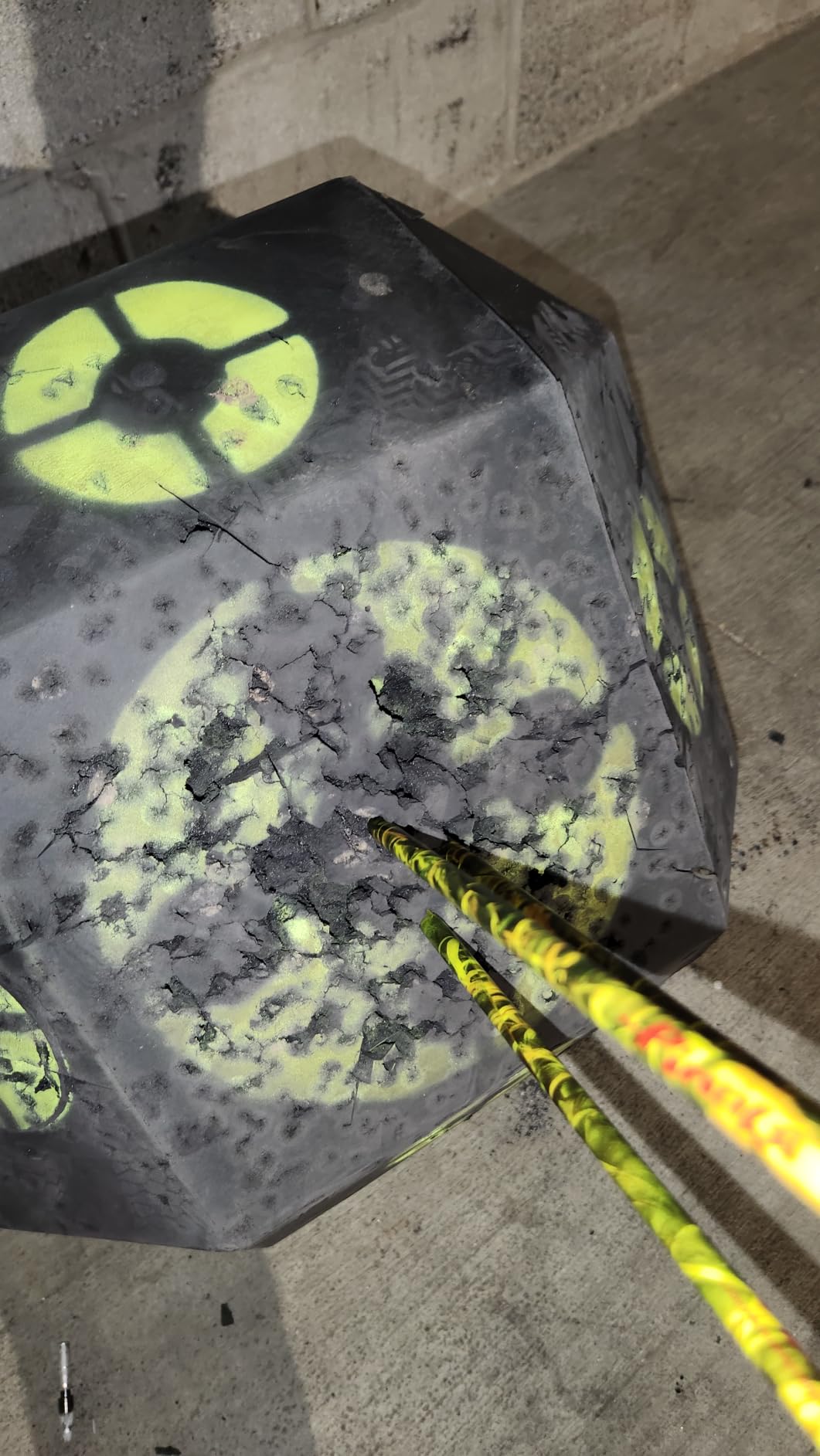
Eighteen shooting faces on a 15 inch cube is an unusual amount of shooting surface, and it is the reason this target outlasts flatter blocks in the same price bracket. Wear is the enemy of foam, and this design simply spreads it across far more area.
The 500 FPS rating plus broadhead capability makes it one of the few targets here that covers hunting practice and high-velocity crossbow work in a single unit. Crossbow approved and broadhead capable in the same target is rare.
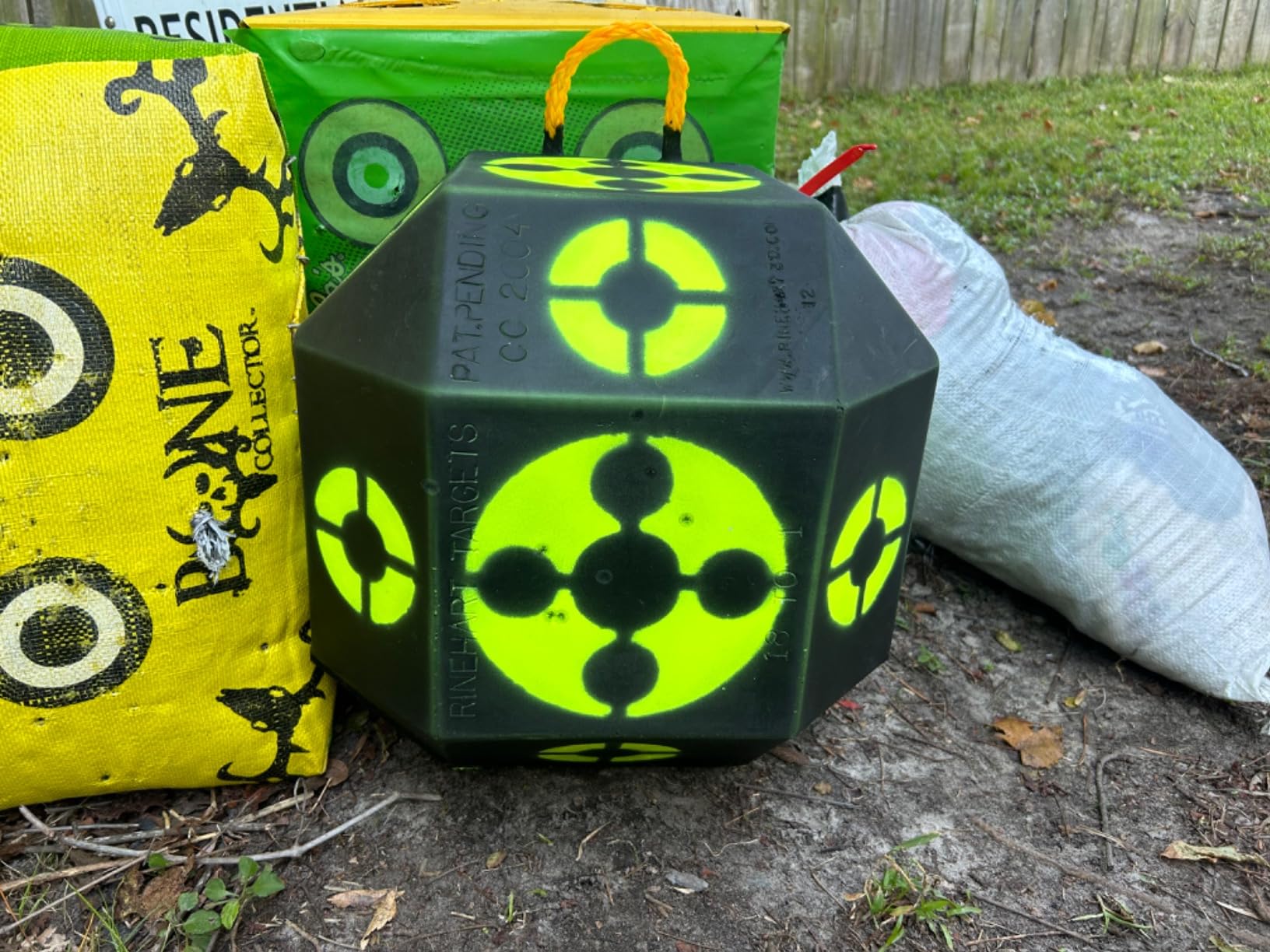
Self-healing foam is the material story. The foam closes around the wound instead of staying compressed, so the cube keeps its shape and its stopping consistency rather than turning into a dented brick after a season.
It weighs 11 pounds and has an easy-carry handle, so moving it around the yard is a one-person job. For a foam target, that is unusually portable.
What to check before you commit
Measure your face size expectations. A 15 inch cube is smaller than the wide bag targets, so it is a precision practice face rather than a wide-area group target at long distance.
Community archers consistently name Rinehart as the tier they buy into when they stop economising on targets, and that reputation is well earned, but it is a step up in spend from the bag picks.
Where it falls short
Even self-healing foam shows wear after heavy broadhead volume. If your practice is mostly fixed-blade hunting shots, expect a rougher centre over time.
Plan on a stand for the cube. A foam cube this size is stable, but a rear support stops the block from shifting backwards on a hard hit.
9. Delta McKenzie Speedbag 20 – Best for Hanging Setups
- Highest stated FPS rating for field points
- Built-in hanging grommets
- Weatherproof for outdoor use
- 27 lb balances stability and portability
- Field points only
- White face shows dirt
- Newer target with a shorter review history
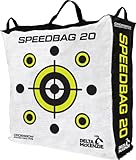
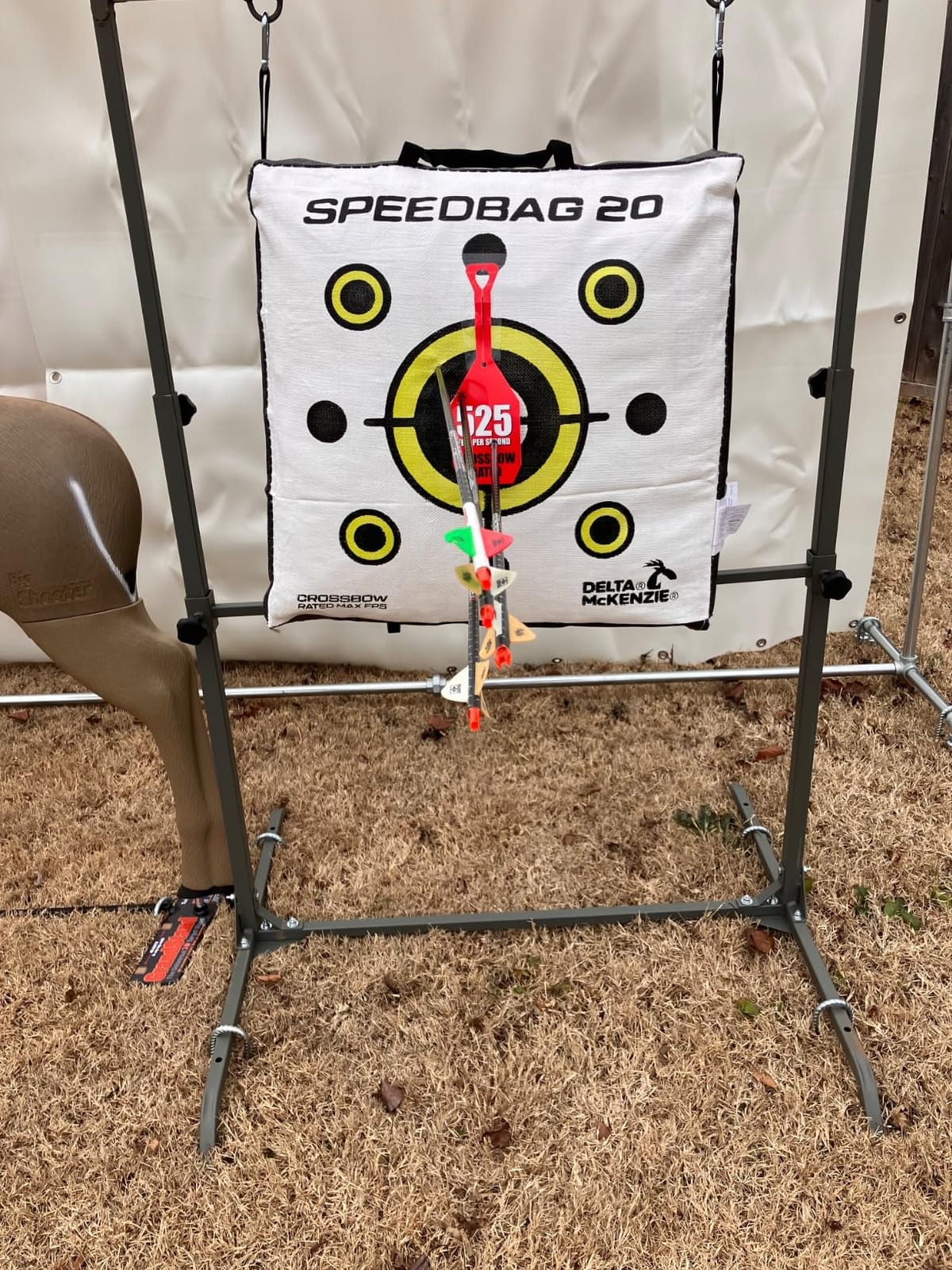
Built-in hanging grommets are the reason this bag earns its spot. Most bags need a separate stand, a tree, or a piece of rebar. This one can hang from a fence rail, a branch, or a purpose-built hanger in a couple of minutes.
At 525 FPS for field points, it has the highest stated velocity rating in this lineup, and the 20 inch diameter gives a wider face than the narrow bag targets for grouping work.
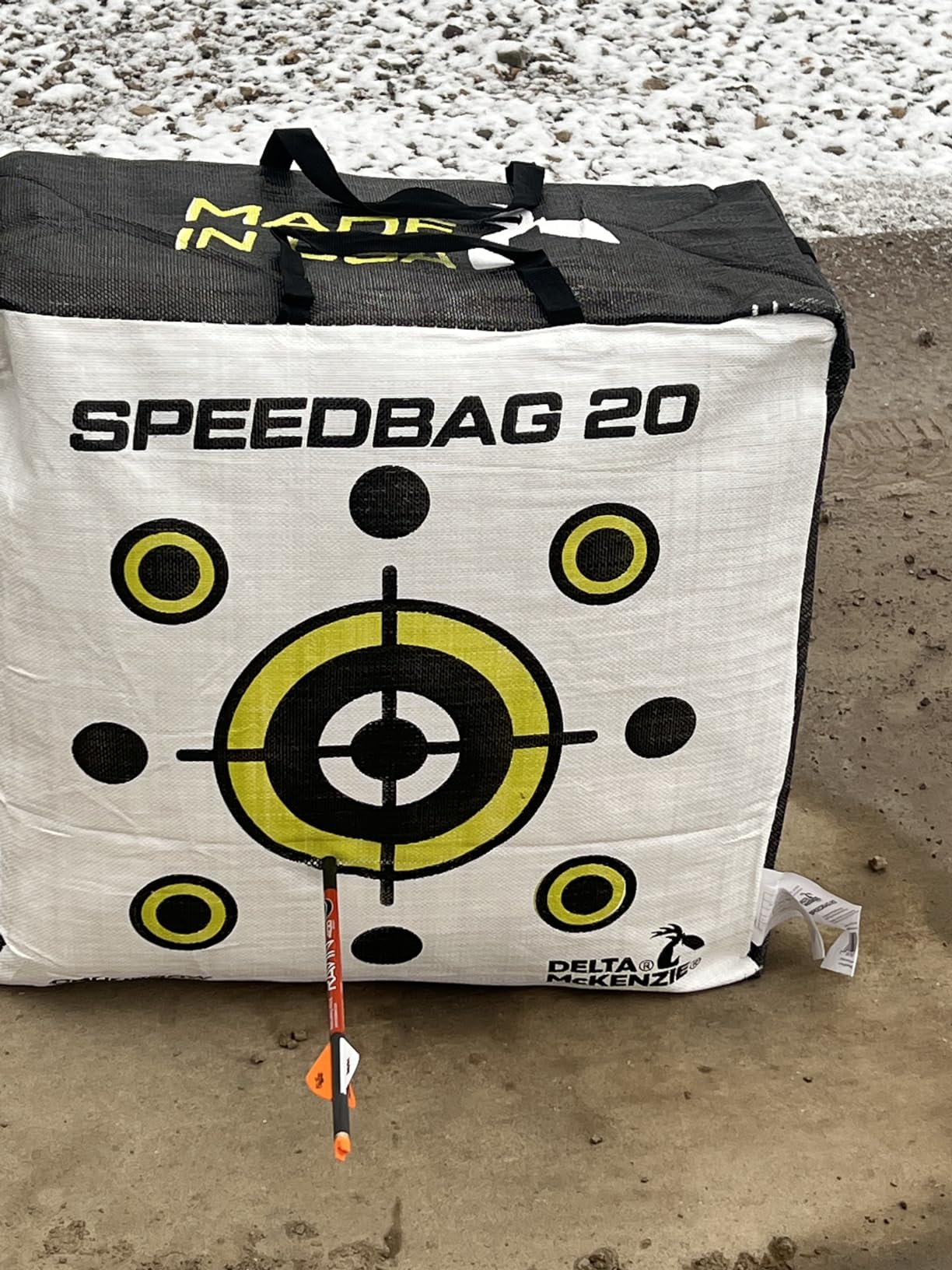
Weatherproof construction is specified for sun, rain and temperature swings, so it can stay up outdoors through the season without becoming a garage-only object. That is the single most common complaint about budget bags.
Twenty-seven pounds is a sensible middle ground. Heavy enough that it does not rock on a hit, light enough that one person can reposition it along the lawn.
What to check before you commit
Field points only, like most bags at this level. If you want to shoot broadheads, choose a foam block instead, because a broadhead will find the cover stitching.
It suits compound, recurve and crossbow shooters for field point practice, so bow type is not a limitation here. Arrow type is.
Where it falls short
The white face shows dirt, grass and rain marks faster than a dark face. In a lawn setting you will be wiping it down more often than you would a black or yellow target.
It is also a newer target with a shorter review history than the established bags here. The spec sheet is strong, but long-term durability reports are still accumulating.
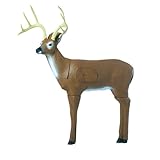
10. Riverbottom Challenger 3D Buck – Best 3D Deer Practice
- Realistic deer silhouette for shot placement practice
- Scoring ring in the chest zone
- Ground stakes included
- Self-healing foam
- Arrows are hard to pull
- especially broadheads
- Plastic legs can break on a hit
- Antlers can break if dropped
This is the target that teaches you where to aim. A 3D animal forces you off the flat face and onto a specific heart and lung zone, which is a completely different skill from grouping on a bag.
The scoring ring in the chest area gives you feedback you cannot get from a printed face. If your group is low and forward, you will see it immediately rather than guessing from a paper diagram.
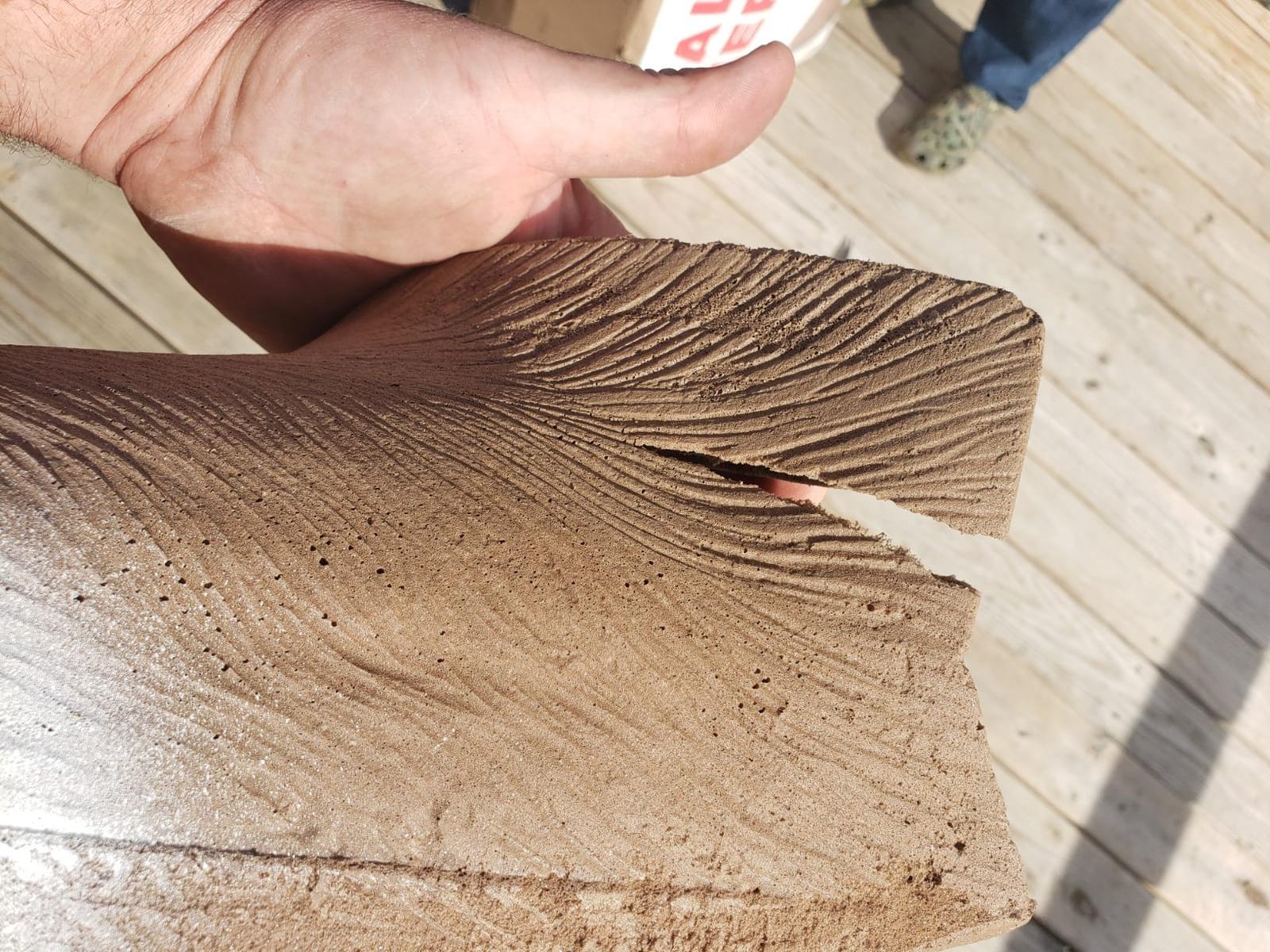
It is a medium-small doe size buck, which is deliberate. That scale keeps the footprint manageable in a suburban yard instead of demanding five feet of clear space behind the shooting line.
Ground stakes are included, and they are necessary. A 16 pound foam animal on soft lawn will lean and eventually flop, so stake it before your first session rather than after the third.
What to check before you commit
Measure your yard before you order any 3D animal. The real lesson from archery forums is that people buy a full-size deer for a small lawn and then end up shooting it at an angle across the corner.
Decide whether you are practising with field points or practice broadheads. Field points are the sensible starting point, because arrow removal in a 3D target is already the hardest part.
Where it falls short
Arrow removal is the honest weakness here. Reviewers report arrows being very difficult to extract, particularly with broadheads, so budget time for pulling or keep a puller handy.
Construction is the second weakness. The plastic legs can break if an arrow hits them, and antlers can snap if the target is dropped or knocked. Treat the animal as a range fixture rather than something you move around.
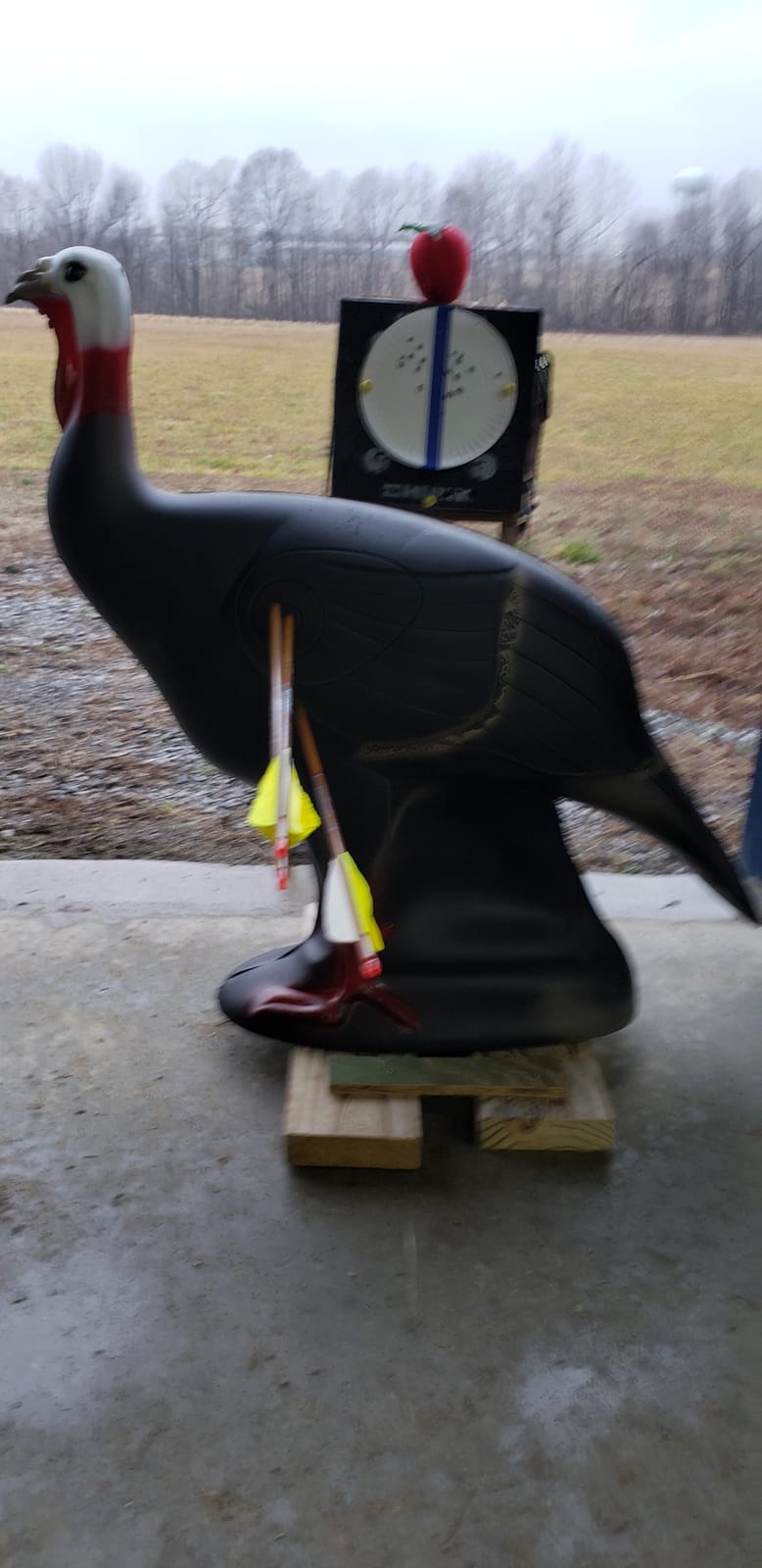
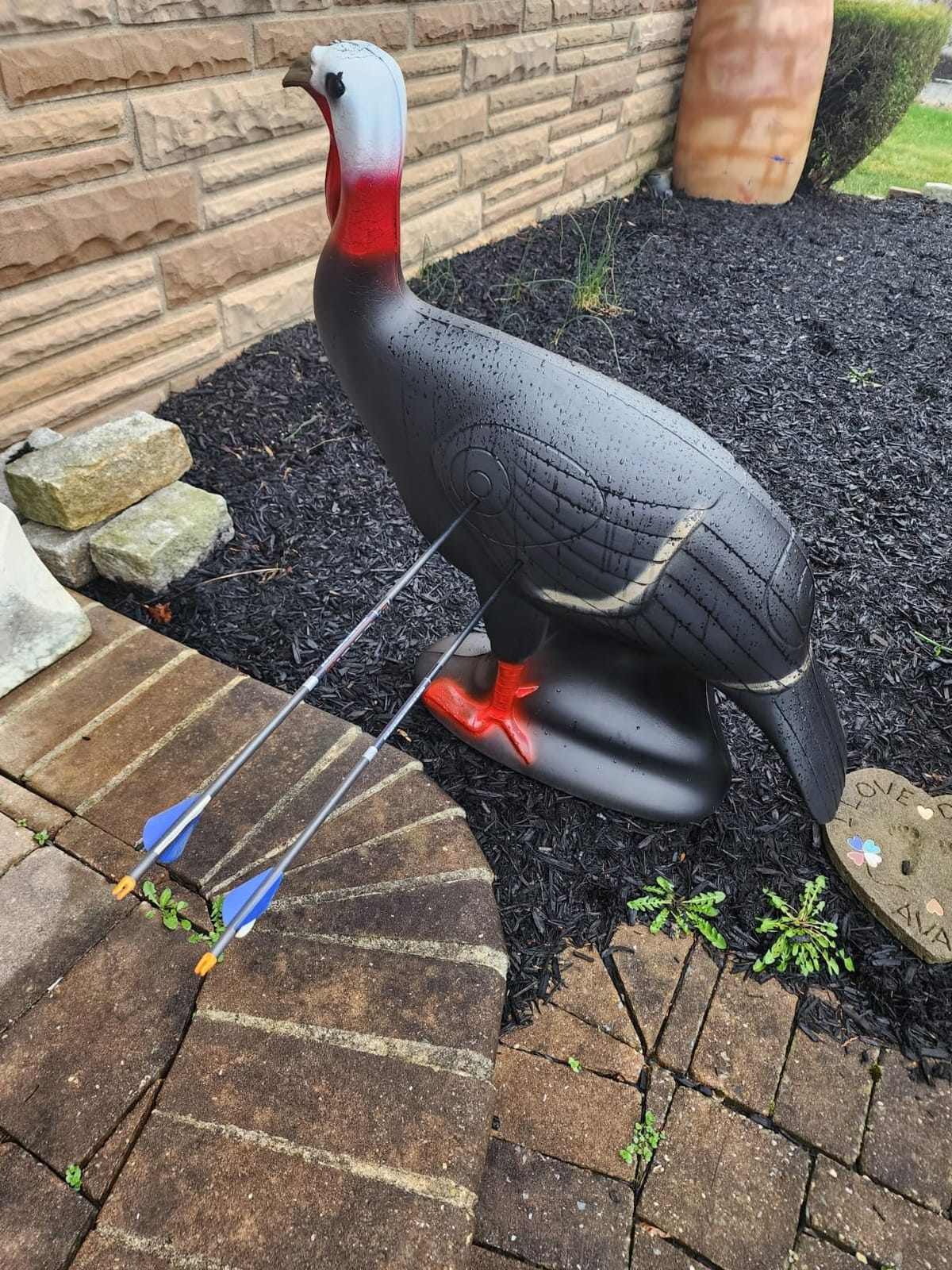
11. Shooter Turkey 3D Target – Best Value
- Large 32 inch silhouette for a 3D practice target
- Scoring ring in the chest area
- Light at 11 lb
- Ground stakes included
- Head and tail are fragile
- Light packaging leads to arrival damage
- Foam durability is inconsistent
If you want a 3D animal for the cost of a foam block, this is the entry point. At 32 inches tall it is larger than the 3D buck in this list, and at 11 pounds it is light enough for a teenager to carry out to the yard.
The scoring ring in the chest area does the same job as on the deer, forcing you to place a shot on a specific zone rather than anywhere on a printed face. For a beginner learning shot placement, that is the whole point of a 3D target.
Children tend to love it, which matters more than it sounds. A turkey silhouette at kid eye level is a much better way to get someone interested in archery than a plain bullseye bag.
Reviewer experiences split sharply here. Some people report it holding together through a full season, while others say it came apart within about a hundred shots. Treat it as a practice toy rather than a long-term investment.
What to check before you commit
Inspect the head and tail on arrival. This is the most common problem in reviews, and both parts are the first to go. A dab of adhesive on the tail immediately after delivery saves the target.
It is a hunting-pattern target, so use field points or practice broadheads. Full-scale broadheads will destroy the solid foam body in short order.
Where it falls short
The foam is not as self-healing as the dedicated foam blocks in this list, and some arrows pass through the harder areas. That is a genuine safety consideration, which is why a backstop matters here more than anywhere else.
Packaging is minimal, so parts can arrive damaged. It is the one area where we would suggest checking the arrival condition carefully before you set up in the yard.
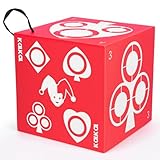
12. Kalkal 6-Side Foam Block – Best for Youth and Beginners
- Only 6.3 lb so a child can move it
- Six sides give 360 degree shooting
- Self-healing foam pulls arrows easily
- Bright colours aid visibility
- Field points only up to 45 lb draw
- Too light to stand unaided
- No warranty
This block is built for a specific job: a first target for a child or a beginner with a light recurve. At 6.3 pounds, a ten-year-old can carry it out of the garage, set it up, and move it when the dog decides the lawn is his.
Six sides means you can stand behind the shooting line and get a usable face from almost any direction, which removes the whole problem of lining up a square target for a small archer.
The stated limit is 45 pounds of draw weight, and that limit is genuine. It is tested for recurve and youth compound bows, not for a full-size compound at speed or any crossbow.
Self-healing foam is the right material for a beginner target. Arrows come out without damage, so a younger shooter does not end up with bent or wrecked shafts in their first week.
What to check before you commit
Weight it down or anchor it. At 6.3 pounds it will move and tip over, and a target that slides is a target somebody will eventually trip over while walking back to the shooting line.
Check your child’s bow against the 45 pound ceiling before buying. This is not a grown-up target, and no amount of careful shooting changes that.
Where it falls short
It is light on longevity. Several reviews mention it starting to come apart within about a month of regular use, and long-term durability reports are thin because the target is new.
There is no warranty on this one. For a first target bought once, that is an acceptable trade, but it is worth knowing before you commit.
Which Archery Target Type Fits Your Backyard?
Four construction types cover almost everything a backyard archer needs, and choosing between them is mostly a question of what you shoot and how much arrow removal you can tolerate.
Foam block targets use layered or open-cell foam that grips arrows by friction. They stop the widest range of arrow types, including broadheads, and they are the easiest targets to shoot in a small yard because they need no support behind them.
Bag targets are packed with shredded straw or synthetic fibre. They are quiet, forgiving, and the easiest to pull arrows from, and they handle the highest velocities when you buy a high-FPS model. They always need a stand or support behind them, and most are field-point only.
3D animal targets are foam bodies shaped like deer, turkeys or other game. They exist to rehearse vital-zone placement, not to stop arrows, and they need real backstop support behind them because arrows can pass through softer foam.
Straw and paper targets sit at the gentle end. Straw is kind to wooden recurve and longbow arrows and is the traditional choice, while paper faces on a foam or straw pad are the cheapest way to get fresh scoring rings every session.
Most regular shooters end up owning two. A foam block for broadhead and hunting rehearsal, and a bag for volume field-point practice, is the combination archery forums recommend most often.
Backstop and Range Safety for a Backyard Archery Range
Yes, you need a backstop, and it goes behind the target, not around it. The most common question on archery forums is exactly this one, and the honest answer is that the target does not catch every arrow. A backstop does.
What works as a backstop depends on your yard and your neighbours:
- Archery netting is the purpose-built answer. Heavy-duty netting hung on a frame or between two posts stops arrows and lets them drop to the ground, which makes arrow collection simple.
- A large tree trunk works well if the tree is behind the target and thick enough that arrows do not punch through. It costs nothing, though it puts arrows into the bark.
- Horse stall mats fixed to a wooden frame are the classic DIY backstop. Cheap, effective and time-consuming to build, but they do the job.
- Layered carpet with the backing side facing the archer, doubled up and roughly eight feet wide, is a perennial DIY choice. Heavy and awkward to move, but very effective.
- Hay bales work in a pinch and are easy to find, but they shed, soak up rain and need replacing often.
Foam board on its own is not a backstop. It is an arrow storage solution, not a stopping solution, and treating it as one is how arrows end up in a neighbour’s garden.
Three safety rules cover most of the risk in a residential yard:
- Shoot only toward a clear backstop. Walk the line before every session and confirm that the area behind the target is clear of people, pets, windows, vehicles and roads.
- Keep the shooting line and the target in the same open space. Nobody walks behind the shooting line to retrieve arrows while a session is in progress, and nobody stands beside the target while it is being shot at.
- Know the command. Agree on one call for “stop shooting” and use it every time, including when a child runs for a ball.
If you live in a house association, check your rules before you build. Some HOAs restrict outdoor structures entirely, and the conversation is far easier before the target frame goes up than after.
Noise is the other real constraint. Foam is loud and straw is quiet, so a foam block close to a shared wall is a neighbour problem waiting to happen. If your neighbours are close, a bag target and a softer shooting schedule will do more for relations than any target choice.
Match the Target to Your Bow
Match the target’s stated FPS rating to what your bow actually produces, and match the arrow type to the target’s construction. Getting either of these wrong produces pass-throughs, bounce-outs or torn covers.
Field points are the default for target archery, and broadheads are cutting tools: a fixed-blade head will cut a foam core or shred a bag cover if you use one on a target not built for it.
Crossbow bolts need a genuinely high-FPS rating. Among the picks here, the Delta McKenzie Speedbag 20 at 525 FPS, the Rinehart 18-1 at 500 FPS and the Morrell Double Duty at 450 FPS are the ones rated for that range of speed.
Beginner and youth recurve bows need something modest. A block tested to 45 pounds of draw weight is appropriate for a first bow, and an adult compound is better served by anything in the middle of this list.
Distance sets the size. Around 10 to 20 yards, almost anything works. At 30 yards, look for a 20 inch face or larger so you can see group and adjust. Beyond that, wide bag targets and large foam blocks make corrections much easier.
Outdoor Durability: Can You Leave an Archery Target Outside?
Some can and some cannot, and the answer is printed on the spec sheet more often than shoppers expect. Look for a stated weatherproof or weather-resistant construction before you plan an outdoor setup.
Among these picks, the Morrell Yellow Jacket Supreme 3, the Delta McKenzie Speedbag 20 and the Morrell Yellow Jacket Stinger are all specified for outdoor use. The Black Hole foam block and the BLOCK Classic are foam, so UV exposure is the limiting factor rather than rain.
Bags that are not specified for outdoor use will still survive a season if you cover them, but the outer cloth fades, stiffens and eventually tears under repeated sun and moisture cycles. Rotating the target so one face does not sit in permanent direct sun helps.
Store straw targets somewhere dry between seasons. Moisture in woven straw shortens its life quickly, and a breathable cover does more good than leaving it out in the rain.
One beginner mistake shortens foam life more than weather does. Foam layers should be oriented vertically, so you shoot across the layers rather than firing straight down through them. Shooting along the layers drives arrows deep and wears the block out far faster.
Target Lifespan and Replacement Cores
The target that lasts the longest is usually the one you can service. A replaceable core or replaceable cover keeps you shooting instead of buying a new target every year, and that is how experienced shooters actually think about value.
Multi-face designs are the biggest lever. A cube or block with six, eight or eighteen faces spreads wear across far more surface than a flat bag, which is why the Rinehart 18-1 and the Morrell Double Duty outlast single-face targets in the same category.
Replaceable covers are the second lever. When the cloth wears through on the Morrell Double Duty, you replace the cover and keep the core rather than starting again from scratch.
Shot count is a better measure than calendar time. A target that survives three years of twenty arrows a week is a better buy than one that looks new for a season and then collapses.
Layer count is the third. More layers mean more material to absorb energy, which is why a 54-layer bag still feels firm in month eight when a lighter build is already going soft.
Broadhead practice shortens target life faster than field points on every target type in this list. If you shoot both, keep them on separate faces or separate targets, which is exactly what the multi-face designs are for.
Frequently Asked Questions
Can I put an archery target in my backyard?
Yes, if you control the airspace behind it. Shoot from a clear firing line toward a target backed by a proper backstop such as netting, stall mats, layered carpet or a thick tree trunk, and never toward a house, fence, road, neighbour’s yard or playground. Keep roughly 30 yards of clear depth behind the target, and confirm the range is clear before every session.
What is the best 3D deer target for archery in the backyard?
The Riverbottom Challenger 3D Buck is the most practical deer option for a typical suburban yard, because its medium-small doe scale needs far less clear space than a full-size 200 pound replica. It is built from self-healing foam, includes a scoring ring in the heart and lung zone, and comes with ground stakes. Field points are the sensible arrow choice because removal in 3D foam is already difficult.
Can I leave my archery target outside?
Only if it is specified for outdoor use. The Morrell Yellow Jacket Supreme 3, the Morrell Yellow Jacket Stinger and the Delta McKenzie Speedbag 20 are all weatherproof or weather-resistant by specification. Foam blocks tolerate rain but degrade in direct UV, and straw targets should be stored dry between seasons. Cover anything you keep outdoors and rotate faces so one side does not sit in permanent sun.
What type of archery target lasts the longest?
Multi-sided self-healing foam cubes last the longest in normal backyard use. The Rinehart 18-1 spreads wear across eighteen faces, so no single area takes the full shot count, and its foam closes around each hit instead of staying compressed. Replaceable covers extend life further, and broadheads wear any target faster than field points, so rotate faces or separate your practice.
What is the best backstop for an archery target?
Purpose-built archery netting on a frame is the safest and most effective option, because it stops arrows and lets them drop for easy collection. For a DIY backstop, horse stall mats fixed to a wooden frame, or layered carpet with the backing side facing the archer, both work well. A thick tree trunk behind the target is a free option. Foam board is not a backstop, because it stores arrows rather than stopping them.
Conclusion
The Black Hole 4-Sided Foam Target is our pick for the best archery targets for backyards, because it stops field points and broadheads, weighs eight ounces, and rotates through four shooting faces. It is the target we would put in the hands of a beginner and the one we would not mind shooting ourselves all season.
Shoot a crossbow at speed and the Morrell Double Duty Cube, rated to 450 FPS with six faces and a replaceable cover, is the smarter buy. Practise broadheads on the BLOCK Classic, keep a foam block vertical, and put a proper backstop behind everything.
Whatever you choose, measure your yard, stake it well and keep the space behind it clear. That setup discipline matters more to a safe backyard range than the target brand on the box.
While you are planning the space, our guides on privacy screens for backyards and jungle gyms for backyards cover the other half of making a yard usable, and if children will be sharing the range, our swing set picks are worth a look too.