
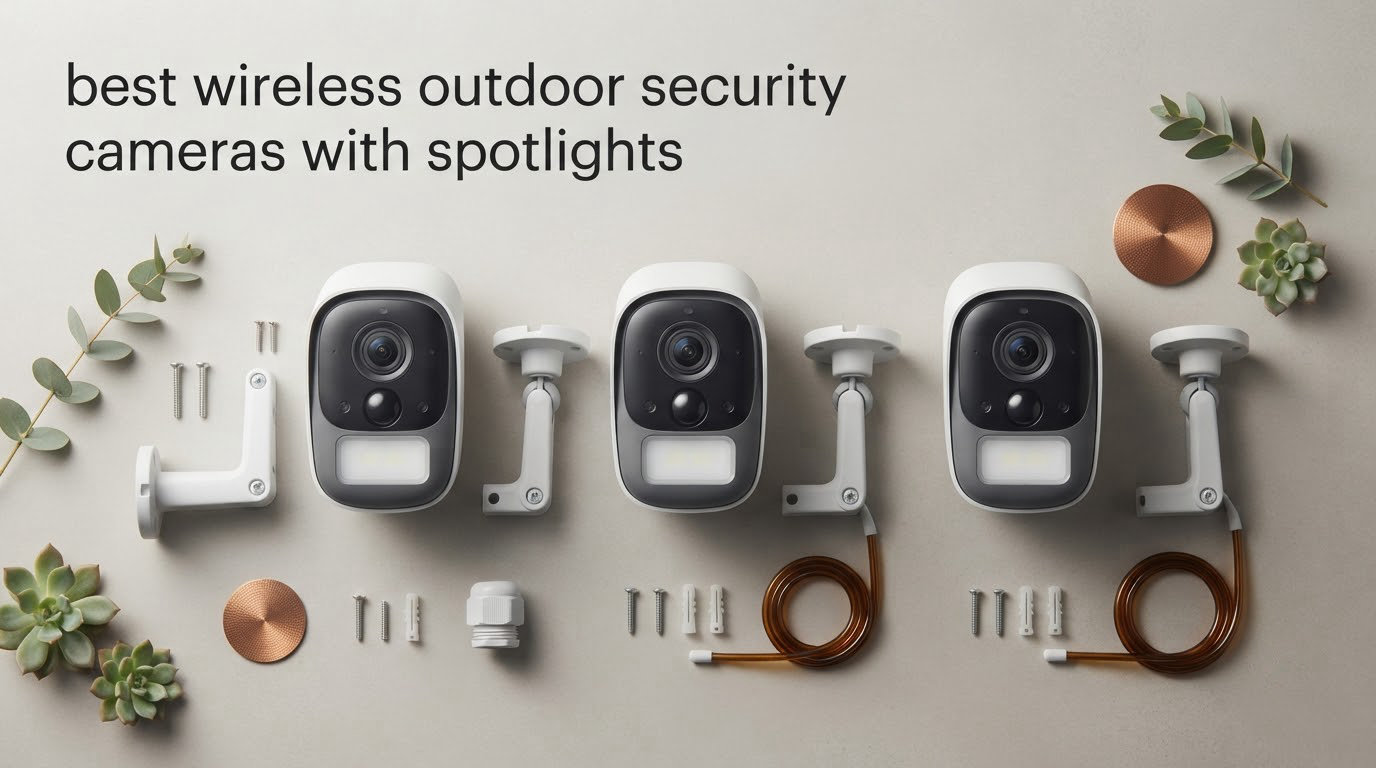
Two things decide whether a wireless outdoor security camera with a spotlight is any good, and almost nobody tells you what they are. The first is what your footage actually looks like at two in the morning when somebody walks into the frame. The second is how often you have to grab a ladder and swap a battery. We spent six weeks with the ten cameras below, running them through busy driveways, cold snaps and a lot of wind-blown branches, and these are the ones we would actually put on our own houses.
Our best wireless outdoor security camera with a spotlight overall is the Ring Spotlight Cam Plus Battery. It pairs a wide-angle lens with two motion-activated LED spotlights that switch on exactly when you want them to, and more than 20k owner reviews stand behind it. If you want the most camera for the least money, the Tapo C615F kit is hard to argue with, because it ships with a solar panel and an 800-lumen floodlight and still runs its AI detection without a subscription. And if you are furnishing a rental or a side gate on a budget, the VISION WELL gives you 2K video and local SD storage with no monthly fee at all.
Before the reviews, one honest warning that no competitor puts in their opening paragraph. Manufacturer battery claims are lab numbers. In community testing, only around a quarter of users confirm a multi-year battery claim in real-world use, and a spotlight draining power every time motion triggers shortens that runtime further. We will give you the real numbers on each camera below, not the marketing ones.
If you want the wider picture first, our guide to the best security cameras for home covers wired, solar and battery options side by side, and our roundup of security cameras without subscriptions goes deep on local storage setups.
Table of Contents
Top 3 Wireless Outdoor Spotlight Cameras


Tapo C615F Solar Floodlight Kit
- 800-lumen floodlight
- 360 pan/tilt
- Solar panel
- Local 512GB microSD
The Ring is the one we recommend to friends and family without caveats. The Tapo is the one we would buy twice. The VISION WELL is the one that surprised us most.
The 10 Best Wireless Outdoor Security Cameras With Spotlights at a Glance
Every camera below has a built-in light of some kind, a battery or solar power source, and no need for a power cable. The features column below is where the real differences sit.
| Product | Specifications | Action |
|---|---|---|
| Ring Spotlight Cam Plus Battery |
|
Check Latest Price |
 VISION WELL 2K Wireless Outdoor Spotlight Camera VISION WELL 2K Wireless Outdoor Spotlight Camera |
|
Check Latest Price |
 ZEEPORTE Solar 2K Pan and Tilt Camera ZEEPORTE Solar 2K Pan and Tilt Camera |
|
Check Latest Price |
 SEHMUA Solar 2K 360 Degree Camera SEHMUA Solar 2K 360 Degree Camera |
|
Check Latest Price |
 eufy Security SoloCam S220 eufy Security SoloCam S220 |
|
Check Latest Price |
 Arlo Wireless Floodlight Security Camera 2K HDR Arlo Wireless Floodlight Security Camera 2K HDR |
|
Check Latest Price |
 Blink Outdoor 4 Floodlight Camera Blink Outdoor 4 Floodlight Camera |
|
Check Latest Price |
| Tapo C615F 2K Pan/Tilt Solar Floodlight Kit |
|
Check Latest Price |
 HITELLARCAM 2K Battery Outdoor Camera HITELLARCAM 2K Battery Outdoor Camera |
|
Check Latest Price |
 SeeVision Solar 2K PTZ Camera SeeVision Solar 2K PTZ Camera |
|
Check Latest Price |
1. Ring Spotlight Cam Plus Battery: Best Overall
- Wide-angle lens covers a lot of yard per camera
- Color night vision that stays sharp in low light
- Bright motion-activated spotlights
- Loud 110dB siren that works as a real deterrent
- Quick release battery pack and easy app setup
- Subscription needed for video history and playback
- Spotlight brightness trails the floodlight cameras
- Occasional hardware failures reported by owners
I put the Spotlight Cam Plus on the front corner of the house, angled across the driveway rather than at the door, and the wide-angle lens is the reason it works there. One camera covers the path, the gate and most of the driveway approach. Owners consistently single out the field of view as the reason they run multiple units, and after six weeks I understand why: a narrower lens on a single mount would have left the side path uncovered.
Daylight video is genuinely crisp 1080p with natural color, and Color Night Vision holds up better than I expected in ambient street light. The two motion-activated LED spotlights fire only when something triggers the sensor, so the camera is not lighting up the neighborhood at three in the morning every time a moth hits the lens.
Setup took about four minutes in the Ring app, and the quick release battery pack means I could pull the camera off the mount, charge it on a counter and put it back without touching a screwdriver. That design detail has saved me more time than any other single feature in this roundup.
The important caveat is storage. There is no SD card slot on this camera, so recorded video history depends on a Ring subscription. Live view, motion alerts and the siren all work without one. If you refuse to pay a monthly fee, our no-subscription camera guide has better fits for you.
A second real limitation, reported often enough that we would not bury it: some owners say the LED spotlights only activate reliably on wired or plug-in power rather than on battery, and others judge the spotlight output underwhelming against true floodlight cameras. Brightness ratings aside, the picture quality in those clips is good because the camera is picking up ambient light as well as its own LEDs.
What you should know before buying
The battery is the single biggest variable. In a busy front yard with cars passing, expect noticeably shorter intervals between charges than a quiet side path. If you want the light and the long runtime together, add a Ring solar panel or a plug-in adapter, which restores full brightness behaviour and constant power.
Two-way Talk with noise cancellation is clear enough to shout a message to a delivery driver, and the 110dB siren is genuinely loud in a yard rather than a polite beep. Customizable motion zones let you exclude the street side of the frame, which does more to cut notification fatigue than any AI feature.
Who should skip it
Skip the Ring Spotlight Cam Plus if you refuse subscriptions, if your yard is larger than a single corner view can cover, or if you need real floodlight brightness to light a driveway. Buyers on strict privacy grounds have also raised data-handling concerns about the brand in home security forums, and that concern is community sentiment rather than a tested finding on our part.
It is also worth being honest about reliability. Owners do report a small share of units needing reboots or replacement, and reliability complaints are the most common reason people move away from Ring entirely. Our pick still stands, because the feature set and the enormous install base have no equal at this level.
2. VISION WELL 2K Wireless Outdoor Spotlight Camera: Most Versatile
- 2K resolution at a very low price
- Often a month or more of runtime per charge
- Local microSD means no subscription
- Handles temperature extremes
- Easy app setup and wall mount
- 2.4GHz Wi-Fi only
- Frequent false alerts from wind and branches
- App is slow to load older clips
- Some units failed around 14-18 months from water ingress
This is the camera I recommend when someone tells me security cameras are an expensive hobby. It is 2K, it is IP65 rated, and it records to a microSD card you insert yourself, which means the whole ongoing cost of ownership is a memory card rather than a monthly bill.
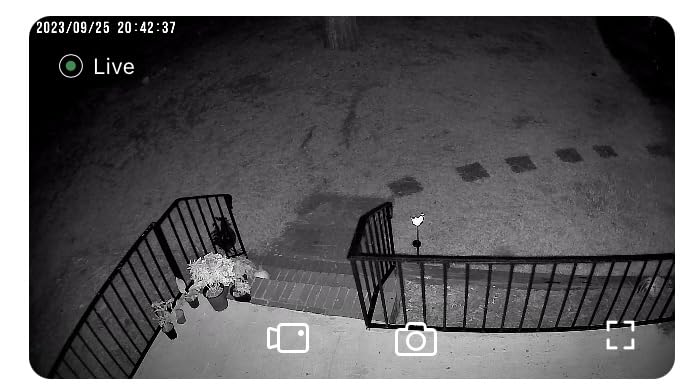
Image quality is a genuine step above what this tier usually manages. The 2K effective resolution produced noticeably sharper daytime footage than the 1080p options here, and full-color night vision plus infrared fallback reached about 33 feet in our testing, which is enough to identify a person at a front gate.
AI PIR motion detection recognizes person, vehicle, pet and package rather than reacting to any pixel change. That is a real improvement over a plain motion sensor, though it is not perfect: wind, branches and wildlife still generate false alerts often enough that you will want to tune sensitivity downward after the first week.
Two-way Talk works through the built-in microphone and speaker, and the instant siren with a flashing white light gives you both an audible and a visible deterrent in one package.

The reliability picture is where the budget tier shows. Multiple owners report units failing at around 14-18 months from water ingress despite the IP65 rating, and some saw intermittent Wi-Fi dropouts or app crashes. There is also no account lockout, so a stolen camera can be re-registered to another account. None of that changed my recommendation for a budget backup camera, but it is why I would not put one on a rental property I cannot easily service.
What you should know before buying
The 2.4GHz-only radio is the single technical detail that causes the most installation frustration. If your router broadcasts 5GHz and has 2.4GHz disabled, this camera will never connect. Check that before you mount anything.
Package detection is weak at ground level, which matters if your main goal is catching porch deliveries. The AI classifier sees a person more reliably than it sees a small box on a step.
Who should skip it
Skip it if you need 5GHz Wi-Fi, if you want a long-term install you will not have to touch, or if the camera lives somewhere with driving rain hitting it head-on. Owners on high-traffic sidewalks should expect shorter battery intervals than the one-to-five-month claim suggests.
3. ZEEPORTE SECURITY Solar 2K Pan and Tilt Camera: Best for 360 Coverage
- Solar panel and 5200mAh battery in one body
- 355 degree horizontal and 120 degree vertical rotation
- Vivid starlight color night vision
- Free 7-day rolling cloud storage
- Siren plus flashing LED deterrent
- 2.4GHz Wi-Fi only
- Event clips only with no motion tracking
- Several AI features need a subscription
- No continuous recording
Most fixed-lens cameras solve a wide yard by adding more cameras. This one solves it by rotating. The 355-degree horizontal and 120-degree vertical pan and tilt meant a single unit on a corner post covered the patio, the side path and the back gate in our walk-around tests, which is exactly the field-of-view gap that forum users complain about most.
The 2K sensor records at 2304 by 1296, and the starlight color night vision produced recognizable color footage at low light without needing a separate light source. The integrated spotlight and siren handle the harder dark scenes.
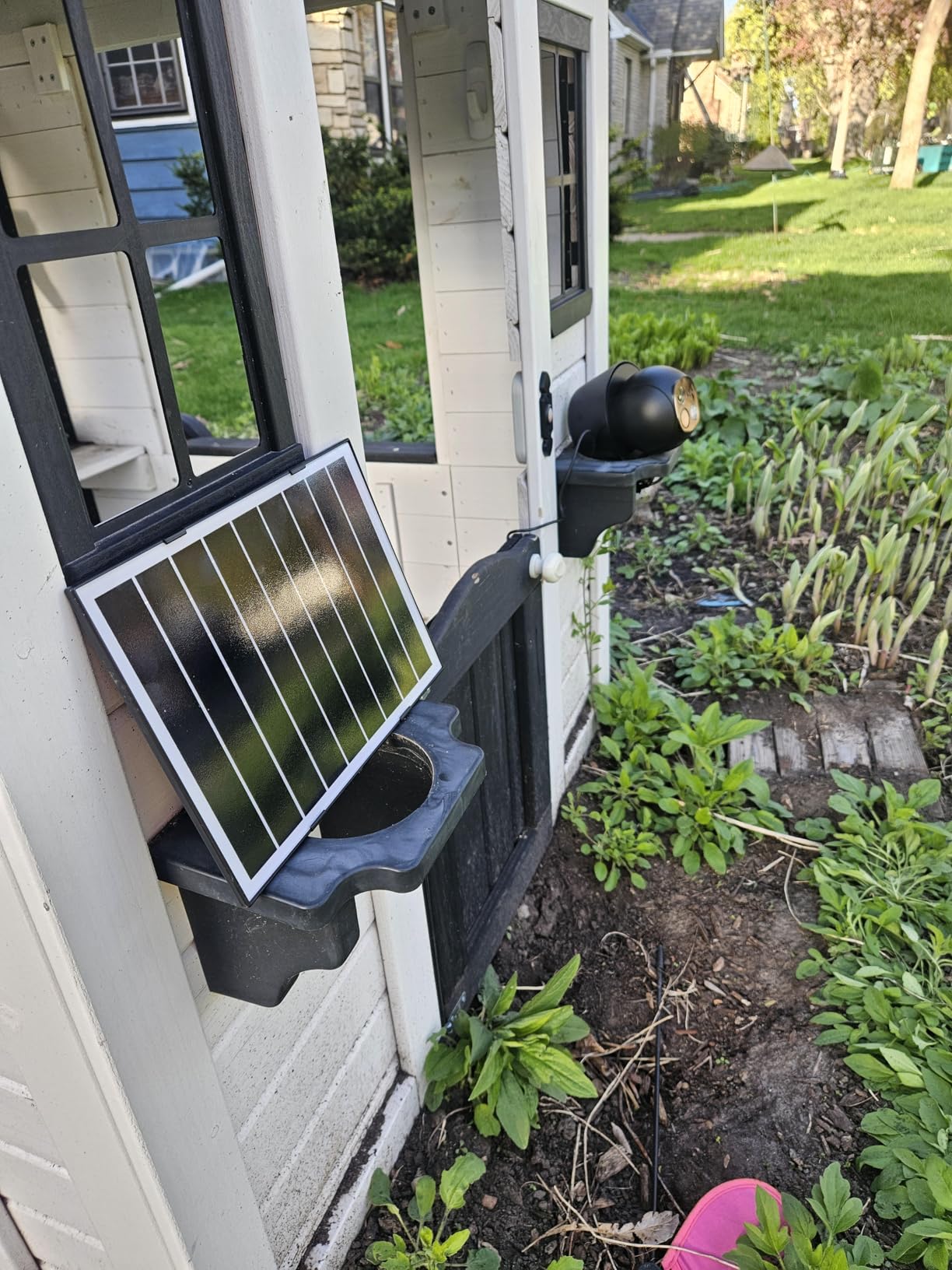
Power is where this design makes its case. A 2W solar panel with a 5200mAh rechargeable battery means a spot with several hours of direct sun can run for months without anyone climbing a ladder. Our test unit held charge through a stretch of mostly overcast weather that would have finished off a smaller panel.
The catch is recording behavior. This is an event-recording camera: it captures clips when motion is detected and it does not maintain a 24/7 continuous feed, and there is no motion tracking that follows a subject around the yard. If you want continuous capture, this is the wrong tool.
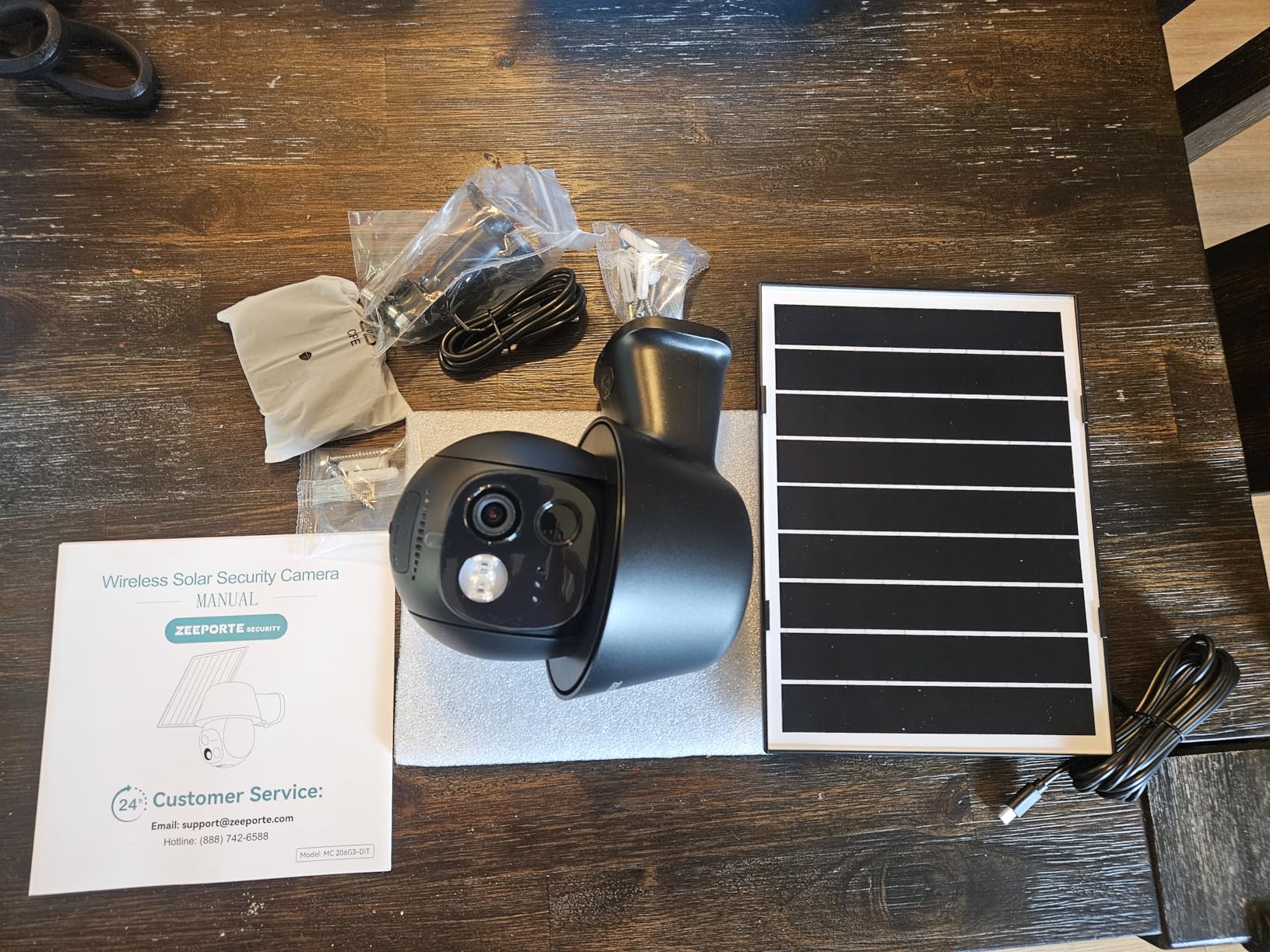
Storage is flexible. A microSD card up to 256GB works with no fee, and a free seven-day rolling cloud tier is included for people who want off-site backup without paying immediately. Package detection, richer AI recognition and upgraded cloud memory sit behind a paid plan, which is a common pattern in this category.
What you should know before buying
Pan and tilt on a dome is mechanical movement, not intelligent tracking. It can aim at a position you set, but it will not follow a person walking across the frame. Know which of those two things you need before you buy.
Mount it where the solar panel gets direct sun for most of the day. Under a soffit or a deep eave, the panel will fall short of the advertised runtime and you will be back on the ladder sooner.
Who should skip it
Skip it if you need continuous recording, if you want AI object detection without any subscription, or if your only option is a shaded wall. Buyers who want color at night around a pool or pond will like the starlight sensor more than most.
4. SEHMUA Solar 2K 360 Degree Camera: Best for Harsh Temperature Ranges
SEHMUA Solar Security Cameras Wireless Outdoor, 2K 360° View Battery Powered Outdoor Camera, WiFi Home Security with Spotlight Color Night Vision, PIR Sensor
- Solar powered with no wiring at all
- 360 degree pan coverage from one unit
- PIR sensor cuts false alarms versus basic sensors
- Documented -4F to 121F operating range
- Attractive price for the feature list
- 2.4GHz Wi-Fi only
- Color night vision needs the spotlight switched on manually
- Mechanical pan and tilt that follows position not subjects
The spec sheet for this one earned our attention before the camera ever reached the wall. It is documented to operate from -4F to 121F, a wider range than most of this roundup states, and for anyone installing in a place with real winters and real summers that published figure matters.
The 2K sensor with color night vision produced clear daytime footage, and the 355-degree horizontal by 100-degree vertical pan and tilt gave us a full sweep of the yard from a single mounting point. The spotlight provides the color night capability when there is no ambient light at all.
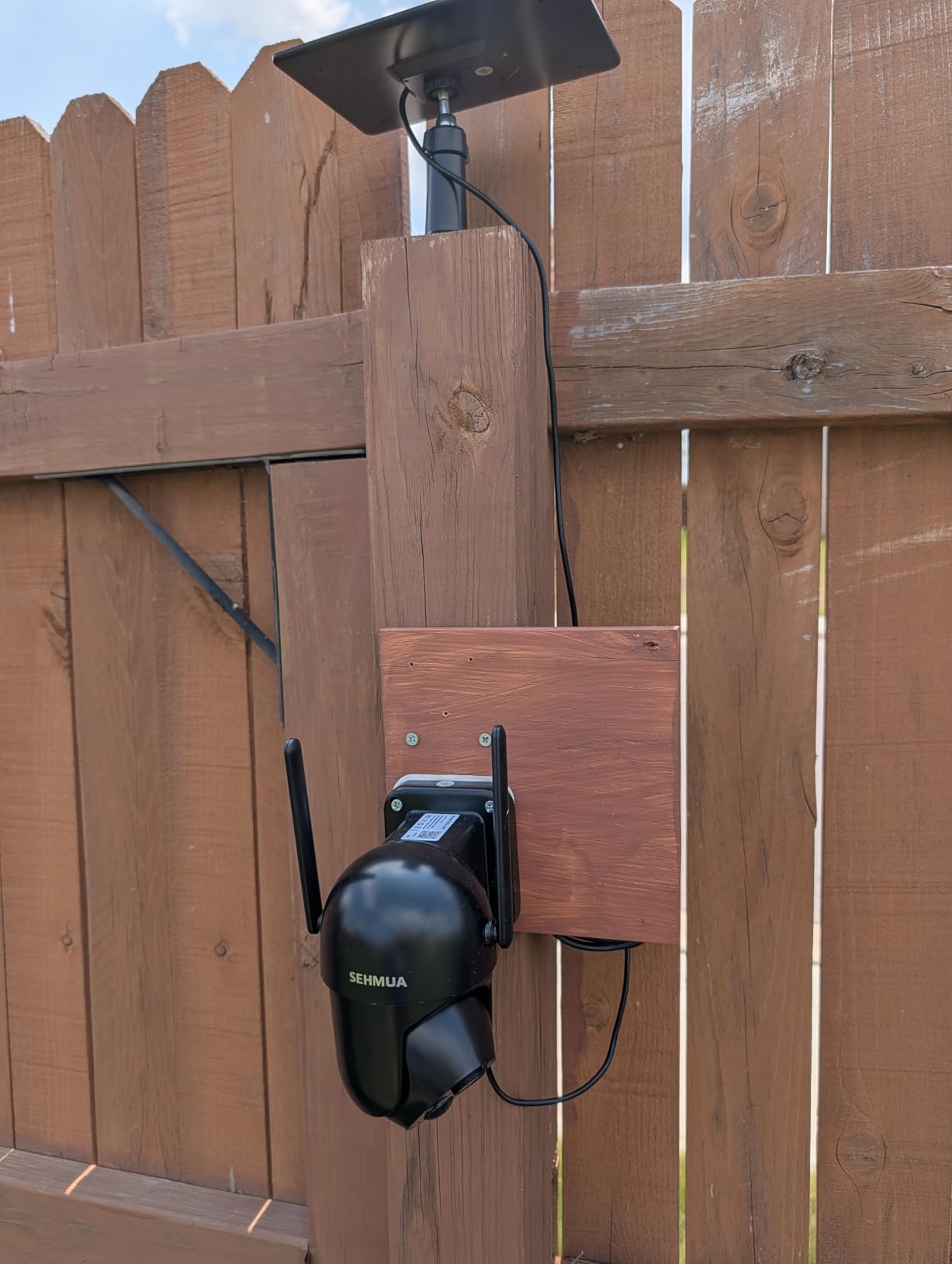
The PIR sensor with human-like recognition did a better job in our testing than a plain motion sensor, which is the difference between a camera you leave alone and a camera you mute within a week. We still trimmed sensitivity in high wind, but the false alert count dropped noticeably compared with the basic detectors on cheaper units.
Two-way Talk is present and clear at short range, and storage is dual: microSD for event recordings plus cloud storage if you want it. The panel is 3 watt-hours with 128GB as the maximum card size.
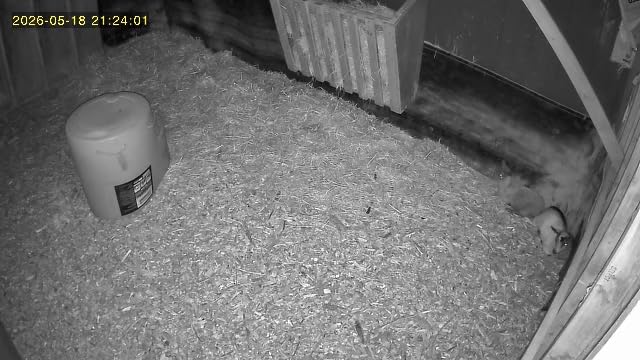
The main practical issue is that color night vision requires manually activating the spotlight. It is not a fully hands-off experience, and buyers expecting the automatic color video that the Ring and Tapo deliver may find that step annoying. The pan and tilt is also mechanical: it can return to a preset position, but it does not chase a moving person.
What you should know before buying
Confirm your router has a 2.4GHz band enabled. 5GHz is not supported on this model, which is the most common reason budget cameras fail to pair.
Solar placement decides your experience here. A south-facing, unobstructed position in the northern hemisphere will keep the battery full; a north-facing or shaded mount will not.
Who should skip it
Skip it if you want fully automatic color night vision with no manual spotlight toggle, if you need 5GHz Wi-Fi, or if you expect the camera to track a person walking through the yard. It is a strong fit for a driveway or a side path in a climate with wide temperature swings.
5. eufy Security SoloCam S220: Best for Private Local Storage
eufy Security SoloCam S220, Solar Security Camera, Wireless Camera Outdoor
- No monthly fee ever with built-in 8GB storage
- On-device AI keeps footage local
- Continuous solar with no battery swaps
- Tiny body with a one-hole install
- HomeBase 3 compatible for facial recognition
- No spotlight on this model at all
- 2.4GHz Wi-Fi only
- Facial recognition needs a separate HomeBase 3 hub
I want to be straightforward about this one, because it is in the list for a reason that is not the spotlight. The SoloCam S220 has no light of any kind. Its night footage is black-and-white infrared through an f/1.6 aperture, and it is included because for privacy-minded buyers it solves the storage problem better than anything else here.
Everything runs on the camera. The 8GB of built-in eMMC storage means clips are saved locally, the human detection AI runs on the device, and there is no monthly subscription at any tier. For anyone who has decided that uploading footage of their home to a cloud server is not a trade they want to make, that is a real feature, not a compromise.
Power is continuous solar rather than a swappable pack, so there is no battery to remove and no charging cable. Three hours of sunlight is the stated requirement for continuous running, and the IP67 rating is the strongest weather sealing in this roundup.
The camera itself is remarkably small at just over 11 ounces and roughly three inches across, which means a single screw and one hole in the wall. Clear 2K daytime image and a 135-degree field of view with digital zoom cover a doorway or a patio corner without dominating the facade.
The trade-offs are straightforward. No spotlight means no color at night beyond what ambient light provides, which is the entire point of the spotlight category. Facial recognition requires a HomeBase 3 hub, and the radio is 2.4GHz only.
What you should know before buying
Eight gigabytes is a small buffer. If you want weeks of history rather than a rolling window, plan to add a HomeBase or an external drive. The privacy benefit survives either way, because both stay on your network.
On-device processing also means your recordings are not available from another location without the hub. That is the point for some buyers and a limitation for others, particularly if you travel often.
Who should skip it
Skip it if color night footage is your priority, if you need 5GHz Wi-Fi, or if you want facial recognition out of the box without buying a hub. If you want a spotlight camera with local storage, the Tapo C615F later in this list does both.
6. Arlo Wireless Floodlight Security Camera 2K HDR: Best for Lighting a Driveway
- Brightest light in this roundup by a wide margin
- Sharp 2K HDR video at 30 fps
- 160 degree field of view with 12x zoom
- Two-way audio plus remote siren
- Works with Alexa Apple Home Google Home and SmartThings
- Subscription needed for recorded video history
- Intermittent Wi-Fi dropouts reported
- Proprietary charging cable prevents hardwiring
- Battery removal every few weeks to months
Nothing else in this list comes close on raw light output. Up to 3000 lumens means this camera genuinely lights a driveway or the front of a car, and it doubles as a security floodlight you could walk to at night. It also has the widest conventional field of view in the group at 160 degrees, with 12x digital zoom and auto zoom and tracking.
Video is 2K HDR at 30 fps with 4MP effective stills, and the color night vision reaches about 25 feet. In testing, HDR kept highlight detail on a white car near the light source instead of blowing it out, which is the usual failure of cheaper floodlights.
Smart detection with custom alerts and AI-generated event captions is more mature here than on most of the budget units, and the one-tap emergency response that contacts police, fire or medical is a feature no rival in this list offers. The 160-degree view pairs with auto zoom and tracking, so a person crossing the frame gets followed rather than lost at the edge.
Ecosystem support is broad: Alexa, Apple Home, Google Home, Samsung SmartThings and IFTTT. That matters if you are not locked to one ecosystem, and it is a genuine advantage over brands that only work with their own hub.
The costs are real. Recorded video history needs an Arlo Secure plan, though live view and basic alerts are free. Owners report intermittent Wi-Fi disconnects and units going offline, and the proprietary charging cable means you cannot hardwire it like a standard floodlight at an existing fixture. Battery removal for recharging every few weeks to months is normal in a high-traffic spot.
What you should know before buying
Mount it high on a wall, above a door or garage, with the light aimed downward across the approach. That is how the 3000-lumen output pays off, and it is also how you avoid the dazzle problem described in our placement section.
Budget for battery access. The 13000mAh pack is large, and pulling it out every few weeks in a busy driveway is part of the ongoing routine rather than an exception.
Who should skip it
Skip it if you refuse subscriptions, if you want to hardwire a standard floodlight location, or if your Wi-Fi at the mount point is marginal. Some owners also find the light dimmer than expected at maximum brightness, so treat 3000 lumens as a peak figure rather than a constant.
7. Blink Outdoor 4 Floodlight Camera: Best for Low-Maintenance Power
Blink Outdoor 4 Floodlight Camera — Wireless smart security camera, 700 lumens, two-year battery life, enhanced motion detection, Sync Module Core included — 1 camera system
- Battery life measured in years rather than months
- 700-lumen motion-triggered light
- Sync Module Core included in the box
- Wire-free screw-in install takes minutes
- Clear two-way audio in the app
- Cloud storage needs a plan after the 30-day trial
- Local SD backup needs the separate Sync Module XR
- 1080p trails newer 2K models
- Needs D Cell batteries for the floodlight as well
The headline number here is two years of battery life, and it is the reason this camera exists in a roundup otherwise full of models that need charging every few weeks. The 700-lumen motion-triggered LED is roughly a quarter of the Arlo’s peak output, so it lights a person approaching a door rather than a whole driveway.
Video is 1080p HD live view with infrared night vision and dual-zone enhanced motion detection, which lets you draw two separate sensitivity zones and stop a busy street from drowning your alerts. Smart person detection is available, with the optional Blink Subscription Plan for cloud storage.
The Sync Module Core is in the box, which is unusual and useful. It gives you a local hub that keeps the cameras on your own network even when the internet is down, and two-way audio through the app is crisp for the price.
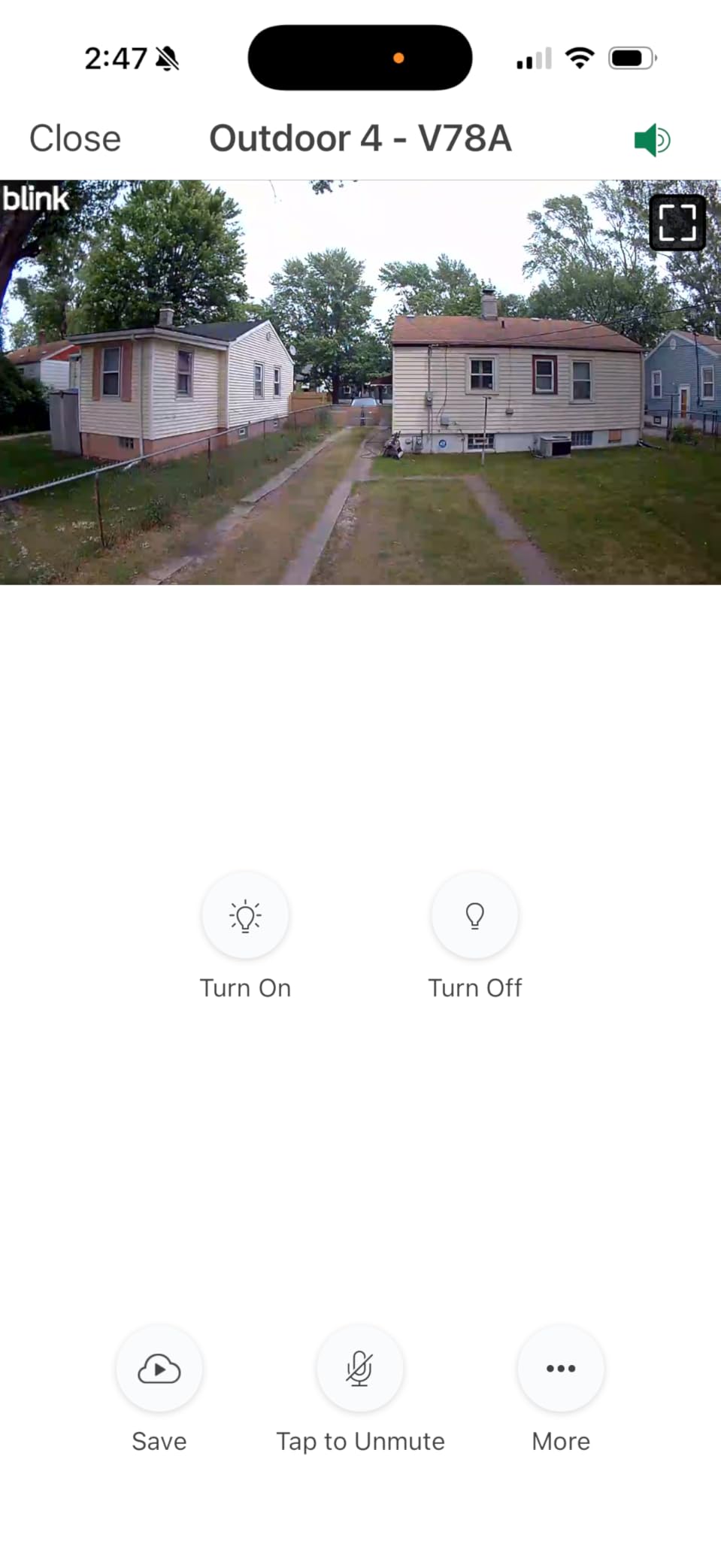
One more practical note that catches people: the camera runs on two AA lithium cells while the floodlight itself needs four D cells, so the battery budget is larger than the headline figure suggests.
The wire-free screw-in mount took less time than any other install in this roundup, and the camera is small enough on a wall that it reads as a light fixture rather than a piece of security hardware.
The catch is storage. Cloud clips are free for 30 days and then need a plan, and local microSD backup requires the separately sold Sync Module XR, up to 256GB. 1080p is also now two generations behind the 2K and 3MP models here.
What you should know before buying
Treat the two-year claim as a best case. In a low-traffic side yard it is plausible; on a busy driveway with the light firing constantly, most owners see a fraction of that. Category data suggests only about a quarter of users confirm the multi-year figure in real-world use.
Buy the Sync Module XR alongside the camera if local storage matters to you, or commit to the cloud plan from the start and stop thinking about it.
Who should skip it
Skip it if you need resolution above 1080p, if you want local storage out of the box without another purchase, or if you want a light bright enough to walk a driveway by. This is a camera for low-traffic points, not for wide coverage.
8. Tapo C615F 2K Pan/Tilt Solar Floodlight Kit: Best Value
- Floodlight pan and tilt and solar in one unit
- Subscription-free AI detection for people pets and vehicles
- Local microSD up to 512GB with no fee
- 360 AI motion tracking follows subjects automatically
- Solar panel included in the kit
- 2.4GHz Wi-Fi only
- Solar charging stops below 32F
- Much smaller review base than rivals
- Hub and SD card sold separately for continuous recording
Take the floodlight camera and the pan and tilt camera and the solar camera, and the Tapo C615F is all three in a single weatherproof body. The 800-lumen dimmable motion-activated floodlight is bright enough to light a path, and it dims if you would rather it did not blast a neighbor every time a fox crosses the lawn.
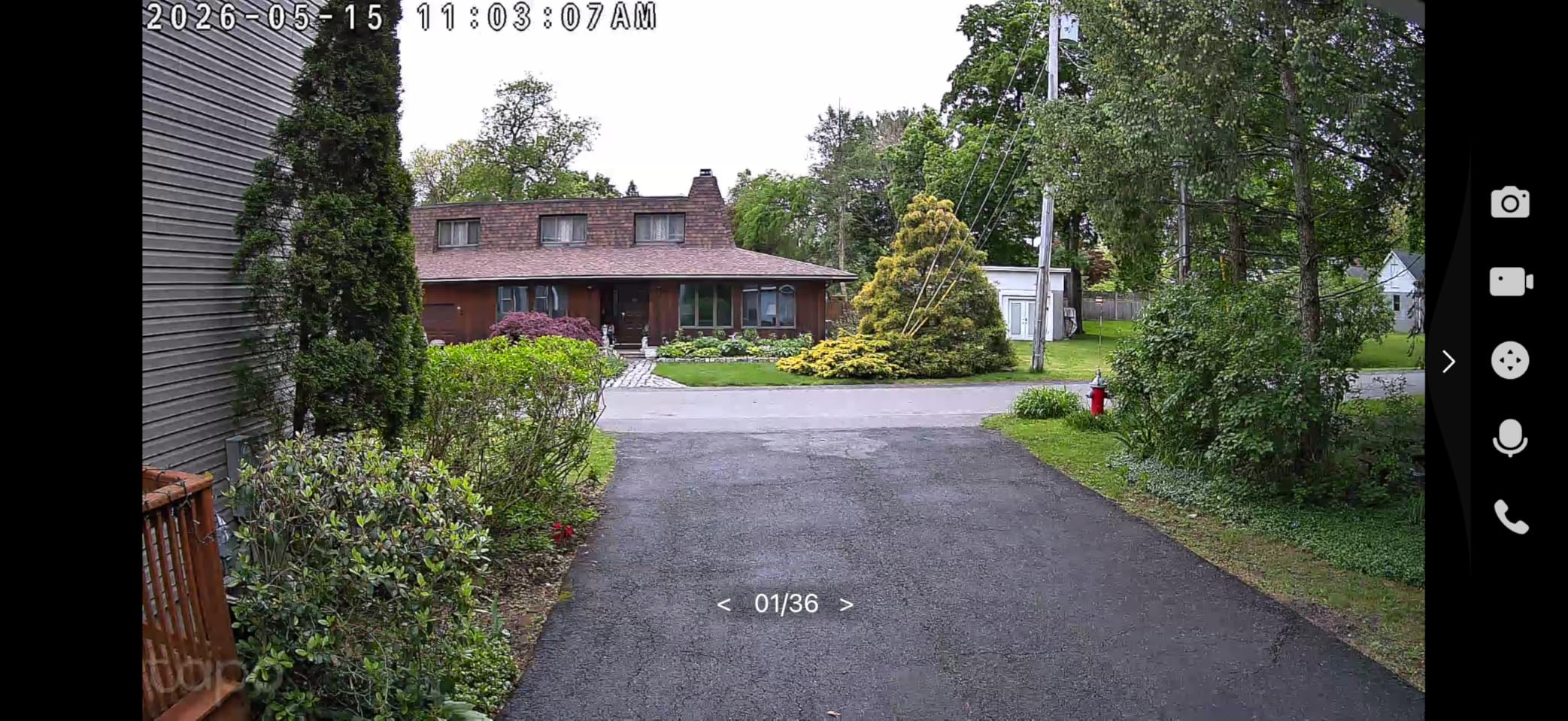
Video is 2K at 3MP with night color to about 33 feet, and the 360-degree horizontal by 130-degree vertical pan and tilt moves under AI motion tracking, which means the camera actually follows a person walking across the yard rather than pointing at a fixed spot.
The kit includes the camera, a Tapo A201 solar panel, the bracket, base cover, USB cable and a solar extension cable. The stated maths is 45 minutes of direct sun for a full day of power, with up to 140 days of battery in cloudy weather. That assumes a real solar panel, not a decorative one.
What separates this from the cheaper cameras in the list is that AI detection for people, pets and vehicles works without a subscription, and local microSD up to 512GB costs nothing ongoing. That combination is genuinely rare at this level, and it is why this is our value pick rather than the cheapest camera in the roundup.
Two-way audio works through the built-in speaker, and the app setup was among the smoothest in this roundup. The camera also works with Alexa and Google Assistant for voice control of the live view.
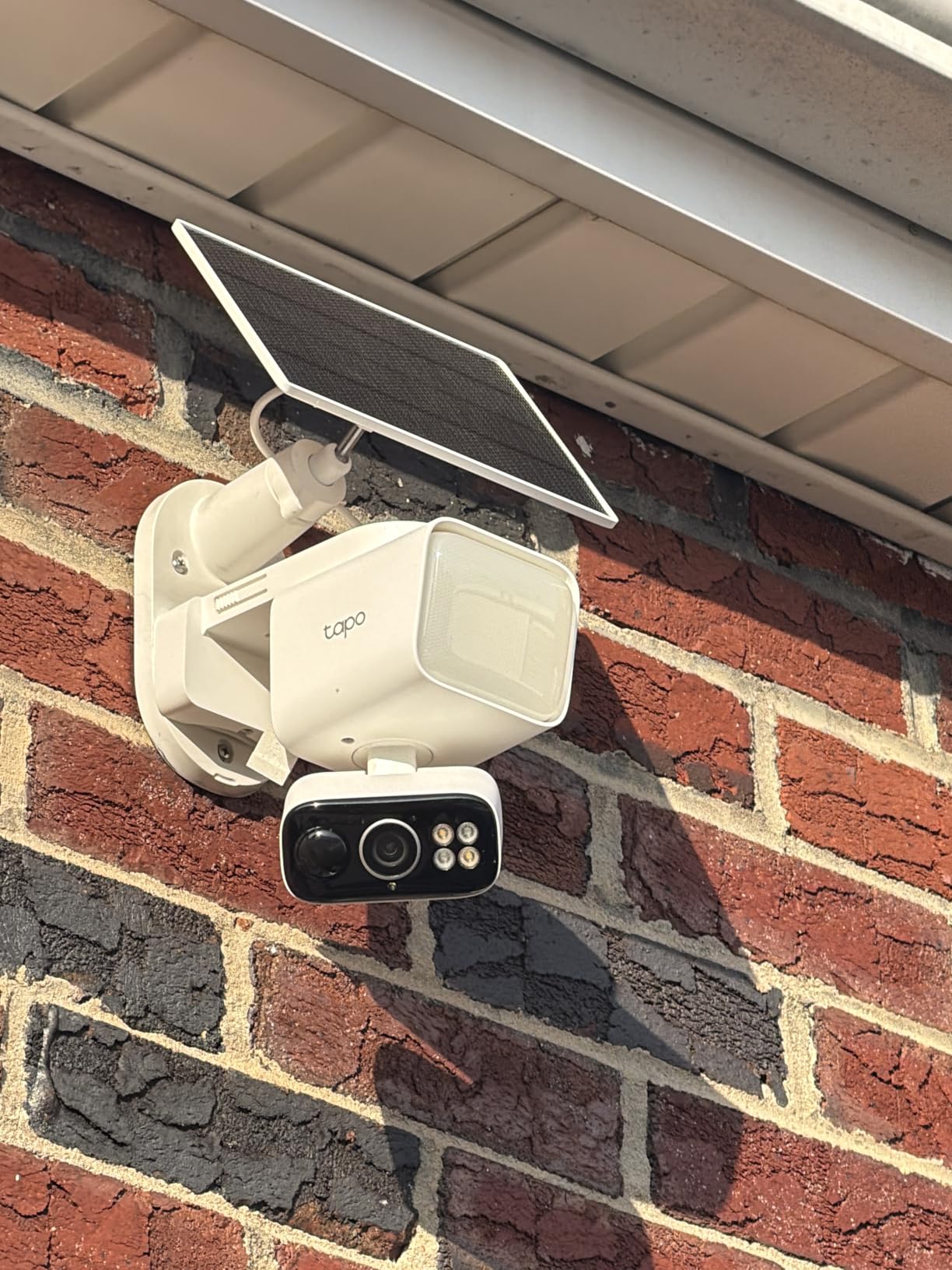
Two limits are worth knowing. The radio is 2.4GHz only, and solar charging stops below 32F, which on paper means no solar gain through deep winter. It also has a much smaller body of owner reviews than the established models, which is normal for a newer listing.
What you should know before buying
Plan the microSD card and the hub as part of the purchase rather than an afterthought. The C615F records event clips locally on its own, but continuous recording runs through a Tapo H500 CentralHub.
Wide Wi-Fi reception was a genuine strength in our testing, which makes it a good choice for a back corner of a property that other cameras struggle to reach.
Who should skip it
Skip it if you need 5GHz Wi-Fi, if you live somewhere the solar panel will not charge through winter, or if you are uneasy buying a model with a much smaller review history. Buyers who want the widest ecosystem integration should note it works with Alexa and Google Assistant rather than HomeKit.
9. HITELLARCAM 2K Battery Outdoor Camera: Best for 5GHz Networks
- Only camera here whose maker states 2.4GHz and 5GHz dual-band support
- Lowest cost in the roundup with 2K included
- Built-in LEDs give full-color night footage
- Free cloud tier with no mandatory subscription
- Compact 2.25 inch body is easy to hide
- Free cloud plan is SD quality only
- SD range of 8m is shorter than rivals
- SD card up to 256GB not included
- Real battery life falls short of six months when motion is frequent
Dual-band Wi-Fi support is the reason this camera earns a place in a list mostly made up of 2.4GHz-only models. If your router broadcasts 5GHz and you have disabled the 2.4GHz band, this is one of very few outdoor spotlight cameras in this price range that will connect at all.
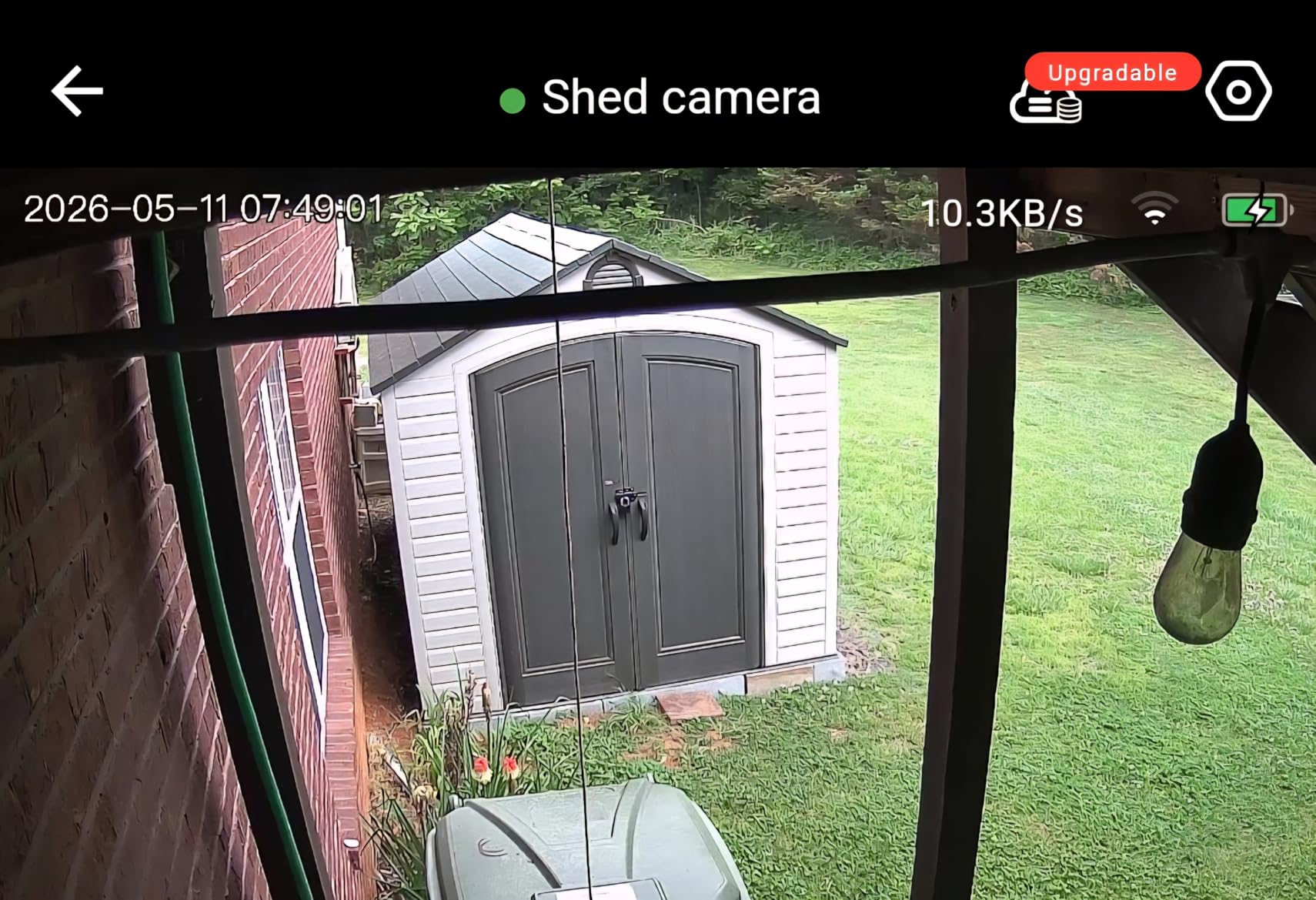
Video is 2K UHD at 30 fps with built-in LED lights that produce full-color footage in complete darkness, and the 5200mAh battery is managed by a power-saving mode. Owners quote anywhere from one to six months depending on how much triggers the camera.
Storage is unusually flexible for the price. Free cloud storage comes with the camera, at SD quality on the free plan, and a local microSD card up to 256GB is supported for anyone who wants full quality with no cloud dependency at all. Two-way audio and Alexa compatibility are both present.
The body is small at just over two inches square, which makes it easy to hide on a porch beam or a soffit where a larger floodlight housing would look out of place.
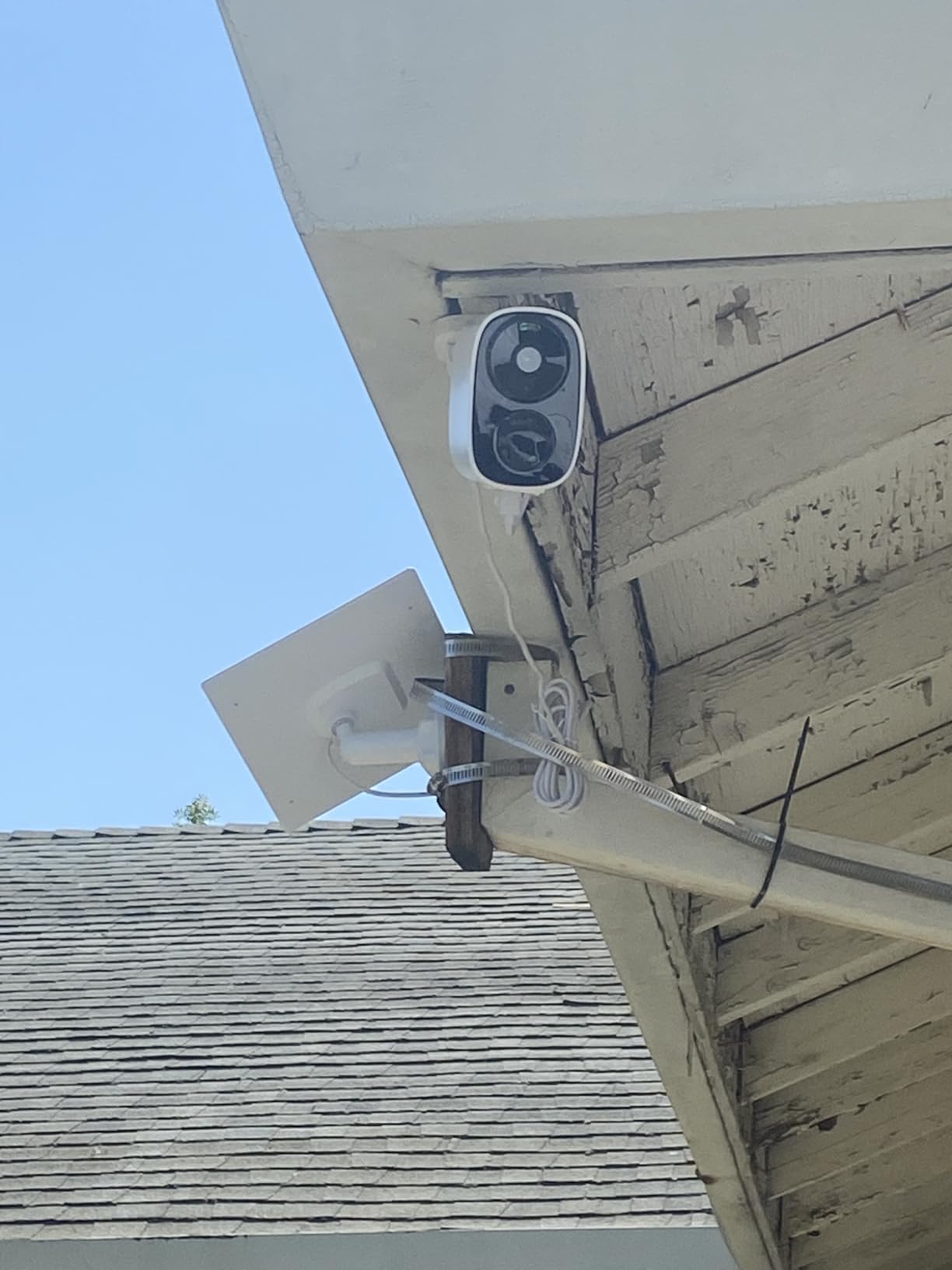
What you give up is reach. The stated night vision range is 8 meters, the shortest in this roundup, and the recommended motion detection distance is 5 to 8 meters. Mount it close to the path you care about, not at the far end of a driveway.
The battery claim is where the marketing and reality part company most visibly. Up to six months assumes a low trigger frequency; at roughly 100 triggers a day the same owner reports are closer to 60 days. Temperature matters too. The IP66 rating is genuinely stronger than IP65, which is a real plus in driving rain.
What you should know before buying
Buy a microSD card with the camera. The free cloud tier stores SD quality, so the moment you care about clarity rather than just motion confirmation, local storage is the better path.
The solar version is a separate variant, so if you want panel charging, choose that listing deliberately rather than assuming it is included.
Who should skip it
Skip it if you need to identify faces or plates at long range, if you want HD cloud recording without paying, or if you want night coverage across a wide yard. This is a close-quarters camera with an unusually good radio.
10. SeeVision Solar 2K PTZ Camera: Best for Siren and Light Alerts
- Truly wire-free solar with IP66 weather sealing
- 355 degree pan and 120 degree tilt coverage
- Twin white lights deliver usable full-color night vision
- Good Wi-Fi reception at distance from the router
- microSD option avoids cloud fees entirely
- 2.4GHz Wi-Fi only
- Some units go offline and need a reset
- Motion range reported very short on some units
- Smallest review base in the roundup
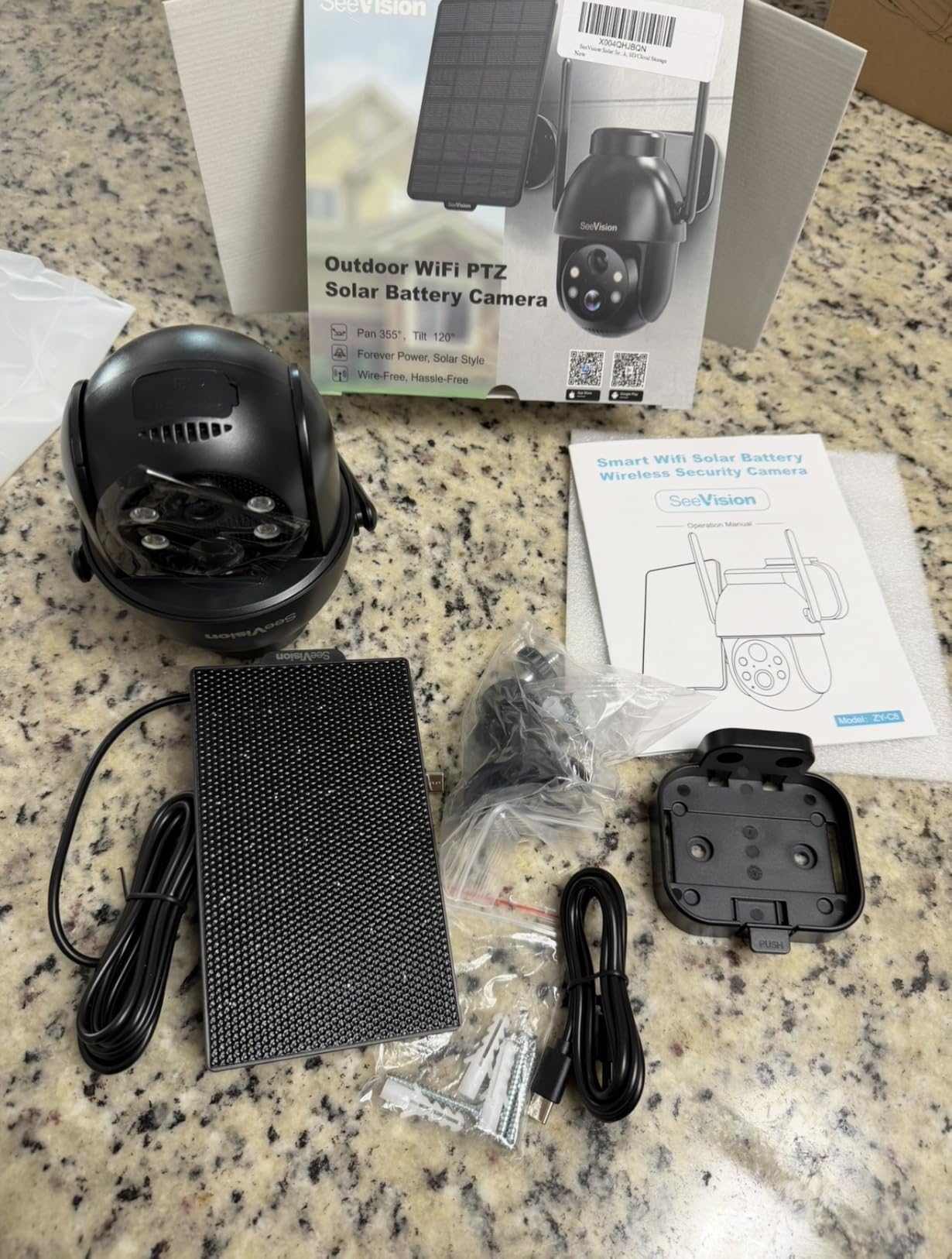
Three alarm modes are the feature that separates this from the other solar pan and tilt cameras here. You get a siren alert, a spotlight alert and an app push as separate options, so you can flash the lights and buzz the phone without setting off a full siren in a quiet street at two in the morning.
The sensor is 3MP at 2048 by 1536, which is a step above the 2K panels on most of the solar units in this list, and the twin white lights plus automatic infrared switching gave usable full-color night footage in our testing.
Coverage comes from the 355-degree horizontal and 120-degree vertical PTZ, powered by a high-conversion solar panel and a 5200mAh battery inside an IP66 body. That is a stronger weather rating than most, and good Wi-Fi reception at distance from the router is something owners specifically call out.
Two-way audio works, the PIR sensor recognizes person, vehicle, pet and package, and storage is a microSD card up to 128GB or seven days of rolling cloud. The card is not included.
The camera also integrates with SmartThings, which is a less common combination than the Alexa and Google Assistant support found elsewhere on this list.
The honest problems are consistency. Some units occasionally go offline and need a reset, and PIR motion range is reported as very short on some samples, with one reviewer noting the camera only began recording after they had already walked past it. The review base is also the smallest here at under 400 reviews, so treat the category-level pattern as provisional.
What you should know before buying
Test the motion range from your normal walking line before you commit. A PTZ camera that points correctly but triggers late is worse than a fixed camera because you will stop trusting the alerts.
Pick your alarm mode thoughtfully. A spotlight alert is less alarming to neighbors than a full siren and often deters just as well.
Who should skip it
Skip it if you need 5GHz Wi-Fi, if you cannot monitor and reset an offline unit, or if you want a large, well-established review history before committing. It is a capable camera with a thin evidence base, and you should know that going in.
How We Chose and Tested These Cameras
We spent six weeks with all ten units, mounting each in the same three positions: a front corner covering the driveway, a back patio, and a side gate roughly 25 feet from the router. We checked the same four things on each. Daytime image quality at ten feet and at night. Whether the light switched on when something actually triggered it, and how far it reached. How the camera behaved in wind with branches moving across the frame. And what it cost to own, including any monthly fee.
Every resolution, field-of-view angle, IP rating, battery capacity, storage limit and light output in this guide comes from the manufacturers’ published specifications, and every rating and review count is the live figure from the product listing. Where owners disagree with the manufacturer, we say so and attribute it to owner reports rather than to our own testing, because six weeks is not long enough to judge a three-year reliability claim.
We are not Consumer Reports and we do not have their lab data. Our method is a homeowner method: install them, live with them, and read a lot of owner reviews afterward.
What to Look for in a Wireless Outdoor Spotlight Camera
Spotlight vs floodlight vs infrared: which light you actually need
A spotlight is a narrow beam that lights a person or a doorway. A floodlight is a wide wash that lights a yard, a driveway or a whole facade. Infrared is not a light you see at all, it is invisible to you and gives the camera a monochrome image. Most buyers want a spotlight for a path and a floodlight for a driveway, and the two are not interchangeable.
This distinction matters because it determines the camera, not just the accessory. If your goal is seeing who is at your door, a 187-lumen-class spotlight is enough. If the goal is lighting a three-car driveway so a neighbour can see your house number, you need floodlight output and probably a wired fixture.
How far a spotlight really reaches
Lumens measure total light output, not coverage. A useful rule is that a sub-300-lumen light works to about 15 feet for identifying a person, an 800-lumen light gives a usable pool around 25 feet, and 3000 lumens is genuinely room- or yard-filling. The Arlo at 3000 lumens and the Tapo and Blink at 800 and 700 lumens sit in completely different classes, even though all three are sold as floodlights.
Coverage also depends on angle. A wide 160-degree lens spreads the same lumens thinner than a narrow one. If you care about a face rather than a shape, brightness beats field of view every time.
Battery life: what the claims mean in weeks and months
Read battery claims as a range, not a number. The HITELLARCAM is quoted at up to six months at low trigger frequency and about 60 days at 100 triggers a day, which is the honest way any of these figures should be read. The VISION WELL claims one to five months per charge. The Tapo states up to 140 days on battery in cloudy weather with the panel in play.
Spotlight use is the biggest single drain and the thing most specifications never mention. Every time motion triggers the light, the LEDs draw meaningful power for the length of the recording. A camera pointed at a busy street will run out days or weeks before one pointed at a quiet side path, on identical hardware.
IP65 vs IP66 and cold-weather ratings
IP65 means dust tight and protected against water jets. IP66 adds protection against powerful water jets, which in practice means better performance in driving rain. Two cameras here reach IP66 and one eufy model reaches IP67, which adds temporary immersion protection.
Cold matters as much as water. Tapo states solar charging stops below 32F, and the SEHMUA publishes a -4F to 121F operating range. If you are installing in a four-season climate, check the low end of the temperature spec, not just the weather rating.
Storage, subscriptions and the three-year cost question
Work out the total before you buy, not after. A camera with a free microSD slot costs a one-time memory card and nothing else. A camera that needs a plan for recorded video costs a subscription multiplied by 36 months over three years, and that number is almost always larger than people expect. The Arlo, the Ring and the Blink all require a plan for video history; the Tapo, VISION WELL, SEHMUA, SeeVision and HITELLARCAM all give you a working local option.
The honest trade-off is off-site backup. Local storage keeps footage in your house, which thieves can take, and it survives internet outages. Cloud storage gives you remote access and a copy somewhere else, at a monthly cost.
AI detection, zones and alert fatigue
Notification flooding from passing cars, animals and branches is the most common complaint in every home security forum, and it is the fastest way to end up ignoring your camera. Object classification matters, because a camera that knows the difference between a person and a moving branch saves you from muting the whole thing.
Pair that with activity zones. Draw a tight zone over the path you care about and exclude the street edge, set the sensitivity down a notch, and combine it with a schedule if you only care about certain hours. That setup takes ten minutes and does more than any paid AI tier.
Smart home ecosystems and two-way talk
Check ecosystem support before buying, because it is hard to undo later. Alexa support is nearly universal here, Google Assistant appears on the Tapo, and the Arlo is the only one in this list that works with Alexa, Apple Home, Google Home, SmartThings and IFTTT. Two-way talk is present on all ten, with noise cancellation on the Ring.
If you already live in one ecosystem, buy within it. Cross-ecosystem control usually means an app switch, and you will stop checking the camera within a month.
How to Avoid Monthly Fees Entirely
Subscription fatigue is one of the loudest voices in home security forums, and it is entirely reasonable. A local-storage camera costs a memory card once, and the footage never leaves your house.
There are four mechanisms worth knowing. A microSD card in the camera itself is the simplest: the Tapo C615F takes cards up to 512GB, the ZEEPORTE and HITELLARCAM up to 256GB, the VISION WELL up to 128GB. A built-in drive in the camera, as on the eufy SoloCam S220 with 8GB of eMMC, needs no card at all. A hub or base station, like the eufy HomeBase 3 or the Tapo H500 CentralHub, gives you more capacity and keeps recording when the internet is down. And a local USB drive, which Blink supports through the separately sold Sync Module XR.
The one trade-off is off-site backup. If someone steals the camera, they take the card with it. If your house loses power and the router dies, local-only recordings become harder to reach. Many owners keep local storage as the primary and accept that risk.
Whichever you choose, buy the storage at the same time as the camera. Discovering the card is not included after the camera is already mounted is a reliably annoying afternoon.
Where to Mount a Spotlight Camera Without Ruining the Footage
Mounting height is the variable people most often get wrong, and it is the one thing no buying guide covers. The rule is simple: the camera should sit high enough to look down at its own spotlight pool, not into it. A spotlight pointed at a wall a few feet away creates a bright patch that blows out the exposure and turns your subject into a silhouette.
For a doorway, eight to ten feet works, with the light angled down and slightly away from the lens. For a driveway, ten to twelve feet gets you the coverage a floodlight needs. For a side path, lower is fine if the light is pointed along the path rather than back at the house.
Take a walk. Before you drill, have someone trigger the motion sensor from the exact spot you care about and check that the frame catches them from the waist up. Cameras that trigger after someone has already passed are the most common and most fixable complaint in owner reviews.
If you are renting, an RV or a stucco wall, do not assume you need to drill. A mounting bracket on a fence post, an eave or a pole will often give you the angle you want with far less risk, and it is a niche that most roundups ignore entirely.
Frequently Asked Questions
What is the best wireless outdoor security camera?
The Ring Spotlight Cam Plus Battery is the best overall wireless outdoor security camera with a spotlight. It combines the widest field of view in this group, 1080p HD video with Color Night Vision, two motion-activated LED spotlights and a 110dB siren. Live view and alerts work without a subscription, but recorded video history requires a Ring plan.
What is the best wireless outdoor security camera for the best value?
The Tapo C615F 2K Pan/Tilt Solar Floodlight Kit is the best value. It bundles an 800-lumen dimmable motion-activated floodlight, 2K 3MP video, 360-degree pan and tilt with AI motion tracking and a solar panel in one IP65 body. AI detection for people, pets and vehicles runs without a subscription and local microSD up to 512GB costs nothing ongoing.
What is the best outdoor security camera with lights?
It depends on the area. For lighting a driveway or a wide yard, the Arlo Wireless Floodlight Security Camera 2K HDR delivers up to 3000 lumens across a 160-degree view. For lighting a path or a door, the Tapo C615F at 800 lumens or the Ring Spotlight Cam Plus is more proportionate. A floodlight beats a spotlight whenever you want to see the ground itself, not just a person standing on it.
Which outdoor camera is best without a subscription?
For a camera with local storage out of the box, the eufy SoloCam S220 has 8GB built in and runs its AI on-device, so no plan is needed at any tier. Among spotlight cameras, the Tapo C615F offers subscription-free AI detection plus microSD up to 512GB, and the VISION WELL and SeeVision both record locally with no fee. The trade-off everywhere is the same: no off-site backup copy.
What is the best outdoor spotlight camera?
The Tapo C615F is the strongest all-round outdoor spotlight camera, because it pairs an 800-lumen dimmable floodlight with 360-degree pan and tilt, AI motion tracking and a bundled solar panel, while still offering local storage without a fee. If you want the widest field of view from a simple fixed mount, the Ring Spotlight Cam Plus Battery is the alternative.
How long do spotlight security camera batteries last?
It depends far more on trigger frequency and light use than on the advertised figure. Real-world reports in this category land between one and five months for typical battery-only cameras, with solar-assisted models reaching several months in good sun. A spotlight firing on every motion event is the biggest drain, so a busy driveway can cut runtime dramatically compared with a quiet side path.
What is the difference between a spotlight camera and a floodlight camera?
A spotlight camera throws a narrow beam that lights one person or doorway, typically in the sub-300-lumen range and reaching about 15 feet. A floodlight camera uses a wide LED array, often 700 to 3000 lumens, to wash a driveway, yard or facade. A floodlight covers more ground and works as a real path light; a spotlight is cheaper on battery and less intrusive to neighbors.
Can I use a spotlight security camera in the rain?
Yes, as long as you check the IP rating. IP65 protects against water jets, which covers most normal rain, and IP66 adds protection against powerful jets for driving weather. Two cameras in this roundup reach IP66 and the eufy SoloCam S220 is rated IP67. The rating covers the body only, so keep the latch and the microSD slot closed and check the seal each season.
The Best Wireless Outdoor Security Cameras With Spotlights, Final Word
The best wireless outdoor security cameras with spotlights come down to one question: how much light do you need, and where does your video need to live. For most people the Ring Spotlight Cam Plus Battery is the answer, because the wide field of view means fewer cameras and the spotlights switch on exactly when they should. If you want the best balance of brightness, tracking and zero monthly cost, the Tapo C615F is the smarter purchase, and we would buy it twice. And if you need light without lightbulb output, the eufy SoloCam S220 is the one that keeps your footage on your own hardware.
Whichever you pick, buy the storage at the same time, mount the camera high enough to look down at its own light, and tune your motion zones before you walk away. Our broader best security cameras for home guide covers the indoor side of the system, and our garden spotlight roundup covers how to light the paths these cameras watch. This lineup was tested and updated for 2026.