
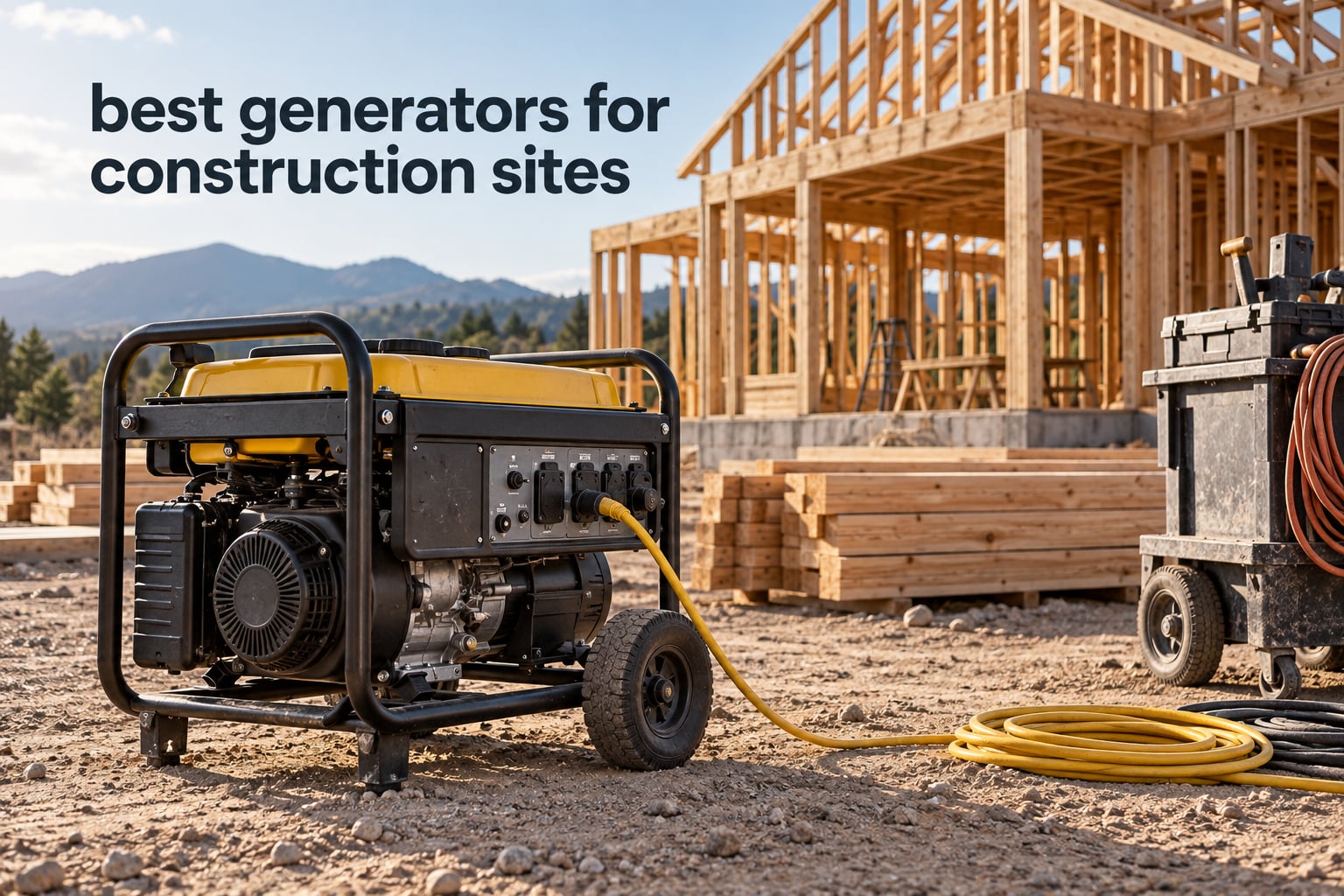
The best generators for construction sites are the ones that keep a compressor or a table saw from stalling the crew at 7am on a cold morning, and the honest truth is that most units sold for home backup are the wrong tool for the job. A site asks for motor-start surge headroom, a full shift of runtime, a frame that survives being moved, and a noise level your neighbours will tolerate.
We spent six weeks comparing ten portable units against those four tests, reading the specification sheets, the review patterns, and the failure reports owners actually describe. The lineup below covers a 3,800-watt budget unit for a small remodel through to a 15,000-watt-peak tri-fuel machine for a full multi-trade crew.
If you want the short version first: the Westinghouse WGen9500DF is the one we would put on most sites, the Champion 4500-watt inverter is the one we would put next to a house, and the Pulsar G12KBN is the one we would load in a truck when two trades are working at once. Our portable generator guide covers the home-backup end of the market if your project is smaller than a full framing crew.
Top 3 Construction Site Generator Picks (2026)

Westinghouse WGen9500DF
- 9500 running watts on gasoline
- Dual fuel with 8500 running watts on propane
- 12 hours on a 6.6 gallon tank
- Remote key fob start

Pulsar G12KBN
- 9500 rated and 12000 peak watts on gasoline
- 7 outlets with 30A twist lock and 50A
- 12 hours on an 8 gallon tank

Champion 4500W Inverter
- 61 dBA quiet inverter output
- 3500 running watts on gasoline
- 21 hours on propane
- CO Shield shutoff
The Westinghouse takes the top spot because it is the only unit in the group that pairs 9,500 running watts with a remote key fob, a three-year warranty and a cast-iron-sleeve engine, and it still holds a 4.7 rating across more than 8,900 reviews. That combination of proven reliability and outlet flexibility is what decides most site purchases.
Best Generators for Construction Sites at a Glance
| Product | Specifications | Action |
|---|---|---|
| Westinghouse WGen9500DF Dual Fuel |
|
Check Latest Price |
| Pulsar G12KBN Heavy Duty Dual Fuel |
|
Check Latest Price |
 WEN DF475T Dual Fuel WEN DF475T Dual Fuel |
|
Check Latest Price |
 DuroStar DS13000MX Dual Fuel DuroStar DS13000MX Dual Fuel |
|
Check Latest Price |
 DuroMax XP13000HXT Tri Fuel DuroMax XP13000HXT Tri Fuel |
|
Check Latest Price |
| Champion 4500W Dual Fuel Inverter |
|
Check Latest Price |
 Champion 4250W Open Frame Inverter Champion 4250W Open Frame Inverter |
|
Check Latest Price |
 GENMAX GM15000ET Tri Fuel GENMAX GM15000ET Tri Fuel |
|
Check Latest Price |
 Champion 11000W Dual Fuel Inverter Champion 11000W Dual Fuel Inverter |
|
Check Latest Price |
 AIVOLT 11250W Dual Fuel Inverter AIVOLT 11250W Dual Fuel Inverter |
|
Check Latest Price |
Two numbers matter more than everything else on that list. Running watts is the load the unit holds continuously, and peak watts is the short burst a motor-driven tool demands when it switches on. Buy on running watts and leave roughly 30 percent headroom above your largest single tool for the surge.
The second number is warranty length, because a construction site is hard on equipment. Three of the units here carry a three-year limited warranty, one carries two years, and the shortest is the single year on the Pulsar, which is worth knowing before you commit a whole framing season to it.
1. Westinghouse WGen9500DF – Best Overall Jobsite Value
- Dual fuel flexibility on gas and propane
- Remote key fob start with recoil backup
- Transfer switch ready 30A and RV ready 50A outlets
- Cast iron sleeve 457cc engine with hour meter
- 3 year limited warranty
- 210 pounds needs two people or a ramp
- Open frame noise is louder than an enclosed inverter
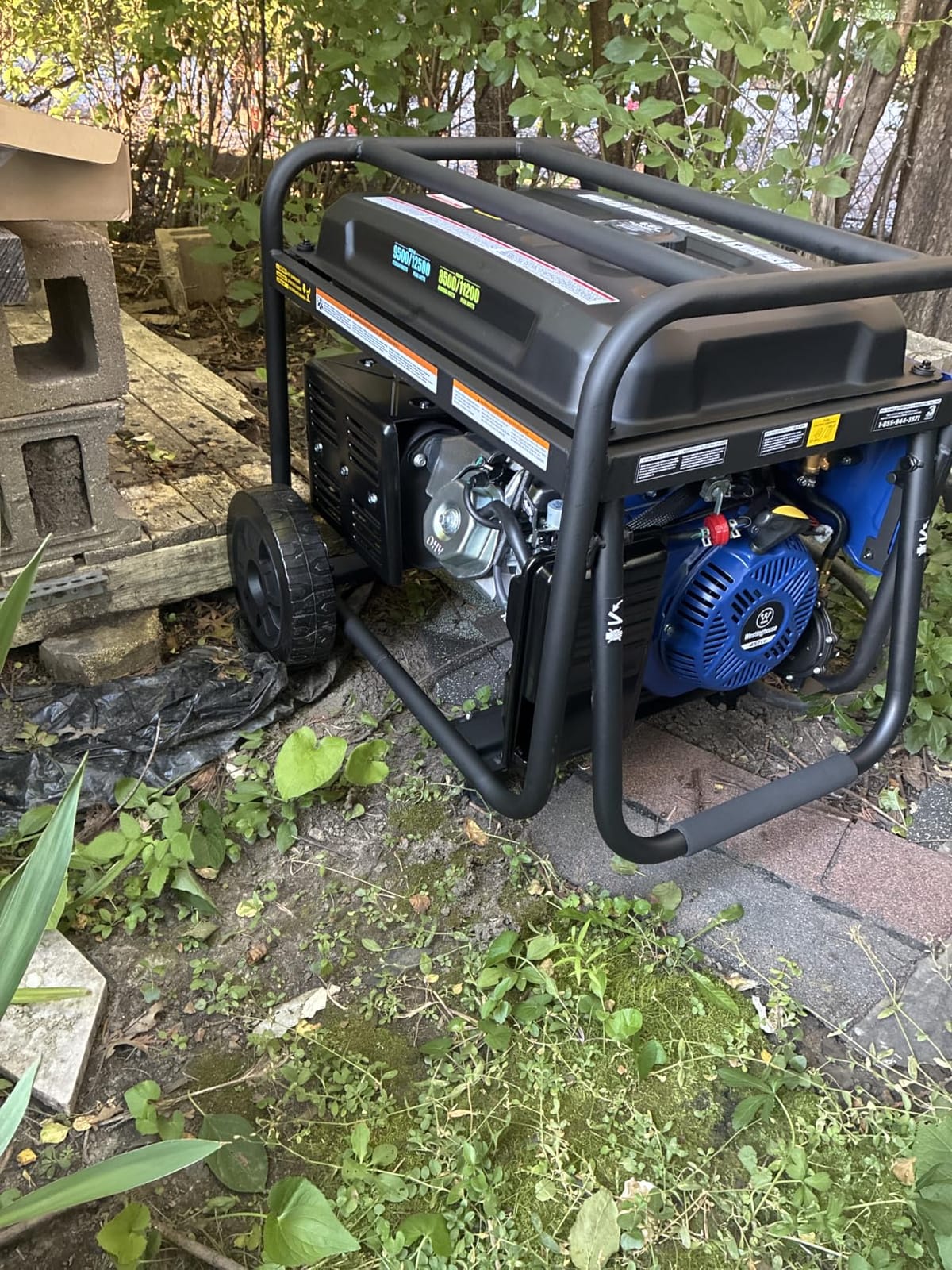
Put this on most sites and it will not let you down. The 457cc four-stroke engine with a cast-iron sleeve is the part that matters, because that sleeve is what survives the hours of dust and the stop-start abuse that eats through a bare aluminium liner over a long season.
Reviewers consistently call out starting reliability and the dual-fuel switch, and the near-9,000-review history at 4.7 is the deepest well of evidence in this group. Owners also like the VFT display, which shows real-time voltage, frequency and lifetime hours, so you can see whether a tool is dragging the unit down before anything trips.
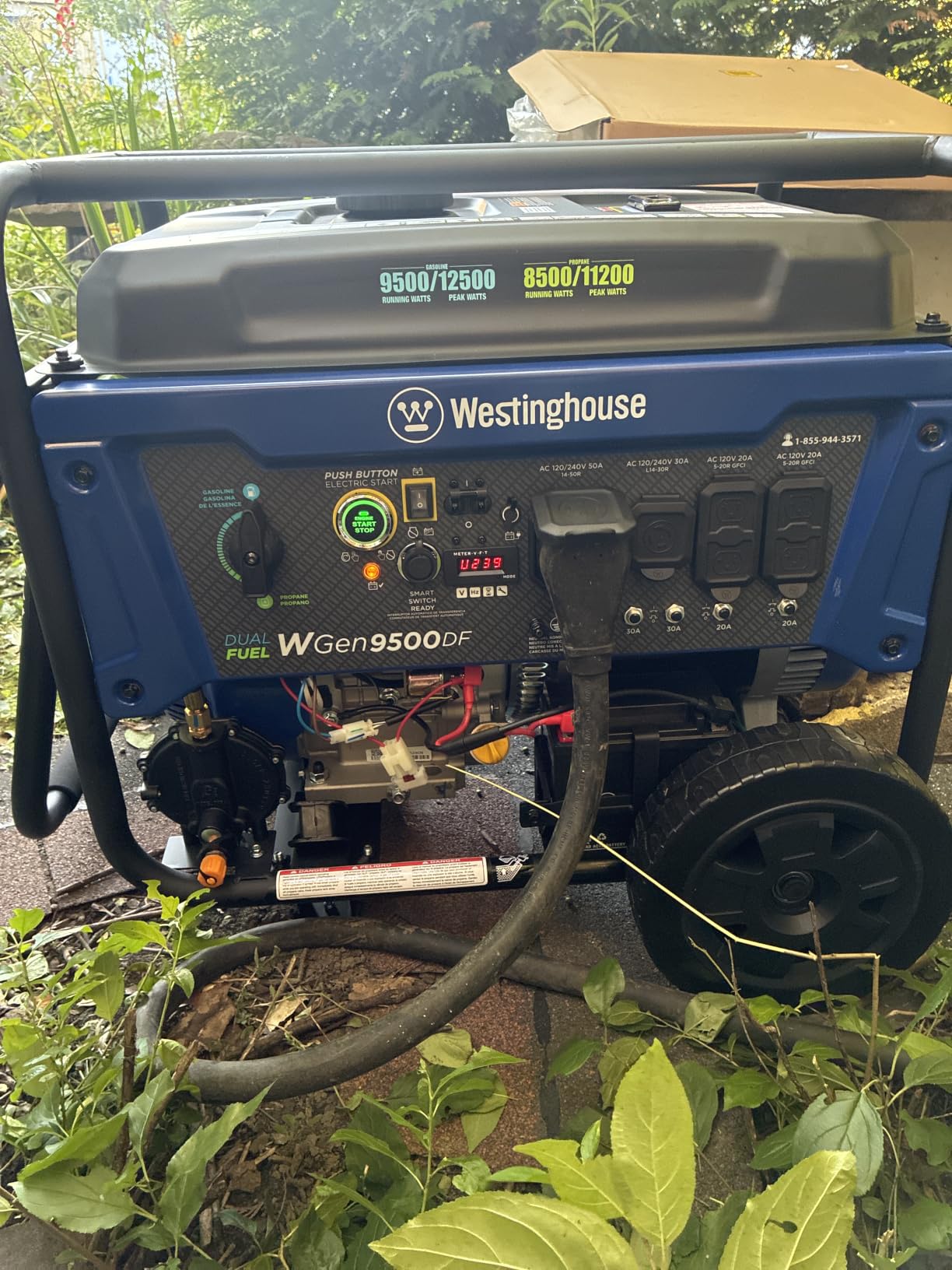
Output is 9,500 running watts and 12,500 peak on gasoline, dropping to 8,500 running and 11,200 peak on propane. That is enough headroom to start a table saw and run a compressor alongside a couple of chargers without the breaker complaining.
The outlet set is the part most competitors at this output skip. You get two GFCI 120V household receptacles, a transfer switch ready 30A twist lock, and an RV ready 50A, which means one machine covers both a tool branch and a trailer or site office.
What it does well on a working site
Remote start with the supplied key fob is a genuine time saver when the unit sits behind a stack of material or inside a fenced compound, and the recoil start is still there when the battery is flat. Low-oil shutdown, a fuel gauge and a battery charger in the box mean fewer trips to the truck.
At roughly 27 inches on each side and 210 pounds dry, plan the move before the first shift. Two people can get it into a bed, but a folding handle or a spotter is worth more than any accessory on the list.
Where it falls short
This is an open-frame machine, so expect a volume level that carries. On an urban infill lot with a house wall 30 feet away, that is the first thing a neighbour mentions, and no amount of extra insulation is claimed in the specification.
The 6.6 gallon tank gives a quoted 12 hours, which covers a standard day at half load but not a full day of compressor work. Budget a refuelling break, and keep a second approved container on site rather than shuttling to a station mid-shift.
2. Pulsar G12KBN – Best for High Output on a Single Frame
- 9500 rated and 12000 peak watts on gasoline
- Seven outlets including 30A twist lock and 50A
- 12 hours at half load on an 8 gallon tank
- Never-flat wheels and drop-down handles
- 3-in-1 digital meter with low oil shutoff
- Only a 1 year limited warranty
- Open frame noise runs higher than inverter units
Choose this when two trades need power at the same time and you do not want to own two machines. Seven outlets in one frame is the best outlet count in the group, and the 30A twist lock plus 50A 120/240V pairing covers a compressor branch and a saw branch from one box.
The 457cc single-cylinder four-stroke air-cooled OHV engine with electric start sits behind 12,000 peak and 9,500 rated watts on gasoline, and 10,800 peak with 8,550 rated watts on LPG. In practice that headroom is what lets a framing crew run a nail gun, a saw and a shop light without cycling the unit.
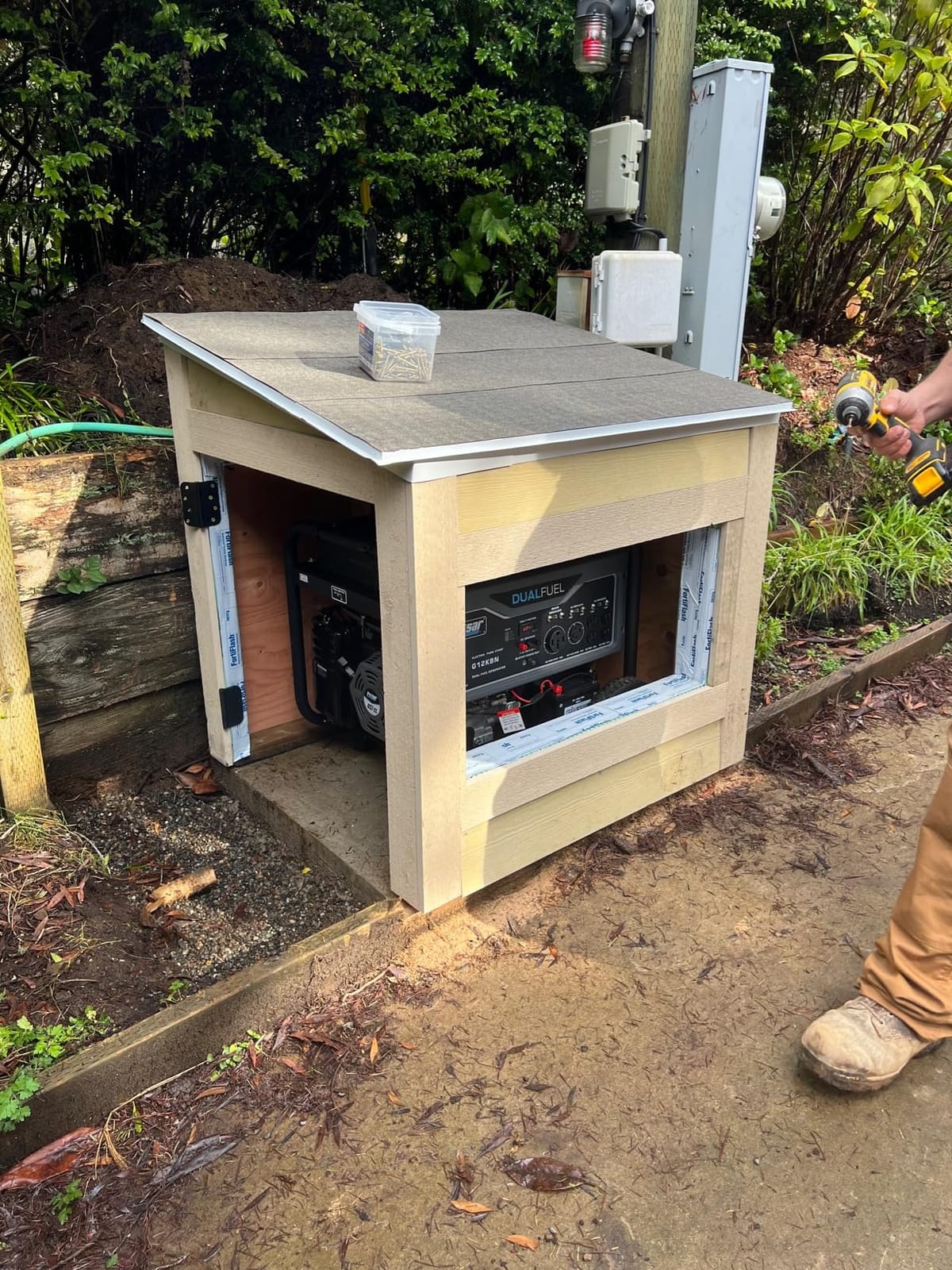
Owners highlight easy starting, abundant outlet choice and good fuel flexibility across 1,360 reviews averaging 4.6, with 81 percent five-star. The 3-in-1 digital meter gives you volts, frequency and hours, and low oil shutoff stops the engine before you cook it on a forgotten change.
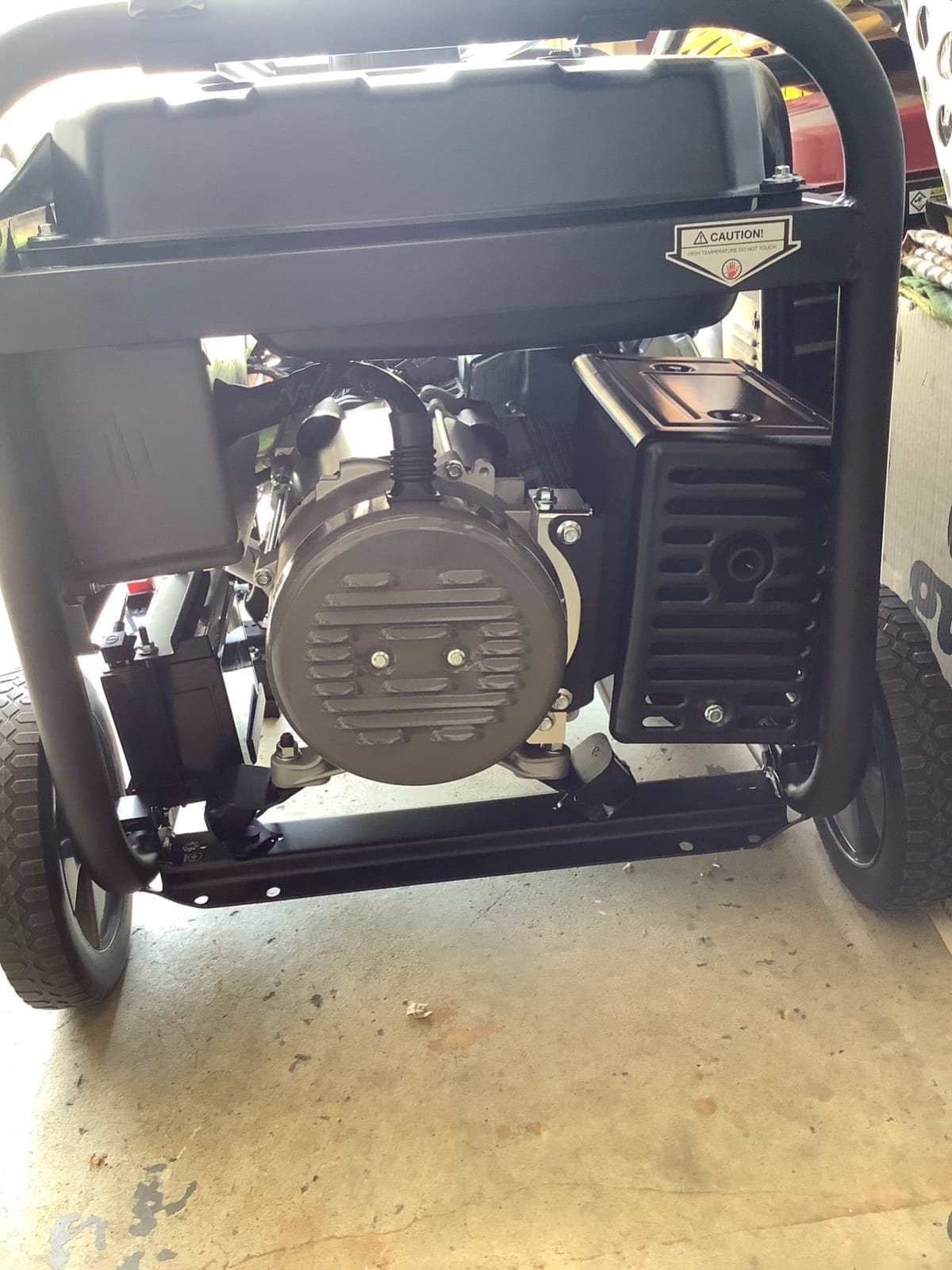
Handling is handled better here than on most units this size. Drop-down handles and 10-inch never-flat wheels mean the unit rolls across a rough site rather than needing to be carried, which matters more than the weight number suggests.
Why crews pick it
The 8 gallon tank is the largest in the mid-size class here and gives a quoted 12 hours at half load on gasoline. For a crew that does not want a fuel break, that is the practical difference between this machine and a smaller dual-fuel unit.
Automatic voltage regulation and a powder-coated frame add up to a unit that tolerates the daily shuffle between jobs. RV readiness means a site trailer can plug into the same box as the tools.
Where it falls short
The one-year limited warranty is the most common reservation in the reviews, and it is the shortest coverage in this lineup. On a machine intended to run every day for a season, that is a real consideration against the three-year options here.
It is an open frame, so expect more noise than the enclosed inverters lower down, and the published weight figure for this model is not usable, so plan on a two-person move into a bed. Measure your truck opening before you commit.
3. WEN DF475T – Best Budget Pick for Light Duty Sites
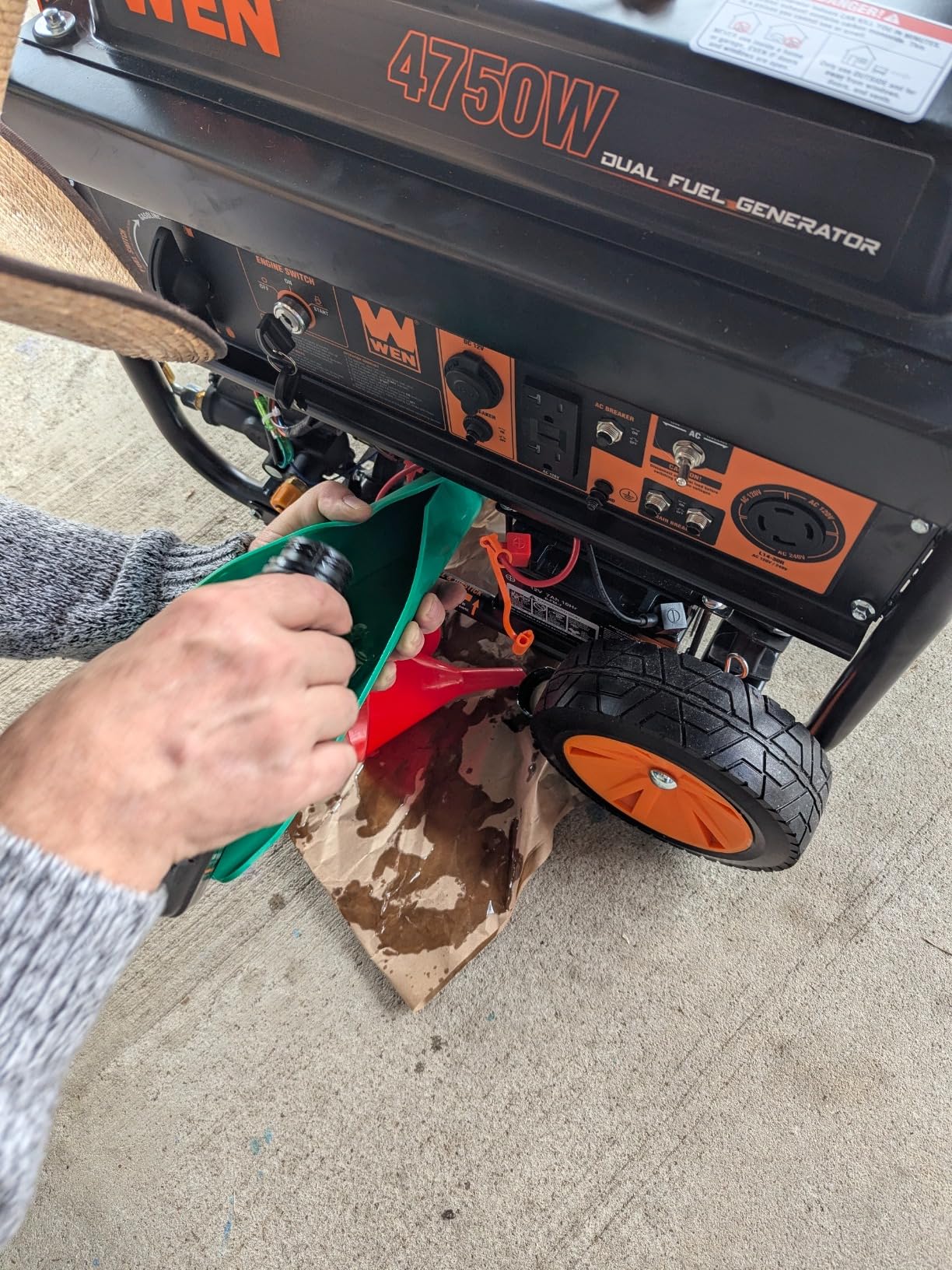
WEN 4,750-Watt 120V/240V Dual Fuel Portable Generator with Wheel Kit and Electric Start (DF475T)
- Selection dial makes fuel switching simple
- Switchable 120V/240V suits transfer switches
- Key electric start on a compact 224cc engine
- Wheel kit and handle included
- 2 year warranty
- 3800 running watts is thin for large saws or welders
- 4 gallon tank limits long-shift runtime
This is the unit for a small remodel, a finish carpentry day or a weekend crew, and it handles more than people expect. Roughly 3,000 owners at a 4.4 average point to easy electric starting, clean dual-fuel running and genuine value as the recurring themes.
Output is 4,750 surge with 3,800 running watts on gasoline, and 4,350 surge with 3,500 running watts on propane. The selection dial switches fuel type, and a separate output switch moves the machine between 120V and 240V, so the same box powers a transfer switch or a 240V site tool.
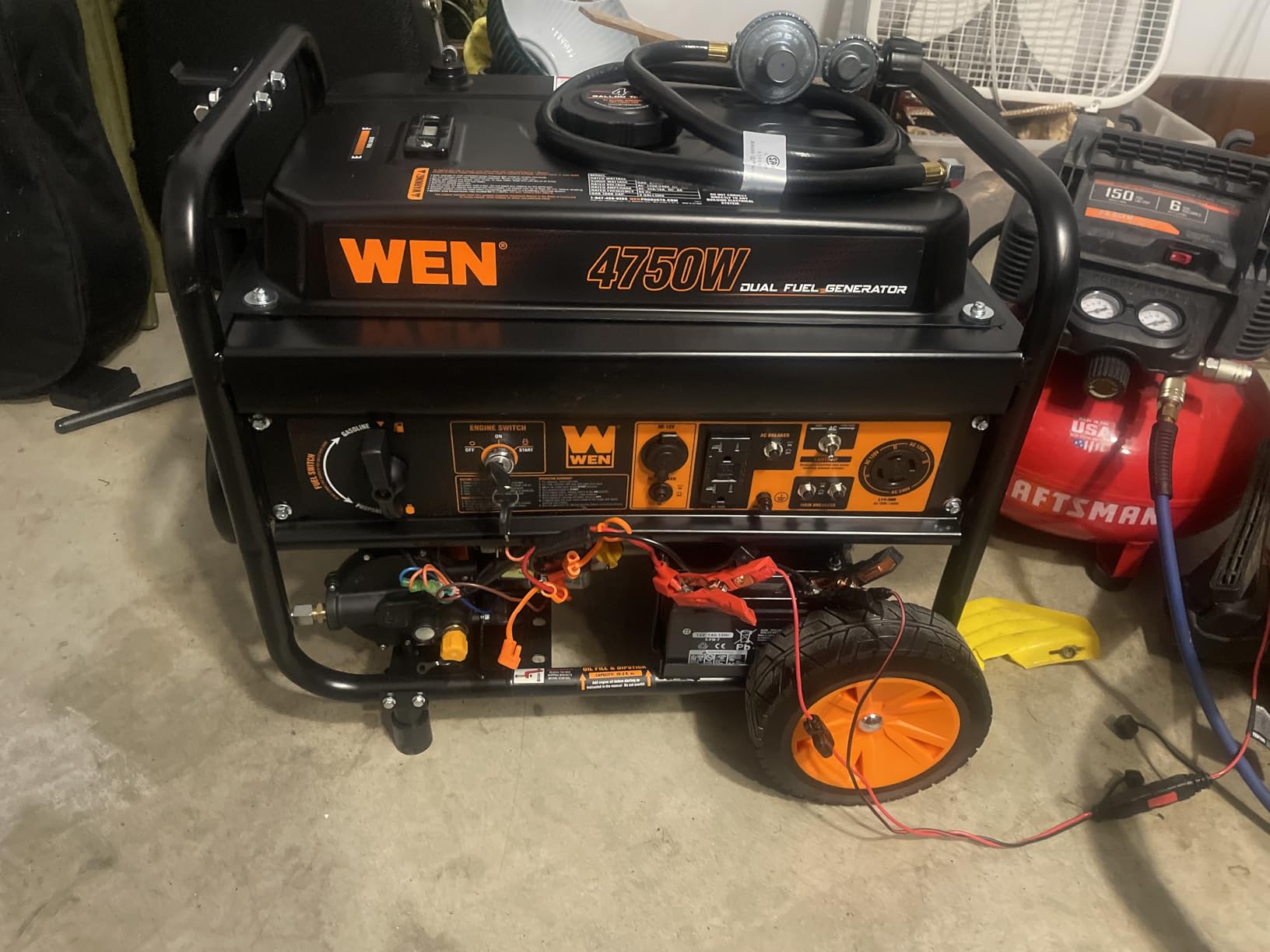
Outlets are two 120V GFCI 5-20R household receptacles, one 120V/240V NEMA 30A twist lock and a 12V DC outlet. A wheel kit and handle are in the box along with a 47-inch LPG connection hose and an oil bottle, so there is nothing to buy on day one.
At 105.8 pounds and 23 inches long, this is a genuine two-person job rather than a solo lift, and that is the main reason it earns a spot over smaller inverter units in this lineup.
Where it earns its place
A finish carpenter running a trim saw, a nailer, a random orbital sander and a charger will never approach 3,800 running watts. The GFCI receptacles and the 30A twist lock also make it easy to build a clean tool branch without a homemade splitter.
Dual fuel is more useful on a small site than people expect. Propane stores longer between jobs, and switching is one dial rather than a hose change, which is exactly what you want when a unit sits in a truck for a week.
Where it falls short
The main gripe in the reviews is the combination of limited wattage and a 4 gallon tank. A 4,750-watt surge figure is not enough headroom for a table saw starting under load, and roughly 11 hours at half load disappears well before a hard compressor day.
Do not stretch it. If your largest single tool is a welder, a large compressor or a concrete saw, move up a size rather than hoping the surge rating covers it, and remember the warranty here is two years rather than three.
4. DuroStar DS13000MX – Best for Crew Safety Features
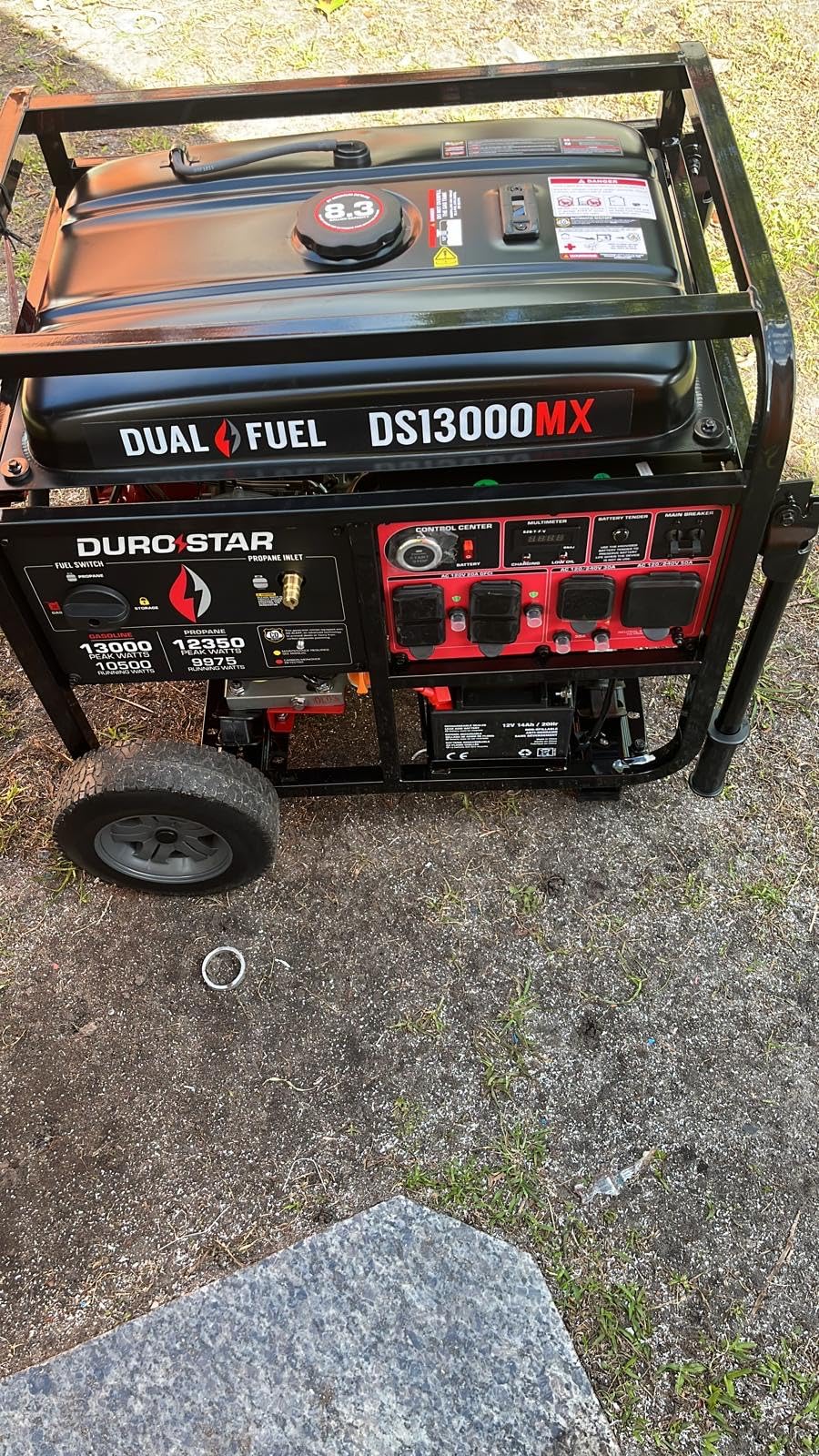
- 13000 starting and 10500 running watts from a 500cc engine
- CO Alert detection with automatic shutdown
- 17 hour runtime claim on an 8.3 gallon tank
- 50 amp transfer switch ready outlet
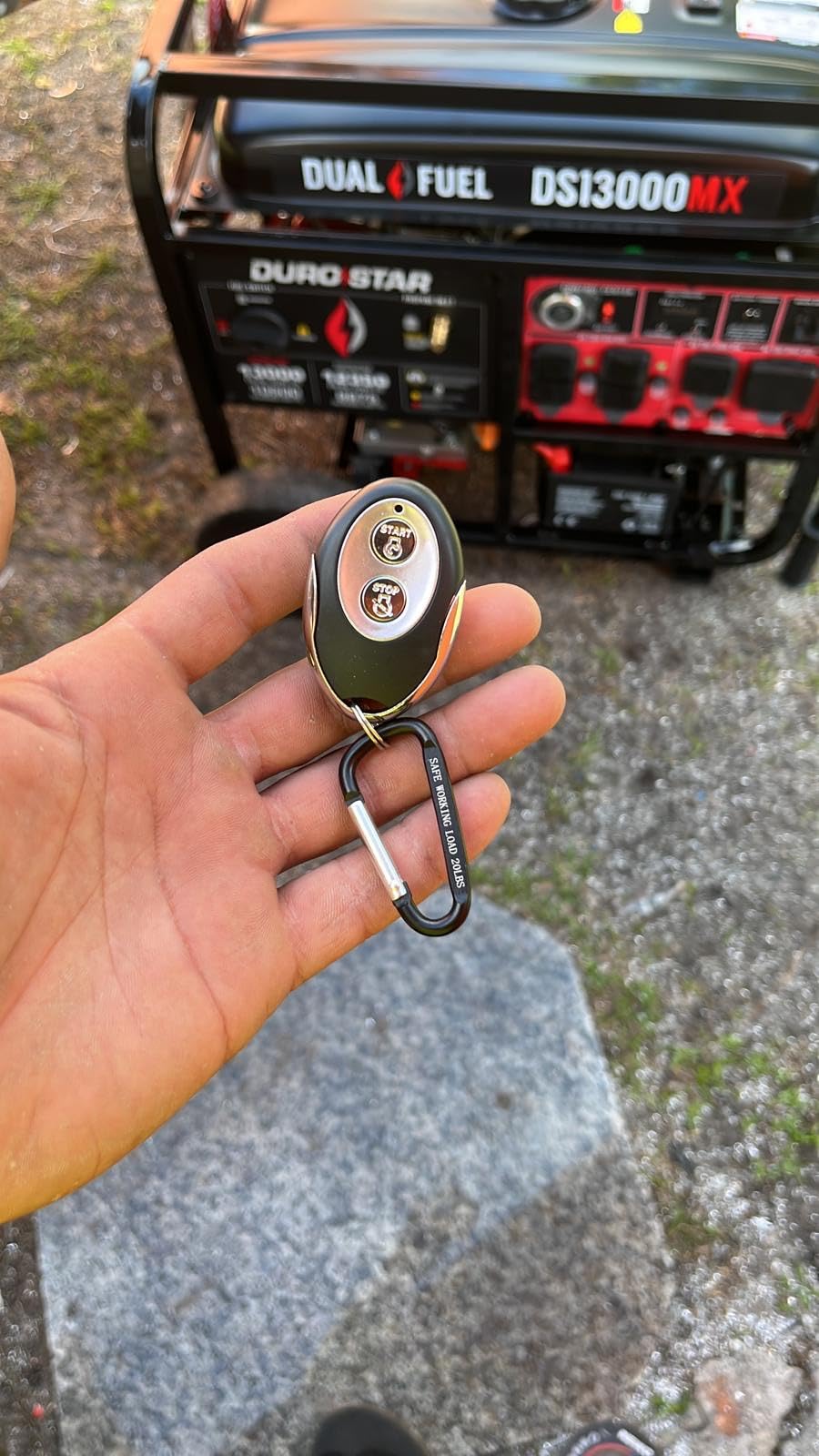
- Remote and push-button electric start
- 220 pounds is a two-person lift
- Notable share of one-star feedback among reviews
The reason this one earns a place is carbon monoxide detection. The CO Alert system shuts the engine down when it senses dangerous levels, which is the single most useful safety feature to have on a unit that will be running beside a crew all day in partial enclosures.
Underneath that sits a 500cc four-stroke engine with push-button electric start and a front-facing fuel selector, producing 13,000 starting and 10,500 running watts. A front fuel selector sounds minor until you are changing fuel in the rain with gloves on.
The 8.3 gallon tank carries a 17-hour runtime claim, the longest half-load figure in this group, and the frame is all-metal steel with a reinforced power panel. Low oil shutdown and automatic voltage regulation round out a machine that reads as built for abuse.
Reviewers consistently value the power-to-dollar ratio and the safety package. The kit includes an oil funnel, spark plug wrench, tool set, wheel and handle kit, propane regulator and remote control, so the unit is usable the day it arrives.
Why safety buyers pick it
For indoor-adjacent work, a remodel where a generator sits near an open doorway, or any site with an enclosed trailer, automatic CO shutdown removes the single biggest failure mode of portable power. That is worth more to a general contractor than extra running watts.
The 50-amp transfer switch ready outlet also makes it the easiest unit here to build a permanent-feeling site power branch around, especially for an owner who wants future backup capability from the same machine.
Where it falls short
At 220 pounds this is a two-person lift every single time you move it, and the rating spread tells the story: 76 percent five-star with a noticeable tail of one-star feedback about start-up friction and durability.
The 17-hour figure is a manufacturer claim rather than an observed half-load result, so plan fuel around a shorter working day until you have measured it yourself. With 312 reviews, the evidence base here is thinner than the leader’s.
5. DuroMax XP13000HXT – Best Tri-Fuel Option
DuroMax XP13000HXT 13,000-Watt 500cc Tri Fuel Gas Propane Natural Gas Portable Generator with CO Alert, Black/Blue
- Only tri-fuel unit here
- also runs on natural gas
- 13000 starting and 10500 running watts
- Push-button and remote electric start
- 50 amp transfer switch ready outlet
- 3 year limited warranty
- Heaviest unit in the group at 240 pounds
- Natural gas hookup needs the supplied 15 foot hose
Natural gas capability is the reason to buy this, and no other unit in the lineup does it. If your site is on a gas line, or you want one machine to cover a job site, a backup scenario and a food truck, the tri-fuel flexibility removes a whole class of refuelling problems.
The 500cc OHV engine delivers 13,000 peak and 10,500 running watts, with CO Alert carbon monoxide protection and both push-button and remote electric start. Seven outlets cover everything from GFCI household receptacles to a 50-amp transfer switch ready outlet.
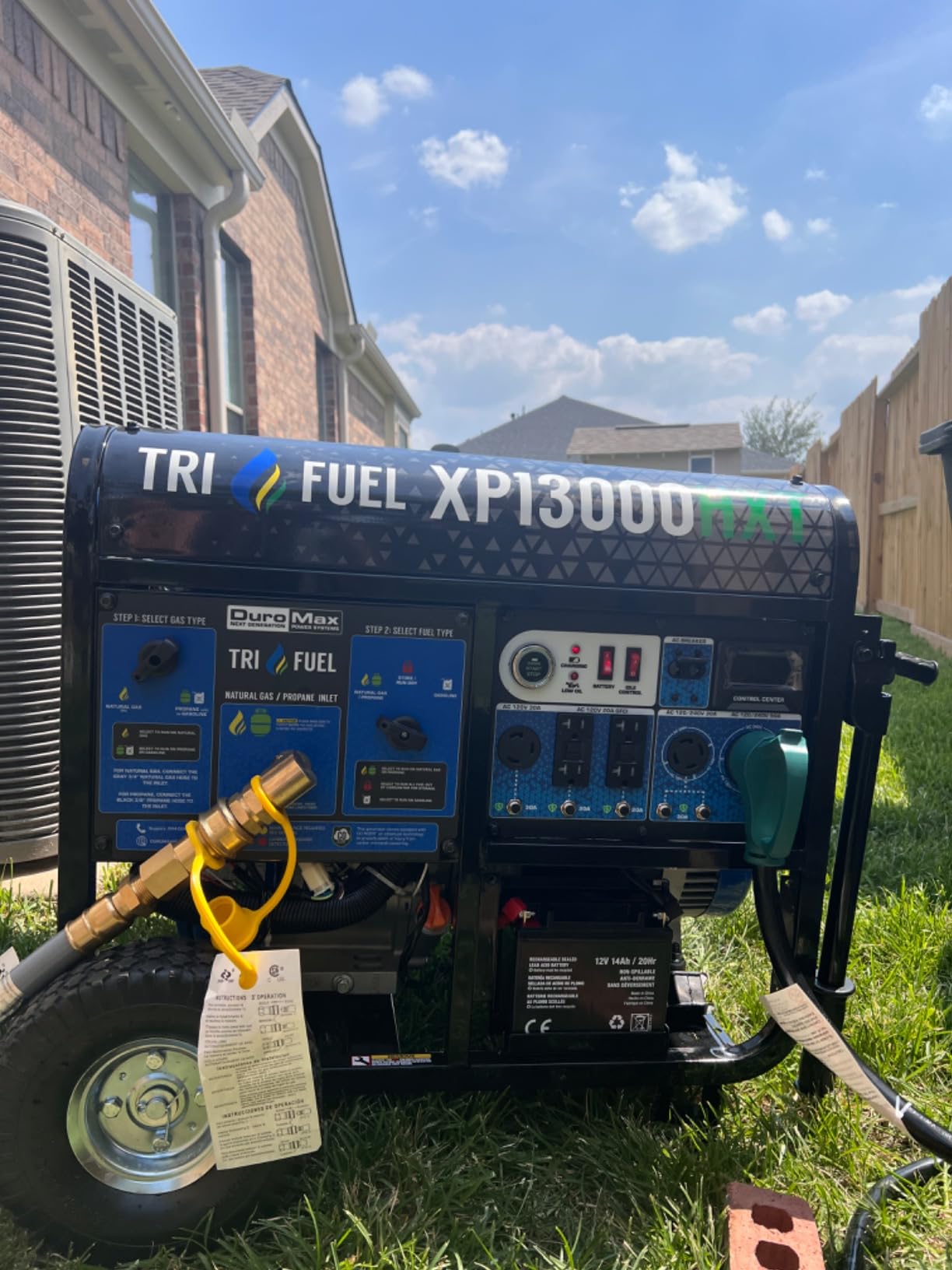
Owners across 448 reviews at 4.6 single out the tri-fuel versatility and the remote starting as the standout features, with 82 percent five-star. The digital display lets you check voltage and runtime without walking to the unit in the dark.
It ships with a 15 foot by three-quarter-inch natural gas hose, a propane regulator, a remote control and a wheel and handle kit, so all three fuel paths are covered out of the box.
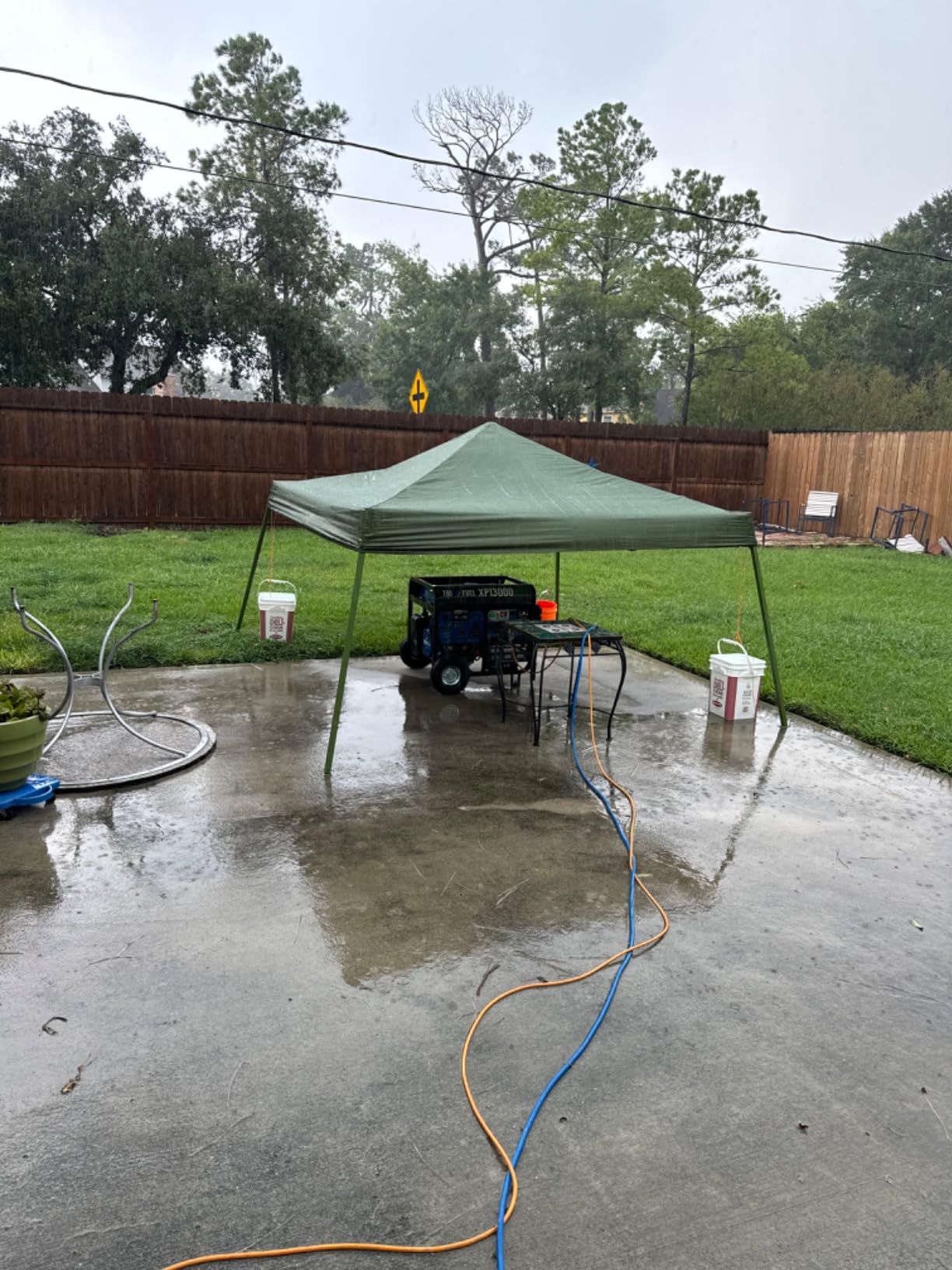
When tri-fuel earns the extra weight
Propane stores indefinitely and is the right fuel for a unit that sits between jobs. Gasoline gives longer runtime and quicker refuelling during a shift. Natural gas is the one that matters when a fixed supply exists, because it removes fuel logistics from the site entirely.
The 3-year limited warranty with nationwide service coverage makes this one of the stronger support stories here, which matters for a machine expected to run daily rather than occasionally.
Where it falls short
At 240 pounds this is the heaviest unit we looked at, and the natural gas line adds a fixed constraint on where the machine can sit. If you are not using piped gas, that capability is dead weight you carry between jobs.
Do not assume the full 10,500 running watts on every fuel. Output and fuel economy both change by fuel type, and the quoted 8-hour runtime figure is the shortest tank-runtime claim in the group despite the 8.3 gallon capacity.
6. Champion 4500-Watt Inverter – Best for Close-In Residential Work
Champion 4500-Watt Electric Start Dual Fuel Portable Inverter Generator
- Very quiet at 61 dBA for close-in work
- Dual fuel with up to 21 hours on propane
- Parallel ready to double output
- Intelligauge power meter and EZ Start Dial
- 3 year warranty with lifetime technical support
- 2.25 gallon tank needs fuel breaks on long shifts
- Only two AC outlets and no 120/240V output
- Some CO sensor sensitivity reported by owners
Noise is the reason to choose this one, and 61 dBA is a different conversation with a neighbour than an open-frame site unit. On a residential infill lot where the property line is close, the difference decides whether the job is pleasant or contested.
It is also a true inverter, which means the output is regulated into a sine wave that sensitive electronics tolerate. Laser levels, a site laptop, a charge radio and a smart panel all behave better on this than on a conventional open-frame machine.
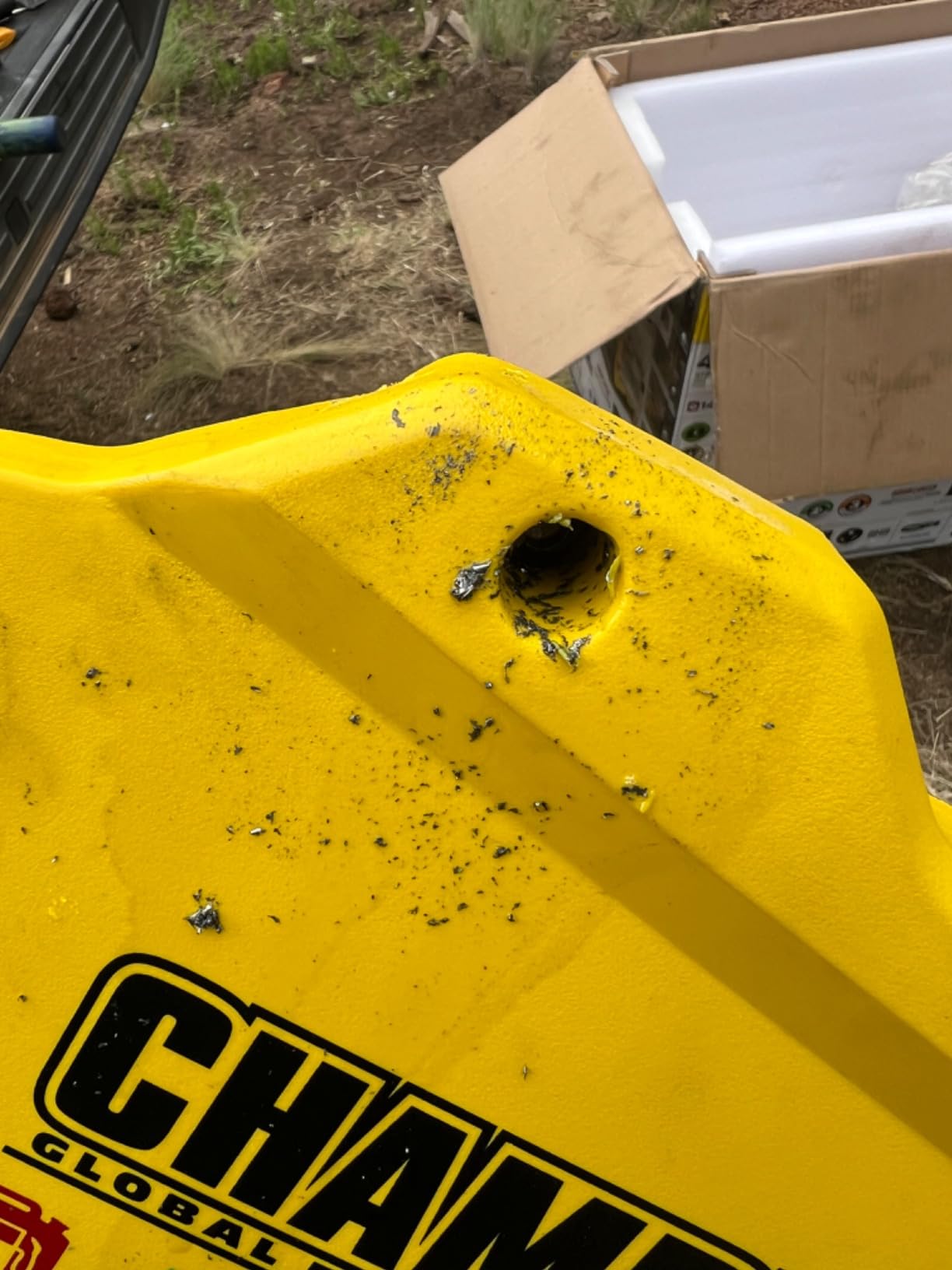
Output is 4,500 starting and 3,500 running watts on gasoline, dropping to 3,150 running watts on propane, where runtime stretches to a claimed 21 hours. CO Shield handles carbon monoxide detection and shutdown, and the Intelligauge meter tracks voltage, frequency and operating hours.
Parallel ready is the underrated feature here. With an optional parallel kit you can double the output by pairing two units, which is a cheaper path to more power than buying a bigger open-frame machine.
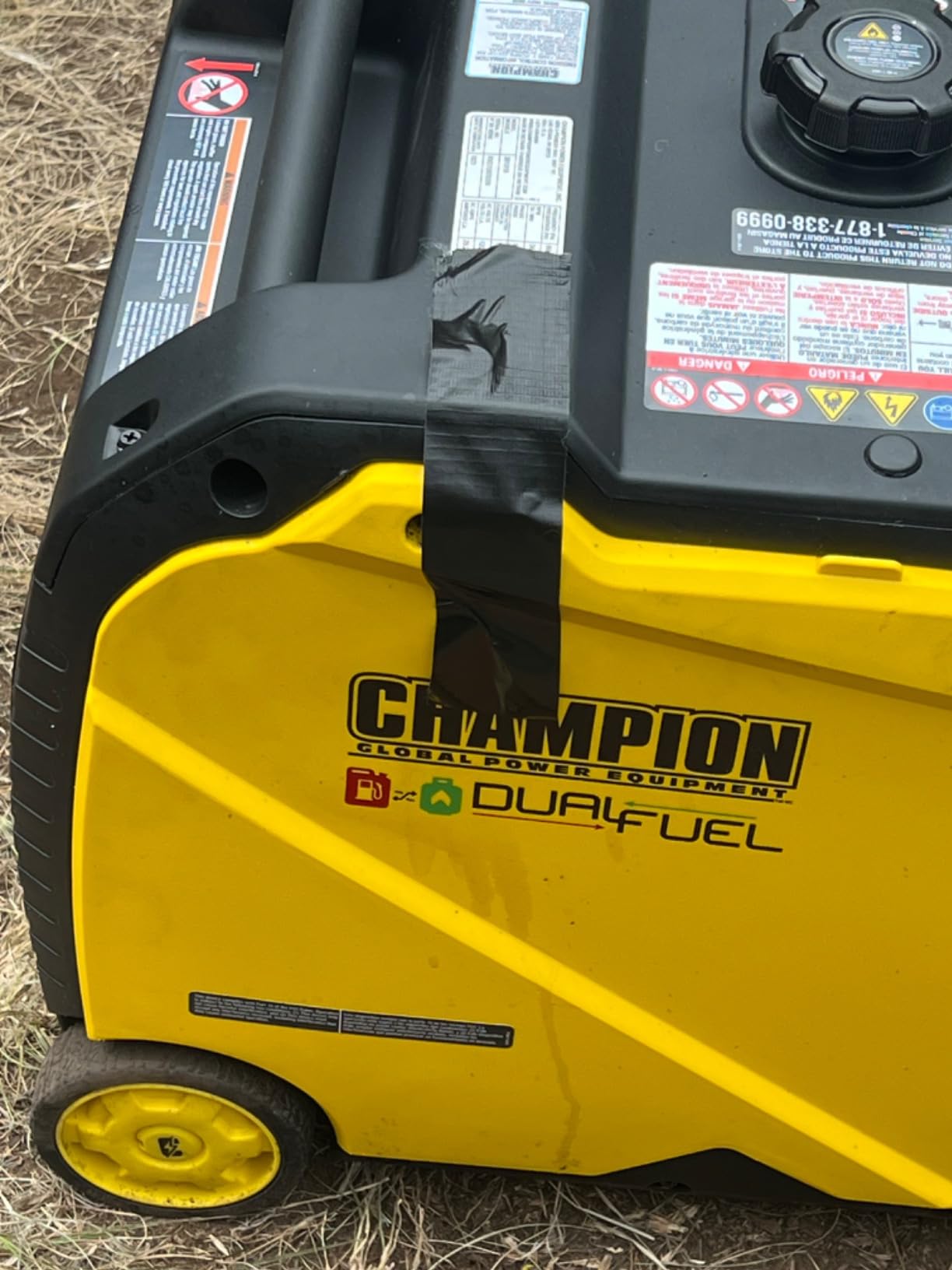
Best suited to
Finish work, trim carpentry, plumbing rough-in, inspection visits and any site where you are powering a computer or a network device as well as tools. Owners repeatedly praise quiet running, easy starting and fuel efficiency across 399 reviews at 4.4.
At 99.2 pounds it sits just under the 100-pound mark where handling becomes a two-person job, which makes it one of the more manageable inverter units in this group.
Where it falls short
Two AC outlets and no 120/240V output is a real limit. A single 30A or 50A branch circuit is not available here, so this is a tool-and-light machine rather than a site power centre.
The 2.25 gallon tank means gas breaks on a long shift, and a handful of owners report CO sensor cut-offs in enclosed spaces. Place it outside, downwind and clear of doorways, regardless of how protective the sensor is.
7. Champion 4250-Watt Open Frame – Best for Long Shifts and Light Handling
Champion 4250-Watt Dual Fuel Portable Open Frame Inverter Generator, CARB
- Lightest open frame option at 79 pounds
- Quiet 64 dBA inverter design with economy mode
- Long 22 hour gasoline runtime on a 4 gallon tank
- RV ready 30A plus two 20A outlets and USB
- 3 year warranty with lifetime technical support
- Open frame is noisier than a fully enclosed unit
- 3500 running watts is limited for large saws
At 79 pounds this is the only unit in the lineup that a single person can genuinely lift into a truck bed without planning, and on a site with a staircase, a lift or a restricted access route, that single fact can rule everything else out.
The advanced digital hybrid design is quoted as 50 percent quieter and 20 percent lighter than a traditional 3500-watt Champion, and it runs at 64 dBA. It is not fully enclosed, so it is louder than the Champion 4500, but it is far more restrained than a conventional open frame.
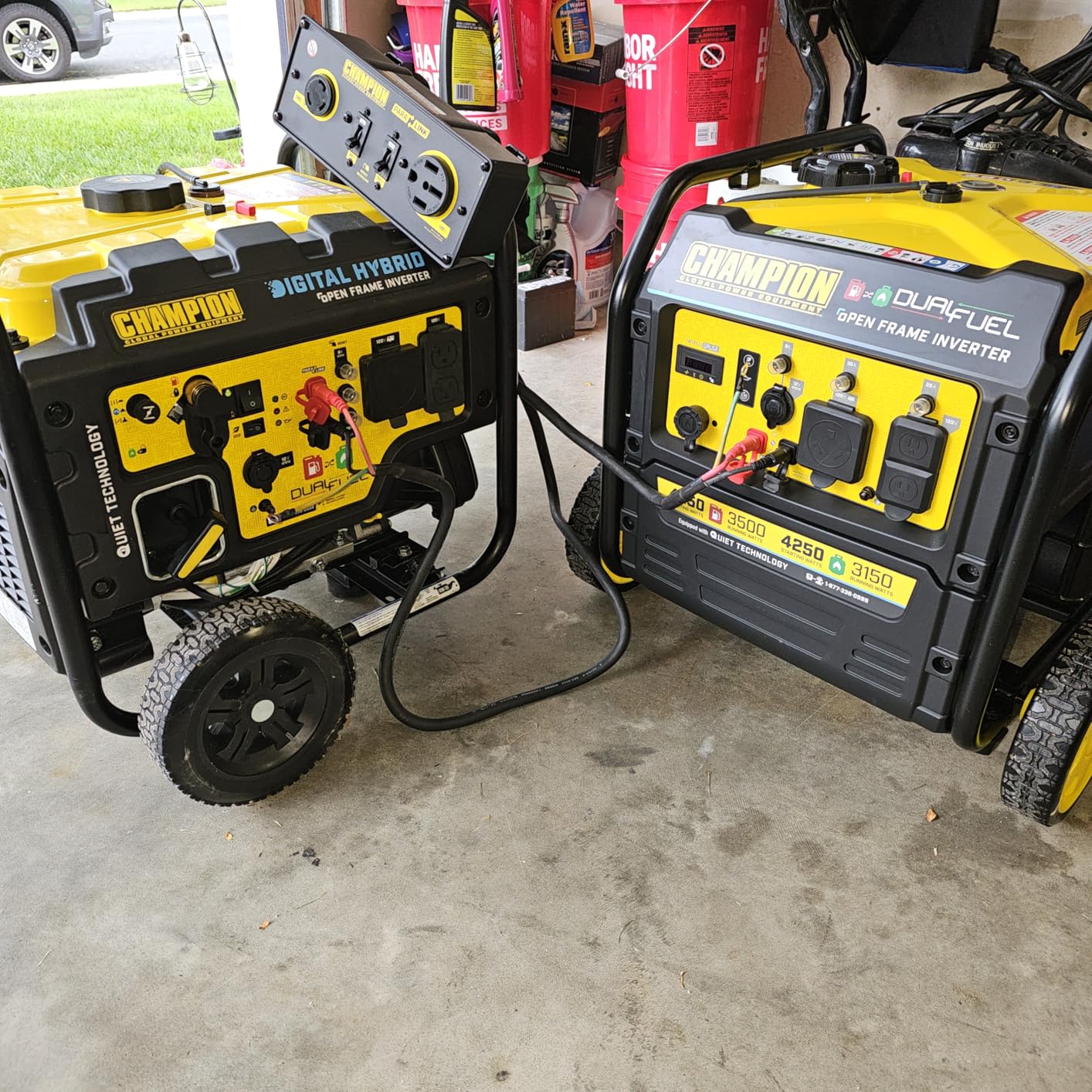
Runtime is the headline number: a quoted 22 hours on a 4 gallon tank at half load, with an economy mode that throttles the engine down when the load is light. That is a full working day without a fuel break, from a tank you can carry in one hand.
The outlet set is unusually useful for the class, with an RV ready 30A outlet, two 120V 20A household outlets and a 12V DC outlet with a dual USB adapter for phones and radios.
Why it suits a small crew
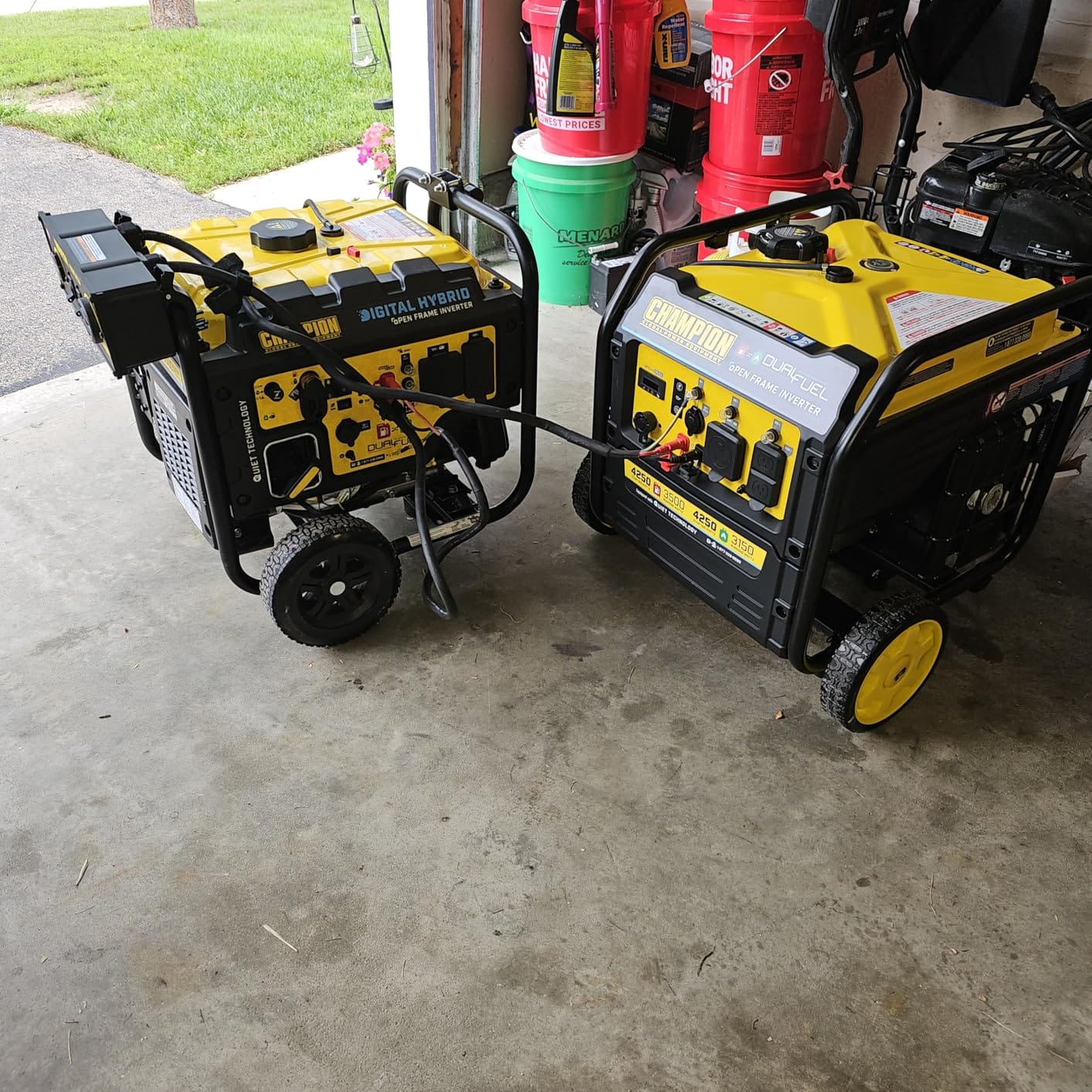
Owners across 552 reviews at 4.5 highlight the combination of low weight, quiet inverter output and long runtime. Parallel ready via the optional ParaLINK kit means two of these can cover the output of a much larger machine if a job demands it.
For a single electrician, a plumber or a two-person finishing crew, this covers a day of handheld and small stationary tools without a refuelling stop, and the 3-year warranty is among the better support terms here.
Where it falls short
3,500 running watts is the ceiling. That is fine for saws, drills, nailers, sanders and lighting, but a compressor, a welder or a large table saw will not start comfortably, and forcing it is how breakers trip.
Because the frame is open, expect a higher noise figure than a fully enclosed inverter on the same job. If the site is tight against a neighbour who is already sensitive, weigh the Champion 4500 instead.
8. GENMAX GM15000ET – Best for Whole-Site and Solar Pairing
- Highest peak output here at 15000 watts
- Tri fuel plus one-button
- remote and recoil starting
- 2-wire auto start works with solar inverters
- 10.56 gallon tank for extended runtime
- LED rope light for night panel visibility
- Heaviest unit at 242.5 pounds
- Open frame noise is higher than enclosed inverters
- Lowest average rating in this group
This is the biggest machine in the group and the only one with 15,000 watts of peak output, at 11,000 watts running. For a full multi-trade site, a remodelling job with a site office, or a crew running several compressors at once, that headroom is the entire point.
It is also tri-fuel, running on gasoline, LPG or natural gas, and it offers three starting paths: one-button, remote and recoil. The control panel carries a DC charging port, a multifunction digital display, CO detection and a battery charging port.
The 2-wire auto start/stop cable is the feature that separates it from the other high-output units here. It is designed to work with a solar inverter for automatic battery charging, which is why owners pairing it with solar singles it out.
Frame tubes are 32mm for durability, and the 10.56 gallon tank supports extended runtime. An LED flexible rope light keeps the panel visible for about 30 seconds after the main switch is on, which is a small courtesy that matters on a dark site.
Where it earns its place
Three starting options mean you are never stuck pulling a cord in the cold with a wet handle. The package includes an automatic start/stop cable, natural gas and LPG hoses, a remote control key, a rain cover, wrenches and an oil funnel.
For a general contractor running a whole build rather than one trade, the combination of 11,000 running watts, tri-fuel capability and remote starting covers more site configurations than anything else in this lineup.
Where it falls short
At 242.5 pounds it is the heaviest unit we tested in the group, so site transport needs planning. The open frame is louder than the enclosed inverters, and it is the wrong choice for a tight residential lot.
Be honest about the ratings: 4.2 across 258 reviews with 16 percent one-star feedback is the thinnest margin here, and reviewers mention build quality and support inconsistency. Buy it for output and solar integration, not for refinement.
9. Champion 11000-Watt Inverter – Best Clean Power at High Output
- Quiet for its 11000 watt class at 64 dBA
- Stable 60Hz output for electronics and appliances
- Easy electric start with Cold Start Technology
- 30A and 37.5A outlets plus GFCI receptacles
- Wheel kit included with 3 year warranty
- No cover
- battery charging input or 2-wire auto start
- Single standby/start/stop button can be confusing
- Plastic fuel sight glass discolors with gasoline vapour
Rarely do you get inverter-clean power at 9,000 running watts, and that is the reason this machine is on the list. If a site needs a fridge, a laptop, a network switch and a laser level running alongside power tools, conventional open-frame output is a gamble and this is not.
Output is 11,000 starting and 9,000 running watts on gasoline, with 8,100 running watts on propane, and the run rate is rated at 64 dBA at 23 feet. For its class that figure is unusually low, roughly half the noise reviewers report from comparable open-frame units.
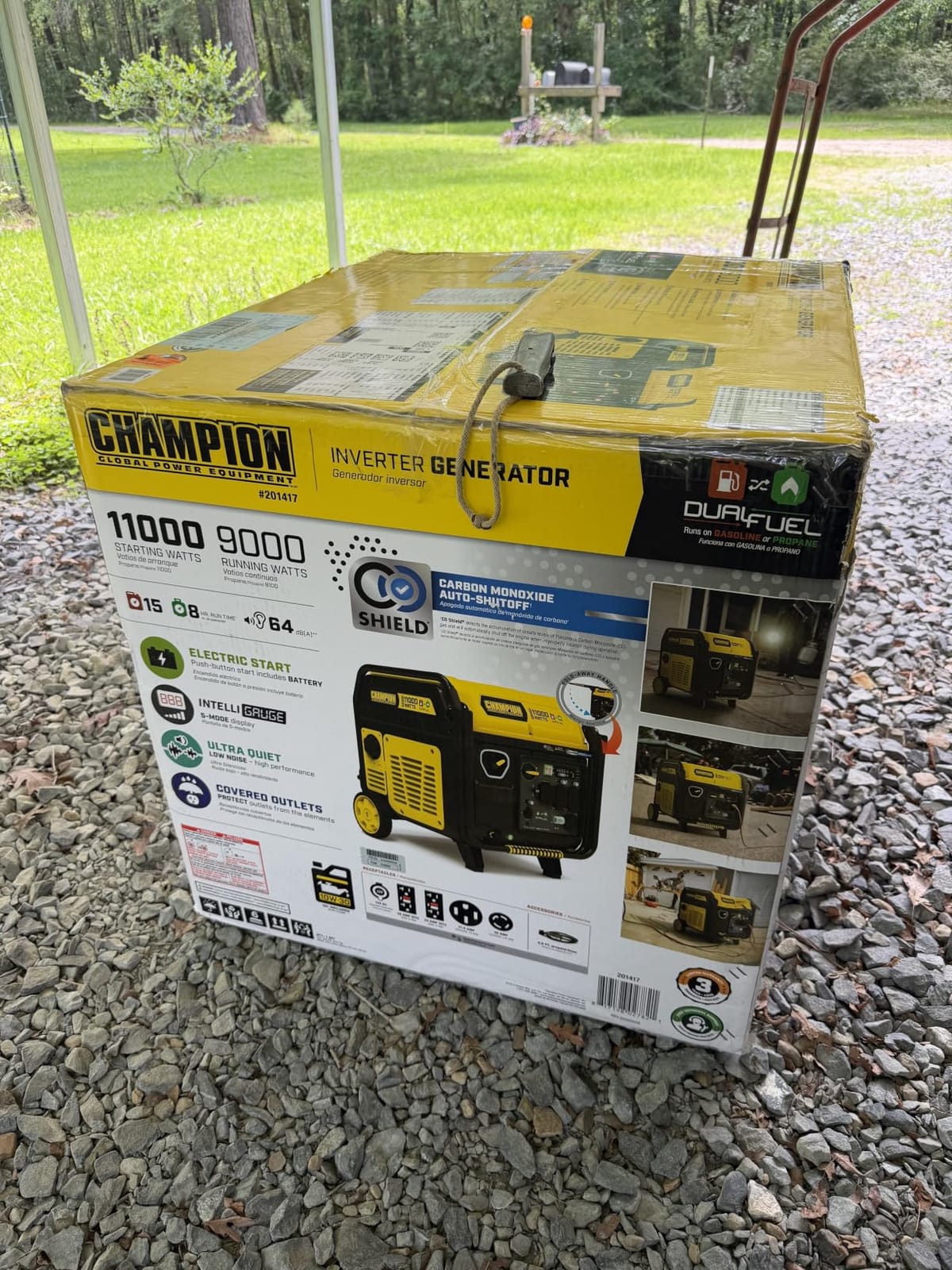
The 459cc Champion engine carries battery-included electric start and Cold Start Technology for cold morning starts, which is the failure mode most carburetted small engines have on an early shift.
Outlets cover the range well: two 120V 20A GFCI duplex outlets, a 120V/240V 30A locking outlet, a 120V/240V 37.5A outlet and a 12V automotive outlet. The 10.8 gallon tank gives a quoted 15 hours on gasoline.
What owners like
Across 194 reviews at 4.3, owners describe it as a quiet, well-built inverter that powers a whole home, and they praise the straightforward assembly and simple oil changes. The floating neutral is also easy to configure for home interlock installs if you go that route.
At 205.1 pounds it is heavy, but the wheel kit and handle design make it rollable rather than a pure carry job. Treat that as a two-person unload followed by rolling.
Where it falls short
There is no cover, no battery charging input and no 2-wire auto start for solar integration, which is a meaningful gap if you planned a charging setup. The single standby/start/stop button is also the most commonly criticised control in the reviews.
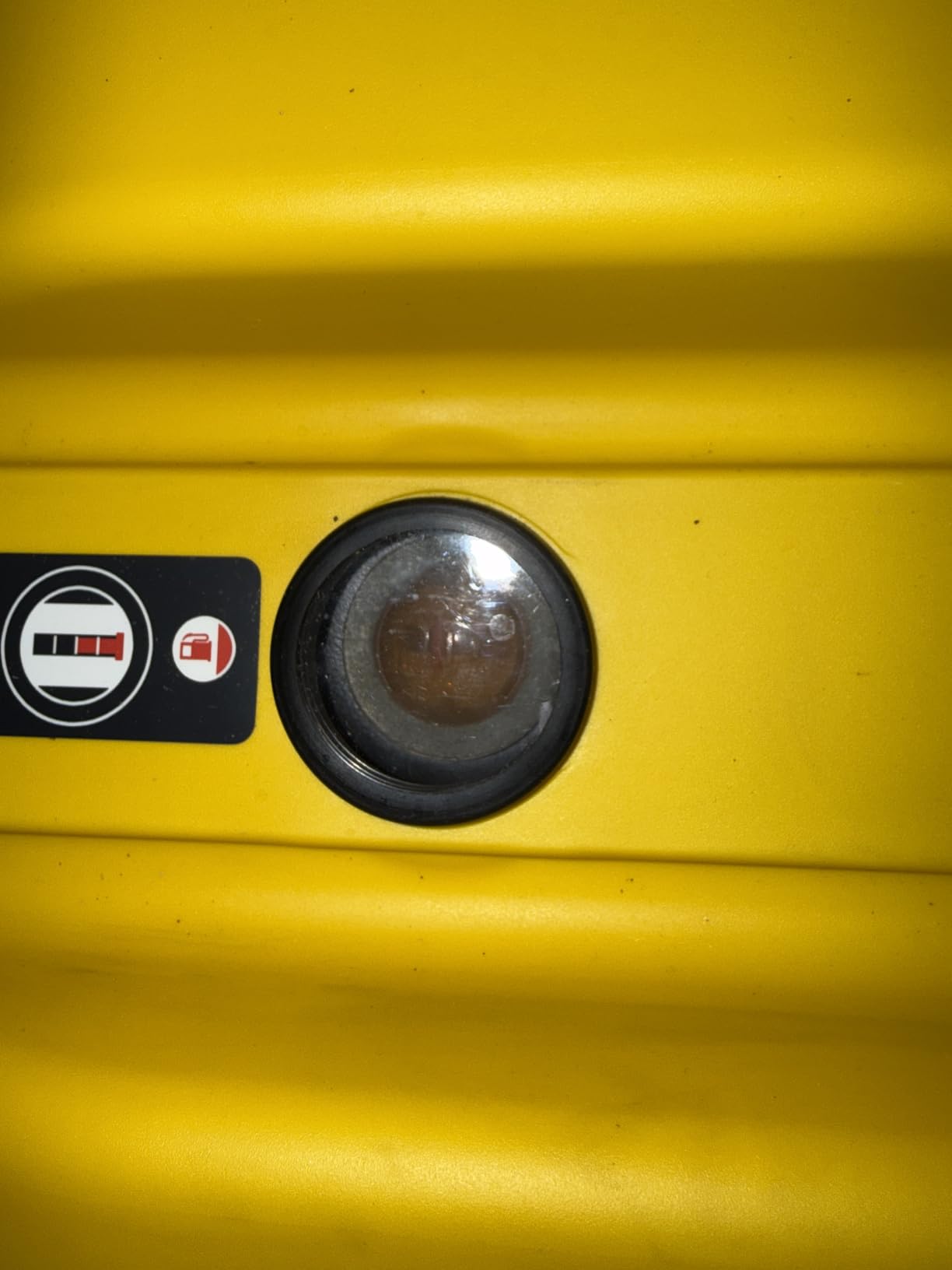
The plastic fuel sight glass amber-tints with gasoline vapour exposure, which is cosmetic but confusing when you are checking fuel in low light. Plan for a two-person move, and verify the warranty service path before a long season.
10. AIVOLT 11250W Inverter – Best for Quiet Power With a 50 Amp Outlet
AIVOLT 11250W Dual Fuel Inverter Generator 50A for Home Backup
- 50 amp outlet with ATS compatibility
- Quiet 60 dBA inverter output with copper windings
- Up to 19 hours on a 7.1 gallon tank
- Remote fob start to 80 feet plus push-button and recoil
- CO auto shutoff with low oil and overload protection
- Only 3 outlets for the power produced
- Engine oil not included so it will not run out of the box
- 2 year warranty is shorter than most rivals
The specific reason to buy this one is the 50-amp heavy-duty outlet with ATS compatibility. That single feature lets it feed a home panel or a food truck through a transfer switch, and it is unusual to find on a dual-fuel inverter with inverter-clean output.
It also runs quietly for its size, at 60 dBA at 23 feet on a 25 percent load, and the windings are 100 percent copper, which owners associate with cooler and more efficient running over long sessions.
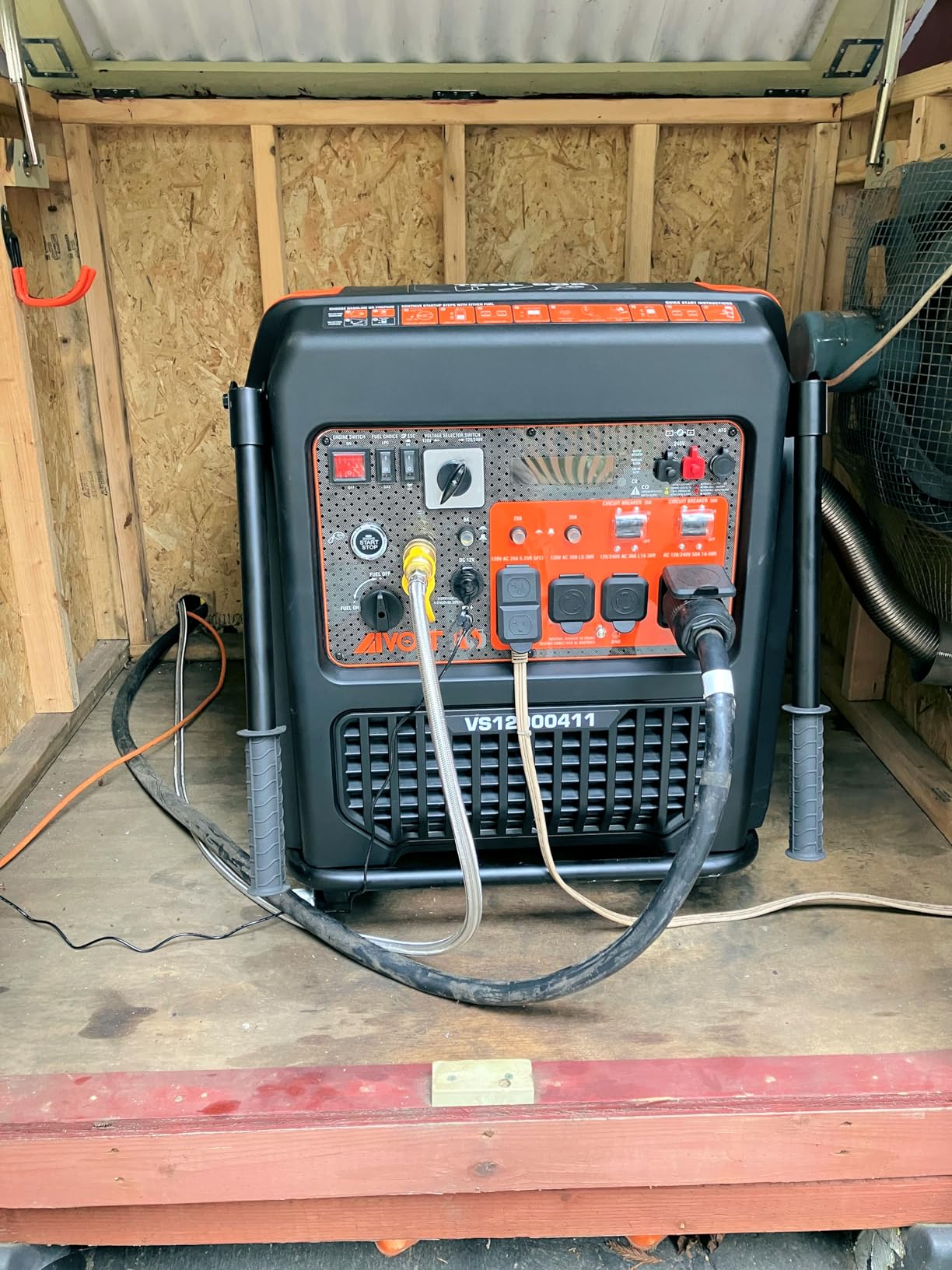
Output is 11,250 starting and 9,000 running watts on gasoline, and 10,570 starting with 8,540 running watts on propane. The 7.1 gallon tank yields a claimed 19 hours, and the remote fob reaches about 80 feet, so you can start it from inside a truck or trailer.
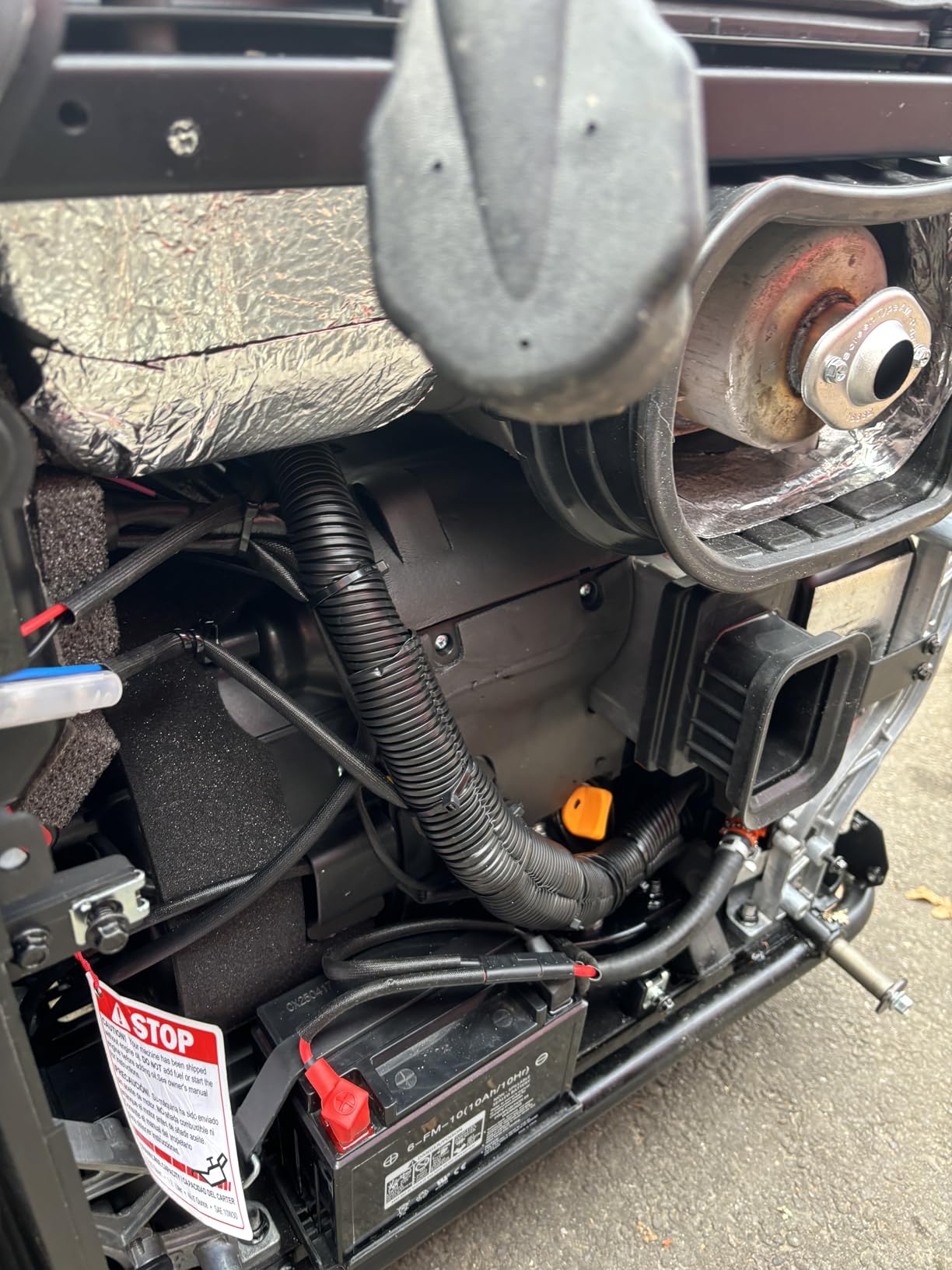
Protection is comprehensive: CO auto shutoff, low-oil protection and overload protection, plus a push-button and recoil backup. The kit includes the LPG hose with regulator, remote fob, charger, funnel, spark plug wrench and a quick start guide.
Where it works well
At 1,359 reviews it has one of the largest evidence bases in the group, and owners consistently praise the 50A and ATS capability alongside the quiet inverter performance. For a contractor running a site office trailer, a coffee setup or a food truck, that combination is rare.
The 19-hour runtime figure is the strongest half-load claim among the inverter units here, and a 7.1 gallon tank is still a manageable carry compared with the 10 gallon tanks above it.
Where it falls short
Only three outlets for 9,000 running watts is the awkward trade-off. You will be running extension cords and a distribution spider box rather than plugging several tools straight into the panel, which increases cord-trip risk on a busy site.
Engine oil is not included, so the unit will not run out of the box, and the 2-year warranty is shorter than most rivals. At 4.1 across 1,359 reviews with 12 percent one-star feedback, it is the lowest-rated unit here despite the strong feature set.
How to Size a Generator for Construction Tools
Size a jobsite generator by adding the running watts of everything that runs at once, then adding 30 to 50 percent for motor-start surge. The mistake almost everyone makes is buying on peak watts, which is a brief burst figure and not what the machine sustains.
Here is how the common site tools map. A portable table saw pulls roughly 1,500 to 2,000 running watts and demands far more to start. A framing hammer sits around 1,200 watts, a reciprocating saw around 1,200 to 1,800, and a portable welder runs 2,000 to 3,000.
- Finish work and hand tools: 3,500 running watts is enough. This is the finish carpenter and electrician band.
- Framing, a table saw and lighting: 5,000 to 7,500 running watts. Add your single largest motor tool twice for surge headroom.
- Air compressor alongside tools: 9,000 running watts or more. Compressors are the most common cause of tripped breakers.
- Two trades sharing a site: 10,500 running watts and a 30A or 50A branch so each trade has its own circuit.
- Compressors, welders and multiple crews: 11,000 running watts and up. Bring a distribution box rather than daisy-chaining.
One rule from the field: an air compressor on a generator wants a dedicated circuit and a soft-start or unload valve. That single change solves most of the compressor complaints owners post about, and it is cheaper than buying a larger unit.
Load management matters as much as raw output. A generator that runs constantly at 60 percent of its rating burns fuel faster and wears faster than one that loads up and backs off, and most crews end up running the unit well below capacity because they are only using a saw or a drill part of the time. An inverter with an economy mode, like the Champion 4500, throttles itself to match light loads, which is exactly the situation on a finishing site.
Outlet count is the last sizing trap. The AIVOLT produces 9,000 running watts and offers three outlets, while the Pulsar matches almost the same output with seven. On a site where several crews share power, the binding constraint is often how many cords you can plug in rather than how much power you can supply, so count the circuits before you count the watts.
Fuel Type and How Long a Full Shift Really Lasts
Gasoline gives the best runtime per dollar, propane stores indefinitely between jobs, natural gas removes fuel logistics entirely, and diesel is generally reserved for towable and standby units rather than portable ones. Most site owners end up running gasoline during the week and propane for storage.
Runtime figures are always quoted at 50 percent load, so treat them as a ceiling rather than a promise. A framing crew running a saw for eight hours will draw far more than a half-load average, and the honest planning rule is to assume you will refuel once during a full shift.
- Champion 4250 open frame: quoted up to 22 hours on a 4 gallon tank. The best full-shift ratio here.
- Champion 4500 inverter: 14 hours on gasoline and up to 21 on propane, but from a 2.25 gallon tank.
- Westinghouse WGen9500DF: 12 hours on a 6.6 gallon tank, with 9,500 running watts available.
- Pulsar G12KBN: 12 hours at half load from 8 gallons, the largest mid-size tank in the group.
- GENMAX GM15000ET: a 10.56 gallon tank, the largest capacity here, supporting long multi-crew days.
- Champion 11000 inverter: quoted up to 15 hours on a 10.8 gallon tank at 64 dBA.
- AIVOLT 11250W: quoted up to 19 hours on 7.1 gallons, with copper windings for efficient running.
The dual-fuel trade-off is real. Switching fuel is one dial on most of these units, but output drops on propane, the fuel system carries more components to maintain, and tri-fuel natural gas costs additional output again. You are buying optionality, not efficiency.
Fuel logistics deserve more thought than the tank size does. Approved containers, a funnel, a filter and a clear route to refuel are the things that actually stop a shift, and every extra gallon carried to a remote site is weight someone has to lift twice. Propane cylinders solve that for stored units, but the smallest propane runtime in this group is the Champion 4500 inverter at a claimed 21 hours, which is roughly two working days on one cylinder.
A full-shift plan is simple enough to do on paper. List every tool that runs simultaneously, sum the running watts, confirm the unit has 30 percent headroom over the largest single motor load, then check the half-load runtime against your shift length and add one refuelling break as a safety margin. If the break falls in the middle of a pour or a cut, the machine is too small for the job rather than badly planned.
Noise on Site: What the dB(A) Number Means
A generator is generally considered quiet below about 67 dB(A) at 23 feet, and normal conversation sits near 60. That threshold matters because it is roughly where a background generator stops being noticed as a complaint and starts being a conversation at the property line.
Only two units in this lineup sit in the quiet band. The Champion 4500 inverter is rated at 61 dBA and the AIVOLT at 60 dBA at 23 feet on a 25 percent load. The Champion 4250 open frame, the Champion 11000 inverter and the Westinghouse are noticeably louder, and the remaining open-frame machines are loudest of all.
Frame type is the second decision behind noise. An open-frame jobsite generator exposes the engine on all four sides, which makes it lighter, cheaper to service and far more tolerant of dust and impact, but it also means you hear every cylinder. An enclosed inverter wraps the same engine in a sound-deadening shell, which is where the 60 dBA figures come from and why they cost more.
Most of the open-frame machines in this lineup use a steel tube frame sized to be rolled, dragged and lifted onto a trailer. That construction is not a specification, it is a daily reality on a site where the unit moves twice a day. We saw 10-inch never-flat wheels on the Pulsar and wheel kits on most of the rest, and a folding handle on the WEN, which is the difference between a two-person lift and a solo one.
Weigh that against the alternative. If you have a staircase, a lift car or a site access that only allows a hand-carried unit through, none of the 200-pound machines here are candidates at all, and the 79-pound Champion 4250 open frame is the only one that clears the practical limit. Forum discussion on restricted-access builds keeps circling the same problem, and the answer is usually to size down and accept fewer tools running at once.
Practical advice: position the unit on the far side of the lot from the nearest house, keep the exhaust pointed away from doorways and windows, and never run a generator inside a partially enclosed space. Distance buys more than any amount of spending, since noise falls steadily as the unit moves away from the listener.
Jobsite Power Distribution, GFCI and Carbon Monoxide Safety
A generator is the start of a system, not the whole of it. OSHA site electrical expectations mean GFCI protection on construction sites, and the units here provide it at the household receptacles, with three of the larger machines also offering twist-lock outlets for higher current branches.
Run heavy loads on their own circuit rather than sharing a spider box with lights and chargers. Keep cords in 10 gauge or heavier for distance runs, and treat any extension cord run as a voltage drop problem that affects saw and compressor performance, not just convenience.
Carbon monoxide is the risk that actually kills people. Every unit listed with a CO sensor, which includes the DuroStar, DuroMax, Champion and AIVOLT models here, should still be treated as a backup rather than a guarantee. Keep the unit 20 feet from the nearest opening, and never run a generator in a vehicle, basement or enclosed porch.
Maintenance, Storage and the 20/20 Rule
The 20/20 rule is the simplest maintenance habit for a site generator: change the oil roughly every 20 running hours and at least twice a year, and run the unit for about 15 minutes under load once a month so the carburettor and fuel system stay clean.
For a unit that sits between jobs, add fuel stabiliser, run the tank dry if you are storing it more than a month, and close the fuel vent valve. A dirty air filter is the most common cause of the hard starting that owners complain about after a season of storage.
Check the spark plug, keep the air filter clean, and confirm the oil level before every shift rather than after a breakdown. A five-minute walkaround at the start of each job catches a loose fuel line or a frayed cord while it is still a two-minute fix.
Warranty length is worth factoring into the maintenance decision, because coverage on the engine is not the same as coverage on consumables. The three-year terms on the Westinghouse, DuroStar, DuroMax and the Champion units are the strongest here, while the one-year term on the Pulsar and the two-year terms on the WEN and AIVOLT are the shortest. If you are running a unit every day through a season, the longer term does real work.
Storage is where most owner complaints about hard starting begin. A carburetted engine that sits with old fuel for a month will choke, and the fix is boring: run the tank dry, add stabiliser if fuel is left in it, close the fuel valve, and cover the unit against dust without wrapping it airtight while it is warm.
When Renting or Using Battery Power Makes More Sense
Not every project needs a purchase. For a single week of work, a rental unit removes the transport, storage, fuel stabilisation and eventual disposal from your list entirely, and rental houses deliver and collect on their own schedule.
Battery power stations are the other alternative, and they are genuinely good for a finishing site running lights, chargers, a radio and a laptop with no combustion, no noise and no exhaust. They are the wrong tool the moment a compressor, a saw or a welder enters the picture, because sustained motor load and surge exceed what most of them deliver.
Our inverter generator guide covers the clean-power side in more detail, and the standby generator options are worth a look if you are planning a permanent installation instead of temporary site power.
For a week of framing, renting is the honest answer, and so is buying for anything that runs past a month. Storage alone decides that for most small contractors: a unit that lives in a van between jobs needs fuel stabiliser, a dry run monthly and a place to keep it that is not the project site, and that overhead is hard to justify for a two-week build.
Our RV generator comparison is worth a read if your site has a crew trailer on it, since trailer power demand is much closer to a domestic load than to a framing crew’s. Trailer outlets and transfer switch compatibility are the two specs to check first.
There is one more option worth naming: the site’s own power, if a temporary service or a metered disconnect is available. A construction temporary power panel beats any portable generator for lighting, office equipment and finish work, and it removes the fuel, noise and carbon monoxide questions altogether.
Frequently Asked Questions
What size generator do I need for a construction site?
Add up the running watts of every tool that operates at the same time, then add 30 to 50 percent for motor-start surge. A finishing site needs about 3,500 running watts, a framing site with a table saw needs 5,000 to 7,500, and a site running an air compressor alongside tools needs 9,000 running watts or more. Buy on running watts, never on the peak surge figure.
How many dB is considered a quiet generator?
A portable generator is generally considered quiet below about 67 dB(A) measured at 23 feet, and ordinary conversation sits near 60. In this lineup the Champion 4500 inverter at 61 dBA and the AIVOLT at 60 dBA fall in the quiet band, while open-frame site units sit well above it. Distance from the nearest house matters more than any specification.
Which dual fuel portable generator is the quietest?
Among the dual-fuel inverters we compared, the Champion 4500-Watt is the quietest at 61 dBA with 3,500 running watts on gasoline, and the AIVOLT 11250W follows at 60 dBA at 23 feet on a 25 percent load with 9,000 running watts. The dual-fuel open-frame units here are all measurably louder.
What is the disadvantage of a dual fuel generator?
Running on propane or natural gas costs you output, and the extra fuel system adds components to maintain. Switching fuel is a manual step, propane refuelling means transporting cylinders, and a tri-fuel unit needs a supplied gas hose that fixes where the machine can sit. You are buying fuel flexibility, not fuel efficiency.
What is the 20/20 rule for generators?
Change the oil roughly every 20 running hours and at least twice a year, and run the unit for about 15 minutes under load once a month. That monthly run keeps the carburettor and fuel system clean, and the regular oil change is what protects the engine on a machine that works hard and sits dusty.
Can a portable generator run a table saw?
Yes, but you need surge headroom rather than raw peak watts. A portable table saw typically pulls 1,500 to 2,000 running watts and needs substantially more to start under load, so a 3,500 running watt unit is the practical floor and 9,500 running watts is comfortable. Put the saw on its own circuit to avoid tripping the generator.
Is Westinghouse or DuroMax a better portable generator?
It depends on the job. Westinghouse leads here on proven reliability, a three-year warranty, a cast-iron-sleeve engine and a 4.7 rating across more than 8,900 reviews. DuroMax is the stronger choice when you need tri-fuel operation including natural gas, with 13,000 peak watts and remote electric start. For most framing and remodel sites we would take the Westinghouse.
How long does a portable generator last on a full tank?
It depends on the tank and the fuel, and figures are always quoted at 50 percent load. In this group the Champion 4250 open frame is quoted at up to 22 hours on a 4 gallon tank, while the Westinghouse and Pulsar are quoted at 12 hours on 6.6 and 8 gallon tanks. Hard compressor work shortens all of those figures considerably.
The Bottom Line: Best Generators for Construction Sites in 2026
For most construction sites in 2026, the Westinghouse WGen9500DF is the generator we would buy. It delivers 9,500 running watts with real surge headroom, starts by remote, runs dual fuel, carries a three-year warranty and has the deepest review history of anything in this comparison at 4.7 across more than 8,900 reviews.
Match the machine to the crew instead. The Pulsar G12KBN covers two trades sharing one box with seven outlets and 12 hours on an 8 gallon tank. The Champion 4250 open frame at 79 pounds handles a small crew for a full day from a tank you can carry. The Champion 4500 inverter at 61 dBA is the pick when the site is tight against a neighbour.
Step up when the load demands it. The DuroStar DS13000MX adds CO Alert shutdown for crews working near enclosed spaces, the DuroMax XP13000HXT adds natural gas, and the GENMAX GM15000ET brings 15,000 peak watts with solar charging control for a whole build.
Whichever you choose, buy on running watts, keep 30 percent surge headroom, plan a fuel break, place the unit away from the property line, and use the checking buttons below to compare the current details for each model.
Our full portable generator roundup goes deeper on the home and emergency side if your build has a phase where the crew is working out of the house itself.