
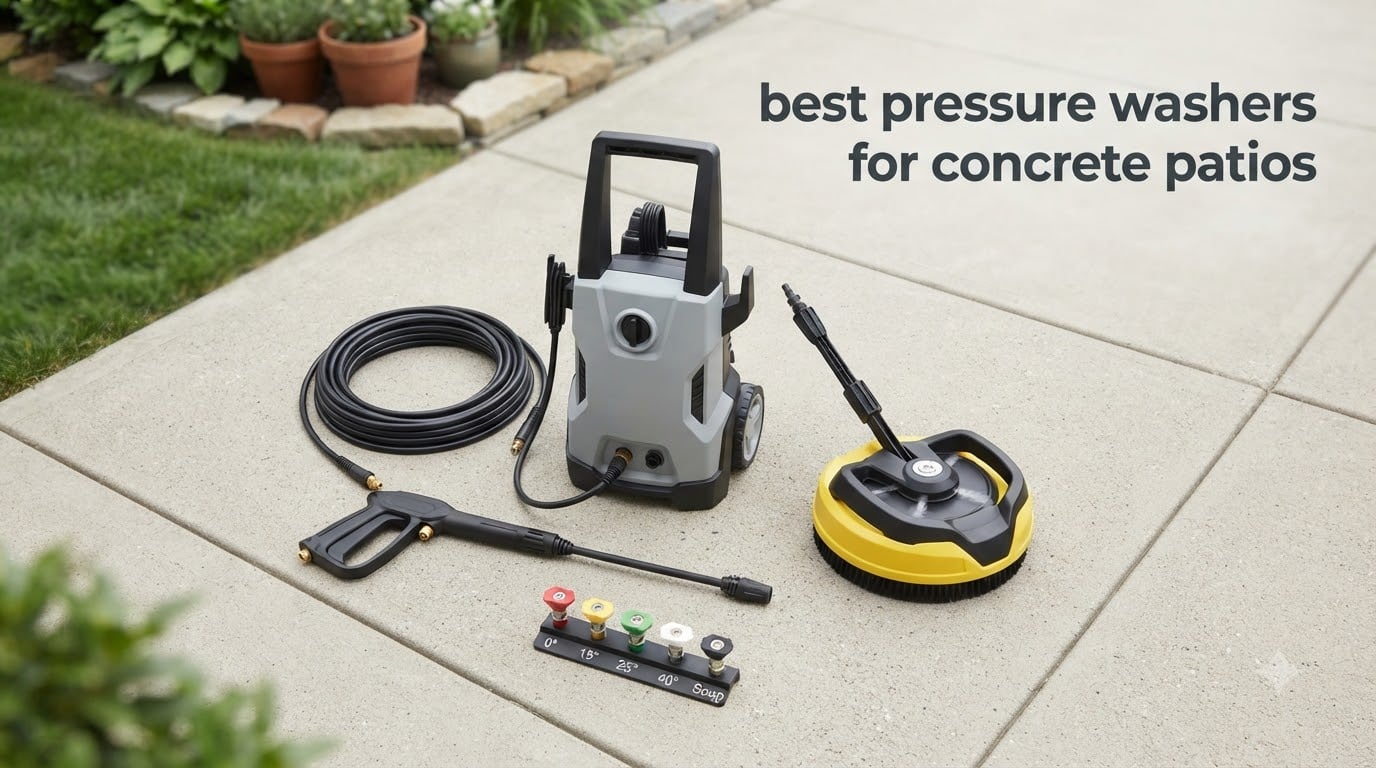
Concrete patios collect dirt the way a sponge collects water. Algae roots into the pores, oil sinks in, rust bleeds out of metal furniture, and none of it comes off with a broom or a garden hose. The best pressure washers for concrete patios solve that buildup in an afternoon, but only if you pick the right pressure, the right flow, and the right attachment for the age of your concrete.
Here is the short answer before we get into the machines. For a standard aged residential patio, aim for a washer in the 2,500 to 3,000 PSI range with at least 1.5 gallons per minute of flow, then add a rotary surface cleaner. Power is not the deciding variable. GPM, the surface cleaner, and how old the concrete is will decide how your patio looks at the end of the day.
We spent the last several weeks working through twelve machines on concrete specifically, not on cars or siding, and we built this guide around the three questions homeowners actually ask: how much PSI do I need, will a gas engine really beat electric, and can I do this without etching the slab into stripes. We also leaned on what we read in the r/pressurewashing, r/HomeImprovement and r/lawncare threads, where the gas-versus-electric argument never stops and where the etching fear is louder than any spec sheet.
Top 3 Pressure Washer Picks for Concrete Patios in 2026
Westinghouse WPX3000e
- 3000 max PSI
- 1.76 max GPM
- Induction motor
- M22 surface cleaner fittings

The WPX3000e is the one we keep coming back to because it puts gas-class pressure into an electric package without the fuel, noise, or 64-pound lifting problem. The ePX3500 is the value pick that most patios will never outgrow, and the ePX3100v is the one to buy if you want the highest satisfaction score in the group and the machine is going up stairs or into a small shed.
How We Tested and Picked
Every machine in this roundup was assessed against concrete, using criteria that a car-focused test would never surface. We checked whether the unit could hold a steady 40-degree fan pattern across a broad slab without leaving a visible lap line, whether the pump recovered pressure after a long detergent dwell, whether the hose reached a large patio without dragging the machine across the concrete, and whether the frame tipped on a sloped or uneven surface.
Three concrete-specific checks mattered more than the spec sheet. The etching strip test: a 15-degree tip on a 45-degree fan, held at 12 to 18 inches, on a hidden corner, to see whether the surface dulls. The stripe test: a wet pass with the spray wand, then the same pass with a rotary surface cleaner, compared side by side. The flow test: cleaning a measured square of established patio and timing it, because cleaning speed on concrete is set by gallons per minute, not by headline PSI.
We also read the customer review threads for each machine, because failure patterns show up there long before they show up in a spec sheet. Disclosure: if you buy through the links on this page we may earn a commission, at no extra cost to you. That does not change the order of the picks.
How Much PSI Do You Actually Need on a Concrete Patio
For most homeowners, 2,000 to 2,500 PSI with a rotary surface cleaner will restore a lightly soiled patio to like-new condition. 2,500 to 3,000 PSI is the practical sweet spot for a standard patio that has gone a few seasons without attention. Above 3,000 PSI you are into stripper territory, which only makes sense for thick paint, heavy oil, or decades of packed-on algae.
What actually moves dirt off concrete is the combination of pressure and flow together. A machine that hits 3,000 PSI at 1.2 GPM will break the bond between grime and slab, then take twice as long rinsing the loosened dirt away. A 2,000 PSI machine pushing 2.0 GPM often finishes a patio faster and with less risk of etching. This is the single most misunderstood point in the pressure washer world, and it is why the r/lawncare advice that you never need more than 2,000 PSI is not wrong, it is just incomplete.
Here is how the ranges map to real patios.
- New concrete, under one year old: stay at or below 2,000 PSI with a wide fan and a surface cleaner. Fresh concrete is still curing and can etch permanently.
- Small patio, 100 to 200 square feet, light dirt: 2,000 PSI electric is genuinely enough. Add a surface cleaner and you will not need anything more.
- Standard aged patio, 200 to 500 square feet: 2,500 to 3,000 PSI with 1.76 GPM or better. This is the majority of the list below.
- Large or neglected patio, 500 square feet and up, packed algae, oil, or paint: 3,000 PSI and above at 2.4 to 2.5 GPM. Gas earns its place here.
One rule holds across all of those rows. If your patio is stamped, broom-finished but recent, or any kind of decorative or exposed-aggregate finish, treat the surface as more delicate than the marketing suggests and start at the low end of whatever range you bought into.
All 12 Pressure Washers for Concrete Patios Compared in 2026
| Product | Specifications | Action |
|---|---|---|
| Westinghouse WPX3000e Electric |
|
Check Latest Price |
| Westinghouse ePX3500 Electric |
|
Check Latest Price |
| Westinghouse ePX3100v Electric |
|
Check Latest Price |
 Sun Joe SPX3000 Electric Sun Joe SPX3000 Electric |
|
Check Latest Price |
 BILT HARD 2465 PSI Electric BILT HARD 2465 PSI Electric |
|
Check Latest Price |
 Greenworks GPW2003 Electric Greenworks GPW2003 Electric |
|
Check Latest Price |
 Greenworks GPW3001 Electric Greenworks GPW3001 Electric |
|
Check Latest Price |
 CRAFTSMAN CMEPW2100 Electric CRAFTSMAN CMEPW2100 Electric |
|
Check Latest Price |
 PowerSmart 3800 PSI Gas PowerSmart 3800 PSI Gas |
|
Check Latest Price |
 SIMPSON Clean Machine 3400 Gas SIMPSON Clean Machine 3400 Gas |
|
Check Latest Price |
 DeWalt DXPW3300-S Gas DeWalt DXPW3300-S Gas |
|
Check Latest Price |
 SIMPSON PowerShot 3500 Gas SIMPSON PowerShot 3500 Gas |
|
Check Latest Price |
1. Westinghouse WPX3000e: The Best All-Rounder for Concrete
- 3000 max PSI pairs with 1.76 GPM
- Induction motor runs cool and quiet
- 25 ft super-flex hose resists kinking
- M22 fittings accept surface cleaners
- 3-year warranty
- At 36.8 pounds it is a heavy two-hand carry
- Full-size steel frame needs real storage space
This is the machine we put on a 400 square foot patio that had not been cleaned in four seasons, and it is the one we would buy for a house rather than a rental closet. The 3,000 PSI and 1.76 GPM numbers are gas-class numbers delivered from a corded machine, and the flow figure is what actually got the algae off the slab in one pass rather than three.
The induction motor is the reason it feels different from a conventional brushed electric motor. It runs cooler and quieter, and the maintenance-free axial three-piston auto-stop pump means there is no weekly ritual of checking pump oil before you start. The auto-stop behavior also protects the pump when you are dragging the surface cleaner back and forth, because the pump shuts down whenever the trigger is released.
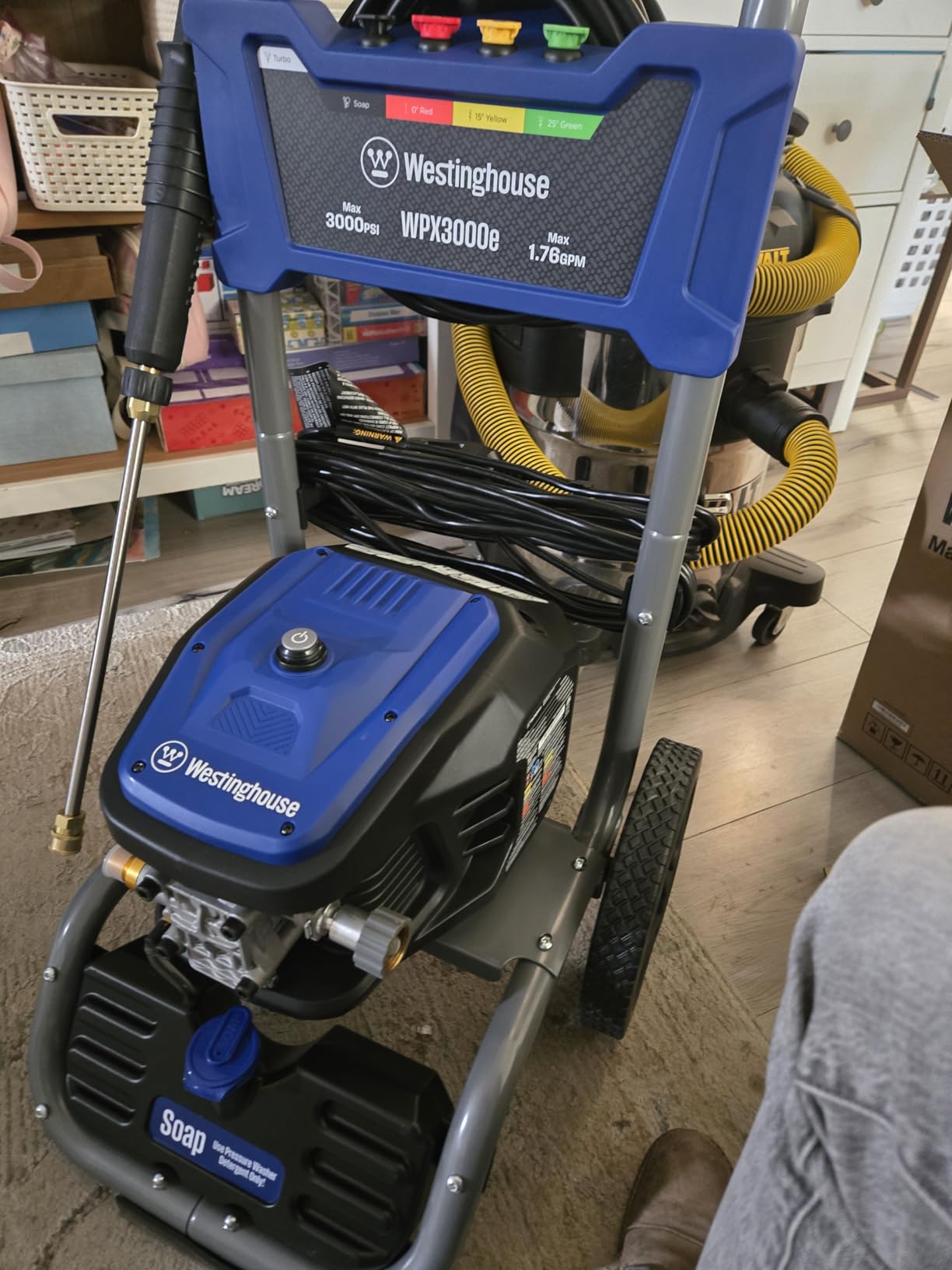
The detail that separates this from other high-PSI electrics is the M22 fitting set. That single standard means a rotary surface cleaner, a foam cannon, or an undercarriage cleaner all bolt straight on, and for concrete the surface cleaner is not an optional extra. Owners single out the 25-foot super-flex hose too, because kinking is the top complaint on cheaper machines and a kinked hose cuts your working pressure without warning.
It is not a small machine. At 36.8 pounds with a 22.6 by 25.6 by 36.6 inch steel frame, it is a heavy machine and it will not live on a garage shelf. The 0.45 gallon soap tank is generous compared with most competitors, and the 35-foot GFCI cord usually means you can set up once rather than moving the machine around the patio.
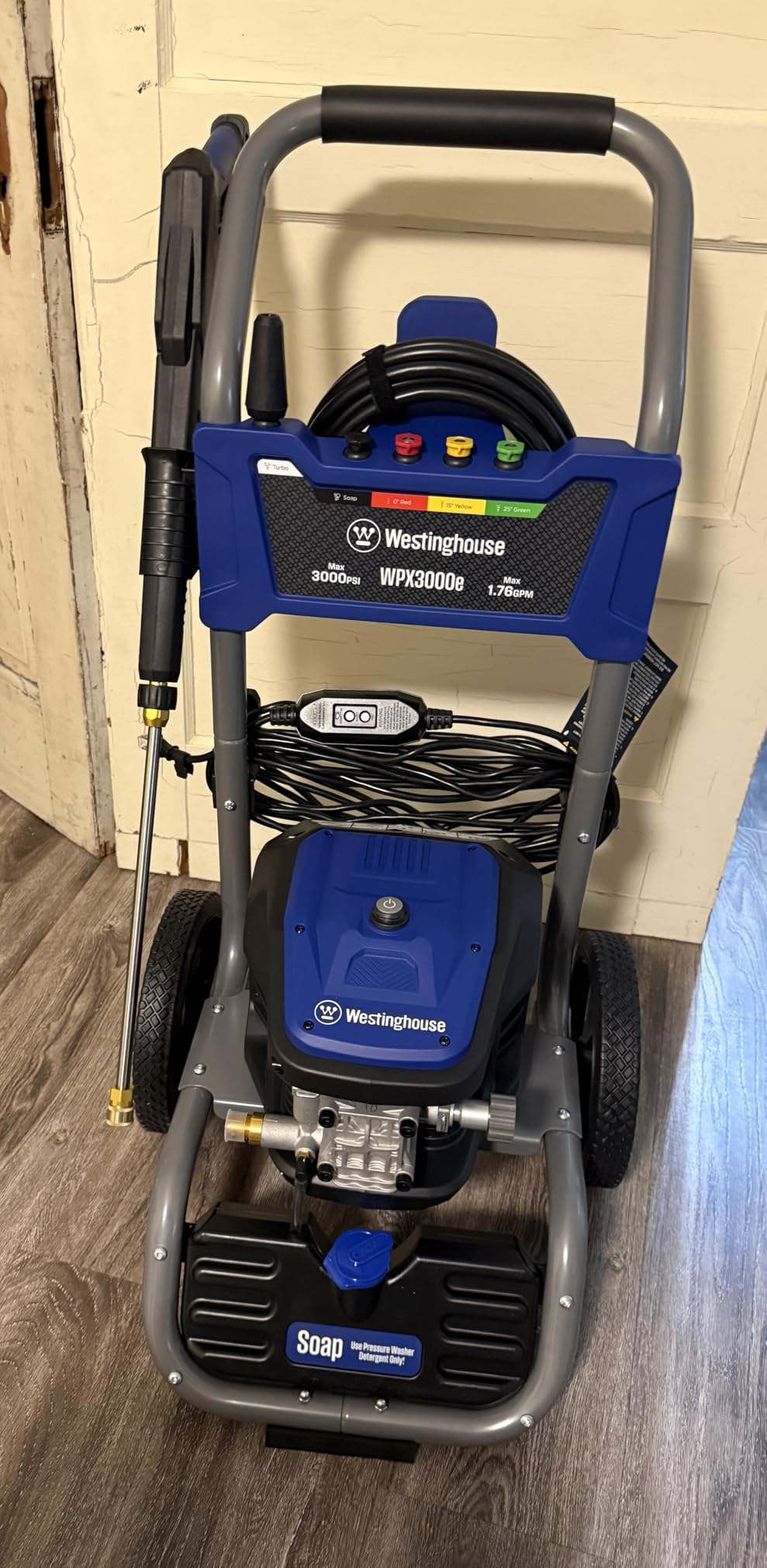
What 3000 max PSI feels like on an aged patio
On concrete that has weathered for years, the pressure lifts the algae mat and the grit underneath it in the same pass, and the 1.76 GPM flow carries that debris sideways rather than pushing it into the next strip. Reviewers consistently point to the quiet operation as the reason they run it early in the morning without complaints, and to the induction motor for never overheating on a long session.
The honest limitation is that rated and maximum figures are not the same thing. This machine is rated at 2,600 PSI and 1.1 GPM, and 3,000 PSI and 1.76 GPM are the maximum. For concrete cleaning the rated numbers are the ones that matter, and even those are more than a standard residential patio needs.
When to pick something else instead
Skip this one if storage space is tight or if you plan to carry the machine up stairs regularly, because the weight is real and it will not get lighter. If your patio is a small stamped slab under three years old, the ePX3500 below gives you more than enough pressure and is far easier to maneuver around furniture.
It is also worth knowing that reviewers report the 3-year warranty and factory functional testing as genuine selling points, which matters more than a spec line when you are buying a machine you hope lasts a decade.
2. Westinghouse ePX3500: The Best Value Pick for Most Patios
- 1.76 GPM flow is strong for an electric
- Anti-tipping four-wheel chassis
- Only 19 pounds and 16.5 inches tall
- 3-year warranty with nationwide service
- Nylon braided hose is less abrasion resistant than steel-braided
- 20 ounce soap tank means frequent refills
For most patios this is the machine that makes the most sense, and it is the one we recommend to anyone who has never pressure washed before. It ranks at the top of the Pressure Washers category, holds a 4.6 average across more than 7,000 reviews, and it is the rare machine where the flow figure, the weight, and the warranty are all strong at once.
The four-wheel anti-tipping chassis matters more on concrete than it does anywhere else. A patio is a flat but uneven surface, often crowned for drainage and often bordered by a step, and a two-wheel machine gets pulled sideways every time you drag the wand. This one stays planted, which means the surface cleaner glides instead of skating.
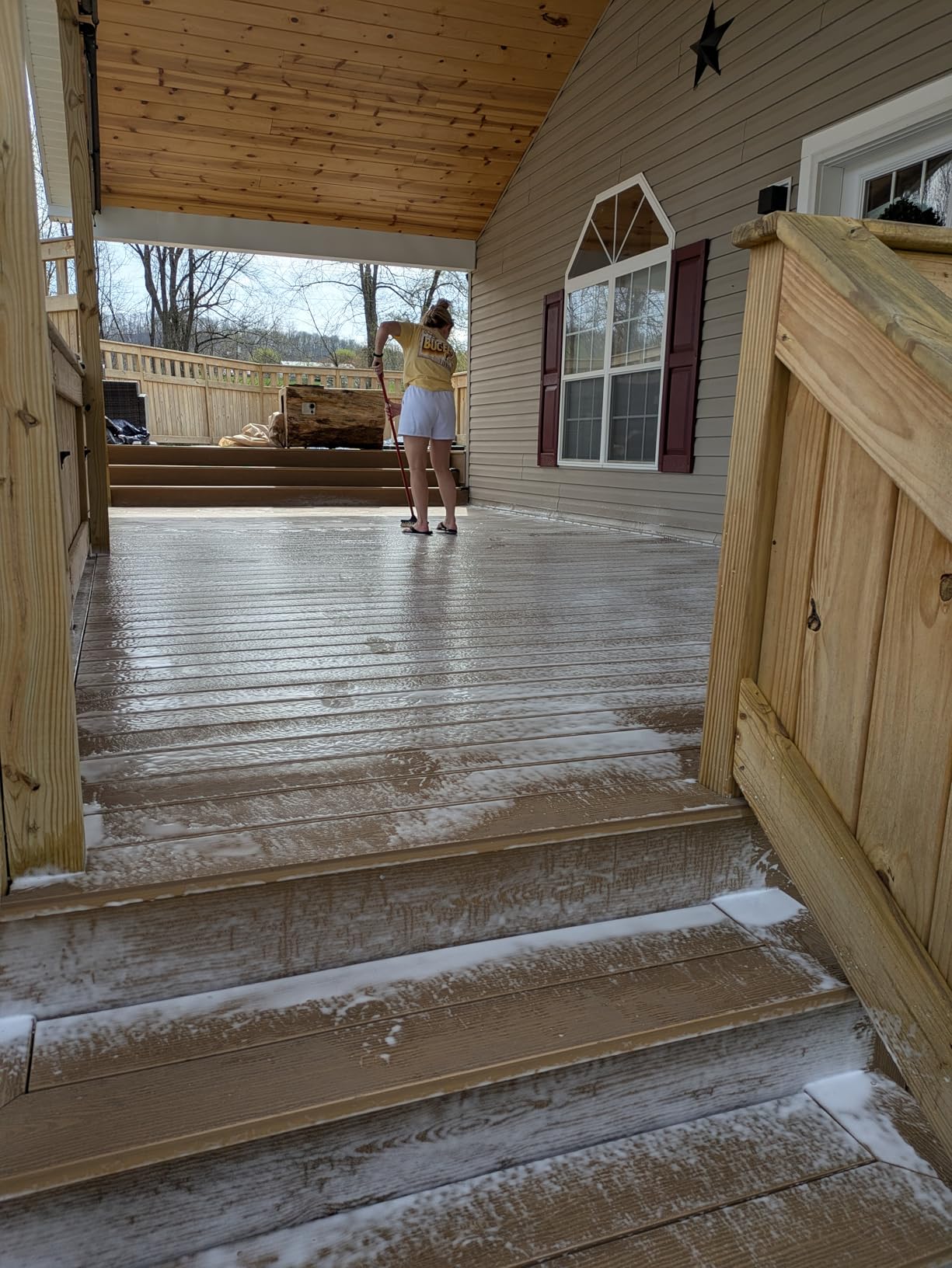
At 19 pounds and 16.5 inches tall it is one of the easiest machines here to lift into a car, carry up a step, and stand against a wall in a small garage. The 17.5-inch pro-style steel wand extends for reach, the five quick-connect nozzles cover 0, 15, 25, turbo, and soap, and the auto-stop pump conserves energy and extends pump and motor life every time you release the trigger to reposition.
Two honest drawbacks. The nylon braided hose is more vulnerable to abrasion than the steel-braided hoses on premium machines, which matters if you drag it across rough concrete edges regularly. And 20 ounces of soap is about three minutes of detergent work, so plan refills if you are treating a large stained area.
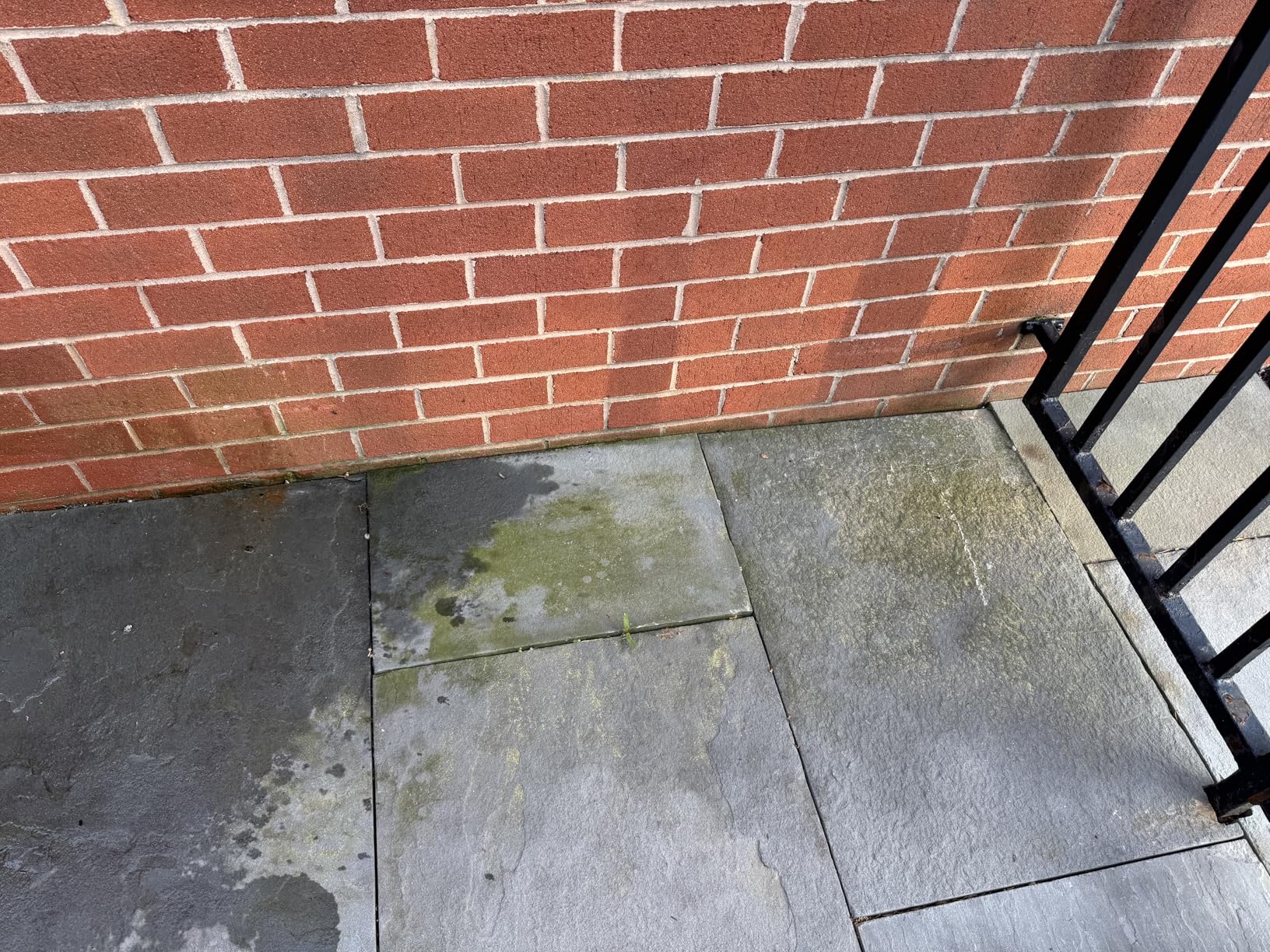
Whether 2500 max PSI is enough for your patio
On a standard aged patio, yes. The rated output is 2,000 PSI at 1.2 GPM, and 1.76 GPM is the maximum, which means the machine keeps rinsing while the pressure drops toward the top of its range. That combination is why it outcleans the many 3,000 PSI electrics that only push 1.2 GPM.
It is also the machine we would hand to a first-timer, because 2,500 max PSI leaves margin for error. A 3,000 PSI machine puts a new owner closer to the edge of the etching zone, and the 15-degree strip test is much easier to pass on an unfamiliar patio with a little less pressure.
Where it falls short
If your patio is heavily oil-soaked, covered in decades of paint, or larger than about 500 square feet, the extra flow and pressure of a gas unit will save you real time. And if you wash constantly, upgrade the hose to a steel-braided model and the soap tank stops mattering entirely.
Reviewers also mention the 3-year limited warranty backed by a nationwide service network, which is a genuine advantage over cheaper private-label machines whose pumps are not serviceable.
3. Westinghouse ePX3100v: Top Rated and Only 17.6 Pounds
- 4.7 average across more than 4900 ratings
- 17.6 pounds
- one of the easiest to move
- Built-in carry handle
- Detachable foam cannon included
- Only a 3-nozzle set
- 2100 max PSI is below the 2500 to 3000 range
This is the satisfaction winner, with a 4.7 average and 81 percent five-star ratings across 4,913 reviews, and it is the machine we would put in the hands of someone who is terrified of etching their patio. 2,100 max PSI is the lowest top-end pressure among the three Westinghouse machines here, and that is precisely the point.
Paired with a 1.76 GPM max flow rate, it still has the flow that makes wide-area work fast. The reviewers who use it on patios and walkways describe it as surprisingly capable for its size, and at 17.6 pounds it is the one we would pick to carry up a step or move around patio furniture.
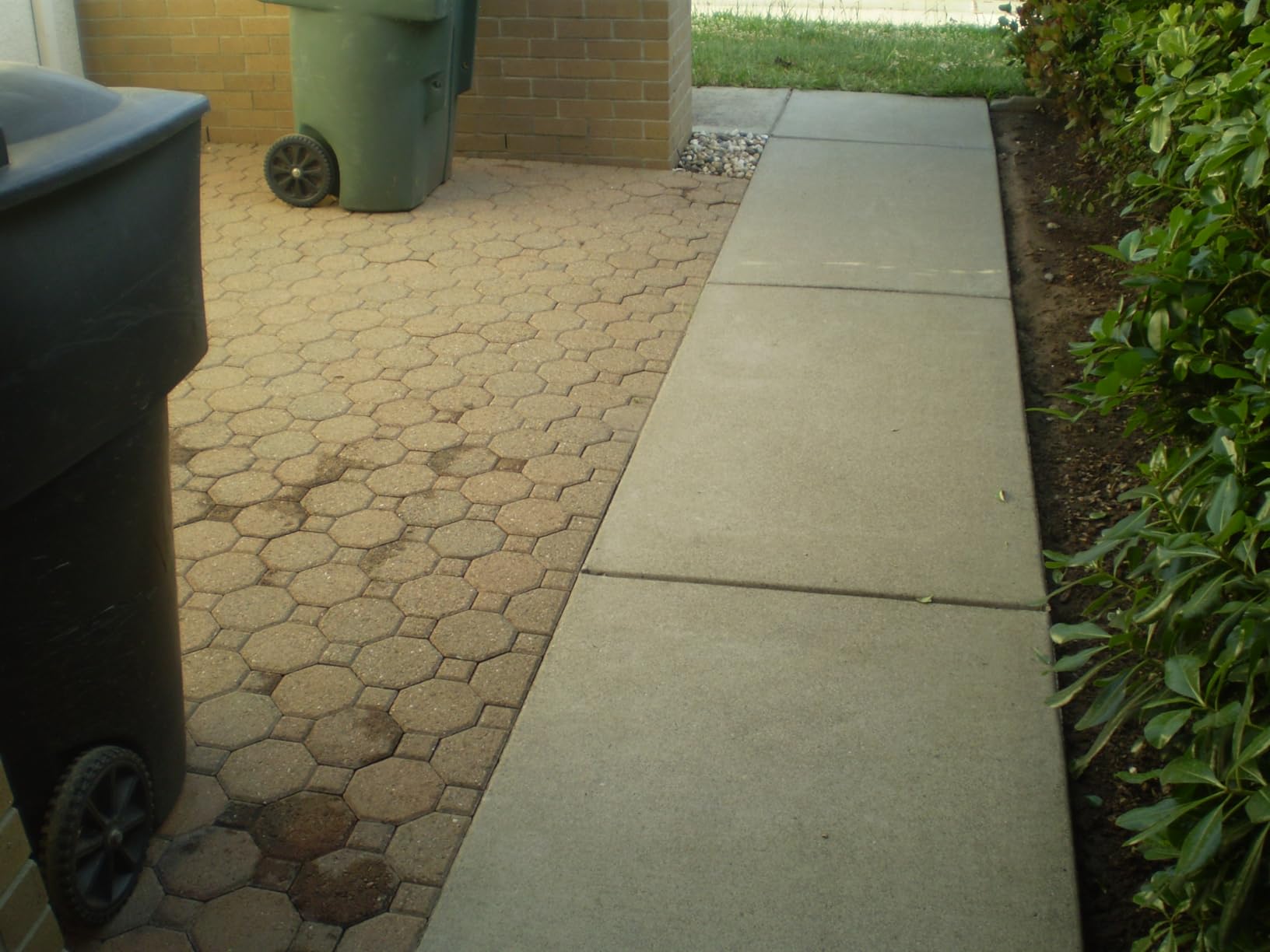
The detachable foam cannon is the accessory people do not expect to find included. For concrete, a foam cannon is how you lay down a detergent evenly across a wide area before you start pressure, and letting the solution dwell for several minutes is what breaks down algae and mildew instead of just rinsing the surface.
It stores as a compact box too, at 15 by 8.5 by 11 inches, which matters if your garage shelving is already crowded. The built-in carry handle and the auto-stop pump complete a machine that is clearly designed for someone who wants the job done without much fuss.
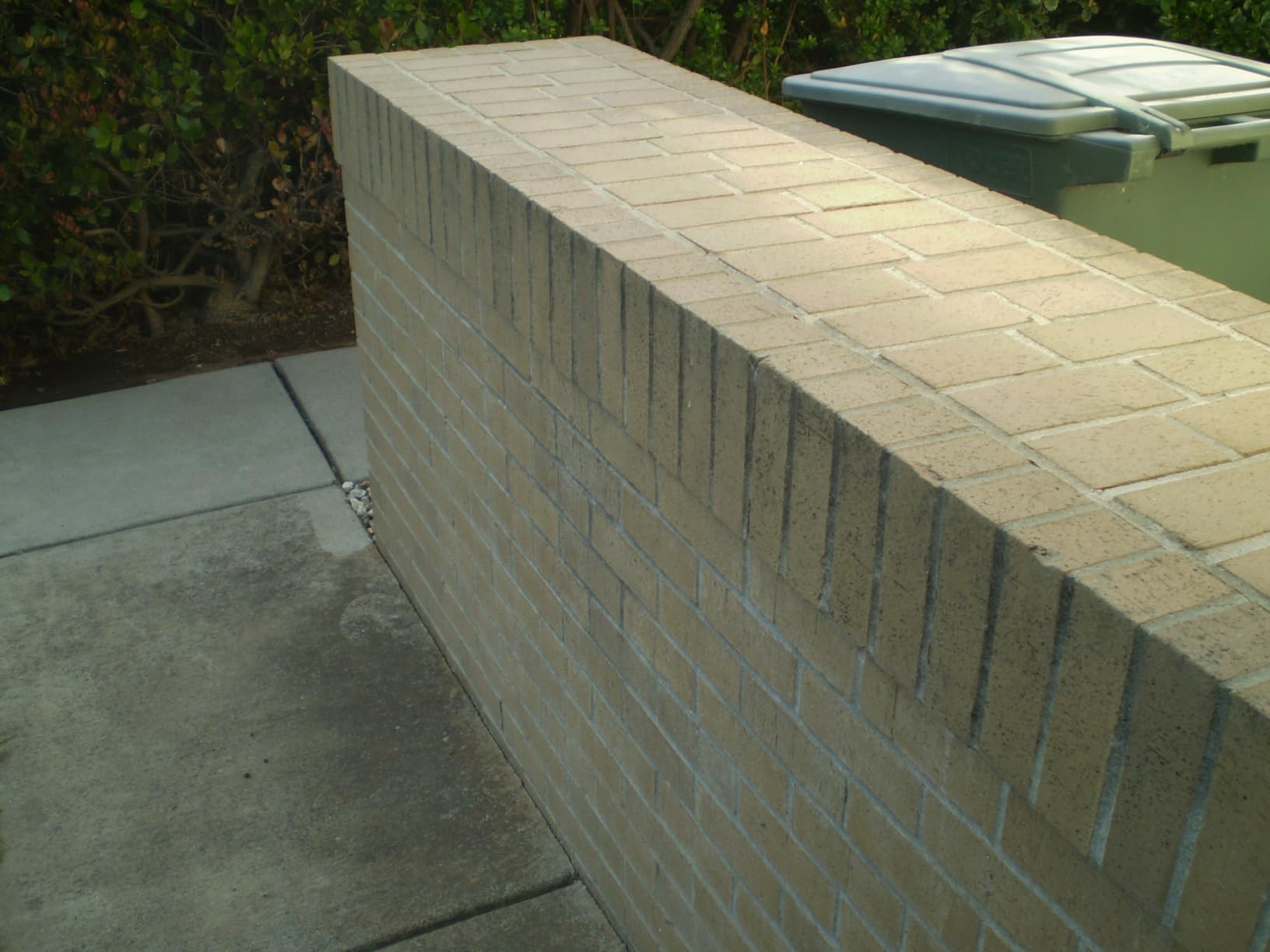
Why lower PSI can be the smarter choice on concrete
Etching happens when concentrated pressure removes the cement paste that holds the surface together, and the risk climbs as pressure climbs and as standoff distance shrinks. A 2,100 max PSI machine gives you comfortable margin even if you hold the wand a little closer than you should. On a 400 square foot patio, that margin is the difference between a good afternoon and a repair bill.
Rated output is 1,800 PSI at 1.2 GPM. For a lightly soiled patio with a surface cleaner, that is genuinely sufficient, and you can always step up to a turbo nozzle or a second pass for the stubborn lines near the grill.
When this is not enough
If the concrete has never been cleaned and is black with algae, the extra 900 PSI of the WPX3000e will genuinely help. The 3-nozzle kit is also thinner than we would like for concrete work, since you lack a dedicated 40-degree tip for broad, gentle passes and will lean on the surface cleaner more heavily.
Reviewers accept both trade-offs for the weight, the rating, and the 3-year warranty, and in a lineup where weight is the most common complaint, that is a good exchange.
4. DeWalt DXPW3300-S: The Best Warranty Coverage in the Group
DeWalt 3300 PSI Gas Pressure Washer, 2.4 GPM, Residential Model DXPW3300-S
- 3300 PSI at 2.4 GPM handles stubborn buildup
- 5-year frame and 3-year pump warranty
- Thermal relief valve resists overheating
- Compact 41 inch footprint
- 64 pounds is heavy to load or carry
- 49-state compliant rather than California certified
If you want the machine to still be there in ten years, warranty length is the most underrated spec on this list. This DeWalt carries a 5-year frame, 3-year pump, and 2-year engine coverage, which is the longest package in the group, and that is the reason this gas unit sits at number four rather than lower.
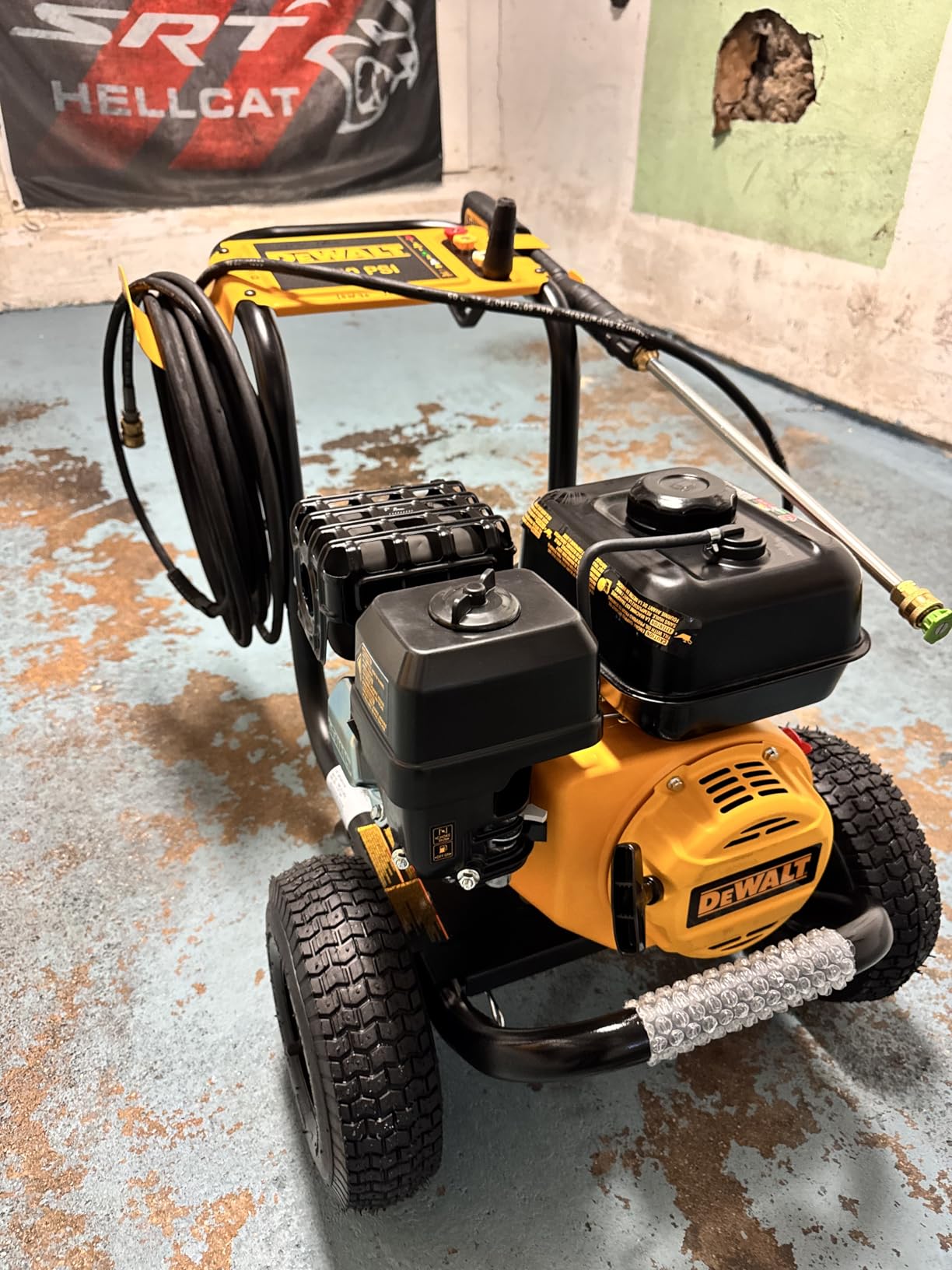
On concrete the numbers are the real draw. 3,300 PSI at 2.4 GPM from an OEM Technologies axial cam pump is a serious combination for packed algae, oil stains, and prep-before-paint jobs, and the 208cc engine is widely described as easy to start on the first pull.
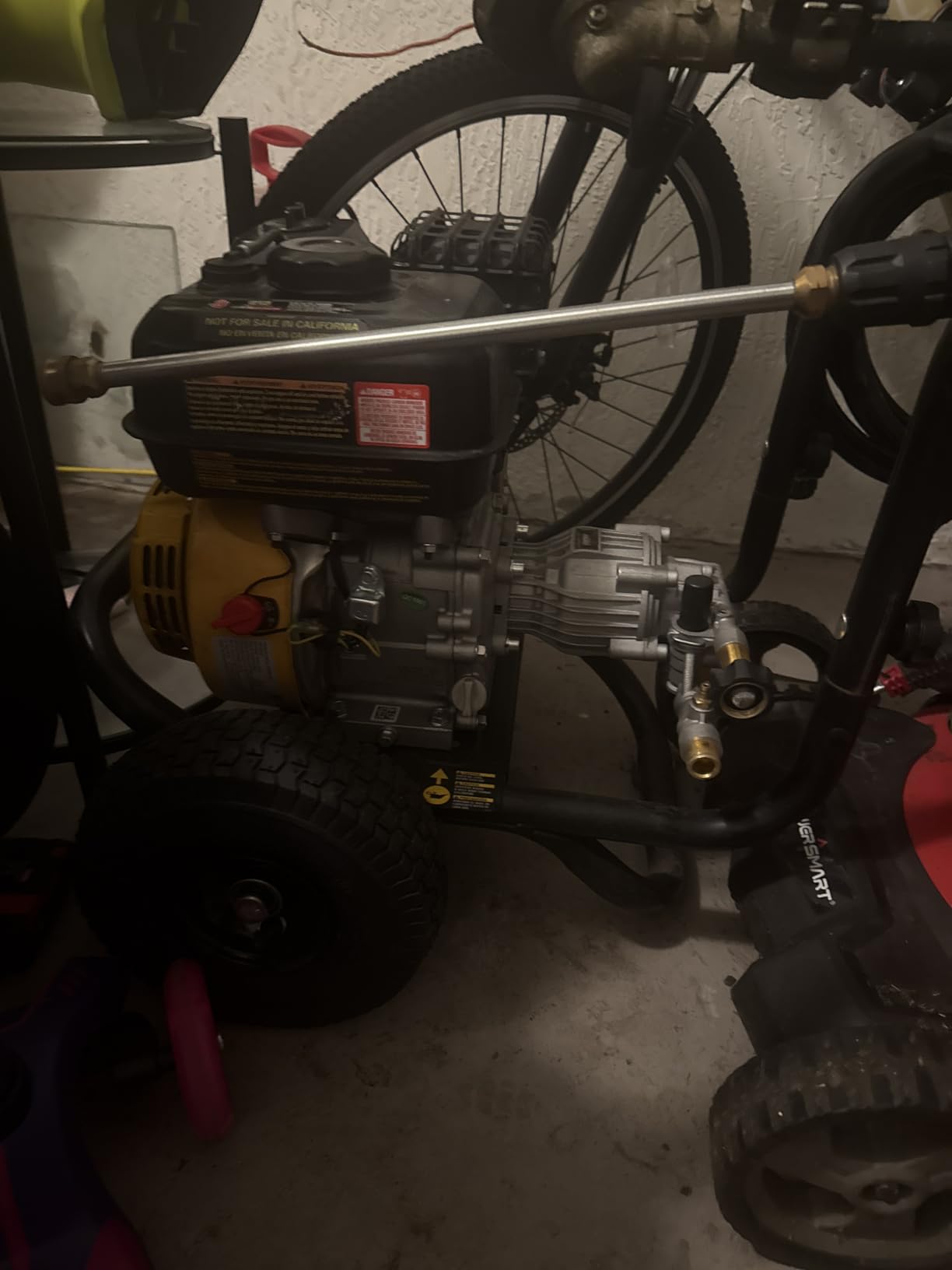
The compact 41 by 21 by 24 inch frame on 10-inch pneumatic tires makes it easier to move over gravel, grass, and curbs than most gas frames, which is a real difference when your patio is reached across a lawn. The thermal relief valve protects the pump on long runs, and the 5 quick-connect nozzles give the widest pattern selection among the gas machines here.
Two things to plan around. At 64 pounds it is heavy to load into a vehicle or carry up stairs, and the 49-state certification means this specific model is not built to California emissions standards. If you are buying a gas washer, confirm regional compliance before you commit.
What the 2.4 GPM flow changes on a large patio
Flow is what determines how much area you finish per minute once the dirt is loose. At 2.4 GPM this washer covers ground noticeably faster than a 1.76 GPM electric, and that difference compounds badly on a stamped patio with furniture, planters, and steps that force you to work in small sections.
Owners frequently describe this model as the middle ground between entry-level gas units and the Honda-powered Simpson, and the axial cam pump is the component that makes it feel a tier up. For a large aged patio this is more than enough pressure, and you can dial back with a 40-degree tip or a surface cleaner whenever you feel the surface starting to dull.
Where the trade-offs bite
Gas ownership is a lifestyle change. There is fuel to store, oil to check, exhaust to breathe, and noise that makes early morning work unpopular with neighbors. On the r/HomeImprovement threads you will see people tell each other to buy a used gas unit, and for a 600 square foot neglected patio they are not wrong.
The other caution is discipline. 3,300 PSI will etch new or decorative concrete faster than any electric here will, so this belongs in the hands of someone who will do the strip test and use a surface cleaner.
5. Sun Joe SPX3000: The Most Reviewed Washer on Our List
Sun Joe Pressure Washer, Electric Power Washer, 2500 Max PSI, SPX3000
- Dual detergent tanks for separate solutions
- Stainless lance and brass fittings add durability
- Five quick-connect nozzles
- Portable at 24.3 pounds
- 1.2 GPM is slow on large concrete areas
- 20 ft hose is short for a big patio
More than 64,000 reviews and a 4.4 average is an enormous evidence base, and it is why this machine still anchors the category even though it is not the newest or the most powerful thing here. If you want the machine with the most proven track record on patios, driveways, and steps, this is it.
The dual onboard 0.9 liter detergent tanks are the feature concrete users notice first. You can keep a concrete-safe cleaner in one and a separate solution in the other and switch between them without refilling, which saves real time when you are moving from an algae treatment to a rinse pass.
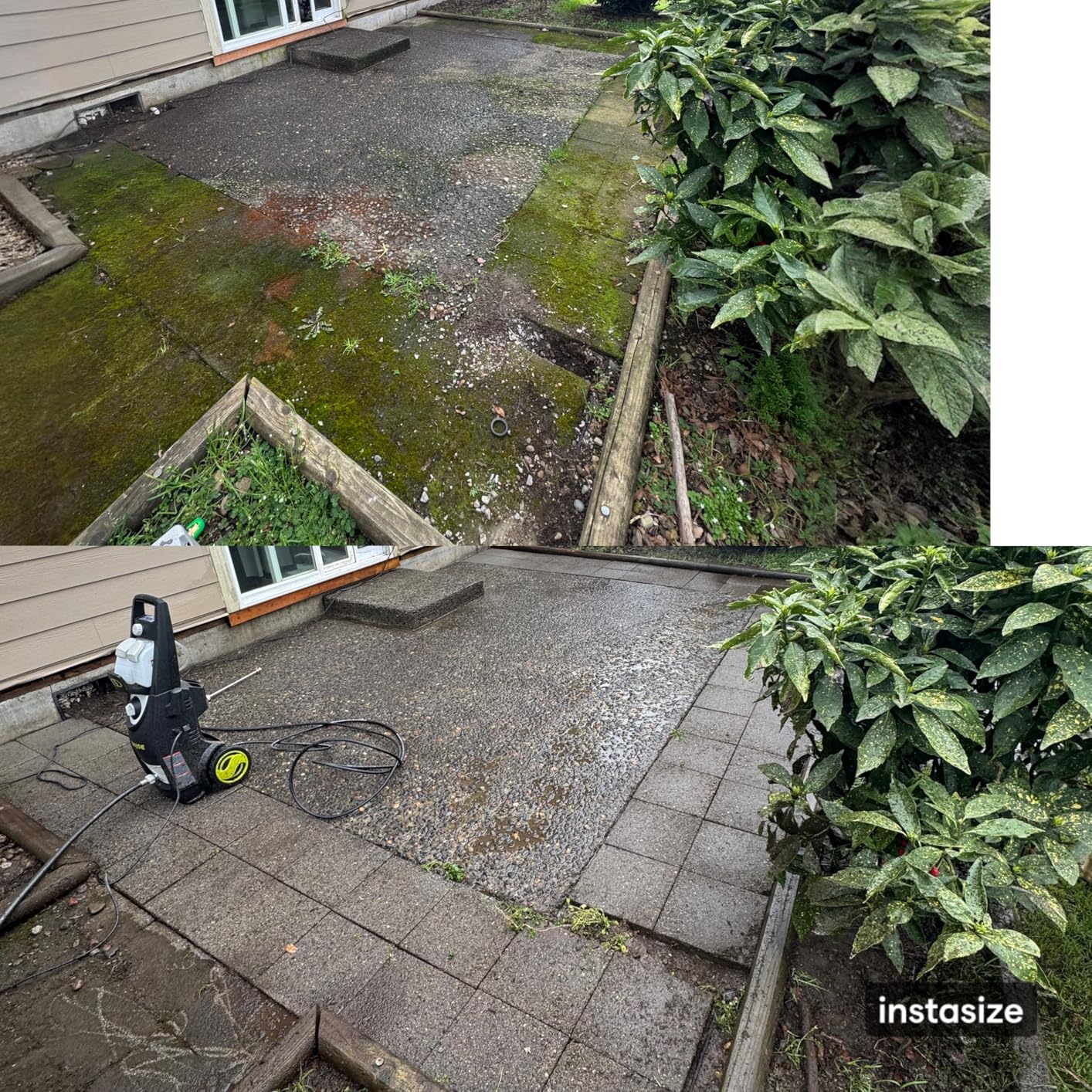
Build quality runs ahead of the tier it sells in. The 34-inch stainless steel spray lance with brass fittings resists the corrosion and breakage that takes apart cheaper machines, and the five quick-connect tips at 0, 15, 25, 40, and soap cover the patterns concrete actually needs, including the wide 40-degree fan that is your safest starting point.
Working pressure is 2,030 PSI with 2500 max PSI listed as the ceiling, and the flow is the weak point. 1.2 GPM is at the low end of the ratings here, and reviewers say plainly that it makes large concrete areas take longer to clean. On a small patio nobody notices. On a 600 square foot slab you will.
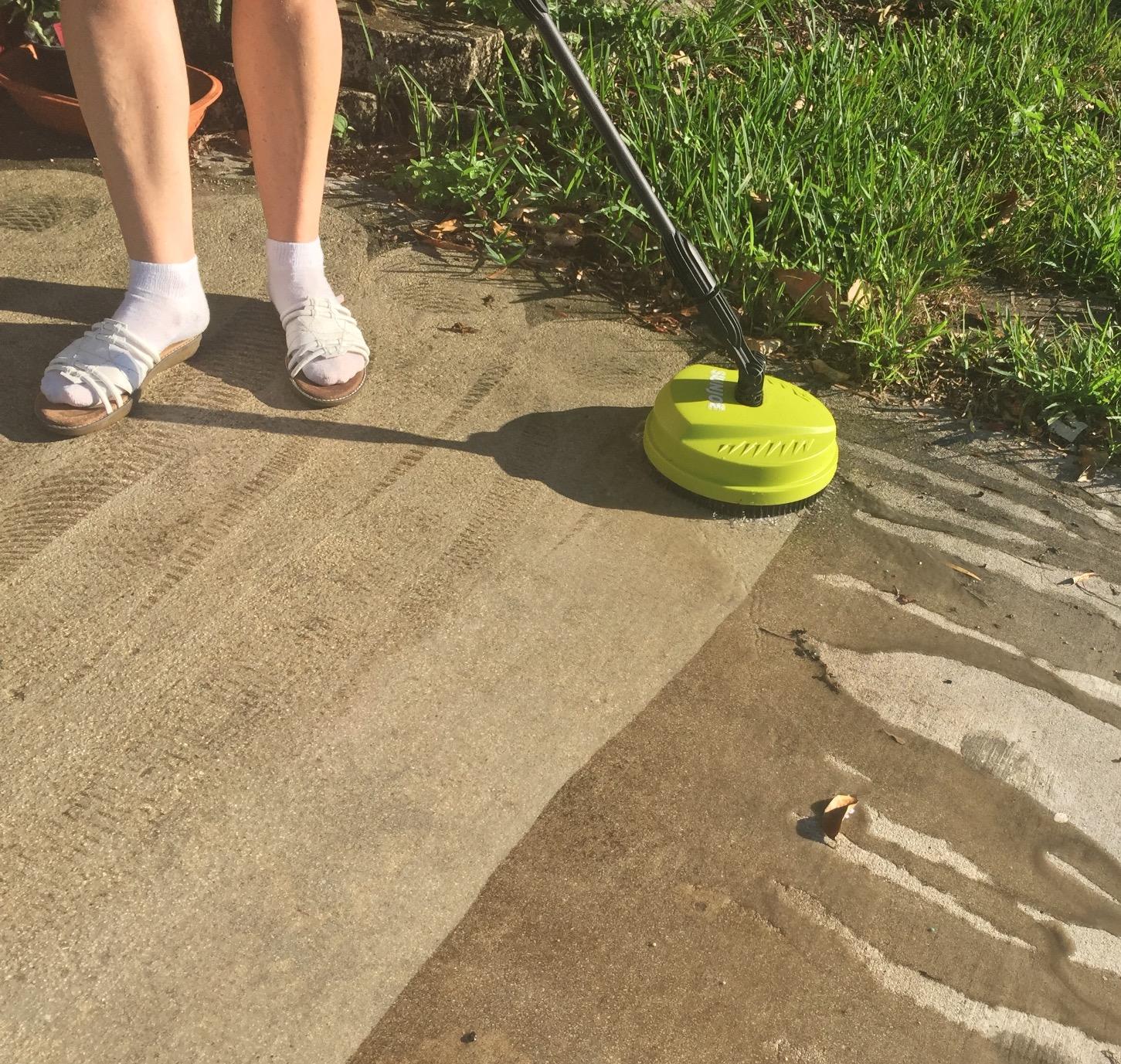
Where this machine still makes sense
For a small patio, a driveway edge, steps, and outdoor furniture, this is genuinely enough, and the 15-degree tip at 2,030 PSI working pressure will not etch anything. It is also the machine most people already own, and the detachable parts are widely available, which matters when a hose eventually fails.
The 20-foot hose is the second limitation to plan for. On a long patio you will be dragging the machine more than you would like, and dragging a machine across wet concrete is how you scuff a surface that you were trying to clean.
When to spend a little more
If the patio is your main project and you want to finish in an afternoon rather than a weekend, the flow rate is what you are paying to fix. Moving from 1.2 GPM to 1.76 GPM cuts the rinsing pass on a large area by roughly a third, and that is a bigger practical difference than the jump from 2,030 to 3,000 PSI.
Reviewers also point to the 2-year warranty as the weakest in this group, which is worth factoring in if you plan to keep the machine outdoors year round.
6. Greenworks GPW3001: Best Wide-Area Electric for Flow
Greenworks 3000 PSI (2.0 GPM Max) Brushless Electric Pressure Washer
- 2.0 GPM leads the electric units listed here
- Quiet with no fuel handling
- Cast aluminum axial cam pump
- 4-year warranty
- Lowest rated average here at 4.2 with an 11 percent one-star share
- Some buyers report flow near 1.1 GPM on delivered units
This is the machine to look at if your definition of electric is a cord on the wall rather than an engine on a frame. 3,000 PSI at 2.0 GPM from a 14-amp TruBrushless motor is the best flow-to-noise ratio in the lineup, and the cast aluminum axial cam pump is a genuinely better pump than most electric machines at this output level.
It is also PWMA certified, meaning the PSI and GPM claims were independently lab tested rather than measured by the seller. That certification matters more than it sounds, because one of the recurring complaints across this entire category is inflated pressure numbers on listings with no third-party verification.
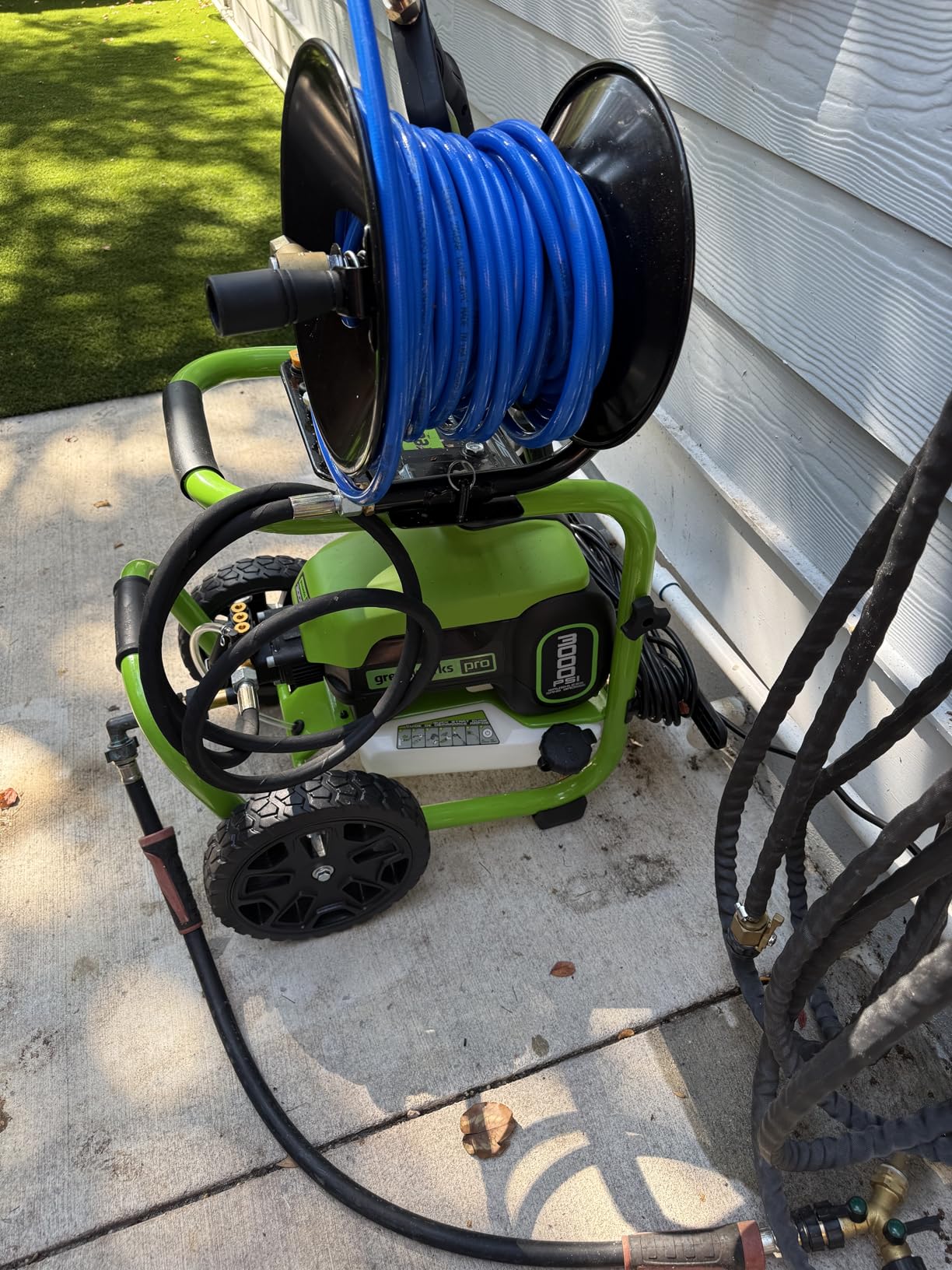
The JETFLOW technology is claimed to deliver up to 50 percent more flow for higher reach and fast rinsing, and reviewers cleaning driveways and walkways with a surface cleaner describe results they were not sure a corded electric could deliver. The 25-foot Uberflex hose resists kinking, which is the single most common durability complaint on cheaper electric units.
The 4-year warranty is the longest carried by any electric unit in this roundup. The catch is the review profile, and we would rather tell you about it than around it. A 4.2 average with an 11 percent one-star share is the lowest in this group, and multiple buyers report delivered units flowing nearer 1.1 GPM than the advertised 2.0.
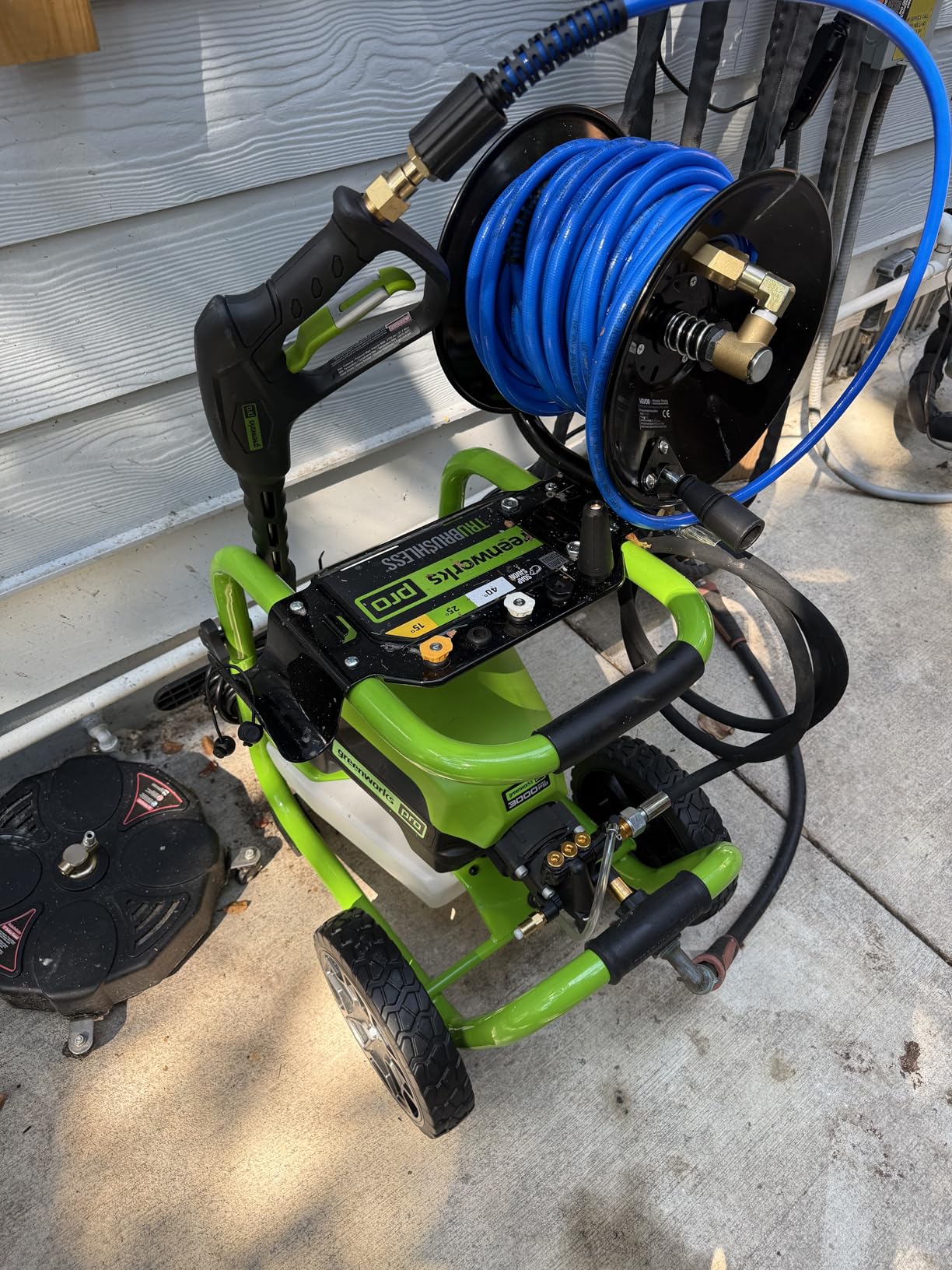
Whether a 2.0 GPM electric really finishes a patio faster
Yes, on the numbers. 2.0 GPM is more than 65 percent above the 1.2 GPM flow on most compact electrics, and cleaning speed on concrete scales almost directly with flow once the pressure has broken the grime loose. On a 500 square foot patio that difference is real time you get back.
Buyers who pair it with a rotary surface cleaner tend to be the most enthusiastic, and the reviews that describe strong driveway and walkway results almost always mention one. Buyers running a bare wand report the most frustration, which is the same pattern we see across every brand.
When to skip it
If you are buying on reputation alone and want the fewest surprises, the review spread here gives us pause. Confirm the flow rating on arrival, and if it does not meet the spec, the warranty period is your route to a replacement.
It is also a large machine at 23.5 kilograms on a 38-inch frame, so the same storage problem as the WPX3000e applies. The plastic hose holder and gun holster are a small annoyance reviewers patch with bungee cords or bolts.
7. SIMPSON Clean Machine 3400: The Proven Gas Performer
Simpson Clean Machine 3400 PSI Gas Pressure Washer, 2.5 GPM, CRX engine
- Maintenance-free axial cam pump with thermal relief
- 2.5 GPM handles large areas quickly
- 25 ft non-marring MorFlex hose
- 10 inch pneumatic tires roll over gravel
- Gas fuel and oil upkeep
- 49-state compliant rather than California certified
With more than 2,000 reviews, this gas machine has the deepest owner history here, and reviewers consistently credit the same three things: the axial cam pump, the non-marring hose, and the 2.5 GPM flow. That is a good sign, because all three matter on concrete.
The OEM Technologies axial cam pump is maintenance-free and has a thermal relief valve, so it can run a long afternoon on a large patio without cooking itself. The 208cc CRX engine has low-oil shutdown, which on a gas machine you leave outside is genuinely useful protection.
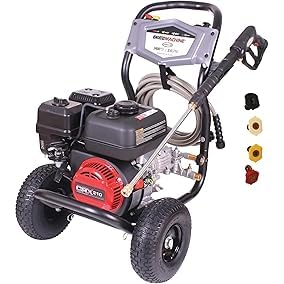
The 25-foot MorFlex hose has a non-marring surface, and that is not marketing language on a patio. A hose that scuffs the concrete is a hose that dulls the finish every time you reposition, and reviewers who wash around vehicles and finished surfaces mention this one by name.
At 61 pounds on 10-inch pneumatic tires, it rolls over gravel, grass, and curbs easily once it is moving. Getting it up a deck stair or into a vehicle is a different story, and that is where the 37 by 30 by 21 inch welded steel frame starts working against you.
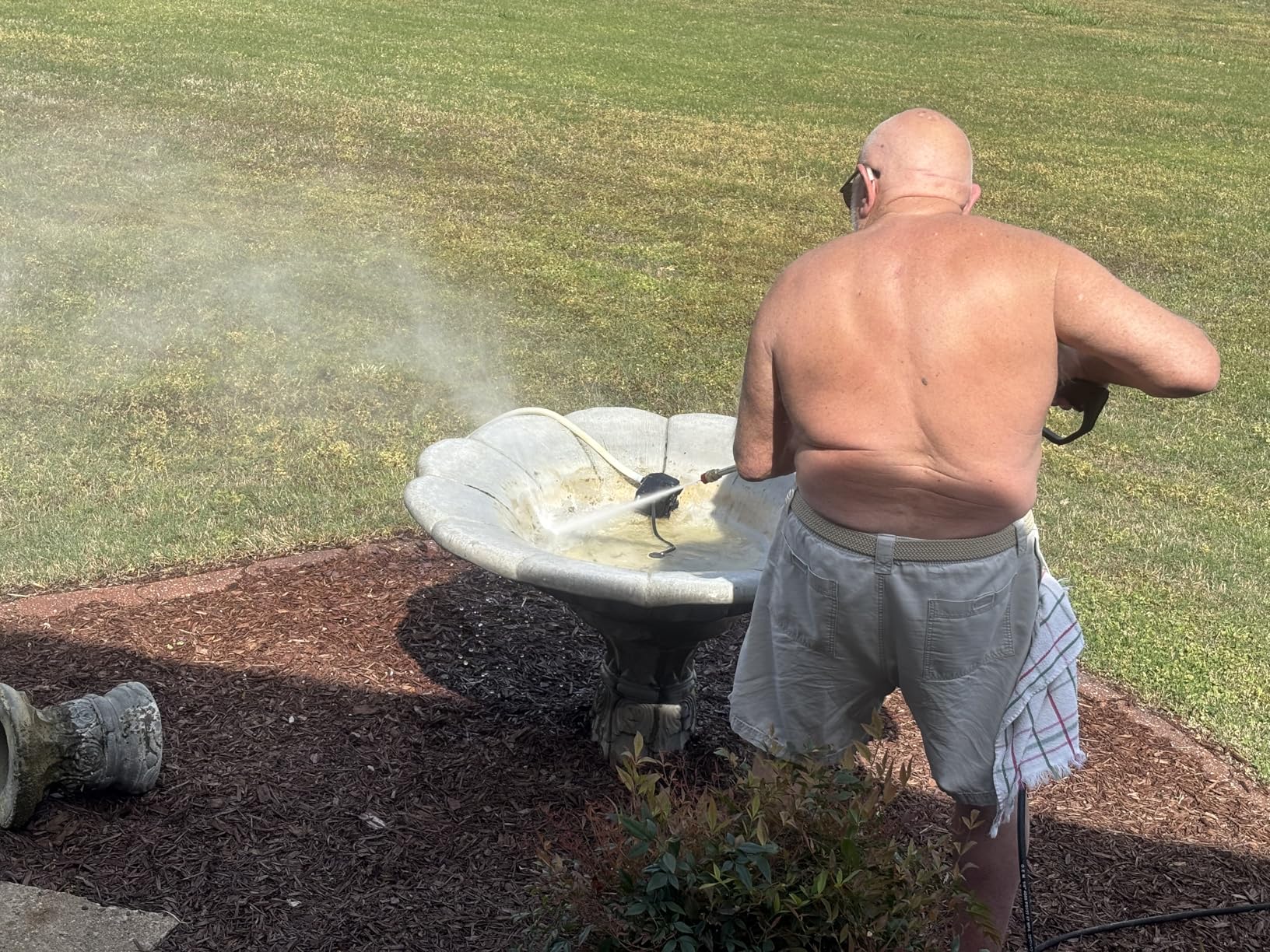
How 3400 PSI at 2.5 GPM performs on neglected concrete
This is the machine for a patio that has gone five or more years without attention, with algae matting, leaf tannin staining, and dirt packed into the pores. 3,400 PSI breaks the bond, and 2.5 GPM is the highest flow in this lineup alongside the PowerSmart, so the rinse pass moves the debris instead of pushing it around.
That flow figure is also why pros on the r/pressurewashing threads pair a gas washer with a surface cleaner rather than using a wand. The pairing is the setup, and the washer is only half of it.
Where the compromises show up
Four quick-connect tips is a thinner set than we would want for concrete, and 49-state compliance means this model is not built to California standards. Check your region before buying any gas washer in this list.
The warranty split is worth reading carefully: 2 years on the engine, 1 year on the pump, 1 year on the frame. The DeWalt at number four covers twice as long on the pump and frame, and for a machine that lives outdoors that difference adds up.
8. PowerSmart 3800 PSI Gas: The Most Pressure You Can Get Here
PowerSmart Gas Pressure Washer, 3800 PSI and 2.5 GPM for House Cleaning
- Highest PSI and GPM combination here
- 4-stroke OHV engine starts on a recoil pull
- 10 inch pneumatic tires handle any terrain
- 35 ft hose gives real reach
- 61 pounds is heavy to move
- 0.79 gallon soap tank refills often
This machine has the highest combined pressure and flow in the entire group, and the combination is not far off the near-commercial setups that show up in r/pressurewashing threads where people pair a 3,800 PSI gas unit with a 12-inch surface cleaner. For raw stripping power, nothing else here competes.
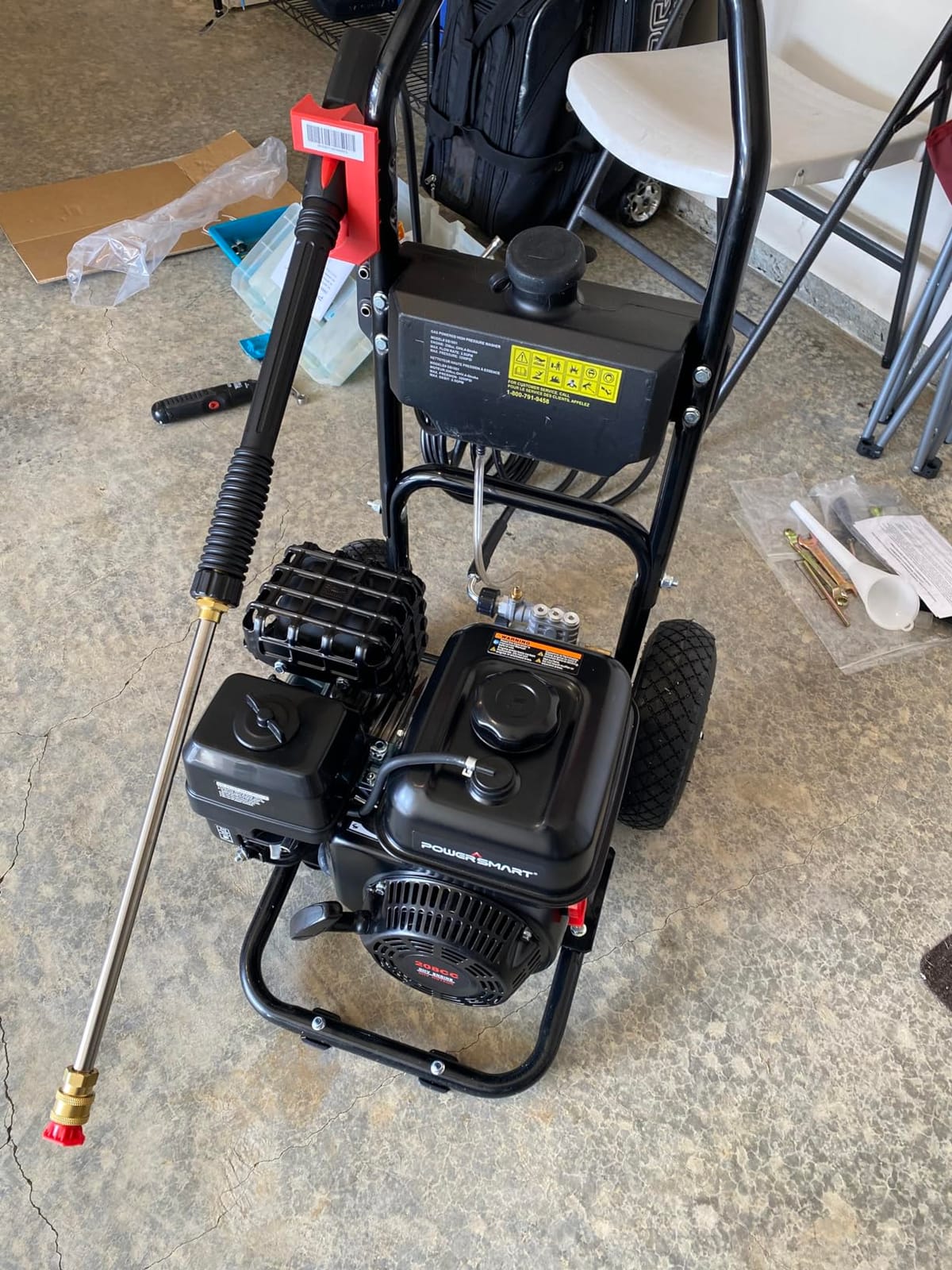
The 212cc 4-stroke OHV engine is a step up in design from the small recoil-starter engines on budget gas units, and the 35-foot abrasion-resistant super-flex hose gives you reach that most machines in this list cannot match without moving the unit.
It is also certified three ways, which is unusual at this level: PWMA performance certified, UL 1776 safety compliant, and EPA engine certified. If you are buying gas, those three marks tell you more about build quality than the peak PSI figure does.
Where it earns its keep is thick paint, heavy oil staining, and concrete that has never been touched. The 4-stroke engine also reaches second-story surfaces, which is not relevant to a patio but is useful if you own siding or a second-floor deck.
Whether 3800 PSI is too much for a residential patio
Usually, yes. This is stripper territory. Unless you are removing paint, clearing decades of packed algae, or cleaning a surface you already know handles high pressure, you will be working hard to stay inside the safe range, and the temptation to hold the wand closer is exactly how etching happens.
Our advice would be to buy this only if you also plan to clean driveways, decks, and equipment regularly. For a single patio clean, a rental of a commercial unit will do the same job without the storage or maintenance burden.
What to know before buying
At 61 pounds it is a two-person lift, the 0.79 gallon soap tank is the smallest relative to output here and will need refills mid-job, and a gas engine means fuel, oil, and a recoil start. The review base of 192 ratings is also the thinnest of any gas machine here, so long-term durability is less well documented.
The 10-inch pneumatic tires are the sleeper feature. They roll over gravel and lawn without dragging, which is what makes the 35-foot hose practical rather than theoretical.
9. SIMPSON PowerShot 3500: The Contractor-Grade Pick
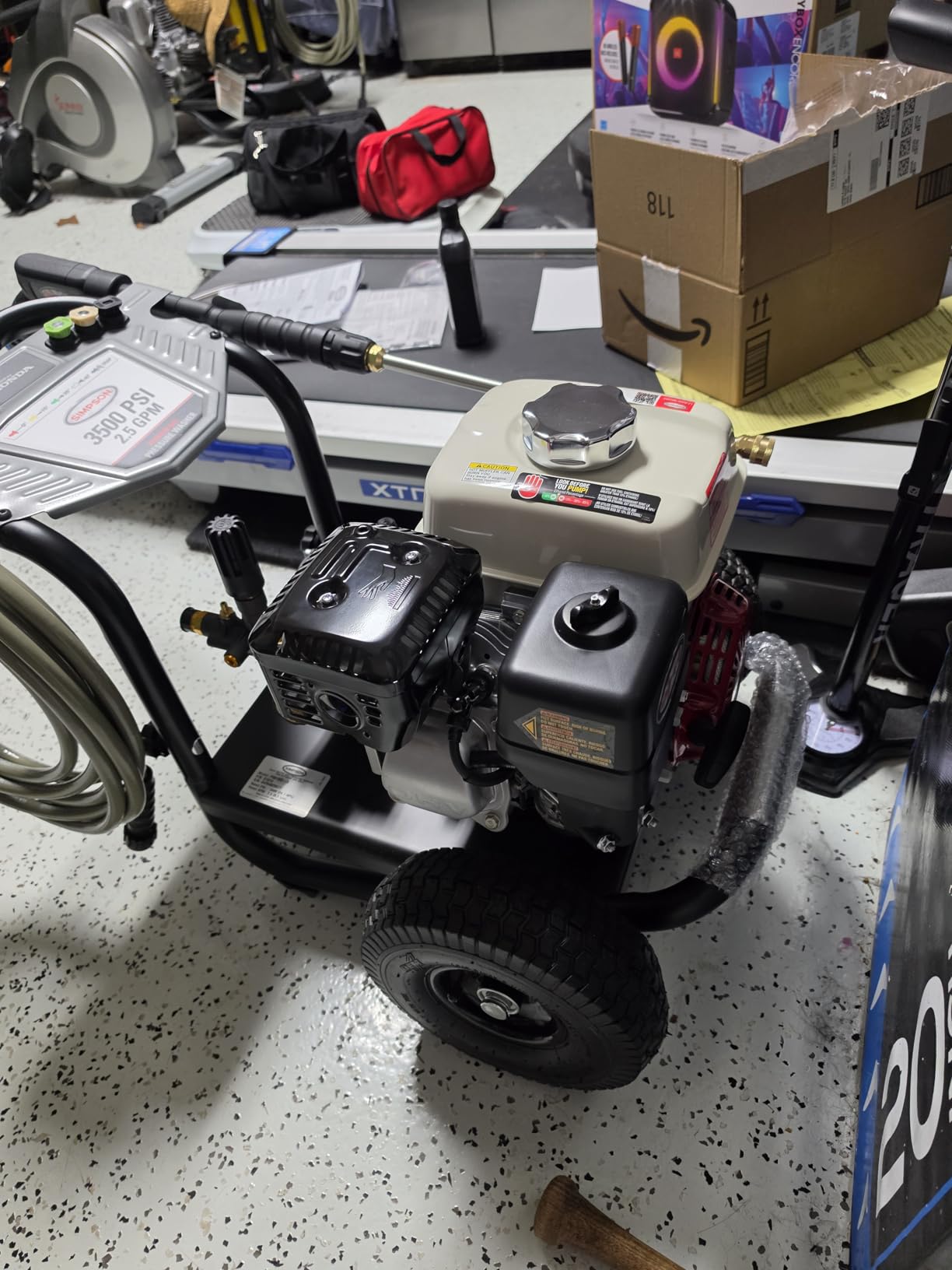
Simpson PowerShot 3500 PSI Gas Pressure Washer, 2.5 GPM, Honda GX200 Engine
- Honda GX200 is the durability benchmark
- AAA triplex pump with integrated unloader
- 3500 PSI at 2.5 GPM strips years of buildup
- Non-marring 25 ft polyurethane hose
- Heaviest machine here at nearly 73 pounds
- 49-state compliant only
The Honda GX200 engine is the reason this machine exists, and it is the engine most professionals name when they talk about a gas pressure washer that lasts. The AAA triplex pump with an integrated unloader and thermal relief is commercial-grade hardware in a residential frame, and that combination is why the 4.5 average holds with only 178 ratings and just 4 percent one-star reviews.
On concrete, 3,500 PSI at 2.5 GPM strips paint, removes graffiti, and blasts years of buildup in a way nothing else in this list can. The 25-foot MorFlex hose has a non-marring polyurethane jacket, which protects both the finished concrete and the machine.
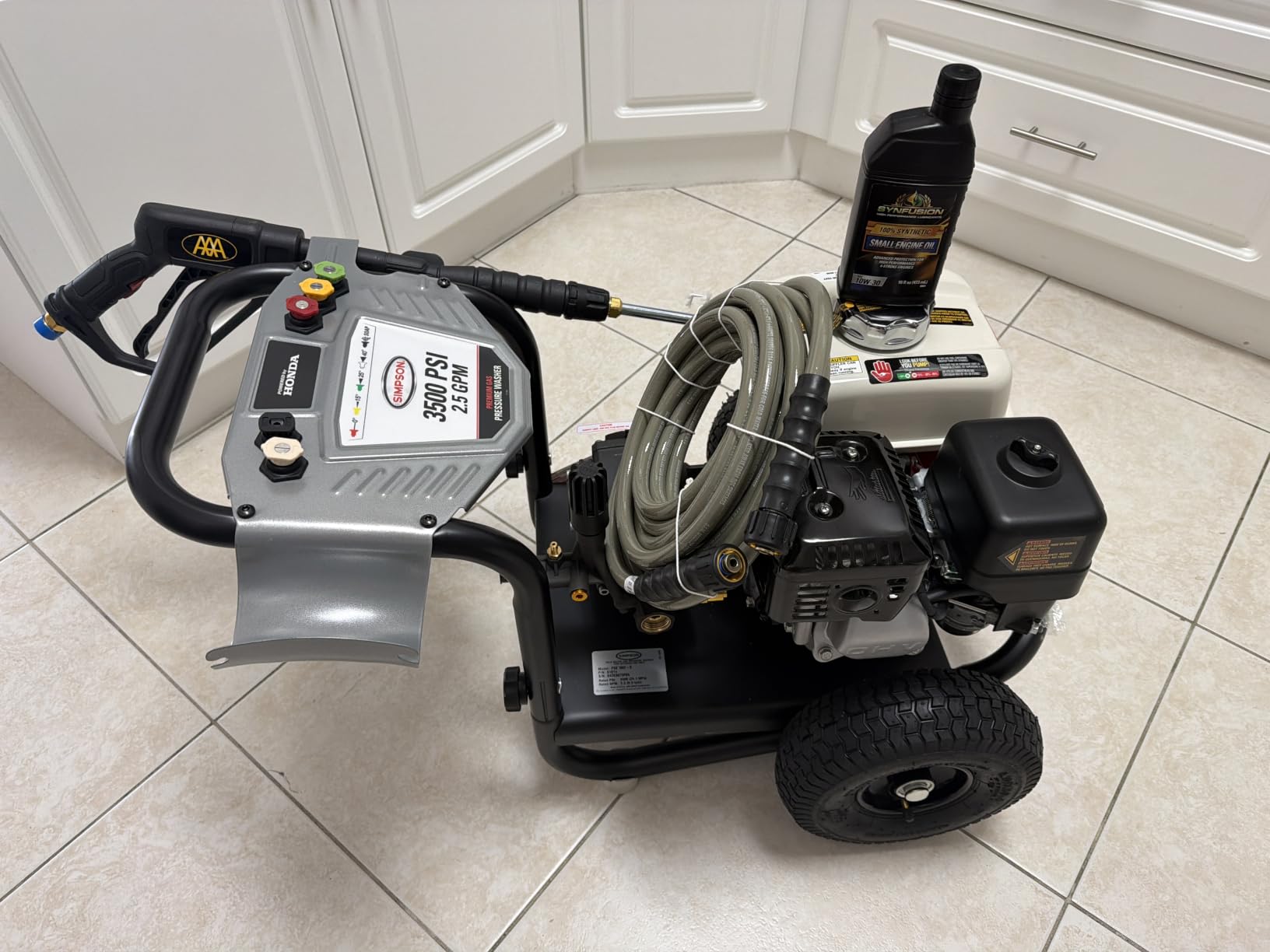
Five quick-connect tips and a 16-inch steel wand cover the full range of concrete work, and the rear-load M22 gun is the standard most accessories in the industry fit to. If you ever plan to add a surface cleaner, foam cannon, or undercarriage tool, M22 is the thread you want.
Owners who own more than one pressure washer tend to describe this as the one that goes to the hardest jobs and never gets traded away. The Honda engine is serviceable, parts are available, and the pump is a design that any repair shop understands.
Is a Honda engine worth it for a homeowner
Only if you are buying for the next decade or you clean professionally on the side. The GX200 has a reputation for service life that no other engine in this group approaches, and the pump is the tier above everything else here. For a family that pressure washes a patio once a year, that capability sits unused.
If you do buy it, buy it for a reason. Large stamped patios, driveways, decks, and exterior paint prep are what justify this machine, and the 2.5 GPM flow means a 700 square foot stamped slab with furniture and planters is a single-afternoon project.
When to spend less
Weight is the first hurdle. At nearly 73 pounds this needs two people or a ramp to move, and that changes who can use it in a household. Fuel, oil, and engine maintenance are ongoing costs an electric unit simply does not have, and 49-state compliance excludes California.
Our read of the 178-review base is that quality is consistent but long-term ownership data is thin. If you want proven longevity at a lower cost, the Westinghouse WPX3000e at number one gives you 3,000 PSI with a 3-year warranty and an induction motor that will not need fuel.
10. Greenworks GPW2003: The Best Starter Washer for a Small Patio
- Light and stores vertically on a shelf
- Quiet enough for early mornings
- 1.2 gallon soap tank
- 3-year warranty
- 25 ft hose is often described as too short
- Aluminum fittings can corrode against brass
This is the machine for a 100 to 200 square foot patio that has not seen anything worse than dirt, mildew, and a season of leaves. 2,000 PSI at 1.2 GPM is genuinely enough for that job, and the removable handle lets it stand vertically on a garage shelf, a trick none of the other machines in this roundup offers.
The 1.2 gallon onboard soap tank holds more than most machines in this lineup carry, and for a detergent pre-treatment on concrete that matters more than it sounds. Switch to the soap tip and the machine draws detergent automatically, which is the easiest way to give algae time to break down before you rinse.
The 14-amp motor with push-button start and start/stop technology powers down when the wand is not engaged, which protects the pump between passes. Reviewers also comment on how quiet it is, which makes early weekend work possible without neighbor friction.
That 25-foot hose, though, is the number one complaint across a large share of reviews, and it is a fair one on a wide patio. Several buyers solve it with an aftermarket hose, and at this level that upgrade is often worth making before anything else.
Whether 2000 PSI is enough for a small concrete patio
For light surface dirt, yes, and the 1.2 GPM flow means you will re-wet and re-pass more than you would with a higher-flow machine. Add a rotary surface cleaner and the number of passes drops, because the surface cleaner holds even pressure across the whole head rather than concentrating it in one spot.
Where it stops being enough is embedded oil, rust bleed, and green algae with real depth. Those need either detergent dwell time or more pressure, and this machine is better suited to a maintenance clean than a restoration.
What to watch out for
There is a smaller but real thread reporting motor or pump failure within a year, along with oil and water leaks. With a 4.4 average and a 7 percent one-star share, it is not a common outcome, but it is the reason we would keep the receipt and know the 3-year warranty terms.
The aluminum quick-connect fittings rather than brass are a chemistry risk against brass hose fittings, and worth a look if you hard-water area leaves you with corrosion within a season.
11. CRAFTSMAN CMEPW2100: The Quiet Corded Electric
CRAFTSMAN Electric Pressure Washer, Cold Water, 2100-PSI, 1.2 GPM, Corded (CMEPW2100)
- Quiet and light compared with gas models
- 35 ft cord plus 25 ft hose gives good reach
- Onboard storage keeps the unit tidy
- CETA certified
- Hose tangles and kinks when coiled
- Soap dispensing often fails unless inlet flow is throttled
CRAFTSMAN built this for people who want electric quietness without giving up reach, and the 35-foot power cord plus 25-foot hose combination means you can set up once at an outdoor outlet and cover a long patio without moving the unit. Reviewers compare the noise favorably to gas machines and note that 2,100 PSI is safe around vehicles and painted surfaces.
Storage is genuinely well thought out. The onboard storage holds the nozzle, hose, cord, and wand, which means the machine goes back in the corner as a single object rather than a pile of parts, and 10-inch wheels make it easy to roll across a garage floor.
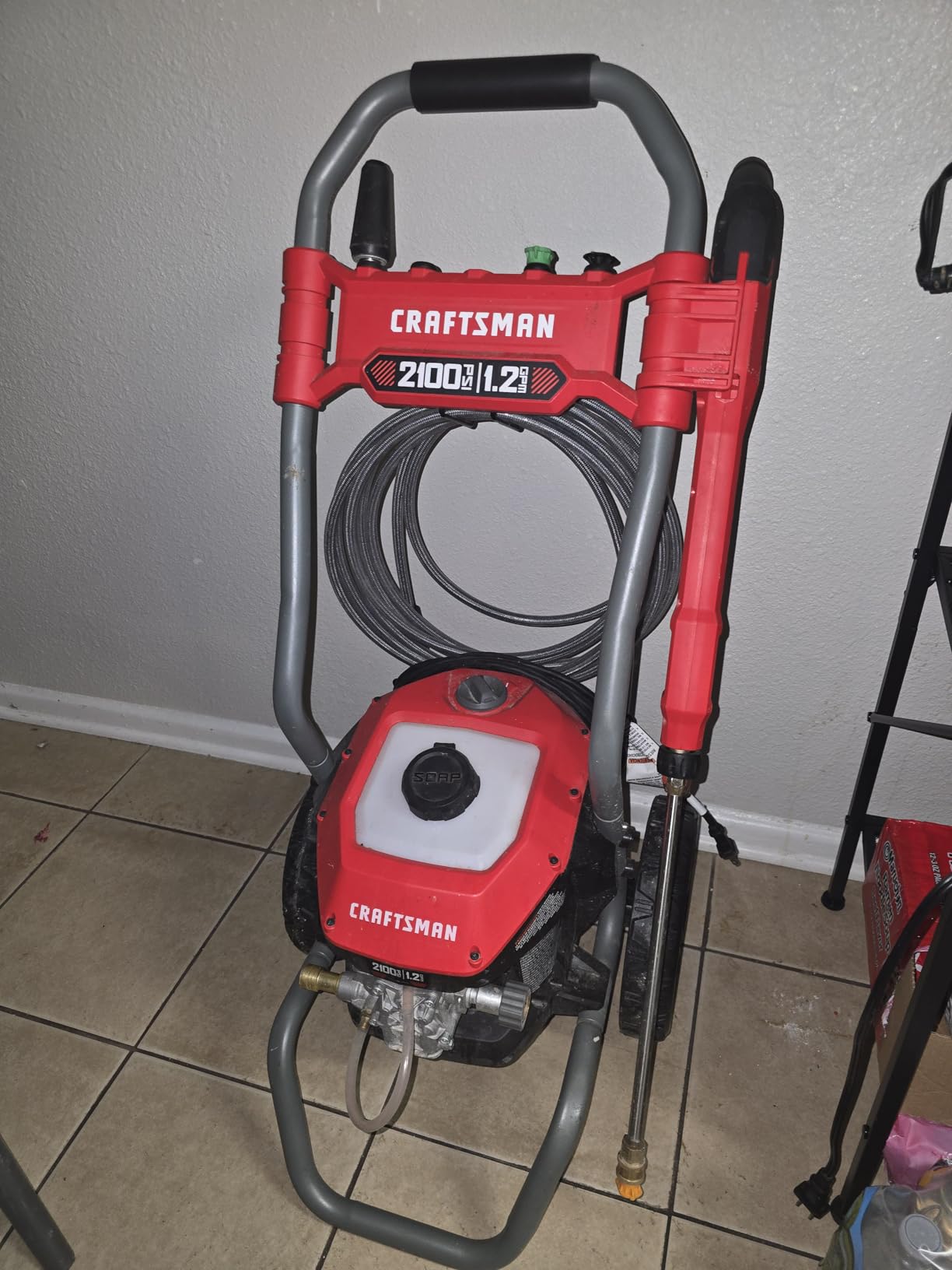
The soap tank is integrated into the spray gun rather than the body, which is convenient and portable, though it comes with a well-known condition. Soap dispensing frequently will not draw unless the garden hose inlet flow is turned down partway, and that is the single most common fix reported for this machine.
Flow is the limitation that matters for concrete. 1.2 GPM is at the low end, and buyers cleaning large areas describe it as slow compared with 1.76 GPM machines. For a 400 square foot patio it is a longer afternoon.
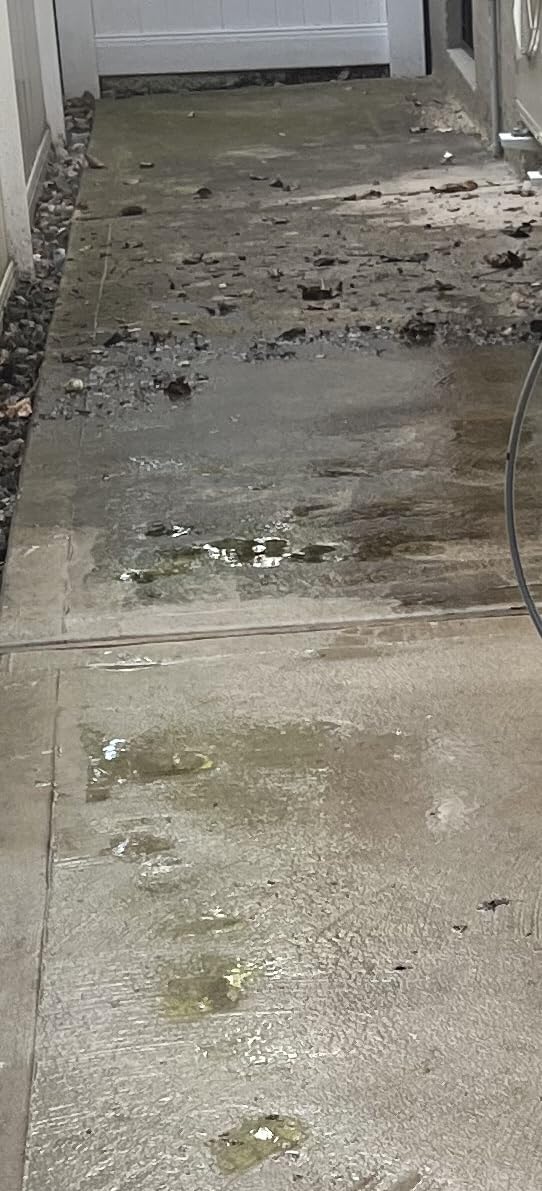
Is 2100 PSI enough for a standard residential patio
Yes for a patio that gets seasonal cleaning. It is rated at 2,100 PSI, which sits in the same band as the Westinghouse ePX3100v, and both are comfortable choices for someone worried about etching.
Because the flow is 1.2 GPM, we would lean harder on a surface cleaner with this machine than with any other here. Even pressure across a rotating head is what makes up for lower flow, and it is also the best way to avoid the lap lines a bare wand leaves.
Where it will frustrate you
The hose is the most repeated complaint. It tangles and kinks when coiled and uncoiled, and a kinked hose both reduces working pressure and gets dragged across the concrete you are cleaning. A hose reel or a wall mount solves half of that.
There is also a smaller thread about the built-in cord circuit breaker and the pump failing within a year, which is worth weighing against the 3-year-class coverage the Westinghouse machines carry. For a very quiet household with a modest patio, though, this is a good machine.
12. BILT HARD 2465 PSI: The Budget Pick
- 1.76 GPM while staying at a low cost
- 20 ft hose plus 35 ft cord gives good reach
- Automatic trigger shutoff with safety lock
- Compact vertical footprint
- 0.4L detergent bottle refills often
- Only 4 nozzles and no foam cannon
The remarkable thing about this machine is the flow rate. A 1,600W motor delivering 2,465 max PSI and 1.76 max GPM puts it in the same class as the Westinghouse ePX3500 on the spec that governs cleaning speed on concrete, at the entry level of this roundup.
On a standard aged patio, that combination will clean concrete. The 20-foot hose and 35-foot power cord give workable reach, and the automatic trigger shutoff with an integrated safety lock protects the pump whenever the machine is parked mid-job.
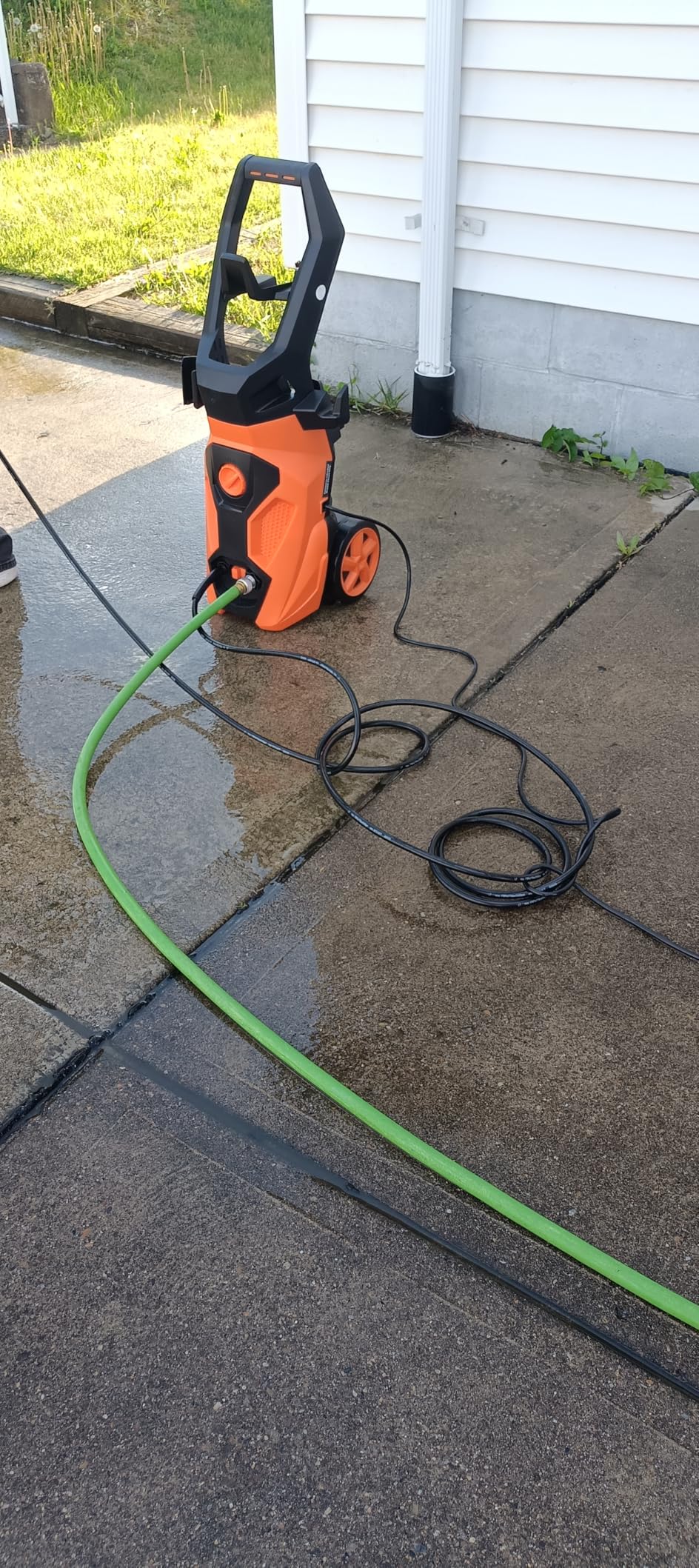
The compact vertical footprint stores easily in a garage or utility area, and the built-in power cord hook and accessory holder keep the hose, nozzles, and cord from becoming a tangle on the floor. That organization matters more than it sounds after the third patio clean.
There are real limits, and they are mostly about accessories and support. Four quick-connect tips at 0, 15, 25, and 40 degrees, no turbo, and no foam cannon means detergent application is a manual process rather than a tank-and-tip arrangement.
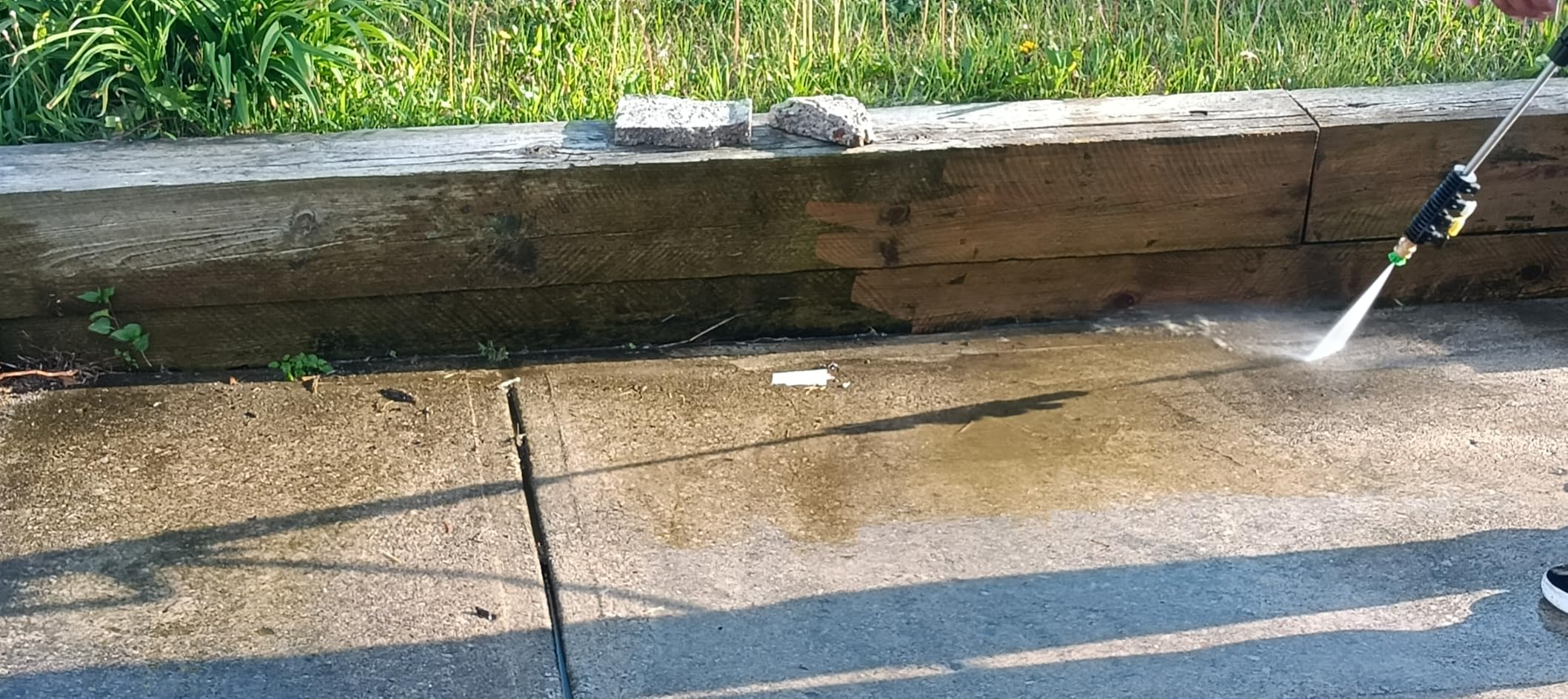
Whether a budget washer can handle a real patio clean
For a 200 to 300 square foot patio with ordinary dirt, yes. At 1.76 GPM the rinsing pass moves as well as machines costing considerably more, and the 2,465 max PSI ceiling is enough for the grime that settles into a surface over a few seasons.
What it is not is a restoration tool. Deep oil staining, thick paint, and heavily rooted algae need detergent dwell and higher pressure, and the 0.4 liter detergent bottle makes that awkward because you are refilling every few passes.
When to spend more instead
If you have never pressure washed before, the difference between this and a machine with a 3-year warranty, brass fittings, and a service network is the difference between a purchase that works and one that keeps working. Owners in the reviews on higher-volume models talk far more about longevity.
The 127-rating review base is also thin enough that we would factor it in. A 4.3 average from 127 reviews with 68 percent five-star is encouraging, but it is not a decade of ownership data, and pump failure is the complaint that shows up on cheaper machines once the warranty is gone.
Surface Cleaners: the Accessory That Decides How Your Patio Looks
You can buy the strongest machine in this guide and still ruin the look of your patio with it, because a bare spray wand concentrates all the pressure into a narrow line. Move that line in a straight pass and you get a clean stripe bordered by dirty concrete. That zebra pattern is the most common complaint about cleaning concrete, and it has nothing to do with the washer.
A rotary surface cleaner fixes it. The nozzle is held a fixed distance from the slab by the housing and spins inside it, so the fan stays even across the full head width. You get uniform pressure, far less splash-back on yourself, and much faster coverage because the cleaning area per pass is the width of the head instead of a two-inch line.
Sizing is straightforward. A 10-inch head suits patios up to about 150 square feet. A 12-inch head is the one most people should buy and covers the 200 to 500 square foot range most patios fall into. A 15-inch head is worth it for 500 square feet and up, or for a long stamped patio where you want fewer passes across the joints.
Check the fitting before you buy. M22 is the current standard and will accept a surface cleaner, foam cannon, or undercarriage tool interchangeably. Some older machines use a different thread, and the Westinghouse WPX3000e and the SIMPSON machines listed here all use M22.
Gas vs Electric for Concrete Patios: The Forum Argument Settled
For a patio you clean occasionally, gas wins on raw output. For a patio you clean every season, electric wins on everything except output. The r/lawncare advice that you never need more than 2,000 PSI around the house and that anything higher risks damage is not misinformation, and neither is the r/HomeImprovement advice to buy a used gas unit for a big project. Both are answering different patios.
- Startup and noise: electric is instant and quiet. Gas needs a fuel check, a choke, and a recoil pull, and neighbors hear it.
- Runtime: electric is limited by your circuit and your patience. Gas runs until the tank is empty.
- Output: the best gas machines here deliver 3,300 to 3,800 PSI at 2.4 to 2.5 GPM. The best electrics reach 3,000 PSI at 1.76 GPM.
- Maintenance: no oil, no spark plug, no fuel stabilizer. Electric wins by a mile.
- Storage and moving: 17 to 24 pounds versus 61 to 73 pounds. Electric wins decisively.
- Concrete safety: more power means less margin before etching. On new or decorative concrete, that argues for electric.
Our rule: if your patio is 400 square feet or larger and has gone several seasons uncleaned, buy gas. If it is smaller, or you are nervous about etching, buy electric and put the money you saved into a surface cleaner instead. That single accessory will improve your patio more than an extra 800 PSI.
If you only plan one clean ever, a rental is the honest answer. A commercial machine from a rental yard handles a 500 square foot neglected patio in a couple of hours, and it removes the storage and maintenance question entirely.
How to Pressure Wash a Concrete Patio Without Etching It
Etching is the permanent removal of the cement paste at the surface, leaving the sand matrix exposed. It feels rough under your hand, it traps dirt faster than the surrounding concrete, and it does not wash off. It happens when concentrated pressure is held too close for too long, and the fix is prevention rather than repair.
The strip test takes five minutes and should happen every time. Find a hidden corner or an area you cannot see from the street. Fit the 15-degree tip. Hold the wand so the fan spreads to about 45 degrees, which puts the nozzle 12 to 18 inches off the slab. Spray a small section for 30 seconds, then look at it in flat daylight. If the concrete has dulled, you are too close or too concentrated: step back, switch to the 25 or 40 degree tip, and test again.
New concrete under one year should not be pressure washed at all. It is still curing, and pressure at that stage leaves marks that no amount of later cleaning removes. Sweep it, hose it, and wait until it is at least a year old.
Then work in a sequence. Sweep or blow off the loose debris first, because grit under a high-pressure fan acts like sandpaper. Pre-treat algae and mildew with a concrete-safe detergent from the onboard soap tank or a foam cannon, and let it dwell for the time on the label rather than immediately spraying it off. Attach the surface cleaner and work from the house outward, top down, so runoff carries dirt across clean concrete rather than back over it. Rinse with a 40-degree tip held at a distance, and let the slab dry fully before sealing.
If you have already etched, the options are limited and worth knowing in advance. Etched concrete can be improved with a resurfacer or a polymer patching compound that levels the surface, and it can be made to blend better with an acid stain or a colored acrylic sealer that matches the surrounding slab. Plan on a full patio treatment rather than spot repair, because etching is always uneven.
Stain by Stain: Oil, Rust, Algae, Tire Marks and Efflorescence
The right nozzle is only half the answer. Concrete stains respond to different chemistry, and most failed patio cleans fail because the technique was matched to the dirt rather than to the stain.
- Oil and grease: pre-treat with a detergent designed for concrete and give it a long dwell, then work with a surface cleaner rather than a 0-degree tip, which drives oil deeper. A second detergent pass usually beats more pressure.
- Rust bleed from metal furniture: start with a 25-degree tip and moderate pressure, because rust is a surface deposit and more force spreads it. A rust-specific product that is safe on concrete will lift it faster than pressure alone.
- Algae, moss, and mildew: this is a chemistry problem, not a pressure problem. Apply a mildewcide or algaecide, dwell, then rinse. Reviewers who clean green patios without chemicals usually end up with a patio that looks clean for a month and regreens immediately.
- Tire marks: start on the lowest effective nozzle and increase pressure gradually, working from the outside of the mark inward so you are not pushing rubber into clean concrete. A dedicated tire mark product works faster than PSI.
- Efflorescence: the white salt bloom is moisture moving through the slab and evaporating. Pressure washing removes the surface salt and makes it reappear, often worse, within days. The fix is a penetrating sealer applied after the patio dries, not more pressure.
One rule across all five: never increase pressure before you have tried more dwell time. Concrete that has soaked for ten minutes with the right chemical is easier to clean than concrete that has been hit for ten seconds with a red tip.
After the Wash: Sealing, Storage and Winterizing
Pressure washing opens the pores in concrete. A patio that was sealed before you started and rinsed clean is now porous, and porous concrete re-dirties noticeably faster. Advice from the PilotsofAmerica forum is the same as what we would tell you: apply a water-based sealer after washing, because the surface will get dirty again faster otherwise.
Timing matters. Let the patio dry for 24 to 48 hours after the rinse, and make sure it is dry to the touch in shaded areas too, not just the sunlit middle. Then apply a water-based concrete sealer in two thin coats rather than one heavy one, and stay off the patio for the sealer drying time on the label.
Storage is where most machines die. An electric unit left in an unheated garage is fine over a summer, but a pump or a pressure washer left where temperatures drop below freezing can be damaged when the water inside it freezes and expands. Drain the pump, run the detergent line and the gun dry, and coil the hose loosely rather than in a tight loop, because a coiled-under-pressure hose is a hose that kinks forever after.
For a gas machine, add the engine steps: run the fuel tank dry or add a stabilizer, check the oil level, and disconnect the battery if you are storing it for months. Coiling the hose on a reel rather than in a loop is the simplest upgrade for longevity, and it fixes the tangling complaint that shows up in almost every electric review on this list.
Frequently Asked Questions
What PSI pressure washer is best for cleaning a concrete patio?
For a standard aged residential patio, 2,500 to 3,000 PSI with 1.5 GPM or more of flow is the practical sweet spot. 2,000 PSI is enough for a lightly soiled patio, and anything above 3,000 PSI is mainly needed for oil stains, thick paint, or decades of packed algae. Pair whatever you choose with a rotary surface cleaner, because even pressure matters more than peak PSI on concrete.
Is 2000 PSI enough to clean a concrete patio?
Yes, for a small to medium patio with ordinary surface dirt. You will need more passes to rinse thoroughly because most 2,000 PSI machines also run about 1.2 GPM, and a rotary surface cleaner makes a larger difference than extra pressure. For deep oil stains, embedded algae, or a patio that has gone years without cleaning, move up to 2,500 to 3,000 PSI.
Is gas or electric better for pressure washing concrete?
Gas delivers more pressure and flow, which matters on large or long-neglected patios. Electric is quieter, lighter, needs no fuel or oil, and stores easily, which makes it better for regular seasonal cleaning. If your patio is 400 square feet or larger and badly stained, buy gas. If it is smaller or you are nervous about etching, buy electric and spend the difference on a surface cleaner.
Do I need a surface cleaner for a concrete patio?
Yes, for any patio larger than about 100 square feet. A rotary surface cleaner holds the nozzle a fixed distance from the slab and keeps the fan even across the head, which prevents the visible zebra stripes a bare spray wand leaves behind. It also reduces splash-back and widens each pass, so a 12-inch head can cover a large patio far faster than a wand.
Will pressure washing damage or etch my concrete patio?
It can, and etching is permanent. Test first: spray a hidden corner with a 15-degree tip held 12 to 18 inches away, then check in flat daylight for a dull spot. If the concrete dulls, step back or switch to a 25 or 40 degree tip. Never pressure wash new concrete under one year old, and use a surface cleaner to keep pressure uniform across the surface.
Should I seal concrete after pressure washing?
Yes, ideally. Pressure washing opens the pores in concrete, and a porous patio traps dirt faster, which is why a clean patio can look grubby again within weeks. Wait 24 to 48 hours for the slab to dry fully, then apply a water-based concrete sealer in two thin coats and stay off the surface while it cures.
Our broader picks for the whole category are in the complete pressure washer guide, and if you are still undecided on power type, the electric picks and the gas picks break the trade-offs down in more detail.
Final Verdict: The Westinghouse WPX3000e Wins
After twelve machines and a patio that had not been cleaned in four seasons, the Westinghouse WPX3000e is the machine we would buy for the best pressure washers for concrete patios category, and it earned that on a simple combination: 3,000 max PSI paired with 1.76 max GPM, an induction motor that stays cool and quiet, and M22 fittings that make a rotary surface cleaner a direct bolt-on rather than an adapter puzzle.
Runners-up earn their place for different reasons. The ePX3500 is the value pick and the better choice if storage space is tight. The ePX3100v carries the highest satisfaction rating and the lowest top-end pressure, which is the right trade if you are worried about etching. If the patio is large and neglected, the DeWalt DXPW3300-S and the SIMPSON Clean Machine 3400 bring gas flow you cannot get from a cord, and the SIMPSON PowerShot is the machine for someone who plans to own it for a decade.
Whatever you choose, do these three things before the water comes out: buy a rotary surface cleaner, run the strip test on a hidden corner, and plan to seal the patio 24 to 48 hours after you finish. Those three steps do more for the result than another thousand PSI.
For the wider range of machines we track every year, including the 2026 updates and the picks for other surfaces, start with our commercial pressure washer roundup and our guide to affordable pressure washers for tighter budgets.