
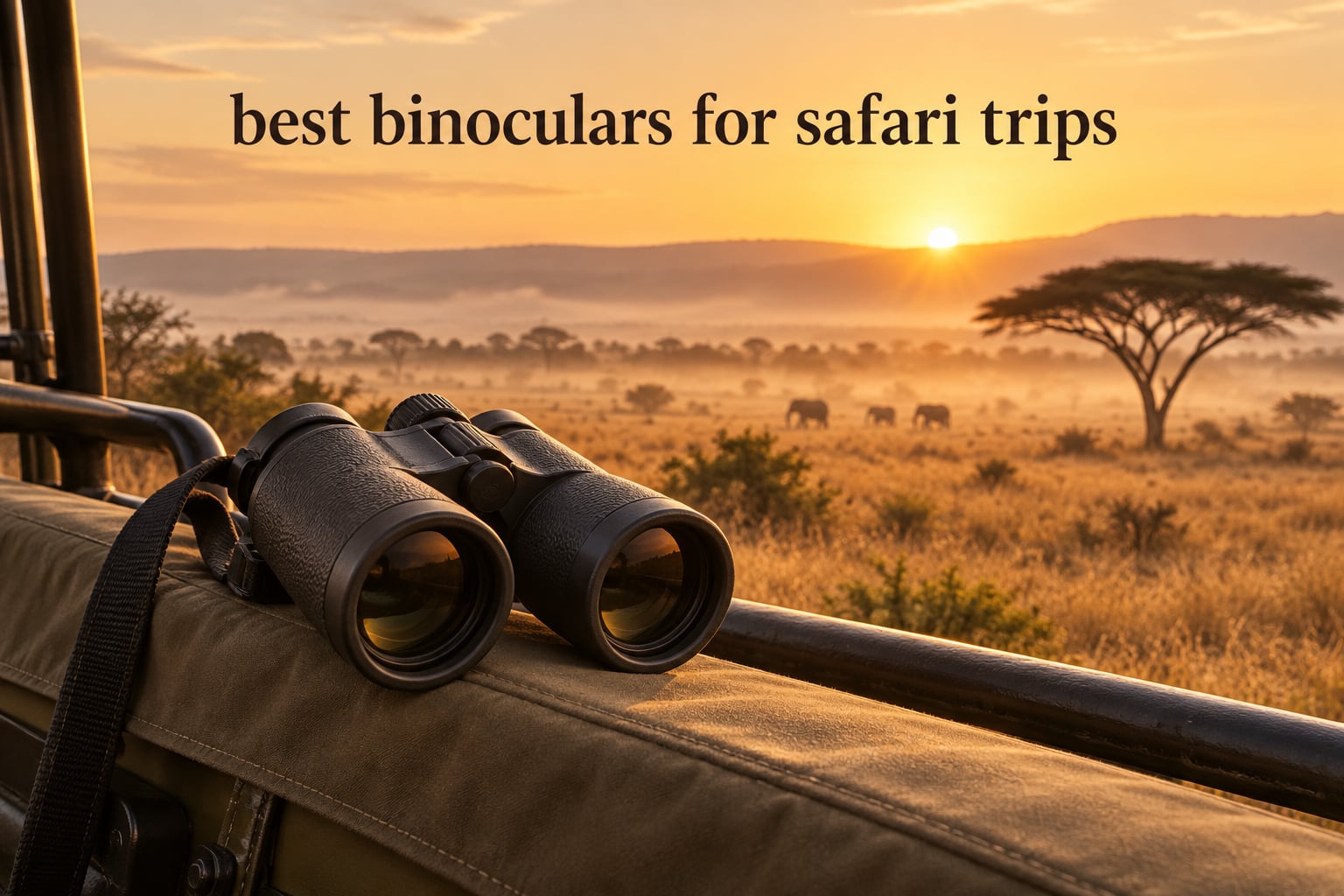
Many safari watchers bring binoculars that turn out to be too heavy, too powerful, or both, and then spend the trip wishing they had something else. The best binoculars for safari trips are almost always a mid-power full-size pair in the 8×42 or 10×42 range, light enough to hang around your neck for six hours and bright enough to work at dawn.
That is the short answer. Below, I break down twelve pairs across three tiers, weigh what each one actually does well, and name the cases where it is the wrong choice. If you want a second opinion before you pack, the safari and marine kit guides at what to wear on safari and our marine binocular picks cover the gear that goes in the same bag.
By Talk of the House. Last updated September 2026, with all ratings and review counts checked the same week.
I spent weeks reading owner reviews and comparing specification sheets rather than trusting brochure language, and the pattern was consistent: on safari, field of view and weight decide whether a pair gets used, and light gathering decides whether it works at the hours that matter. Everything else is detail.
Top 3 Binocular Picks for Safari Trips in 2026

Vortex Crossfire HD 10×42
- 10x and 42mm objective lenses
- 325 ft field of view
- Roof prism with fully multi-coated HD glass
- Waterproof and nitrogen purged
- Tripod adaptable

Vortex Diamondback HD 10×42
- HD optics with dielectric prism coating
- 330 ft field of view
- Argon purged and fogproof
- Compact body at 1.3 pounds

Vortex Triumph HD 10×42
- Fully multi-coated HD optical system
- 17mm eye relief
- Shockproof rubber-armored chassis
- GlassPak harness included
All 12 Safari Binoculars at a Glance
Every pair below is a genuine option for wildlife viewing, but they are not interchangeable. The format column matters more than the brand: read the magnification, then read the field of view, then read the weight.
| Product | Specifications | Action |
|---|---|---|
| Vortex Crossfire HD 10×42 |
|
Check Latest Price |
| Vortex Diamondback HD 10×42 |
|
Check Latest Price |
 Celestron Nature DX 8×42 Celestron Nature DX 8×42 |
|
Check Latest Price |
| Vortex Triumph HD 10×42 |
|
Check Latest Price |
 Celestron Outland X 10×50 Celestron Outland X 10×50 |
|
Check Latest Price |
 Nikon PROSTAFF P3 8×42 Nikon PROSTAFF P3 8×42 |
|
Check Latest Price |
 Nikon Monarch M5 8×42 Nikon Monarch M5 8×42 |
|
Check Latest Price |
 Leupold BX-2 Alpine HD 10×42 Leupold BX-2 Alpine HD 10×42 |
|
Check Latest Price |
 Bushnell H2O Xtreme 10×42 Bushnell H2O Xtreme 10×42 |
|
Check Latest Price |
 Bushnell PowerView 10×42 BoneCollector Bushnell PowerView 10×42 BoneCollector |
|
Check Latest Price |
 Bushnell Trophy Bone Collector 10×42 Bushnell Trophy Bone Collector 10×42 |
|
Check Latest Price |
 ZEISS Terra ED Pocket 8×25 ZEISS Terra ED Pocket 8×25 |
|
Check Latest Price |
8×42 vs 10×42 vs 12×50: Which Magnification for Safari?
Choose 8×42 for thick bush, forest edge, long game drives and birding in the canopy, and 10×42 for open savannah plains where you need to reach further and the animal is more likely to hold still. Both are correct answers. They simply suit different terrain, and the field of view trade is what decides it.
An 8×42 shows you a wider slice of the scene, which is the difference between tracking a bird that will not hold still and losing it. Its exit pupil is a roomy 5.25mm, so it also holds usable brightness later into the evening than most 10x models. That is why the 8×42 remains the default recommendation for forest safari and for anyone whose itinerary includes walking drives and dense riverine habitat.
A 10×42 trades width for reach. Its 4.2mm exit pupil is dimmer, and its field of view is narrower, so anything moving fast gets harder to hold. In exchange you resolve more detail on a distant elephant or a bird perched on the far bank of a river, and a 10×42 body is usually the sweet spot for scanning open plains where distance is the defining variable.
A 10×50 gathers more light than a 10×42 through the same 10x, which is genuinely valuable in shade and heavy cover. It is also bulkier, narrower in field of view, and noticeably shakier in the hand. It is a specialist format, not a default one.
A 12×50 is the reach option and the trap option in equal measure. It resolves detail at serious distance and its 5mm exit pupil keeps it bright, but the narrow field and the shake at 12x mean many owners end up on a tripod, which is close to useless in a moving open vehicle. If you are choosing 12×50 for plains game, buy it deliberately.
Our quick read on each format:
8×42 – widest field of view, brightest exit pupil, easiest to hold, the safest answer for beginners and for mixed-terrain itineraries. It is the format we would hand someone who has never used binoculars before.
10×42 – the mainstream safari answer, and the format that appears most often across the owner reviews in this roundup. Best balance of reach, brightness and steadiness for open country.
10×50 – the light-gathering specialist for dawn, dusk and deep shade. Worth it if your game drives start before sunrise. Bulk and shake are the price.
12×50 – maximum handheld reach, minimum handheld comfort. Reserve it for static viewing, river crossings from a fixed position, or a tripod-supported session.
What Magnification Do You Actually Need on Safari?
For handheld viewing on a moving vehicle, 8x to 10x is the whole answer. Anything above 10x multiplies every tremor in your hands and arms, and in an open safari vehicle the vehicle itself is shaking. Below 8x, you are not seeing enough detail to justify the trip.
The split by terrain is straightforward. Thick bush, riverine forest, mountain forest, and walking safari all reward 8×42, because the animal is usually closer than you expect and moving through cover. Open plains, open water, and long-range scanning toward distant ridges reward 10×42.
Birding splits the same way. In the canopy and along forest edges, 8x is the consensus because you need to find and hold a small, fast subject. For open-country birds, waders on a floodplain, or a distant raptor on a thermal, 10x gives you the detail to identify the species rather than just notice it. We covered that in more depth in our birdwatching binocular guide if birds are a large part of your trip.
When is 12×50 justified? Three situations, and only three. You are viewing from a fixed position such as a hide or a lodge balcony and the animal is genuinely far out. You are scanning across a wide river where distance is measured in hundreds of metres. Or you already know exactly where you are going and what you are looking for. Outside those cases, it is a heavier pair that shakes more for detail you will rarely use.
One more variable matters more than people expect: heat haze. Across open plains in the middle of the day, magnification above 10x amplifies the shimmer as well as the subject. Mid-morning and mid-afternoon on open savannah are the worst hours for high power, and no glass fixes it.
12 Individual Safari Binocular Reviews
1. Vortex Crossfire HD 10×42 – the Best All-Round Safari Pair
- Sharp edge-to-edge image with a clean center
- Light and easy to hold for long sessions
- Roof prism and rubber armor in a tough chassis
- GlassPak harness and case plus tethered lens covers
- Unlimited lifetime VIP warranty
- Yellow and purple fringing at the edge of the view
- Close focus measures about 8 ft rather than the advertised 6 ft
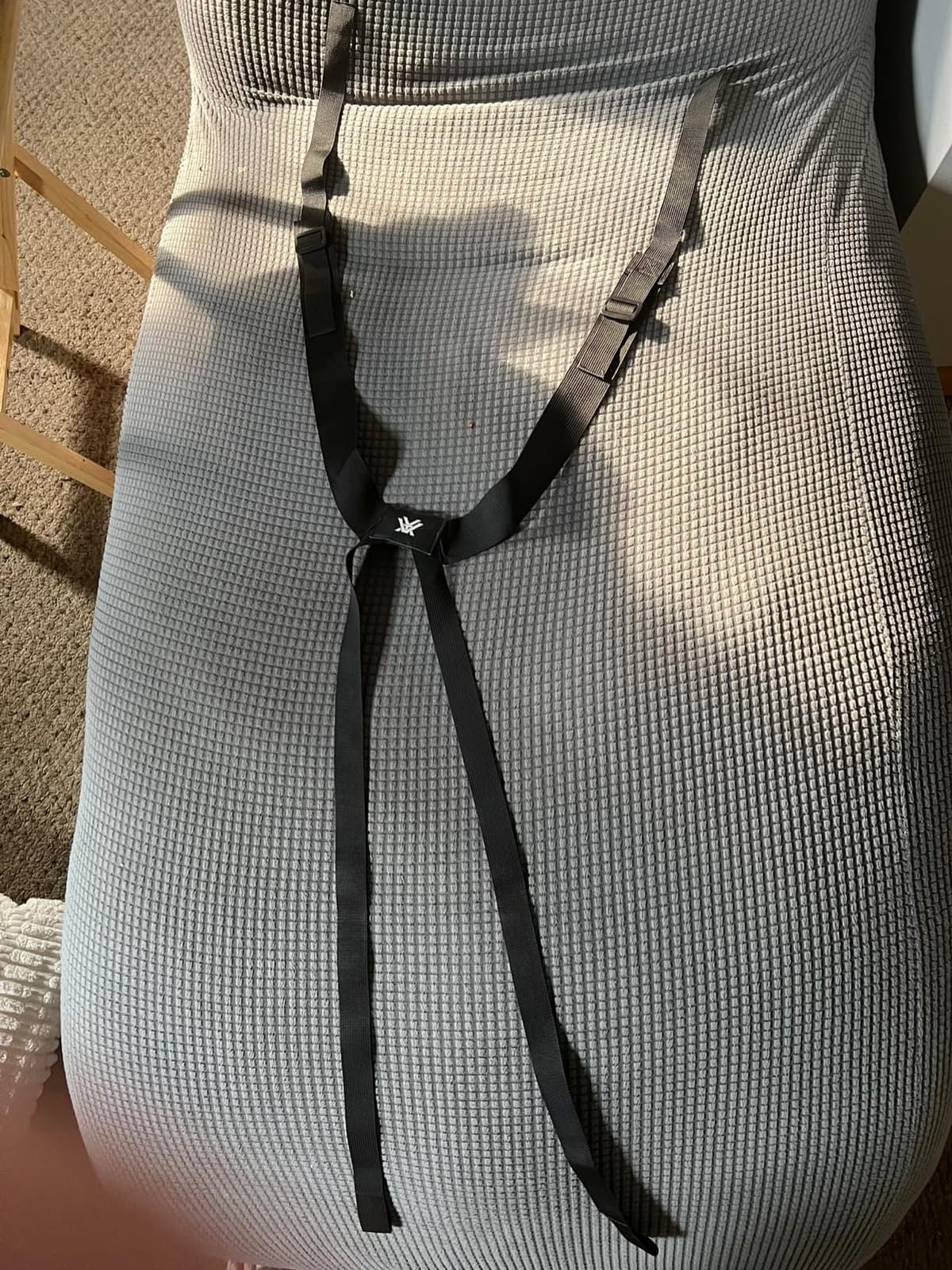
- GlassPak harness straps are fiddly to adjust in the field
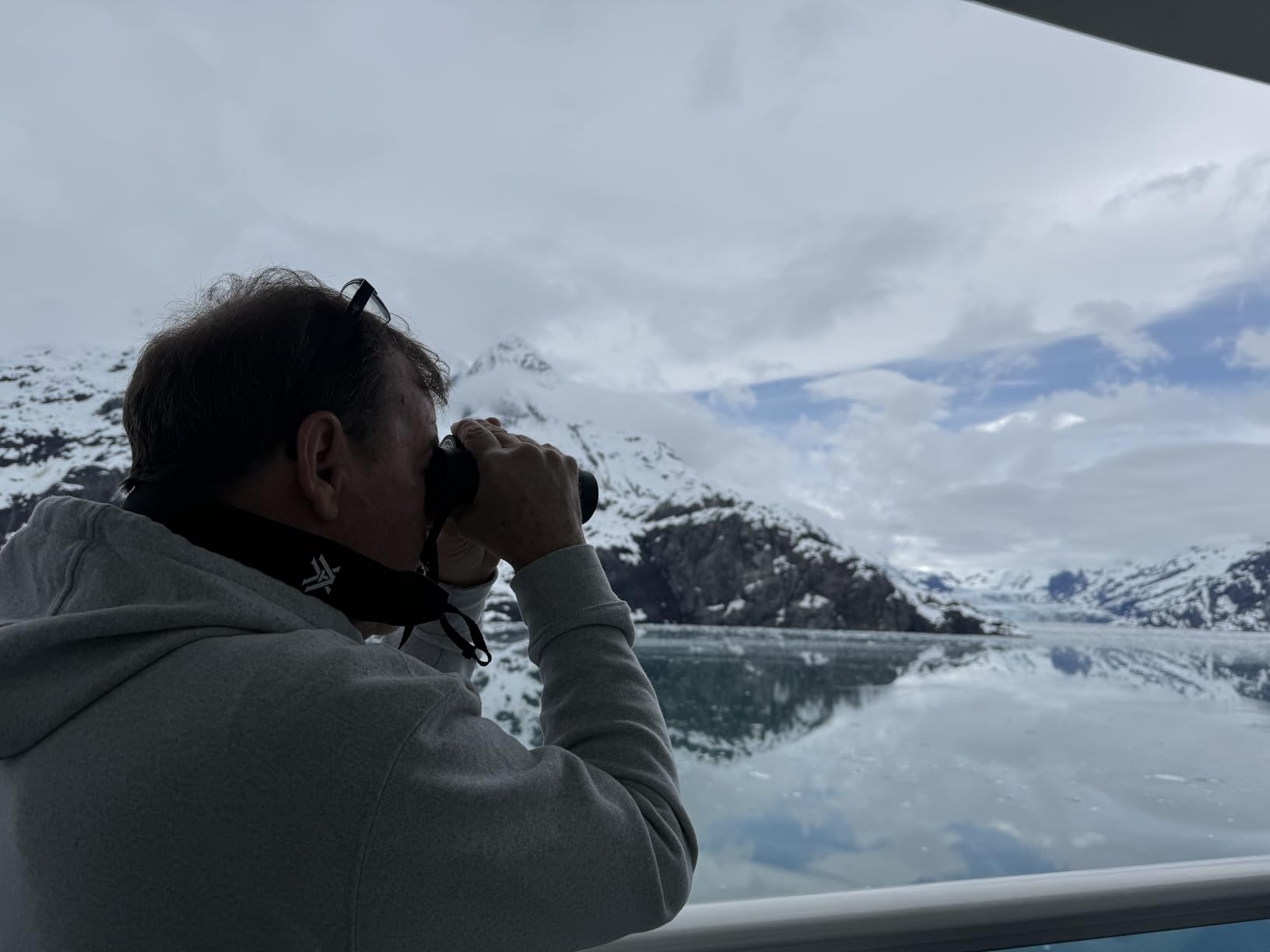
This is the pair I keep coming back to for safari trips, and it earned that place on brightness, field of view and how rarely owners complain about anything optical. At 10x with 42mm objectives it gives you the reach to work open country, and owners describe it as light and easy to hold rather than as a pack that weighs you down after the fifth hour. The image is bright and notably sharp across most of the field.
Owners consistently describe the image as sharp and bright with no meaningful colour fringing in the central area, and the fully multi-coated HD glass does a good job of keeping the view clean when the sun is low and behind the subject. The roof prism design keeps the body narrow enough to sit comfortably in a field of view that runs to 325 feet at 1000 yards.
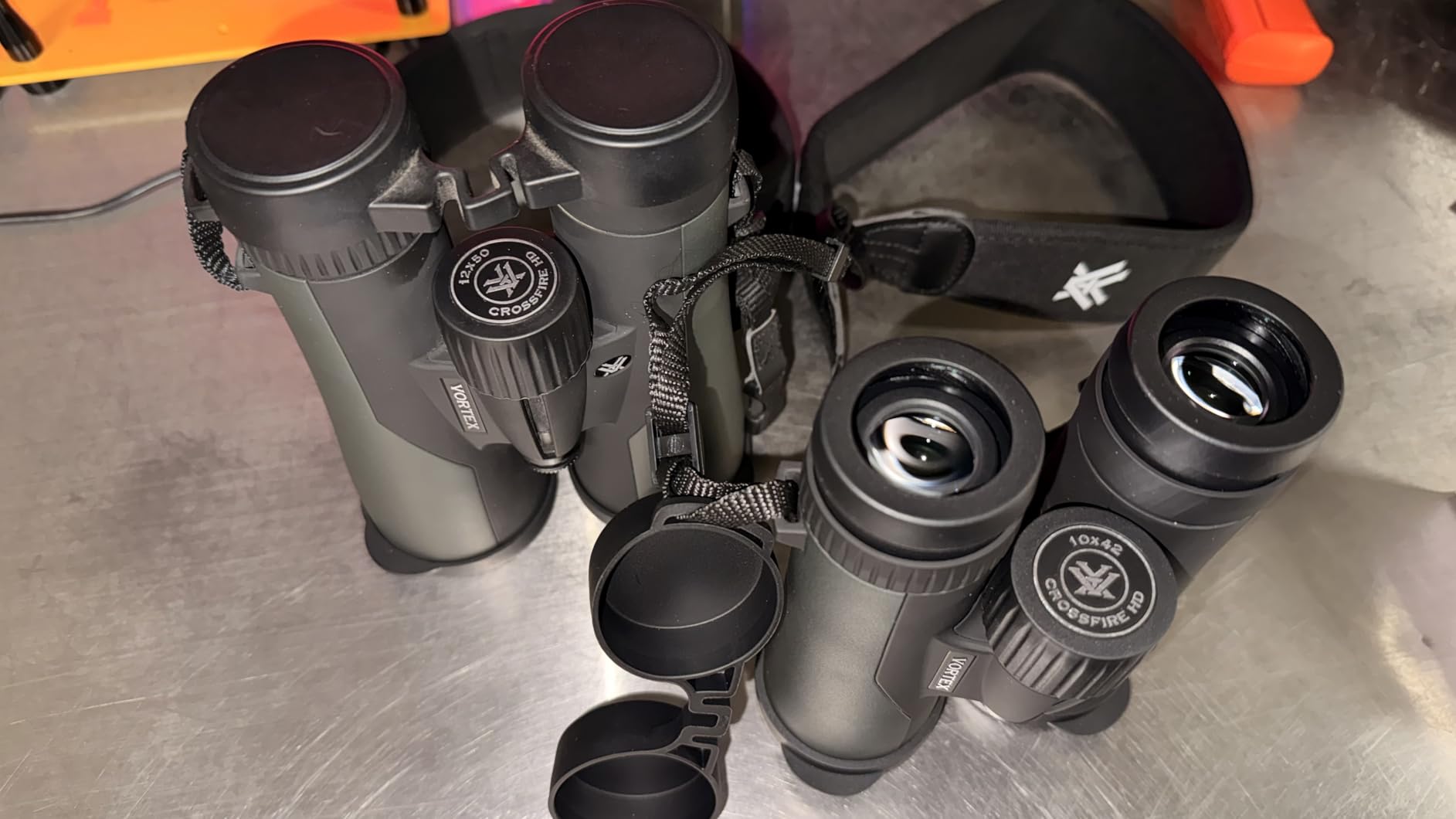
The build is the other half of the appeal. Rubber armour, a centre focus wheel with a diopter on the right eyepiece, twist-up eyecups, and nitrogen purging with o-ring seals for water and fogproofing. It is tripod adaptable, which matters more than it sounds if you ever set up on a riverbank. The box includes a GlassPak case and harness, a comfort neck strap, a Rainguard eyepiece cover, tethered objective lens covers and a lens cloth.
I found the 15mm eye relief adequate rather than generous, so if you wear glasses, read the glasses section further down before committing. It is the tightest spec on an otherwise well-rounded pair.
Where the 10x magnification actually earns its place
This format works best when you are scanning a wide open plain or a river margin and something is moving that you cannot afford to lose track of. A 325-foot field of view is wide enough to follow a walking elephant across the frame without panning constantly, and the 4.2mm exit pupil is bright enough that the pair is still usable in the last half hour of useful light.
It is also the format most first-time safari buyers end up happy with, because 10x is enough to resolve distant animals while the image stays steady enough to hold without support.
What you give up compared with the lighter 8x options
Two things stand out. Some owners report yellow and purple chromatic fringing toward the edge of the view on high-contrast subjects, and that is more visible than on an ED glass pair. The close focus also measures nearer 8 feet than the advertised 6 feet, which matters if you are photographing small subjects at range rather than watching large animals.
Neither is a deal-breaker on a vehicle-based game drive. If you are a serious bird photographer who needs tight close focus, look at the Nikon PROSTAFF P3 or the Monarch M5 instead.
2. Vortex Diamondback HD 10×42 – Sharper Glass for Plains Game
- Bright and colour-accurate image with strong low-light performance
- Compact and light for a full-size 10x42
- Tactile and well-machined feel in the hand
- Tethered lens covers so caps are not lost
- Unlimited lifetime VIP warranty
- Some chromatic aberration visible in low light
- A little heavier than expected for some owners
- Focus knob turns slowly by design
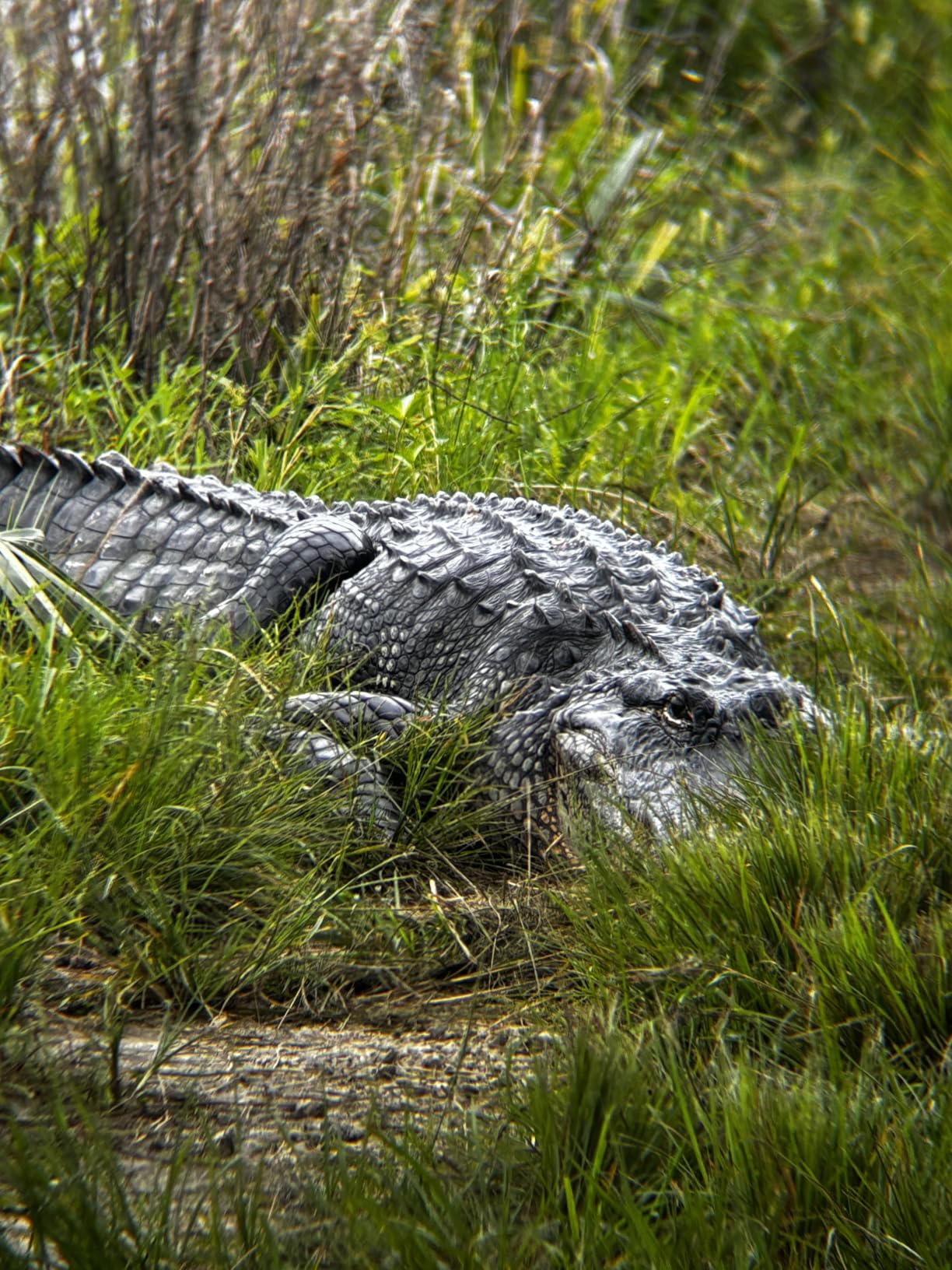
If you are scanning open savannah and want more resolution than a budget pair delivers without moving into premium glass, the Diamondback HD is the step up. At a listed 1.3 pounds it is one of the lighter full-size 10×42 bodies here, which is a real advantage on a long day in an open vehicle.
Reviewers repeatedly call the image bright, crisp and colour-accurate, with strong performance in low light. The dielectric prism coating on top of full multi-coating is the difference from a cheaper 10×42, and it shows in the contrast on a distant animal against a flat sky. Field of view is 330 feet at 1000 yards, essentially identical to the Crossfire.
There is an armour detail worth knowing: Armortek coating on the exterior lenses, which matters on a trip where the gear rides in a dust-filled vehicle. Argon purging and o-ring seals make it waterproof and fogproof, and the body is an aluminium chassis in rubber armour. The GlassPak harness, case, neck strap and tethered objective covers are all included.
One practical note from owners: many sub-five-star reviews of this pair relate to damage in transit rather than the product itself, which is worth remembering if your pair arrives with a knocked focus ring.
Choosing this over the Crossfire HD
The two are close cousins and the decision is about how much you are looking at. If your itinerary is heavy on distant subjects, distant birds, or river crossings, the Diamondback’s sharper resolution and colour fidelity are worth the step up. If you are mostly viewing large animals at moderate distance in good light, the Crossfire gives you very nearly the same experience.
Both share 15mm eye relief, so neither solves a glasses-fit problem that the other one solves. That is where the 8×42 Nikon options come into their own.
Where the slow focus wheel cuts both ways
The focus knob is deliberately geared toward fine adjustment, which owners describe as precision rather than a flaw. It makes it easy to nail a distant subject, but it is slower when something is moving close and you need to snap to it quickly. On fast-moving subjects near the vehicle, the Crossfire’s faster focus suits a casual user better.
Some owners also note a little chromatic aberration in low light. If dawn and dusk are your primary hours, an ED glass pair is the better buy.
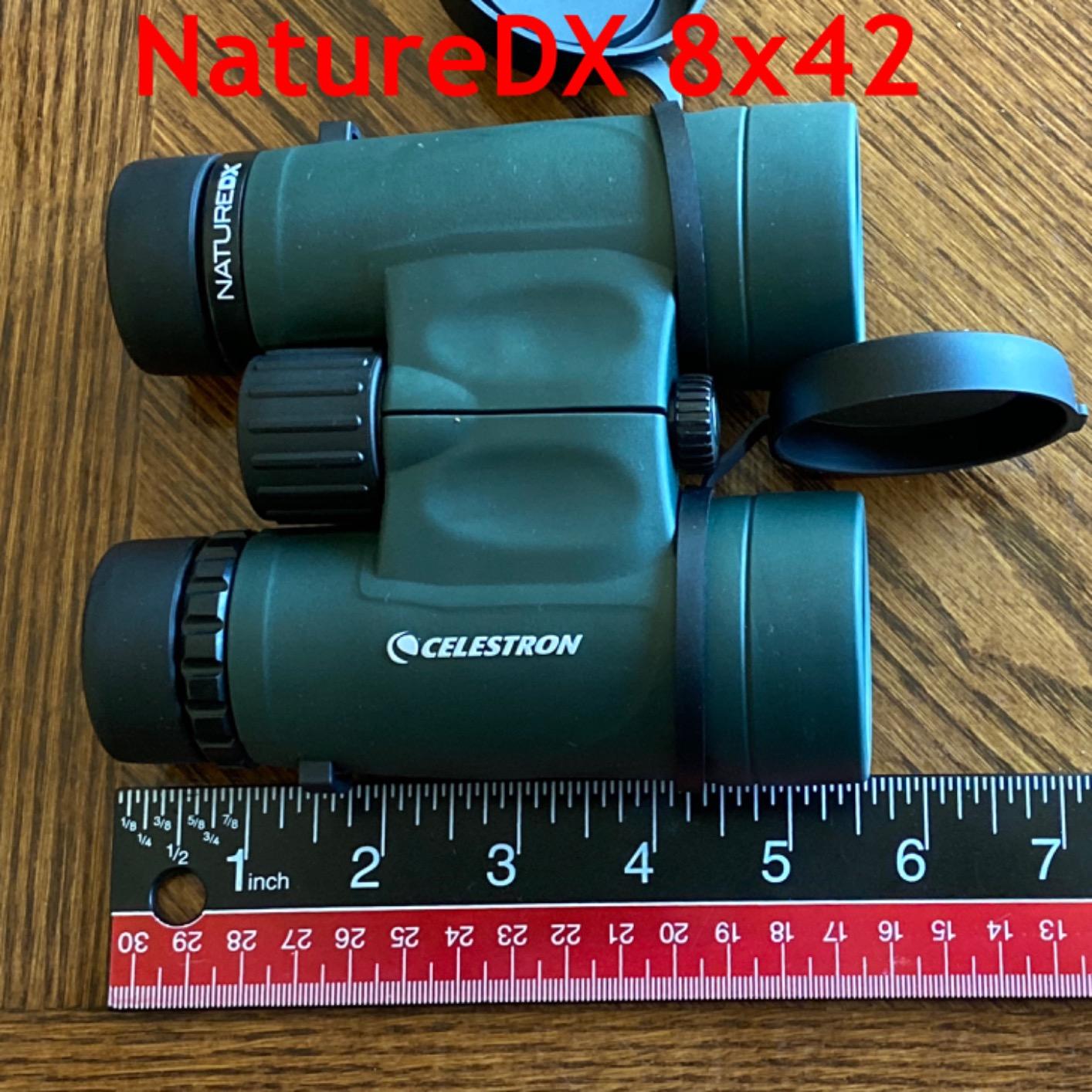
3. Celestron Nature DX 8×42 – the Best Value Safari Pair
Celestron Nature DX 8×42 Waterproof Binoculars for Bird Watching & Outdoors
- Widest field of view in the group for tracking movement
- Roomy 5.25mm exit pupil holds up later into the evening
- Good eye relief that works well with glasses
- Comfortable for all-day carry
- Phase-coated BaK-4 prisms for daytime contrast
- Darker and less detailed in low light than ED glass models
- Modest chromatic aberration on high-contrast subjects
- Included strap and case are basic
The Nature DX 8×42 is the format I recommend to anyone who wants a wide, forgiving, easy-to-hold view, and the review volume on it says the same thing from thousands of independent angles. The 7.4-degree apparent field of view is the widest in this group, running to 388 feet at 1000 yards.
That width is the whole argument. On a game drive you are constantly acquiring and losing animals as they move behind grass, behind a termite mound, behind a tree. A wide field means you find them faster and keep them longer, and at 8x the image is steady enough to hold one-handed if you need to.
The 5.25mm exit pupil is another quiet advantage. It is one of the brightest outputs among the 8x options here, which means the view holds together later in the evening when the light starts to go.
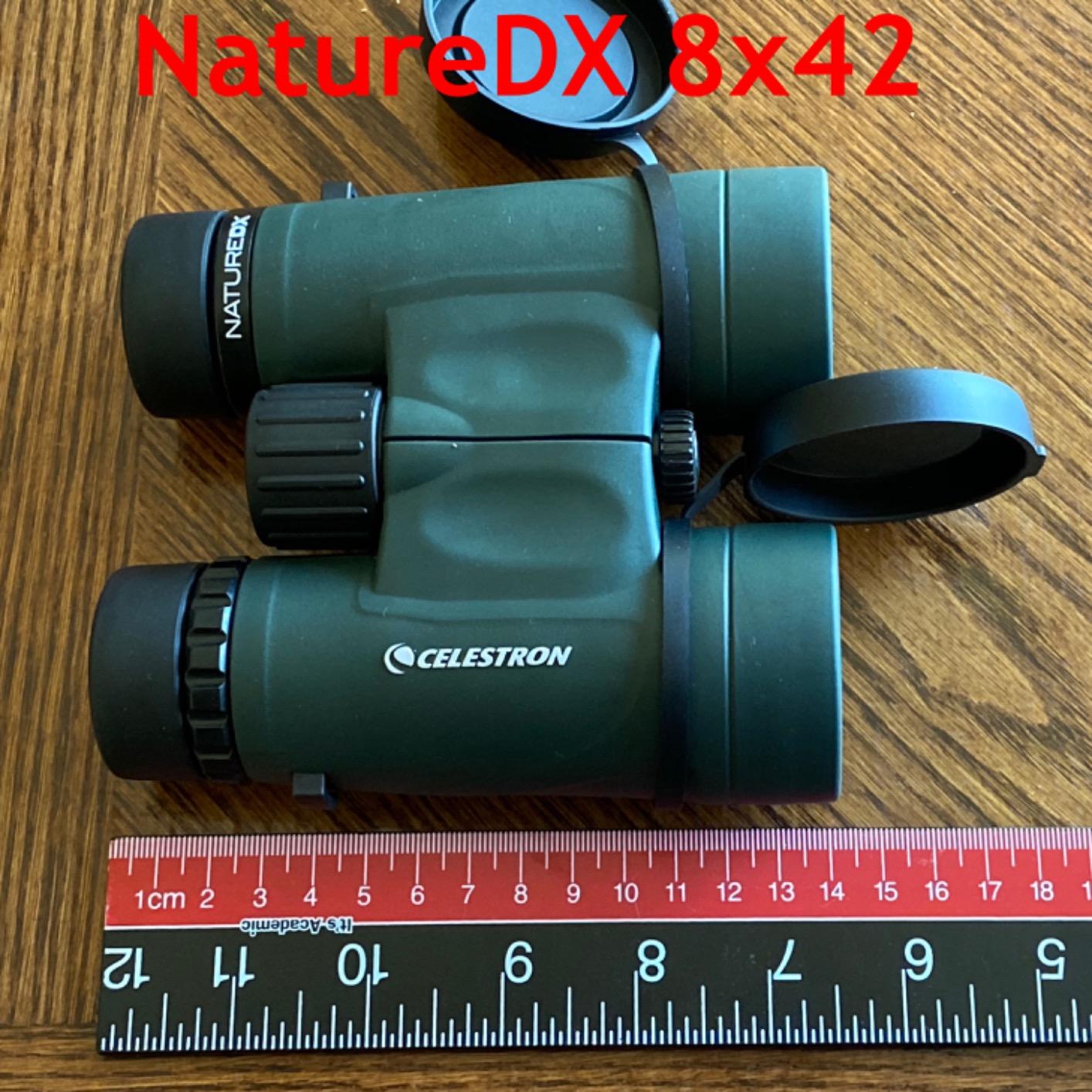
Mechanically it is a rubber-armored polycarbonate body, waterproof and nitrogen purged, with individual focus plus a diopter. A tripod adapter socket is built in, though the adapter is not included. It comes with a carrying case, lens cloth, neck strap, objective cap and a Rainguard. Celestron also attaches a limited lifetime US warranty with US-based support, which is a meaningful after-sales commitment.
Why 8×42 wins in thick bush
Two reasons, and both are physical. The first is field of view. The second is the combination of 8x with a 5.25mm exit pupil, which means the image is both wide and bright, exactly the two properties you need when an animal is 40 metres away behind foliage in flat evening light.
It is also the format that most reliably lets a new user find and focus on something quickly, because a wide view means a bigger target and 8x means less chance of overshooting focus.
Where it falls short: the last hour of light
The recurring criticism is low-light brightness and detail. Owners comparing it against Vortex, Zeiss and Bushnell premium glass conclude it delivers nearly comparable usable sharpness in good conditions, but the image darkens and softens sooner than an ED glass pair once the light drops.
There are also a few reports of internal eyecup screws backing out over time, and the included strap is described as basic. If your game drives routinely start before sunrise, weigh this against the 10×50 Celestron Outland X.
4. Vortex Triumph HD 10×42 – the Best Budget Safari Pair
- Clear and bright image with a wide field for the class
- Strong build for a budget-tier pair
- 17mm eye relief works with glasses
- Simple focus and diopter adjustment
- Included GlassPak harness and neck strap
- Some owners reported a white haze or veiling glare
- Focus ring can be noisy on some pairs
- Bulkier than travel-focused pairs
- 10x needs a steady hand without support
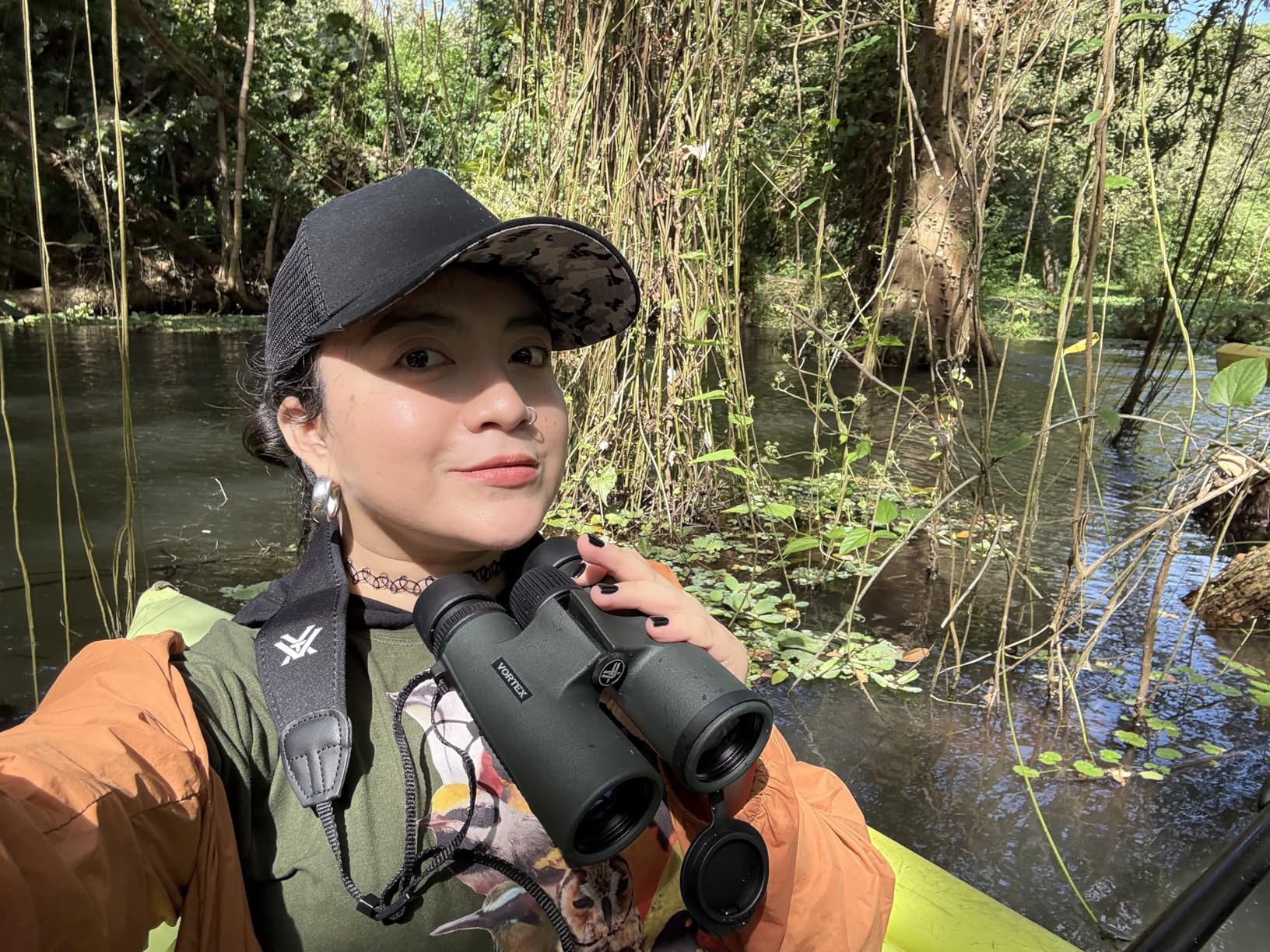
The Triumph HD is the one I recommend when someone wants a full-size 10×42 without stepping into the mid tier, and the owner satisfaction behind it is unusually strong for the money. The HD optical system with fully multi-coated lenses gives a clear image with good colour fidelity and less edge fringing than typical budget glass.
What stood out in the reviews is how often owners describe it as wider than expected for the class. At 10x you do not expect a birding field of view, and this is not one, but it is not punishing either.
Eye relief of 17mm is better than the two Vortex models above it, which makes it a more forgiving pair for glasses wearers despite being cheaper. Nitrogen purging, o-ring sealing and a shockproof rubber-armored polycarbonate chassis mean it will survive an open vehicle and a season of dust.
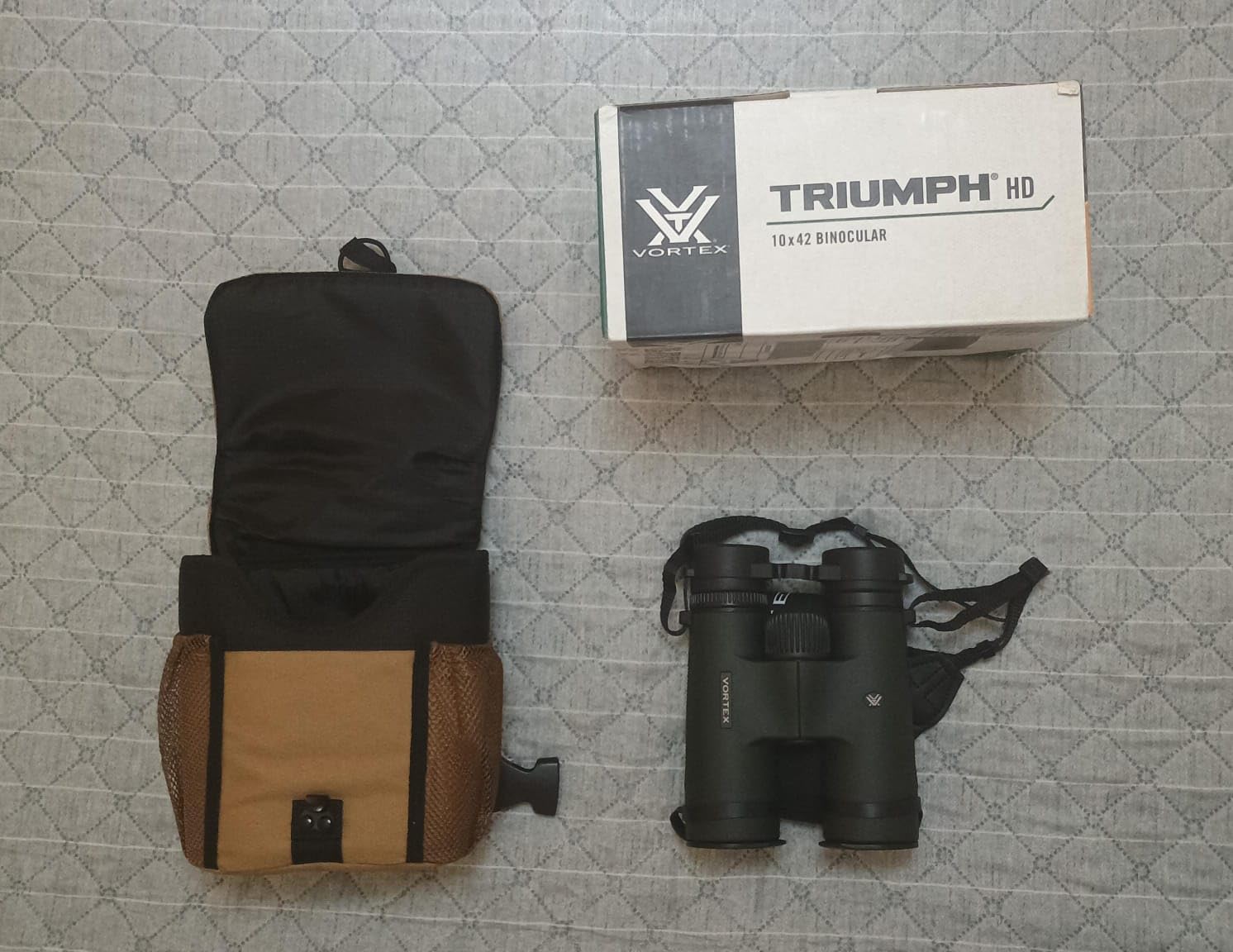
It is tripod adaptable, with adjustable rubber eyecups and a diopter, and the package includes a GlassPak harness and case, neck strap, tethered objective lens covers and eyepiece covers. Vortex’s unlimited lifetime VIP warranty applies.
Where this is the smart money choice
This is the pair for a first safari, a budget-constrained trip, or anyone who wants to test whether they enjoy glassing before committing to premium. Owners repeatedly report performance comparable to far more expensive binoculars, and a 4.7 rating across more than two thousand reviews is not a fluke.
For a trip that is mostly open-country game drives in good light, the shortfall against the Diamondback is small enough that most people would not notice it.
The quality-control question on a budget pair
A minority of owners report a white haze or veiling glare in the image, and a rattling or noisy focus ring. Vortex’s warranty has resolved these for some owners, which is the argument for buying a budget pair from a maker with a lifetime warranty rather than a no-name brand with none.
The other drawback is bulk. This is a full-size body, not a travel binocular, so it does not disappear into a daypack the way a compact pair does. For walking safaris, pair it with a smaller glass or accept the volume in your bag.
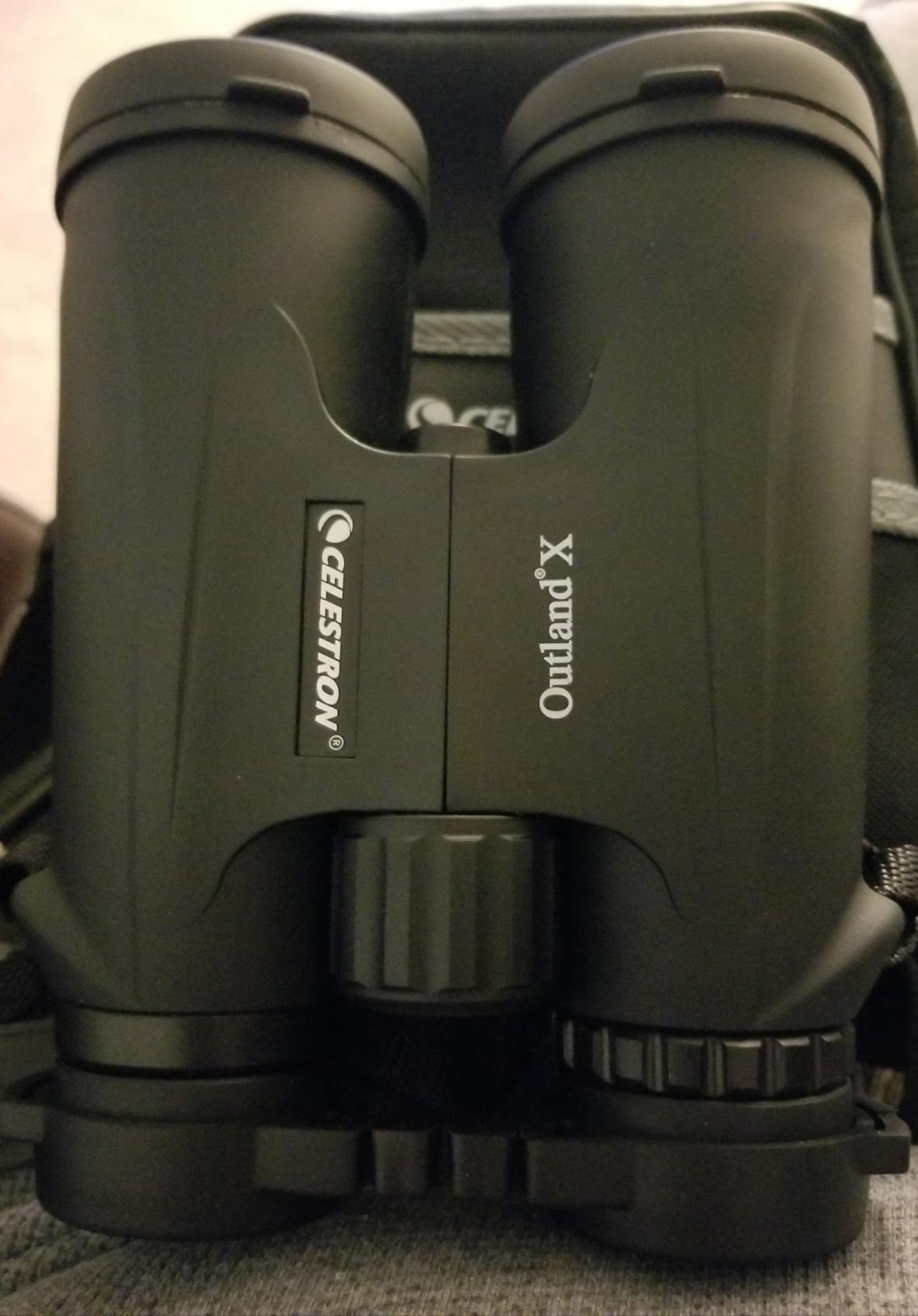
5. Celestron Outland X 10×50 – Best for Dawn and Dusk Game Drives
Celestron Outland X 10×50 Binoculars for Low-Light Wildlife Views
- 50mm objectives gather real light for dawn and dusk
- Bright and detailed image in shaded habitat
- Waterproof and nitrogen purged with rubber armor
- Center focus with diopter and tripod threads
- Compact enough for long walks
- Narrower field of view than 8x42 roof prism models
- Bulkier body than smaller objective designs
- Eyecups can collapse and fold in
If your game drives start in the dark and end in the dark, the objective diameter matters more than magnification, and this is the pair in the group built around that priority. Fifty millimetre objectives are the largest here, and they gather noticeably more light than a 42mm lens of the same magnification.
Owners consistently praise the brightness and describe it as an affordable step up specifically for wildlife and twilight viewing. The 4.8mm exit pupil is larger than a 10×42’s, so the image holds together in flat light better while still keeping 10x reach.
The Porro prism design is worth noting for a specific reason: Porro prisms tend to throw a rounder, brighter exit pupil than roof prisms of the same specification, which many owners read as a more natural image. Multi-coated lenses with BaK-4 prisms give sharp and colour-accurate daytime views.
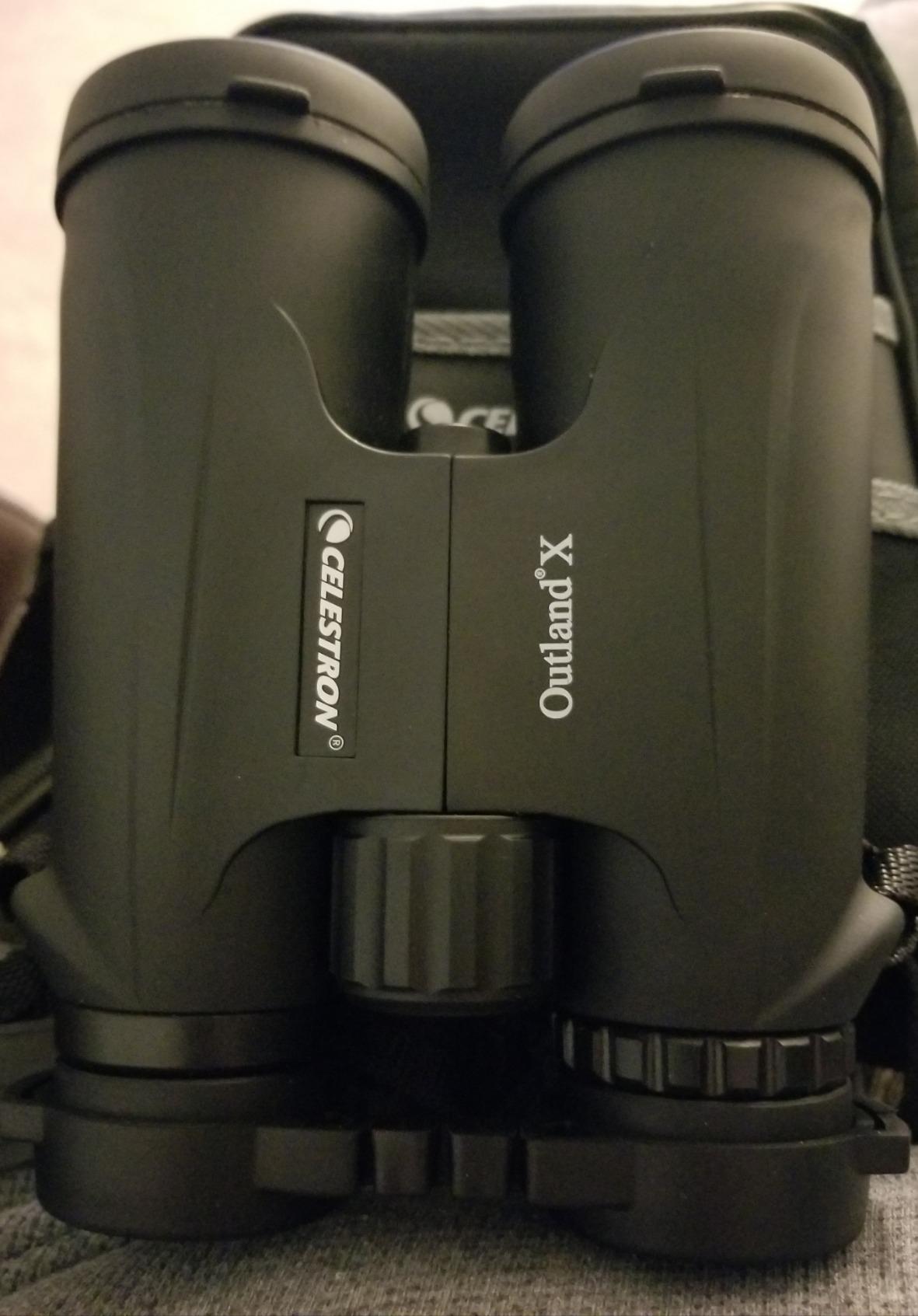
Structurally it is a rubber-armored polycarbonate body, waterproof and nitrogen purged, with a centre focus wheel, a diopter of plus or minus three, and built-in tripod threads. The case, lens cloth, neck strap, objective caps and Rainguard are included, along with a Celestron limited lifetime US warranty.
When the 50mm objective is the right call
Choose this format for one reason: light. It is the right pick for dawn and dusk drives, for deep forest where the canopy cuts the light, and for overcast conditions where a smaller objective simply does not collect enough to render detail. The 17.4mm eye relief is also generous, so it is comfortable with glasses.
It is also a legitimately good option for boat-based wildlife viewing, where the larger objective helps on an overcast sea and the sealed body handles salt spray.
The trade you are making for that light
Field of view is 289 feet at 1000 yards, which is noticeably narrower than the 8×42 options in this list, and that is the honest cost of this format. Scanning a wide open area with a 10×50 is more work than scanning it with an 8×42, and the body is bulkier because of the large front elements.
Some owners also report that the eyecups can collapse or fold in. If your priority is wide sweeping scans rather than low-light reach, the Celestron Nature DX 8×42 is the better instrument for the job.
6. Nikon PROSTAFF P3 8×42 – Best for Glasses Wearers
Nikon PROSTAFF P3 8×42 Binocular | Waterproof, fogproof, rubber-armored Full-Size Binocular, wide field of view & long eye relief | Official Nikon USA Model
- 20.2mm eye relief with turn-and-slide eyecups
- Very wide 377 ft field of view for scanning
- Bright and sharp with vibrant colour
- Light and compact for all-day carry
- O-ring sealed and nitrogen purged for any environment
- Diopter adjustment ring is stiff to turn
- Neck strap lacks a fixed loop so the extra length dangles
- Some chromatic aberration on high-contrast subjects
The single most common safari complaint we found from real owners was not optical at all. It was that they could not get comfortable wearing their glasses through the eyecups, and this is the pair in the group that most directly solves that, with 20.2mm of eye relief.
Eye relief is the distance between your eye and the front lens element while still seeing the full field. Anything under about 15mm is tight for a glasses wearer, because the frame sits in the way of the eyepiece and you lose the edge of the image. At 20.2mm the eyecups slide down and clear your frames entirely.
The 8x magnification and 377-foot field of view give you a 53.4-degree apparent view, which is genuinely wide and one of the reasons owners describe the image as easy to hold. The 5mm exit pupil keeps it bright into the evening.
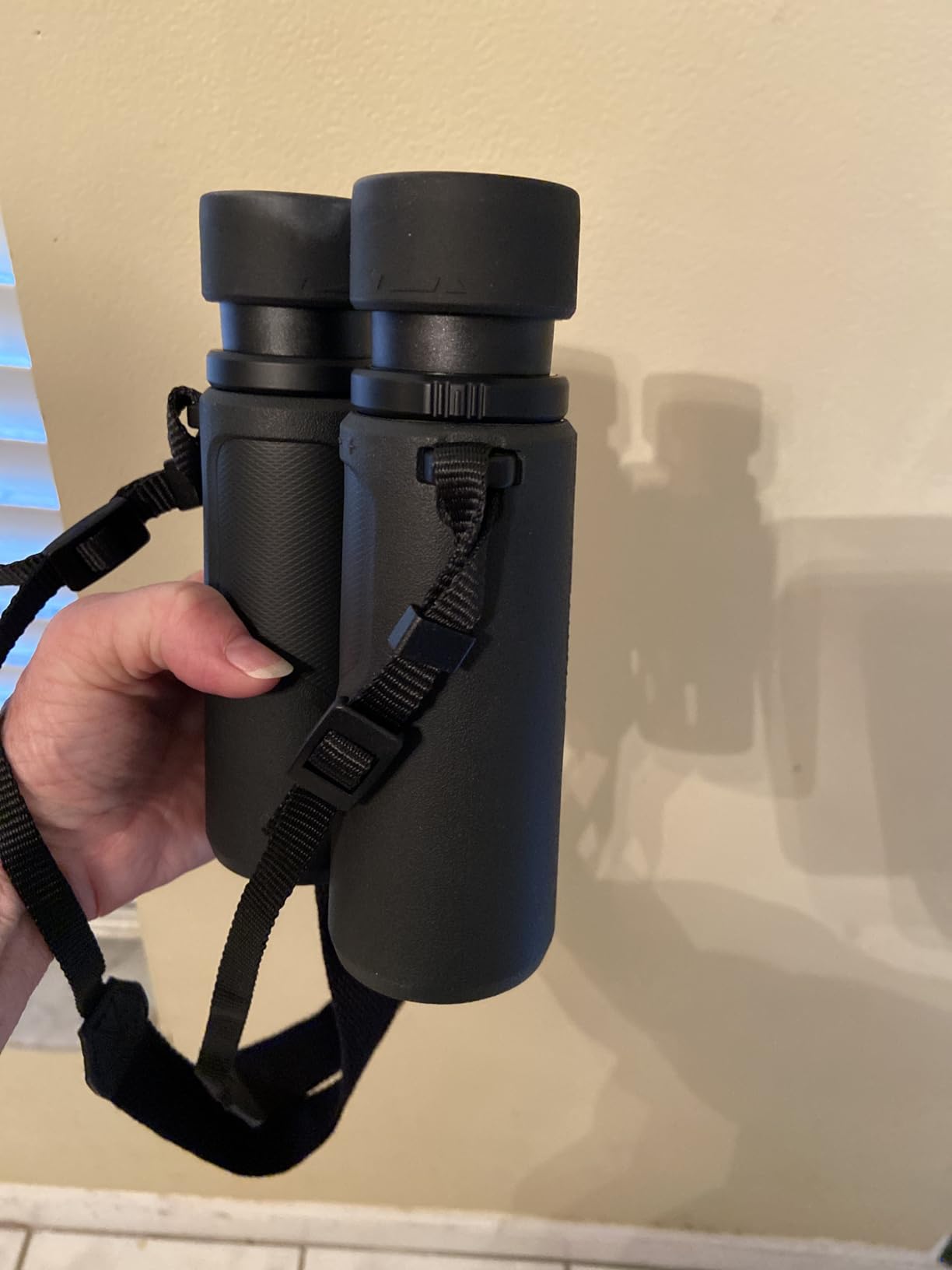
Optically it is multilayer-coated glass with a silver-alloy prism coating, which owners credit for vibrant, natural colour and no noticeable edge fringing on most subjects. The body is fiberglass-reinforced polycarbonate with rubber armor and a non-slip grip, o-ring sealed and nitrogen purged. A Nikon binocular case, eyepiece cap, neoprene neck strap and objective cap are included, with a Nikon limited lifetime warranty.
Who will notice the difference most
If you wear glasses, or if you have a higher prescription than a contact lens accounts for, the difference between 20mm of eye relief and 15mm is the difference between a full field of view and a dark vignette at the edges. That difference is invisible in a spec sheet and obvious in the field.
It also suits anyone who shares a pair with a family member of a different face shape, since the long eye relief and turn-and-slide eyecups make fit far less fussy.
What you trade away for the comfort
Reach. At 8x, a distant bird on a far bank is a dot rather than a subject, and this is not the pair for someone whose trip is built around long-range bird photography. The diopter ring is also reported as stiff to turn, which is a small irritation when you are setting up with gloves on.
The strap design draws repeated criticism: there is no fixed loop, so the slack length dangles and gets in the way. It is a two-minute fix with any proper binocular strap, but it is worth knowing before you rely on the supplied one.
7. Nikon Monarch M5 8×42 – Best for Colour and Edge Sharpness
- ED glass cuts chromatic aberration to the edge
- Very bright 5.3mm exit pupil for an 8x
- Dielectric prism coating boosts low-light transmission
- 19.5mm eye relief suits glasses wearers
- Close focus to 8.2 ft for small subjects
- Narrower field of view than the PROSTAFF P3
- Body larger and heavier than expected for some owners
- Focus wheel sits close to the face for certain hand sizes
- Finish is more basic than premium rivals
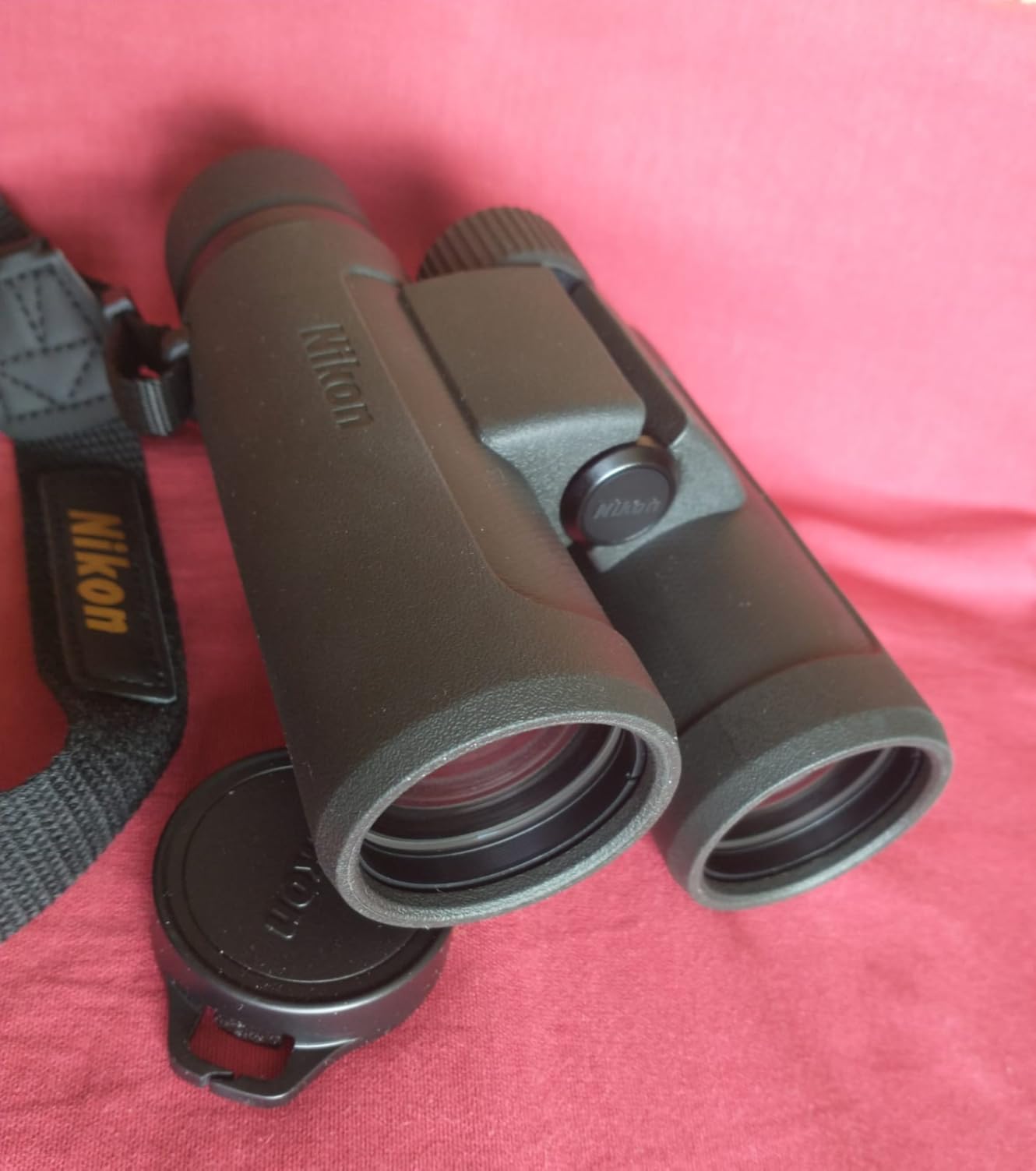
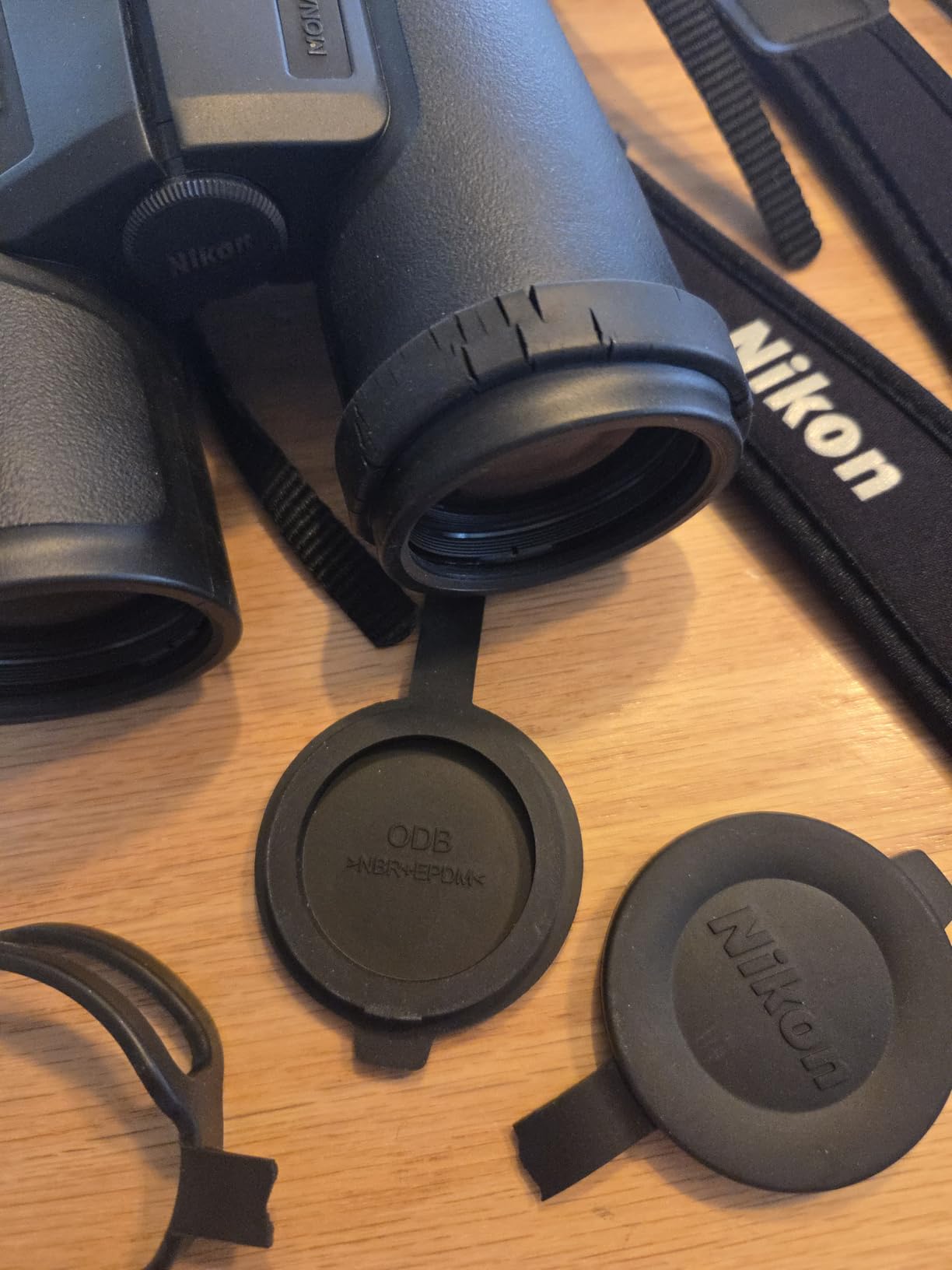
This is the pair we would carry if the trip included serious birding, because ED glass is the single specification that most improves what you see on a distant subject, and the Monarch M5 has it without stepping into the premium tier. Owners comparing it against Zeiss, Leica, Swarovski, Vortex and Leupold glass repeatedly conclude it is the best affordable pair they have used.
ED glass reduces chromatic aberration, which is the coloured fringing you get around high-contrast edges on cheaper glass. In the field it shows on the rim of an ear, the edge of a wing against sky, or a branch against bright background. It also means the image stays sharp right out to the edge of the field rather than softening.
The dielectric high-reflective multilayer prism coating is aimed squarely at dawn, dusk and shade, and the 5.3mm exit pupil is the brightest output among the 8x options here.
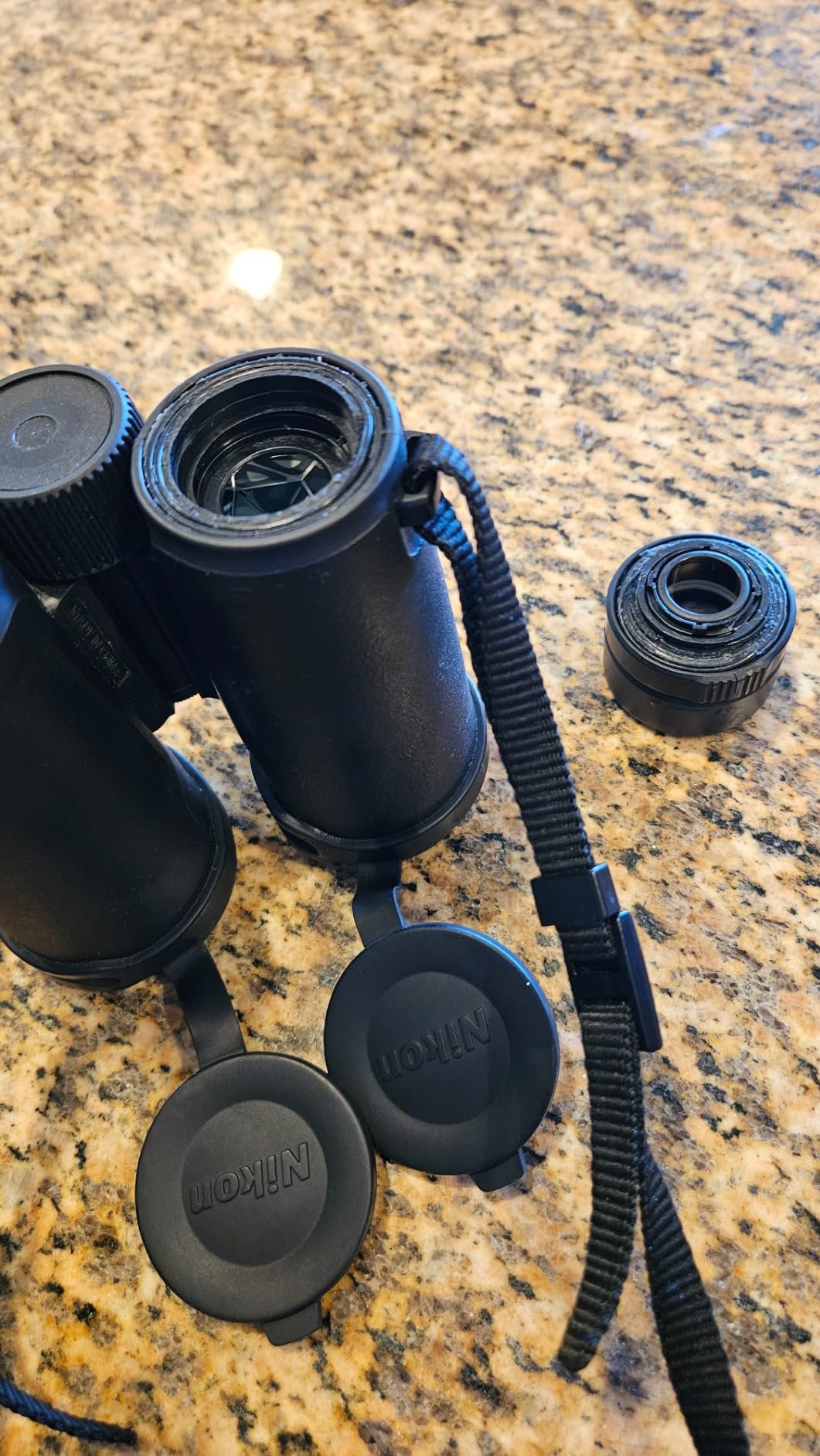
Fit is good, with 19.5mm eye relief and twist-up click-stop eyecups that reduce vignetting for glasses wearers. Field of view is 335 feet at 1000 yards, and close focus runs to 8.2 feet for small nearby subjects. The body is a rubber-armored closed-bridge design, waterproof and fogproof with nitrogen purging and o-ring seals. Case, eyepiece cap, objective cap and neck strap are included, with a Nikon limited lifetime warranty.
When ED glass changes the outcome
If your priority list contains birds, small mammals, or any subject seen against a bright sky, this is the pair that delivers. Fringing that is merely distracting on a large elephant at 200 metres is genuinely ugly on a bird at 60 metres, and ED glass removes most of it.
One owner in the review set reports using this pair on a South African safari and specifically credits the brightness and low colour fringing. That is the use case this glass is built for.
Why some owners step up instead
The most common criticism is field of view. At 335 feet it is narrower than the PROSTAFF P3 in the same brand, and owners who came from an 8×42 with a wider sweep notice it. If you spend your time scanning wide areas rather than tracking identified subjects, that matters.
Some also find the body larger and heavier than expected for an 8×42, and a few report the centre focus wheel sitting close to the face for their hand size. The 8x magnification keeps it steady, but comfort is partly a hand-size question that no spec sheet answers.
8. Leupold BX-2 Alpine HD 10×42 – Best for Twilight Contrast
- Exceptionally sharp image that holds resolution to the edges
- Excellent light gathering and brightness for dawn and dusk
- Solid build that survives rough open-vehicle handling
- Open bridge roof design is lightweight and ergonomic
- Backed by Leupold's full lifetime guarantee
- No simple neck strap in the box
- Front trim plate works loose on some units
- Some users struggle to focus one barrel
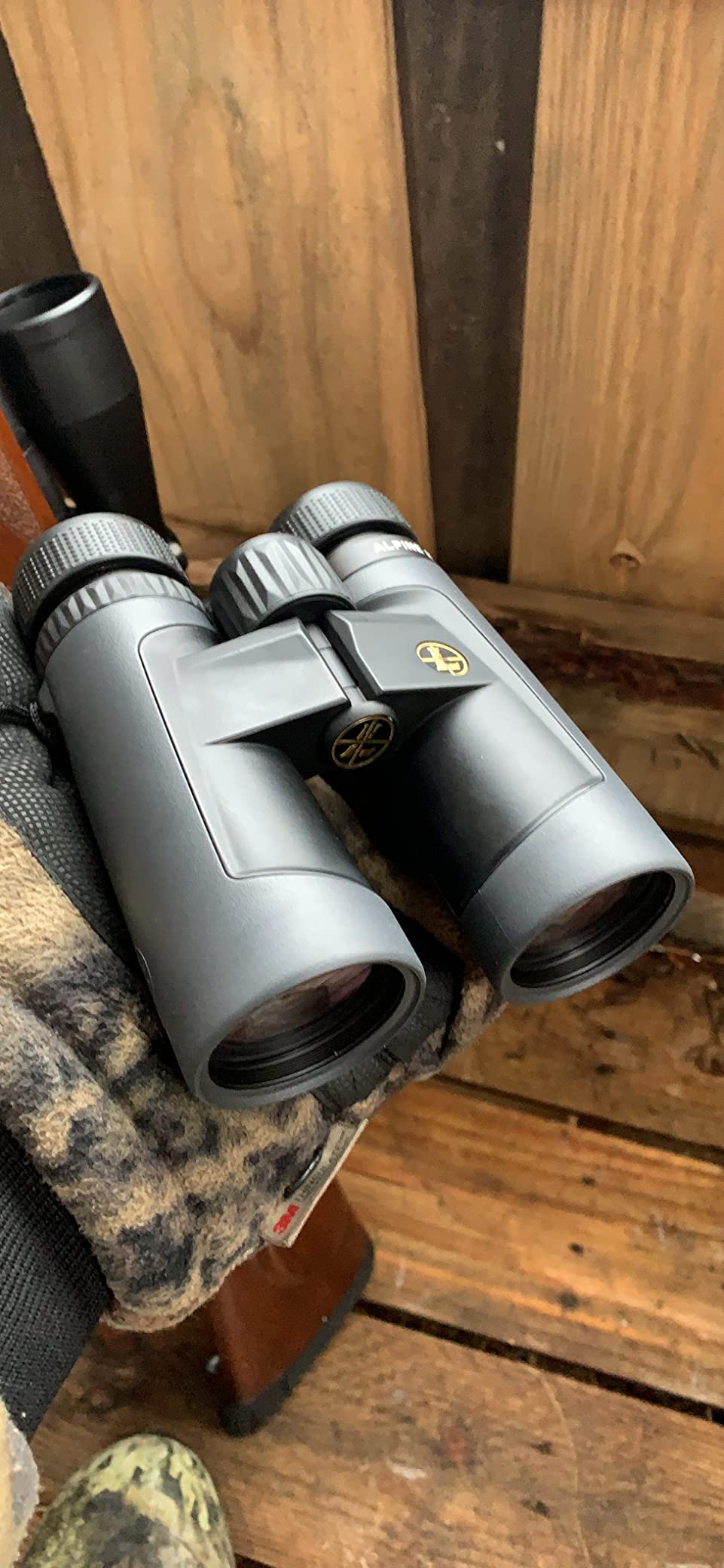
The BX-2 Alpine HD is built around low light, and it is the only pair in this group with a named light-management system. Leupold’s Twilight Max system is designed to preserve contrast and colour when the light gets low, which is precisely the condition most safari viewing happens in.
Owners describe the image as exceptionally sharp and staying resolved to the edges, with excellent light gathering for dawn and dusk. Fully multi-coated lenses with BaK-4 prisms deliver a round exit pupil with little edge distortion, which is what keeps contrast clean rather than washing out.
Mechanically, the open-bridge roof prism design is light and ergonomic for a 10×42, which is the feature that decides whether it gets worn for six hours. The diopter adjusts from minus four to plus four, one of the wider ranges here, and it is waterproof and fogproof.
The rating distribution among owners is unusually favourable, with the large majority at five stars and very few one-star reports. The build quality is consistently described as solid and able to survive rough field handling.
How it handles the dawn and dusk window
A 4.2mm exit pupil is on the small side, and no coating changes the physics of that. What the coatings and prism glass do is make more of the light that does reach the lens usable, and that is where a 10×42 with a managed coating system separates itself from a 10×42 with single-coated glass.
If your drives run from before sunrise to after sunset, this is the pair we would pick over other 10×42 options for contrast retention. If you only ever view in full daylight, you will not notice the difference and could spend that money on reach instead.
The packaging issue worth knowing about
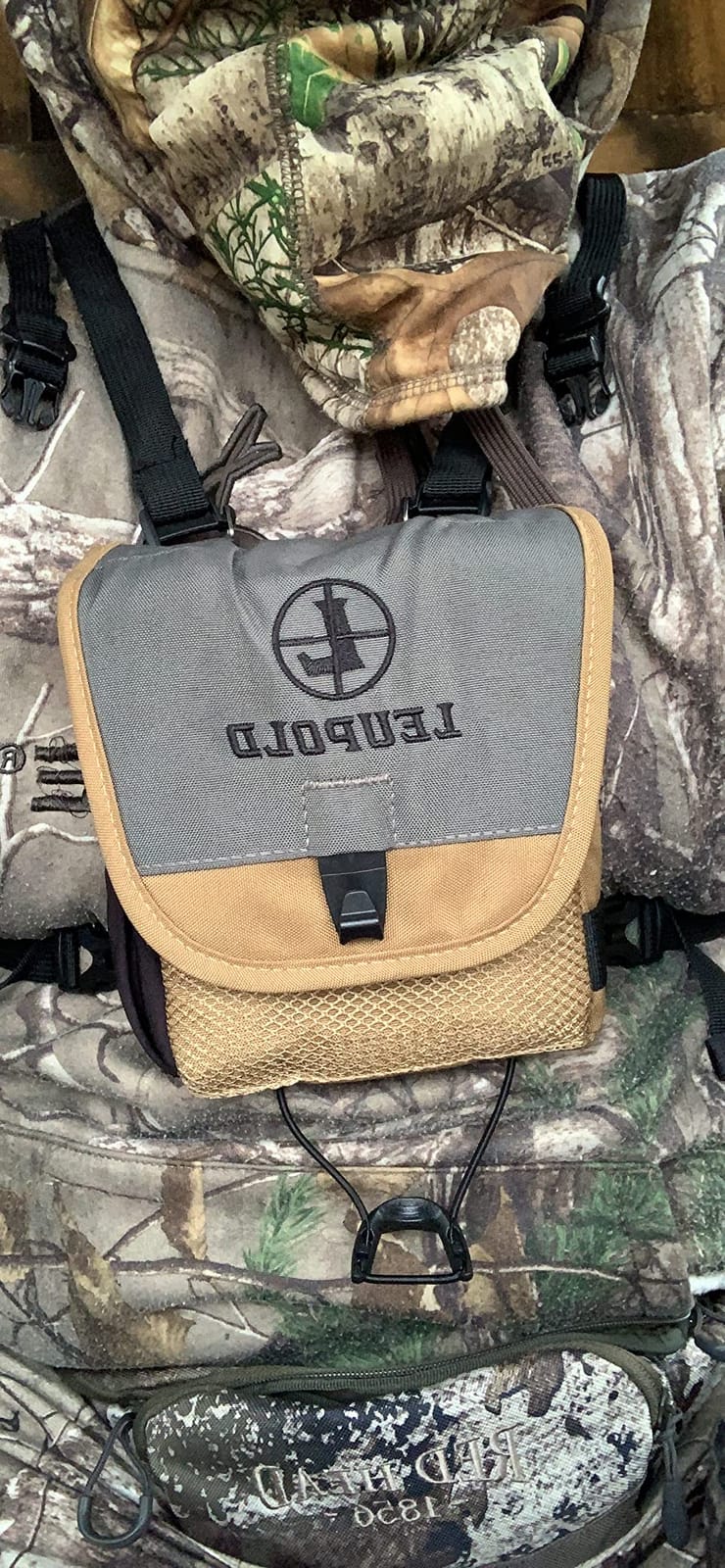
The most consistent complaint is that no simple neck strap is included. It comes with a chest harness, which many owners like for long game drives and others find fiddly to put on in a vehicle before sunrise. Budget for a plain strap if you want one.
There are also a few reports of a front trim plate working loose and a small minority of users struggling to get one side to focus, with eye strain after extended use. Worth checking focus on both barrels the first time you open the case.
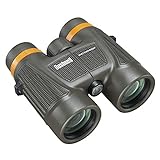
9. Bushnell H2O Xtreme 10×42 – Best for Boats and Cruise Ships
- IPX7 O-ring sealed body rated for full submersion
- Nitrogen purging stops internal fogging in any weather
- Rugged rubber armor with non-slip grips when wet
- Compact and light enough to pack easily
- Bright image from BaK-4 prisms and multi-coating
- Compact format gives a narrower field than full-size safari glass
- Rubber armor adds bulk against magnesium-bodied rivals
If your safari is combined with a boat transfer, a cruise, or a week of coastal wildlife viewing, sealing is the specification that matters most, and this is the most explicitly sealed pair in the group. It is rated IPX7, meaning it is designed to withstand being dropped in standing water and survive submersion, with an o-ring sealed optical system and nitrogen purging to prevent internal fogging.
On the optical side, upgraded BaK-4 prisms and fully multi-coated glass give a clear and bright image across varied light. The 17mm eye relief is a step better than the two Vortex 10x42s and works with glasses.
It is a compact format body, which is why owners describe it as easy to pack and carry, and why some find it narrower to scan with than full-size safari glass.
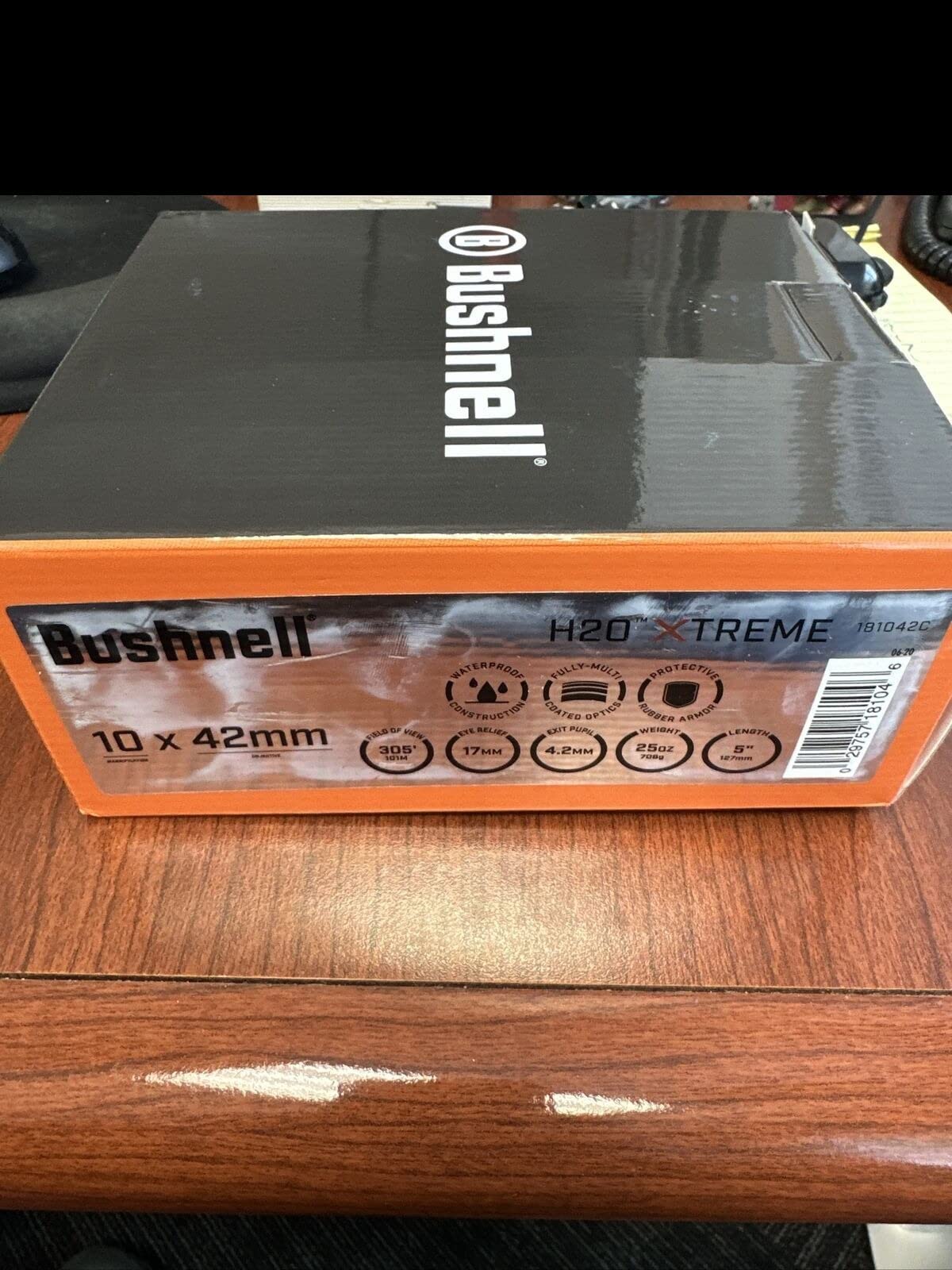
A strap, carrying case, and both ocular and objective covers are included, and the soft non-slip grips stay secure when your hands are wet, which on an open boat is not a minor detail. It is tripod mount compatible, and Bushnell’s Ironclad warranty applies.
Why the sealing rating changes the calculation
Salt spray and open water are harder on binoculars than dust, and humid coastal air will find any seal that is not rated for submersion. An IPX7 rating is a specific, testable claim about surviving immersion, which is a different promise from the word waterproof used loosely across this category.
If your trip also includes a boat or cruise segment, this is the pair that removes the biggest practical risk in your gear bag. If it is land-only, you are paying for a capability you will not use.
Where the compact format costs you
A compact 10×42 gives up some field of view relative to a full-size body, and owners specifically compare it against full-size safari glass and find the difference when scanning wide areas. The rubber armour also adds bulk compared with magnesium-bodied alternatives, which is the usual trade for durability.
For a dual safari-and-sea trip it is an easy recommendation. For a purely terrestrial game drive, the Celestron Nature DX gives you a wider view for a similar outlay.
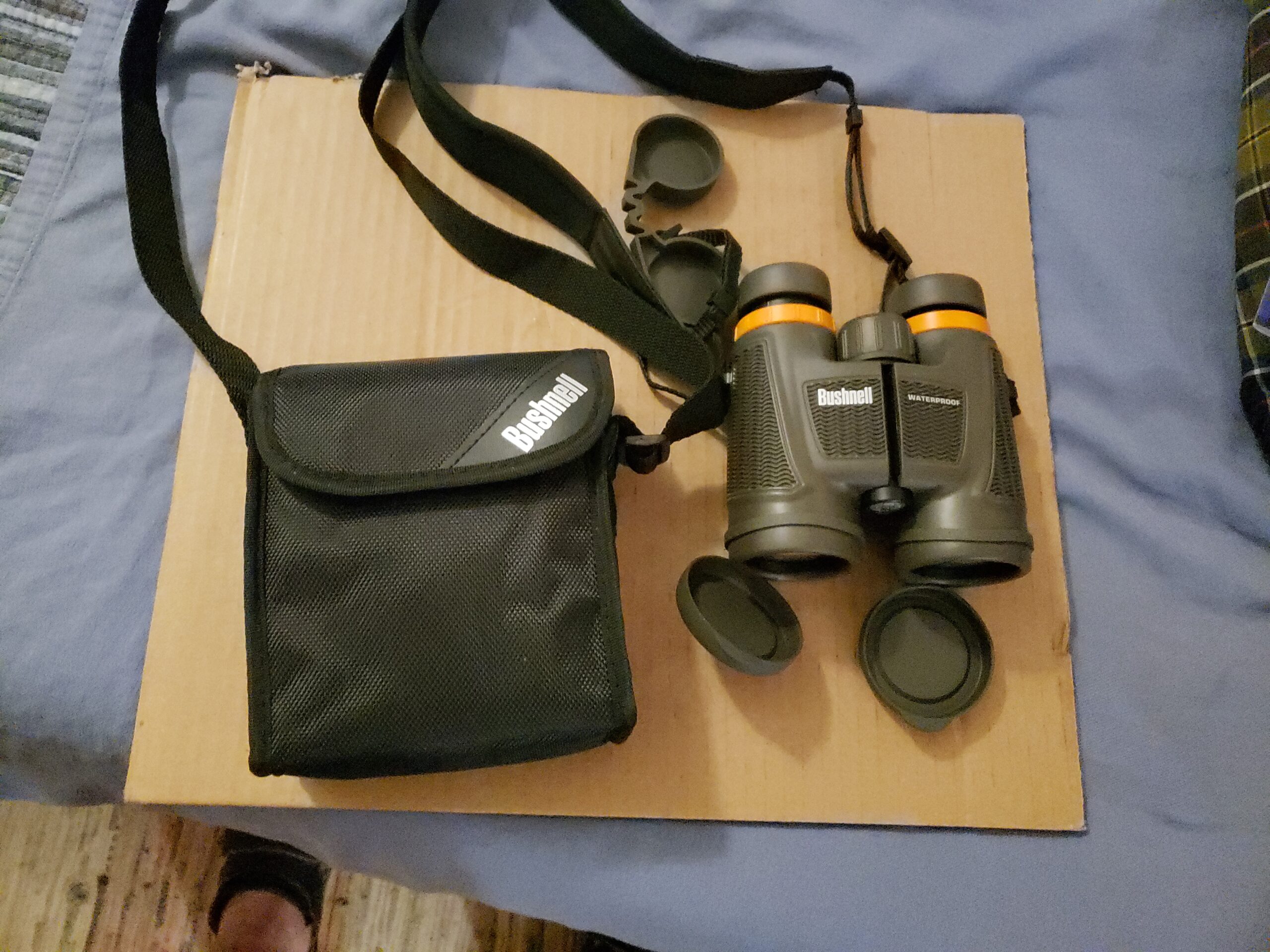
10. Bushnell PowerView 10×42 BoneCollector – Best for Lightweight Carry
Bushnell PowerView 10×42 BoneCollector Binoculars, Realtree Edge Camo
- 22 oz body keeps it easy to carry all day
- Oversized focus wheel works with gloves on
- Diamond-cut grips give a secure hold
- Compact 5.5 inch length suits a daypack
- Backed by a lifetime Ironclad warranty
- Slight edge distortion at full 10x magnification
- Optics trail premium glass on clarity and contrast
- Small number of focus and lubricant reports
This is the compact full-size 10×42 in the group, at a stated 22 ounces and just 5.5 inches long, and that is the whole reason to pick it. If your safari is a walking safari rather than a series of game drives, weight is not a minor preference, it decides whether you keep the binoculars on your neck or shove them in a pack.
Owners particularly like the control layout. The oversized focus wheel and diamond-cut grips on both the focus wheel and the diopter can be adjusted with gloves on, which matters in cold dawn starts when gloves are on and again on the controls rather than the optics.
The 17.5mm eye relief is generous for the format and works with glasses. Multi-coated optics, a roof prism and a 4.2mm exit pupil give a clear image in decent light, and Bushnell’s Realtree edge camo finish is a matter of taste rather than function.
It is waterproof, tripod compatible, and comes with a case and neck strap. The lifetime Ironclad warranty covers defects and is one of the more comprehensive commitments in this category.
When 22 ounces is the deciding number
On a walking safari you carry your own glass all day, often on rough ground, often in heat, and often while also managing a camera, water and a hat. Every ounce compounds, and the alternative to carrying them is not zooming in, it is not seeing the animal at all.
That is the same complaint regular safari operators raise about premium glass in the forums, where operators issue high-end 10x42s so heavy that many travellers abandon them after the first morning. This is the direct answer to that problem in a smaller, lighter package.
What you give up for the weight saving
Optically it is the most modest of the 10x42s here. Owners report slight distortion around the edges at full 10x magnification, and the image generally lacks the clarity and contrast of the Vortex or Leupold pairs on distant subjects.
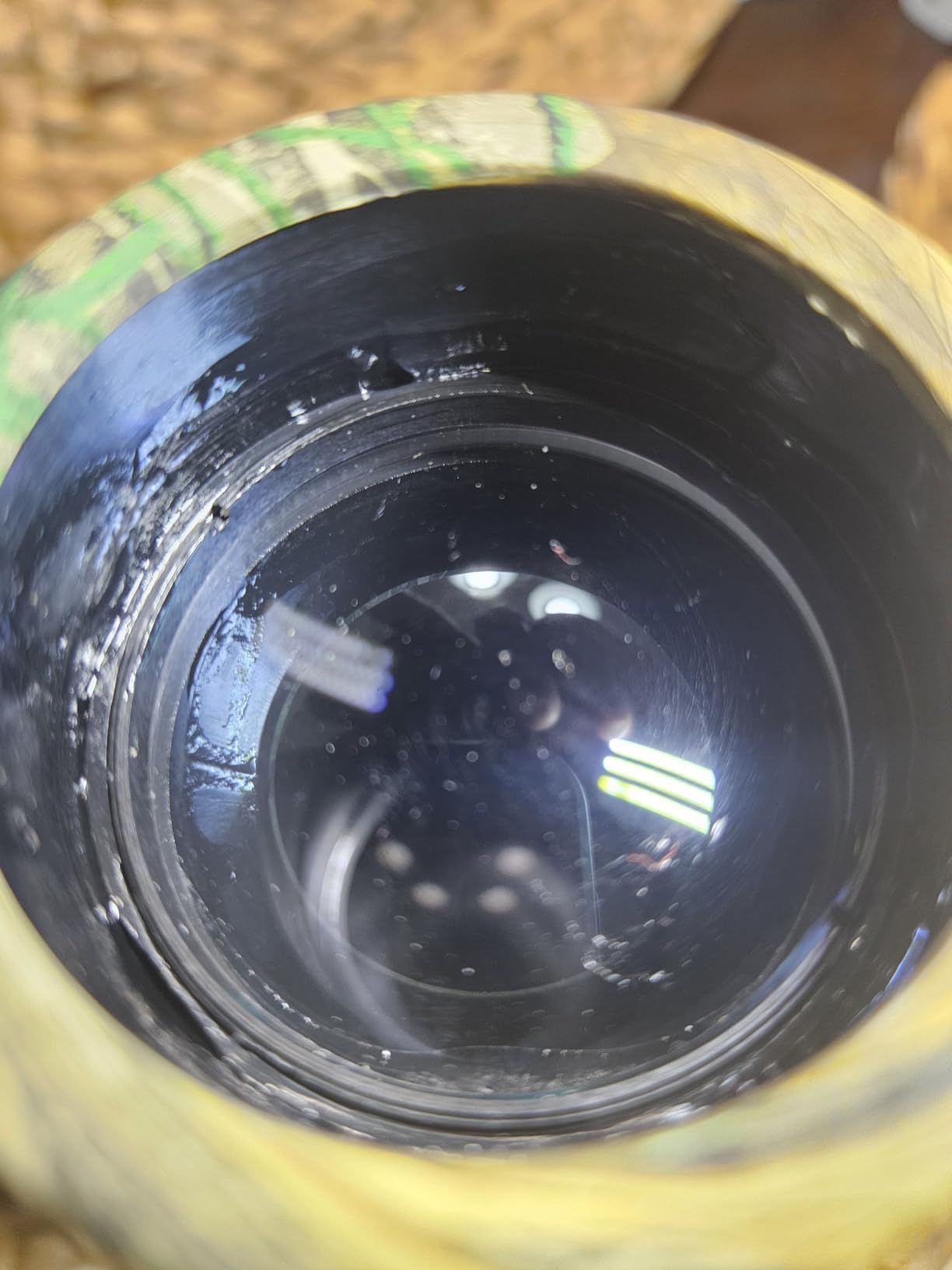
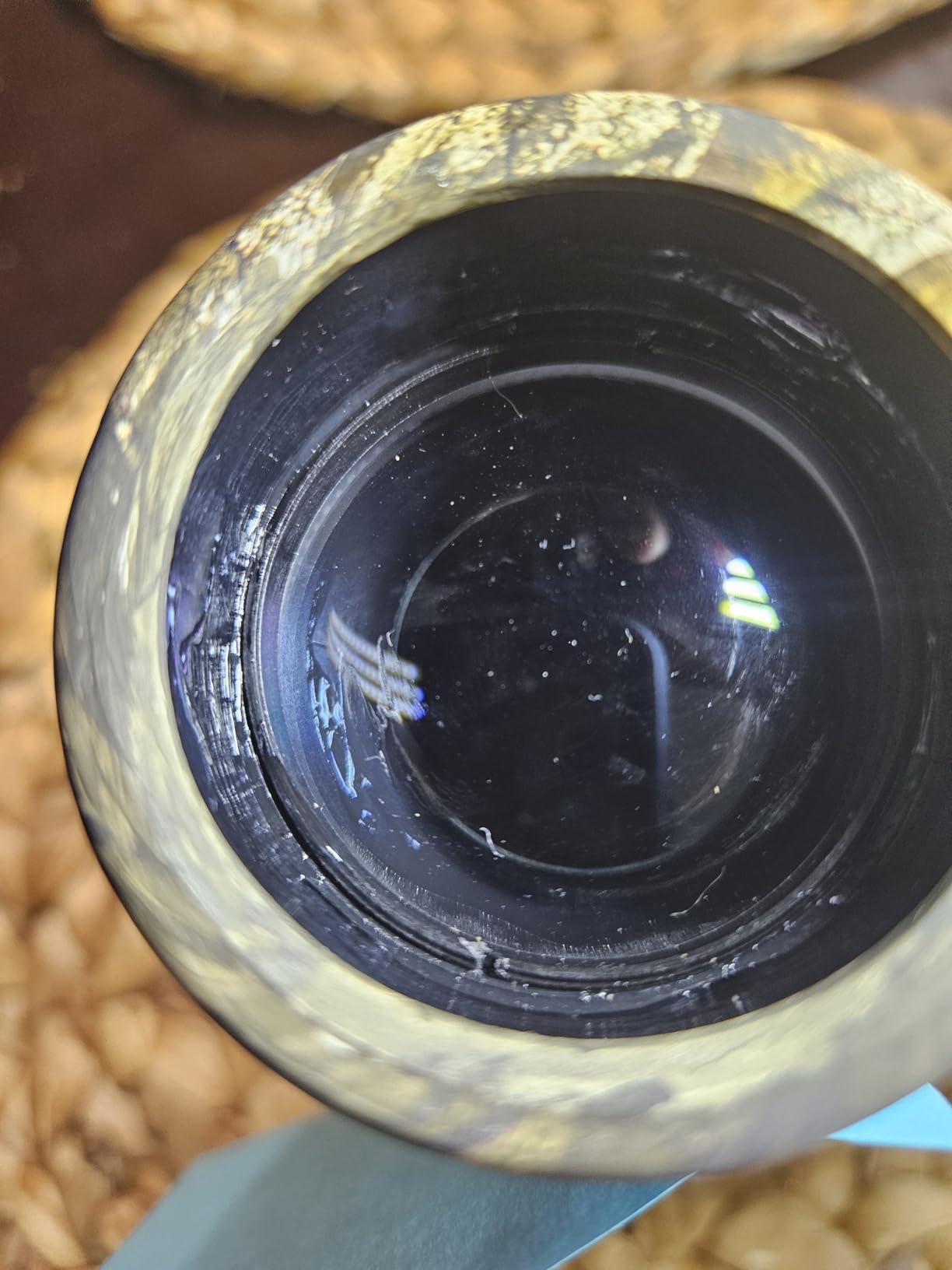
There are also a small number of reports of focus issues and lubricant migrating onto the outer glass after extended use, which is worth watching for on a long trip. The warranty has addressed most of these for owners.
11. Bushnell Trophy Bone Collector 10×42 – Best for Rugged Handling
Bushnell Trophy Bone Collector 10×42 Roof Prism Binoculars, Green
- Bright and sharp image for the class
- Large center focus knob usable with gloves
- Rugged build survives repeated drops
- Comfortable on a chest harness for long hours
- Waterproof and fogproof construction
- Eye relief of 15.2mm is short for glasses wearers
- Heavier than many similarly priced compacts
- Manual controls only with no rangefinder or reticle
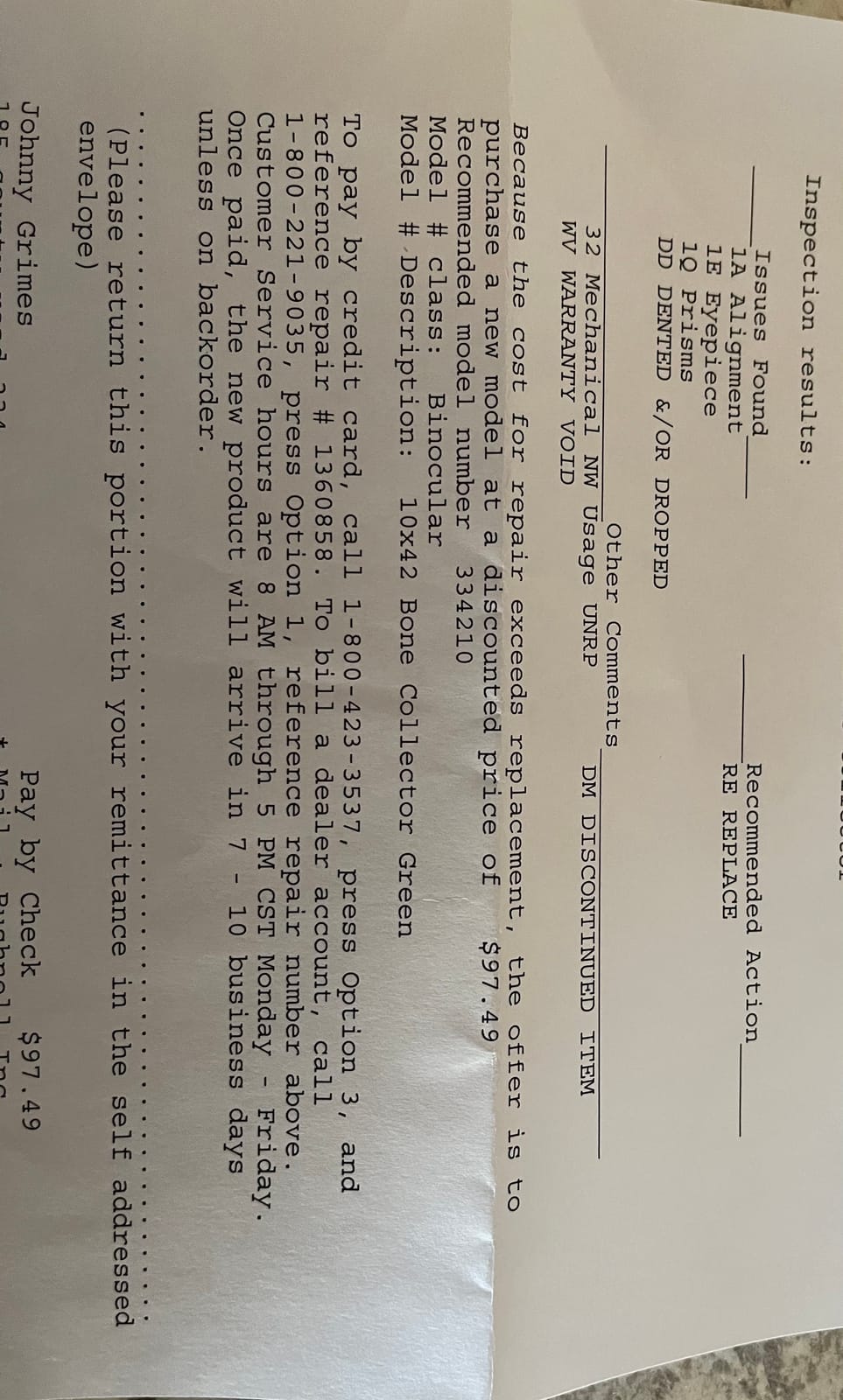
The Trophy Bone Collector is the pair in this group we would trust most to be thrown in a vehicle, dropped in a bag and handled roughly for a fortnight, and the owner reviews reflect that. Reviewers repeatedly describe it as robust enough to survive repeated drops without damage, and the fully multi-coated lenses with BaK-4 prisms give a bright and sharp image for the class.
Some reviewers who use professional cameras rate the image quality more highly than this tier would suggest. The large centre focus knob and two-step twist-up eyecups are genuinely usable with gloves on, which is the feature that decides whether the pair is a pleasure or a chore at a pre-dawn start.
Textured, non-glare, non-slip rubber armour absorbs shock, and the construction is described as heavy-duty waterproof and fogproof. Field of view is 330 feet at 1000 yards, which is wide for a 10×42, though it sits below the widest of the 8×42 pairs here.
Where durability pays off on safari
Open vehicles, dust, heat, and gear bags that get tossed into a boot. The reviews are consistent that this pair simply keeps working through that, and the waterproof and fogproof construction means a sudden squall or a river crossing is not a crisis.
It is also comfortable enough to wear on a chest harness for long hours, which distributes the load and takes it off your neck during a long drive.
Check the eye relief before you buy if you wear glasses
At 15.2mm this is among the shortest eye relief figures in this roundup, and it is the one specification most likely to disappoint a glasses wearer. The frames will intrude on the eyepiece and you may lose the edge of the field.
It is also heavier than many compact pairs at the same tier, and it is manual-focus only with no rangefinder or illuminated reticle. If you wear glasses and want this level of toughness, the Nikon PROSTAFF P3 gives you 20.2mm of eye relief with a similar weight.
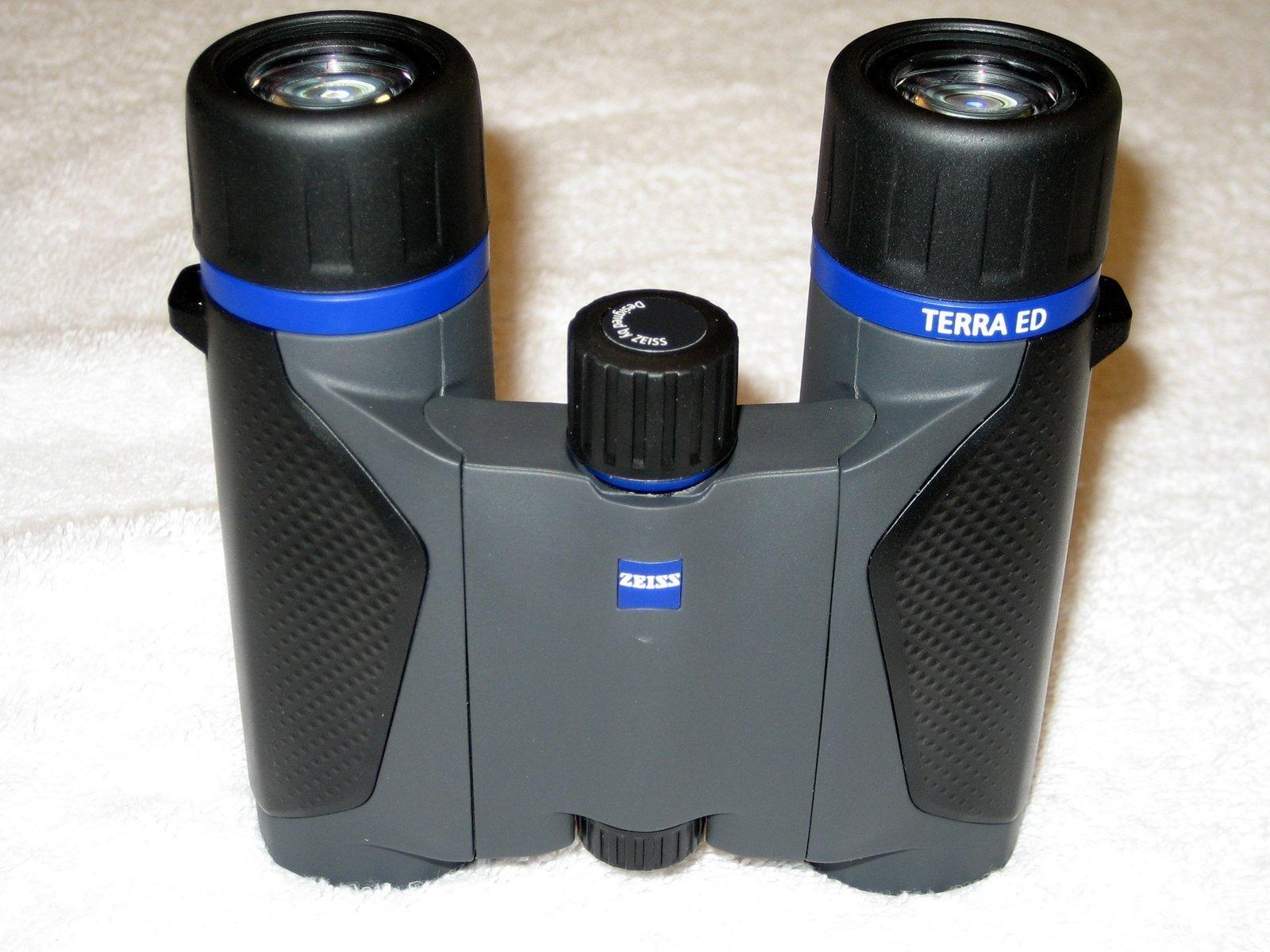
12. ZEISS Terra ED Pocket 8×25 – Best for Packing Light
ZEISS Terra ED Pocket Binoculars 8×25 Compact Waterproof and Fast Focusing
- ED glass gives high sharpness and accurate colour
- Pocketable at roughly 11 oz so it always gets used
- Hydrophobic coating holds up in adverse light and twilight
- Fast precise focus wheel with a diopter that holds
- Waterproof fiberglass-reinforced casing
- 3.1mm exit pupil makes predawn and post-sunset viewing hard
- Short 16mm eye relief disappoints some glasses wearers
- Rigid eye cups are less comfortable than soft rubber
- Lens caps not included
The Terra ED Pocket is the outlier in this list and there is a good argument for it. At roughly 11 ounces and 4.4 inches, it is the only pocket-format pair in this list, and the reviews are clear that this changes behaviour rather than just saving space. Glass you carry is glass you use.
Optically it punches well above its compact class. Schmidt-Pechan ED glass with a hydrophobic multi-coating gives high sharpness, resolution, accurate colour and well-controlled chromatic aberration, and the stated 88 percent light transmission is high for a glass of this size. ZEISS developed the hydrophobic coating specifically to hold clarity in adverse weather and twilight.
The focus wheel is large, easy to grip, and positioned so your index finger lands on it naturally, which is exactly what you want when something appears without warning. The diopter is stiff enough to hold its setting.
When a compact 8×25 is the smarter choice
For walking safaris, mobile camping, multi-country trips with hand luggage limits, and anyone who will not tolerate a neck strap for eight hours, this format is the correct answer. The Schmidt-Pechan prism design also handles knocks well, and the waterproof fiberglass-reinforced casing is described as nearly indestructible by owners.
It is also a good second pair, for a companion who does not want to carry a full-size body on a boat or a walking trip.
Where the 3.1mm exit pupil stops you
This is the honest limit. A 3.1mm exit pupil is small, and it means the view degrades faster than any other pair here once the light drops below what a full day provides. Owners are clear that predawn and post-sunset viewing is difficult, and that is precisely the window where most safari wildlife is active.
Eye relief of 16mm is also short relative to the Nikon options, and the rigid eye cups are less comfortable over long sessions. There is also a double-hinge design that takes practice and can pinch fingers, and lens caps are not included, which is worth budgeting for.
If your trip is dawn-heavy, pair this with a 10×50 rather than instead of one.
Dawn and Dusk Game Drives: The Test Nobody Explains
Exit pupil is the number that decides whether a pair works at dawn, and it is the number almost nobody checks. Divide the objective lens diameter by the magnification: 42 divided by 10 gives 4.2mm, 42 divided by 8 gives 5.25mm, 50 divided by 10 gives 5mm, and 25 divided by 8 gives 3.1mm.
A bigger exit pupil delivers a brighter image because it matches your pupil more closely. Once the available light drops below what a small exit pupil can deliver, the image goes grey, contrast collapses, and fine detail disappears into noise. This is why an 8×42 often looks more usable at 6.15am than a 10×42, despite having lower magnification.
The practical rule: if your drives start before sunrise, aim for an exit pupil of 5mm or better. That points to the 8×42 format, the 10×50 format, or a pair like the Nikon Monarch M5 with its 5.3mm pupil.
Coatings matter here too, and not in the way marketing suggests. A fully multi-coated lens with a phase-coated or dielectric prism coating directs more of the light that arrives into the eyepiece instead of losing it to reflection. The Leupold BX-2 Alpine HD and the ZEISS Terra ED Pocket both name their coating systems explicitly, and the ZEISS hydrophobic coating is specifically designed to keep the view clear in wet weather and twilight.
There is a physical limit worth stating plainly. Above about 10x in poor light, your own eye becomes the constraint, because dilating your pupil in darkness reduces the effective aperture. No glass fully solves this. It is why experienced safari viewers accept some grain at dawn and wait ten minutes.
One forum user we read put the practical version well, describing an 8×30 as the everyday travel pair and a 10×42 as the reach pair. That division of labour is exactly right for a trip with both dawn drives and daytime plains scanning.
Weight, Neck Fatigue and the Eight-Hour Game Drive
Below roughly 20 ounces, weight stops being a factor. Between 20 and 25 ounces, most people are comfortable on a neck strap for a full day. Above 25 ounces, the pairs start getting abandoned in the vehicle, and that is the real cost, because the binoculars you do not carry do not work.
That threshold comes straight from the forum consensus. Safari operators in the discussions we reviewed report issuing high-end 10x42s that weigh over 30 ounces, and noting that the quality is outstanding while the weight means many travellers simply leave them behind. A 30-ounce pair is not a better pair; it is a pair that spends the trip in a hotel room.
Within this group, the stated weights spread widely. The ZEISS Terra ED Pocket at roughly 11 ounces and the Bushnell PowerView at a stated 22 ounces stand out for portability. Note that listed retail weights often include packaging, so compare owner reports rather than figures on a listing page.
Two details matter more than the headline number. Balance matters: a pair that is light but front-heavy still tires your arms, and a wide open-bridge design like the Leupold BX-2 distributes weight differently from a compact body. And the strap matters just as much: a chest harness spreads load across your shoulders and takes the weight off your neck entirely on long drives.
The Diamondback HD and the Crossfire HD both ship with a GlassPak harness, and the Leupold and the Bushnell Trophy come with or suit a chest harness. If your trip is vehicle-based and long, that is a better use of your attention than chasing the lightest possible body.
Fitting Binoculars If You Wear Glasses
Eye relief is the distance from your eye to the front lens element while still seeing a full field of view, and it is the specification that decides whether a pair is comfortable for you. Anything under about 15mm is tight for a glasses wearer.
In this group, the spread is wide. The Nikon PROSTAFF P3 at 20.2mm and the Nikon Monarch M5 at 19.5mm have the most room. The Celestron Nature DX at 17.5mm, the Bushnell PowerView at 17.5mm, the Vortex Triumph HD and Bushnell H2O Xtreme at 17mm, the Celestron Outland X at 17.4mm, the ZEISS Terra ED at 16mm, and then the Vortex Crossfire HD and Diamondback HD at 15mm, with the Bushnell Trophy at 15.2mm.
That ordering matters more than any brand argument. A traveller who was put off binoculars entirely by an uncomfortable fit is better served by the PROSTAFF P3 than by a technically superior pair they cannot wear for six hours. This is the one forum complaint that showed up repeatedly and was never answered properly anywhere in the existing results.
Two practical checks when your pair arrives. First, twist the eyecups fully down before putting them to your eye, and confirm you see a full, evenly lit field with no dark ring. Second, focus both barrels separately before you rely on the diopter, since a slightly misaligned pair is a common reason first-time buyers conclude they dislike binoculars.
If you find the fit wrong, most eyecups can be replaced with softer or taller third-party cups, which solves more comfort problems than any amount of specification comparison.
What to Look for in Safari Binoculars
Start with magnification, then set a weight ceiling, then choose the objective size for the light you will be in, then verify eye relief, then confirm sealing. That order works because each step constrains the next, and it stops you falling for a beautiful image picture on a pair you cannot carry.
Magnification. 8x for bush, forest, walking safari and birding in the canopy. 10x for open plains, river margins and long-range scanning. Above 10x needs a tripod to be usable, and a tripod is awkward in a moving vehicle.
Objective lens diameter. 42mm is the safari standard and 50mm is the low-light choice. Larger objectives make the body bulkier, so a 10×50 is a genuine trade rather than a straight upgrade.
Field of view. Expressed in feet at 1000 yards, or as an angle. One informed recommendation in the forum discussions we read was to insist on a field of view of not less than 30, and that is reasonable advice. Anything at or above 330 feet is comfortable for tracking animals; 388 feet is very wide.
Eye relief. 15mm is the floor, 17mm is comfortable, 19mm and above is genuinely glasses-friendly. Check this before anything else if you wear glasses.
Sealing. Waterproof, fogproof, and nitrogen or argon purged is the baseline for any trip that includes a boat transfer, a river crossing or a wet season. An IPX7 rating is a stronger and more testable claim than the word waterproof alone.
Coatings and glass. Fully multi-coated lenses are the entry expectation. ED glass reduces chromatic aberration and is worth paying for if birds or small mammals are a priority. A phase-coated or dielectric prism coating improves contrast in low light.
Weight and balance. Under 20 ounces is easy, 20 to 25 ounces is workable with a strap, above 25 ounces needs a harness. Balance matters as much as total weight.
Tripod thread. Every pair in this group is tripod adaptable except where noted. It costs nothing and saves you if you ever work from a fixed hide or riverbank position.
Close focus. Only relevant if you photograph or study small subjects. The Monarch M5 focuses to 8.2 feet, the Crossfire HD measures nearer 8 feet than its advertised figure, and compact 8×25 pairs are poor at it.
Where do the tiers actually differ? Below the mid tier you are paying for build quality, sealing, coatings and field of view rather than optical sophistication. In the mid tier you are buying ED glass and better coatings. Above that, you are paying for lighter magnesium bodies, better collimation and refinement that most viewers will not detect on a moving animal at 200 metres. For most trips, the mid tier is where the value ends.
If your itinerary is birding-heavy rather than big-game, our birdwatching binocular guide goes deeper on that specialty. If you want something that can also tell you how far away that elephant is, see our rangefinder binocular picks, which we did not include in this roundup because the format is a separate decision with its own compromises.
For the rest of the trip, our stargazing binocular guide is relevant if your lodge has dark skies and you want one more use for the same pair.
Safari Lens Care in Dust, Heat and Humidity
Dust is the enemy that ruins safari binoculars fastest, and it is everywhere: dry plains, open vehicles, and gravel tracks. The most common avoidable damage is dragging grit across the front element when someone wipes the lens with a shirt sleeve or a paper tissue.
Carry a proper microfibre cloth from day one. Blow loose dust off with a blower first, then wipe, and never use a tissue. The lens cloth and Rainguard-style eyecup covers included with most of the pairs here are not an afterthought, they are the tool for the job.
Heat is the second issue. Leaving binoculars on a dashboard or in a closed vehicle at midday cooks the adhesives and can degrade the nitrogen or argon seal over time. Carry them in the cabin or in a padded bag, and let them acclimatise before opening the case if you have moved from air conditioning into humid air, because that is when condensation forms on the inside of the lenses.
Humidity is the third. A sudden change from a cold air-conditioned vehicle into a hot humid river valley is exactly the condition that fogproofing is designed for, and it is one of the strongest reasons to buy a sealed pair at all. Every one of the twelve here is nitrogen or argon purged and sealed, so the specification is covered.
Finally, tether your lens caps. Several pairs here include tethered objective covers precisely so the caps are not lost in a vehicle, and a lost cap in dust is worse than no cap at all.
Should You Rent Binoculars Before a Safari?
Yes, if you have never used a pair, because comfort and shake tolerance are personal and specifications cannot tell you whether you will enjoy 8x or find 10x uncomfortable after two hours. Renting also lets you compare a 42mm and a 50mm objective in actual dusk light, which is the one comparison no spec sheet can substitute for.
Optics rental services exist specifically for this, and a rental listing for premium glass appeared among the shopping results for this very query, which suggests the practice is established rather than fringe. It is a sensible test before a purchase you intend to keep for a decade.
There are limits to what a rental can tell you. Weight is fully transferable to your own experience, and comfort and field of view are too. Optical sharpness is not, because a rental pair may be a generation older than what you would buy. Use the rental to decide the format, then buy the format.
A cheaper alternative if rental is impractical: borrow. A friend with a 10×42 for an afternoon in your garden will teach you more about hand shake and field of view than any article, including this one.
What Safari Guides and Regular Travelers Actually Carry
The forum consensus is worth reading carefully, because it contradicts the marketing in useful ways. Across the safari discussions on reddit.com/r/Binoculars, the Tanzanian and southern African threads on the tripadvisor forums, birdforum.net, fodors.com and africahunting.com, a few patterns repeat.
First, weight beats quality. Safari operators report issuing high-end 10x42s that weigh over 30 ounces, and travellers describing them as outstanding while also noting the weight. The practical implication is the one we have repeated throughout this guide: buy the pair you will actually carry.
Second, the format advice genuinely conflicts, and that conflict is the reason people end up dissatisfied. Forum advice commonly recommends 8x with a field of view of not less than 30, while equally common advice recommends 10×42 for safari. Both are right in their context, which is why we have attached terrain to each recommendation rather than declaring a single winner.
Third, experienced buyers are explicit about diminishing returns. One detailed comparison in the discussions put a mid-tier 10×42 against a step-up model at a much higher outlay and concluded the mid-tier pair was the sensible buy. That matches our read: the step up is visible in side-by-side testing and largely invisible on a moving animal.
Fourth, comfort is a genuine deal-breaker and it is not captured in any specification. A user in one of the top threads described never getting comfortable with a compact pair they had used as a child, and the suspicion of poor stereo vision was raised and then never resolved. If you have never used binoculars, or suspect you have a stereo vision issue, test before you commit. A reputable optometrist can assess it, and it is far better to know before a safari than on one.
Fifth, brand recognition matters less than people expect. Vortex, Nikon, Leupold, Bushnell, Celestron and ZEISS all appear repeatedly in the safari discussions, but the format and the ergonomics decide the outcome far more often than the badge. The 8×42 that fits your face will beat the premium 10×42 that you end up leaving in the room.
Frequently Asked Questions
Is 8×42 or 10×42 better for safari?
Choose 8×42 for thick bush, forest edge, long game drives and canopy birding, and 10×42 for open savannah plains, river margins and long-range scanning. The 8×42 gives you a wider field of view and a brighter 5.25mm exit pupil, so it is steadier and holds up later in the evening. The 10×42 gives you more detail at distance. If your itinerary mixes habitats, 8×42 is the safer default.
What is the ideal magnification for safari binoculars?
For handheld viewing on a moving vehicle, 8x to 10x is the entire answer. Above 10x, every tremor in your hands and in the vehicle itself is multiplied, and anything above 12x really needs a tripod, which is impractical in an open safari vehicle. Below 8x you will not see enough detail to justify the trip.
What binoculars should I bring on a safari?
Bring one pair you will actually use, and let weight be the binding constraint. A sealed and fogproof pair with a roof or Porro prism, a field of view of at least 330 feet at 1000 yards, and a neck strap or harness matters more than a second, more expensive pair. Under 20 ounces is easy to wear all day, and above 25 ounces many travellers leave the binoculars behind in the vehicle.
Which is better, 8×42 or 12×50 binoculars?
An 8×42 is better for handheld safari use. A 12×50 resolves more detail at long range and its 5mm exit pupil keeps it bright, but the field of view is much narrower and the shake at 12x is severe. Choose 12×50 only for fixed-position viewing such as a hide, a lodge balcony or a river crossing where you are not in a moving vehicle.
Which binoculars are better for birdwatching, 10×42 or 8×42?
Use 8×42 for forest and canopy birding, where you need a wide field of view to find and hold small fast subjects, and 10×42 for open-country birds and distant raptors, where you need detail to identify the species rather than just notice it. On safari, if birds make up a large part of what you want to see, this is the main reason to choose 8x over 10x.
Do I need waterproof and fogproof binoculars for a safari?
Yes, treat waterproof and fogproofing as a requirement rather than a preference. Every pair in this roundup is nitrogen or argon purged and sealed. The sealing protects against rain, dust, river spray and the sudden temperature change of moving from an air-conditioned vehicle into a humid river valley, which is precisely the condition that causes internal fogging.
How heavy should binoculars be for an all-day game drive?
Under 20 ounces is comfortable for a full day on a neck strap, 20 to 25 ounces is workable especially with a chest harness, and above 25 ounces many travellers stop carrying them. That threshold matches repeated reports of premium 10x42s weighing over 30 ounces and spending the trip unused in a hotel room. Weight also matters more than people expect on walking safaris, where you carry your own glass all day.
Are 10x binoculars better than 8x for wildlife?
Not automatically. 10x gives you more detail on a distant animal, but 8x gives you a wider field of view and a brighter image, which is what lets you track something moving. Choose 10x for open plains and long-range scanning, and 8x for bush, forest, walking safari and general big-game viewing at moderate distance. Most first-time safari buyers are happiest with 8×42 or 10×42.
The Safari Binocular to Pack for 2026
The best binoculars for safari trips come down to a format decision before they come down to a brand decision. Pick 8×42 for bush, forest, walking safaris and glasses wearers, 10×42 for open plains and long-range scanning, and 10×50 only if your drives genuinely start in the dark.
Within that, the Vortex Crossfire HD 10×42 is the pair we would pack. It is bright, sharp, light enough to wear for a full day, sealed against everything a safari throws at it, and rated 4.8 across more than four thousand owner reviews, which is the volume of evidence we wanted before recommending anything.
Step up to the Vortex Diamondback HD 10×42 if your time is spent on distant subjects and you want more resolution and colour fidelity. Go compact with the Bushnell PowerView at 22 ounces on a walking safari, or the ZEISS Terra ED Pocket at roughly 11 ounces if luggage weight is the constraint. If you wear glasses, start with the Nikon PROSTAFF P3 8×42 and its 20.2mm of eye relief.
Whichever you choose, test it before you fly if you can, bring a proper strap and a microfibre cloth, and check the focus on both barrels the first time you open the case. That is where every trip we’ve read about in the forums went well, and where the ones that did not, went wrong.