
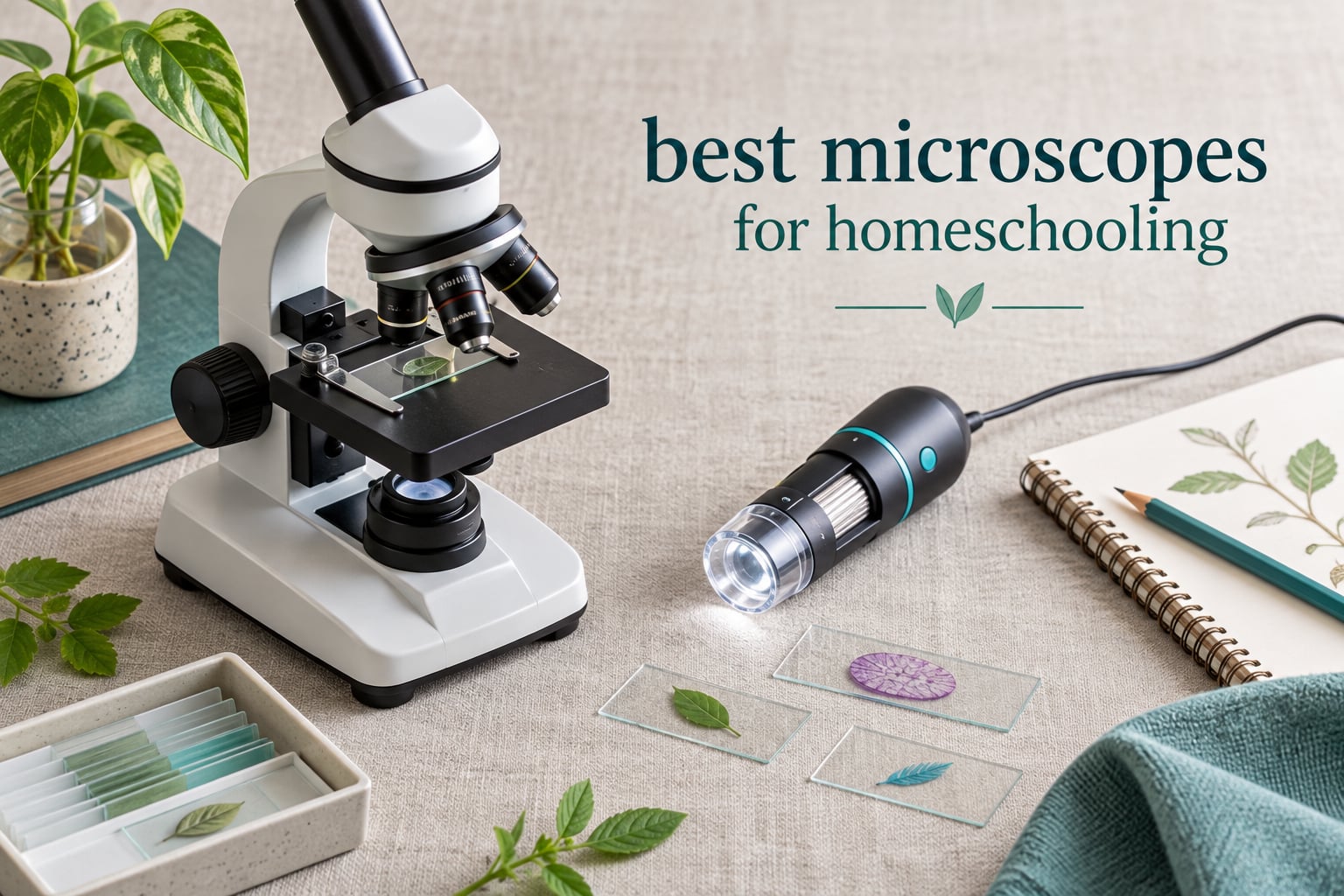
Short answer: the best microscopes for homeschooling are the ones with real glass optics, a focus knob a child can actually turn, and a viewing style that matches their age. The Educational Insights GeoSafari Talking Microscope wins overall for young families, the Omano Juniorscope is the best value for real glass lenses, and the AmScope B120C-E1 is the pick when a teen is heading into high school biology. Keep reading for the age-by-age breakdown.
I have watched three kids go from “wow” to “boring” on a microscope, and the pattern was the same every time. The instrument was never the problem. The problem was that the scope could not focus, so the slide went blurry and the child decided microscopy was fake.
That is why this roundup starts with frustration instead of magnification. Every microscope below was judged on one question: will a kid in your house get a clear image on the first or second try? I also weighed the details parents actually deal with, including how tall the eyepiece sits, whether the microscope can survive being carried to the pond, and what happens when a second child wants a turn.
If you want a shortcut, jump to the digital microscope roundup when you get to the screen-based options. The rest of this guide covers what a microscope is, how to pick one, and what to avoid.
Everything below was updated for 2026. Magnification claims change between model years, so treat the number on the box as a starting point and focus on optics and focusing instead.
Table of Contents
Top 3 Picks for Homeschooling

Every Microscope in This Roundup at a Glance
The table below lists all ten scopes in the order they appear. Reading the quick overview is the fastest way to rule out half the list before you read a single review.
| Product | Specifications | Action |
|---|---|---|
 Educational Insights GeoSafari Talking Microscope Educational Insights GeoSafari Talking Microscope |
|
Check Latest Price |
 National Geographic Dual LED Microscope Science Kit National Geographic Dual LED Microscope Science Kit |
|
Check Latest Price |
 National Geographic 400x Microscope for Kids National Geographic 400x Microscope for Kids |
|
Check Latest Price |
 Omano Juniorscope Omano Juniorscope |
|
Check Latest Price |
 AmScope B120C-E1 Binocular Compound Microscope AmScope B120C-E1 Binocular Compound Microscope |
|
Check Latest Price |
 OMAX M82ES 2000X Binocular Compound OMAX M82ES 2000X Binocular Compound |
|
Check Latest Price |
 Plugable USB Digital Microscope 250x Plugable USB Digital Microscope 250x |
|
Check Latest Price |
| SKYBASIC Wireless Digital Microscope |
|
Check Latest Price |
 PalliPartners Compound Microscope PalliPartners Compound Microscope |
|
Check Latest Price |
 Ashfly Kids Microscope 500X Ashfly Kids Microscope 500X |
|
Check Latest Price |
Which Microscope Type Does Your Child Actually Need?
The word microscope covers four very different instruments, and most buying mistakes come from picking the wrong family rather than the wrong model. Here is how the types divide.
Compound microscopes are the classic school design. Light passes up through a thin slide into an eyepiece, and the image is flat and two-dimensional. This is the type required for middle school and high school biology, and it is the only type that handles prepared slides, cheek cells, and stained tissue properly.
Stereo microscopes sit above a specimen and produce a three-dimensional image at low magnification. They are the tool for insects, rocks, seeds, fabric, and circuit boards. Parents on homeschool forums single out stereo scopes as one of the few purchases they never regretted, and that reputation holds up for families who do a lot of nature study.
Digital and USB microscopes skip the eyepiece entirely and show the image on a screen. There is no focusing frustration and no eyepiece at the wrong height, which is why they suit co-op settings, learners with physical access needs, and anyone who wants to photograph a specimen for a science fair project.
Screen and phone-mounted scopes clip onto a phone or carry their own small display. They are the least “real” option optically, but the easiest to hand to a five-year-old and the easiest to carry on a nature walk.
As a rough age map: ages 4 to 8 belong in the third or fourth category, ages 8 to 12 can handle an entry compound scope with real glass lenses, and ages 13 and up deserve a binocular compound scope with a mechanical stage. If your child is twelve and asking real questions, skip straight to the top of the compound list.
1. Educational Insights GeoSafari Talking Microscope – Best for Preschoolers
- Voice narration holds a young child's attention
- Over 100 facts plus a quiz mode
- Two eyepieces let two children view together
- Slides store inside the unit
- No focus function
- children see printed images rather than specimens
- Slides must go in flat side down and both sides look identical
- Narration is English only
My youngest did not touch a real focus knob for two years. She used this scope almost daily, listening to the narration and tapping through quiz mode until she could name a brine shrimp without looking. That is a real result, even if it is not microscopy in the strict sense.
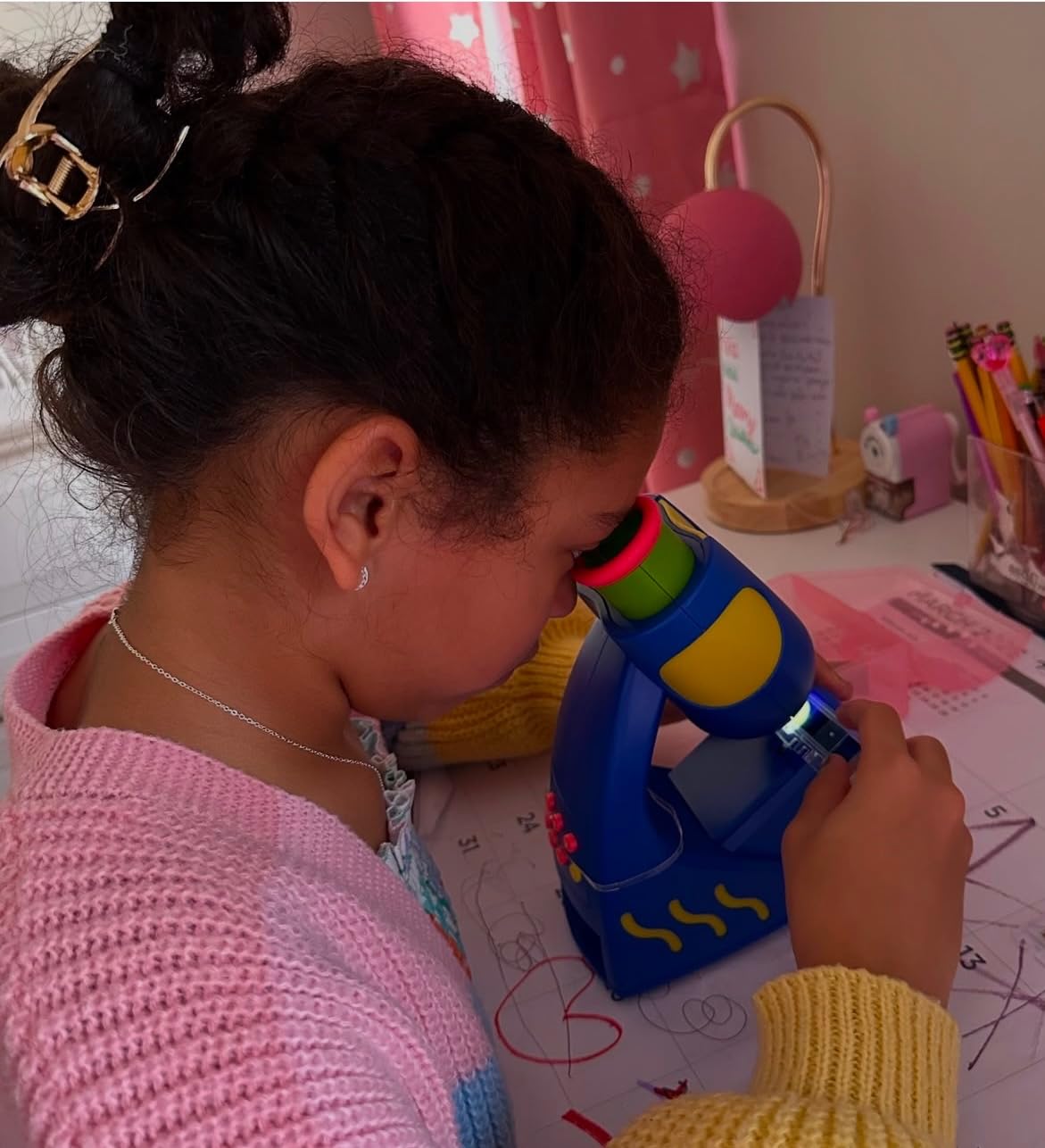
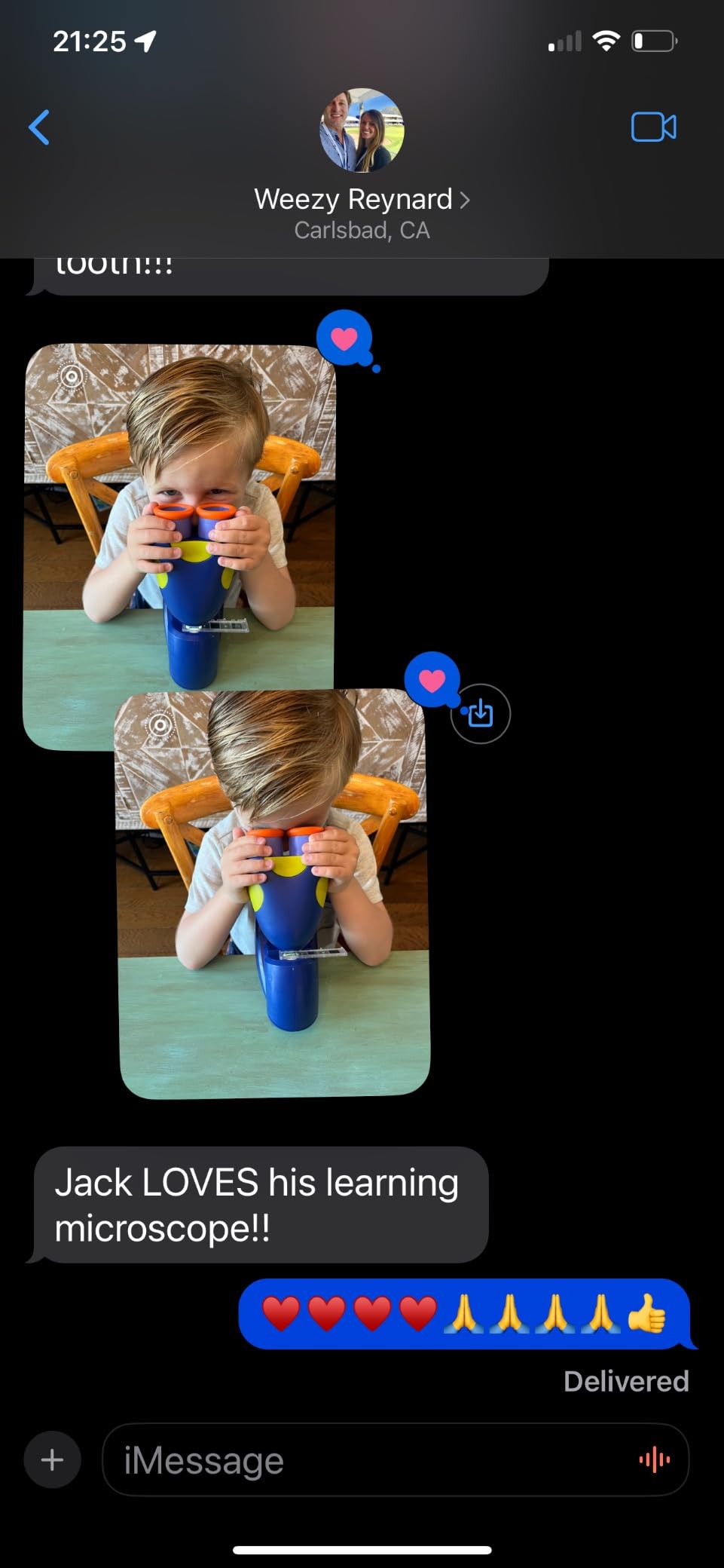
The scope is voice-guided, so a child who cannot yet read gets the full experience on their own. Two eyepieces sit side by side, which means two children can look at the same slide at the same time, and that detail alone changes how it works in a family with siblings close in age.
Here is the thing to know before you buy. This is not a magnifying instrument. Children look at printed full-color images on prepared slides, and there is no focus function at all. Twenty slides carry sixty images drawn from plants, animals, salt crystals, and blood cells.
It runs on three AAA batteries, and the narration is English only. The slides have to go in flat side down for the audio to trigger, and because both sides of a slide look nearly identical, a four-year-old will get that wrong for a week.
What makes it worth buying
For a four to eight year old, this is the most dependable way to keep a microscope routine going without an adult sitting beside them. The narration removes the adult from the loop, so it works during independent playtime.
The plastic construction is deliberately drop-tolerant, which matters when the user is small and the microscope lives on the floor rather than a desk. Slides store inside the unit, so nothing gets lost between lessons.
Where it falls short
It teaches nothing about optics. A child who only ever sees printed images will hit a wall the first time they try to focus a real specimen, and the jump to a compound scope is harder if there is no gap year in between.
It is also English-only narration, and some buyers reported a slide compartment that would not fully close. Treat it as a bridge to real microscopy, not a replacement for it.
2. National Geographic Dual LED Microscope Science Kit – Best for Ages 8-12
National Geographic Dual LED Microscope Science Kit for Kids Ages 8-12
- Two light sources handle slides and solid objects
- Optics are clearer than expected at this price
- Over 50 accessories including tweezers and dropper
- Light enough for a child to carry
- No diopter adjustment on the binocular head
- Glass stage and slides can break when handled roughly
- Eyepieces can pop out when lifted from the back
- Weak light compared with higher-priced scopes
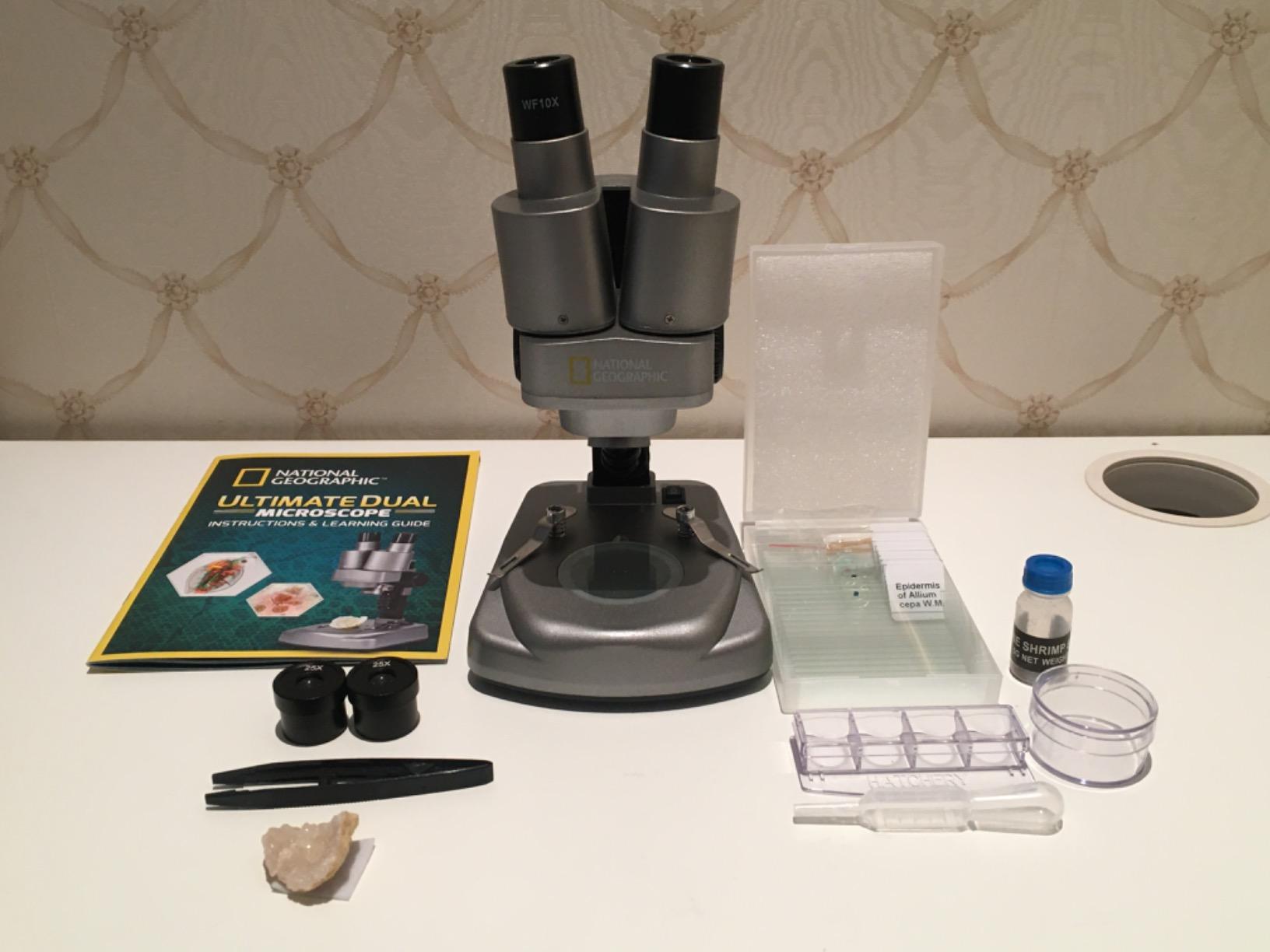
The dual lighting is the reason this one works. One LED shines up through the slide for cheek cells and onion skin, and the other shines down onto a solid object, so a child can look at a leaf, a coin, or a geode without being told that those are not allowed.
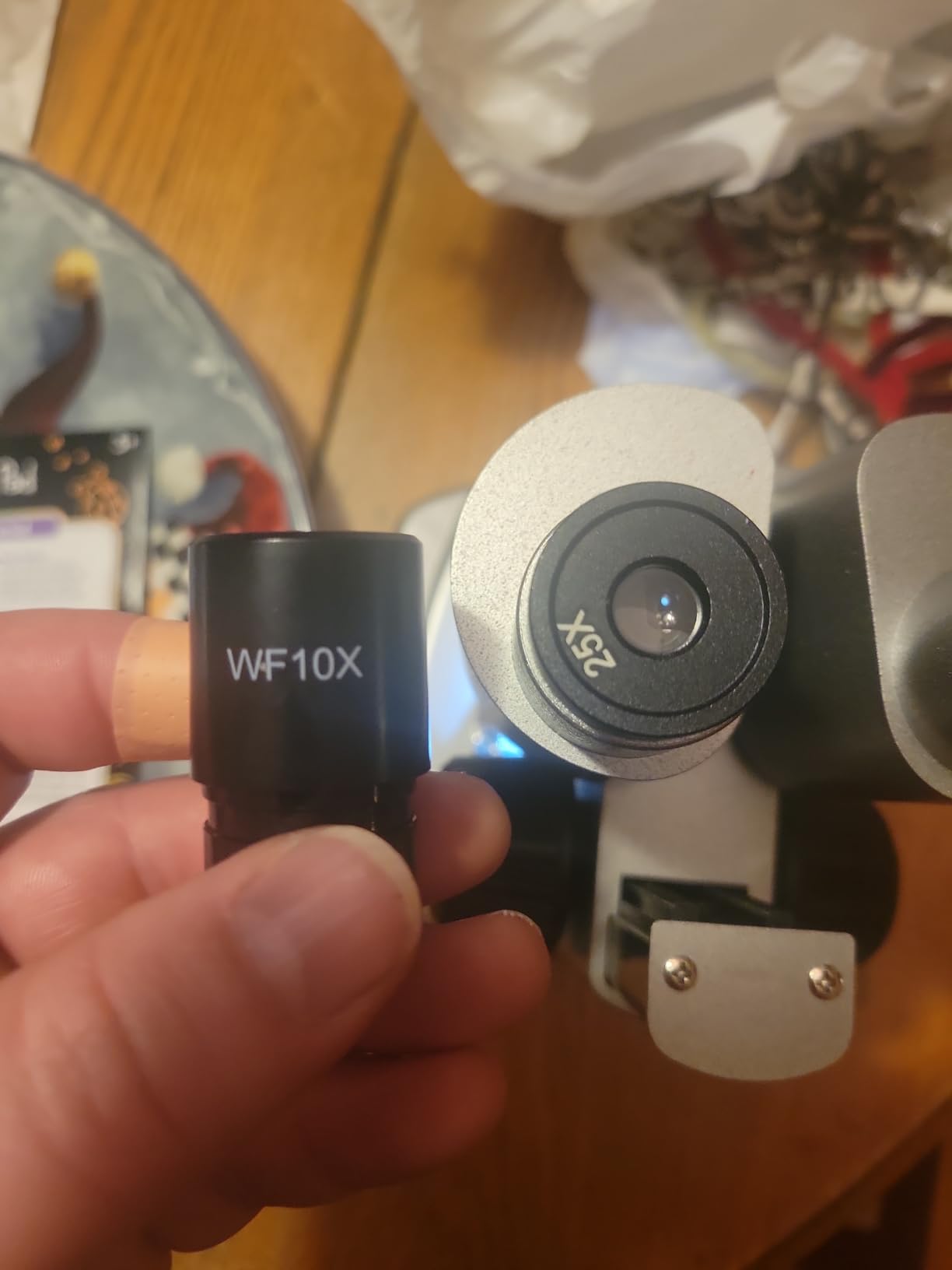
Interchangeable 20x and 50x eyepieces give a small amount of what feels like magnification change, which is genuinely motivating. The accessory count is the highest in this group: prepared slides, blank slides, tweezers, an eye-dropper, a geode, and a padded container.
Optically, buyers report clarity that surprises them for a kit at this level. The manufacturer rate the objective lenses as achromatic, which is the same word you will see on real student scopes, though the implementation is simpler.
It carries a one-year warranty against manufacturer defects. The whole thing weighs two pounds, so it moves between rooms or a nature walk without being a burden.
Best reasons to choose it
It is the scope I hand to a child who has outgrown a talking toy and is not yet ready for a mechanical stage. Switching light sources is a genuinely scientific skill, and this makes it easy to practise.
The 50+ accessory count means you can run a full lesson without buying anything else first. For a family starting from zero, that removes the most common surprise cost.
What to watch out for
There is no diopter adjustment on the binocular head, so a child with slightly uneven vision may strain to use it. The glass stage and slides break if a child carries it while looking through the eyepieces instead of using both hands.
Light is weak compared with scopes that have a proper condenser. At the top of the magnification range you will be squinting at dim specimens, and that is where frustration starts.
3. National Geographic 400x Microscope for Kids – Best Budget Starting Point
- Large focus knobs and a soft-touch eyepiece
- LED lights above and below the stage
- Prepared slides plus rock and mineral specimens
- Lab guide with activities and merit badges
- Focus knobs are stiff and jumpy
- Lighting is dim at higher magnification
- Feels light for a National Geographic product
- Best suited to kids under about 7
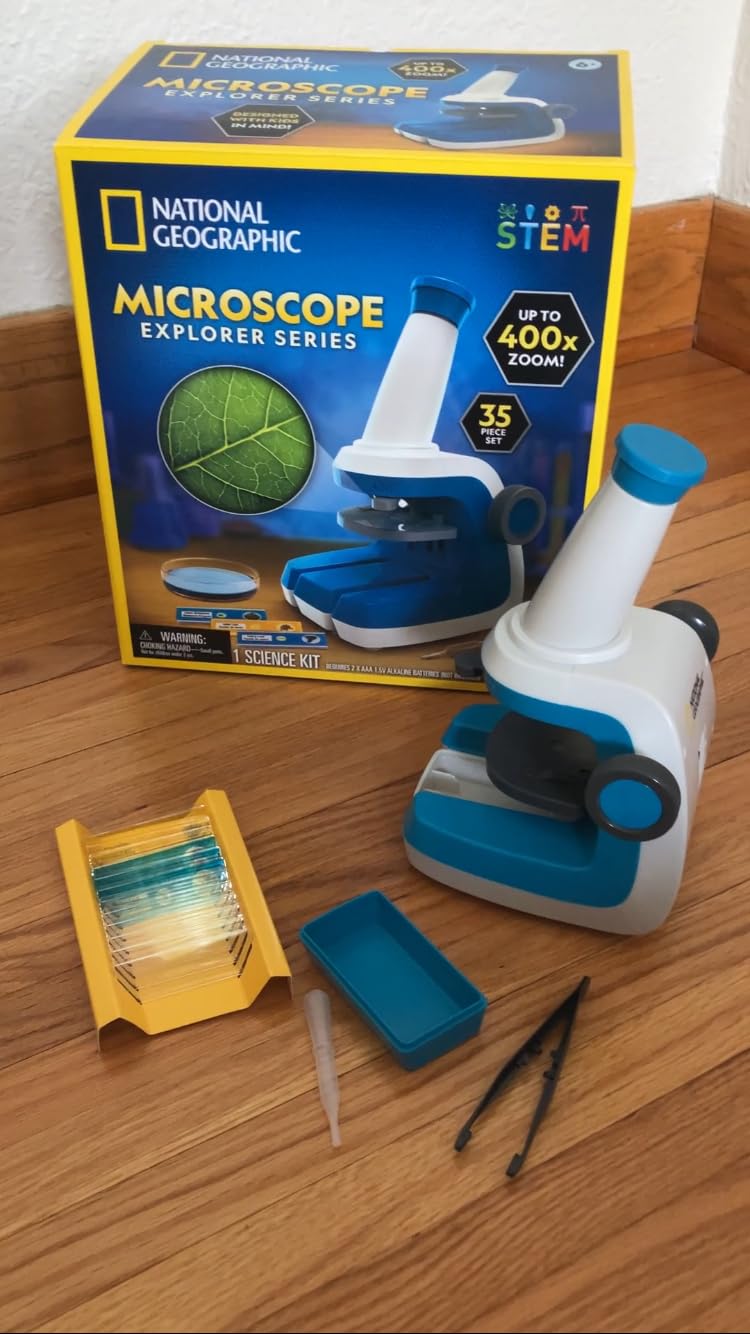
This is a common first microscope, and the large focus knobs are why it works at all for small hands. A soft-touch eyepiece goes in gently, which matters more than any spec when a seven-year-old is the one using it.
You get six prepared plant slides, six rock and mineral specimens, six blank slides, a pipette, a specimen dish, and tweezers. The lab guide includes viewing activities and merit badge stickers, and I will admit the badges did more work than expected in our house.
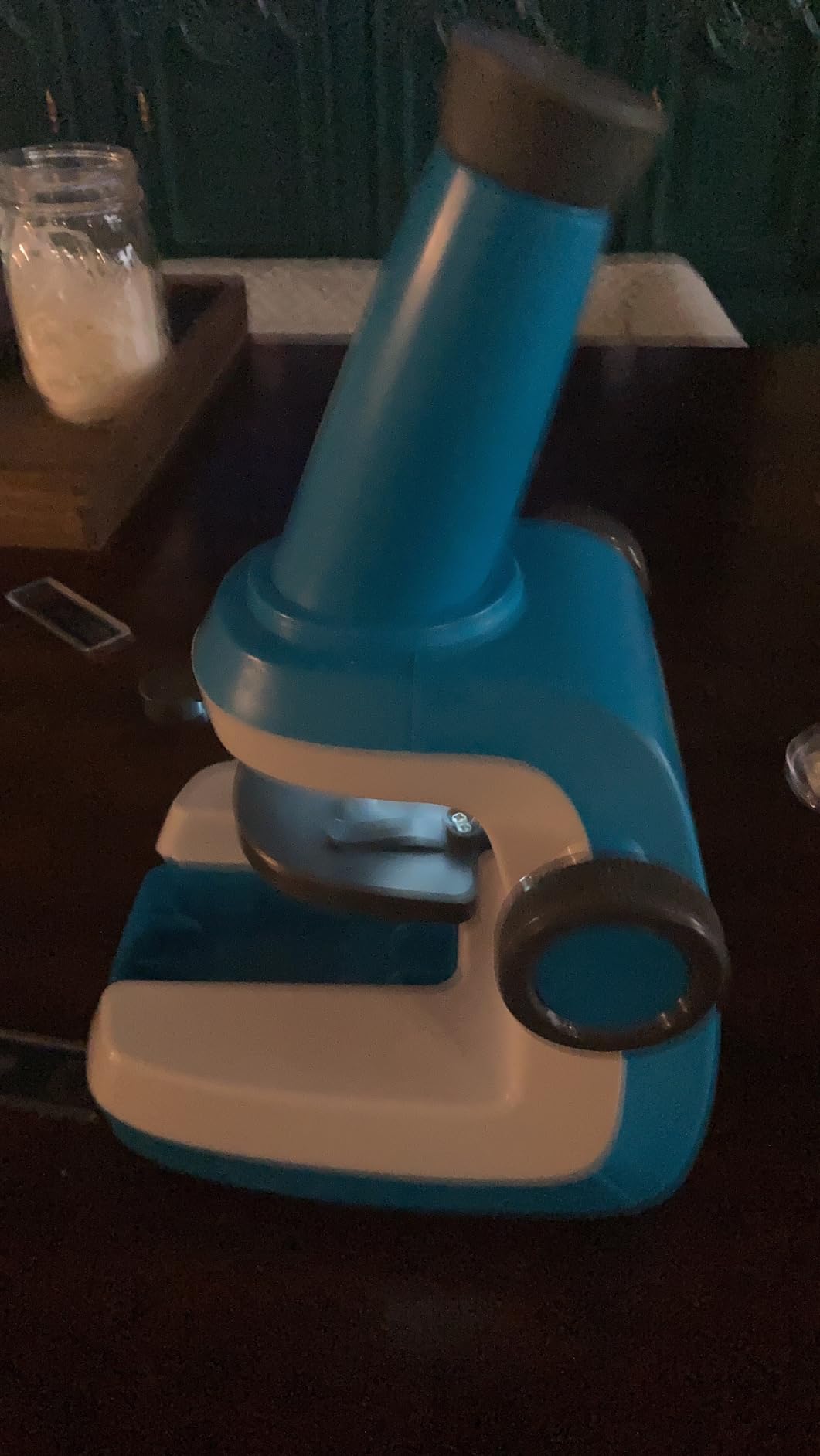
On the headline number, it claims up to 400x with LED illumination from both above and below the stage. The objective lenses are listed as achromatic, and reviewers generally find them reasonably sharp.
It measures 11 by 6.7 by 12 inches and weighs 1.8 pounds. The manufacturer backs it with a satisfaction guarantee rather than a fixed warranty term.
Who it works for
A five to seven year old who loses interest in anything with a fiddly setup. The knobs are big enough to grab, the eyepiece is forgiving, and the included rock specimens give an instant first success.
It also works as a second microscope for a co-op or a grandparent’s house, because rough treatment does less damage to a plastic body.
Why it will not stretch
The focus knobs are stiff and jumpy, so precise focusing takes practice a young child will not have. That is the same complaint that ends experiments early for a lot of families.
Lighting is dim and specimens are hard to resolve at the higher end of the range. Once a child sees what a properly lit image looks like elsewhere, this scope starts to feel like a step backward.
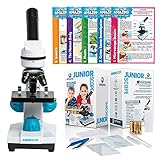
4. Omano Juniorscope – Best Value Real Glass Optics
- Real glass objectives give crisp images at all three levels
- Nicely weighted so it does not slide during use
- All-inclusive kit with petri dish forceps and stains
- Light enough to take outdoors
- No fine focus knob
- which matters above elementary ages
- Low magnification ceiling for the price
- Objective lens setup in the stem is fiddly
- No hard case for slides
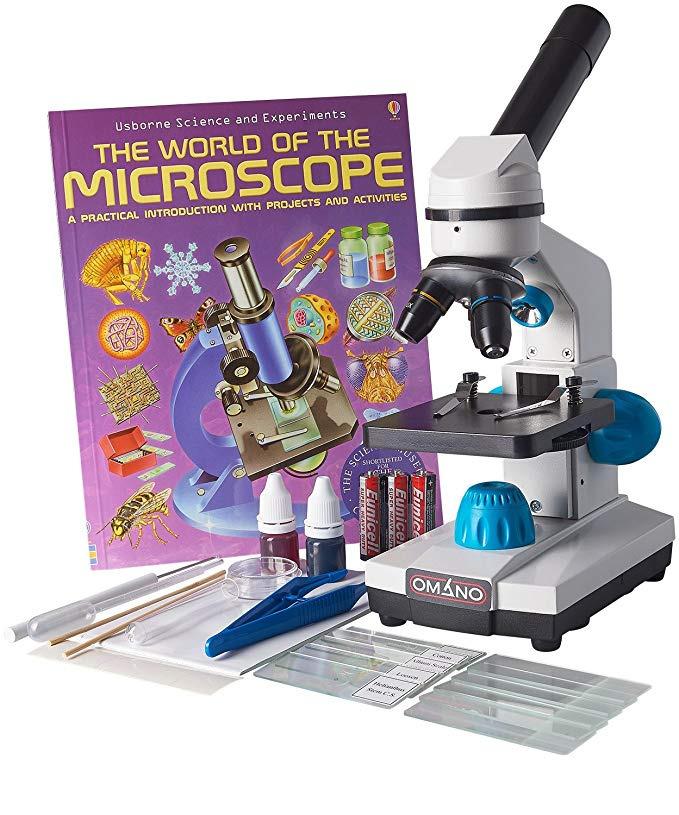
This is the scope I recommend when a family is ready to stop buying toys. The objectives are real glass, and the difference in image sharpness against a plastic-lens scope is immediate the first time a child looks through it.
Three magnification levels at 40x, 100x, and 400x, with adjustable LED lighting from above and below. It views solid objects and transparent specimens, which means a leaf and a prepared slide in the same session.
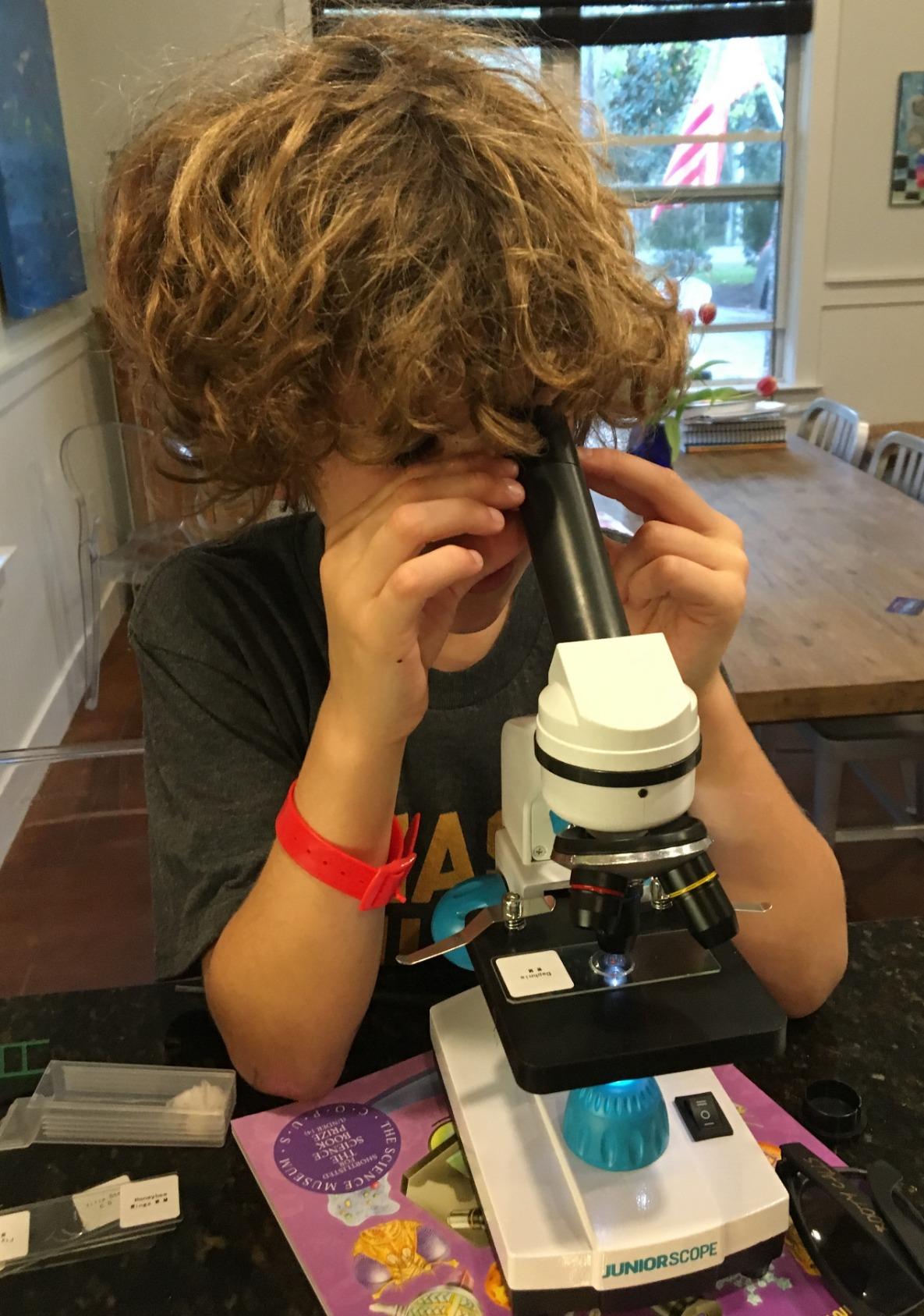
The box includes a petri dish, forceps, a dropper, a test tube, slides, and stains, plus an experiment guide. A dust cover is included, which matters more than it sounds in a house with small siblings.
It measures 9 by 6 by 14 inches and weighs three pounds, which is heavy enough to stay put on a table and light enough to carry to the porch. The warranty is a lifetime limited warranty from the manufacturer.
Why it beats cheaper kits
Veteran teachers reviewing this model rate the image quality on par with classroom scopes costing several times more. That is the clearest endorsement in the customer feedback for this price bracket.
It is also the least toy-shaped option here. Nothing about it looks like a play set, so a child treats it as equipment rather than a gadget, which changes how long they keep using it.
The limitation to plan around
There is no fine focus knob. Coarse focus alone is fine at 400x, but it becomes frustrating at 40x where fine detail is the point, and that is exactly the range a middle school student needs.
The magnification ceiling is modest, and threading the objective into the stem is fiddly the first time. If your child is eleven or older, read the next section before buying instead.
5. AmScope B120C-E1 Binocular Compound Microscope – Best for High School Biology
AmScope B120C-E1 LED Binocular Compound Microscope, 40X-2500X
- Substantial frame with a smooth mechanical stage
- 100x oil-immersion objective resolves live bacteria
- LED illumination with adjustable brightness
- Includes a USB camera and Windows software
- A biology teacher rated it above costlier classroom scopes
- The 1.0 MP camera produces soft images
- No calibration slide included for measuring
- Stage knobs move the slide in both axes at once
- Bundled camera software is cumbersome
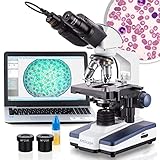
This is the first scope on the list I would hand to a high school student without hesitation. Total magnification runs from 40x to 2500x, and the revolving nosepiece carries achromatic objectives including a 100x oil immersion lens.
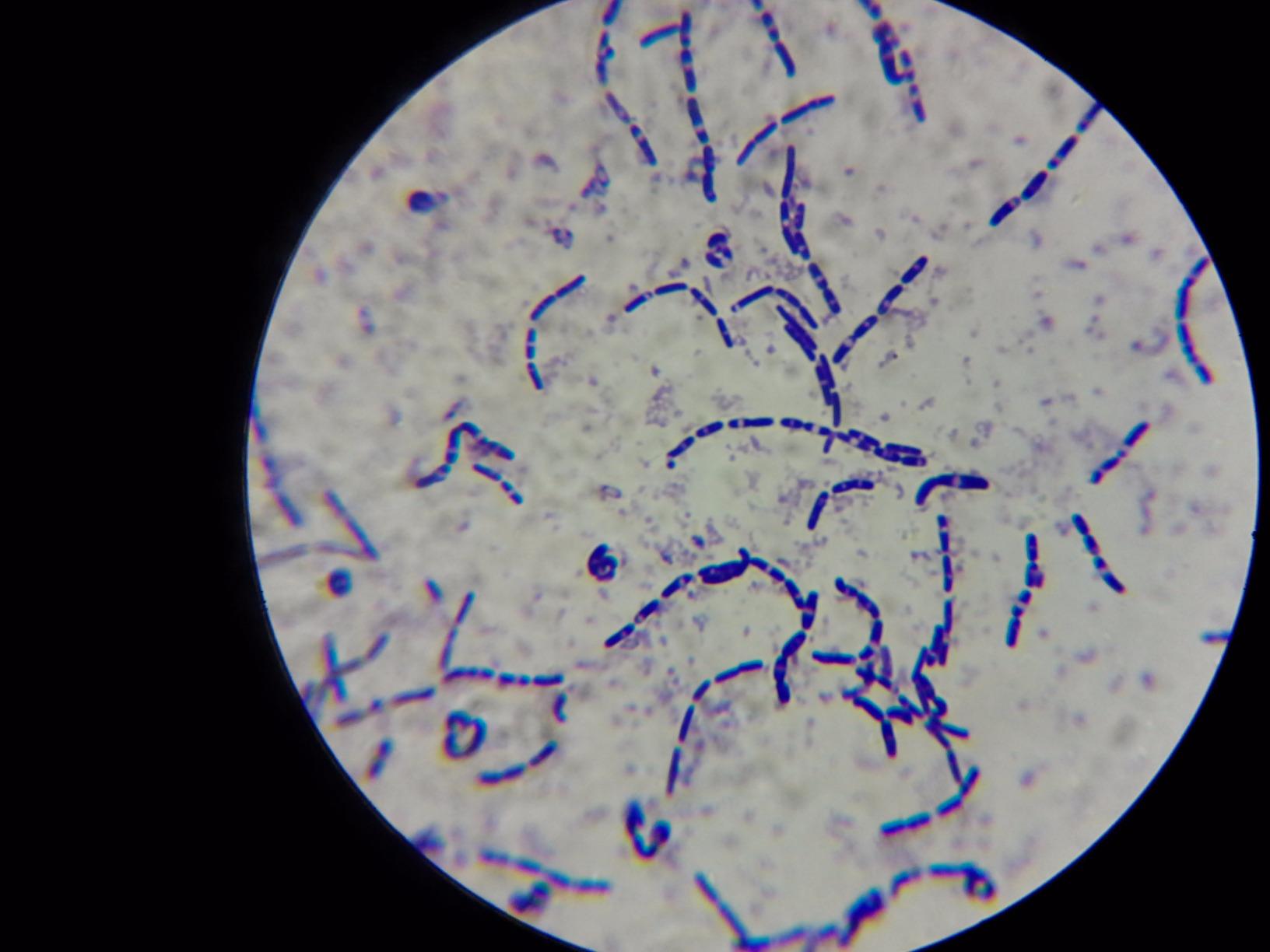
Oil immersion sounds intimidating and is the single biggest jump in what a family can see. With a drop of immersion oil, live bacteria in a pond sample become resolvable, and for a science fair project that is the difference between a decoration and a result.

Build quality is where this scope separates itself. The frame is metal and plastic, the stage is a double-layer mechanical stage, and focus is a precise dual control. The Siedentopf head has an adjustable interpupillary distance, so both eyes sit at the right angle.
Illumination is an LED on a dimmer with a bright daylight-balanced fly-eye lens. A 1.0 MP USB camera and Windows microscopy software are included for capturing what you see, and the warranty runs five years with responsive parts support.
What it unlocks
Two eyepieces mean a student can work without shutting one eye, and the mechanical stage keeps a specimen in focus while you move it, which is how real lab work happens. It measures 11.81 by 9.06 by 16.54 inches and is cord powered.
College microbiology students and at least one biology teacher rate this scope above far more expensive classroom instruments. For a family that plans to keep the microscope for a decade, that math matters.
Where it disappoints
The bundled 1.0 MP camera is the weak point. The optics can deliver far more than the camera captures, so science fair images come out soft with a shallow depth of field.
No calibration slide is included, so measuring a specimen means buying one. The stage control knobs move the slide in both axes at once, which some buyers find frustrating until they get used to it.
6. OMAX M82ES 2000X Binocular – Best for a Shared Home Lab
- Full solid metal frame with stain-resistant enamel
- DIN achromatic objectives including 100x oil
- Diopter adjustment on both eyepiece tubes
- Stage lock protects objectives from a dropped slide
- Includes 100 blank slides 100 cover slips and wipes
- Requires the AC/DC power adapter rather than USB
- Blank slides only
- so prepared specimens must be sourced separately
The OMAX is the one I would buy for a homeschool co-op or a family with two or more children using the same instrument. The frame is solid metal with a stain-resistant enamel finish, and at 9.6 pounds it stays exactly where you put it.
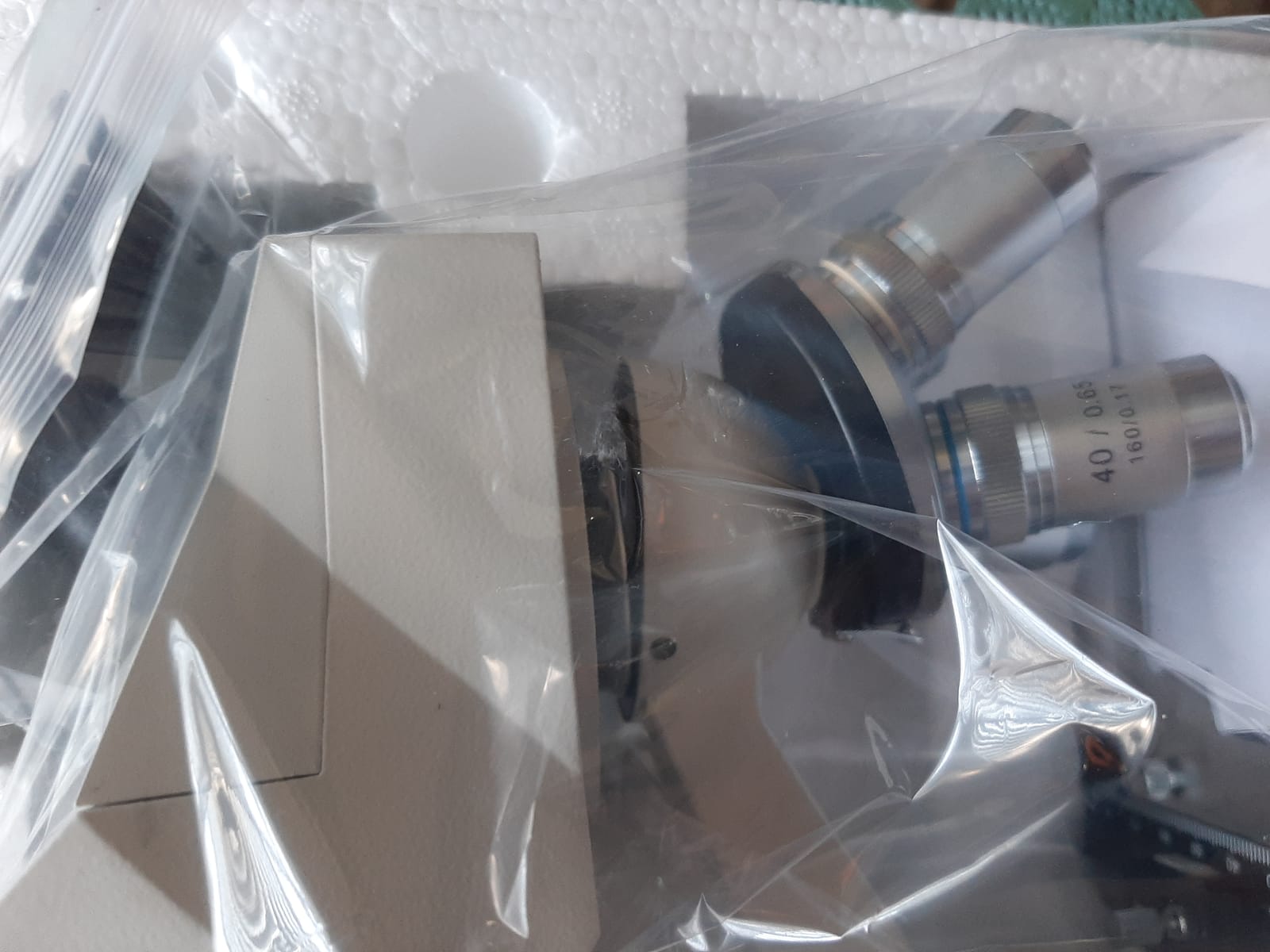
Magnification runs 40x to 2000x with DIN achromatic objectives at 4x, 10x, 40x, and 100x oil immersion. The wide-field 10x and 20x eyepieces each have diopter adjustment, which fixes the uneven-vision problem that trips up some children on binocular scopes.
Shared-use details are where this scope wins. The double-layer X-Y mechanical stage has scales, and the upward stage lock protects the objectives if a slide is dropped while being positioned. Coarse and fine focus knobs sit coaxially on both sides, so a child who favours one hand is not disadvantaged.
The optical hardware is proper: an NA1.25 Abbe condenser with an iris diaphragm and an adjustable-intensity LED. A swiveling binocular head at a 45-degree angle lets short children and seated adults both look through it.
Why it suits multiple users
It ships with 100 blank slides, 100 cover slips, and 50 lens cleaning sheets. That is a genuine consumables supply, and for a co-op it removes the first thing that runs out.
Five years of manufacturer warranty backs the instrument. Nothing in the construction is the kind of part that cracks when a twelve-year-old sets it down hard.
What to plan for
It needs the AC/DC power adapter rather than USB, so it is not a portable instrument for a nature walk. Keep it on a dedicated table near an outlet.
The slide supply is blank only. Prepared specimens have to come from somewhere else, and this is the one scope in the roundup where that is a real planning item rather than a footnote.
7. Plugable USB Digital Microscope 250x – Best for Co-Op and Electronics
Plugable USB Digital Microscope 250x, 2MP Micro Camera, Flexible Arm Stand
- Plug and play on Windows macOS ChromeOS and Linux
- USB and USB-C cables both included
- Flexible arm stand with an observation pad
- Good for soldering electronics and leaf inspection
- Two-year parts and labor warranty
- Top magnification is only 250x
- Not a true compound microscope for prepared slides
- Depth of field is modest
A USB microscope removes three problems at once: there is no focus wheel to jam, no eyepiece at the wrong height, and one screen everyone in the room can watch. In a co-op setting, that is worth more than magnification.
It runs 60x to 250x with a 2.0 megapixel sensor. The LED halo light has brightness control at a 7000K color temperature, and the flexible arm stand with an observation pad lets you measure work without picking it up.
Setup is genuinely plug and play. It works as a webcam on Windows, macOS, ChromeOS, and Linux, and both USB and USB-C or Thunderbolt cables are in the box, so nobody is hunting for a driver.
It weighs 2.9 ounces and measures 3.5 by 1.25 by 1.25 inches, which makes it the easiest instrument here to pack for a trip. The warranty is two years of limited parts and labor with lifetime support from a North American team.
Where it outshines an eyepiece scope
For electronics, soldering, coin collecting, and close leaf inspection, the live image on a laptop or tablet is faster and more useful than a traditional eyepiece. Everyone leans in at once.
For a group lesson, one laptop screen solves the crowding problem that makes a monocular compound microscope awkward with more than two children.
Where it runs out
Two hundred fifty times is the ceiling, so cellular detail stays limited. If a child is asking to see plant cells, this is the wrong instrument and no accessory will change that.
Depth of field is modest, which means fine structures blur. It is an inspection camera in a microscope housing, and it is honest about that.
8. SKYBASIC Wireless Digital Microscope – Best Premium Handheld for Field Work
- Works over WiFi with a phone or tablet
- 8 adjustable LEDs and a 2MP sensor give 1080p on phones
- One-button photo and video capture
- Light enough to carry on outdoor walks
- Reviewers report it holds a class's attention
- Fixed focus
- so you move the device to focus
- Included stand does not hold the scope steady
- Two on-device zoom buttons do nothing
- Claimed magnification runs optimistic
This is the one that goes outside. It connects over WiFi to a phone or tablet, or over USB to Windows and Mac, and at 0.31 kg it is light enough for a child to carry on a nature walk without a parent carrying it instead.
The 2MP CMOS sensor delivers 1920 by 1080 to a phone and 720p to a computer. Eight adjustable LEDs light the sample, and one-button photo and video capture means a kid can document a find without an adult operating the app.
Image quality is good once you learn the fixed-focus workflow. Because focus is physical, you move the scope toward or away from the specimen and the main wheel only controls zoom. That takes about ten minutes to click with a child.
The 3 to 60 millimeter working distance range keeps images sharp when used as directed. Teachers reviewing it report that it holds a class’s attention, and the one-year replacement service takes some of the risk out of buying for young users.
Why it wins on field work
No eyepiece means no height problem, and a shared phone screen means a sibling can look without waiting. That combination suits a family that does nature journaling as a weekly habit.
It also solves the accessibility problem cleanly. Learners who cannot reach or hold a traditional eyepiece can view comfortably here, and screen viewing suits short attention spans because the image appears instantly.
The honest drawbacks
Fixed focus is the main thing to understand before buying. Two on-device buttons marked for zoom do nothing, which will confuse a child who presses them.
The included stand has a weak tightening mechanism that will not hold the scope steady, and the claimed 50x to 1000x range is optimistic against real output. Some reviewers also had to adjust photo library permissions before the capture function worked.
9. PalliPartners Compound Microscope – Best for Small Spaces
- Glass optics show cells and plant tissue in good contrast
- Coaxial coarse and fine focus beats basic monocular setups
- Top and bottom LED for opaque and translucent samples
- 28-slide kit plus a phone clip and Bluetooth shutter
- Compact enough for a small room
- The stage does not move
- so specimens must be hunted under the lens
- Objective lenses can wobble if handled roughly
- Real-world magnification is closer to 400x than advertised
- Power supply is not suitable for Australian outlets
Most compound scopes assume a dedicated table. This one measures 5.71 by 3.94 by 9.84 inches, so it works on a bookshelf in a small house, and it runs on batteries rather than sitting next to an outlet.
You get 4x, 10x, and 40x objectives with a WF25X eyepiece and a 2X auxiliary lens, which is how the advertised 100x to 2000x range is built. Reviewers find the glass optics show cells and plant tissue in good contrast.
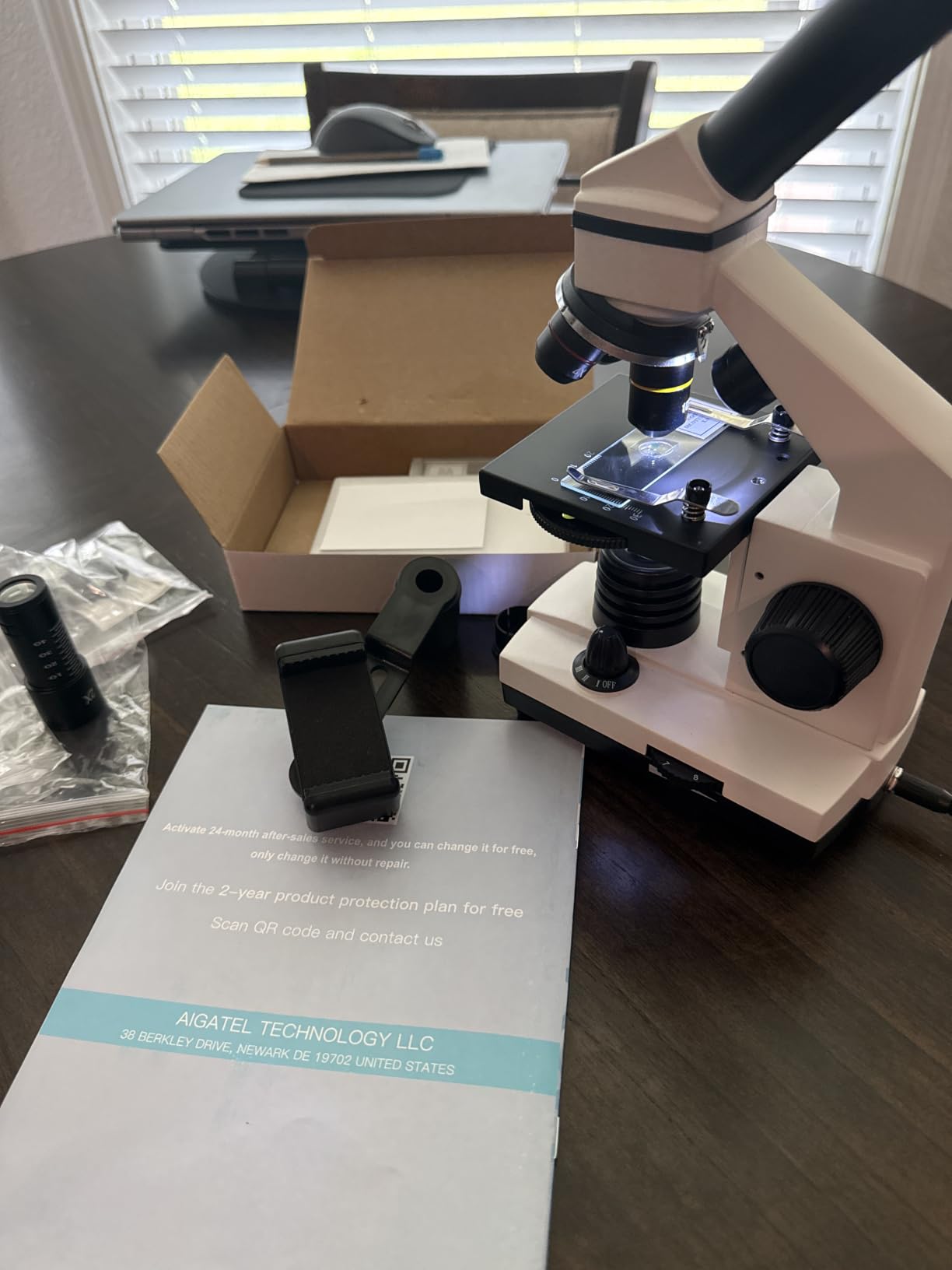
The focus controls are coaxial coarse and fine, which is real light-microscope practice and better than the single-knob setups most entry scopes use. Adjustable LED illumination from both ends handles opaque objects and translucent slides.
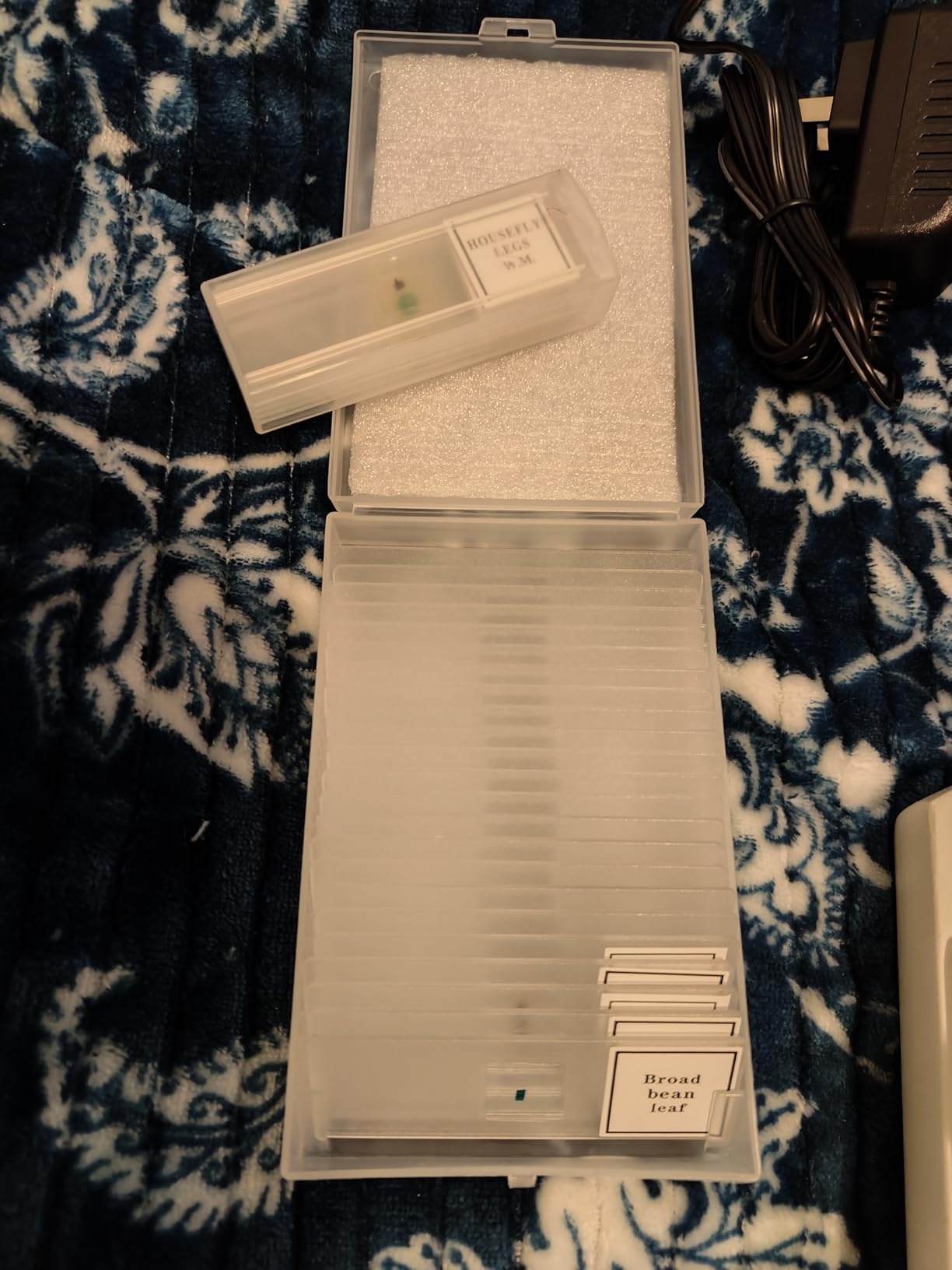
The box is generous with 28 slides, split between 10 prepared and 18 blank, plus a universal phone clip adapter, a Bluetooth shutter, and a power adapter. The manufacturer targets ages 8 to 18 with adult supervision below that.
What works well here
Bright dual LED illumination is the standout. Experienced users repeatedly note the light is unusually strong for a beginner scope, and good light is what makes a cheap optical setup look better than it is.
Parents report it holds a child’s interest, and an eleven-year-old can operate it. The materials are SGS certified for non-toxic content and electrical safety.
What to accept before buying
The stage does not move. Specimens have to be hunted under the lens, which is the single most common beginner frustration and the reason a mechanical stage matters.
Real-world magnification lands closer to 400x than the advertised 2000x, and objective lenses can wobble in the housing after rough handling. Experienced microscope users find fine focusing less precise than they would like.
10. Ashfly Kids Microscope 500X – Best for the Youngest Learners
Ashfly Kids Microscope, 500X Digital Magnifying Glass, STEM Toy, Purple
- Automatic macro focus with no focus wheel to manage
- Two-inch screen shows specimens in real time
- Eight-LED ring gives even lighting
- Stores up to 200 photos and adds video with a memory card
- Light one-hand design at 4.9 oz
- Ages 5-12 positioning means it is not a real compound microscope
- Screen viewing does not excite every child the way an eyepiece does
- Memory card not included for video
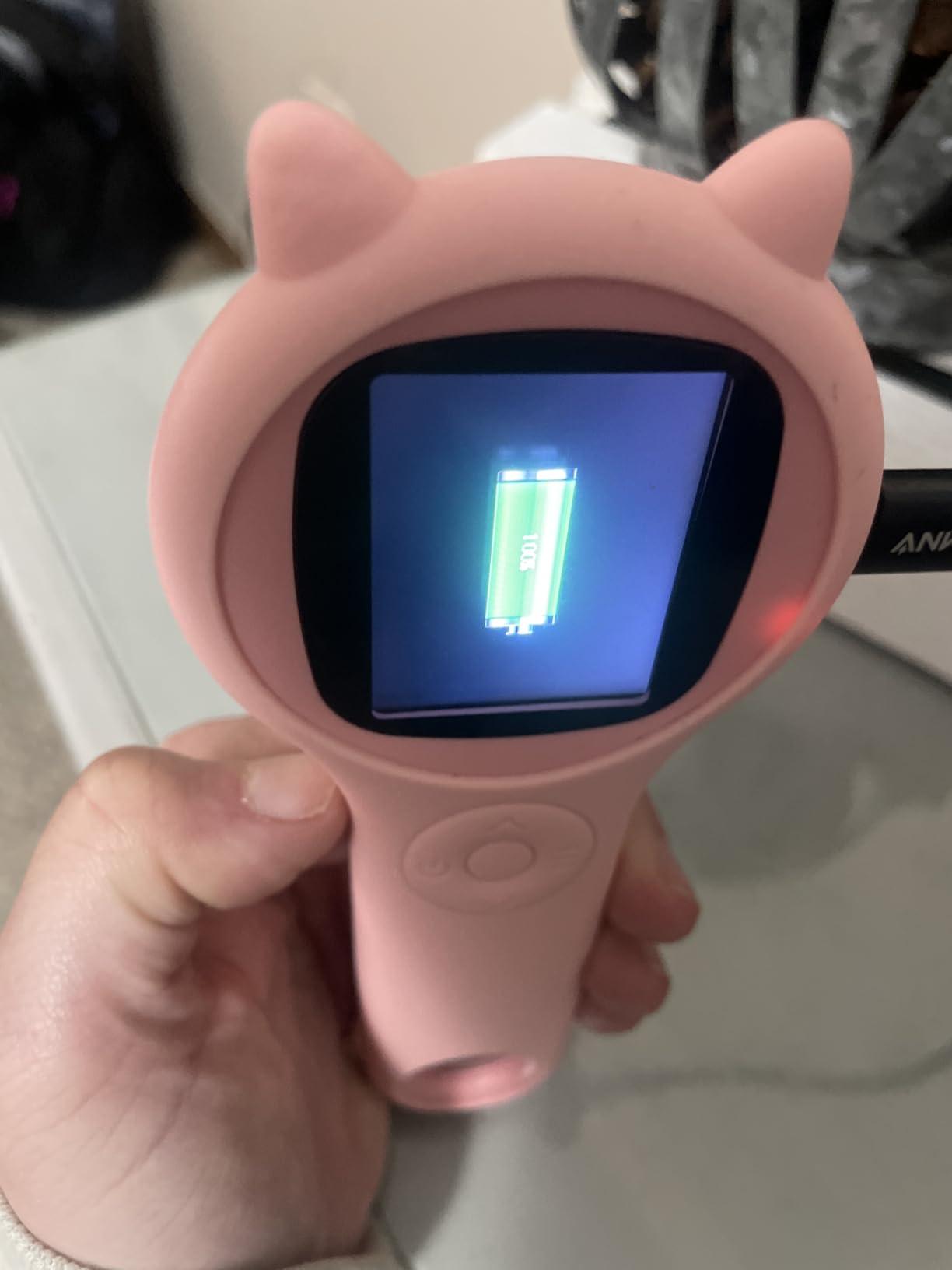
The automatic macro focus is the whole point. There is no focus wheel, no eyepiece, and no knob to turn, so a four or five year old can put a leaf against the lens and get an image on the two-inch IPS screen immediately.
An eight-LED ring gives even lighting across coins, feathers, rocks, and insects. Built-in memory stores up to 200 photos, and a microSD or TF card up to 64GB adds video recording.
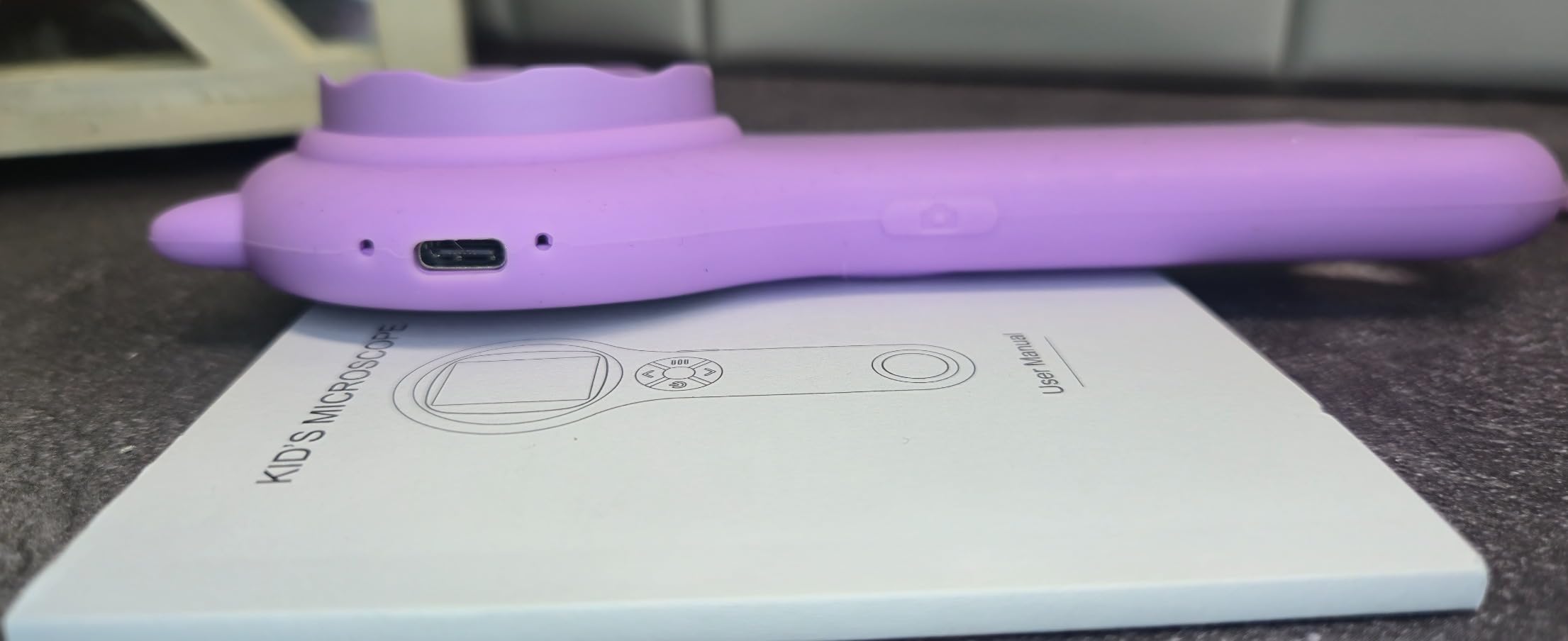
It weighs 4.9 ounces and measures 7 by 2 by 3 inches, charges over USB-C, and works one-handed. It also doubles as a traditional magnifying glass and can display a live image on a Windows PC, which is a nice way to hand older siblings something useful.
The claimed 500x is macro magnification, and macro focus means the lens brings the subject to the front of the scope. For a child exploring a rock collection or a bag of seeds, that is a good first instrument.
Why young children succeed with it
There is no possible way to get it wrong. No slide to orient, no stage to find, no focus to lose. That directly answers the frustration that ends most microscope sessions for small children.
The screen view is also the most accessible option in the roundup for a child who cannot reach a table eyepiece or who tires quickly. The image appears in a second.
Where it stops
It is positioned as a STEM toy for ages 5 to 12, not a compound instrument. Slide work, stained samples, and anything requiring transmitted light are out of reach here.
Some children find screen viewing less thrilling than looking through an eyepiece, and the memory card for video is not included. Plan a real scope around age eight.
What to Look for When You Choose a Microscope
Most parents get lost in magnification, and magnification is the least important number. Here are the factors that decide whether a microscope gets used.
Glass versus plastic lenses. This is the dividing line between a toy and an instrument. The Omano Juniorscope and the two lab scopes in this roundup all use glass objective lenses, and the difference in image sharpness is obvious within a minute of looking through both.
Total magnification is a formula, not a promise. Total magnification is the eyepiece power multiplied by the objective power. A 10x eyepiece with a 40x objective gives 400x. If a number is produced by stacking an auxiliary lens on top of a 25x eyepiece, the real image quality will not match the claim.
Coarse and fine focus. Coarse focus gets you close, fine focus makes it sharp. Scopes with only a coarse knob struggle at low power, where the smallest details live. If your child is nine or older, fine focus is not optional.
Monocular versus binocular. One eyepiece or two. Binocular scopes are easier on a child’s neck and eyes, and they allow two children to look at once, which matters when siblings are close in age.
The stage. A mechanical stage moves the slide in two directions under the lens. It is the single feature that turns a microscope from a curiosity into a working tool, and it is the first thing to cut in cheap scopes.
Illumination. A plain LED under the stage gives uneven, dim light. A condenser with an iris diaphragm gives even, adjustable light. This is the difference between seeing cell walls and guessing at them.
Camera and phone integration. A built-in or bundled camera lets you capture what you see for a nature journal or science fair. Check the resolution, because a low megapixel camera wastes good optics. Our digital microscope guide goes deeper on screen-based options.
On budget bands, student compound scopes with glass lenses occupy the lower-middle of the market, binocular scopes with mechanical stages sit a tier above that, and serious high school instruments go higher again. Accessories are usually priced separately, which is where most families get caught. Compare current listings before you commit, since prices move constantly.
What Not to Buy, and Why
Do not buy a plastic-lens scope marketed above 400x. Those scopes are built to be impressive on a box, not to produce a clear image. The single most repeated complaint in customer reviews across this category is a focus mechanism that will not settle, and a family that has already had a bad session rarely tries again.
Do not expect a phone microscope to replace a real scope. A phone lens adapter is a fun weekend activity, and it is genuinely good for large flat specimens. It will not resolve cells, and it is not the equipment a high school biology course expects.
Do not skip the age fit. Handing a five-year-old a binocular compound scope with a mechanical stage does not produce an early scientist. It produces a parent reassembling objectives at bedtime.
Do not buy a stereo scope expecting to see cells. Stereo scopes show three-dimensional surface detail on larger specimens, which is exactly what they are for. They belong in a homeschool that does insects, rocks, and dissections alongside a compound scope, not instead of one.
Five Things to Buy Alongside Your Microscope
Every family discovers consumables too late. Budget for these on the same day you buy the instrument.
A slide supply. Blank slides, coverslips, and a box of prepared slides to start. The OMAX alone ships with 100 blank slides and 100 cover slips, which is why it suits a shared lab.
Plastic droppers and pipettes. Moving a drop of pond water onto a slide is the step that ends most experiments when it goes wrong.
Forceps or tweezers. For handling specimens and peels. Most kits include a pair, but they bend quickly.
Stain or food coloring. A drop of dilute methylene blue or even coloring in water makes onion cells and cheek cells visible immediately, which is the moment children decide microscopy is real.
A specimen log. A notebook where each child writes the date, the specimen, what they saw, and a sketch. This is what turns a microscope into nature journaling rather than a passing novelty.
Frequently Asked Questions
What is the best microscope for homeschooling?
The Educational Insights GeoSafari Talking Microscope is the best overall for a family starting with a young child, because narration and quiz mode keep a four to eight year old engaged without an adult. For a child ready for real optics, the Omano Juniorscope offers genuine glass objective lenses at an entry price. Teens heading into biology need a binocular compound scope with a mechanical stage.
What is the best microscope for home use for beginners?
For beginners between six and twelve there are two sensible paths. A simple LED scope with interchangeable eyepieces gets a child comfortable with slides and light sources, and the National Geographic dual illumination kit is the clearest example. The other path is skipping ahead to a real glass-lens compound scope like the Omano Juniorscope, which lasts far longer but demands steadier hands.
What is the best microscope for a 12-year-old child?
A real glass-lens compound microscope with coarse and fine focus is the right call at twelve, because most children that age are ready for a genuine instrument. Add a mechanical stage if you can, since it is what makes moving a specimen feel like laboratory work. The OMAX M82ES and the AmScope B120C-E1 are the two options here that meet that standard.
What type of microscopes do schools use?
Schools and labs mainly use compound biological microscopes for cells, prepared slides, and stained tissue, with binocular heads and mechanical stages. Elementary settings often add stereo or dissecting scopes for insects and plants. Digital and USB scopes appear in classrooms for group viewing and for electronics, which is why they are common in co-op settings where a shared eyepiece will not work.
Do I need a microscope for homeschooling?
It is one of the few tools that opens a whole branch of science at home, and it is expected equipment once biology introduces cells and organisms. Homeschool parents say cost is the dominant consideration when choosing one, and the same instrument covers pond water, leaf cells, insects, and a decade of science fair projects.
The Microscope Verdict
For most families, the best microscopes for homeschooling come down to one honest question: what age is the child using it today. Under eight, start with a screen-based or narration-driven scope, because the goal is enthusiasm. Between eight and twelve, buy real glass lenses, because the jump in image quality is what converts curiosity into a habit. Thirteen and up, buy a binocular compound scope with a mechanical stage and never look back.
The Educational Insights GeoSafari Talking Microscope is our pick for a family starting young, and the AmScope B120C-E1 is the one that will still be running a high school experiment in ten years. Whichever tier you pick, add slides, coverslips, droppers, and a specimen notebook on the same day, and give your child something real to look at this week.