
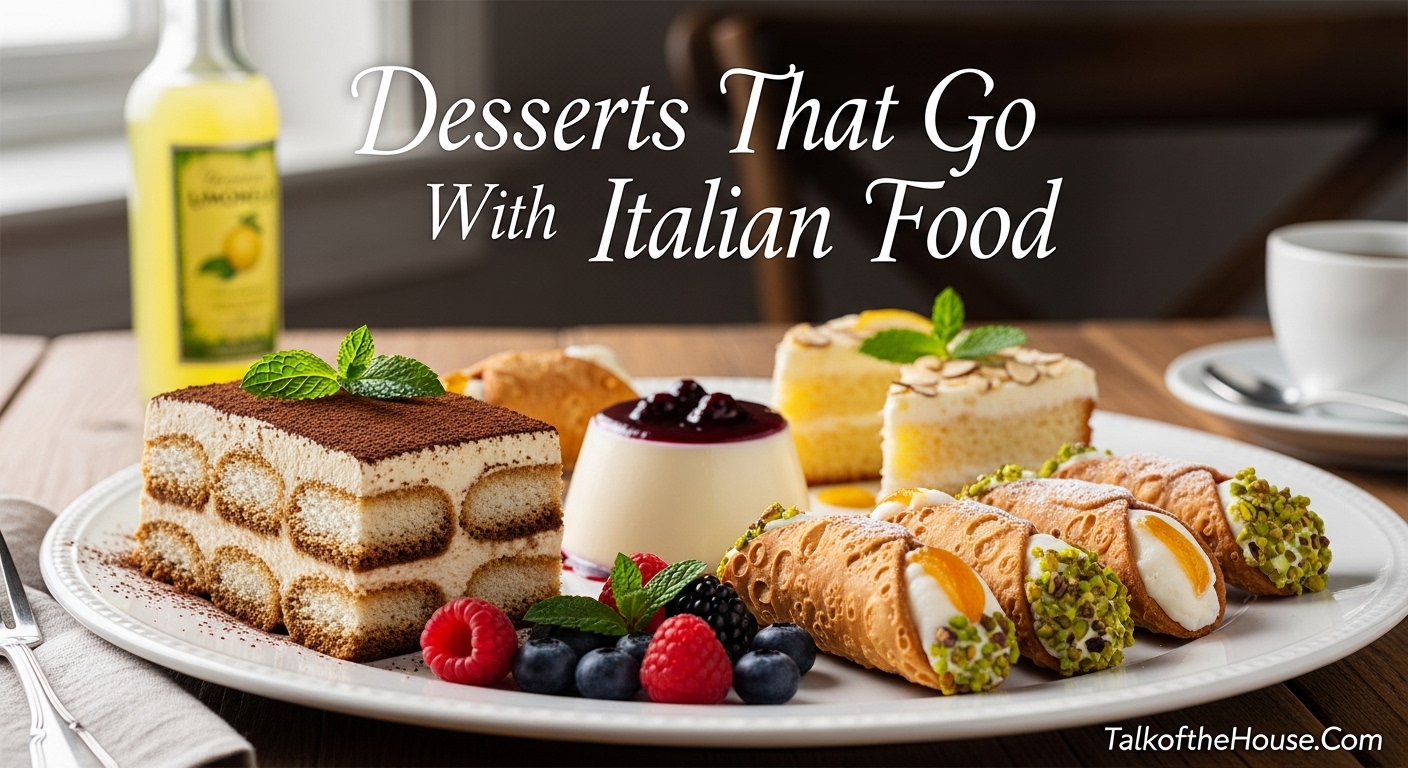
You have just finished a satisfying plate of spaghetti carbonara or perhaps a hearty slice of lasagna. The pasta was perfect, the sauce was rich, and now you face the sweet question that stumps many home cooks. What dessert goes with Italian food?
I have been hosting Italian dinner nights for my family for over a decade, and I have learned that the right dessert can elevate an ordinary pasta night into something truly memorable. The key is finding a sweet ending that complements rather than competes with the savory flavors of your main course.
In this guide, I am sharing 18 of my favorite desserts that pair beautifully with Italian meals. You will find classic Italian options that honor tradition alongside easy alternatives when you want something simple. Whether you are planning a dinner party or just want to complete your Italian dinner with the perfect sweet note, I have got you covered.
Table of Contents
Quick Answer: Best Desserts That Go With Italian Food
If you need a fast answer before your guests arrive, here are the seven desserts I reach for most often after an Italian meal:
- Tiramisu – The classic layered dessert with espresso and mascarpone that feels fancy but can be made ahead
- Panna Cotta – Silky, creamy, and surprisingly light after a heavy pasta dish
- Cannoli – Crispy shells filled with sweet ricotta cream, perfect for parties
- Gelato – Colder and denser than ice cream, with authentic flavors like pistachio or stracciatella
- Affogato – Simply pour hot espresso over vanilla gelato for an instant elegant dessert
- Lemon Ricotta Cake – Moist, bright, and perfect after cream-based pasta sauces
- Biscotti with Espresso – Simple, crunchy cookies ideal for casual weeknight dinners
Keep reading to discover the full list of 18 desserts with detailed pairing advice, plus a guide to matching specific desserts with different types of pasta dishes.
Classic Italian Desserts for the Perfect Finale
These are the desserts that have graced Italian tables for generations. When you want authenticity and guaranteed crowd-pleasing appeal, you cannot go wrong with these classics.
1. Tiramisu – The Showstopper
Tiramisu consistently ranks as the most popular Italian dessert worldwide for good reason. Layers of espresso-soaked ladyfingers and mascarpone cream come together in a dish that looks impressive but requires no baking.
I make tiramisu the night before any Italian dinner party because it actually tastes better after resting overnight. The flavors meld together, and the texture sets perfectly. One 9×13 pan serves 12 people generously, making it ideal for feeding a group after a pasta meal.
The coffee and cocoa flavors provide a nice contrast to tomato-based pasta sauces. If you are serving a rich Bolognese or hearty lasagna, tiramisu cuts through that richness with its bittersweet espresso notes.
Make-ahead tip: Prepare up to 48 hours in advance and keep refrigerated until serving.
2. Cannoli – Crispy Cream-Filled Perfection
These Sicilian pastries feature crisp fried shells filled with sweetened ricotta cheese. Traditional versions include mini chocolate chips or candied orange peel, though pistachio-topped cannoli have become equally popular.
The contrast between the crunchy shell and creamy filling makes cannoli texturally interesting after soft pasta. I find they work especially well after lighter pasta dishes like aglio e olio or primavera, where you want a dessert with some substance.
If you are intimidated by frying shells at home, many grocery stores now sell pre-made shells in the bakery or international aisle. You simply mix the filling and pipe it in before serving.
Pro tip: Fill the shells no more than an hour before serving to maintain that satisfying crunch.
3. Panna Cotta – Silky Simplicity
Panna cotta translates to “cooked cream,” which perfectly describes this elegant dessert. Heavy cream, sugar, and gelatin set into a wobbly, silky custard that practically melts on your tongue.
This is my go-to when I want something light after a particularly heavy pasta meal. The clean, mild flavor does not compete with garlic or herbs from the main course. A simple berry coulis or balsamic glaze on top adds just enough brightness.
The best part? Panna cotta is nearly impossible to mess up. Unlike finicky baked custards, you cannot overcook or curdle this stovetop dessert. It is also naturally gluten-free, making it suitable for guests with dietary restrictions.
Make-ahead tip: Prepare up to three days ahead and keep covered in the refrigerator.
4. Gelato – Authentic Italian Ice Cream
Real Italian gelato contains less air and less fat than American ice cream, resulting in a denser, more intensely flavored frozen treat. Classic flavors include stracciatella (chocolate chip), pistachio, hazelnut, and fior di latte (sweet cream).
I keep a container of high-quality gelato in my freezer specifically for Italian dinner nights. A small scoop served in a pretty bowl feels sophisticated without any effort. The cold temperature provides welcome relief after a hot pasta dish.
For an authentic presentation, serve gelato with a small biscotti on the side for dipping. The combination of cold gelato and crunchy cookie creates a pleasant textural contrast.
5. Affogato – Coffee Meets Ice Cream
Affogato means “drowned” in Italian, referring to the hot espresso poured over cold gelato. This is the fastest elegant dessert you can possibly serve. It takes literally 30 seconds to prepare.
Pull a shot of fresh espresso and pour it over a scoop of vanilla or fior di latte gelato. The hot coffee slightly melts the cold cream, creating a thick, sweet pool of bliss. Serve immediately with a small spoon.
Affogato works beautifully after any pasta meal but particularly shines following cream-based sauces like Alfredo or carbonara. The coffee cuts through the richness while complementing the meal’s indulgent mood.
6. Zabaglione – Light and Luscious
This classic Italian custard combines egg yolks, sugar, and Marsala wine whipped over a double boiler until thick and foamy. The result is lighter than pudding but more substantial than whipped cream.
I serve zabaglione warm over fresh berries or sliced pound cake. The wine adds sophisticated flavor without overwhelming the palate. It is especially nice during cooler months when you want something warming but not heavy.
Unlike baked custards, zabaglione must be made just before serving. The good news is that it only takes about 10 minutes of whisking. Consider it for intimate dinners where you have time to prepare each plate individually.
Cakes and Cheesecakes
When you want a slice of something celebratory, these Italian-inspired cakes deliver impressive results without requiring professional pastry skills.
7. Italian Cream Cake – A Layered Showstopper
This American-Italian hybrid cake features three layers of coconut and pecan-studded cake with cream cheese frosting. It is substantial enough to stand up to the heartiest pasta dinner.
I make Italian Cream Cake for birthdays and special occasions when we are having homemade pasta. The cream cheese frosting echoes the dairy richness of Alfredo or carbonara, creating a cohesive flavor experience.
The cake requires some effort with three layers to assemble, but you can bake the layers a day ahead and frost them just before serving. Leftovers keep well refrigerated for up to five days.
8. Ricotta Cheesecake – Lighter Than Traditional
Unlike dense New York-style cheesecake, Italian ricotta cheesecake has a lighter, almost souffle-like texture. The ricotta creates subtle graininess that distinguishes it from cream cheese versions.
I love this cheesecake after tomato-based pasta dishes. The mild cheese flavor does not fight with acidic sauces, and the texture feels just substantial enough after a plate of spaghetti.
Add lemon zest to the batter for brightness, or swirl in raspberry jam for color and flavor. Serve at room temperature for the best texture, not chilled straight from the refrigerator.
Make-ahead tip: Bake the day before and cool completely at room temperature before refrigerating overnight.
9. Lemon Ricotta Cake – Bright and Moist
This single-layer cake combines the richness of ricotta cheese with vibrant lemon flavor. The result is incredibly moist without being heavy, making it perfect after any pasta meal.
The citrus notes in lemon ricotta cake provide palate-cleansing brightness after garlic-heavy pasta dishes. I often serve this when we make linguine with clam sauce or any seafood pasta.
The cake comes together quickly in one bowl, bakes in under an hour, and requires no frosting. A simple dusting of powdered sugar makes it presentable enough for company.
10. Cannoli Cake – Feed a Crowd
This layered cake brings all the flavors of cannoli into an easier-to-serve format. Layers of sponge cake sandwich a thick ricotta filling studded with chocolate chips and candied fruit.
When I need to serve dessert to 15 or more people after a big family pasta dinner, cannoli cake is my answer. One 9-inch round cake yields 16 generous slices.
The cake benefits from refrigeration time, so make it the morning of your dinner or the night before. The flavors actually improve as they meld together.
11. Olive Oil Cake – Rustic Elegance
Using olive oil instead of butter creates a uniquely moist cake with subtle fruity notes. This is a traditional Italian farmhouse dessert that has gained popularity in upscale restaurants.
I serve olive oil cake with just a dusting of powdered sugar and perhaps some fresh citrus segments. The simplicity is intentional. After a complex pasta dish with multiple flavors, this unfussy dessert lets your palate relax.
Orange olive oil cake is the most common variation, though lemon and rosemary versions have become popular too. The cake stays fresh for days, making it perfect for casual weeknight Italian dinners.
Light and Refreshing Options
Sometimes after a heavy bowl of pasta, you want something that satisfies your sweet tooth without weighing you down further. These desserts provide exactly that.
12. Lemon Granita – Frozen Palate Cleanser
Granita is a Sicilian frozen dessert made from sugar, water, and flavoring scraped periodically during freezing to create icy crystals. Lemon granita delivers intense citrus flavor in a form that literally melts in your mouth.
I serve small portions of lemon granita after rich meat sauces like Bolognese or amatriciana. The cold, acidic granita resets your palate and aids digestion.
Making granita requires no special equipment, just a fork to scrape the mixture every 30 minutes as it freezes. You can prepare it entirely ahead of time and store it in the freezer for up to a week.
13. Fresh Berries with Zabaglione – Effortlessly Elegant
This simple dessert dresses up fresh seasonal berries with a warm blanket of zabaglione custard. The temperature contrast between hot custard and room-temperature fruit creates interest with every bite.
I use whatever berries look best at the market. Strawberries, raspberries, and blueberries all work beautifully. In winter, try this with segmented oranges or poached pears instead.
This dessert is naturally gluten-free and relatively light compared to cake or pastry options. It is my choice when I want something impressive but not too indulgent.
14. Sorbetto – Dairy-Free Delight
Italian sorbetto is similar to granita but churned for a smoother texture. Made from fruit puree, sugar, and water, it contains no dairy at all.
Common flavors include lemon, raspberry, mango, and passion fruit. I find that citrus sorbetto works best after Italian meals because it echoes the lemon notes often used to finish pasta dishes.
Serve sorbetto between courses as a palate cleanser, or offer it as dessert for guests who avoid dairy. A single scoop in a stemmed glass looks elegant with zero effort.
15. Semifreddo – Frozen Mousse Magic
Semifreddo means “half cold” in Italian, describing its unique texture. Frozen mousse made with whipped cream and Italian meringue creates something softer than ice cream but still cold and refreshing.
This dessert typically comes in a loaf shape, sliced to reveal layers or mix-ins. Popular flavors include coffee, chocolate-hazelnut, and berry swirl.
I make semifreddo when I want a frozen dessert that feels more sophisticated than ice cream but does not require an ice cream maker. It freezes firm enough to slice cleanly but melts into creamy bliss on your tongue.
Make-ahead tip: Prepare up to a week ahead and keep frozen until 10 minutes before slicing.
Cookies and Small Bites
For casual dinners or when you want variety without committing to slices of cake, these Italian cookies deliver authentic flavor in small packages.
16. Amaretti – Almond Meringue Gems
These chewy almond cookies get their name from amaretto, the almond-flavored liqueur often added to the dough. Made primarily from almonds, sugar, and egg whites, they are naturally gluten-free.
Amaretti range from soft and chewy to crisp and crunchy depending on baking time. I prefer the chewy version after pasta meals because they feel more like a proper dessert than a dry biscuit.
Serve amaretti alongside espresso for dunking, or crumble them over gelato for texture. Their intense almond flavor stands up to garlic-heavy pasta sauces without being overwhelmed.
17. Pizzelle – Italian Waffle Cookies
Pizzelle are thin, crisp cookies made on a special iron that imprints intricate patterns. Traditional flavors include anise, vanilla, and lemon, though chocolate versions have become popular.
These cookies keep for weeks in an airtight container, making them perfect to have on hand for impromptu Italian dinner nights. I always keep a batch in my cookie jar.
While you can buy pizzelle, making them at home with a pizzelle iron (about $40) creates a wonderful activity for family pasta nights. Children love watching the batter transform into lacy cookies.
18. Italian Rainbow Cookies – Seven Layers of Joy
Also known as Neapolitan cookies or tricolor cookies, these seven-layer treats feature almond sponge cake in green, white, and red layers with raspberry jam and chocolate coating.
Rainbow cookies require effort to make, but you can buy excellent versions at Italian bakeries. I pick up a box for special occasions when I want something colorful and festive.
The almond flavor and raspberry notes work beautifully after any pasta dish. Cut small squares because these are rich. One cookie with espresso makes a satisfying end to any Italian meal.
Storage tip: Rainbow cookies actually improve after a day or two as the flavors meld. Buy them a day before your dinner for best taste.
Pairing Guide: Matching Desserts to Pasta Types
Through years of trial and error at my own dinner table, I have learned that certain desserts complement specific pasta styles better than others. Here is my tried-and-tested guidance.
After Heavy Meat Sauces
Pasta Bolognese, Sunday gravy with meatballs, or rich ragu call for something light. Your guests are already full from the hearty main course.
Reach for lemon granita, fresh berries with zabaglione, or a small scoop of citrus sorbetto. The acidity and cold temperature cut through the richness and refresh the palate.
If you want something more substantial, panna cotta works beautifully because it is creamy yet light. Avoid heavy cakes or dense cheesecakes after meat sauces.
After Cream-Based Pastas
Carbonara, Alfredo, or cacio e pepe all feature rich dairy elements. You want desserts that either complement the creaminess or contrast it sharply.
Affogato is my top choice here. The hot espresso creates beautiful temperature and flavor contrast against the creamy pasta. Tiramisu also works well because the coffee and cocoa mirror the richness while adding bitterness.
For something lighter after Alfredo, try lemon ricotta cake. The citrus notes brighten everything without fighting the cream.
After Tomato-Based Sauces
Marinara, arrabbiata, or puttanesca bring acidity and brightness. You can go slightly sweeter and richer with desserts here because the acid in the sauce balances it out.
Cannoli and cannoli cake shine after tomato sauces. The mild ricotta filling soothes the palate after acidic tomatoes. Chocolate desserts also work surprisingly well here.
I often serve tiramisu after marinara-based dishes. The combination of coffee, cocoa, and cream feels like the perfect antidote to tangy tomato sauce.
After Seafood Pasta
Linguine with clams, shrimp scampi, or seafood linguini need desserts that respect the delicate flavors without overwhelming them.
Lemon desserts are your best friend here. Lemon ricotta cake, lemon granita, or lemon sorbetto echo the citrus often used to finish seafood dishes. The brightness feels cohesive.
Avoid chocolate or coffee desserts after seafood pasta. The intensity can feel jarring after delicate fish or shellfish flavors. Keep it light and citrus-forward.
For more dessert pairing inspiration beyond Italian meals, check out my other dessert pairing guides for different cuisines.
Frequently Asked Questions
What dessert is good after pasta?
Light desserts work best after pasta, especially panna cotta, lemon granita, fresh berries with zabaglione, or a small serving of gelato. These options refresh the palate without adding heaviness after a filling pasta meal. Avoid dense cakes or rich cheesecakes when serving pasta with heavy cream or meat sauces.
What is the most popular Italian dessert?
Tiramisu is the most popular Italian dessert globally. This layered dessert combines espresso-soaked ladyfingers with mascarpone cream and cocoa powder. Its popularity stems from the perfect balance of coffee, cream, and chocolate flavors, plus the fact that it requires no baking and can be prepared entirely ahead of time.
What pairs with Italian food?
Desserts that pair with Italian food typically feature creamy textures, coffee or citrus flavors, and moderate sweetness. Classic options include tiramisu, cannoli, gelato, panna cotta, and affogato. The best desserts either complement the richness of pasta with their own creaminess or provide refreshing contrast through cold temperatures or bright citrus notes.
What is a good dessert to serve after a lasagna dinner?
After lasagna, serve light desserts like panna cotta with berry sauce, lemon ricotta cake, or affogato. These provide satisfying sweetness without competing with lasagna’s heaviness. Tiramisu also works well because the coffee cuts through the richness of meat and cheese. Avoid dense chocolate cakes or New York-style cheesecake after such a filling main course.
Conclusion
Now you have 18 delicious answers to the question of what dessert goes with Italian food. From showstopping tiramisu to simple biscotti with espresso, there is an option for every skill level and occasion.
The best Italian dessert is one that brings you joy without adding stress to your dinner preparation. Whether you spend hours crafting cannoli from scratch or simply pour espresso over store-bought gelato for an instant affogato, your guests will appreciate the sweet ending to their meal.
I encourage you to try something new at your next Italian dinner. Perhaps attempt panna cotta for the first time, or finally make that lemon ricotta cake you have been eyeing. La dolce vita is not just about the sweet life. It is about sharing good food with people you care about.
Happy cooking, and may your Italian meals always end on a sweet note 2026.