
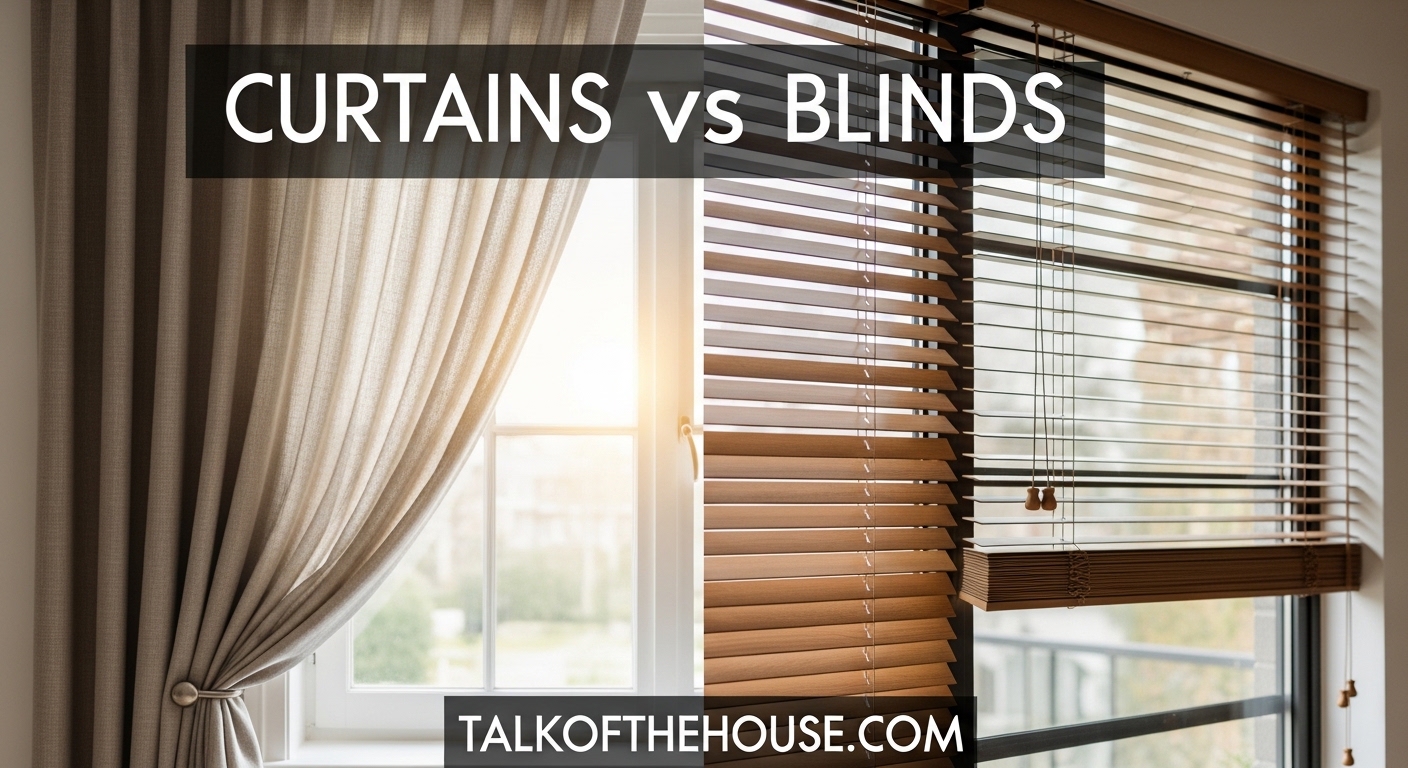
Choosing between curtains and blinds is one of those decisions every homeowner faces eventually. After helping friends outfit three different homes over the past year and researching extensively for our own living room refresh, I have learned this debate has no universal winner. The right choice depends on your specific rooms, lifestyle needs, budget constraints, and design preferences.
Window treatments do more than cover glass. They control natural light, provide privacy, insulate against temperature swings, dampen outside noise, and significantly impact how a room feels. Getting this decision wrong means either living with inadequate light control or spending money twice when you realize your first choice does not suit the space.
This guide breaks down the complete curtains vs blinds comparison. We will cover costs, maintenance, durability, energy efficiency, style considerations, and specific room recommendations. By the end, you will know exactly which option suits each room in your home.
Table of Contents
Quick Comparison: Curtains vs Blinds at a Glance
Before diving into details, here is a side-by-side comparison of the main factors most homeowners care about:
| Factor | Curtains | Blinds |
|---|---|---|
| Cost | Moderate to high (fabric + hardware) | Low to moderate (simpler installation) |
| Light Control | All-or-nothing (open/closed) | Precise adjustment (tilt slats) |
| Cleaning | Machine wash or dry clean (effort) | Quick dusting or wipe-down (easy) |
| Durability | 10-15 years (quality fabrics) | 5-7 years (mechanisms wear) |
| Insulation | Excellent (especially thermal) | Moderate (cellular shades best) |
| Style | Warm, soft, traditional | Clean, modern, structured |
| Best For | Bedrooms, living rooms, formal spaces | Kitchens, bathrooms, home offices |
Curtains: The Complete Picture
What Are Curtains?
Curtains are soft fabric panels that hang from rods mounted above windows. They come in various lengths, from sill-height cafe curtains to floor-length drapery that pools elegantly at the baseboards. Unlike blinds, curtains do not have moving mechanical parts. They simply slide open and closed along a rod, or remain stationary as decorative side panels.
The terminology confuses many people. Curtains typically refer to lighter, unlined fabric panels. Drapes are heavier, lined, and often extend from ceiling to floor. For this comparison, we use “curtains” broadly to include all soft fabric window treatments that hang from rods, as this is how most homeowners search and shop.
Pros of Curtains
- Superior Insulation: Thick curtains, especially thermal-lined or interlined versions, create an effective barrier against heat loss in winter and heat gain in summer. According to Energy.gov, properly installed medium-colored draperies with white plastic backings can reduce heat gains by 33 percent. This translates to noticeable savings on heating and cooling bills.
- Sound Dampening: Heavy fabrics absorb sound significantly better than hard blind materials. Forum discussions reveal homeowners consistently report curtains reduce outside noise from traffic, neighbors, and barking dogs. This makes them ideal for bedrooms facing busy streets.
- Design Versatility: The fabric options for curtains are nearly endless. Cotton, linen, silk, velvet, polyester blends, and even bamboo textiles offer different textures and aesthetics. Patterns range from subtle solids to bold geometrics to delicate florals. This flexibility lets curtains complement any interior design style.
- Softness and Warmth: Curtains add a layer of visual softness that hard window treatments cannot match. They frame windows like artwork, add vertical interest that makes ceilings feel higher, and create a cozy, finished feeling in living spaces. Many homeowners choose curtains specifically because bare windows feel cold and incomplete.
- Ceiling Height Enhancement: Installing curtain rods close to the ceiling and extending them beyond window frames makes windows appear larger and ceilings higher. This designer trick works in any room and costs nothing extra beyond slightly longer curtains.
- Easy Customization: DIY enthusiasts can sew simple curtain panels even with basic sewing skills. Drop cloth curtains have become a popular farmhouse-style DIY project that costs under $50 per window. Custom sizes are also readily available from online retailers for odd-sized windows.
Cons of Curtains
- Cleaning Difficulty: Taking down curtains, washing or dry cleaning them, ironing if needed, and rehanging them is a significant project. Many homeowners admit to cleaning curtains far less frequently than they should because of the hassle. Dust, pet hair, and allergens accumulate in fabric over time.
- Moisture and Mold Issues: In humid climates or moisture-prone rooms like bathrooms and kitchens, curtains can retain moisture and develop mildew. Forum users in tropical regions report needing to wash bathroom curtains monthly to prevent mold. This limitation makes curtains unsuitable for some spaces.
- All-or-Nothing Light Control: Standard curtains open or close. Sheer curtains filter light but offer little privacy at night. Blackout curtains provide darkness but eliminate natural light entirely. Unlike blinds, you cannot tilt curtains to let in light while maintaining privacy.
- Higher Total Cost: Quality curtains plus rods, finials, brackets, rings, and potential professional installation add up. While budget options exist at big-box stores, durable, attractive curtains with proper hardware often cost more than comparable blinds. Layering sheers with drapes doubles the expense.
- Space Requirements: Curtains need wall space beside windows to stack back when open. In tight spaces with adjacent walls, furniture, or other windows, there may be insufficient room for curtains to clear the glass fully. This limits their practicality for some window configurations.
Blinds: The Complete Picture
What Are Blinds?
Blinds are hard window treatments constructed from slats, louvers, or vanes that tilt, raise, or lower to control light and visibility. Unlike soft curtains, blinds have mechanical components including tilt wands, lift cords, or motorized mechanisms. Common types include horizontal Venetian blinds, vertical blinds for sliding doors, roller blinds that roll up on a tube, Roman shades that fold as they rise, and cellular honeycomb shades with air-trapping pockets.
Pros of Blinds
- Precise Light Control: The standout advantage of blinds is granular control over natural light. Tilting slats adjusts light levels in increments without fully exposing the room to outside view. This precision makes blinds ideal for home offices where screen glare matters, media rooms where darkness is essential, and any space where you want daylight without direct sun.
- Easy Maintenance: Cleaning blinds takes minutes, not hours. Regular dusting with a microfiber cloth or specialized blind duster keeps them presentable. For deeper cleaning, most blind materials wipe down easily with a damp cloth. This low-maintenance quality appeals to busy homeowners and allergy sufferers.
- Space Efficiency: Blinds mount inside window recesses or directly on window frames, requiring no additional wall space. They sit flush against glass, making them perfect for small rooms, crowded walls, or windows surrounded by furniture. When raised, roller and Roman blinds nearly disappear.
- Lower Cost Entry Point: Basic vinyl or aluminum blinds cost significantly less than quality curtains plus hardware. Big-box stores sell ready-made blinds in standard sizes for under $30 per window. Even faux wood and premium options often cost less than custom drapery.
- Moisture Resistance: Aluminum, vinyl, and faux wood blinds withstand humid bathrooms and steamy kitchens without warping, mildewing, or staining. This durability in moisture-prone areas is a key reason blinds dominate these rooms in most homes.
- Modern Aesthetic: Clean lines and minimal visual weight make blinds suit contemporary, minimalist, and industrial interiors perfectly. They disappear visually when raised and provide structure without fuss when lowered. This understated look appeals to homeowners who find curtains too traditional or heavy.
- Smart Home Integration: Motorized and smart blinds represent the fastest-growing segment of window treatments. Smartphone control, scheduled operation, and voice assistant integration are widely available 2026. While premium-priced, this technology offers convenience that curtains cannot match.
Cons of Blinds
- Durability Limitations: The mechanical components in blinds wear out. Cords fray, tilt mechanisms break, and lift systems fail after five to seven years of daily use. Replacing a broken blind often costs nearly as much as the original purchase. Forum users report frustration with blinds becoming difficult to raise evenly as they age.
- Limited Style Range: While blind materials have expanded to include wood, faux wood, aluminum, vinyl, and fabric, they still offer less design flexibility than curtains. Color and pattern options are narrower. Blinds read as functional rather than decorative, which some homeowners find limiting.
- Inferior Insulation: Standard blinds create minimal thermal barrier. Slatted designs have gaps that allow heat transfer even when closed. While cellular honeycomb shades improve insulation significantly, they cost substantially more than basic blinds and still generally underperform thermal curtains.
- Child Safety Concerns: Corded blinds pose strangulation risks for young children. Regulations have phased out corded blinds in many markets, but older homes may still have them. Cordless and motorized options cost more but are essential for nurseries and children’s rooms. This safety consideration has driven many parents toward curtains exclusively.
- Noise Amplification: Hard blind materials reflect rather than absorb sound. Aluminum blinds in particular can rattle in drafts or when windows vibrate. For bedrooms facing busy streets, this acoustic property is a significant disadvantage compared to sound-dampening curtains.
Head-to-Head Comparison
Cost Comparison
Initial purchase costs favor blinds for budget-conscious buyers. Basic ready-made vinyl blinds start around $15-30 per window. Mid-range faux wood or aluminum blinds run $40-80. Premium wood blinds or cellular shades cost $100-250 per window.
Curtains have a wider price spectrum. Budget panels from big-box stores cost $20-50 per pair but often look inexpensive and lack lining. Mid-range ready-made curtains with decent fabric and construction run $60-150 per pair. High-quality custom drapery easily exceeds $300-800 per window including hardware and installation.
Installation adds to the comparison. Simple tension rods allow DIY curtain hanging for under $20. Professional curtain installation with proper rods, brackets, and hardware runs $50-150 per window. Blinds typically cost $35-100 per window for professional installation, though many homeowners install simple styles themselves.
Long-term value considerations shift the calculation. Quality curtains last 10-15 years with proper care, while blinds typically need replacement every 5-7 years. Over two decades, curtains may actually cost less despite higher upfront investment. Energy savings from thermal curtains also offset initial costs through reduced utility bills.
Light Control and Privacy
Blinds win decisively for adjustable light control. The ability to tilt slats precisely manages glare, creates ambiance, and maintains privacy simultaneously. Top-down bottom-up cellular shades offer the most flexibility, allowing natural light through the upper window while blocking the view from street level.
Curtains offer binary choices: open, closed, or partially drawn. Sheer curtains soften incoming light but provide minimal daytime privacy. Blackout curtains achieve complete darkness for shift workers and media rooms but eliminate all natural light. Layering sheers with opaque curtains provides flexibility but at double the cost and visual complexity.
Privacy considerations depend on window orientation and neighborhood density. Street-facing bedrooms need reliable nighttime privacy that both options provide. Ground-floor windows in urban areas may benefit from the precise daytime privacy control that blinds offer.
Cleaning and Maintenance
Blinds require weekly dusting to maintain appearance. A microfiber blind duster or simple cloth removes accumulated dust in minutes. Occasional deeper cleaning involves wiping slats with a damp cloth and mild cleaner. This routine is manageable for most households and keeps blinds looking fresh.
Curtains need less frequent but more intensive cleaning. Dust and allergens settle into fabric fibers over months. Vacuuming with an upholstery attachment extends time between washes. Eventually, curtains require removal, washing or dry cleaning, pressing, and rehanging. This multi-hour project typically happens annually or semiannually.
Allergy sufferers often prefer blinds because dust sits on surfaces where it can be removed rather than embedding in fabric. Pet owners find pet hair easier to remove from blinds than from curtain fabrics that attract and hold fur.
Durability and Lifespan
Well-made curtains from quality fabrics last 10-15 years or longer. The absence of mechanical parts eliminates failure points. Fading from sun exposure is the primary degradation factor, though lined curtains resist this better. Fabric can be repaired, patched, or refreshed with new lining to extend lifespan further.
Blinds face inherent durability challenges. Moving parts experience wear. Cords stretch and fray. Tilt mechanisms jam. Lift systems fail to hold position. Even premium blinds typically function well for only 5-7 years before requiring replacement. Faux wood and real wood resist moisture better than natural wood but still warp eventually in humid conditions.
Quality matters enormously for both. Cheap curtains fade, shrink, and lose shape quickly. Budget blinds break within months. Investing in mid-range or better products from reputable manufacturers yields better longevity regardless of which type you choose.
Insulation and Energy Efficiency
Curtains demonstrate superior insulating properties, particularly thermal-lined varieties. The air gap between curtain and window combined with fabric density creates effective thermal resistance. Closing curtains on winter nights significantly reduces heat loss through windows, which are the weakest thermal point in most walls.
Blinds generally underperform for insulation. Slatted designs allow air circulation through gaps. However, cellular honeycomb shades are engineered specifically for insulation, trapping air in hexagonal cells that provide R-values comparable to thermal curtains. These specialized blinds cost more but close the performance gap.
Sound dampening follows similar patterns. Heavy curtains absorb street noise and dampen echoes within rooms. Blinds reflect sound, potentially amplifying rather than reducing noise. For bedrooms on busy streets, this acoustic difference often drives the decision toward curtains despite other advantages of blinds.
Design and Style
Curtains dominate traditional, transitional, farmhouse, French country, and Hollywood glam interiors. Fabric softness complements upholstered furniture, layered rugs, and decorative accessories. Floor-length drapery signals formality and sophistication. The vertical lines draw eyes upward, emphasizing architectural height.
Blinds suit modern, minimalist, industrial, Scandinavian, and contemporary spaces. Clean horizontal lines echo other geometric elements in these styles. Unobtrusive profiles keep focus on architectural features, artwork, or views rather than window treatments themselves. Natural wood blinds warm modern spaces without adding visual clutter.
Neither is inherently more “classy” or sophisticated. The context of your interior design style, architecture, and personal preferences determines which looks appropriate. Mixing both treatments in different rooms of the same home is common and successful.
Room-by-Room Guide
Living Room
The living room decision often comes down to how you use the space. For formal living rooms used primarily for entertaining, floor-length curtains add sophistication and frame windows beautifully. Casual family rooms where children play and screens are watched may benefit from the easy light control of blinds.
Layering provides an excellent compromise. Mount cellular shades or roller blinds inside the window recess for privacy and light control. Add decorative curtain panels on a rod extending beyond the window frame for softness and style. This approach, mentioned in our workroom window treatments research, gives you both functionality and aesthetics.
Bedroom
Sleep quality drives bedroom window treatment choices. Blackout needs vary by individual. Light sleepers and shift workers need true darkness. Others enjoy waking with natural dawn. Consider blackout curtains or room-darkening cellular shades for complete light blocking. Sheer curtains with blackout liners offer flexibility.
Thermal properties matter for comfort. Bedrooms need temperature stability for quality sleep. Thermal curtains or cellular shades reduce drafts and maintain consistent temperatures. Noise considerations also favor curtains for bedrooms facing busy streets.
Style preferences in bedrooms trend toward softness. Curtains suit the intimate, restful atmosphere bedrooms require. Our farmhouse bedroom curtain ideas showcase how drop cloth curtains and other fabric treatments create cozy, welcoming sleeping spaces.
Kitchen
Moisture, grease, and food splatters make blinds the practical choice for most kitchens. Faux wood, aluminum, or vinyl blinds wipe clean easily. They resist the humidity from cooking and steam without warping or mildewing. Space efficiency matters in kitchens where wall space is often limited by cabinets and appliances.
However, cafe curtains covering only the lower portion of windows work well in some kitchens. They provide privacy at eye level while allowing natural light through upper window sections. Easy-wash fabrics like cotton withstand occasional machine washing.
Avoid floor-length curtains near cooking areas. They collect cooking odors, absorb grease particles, and pose fire hazards near gas ranges. If you love the look of curtains in kitchens, keep them short and away from heat sources.
Bathroom
Bathrooms demand moisture resistance above all other considerations. Steam from showers creates constant humidity that damages fabric curtains over time. Vinyl, aluminum, or faux wood blinds withstand this environment indefinitely. Privacy requirements are absolute in bathrooms, making the reliability of blinds important.
If you prefer soft window treatments in bathrooms, choose synthetic fabrics that resist mildew. Polyester, nylon, and outdoor-rated fabrics survive humid conditions better than natural fibers. Wash bathroom curtains monthly to prevent mold accumulation.
Frosted window film provides privacy without any window treatment and works well in bathrooms with architectural interest worth showcasing. Some homeowners combine film with a simple valance or top treatment for softness without full curtains.
Home Office
Glare control dominates home office needs. Computer screens require consistent, indirect light for comfortable viewing throughout the day. Blinds offer the precise adjustment necessary to eliminate glare while maintaining natural light. Venetian blinds, roller shades, and cellular shades all work well.
Video call backgrounds have become a new consideration. Neutral blinds provide a professional, uncluttered backdrop for virtual meetings. Curtains with bold patterns may distract on camera. The clean lines of blinds suit the focused, productive atmosphere offices require.
Consider smart or motorized blinds for offices. Scheduling treatments to open and close automatically maintains optimal light levels without interrupting work. Integration with smart home systems allows voice control during calls.
Dining Room
Formal dining rooms traditionally feature curtains. Floor-length drapery frames windows elegantly and adds softness that complements dining furniture. The occasion-focused nature of dining rooms means light control is less critical than ambiance.
Informal eat-in kitchens and breakfast nooks may suit blinds better. Easy cleaning matters when food is present. Quick light adjustment helps during different mealtimes. The casual atmosphere of these spaces aligns with the functional simplicity of blinds.
Consider the orientation of dining room windows. West-facing windows need effective heat and glare control for comfortable evening dining. South-facing windows require UV protection to prevent furniture and artwork fading. Both blinds and curtains can address these concerns with appropriate materials.
Special Considerations
Child Safety
Corded window treatments pose serious strangulation hazards for children under eight. The Window Covering Safety Council reports that corded blinds are among the top five hidden hazards in American homes. Corded blinds are being phased out under new safety regulations, but older homes may still have them.
Cordless blinds eliminate this risk entirely. Spring-loaded or push-button mechanisms raise and lower blinds without exposed cords. Motorized options offer ultimate safety and convenience but at premium prices.
Curtains with continuous loop or motorized operation are inherently safer than corded blinds. Standard rod-mounted curtains pose no strangulation risk. For nurseries and children’s rooms, cordless or motorized options are essential regardless of whether you choose blinds or curtains.
Pet-Friendly Considerations
Pet owners face unique window treatment challenges. Cats climbing curtains damage fabric and pull down rods. Dogs looking out windows soil lower portions of curtains with nose prints and drool. Blinds withstand pet interaction better, with vertical blinds particularly resistant to damage from pets pushing through them.
However, horizontal blind cords attract cats who see them as toys. This creates both damage and safety concerns. Cordless blinds eliminate this temptation. Roller and Roman shades have no dangling elements to attract playful pets.
Fabric choice matters for pet households. Tightly woven synthetics resist snagging better than loosely woven naturals. Dark colors and patterns hide pet hair between cleanings. Machine-washable options simplify maintenance when pets soil lower edges.
Smart Home and Motorized Options
Motorized window treatments represent the fastest-growing segment of the market. Smartphone apps control blinds and curtains remotely. Scheduling automates daily opening and closing routines. Voice assistants like Alexa and Google Home respond to verbal commands.
Smart blinds are widely available from major manufacturers including Hunter Douglas, Somfy, and Bali. They integrate with comprehensive smart home systems and standalone apps. Battery-powered options eliminate wiring requirements, while hardwired versions offer reliability and no battery replacement.
Motorized curtains exist but are less common and typically more expensive. They require specialized rods with integrated motors. The technology is excellent for hard-to-reach windows, elderly homeowners, and luxury installations.
Energy optimization is a smart treatment benefit. Sensors detect sunlight and heat, automatically adjusting treatments to reduce HVAC load. This automation delivers energy savings without requiring occupants to constantly manage window coverings manually.
Rental-Friendly Solutions
Renters face restrictions on permanent modifications. Traditional curtain rods require drilling holes for brackets, which many leases prohibit or require patching upon move-out. Blinds often must remain as installed by landlords.
Tension rods offer damage-free curtain hanging for renters. They press against window frames without hardware. However, they support limited weight and may fail with heavy fabrics. Command hooks and damage-free hanging strips provide alternatives for lighter curtains.
Temporary blind options include stick-on cellular shades that attach with adhesive strips and peel off cleanly. These work well for renters wanting privacy and light control without altering landlord-provided blinds. Portable blackout curtains clip around existing rods without new hardware.
Renters should communicate with landlords before changing window treatments. Some landlords allow modifications with approval or provide written permission for specific improvements. Documenting the original condition protects security deposits when moving out.
Frequently Asked Questions
Is it better to have blinds or curtains?
Neither is objectively better. The right choice depends on your room, needs, and preferences. Blinds excel at precise light control, easy cleaning, and moisture resistance. Curtains offer superior insulation, sound dampening, and design versatility. Many homeowners use both: blinds in kitchens and bathrooms, curtains in bedrooms and living rooms.
What does Martha Stewart use instead of curtains?
Martha Stewart frequently uses blinds, shades, valances, and shutters rather than traditional curtains. Her designs emphasize clean lines and architectural simplicity. When she does use fabric treatments, they are often simple roller shades, woven wood shades, or minimal valances rather than full drapery panels.
What is the newest trend in window coverings?
The biggest trends for 2026 include smart motorized treatments controlled by phones and voice assistants, sustainable materials like bamboo and recycled fabrics, natural textures and warm wood tones replacing cool whites, layering treatments for maximum flexibility, and cordless designs for safety and clean aesthetics.
Why are blinds being discontinued?
Corded blinds are being phased out due to child safety regulations. New safety standards require cordless or short-cord designs to prevent strangulation hazards. Cordless and motorized blinds are replacing corded versions. This transition improves safety but may increase costs for budget-conscious buyers.
Which is more classy, curtains or blinds?
Neither is inherently classier. Curtains tend toward traditional elegance and sophistication, while blinds offer modern refinement. The context matters: formal living rooms often suit floor-length curtains, while contemporary spaces may look more polished with sleek blinds. Quality of materials and proper installation elevate either option.
Is it old fashioned to have curtains?
Curtains are not old fashioned. They remain current and versatile in 2026 with modern fabrics, hanging styles, and hardware. Contemporary curtains feature clean grommet tops, geometric patterns, and natural textures that suit modern interiors. Interior designers specify curtains in cutting-edge projects regularly.
Can you mix curtains and blinds?
Absolutely. Layering blinds with curtains combines the best of both: blinds provide precise light control and privacy, while curtains add softness, insulation, and decorative framing. Install cellular shades or roller blinds inside the window recess, then add decorative curtain panels on a rod extending beyond the window frame.
Which is cheaper: curtains or blinds?
Basic blinds are generally cheaper than quality curtains. Simple vinyl or aluminum blinds start around $15-30 per window, while decent curtains with hardware typically cost $60-150 per window. However, premium blinds and cellular shades can cost as much or more than mid-range curtains. Long-term costs favor curtains which last 10-15 years versus 5-7 years for blinds.
Final Thoughts: Making Your Decision
The curtains vs blinds debate has no single winner because every home, room, and homeowner is different. Start by identifying your priorities for each space. Do you need precise light control for a home office? Prioritize blinds. Is sound dampening critical for a bedroom facing a busy street? Curtains make more sense.
Budget constraints push many first-time homeowners toward blinds initially, with plans to add curtains later as funds allow. This staged approach works well. Start with functional blinds in every room, then layer decorative curtains in priority spaces like the master bedroom and living room.
Consider your home’s overall design direction. A cohesive approach where most rooms use the same treatment type creates visual flow. Alternatively, using each treatment where it functions best results in a practical home that serves your daily needs. Neither approach is wrong.
The best window treatment is the one you will actually use. Complicated cord systems or heavy curtains you dread washing become annoying quickly. Choose options that fit your lifestyle, cleaning habits, and design sensibilities. After all, you will see them every day for years to come.
For more home improvement guidance including safe DIY window treatment installation, explore our related articles. Whether you choose flowing drapery or sleek blinds, proper installation and quality materials ensure your windows look beautiful and function perfectly in 2026 and beyond.