
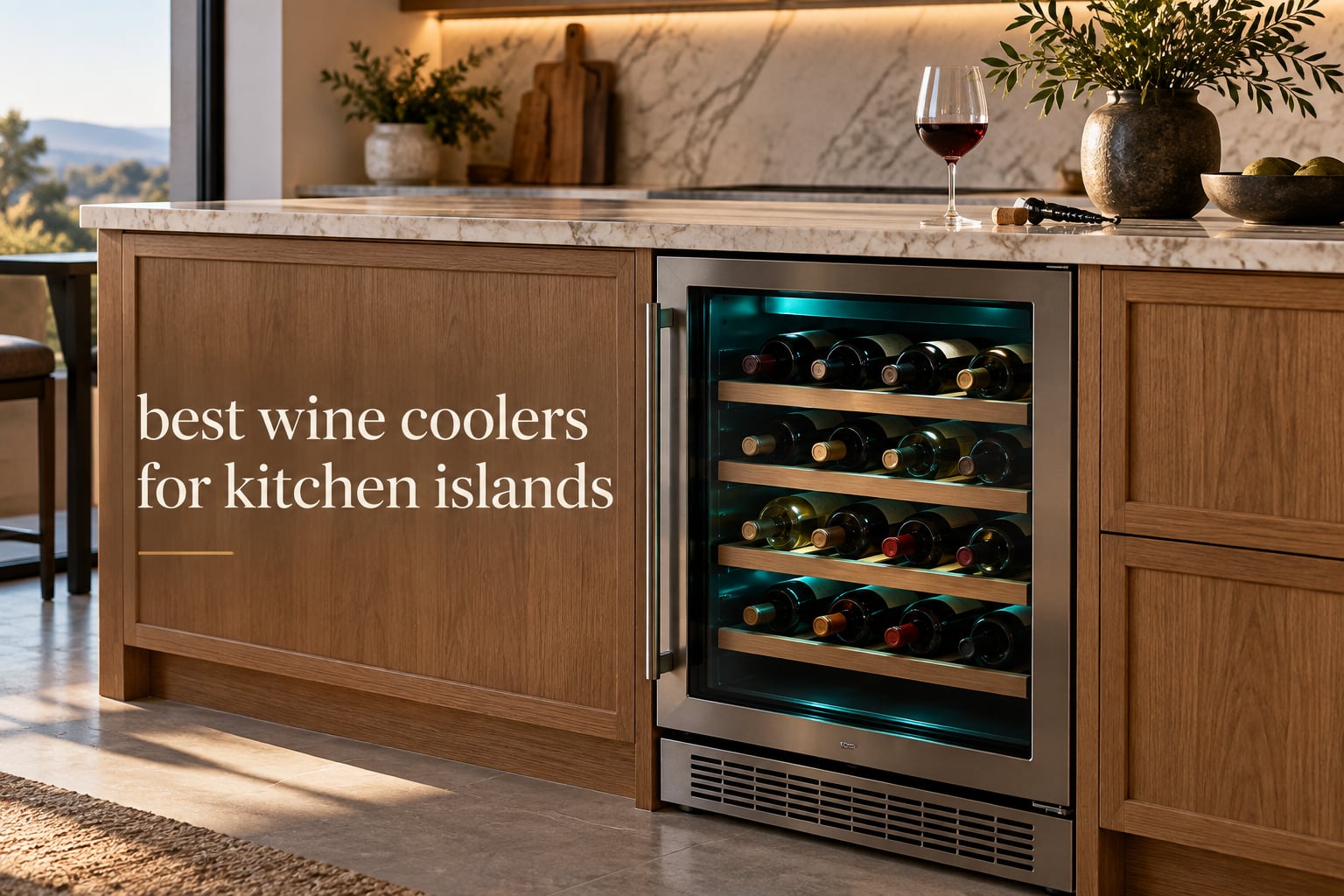
A kitchen island is the one place in the house where a wine cooler makes more sense than anywhere else. It sits at the center of an open plan, three steps from the sink where bottles get opened, and it fills a cabinet slot that would otherwise hold a recycling bin. Trouble is, most wine cooler roundups on the web treat an island like any empty counter space, and that is how people end up with a rear-vented fridge boxed into cabinetry that overheats within a season.
We spent the last several weeks reading the spec sheets, owner reports and failure notes for twelve under-counter coolers, and the pattern was clear. The best wine coolers for kitchen islands all share three traits: they vent out the front, they run on a compressor rather than a thermoelectric plate, and they are sold with a built-in cutout width rather than a vague “under counter” label. Those three details decide whether the install looks like cabinetry or looks like an appliance someone pushed into a hole.
If you are still building the island itself, start with our guides to outdoor kitchen islands and butcher block kitchen islands so the appliance slot gets planned from the start. If your island is finished and you are simply shopping for a cooler, the measurements section further down covers everything you need to check before you buy.
Quick Answer: The Best Wine Cooler for a Kitchen Island in 2026
The Velieta 24 Inch Wine and Beverage Refrigerator is our top pick for a kitchen island in 2026. It is a front-vented compressor unit sold for built-in or freestanding placement, runs two independent zones, and holds 20 bottles alongside 88 cans. Its 24.4 inch width fits a standard 24 inch island cabinet with the handle clearance to spare.
For a narrower opening, the Tylza 15 Inch 30-Bottle Cooler takes the same slot at 14.96 inches wide. For large collections, the Yeego 24 Inch Dual Zone holds 52 Bordeaux bottles. Every unit below is compressor-cooled, which is non-negotiable in a kitchen that heats up when the oven runs.
Top 3 Wine Coolers for Kitchen Islands in 2026

Velieta 24 Inch Wine and Beverage
- Front-vented built-in install
- Dual zone 35-64F
- 20 bottles plus 88 cans
- Quiet compressor

Tylza 15 Inch 30-Bottle Cooler
- 14.96 inch width
- Six beech wood shelves
- 40-65F range
- Built-in or freestanding

Tylza 24 Inch Dual Zone
- Under 38 dB running noise
- Two independent zones
- 20 bottles plus 88 cans
- UV-blocking glass
All 12 Wine Coolers Compared Side by Side
| Product | Specifications | Action |
|---|---|---|
| Velieta 24 Inch Wine and Beverage Cooler |
|
Check Latest Price |
| Tylza 15 Inch 30-Bottle Cooler |
|
Check Latest Price |
| Tylza 24 Inch Dual Zone Wine and Beverage |
|
Check Latest Price |
 ROVSUN 15 Inch 26-Bottle Dual Zone ROVSUN 15 Inch 26-Bottle Dual Zone |
|
Check Latest Price |
 Kalamera 24 Inch 46-Bottle Dual Zone Kalamera 24 Inch 46-Bottle Dual Zone |
|
Check Latest Price |
 BODEGA 15 Inch 30-Bottle Dual Zone BODEGA 15 Inch 30-Bottle Dual Zone |
|
Check Latest Price |
 Velivi 24 Inch Wine and Beverage Cooler Velivi 24 Inch Wine and Beverage Cooler |
|
Check Latest Price |
 BODEGA 28-Bottle Cooler BODEGA 28-Bottle Cooler |
|
Check Latest Price |
 Ca’Lefort 15 Inch 33-Bottle Cooler Ca’Lefort 15 Inch 33-Bottle Cooler |
|
Check Latest Price |
 Yeego 24 Inch 52-Bottle Dual Zone Yeego 24 Inch 52-Bottle Dual Zone |
|
Check Latest Price |
 ORYMUSE 24 Inch Dual Zone Cooler ORYMUSE 24 Inch Dual Zone Cooler |
|
Check Latest Price |
 Antarctic Star 24 Inch 52-Bottle Cooler Antarctic Star 24 Inch 52-Bottle Cooler |
|
Check Latest Price |
1. Velieta 24 Inch Wine and Beverage Cooler – Best Overall Wine Cooler for Kitchen Islands
- Independent wine and beverage zone control
- Quiet compressor with fan circulation
- Front vent suits built-in or freestanding install
- Holds 20 bottles and 88 cans
- Key door lock and blue LED ambient lighting
- Wire shelves feel less premium than solid wood racks
- Button controls are unlit and hard to find in the dark
- 162.2 kWh per year is mid-pack for the size
The Velieta is the unit we keep coming back to because it is the one most likely to be found on a real island and still be working three years later. Across 1129 reviews it holds a 4.4 average, and the volume of feedback matters here: an island appliance gets opened fifty times a night during a dinner party, so the hinges, the door seal and the control panel all get a workout.
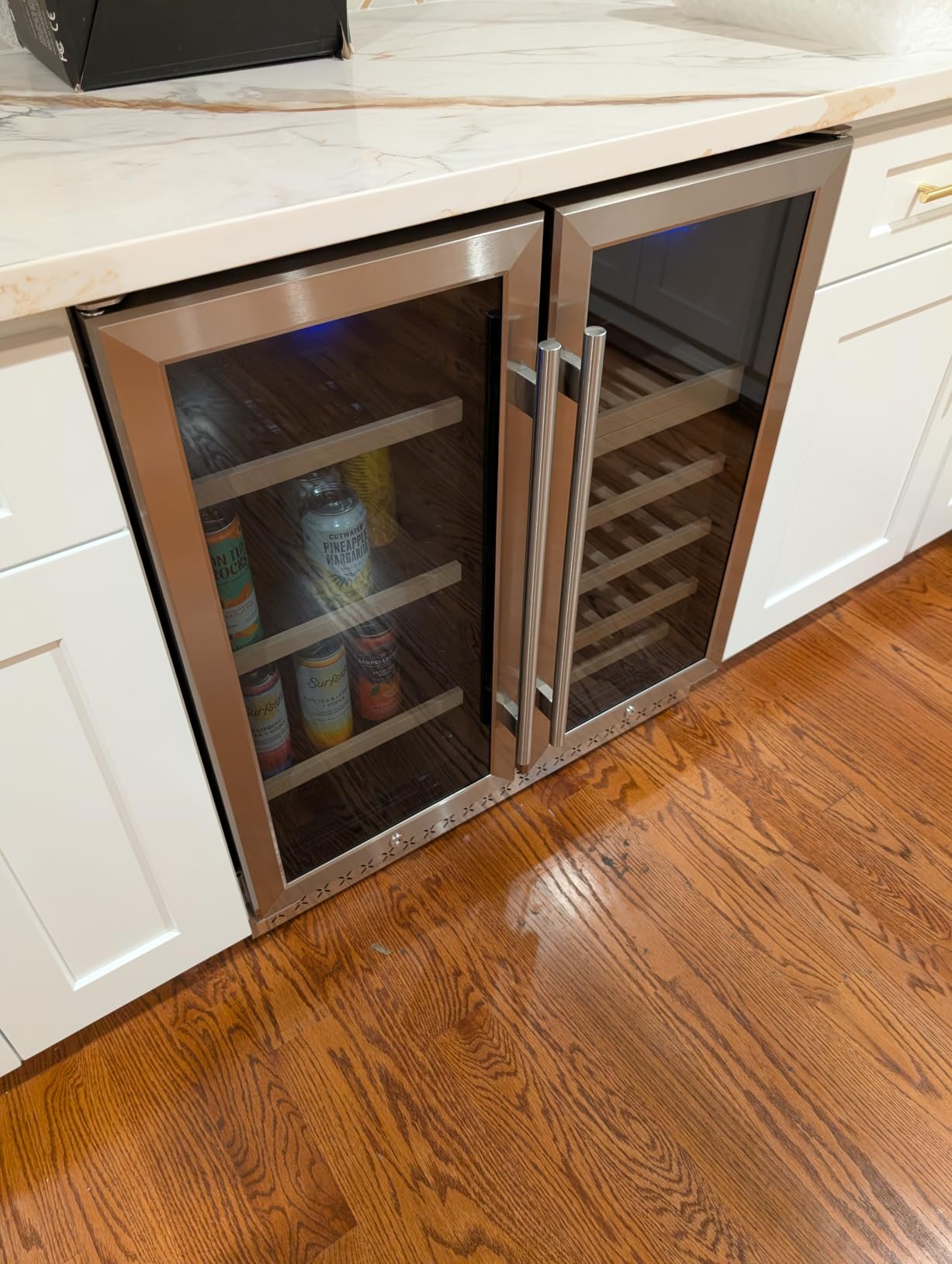
Its listed installation type is built-in, under counter and freestanding, and the front vent design is what makes that possible. At 25 inches deep by 24.4 inches wide by 76.2 inches tall it is a tall unit, so plan the opening height carefully rather than assuming it matches a standard base cabinet. The cabinet box on this model is a wine cellar format rather than a slim under-counter body.
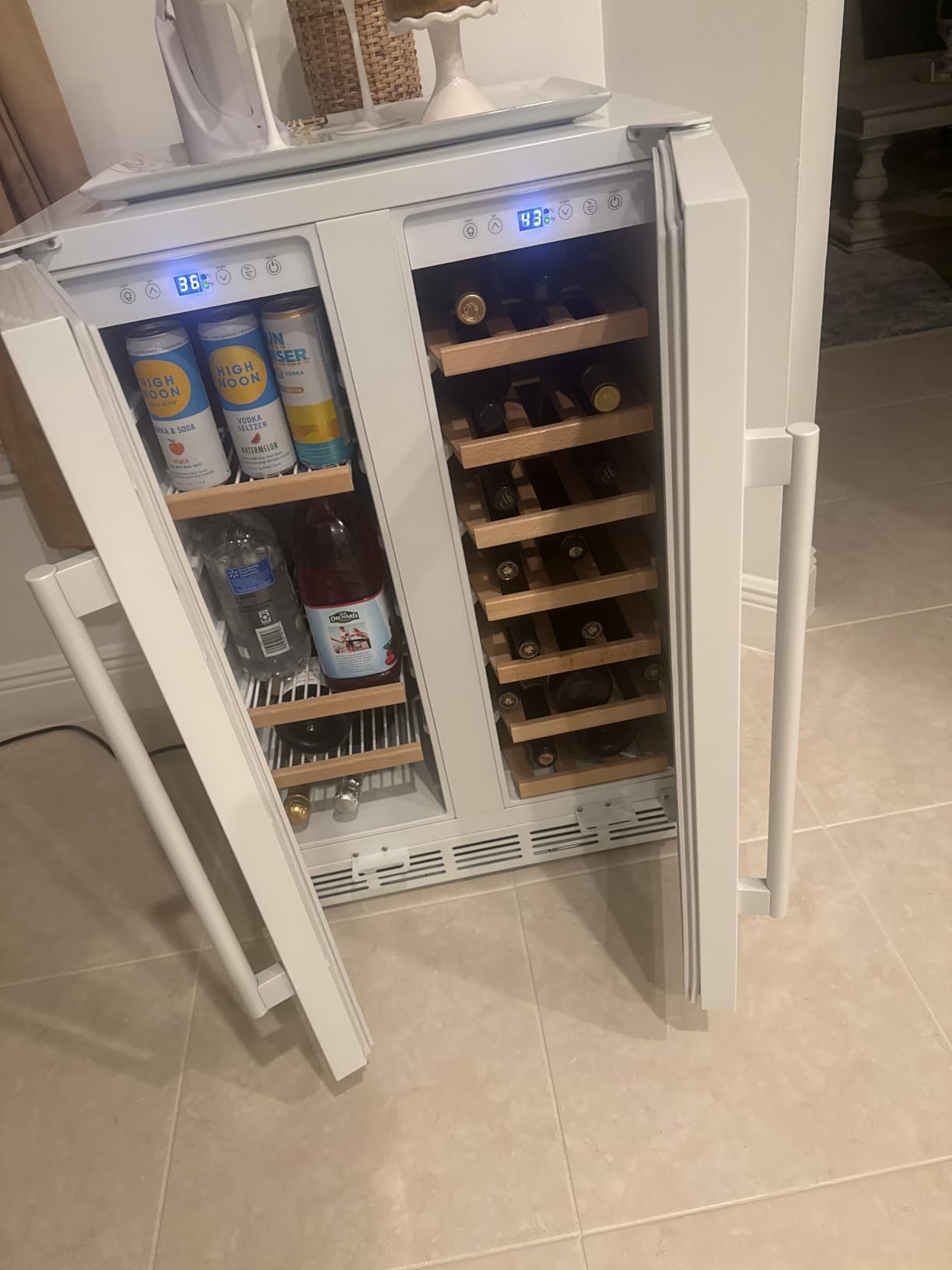
The two-zone layout is the practical win. The beverage zone runs 35-50F and the wine zone 41-64F, so a dinner can run crisp white and cellar red side by side without one zone compromising the other. Nine wire shelves slide out for reconfiguration, which matters if you move between standard Bordeaux bottles and wider formats.
Reviewers are near-universal about two things: the compressor is quiet, and the independent zone control actually holds its set point. A minority report a noisy fan on their model or a beverage zone that pulls down slowly, which is a known pattern with fan-cooled cabinets of this size rather than a fault unique to this brand.
Why it works in an island
Front venting is the whole story here. A front-breathing unit exhausts into the toe-kick cavity and cabinets instead of needing two or three inches of rear clearance, which is why it can sit flush under an island counter rather than protruding into the walkway. That geometry is the single biggest reason a rear-vented model fails in an island, and this one is built for it.
The 24.4 inch width also lands neatly against a 24 inch cabinet opening, which is the most common island appliance slot. Its two doors mean you need swing room in front of it, so this suits an island end or a side panel rather than a position where a seated guest’s knees would be in the door arc.
Where it falls short
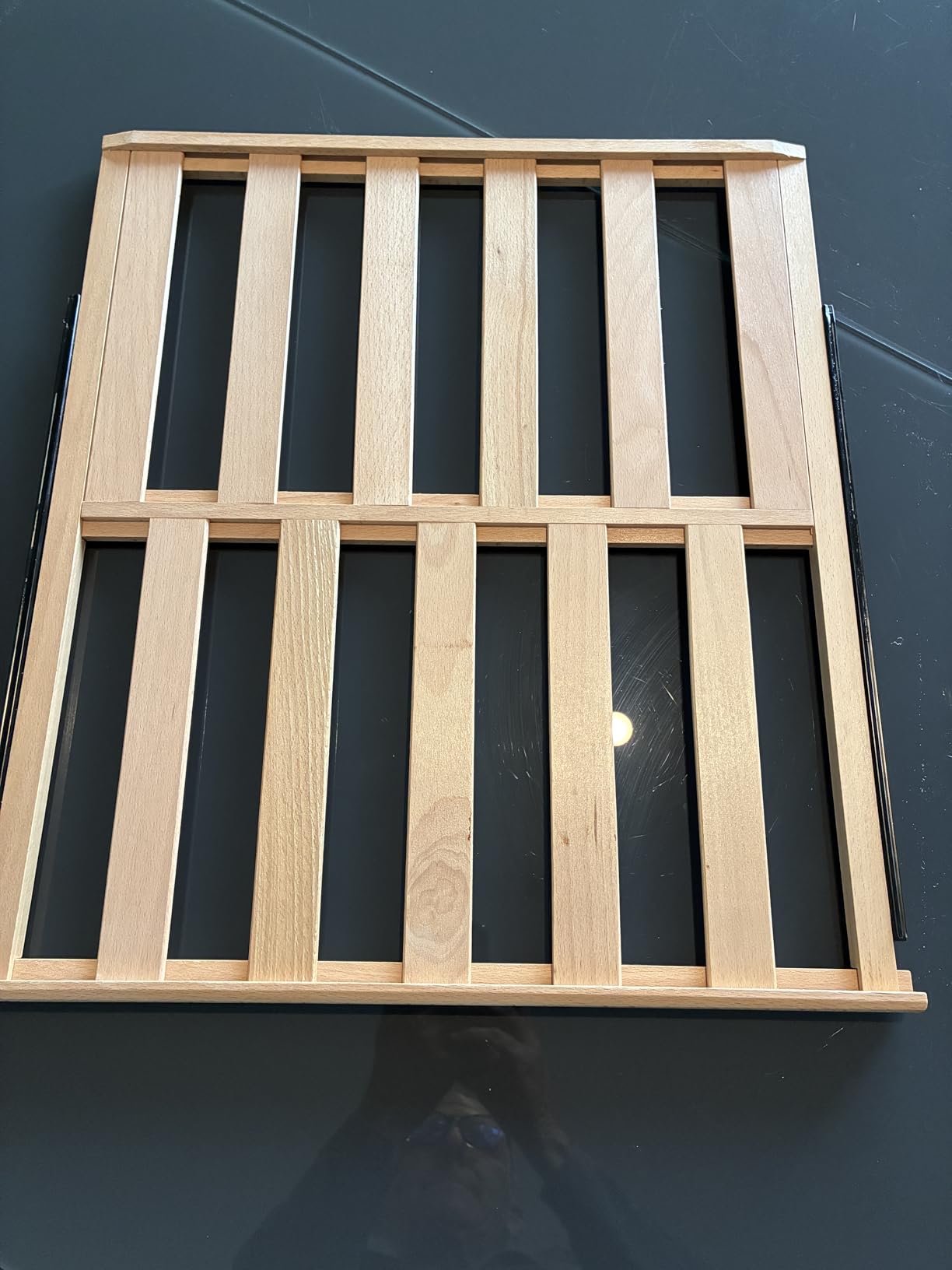
Wire shelves are the compromise. They are easier to wipe down and they let cold air move freely, but they do nothing to damp vibration the way solid wood racks do, and long-horizon collectors tend to notice. If your island is a display piece, buyers regularly spend up on a wood-shelved model instead.
The control buttons have no backlighting. In a dim evening kitchen you will be feeling for the panel rather than reading it, which is a small thing that shows up every single time you pour a glass.
2. Tylza 15 Inch 30-Bottle Cooler – Best Compact Fit for Narrow Island Openings
- 4.5 stars across 1009 reviews
- Accurate 40-65F temperature control
- Six beech wood shelves resist shaking
- Narrow 15 inch width fits under counters
- Temperature memory restores settings after power loss
- Shelves must be fully removed for wider bottles
- Interior light mode needs a five second press
- 70.5 pounds is heavy for a slim cabinet
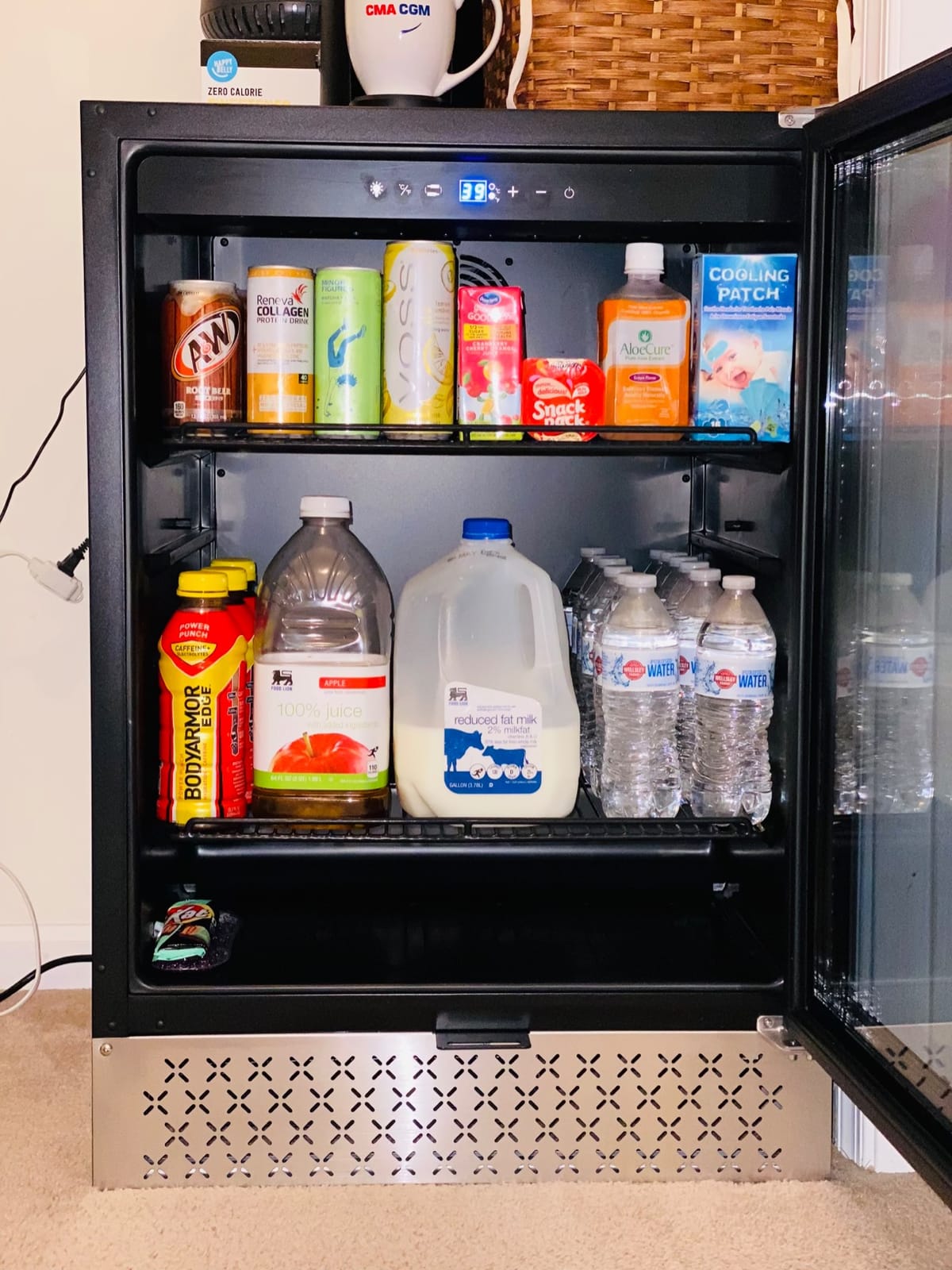
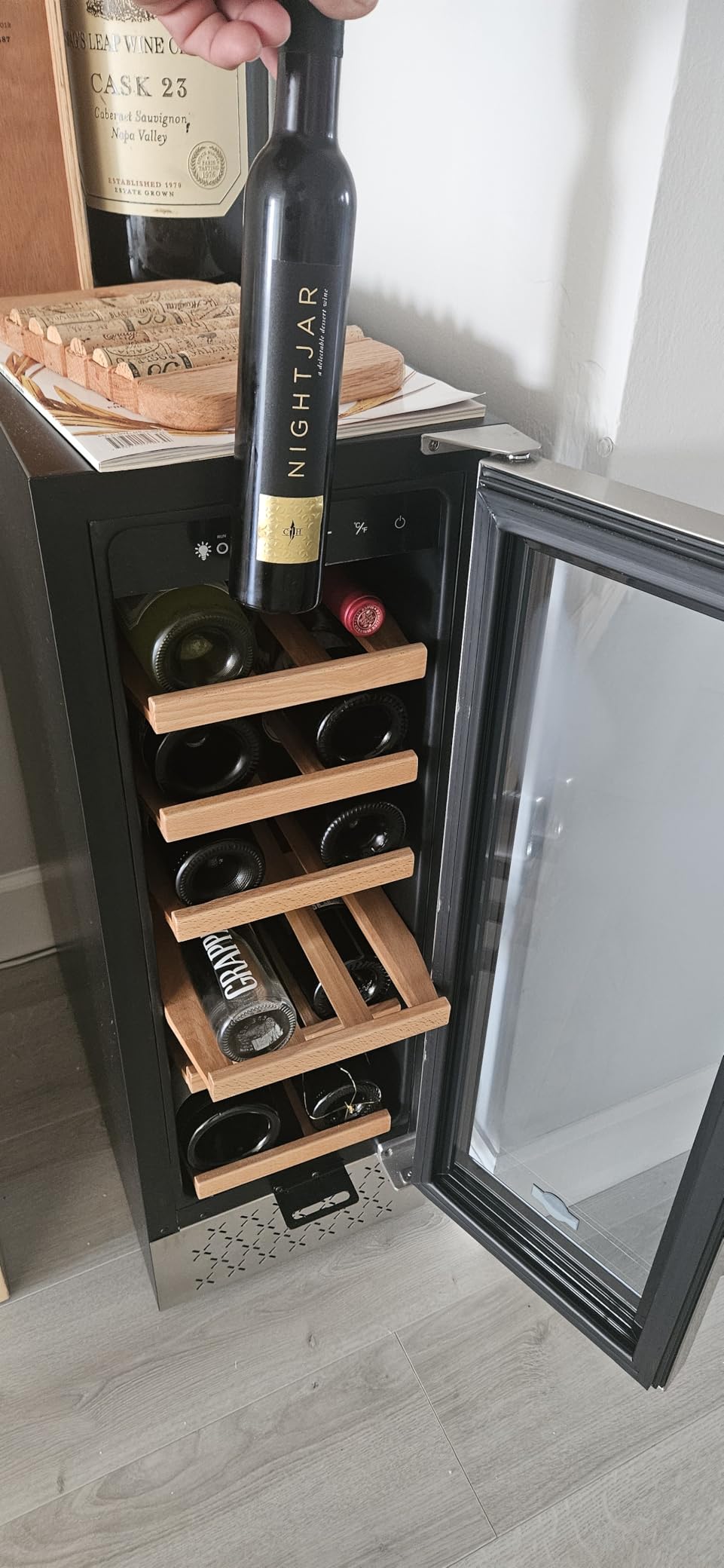
Not every island has a 24 inch hole. A lot of them have a 15 inch cabinet that a builder planned for a trash compactor or a warming drawer, and that is exactly the opening this model was designed to fill. At 14.96 inches wide it clears a standard 15 inch cabinet face, and at 33.46 inches tall it fits under a typical 34 inch base cabinet box.
The star here is the wood. Six beech shelves are a genuine step above the wire racks used in this price band, and wood does not ring when you set a bottle down hard. The listed range runs 40-65F, which covers both serving reds and whites without needing two zones.
Reviewers single out temperature consistency more than anything else, and 78 percent of reviews are five star. The smart temperature memory is a small feature with a real payoff in an island: if the circuit trips during a remodel or a storm, the cabinet comes back to the setting you chose rather than to a factory default.
One operational note from the manufacturer worth following. The unit should stand for 24 hours before the first power-on after transport, which matters if the delivery path to the island involves stairs or a tight turn.
Why it works in an island
A 15 inch cabinet is the most common under-counter appliance slot in a residential island, so this is the model to look at first if your opening is narrow. Installation is listed as both built-in and freestanding, which gives you flexibility if the cabinetmaker has not yet cut the face frame.
Because the whole cabinet is wood-shelved, the inside still reads as a wine cabinet rather than a converted beverage fridge. That matters visually in an open plan where the glass door faces directly into the living space.
Where it falls short
Getting wider bottles in means removing shelves rather than sliding them, so a Champagne-heavy collection will fit far fewer bottles than the 30-bottle figure suggests. If you drink sparkling wine regularly, budget for a lower real-world capacity than the listing claims.
The interior light setting requires a five second long press, which is a genuinely fiddly interface. It is also a single-zone cabinet, so serving a red and a white at their proper temperatures at the same dinner means compromising on one of them.
3. Tylza 24 Inch Dual Zone Wine and Beverage Cooler – Best Dual Zone for Entertaining
- Runs under 38 dB with upgraded fan circulation
- Two independent zones with accurate readings
- Metal and wood shelves with quality slides
- Temperature memory after a power outage
- Responsive service that shipped replacement parts
- Shelf spacing cuts capacity for Pinot and Champagne
- Bottle labels can tear on wire shelf edges
- Some units needed a replacement cooling fan
- Light button has no backlighting
This is the model we would put in an island that sits directly beside the seating overhang, because under 38 dB is the quietest published running noise in this group. An island is the worst possible place for an audible compressor: it is hard against a countertop, framed by cabinetry that resonates, and often ten feet from where people are sitting.
It measures 23.42 inches wide by 22.63 inches deep by 34.25 inches tall, which is a clean fit for a 24 inch island cabinet with a standard under-counter height. The listed installation types cover under-counter, freestanding and built-in, and the front ventilation is what lets it go flush.
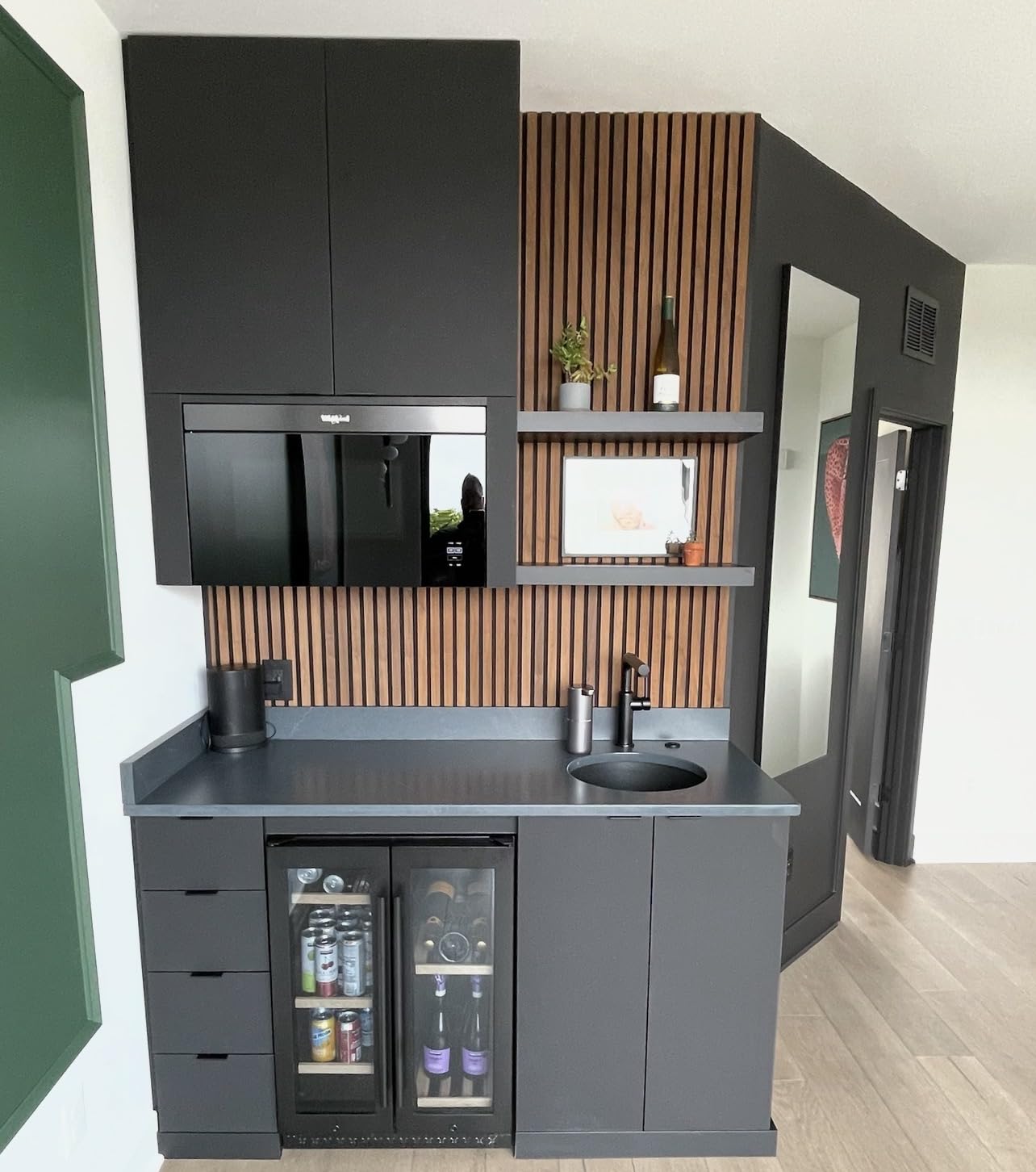
The dual zones run 35-50F on one side and 41-64F on the other, with switchable Celsius and Fahrenheit. Reviewers report a top-to-bottom gradient of only 2-4F, which is unusually tight for a cabinet of this price and is the reason we rate it as the entertaining pick rather than simply another dual-zone box.
Customer service comes up repeatedly in reviews, specifically for shipping replacement parts rather than insisting on a whole-unit return. That is a meaningful difference for an installed appliance, and it is the kind of thing that only shows up in reviews after two or three years of use.
Why it works in an island
Two independent zones in a 24 inch body is the correct answer for hosting. Dinner guests want a crisp white at 45-50F and a red at 60-64F simultaneously, and a single-zone cabinet forces a choice. Split zones in a slim body is the feature that separates a fridge from a wine cooler.
Under 38 dB also means it can live in an island in an open plan without being the thing you notice. Owners of island installs repeatedly describe quietness as the deciding factor, because a freestanding unit against a wall is far less exposed than one facing a room.
Where it falls short
Shelf spacing is tight, and this is the single most repeated complaint in the reviews. Pinot and Champagne bottles sharply reduce usable capacity, so treat the stated 20-bottle figure as a Bordeaux-only number. Bottle labels also catch on wire shelf edges and tear, which is a small irritation that becomes a habit.
A documented defect appeared on some units where the cooling fan ran loud enough to prompt a replacement. The brand resolved it with free parts according to reviews, but it is worth knowing the model exists at all.
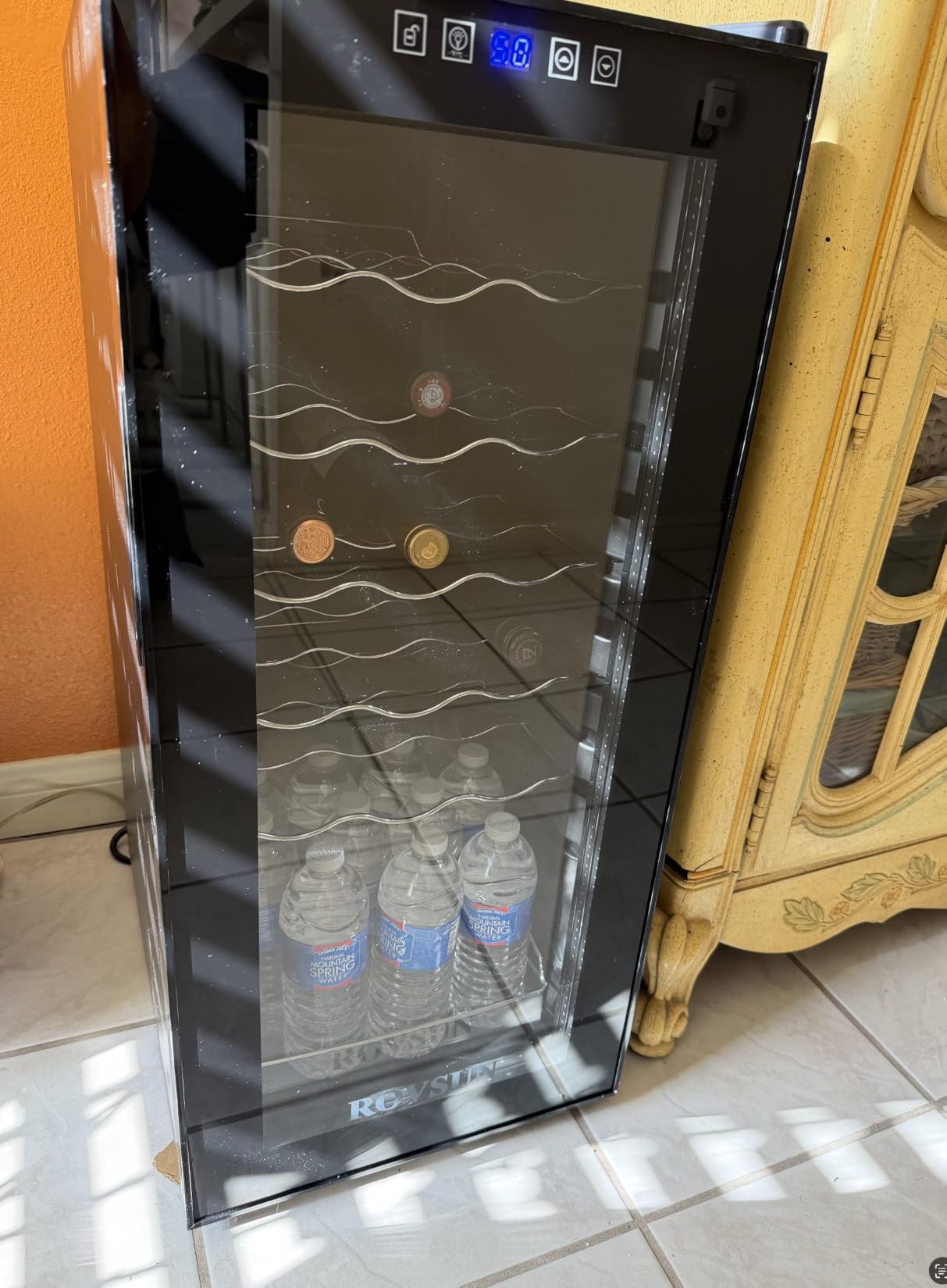
4. ROVSUN 15 Inch 26-Bottle Dual Zone Cooler – Best for Small Kitchen Islands
ROVSUN 15 Inch Dual Zone Wine Fridge, 26 Bottle Wine Cooler Refrigerator
- Front-vented 15 inch body gives a built-in look
- Compressor reaches the mid to low 40s
- Digital set points accurate to plus or minus 1F
- Sliding beech shelves reduce vibration
- Leveling feet handle imperfect floors
- Tight racks make wide champagne bottles impractical
- Racks slide out only an inch or two
- Low hum is audible in a fully silent room
A small island does not always have depth or width for a full 24 inch appliance, and this is the compact answer. At 15 inches wide by 23 inches deep by 34.3 inches tall with 2.8 cubic feet of interior, it fits narrower cabinets while still holding 26 standard bottles.
The important detail for island use is the front-vented 15 inch slim profile listed for a built-in look. Owners who have installed these under a counter report that the unit reads as part of the cabinet run rather than an appliance pushed into it, which is the visual goal most people are after when they plan an island slot.
Reviewers consistently praise cold performance, and that is worth explaining. Compressor cooling can pull a cabinet into the mid to low 40s, which thermoelectric units physically cannot do in a warm room. On a dual zone set from 41F to 64F with one degree accuracy, this is a unit that will actually hold a cellar temperature rather than oscillating around it.
Beech wood shelves glide out and damp vibration better than wire, and the leveling feet are a genuine help on older island floors that are not perfectly flat. Quiet operation gets called out more than once in reviews, including against larger compressor fridges in the same class.
Why it works in an island
The 15 inch width covers the most common island appliance opening, and 23 inches deep leaves room for a backsplash or a wall behind the cabinet. That combination means it can drop into an existing island run without relocating a plumbing line or moving an electrical outlet.
Dual zone control in a body this small is unusual and useful. If you keep a small mixed collection, splitting it into two temperature bands beats a single zone that has to average.
Where it falls short
The racks are tightly packed, so wide Champagne bottles are effectively impractical and the usable count drops well below 26. Rack extension is also short, roughly an inch or two, which means pulling a bottle from the back of a shelf is a reach-in rather than a slide-out.
Some reviewers report a low hum and a faint gurgle that is only audible in a completely silent room, and a few dispute the advertised capacity on the listing. If you are filling the cabinet to the door, measure a few of your own bottles before you trust the number.
5. Kalamera 24 Inch 46-Bottle Dual Zone Cooler – Best Wooden Racks for a Wood Island
Kalamera 24 inch Wine Cooler, 37 Bottle Dual Zone Built-in or Freestanding
- FSC-certified solid wood frame dampens vibration
- Five wooden shelves with bottle stoppers
- LED display shows each zone clearly
- Temperature memory after an outage
- Wood frame suits an all-wood island
- 4.0 star average is the lowest here with 15 percent one-star
- 332 kWh per year is the highest in the group
- Real capacity drops sharply with wide bottles
The construction is the argument for this one. It has a 100 percent solid wood frame made from FSC-certified wood, and the vibration and friction reduction that provides is exactly what long-term storage needs. Five removable wooden shelves have bottle stoppers on both sides, so a pulled rack will not send a case of Burgundy over.
It occupies 23.4 inches wide by 22.4 inches deep by 33 inches tall, which sits slightly lower and slightly shallower than most 24 inch models. That shorter height is useful under a 34 inch cabinet where a 34.25 inch unit would not clear the underside of the counter.
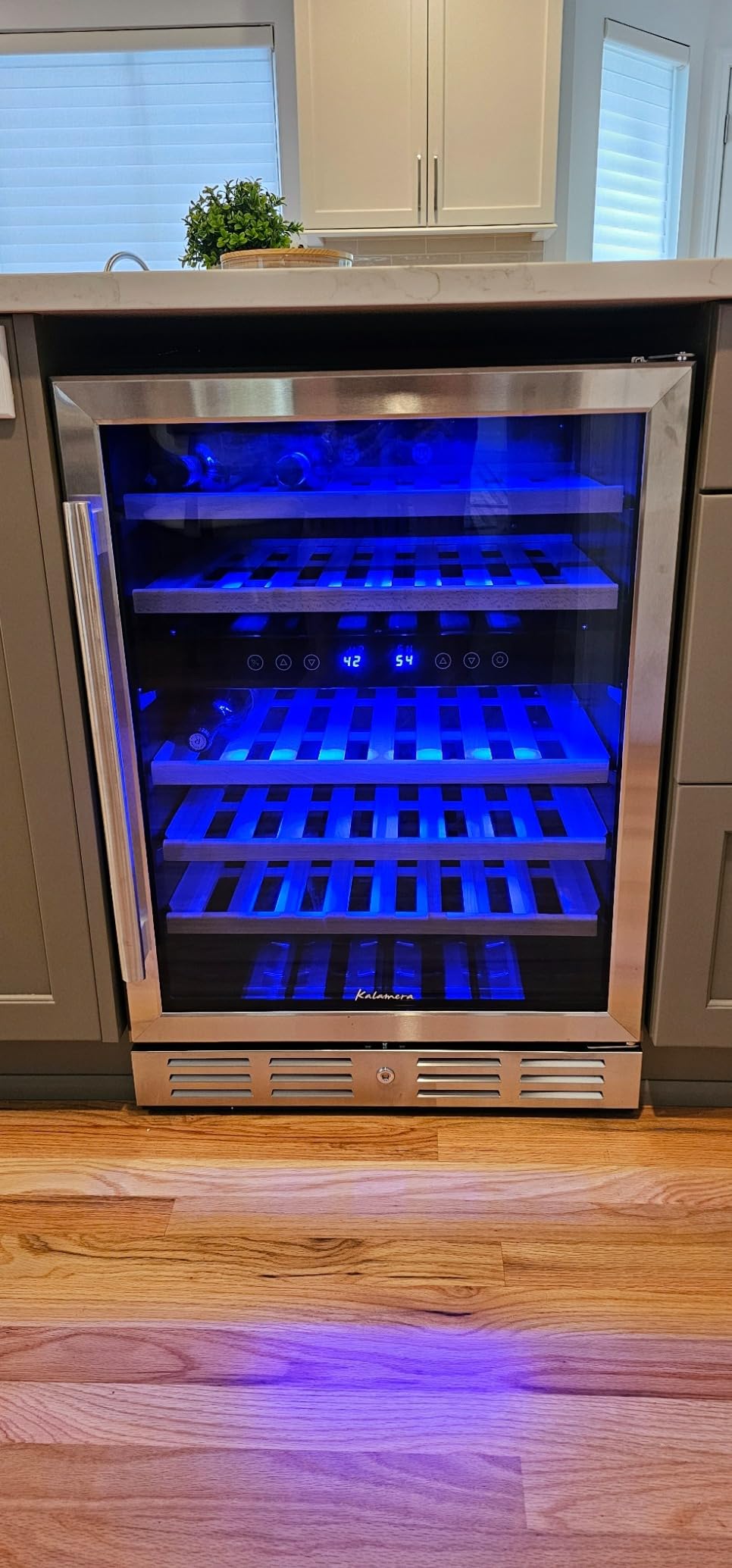
The dual thermostat splits the cabinet with an upper zone at 40-50F and a lower zone at 50-66F, and both readouts appear on an LED control display. Temperature memory restores your settings after a power loss, which on an island circuit shared with a microwave or a dishwasher is not a minor feature.
We want to be straight about the ratings here. This is the lowest-rated model in the group at 4.0 stars, with 60 percent five-star reviews and 15 percent one-star. That spread is wide, and buyers who left critical reviews tend to describe temperature swings and durability concerns rather than a single isolated fault.
Why it works in an island
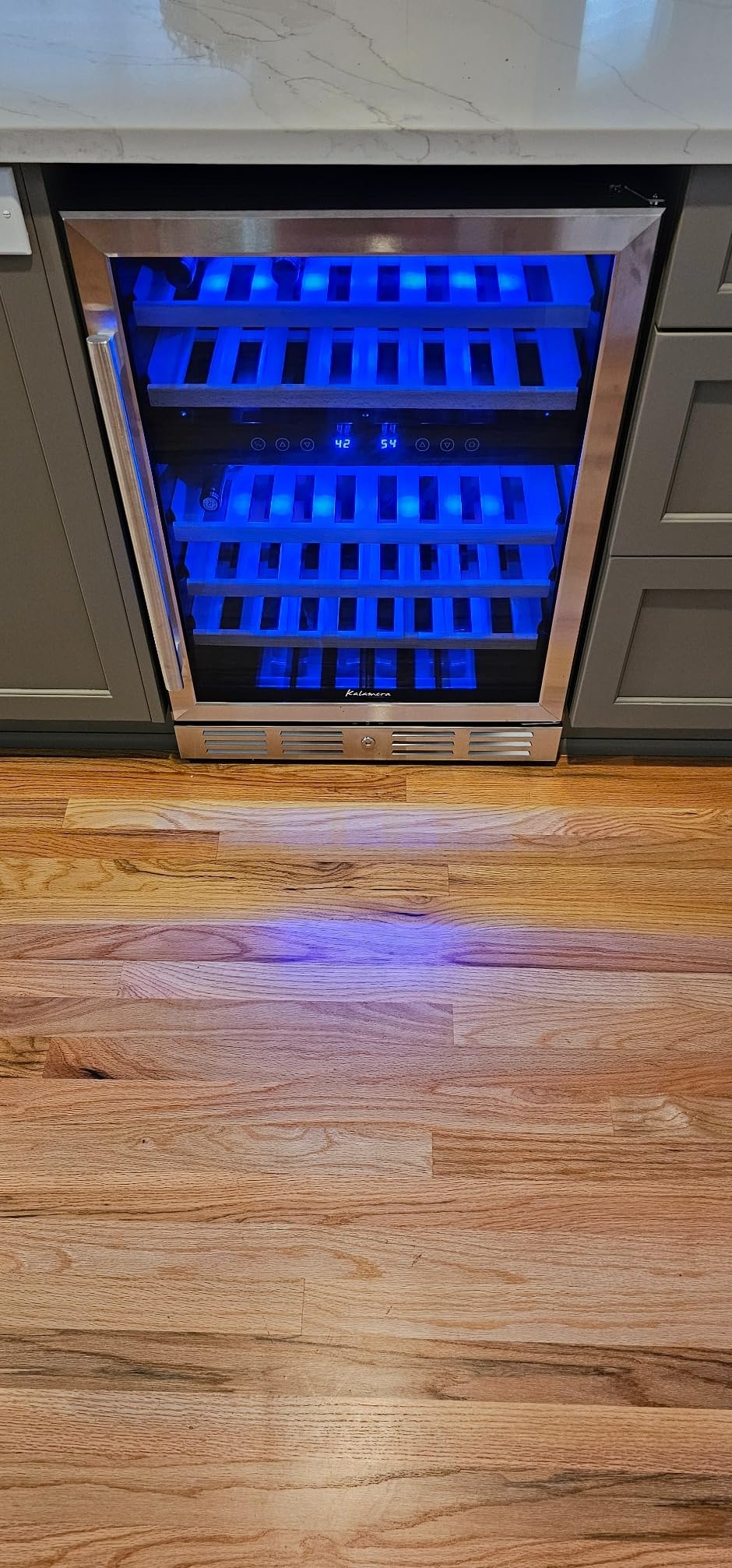
If your island cabinetry is wood rather than painted or laminate, a wood-frame cooler is the only option that blends. Stainless trim over dark wood reads as a bolt-on appliance, which is the mismatch homeowners complain about most when they try to match a glass-door unit to cabinetry.
The 33 inch height clears a lower base cabinet where taller 34.25 inch units will not, and the listed installation types cover both built-in and freestanding placement. The brand has sold wine coolers continuously since 2014, so parts availability for a long-lived install is a reasonable assumption.
Where it falls short
Energy use is the outlier at 332 kWh per year, more than double several models here. In an open plan kitchen that runs all day, that gap shows up on a utility bill, and it is worth pricing into the decision if the island is in a sunlit corner.
The rating spread is real, and the 46-bottle claim assumes Bordeaux shapes throughout. Move to Pinot or Champagne and the practical count falls quickly. Buyers who need a quiet, thermally consistent island cabinet should look at a higher-rated dual-zone model instead.
6. BODEGA 15 Inch 30-Bottle Dual Zone Cooler – Best UV-Protected Glass Door
- Double-glazed tempered glass blocks 99 percent of UV
- 1F increment dual zone adjustment
- Front air vent suits under-counter install
- Adjustable feet lift the cabinet up to 2 inches
- Runs as low as 42 dB
- 72F ceiling is warm for long-term reds
- 4.2 average trails the strongest models
- 10 percent one-star reviews flag cooling or durability
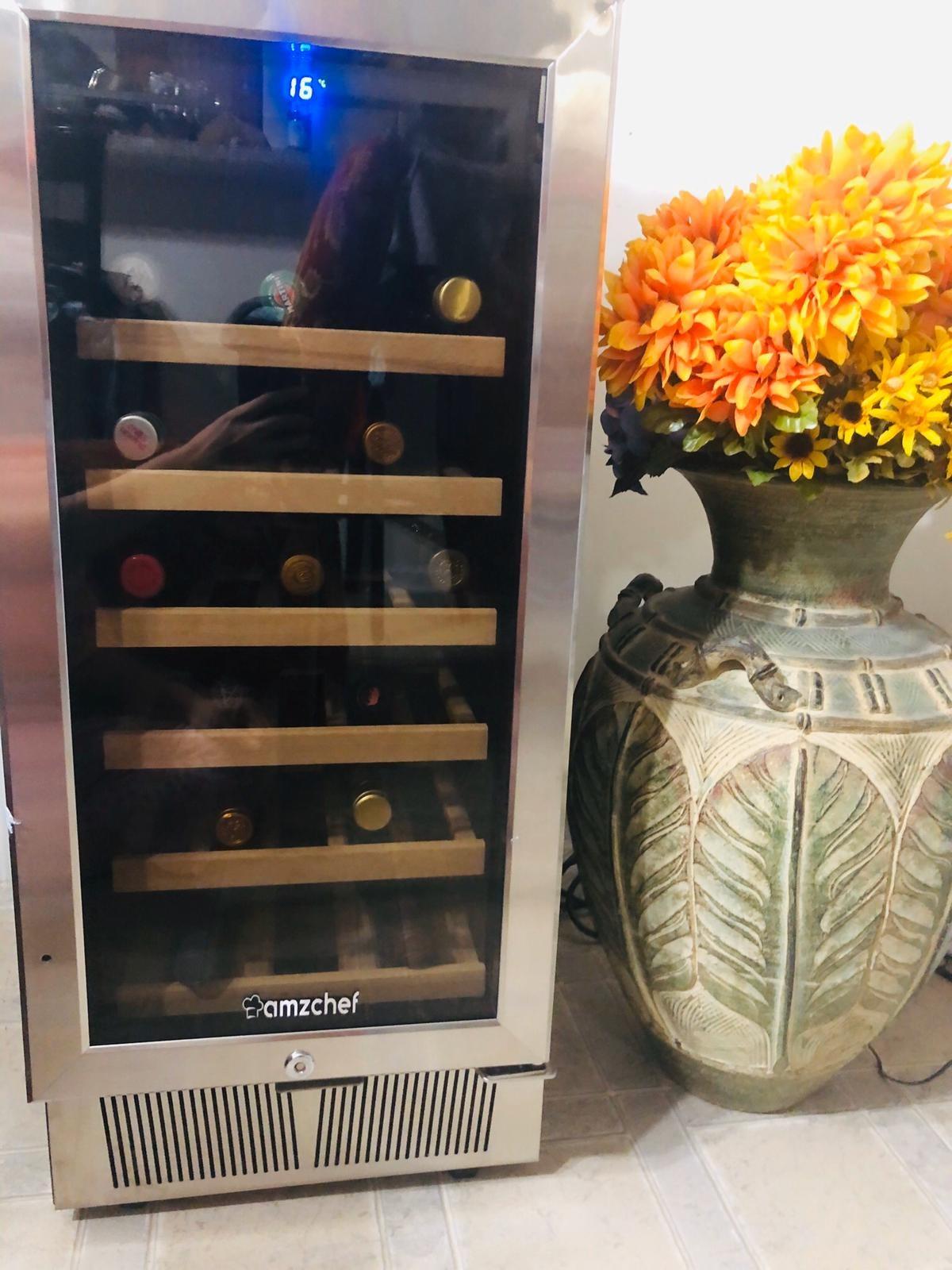
If the island is a display point, the door glass is the feature. This model uses a 304 stainless steel frame with double-glazed tempered glass rated to block 99 percent of UV rays, which is the number to look for when a wine cabinet sits in direct light from a kitchen window or a pendant.
At 14.96 inches wide by 22.44 inches deep by 33.58 inches tall it matches a 15 inch island cabinet opening, and the front air vent cooling is listed specifically for built-in or under-counter installation. Adjustable feet add up to two inches of height, which is helpful when an older island floor is not level.
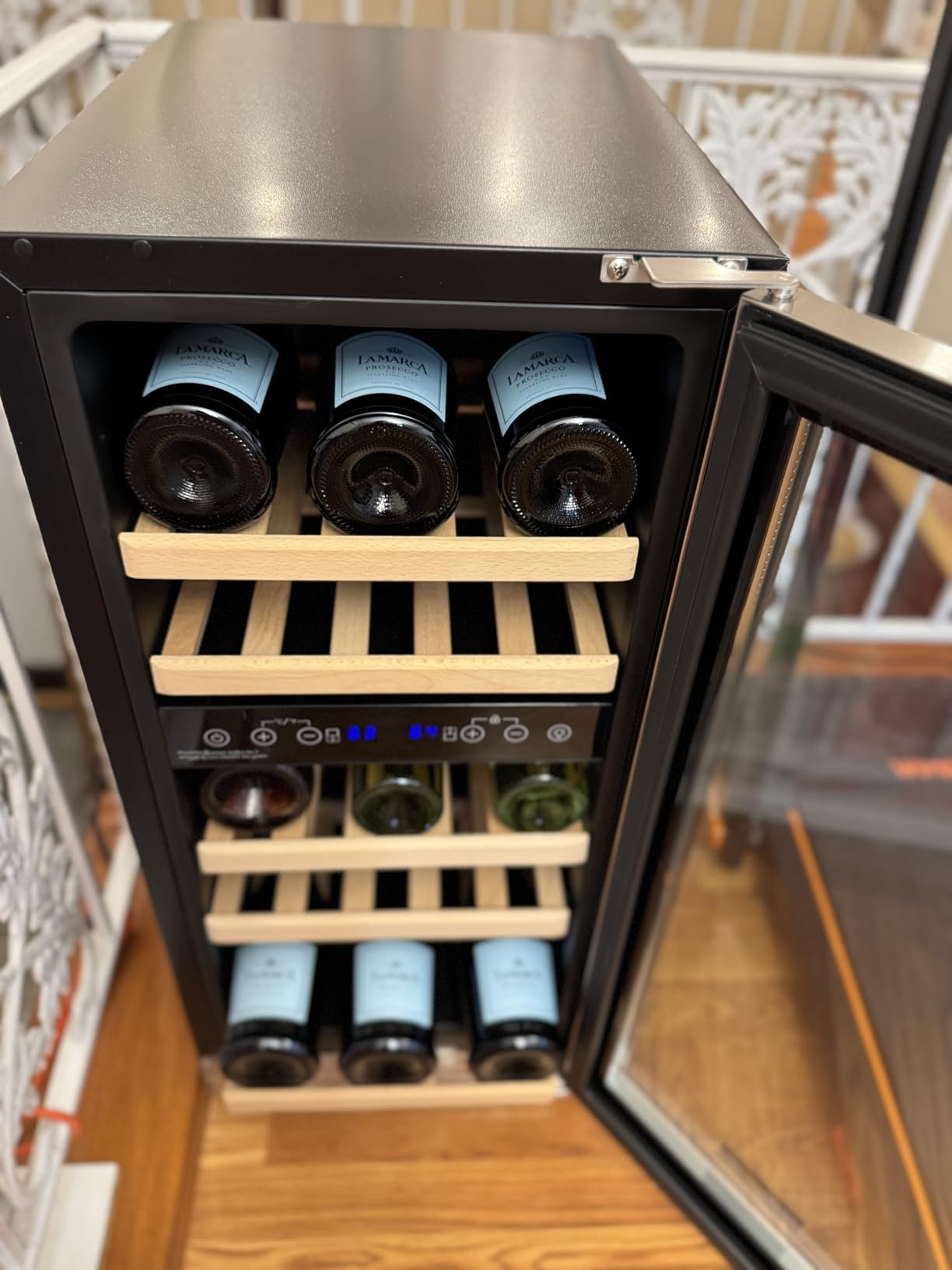
Dual zone control runs from 41F to 72F in one degree increments, with independent upper and lower settings and a temperature memory function. Five movable wood-look shelves let you reconfigure for Champagne, and there is a key security lock plus automatic lock function.
That 72F ceiling is worth understanding before you buy. It is the widest range in this group, which is useful for keeping whites cold but is genuinely too warm for reds you intend to hold. If your island cabinet is for aging rather than serving, a narrower, colder range is the better fit.
Why it works in an island
Front venting means this can be built flush under an island counter without the rear clearance a freestanding box needs, and the 15 inch width matches the most common appliance slot. The 12-month support commitment with a 24-hour response target is a reasonable baseline for an installed appliance.
Compressor-based cooling at 42 dB is quiet enough for an open plan, and the tight 1F increments give you finer control than a mechanical dial. That precision is what separates a serving cabinet from a storage box.
Where it falls short
The 4.2 average is mid-pack here, and 71 percent five-star ratings trail the stronger models. A 10 percent cluster of one-star reviews points at uneven cooling and durability rather than a single common fault, which is a pattern we would want to see resolve over more review volume.
Wood-look shelves are a compromise: they are not solid beech like the models above, so you get the appearance without the vibration damping. On a purely display island that is an acceptable trade.
7. Velivi 24 Inch Wine and Beverage Refrigerator – Best for Quiet Operation
Velivi 24” Wine and Beverage Refrigerator UnderCounter Fridge Dual Zone
- 4.5 stars with 79 percent five-star reviews
- Compressor runs without vibration
- Solid stainless doors resist rust and wipe clean
- Front ventilation supports built-in cabinets
- Independent 35-50F and 41-64F zones
- Only one finish is confirmed on this listing
- Support terms are thinner than peer brands
- Two doors need clear swing space in the island
This is the one we would put in an island on a first pass, because it pairs a 4.5 star average with 79 percent five-star reviews and very few substantive complaints. The compressor is described as virtually silent with no vibration, and in reviews that claim held up better than most in this category.
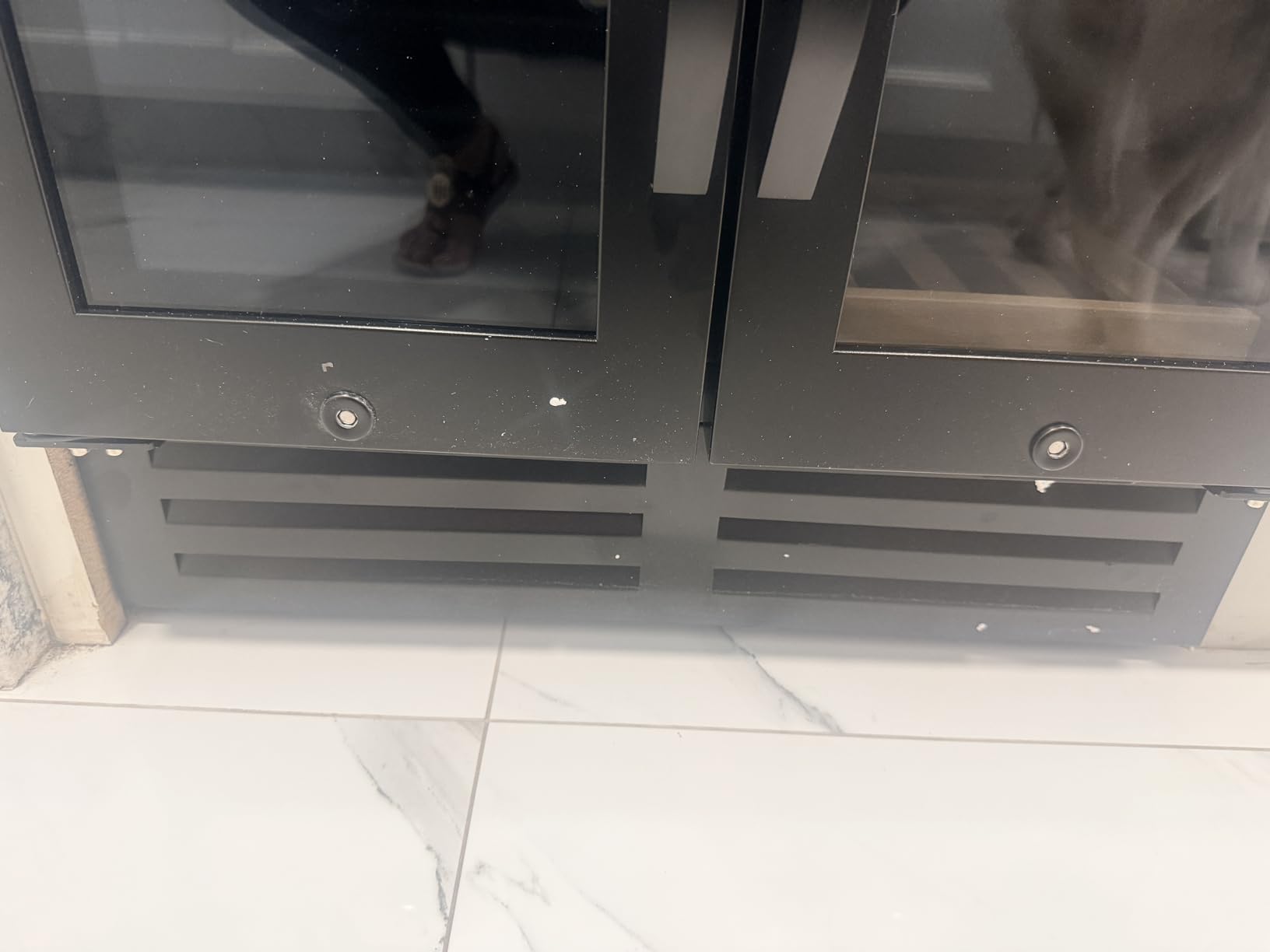
The body measures 23.42 inches wide by 22.63 inches deep by 34.25 inches tall, matching the 24 inch island cabinet standard. Front ventilation is listed for built-in cabinet installation, and the listed installation types also cover freestanding placement if your island layout changes.

Independent zones run 35-50F for beverages and 41-64F for wine, so this solves the classic hosting problem in a single cabinet. The French door format with solid stainless steel doors means you can open one side without losing the temperature of the other, which matters more in a wine cabinet than in a refrigerator.
Reviewers point to the finish as much as the cooling. The stainless doors are rust-proof and easy to clean, which is a practical advantage over glass in a kitchen where fingerprints and cooking spray are constant.
Why it works in an island
The vibration-free compressor is the deciding factor for an island specifically. Cabinetry acts as a resonator, so a unit that is acceptable against a wall can be irritating when it faces an open living space. Reviews on this model describe it as operating without the hum that owners of other dual-zone units complain about.
Solid doors also solve a styling problem. A glass door in an island has to be styled carefully to avoid looking like a display case, whereas stainless matches a mixed-metal kitchen without effort.
Where it falls short
Only a small number of finish variants are confirmed on this listing, so if your kitchen design depends on a specific finish, verify before committing. Support terms are also more lightly documented than brands like Ca’Lefort, which publishes compressor coverage in years rather than a single year.
Two doors need more swing clearance in front of the cabinet than a single-door unit, and that can conflict with a seating overhang. Check the door arc against your stool positions before the cabinet face goes on.
8. BODEGA 28-Bottle Wine Cooler – Best Budget Pick for a First Island Install
BODEGA COOLER 28 Bottle Wine Fridge, Cooler for Kitchen, Office, Room & bar
- True compressor cooling in a compact body
- Very quiet at 40 dB
- Double-paned UV-protective glass door
- Compact 16.9 inch width for tight cabinets
- Memory chip restores settings after a cut
- No manufacturer warranty is listed
- Wire shelves feel utilitarian
- 64.4F ceiling is warm for long storage
The reason this one earns a place in an island guide is simple: it is a real compressor unit at 40 dB in a 16.9 inch footprint. Thermoelectric coolers cannot match that combination of width, temperature and noise, and on a kitchen island the compressor question is not really optional.
It measures 16.9 inches wide by 17.7 inches deep by 33.07 inches tall, so it is one of the easier fits we found for an awkward cabinet. The 17.7 inch depth is unusually shallow, which matters when an island has a decorative panel, a post, or a wall behind it.
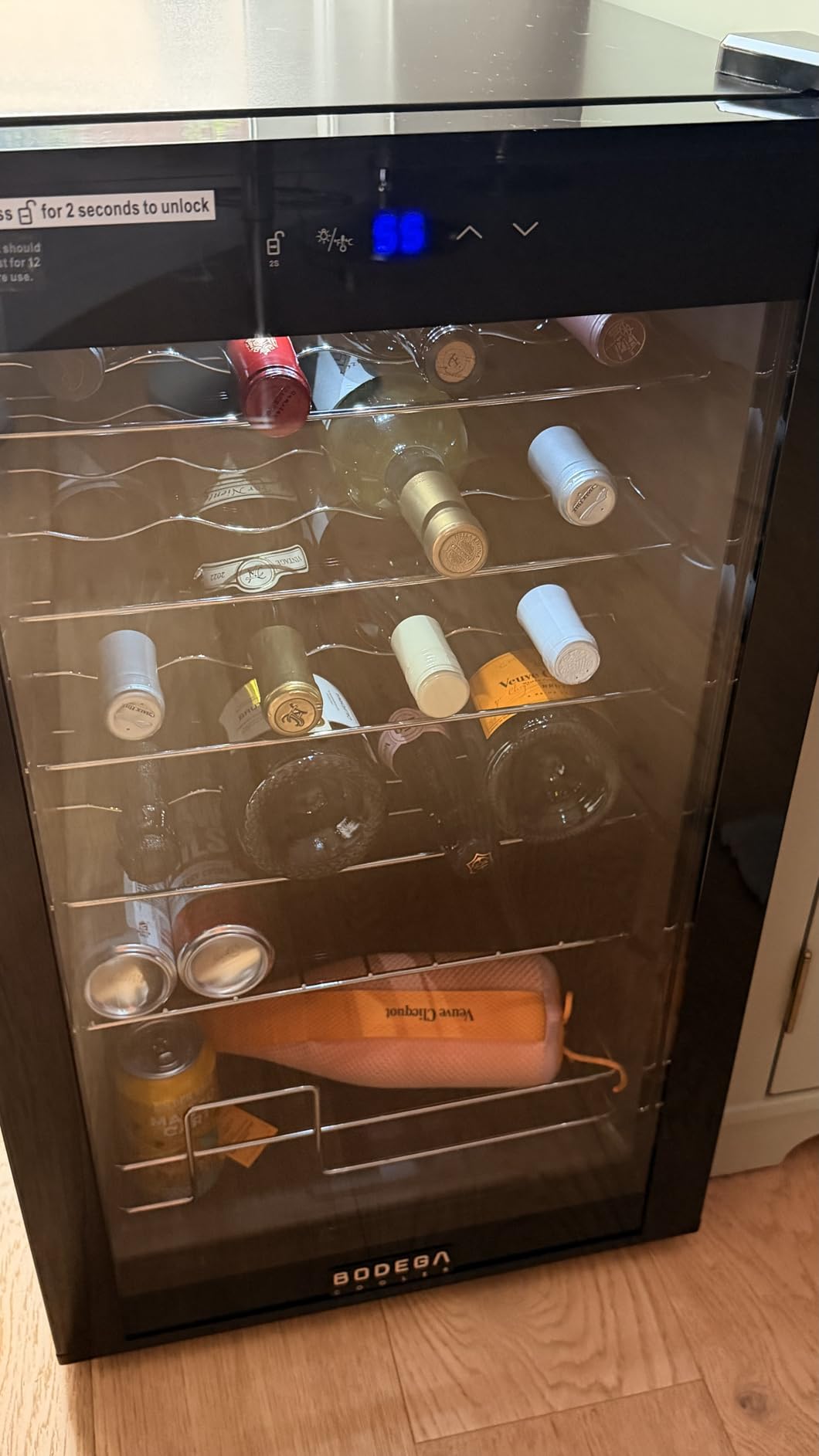
The double-paned thermopane door blocks UV light, and a built-in fan holds temperature consistently with automatic defrost preventing ice buildup. Six or seven removable wire shelves and a soft interior LED round out the storage, and a memory chip restores your set point after a power failure.
Reviewers consistently praise the pairing of low cost with genuine compressor cooling, and they commonly note that it preserves wine roughly twice as long as a thermoelectric unit of the same size. That claim is the reason we included it despite the utilitarian shelving.
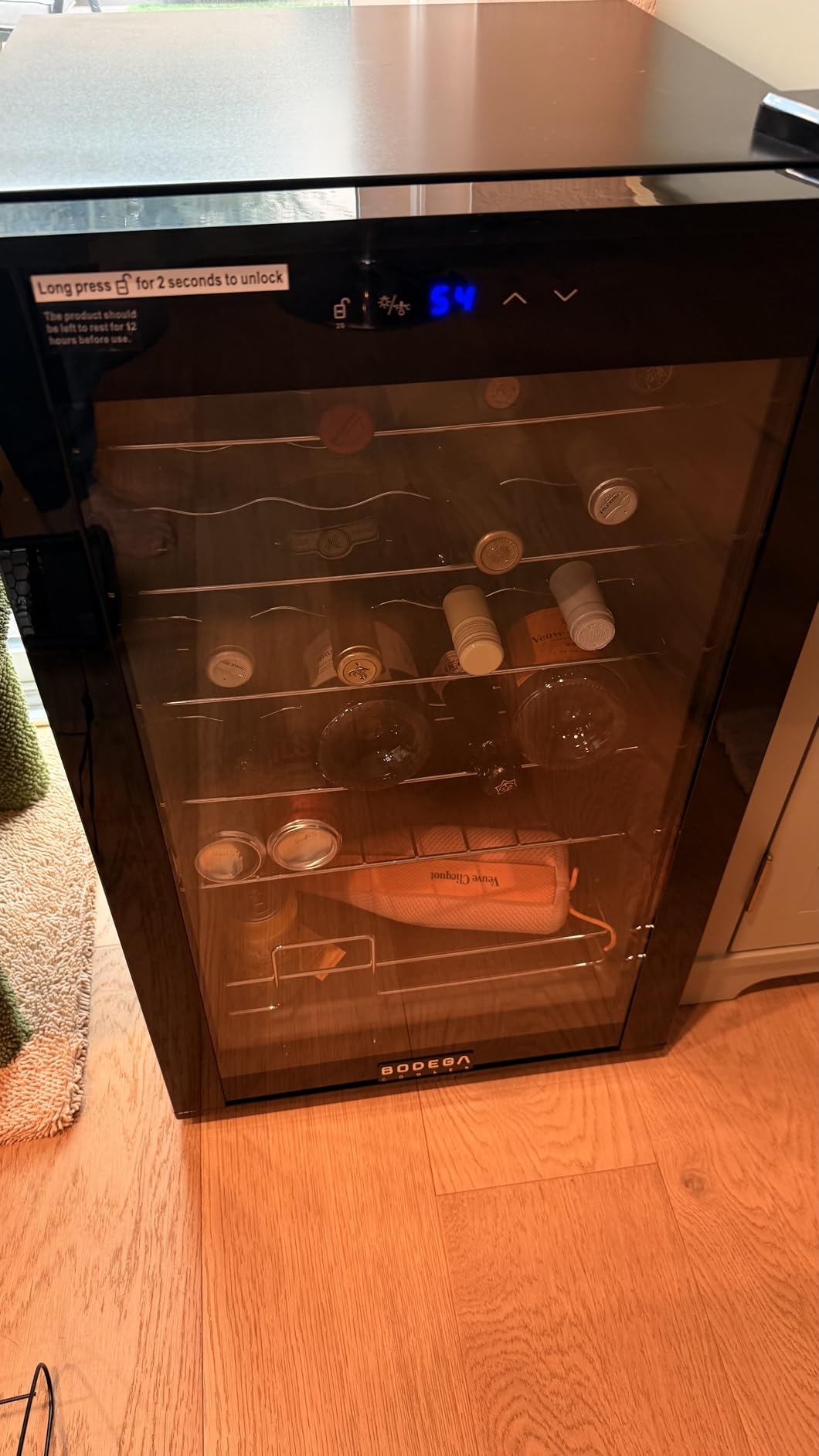
Why it works in an island
The 16.9 inch width and 17.7 inch depth make it the most forgiving unit here for an existing island that was not designed around an appliance. It fits where a 24 inch model will not, and the shallow depth protects the clearance behind the cabinet.
Automatic defrost and a 40 dB running noise mean it can live in a working kitchen without a defrost ritual or an audible hum. The memory chip is a small but real safeguard on an island circuit shared with other appliances.
Where it falls short
No manufacturer warranty is listed for this unit, and that is the single biggest reason it sits below the other compressors in this list. For a built-in appliance you may not be able to move easily, a missing written warranty is a real risk.
The 64.4F top of the range is warm for long-term storage, and the wire shelves offer nothing for vibration. Use it as a serving cabinet for a mixed collection rather than a cellar, and it does its job quietly.
9. Ca’Lefort 15 Inch 33-Bottle Cooler – Best Warranty Coverage
- One year machine plus two year parts and three year compressor
- Reaches 40F minimum with 1F increments
- Double-glazed stainless door with UV protection
- Three selectable interior LED colors
- Built-in under-counter and freestanding installs
- Champagne fits only on the top or bottom rack
- Shelves remove but do not adjust in height
- Bottom rack runs 2-3F cooler than the top
Warranty length is the differentiator here, and in an island it is more than a spec-sheet detail. An installed appliance is expensive to remove and reinstall, so coverage on parts and on the compressor specifically buys you service without a teardown. This one runs one year on the machine, two years on parts and three years on the compressor.
It measures 14.8 inches wide by 22.4 inches deep by 34 inches tall, so it clears a 15 inch island cabinet while staying just under a 34 inch counter. The 15 inch width and a 3 cubic foot interior holding at least 33 standard bottles is an unusually good capacity-to-footprint ratio.
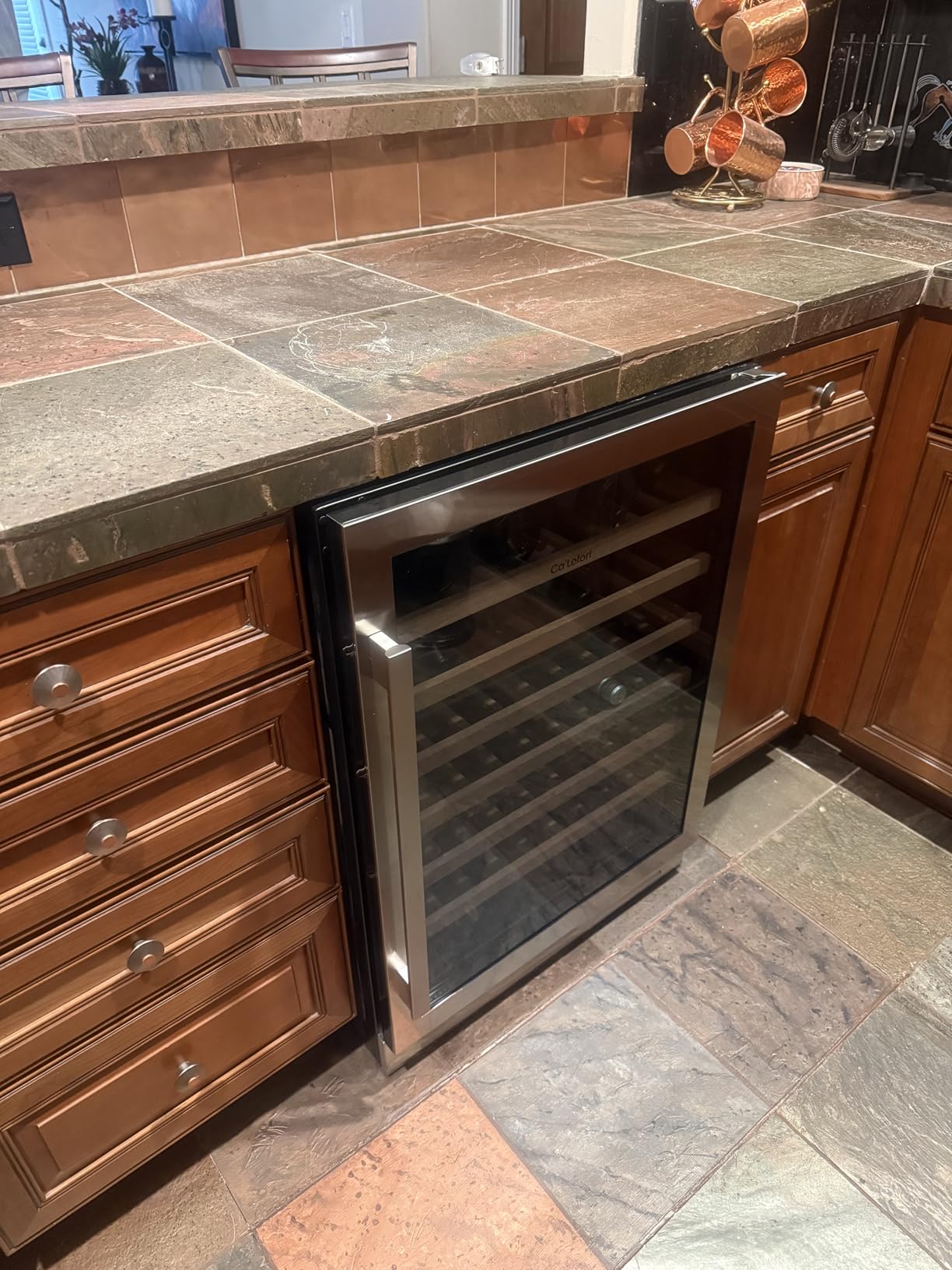
The cooling specification is genuinely impressive for the class: a 40F minimum with one degree increment adjustment across a 40-65F range. Reviewers who checked with external thermometers report accurate, consistent readings rather than optimistic display numbers, which is the test most people never bother running.
Other details worth noting: a double-glazed stainless steel door with UV protection and high sealing, selectable amber, blue or white interior LED, power failure memory, and front ventilation for built-in, under-counter or freestanding installation.
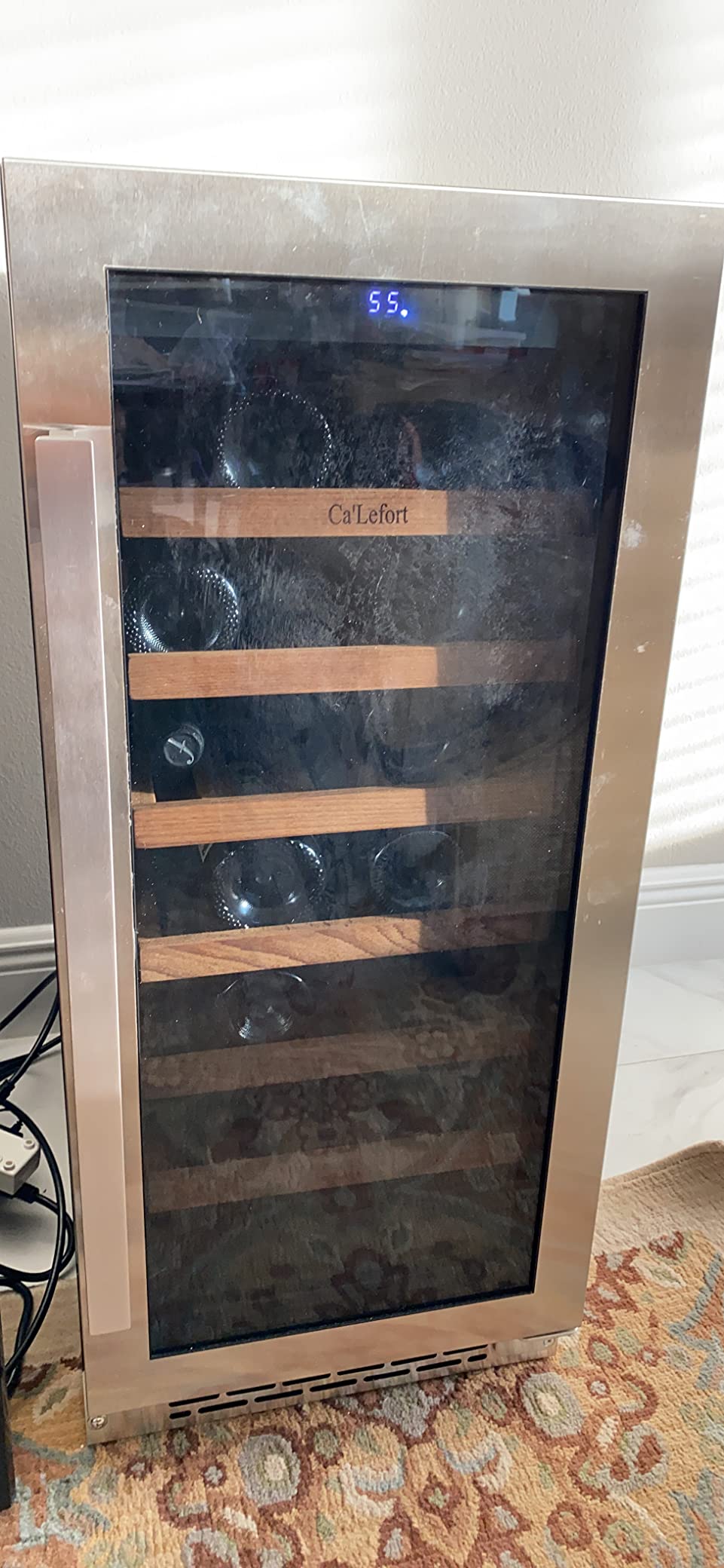
Why it works in an island
Three selectable interior LED colors is a small decision that matters when the door faces a living space at dinner. Amber lighting is easier on a display collection at night, and owners of island installs tend to run the light more often than a pantry cabinet would.
The brushed stainless finish is described as anti-fingerprint, which is a genuine advantage in a kitchen where a glass door would show every handprint. A 15 inch body also drops into the most common island appliance slot without a cabinet change.
Where it falls short
Champagne and sparkling bottles only fit on the top or bottom rack, and shelves are fully removable but not height-adjustable. That combination means a mixed sparkling collection eats a disproportionate share of the cabinet.
The bottom rack runs 2-3F cooler than the top, and a small number of buyers on dual-zone variants report a unit failing to reach its set point. We would verify set point with a thermometer during the first month rather than trusting the panel alone.
10. Yeego 24 Inch 52-Bottle Dual Zone Cooler – Best for Large Collections
Yeego 24 Inch Wine Fridge, 52 Bottle Dual Zone Wine Cooler with Left Hinged
- Holds up to 52 Bordeaux bottles in 5.12 cu.ft
- Compressor and fan run quietly with low vibration
- Even temperature held in both zones
- Stainless frame with double-tempered glass door
- Support shipped a needed hinge part at no cost
- Middle pull-out shelves only fit standard bottles
- Drawers extend about half way
- One owner reported electronics failure at six months
If your collection has outgrown a 30-bottle cabinet, this is the 24 inch unit that holds 52 Bordeaux bottles in 5.12 cubic feet. That is a real capacity difference in a footprint that still fits a standard island cabinet, and it is the reason we picked it for large collections.
The cabinet measures 23.4 inches wide by 22.4 inches deep by 32.3 inches tall, so it is shorter than most 24 inch models and will clear a lower base cabinet that a 34.25 inch unit will not. Front ventilation is listed for built-in or freestanding under-counter installation.
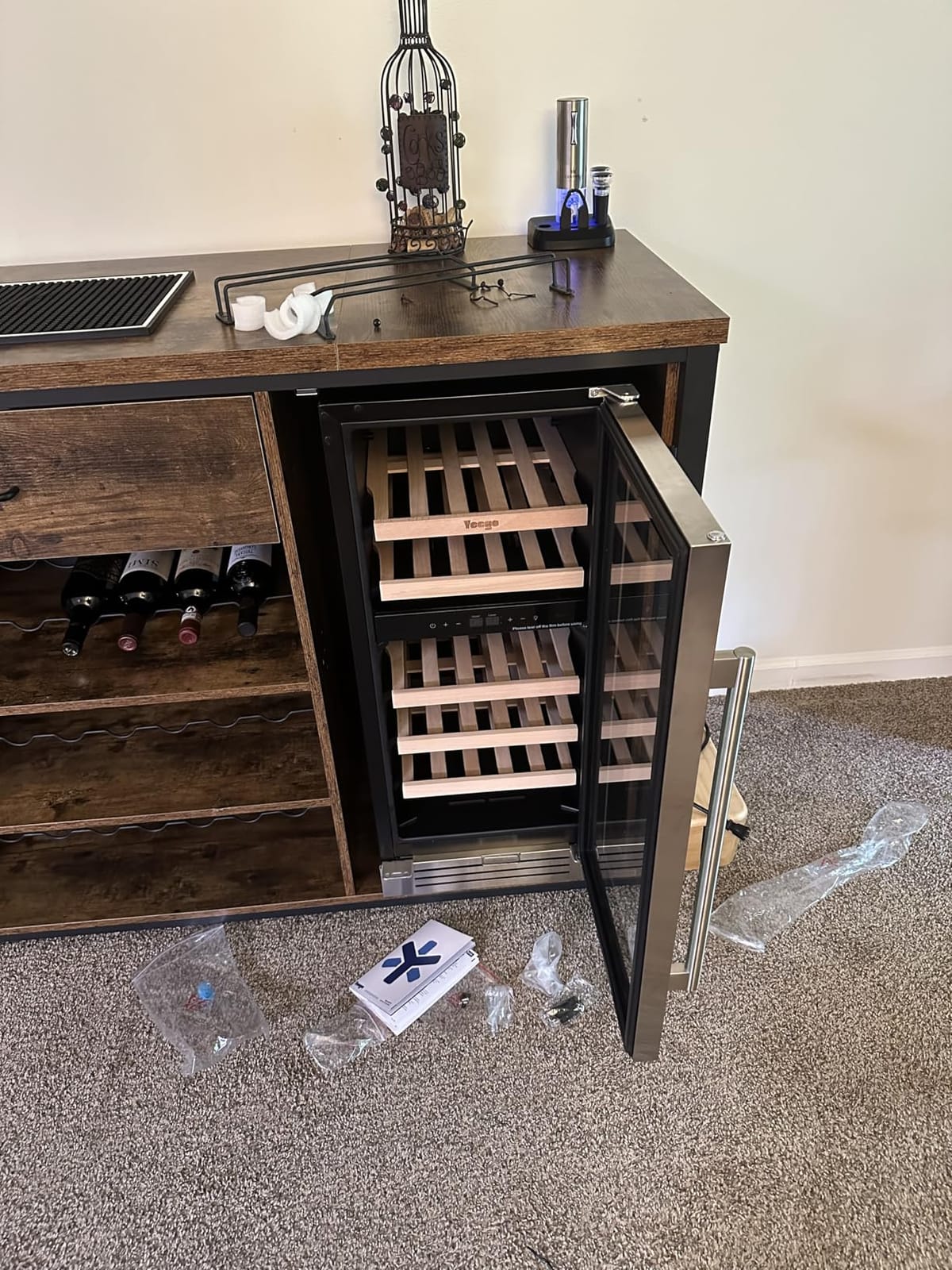
Upper and lower zones are independently controlled across 40-65F, and the manufacturer advises setting the lower zone at or warmer than the upper one. That guidance is not obvious, and getting it backwards is a common cause of a zone reading warmer than you set it.
Five removable beech wood shelves damp vibration, and the compressor with internal fan is described as low noise and low vibration. Reviewers comparing it against the unit it replaced call out the difference in running sound directly, which is a real consideration in an island.
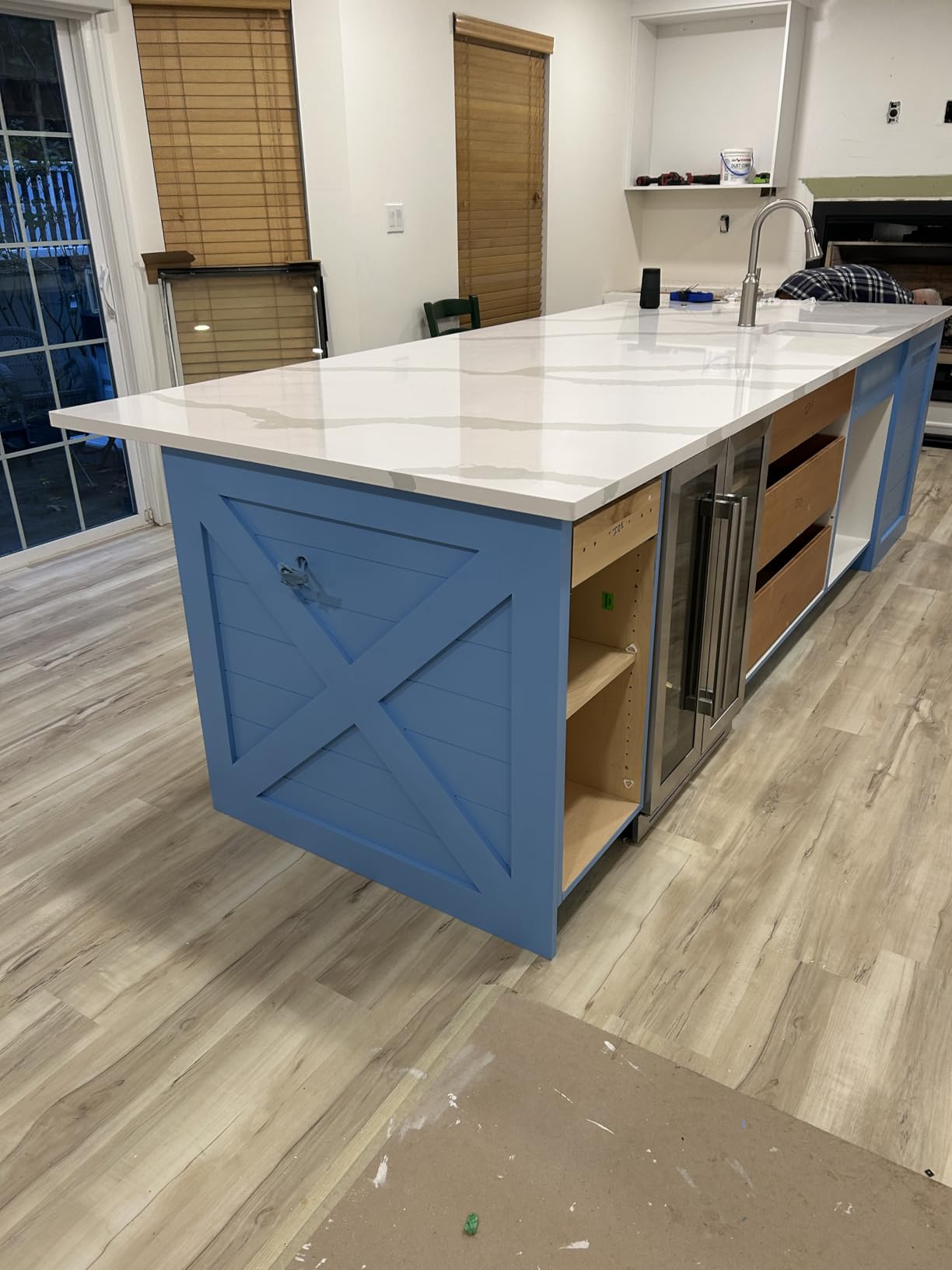
Why it works in an island
Capacity is the reason to choose a 24 inch island cabinet in the first place. At 52 bottles, a household that drinks a few bottles a week is not restocking monthly, and the dual zones let a large collection split between reds and whites properly rather than by shelf.
Owners report an attractive design and a door that closes securely without bouncing, and the stainless frame with double-layer tempered glass suits both display and hiding. Support responsiveness gets called out, including shipping a hinge part at no charge.
Where it falls short
The middle pull-out shelves only fit standard bottles, and anything wider is very tight. Drawers extend only about half way, so rear bottle labels have to be pulled forward to read, which is an irritation when you are scanning a shelf quickly.
The door hinge is fixed rather than reversible, so orientation has to be right the first time. One owner also reported an electronics failure at six months, and the warranty response to that case was described as poor. Allow 24-36 hours standing before the first use.
11. ORYMUSE 24 Inch Dual Zone Cooler – Best Sleek Finish for Contemporary Islands
ORYMUSE 24 Inch Dual Zone Wine Cooler, 52 Bottle Built-In Wine Fridge
- 4.5 star average with a clean modern look
- 170 kWh per year is efficient for a 24 inch body
- Frost-free compressor with fan circulation
- Digital touchscreen control per zone
- Adjustable feet and a built-in key lock
- Door can spring back open and needs a gentle close
- Wire shelf tips forward under front-loaded weight
- Build quality is mid-tier rather than heavy duty
The reason this one is worth a look is the efficiency figure against the size. At 170 kWh per year in a 4.8 cubic foot 24 inch body, it uses considerably less energy than several comparably sized models here, which is a meaningful difference in a kitchen that is warm and lit all day.
It measures 23.42 inches wide by 22.63 inches deep by 34.25 inches tall and is listed for built-in or freestanding installation, with front ventilation supporting an under-counter install. The door is a double-pane tempered glass panel in a stainless steel frame with a digital touchscreen for independent zone control.
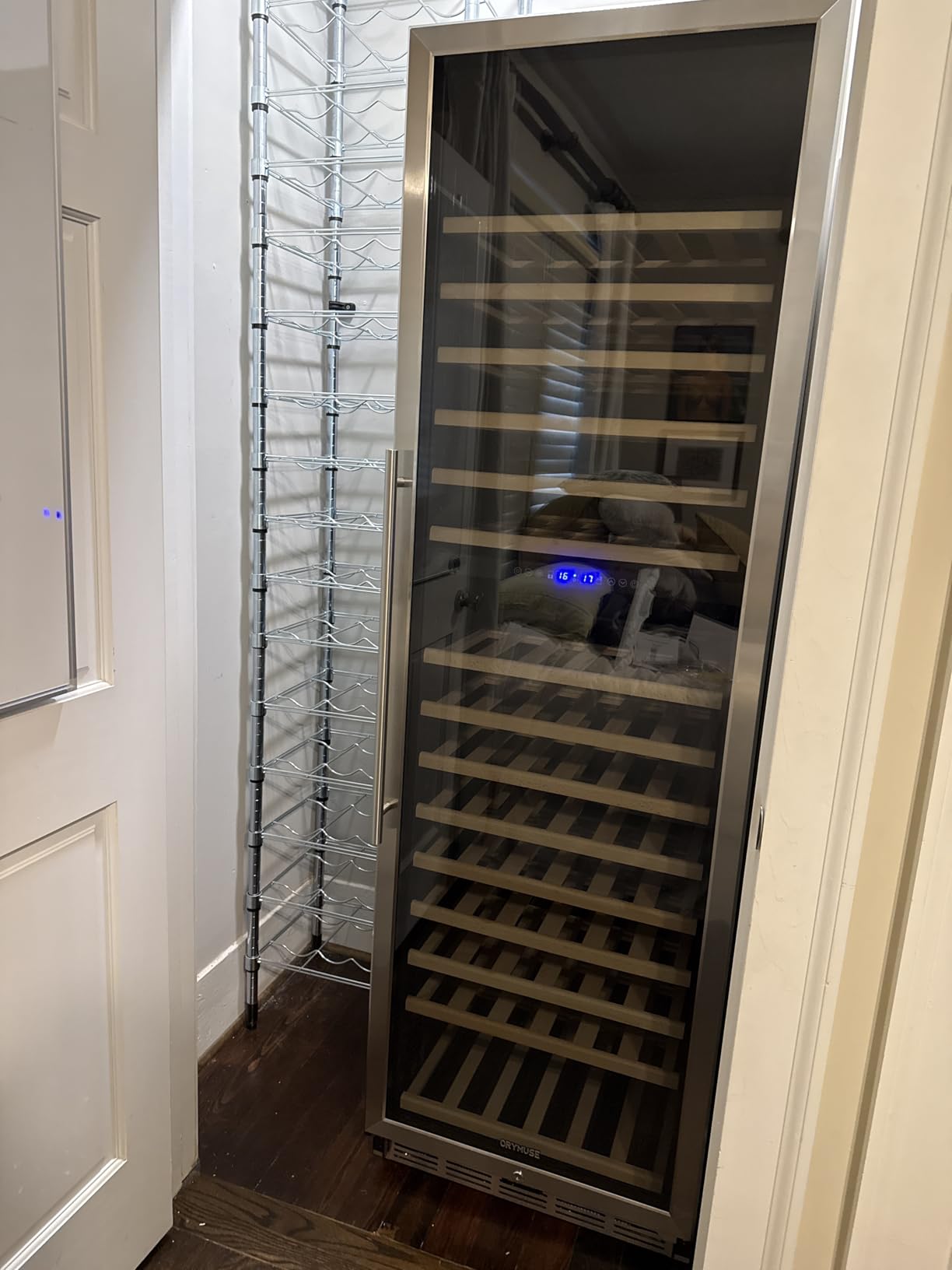
Zone settings split into an upper band of 40-55F and a lower band of 55-65F, which is a sensible division: cellar temperature below, serving temperature above. The power-loss memory restores prior settings, and the compressor is frost-free with fan-assisted air circulation.
Reviewers single out the appearance, quietness and easy setup, with a 4.5 average. Several mention the 24-hour upright settling period before plugging in, which is a shipping and transport reality rather than a defect, but it does affect the day you can actually use the cabinet.
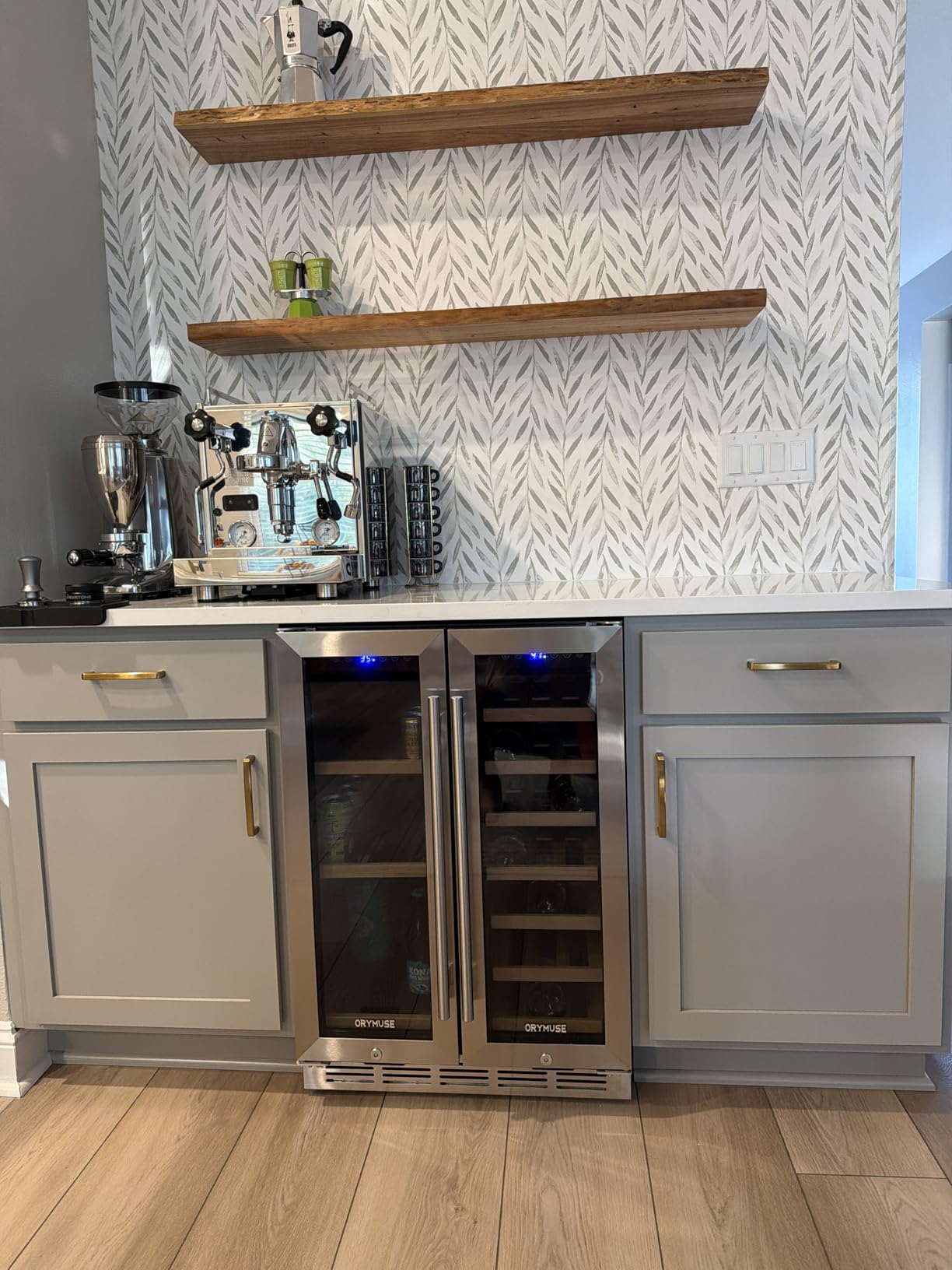
Why it works in an island
Contemporary islands in dark cabinetry and stainless appliances are exactly where this finish reads correctly. A stainless frame with a tempered glass window and a black interior does not fight a modern kitchen the way an all-glass door on a light laminate cabinet can.
Front ventilation means it installs flush, and adjustable feet help when the island base is not plumb. The key lock and touchscreen control are both useful details for a cabinet that is visible from the room.
Where it falls short
The most repeated criticism is the door seal. Owners report the door can spring back open and needs a gentle close, which on a built-in unit sitting flush against a cabinet face is worth confirming in person if you can.
Wire shelf tips can pivot forward when weight is loaded on the front edge, and reviewers consistently describe the build as mid-tier rather than heavy duty. Some also say they would pay more for thermometer-verified precision. This is the model to buy when efficiency and finish matter more than long-horizon durability.
12. Antarctic Star 24 Inch 52-Bottle Cooler – Best for Showing Off a Collection
Antarctic Star 24 Inch Wine Fridge, 52 Bottle Wine Cooler Refrigerator. 39-64°F Dual Zone Wine Refrigerator Glass Door, Built in or Freestanding Under Counter Fridge for Home Bar Office
- Double-layered tempered glass displays the full rack
- Low-vibration compressor lets bottles settle
- Adjustable wood racks hold mixed bottle sizes
- Independent upper 39-50F and lower 50-64F zones
- Runs at 191 kWh per year
- Manual defrost needs periodic attention
- Build and door seal are lighter duty than premium
- Range feels less precise than commercial units
This is the display pick. The double-layered tempered glass window is designed to show the full collection while blocking UV light, and at 23.43 inches wide by 22.52 inches deep by 34.45 inches tall it holds 52 bottles in a five cubic foot cabinet that fits a 24 inch island slot.
Zones are independently controlled with an upper band of 39-50F and a lower band of 50-64F. The low end is colder than most models here, which is the right call for a cabinet you actually want to store in rather than only serve from.
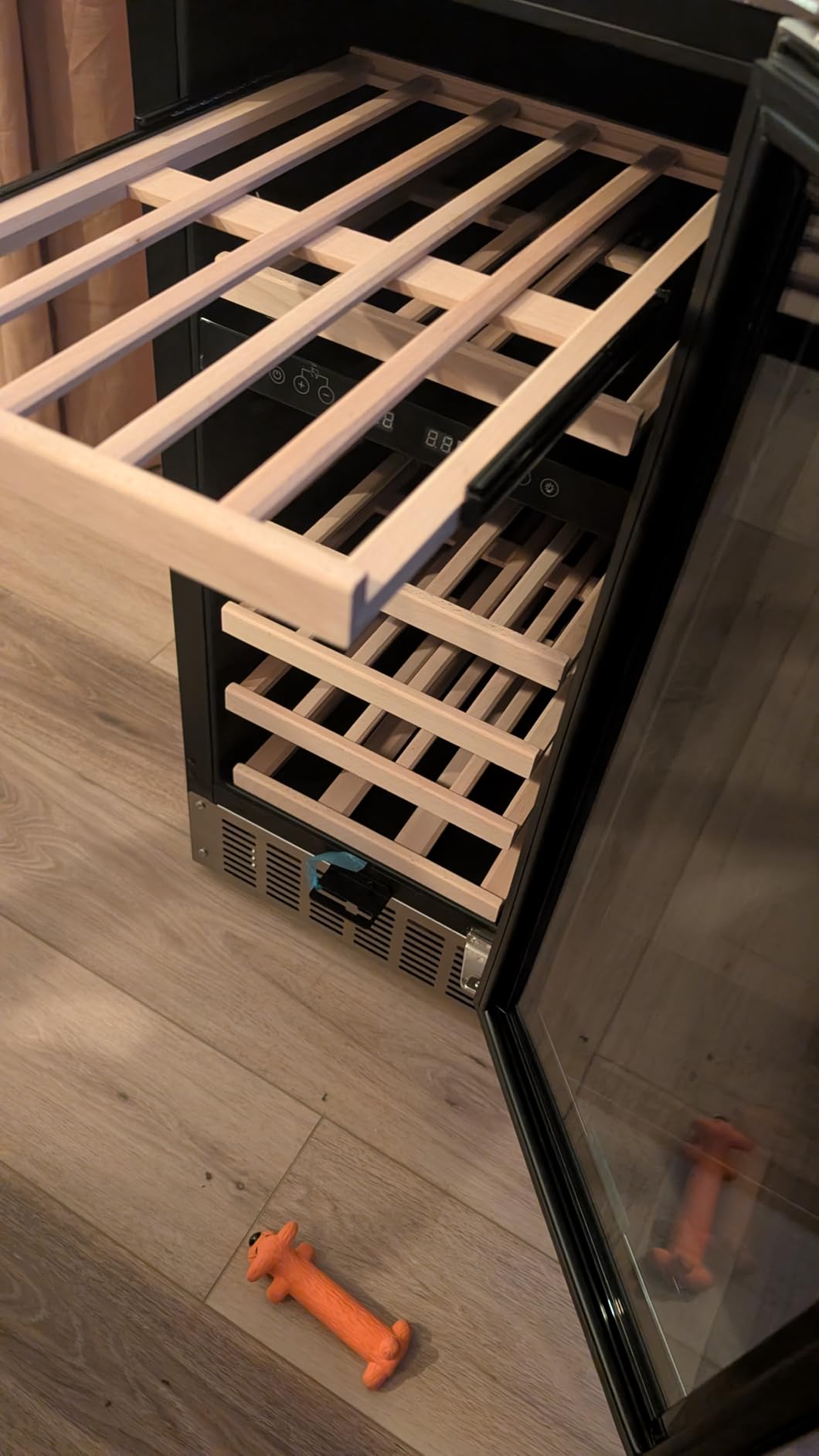
Six adjustable wood racks fit a mix of bottle sizes without removing shelves, and the cooling system pairs fan circulation with a low-vibration compressor. That combination is deliberate: vibration is what keeps sediment suspended and aging wine unsettled, and an island cabinet is exactly where you do not want a rattling appliance.
Blue LED interior lighting and a safety lock finish the package, and roughly 88 percent of ratings are four or five stars. Buyers describe capacity in a compact footprint and the display quality of the glass as the two things that justified the purchase.
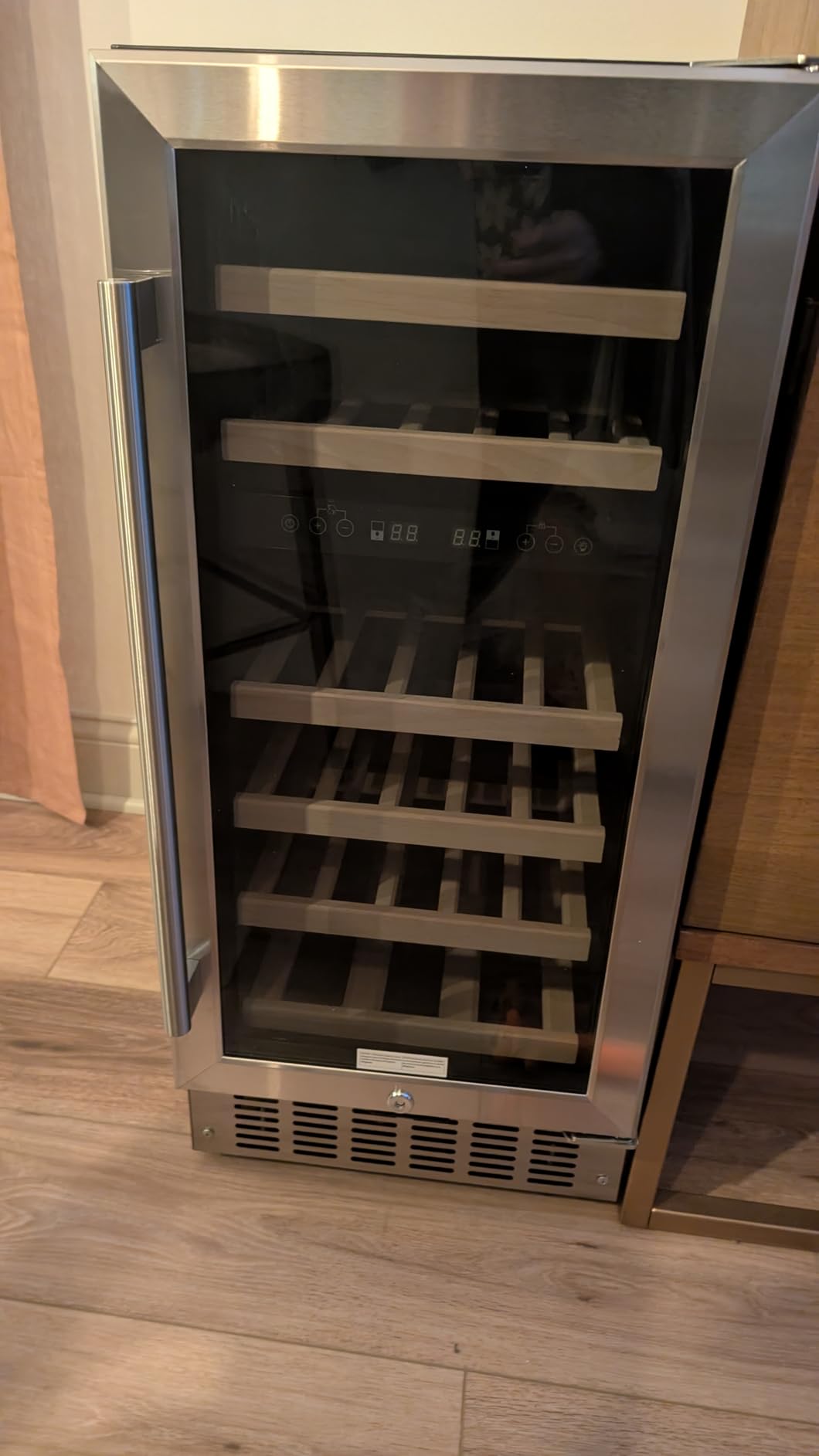
Why it works in an island
An island glass door is a focal point, so the glass has to be good. Double-layered tempered glass that blocks UV while remaining clear is the specification that separates a display cooler from a beverage fridge with a window, and this is one of the few models in the group that specifies it plainly.
At 52 bottles in five cubic feet, a display island can hold a substantial collection without looking empty from across the room. The tight door seal is listed as maintaining steady internal temperature, which matters more in a lit cabinet near a window.
Where it falls short
Manual defrost is a real ongoing task. A cabinet that defrosts itself while you sleep is worth more in a kitchen island than in a basement, and this is the only model here that asks for periodic attention.
Build quality and the door seal are described as lighter duty than premium wine cellars, and the temperature range feels less precise than commercial units to some buyers. With the smallest review base here at 110, we would treat the consensus as encouraging rather than settled.
How to Measure Your Kitchen Island Opening
Measure the opening, not the cabinet face. The number that matters is the cutout width between the cabinet walls, and the appliance is usually specified as a body width that has to be smaller than that cutout. A model listed at 23.42 inches wide needs a cutout wider than 23.42 inches, not equal to it.
Add the handle separately. A door with a protruding handle needs clearance in front of the cabinet face, and on an island with a seating overhang that clearance competes directly with a seated guest’s knees. This is the most common install complaint we found, and it is entirely avoidable at the measuring stage.
Check three more things before you order. The toe-kick height has to clear the unit’s kickplate so air can exhaust into the cavity, the counter clearance above has to exceed the appliance height with room for the hinge and the door swing, and the depth behind the cabinet has to be clear of plumbing, a gas line, or a post.
If you are still designing the island, our pendant light guide for kitchen islands covers the lighting above the counter, which is worth planning at the same time as the appliance slot so the cabinet layout is not compromised later.
Built-In vs Freestanding in a Kitchen Island
A freestanding unit needs rear clearance. It exhausts heat out the back and sides, so it needs two to three inches of space behind it and cannot sit flush against a cabinet wall. In an island, that either pushes the appliance forward into your walkway or forces a cabinet to be built with a phantom recess behind it.
A built-in, front-vented unit solves this. It breathes out the front into the toe-kick cavity, which is the same path a dishwasher or a trash compactor uses, and the body drops into the cabinet so the door face sits nearly flush. Every model in this roundup except the freestanding-listed ones is designed around that geometry.
Yes, you can put a freestanding wine cooler under a counter, and people do it every day. The risk is thermal. Boxed in with no rear ventilation, a rear-vented compressor runs hotter, works harder, and eventually drifts off its set point. That is precisely the thermostat drift owners report after a year or two of use.
Look for the words front vent, front ventilation, or front-breathing in the installation type. If a listing only says under counter without naming the vent path, ask before the cabinet face goes on. It is the one question that cannot be fixed after installation.
Door vs Drawer Format for an Island
Drawer format is the answer when a door cannot swing. On an island with a seating overhang, a hinged door opens into a seated guest or blocks the walkway. Drawers pull straight out, which means the entire face can be opened into clear floor space with no swing arc at all.
There is a real cost. Drawers need deeper cabinets, and half-extension slides mean you often cannot see the back row of bottles. For a 24 inch island cabinet the trade is often a shallower cavity and fewer bottles in exchange for a face you can actually use while people are sitting at the counter.
For a door-format unit, the decision is hinge side. A fixed hinge cannot be reversed after the cabinet face is on, so decide whether the door opens toward the end of the island or away from the seating before the panels are cut. Reversible hinges are worth paying for if the layout is still in flux.
Single Zone vs Dual Zone for Entertaining
A single zone has to serve the whole cabinet at one temperature, and that is a compromise at any setting. Set it for reds and your whites arrive too warm. Set it for whites and your reds are flat.
Dual zone splits the cabinet into two independently controlled compartments. A dinner can run a wine zone at 55-60F and a beverage or white zone at 45-50F at the same time, which is the entire reason dual-zone models exist. The models above run ranges like 41-64F, 40-65F, or a fixed upper 39-50F and lower 50-64F split.
There is a convention worth following when you set them. Many manufacturers advise running the lower zone at or warmer than the upper zone, because cold dense air settles and a colder lower compartment can pull the whole cabinet down. Getting that backwards is a frequent reason owners think their dual zone is malfunctioning.
Compressor vs Thermoelectric: Why Warm Kitchens Need Compressors
A thermoelectric unit pumps heat out of the cabinet with a Peltier plate, and it only manages roughly 15-20F below ambient. In a 72F kitchen that ceiling is about 57F, which is too warm to hold white wine properly and useless for anything you want to keep.
A compressor uses a refrigerant loop, which is why it can pull a cabinet into the low 40s regardless of room temperature. It costs more to run and it is a moving part, but in an open plan kitchen beside a range, a compressor is the only realistic choice.
Every model in this roundup is compressor cooled. That is deliberate. We did not include a thermoelectric unit because the island use case is exactly the one where it fails, and reviewers of compact thermoelectric boxes describe them as fine in a bedroom closet and wrong in a working kitchen.
Matching Your Cabinetry: Glass, Stainless, and Panel-Ready
Glass displays the collection and makes the island a focal point. It shows fingerprints, it needs cleaning, and it needs a UV-filtered pane to be worth having in a lit kitchen. Owners who want to display generally accept the upkeep.
Stainless trim blends into mixed-metal kitchens and hides smudges better than glass, but the classic complaint is a stainless-framed glass door sitting in front of dark cabinetry and reading as an appliance bolted onto wood. If your island cabinetry is dark wood, a solid stainless door like the Velivi above blends more honestly.
Panel-ready is the answer when you want the appliance to disappear. A panel-ready unit ships with a frame designed to accept a cabinet panel so the wine cooler face matches the surrounding doors exactly. The trade is sourcing: panel-ready models sit outside big-box retail, so plan for a specialty appliance dealer and a longer specification lead time.
Before you commit to a panel, pull the same veneer or paint sample used on the island doors. Integrated appliances that were matched from a showroom photograph are the ones that visibly do not blend once installed.
Kitchen Island Wine Cooler Installation Checklist
- Measure the cutout width, depth and height. Body dimensions are not cutout dimensions. Allow clearance on every side and confirm the counter clearance above.
- Confirm the vent path is front-breathing. If the listing does not name front venting, do not assume it. Rear-vented units boxed into an island run hot.
- Plan the electrical outlet inside the island cabinet. A 115 volt standard outlet inside the base, not on the wall behind a finished panel, avoids a retrofit later.
- Check whether a dedicated circuit is needed. Share an island circuit with a dishwasher, microwave or outlets only within the load limits for the circuit.
- Walk the delivery path. A 90 pound appliance in an island may need a door removed, a corner protected, and a second person. Measure turns and stair clearance first.
- Remove the old appliance before the new one arrives. A trash compactor or warming drawer in that slot should be disconnected and removed in advance.
- Test before closing up. Plug in, confirm both zones reach set point, listen for noise, and only then install the toe-kick and cabinet face.
On point six, owners replacing a trash compactor slot tell us this is the step most often left too late. The island face, toe-kick and countertop are all finished surfaces, and cutting a new appliance opening after those are in place is the expensive version of the job.
Frequently Asked Questions
What is the best wine cooler for a kitchen island?
The Velieta 24 Inch Wine and Beverage Refrigerator is our top pick. It is front-vented for built-in or freestanding installation, runs on a compressor with two independent zones, and holds 20 bottles plus 88 cans at a 24.4 inch width that fits a standard 24 inch island cabinet.
Can you put a freestanding wine cooler under a counter?
You can, but a rear-vented freestanding unit boxed into island cabinetry has nowhere to exhaust. It runs hotter, works harder, and often drifts off its set point within a year or two. A front-vented built-in model breathes into the toe-kick cavity and is the correct choice for an island.
What size wine cooler fits a kitchen island?
Most island cabinets have a 15 inch or 24 inch appliance opening. Measure the cutout between cabinet walls, not the cabinet face, and allow extra clearance for the handle and door swing. A 15 inch opening suits slim models such as the Tylza 30-bottle, while a 24 inch opening suits dual-zone units above 40 bottles.
Are built-in wine racks outdated?
A built-in wooden wine rack is outdated for a kitchen island, mainly because a cellar rack does nothing about temperature control. A glass, stainless or panel-ready front keeps the collection visible while a compressor holds a stable serving temperature, which is what most households actually want from an island cabinet.
What are common problems with wine coolers?
The most reported issues are thermostat drift after extended use, condensation forming on the glass, uneven cooling between shelves, and fans that become noisy. Rear-vented units installed in cabinets overheat, and advertised bottle capacity is often based on standard Bordeaux bottles, so Champagne and Pinot collections fit fewer slots than stated.
Do wine coolers need a dedicated electrical circuit?
Most under-counter units run on standard 115 volt power and do not require a dedicated circuit, but they should not share a circuit with high-draw appliances such as a microwave or dishwasher. Outlet placement inside the island cabinet should be planned before the cabinet face goes on.
Final Verdict for 2026
The best wine coolers for kitchen islands in 2026 are the front-vented compressor units we ranked above, and the choice comes down to your cabinet width. A 15 inch opening points to the Tylza 30-bottle or the Ca’Lefort 33-bottle. A 24 inch opening points to the Velieta, the Tylza dual zone, or the Yeego if your collection has outgrown 30 bottles.
Whichever you pick, front venting and compressor cooling are not optional features in a kitchen island. Get those two right and the install reads as cabinetry. If you are still comparing wine storage more broadly, our general wine cooler guide covers freestanding and cellar-style options, and the commercial wine cooler guide covers higher-capacity units for serious collections.
Measure the cutout, confirm the vent path, and check the door swing against your seating before the cabinet face goes on. Those three checks prevent almost every problem we found in the reviews.