
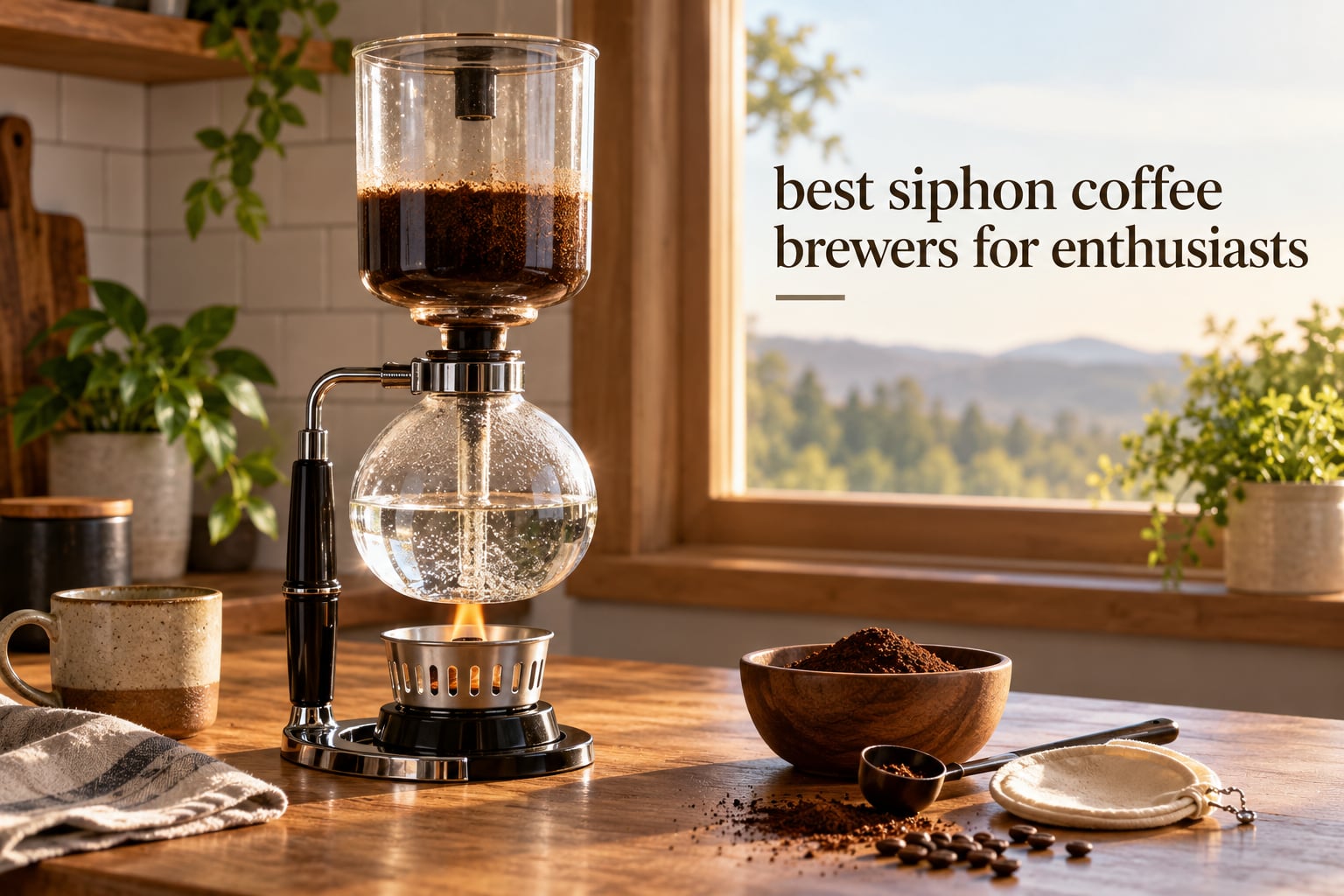
Yes, siphon coffee makers make genuinely good coffee, and the reason is physical rather than marketing. A two-chamber vacuum brewer submerges every gram of coffee in water held near 200°F, then pulls the finished coffee back down through a filter, so you get full immersion extraction and a cup that is clean, tea-like and free of sediment. The catch is speed: this is a slow, hands-on method that rewards a patient morning rather than a rushed one.
That is the whole argument for and against this brewer, and it is why the best siphon coffee brewers for enthusiasts in 2026 are a small, specific category. Every model here uses the same physics, so the differences come down to heat source, capacity, glass quality and how much cleanup you tolerate. I compared eight of them, read through more than 5,400 owner reviews between them, and looked hard at the complaints that show up again and again, because on this category the cons matter more than the specs.
A note on the word itself: you will see these called siphons, syphons, vacuum coffee makers and glass makers. They are the same object. Hario and Yama Glass use the older “syphon” spelling in their marketing, and plenty of buyers search for it that way, so both spellings appear throughout this guide.
Before the individual picks, one practical thought. If your kitchen is being reorganised this year, it is worth deciding where the brewer lives before you buy. A siphon needs a clear patch of counter for the stand and the burner’s fuel, and it works best somewhere you can watch it. Our guides to coffee stations and coffee bar cabinets cover the storage side, and the right brew gear only helps if it has a home.
Our Top 3 Siphon Coffee Brewers for 2026

Hario Technica Syphon 600ml
- Borosilicate glass chambers
- Stainless steel stand and filter
- 5 cup 600ml capacity
- Imported from Japan
Yama Glass 8-Cup Stovetop Siphon
- Works on gas and electric stovetops
- Hand-blown borosilicate glass
- Reusable cloth filter included
- 8 cup 24oz class

Bodum PEBO Vacuum Coffee Maker
- 1000ml eight cup capacity
- High heat borosilicate glass
- No power cord needed
- Also brews loose leaf tea
All 8 Siphon Coffee Brewers at a Glance in 2026
| Product | Specifications | Action |
|---|---|---|
| Hario Technica Coffee Syphon 600ml |
|
Check Latest Price |
| Bodum PEBO Vacuum Coffee Maker 34oz |
|
Check Latest Price |
| Yama Glass 8-Cup Stovetop Siphon |
|
Check Latest Price |
 Hario 3-Cup Coffee Siphon Moca Hario 3-Cup Coffee Siphon Moca |
|
Check Latest Price |
 Diguo Belgian Balance Syphon Rose Gold Diguo Belgian Balance Syphon Rose Gold |
|
Check Latest Price |
 Hario NEXT Coffee Syphon 600ml Hario NEXT Coffee Syphon 600ml |
|
Check Latest Price |
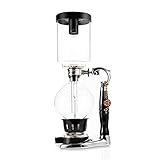 Yama Glass 5 Cup Tabletop Siphon Yama Glass 5 Cup Tabletop Siphon |
|
Check Latest Price |
 Nispira Belgian Balance Syphon Copper Nispira Belgian Balance Syphon Copper |
|
Check Latest Price |
How a Siphon Coffee Brewer Actually Works
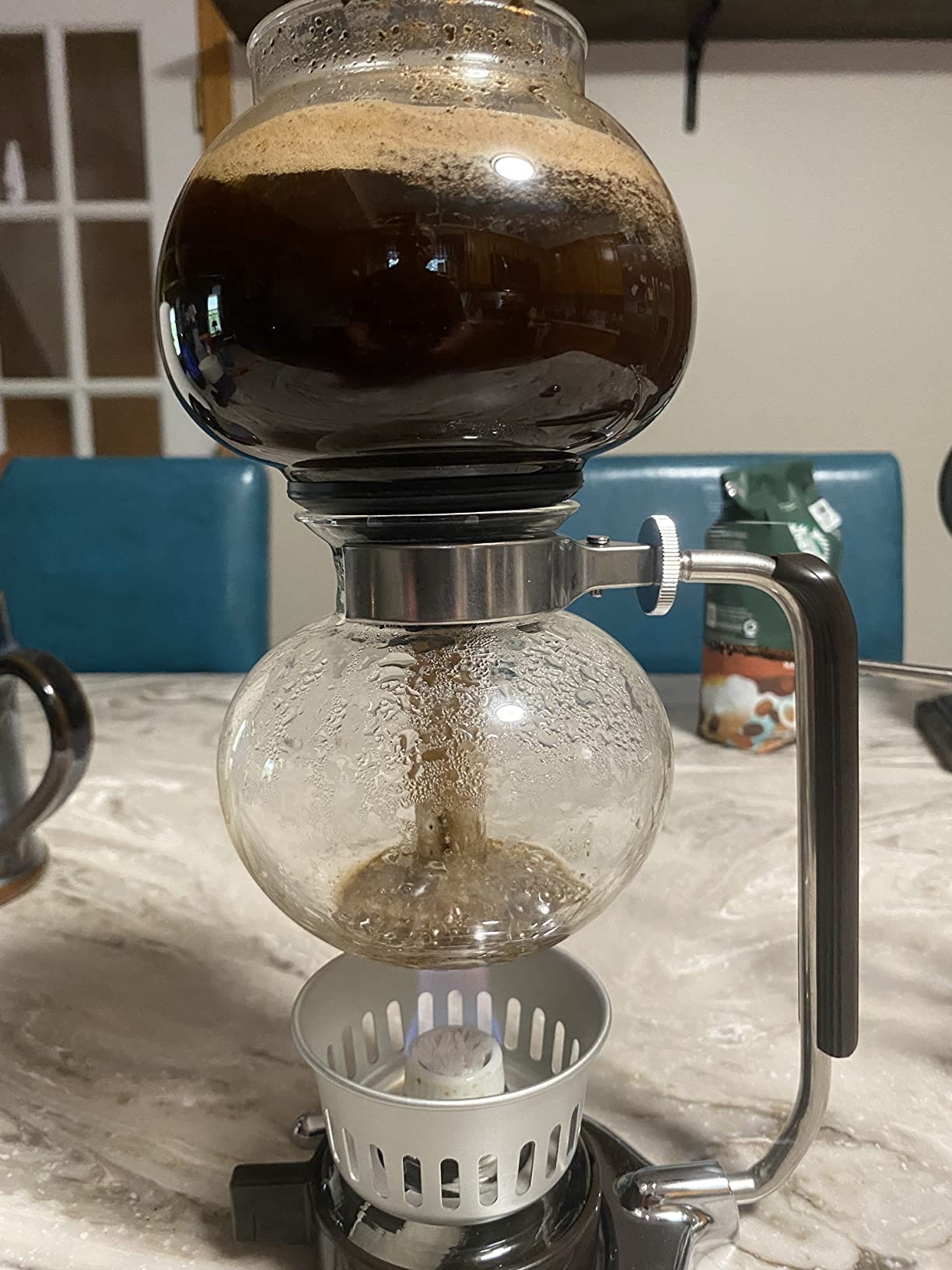
The mechanism is simple enough to explain in a minute and strange enough that most people never fully believe it. A siphon brewer is two glass chambers joined by a tube. The lower chamber holds plain hot water, the upper chamber holds ground coffee, and heat is applied from below.
As the lower water heats, the steam and expanding air inside push water up the tube and into the upper chamber, carrying the water over the grounds. This rising stage is the part everyone watches. It is not boiling the brewing water. What you see bubbling is air and vapour expanding out of the lower chamber, which is why the water arrives in the top globe at roughly 200°F rather than at a rolling boil.
Then you remove the heat. The lower chamber cools, the pressure inside drops, and a partial vacuum forms. Atmospheric pressure outside pushes the brewed coffee back down through the filter into the lower chamber. That is the draw-down, and it is where the separation happens: water passes through the cloth or mesh filter, oils and fines stay behind, and what lands in the bottom globe is a clear, sediment-free cup.
That gives you a cup with a very specific profile. It tastes cleaner and lighter than French press coffee, with less body and no grit, but the flavour is more evenly extracted than most pour-over because every ground is immersed for the same two to three minutes. Reviews frequently describe sparkling acidity and a cup that finishes without the bitterness a metal immersion pot can leave behind.
Is siphon coffee better than pour over? It depends on what you are optimising for. Pour-over gives you more control, slightly more clarity and far less fuss. A siphon gives you more even extraction, a wider contact window without over-extraction risk, and a cleaner body than a press. If your objection to coffee is bitterness or sediment, the siphon answers that directly. If your objection is a ten-minute process before breakfast, it does not.
One last piece of context, because it explains why this design survived at all. Vacuum brewers were mass-produced as early as the 1910s, mostly as kitchen showpieces, and for decades the electric percolator simply outpaced them on convenience. The siphon came back when specialty coffee people started looking for a home brewer with immersion extraction and controlled heat. Specialty shops kept them long after faster machines existed, largely because watching one work is genuinely entertaining.
1. Hario Technica Coffee Syphon 600ml – Best Overall
- Exceptionally clean cup with no sediment
- Japanese borosilicate glass with stainless steel hardware
- Theatrical ritual that doubles as a showpiece
- Straightforward disassembly when you use the handle
- Delicate glass that needs careful handling
- Small alcohol burner heats slowly from cold
- Cloth filter needs soaking and upkeep
- Roughly 8-10 minutes from start to cup
The Technica is the one I would hand to most people buying their first siphon, and it also happens to be the model with the deepest owner base in this roundup. Just under 1,400 ratings at a 4.7 average tells you something a spec sheet cannot: this thing has been brewed on thousands of counters without anybody declaring it a gimmick.
Owners describe the same cup repeatedly, and it is consistent enough to trust. Clean, smooth, no grit in the bottom of the mug, and a sweetness that survives even when the brew is slightly over-extracted. Several reviewers note that it holds its own against a moka pot and never produces the scorched note you get when a burner is pushed too hard.
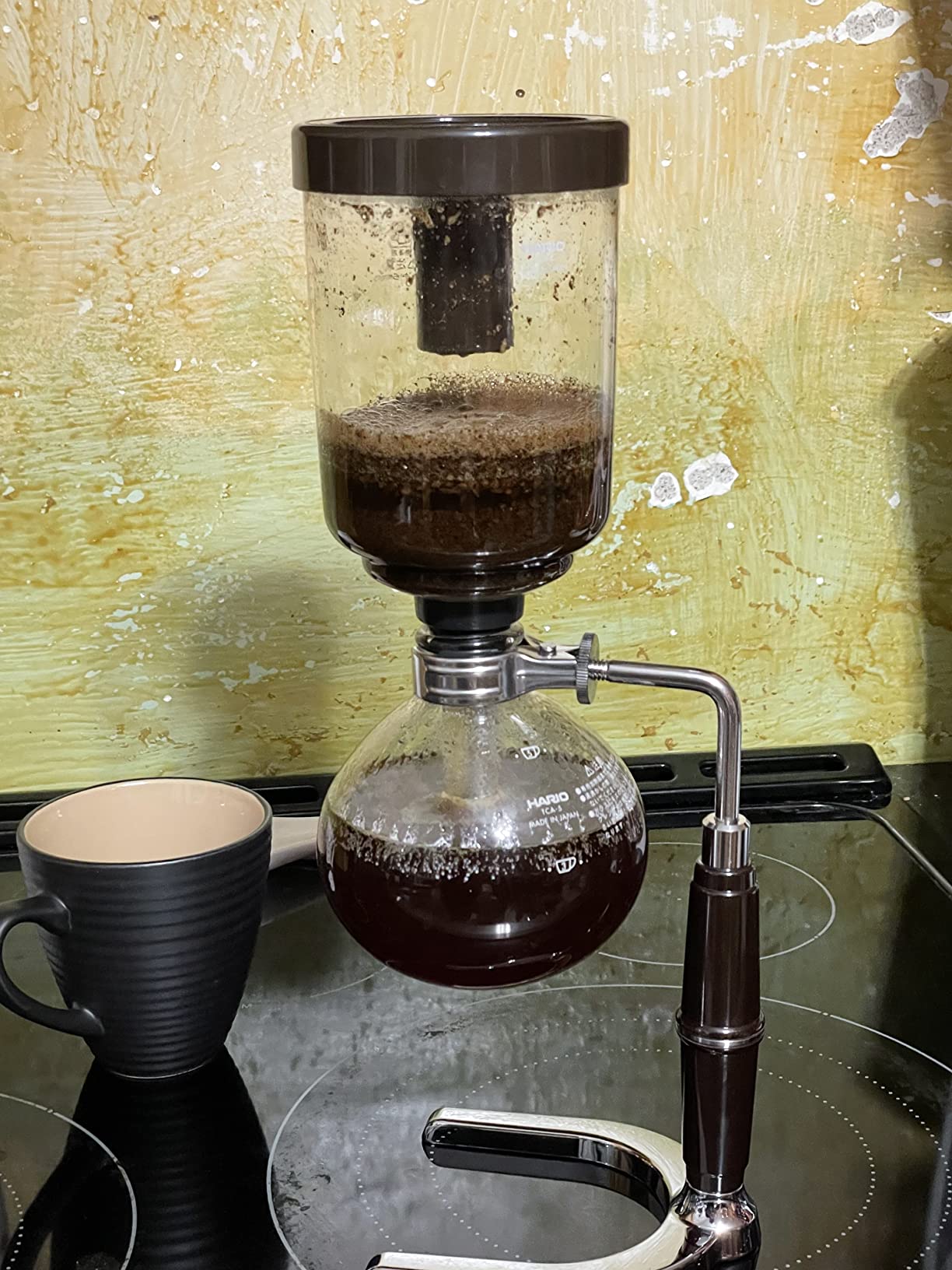
The hardware is where Hario spends its money. The upper bowl, lower bowl and burner cover are all heat-resistant borosilicate glass made in Japan, and the stand, burner cover and filter are stainless steel with brass fasteners. At 1.5 pounds it is light in the hand for something made of glass, which is a real handling advantage when you are pulling the lower chamber off the stand.
Two honest warnings. The included burner is a small alcohol lamp, and from a cold start it takes several minutes to get going, so most owners pre-boil water in a kettle and pour that into the lower chamber instead. And the reality of the 5-cup label is closer to two full mugs. Nobody complains about the shortfall, but nobody should buy it expecting a carafe.
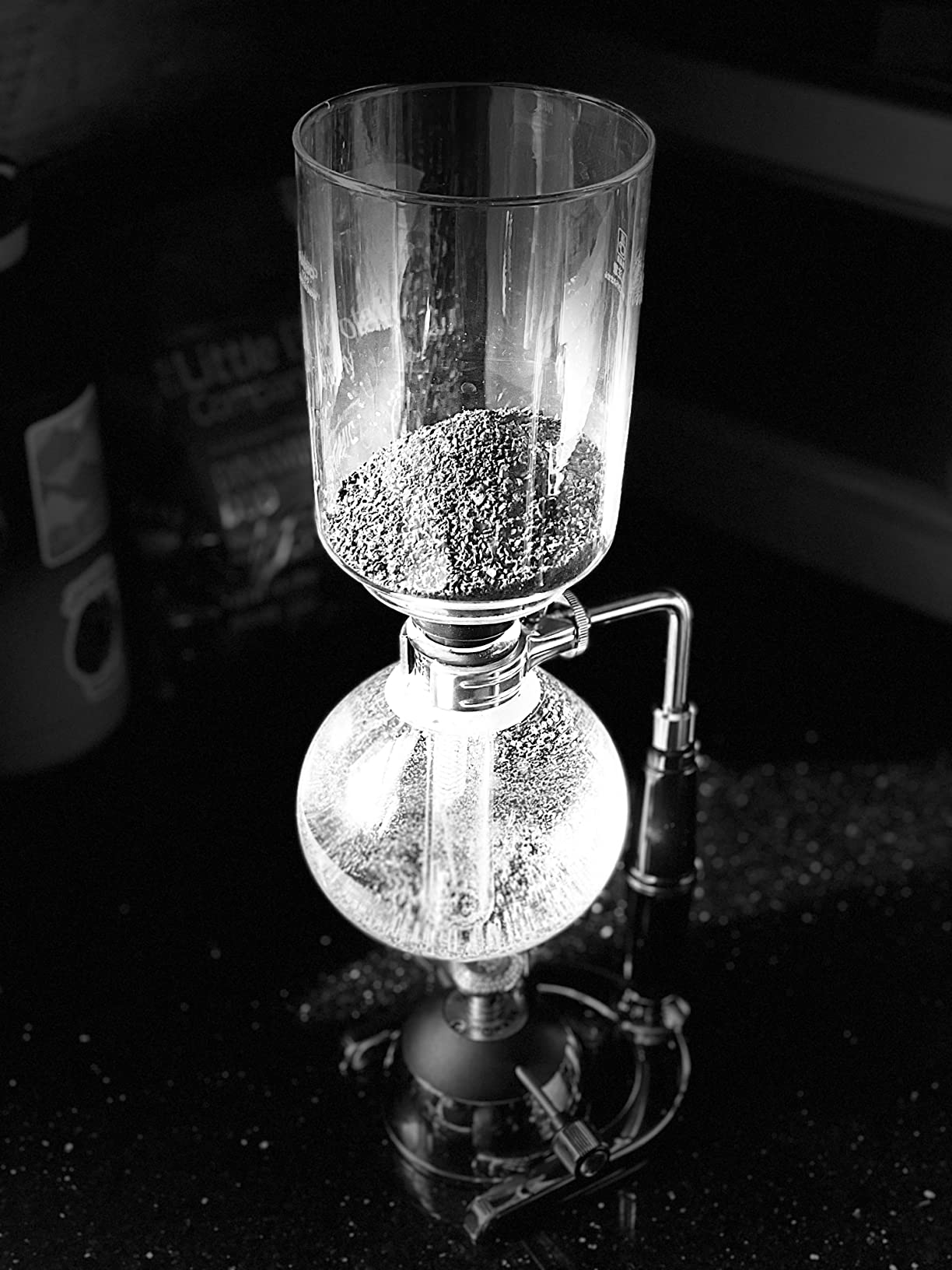
What the Technica gets right that cheaper siphons do not
Glass thickness and metal quality. Japanese borosilicate of this grade survives the thermal cycle far better than the thinner glass used in the decorative models in this roundup, and the stainless steel frame means the parts that get gripped and twisted are not the parts that crack first. If you have broken a cheap siphon before, that is the difference that matters.
The other quiet advantage is repairability. The stand, the filter and the burner are all separable pieces, so when a cloth filter wears out you replace the filter, not the brewer. Long-time owners describe buying a second Technica as a spare for guests or for periods when the main unit is being cleaned.
Where the Technica falls short
The 8-10 minute cycle is the honest limitation. That includes pre-heating, the rise, a 60-90 second steep, and the draw-down. On a weekend morning with music playing, that is the point. At 6:40 on a workday, it is a hard sell, and reviewers make no attempt to pretend otherwise.
The cloth filter also takes real maintenance. It needs soaking after each use, it discolours permanently over time, and replacement filters are a recurring consumable. Owners who dislike that step usually switch to a permanent metal filter, which changes the cup very slightly but removes the maintenance entirely.
2. Bodum PEBO Vacuum Coffee Maker 34oz – Best for Large Batches
Bodum 34 oz Pebo Vacuum Coffee Maker, High Heat Borosilicate Glass, Black
- Clean strong cup with low bitterness
- No fuel or electricity required
- Retro design works as a display piece
- Can also brew loose leaf tea
- Borosilicate is fragile and some globes crack
- Replacement glass is not warranty covered
- Included plastic filter is weak
- Cups cool fast because the pot holds no heat
The PEBO is the odd one out in this roundup on capacity. Every other brewer here is a 3-cup to 5-cup affair that realistically yields one to three mugs, and the PEBO is rated at 1000ml and eight 4oz cups. If you brew for other people, that is not a small difference, and it is the reason this model has the largest review count in the group at 1,439 ratings.
The coffee itself gets praise more often than the hardware does. Owners talk about a clean, strong cup with very little bitterness, and a surprising number of reviewers say they prefer it to their electric drip machine once they stopped comparing it to drip. The two sealed glass bowls also hold aroma in a way that most brewers do not, and the vacuum brewing cycle runs 5 to 11 minutes depending on how much water you load.
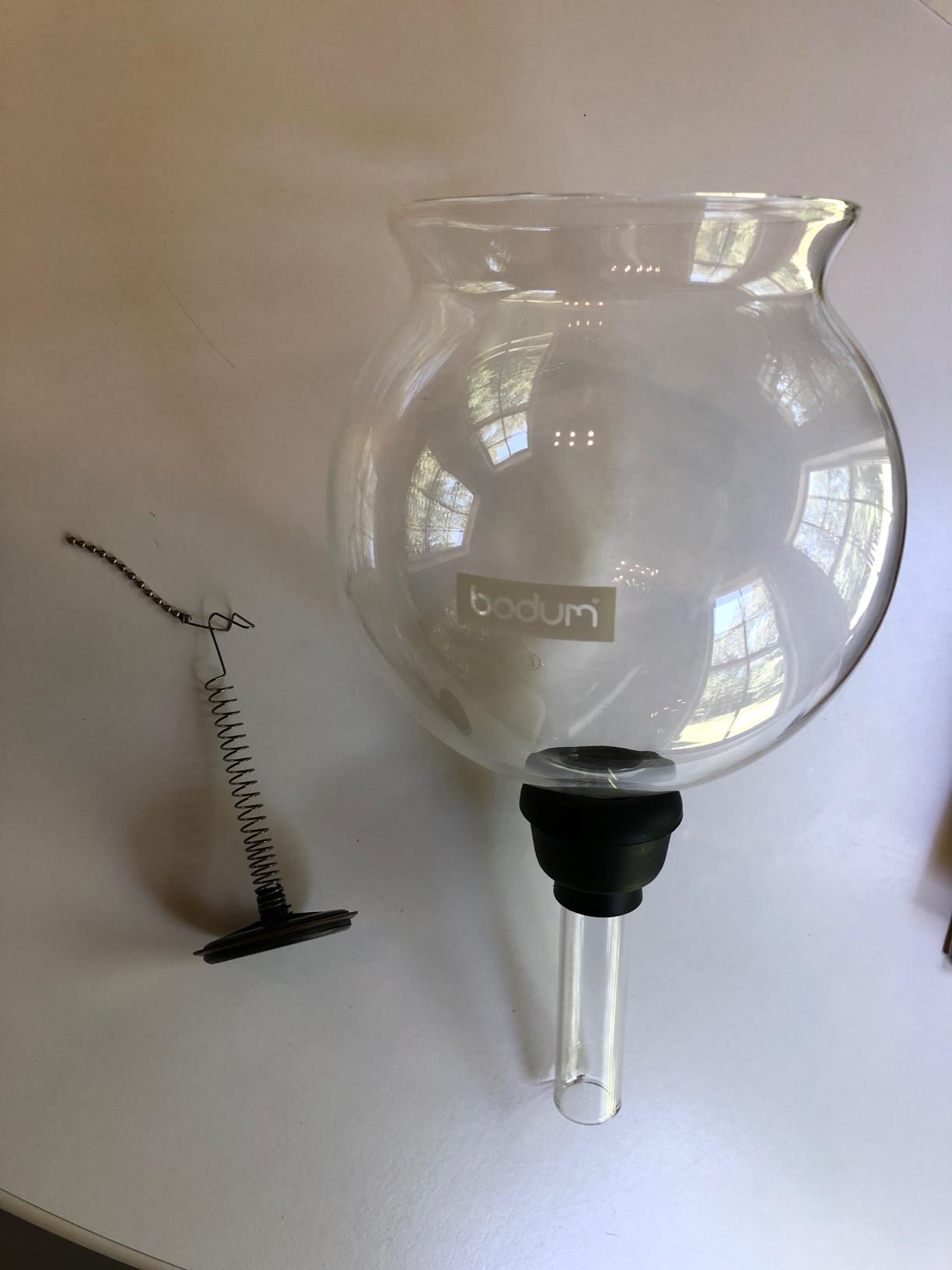
It also works on a gas or electric stovetop with no power cord and no fuel, which makes it the easiest of the eight to forget about between uses. And because it is a sealed vessel rather than a burner setup, the same procedure brews loose leaf tea. That dual use is mentioned often enough by owners to be worth considering if you are buying one appliance rather than two.
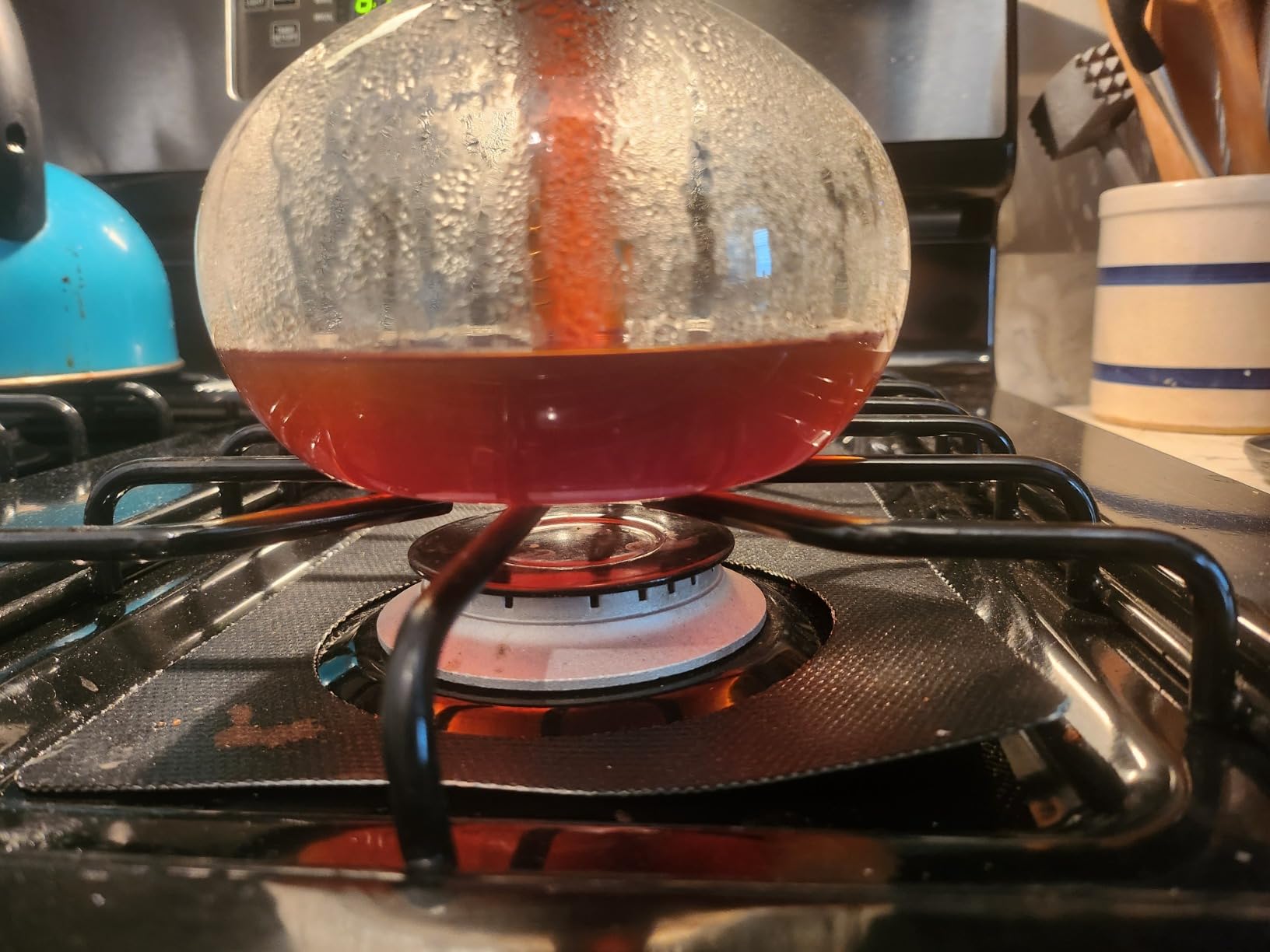
Now the durability problem, which is the single most repeated complaint about this brewer. A number of reviews describe a globe cracking after limited use, and the recurring frustration is that replacement glass is not covered by the manufacturer’s warranty. The risk is thermal shock: set hot glass on a cold or wet surface, or walk away from a burner running too hot, and borosilicate can go from fine to shattered in a second.
Who should buy the PEBO
If you are hosting, brewing for a partner, or making coffee for a whole morning at once, the PEBO is the only one here that genuinely delivers on its cup count. The 1000ml lower chamber fills without the cramped, steam-happy behaviour you get in a 5-cup globe, and the full-immersion extraction stays consistent across the whole batch.
It is also the brewer to pick if you want a vacuum pot that looks like a piece of design. The black high-heat glass and the two-bowl silhouette have real shelf presence, and a surprising number of reviews describe it as a countertop object first and a coffee maker second.
Who should look elsewhere
Anyone who has broken glass before. The reviews are candid about spontaneous cracking, and the warranty does not help you. If durability is your top concern, a model with a stainless steel frame around the vulnerable sections is a calmer choice.
The included filter is the other weak point. It is plastic, and a large share of reviewers replace it with a metal and cloth filter from a siphon specialist, or at minimum accept that it is the least good part of an otherwise capable brewer. Cleaning the downtube also adds a real step that cheaper glass models skip.
3. Yama Glass 8-Cup Stovetop Siphon – Best Value
Yama Glass 8-Cup Stovetop Siphon Coffee Maker, 24 Oz Vacuum Brew, Heat-Resistant Borosilicate Glass
- Bold buttery sediment-free cup
- Gas and electric stovetop compatible
- Borosilicate has held up over long ownership
- Works with cloth paper or metal filters
- Slower than a drip machine and needs heat supervision
- Cleaning the downtube is fiddly
- Glass stem and globe are easy to damage
- Marked cup count is optimistic
Yama Glass builds the only stovetop siphons in this group that hold their own on both gas and electric rangetops, and the 8-cup version is the one enthusiast forums recommend most often for everyday use. The 4.6 rating across 1,074 reviews sits with the Hario at the top of this list, and the flavour descriptions are the most enthusiastic of any stovetop model we looked at.
Several owners go further and rank the finished cup above their own French press or espresso output, which is a bold claim until you read what they actually do: cold filtered water, low heat, a one to two minute steep once the water rises, and then they let the vacuum finish on its own without touching anything. Done that way, the result is full-bodied and buttery with no sediment at all, and the draw-down does most of the filtering work for you.
Two practical points put this ahead of most of its competitors. It works on a gas or electric stovetop, so there is no fuel to buy and nothing to refill, and the components are dishwasher-friendly, which removes the single most tedious part of siphon ownership. The chambers are hand-blown heat-resistant borosilicate, and long-term owners with several units report no cracking at all.
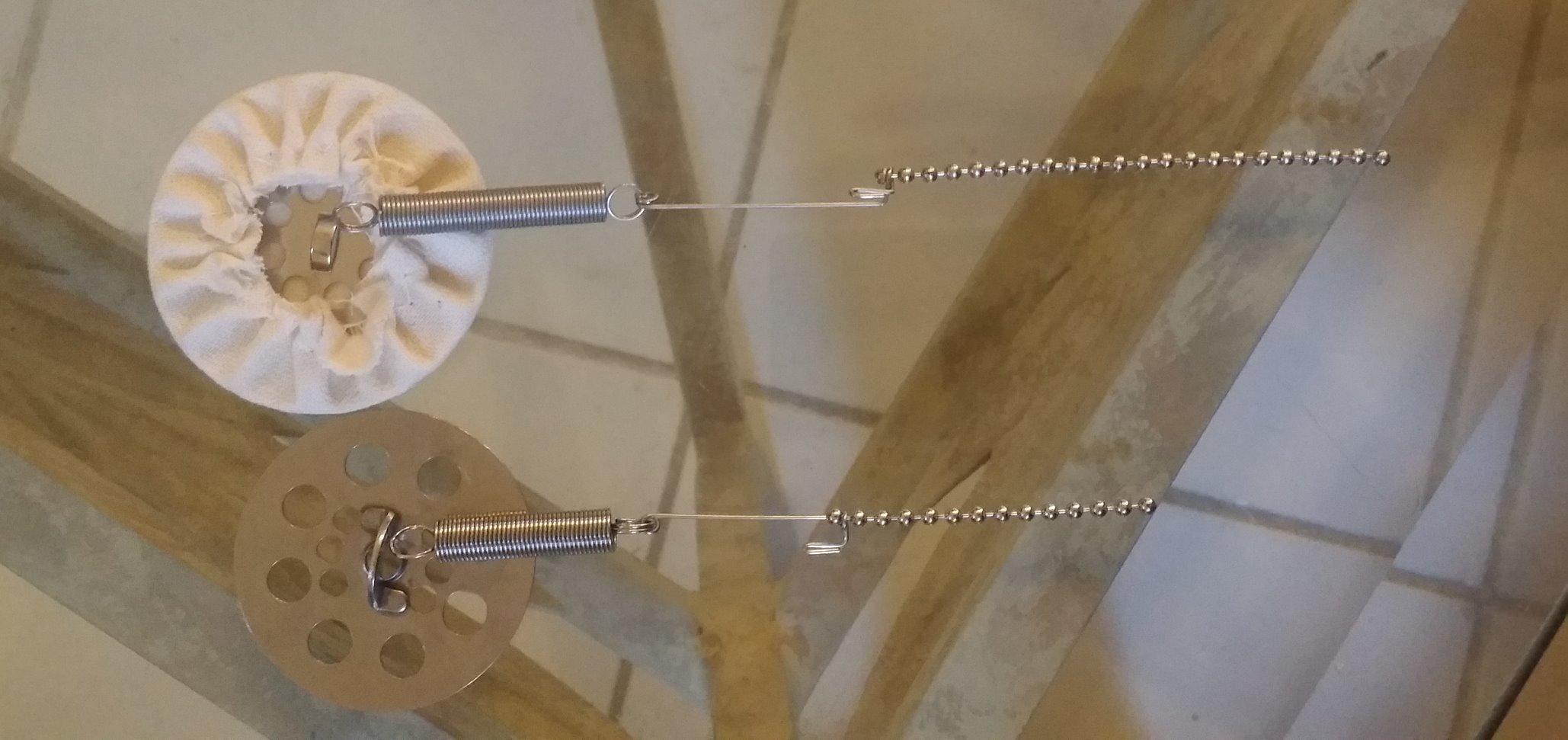
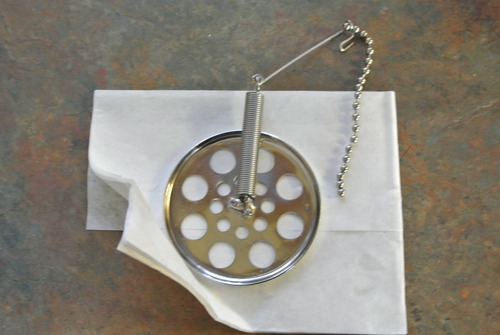
It is also the most flexible of the eight about filters. Reviewers run it with the supplied cloth filter, with paper, and with a reusable metal or Cory rod rig depending on what cup they want that morning. That flexibility matters more than it sounds, because a cloth filter and a metal filter produce noticeably different bodies.
Why this is the value pick
You are paying for capacity and stovetop convenience at the lower end of the siphon price range, and nothing in the specification is filler. Hand-blown borosilicate, two heat sources, dishwasher-friendly parts and a reusable filter are exactly what the more expensive decorative models charge for while adding a fuel dependency.
It is also the model most often bought as a gift, which is a decent signal for build quality. People who receive it frequently buy a second one for themselves.
Where it frustrates owners
Heat supervision. A stovetop siphon cannot regulate itself, and leaving the pot on too high or boiling the lower chamber dry is the fast route to cracked glass. The most common piece of advice across reviews is the same: low heat, start with cold filtered water, and stay with it.
Cleaning is the other friction. The downtube needs a bottle brush or a twisted towel, and the narrow mouth of the lower pot is hard to reach. The lid doubles as the stand, and reviewers regularly wish it were a more weighted, separate piece. And the marked 8-cup capacity yields closer to five 8oz cups in practice.
4. Hario 3-Cup Coffee Siphon Moca – Best for Small Batches
- Fruity clean cup with fine grinding
- Good build quality and attractive design
- Paper filters make cleanup easy
- The brewing process is enjoyable
- Alcohol lamp heats slowly from cold
- Instructions ship in Japanese only
- Only makes about three small cups
- More novelty than daily necessity
The Moca is the smallest serious brewer in this roundup at 360ml, and it is the right answer for one person who wants a siphon ritual without a stovetop and without a pot that takes up a third of the counter. The 4.4 rating across 625 reviews is not the highest here, but the feedback is unusually specific about what this size is good at.
Used properly, with a fine grind and roughly a minute of contact time, reviewers describe a fruity, clean cup. The small chamber means the water reaches brewing temperature quickly and comes down fast once the heat is removed, so the whole cycle is short. The top and bottom balls are heat-resistant glass, the filter set is stainless steel, and the stand is iron, zinc alloy and polypropylene with brass screws. It is made in Japan.
The accessory list is unusually generous for this category. The alcohol lamp, a lightweight spoon and 50 paper filters are all in the box, and the paper filters are the reason cleanup is simpler here than on the cloth-filter models. You rinse, you bin the filter, you wash two glass balls. That is a genuinely different ownership experience.
The design is also the most photogenic of the small brewers, which is not a small part of why people keep it on the counter. If you are setting up a brewing corner, our picks for oversized coffee mugs pair naturally with a brewer this size, because the output is genuinely one mug rather than a small carafe.
What works about the small format
A 360ml lower chamber heats in a fraction of the time a 600ml one needs, and the draw-down finishes quickly. For a single cup that is the difference between a five-minute ritual and a ten-minute one, and it makes the Moca far more usable on a weekday morning than the larger burners in this roundup.
The stainless filter set and Japanese glass also age better than the plastic parts on some budget brewers. It is a small object with real hardware, not a novelty glass toy.
What does not work
Three things come up consistently. The alcohol lamp is slow from a cold start, so pre-heated water matters here too. The shipped instructions are in Japanese, which slows first-time setup for anyone who cannot read them. And three cups is three cups, so a second drink means a second full cycle.
Several owners also say plainly that at this level of investment, a siphon is a weekend pleasure rather than an everyday brewer. That is a fair characterisation, and it is the same tension that runs through this whole category.
5. Diguo Belgian Balance Syphon Rose Gold – Best Gift
- Rose gold body with hook handle and wooden base
- Balance method runs slightly easier than standard siphon
- Rich cup comparable to a moka pot
- Components disassemble for cleaning
- Central water retainer cannot be opened
- Only about two to three cups per brew
- Plated finish needs periodic care
- Cloth filter is basic and ties can ruin it
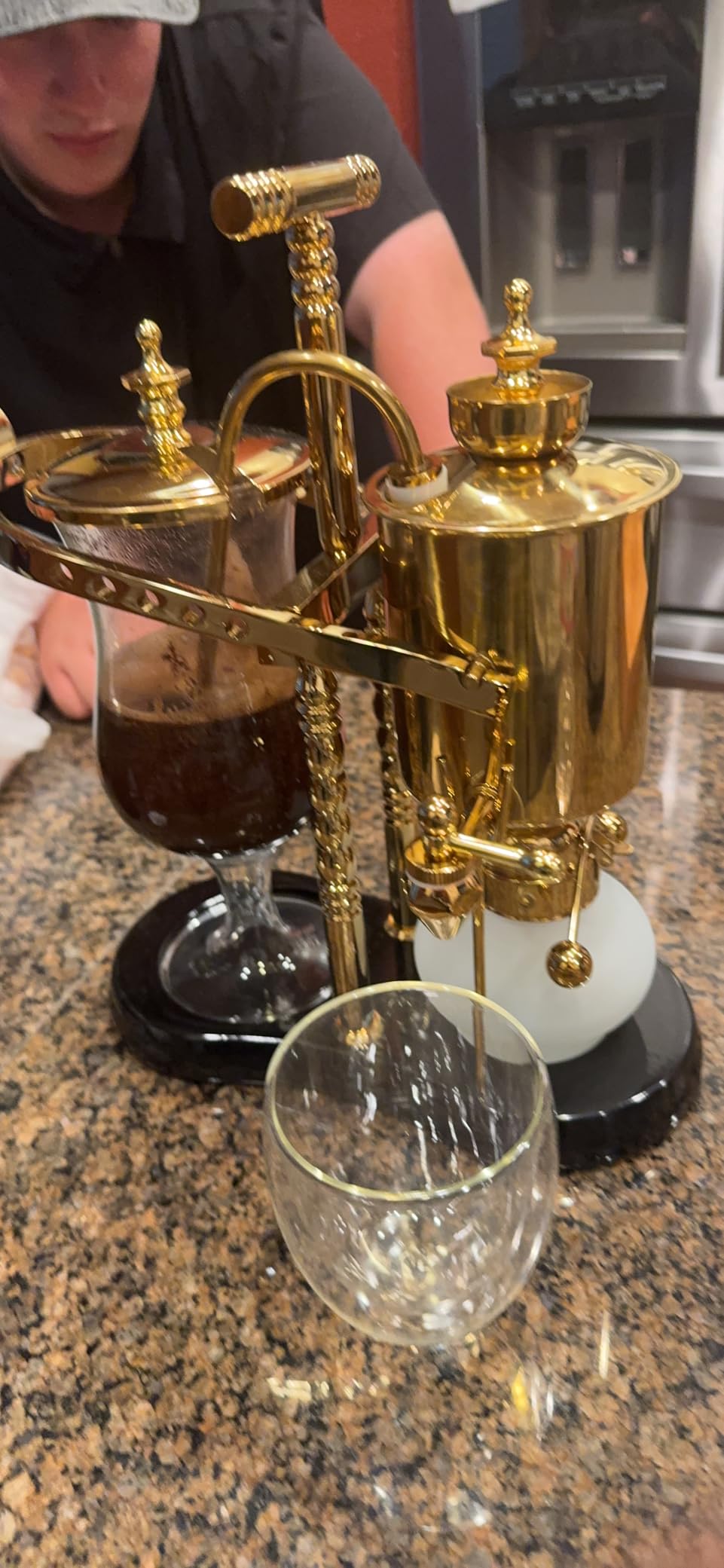
The Belgian balance siphon works differently from everything else in this guide, and that difference is the reason people buy it. Instead of relying on a partial vacuum to pull the coffee down, the lower flask sits on a balance beam, and when enough liquid has transferred the arm tips and dumps the finished brew into a glass below. Owners report that this makes the brewer noticeably easier to run than a standard two-chamber siphon, because there is no fragile downtube draw to watch.
It is also the most decorative object here by a distance. The polished rose gold body, hook handle and wooden base are designed to be looked at, and at 500ml it produces roughly two to three cups. The brewing is visually captivating enough that reviewers routinely describe it as the centre of a coffee date rather than a private morning habit.
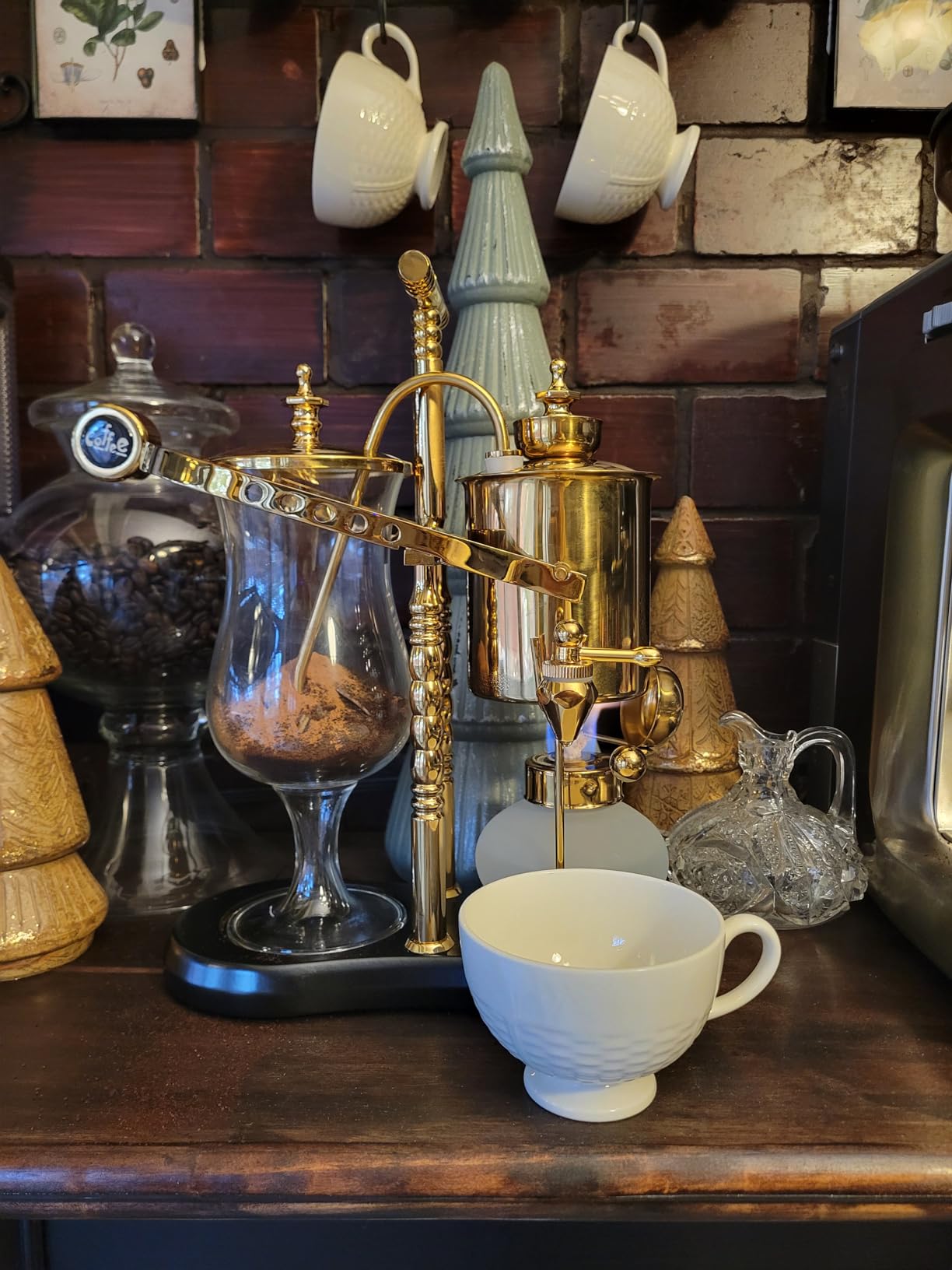
The build uses 304 stainless steel for the vacuum flask, siphon pipette and filter head, paired with a borosilicate brewing flask and a medical grade silicone seal. Coffee comes out rich and aromatic with a strength reviewers compare to a moka pot, and the reusable natural cloth filter is designed to let fine particles through for a bolder cup than a paper filter would give you.
There is a practical warning that belongs in any gift message for this model. The burner fuel is not included. You need denatured alcohol or butane, purchased separately, and buyers note that sourcing fuel can be awkward depending on where you live. The box does include the alcohol burner, the cloth filter, a measuring spoon, a measuring cup and a glass tumbler.
Who this gift is right for
It is right for someone who already drinks good coffee and wants the ritual, not someone who needs a faster morning. The balance mechanism is forgiving, the visual design is genuinely lovely, and the cup is full-bodied enough to feel like a reward rather than an experiment.
It is also the model most likely to be bought as a display piece, and for that purpose the copper-adjacent plating earns its place. If your brewer sits in the middle of a kitchen where people gather, this is the one that gets asked about.
What buyers complain about
The central water retainer cannot be opened. It rinses, but it never gets properly scrubbed, and that is a structural fact rather than a care mistake. At 500ml the yield is two to three cups, which is small for anyone drinking more than one.
The finish also needs the same care as copper cookware. If water is left to dry on the surface it will spot, and owners who do not polish it periodically see the shine dull. The included cloth filter is basic, and tying the drawstring too tightly can damage it permanently.
6. Hario NEXT Coffee Syphon 600ml – Best Upgraded Handle
- Silicone covered stand handle stays cooler
- Stainless steel stand and filter
- Borosilicate glass chambers from Hario
- Japanese build quality
- All glass still needs care around flame
- Slow alcohol burner and fuel bought separately
- Heavier and bulkier than the 3-cup model
- Multi-step brew suits a slow morning
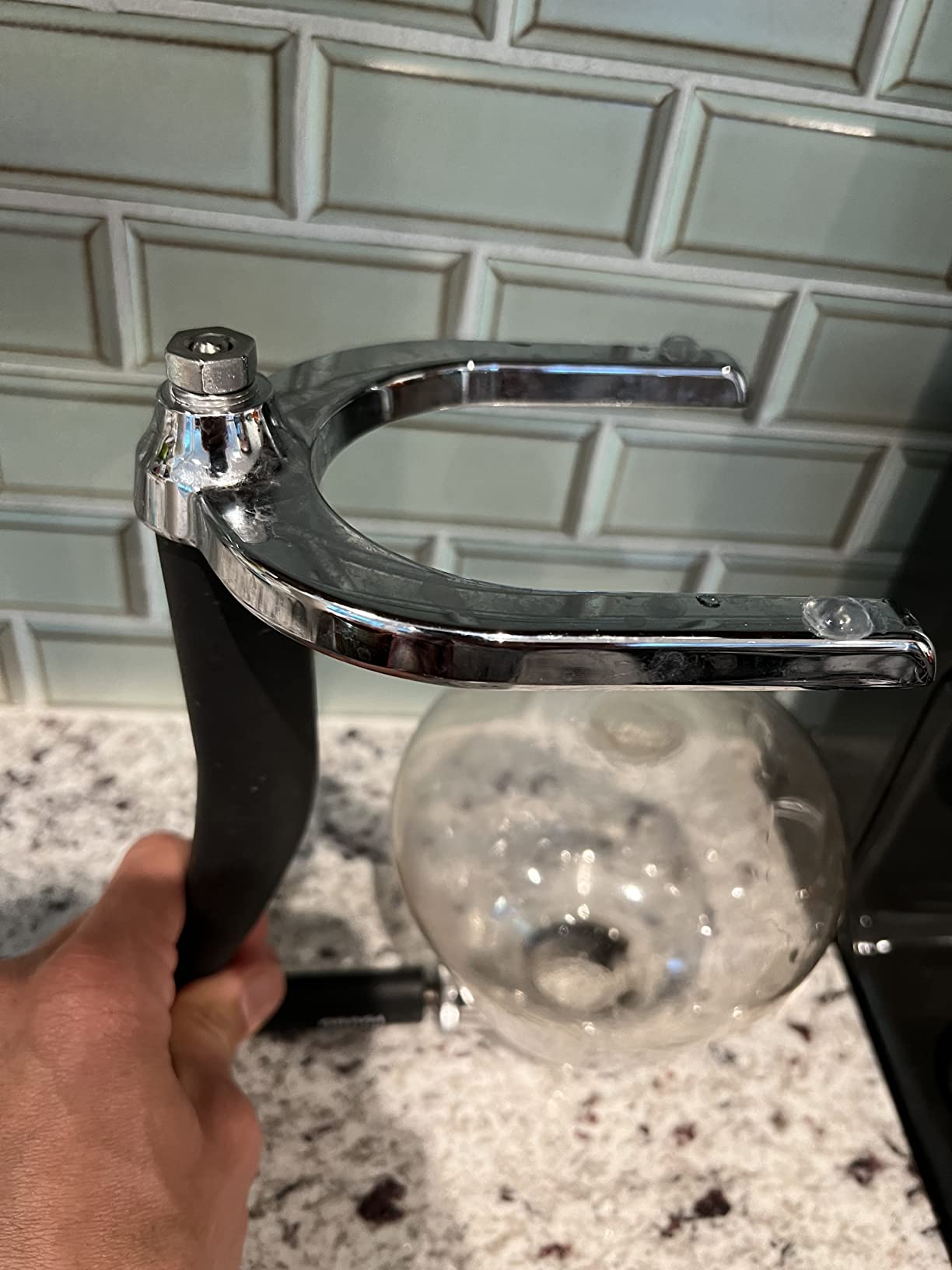
The NEXT is the current-generation Hario, and the change that matters is the stand handle. It is wrapped in a silicone cover that stays cooler and far safer to grip than the bare metal on the Technica. For a first-time buyer, that single detail removes the most common way people hurt themselves with an all-glass brewer, which is grabbing the hot lower chamber wrong.
The rest is familiar and good. The upper bowl, lower bowl and burner are heat-resistant borosilicate glass from Hario, with a stainless steel stand, burner cover and filter, brass fasteners and an aluminum windbreak, all imported from Japan. The 4.7 rating matches the Technica, and the cup descriptions are the same clean, lightly aromatic result that Hario glass reliably produces.
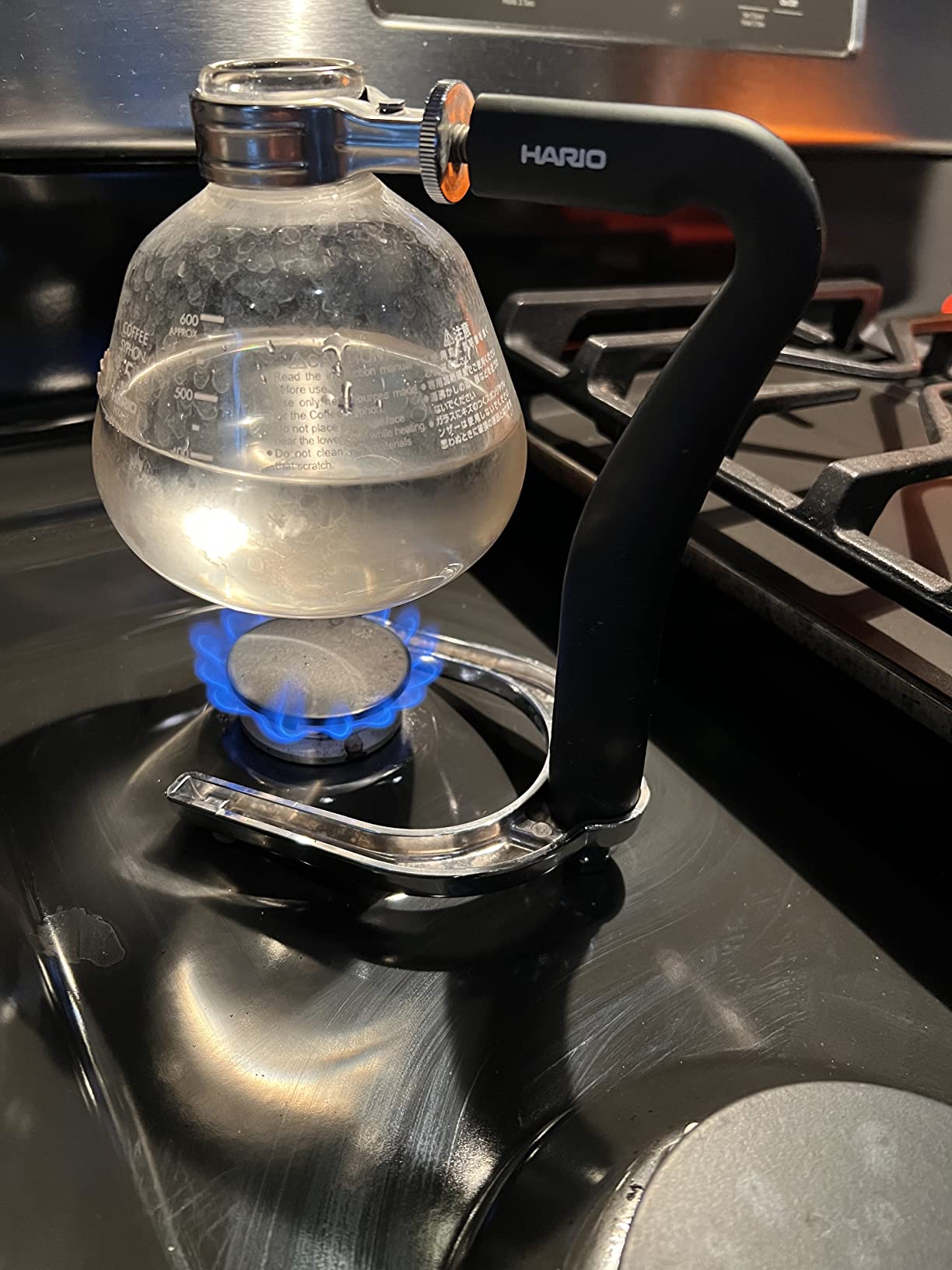
Where it differs is weight and bulk. At 3.1 pounds and over 16 inches tall as listed, this is a substantial object, and it needs real counter space. The 5-cup, 600ml capacity is the same as the Technica, so expect two proper mugs rather than a carafe.
Owners respond well to the refined stainless components and to the improved grip, and the display quality is high enough that it works as a centre piece. The trade-offs are the standard siphon ones: fragile glass around a flame, a slow alcohol burner, and denatured alcohol that you buy separately. The step-by-step process is simply longer than a drip brew, and that suits a slow morning rather than a hurried one.
Technica or NEXT, and how to decide
Choose the Technica if you already know you can handle hot glass carefully and you want the model with the deepest owner history. Choose the NEXT if this is your first siphon, if anyone else in the house will touch it, or if you have ever grabbed a hot chamber the wrong way and regretted it. The silicone grip is not a gimmick, it is a safety improvement.
If you brew for guests often, the 5-cup size and the included stand, base, burner and filter make the NEXT the more complete package to hand around a table.
Where the NEXT is not the answer
If your kitchen is small, the weight and height are a genuine problem. At over 16 inches tall it will not tuck away the way the 3-cup Moca does, and it is noticeably heavier to move for a full clean.
Denatured alcohol for the burner is a separate purchase, and the included burner still heats slowly from cold. Pre-boiling water in a kettle and pouring it into the lower chamber is the near-universal recommendation, and it cuts minutes off every brew.
7. Yama Glass 5 Cup Tabletop Siphon – Best for a Kitchen With No Stove
Yama Glass 5 Cup Tabletop Siphon (Syphon) (Alcohol Burner), 20-Ounce, Clear
- Clean rich cup with no bitterness
- Countertop only
- Flame adjustment lets you tune strength
- Portable for camping and off-grid brewing
- Included wick burner may not reach a boil
- Bottom vessel can go dry in 2-3 minutes
- Grounds sit loose in the rounded chamber
- Real yield is closer to 2.5 cups
This is the brewer for an apartment with an induction cooktop and no gas range, or for a kitchen where a stovetop is inconvenient. It needs nothing but a small flame on a table, and because the heat source is independent of any cooktop, it travels. Owners mention camping and off-grid brewing more than you would expect, because a siphon and a small burner are genuinely all you need.
The cup is very good once the technique lands. Reviewers describe it as clean and rich with zero bitterness and virtually no grounds in the finished brew, and the flame adjustment lets you slow the rise and push the strength. Yama recommends denatured alcohol over isopropyl because it heats faster and burns cleaner, which is the difference between a six-minute brew and a ten-minute one.
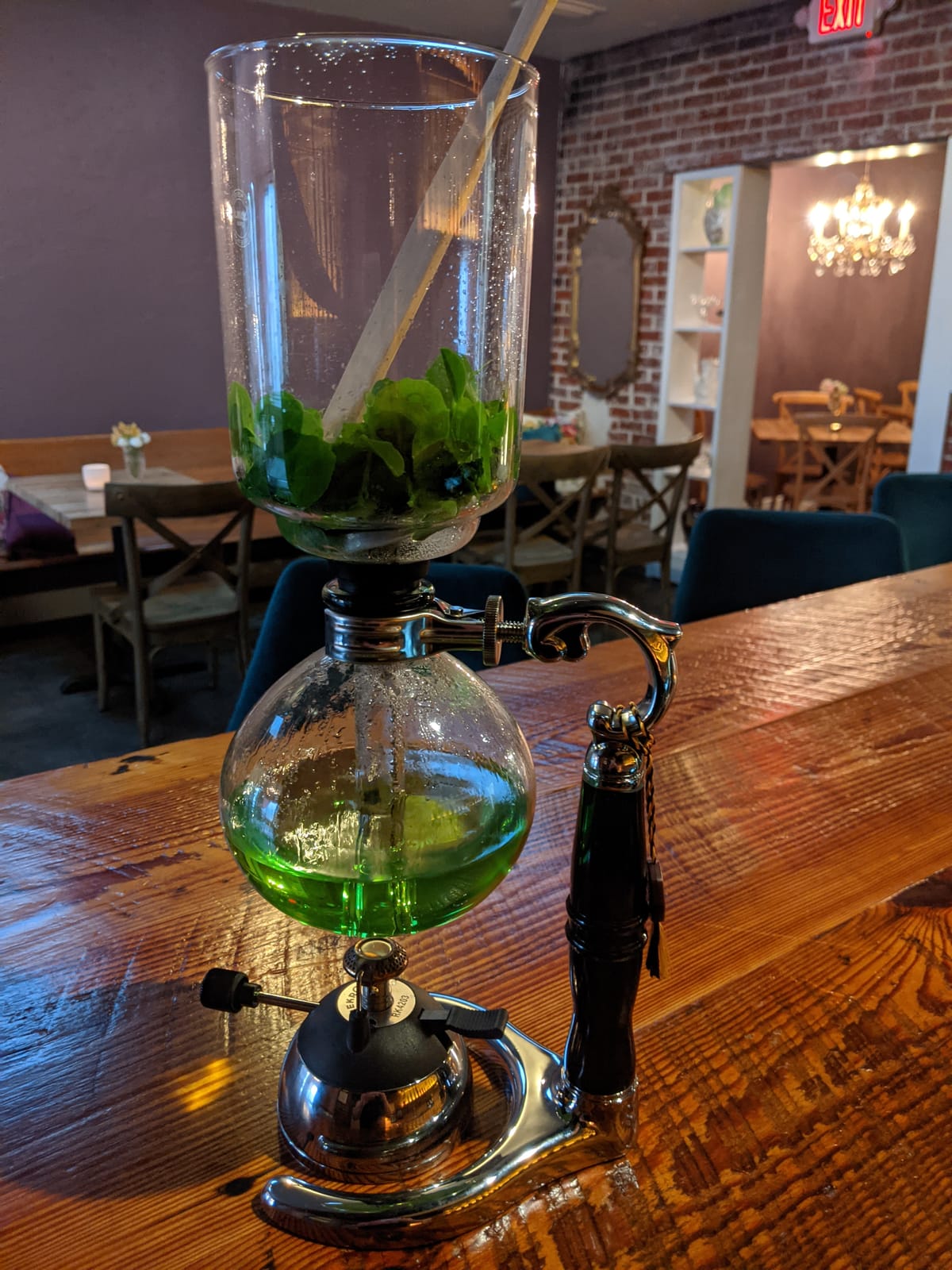
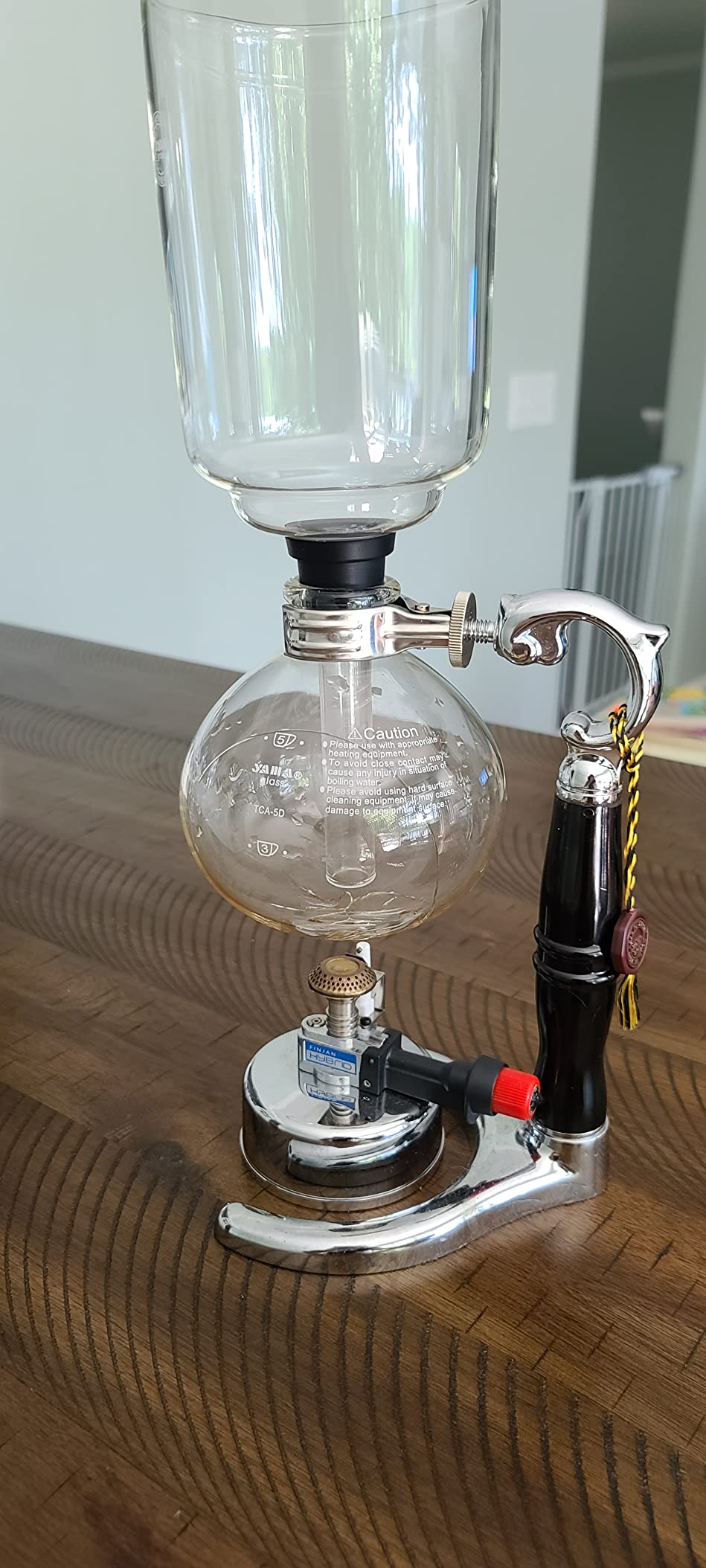
The box includes a base stand, burner, carafe, filter chain, filter cloths, lid, scoop and siphon tube, which is one of the more complete accessory lists in this roundup. The brewer is hand-blown tempered borosilicate from Yama Glass, and the styling is closer to laboratory glassware than to kitchenware, which is part of its appeal.
The critical detail is the burner. The supplied wick burner frequently fails to reach a boil, and the most common advice across reviews is to buy a butane micro burner instead. That is a real step beyond the box, and it is the difference between frustration and a good cup for most people.
What works here
Independence from any cooktop is the headline. If you have induction only, this brewer simply does not care, and neither does the Hario tabletop model. The small spherical lower chamber also means fast heating and a short cycle, so the total brew is quicker than the large burners.
Flame control is genuinely useful and underrated. Turning the flame down changes how aggressively water is pushed up the tube, and owners use that to pull a lighter or a stronger cup from the same batch of coffee.
What to watch out for
The bottom vessel holds little water and can go dry within two to three minutes of flame contact. Boiling it dry is the fastest way to crack this glass, so stay with it. Cleaning is also tedious because grounds sit loose in the rounded upper chamber with no flat surface to sweep them from.
Two smaller notes. The 5-cup label translates to roughly 2.5 American-size cups in practice, and the lightweight stand can feel flimsy in the hand. Listing details have also overstated what is in the box for some buyers, so check the contents list before you assume a stir stick or butane burner is included.
8. Nispira Belgian Balance Syphon Copper 500ml – Best Showpiece
Nispira Belgium Royal Family Balance Syphon Unique Gravity Vintage Coffee Maker Vacuum Brewing System Copper 500 ml
- Striking copper finish that works as decor
- Rich full-bodied cup owners rate highly
- Intuitive setup
- Needs only a flame so it suits off-grid use
- Alcohol lamp cracks if overfilled
- Water retainer cannot be opened
- Cloth filter lasts about two uses
- 500ml yields roughly two cups
The Nispira is the other balance siphon here, and it is the one to buy purely for the coffee rather than the object. Owners report a rich, full-bodied cup that several of them call the best they have brewed at home, particularly with fresh beans ground to order. The balance mechanism is intuitive to set up, and because it runs on a flame rather than a cooktop, it works anywhere.
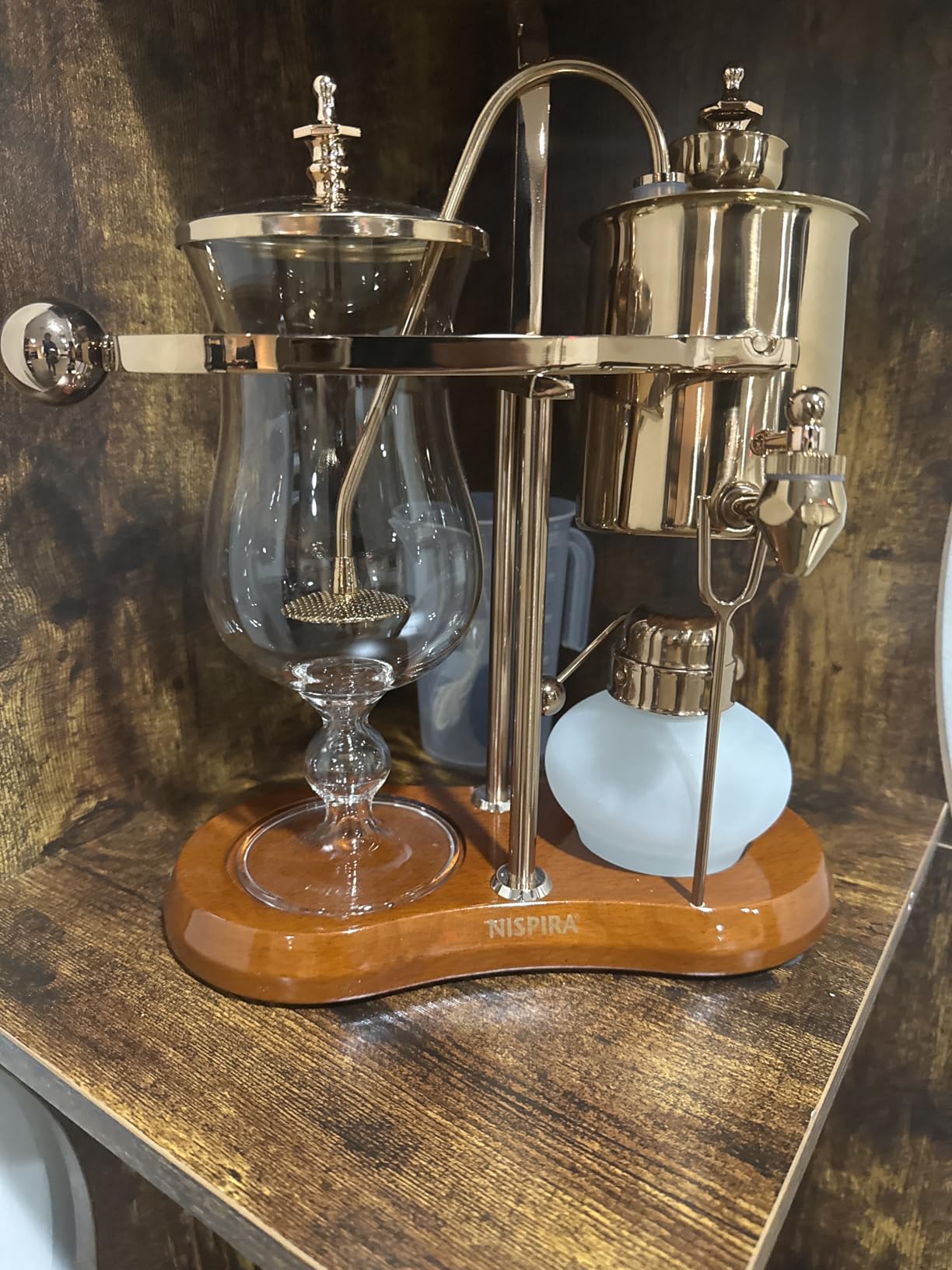
It is also visually striking. The copper-toned decorative body combines glass, metal and wood elements in a tall silhouette that reads as a conversation piece, and reviewers like that it has a small footprint despite being over 15 inches tall. The stated capacity is 500ml, which works out to roughly two cups per brew.
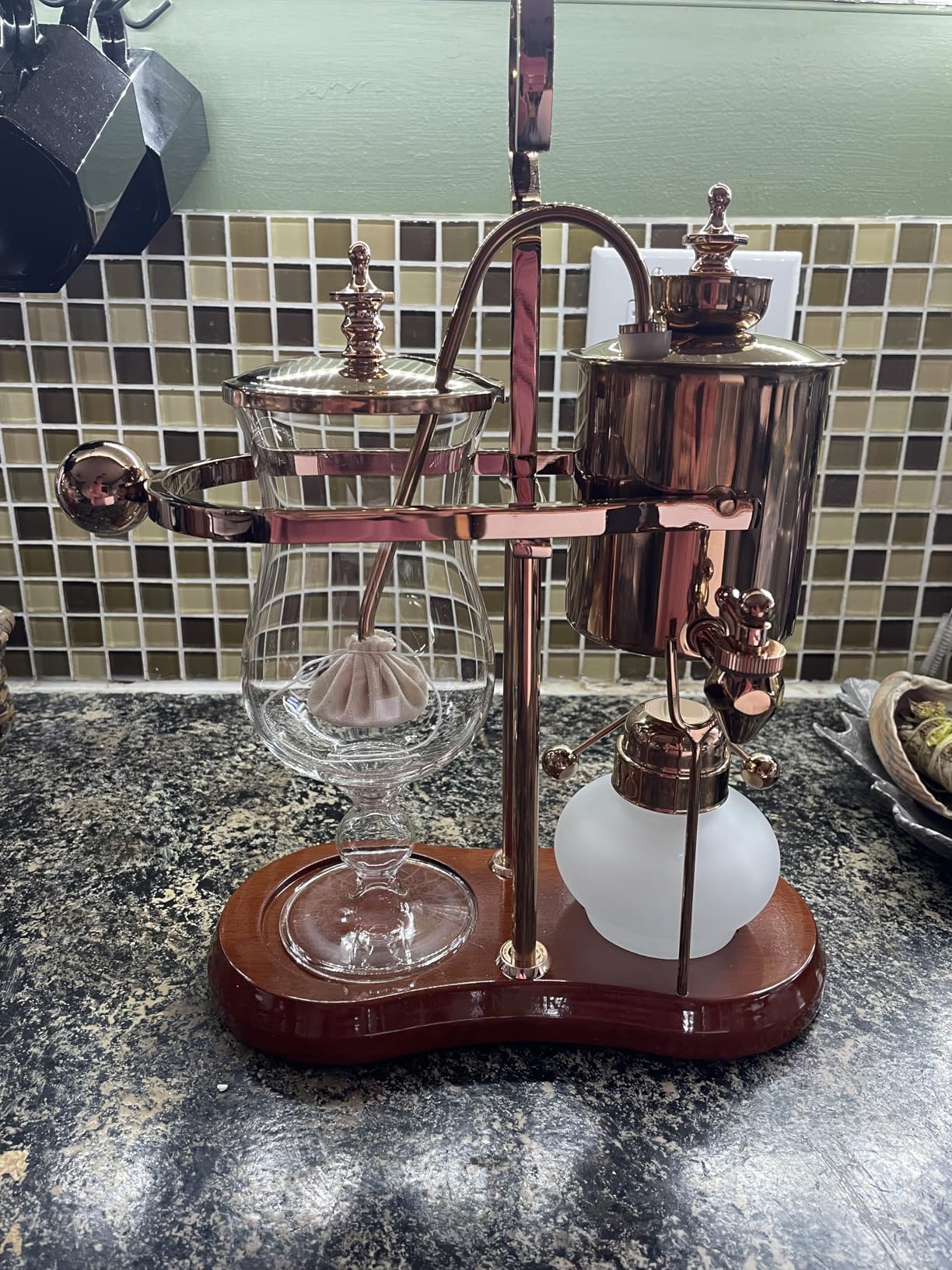
That small yield is the honest trade for the design. Two cups is not enough for a household, but it is enough to make two genuinely good coffees while you watch the beam tip. For a person who brews one cup at a time and enjoys the ten minutes, the constraint barely registers.
The practical notes matter here. Fill the alcohol lamp only to half, because overfilling can crack it, and refilling it partway through a session is normal use rather than a defect. Treat the copper finish like copper cookware: if water is left to dry on the surface it will spot, and it needs periodic polishing to stay sharp.
Why it earns a place in an enthusiast roundup
It is the most forgiving of the eight to run. There is no vacuum draw to monitor, no stovetop heat to control and no fragile glass tube to watch, so the failure points are genuinely fewer than with a two-chamber brewer. For someone who wants a balance siphon and does not want to chase one, this is the straightforward choice.
The coffee quality reports are strong enough to outweigh the size. Rich, full-bodied and aromatic, with the aromatic oils preserved through the heating cycle. Several owners specifically credit fresh beans, which suggests the brewer is not hiding anything a good coffee would not do on its own.
The cons worth knowing before you buy
The central water retainer cannot be opened, so residue can only be rinsed away and never scrubbed. That is the same structural limitation as the Diguo, and it is a design feature of balance siphons rather than a fault.
The included cloth filter is the bigger issue. Owners report it holds up for about two uses before flavour turns stale, which makes it a genuine consumable at a higher rate than the Hario and Yama cloth filters. The brewer is also not dishwasher safe, and burner fuel is bought separately. Buyers who care most about build quality for the money rate it as adequate rather than impressive.
How to Use a Siphon Coffee Maker: Our Step-by-Step Protocol
Every one of these brewers follows the same sequence, and the difference between a good cup and a disappointing one is mostly in the first and last steps. This is the protocol we use, and it works on all eight models without change.
1. Start with cold filtered water. Tap water minerals will dull a clean cup faster than anything else in this process. Fill the lower chamber only to the level marked on the glass, which leaves headroom for expansion. Never fill it to the top.
2. Seat the filter and add coffee after the water rises. This is the step beginners reverse. The lower chamber heats first, on its own, until water pushes up into the upper chamber. Only then do you add ground coffee into the filter sitting in the top. Adding coffee at the start puts grounds in the path of rising water and produces a thin, silty brew.
3. Grind medium-coarse. Siphon immersion extraction is more aggressive than pour-over, and a fine grind over-extracts into bitterness within seconds. Start one step coarser than you would use in a pour-over cone. Well-reviewed recipes land around a 1:15 coffee-to-water ratio by weight, which for a 600ml brewer is roughly 30g of coffee to about 450g of water.
4. Steep for 60 to 90 seconds. The water in the upper chamber sits at approximately 200°F, which is the whole point of the design. Start with one minute, stir gently once, and wait. A dome of spent grounds forming under the filter is a good sign, not a problem.
5. Remove the heat and let the vacuum work. Take the lower chamber off the heat. As it cools, pressure drops and the brew draws down through the filter. Do not squeeze, blow or push. The vacuum does the work, and interfering gives you a cloudy cup.
6. Pre-heat your water to save minutes. The single most repeated tip in reviews and forums is to boil water in a kettle and pour it into the lower chamber instead of heating from cold. On an alcohol burner model this can cut several minutes off the cycle and makes a noticeable difference to how long the flame has to work.
7. Serve immediately. Siphon coffee has no heat retention. The first cup is at its best, the second cools quickly, and the third is close to room temperature. That is the main reason experienced users treat this as a small-batch brewer rather than a household pot.
What to Look For When Buying a Siphon Coffee Brewer
Choosing between these eight comes down to five questions, and heat source is the first one because it eliminates options fastest. If you have a gas or electric stovetop, the PEBO and the Yama 8-cup are the most practical. If you have induction only or no stove at all, a burner model is the only category that works for you.
Heat source, and the induction problem. Induction cooktops cannot heat glass at all, because glass is not magnetic. That single fact disqualifies every stovetop siphon in a modern induction kitchen, and it is the most common blocker owners discuss. The workarounds are all reasonable: use a burner-powered tabletop model such as the Yama 5-cup, the Hario Moca or either balance siphon; or run a portable butane or gas canister burner on your counter. What you cannot do is place a borosilicate globe on an induction plate and expect anything.
Capacity, and the marketing gap. A 5-cup siphon yields roughly two to three real mugs. The PEBO is the outlier at 1000ml and eight 4oz cups, and it is the only model here that works for a group. Multiply the marked cup count by about half and you will be close for the burners, and by about three quarters for the stovetop models. Reviews mention this gap more than any other spec disappointment.
Filter type, cloth or metal. Cloth filters are included with most of these brewers and they give a fuller, more traditional body, but they need soaking after every use, they discolour, and they are a recurring replacement cost. Metal mesh filters are washable, last indefinitely and produce a lighter, cleaner cup. Several owners of both the Technica and the PEBO replace the supplied filter with a permanent one within a few weeks and never look back. Paper filters appear with the Moca and are the fastest cleanup of all, though they are not the same cup.
Glass durability and the frame around it. All of these brewers are borosilicate glass, and all of them break. What differs is the hardware around the vulnerable sections. The Technica and NEXT use stainless steel stands, the NEXT adds a silicone grip, and the balance siphons replace the glass lower chamber with 304 stainless steel. Models with a plastic filter and an all-glass frame report more breakage, and the PEBO in particular draws reviews about cracked globes and warranty terms that exclude replacement glass.
Maintenance reality. This is where the published advice conflicts, so here is the honest version. Hand-wash every model. The Yama stovetop lists its components as dishwasher-friendly, and the top chamber and stand can generally take a cycle, but the downtube, the filter chain and any silicone seal will last longer washed by hand, and a dishwasher’s heat and detergent will cloud borosilicate over time. The Technica and NEXT are hand-wash only, as are both balance siphons, whose water retainers cannot be opened at all.
The accessories you actually need. A scale, a kettle, a grinder and a thermometer. The scale matters most, because siphon is a weight-based method and volume dosing is where consistency breaks down. The kettle lets you pre-heat and is the difference between a six-minute and a twelve-minute brew on a burner model. A thermometer confirms the water is near 200°F rather than guessing. A decent grinder matters more here than with pour-over, because immersion extraction punishes inconsistent particle size harder than drip does.
Where the electric options went. Fully electric siphon brewers have largely disappeared, and enthusiasts in coffee forums tend to name the discontinued KitchenAid KCM0812 as the model that used to fill the gap. What remains in this category is burner and stovetop heat, with the balance siphons sitting in between. Knowing that in advance saves you from searching for an electric category that no longer has much in it.
The enthusiast end of the market. Past the eight models here, the hobby community talks about custom and boutique brewers, including names like Kazumi, Power Siphon and the Hario Nouveau and Sommalier lines. These appear mostly in enthusiast forum threads rather than mainstream roundups, and they are worth knowing about if you plan to brew daily. For a first or second brewer, the picks above cover the design better.
One last practical note for anyone organising a brewing area. Whatever you choose, the brewer needs a clear, heat-safe patch of counter and a place to put hot parts down. A wooden board or a folded towel next to the stand prevents most thermal shock accidents before they happen. If you are still planning the rest of the corner, our coffee bar cart picks give you a dedicated surface that can move.
Cleaning, Maintenance and Safety for Glass Siphons
Cleaning is the part of siphon ownership people underestimate, so it is worth being blunt about it. Hand-wash everything, immediately after the brew, while the glass is warm but not hot. A soft brush or a twisted dry towel in the downtube is the standard technique for clearing the tube, and a bottle brush works well. Rinse the filter separately and never force a cloth filter back into place when it is still damp and swollen.
Cloth filters are the recurring consumable. Rinse after use, soak occasionally in a mild detergent, and replace when the coffee starts tasting flat or the drawstring frays. Discolouration is harmless and permanent, which is why nobody minds it. The one exception is the balance siphon cloth filter, which owners of the Nispira report holding up for only about two uses before flavour turns stale.
On breakage, the pattern is consistent across every model in this roundup. Thermal shock is the cause: hot glass set on a cold, wet or stone surface, cold water poured into a hot chamber, or a burner left running until the lower vessel boils dry. Keep the glass away from wet counters, use a trivet or towel, and never pour cold water into a hot lower chamber to speed up the draw-down. If a chamber does crack, replace the glass rather than the brewer where a replacement exists, and check whether the manufacturer covers it.
Two safety points that come up on forums. Never touch the upper chamber while water is rising, because the glass and the frame both get hot, and the silicone handle on the NEXT exists precisely to reduce this risk. And keep children and pets away from an active brew; a toppling glass globe on a stone floor is the genuinely dangerous outcome, not the brewing itself.
Finally, the troubleshooting shortlist. If the water will not rise, check that the lower chamber has enough water and that the filter is seated without blocking the tube, then increase the heat. If the cup tastes weak, the usual causes are too coarse a grind, too much water, or brewing water that was poured in cold and never reached 200°F. If the cup is bitter, grind finer or cut the steep time. If grounds end up in the mug, the filter is torn or the draw was interrupted, and letting the vacuum finish untouched fixes it.
Frequently Asked Questions
Do siphon coffee makers make good coffee?
Yes. A siphon brewer immerses all of the coffee in water held near 200F, then draws the finished brew back down through a filter, so you get even extraction and a clean cup with no sediment. The result is lighter and more tea-like than French press coffee and more evenly extracted than most pour-over. It is genuinely good coffee, provided you grind reasonably, use filtered water and let the vacuum finish undisturbed.
Is siphon coffee better than pour over?
It is a different strength rather than a better one. Pour-over gives you more control and slightly more clarity with far less effort. A siphon gives you full immersion, so extraction is more even, the body is cleaner than a press and there is no sediment. If you dislike bitterness or grit, the siphon answers that. If you dislike a ten minute process before breakfast, pour-over wins.
What are the different types of siphon brewers?
There are five main types. Stovetop models such as the Bodum PEBO and the Yama Glass 8-cup use a gas or electric burner. Countertop models like the Yama Glass 5-cup and the Hario Moca use a small alcohol or butane burner on the table. Some enthusiasts upgrade to a halogen beam heater for faster, cleaner heat. Belgian balance siphons such as the Diguo and the Nispira use a balance beam and tip the finished coffee into a glass. Fully electric siphons are now largely discontinued.
Is Japanese siphon coffee good?
It is very good, and the Japanese brewers in this roundup have the strongest owner ratings. The Hario Technica and NEXT use borosilicate glass made in Japan with stainless steel stands and brass fasteners, and that glass has a reputation for surviving the thermal cycle. The Yama brewers are also hand-blown borosilicate. Quality comes more from technique, grind and water than from the country of manufacture, but the hardware difference is real.
Why don’t people use percolators anymore?
Electric percolators were faster, hands-off and could brew a full pot in minutes, which beat vacuum brewers on pure convenience for decades. Vacuum siphons fell out of favour because they need constant attention and produce one to three real cups at a time. They came back when specialty coffee drinkers wanted full immersion extraction with controlled heat and no paper filter, and because watching the brew is genuinely part of the appeal.
The Verdict on the Best Siphon Coffee Brewers for 2026
After comparing all eight, the Hario Technica takes our top spot for the same reason it tops the owner ratings: Japanese borosilicate glass, a stainless steel frame, and a cup that is reliably clean and grit-free. It is the best siphon coffee brewer for most enthusiasts, and the Yama Glass 8-cup is the better choice if you have a working stovetop and want capacity plus dishwasher-friendly parts.
Buy the Bodum PEBO if you brew for other people, the Hario NEXT if this is your first and you want a cooler handle, and one of the burner models if induction rules out a stovetop. Pick the Nispira or the Diguo for the balance-beam ritual and the strongest conversation value. Whichever you choose, give it a weekend morning and a scale, and the coffee will follow.