
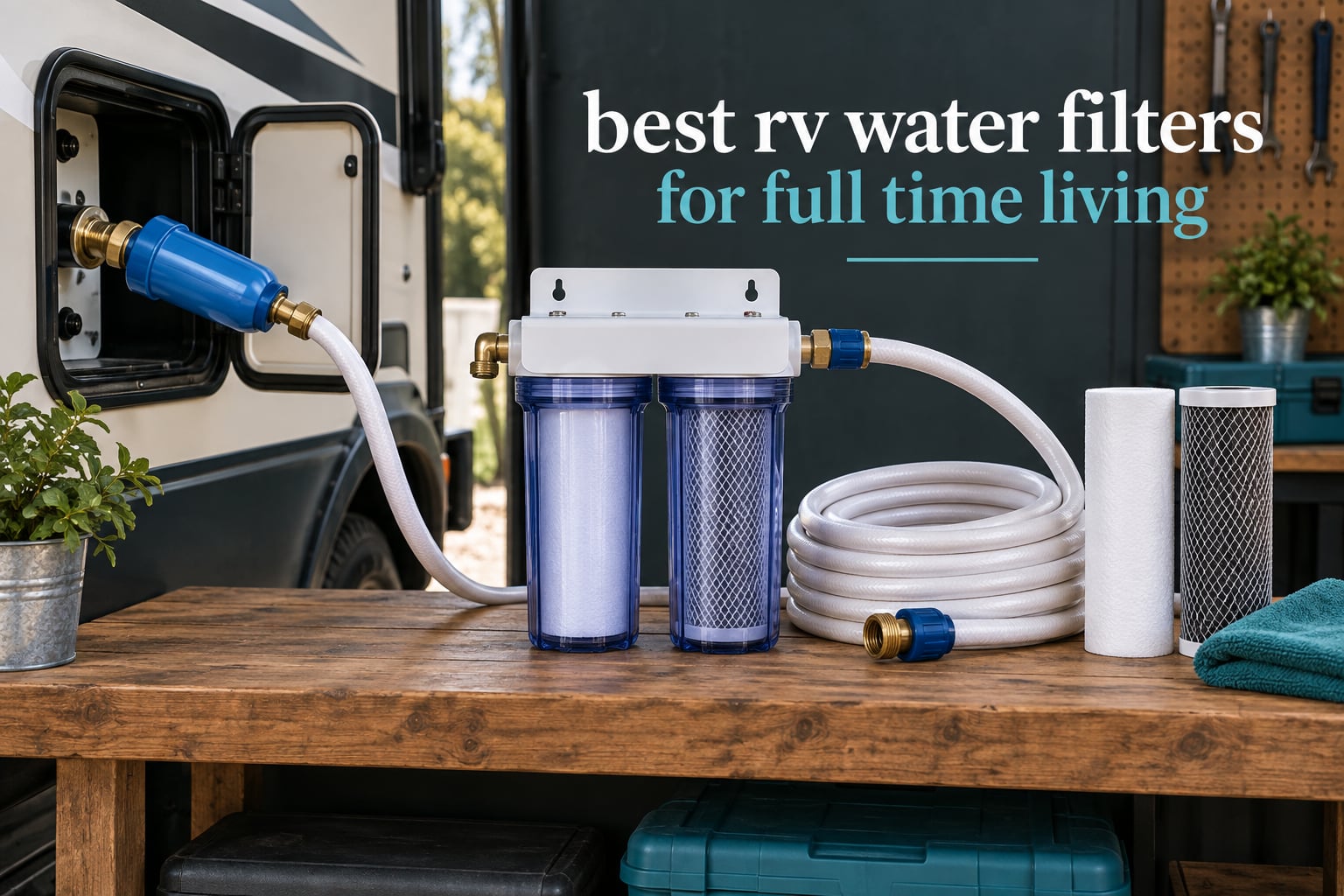
The best RV water filters for full time living are the Camco TastePURE for a proven all-round inline setup, the GLACIER FRESH two-pack if you want two spares on hand, and the Clearsource systems if you are filtering pathogens rather than taste. Full-time living changes the math completely: a weekend camper changes a cartridge once or twice a season, while a full-timer is filtering every single day at sources they did not choose.
That daily use is why the best RV water filters ranking for full time living in 2026 is not the same list you would find for a two-week trip. Cartridge life, flow rate, replacement cost per gallon and the number of stages all matter far more when you are filling a tank, running a shower, and drinking from the tap eight days in a row without knowing what is in the water main behind the site.
Our team pulled the specifications, certifications, flow ratings and owner feedback for twelve of the most widely used RV water filters on the market, and ranked them for the full-time use case rather than the weekend one. We also tracked what each one does not remove, because that is where most RV filter guides are quietest and where full-time RVers actually get burned.
If you also travel on foot or by boat, our picks for the best portable water filters and the best backpacking water filters cover the smaller-format options that pair well with a two-stage RV setup.
Top 3 Picks for Best RV Water Filters in 2026
These are the three we would put in a rig that leaves the driveway for months at a stretch. The Camco TastePURE earns the top spot on the strength of its rating, its review volume and its wide-body flow, while the GLACIER FRESH pack and the RVGUARD four-pack solve the full-timer’s real problem, which is never having an old cartridge in the closet when the current one gives out on a Tuesday in a county you have never visited.

Camco TastePURE RV Water Filter
- 6-step GAC and KDF filtration
- 20-micron sediment stage
- Wide-body high-flow design
- NSF/ANSI 42 and 53 certified

GLACIER FRESH RV/Marine Filter 2 Pack
- 97.9% chlorine reduction tested
- 20-micron GAC and KDF media
- Two filters plus hose protectors
- Rated for a full camping season
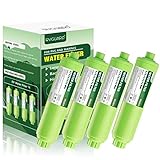
RVGUARD Inline RV Water Filter 4 Pack
- IAPMO certified to NSF/ANSI 42
- 0.5 gpm service flow
- Up to 15000 gallon capacity
- Four filters for year-round use
All 12 Filters at a Glance in 2026
Here is the full lineup in one place. Every filter below was checked for certification, flow rating, filtration stage count and cartridge service life, and each one is written up in detail further down the page.
| Product | Specifications | Action |
|---|---|---|
| Camco TastePURE RV Water Filter |
|
Check Latest Price |
| GLACIER FRESH RV/Marine Water Filter 2 Pack |
|
Check Latest Price |
| RVGUARD Inline RV Water Filter 4 Pack |
|
Check Latest Price |
 AQUA CREST RV Inline Water Filter AQUA CREST RV Inline Water Filter |
|
Check Latest Price |
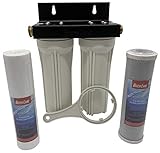 Beech Lane External RV Dual Water Filter Beech Lane External RV Dual Water Filter |
|
Check Latest Price |
 lifeegrn RV Water Filter 2 Pack lifeegrn RV Water Filter 2 Pack |
|
Check Latest Price |
 Culligan RVF-10 External Water Filter Culligan RVF-10 External Water Filter |
|
Check Latest Price |
 FRIZZLIFE MV99 RV Water Filter FRIZZLIFE MV99 RV Water Filter |
|
Check Latest Price |
 Clearsource Ultra with VirusGuard Clearsource Ultra with VirusGuard |
|
Check Latest Price |
 Clearsource Premier RV Water Filter System Clearsource Premier RV Water Filter System |
|
Check Latest Price |
 OKBA External RV Dual Water Filter OKBA External RV Dual Water Filter |
|
Check Latest Price |
 GLACIER FRESH GFRVWP03 3-Stage System GLACIER FRESH GFRVWP03 3-Stage System |
|
Check Latest Price |
1. Camco TastePURE RV Water Filter – Best Inline Filter for Full Time Living
Camco Tastepure RV Water Filter – GAC & KDF Filtration – Made in the USA
- Widely used by long-term owners across thousands of reviews
- Handles very poor campground water reliably
- Wide-body design moves noticeably more water
- Includes a flexible hose protector
- Cartridge is rated for roughly one camping season
- Needs a black carbon flush before first use each season
- Connector can drip if not seated perfectly
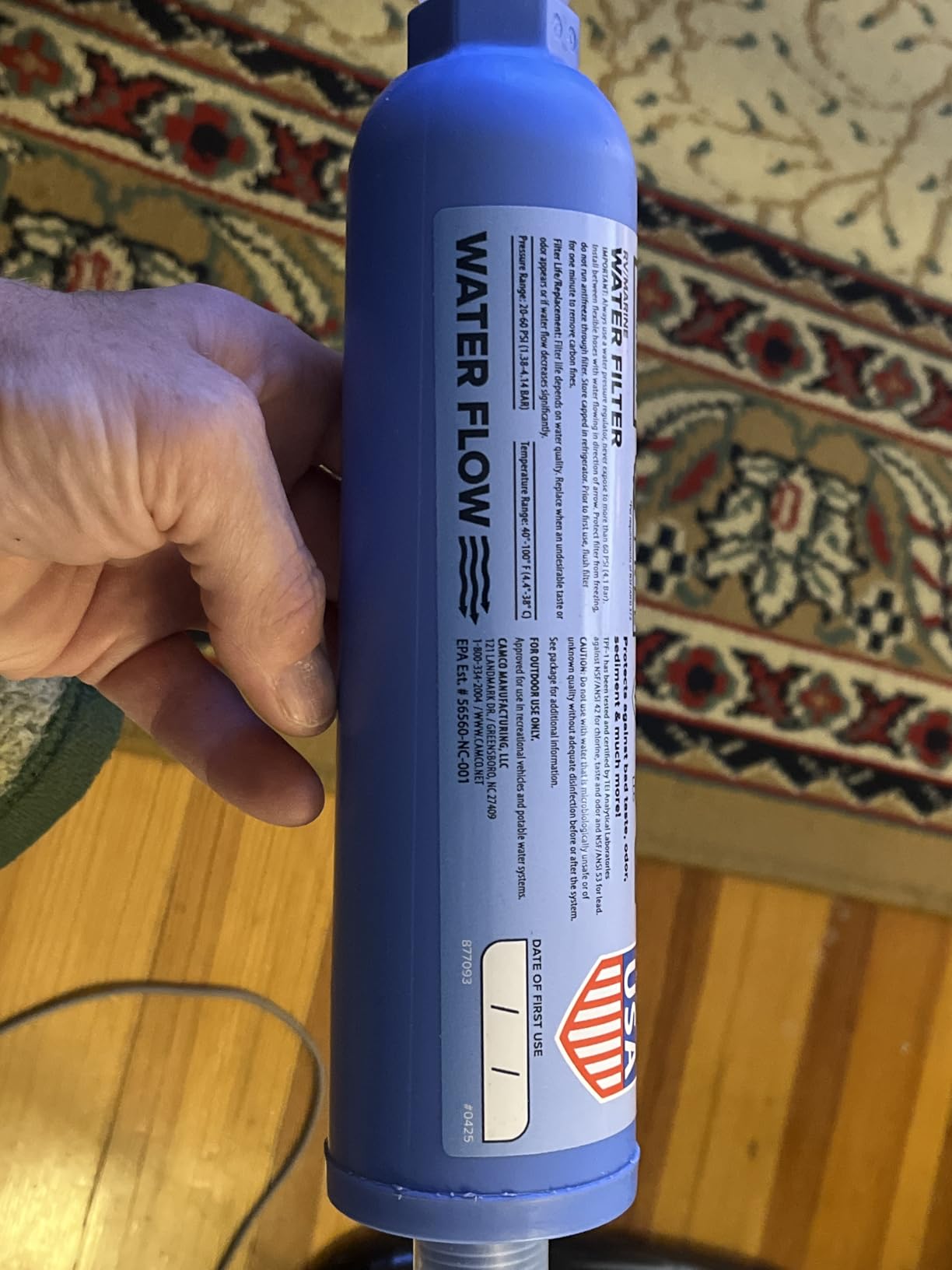
The Camco TastePURE is the filter we keep coming back to for full-time rigs, and the reason is unglamorous: it has been in the water for a very long time and owners have documented how it behaves on bad water. Across more than 53k reviews it holds a 4.7 average, and the recurring theme is that it handles the grey, metallic water that comes out of an older campground pedestal without complaint.
The body is a wide-body design with a 20-micron internal sediment filter, which is the practical difference between this and a slim hose filter. On our rigs, wide-body is the difference between a tank fill that finishes in a reasonable time and one where you are watching the clock, and it is also the difference between a shower that feels normal and one you start looking forward to.
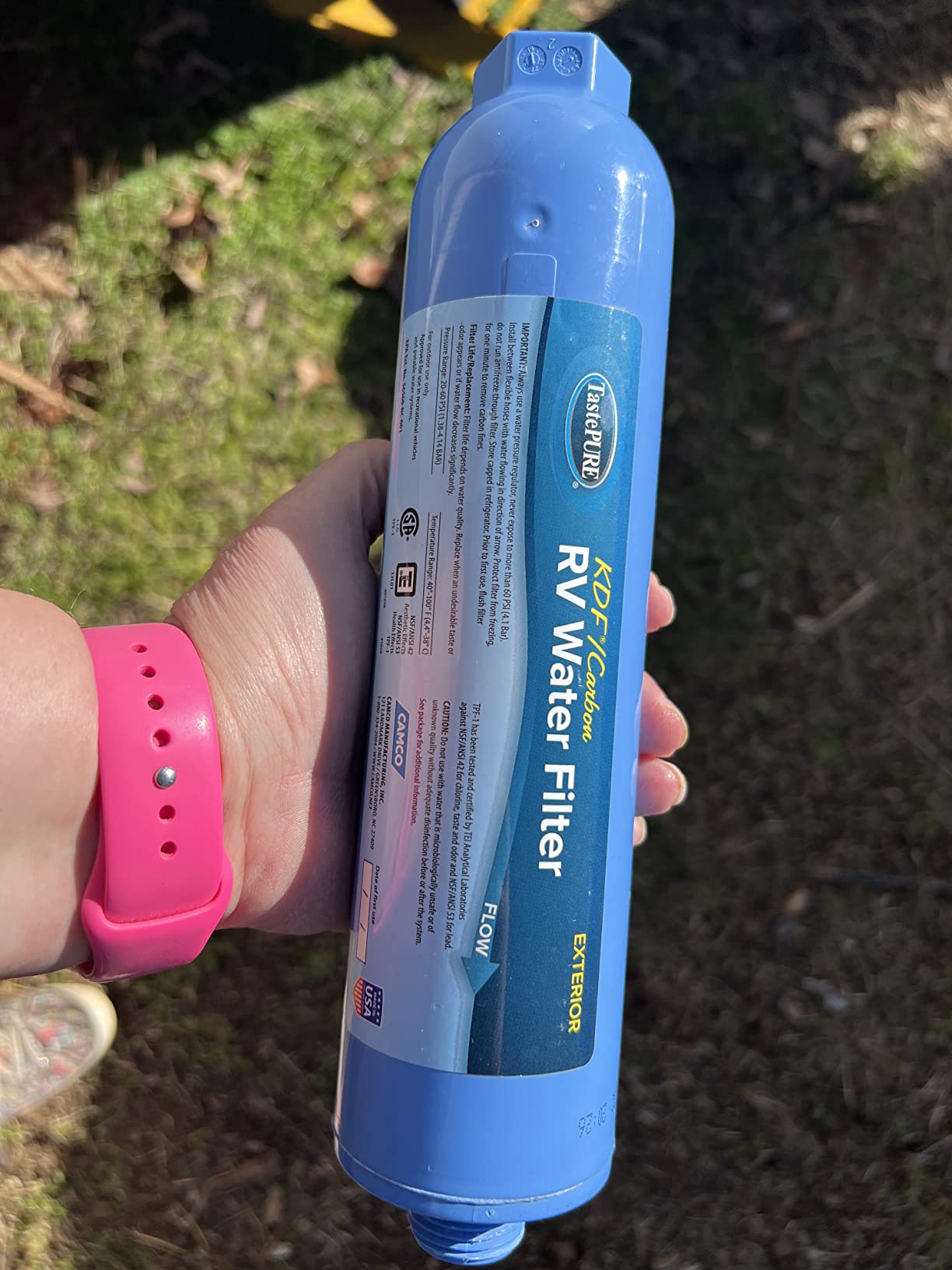
The filtration stack is a 6-step design built around GAC and KDF media, with the KDF stage handling bacteria and mold growth on the media surface rather than in the water. The unit is certified to NSF/ANSI 42, NSF/ANSI 53 and NSF/ANSI 372, which is a stronger certification set than most of the inline filters on this list and matters if you are drawing from a source you cannot test.
We also like the included flexible hose protector. It relieves strain on the connection, and strain is what causes the small drips that show up weeks later at an inconvenient moment. The housing is polypropylene, the unit is made in the USA, and it carries a one-year limited manufacturer warranty.
What the Camco TastePURE does not remove
It does not remove viruses, and it does not make unsafe water safe. Camco describes the KDF stage as helping control bacteria and mold growth on the filter media, which is a bacteriostatic function rather than a sterilization step. If a campground posts a boil water notice, this filter is not your answer.
It also does not address hard water. Scale in a kettle or white ring in a glass is a mineral problem, and the TastePURE is a taste, odor, chlorine and sediment filter. Full-timers on hard-water routes pair it with a softener or an electronic descaler rather than expecting the carbon to do that work.
How it holds up on a full-time schedule
Camco rates this cartridge at roughly one camping season, so a full-time RVer is replacing it several times a year rather than once. Plan on a calendar reminder rather than a visual cue, because a TastePURE that has gone past its interval mostly stops improving taste without looking any different.
The cartridge swap is a hose-end job that takes under a minute with no tools. The one chore is flushing black carbon particles from the housing the first time you use a fresh cartridge, which looks alarming and is not a fault. Our advice for full-time living: keep two cartridges on board at all times, because the failure mode of this filter in year three is not performance, it is convenience.
2. GLACIER FRESH RV/Marine Water Filter – Best Value Inline Pair
GLACIER FRESH RV/Marine Water Filter with 1 Flexible Hose Protectors 2 Pack
- Multipack gives you a spare without a second order
- Lab tested at 97.9% chlorine reduction
- Lead-free and BPA-free GAC and KDF media
- Reinforced housing resists bursting
- Initial flush can release a blue or grey tint from the carbon
- No screw-on storage caps for travelling between sites
- About 6% one-star reviews
This is the pick if you want two of something rather than one of a better thing. The GLACIER FRESH two-pack gives you a working filter and a spare in the same order, which for a full-timer is the difference between fixing a bad afternoon and losing half a day finding a supply stop that carries your cartridge.
On the spec sheet it is a 20-micron inline filter using lead-free, BPA-free GAC and KDF media, independently lab tested to remove 97.9% of chlorine and reported to reduce fluoride as well. Owners describe the taste improvement as obvious from the first glass, particularly at sites that dose heavily.
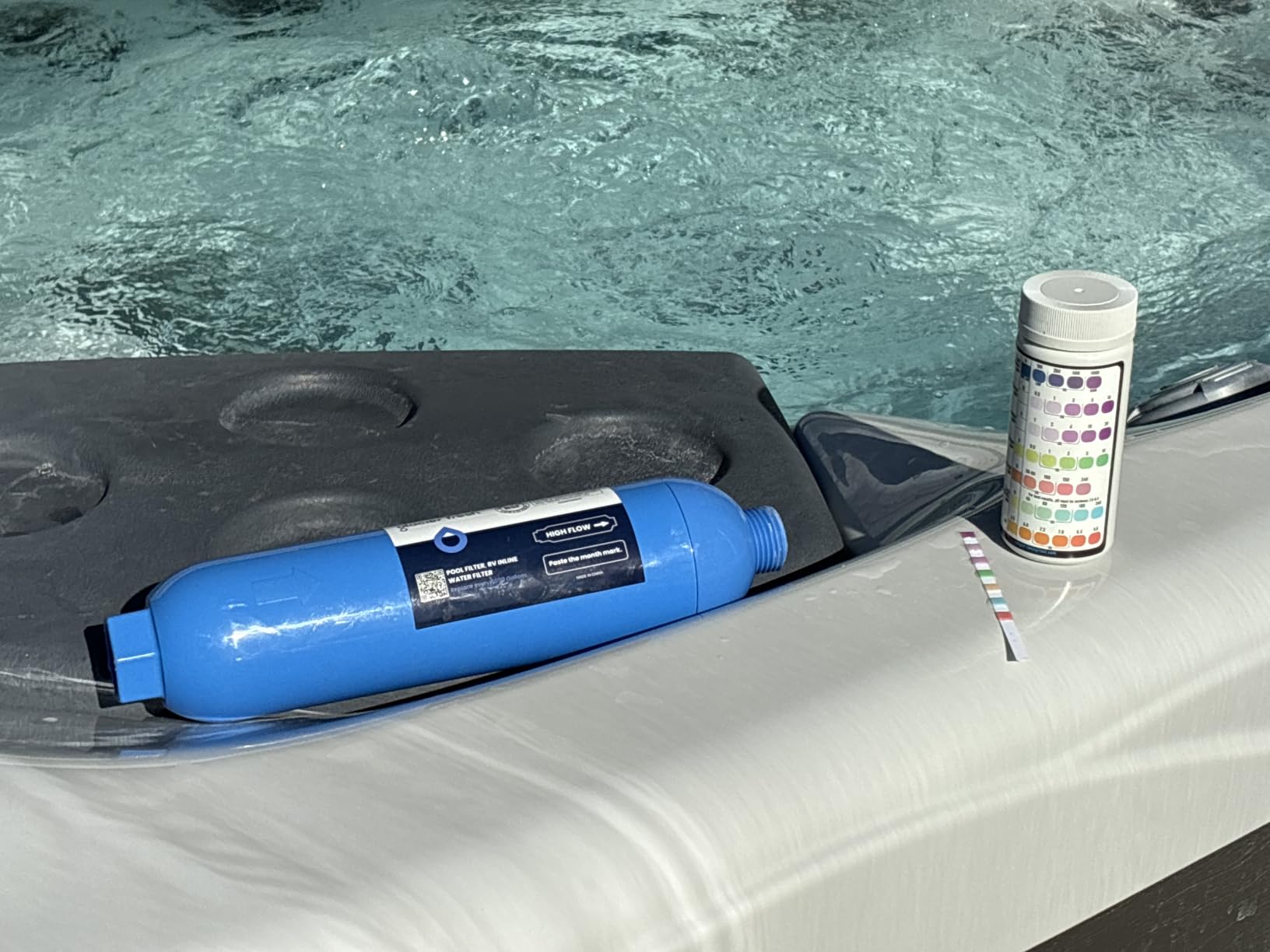
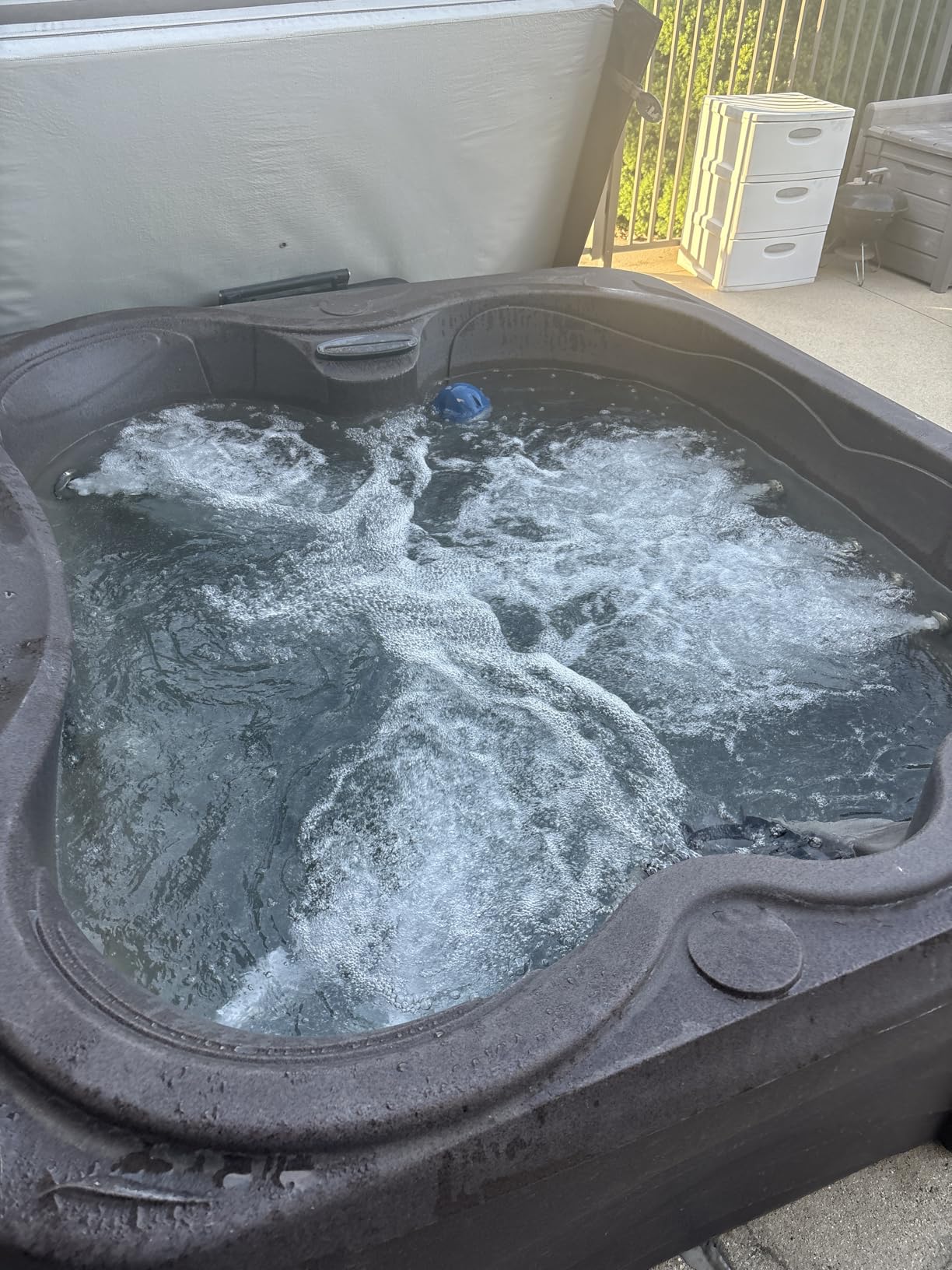
The reinforced food-grade plastic housing is built to resist bursting, and the flexible hose is included in the pack, two protectors total. A number of owners use these off-label for pool filling and hard-water reduction with positive results, though we would not count on it for drinking-water treatment decisions.
The rating sits at 4.4 across 6324 reviews, which is a strong place to land given the price position. The main recurring criticism is the initial flush, which can tint the water blue or grey as carbon fines clear out of the media.
Storage and travel behaviour for a full-timer
The gap that matters most on the road is the lack of screw-on storage caps. A full-timer changes sites every few days, and an open hose-end filter that swings against a tank or a storage bay wall is how you get a wet bay and a cross-contaminated connector.
Budget a small set of threaded storage caps for the two hose ends and keep them in the same bag as the spare cartridge. It is a two-minute fix that the product does not include, and it protects the seal that actually keeps water out of your bay.
Where it fits against the Camco
If your routes are mostly maintained campground and RV park water, this is plenty, and two cartridges will cover a large part of the year. If you are pulling from unknown sources, boondocking or fills from a well, the certification detail here is thinner than the Camco’s and we would want a second stage downstream.
What it does not remove is also worth saying plainly: no viruses, no salts, no hardness. Each filter is rated for about a full camping season of roughly three months, so a full-time RVer replaces these several times a year as well.
3. RVGUARD Inline RV Water Filter – Best Multi-Season Supply Pack
- Four filters cover most of a full year of daily use
- IAPMO certified for material safety and chlorine reduction
- 0.5 gpm service flow stated on the spec sheet
- Works with any standard garden hose or RV inlet
- 0.5 gpm service flow is slow for a full-size rig
- First use discharges black carbon particles
- Noticeably slower shower and sink flow
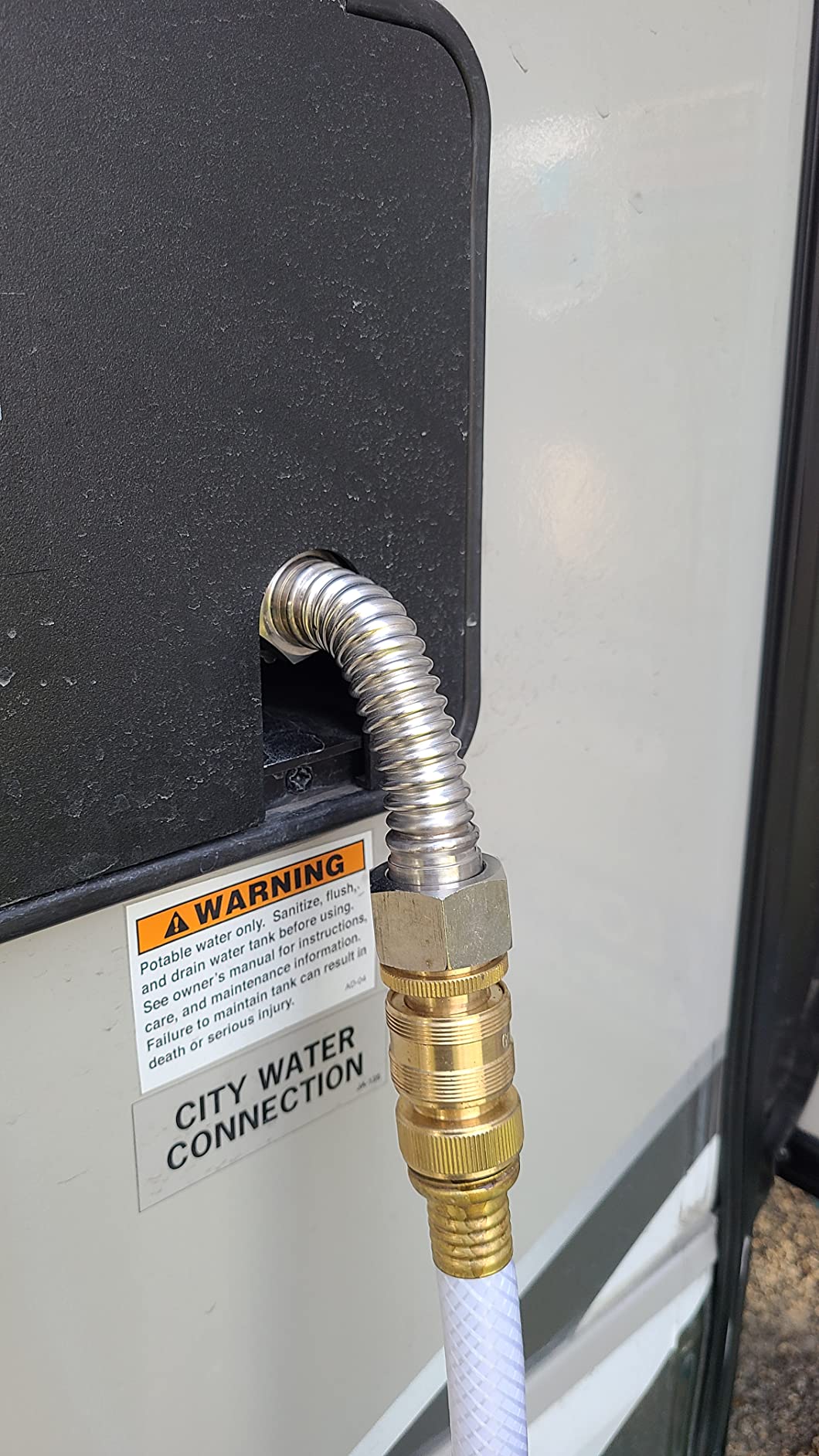
The RVGUARD four-pack is the supply-case answer. Where the Camco and GLACIER FRESH options give you one or two spares, four cartridges is roughly a year of daily filtering, which means a full-timer can order once and stop thinking about it for a season.
It is IAPMO R&T certified to NSF/ANSI 42 for material safety and aesthetic chlorine reduction, and it uses KDF with advanced granular activated carbon to pull chlorine, odors, bad taste and rust. Capacity is stated at up to 15000 gallons, working pressure 60 psi, and service flow 0.5 gpm.
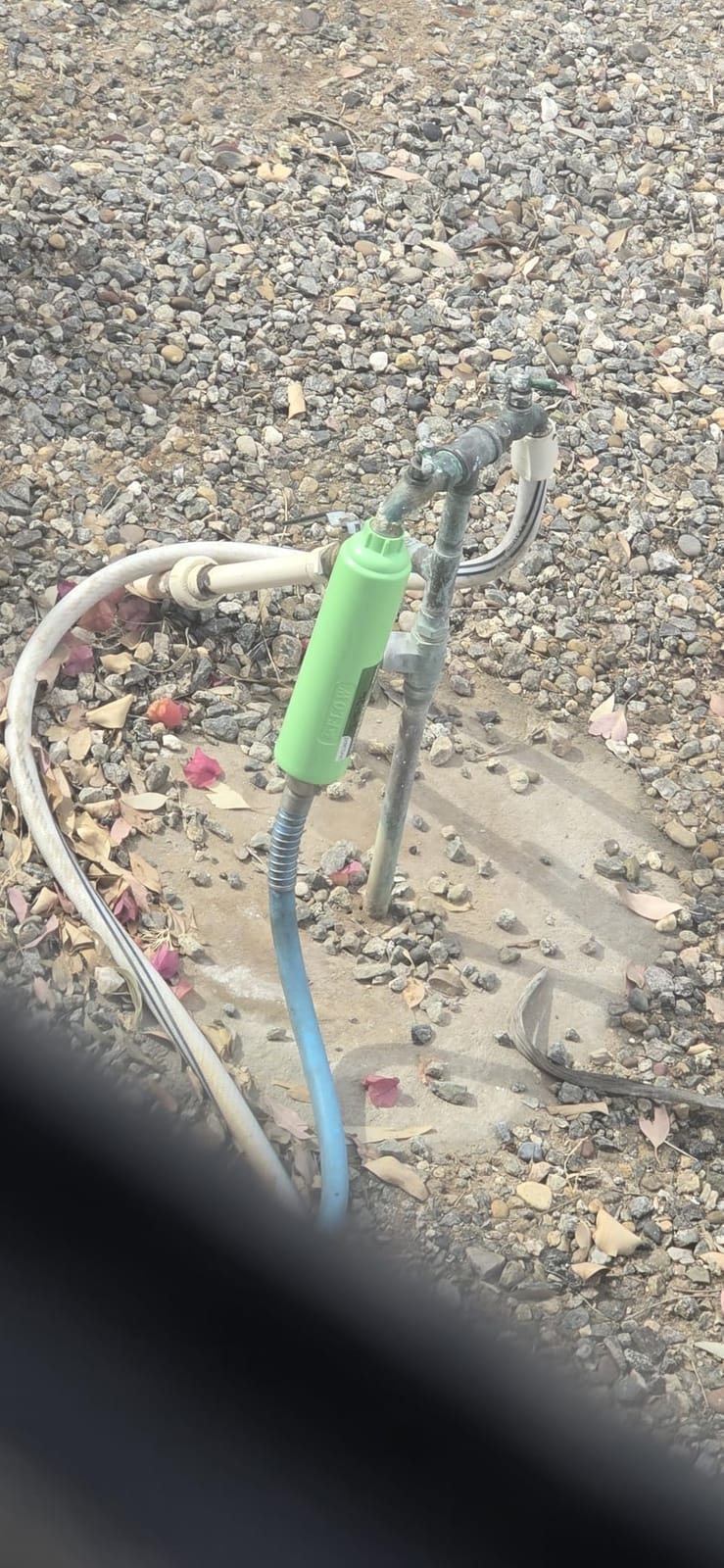
That 0.5 gpm figure is the honest catch. Owners repeatedly point out that it is slower than premium high-flow inline filters, and on a full-size motorhome with a shower and a kitchen sink running, you will feel the difference on a low-pressure campground spigot.
The 4.5 average across 3470 reviews is held up by consistency rather than excitement. Several owners describe it as their third reorder, which tells you more about supply satisfaction than any single glowing review would.
Matching the filter to your spigot pressure
A 0.5 gpm service flow is workable at a site with strong municipal pressure and frustrating at a trickle-fed spigot. If you have been fighting low campground pressure, pair this with a pressure regulator set at 45 psi upstream of the filter rather than blaming the filter.
If your shower is already the weak point in the system, look at the flow-rated options on this list instead. The 1 gpm Culligan and the 1.5 gpm FRIZZLIFE exist precisely because a full-timer running two fixtures at once needs the headroom.
What the RVGUARD does not remove
It is a chlorine, taste, odor and sediment filter. There is no virus stage, no cyst stage and no mineral stage, so a boil water notice still means boil the water or find another source. The 34F to 100F operating range is also worth noting if you winter in a cold climate and change filters outdoors.
Each filter has a three-month lifespan, and the first-use carbon discharge is expected. Flush until the water runs clear before you fill the tank, or you will be drinking carbon fines for the first gallon or two.
4. AQUA CREST RV Inline Water Filter – Best NSF Certified Inline Set
AQUA CREST RV Inline Water Filter, Garden Hose & Camper Water Filter
- Certified to both NSF/ANSI 42 and 372
- Pressure tested to 400 PSI and 100000 pulse cycles
- Rotating 360 degree hose protector with copper heads
- Tool-free install in about five minutes
- 0.5 gpm flow feels slow on a full-size hookup
- Shower and sink pressure drops on some sites
- Female thread depth is too deep for some hydrants
AQUA CREST is the inline set that gets the certification question out of the way. It is NSF certified to both NSF/ANSI 42 and NSF/ANSI 372, which is uncommon in this category and the reason it earns a place on a full-time list where source water is unknown.
The media is a non-woven fabric layer paired with KDF and advanced coconut shell granular activated carbon, and the claims cover turbidity, cadmium, heavy metals, hydrogen sulfide, iron and mercury alongside the usual chlorine and taste work. Several owners also use it for plants and pools.
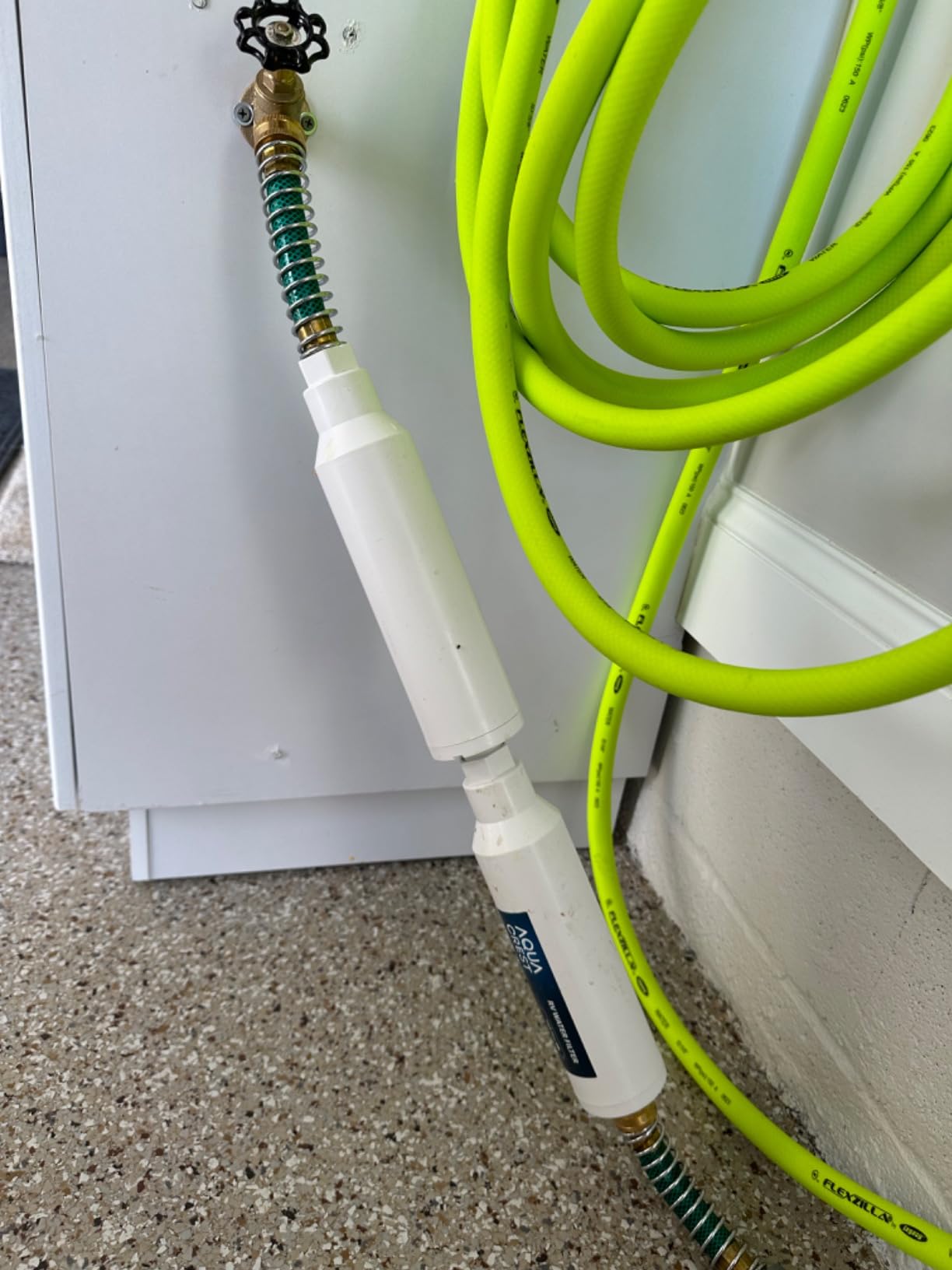
Build quality is the quiet strength here. The unit is tested at 10 times water pressure, at 400 psi, and through 100000 pulse cycles, and it ships with a 360-degree rotating hose protector with anti-rust copper heads and a silicone gasket. Installation is tool-free on any 3/4 inch GHT hose in about five minutes.
It holds a 4.5 average across 2076 reviews, and the copy about quality and price comes up repeatedly. The most-cited drawback is the 0.5 gpm flow rate, which side-by-side testers find materially slower than the Camco TastePURE on a primary hookup.
Fitting problems you can avoid before you buy
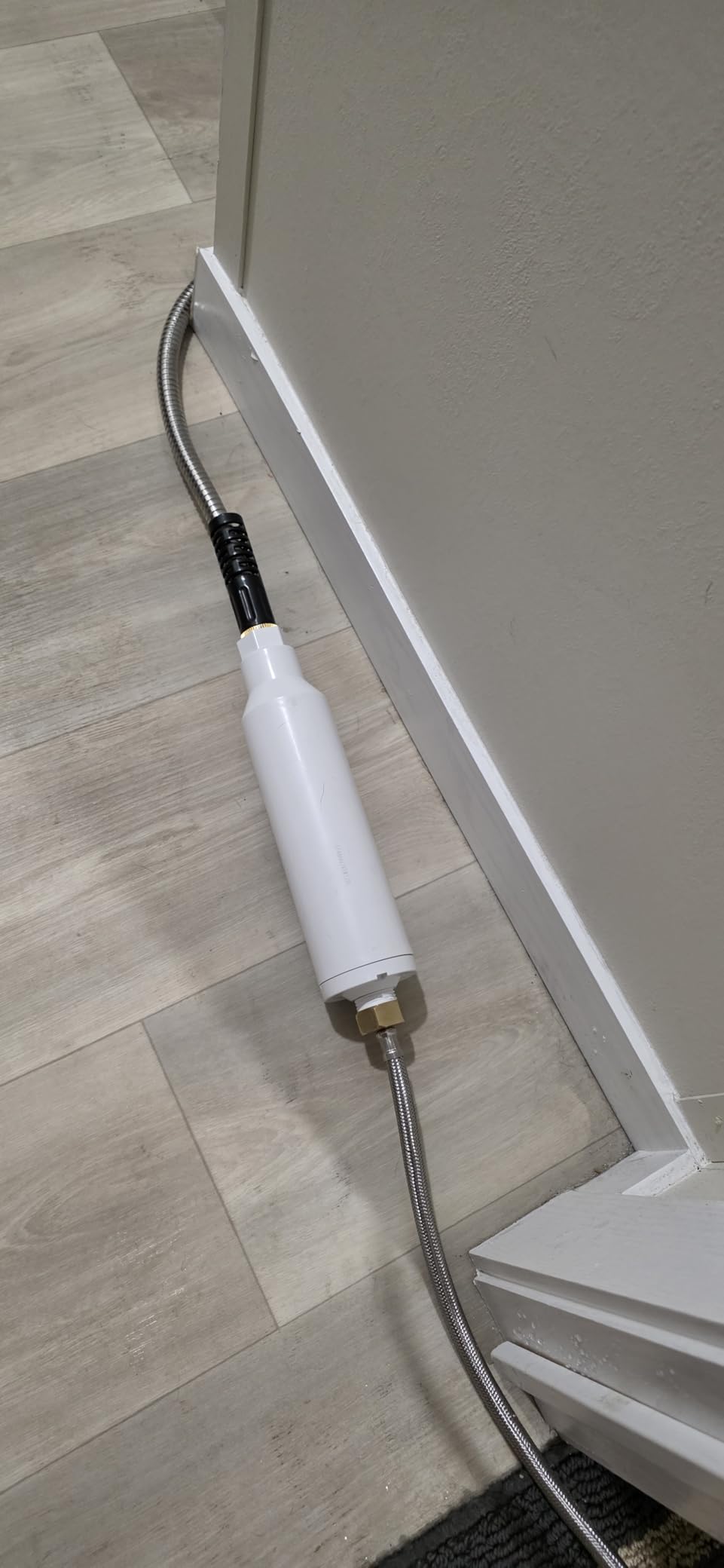
The clearest complaint in the reviews is female thread depth. On some hydrants and some RV park pedestals the female threads are too deep, the connector bottoms out, and the plastic hex gets chewed. Check your site fittings against the connector before you rely on this as your only filter.
If you travel internationally, note that the 3/4 inch GHT pattern is a US standard and will not mate with European fittings without an adapter. That is true of most of the inline filters here, but it is worth confirming before a cross-border trip.
What this filter does not do
It does not soften water, so the white rings in your glasses stay. It does not address viruses, and the 0.5 gpm flow means you should not pair it with a shower and a sink at the same time on a marginal-pressure site.
What it does give a full-timer is a certified four-pack that covers a year of daily use, plus a hose protector that will not kink at the connector. That combination of certification and hardware is why it sits this high on a full-time list.
5. Beech Lane External RV Dual Water Filter – Best External Canister Setup
Beech Lane External RV Dual Water Filter System, Leak-Free Brass Fittings, Mounting Bracket and Two Filters Included, Sturdy Construction is Built to Last
- Only true dual-stage inline option in this group
- Brass fittings resist the cracking plastic connectors suffer
- External bracket keeps heavy canisters out of the living space
- Lifetime warranty for a full-timer horizon
- Capsules accept any brand of matching specification
- Bulkier and heavier than a hose filter and needs exterior space
- Higher total cost once replacement filters are added
- Cartridge swaps are more involved than an inline change
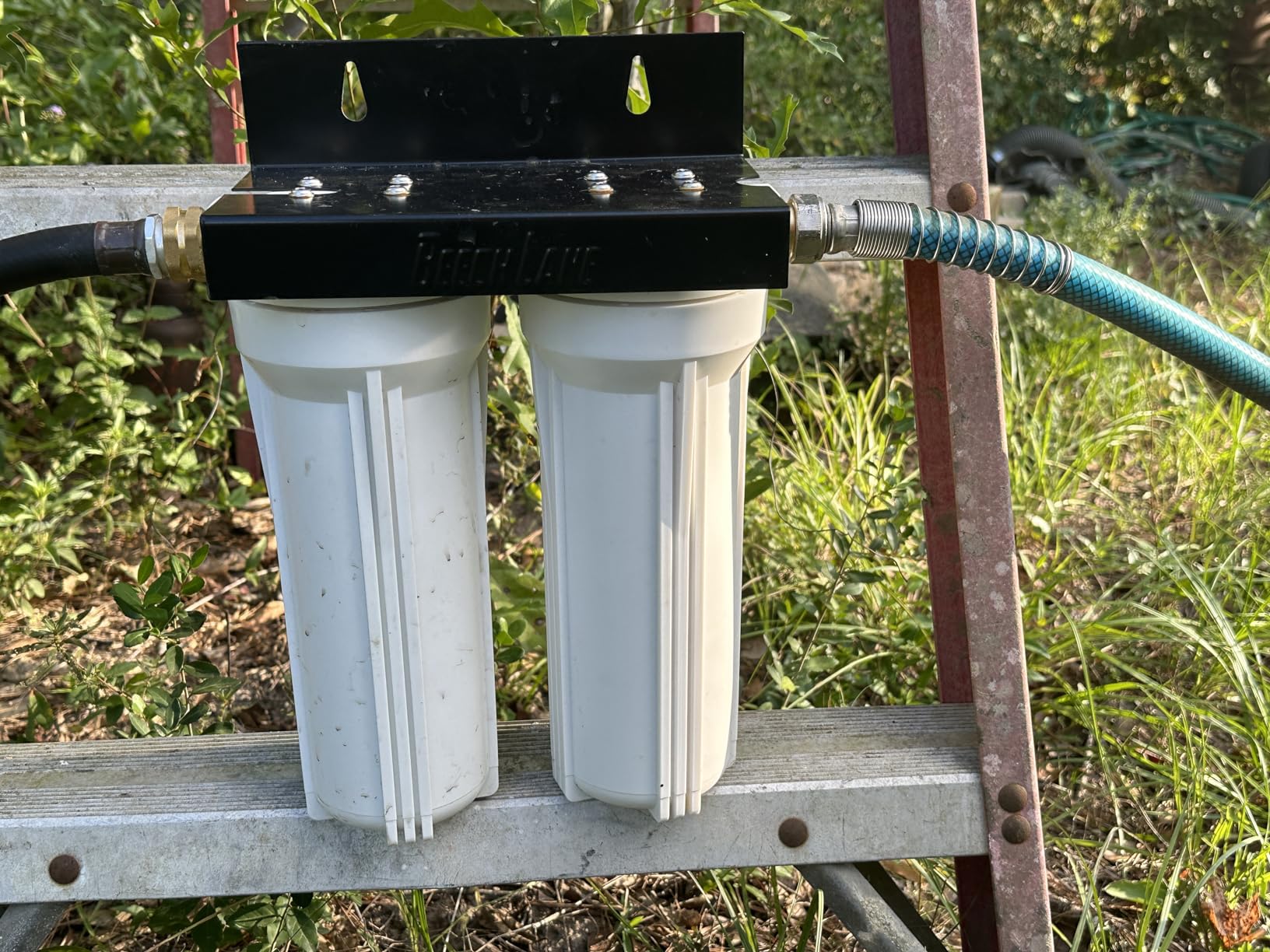
The Beech Lane system is the first step up from a hose filter, and it is the architecture most full-timers end up at: a 5 micron sediment stage feeding a 0.5 micron carbon block stage in two external canisters, mounted outside the living space where the weight does not matter.
Two stages means the sediment cartridge protects the carbon block from the sand and rust that would otherwise blind it quickly. On a route that includes well water, questionable municipal sources or older campground infrastructure, that ordering is the whole point of the extra stage.
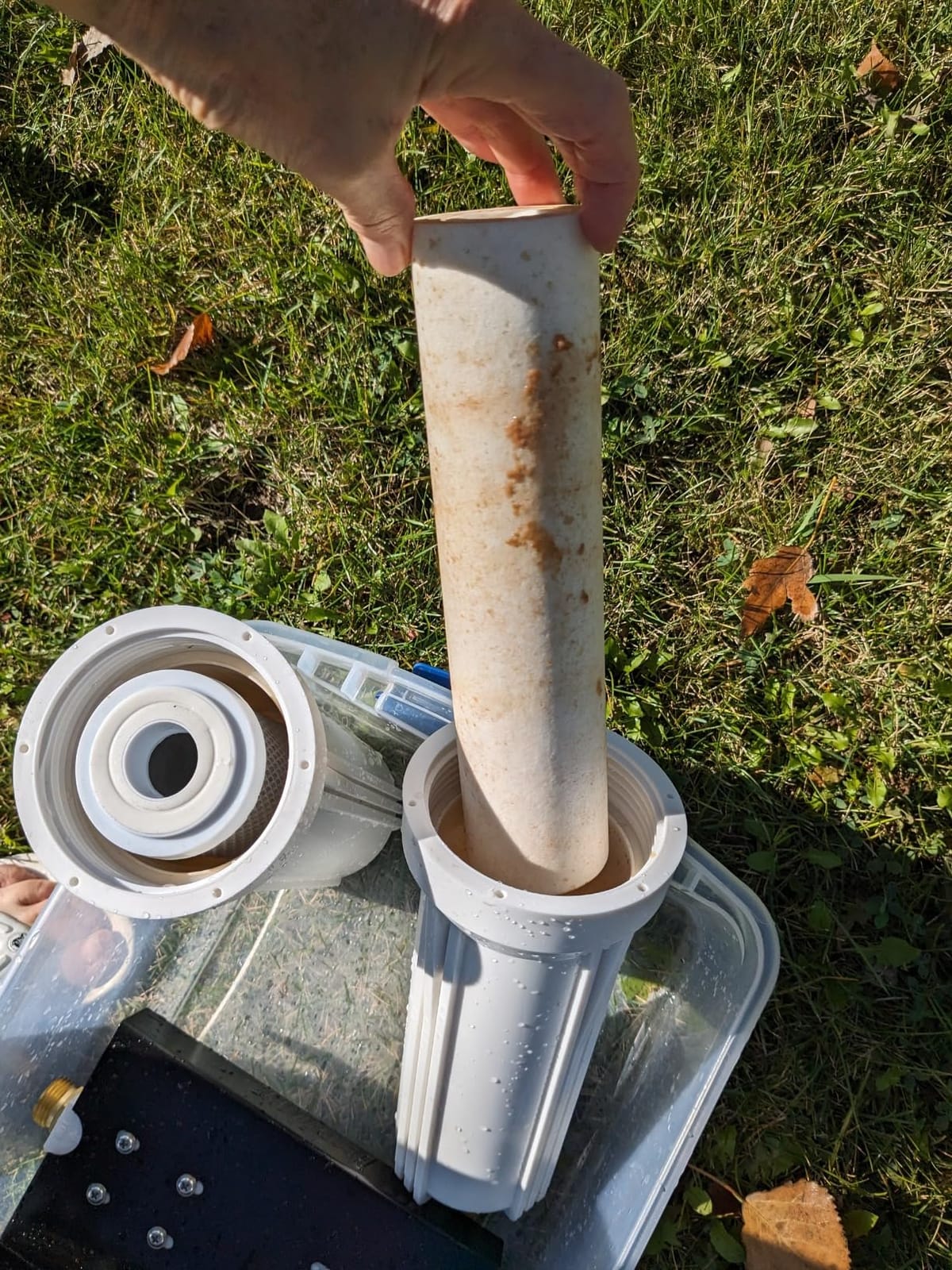
The fittings are 3/4 inch lead-free brass rather than plastic, and that is a meaningful upgrade for a rig that gets shaken for years. Reviews that compare this to hose filters credit the brass fittings and the lower leak rate more than anything else.
It is rated for water with a TDS level up to 2000 ppm, which is a wider envelope than most of the inline filters here. The mounting bracket and a removal wrench are included, and the cartridges are interchangeable with any brand of matching specification, so there is no lock-in on the consumables.
Space, weight and where it mounts
This is an external canister system, so plan the location before you buy. It is bulkier and heavier than a hose filter and needs a clear exterior bay with drainage, away from anything you do not want wet. Under-slab or bay-mount installs are common on larger rigs and awkward on Class B and C models.
The reward for that space is a system you can expand. Because the cartridges take any brand at the same specification, you can run a metal trap ahead of the carbon block later, or move to a finer carbon stage, without replacing housings.
What a dual canister does not remove
Two fine stages do not make water sterile. There is no virus stage and no UV, so a boil water notice is still a boil water notice. The 0.5 micron carbon block improves taste and odor and traps fine particles, but it does not kill organisms.
The lifetime warranty is the real headline for a full-timer. You buy the housings once, and after that your ongoing spend is cartridges. A big part of the total cost of a Beech Lane system is simply the two replacement filters that come with it, so budget for that from day one rather than being surprised at the first change.
6. lifeegrn RV Water Filter – Best Budget Inline Filter
- Lowest cost in this roundup at a 4.6 average
- Tool-free hookup with no leak reports
- Clear taste and odor improvement reported
- Compact and light enough to store easily
- Two-pack covers about six months
- Filtration claims lack a stated micron rating or standard
- Three-month cartridge life means frequent changes
- Third-party certification detail is sparse
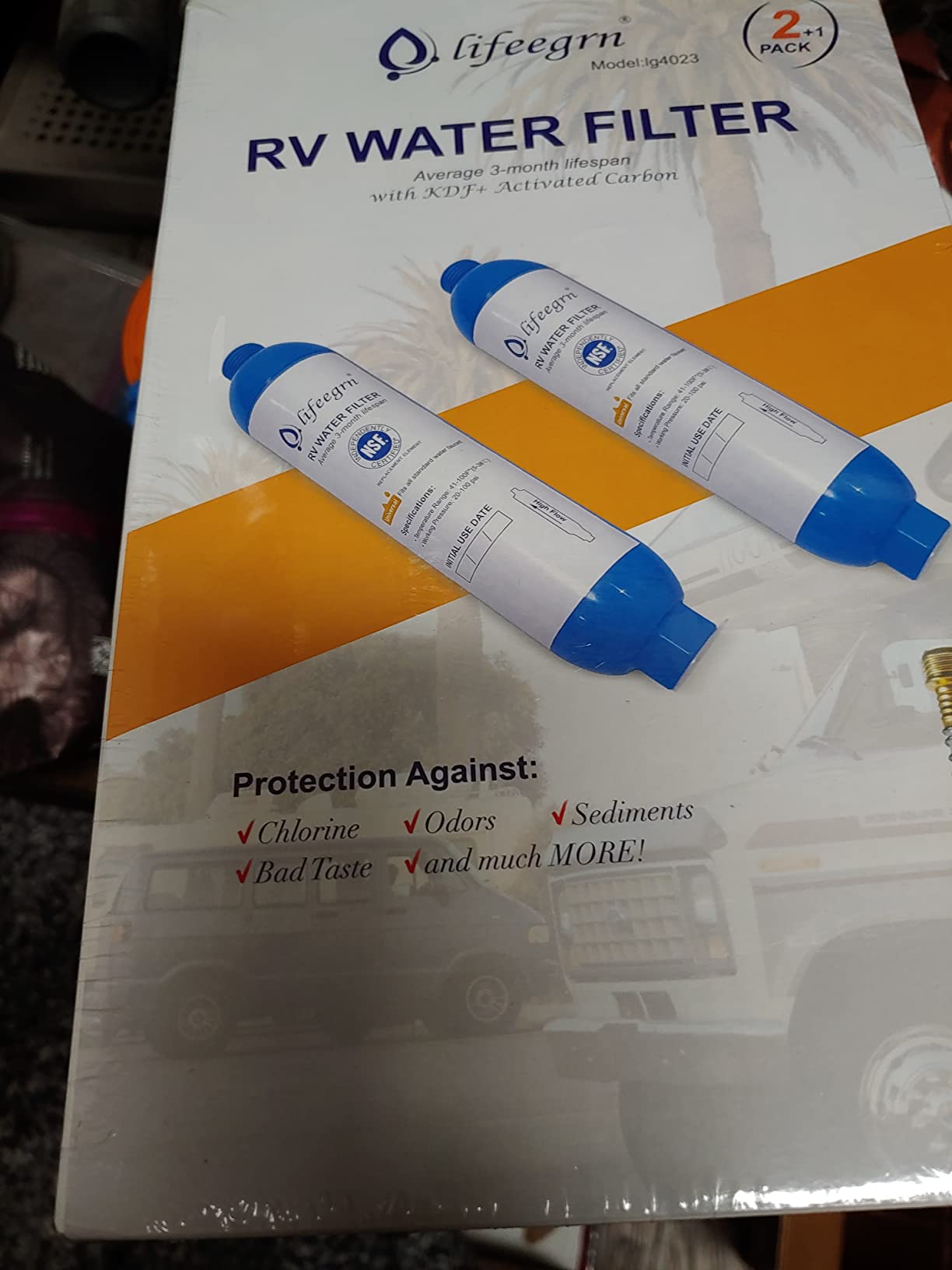
The lifeegrn is the budget pick, and at 4.6 across 1405 reviews it is doing something unusual for the cheapest filter in the group: holding a rating that matches several much costlier systems. For a first-year full-timer testing whether they enjoy cartridge maintenance, it is a low-risk place to start.
Construction is a multi-layer structure with a mister filter to stop solid particles reaching the nozzle, built on carbon fiber media. The connection is tool-free to any standard pipe, faucet or garden equipment, and the housing measures in at just over 10 inches long and under 2.5 inches wide, so it stores in a small bay without a fight.
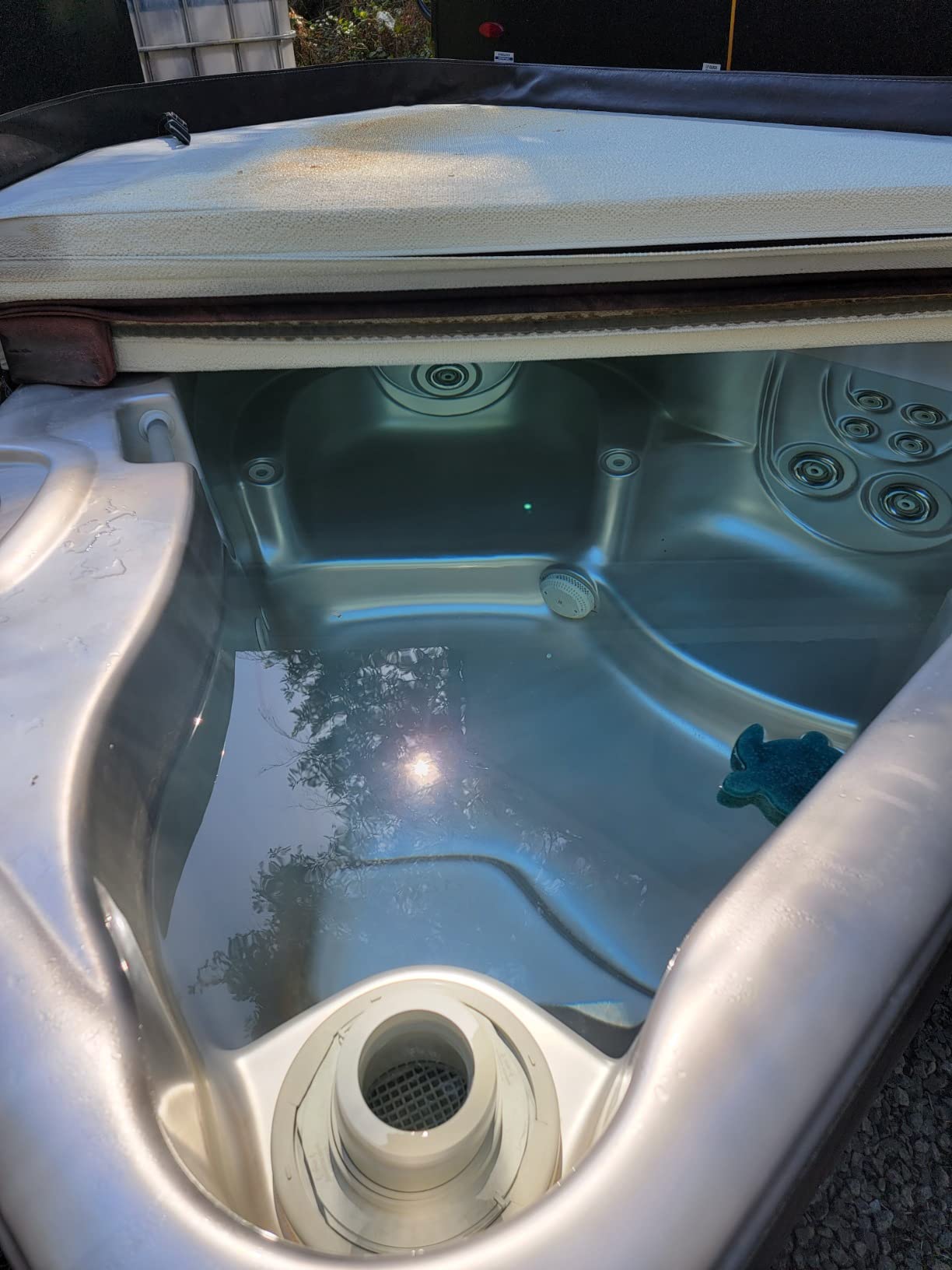
Owners report a clear improvement in both taste and odor, and several switched to it from more expensive filters without regretting the change. Weight is low enough that it does not demand a reinforced mount, which matters in a smaller Class B build.
The set is a two-pack, and at roughly three months of average lifespan per filter that covers about half a year. For a full-time schedule that is a reorder twice a year, and you should count on it.
What the spec sheet does not tell you
The gap here is certification. Unlike the Camco and the AQUA CREST, this listing does not state an independent NSF/ANSI 42 or 53 certification, and there is no published micron rating for the media. That is not a disqualifier for a known potable source, but it is a real difference when you are filling a tank somewhere you cannot verify.
Reports on hard water are mixed. If your route is dominated by hard water, the budget tier is where scale problems start showing up in kettles and shower glass, and no carbon block fixes that.
Where it belongs in a two-stage build
This is where the cheap inline filter really earns its place. Put it on the campground side as a pre-filter ahead of a dedicated drinking stage, and it handles sediment and chlorine so the finer stage downstream has less to catch. Several full-timers on the forums build exactly this shape with garden-hose quick connects between the two.
What it does not remove is the standard list: no viruses, no cysts, no hardness, no metals reduction claims that are independently certified. As a pre-filter that is fine. As your only barrier to unknown water, we would add a second stage.
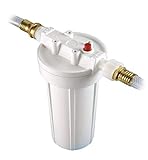
7. Culligan RVF-10 External Water Filter – Best Inline Flow Rate
- 1 gpm flow beats most inline filters on the market
- Recognized brand with a 5-year limited warranty
- D-15 cartridge and connector hose included
- Compact housing saves interior space
- Tool-free install in seconds
- Targets taste odor and chlorine only
- 250 gallon capacity is modest for daily use
- Replacement D-15 cartridges bought separately
The Culligan RVF-10 solves a specific full-time problem: shower pressure. Its maximum flow rate of 1 gpm is double what most inline filters on this list manage, and on a low-flow campground spigot that headroom is the difference between a usable shower and a frustrating one.
The cartridge is a D-15 granular activated carbon element rated at roughly 250 gallons or three months. It connects to the RV fresh water line with a 1-foot connector hose, tool-free, and the whole thing installs in seconds without touching your plumbing.
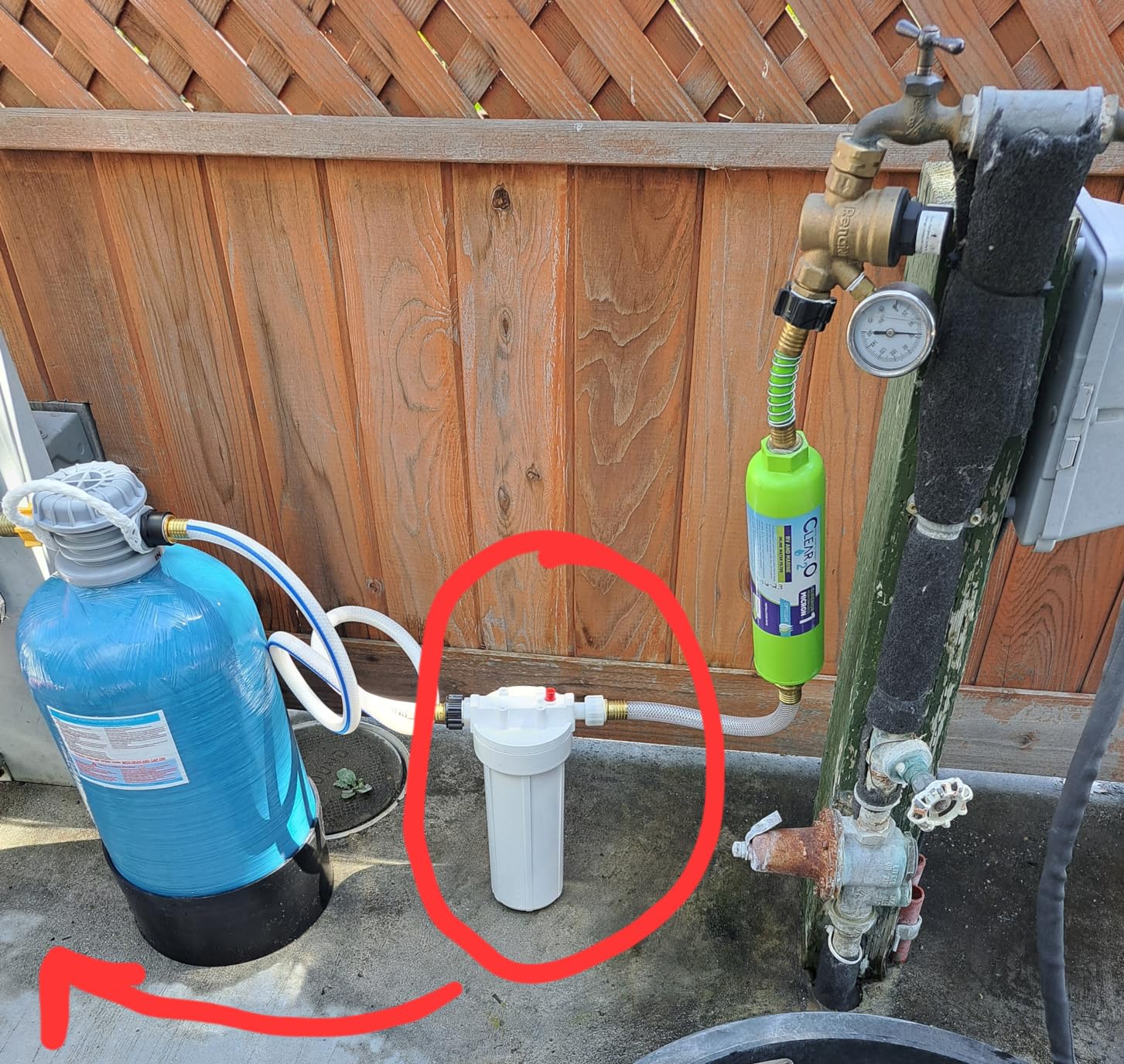
The housing is a slim plastic design built to resist cracking in outdoor RV conditions, and it measures under 5 inches square by about 12 inches long, so it fits inside a cabinet rather than demanding an exterior mount. Upper temperature rating is 100F, with TDS support up to 300 ppm, and it carries a 5-year limited warranty.
It holds a 4.6 average across 1200 reviews. Owners single out the tool-free setup, the compact footprint and the flow rate, and the 250 gallon cartridge capacity is the most common limitation cited.
Do the capacity math before you commit
250 gallons sounds like a lot until you do the arithmetic for a full-timer. Two people drinking, cooking, showers and a pet on board will move through that in a couple of weeks at a normal daily rate, which means roughly twenty cartridge changes a year rather than a few.
That is the trade: this filter moves water well but holds relatively little. If your route includes long stretches where you are parked and using a lot of water, match the filter to a higher-capacity stage behind it rather than swapping the RVF-10 out every fortnight.
What it does not remove
Read the spec sheet carefully before you assume. It is a carbon filter for chlorine, taste and odor, and it does not address sediment, lead, cysts or viruses. On water with visible grit you want a sediment stage ahead of it, which is exactly the inline-pre-filter-plus-drinking-stage pattern full-timers build.
It is also not a softener. Hard water passes straight through, and the plastic housing can degrade after extended ultraviolet exposure, so mount it shaded if you park outdoors in bright sun for months at a time.
8. FRIZZLIFE MV99 RV Water Filter – Best Inline Filter for Lead and Heavy Metals
- Only filter here certified to NSF/ANSI 53 for lead and metals
- 1.5 gpm flow exceeds every other inline option
- Lead-free brass fittings that do not crack
- Twist-in cartridge changes in seconds
- Reusable housing cuts plastic waste
- Costs more than most inline filters here
- Replacement FZ-2 cartridges bought separately
- Larger housing needs more mounting space
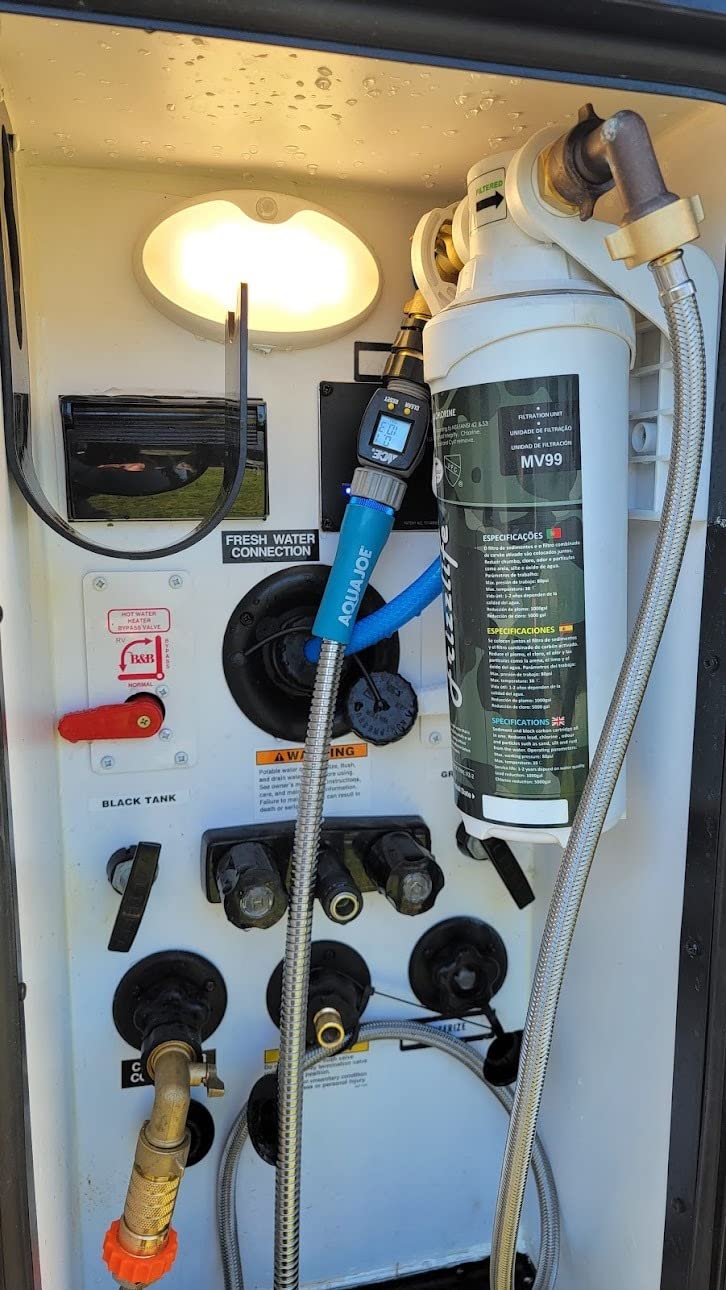
The FRIZZLIFE MV99 is the one to look at if your concern is metal rather than taste. It is IAPMO R&T certified to NSF/ANSI 42 and NSF/ANSI 53, and NSF/ANSI 53 is the standard that covers lead reduction, which no other inline filter in this roundup carries.
Lead matters more than most guides admit. Older campground pedestal plumbing, some well systems and a lot of private water lines still use lead-soldered joints, and a full-timer draws from hundreds of them a year. A filter certified to reduce lead is a different category of assurance from one certified only for taste and chlorine.
The cartridge is a 0.5 micron composite activated carbon block on a reusable housing, and the 1.5 gpm maximum flow rate is the highest of any inline filter here. The fittings are lead-free brass 3/4 inch connections, compatible with a standard garden hose.
Two details make it a good fit for daily use. The auto shut-off design lets you swap the cartridge without shutting off the supply, and the twist-in inner core changes in about three seconds with the housing reused. It also ships with a metal-peg holder and wall-mount screws.
Cost per cartridge versus cost per housing
This is one of the costlier inline filters on the list, and the FZ-2 replacement cores are purchased separately. Over a year of daily filtering that can look expensive next to a disposable hose filter, so the honest comparison is against a filter you replace entirely.
Because the housing is reused and only the inner core is swapped, the long-run math is different from a throwaway inline unit. If you keep the same mount for three years, the reusable shell has already paid for itself in avoided plastic and avoided fittings.
Where it sits in the whole-RV picture
At 1.5 gpm it handles a shower and a sink better than anything else inline, and it runs inside a 5 inch by 5 inch by 15 inch body, so it needs a real mounting surface rather than a hose loop. Shelf life is rated at 730 days, and TDS support is up to 300 ppm.
What it does not remove is the same list as most: no virus kill, no cyst reduction to the 0.2 micron absolute level, no hardness reduction. If you need pathogens, you need a stage designed for them.
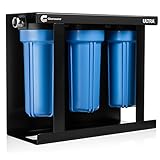
9. Clearsource Ultra RV Water Filter System with VirusGuard – Best for Virus Protection
Clearsource Ultra RV Water Filter System with VirusGuard – Ultra Protection Against Viruses, Bacteria & Cysts
- Only system here that reduces viruses alongside bacteria and cysts
- Three stages cover sediment taste chlorine and pathogens in one pass
- 4.5 gpm flow well above every inline filter
- Metal chassis and stainless fittings built for road use
- Canister wrench included for routine changes
- By far the most expensive option in this roundup
- Weighs 32.3 pounds and needs dedicated exterior space
- Replacement VirusGuard three-packs add ongoing cost
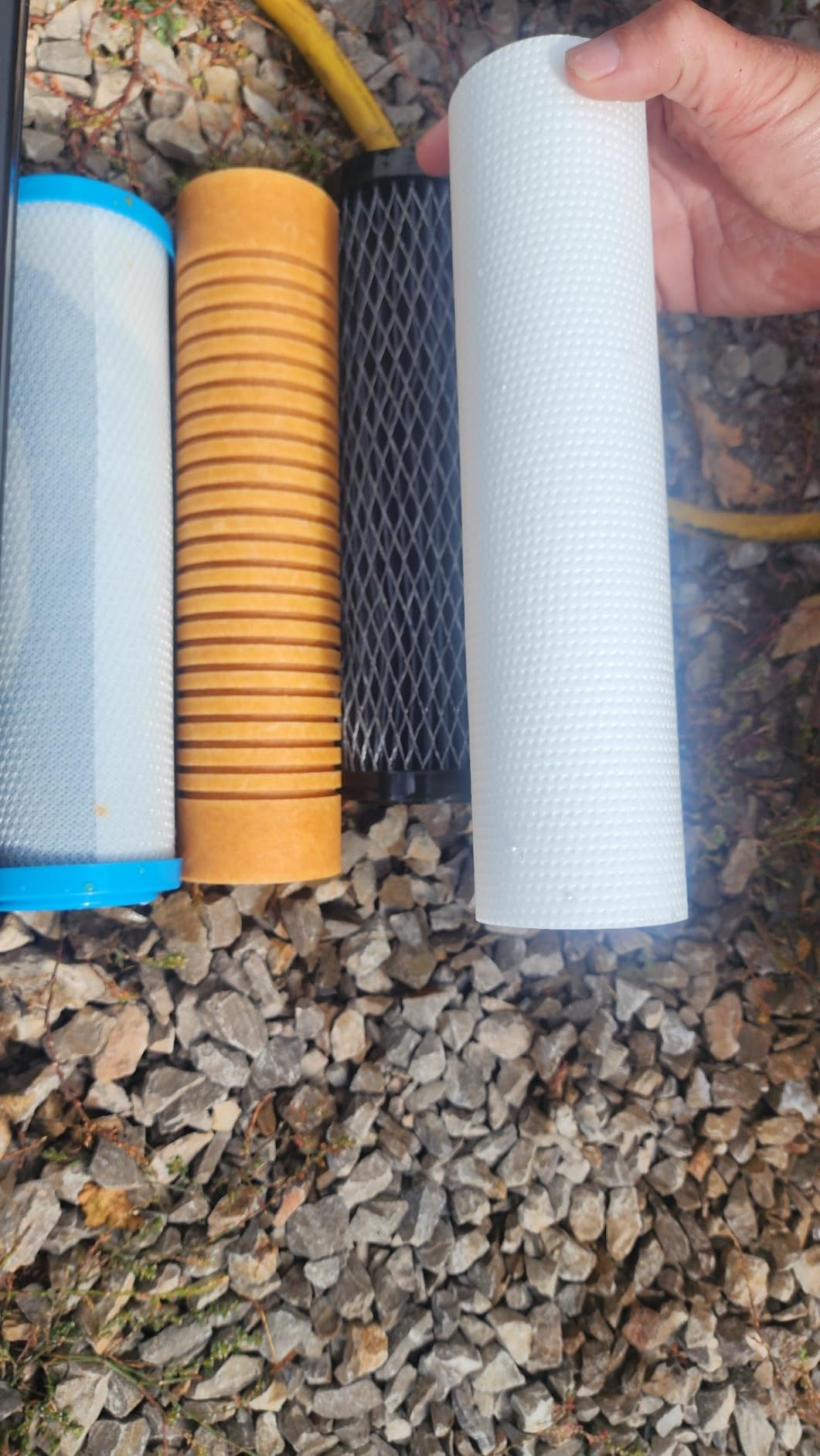
The Clearsource Ultra is the only system here that takes a run at viruses. The third stage, VirusGuard, uses an electrically charged coating technology to trap viruses, on top of a 5 micron sediment stage and a 0.5 micron coconut shell carbon block. Most inline filters stop at chlorine, taste and sediment.
Whether you need that depends on your routes and your household. A family with small children, a pet drinking from the tap, or a full-time RVer pulling from a lot of smaller and older water systems has a stronger case for a virus stage than a couple filtering two maintained campground pedestals.
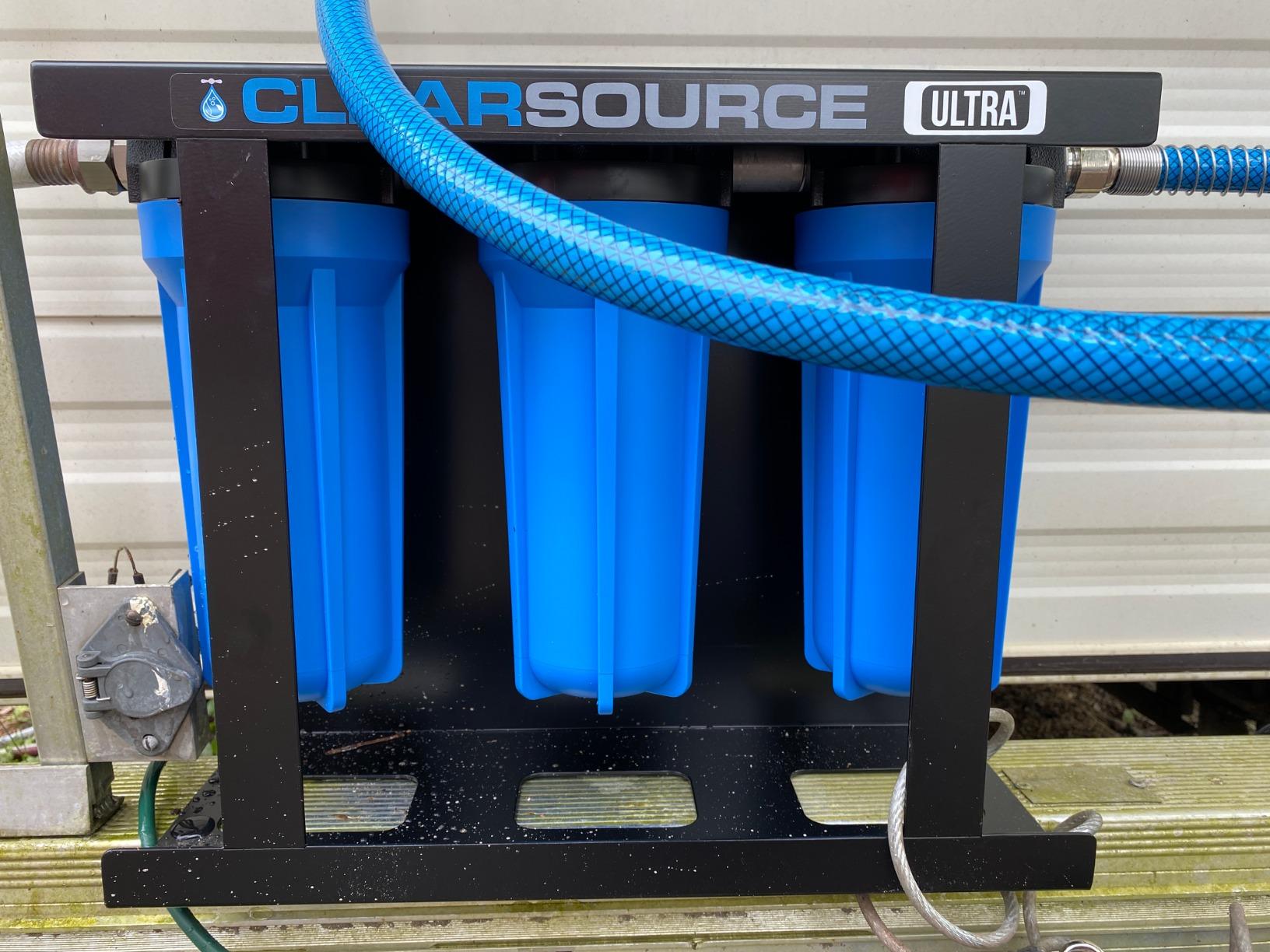
The hardware is built like a permanent installation. A powder-coated metal chassis with stainless steel fittings, oversize canisters and a 4.5 gpm maximum flow rate mean you can run several fixtures at once rather than filtering around a single tap. A canister wrench is included for routine changes.
It holds a 4.6 average across 735 reviews, with 84 percent five-star ratings. Owners consistently cite the pathogen coverage and the rugged construction, and consistently name the cost as the tradeoff.
Weight, clearance and honest running costs
At 32.3 pounds and 18.75 by 7.5 by 15.25 inches, this needs a planned exterior mount with real clearance underneath. Skids, slides and low ground clearance are the practical constraints, and on a smaller Class B or C the space simply is not there.
On cost, look at the genuine three-pack replacement filters with VirusGuard as a recurring line item rather than a one-off. Over a year of full-time filtering, a premium three-stage system is a meaningful annual budget line and it should be planned like one.
What it still does not do
A virus stage is not a licence to ignore a boil water notice at a campground you do not control, and no filter makes a chemically contaminated source drinkable. If the advisory is posted, the advisory wins.
It also does not soften water. Hard water passes through all three stages, so a full-timer with a water heater to protect still needs a softener or an electronic descaler, and that is a separate line in the budget.
10. Clearsource Premier RV Water Filter System – Best High-Flow Whole-RV System
Clearsource Premier RV Water Filter System – Protects Against Contaminants & Bacteria
- 0.2 micron absolute rating is the tightest in this group
- Traps bacteria such as Legionella and E. coli and cysts such as giardia
- Coconut shell carbon block for taste and smell
- 6.5 gpm flow supports whole-RV use
- 2000 gallon capacity suits daily filtering
- Premium cost for a permanent installation
- Larger footprint than inline filters need
- Manual operation with no powered option
The Clearsource Premier is built around a 0.2 micron absolute rating, and absolute matters more than nominal. Every pore is rated at that size or better, so the system captures bacteria such as Legionella and E. coli along with cysts such as giardia, and it pairs that with a coconut shell carbon block for chlorine, chloramines, VOCs, taste and smell.
For a full-timer this is the most serious non-virus system in the roundup, and the flow rate is the headline number. At 6.5 gpm it moves enough water to run a whole RV on a site spigot without turning your shower into a science experiment.
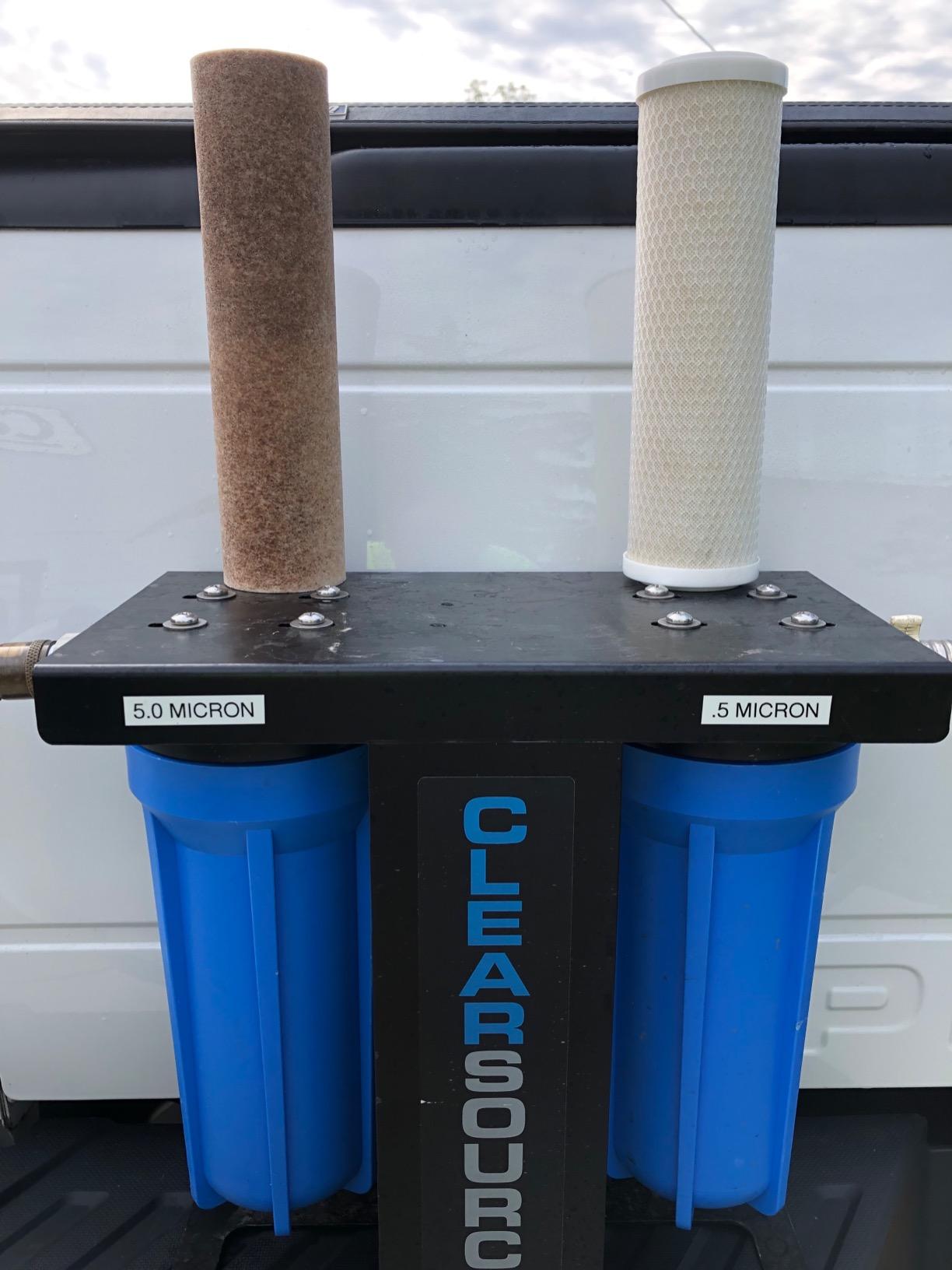
Capacity is 2000 gallons, which changes the replacement equation dramatically compared to a 250 gallon cartridge. A two-person household at a normal daily rate moves through 2000 gallons over months, not weeks, so this is the system that stops feeling like a maintenance treadmill.
The chassis is powder-coated steel with stainless steel fittings and oversize canisters. It weighs 17 pounds and measures 14.13 by 7.5 by 15.25 inches, and the 4.7 average across 389 reviews comes with comments about exceptional filtration and genuinely better taste.
Deciding whether a permanent system is worth it
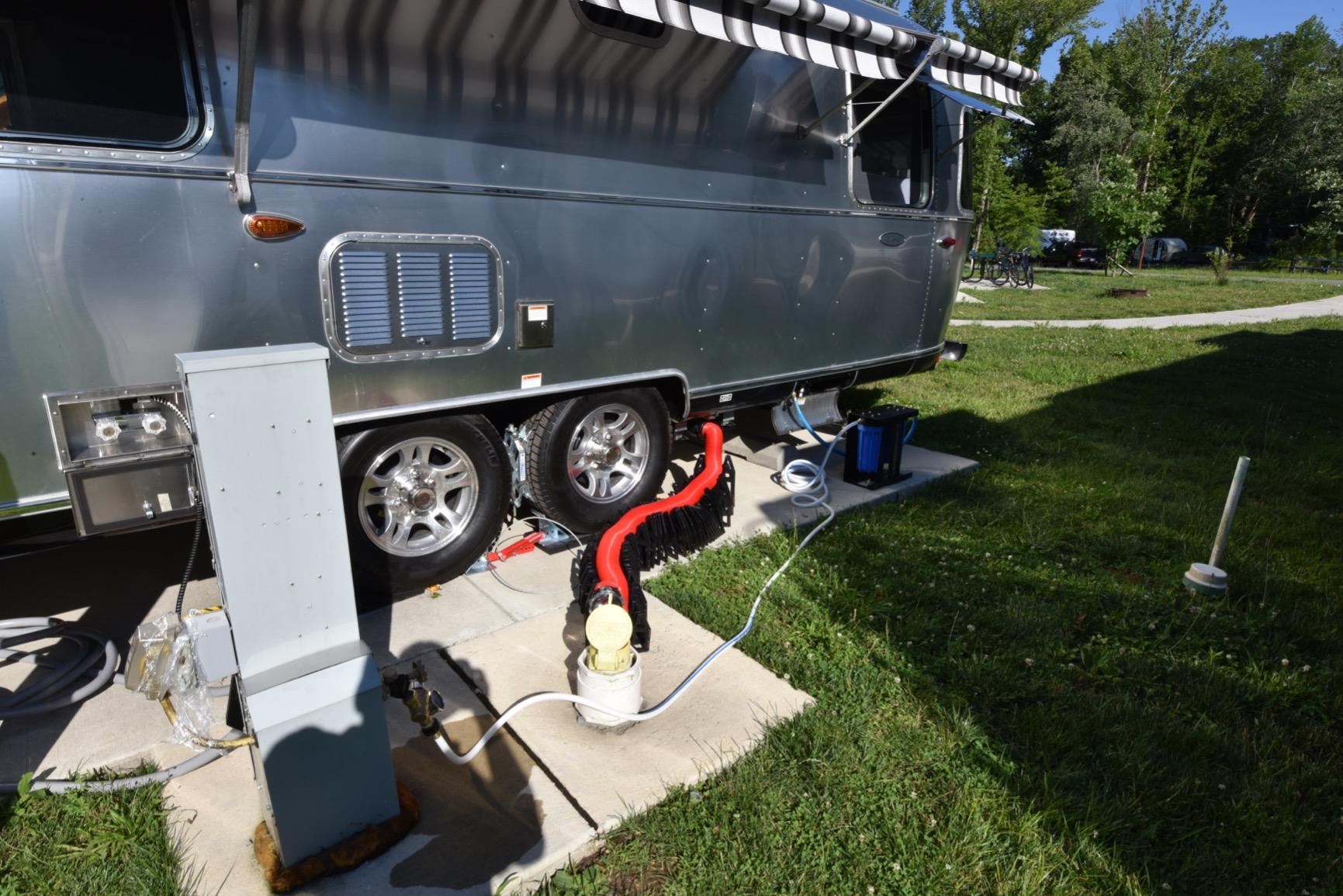
The economics only work if you filter daily, which is precisely the full-time case. A full-timer moving 300 to 400 gallons a week will get more usable life out of a 2000 gallon capacity system than a weekend camper ever would, and the higher purchase cost spreads across far more gallons.
Do the space planning early. It is heavier and larger than an inline filter, it is manual rather than powered, and it needs a mount that will not rattle. Upgrading a rig in year two is a much bigger job than planning the bay in year one.
What it does not remove
It does not reduce viruses the way the VirusGuard system is designed to, and it does not soften water or reduce hardness. On hard-water routes you are still dealing with scale in the water heater and on shower glass.
And it is not a substitute for a boil water notice. Finer filtration is not the same as a different source, so if a posted advisory covers the site you are sitting in, the advisory is what governs.
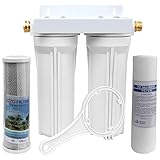
11. OKBA External RV Dual Water Filter System – Best Dual Canister on a Budget
OKBA External RV Dual Water Filter System for RVs Camper Boats Marine
- Dual-stage filtration at an entry price
- 0.5 micron carbon block for taste and fine particles
- 5 micron sediment stage catches larger debris first
- Mounting bracket and wrench included
- Brass fittings suit standard 3/4 inch hose connections
- Some owners report connection leaks needing tape and sealant
- Plastic-to-metal connections can cross-thread
- Not intended for indoor use
The OKBA system is the way into dual-stage canister filtration without stepping up to a lifetime-warranty system. It ships with two canisters, a 0.5 micron carbon block, a 5 micron sediment filter, a mounting bracket and a wrench, which is a complete install in one box.
The architecture is the same one higher-tier systems use: sediment first, carbon second. That ordering protects the finer carbon block from grit, which is exactly what you want when a full-timer is filling a tank from a source that has not been checked in a while.
It attaches to standard 3/4 inch garden hose fittings, and the housings are thick plastic with brass fixtures. That combination is heavier than a hose filter and needs an exterior or under-slab location rather than a loop of hose behind a cabinet.
It holds a 4.3 average across 669 reviews. The value proposition comes through clearly, and most owners report good results once the connections are properly sealed.

Plan for the sealing work on day one
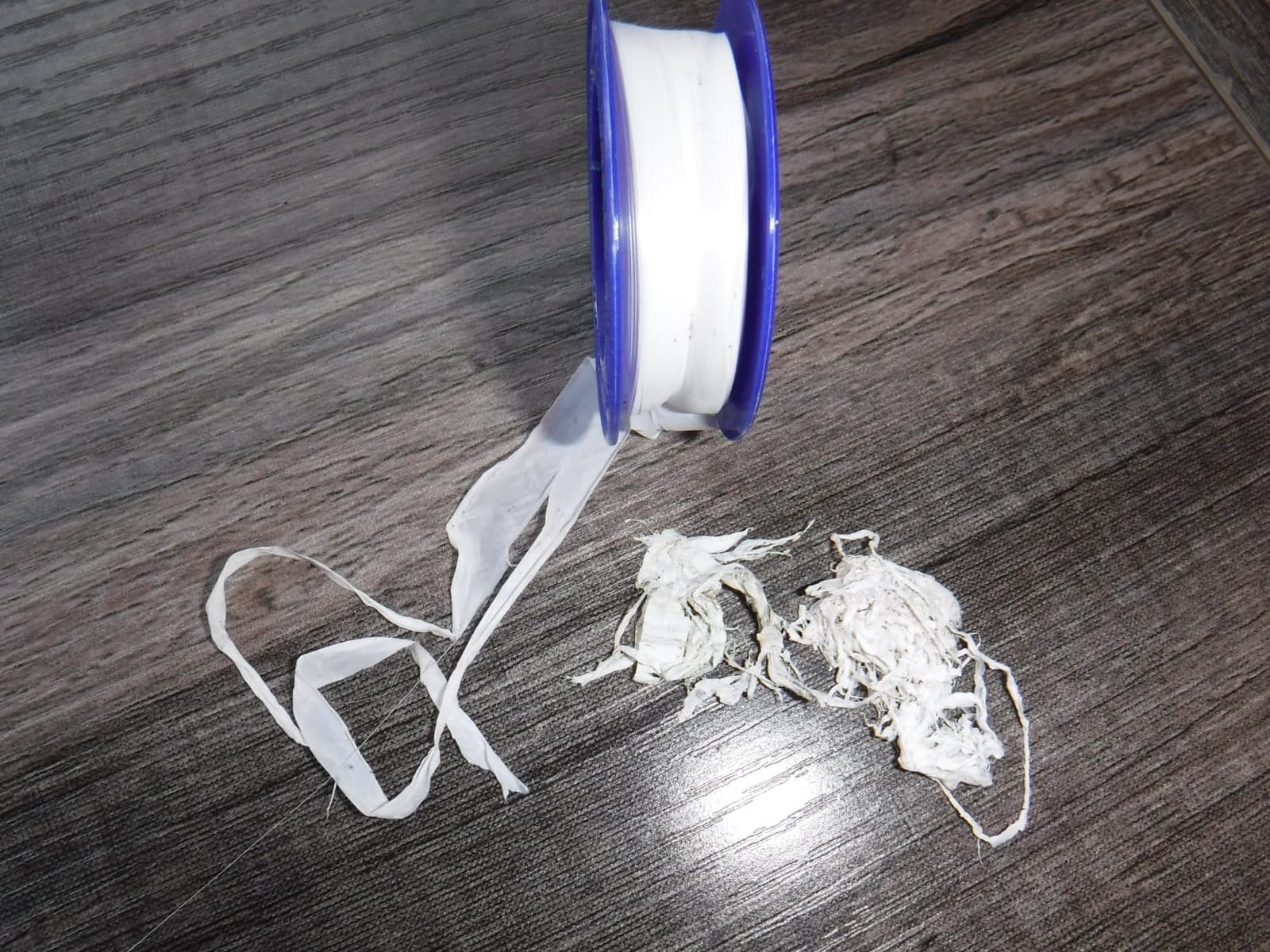
Leaks at the connections are the dominant complaint, and the fix is known. Proper tape application and a light film of silicone sealant on the threads resolves most reports, but that is a step you have to plan for, not discover at 7pm in a drizzle.
Two smaller traps are worth knowing about. The plastic-to-metal connections can cross-thread if you overtighten, and the O-rings for the filter containers are not included, so add a spare O-ring set to your parts bin. This system is not intended for indoor use, which means exterior mounting only.
Where it fits against the Beech Lane
If you are deciding between the two external dual systems, the Beech Lane buys you brass fittings, a lifetime warranty and brand-agnostic cartridges. The OKBA buys you a lower entry point and the same two-stage architecture. For a first dual-stage build that may be resold or upgraded, the OKBA is a reasonable way to learn the maintenance rhythm.
What it does not remove is unchanged: no virus stage, no 0.2 micron absolute protection, no hardness or scale reduction. Treat it as a serious pre-filter and taste solution, not as a barrier to an unknown source on its own.
12. GLACIER FRESH GFRVWP03 3-Stage System – Best for Filling the Fresh Water Tank
- Three stages ending at 0.2 micron
- NSF certified with affordable replacement cartridges
- Compact 5 inch filters on a lightweight frame
- Stainless steel garden hose quick connects
- Replacement filters cost less than comparable three-stage systems
- Quick-connect fittings are prone to leaking if not taped properly
- Rubber seals can distort if over-tightened
- Customer support is hard to reach
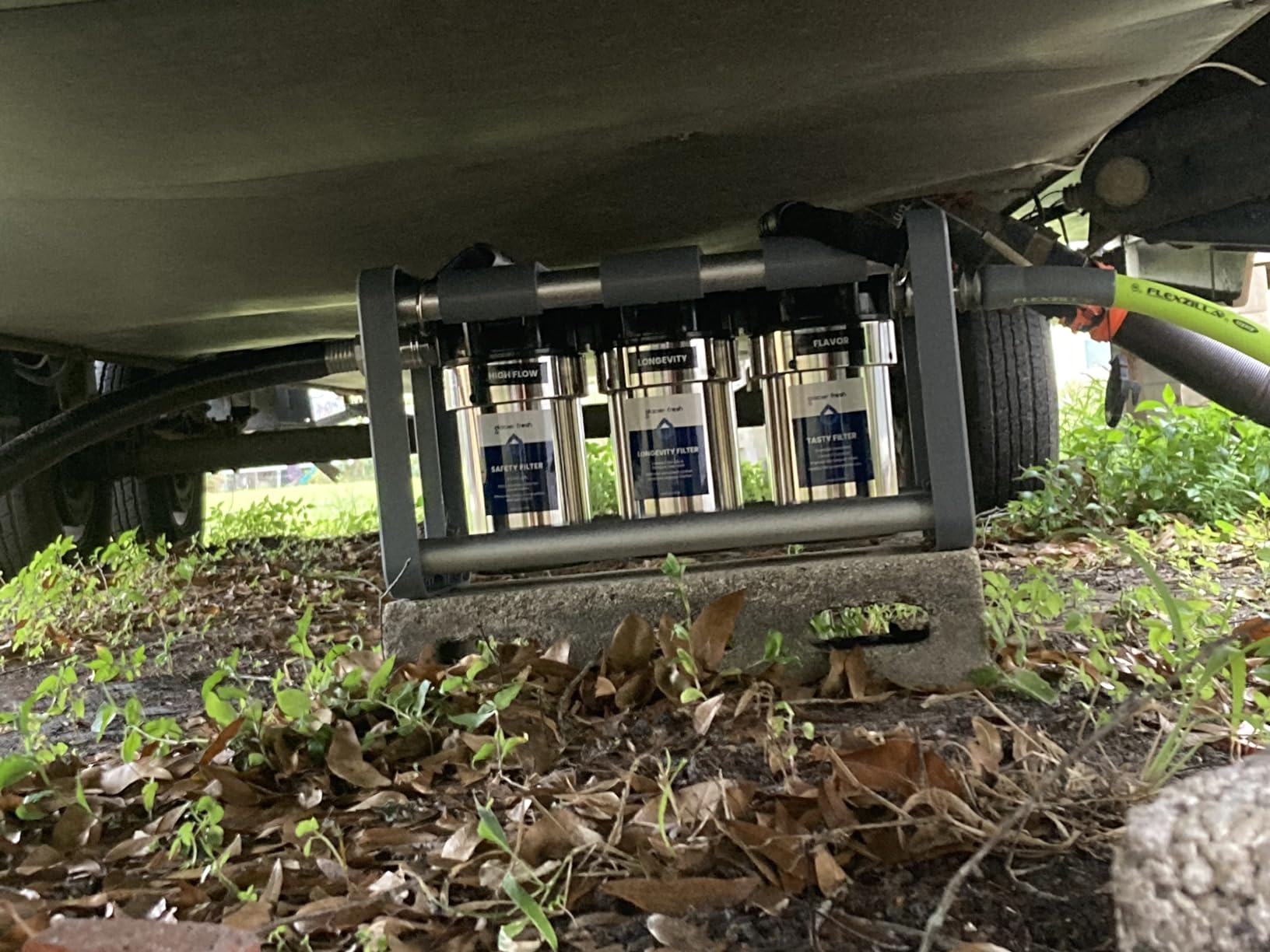
This is a tank-filling system rather than an inline plumbing system, and understanding that distinction prevents most of the complaints. It is designed to sit between a source and your fresh water hose while you fill, and the manufacturer is explicit that it should not be plumbed directly into the RV internal water line.
Filtration runs 0.2 micron high-flow first, then coconut shell carbon for taste, then a sediment filter stage. The sediment stage at the end of the chain is unusual and it works well in practice, producing 3 to 4 months of cleaner source water on a typical fill rate.
The frame is an ultra-lightweight polycarbonate carbon fiber build with compact 5 inch filters, and the whole assembly stands 21.5 inches tall. Operating range is 40F to 125F, with a recommended inlet pressure of 0.4 to 0.8 MPa, and stainless steel garden hose quick connects handle the city or well hookup.
It holds a 4.4 average across 317 reviews. Owners like the taste improvement, and the replacement cartridge cost is regularly cited as lower than comparable three-stage systems, which matters when you are changing filters several times a year.
Getting the quick connects to seal
Almost every complaint about this system comes down to the same cause. The brass thread receivers paired with non-brass quick connects seal badly unless you wrap them properly, and the fix is a careful tape job: firm finger-tight plus a small amount more, no more.
Two related warnings. The rubber seals on the adapters distort if you overtighten, and some owners have received defective quick-disconnects, so check every connection under pressure before you trust a long fill. Customer support being hard to reach is the other thing full-timers mention, another reason to keep spare connectors on board.
Why tank-fill placement is the smarter build
Filtering at the fill, rather than at the tap, protects your entire fresh water tank at once. Every glass, every ice cube and every shower downstream benefits, and you avoid adding inline pressure drop to a plumbing system that already has narrow diameter lines.
What it does not remove is still worth knowing: no virus stage, no hardness or scale reduction, and no protection for water already in the tank. A filter at the fill cannot retroactively clean stored water, which is the reason tank sanitation belongs in the same routine as filtration.
Types of RV Water Filters You Should Know
Five filter architectures cover almost every full-time use case, and the right one depends on whether you are filtering at the source, at the tap, at the fill or treating the whole rig.
Inline hose filters are the simplest option. They sit between your potable water hose and the campground spigot, and they are almost always carbon and sediment filters working at 20 microns. Camco, GLACIER FRESH, RVGUARD, AQUA CREST, lifeegrn, Culligan and FRIZZLIFE all fall into this group, and they are the right answer when you are on maintained municipal water.
Canister or external dual systems use two or three replaceable cartridges in housings you mount outside the living space. The classic order is sediment first, then a fine carbon block, so the coarse stage protects the fine one. Beech Lane, OKBA and GLACIER FRESH’s three-stage unit fall here, and canister systems suit rigs that are parked for long stretches or drawing from harder sources.
Carbon block filters are a medium rather than a shape. Carbon block adsorbs chlorine, taste and odor, and when paired with KDF media it also reduces iron and heavy metals. The tradeoff is that carbon media eventually saturates, which is why every carbon filter on this list carries a service life measured in months rather than years.
Reverse osmosis is the most thorough drinking-water treatment and the least convenient in an RV. An RO membrane removes dissolved solids, which fixes taste completely, but it produces a rejected water stream, needs more pressure than an RV system usually delivers comfortably, and strips the minerals people drink for a reason. If taste is your main complaint, our picks for the best reverse osmosis water filters are worth a look, though a full-time RVer should weigh the water waste carefully. A whole-RV softener or descaler is a different job, and our best whole house water filters guide covers the fixed-home version of that decision.
UV and pathogen stages handle what carbon cannot. A UV chamber neutralizes organisms that pass through it, and a charged-coating stage like VirusGuard traps them physically. The Clearsource Ultra uses the latter, while the Clearsource Premier relies on a 0.2 micron absolute rating instead. Neither removes viruses as reliably as a true UV chamber, and neither replaces a boil water advisory.
Water softeners sit alongside all of these rather than instead of them. Ion exchange resin trades hardness ions for sodium and does nothing about chlorine or sediment, which is why full-timers with hard water run a softener for scale and a filter for taste. For drinking-water pH preferences, the best alkaline water filters are a separate category from anything on this list.
Replacement Schedule and Annual Filter Cost for Full-Time Living
A weekend camper replaces an inline cartridge once or twice a year. A full-timer filtering every day needs a different plan, and this is the section no other RV filter guide publishes.
Most inline cartridges on this list are rated at roughly one camping season of about three months, which works out to four changes a year per filter. A two-person full-timer moves somewhere around 300 to 400 gallons a week including showers, cooking and drinking, so a year of full-time use can run to 15,000 to 20,000 gallons through your plumbing.
Run the arithmetic on your cartridge capacity against that volume. The Culligan D-15 is rated at 250 gallons, so it needs many changes across a year. The Clearsource Premier is rated at 2000 gallons, so it needs a fraction as many. The same water, a fraction of the interruptions and a fraction of the annual consumables.
The practical move is to work out your weekly volume first, then divide your cartridge capacity by it to get an honest change interval. Most full-timers land somewhere between two weeks and two months per inline cartridge, and a canister stage lasts several times longer.
Set the schedule against a calendar, not against taste. A carbon filter that has saturated will keep passing water and may stop improving flavor, so the visual cue never arrives. Block out cartridge changes alongside your other full-time maintenance intervals, and keep the spare where you can reach it without a store trip.
For a full-time RVer we also recommend treating the fresh water tank as part of the same routine. A filter cannot clean water already in the tank, and stagnant tank water is the one contaminant source that filtration never touches. Sanitizing on a monthly cadence is the part that closes the gap, and it costs almost nothing.
Installation, Flow Rate and Water Pressure
Order matters more than most buyers expect. The correct sequence on a campground hookup is spigot, then water pressure regulator, then your filter, then the potable water hose into the RV. Putting the regulator downstream of the filter lets the filter see full line pressure, which is exactly what you do not want.
Set the regulator to around 45 psi. An RV plumbing system is not designed for high pressure, and an unfiltered municipal line can deliver well over 60 psi, which is both a plumbing risk and a reason for a filter to fail at its weakest seal.
Flow rate is the number that decides whether your shower suffers. Inline filters on this list range from 0.5 gpm on the RVGUARD and AQUA CREST up to 1.5 gpm on the FRIZZLIFE, with the Culligan at 1 gpm. On a low-pressure campground spigot, a 0.5 gpm filter is the bottleneck and the shower is where you notice it.
Multi-stage canister systems carry more pressure drop than a single inline filter, so expect a modest reduction in tank fill speed and shower flow and plan the fill window accordingly. Our broader thinking on this is covered in the best portable water filters guide for the smaller-format options that sit well alongside an inline stage.
Finally, if you build a two-stage system, put the inline filter upstream as a pre-filter and the dedicated drinking stage downstream. The pre-filter catches sediment and chlorine so the finer cartridge lasts longer, which is the arrangement full-timers describe building with garden hose quick connects between the two stages.
Frequently Asked Questions
What kind of water filter do I need for my RV?
For a full-time RVer, an inline carbon and sediment filter handles taste, chlorine and grit on maintained campground water. Add a canister stage with a 0.5 micron carbon block if you fill from wells, older systems or unknown sources, and add a 0.2 micron or pathogen stage if you want protection against bacteria and cysts.
How long should an RV water filter last?
Most inline cartridges on the market are rated at about one camping season, which is roughly three months of normal use. Full-time RVers who filter daily will exceed that quickly and should plan on four or more changes a year. Canister systems with higher gallon capacity last considerably longer between swaps.
What is the best water filter for long-term survival?
Long-term water treatment rewards cleanable or reusable media and a protected housing. Inline carbon filters that can be rebedded, and canister systems with reusable housings, cut the recurring consumable cost that dominates a multi-year budget. No filter, however, removes viruses or makes a boil water advisory go away.
What is the best water filter for forever chemicals?
Forever chemicals are addressed with dual-stage activated carbon block media, which is a different design from the GAC and KDF media used for chlorine and metals. If PFAS reduction is your main concern, look for a cartridge specifically certified for it rather than assuming any carbon filter handles it. Treat claims with no third-party certification as unproven.
Should I put the RV water filter before or after the pump?
Most inline RV filters go on the city water connection between the pressure regulator and the RV inlet, which places them upstream of the pump. A tank-filling system sits between the source and the fresh water hose. The rule is that the regulator comes first so the filter never sees full line pressure.
Why does my water still taste bad even after I replaced the filter?
The usual causes are a saturated carbon block that has passed its service life, mineral hardness that carbon media cannot address, a stale or contaminated fresh water tank, or a biofilm on the tank lining that needs a proper sanitation cycle rather than a cartridge change. Test at the tap and at the fill to work out which one it is.
Our Verdict for Full-Time RV Living in 2026
After working through twelve filters, the best RV water filters for full time living still come down to matching the filter to how you actually use water. The Camco TastePURE takes our Editor’s Choice for the widest range of full-time setups: the highest rating in the group, the strongest certification set among the inline options and a wide-body flow rate that will not annoy you at the sink.
Pick the GLACIER FRESH two-pack if your priority is never being caught without a spare. Choose the RVGUARD four-pack if you want a year of supply in one order. If lead and heavy metals are your worry, the FRIZZLIFE MV99 is the only filter here certified to the standard that covers them, and its 1.5 gpm flow is the best in the group.
For the highest level of pathogen protection, the Clearsource systems take over. The Premier gives you 0.2 micron absolute filtration with 6.5 gpm of flow and 2000 gallons of capacity, and the Ultra adds a virus stage on top of three stages overall. Both need a planned exterior mount and both carry a real annual consumables cost.
Whichever one you choose, the advice from full-timers who have already made these mistakes is consistent: keep two spare cartridges on board, change on a calendar rather than on taste, put the pressure regulator ahead of the filter, and sanitize the fresh water tank on its own schedule. No filter handles water that has been sitting in a tank, and no filter overrides a boil water notice.
Start with the one that matches your routes and your water volume, and you will spend the year thinking about something other than your plumbing.