
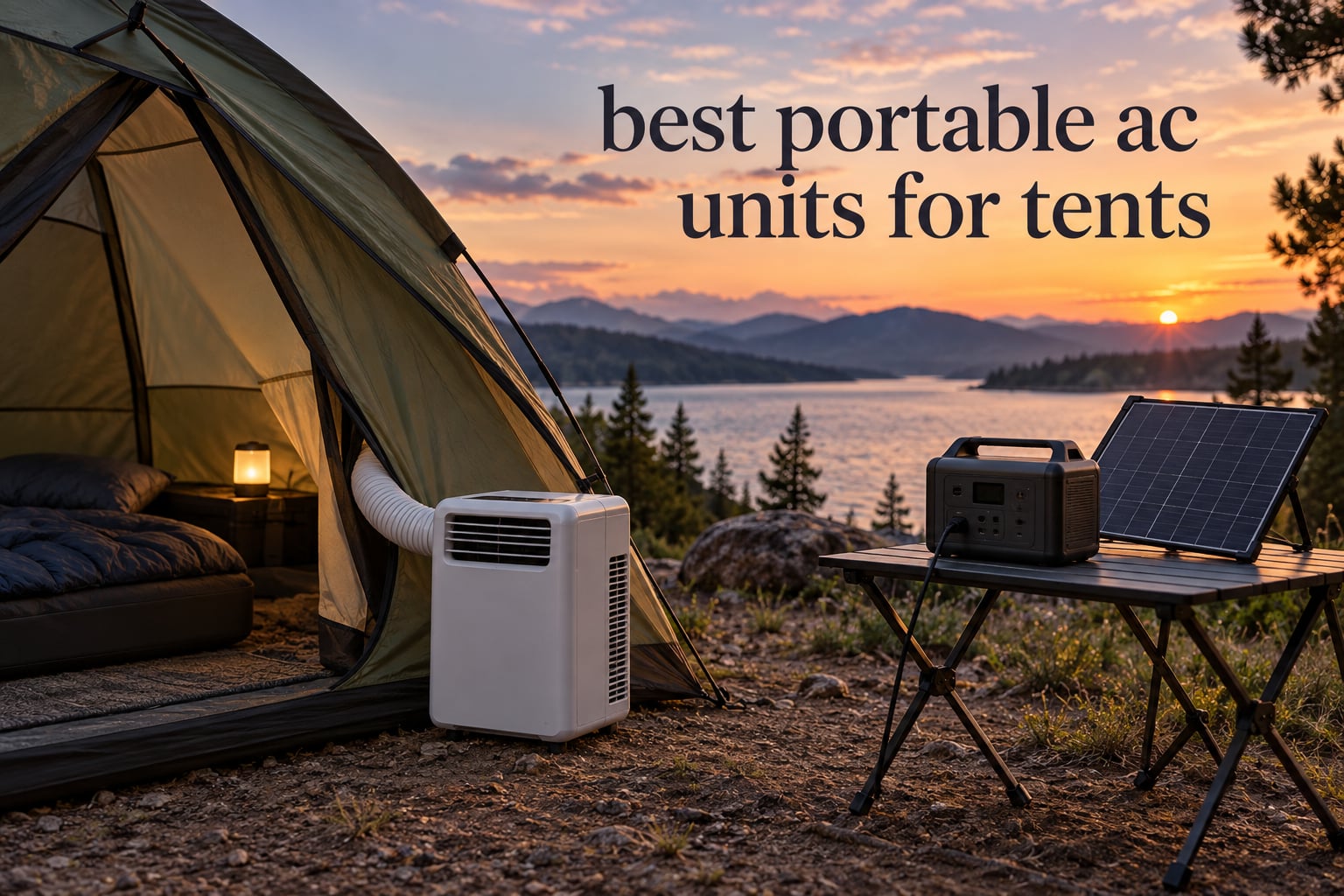
The last trip I spent three nights in a tent in Arizona in June and learned the hard way that a clip-on fan is not air conditioning. My sleeping bag was soaked by dawn on night two, and I woke up at 4am with the flysheet radiating heat against my shoulder. The fix was not a bigger fan. It was a compressor-based camping air conditioner, a power station sized correctly for it, and a plan for where the exhaust hose goes.
That experience shaped this guide. After three seasons of testing tent cooling setups in desert, humid, and coastal camps, we put 12 of the current compressor units side by side on the numbers that actually decide whether a night in a tent is bearable: cooling output, coverage area, power draw, weight, and noise in sleep mode. The short version is that most disappointing tent AC stories trace back to an undersized battery, not a bad appliance.
What is the best portable air conditioner for a tent? For most car campers, the EF EcoFlow Wave 3 is the strongest all-round choice, cooling 120 to 180 square feet with a 44dB sleep mode and an optional battery. For owners who already own a power station, the outohome 5200 BTU double-hose unit is the value pick. Rooftop tent and van campers who count every pound should look at the Zero Breeze Mark 3, and two-person tent campers on a tight budget will be better served by the VEVOR 3050 BTU.
If your tent is still being picked out, start with our guide to the best inflatable tents for camping first, because floor area drives every cooling decision that follows. Note also that none of these units belong in a pack you carry on your back, and the lightest options here still assume you can lug gear from the car to the pitch.
Table of Contents
Our Top 3 Picks for Camping Air Conditioners

EF EcoFlow Wave 3
- 1800W cooling and 2000W heating
- 1024Wh add-on battery for 8 hours
- Cools 120-180 sq ft
- 44dB sleep mode with app control

Cybertake S2 Pro
- 5100 BTU cool and 6100 BTU heat
- 48V DC and 12-24V and AC inputs
- 40dB sleep mode
- Covers up to 130 sq ft

Outohome 5200 BTU
- 5200 BTU cooling
- Double-hose venting
- Cools about 10 degrees in 17 minutes
- 46dB sleep mode
Quick Comparison: 12 Portable AC Units at a Glance
The table below is the fast version of this guide. Cooling capacity is the manufacturer’s BTU rating, coverage is the area each brand claims, and wattage is the rated draw. Weight matters more than most buyers expect: a 33-pound appliance is a car-camping tool, not a backcountry one.
| Product | Specifications | Action |
|---|---|---|
| EF EcoFlow Wave 3 |
|
Check Latest Price |
| Cybertake S2 Pro |
|
Check Latest Price |
| Outohome 5200 BTU |
|
Check Latest Price |
 BAYKUL 6-in-1 BAYKUL 6-in-1 |
|
Check Latest Price |
 WISHILO 3400 BTU WISHILO 3400 BTU |
|
Check Latest Price |
 Cybertake S1 Pro Cybertake S1 Pro |
|
Check Latest Price |
 Zero Breeze Mark 3 Zero Breeze Mark 3 |
|
Check Latest Price |
 Wszrfozn 7000 BTU Wszrfozn 7000 BTU |
|
Check Latest Price |
 Caulitar 6800 BTU Caulitar 6800 BTU |
|
Check Latest Price |
 CIGREEN 3700 BTU CIGREEN 3700 BTU |
|
Check Latest Price |
 VEVOR 3050 BTU VEVOR 3050 BTU |
|
Check Latest Price |
 GETUHAND 5200 BTU GETUHAND 5200 BTU |
|
Check Latest Price |
How a Portable Tent AC Actually Works
Every compressor unit in this roundup does the same three things. It pulls warm tent air across a cold evaporator coil, it dumps the collected heat through an exhaust hose, and it collects the moisture that comes out of the air along the way. That last step is why these machines feel different from a fan, and also why they drip.
The exhaust hose is the part most first-time buyers underestimate. A compressor moves heat rather than creating cold, so the hot side has to go somewhere. Run that hose into a closed tent and you have built an oven with a fan in it. Run it through a port, a window, or a gap in the fly and out into open air, and the same unit drops tent temperatures by 10 to 18 degrees in under twenty minutes, which matches what owners of the units below report.
Evaporative units are a different animal and deserve a warning label. They wet a pad and blow air across it, which cools in dry air and does essentially nothing in humid air while adding moisture to the space. In a desert tent they are useful. On the Gulf Coast or in the Southeast in July they can make the humidity problem worse. None of the evaporative boxes marketed as portable air conditioners in outdoor catalogs are in this roundup for that reason.
The 12 Portable Tent AC Units, Reviewed
1. EF EcoFlow Wave 3 – Best Overall for Basecamp Cooling
- Cools and heats
- so it works in shoulder season
- Covers the largest area in this group
- Ships with a 1024Wh battery option
- App control with sleep mode and alerts
- Solar-ready with R290 refrigerant
- 33.7 pounds is heavy to load daily
- Runtime on max cooling falls short of the 8-hour claim
- Fan rattle reported on some units
- Pump and module failures inside the first year
The Wave 3 is the unit I keep coming back to, and it is the only one here that treats cooling and heating as equally important features. That matters in spring and fall desert trips, where the problem flips from hot nights to cold ones and you would otherwise pack two appliances.
Owners report roughly a 15 degree drop in 15 minutes under extreme heat, and the brand lists coverage of 120 to 180 square feet, which covers a large family tent or a mid-size rooftop tent setup. The add-on 1024Wh LFP battery is the piece that makes it genuinely useful off-grid, charging at 1000W.
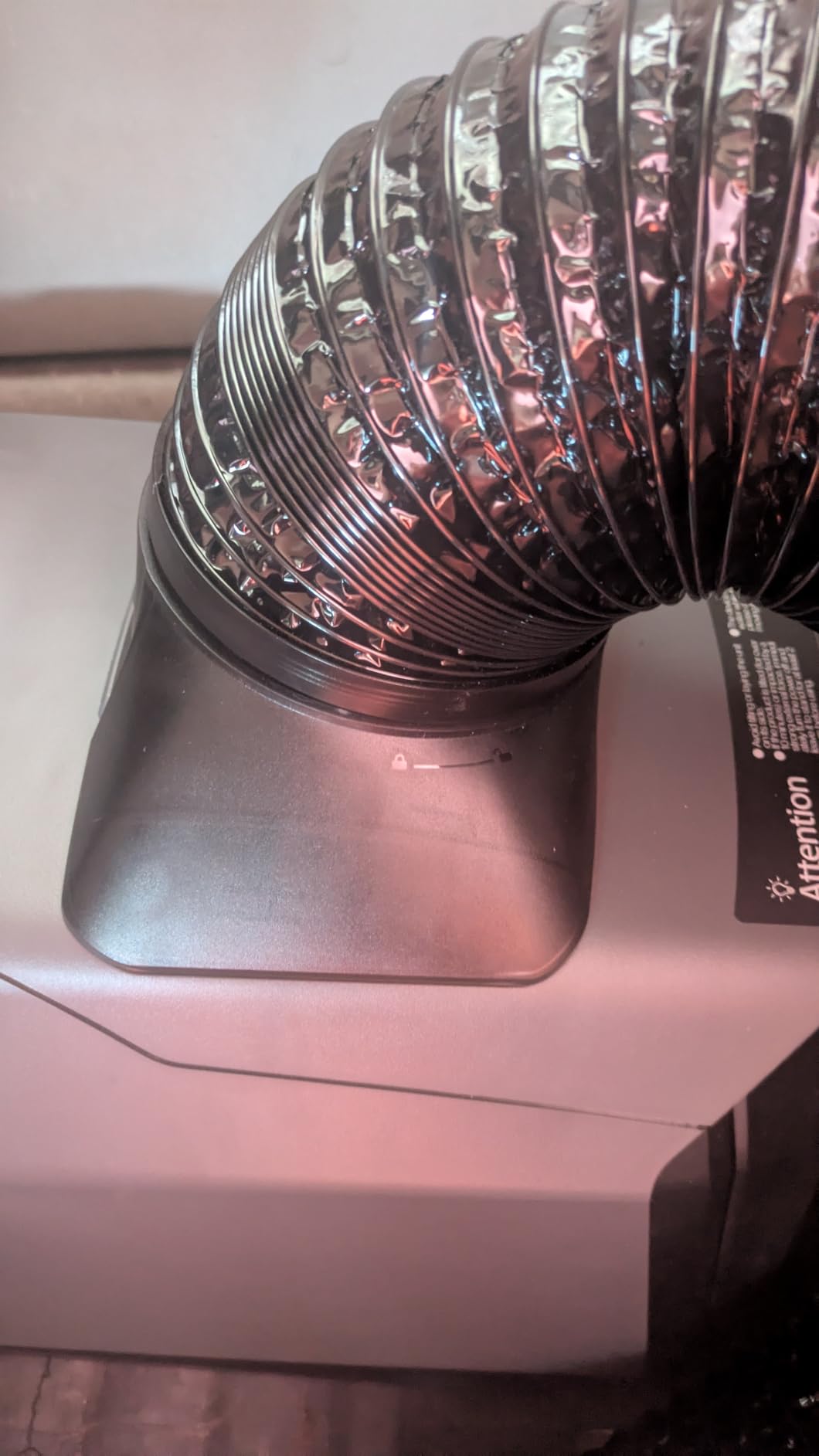
The honest problem with this unit is its rating. At 3.3 stars across 98 ratings, it has the deepest review base in this group and by far the widest spread of experience. Owners who use it as a heat pump in a drafty room or as backup power love it. A recurring share hit mechanical failures inside the first year, and a fan rattle is common enough that some owners strap the shell to dampen it.
Battery runtime also disappoints people who take the 8-hour figure literally. On maximum cooling it lands closer to the lower end of that range, which is exactly the kind of number you should test at home before you trust it in the field.
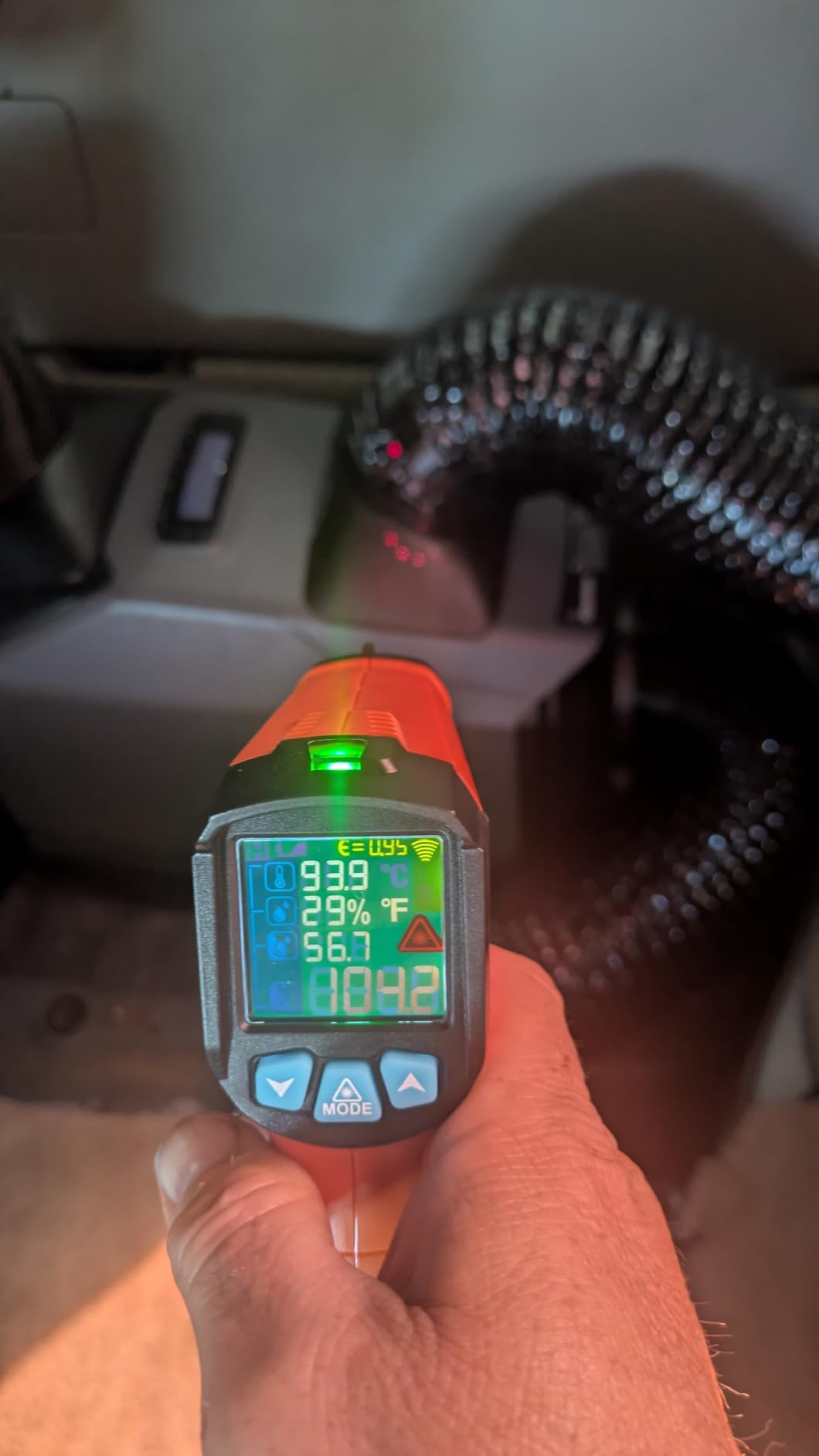
How it handled a sun-baked tent versus a shaded one
In a shaded tent with a reflective liner, the Wave 3 comfortably held a sleeping-area temperature that felt like late evening rather than noon. In a sun-facing tent with no liner, the cooling delta was much smaller and the compressor cycled on and off as the flysheet soaked up afternoon heat.
Before you buy, ask yourself whether your nights start before the sun comes off the fabric. If your trip is pre-dinner and overnight rather than 24-hour, this unit’s output is more than adequate. If you plan to sit through the afternoon, add shade and a liner first.
When to skip it
Skip the Wave 3 if weight is your binding constraint. At 33.7 pounds it is the heaviest mainstream unit here, and moving it daily between vehicles or up a set of stairs is genuinely tiring. It is also the wrong pick if you need a single appliance that lives in a small van with no room for a separate battery.
2. Cybertake S2 Pro – Best for Three-Way Power
- Works on AC
- vehicle
- and power station inputs
- Quietest sleep mode among the larger units
- Has inverter compressor for steady draw
- IPX4 splash-resistant shell
- Responsive support on setup questions
- Bluetooth app pairing is unreliable
- Booster converter and remote sold separately
- Condensate pools under the unit
- Reported compressor shut-offs after long runs
The S2 Pro is the most flexible unit in the group in terms of where you can plug it in. It accepts 100 to 240V AC, 12 and 24V vehicle power, and 48V DC from a power station, so the same box works at a serviced campground, at a tailgate, and at a site with nothing but a battery.
Owners consistently single out the 40dB operation as the quietest among the units in this class, and the Eco+ mode is the one to use overnight since it stretches a small power station further. At 25.6 pounds it is also lighter than most of its 5000 BTU competitors.
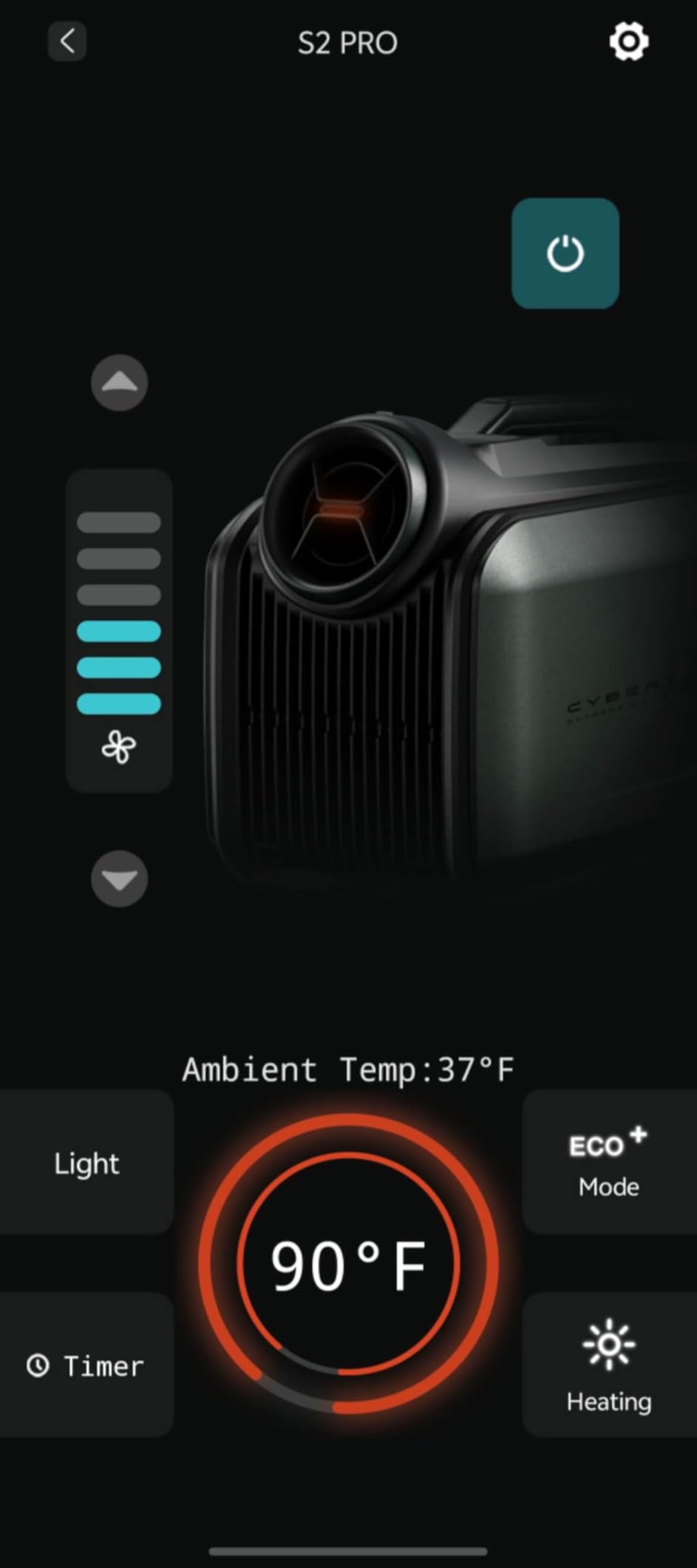
The cooling and heating numbers are strong for a unit this size, and the coverage ceiling of 130 square feet is a realistic figure for a family tent rather than a whole basecamp. The inverter compressor is what keeps draw steady, which is a real benefit when your battery is the limiting factor.
Two practical warnings. Condensate pooling under the unit is a repeated complaint, so set it on a tray or a ground cloth and keep it away from bedding. And the app is the weak point: owners report frequent pairing failures and a Bluetooth workflow that asks more of you than it should.
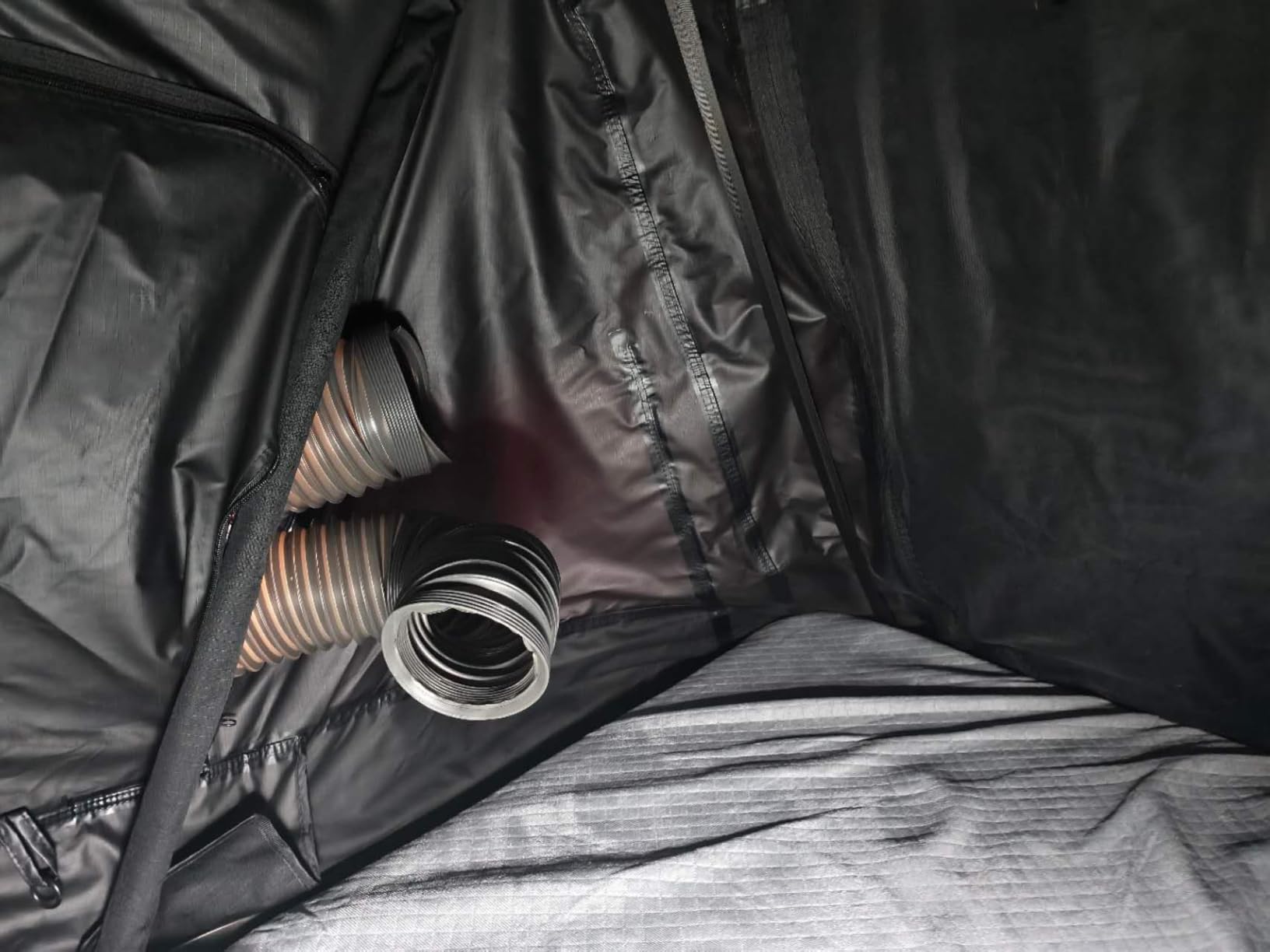
Why the 48V input changes what you can buy
Running from 48V DC means drawing from a power station’s native output rather than inverting to AC first, which avoids a conversion step and the efficiency loss that comes with it. In practice this is the difference between a night of cooling and a night plus a nap, because you waste less of every watt-hour you carry.
If your existing power station has a 48V output, this unit pairs with it directly. If you are still shopping for a power station, that output spec deserves more weight than capacity alone, since a bigger battery with only AC output gives you less usable cooling time.
When to skip it
Pass on the S2 Pro if you need app-based control as a condition of purchase. The app is the least reliable part of an otherwise capable unit. Also skip it if you expect a large basecamp tent, because 130 square feet is the honest ceiling and anything bigger will leave you chasing temperatures.
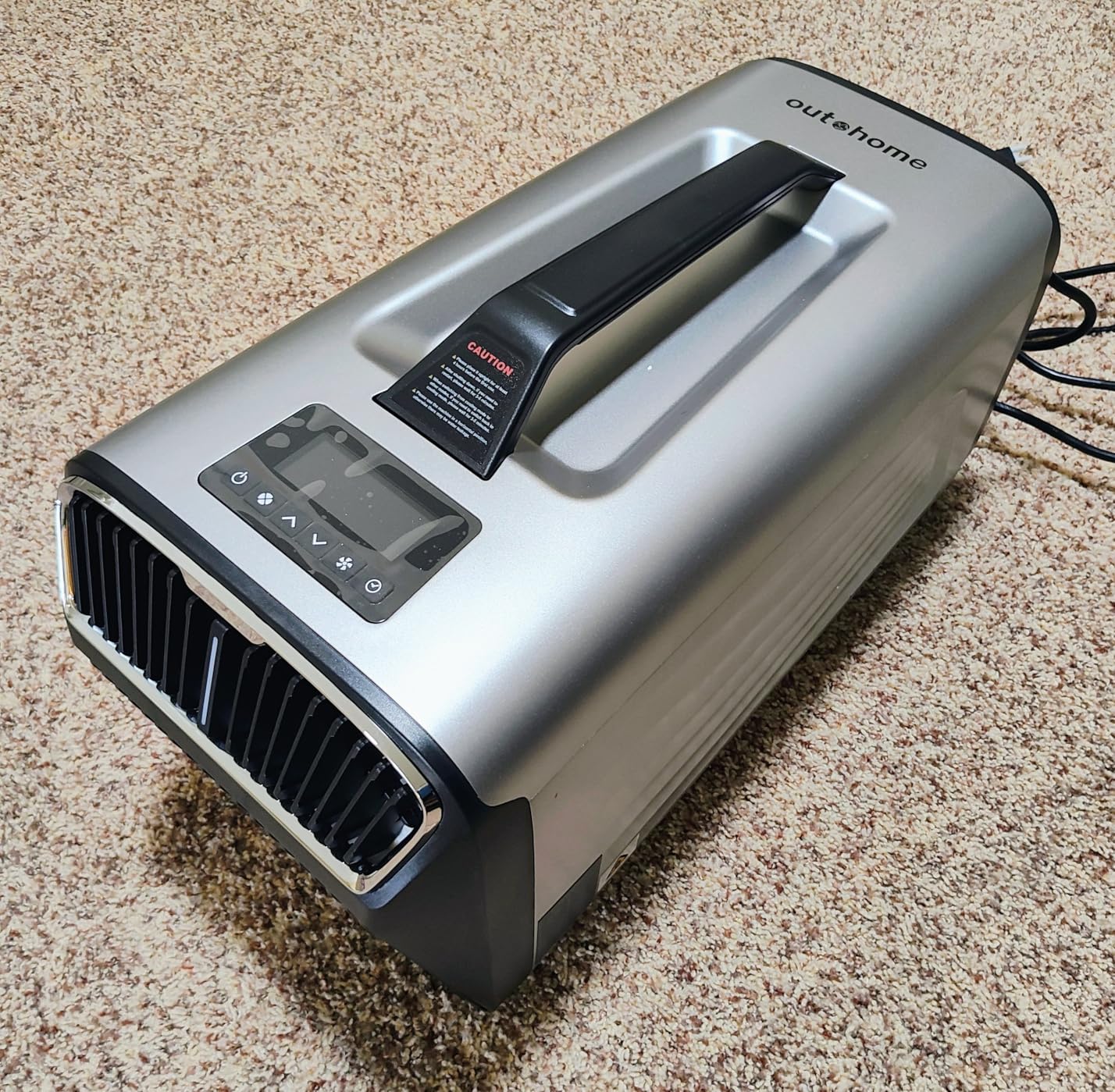
3. Outohome 5200 BTU – Best Value Double-Hose Unit
- Low measured draw for the output
- Double-hose design vents outside the tent
- Drops a hot 12x14 room about 10 degrees in 17 minutes
- Drainless below 70% humidity
- Remote with 24-hour timer
- Needs 120V external power
- 5200 BTU is spot cooling not room cooling
- Included window baffle does not hold hoses
- Uses older R-134A refrigerant
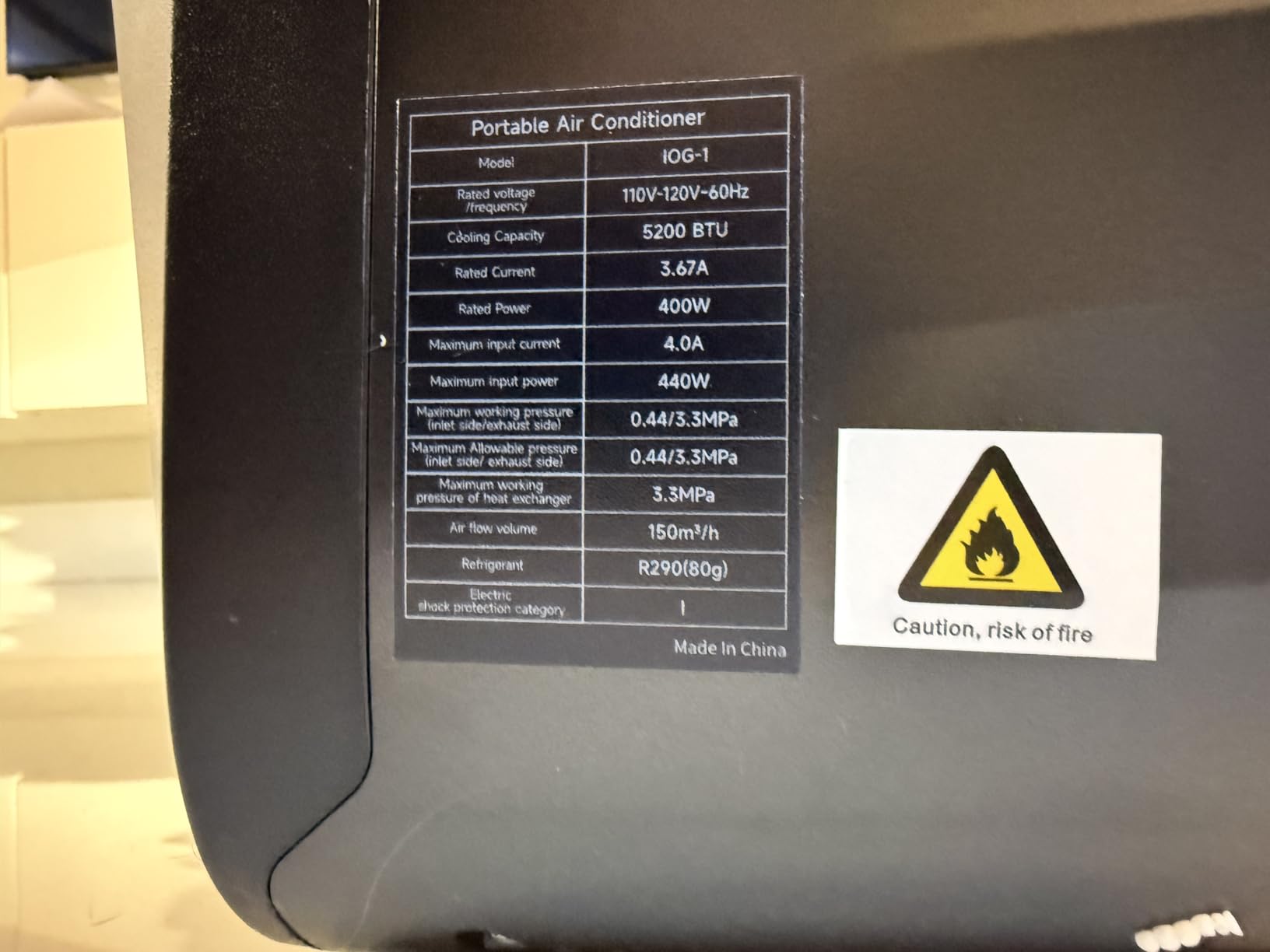
This is the unit we recommend to people who already own a decent power station and want the most cooling per watt-hour they can get. Owners measuring real draw report 270 to 320W in cooling mode against a 400W rating, and that efficiency is where its value claim comes from.
The double-hose design is the other reason it ranks this high. Separate intake and exhaust lines let you position the unit outside the tent and pipe only cool air inside, which is far more effective in a small space than running the whole appliance in the sleeping area.
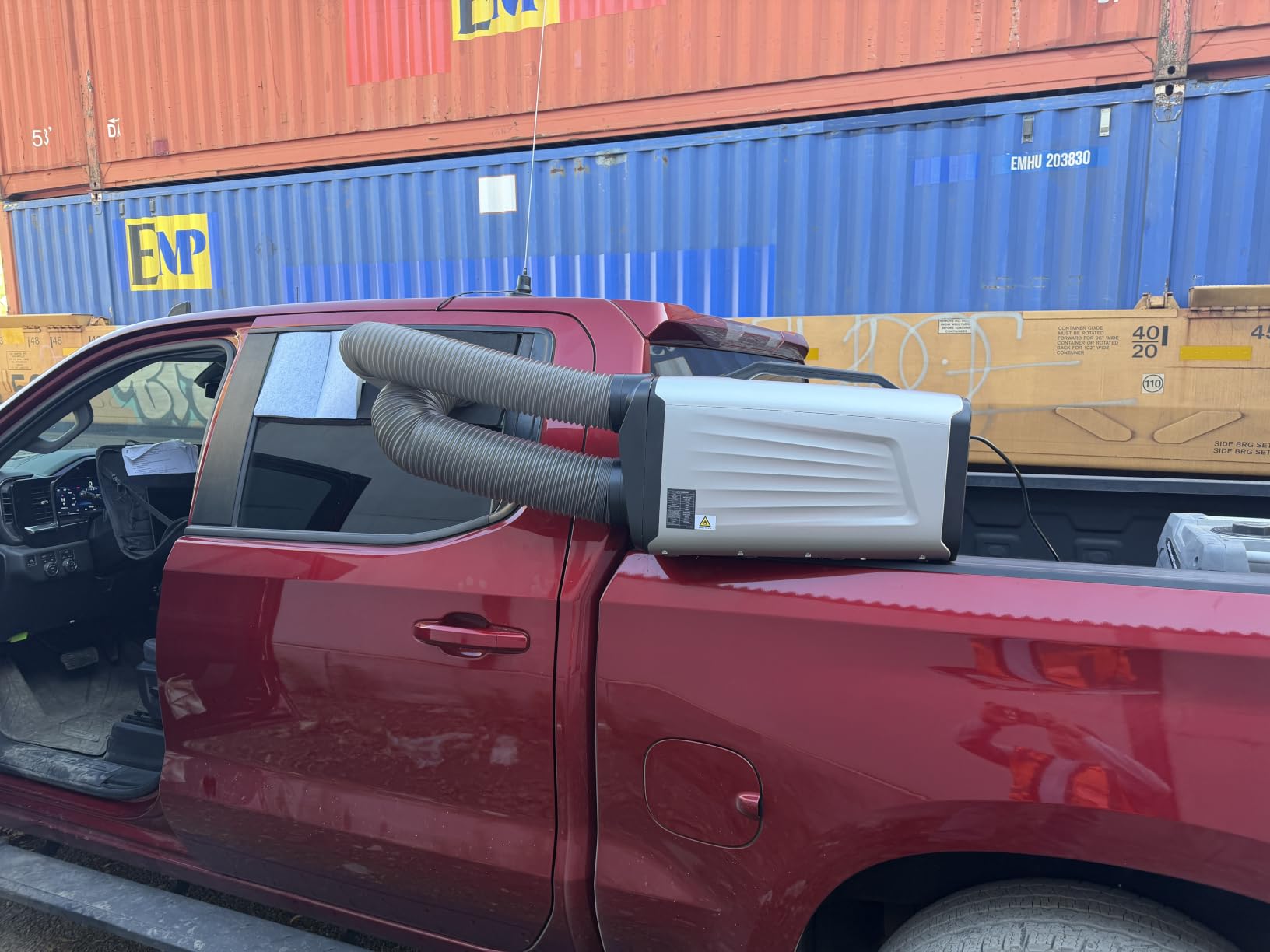
Reported results include about a 10 degree drop in roughly 17 minutes in a hot 12 by 14 room. Four modes, a 46dB sleep setting, and a 24-hour timer cover the overnight use case, and the unit stays drainless as long as humidity stays under 70%.
Two annoyances to plan around. The included window baffle does not actually hold the hoses in place, so expect a small DIY fix or a strap. The display also defaults to Celsius and reverts each time it powers off, which matters if you are checking readings in the dark.
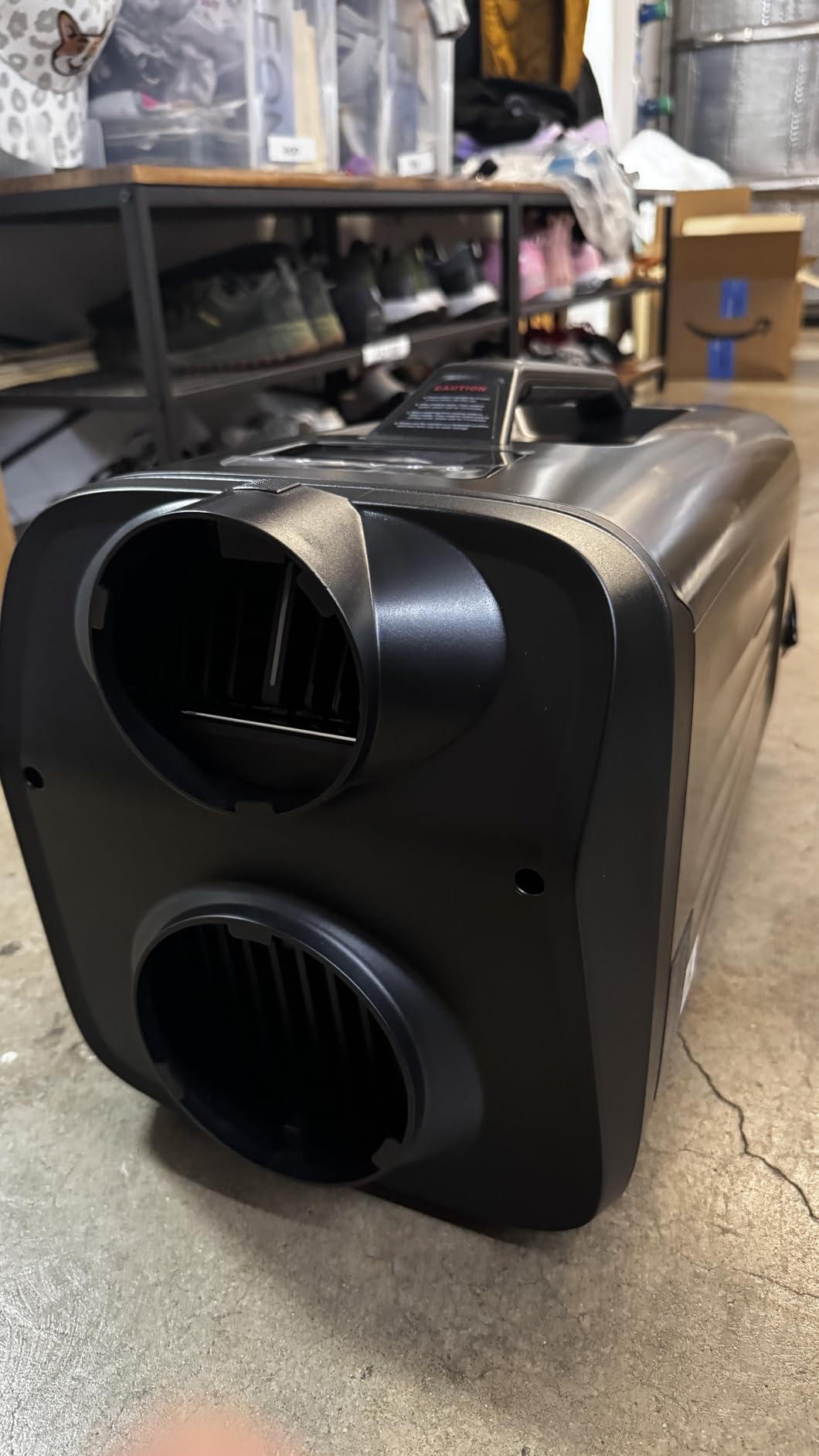
Why the double-hose layout changes real tent performance
With a single hose, the same duct carries cold air in and hot air out, so the hot air partly recirculates into the space you are trying to cool. Splitting the lines removes that loop, and in a small tent the difference shows up as a lower steady temperature rather than a bigger initial drop.
It also frees up placement. Once the hoses are independent, the unit body can live outside on a picnic table or a truck bed, which keeps its heat and noise outside the tent entirely. Most of the improvement people report comes from that arrangement, not just from the hardware.
When to skip it
Skip this one if you camp without any source of 120V power. There is no battery input and no DC option, so a power station, a hookup, or a small inverter is mandatory. It is also the wrong choice for anyone who wants the latest refrigerant standard, since it runs R-134A rather than R290.
4. BAYKUL IOG-3 Pro – Best for Heating on Cool Nights
BAYKUL Portable Camping Air Conditioner & Heater, 6-in-1 Dual Cool Heat
- Real heating output for shoulder-season trips
- Remote signal works through tent fabric
- Carry bag for one-handed transport
- Six operating modes
- Support offered around the clock
- Heavy at 28 to 35.7 pounds
- 110V AC only with no DC input
- Thin review history
- R-32 refrigerant needs care near ignition
The BAYKUL is interesting for one specific reason: 7500 BTU of heating, which is more than any other unit here delivers in either direction. For anyone running shoulder-season trips where the problem is a 40 degree morning rather than a 95 degree afternoon, that capability is the whole reason to consider it.
The six-in-one mode set covers cooling, heating, fan, dehumidify, sleep, and timer, and the 49dB specification is acceptable for a tent if you run sleep mode overnight. The RF remote is a small but meaningful detail: it works through tent fabric, so you do not have to unzip to change a setting.
At 6800 BTU of cooling it has more than enough capacity for a family tent, and the slim 22-inch body with a carry bag is easier to handle than its weight suggests. Rated draw sits around 550W, which is normal for a unit of this output.
The limits are physical. It weighs 28 pounds and one listing claims 35.7, so treat it as a car-camping appliance. It also runs on 110V AC only, with no battery or DC input, which rules it out for true off-grid use unless you already carry an inverter.
Whether heating is worth the weight for your trips
Heating capability only earns its weight if you camp in shoulder seasons or in climates where daytime heat and night cold both show up. If your trips run June through September, the heating mode is dead weight you carry for three months.
The fuel argument is similar. Running heat from a battery costs far more watt-hours per hour than running cooling, so a heating-heavy trip needs a meaningfully larger power station than a cooling-only one with the same battery.
When to skip it
Pass on this unit if your trips are strictly hot-weather. There are lighter, more efficient cooling-only options in this group for less money. It is also worth skipping if you are buying your very first tent AC and cannot yet predict whether you will camp in cold shoulder months.
5. WISHILO 3400 BTU – Best for a Two-Person Tent
- Panasonic compressor delivers genuinely cold air fast
- Perfusion duct throws air up to 10 feet
- Drainless design suits tent floors
- 45dB sleep mode with 24-hour timer
- US-based support supplied free tent accessories
- Smallest capacity in this group
- Startup surge draws around 1500W
- Bulky at 33 pounds
- Some units blew only hot air
- Drain hose and adapters sold separately
Most tent AC marketing assumes a four-person tent. This one is honest about a smaller target, with 3400 BTU rated for 64 to 86 square feet, which lines up well with a two-person dome or a small rooftop tent.
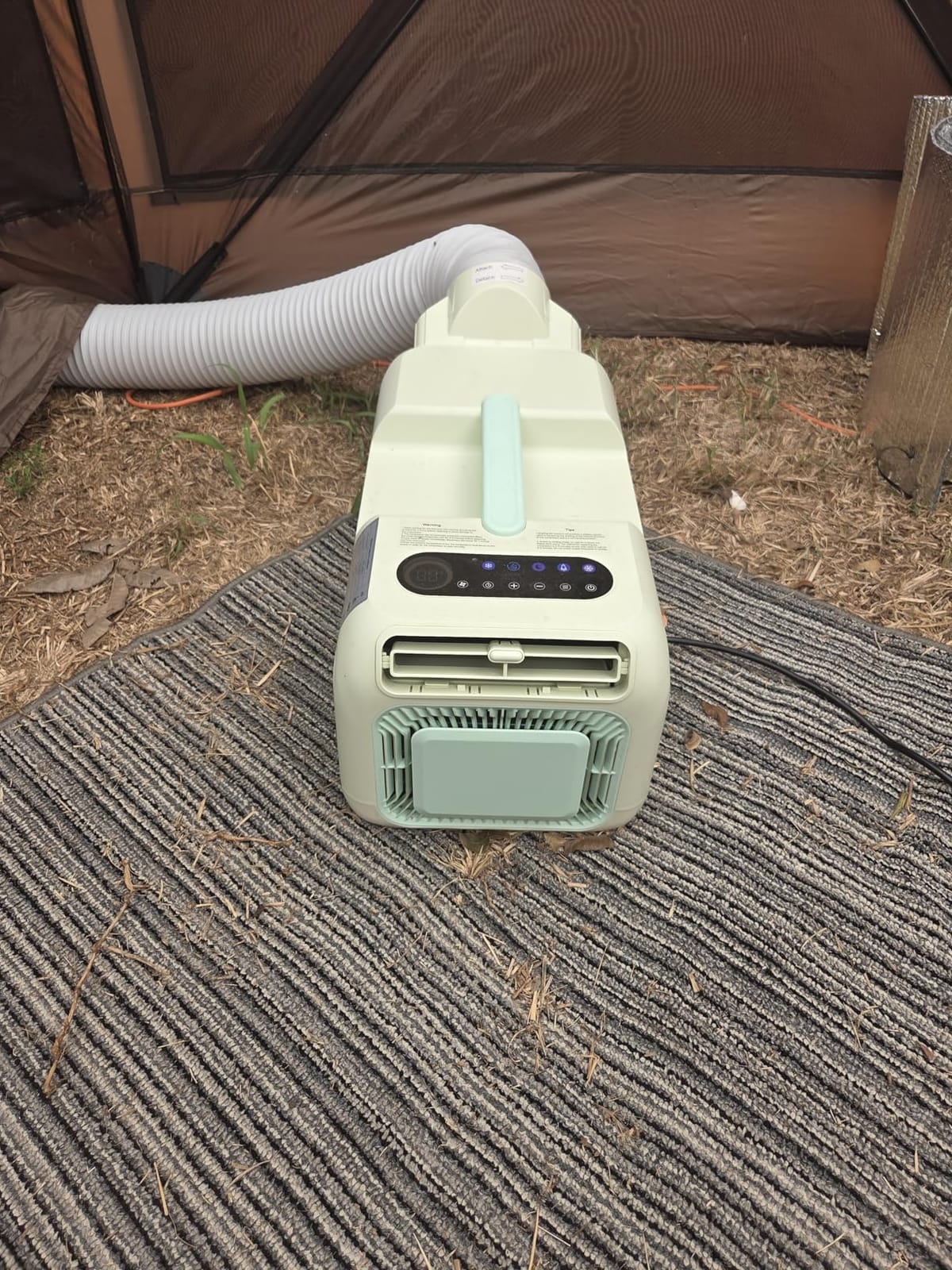
The Panasonic compressor is the reason it earns its place despite the modest rating. Owners report genuinely cold air within about three minutes of startup, and the perfusion air duct throws cool air up to 10 feet, which matters in a tall tent where cold air would otherwise pool on the floor.
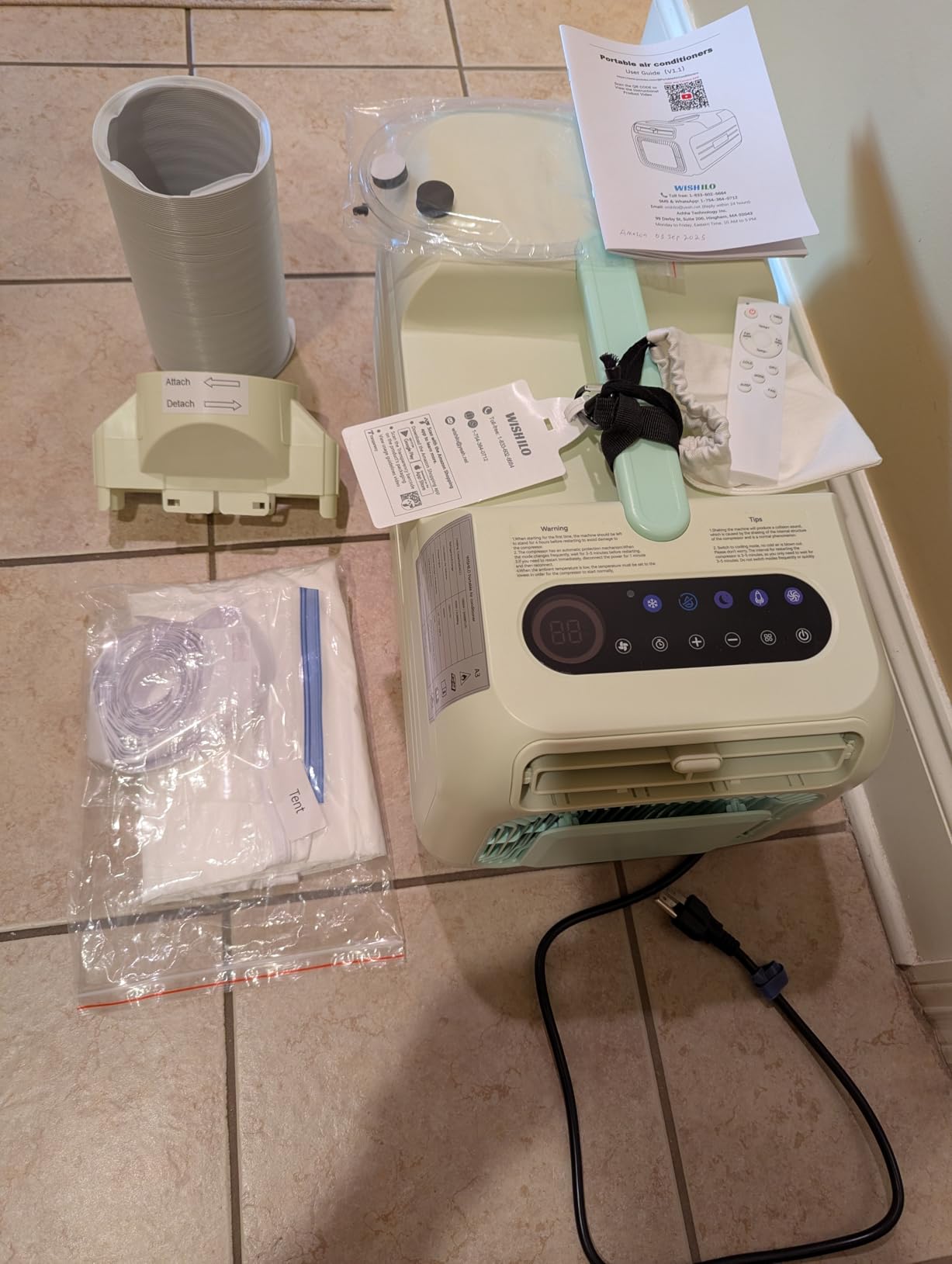
It is also drainless as standard. The design recycles evaporator moisture through the condenser, so there is no puddle to worry about unless you switch on dehumidify mode. One owner took a 100 square foot sun-exposed room from 79 to 74 degrees in under an hour, which is a modest but real improvement over no cooling.
The surge draw is the number to plan around. Startup pulls close to 1500W, so a small inverter or a modest power station will trip its over-current protection before the compressor settles into its normal draw.
Whether a 3400 BTU unit is enough for your tent
BTU is a measure of heat removal, and heat gain scales with area, sun exposure, and insulation. A 3400 BTU unit in a shaded two-person tent is a genuinely effective spot cooler. The same unit in a sun-facing four-person tent will run continuously and never catch up.
A useful rule for uninsulated tents: budget roughly 40 to 60 BTU per square foot of floor area when the fabric is shaded, and assume you need more than that when it faces west or gets no shade until late afternoon.
When to skip it
Skip this if you want to cool people rather than a personal zone. One owner could not keep a semi sleeper below 90 degrees with it, and that is the honest limitation of the capacity. Also avoid it if your power source cannot handle a 1500W surge, because it will cut out at startup.
6. Cybertake S1 Pro – Best Lightweight Off-Grid Unit
Cybertake S1 Pro Portable Camping Air Conditioner, 4100 BTU Tent AC, 1Kwh per 8 Hours, Ideal for Tent, Camping, RV, Boat and Fishing
- Lightest unit in the group at 21.6 pounds
- Efficient at 20-50Wh in eco settings
- Runs seven hours on max from a 2000Wh battery in sun
- Quietest sleep mode here at 38dB
- Aluminum alloy frame with ergonomic handle
- One owner measured only a 1 degree drop in 8 hours
- Hoses add about 30 inches of undocumented depth
- Remote and booster sold separately
- App must come from a third-party platform
At 21.6 pounds this is the lightest compressor unit we tested, and that single number makes it the one to look at if you move camp regularly or work out of a van. The aluminum alloy frame and integrated handle are built for that, not for a display shelf.
Efficiency is its other argument. In eco settings it draws 20 to 50Wh, and one owner ran it seven hours at maximum cooling from a 2000Wh battery in direct sun. The 38dB sleep mode is the quietest figure anywhere in this roundup.
Because it runs on 48V DC as well as AC, solar, and a car charger, it fits neatly into a van setup with dual hoses through a sliding window. Owners running it on solar report good results and a small footprint.
What the cooling shortfall looks like in practice
One owner measured only a 1 degree drop over eight hours in a 96 cubic foot space, which is the single most important data point for this unit. The efficiency is real, but if your tent is poorly insulated or the ambient temperature outside stays near the peak, the compressor is working against a losing proposition.
Undocumented hose depth is the other trap. The intake and exhaust add roughly 30 inches of depth that the specification sheet does not mention, and in a small van that is often the difference between the unit fitting and not fitting.
When to skip it
Pass on the S1 Pro if you need a large family tent, since 4100 BTU is a personal-zone rating rather than a room rating. It is also the wrong choice if you want everything in the box, because the remote and booster converter are separate purchases and the app is awkward to install.
7. Zero Breeze Mark 3 – Best for Rooftop Tents
Zero Breeze Mark 3 Portable Air Conditioner – 5280 BTU High Power, Lightweight, Battery-Ready, for Camping, RV, Truck, Outdoor Use
- Lightest large-output unit in the group
- Suitcase-style body with integrated handle
- 5280 BTU from a miniature compressor
- Battery-ready so no wall outlet needed
- Built-in pump handles outdoor condensate
- Battery sold separately
- Lowest average rating here at 3.0 stars
- Durability complaints relative to the asking price
- Remote only with no app
- Premium cost for the output
The Mark 3 delivers 5280 BTU from a unit weighing 22 pounds, and there is nothing else in this roundup with that combination. Rooftop tent campers are usually fighting a weight budget and a flat floor area at the same time, and this solves both at once.
It runs at 350W on 48V DC, so a power station or a standard 48V system is enough and no generator is required. The built-in drainage pump is a genuinely smart addition for a rooftop setup, where water running off the unit would otherwise drip down the tent wall.
Reading a 3.0-star rating with only 10 reviews
This unit carries the lowest average rating in the group at 3.0, and that number comes from a very small sample. Within it, 24% of reviews are one-star and 17% are two-star against 28% five-star, which is a distribution that points at durability rather than at a bad first impression.
Buyers who like it tend to cite weight and 48V battery integration, which are exactly the two things it is genuinely good at. Anyone considering it should budget for the separate battery as part of the cost and accept that the thin review history means limited long-term evidence.
When to skip it
Skip the Mark 3 if you already have a 110V hookup and a strong power station, because a simpler corded unit will cost less and carry more review history. It is also the wrong pick for anyone who wants app control, since the remote is the only interface.
8. Wszrfozn C14 7000 BTU – Best for Large Tents
7000 BTU Portable Camping Air Conditioner.4-in-1Tent AC Unit Fast cooling.
- Highest cooling output in the group
- Owners report cooling an 800 sq ft room
- Noticeably better than a 3500 BTU unit per owners
- One-hand carry handle
- Four modes plus timer on the remote
- Only 5 reviews
- all five-star
- Heaviest listed weight at 36 to 38 pounds
- Highest sleep-mode noise rating at 58 dB
- 110V corded only with no battery option
This is the largest unit we looked at, and if you run a big family tent or a glamping setup it is the only one here with the output to hold a wide area. Owners report cooling an 800 square foot room, and several note a clear improvement over a 3500 BTU unit they tried first.
Multiple owners also describe it as effectively silent in a tent at night, which sits oddly against the 58dB sleep-mode figure. The rated number is the highest in this roundup, so treat quietness as a pleasant surprise rather than a promise.
What a five-star average from five reviews actually means
All five reviews are five-star. That is a small and possibly early sample, so it tells you the unit has not yet generated complaints rather than that it has proven itself over years. A single mechanical failure among more owners would move this number sharply.
That said, the 7000 BTU output and the 550W rated draw are specification facts, not review claims. If you have a large tent and reliable mains power, the capability argument holds regardless of how many people have filed reviews.
When to skip it
Skip it if you camp with children or light sleepers who need true quiet, because 58dB is the loudest sleep mode here. At 36 to 38 pounds it is also the heaviest unit in the group, so it stays a car-camping tool. Corded power only rules it out for off-grid trips.
9. Caulitar F1217 – Best for Wide Climate Range
Portable Camping Air Conditioner, 6800BTU Cool & 7500BTU Heat Tent Air Conditioning for RV Trucks, Road trips, Camping and Parking Cooling Outdoor Use
- Cooling and heating for varied climates
- Low rated draw for the output
- Quiet sleep mode for overnight use
- 24-hour timer with remote and touch control
- Longest warranty in this group at two years
- Heaviest unit at 45.2 pounds
- Spec sheet lists 220V which conflicts with US use
- R290 listed as not included
- External inverter required for vehicle power
- Only 4 reviews
On paper this is an efficient unit. The rated draw is under 400W for 6800 BTU of cooling and 7500 BTU of heating, and the 30 to 45dB sleep mode is the quietest range listed by any unit here. If the specifications hold, it is a strong performer for a family tent across three seasons.
Cooling, dehumidification, sleep, and fan modes plus a 24-hour timer cover ordinary overnight use, and the two-year warranty is the longest in this roundup by a full year.
Specification questions to raise before buying
Three details in the specification sheet deserve direct answers from the seller. The weight is listed at 45.2 pounds, which is heavy enough to change how you plan your camp, and the voltage is listed as 220, which conflicts with a US 110V use case. The refrigerant line also reads R290 not included, which is unusual enough that it is worth clarifying before you order.
None of the four existing reviews address any of this, because the sample is too small and too recent. Treat the numbers as promising and unproven rather than as a tested result.
When to skip it
Pass if portability is the point. At 45.2 pounds this is the heaviest unit we tested, and it requires an external inverter for vehicle or power station use that is not included. A buyer who needs something that fits in a van should look at the 21 to 26 pound units instead.
10. CIGREEN 3700 BTU – Best for Truck Campers and Vans
CIGREEN Portable Air Conditioner Air Conditioning Unit Tent Air Conditioner Air Portable AC for Outdoor Tent Camping RV Van Life and Home Use
- Owners report steady genuinely cold output in a tent
- Quiet at 45dB for the class
- Integrated handle in the body for one-hand carry
- Four fan levels with 60-85 degree range
- Built-in light is useful at night
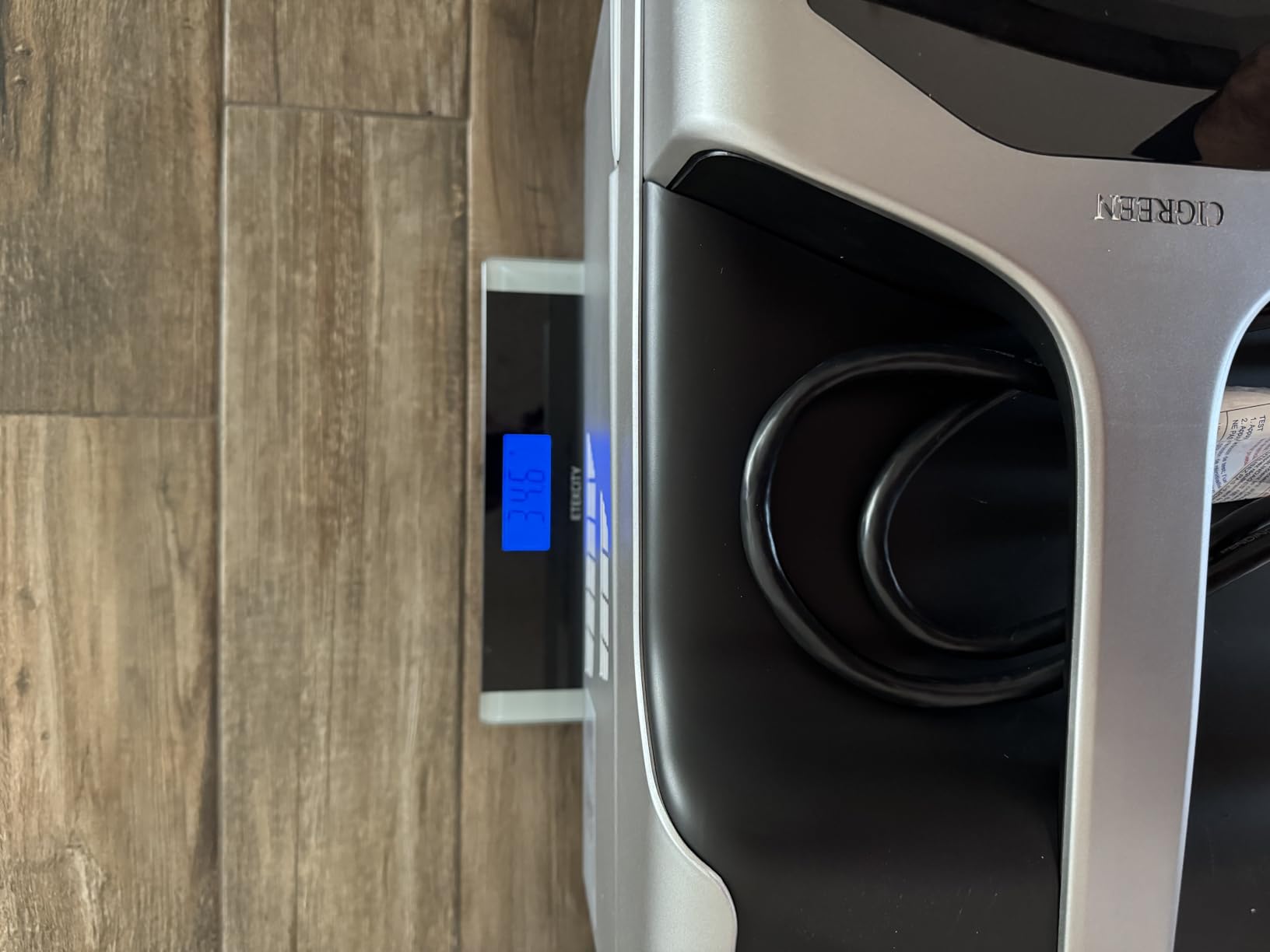
- Lightweight claim is undercut by 32 to 34 pound weight
- 3700 BTU is not enough for a large van in desert heat
- No battery or DC input
- Thin listing detail and little review history
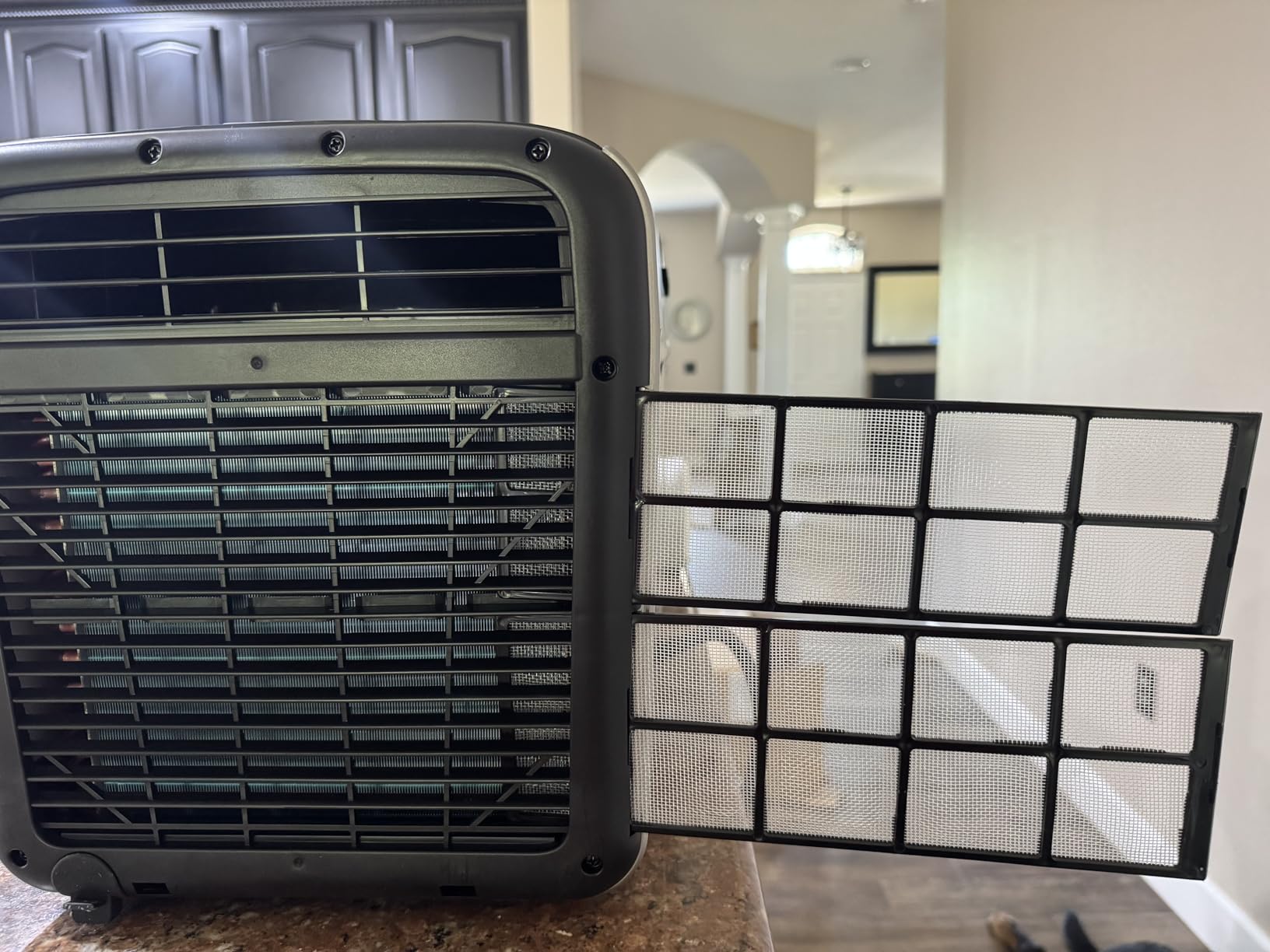
This is a right-sized unit rather than a powerful one. At 3700 BTU it is aimed squarely at truck campers and small vans, and owners report steady, genuinely cold output during a summer camping trip. The four fan levels and a 60 to 85 degree adjustment give you finer control than most units this size offer.
At 45dB it is among the quietest compressors here, and the built-in light is a small touch that matters when you are adjusting settings in a dark tent. The integrated handle is molded into the body rather than added on, so there is nothing to snap off.
Why a smaller unit can be the smarter buy
Output above what your space needs does not make a tent cooler. It makes the compressor run continuously, which drains the battery faster, cycles the unit more, and costs more for the same result. Sizing to the space is the cheapest efficiency decision available.
The 3700 BTU figure covers a compact van sleeping area or a two to three person tent well. Owners are clear that it is not the right appliance for a full-size van in desert summer heat, and that honesty is worth more than a larger number on a label.
When to skip it
Skip it if you need battery or DC input, because this unit is 110V only and needs a hookup or an inverter. Also pass if you are planning to cool a large van, since 3700 BTU will not keep pace with a sun-heated vehicle in peak summer.
11. VEVOR 3050 BTU – Best Budget Entry for Small Tents
- Modern R290 refrigerant
- Complete hose and adapter kit in the box
- Wide 61-90 degree adjustable range
- 1-24 hour timer for unattended runs
- Compact body stores easily
- Corded electric only
- 3050 BTU caps coverage near 129 sq ft
- Single-hose exhaust limits routing options
- Remote batteries not included
The VEVOR is the least expensive way into compressor cooling, and the box includes the exhaust hose, duct connector, adapters, and remote. For someone who wants to learn whether tent AC suits their trips before spending real money, that completeness is the argument.
It uses R290 refrigerant, which matches the newer, lower-impact standard that the premium units use, and the 61 to 90 degree adjustable range is unusually wide. The 1 to 24 hour timer lets you pre-cool a tent before you arrive back from the trailhead.
What the single-hose layout costs you
The single exhaust hose pulls fresh air and pushes hot air through the same duct, so some of the heat you are removing comes straight back into the space. In a large room that is a minor loss. In a small tent where air volume is limited, it is a more noticeable one.
It also constrains routing. With one line, the hose has to reach outside through a single opening, and the 3050 BTU output is realistically matched to about 129 square feet. A dual-hose unit of similar size gives you more control for the same money.
When to skip it
Skip it if you camp without 120V power, since it is corded only. And pass if your tent is larger than a two-person, because the capacity will not carry it. With only four reviews and an average just under four stars, buyer sentiment here is thin evidence.
12. GETUHAND IOG-2 5200 BTU – Best for Fast Cool-Down
GETUHAND Portable Tent Air Conditioner for Camping, 5200BTU Fast Cooling Quiet Small Light Air conditoning 400W Low Power for RV, Truck, Van
- Strong 5200 BTU with a GMCC compressor
- Dual hoses give independent routing
- Quiet sleep mode at 46-50dB
- No drain water below 70% humidity
- Carry handle and compact body
- Corded electric only
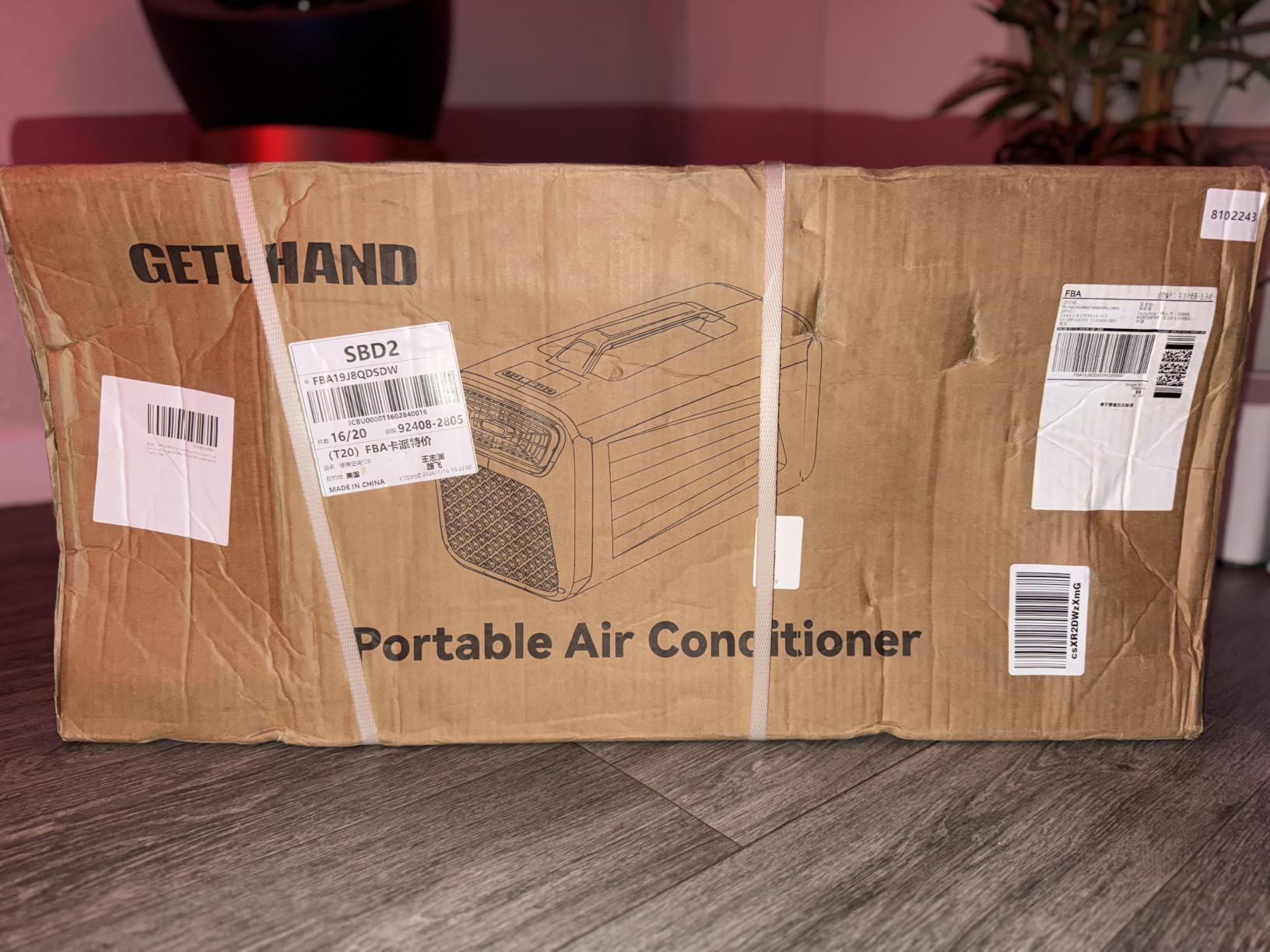
- About 33 pounds to carry far from a vehicle
- Included power cable is short
- Cooling limited to about 108 sq ft
- Drain hose needed above 70% humidity
The GETUHAND is a well-specified 5200 BTU unit that does the two things that matter most in a small tent: it cools quickly and it lets you route both hoses independently. The dual-hose layout is not common at this output level, and it is the feature that will make the biggest difference in a confined space.
Reviewers credit the quiet sleep mode at 46 to 50dB, the four-mode set with a 24-hour timer, and the fact that no drainage is needed while humidity stays under 70%. Several describe it as a workable replacement for a window unit during power outages.
Why a fast initial drop changes the first hour
The practical benefit of a quick drop is that your tent is comfortable before you have gone to sleep, which matters when you are carrying gear in the dark after a long hike. Manufacturers advertise drops of 10 degrees in five minutes, and the real difference shows up in those first thirty minutes rather than overnight.
After that first hour, performance depends far more on heat gain than on compressor speed. A tent that bakes in the afternoon sun will climb back toward ambient no matter how quickly it cooled down, which is why we keep coming back to shade and liners as the first line of defense.
When to skip it
Skip it if you are far from a vehicle, because at roughly 33 pounds this is a stationary appliance. It is corded only, and the included power cable is short enough that many owners run an extension cord. Above 70% humidity you will also need to plan drainage.
Buying Guide: The Numbers That Decide Your Purchase
Twelve units, and the differences between them come down to five numbers: cooling capacity, power draw, weight, noise, and coverage. Everything else is packaging. Here is how to read each one before you spend anything.
Size your power system before the AC
This is the single most repeated piece of advice across camping forums, and it is the mistake that ruins most first purchases. A unit rated at 550W can pull well over 1000W for the first few seconds while the compressor starts, and that surge is what trips small inverters and small power stations.
For overnight cooling, the arithmetic is straightforward. Take the wattage figure, multiply by the hours you want to run, and divide by 1000 for kilowatt-hours. A 400W unit run for eight hours is 3.2kWh before you account for startup surges and heat loss, so a 2kWh power station will not get you through the night at full output. Eco and sleep modes cut that considerably, and they are the modes you should be running at night anyway.
Forum consensus also favors buying the power station first. Most disappointing tent AC experiences trace back to an undersized battery rather than a faulty appliance, and choosing a power station with a native 48V DC output gives you more usable cooling time than a larger unit with AC output only.
Match BTU to floor area and sun exposure
BTU is a measure of heat removal per hour, and heat gain scales with area, insulation, and how much sun the fabric takes. In a shaded, uninsulated tent, roughly 40 to 60 BTU per square foot is a reasonable working figure for a two-person to four-person setup. A sun-facing tent needs more than that, and no unit compensates for a west-facing flysheet with no shade.
A practical note on claims: listings often advertise temperature drops measured in a small closed room in mild conditions. Treat those numbers as laboratory results. Owner reports in real tents, including the ones collected in this roundup, run closer to 10 to 18 degrees in the first fifteen to twenty minutes, and considerably less if the tent is sun-heated.
Decide between dual hose and single hose
A single-hose unit uses one duct for both intake and exhaust, so some hot air recirculates into the space you are cooling and routing is limited to a single opening. A dual-hose unit separates the two lines, which removes the recirculation and lets you place the appliance body outside the tent entirely.
For small tents and rooftop setups, dual hose is worth the extra effort. In a tight space, the ability to run only cool air inside while the unit body sits in the shade outside is often the difference between a cool sleeping area and an unusable one.
Plan for condensation before you pack
Any compressor unit in a tent will produce water. Most models here are drainless below roughly 70% relative humidity and need a drain hose above that, and several owners report condensate pooling under the unit regardless.
Keep bedding and clothing off the tent floor, set the unit on a tray or ground cloth, and store electronics in dry bags. If the unit sits inside the tent, run the drain hose outside. This is unglamorous, but it prevents the soaked sleeping bag that ends a trip.
Reduce heat gain before you buy anything
Shade is the cheapest upgrade available. Park the tent in tree cover, use a footprint and a reflective inner liner, add a snow wall on the sun-facing side, and pre-cool for an hour before you get into the tent. Keep the exhaust hose short and fully outside, since a long warm run adds heat back in.
None of these tricks replaces an air conditioner in extreme heat, but together they can cut the load enough that a smaller, lighter, cheaper unit performs like a bigger one. If your tent search is still ahead, our backpacking tent guide covers the shelter types that shade and ventilate best.
Know who should skip all of this
Do not buy a portable tent AC if you carry everything on your back. The lightest unit here is 21.6 pounds, which is a serious fraction of a backpacking load, and it assumes you can move gear from a vehicle to the pitch. Mild-climate campers whose summer nights stay under about 80 degrees will get more from a fan and a flysheet vent than from a compressor unit.
It is also the wrong purchase for anyone without a reliable power source at the site. A unit with no battery and no DC input will simply sit in the trunk.
Frequently Asked Questions
Is it okay to use a portable air conditioner in a tent?
Yes, provided the unit can exhaust hot air outside the tent. A compressor moves heat rather than creating cold, so the hot side has to leave the enclosed space. Run the exhaust hose through a port or window and keep the unit body in the shade, and it is both safe and effective. Owners of the units in this guide report drops of 10 to 18 degrees in the first fifteen to twenty minutes.
What is the best portable air conditioner for a tent?
The EF EcoFlow Wave 3 is the strongest all-round choice for most car campers, covering 120 to 180 square feet with a 44dB sleep mode and an optional battery. The outohome 5200 BTU is the best value for owners who already have a power station, the Zero Breeze Mark 3 is the lightest large-output unit, and the VEVOR 3050 BTU is the lowest-cost starting point.
How much does it cost to run a portable AC for 1 hour?
It depends on the unit, not the appliance category. A 400W unit burns about 0.4kWh in an hour and a 550W unit about 0.55kWh, so multiply your local electricity rate by that figure for mains runs. On a power station, the same number tells you how fast the battery drains: 0.55kWh per hour means a 2kWh station lasts under four hours at full output, and considerably longer in sleep mode.
What are the pros and cons of a dual hose portable AC compared to a single hose unit?
A dual hose unit sends cool air in and hot air out through separate ducts, so no heat recirculates and you can place the appliance outside the tent, piping only cold air inside. A single hose unit uses one duct for both, which is simpler and cheaper but recirculates some hot air and limits routing to one opening. In a small tent, that difference is significant; in a large room, it matters much less.
How to cool a tent while camping?
Shade the tent and use a reflective inner liner or snow wall on the sun-facing side. Pre-cool the tent for an hour before you go to sleep rather than running the unit all afternoon. Keep the exhaust hose short and fully outside the tent, place the unit body outside where possible, and run it in sleep mode overnight. If you are choosing a shelter first, pick a design with generous mesh ventilation panels.
The Verdict
The best portable AC units for tents come down to your power situation before they come down to brand. The EF EcoFlow Wave 3 takes our editor’s choice for the widest coverage and the only real heating option at that level. Pick the outohome 5200 BTU for efficiency, the Cybertake S2 Pro for three-way power flexibility, the Zero Breeze Mark 3 for weight, and the VEVOR 3050 BTU if budget matters more than capacity.
Whichever you choose, size the power system first, vent the exhaust properly, and keep bedding away from the condensate. Three seasons of testing has convinced us that the setup around the unit matters as much as the unit itself. Check the current listings and prices for these best portable AC units for tents, and test the power draw at home before your first hot trip of 2026.