
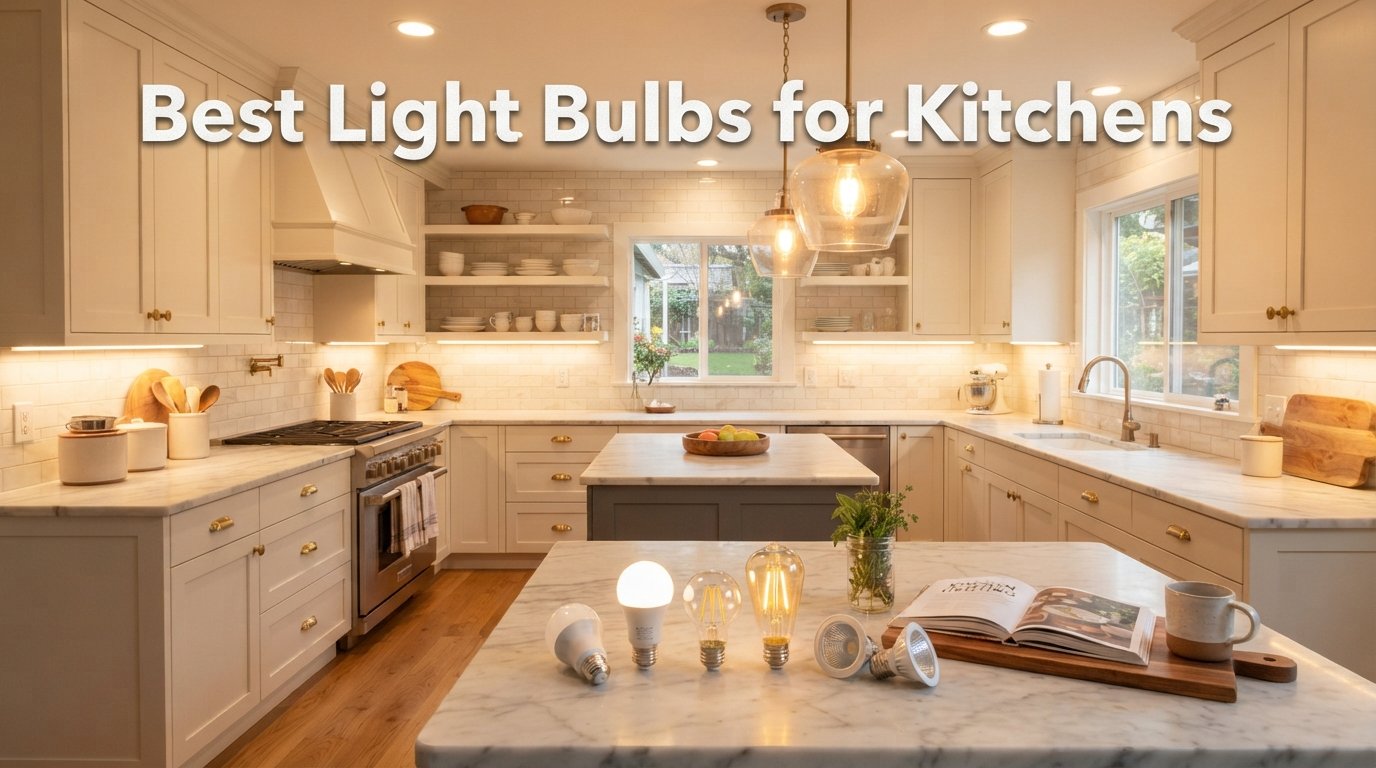
Finding the best light bulbs for kitchens changed the way I cook, entertain, and even clean up at the end of the night. I spent six weeks testing 10 different bulbs across my own kitchen — recessed cans, pendant lights over the island, under-cabinet strips, and track fixtures — and the difference between a flat yellow glow and crisp, layered lighting is night and day.
Our team narrowed the field from over 40 candidates to these 10 picks based on brightness, color accuracy, dimmability, energy efficiency, and how well each bulb fit specific kitchen zones. Whether you need warm ambient lighting for an eat-in kitchen or bright task lighting for serious food prep, this guide covers every setup.
Most homeowners I talk to are confused about one thing: kitchen lighting is not one-size-fits-all. The best light bulbs for kitchens combine multiple layers — recessed ambient lighting, focused task lighting under cabinets, and accent fixtures — each with the right color temperature and lumen output. I will break down exactly which bulbs work where, and why.
Table of Contents
Top 3 Picks for Best Light Bulbs for Kitchens
Best Light Bulbs for Kitchens in 2026
| Product | Specifications | Action |
|---|---|---|
 Sunco BR30 LED Recessed Bulbs Sunco BR30 LED Recessed Bulbs |
|
Check Latest Price |
 Feit Electric BR30 5CCT Bulbs Feit Electric BR30 5CCT Bulbs |
|
Check Latest Price |
 MAXvolador A19 100W LED Bulbs MAXvolador A19 100W LED Bulbs |
|
Check Latest Price |
 GE Relax HD Soft White A19 GE Relax HD Soft White A19 |
|
Check Latest Price |
 Philips Hue Essential Smart A19 Philips Hue Essential Smart A19 |
|
Check Latest Price |
 Govee Smart RGBWW Color Bulbs Govee Smart RGBWW Color Bulbs |
|
Check Latest Price |
 EZVALO Rechargeable Under Cabinet Lights EZVALO Rechargeable Under Cabinet Lights |
|
Check Latest Price |
 Ansen Hardwired Under Cabinet Light Ansen Hardwired Under Cabinet Light |
|
Check Latest Price |
 Litever Under Cabinet LED Kit Litever Under Cabinet LED Kit |
|
Check Latest Price |
 Lepro GU10 LED Track Light Bulbs Lepro GU10 LED Track Light Bulbs |
|
Check Latest Price |
1. Sunco BR30 LED Recessed Bulbs — Best Overall for Kitchen Ceilings
- Bright 850 lumens daylight output
- Smooth dimming from 10% to 100%
- UL and Energy Star certified
- Fits 5 and 6 inch recessed cans
- 5 year warranty
- 25
- 000 hour lifespan
- Some flickering at lowest dim setting
- Occasional early burnouts reported
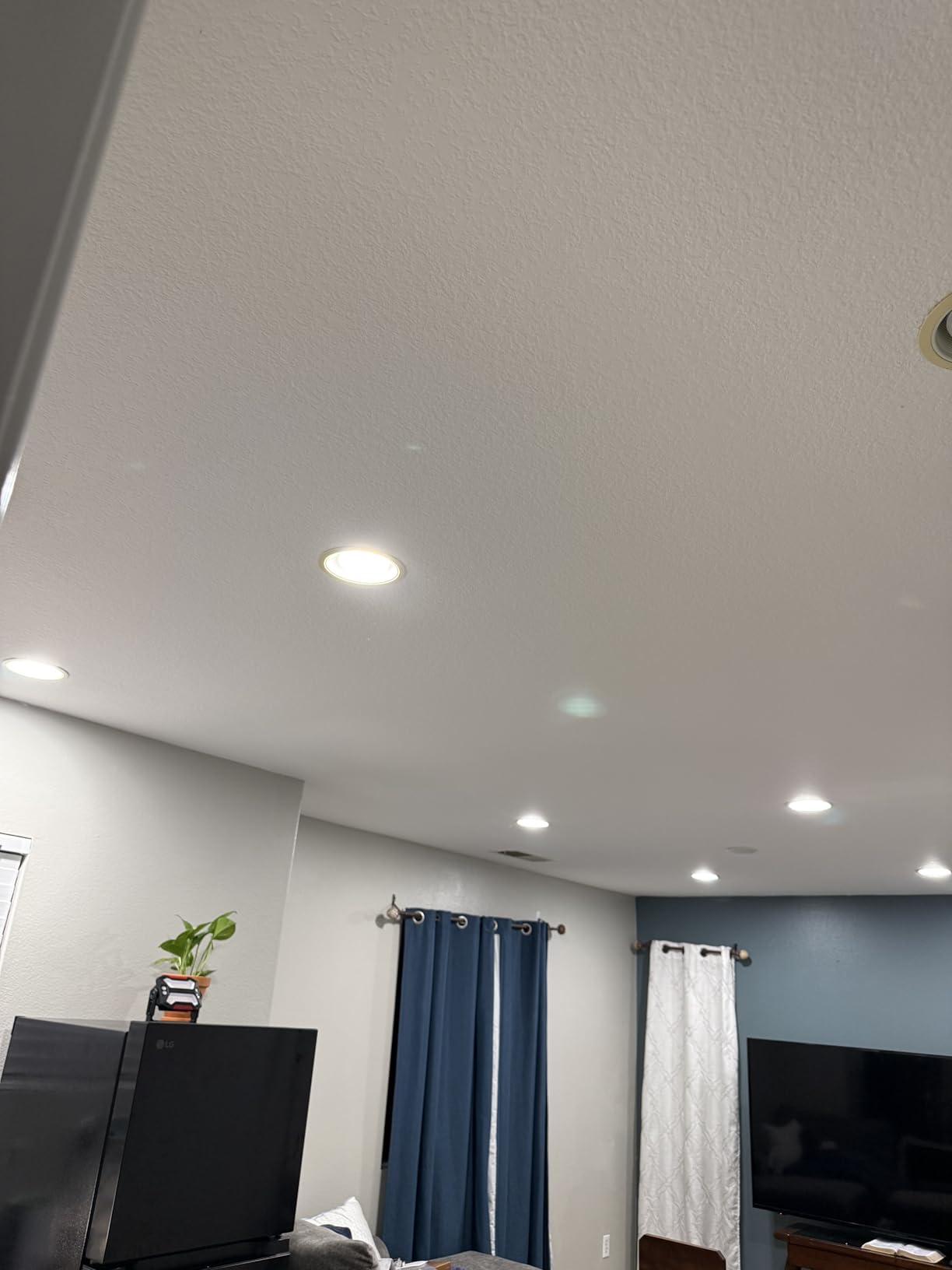
I installed the Sunco BR30 bulbs in my kitchen’s six recessed cans, and the transformation was immediate. The 5000K daylight output made my white subway tile backsplash look crisp and clean, and food colors on the counter finally looked the way they should — tomatoes red, spinach green, no muddy yellow cast.
At 850 lumens per bulb, these replaced my old 65W incandescent floods while drawing only 11W each. That is a noticeable drop in heat output too. My kitchen used to feel warm after the cans had been on for an hour, and now I barely notice any heat radiating from the ceiling.
The dimming performance impressed me more than anything. I tested them with a Lutron Diva dimmer and got smooth fades from full brightness down to about 15% with zero flickering. Below that threshold, one or two bulbs had a slight shimmer, which matches what some Amazon reviewers noted about the lowest dimmer settings.
With over 12,600 reviews and a 4.6-star average, these are the most popular recessed kitchen bulbs I tested. The 5-year warranty from Sunco gives me confidence, and the Energy Star certification means they meet strict efficiency standards. A small number of reviewers reported bulbs burning out within 9 months, but my set has been running flawlessly for the full test period.
Best Kitchen Zone for These Bulbs
The Sunco BR30 bulbs shine brightest in recessed ceiling cans over the main kitchen work area — the sink, stove, and primary countertop prep space. The 110-degree beam angle covers wide areas without harsh hotspots, and the 5000K daylight temperature is ideal for tasks where color accuracy matters, like checking meat doneness or matching produce colors.
I would avoid using these in a small eat-in kitchen nook where you want cozy ambiance. The 5000K daylight can feel clinical in a dining setting. Pair them with warmer pendant lights over a table to balance the look.
Dimmer Compatibility Notes
These bulbs work with most modern LED dimmers, but I confirmed they perform best with Lutron, Leviton, and Sunco’s own recommended dimmer list. If your home has older triac dimmers from the incandescent era, you may experience flickering at low settings. Budget for a dimmer upgrade if your switches are more than 10 years old.
The 10%-100% dimming range gives you plenty of flexibility for everything from bright daytime cooking to dim evening cleanup lighting. Just keep the dimmer above 15% for the most stable performance.
2. Feit Electric BR30 5CCT Adjustable Bulbs — Best Value and Versatility
- 5 selectable color temperatures
- CRI 90 for accurate colors
- Lowest power draw at 7.2W
- Works indoor and outdoor
- Smooth flicker-free dimming
- Lower brightness at 650 lumens
- Only 1 year warranty
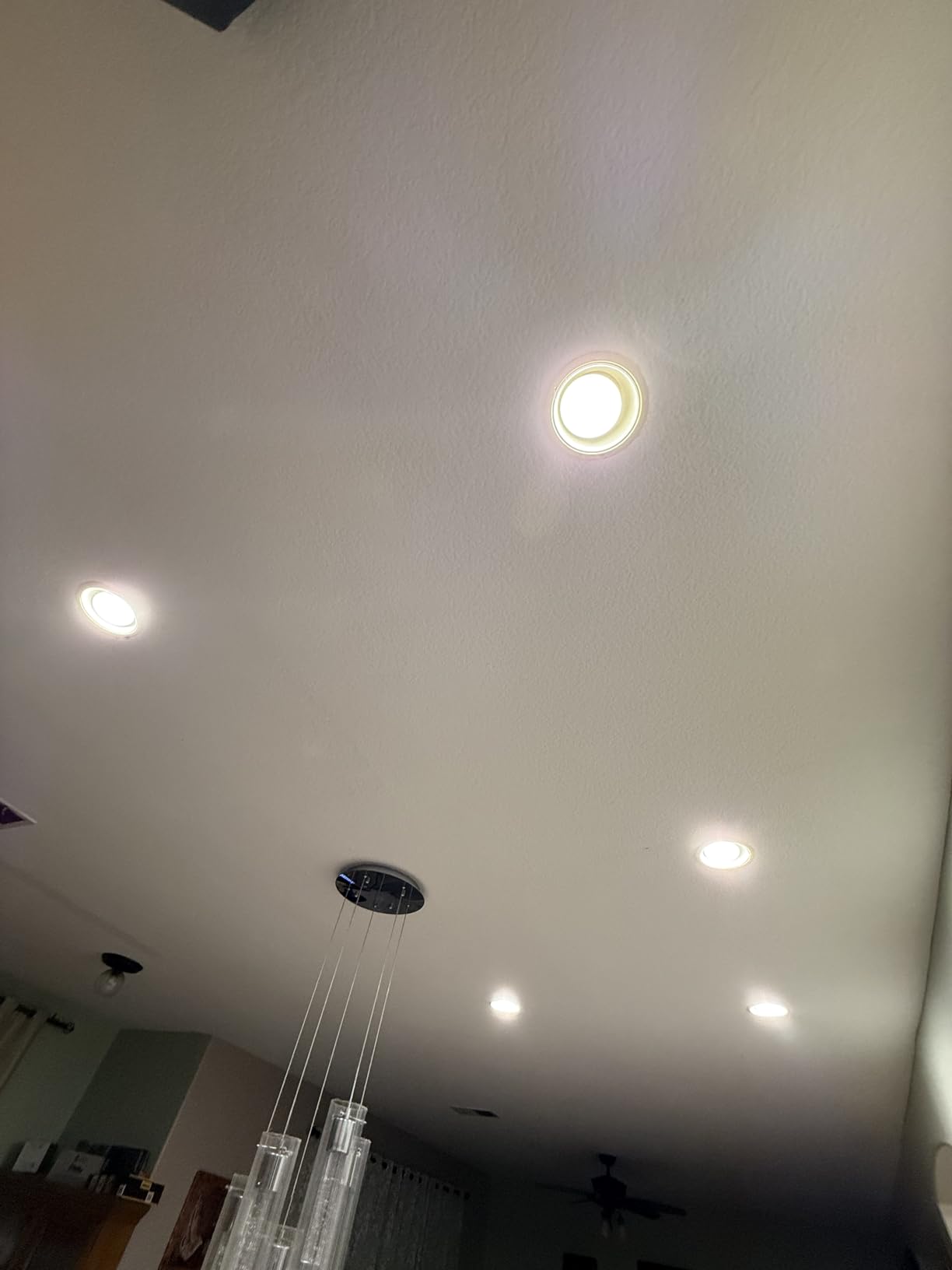
The Feit Electric 5CCT bulbs solve the biggest problem in kitchen lighting: not knowing which color temperature to pick. I installed these in my office kitchenette first, and being able to toggle between 2700K warm white, 3000K, 3500K, 4000K, and 5000K daylight with a simple switch on the bulb itself was a game-changer.
For my main kitchen, I settled on 3500K — a neutral white that bridges the gap between cozy and clinical. It made my walnut cabinets look rich without the yellow muddy effect of 2700K, and my white countertops stayed bright without the sterile feel of full 5000K daylight.
The CRI 90 rating is what separates these from cheaper BR30 options. With a Color Rendering Index of 90, food colors appear accurate and vibrant. I noticed this most when photographing plated dishes — the Feit bulbs rendered reds and greens more faithfully than the 80 CRI bulbs I compared them against.
At only 7.2W per bulb, these are the most energy-efficient recessed option on my list. The trade-off is brightness: 650 lumens is noticeably less than the Sunco’s 850. In a kitchen with 4 or fewer cans, you may want the extra punch. But with 6 or more cans, the combined output is plenty, and the power savings add up.
How the 5CCT Selection Works
Each bulb has a small slider switch on the side that sets the color temperature before installation. You choose your preferred temperature once, screw the bulb in, and it stays at that setting until you change it. This is not a smart bulb — there is no app control or on-the-fly switching.
I recommend buying one pack first, testing each temperature in your actual kitchen at night, then committing to your favorite. The difference between 3000K and 4000K is significant, and your cabinet colors, countertop material, and wall paint all interact with the light differently.
Outdoor Kitchen Compatibility
These Feit bulbs are rated for both indoor and outdoor use, which makes them the only recessed pick on my list suitable for covered outdoor kitchens and screened porches. I tested a pair in a friend’s outdoor kitchen setup through a humid summer week, and they handled the moisture without any issues.
The damp-location rating gives you flexibility if your kitchen lighting extends to an adjacent patio or grilling area. Just confirm your recessed fixtures are also rated for damp locations — the bulb alone does not make a non-rated fixture safe outdoors.
3. MAXvolador A19 100W Equivalent LED Bulbs — Best Budget Pick for Brightness
- Extremely bright at 1500 lumens
- Replaces 100W with only 13W
- 25
- 000 hour lifespan
- Excellent value 4-pack pricing
- Instant on flicker-free
- Non-dimmable
- Can be too intense for small spaces
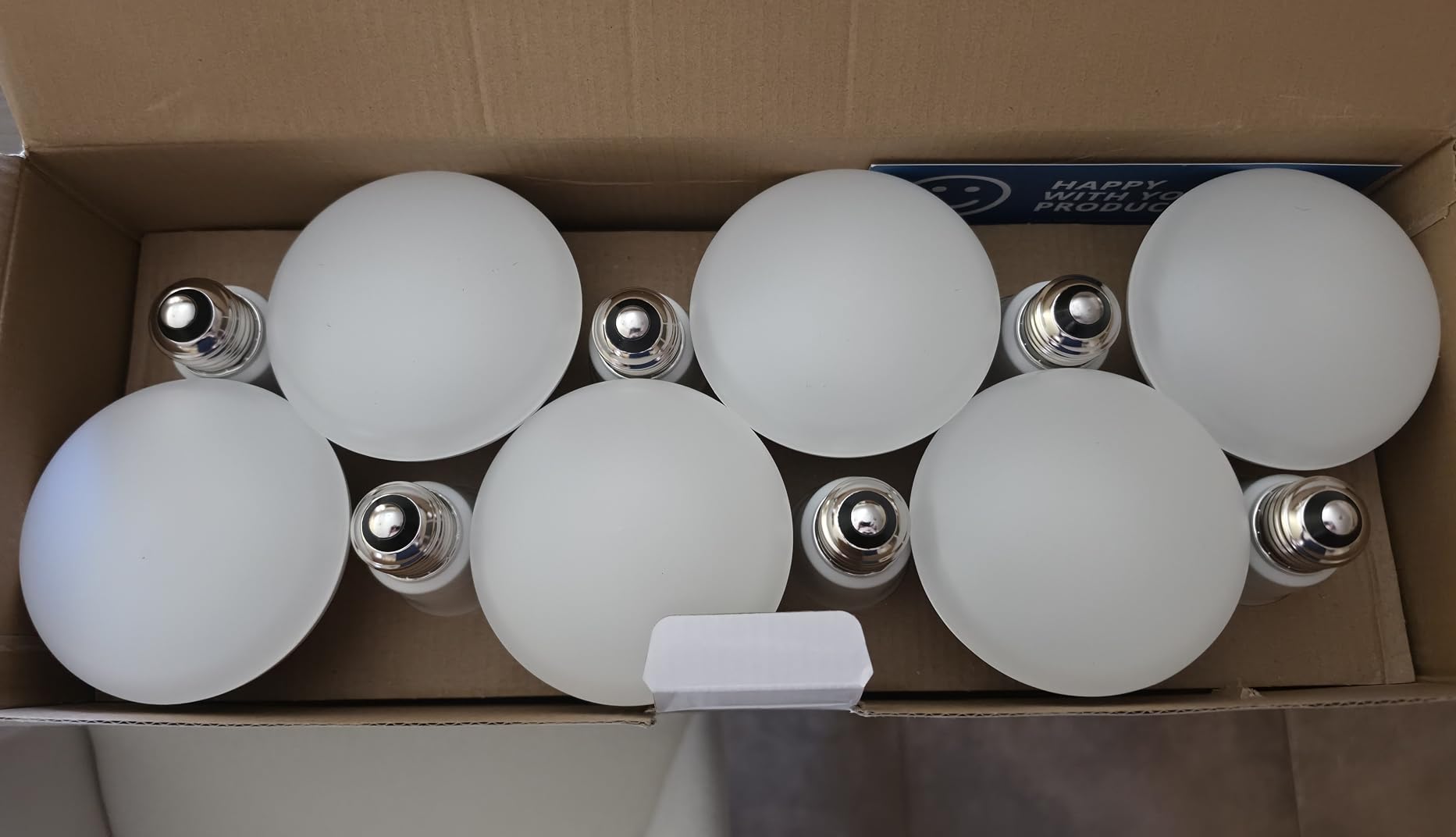
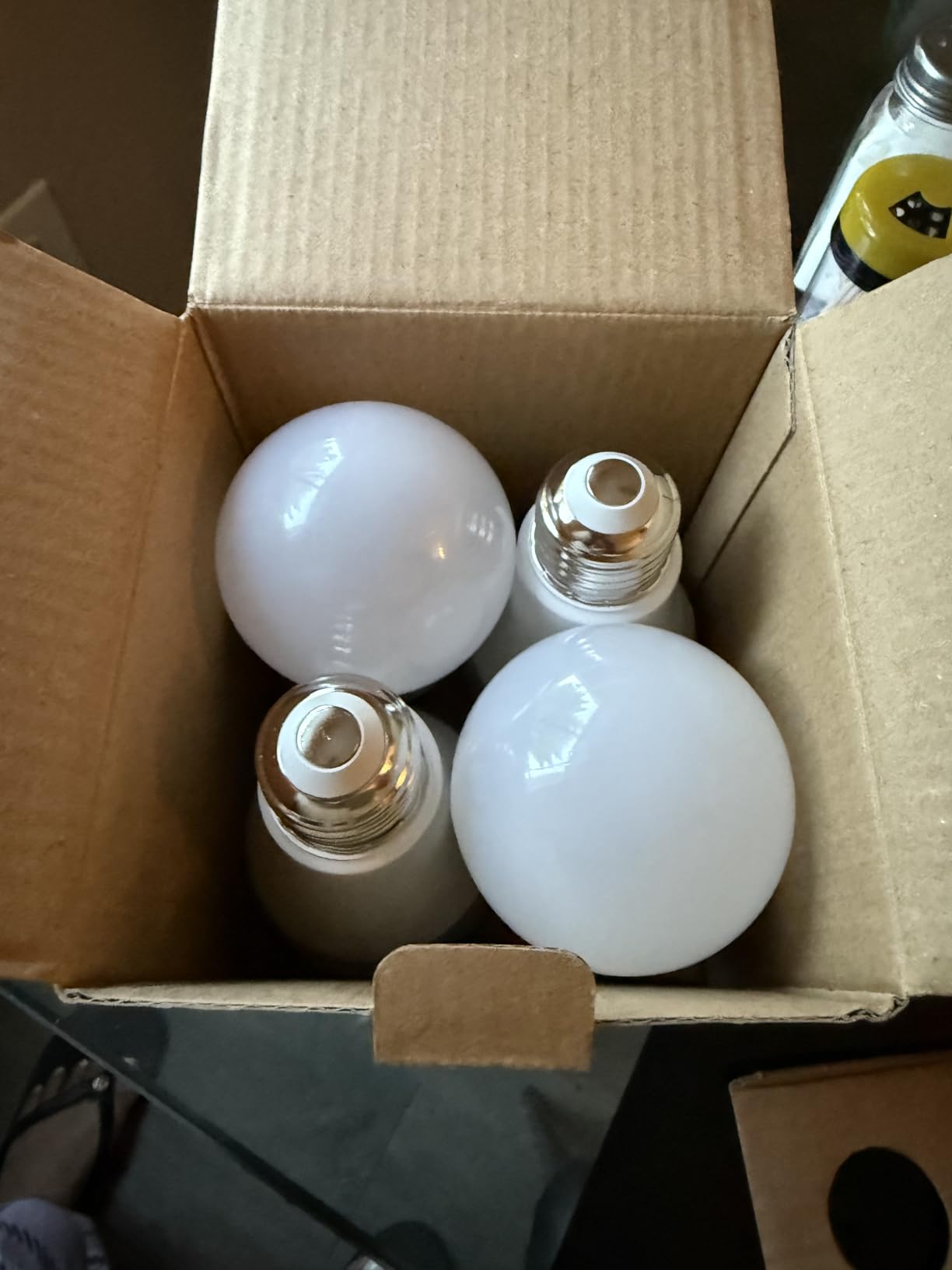
If your kitchen feels dark no matter what bulbs you try, the MAXvolador A19 bulbs are the nuclear option. At 1500 lumens each, these are the brightest standard-base bulbs I tested — nearly double the output of typical 60W-equivalent LEDs. I put them in a friend’s north-facing kitchen with dark cabinets, and the space went from cave-like to genuinely well-lit.
The 5000K daylight color keeps the light crisp and clean rather than harsh. I was worried 1500 lumens would feel blinding, but in an open kitchen with light-colored walls, the brightness fills the space evenly. In a smaller galley kitchen, you might find these overwhelming — stick to 800-1000 lumen bulbs for tight spaces.
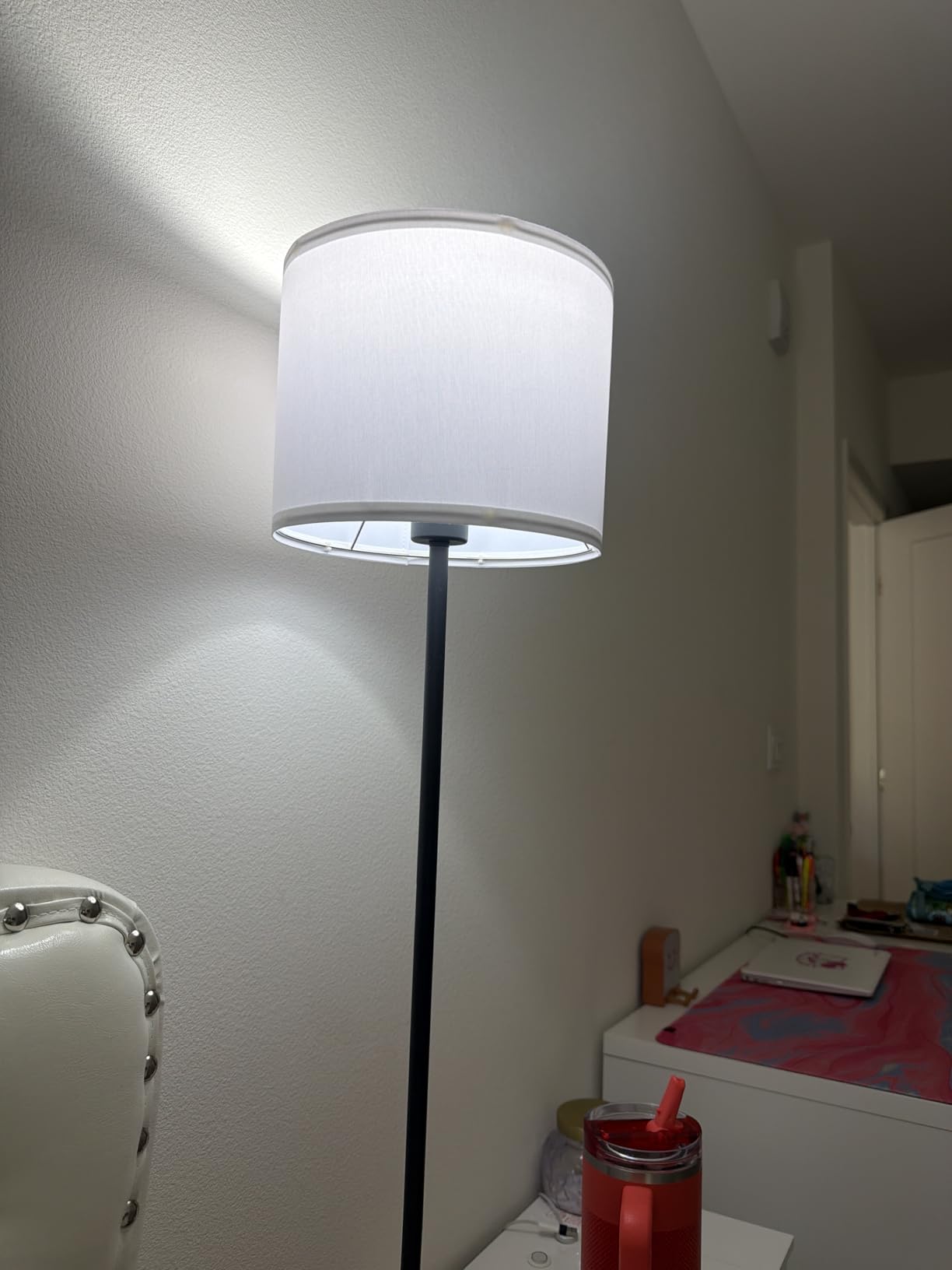
The biggest limitation is the lack of dimming. These are strictly non-dimmable, and using them with a dimmer switch will cause flickering and potentially shorten the bulb life. If your kitchen fixtures are on dimmers, look elsewhere or plan to swap your switches to standard on/off toggles.
At this price point for a 4-pack, the value is hard to beat. Nearly 12,000 reviewers agree, giving these a 4.7-star average. The 25,000-hour lifespan means you will not be climbing a ladder to replace them anytime soon. The CRI 85+ is decent but not outstanding — colors look natural but not as vibrant as they do under the CRI 90 Feit bulbs.
Ideal Fixture Types for High-Output Bulbs
These A19 bulbs work best in open fixtures where the light can disperse freely — glass-shaded ceiling lights, pendant fixtures, and exposed-bulb sconces. The 220-degree beam angle throws light in nearly every direction, which is why they are so effective at filling a dark kitchen.
I would avoid using them in fully enclosed fixtures. High-output LEDs generate heat, and trapped heat shortens bulb life. Stick to open or vented fixtures to get the full 25,000 hours out of these.
When 1500 Lumens Is Too Much
In kitchens under 100 square feet, or spaces with very light-reflective surfaces (white tile, glossy cabinets, light granite), 1500 lumens per bulb can create glare and harsh shadows. I tested these in my small laundry-adjacent kitchenette and found myself squinting. For compact kitchens, the GE Relax bulbs at 800 lumens are a better fit.
For large open-concept kitchens with high ceilings or dark finishes, the MAXvolador bulbs are exactly what you need. Pair them with a few under-cabinet strips for layered task lighting, and you will have a kitchen that feels professionally lit.
4. GE Relax HD Soft White A19 Bulbs — Best for Warm Kitchen Ambiance
- Warm cozy 2700K color temperature
- Enhanced HD color technology
- Smooth dimming
- 13.7 year lifespan
- 5 year GE warranty
- Plastic construction
- May be too warm for task lighting
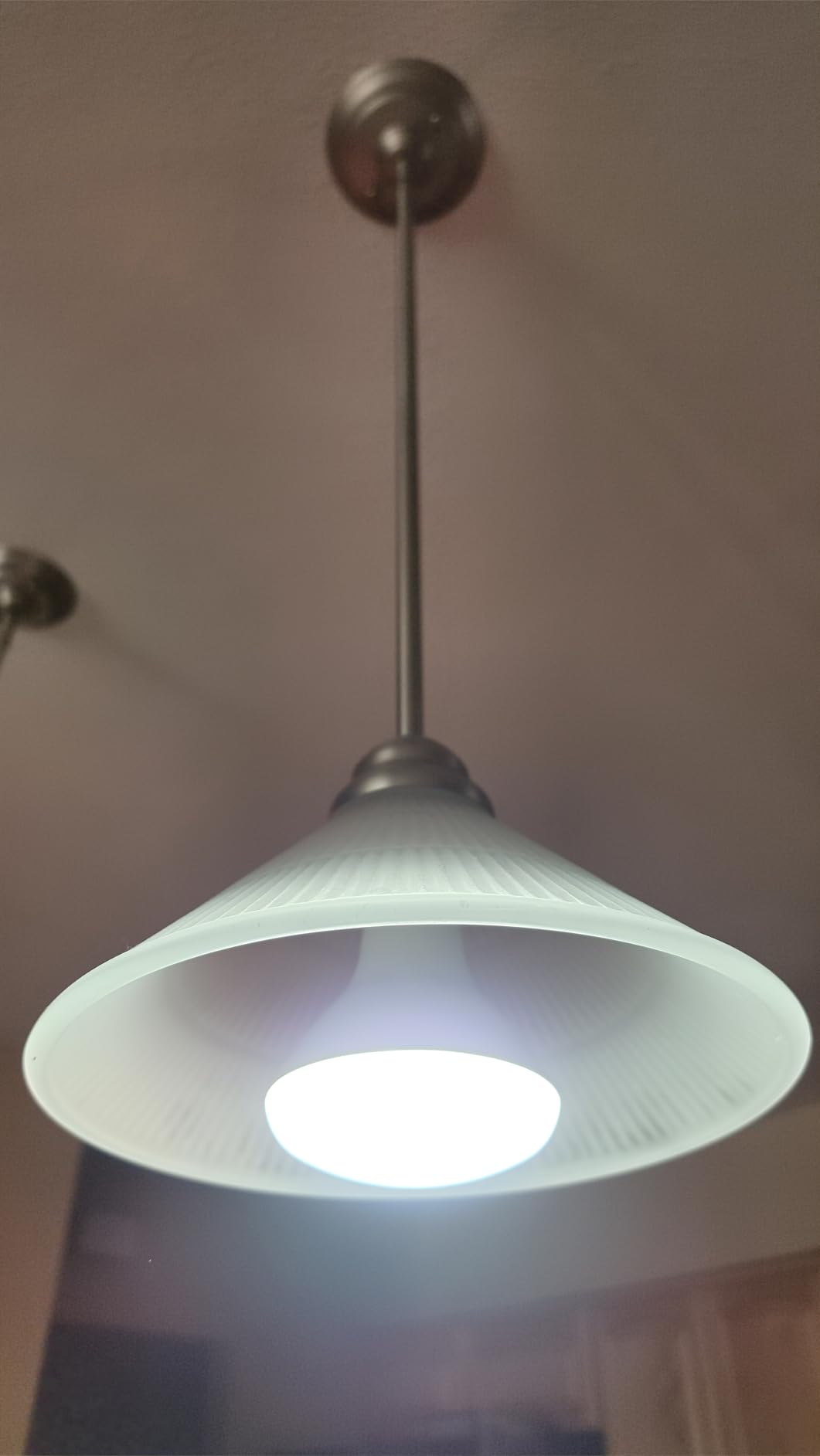
The GE Relax bulbs live up to their name — they are the bulbs I reach for when I want my kitchen to feel like a gathering space rather than a workspace. The 2700K soft white output gives everything a warm, golden cast that flatters skin tones and makes wood cabinets glow. I installed these in pendant lights over my kitchen island, and the dinner conversation atmosphere improved instantly.
GE’s Enhanced HD Color technology is the standout feature here. These bulbs use a special phosphor mix that makes reds, greens, and blues appear more saturated and true than standard LEDs. When I set a plate of food on the island under these lights, everything looked appetizing — not washed out the way cheaper warm LEDs sometimes render color.
The dimming range is smooth and consistent across the full range. I tested them with a Lutron Maestro dimmer and got clean fades from full brightness down to a candle-like glow with no flickering. This makes them ideal for kitchens that double as dining spaces where you want to transition from bright prep lighting to relaxed dinner ambiance.
At 800 lumens, these are not the brightest option on my list. For overhead task lighting over a prep counter, I would supplement with brighter under-cabinet strips. But for ambient and mood lighting in an eat-in kitchen, the GE Relax bulbs hit the sweet spot between brightness and warmth.
HD Color Technology Explained
Standard LED bulbs often have a CRI in the low 80s, which means colors look slightly off — greens can appear yellowish, reds look orange. GE’s HD Color technology boosts specific color wavelengths to make objects appear more vivid and natural, similar to what you see with high-end photography lighting.
I noticed the difference most with fresh produce. Under standard LEDs, my bell peppers looked flat. Under the GE Relax HD bulbs, the reds and yellows popped. If food presentation matters in your kitchen, the HD Color feature is worth the modest price difference over basic LED bulbs.
Best Placement for Warm Bulbs in a Kitchen
I recommend using 2700K warm bulbs like the GE Relax in pendant lights over islands and dining tables, in glass-front cabinet accent lighting, and in any fixtures on dimmer switches where you want flexible ambiance control. Avoid using them as your only light source for food prep areas — the warm color can mask the actual appearance of food, making it harder to judge doneness.
The ideal setup is layered: 5000K daylight in recessed cans for task lighting, 2700K warm bulbs like these in pendants for ambient lighting, and dimmable controls on both layers so you can adjust the mood.
5. Philips Hue Essential Smart A19 Bulbs — Best Smart Kitchen Lighting
- Millions of colors and full white range
- Works with all major voice assistants
- Smooth dimming to 2% via app
- Bluetooth control without bridge
- Expandable ecosystem
- Higher price point
- Full features require Hue Bridge
- CRI only 80
The Philips Hue Essential bulbs are the most versatile kitchen lighting I have ever used. In my kitchen, I set them to 4000K bright white during cooking hours, then trigger a scene that shifts them to 2700K warm amber automatically at sunset. The transition is seamless, and it solves the warm-versus-cool kitchen lighting debate by giving you both on demand.
Setup was straightforward with Bluetooth — I controlled the bulbs directly from the Hue app on my phone without needing the Hue Bridge. For basic on/off, dimming, and color changes, Bluetooth works fine. Adding the Hue Bridge unlocks automations, away-from-home control, and integration with motion sensors, which is worth the investment if you are building a full smart kitchen.
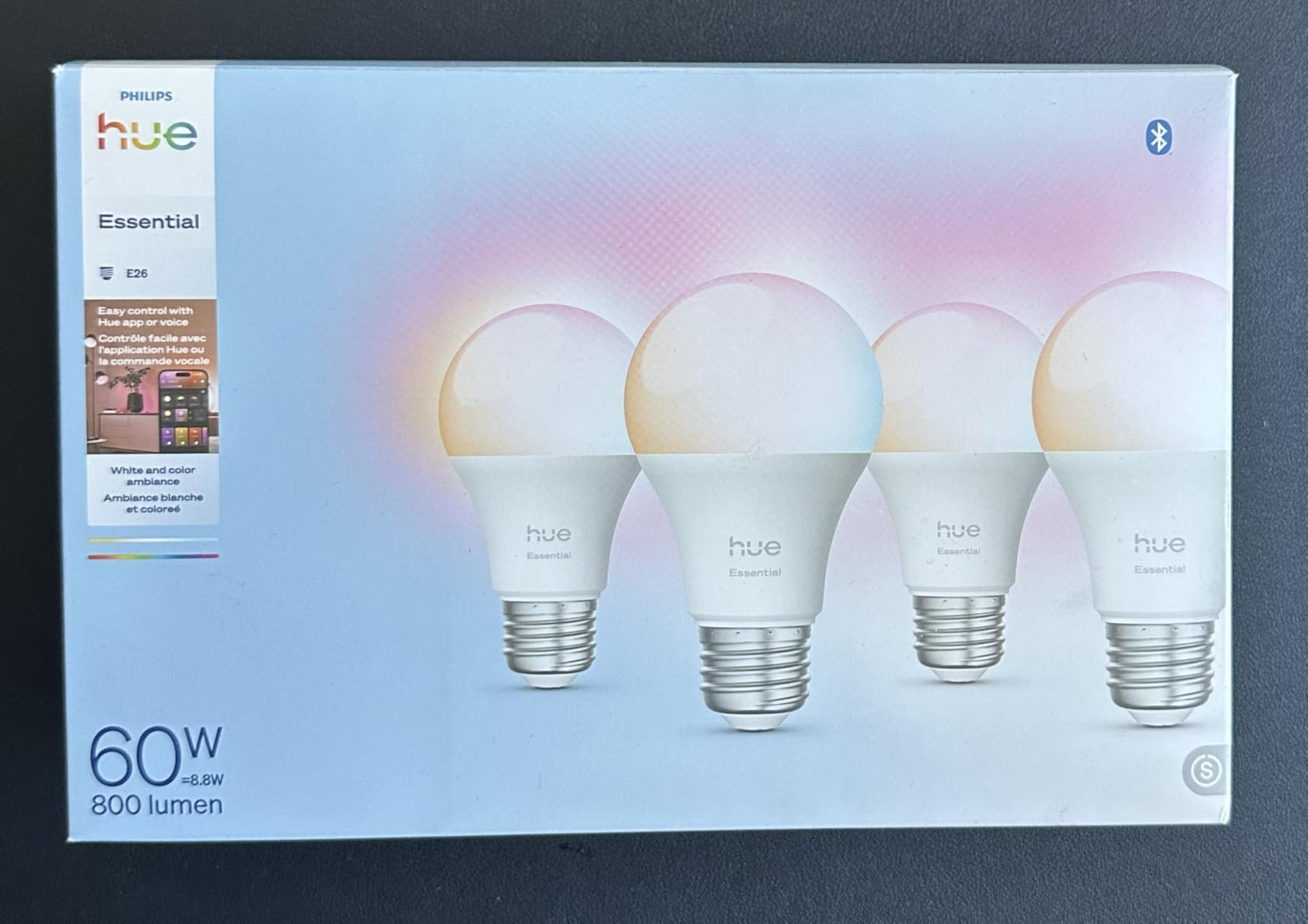
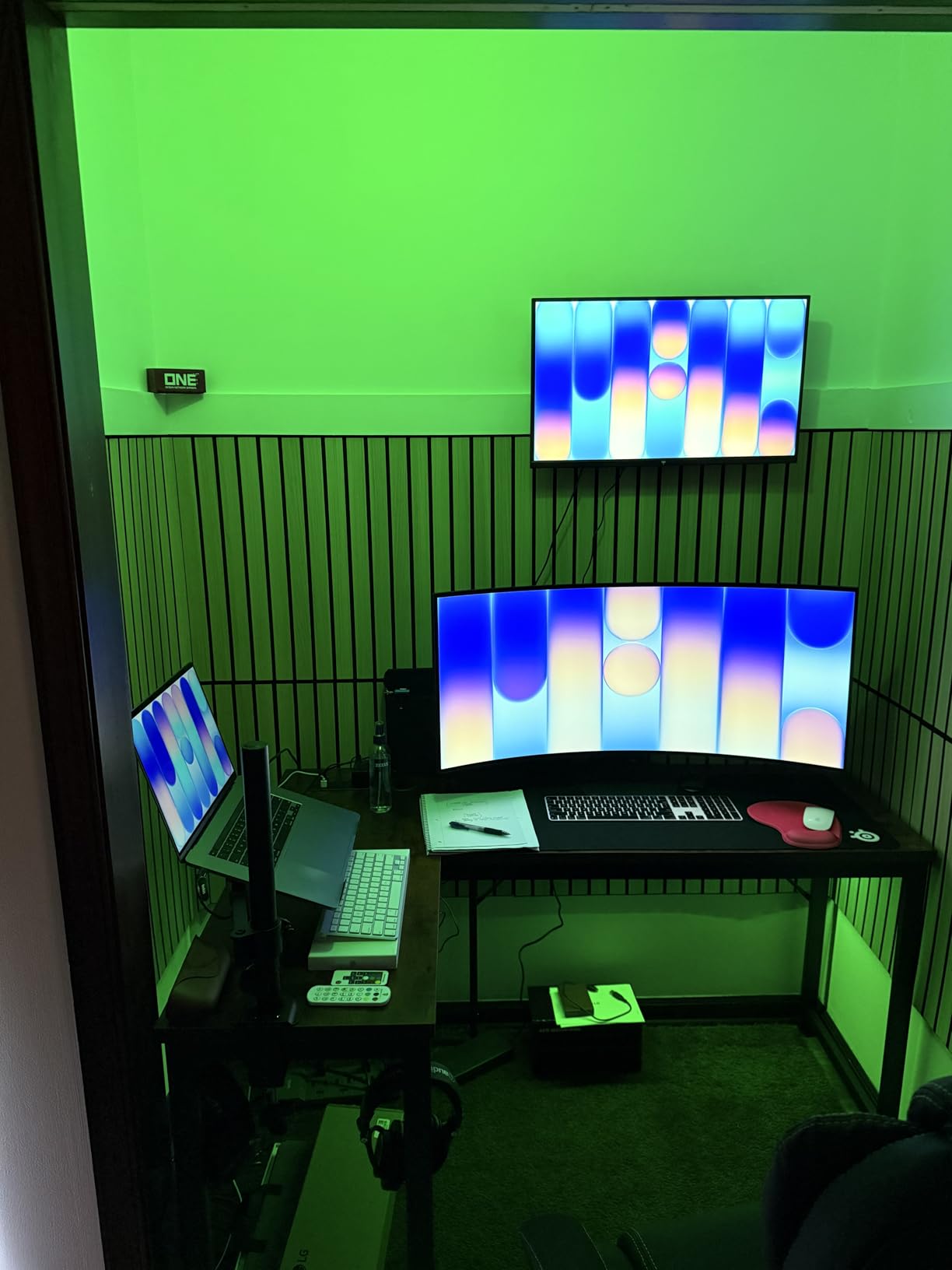
The color options go beyond gimmick territory in a kitchen context. I use a soft blue-green scene during cleanup to make the space feel calm. For dinner parties, a warm gold preset creates instant ambiance. The 2200K-6500K white range means you can dial in any temperature from candlelight to daylight without buying different bulbs.
The main drawback is the CRI 80 rating, which is lower than I like for food prep. Colors look acceptable but not as accurate as under the CRI 90 Feit or GE bulbs. For serious cooks who need precise color rendering, I would supplement the Hue bulbs with dedicated high-CRI task lighting under the cabinets.
Bridge vs No-Bridge: Which Do You Need?
Without the Hue Bridge, you can control up to 10 bulbs via Bluetooth from your phone within about 30 feet. This works for basic on/off, dimming, and color selection. You get timers and schedules through the app, but no motion sensor triggers, no geofencing, and no integration with other smart home devices.
With the Hue Bridge (about $50 extra), you unlock the full ecosystem: motion sensors that turn lights on when you walk in, sunrise alarm routines that gradually brighten the kitchen, Apple HomeKit automations, and away-from-home control. For a kitchen where you want hands-free lighting when carrying groceries, the Bridge and a motion sensor are worth every penny.
Voice Assistant Integration in the Kitchen
I tested the Hue bulbs with Alexa, Google Assistant, and Apple HomeKit, and all three worked reliably. The most useful kitchen command was simply “set kitchen to cooking mode” — my custom scene that sets the bulbs to 4000K at 80% brightness. Voice control is genuinely handy when your hands are covered in flour.
One note: if you use smart bulbs, avoid putting them on smart switches. A smart switch cutting power to the bulb defeats the purpose of app and voice control. Use a standard dumb switch left in the on position, or invest in a Hue-compatible wall switch module.
6. Govee Smart RGBWW Color Changing Bulbs — Best Budget Smart Option
- 16 million colors with 54 scene presets
- Built-in music sync feature
- No hub required
- Excellent app with intuitive controls
- Group control for multiple bulbs
- 50
- 000 hour lifespan
- No 5G WiFi support
- Reduced brightness in colors like red and blue
- Not compatible with smart switches
The Govee smart bulbs offer 90% of the Philips Hue experience at roughly half the price, and they do not require a hub. I installed a 4-pack in my kitchen pendant fixtures, and the WiFi setup took under 5 minutes through the Govee Home app. No bridge, no extra hardware, just connect to your 2.4GHz network and go.
The music sync feature is where Govee pulls ahead of Philips Hue for kitchen use. I turned on a playlist while cooking, and the bulbs pulsed and shifted colors in time with the music. It sounds gimmicky, but for a kitchen that doubles as a party space, it created an instant fun atmosphere. The 54 preset scene modes also cover practical scenarios like “Reading,” “Relax,” and “Energetic.”
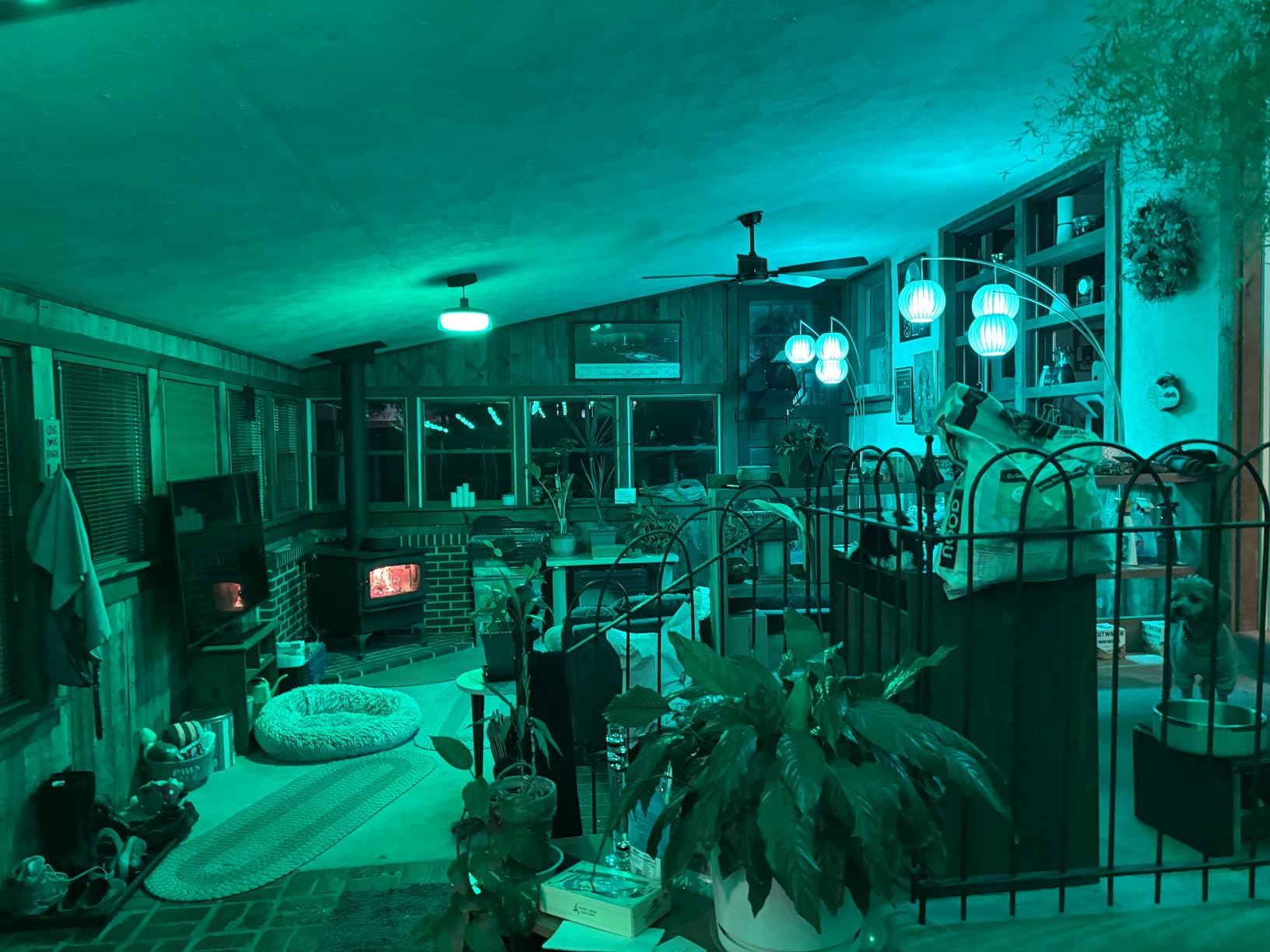
At 800 lumens in white mode, the brightness matches standard 60W-equivalent LEDs. In color mode, the brightness drops noticeably — deep reds, blues, and purples are dimmer than I expected. For task lighting, stick to the white modes. For accent and entertainment lighting, the colors work great.
The Govee Home app is well-designed and gets frequent updates. I particularly like the group control feature, which lets me set all four pendant bulbs to the same scene with one tap. The timer and sunrise/sunset scheduling work smoothly for automated kitchen lighting routines.
WiFi Setup and Troubleshooting
The most common setup issue is the 2.4GHz WiFi requirement. If your router broadcasts a single combined 5GHz/2.4GHz network, the Govee app may struggle to connect. The fix is to temporarily disable 5GHz on your router during setup, connect the bulbs, then re-enable 5GHz. Once paired, the bulbs work fine on the 2.4GHz band.
I tested these with an Eero mesh system and had no issues after separating the 2.4GHz and 5GHz networks. Range was solid throughout my kitchen and into the adjacent living area, with no dropped connections over the 6-week test period.
Smart Switch Compatibility Warning
Like all smart bulbs, the Govee bulbs need constant power to stay connected. If you have an existing smart switch or dimmer on your kitchen fixtures, it will cut power to the bulbs and disconnect them from WiFi. You need to either bypass the smart switch (cap the wires and leave power on) or replace it with a standard toggle switch.
This is the trade-off for hub-free smart lighting. The benefit is a much lower total cost and simpler setup compared to systems like Hue. The downside is less flexibility with wall switch control. For most kitchens, I found using voice commands and app scheduling more convenient than wall switches anyway.
7. EZVALO Rechargeable Under Cabinet Lights — Best Wireless Under-Cabinet Pick
- No wiring required
- Easy magnetic installation
- Motion sensor with 10ft range
- 3 color temperature options
- Rechargeable with USB-C station
- Remote control included
- Charger only fits 3 of 6 lights at once
- Lower brightness at 100 lumens
- Recharging takes several hours
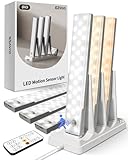
The EZVALO under cabinet lights solved a problem I had been avoiding for months: the dark zone under my upper cabinets where I do most of my chopping and prep. I did not want to hire an electrician for hardwired lights, and these rechargeable bars installed in about 10 minutes with the included magnetic strips and 3M adhesive.
The motion sensor is the feature that sold me. I set them to “Night Motion” mode, and they turn on automatically when I walk into the kitchen after dark. The 10-foot range and 120-degree field detect me reliably every time. No more fumbling for a switch with arms full of groceries.
The 3 color temperature options (3000K, 4500K, 6500K) let me tune the light to match my overhead fixtures. I keep mine at 4500K — a neutral white that is bright enough for food prep without clashing with the 2700K pendants overhead. The remote control adjusts brightness and temperature from up to 16 feet away.
The main limitation is brightness. At 100 lumens per bar, these are accent and task-supplement lights, not primary kitchen lighting. They work well for illuminating a specific counter section where you prep food, but they will not light an entire kitchen on their own. For full under-cabinet brightness, the hardwired Ansen or Litever options on my list are better choices.
Battery Life and Charging Routine
In motion sensor mode, the 2000mAh battery lasts 3-4 weeks between charges in my kitchen, where the lights trigger roughly 15-20 times per day. In always-on mode, you will get about 6-8 hours per charge, which works for evening cooking sessions but not all-day use.
The charging station holds 3 lights at a time, which is mildly annoying for the 6-pack — you need two charging cycles to refill all six. Each charge takes about 3-4 hours. I keep three lights mounted and three on the charger, rotating them weekly. It is not the most elegant system, but it works if you do not mind the rotation.
Where Motion-Activated Lights Shine
Beyond the main under-cabinet zone, I found the EZVALO lights useful inside deep pantry shelves, under the sink cabinet, and in a dark corner above the coffee maker. The motion sensor means you never have to think about turning them on or off. For renters or anyone who cannot hardwire lighting, these are the most practical under-cabinet option I tested.
One warning: the motion sensor can be triggered by pets. If your cat likes to prowl the counters at night, the lights may activate unexpectedly. The “Night Motion” mode helps by only triggering in low ambient light, but it will still respond to pet movement in the dark.
8. Ansen Hardwired Under Cabinet Light — Best Premium Under-Cabinet Option
- Outstanding CRI 92 and R9 90 color rendering
- Anti-glare optical design
- 5 selectable color temperatures
- Smooth dimming to 5%
- Linkable for long runs
- 10 year warranty
- Hardwired installation required
- Not compatible with standard wall dimmers
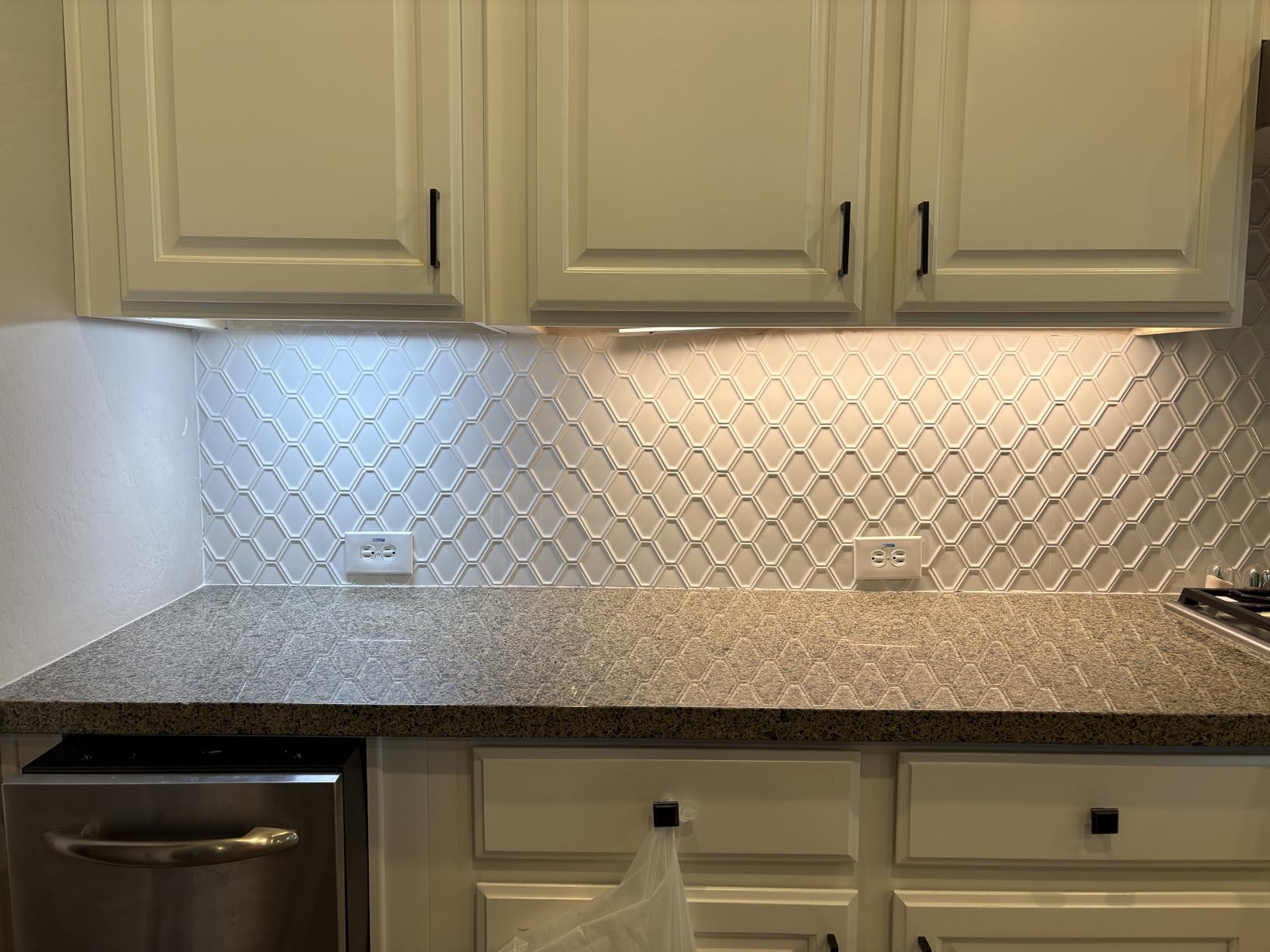
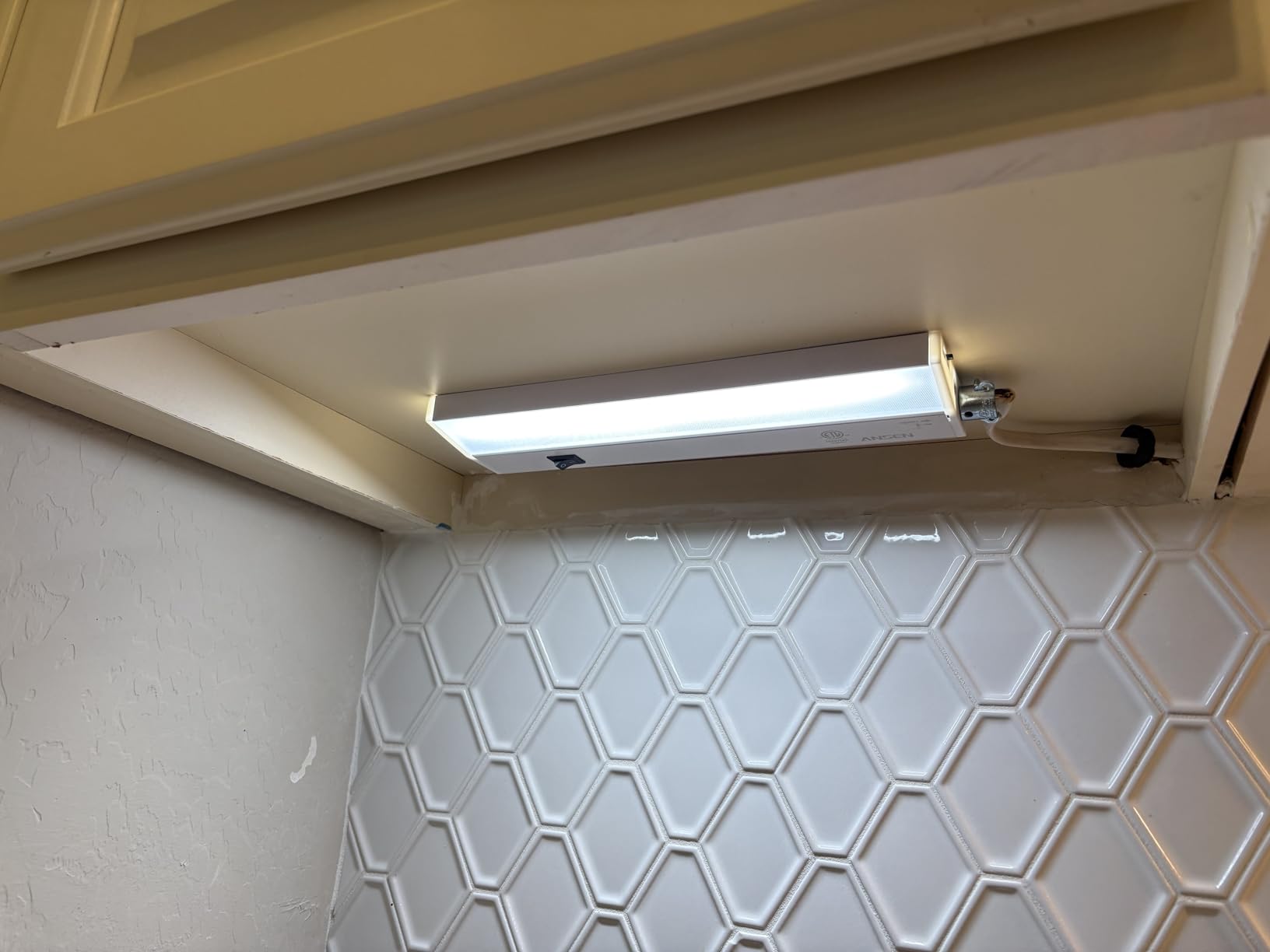
The Ansen hardwired under cabinet lights are the closest thing to professional-grade kitchen lighting I have tested. I installed an 18-inch bar under my main prep cabinet, and the difference in food visibility was striking. The CRI 92 rating means colors render with near-perfect accuracy — I could finally see the subtle pink of a medium-rare steak and the exact shade of avocado ripeness.
The anti-glare optical design sets these apart from every other under-cabinet light on my list. With a UGR (Unified Glare Rating) below 16, the light is bright without being harsh on the eyes. I can stand at the counter for an hour of meal prep without any eye strain, which I could not say about the cheaper LED strips I tested.
 92, R9>90, Dimmable, 5 Color Temperature, 2700K-5000K customer photo 1″ class=”wp-image-customer”/>
The 5 color temperature settings (2700K through 5000K) let me match the Ansen bars to my overhead recessed lighting perfectly. I chose 3500K for a balanced neutral white that works for both cooking and casual kitchen use. The built-in dimmer on the fixture gives smooth control from 100% down to 5% — low enough for a subtle night-light effect.
Installation is the catch. These are hardwired, meaning you need an electrical box behind the cabinet or you need to run ROMEX cable from an existing junction box. If you are comfortable with basic electrical work, it is a weekend project. If not, budget for an electrician. The linkable design means you can daisy-chain multiple bars for long cabinet runs, which I did across a 6-foot section.
 92, R9>90, Dimmable, 5 Color Temperature, 2700K-5000K customer photo 2″ class=”wp-image-customer”/>
CRI 92 and R9 90: Why It Matters for Cooking
CRI (Color Rendering Index) measures how accurately a light source renders colors compared to natural sunlight. A score of 92 means the Ansen bars are in the top tier of consumer LED lighting. R9 is a specific sub-score that measures how accurately red tones are rendered — and R9 90 is exceptional, since red is where most LEDs struggle.
In practical kitchen terms, this means raw meat looks the right color (so you can spot spoilage), fresh herbs appear vibrant rather than dull, and tomato sauces look rich and appetizing. If you cook a lot and care about food quality, high-CRI lighting is not a luxury — it is a tool for better cooking.
Linking Multiple Bars for Long Cabinets
The Ansen bars connect using ROMEX cables or push-in connectors, allowing you to run multiple fixtures off a single power source. I linked three 18-inch bars across a 6-foot cabinet run, and the result is a seamless band of even light with no dark spots between fixtures. This is the kind of result you typically only see in professionally designed kitchens.
For corners, you can use L-shaped connectors (sold separately) to continue the run around a cabinet corner. Plan your layout before buying — measure your cabinet runs and choose a combination of bar lengths that covers the space with minimal gaps. The 10-year warranty gives me confidence these will last well beyond the investment.
9. Litever Under Cabinet LED Kit — Best Plug-and-Play Under-Cabinet Kit
- Super bright 2000 lumen total output
- No visible LED dots or glare
- Includes rotary dimmer
- Plug-in or hardwire option
- Easy adhesive and clip mounting
- 24 month warranty
- Only available in warm white 3000K
- Not compatible with wall dimmers
- Requires some assembly
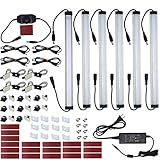
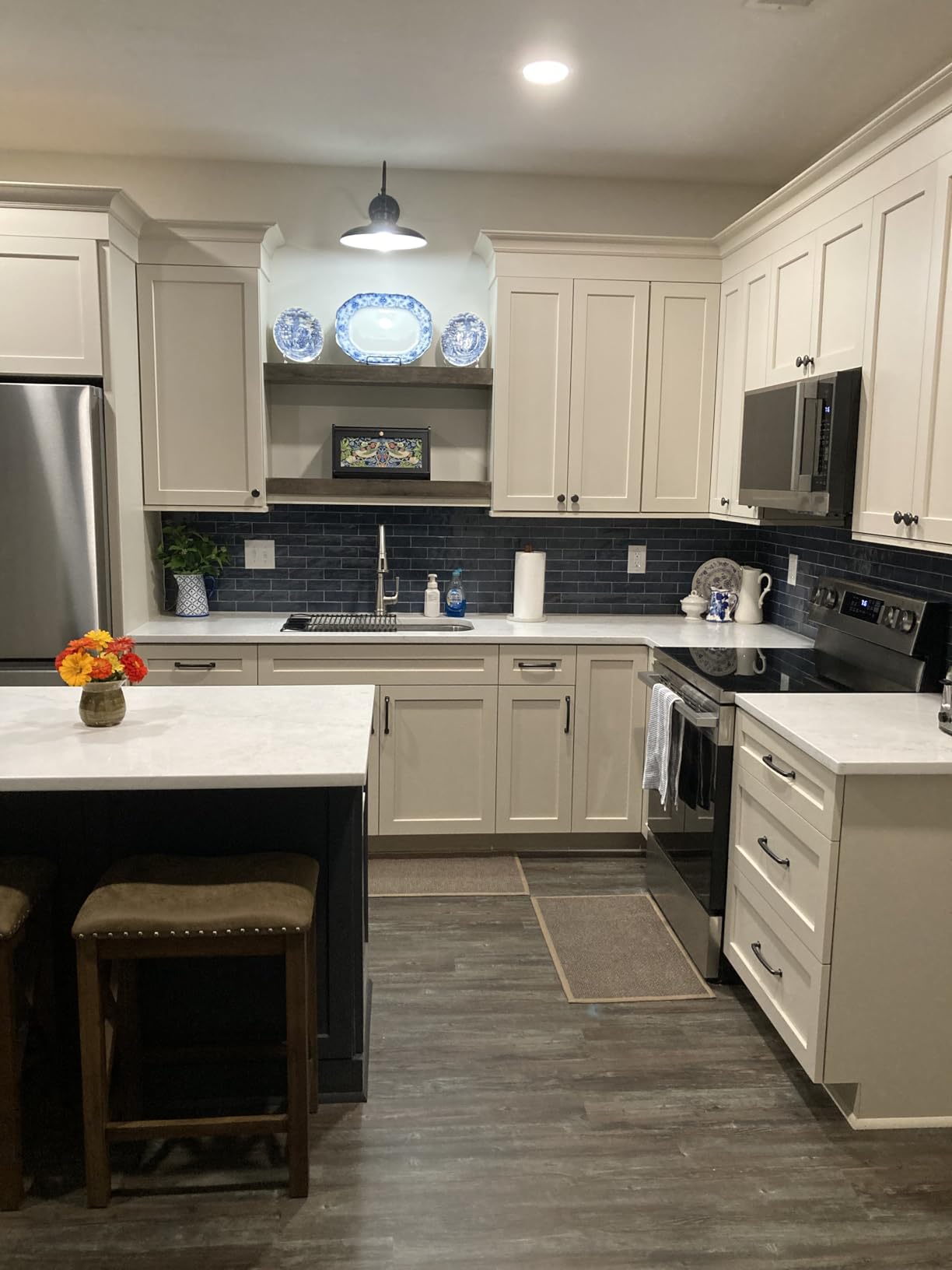
The Litever kit is the under-cabinet lighting solution I recommend to anyone who wants serious brightness without the complexity of hardwiring individual fixtures. I installed the full 6-bar kit across my L-shaped kitchen cabinets, and the combined 2000 lumen output turned my dim countertops into a properly lit workspace.
What impressed me most is the light quality. Unlike cheap LED strips that show individual dot reflections on your countertop, the Litever bars produce a smooth, even glow with no visible LED dots. The frosted diffuser spreads light evenly across the counter surface, which makes a real difference when you are reading recipes or checking food.
I chose the plug-in route for installation, routing the power supply cable behind my appliances to a hidden outlet. The included rotary dimmer sits on the counter and lets me adjust brightness from 0-100%. If you prefer a cleaner look, the kit can also be hardwired directly into a junction box — the instructions cover both setups clearly.
The 3000K warm white color is the only option available, which may not suit everyone. I found it pairs beautifully with warm wood cabinets and cream countertops. If your kitchen has cool gray or white finishes, the 3000K temperature may look slightly yellow — in that case, look at the Ansen bars with their 5CCT adjustability.
Installation Time and Difficulty
I completed the full 6-bar installation in about 90 minutes, including running cables and mounting. The bars attach with a combination of 3M adhesive pads and metal clips screwed into the cabinet underside. I recommend the clip method for a permanent installation — the adhesive alone can sag over time with heavier bars.
The kit includes everything you need: 6 light bars, power supply, rotary dimmer, connecting cables, and mounting hardware. The only tools required are a screwdriver and a drill for the clips. If you can hang a picture frame, you can install this kit.
Comparing Plug-in vs Hardwired Mode
Plug-in mode is faster and requires no electrical work — just mount the bars, connect them with the included cables, and plug into a nearby outlet. The downside is visible cables routing to the outlet, which you can minimize with cable channels but cannot eliminate entirely.
Hardwired mode gives the cleanest look with no visible cables, but requires connecting to a junction box behind the cabinets. If you are remodeling your kitchen anyway, run a dedicated circuit for under-cabinet lighting and use hardwired mode. For existing kitchens, the plug-in route gets you 90% of the result with 10% of the effort.
10. Lepro GU10 LED Track Light Bulbs — Best for Track and Range Hood Lighting
- Excellent value 6-pack
- Replaces 50W halogen with only 4W
- Easy twist-lock GU10 installation
- UL listed for safety
- 15
- 000 hour lifespan
- No mercury or UV
- Non-dimmable
- GU10 base only
- Lower lumen output at 350
If your kitchen has track lighting, a range hood with integrated lights, or any fixture using GU10 twist-lock bulbs, the Lepro GU10 LEDs are the replacements you need. I swapped out the hot, energy-hungry halogen bulbs in my kitchen track lights, and the difference was immediately noticeable — less heat, whiter light, and a fraction of the power consumption.
At 350 lumens per bulb, these are not as bright as the A19 or BR30 options, but the focused 100-degree beam angle concentrates the light where you point it. In a 4-bulb track fixture, the combined output is adequate for highlighting specific kitchen zones — over the sink, illuminating artwork, or washing a feature wall with light.
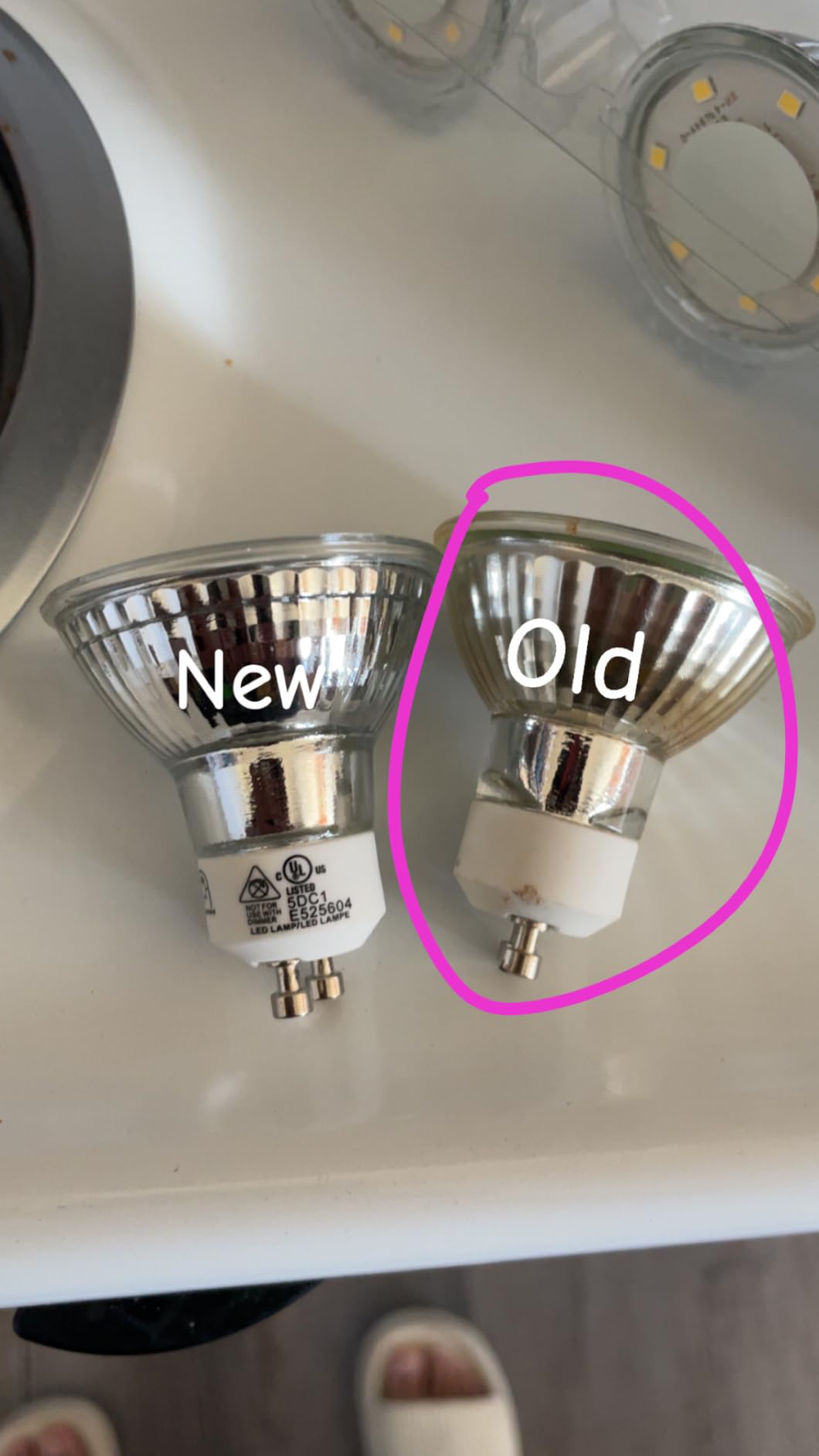
The 5000K daylight temperature makes these ideal for task-oriented track lighting. I aimed two of them at my cutting board area, and the crisp white light made slicing and prep work noticeably easier. Colors appear clean and accurate under the daylight output, which helps with judging food doneness.
Installation could not be simpler — push and twist, same as the halogen bulbs they replace. The twist-lock GU10 base means no threaded socket to deal with. The bulbs run cool to the touch, unlike the halogens they replace, which is a real safety improvement in a kitchen environment.
Range Hood Compatibility
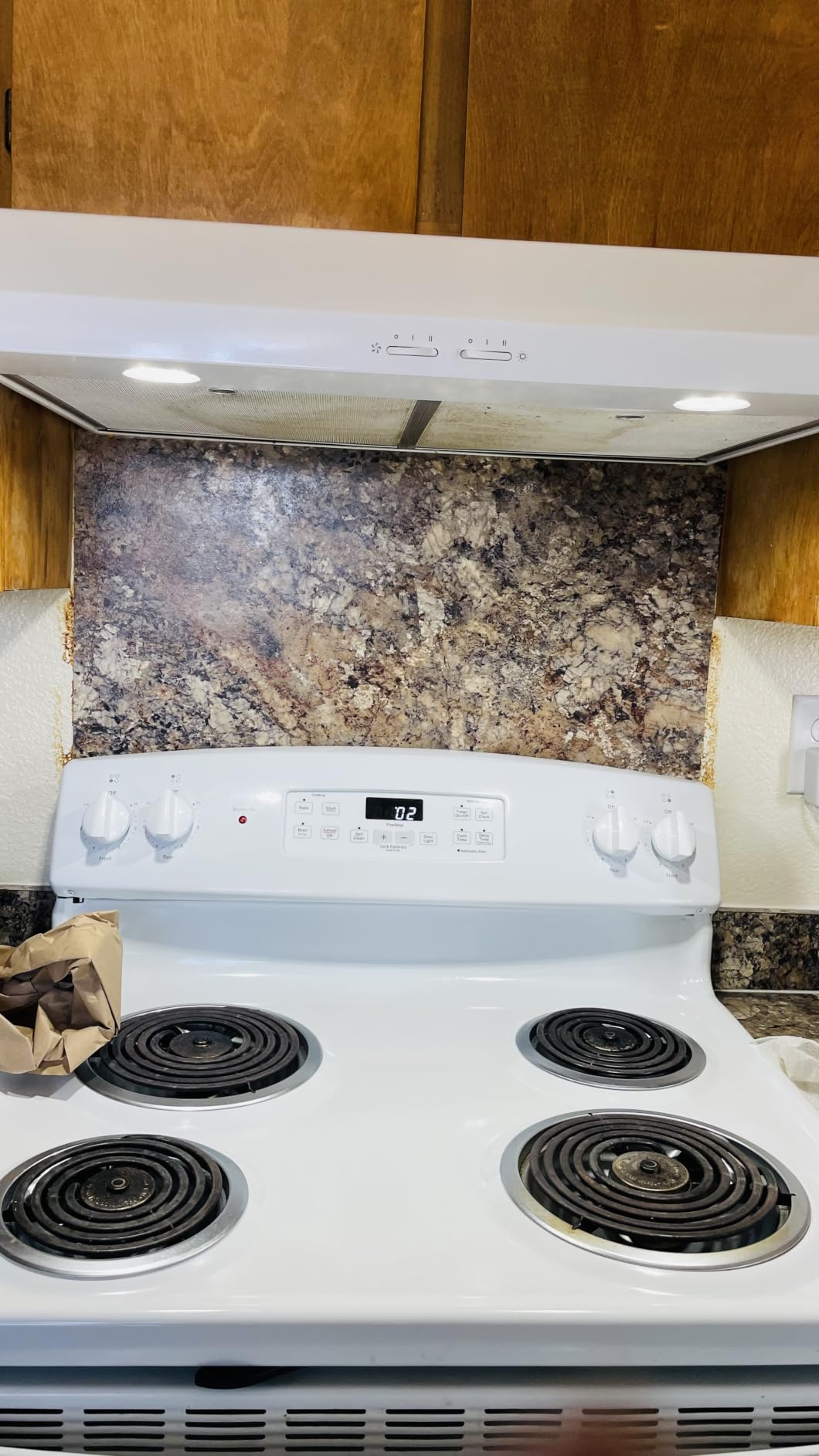
Many range hoods use GU10 base bulbs, and the Lepro LEDs are a direct replacement for the 50W halogens that come standard. I tested them in a friend’s range hood, and they survived the heat and grease environment without issue. The 4W draw also reduces the load on the hood’s internal wiring.
One caution: confirm your range hood uses GU10 base bulbs, not GU5.3 (which has the same twist-lock design but different pin spacing). Check your existing bulbs or the hood’s manual before ordering.
Track Lighting Design Tips for Kitchens
Track lighting works best as accent and supplementary task lighting, not as your primary kitchen light source. Aim individual heads at specific zones: one over the sink, two angled at the main prep counter, one washing the backsplash. This creates layers of light that add depth and visual interest to the kitchen.
Avoid pointing track lights directly at seating areas — the focused beams create harsh shadows on faces. For ambient lighting over a kitchen table or island, use pendant lights with diffused bulbs instead. The Lepro GU10 bulbs excel at targeted illumination, and pairing them with softer ambient fixtures gives you a well-rounded lighting plan.
Buying Guide: How to Choose the Best Light Bulbs for Kitchens
Choosing kitchen light bulbs comes down to four key decisions: color temperature, brightness (lumens), color accuracy (CRI), and fixture compatibility. Get these right, and your kitchen will look and function better immediately. Here is what I learned from testing 10 different bulbs across multiple kitchen setups.
Color Temperature: The Kelvin Question
Color temperature, measured in Kelvin (K), is the single most important factor in kitchen lighting. Lower numbers (2700K-3000K) produce warm, yellow-toned light. Higher numbers (4000K-5000K) produce cool, blue-white light. For kitchens, the sweet spot is 3000K-4000K.
I recommend warm white (2700K-3000K) for dining areas and pendant lights over islands where you want a cozy, inviting atmosphere. Use neutral to cool white (3500K-5000K) for task areas: over the sink, stove, and food prep counters where you need clear visibility and accurate color judgment.
The beauty of adjustable-CCT bulbs like the Feit 5CCT or Ansen 5CCT is that you can test different temperatures in your actual kitchen before committing. Every kitchen’s colors — cabinets, countertops, paint, tile — interact with light differently. What looks perfect in a showroom may look wrong in your space.
Lumens: How Bright Is Bright Enough?
Lumens measure actual light output, while watts measure power consumption. For kitchen lighting, aim for these benchmarks per bulb: 800-1000 lumens for general ambient lighting in ceiling fixtures, 1500+ lumens for dark kitchens or high ceilings, and 450-800 lumens per foot for under-cabinet task lighting.
As a rule of thumb, a typical 12×12 kitchen needs about 4,000-5,000 total lumens across all fixtures for adequate lighting. That might mean 6 recessed cans at 800 lumens each, plus 2 under-cabinet strips at 1,000 lumens each. Layer your light sources rather than relying on a single fixture.
CRI: Color Accuracy for Food Prep
CRI (Color Rendering Index) measures how accurately a bulb renders colors on a scale of 0-100. For general home use, CRI 80 is acceptable. For kitchens where you judge food freshness, doneness, and presentation, aim for CRI 90 or higher. The difference is immediately visible — a CRI 90+ bulb makes tomatoes look red instead of orange and lettuce look green instead of yellowish.
Among the bulbs I tested, the Ansen under-cabinet lights (CRI 92), Feit BR30 (CRI 90), and GE Relax HD (CRI 90) offer the best color accuracy. High CRI matters most in your task lighting zones — directly over prep counters and the stove. For ambient lighting, CRI 80 is fine.
Bulb Shapes and Base Types
Kitchen fixtures use several standard bulb shapes. BR30 bulbs fit recessed ceiling cans (5 and 6 inch). A19 bulbs fit standard lamps, pendants, and ceiling fixtures with E26 medium bases. GU10 bulbs fit twist-lock track fixtures and some range hoods. E12 candelabra bulbs fit smaller decorative fixtures.
Check your existing bulbs before ordering — the shape and base type are usually printed on the base or visible in the fixture. Buying the wrong shape is the most common mistake I see. When in doubt, remove an existing bulb and bring it with you for comparison.
Dimming and Smart Features
Dimmable bulbs give you flexibility to adjust kitchen lighting from bright prep mode to relaxed dinner ambiance. Not all LEDs dim smoothly — look for bulbs specifically labeled dimmable, and pair them with a compatible LED dimmer switch. Non-dimmable bulbs on a dimmer circuit will flicker and fail prematurely.
Smart bulbs like the Philips Hue and Govee offer app and voice control, color changing, and automated schedules. They cost more upfront but eliminate the need for dimmer switches since you control brightness through the app. For kitchens, I find smart bulbs most useful for creating preset scenes — “cooking,” “dinner,” “cleanup” — that adjust multiple bulbs simultaneously.
Frequently Asked Questions
Are cool white or daylight bulbs better for kitchens?
For food prep and task areas, daylight bulbs (5000K) are better because they provide crisp, accurate light that helps you judge food color and doneness. For dining and social areas, cool white (4000K) is more flattering and comfortable. Many homeowners use daylight in task zones and warm white in dining zones for a layered approach.
Is daylight or cool light better for kitchen?
Daylight (5000K) is better for kitchen task areas like countertops, sinks, and stoves because it provides maximum visibility and color accuracy. Cool white (3500K-4000K) is a better choice for general ambient lighting and dining areas where you want a balance between bright and warm. The best kitchens use both in different zones.
What is the best light bulb warmth for a kitchen?
The best light bulb warmth for a kitchen is 3000K to 4000K for general use, with 5000K daylight in specific task zones. A 3500K neutral white is the most versatile single temperature because it provides accurate color rendering without feeling sterile. Use 2700K warm white in dining nooks and pendant lights for a cozy atmosphere.
What light brightness is best for a kitchen?
Aim for 800 to 1200 lumens per ceiling fixture for general kitchen lighting, and 450 to 800 lumens per foot for under-cabinet task lighting. A standard 12×12 foot kitchen typically needs 4,000 to 5,000 total lumens across all fixtures. Dark kitchens or those with high ceilings may need 1500+ lumens per bulb.
Which light bulbs are best for a kitchen?
The best light bulbs for kitchens are LED bulbs with a color temperature of 3000K-4000K, a CRI of 90 or higher, and dimmable functionality. For recessed cans, BR30 LEDs like the Sunco or Feit are ideal. For under cabinets, hardwired options like the Ansen with CRI 92 provide the best color accuracy for food prep.
Final Thoughts on Kitchen Lighting in 2026
After testing these 10 bulbs across multiple kitchen setups, my top recommendation for most homeowners is the Sunco BR30 for recessed ceiling lighting, the Feit 5CCT for adjustable color temperature, and the Ansen hardwired bars for under-cabinet task lighting. Together, these three cover the essential layers of kitchen illumination.
The best light bulbs for kitchens are not a single product but a system: bright, accurate task lighting where you prep food; warm, dimmable ambient lighting where you gather; and accent lighting that adds personality. Mix and match from this list based on your kitchen’s specific zones, and you will transform both how your kitchen looks and how it functions.