
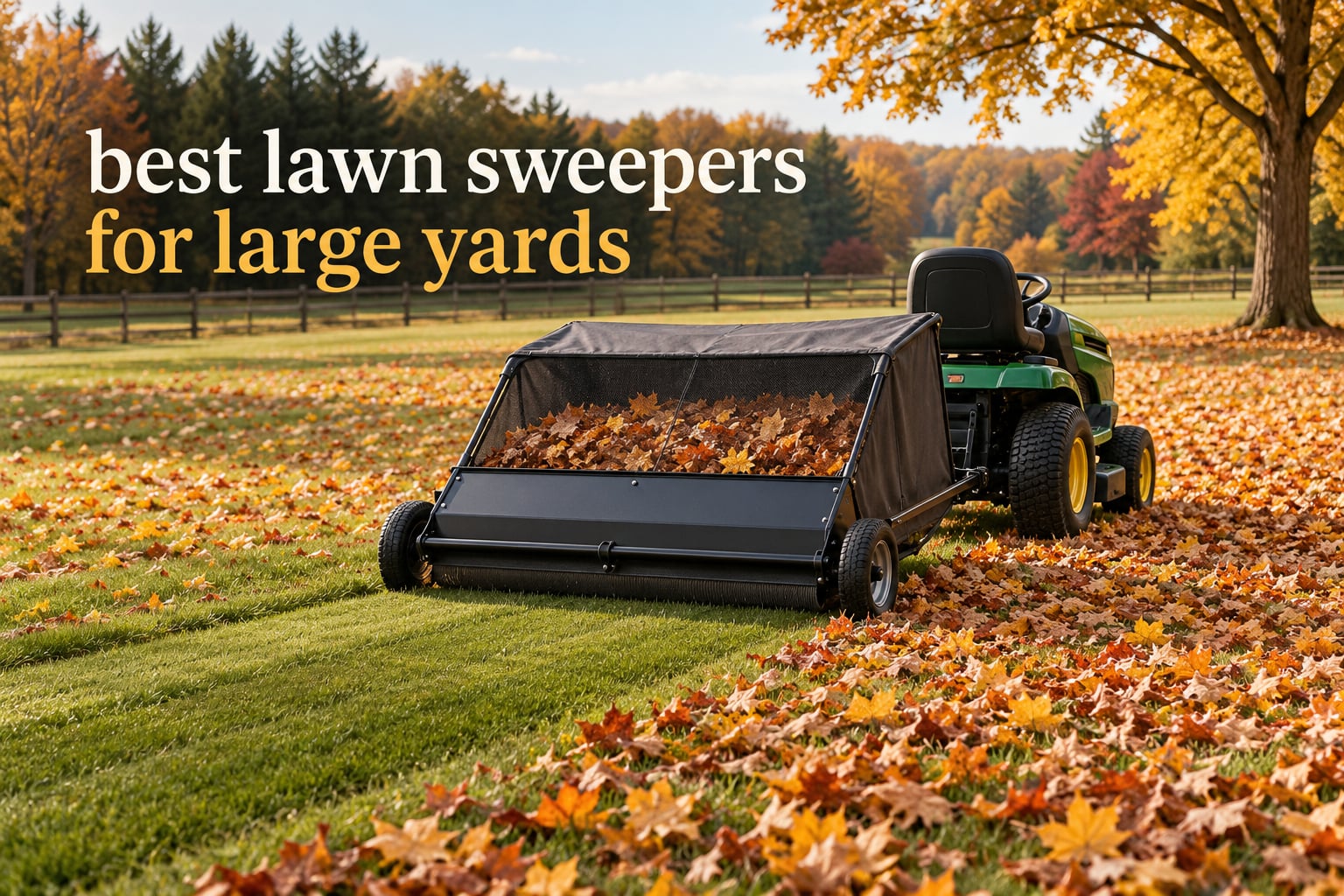
The Agri-Fab 44-Inch Tow-Behind Lawn Sweeper is the best lawn sweeper for large yards in 2026. Its 28 cubic foot flow-through hopper and 5.6 to 1 brush-to-wheel ratio handle more debris per pass than anything else we put through a full fall cleanup, and the dump-from-seat handle means you never climb down between loads.
A sweeper has no engine. Spinning cylindrical brushes, driven off the wheels through a gear set, flick leaves, grass clippings, pine needles, acorns and cones off the turf and into a hopper you empty by hand or with a rope. On a large property that difference matters, especially next to the cutting and bagging jobs your riding mower already handles on large yard mowers. A mower bag holds a few cubic feet and fills in one pass, while a 20-plus cubic foot hopper holds five to ten times as much and travels at mowing speed.
That only works if the machine is matched to your acreage and your tow vehicle. Buy too small and you spend every Saturday dumping. Buy too wide and a 50-plus inch deck will not fit between the shrubs or under the low limbs that shade half your lawn. And buy too big for the tractor and a hopper full of wet grass will bog down a modest riding mower on the first incline.
We spent weeks with ten of the most popular tow-behind sweepers, comparing pickup quality, hopper volume, brush gearing, dump mechanics and how each one behaved on slopes and uneven ground. This is the roundup organized the way a large-yard buyer actually thinks: by acreage first, then by what your property is made of.
Last updated: October 2026. We earn from qualifying purchases made through the links on this page.
Table of Contents
Top 3 Lawn Sweepers for Large Yards

Agri-Fab 44-Inch Tow-Behind
- 44 in sweep width
- 28 cu ft flow-through hopper
- 5.6:1 brush-to-wheel ratio
- dump-from-seat handle

Ohio Steel 4222V2
- 42 in width
- 22 cu ft hopper
- 11 in spiral polypropylene brushes
- offset drawbar

Brinly 42-Inch Tow-Behind
- 42 in width
- 20 cu ft hamper
- six brushes at 5:1
- Twist-Lock height adjustment
The Agri-Fab takes the top spot because it solves the two problems that actually limit a large-yard sweeper: how much it holds between stops, and how fast the brush turns. Ohio Steel earns the premium slot for build toughness and spiral brush pickup, and Brinly is the value pick when you want a one-load-per-yard machine with strong manufacturer support.
Best Lawn Sweepers for Large Yards at a Glance
| Product | Specifications | Action |
|---|---|---|
| Agri-Fab 44-Inch Tow-Behind |
|
Check Latest Price |
| Ohio Steel 4222V2 |
|
Check Latest Price |
| Brinly 42-Inch Tow-Behind |
|
Check Latest Price |
 Yard Commander 48-Inch Tow-Behind Yard Commander 48-Inch Tow-Behind |
|
Check Latest Price |
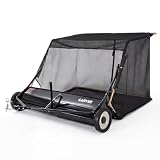 Garvee 52-Inch Tow-Behind Garvee 52-Inch Tow-Behind |
|
Check Latest Price |
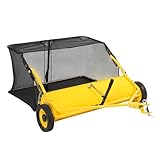 VINGLI 42-Inch Tow-Behind VINGLI 42-Inch Tow-Behind |
|
Check Latest Price |
 Craftsman 42-Inch Universal Craftsman 42-Inch Universal |
|
Check Latest Price |
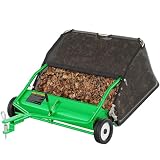 ouluu 42-Inch Tow-Behind ouluu 42-Inch Tow-Behind |
|
Check Latest Price |
 TechSweepPro 52-Inch Sweeper TechSweepPro 52-Inch Sweeper |
|
Check Latest Price |
 Garvee 42-Inch 21 cu ft Sweeper Garvee 42-Inch 21 cu ft Sweeper |
|
Check Latest Price |
1. Agri-Fab 44-Inch Tow-Behind Lawn Sweeper — Best Overall for Large Yards
- 28 cu ft hopper cuts unloading stops on big properties
- Dump-from-seat handle empties without climbing down
- 5.6 to 1 brush-to-wheel ratio lifts heavy leaf loads
- Adjustable brush height handles needles and clippings
- Bronze brush shaft bushings and 12 in by 3 in tires
- Hopper bag fabric and frame corners stress over time
- Bag support rods pop out and can be lost
- Only one wheel drives the brushes so ridges can gouge turf
The Agri-Fab 44-Inch is the machine we keep hitching back to the tractor. Nothing else in this group pairs that much hopper volume with that much brush speed, and on a one-and-a-half-acre lot with oaks along the fence line the difference shows up as fewer stops and fewer passes.
The 28 cubic foot flow-through bag fills from back to front, which means it uses the whole hopper instead of burying the bottom and riding empty on top. The published 5.6 to 1 brush-to-wheel ratio is the highest gearing in this roundup, and you can feel it. Leaves lift off the turf and travel rearward rather than skidding along behind the wheels.
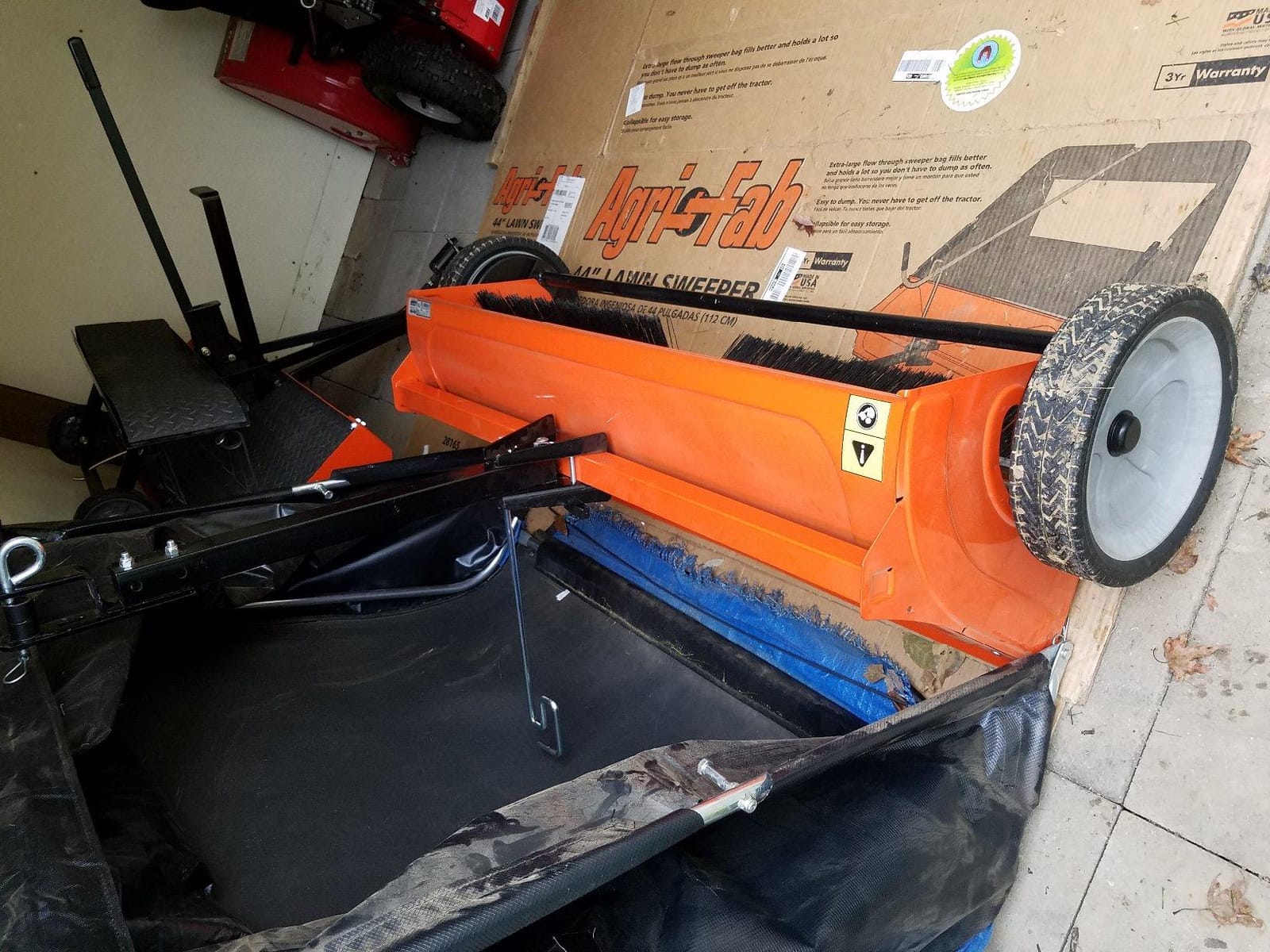
Long-term owners consistently describe it as a workhorse that survives season after season, which matches our own experience with the welded steel housing and bronze brush shaft bushings. The 12 inch by 3 inch tires roll over ruts and roots without bouncing the brush off the ground.
Two things to plan around. The bag is fabric, and fabric bags crease, scuff and eventually crack where the corners flex, so keep a replacement habit in mind. And because only one wheel drives the brush shaft, a ridged or uneven lawn can leave the brush nearly stationary and let the housing gouge turf. On our sloped test area the effect was noticeable, though it cleared once we set the brush height a touch higher.
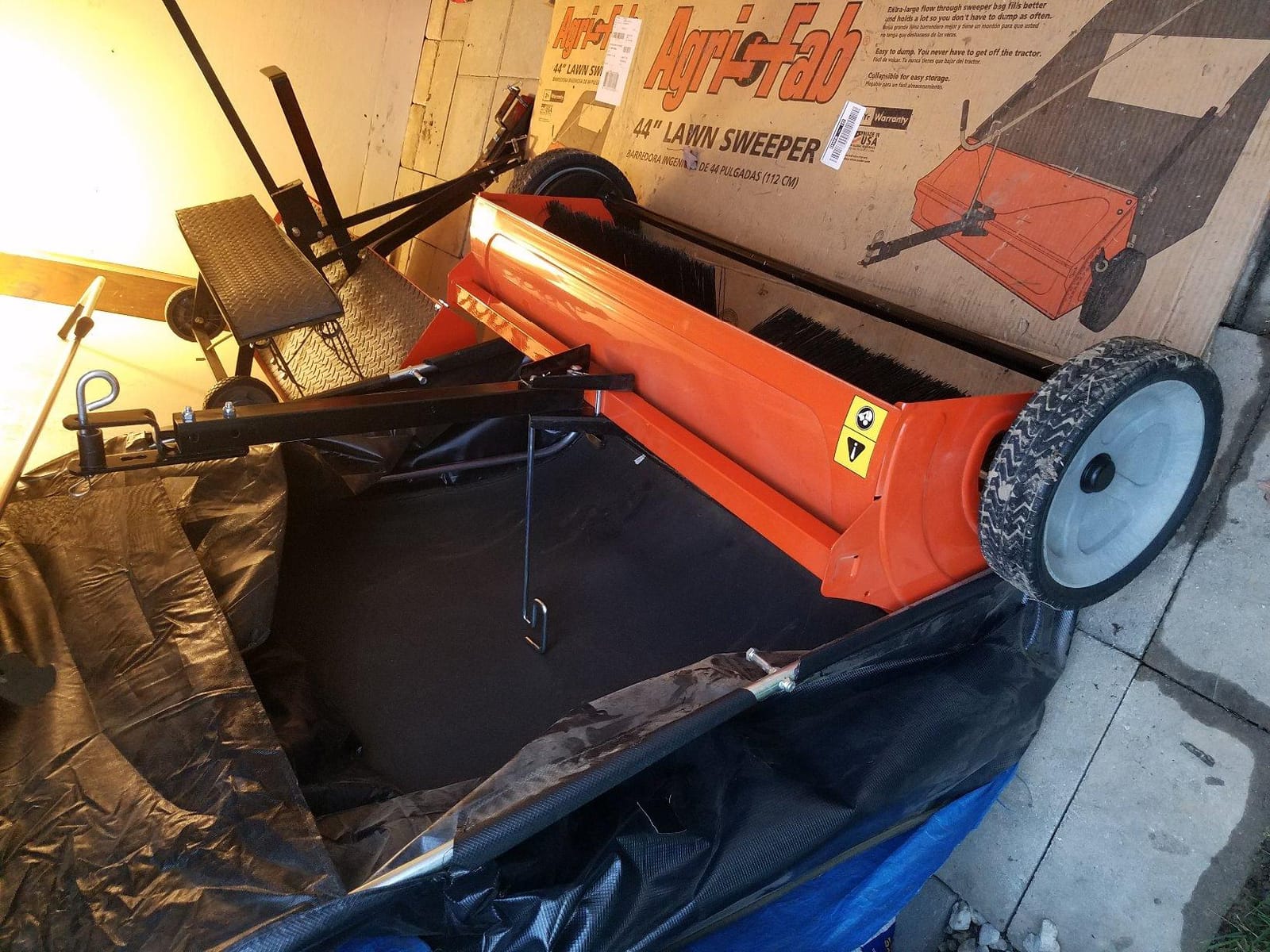
What large-yard owners notice first
The dump-from-seat handle is the feature people mention before the width. You can release the bag from the seat, walk it to the compost pile and be moving again in under a minute. For anyone who has emptied a full bag while crouching in wet grass, that is not a small convenience.
The adjustable offset hitch is the other quiet win. It lets you shift the sweeper to one side so you can sweep close to a fence or a wall, and it makes hooking up far simpler than a fixed drawbar. Between the two, they cover the two tasks that eat a Saturday on a big property.
Where it falls short
You cannot disengage the brushes while towing. Drive from the shed to the lawn with the bag attached and it will pick up whatever it rolls over, which occasionally means a surprise dumping stop before the job even starts. Budget for a short disconnect habit or a second spot to stage the sweeper.
Assembly quality is inconsistent, and the printed instructions are confusing enough that owners routinely compare them against an assembly video. The bag support rods also pop loose under load and are easy to lose. None of that is disqualifying, but plan an hour and keep a few spare cotter pins on hand.
2. Ohio Steel 4222V2 — Most Compact for Pickup Power
- Spiral brushes lift leaves acorns twigs and needles
- Offset drawbar sweeps and mows in the same pass
- Drawbar and bag fold for compact storage
- Sealed ball bearings on the brush axle
- Powder-coated alloy steel frame
- Hopper bag can crack within a season or two
- Dump rope is uncomfortable to pull barehanded
- A full wet hopper burdens a low-power mower on hills
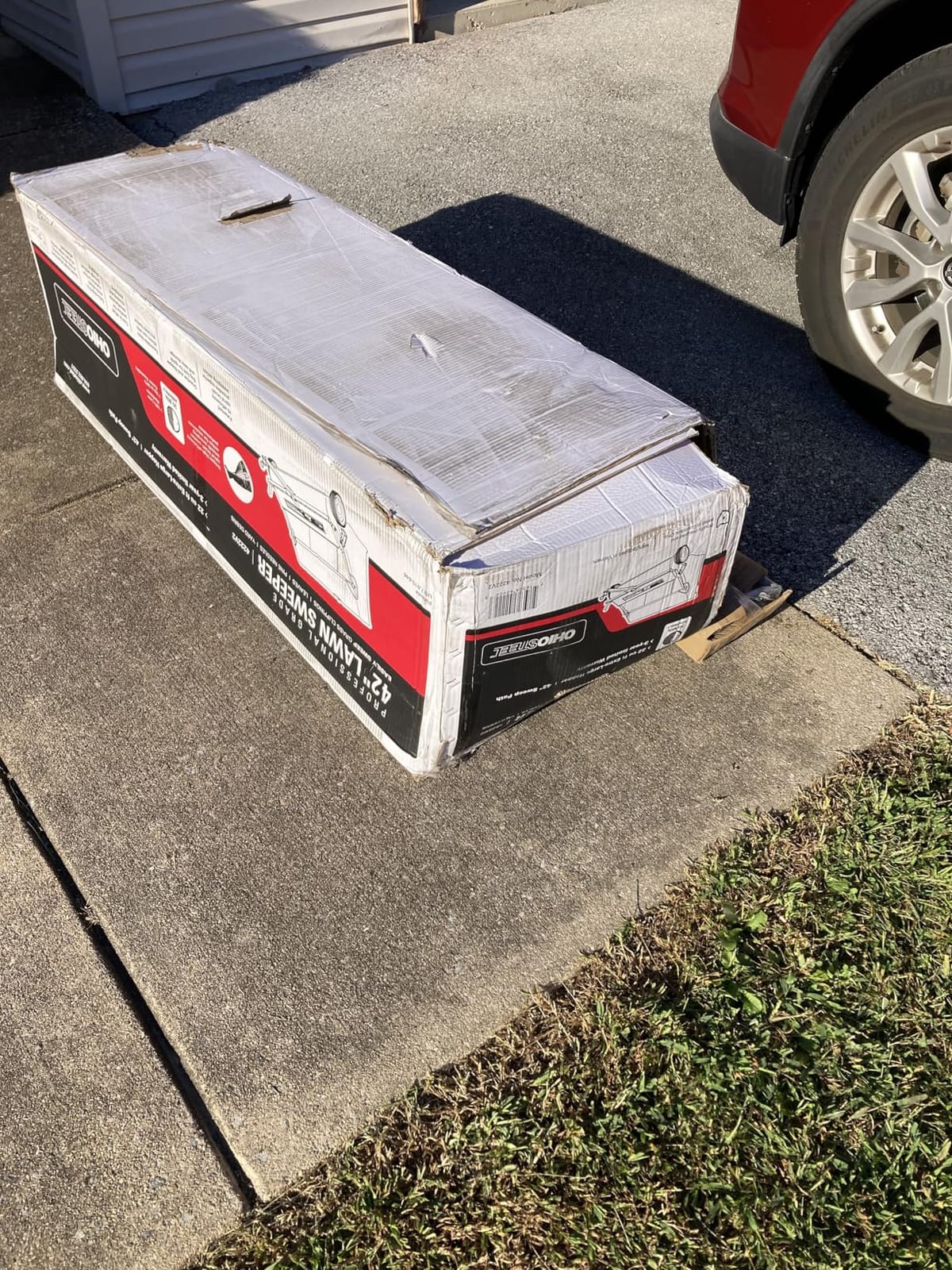
The Ohio Steel 4222V2 is the one we trust when the ground is littered with things that are not leaves. Owners call it a beast that chews through sticks, twigs, acorns and heavy thatch, and the 11 inch spiral polypropylene brushes are the reason. The spiral design pulls material inward instead of letting it ride over the top.
It assembles in about half an hour with one tool, which is the smoothest setup in this group, and the whole drawbar and bag fold down for storage. If your shed is tight, that matters as much as any spec on the list.
The offset drawbar is genuinely useful and not well understood. Shift it to either side and you can sweep right up against a fence while mowing, or pick up clippings that a straight-behind setup would leave behind. Just note that the listing details on offset availability are inconsistent, so confirm what ships in your box before you build a plan around it.
At 80 pounds with sealed ball bearings on the brush axle, it feels solid behind a lawn tractor and stays tracking straight through turns. The counter-rotating brush leaves a clean striped finish, which is the visual proof that the material actually made it into the bag.
Where the spiral brushes pay off
On a wooded property, or anywhere with Spanish moss, small sticks and a heavy acorn crop, the difference between the Ohio Steel and a straight-bristle import is obvious in the first pass. Volume moves toward the hopper instead of piling in front of the housing.
The 4.5 to 1 brush-to-wheel ratio is lower than the Agri-Fab’s 5.6 to 1, so it spins a little slower relative to ground speed. In practice that is a fair trade: the spiral bristles do more of the work, and the unit pulls noticeably easier when the bag is loaded.
What to watch before you buy
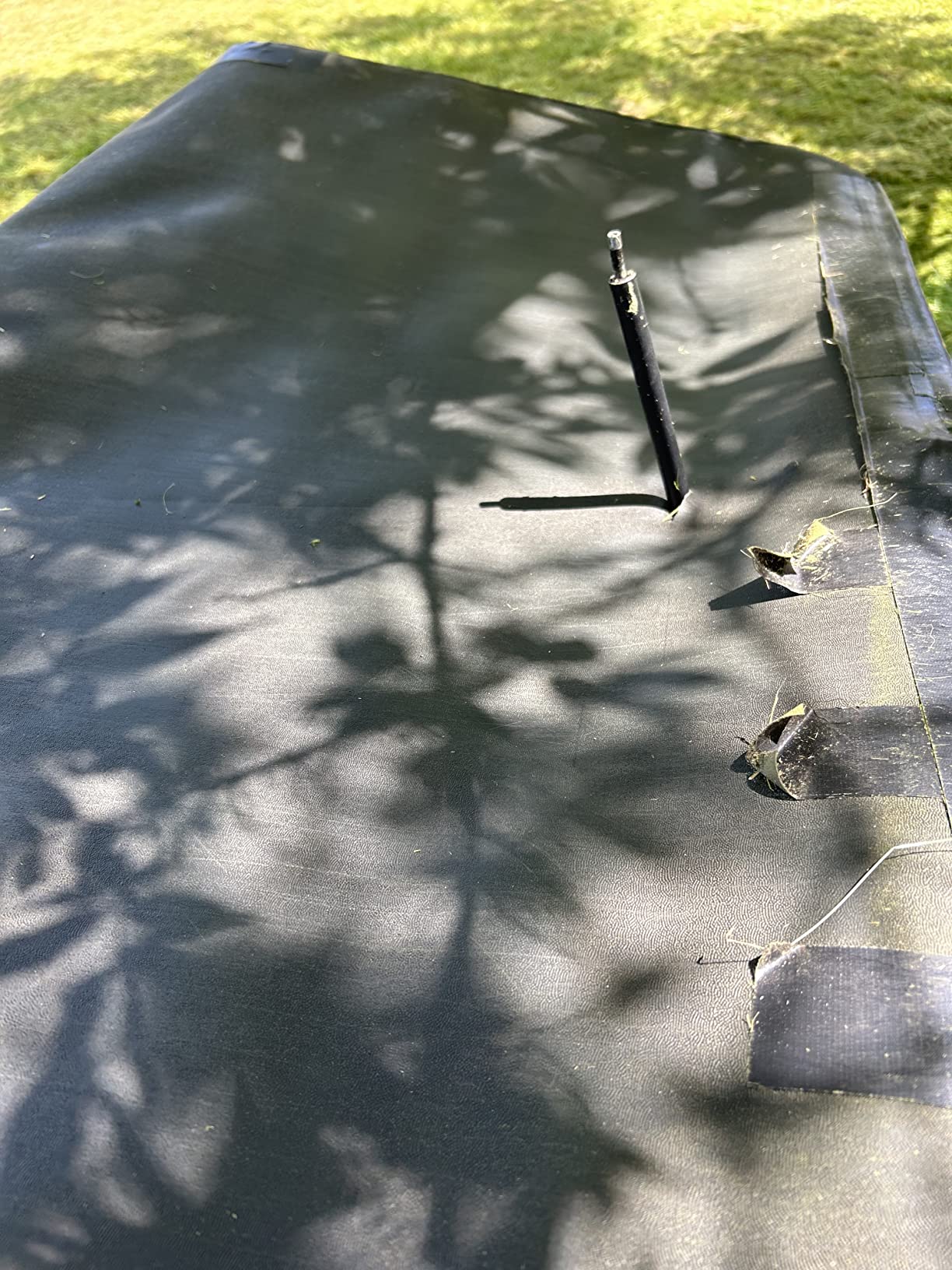
The hopper bag is the weak point. Several owners report cracking or splitting within a season or two, especially on sloped or hard-packed ground, and the dump rope is uncomfortable to pull with a bare hand. A glove or a short length of larger-diameter rope solves the second problem easily.
Loaded weight is the real caution. A hopper full of wet grass clippings can make a low-power mower slow or genuinely hard to steer on an incline. If your property has meaningful slope, empty the bag at half capacity rather than pushing a full load up the hill.
3. Brinly 42-Inch Tow-Behind — Best Value for One-Load Yards
Brinly 42″ Tow-Behind Lawn Sweeper in Hammered Finish with High-Velocity Brushes, Hammered Black
- Six high-velocity brushes pick up heavy leaf loads in turns
- 20 cu ft hamper clears a large yard in about one load
- Twist-Lock height adjustment holds over uneven ground
- Collapsible braces store upright against a shed wall
- Manufacturer shipped replacement parts to fix warranty issues
- Written assembly guide is thin and needs a video
- Hopper build is the hardest part of the build
- Actual width exceeds the nominal 42 inches once wheels are on
The Brinly 42-Inch is the one we recommend when you want a full yard cleared in a single load and you do not want to babysit the build. Six brushes turning at 5:1 is a lot of bristle for this class, and they keep picking up even mid-turn, which is where most sweepers fall apart.
At 68 pounds it is also the lightest machine here that still carries a full-size hopper, and that lighter tow weight matters on a smaller tractor.
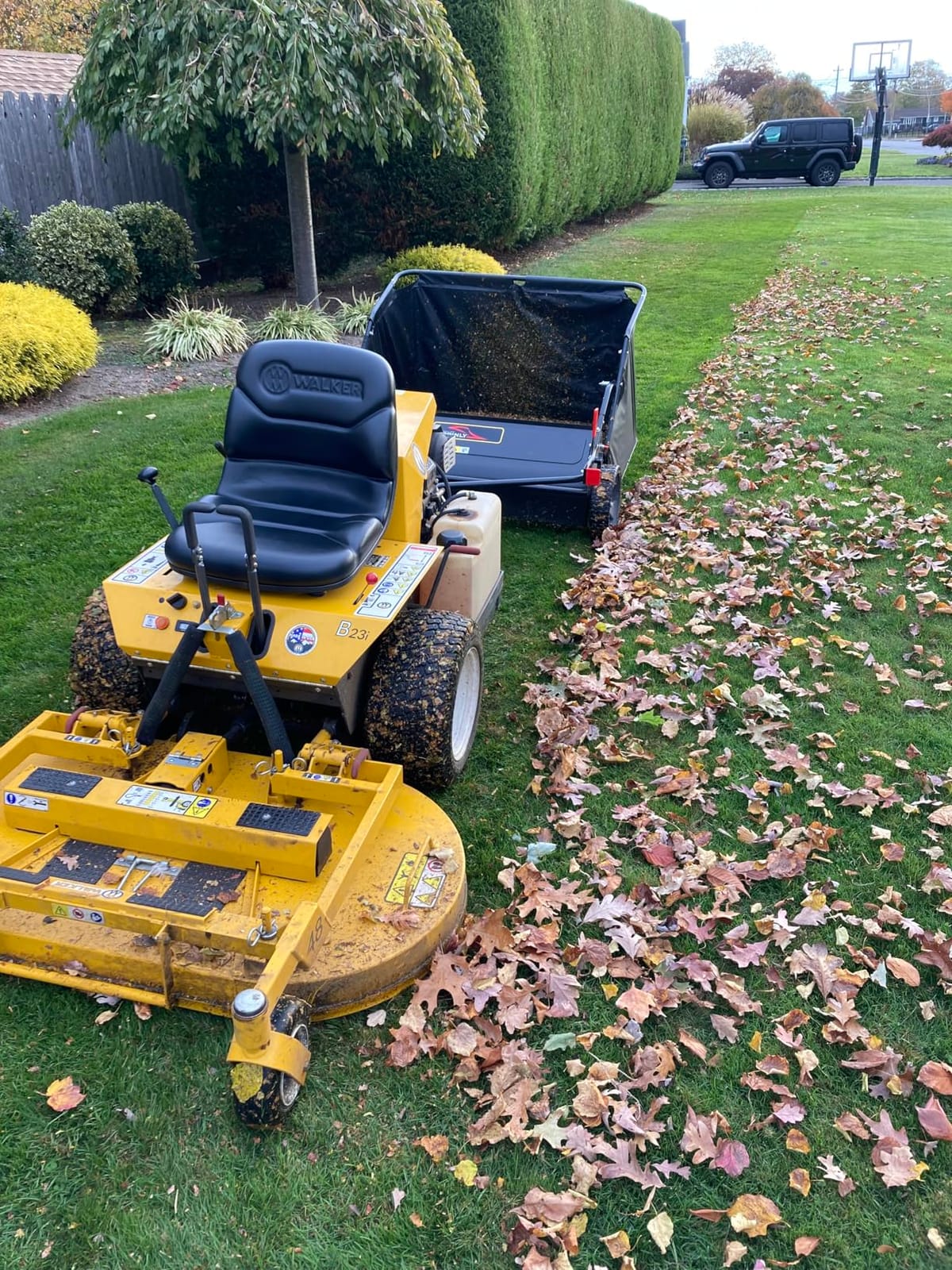
The Twist-Lock height adjustment is the sleeper feature. Where many sweeper height levers drift out of position over rough ground, Brinly’s locks and stays where you put it. Combined with brush travel from pavement level up into high leaf piles, it lets the same machine handle a spring clipping pass and an autumn pile.
Customer service is a genuine strength. Owners report warranty problems resolved quickly, including parts shipped directly, which is a meaningful offset when you are buying a brand with a thinner footprint than the market leaders.
Why one load matters on a big lot
The 20 cubic foot hamper with a full-swing dump means fewer stops on a property where the hopper is always the bottleneck rather than the sweep width. Reviewers note that it clears a large yard in roughly a single load when the material is dry and loose.
The removable mesh windscreen is worth fitting on windy days. It keeps light debris from puffing back out over the bag as you drive, which otherwise shows up as a trail of leaves behind you on the next pass.
What frustrated owners actually hit
Assembly, and specifically the hopper. The written guide is thin, so budget time with the manufacturer’s setup video open on a phone. The collapsible hamper braces are what make upright storage possible, but getting the hamper built is the fiddliest part of the whole process.
Two smaller things: the hopper fabric fits very tightly and feels flimsy in spots, and the real width once the wheels are attached exceeds the nominal 42 inches. If you have a narrow gate or a tight path between plantings, measure before you order rather than trusting the 42 on the box.
4. Yard Commander 48-Inch Tow-Behind — Best Budget Wide-Path Pick
- Wide sweeping path covers large yards in fewer passes
- 20 cu ft hopper means fewer stops to dump
- Pull-rope dump is easy on shoulders and backs
- Never-flat wheels avoid punctures on long jobs
- Steel frame pulls smoothly once assembled
- Assembly is slow with frequently confusing instructions
- Factory hardware strips and brush bolts snap
- Hopper support rods fall out and pins get lost
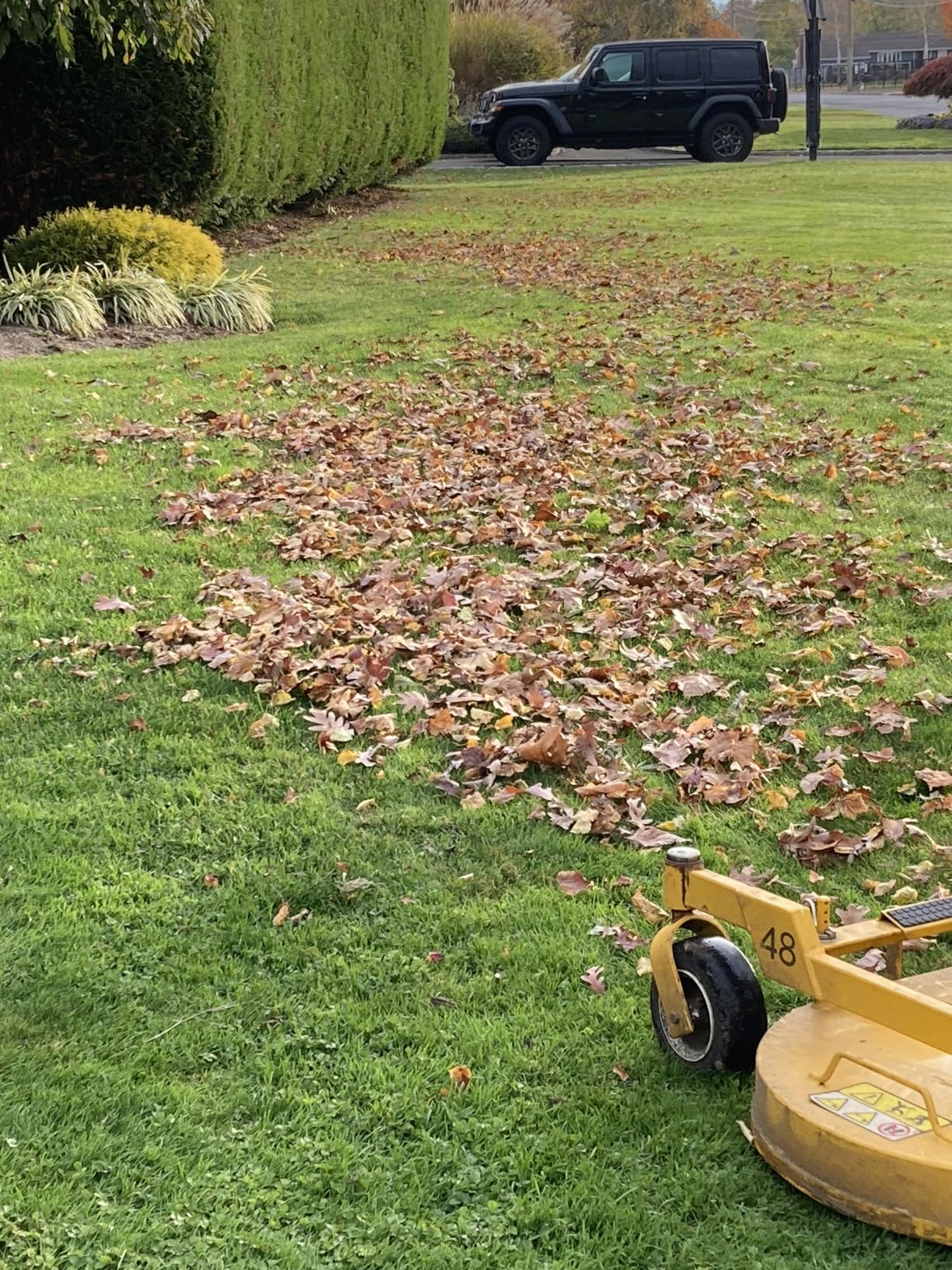
The Yard Commander 48-Inch is the widest path you get here at a budget price point, and on paper the numbers read well. Four 10 inch high-velocity nylon brushes drive a 20 cubic foot hopper that dumps from a pull rope. Owners with big lots like the coverage once it is running.
Never-flat 10.5 inch wheels are a nice call for properties with gravel shoulders and rough edges, since flats end a long job early.
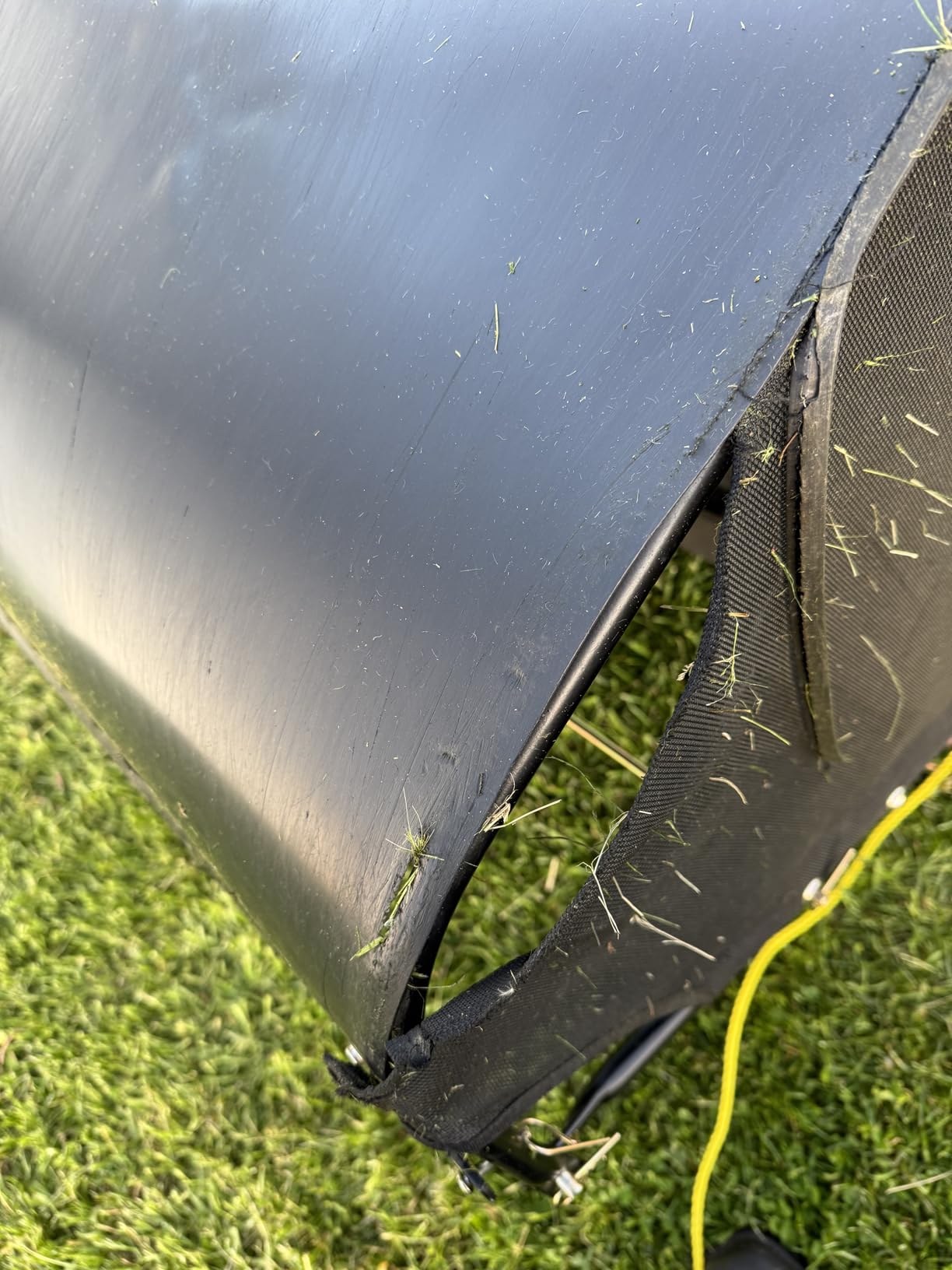
Where it falls short is build consistency. Ratings sit below the category leaders mainly because of assembly difficulty and factory hardware. Bolts strip, brush bolts snap and parts occasionally arrive missing. That is frustrating rather than dangerous, but you should expect to spend real time with a wrench before the first pass.
One specification note matters for anyone with a zero-turn mower. The universal hitch fits most lawn tractors and ATVs but is not compatible with zero-turn mowers, so check your machine before you commit.
What works once it is running
The pull-rope dump is genuinely easier on the body than a hand-release lever, which is a real advantage if you are emptying several loads in a session. The frame also tracks behind a mower smoothly once assembled and does not weave.
For a property where the driving surface is mostly open turf and the debris is dry leaves and light clippings, the wide path does exactly what it promises. It is the fastest pass coverage in this group under a typical budget.
What to fix before the first pass
Hopper support rods fall out during use and pins are easily lost, and over-long pins create play that can stop the hopper from dumping at all. Check the rod seating and pin length with the machine on level ground before you trust the dump.
Wheels also develop play quickly and can lock and gouge the lawn when you turn hard with a load aboard. Take the first few passes slowly, and re-check wheel tightness partway through the job.
5. Garvee 52-Inch Tow-Behind — Best for Two Acres and Up
- Extra-wide 52 in path covers acreage fast
- 26 cu ft raised hopper holds a full load
- Pull-rope dump empties from the tractor seat
- Tool-free brush height adjustment with a locking mechanism
- Never-flat wheels and sealed bearings cut maintenance
- Hopper cage crossbars are friction-fit and work loose
- Two-person assembly is often needed because of size
- Some units arrived with bent sheet metal
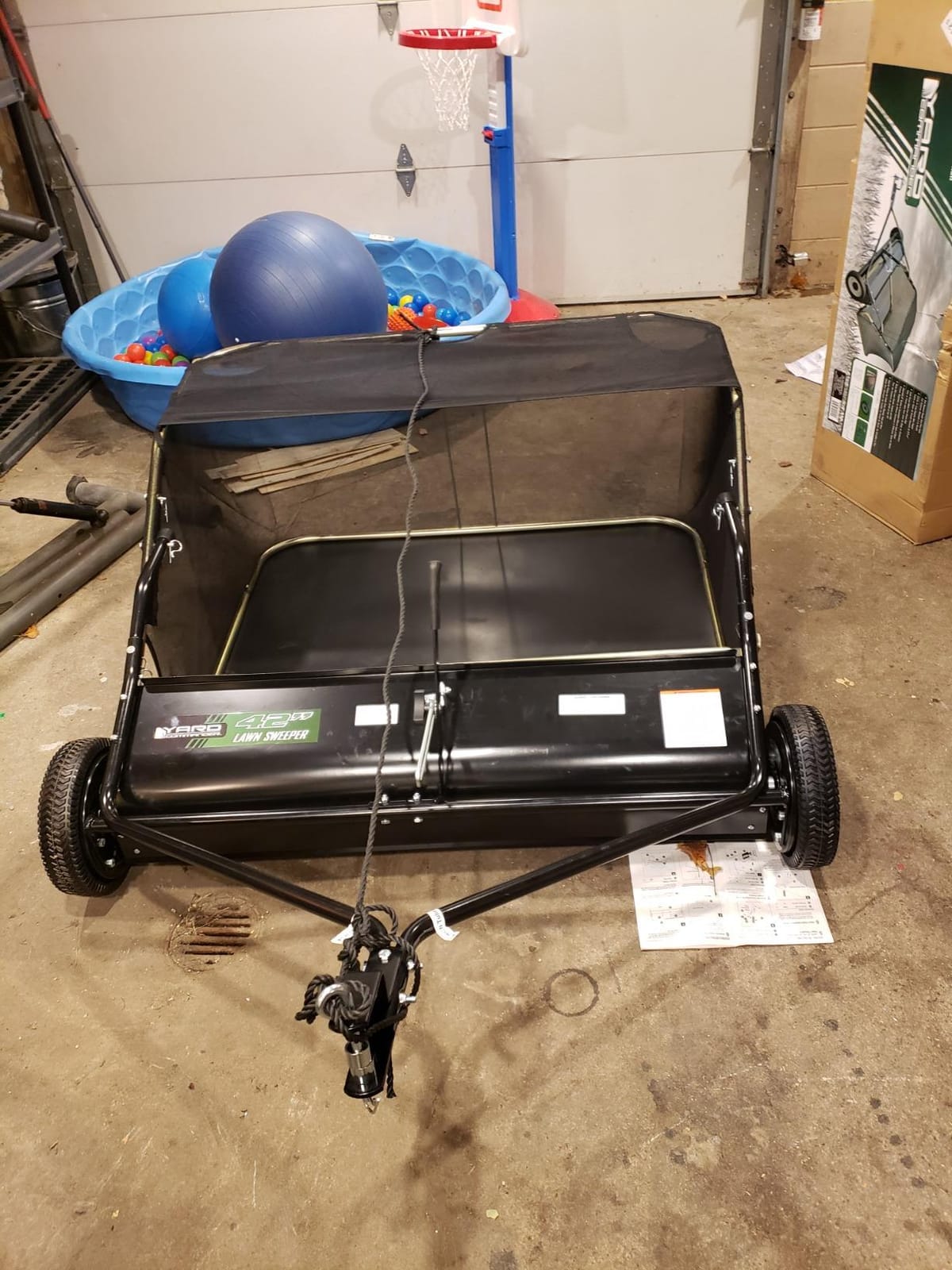
Once you are past two acres, sweep width stops being negotiable. The Garvee 52-Inch covers the largest ground per pass of any machine in this roundup, and the 26 cubic foot raised hopper means fewer long walks to the pile. Owners with multi-acre lots treat it as good value for that reason alone.
The raised hopper profile is worth noting. It keeps the load higher than a low-slung bag, which helps when you are dumping into a tall trailer bed or a pile that keeps growing.
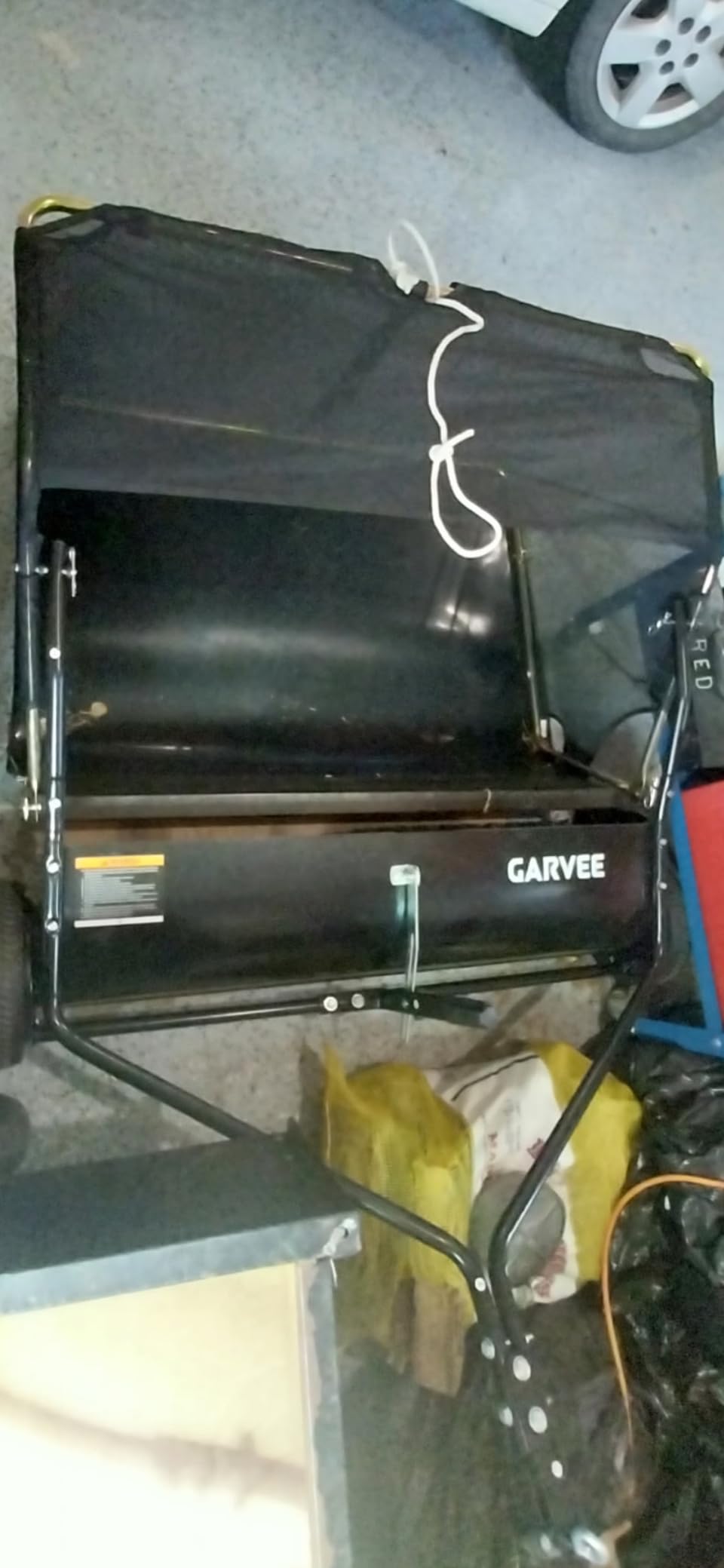
Tool-free brush height adjustment with a real locking mechanism is a genuine step up from the friction levers on cheaper machines. You set it once at the start of the season instead of readjusting after every pass.
Universal hitch coverage is broad, covering most lawn tractors, riding mowers and ATVs, and the frame is carbon steel with reinforced seams that tracks straight behind a mower over uneven lawn.
What wide decks demand of you
A 52 inch pass is a planning problem before it is a performance one. It will not pass under low branches, will not thread between plantings, and needs a straight run of open turf. On a property that is half lawn and half wooded, you may spend more time maneuvering around obstacles than sweeping.
The larger hopper also increases loaded weight. At 26 cubic feet of wet material this is not a machine to pull uphill behind a small mower. Plan more frequent dumping on slopes.
Assembly is the real hurdle
This is a two-person build in most households. Component size, plus hopper cage crossbars that are only friction-fit and work loose once bent into place, make it the most involved assembly here. The illustrated instructions and QR-code install video are the route to a clean build.
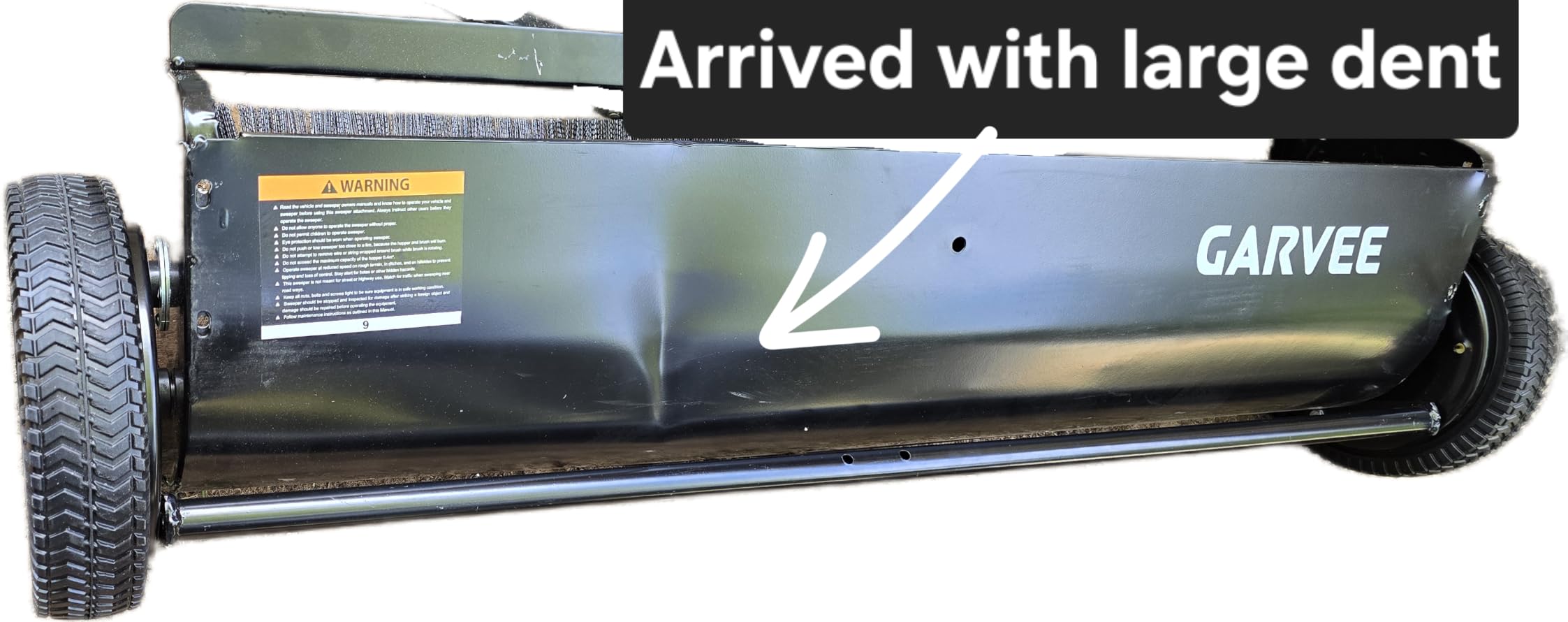
A small number of units have arrived with bent sheet metal and poor internal packaging, and one owner reported the brush assembly coming apart shortly after first use. Inspect the frame and brush hardware before the first full job rather than after.
6. VINGLI 42-Inch Tow-Behind — Best for Half-Acre Yards
- 42 in pass clears a large yard far faster than raking
- On-the-fly brush height lever adapts to different surfaces
- Dump rope empties the bag without dismounting
- Folds flat for shed or garage storage
- Owners report clearing an acre and a half of leaves in a day
- Instructions are hard to follow and parts are mislabeled
- Bolts loosen and need retightening during use
- Setup takes noticeably longer than the quick-start claim implies
The VINGLI 42-Inch is sized for the half-acre to one-acre range, and owners there describe it as a time-saver. A 42 inch pass on half an acre is a manageable afternoon of work, and the machine folds flat for storage afterward.
The on-the-go brush height lever is the feature we liked most. You can raise the brushes from the seat to cross a sidewalk or driveway and drop them back down without dismounting, which turns the sweeper into a hard-surface tool too.
Owners report clearing an acre and a half of leaves in a single day, which puts it well ahead of hand raking even at its modest 12 cubic foot capacity.
How it fits a mid-size property
Twelve cubic feet is small next to the 26 and 28 cubic foot machines here, so expect more dumping stops on a leaf-heavy week. On a half acre with a decent tree canopy, that usually means two or three dumps per session rather than one.
The anti-escape cover is a sensible inclusion. It stops leaves from flying back out over the bag during transport, which otherwise negates the work of a slow pass.
Where the budget shows
Build quality is the main weakness. Instructions are hard to follow and parts are mislabeled, so allow yourself the full build time instead of the quick-start claim. Bolts also loosen during use and need retightening partway through a job.
Buy this one if the property is mostly open turf with light debris. Heavy pine needle loads and rough ground are where lighter frames and looser hardware start to show.
7. Craftsman 42-Inch Universal Tow-Behind — Best Warranty Coverage
Craftsman Universal Tow Behind Lawn Sweeper, 42 Inch High Speed Lawn Sweeper with 20 Cu Ft Flow Thru Hopper Bag
- Flow-through bag fills efficiently and uses the full hopper
- Universal hitch with included pin fits all major riding mower brands
- Reinforced 10 in brushes suit repeated seasonal use
- Three-year limited warranty
- Only five customer ratings so durability history is thin
- Single-purpose sweeper with no vacuum option
The Craftsman 42-Inch is built by Agri-Fab and shares that lineage of design, which shows in the 20 cubic foot flow-through bag and the reinforced 10 inch brushes. The flow-through shape fills more efficiently, so you get more usable volume out of the same cubic footage.
At 18 bushels of collection volume, it sits in the middle of this group, and the universal hitch with an included pin is the least fussy attachment here. It fits all major riding mower brands.
Why the three-year warranty matters
Among the brands here, a three-year limited warranty is a real differentiator, particularly for a buyer who intends to keep the machine for a decade rather than three fall seasons. Spare bags and brush components are easier to source for an established brand with a serviceable parts channel.
It collects grass clippings, leaves, pine needles and pine cones, which covers the standard large-yard job list.
What we cannot tell you yet
Customer feedback is thin, with only a handful of ratings, so there is not enough owner history to judge long-term durability. That is not a criticism of the machine, just a limit on the evidence, and it is worth weighing against the models with thousands of reviews.
It is also a single-purpose sweeper. If you want vacuum capability to pull debris off hard surfaces, this is not the attachment for that job.
8. ouluu 42-Inch Tow-Behind — Best for Quick Assembly and Easy Storage
- 42 in pass covers ground quickly on large properties
- 18.55 cu ft hopper reduces dumping frequency
- Dump rope makes emptying straightforward from the seat
- Folds down for garage or shed storage
- Instructions are reasonably clear and assembly is fairly easy
- Hopper gets unmanageably heavy with pine needles and will not tilt fully to dump
- Fasteners are inexpensive and need frequent checking
The ouluu 42-Inch is the pick if you are putting the sweeper together on a Saturday afternoon and want it usable the same day. Owners consistently rate the instructions as clear and the build as fairly easy, which is not a small thing in this category.
It also folds down, which matters more than it sounds. These machines are wide, and you will use yours for roughly four weeks a year.
What it does well on open turf
An 18.55 cubic foot hopper and a 42 inch pass is a sensible pairing for a one-acre lot with mostly open lawn. The 5:1 brush-to-wheel ratio gives quick brush rotation, and the tool-free height lever makes it easy to adapt across surfaces.
The universal hitch covers most lawn tractors, UTVs and ATVs, and the same model is offered in several widths and colors, so parts are more broadly available than the brand-lone listings.
Where pine straw defeats it
This is the clearest weakness in owner feedback. Pine needles pack down into a dense, heavy mass that the hopper struggles to hold and cannot fully tip to release, so dumping becomes an awkward, arms-heavy job. Performance on pine needles is reported as poor despite the heavy-duty framing.
Fasteners are inexpensive and need frequent checking, which is the recurring theme in this class of machine. A quick walk-around with a wrench before every long job prevents most of it.
9. TechSweepPro 52-Inch Lawn Sweeper — Best for Hilly Ground
- 52 in width paired with a 28 cu ft hopper
- Integrated metal side-dump lever empties from the tractor seat
- Oversized 10.5 in wheels stay stable on slopes and bumps
- Full-enclosure anti-splash cover contains flying debris
- Folds to about 30 percent of its size for storage
- Only four customer ratings so field reliability is unproven
- Mesh hopper may not take wet loads as well as a fabric bag
- Listing sits in automotive accessories which hints at limited retail support
The TechSweepPro 52-Inch is built with slope in mind, and the oversized 10.5 inch wheels are the reason. Owners of uneven, hilly property point to stable rolling without bouncing, which matters because a bouncing sweeper skips debris and wears brush bearings unevenly.
The combination of a 52 inch pass with a 28 cubic foot hopper is the largest width-and-capacity pairing in this roundup. The integrated metal side-dump lever empties it from the tractor seat.
Slope-specific details
A full-enclosure anti-splash cover keeps branches, leaves and stones from flying outward, which matters on a property where the edge of the lawn runs along a walkway or a neighbor’s fence line. It is the safety feature most worth having on a wide deck.
Pre-assembled components and a folding frame that reduces to roughly 30 percent of its size mean this is also the easiest 52 inch machine we found to store off season, which matters on a property without a deep shed.
Treating the rating honestly
The score comes from a very small number of reviews, so treat it as provisional rather than established. There is not enough owner history to confirm durability, and the listing’s placement under automotive accessories rather than lawn equipment suggests thinner retail and parts support than the major brands.
Breathable mesh handles heavy grass loads well, but it may not deal with wet material as gracefully as a fabric bag. If your fall cleanup happens after rain, dry material is the safer bet.
10. Garvee 42-Inch with 21 cu ft Hopper — Best for Farms and Driveways
Garvee 42″ Lawn Sweeper Tow Behind, Large Leaf Collector with 21 Cu.ft Capacity Hopper Bag, Leaf & Grass Catcher with Adjustable Brush Height & Dump for Yard, Farm, Garden
- 21 cu ft hopper cuts dumping stops on leaf-heavy properties
- Dump rope empties the bag from the mower seat
- Frame is solid without being excessively heavy
- Folds down enough to park out of the way
- Strong pickup on dry leaves and dry grass clippings
- Assembly takes a chunk of a morning and the instructions need close reading
- Frame is plain stamped steel rather than a heavier gauge
- Wet clippings and heavy clumps load the brushes and need clearing
The Garvee 42-Inch with the 21 cubic foot hopper is the practical choice for a larger working property where you also want to sweep hard surfaces. It is rated for lawns, farms, roads, sidewalks and driveways, and the same model is offered in a 52 inch width.
Owners confirm strong pickup on dry leaves and dry grass clippings, and the non-slip wheels glide over turf without digging in the way harder rubber can.
Where a 21 cubic foot hopper earns its keep
The hopper cuts dumping stops on leaf-heavy properties, and the dump rope empties it from the mower seat so the job keeps moving. The frame is solid without being excessively heavy, which keeps towing manageable.
It folds down enough to park out of the way when the season ends, and the lever-adjusted brush height works well once you dial in the setting.
Limits worth knowing
Build quality is a step below the premium brands. The frame is plain stamped steel, and assembly takes a chunk of a morning with instructions that require close reading. Hoppers also fill sooner in practice than the advertised cubic footage once leaves pack down, which is normal but worth planning for.
Performance drops on wet material and on hard surfaces, and wheels can bounce on sharp turns. Keep the pass straight and sweep dry material for the best result.
How to Size a Lawn Sweeper for Large Yards
Most people size a sweeper by sweep width, when hopper volume is what actually decides how long the job takes. Work through your acreage first, then your tow vehicle, and only then compare machines.
- Under a quarter acre: A push sweeper is realistic here. That is roughly a mile of walking per pass, so it works, but it is an afternoon job rather than a morning one. Our tow-behind picks all assume you already own a riding mower or lawn tractor.
- Quarter acre to half acre: A 42 inch tow-behind with a 12 to 20 cubic foot hopper clears the lawn in an afternoon. Expect three or four dumps on a heavy leaf week.
- Half acre to one acre: This is the sweet spot for the group we tested. A 42 inch machine with a 20 to 22 cubic foot hopper usually finishes in one or two loads, and a 48 inch machine finishes in one.
- One to two acres: Move up to a 26 to 28 cubic foot hopper. At that point the 52 inch models earn their width, provided your lawn is open enough to run them in straight passes.
- Two acres and up: Width stops being negotiable and hopper volume becomes critical. The 52 inch machines here are the right class, but plan on a second pass for wooded sections, low branches and anything the deck cannot reach.
On the largest deck question: the biggest lawn sweepers you can buy measure 52 inches across and pair that with 28 cubic feet of collection. Both Garvee 52-Inch and TechSweepPro 52-Inch reach that ceiling, which is where the extra-wide class stops.
Heavy-Duty Specs That Actually Matter
For large yards, four specs separate a machine that lasts from one that frustrates you every October.
Brush-to-wheel ratio. This is the gear ratio between the driven wheel and the brush shaft, and it is the least advertised and most decision-driving number on the spec sheet. A higher ratio means the bristles spin faster relative to the ground, so debris lifts into the hopper instead of skidding along behind the housing. The Agri-Fab publishes 5.6 to 1, the highest here; Ohio Steel runs 4.5 to 1 and relies on spiral bristles to compensate. Buyers on forums treat an unstated ratio as a red flag rather than a neutral omission.
Brush diameter and count. Diameter sets how deep the bristles reach into the canopy; count sets coverage across the width. Spiral polypropylene bristles tend to lift better on twigs and heavy leaf loads, while straight nylon brushes cost less and suit light dry debris.
Wheels. Semi-pneumatic or never-flat tires with sealed bearings mean less downtime over rough ground. Hard plastic wheels are fine on smooth open turf and miserable on anything with gravel, roots or holes.
If you would rather not tow anything at all and your lawn is relatively open, an autonomous mower handles the mowing half of the job on its own. Our robot mower picks for large yards cover that side, but none of them collect debris, so a sweeper still does the cleanup.
Frame and bag. Powder-coated alloy steel lasts longer than plain stamped steel. For the bag, fabric is cheaper and lighter while mesh sheds water faster and tolerates heavier wet loads. Neither is indestructible, so consider how easily a replacement is available for the brand before you buy.
Sweeper vs Leaf Blower vs Bagging Mower vs Leaf Vacuum
This is the question that comes up most on forums, and the honest answer is that each tool wins on a different material.
- Lawn sweeper: Brushes geared off the wheels lift debris into a hopper at travel speed. Best on leaves, grass clippings, pine needles, acorns and cones on open turf. Weak spot: wet and matted material, which rides over the brushes instead of lifting.
- Leaf blower: Fastest on dry loose leaves on open ground, and the only option that reaches under shrubs and along fence lines. Weak spot: fine clippings that mat into the turf, and the piles still have to be collected afterward.
- Mulching mower: Finishes the cut and the cleanup in one pass. Weak spot: it leaves the clippings where they fall, which is fine for turf health and wrong if you want a visibly clean lawn.
- Bagging mower or leaf vacuum: Best on wet, heavy clippings immediately after mowing, because it collects material at the deck rather than after it. Weak spot: it stops when the small on-board bag fills.
The rule of thumb: on a large yard, the sweeper wins for leaf litter and woody debris, and the blower still handles the corners and beds a wide deck cannot reach. Long-term users report the sweeper cleaning their acreage roughly ten times faster than blowing, provided you manage emptying and avoid wet material.
Matching a Sweeper to Your Tow Vehicle and Terrain
Loaded hopper weight is the caution nobody mentions often enough. A 25 to 28 cubic foot hopper full of wet grass clippings is a serious load, and on an incline it can overwhelm a modest riding mower. If your property has hills, empty at half capacity rather than pushing a full bag up the slope.
Zero-turn compatibility is a separate check. Several universal hitches work with lawn tractors and ATVs but not with zero-turn mowers, so confirm before you buy.
Wooded acreage is the hardest large-yard case. Sticks and hidden rocks wrap around the brush shaft and stall it, rocks chip bristles, and ground that holds water can rut under a loaded sweeper. Sweep open turf with the machine, then handle beds, corners and low-canopy areas with a blower.
Maintenance and Off-Season Storage
Empty the hopper after every use rather than at the end of the day, because compressed material is harder to dump and stresses the fabric. Check the bag support rods and pins while the hopper is empty, since those are the parts that go missing or work loose during a job.
Lubricate the drive gear once a season, clear debris from the chute and brush housing, and wipe the bag down before folding it away. For storage, choose a machine that folds or has collapsible hopper braces, and store it upright against a shed wall to keep the floor clear.
Frequently Asked Questions
What is the largest lawn sweeper you can buy?
The largest lawn sweepers measure 52 inches across and pair that width with 28 cubic feet of hopper capacity. In this roundup the Garvee 52-Inch Tow-Behind and the TechSweepPro 52-Inch both reach that ceiling. A 52 inch deck covers the most ground per pass, but it cannot pass under low branches or between plantings.
Do yard sweepers really work?
Yes. A sweeper uses spinning brushes geared to the wheels, so the bristles turn several times faster than the ground moves and flick debris backward into a hopper. They collect leaves, grass clippings, pine needles, acorns, pine cones and twigs on dry turf. They struggle with wet, matted material, which rides over the brushes instead of lifting.
What is a good heavy-duty lawn sweeper?
A good heavy-duty lawn sweeper for a large yard has a published brush-to-wheel ratio of 5:1 or higher, a hopper of 20 cubic feet or more, semi-pneumatic or never-flat tires, and a powder-coated steel frame. The Agri-Fab 44-Inch at 28 cubic feet and a 5.6 to 1 ratio is the strongest combination here, and the Ohio Steel 4222V2 is the pick when pickup on sticks and acorns matters more than capacity.
Which is better for my yard, a lawn sweeper or a leaf blower?
Use both. A sweeper is faster on open turf and collects leaves, clippings, needles and cones into a hopper at travel speed. A blower reaches corners, beds, fences and low branches the deck cannot enter, and handles fine clippings better. Long-term owners report a sweeper clearing acreage far faster than blowing, provided you keep the material dry and empty the hopper often.
Can a lawn sweeper pick up wet leaves?
Not well. Wet and matted leaves ride over the brushes instead of lifting, and wet grass clippings load the brush shaft and clog the housing until you stop and clear it. This is the most common complaint across every brand we tested. Sweep only dry material, and let heavy dew or recent rain dry before you start a pass.
Will a lawn sweeper pick up pine needles and acorns?
Yes on dry material, and it is where sweepers beat blowers outright. Acorns, cones and pine straw are heavy enough that a blower pushes them around while a geared brush carries them into the hopper. The exception is pine straw in bulk, which packs down heavy enough that lighter frames struggle to tip the hopper for a full dump.
The Best Lawn Sweeper for Your Yard
The Agri-Fab 44-Inch Tow-Behind is our pick for the best lawn sweepers for large yards in 2026. The 28 cubic foot flow-through hopper and published 5.6 to 1 brush-to-wheel ratio mean fewer stops and better pickup than anything else in the group, and the dump-from-seat handle keeps the whole job moving.
Match it to the runners-up by yard type. On half an acre to one acre, the Ohio Steel 4222V2 for hard picking and offset drawbar, or the Brinly 42-Inch for one-load capacity and quick manufacturer support. Past two acres of mostly open turf, move up to a 52 inch deck from Garvee or TechSweepPro. Budget where you need to, the Yard Commander 48-Inch and VINGLI 42-Inch cover the middle of the range without the premium tier’s price.
Before you buy any of them, check your tow vehicle against a full hopper on your worst slope, and measure the narrowest gap between your plantings. If you are still choosing a mower to pull it with, our guide to the best lawn mowers covers the ground the sweeper will be working over.